My Daughter's In-Laws Used My Signature to Save Their Music Business Without Asking Me—Then I Saw The Paperwork
My Daughter's In-Laws Used My Signature to Save Their Music Business Without Asking Me—Then I Saw The Paperwork
The Favor I Never Did
I'd been to Martin and Celeste's house exactly once before, and both times I made a point of not gawking. That's harder than it sounds when you're standing in a foyer with framed photographs of musicians you've seen on album covers your whole life. I kept my eyes moving and my expression neutral, the way you do when you don't want anyone to think you're impressed. Paige was already watching me from across the room with that particular tension she carries in her shoulders whenever our two families are in the same space — like she was waiting for me to do something embarrassing. I wasn't going to give her that. Dinner was fine, actually. Celeste is the kind of woman who makes a table feel warm without trying too hard, and Martin held court the way men like him always do, telling stories that were probably true and definitely flattering. I was almost relaxed by the time Celeste raised her glass toward me and said she wanted to thank me for what I'd done. I laughed, because I assumed she was being gracious about something small — bringing wine, maybe, or showing up on time. But when I looked at her face, the smile was still there, patient and certain, like she was waiting for me to accept something I already knew.
 Image by RM AI
What Papers?
I set my own glass down and asked her what favor she meant. Just like that — politely, but directly. The smile left Celeste's face so fast it was almost startling. Martin jumped in before she could answer. He said something like, 'Oh, don't worry about all that, the papers have already been signed, everything's taken care of.' I looked at him. 'What papers?' I said. The table went quiet in a way that had nothing to do with good manners. Paige's fork hit her plate with a small clatter and she didn't pick it up. I kept my eyes on Martin because he was the one who'd spoken, and he was already doing that thing where a person smiles and talks at the same time without actually saying anything. He mentioned something about business documents, about things being handled, about how I shouldn't concern myself. I told him I was concerning myself. Celeste looked between us like she'd accidentally started something she didn't understand. Grant hadn't said a word. I turned to look at him, and that's when I caught it — a glance that passed between him and Martin, quick and loaded, the kind that only happens between two people who already know what the other one is thinking.
 Image by RM AI
The Kitchen Counter Signature
Martin cleared his throat and asked, in a very measured voice, whether I remembered signing some paperwork that Paige had brought to my house a few months back. And the thing is — I did remember. Not clearly, not in detail, but I remembered Paige showing up on a Tuesday afternoon with a folder, saying she needed my signature as a witness for some documents connected to a new company she and Grant were setting up. I hadn't thought much of it. She was my daughter. She stood at my kitchen counter and pointed to the lines, and I signed where she told me to sign. I didn't read the full documents. I skimmed the top page, saw some legal language that looked standard, and trusted that she'd explained it well enough. She hadn't, but I didn't know that yet. I turned to Paige now and asked her directly what I had actually signed. She said she'd explained it at the time. Her voice had that careful quality it gets when she's trying to sound certain about something she isn't. I knew my daughter well enough to hear the difference. Martin and Grant exchanged another look across the table, and something about it settled cold in my chest. I kept coming back to that Tuesday afternoon — Paige at my counter, not quite meeting my eyes, waiting for me to finish.
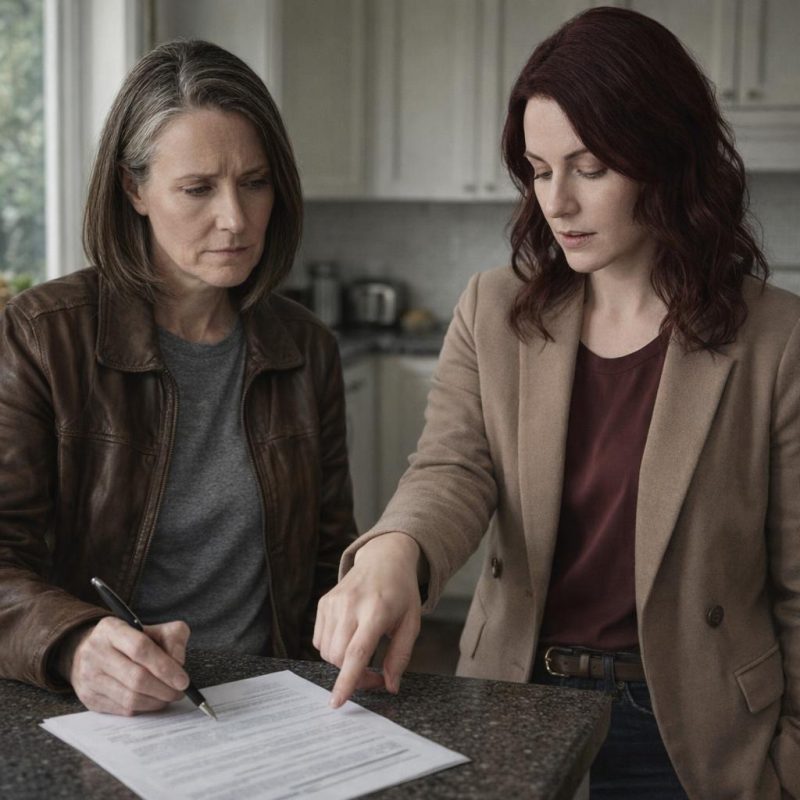 Image by RM AI
A Company in My Name
I wasn't going to let the dinner just move on. I kept asking, and eventually the pleasant surface of the evening cracked completely. It was Grant who finally said it, and I think he said it because he couldn't stand the silence anymore. He told me that my signature had been used as part of an ownership declaration. I asked what that meant. He said it was for a small holding company. I asked whose name the company was in. He said mine. I sat with that for a second. My name. A company. I hadn't started any company. I hadn't agreed to own anything. I asked why anyone would put a company in my name, and nobody answered that question directly. Martin stepped back in then, smooth as ever, telling me not to worry, that everything was perfectly legal, that it was mostly just an accounting arrangement, that these kinds of structures were common in the music business. He said it the way people say things when they want you to feel foolish for asking. I didn't feel foolish. I felt something colder than that — a slow, spreading unease I couldn't quite name yet. The candles were still burning in the middle of the table. Celeste had stopped eating. The silence after Grant said my name was on those ownership documents sat in the room like something with weight.
 Image by RM AI
Protected From What?
Martin kept talking. He said the arrangement was sound, that everything had been done properly, that I had nothing to worry about. And then he said it — that I was protected. He said it like it was reassuring. I put my hands flat on the table and asked him what I needed protection from. The room went still. Not the polite quiet from earlier — something different, something tighter. Nobody answered. Celeste looked at Martin with an expression I couldn't read, somewhere between confusion and concern. Martin waved his hand like my question was a minor inconvenience, said something about standard legal language, about how these things always sound more complicated than they are. I told him that wasn't an answer. Paige said my name quietly, the way she does when she wants me to dial it back. I didn't dial it back. Grant was staring at the tablecloth. I pushed my chair back from the table. I wasn't storming out — I just needed to not be sitting down anymore, not be arranged neatly at their table while nobody told me anything. The word 'protected' was still hanging in the air, and the colder it got, the less I wanted to stay in that room.
 Image by RM AI
Outside in the Dark
I walked out through the side door into the dark of their back garden. The air was cool and I stood there for a moment just breathing it. Paige was behind me inside of thirty seconds. She came out with her arms crossed and her voice low, asking me please not to overreact, that this wasn't what it looked like. I asked her what it looked like, then, because I'd like to know. She said that since Martin retired, Grant's family had been restructuring parts of the label — moving assets around, separating things out into different companies, that it was all completely normal. I asked her why one of those companies had my name on it. She hesitated. Then she said that Grant had thought using a relative outside the music business would make the transaction cleaner. I stared at her. I told her that made absolutely no sense. She said I didn't understand how these things worked. I said she was right, I didn't, and that was exactly the problem. She looked away from me toward the lit windows of the house. Then she said the words 'restructuring' and 'cleaner transaction' again, like repeating them might help them land differently, and I stood there in the dark listening to my daughter use language she clearly hadn't invented herself.
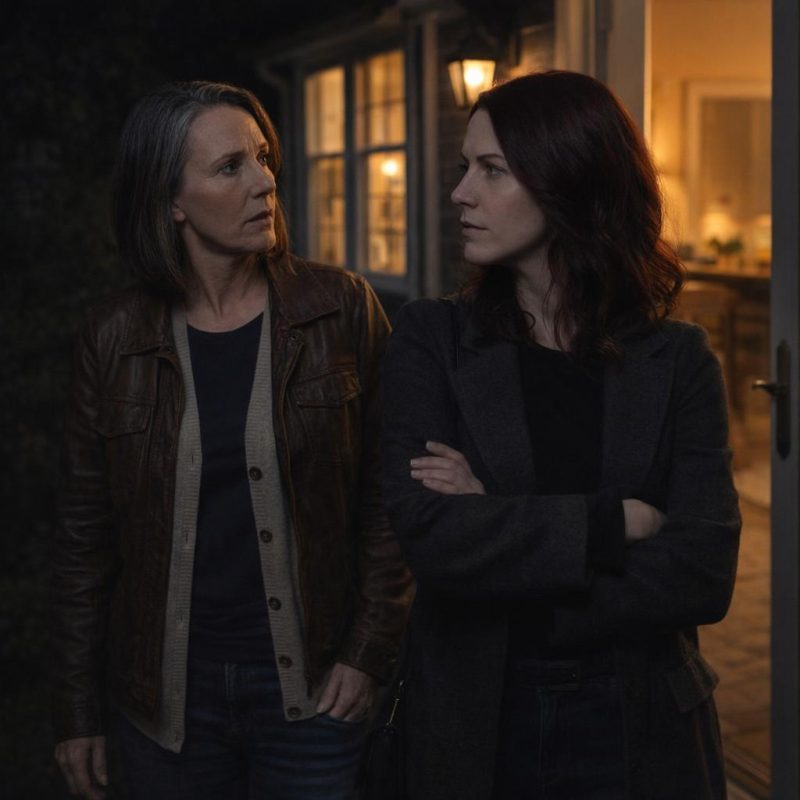 Image by RM AI
The Attorney's Number
I didn't sleep well. Paige texted me twice more that night with longer explanations about asset separation and business restructuring that read like she'd copied them from somewhere. I read them both and understood them less each time. By morning I'd made up my mind. I had an attorney — Denise, who'd handled the sale of my mother's house a few years back. She was sharp and she didn't waste words, and I trusted her more than I trusted anyone I'd spoken to in the last twelve hours. I called her just after eight. I told her I thought I'd signed something I didn't fully understand, that my name was apparently on a holding company I'd never agreed to own, and that when I'd asked for an explanation at dinner the night before, nobody had given me one that made any sense. I expected her to tell me I was probably overreacting, that these things happen in family businesses, that it was likely nothing. She didn't say any of that. She asked me for the company's name and any registration details I had. I told her what little I knew. I heard her typing. The silence on the line stretched out longer than I expected. Then she told me to come to her office — right now, this morning, as soon as I could get there.
 Image by RM AI
The Drive to Denise's Office
I grabbed my keys and left without eating breakfast. The drive to Denise's office takes about twenty minutes on a normal day, but that morning it felt twice as long. I kept replaying the way her voice had shifted on the phone — not alarmed exactly, but focused in a way that told me she'd found something worth focusing on. Denise doesn't do dramatic. If she wanted me there immediately, there was a reason. I tried to think through what I actually knew. My daughter had brought papers to my house. I'd signed them at my kitchen counter without reading them properly. Months had passed. Then Celeste had thanked me at dinner for a favor I didn't remember doing, and the whole table had gone quiet. I turned that sequence over in my mind, looking for the version of it that was innocent and explainable. I told myself I'd trusted Paige because she was my daughter, and that wasn't a foolish thing to do. I told myself that more than once on that drive. I parked in the small lot outside Denise's building and sat in the car for a moment before going in, the quiet of the morning around me, Denise's tone from the phone still pressing against the inside of my chest.
 Image by RM AI
The Company File
Denise was already at her desk when I walked in, no small talk, no offer of coffee. She turned her monitor toward me before I'd even sat down. The screen showed what looked like a state business registration — the kind of form you file when you're starting a company. I leaned in. The company name meant nothing to me, some bland combination of initials and the word Holdings. But the name listed under controlling member stopped me cold. It was mine. My full legal name, spelled out correctly, on a document I had never seen before in my life. I told Denise I had never created any company, never signed anything with that name on it, never even heard of it. She said she believed me. She said it quietly, the way you say something when you've already moved past the part where you're deciding whether to believe someone and you're onto the next problem. The company had been created five months earlier, she told me. Five months. I sat there staring at my own name on her screen, and I couldn't quite make it feel real — like reading a word so many times it stops looking like a word. Then Denise said the company appeared to own something, and she began to explain what that something was.
 Image by RM AI
Hundreds of Thousands
Denise pulled up another document and walked me through it slowly, the way you do when you're not sure how much the other person can absorb at once. The company in my name held publishing and royalty interests. She explained what that meant in plain terms — the right to collect money every time certain recordings were used, licensed, streamed, or sold. The recordings had been made roughly twenty-five years earlier, she said, by one of the biggest artists Martin's label had ever worked with. She couldn't name the artist for legal reasons, but she said I would recognize the name immediately. I believed her. She pulled up a financial estimate and turned the screen toward me again. The catalog, she said, could generate hundreds of thousands of dollars every year. I heard the number and just sat there. I told her I had never received a single penny — not a check, not a deposit, not a letter, nothing. Denise's expression didn't change much, but something behind her eyes went very still. She set her pen down on the legal pad and said we needed to find out who had been receiving the money, because it certainly wasn't me.
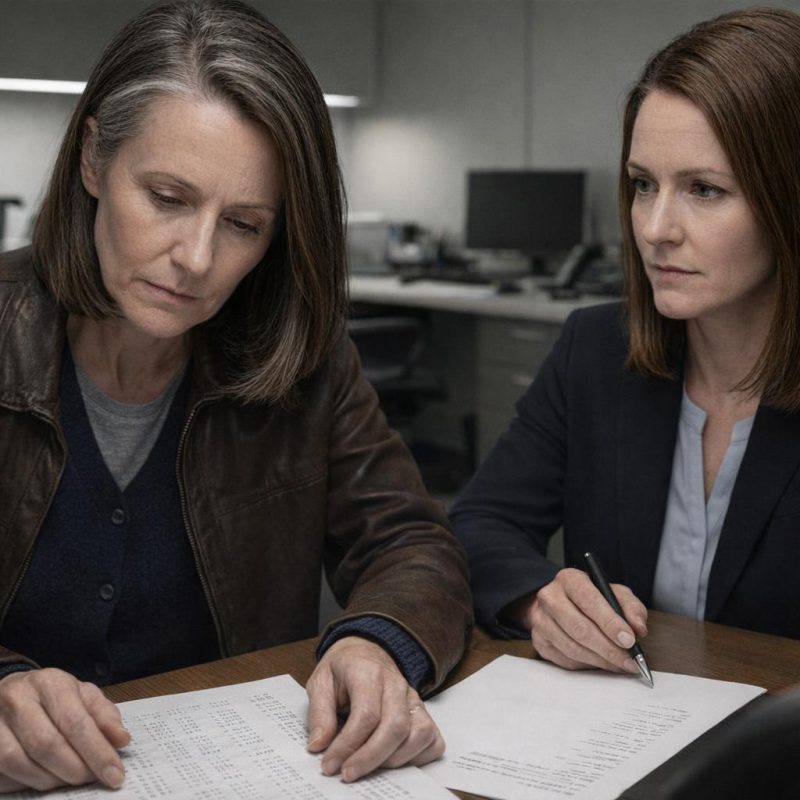 Image by RM AI
The Missing Money
I sat in the chair across from Denise and tried to let it settle. A company existed in my name. That company owned music rights worth hundreds of thousands of dollars a year. And I had never seen a single dollar of it. I kept turning that over, waiting for the part where it made sense. It didn't. Denise was already writing on her legal pad, talking through what she'd need to request — the full documents bearing my signature, the company's financial records, anything that showed where the income had been going. She said the pages I'd signed at my kitchen counter might have been incorporated into a much larger agreement, one I'd never been shown. She said it carefully, like she was handing me something fragile. I asked her what that meant, exactly. She said it meant my signature might be on a contract I'd never read. I didn't say anything after that. There wasn't anything to say. The office was quiet except for the scratch of her pen, and I sat there with the weight of it pressing down — the money that should have been mine, going somewhere I didn't know, for months I couldn't account for.
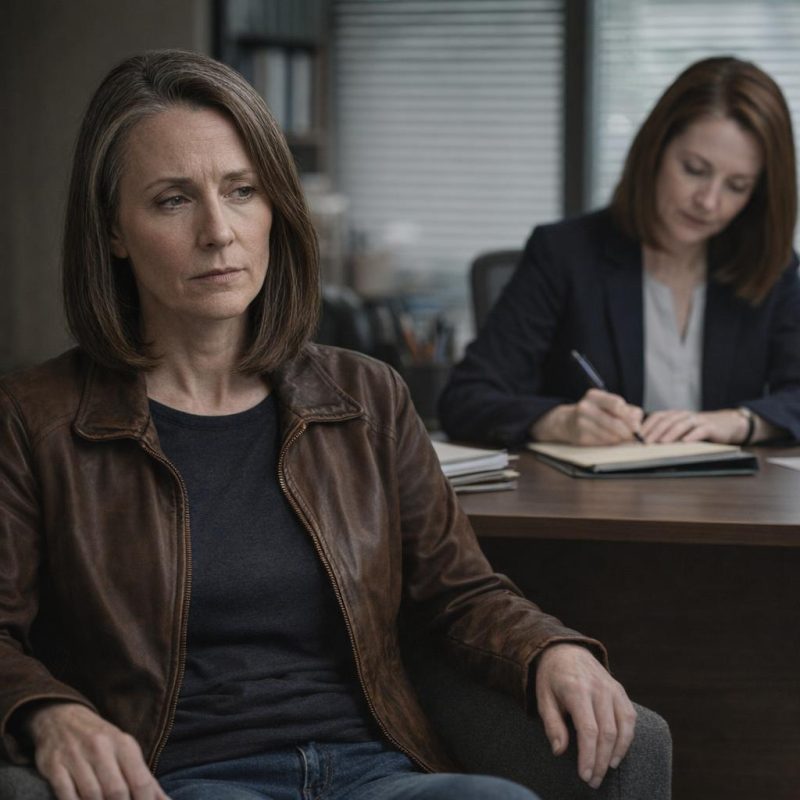 Image by RM AI
The Document Request
Denise sent the formal request that same afternoon — a letter to the company's registered agent demanding all documents bearing my signature. She told me to go home, try to eat something, and wait. Waiting turned out to be the hardest part. I checked my phone more times than I want to admit. I went over every detail I could remember about the day Paige had brought those papers to my house — what she'd said, how she'd acted, whether anything had seemed off. I kept landing on the same answer: she'd seemed nervous, but I'd chalked that up to Paige always being nervous. Several days later, Denise called and told me the documents had arrived. I drove back to her office and we sat down together and went through them page by page. Most of it was dense legal language I'd never seen before — pages and pages of it, agreements and schedules and exhibits. And then there it was, buried deep in the stack: my signature, twice, on two pages that looked nothing like the rest. The surrounding text was completely unfamiliar — every word around my name belonging to an agreement I had never been shown and never read.
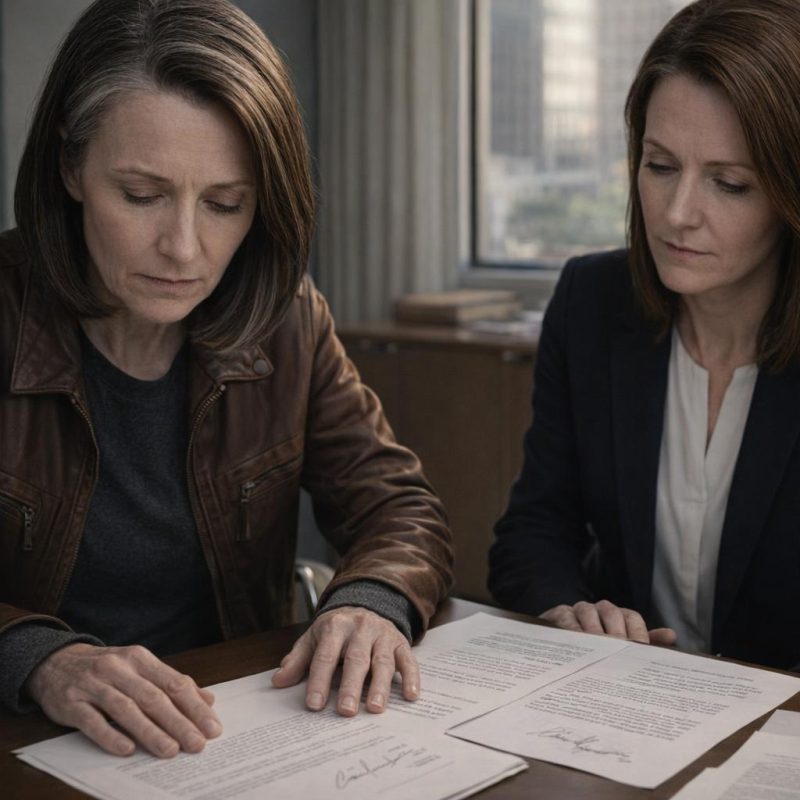 Image by RM AI
What Paige Knew
I drove to Paige's house the next morning. I told myself on the way over that she'd been used too, that Grant's family had pulled her into something she didn't fully understand, that she was as much a victim as I was. I needed to believe that. I walked in and she took one look at my face and started crying before I'd said a word. She kept saying please, please don't get lawyers involved, please just let the family handle it. I asked her to sit down. I asked her, as calmly as I could manage, whether she had known the company was being put in my name. She didn't answer right away. She looked at the floor, then at her hands, then somewhere past my shoulder. She said Grant had told her it was temporary. She said the family planned to transfer everything back once some kind of dispute was resolved. She said it was harmless, that no one was going to come after me, that it was just paperwork. I asked her again: did she know my name was on it? She said yes. That one word sat between us like something dropped from a great height, and I couldn't look away from her face when she said it.
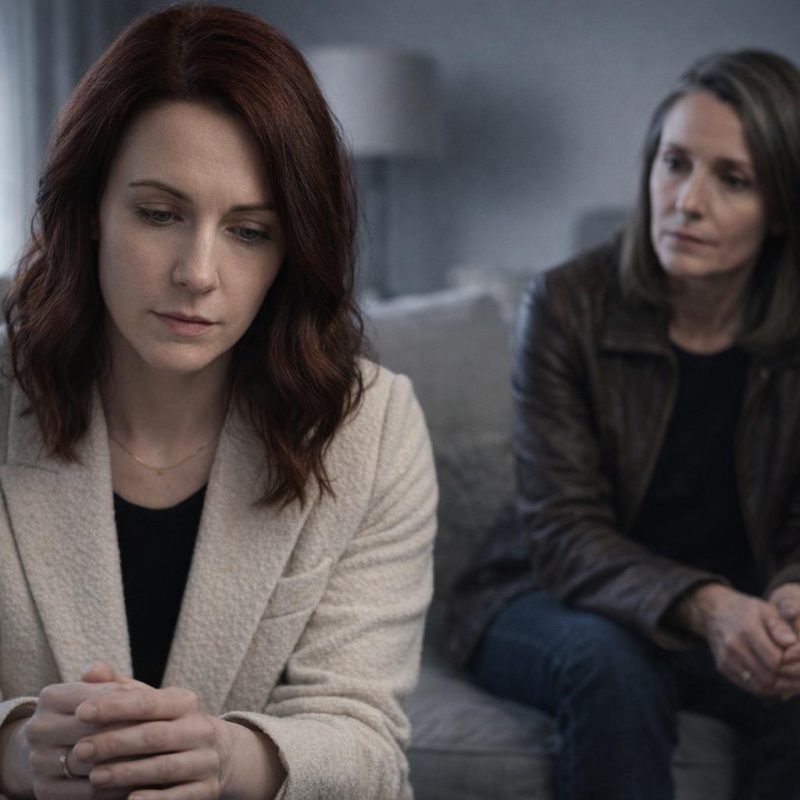 Image by RM AI
The Pages I Signed
I went back to Denise the following morning with everything I'd learned from Paige. Denise spread the documents across her desk and went through them again, this time with a highlighter and a magnifying glass, which I hadn't seen her use before. She confirmed what she'd suspected. The two pages I'd signed — the ones Paige had brought to my kitchen, the ones I'd put my name on without reading — had been embedded inside a much larger agreement. Not attached. Not referenced. Embedded, as if they'd always been part of it. The full agreement ran to dozens of pages. I had never seen any of it except those two. Denise explained that the way the documents were structured, my signature appeared to authorize the entire thing — the company formation, the transfer of rights, my role as controlling member. All of it. She said it plainly, without softening it. I sat there and thought about my kitchen counter, the pen in my hand, Paige standing across from me looking like she needed me to just say yes. Someone had taken those two pages and built an entire legal structure around them, and I had never known there was anything to build.
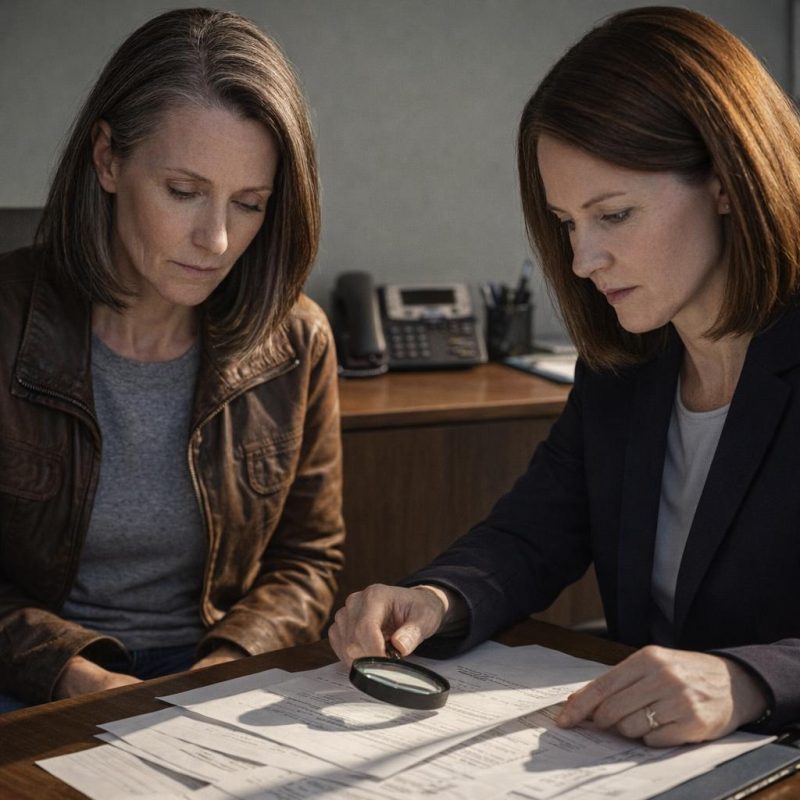 Image by RM AI
The Ongoing Dispute
I went back to Paige that afternoon. I wasn't calm this time. I told her I'd been to Denise, I'd seen the full documents, and I needed her to stop protecting people who had put my name on something without my knowledge. She started in again about how it was temporary, how the family had always planned to fix it, how Grant had promised her. I asked her what exactly they were waiting to fix it after. She said there was a dispute that needed to be resolved first. I stopped her right there. I asked her what dispute. She looked away. She said something vague about a legal issue with an old recording contract, something from years back, something she didn't really understand. I told her that wasn't good enough. She started gathering her things like she was going to leave the room, and I stepped in front of her and said her name, just once, and told her she was not walking away from this conversation until she told me what dispute she was talking about.
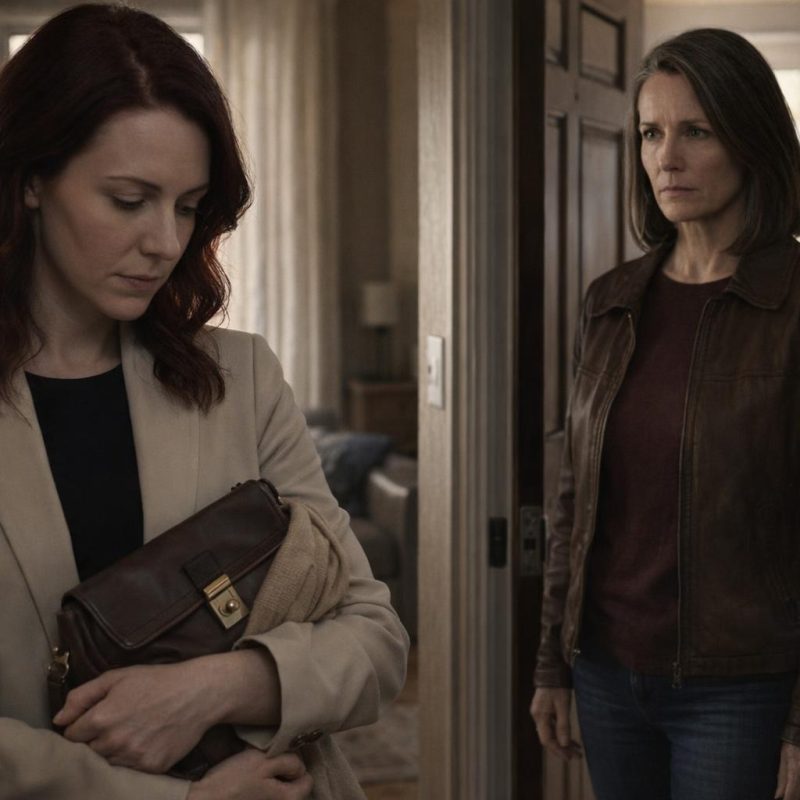 Image by RM AI
The Famous Artist
I went straight back to Denise and told her everything Paige had said about the dispute. Denise didn't look surprised. She said she'd already started pulling legal filings connected to Martin's label, and she'd found something. She turned her monitor toward me. There was a former recording artist — someone she couldn't name, but someone whose music had been everywhere when Paige was in middle school, the kind of songs you couldn't escape — who was challenging the label's ownership of several early recordings. The artist claimed the rights to those songs had been obtained under an agreement that was now being contested. Denise scrolled down and pointed to a timeline. The challenge had been building for a while, she said, but there was a specific point where it became serious — where it looked like it might actually go somewhere. She tapped the screen. Shortly before that point, those particular rights had been moved out of Martin's label. They'd passed through a couple of transfers, she said, and eventually landed in the company registered in my name.
 Image by RM AI
Creating Distance
I sat there staring at Denise's monitor and tried to make the pieces fit. The rights had been moved out of Martin's label right before the artist's challenge became serious, and they'd landed in a company registered in my name. My name. Not Martin's. Not Grant's. Mine. And then it hit me — Celeste thanking me at that dinner, so warm, so genuine, like I'd done something kind for the family. She'd believed I had. She'd believed I'd volunteered to help with some kind of business arrangement, because that's what she'd been told. My name on those documents created distance between the disputed catalog and Martin's family. If anyone came asking, the paperwork pointed at me. I looked like someone who had independently acquired valuable music rights. Martin's family looked clean. I felt the anger move through me like something physical — at Martin, at Grant, at all of it. But Denise was frowning at her notepad, and I could tell she wasn't finished. She said something still didn't fit. I asked her what she meant. She said that anyone investigating would find my connection to Grant's family within about ten minutes — it was a matter of public record. She tapped her pen against the legal pad. Then she said, in a voice pulled flat and even, that someone was positioning me to take responsibility for something.
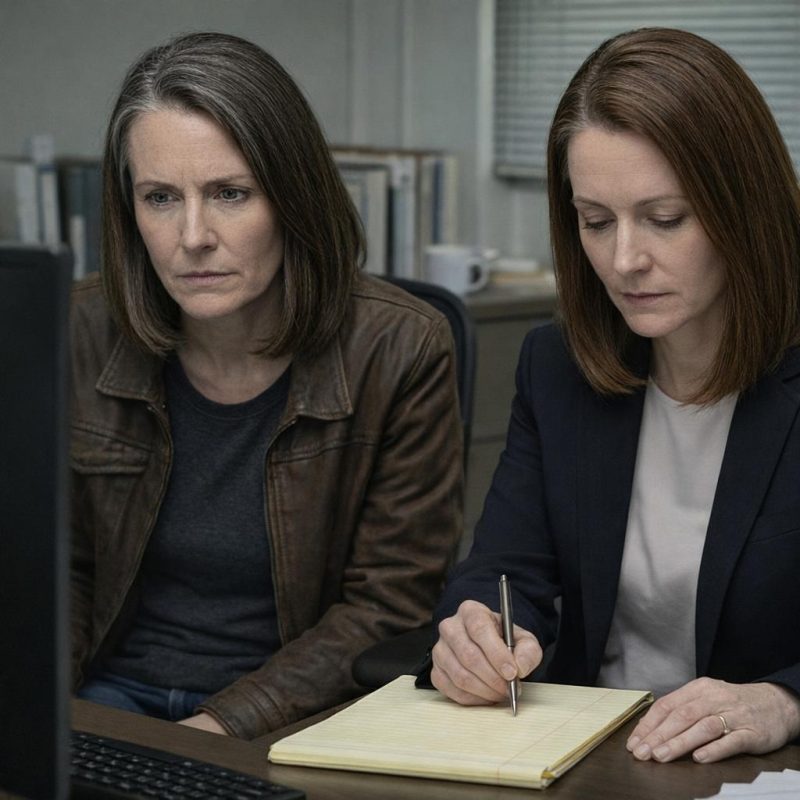 Image by RM AI
The First Mention of a Dispute
I asked Denise to back up and explain the artist's challenge from the beginning, because I needed to understand what I was actually sitting in the middle of. She pulled up the filings and walked me through it. Roughly twenty-five years ago, a recording artist had signed an agreement with Martin's label — an agreement that covered publishing rights and royalty percentages on several early songs. Those songs had been everywhere. The kind of music that played at every school dance, every road trip, every summer for about three years straight. The artist was now claiming the original agreement had been exploitative, that the terms had been misrepresented, and that the label's ownership of those rights should never have stood. Denise said the challenge had been building quietly for a while, but there was a point where it shifted — where it started to look like it might actually have legs. She couldn't name the artist for legal reasons, she said, but she could show me the timeline. She turned the monitor back toward me and pointed. The disputed rights had been transferred out of Martin's label and into the company registered in my name right around the time the challenge started gaining traction. I asked her what that meant for me legally. She said it meant someone had wanted distance between the label and those specific rights — and they'd put my name between them. I sat with that for a long moment, the weight of it settling somewhere behind my sternum.
 Image by RM AI
The Artist's Name
Denise showed me the actual filings — pages of legal language with certain names blacked out, but enough context left visible that I didn't need the name spelled out. The songs being disputed were described in enough detail that I knew exactly which artist she was talking about. I'd bought one of those albums myself. I remembered the cassette tape sitting in the cupholder of my old Civic, Paige in the backseat singing along to every word before she was old enough to understand half of them. She'd known every lyric by heart. She used to perform the whole thing for me at stoplights, completely unselfconscious, arms out, eyes closed. I hadn't thought about that in years. Sitting in Denise's office with those redacted pages in my hands, I thought about it now. The artist was claiming the original agreement had been exploitative — that the royalty split had been structured in a way that stripped them of most of what they'd earned, and that the publishing rights had been obtained under terms that were now being challenged as fundamentally unfair. Denise said the case had real merit, which was probably why someone had moved quickly. She said she still needed to trace where the money from my company had actually been going — that was the next piece she had to find. I set the pages down on her desk and didn't say anything for a while.
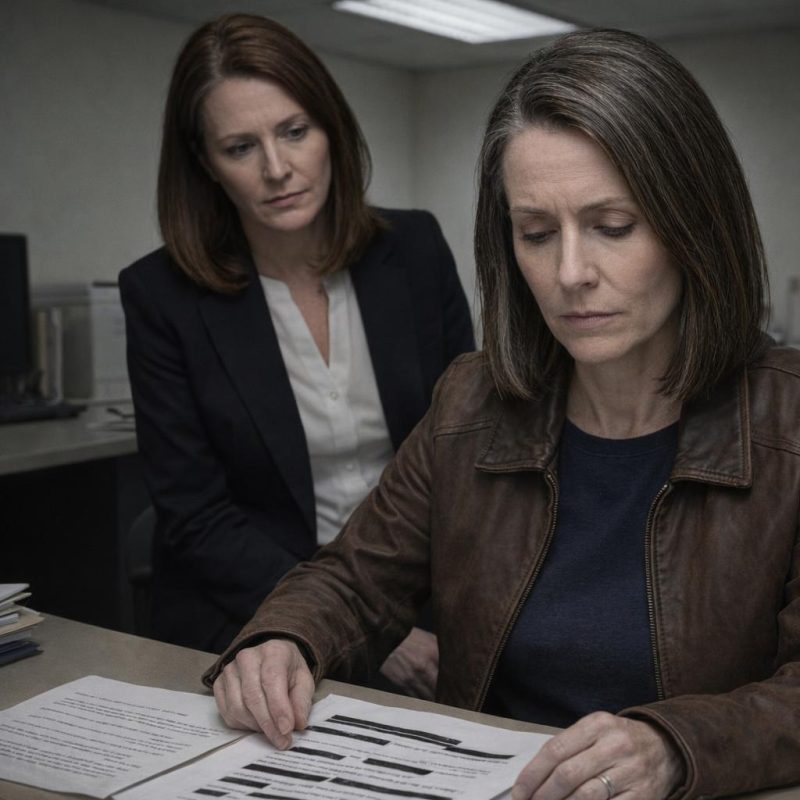 Image by RM AI
The Transfer Timeline
Denise pulled up the transfer documents the next morning and laid them out side by side on her desk so I could see the sequence. The disputed rights had left Martin's label on a specific date — she pointed to it with her pen. Then she moved her pen to the right. Those same rights appeared in the company registered in my name exactly fourteen days later. I counted the gap twice because I didn't want to believe it. Fourteen days. She let me sit with that before she kept going. The artist's legal challenge had been filed publicly three weeks after that. So the rights had moved out of the label, landed in my company, and then the lawsuit hit — all within five weeks. I asked Denise how anyone could have known the challenge was coming before it was filed. She said the artist had almost certainly sent a formal demand letter or a notice of intent before going to court — that was standard practice. It would have given Martin's side a window. A small one, but enough. I looked at the two dates on the documents, sitting there on her desk, lined up so neatly it made my stomach turn.
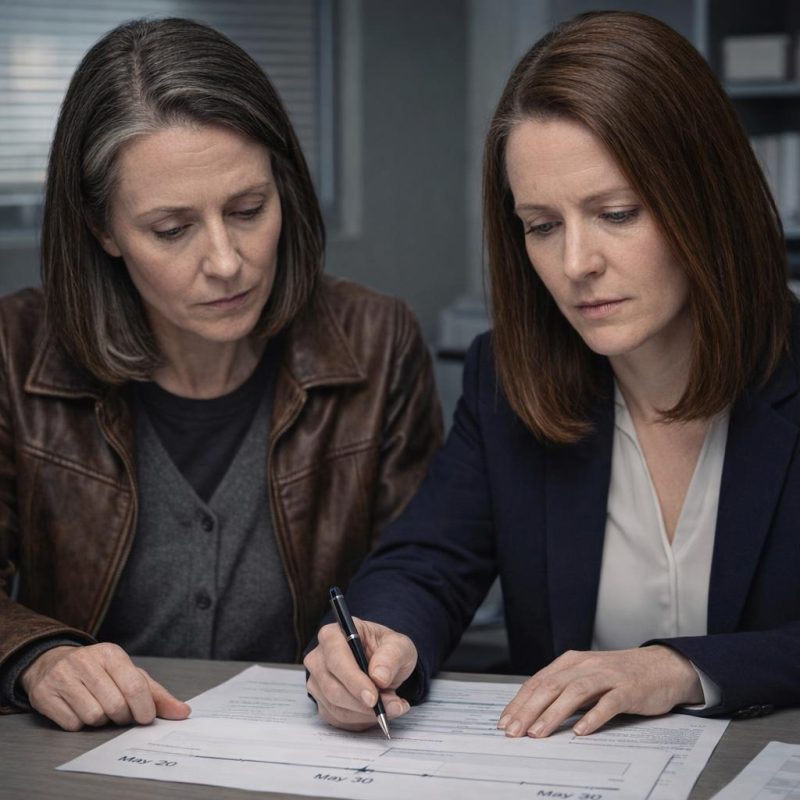 Image by RM AI
Understanding the Shield
I kept staring at those dates and trying to find another explanation, but there wasn't one that held. My name was on the company that now held the disputed rights. If the artist's lawyers pulled the ownership records — and they would, that was the whole point of a legal challenge — they'd find my name. Not Martin's. Not Grant's. Mine. The paperwork made it look like I had independently acquired these rights, like I was some separate party who had nothing to do with the label. Martin's family would appear to have no connection to that catalog anymore. And then I thought about Celeste at that dinner, reaching across the table and squeezing my hand, thanking me for being so generous with the family. She'd meant it. She'd genuinely believed I had done something helpful, something willing. She didn't know what she was thanking me for any more than I had. I thought about signing those documents in Grant's kitchen, thinking I was helping my daughter's family with some routine business matter. I thought about how easy it had been — how unremarkable the whole thing had seemed in the moment. I sat in Denise's office and felt something go hollow in my chest, the slow, settling weight of understanding that I had been placed exactly where someone needed me to be.
 Image by RM AI
The Obvious Connection
I told Denise that the whole thing had a flaw in it that I couldn't get past. Anyone who pulled my name from those ownership documents and ran it for five minutes would find out I was Grant's mother-in-law. That wasn't hidden. It was in the marriage records. It was on Paige and Grant's wedding announcement, for all I knew. I wasn't some stranger with no connection to the family — I was the mother of the woman who had married Martin's son. Denise nodded slowly. She said she'd been thinking the same thing. She said using me didn't actually create real distance from the label, not the kind that would hold up if someone looked carefully. Any investigator worth their billing rate would find the family connection inside of a day. I asked her what that meant, then — why use me at all if the distance wasn't real. She was quiet for a moment, and I watched her expression shift into something more careful. She said that was exactly what was bothering her. She said if hiding ownership wasn't the real point, then something else was going on — something she hadn't fully traced yet. She said she needed more time with the financial records before she could say what it was. I left her office that afternoon with the uneasy feeling that the piece I hadn't seen yet was probably the worst one.
 Image by RM AI
What Denise Suspects
I went back to Denise two days later and she got straight to it. She said she'd been turning the question over — why use me if the connection to Grant's family was so easy to find — and she'd landed somewhere that worried her. She said she didn't think the point was to hide ownership. She thought the point was something else entirely. I asked her what she meant. She said that as the listed controlling member of the company, I was the person legally associated with any decisions that company made. Any transactions. Any agreements. Any money that moved through that account. If someone came looking — not just the artist's lawyers, but anyone with authority to investigate — they would find my name on the company, and my name only. Grant's family would be one step removed. I would be the one standing in front of it. I asked her if she was saying what I thought she was saying. She said she needed to see the company's bank records before she could tell me anything for certain. Then she said it plainly: she thought I was positioned not to hide what had happened, but to take responsibility for it. The words landed and the room tilted around them.
 Image by RM AI
Requesting the Bank Records
Denise drafted the request that same afternoon. She explained that as the listed controlling member of the company, I had the legal right to access its complete financial records — the bank couldn't refuse me. She walked me through what she was asking for: every transaction, every transfer, every account statement from the date the company was formed. She said the bank would take several days to compile everything, maybe longer depending on how the account had been structured. Then she looked at me over her reading glasses and said I should prepare myself. I asked her what she meant. She said that if significant amounts of money had moved through that account — amounts I hadn't authorized and hadn't known about — my legal exposure could be serious. Not just civil. I sat with that word for a second. She said she wasn't trying to frighten me, she was trying to make sure I understood what we might be walking into. I told her to send the request. She signed the letter, folded it into an envelope, and handed it to her assistant to go out that day. I watched the assistant carry it out of the office, and I thought about how strange it was — that a single envelope could feel like pulling back a curtain I wasn't sure I was ready to see behind.
 Image by RM AI
The Waiting
The days between sending that request and hearing back from Denise were some of the longest I can remember. I went to work. I came home. I made dinner I didn't eat. I kept my phone on the counter face-up, which I never do, and every time it buzzed I felt my stomach drop before I even looked at the screen. I didn't call Paige. I wanted to — there were moments I had my hand on the phone, her name already pulled up — but I didn't know what I'd say. I couldn't ask her questions I wasn't ready to hear the answers to. And Grant I avoided entirely. I just couldn't. I kept going back to that dinner at Martin and Celeste's house, turning it over in my mind like a stone I couldn't put down. The food, the wine, the way Martin had steered every conversation. And Celeste — the way she'd thanked me so warmly, so easily, like I'd done her a personal favor. That thank-you had felt wrong in the moment and it felt worse every time I replayed it. I didn't know what she'd meant by it. I wasn't sure I wanted to. On the fourth day, Denise called and said the records had arrived at her office. I was in my car before she finished the sentence.
 Image by RM AI
The Bank Records
Denise had the folder open on the table when I walked in. She didn't waste time. She turned the first page toward me and pointed to a column of deposits — clean, regular, substantial. Royalty payments, she said. Music publishing income flowing into the company account, the one in my name, going back months. I recognized the name of the label on some of the deposit lines. I'd heard Paige mention it. The amounts varied but none of them were small. I asked Denise what happened to the money after it came in. She turned to the next set of pages. After each deposit — sometimes within days, sometimes within a week — there was a corresponding transfer out. Same pattern, every time. Money in, money out. She said the transfers went to a separate entity, a corporation I'd never heard of. She said the documentation attached to each transfer listed it as authorized by the account holder. She tapped the page. The account holder was me. I sat back in my chair and looked at the columns of numbers. The transfers added up. I watched Denise's finger move down the page to the running total at the bottom, and the number it landed on made the room go very quiet.
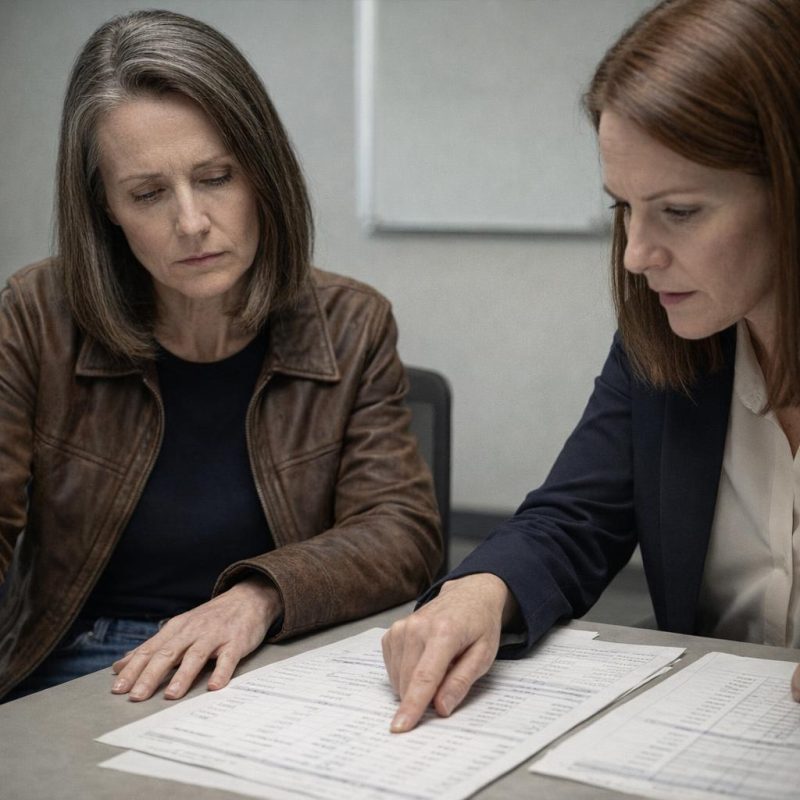 Image by RM AI
Hundreds of Thousands
Three hundred and forty-two thousand dollars. I said it out loud just to hear if it sounded real. It didn't. Denise let me sit with it for a moment before she kept going. The transfers had happened over five months, she said. Each one timed to follow a royalty deposit by a few days, sometimes less. She laid out the pattern on the table between us like she was explaining a math problem, calm and precise, and I appreciated that she didn't soften it. She said the paperwork made it appear that I had authorized every single transfer. Signed off. Approved. I told her I had never authorized anything — I hadn't even known the account existed until a few weeks ago. She said she believed me. Then she said that believing me and proving it were two very different things, and that the documentation was thorough. She was already working to identify the corporation that had received the money. It belonged to another registered entity, she said, and she was pulling the records. I nodded. I watched her write something on her legal pad. But mostly I just sat there, thinking about how all of that money — more than I'd earned in years — had moved through something with my name on it, and I hadn't felt so much as a ripple.
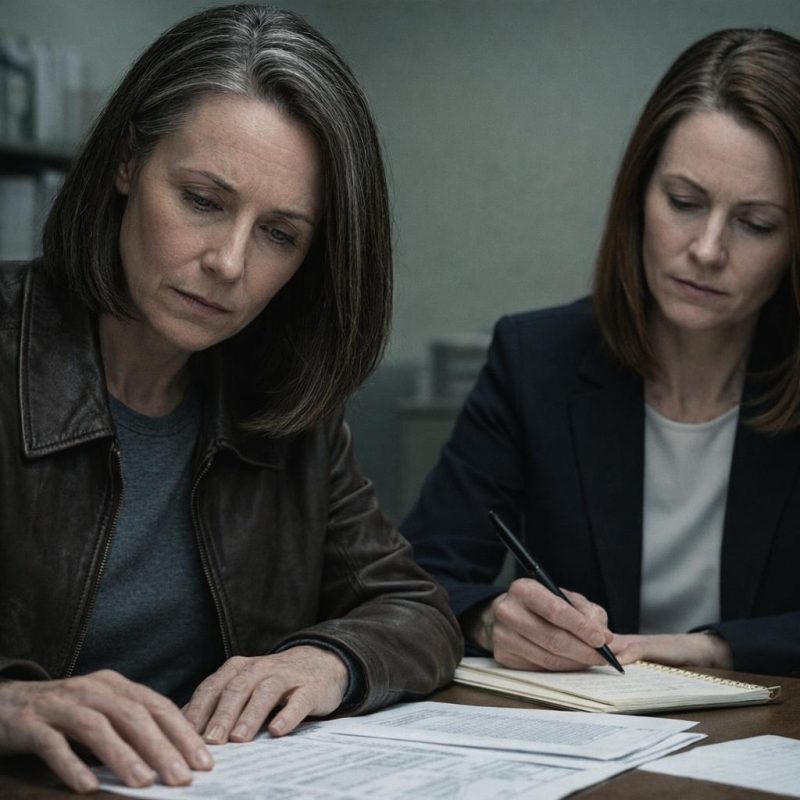 Image by RM AI
Following the Money
Denise found the contracts within the hour. She spread them across the table — several pages, formal-looking, the kind of documents that are designed to look unquestionable. They described the transfers as payments for consulting and management services. Specifically, services related to administering the music rights during the catalog dispute. Everything was itemized, professional, dated. I told Denise I had never approved any consulting agreements. She nodded like she'd expected that. Then she turned to the signature pages. My name was printed at the bottom of each one, and above it was a signature. I stared at it. It looked something like my handwriting — the general shape of it, the way the letters leaned — but it wasn't right. Something was off in the way the letters connected. I told Denise that wasn't my signature. She said she could see the discrepancy and that a forensic document examiner could confirm it, but that it would take time. She was already moving on, pulling up something else on her laptop, typing quickly. I asked her what she was looking at. She said she was pulling the registration documents for the corporation that had received all the money. She turned the laptop toward me so I could see the screen.
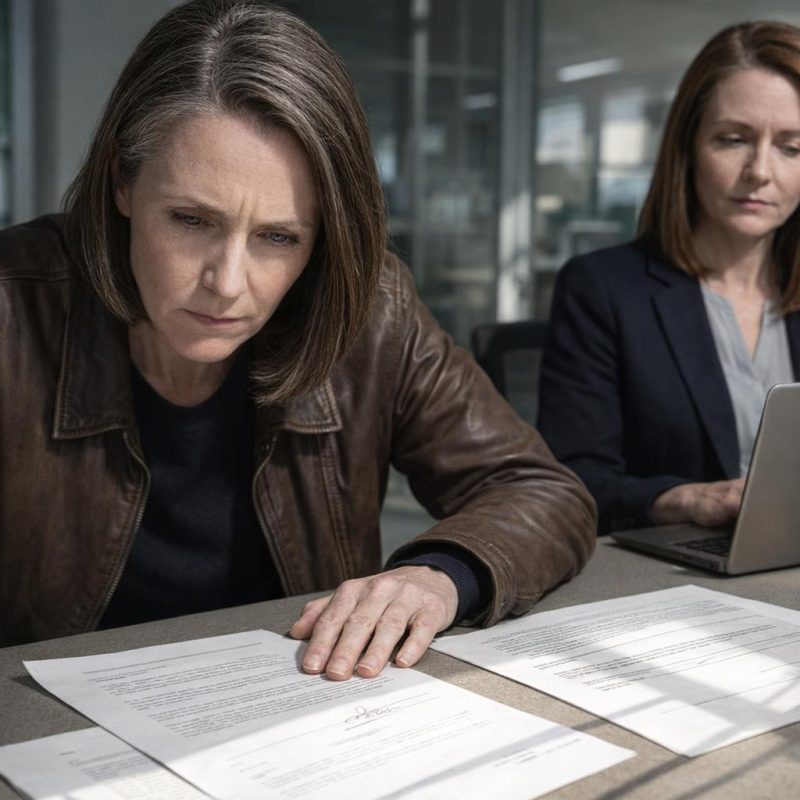 Image by RM AI
The Trap Closes
Denise walked me through it slowly, and I made myself listen to every word. The company was in my name. The bank account was in my name. The transfer authorizations bore what looked like my signature. The consulting contracts bore what looked like my signature. If the artist's legal challenge succeeded and anyone started asking where the royalty money had gone, every piece of paper in that folder pointed straight at me. Denise said Martin's family could claim they had no knowledge of the transfers — that the account was mine, the authorizations were mine, the decisions were mine. She said I could be accused of misappropriating funds that were supposed to be held in trust during the dispute. I asked her what we needed to do. She said we needed to confront Martin and Grant, and we needed to do it soon, before anyone else started pulling on the same threads. I told her I wanted to talk to Grant first. Privately, before Paige got pulled into it. Denise looked at me for a moment and said to be careful. I said I would. But sitting there in that office, looking at my name on documents I'd never seen and signatures I'd never written, careful felt like a very small word for what I was actually feeling — which was that somehow I had ended up holding something I never agreed to carry.
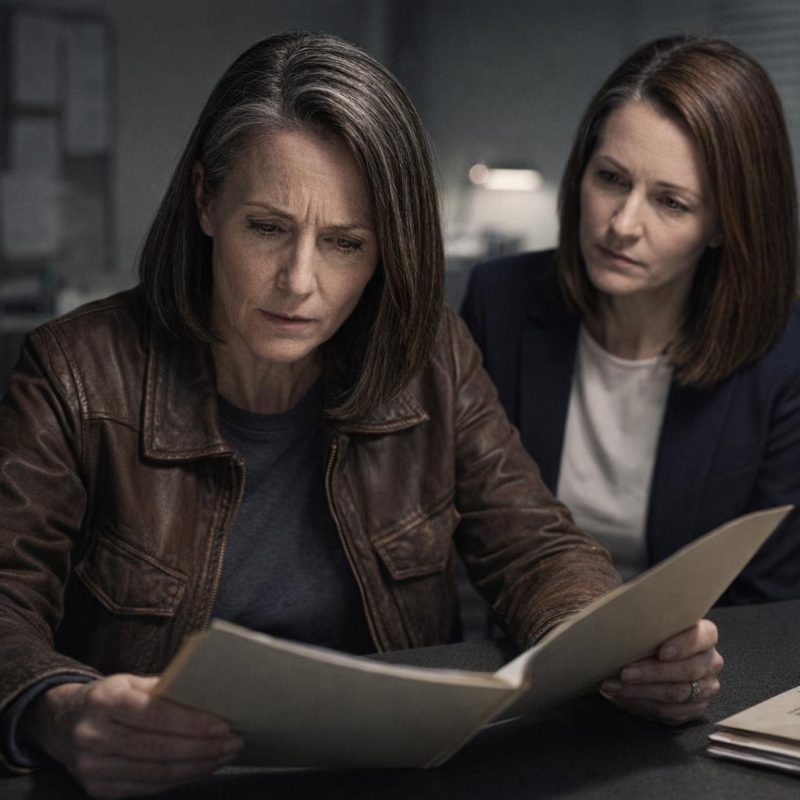 Image by RM AI
Before the Confrontation
I drove home from Denise's office and sat at my kitchen table for a long time before I picked up my phone. I knew what I needed to do. I needed to look Grant in the eye and ask him what he knew, and I needed to do it without Paige in the room. If she was there, she'd try to smooth it over. She'd look at me with that expression she gets — the one that's half apology and half please don't make this harder — and I'd end up managing her feelings instead of getting answers. I couldn't afford that. Denise had told me to be careful, not to agree to anything, not to make any promises without her present. I understood that. But I also needed to know what Grant had understood about this arrangement, and I needed to hear it from him directly, not filtered through lawyers or family loyalty. I called him. He picked up on the second ring, which surprised me. I told him I needed to meet, just the two of us, and that it was important. He said okay without asking why, which told me something, though I wasn't sure what. We agreed on a coffee shop near his office for the following morning. I didn't tell Paige. I made copies of the bank records, put them in a folder, and set it by the door. The decision to face him alone, without my daughter there to soften what was coming, settled over me like something I'd already known I'd have to do.
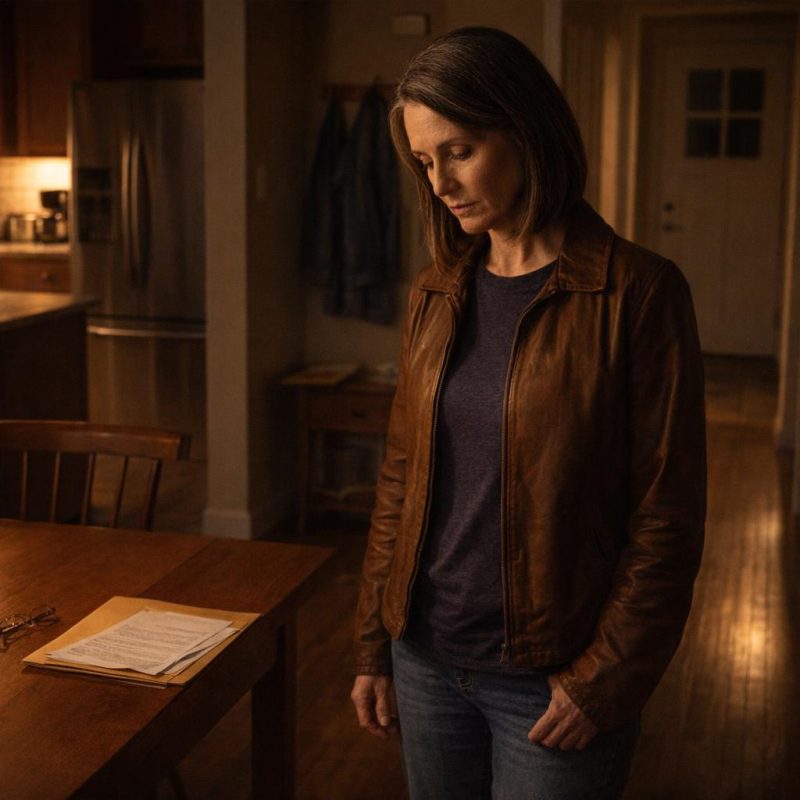 Image by RM AI
Grant Goes Pale
Grant was already there when I arrived, sitting at a corner table with a coffee he hadn't touched. He stood when he saw me, which was the kind of thing his upbringing had trained into him, and I appreciated it even then. I sat down across from him and put the folder on the table between us without saying anything. He looked at it, then at me. He asked what this was about. I told him to open it. He did. I watched the color leave his face — not gradually, but all at once, like something had been pulled out from under him. He stared at the first page for a long moment. I asked him if he knew about the transfers. He said he'd only followed his father's instructions. He said the arrangement was supposed to be temporary — that Martin had told him it was necessary to protect the label while the catalog dispute was being resolved. His voice was steady but his hands weren't. I asked him if he knew how my signature had been obtained. He looked up at me then, and something shifted in his expression — not guilt exactly, but something close to it, something that looked like a man realizing the ground under him was not what he'd been told it was. He reached for the bank records, and his hands were shaking.
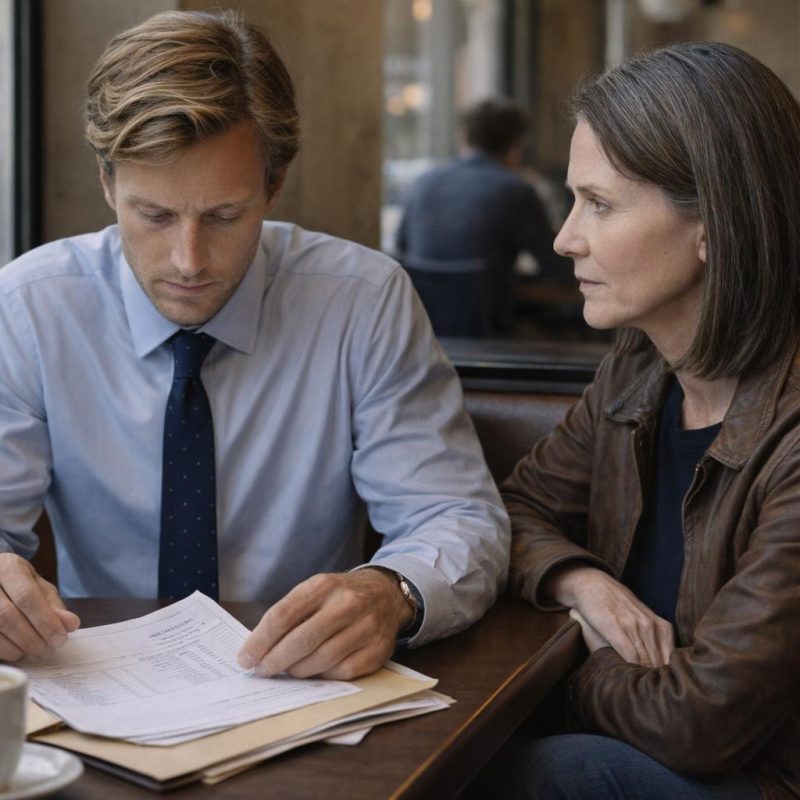 Image by RM AI
What Grant Was Told
Grant set the pages down and pressed his hands flat on the table, like he needed something solid. He said Paige had told him I understood the arrangement. That I'd agreed to help with a temporary business restructuring, that I knew what the papers were for and had volunteered. I told him that Paige had handed me documents at a kitchen table and told me they were routine. That nobody explained what I was signing or what it would be used for. He stared at me. He said that wasn't what he'd been told. He said his father had assured him that everything had been properly explained to me — that I was fully informed, that I'd offered to help because I wanted to support the family. I asked him what exactly Martin had said. He walked me through it, haltingly, and as he talked I kept noticing the gaps — the places where what Martin had told Grant didn't match what Paige had told me, and neither of those matched what I actually knew. Martin had told Grant one thing. He'd apparently told Paige something else. And whatever he'd told me had been wrapped in a dinner and a glass of wine and Celeste's warm, oblivious thank-you. Three different stories, three different people, all of us sitting in separate rooms thinking we understood what was happening. The quiet that settled between Grant and me then had a particular weight to it.
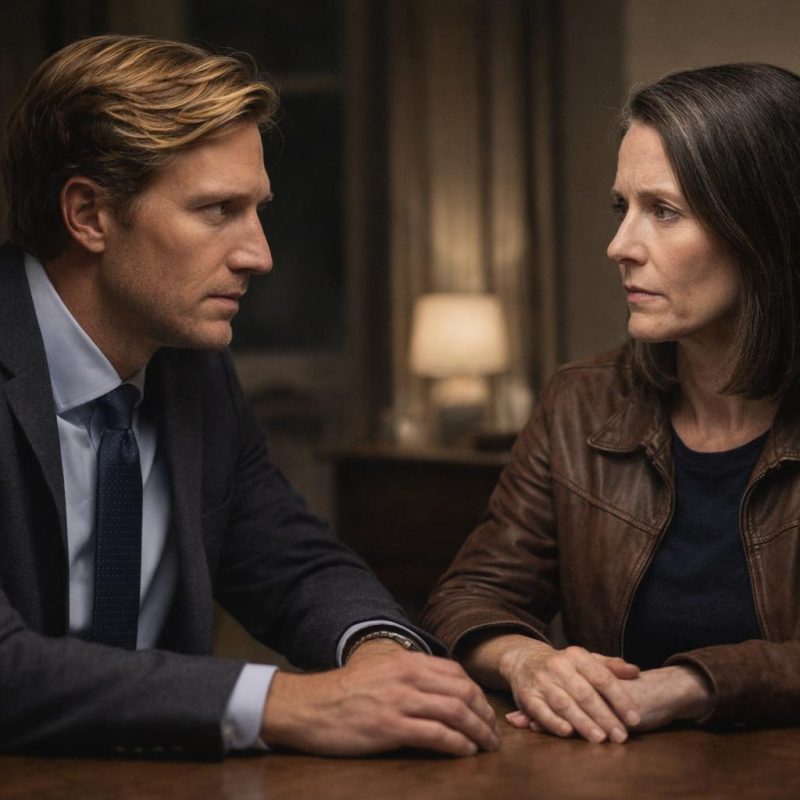 Image by RM AI
Paige's Confession
I drove straight to Paige's house after leaving Grant. I didn't call ahead. I didn't trust myself to stay calm on the phone, and I didn't want to give her time to prepare an answer. She opened the door and took one look at my face and stepped back to let me in without a word. We sat at her kitchen table — the same kind of ordinary kitchen table where she'd handed me those papers — and I told her what Grant had said. That he'd been told I understood everything. That I'd volunteered. That I was fully informed. She started crying before I finished the sentence. She said she hadn't told Grant the full truth. She said she hadn't known how. Then she told me about Martin. He had come to her privately, months before any papers appeared, before any dinner, before any of it. He told her the label was facing a legal complication — something technical, something that could become public — and that if it did, it could destroy Grant's reputation right as he was taking over the company. He said he needed someone trustworthy outside the business to hold certain assets temporarily. Someone who wouldn't raise questions. He came to her alone, without Grant. She said that part quietly, like she already knew it was the part that mattered most. I sat with that for a long time after she said it — the image of Martin choosing his moment, choosing his audience, choosing her.
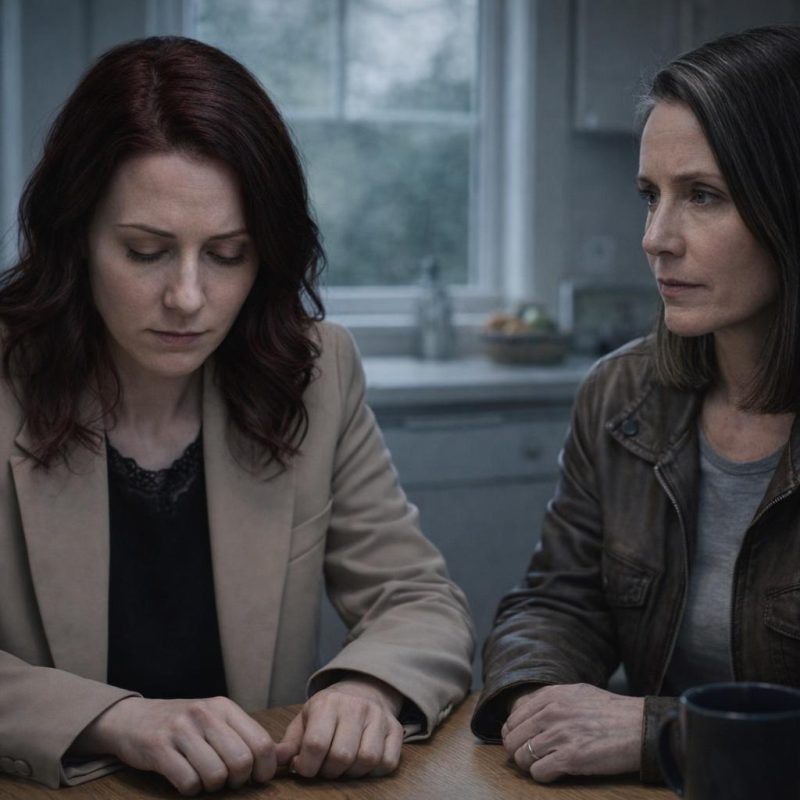 Image by RM AI
The Meeting
Denise didn't waste time once I told her what Paige had said. Within two days she had arranged a formal meeting at her office — Martin, Celeste, Grant, Paige, and two attorneys I didn't recognize who arrived carrying matching leather portfolios. I got there early and sat with Denise while she organized her files. She was calm in the way that people are calm when they've already decided exactly what they're going to do. Martin arrived last. He came in wearing a charcoal suit, silver cufflinks, the whole presentation. He shook hands with the attorneys like he was hosting the meeting himself. He sat down across from me and folded his hands on the table and said that he was glad everyone could be here, that he was sure this could all be cleared up quickly, that the arrangement had always been temporary and entirely above board. Denise let him finish. Then she opened her folder and placed copies of the bank transfer records in front of everyone at the table, one set at a time, without hurrying. She asked Martin to explain the transfers. He said they were payment for consulting and management services rendered to the label. His voice was even, unhurried. Then Denise slid a second document across the table — the registration papers for the corporation that had received every one of those transfers — and Martin's smile didn't move, but something behind it did. I watched him across the table, and I thought: he still thinks he's going to walk out of here the same way he walked in.
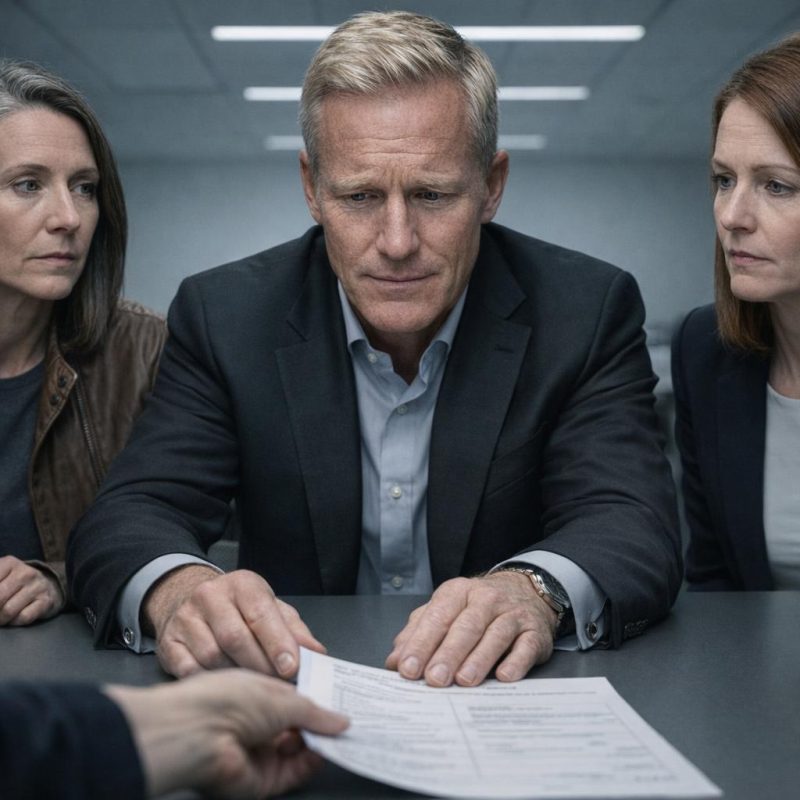 Image by RM AI
The Separate Conversations
Denise had prepared a timeline. A single page, dates down the left margin, names and notes beside each one. She set a copy in front of every person at the table. Martin had gone to Paige first — a private conversation at her home, no Grant present. Three days later, he told Grant that Paige had already spoken with me and that I fully understood the arrangement. Four days after that, he mentioned to Celeste that a family friend had kindly agreed to help with a temporary business matter. Each conversation was separate. Each one assumed the previous person had already handled the part that required explanation. Nobody had. Grant was staring at the timeline. He looked up at his father once, then back down at the page. Paige had gone very still beside him. She said, quietly, that she had believed Martin when he told her Grant's career was at risk. She said she thought she was protecting her spouse. She hadn't known Martin was going to tell Grant that she'd already explained everything to me, because Martin had never told her that part. Martin said there had simply been some miscommunication, that everyone had understood the general shape of the arrangement even if the details hadn't been perfectly coordinated. Denise said the miscommunications were remarkably consistent — each one landing in exactly the place that removed the need for anyone to speak directly with me. The timeline on the page showed Martin spoke to each person separately, days apart.
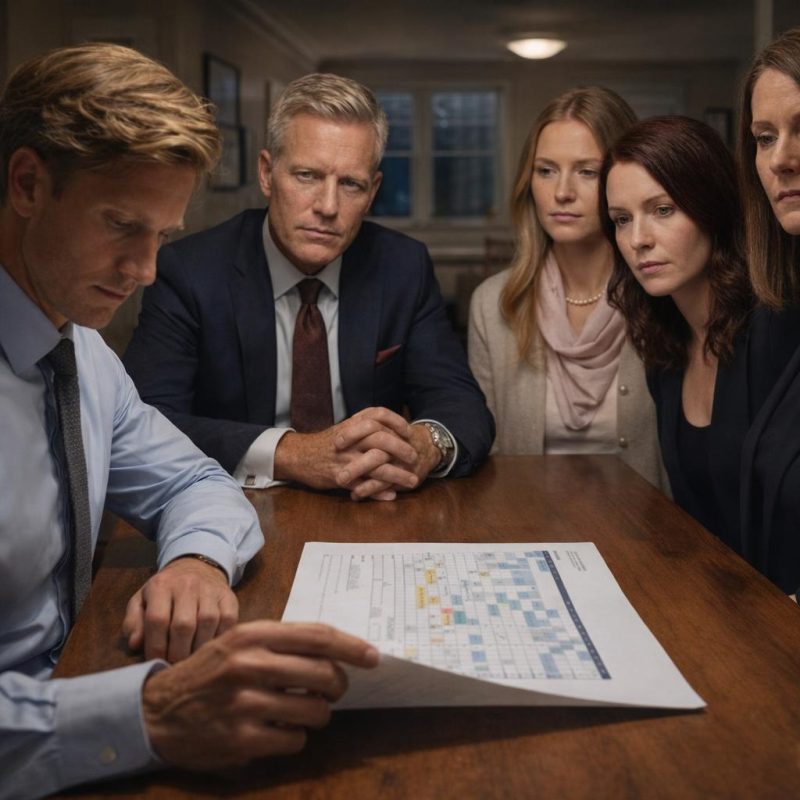 Image by RM AI
The Registration Documents
Martin had an answer for everything Denise put in front of him. The transfers were for services. The timing was coincidental. The structure was standard practice for catalog management. He said it with the patience of someone who had explained complicated things to confused people many times before. Then Denise asked him, directly, to tell the room who owned the corporation that had received the transfers. He paused. It was the first time since he'd walked in that he didn't answer immediately. He said the ownership structure was a private matter. Denise said that was fine, and slid the registration documents to the center of the table. Grant reached for them first. I watched his face as he read. He set the papers down slowly and looked across the table at his mother. Celeste had been quiet through most of the meeting — composed, a little confused, the way someone looks when they've walked into a conversation that started without them. She reached for the documents. Her expression as she read them wasn't the expression of someone caught. It was something else entirely — a kind of bewildered recognition, like she was seeing her own name somewhere she hadn't expected to find it.
 Image by RM AI
What Martin Owed
Grant asked his mother what the corporation was. Celeste said she knew she had been receiving money — Martin had told her he was finally repaying an old debt — but she hadn't known the source. She looked at Martin and asked him, in a voice that had gone very flat, what exactly he had done. And Martin, for the first time since I'd met him, looked like a man who had run out of room. He told us. Years ago, when the label was failing and the debt was serious, Celeste had used a large inheritance from her parents to keep it alive. Martin had promised her a significant ownership stake in return. The label survived. It grew. It became the thing that paid for the suits and the cufflinks and the practiced confidence. But the ownership stake was never properly documented. Celeste had asked him to formalize it, more than once. He kept saying it was complicated. Their marriage had nearly broken over it. After he retired, he said, he decided to make it right the only way he thought he could do quietly. He used income from the disputed catalog to make payments to a corporation he registered in her name. He kept it away from Grant because he thought the company's investors would object. He kept it away from Celeste because he wanted it to be done before she knew it was happening. He looked at me across the table and said he was trying to give Celeste what she was owed.
 Image by RM AI
The Inheritance That Saved Everything
Celeste was the one who filled in the rest. She spoke slowly, like she was choosing each word carefully, or maybe like she was hearing the story herself for the first time even though she'd lived it. In the early years, the label had been Martin's dream and nobody else's money. When it started to collapse under its own debt, he came to her. Her parents had died within a year of each other and left her a substantial inheritance — not a fortune, but enough. Martin asked her to put it all in. She said she agreed on one condition: that she would be a true partner. Not a silent investor. A partner. He promised her a significant ownership stake. She said she had believed him completely. The label turned around. It grew into something real. And the ownership stake never came. She asked him about it for years. He always had a reason — the investors, the timing, the complexity of the structure. She said at some point she stopped asking because she didn't want to watch her marriage finish dying over a piece of paper. She said that quietly, without drama, and it landed harder than anything Martin had said. Grant sat beside her looking like someone had handed him a version of his own family he'd never been shown. Martin had built everything on a promise he made to his spouse and never kept, and carried that weight all the way into retirement before deciding to settle it in secret, with my name on the paperwork.
 Image by RM AI
The Catalog Martin Chose
Denise asked Martin why he had chosen the disputed catalog specifically. He could have used other income streams. He could have found another structure. He said he had chosen it because he believed the artist's legal challenge would fail. The catalog was generating steady income, the dispute looked weak to him, and he thought he could use that income to repay Celeste over time without anyone noticing the movement of money. Once she was repaid and the dispute resolved, he planned to transfer the rights back to the label. He said he had expected the whole thing to be finished in eighteen months. Nobody would have known. He had put the company in my name, he said, because I was outside the music business — someone with no obvious connection to the label or its investors. He thought transactions flowing through an unconnected party would look independent. He said he had never seriously considered what would happen to me if the artist's challenge succeeded. He said it like it was a variable he had simply underweighted, the way you might admit to a math error. Grant had been silent for several minutes. He was looking at his father with an expression I didn't have a word for — not quite anger, not quite grief, something that lived in the space between them. I sat with the cold logic of what Martin had described: a plan built on my name, my signature, and a legal battle that was never mine to lose.
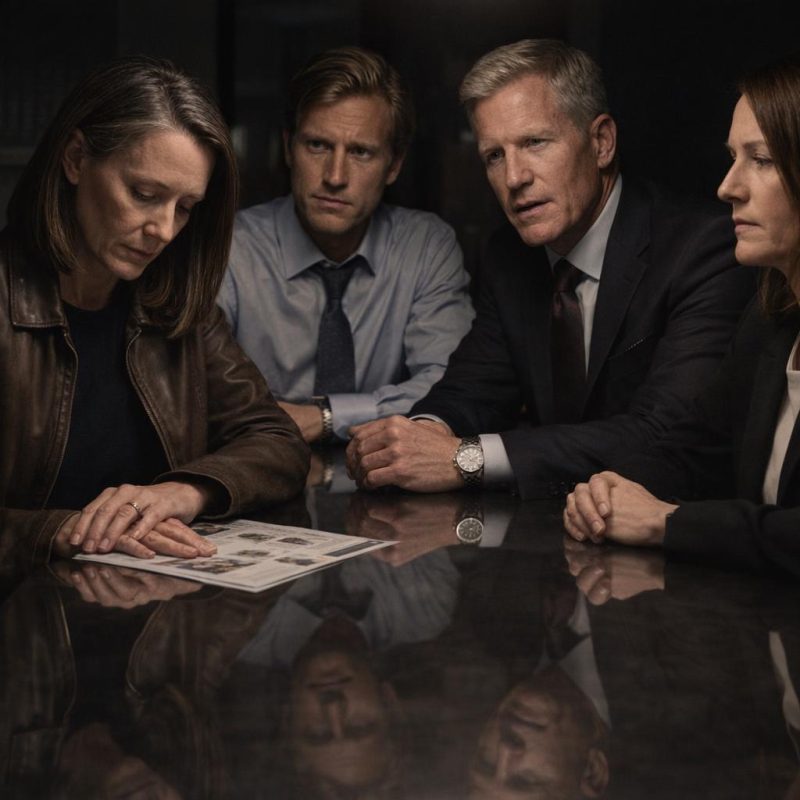 Image by RM AI
What Celeste Knew
I asked Celeste directly what she had known about how the arrangement was created. She said she knew she was receiving money and that Martin had told her he'd found a way to finally make things right. He said a family friend had agreed to help with a temporary business matter. She said she had assumed he meant I had offered — that I understood what was happening and had agreed to it as a favor to the family. Her thank-you at dinner had been genuine. She had meant it the way you thank someone who has done something kind for people you love. She hadn't known there was anything to expose. She looked at Martin now with something I can only describe as horror — not the performed kind, but the quiet kind, the kind that comes when you understand that someone you've shared your life with kept something from you that changed everything. Martin didn't look back at her. He was looking at the table. Denise said nothing. The room was very still. And then Celeste said, almost to herself, that she had thanked me at dinner — that she had said it in front of everyone — and I watched the color leave her face as she understood what those few words had done.
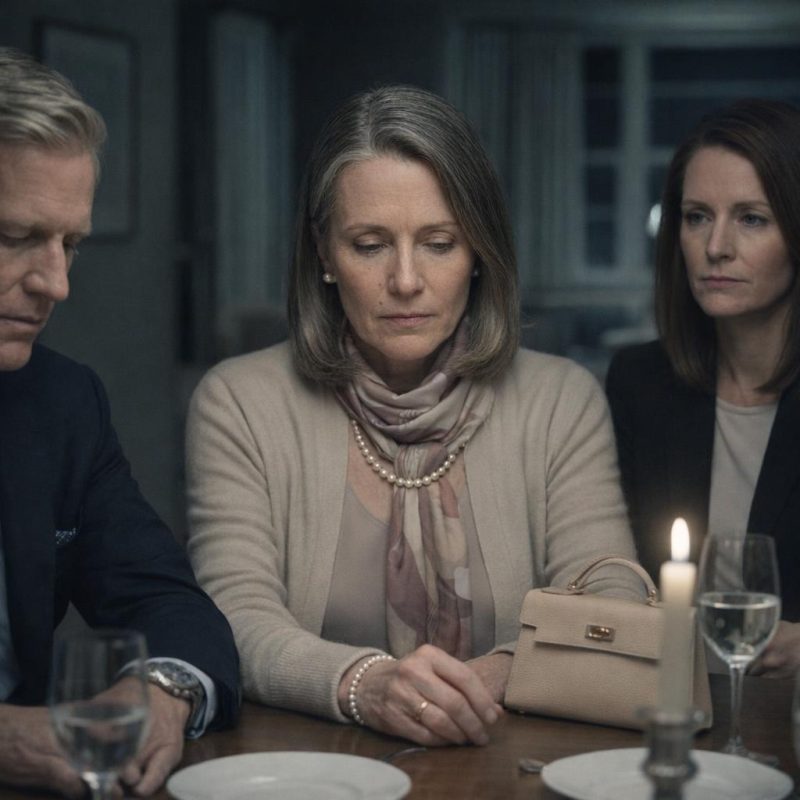 Image by RM AI
The Easiest Person to Sacrifice
Grant stood up. Not dramatically — he just pushed back his chair and stood, and the room got quieter because of it. He looked at his father across the conference table and said that he'd been sitting there trying to find a way to explain what Martin had done that didn't sound as bad as it was, and he couldn't find one. He said Martin had chosen me specifically. Not a business partner. Not a colleague. Not someone with a lawyer on speed dial and a seat at the table. He chose me because I was outside the family business, because I didn't know the industry, and because if anything went wrong, I was the one who could be pointed at without it costing Martin anything he actually valued. Martin said that wasn't true, that he had never intended for me to face any consequences, that the arrangement was supposed to be invisible. Grant said that was exactly the point — that Martin had built the whole thing on the assumption that I wouldn't know enough to push back. He said Martin had told each of us just enough to keep us from comparing notes. Paige stared at the table. Celeste stared at her husband. I didn't say anything. I didn't need to. Grant had just said, out loud and on the record, the thing I had known in my bones since the moment Denise first showed me those documents, and the truth of it settled over that conference table like something that had always been there, finally given a name.
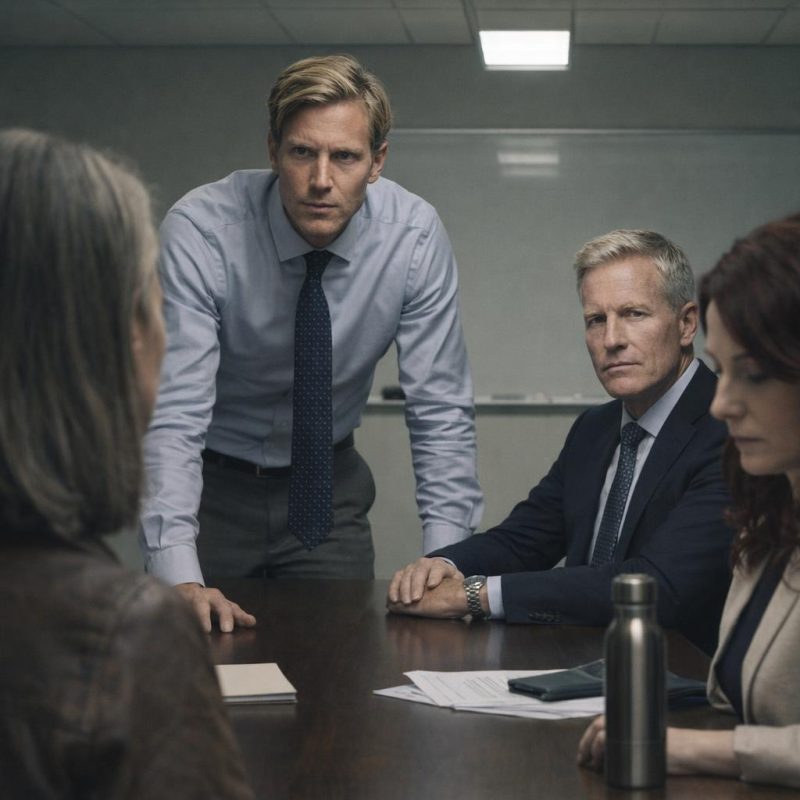 Image by RM AI
Martin's Justifications
Martin let Grant finish. Then he straightened in his chair and said he owed everyone an explanation. He admitted he had told different people different things — partial truths, he called them — because he hadn't wanted anyone to feel burdened by the full picture. He said he had made a mistake years ago, something that had cost Celeste money she was owed, and he had spent a long time trying to find a way to fix it quietly. He said he had been protecting his family. He said it like it was the most reasonable thing in the world. Denise started to speak, but I was still sitting with those two words. His family. I thought about Paige standing at an altar, and Grant sliding a ring onto her finger, and the years since — the holidays, the dinners, the careful effort I had made to be respectful of a world I hadn't grown up in. I had thought that made me family. Not the inner circle, maybe, but something. Martin had never seen it that way. When he said family, he meant the people whose names were already on the building. Denise set her legal pad down flat on the table and said that was a very moving explanation, and that now it was time to discuss how the situation was going to be corrected. Martin looked at her. Then he looked at me. I kept my face still. Denise opened her folder.
 Image by RM AI
Denise's Terms
Denise didn't raise her voice. She never does. She pulled a folder from her bag, set it on the conference table, and opened it with the same calm she might use to order coffee. She explained that she had prepared formal notices disputing every document bearing my signature — every transfer, every authorization, every agreement that had moved through my company without my knowledge or consent. She said those notices were ready to be filed with the appropriate parties, the label's business partners, the rights administrators, the relevant regulatory bodies, and that the only thing standing between Martin and that outcome was whether he chose to correct the situation himself, starting today. She listed what correction looked like: the disputed rights transferred out of my company immediately, placed in an independently administered account. Every transfer disclosed and reviewed. My name removed from all paperwork. Any money that couldn't be legitimately traced to repaying Celeste reimbursed in full, including my legal costs. Martin's attorneys leaned in and spoke quietly to him. Martin looked at Grant. Grant looked back at him without expression. Martin looked at Celeste. She was looking at her hands. Then he looked at me and asked what I wanted. I told him I wanted my name off everything, and I wanted the truth on the record. Nobody spoke after that. The room held the weight of what Denise had laid out, and nobody in it seemed to have anything left to argue.
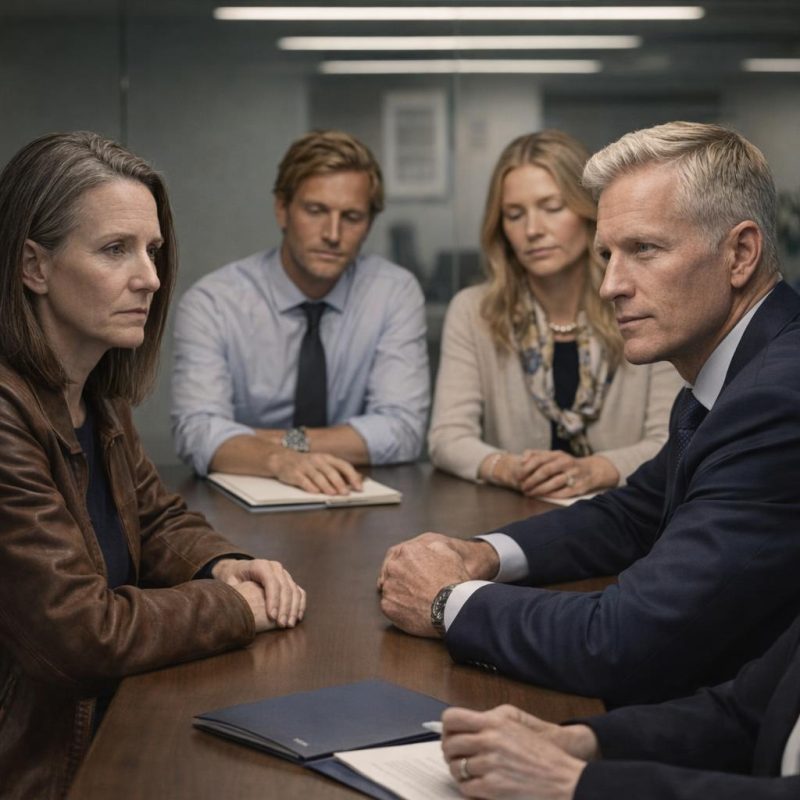 Image by RM AI
Grant's Choice
Grant spoke before Martin could find another angle. He said he agreed with every term Denise had outlined, and that the transfers would begin immediately. He said he was also ordering a complete outside review of the label's older contracts — not just the ones connected to my company, but anything from the era when Martin had been building the business. He said he wanted to know if there were other situations handled the same way. Martin started to object, said the company's history didn't need to be picked apart by outside auditors, said he had built that label from nothing. Grant cut him off. He said that retirement, effective immediately, meant complete retirement — no advisory role, no informal consultations, no back-channel conversations with executives. Martin's involvement with the company was finished. Martin sat very still. Celeste said, quietly, that Grant was right. She didn't look at Martin when she said it. Paige had tears running down her face, though she hadn't made a sound the entire meeting. I felt something loosen in my chest — not happiness exactly, more like the release of something I had been bracing against for months. I hadn't expected Grant to stand that firmly. I was grateful in a way I didn't quite have words for yet. The moment he told his father it was over sat in the room long after the words were gone.
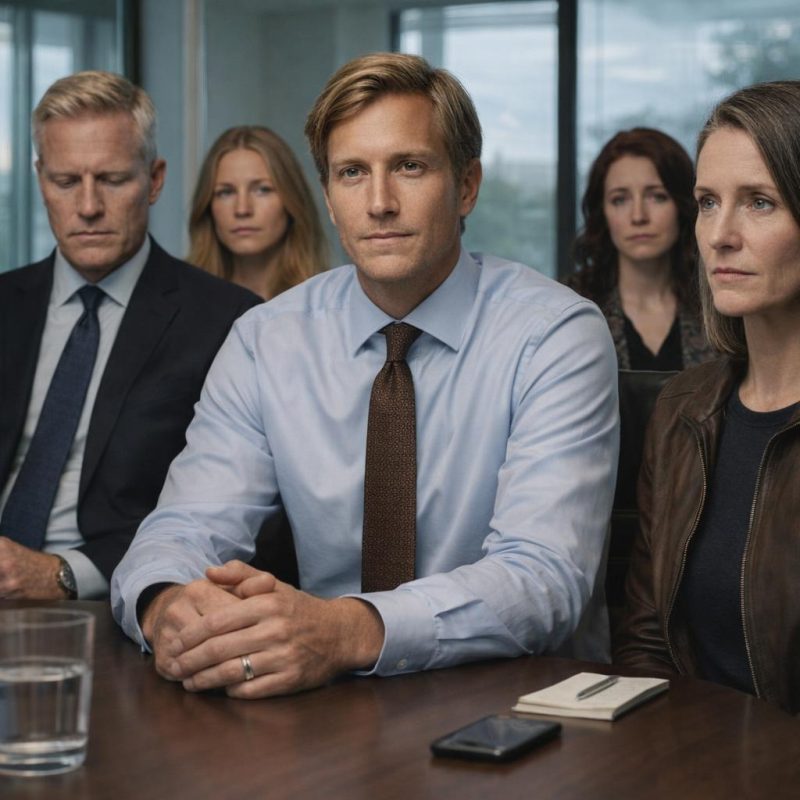 Image by RM AI
The Transfers Disclosed
The weeks that followed were slow and procedural and nothing like the confrontation in that conference room. There were no dramatic moments — just documents, phone calls, Denise reviewing every page before I touched a pen. The disputed rights were transferred out of my company and placed in an independently administered account while their ownership was sorted out properly. Grant's team disclosed every transfer that had moved through my company to the appropriate parties. I signed affidavits confirming what I had and hadn't known, which was its own particular experience — sitting in Denise's office, signing my name to the truth of how thoroughly I had been kept in the dark. Martin was required to reimburse the transfers that couldn't be legitimately tied to repaying Celeste. Grant kept me informed at every step, which I hadn't expected and which mattered more than I told him. He sent updates through Denise, sometimes directly, always clear. No vague reassurances. Actual information. One afternoon, Denise and I met with Grant at his office to go through the final round of paperwork. There was a stack of documents, each one removing my name from something I had never agreed to be attached to. I read every page. Denise watched me read every page. Then I picked up the pen and signed the last document, and my name was finally, officially, no longer on any of it.
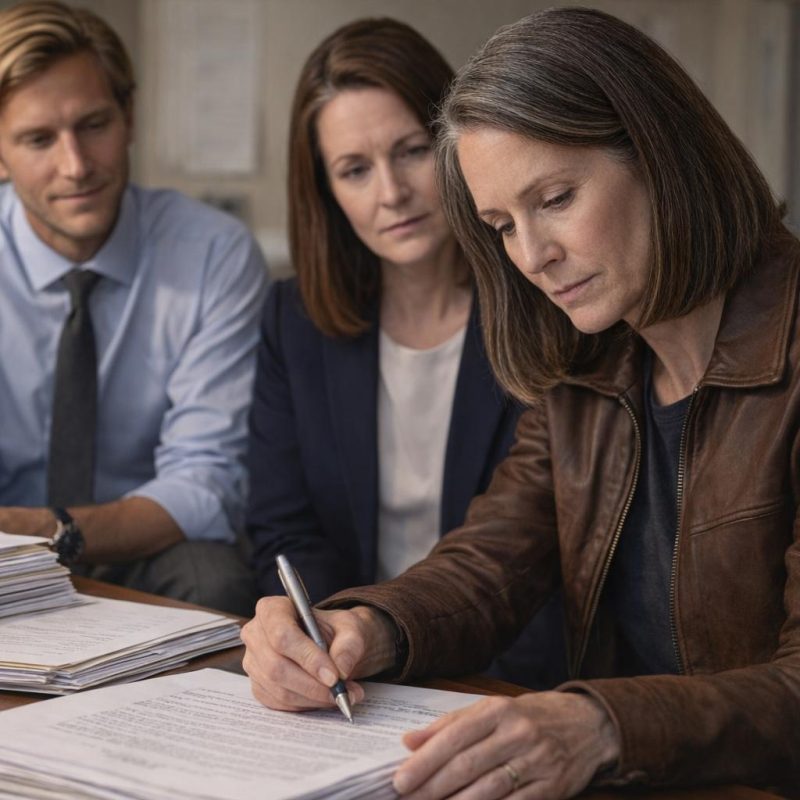 Image by RM AI
Martin's Reimbursement
Denise and Grant's attorneys spent several weeks going through the transfers line by line, separating what could be legitimately attributed to repaying Celeste from what couldn't. The number that landed in Martin's column was significant. Word moved through the label the way word moves through any organization where people pay attention — quietly at first, then everywhere. Executives who had deferred to Martin for decades started finding reasons not to return his calls. Investors who had treated his opinion as gospel stopped asking for it. Grant made no public announcement, but he didn't need to. The outside review made the shape of things clear enough. Martin's attorney delivered the check to Denise's office. Not Martin himself — his attorney, in an envelope, with a cover letter that was three sentences of legal language and nothing else. Denise called me when it arrived and read me the amount. It covered the improper transfers and my legal fees, every dollar accounted for. I drove to the bank the next morning and deposited it. I had expected to feel something — relief, maybe, or satisfaction, or even anger finally draining away. The envelope sat on Denise's desk: no note, no apology, just numbers on a check, and that was the most honest thing Martin had ever given me.
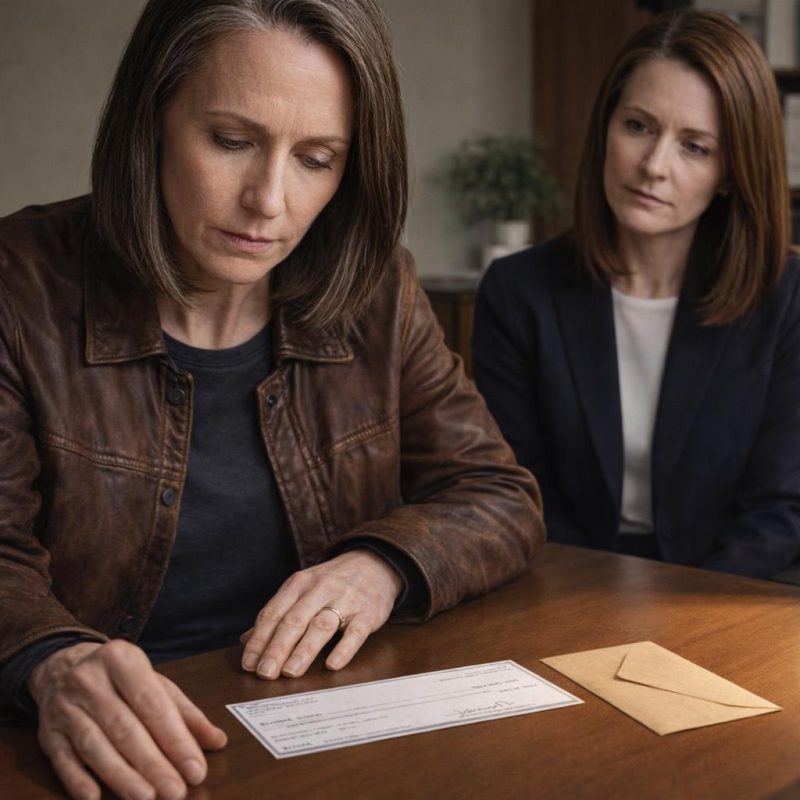 Image by RM AI
The Outside Review
A few weeks after the check cleared, Grant asked if he could meet with me and Paige together — not about paperwork, just to talk. We met at a coffee shop, which felt deliberately ordinary, and I appreciated that. Paige sat beside me and didn't say much. Grant had hired an independent firm to go through the label's older contracts, he said — agreements from the years when Martin had been the one making decisions. He wanted to find out if there were other situations where rights or obligations had been handled improperly, other people who might not know what had been done in their name. He said he was putting new policies in place: outside oversight for major decisions, transparency requirements, no more handling problems privately to protect the family's image. He said the company had operated for a long time on the assumption that Martin's judgment was enough, and that assumption had cost people. He looked at me when he said that. I told him I appreciated what he was doing. I meant it without reservation. I had come into this whole thing not knowing what Grant was made of, and I had my answer now. He said he wanted the company to operate differently than his father had, and the way he said it — steady, no performance in it — I believed him.
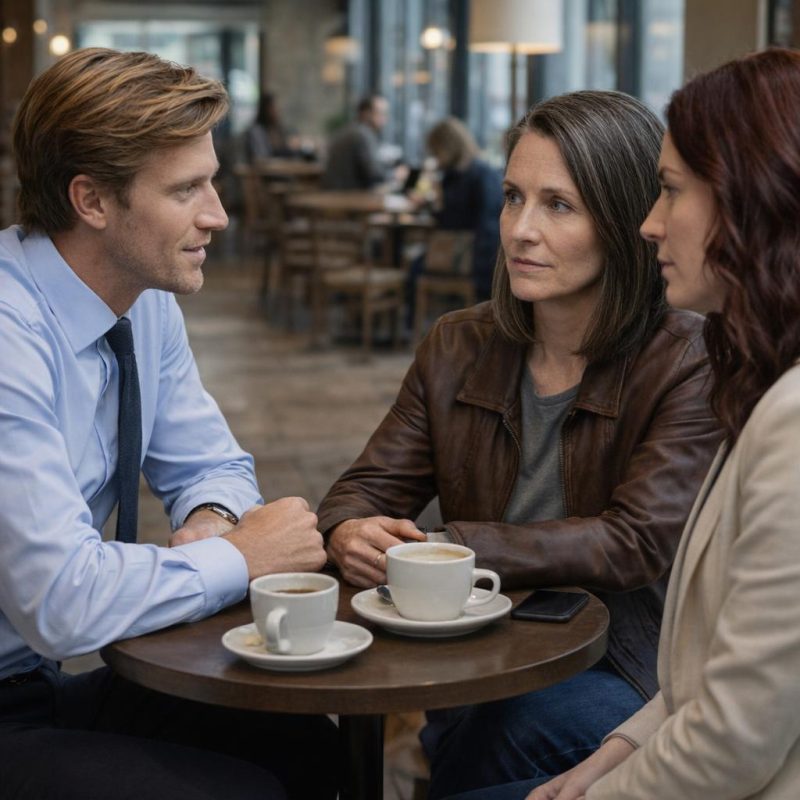 Image by RM AI
The Hardest Conversation
Paige and I met alone about a month after everything was settled. We sat in my kitchen, which is where we have always had the conversations that matter. She apologized before I could say anything — not a careful, hedged apology, but the kind that costs something. She said she knew what she had done and she wasn't going to try to explain it away. I told her I understood that Martin had manipulated her, that he had given her just enough information to make her feel like she was helping without letting her see the full picture. I told her I believed that. She cried. She said she had been so afraid of losing Grant's family, of being sent back to the margins of a life she had worked so hard to build, that she had made choices she couldn't defend. She said she had chosen protecting her marriage over protecting me, and she knew it. I sat with that for a moment. Then I told her the part that was harder to say — that I could find my way to forgiving her for being fooled, because Martin had fooled people far more experienced than either of us. But the thing I was still carrying, the thing that would take the longest to put down, was the weight of knowing she had decided I didn't deserve to understand what my own name was being used for.
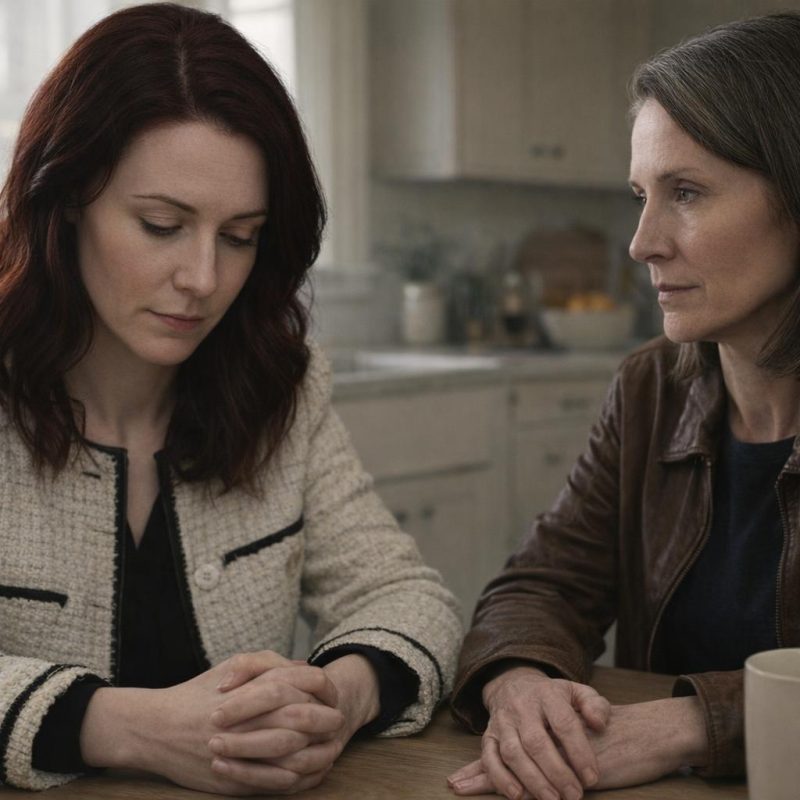 Image by RM AI
Celeste's Separation
Denise called me on a Tuesday afternoon, which was how most of the good news arrived — quietly, without ceremony. She told me that Celeste had hired her own attorney, separate from Martin, separate from the label, and that the two of them had worked out what he legitimately owed her. I didn't ask for the details and Denise didn't offer them. What mattered was that Celeste had drawn a line, and she had drawn it herself. The famous artist's dispute got settled privately somewhere in the months that followed — terms undisclosed, which Denise said was standard and I took at face value. My name came off every piece of paperwork connected to it. Every single one. Denise confirmed that in writing, and I read her confirmation three times before I let myself believe it. She said I had no remaining legal exposure. None. I sat with that word for a long time. None. Martin and Celeste's marriage survived, from what Paige told me, though she said it was different now — quieter, more careful, like furniture rearranged after a flood. I wasn't sure what to make of that and I didn't try. Then, about four months after everything was settled, an envelope arrived with Celeste's return address on it, and inside was a dinner invitation to their house.
 Image by RM AI
The Folder
I almost didn't go. I stood in my kitchen holding that invitation for two days before Paige called and asked me, please, to come. So I went. The house looked the same from the outside, but the inside felt different — subdued in a way I couldn't quite name, like everyone had agreed in advance to keep their voices down. Martin was there, silver-haired and suited as always, but quieter than I had ever seen him. He didn't hold court the way he used to. He passed the bread and said thank you when someone refilled his glass and mostly stayed out of the conversation. Before we sat down to eat, Grant came over and handed me a folder. I looked at it and then looked at him. "What am I signing this time?" I said. Nobody laughed except Paige, and her laugh came out a little strangled. Grant opened the folder himself and walked me through it — the company created in my name had been dissolved, my connection to the label and its catalog was formally severed, every line confirmed in writing. I read every page anyway. Carefully. Twice. The strangest part, sitting there at that table, was the thought I kept coming back to: the whole thing had unraveled because of one cheerful sentence Celeste had said at a dinner just like this one — thanking me for something nobody had ever actually asked me to do.
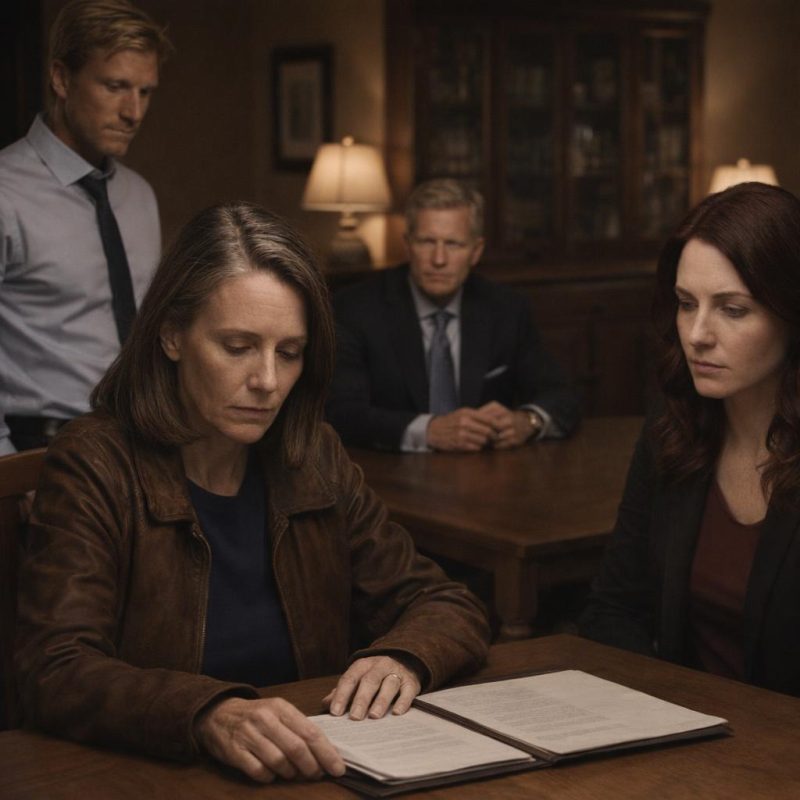 Image by RM AI
KEEP ON READING