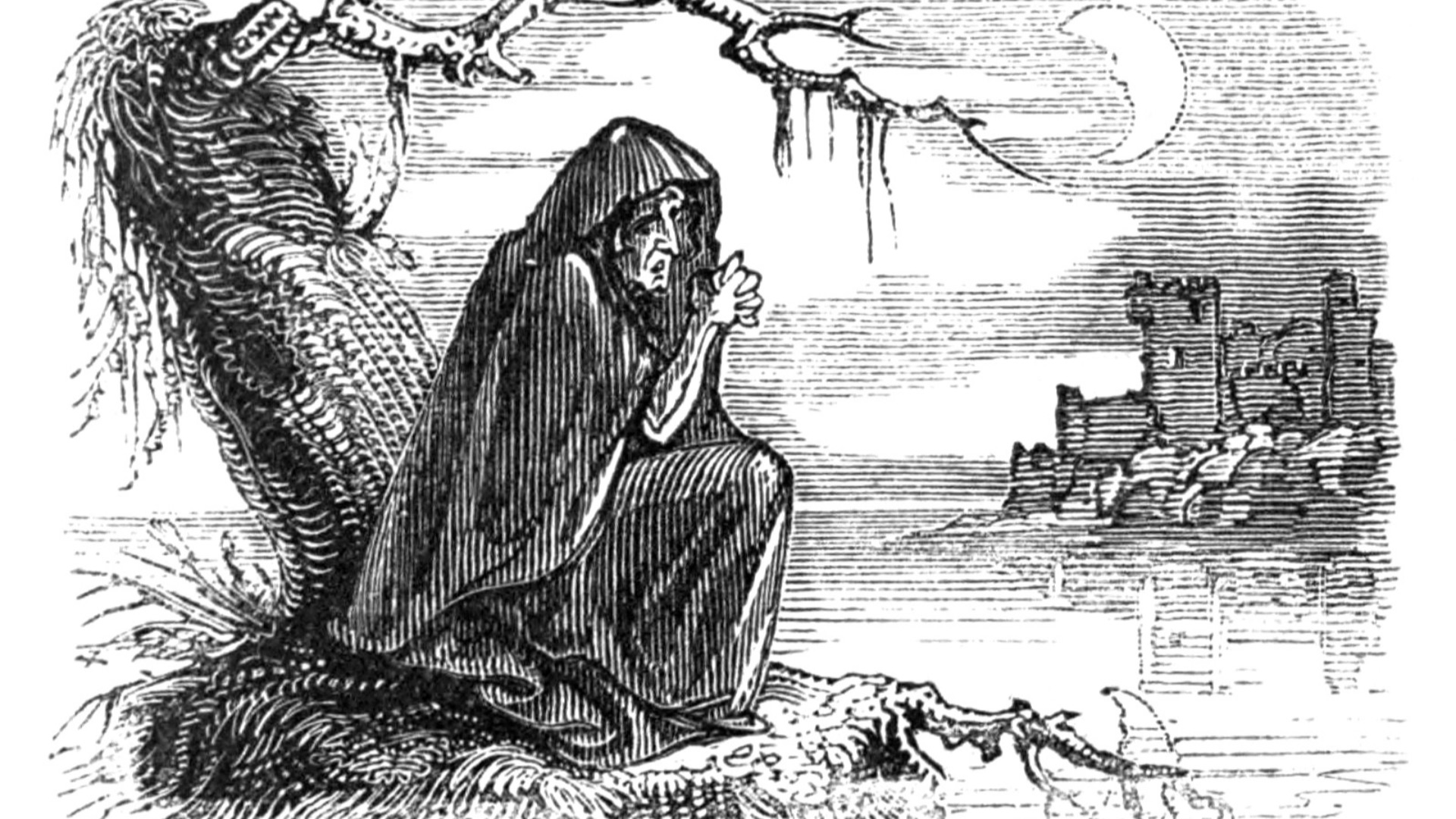
History is filled with legends and cryptids, and with so many horrifying entities creeping about, it’s hard to know which one ought to scare you most. But if you’re asking us, few warnings could be more unsettling than crying outside your house when nobody’s there. In Irish folklore, there’s only one terrifying sound that sends a shiver down our spines, and it belongs to the banshee. Unlike the murderous creature presented in modern horror, she didn't even snuff anyone out herself; she arrived when death was already coming.
Stories about her survived for centuries because they were tied to something painfully ordinary: families waiting for bad news. Accounts collected well into the 20th century still described people who sincerely claimed to have heard her crying shortly before a death, and the result was a legend that could make an unexplained scream in the darkness feel a lot less innocent.
She Wasn't Originally a Screaming Monster
Funnily enough, she wasn’t always a terrifying creature. The English word "banshee" comes from the Irish bean sí, commonly translated as "fairy woman" or a woman associated with the supernatural fairy mounds. She belonged to the Otherworldly beings of Irish tradition rather than fitting neatly into the modern category of a ghost.
Even if she did have a peeling face or claws capable of scratching your eyes out, her defining characteristic wasn't what she looked like—it was what she sounded like. The banshee wailed or keened, echoing the traditional Irish practice in which mourners produced vocal laments for the dead. Folklore effectively moved that lament forward in time, allowing a supernatural mourner to begin grieving before everyone else even knew there was something to grieve.
The banshee also wasn't necessarily a universal messenger who wandered around in search of random victims. Plenty of traditions connected her with particular families, and some stories associated specific banshees with old Irish lineages. A folklore account recorded around Enniskillen, for example, stated that the banshee was still believed to follow the Maguire family, and that tradition survives today.
Nobody Can Agree on Her Appearance
For something so widely feared, you’d think somewhere along the way people would’ve come up with a concrete description of her. But no one ever did. Depending on the tradition, she might be an elderly woman, a young woman, a tiny figure dressed in white, or someone with long hair. Hilariously enough, that uncertainty made her even more feared; there wasn't one reassuring description people could use to rule her out.
However, one persistent detail was the banshee's comb. Stories describe her sitting alone and combing her long hair, while unfortunate humans who found (or were insane enough to steal) the comb discovered that she wanted it back. Take County Kilkenny’s tradition—it tells of a man who took the banshee's comb and was pursued until he returned it through a window.
Another account collected in County Tipperary described a man who found a comb, brought it home, and later heard crying outside. The figure at his window was described as a woman dressed in white who demanded its return, and the storyteller added the alarming detail that her hand appeared to be on fire. Whether anyone believed it wasn't really the point; taking mysterious items home was just an unnecessary gamble.
The Wail Followed Families For Generations

As we mentioned, recorded banshee stories usually place the sound close to illness or death. In a 1938 account from County Limerick, a woman recalled standing near the home of a sick man when she heard a shriek coming from the area. It’s a surviving testimony that shows the banshee wasn't something preserved in manuscripts; people were still recounting personal encounters during the 20th century.
That wasn’t even the last folklore entry from County Longford. Another describes a dying woman who reportedly told her relatives she wouldn't leave this world until the banshee had been heard. According to the account, a man subsequently encountered a small woman dressed in white crying beside a ditch, and the sick woman passed away that same night.
Perhaps that's why the banshee has survived while countless other supernatural creatures faded into obscurity. She represents the awful moment before terrible news arrives, when you know something is wrong but can't know what happened. For generations of storytellers, all it took was one unexplained cry outside in the darkness to make that fear real.
The banshee taps into a fear that hasn't changed much over the centuries: knowing bad news may be coming but being powerless to stop it. Her appearance shifts from story to story, but the warning is the same, with that terrible cry arriving just before death enters the household. Even now, the idea of hearing a wail outside your window is enough to make you hope it's just the wind.
KEEP ON READING