I Spent Six Months Plotting Revenge Against My Ex-Husband's Glamorous Wife Until Bank Statements Revealed I Had the Wrong Villain
I Spent Six Months Plotting Revenge Against My Ex-Husband's Glamorous Wife Until Bank Statements Revealed I Had the Wrong Villain
The Call That Changed Everything
My daughter Paige called me on a Tuesday afternoon in March, and I knew from the first syllable that something was badly wrong. She'd gotten into her first-choice school — the one she'd been working toward since sophomore year — and instead of the celebration we'd been planning, she was crying so hard she could barely get the words out. The college fund, she said. The one her father had promised her. The one Dean had been telling her for years was sitting there, growing, waiting for exactly this moment. It was almost gone. I made her repeat it twice because I couldn't process what I was hearing. She didn't know the details — just that she'd called Dean to talk about enrollment deposits and he'd told her there wasn't enough left to cover even the first semester. I sat down on the kitchen floor without meaning to. My hands were shaking. I told her to stop crying, that I would handle it, that she didn't need to worry — and I meant every word of it with a ferocity that surprised even me. After we hung up, I stayed on that floor for a long time, and the sound of her voice, broken and confused, settled into me like something I would carry for a very long time.
 Image by RM AI
Confronting Dean
I didn't call ahead. I drove straight to Dean's apartment on the east side of town, the one he'd moved into after the divorce, and I knocked on his door with my keys still in my hand. It took him a minute to answer, and when he did, I almost didn't recognize him. I'd seen Dean six months ago at Paige's school play, and he'd looked tired then, but this was different. He looked like a man who hadn't slept properly in weeks — gray around the temples in a way that hadn't been there before, shoulders curved inward, eyes that slid away from mine the moment they landed on them. The apartment behind him was small and dim, nothing like the house we'd shared or even the place he'd rented right after we split. I told him I needed to know what happened to Paige's college money, and I said it quietly, which I think scared him more than if I'd shouted. He stepped back and asked me to come inside. The living room had boxes stacked against one wall like he'd never fully unpacked, or like he was already thinking about moving again. He gestured toward a chair and I sat, and he stood across from me with his hands in his pockets, and I noticed for the first time just how much older he looked than the last time I'd really paid attention.
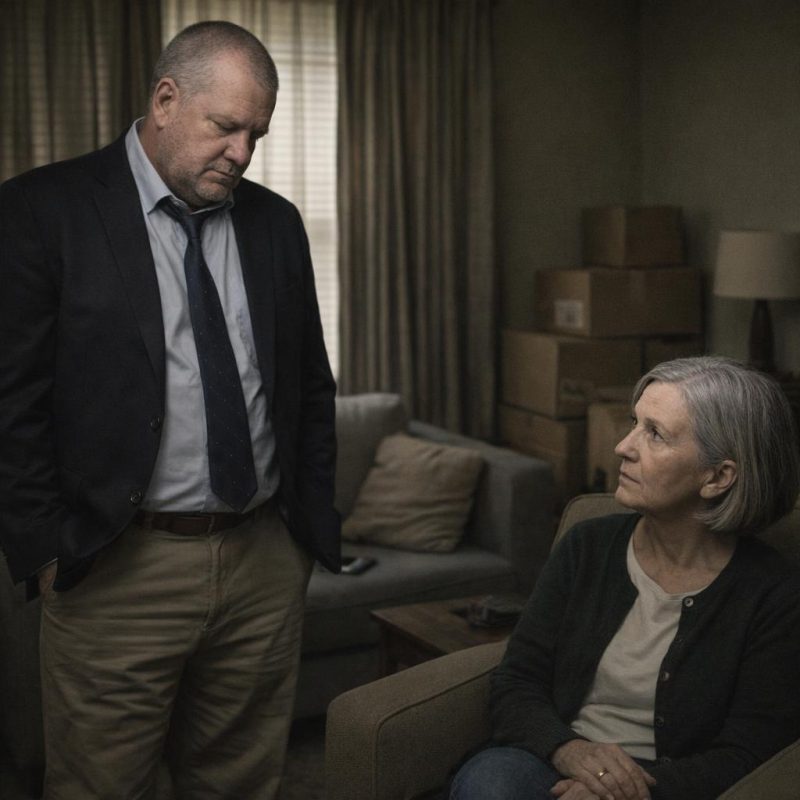 Image by RM AI
The Divorce Explanation
Dean sat down eventually and started talking, and the story came out in pieces, the way his stories always did — slow and sideways, with a lot of pausing and looking at the floor. The divorce from Simone, he said, had been brutal. The settlement had taken everything. He said Simone had gone after every asset, that her attorney had been relentless, that by the time it was over there was nothing left to speak of. He told me the college fund had gotten mixed in with their joint accounts years ago — that it hadn't been kept separate the way it should have been — and that those funds had been eaten up by living expenses and then by the settlement itself. He said Simone took everything, and he said it with a kind of exhausted bitterness that I took, at the time, as the sound of a man telling the truth. I didn't ask for paperwork. I didn't ask for dates or account numbers. I just sat there and listened, and with every sentence, the anger I'd been carrying since Paige's phone call shifted and narrowed and found a new target. Dean looked ashamed, but the shame seemed directed at the situation rather than at himself, and I didn't examine that distinction closely enough. I drove home with Simone's name sitting in my chest like a coal, and the hollow feeling of having heard Dean's explanation without once questioning a single word of it.
 Image by RM AI
The Decision
When I got home, Paige was at the kitchen table with her laptop open and a yellow legal pad covered in her careful handwriting beside it. She was looking up financial aid deadlines, scholarship applications, work-study programs — trying to solve a problem that wasn't hers to solve. She was seventeen years old and she was already doing the math on how to pay for her own future because the adults in her life had failed her. I stood in the doorway for a moment before she noticed me, and something in me went very still and very cold. I told her we'd figure it out together, that she shouldn't worry, that I was working on it. She gave me a small, tired smile that broke my heart a little. After she went to bed, I sat at that same table and thought about Simone — about the settlement Dean had described, about the life she was presumably living while my daughter calculated loan interest rates on a legal pad. I thought about what it meant to take everything from a man and not care who else got hurt in the process. I didn't have a plan yet, not a real one. But I made a decision that night, sitting alone in my kitchen with Paige's handwritten notes still spread across the table, and the weight of that decision settled over me like something I'd been building toward without knowing it.
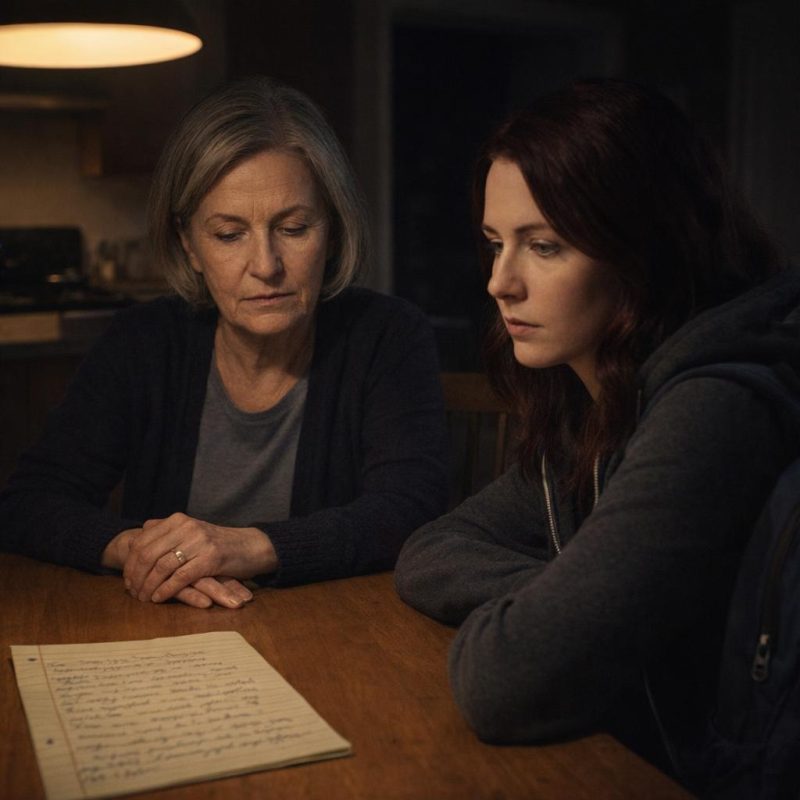 Image by RM AI
Researching the Target
I started with a basic internet search — Simone's name, her former show, her name combined with words like 'appearance' and 'event' and 'interview.' What came back was more than I expected. She had accounts on every platform, all of them active, all of them carefully curated around her years on the soap opera. There were photos from fan conventions, short videos of her signing autographs, posts about upcoming appearances at nostalgia events. She had a particular way of captioning things — always a reference to the show, always a mention of her character's name, always something that kept the past front and center. I spent two evenings going through it all, and the picture that emerged was of a woman working very hard to stay visible in an industry that had mostly moved on. Then I found a thread on a fan forum where someone had posted about a televised charity fundraiser coming up in the fall — a high-profile event featuring former television personalities, the kind of thing that got covered by entertainment news outlets. Several comments down, someone had tagged Simone's account directly, asking if she'd be attending. Her reply was careful and noncommittal, but she'd replied within the hour, and she'd liked every follow-up comment that mentioned her name in connection with the event.
 Image by RM AI
The Glamorous Facade
I found the convention panel videos on a fan-uploaded channel and watched three of them back to back. Simone knew how to work a room — I'd give her that. She walked into each panel with her oversized sunglasses pushed up on her head like a headband, and she had a way of pausing before she answered questions, like she was giving the audience time to appreciate the moment. She mentioned her former castmates constantly, dropping names with the ease of someone who assumed everyone in the room cared as much as she did. Every other answer seemed to begin with 'when I was on the show' or 'back when we were filming.' She laughed at the right moments and touched her hair at the right moments and made the fans feel like they were getting something real. But I kept noticing the rooms themselves — low ceilings, folding chairs, hotel conference spaces with the carpet pattern of a place that rented by the hour. One panel had maybe forty people in it. Another looked like it might have been thirty. The production quality on the videos was someone's phone propped against a water bottle. I watched her lean forward in her chair and gesture with both hands while she talked about a storyline from fifteen years ago, and the gap between how she carried herself and where she actually was doing it was right there on the screen.
 Image by RM AI
The Plan Takes Shape
I spent a Saturday morning going through Simone's social media more carefully, this time with a notebook. I wrote down every name she tagged, every former colleague she mentioned, every industry contact who appeared in her comments or her posts. There were a handful of names that came up repeatedly — people from the show who still worked in television, a casting director she'd worked with, a producer whose name I recognized from the credits of a current primetime series. These were the people whose opinions would matter to her. These were the people she was trying to impress with every carefully worded post and every convention appearance. My plan was simple: I would find a way to get in front of those people and tell them what kind of woman Simone really was. I would tell them she had walked away from a divorce with everything, including money that had been set aside for a child's education. I would let them draw their own conclusions about what that said about her character. I imagined her face when the invitations stopped coming, when the tags disappeared, when the industry contacts she'd been cultivating went quiet. I felt completely justified. I had a daughter with a legal pad full of scholarship deadlines, and I had a target, and I had a plan, and for the first time since Paige's phone call, I knew exactly what I was going to do.
 Image by RM AI
The Opportunity
Rachel called on a Wednesday morning, which wasn't unusual — she called most Wednesdays to confirm our standing lunch. But this time she had something else on her mind before we even got to the restaurant. She was on the organizing committee for a televised charity fundraiser, she said, the one benefiting the children's literacy foundation she'd been involved with for years. It was coming up in the fall, she said, and they were short on volunteers for the planning and coordination side of things — someone to help manage the guest list, liaise with the venue, handle the kind of logistical details that fell through the cracks when everyone on the committee was also working full-time. I let her finish. Then I told her I'd love to help. She sounded genuinely relieved and said she'd send me the committee contact information that afternoon. We talked for another twenty minutes about the lunch spot and her sister's new apartment and a book she'd been meaning to finish, and I listened and responded and laughed at the right moments. I didn't mention Simone. I didn't mention Paige's college fund or Dean or any of it. After we hung up, I sat with my coffee going cold in my hands, and the quiet sense that everything was falling into exactly the right place settled around me like the answer to a question I'd been asking for weeks.
 Image by RM AI
Joining the Committee
The planning meeting was held in a conference room above a flower shop on Clement Street, which was not what I'd pictured when Rachel said charity office. There were eight of us around a folding table, and Rachel introduced me as a friend with strong organizational skills, which made me sound more capable than I felt in that moment. We went through the event format, the venue logistics, the catering budget, the silent auction items. I kept my notepad open and wrote things down and asked the kind of questions that made people think you were paying attention to the right things. When they got to the guest list portion, I volunteered before anyone else could — I said I had experience with introductions and guest research and that I was happy to take that piece off someone's plate. The woman running the meeting looked relieved and said yes before I'd finished the sentence. We were halfway through the preliminary names when one of the other volunteers, a woman I hadn't met before, mentioned that they'd had a positive response from someone in the entertainment world. She slid a printed email across the table and said they were still waiting on confirmation, but it looked promising. The name at the bottom of that email was Simone's.
 Image by RM AI
Access Granted
Rachel sent the contact list on a Thursday evening, a spreadsheet with forty-three names, phone numbers, and email addresses — former television personalities, local celebrities, a few retired news anchors. I printed it out at the kitchen table and went through it with a highlighter. I recognized seven names from Simone's social media posts, people she'd tagged in throwback photos or mentioned in interviews I'd found online. I circled those seven and set the rest aside. Then I opened a fresh document and started drafting. I framed everything as research for the event — I was preparing personalized introductions, I wanted to capture each guest's professional highlights, I was hoping to speak with people who knew them well. It was all technically true. I rehearsed the language out loud a few times until it sounded natural, until I could say it without any hesitation in my voice. I told myself I was doing this for Paige. I told myself that every time I felt the slightest hesitation. By the time I closed the laptop, I had three draft emails ready to send and two phone scripts written out longhand. I sat there at the kitchen table with the printed list in front of me, all those names and numbers, and the weight of it settled into my hands like something I'd been carrying for a long time without knowing it.
 Image by RM AI
The Warning Call
My phone rang on a Tuesday afternoon with a number I didn't recognize — a 415 area code, which meant nothing to me. I almost let it go to voicemail. I'm glad I didn't, though I wouldn't have said that at the time. The voice on the other end was low and careful, and she identified herself immediately. Simone. She said she'd heard through the committee that I was involved with the fundraiser, and she said it without accusation, just as a fact she was laying on the table between us. Then she said whatever Dean had told me, I didn't know the whole story. I felt something tighten in my chest. I told her I knew exactly what I needed to know — that Paige had ninety thousand dollars in a college fund before their divorce, and that now my daughter had nothing. There was a long pause. When Simone spoke again, her voice was quieter. She told me to ask Dean when that account was emptied. Just that. Ask him when. I told her I wasn't interested in being redirected by someone who'd had every reason to drain that account before the lawyers got involved. She didn't argue. She just said she was sorry about Paige, and then she hung up. I stood in my kitchen for a long time after, the phone still warm in my hand, and the silence she'd left behind sat in the room like something I didn't have a name for yet.
 Image by RM AI
Dismissing the Doubt
I spent the next two days replaying that phone call. The way she'd said it — calm, measured, almost gentle — it was exactly what you'd expect from someone who'd spent decades in front of a camera. She knew how to land a line. She knew how to make a pause feel meaningful. I reminded myself of that every time her words started to get under my skin. Ask Dean when the account was emptied. It sounded like a good deflection, I had to admit that much. Point the finger somewhere else, introduce a little doubt. I'd seen enough of Dean's excuses over the years to know that people who were guilty of something always had a story ready. And Simone had spent her career making lines sound like truth. I went back to my draft emails. I read them over twice, tightened the language in a few places, and told myself that whatever she was trying to do, it wasn't going to work. Paige deserved better than a phone call designed to make me second-guess myself. I opened my laptop, pulled up the first name on my circled list — a woman named Patricia who'd worked on the same soap opera as Simone for four seasons — and I hit send.
 Image by RM AI
Gathering Stories
Over the following week, I sent emails to three more of Simone's former colleagues and made phone calls to two others. I kept my voice even and my questions open-ended. I was preparing introductions for the fundraiser, I said. I wanted to capture the full picture of each guest — their professional journey, what their colleagues remembered most about working with them. People were generally happy to talk. I took notes in a spiral notebook I kept beside the phone, writing down names and dates and anything that seemed specific enough to be useful. I was looking for a pattern — the kind of story that, told enough times by enough different people, becomes something you can point to. The extravagance. The entitlement. The way someone like Simone moved through the world as though the rules applied to everyone else. I expected those stories. I had a whole column in my notebook ready for them, labeled in my own handwriting. Each conversation ended and I flipped back to that column and added what I had, and each evening I sat at the kitchen table and reviewed my notes with the quiet, methodical focus of someone who believed they were building something solid.
 Image by RM AI
Mixed Reports
The responses came in over the next few days, and I read each one carefully. A woman who'd worked craft services on the show for two seasons said Simone could be demanding about her call times. A director's assistant mentioned she'd once held up a table read over a costume dispute. Someone else said she was particular about her lighting and didn't hide it. I wrote all of it down. But here's the thing — none of it was what I was looking for. Nobody mentioned money. Nobody mentioned extravagance or reckless spending or the kind of behavior that drains a household account. The stories were about professional friction, the ordinary difficult-person complaints you'd hear about half the people in any competitive industry. I told myself they probably didn't know her personal life. I told myself that what happened at work and what happened at home were two different things, and that the people I was talking to only had one half of the picture. I went back through my notes and underlined the parts that felt most useful and tried not to think too hard about the parts that didn't fit. But the column I'd labeled and left ready — the one I'd been so certain I would fill — sat mostly empty on the page.
 Image by RM AI
The First Contradiction
The call I wasn't expecting came on a Friday afternoon, from a woman who'd played Simone's on-screen sister for three seasons and apparently still kept in touch with half the cast. She was warm and talkative and clearly happy to have someone interested in those years. She said Simone had always talked a big game — the vacations she was planning, the renovations she wanted to do, the wardrobe she was building. I started writing faster. But then she paused and said something that made my pen stop moving. She said the funny thing was, Simone never actually seemed to have the money to back any of it up. She said she'd visited Simone's apartment once, maybe two years into the marriage, and it was small — smaller than she'd expected given everything Simone talked about. She mentioned the car, too. An older sedan, nothing flashy, with a dent in the rear bumper that had been there for at least a year. She laughed a little when she said it, like it was a fond memory rather than a criticism. I thanked her and got off the phone and sat there with my notebook open in front of me. I didn't write anything in the column I'd been saving. I just sat with the gap between the woman Simone talked about being and the life this woman had actually described.
 Image by RM AI
Chasing Work
Diane called me back the following Monday. She'd worked with Simone for six years on the same show, longer than anyone else I'd spoken to, and she had the kind of theatrical energy that made even a phone call feel like a performance. She said she adored Simone, said it twice, and then immediately launched into everything complicated about her. She told me Simone had auditioned constantly after marrying Dean — small roles, regional theater, commercial work, anything she could get. Diane said it had surprised her at the time, because Simone had always talked about stepping back, taking a breath, enjoying the stability of being married. Instead she'd been grinding harder than ever. When I asked why, Diane paused for a moment and then said, well, Dean, wasn't it. She said Simone had mentioned more than once that Dean felt like he was carrying them financially, that he made comments about the household expenses, that it weighed on her. I wrote that down slowly. Dean. Complaining about money. Carrying them. I'd spent two years picturing Simone living lavishly off whatever she'd taken from Paige's future, and here was Diane — someone with no reason to spin anything — describing a woman who'd spent those same years scrambling for work because her husband made her feel like a burden.
 Image by RM AI
Pushing Forward
I spread everything out on the kitchen table that Sunday — my notes, the names, the phone calls, Diane's account of Simone auditioning for anything she could get while Dean complained about carrying them financially. I read through it all twice and told myself people only ever see part of the picture. Diane knew Simone from work. The others I'd spoken to knew her from charity events or neighborhood gossip. None of them had access to the full financial reality of that marriage, and neither did I — not yet. That was the problem. I kept building a case out of impressions and secondhand stories, and impressions could be wrong. What I needed was something concrete. Numbers. Dates. Actual documentation of where the money went and who spent it. I thought about Paige sitting across from me at the kitchen table last spring, asking me in this very careful voice whether she was going to have to take out loans for all four years. I thought about the look on her face when I told her we'd figure it out. I owed her more than impressions. I owed her proof. I opened my laptop and started searching for any public financial records I could find connected to Simone's name.
 Image by RM AI
The Condo Sale
Property records turned out to be easier to find than I expected. Most counties post them publicly, and after about an hour of searching I found what I was looking for — a condo sale in Simone's name, a unit she'd owned before she ever met Dean. The sale had gone through four years into their marriage, not before it, not right after the wedding when you might expect someone to consolidate assets. Four years in. The sale price was substantial — well into six figures — and I sat back and thought, well, there it is. That's where the money came from. The vacations I'd heard about, the wardrobe, the lifestyle that Dean always said he couldn't keep up with. I told myself the timing made sense in a certain light: maybe she'd held onto the property as a safety net and only sold when she felt secure enough to let it go. Maybe that money had funded years of the kind of spending Dean described when he explained why the accounts were drained. I wrote the sale date and the price in my notebook and underlined both. But even as I did it, something about the timing sat with me in a way I couldn't quite shake — four years in felt late for a woman who was supposedly living large from the start, and I didn't have a clean answer for that.
 Image by RM AI
The Investment Opportunity
I'd been introduced to her at a neighborhood block party years ago — one of those women who knew everyone and remembered everything, the kind of person you call when you need to know who used to live in a house three streets over. She'd known both Dean and Simone socially, and when I reached out and mentioned I was trying to piece together some financial history for a personal matter, she was willing to talk. She didn't ask too many questions. What she told me, almost as an aside, was that Simone had complained to her once — just once, she said, because Simone wasn't really a complainer — about the condo money. She said Simone had handed nearly all of the proceeds over to Dean because he'd come to her with some kind of investment opportunity he was excited about. She said Simone had described it as his idea, his contact, his plan, and that she'd trusted him with it. I wrote that down and then I sat very still for a moment. I'd spent weeks building a picture of Simone spending money that should have gone to Paige, and here was someone telling me that Simone's own money — her own property, sold from before the marriage — had gone to Dean instead. The condo proceeds hadn't funded their lifestyle at all. They had gone to him.
 Image by RM AI
The Wrong Timeline
I kept coming back to the word investment. Dean had told me, when everything fell apart, that Simone's spending had wiped them out — that she'd had expensive taste and no concept of limits and that by the time he understood the damage, the accounts were already gone. That had been his explanation, and I'd accepted it because I was angry and it fit the story I needed. But now I had Simone handing him a substantial sum of money for an investment opportunity, and I had Diane describing a woman who'd been scrambling for work because Dean made her feel like a financial burden. Those two things didn't fit together the way Dean's version required them to. And then I thought about what Simone had said to me at the gala — that quiet, almost offhand comment about asking Dean when the account was actually emptied. I hadn't wanted to hear it then. I'd filed it away as deflection. But the timing of that condo sale, the investment money, the missing explanation for where it all went — I kept circling back to Paige's college fund and wondering whether the dates lined up in a way I hadn't let myself consider. I'd never actually seen the withdrawal statements. I pulled open the drawer where I kept my financial files and started looking for Paige's college account statements.
 Image by RM AI
The Missing Statements
I found the folder easily enough — I'd labeled it clearly, the way I label everything, because I am the person in any room who keeps the records. Inside were statements going back to when Paige was three years old, the early years when I was making the deposits myself and watching the balance grow in small, steady increments. I could see every contribution, every quarterly statement, every year-end summary right up until the point Dean suggested we consolidate the accounts under his financial adviser for better returns. After that, nothing. The folder went from a thick stack of paper to three loose pages and then empty. I sat on the floor of the hallway with the folder open across my knees and went through it twice more, thinking I must have misfiled something, thinking there was another folder somewhere. There wasn't. I remembered Dean explaining that his adviser handled everything electronically after the consolidation, that paper statements were old-fashioned, that I didn't need to worry about it. I had believed him. I had believed him and I had stopped asking, and now I was sitting on the floor looking at a gap of years where documentation should have been, the empty back half of that folder saying nothing at all.
 Image by RM AI
Asking for Records
I waited until Tuesday evening to call him, when I'd had enough time to decide exactly how I wanted to frame it. I told Dean I was working on Paige's financial aid applications and that the forms were asking for historical account documentation — contribution history, withdrawal records, that kind of thing. I said I needed statements from the years after he consolidated the accounts, because I didn't seem to have them on my end. There was a pause. Not a short one. The kind of pause where you can hear someone on the other end of the line doing something other than thinking about their answer. He asked me why the financial aid office would need records going back that far, and I said I wasn't entirely sure, that they'd sent a checklist and I was just working through it. He said he'd have to look for them. He said his old adviser had retired and the records might take some time to track down. He said he'd send them when he found them. I said that would be great, thank you, and kept my voice completely even. After we hung up I sat with the phone in my hand for a while. He hadn't said no. He hadn't said the records didn't exist. He'd just gone very quiet before he said anything at all, and that quiet had a particular weight to it that I couldn't stop turning over.
 Image by RM AI
The Fundraiser Confirmation
Rachel called on a Wednesday morning, sounding pleased with herself the way she always does when she's managed to pull something off. She said Simone had been confirmed as one of the featured guests for the televised fundraiser — not just an attendee, but someone they'd be spotlighting during the broadcast. She said the event coordinator wanted a written introduction for each featured guest, something warm and specific that a presenter could read on camera, and she was asking me to write Simone's. I said yes before I'd fully thought it through, because saying yes to Rachel is usually the right instinct and because I didn't want to explain why I might hesitate. After we hung up I sat at my desk and stared at the blank document I'd opened. I was supposed to write something warm and specific about a woman I'd spent months building a case against, using information that was starting to feel less solid by the day. I still hadn't told Rachel about my connection to Simone, about Dean, about any of it. Rachel thought I was a volunteer with good organizational skills and a flexible schedule. I thought about the condo money, about the missing statements, about Dean's long pause on the phone. Then I looked back at the blank document and thought about what I was actually going to write.
 Image by RM AI
The Biography
The event coordinator had attached Simone's official biography to the briefing email, a two-page document that looked like it had been assembled from press materials and old interview transcripts. I read through it expecting the version of Simone I'd constructed in my head — the glamour, the ease, the woman who'd arrived fully formed and taken everything she wanted. The early section stopped me. Before the soap opera, before any of the roles I recognized, the biography listed a waitressing job, a receptionist position at a dental office, and a stint doing overnight stocking at a grocery chain. It said she'd held all three jobs simultaneously for nearly two years while going to open calls on her days off. It described her background as working-class, her family as one that didn't have connections in the industry, her early years in the city as genuinely lean. I'd known, in a vague way, that most actors struggle before they break through. But I'd looked at Simone's sunglasses and her posture and her careful image and I'd assumed the struggle was cosmetic, a story she told for relatability. The biography said she'd worked three jobs before landing her soap opera role, and the dates made that true for years, not months.
 Image by RM AI
Simone's Silence
I kept coming back to the phone call. Not the part where I accused Simone — I'd replayed that plenty — but the part that came after. I'd expected her to fight back. I'd expected the kind of sharp, practiced denial you get from someone who's been caught and knows it. Instead she'd gone quiet. Not the silence of someone scrambling for a story, but something steadier than that. She'd said, almost gently, that I didn't know the whole story. She'd told me to ask Dean about the timing. That was it. No tears, no outrage, no long explanation of why I had it wrong. A guilty person, I thought — or at least the guilty people I'd imagined — would have come at me harder. They would have had something ready. Simone hadn't tried to convince me of anything. She'd just pointed me somewhere else and let me go. I turned that over for a long time, sitting at my kitchen table with my coffee going cold. I couldn't decide if her calm meant she had nothing to hide or if it meant something else entirely. But the more I sat with it, the more her voice came back to me — measured, almost tired — saying ask Dean about the timing, like she already knew what I'd find there.
 Image by RM AI
The Second Confrontation
I couldn't keep waiting for something to surface on its own. That much I knew. I'd spent enough time reading between lines and second-guessing phone calls, and all it had done was leave me with more questions than I'd started with. What I needed were specific dates. Not Dean's general account of how the money had disappeared over the years, not his version of Simone's spending habits — actual dates, actual amounts, a timeline I could hold in my hands and look at. I sat at the kitchen table and wrote out the questions I wanted answered. When were the withdrawals made. Were they regular or sudden. What was the account balance at the time of the divorce filing versus two years before it. Simple questions. The kind that had simple answers if someone was willing to give them. I thought about Simone's hint again — ask Dean about the timing — and I thought about how Dean had never once, in any of our conversations, offered me a single specific number. I picked up my phone and called him. He answered on the third ring, sounding cautious already, like he'd been expecting it. I told him I was coming over and that I needed him to walk me through the timeline, date by date. He started to say something about it being complicated. I told him I had time. The decision to get the answers directly, from him, face to face, settled over me like something solid.
 Image by RM AI
Dean's Deflection
Dean's apartment smelled like takeout containers and stale air, the kind of place that hadn't had a window opened in weeks. He sat across from me at his small kitchen table and I put my list of questions down between us like I was laying cards. I asked him when the first withdrawal was made. He said he didn't remember the exact date. I asked him to approximate — was it early in the marriage, late, somewhere in the middle. He said it happened gradually, that it was hard to pinpoint. I asked him to try. He leaned back and started talking about Simone's taste for expensive things, the trips she wanted, the wardrobe, the way she'd never been satisfied with what they had. I let him finish and then I asked again: when was the first withdrawal. He said something about how money had just drained out of that account over time, that it wasn't one moment but a pattern. I wrote nothing down because there was nothing specific to write. Every time I brought the question back to dates, he moved the conversation somewhere else — her habits, her expectations, the pressure he'd felt. His voice got tighter each time I redirected him. I asked one more time for a specific date, any date, and he pushed back from the table and said I was making this harder than it needed to be.
 Image by RM AI
The Warning About Simone
Dean stood up and walked to the window, keeping his back to me for a moment before he turned around. He told me I needed to be careful with Simone. He said it the way you say something you've been holding for a while — not casual, not offhand. He said she was a professional actress, that she'd spent decades learning how to make people believe whatever she needed them to believe. He said she'd done it to him throughout their marriage, that by the time he understood what was happening he was already too far in to see it clearly. I listened. I didn't interrupt. He said she would find a way to make herself the victim in this, that she always did, that I shouldn't trust anything she told me or showed me. His voice had gone tight and thin, and there was something underneath it I couldn't quite name. He wasn't angry the way I'd expected — the way someone gets when they're talking about a person who wronged them. It was something else. I thought about Simone's calm on the phone, and then I looked at Dean standing by that window, and I noticed his hands were gripping the sill. I didn't know what to make of his warning. I just sat with it, the weight of it pressing down on everything else I thought I'd understood.
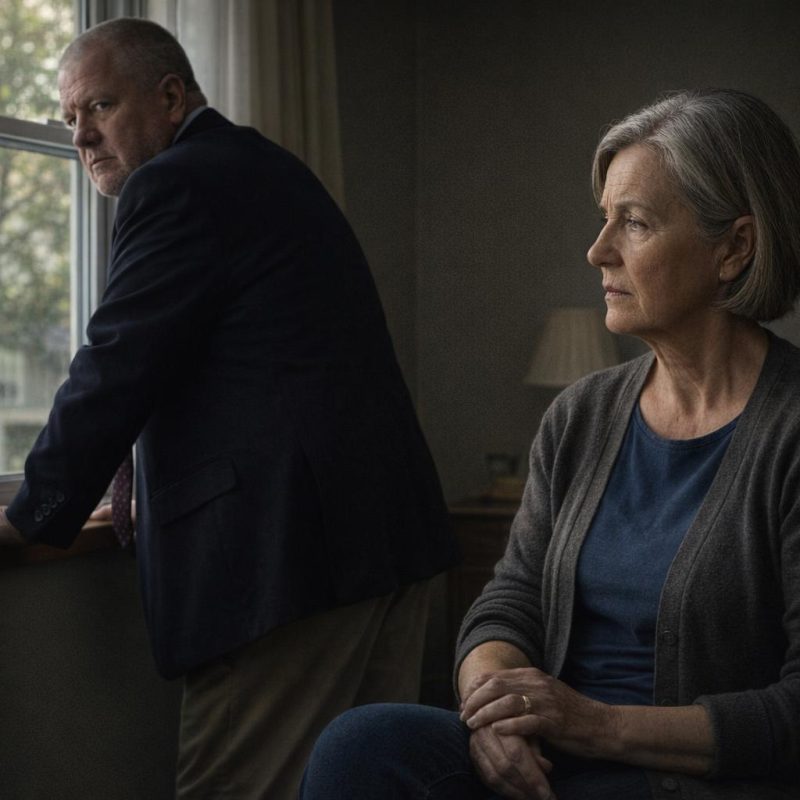 Image by RM AI
Reviewing the Evidence
When I got home I spread everything out on the kitchen table. My notes, the things Diane had told me, what I'd heard from Simone's former colleagues at the charity event, the details from Simone's biography. I looked at all of it together for the first time. Simone's colleagues had said she lived modestly — a small rental, careful with money, chasing work because Dean kept telling her they needed the income. Diane had mentioned Simone sold her condo when they married and handed Dean the proceeds. The biography showed years of working-class hustle before she ever had anything to spend. And then there was Dean: unable to give me a single withdrawal date, redirecting every specific question, talking about patterns and gradual losses without ever landing on a number. I lined those things up in my head and tried to make them fit the story he'd told me — that Simone's lifestyle had consumed everything, that her spending had drained the account meant for Paige. The pieces kept sliding. A woman who sold her own property and gave her husband the money didn't match the portrait of someone bleeding an account dry. A man who couldn't remember a single date when his daughter's future was at stake — that didn't sit right either. I didn't know yet what it meant. But the shape of the story I'd been carrying felt different now, like something underneath it had quietly shifted.
 Image by RM AI
The Fear in His Eyes
I sat in the quiet of my living room that night and let the conversations replay. Not what Dean had said, exactly, but how he'd looked while he was saying it. I kept landing on the same moment — the first time I'd brought up Simone's name in front of him, weeks ago, when I'd told him I was looking into what had happened to the college fund. His face had done something I hadn't paid enough attention to at the time. I'd read it as anger, the way an ex-husband looks when his ex-wife starts asking questions about his second marriage. But sitting with it now, I wasn't sure that was right. His jaw had tightened, yes, but his eyes had gone somewhere else — somewhere inward and fast, the way eyes move when something frightens you. And then again at his apartment, when I'd kept pressing him for dates. The warning he'd given me about Simone — don't trust her, she'll manipulate you, she knows how to make people believe things — it had sounded like a man trying to get ahead of something. Not a man who was angry at a woman who'd wronged him. I thought about the way his hands had gripped that windowsill. I thought about Simone's voice on the phone, steady and almost resigned. Dean's face when I'd first said her name — jaw tight, eyes gone somewhere fast and private — stayed with me.
 Image by RM AI
Replaying Simone's Words
I went back to Simone's words one more time. I'd been turning them over for days, but I'd been focusing on the wrong part. She hadn't said she didn't take the money. She hadn't said Dean was lying. She'd said something much more specific: ask Dean when the account was emptied. Not whether. When. That word had been sitting in the back of my mind without me fully hearing it. She hadn't said if he took it — she'd said when, like the answer to that question was already settled in her mind and the only thing left was the timing. And she'd said it calmly, without drama, the way you point someone toward a door you already know is unlocked. I thought about Dean's refusal to give me a single date. I thought about how every time I'd asked for specifics he'd gone wide, talking about patterns and gradual losses and Simone's habits. If the timing didn't matter, there was no reason to avoid it. If the timing did matter — if a specific date would tell me something Dean didn't want me to know — then his evasiveness made a different kind of sense. I didn't know what the dates would show. I wasn't sure I was ready to know. The weight of what Simone had been trying to point me toward settled over me in the quiet of that room.
 Image by RM AI
The Dread
I sat with the possibility for a long time before I let myself say it plainly, even just in my own head. That I might have had it wrong. That the person I'd spent months building a case against, the woman I'd researched and followed and nearly humiliated at a public event, might not be the one who emptied that account. I thought about the revenge plan — how close I'd come to executing it, how certain I'd felt. The certainty felt embarrassing now, sitting in my kitchen at eleven at night with a cold cup of tea and a table full of notes that didn't add up the way I'd needed them to. I thought about Paige, about what it would mean if I'd spent all this time pointing her anger in the wrong direction. That thought made me feel genuinely sick. I didn't know yet. That was the thing I had to keep reminding myself — I didn't know yet, and I wouldn't know until I had the actual records. Not Dean's account of the records. The records themselves. I found the name of a financial adviser who specialized in account reconstruction — someone Rachel had mentioned once in a different context — and I wrote down the number. I looked at it for a moment. Then I picked up my phone and called.
 Image by RM AI
Simone at the Door
I wasn't expecting the doorbell. It was a Tuesday evening, Paige was at a friend's house, and I was sitting at the kitchen table with my notes spread out and a glass of water I kept forgetting to drink. When I opened the door and saw Simone standing on my porch, my first instinct was to close it again. She looked different than I'd expected — no oversized sunglasses, no performance of composure. Just a woman in a dark coat holding a thick manila envelope with both hands, like she'd been gripping it the whole drive over. I said her name, and it came out flat. She said mine back, and then she asked me something I wasn't ready for. She asked if I was determined to destroy her. Not angry. Not dramatic. Just steady, like she'd rehearsed the calm and not the words. She said I should at least know what I was destroying her for. I stood in the doorway for a long moment. Every instinct I'd built over the past six months told me not to let her in. But something else — something quieter — made me step aside. She walked into my kitchen and set the envelope on the table between us, and neither of us touched it.
 Image by RM AI
The Envelope
We stood on opposite sides of my kitchen table with the envelope between us, and Simone told me what was inside. Bank statements, she said. From the discovery process during her divorce from Dean. She said they would show me what actually happened to Paige's college fund — not Dean's version of it, not what he'd told me, but the documented record. I asked her why she was bringing this to me now, after everything. She said she'd tried to tell me on the phone. She said I hadn't listened. I didn't argue with that, because she wasn't wrong. I asked why she'd kept these records at all, and she said her attorney had advised her to keep copies of everything. She told me to look at the dates when I opened it. Just the dates first. I looked down at the envelope. It was sealed, the flap tucked in rather than glued, like she'd opened and closed it more than once before deciding to bring it here. I didn't reach for it. I wasn't ready to be wrong. I wasn't ready to find out what being wrong would mean for every choice I'd made in the past six months, and for every story I'd told my daughter about who was responsible for what we'd lost.
 Image by RM AI
The First Statement
I opened the envelope slowly, like slowing down might change what was inside. The statements were organized, each relevant line highlighted in yellow — someone had gone through these carefully, long before tonight. I pulled out the first one. It was from a savings account I recognized, the one Dean had set up years ago specifically for Paige's education. I remembered when he'd shown it to me, back when we were still trying to be good co-parents about money. The account number matched what I had in my own records. I scanned down the page, past the routine deposits, past the small monthly additions that had felt like progress. And then I found the highlighted line. A transfer. A large one — more than I'd expected to see in a single transaction. My eyes went to the date printed beside it, and I read it twice because the first time didn't make sense. I looked up at Simone, then back down at the page. She hadn't moved. The date on that withdrawal was years before Dean and Simone ever filed for divorce.
 Image by RM AI
Counting Backward
I set the statement down and counted backward in my head. The withdrawal date was printed clearly — no ambiguity, no room to misread it. Three years before the divorce. I did the math again, slower this time, because I needed to be sure I wasn't making an error. Three years. I thought about that period. Dean and Simone had still been living together in that house in the hills. They'd come to Paige's school play that spring, I remembered, sitting two rows ahead of me, and everything had looked fine from where I was sitting. Paige had been fourteen. She'd been excited about high school the following year, already talking about what she wanted to study. I had been putting a little aside each month myself, assuming Dean's account was doing the same. The money had been gone before any of it fell apart. Before the arguments, before the attorneys, before Dean started calling me to complain about Simone. I looked up from the page. Simone was watching me from across the table, her hands folded in front of her, and the date on that statement sat between us like something neither of us could take back.
 Image by RM AI
The Second Withdrawal
I kept going through the envelope. I wasn't sure what I was looking for exactly — confirmation, maybe, or some detail that would complicate what I'd just seen. The statements were in order, each one clipped to the next. I flipped past two months of ordinary activity and then found the second highlighted page. Another transfer from Paige's education account. This one was dated six months after the first. I looked at the amount. Then I looked at the first statement again and added the two figures in my head. Together they came to just over seventy thousand dollars. Seventy thousand dollars, moved out of my daughter's college fund in two transactions, both of them years before Dean ever mentioned Simone's name to me in anger, before any of the blame started, before any of the stories he told me about what she'd done. I felt something cold move through my chest. The statements were clean, official documents — account numbers, routing numbers, transaction codes. There was no interpretation required. I sat there with both pages in front of me, the highlighted lines side by side, and I could not look away from the second transfer date.
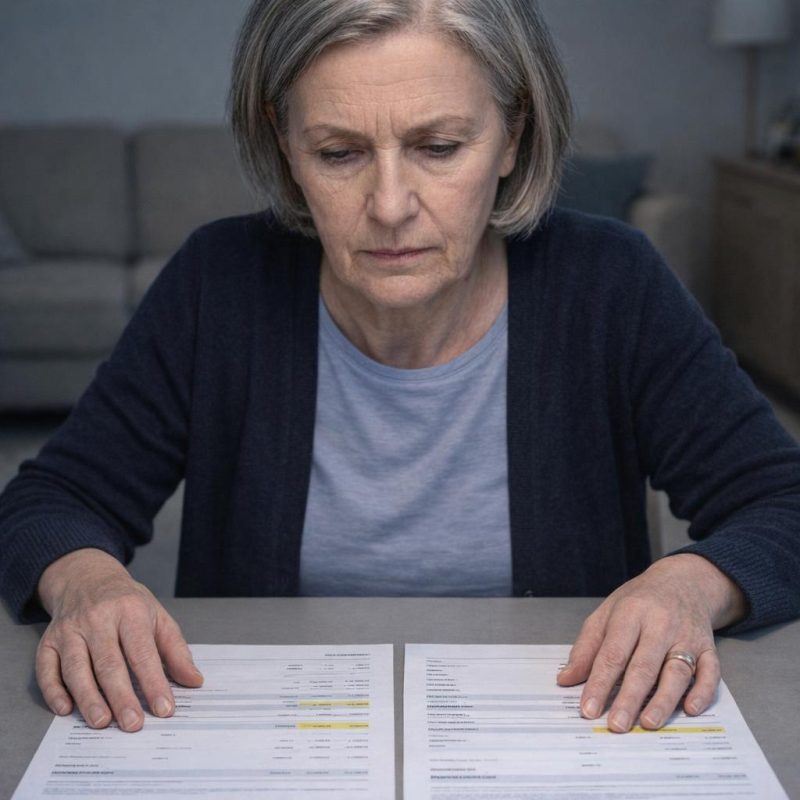 Image by RM AI
Before the Divorce
I laid both statements flat on the table and looked at the dates again, one after the other. The first withdrawal. The second withdrawal. Then I thought about when Simone had filed for divorce, which I knew because Dean had called me the day it happened, his voice tight and strange. I counted forward from the withdrawal dates to that filing date. The money had been gone for years by then. Whatever happened in that divorce settlement, whatever Simone had walked away with or hadn't, it couldn't have included money that was already missing. I thought about every conversation I'd had with Dean over the past year. Every time he'd shaken his head and said her name like it explained everything. Every warning he'd given me about how she operated, how she'd taken what wasn't hers, how Paige had been caught in the middle of Simone's greed. I had taken all of it in. I had built six months of my life around a story he'd handed me. I sat there with the two statements in front of me and felt the whole structure of what I'd understood to be true go quiet, the way a room goes quiet after something loud and irreversible has just stopped.
 Image by RM AI
The Question
For a long moment I didn't say anything. I just sat with the statements on the table in front of me, both dates visible, and tried to find some other explanation that fit. I couldn't. I finally looked up at Simone. She hadn't pushed me, hadn't filled the silence with anything. She was just sitting across from me, her hands still folded, her expression carrying something that looked like sadness without any satisfaction in it. I asked her what Dean had done with the money. My voice came out quieter than I intended. She looked at me for a moment, and then she asked if I really wanted to know. I told her I needed to know everything. Not the version Dean had given me, not a summary — everything. She nodded slowly, like she'd been waiting for me to get here and wasn't sure whether to be relieved or sorry about it. She took a breath. I watched her gather herself, and I felt something heavy settle into my chest — not quite dread, but close to it — as she opened her mouth to speak.
 Image by RM AI
The Business Venture
Simone spoke carefully, like she'd thought about how to say this more than once. She told me Dean had come to her about eight years ago with what he called an opportunity. An old friend of his had a business venture — she didn't name the friend, just said it was someone Dean had known since before either of his marriages. Dean had been certain it would pay off. He'd put in money from their joint savings first, she said, a significant amount, and when that investment lost ground he'd put in more to stabilize it. She said he kept believing the next round would turn things around. When the joint savings were gone, he used the proceeds from selling her condo — a property she'd owned before they married, which she'd agreed to fold into their shared finances. When that was gone too, she said, he found another source. She said it plainly, without drama, her voice level and even. He had moved money from Paige's education account. Not once, but twice, because the first transfer hadn't been enough to cover what he owed. She said he told her at the time it was temporary. I sat there listening, and somewhere in the middle of her last sentence the full weight of what Dean had done to our daughter's future landed on me.
 Image by RM AI
The Joint Savings
I didn't say anything. I just let her talk, and she did — methodically, like she'd rehearsed the order of it, or maybe just lived with it long enough that the sequence had worn grooves into her memory. She said Dean had opened the joint savings account two months after their wedding, told her it was for their future, a shared foundation. The first transfer out of it happened about six months later. He told her the business needed startup capital, that it was a short-term loan to himself, that he'd replace it before she even noticed the dip. She said she didn't notice — not right away. He kept the statements coming to his office address. By the time she saw real numbers, a year had passed and the account was down by more than half. He told her the next round of investment would bring it back. She said she believed him. She said that part quietly, like she was still a little ashamed of it. He kept reassuring her through the second year, and then the third, and by the time the joint savings were gone entirely he had already moved on to the next source. I sat there listening to the shape of it — one account emptied, then another, then another — and something in my chest went very still.
 Image by RM AI
Simone's Condo Money
She paused before she got to the condo. I could tell it cost her something to say it out loud. She'd bought that place herself, she told me, before she ever met Dean — a one-bedroom in a decent neighborhood, nothing fancy, but hers. When they married she'd agreed to fold it into their shared finances because he said that's what real partnership looked like. She sold it four years into the marriage. Dean had come to her with what he called the final piece — the one investment that would recover everything they'd lost from the joint account. He was specific about it, she said. He had numbers. He had projections. He told her this deal was different from the others, that the earlier losses had actually positioned them perfectly for this return. She gave him nearly all of the proceeds. She said she remembered signing the transfer and feeling relieved, like they were finally going to be okay. The money was gone within eight months. She didn't find out how completely it had vanished until much later. She said it without bitterness, just a flat, tired accuracy, and that was almost worse than if she'd been angry. I thought about how many times Dean had said those same words to me during our marriage — this is the last time, this will fix it — and the hollow feeling that settled in my chest had nothing to do with money.
 Image by RM AI
Discovering the Truth
She told me she'd started the divorce process quietly, without telling Dean at first. She'd gone to see an attorney — she nodded toward the folder on my coffee table when she said it, and I understood that was where the documents had come from. The attorney had pulled together a full financial picture as part of the discovery process, and that was when Simone saw it for the first time: withdrawals from an account she hadn't known existed, in Paige's name, dated across two separate transactions. She said she sat in that office and read the account number three times because she couldn't make herself believe it. She confronted Dean that same evening. She said she drove straight to the house and didn't call ahead. He was in the kitchen when she walked in, and she put the printout on the counter in front of him and didn't say anything until he looked at it. He didn't deny it. She said that was the part that stayed with her — he didn't even try. And then she told me what she said to him when he finally looked up, and I felt something shift in how I'd been holding myself for the past six months, because what she said to Dean that night was that he had until the end of the month to put every dollar back into my daughter's account.
 Image by RM AI
The Final Betrayal
Dean cried, she said. She told me that without any particular expression on her face, just as a fact. He cried and he told her that if this came out it would destroy his relationship with Paige, that Paige would never forgive him, that he needed time to liquidate some things quietly and make it right before anyone found out. He asked Simone not to tell me. He asked her not to tell Paige. He promised he would sell off what he had left and restore the college fund before Paige ever needed it, and he said he would do it without anyone having to know what had happened. Simone said she agreed because she thought she was protecting my daughter from finding out her father had stolen from her. She thought silence was the kindest option, the one that gave Dean a chance to fix his own mess without blowing up Paige's relationship with him. She looked at me steadily when she said that, and I believed her — I could see the logic of it, even if it had been wrong. But then she said what came next: after the divorce was final, Dean told everyone who would listen that Simone had drained their finances. He said it to mutual friends. He said it to Paige. He let the story settle into place with Simone as the one who had taken everything. She had kept his secret, and he had handed it to her like a weapon pointed back at her own name.
 Image by RM AI
The Wrong Villain
I sat with that for a long moment. Then I said it out loud, slowly, because I needed to hear it in my own voice to make it real. Dean had taken money from Paige's college account years before the divorce. He had lied to Simone about it and made her promise silence. He had lied to me and blamed Simone for the financial wreckage. He had let Paige pull away from Simone after the divorce, and he had done nothing to stop it — because Simone knowing the truth frightened him, and a daughter who disliked her former stepmother would never go looking for answers on Simone's behalf. I had spent six months convinced I was protecting my daughter from the woman who had ruined her future. I had called people. I had asked questions. I had sat in Rachel's car outside a fundraiser with a folder full of ammunition aimed at someone who had been lied to the same way I had been lied to, just earlier and with less warning. The full weight of that landed somewhere behind my sternum and didn't move. I looked at Simone sitting across from me — composed, patient, not gloating, not angry, just watching me work through it — and I asked her the only question I had left: why had she decided to tell me any of this now.
 Image by RM AI
Why She Came
She didn't hesitate. She said someone in her network had mentioned my name about three months ago — a woman who'd been asking questions about Simone's time on the show, about her reputation, about whether there had ever been any financial irregularities in her personal life. Simone said she recognized the shape of it immediately. She'd been in the industry long enough to know what it looked like when someone was building a case. She started paying closer attention, and then a mutual acquaintance mentioned the fundraiser — mentioned that I had a connection to it through a friend, that I seemed to be positioning myself to be there. She said she didn't know exactly what I was planning, but she knew it wasn't good, and she knew she wasn't going to stand in a room full of people who mattered to her professionally and personally and let Dean's version of events become the public record. So she pulled the divorce documents from her attorney's files, drove to my house, and rang my doorbell. She said all of this without accusation, just explanation, like she was reading from a timeline she'd already made peace with. I felt the shame move through me in a slow, thorough wave. I asked her how long she had known it was me specifically — and she said she'd known my name from the very first phone call I made.
 Image by RM AI
The Silence She Kept
I asked her why she hadn't gone straight to Paige after the divorce. If she'd known about the account, if she'd confronted Dean and had the documents — why had she let Paige spend years thinking she was the villain? She was quiet for a moment. Then she said Dean had called her two days after the divorce was finalized and asked for six months. Just six months, he said, to liquidate what he had left and put the money back before Paige started applying to schools. He told Simone that if she went to Paige now, with the wound still fresh, it would break something between Paige and her father that could never be repaired. He said he wasn't asking her to lie — just to wait. Simone said she told herself she was giving him the rope to fix it, not to hang himself with it. She also said, and this part she said carefully, that she hadn't wanted Paige to know what her father had done. She'd watched Paige at family dinners, seen how much she loved him, and she hadn't been able to make herself be the one to take that away. She said she knew now that had been a mistake. She said it plainly, without asking me to absolve her. I didn't say anything, because I understood the feeling of believing someone's promise when you wanted badly enough for it to be true.
 Image by RM AI
The Promise He Never Kept
Simone set her hands flat on her knees and said it plainly: Dean had two full years between the date the divorce was finalized and the day Paige received her college acceptance letter. Two years. She said he had assets he could have sold. He had a salary. He could have come to me — she said this without flinching — and told me the truth and asked for help finding a solution. He could have taken a loan. He could have done any number of things that a person does when they've broken something and genuinely intend to fix it. Instead he did nothing. He made no transfers, no deposits, no partial payments. He waited until Paige had an acceptance letter in her hand and the question of tuition became impossible to avoid, and only then did he admit the account was empty. And when he admitted it, he told Paige it was because of Simone. He told me it was because of Simone. He had two years to make it right and he spent them building a story instead. I sat there in my living room with the folder of documents open on the cushion beside me, and the cold of it settled into me slowly, the way cold does when you've been standing in it long enough that you stop feeling it as temperature and start feeling it as fact.
 Image by RM AI
Canceling the Plan
I closed the folder and set it on the cushion between us. I told Simone I wasn't going to the fundraiser. Not to expose her, not to do any of the things I'd spent months planning. I said it plainly, the way she had said things to me, without softening it or dressing it up. I told her I had believed Dean without asking a single hard question, and that I had aimed everything I had at the wrong person, and I was sorry. She didn't make a production of it. She nodded once, slowly, and said she appreciated that. There was something in her face — not triumph, just a kind of tired relief — that made me feel the weight of what I'd almost done even more than the apology itself had. I asked if I could keep copies of the bank statements. She said of course. She slid the folder toward me without hesitation. I told her Dean needed to face what he'd done, that Paige deserved the truth from him directly, and Simone agreed with that too, quietly, like she'd been thinking the same thing for a long time. I drove home with the folder on the passenger seat and my hands steady on the wheel, already working out exactly how I was going to make that happen.
 Image by RM AI
The Dinner Invitation
I waited until the next morning to call Dean. I wanted to be calm when I did it, and I was — the kind of calm that comes not from peace but from knowing exactly what you're doing. He picked up on the third ring, sounding surprised I'd called at all. I told him I wanted to have dinner, the three of us — him, me, and Paige. I said we needed to sit down together and talk through the college fund situation, figure out what options were still on the table. He started to say something about financial aid timelines and I let him finish. Then I told him to bring every record he had connected to Paige's college account. Bank statements, transfer confirmations, anything he could put his hands on. There was a pause. He asked what this was really about. I told him it was about making sure Paige had the full picture so we could figure out next steps together. Another pause, longer this time. He said he'd come, said he'd bring whatever he could find. His voice had gone careful in a way I recognized — the way it always did when he was trying to read a situation he didn't fully understand. I said I'd text him the restaurant and the time, and I hung up before he could ask anything else. I set the phone down on the counter and felt the quiet satisfaction of a door swinging shut.
 Image by RM AI
The Restaurant
We got to the restaurant forty minutes early. I'd picked a booth in the back, away from the bar noise, with enough privacy that a difficult conversation wouldn't carry. Paige slid in across from me and looked around at the empty table and then at me, and I could see her already reading the situation the way she always did — quietly, carefully, waiting for me to tell her what we were actually doing here. I told her the conversation tonight was going to be hard. She asked what kind of hard. I said the kind where we finally get some real answers about her college fund, and that I needed her to stay with me through it even if things got uncomfortable. She asked if Dad was going to be upset. I told her probably, yes. She wrapped both hands around her water glass and looked down at it for a moment. Then she looked back up at me and said okay. Just okay — no drama, no argument, just that one word, and it steadied me more than anything I could have said to myself. I reached across and squeezed her hand once. We didn't talk much after that. The restaurant filled up slowly around us, the low hum of other people's evenings settling in, and we sat together in the back booth and waited.
 Image by RM AI
Dean Arrives Empty-Handed
Dean came through the door at seven-oh-two, scanning the room until he spotted us. He raised a hand in a small wave and made his way over, and I watched him the whole way across the restaurant. No folder. No envelope. No papers tucked under his arm. He was carrying nothing but his jacket and his keys. He sat down, said hello to Paige, asked how she was doing, and she gave him a polite answer that didn't quite reach her eyes. I waited until he'd settled, and then I asked him where the financial records were. He said he'd gone through everything he had but couldn't locate all of it — said some documents got lost in the move, that he'd been in two different apartments since the divorce and things had gotten disorganized. Paige looked between us. I told him that was unfortunate. I kept my voice even when I said it, the same tone I'd use to comment on the weather. He shifted in his seat and picked up the menu, and I watched him study it like the dinner specials were the most important thing in the room. The folder I'd asked him to bring wasn't there. The records that would have told his own story, in his own words, weren't there. Just Dean, sitting across from his daughter, with nothing in his hands.
 Image by RM AI
The Same Old Story
Dean set the menu down and looked at Paige, and I could see him deciding to get ahead of it. He said he wanted to explain what had happened, that she deserved to understand. Paige nodded, and he started talking. He said the divorce had been financially devastating. He said Simone's attorneys had been aggressive, that the settlement had consumed far more than anyone had anticipated, and that assets he'd counted on — assets that were supposed to stay separate — had gotten pulled into the marital estate. He said the college account had been caught up in all of it. He said he was sorry, that he'd never wanted this for her, that if he could go back he would have done things differently. His voice was steady and practiced and full of the right kind of regret. Paige's eyes went glassy. She was trying not to cry, and I could see the effort it was costing her — that particular stillness she gets when she's holding something in. Dean looked across the table at me then, the way he used to when he wanted me to confirm something, to back him up, to smooth the moment over. I looked back at him and said nothing. I kept my hands flat on the table and let the silence sit there between us, and I let him believe, for just a little longer, that the story he'd just told was still standing.
 Image by RM AI
Simone Arrives
I saw her before Dean did. Simone came through the front of the restaurant in a dark coat, oversized sunglasses pushed up on her head, carrying a manila folder against her chest. She moved through the room without hurrying, and I watched her find our table from across the floor and walk toward it. Paige saw her next and her brow pulled together — she started to ask something, and I touched her arm once, lightly, to tell her to wait. Simone reached the table and pulled out the empty chair beside me and sat down. She set the folder in front of her and folded her hands on top of it. She didn't look at me. She looked at Dean. And Dean — Dean had gone completely still the moment he'd seen her come through the door. He was sitting with both hands flat on the table, his menu pushed to the side, and he was staring at Simone the way a person stares at something they were certain they'd never have to see again. Paige looked at me, then at Simone, then back at her father. I watched the color leave Dean's face.
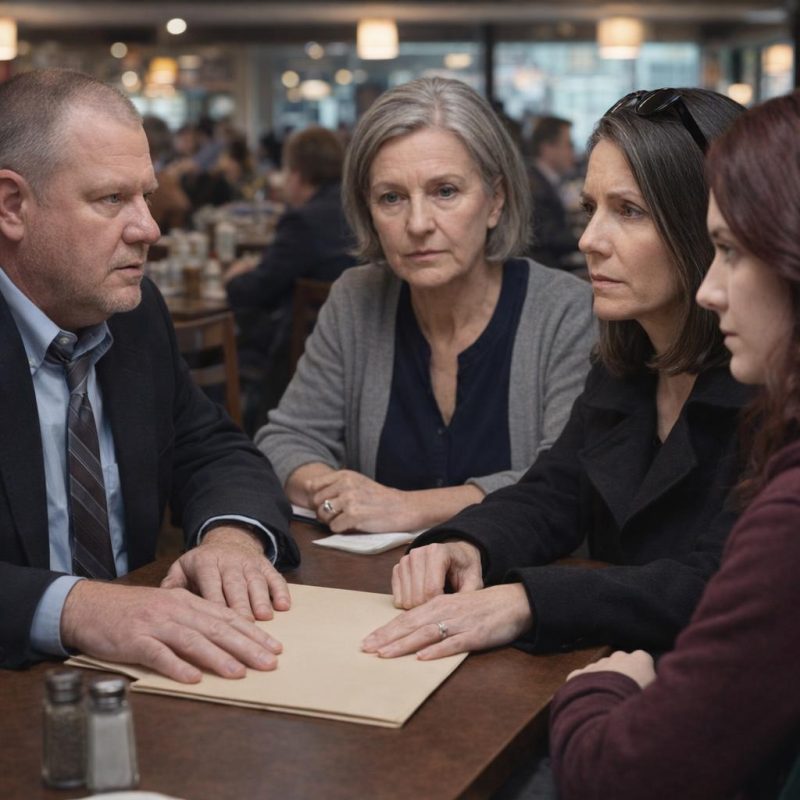 Image by RM AI
The Documents
Simone opened the folder without any preamble. She didn't explain herself or ask permission. She simply pulled out a set of bank statements, the pages marked with yellow highlighter, and slid them across the table to Paige. Paige looked down. The statements were from the college savings account — I could see the account number from where I sat. The highlighted lines were withdrawal entries, each one with a date printed clearly beside it. Paige's eyes moved down the page slowly, and I watched her stop. She went back up and read the dates again. The withdrawals had started years before Dean's divorce from Simone was ever filed. Years before any settlement, any attorneys, any marital asset dispute. Simone said quietly that these had come out of the discovery process during her own divorce proceedings — that her attorney had pulled them as part of documenting the full financial picture. She said she'd had them for a while and hadn't known what to do with them. Paige didn't respond. She was still looking at the page, one finger resting just below a highlighted date, not moving. Dean sat across from her without making a sound. Paige lifted her eyes from the statements and looked at her father, and the page lay between them on the table, the dates facing up.
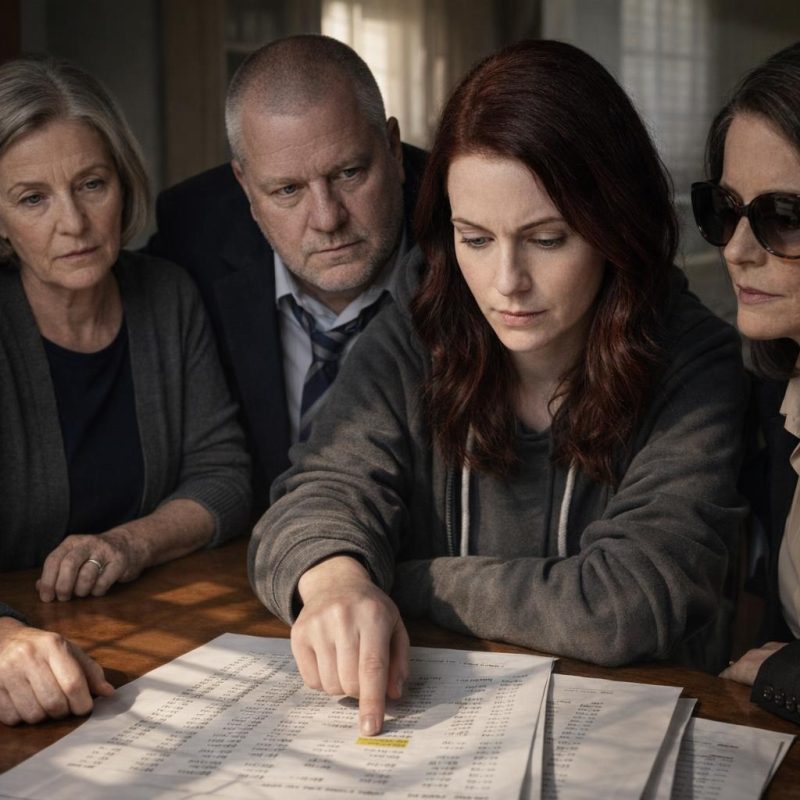 Image by RM AI
The Question
Paige looked away from Dean and turned to Simone. She asked the question in a voice that was quieter than I expected — not accusatory, just direct, the way she gets when she's already half-afraid of the answer. She asked Simone if she had taken her college money. Simone held her gaze and said no. One word, no elaboration, no defensiveness. Just no. Paige stared at her for a long moment, long enough that I held my breath without meaning to. I could see her working through it — the statements, the dates, the story Dean had told her not twenty minutes ago. Then she turned. She turned slowly, the way you turn when you already know what you're going to find, and she looked at her father. Dean sat frozen in his chair, both hands still flat on the table, the folder of statements open between them. The table was completely silent. I kept my eyes on my daughter and waited for Dean to say something, anything, that would make this easier for her — and he said nothing at all.
 Image by RM AI
The Confession
Dean finally spoke. His voice came out low and unsteady, like something he'd been holding underwater for a long time. He said he had taken money from Paige's college account — not all at once, but in pieces, over two years. He said there was a business venture, a friend with a plan, and he kept telling himself he was just borrowing it temporarily, that he'd put it back before anyone noticed. The investments kept failing and he kept going back in, convinced the next round would recover everything. It never did. When Simone found out and confronted him, he panicked. He said he told Paige it was Simone's spending, Simone's lifestyle, because Simone already knew the truth and that frightened him more than anything else. He said it quietly, like he was reading from a list of things he'd done to someone else entirely. Simone sat perfectly still across the table. I watched my daughter's face move through something I didn't have a word for — not quite grief, not quite rage, somewhere in between. Then Paige's voice came out flat and careful, and she asked her father one question: whether he had let her blame Simone all this time just to protect himself.
 Image by RM AI
Simone's Gift
Dean didn't answer Paige's question. He just sat there with his hands still on the table, and the silence was its own kind of answer. Then Simone reached into the folder she'd brought and slid another document across the table toward Paige. It was a bank statement for a new education account, opened three weeks earlier, in Paige's name. The balance showed twenty-five thousand dollars. Simone said she had licensed some old footage from her soap opera years — a nostalgia project, a streaming deal — and that this was where the payment had gone. Paige stared at the paper for a long moment and then said she couldn't accept it. Her voice was firm but her hands weren't quite steady. Simone said that Dean had taken something that belonged to Paige while Simone was still part of this family, and that she should have pushed harder for the truth back then instead of walking away. She said this was the part she could actually fix. Paige looked at me, and I gave her the smallest nod I had. I didn't trust my voice enough to say anything out loud. The document sat between us on the table, and the room held a kind of stillness I hadn't felt in a very long time.
 Image by RM AI
Moving Forward
Dean left without saying much. The three of us stayed at that table for another hour, and what we built in that hour was something I hadn't expected to feel so solid. Paige had already applied for financial aid before any of this happened, and the package that came back was substantial — grants, a subsidized loan, enough to cover a real portion of her first year. Simone's twenty-five thousand went into a dedicated account that Paige's attorney helped us structure so it couldn't be touched for anything other than tuition and housing. I committed what I had saved over the past two years — not everything, but enough to matter. And Dean, through his own attorney the following week, signed a legally documented repayment agreement. It was enforceable. It had a schedule. It had consequences if he missed payments. Paige would need to work part-time, and she knew that going in, and she didn't flinch. We mapped it all out on paper — the aid, my contribution, Simone's gift, Dean's obligation — and when we were done, the numbers actually worked. Paige folded the paper carefully and put it in her bag. I sat back in my chair and felt the particular quiet that comes when something broken has been given a real path forward.
 Image by RM AI
The Real Villain
Months later, Paige asked me if I regretted what I had tried to do to Simone. We were driving home from dropping her things at the dorm, just the two of us, and she asked it the way she asks hard questions — not to wound me, just because she needed to know. I told her yes. I told her I had walked into that charity event ready to dismantle a woman's reputation in front of everyone she knew, and I had been so certain I was right. I introduced Simone that night by her professional accomplishments and nothing else. I didn't say a word about the rest of it. But the truth is I had already decided Simone was the villain before I had a single piece of real evidence. She was glamorous and she was new and she fit the part I needed someone to play. Dean was ordinary. Dean was familiar. Dean was the man I had been married to for eighteen years, and it never seriously occurred to me that he was the one I should have been watching. He had counted on that. He had counted on me looking at the woman in the oversized sunglasses while he quietly emptied an account with our daughter's name on it. Paige was quiet for a moment after I said all of that. Then she said, "I know, Mom." The easiest person to cast as the villain is rarely the one who actually took the money.
 Image by RM AI
KEEP ON READING