
The Heartbreaking True Story Behind the World's Most Devoted Seabird
 commons.wikimedia.org on Google
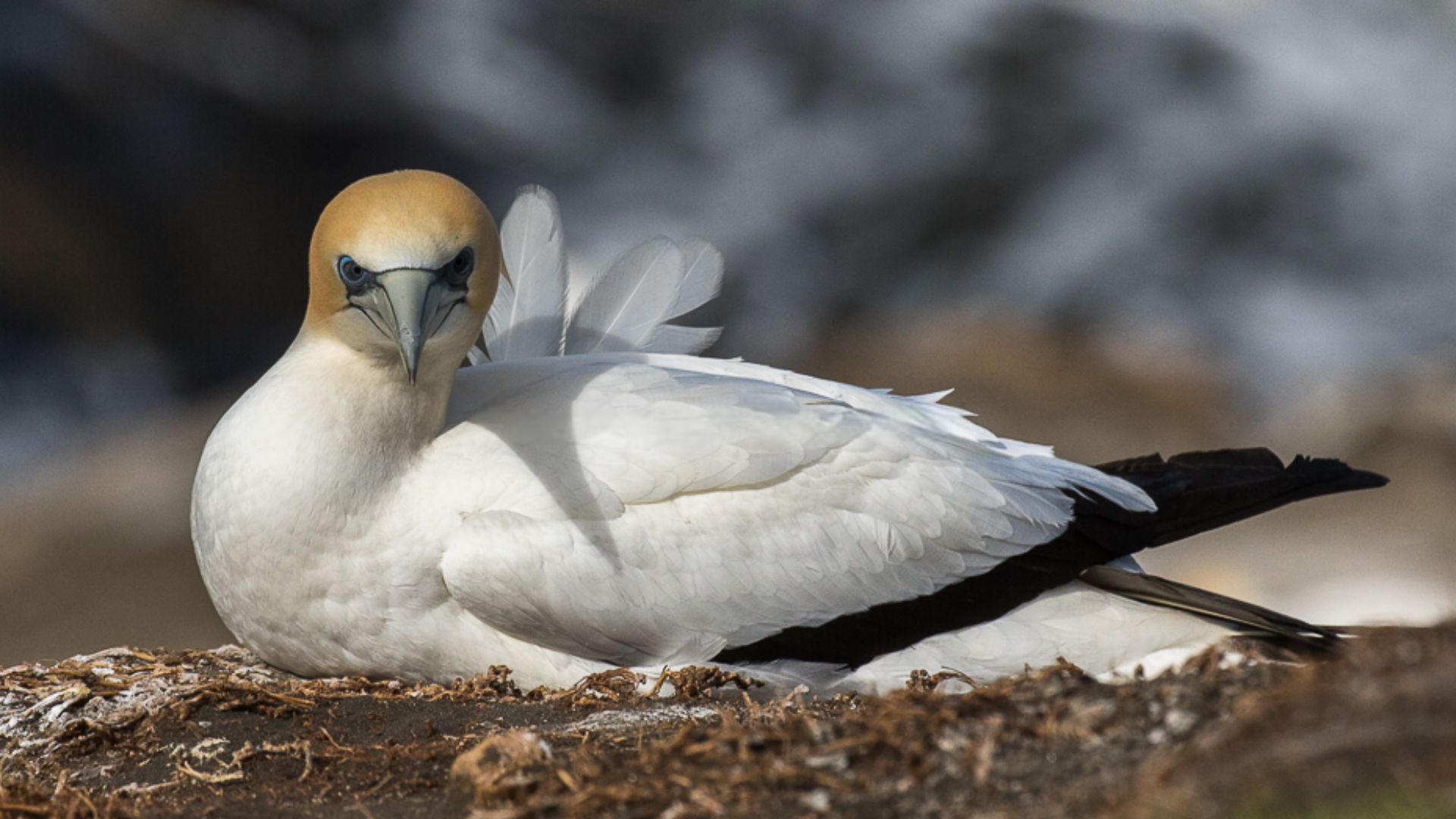
A gannet landed on Mana Island, a few kilometers off the coast north of Wellington, sometime around 2015. Waiting for him were eighty concrete birds bolted to the rock in poses copied from a real colony, with speakers nearby playing recorded gannet calls on a loop. He picked one of the concrete birds and stayed.
For about three years he courted her. He built a nest out of seaweed and twigs beside her and groomed her the way a gannet grooms a mate, making the low noises they make at each other. Rangers named him Nigel and the press named him the world's loneliest bird.
Three Years of Courtship
Gannet courtship is elaborate and noisy. Pairs fence with their bills and bow at each other, then preen around one another's heads, and they repeat the whole sequence for weeks. Australasian gannets pair up for years at a stretch and come back to the same patch of rock each season, so the performance is an investment rather than a flourish. Nigel ran through all of it beside a painted lump of concrete that never moved.
Ranger Chris Bell, who lived on the island, figured Nigel was a young male that had been pushed out of another colony somewhere and gone looking for a spot of his own. He'd found one with eighty residents already in place, none of whom competed with him for anything. From a gannet's point of view it was a reasonable piece of real estate, with a clear cliff edge and no fights over space.
Every season he rebuilt the nest. Gannets patch the same scrape year after year with fresh seaweed and twigs, packing it flat for an egg. Nigel kept his in good repair for three years, beside a bird that was never going to lay one. The concrete never turned its head.
Why There Were Eighty Concrete Birds
Seabirds pick their nesting sites by looking for other seabirds. A bare cliff with good fishing nearby means nothing to a gannet, while a cliff covered in gannets means the place works. That instinct makes founding a new colony from scratch close to impossible, since nobody wants to be first.
Conservationists get around this with decoys and sound systems. A biologist in Maine used the same trick in the 1970s to bring puffins back to an island they'd abandoned a century earlier, and seabird projects have copied it ever since. New Zealand's Department of Conservation started placing concrete gannets on Mana Island in 1998, hoping to seed a colony on an island they'd spent years clearing of rats and mice. Mana had been cleared of rats and mice and set aside as a reserve, so the habitat was as good as anyone could make it. The birds didn't come. The decoys were shifted to a different spot in 2012 and still nothing happened.
Then Nigel showed up, which meant the method had worked. He read the fake colony as a real one and behaved exactly the way the designers hoped a gannet would behave. The technique's only flaw was that it convinced him too thoroughly to notice anything else.
The Ending Nobody Wanted
In January 2018, DOC staff repositioned the speakers, and within weeks three actual gannets landed on Mana Island. This was the whole point of the twenty-year project, and it finally happened while Nigel was standing about a hundred meters away. He stayed on his side of the colony with his decoy and showed no interest in them.
Bell found him dead in his nest at the end of that month. The story spread around the world in a couple of days, mostly under headlines that the world’s loneliest bird had died beside the concrete love of his life. Bell felt much the same way. He told Stuff it was the wrong ending and that Nigel had died right at the beginning of something great.
Sadly, the three gannets hung around for a while and then left, and as of 2022 there were no gannets living on Mana Island at all. Plenty of write-ups at the time cast Nigel as the pioneer whose presence finally drew the others in, which is a nicer shape for a story than what the records show.
KEEP ON READING



.jpg)