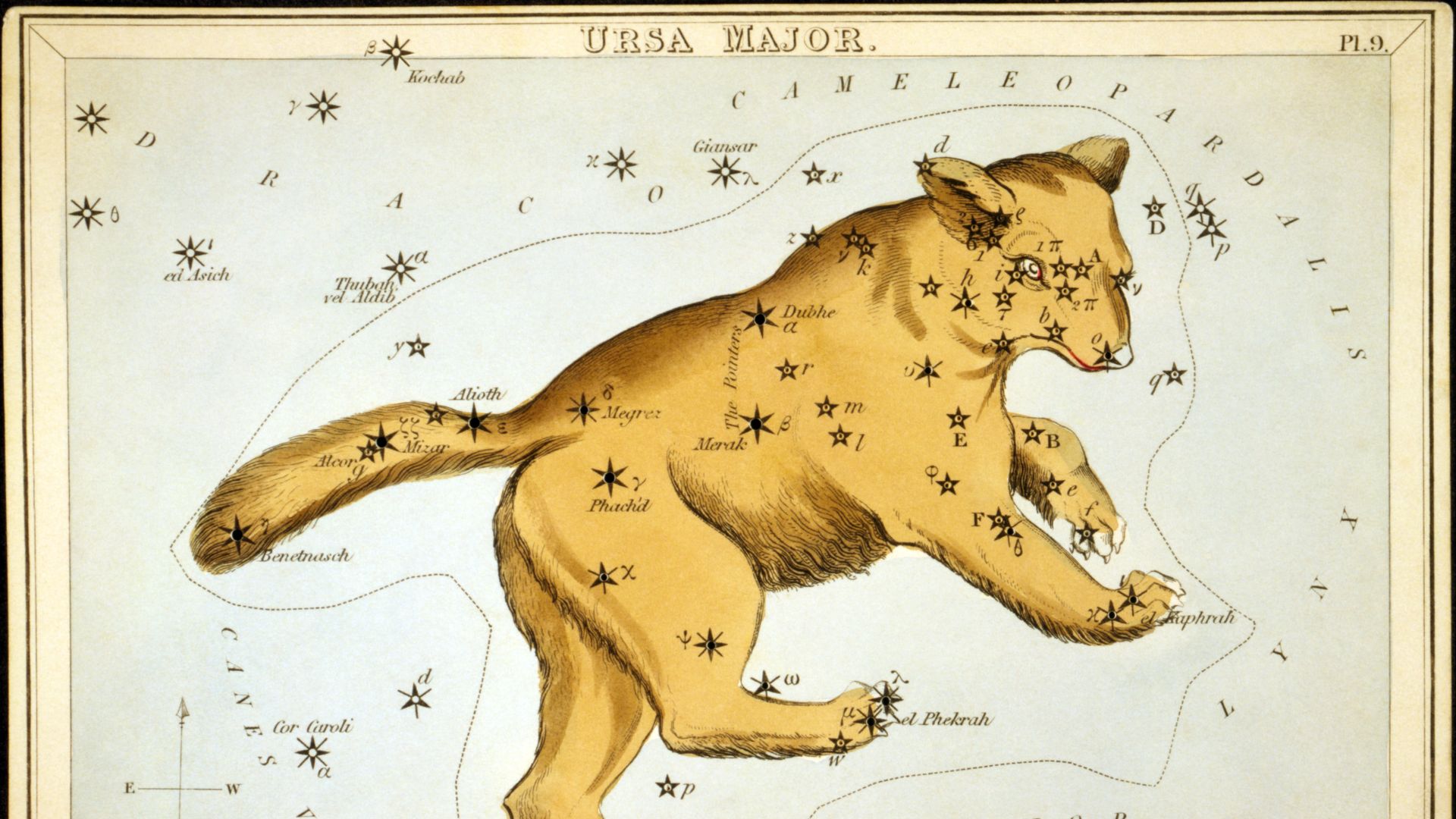
2. Ursa Major
Also known as The Big Bear—or for many, the Big Dipper. When the Greeks first saw it, they imagined Zeus transforming a nymph into this sprawling creature to save her from Hera’s wrath. Indigenous peoples across North America told different tales. They saw a bear chased by hunters or a canoe in the sky. That’s what’s beautiful about Ursa Major: it’s so unmistakable, all cultures found a way to incorporate it into their stories.
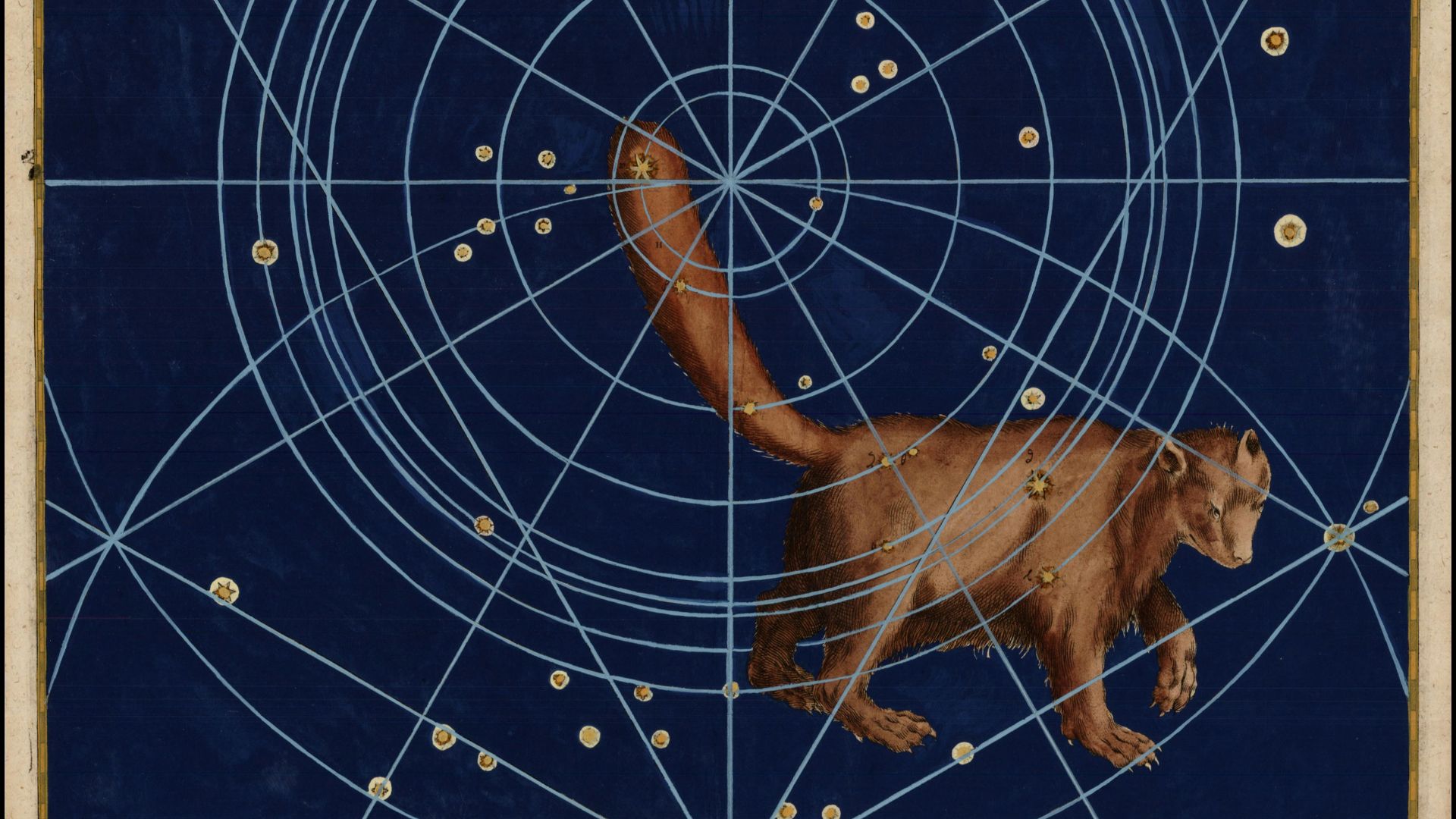
3. Ursa Minor
The Little Bear trails behind, carrying Polaris—the North Star—like a lantern. Ancient sailors counted on this point of light to cross oceans. And even now, camping out far from cities, there’s comfort in knowing that if you spot the Little Bear’s tail, you’ll always know which direction is north.
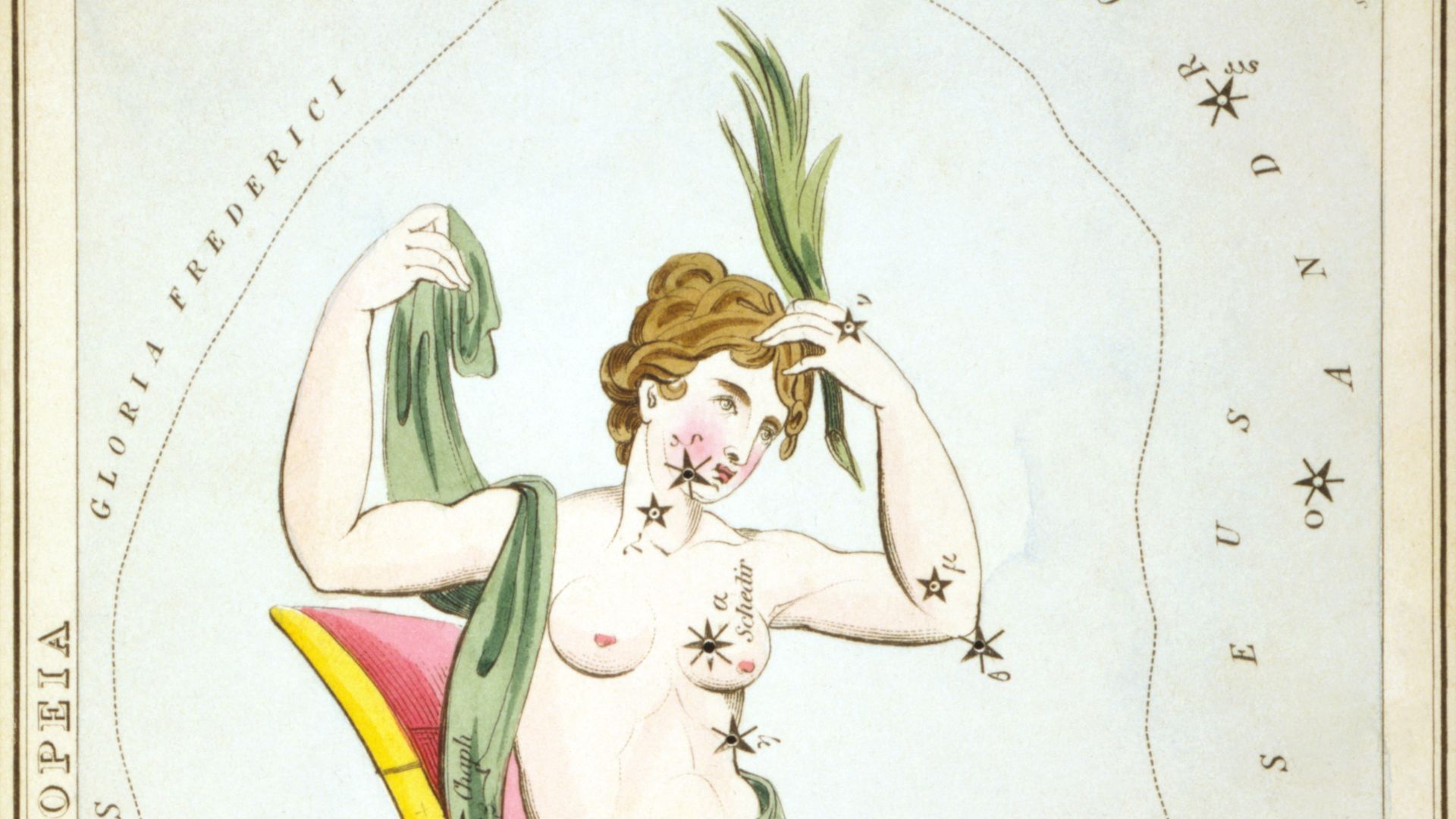
4. Cassiopeia
Shaped like a wonky “W,” this constellation is so called after the vain queen of Ethiopia who couldn’t refrain from bragging about her beauty. As cosmic punishment for comparing herself to the Nereids, Zeus placed her in the sky as a constellation. Oddly enough, her crooked throne is one of the easiest constellations to find in autumn, and once you see it, you can’t unsee it.
 Sidney Hall / Adam Cuerden on Wikimedia
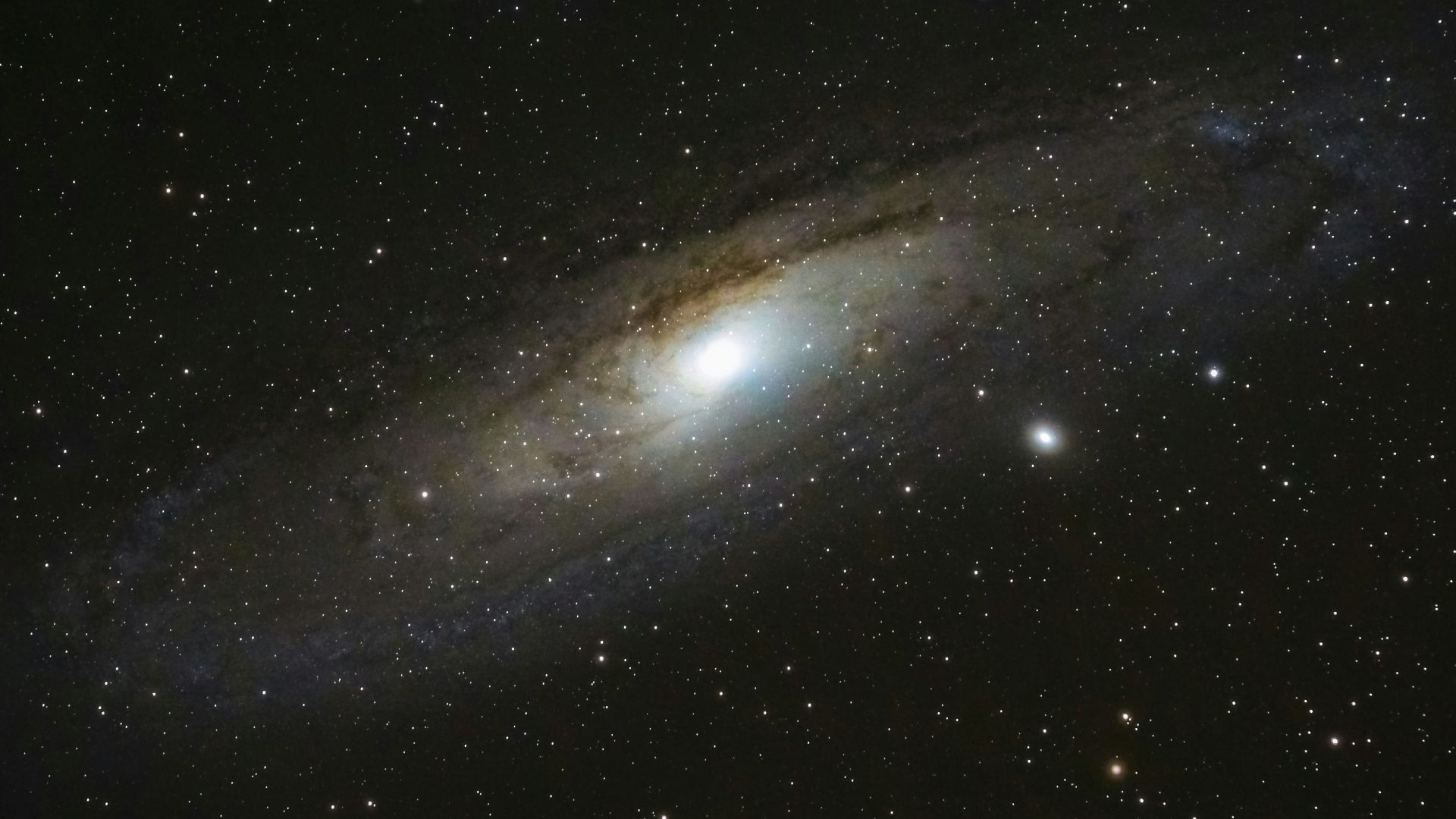
5. Andromeda
The daughter of Cassiopeia, sacrificed to a sea monster for her mother’s hubris, only to be rescued by Perseus at the final moment. The Andromeda Galaxy, our neighbor two million light-years away, sits in her domain. It’s often imagined as a woman with outstretched arms, chained at the wrist.
 Sidney Hall / Adam Cuerden on Wikimedia
6. Perseus
This heroic demigod was the rescuer of Andromeda and the legendary slayer of Medusa. Perseus’s constellation holds Algol, a variable star whose brightness waxes and wanes. Ancient people called it the Demon Star, believing it was Medusa’s eye blinking down at us.
7. Draco
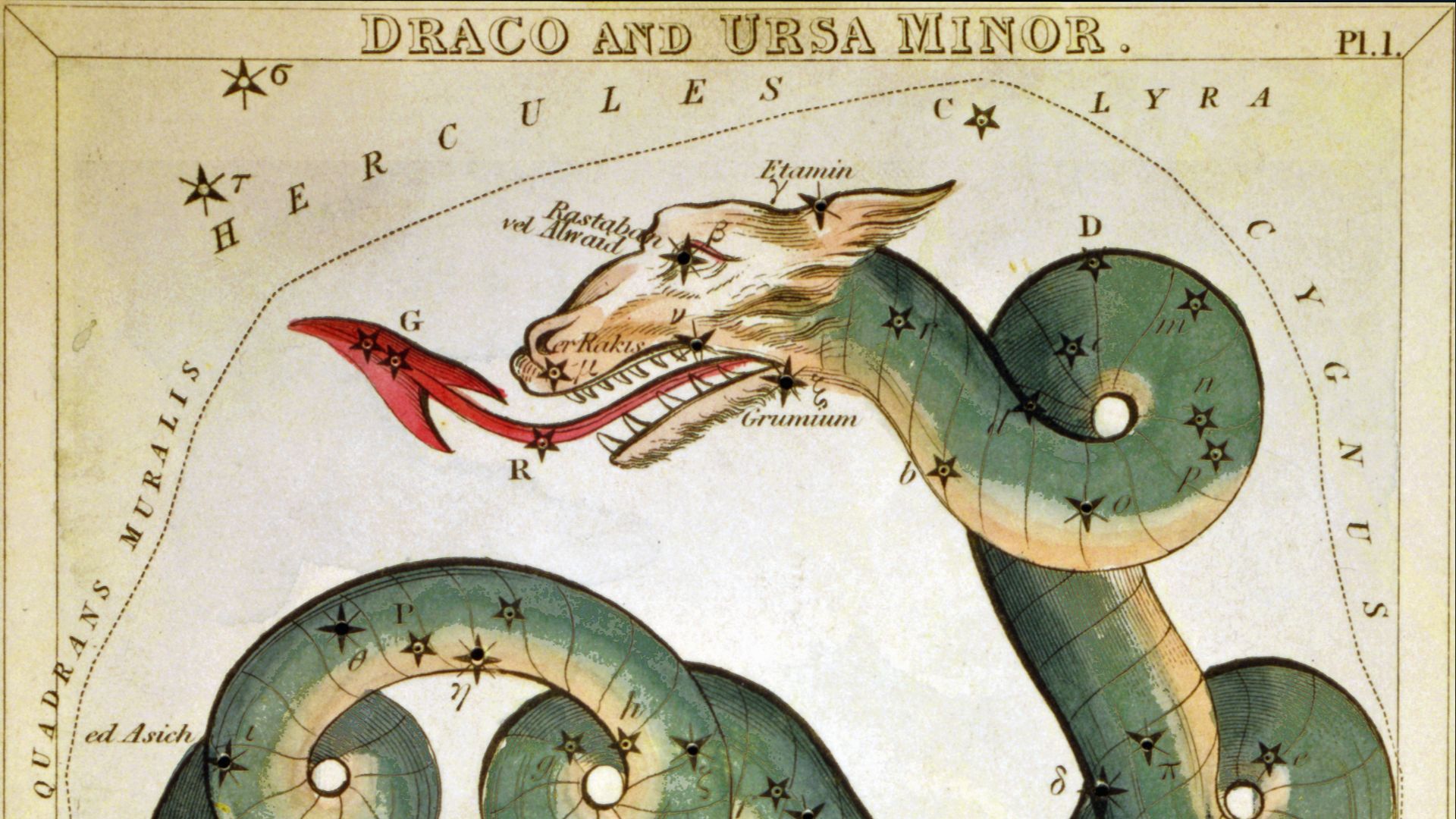
Represented as a dragon curled between bears, this constellation was regarded in Greek myth as Ladon, the guardian of Hera’s golden apples. On clear nights, the defeated Draco lays twisted across the north like a fossilized serpent.
8. Pegasus
Born from Medusa’s blood after Perseus struck, Pegasus gallops across autumn skies. The Great Square of Pegasus makes a solid landmark, four bright points like the corners of a window. And sometimes, staring at that window of stars, you feel the urge to climb through it.
9. Gemini
Castor and Pollux, twin brothers, immortalized after tragedy. Castor was born a mortal, while Pollux was an immortal son of Zeus. When Castor died, Pollux begged Zeus to share eternity with him. The gods obliged, allowing them to be forever side by side.
10. Taurus
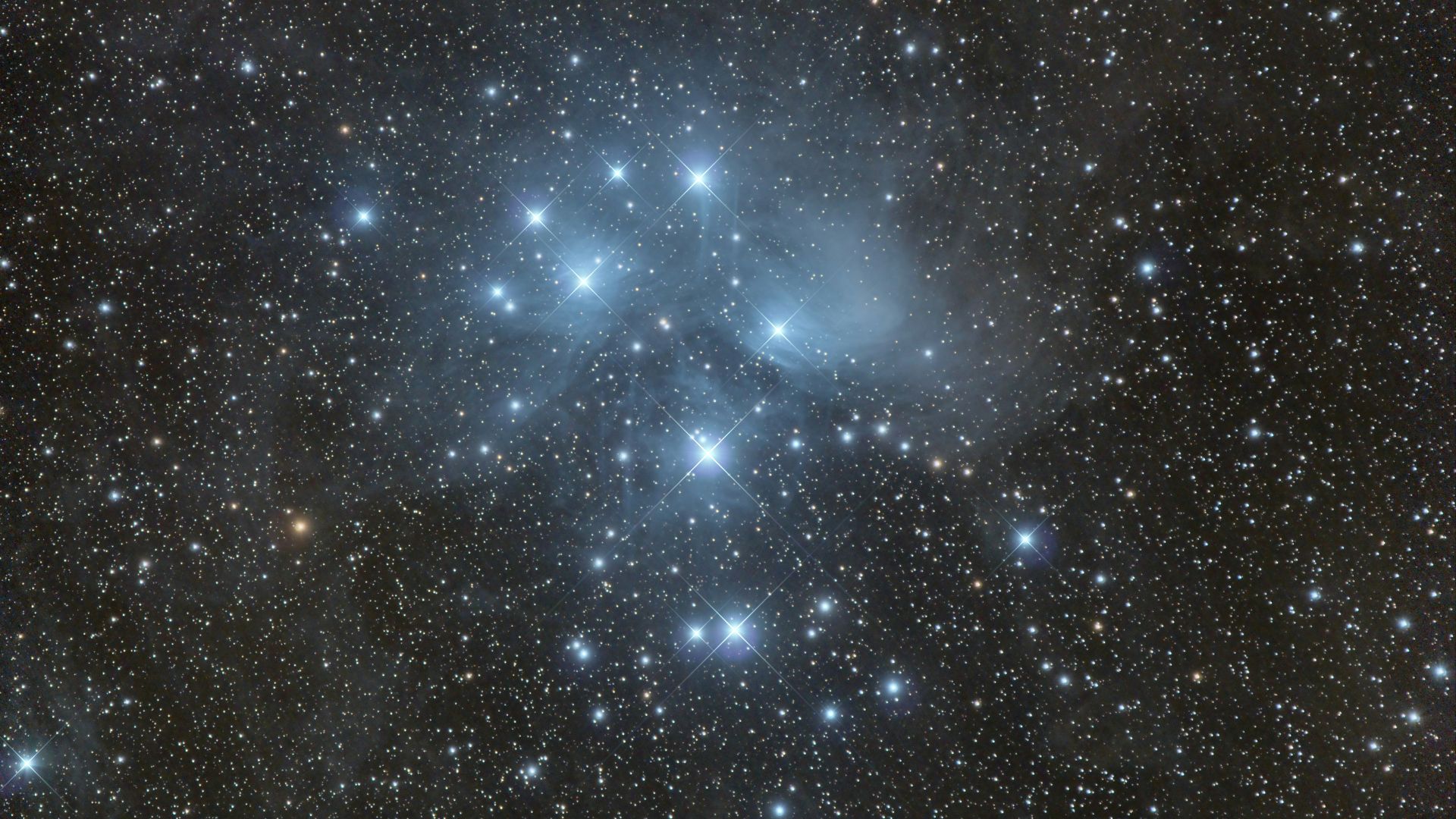
In this ancient Greek tale, Zeus disguised himself as a magnificent white bull to abduct Europa. After winning her over, he placed the bull in the sky. The Pleiades cluster rests on his shoulder, seven sisters twinkling like a jewel box. Farmers once tracked planting seasons by these stars, which makes sense: the bull was always linked to plowing, harvest, survival.
11. Leo
Leo was the Nemean Lion slain by Hercules in his first labor. Ancient Babylonians also revered this constellation, carving lions into their walls. Even now, spotting that curved sickle of stars feels like spotting some regal celestial creature.
12. Scorpius
This scorpion chased Orion to his death. Greeks loved poetic justice, and so the two constellations never share the sky; when one rises, the other hides. In tropical places, Scorpius dominates summer nights, its curved tail practically glowing with the sparkling stinger.
13. Sagittarius
For the Greeks, he was Chiron, wise teacher of heroes: half man, half horse, with his bow drawn. Astronomically, Sagittarius points toward the center of our galaxy, as if the archer really does know where the heart lies.
14. Aquarius
This constellation was associated with floods, renewal, and even divine punishment in Mesopotamian lore. Some said it was Ganymede, a mortal so beautiful Zeus whisked him to Olympus. The stars don’t look much like a person holding a jug, but that’s par for the course for most constellations.
15. Aries
Aries was the ram with the golden fleece, later hunted by Jason and the Argonauts. Although small and faint, it’s culturally loaded with significance. Babylonian priests tied these stars to the spring equinox and the renewal of the year.
16. Capricornus
The sea-goat, this constellation reflected one of those hybrid creatures so beloved in ancient myths. Half goat, half fish, it represented Pan escaping a monster by diving halfway into the river. The constellation resembles a stretched triangle that isn’t particularly goatlike.
17. Virgo
This one is linked to Demeter’s daughter Persephone, or sometimes to Astraea, the virgin goddess of justice. Harvest-time constellations often carried this kind of symbolism. Spica, Virgo’s brightest star, means “ear of wheat” in Latin. When it rose, farmers knew the grain was ready to harvest.
18. Libra
This set of scales is one of the few constellations representing an object, not a creature or person. Romans tied it to balance, justice, and fair measure—concepts they prided themselves on, at least in theory.
19. Cygnus
Greeks saw this swan fluttering through the Milky Way as Zeus in disguise (he really had a thing for transformation). In some traditions, it was Orpheus placed among the stars after his tragic death. On summer nights, its cross-shaped wings cut straight across the sky in unmistakable flight.
20. Cetus
This was the sea monster that threatened Andromeda and was ultimately defeated by Perseus. Greeks pictured it as a whale-like beast, terrifying enough to warrant a hero’s rescue mission. The stars look more like a crooked loop than a mythical beast, but the myth infuses the starry gaps with the substance of the story.
KEEP ON READING