The Exclusive Club No One Wanted to Join: Golden Gate Bridge's Halfway to Hell Survivors
The Exclusive Club No One Wanted to Join: Golden Gate Bridge's Halfway to Hell Survivors
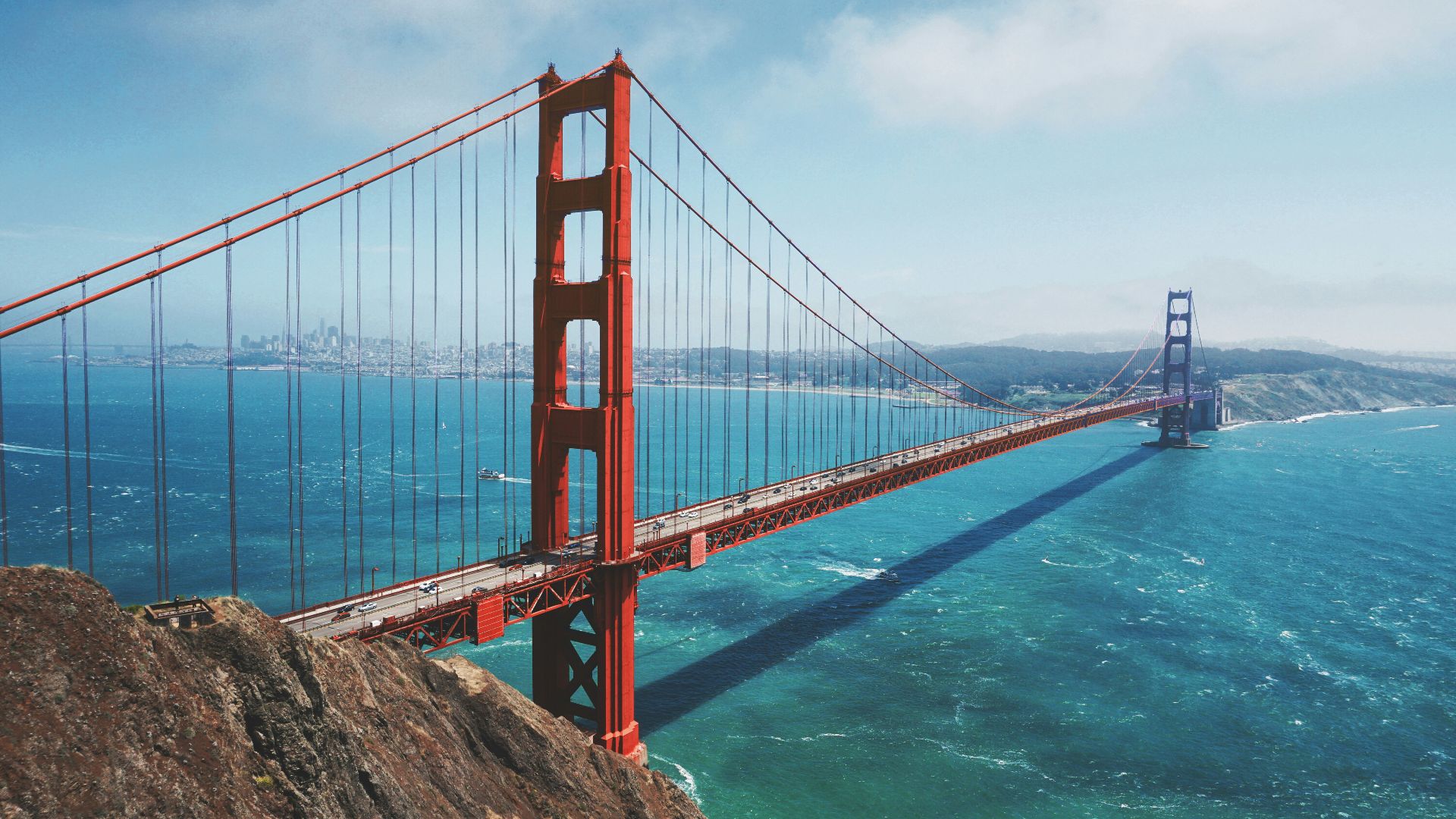 Maarten van den Heuvel on Unsplash
Bridge builders in the 1930s worked against a grim piece of arithmetic that everybody in the trade knew. The rule of thumb held that a big job would cost one life for every million dollars spent, and the Golden Gate Bridge was budgeted at around 35 million. Everybody involved understood what that meant before a single cable was spun across the strait. The men who signed on in the middle of the Depression were pricing their own odds against a steady wage.
Joseph Strauss, the chief engineer, decided the arithmetic was negotiable. He made hard hats mandatory on site, which almost no contractor did in 1933, and he had the crews fitted with glare-free goggles for the water. Then he spent money on something no bridge had ever carried. The nineteen men who ended up in it formed a club with a name that tells you exactly how they felt about their luck.
The Most Expensive Net in America
Strauss spent more than 130,000 dollars on a net strung beneath the entire deck, built along the lines of the ones rigged under circus trapeze acts. It ran wider than the roadway on each side, so a man who bounced off the edge of the structure still had something under him. The whole bridge came to roughly 35 million dollars, funded by a bond measure the Bay Area counties had approved in 1930, and the net was a line item somebody had to defend.
Nothing like it existed on other jobs, because deaths were treated as a cost of construction rather than a problem anybody could engineer around. Crews on comparable projects worked without tie-off lines and without anything below them except open water. The expectation was that a predictable percentage of the workforce would not be going home, and the contracts and the insurance were written with that in mind.
The effect showed up in the record almost immediately. Construction started in January 1933 and ran nearly four years with a single fatality, which was ironworker Kermit Moore in October 1936. By the standards the industry had set for itself, a job that size should have been burying a man every month or so for four straight years.
Falling Into Membership
A fall from the deck meant two hundred feet or more of nothing at all before the net caught you. Men described the sound of the mesh taking the weight, then the strange slow bounce that came after it. Then came the part nobody enjoys describing, which was climbing back up through the structure to finish out the shift.
The name came from the men themselves rather than from any newspaper. Workers who died on the job were said to have gone to hell, so anybody the net stopped had fallen only half way to hell. Membership was not something anybody applied for, and the nineteen who qualified were not competing with each other for the honor.
Al Zampa was one of them, and he went on to spend decades working bridges up and down California. In 2003 the state named a new span across the Carquinez Strait the Alfred Zampa Memorial Bridge, which made him the only ironworker in the country with a bridge of his own. He had gone into the net in 1936 and broken several vertebrae on the way down.
The Day the Net Tore
In February 1937, with the bridge close to finished, a five-ton stripping platform tore loose near the north tower. The crews had been using it to pull concrete forms from the underside of the roadway. Twelve men went down with it from about two hundred and twenty feet. The platform hit the net with far more weight than it was built to hold, and witnesses said the mesh ripping sounded like gunfire.
Ten of the twelve died in the water or on the way down to it. Foreman Slim Lambert and one other man came out alive with serious injuries, which is the only reason anybody knows what that fall was like from inside it. The net that had saved nineteen lives over four years failed completely in about four seconds.
The final count for the bridge was eleven deaths against the thirty-five that the industry rule would have predicted. Strauss had been right about the net and wrong about what it could survive, and both halves of that are in the record. The club stopped taking members that February. The bridge opened to traffic on the twenty-seventh of May, about three months later.
KEEP ON READING