What Really Happened to the Lost Colony of Roanoke?
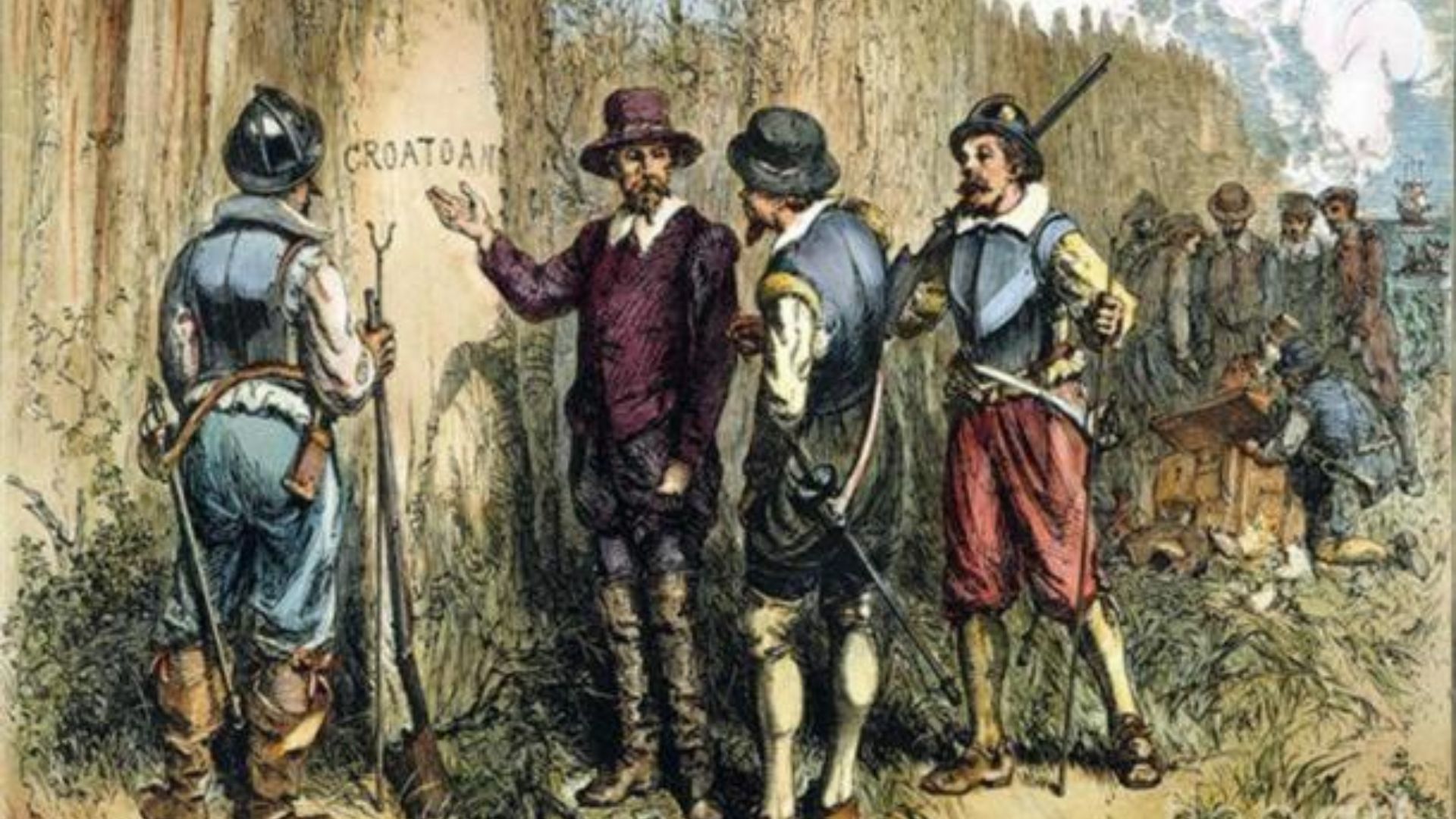
More than four centuries after a group of English settlers seemingly vanished from Roanoke Island, their disappearance remains one of the most famous mysteries in American history. When Governor John White returned to the settlement in 1590, he found abandoned buildings, no bodies, and the word “CROATOAN” carved into a wooden post. That single clue helped turn Roanoke into a mystery that still inspires theories ranging from reasonable to seriously wacky.
The colonists probably didn't simply disappear overnight, though. Historians and archaeologists have pieced together evidence suggesting that the settlers may have left Roanoke voluntarily and joined, or at least settled near, Indigenous communities in the region. There still isn't enough evidence to say exactly what happened to every colonist, but the clues that remain make some explanations far more convincing than others.
The Colony Was in Trouble Before Anyone Disappeared
The famous group arrived at Roanoke Island in 1587 as part of England's attempt to establish a permanent settlement in North America. Led by John White, the party included more than 100 men, women, and children, including White's pregnant daughter, Eleanor Dare. Not long after arriving, Eleanor gave birth to Virginia Dare, often remembered as the first English child born in an English colony in the Americas.
Roanoke wasn't exactly the easiest place to build a struggling new colony. An earlier English expedition had already damaged relations with some local Indigenous communities, while the new settlers were short on food and supplies. White eventually sailed back to England later in 1587 to seek additional help, expecting that his trip wouldn't keep him away for very long.
Events in Europe turned that short absence into nearly three years. England was preparing for war with Spain, and ships that might have carried White back across the Atlantic were instead needed for military purposes, especially during the Spanish Armada crisis of 1588. By the time he finally reached Roanoke again in August 1590, the settlement looked nothing like the one he'd left behind.
Rather than finding signs of a sudden catastrophe, White discovered that buildings appeared to have been deliberately dismantled. The settlers had agreed beforehand that if they relocated, they would carve the name of their destination into a tree or post. If they were forced to leave because of danger, they were also supposed to carve a Maltese cross, but White reported finding no such warning.
The Word “CROATOAN” Was Probably a Real Message
The most famous clue was “CROATOAN,” which White found carved into a post at the abandoned settlement. It wasn't a mysterious code or some unknown word. Croatoan was the name Europeans used for both a nearby island, now known as Hatteras Island, and the Indigenous people who lived there.
That gave White a very plausible idea of where the colonists might have gone. The Croatoan people had generally maintained friendlier relations with the English than some neighboring groups, and an Indigenous man named Manteo, who had close ties to them, had worked alongside English expeditions. For settlers badly in need of food, shelter, and local knowledge, relocating near the Croatoan community would've made practical sense.
White wanted to sail to Croatoan and investigate, but bad weather and problems with his ship prevented him from doing so. He ultimately left the region without confirming whether the missing colonists were actually there. That frustrating turn of events is a big reason the disappearance became a centuries-long mystery instead of a simple story about a colony moving somewhere else.
Modern archaeological discoveries have kept the Croatoan theory alive. Researchers on Hatteras Island have uncovered European-made objects dating from around the same period, although it's difficult to prove that any one artifact belonged to a member of the lost colony. What's more, trade between Indigenous communities and Europeans also means that finding an English object doesn't automatically tell you who was living at the site.
They May Have Split Into More Than One Group
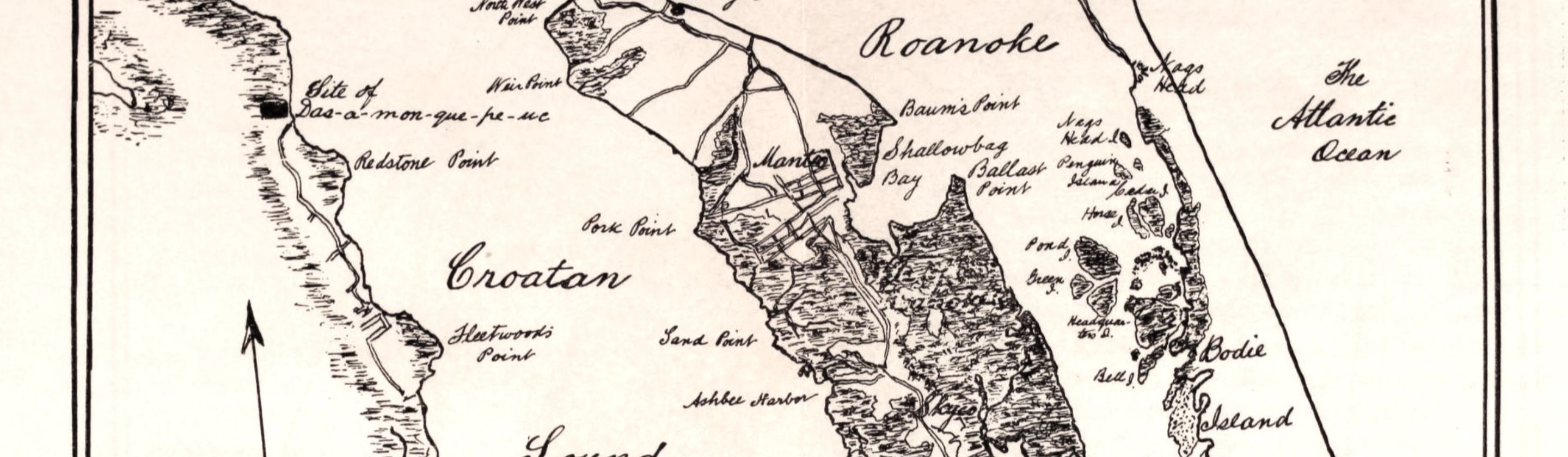
Another possibility is that not everyone traveled to Croatoan. Researchers have examined a patch on one of John White's surviving maps that appears to cover the symbol for a fort farther inland near Albemarle Sound. Archaeological work in the broader area has turned up some European artifacts, raising the possibility that part of the colony moved west while another group headed south toward Croatoan.
Splitting up would've been dangerous, but it may have increased the settlers' chances of finding food and communities willing to help them. It could also explain later reports from English colonists and Indigenous informants suggesting that scattered Europeans had lived among Native groups in the region. Those accounts are hard to verify, however, especially since many were recorded years after Roanoke had already been abandoned.
Other theories argue that the settlers were attacked by hostile groups, killed by the Spanish, or wiped out by disease and starvation. None can be ruled out entirely because colonial life was extremely dangerous, but the carefully dismantled settlement and the Croatoan carving don't look much like evidence of everyone suddenly dying where they stood. There's also no convincing archaeological evidence to support the more dramatic claim that the entire group was massacred on Roanoke Island.
So, while it hasn't been 100 percent proven, the safest conclusion is that the colonists left Roanoke because staying there had become unsustainable. At least some may have joined Indigenous communities, while others could have relocated to another planned settlement site.
The mystery survives because historians still can't trace every individual after 1587, not because the colonists necessarily vanished without explanation. “CROATOAN” may actually have been a surprisingly clear message telling rescuers where at least some of them had gone. Unfortunately, John White never got the chance to follow that clue, leaving later generations to piece together a story whose final chapter was never written down.
KEEP ON READING