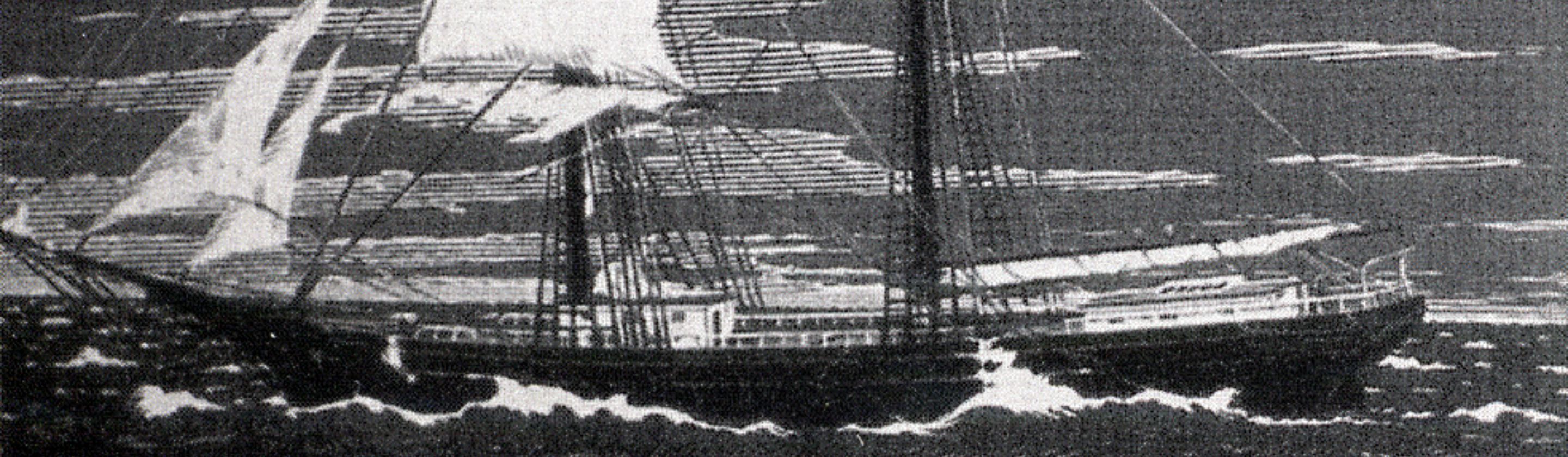
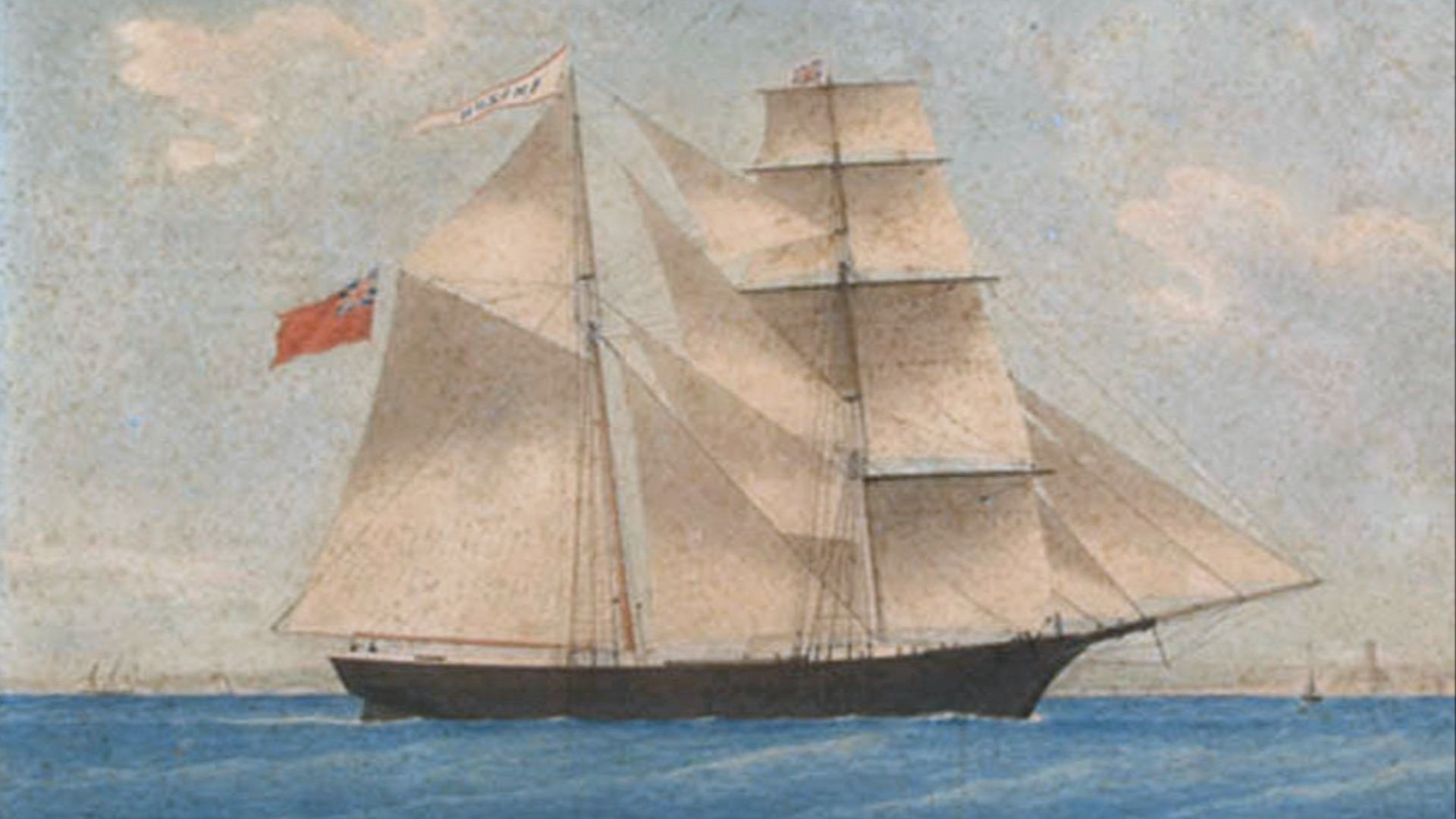
Few abandoned ships have inspired as much speculation as the Mary Celeste. When the merchant vessel was discovered drifting across the Atlantic in 1872, its cargo was largely intact, its supplies were still aboard, and the ship itself remained seaworthy. The only problem was that every person who had been traveling on it had vanished.
That eerie setup has led to stories involving pirates, mutiny, murder, giant sea creatures, and even the supernatural. The real evidence, however, points toward something far less theatrical and arguably more interesting. The Mary Celeste probably wasn't the scene of a bizarre crime at all, but rather a maritime emergency that went disastrously wrong.
What Was Actually Found Aboard the Ship
The Mary Celeste left New York in November 1872 carrying over 1,700 barrels of industrial alcohol bound for Genoa, Italy. Captain Benjamin Spooner Briggs was aboard with his wife Sarah, their 2-year-old daughter Sophia, and seven crew members. After enduring difficult weather in the Atlantic, the ship's final known log entry was made on November 25 near the Azores.
About ten days later, sailors aboard the Dei Gratia spotted the vessel drifting hundreds of miles east of the Azores. A boarding party found no one aboard, although the ship hadn't suffered the kind of catastrophic destruction you might expect from an emergency evacuation. Food and water remained, personal belongings were still present, and most of the valuable cargo hadn't been disturbed.
There were, however, several important clues. The ship's only lifeboat was missing, one of its pumps had been taken apart, and roughly three and a half feet of water had collected in the bottom of the vessel. Nine alcohol barrels were also later found empty, although investigators eventually determined that the barrels were made from more porous red oak and could simply have leaked.
People were quick to blame pirates, but the details above made that an unlikely explanation, as pirates generally don't board a ship, remove everyone, leave most valuables behind, and then politely disappear. The vessel's condition similarly offered little evidence of a violent struggle, despite early suspicions from authorities investigating the case.
The Investigation Created Even More Suspicion
After taking control of the abandoned vessel, members of the Dei Gratia sailed the Mary Celeste to Gibraltar. There, a British vice admiralty court began examining the case as part of a salvage hearing. Attorney General Frederick Solly-Flood became suspicious that something criminal might have happened and investigated the rescuers themselves.
Various possibilities circulated, including insurance fraud, murder, mutiny, and a plot involving the alcohol cargo. Yet after more than three months of investigation, authorities found no convincing evidence that anyone aboard the Dei Gratia had harmed Briggs or his crew, and no clear evidence emerged showing that the people aboard the Mary Celeste had attacked one another either.
Later retellings didn't exactly help separate fact from fiction. Arthur Conan Doyle published a sensationalized short story inspired by the case in 1884, adding invented characters and dramatic events that gradually became mixed with the real story in the public imagination. Newspapers and popular accounts similarly embellished details, helping transform a poorly understood maritime accident into one of history's great ghost ship legends.
Even the phrase "ghost ship" can make the discovery sound stranger than it was. The Mary Celeste wasn't found neatly preserved as though everyone had simply disappeared during lunch. It showed evidence of a difficult Atlantic voyage, water in the hull, problems with its pumping system, and the deliberate removal of its lifeboat.
The Most Likely Explanation Is Surprisingly Practical
Modern investigators have focused heavily on those pumps. The Mary Celeste had previously carried coal and had recently undergone major repairs, meaning coal dust and construction debris may have interfered with its pumping system. With one pump disassembled and the cargo hold packed tightly, Briggs may have struggled to determine exactly how much water the ship was taking on.
That uncertainty mattered because the crew had already spent days battling rough weather. Research using historical weather information has suggested that the ship may also have been roughly 120 miles farther west than Briggs believed because of inaccurate navigation. When the crew finally sighted the Azores island of Santa Maria after expecting land earlier, conditions aboard could have seemed considerably worse than they actually were.
From Briggs' perspective, the situation may have looked frighteningly straightforward. His ship had endured heavy seas, water was collecting below deck, a pump wasn't functioning properly, and he couldn't confidently determine whether the vessel was sinking. With land visible nearby, temporarily moving everyone into the lifeboat may have appeared safer than remaining aboard.
The critical mistake may have been abandoning the ship while trying to remain connected to it, possibly with a rope. If that connection broke in rough conditions, the lighter lifeboat could have been left behind while the Mary Celeste sailed away without its crew. The abandoned ship then survived the very danger its passengers may have feared, drifting onward until the Dei Gratia found it.
Exactly what happened can't be proven because Briggs, his family, and the seven crew members were never seen again. Still, the surviving evidence doesn't require pirates, sea monsters, or supernatural disappearances to explain the mystery. The real story may simply be that an experienced captain made a reasonable emergency decision based on incomplete information, only for the Atlantic to turn that decision into a tragedy.
KEEP ON READING