

 Henry Albert Ericson on Wikimedia
Some disasters become national shorthand. Some stay local, while the aftershock of the issue is felt on a national scale. They happen in a school, a theater, or a coal valley, and for a while, the story belongs mostly to the people who lived through it. Over time, the lesson spreads, usually through a rule, a safety standard, or a warning system that later generations barely notice. Over time, a local tragedy becomes part of the country’s safety culture.
That’s the difficult pattern running through this history. Many rules that now feel obvious followed failures that had already taken lives. The odor added to natural gas, the exits in public buildings, and the oversight of dangerous mine-waste dams all carry traces of disasters that refused to stay local. These three events show how national change can begin in places that were never trying to make national history.
The School Explosion
 Unknown authorUnknown author on Wikimedia
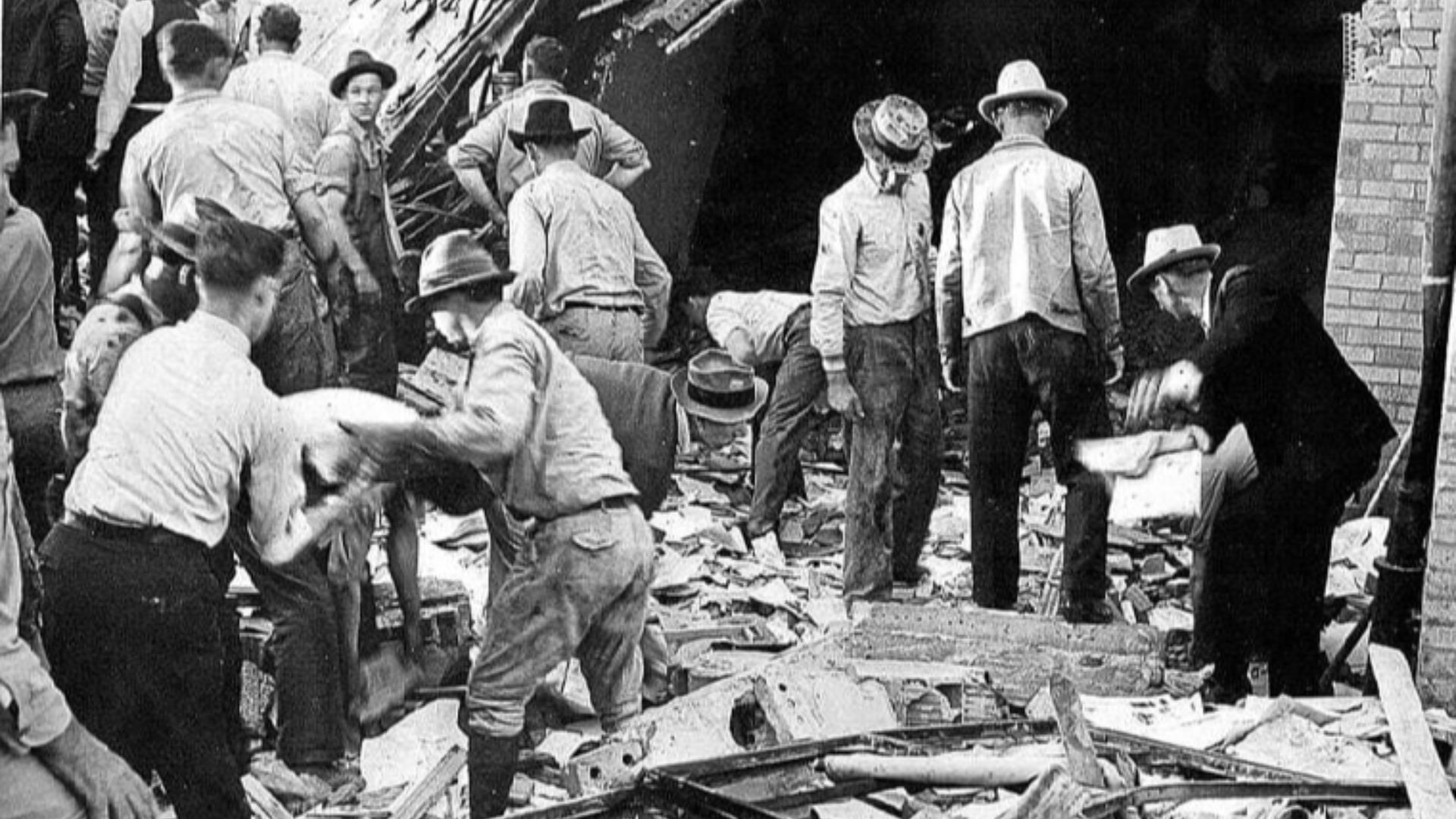
On March 18, 1937, a natural gas explosion destroyed the school in New London, Texas. The Texas State Historical Association says the blast killed 298 students and teachers. The Texas State Library and Archives Commission describes the victims as mostly children from a school with about 500 students in grades five through 11.
What made the disaster especially frightening was that the danger had been hidden in plain sight. According to the Texas State Historical Association, gas escaped from a faulty connection and collected beneath the building before a sanding machine in a shop class provided the spark. The gas being used had no smell, so the students and teachers inside had no warning that it was building up beneath them. There was no rotten-egg scent, no obvious cue, no small mercy of advance notice.
The change that followed was direct, practical, and easy to understand. Texas passed legislation requiring distinctive malodorants to be mixed into gas for commercial and industrial use, according to the Texas State Historical Association. The Texas State Library and Archives Commission also notes that state and federal legislation required additives that made gas detectable. That familiar warning smell now tied to gas leaks exists because odorless danger had proved too deadly to leave alone.
The Theatre Fire
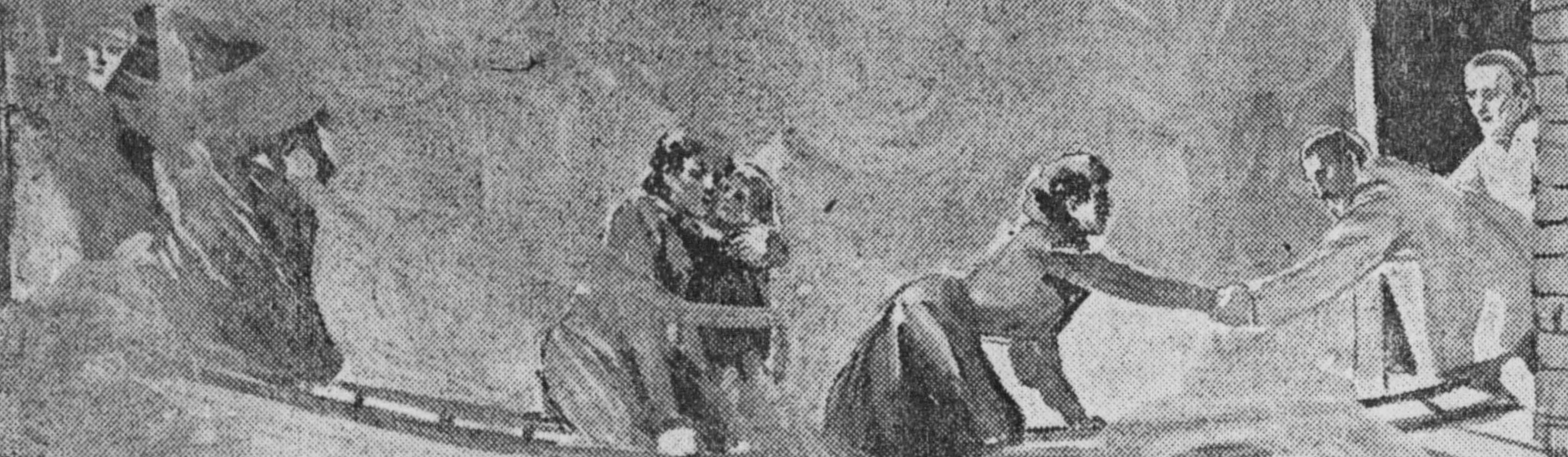
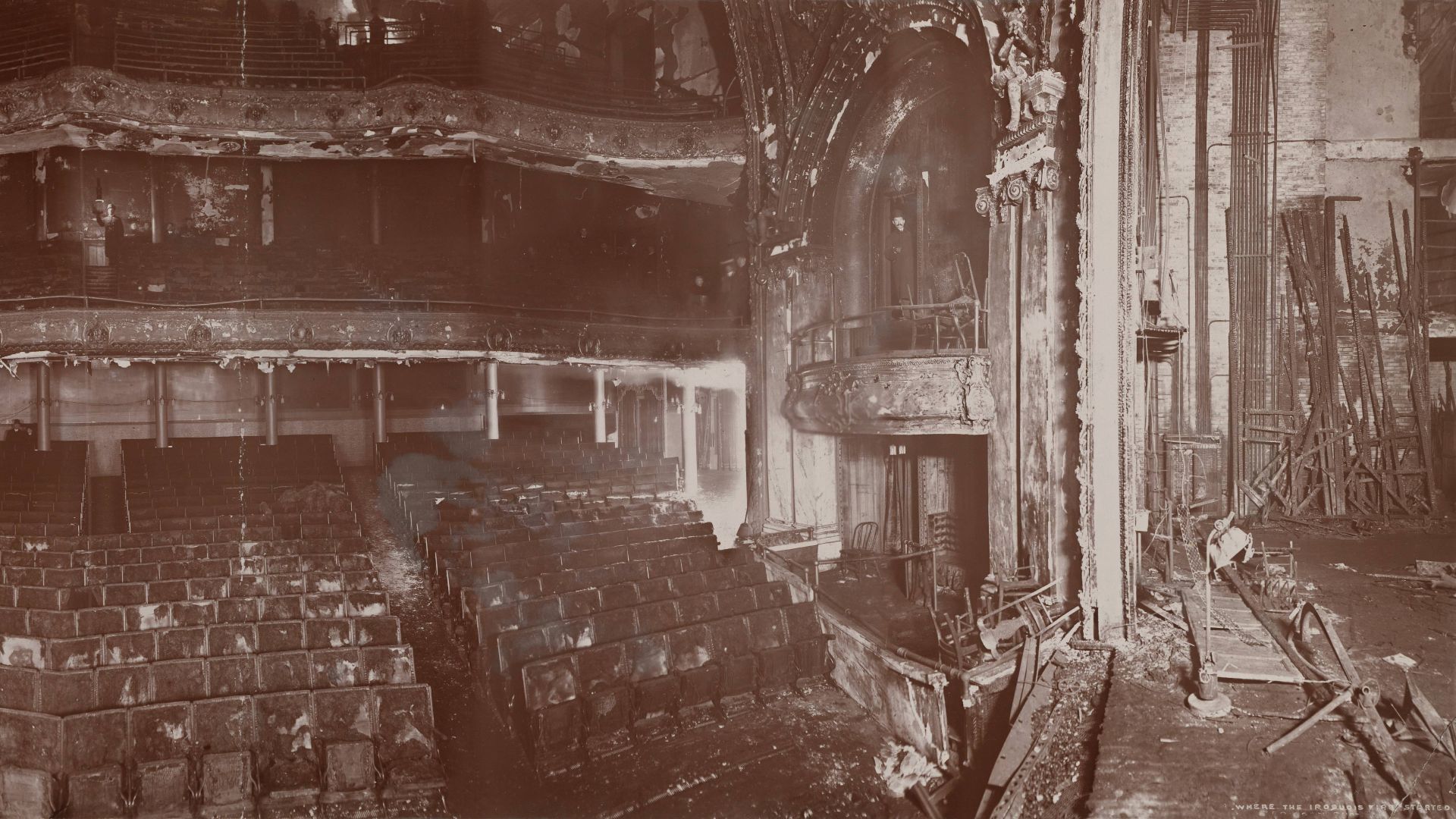
The Iroquois Theatre fire began in Chicago on December 30, 1903, during a packed holiday matinee. Smithsonian Magazine reports that the five-week-old theater was filled with more than 1,700 people watching Mr. Bluebeard. Many in the crowd were teachers, mothers, and children on winter break. It was just another ordinary day.
The theater had been promoted as “absolutely fireproof,” but that promise fell apart almost immediately. UL Research Institutes says a hot electric light ignited flammable scenery, and the fire spread while several safeguards failed. The Iroquois had no telephone or fire alarm, some exits were locked or opened inward, the fire curtain failed to lower properly, and there were no illuminated exit signs to guide people out.
More than 600 people died, making the fire one of the deadliest public-building disasters in American history. Smithsonian Magazine connects the tragedy to reforms involving exits, aisles, alarms, occupancy limits, sprinkler rules, and exit lighting. The larger lesson was painfully simple: a building could look elegant, modern, and respectable while still being dangerous the moment a crowd needed to escape. That realization changed how Americans thought about theaters, schools, offices, and other public spaces.
The Coal-Waste Flood
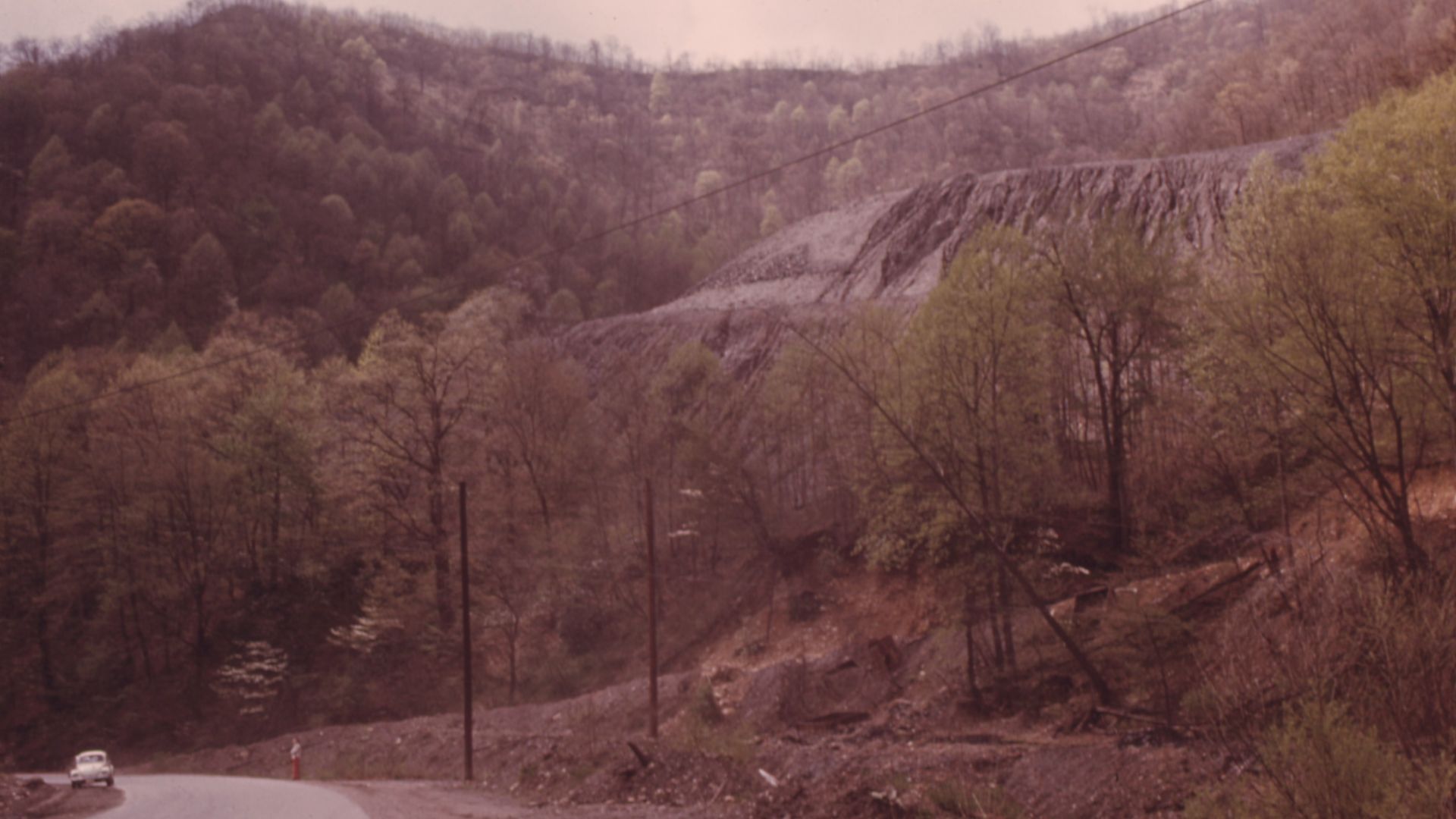
On February 26, 1972, a mine-waste impoundment failed above Buffalo Creek in Logan County, West Virginia. The official report from the Governor’s Ad Hoc Commission of Inquiry says 17.6 million cubic feet, or 132 million gallons, of water and sludge were released into the valley shortly before eight a.m. The report describes blackened water filled with sludge and mining refuse moving through a narrow chain of communities.
The damage was enormous and deeply personal. The same official report recorded at least 118 deaths, seven people still listed as missing, 1,000 injuries, and 4,000 people left homeless. MSHA’s later remembrance uses the commonly cited toll of 125 dead and 1,100 injured, which reflects how later accounts often count the confirmed dead and missing together. However the numbers are framed; the human loss was staggering.
Buffalo Creek became part of a much larger reckoning over dam safety and coal-waste oversight. The Association of State Dam Safety Officials says the failure played a key role in dam-safety governance at both state and federal levels, and that Congress passed the National Dam Inspection Act of 1972 six months after the disaster. The same source connects Buffalo Creek to later mine-safety changes, including major amendments to the Coal Mine Health and Safety Act of 1969 and the eventual creation of the Mine Safety and Health Administration. The flood made it harder to treat dangerous industrial structures as someone else’s problem, tucked away out of sight.
These disasters were different in almost every visible way. One happened in a school, one in a grand urban theater, and one in a coal valley where industrial waste sat above people’s homes. What links them is the aftermath: grief became pressure, pressure became inquiry, and inquiry helped change the rules. That’s how forgotten local disasters can end up shaping the national story.
KEEP ON READING
The story of Ching Shih, the Woman Who Became the…
Unknown author on WikimediaFew figures in history are as feared…
By Emilie Richardson-Dupuis Dec 29, 2025
Einstein's Violin Just Sold At An Auction—And It Earned More…
A Visionary's Violin. Wanda von Debschitz-Kunowski on WikimediaWhen you hear…
By Ashley Bast Nov 3, 2025
This Infamous Ancient Greek Burned Down An Ancient Wonder Just…
History remembers kings and conquerors, but sometimes, it also remembers…
By David Davidovic Nov 12, 2025
The Mysterious "Sea People" Who Collapsed Civilization
3,200 years ago, Bronze Age civilization in the Mediterranean suddenly…
By Robbie Woods Mar 18, 2025
20 Greatest Ancient Athletes In History
Ancient Olympics. Long before modern stadiums and multimillion-dollar endorsements, athletes…
By Sara Springsteen May 1, 2026
20 Soldiers Who Defied Expectations
Changing the Rules of the Battlefield. You’ve probably heard plenty…
By Annie Byrd Feb 10, 2026