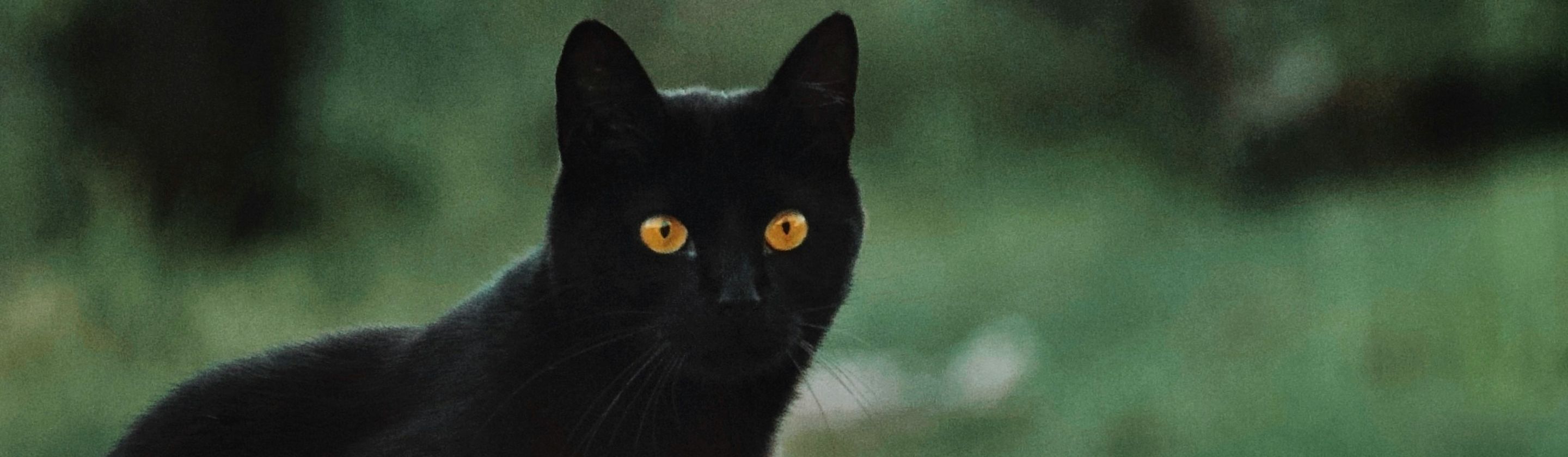
A witch with a black cat is one of those images that barely needs explaining. We’ve seen it on Halloween decorations, in old cartoons, and in almost every cozy-spooky corner of pop culture. While often seen as a companion to a witch, this little kitty feels like a part of the costume, instead of as its own entity.
The older history is much stranger and quite a bit darker. In early modern witchcraft belief, especially in England and Scotland, a familiar wasn’t simply an animal companion. It was often described as a spirit, demon, fairy-like helper, or strange creature that could take an animal form.
More Than A Pet
The familiar’s roots sit in a much older world of spirits. Ancient Roman religion had the genius, which Britannica defines as a spirit connected with a person or place. Those older ideas were not the same as the witch’s familiar, but they do show how long people have imagined unseen forces staying close to human lives.
By the medieval and early modern periods, Christian demonology gave spirit belief a much sharper edge. A helper spirit would often be associated with something dark or Hellish. Britannica describes a familiar in Western demonology as a small animal or imp believed to attend a witch, often in forms such as a toad, dog, insect, or black cat.
The worldwide cultural shift changed more than religious beliefs. A person known for healing, charms, or unusual knowledge could become a suspect if neighbors thought they had help from something unseen. In communities already anxious about illness, failed crops, dead livestock, and sudden bad luck, the familiar gave misfortune a body, a voice, and sometimes even a name.
England played a major role in making the animal famous. Historian Helen Parish’s article on English witch trials explains that animal familiars stood at the intersection of demonology, law, pamphlet culture, and everyday human-animal life. Instead of appearing only in grand stories of witches gathering at a sabbath, the English familiar often belonged to a much more ordinary domestic world.
The Witch Trials
One of the best-known English stories about a familiar comes from the 1566 Chelmsford witch trial. The Essex Record Office identifies Agnes Waterhouse as a widow from Hatfield Peverel who was tried for witchcraft at Chelmsford in the summer of 1566. Elizabeth Fraunces and Joan Waterhouse were also accused in the same case.
The case was printed in a pamphlet called “The Examination and Confession of Certain Witches at Chelmsford.” In that account, Elizabeth Fraunces said she had received a white-spotted cat named Sathan, sometimes rendered more familiarly as Satan in modern discussion.
The accusations around Sathan included his abilities to speak, accept food, and carry out harm at his owner's request. In the pamphlet tradition, Sathan was also described as changing shape, including from a cat into a toad.
That shape-shifting detail is a useful reminder that familiars were not always cats. Trial material and demonological writing included toads, dogs, mice, birds, insects, weasels, and other creatures. The famous black cat became the lasting image, but the older record is much broader.
The law helped make these stories dangerous. UK Parliament’s history of witchcraft legislation notes that England passed witchcraft laws in 1542, 1562, and 1604, before the repeal came in 1736. The same source notes that witchcraft accusations often grew from attempts to explain sudden misfortune, including the death of a child, bad harvests, or dead cattle.
Parish’s research also explains why the language of the 1604 law mattered so much. Consulting, employing, feeding, or rewarding an evil spirit could become legally meaningful in a witchcraft case. In that climate, something as ordinary as feeding a creature could be reimagined as proof of a supernatural bargain.
Why The Stories Were Believable
Familiars were powerful because they fit well into day-to-day life. Early modern people lived close to animals, whether in homes, barns, yards, fields, or shared lanes. A cat in the dairy, a toad near the door, or a dog appearing after an argument traces back to the ancient traditions of house spirits, skewed through a lens of Christianity-based fear.
Many accusations grew from everyday conflict. A neighbor asked for food and was refused, a cow sickened, a child became ill, or butter failed to churn properly. In a tense community, the familiar helped turn resentment, poverty, and bad luck into something tangible.
These accusations often landed hardest on people who were already vulnerable. UK Parliament notes that formal accusations in England were usually made against poor, elderly women. The familiar became one way of claiming that someone with little public power had more control than her neighbors could see.
Scotland’s familiar-like spirits could look different from the English animal familiar. The Survey of Scottish Witchcraft records the 1576 case of Bessie Dunlop and identifies folk healing, midwifery, and white magic as part of the case’s characterization. It also records Thom Reid as the figure from whom Dunlop said she learned her craft.
That is why it is safer to call Thom Reid “familiar-like” rather than treat him as the same kind of creature as Sathan. Dunlop’s story moved through a blurrier world of healing, prophecy, fairy belief, and witchcraft suspicion. Helpful or local supernatural knowledge could be recast as something much more threatening.
Print culture helped the familiar survive in the public imagination. Public Domain Review explains that early modern woodcuts helped forge the now-familiar image of the witch, complete with cauldron and cats. A courtroom story could fade, but an image could travel, repeat, and stick.
That is partly why the familiar still feels so recognizable today. The modern version is often softened into a beloved pet, magical guide, or fantasy sidekick. Its older history belongs to a harsher world, where animals, spirits, gossip, law, and fear often came with deadly consequences.
KEEP ON READING