The Boston Molasses Flood: The Day a 25-Foot Wave of Syrup Destroyed a Neighborhood
The Boston Molasses Flood: The Day a 25-Foot Wave of Syrup Destroyed a Neighborhood
When you think of historical disasters that reshaped American cities, visions of raging fires or violent earthquakes usually come to mind. There is one bizarre tragedy from New England's history that proves reality can be much stranger and stickier than fiction. On a surprisingly mild winter afternoon in 1919, the North End neighborhood of Boston was completely devastated by a cataclysmic industrial accident. Instead of water or mud, the weapon of destruction was a massive, churning wall of fermenting industrial sweet syrup. It sounds like something straight out of a dark children's fable, but this strange event was a terrifying reality that left a permanent mark on the city.
The site of the accident was the Purity Distilling Company. It held several million gallons of molasses in a colossal and poorly built steel tank that loomed over other buildings along the city's waterfront. The molasses stored inside would eventually be shipped to plants where it would be converted into industrial alcohol, which at the time was used to make munitions and liquor. Once the long-awaited moment arrived that the massive container could no longer contain the vast weight of sweet liquid, Mother Nature struck with immense vengeance that took by surprise every Bostonian. You might imagine molasses as a slow, sluggish liquid, but under immense pressure, it behaved like a raging, unstoppable wall of liquid iron. Examining this event reveals how a simple oversight created one of the most uniquely destructive industrial disasters in American history.
The Catastrophic Collapse of the Great Tank
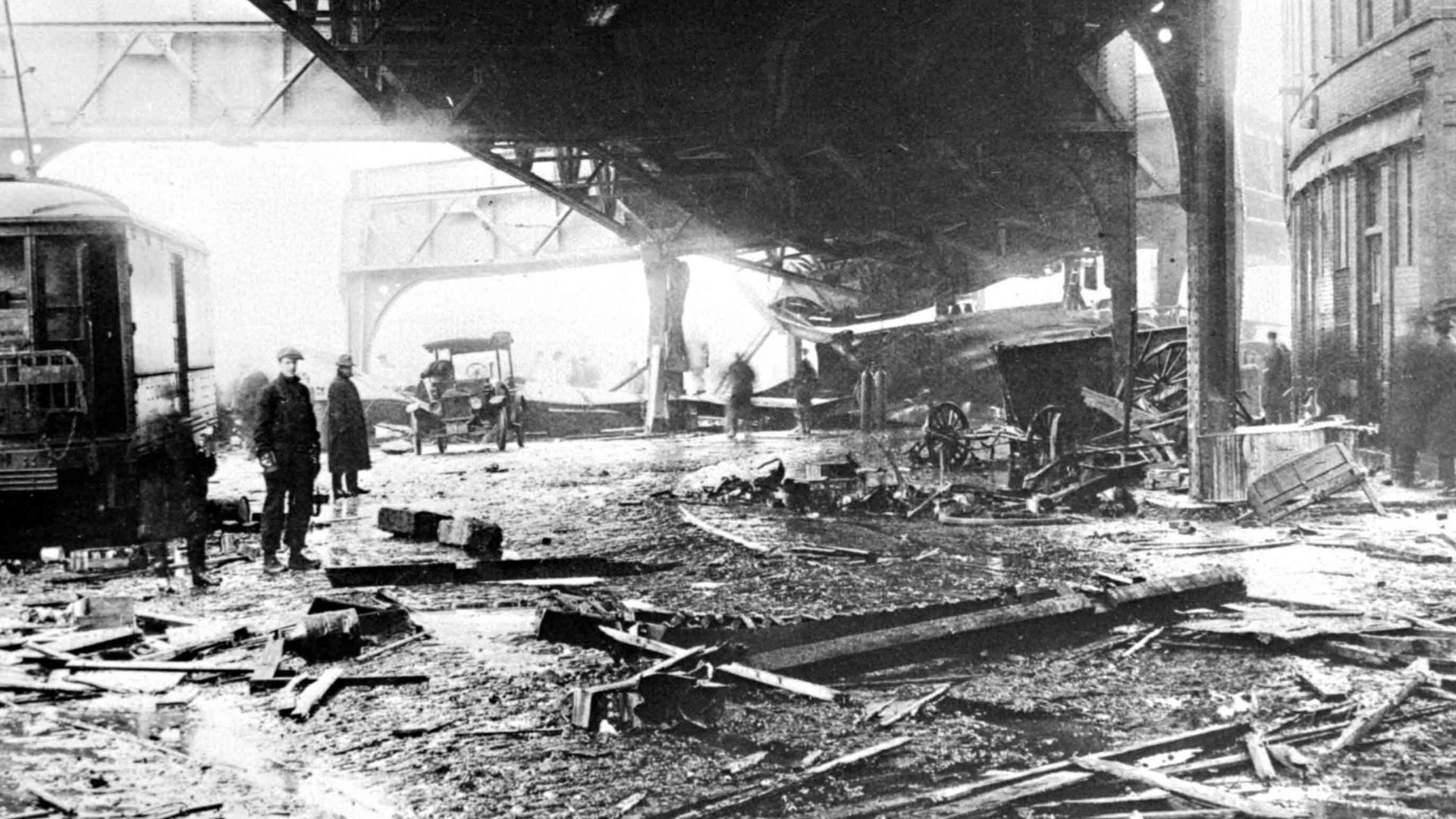 Boston Elevated Railway Company on Wikimedia
It had been unseasonably cold in Boston that January. By January 15, 1919, however, the thermometer soared past forty degrees. The molasses stored in a colossal steel vat on Commercial Street was heating up and producing pressure within the tank at an exponentially increasing rate. This newest batch of molasses had been especially warm when it was pumped into the tank, causing it to ferment rapidly. By noon, rivets were popping like rifle fire. Seconds later, the fifty-foot-tall tank split in two, unleashing a tsunami of molasses upon the neighborhood.
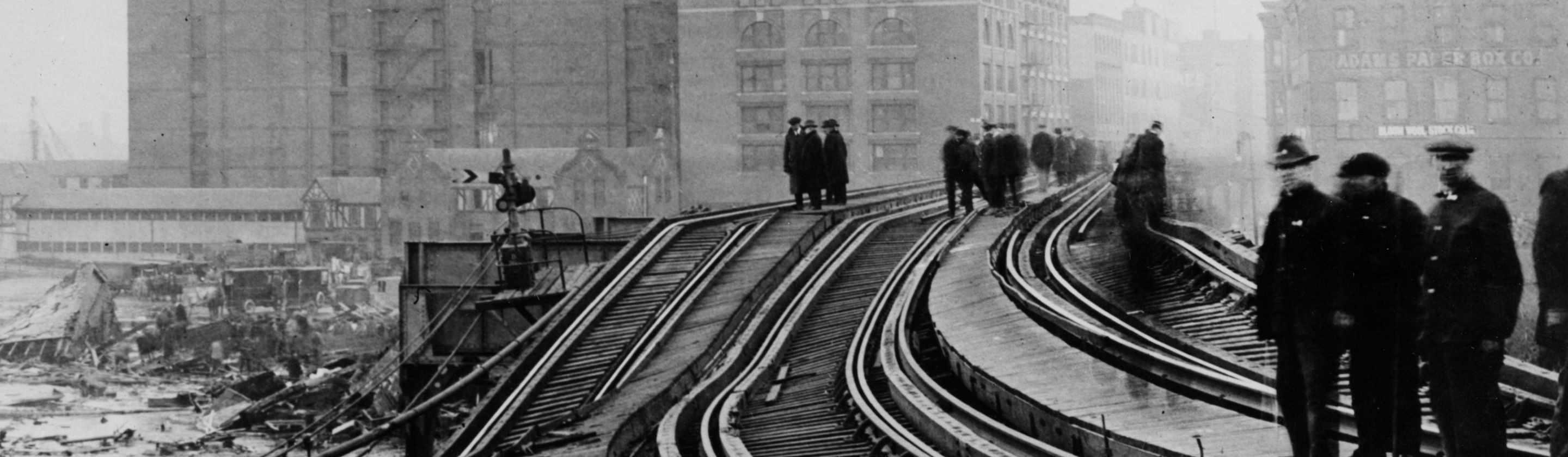
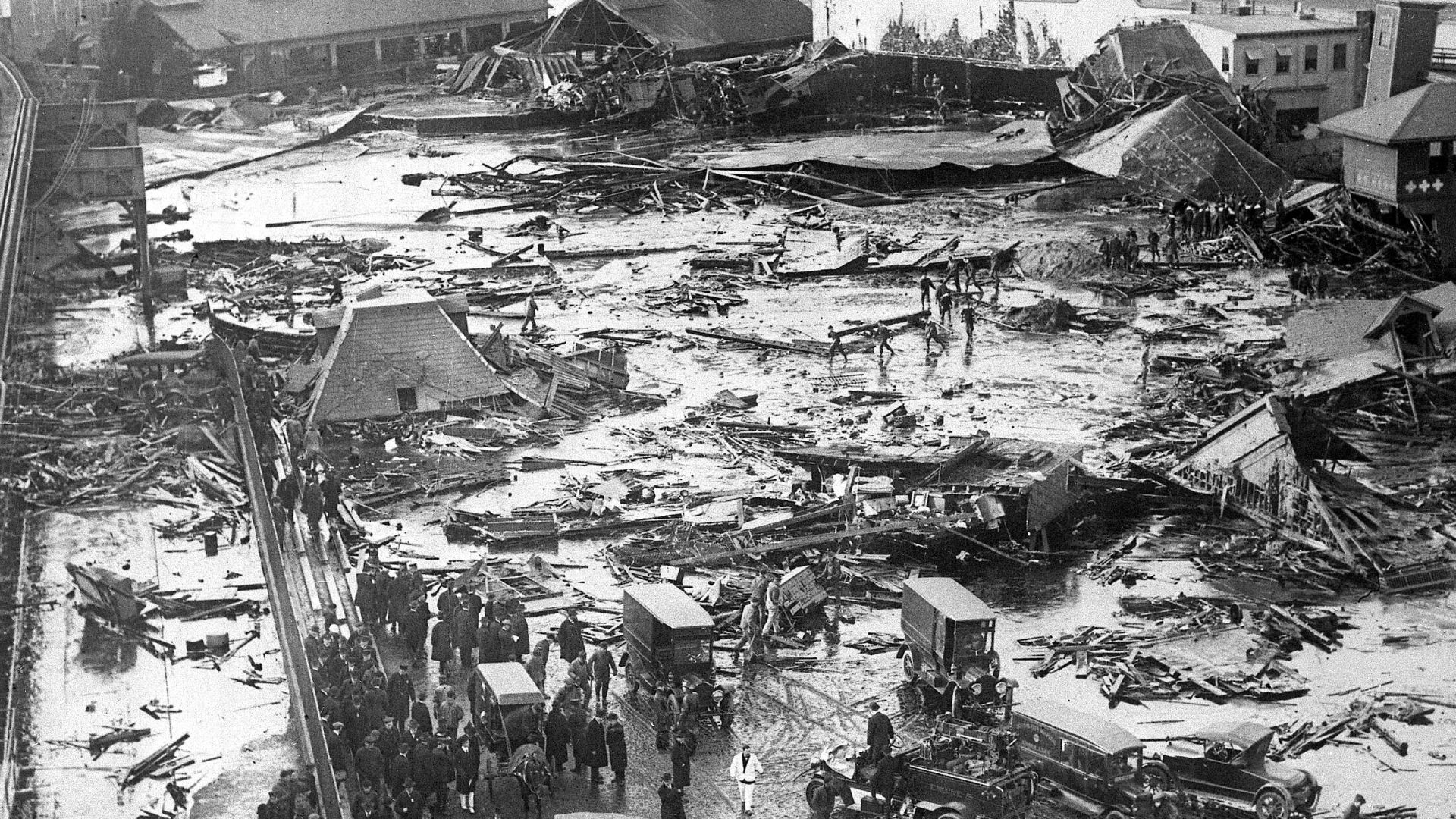
Vacuum pressure from the initial explosion was strong enough to lift a house off of its foundation and blow other buildings apart. A twenty-five-foot tidal wave of liquid darkness poured through the streets at 35 miles per hour. Horses were trapped instantly, cars were flipped over, and supports for an overpass were destroyed. So heavy was the force of the mass that it behaved more like a rockslide than water
When the roaring sound finally subsided, a two-block radius lay completely buried beneath a thick, suffocating blanket of dark ooze. First responders rushed to the scene but quickly found themselves sinking up to their waists in the viscous material as they tried to look for survivors. The sweetness in the air quickly turned into a sickening smell of ruin as rescuers realized twenty-one people had lost their lives. It took days of grueling, heartbreaking work to extract victims from the debris because the cooling winter air caused the syrup to harden rapidly.
The Legal Battle and Corporate Negligence
The aftermath of the disaster quickly shifted from the ruined streets of the North End to a monumental legal battle in the state courts. United States Industrial Alcohol, the parent company of the distillery, immediately tried to claim that anarchists had sabotaged the tank with an explosive device. This defense tactic aimed to shift the blame away from the company's own engineering practices during a time of intense political tension in America. However, investigators soon uncovered a long, deeply troubling history of corporate negligence regarding the safety of the local neighborhood.
During the lengthy inquiry, court officials discovered that the tank had been leaking heavily ever since its hurried construction several years earlier. The company had actually painted the entire structure a dark brown color specifically to hide the sticky streams trickling down the sides. Furthermore, the executive in charge of the project had completely skipped hiring an architect or engineer, choosing instead to trust a foreman who couldn't even read a blueprint. These revelations completely shattered the company's sabotage theory and forced the public to look closely at industrial safety standards.
After listening to years of expert testimony, the court-appointed auditor ruled that the disaster was entirely the result of structural failure caused by corporate greed. The landmark decision forced the company to pay out hundreds of thousands of dollars in damages to the victims and their grieving families. This historic ruling marked one of the first times in American history that a major corporation was held strictly accountable for public safety failures. It paved the way for stricter building codes and mandatory engineering certifications across the state of Massachusetts.
Cleaning up millions of gallons of hardened syrup proved to be an unprecedented logistical nightmare that tested the city's ingenuity. Traditional methods of sweeping or shoveling were completely useless against the thick, glue-like substance coating every surface of the neighborhood. Engineers eventually realized that the only way to break down the stubborn residue was to wash the streets using powerful fire hoses filled with saltwater. This strategy successfully cut through the stickiness, allowing the dark liquid to drain directly into nearby Boston Harbor.
KEEP ON READING