 William Blake Richmond on Wikimedia
Used to describe the soft, curved, goddess-like figure many women have, the "Aphrodite body" isn't a term from antiquity, despite the associations with the goddess of love, beauty, desire, and sexuality. For many bigger women, especially on dating apps, it's not uncommon for the terminology to be thrown around by prospective partners.
While many of these women don't find the term to be as flattering as it should be, that doesn't mean we, as a society, should cease to love, praise, or admire fuller-figured women. Despite these offhanded comments, people praising the "Aphrodite body" are celebrating their love of an aspect of femininity. "Aphrodite bodies," as it stands, rebel against the mass-marketed beauty standards of today, where the rising tide of GLP-1s only aim to make people smaller.
The Goddess Herself
 Gytismenomyletojas on Wikimedia
While she's connected to various stories of love and desire, Aphrodite's place within ancient Greek beliefs went far beyond these pigeonholes. She was often associated with politics and warfare, but notably believed to be a protector for seafaring travellers.
As she was born from the sea combined with some other unmentionables you can look up, if you so choose, it's understandable that the imagery of this goddess often pictures her in or around the sea. Sea-bound travelers would bring carved figurines onto their ships as protection, and often had sanctuaries dedicated to her in harborside towns.
What makes her so interesting in terms of bodily conversations, however, is how she was often painted. There are many different interpretations of Aphrodite, although the most popular one is the Birth of Venus. In this painting, Sandro Botticelli depicts the goddess with long golden hair and a slender figure. In others, such as Venus with a Mirror or Venus, Adonis and Cupid, she's portrayed with thicker arms and a bit of stomach. Her hair, still golden in these two paintings, is tied up into braids. Many interpretations of the goddess of love exist, and the reasoning comes down to time.
The Sculpture
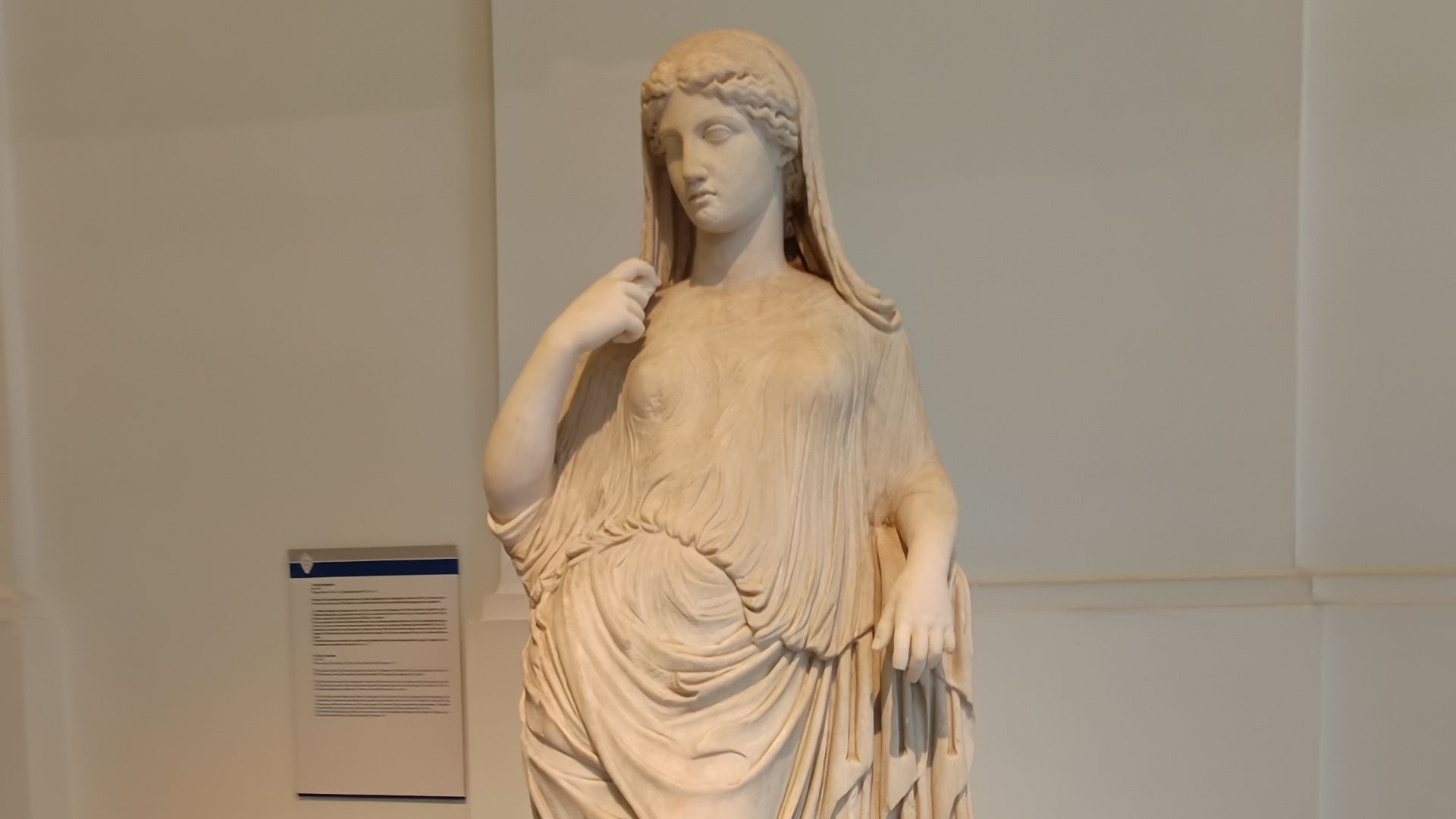
The sculpture, Aphrodite of Knidos, was one of the first large-scale creations that depicted a female deity in the nude. Created by Greek sculptor Praxiteles in the 4th century BCE, the sculpture portrays the goddess as she's taking a bath.
The Knidian Aphrodite sculpture inspired many copies and adaptations across the Greek and Roman world. It's often considered an important innovation in classical sculpture, as before this point, Greek art focused predominantly on the male nude form.
What makes this sculpture so interesting is the act in which she was caught. Here, Aphrodite is depicted in a very private moment, which made her feel almost human. The sculpture doesn't shy away from the human form, either, depicting her with a belly pooch, her skin folding and stretching in ways we wouldn't imagine projecting onto our social media today.
A Paragon of Beauty
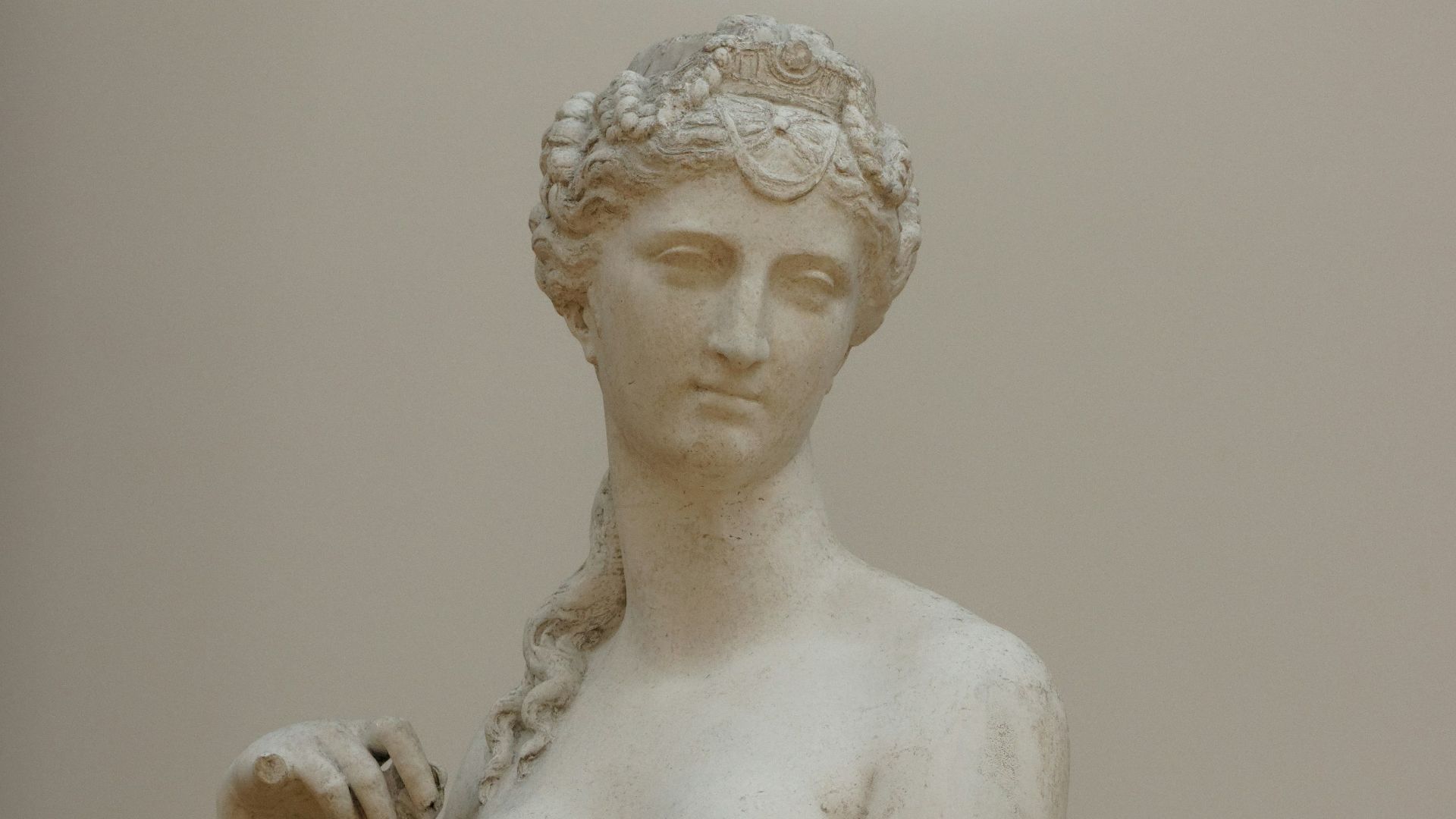
So, what do we really want to get across by providing you with this information? Really, it's more of a historical analysis than anything else. Aphrodite has been depicted countless times throughout human history, and with each century, she looks a little different.
Yes, the goddess of beauty and love would have the "perfect" body, but the needle of perfectionism continues to move. When the Birth of Venus was painted in the late 1400s, the ideal body type for women meant having a soft stomach and rounded hips, which promoted signs of health and fertility. Back when Aphrodite of Knidos was created, full breasts and rounded thighs were celebrated. If a painting of Aphrodite was created in the 1990s, it's possible that she would've had a thinner, waifish look to her. In the 1800s, she would've been depicted with a small waist and a larger backside, as it reflected the popularity of the corset and bustle of the time.
What we're trying to say is that in a world currently obsessed with the idea of thinness, it's no surprise that many women turn to antiquity to remind themselves that this is just another trend. As we look upon the goddess of beauty and love, with her full arms and rounded hips, women with larger figures admire a time when their body type would've been a telltale sign of their health and wellness.
KEEP ON READING