My Husband's Theater Partner Was Embezzling for Years, But It Was the Waitress Who Knew His Name That Exposed Everything
My Husband's Theater Partner Was Embezzling for Years, But It Was the Waitress Who Knew His Name That Exposed Everything
The Anniversary Promise
We'd been married thirty-two years, and I still got a little nervous getting dressed for a night out with Peter. Not the anxious kind of nervous — the good kind, the kind that reminds you there's still something worth tending to. He'd made the reservation himself, which he almost never did, and when I came downstairs in the blue dress he always liked, he looked up from his phone and actually put it away. That alone felt like a gift. The restaurant was the kind of place where the lighting is soft on purpose and the menus don't have prices on the women's side — old-fashioned in a way I've always found quietly charming. We were shown to a corner booth with a view of the courtyard, and Peter slid in across from me and reached over and covered my hand with his. 'No theater talk tonight,' he said. 'I mean it. Not one word about the fall season, not one word about Martin, not one word about any of it.' I laughed and told him I'd hold him to that. The candles were lit. The bread was warm. I settled back into the booth and looked at the man across from me, and for a moment, thirty-two years felt like exactly the right amount of time.
 Image by RM AI
The First Drink Order
Peter ordered a scotch — Glenfiddich, neat, the same thing he'd been ordering since his forties — and I asked for a glass of the Sancerre. The sommelier nodded like I'd said something wise, and Peter caught my eye and we both tried not to smile. It was the kind of small shared moment that accumulates into a marriage, and I was grateful for it. We talked about our daughter's new position in Boston, how she'd called the week before sounding genuinely happy for the first time in a while, and that loosened something in both of us. Peter mentioned wanting to rent a place on the coast in July, somewhere with a porch and no cell service, and I told him I'd start looking at listings the next morning. The conversation moved easily, the way it does when you've known someone long enough that silence doesn't need filling and words don't need explaining. I was halfway through my wine and thinking that he'd been right to make the reservation when I noticed someone approaching our table — our waitress, coming to check on the drinks.
 Image by RM AI
Too Loud
She was young — early thirties, maybe — with dark wavy hair pulled back and the kind of easy confidence that reads as competence in a good restaurant. She asked if we'd had a chance to look at the specials, and Peter said something mild about the salmon, something about how it was always the safe choice, the kind of throwaway comment you make when you're in a good mood. It wasn't particularly funny. I smiled politely. But she laughed — really laughed, head tilting back, a full bright sound that filled the space around our table and drew a glance from the couple beside us. I watched Peter's expression shift into something pleased, the way it does when an audience responds well, and I felt the first small pull of attention in my chest. Not alarm. Just noticing. She lingered after that, asking about dietary preferences with more thoroughness than the question required, and Peter answered each one with the kind of easy warmth he usually reserves for people he already likes. I kept my hands around my wine glass and watched her lean in slightly as he described the evening's specials, her posture angled toward him in a way that had nothing to do with the menu.
 Image by RM AI
The Shoulder Touch
She came back to refill the water glasses about twenty minutes later. I was mid-sentence, telling Peter about a neighbor's renovation that had been going on since October, when I saw her reach across the table toward his glass. It was a small movement, the kind servers make dozens of times a night, but her hand came to rest briefly on his shoulder as she leaned in — not a brush, not an accident, a deliberate resting of her palm against the fabric of his jacket. She said something about the jacket, that it was a nice color, charcoal suits him, something like that. Peter said thank you in a voice that was easy and unbothered, the way you respond to a compliment you've heard before. He didn't shift away. He didn't look at me. I set down my fork and picked up my wine glass and said nothing, because what was there to say in the middle of a restaurant on your anniversary. But I felt it — the way the easy warmth of the evening changed register, something tightening in my stomach that I couldn't quite name yet. I sat with that feeling as her hand lifted from his shoulder and she moved on to the next table.
 Image by RM AI
Thirty-Two Years
Peter brought up the anniversary himself, which surprised me a little. He said it the way people do when they're proud of a number — thirty-two years, just like that, offered up to the table like a small trophy. I think part of me expected it to land the way those things usually do with strangers, a polite smile, a quick congratulations, maybe a comment about the wine being on the house. What I expected was for it to create a little distance, to remind her that she was standing at a married couple's anniversary dinner and perhaps dial things back. Instead she looked at Peter — not at both of us, at Peter — and said he didn't look anywhere near old enough to have been married thirty-two years. Peter laughed. It was the laugh he uses when he's genuinely flattered, the one that's slightly too warm, slightly too open. I didn't laugh. I watched her watching him, and I felt something shift in the room that had nothing to do with the temperature. She held his gaze a beat longer than the comment required, and then she said, 'Congratulations,' and walked away, and I heard the words she'd said to him still hanging in the air between us.
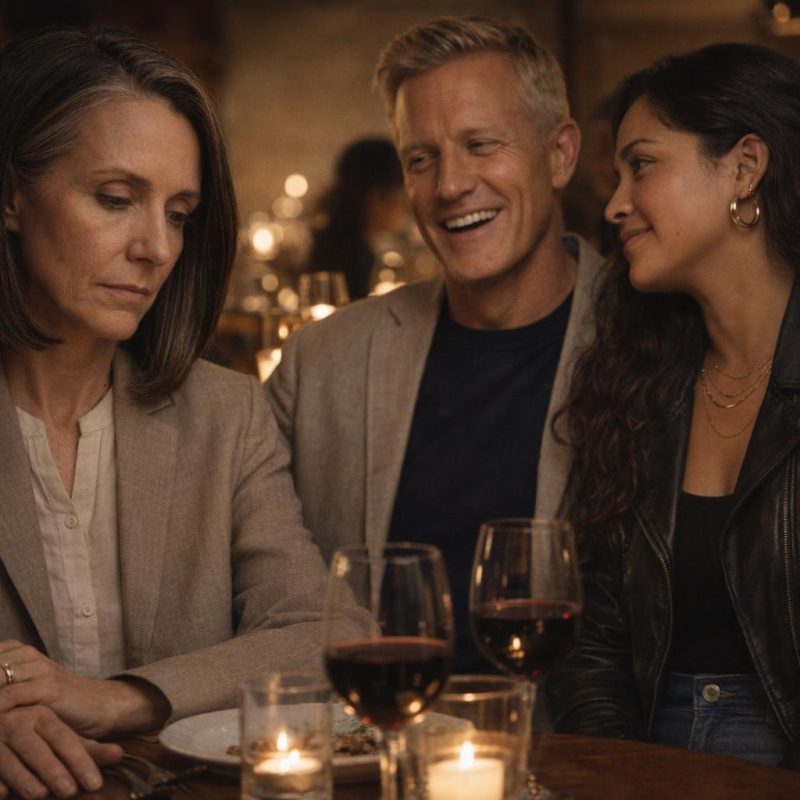 Image by RM AI
Somewhere More Exciting
She came back to clear the appetizer plates, and that's when she asked what we were doing after dinner. I remember thinking it was an odd question — not hostile, just oddly familiar, the kind of thing a friend asks, not a server at a restaurant where the menus don't have prices. Peter said we were heading home, and I watched his face as he said it, looking for something I couldn't name. She made a small sound, something between a laugh and a sigh, and said that was too bad, she'd figured we might be going somewhere more exciting. Peter started to say something — I think he was going to make a joke about being too old for exciting — but he stopped, and the table went quiet for just a moment. My hands tightened around my napkin without me deciding to do it. I was watching her face when she said it, and then she looked at Peter, and the look she gave him wasn't the look you give a stranger at a table you're serving — it was something else entirely, something that passed between them like a signal I wasn't supposed to see.
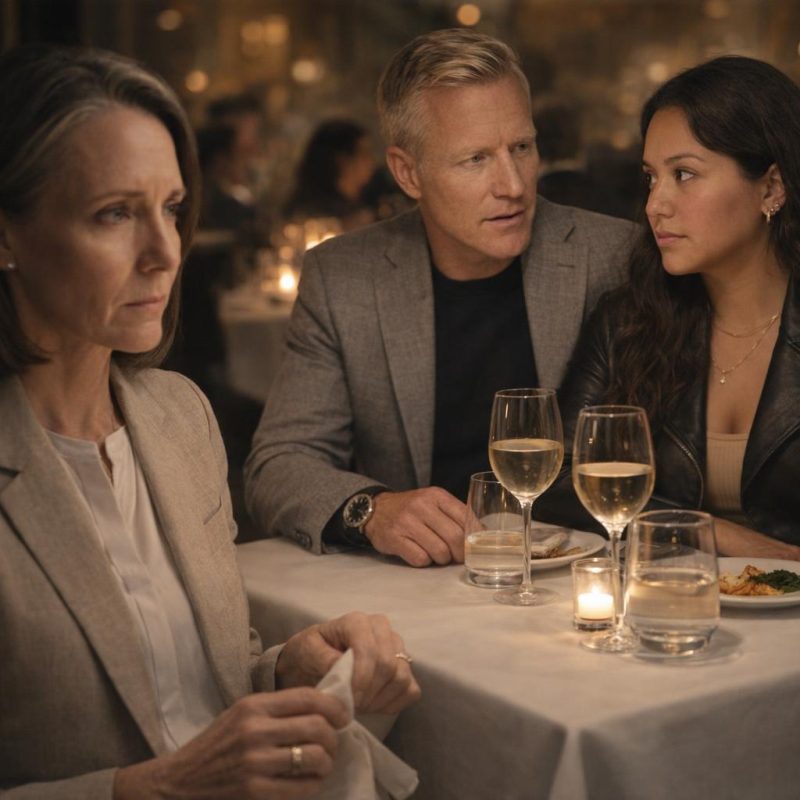 Image by RM AI
He Already Knew Her Name
Peter cleared his throat and said her name. He said, 'Kayla, you're going to get yourself in trouble.' His voice was light, almost teasing, the tone he uses when he's trying to smooth something over without acknowledging it directly. She smiled — a quick, private smile — and walked away from the table without another word. I sat very still. I picked up my wine glass and set it back down without drinking. The restaurant noise continued around us, silverware and low conversation and someone laughing across the room, and I sat in the middle of all of it trying to locate the thing that had just shifted. Peter reached for his scotch. I looked at the name tag on her uniform as she moved toward another table. It was small, white lettering on black, pinned to her left side — the side that had been facing away from us the entire evening. Peter hadn't leaned over to read it. He hadn't asked. He had simply known her name, said it the way you say the name of someone you already know, easy and without hesitation, and I sat there at our anniversary dinner with that single fact settling into me like a stone dropping into still water.
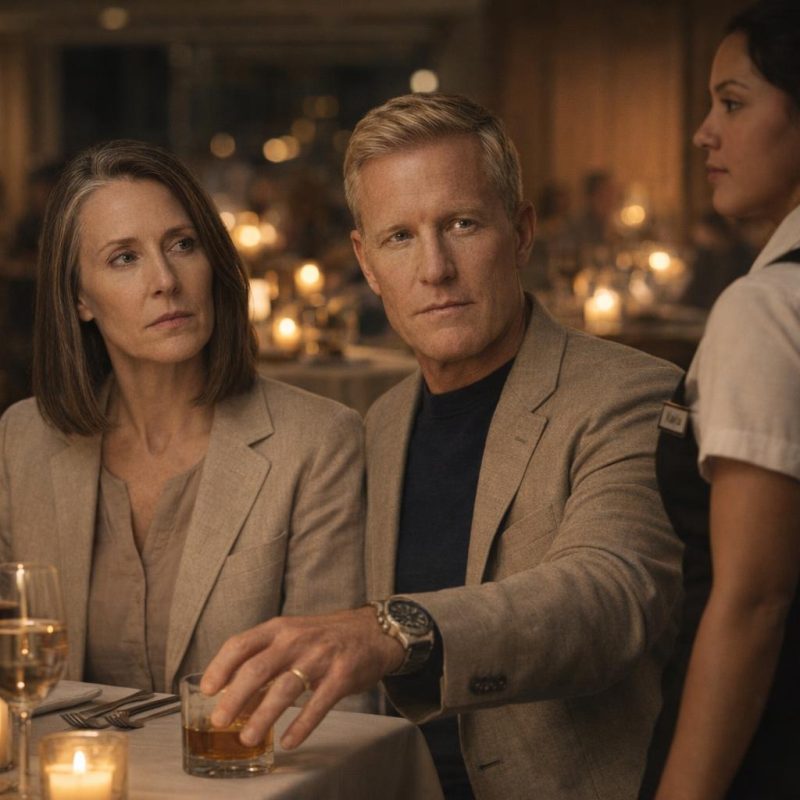 Image by RM AI
The Silent Meal
We ordered the main course and I ate maybe a third of it. Peter asked if the fish was all right and I said it was fine. He asked if I was tired and I said a little. He mentioned the coast again, the July trip, something about a rental he'd seen near Kennebunkport, and I said that sounded nice. Each answer I gave was true enough to pass and empty enough to end the conversation, and after a while he stopped trying. The candles had burned lower. The courtyard outside the window was quiet. A couple at the next table was sharing a dessert and laughing about something, and I watched them for a moment before looking back at my plate. Peter refilled his water glass himself this time. Neither of us mentioned her again. The check came and he paid it and folded the receipt into his jacket pocket, and I gathered my things and we sat for a moment in the particular silence of two people who are not saying the thing they are both thinking about. I pushed my plate to the side, the food mostly untouched, and the evening that had started with warm bread and a promise about the theater sat around me like something already over.
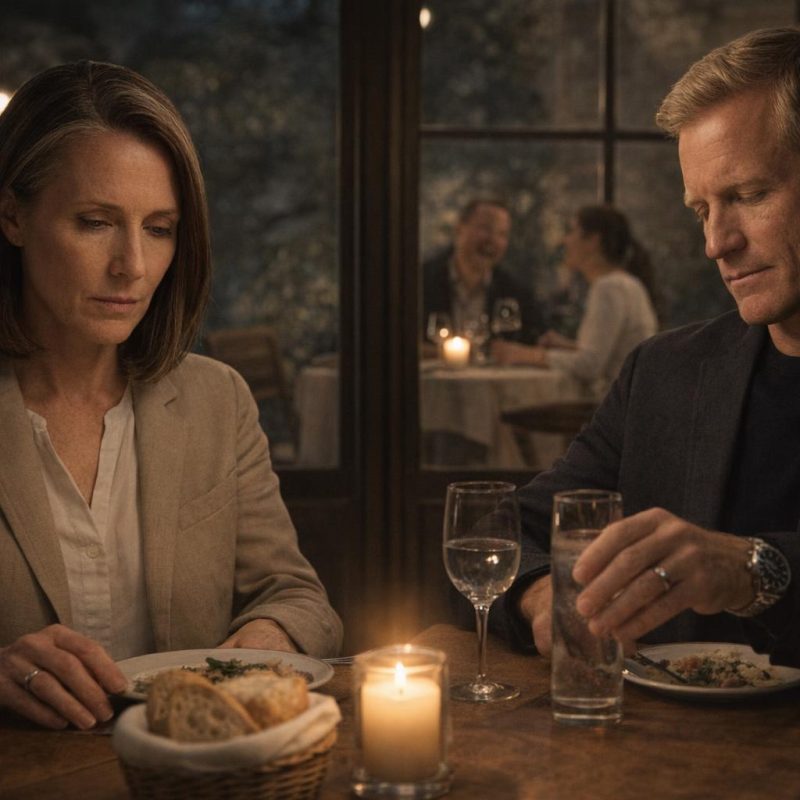 Image by RM AI
The Drive Home
We didn't speak on the way to the car. Peter held the door open for me out of habit, and I got in without thanking him, which I never do. He started the engine and pulled out of the lot, and for a few minutes I just watched the streetlights pass. I'd been turning the question over in my mind since we left the table, deciding whether to ask it, deciding how. By the time we reached the first traffic light I'd decided. I asked him how he knew her name. Just like that, flat and direct. He kept his eyes on the road and said, 'Whose name?' and I said, 'The waitress. Kayla.' There was a pause — not a long one, maybe two seconds — but two seconds is a long time when someone should already know the answer. He said she'd introduced herself when she took our drink order, and I said I'd been sitting right there and that wasn't what happened. He said maybe he'd misheard. He said maybe she'd said it to the table next to us. Each answer came a beat too late and landed a beat too soft, and when I turned to look at him, his jaw was set and his eyes were fixed very carefully on the road ahead, and his face was doing the quiet, controlled work of someone searching for the right thing to say.
 Image by RM AI
Once or Twice
He finally said she'd auditioned at Briarwood. Once or twice, he said, like that was a complete explanation. He said he meets hundreds of actors every season and sometimes faces stick. I asked him which auditions, and he said he couldn't remember exactly, maybe last fall, maybe the spring before that. I asked if he remembered her name from one or two auditions but couldn't remember when they were, and he said that's just how memory works sometimes. I told him that wasn't how memory worked, not like that. He said she was personable, that she made an impression, that some people just do. I asked him why being personable at an audition would make her comfortable enough to flirt with him in front of me at dinner, and he said she wasn't flirting, she was just being friendly, and that I was reading something into nothing. The words came out smooth and patient, the way you talk to someone you think is being unreasonable. I turned back toward the window. The neighborhoods were sliding past, familiar streets I'd driven a thousand times, and I sat with the shape of his explanation — the vague dates, the convenient memory, the practiced calm — and none of it fit together the way it should have.
 Image by RM AI
Making It Bigger
I asked him again, more directly this time. I said: if she only auditioned once or twice and didn't get a part, why would she feel comfortable enough to walk up to our table on our anniversary and act like she knew him? He said I was reading too much into a thirty-second interaction. I said I wasn't the one who'd made it awkward — she was, and he'd let her. He said I was turning a nothing moment into a whole production, and that word, production, landed with a particular edge, like he'd chosen it to remind me I didn't belong to that world the way he did. I told him I wasn't making a scene, I was asking a reasonable question, and he said the reasonable thing would have been to let it go at the table instead of sitting there making everyone uncomfortable. I pointed out that I hadn't said a word at the table. He said my silence was its own kind of statement. We were in the driveway by then, the engine still running, and I felt something in my chest go very quiet and very cold — not the hot anger from a minute ago, but something slower and more settled, the kind that doesn't burn out quickly.
 Image by RM AI
Upstairs
We brought it inside with us. I don't know why I thought the house would make it easier — it didn't. Peter dropped his keys on the counter and loosened his tie and said he wasn't doing this tonight. I said we weren't finished. He said there was nothing to finish because there was nothing to discuss, and I said that was exactly the problem. He poured himself a glass of water and stood at the kitchen counter drinking it with his back half-turned, and I stood in the doorway and thought about thirty-two years and a reservation he'd made three weeks in advance and the way he'd said her name without thinking. He set the glass down and said he was tired and that we could talk in the morning if I still wanted to, and I said I would still want to. He walked past me without touching me, which he always does when we argue, a kind of deliberate not-touching that I've never gotten used to. I sat down on the couch in the living room, still in my good dress, the one I'd put on three hours ago thinking the evening would go differently. The house was quiet. Then I heard his footsteps on the stairs, slow and even.
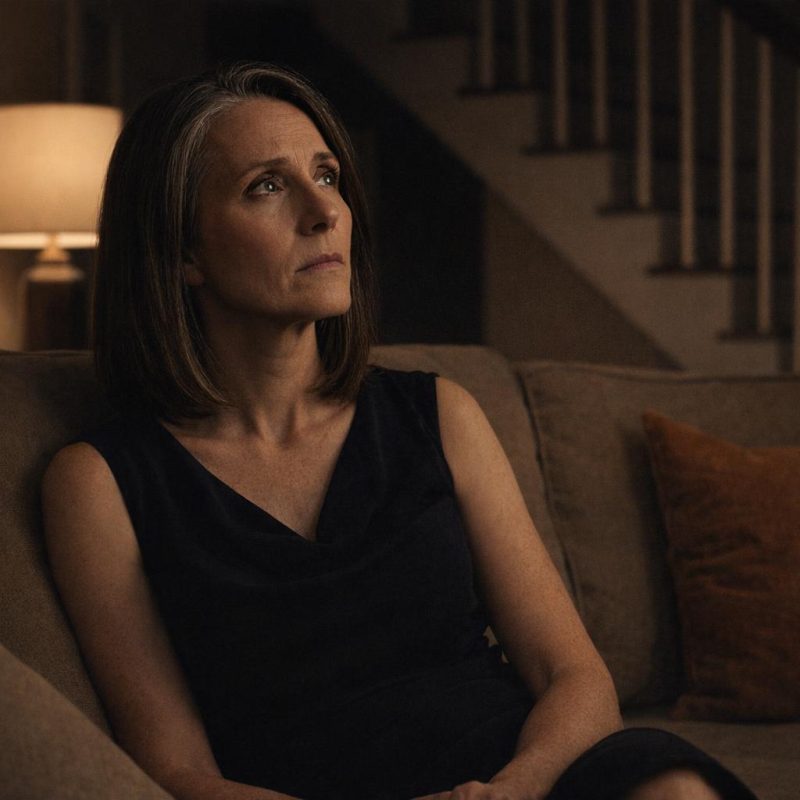 Image by RM AI
The Search Begins
I sat there for a while without moving. The lamp on the side table was on and everything else was dark, and the house had that particular stillness it gets late at night when you're the only one awake in it. I thought about going upstairs. I thought about what I would say if I did. I didn't move. At some point I got up and got my laptop from the desk in the corner, the one I use for work, and I brought it back to the couch and set it on my knees. I told myself I was just going to look. That's what you tell yourself. I wasn't sure what I expected to find or whether I'd find anything at all, and part of me hoped I wouldn't, because finding something would mean the evening had been exactly what it felt like and not just me being paranoid on our anniversary. I opened the browser. The cursor sat in the search bar blinking at me. I could hear the refrigerator hum from the kitchen and somewhere outside a car passed slowly down the street. I thought about Peter upstairs, already asleep probably, certain the conversation was over. Then I typed her name.
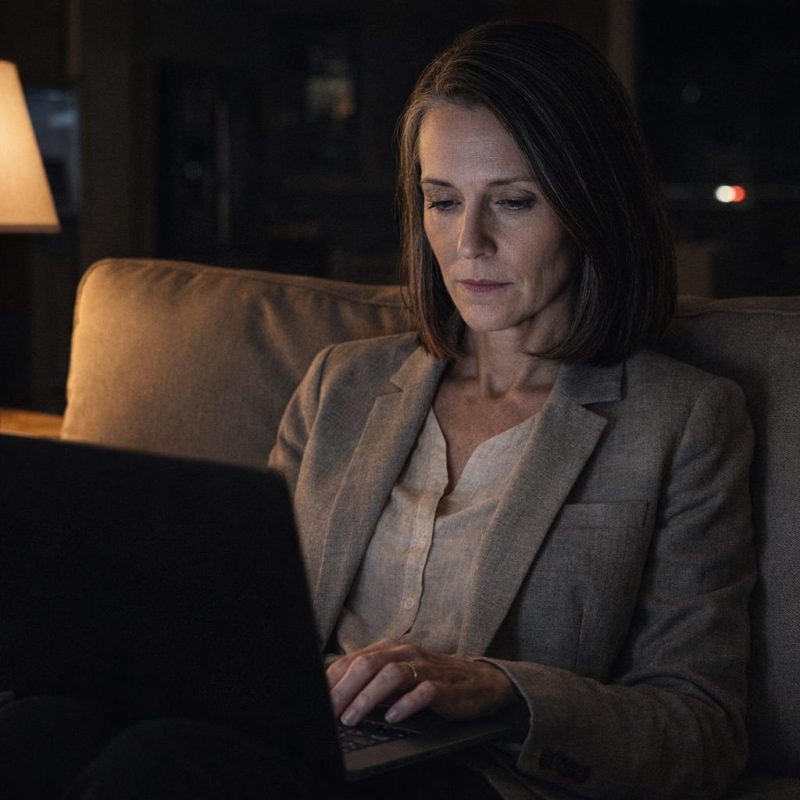 Image by RM AI
The Acting Pages
She came up immediately. That's the thing about actors — they build a presence online because they have to, every audition notice and headshot and credit documented somewhere public. There was a website with her name in clean sans-serif across the top, a professional domain, the kind that costs forty dollars a year and signals serious intent. I clicked through it. The headshots were good — she was striking, dark hair, the kind of face that reads well in photographs — and the resume listed what you'd expect from someone who'd been at it for a while without quite breaking through. Commercials for regional brands. A student film that had screened at a small festival. A handful of ensemble roles in community productions, a few named parts in shows I'd never heard of. Nothing that would have made the trades. Nothing that would have paid rent on its own. She'd been doing this for years, the resume made that clear, chasing something that kept staying just out of reach. I recognized the shape of it — the persistence, the hope, the accumulation of small credits that never quite added up to a career. I sat with the laptop open on my knees, scrolling through her headshots and the careful optimism of her listed credits, and something about it made me feel tired in a way I hadn't expected.
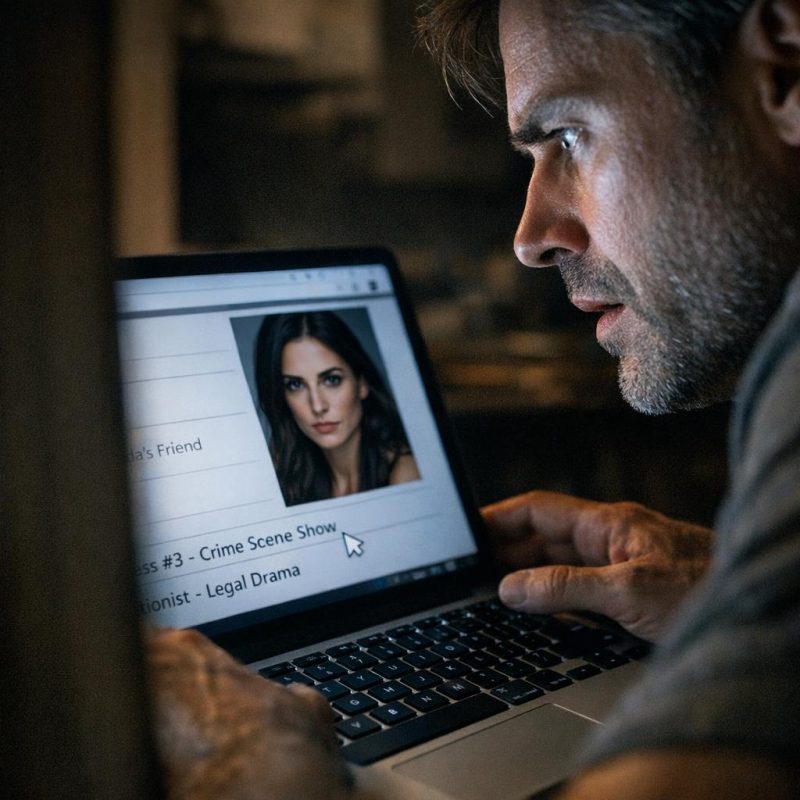 Image by RM AI
Following Briarwood
I found her on Instagram next. Her profile was public, which made it easy, and I told myself that made it less like snooping — though I knew that wasn't really true. She posted the way actors do, a mix of behind-the-scenes shots and rehearsal candids and the occasional polished headshot, captions that were breezy and aspirational. I wasn't looking for anything specific yet, just scrolling, getting a sense of her. Then I went to her following list. I don't know exactly what made me do it — maybe just the habit of looking at the whole picture. She followed a few hundred accounts: other actors, casting directors, a couple of industry blogs. And then I stopped scrolling. Right there in the list, between a New York theater company and a local coffee shop, was Briarwood Theatre Company's official account. I kept going. Two Briarwood staff members. A stage manager I recognized by name because Peter had mentioned her at dinner once. I sat back against the couch cushions and looked at the ceiling for a moment. Peter had said once or twice. He'd said she was just someone whose face had stuck. But you don't follow the staff of a theater where you auditioned once or twice and then forgot about it.
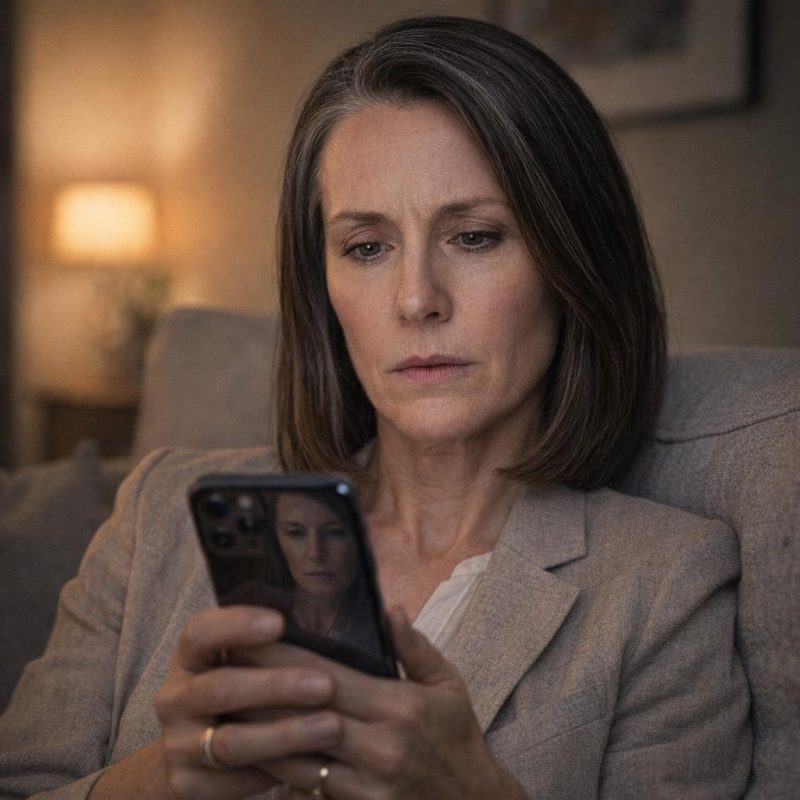 Image by RM AI
The Fundraiser Photo
I went into her photos next. I told myself I'd look for ten minutes and then close the laptop and go to bed. I didn't close the laptop. She posted regularly, going back well over a year, and I scrolled slowly, reading the captions, checking the tags. There were pictures from what looked like Briarwood events — a lobby I recognized from the one time Peter had taken me to opening night, the same dark wood paneling, the same framed production posters along the wall. One photo showed a group of people at what the caption called a fundraiser, everyone dressed up, glasses raised. I almost scrolled past it. Then I stopped. Peter was in it. He was standing near the center of the frame, smiling the way he smiles when he's working a room, and Kayla was directly beside him, her shoulder angled toward his, both of them caught mid-laugh. The timestamp in the caption put it nine months ago. He had never mentioned a fundraiser. He had never mentioned her being there. The photo sat on my screen — Peter's face, her face, the easy familiarity of two people who had been in the same room more than once or twice.
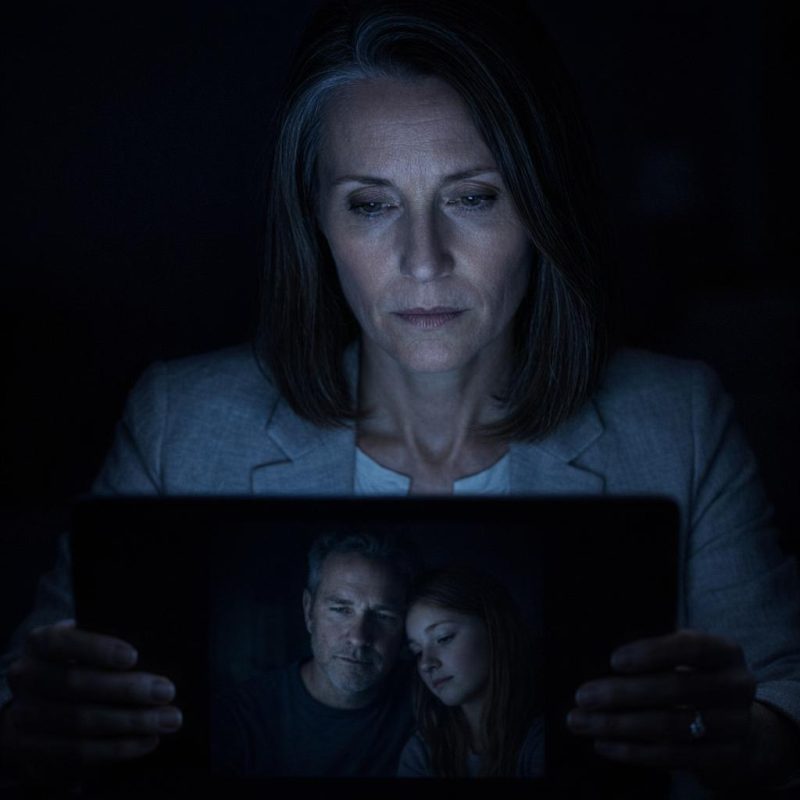 Image by RM AI
The Phone Downstairs
I'd been upstairs for twenty minutes before I remembered his phone. He always charged it in the kitchen — had for years, some habit about not wanting screens in the bedroom. I stood at the top of the stairs and listened. The house was quiet. I could hear him breathing in that slow, even way that meant he was already asleep. I went down in the dark, not turning on any lights, moving by memory through the hallway. The phone was right where I expected it, face-down on the counter next to the coffee maker, the charging cable snaking up from the outlet below. I stood there looking at it for a long moment. Thirty-two years. I had never once gone through his phone. I'd never wanted to. I'd never thought I needed to. But I'd seen that photo. I'd seen her name in his calendar. I'd seen the way he'd answered my questions with just enough to close the conversation without actually saying anything. I picked it up. My hands were steady, which surprised me. I knew his passcode — our anniversary, the same four digits he'd used for everything since the nineties. The screen unlocked on the first try, and I stood there in my dark kitchen holding my husband's phone.
 Image by RM AI
Months of Messages
I went to his messages first. There were maybe a dozen threads at the top — his brother, a group chat from the theater board, a few names I recognized from the neighborhood. And then, about halfway down the list, her name. Kayla. I pressed it before I could think too hard about what I was doing. The conversation went back further than I expected. I scrolled up, and up, and the timestamps kept going — six months, seven, eight. My thumb moved slowly. Some of it looked ordinary enough on the surface: she'd ask about an audition, he'd give feedback, they'd discuss a callback she was waiting on. He told her she had real instincts. He told her the industry was brutal and she shouldn't take rejections personally. I might have read those messages and felt nothing, if there hadn't been so many of them. But there were dozens. Hundreds, maybe. The kind of volume that doesn't come from a professional relationship, or not only from one. There were references to coffee, to a walk after a rehearsal, to a conversation they'd apparently had that he'd never mentioned to me. I kept scrolling. The kitchen was cold and I hadn't noticed until then, standing there in the dark with his phone in both hands, reading message after message after message.
 Image by RM AI
Your Opportunity Is Coming
The further back I scrolled, the more a pattern emerged. Peter would go quiet for a few days, and then Kayla would send something — a frustration about a role she didn't get, a worry that she was wasting her time — and he would respond at length. Be patient, he wrote, more than once. Your opportunity is coming. I read that phrase in three separate messages, spaced months apart, like a refrain he kept returning to. And she wrote back in ways that made my chest tighten. She told him she wouldn't still be doing this if it weren't for him. That she'd quit two years ago if he hadn't talked her out of it. That she didn't know anyone else who actually believed in her the way he did. I stood there reading those words in my dark kitchen and tried to locate some clean, simple feeling — anger, maybe, or grief — but what I found instead was something closer to numbness. It wasn't the words themselves, exactly. It was the accumulation of them. Months of late-night messages, months of encouragement and private meetings and a closeness he had never once mentioned to me. And then I found the one where she wrote that she was going to make him proud of her, and I just stood there holding the phone, unable to move.
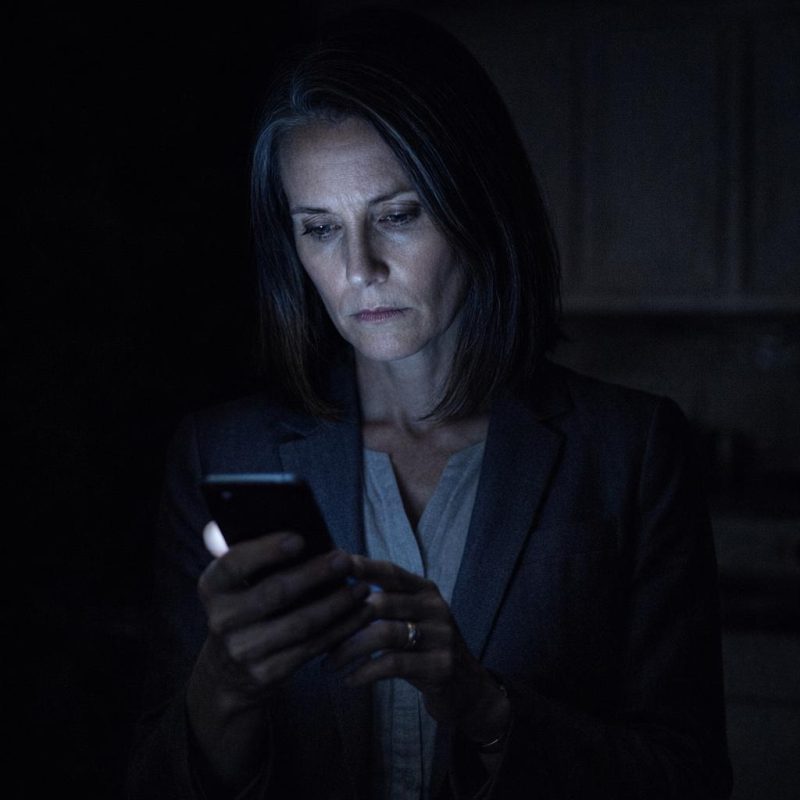 Image by RM AI
I Hate Pretending
I almost put the phone down after that. I almost set it back on the counter, face-down, exactly where I'd found it, and walked back upstairs and pretended I hadn't seen any of it. I don't know what stopped me — some stubborn, awful part of me that needed to know the full shape of it. I kept scrolling forward, toward the present, and that's when I found the message from three days ago. Three days. Kayla had sent it in the evening, around the time Peter and I had been sitting at the dinner table talking about nothing in particular. She wrote that she hated it. That she hated having to pretend she barely knew him every time they were in the same room with other people. That it was getting harder to act like he was just someone she worked with. I read it twice. Then I read it a third time. My hands had stopped being steady. I set the phone on the counter for a moment and pressed my palms flat against the cold tile, just breathing. Then I picked it up again and scrolled to his reply. It had come within minutes. He'd told her it wouldn't be much longer.
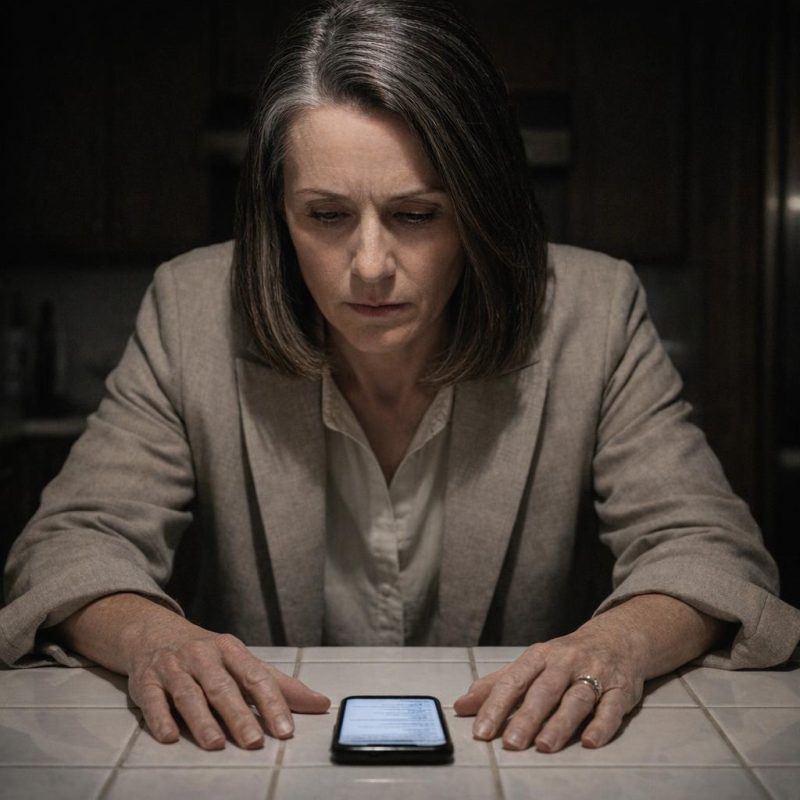 Image by RM AI
This Isn't What You Think
I went upstairs with the phone in my hand. I didn't rehearse what I was going to say. I turned on the bedside lamp and said his name, and he came awake slowly, the way he always does, blinking against the light. I held the phone out so he could see the screen. I didn't say anything else. I watched his face go through several things in quick succession — confusion, then recognition, then something I can only describe as terror. Not guilt, exactly. Terror. He sat up and said, 'This isn't what you think.' I told him that every husband who'd ever been caught said exactly that. He shook his head. He said it again — this isn't what you think, Janice — and his voice was different the second time, lower, more urgent, like he was trying to reach me through something. I sat down on the edge of the bed because my legs were tired. Not shaking. Just tired. I'd been standing in the kitchen for a long time. I told him he had about thirty seconds to say something that wasn't a cliché, and then I was going to the guest room and we could talk in the morning. He started talking. I sat there on the edge of the bed in the lamplight, and the weight of everything I'd found settled into the space between us like something physical.
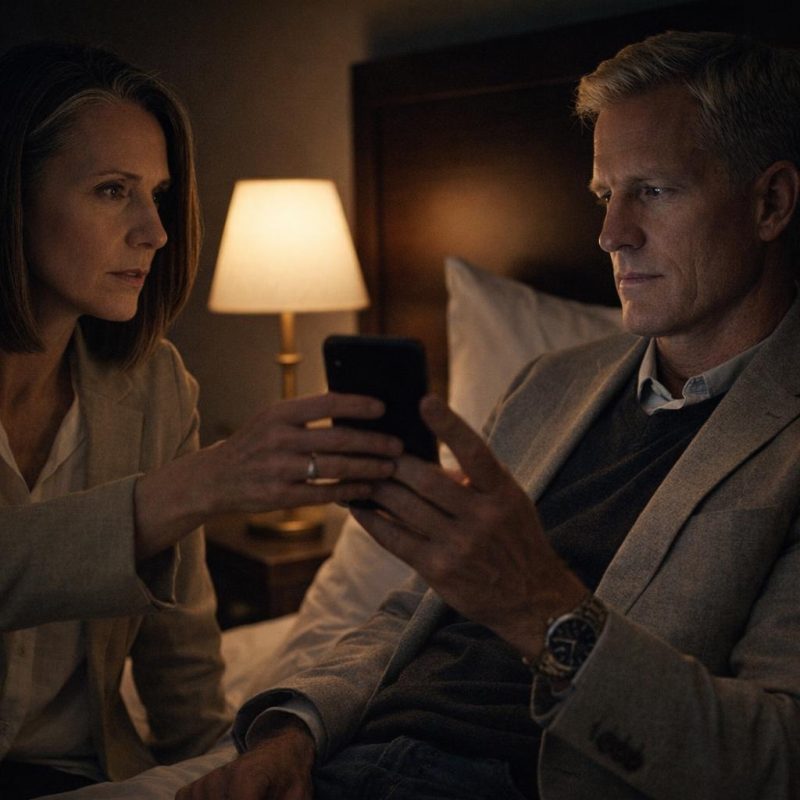 Image by RM AI
Never Had an Affair
He said it first and he said it clearly: he had never had an affair with Kayla. He looked me in the eye when he said it, which I noted, even if I didn't know what to do with it. Then he admitted that he had been meeting her in secret for months. He said those two things in the same breath, like they were supposed to cancel each other out. I asked him why anyone meets someone in secret if there's nothing to hide. He said it was complicated. I told him complicated wasn't an answer. He rubbed his face with both hands and said he knew how it looked, and I said that was a start, at least. He kept saying he could explain, that there was a reason, that it wasn't what the messages made it seem. I didn't believe the denial — not fully, not yet. I'd read too many of those messages to simply take his word for it. But something in the way he was sitting there, not defensive, not reaching for excuses, just looking at me with that expression I couldn't quite name — it made me stay. We talked past midnight. The lamp was still on. The house was quiet around us, and his admission about the secret meetings hung in the air between us, unresolved.
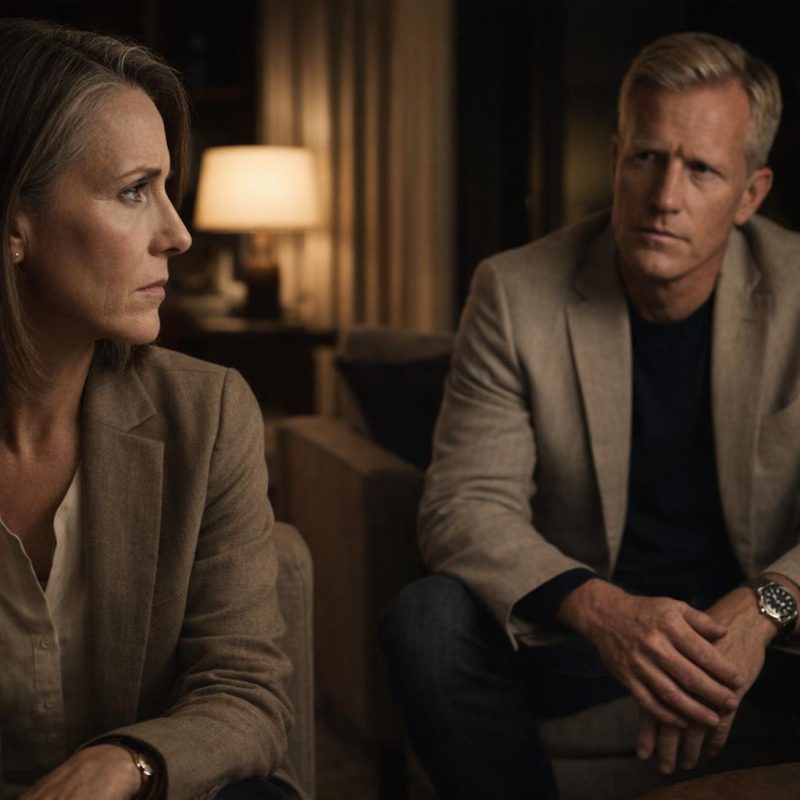 Image by RM AI
The Martin Investigation
He said Kayla had come to him about six months ago with something she'd stumbled onto. She'd been approached — not for a role, exactly, but for what Martin had called a coaching arrangement. She'd pay a fee to a company, and in return she'd get consideration for parts. Peter said she'd thought it was strange, that the company name didn't match anything she could find, and she'd brought it to him because she didn't know who else to trust. He said he hadn't believed her at first. He said he'd told her it was probably just a badly run workshop program, that the theater world was full of those. But she'd shown him the payment requests, and the name on the account, and he'd started looking into it quietly on his own. He described coaching fees routed to a company he'd never heard of, expenses that didn't match any vendor he recognized from the books. He said he hadn't wanted to go to the board until he had something solid, because Martin had been handling the bookkeeping for years and Peter wasn't sure how far it went. I sat there listening to all of this in the lamplight, trying to decide if it was the most elaborate excuse I'd ever heard or something else entirely. And then he said Martin's name again, and something shifted in the room.
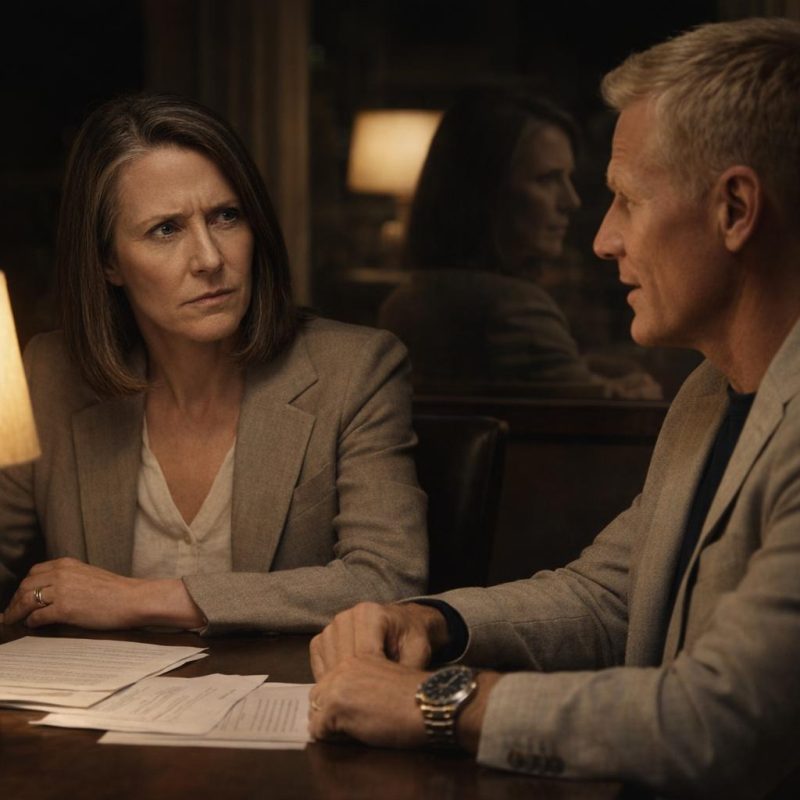 Image by RM AI
Why Hide It From Me
I let him finish. Then I asked the question that had been sitting in my chest the whole time he was talking. If this was an investigation — if Kayla had brought him evidence of something genuinely wrong and he was trying to protect the theater — why hadn't he told me? Why had it been secret from me, specifically? He opened his mouth and closed it again. He said Martin controlled the bookkeeping, that he hadn't wanted word getting out before he had proof. I told him that didn't explain the messages. It didn't explain the private meetings, or the way Kayla had written about hating to pretend she barely knew him. It didn't explain any of the personal parts. He was quiet for a moment. Then he said there was another reason. He said it carefully, like he was testing the weight of the words before he let them go. I watched his face as he said it — the way his jaw tightened, the way his eyes dropped briefly before coming back to mine — and what I saw there wasn't the terror from earlier. It was shame.
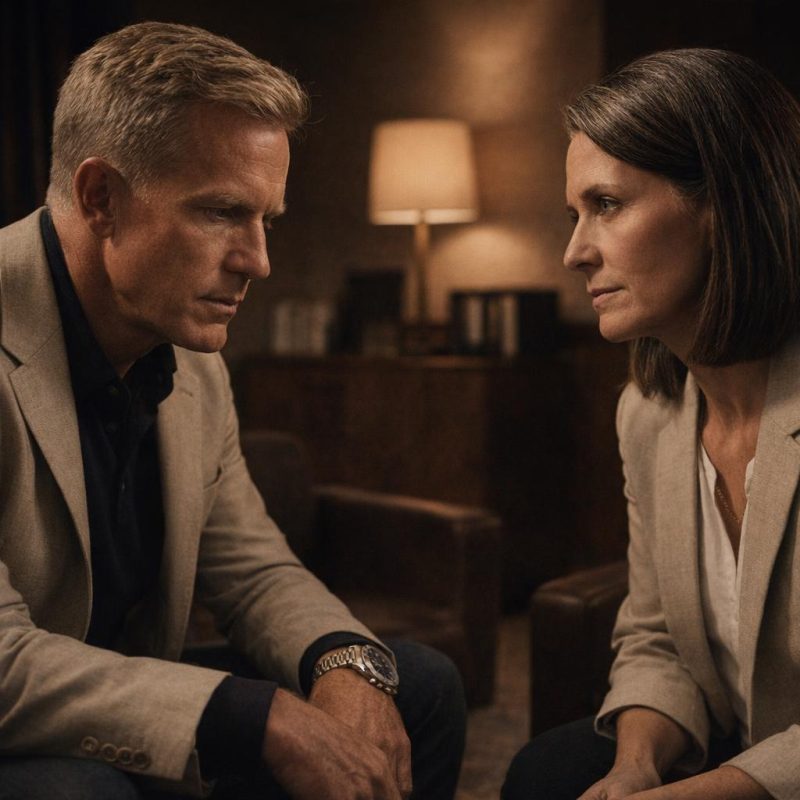 Image by RM AI
She Became Attached
He said it quietly, like he was hoping the words would land softly if he kept his voice low. Kayla had become attached to him. That was how he put it — attached. She called him her mentor constantly, texted him about things that had nothing to do with the investigation, started treating their meetings like something personal rather than something practical. He said he knew it had gone too far. He said he knew he should have shut it down. I asked him why he didn't. He looked at the floor. He said she was the only one inside Briarwood who had seen what Martin was doing up close, the only one willing to document it, and he was afraid that if he drew a hard line she'd pull back and the whole thing would fall apart. I sat there listening to him explain how he had let a young woman's inappropriate attachment to him continue — not because he didn't see it, but because it was useful to him. The sick feeling in my stomach wasn't grief anymore. It was something colder. I asked him, very carefully, if that was the only reason he'd let it go on. He said he'd been afraid of losing her cooperation — afraid that without her, the whole investigation collapsed — and that fear had made him look the other way longer than he should have.
 Image by RM AI
I Liked Feeling Important
He didn't say it the way I expected. There was no dramatic confession, no breaking down. He just said it plainly, like he was finally too tired to dress it up. He said he liked how she looked at him. He liked feeling important to someone who was still at the beginning of everything, someone who thought he had all the answers. He said it had been a long time since he'd felt that way and he hadn't handled it well. He was careful to say again that he had never touched her, that it had never been physical, and I believed him — I did. But I told him that didn't change what it was. I told him he had let someone believe she had a special claim on him because it felt good, and he had kept it from me because he knew I would have named it for what it was. He nodded. He didn't argue. He just sat there looking like a man who had finally heard himself out loud and didn't like the sound of it. I told him I needed some space to think. I wasn't screaming. I wasn't crying. I just felt very still, the way you do when something has finally stopped moving and you can see it clearly for the first time. The room was quiet around us, and neither of us had anything left to say.
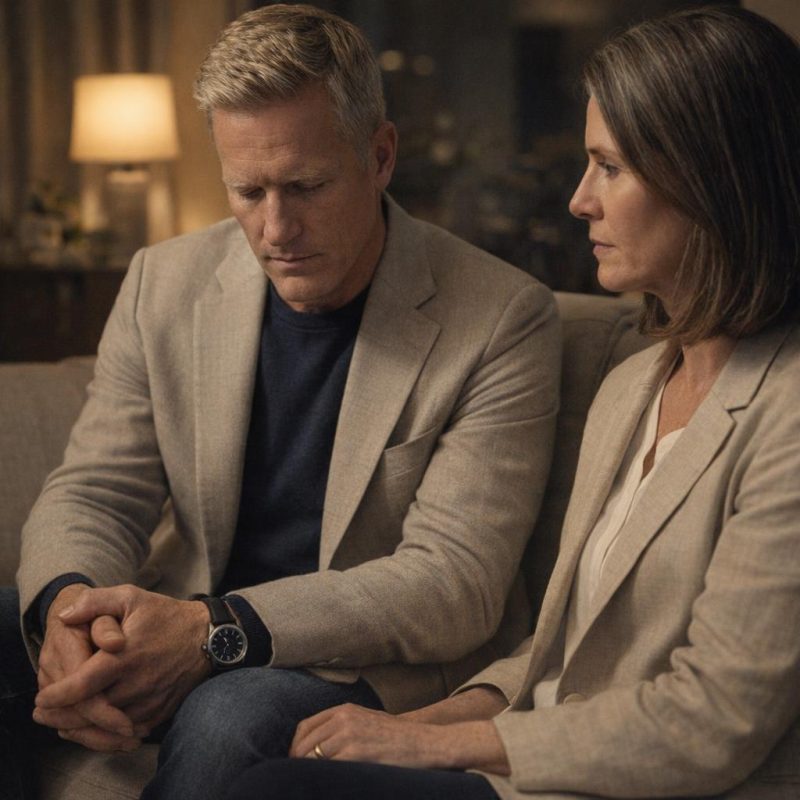 Image by RM AI
Beth's House
I packed a bag before he was fully awake. I wasn't dramatic about it — I didn't slam drawers or leave a note on the counter. I just moved through the bedroom quietly, taking what I needed for a few days, and when he appeared in the doorway I told him I was going to stay with my sister Beth for a while. He asked me not to go. He said we could work through it, that he wanted to explain everything properly, that there was still so much I didn't understand about the Martin situation. I told him I believed that. I told him that when he had actual proof — something I could look at with my own eyes — I would listen. Until then, I needed to be somewhere that wasn't this house. He called twice before I reached the end of the street. I didn't answer. Beth opened her front door before I even knocked, like she'd been watching for my car, and she didn't ask me a single question. She just stepped aside and let me in and put the kettle on. I set my bag down in her spare room and sat on the edge of the bed for a long time, looking at nothing in particular. The quiet of her house settled around me like something I hadn't known I needed.
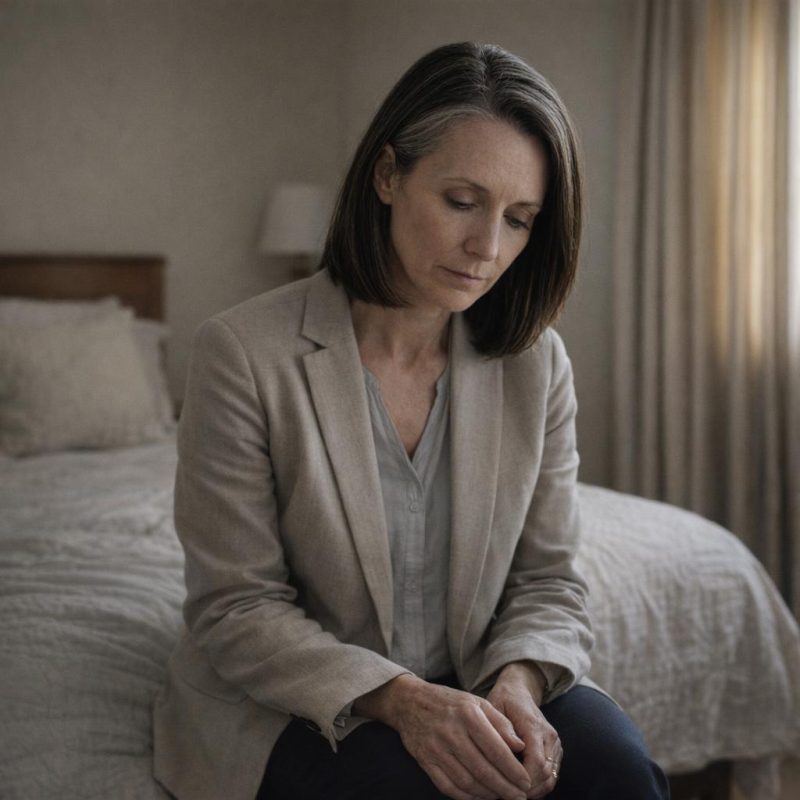 Image by RM AI
Kayla Reaches Out
The first two days at Beth's were mostly silence and tea and bad television, which was exactly what I needed. Peter called every morning and once in the evening, and I let every call go to voicemail. I wasn't ready to hear his voice without having something solid to hold onto. On the third morning I was sitting at Beth's kitchen table with my second cup of coffee when my phone buzzed with a message from a number I didn't recognize. I almost ignored it. Then I saw the name she'd signed it with at the bottom. It was Kayla. She said she was sorry for the way she'd behaved at the restaurant — that it had been inappropriate and she wasn't proud of it. She said she knew I had no reason to trust her, but that there were things she needed to tell me that she couldn't say in a message. She asked if I would be willing to meet her somewhere public, somewhere I felt comfortable, just to talk. I sat there staring at the screen for a long time. Every reasonable instinct I had said to put the phone down and let Peter handle whatever this was. But something else — something that had been sitting quietly underneath all the anger and the hurt — wanted to hear what she had to say. I typed back before I could talk myself out of it: the name of a coffee shop, a time, the next day.
 Image by RM AI
The Coffee Shop
She was already there when I arrived, sitting at a corner table with both hands wrapped around a mug, and she looked younger than I remembered — or maybe just less composed. She thanked me for coming before I'd even sat down. I told her I hadn't decided yet whether that was the right call, and she nodded like she understood that was fair. She said she owed me an apology for the restaurant, and then she gave me one that actually sounded like she meant it — no qualifications, no deflecting. She said she had done it on purpose. Peter had told her a few weeks before that their private meetings needed to stop, that it wasn't appropriate, and she had been angry about it. She said she'd wanted to make him uncomfortable, to make him feel what it felt like to have something taken away without warning. She said she knew it was childish. She said she'd spent the days since feeling sick about what she'd put me through. I watched her while she talked. She wasn't performing — or if she was, she was very good at it, and something in the way she kept looking down at her mug told me she wasn't. She was just a young woman who had done something unkind and was sitting with the weight of it, and I found, to my own surprise, that I could recognize that without it excusing anything.
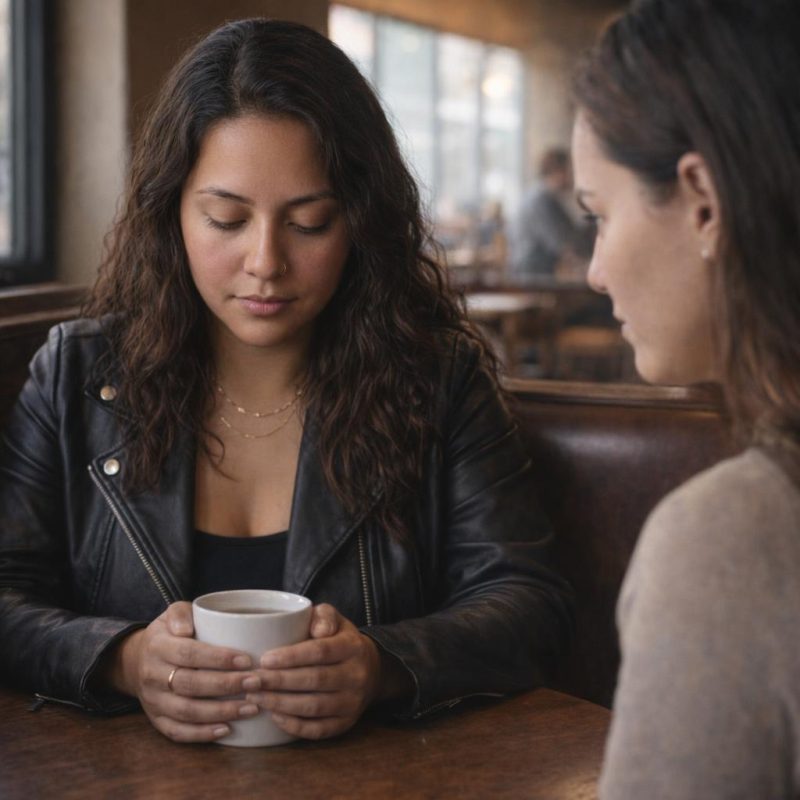 Image by RM AI
The Original Messages
After a few minutes of quiet she asked if I wanted to know what she'd originally gone to Peter about. I said yes. She pulled out her phone and set it on the table between us, and what she showed me matched what Peter had told me closely enough that I felt something loosen in my chest — not relief exactly, but the particular sensation of a story holding together under pressure. There were messages from Martin, sent over several months, offering her guaranteed consideration for lead roles in upcoming productions. The language was careful but the implication wasn't. Each message was followed by a request for payment — coaching fees, he called them, administrative costs, professional development. The amounts weren't small. One request was for three thousand dollars. Another for forty-five hundred. She scrolled slowly so I could read each one, and I did read them, carefully, the way you read something when you're looking for the place where it stops making sense. It didn't stop making sense. The dates were consistent. The tone was consistent. The progression from flattery to financial request was consistent. I handed the phone back to her and sat with what I'd just seen. Whatever I had thought about Kayla walking into that coffee shop, the evidence on her screen was real — and it pointed exactly where Peter had said it would.
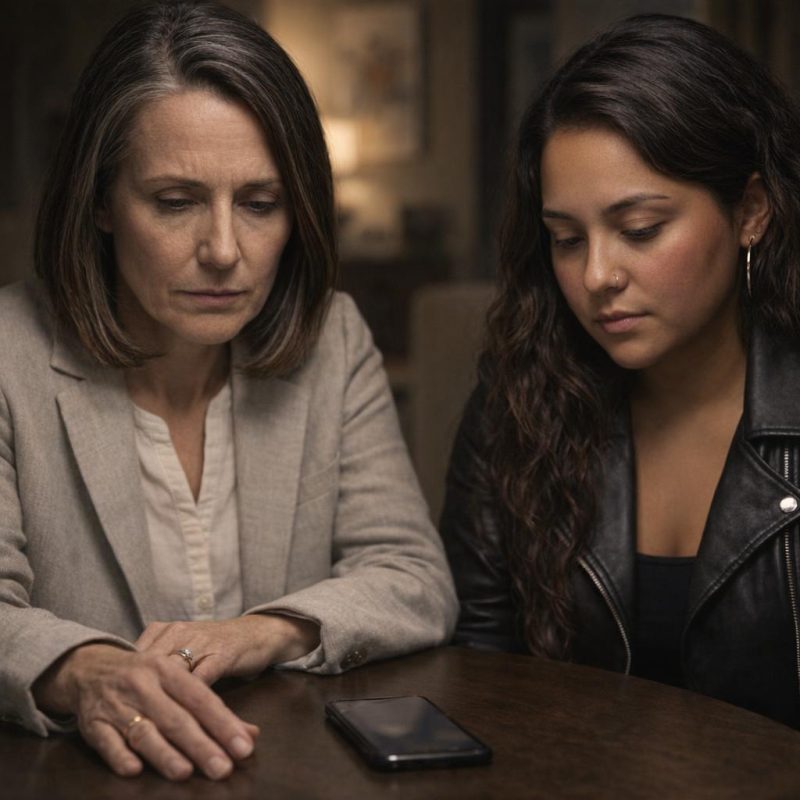 Image by RM AI
Martin Already Knows
She put her phone back in her bag and then she said there was something else. The way she said it — carefully, like she was choosing the moment — made me set down my cup. She said she didn't think Peter knew this part. Martin had found out that Peter was looking into the finances. She didn't know exactly how or when it had happened, but someone inside Briarwood had passed the information along, and Martin had known for at least a few weeks. She said she'd heard it from another person in the company who'd been approached by Martin asking questions about Peter's recent behavior, his access to records, who he'd been talking to. She didn't know who had told Martin. She just knew that he knew. I sat with that for a moment. Peter had been moving carefully, trying to build something solid before anyone could push back, and the whole time Martin had been watching. Whatever Peter thought he was doing quietly, it hadn't been quiet enough. The coffee shop noise continued around me — someone ordering at the counter, a chair scraping the floor — but I barely heard any of it. The thought of Peter walking into that building every day, not knowing what Martin already knew, settled over me like something cold and heavy I couldn't shake off.
 Image by RM AI
Forcing Peter Out
I asked her what she thought Martin would do with that information. She wrapped both hands around her mug again and said she'd been thinking about that since she found out. She said the messages between Peter and her — the ones that looked personal, the ones about meetings and trust and her future at the theater — those were the problem. On their own, without any context, they didn't look like an investigation. They looked like a senior artistic director giving private preferential attention to a young actress. She said Martin could take those messages to the board and frame the whole thing as Peter promising her roles in exchange for her loyalty. No one on the board knew about the financial investigation. No one knew Peter had been trying to protect the company. All they would see was a pattern that looked like favoritism at best and something worse at worst. She said Peter's decision to keep everything secret — which she understood, she said, she really did — had handed Martin exactly the kind of story that would be very hard to walk back from. I sat there turning that over. The messages that had nearly broken my marriage weren't just evidence of poor judgment anymore. They were a lever, and Martin's hands were already on it.
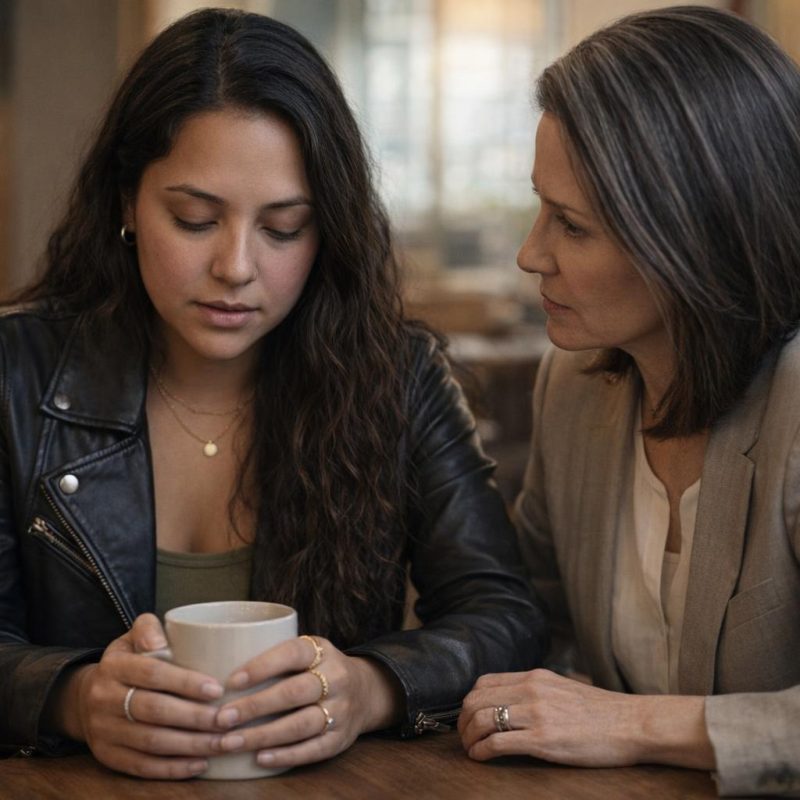 Image by RM AI
The Wait
I drove back to Beth's house that evening with Kayla's words still turning in my head. I told Beth what she'd said — about the messages, about how they'd look without context, about the lever Martin was holding. Beth listened without interrupting, which was one of the things I'd always loved about my sister. When I finished, she just set her hand on the table between us and said, 'So now we wait.' That was exactly it. Peter called that night to say Martin had been quiet all week, no unusual moves, nothing he could point to. He said it in a way that was supposed to be reassuring, but it landed the opposite. Quiet wasn't nothing. Quiet was preparation. I knew enough about how these things worked to understand that the absence of noise wasn't peace — it was the held breath before something breaks. I tried to read. I tried to sleep. I made tea I didn't drink and walked laps around Beth's small kitchen at two in the morning while she slept down the hall. Days passed like that. Peter was preparing whatever defense he could, and I was here, unable to do anything useful, waiting for a blow I could see coming but couldn't reach out and stop. The helplessness of it settled into my chest and stayed there, heavy and still.
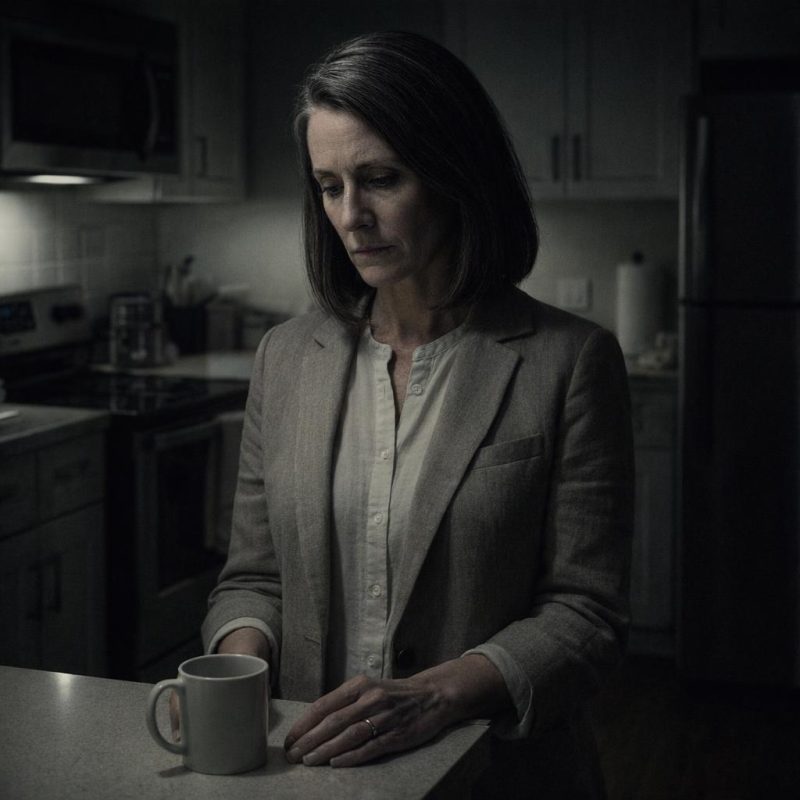 Image by RM AI
The Emergency Meeting
Peter called on a Tuesday afternoon, and I knew from the first word that something had shifted. He didn't say hello the way he usually did. He just said my name, and then there was a pause that lasted a beat too long. Martin had called an emergency board meeting. It was scheduled for the following morning. Peter said he'd found out through the board chair's assistant, not through any official notice, which told him something about how this was being handled. His voice was careful in the way voices get when someone is trying not to sound as frightened as they are. He said he thought he knew what Martin was going to present. I didn't ask him to explain — we'd already talked through what Kayla had told me, and we both understood what those screenshots could look like stripped of everything that gave them meaning. I sat on the edge of Beth's guest bed after we hung up and looked at the wall for a while. The meeting was tomorrow. Whatever Martin had been building toward in his silence, it was going to happen in the morning, in a room I wouldn't be in, with people who didn't know the full story. The weight of that settled over me like something physical, and I sat with it long after the light outside the window had gone gray.
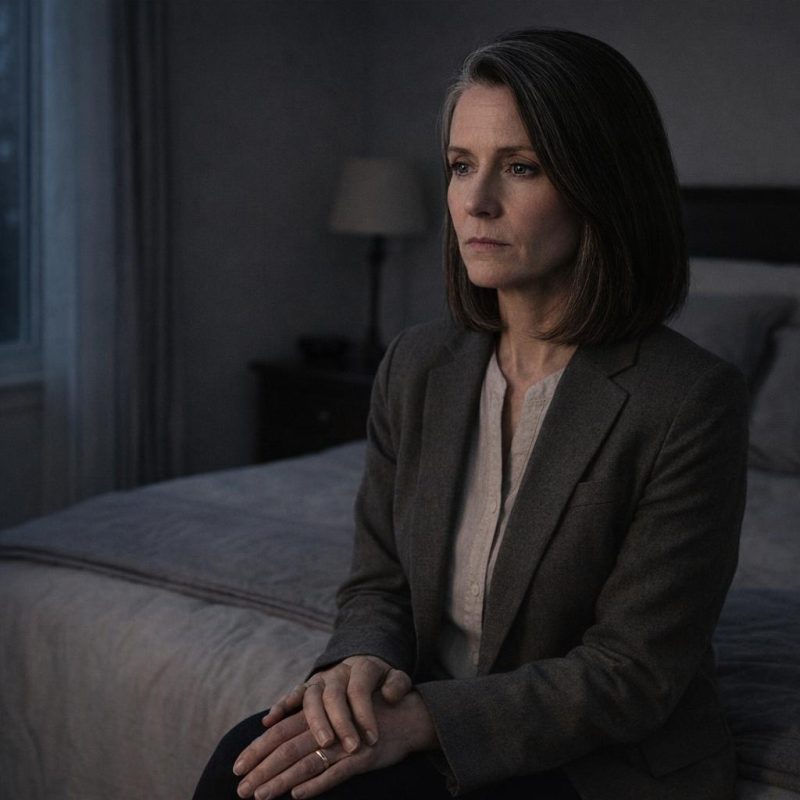 Image by RM AI
The Screenshots
Peter called me from the parking lot afterward, still in his car. His voice was flat in a way I hadn't heard before — not angry, not tearful, just emptied out. He said Martin had come in with a folder. Printed screenshots, maybe a dozen of them, laid out on the conference table one by one. Messages between Peter and Kayla — the ones about meetings, about her future at the theater, about trust. Peter said Martin had read several of them aloud. He'd framed them as evidence of a senior artistic director using his position to cultivate a personal relationship with a young actress, offering her preferential access in exchange for her loyalty and affection. He said it slowly and clearly, Peter told me, each word placed with care. The board chair had asked questions. Other members had leaned in to look at the printouts. No one had laughed it off. No one had said it seemed unlikely. Peter said he'd sat there watching their faces change and hadn't known what to do with his hands. Martin hadn't mentioned the financial investigation. He hadn't mentioned Kayla's coaching fees or the messages she'd shown Peter. He'd presented exactly what he wanted them to see and nothing else. Then Peter said it — the part I hadn't been able to picture until that moment: a dozen printed screenshots, laid across the conference table one by one, and every board member leaning in to read them.
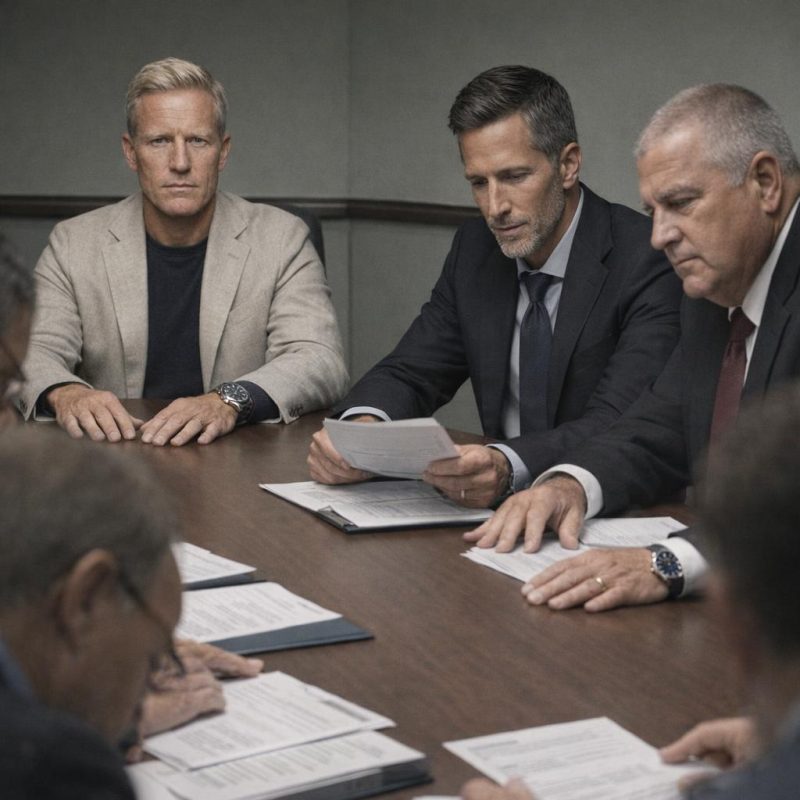 Image by RM AI
Immediate Suspension
Peter came to Beth's house that evening instead of calling. He sat at the kitchen table with his coat still on, which told me more than his words did at first. He said three board members had spoken up during the meeting wanting an immediate suspension pending a full review. Three out of nine, but they'd been vocal, and the room had shifted toward them. The board chair had asked Peter directly whether the messages were authentic. Peter had said yes, they were real, but that the context was missing. He said the word 'context' had landed badly — he could see it in the way two of the members exchanged a look. One member had asked whether Peter had disclosed his mentoring relationship with Kayla to the board at any point. He hadn't. Another asked whether any of the communications had taken place outside of official theater channels. Some had. Peter said he'd answered every question as honestly as he could, but that honest answers to those particular questions didn't help him. Two members had spoken in his defense, said his record was long and clean, that one complaint deserved a fair process. The board chair had called for a pause rather than a vote. Another meeting was scheduled for the following week. No final decision, Peter said. But he looked at me across the table and said, 'They want me gone, Janice. I could hear it.'
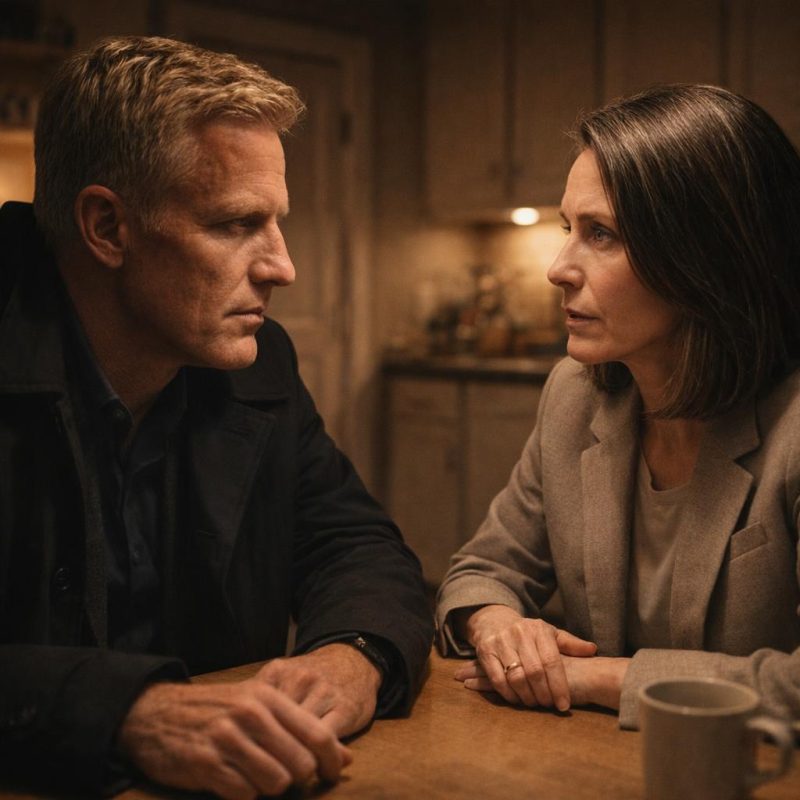 Image by RM AI
Peter's Evidence
Peter had gone into the second meeting with Kayla's evidence — the messages Martin had sent her, the invoices for coaching sessions she'd never received, the pattern of payments tied to audition cycles. He'd laid it out as carefully as he could. He told me afterward that the board chair had listened without expression, which Peter said was either a good sign or a very bad one. Some members had leaned forward when he showed them the invoice records. There had been a moment, Peter said, where he thought the room was turning. Then Martin had spoken. He'd been calm about it, almost gentle. He said Kayla was a talented young woman who had struggled to find consistent work and had developed an unfortunate fixation on Peter after a series of failed auditions. He said the accusations she was making were the kind that sometimes emerged when ambition met disappointment. He said he felt sorry for her. Peter said the word 'sorry' had come out of Martin's mouth sounding almost sincere. A few board members had nodded. Others had looked uncertain, glancing between the invoice printouts and Martin's composed face. The meeting had ended without resolution — the board chair said both accounts required further review. Peter had walked out not knowing whether he'd helped himself or made things worse. I listened to all of it and then he told me the part that stopped me cold: Martin had looked at the board chair and said Kayla had never been a credible witness to anything.
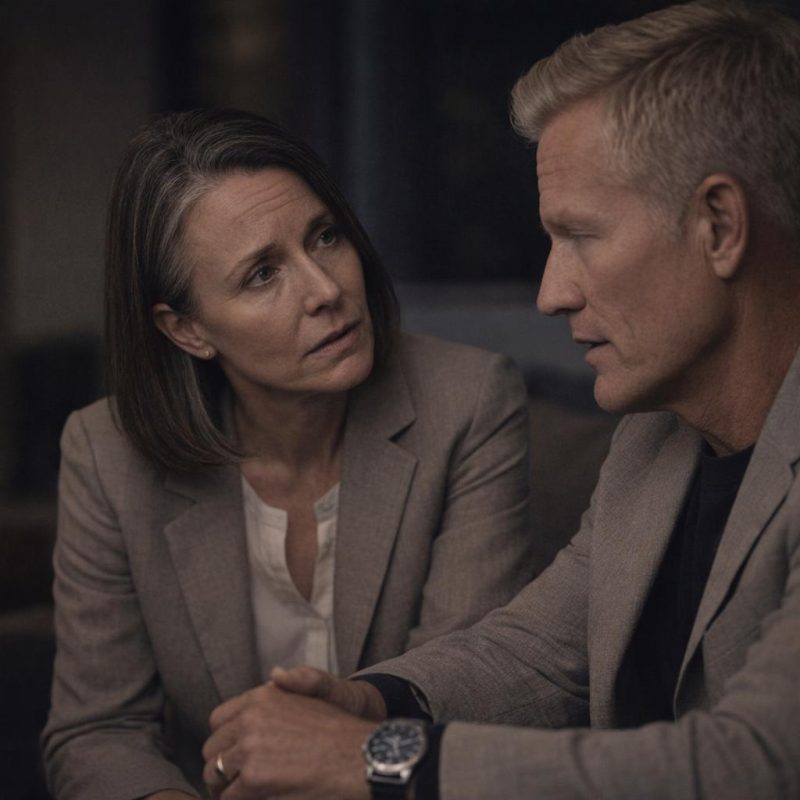 Image by RM AI
Tense Weeks
Three weeks passed, and then most of a fourth. The board was investigating — that was all we knew. Peter went to the theater every day because no formal suspension had been issued, but he told me it felt like walking through a building where everyone was watching to see which way he'd fall. He and I talked most evenings, sometimes for an hour, sometimes for ten minutes before one of us ran out of things to say that weren't just versions of 'we still don't know.' I stayed at Beth's. The distance between us hadn't closed, exactly, but it had changed shape — less like a wall and more like something we were both standing on opposite sides of, waiting to see if it would hold. I kept thinking about Kayla's evidence and Martin's dismissal of it, and I couldn't find solid ground in either direction. The board had the invoices. They had Martin's account. They had Peter's. Somewhere in those three things was the truth, but I had no way of knowing which version they were moving toward. Some mornings I woke up certain it would resolve in Peter's favor. Other mornings I wasn't certain of anything at all. The not-knowing had its own texture by then — not sharp, just constant, like a sound at the edge of hearing that never quite resolved into something you could name.
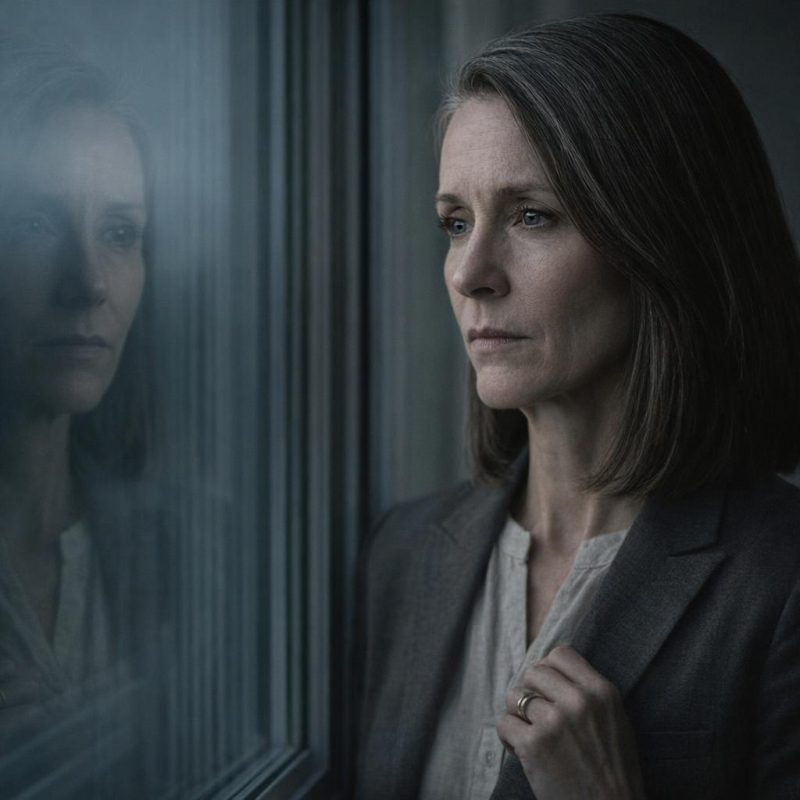 Image by RM AI
The Invoices
Peter had given me copies of everything he'd presented to the board — the invoice records, the message threads, the timeline Kayla had helped him reconstruct. I'd been through the folder twice already, but one afternoon I spread it all out on Beth's kitchen table and went through it more slowly. Most of it I'd seen before. The invoices were from several different companies, all billing for coaching or consulting services, all paid out of theater accounts over a span of years. I read through the company names without much expectation. Most of them meant nothing to me. But one of them — a small LLC listed on three separate invoices — caught somewhere in my memory and didn't let go. I read it again. I turned the page over as if the back might tell me something. I couldn't place it. It wasn't a name I associated with anyone I knew in the theater world, and it wasn't common enough to be a coincidence of sound. I'd seen it somewhere, or heard it, or read it in a different context entirely — I was almost sure of that. I set the invoice aside and tried to think backward through the years, through every document and ledger and conversation I could pull up. Nothing surfaced cleanly. But the name sat at the edge of my thoughts for the rest of the afternoon, quiet and insistent, the way a half-remembered thing refuses to leave you alone.
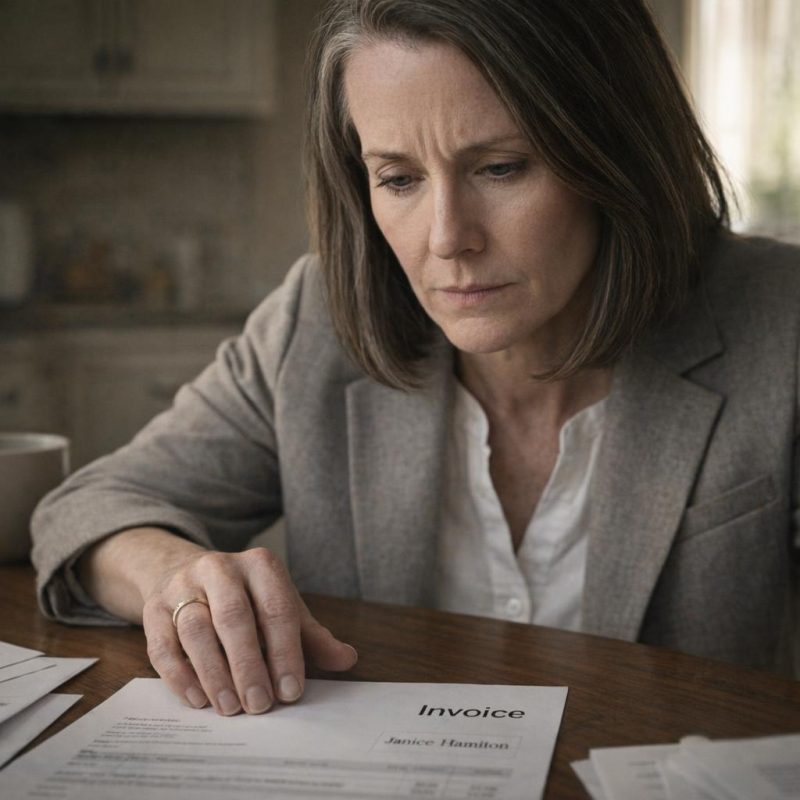 Image by RM AI
Old Bookkeeping Files
It came to me at two in the morning, the way things sometimes do when you've stopped trying to force them. I'd helped Peter with Briarwood's bookkeeping for almost four years, back when the theater was newer and the administrative staff was thin and he'd needed someone he trusted to keep the records straight. I'd done it carefully — I always did things carefully — and I'd kept copies of everything, the way my father had taught me to keep copies of everything. Those files were in boxes. Not at Beth's house. At our house, in the hall closet behind the winter coats, where I'd put them when we finally hired a full-time bookkeeper and I'd stepped back. I lay there in the dark for a few minutes thinking about whether I was reaching for something that wasn't there. Then I got up, drove to the house while Peter was at a morning rehearsal, and let myself in with my key. The hall closet smelled like cedar and old paper. I moved the coats aside, and there they were — four banker's boxes stacked two by two, labeled by year in my own handwriting. I pulled the first one down and set it on the floor, and then I pulled the second, and the third, and the fourth, until all of them were out of the closet and waiting.
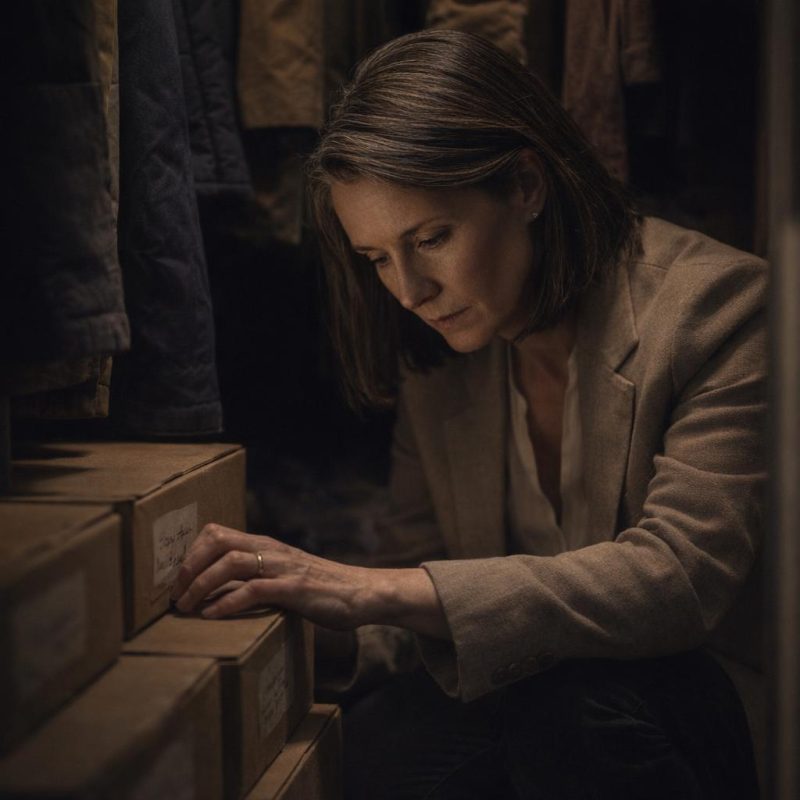 Image by RM AI
Searching Through Years
I spread the first box across the living room floor and started at the beginning. Invoices, vendor contracts, expense reports — all of it in my own careful handwriting or typed on the old Briarwood letterhead we'd used before the redesign. I was looking for a company name, one I'd seen on Kayla's coaching fee paperwork, something that had snagged in my memory like a thread caught on a nail. I thought I'd recognize it the moment I saw it again. I didn't. The second box was worse — looser organization, papers shuffled out of order, some of them water-stained at the corners from a leak we'd had in the storage unit one winter. I sorted through them anyway, page by page, setting each one face-down when I'd confirmed it wasn't what I needed. By the time I reached the third box, my eyes were burning and the afternoon light had shifted to something flat and gray. I made coffee I didn't drink. I sat back on my heels and looked at the papers fanned out around me on the floor — years of careful record-keeping, all of it suddenly feeling like a language I'd forgotten how to read. The fourth box waited. I hadn't opened it yet. The house was very quiet around me, and the quiet had weight.
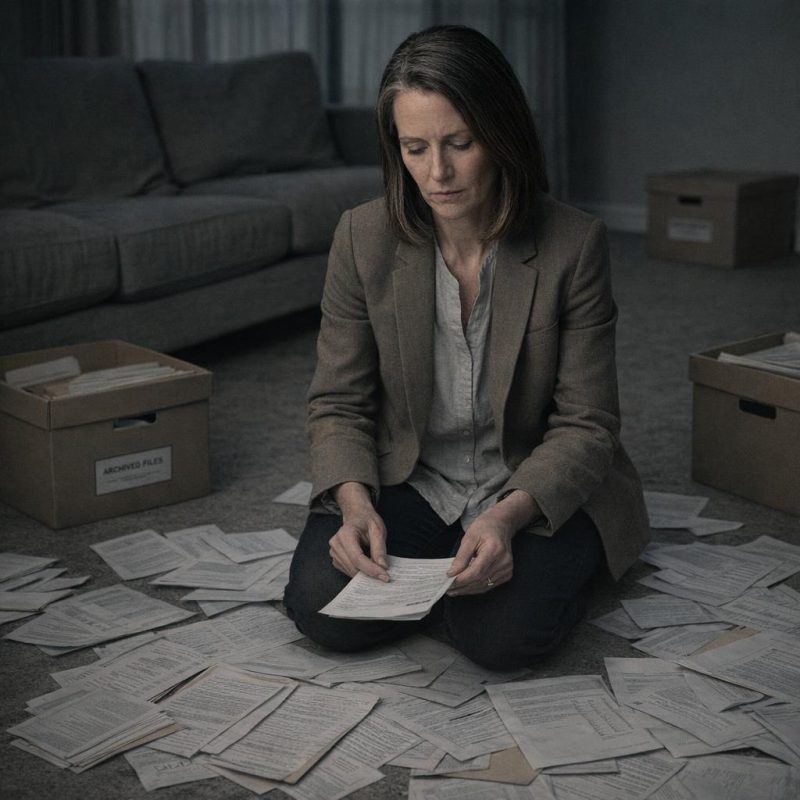 Image by RM AI
The Mailing Address
I almost missed it. It was near the bottom of the fourth box, tucked between a vendor renewal form and a set of stapled receipts from a production eight years back. The invoice was for set construction materials — a modest amount, nothing that would have raised a flag — and the company name printed across the top stopped me cold. It matched. Not approximately, not close enough to wonder — it matched exactly, the same name I'd seen on Kayla's coaching fee paperwork. My hands went still on the page. I set it flat on the floor and leaned over it, reading the mailing address printed in the bottom corner. Something about it pulled at me. I'd seen that street before, that zip code, in old Briarwood correspondence — a vendor address, a delivery confirmation, something. I went to the kitchen and found the old contact binder I'd kept from my bookkeeping years, the one with the tabbed dividers and the handwritten notes in the margins. I flipped through it slowly. And there it was — the same street, the same number, listed under a name I recognized immediately as Martin's brother. I set the binder down on the counter. I set the invoice beside it. I stood there in the kitchen with both of them in front of me, and the connection between Martin and that company settled into something I could no longer dismiss.
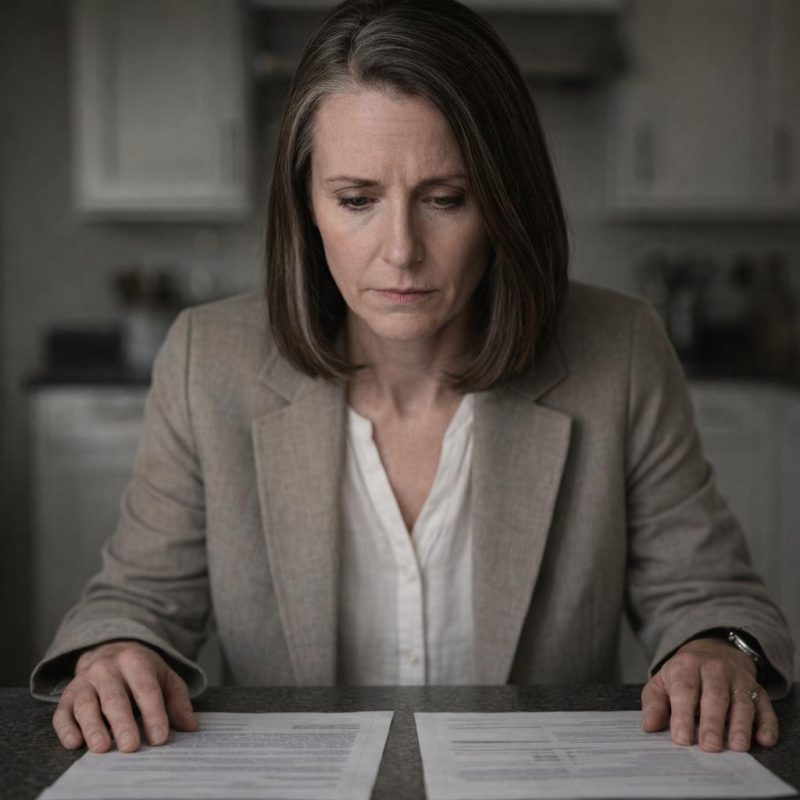 Image by RM AI
The Phone Call
I called Peter before I'd even thought through what I was going to say. He picked up on the second ring, which meant he was between rehearsals, and I could hear the ambient noise of the theater lobby behind him. I told him I'd found something. I told him about the invoice — the company name, the date, the mailing address. I read him the address slowly, and he went quiet in a way that was different from his usual silences. Then he asked me to read the company name again. I did. He said nothing for a moment, and I could hear him moving somewhere more private, a door closing, the lobby noise dropping away. He said the name matched one of the vendor accounts Martin had flagged as a long-standing supplier — one the board had never questioned because it predated the current oversight structure. He said the address connecting it to Martin's brother meant the board couldn't look away from this. His voice had something in it I hadn't heard in weeks. I asked him what he was going to do. He said he was going to take the invoice to the board chair that afternoon, that this gave them grounds to bring in an outside review. He asked me to bring him the original. Then he said, quietly and with more steadiness than I'd expected: this changes everything.
 Image by RM AI
Independent Review
I drove to the theater with the invoice in a manila folder, the contact binder on the seat beside me. Peter met me in the parking lot and walked me straight to the board chair's office without stopping to explain anything to anyone we passed in the hallway. The board chair was already there with two other board members, and Peter had clearly called ahead, because they were waiting. I laid the invoice on the desk and set the binder open beside it, the relevant page marked with a sticky note. The board chair put on his reading glasses and studied both documents without speaking. One of the other board members leaned in. There was a long silence. The board chair asked me how I'd come to have these records, and I explained my years doing the bookkeeping, the boxes I'd kept. He nodded slowly, the way people do when they're confirming something they'd already half-suspected. Martin had been notified of the meeting but had sent word he was unavailable. The board chair said that was noted. He said the board would be voting that afternoon on whether to commission an independent financial review of all Briarwood accounts going back ten years. He looked at Peter when he said it, and then he looked at me. The vote, he said, would not be close.
 Image by RM AI
Years of Systematic Theft
The accountant the board hired was a woman in her late forties who wore reading glasses on a chain and spoke in the measured cadence of someone who had delivered difficult findings before and knew how to pace them. She came back to us three weeks after the review began with what she called preliminary findings, and she asked Peter and me to sit down before she started. The coaching fees — the arrangement Kayla had uncovered, the payments routed through that company — turned out to be the smallest piece of it. Martin had been steering theater expenses through at least four separate companies, all of them connected to relatives: a brother, a cousin, a brother-in-law. Vendor invoices for materials that were never delivered. Production costs billed at two and three times market rate. Consulting fees paid to businesses that had no verifiable operations. She laid the documentation on the table in neat stacks as she spoke, and I watched Peter's face go very still. The accountant said the pattern went back at least seven years, possibly longer, and that the total was still being calculated but was already well into six figures. She said Kayla and Peter had found one thread of something that turned out to have roots running through the entire organization. She set her pen down and looked at us both, and then she told us the full number.
 Image by RM AI
The Full Report
The full report was bound and tabbed, more than sixty pages, and the accountant walked the board through it section by section. I sat beside Peter at the long conference table and followed along on my own copy. The vendor section alone ran to twenty pages — invoice after invoice showing payments to companies that shared addresses with Martin's relatives, for goods and services that either never materialized or were billed at rates no legitimate supplier would have charged. There were production budgets with line items inflated so consistently that the accountant had been able to calculate Martin's approximate markup: between thirty and forty percent on most categories, higher on anything involving outside contractors. The consulting fees were their own section, and those were the ones that made my jaw tighten — vague descriptions, no deliverables, payments routed to entities that dissolved and reformed under slightly different names. The board chair turned pages without speaking. Peter sat with his hands flat on the table, very still. I had spent weeks feeling like I was fighting something I couldn't quite see clearly, and now it was all here in black and white, documented and dated and totaled. I turned to the final summary page, and the number at the bottom of the column — the cumulative total across all the years — was larger than I had let myself imagine.
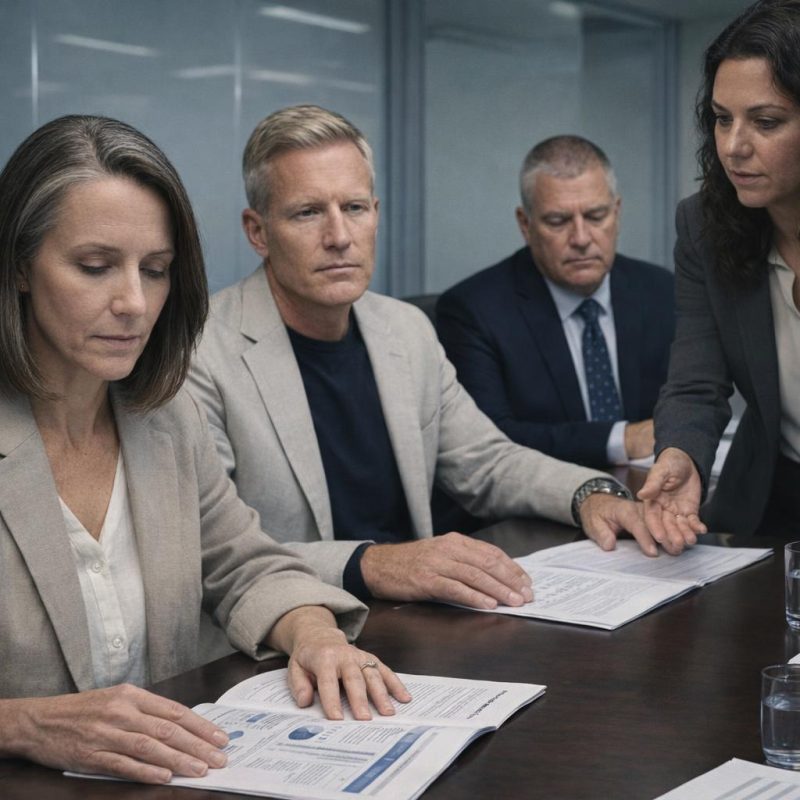 Image by RM AI
Other Actors Come Forward
Word got out the way it always does in a community that small — not through any official announcement, but through the particular silence that falls when something serious is being handled and people start reading the silence correctly. Within two weeks of the board's formal statement that an investigation was underway, Peter started receiving calls. Not from journalists, not from the board — from actors. Some of them he knew well, people who had worked Briarwood productions for years. Some of them he barely recognized. They all had variations of the same story: Martin had approached them, usually after an audition or a callback, and offered something that sounded like an opportunity. A guaranteed role, or a strong recommendation, or access to a workshop that would raise their profile. In exchange, a fee — paid to a company, always a company, never to Martin directly. Some had paid a few hundred dollars. Others had paid several thousand. Kayla sat with us one afternoon while Peter took notes, and she listened to him read back the accounts without saying much. At one point she said, quietly, that she'd thought she was the only one. She hadn't been. By the end of that week, Peter had documented more than a dozen separate incidents going back four years. I sat with the list after he'd gone to bed, and the weight of how many people Martin had moved through his scheme without any of them knowing about the others settled over me and didn't lift.
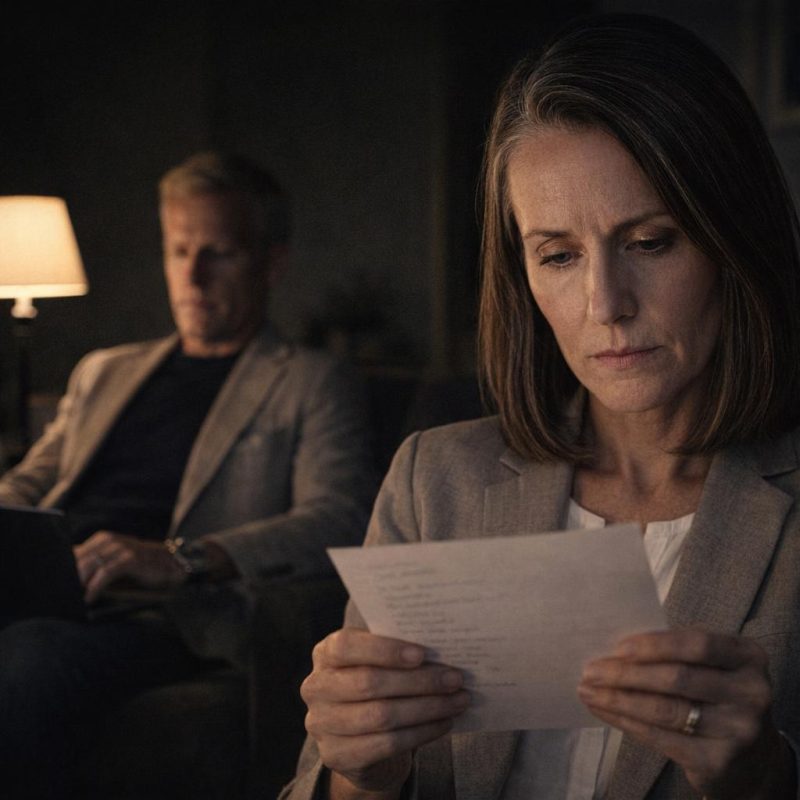 Image by RM AI
The Pattern
The accountant came back a final time to walk us through what she called the structural logic of it. She said Martin had been deliberate about which expenses he targeted — not random, not opportunistic in the moment, but consistent. He chose categories that were genuinely difficult for a volunteer board to verify: production materials, outside vendor services, short-term consulting arrangements. These were areas where costs varied widely enough that inflated numbers didn't stand out, where the board had historically deferred to management because the details were technical and the amounts were individually modest. With the actors, she said, he had applied the same principle. He looked for people who wanted something badly enough that they wouldn't ask too many questions, and who were unlikely to compare notes with each other. She set her folder on the table and said the scheme had been running, in one form or another, since approximately the third year of Briarwood's operation — which was the year the theater first turned a meaningful profit and the financial oversight structure hadn't yet caught up to the organization's size. Peter sat across from me and didn't speak for a long time after she finished. I looked at the timeline she'd laid out, the years marked in a clean column down the left side of the page, and the cold weight of how long it had been going on settled into me and stayed.
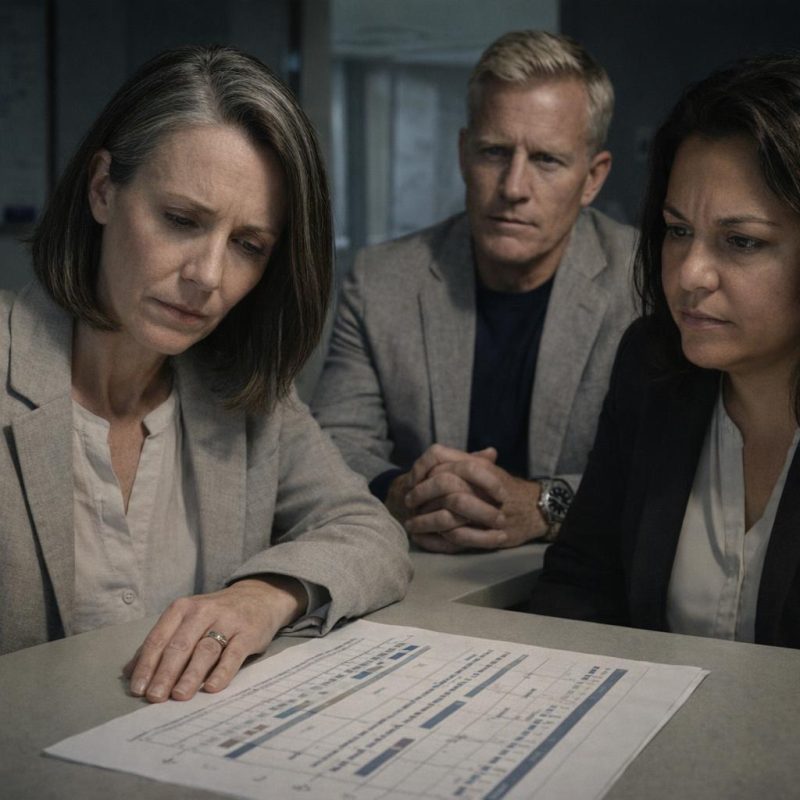 Image by RM AI
The Final Board Meeting
The board scheduled the final meeting for a Tuesday morning, and the letter that went out to all parties was formal in a way that left no room for interpretation. I had been permitted to attend as an observer — the Board Chair had used that word specifically, observer, and I understood what it meant. I wasn't there to testify or argue. I was there to watch something end. Peter and I drove separately. We hadn't discussed it; it just happened that way, and neither of us suggested otherwise. I arrived first and stood in the hallway outside the conference room for a few minutes, collecting myself. The accountant was already inside, her folders arranged in a neat stack at the far end of the table. The Board Chair sat at the head, speaking quietly with another board member, his expression giving nothing away. When I finally pushed open the door and stepped inside, Martin was already seated at the table, jacket pressed, posture easy, a legal pad in front of him with notes written in his careful hand.
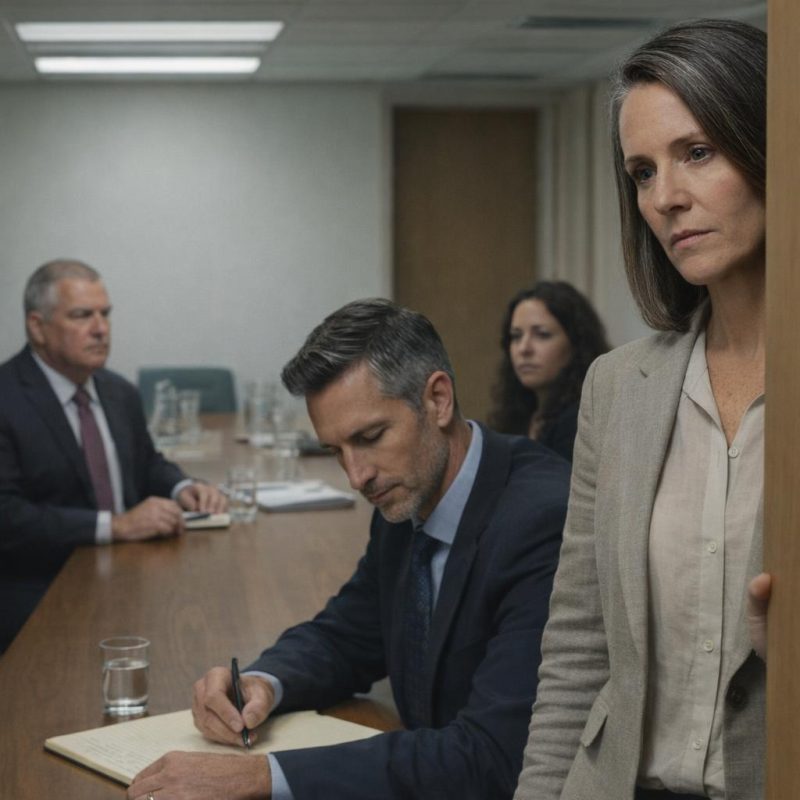 Image by RM AI
Martin's Last Defense
Martin spoke first, before the Board Chair could call the meeting to order. He said he had something he needed to put on the record, and he slid a folder across the table — printed screenshots, the same ones he'd tried to use before, messages between Peter and Kayla. He said the investigation had been driven by Peter's need to deflect attention from his own conduct. He said the board had been manipulated into focusing on financial records while the real problem — a director using his position to cultivate inappropriate relationships with young actresses — had gone unaddressed. His voice was steady and his hands were flat on the table. He used words like pattern and culture and accountability, and he looked at each board member in turn as he said them. Peter sat two seats down from me and didn't move, didn't interrupt, didn't look at Martin at all. I watched Martin work the room and felt something cold and clear settle in my chest — not surprise, not even anger exactly, just the recognition of what I was seeing. The Board Chair listened without expression until Martin finished, then set his pen down and said, quietly, that the board had reviewed those messages already. Martin's legal pad sat untouched in front of him, and he reached for it slowly, as though buying time.
 Image by RM AI
Kayla Speaks
Kayla had been waiting in a side room, and when the Board Chair asked her to come in, she walked to the empty chair at the end of the table and sat down without looking at Peter or Martin. She asked if she could speak, and the Board Chair nodded. She said she wanted to be honest even though it was going to make her look bad. Then she told them everything — that she had developed feelings for Peter, that she had read more into his mentorship than was there, that the night at the restaurant she had behaved in a way that was inappropriate and that she was not proud of. She said it plainly, without softening it. Then she said, just as plainly, that Peter had never offered her a role in exchange for anything personal. She said he had been helping her understand what Martin had been doing to her financially, and that she had been too embarrassed to come forward sooner because she hadn't wanted to admit how badly she'd wanted to believe someone in that world was genuinely on her side. Martin's jaw tightened. The board members wrote things down. I sat very still and thought about what it costs a person to say the unflattering truth about themselves out loud, in a room full of people who are already judging them, and I felt something I hadn't expected to feel toward Kayla — a quiet, settled respect that didn't need any words around it.
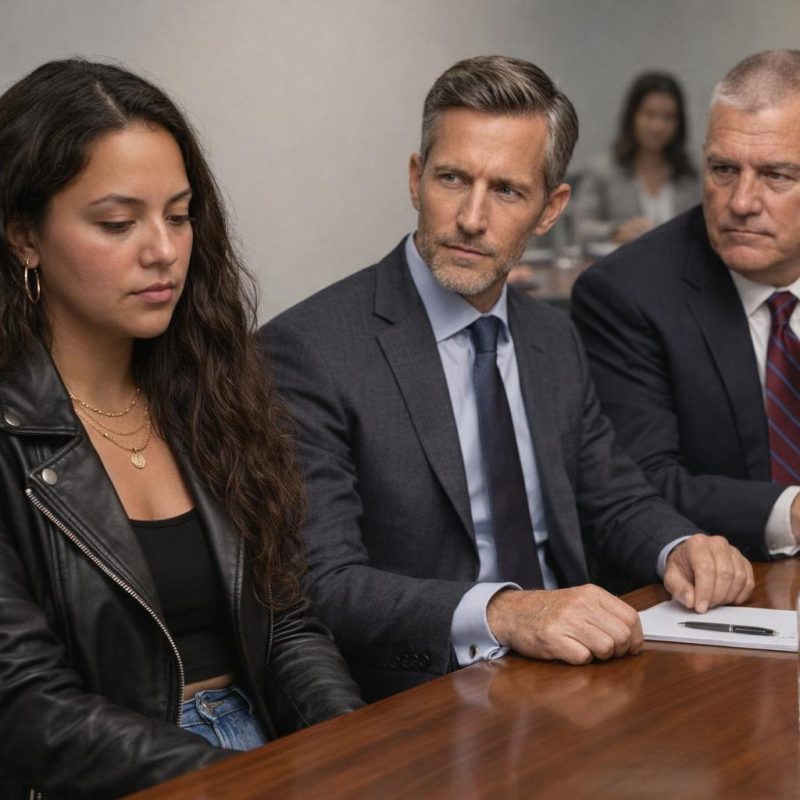 Image by RM AI
The Accountant's Testimony
The accountant stood and opened her folder, and what followed was forty minutes of documentation so thorough it left almost no air in the room. She walked the board through five shell companies, each registered to a different relative of Martin's, each receiving payments from Briarwood over a span of years for services that were either inflated beyond recognition or never performed at all. She showed the invoices side by side with market-rate comparisons. She showed the consulting fees that appeared in the books under vague descriptions and traced each one back to an account Martin controlled. She showed the coaching payments from actors — amounts that had seemed like standard professional development costs — and explained how they fit the same pattern, the same structure, the same logic. The total figure she put on the board was larger than anything I had let myself imagine, even after everything I already knew. I watched Martin across the table. His legal pad was still blank. His face had gone the color of old paper, and he sat very still in the way that people sit when they are trying not to show that something has just collapsed inside them. Peter's hands were folded on the table in front of him, and he didn't speak. The numbers stayed on the screen, and the room held them in silence.
 Image by RM AI
The Vote
The Board Chair called for the vote without preamble. He read the motion aloud — immediate removal of Martin from all positions at Briarwood Community Theater, referral of the complete financial record to the organization's attorneys for further action — and asked for ayes. Every hand went up. Martin sat for a moment as though he hadn't heard it, and then he pushed back his chair and stood. Two board members walked him out. I don't know what I expected that moment to feel like. I think I had imagined something sharper, some clean release. Instead it was quiet. The Board Chair said a few words to Peter — that the board found no evidence of financial misconduct on his part, that the questions about his conduct with Kayla had been reviewed and addressed through the new policies the board would be implementing, and that the board regretted the disruption to his work. Peter nodded and said thank you in a voice that sounded like it had been wrung out. I sat in my chair after most people had filed out, the accountant's folders still stacked at the end of the table, the empty chair where Martin had been sitting still slightly angled from when he'd pushed it back, and the exhaustion of the past several months settled into my bones like something that had been waiting a long time for permission to land.
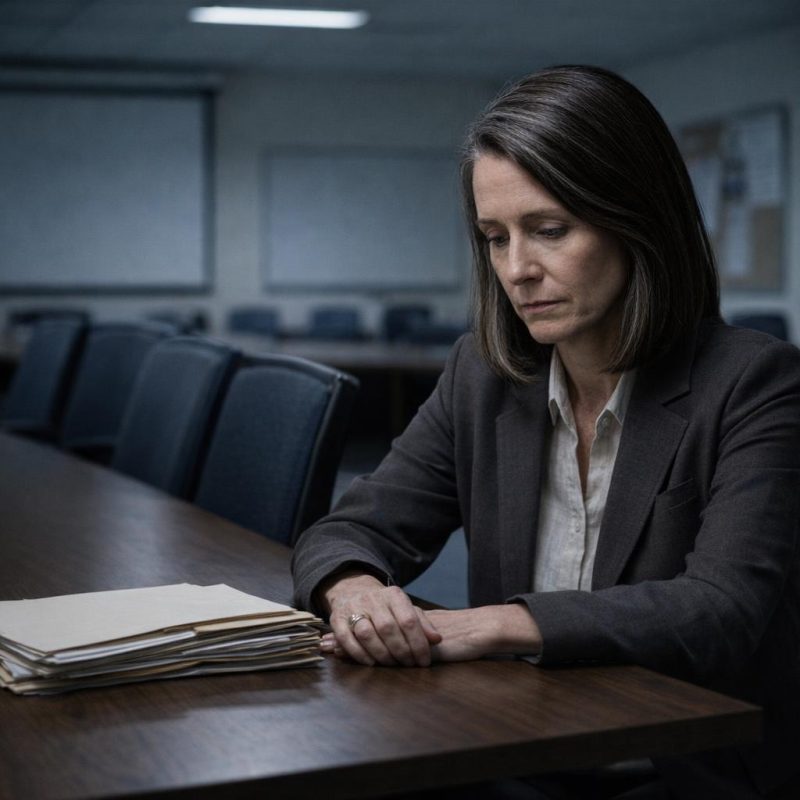 Image by RM AI
Not a Happy Ending
Peter found me in the parking lot. He said my name once, and I stopped walking but didn't turn around right away. When I did, he looked like a man who had just been pulled from cold water — relieved to be breathing, but not yet sure what solid ground felt like. He said he was glad it was over. I told him I was glad too, and I meant it, but I also told him that the board clearing his name didn't change what had happened between us. He had kept things from me for months. He had let me feel like I was losing my mind while he managed the situation on his own terms, and he had made choices about our marriage without consulting me. He said he knew. He didn't argue or explain or tell me I was being unfair. He just stood there in the gray morning light and said he knew, and that he was sorry, and that he understood if I needed more time. I told him I was still at Beth's. I told him I didn't know when that was going to change. He nodded slowly, and I could see him absorbing it rather than deflecting it, which was something. But I looked at him and said, as clearly as I could, that being right about Martin didn't fix what he had broken with me.
 Image by RM AI
New Policies
The board moved quickly after that. Within two weeks, Briarwood had a written audition policy — standardized forms, panel reviews, documented feedback — and a conflict-of-interest disclosure requirement for anyone in a leadership position. They set up an independent reporting channel for actors, run through an outside organization, so that anyone who felt pressured or exploited had somewhere to go that wasn't Peter's office or Martin's. Peter agreed to step back from casting decisions for the next full season, with the board overseeing auditions directly. He signed the agreement without negotiating a single clause. I watched him do it at the kitchen table of the theater's administrative office, and I thought about how different that was from the man who had spent months handling everything quietly and alone. Then the board's attorneys began contacting actors who had paid Martin's coaching fees, and that's when the full shape of it became visible — because it wasn't just Kayla. Over the following weeks, eleven other actors came forward, each with their own payments, their own promises, their own version of being told that access to Briarwood required a financial investment. Peter read the list of names aloud to me one evening, and his voice was flat and careful, and when he finished he set the paper down on the table between us.
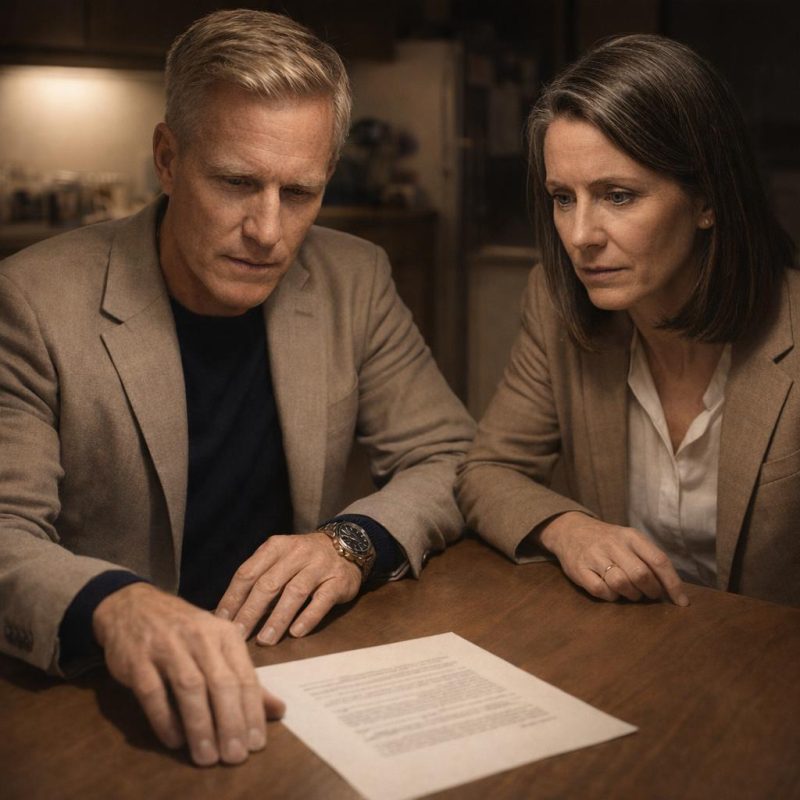 Image by RM AI
Kayla Moves On
Kayla stopped calling Peter sometime in October. No announcement, no final message — the contact just tapered off and then stopped, the way things do when someone has finally decided to move in a different direction. Peter mentioned it once, said he'd noticed, and I didn't have much to say about it at the time. Months passed. The new policies settled into Briarwood's operations, the attorneys were doing whatever attorneys do with financial records, and life moved in its slow way forward. Then one evening in late winter, Peter came home — he was still coming to the house sometimes, for dinner, for conversations that were careful and honest in a way they hadn't been before — and he said he'd heard something through the theater community. Kayla had auditioned at a regional theater two towns over. Standard open call, no connections, no one advocating for her from the inside. She'd gotten a supporting role in their spring production. He said it like he was reporting a fact, which was the right way to say it. I sat with that for a moment — the image of her walking into a room full of strangers and earning something entirely on her own — and then Peter told me she had done it without any help from him.
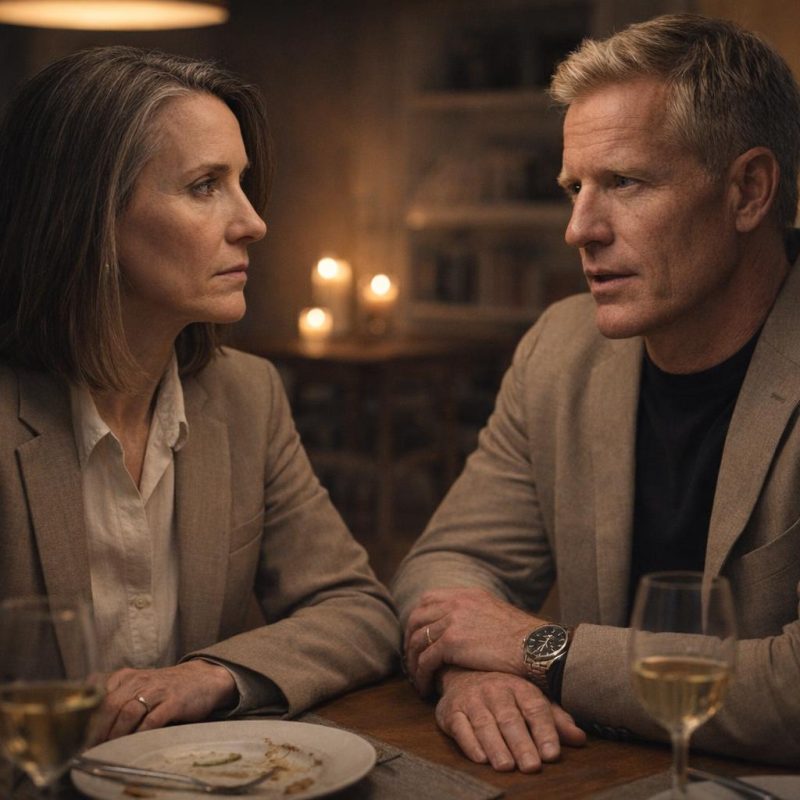 Image by RM AI
The Same Restaurant
Several months after the board meeting, Peter asked if I wanted to try the anniversary dinner again. He said it carefully, the way he'd learned to say most things — no assumptions, no pressure built in. I appreciated that. Then he mentioned the restaurant, the same one, and I felt something firm up in me before he'd even finished the sentence. I told him no. Not harshly, but without any room for negotiation either. He looked at me and nodded, and I could see he understood that this wasn't stubbornness — it was a condition. That place belonged to a night I had no interest in revisiting, not even symbolically. I told him I'd pick where we went. He said okay. No pushback, no wounded silence, just okay. I spent a few days thinking about it and then made a reservation at a small Italian place on the other side of town — somewhere neither of us had been, somewhere that had no history attached to it, no associations, no ghost of a waitress who already knew his name. When I told Peter where we were going, he wrote it down without comment. The reservation was mine, the choice was mine, and that was exactly how it needed to be.
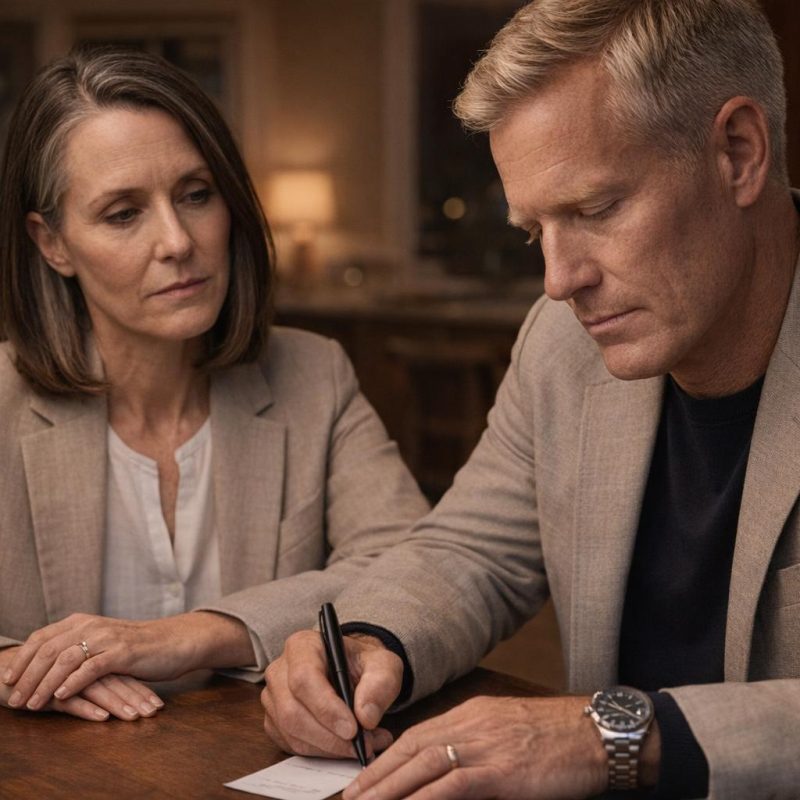 Image by RM AI
Rebuilding Trust
Rebuilding trust turned out to be slower and less dramatic than exposing Martin had been. There were no documents to find, no accountants to call, no board meetings with clean resolutions at the end. It was just the two of us, doing the unglamorous work of figuring out whether what was left was worth keeping. Peter started seeing a counselor on his own — not because I asked him to, but because he said he needed to understand why he'd let things get so blurred for so long. He told me about it before I had to ask. That was new. He started doing that with other things too — small theater matters, conversations with colleagues, anything that might have once lived in a pocket of his life I wasn't supposed to see. He'd mention them first, unprompted, and I'd listen without making it a test. Some weeks it felt like progress. Some weeks it felt like two people being very careful around each other, which isn't the same thing. I didn't pretend otherwise, and neither did he. What I noticed, slowly, was that the carefulness started to feel less like walking on glass and more like paying attention. There's a difference, even if it takes a while to feel it. We weren't healed. But we were doing the work, and the work was real.
 Image by RM AI
The Anniversary Do-Over
The restaurant I'd chosen was quiet on a Tuesday evening — small tables, warm lighting, a menu that didn't try too hard. Nothing about it reminded me of that first dinner, which was exactly the point. Peter was already there when I arrived, which surprised me a little. He'd gotten there early and was sitting without his phone out, just waiting. We ordered without rushing. We talked about our kids, about a trip we'd been vaguely planning for years and had never actually booked, about small things that had nothing to do with Briarwood or Martin or any of it. At one point Peter laughed at something I said — genuinely, not performatively — and I noticed the difference. Nobody interrupted us. No one came to the table who already knew him. The evening wasn't perfect; there were moments of careful quiet where we were both aware of how much had happened between us, and neither of us pretended those moments weren't there. But it was honest. That was what I'd wanted more than anything — not a perfect evening, but an honest one. By the time we walked out, the night air cool and the street mostly empty, I felt something I hadn't felt in a long time: the quiet possibility that we might actually find our way back to each other.
 Image by RM AI
The Detail That Changed Everything
I've thought a lot about how it all started — not with the financial records, not with the board, not even with the messages on Peter's phone. It started with a waitress who already knew his name. That was the detail. That was the thing I couldn't let go of, the small wrongness that pulled at me until I pulled back. I'd been so certain she was the threat. I'd spent weeks convinced I was watching the beginning of something that would end my marriage, and I was wrong about almost all of it. She wasn't trying to take my husband. She was a young woman caught in something much larger and much uglier than a flirtation, and the messages I'd been so afraid of turned out to be the thread that unraveled eighteen years of theft. Martin might have gone on indefinitely if I hadn't noticed, if I hadn't pushed, if Kayla hadn't eventually decided that telling the truth was worth the cost. I'm not grateful for the pain of those months — I won't pretend that. The fear was real, the humiliation was real, and the damage to my marriage was real. But I am grateful I noticed. I'm grateful I didn't talk myself out of it, didn't decide I was being paranoid and let it go. One small detail, one name spoken too easily across a restaurant table — and I held onto it.
 Image by RM AI
KEEP ON READING