I Didn't Know He Was Famous Until He Threw Money At Me And Called Me A Peasant—But His Cameras Were Still Rolling
I Didn't Know He Was Famous Until He Threw Money At Me And Called Me A Peasant—But His Cameras Were Still Rolling
Twenty-Three Years of Waiting Tables
Twenty-three years. That's how long I've been carrying plates, dodging elbows, and smiling at people who treat me like furniture. I started at a diner in Queens when I was in my mid-thirties, moved up to a proper sit-down place in Midtown about eight years in, and eventually landed at the bar where this whole thing happened. I'm not complaining — the work suits me. I'm on my feet, I'm moving, and I don't have to sit in a cubicle pretending to care about quarterly reports. I've seen every kind of difficult customer there is: the ones who send food back three times just to feel powerful, the ones who snap their fingers like you're a dog, the ones who talk on their phones through your entire explanation of the specials. None of it surprises me anymore. I don't watch much television, I don't follow celebrity gossip, and I couldn't tell you who was on the cover of any magazine in the last decade. I know food, I know service, and I know how to read a room. Friday nights are their own particular animal — the energy comes in the door before the customers do, loud and restless and already a few drinks ahead of itself. I tied my apron, checked my section, and felt the familiar weight of another Friday night shift settling onto my shoulders.
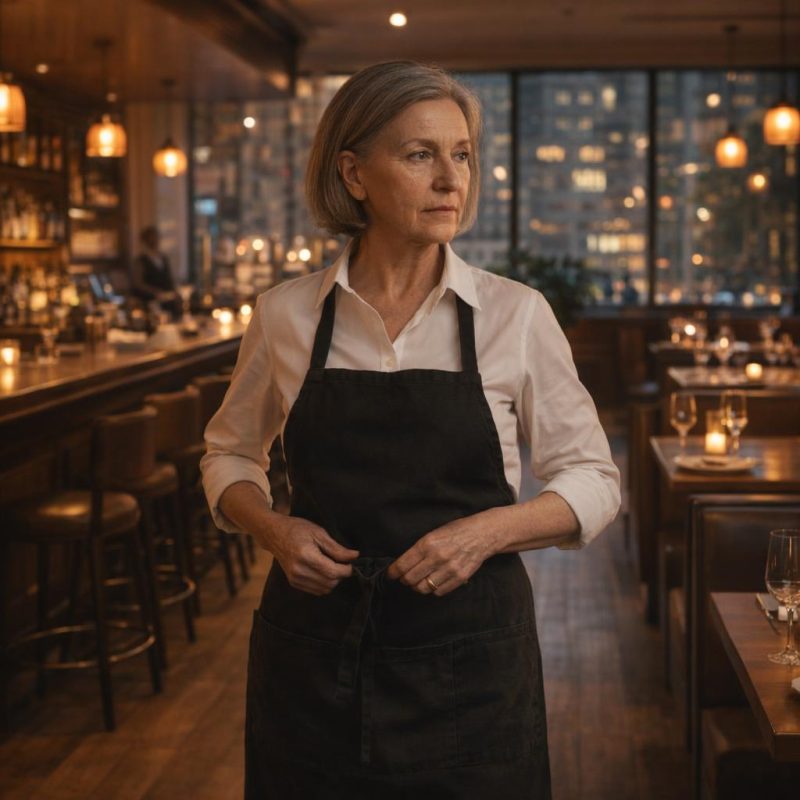 Image by RM AI
The Table Without a Reservation
They came in around nine, which is the worst possible time on a Friday — every table full, the bar three deep, and the kitchen already running behind on two orders. Six men, no reservation, and the kind of entrance that expects the room to rearrange itself. The one in front did the talking. He was middle-aged, wearing the sort of expensive-casual clothes that are designed to look like they cost nothing while costing everything. He told the host they needed a table for six, not as a question. I was passing with a tray when I caught the tail end of it and thought, good luck, pal, because we hadn't had an open table since seven-thirty. Marcus was nearby and gave me a look that said the same thing. Then Steven appeared from the back, and something shifted. He moved toward the group faster than I'd seen him move all night, straightening his jacket, his whole manner changing in a way I couldn't quite read. He shook the lead man's hand with both of his. I set my tray down at the service station and watched Steven scan the floor with the focused expression of someone doing math he was determined to make work. He caught my eye across the room, leaned in close, and said we needed to squeeze them in — and his voice had a kind of urgency in it that had nothing to do with customer service.
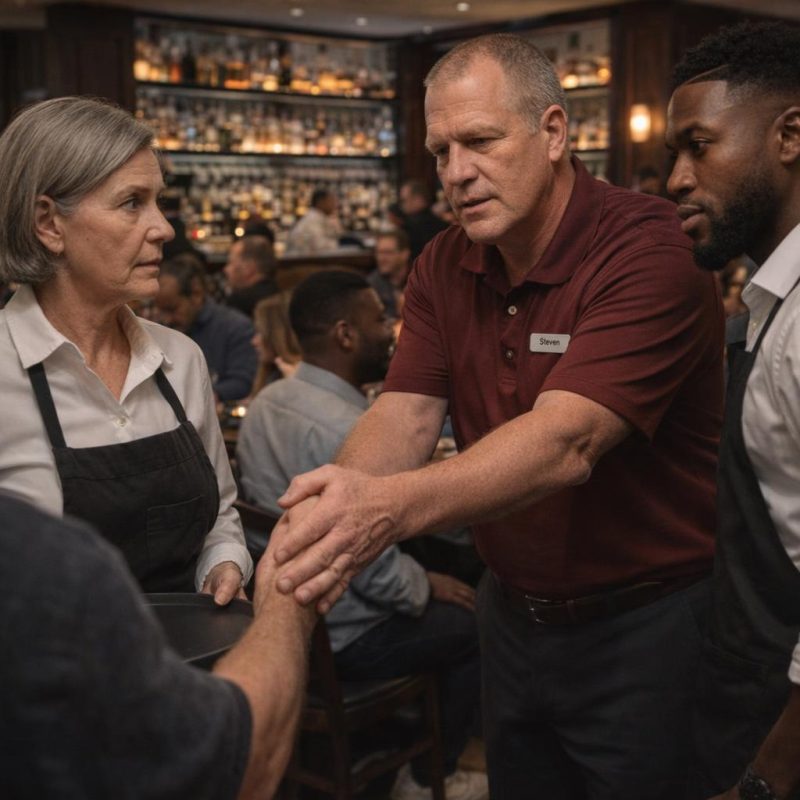 Image by RM AI
Fingers Snapping
We put them in the corner booth, which meant pulling a two-top away from the wall and crowding the aisle, and within ten minutes I understood why my instincts had said no. They were loud in the way that assumes everyone else in the room is an audience. Shouting across the table to each other, laughing at a volume that cut through the Friday noise like it was nothing. I brought the first round of drinks and set them down, and not one of them looked at me. The one who'd done the talking at the door — the one Steven had been so eager to accommodate — made a comment about the bar being too quiet, which landed like a joke among his friends and nowhere else. I went back to my other tables. A few minutes later, fingers. Not a raised hand, not eye contact — actual snapping, like I was a dog being called to heel. I went over, took the order, kept my face neutral. That's the job. Marcus was working the tables on the other side of the room and caught my eye on my way back to the service station. He gave a small shake of his head, the kind that means I see it and I'm sorry. I nodded and kept moving. The group's laughter rose again, sharp and self-satisfied, rolling right over the quiet conversation of the couple at the next table who had stopped trying to talk to each other.
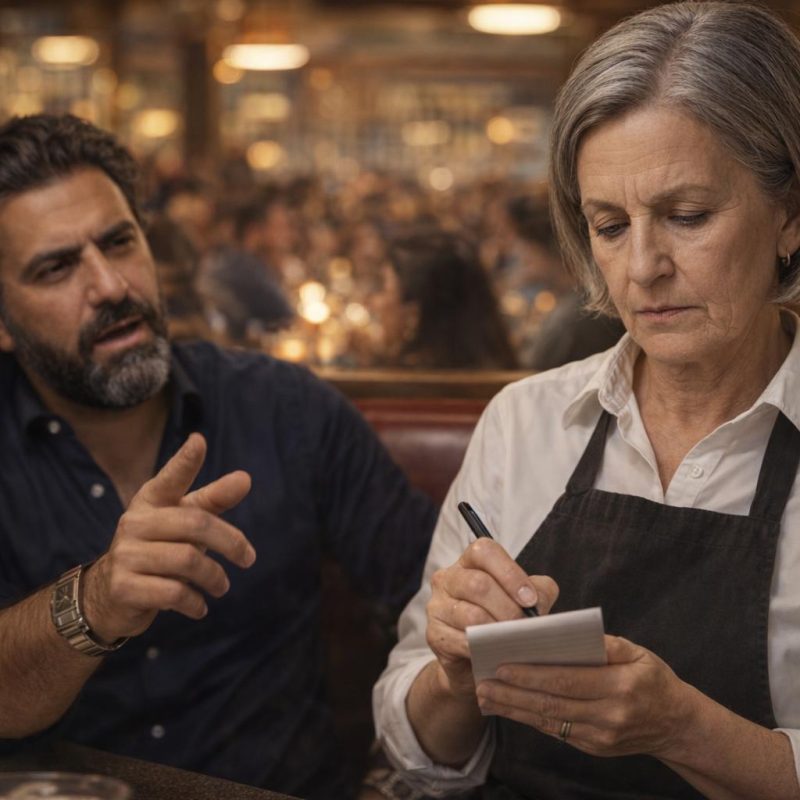 Image by RM AI
The Engagement Couple
The couple next to them had been there before the group arrived. Young, dressed up, the kind of careful that means something is being celebrated. I'd noticed the small bouquet on the table when I seated them — someone had brought flowers. About forty minutes into the group's performance, the woman caught my arm as I passed and asked, very quietly, if there was anywhere else they could sit. She said they were celebrating their engagement and it was getting hard to hear each other. I told her congratulations and meant it, and I moved them to a two-top near the window that had just opened up. It wasn't as nice a spot but it was quieter, and she thanked me in a way that made me feel worse, not better. I reported it to Steven — the move, the reason, and the fact that two other customers had stopped me in the last half hour to say something about the noise. He listened with his arms crossed and his jaw tight, nodding slowly. I could see him working through it, weighing something. He glanced toward the corner booth, then back at me, and said he'd handle it, which in my experience means a manager is about to do nothing for another fifteen minutes. I went back to my section. On my way past the window table, I caught a glimpse of the woman settling her purse in her lap, her expression quiet and a little flat, the celebration already changed into something smaller than it was supposed to be.
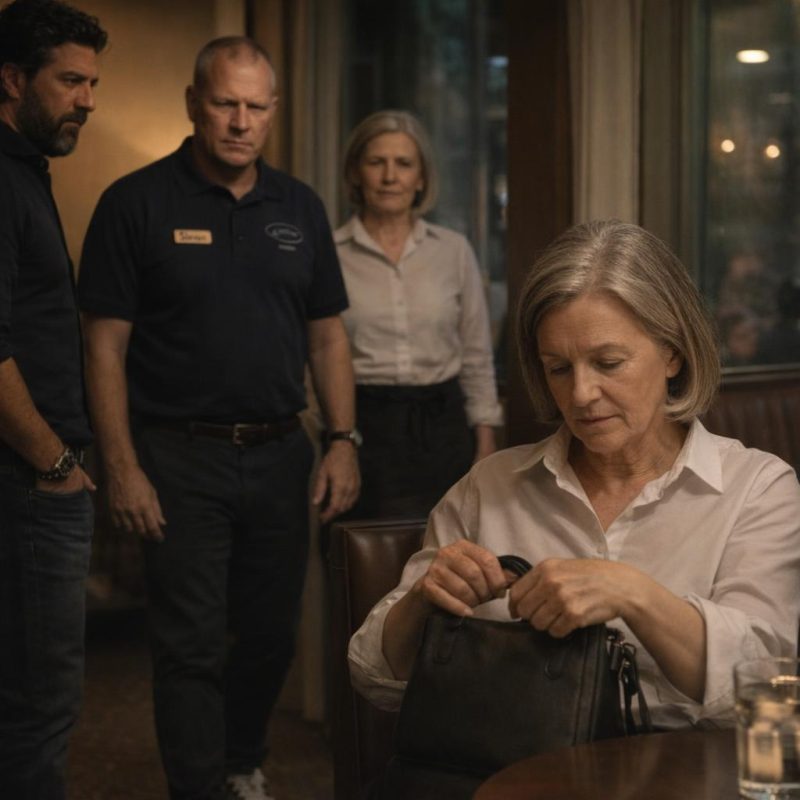 Image by RM AI
Steven's Decision
Steven found me at the service station about twenty minutes later. He didn't look like a man who'd figured out how to handle it — he looked like a man who'd run out of other options. He pulled me a few steps away from the bar and kept his voice low. Another complaint had come in, this time from the table by the door, and the kitchen had flagged that the group had been rude to the runner who brought their food. Steven said we needed to close their bill and that we couldn't serve them anymore. I printed the check. Marcus appeared at my elbow almost immediately, the way he does when he's been watching a situation develop from across the room. He asked if I wanted him to take it over instead. I told him no. It wasn't bravado — it was just that I'd been the one dealing with them all night and handing it off at the finish line felt wrong. I tucked the check folder under my arm, took a breath that I kept slow and even, and started toward the corner booth. Behind me I heard Steven say it one more time, quietly, almost to himself — that we cannot serve them anymore.
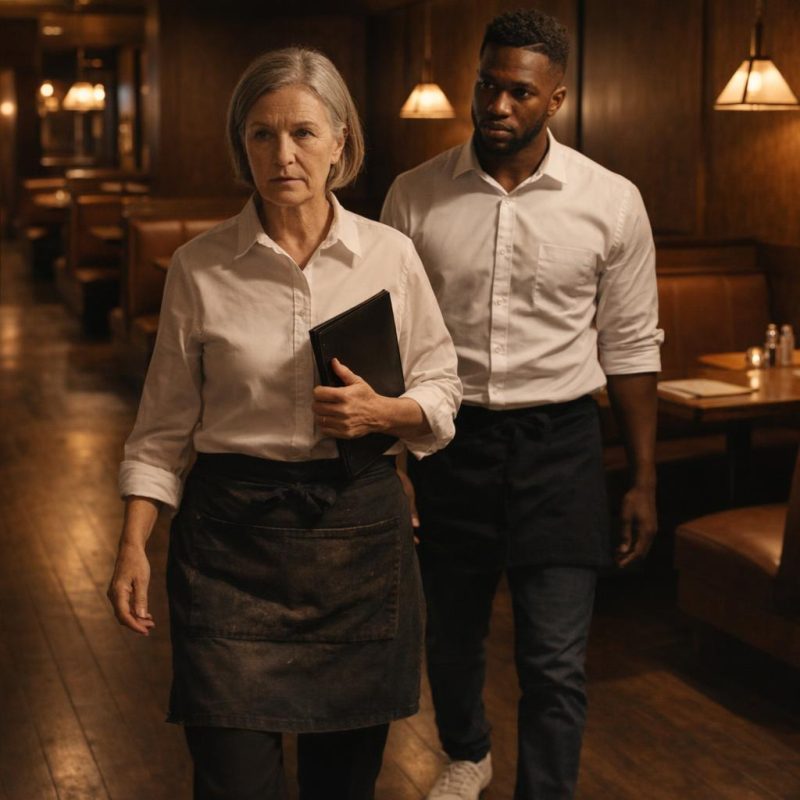 Image by RM AI
Take It, Peasant
I set the check folder on the edge of the table and waited for a pause in the conversation. When I had it, I said, as evenly as I could manage, that I wanted to let them know we'd be closing out their tab for the evening and that we weren't able to continue service. That's the language Steven and I had agreed on. Neutral, professional, no accusation in it. The man at the head of the table — the one who'd walked in like he owned the sidewalk outside — looked at me for a long moment without speaking. Then he turned to his friends with a smile and said something about how apparently I owned the place. A couple of them laughed. I said it wasn't my decision, that I was just delivering the message. He reached into the front pocket of his jacket and pulled out a folded stack of bills. He made a show of peeling them off one at a time, slowly, watching me the whole time. Then he said it — loud enough for the tables around us to hear, loud enough that I felt it in my chest before I fully processed the words. He said, take it, peasant. And he threw the bills into the air above my head. His friends erupted. I stood there while the money came down, bills landing on my shoulders and scattering across the floor around my feet.
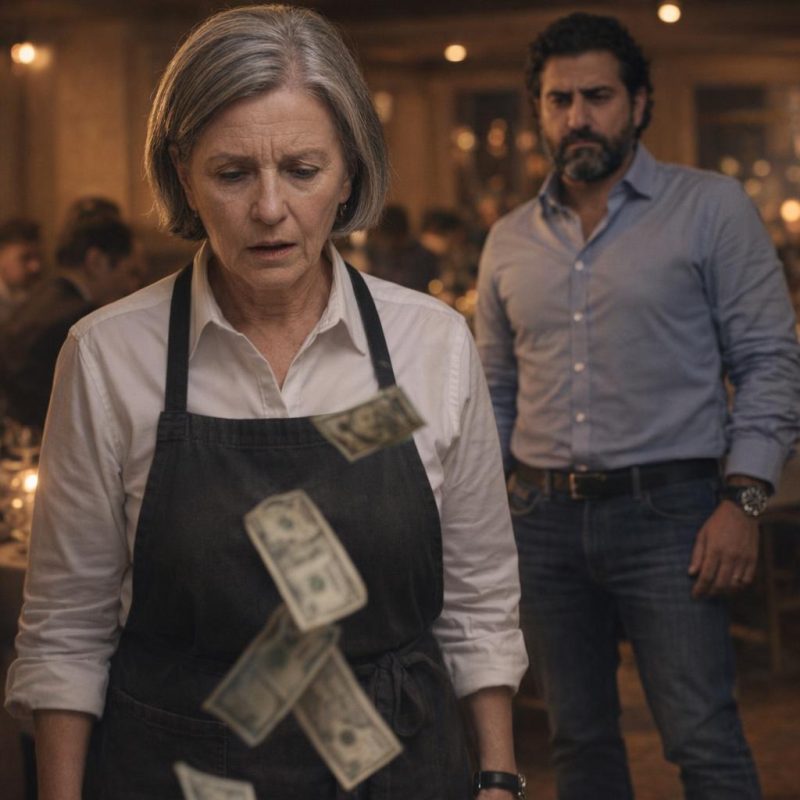 Image by RM AI
Have a Good Night
I looked at him for exactly one second. Then I said, have a good night, and I turned around and walked back toward the bar. Not fast, not slow. The same pace I use to cross the floor when I'm carrying something I don't want to spill. Behind me their laughter kept going, following me across the room the way sound does in a place with hard floors and high ceilings — it doesn't fade, it just bounces. I crouched down near the booth and started picking up the bills. Marcus was beside me before I'd gotten three of them off the floor, not saying anything, just gathering the scattered cash with the quiet efficiency of someone who understood that the moment didn't need commentary. The group was finally on their feet, pulling on jackets, still loud, still performing for each other. I watched them move toward the exit without looking back at our section. When the door closed behind them, the room didn't go quiet exactly, but the particular frequency they'd been generating stopped. I straightened up and set the cash on the bar. Marcus put his portion next to mine. I smoothed the bills flat with the side of my hand and didn't say anything for a moment, and their laughter was still following me back to the bar even after the door had closed.
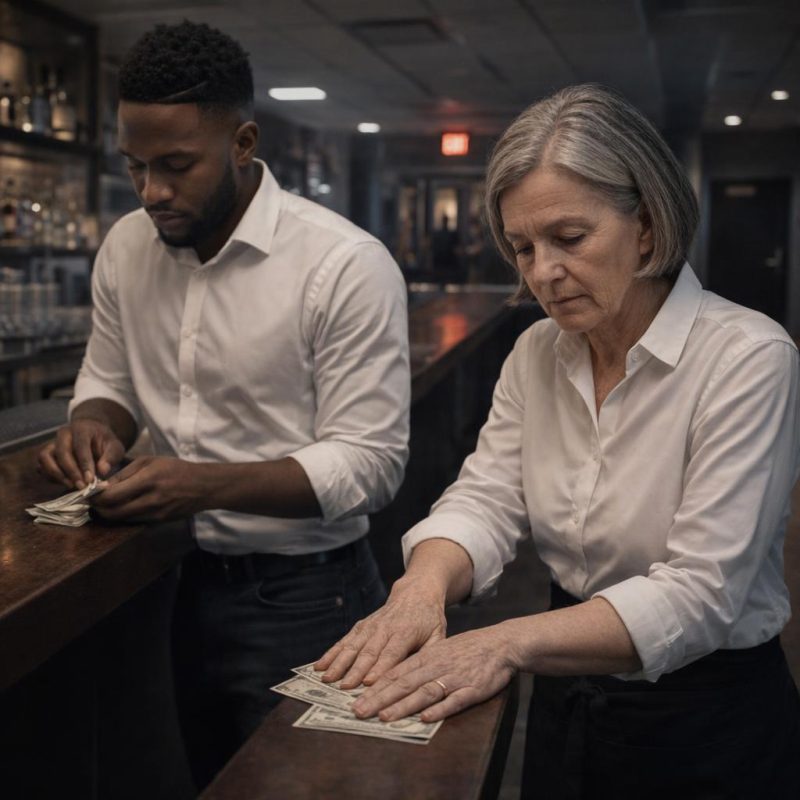 Image by RM AI
Do You Know Who That Was
Marcus waited about thirty seconds after the door closed, which for him is practically patient. He came around the end of the bar and stood next to me and asked if I knew who that was. I told him no and that I didn't particularly care. He said I needed to see something. I told him I wasn't interested in whatever celebrity gossip he was about to show me — I had three tables still open and a check to reconcile. He said this was different. He said it in a way that made me stop what I was doing and look at him, because Marcus is not a dramatic person. He doesn't exaggerate for effect and he doesn't chase reactions. He was already pulling his phone out of his apron pocket, scrolling with his thumb, his expression focused and a little tight around the eyes. I told him again that I didn't care who the man was, that famous or not, what he'd done was what he'd done. Marcus nodded like he agreed with all of that and kept scrolling anyway. I picked up a bar rag and set it back down. Whatever he was about to show me, I wasn't ready to be interested in it yet — but there was something in the way Marcus's voice had gone careful and deliberate that I couldn't quite shake.
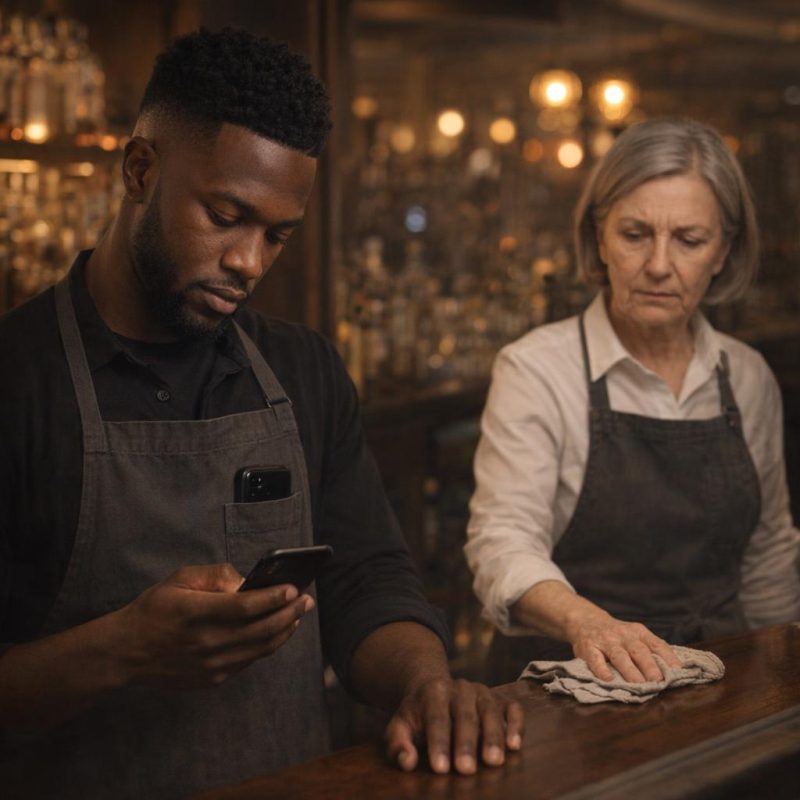 Image by RM AI
The Phone Screen
Marcus turned the phone toward me and I looked at it the way you look at something you're not sure you want to see. The face on the screen was his — same jaw, same practiced ease in the eyes. But the photo was a professional shot, the kind that ends up on theater marquees and magazine covers. I asked Marcus who this was. He said the name and I didn't recognize it, which apparently showed on my face, because he kept scrolling. There were tour posters. Sold-out arenas. A late-night talk show appearance where the man was leaning back in the guest chair laughing like he owned the room. Marcus showed me a clip from a Netflix special, then a film credit, then a social media page with a follower count that had more digits than I'd ever paid attention to. I asked Marcus again if he was absolutely sure this was the same person. He said yes, without hesitating, and showed me a candid photo someone had posted outside the bar — same coat, same night. I stood there holding the bar rag I'd picked up earlier and looked at the screen for a long time. I'd seen that face on the side of a bus once and hadn't thought twice about it. Now I was thinking about it plenty.
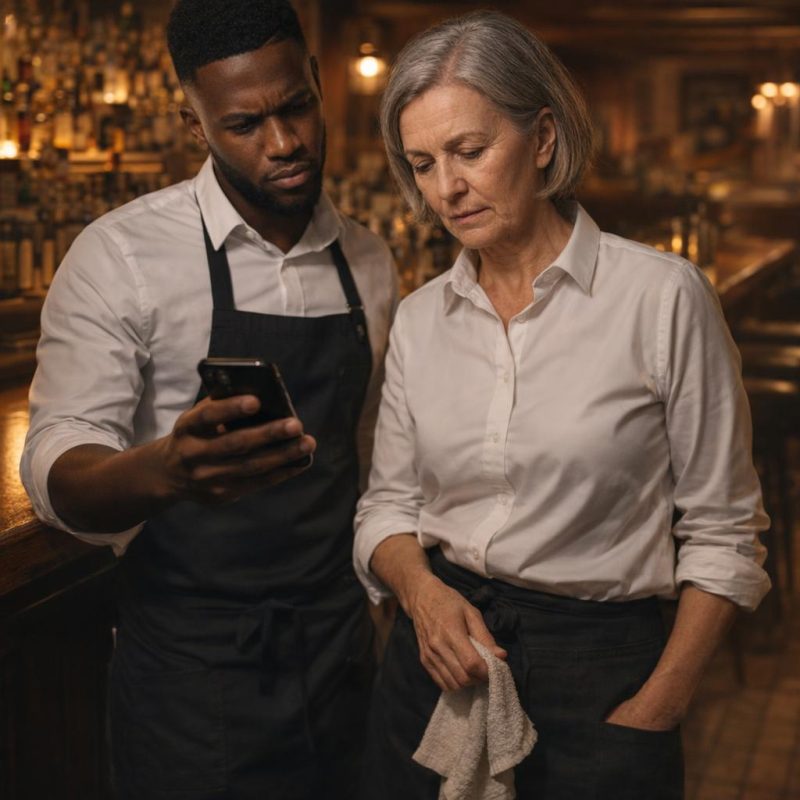 Image by RM AI
Going Home Furious
I finished my shift, counted my tips — which were fine, nothing remarkable — and took the subway home. I sat in my apartment with my coat still on for a few minutes, which is something I do when I'm too wound up to settle. I thought about posting. I had the whole thing written in my head: the money, the word he used, the way the room went quiet. I even opened a new browser tab. Then I closed it. A post like that disappears in forty-eight hours. His publicist issues a non-apology, a few fans call me a liar, and he moves on to the next city. I'd seen it happen to other people. I wasn't interested in being a news cycle. So instead I opened his social media pages and started reading. I went through his Instagram first, then his Twitter, then a fan site someone had built that archived his interviews going back ten years. I watched two clips from his specials. I read the comments under his posts, hundreds of them, people writing things like 'this man is the real deal' and 'he never forgot where he came from.' I was still reading when I clicked on a pinned post at the top of his page and saw the announcement about a new television special filming in New York.
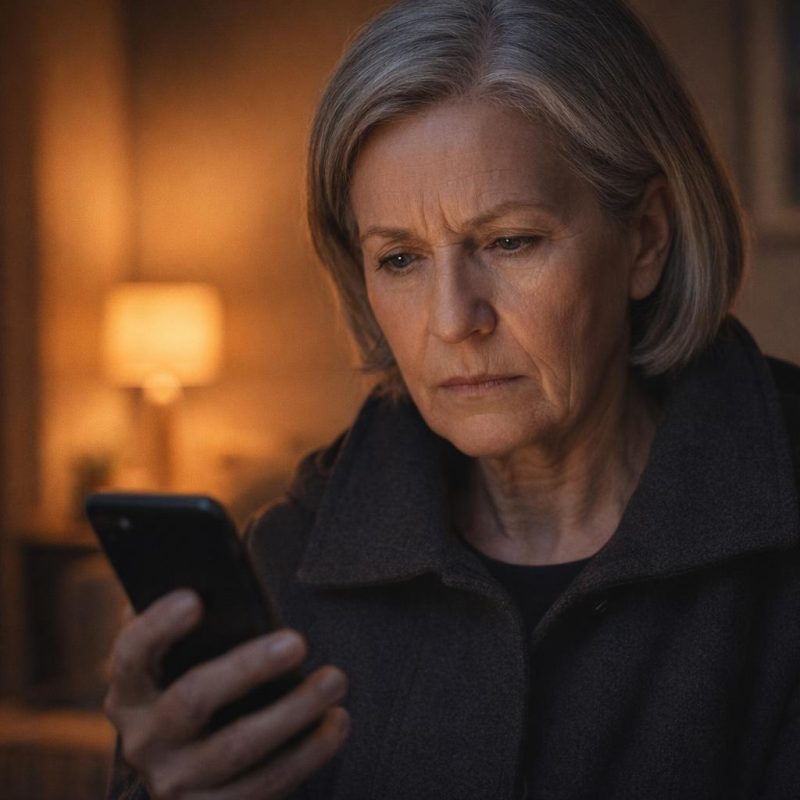 Image by RM AI
The Down-to-Earth Guy
I spent another hour going through his posts before I let myself stop. The pattern was hard to miss once you were looking for it. He had photos with sanitation workers, construction crews, diner cooks. Captions about how the backbone of this city is the people nobody thanks. One post from two years ago showed him behind the counter of a bodega in the Bronx, wearing an apron, grinning, with a caption about how his uncle worked a register for thirty years and he never forgot it. There were interviews where he talked about growing up without much, about his mother cleaning offices at night, about how he never wanted to be the kind of person who forgot what it felt like to need something. A profile in a magazine described him as 'a rare celebrity who genuinely respects the working class.' The comments under every post were full of people saying he was different, that he was real, that he was one of the good ones. I sat there in my apartment reading all of it. I thought about the bills settling on the floor around my feet. I thought about the word he'd used. I thought about the expression on his face when he said it — not angry, just bored, the way you look at something that doesn't matter. I sat with all of that for a while, and it didn't get lighter.
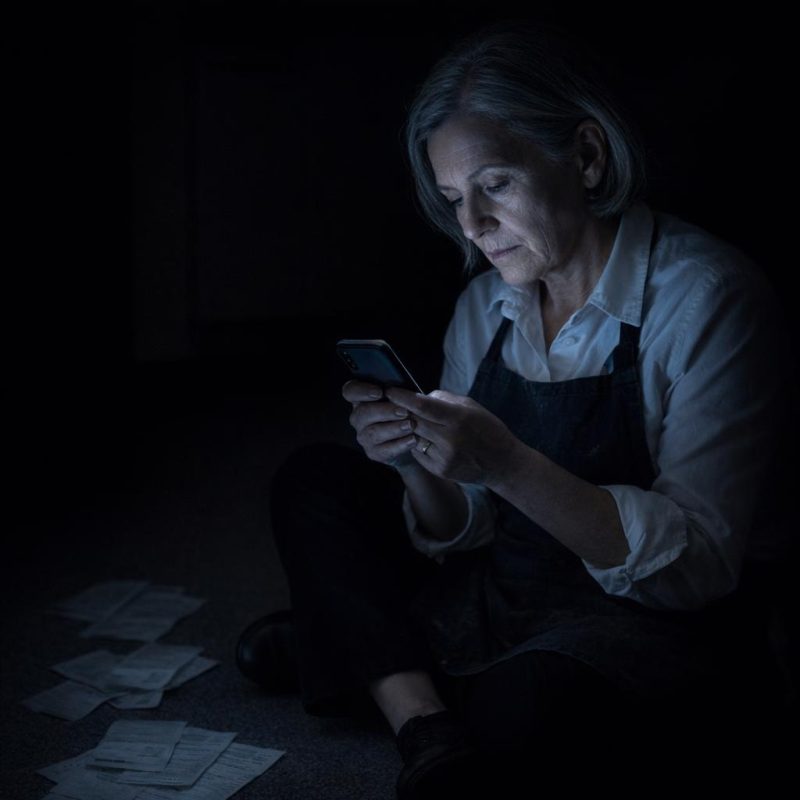 Image by RM AI
Celebrating the People Who Keep New York Running
The pinned post had a graphic — bold lettering, a skyline silhouette, the kind of design that costs money. The special was called something about New York, about the people who keep it running. I read the description twice. It said he would be going out into the city, unannounced, to find the workers who show up every day without recognition. It said he would be surprising them. It said the special would capture genuine moments of generosity and gratitude. There was a line near the bottom about how he planned to reward these workers with tips that could change their week, maybe their month. The post had thousands of comments. People were tagging their friends who worked in restaurants, in hospitals, in transit. Someone wrote 'this is why he's the best.' I scrolled back up to the top and read it again from the beginning. I thought about Friday night. I thought about the way he'd peeled those bills off without looking at me, the way they'd drifted down. I thought about the word. I sat there with the laptop open on my kitchen table and read the line one more time: 'surprise ordinary workers around the city and reward them for their kindness.'
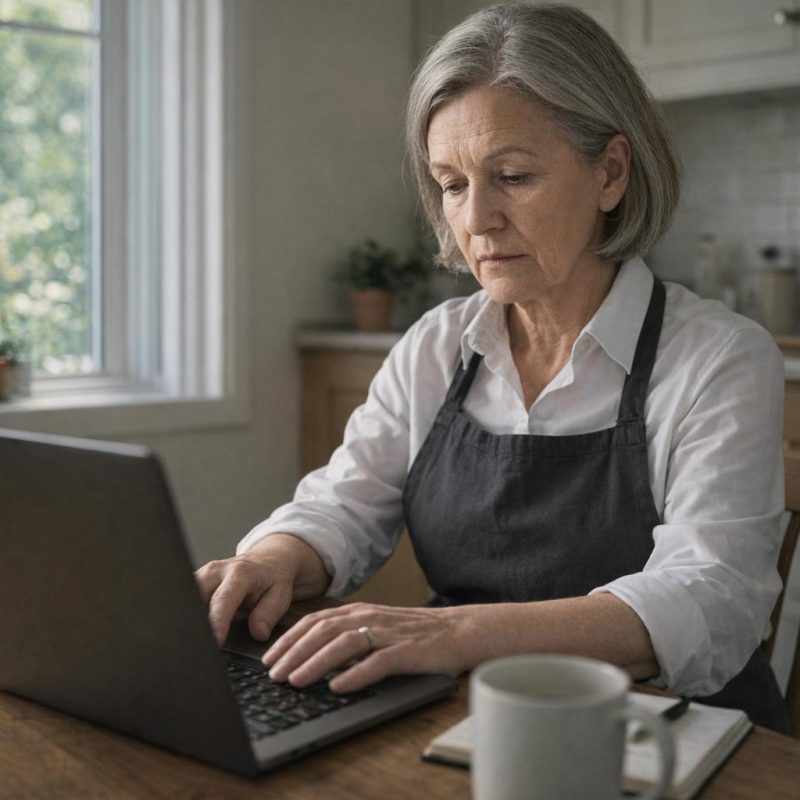 Image by RM AI
Not Screaming Online
I thought about writing the post. I sat there and actually drafted it in my head, sentence by sentence — the full account, his name, the word he used, the money on the floor. I imagined it going up, getting shared, picking up speed. And then I imagined what came next. A statement from his team saying there had been a misunderstanding. Maybe a vague apology that didn't admit anything. His fans deciding I was exaggerating, or lying, or looking for attention. A celebrity with that many followers has a lot of people willing to do the work of doubting you. I'd watched it happen before to people with better documentation than I had. The story would run for two days and then something else would happen and it would be over, and he would go on filming his special about how much he loves working people. I didn't want to give him something he could walk away from. I wanted something he couldn't manage or spin or hand off to a publicist. I wanted him to be the one who showed everyone who he was. I closed the laptop. I turned off the kitchen light. I went to bed and lay there in the dark thinking about it, and somewhere around midnight the anger settled into something quieter and more useful — the kind of calm that comes when you finally know what you want, even if you don't know yet how to get it.
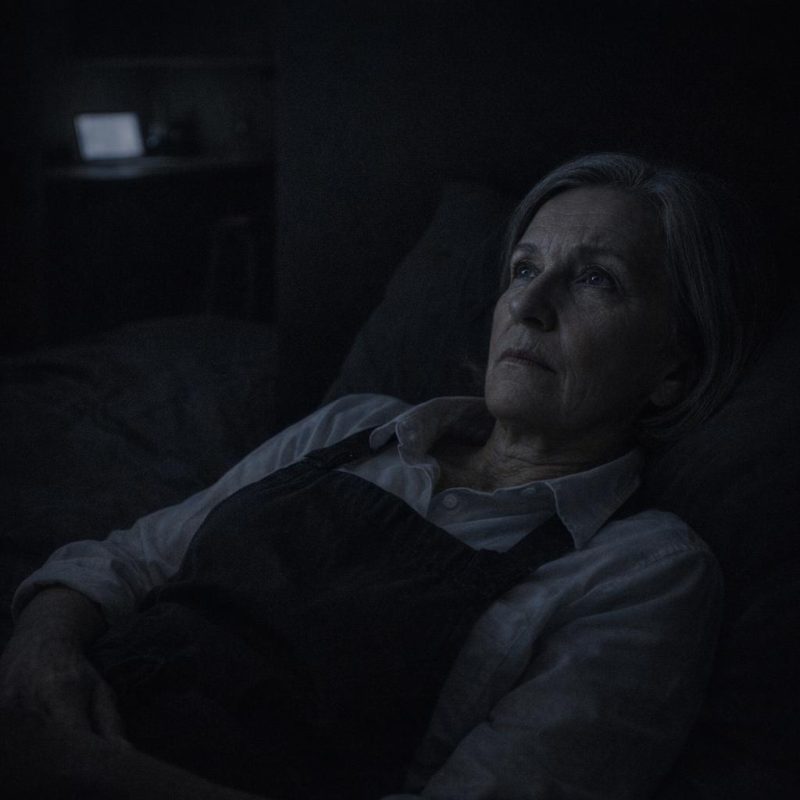 Image by RM AI
Three Days Later
Three days went by. I worked my shifts, kept my head down, didn't say much to anyone about what I was still turning over in my mind. On Thursday I came in for the lunch service and Steven was behind the bar with his phone pressed to his ear, nodding in a way that meant he was trying to sound professional and was also very excited. I watched him hang up and immediately look around the room until he found me. He came over with the energy of someone who had just been told something he considered excellent news. He said a production company had called. He said they were working on a television special and they wanted to use the bar as a filming location. He said the comedian — and he said the name, the same name Marcus had shown me on his phone — had specifically mentioned the atmosphere here, said it was exactly the kind of place the special was looking for. Steven said the production would bring their own crew, that it would be minimal disruption, and that part of the concept involved the staff receiving generous tips on camera. He was already talking about the exposure, about what it would mean for the bar. I stood there listening to him and said nothing. The call had come three days after Friday night, from the production company of the man who had thrown money at my feet, and something about that timing sat in my chest and stayed there.
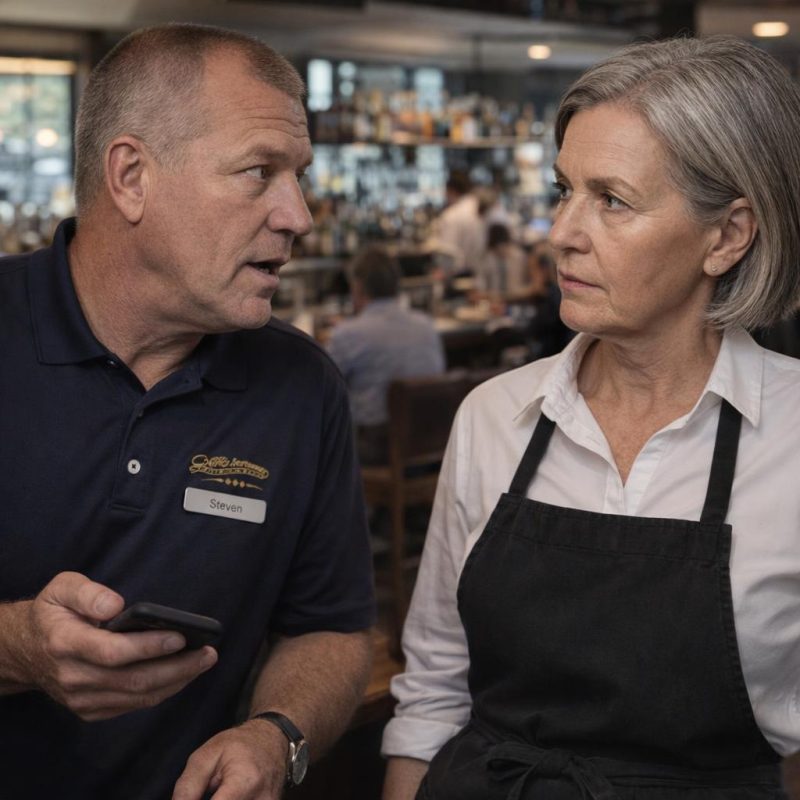 Image by RM AI
Steven Nearly Falls Over Himself
Steven was still talking when Marcus appeared from the back and caught enough of it to stop walking. Steven laid it all out again — the production company, the filming date, the tips, the exposure. He was using words like 'incredible opportunity' and 'visibility' and I could see him already mentally rearranging the bar for cameras. Marcus looked at me. I looked back at him. I asked Steven, as evenly as I could, whether he had mentioned to the production company what had happened on Friday night. Steven's expression shifted just slightly. He said he hadn't wanted to complicate things before they were even started. He said it would be different this time, that there would be cameras rolling, that everything would be above board. He said the bar needed this kind of attention. Marcus was quiet, which for Marcus means he is paying close attention and keeping his opinions ready. I started to say something — I had a sentence forming — and then Steven's phone buzzed and he glanced at it and said he was going to call them back to confirm, and I heard him say yes before I could get a word out.
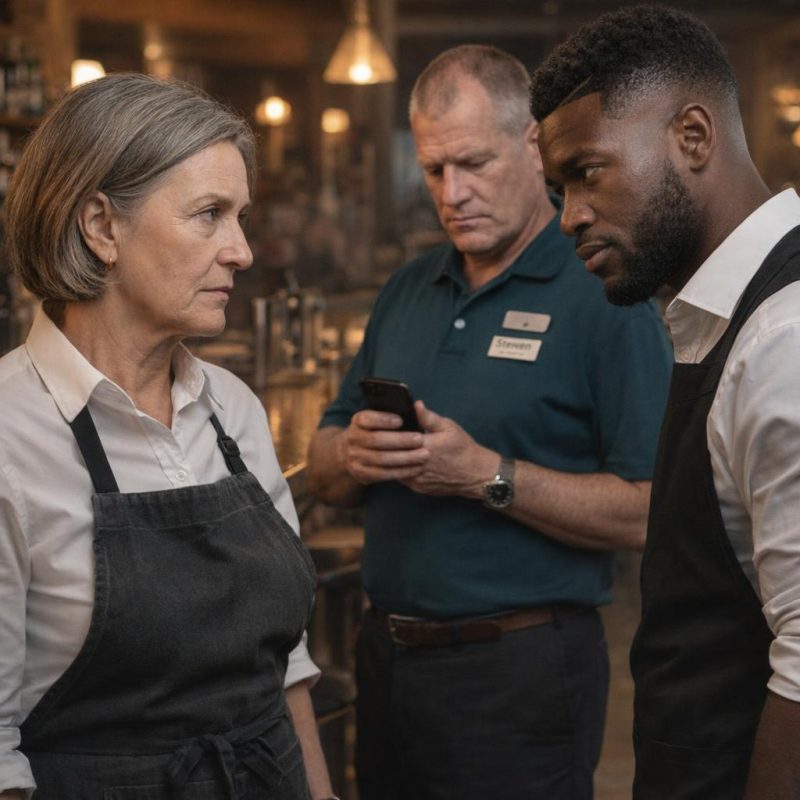 Image by RM AI
Let Them Come
Steven hung up and turned back to me with the look of a man bracing for an argument. Marcus was leaning against the back counter with his arms crossed, watching. Steven started to explain again — the opportunity, the timing, the exposure — and I let him finish. Then I told him I thought we should let them come. He stopped. He asked me if I was sure. I said I was absolutely sure. He looked at me the way people look at you when the answer they got was not the answer they prepared for. He asked what had changed my mind. I told him I had my reasons and that I'd explain when the time was right. Marcus made a small sound that wasn't quite a laugh. Steven looked between the two of us, still uncertain, and then something moved across his face — not full understanding, but the beginning of it, the moment when a person stops being confused and starts wondering if they've missed something important.
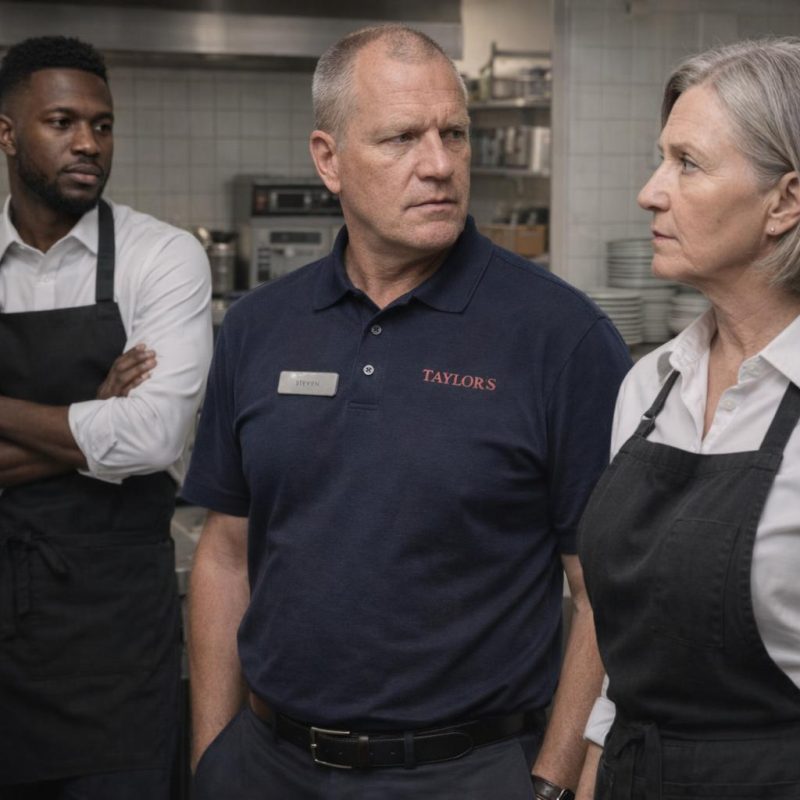 Image by RM AI
The Security System
After Steven went back to his office to make calls, Marcus waited until the door clicked shut and then looked at me with the expression he gets when he knows something I don't. He said he'd checked something after Friday and I should probably see it. I followed him to the back office where the security monitor sits — the one we mostly ignore because it's there for liability, not because anyone actually watches it. Marcus pulled up the system and told me the bar had been recording video and audio for the past two years. Full coverage. I hadn't known that. I'd assumed it was just cameras, no sound. He scrolled back to Friday night and hit play, and there it was — the whole thing, angle from above the bar, clear enough that you could read expressions. The money hitting the bar. My face. And then Marcus turned up the volume and said, 'It got everything — including TAKE IT, PEASANT.'
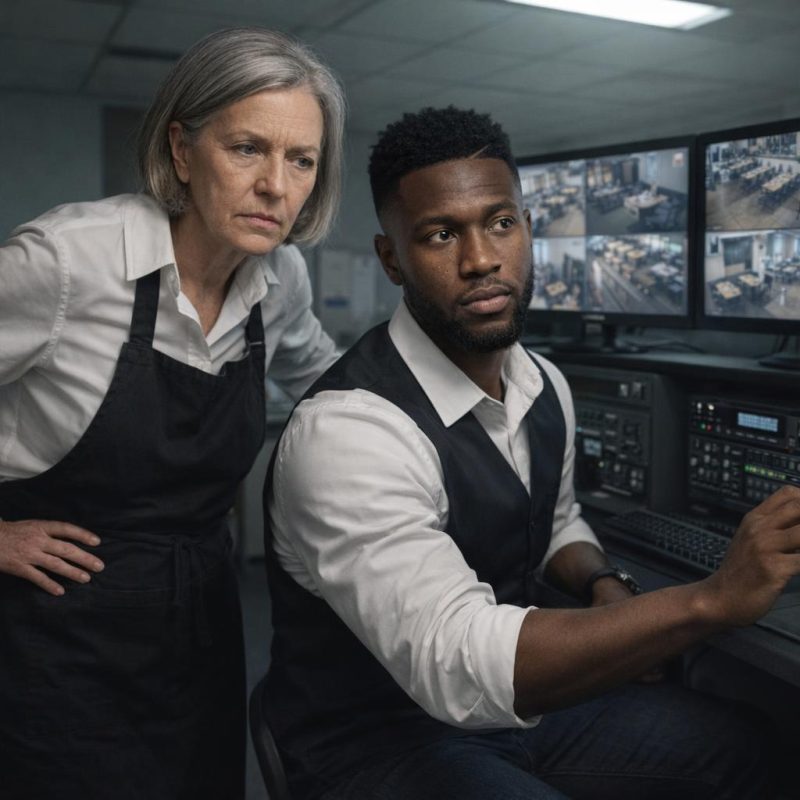 Image by RM AI
Not Yet
Steven came in while we were still standing there, and Marcus showed him the footage without saying much. Steven watched it twice. By the second time, his jaw was set and he was already talking about posting it — tonight, right now, before the production company could get ahead of anything. I told him to stop. He looked at me like I'd lost my mind. I said if we put it out now, before the cameras come back, his people will say it was staged, or edited, or taken out of context. They'll have a publicist on it within the hour and we'll spend the next week defending ourselves instead of him defending himself. What we needed, I told him, was to let the man come back and stand in front of a camera and make his choices. If he told the truth, fine. If he didn't — and I was fairly sure he wouldn't — then the footage wouldn't need any explanation at all. Marcus said that was exactly right. Steven stood there for a long moment, looking at the paused screen, and then he nodded slowly. He agreed to hold it. Nobody said anything after that, and the weight of what we'd decided sat in the room between us.
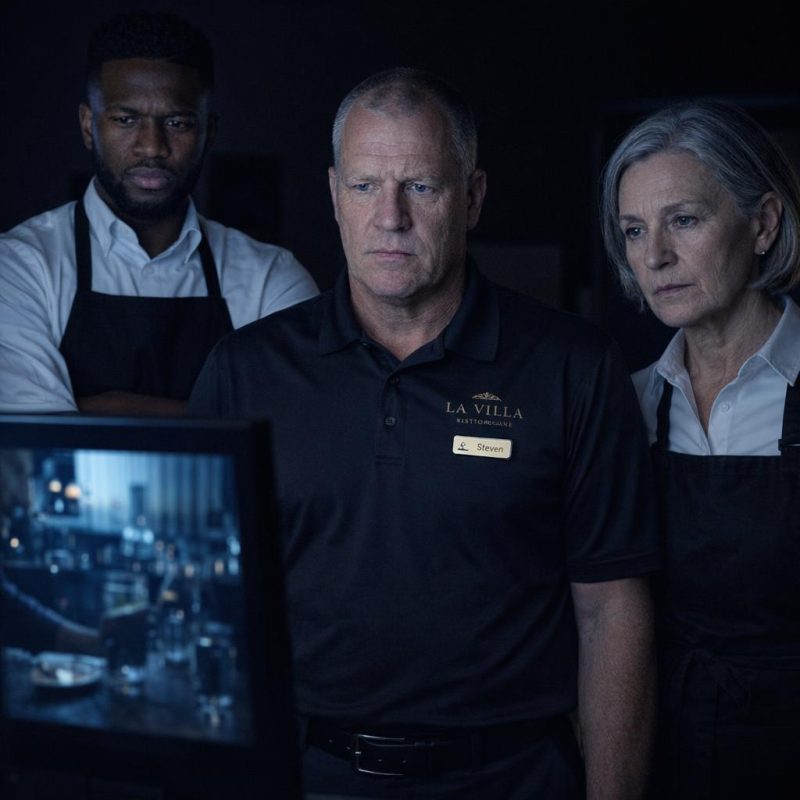 Image by RM AI
The Following Week
They arrived the following Tuesday, earlier than I expected — a van and two SUVs pulling up before we'd even finished the morning setup. Crew members came in carrying cases of equipment, light stands, cables coiled over their shoulders. They moved through the bar like they owned it, which I suppose for the day they did. They shifted tables, repositioned stools, taped marks on the floor. One of them held a light meter up near my station and called out numbers to someone behind a camera. Steven hovered near the host stand, nodding at everything anyone said to him. Marcus and I were told where to stand, roughly what we'd be doing, that we should act natural. A woman with a clipboard explained the format — the segment was about honoring everyday workers, the kind of people who keep the city running. The comedian would come in as a regular customer, she said, and then reveal himself and make a generous gesture. I listened and said nothing. By the time they finished setting up, the bar looked like a version of itself I didn't quite recognize — same walls, same bottles, same worn wood on the counter, but all of it flattened somehow under the artificial brightness of the lights.
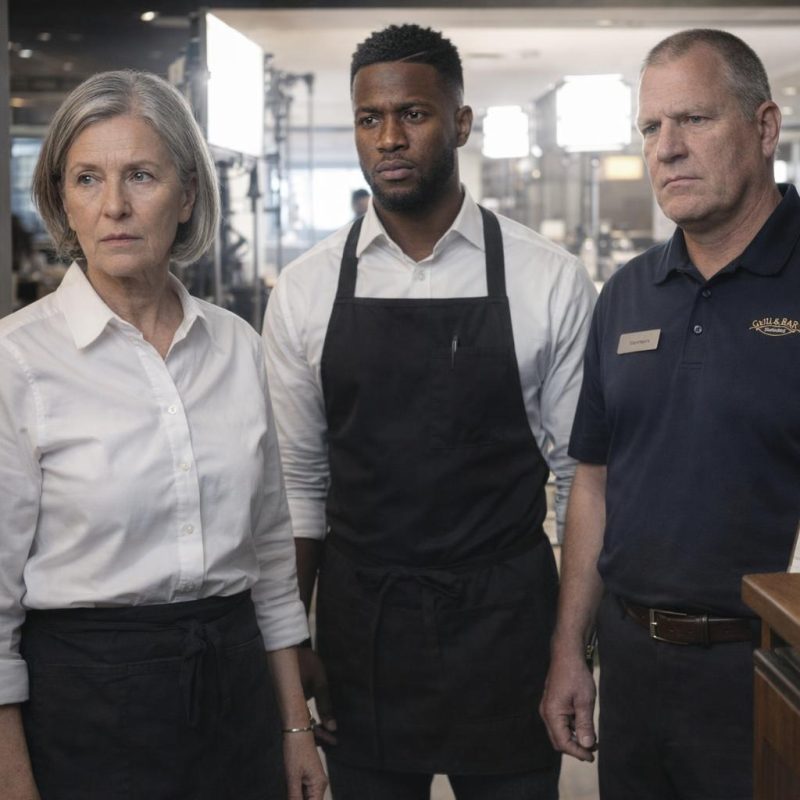 Image by RM AI
Welcome Back
He came in around eleven, jeans and a dark jacket, looking like a man who had practiced looking relaxed. He shook hands with the crew members near the door, said something that made two of them laugh, and then moved toward Steven with both arms slightly open — the kind of greeting that reads well on camera. Steven shook his hand and smiled the smile of a man who had decided to be professional about all of this. The cameras tracked him as he moved through the bar, and he talked while he walked, something about how places like this were the real heart of the city, the people who showed up every day. He stopped to look at a framed photo on the wall. He touched the bar top like he was appreciating it. Then he turned, still talking, and his eyes found me across the room. His smile disappeared for half a second before he pulled it back.
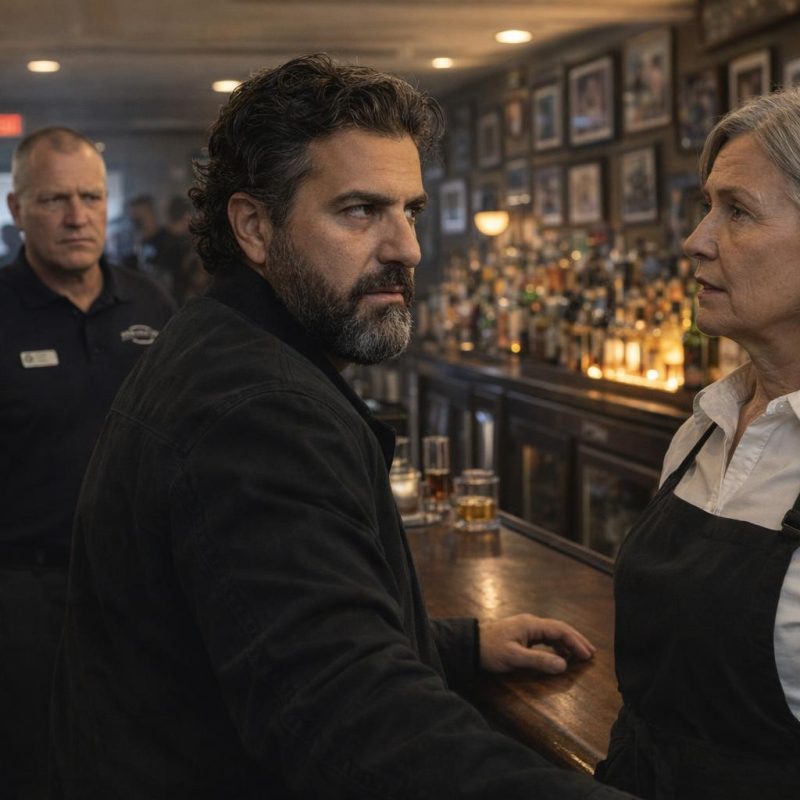 Image by RM AI
The Backbone of This City
He recovered fast, I'll give him that. By the time the cameras swung toward me, he was already moving again, working the room the way he'd clearly done a hundred times before. He stopped at Marcus's station first, shook his hand, asked how long he'd been working there, nodded seriously at the answer like it was the most meaningful thing he'd heard all week. He told the camera that people like Marcus were the backbone of this city, that service work was real work, that nobody understood that better than him. He posed for a photo with Steven, arm around his shoulder, both of them grinning. He examined the taps behind the bar and made a comment about craftsmanship. The crew followed him with the quiet efficiency of people who had done this many times, adjusting angles, moving out of each other's way without speaking. I stayed where I'd been told to stay and watched him move through the space. He was good at it — the warmth, the eye contact, the pauses that felt like listening. I couldn't tell where one ended and the other began, and that strange, flat feeling of watching him be kind to everyone in the room settled over me and stayed.
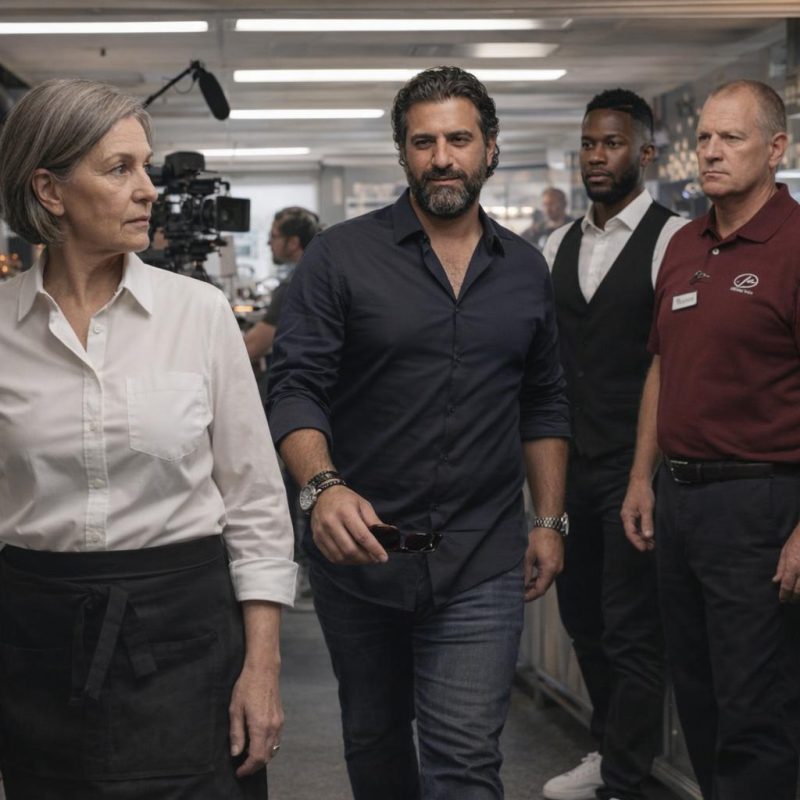 Image by RM AI
Twenty-Three Years
He made his way to me last. The cameras repositioned, and he stepped up to my station with the same open expression he'd been wearing all morning. He asked how long I'd been in the restaurant business. I told him twenty-three years. He turned to the nearest camera and repeated it — twenty-three years — like the number itself was something worth honoring. He said that kind of dedication was rare, that it took a certain kind of person to show up for that long and keep caring about the work. Then he turned back to me and asked what kept me coming back. I told him I was good at it and I liked being good at things. He smiled at that, said something about how that was the right answer, and the crew got a few more seconds of footage. Steven was watching from behind the bar, arms crossed, expression carefully neutral. The cameras were still rolling. The comedian was still smiling. And his attention, full and aimed directly at me, settled over me like something with weight.
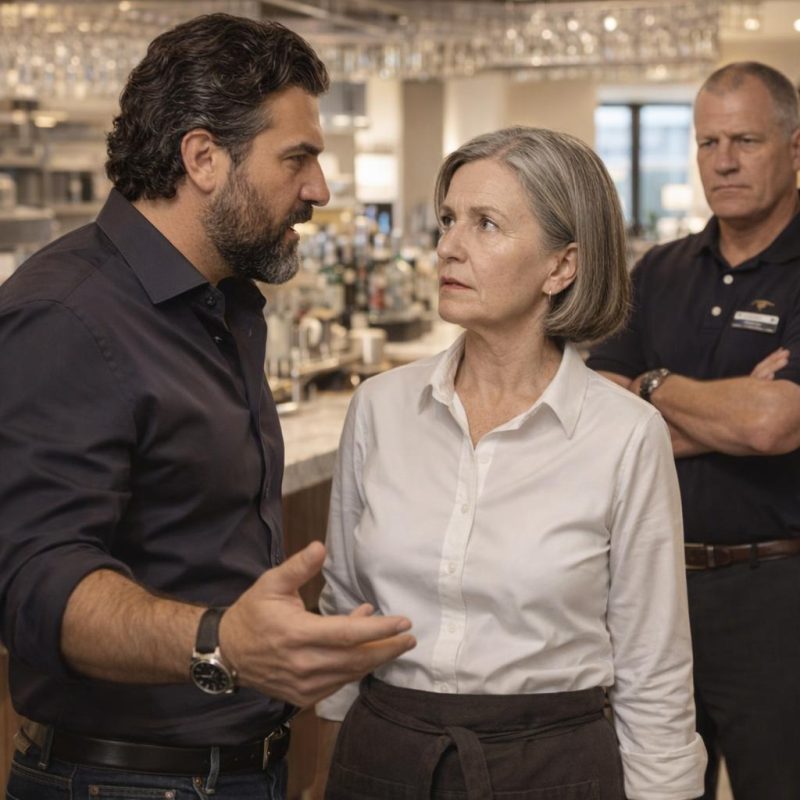 Image by RM AI
A Customer Who Made Me Want to Quit
He stayed in the moment a beat longer than the script probably called for, and then he shifted into the next question — the kind they must have used in every segment, the one designed to get a relatable answer. He asked if I'd ever had a customer who made me want to walk out. He said it lightly, like it was a joke we were all in on, the universal restaurant worker experience. He was still smiling. The cameras were still rolling. Marcus had gone very still near the service station. Steven's face had gone the color of old chalk. I looked straight at the comedian — not at the camera, not at the crew, at him — and I said yes, actually. I said there had been someone last Friday. The room went quiet in the specific way rooms go quiet when something unexpected has entered them. A crew member near the far wall glanced at the woman with the clipboard. The comedian's expression shifted, just slightly, at the edges. And I heard myself say the words last Friday.
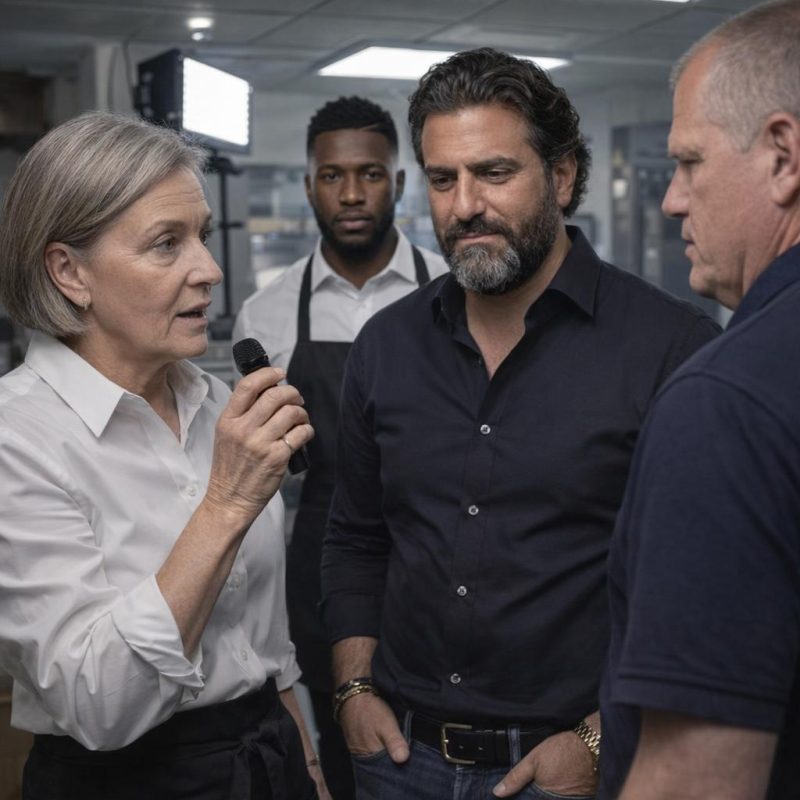 Image by RM AI
I Don't Remember
He laughed. It came out a half-second late and landed a little short, not quite the sound it was trying to be. He said he wasn't sure what I meant. He said he didn't think he'd been in on Friday. He looked toward the producer standing off to the side — just a glance, quick, but I caught it. Then he looked back at me and said it again, slower this time, that he didn't remember being here Friday. The crew hadn't moved. Nobody was adjusting anything or checking monitors. Steven had his hands flat on the bar behind him. Marcus was watching the comedian the way you watch something you're not sure is going to hold. I stayed quiet and let the silence do what silence does. The comedian shifted his weight slightly and repeated that he wasn't sure what Friday she was referring to. His voice came out pulled tight, the easy warmth from a moment ago gone flat.
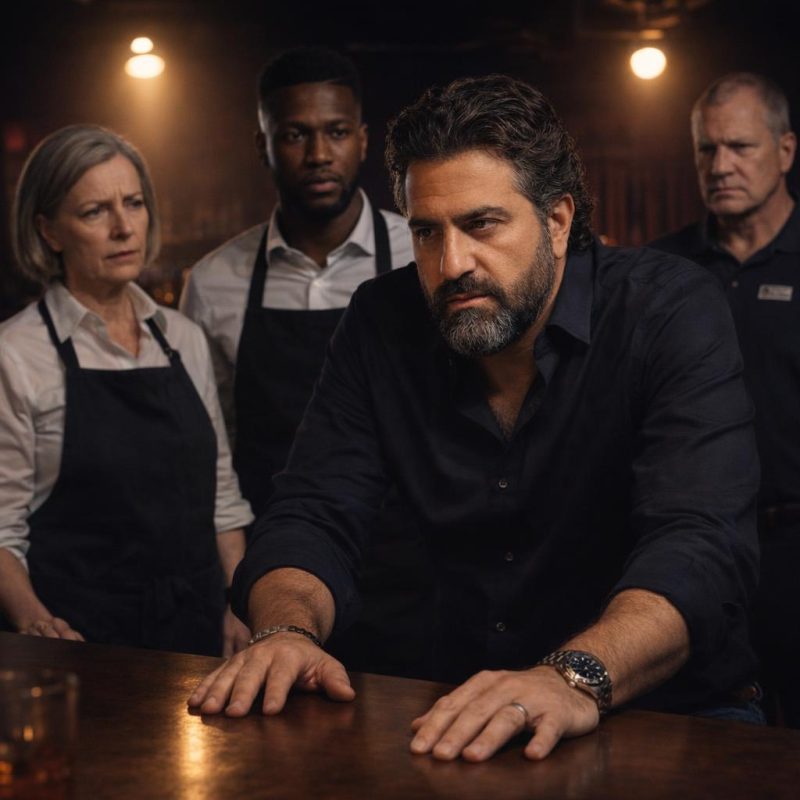 Image by RM AI
The Corner Table
I told him I remembered the table clearly. Corner booth, near the window, the one we keep reserved for larger parties on Friday nights. He'd been there with five other people — two men, three women, one of them in a yellow jacket I'd have recognized anywhere. I described the order. Appetizers first, then the mains, then a round of drinks that came late because we were slammed. I kept my voice even, the same tone I'd use reading back a ticket. The Comedian's smile had been fading since I started talking, and by the time I got to the drinks it was gone entirely. His jaw had tightened. He shifted his weight again, the way he'd been doing since I first brought up Friday, and his hand moved toward his jacket pocket and then stopped halfway. The crew was still. Marcus hadn't moved from where he was standing. Steven had both hands flat on the bar behind him like he needed something to hold onto. I finished what I was saying and waited. The Comedian looked at me for a moment, then his eyes cut sideways toward the producer standing off to the left.
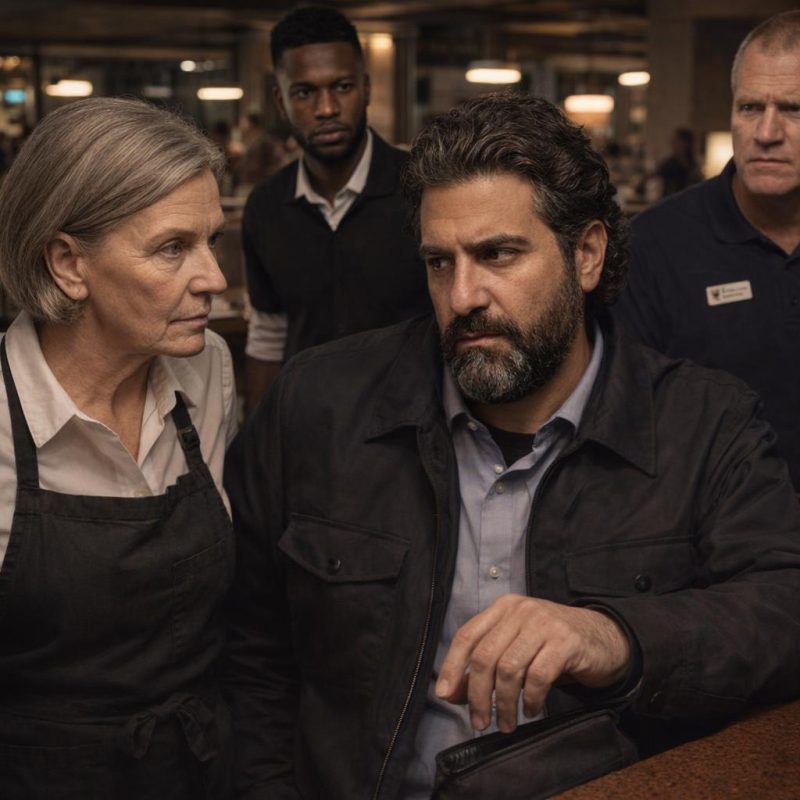 Image by RM AI
Are We Really Doing This
He didn't look back at me right away. He kept his eyes on the producer for a beat, then two, and something passed between them that I couldn't read. Then he turned back and said it — not to me exactly, more to the room — are we really doing this. His voice had changed. The easy warmth was gone, the practiced friendliness that had been running since they walked in. What came out instead was flat and clipped, the voice of someone who had stopped performing and wasn't happy about it. The producer said cut. Just the one word, and the camera operators lowered their equipment almost in unison. The big overhead lights stayed on, blazing the same as before, but something in the room shifted the moment the cameras came down. Steven took a step back from the bar. Marcus went still. I stayed where I was, feet planted, watching the comedian's posture change as the last of whatever he'd been projecting dropped away. The crew stood around with their equipment at their sides, not looking at anyone in particular. And then the low mechanical hum of the cameras — that constant background noise I'd stopped noticing — was simply gone.
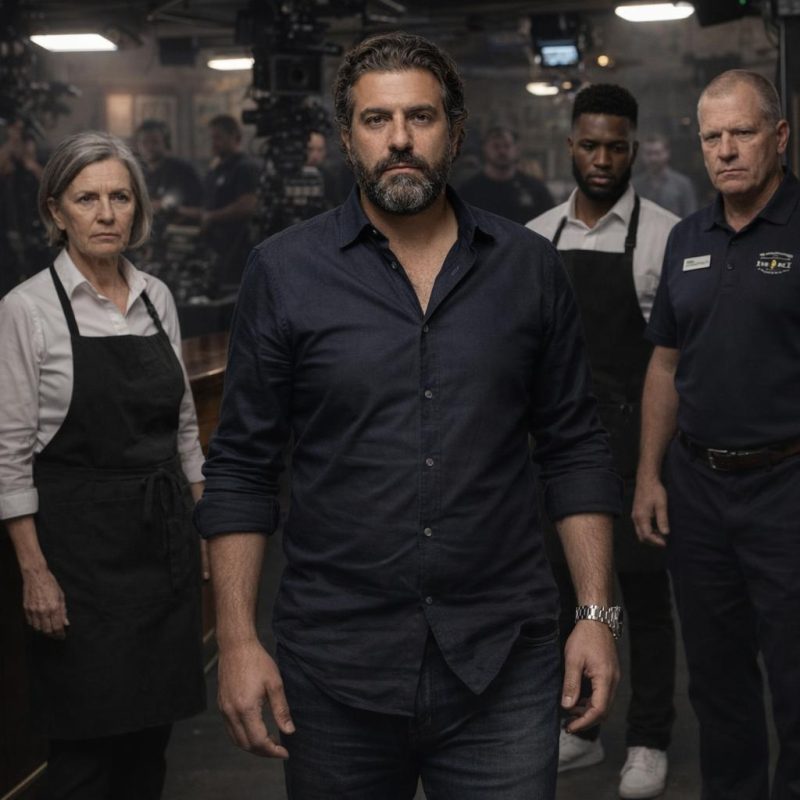 Image by RM AI
What Do You Want
He stepped closer. Not close enough to be threatening exactly, but close enough that I was aware of it. He asked what I wanted. The words came out sharp and tight, nothing left of the warmth he'd been performing since he walked in. He said he knew what I was trying to do. He said I was trying to embarrass him. I didn't answer right away. I let him finish. Steven started to move from behind the bar and then stopped himself, one foot forward and one back, caught between stepping in and staying out of it. Marcus was watching from across the room, arms loose at his sides. The comedian's face had gone rigid, the kind of rigid that comes from holding something in. A couple of the crew members looked at the floor. I stood where I was and kept my eyes on him. I hadn't moved back an inch since he stepped forward, and I wasn't going to. He asked again, sharper this time, what exactly it was I thought I was going to get out of this. The question hung there. What struck me, standing in that bright empty bar with the cameras down, was how different his voice sounded now that there was nothing left to perform for.
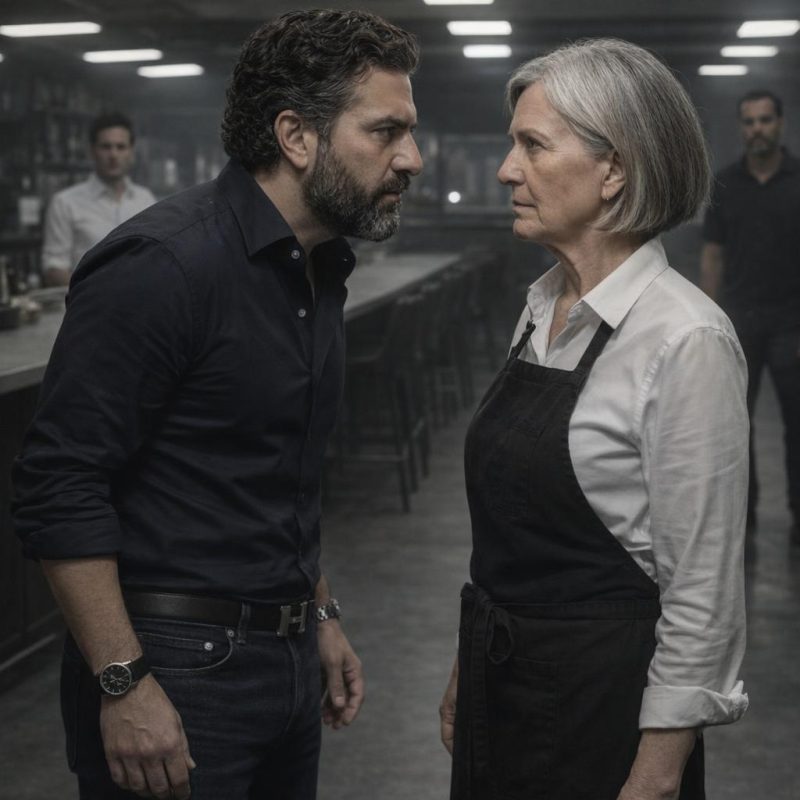 Image by RM AI
An Apology
I told him I wanted an apology. I said it plainly, the same way I'd have told a customer their card had been declined — no drama, just the fact of it. He stared at me. For a second he didn't say anything, and I thought maybe that was it, maybe the word had landed somewhere useful. Then his expression shifted. His chin came up slightly and the corner of his mouth pulled back, not quite a smile. He asked if I was serious. I said yes. He shook his head slowly, the way you do when someone has said something you find genuinely hard to believe. Steven was watching from behind the bar, very still. Marcus had moved a few steps closer without making a production of it. The producer stood off to the side with her arms crossed, not intervening. The comedian looked at me for another moment, taking me in, and then he laughed. It wasn't the performed laugh from earlier. It was shorter and quieter and it came from somewhere that had nothing to do with finding anything funny. He said the word back at me — apology — like he was turning it over to check if it was real.
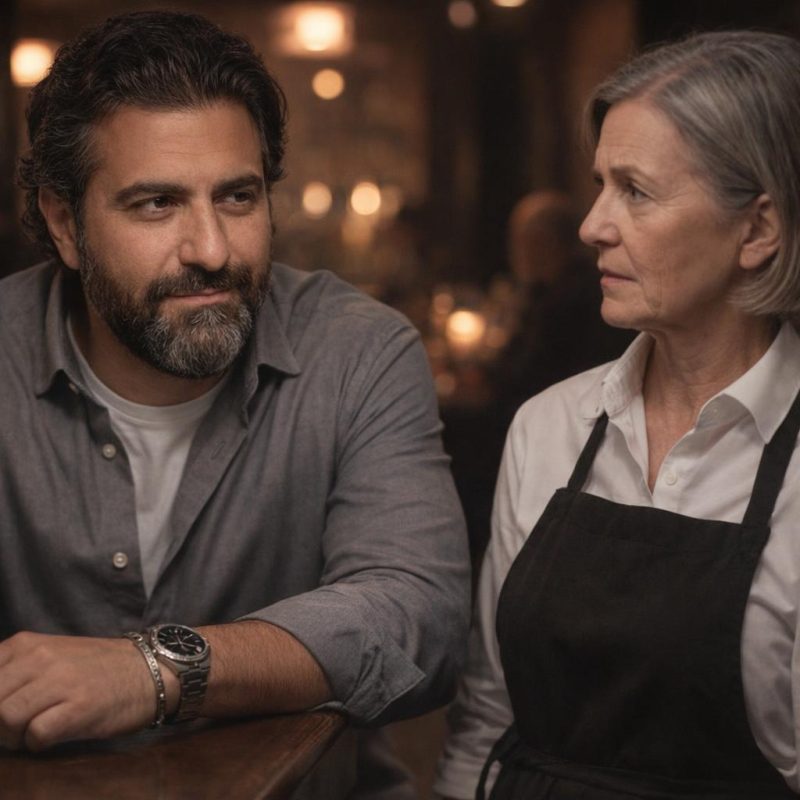 Image by RM AI
Nobody Will Believe a Waitress
He told me nobody was going to believe a waitress over him. He said it without raising his voice, which somehow made it worse. Just a statement of fact, the way you'd tell someone the restaurant closes at ten. He said I had no proof of anything. He said I should think carefully about what I was doing and who I was doing it to. Steven's mouth came open. Marcus took a step forward and then caught himself. A couple of the crew members had gone very still in the way people go still when they want to be somewhere else. I didn't say anything. There wasn't much to say. He kept going — told me I needed to accept how things worked, that people in his position didn't get dragged into situations like this by people in mine. He wasn't angry anymore, or if he was, he'd put it somewhere I couldn't see. He sounded certain. Settled. Like the matter was already closed and I just hadn't been informed yet. I stood there and let him finish. The words sat in the air of that bright, quiet bar, and what stayed with me wasn't the anger behind them — it was how completely sure of himself he sounded when he said them.
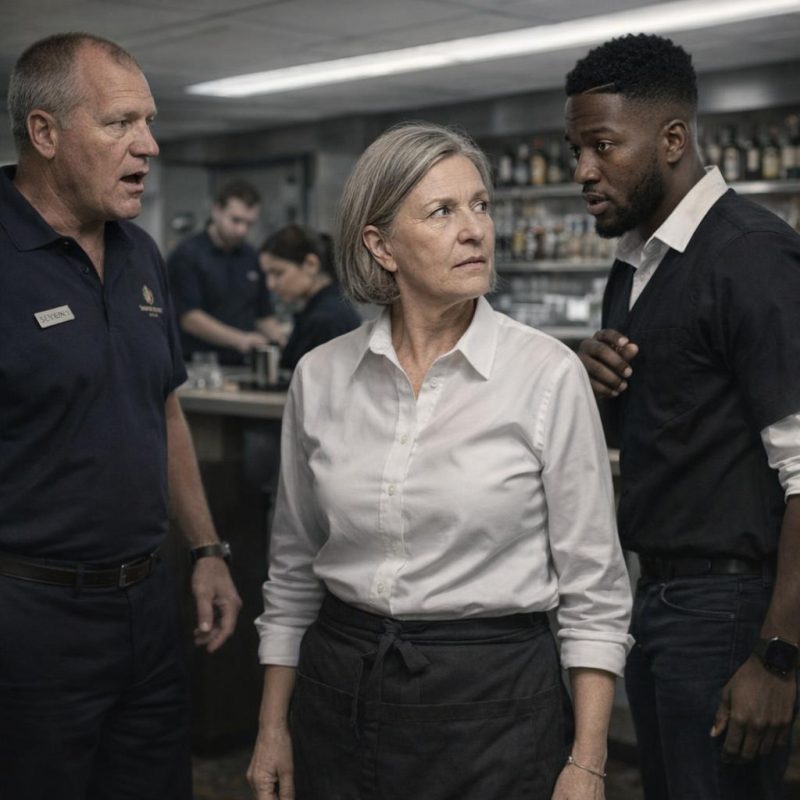 Image by RM AI
After They Left
He left without looking at me again. The producer said something into her headset and the crew started moving, breaking down the lights and folding equipment into cases with the efficient quiet of people who'd done it a hundred times. The big overhead rigs came down first, and the bar went back to its regular lighting — dimmer, warmer, the way it looked on any normal night. Nobody from the crew spoke to us. They moved around us like we were furniture, loading cases onto dollies and rolling them toward the door. Steven, Marcus, and I stood together near the bar and watched it happen. I didn't know what to say and apparently neither did they. Marcus refilled his own water glass and set it down without drinking from it. Steven straightened a stack of menus that didn't need straightening. I kept thinking about the comedian's voice when he said what he said, turning it over, trying to figure out what, if anything, I was supposed to do with it. I had no recording. I had no documentation. I had two witnesses and a very clear memory. Whether any of that added up to something, I genuinely didn't know. The last crew member pushed through the door with a dolly, and then it swung shut behind them, and the only sound left in the room was the low hum of the coolers behind the bar.
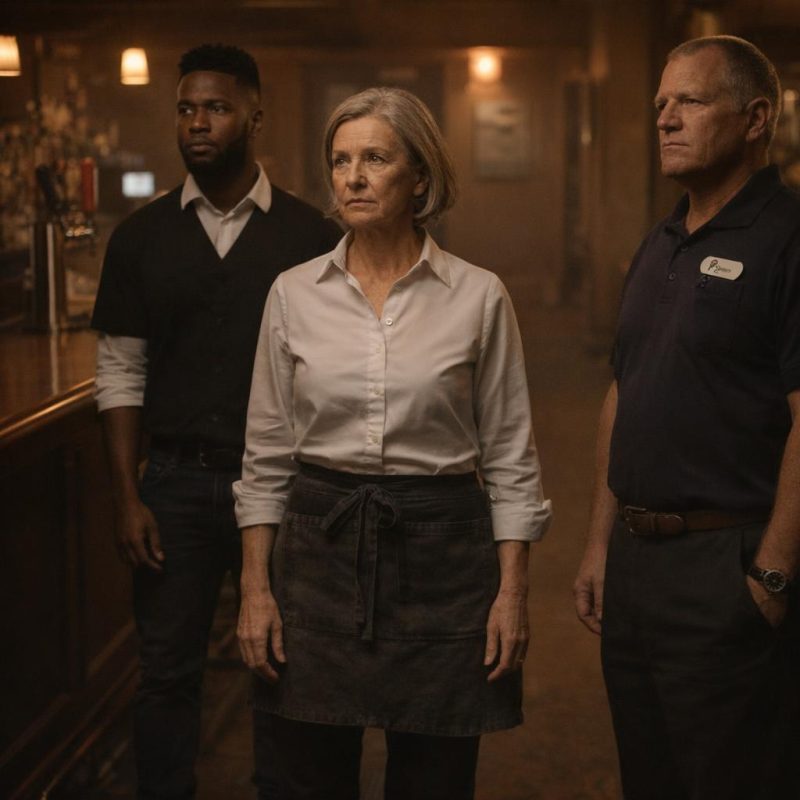 Image by RM AI
Nina
I was still standing near the bar when I noticed her. She hadn't left with the rest of the crew. She was near the door, a woman I'd clocked earlier as one of the camera operators — practical clothes, a bag over one shoulder, the kind of person who moves through a room without drawing attention to herself. She was looking at me. When she saw that I'd noticed her, she walked over. She said her name was Nina. She said she'd been operating one of the cameras during the shoot. Her voice was quiet, lower than I expected, and she kept glancing back toward the door like she was checking whether anyone had come back in. Marcus had noticed her approach and drifted a few steps closer without making it obvious. I told her I remembered seeing her. She nodded and said she'd been watching what happened. She asked if we could talk for a minute, somewhere away from the windows. Something in the way she said it made me pay attention — not alarm exactly, more like the feeling you get when a regular sits down and you can tell before they've said a word that this isn't a normal visit. I said sure and we moved toward the far corner of the bar. She set her bag down, looked at me steadily, and said she needed to tell me something.
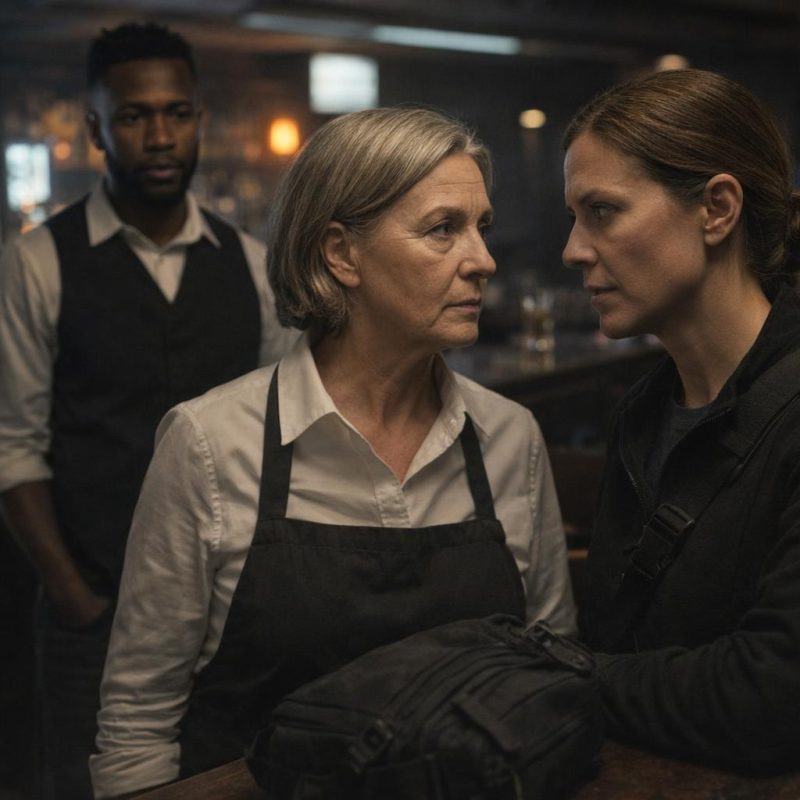 Image by RM AI
One Camera Was Still Recording
She said her camera hadn't been turned off when the producer called cut. I asked her what she meant. She said it plainly — the camera she'd been operating was still recording. She'd been in the middle of a shot when the call came and she'd lowered the equipment without stopping the record function. By the time she realized it, the whole exchange was already on the card. Everything after cut. His voice, his words, all of it. Marcus had come close enough to hear and I saw him go still. I asked Nina what exactly was on it. She said the part where he told me nobody would believe a waitress over him. She said it was clear audio, clear picture, the whole thing. I asked her why she was telling me this. She was quiet for a moment. Then she said she'd been working with him for several months, and that this wasn't the first time she'd seen something like this happen with him off-camera. She didn't elaborate on that, and I didn't push her yet. She reached into her bag and set a small hard drive on the bar between us. Marcus looked at it. I looked at it. Nina said the recording captured everything he said after the producer called cut.
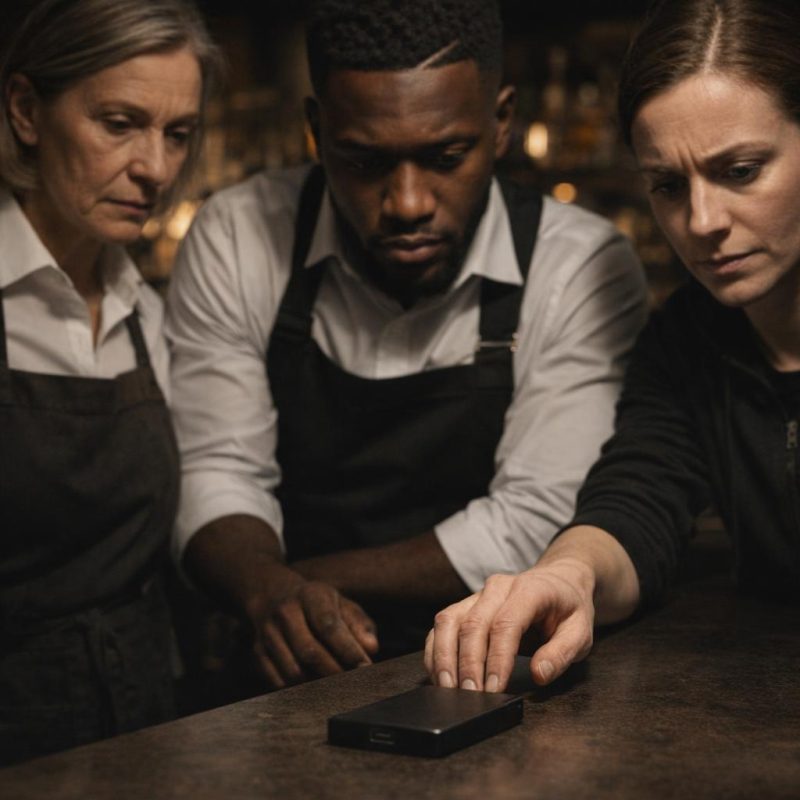 Image by RM AI
This Has Happened Before
I picked up the hard drive and turned it over in my hand. Nina let me sit with that for a moment before she kept going. She said this wasn't the first time something like this had happened on the shoot. She said there had been other locations before ours — a diner in Queens, a food truck operation in the Bronx, a family-run place out in Jersey. She said at each stop, there was a version of what happened to me. Not always money thrown. But the same tone, the same contempt, the same shift when the cameras weren't on him. Marcus leaned against the bar with his arms crossed and didn't say anything. I asked Nina what happened after those incidents. She said the workers complained. I asked to who. She said to the production company, through whatever contact they'd been given. I asked if anything came of it. She looked at the bar top for a second before she answered. Marcus asked the question I was already forming — he asked if the company did anything about it. Nina's expression shifted in a way I couldn't quite read. Then she said several workers had filed complaints over the past few months, from multiple locations.
 Image by RM AI
The Wholesome Image
Marcus let out a slow breath. I set the hard drive down. Nina said the whole special was built around a particular image — a guy who understood regular people, who showed up in their world and treated them right. She said every segment followed a similar shape: he'd come in, there'd be some friction or awkwardness, and then he'd turn it around with a big gesture. She said the moments that didn't fit that shape just didn't make it into the cut. I asked her how much ended up on the floor. She said more than most people would guess. Marcus asked if the production company knew what he was actually like between takes. Nina paused. She said yes, they knew. I asked what she meant by that. She said she needed to tell me something else before she answered that fully. I didn't push her yet. I just sat there thinking about all those segments I'd probably scrolled past without a second thought — the wholesome clips, the grateful workers, the big reveal moments. Somewhere behind each one of those was a version of what happened to me, and nobody watching would have had any reason to suspect it.
 Image by RM AI
They Already Knew
Nina said the timing of the production company's return booking had felt off to her from the start. I asked what she meant by that. She said that before they called the restaurant to schedule the follow-up shoot, someone had already sent them something. I asked her what she meant by something. She said footage. She said the company had received footage before they ever picked up the phone to book the return visit. I looked at Marcus. He looked at me. He asked who could have sent it. Nina said she didn't know who. She only knew the company had it before they made the call. I asked her how she knew that. She said she'd overheard part of a conversation between two of the producers the morning of the shoot, and what she heard didn't match the timeline she'd been given. I asked why the company would come back at all if they already had footage of what happened. Nina said she'd wondered the same thing. I turned that over and couldn't find an answer that made clean sense. The footage had reached them before the booking, and they'd come anyway, and I had no idea what that meant.
 Image by RM AI
Who Sent It
I asked Nina directly. I said I needed to know who sent that footage to the production company. She shook her head before I finished the sentence. She said she couldn't tell me that. I asked why not. She said it wasn't her place. Marcus straightened up and asked her if she actually knew who it was. She said yes. She said she knew, but it still wasn't hers to say. I asked her what that meant. She said the person who sent it had their own reasons, and she thought I deserved to hear it from them, not from her. I told her I wasn't interested in being managed. She said she understood that, and she was sorry, but she wasn't going to change her answer. Marcus looked at me and I looked at him. Nina said if I wanted to know, I should ask my manager. She said it plainly, without any drama attached to it, and then she picked up her coffee and didn't add anything else. I sat there with that. The name she wouldn't say was sitting somewhere just out of reach, and the not-knowing had a weight to it that I hadn't expected.
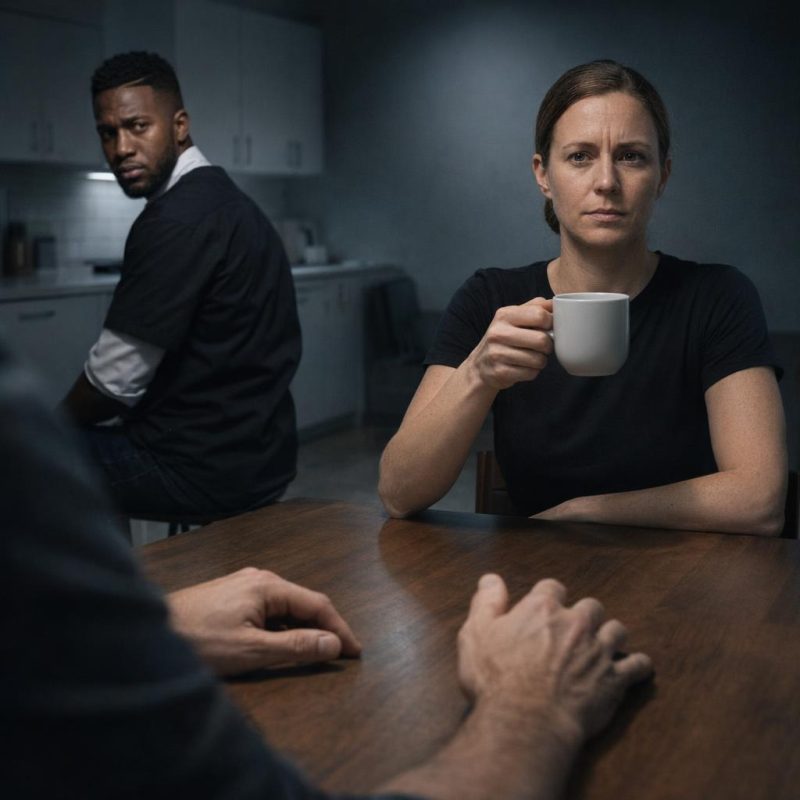 Image by RM AI
The Next Morning
I didn't sleep much. I was back at the restaurant by six-fifteen, which was earlier than I needed to be. The dining room was still dim and the chairs were up on half the tables near the window. I'd gone over Nina's words maybe a dozen times on the walk over. Ask your manager. That was what she'd said. I'd worked with Steven for eleven years. He was careful, diplomatic, the kind of person who thought three steps ahead before he said anything out loud. I tried to think of a reason he'd know who sent that footage and came up empty. Then I tried to think of a reason Nina would point me toward him specifically and also came up empty. I hung up my coat and stood in the hallway outside his office for longer than I should have. Through the small window in the door I could see him at his desk, going through paperwork. He looked up before I knocked, the way people sometimes do when they sense someone nearby. I opened the door and stepped in. He said good morning. I said I needed a few minutes. He nodded and set his pen down. I closed the door behind me, and the question I'd been carrying since the night before sat heavy in my chest.
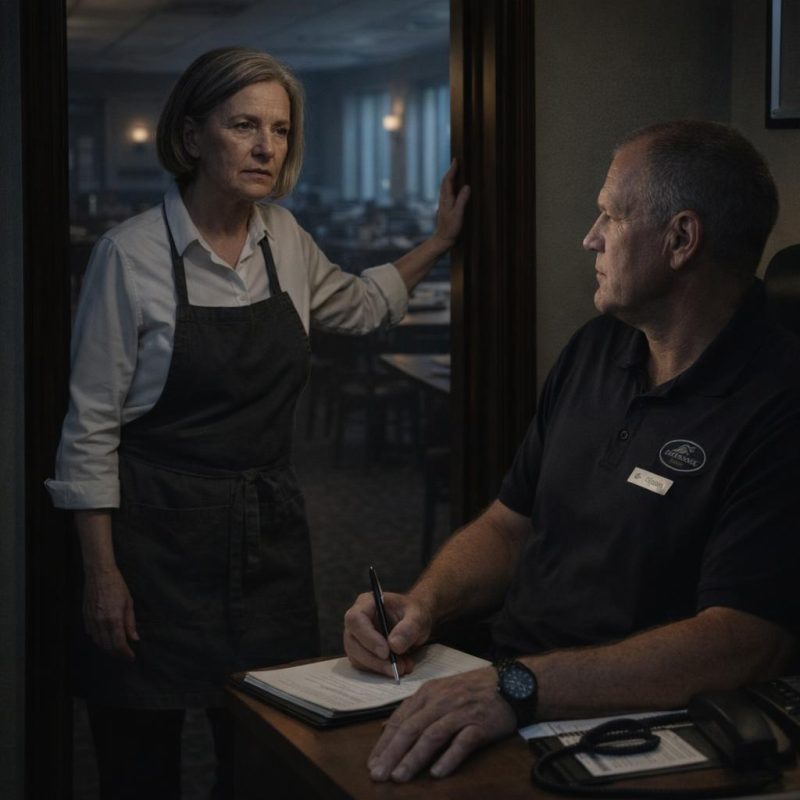 Image by RM AI
Steven's Confession
I didn't ease into it. I asked him straight out if he was the one who sent the security footage to the production company. He didn't answer right away. He looked at his desk for a moment, then back at me. Then he said yes. I stood there. I asked him why he hadn't told me. He said he sent it the day after the incident, when I wasn't scheduled in. He said he pulled the footage from the system, clipped the relevant section, and emailed it to the production contact we'd been given when they first booked the shoot. He said he thought if they saw what actually happened, they'd pull the segment and reach out with some kind of apology. He said he didn't want to tell me because he didn't want me getting my hopes up in case nothing came of it. I asked him what they said when they got it. He said they thanked him. They said they appreciated him sending it. They asked a few questions about the incident — when it happened, who was present, whether there had been any formal complaint filed. And then, he said, they booked the return shoot anyway.
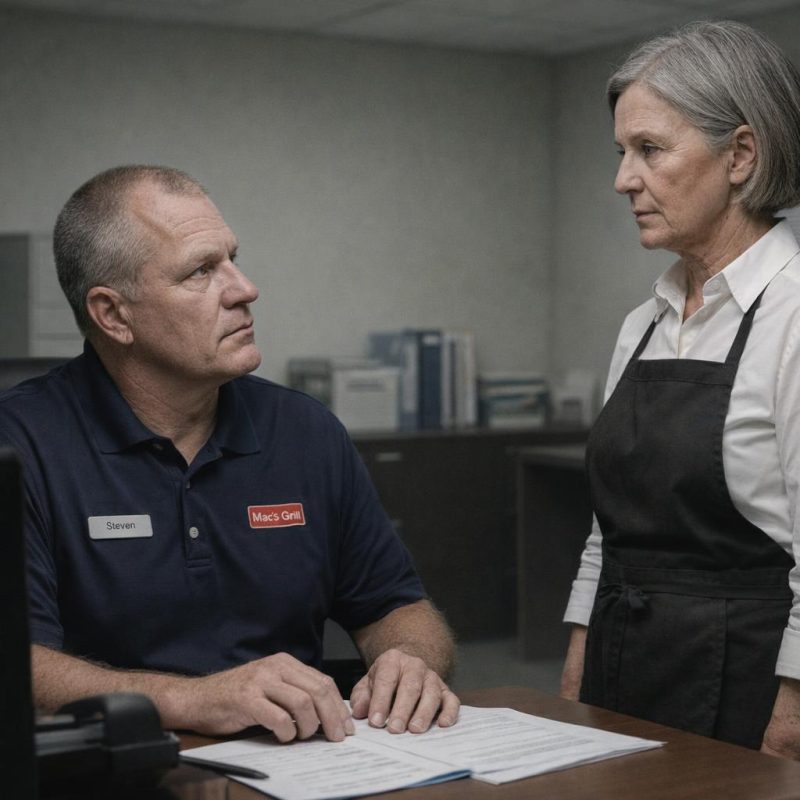 Image by RM AI
They Saw an Opportunity
Steven said the response had surprised him. He'd expected them to handle it quietly — maybe pull the comedian aside, maybe issue some kind of internal note. Instead they'd confirmed the shoot date within two days of receiving the footage. He said he didn't know what to make of that. He said the producers who called to confirm were professional, friendly, didn't mention the footage again after the initial questions. He said he'd assumed they were managing it in their own way and he hadn't wanted to make things harder for me by raising it. I asked him if he thought they'd told the comedian what they had. Steven said he didn't know. He looked genuinely uncomfortable sitting there. I asked him what he thought they were actually trying to do by bringing him back. Steven said he honestly wasn't sure. I sat with that. The production company had received footage of what happened, asked their questions, said thank you, and then scheduled a camera crew to come back to the same restaurant with the same man. Something about the shape of that didn't sit right, but I couldn't yet name what it was.
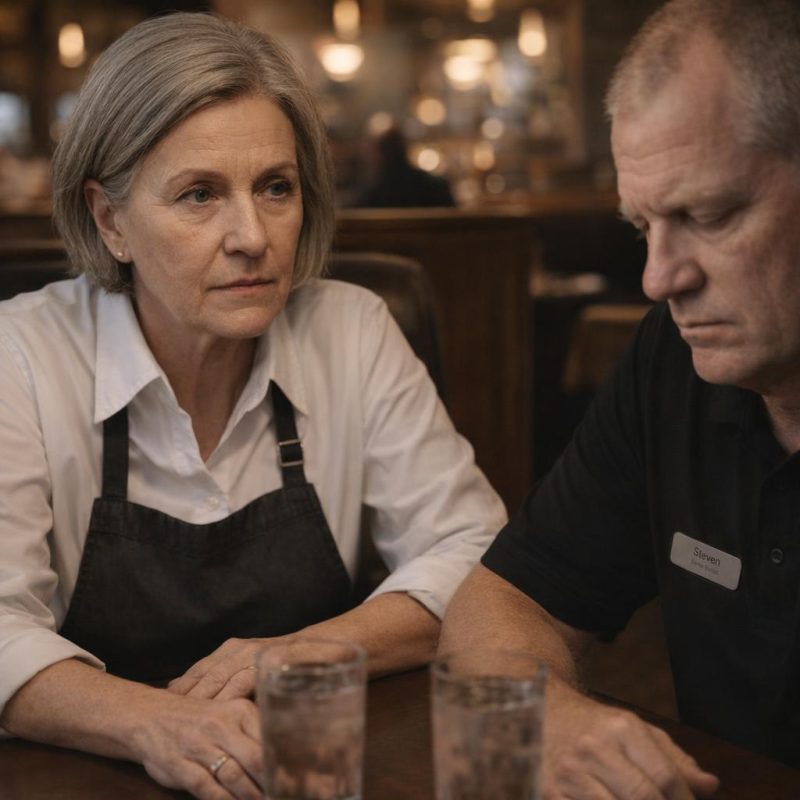 Image by RM AI
Part of Something Bigger
Steven said he was sorry. He said he should have told me sooner and he knew that. I told him I wasn't angry at him, which was mostly true. I was trying to work out what I actually felt. I asked him if he thought there was a reason they'd come back after seeing the footage — whether it was an oversight or something else. Steven said he didn't know. He said he'd asked himself the same question and hadn't landed anywhere solid. I thanked him and walked back out to the floor. I stood behind the bar for a while, going through the opening setup without really thinking about it. I'd gone into that office wanting an answer and I'd gotten one, but it had opened into something I didn't have the edges of yet. What I could say for certain was simpler and harder than any theory: they'd seen the footage, they'd said thank you, and they'd come back anyway — and somewhere in that sequence, I'd been useful to them in a way I hadn't chosen.
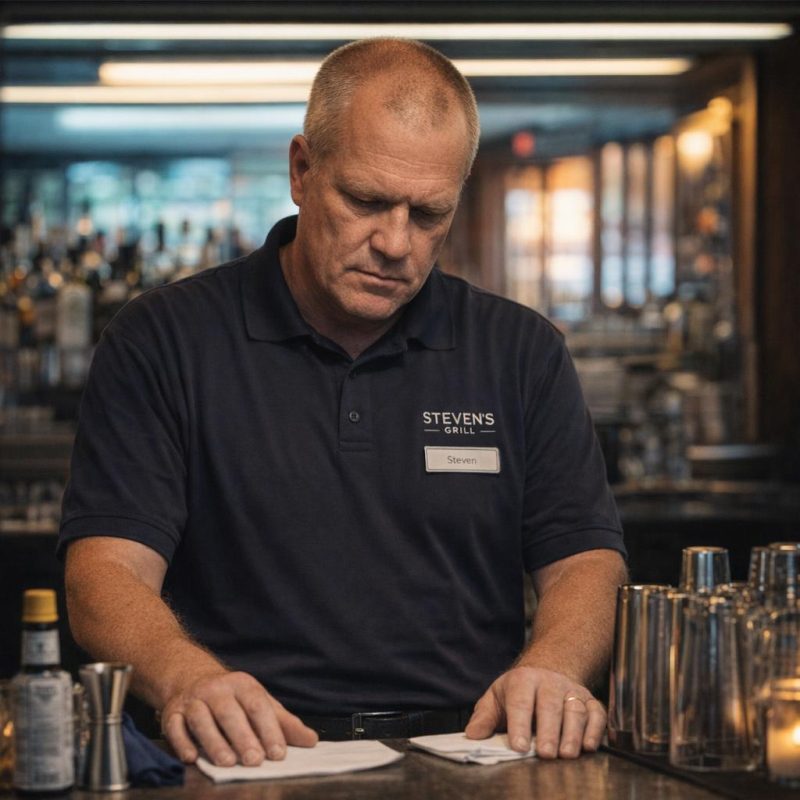 Image by RM AI
Questioning My Role
I didn't go back to Steven's office. I went out to the bar, pulled a stool around to the service side, and sat down. The lunch crowd wouldn't be in for another hour. I had the place mostly to myself. I'd spent weeks telling myself I'd been smart about it — that I'd seen an opportunity and taken it, that letting them film was my call and I'd made it with my eyes open. That's the story I'd been carrying. But sitting there with the bar top cool under my hands, I kept turning over what Steven had told me. They'd already seen the footage before they came back. They'd already made some kind of decision. Whatever I thought I was setting in motion, they'd been a step ahead of it. I tried to remember the moment I'd decided to let them film the second visit. It had felt like mine. It had felt like I was the one holding something. Maybe I had been. Maybe the two things could both be true at once — that I'd acted and that someone else had already accounted for my acting. I didn't know how to hold that. I sat there with the bar quiet around me and the weight of not knowing whose plan I had actually served.
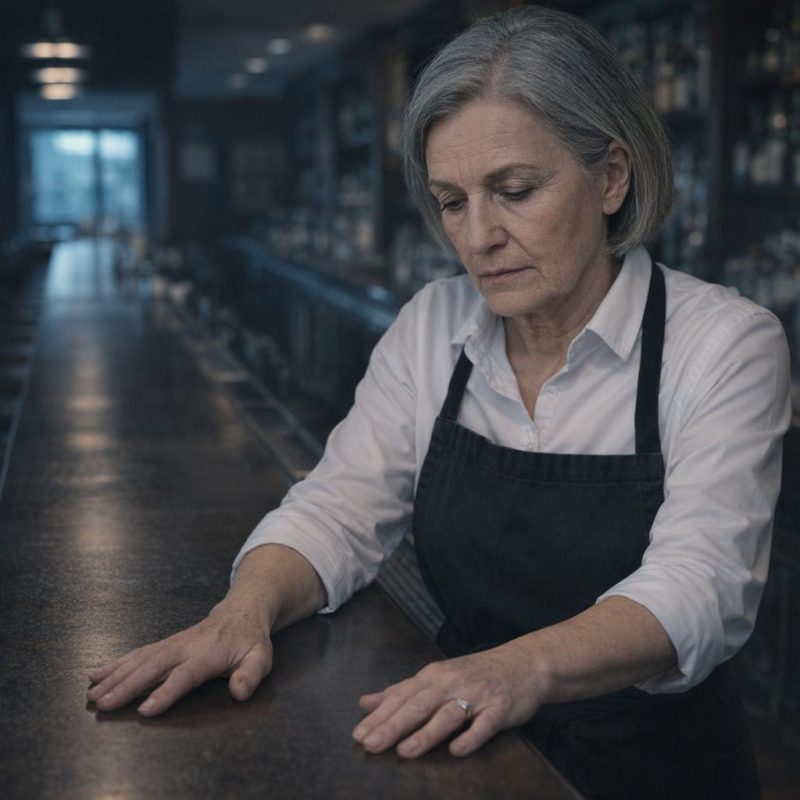 Image by RM AI
The Call from Production
The call came in on a Tuesday, mid-afternoon, when the bar was slow. Steven flagged me over and handed me his phone with a look that said he already knew who it was. The woman on the other end introduced herself as a producer with the production company. She was polite in that careful, measured way that people are when they've been coached on what to say. She asked if I had a few minutes. I said I did. She said they were reviewing all footage from the shoot and wanted to discuss permissions. She asked if I would consider signing a release for the security footage from the original incident, and also for the recording from the follow-up visit. I asked her what they intended to do with it. She said they were evaluating their options and weren't in a position to share specifics yet. I asked whether the comedian was aware they were making this call. There was a pause — not long, maybe two seconds — and she said that was something she couldn't speak to at this time. I told her I'd think about it. She thanked me and said she'd follow up. Steven was watching me when I handed the phone back. I stood there for a moment, turning over the careful, even tone she'd used the entire time.
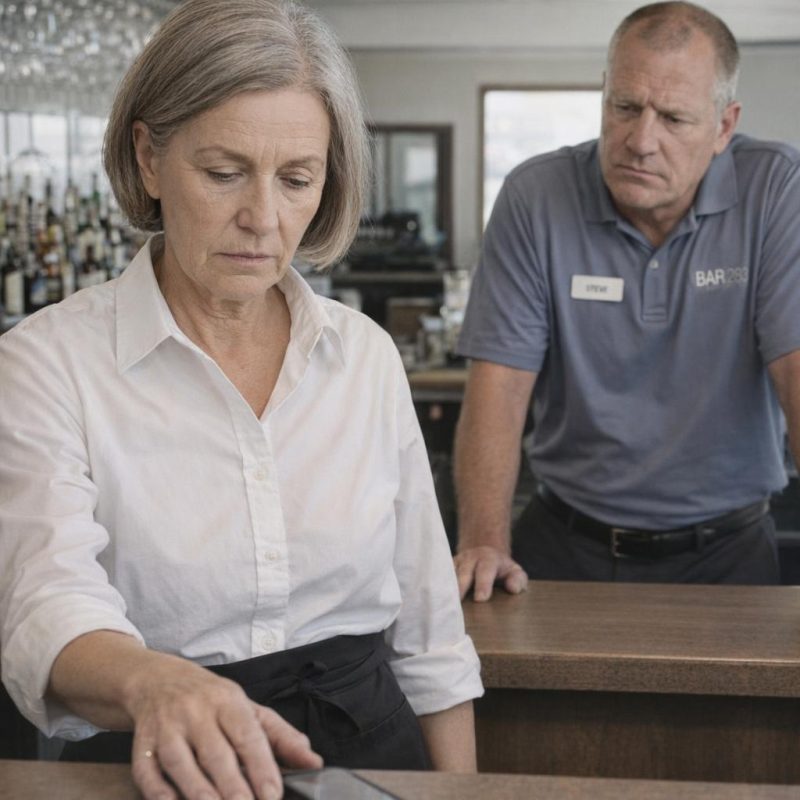 Image by RM AI
One Condition
Steven asked me what I was going to do. I told him I wasn't sure yet, but I knew what I wasn't going to do. I wasn't going to hand over footage so they could cut it into something that made him look like a man who'd had a rough day and come back to make it right. I'd seen enough of those segments — the working-class person who gets a surprise, tears up on camera, says something grateful. That wasn't what happened. What happened was he threw money at me and called me a peasant in front of a dining room full of people, and then a production company showed up wanting to use my reaction for whatever served them. Steven nodded slowly. He said he thought I was right to be careful. I called the producer back that afternoon. I told her I had one condition. She asked what it was. I said they couldn't use any of it — not the security footage, not the recording — to build a story that wasn't true. No redemption arc, no wholesome ending, no making me into a prop in his image cleanup. I told her it was simple: either tell the truth about what happened, or leave me out of it entirely.
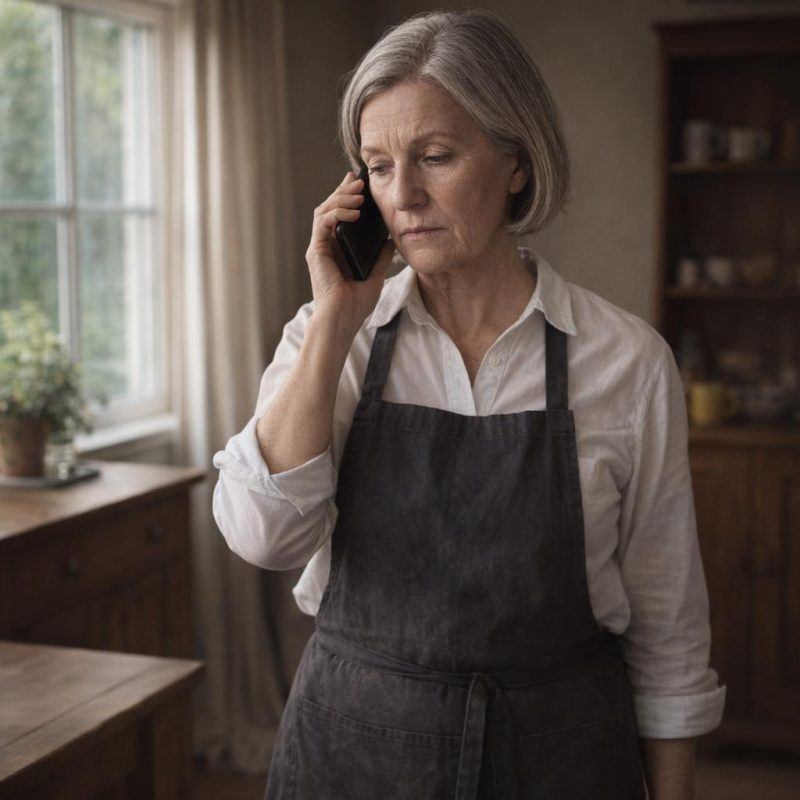 Image by RM AI
Several Weeks of Silence
Three weeks went by and I didn't hear anything. Then four. I kept my regular shifts, did my opening setups, ran my tables. Marcus asked me about it one afternoon while we were doing side work before the dinner rush. I told him I hadn't heard a word. He asked what I thought that meant. I said I figured it meant his lawyers had gotten involved and shut it down. That's usually how it goes — money moves faster than footage, and by the time anyone with a camera wants to do something with what they have, the legal team has already made it not worth the trouble. Marcus didn't argue with me. He just nodded and kept rolling silverware. A few days after that, he came in for his shift and found me at the bar before we opened. He held up his phone without saying anything. The comedian had posted an announcement. His special had been postponed. The reason he gave was creative differences.
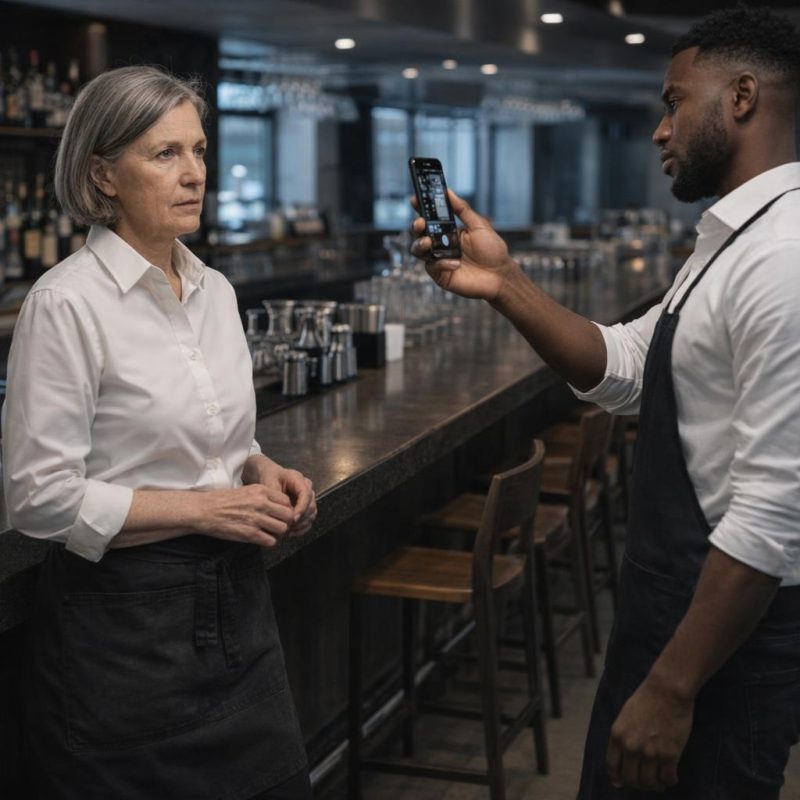 Image by RM AI
They Needed Evidence All Along
Nina came in on a Thursday afternoon, no camera, no crew. She sat down at the bar and asked if I had a few minutes. I poured her a coffee and told her to go ahead. She said she'd heard about the postponement and thought I deserved to know something. The special had been in trouble before they ever walked back through our door. She said there had been complaints — multiple, from people on previous shoots — and the executives had been sitting on a problem they couldn't easily document. His contract was complicated, his public profile was managed carefully, and without something concrete and on record, they didn't have what they needed to act. So they brought him back. They knew the location, they knew the history, and according to Nina, they had a reasonable expectation of how he'd behave if the conditions were right. She said it carefully, but she said it. They came back to this bar because they needed footage they couldn't manufacture themselves. I looked at her for a moment. I thought about the afternoon I'd decided to let them film. I thought about how certain I'd been that I was the one running it. And then I understood — clearly, without any room left for doubt — that my confrontation had given them exactly the documented proof they'd been looking for all along.
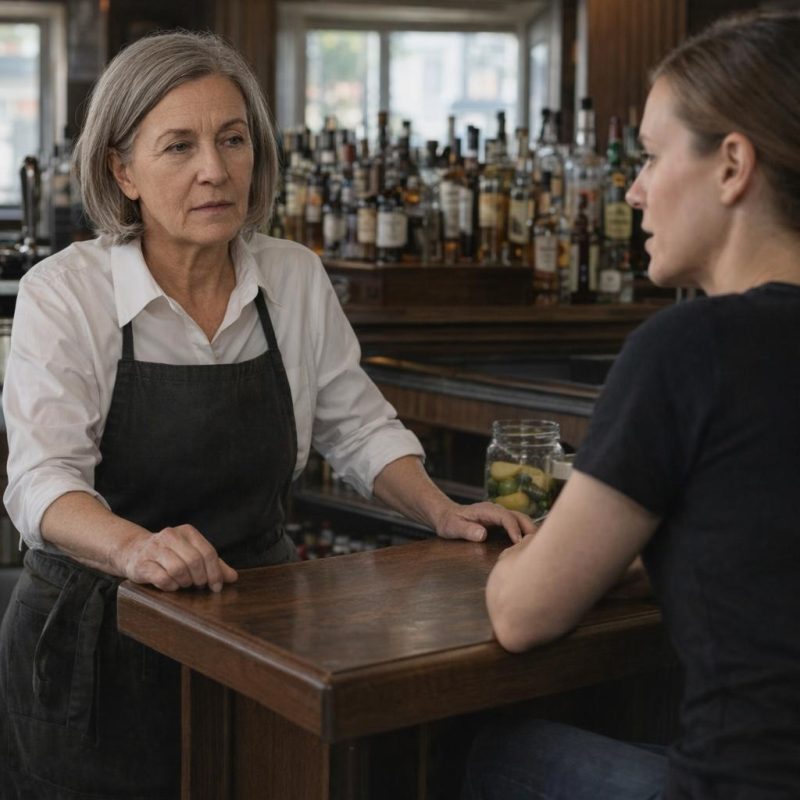 Image by RM AI
Part of Their Agenda
I asked Nina why they didn't just fire him outright. She said it wasn't that simple. His contract had protections built in, and his public image was still an asset they weren't ready to walk away from without cause they could defend. They needed something documented, something that couldn't be explained away or settled quietly. Marcus had come in by then and was standing at the end of the bar listening. He asked Nina directly whether the company had planned the whole thing from the start. She said they hadn't planned it exactly — they'd created the conditions and let it develop. I turned that over for a second. Created the conditions. That was one way to put it. They'd known who I was, known what had happened the first time, and brought him back to a place where the odds of him behaving badly were as good as they were going to get. They'd counted on my anger being real, because real anger reads differently on camera than anything staged. Marcus looked at me. I looked at the bar top. I'd gotten what I wanted — he'd been caught on record, behaving exactly the way he'd behaved with me. But I could see now, laid out plainly, exactly how my anger had fit into someone else's larger calculation.
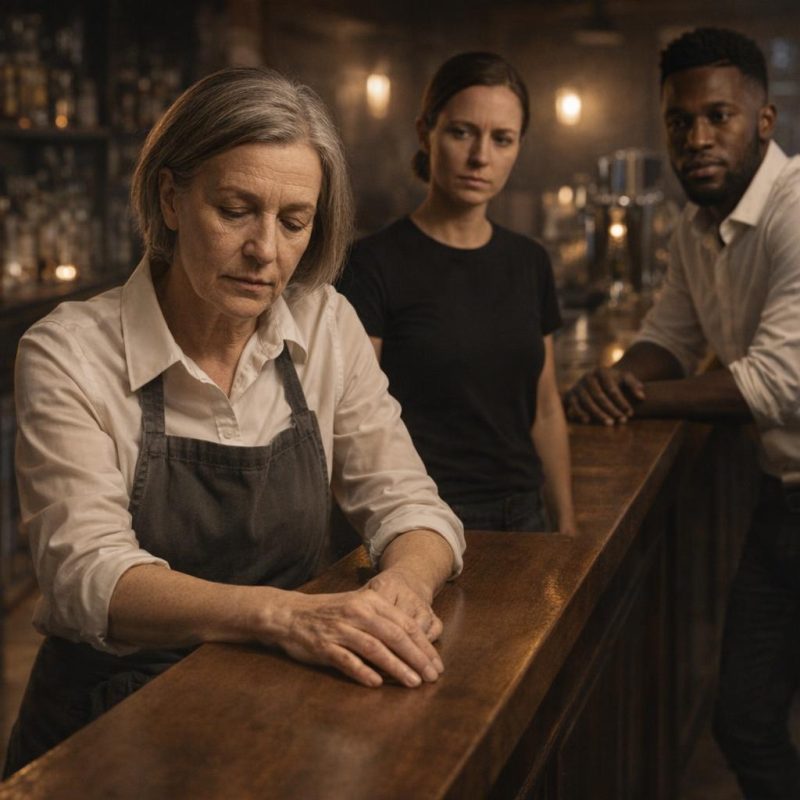 Image by RM AI
Creative Differences
Nina left around four. Marcus had a table to set up and drifted off. I stayed at the bar. Creative differences. I kept coming back to that phrase. It was the kind of language designed to say nothing while sounding like it said something — the corporate version of no comment, dressed up just enough to satisfy a headline. What it actually meant, as best I could work out, was that a production company had footage of their talent calling a restaurant worker a peasant and throwing money at her, had received complaints from other shoots they'd been sitting on, and had decided the math no longer worked in his favor. That was the creative difference. The creativity was his, and the difference was that they finally had something they could use. I didn't know what was happening in whatever conference rooms or lawyers' offices were involved. I assumed there were negotiations, that his team was working to contain it, that the postponement was a holding position while people with more money than me figured out the terms. The phrase sat in my head, smooth and empty, the way those things are built to sit.
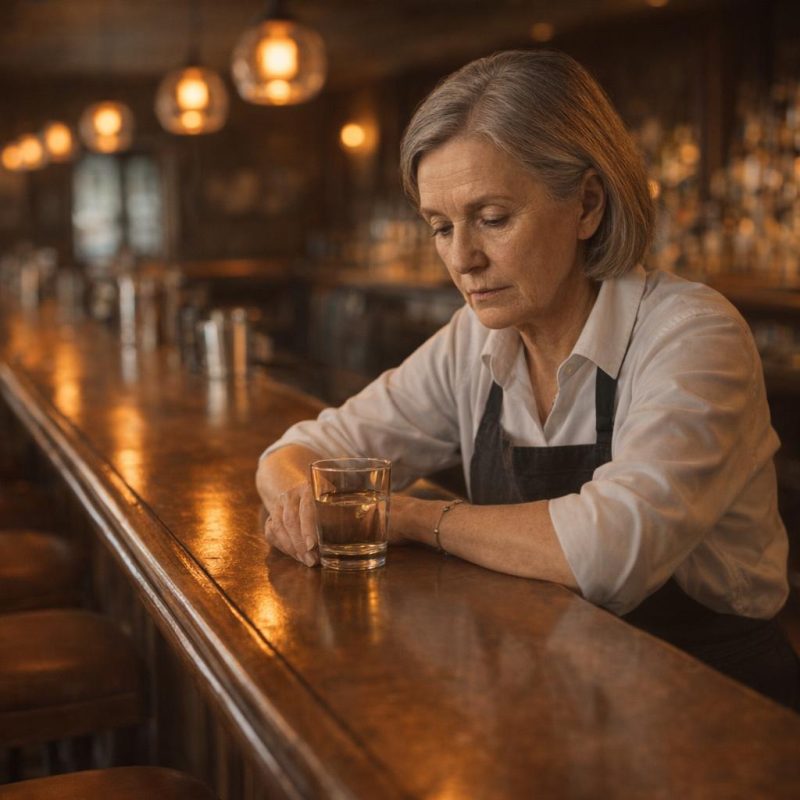 Image by RM AI
Assuming It Was Over
Two months passed. No call from the production company. No follow-up from the producer who'd been so careful and polite on the phone. No news stories, no leaks, nothing. Marcus asked me one evening after close, while we were wiping down the bar, whether I thought anything was still going to happen. I told him probably not. I said his legal team had almost certainly made it expensive enough that the production company had decided the footage wasn't worth the fight. Marcus said that tracked. He said it always seemed to go that way — the person with the money and the lawyers ends up deciding what gets remembered and what gets buried. I didn't disagree. I'd been in this city long enough to know how that math worked. I put the footage out of my mind as best I could. I went back to my shifts, my regulars, my opening setups. I stopped checking to see if anything had surfaced. Some things just don't go the way you want them to, and the sooner you make your peace with that, the easier the rest of it gets. I'd had my moment in that dining room. I'd said what I said. I settled into the quiet understanding that money and lawyers had almost certainly had the last word.
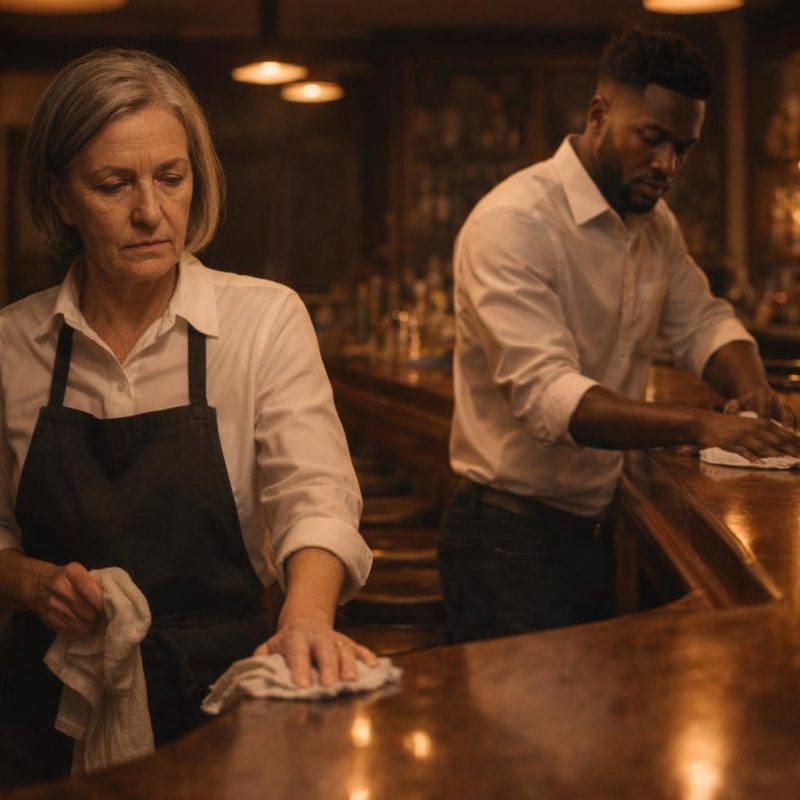 Image by RM AI
The Journalist's Call
I was restocking the service station on a Tuesday afternoon when my phone buzzed with a number I didn't recognize. I almost let it go to voicemail — I usually do with unknown numbers — but something made me pick up. The woman on the other end introduced herself as Rachel, said she was a television journalist working on an investigative piece. I asked her what kind of piece. She said it was about The Comedian. I went very still. I told her I wasn't sure what she was referring to. She was patient about it, said she understood if I was cautious, that she'd heard about what happened at the restaurant and she wasn't looking to cause me any trouble. She said she just wanted to talk, that she was putting together something larger and thought my experience might be relevant. I asked her how she'd even heard about it. I'd assumed the whole thing had been buried — two months of silence had made that pretty clear to me. She said she'd been following a trail of complaints from service workers across the country, that my name had come up through a source she couldn't identify. I started to ask another question. Then she said several other workers had already come forward with stories just like mine.
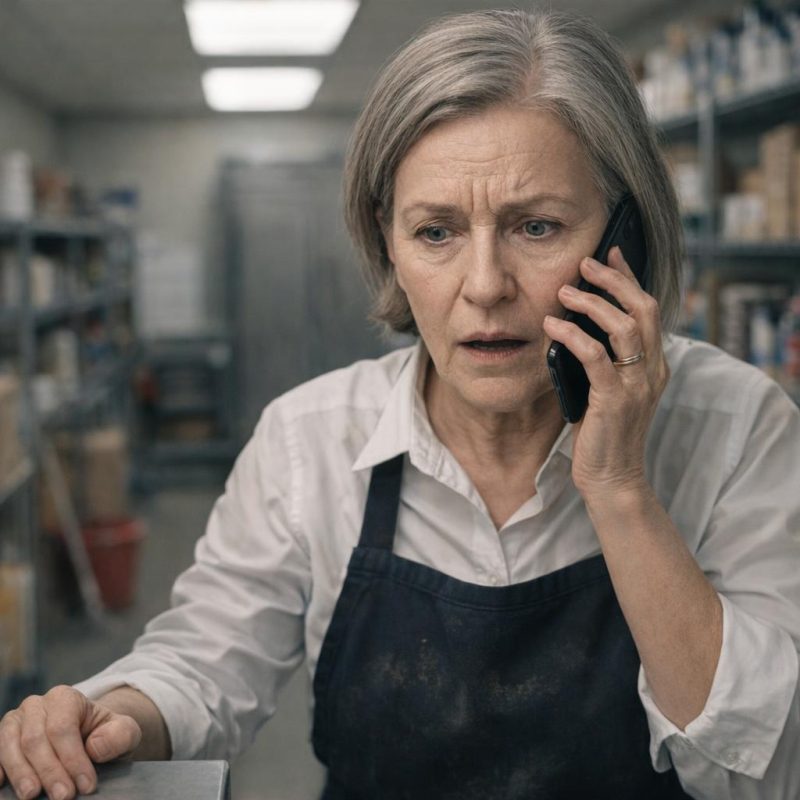 Image by RM AI
Not Just Me
We met two days later at a coffee shop a few blocks from the restaurant, a quiet place where I could get a corner table and not feel like I was being watched. Rachel came in with a leather bag over one shoulder and a tablet already open. She was direct, which I appreciated. She laid it out plainly: after the postponement announcement, three people had contacted her independently. A hotel housekeeper in Chicago said he'd berated her in a hallway when she knocked on his door during a scheduled cleaning window, then tipped her extravagantly once a camera crew appeared around the corner. A server in Los Angeles described almost the same dynamic — contempt when the room was empty, performance when it wasn't. A cab driver here in New York said he'd been called incompetent for taking a route the man himself had requested, then handed a hundred-dollar bill the moment someone pulled out a phone. Rachel said the pattern was consistent across all of them: cruelty before the cameras, generosity for the cameras. She said my footage was the clearest documentation she had because it captured both sides in the same location within the same hour. I sat with that for a moment. I'd spent two months thinking I was just one woman who'd had a bad night. The complaints stretched across months and multiple cities.
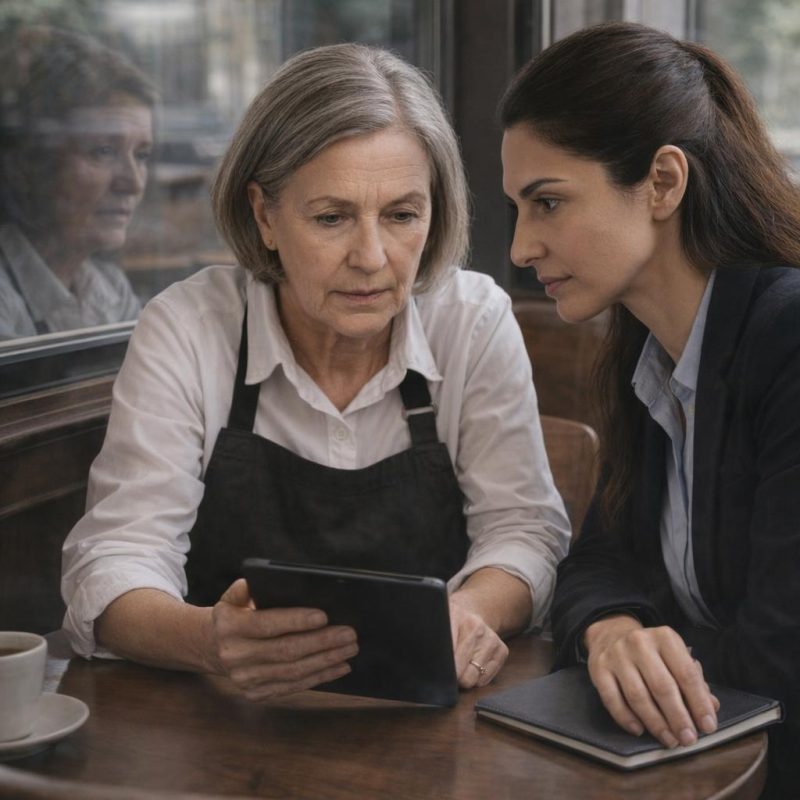 Image by RM AI
The Gap Between Persona and Behavior
Rachel explained that the core of her story was the gap — that was the word she kept using. The gap between what his audience saw and what the people serving him actually experienced. She said the production company had been selective in what they aired, that every segment showing him being generous had been kept, and anything that complicated that image had been cut. She'd reviewed hours of raw footage through a source inside the company and said the edited version of his show bore almost no resemblance to what had actually happened in those rooms. The wholesome, big-hearted persona his fans knew had been assembled carefully, piece by piece, out of the moments that served it. She asked me if I was prepared for attention once the story ran — not just online noise, but possibly press calls, people showing up at the restaurant. I told her I wasn't looking for attention. I told her I just wanted the truth told accurately, that what happened to me happened, and that I was tired of it existing only in my memory and on a hard drive somewhere. She nodded and wrote something down. I looked out the window at the street and thought about all the careful work that had gone into making him look like someone he wasn't, and how quietly that kind of thing tends to fall apart once someone starts pulling at the edges.
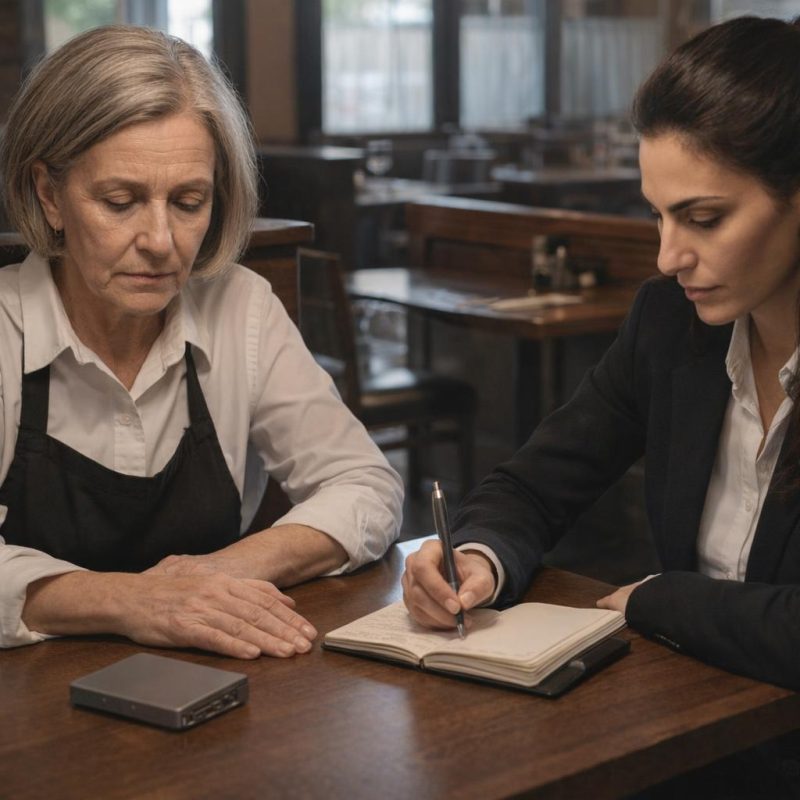 Image by RM AI
Getting Ahead of the Story
Rachel called me on a Thursday morning before my shift. She said his representatives had issued a statement overnight and it was already moving fast online. She read it to me: the incident had been a misunderstanding, I had recognized him when he walked in, I had deliberately provoked him hoping to create a scene that would get attention. I stood in my kitchen and listened to her read those words and felt something I hadn't felt in weeks come back up through my chest. When I got to work, Marcus had already seen it. He turned his phone toward me without saying anything, and I read through the posts — people debating it, some of them already decided, already writing things like she knew exactly what she was doing and this is what happens when someone smells money. Marcus said the statement had gone out to three entertainment outlets simultaneously, which meant it hadn't been casual. I told him I knew. Rachel had said she had evidence that directly contradicted the claim, but she hadn't told me yet what it was. I asked Marcus to put his phone away. I didn't want to keep reading. The lie was already out there doing its work, spreading into comment sections and group chats, getting comfortable in places the truth hadn't reached yet.
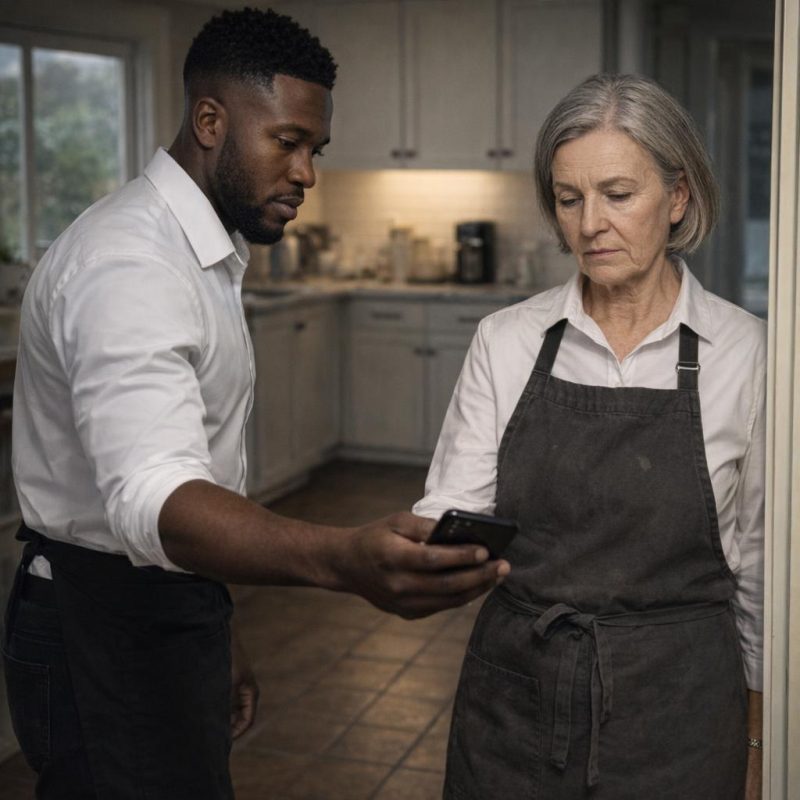 Image by RM AI
The Security Footage Proves It
Rachel came to the restaurant the next morning before we opened. She had her laptop and she pulled up the full security footage — not just the clip from the dining room, but the earlier footage from when he first walked in. I watched myself on that screen moving between tables, doing my job, not looking up when the door opened. When I approached his table for the first time, my face showed nothing because there was nothing to show. I had no idea who he was. Then Rachel skipped forward to a section I hadn't seen before, a wider angle from near the service station. The audio was faint but audible. You could see me lean toward Marcus and say something. Rachel turned up the volume. My voice came through clearly: who does this guy think he is. Marcus confirmed on camera — you could see him shrug and shake his head, the universal gesture for I have no idea. Rachel said that exchange happened before anyone told me anything, before the incident escalated, before any of it. She said his team's claim that I recognized him and provoked him deliberately couldn't survive thirty seconds of that footage. She was right. The lie had lasted less than a day. I sat there looking at myself on that screen, asking a question I genuinely didn't know the answer to, and that was the whole thing right there.
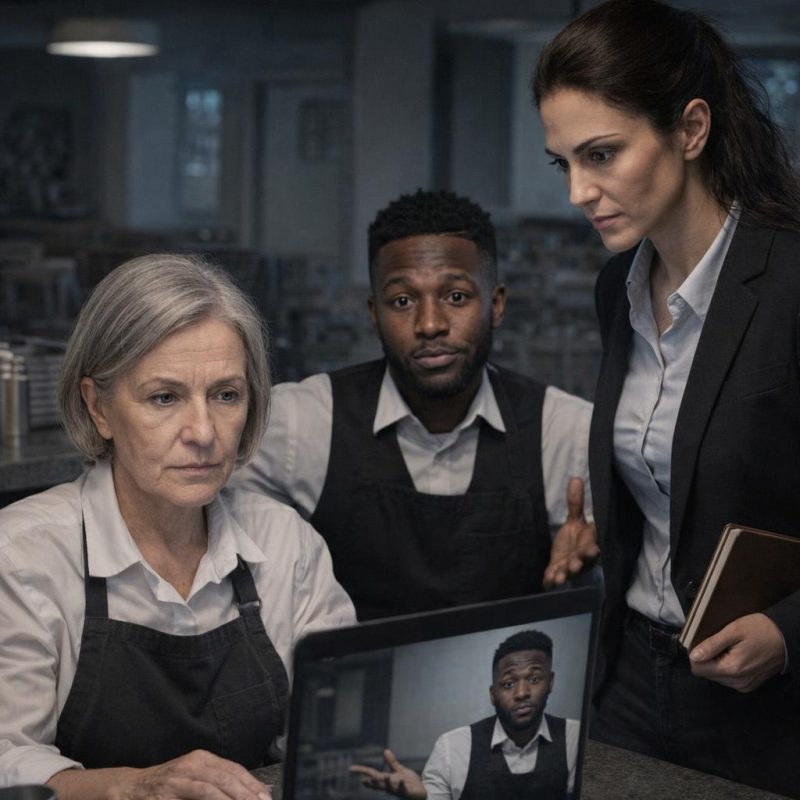 Image by RM AI
Nobody Will Believe a Waitress
Rachel called two days before the story was set to air. She said Nina had provided the full recording — not just the portion I'd known about, but everything captured after the producer called cut. She said the audio quality was clear enough to use on broadcast. She asked if I wanted to hear it before it went public. I said yes. She played it through the phone and I stood in my hallway and listened. His voice was relaxed, almost cheerful, the way people get when they think the workday is over. He complained about the food, about the service, about the neighborhood. He called restaurant workers ungrateful. He said something about people forgiving anything once you handed them enough cash, like it was a system he'd figured out and found amusing. Then his voice came through the phone, easy and unhurried: nobody would believe a waitress over him.
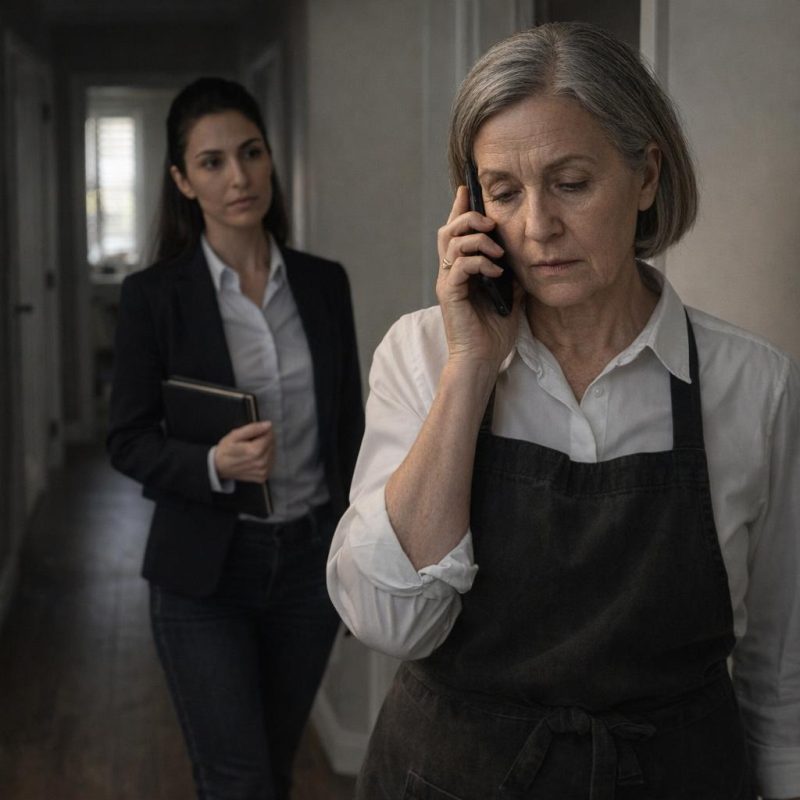 Image by RM AI
The Report Airs
Rachel's report aired on a Wednesday night. Steven had come in early and the three of us — me, Marcus, and Steven — stood behind the bar with the television turned up. The report opened with the hotel housekeeper from Chicago, then the server from Los Angeles, then the cab driver. Rachel's narration laid out the pattern without editorializing much; she didn't need to. Then the security footage from our bar played. I watched myself on national television approaching a table, doing my job, getting a stack of bills thrown at me. Marcus put his hand on the bar near mine but didn't say anything. Steven stood very still. Then the report cut to a title card and Rachel's voice said the following recording was made after filming concluded. The bar went quiet. And then his voice came through the television speakers, easy and unhurried, saying nobody would believe a waitress over him.
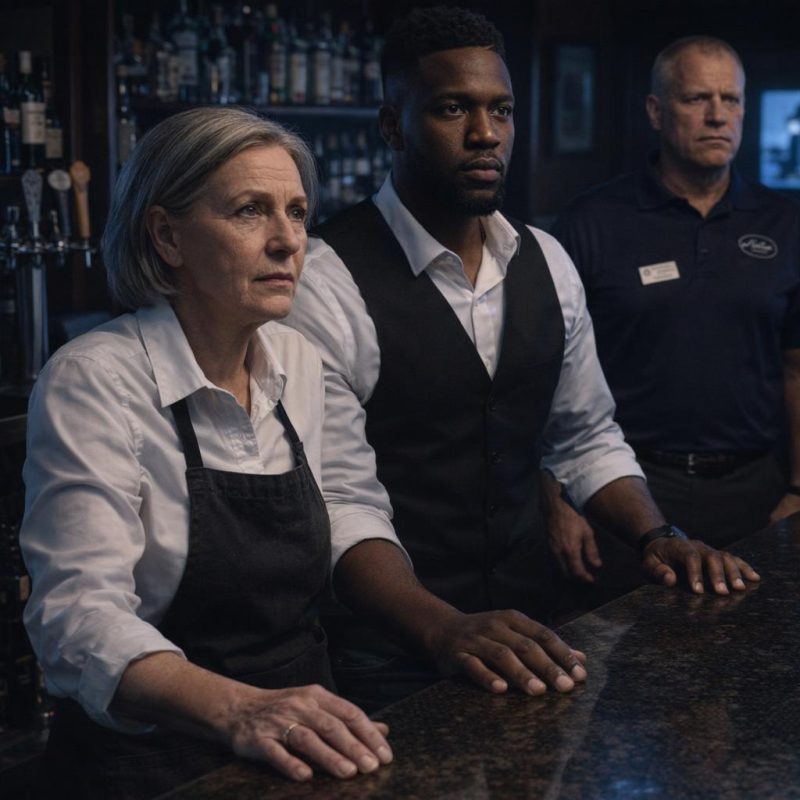 Image by RM AI
Consequences
By the next morning it was done. The special wasn't postponed this time — it was canceled, the network's statement using that word specifically, no ambiguity. Three sponsors announced they were ending their partnerships before noon. His management released a formal apology by mid-afternoon and Marcus texted me the link before I'd even seen it. I read it at the kitchen table with my coffee going cold. It expressed deep regret for any pain caused to service industry workers, acknowledged the vital role they play, used phrases like profound respect and commitment to doing better. Every sentence was careful. Every sentence had been written by someone whose job was to make other sentences disappear. Marcus called while I was still reading and said it sounded like it had been written by a committee that had never met the man. I told him that was probably accurate. I set my phone down and read the apology again from the top — every word of it sounding nothing like the voice on that recording.
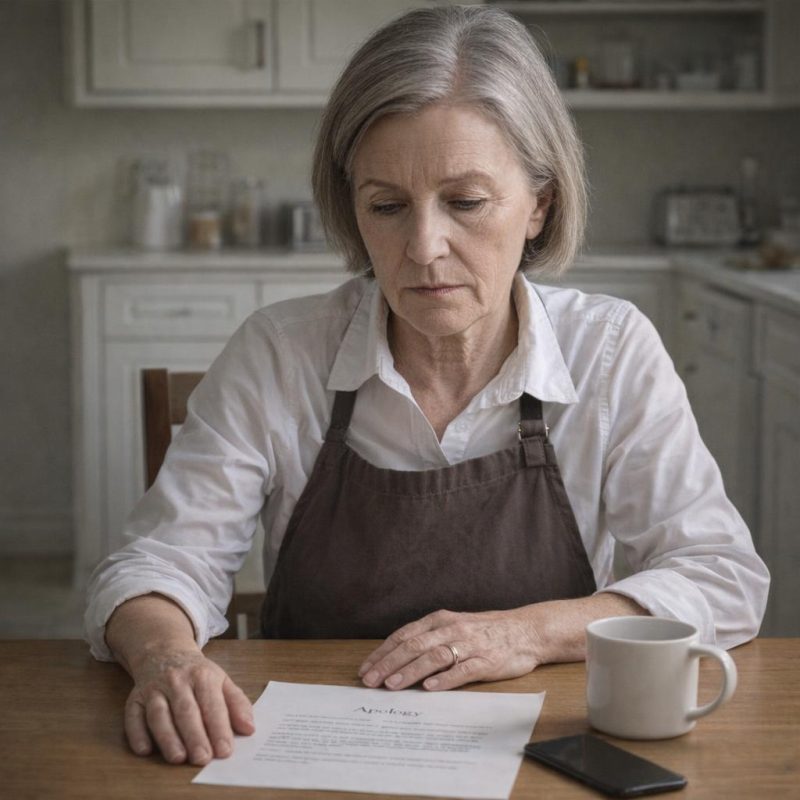 Image by RM AI
The Hollow Apology
I read it a third time, slower. The apology used the phrase deep regret for any misunderstanding — misunderstanding, like what happened was a failure of communication rather than a man throwing cash at a woman and telling her to pick it up. It mentioned hardworking people who keep our communities running. It expressed commitment to learning and growing. Every clause was buffered, every edge sanded down. I'd worked in restaurants long enough to know what a real apology sounds like — it's short, it's specific, and it costs the person something. This cost him nothing. His lawyers had written it, his publicist had approved it, and somewhere he'd signed off on it without reading past the first paragraph. I knew that because I'd heard his actual voice on Nina's recording. Not the careful one. The real one. Take it, peasant. Nobody will believe a waitress over me. I set the apology down on the kitchen table and left it there. The statement ran to four paragraphs. His real words had taken about four seconds. Those four seconds were the truth. The four paragraphs were the distance between who he performed himself to be and who he actually was when the room felt safe enough to show it.
 Image by RM AI
Refusing the Spotlight
The interview requests came in fast — morning shows, cable news, a couple of podcasts that wanted the full story in two hours. I did one. Rachel's piece had already run and I'd said what I needed to say in it, so I told the others no thank you and meant it. Marcus thought I was leaving something on the table. I told him the table was fine where it was. Steven pulled me aside before a shift about two weeks after everything settled and said he wanted me to know he was glad I'd handled it the way I did — no spectacle, no ongoing circus. I told him I wasn't interested in being a story. I was interested in getting through a Friday dinner rush without running out of the house Malbec. A few customers recognized me in those first weeks. Most of them were decent about it — a nod, a quiet good for you, one woman who squeezed my hand and didn't say anything at all, which was the best response I got. I tied my apron the same way I had for twenty-three years, picked up my order pad, and went back to work. The dining room was loud and warm and full of people who needed things, and that was exactly where I wanted to be.
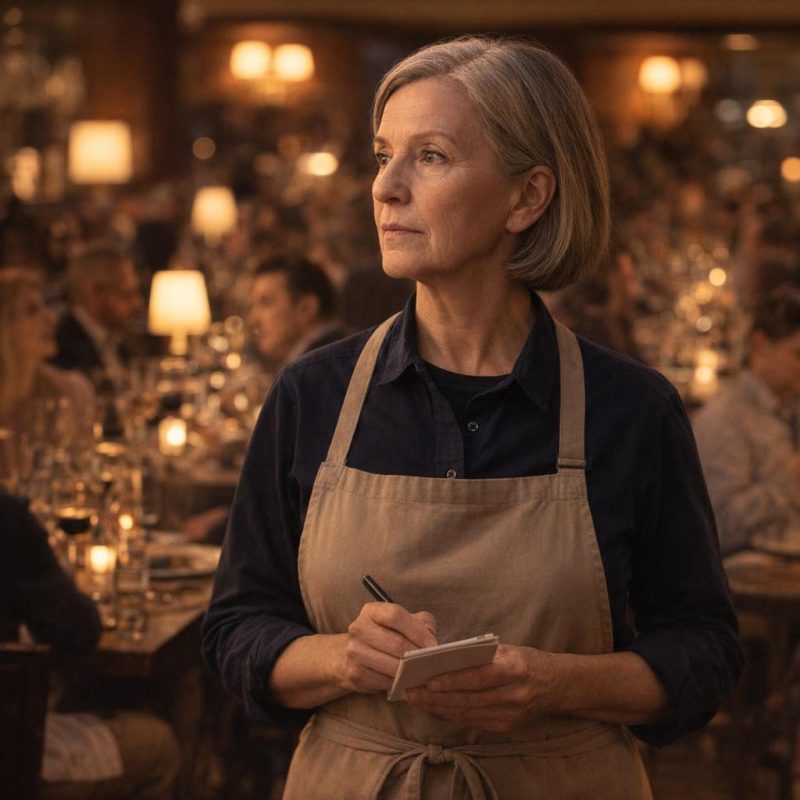 Image by RM AI
The Rebuilt Special
Nina came in on a Tuesday, maybe four months after Rachel's piece ran. She sat at one of my tables and ordered the salmon and we talked for a while before she got to the reason she'd come. She said the production company had gone back to the drawing board after everything fell apart. The new version of the special had no celebrity host, no staged moments, no manufactured warmth. It was just workers — people who'd been doing the same job for decades, talking about what that actually looked like. Longtime bartenders, line cooks, a woman who'd been a hotel housekeeper for thirty-one years. Nina said the focus was on the people whose work tends to go unnoticed until something goes wrong. She asked if I'd consider being part of it. I asked what it would involve. She said just talking — my twenty-three years, the regulars I'd watched grow up, the rhythms of the job. No gimmicks. I told her the only condition I had was that nobody throw cash at me during filming. She laughed, which was the right response. I told her I'd think about it. She left a good tip, which I appreciated. I cleared her table and stood there for a moment with the offer sitting quietly in my hands, on my own terms, with nobody else's name attached to it.
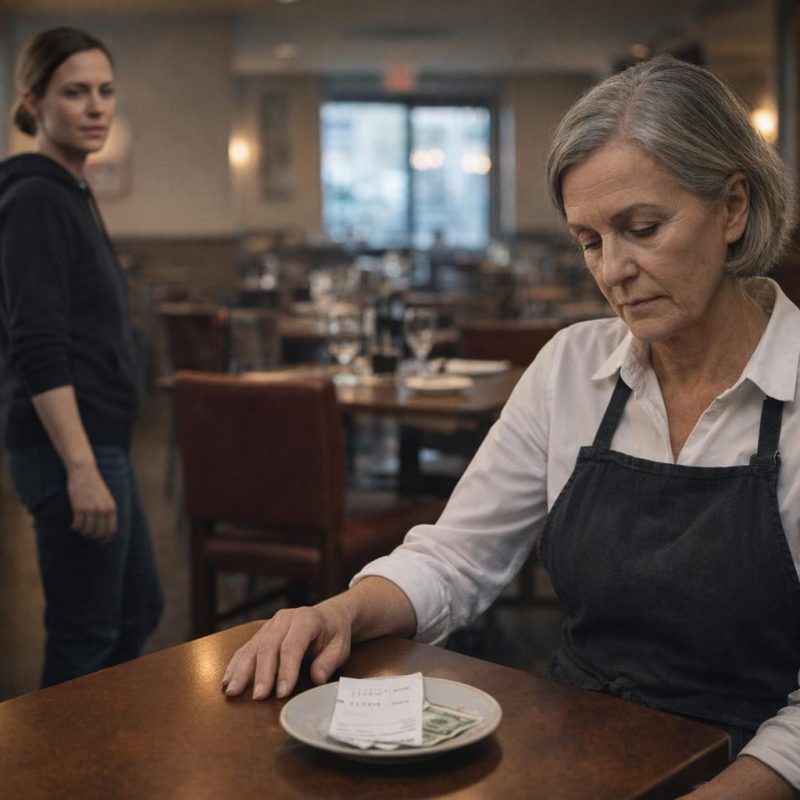 Image by RM AI
A Voice Louder Than His
My episode aired on a Thursday night. Marcus came over with takeout and we watched it on my couch. I'd talked for about three hours during filming and they'd cut it down to twenty-two minutes, which felt about right. I watched myself describe the first table I ever served, the couple who came in every anniversary for sixteen years, the way a dining room sounds different at six in the evening than it does at nine. The producers never showed his face. They never used his name. They didn't need to — anyone watching knew the context, and the legal agreement I'd signed meant I couldn't say it anyway. But the episode wasn't about him. That was the thing. It was about the work, and the years, and what it means to show up for something every day without anyone particularly noticing. Marcus said I looked like myself on camera, which he meant as a compliment and I took as one. I thought about those dollar bills scattered across the floor. I thought about his voice saying nobody will believe a waitress. He'd been trying to make me smaller, and instead he'd handed me twenty-two minutes of television and an audience that was actually listening. The money he threw cost him everything he'd built, and it gave me the one thing he never thought someone like me could have.
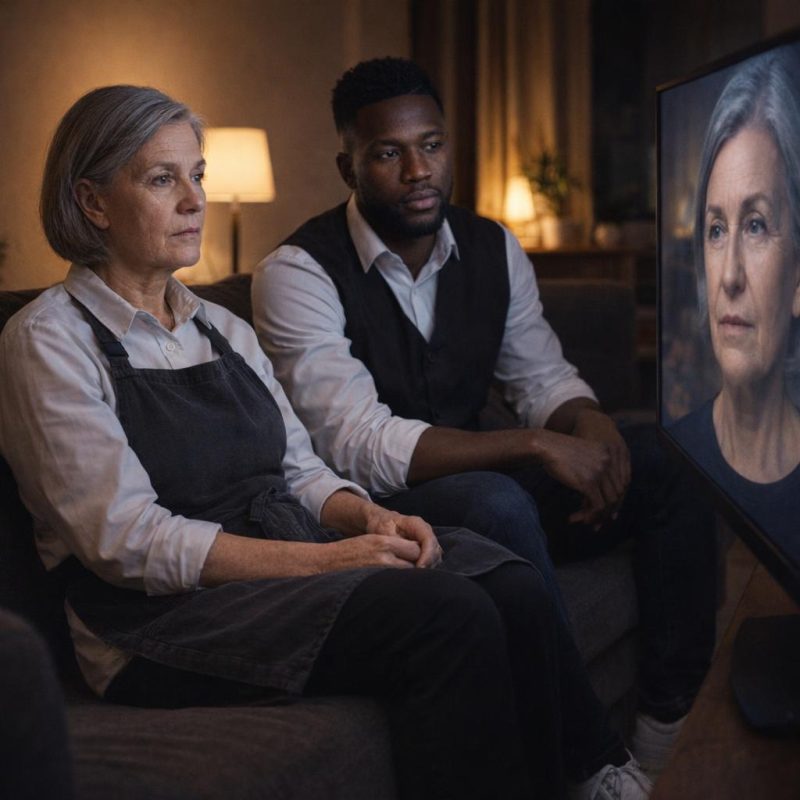 Image by RM AI