

My Daughter-in-Law Banned Me From Her House After Accusing Me of Spreading Lies—Then I Discovered Why She Really Wanted Me Gone
My Daughter-in-Law Banned Me From Her House After Accusing Me of Spreading Lies—Then I Discovered Why She Really Wanted Me Gone
A New Beginning
When Eric called to tell me he was getting married, my first reaction — if I'm being honest — was to sit down. Not because I was upset, exactly. More because eight months felt like a very short time to know someone well enough to spend your life with them. But then I heard his voice, and I hadn't heard him sound like that in years. Light. Easy. Like the weight he'd been carrying since the divorce from Melissa had finally lifted off his shoulders. Eric had been through so much — the split, the custody arrangements, watching Sophie try to make sense of why her family looked different now. He'd put his head down and worked and done the right things, and somewhere in all of that the joy had just quietly gone out of him. So when he said Vanessa's name and I could hear him smiling through the phone, I told myself that was what mattered. I made a decision right then: I was not going to be that mother-in-law. I was not going to count the months or ask pointed questions or make him feel like his happiness needed my approval. I was going to welcome this woman with both arms open. I held onto that intention like something fragile, wanting so much to believe that this time, for my son, things would be different.
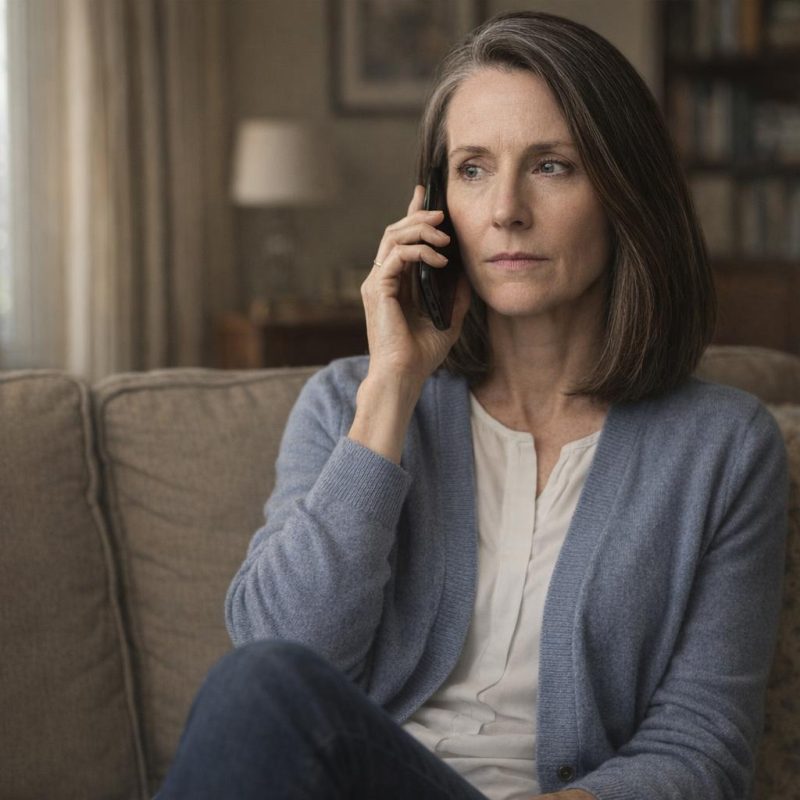 Image by RM AI
The Engagement Dinner
I spent two days on that dinner. I'm not exaggerating — two full days of planning, shopping, and cooking, because I wanted Vanessa to walk into my home and feel like she already belonged there. I made Eric's favorites alongside dishes I thought might feel welcoming to someone new to the family. I set the table with the good china. Diane came early to help, and my niece Jenna brought flowers, and by the time everyone arrived the house smelled like something warm and real. Vanessa looked beautiful. She was polished in a way that made me feel slightly underdressed in my own kitchen, but I pushed that thought aside. She said all the right things — complimented the food, thanked me for hosting, laughed at the right moments. Eric barely took his eyes off her all evening, which made my heart do something complicated and tender at the same time. I kept trying to draw her into conversation, asking about her work, her interests, what she liked to do on weekends. Her answers were pleasant and perfectly formed, like she'd thought about them in advance. Diane seemed charmed by her. Jenna was quieter, watching. At the end of the night, Vanessa hugged me and said thank you, and I smiled back — but her eyes, just for a second, stayed somewhere else entirely.
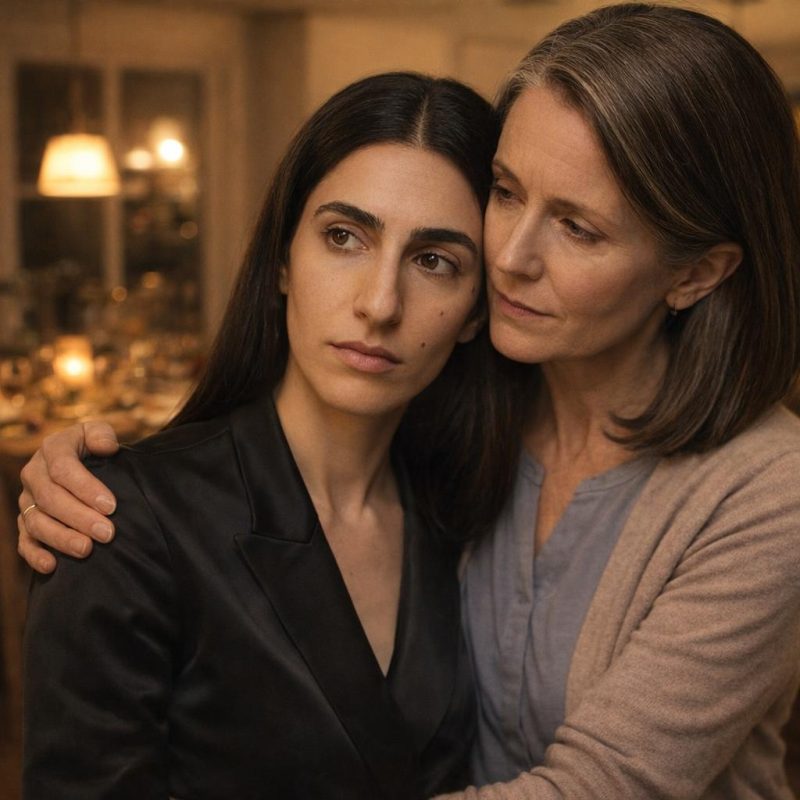 Image by RM AI
Getting to Know Her
I suggested coffee about two weeks after the engagement dinner, and Vanessa said yes without hesitation, which I took as a good sign. We met at a little café near her office, and she was warm enough — asked about my garden, laughed at my stories about Eric as a kid, seemed genuinely interested. But every time I tried to turn the conversation toward her, something slipped. I asked about her family back home and she said they were scattered, that she'd grown up moving around a lot. I asked where she felt most like herself growing up and she said she'd always been adaptable. I asked if her parents would be coming to the wedding and she said it was complicated, and then she asked me what flowers I thought would look best for the ceremony. I let her redirect me. We went shopping a few weeks later, and it was the same — pleasant, easy on the surface, but somehow I always came away knowing less about her than when we'd started. I told myself some people were just private. I told myself I was probably projecting, wanting a closeness she wasn't ready for yet. There were a couple of small moments where something she said didn't quite line up with something she'd said before, but I couldn't have told you exactly what. It was less like a conversation and more like pressing my hand against a window — warmth on my side, glass in between.
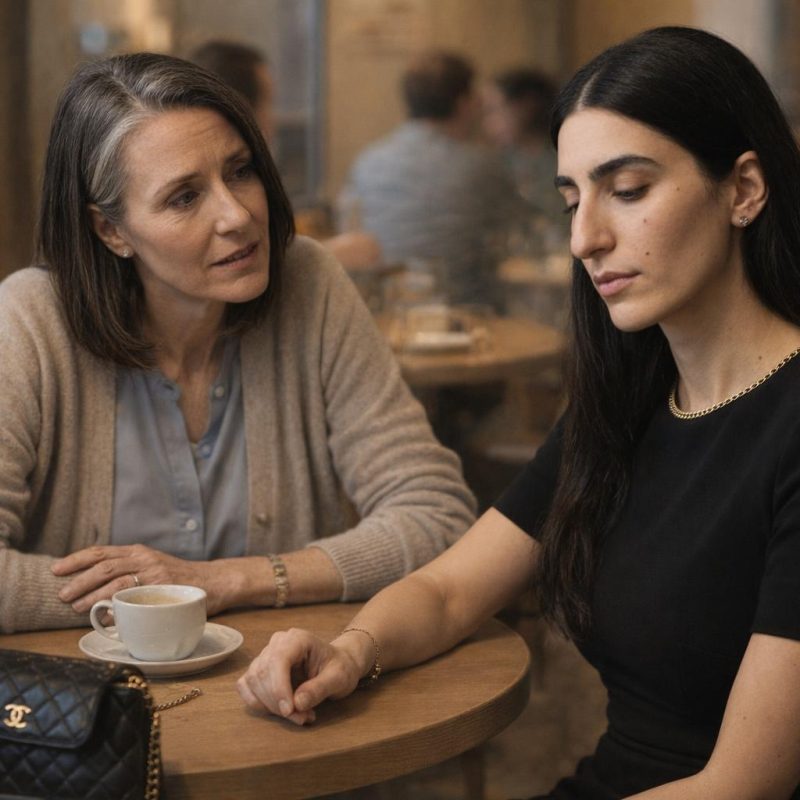 Image by RM AI
Something Borrowed
About a month before the wedding, I brought out my mother's pearl bracelet. I'd been thinking about it for weeks — whether it was too much, whether Vanessa would even want it. But it felt right. My mother had worn it on her own wedding day, and I'd worn it on mine, and I thought maybe this was how families carried things forward. I sat down with Vanessa at my kitchen table and told her the whole story — where the bracelet came from, what it had meant, how my mother used to say pearls needed to be worn to stay beautiful. Vanessa listened. She nodded in the right places. When I finished, she picked it up, turned it over once in her hands, and said, "That's so sweet of you, Amy. Thank you." Eric, who was standing in the doorway, lit up and said it was perfect, that his grandmother would have loved this. I watched Vanessa set the bracelet carefully back in the box and close the lid. I also told them I wanted to cover the flowers for the wedding — my contribution, something concrete I could give. Eric hugged me. Vanessa said that was very generous. I drove home telling myself that not everyone cried over heirlooms, that some people showed gratitude quietly, that I shouldn't need a bigger reaction to feel like the gesture had landed. But the box sat closed on the table in my mind for a long time after.
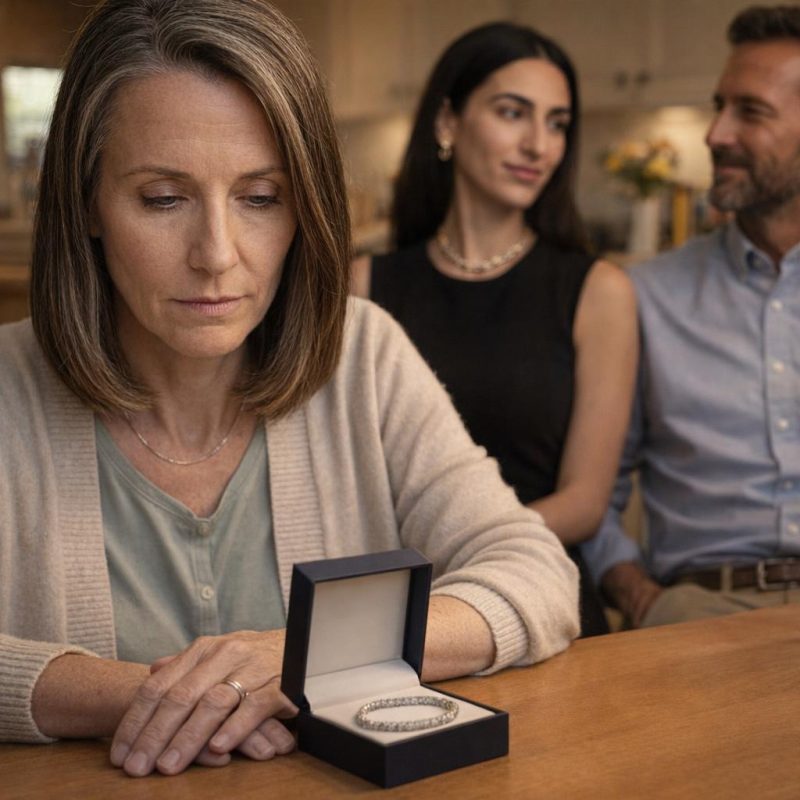 Image by RM AI
The Wedding Day
The wedding was small and genuinely lovely, held at a garden venue on a Saturday in early October. Eric's side filled up easily — me, Diane, Jenna, a handful of his friends, and Melissa, who came with Sophie because she and Eric had always managed to stay civil and Sophie wanted to be there for her dad. I was glad Melissa came. Sophie looked beautiful in a pale blue dress and spent most of the ceremony holding my hand, which undid me a little. Eric looked like himself again — the version of himself I remembered from before everything got hard. He stood at the altar with his shoulders back and his eyes bright, and I had to press my lips together to keep from crying too early. Vanessa was stunning. She walked in on her own, which she'd said she preferred, and she moved like someone completely at ease. The ceremony was short and sweet and I meant every good wish I sent up during it. But I kept noticing the other side of the aisle. One woman sat there — older, introduced to me briefly beforehand as a distant aunt — and that was all. Every other chair on Vanessa's side stood empty.
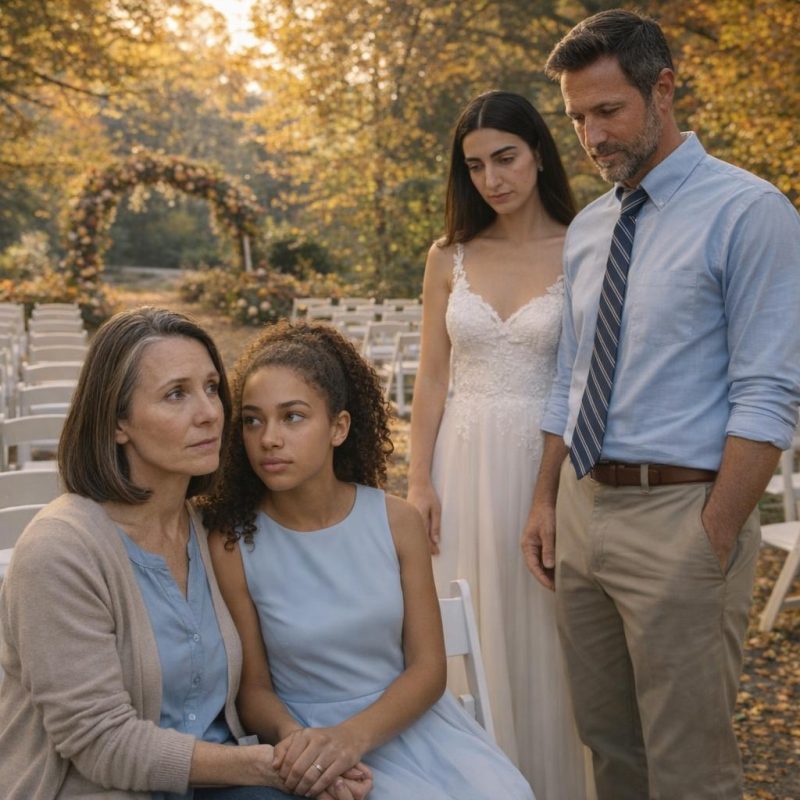 Image by RM AI
The First Months
The first few months after the wedding settled into a kind of routine. I called Eric every Sunday, and we'd talk for twenty minutes or so — his work, how Sophie was doing, whether they'd had time to do anything fun that week. He was tired a lot. He mentioned more than once that he'd been picking up extra hours, that there were projects stacking up, that he'd get more breathing room soon. Vanessa answered the phone occasionally when I called, and she was always perfectly pleasant — asked how I was, said Eric would be home later, hoped I was keeping well. I invited them for Sunday dinners and they came maybe half the time, which I told myself was reasonable for a newly married couple finding their footing. One afternoon Eric called me back after I'd left a voicemail, and somewhere in the middle of catching up he mentioned, almost in passing, that he'd been helping Vanessa sort out an old financial issue from before they met. I asked what kind of issue, and he said Vanessa preferred to keep the details private, that it was just something from her past she needed to put behind her. I said of course, that made sense. I didn't push. But after I hung up, I sat with the phone in my lap for a few minutes, and the words "old financial issue" stayed with me longer than I expected.
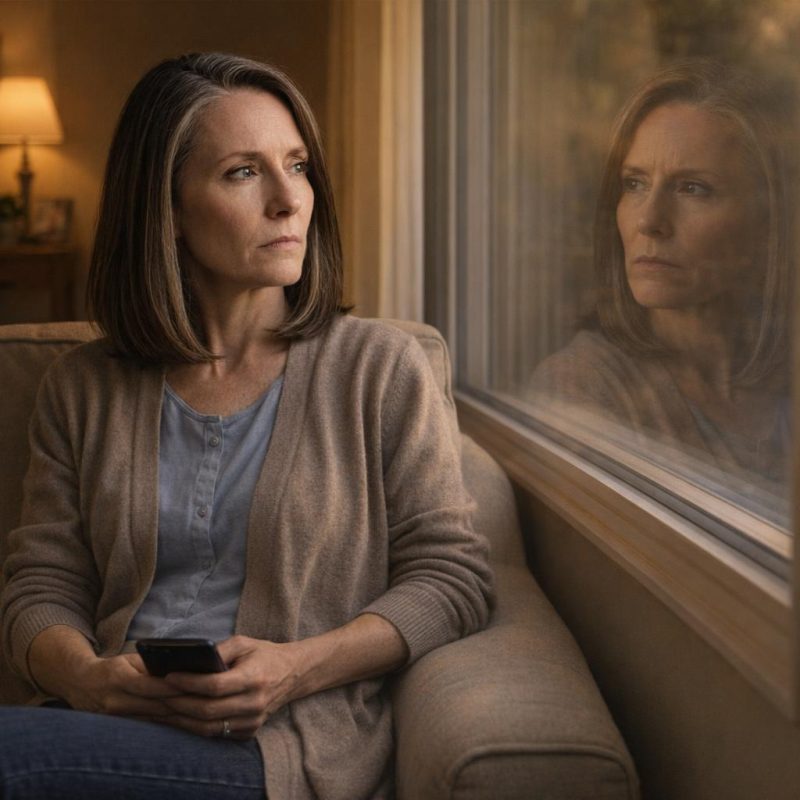 Image by RM AI
Something Off
I started noticing it gradually, the way you notice a draft in a room before you can find the window. I'd arrive at Eric's house for a planned visit and Vanessa would open the door and say hello, and everything would be technically fine — she wasn't rude, she didn't say anything unkind — but the temperature had dropped somewhere. Her answers got shorter. The small talk that had always been a little effortful now felt like work for both of us. Eric never seemed to pick up on it. He'd be tired from work, happy enough to have me there, talking about Sophie's school schedule or something he'd seen on the news, and I'd be sitting across from Vanessa watching her give one-word answers and wondering if I'd done something wrong. Sophie was there one afternoon and I could see her glancing between us, that particular teenage awareness of adult tension that kids always pick up before anyone admits it's there. I drove home after that visit turning the afternoon over in my mind, trying to identify the moment things had shifted. Maybe I'd said something without realizing it. Maybe she was going through something and it had nothing to do with me. I almost convinced myself of that. Then one evening I let myself in through the side gate to drop something off, and I came around the corner into the kitchen doorway — and Vanessa's face went completely blank the moment she saw me.
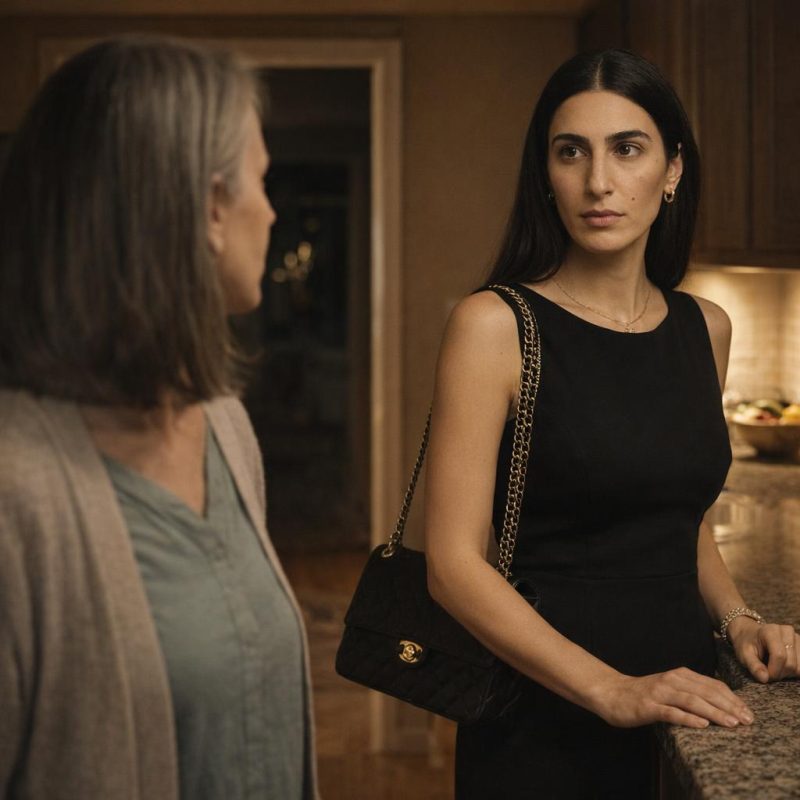 Image by RM AI
The Casserole
Eric had mentioned on the phone that week that things had been hectic — long days, no time to cook, they'd been living on takeout. So I made his favorite casserole, the one with the buttery breadcrumb top that he'd been asking me to make since he was twelve years old. I packed it up carefully, drove over on a Thursday afternoon, and walked up the front path feeling like I was doing something simple and good. I'd been to that house dozens of times by then. I knew which porch step creaked. I knew the way the afternoon light hit the front window. I raised my hand to knock and the door opened before my knuckles touched it — Vanessa, already there, like she'd been watching. She stepped outside and pulled the door shut behind her in one smooth motion. I started to say I'd brought dinner, that I thought it might help with the busy week, and I held up the casserole dish like it was obvious and harmless, because it was. Vanessa looked at it, then at me, and her face was set in a way I hadn't seen before — not cold exactly, but closed, like a decision had already been made before I'd come up the walk. I stood on that porch with a warm dish in my hands, and the door behind her stayed shut.
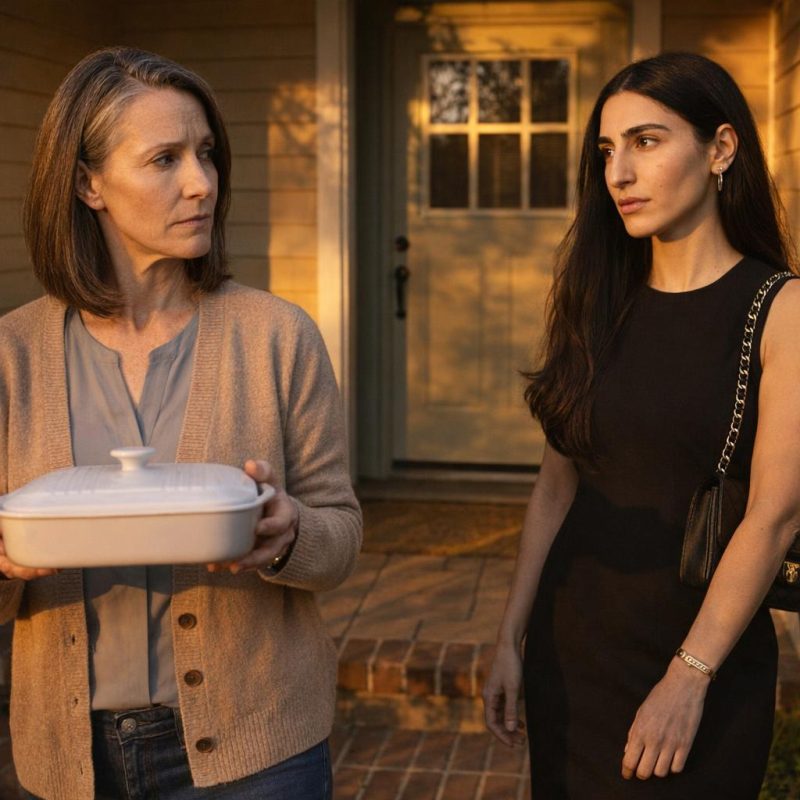 Image by RM AI
You're Not Welcome Here
She looked at me for a moment before she said anything, and I remember thinking she was about to thank me for the casserole. Instead, she said, "You're not welcome here anymore." Just like that. Flat and final. I actually laughed a little — not because it was funny, but because my brain couldn't process it as a real sentence. I asked her what she was talking about. She said I'd been telling people she married Eric for his money. That I'd called her a gold-digger. That I'd said she was trash from the wrong side of town. I stood there with that casserole dish going cold in my hands and I felt the blood drain out of my face. I told her I had never said anything like that — not to anyone, not ever. I asked her who told her these things. She said she knew exactly who I was, that she didn't need to explain herself to me, and that I should leave. I asked again. She just looked at me with that closed expression and said, "I know what you said." Then she stepped back inside and I heard the lock turn. I stood on that porch alone, holding a dish of food I'd made with love, trying to locate a single memory of words I was absolutely certain I had never spoken.
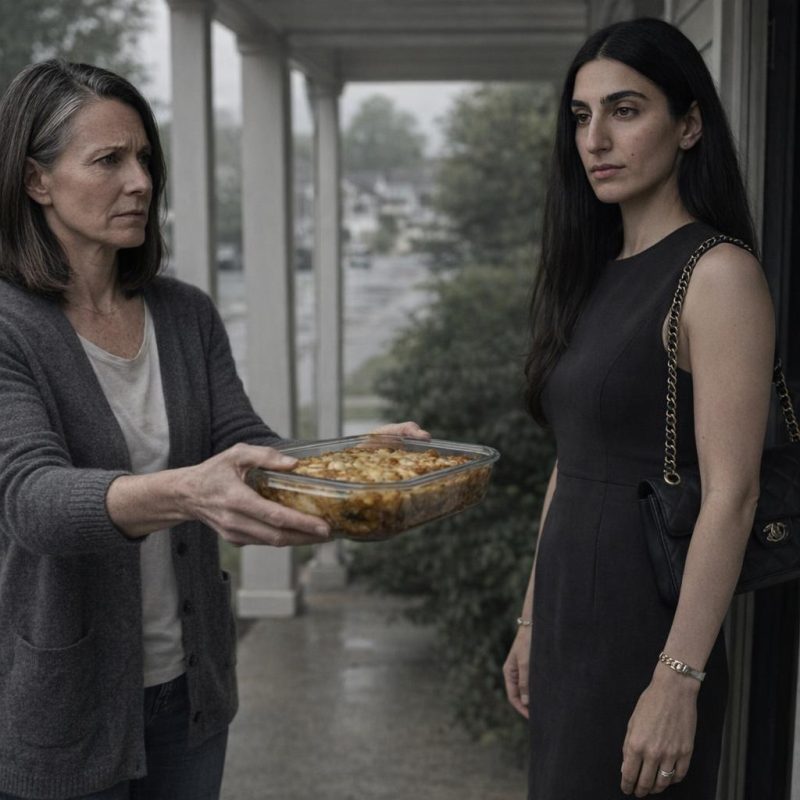 Image by RM AI
The Phone Call
I drove home on autopilot. I don't even remember the turns. I sat in my driveway for a few minutes, then went inside and called Eric. He picked up on the third ring and I could hear it immediately — that particular exhaustion in his voice that meant he already knew why I was calling. I told him what happened on the porch. I told him I had never said those things, not one word of them, and that I needed him to know that. He was quiet for a moment and then he said Vanessa was really hurt and that she needed some space right now. I asked him directly — did he actually believe I would say something like that about his wife? He said it wasn't about what he believed, it was about how Vanessa felt. I told him that wasn't an answer. There was a long pause, and then he said, "Mom, maybe if you just apologized — even just to smooth things over — it might help everyone move forward." I felt something drop in my stomach. My own son. He wasn't asking me to defend myself. He was asking me to confess to words I never said, just to make the peace. I sat there holding the phone, and I didn't know what to say to him.
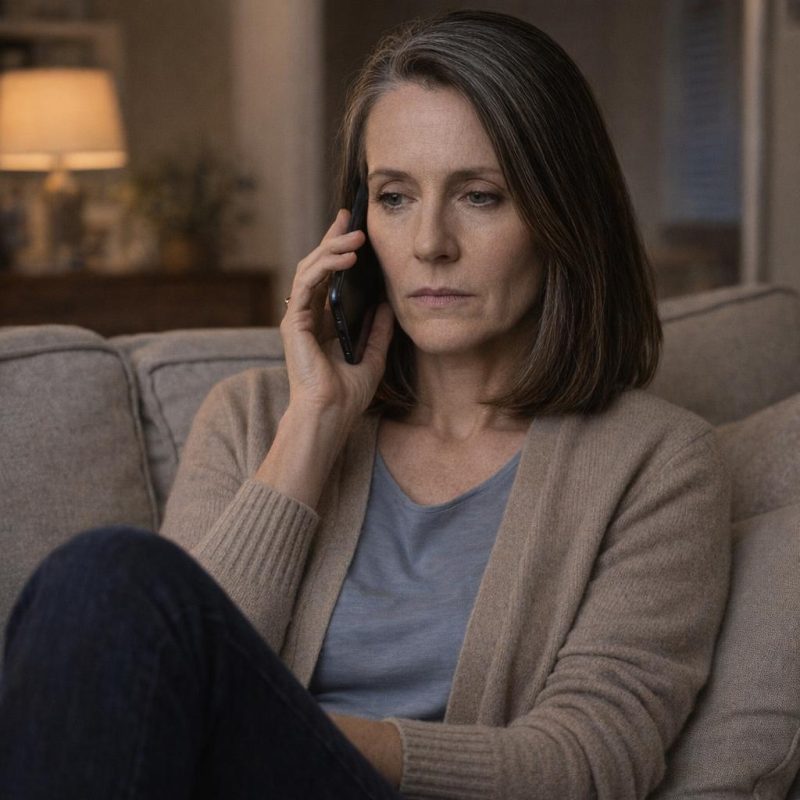 Image by RM AI
Pushed Away
I called him the next morning. It rang through to voicemail. I left a message — calm, I thought, measured — telling him again that I was telling the truth and that I loved him and I just wanted to talk. He texted back two hours later: *Need some time, Mom.* Five words. I texted back asking if we could please just have a ten-minute phone call. He didn't respond until the following evening, and it was just: *Not a good time right now.* I tried again two days after that. Voicemail again. I started to wonder if he was letting it ring out on purpose, then felt guilty for thinking it. His next text came a full day later — *I'll call you when things settle down* — and after that, nothing. I made myself wait. I told myself he was busy, that marriages take adjustment, that I should give him room. But the waiting had a particular quality to it that I hadn't felt since he was a teenager and we'd had our first real fight. Back then I'd known it would pass. This time I wasn't sure. I sat at my kitchen table on a Friday night with my phone face-up in front of me, and the quiet in that house was the kind that used to be filled with his voice.
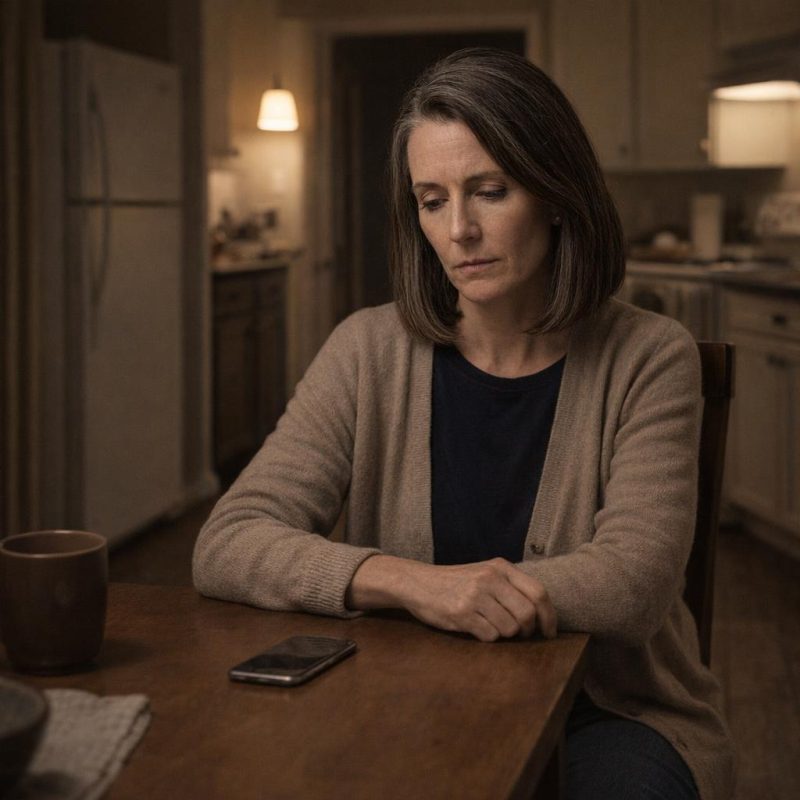 Image by RM AI
Sophie Stops Visiting
He did call, eventually. I picked up before the second ring. But it wasn't the call I'd been hoping for. His voice had that careful, rehearsed quality — like he'd thought through what he was going to say before he dialed. He told me that Sophie wouldn't be coming for her weekend visits for a while. I asked him why. He said Vanessa felt the family tension wasn't healthy for a teenager to be around right now. I told him Sophie and I had never had a single moment of tension between us — that she was my granddaughter and I loved her and she knew it. He said he understood that, but that Vanessa was concerned, and they needed to present a united front. I asked if I could at least speak to Sophie, just for a minute. He said it was better to wait until things calmed down. I asked when that would be. He didn't have an answer. After we hung up, I sat very still in my armchair. I thought about Sophie's last visit — how she'd helped me repot the tomatoes on the back porch, how she'd eaten three of my oatmeal cookies and asked to take the rest home. She hadn't done anything wrong. None of this had anything to do with her. And now she was being kept away from me too.
 Image by RM AI
Days of Silence
I didn't go anywhere for almost a week. I told myself I was tired, which was true, but it was more than that — I just couldn't face the ordinary world while my family felt like it was dissolving. I went over every conversation I'd ever had with Vanessa. Every dinner, every phone call, every time I'd stopped by. I tried to find the moment — the sentence, the word, the tone — that could have been twisted into what she'd accused me of. I couldn't find it. I had been careful. I had been so careful, maybe more careful than I'd ever been with anyone, because I knew how easy it was to be cast as the difficult mother-in-law and I had not wanted to be that person. I looked at the photo on my mantle — Eric at Sophie's last birthday, both of them laughing at something off-camera — and I couldn't understand how I'd gone from being in that room to being locked out of their lives in the space of a few weeks. I cried more than I want to admit. Not dramatic crying, just the quiet kind that comes when you're sitting alone and the grief catches you off guard. My phone sat on the end table beside me, and it didn't ring, and the silence of it had a weight I couldn't put down.
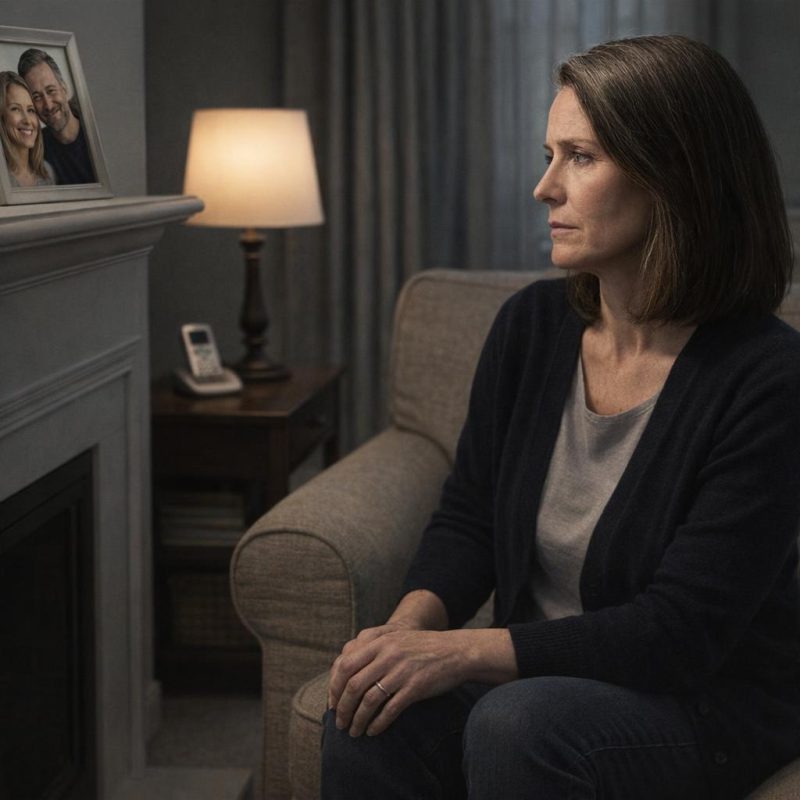 Image by RM AI
Searching for Answers
At some point the grief started to shift into something else — not anger yet, just a kind of restless need to understand. I got a notebook from the kitchen drawer, the kind I used to use for grocery lists, and I sat down at the table and started writing. Every interaction with Vanessa I could remember, in order, from the first time Eric brought her to Sunday dinner. What she'd said. What I'd said. How she'd reacted. I wrote down the things she'd told me about her background — which, I noticed as I wrote, were vague in a way I hadn't registered at the time. A town she'd mentioned once and never again. A family she'd described in broad strokes. I wrote down the timeline: when the accusations appeared, how quickly everything had escalated after that. I wrote down the specific phrases Vanessa had thrown at me on the porch — gold-digger, trash from the wrong side of town — and I stared at them. Those weren't the kinds of things that come from a misunderstanding. They were too specific. Too pointed. I didn't know yet what I was looking for, or what any of it meant. But the list kept growing, and the more I looked at it, the more things on it didn't sit right with me.
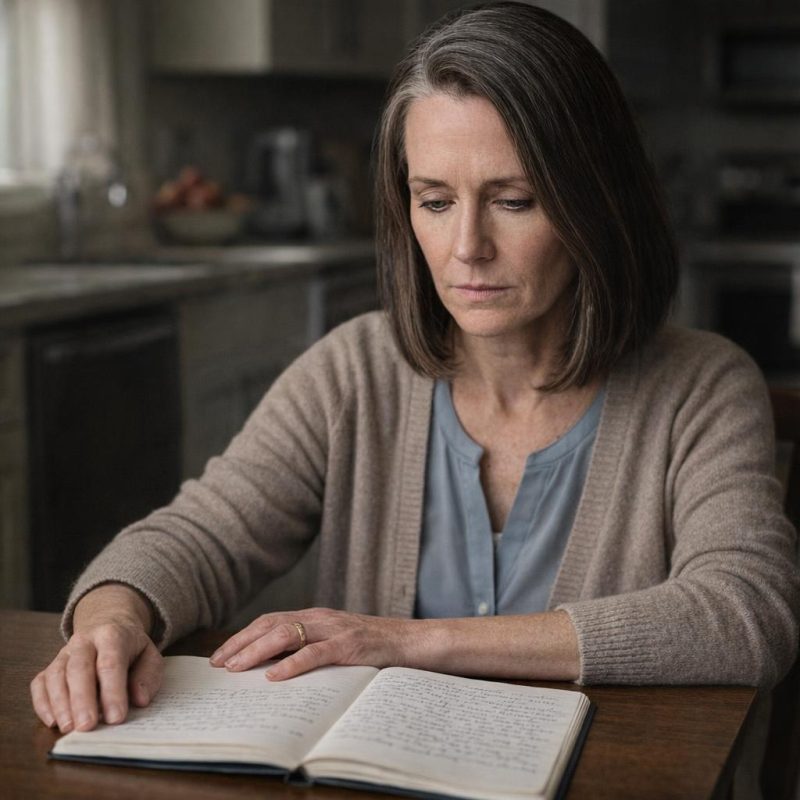 Image by RM AI
The Church Luncheon
I made myself go to the church luncheon that Thursday. I thought the routine would help — familiar faces, the smell of coffee and somebody's banana bread, an hour of normal. I'd barely gotten my plate when Margaret, who I've known for going on twenty years, came up beside me with that particular look people get when they're about to say something they wish they didn't have to. She touched my arm and asked, quietly, if it was true that I'd called Vanessa a gold-digging little snake. I set my plate down on the table because I didn't trust my hands. I told her absolutely not, that I had never said anything like that to anyone. She looked relieved but still uncertain. Then Patrice, from the Tuesday Bible study, leaned in from across the table and said she'd heard I was furious Eric had married someone beneath him — that I'd been saying it all over town. I looked around that room at women I'd sat beside for years, women who'd brought me casseroles when my husband passed, and I could see it on some of their faces — that careful, sideways look that meant they'd heard something and weren't sure what to believe. I told them both, clearly and calmly, that none of it was true. But the words felt thin against whatever had already reached them, because across the table, a woman I barely knew leaned over and repeated a phrase so cruel and specific I had never heard it before in my life.
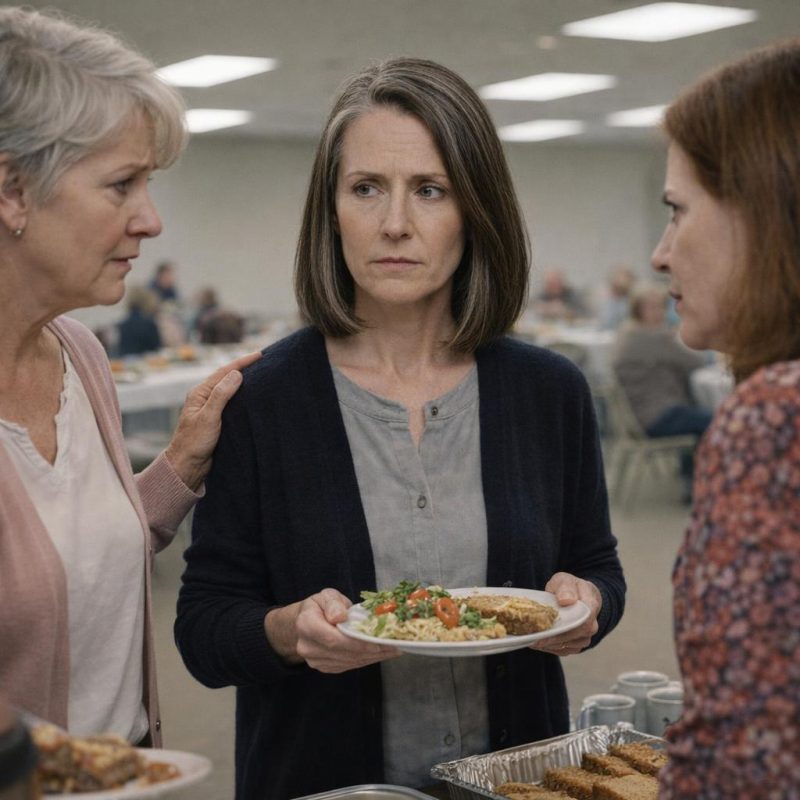 Image by RM AI
The Rumors Spread
By the weekend I'd gotten two more calls. A neighbor from my old street. Then a woman from my book club. Each one kind, each one uncomfortable, each one repeating a slightly different version of something I had supposedly said about Vanessa. The neighbor had heard I'd threatened to cut Eric out of my will if he stayed married to her. The book club woman had heard I'd shown up at their house drunk and screaming. I hadn't done any of those things. I hadn't said any of those things. But what stopped me cold wasn't the absurdity of it — it was the detail. Each version had something specific in it. A location. A date. A particular turn of phrase that sounded just plausible enough to stick. Gossip doesn't work that way. Gossip gets vague as it travels — it loses its edges, it blurs. This was doing the opposite. Every version I heard was sharper than the last, more specific, more damning. I sat with my notebook open in front of me and I wrote down each account, side by side. Different stories. Different people. But all of them with my name attached, and all of them saying things I had never once said. Someone was putting words in my mouth — and they were doing it carefully, and they were doing it well.
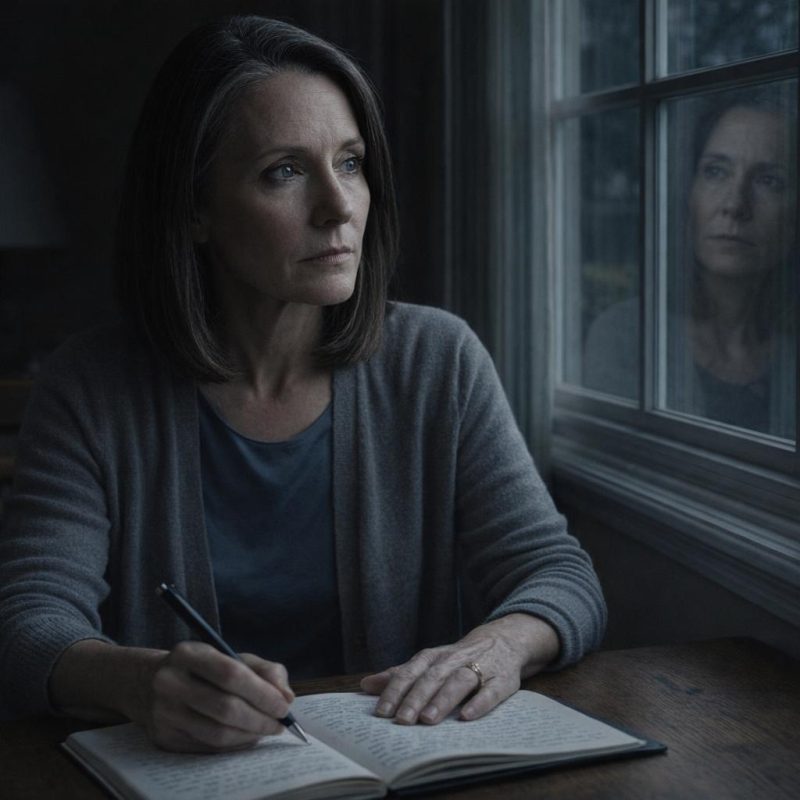 Image by RM AI
Obsessed with the Truth
I spent the better part of a week on the phone. I called the neighbor, the book club woman, two more people who'd reached out after word spread that something was going on with me and Eric. I kept my voice calm and friendly, like I was just catching up, and then I'd ease into it — so where did you hear that, exactly? And every single one of them paused. They'd say something like, oh, I think it was so-and-so, or maybe I read it somewhere, or honestly I can't remember now. I followed every thread. I called the so-and-so's. I asked the same question. Same pause. Same vague answer. Nobody could point to a single person who had actually said the thing first. It was like trying to grab smoke. The more I reached for it, the less there was to hold. Diane called while I was in the middle of my notes, and I told her what I was doing. She listened, made sympathetic sounds, said she hadn't heard anything herself and had no idea where it could be coming from. She told me she was sorry I was going through this. I thanked her and hung up and stared at my notebook. Every line I'd drawn ended in a question mark, and not one of them connected to anything real.
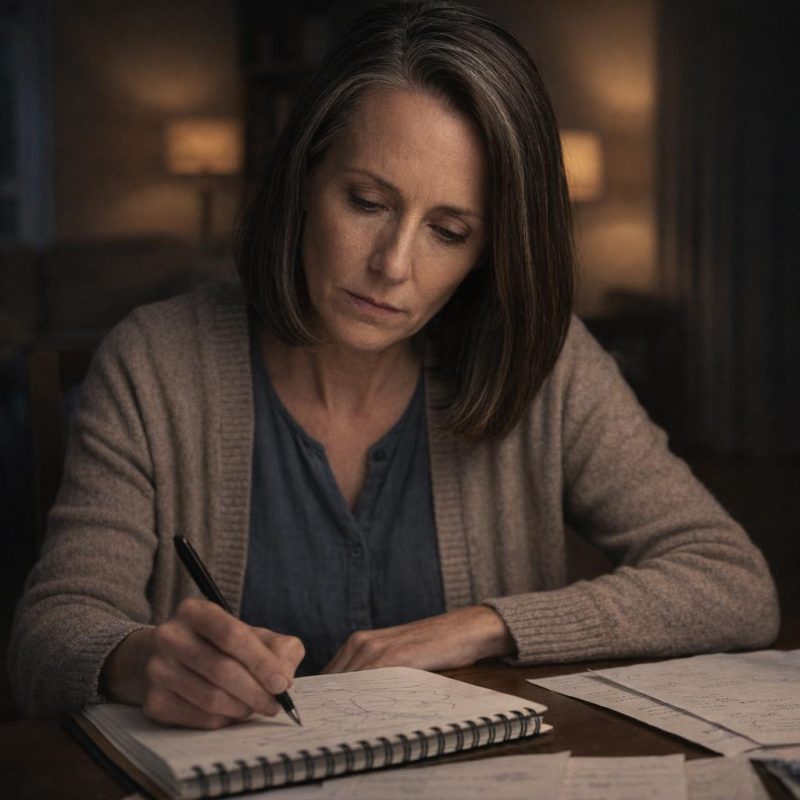 Image by RM AI
Let It Go
Diane came over two days later with a casserole dish and a look on her face that I recognized from childhood — the one that meant she was about to tell me something I didn't want to hear. She sat across from me at the kitchen table and said I needed to let this go. She said it gently, the way you'd say it to someone standing too close to the edge of something. She said that digging around was only going to make things worse with Eric, that it would look obsessive, that sometimes families just drift and the kindest thing you can do is give them space to come back on their own. I told her I couldn't just accept being accused of things I never did. She said she understood that, but kept circling back to the same point — let it settle, give it time, stop pulling at it. The more she said it, the more something in me went quiet and still. Not convinced. Just still. She seemed almost urgent about it, which was strange, because Diane has never been an urgent person. She's always been the one who says wait and see. I thanked her for the casserole and walked her to the door, and after she left I stood in the kitchen for a long time. The advice had felt like a coat that didn't quite fit — the right shape, maybe, but wrong in some way I couldn't name.
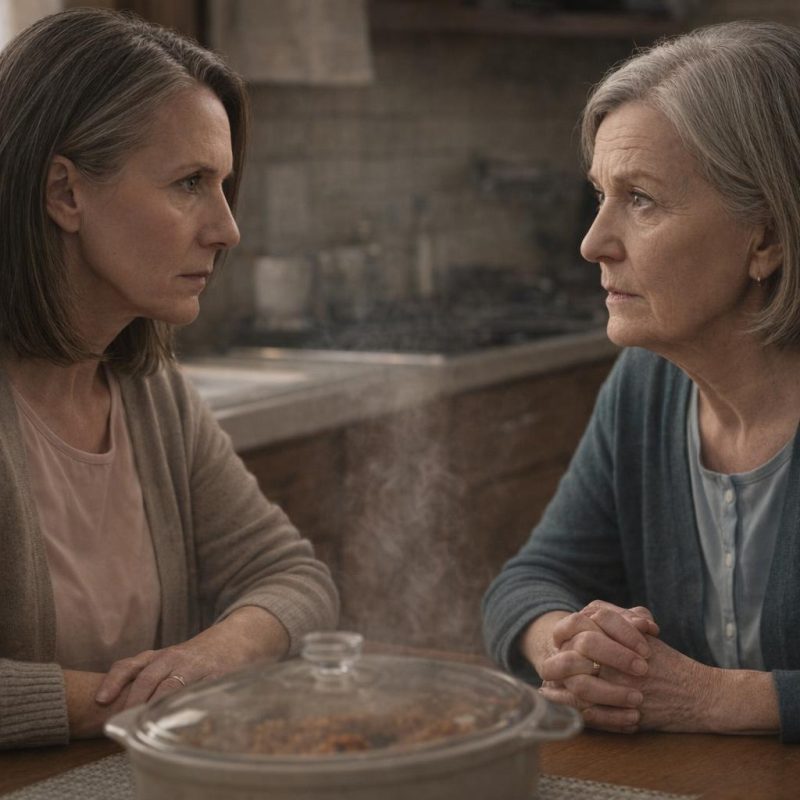 Image by RM AI
Families Don't Just Fall Apart
I kept turning Diane's words over in my mind the next morning, trying to find the angle where they made sense. Let it settle. Give it time. But the more I sat with it, the less it held up. I've watched families go through hard things — real hard things, illness and money and grief — and even then, they don't just evaporate. They bend. They crack sometimes. But they don't disappear in a matter of months, cleanly and completely, like someone had drawn a line and said this is where it ends. Eric and I had been close. Not perfect, but genuinely close. We talked every week. He brought Sophie over for Sunday dinners. And then, in what felt like no time at all, the calls stopped, the visits stopped, and I was standing outside a life I used to be part of. That kind of thing doesn't happen by accident. I'd seen enough of life to know that much. I got out my notebook again and I wrote at the top of a fresh page: this didn't just happen. I didn't know who. I didn't know why. But I knew — or at least I felt it, deep and certain in the way you feel weather changing before the sky shows it — that someone had wanted this outcome, and had worked toward it. I wasn't going to stop until I understood what that meant.
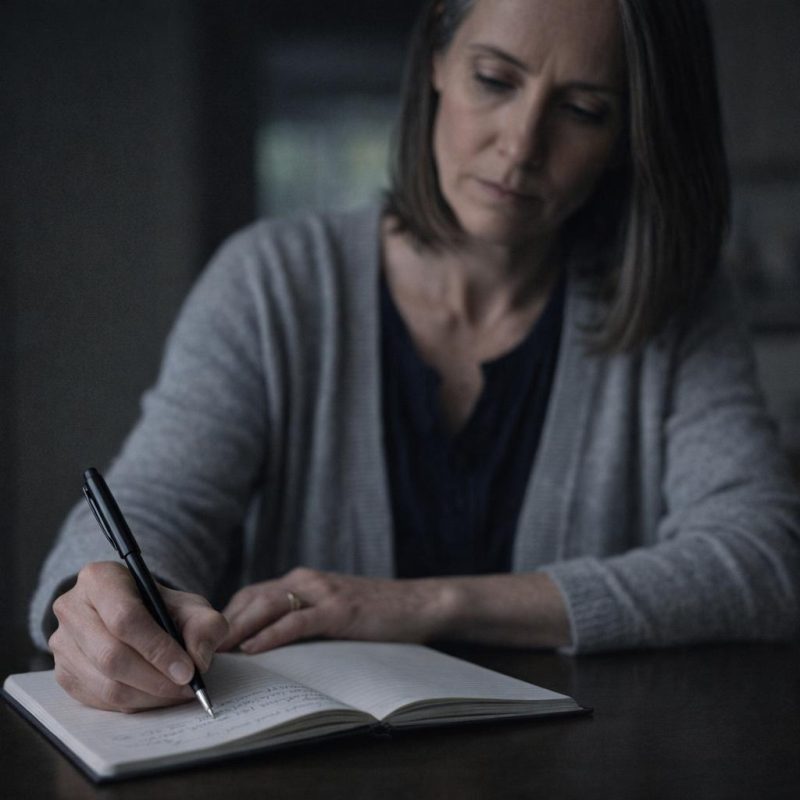 Image by RM AI
The Bridal Shower Secret
My niece Jenna called on a Thursday evening, and I could tell from the first few seconds that she'd been working up to it. She said she needed to tell me something she probably should have mentioned sooner, and that she was sorry she'd waited. I sat down. She told me about a bridal shower she'd attended a few months before the wedding — a small one, mostly women from Eric's social circle. She said she'd stepped into the hallway to take a call and heard Vanessa in the next room, crying. Not quiet crying. The kind that sounds like something has broken loose. Jenna said she hadn't meant to listen, but she heard enough. Vanessa was on the phone with someone, and she kept saying she was terrified — that word, terrified — that I was going to expose her. That I somehow knew something and was going to use it against her. Jenna said she hadn't known what to make of it at the time. She'd told herself it was pre-wedding nerves, maybe some old family drama she didn't understand. She hadn't brought it up because she didn't want to cause trouble. I asked her what secret Vanessa could have meant. Jenna was quiet for a moment. Then she said she genuinely had no idea — she'd never heard Vanessa mention anything specific, and she hadn't been able to figure it out since.
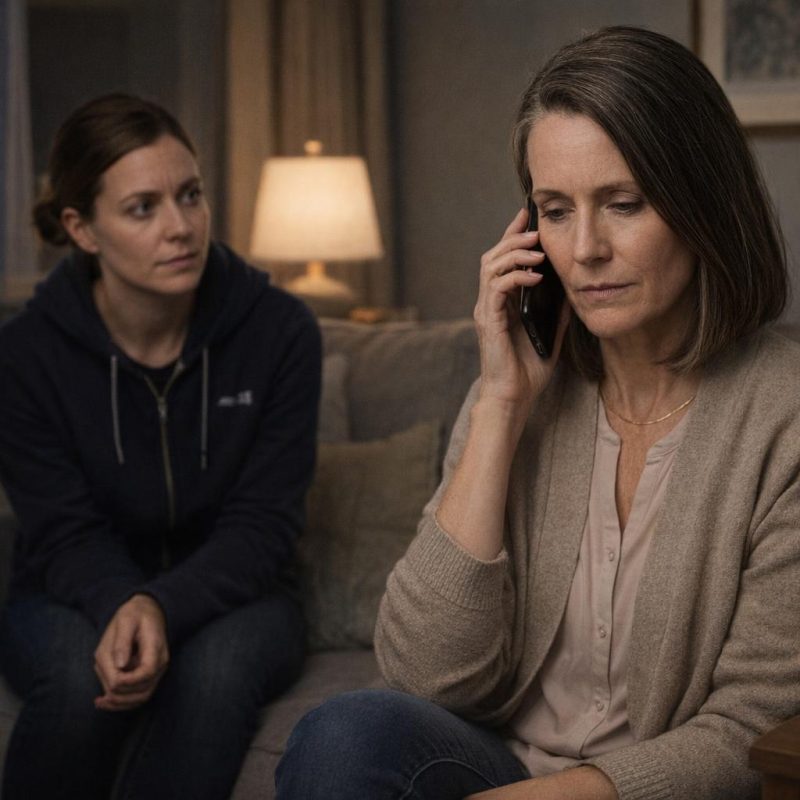 Image by RM AI
Vanessa's Vague Past
After I got off the phone with Jenna, I pulled out the notebook and started writing down everything I actually knew about Vanessa's past. Not what I'd assumed, not what I'd been told secondhand — what I could actually point to. It didn't take long before the page started looking strange. I remembered Vanessa mentioning once, early on, that she'd grown up in Ohio. But then at a dinner a few months later she'd said something offhand about her high school in Pennsylvania, and I'd let it pass because I thought maybe I'd misheard. I remembered her mentioning a sister during one conversation, something about a sister's wedding years ago, and then later telling Eric she was an only child. I'd noticed it at the time and filed it away as a slip of the tongue. I couldn't remember her ever mentioning where she'd gone to school, not once. No college stories, no old roommates, no hometown friends who'd sent a card or shown up at the wedding. Every time someone asked about her family, she'd smile and redirect the conversation so smoothly you almost didn't notice it had happened. Sitting there with my notes spread out in front of me, I couldn't make the pieces fit into a single coherent picture. Each detail on its own seemed small enough to explain away. Together, they just sat there, unresolved, like a sentence that never quite reached its end.
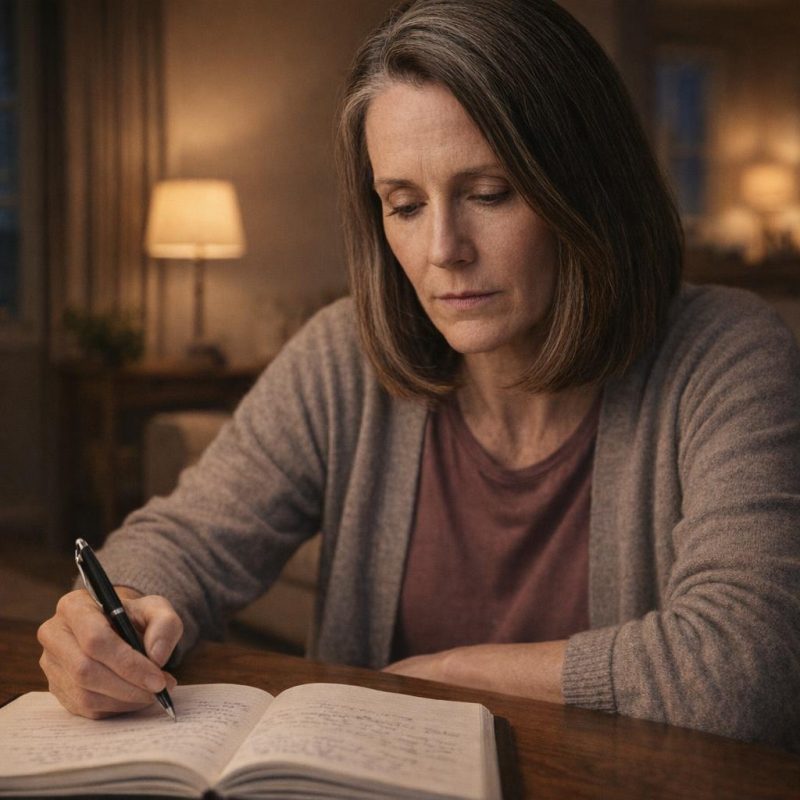 Image by RM AI
The Missing Wedding Guests
I found myself thinking about the wedding again that night. I'd been so focused on Eric in those hours — watching him at the altar, trying to read his face, hoping he looked happy — that I hadn't let myself dwell on the other side of the room. But I let myself dwell on it now. Eric's side had been full. His friends, his coworkers, people from the neighborhood, Sophie sitting in the front row in her pale blue dress. Vanessa's side had been nearly empty. A few people I didn't recognize who turned out to be Eric's extended family filling in the gaps. And one woman — older, maybe late sixties, introduced to me briefly as a distant aunt — who sat alone on Vanessa's side and left the moment the ceremony ended. Didn't stay for photos. Didn't come to the reception. I'd noticed it at the time and told myself it was none of my business, that maybe Vanessa's family was complicated, that not everyone has the kind of people who show up. But no friends either. Not one person from her life before Eric. No one who knew her from before. I'd never met a single person from Vanessa's past in all the months leading up to that day. The image of those empty chairs stayed with me — and the older woman's back as she walked out the door before the rice had even been thrown.
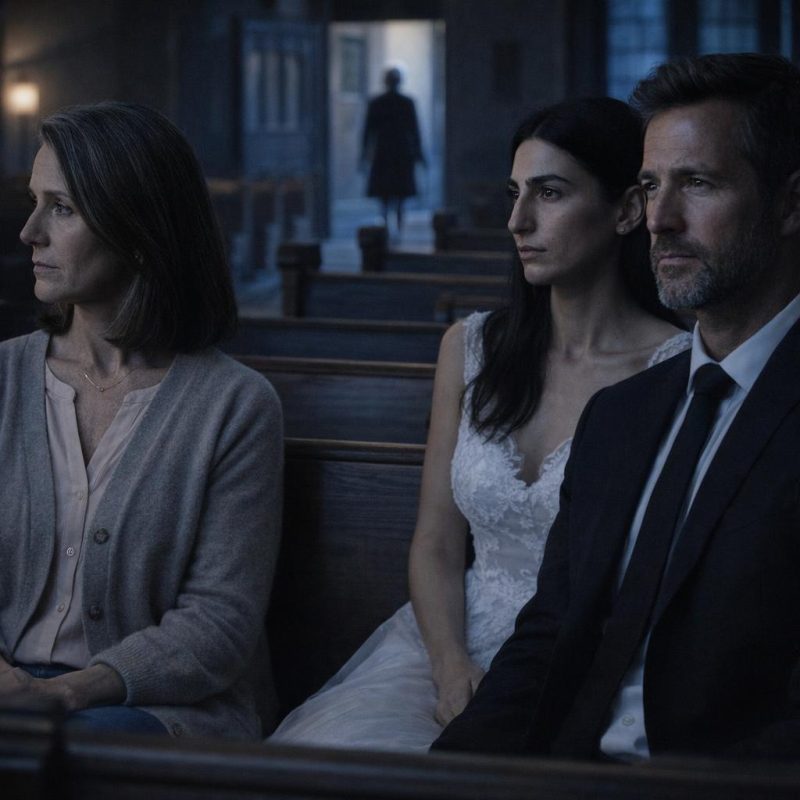 Image by RM AI
Eric's Drained Savings
I called Eric on a Sunday, keeping my voice easy, asking how he was sleeping, whether he'd been eating. He sounded tired in a way that went past a bad week. I asked carefully, after a few minutes of small talk, how things were going on the financial side — I framed it as a mother asking, not prying, just wanting to know he was okay. He was quiet for a moment. Then he said money had been tight. I asked about the financial issue he'd mentioned a while back, the one he'd helped Vanessa sort out. He'd brought it up once in passing and then gone quiet about it, and I'd let it go at the time. He sighed. He said Vanessa had come into the marriage with some old debts that needed to be cleared up before they could move forward properly. He said she hadn't wanted to talk about the details, that it was embarrassing for her, and he'd wanted to help. I asked how much. Another pause. He said it was close to forty thousand dollars. I kept my voice steady. I asked if he knew what the debts were from, who they were owed to, whether he'd seen any paperwork. He said Vanessa had handled all of it and he trusted her. Then his voice shifted — tighter, a little defensive — and he said he hoped I wasn't going to make this into something it wasn't.
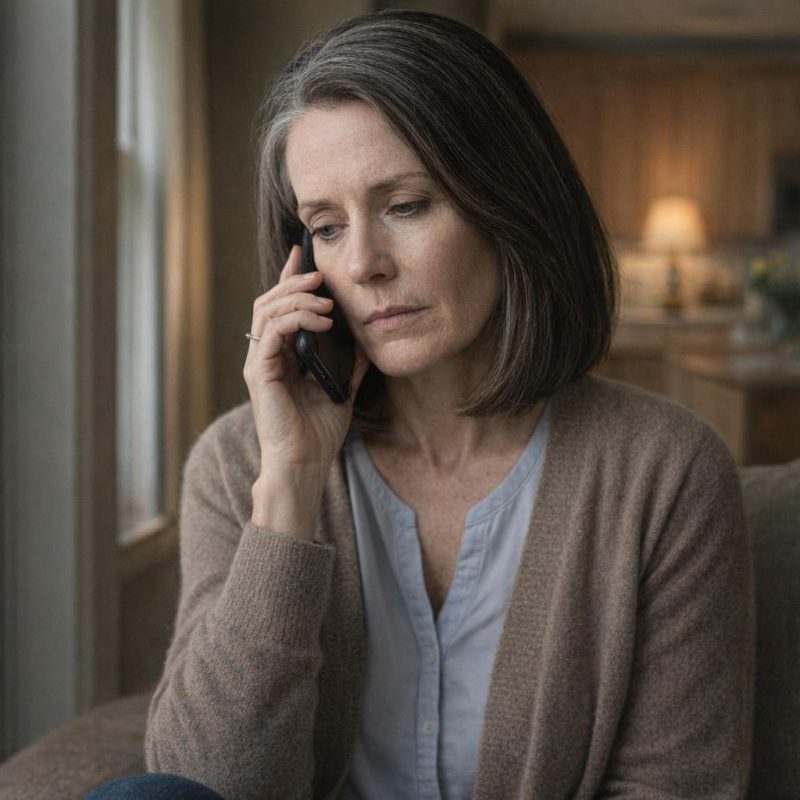 Image by RM AI
The Isolation Pattern
After I hung up with Eric, I sat at the kitchen table with a blank piece of paper and started writing dates. The wedding. The first time Vanessa asked me not to stop by without calling. The phone call where Eric said she was uncomfortable with how often I visited. The accusations — the specific ones, with the names attached, the stories that had traveled through my neighborhood and my book club. The last time Sophie came for a Sunday dinner. I laid them out in order and looked at the whole thing at once. From the wedding to the moment I was effectively locked out of Eric's life, it had taken less than eight months. Eight months from welcome to gone. Each step had followed the last so quickly, and each one had come with a reason that made just enough sense on its own that I hadn't pushed back hard enough. I didn't know what to make of it. I told myself maybe I was seeing a pattern because I was looking for one. But the timeline sat there on the paper in my own handwriting — the wedding in January, the first distancing in March, the accusations by June, Sophie's visits ending in August — each entry a clean step further away from my son.
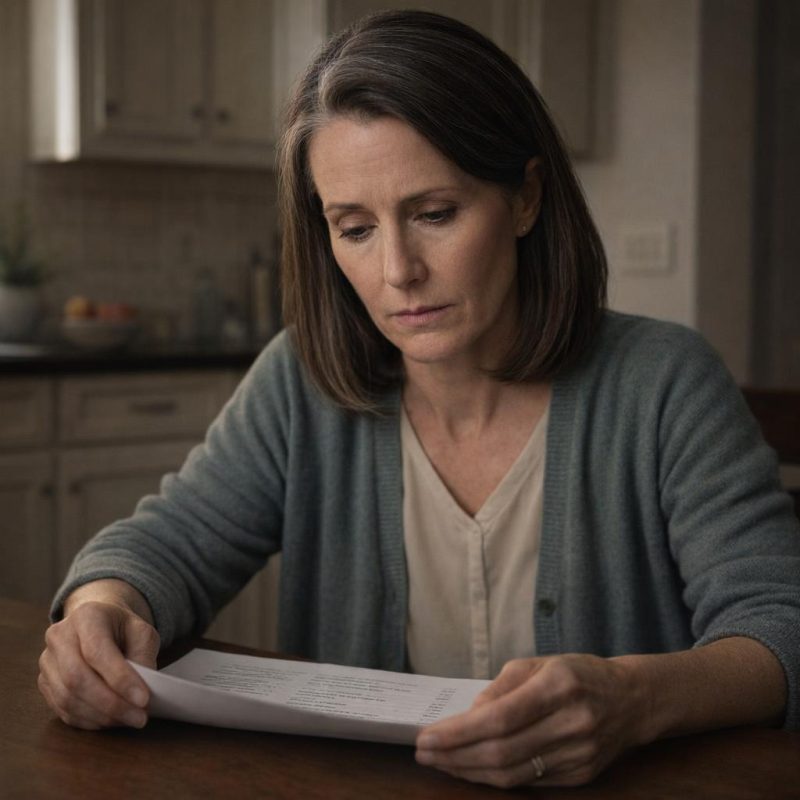 Image by RM AI
What Secret
I kept coming back to what Jenna had told me — that Vanessa was afraid I would expose her secret. I turned that over in my mind for days. What secret? I'd known Vanessa for less than a year. I'd sat across from her at a handful of dinners, exchanged pleasantries at the wedding, tried to make her feel welcome in a family she'd married into. I didn't know her childhood friends or her old coworkers. I didn't know where she grew up, not really — she'd mentioned a few different places in passing and I hadn't thought to keep track. I tried to make a mental list of everything I actually knew about her, and it was embarrassingly short. Her favorite wine. The fact that she didn't like cilantro. The color she'd painted the guest room. That was about it. There was nothing damaging in any of that. Nothing that would threaten anyone. So why had she worked so hard to push me out? What did she think I knew? I sat with that question for a long time, turning it over like a stone I couldn't see under. Whatever she was afraid of, I was apparently carrying it without knowing it — the weight of a secret I didn't even know I was supposed to keep.
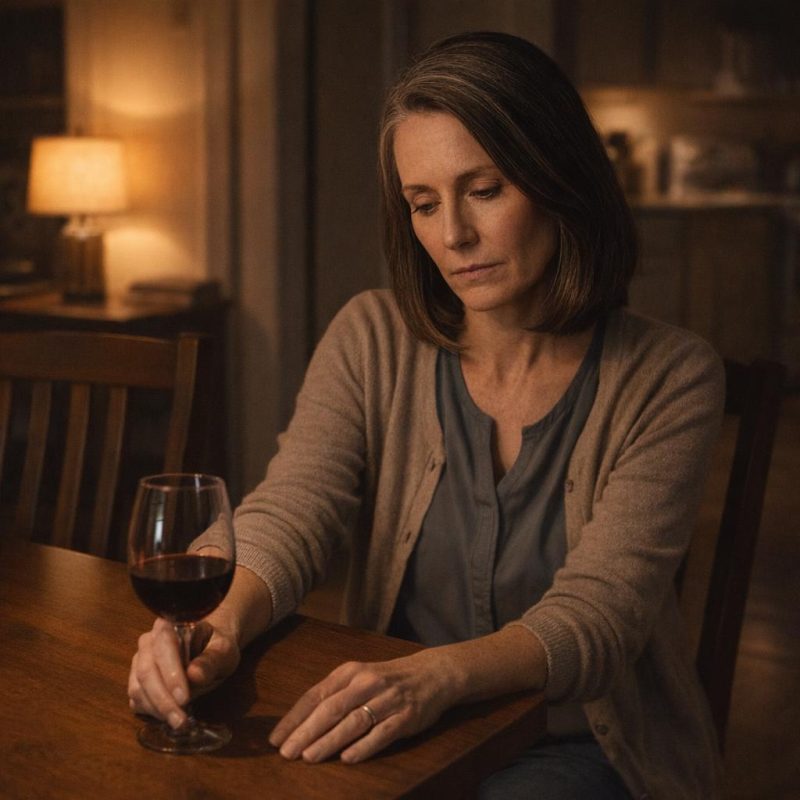 Image by RM AI
Digging Into the Past
I called Jenna and asked if she'd help me look into Vanessa's background online. Jenna didn't hesitate — she said she'd been thinking the same thing and had already started poking around. We sat together at my kitchen table one afternoon, her laptop open between us, and we searched. We tried every combination we could think of: Vanessa's full name, her name with the city Eric said she was from, her name with the college she'd mentioned once at dinner. What we found was almost nothing. Her Instagram account existed, but it only went back about two years. No old photos, no throwback posts, no tagged pictures from college or high school. Her Facebook was the same — a handful of posts, all recent, all carefully composed. Jenna pulled up a few other platforms and got the same result. She leaned back and said most people her age had years of digital clutter — old profile pictures, tagged photos from friends, embarrassing posts from their early twenties. Vanessa had none of that. It was like she'd appeared out of nowhere right around the time she met Eric. I didn't know what to make of it. Maybe she was just private. Maybe she'd deleted old accounts. But Jenna scrolled back to the beginning of Vanessa's oldest profile and showed me the date: two years and three months ago — almost exactly when Eric said they'd first met.
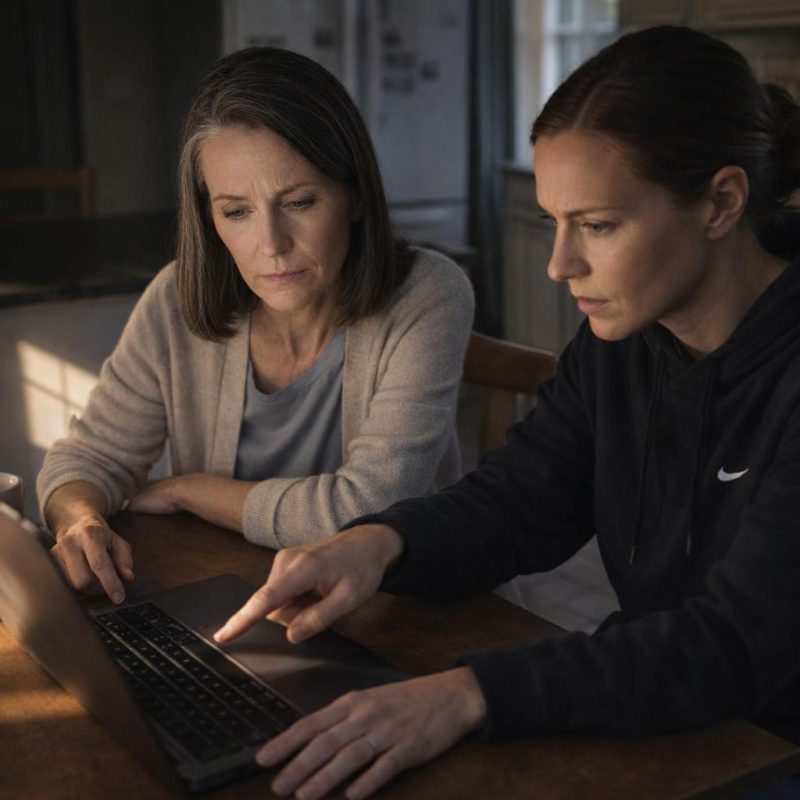 Image by RM AI
Stories That Don't Match
After Jenna left, I pulled out a fresh notebook and started writing down every story Vanessa had ever told about herself in my presence. It took longer than I expected, not because there was so much to write, but because I kept stopping to second-guess my memory. At the engagement dinner, she'd mentioned working in healthcare — something about patient intake, I thought, though she'd been vague about it. At Eric's birthday gathering the following spring, she'd said something offhand about her years in retail, how she'd learned to read people from working a sales floor. And then there was the conversation I'd overheard between her and Eric early on, where she'd told him she'd never really had a proper job before they met, that she'd been figuring herself out. Three different stories. Three different versions of the same basic question — what did you do before this? Jenna confirmed it when I called her back. She'd heard a different version too, something about Vanessa studying abroad that had never come up anywhere else. The hometown stories didn't line up either — she'd said Georgia once, then Ohio, then somewhere in the Pacific Northwest. I wrote it all down in two columns: what she said, and when she said it. The columns didn't match. And then I flipped back to my notes on her social media and found the line I'd written about her listed profession on one old profile — healthcare, then retail, then a blank field where a job history should have been.
 Image by RM AI
Keeping Notes
I bought a proper folder and started organizing everything. I had pages by then — more than I'd expected when I started. One section for the contradictions in Vanessa's stories about her background. Another for the timeline of how I'd been pushed out of Eric's life, step by step, with dates where I had them. A third section for the financial details Eric had let slip — the forty thousand dollars, the joint accounts, the way money seemed to move without much explanation. I added notes about the wedding itself, how few guests had been on Vanessa's side, how none of them had seemed to know her well. I wrote down what Jenna had told me about the secret, even though I still had no idea what that secret was. I wrote down the near-total absence of any digital history before two years ago. When I spread it all out on the table and looked at it, I felt something I couldn't quite name. It wasn't satisfaction, because none of it answered anything. It wasn't fear exactly, though there was something cold underneath it all. It was more like standing in front of a puzzle where you've sorted all the pieces by color and shape but still can't find the edges. I had questions stacked on top of questions, each one documented in my own careful handwriting, filling a folder that kept getting thicker without getting any clearer.
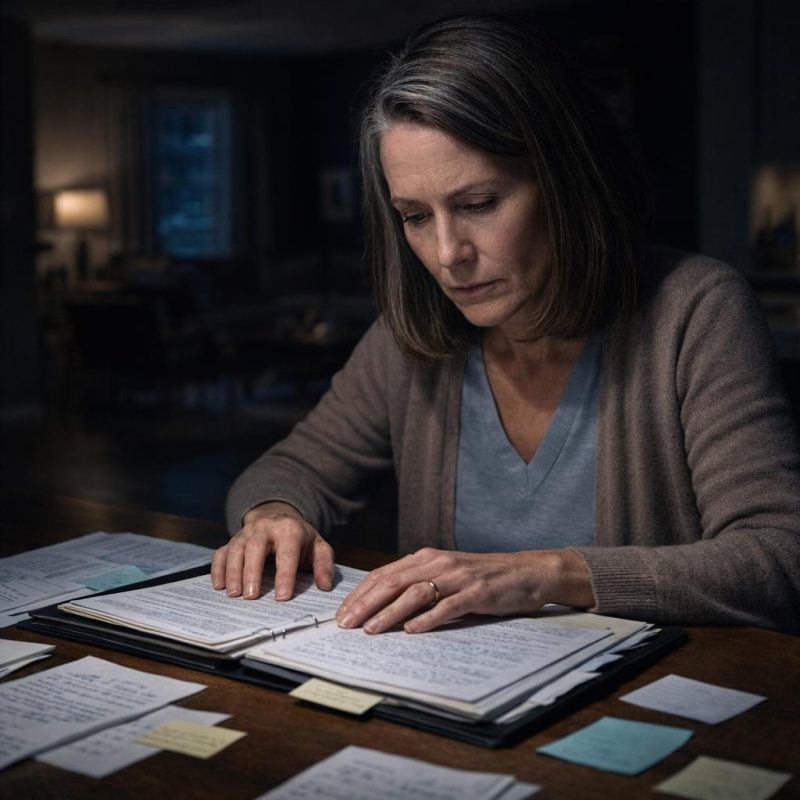 Image by RM AI
Fear for Eric
Somewhere in the middle of all that note-taking, I noticed something shift in me. I'd started this whole thing trying to clear my name — trying to understand why Vanessa had accused me of spreading lies I'd never told, why Eric had believed her, why I'd been locked out of my own son's life. My hurt feelings had been the engine of it. But sitting there with that folder in my lap, I stopped thinking about myself. I started thinking about Eric. He'd been through a painful divorce. He'd been lonely in a way he never quite admitted out loud but that I could see every time I looked at him. He'd met Vanessa when he was still raw from all of it, still trying to find his footing. Forty thousand dollars was already gone. The joint accounts were already merged. He was living in a house with a woman whose past seemed to start two years ago and whose stories changed depending on who was listening. I didn't know what any of it meant. I couldn't prove anything. But I kept thinking about how vulnerable he'd been when she came into his life, and how much further in he was now, and how hard it would be to reach him even if I had something concrete to show him. The thought of him being hurt — really hurt, in ways that went beyond hurt feelings — settled into my chest and stayed there, cold and quiet and heavy.
 Image by RM AI
Needing Proof
I spread my notes across the kitchen table one more time and tried to look at them the way Eric would. A list of contradictions about where someone grew up. A social media account that started two years ago. Stories about jobs that didn't match up. I knew what he'd say. He'd say I was grasping. He'd say I was so determined to find something wrong with Vanessa that I was turning ordinary inconsistencies into a conspiracy. And honestly? If someone had shown me the same folder about a stranger, I might have said the same thing. Inconsistencies weren't proof. A thin online presence wasn't proof. Even the money — Eric had an explanation for the money, even if I didn't believe it. None of what I had would move him. I needed something real. Something a person couldn't explain away with a shrug and a reasonable-sounding excuse. The only way to get that was to find someone who had known Vanessa before she walked into Eric's life — someone who could tell me who she actually was, where she'd actually come from, what she'd actually done. I didn't know how to find that person. I didn't even know where to start looking. But I knew I couldn't stop now, not with Eric's name on those joint accounts and forty thousand dollars already gone. I needed to find someone who knew Vanessa before Eric did.
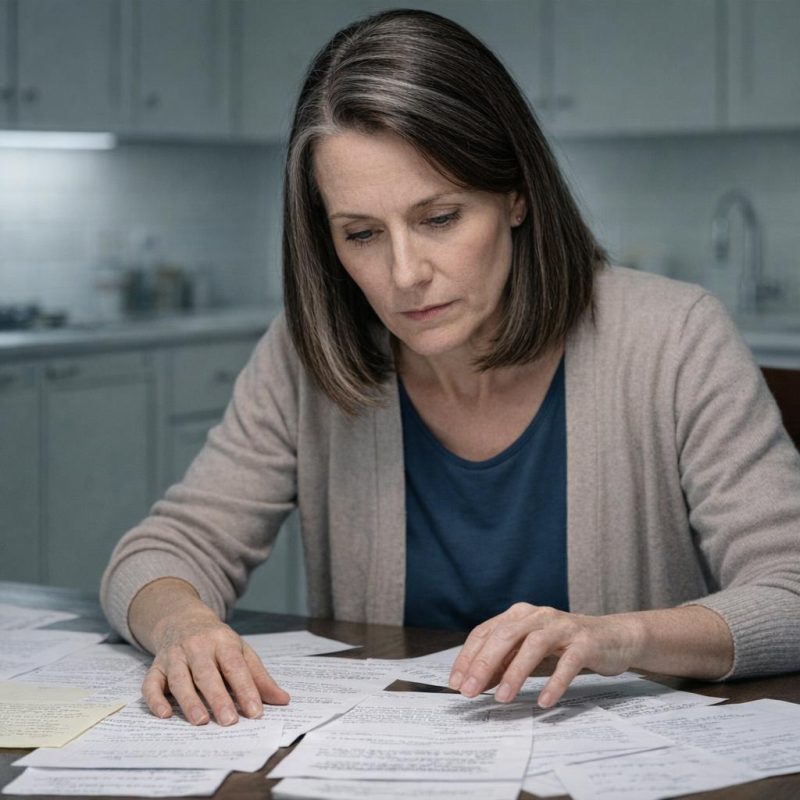 Image by RM AI
The Grocery Store Encounter
I ran into Melissa in the produce section on a Tuesday afternoon, both of us reaching for the same bag of apples at almost the same moment. We laughed about it, the way you do, and fell into the easy conversation we'd always managed to have despite everything. She asked how I was holding up. I said fine, the way you say fine when you mean something more complicated than that. We talked about Sophie — how she was doing in school, whether she'd decided on any colleges yet, whether she was still playing volleyball. I mentioned that I hadn't seen her in a few weeks, that things with Eric had made the visits harder to arrange. Melissa's expression shifted just slightly when I said that. Not dramatically — she wasn't the dramatic type — but something moved behind her eyes. She asked a few more questions, careful ones, the kind that felt like she was testing the edges of something she wasn't sure she should say. I asked if everything was okay. She said yes, then paused, then said she'd actually been thinking about calling me. She started to say something else and then stopped, her hand resting on the handle of her cart, her eyes somewhere between my face and the middle distance. Whatever it was, she was weighing it. I didn't push. I just waited, and the silence between us held the shape of whatever she was still deciding whether to tell me.
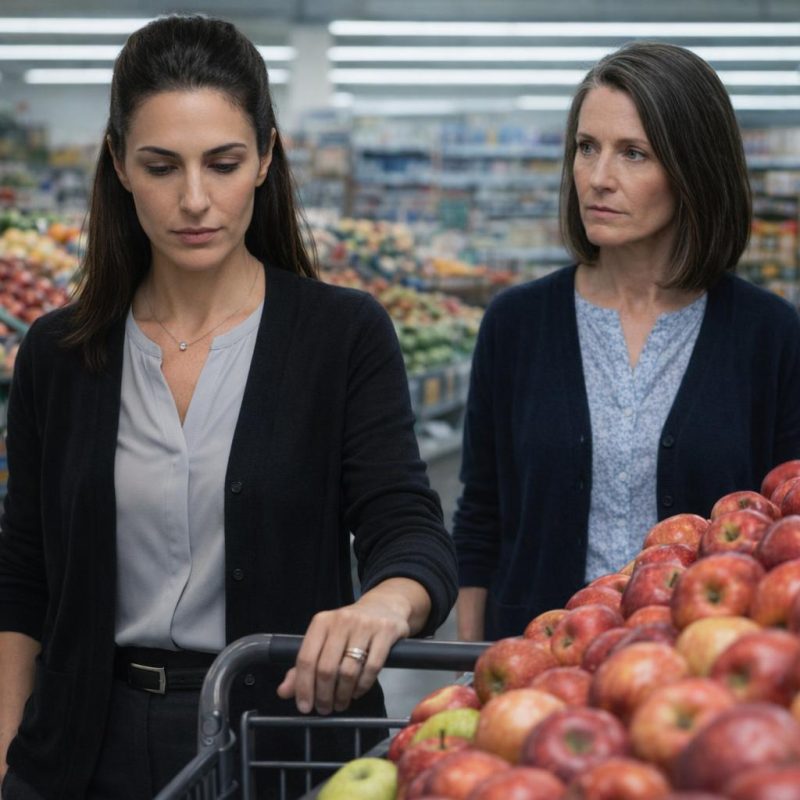 Image by RM AI
The College Fund
We moved to a quieter spot near the back of the store, away from the foot traffic. Melissa kept her voice low. She said she'd been sitting on something for a while and wasn't sure it was her place to bring it up, but given what I'd just told her about Eric, she thought maybe I should know. Months before Eric met Vanessa — she was careful to say that, before — she'd noticed small withdrawals from Sophie's college fund account. Not large at first, just enough that she'd almost missed them. But they kept coming, and they kept growing. She'd brought it up with Eric and he'd insisted it had to be a banking error, some kind of glitch. The bank looked into it and came back without a clear answer — nothing conclusive, no fraud flag, just a shrug and a suggestion to monitor the account. And then the withdrawals stopped. Right around the time Eric met Vanessa, they just stopped. Melissa said she'd never understood it. She'd let it go because Eric seemed so certain it was nothing, and because the account had stabilized, and because she hadn't wanted to make things harder between them. I stood there holding my grocery basket and tried to keep my expression steady. The withdrawals had started before Vanessa. They had stopped when Vanessa arrived. I didn't say anything out loud. I just stood there with that timeline sitting in my chest, quiet and cold and wrong.
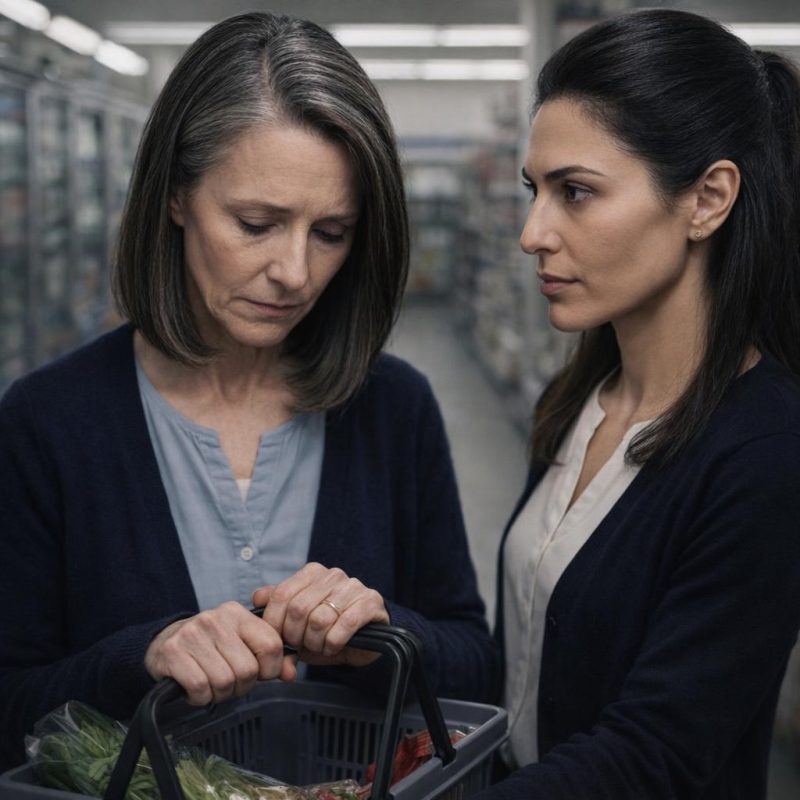 Image by RM AI
Nicole from the Retirement Home
Melissa paused for a moment, like she was deciding whether to keep going. Then she said there was something else. She told me that a few weeks back she'd been scrolling through Facebook — just killing time — and a photo of Vanessa had come across her feed, something Eric had been tagged in. She said she'd gone completely still when she saw it. Because she recognized her. Not from Eric's wedding, not from anything recent. From years ago, from a job she'd held briefly at a luxury retirement community on the other side of the county. There had been a young employee there — a girl named Nicole — who'd been let go after several of the elderly residents started making complaints. They said she'd been getting close to them, too close, in ways that made the staff uncomfortable. Gifts started moving. Money started moving. Small amounts at first, then larger ones, always with some explanation that made it hard to pin down. The community had started building a case, Melissa said, and then Nicole just wasn't there anymore. Melissa looked at me steadily and said she was almost certain Vanessa and Nicole were the same person. I stood there in that grocery store aisle and felt the floor shift under me. She said by the time anyone tried to reach Nicole officially, she was simply gone — vanished before the police could investigate.
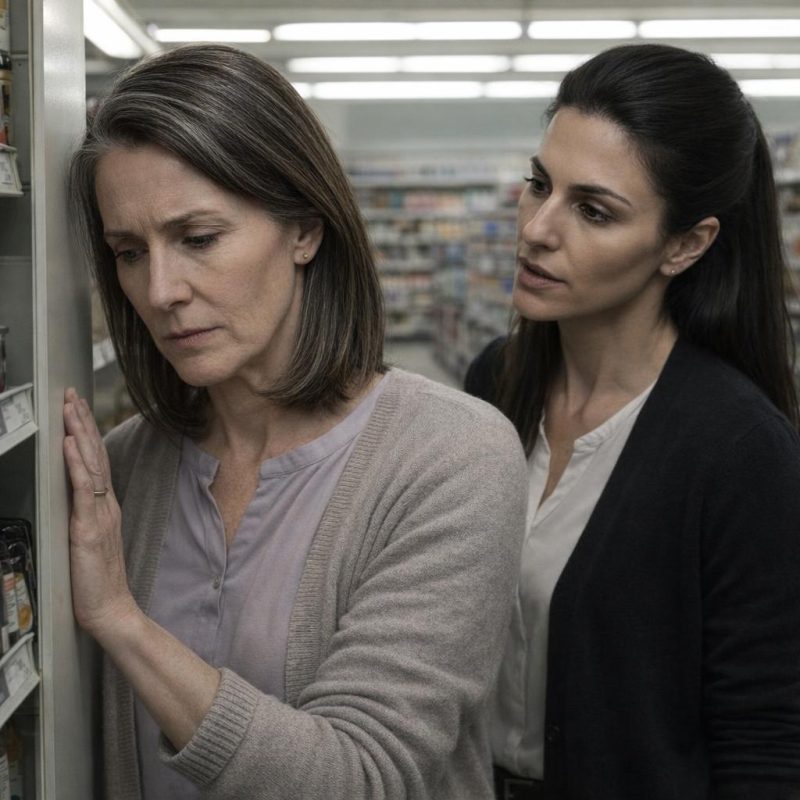 Image by RM AI
Grandpa Lou
I called Jenna on my way home, still sitting in the parking lot with the engine running because I didn't trust myself to drive yet. I told her what Melissa had said and asked her to keep digging — anything she could find, any old accounts, any archived photos. Jenna didn't hesitate. She said she'd been poking around already and had found something buried pretty deep, an old profile that had been deactivated but not fully scrubbed. She texted me a screenshot while we were still on the phone. It took me a second to understand what I was looking at. The woman in the photo had darker hair, almost black, and it was cut differently, but the face — the jaw, the eyes, the way she was standing — it was Vanessa. She was younger, maybe early twenties, and she had her arm around an elderly man with a wide smile. The caption underneath read: *Miss you every day, Grandpa Lou.* I saved the photo and drove straight back to Melissa's. I showed her the screen without saying a word. She took the phone from my hand and brought it close, and I watched the color drain out of her face.
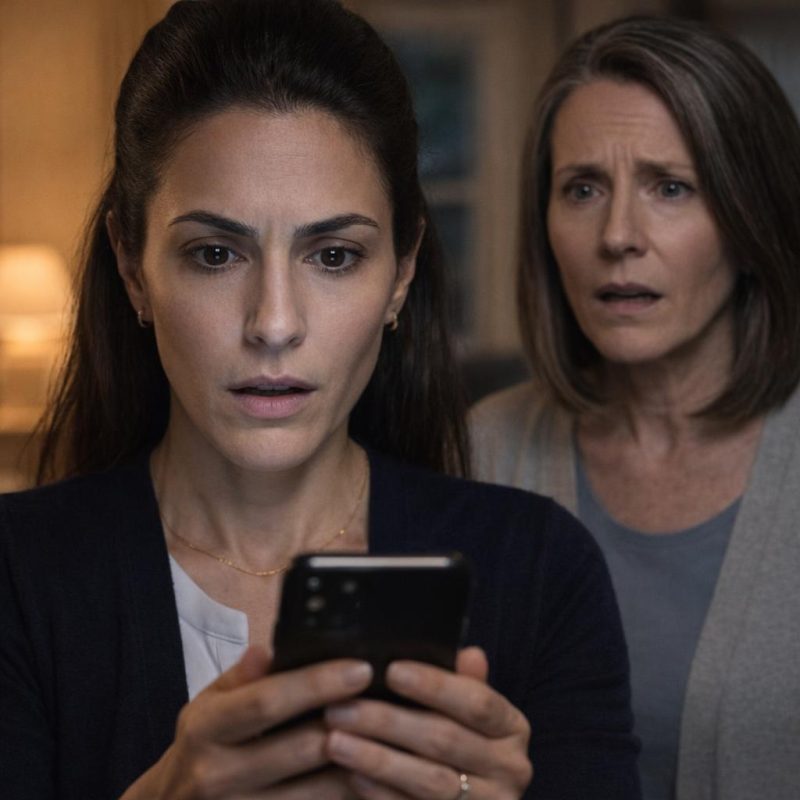 Image by RM AI
The Pattern Emerges
We sat at Melissa's kitchen table for a long time after that. She made tea neither of us really drank. She said the man in the photo — Lou — had been one of the residents Nicole had been closest to. He'd passed away about six months after Nicole disappeared, and the family had raised questions about some financial irregularities in his estate, but by then there was nothing to trace back. I kept turning that over in my mind alongside everything I knew about Vanessa and Eric. The isolation. The way anyone who got too close or asked too many questions got pushed out. The money that moved in ways that were hard to explain but harder to prove. Nicole had done it with elderly residents who were lonely and trusting. Vanessa had done it with Eric after his divorce left him raw and off-balance. The circumstances were different but the shape of it felt the same. Melissa said quietly that she wondered if there had been others — people between Nicole and Vanessa, other names, other towns, other men who'd been left confused and emptied out and too embarrassed to talk about it. I didn't have an answer. But the thought settled into me cold and heavy, and I couldn't shake the feeling that Eric wasn't the beginning of this and might not be the end.
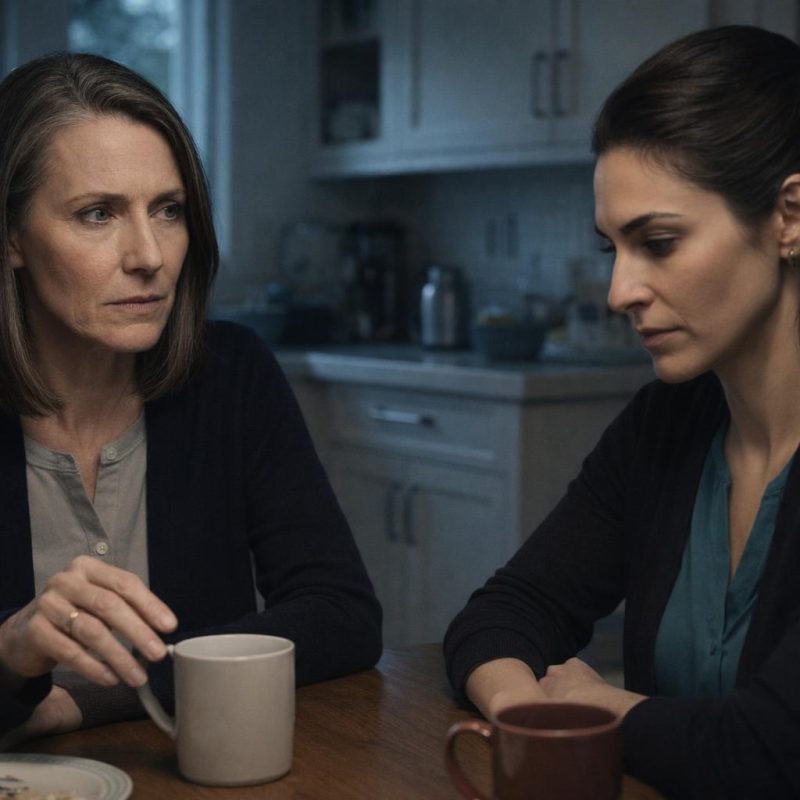 Image by RM AI
Hiring Frank
I'd known Frank from church for going on twelve years. He was quiet, methodical, the kind of man who listened more than he talked and never seemed rattled by anything. He'd spent thirty years doing investigative work before he retired, and he still had the bearing of someone who knew how to find things people didn't want found. I'd always liked him. I'd never imagined I'd need him like this. I called him on a Tuesday morning and asked if we could meet for coffee. I told him everything — Melissa's story about Nicole, the photo Jenna had found, the college fund withdrawals, the name I couldn't verify, all of it. He didn't interrupt. He didn't look skeptical. He just listened with his hands folded around his mug and asked a few careful questions when I finished. He looked at the photo on my phone for a long time. Then he said the inconsistencies I'd described were worth looking into properly, and that he'd be willing to help. He said he'd be thorough and he'd be discreet, and I believed him on both counts. Walking back to my car afterward, I felt something I hadn't felt in weeks — not certainty, not relief exactly, but the steadiness that comes from sitting across from someone who knows how to find buried truths and isn't afraid of what they might be.
 Image by RM AI
The Investigation Begins
Frank told me to give him time and not to expect anything fast. I told him I understood. I did not handle the waiting well. I went to the grocery store and stood in the cereal aisle for ten minutes without picking anything up. I went to church on Sunday and sat through the whole service without retaining a single word of it. I made dinner every night out of habit and ate maybe half of it. I checked my phone more times than I want to admit — not because I expected Frank to call, but because doing something felt better than doing nothing. A week passed. Then a few more days. I kept myself busy with small tasks, reorganizing things that didn't need reorganizing, returning calls I'd been putting off. I told myself no news was probably fine news, that Frank was being thorough, that this was what thorough looked like. I was in the middle of folding laundry on a Thursday afternoon when my phone finally rang. It was Frank. His voice was even and calm the way it always was, but he said he needed me to come in and see what he'd found.
 Image by RM AI
Name Changes Revealed
We met at a small coffee shop about twenty minutes from my house, the kind of place that's always half-empty on weekday mornings. Frank was already there when I arrived, a folder on the table in front of him. He didn't make small talk. He opened the folder and turned it toward me. There were official-looking documents — court records, state filings, something that looked like a legal name change petition. He walked me through them quietly. The name Vanessa, the one my son had married, was only about three years old. Before that, the same woman had gone by Nicole — the name Melissa had given me — for roughly four years. And before Nicole, there was another name entirely, one I didn't recognize, attached to records in a different state. Three names. Three different states. Each identity lasting just long enough before something shifted and a new one began. Frank said that kind of pattern in the records was unusual, to put it plainly. I sat there with the documents spread in front of me and tried to hold all three names in my head at once — the woman my son called his wife, the girl Melissa had known at the retirement home, and someone else entirely before that. The weight of three different names for one person settled over me and didn't lift.
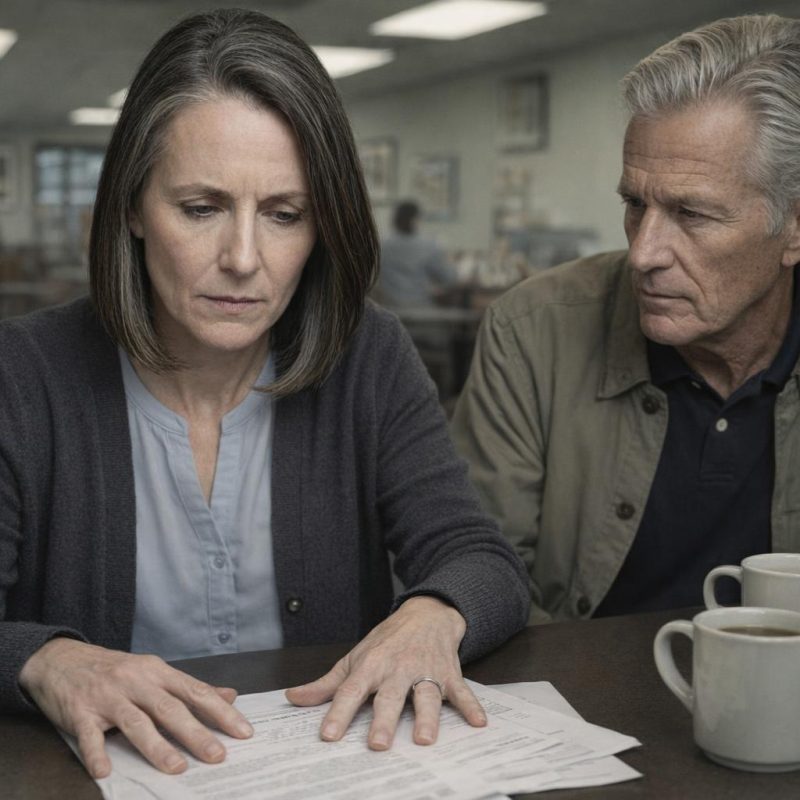 Image by RM AI
Multiple Towns and Victims
Frank came back a few days later with more. He spread a printed map on the table between us, and there were small marks on it — six of them, scattered across three states, spanning what he said was roughly eight years. Each mark represented a complaint or a reported incident. He'd pulled them from public records, civil filings, a few police reports that had gone nowhere. The people involved were mostly men — some elderly, some recently divorced, all of them at some kind of crossroads when the incidents occurred. Each one had reported giving or loaning money, sometimes thousands, sometimes more. Each one said the woman had been close to them, had seemed to care about them, and then had simply stopped being reachable. No charges had ever stuck. Frank said she'd been careful — everything had been framed in ways that made legal action difficult, and by the time anyone tried to build a case, she was already somewhere else. I looked at those six marks on the map and thought about Eric — about how lost he'd been after his divorce, how grateful he'd seemed just to have someone paying attention to him. He was one point on that map. One of many. The thought sat in my chest like something I couldn't swallow, the sickening weight of all those men left behind, each one probably thinking he'd been the only one.
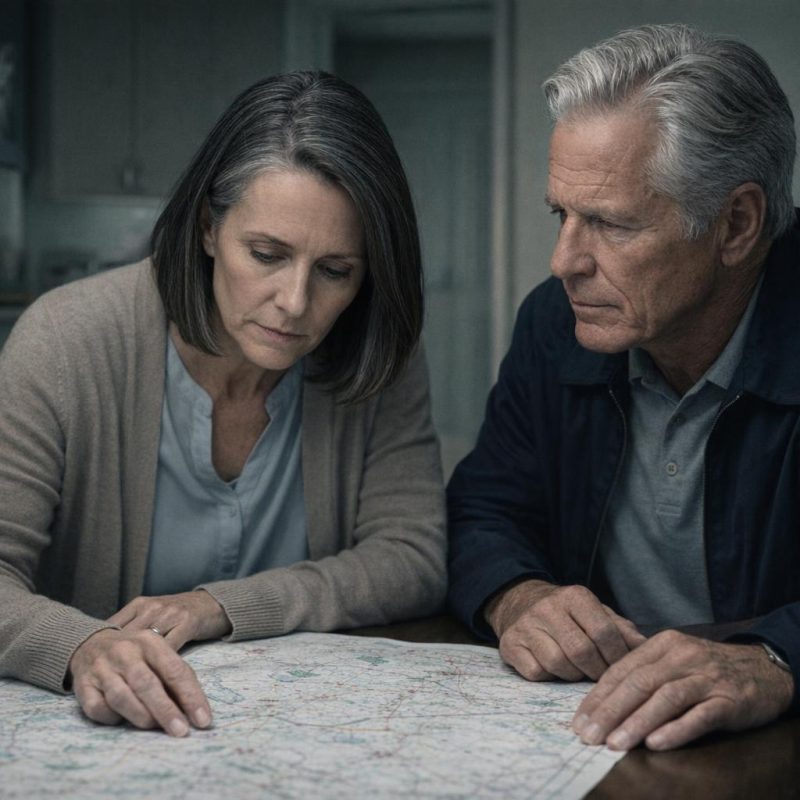 Image by RM AI
The Method
Frank ordered a second coffee and then explained how it worked. He said the approach he'd seen in these cases relied on keeping everything just ambiguous enough — money that changed hands as gifts, not loans, so there was nothing to demand back. Relationships built on genuine-seeming affection so that when things fell apart, the victim often blamed himself. Family members and friends pushed out early, before they could ask hard questions, so that by the time anyone noticed something was wrong, the person at the center was already isolated and defensive. He said the confusion was part of it — the way stories shifted slightly, the way accusations got turned around, the way the victim ended up looking unstable to anyone on the outside. I thought about every conversation with Eric over the past year, every time I'd tried to say something and been made to feel like the problem. Frank paused and looked at his notes. He said that in most of the cases he'd looked at, there was usually someone on the inside — someone close to the victim's family — who ended up passing along information without fully understanding how it was being used. He said it almost never looked like betrayal from where that person was standing. I set my coffee cup down slowly. Someone on the inside.
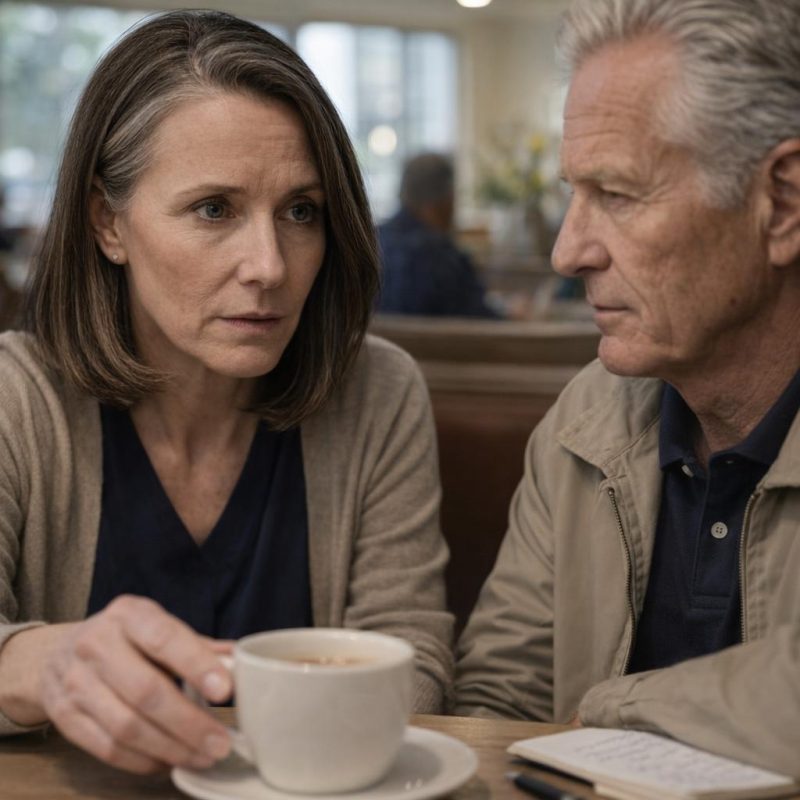 Image by RM AI
The Rumors Make Sense
I drove home from that meeting with Frank and sat in my driveway for a long time before I could make myself go inside. Someone on the inside. I kept turning that phrase over and over. And then, slowly, the pieces started arranging themselves in a way I hadn't let myself see before. Every accusation Vanessa had made against me had landed at exactly the right moment. When I'd tried to talk to Eric about the finances, suddenly I was the controlling mother who couldn't let her son grow up. When I'd expressed worry about how fast everything was moving, I became the jealous woman who couldn't accept his happiness. Each rumor had hit a specific nerve — not just with Eric, but with people in my community, people at church, people who'd known me for years. And the timing. It was never random. It was always right before a conversation that might have mattered, right before Eric might have paused and asked a hard question. Frank had said that mothers were often the biggest obstacle in these situations, because mothers notice things. They ask questions. They don't let go easily. I thought about how thoroughly I'd been removed from Eric's life — not with one big fight, but with a hundred small cuts, each one leaving me looking like the problem. The quiet of my car felt like the only honest thing left.
 Image by RM AI
Someone Gave Information
I made myself a cup of tea I didn't drink and sat at the kitchen table going back over every rumor I could remember. There was the one about me telling people Eric's first marriage had been a mistake — I'd never said that, but I had once told my sister Diane that I worried Eric had rushed into it. There was the one about me calling Vanessa a gold digger at a family dinner — I'd never used those words, but I had said to Diane, privately, that I hoped Eric was being careful with his money. The more I went through them, the sicker I felt. These weren't things a stranger could have invented. They were too specific. Too close to real conversations. Someone had taken things I'd actually said — things I'd said in confidence, in private, to people I trusted — and fed them through some kind of filter that turned them into weapons. Vanessa couldn't have known about those conversations on her own. She hadn't been there. She hadn't been part of my life in any real way before the wedding. Which meant someone who was part of my life had been talking to her. I started going through names in my head, one by one, trying to figure out who had been close enough to hear those things. The thought that someone I loved had handed her the ammunition sat in my chest like something I couldn't swallow.
 Image by RM AI
Diane's Involvement
Frank called me two days later and asked if I could talk. His voice was measured, the way it always was, but something in it made me sit down before he'd even started. He said he'd been following a financial thread and it had led somewhere he hadn't expected. He said my sister Diane had been in contact with Vanessa for months — not casually, not just family overlap, but regular contact going back well before the wedding. I asked him what kind of contact. He said the kind that started with a business investment. He told me Diane had put forty thousand dollars into a venture Vanessa had pitched to her — some kind of online retail opportunity with promised returns that sounded, from the paperwork Frank had found, completely fabricated. I couldn't speak for a moment. Forty thousand dollars. That was Diane's savings. That was years of careful living. Frank said the investment had collapsed almost immediately and Diane had lost everything. I asked when. He said months ago. I asked why Diane hadn't told me. Frank was quiet for a beat, and then he said that was the part I needed to hear — that Diane hadn't walked away after losing the money. She'd stayed in contact with Vanessa. She'd kept helping her, apparently trying to find a way to get repaid, and Frank said it looked like Vanessa had found exactly the right way to keep her close.
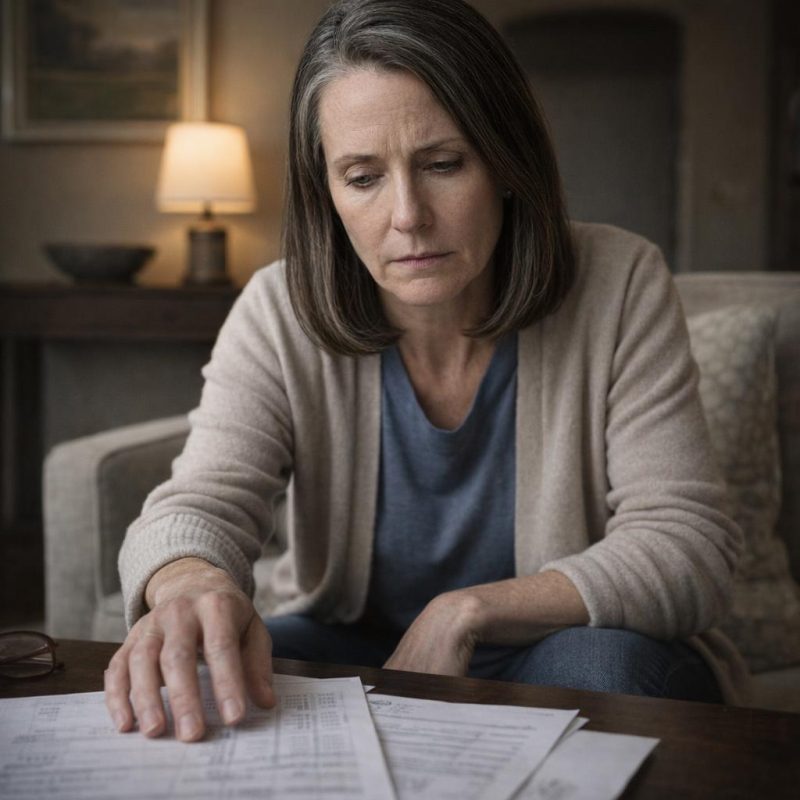 Image by RM AI
Diane's Motive
I asked Frank to say it plainly, because I needed to hear it without any softening. He did. He said Vanessa had offered Diane a way to work off the debt — not in money, but in access. Diane knew my life. She knew my habits, my opinions, the things I said at family dinners, the worries I'd shared in private phone calls over the years. Vanessa had needed someone who could take those things and reshape them, and Diane had been desperate enough to do it. Frank said Diane had fed Vanessa details about conversations I'd had, opinions I'd expressed, moments from my past that could be twisted just enough to sound damning. He said Diane had repeated my words out of context, exaggerated things I'd said in frustration, and helped push the rumors through our community — through people who trusted Diane because they trusted me. I sat there holding the phone and I couldn't feel my hands. My sister. The person I'd called when I was scared. The person who'd sat across from me at my kitchen table and listened to me cry about losing Eric. She had been the one carrying my words back to Vanessa the whole time. Frank said he was sorry. I didn't say anything for a long moment. Then I asked him if he had proof — something I could actually hold in my hands. He said he had something better than documents.
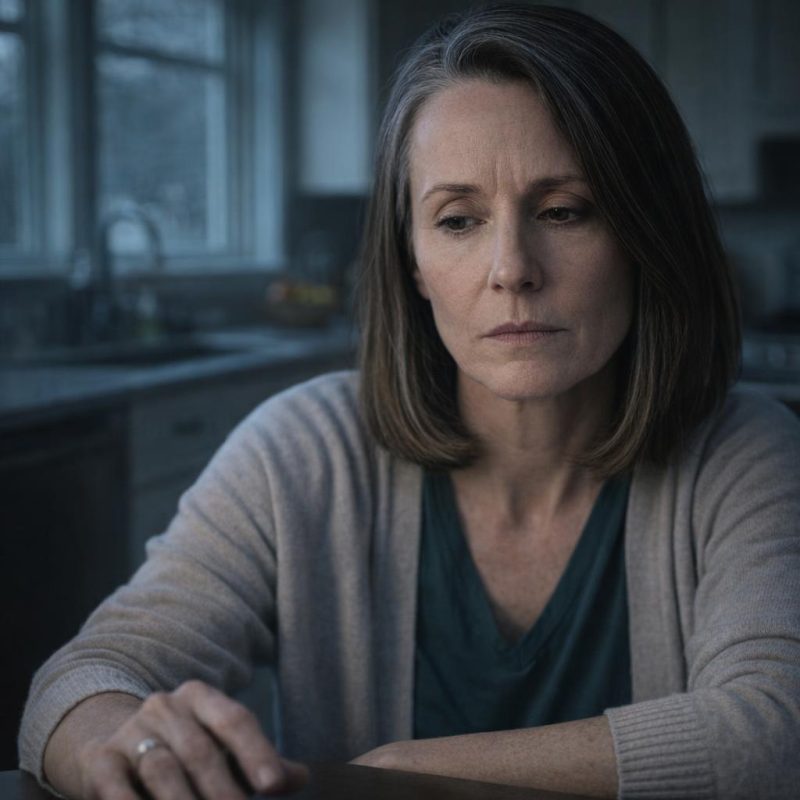 Image by RM AI
The Recording
Frank came to my house the next morning with a small digital recorder. He set it on my kitchen table and told me he'd been present at a meeting between Diane and Vanessa three days earlier — that Diane had agreed to the meeting without knowing Frank was nearby, and that he'd captured the conversation. He asked if I was ready. I told him to play it. Diane's voice came through first, and hearing it broke something open in me — she sounded small and exhausted, begging, asking Vanessa to please just give her back some of what she'd lost, saying she'd done everything Vanessa had asked. Vanessa's response was almost bored. She said the money was gone and Diane needed to accept that. Diane asked, her voice cracking, why she'd even needed her to say those things about me — why any of it had been necessary. There was a pause on the recording. And then Vanessa laughed. Not a nervous laugh. A real one. She said mothers were always the hardest part. She said they asked too many questions, they noticed too much, and the only way to handle them was to make the son see her as the problem before she could become one. She said it had been easier than she'd expected. I sat at my kitchen table and listened to my sister crying on that recording while Vanessa's voice, calm and almost cheerful, described exactly how she had taken my son from me.
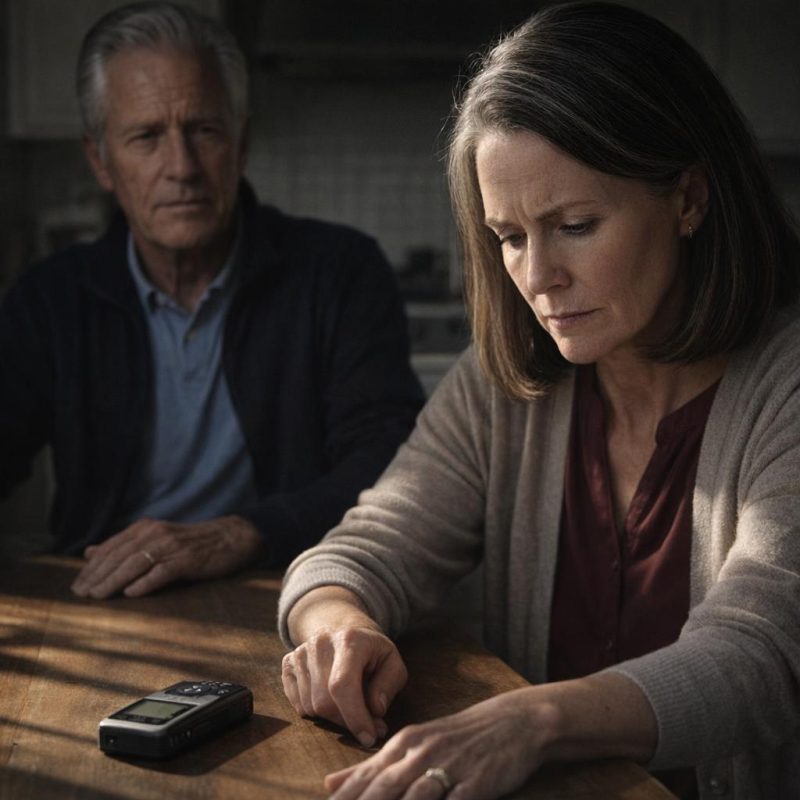 Image by RM AI
Planning the Confrontation
Frank let the silence sit for a minute after he stopped the recording. Then he asked me what I wanted to do. I told him I wanted Eric to hear it. Frank nodded slowly, but he warned me first — he said that in situations like this, the person at the center often pushed back hard the first time evidence was presented. He said Eric had spent months being told I was the problem, and that kind of conditioning didn't dissolve the moment you handed someone a piece of paper. He said Eric might get angry. He might defend her. He might walk out. I told Frank I understood all of that. I'd been lying awake thinking about it for weeks. Frank asked what I thought would be hardest for Eric to dismiss. I said her voice. Not my summary of what happened, not a document he could question or a timeline he could poke holes in — her actual voice, saying it herself, laughing about it. Frank agreed. He said there was something different about hearing a person's own words, in their own tone, with no room for interpretation. We talked through the logistics — where to meet Eric, whether Frank should be present, how to get Eric there without Vanessa finding out first. By the time Frank left, I had a plan. But the plan meant nothing until Eric agreed to sit down and listen, and I still had to find a way to make that happen.
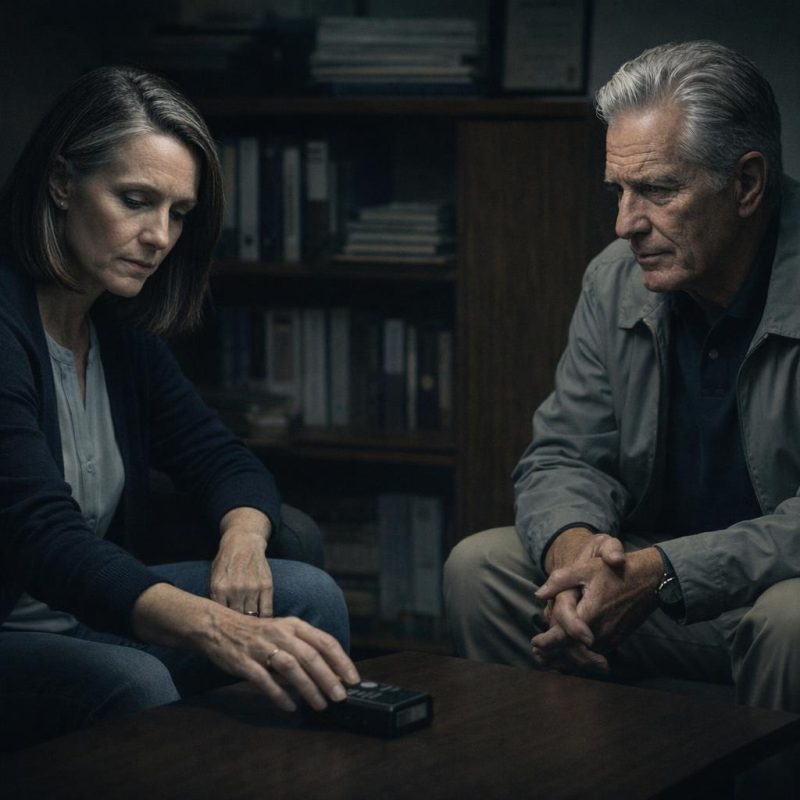 Image by RM AI
Fear of Losing Him
I didn't sleep that night. I lay in the dark and ran through every version of how the conversation with Eric could go, and most of them ended badly. I knew what Frank had said about victims defending the people who'd hurt them — I'd heard it, I understood it intellectually — but understanding something and being prepared to live through it were two different things. Eric had defended Vanessa every single time I'd tried to raise a concern. He'd looked at me with that exhausted, disappointed expression and told me I was making things harder than they needed to be. He'd believed her version of every story. And now I was going to sit across from him and ask him to believe that the woman he'd married had been running a con on him from the beginning. I thought about how much Vanessa had already taken — my relationship with my son, my standing in my community, my trust in my own sister. I thought about how it would feel if I laid everything out in front of Eric and he still chose her. Some people, I knew, didn't want to be rescued. Some people looked at the truth and decided the lie was easier to live with. I wasn't sure which kind of person Eric was anymore, and that uncertainty was the loneliest feeling I'd had through all of it. The truth doesn't always win. I'd known that my whole life, but I'd never had to bet everything on it before.
 Image by RM AI
Gathering All Evidence
Frank came back the following afternoon with a folder thick enough that I had to clear space on my kitchen table to open it flat. He walked me through everything methodically, the way he did everything — no drama, just facts laid out in order. There were copies of official name change documents, three of them, each one a different version of the woman Eric had married. There was a map Frank had printed showing a trail across three states, with dates and locations marked, each one corresponding to a man who'd been left with drained accounts and unanswered questions. There were two written statements from previous victims Frank had tracked down, both of them describing patterns I recognized from my own life. Melissa had sent a formal written account of what she'd witnessed at the retirement community, and Frank had included documentation of the withdrawals from Eric's savings account going back eighteen months. I added the photograph of Nicole with Grandpa Lou, slipped it into the folder myself. Then Frank placed the recording on top of everything — just the small digital device in a labeled plastic sleeve, sitting there like the quietest thing in the room. I squared the edges of the folder and pressed my hand flat against the cover for a moment. Everything that was true about who Eric had married was inside it, waiting.
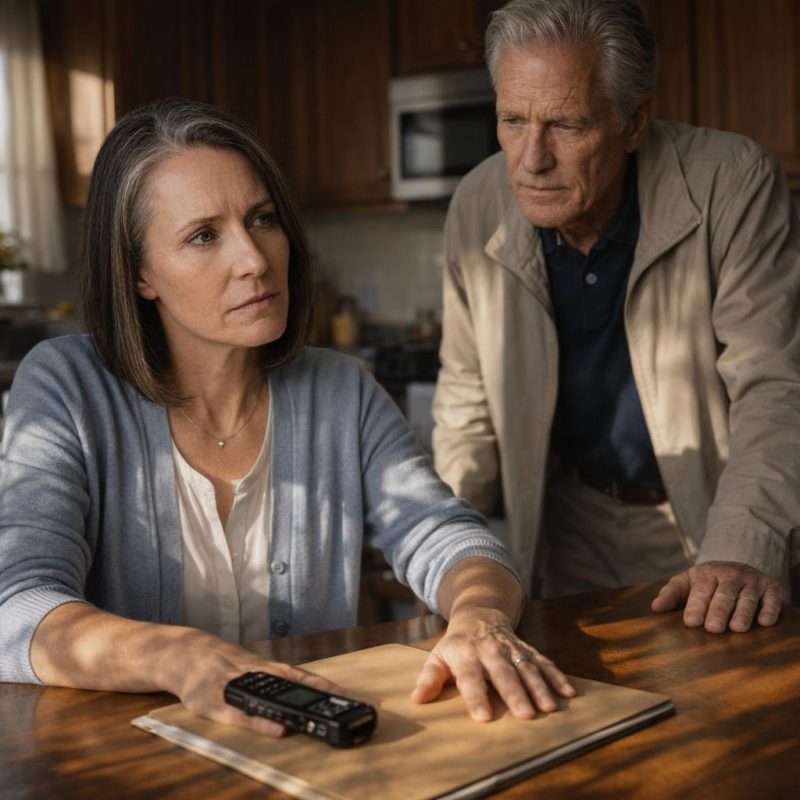 Image by RM AI
The Meeting
I must have picked up my phone and set it back down a dozen times before I finally made the call. I'd rehearsed what I was going to say, but the moment Eric answered, every word I'd prepared dissolved. I just told him I had something important he needed to see — something that couldn't wait and couldn't be explained over the phone. He was quiet for a long moment. I could hear him breathing. He said he didn't think that was a good idea, and I told him I understood, but I was asking anyway. I said please. I don't think I'd said please to my son like that since he was a teenager. Something in it must have reached him, because he finally said fine — one coffee, neutral ground, and he'd hear me out. I chose a quiet place on the edge of town, a small shop with corner tables and enough background noise that no one would pay attention to us. Frank arrived early and sat two tables over, close enough to be present without crowding the moment. I sat with the folder in my lap, my hands flat on top of it, watching the door. I'd told myself I was ready. Then the door swung open, and Eric walked in looking like he hadn't slept in days, his shoulders drawn up and his eyes already guarded.
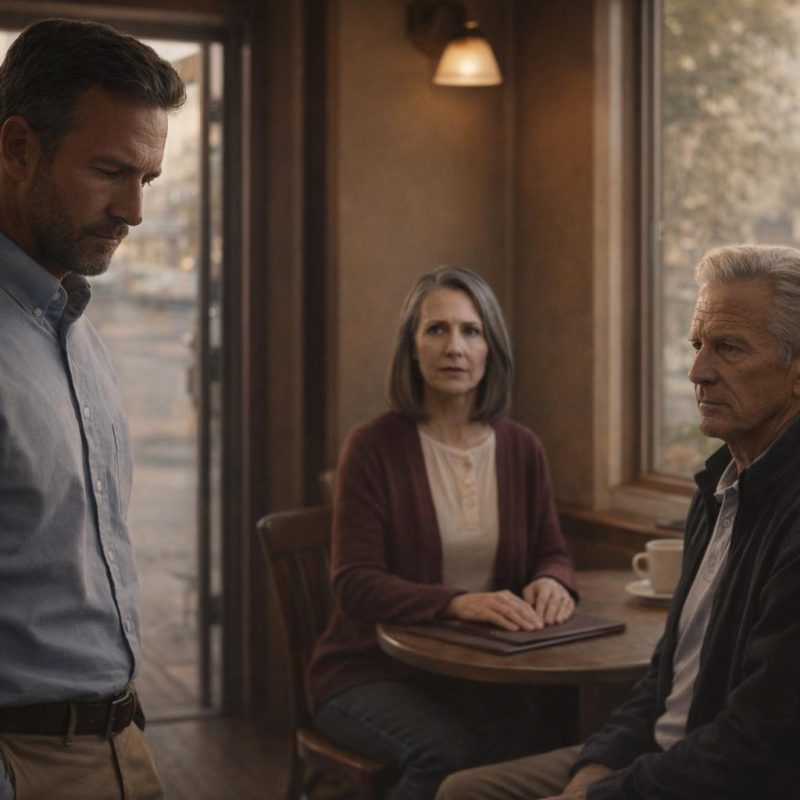 Image by RM AI
Processing Diane's Treachery
I'd planned to ease into it, but there was no gentle way to say what I had to say. I told Eric that before he looked at anything in the folder, there was something he needed to know about Diane. He frowned and said what about her. I told him she'd been involved — that Vanessa had been using her, feeding her information about me, about our family. Eric shook his head slowly, like he was trying to clear it. He said that didn't make any sense, that Diane was family. I told him I knew, and that it had taken me a long time to accept it too. Then I told him about the forty thousand dollars — that Diane had lost it to Vanessa before any of this started, that she'd been too ashamed to say anything, and that Vanessa had used that shame to keep her cooperative. Eric went very still. Frank leaned forward quietly and confirmed that the financial records backed up everything I'd just said. I watched my son's face move through confusion, then disbelief, then something that looked like the ground shifting under him. He'd come in here ready to be defensive, ready to protect his marriage. But hearing that his own aunt had been pulled into it — that this went deeper than a disagreement between me and his wife — I could see the walls starting to come down.
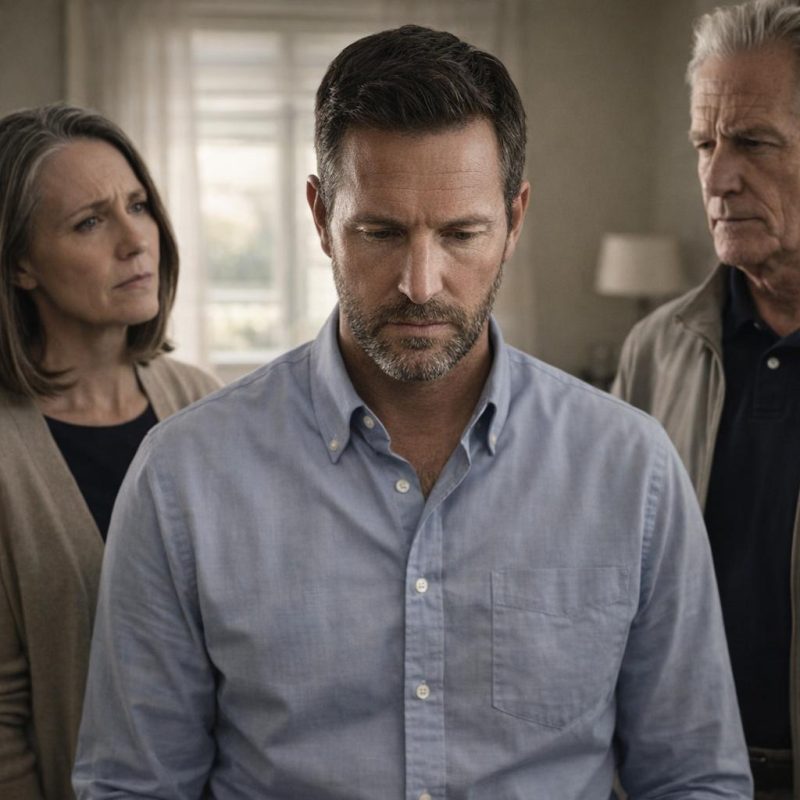 Image by RM AI
Playing the Recording
I told Eric there was one more thing, and that he needed to hear it in her own words. He looked at me like he wasn't sure he wanted to. Frank set the small recorder on the table between us, and I pressed play. The first voice was Diane's — thin and desperate, begging for her money back, saying she'd done everything Vanessa had asked. Eric's jaw tightened. Then Vanessa's voice came through, smooth and unbothered, laughing at Diane's panic like it was mildly entertaining. I watched Eric's face go pale. Then came the part I'd listened to more times than I could count — Vanessa saying she'd turned Eric against me on purpose, that mothers were the hardest obstacle, that you had to get them out of the way early. Eric didn't move. He sat with his hands flat on the table, staring at the recorder like he could will it to say something different. When the recording ended, the coffee shop kept going around us — someone laughed at the counter, a chair scraped the floor — but at our little table, nothing moved. Frank reached over and stopped the device. Eric still hadn't spoken. I didn't say anything either. There was nothing to say that the silence hadn't already said better.
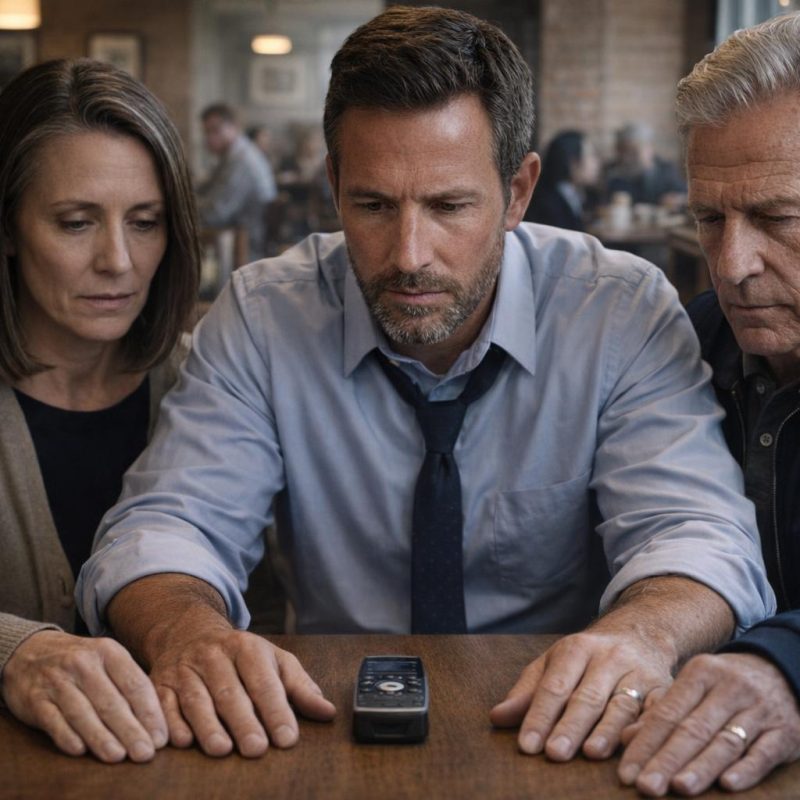 Image by RM AI
Eric's Devastation
Eric's first question was whether the recording was real. Frank told him yes — the device, the date stamp, the chain of custody, all of it documented. Eric said there had to be an explanation, that maybe it was taken out of context, and I didn't argue with him. I just opened the folder and slid the name change documents across the table. He stared at them. Three different names, three different states, each one attached to a man who'd been left with nothing. Frank walked him through the timeline quietly, the way he'd walked me through it weeks ago. I watched my son's face as he understood — really understood — that she had found him, chosen him, and worked him the way someone works a job. He asked about the money he'd transferred to her accounts over the past year. Frank had the figures. Eric closed his eyes. When he opened them, they were wet. He said he'd pushed me away. He said he'd believed her over me, that he'd told me to stay out of his life, and that none of it had been real. His voice broke on that last word. I reached across the table and put my hand over his, and he bent forward and cried in a way I hadn't seen since he was a little boy. I held on and let him, because some grief just has to move through you before anything else can.
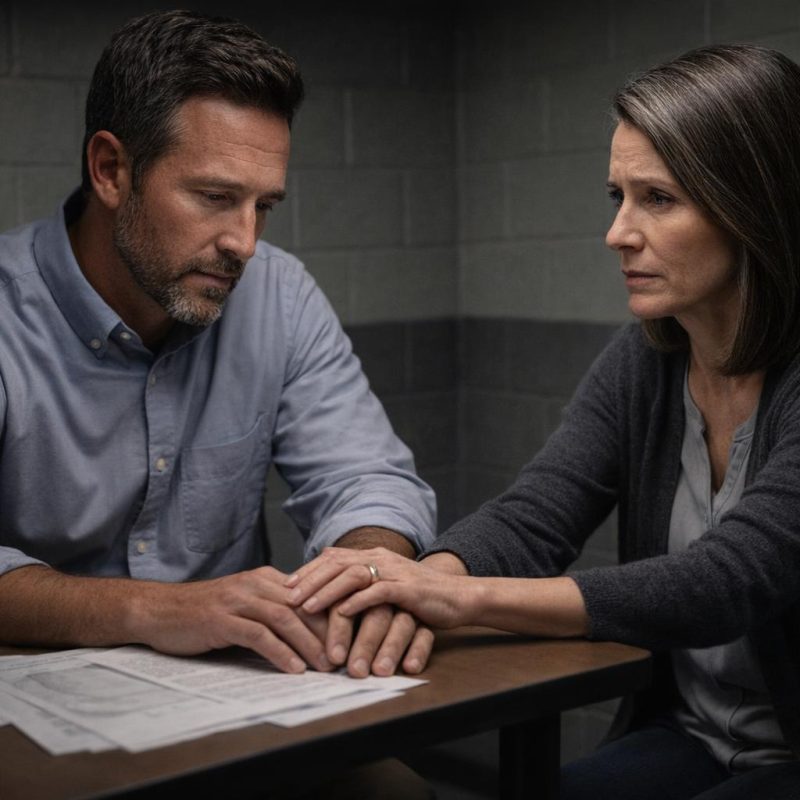 Image by RM AI
Confronting Vanessa
Eric wanted to go that afternoon, and I didn't try to talk him out of it. Frank drove separately and waited outside while Eric and I went in. Vanessa was in the living room when we walked through the door, sitting with her legs crossed, scrolling her phone like it was any other Tuesday. Eric said her name. She looked up, and her expression didn't change — not surprise, not guilt, not even the performance of innocence I'd half expected. Just a kind of flat attention, like she was waiting to see what he'd do. Eric told her he knew everything. He set his phone on the coffee table and played the recording. She listened to her own voice without blinking. When it ended, Eric asked her if any of it had been real — any of it, even a small part. She tilted her head slightly and said he'd been lonely and easy to read, and that she'd given him what he needed. He asked about the money. She lifted one shoulder in something that wasn't quite a shrug. Eric stood there looking at the woman he'd married, and I stood behind him looking at her too. There was nothing behind her eyes that resembled regret. No anger, no defensiveness, no cruelty even — just a kind of absence, like the lights were on in a room where nobody lived.
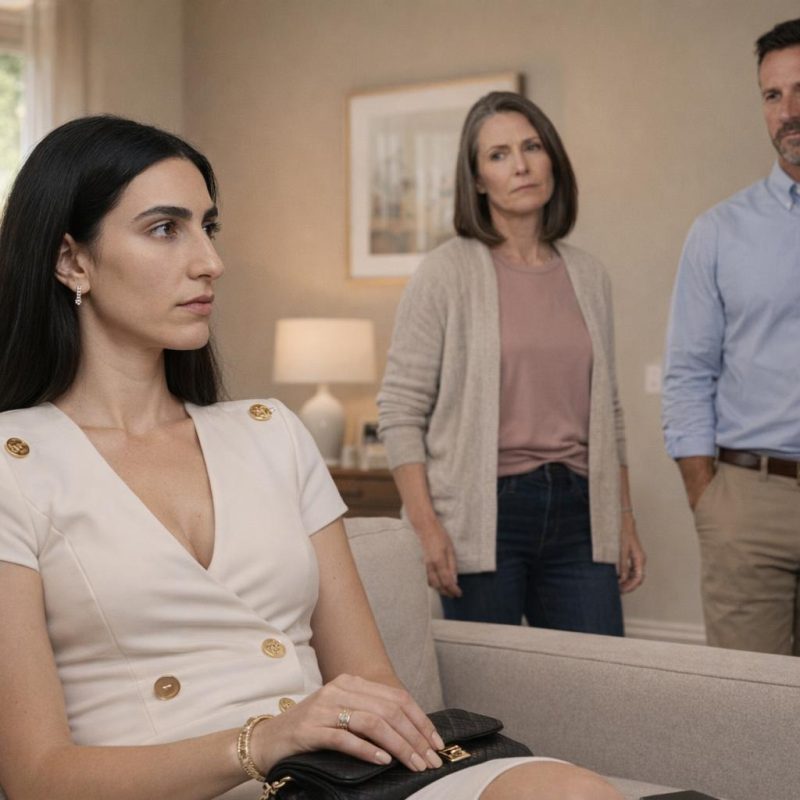 Image by RM AI
Vanessa Disappears
My phone rang at six-fifteen in the morning. It was Eric, and I knew from the first syllable that something had happened. He said she was gone. I was in my car before he finished the sentence. When I got to his house, he was standing in the bedroom doorway staring at the open closet. Her side was empty — not just cleared out but stripped, like she'd never been there. The hangers were pushed to one end, and the shelf above them was bare. Eric pulled up the bank app on his phone and held it out to me. The joint account showed a zero balance and a series of ATM withdrawals made between midnight and four in the morning, hitting the daily limit at each one. She'd been methodical about it. On the kitchen counter there was a folded piece of paper with Eric's name on it. He'd already read it. I picked it up and read it myself — two sentences that said nothing, explained nothing, and apologized for nothing. I set it back down. I'd known this was coming, had known it the moment she sat in that living room without flinching, but knowing something is coming doesn't make it land any softer. Eric opened the closet again, like he was checking to make sure it was still empty.
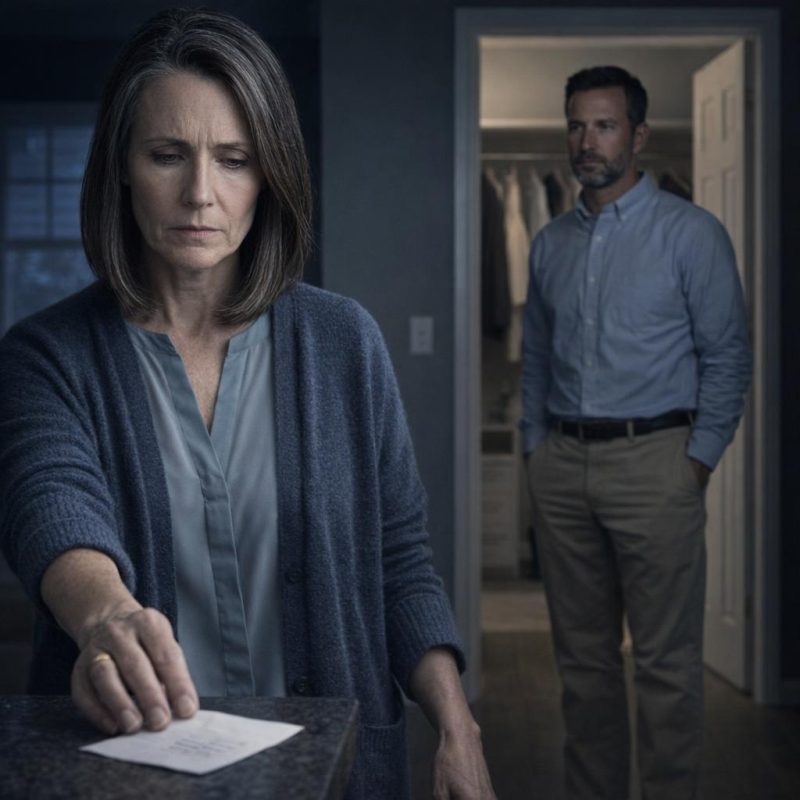 Image by RM AI
Evidence Left Behind
Frank arrived within the hour and we started going through the house room by room. In the nightstand drawer Eric found two sets of identification — different names, different states, both with Vanessa's photograph. He set them on the bed without a word. I went through the kitchen desk and found a stack of credit card statements addressed to Eric for accounts he'd never opened — four of them, going back fourteen months, carrying balances he hadn't known existed. Frank photographed everything as he went, methodical and quiet, narrating nothing. Then Eric came out of the bedroom holding a second phone — a cheap prepaid model he'd found taped behind the drawer of her vanity. He unlocked it and stood there reading. His face went through something I didn't have a name for. He handed it to me. The messages were to a man named Daniel, and they went back three months. The tone was warm and familiar in a way that made my stomach turn — the same warmth I'd watched her perform for Eric, now aimed somewhere else entirely. Frank took the phone gently from my hands and added it to the evidence pile. Eric sat down on the edge of the bed and looked at the collection of documents spread around him — the fake IDs, the fraudulent statements, the phone with its messages still open on the screen.
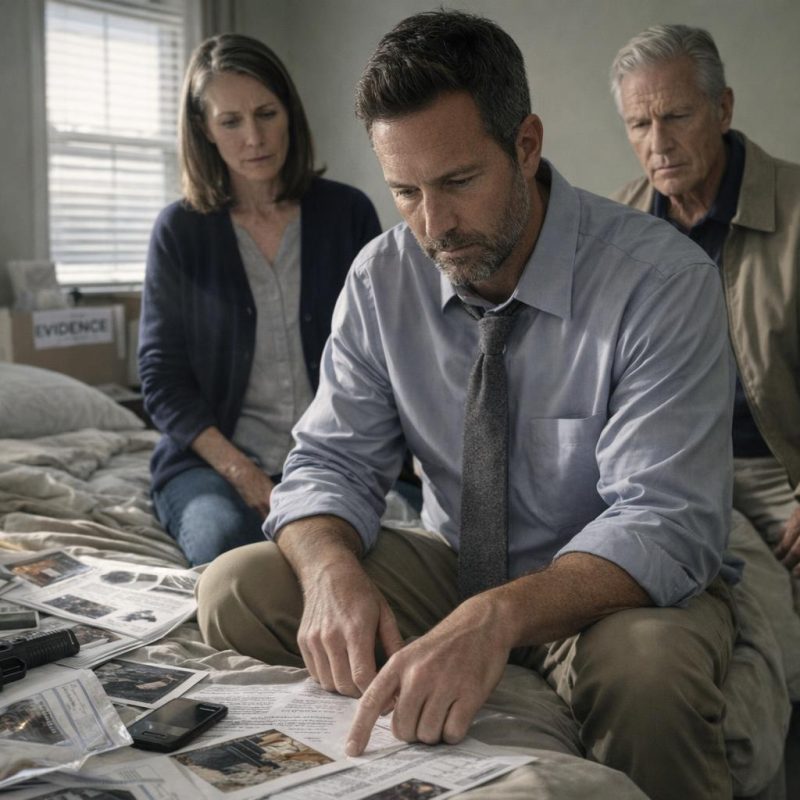 Image by RM AI
Reporting to Police
Frank had called ahead, so when we arrived at the station we were taken directly to a detective who handled financial fraud. She was a compact woman in her fifties with reading glasses pushed up on her head, and she went through Frank's folder the way someone goes through a document they've been waiting for — carefully, without rushing. Frank walked her through the name change trail, the victim statements, the bank records, and the recorded confession. Eric laid out the credit card accounts opened in his name and slid the prepaid phone across the desk in its evidence bag. The detective asked a few precise questions and wrote the answers down without editorializing. Then she leaned back and said that previous complaints about this individual had come in without documentation — just one person's account against another's. She tapped the folder. She said this was different. She said they had a recorded admission, a documented pattern across multiple states, financial fraud with paper trails, and a secondary victim already in contact. She said they'd be filing for a warrant. Frank explained quietly that even if Vanessa moved again, the record would follow her — every jurisdiction she surfaced in would have something to find. I sat in that hard plastic chair and let the detective's words settle over me. Then she looked up from the folder and said this time there was enough to build a case.
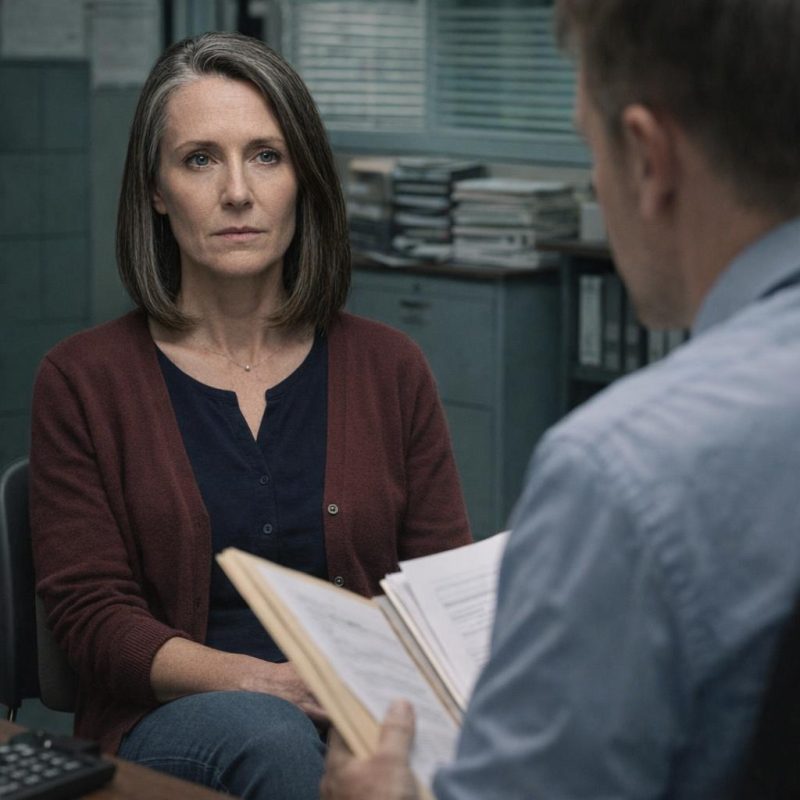 Image by RM AI
Eric's Shame
Eric came over the evening after we left the station, and I don't think he made it past the entryway before he started crying. Not the quiet kind — the kind that comes from somewhere deep and long-held, the kind that bends a person in half. He sat down on my couch and put his face in his hands and said he couldn't believe he'd doubted me. He said it over and over, like saying it enough times might undo something. I sat beside him and put my hand on his back and didn't rush him. He kept apologizing — for the things he'd said, for the months he'd kept me at arm's length, for believing her over me. I told him that Vanessa had done this before, that she was practiced at it, that she knew exactly which buttons to press to make a person feel like the people who loved them most were the threat. He shook his head and said he should have known better. I told him that's not how it works. I told him that loving someone and trusting them isn't a character flaw — she had exploited both. He finally looked up at me, eyes red, and asked how he could ever make this right. I told him we'd figure it out together, one day at a time, and that the road back was long but we were already on it.
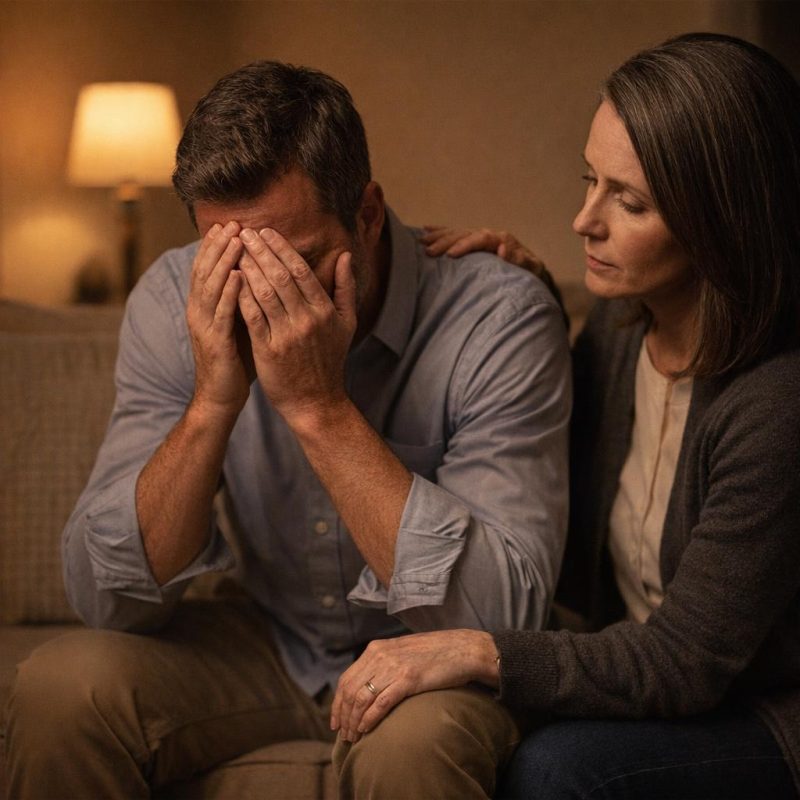 Image by RM AI
First Sunday Back
It was about three weeks later when Eric called on a Saturday afternoon and asked, quietly, if he could bring Sophie over for Sunday dinner. I said yes before he finished the sentence. I spent that whole Sunday morning in the kitchen making his favorite — pot roast with the carrots he always picked out as a kid and then ate anyway. When they knocked on the door and I opened it, Sophie walked straight into my arms without a word and held on. She said she'd missed me. I had to take a breath before I could answer her. Eric came in behind her and immediately asked if I needed help in the kitchen, the way he used to before any of this happened. We moved around each other carefully at first, like people relearning the geography of a room they'd been away from too long. Dinner was quieter than our old Sundays used to be. There were moments where someone would start a sentence and then let it trail off, and we'd all just let it go. But we ate together. Sophie told me about school. Eric refilled my water glass without being asked. The wounds were still there — I could feel them in the pauses — but something underneath them had started, slowly, to knit back together, and the house felt like mine again.
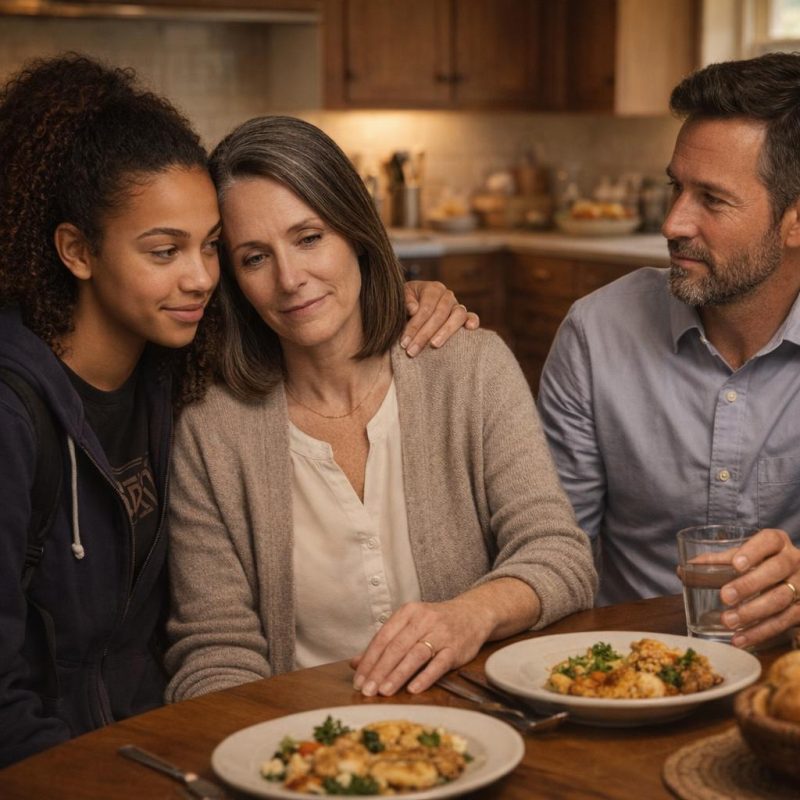 Image by RM AI
Diane's Confession
Diane called and asked if she could come by, just the two of us. I said yes, though I won't pretend I wasn't bracing myself. She sat across from me at the kitchen table and didn't try to soften it. She told me everything — how Vanessa had approached her after Diane lost money in what she'd thought was a legitimate investment, how Vanessa had offered to help her recover it in exchange for information about me, about Eric, about our family. She said she was too ashamed to admit she'd been scammed, and that shame had made her do things she couldn't take back. She said she knew she'd fed Vanessa the details that made the lies land. She said she was sorry, and she meant it — I could see that she meant it. I told her the truth: that what Vanessa did to Eric hurt me, but what Diane did hurt differently. Because Vanessa was a stranger who saw an opportunity. Diane was my sister. I told her I understood desperation, but I didn't understand choosing to aim it at me. She nodded. She didn't argue. She said she knew things would never be the same between us, and I didn't tell her she was wrong. After she left, I sat at the table for a long time, and the silence in the kitchen held the full weight of everything we used to be.
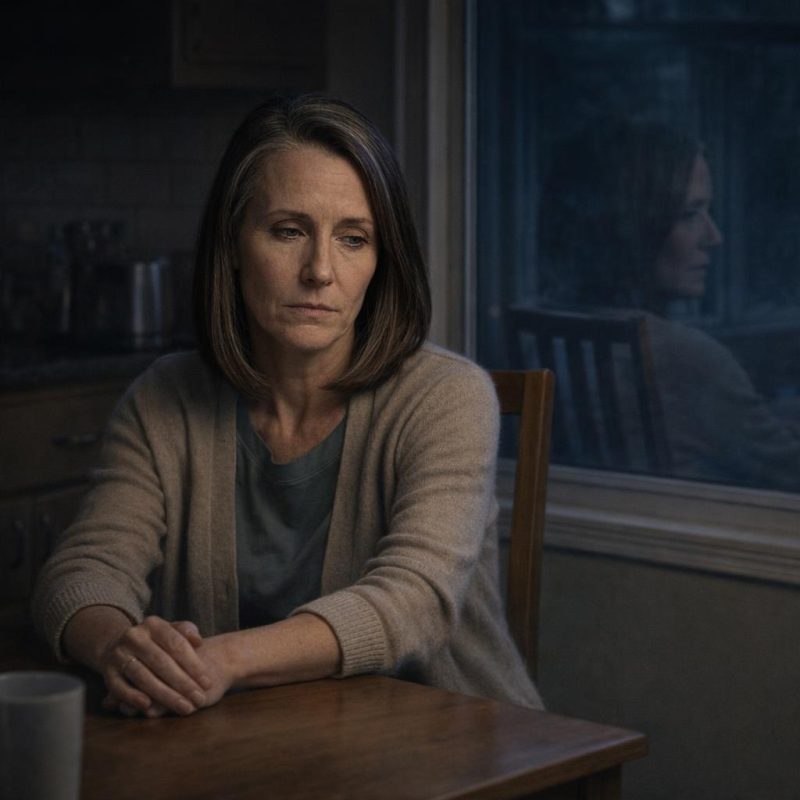 Image by RM AI
Vanessa Surfaces Again
Frank called on a Tuesday morning, and I knew from the steadiness in his voice that he had something real. He told me Vanessa had surfaced in a town about four hours away, using a different name, already working her way into someone's life. He said he'd alerted the local authorities and that the warrant was active. He said the file on her now was more complete than anything that had existed before — documented victims, recorded confession, financial paper trails across multiple states. He said this time she might not be able to simply disappear. I called Eric right after, and he came over that evening with Sophie. We sat on the back porch while Sophie did homework at the kitchen table inside, and Eric said something I'd been thinking for months — that loneliness is what she looks for, that she finds the gap in a person and steps into it before they realize what's happening. I told him I understood that more than he knew. We talked about what we'd learned, what we'd do differently, how to recognize the signs. I told him I wasn't sure justice would catch up to her, but I was grateful our family had. A few days later, Frank sent me a short message: local investigators had made contact and were building on the existing file. For the first time in a long time, I let myself believe it might actually be enough.
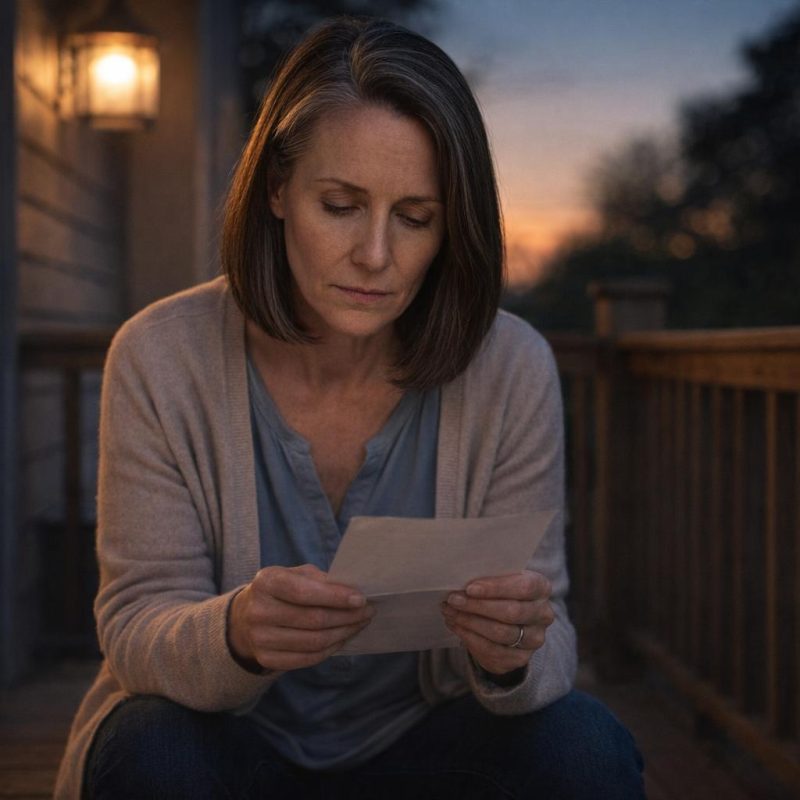 Image by RM AI
KEEP ON READING
The 20 Most Recognized Historical Figures Of All Time
The Biggest Names In History. Although the Earth has been…
By Cathy Liu Oct 4, 2024
10 of the Shortest Wars in History & 10 of…
Wars: Longest and Shortest. Throughout history, wars have varied dramatically…
By Emilie Richardson-Dupuis Oct 7, 2024
10 Fascinating Facts About Ancient Greece You Can Appreciate &…
Once Upon A Time Lived Some Ancient Weirdos.... Greece is…
By Megan Wickens Oct 7, 2024
20 Lesser-Known Facts About Christopher Columbus You Don't Learn In…
In 1492, He Sailed The Ocean Blue. Christopher Columbus is…
By Emilie Richardson-Dupuis Oct 9, 2024
20 Historical Landmarks That Have The Craziest Conspiracy Theories
Unsolved Mysteries Of Ancient Places . When there's not enough evidence…
By Megan Wickens Oct 9, 2024
The 20 Craziest Inventions & Discoveries Made During Ancient Times
Crazy Ancient Inventions . While we're busy making big advancements in…
By Cathy Liu Oct 9, 2024