

I Was Always the Forgotten Son, Until I Found the Box That Proved My Brother's Success Was Built on My Inheritance
I Was Always the Forgotten Son, Until I Found the Box That Proved My Brother's Success Was Built on My Inheritance
The Ghost in the Background
If you've ever stood in a family photograph and wondered whether anyone would notice if you weren't there, you'll understand what I mean when I say I spent thirty-two years being the blurry one. Not absent — just out of focus. My brother Leo was always the sharp center of every frame: jaw set, smile easy, shoulders back like he'd been born knowing where the camera would land. I was somewhere to the left, half-cut by the edge, eyes slightly averted. My parents, Arthur and Elena, fed me and clothed me and made sure I had what I needed in the practical sense. There was always food on the table, always a roof overhead. But there's a difference between being provided for and being seen, and I learned that difference early enough that it stopped feeling like a wound and started feeling like weather — just the condition of the air I breathed. Leo got the standing ovations. I got the distracted nods. Leo got the phone calls that started with excitement. I got the ones that started with a problem that needed solving. I didn't hate him for it. I didn't even resent my parents, not really. It was simply the shape of things, and I had grown so accustomed to that shape that I wore it like a second skin — the quiet, unremarkable weight of thirty-two years spent as background noise.
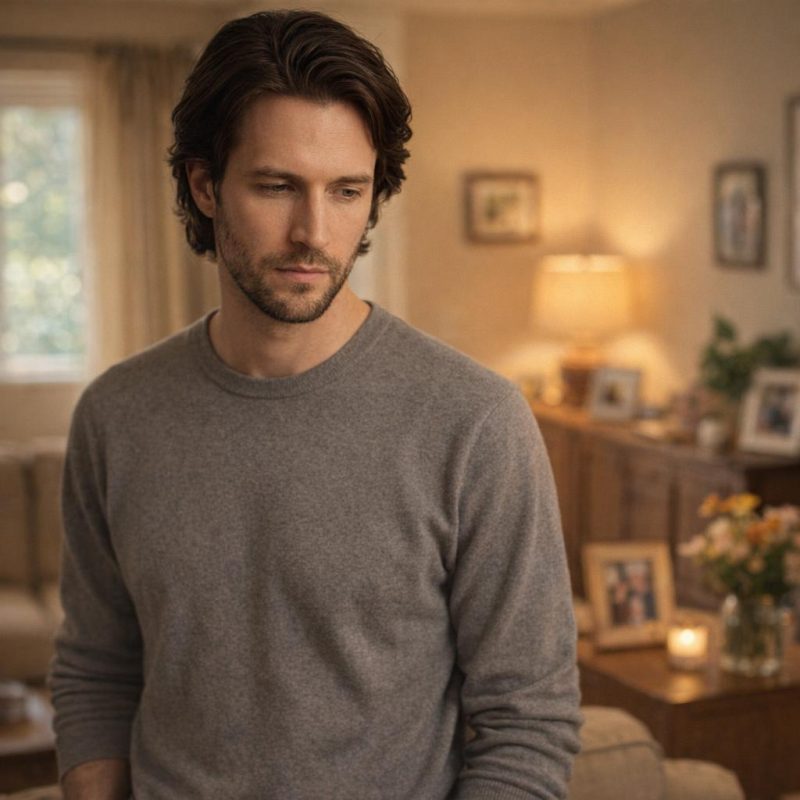 Image by RM AI
The Quarterback's Shadow
The clearest memory I have of high school isn't my own — it's Leo's. Friday nights under the stadium lights, the whole town pressed against the chain-link fence, and Leo in the center of it all, number twelve, arm cocked back like he was born to throw. My parents sat in the front row of the bleachers every single game. I sat three rows behind them, close enough to watch the backs of their heads turn to follow Leo down the field. I don't think they ever looked back to check if I was there. I ran cross-country that same year. I placed third at regionals. My mother patted my shoulder at dinner and said, 'That's nice, sweetheart,' before turning to ask Leo how his shoulder was holding up for Friday. Prom king, naturally. Homecoming court the year before that. Every hallway trophy case in that school had Leo's name on a plaque somewhere. I used to walk past them on the way to class and feel nothing in particular — just the ordinary fact of his brightness and my ordinariness. It wasn't until I went back to the house last spring to help my father sort through some old storage boxes that I found it: my graduation photo, still in its cardboard sleeve, tucked behind Leo's trophy case like something someone had meant to deal with later and never did.
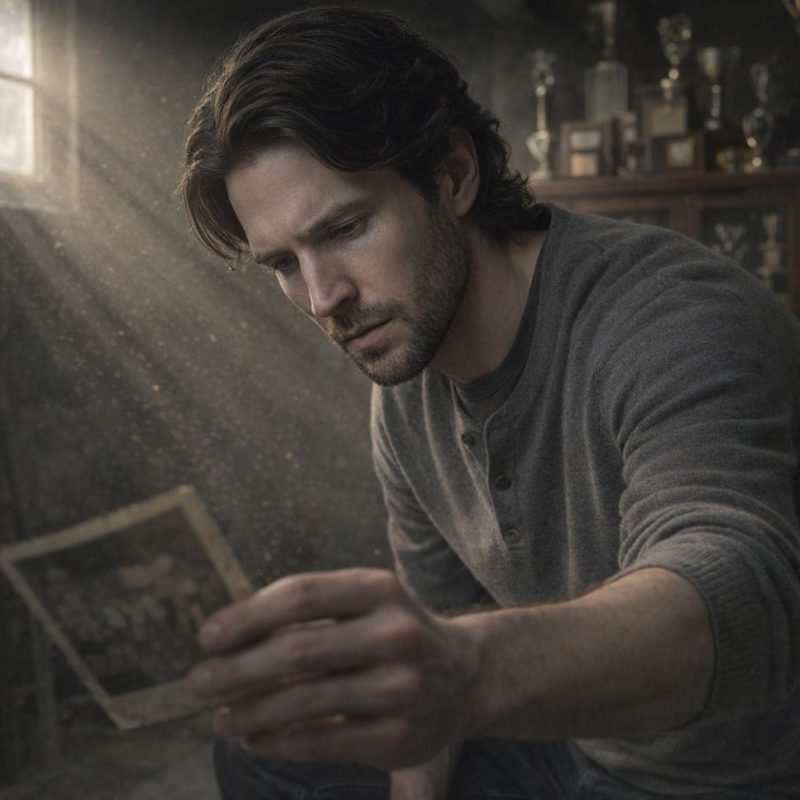 Image by RM AI
Honors and Obligations
I graduated with honors from my accounting program on a Thursday in May. By Saturday, my parents had booked a table at Marcello's — the kind of place with a sommelier and a bread course — to celebrate Leo closing a sales commission that had apparently set a regional record. I sat at that table in my good shirt and ate five courses meant for someone else's triumph. My mother reached across the table at some point and squeezed my hand. 'We're proud of you too, sweetheart,' she said, and I believed her, in the way you believe someone who means well but is already looking past your shoulder. The champagne arrived and Arthur made a toast to Leo's instincts, his drive, his future. I raised my glass. What else do you do? A week later, my mother called and asked if I could take a look at Leo's tax returns. Apparently they'd gotten complicated — multiple income streams, some investment accounts, things that needed a careful eye. She said it like it was the most natural thing in the world, asking the son who'd just earned his accounting degree to quietly sort out the other son's finances as a favor. I said yes, of course. I always said yes. I sat at my kitchen table that night with Leo's paperwork spread in front of me, and the faint taste of that champagne was still somewhere at the back of my throat.
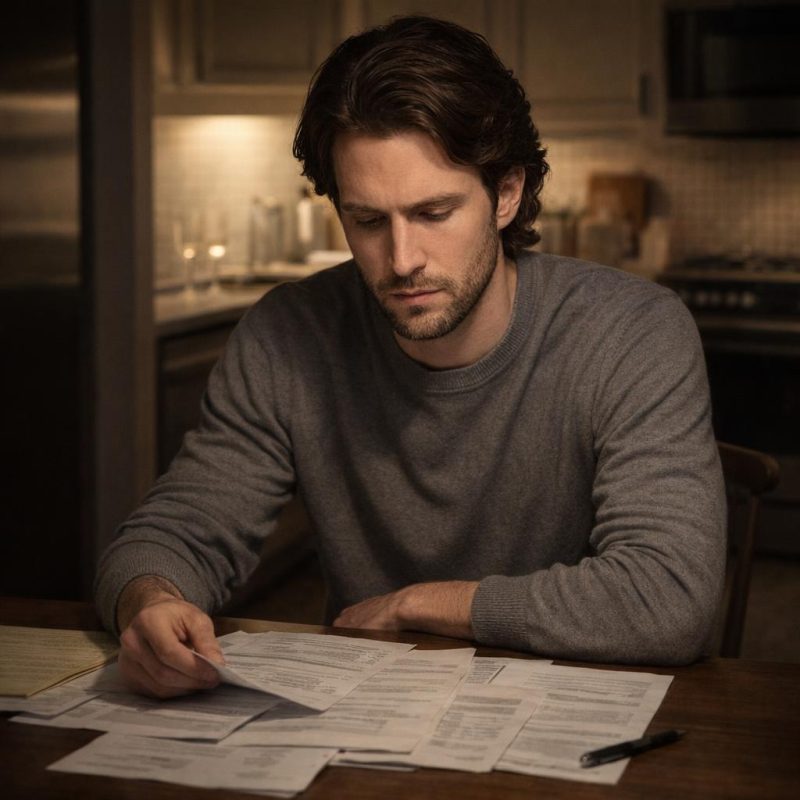 Image by RM AI
The Reliable One
There's a particular kind of usefulness that has nothing to do with being valued, and I became an expert in it. My parents didn't call Leo when the water heater gave out at eleven on a Tuesday night — they called me. They didn't ask Leo to drive them to the airport at four in the morning for their anniversary trip to Portugal — they called me. I'd show up with my toolkit or my car keys, fix the thing or drive the distance, and Arthur would say 'good man' in that distracted way of his, already scrolling his phone, and Elena would say 'you're such a help' while her eyes drifted toward the window as if Leo might materialize in the driveway at any moment. I didn't mind the work itself. I'm not someone who needs applause for tightening a pipe fitting. But there's a specific loneliness in being the son who is called upon and the son who is looked through at the same time, and I felt it most acutely on those early morning drives to the airport, the city still dark outside the windows, my parents in the back seat talking about Leo's latest project or Leo's new apartment or whether Leo was eating properly. I'd drop them at departures, carry their bags to the curb, and watch them walk through the sliding doors. They never once asked about my projects, my apartment, whether I was eating properly. I drove home in the quiet and sat with the feeling of being useful but never quite necessary.
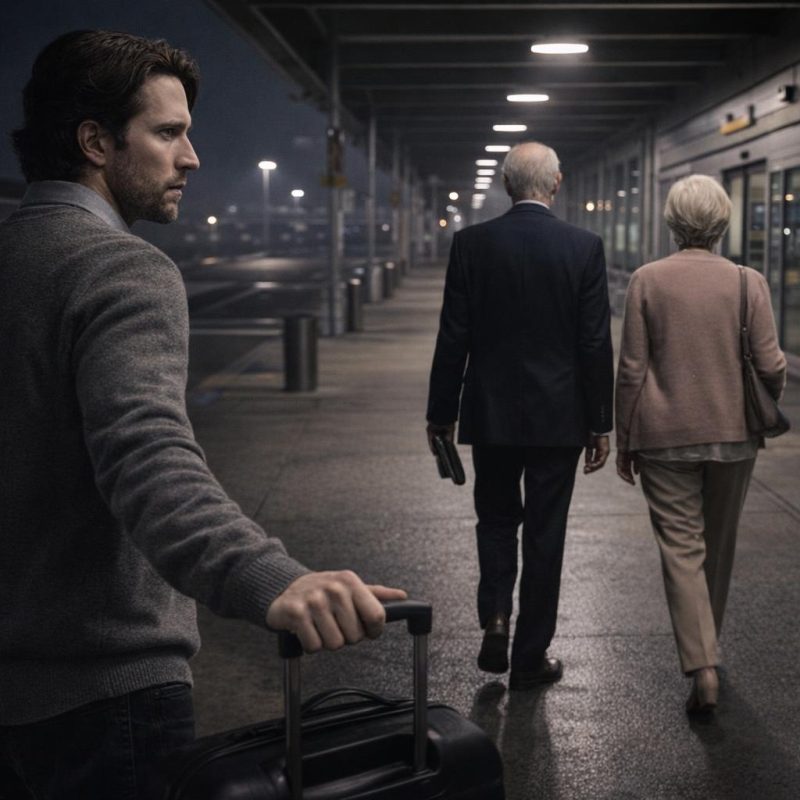 Image by RM AI
The Penniless Academic
My grandfather Silas came up in conversation maybe a handful of times in my entire childhood, and always in the same way — briefly, and without much warmth. Arthur would mention him the way you mention a footnote: relevant once, no longer. The family story, as I understood it, was simple. Silas had been a stern academic type, more interested in books than in money, and when he died — before I was born — he'd left behind very little of practical value. Dusty volumes, some faded correspondence, a reputation for being difficult. 'Your grandfather was a proud man,' Arthur told me once, when I was maybe fourteen, 'but pride doesn't pay the bills. He died with nothing worth passing on.' I accepted that the way I accepted most things Arthur told me — without question, without much curiosity. It fit the picture I had of a family that had built itself from modest beginnings, which made Leo's success feel all the more impressive and my own ordinariness feel all the more fixed. We were sitting at the kitchen table one evening — Leo home for the weekend, Elena making coffee, the four of us in that rare configuration of togetherness — when Arthur said it again, almost offhandedly, the way you repeat a story you've told so many times it's become reflex: that Silas had died with nothing to leave behind.
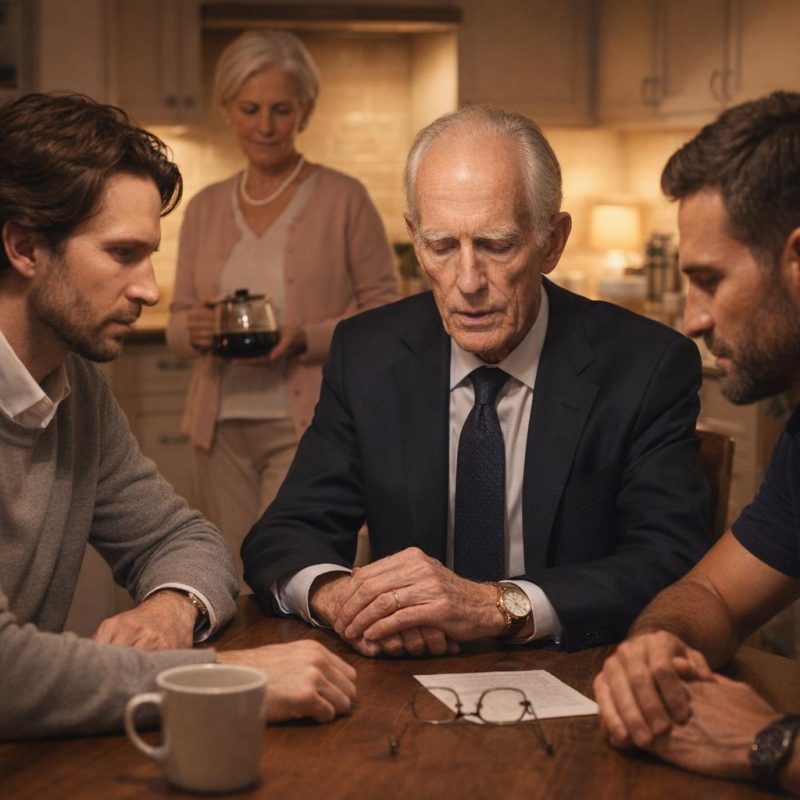 Image by RM AI
Four in the Morning
I set my alarm for three-thirty that morning. Leo, as far as I knew, was asleep in his downtown condo — the one with the floor-to-ceiling windows and the parking spot that cost more per month than my first apartment. I didn't begrudge him the sleep. I just drove through the dark city with my parents in the back seat, the heater running, the radio off, and listened to them talk about Leo's upcoming trip to Singapore. Elena was worried he was pushing himself too hard, taking on too many clients, not sleeping enough. Arthur said Leo had the instincts of a natural businessman, that the Singapore deal could open up the whole Asian market for his firm. I kept my eyes on the road and said 'mm' at the appropriate intervals. At the terminal, I pulled their bags from the trunk and set them on the curb. Arthur shook my hand — a firm, brief grip, the kind you give a parking attendant. Elena kissed my cheek and said to drive safe. Then they turned and walked through the sliding glass doors, rolling their luggage behind them, already deep in conversation. I stood at the curb in the cold for a moment. The doors slid shut. Neither of them turned back.
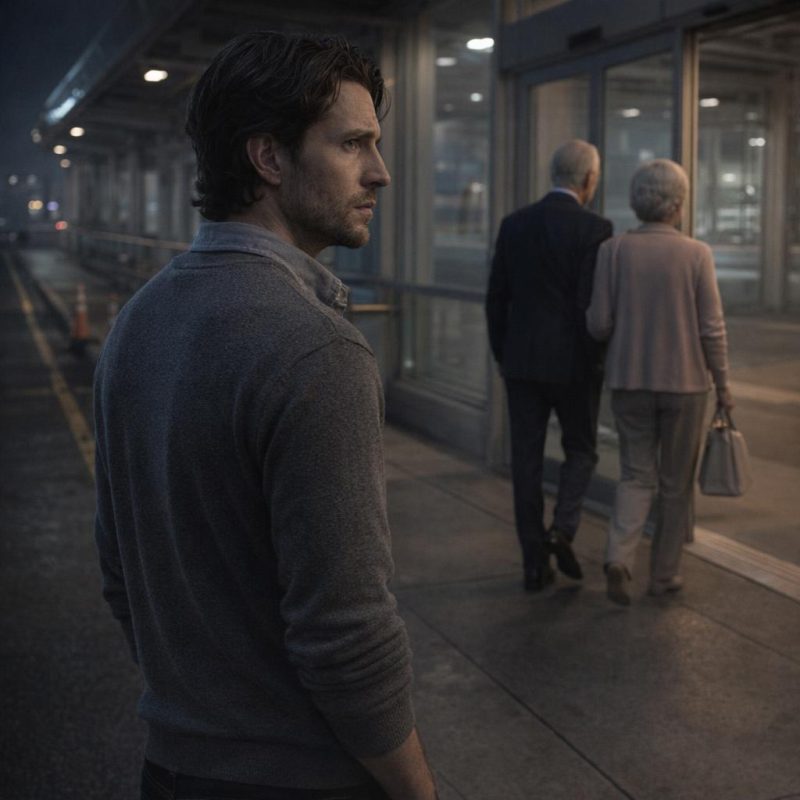 Image by RM AI
The European Cars
Leo pulled into the driveway in a car I didn't recognize, which meant it was probably new. It was his third European model in as many years — this one a deep charcoal grey, the kind of finish that seems to absorb light rather than reflect it. He stepped out looking the way Leo always looked: tan, unhurried, like the world had been arranged for his convenience and he'd simply shown up to collect. My parents came out of the house before he'd even closed the car door. Elena had her arms open before she reached the porch steps. Arthur was already asking about the drive, about Singapore, about the new client Leo had mentioned on the phone. I was standing near the side gate, having just finished replacing a section of fence post my father had asked me to fix that morning. I wiped my hands on my jeans and watched the reunion from a few feet away. Leo set his briefcase down on the porch railing to embrace my mother, and that's when I noticed it — a small white tag still looped through the handle, the kind that comes attached at the store, the price printed in clean black numerals that I could read clearly from where I stood.
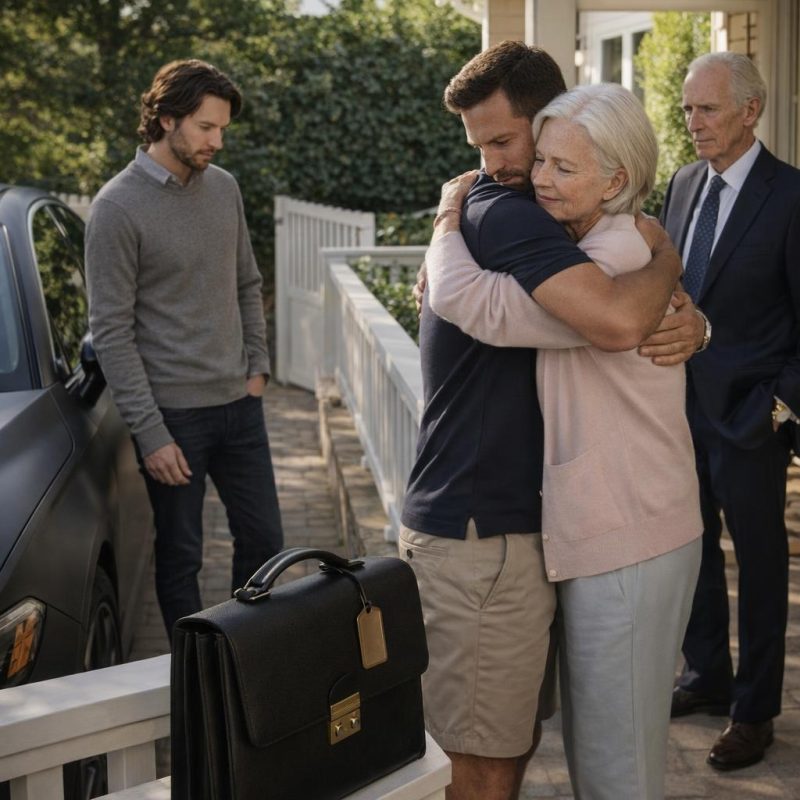 Image by RM AI
The Architecture of My Soul
I've thought a lot about what it does to a person, growing up the way I did. Not the dramatic kind of damage you can point to and name — no shouting, no cruelty, nothing that would hold up as evidence of anything. Just the slow, cumulative weight of being consistently peripheral. I used to think it was something I could correct, some quality I lacked that I could develop if I worked hard enough, was reliable enough, was useful enough. By my early thirties I had stopped thinking that. The pattern was too old, too settled, too much a part of the furniture of my life to be rearranged by effort. I had become, in my own understanding, the kind of person who exists in the margins — not because anything had gone wrong, but because that was simply where I belonged. Some voices carry across a room without trying. Mine had always been the kind that gets absorbed by the walls before it reaches anyone. I didn't experience this as tragedy anymore. It had moved past grief into something quieter and more permanent, the way a scar stops hurting and becomes simply part of the skin. I sat with the understanding that some children are born to be the dark space between the stars — not darkness exactly, but the necessary absence that makes the light visible.
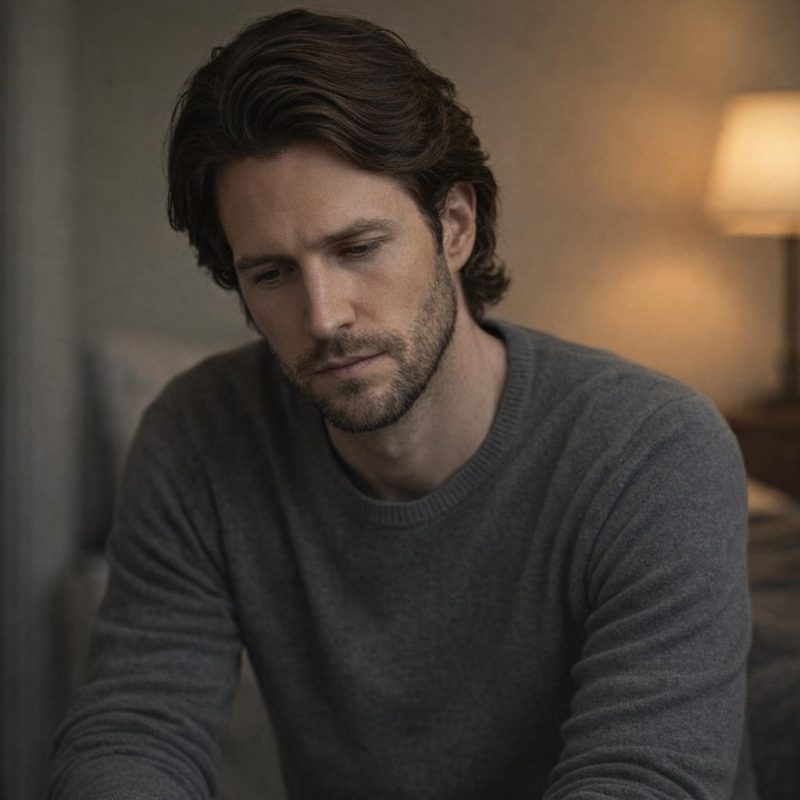 Image by RM AI
The Consultant
Leo had a way of describing his work that made you feel slightly stupid for not understanding it. At dinner that Sunday, he talked for nearly forty minutes about a consulting engagement — something to do with restructuring supply chains for a mid-market logistics firm, or possibly optimizing vendor relationships for a regional distributor. I couldn't quite pin it down, and I noticed, not for the first time, that I never quite could. The words were all correct. The confidence was immaculate. My father leaned forward with his elbows on the table the way he only did when Leo was speaking, and my mother refilled Leo's glass without being asked, her attention fixed on him like a compass needle finding north. I tried once to ask what the deliverable actually was — what Leo handed over at the end of an engagement, what the client received — and Leo smiled and said something about strategic frameworks and stakeholder alignment, and my father nodded as though that had answered the question. Maybe it had. I told myself I was being ungenerous, that I didn't understand his industry, that skepticism was just envy wearing a reasonable face. I let the thought go and passed the bread basket. But later, driving home, I sat with the faint hollow feeling that came every time Leo's stories ended without ever quite arriving anywhere.
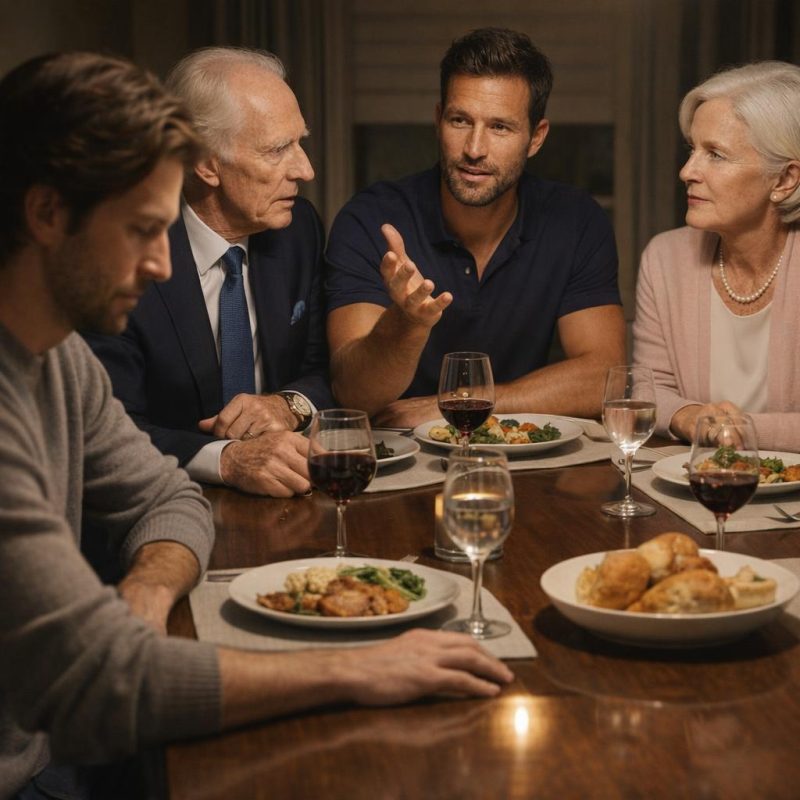 Image by RM AI
The Tax Returns
Leo called on a Tuesday evening, his voice carrying that particular lightness that meant he needed something. His accountant had flagged some inconsistencies, he said, and he needed a second pair of eyes on the returns before filing. I said I'd come over. I always said I'd come over. We spread the documents across his kitchen island, and I worked through them methodically while Leo made coffee and checked his phone. The income picture was more complicated than I'd expected. There were consulting fees, which made sense, and then a column of investment returns that surprised me — I couldn't remember Leo ever mentioning a portfolio. I asked about it and he said something about a financial advisor handling it passively, barely looking up. I made a note and kept going. I asked what properties he was managing. Leo set his mug down, glanced at the page, and said it was a legacy arrangement, something inherited through the family, handled by a third party. He said it so easily that I wrote down his answer and moved on to the next section. Then I found a line item I didn't have context for: property management income, recurring, listed across three separate entries.
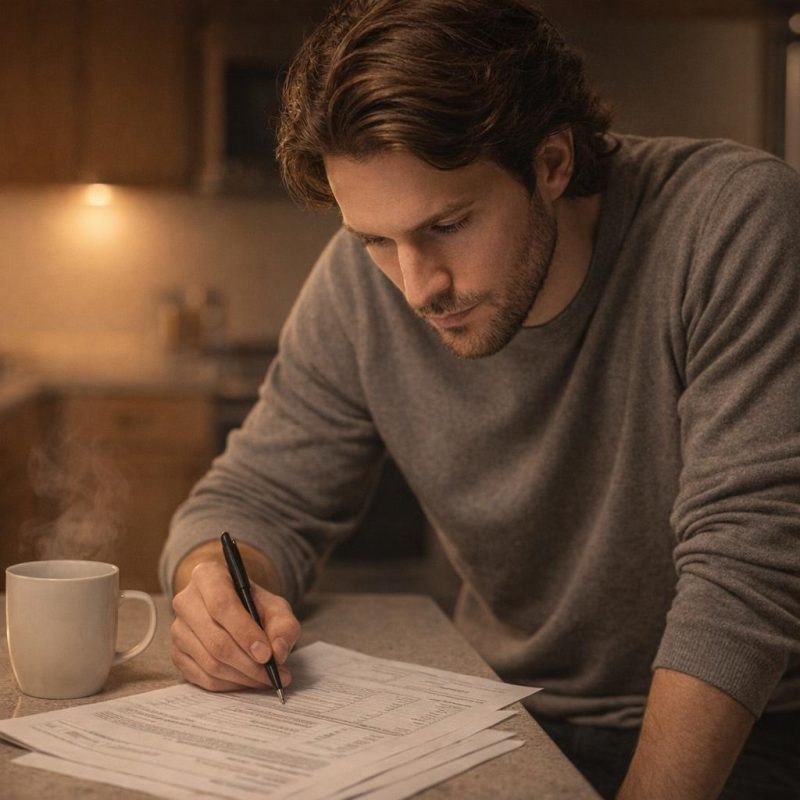 Image by RM AI
Blurry in the Background
I found the albums in the hall closet during a visit home, three of them stacked under a box of Christmas ornaments, their spines soft with age. I sat on the floor and went through them slowly. The early photographs were the ones that stayed with me longest. Leo at six, sharp and grinning at the center of the frame, my parents flanking him like parentheses. Leo at his first communion, Leo at his school play, Leo blowing out birthday candles with his whole face lit by the flame. I appeared in some of those same years, but differently. Blurred at the edge of a group shot. Half-cropped by a doorframe. Out of focus in the background of a Christmas morning photo, a smear of dark hair and a pale sweater while Leo's face was crisp and bright in the foreground. I counted, after a while, because counting felt more honest than just feeling it. Fourteen photographs where I was visibly out of focus. Seven where I was partially cut from the frame. I told myself cameras have focal points, that children move, that this was not a verdict. But I sat there on the floor with the album open across my knees, and the weight of it settled into me the way cold settles into a room when the heat goes off — quietly, completely, without announcement.
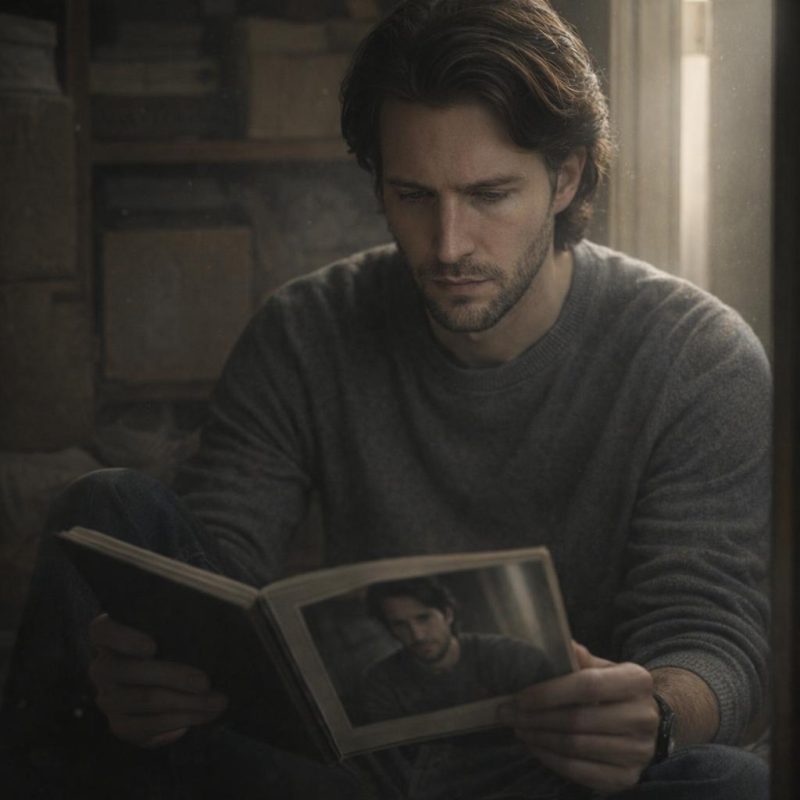 Image by RM AI
Fed and Clothed
I had a habit, when the old feelings surfaced, of running through a kind of internal checklist. It was something I'd developed without meaning to, a way of keeping myself honest. I was fed. That was true. Three meals a day, nothing fancy but nothing missing either. I was clothed — adequately, seasonally, without complaint from any teacher or school administrator who might have noticed otherwise. I was sent to school, helped with homework when I asked, taken to the doctor when I was sick. By every measurable standard, my childhood was unremarkable in the best sense. No social worker would have found anything to document. No court would have recognized what I was describing as harm. The problem was that none of those categories had a column for the other things — for the way a room could shift when Leo walked in, for the particular quality of my mother's attention when it was directed at him versus when it landed briefly on me. There was no form for the experience of being present and peripheral simultaneously, of being provided for without being seen. I understood, sitting with it, that the absence of evidence was not the same as the absence of harm. But understanding that didn't give me language for it. It just left me with something I couldn't name and couldn't prove, which amounted, in practical terms, to the same thing as nothing.
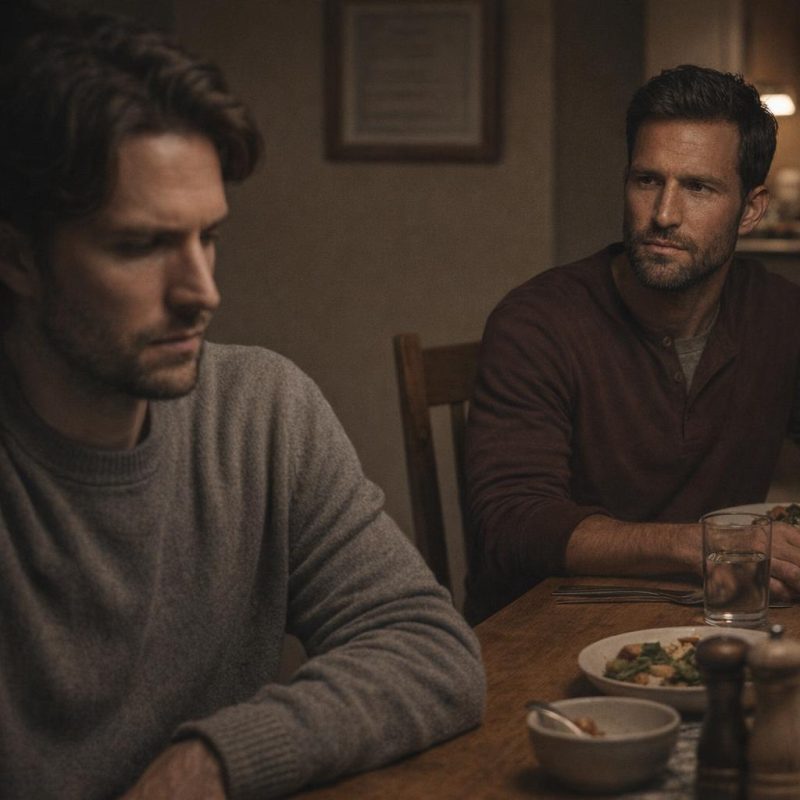 Image by RM AI
The Support Beam
I had learned early that the most useful thing I could be was undemanding. I paid my own bills, sorted my own problems, showed up when I was needed and disappeared when I wasn't. I drove my parents to appointments. I handled the paperwork when the roof needed replacing. I researched contractors and compared quotes and followed up on permits, and when it was done I didn't mention it again because mentioning it would have felt like asking for something. That was the role, and I had grown into it so completely that I sometimes forgot it was a role at all. It just felt like being a responsible adult, which I supposed it was. One afternoon I was in the back garden pulling weeds while my mother stood at the fence talking to the neighbor from two doors down. I wasn't listening, exactly, but voices carry in a quiet garden. I straightened up from the flowerbed, dirt on my hands, and heard my mother say — in a tone that was warm and certain and entirely without irony — that I had always been so independent, that I had never needed much looking after, that some children were just born that way.
 Image by RM AI
The Voice That Was Static
It was a Sunday roast, the kind my mother made when she wanted the occasion to feel significant. Leo was in good form — he'd apparently closed something that week, though the details remained, as always, impressionistic. I waited for a gap in the conversation and found one, a natural pause after Leo finished a story about a client dinner in the city. I started talking about a project I'd been managing at work, something I was genuinely proud of — a process overhaul that had taken eight months and had measurably improved the department's output. I got about three sentences in. My mother turned to ask Leo if he wanted more potatoes. Leo said yes and began describing the restaurant where the client dinner had taken place, the tasting menu, the sommelier who had recognized him. I kept talking for another sentence or two, more out of stubbornness than hope, and then I stopped. The table had reorganized itself around Leo's voice the way water reorganizes around a stone. I looked at my father, who was sitting directly across from me. He had been looking in my direction when I started speaking. By the time I stopped, his eyes had drifted past my shoulder toward Leo, and they stayed there, settled and attentive, as though the space where I'd been talking had simply gone quiet on its own.
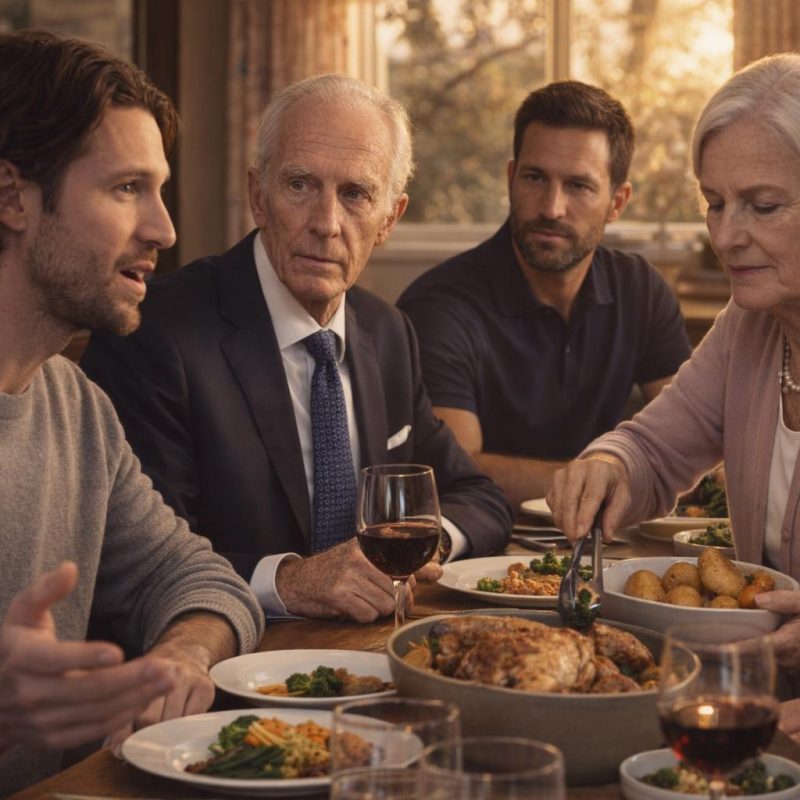 Image by RM AI
The Dubai Deal
The decision to sell the estate came quickly, the way decisions do when both parents have already made up their minds and the conversation is just ceremony. My grandfather Silas's house had been sitting largely empty for years, and my parents said it was time. Leo, when informed, expressed enthusiasm and then regret — he was deep in a high-stakes deal in Dubai, he said, the kind of thing that couldn't be paused. My mother accepted this with the particular grace she reserved for Leo's inconveniences, and my father nodded as though a man of Leo's caliber couldn't reasonably be expected to sort through old furniture. The task fell to me, as tasks did, without discussion or negotiation. I drove out the following weekend with a notebook and a roll of bin bags and started making an inventory. It was a Thursday afternoon, three weeks into the clearing work, when my phone buzzed on the kitchen counter. It was a message from Leo — no text, just a photograph. He was standing on a sun-bleached terrace, drink in hand, the sea behind him flat and bright and very clearly not a conference room. I looked at it for a moment. Then I set the phone face-down on the counter and went back to the inventory.
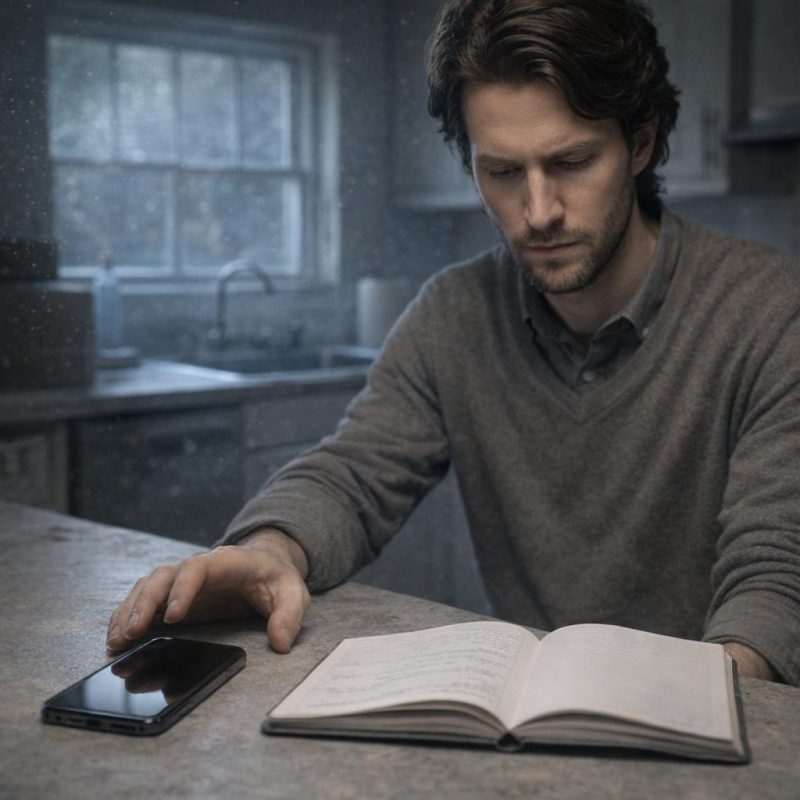 Image by RM AI
The Victorian Money Pit
My grandfather Silas had built the house in the 1960s, and it showed — not in a charming way, but in the way of something that had been added to and modified and never quite resolved. The Victorian bones were still there: high ceilings, deep skirting boards, windows that let in light at angles that made the dust visible. But decades of practical decisions had layered over the original structure until the house felt like an argument with itself. My parents called it a money pit, and I understood why. The roof had patches. The boiler was older than I was. Three of the upstairs rooms had been closed off for years, their doors swollen shut with damp. I stood in the entrance hall on my first full day there, looking at the staircase, and tried to calculate how many weekends this would take. The house was quiet in the way old houses are quiet — not empty, exactly, but held. Like it was waiting for something, or had been waiting for a long time and had grown patient about it. I told myself that was just the acoustics, the particular way sound moved through high-ceilinged rooms. I picked up my notebook and started with the ground floor. But the feeling stayed with me through the afternoon, a low and unspecific weight, as though the house held more than just my grandfather's furniture.
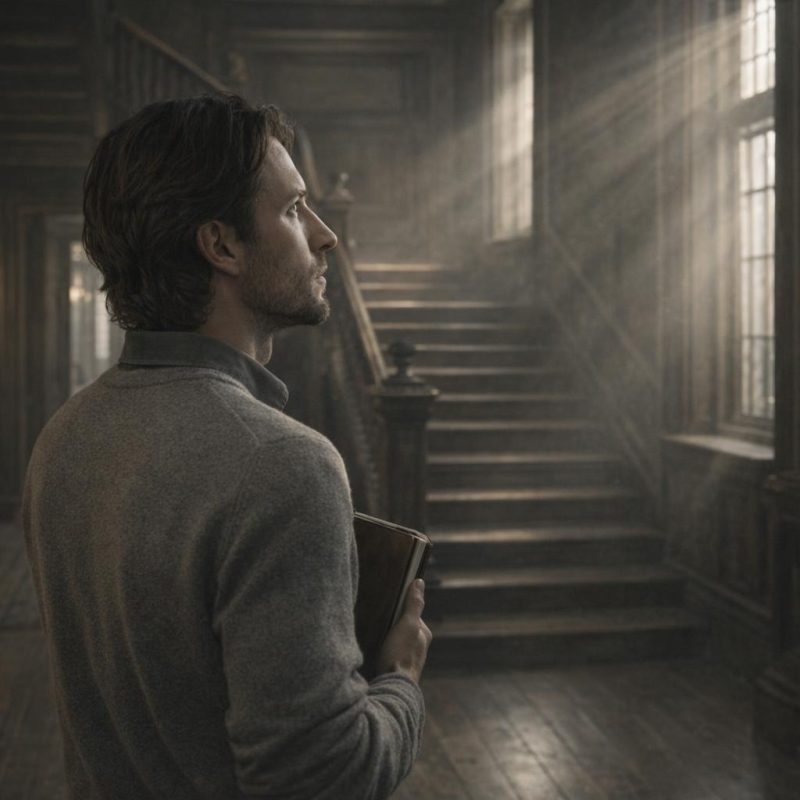 Image by RM AI
The Bon Voyage Party
The attic was the kind of hot that doesn't move. No cross-breeze, no relief — just still, compressed air that smelled of old wood and something faintly chemical I never identified. I'd been up there since early morning, working through boxes that hadn't been touched in decades, and by midday my shirt was soaked through and my knees ached from crouching on the bare boards. I could hear my parents downstairs, their voices carrying up through the floor in that muffled way that made words indistinct but tone perfectly clear. They sounded animated. Pleased about something. I set down a stack of water-damaged paperbacks and moved toward the hatch to get some air, and that's when the words sharpened. My mother was on the phone — I could tell by the one-sided rhythm of it — talking about the party. A Bon Voyage party, she called it. For the house. Leo's name came up twice, warmly, the way it always did when she talked about him. Guest of honor, she said. I stood very still on the attic ladder, one hand on the railing, listening. Then her voice dropped into something practical and almost kind, and I heard her say that I was too busy with the attic to come.
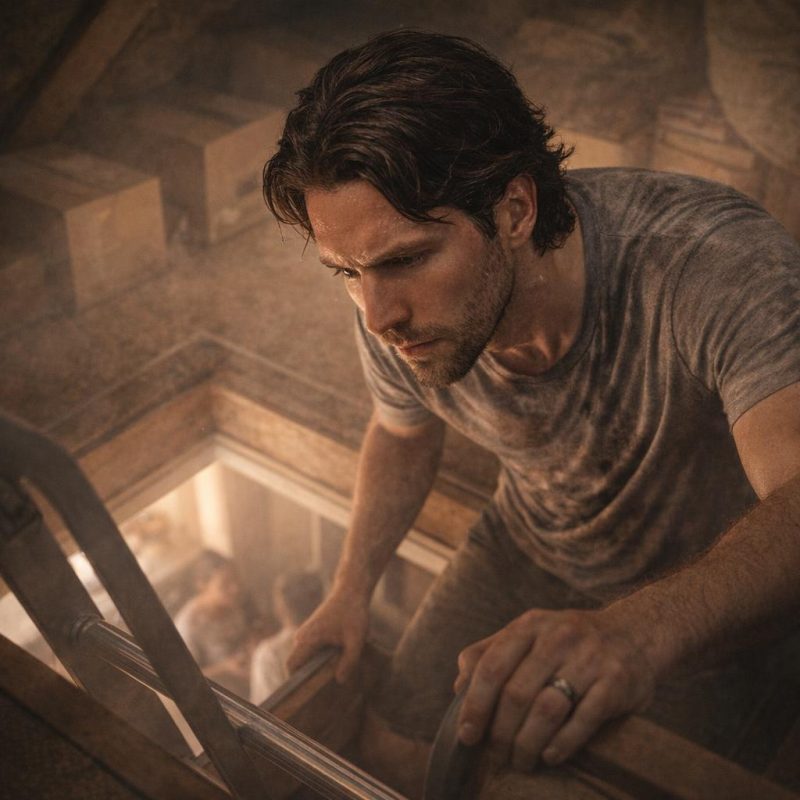 Image by RM AI
Three Weeks in the Heat
Three weeks. That's how long it took to clear the attic properly, and I mean properly — not just shifting things from one corner to another, but actually sorting, cataloguing, deciding what could be donated and what needed to go to the skip. The heat never let up. By the second week I'd started coming up before sunrise just to get a few hours in before the temperature made thinking difficult. There were moth-eaten curtains folded into shapes that no longer made sense, their fabric so degraded that lifting them left rust-colored dust on my palms. There were crates of National Geographics going back to the early seventies, each one still in its plastic sleeve, as though someone had intended to read them eventually and never quite got around to it. There were broken lamps, a child's bicycle with flat tires, a sewing machine that might have been worth something to the right person. I sorted all of it. I labeled boxes. I made lists. My parents did not come upstairs once. Not to check on progress, not to bring water, not even to look. I worked among the accumulated evidence of a family's life — things kept for reasons no one could remember anymore — and the silence around me was complete.
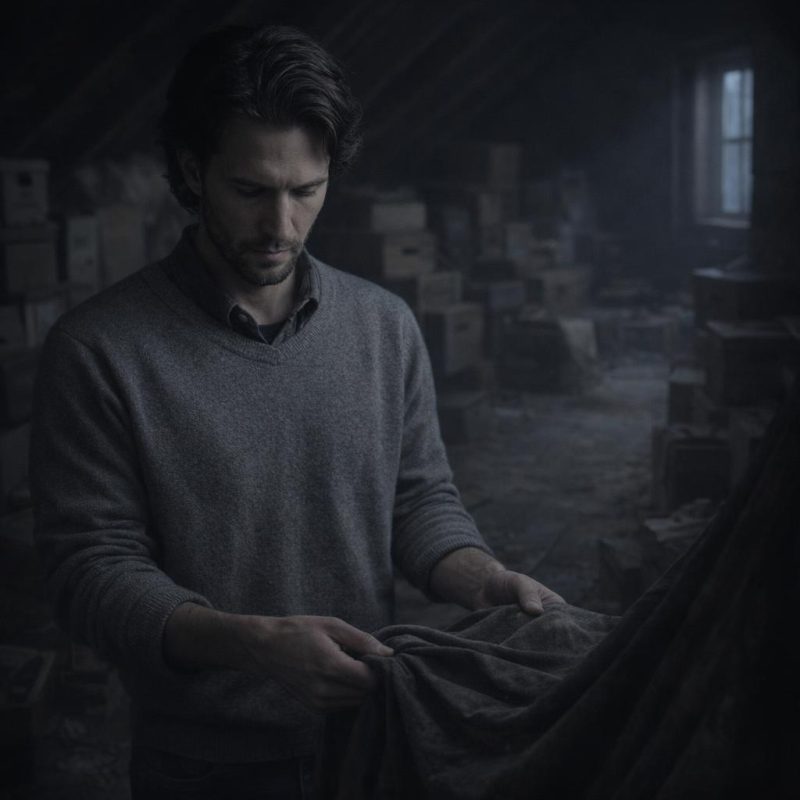 Image by RM AI
The Final Day
The last day arrived the way last days do when you've been grinding through something alone — not with relief exactly, but with a kind of flat, used-up satisfaction. I'd been up since before six. The attic was nearly clear, just a few final items pushed against the far wall, and by mid-morning I could see the bare boards end to end for the first time. I was covered in dust. My forearms were scratched from moving a broken shelving unit, and there was a particular ache in my lower back that had been building for days. Downstairs, I could hear the early sounds of party preparation — someone at the door, my mother's voice going bright and social. The Bon Voyage party would start in a few hours. Leo would arrive, probably late, probably tanned, and everyone would gather around the house my grandfather built to say goodbye to it in style. I thought about going down. I thought about it for about thirty seconds. Then I picked up the last box and carried it to the hatch. No one had thanked me for any of it, and no one was going to. I'd known that from the beginning. The dust settled slowly around me in the thin attic light, and I let it.
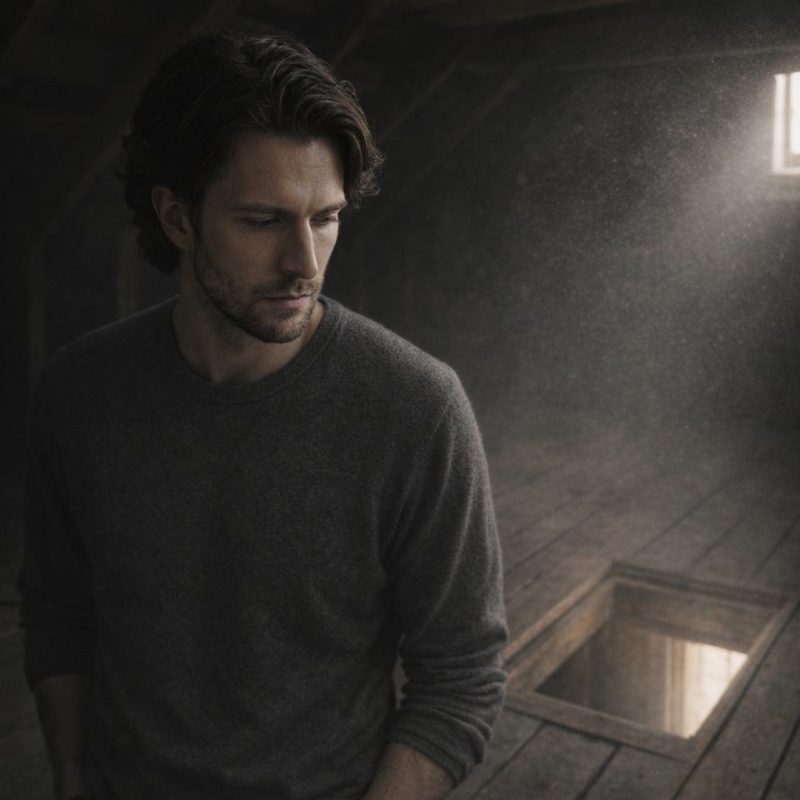 Image by RM AI
The Cedar Chest
I almost missed it. I'd done a final sweep of the attic — the kind you do when you're sure you're finished but make yourself check anyway — and I was moving along the far wall when I noticed the paneling didn't quite sit flush. It was subtle. The kind of thing you'd walk past a hundred times without registering, especially in poor light. But I'd spent three weeks in that space and I knew its geometry by now, and something about the angle of that corner was wrong. I pressed my palm flat against the panel and it shifted slightly, just a fraction, enough to confirm it wasn't load-bearing structure. Behind it, tucked into a space that the house's original plans would never have shown, was a cedar chest. It was smaller than I expected — maybe two feet long, a foot and a half wide — and the wood was dark with age but still intact. I crouched down and pulled it forward carefully, and the smell hit me immediately: cedar, clean and dry and somehow still present after what must have been decades. I don't know why I paused. There was nothing obviously significant about it. But I ran my hand slowly along the chest's edge, and my fingers caught on a seam that didn't belong there.
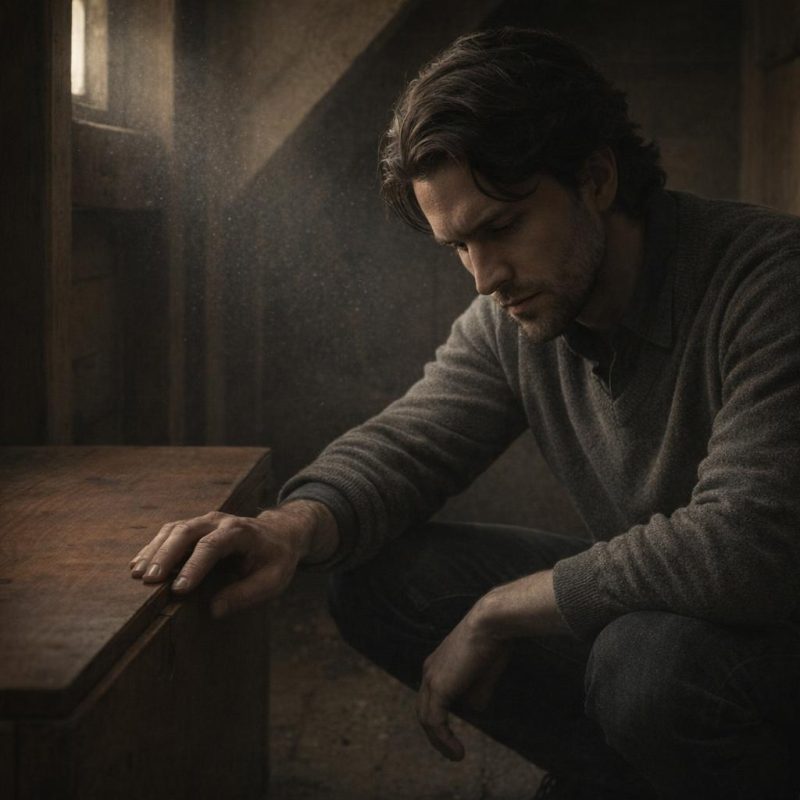 Image by RM AI
The Hidden Compartment
I stayed crouched there for a moment, running my thumb back and forth along the seam, trying to understand what I was feeling. It wasn't a crack or a split in the wood — the grain was too consistent for that, the edge too clean. It was a join. Deliberate joinery, set flush so that you'd only find it by touch. I pressed along its length until I found a slight depression, barely wider than a fingernail, and I pressed into it. There was a soft click — not loud, just a small mechanical release, the sound of something that had been waiting a long time to open. A panel along the base of the chest shifted inward and then dropped slightly, revealing a narrow compartment running the full length of the interior bottom. I leaned in close. The space was dark and I couldn't see much, but it was clearly intact — no water damage, no insect evidence, just a sealed pocket of air that had been closed off for longer than I could guess. I sat back on my heels and looked at it. Whatever was in there, my grandfather had gone to some trouble to keep it separate from everything else. The smell reached me then — old paper and cedar rising together from the darkness, dry and faintly sweet.
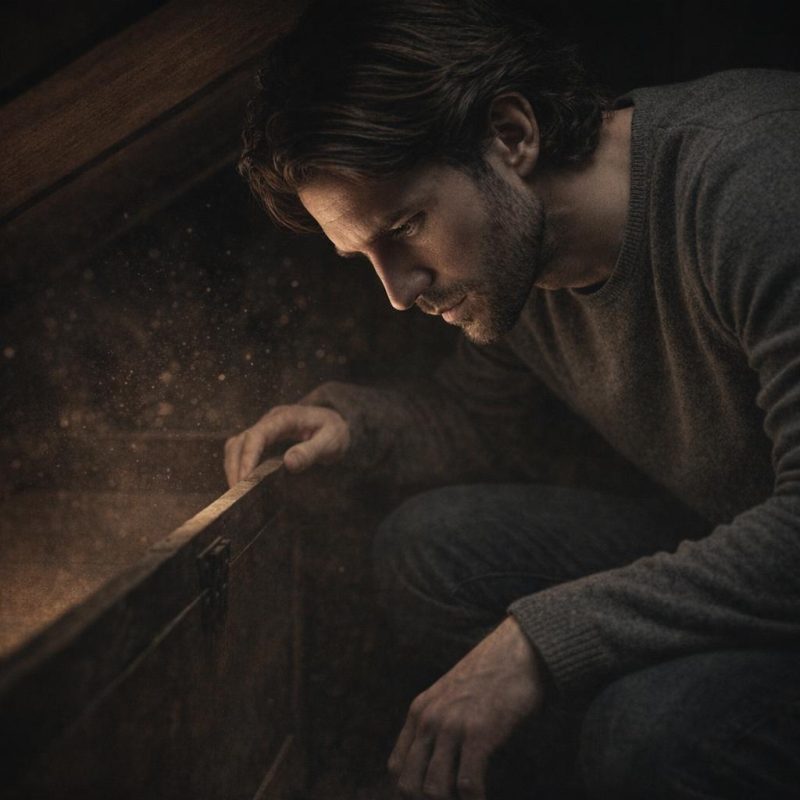 Image by RM AI
The Black Leather Ledger
I reached in carefully, the way you do when you're not sure what you're touching. My fingers found something flat and firm — a book, or something book-shaped — and I drew it out slowly. It was a ledger. Black leather cover, maybe eight inches by ten, the kind of thing you'd find in an old accountant's office or behind the counter of a hardware store that had been in the same family for generations. The leather had cracked along the spine and at the corners, fine lines running through it like a dry riverbed, but it held together. The pages were still bound tight. I turned it over in my hands and the smell intensified — cedar and something older underneath it, the particular scent of ink that has been sitting undisturbed for a very long time. There was no title on the cover. No name. Just the plain black leather and the weight of it, which was more substantial than I'd expected. I sat down properly on the attic floor, my back against the wall, and held it in both hands for a moment. My grandfather had built a hidden compartment inside a cedar chest and put this inside it. Whatever his reasons, he'd wanted it kept. The weight of it settled across my palms, and I didn't open it yet.
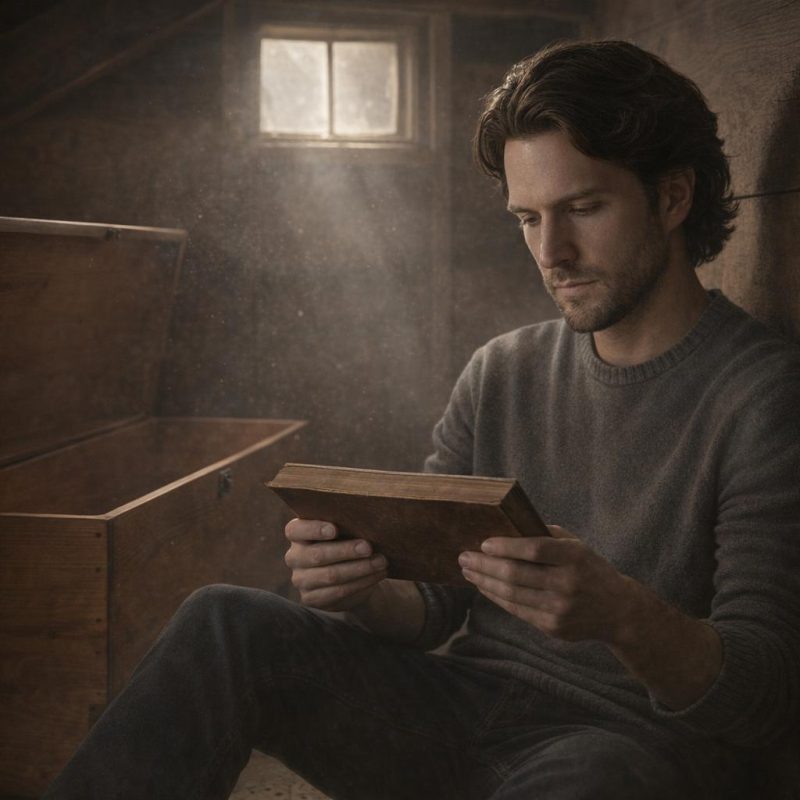 Image by RM AI
Expecting Genealogy
I opened the ledger the way you open something old — carefully, with two hands, half-expecting the spine to protest. The first page was blank except for a date in the upper right corner: March 1971. I turned to the second page and stopped. I'd been expecting something personal. Family names, maybe. Birth dates, a family tree sketched out in careful handwriting, the kind of genealogical record that older generations sometimes kept. Maybe grocery lists, household accounts, the mundane arithmetic of a modest life. What I found instead was columns. Precise, narrow columns of numbers running down the page in handwriting so controlled it looked almost typeset. Each row had a date, a reference code I didn't immediately understand, and a figure. Some of the figures were small. Some were not. The entries continued down the full length of the page without interruption, and when I turned to the third page it was the same — the same careful hand, the same structured columns, the same unhurried precision. I turned back to the beginning and looked more carefully at the top of the first page, above the date. There was a single word there, written in the same controlled hand, underlined once — and I hadn't properly taken it in until now: Trust.
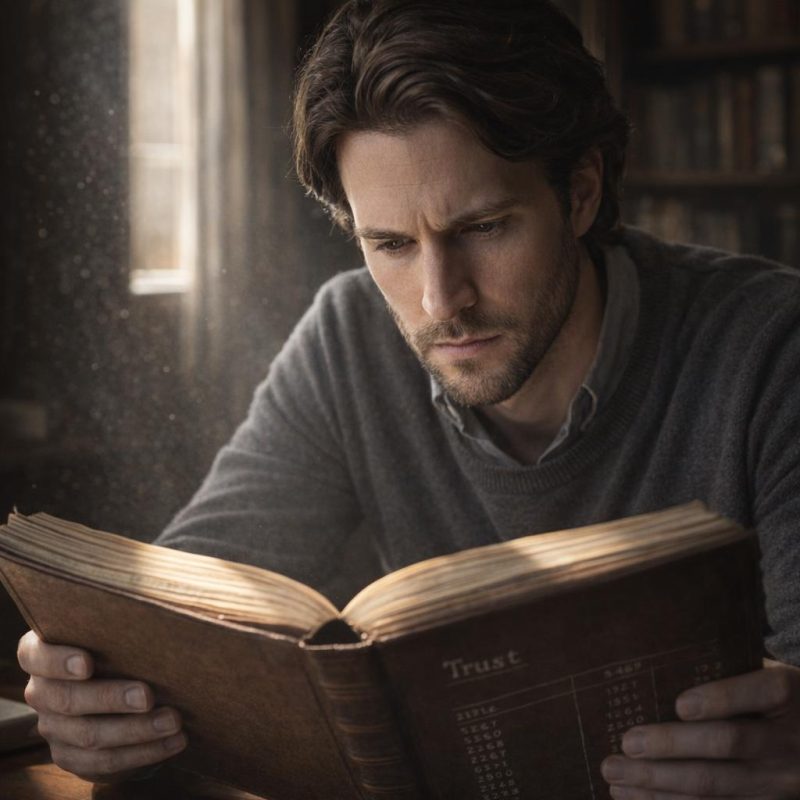 Image by RM AI
The Meticulous Record
I turned pages slowly, and the ledger kept going. Page after page of the same meticulous entries — dates running from the early 1970s forward, reference codes that repeated in patterns I was starting to recognize, figures that accumulated in ways that made me sit up straighter. There were property addresses. I noticed them first as street names I didn't recognize, then as something more structured — lot numbers, county references, what looked like rental income recorded quarterly. There were investment entries too, stocks and bonds listed by ticker and quantity, with values updated at regular intervals in the same unhurried hand. My grandfather had always been described to me in the same terms: a careful man, an academic, someone who'd lived modestly and left little behind. That was the story. That had always been the story. But the ledger in my hands described something else entirely — a man who had tracked assets with the patience of someone who understood exactly what he was building and why. I set the ledger on my knee and looked at the far wall of the empty attic. The numbers on those pages didn't belong to a penniless man. They didn't come close.
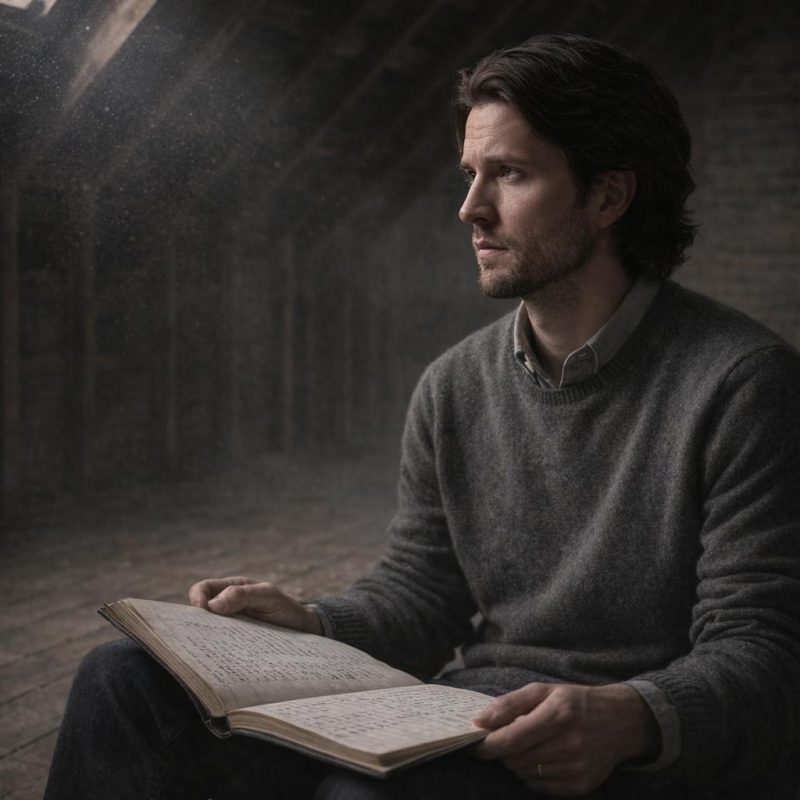 Image by RM AI
The Fortune
I set the ledger flat on my knee and started doing the math in my head. It wasn't complicated — the figures were clear, the intervals consistent, the totals building in a way that left no room for misreading. Property income alone, across three decades, ran into numbers I had to recount twice before I trusted them. The investment entries added another layer. Stocks held long-term, bonds that had matured and been reinvested, a portfolio managed with the kind of patience that compounds quietly and then, one day, becomes something enormous. My grandfather had been described to me as a modest man. A careful man. Someone who'd lived simply and left behind little more than books and a few pieces of furniture. That was the version I'd grown up with. That was the only version I'd ever been given. But the ledger on my knee described a man who had spent decades building something substantial — something that didn't disappear when he died, something that had to have gone somewhere. I turned the page slowly, still trying to hold the scale of it in my mind. And there, at the top of a fresh page, in the same careful hand, were three words that stopped me cold: Estate Distribution Plan.
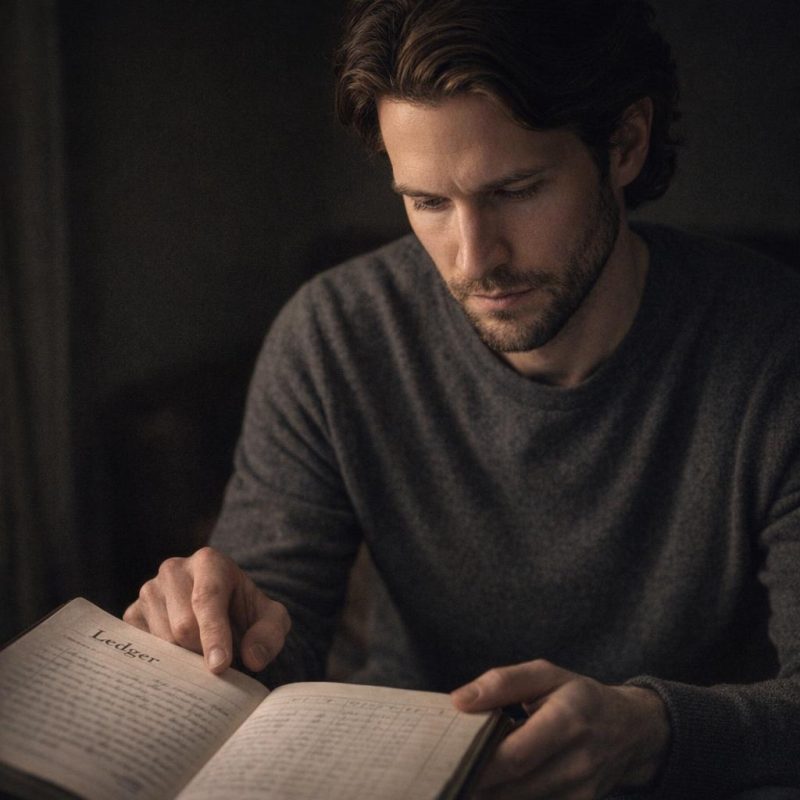 Image by RM AI
Two Paths
My eyes moved down the page carefully, the way you read something when you're not sure you want to know what it says. The Estate Distribution Plan was laid out in two columns, each one labeled at the top in my grandfather's precise script. The first column read: The Firstborn. The second read: The Quiet One. I sat with that for a moment. The Quiet One. I'd never heard my grandfather use that phrase — I'd never heard him use any phrase, having never met him. But I knew, the way you know certain things without being able to explain them, that it was me. Not because I was certain, but because it fit in a way that settled into my chest like something heavy and true. Silas had divided whatever he'd built into two distinct paths. One for Leo. One for me. I hadn't expected to find my name in anything up in that attic. I'd come looking for old papers, maybe some family history, something to fill in the gaps. Instead I was sitting on a dusty floor holding a document that said my grandfather had thought of me specifically — had planned for me, had set something aside with my particular shape in mind. The weight of that sat on me quietly, and I didn't move for a long time.
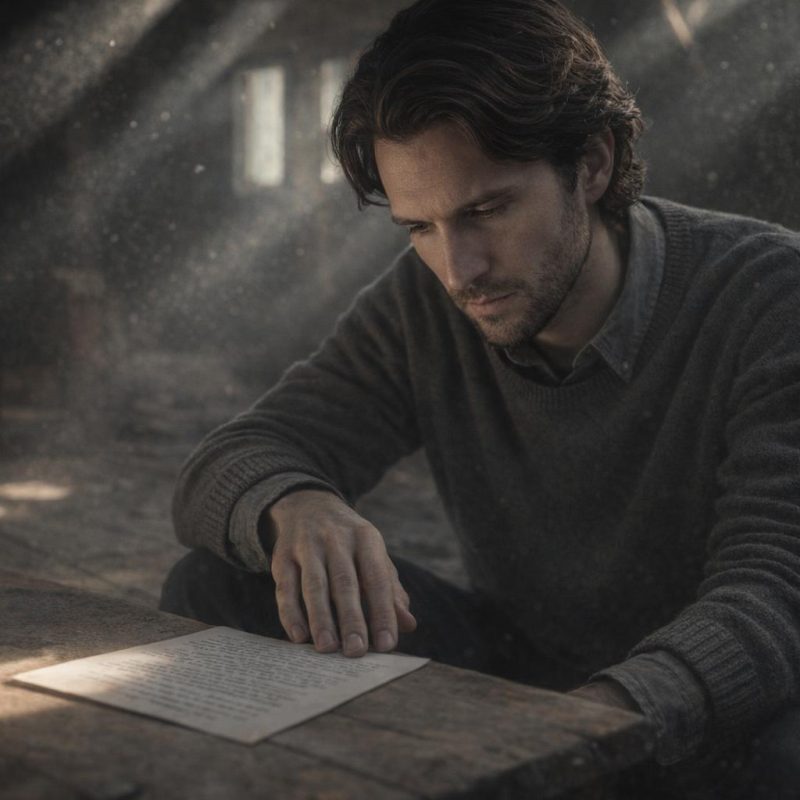 Image by RM AI
The Liquid Fund
I kept reading. The Firstborn's portion was described in careful terms — a liquid fund, accessible in full at age twenty-five, held in trust until that date and then released to the named beneficiary through the estate executor. The language was formal and unhurried, the kind of prose that had been written to last. I read the section twice, then sat back and let the numbers settle. Leo had turned twenty-five in the spring of 1998. I remembered that year with a specific clarity, the way certain years attach themselves to particular images. That was the year Leo came home driving a European car I'd never seen before — dark blue, low to the ground, the kind of thing that costs more than most people make in a year. My parents had beamed. I'd stood in the driveway and felt the familiar pull of being on the outside of something I didn't understand. At the time I'd assumed a loan, or a business deal, or one of Leo's connections that always seemed to materialize from nowhere. I hadn't asked. I never asked. Now I sat in the attic with the ledger open across my knees, and the timing of it sat in my stomach like something I couldn't quite swallow.
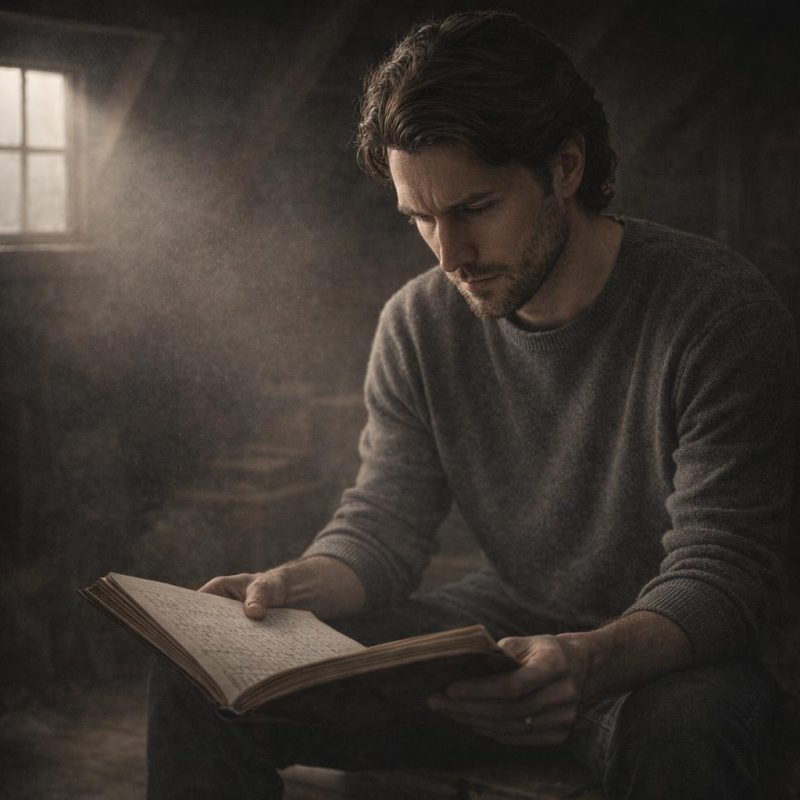 Image by RM AI
The Deed
I turned to the next section. The Quiet One's portion was different in structure — not a liquid fund but a deed, or rather a collection of deeds, to a series of commercial properties located in the city. The document described them in careful detail: street addresses, lot numbers, assessed values at the time of Silas's death, projected rental income across a ten-year horizon. The properties were held in what the plan called a secondary trust, separate from the primary estate, with its own administrative structure and its own named executor. I read through the addresses slowly. None of them meant anything to me. I had no memory of ever hearing those street names in connection with my family, no recollection of anyone mentioning commercial property, rental income, or a secondary trust at any point in my life. I had grown up in that house believing my grandfather had left behind almost nothing. I had believed it completely, without question, because no one had ever given me a reason to doubt it. And then I reached the line near the bottom of the page where the document named the beneficiary of the secondary trust — and I saw my own name written there in my grandfather's hand.
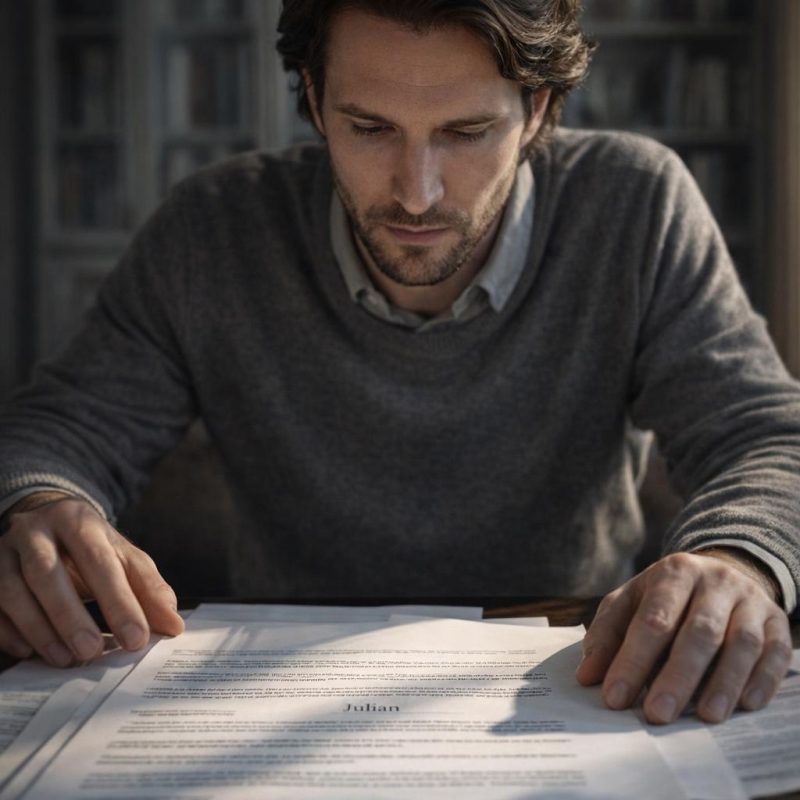 Image by RM AI
The Secondary Trust
I went back to the beginning of the secondary trust section and read it again from the top. Then I read it a third time. The language didn't change. The properties were real — described with the kind of specificity that doesn't come from imagination. The trust structure was real. The beneficiary designation was real. And according to everything written on those pages, the properties had been mine since the day Silas died. I tried to work out the timeline. Silas had passed before I was born, which meant the trust had been sitting there, in my name, for my entire life. Thirty-two years. I had spent thirty-two years in that house, at that dinner table, in that family — and not once had anyone said a word. Not a mention of the properties. Not a reference to the trust. Not a single conversation that even brushed against the edges of what these pages described. I understood that estates were complicated, that legal processes took time, that there were things adults kept from children for reasons that sometimes made sense. I told myself all of that, sitting there on the attic floor. But the silence of thirty-two years had a particular weight to it, and I couldn't find a way to make it feel light.
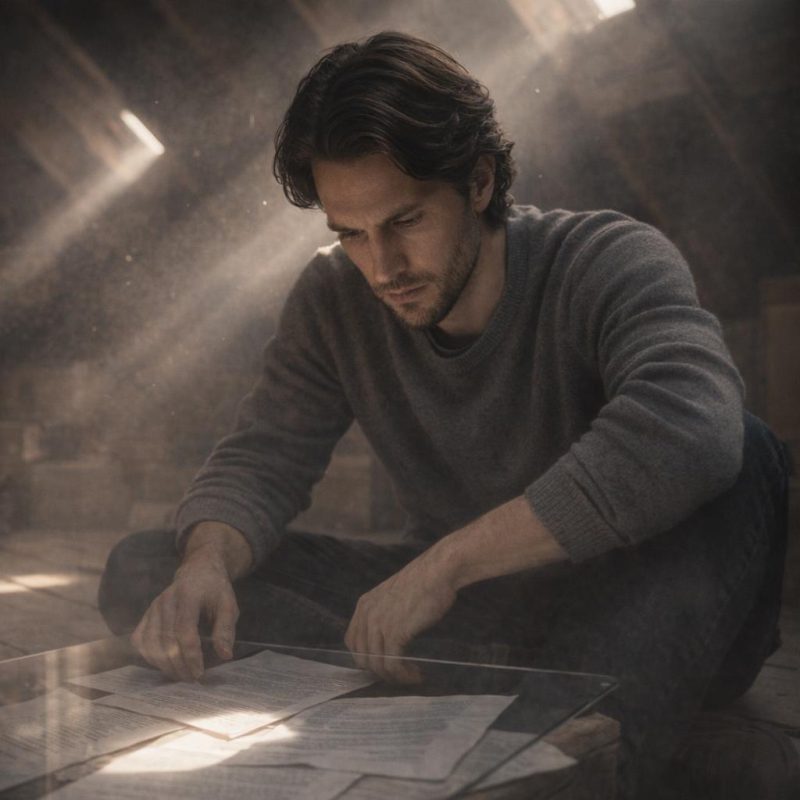 Image by RM AI
Father's Handwriting
I turned the page. The handwriting changed. Up until that point, every entry in the ledger had been my grandfather's — that same careful, unhurried script I'd been reading for the past hour, consistent and precise across decades of record-keeping. But the notes on this new page were different. The pen pressure was heavier. The letters leaned forward at a sharper angle. I recognized it before I'd consciously registered what I was looking at, the way you recognize a voice before you've identified whose it is. It was my father's handwriting. The date at the top of the page was from the year after Silas died. My father had written in the ledger. He had added his own notes to my grandfather's careful record, in the months immediately following the death, in the period when the estate would have been open and the trusts would have been active. I sat very still with the book open in my hands. I hadn't expected to find him here, in these pages, in this attic. The ledger had felt like my grandfather's space — private, sealed, belonging to a time before my father had any claim on it. But there was his handwriting, unmistakable, dated and deliberate, and my hands had begun to tremble before I'd read a single word of what he'd written.
 Image by RM AI
Managing Both Trusts
My father's notes were organized, which somehow made them worse. He had written in sections, each one headed with a date and a brief subject line. The first few entries described his role as executor — the legal filings, the probate process, the administrative steps involved in settling an estate of that size. The word managing appeared in almost every paragraph. Managing the primary trust. Managing the secondary trust. Managing the timeline for distribution. Managing communications with the relevant parties. I read it the way you read something that keeps using a word until the word starts to feel wrong, until the repetition itself becomes a kind of signal. He had been executor of both portions — The Firstborn's liquid fund and The Quiet One's property trust. Both of them had passed through his hands. I turned another page. The entries continued, still dated, still organized, still written in that heavy forward-leaning hand. And then, near the bottom of a page dense with figures and reference codes, a phrase caught my eye and held it. Four words, written in the same careful hand as everything else, as though they were entirely routine: redirecting funds from secondary trust.
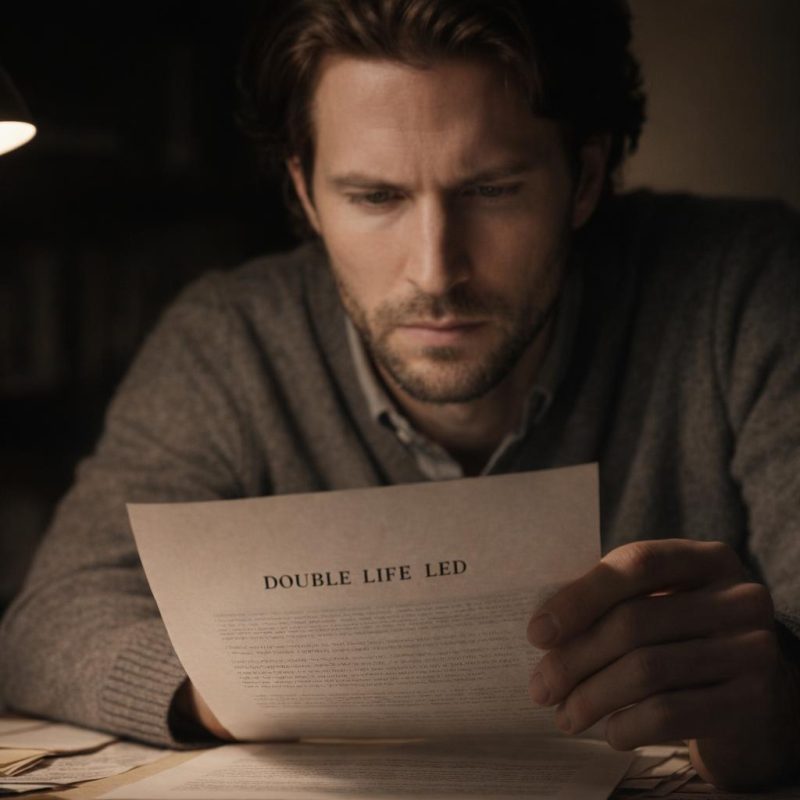 Image by RM AI
The Rental Income
I turned the page again and found the rental income records. They were laid out in columns — property address on the left, date in the middle, figure on the right — and they went back years. The entries were meticulous, the kind of record-keeping that takes discipline to maintain, updated at regular intervals in my father's handwriting. Each line showed income coming in from one of the addresses I'd read in the secondary trust section. The same addresses. My addresses, if the distribution plan meant what I thought it meant. I ran my finger down the column of figures slowly. The amounts were not small. Quarterly entries, consistent across multiple properties, adding up across the rows in a way that made the total feel very large by the time I reached the bottom of the page. And beside each figure, in a separate column I hadn't noticed at first, was an account reference number. The same number appeared beside every single entry. It wasn't an account I recognized. It wasn't a number I had ever seen associated with anything in my name. The money had been coming in from those properties for years, and every entry on that page showed it flowing somewhere else entirely.
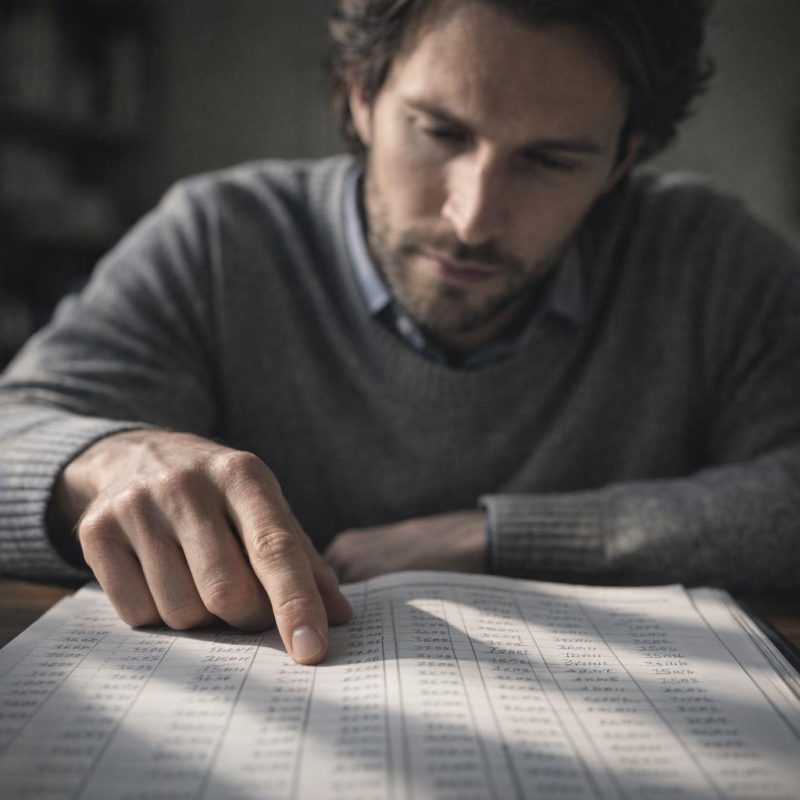 Image by RM AI
The Timeline
I started cross-referencing the dates. It wasn't something I planned to do — my hands just started moving, turning pages, matching columns, the way you do when some part of you already suspects what you're going to find and can't stop itself from looking anyway. I had a rough mental calendar of Leo's big moments. The Porsche he drove to Christmas dinner the year I was twenty-six. The condo in the arts district he'd bought the following spring, the one he'd thrown a housewarming party for that I'd helped set up. The consulting firm launch, the one my father had toasted at the dinner table like Leo had invented something. I started laying those memories against the withdrawal column, date by date. The Porsche lined up. The arts district condo lined up. The firm launch lined up. Every single one. My hands were shaking by the time I got to the later pages — not from cold, the attic was sweltering — but from something that felt like the floor dropping out from under me slowly, one inch at a time. I kept telling myself I was probably misreading the dates, probably seeing a pattern that wasn't really there. Then I found the entry from the third week of November, eleven years ago, and the figure beside it matched what I remembered Leo mentioning, almost offhand, about what the Munich condo had cost him.
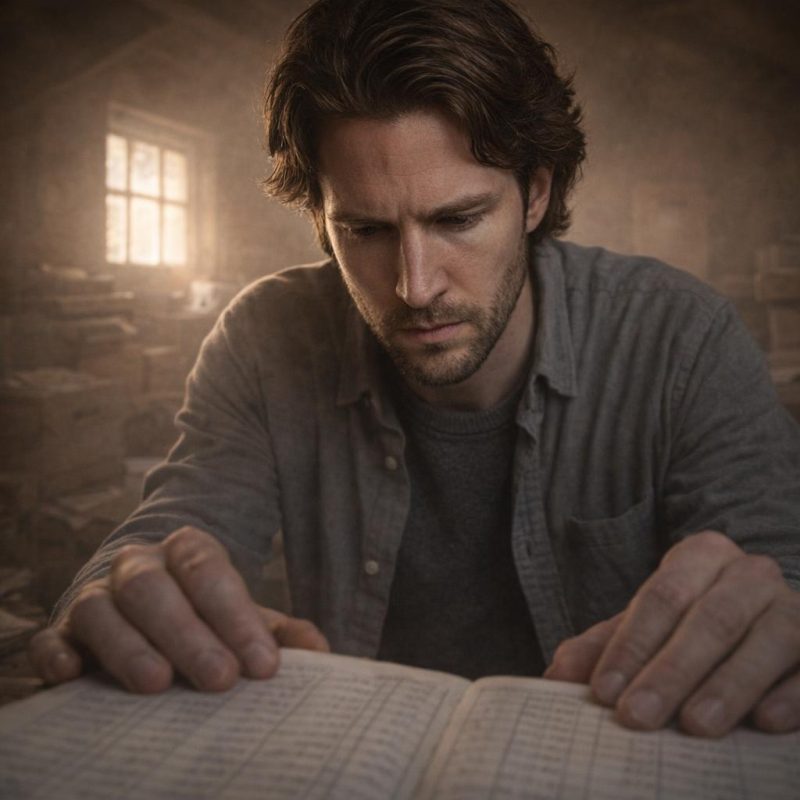 Image by RM AI
Every Big Deal
I sat there for a long time after that. The attic dust had settled on my forearms and the back of my neck, and the heat pressed down like something physical, but I didn't move. I kept the ledger open across my knees and just looked at it. Every deal Leo had ever closed. Every bottle of champagne my parents had opened in his honor. Every dinner where my father had leaned back in his chair and said Leo had a gift for business, a real instinct for it, the kind you couldn't teach. I thought about all of it. The consulting firm that had made him look like a self-made man. The properties he'd acquired. The lifestyle that had always seemed just slightly too polished for someone his age, though I'd never let myself say that out loud. I'd told myself I was being uncharitable. I'd told myself I was jealous, small, the kind of person who couldn't celebrate someone else's success. The numbers on the page suggested something different. They suggested that every celebration had been funded by something I couldn't fully name yet, something that had been moving quietly in the background for longer than I wanted to count. I sat with that. The dust. The heat. The ledger. The weight of thirty years of something I still didn't have a word for settled into my chest and stayed there.
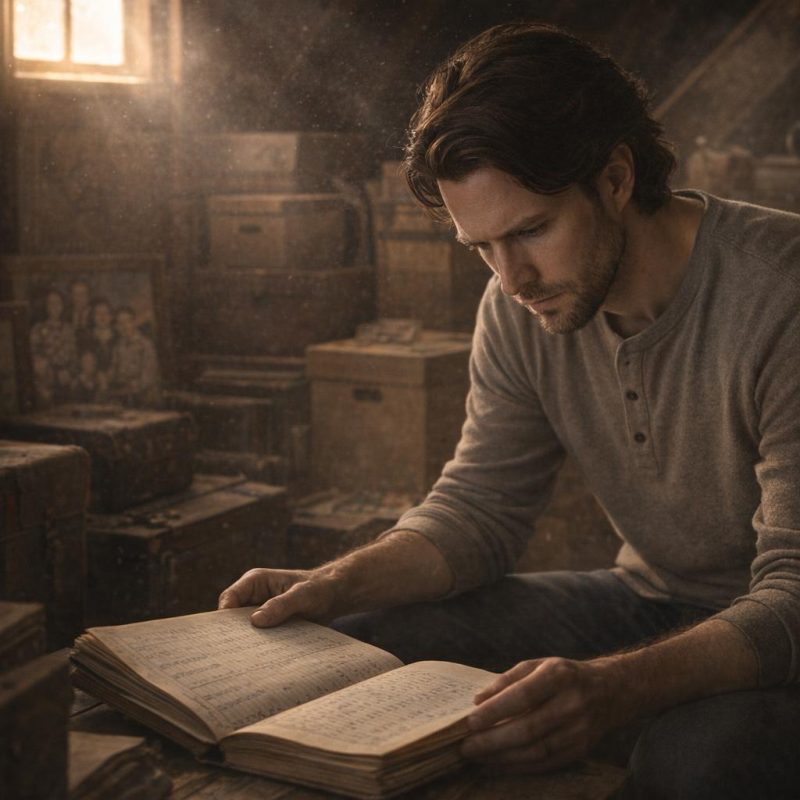 Image by RM AI
The Skim Notes
There was a folded sheet tucked between two pages near the back of the ledger — thinner paper than the rest, the kind that comes from a legal pad. I almost missed it. I unfolded it carefully, the crease soft from years of being pressed flat, and I recognized the handwriting immediately. My father's. The same hand that had signed my birthday cards every year without fail, the same careful, slightly forward-leaning script. The note was short. A few lines about the distribution structure, a reference to the account number I'd already seen repeated throughout the ledger, and then a phrase that stopped me. He'd written something about keeping the secondary beneficiary — that was the term he used, secondary beneficiary — self-sufficient and independent. Self-sufficient. Independent. Those were the words my parents had used about me my entire life, always delivered like a compliment, always in that warm, approving tone that made me stand a little straighter. I'd carried those words like they were something I'd earned. I'd built a whole sense of myself around them. I read the line again, slower. The note said to keep the secondary beneficiary independent and unaware of the trust's active accounts. Unaware. That was the word my father had written down, in his careful hand, and folded away between the pages of a ledger I was never supposed to find.
 Image by RM AI
The Consulting Firm
Further back in the stack of documents, behind the ledger, there was a folder I hadn't opened yet. Inside it were incorporation papers — a consulting firm, registered in Leo's name, with a business address I didn't recognize. I read through the structure slowly. There was a parent entity listed, a holding company, and beneath it a series of property references that matched the addresses in the secondary trust section almost exactly. The consulting firm had no listed clients. No contracts. No service agreements. What it had was a revenue line that appeared to trace back, through two intermediate entities, to the rental income from the properties I'd been reading about for the past hour. I sat with that for a moment. The firm Leo had built his reputation on — the one my father had toasted, the one my mother had mentioned at every family gathering for years, the one Leo himself had described in careful detail at dinners, the deals, the clients, the instinct for it — had no actual business that I could find in these papers. What it had was a pipeline of figures that matched the same account number, the same addresses, the same columns I'd been staring at since I opened the box. I set the incorporation papers down on the attic floor beside me and didn't pick them up again. The hollow understanding of it settled somewhere behind my sternum and didn't move.
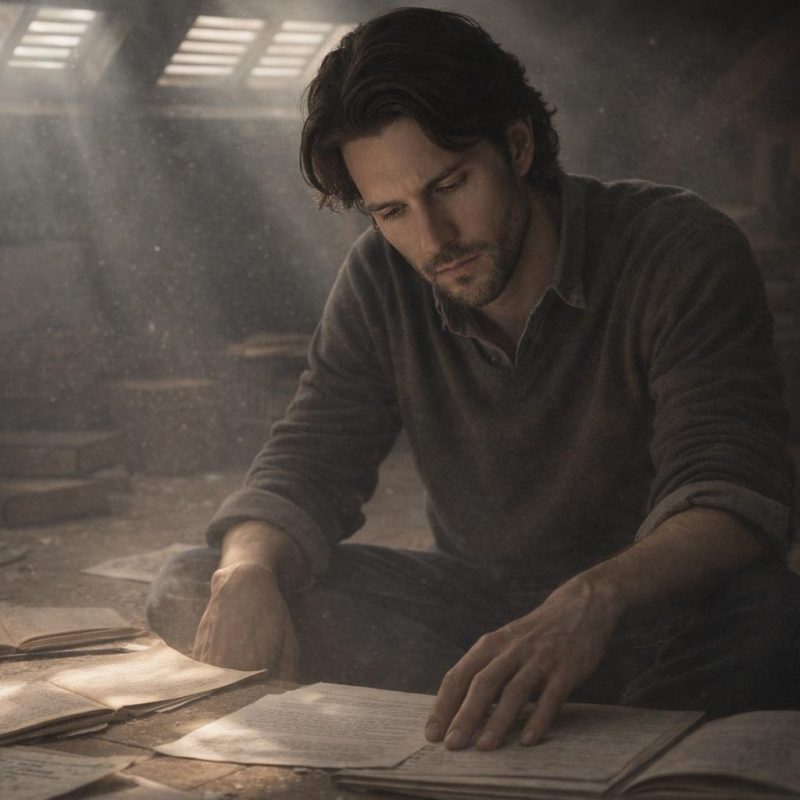 Image by RM AI
The Strategy
I kept coming back to the word independent. My whole life, that word had felt like the one thing I had that was genuinely mine — something I'd built through my own choices, my own discipline, my own willingness to ask less and expect less and make do. My parents had praised it constantly. My father especially. He'd say it with something that looked like pride, that I didn't need hand-holding, that I'd figured out how to stand on my own two feet. I'd taken it as the highest compliment he was capable of giving. I'd shaped myself around it. Chosen jobs that didn't require asking for help. Kept my finances separate. Never pushed for explanations about the family money because I'd told myself I didn't need it, that needing it would make me less than what they said I was. And now I was sitting in a sweltering attic reading a note, in my father's handwriting, that described keeping me independent and unaware as a management strategy. Not praise. Not observation. A strategy. A word written down in ink, in a ledger I was never meant to open, beside an account number I had never seen in my name. Every compliment about my maturity, every approving nod at my self-sufficiency — I turned them over now and looked at the other side. The architecture of who I thought I was had been built on the foundation of what they needed me not to know.
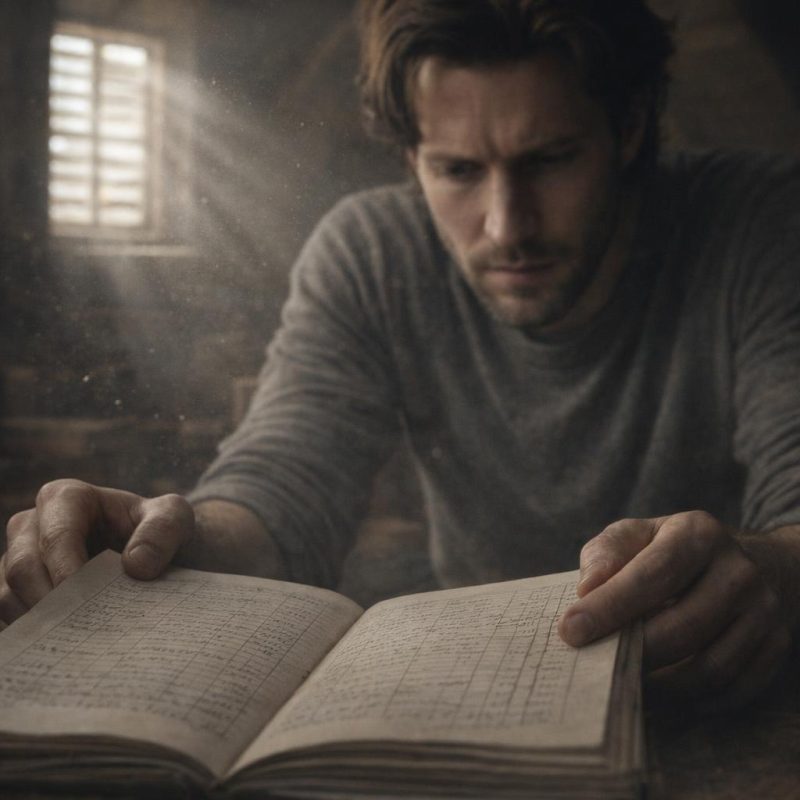 Image by RM AI
The Property Addresses
Near the bottom of the folder there was a single typed page — a property list, formatted like a table, with addresses in one column and assessed values in another. I started reading down it. Some of the addresses meant nothing to me, suburban parcels and rural lot numbers that I had no frame of reference for. But then I hit the downtown entries and something shifted. I knew those streets. I drove them every morning. There was a building on Carver that I passed on my left just before the light at Fifth — a four-story commercial block with a dry cleaner on the ground floor and offices above it. It was on the list. There was the converted warehouse on Meridian that I'd always thought looked like it was waiting to be something better than it was. Also on the list. I kept reading, slower now, my finger moving down the page. There was a parking structure on the list — a mid-block garage with a faded green awning and a monthly rate I'd been paying for three years because it was the closest covered parking to my office. I looked at the address again. I looked at it a second time. The building where I paid forty dollars a week to park my car was on the list of properties I'd been reading about for the past hour.
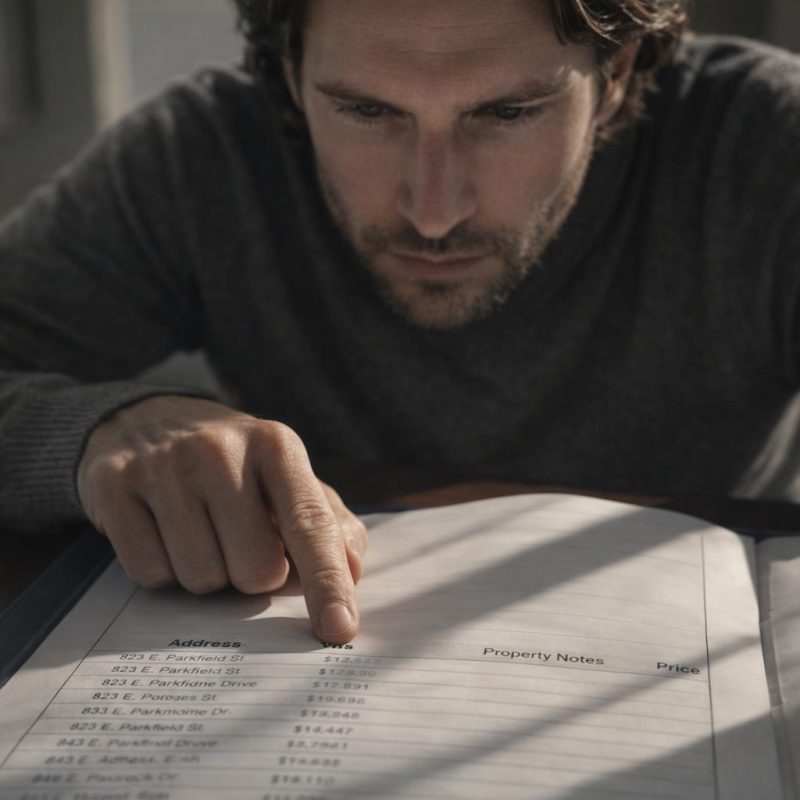 Image by RM AI
Harvesting My Inheritance
I closed the ledger. I didn't slam it — I just pressed it shut slowly, the way you close something you're not sure you want to open again. The attic was still hot, still dusty, the single bulb still throwing its weak yellow light across the boxes and the draped furniture and the box I'd pulled all of this from. I sat with the closed ledger in my lap and tried to hold the full shape of what I'd been reading. The properties. The rental income. The account number that appeared on every page. The incorporation papers for a firm with no clients. The note about keeping the secondary beneficiary independent and unaware. The parking garage I'd been paying into every week for three years. It was too large to hold all at once. I kept losing the edges of it. But the center of it was clear enough — my parents hadn't simply overlooked me, hadn't simply favored Leo in the small, ordinary ways that families sometimes do. Something had been present in the background of my entire life, running quietly alongside everything I thought I knew, while I stood on the other side of the wall and told myself I was fine, that I didn't need anything, that independence was its own reward. I sat in the heat and the dust and let that settle. The cold clarity of it didn't feel like anger yet. It just felt like finally seeing the room I'd been standing in all along.
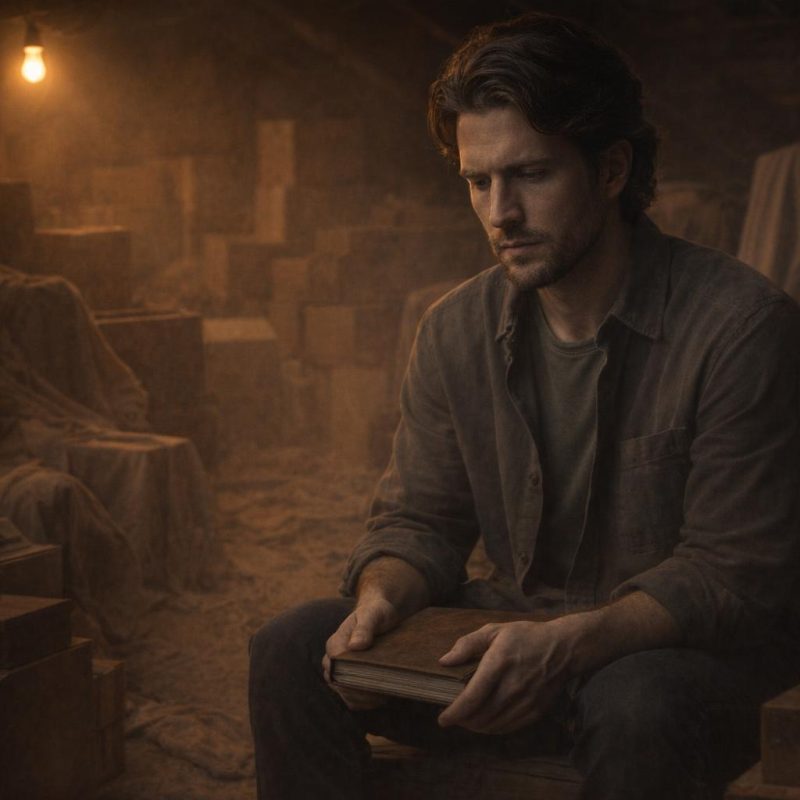 Image by RM AI
The Bon Voyage Party Begins
The music started sometime around seven. I heard it through the attic floor — something upbeat, the kind of playlist Leo would have curated himself, all surface and confidence. Then voices, the particular swell of a party finding its rhythm, glasses and laughter and the sound of the front door opening and closing as guests arrived. I hadn't moved from the attic. The ledger was still in my lap, the folder of incorporation papers beside me on the floor, the property list folded back into its place. Downstairs, my parents were welcoming people into the house, and somewhere in the middle of all of it was the reason for the party — Leo, departing for something new, being celebrated the way he always was, effortlessly and completely. I could hear my mother's laugh, the particular bright note she reserved for company. I heard my father's voice, low and authoritative, the sound of a man entirely at ease. I sat in the heat above all of it and didn't move. The cold purpose that had been forming in my chest since I'd read that note about keeping me unaware had gone very still and very quiet, the way things go quiet just before they become something else entirely. Then Leo's voice rose above the rest — easy, unhurried, holding court the way he always had — and it drifted up through the floor and settled around me in the dark.
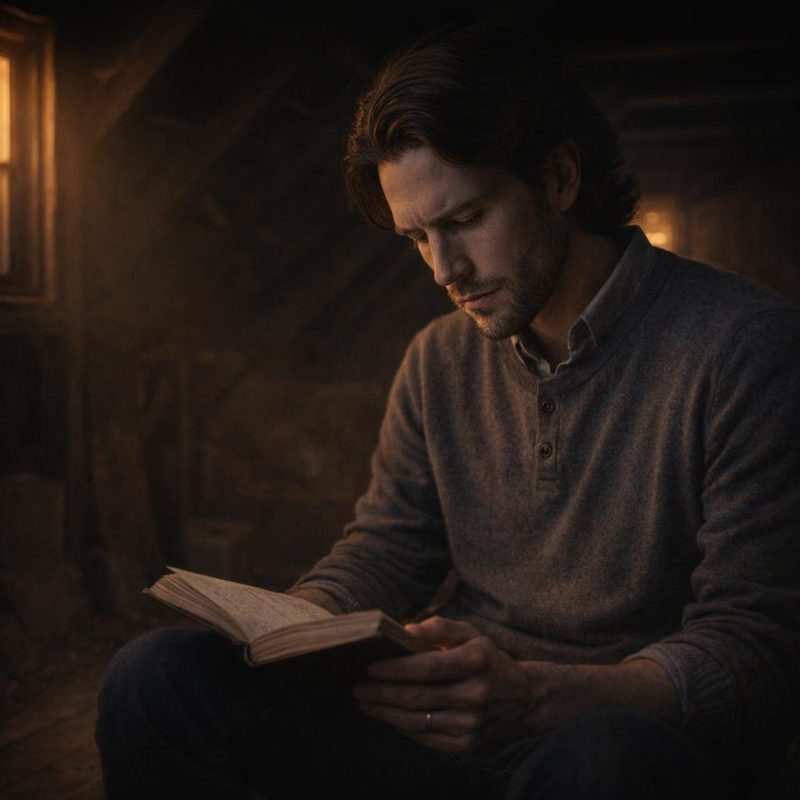 Image by RM AI
The Public Records
I left the attic before the party wound down. I didn't say anything to anyone — just slipped out the side door with the ledger tucked under my arm and drove to the county records office when it opened the next morning. I told myself I was being methodical. I told myself I just needed to confirm what I thought I was seeing. The clerk at the front desk barely looked up when I requested the property deeds for the addresses on my grandfather's list. I pulled them one by one, spreading them across the research table in the order Silas had written them down. Every address matched. Every single one. The properties were real, they were documented, and they had been registered — at some point — in my name. I sat with that for a moment, the fluorescent light humming above me, the clerk's keyboard clicking somewhere behind the counter. Then I turned to the transfer documents, the ones that would show how the properties had moved, and I started reading the signatures on each page. My handwriting is distinctive. I've been told that since grade school — the particular slant of my letters, the way I close my g's. The signature on those transfer documents had my name. But I had never signed them.
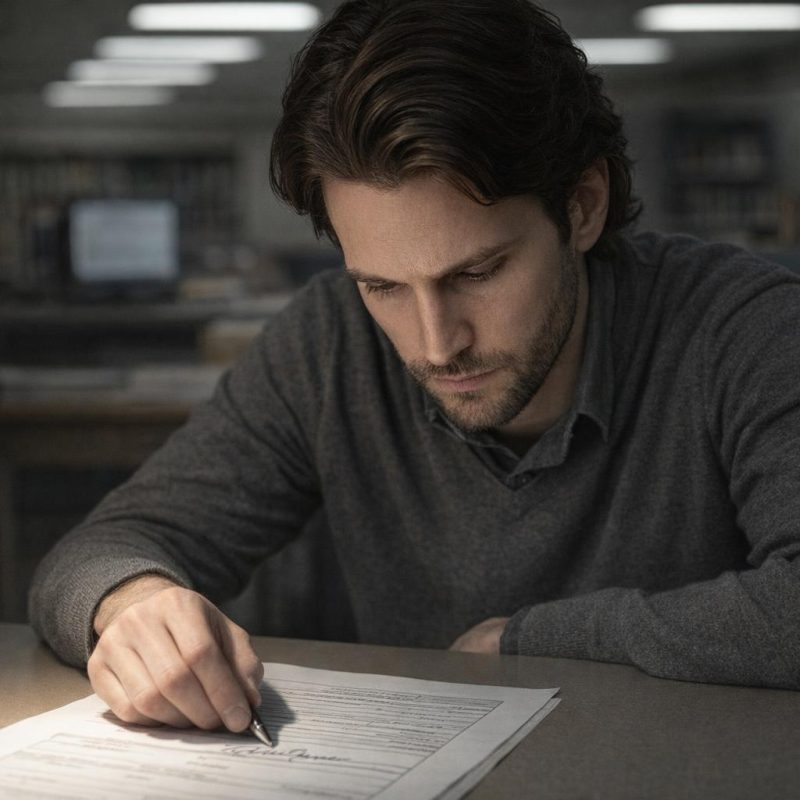 Image by RM AI
The Paper Trail
I used my phone to photograph everything. I worked slowly and without rushing, the way you do when you understand that speed is the enemy of accuracy. Every page of the ledger. Every forged transfer document. Every deed with my name on it. I laid them out in chronological order on the research table and photographed them in sequence, then again in groups, then again individually where the handwriting was clearest. My father's notations ran through the ledger like a spine — precise, consistent, the careful record-keeping of someone who trusted that no one would ever look. The dates went back further than I'd first registered. Thirty years of entries. Thirty years of transfers, withdrawals, redirected rental income, all of it documented in Arthur's careful hand. I organized the photographs into folders on my phone by year, then by property, then by transaction type. It took most of the morning. When I was done, I sat back and looked at what I had assembled — a complete, sequential record of every transaction, cross-referenced against public deeds that anyone could pull. The clerk called closing time for the research room. I gathered my things quietly. The file on my phone was forty-seven photographs long, and every one of them was the kind of evidence that doesn't leave room for alternative explanations.
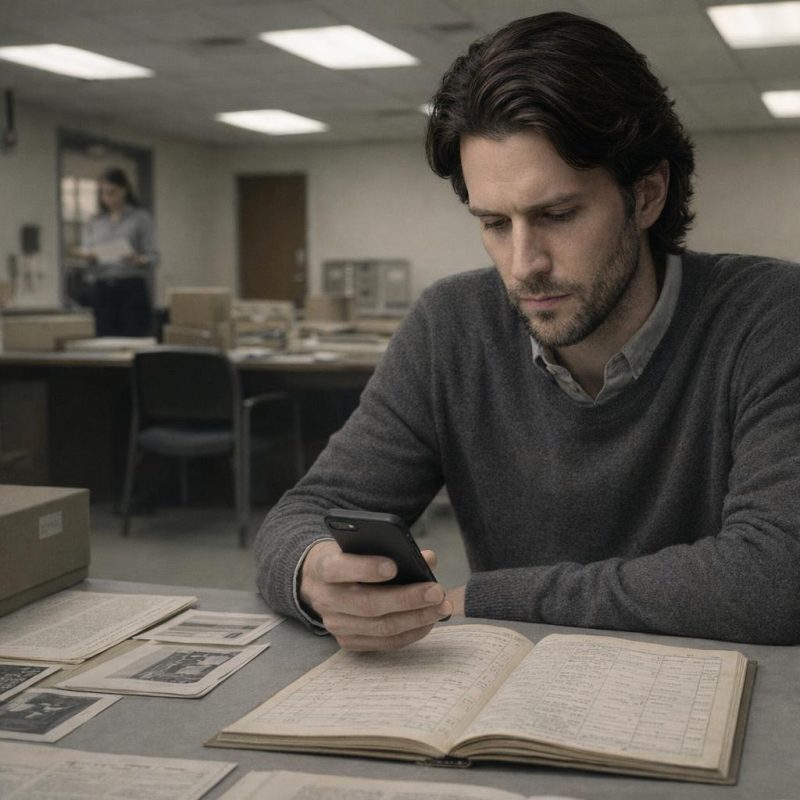 Image by RM AI
Hours in the Dust
I went back to the attic. I don't know why exactly — maybe because it was where I'd found it, or maybe because it was the only place in that house that had ever felt like mine, even if only by accident. The party had ended. The house was quiet in the particular way it gets after a crowd has moved through it, glasses still on surfaces, the faint smell of food and perfume settling into the rooms below. I sat on the floor with the ledger in my lap and didn't move for a long time. I kept thinking about the word inheritance. What it means. What it's supposed to mean. Silas had left me something — had seen something in me worth protecting, worth planning for — and I had spent thirty-two years not knowing it existed. I had spent thirty-two years being the son who handled the practical things, who didn't ask questions, who was praised for his independence and his reliability, and I had thought that was just who I was. I had built an identity around it. The dust in the attic caught the light from the single bulb overhead, and the house settled around me in the silence, and I sat there with the understanding that the life I thought I had been living had been built on a foundation I was never meant to see.
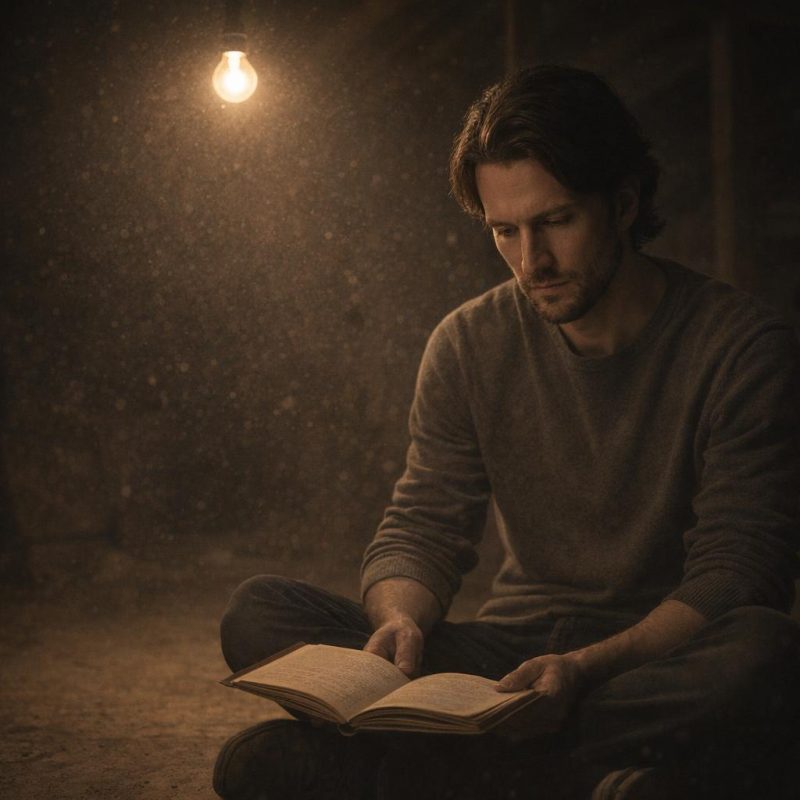 Image by RM AI
The Strategic Ghost
I started going back through it differently — not looking at the numbers this time, but at the pattern. The way I had been positioned in this family. The son who handled logistics. The son who didn't need much. The son who was self-sufficient, who never pushed for explanations, who could be trusted to stay in his lane. I had worn those descriptions like they were compliments. I had internalized them. And sitting there in the attic with the ledger open across my knees, I could see how each one of those qualities had served a function that had nothing to do with who I actually was. Keep him busy. Keep him useful. Keep him from looking at the finances. The praise for my independence wasn't affection — it was maintenance. The distance wasn't neglect in the ordinary sense. It was something that had been carefully tended, kept at exactly the right temperature to prevent questions without triggering suspicion. Every role I had ever been assigned in this family — the quiet one, the capable one, the one who didn't need to be celebrated — fit together into a shape I was only now able to see clearly. I looked at the ledger, then at the photographs on my phone, then at the ceiling above me where the single bulb swayed slightly in the draft from the vent. The architecture of my erasure was not accidental — it was load-bearing.
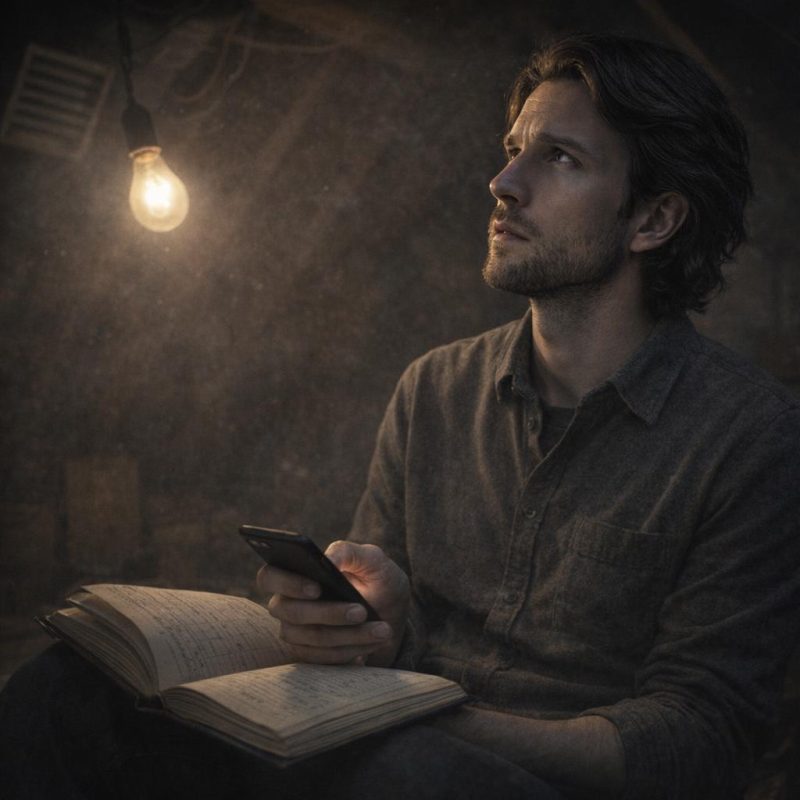 Image by RM AI
The Full Scope
The final pages of the ledger were the ones I had avoided, the ones where the columns got denser and the notations more compressed, as if my father had been trying to fit more into less space as the years went on. I read them slowly, line by line. Silas had left me a portfolio of commercial properties — six of them, spread across two counties, generating rental income that had been accumulating since before I was old enough to understand what a trust was. The income had been redirected. Every quarter, every year, for decades, the rental payments had flowed not into any account I had access to but into the operating accounts of Leo's consulting firm, into the lease payments on his condos, into the cars and the trips and the image of a man who had built something from nothing. Leo had built nothing. Every deal he'd ever toasted, every success he'd ever performed at a dinner table or a party, had been underwritten by properties I owned and income I had never seen. I sat with that for a long time, the ledger open to the final page, the numbers adding up the same way no matter how many times I ran them. Then I found the summary column at the bottom of the last page, the total written in my father's hand, underlined twice: three million, two hundred and forty thousand dollars.
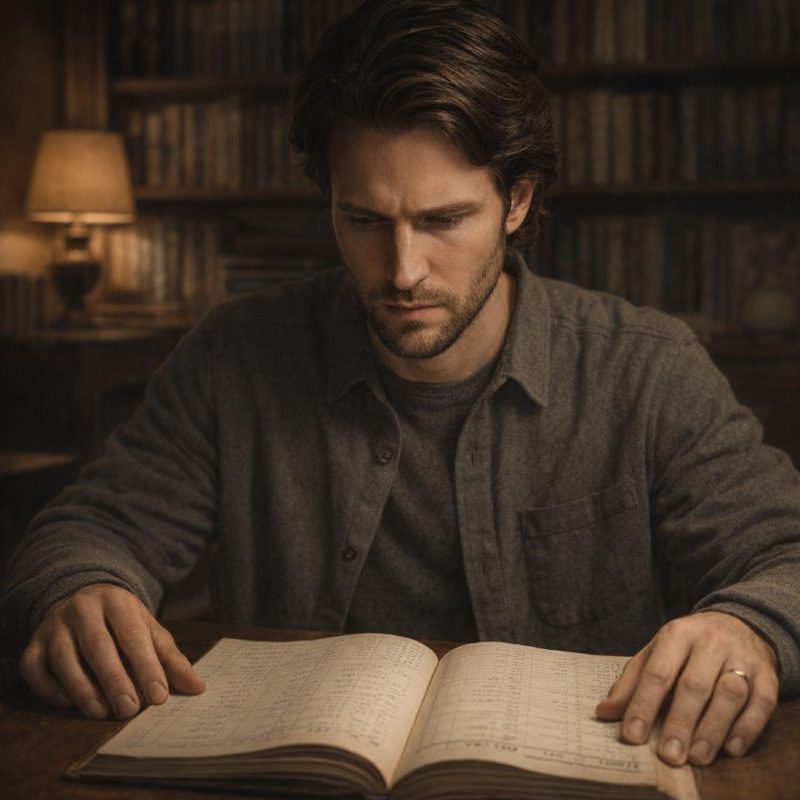 Image by RM AI
Watching Them Celebrate
I came downstairs an hour later. The party was still going — louder now, the way gatherings get when the champagne has been open long enough. I had tucked the ledger inside my jacket, flat against my ribs, and I kept one hand resting against it as I moved through the hallway and into the main room. Nobody noticed me arrive. That was the thing about being the ghost — I had learned to move through spaces without disturbing them, and tonight that felt less like a wound and more like a tool. My mother was laughing at something near the kitchen doorway. My father stood at the edge of the room with a glass in his hand, nodding at a man I didn't recognize. The champagne was the good kind, the bottles I'd seen my mother order online two weeks ago, the ones that cost more than I spent on groceries in a month. I stood near the wall and watched them move through the room — easy, unhurried, entirely at home in a celebration I now understood differently than I had this morning. Then Leo stepped into the center of the room and raised his glass, and the crowd quieted around him, and he said something about family, about legacy, about everything they had built together, and I stood there with my hand flat against the ledger and felt nothing but a cold, settled purpose.
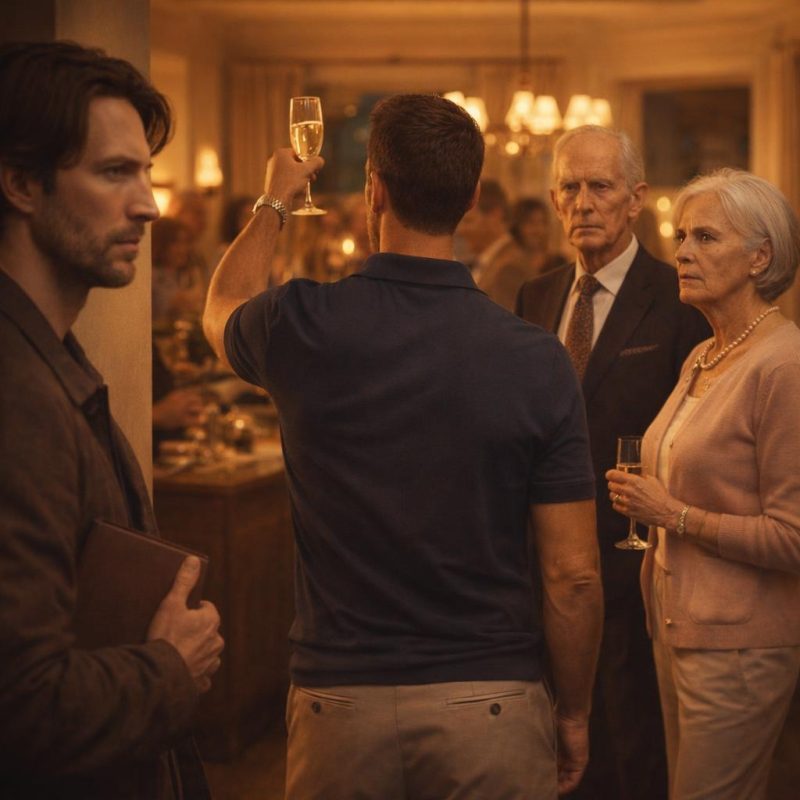 Image by RM AI
The Expensive Scotch
Leo had a glass of scotch in his hand — the single malt my father kept on the high shelf, the bottle that came out only for occasions that mattered. I knew what it cost because I had once looked it up after my father poured it for Leo at Christmas and handed me a beer without asking what I wanted. Leo was holding court near the fireplace, a loose circle of guests around him, and he was telling a story about a deal he'd closed in the spring — the margins, the negotiation, the moment he'd known he had them. The guests leaned in. They laughed at the right moments. One of them clapped him on the shoulder. I stood at the edge of the room and watched him work the story, the particular ease of a man who has never had to wonder whether the floor beneath him would hold. The scotch caught the light when he lifted the glass. He took a slow sip, unhurried, the gesture of someone who has always had access to the good things and expects to continue having them. I knew now what had paid for that bottle, and the condo he'd flown in from, and the suit he was wearing, and the story he was telling with such complete and untroubled confidence. I didn't move from my spot near the wall. The contempt settled in my chest like something solid and very still.
 Image by RM AI
Did You Finish the Attic
My mother found me near the end of the evening. She had been moving through the room all night in her particular way — touching arms, laughing, refilling glasses, the performance of a woman entirely in her element. She turned to me the way she always did, with the slightly distracted expression of someone who has just remembered a task they delegated. 'Did you finish the attic?' she said. Not hello. Not how are you. Just the attic, and the implicit assumption that this was the sum of what I had contributed to the evening. A year ago, that question would have landed somewhere tender. I would have said yes and felt the familiar compression of being reduced to my usefulness. But I looked at her now — the styled hair, the easy smile already drifting back toward the room, toward Leo — and I felt something that wasn't hurt at all. It was closer to recognition. I smiled and told her I had found everything I needed up there. She nodded without really hearing it, her attention already returning to Leo across the room, and I watched her go. The dismissal that once would have hollowed me out now felt like one more entry in a very long ledger — evidence, carefully noted, filed away.
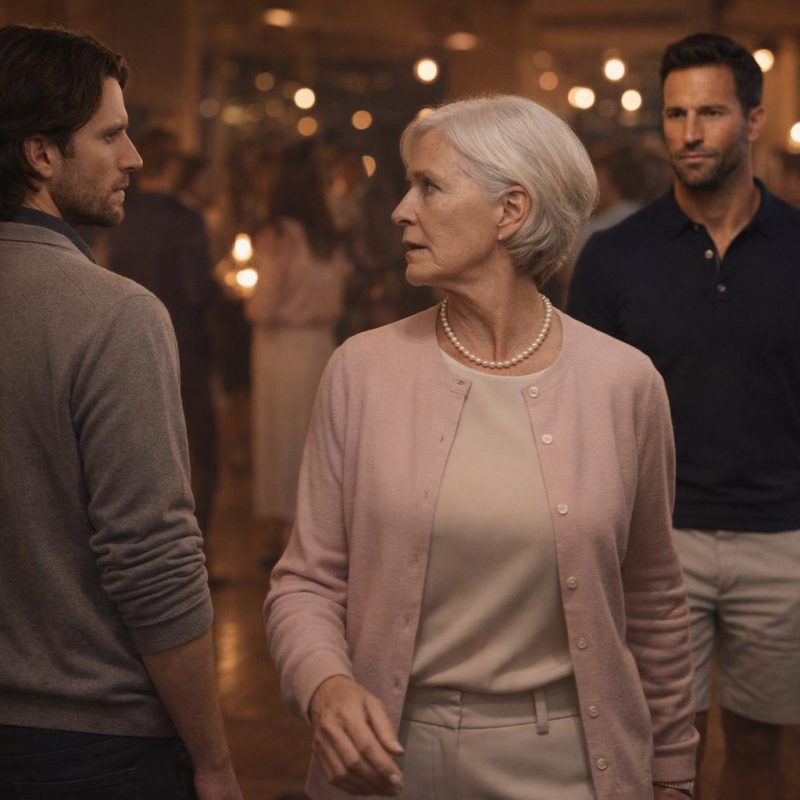 Image by RM AI
The Cold Feeling
I left before the cake was cut. Nobody noticed, which felt appropriate. I said something vague to a cousin near the door, slipped out into the cool night air, and sat in my car for a moment before starting the engine. The ledger was on the passenger seat. I had wrapped it in a cloth grocery bag, which seemed almost absurd given what it contained — decades of theft, neatly columned, in my grandfather's handwriting and my father's. I drove the first few miles without music, without the radio, without anything except the sound of the road and the particular cold feeling that had settled into my chest somewhere between my mother's distracted nod and the front door. It wasn't anger. I had expected anger. It was something quieter and more precise — the feeling of a key turning in a lock that had been rusted shut for thirty years. I knew what I had. I knew what it meant. What I didn't know yet was the exact shape of what came next, and I understood that I needed someone to help me see it clearly — someone with no history with my family, no loyalty to the name, no reason to soften anything. I needed a lawyer who had no connection to any of them.
 Image by RM AI
Marcus Chen
I found Marcus through a referral from a colleague at work — someone who had used him in a property dispute and described him as the kind of man who didn't waste words. That description turned out to be accurate. His office was on the fourteenth floor of a building downtown, clean lines, no family photos, nothing on the walls that wasn't a credential. He shook my hand once, sat down, and waited. I slid the ledger across the desk first, then the property transfer documents, then the photocopies I had made of the forged signatures. He read everything in sequence, turning pages with the same unhurried attention he might give a contract review. His expression didn't shift. Not once. I watched his face the way you watch a doctor reading a scan, looking for the flicker that tells you something is wrong or something is salvageable. He finished, set the last page down, and aligned the stack with the edge of the desk. Then he looked up at me. 'The fiduciary breach is unambiguous,' he said. 'The documentation is consistent, the transfers are traceable, and the forgeries are provable with a handwriting analysis.' He folded his hands on the desk. 'This case is solid. If you choose to pursue it, it is prosecutable.'
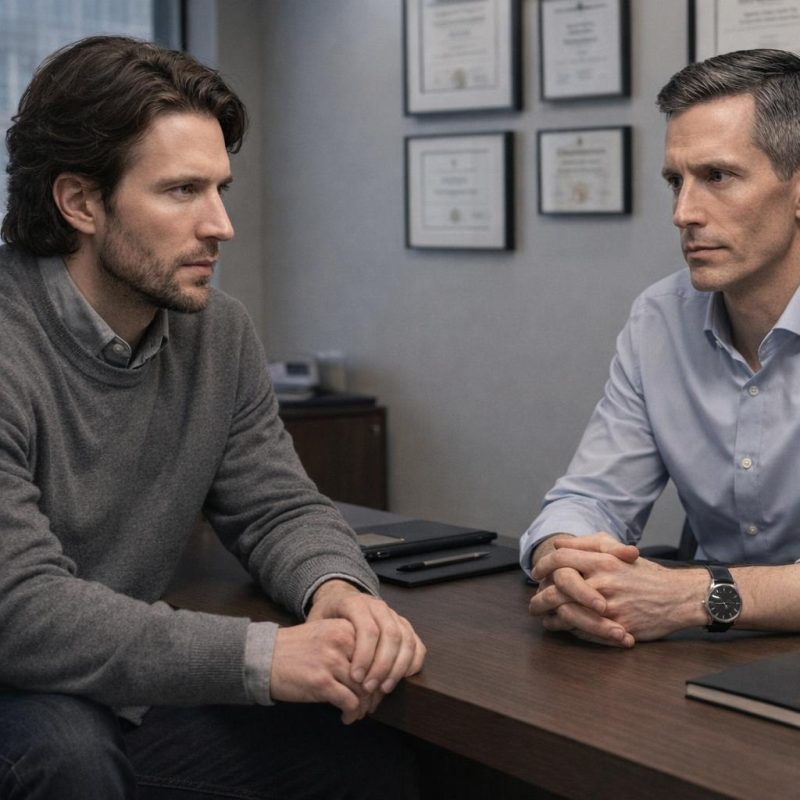 Image by RM AI
The Legal Reality
Marcus walked me through it methodically, the way someone explains a map to a person who has been lost for a long time. The properties my grandfather had designated for me — four of them, transferred over a period of eleven years — could be reclaimed through civil litigation. The rental income that had been funneled into Leo's consulting firm represented a separate but related claim. Arthur's role as executor created a fiduciary duty he had violated repeatedly and provably. Marcus said the word 'criminal' the way other people say 'possible' — not dramatically, just as one of the available doors. I could pursue civil recovery only. I could pursue civil and criminal simultaneously. I could file a complaint with the state bar regarding the attorney who had notarized the transfers. Every option was on the table, and every option was mine to choose. He said Leo's assets, to the extent they derived from the misappropriated funds, could be subject to disgorgement. The car. The condo. The consulting firm that had always looked slightly too polished for the revenue it claimed. All of it traceable. All of it reachable. I sat in that chair across from Marcus and felt the full weight of what I was holding — not money, not property, but the power to dismantle the architecture of my family's carefully maintained fiction, and the knowledge that I hadn't asked for any of it.
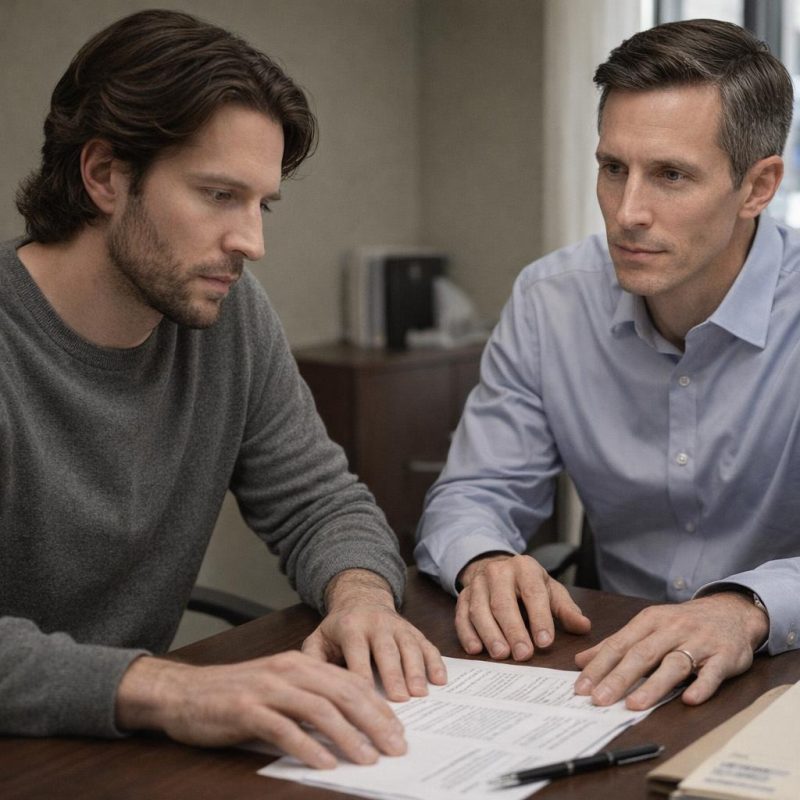 Image by RM AI
The Power to Strip Everything
I walked out of Marcus's building into the afternoon and stood on the sidewalk for a moment, not quite ready to move. The city went on around me the way it always does — indifferent, continuous, unbothered. I thought about Leo's condo, the one he had shown me once with the kind of casual pride that assumes the audience is impressed. I thought about the car, the consulting firm with its clean logo and its borrowed credibility. I could take all of it. Marcus had made that clear. The legal mechanism existed, the documentation was sufficient, and the timeline was on my side. I could reduce Leo's life to its actual components — which, stripped of my grandfather's money, amounted to a practiced smile and a good haircut. I stood there and waited to feel something like satisfaction at that thought. It didn't come. What came instead was something simpler and more inconvenient: I didn't want the properties back as much as I wanted them to know. I wanted to stand in a room with my father and my mother and my brother and watch the moment when they could no longer pretend. The money was evidence. The ledger was evidence. But what I actually wanted was a mirror — one they couldn't walk away from, one they couldn't hand back to me with a distracted nod.
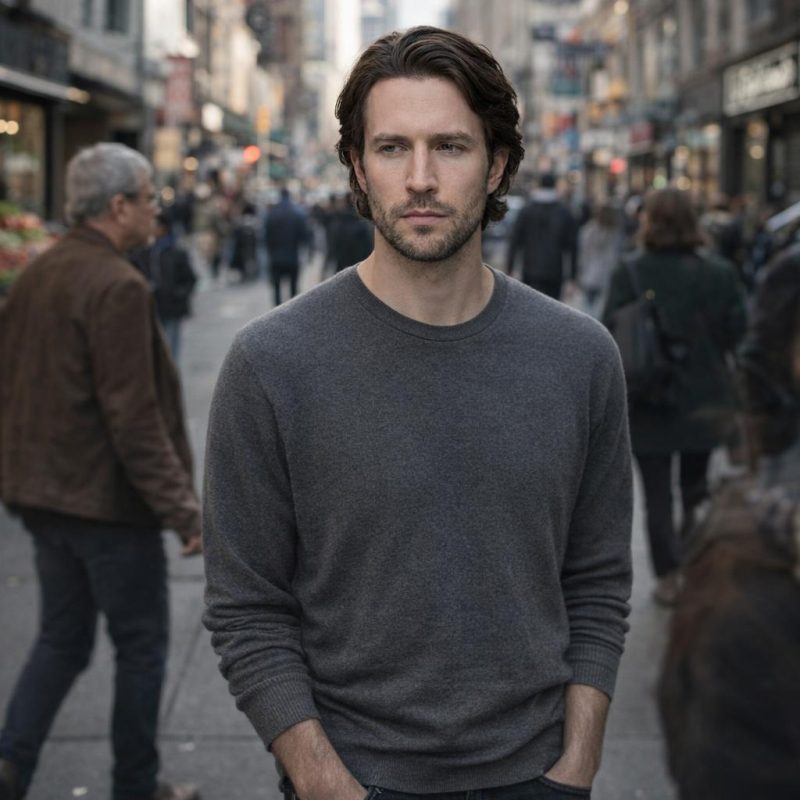 Image by RM AI
The Invitation
I called my father first, on a Tuesday evening when I knew he would be in his study. I told him I wanted to take the family to dinner before Leo left — a proper send-off, somewhere nice. There was a pause, the kind that means he was recalibrating, and then he said that sounded fine. I called my mother next. She said 'how lovely' in the tone she uses when she means 'unexpected.' Then I called Leo. He picked up on the second ring, which meant he wasn't busy or he saw my name and was curious. I told him I had an announcement to make and I wanted everyone together. He laughed and said, 'What, did you finally get a girlfriend?' I told him to just come. He said he would, still laughing, and asked if I was buying a car that didn't rattle. I said the restaurant would be nice enough that he'd want to dress appropriately. That quieted him slightly. I booked the table for Saturday — a private room in the back of a restaurant where the lighting was low and the noise from other tables wouldn't reach us. I confirmed the reservation and sat with the phone in my hand afterward, thinking about how easily they had all said yes, how completely unsuspecting they were, and how that would not be true by the end of Saturday night.
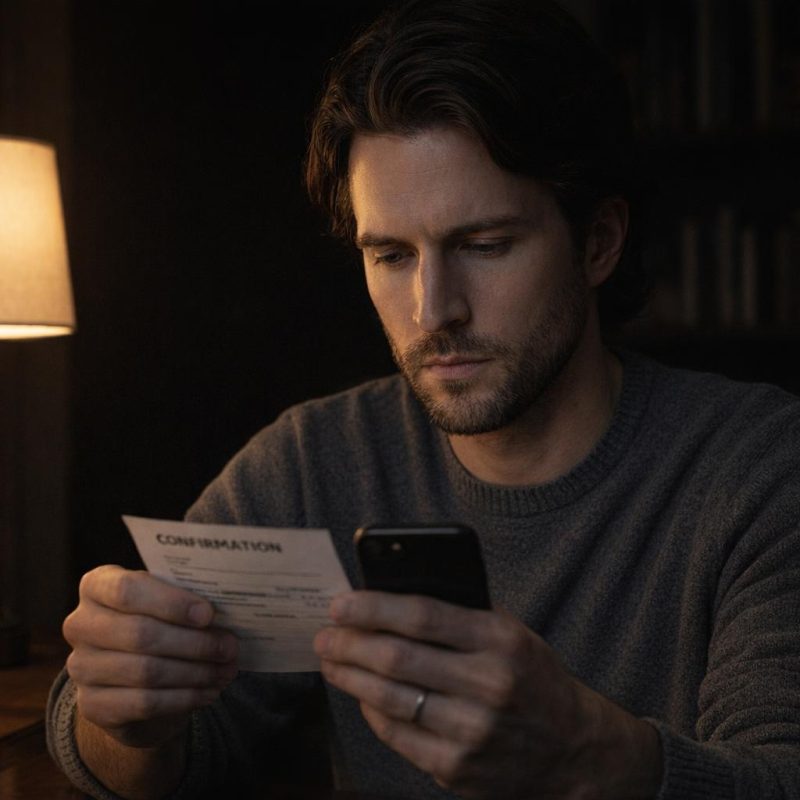 Image by RM AI
The Restaurant
I arrived forty minutes early. The host showed me to the private room without ceremony, and I chose the chair with my back to the wall and a clear view of the entrance — not for any dramatic reason, just because I wanted to see them before they saw me. The ledger was in my bag, zipped into the interior pocket where I had placed it that morning with the same care I imagined someone gives a document they intend to file in court. I ordered water and sat with it. The room was quiet. Dark wood paneling, a single candle on the table, the muffled sound of the main dining room beyond the door. I had rehearsed nothing, which felt right. There was nothing to rehearse. The facts were the facts, and the ledger was the ledger, and all I had to do was put one in front of the other and let the evening do what evenings do. I heard them before I saw them — Leo's laugh first, carrying down the corridor the way it always did, filling space that hadn't asked for it. Then my mother's voice, then my father's lower register. The door opened, and they came in together, Leo already mid-sentence about something, my mother smiling at whatever it was, my father's hand at her back — all three of them easy and unhurried and entirely unaware of what was sitting in the bag beneath my chair.
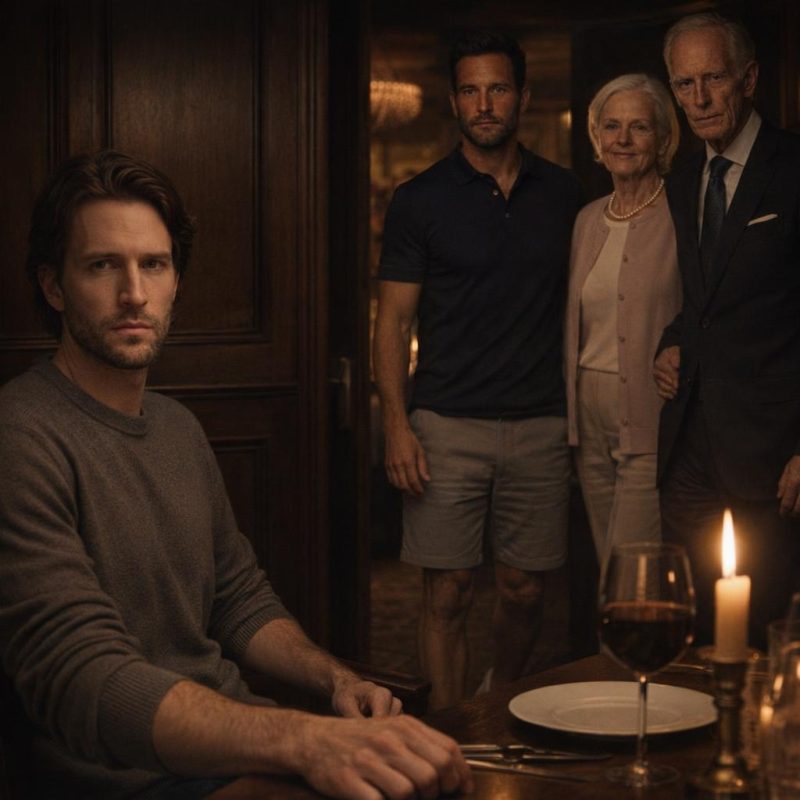 Image by RM AI
The Ledger on the Table
We ordered. We made the kind of conversation that fills the space between people who share a last name but not much else — Leo talked about his flight, my mother asked about the restaurant's wine list, my father made a comment about the menu prices that was meant to sound generous. The appetizers arrived and were set down with the quiet efficiency of good service. I waited until the server had gone. Then I reached into my bag, took out the ledger, and placed it in the center of the table. No preamble. No toast. No announcement. Just the black cover, face up, between the bread basket and the candle. My mother looked at it the way you look at something that doesn't belong — with mild confusion, reaching toward it. I moved it back toward the center before her hand reached it. Leo looked from the ledger to me and back again, his expression shifting from the easy confidence he wore everywhere into something I hadn't seen on him before — a kind of blankness, like a signal dropping. And then I looked at my father. His face had gone the color of the tablecloth. His hand, which had been lifting his wine glass, stopped halfway. He set the glass down without drinking. His eyes were fixed on the ledger with the particular stillness of a man who recognized exactly what he was looking at, and his arm extended slowly across the table, reaching for it.
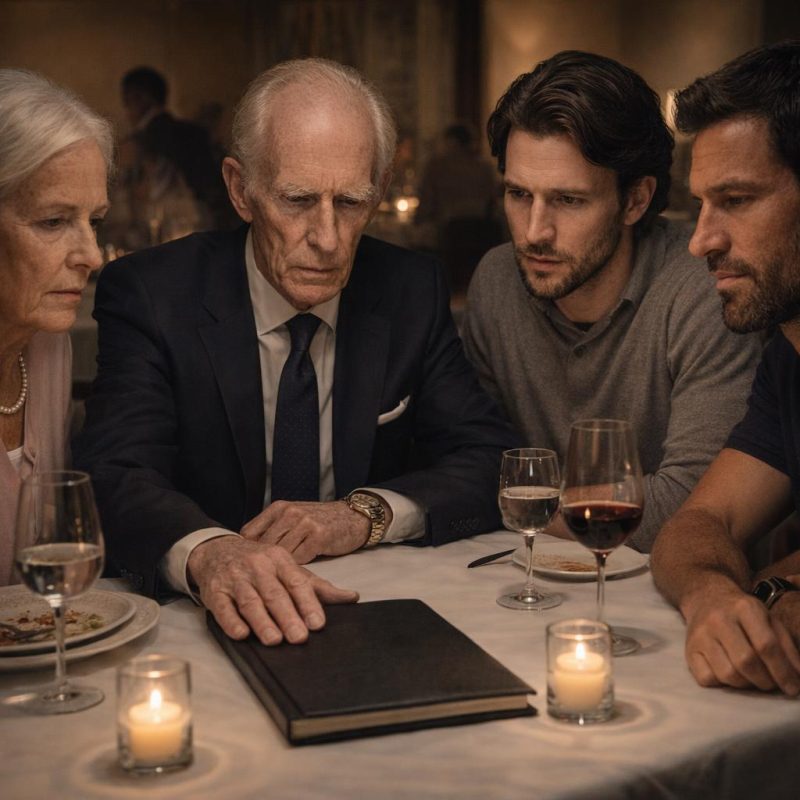 Image by RM AI
The Loudest Silence
I put my hand flat on the ledger before his fingers reached it. 'I know about the properties,' I said. 'All four of them. I know about the transfers, I know about the forged signatures, and I know about the consulting loans.' My voice came out level, which surprised me. My father's hand retracted. My mother had gone very still, her wine glass held in both hands like something she had forgotten she was holding. Leo looked at me, then at my father, then back at me. I watched it move across his face in sequence — the confusion first, genuine and almost childlike, because Leo had never needed to know where the money came from. Then something harder, a kind of resistance, the face of a man who senses the ground shifting and doesn't want to believe it. Then I said, 'The consulting firm, Leo. The condo. The car. Do you want to know what they were actually built on?' And I watched the resistance crack. His eyes went to my father, and whatever he saw there — the stillness, the retracted hand, the color that had not returned to my father's face — told him something that I hadn't needed to say out loud. Leo turned back to me slowly, and for the first time in his life, he was looking at me the way you look at someone who holds something you cannot take back.
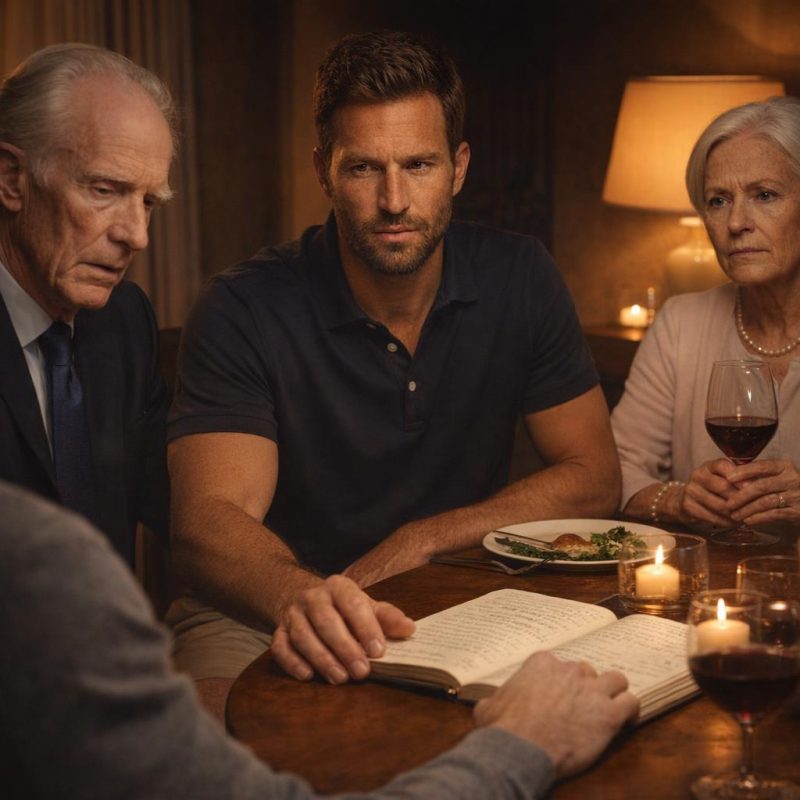 Image by RM AI
Looking at Me
The silence that followed was the loudest thing I had ever heard in that house. My mother set her wine glass down with a small, careful click, and I watched her look at me — really look at me — for what I understood was the first time in thirty-two years. Not through me, not past me, not in the direction of whoever was standing behind me. At me. My father's face had gone through several things in quick succession: the blankness of a man caught, then something that looked almost like grief, then the familiar gathering of composure that I had watched him perform my entire life. He opened his mouth. 'Julian, if you'll just let me explain—' I held up one hand. 'No,' I said. That was all. One word, flat and final, and it landed in the room like something dropped from a great height. He closed his mouth. Leo sat very still at the far end of the table, his hands flat on the wood, and for once in his life he had nothing to perform. My father tried again — a breath, a shift in his chair, the beginning of a syllable — and I looked at him directly and said, 'I'm done listening to you explain things to me.'
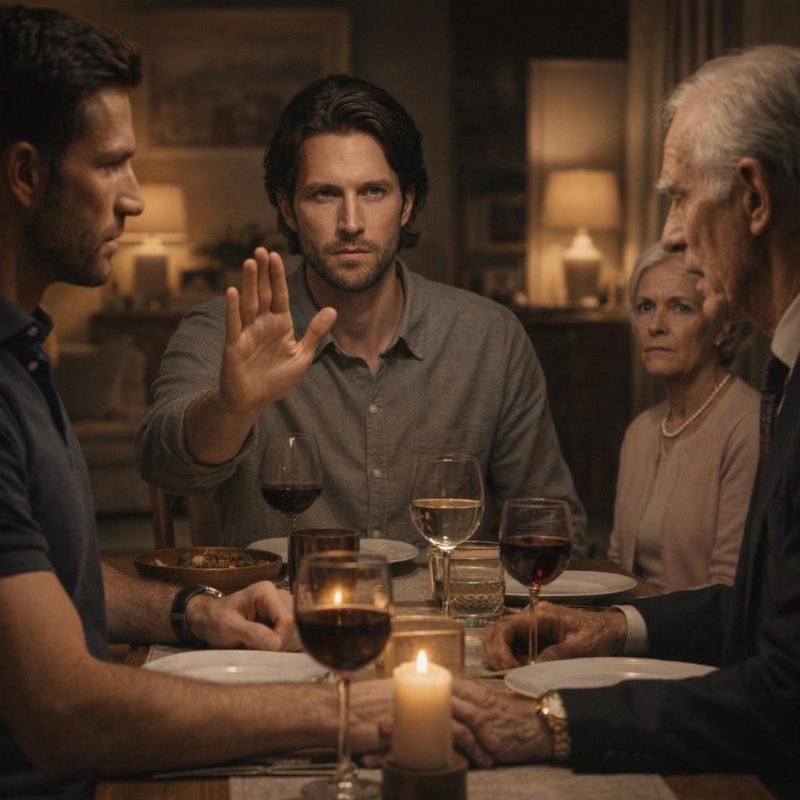 Image by RM AI
Taking Back What Was Mine
I told them what was going to happen, and I used plain language because I wanted there to be no confusion. The four commercial properties would revert to my name — Marcus had already prepared the transfer documents. The consulting loan arrangements would be unwound. The monthly deposits into Leo's accounts would stop, effective immediately. I was not pressing criminal charges. I said that clearly, and I watched my father's shoulders drop a fraction, the relief of a man who had been bracing for the worst. But I also said that the decision could change, and that it would depend entirely on how cooperative everyone chose to be in the coming weeks. My mother started to say something about family, about what this would do to us, and I let her finish. Then I said, 'You made those choices. I'm making mine.' Leo looked at the table. He didn't argue. I think some part of him had already understood, sitting there watching my father's hand retract from the ledger, that the version of his life he had always taken for granted had a foundation he had never examined. I gathered the documents, slid them back into the folder, and sat with the quiet weight of thirty-two years finally settling into something I could actually hold.
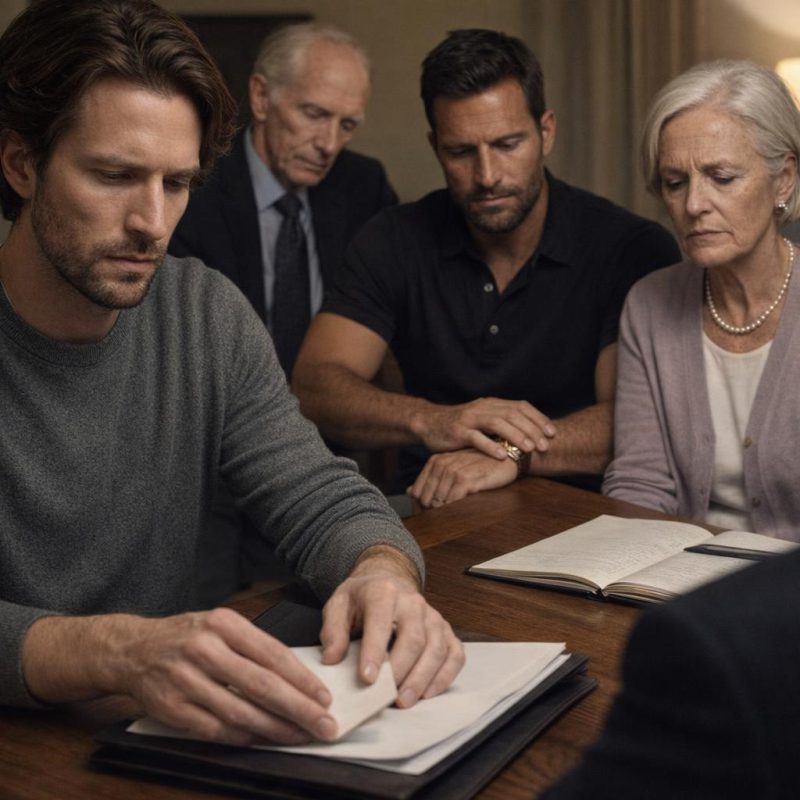 Image by RM AI
The Fallout
The fallout unfolded over the following months in ways that were, if I'm honest, almost exactly what I had expected. Leo lost the condo — it had been leveraged against one of the properties that now belonged to me — and after a few weeks of what I imagined were some very uncomfortable conversations, he took a sales position at a car dealership on the east side of the city. I heard this from my mother, who called once to tell me, in a tone that suggested I should feel responsible. I didn't. My father and mother sold the house and moved into a two-bedroom condo in a neighborhood that was perfectly comfortable but carried none of the weight they had spent decades accumulating. My mother stopped calling after the third conversation went the same way. My father never called at all. The family, such as it had been, fractured along the lines that had always been there — I could see that now, the cracks that had been papered over with my silence and my usefulness and my willingness to be the one who asked for nothing. I had spent thirty-two years waiting for them to see me. Somewhere in those months of fallout and quiet, I stopped needing them to.
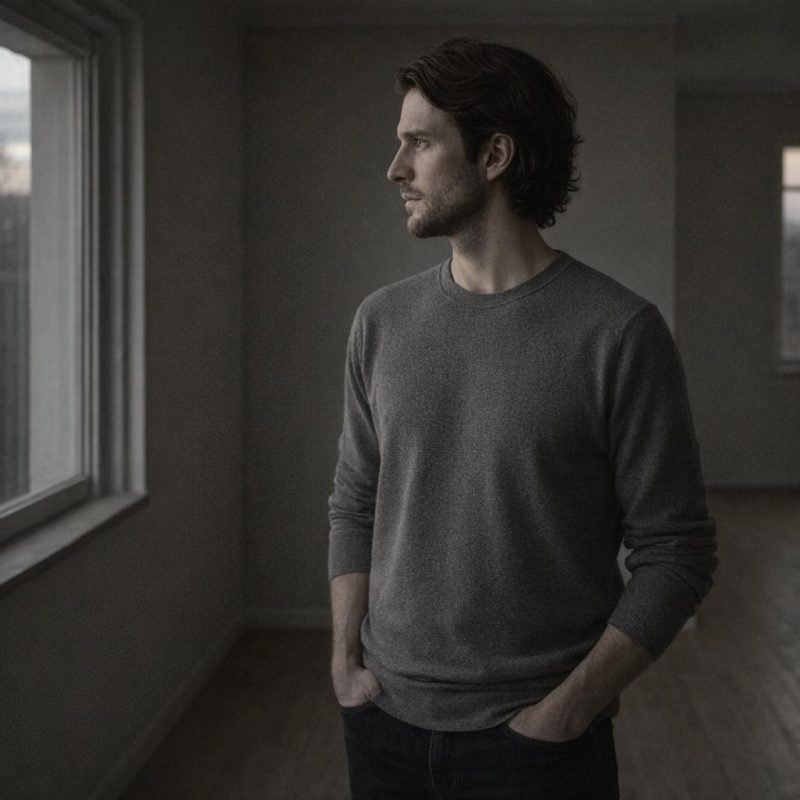 Image by RM AI
The Beautiful Silence
I moved into the loft on the fourteenth floor at the end of October, when the city light came in low and gold through the floor-to-ceiling windows and lay across the hardwood in long warm strips. I had almost no furniture for the first two weeks, and I didn't mind. I would stand at the windows in the morning with coffee and watch the city move below me and feel, for the first time I could remember, like I was exactly where I was supposed to be. I found Silas's note on the final page of the ledger the night I unpacked the last box — tucked beneath the back cover in handwriting that was careful and unhurried, the handwriting of a man who chose his words. I read it standing at the kitchen counter, still in my coat. 'To Julian, who listens when others only speak. May you find the world as beautiful as the silence you keep.' I stood there for a long time after. My grandfather had never met me. He had died before I was born. And yet somehow, in the careful architecture of what he had left behind, he had seen me more clearly than anyone who had shared a table with me for thirty-two years. I set the ledger down on the counter, walked to the window, and looked at my own reflection in the glass — and recognized the man looking back.
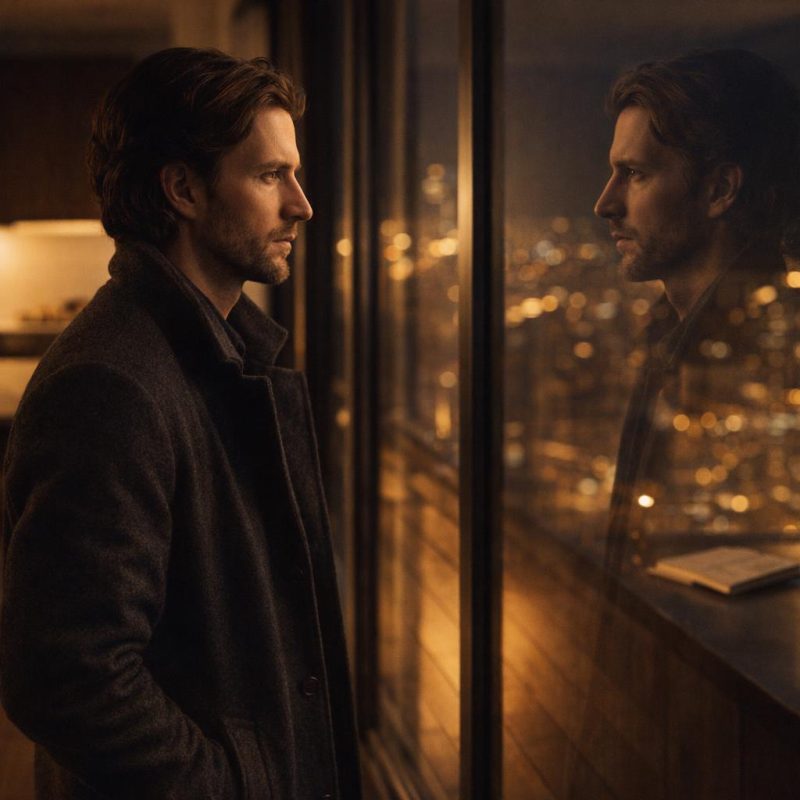 Image by RM AI
KEEP ON READING

The story of Ching Shih, the Woman Who Became the…
Unknown author on WikimediaFew figures in history are as feared…
By Emilie Richardson-Dupuis Dec 29, 2025
Einstein's Violin Just Sold At An Auction—And It Earned More…
A Visionary's Violin. Wanda von Debschitz-Kunowski on WikimediaWhen you hear…
By Ashley Bast Nov 3, 2025
This Infamous Ancient Greek Burned Down An Ancient Wonder Just…
History remembers kings and conquerors, but sometimes, it also remembers…
By David Davidovic Nov 12, 2025
The Mysterious "Sea People" Who Collapsed Civilization
3,200 years ago, Bronze Age civilization in the Mediterranean suddenly…
By Robbie Woods Mar 18, 2025
20 Greatest Ancient Athletes In History
Ancient Olympics. Long before modern stadiums and multimillion-dollar endorsements, athletes…
By Sara Springsteen May 1, 2026
20 Soldiers Who Defied Expectations
Changing the Rules of the Battlefield. You’ve probably heard plenty…
By Annie Byrd Feb 10, 2026