

I Thought My Dog Was Barking at Something in the Yard—Until I Realized the Real Threat Was Coming from Inside My Neighbor's House
I Thought My Dog Was Barking at Something in the Yard—Until I Realized the Real Threat Was Coming from Inside My Neighbor's House
The First Night at 3:04 AM
I was dead asleep when Max lost his mind at 3:04 AM. Not the lazy woof he does when a car rolls past — this was something else entirely, a low guttural sound I'd never heard come out of him before, his whole body rigid at the bedroom window with his hackles raised so high they looked like a ridge of dark fur along his spine. I stumbled out of bed and pulled back the curtain, heart already hammering, expecting to see someone in the yard. There was nothing. Just the moonlit swing set I keep meaning to take down, the overgrown bushes along the fence line, the same quiet suburban nothing I'd looked at a thousand times. I checked every window in the house anyway, then pulled on my shoes and stepped out onto the porch. The air was still. No footsteps, no rustling, no car idling down the block. I stood there for a full minute feeling faintly ridiculous in my pajamas. Max whined for another twenty minutes after I came back inside, pressed against the window glass, watching something I couldn't see. Eventually he curled up at the foot of the bed. I lay there staring at the ceiling until the sky went gray, and the silence that settled over the room felt heavier than it had any right to.
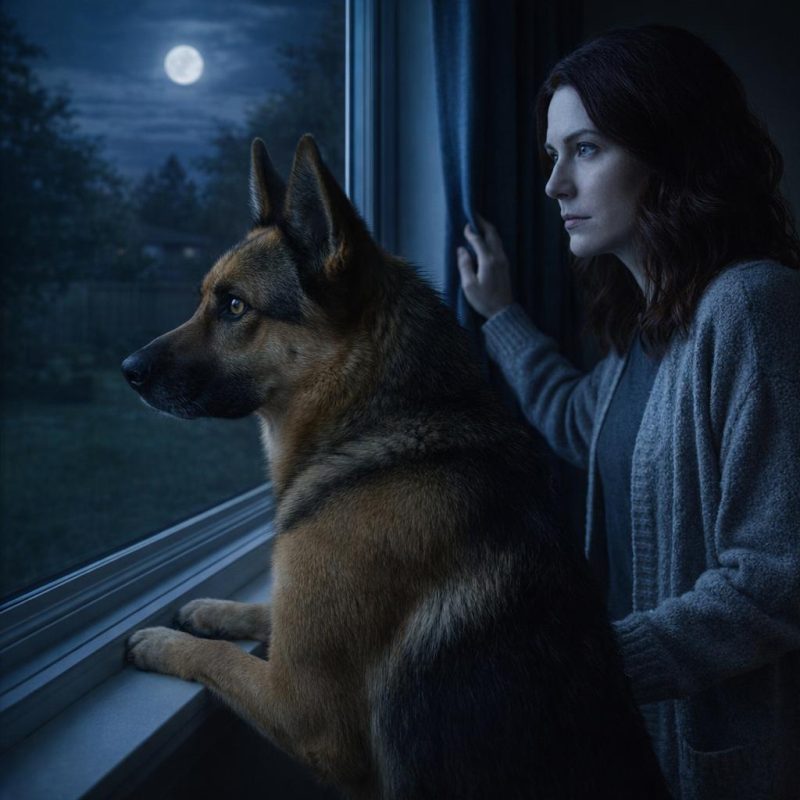 Image by RM AI
The Second Alarm
It happened again the next night at 3:07 AM — same frantic energy, same rigid posture at the window, same nothing in the yard when I yanked the curtain back. I'd half-convinced myself the first time was a fluke, maybe a raccoon or a stray cat that had wandered off before I got to the window. But Max was just as wound up the second time, maybe more so, and I stood there in the dark watching him watch something I couldn't see and felt the first real edge of frustration creep in. When morning came I went outside with my coffee and walked the whole perimeter of the yard slowly, the way you do when you're actually looking for something. I crouched under the bedroom window and checked the soil along the fence line. I parted the bushes with my hands and looked for broken branches, matted grass, any sign that something had been there. The motion sensor light on the back corner of the house had never triggered — I'd checked the log on the app. The grass was undisturbed. The gate latch was still fastened from the inside. I had no animal tracks, no footprints, no bent stems, no evidence of anything at all — and I had absolutely no idea what to do with that.
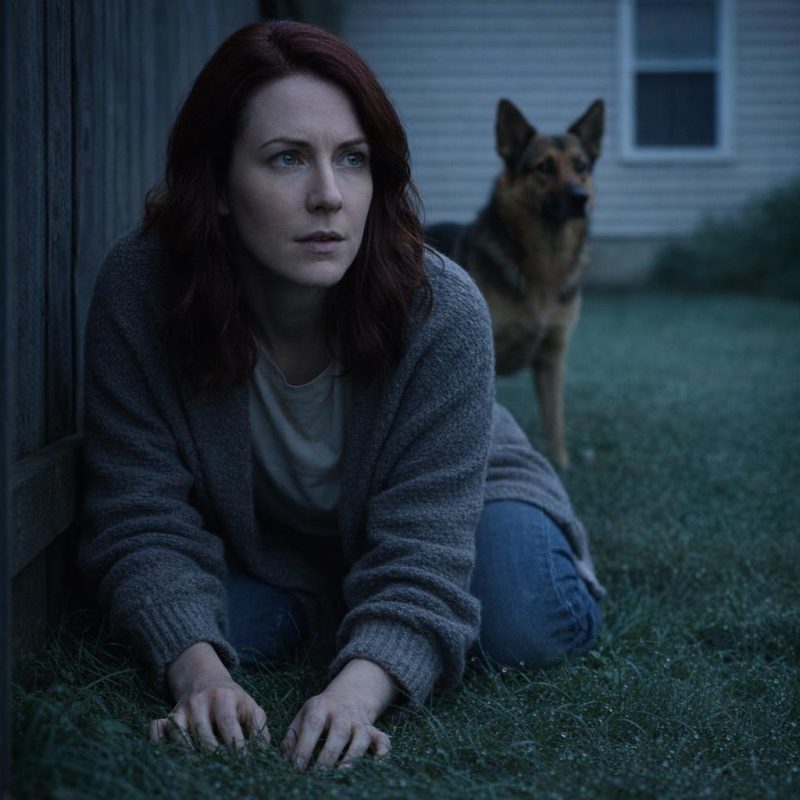 Image by RM AI
The Pattern Emerges
The third night it was 3:05 AM. I know because I was already half-awake, some part of me braced for it, and I looked at my phone the second Max's growl started. I lay there for a moment just holding that number in my head — 3:04, 3:07, 3:05 — and something in my brain shifted gears the way it does at work when a dataset stops looking like noise and starts looking like signal. I got up, found the notebook I use for grocery lists, and wrote all three timestamps down in a column. Then I sat on the edge of the bed doing the math. Three nights. Three alerts. All of them falling inside a six-minute window between 3:03 and 3:09 AM. I turned that over for a long time. Raccoons don't run on a schedule. Neither do stray cats or neighborhood dogs or whatever else I'd been telling myself might be out there. I thought about territorial animals with fixed patrol routes, about nocturnal insects that peak at certain hours, about whether sound or light from somewhere could be hitting the yard on a timer. None of it quite fit. Max had settled back down beside me, his breathing slow and even, and I sat there in the dark with my notebook and the quiet certainty that whatever this was, it kept its own clock.
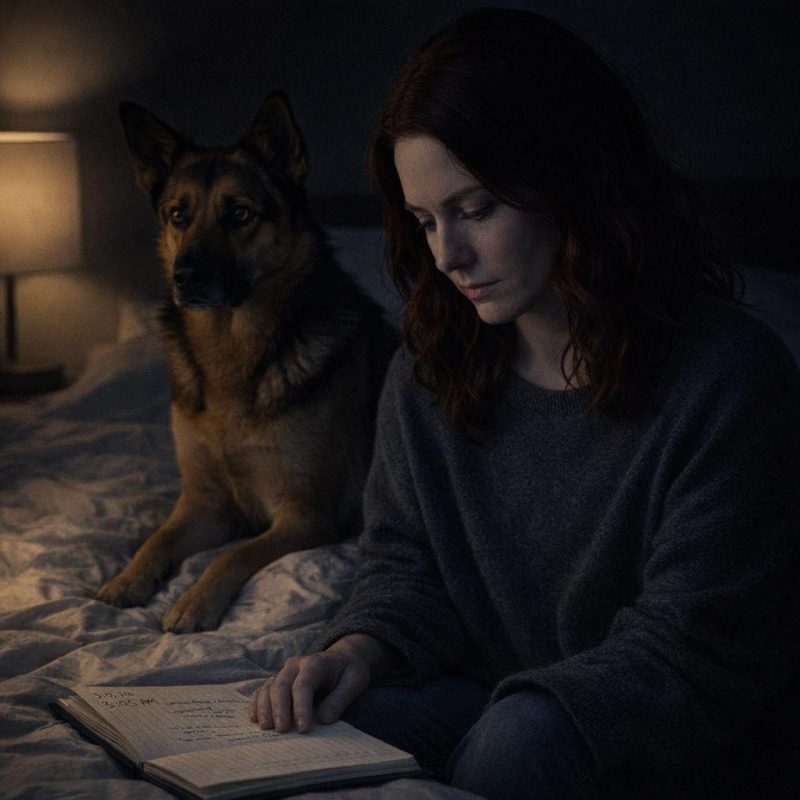 Image by RM AI
Attempted Prevention
I decided to get ahead of it on the fourth night. I left every porch light blazing before I went to bed, figuring that if something was coming into the yard, a lit-up yard might discourage it. I also pulled the heavy blackout curtains across the bedroom window so Max couldn't see out. I even pulled up a white noise app and set it running on my phone on the nightstand. I felt almost clever about it. Then 3:03 AM arrived and Max went straight to the curtains and scratched at them until I opened them, because of course he did. I tried the white noise at higher volume. He ignored it completely, planted at the glass, hackles up, doing that low sound that isn't quite a bark and isn't quite a growl. I checked the neighbor's motion sensor light through the window — dark the whole time, same as every other night. I tried calling him back to the bed with his favorite treat. He took the treat and went right back to the window. By 3:30 I was sitting on the floor next to him with my back against the wall, out of ideas, watching him watch the yard. There's a particular kind of tired that comes from trying everything you can think of and having none of it matter, and I felt it settle into my shoulders like something permanent.
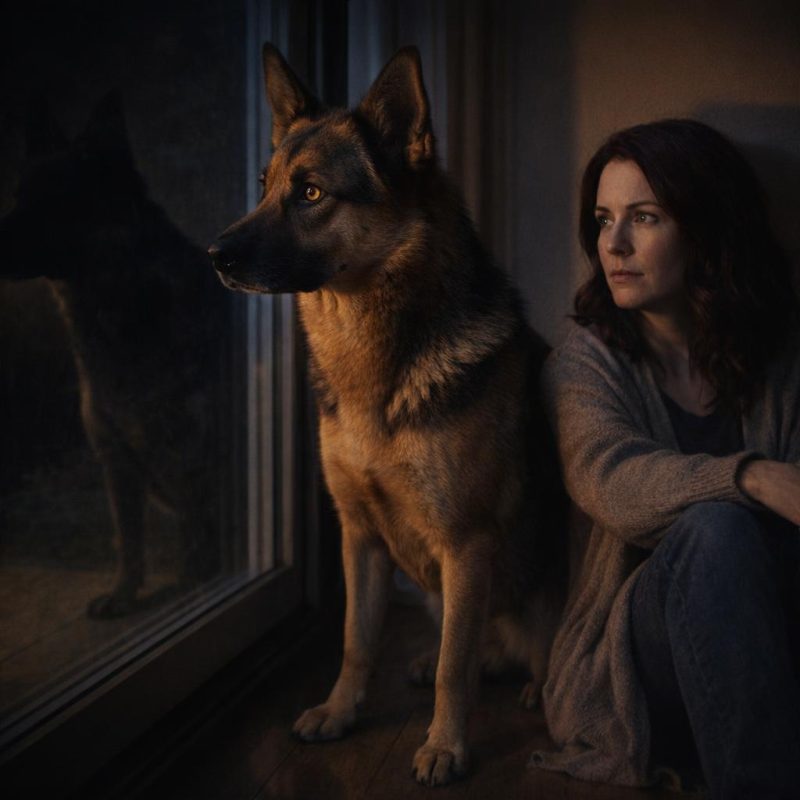 Image by RM AI
Ghosts of the Divorce
The fifth night Max woke me at 3:06 AM and I didn't even get up right away. I just lay there in the dark listening to him and thinking about how different the house felt now. When David was here I never noticed the sounds a house makes at night — the pipes, the settling, the particular creak of the hallway floor. Now I catalogued all of them. The divorce had been final for three months. I'd kept the house because it made sense on paper, because I could cover the mortgage on my salary, because starting over somewhere new felt like admitting something I wasn't ready to admit. Most nights I told myself I was fine. Some nights, like this one, I wasn't so sure. David had never taken Max's instincts seriously either — that was one of the things I remembered now, how he'd wave off anything he couldn't immediately explain. I'd spent a lot of years doing the same, deferring to his certainty. I wasn't sure I trusted my own judgment about much anymore. In the morning I went down to the basement to look for the extra extension cord I needed for the porch lights, and there in the corner, exactly where he'd left it, sat David's old red toolbox — still padlocked, still his, still somehow taking up space in a house that was supposed to be mine now.
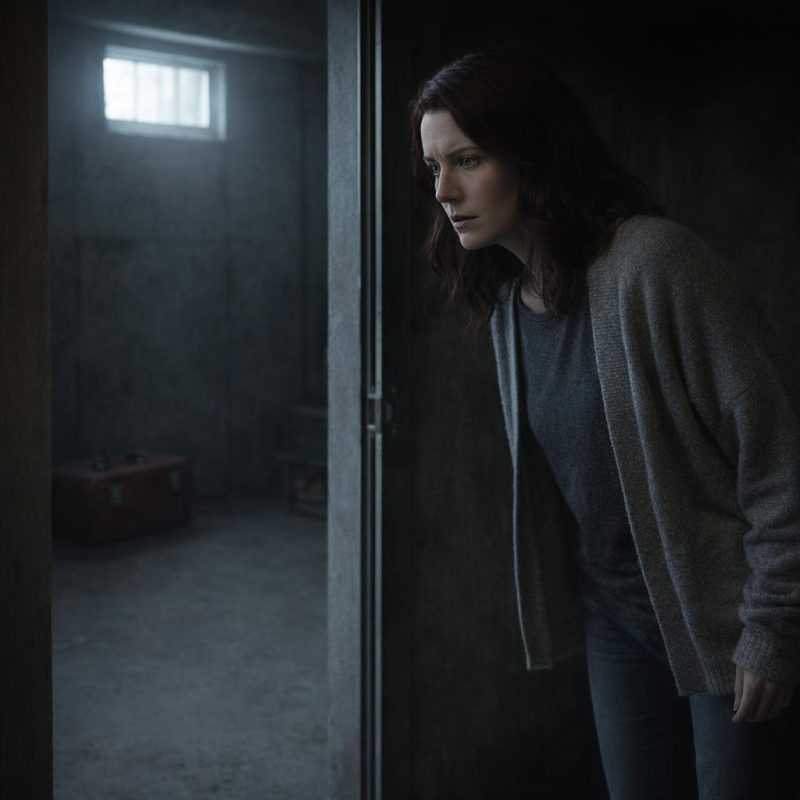 Image by RM AI
The Vet Visit
I called the vet's office when they opened and got an afternoon appointment. I described everything to Dr. Patel — the timing, the intensity, the hackles, the growl I'd never heard before — and she listened with the kind of careful attention that made me feel briefly less like I was losing my mind. She went through Max thoroughly: eyes, ears, reflexes, the works. She ran a blood panel. She checked his hearing with a small device I didn't recognize. He sat through all of it with the patient dignity he always has at the vet, tail wagging, completely unbothered, looking nothing like the animal who'd been standing rigid at my window for six nights running. Everything came back clean. No infection, no neurological flags, no sensory deficits. Dr. Patel suggested he might be picking up ultrasonic frequencies — a pest deterrent in the area, maybe, or distant wildlife — and that the consistent timing could be coincidental. I told her it had happened six nights in a row within the same six-minute window. She nodded and said she'd note it, and recommended behavioral observation for now, with anxiety medication as an option if it continued. I clipped Max's leash back on and walked out into the afternoon sun. He trotted beside me looking perfectly content. "He's a completely healthy dog," Dr. Patel had said, and somehow that was the least reassuring thing I'd heard all week.
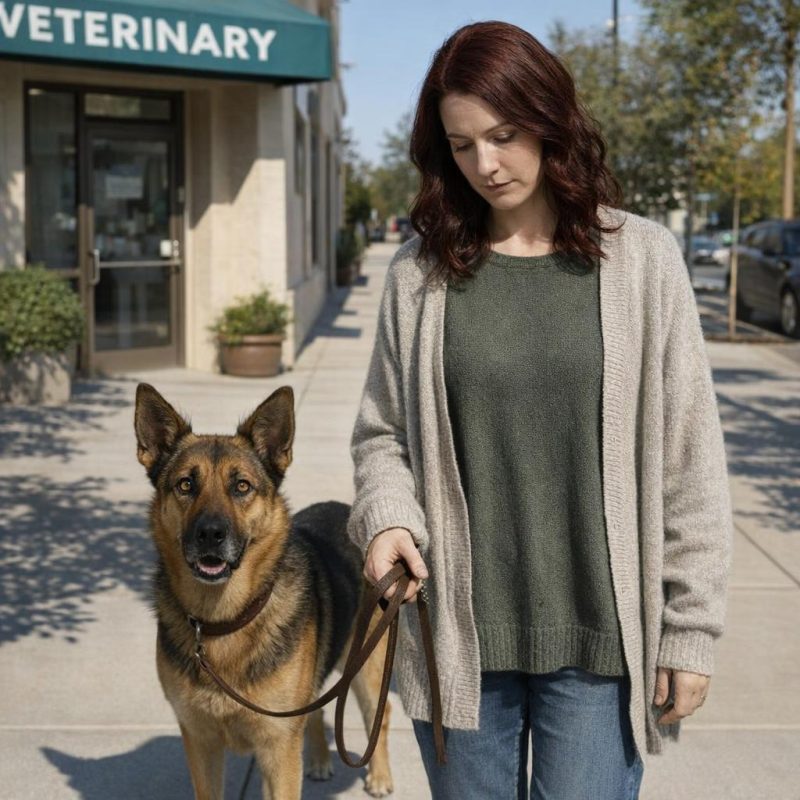 Image by RM AI
Data Analysis
After the vet visit I did what I always do when I can't solve something by feeling my way through it — I opened my laptop and built a spreadsheet. Seven nights of data, one row each. Columns for timestamp, duration of alert, Max's specific behaviors, outdoor temperature, humidity, wind direction, moon phase, cloud cover, whether I'd had the porch lights on or off, whether the curtains were open or closed. I pulled weather data from the NOAA archive to fill in the gaps. Then I ran correlations on everything I could quantify. Temperature: no pattern. Humidity: no pattern. Moon phase: alerts occurred across new moon, waxing crescent, and first quarter — no correlation. Wind direction varied across all four quadrants. The porch lights made no difference. The curtains made no difference. I added columns for my own sleep schedule and stress levels, wondering if I was somehow cuing him, and found nothing there either. The only column that showed any consistency at all was the one I'd built first: time of alert. Seven entries. Seven timestamps between 3:03 and 3:09 AM. I sat back and looked at the screen for a long time. Every variable I could measure pointed to random noise. Except that one. The spreadsheet just sat there on my screen, seven neat rows, the time column perfectly clustered while everything else scattered, and I didn't have an explanation for any of it.
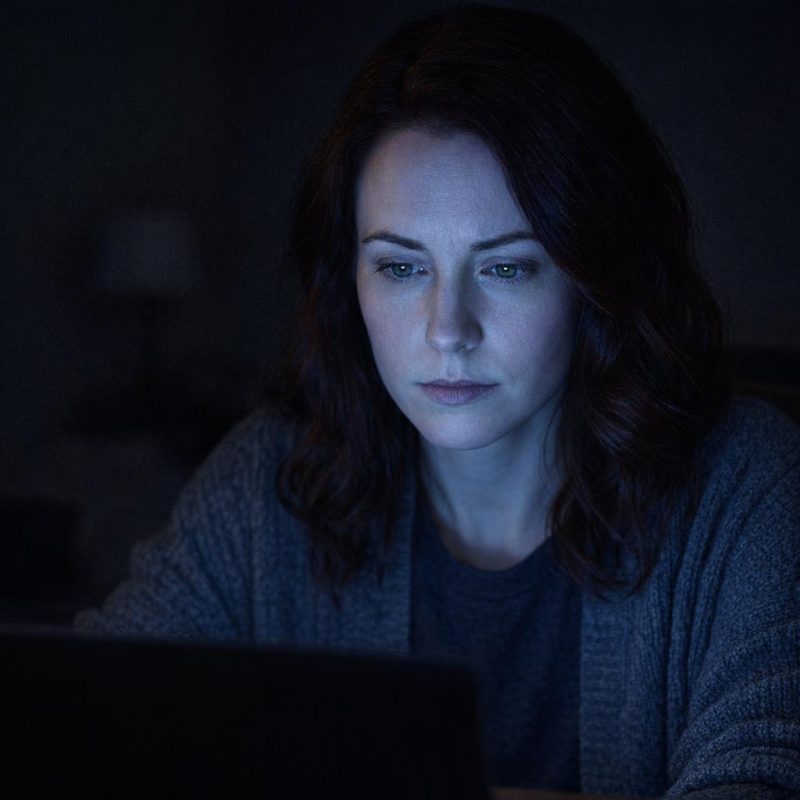 Image by RM AI
The Neighbor Next Door
I took Max out for a longer walk than usual that morning, partly for him and partly because I needed to be outside and moving. We were coming back up the block when I noticed Henderson in his front garden, kneeling in the dirt pulling weeds from around his rose bushes. He looked up when Max and I reached the edge of his property and raised one hand in a slow, easy wave. I waved back. I hadn't seen him in a few weeks and felt a small reflex of neighborly guilt about it. He's lived next door for as long as I've been in the house — a tidy, quiet man in his seventies, always in pressed slacks even when he's gardening, his gray hair combed neatly back. He pushed himself to his feet and we exchanged the usual pleasantries about the weather. He asked how I was settling in after the divorce, which I hadn't realized he knew about, and I said fine, getting there. He mentioned he was usually in bed by nine, that he was a light sleeper and the neighborhood nights had been quiet lately, which he appreciated. It was all perfectly ordinary. I said goodbye and Max and I walked the last half-block home, and I was almost at my front steps before I noticed I'd been holding Max's leash a little tighter than usual the whole way back. Henderson was still on his porch when I turned around, one hand raised again in a second slow wave.
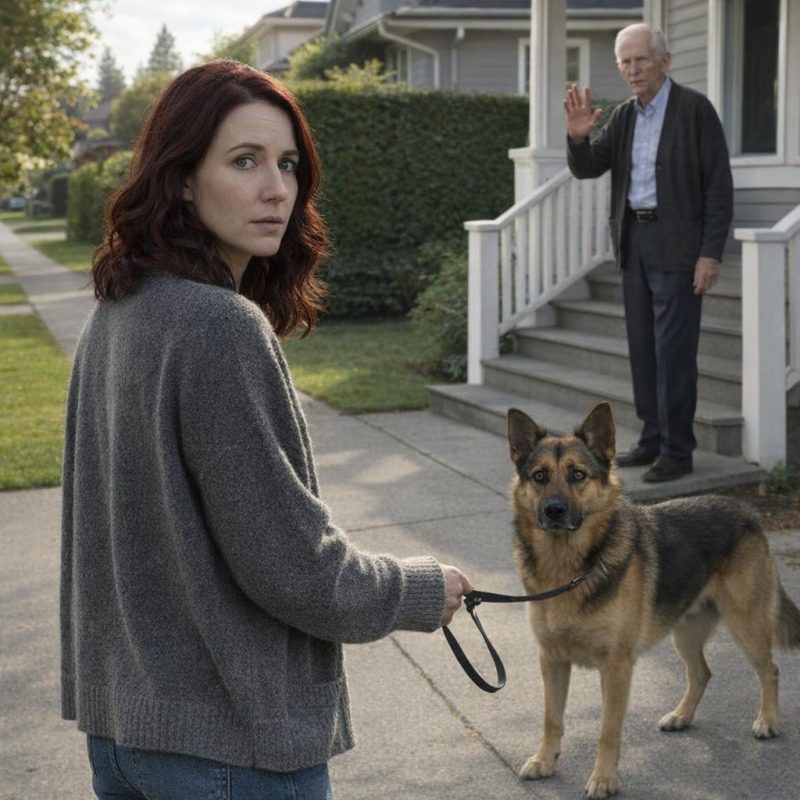 Image by RM AI
Professional Decline
I made it to work on time, which felt like a minor miracle given that I'd been awake until nearly four in the morning. I poured coffee in the break room and my hands were shaking badly enough that I spilled some on the counter and just left it there. At my desk, I pulled up the quarterly data analysis report I'd been assigned — a routine job, the kind I could normally knock out in under an hour — and stared at it. The numbers sat on the screen like they were written in a language I'd never learned. I kept reading the same row of figures over and over without any of it landing. Janet appeared at the edge of my cubicle, her expression careful and measured. She asked if everything was alright. I told her I was dealing with some insomnia, adjusting to new medication, nothing serious. She suggested I take a personal day if I needed one, and I said no, I was fine, I just needed more coffee. She nodded slowly in that way that meant she didn't entirely believe me. She left, and I turned back to my screen. The clock on my monitor read 10:47. I had been sitting there for two hours and hadn't typed a single word.
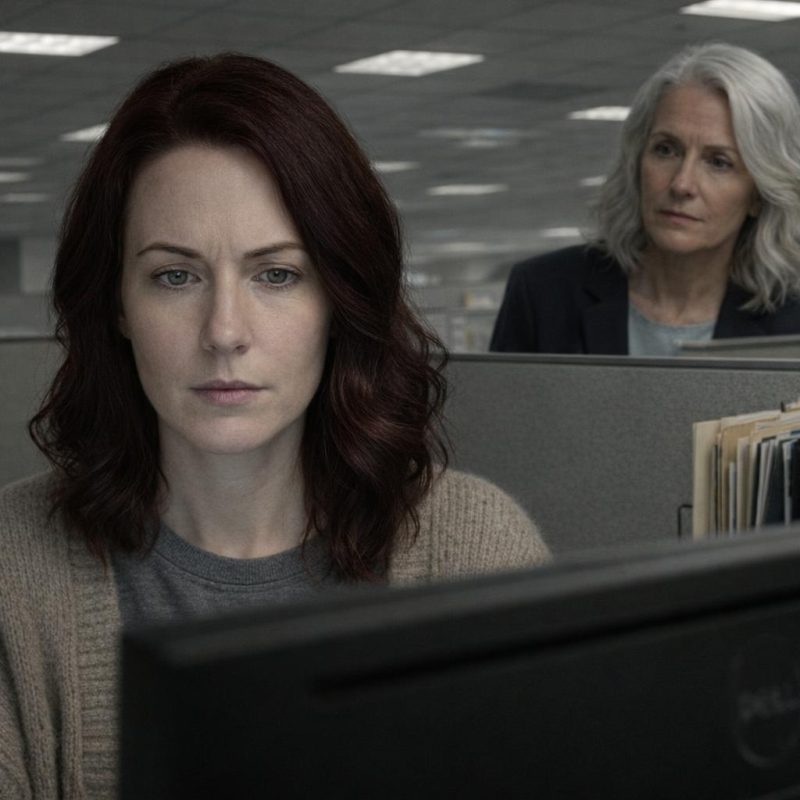 Image by RM AI
The Laundry Room Experiment
I thought if I could just get one full night of sleep, everything would look different in the morning. So I set up Max's bed in the laundry room — his water bowl, his favorite blanket, the worn stuffed duck he'd had since he was a puppy. I told myself it was temporary, just a few nights to break the cycle. I closed the door at ten-thirty and went to bed. At 3:04 AM, I was jolted awake by howling. Not the alert bark he did at the window — this was something else entirely, raw and desperate, the sound of an animal in genuine distress. I lay there for a few minutes telling myself he'd settle. He didn't settle. The howling shifted into frantic scratching, and then I heard the dull thud of him throwing his whole body against the door. I ran down the hall and pulled it open and Max shot past me toward the bedroom window, already in full alert posture. I stood in the laundry room doorway with the light on, looking at what I'd done. The white paint on the door frame was streaked with dark red where he'd clawed through to the wood. I sat on the floor and cleaned his paws with a damp cloth, my hands shaking, and he let me do it without pulling away. The blood on the door frame didn't wash off.
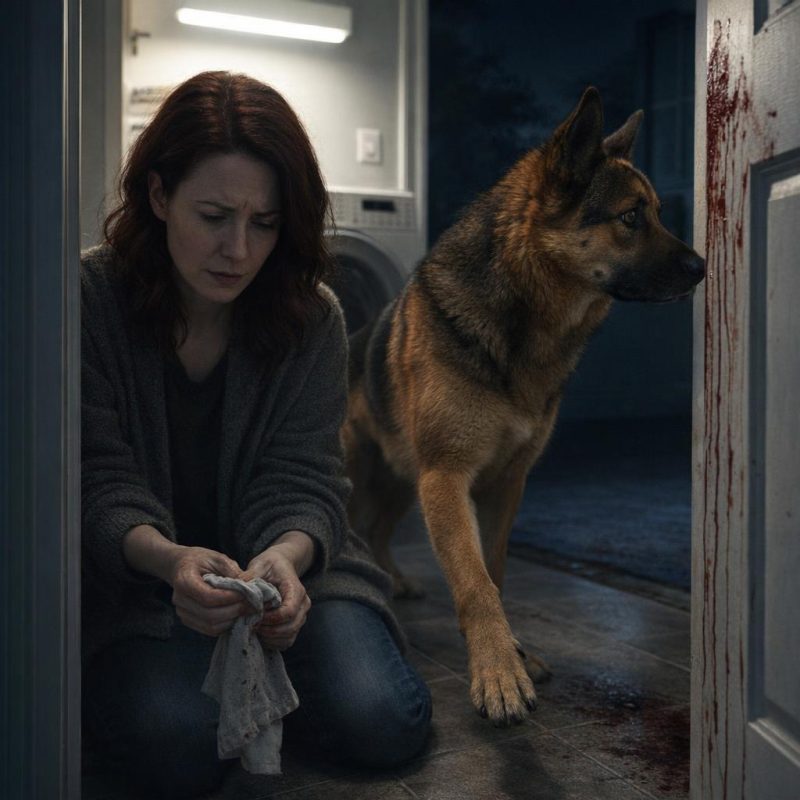 Image by RM AI
Medical Intervention
I made the appointment because I was running out of options and because Janet's expression at my cubicle had scared me a little. The doctor was pleasant and unhurried. He asked about recent stressors and I mentioned the divorce, and I could see the shape of his conclusion forming before I'd even finished the sentence. He said the symptoms I was describing — disrupted sleep, hypervigilance, difficulty concentrating — were consistent with late-onset anxiety disorder, commonly triggered by major life transitions. He said divorce, especially a difficult one, could rewire how the nervous system responds to perceived threats. I tried to explain that it wasn't me waking up, it was Max, that his behavior was the starting point and my sleeplessness was the consequence. He nodded in a way that suggested he'd heard this kind of thing before. He said treating my anxiety would help me respond to Max's behavior more calmly, which would in turn help Max settle. He wrote the prescription while he was still talking. I took the slip of paper and thanked him and walked out to the parking lot and sat in my car for a few minutes. The prescription was for an anti-anxiety medication I recognized from a friend's medicine cabinet. I turned it over in my fingers. The whole appointment had taken twenty-two minutes. I sat there holding the small square of paper, feeling like I'd gone in with a question and come out with a different question entirely.
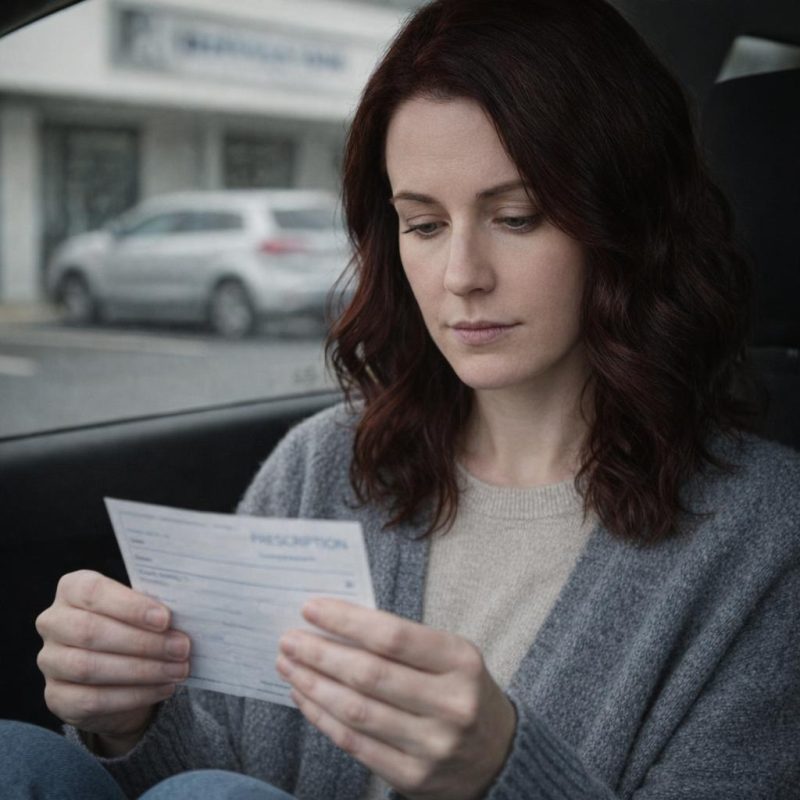 Image by RM AI
Refusing the Easy Answer
The prescription sat on the passenger seat the whole drive home, and I kept glancing at it the way you glance at something you're trying to decide about. It would be easy. That was the honest truth of it — it would be genuinely easy to fill it, take the pills, sleep through whatever Max was doing at three in the morning, and let the whole thing go. I pulled into the driveway and Max met me at the door the way he always does, tail going, nose working, that specific kind of full-body enthusiasm that never gets old. I crouched down and looked at him. His paws were still slightly tender from the night in the laundry room. I thought about the sound he'd made behind that door — not a nuisance bark, not anxiety, something closer to alarm. Whatever he was responding to every single night at the same time, it was real to him. Medicating myself wasn't going to change that. It was just going to make me stop paying attention. I walked to the kitchen and dropped the prescription in the trash.
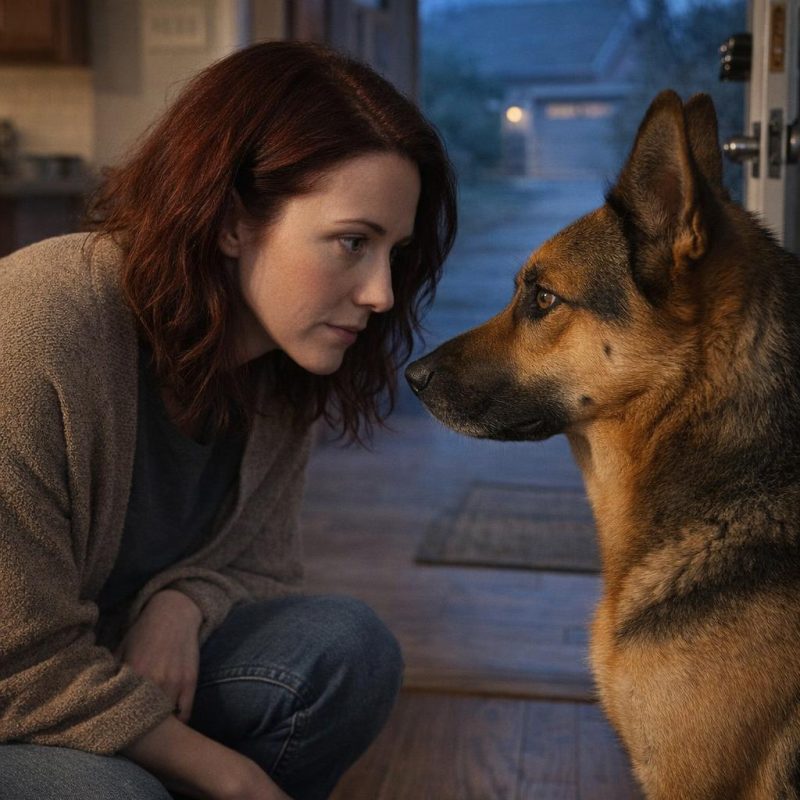 Image by RM AI
The Motion Sensors
I started paying attention to the motion sensors. Henderson's garage had two of them mounted at the corners — the kind with a wide arc, sensitive enough that I'd watched them trip for a raccoon crossing the far edge of his driveway, for a cat moving along the fence line, once for what I think was a large bird landing on the gate post. I knew how responsive they were. So I started positioning myself at the bedroom window before three, watching. At 3:05 AM on a Tuesday, Max went rigid beside me and began his low, focused alert. I watched the garage. The sensors stayed dark. I watched the yard, the fence line, the strip of grass between our properties. Nothing moved, nothing triggered. The sensors stayed dark through the whole episode — twelve minutes of Max locked onto whatever he was locked onto, and not a single light. I'd seen those sensors fire for a tabby cat from thirty feet away. Whatever was happening during Max's alerts left no trace in the yard at all. I stood at the window after Max finally settled, looking at the dark space where the sensor lights should have been, and I couldn't find a way to make that feel like nothing.
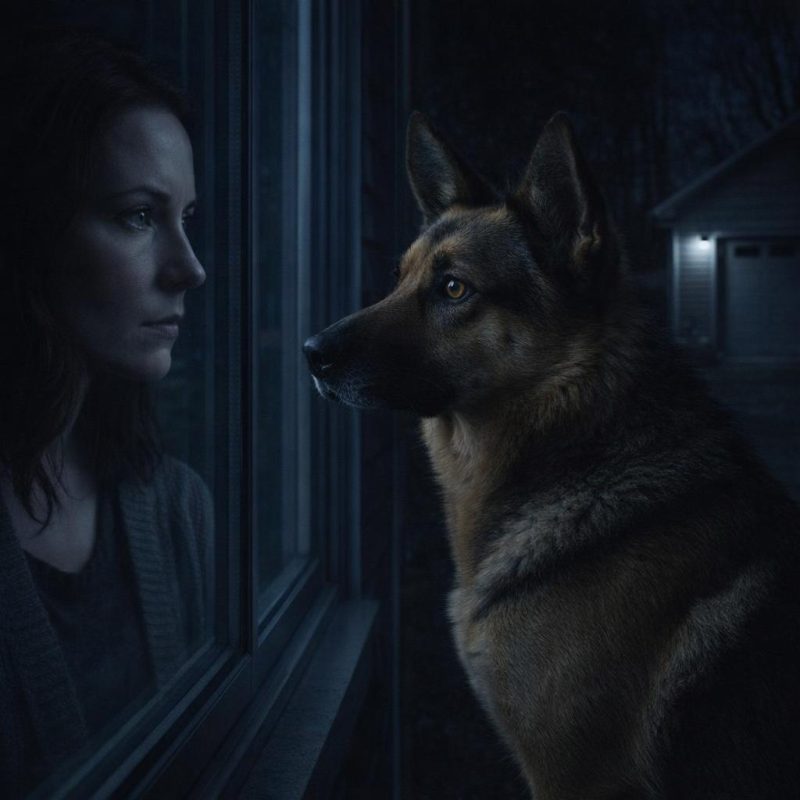 Image by RM AI
Preparing for Battle
I went to the hardware store on a Saturday morning and bought a heavy-duty flashlight — the kind with a beam strong enough to light up the far end of a yard clearly. Then I drove to an electronics store and picked up a motion-activated trail camera and a small digital voice recorder. The woman at the register asked if I was setting up for wildlife monitoring and I said yes, which was close enough to true. Back home, I mounted the trail camera on the fence post angled toward the area Max always faced during his alerts, tested the trigger sensitivity, and ran through the recorder's settings until I understood them. I charged everything overnight. The next evening I laid it all out on the kitchen table — the flashlight, the camera remote, the recorder, the spare batteries lined up beside each one. Max sat nearby watching me with his ears forward. There was something steadying about the act of preparation, about having objects with specific functions arranged in a specific order. I wasn't just waiting anymore. The equipment on the table looked back at me, quiet and ready.
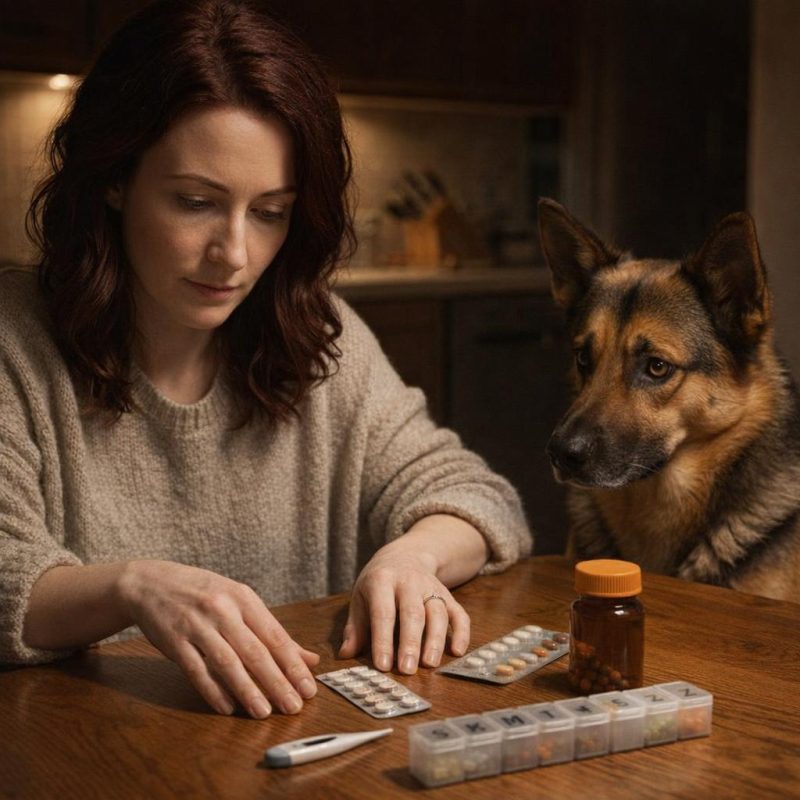 Image by RM AI
Janet's Concern
Janet closed her office door, which she didn't usually do for routine check-ins, and I understood before she'd even sat down that this was a different kind of conversation. She had a folder open on her desk with what looked like printouts of my recent reports. She was direct about it — three errors in the Hendricks account analysis, a missed deadline on the quarterly summary, response times to client emails that were running two and three days behind. She asked if I was managing alright with everything going on personally. I apologized and told her I was working on my sleep situation, that I had it under control. She said the company had an employee assistance program, that there was no stigma in using it, that she'd used it herself once. I said I appreciated that. I told her I didn't need a leave of absence, that I just needed a few more days to stabilize, that the work quality would come back up. She looked at me for a moment with an expression I couldn't quite read — not unkind, but not entirely convinced either. She said she'd give me two weeks to show improvement. I thanked her and walked back to my desk. Behind me, her door clicked shut on the offer of a leave of absence I hadn't taken.
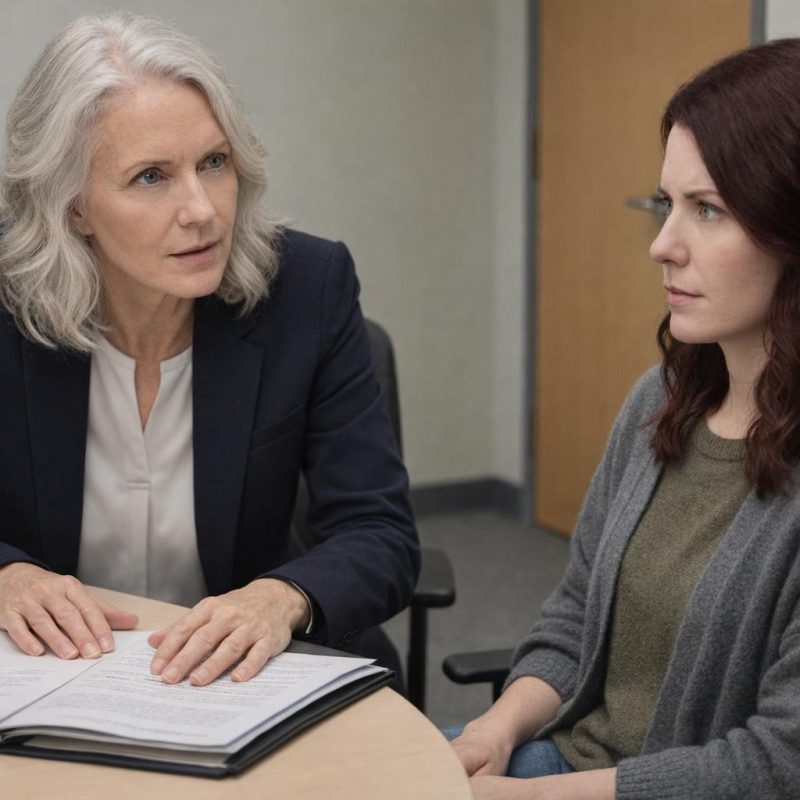 Image by RM AI
The Midnight Vigil
I brewed a full pot of coffee at midnight and turned off every light in the house. Not dimmed — off, all of them, so the rooms went the particular dark that makes familiar spaces feel like somewhere else entirely. I set the flashlight on the table within easy reach, the voice recorder beside it already running. Max paced between the kitchen and the hallway with his tail low, pausing at the window, circling back. I sat at the kitchen table and watched the clock on the microwave, the only light source left in the room, its green digits the one fixed point in all that dark. My coffee went from hot to warm to cool and I kept drinking it anyway. The house made its small sounds — the refrigerator cycling, a creak from somewhere upstairs, the soft click of Max's nails on the floor. I thought about how completely alone I was in this, how there was no one I could call at this hour who would understand what I was waiting for or why it mattered. The silence pressed in around the edges of everything. At 2:45 AM, the microwave clock ticked over, and I wrapped both hands around the flashlight.
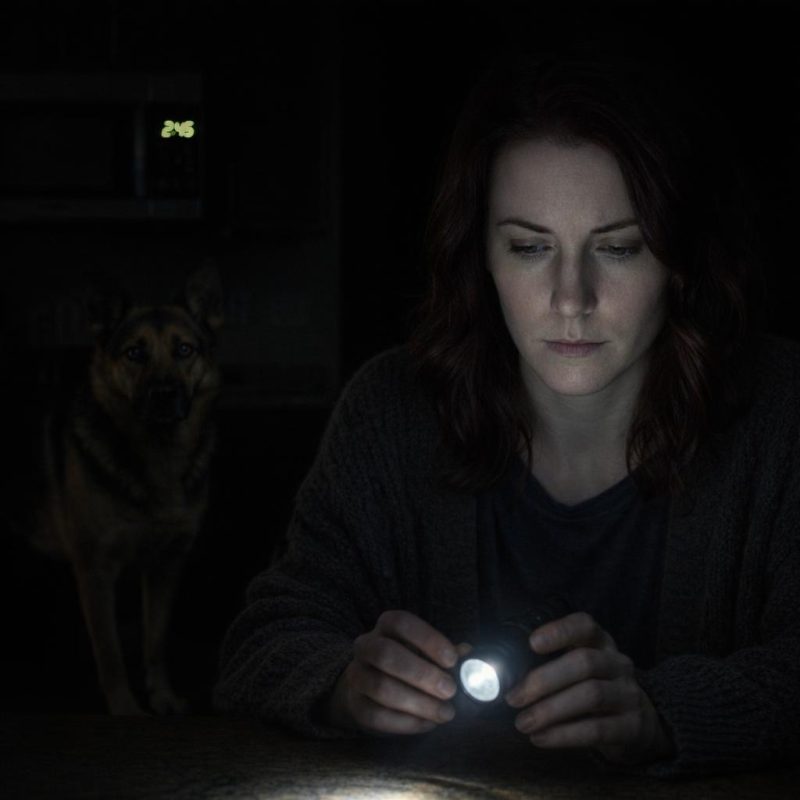 Image by RM AI
The Wrong Direction
At 3:03 AM, Max stopped pacing. I had been watching the bedroom window the way I had every night that week, flashlight in hand, body angled toward the backyard. But Max didn't go to the window. He trotted right past me, past the kitchen, into the hallway, and I turned to follow him with the flashlight beam. He stopped dead in front of the basement door. Not the window. Not the yard. The basement door. I stood there watching him, trying to make sense of it, because I had spent six nights staring into that backyard like the answer was out there in the dark between the fence posts. Max pressed his nose to the gap at the bottom of the door and went rigid, every muscle locked, the fur along his spine rising in a ridge I could see from across the hallway. Then he lifted his head and let out a sound I had never heard from him before — not a bark, not a whine, but a long mournful howl that dropped at the end into something low and guttural, and he began throwing himself at the basement door with both front paws, scratching like something on the other side was already coming through.
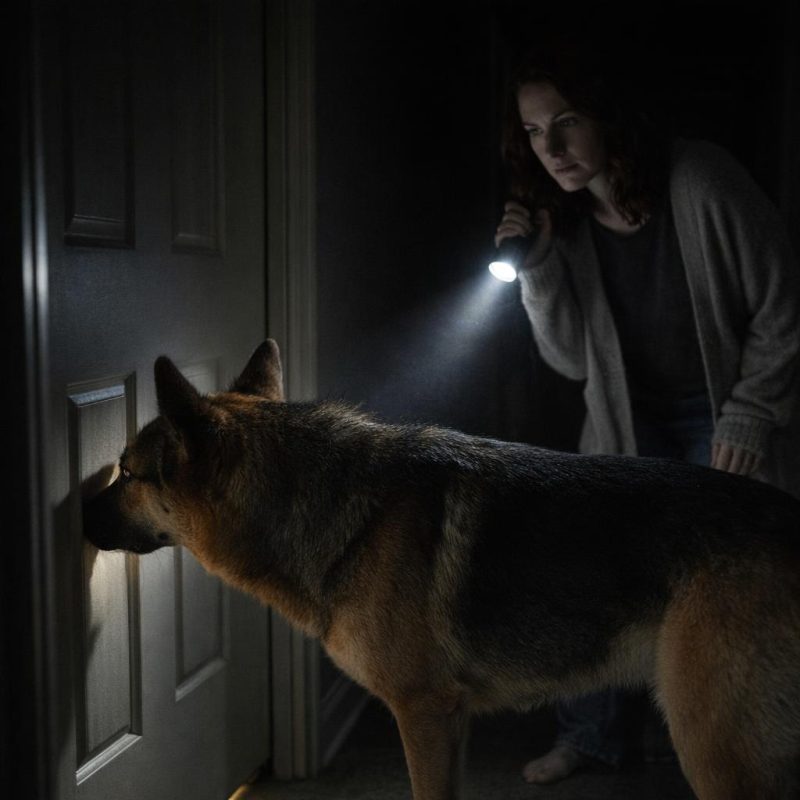 Image by RM AI
The Cold Doorknob
I made myself walk toward him. My legs felt wrong, like the signal from my brain was arriving a half-second late. Max was still scratching, still whining in that low frantic register, and I reached past him and wrapped my hand around the basement doorknob. I pulled it back immediately. The metal was cold — not cool the way a doorknob gets in a drafty house, but genuinely, wrongly cold, the kind of cold that bites into your palm and stays there. I stood in the hallway and looked at my hand like it had done something without my permission. The heat had been running all evening. The ambient temperature in the house was fine — I had checked the thermostat an hour ago and it read sixty-eight. There was no reason for that knob to feel like it had been sitting in a freezer. I reached out and touched it again, slower this time, making myself hold contact. The cold spread across my palm and up into my fingers, sharp enough to feel like a burn. Max pressed against my leg, still whining. I stood there with my hand on the knob and my heart going too fast, unable to make myself turn it.
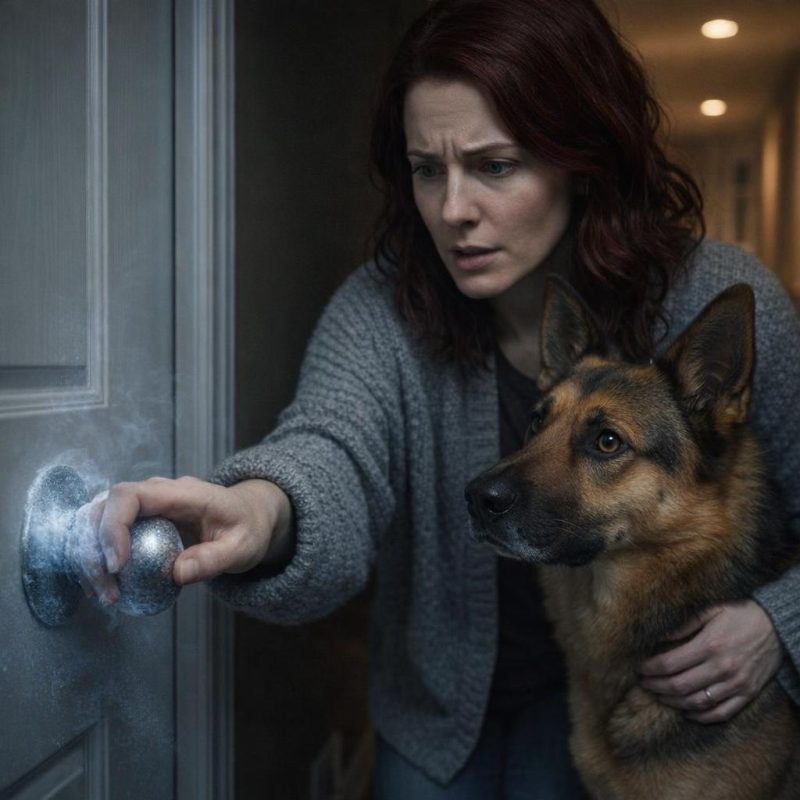 Image by RM AI
Rebecca's Rationality
I called Rebecca at seven in the morning because I couldn't hold it in any longer. She picked up on the third ring, voice still soft with sleep, and I told her everything — Max at the basement door, the howl, the doorknob cold enough to burn. She listened without interrupting, which I appreciated, and then she was quiet for a moment. "Old houses do weird things," she said. "The ground's been thawing. Temperature differentials can do strange things to metal fixtures near the foundation." I told her the behavior happened at exactly the same time every night, 3:03 AM, consistent enough that I had started setting an alarm. She suggested Max might be picking up ultrasonic frequencies, something in the pipes or the crawlspace. She mentioned that old houses have all kinds of settling sounds, that the foundation itself could be shifting with the season. She was gentle about it, careful, and somewhere in the middle of it she said, "Evie, you've been through a really hard year. Stress does things to how we perceive situations." I told her I understood. She offered to come over later in the week. I said that would be nice. After I hung up, I sat at the kitchen table with the phone face-down in front of me, and the reasonable explanations she had offered sat just as flat and useless as the silence around them.
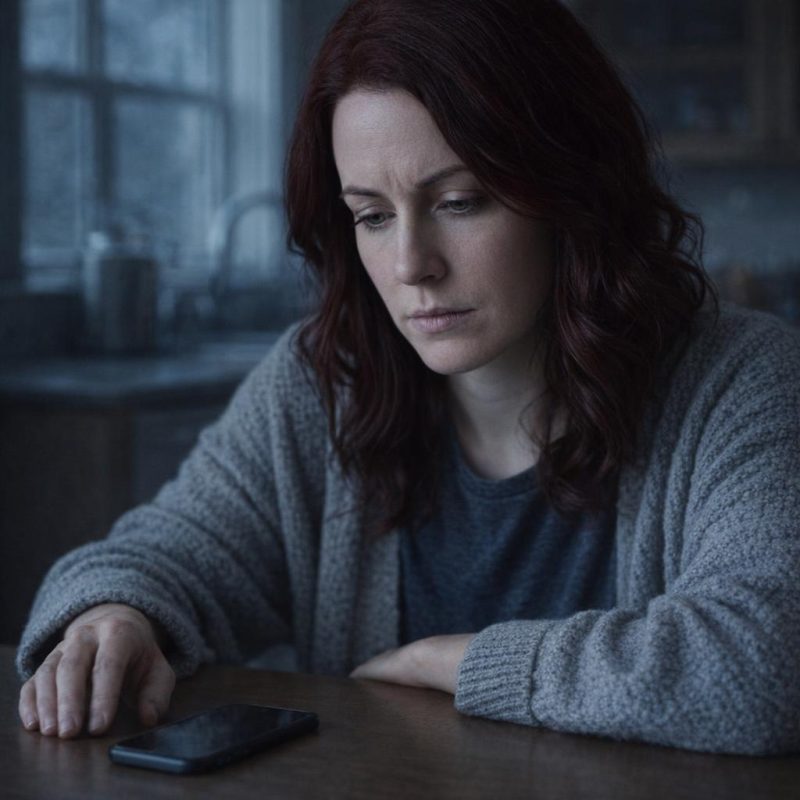 Image by RM AI
Descent
The next night I didn't wait for 3 AM. I grabbed the heavy-duty flashlight at 2:45, went to the basement door, and opened it. The hinges gave a long creak and cold air pushed up from below like the house exhaling something it had been holding. Max was right behind me, close enough that I could feel him against my calf, but when I put my foot on the first step he stopped. I looked back and he was sitting at the top of the stairs, ears forward, amber eyes catching the flashlight beam. He whined once, low and urgent, but he didn't follow. I went down anyway. The basement was unfinished — bare concrete floor, exposed joists overhead, the smell of old metal and wet earth that I had always associated with the house's age and nothing more. My flashlight cut through thick dust motes that drifted and resettled as I moved. I passed the boxes of Christmas decorations stacked against the near wall, the cardboard sagging at the corners, and David's old workbench with its scatter of rusted tools he had never bothered to take when he left. The space felt larger in the dark than it ever had during the day. At the top of the stairs, Max watched me with those reflecting eyes, and the weight of going down alone settled into my chest like something physical.
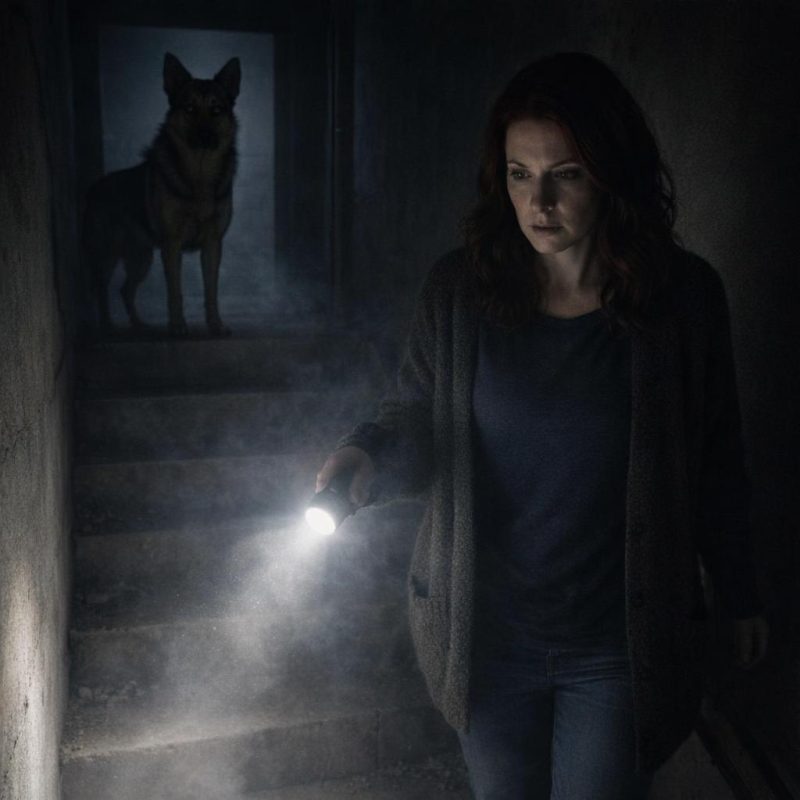 Image by RM AI
The Foundation Wall
I moved deeper in, keeping the flashlight beam low and sweeping. The cobwebs were thick near the far wall, long grey curtains of them draped between the joists, and the concrete showed dark water stains in long vertical streaks where moisture had been working its way through for years. I navigated around David's old workbench, past a rusted shop vac and a stack of paint cans with their lids sealed shut by dried drips. The far corner held the old coal chute, its metal door long since painted over and bolted from the inside, a relic from when the house was built. I had never paid it much attention. I stopped a few feet from the corner and stood still, and that was when I heard it — a faint rhythmic thudding, low and steady, with regular intervals between each beat. I turned off the flashlight and stood in the complete dark and just listened. The sound was mechanical, pulsing, not random. It wasn't the furnace. It wasn't pipes. I turned the flashlight back on and moved closer to the far wall, and the sound didn't get louder exactly, but it became more distinct, more present, like something that had always been there and was only now letting itself be heard. I stood with my hand a few inches from the concrete and felt the thudding move through the air between us.
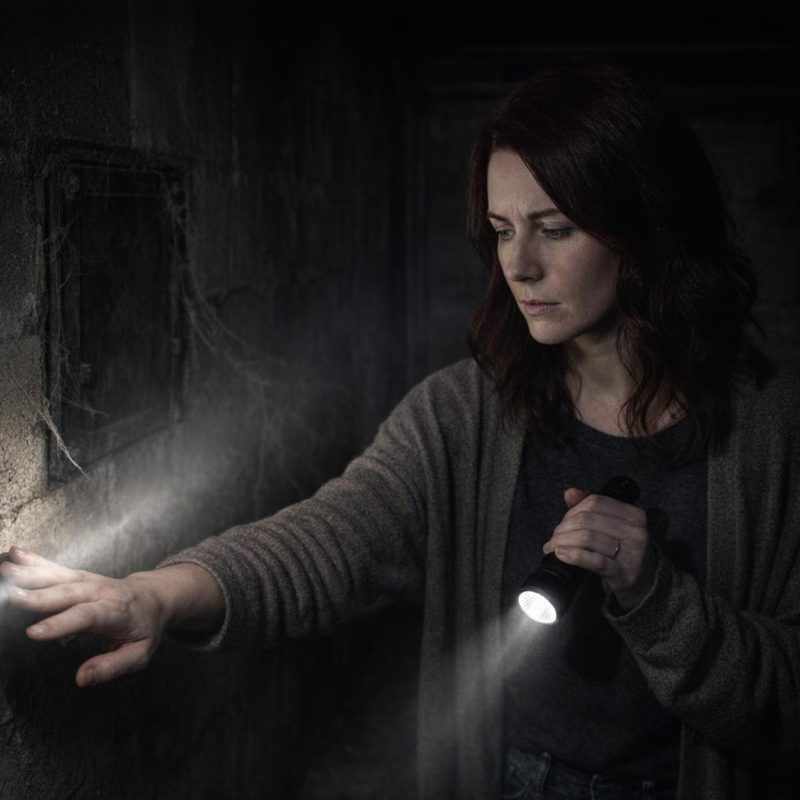 Image by RM AI
The Shared Wall
I pressed my ear against the foundation wall. The concrete was cold and slightly damp against my cheek, and through it I felt a faint vibration — not just heard it, felt it, a low mechanical pulse transmitting through solid stone. I held still and counted the intervals. Regular. Consistent. Whatever was producing it wasn't random settling or an animal. I pulled back and swept the flashlight across the wall's surface, looking for cracks, gaps, anything that would explain the transmission. The concrete was solid, no visible intrusion points, just the old mortar lines between the blocks and the water stains I had already catalogued. I tried to orient myself. I had lived in this house for four years and I knew its footprint, or I thought I did. I stood in the dark and mentally walked the property line — the driveway on the left, the fence along the back, and on the right side, the narrow strip of yard that ran between my house and the one next door. I turned and looked at the wall again. The thudding continued its steady rhythm against my palm where I had pressed it flat to the surface. This was the shared wall. The right-side foundation wall that ran directly against Henderson's property was the one vibrating under my hand.
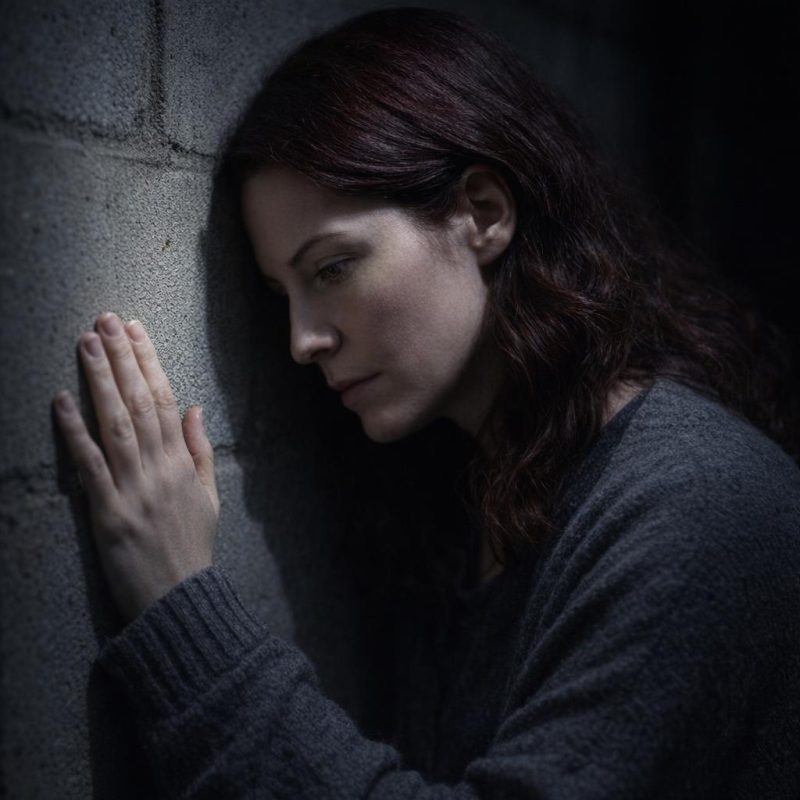 Image by RM AI
The Blue Light
I went back up the stairs fast, one hand on the railing. Max was still at the top and he stepped back to let me through, then pressed against my leg as I moved to the kitchen window. Henderson's house sat dark and quiet next door the way it always did, the way a retired man's house looks at three in the morning. I stood at the window and let my eyes adjust. His driveway was empty. His porch light was off. And then I saw it — at ground level on the near side of his house, where the cellar window sat half-buried in the foundation plantings, a faint light was visible through the glass. Not a lamp. Not a television. It was blue, and it pulsed, a slow rhythmic flicker that pushed through the dirty cellar window in steady beats. I checked the time on the microwave: 3:17 AM. Henderson had told me once, early on when we were still exchanging pleasantries over the fence, that he was in bed by nine every night without fail, that his doctor had told him sleep was the most important thing at his age. I watched the cellar window and counted the pulses. The blue light pushed through the glass in the same steady rhythm I had felt through thirty feet of concrete foundation wall.
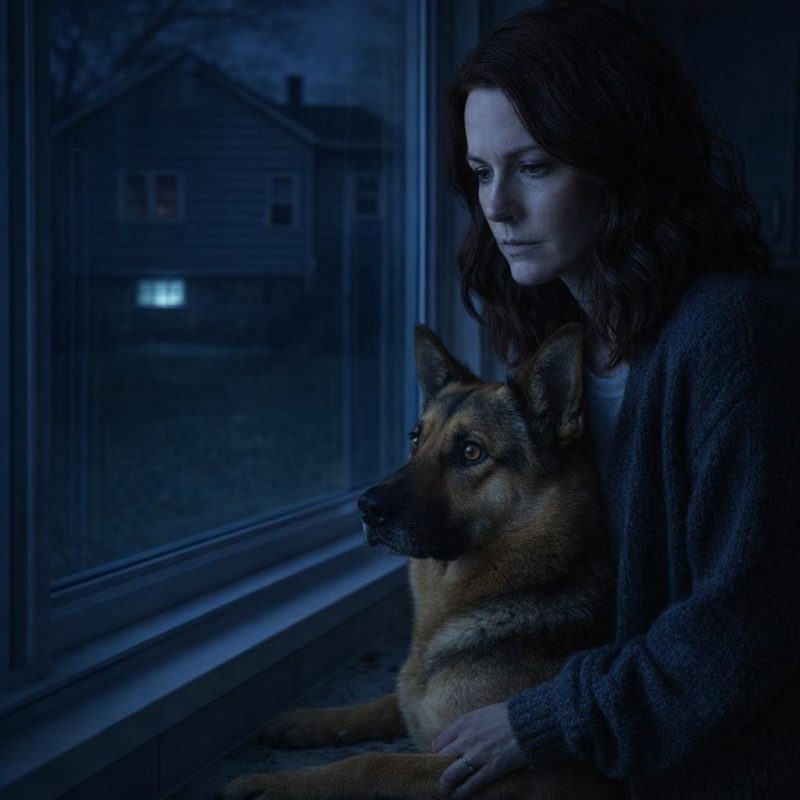 Image by RM AI
The Sleepless Hours
I pulled a chair to the kitchen window and sat down. Max settled on the floor beside me after a few minutes, his chin on his paws, his eyes still open and tracking. The blue light kept pulsing through Henderson's cellar window, steady and unhurried, and I watched it and tried to think clearly, which was harder than it should have been given that I had been awake for most of the previous twenty-four hours. At 3:34 AM the light went dark. Just stopped, mid-pulse, like something had been switched off. I kept watching anyway. The window stayed black. No movement, no other light, nothing. The sky outside began its slow shift from black to the particular grey that comes before any real color arrives, and the neighborhood stayed completely still. Max's breathing evened out into sleep somewhere around five. I didn't move from the chair. My thoughts kept circling the same questions without landing anywhere useful — what produced that rhythm, what needed to run at three in the morning, why the wall between our basements carried it so clearly. By the time the first real light came through the window, my eyes felt like they had been filled with sand, and the questions were still there, unanswered, sitting in the grey morning around me.
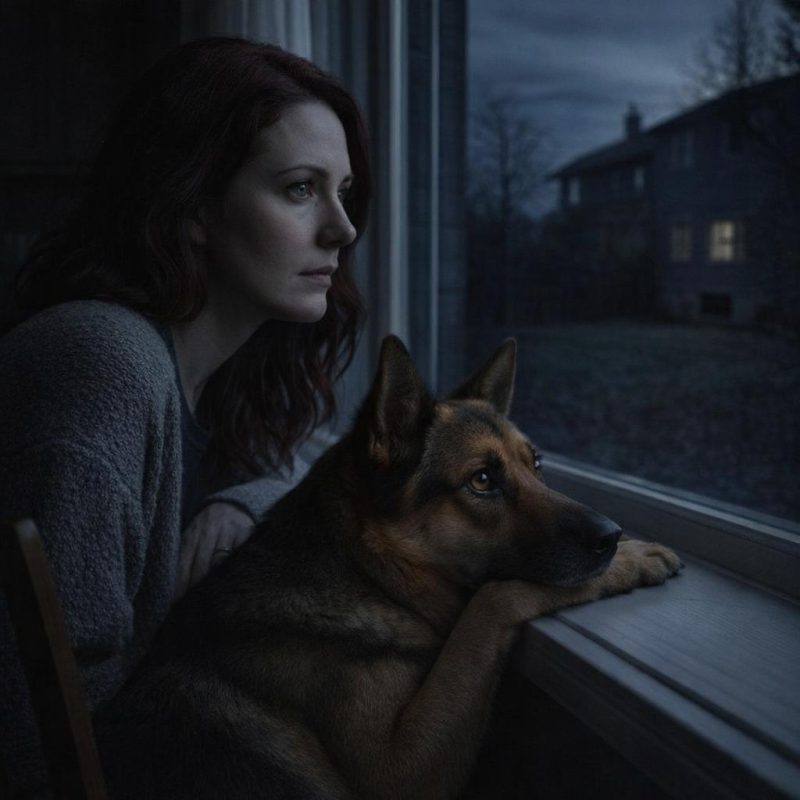 Image by RM AI
The Ghost Online
After two cups of coffee and a shower that didn't help as much as I'd hoped, I opened my laptop and typed his name into the search bar. Richard Henderson. I told myself I was just being thorough — the kind of thing any reasonable person would do after a sleepless night watching a light pulse in their neighbor's basement. The results were almost nothing. A LinkedIn profile came up first, no photo, last active eight years ago, listing him as a retired accountant at a regional firm I'd never heard of. I clicked through every tab. No connections visible, no posts, no endorsements. I searched local news archives next and got zero results. A church newsletter from ten years back mentioned a Richard Henderson as a volunteer for their annual food drive — one sentence, no photo. Property records confirmed he'd owned the house for fifteen years, which matched the obituary I found for his wife, who had died of cancer the same year he bought it. I checked Facebook, Instagram, even Twitter. Nothing active, nothing recent. I sat back and stared at the screen. Most people leave some kind of trail just by existing in the world, even if they're not trying to. The blankness where his life should have been sat with me long after I closed the laptop.
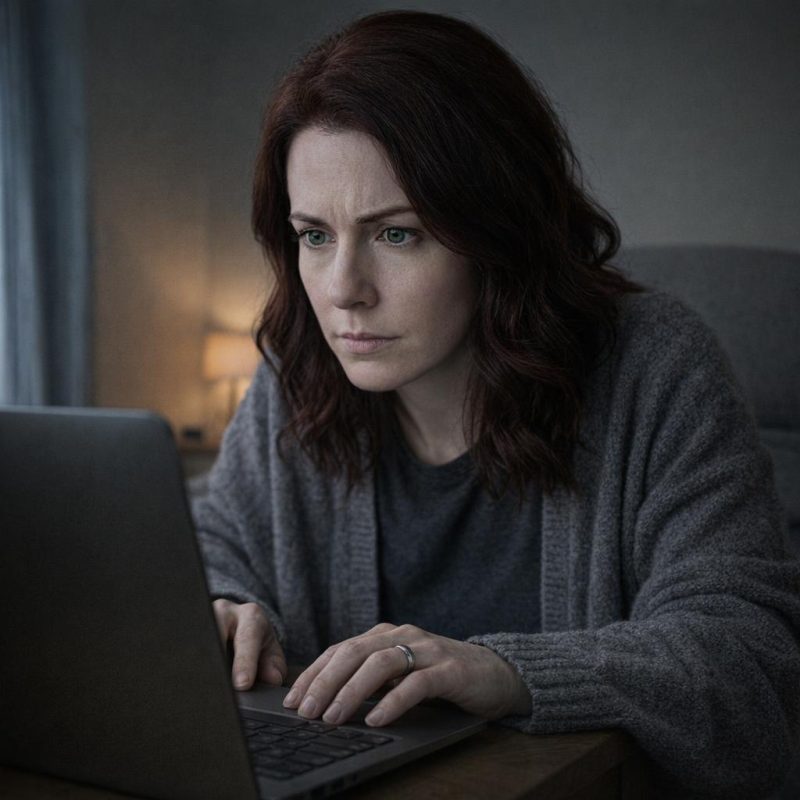 Image by RM AI
The Ordinary Retiree
I spent the better part of the afternoon running him through every public records tool I could find without paying for a subscription. No criminal history. No arrests, no charges, nothing on the sex offender registry. His property taxes were paid on time every single year — I could see the records going back over a decade. No liens, no judgments, no civil suits. He had worked as an accountant at the same regional firm for thirty years before retiring, which matched the LinkedIn profile. His wife's obituary described a quiet woman who had loved gardening and her church community. It said Henderson was her devoted husband of thirty-two years. On paper, he was the most boring man in the county. Retired accountant, widower, homeowner, volunteer. The kind of neighbor you'd describe to a friend as perfectly nice and immediately forget. I kept scrolling anyway, looking for something that didn't fit, some small detail that would explain the blue light cycling through his basement window at three in the morning, or the low thudding that had traveled through the wall and into my bones. There was nothing. Whatever was happening in that basement, it wasn't showing up in any database I had access to, and the clean record didn't make me feel better — it just made the gap between the paperwork and the reality harder to sit with.
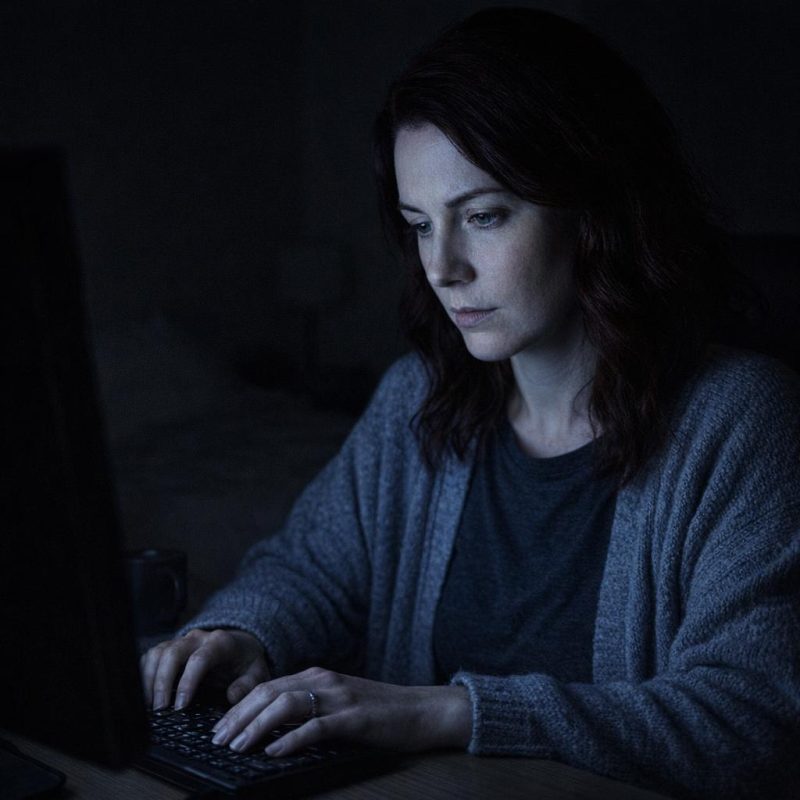 Image by RM AI
The Muffin Strategy
By the next morning I had accepted that sitting at my laptop refreshing the same empty search results wasn't going to get me anywhere. I needed to actually see inside that house, and there was exactly one way to do that without involving the police, who I was fairly certain would not respond enthusiastically to 'my neighbor has a blue light in his basement.' I found a blueberry muffin recipe online, one of those simple ones with a streusel top, and I made it work with what I had in the pantry. While the muffins baked I stood in front of the bathroom mirror and practiced what I was going to say. Friendly. Casual. Just a neighbor being neighborly. I said it out loud a few times until it stopped sounding like a lie. My hands were steadier than I expected when I arranged the muffins in the wicker basket I'd found in the back of a cabinet, but my stomach was doing something complicated. I told myself this was a completely normal thing to do. People brought baked goods to neighbors all the time. The fact that I had an ulterior motive didn't make it dangerous. I picked up the basket, looked at Max, who was watching me from the hallway with his ears forward, and walked to the front door.
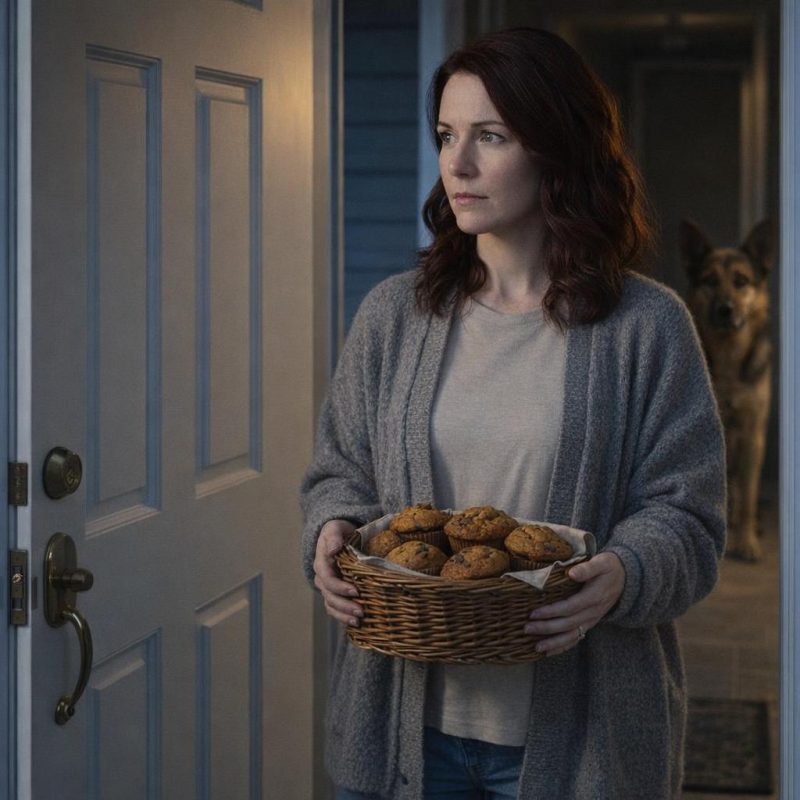 Image by RM AI
The Threshold
The walk across the lawn felt longer than the actual distance. I counted the steps without meaning to — old habit, the kind of thing my brain does when it's trying to stay calm by staying busy. I crossed the property line with the basket in both hands and climbed the three steps to his porch. The wood was painted a clean grey, no peeling, no rot. I knocked and stood back and listened. There was a pause, then footsteps — unhurried, deliberate — moving toward the door from somewhere deeper in the house. Henderson opened it wearing a cardigan and reading glasses pushed up on his forehead, and his face shifted into a warm, surprised smile when he saw me. 'Well,' he said, 'this is a nice surprise.' He looked at the basket and his smile widened. I started my prepared line about being a bad neighbor for not introducing myself sooner, and he waved it off graciously, already pushing the door open wider to welcome me in. That's when it hit me — not a thought, just a physical fact, the way cold air hits you when you open a freezer. A smell came through the open door, metallic and earthy, low and faintly damp, the same scent I had noticed rising through my basement floor.
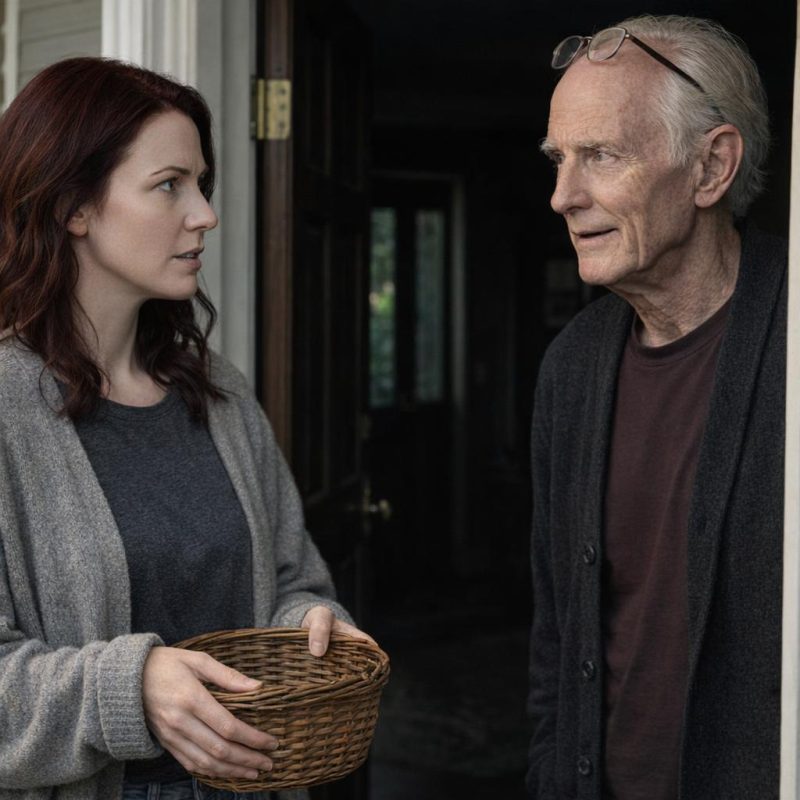 Image by RM AI
Inside His House
He took the basket from me with both hands and made a genuine fuss over the muffins, the kind that's hard to fake, and I followed him inside telling myself to breathe normally. The living room was neat and dated — furniture that looked like it hadn't been touched since the nineties, a floral sofa, a side table with a lamp that had a yellowed shade. Family photos on the wall, most of them old enough that the colors had gone slightly orange. He asked if I took my coffee black and I said yes even though I don't, because agreeing felt easier than explaining. While he moved toward the kitchen I let my eyes move around the room. There was a hallway off to the left, and at the end of it, partially visible, a door. Plain wood, no window, set slightly lower than the others — the kind of door that goes down. I took one step toward the hallway without thinking, just a small shift in weight, and Henderson was already talking, asking how I was settling in after everything, his voice easy and conversational. Before I could answer or take another step, his hand came around my elbow — light, brief, perfectly friendly — and he steered me gently but without hesitation toward the kitchen.
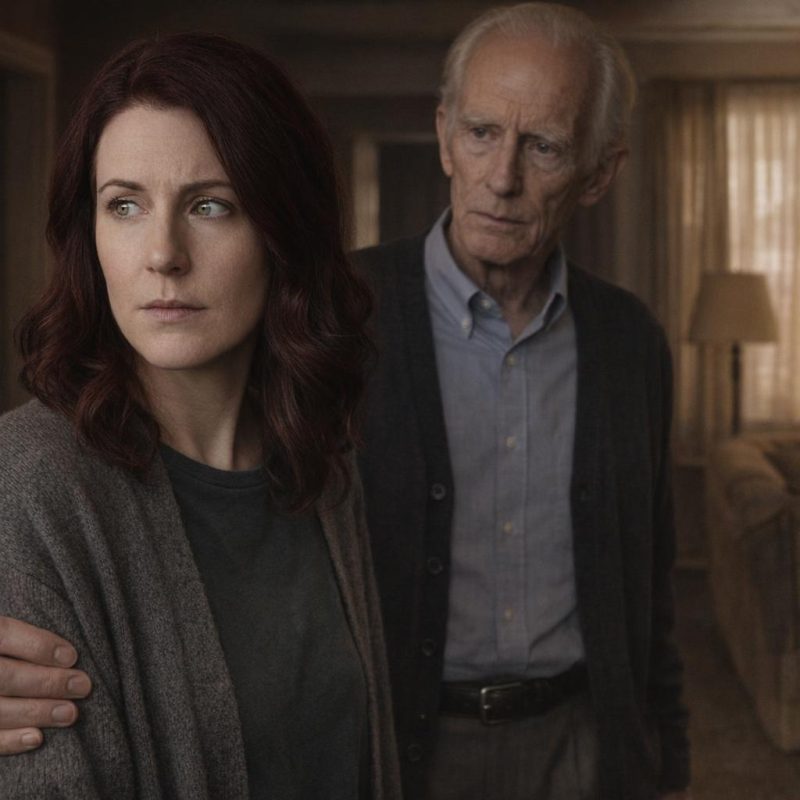 Image by RM AI
The Performance
He poured the coffee into two mugs that matched, set one in front of me, and sat down across the table like we'd done this a hundred times. The kitchen was as tidy as the living room — dishes drying in a rack, a folded dish towel, a small calendar on the wall with nothing written on it. He talked about his wife. How she had picked out the curtains, how the kitchen still smelled like her bread on cold mornings, how fifteen years felt both very long and not long at all. I made the right sounds. I nodded at the right moments. I asked whether he had family nearby and he said a nephew in Portland he didn't see often, and I said that must be hard, and he agreed that it was. When I tried to steer the conversation toward what he kept himself busy with, he said he had various projects around the house, and smiled, and left it there. I didn't push. Every smile I produced felt like something I was assembling from parts rather than something that came naturally, and by the time the coffee was half gone I was aware of a specific kind of tiredness that had nothing to do with sleep — the weight of holding a version of yourself together that isn't quite the real one.
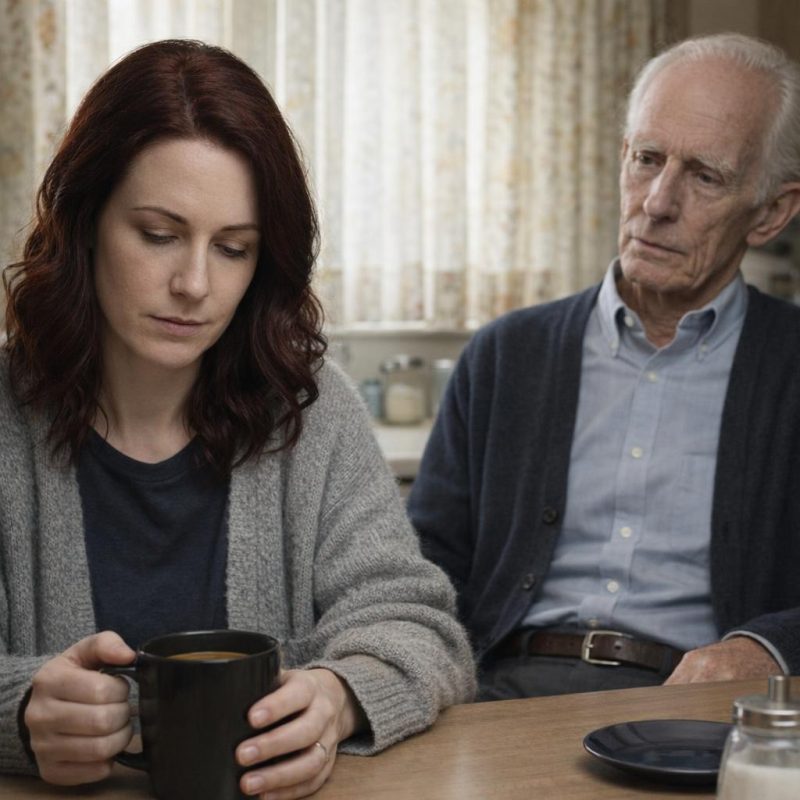 Image by RM AI
The Deflection
I stood and thanked him for the coffee and made a small production of gathering myself slowly, hoping the extra seconds would give me a reason to drift back toward the hallway. They didn't. Henderson was already on his feet, moving ahead of me with the easy confidence of someone who knew exactly where the conversation was going, and by the time I glanced toward the hallway he was positioned between me and it without appearing to have done anything deliberate at all. He said something about the house feeling large these days, too much space for one person, and paused in a way that made the comment land without quite finishing it — I couldn't tell if he was talking about himself or about me, and I didn't think I was supposed to be able to tell. He held the front door open and thanked me again for the muffins, said it had been too long since anyone had brought something homemade over. I said we'd have to do it again sometime and meant none of it. I walked back across the lawn and didn't look behind me, though I felt the particular awareness of being watched that sits between your shoulder blades. His words followed me across the grass — too much space for one person — and they were still there when I reached my own front door, quiet and not quite right, like a key that almost fits a lock.
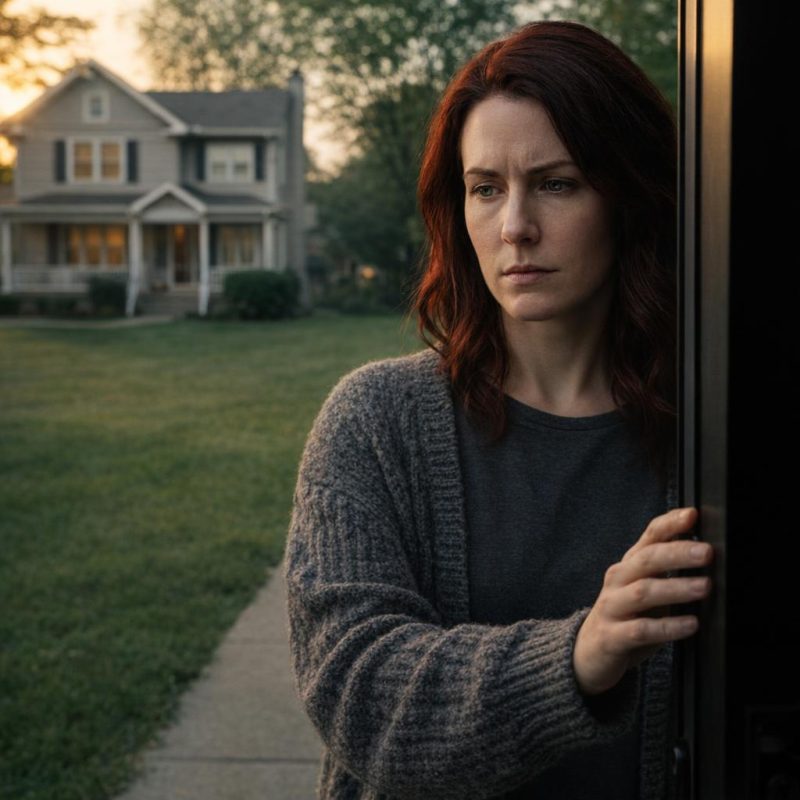 Image by RM AI
More Questions Than Answers
Max met me at the door with his nose going and his whole back end moving, and I crouched down and let him check me over while I tried to get my thoughts in order. He smelled Henderson on me — I could tell by the way he stiffened slightly before relaxing — and I understood the feeling. I sat at the kitchen table with a notepad and wrote down everything I could remember in the order it happened. The smell at the door, metallic and earthy, matching what I'd noticed in my own basement. The hallway door, plain wood, set low. The way Henderson had moved to block my view of it without making it look like blocking. His comment about the house being too big for one person. The blue light I still had no explanation for. The thudding I'd heard through the wall at three in the morning. He had been warm and pleasant and had told me almost nothing, and every time I'd moved toward something that might matter, the conversation had shifted. I looked at the notepad. The list of things I didn't know was longer than the list of things I did, and somewhere at the bottom of the page, underlined twice without quite deciding to, I had written: what is he doing down there?
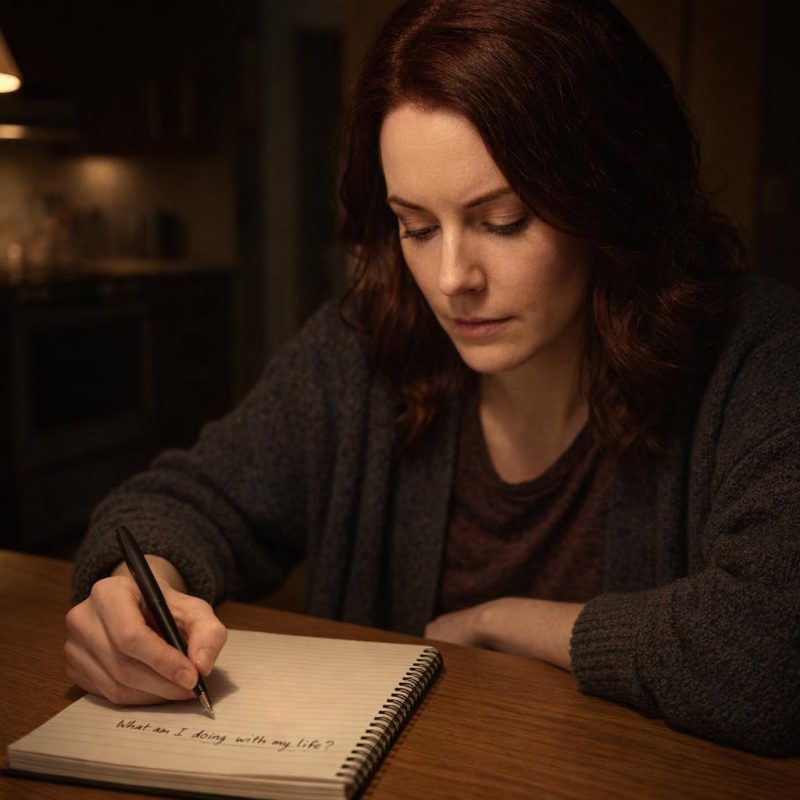 Image by RM AI
Night Watch
That night I turned off every light in my bedroom and pulled a chair up to the window. Max settled beside me without being asked, his chin resting on the windowsill, ears forward. I had my notepad on my knee and my phone face-down so the screen wouldn't give me away. Henderson's house sat quiet across the fence line, the porch light casting a pale yellow circle on his front steps. I watched the first-floor windows go dark one by one — living room at 8:52, kitchen at 9:03. At 9:15 his upstairs bedroom light came on, a warm rectangle against the dark. I wrote down the time. At 9:47 it went off. I kept watching anyway, past ten, past eleven, the street settling into the kind of quiet that makes every small sound feel louder than it is. Max didn't move. Neither did I. There was something clarifying about sitting in the dark with a purpose, about trading the helpless feeling of not knowing for the slower, steadier work of paying attention. I wasn't sure yet what I was looking for. But I had stopped waiting for it to come to me.
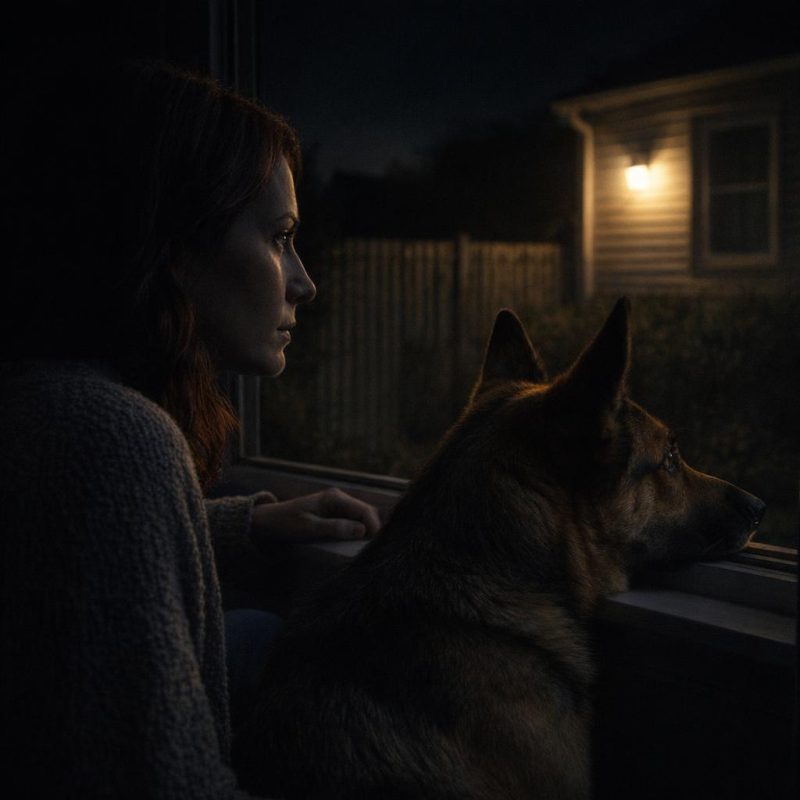 Image by RM AI
The Pattern of Lights
Three nights. I kept the same chair, the same darkened window, the same notepad. By the second night I had a system — a column for each room, timestamps down the left margin, a shorthand I'd worked out so I could write without looking away. The bedroom light, the first-floor lights, the porch: all of it followed the same rhythm, give or take a few minutes. Predictable. Almost boring. And then, on the second night, just after 2:51 AM, I noticed something I hadn't seen before. A faint glow along the bottom edge of Henderson's house, low to the ground, barely visible unless you were looking for it. The basement window. I wrote down the time and kept watching. On the third night it happened again — 2:47 AM, the same pale light seeping up from below. Max stirred beside me both times, his nose working, a low sound in his chest that wasn't quite a growl. I photographed the window with my phone, the glow faint but there in the frame. I sat with the image on my screen for a long time after, the rest of the house dark and still around me, that small rectangle of light sitting in my chest like something I couldn't put down.
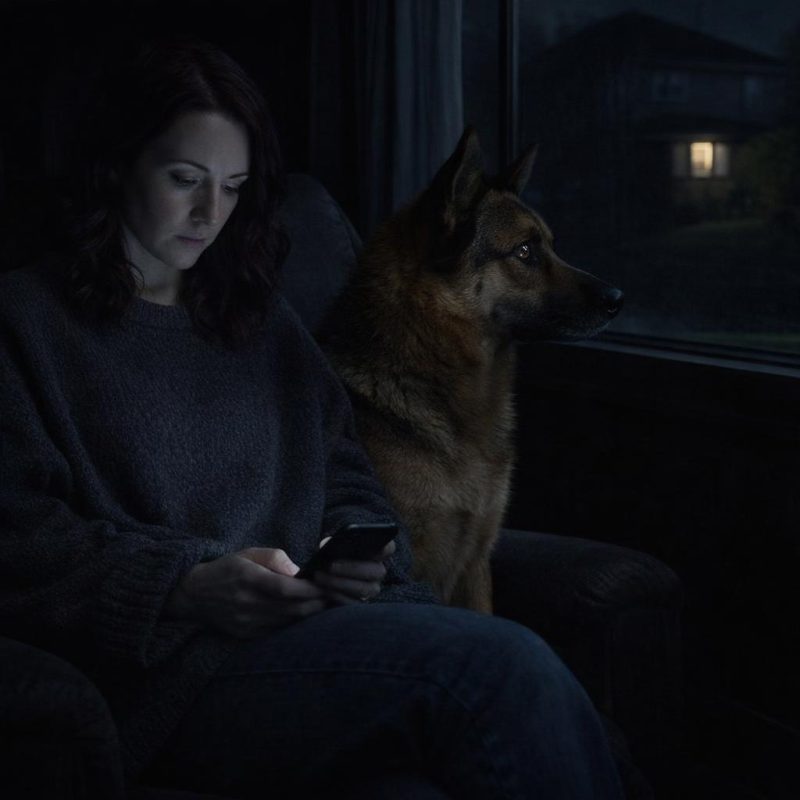 Image by RM AI
Closer to the Property Line
On the fourth night I didn't stay at the window. I waited until 2:30 AM, pulled on dark clothes, and slipped out the back door. The air was cool and smelled like cut grass and something faintly chemical I couldn't place. I moved slowly across my yard, staying close to the fence line, keeping low. The fence between our properties was maybe four feet high — easy to see over from the right angle. I found a spot behind the overgrown juniper bush near the corner post and crouched there, my knees in the damp grass, my phone in my pocket with the screen locked. From here I had a direct sightline to Henderson's basement window. At 2:53 AM the blue light began, the same pulsing glow I'd photographed from my bedroom, but closer now, more distinct. I could make out the shape of the window frame, the way the light shifted in slow, even intervals. I held my breath. Then something moved past the glass — a shadow, tall and deliberate in its motion, crossing the window from left to right and disappearing from view.
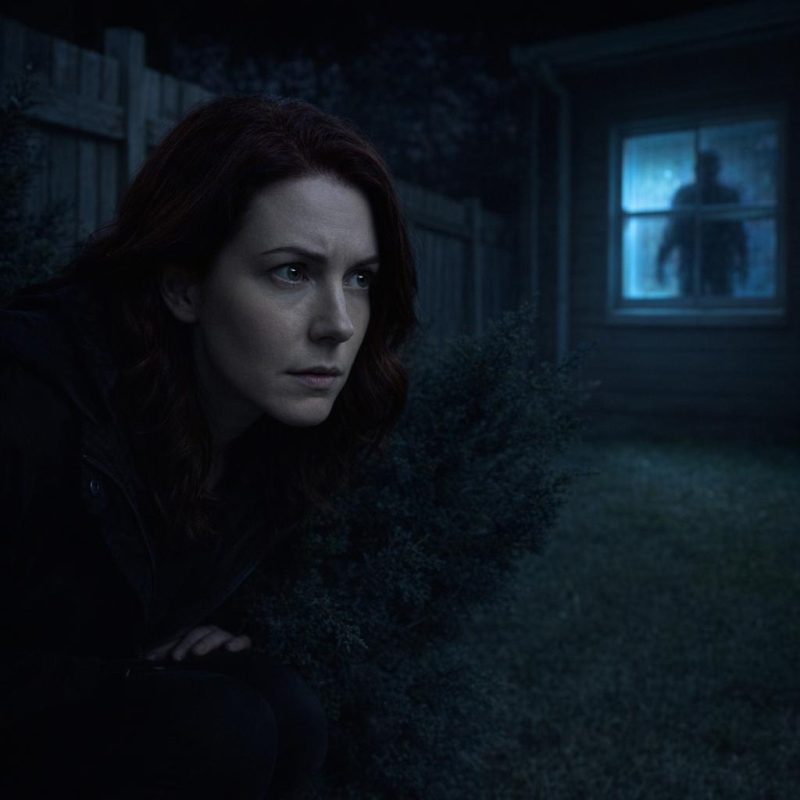 Image by RM AI
Evidence Collection
The next night I brought more than my phone. I had a small voice recorder I'd dug out of a box in my closet — the kind I used to use for work meetings — and I held it near the fence while the blue light pulsed in Henderson's basement window. The mechanical sounds were clearer from this distance than I'd expected. A low rhythmic hum, something cycling on and off in a pattern, and underneath it an electronic tone that rose and fell at irregular intervals. I let the recorder run for eleven minutes. Back inside, I transferred everything to a folder on my laptop: the photos showing the pulsing glow, the audio file with its timestamps, the written log from the past four nights. I labeled each file by date and time and added a notes column describing what I'd observed. Looking at it laid out like that — the photos, the audio waveform, the log entries — it felt different from the list I'd made at the kitchen table the week before. That list had been questions. This was something else. I played the recording back once, the mechanical rhythm filling my quiet kitchen, and sat there listening to it.
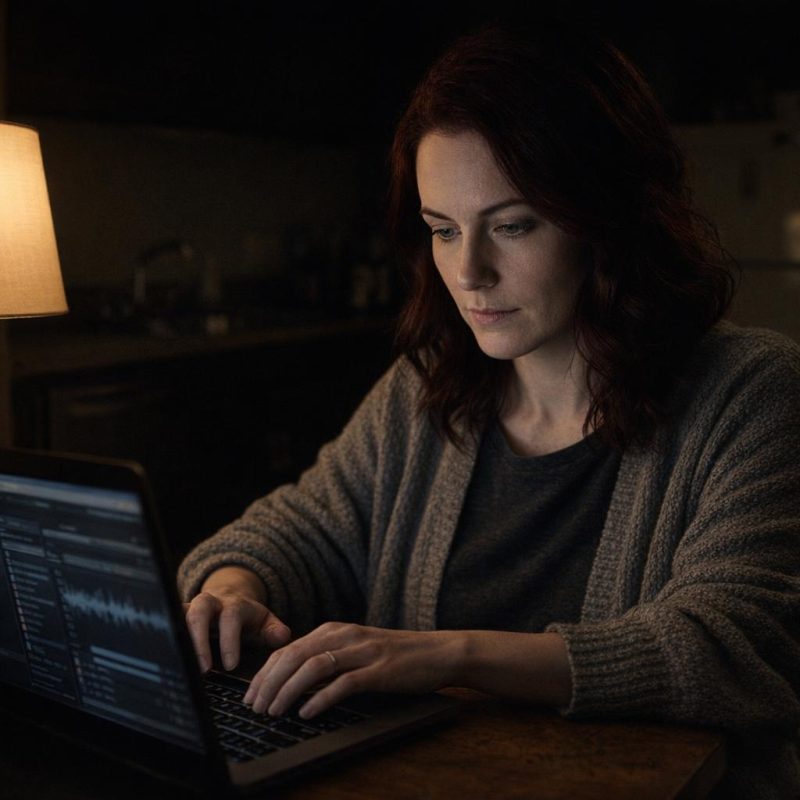 Image by RM AI
The Watched Watcher
I'd started to feel like I had the upper hand. That was my mistake. I came home from work on a Thursday, later than usual, the sun already low and orange behind the tree line. I got out of my car and was reaching back for my bag when something at the edge of my vision made me stop. A movement in Henderson's house — upstairs, the window directly above his front porch. I straightened up slowly and looked. He was standing there. Not passing through, not adjusting a curtain. Standing, facing out, his hands at his sides. From where I was, I couldn't make out his expression, but the angle of his head was unmistakable. He was looking directly at my house. I stood in my driveway for what felt like a long time, my bag strap in my hand, the evening going quiet around me. He didn't wave. He didn't move. He just stood there, still as furniture, watching.
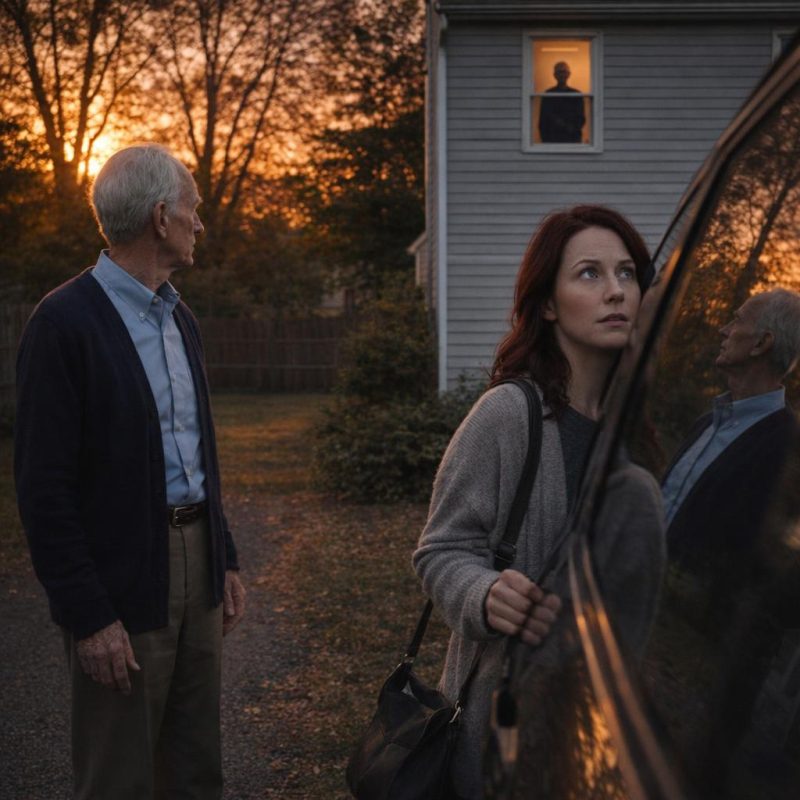 Image by RM AI
The Shift
After that, I noticed him everywhere. He was in his front yard when I left for work in the morning, crouched over a flower bed he'd never seemed to tend before. He was on his porch when I came back in the afternoon, a coffee mug in his hand, watching the street with the patient ease of someone who had nowhere else to be. When I took Max out for his evening walk, Henderson would appear — at the mailbox, at the side gate, once just standing at the corner of his house doing nothing I could identify. He always smiled and raised a hand. He always said something pleasant about the weather or the dog. But his eyes moved in a way that felt like inventory, tracking where I went and how long I was gone. I started closing my curtains during the day, something I'd never done before. I stopped sitting near the front windows in the evening. Max picked up on it — he'd position himself facing the front door when we were inside, ears up, monitoring. The house I'd lived in for four years had started to feel like somewhere I was being watched from the outside in, and no amount of locked doors seemed to change that.
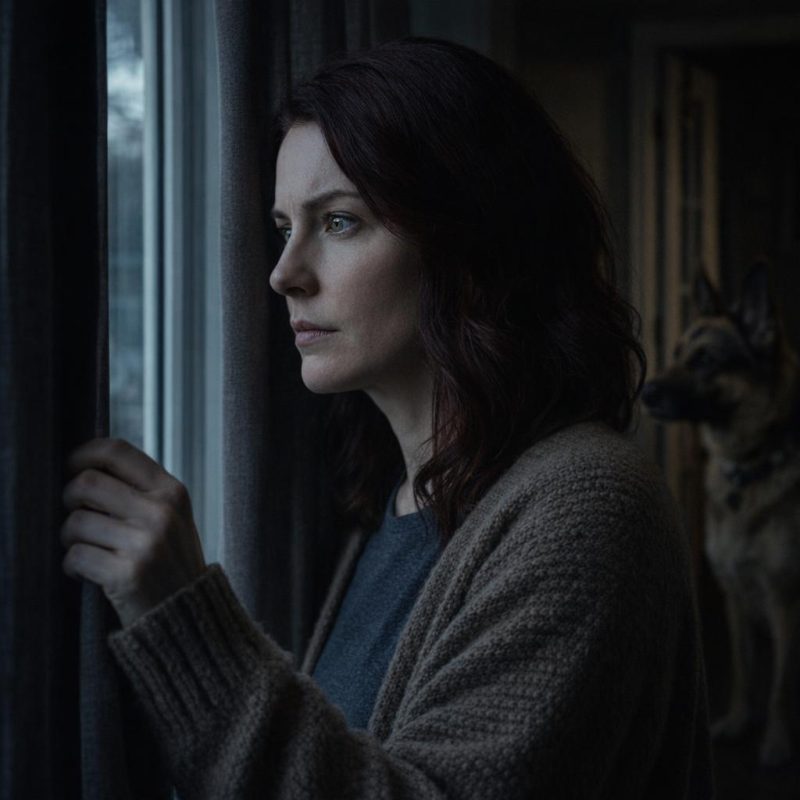 Image by RM AI
Digging Deeper
I needed something I could point to. Something that didn't depend on my interpretation of a look or a shadow. I spent a Saturday morning on the municipal utility portal, the kind of public-access site that most people don't know exists. Henderson's address pulled up without any trouble. His monthly consumption numbers were listed going back eighteen months, and they were high — noticeably higher than the comparable households the site listed for reference. But the monthly totals weren't what stopped me. The site had an hourly usage breakdown for the past thirty days, and I exported it to a spreadsheet and started going through it column by column. The pattern was there every single night, without exception. Between 2 AM and 4 AM, the consumption spiked — sharply, consistently, the kind of draw that suggested something well beyond a refrigerator or a security light. I ran the wattage estimates twice to make sure I hadn't misread the data. I hadn't. Whatever was running in that basement during those hours was pulling serious power, and it ran on a schedule as reliable as a clock. I sat back from my laptop and let that settle over me.
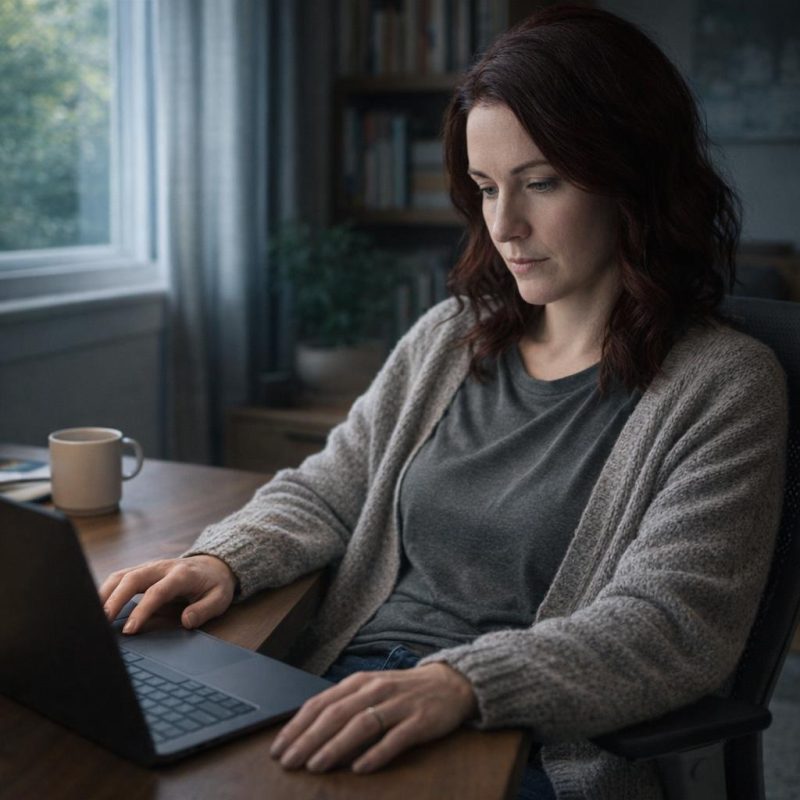 Image by RM AI
The Equipment Trail
The utility data gave me a thread, and I pulled it. I spent the next evening on a data broker site I'd used once before for a work project — the kind that aggregates shipping and delivery records from public sources. I typed in Henderson's address and let it run. The results came back with more than I'd expected. Over the past fourteen months, his address had received deliveries from a range of suppliers — some ordinary, some less so. I cross-referenced the company names one by one. An electronics retailer I recognized. A specialty supplier I didn't, until I looked them up and found they sold high-capacity data storage systems. A third company whose name meant nothing to me until I clicked through to their catalog. They sold professional-grade recording equipment — the kind used in broadcast and security applications, not home offices. I sat there reading the product descriptions, my coffee going cold beside me. Then I scrolled back to the top of the delivery list and found the entry I'd almost skipped past: a shipment from a company whose listed specialty was surveillance-grade audio and video hardware.
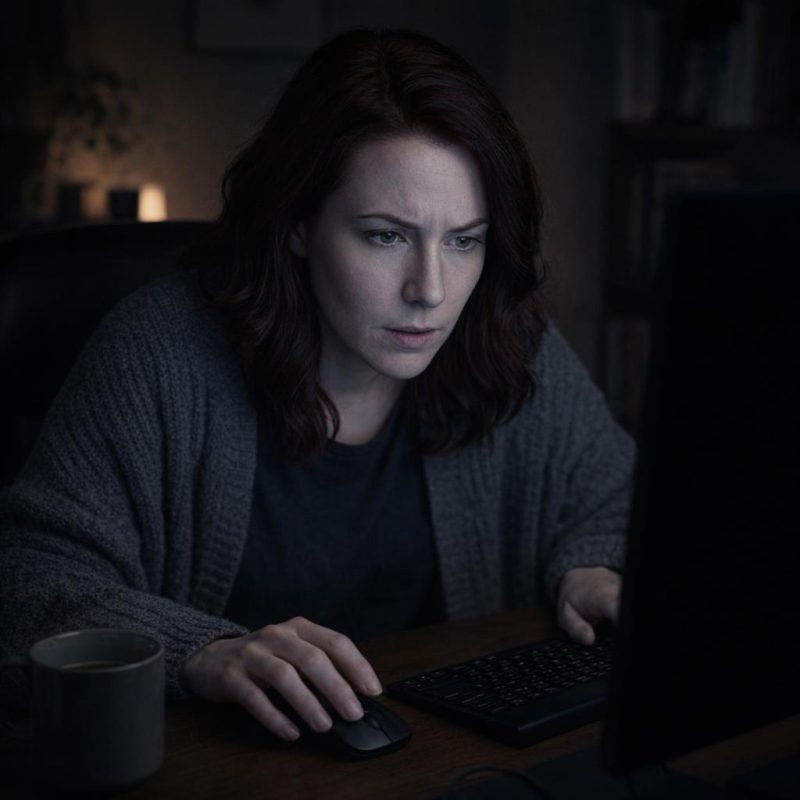 Image by RM AI
The Online Purchasing Pattern
I kept pulling the thread. The delivery records were just the surface — I went back through every company name and cross-referenced shipping confirmations, cached order pages, anything I could find through public aggregators and archived receipts. What came back was methodical in a way that made my stomach tighten. Over roughly fourteen months, Henderson's address had received shipments from seven different suppliers. Not the same vendor twice. High-resolution cameras from one source. Professional-grade microphones from another — the kind I'd never heard of until I looked them up and found they were marketed for acoustic monitoring in difficult environments. A third order for network repeaters and signal boosters. The data storage systems had arrived six months ago in two separate shipments, each unit marketed for security operations requiring continuous, long-term recording. I started adding up the costs using the listed retail prices. Thirty thousand dollars. Maybe more, depending on what I couldn't account for. I sat back from my laptop and looked at the numbers on my screen. Each order placed carefully, spaced out, sourced from different vendors. Whatever this was, it hadn't been assembled in a weekend. The scale of it settled over me like something physical, and I sat there in the quiet of my kitchen not moving for a long time.
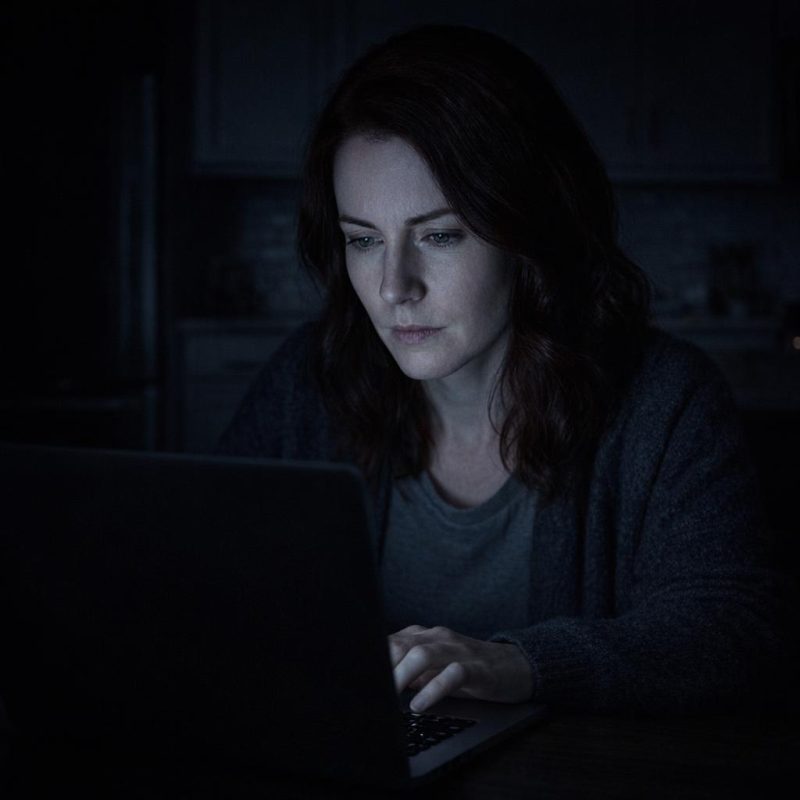 Image by RM AI
The Surveillance Signature
I started with the model numbers. I'd written them down from the delivery records — camera models, microphone designations, storage unit specs — and I searched each one individually. The cameras came up first. The results described them as covert surveillance units with wide-angle lenses and infrared night vision, designed to be mounted in concealed positions and blend into architectural features. One product forum described them as nearly invisible at distances over ten feet. The microphones were worse. The specifications listed them as through-wall audio capture devices, capable of picking up conversation through standard residential construction at ranges up to forty feet. I read that sentence twice. The data storage systems were marketed specifically toward security operations requiring months of uninterrupted footage from multiple simultaneous feeds. A thread on a professional security forum discussed a nearly identical equipment configuration — cameras, audio capture, high-capacity storage, signal repeaters — and the consensus among the people posting was that a setup like that was built for comprehensive, long-term monitoring of a fixed location. Or multiple locations. I closed the laptop and sat with my hands flat on the table. The technical language had been dry and precise, the kind of language that doesn't leave much room for alternative interpretations. Every specification I'd read pointed in the same direction, and I couldn't find a single piece of it that pointed anywhere else.
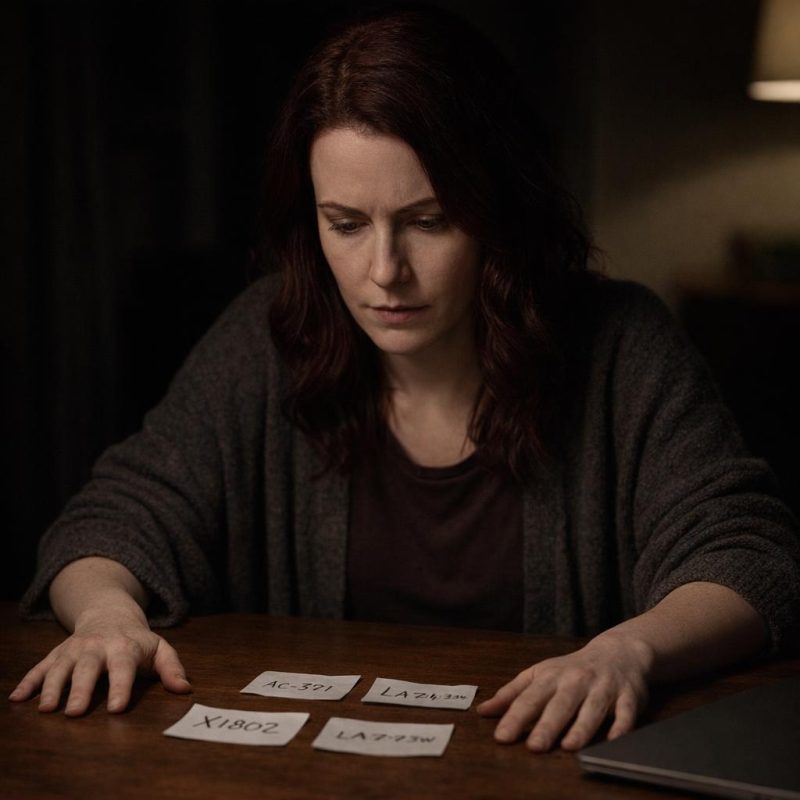 Image by RM AI
Max's Escalation
Max had always been alert, but this was different. He started stationing himself at the basement door during the day — not just at three in the morning, but at noon, at four in the afternoon, whenever I was home. He wouldn't settle. I'd call him over to the couch and he'd come, press against my leg for a minute, then drift back to that door and stand there with his hackles raised, staring at it like he was waiting for something to move. He stopped eating unless I moved his bowl to the far side of the kitchen, away from the basement stairs. At night he positioned himself between me and the door, lying flat with his chin on his paws but his eyes open. He growled at sounds I couldn't hear — low, sustained growls that he'd hold for thirty or forty seconds before going quiet again. When I walked toward the windows, he'd follow me and whine, nudging at my hand with his nose. I didn't know what he was picking up on. I didn't know if it was something in the walls, something in the air, or something about the way I'd been moving through the house since I started finding things I couldn't explain. But one evening I got up to get a glass of water and found him at the basement door again, both front paws pressed flat against the wood, refusing to move.
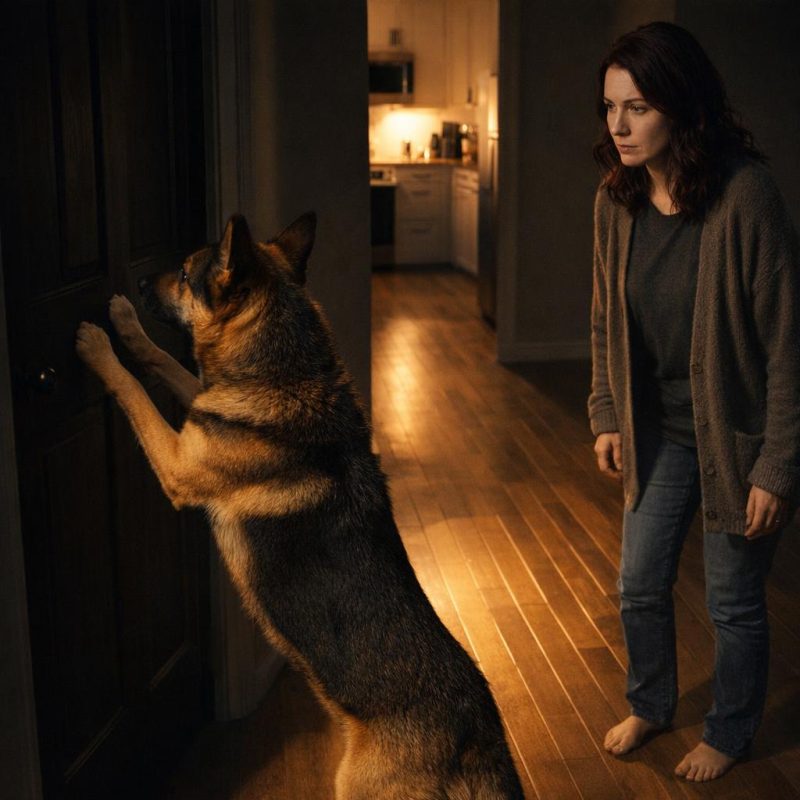 Image by RM AI
Henderson's Presence
I took Max out for an evening walk around seven-thirty, later than usual. The street was quiet, the kind of quiet that feels deliberate in late autumn when everyone's already inside. Henderson was on his porch when we passed. He raised a hand in a wave, easy and unhurried, like he'd been expecting us. I nodded and kept moving, but he called out before I'd made it past his front walk. He said it seemed like I'd been keeping late hours lately. I stopped. I told him I'd been working from home more, that the hours got away from me sometimes. He nodded slowly and said he'd noticed my lights on past midnight a few times this week. His tone was pleasant. His expression was pleasant. But the specificity of it — not just late, but past midnight, not just sometimes, but this week — sat wrong with me. He asked if I was sleeping all right. I said I was fine. He said he hoped I was being careful, that a woman living alone couldn't be too cautious these days. He smiled when he said it. Max had gone still beside me, not growling, just still, his weight shifted forward. I said goodnight and walked back toward my house, and I didn't look back, but I felt Henderson's gaze on my shoulders the whole way up the front steps.
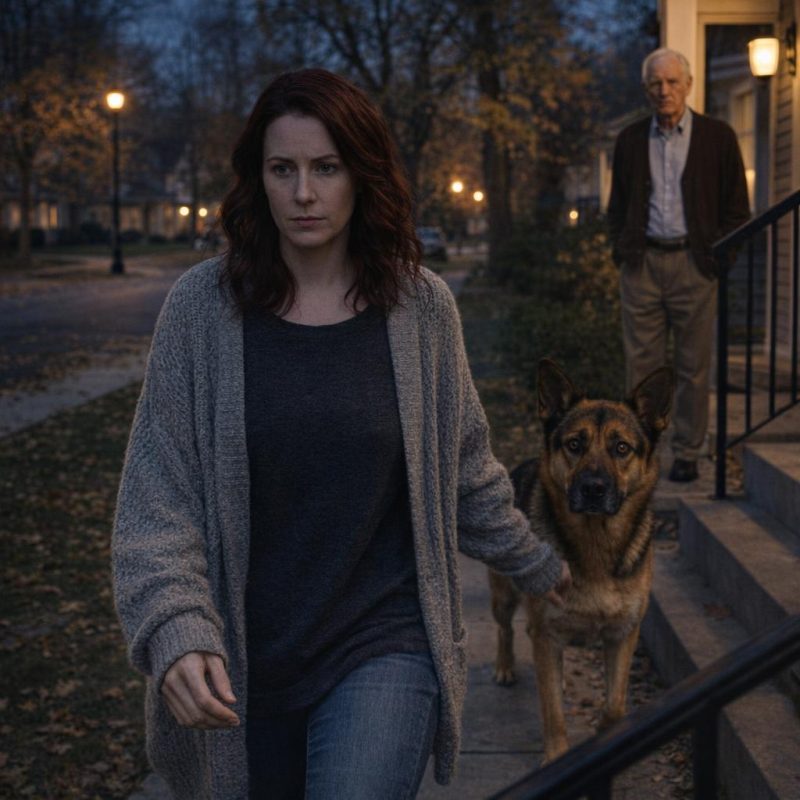 Image by RM AI
The Camera
It was the shadow that caught my attention. I'd been standing on the porch the next morning with my coffee, looking at nothing in particular, when I noticed a small dark shape tucked into the eave above the front door — too regular, too deliberate-looking to be a knot in the wood or a wasp nest. I got the ladder from the garage and climbed up. Tucked into the shadow where the eave met the fascia board was a camera. Small, matte black, no larger than my thumb. I didn't touch it. I leaned in close enough to see the lens, a thin wire running along the inside edge of the eave toward the side of the house that faced Henderson's property. I climbed back down and stood on the front walk, looking up at my house the way a stranger might. From street level the camera was invisible. But from its position it had a direct line of sight to my front door, my porch, and the full width of my living room window. I pulled up the delivery records on my phone and found the camera model I'd looked up two nights ago. The specifications matched what I was looking at. I stood there on my own front walk in the morning light, coffee going cold in my hand, staring up at the small dark lens pointed directly at my home.
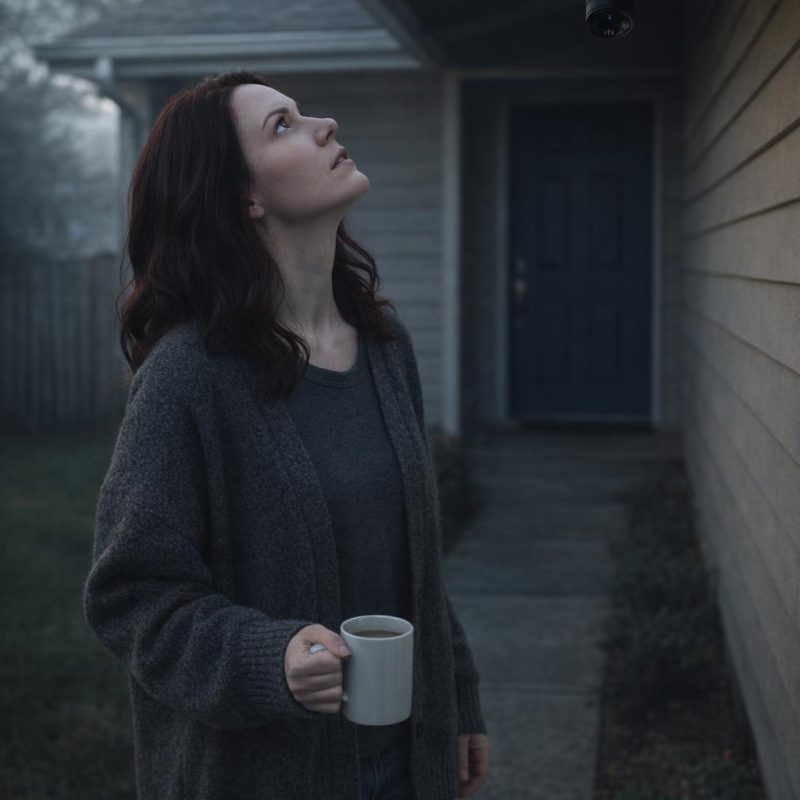 Image by RM AI
The Network Revealed
I went inside and pulled up a signal detector app I'd downloaded after reading the security forum posts. It took less than four minutes. The camera was transmitting on a frequency that traced back to a network registered to Henderson's address. I searched the camera's default network identifier and landed on a warning post from a cybersecurity researcher — this model had appeared in documented cases of illegal residential surveillance in three states. The post linked to a data breach report. I clicked through. Henderson's name was in the third paragraph. The report described a network operating across suburban areas, targeting women living alone following divorce or separation. I found a link to cached files from an earlier investigation. There was a spreadsheet. Fifteen names, fifteen addresses, personal details — divorce dates, employment information, daily schedules. I scrolled until I found my name. Next to my entry, in a column labeled Source, it read: D. Morrison — $2,400. My hands stopped moving. I searched David Morrison gambling debts and found court filings — creditors, judgments, a timeline that lined up exactly with the final months of our divorce. He had sold my name, my address, my situation, to Henderson, to pay what he owed. Henderson had been receiving feeds from my home since before the ink was dry on the settlement. I sat there reading my own name on that list, surrounded by the names of fourteen other women who had no idea.
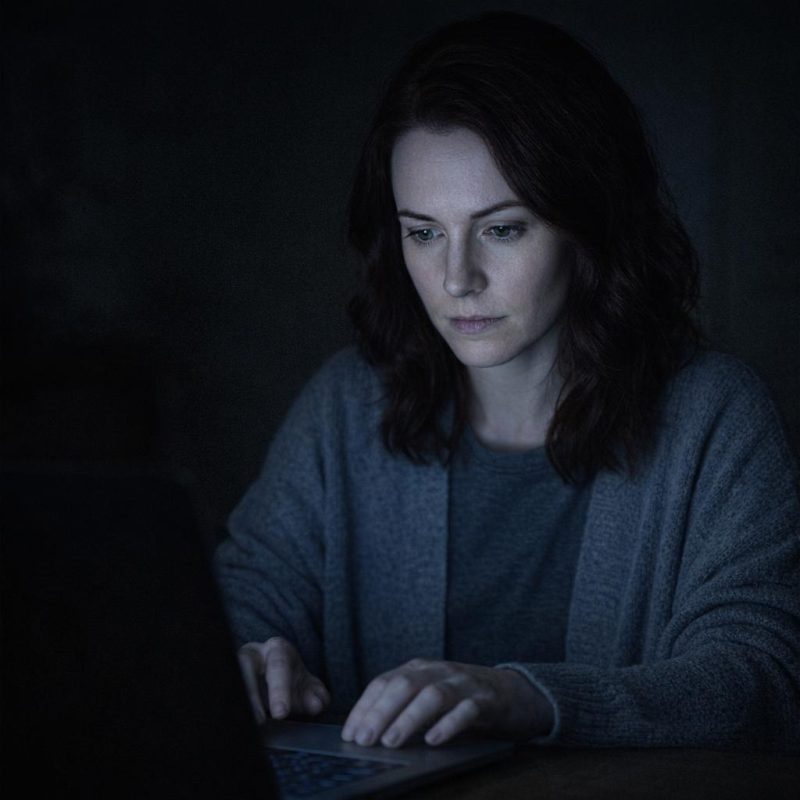 Image by RM AI
The Weight of Betrayal
I didn't move for a long time after I closed the laptop. Max pressed himself against my legs under the kitchen table, his weight warm and steady, and I let my hand rest on his back without really thinking about it. I kept coming back to the number. Twenty-four hundred dollars. That was what David had decided I was worth — not as a person, not as someone he'd shared a life with, but as a line item, a debt payment, a name on a list. The divorce had felt like the worst thing for a long time, and then it had started to feel like a beginning, like I was finally getting clear of something that had been pulling me under. I'd been so focused on moving forward that I hadn't considered what I might have left behind me — or what he might have handed to someone else on his way out. Henderson had been watching me since before I'd finished unpacking. Every wave from the porch, every question about my schedule, every friendly comment about my lights being on late — all of it had been something else entirely. And David had made that possible for less than the cost of a used car. Max shifted against my legs and exhaled slowly, and I sat in the dark kitchen with my hand on his back, feeling the full weight of having been sold.
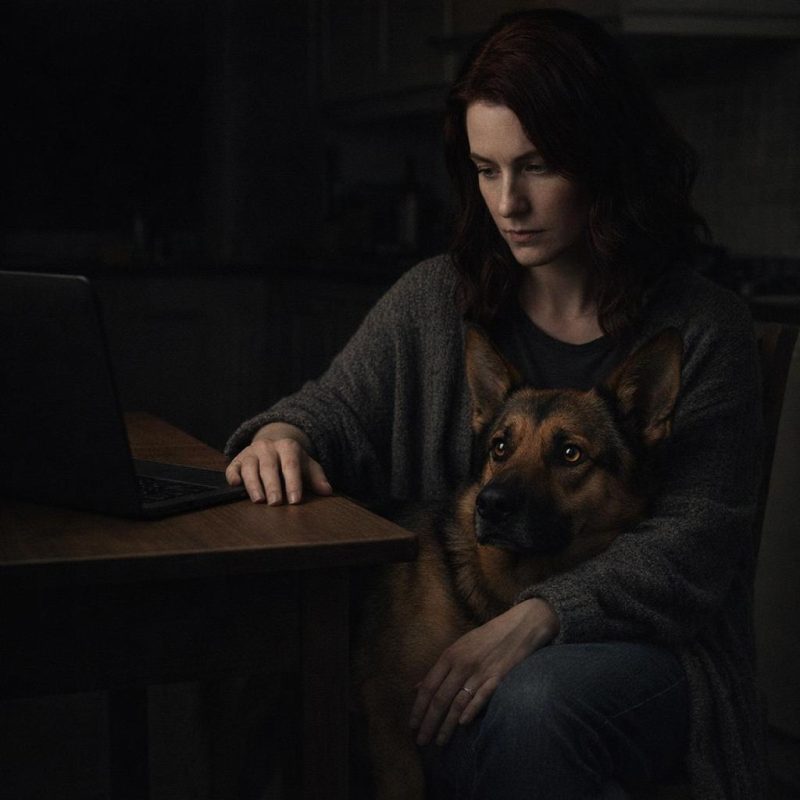 Image by RM AI
Detective Mills
I called the non-emergency line the next morning and asked to speak with someone in investigations. They transferred me to Detective Mills in the cyber crimes unit. I told her everything — the utility anomalies, the delivery records, the equipment specifications, the signal trace, the spreadsheet with my name on it. I talked for almost twenty minutes without stopping. She didn't interrupt once. When I finished, she asked me to send everything I had — photos, screenshots, the cached files, all of it — and I did, right there on the phone. There was a pause while she looked through what I'd sent. Then she asked me to come to the station. I went that afternoon. She met me at the front desk herself, which I hadn't expected. She walked me back to a small conference room, set a folder on the table, and told me that Henderson had been on their radar for several months. Another woman had reported something similar but hadn't been able to document it the way I had. Mills said my evidence — the purchasing records, the signal trace, the spreadsheet — gave them what they'd been missing. She asked detailed questions about the camera placement and the network configuration, taking notes in a precise, unhurried hand. Before I left she looked up from her notes and told me I had done everything right. I sat with those words on the drive home, and for the first time in weeks, the tightness in my chest had somewhere to go.
 Image by RM AI
The Scope of Victims
Mills called me back two days after my station visit and asked me to come in again. When I sat down across from her, she opened a manila folder and started laying documents across the table one by one, like she was dealing cards. Property records. Divorce filings. Purchase receipts for camera equipment. Then she unfolded a map — a large one, printed on heavy paper — and smoothed it flat between us. There were pins in it. Red ones. Twelve of them, spread across three counties. Each pin had a small label with an address. She told me Henderson had been cross-referencing public divorce records and property transfers to identify targets — women living alone after separations. He'd installed equipment at each location over a period of more than two years. Some of the women had already moved. They'd packed up their lives and left, never knowing. Mills slid a still image across the table — recovered from a previous seizure — showing a woman in her kitchen, completely unaware. She told me some footage had been sold through dark web forums. Not just kept. Sold. I sat there looking at that map, at twelve red pins, and understood that what had happened to me was not random, and not personal in the way I'd feared — it was a system, and I had been one entry in it. Then Mills turned the map toward me, and I could see the red pins marking camera locations scattered across every neighborhood on it.
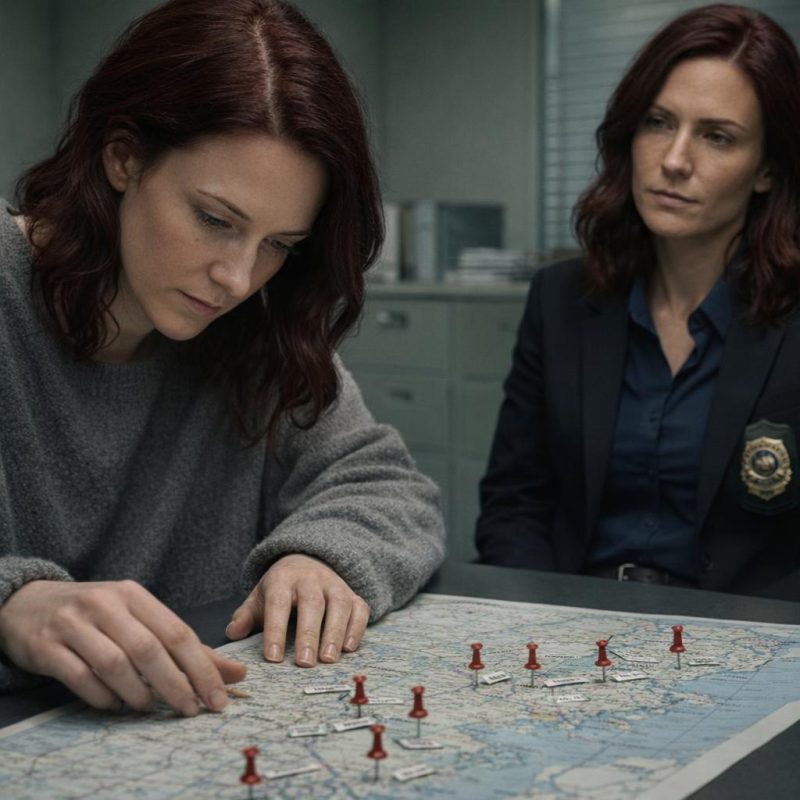 Image by RM AI
The Raid Plan
Mills pulled the map back and set it aside, then folded her hands on the table. She told me the warrant was ready and that they were planning to execute it within forty-eight hours. The cyber crimes unit needed time to coordinate — they wanted to go in with the right equipment to preserve everything before Henderson had a chance to wipe anything. I nodded like that made sense, because it did, but then she said the part I hadn't anticipated. She needed me to act completely normal until then. Same routine. Same schedule. Same wave hello if I saw him on the porch. She said any change in my behavior — avoiding him, drawing my curtains at unusual times, anything he might notice — could tip him off and give him time to destroy evidence. She told me they'd have an unmarked car on my street around the clock, and she wrote her direct number on a card and slid it across the table. She said my safety was the top priority. I believed her. I picked up the card and turned it over in my fingers. Then she looked at me steadily and said that for the next two days, I didn't know anything.
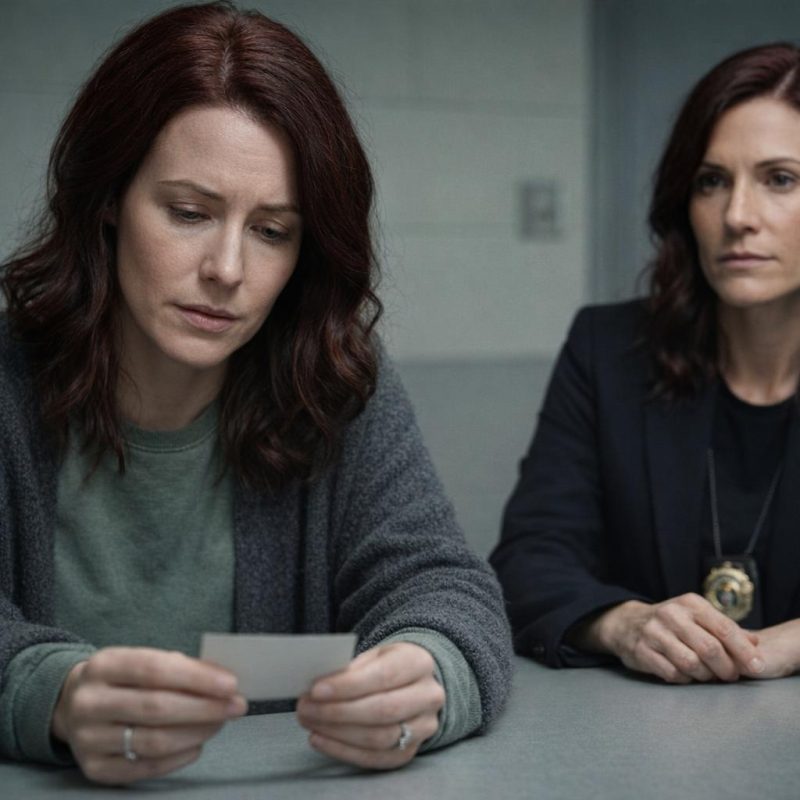 Image by RM AI
The Longest Days
Those forty-eight hours were the longest of my life. I followed my schedule like I was reading from a script — alarm at six-thirty, coffee, Max's morning walk at seven, work by eight-thirty. The first morning, Henderson came out onto his porch while Max and I were coming back up the sidewalk. He raised a hand and called out something about the weather turning cooler. I smiled and said I thought so too. My voice came out steady. I don't know how. Every word I said to him felt like it was sitting on a fault line. At night I lay in bed knowing he was in that basement, and the ceiling above me felt like it was pressing down. Max never left my side — he slept across the doorway both nights, ears up, tracking sounds I couldn't hear. I spotted the unmarked car each morning, a dark sedan parked two houses down, and something about seeing it there kept me from coming apart entirely. At work I stared at spreadsheets and moved numbers around and answered emails and none of it touched me. I was running two tracks simultaneously — the surface one, where everything was ordinary, and the one underneath, where I was counting hours. By the second evening I was so tired from holding both of them together that I sat on the kitchen floor with Max's head in my lap and just breathed.
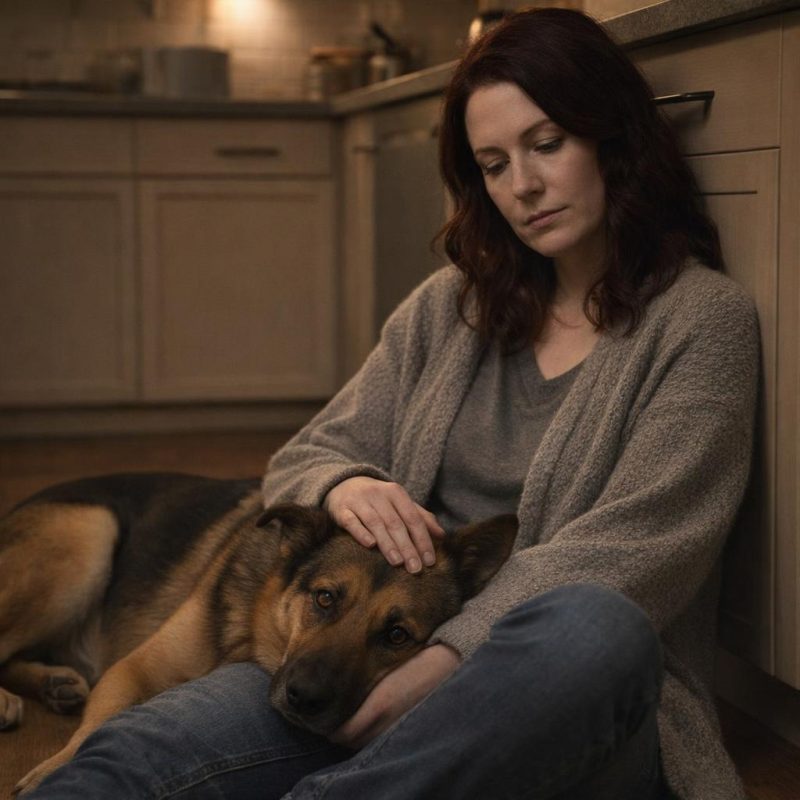 Image by RM AI
Henderson Knows
The knock came at eight in the morning on the second day. I was still holding my coffee mug. I looked through the peephole and Henderson was standing on my porch, and his face was not the face I'd been performing normalcy for all week. The easy smile was gone. His expression was flat and tight, and he was looking directly at the peephole like he knew exactly where my eye would be. I thought about not answering. But my car was in the driveway and he knew I was home. I engaged the chain lock and opened the door the few inches it allowed. He said he knew I'd been talking to the police. His voice was low and even, no inflection at all. He said I had made a serious mistake. Max pressed hard against the back of my legs and let out a growl that I felt more than heard. Henderson's eyes dropped to Max for a second, then moved past me to the street — to where the unmarked sedan was parked. He said the police weren't going to find what they were looking for. I told him to leave. He didn't move right away. He just looked at me for a long moment, and then he said I should have minded my own business. I stood there holding the door, Max's warmth solid against my legs, and the words settled over me like something cold.
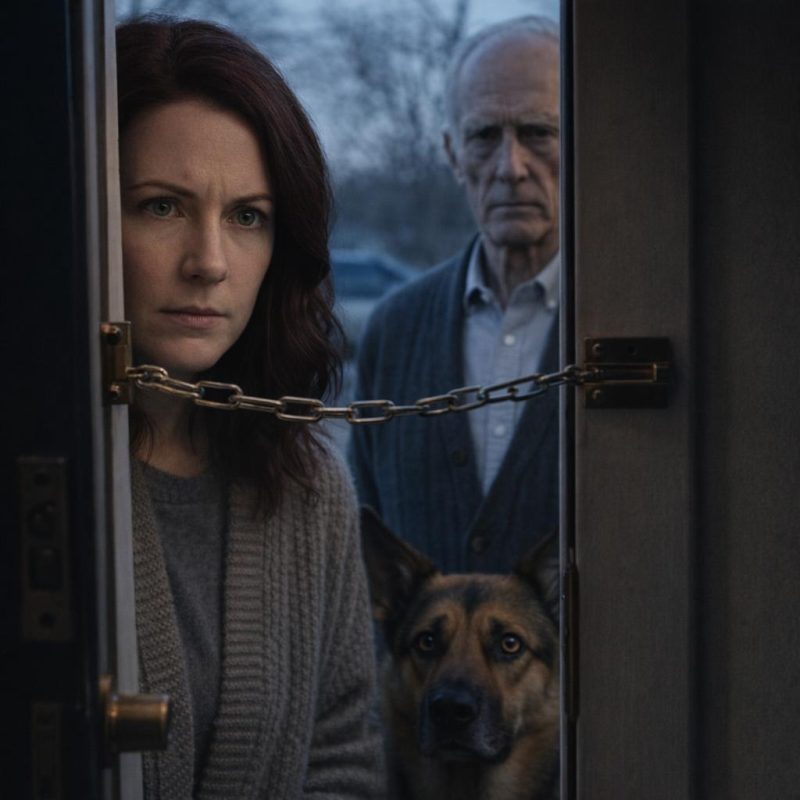 Image by RM AI
Barricaded
I shut the door the second he stepped back and threw every lock I had — deadbolt, chain, the sliding bar I'd installed two weeks ago and never thought I'd actually use. Then I ran. I went room to room checking windows, twisting latches, pulling handles to make sure they held. Max was right behind me, barking at the front door in short sharp bursts. My hands were shaking so badly I nearly dropped my phone twice before I got Mills' number pulled up. She answered on the second ring. Before I could say more than her name she told me units were already moving — the unmarked car had radioed in the moment Henderson approached my door. She told me to stay inside, stay away from the windows, and stay on the line. I moved into the hallway, the one interior space with no exterior walls, and I stood there with my back against the wall and a kitchen knife in my hand that I didn't remember picking up. Max planted himself at the end of the hall facing the front door, every muscle in his body rigid. Then I heard footsteps on the porch boards. Slow, deliberate. They stopped. The door handle turned — one full rotation, then back — and the sound of it moved through me like ice water. Max's growl dropped to something low and continuous. Outside, I heard a car door open.
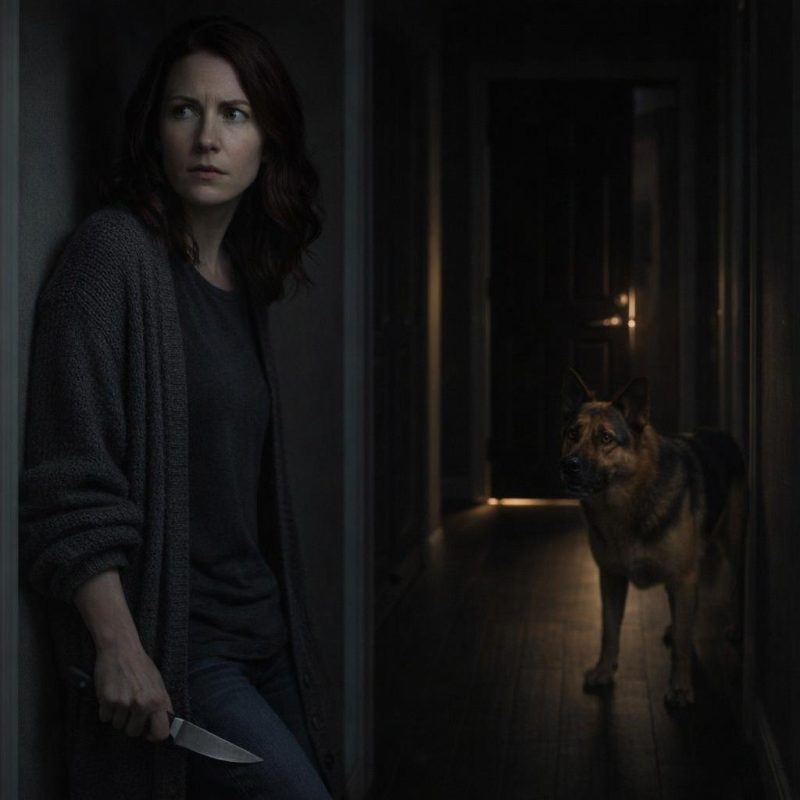 Image by RM AI
The Arrival
Within two minutes there were three vehicles on the street — two marked units and an unmarked SUV that I recognized as Mills' from the station. Officers fanned out across both properties fast and quiet, the way I imagined they'd rehearsed it. Someone knocked on my door and announced themselves, and I looked through the peephole before I opened it this time. Mills was standing there with two officers behind her. She stepped inside and asked immediately if I was hurt. I shook my head. One of the officers did a quick walk-through of the house while Mills stayed with me, and Max circled her twice before deciding she was acceptable. Through the front window I could see officers positioned along Henderson's property line, and I watched a team of four move up his front walk. They announced themselves loudly enough that I heard it through the glass. No answer. They announced again. Still nothing. One of the officers near the side of the house called something into his radio. Mills told me to step back from the window. I moved but I couldn't stop watching. Then I saw movement in Henderson's basement window — a shadow crossing behind the glass — and Henderson disappeared into the dark of his house as the officers at his front door reached for the ram.
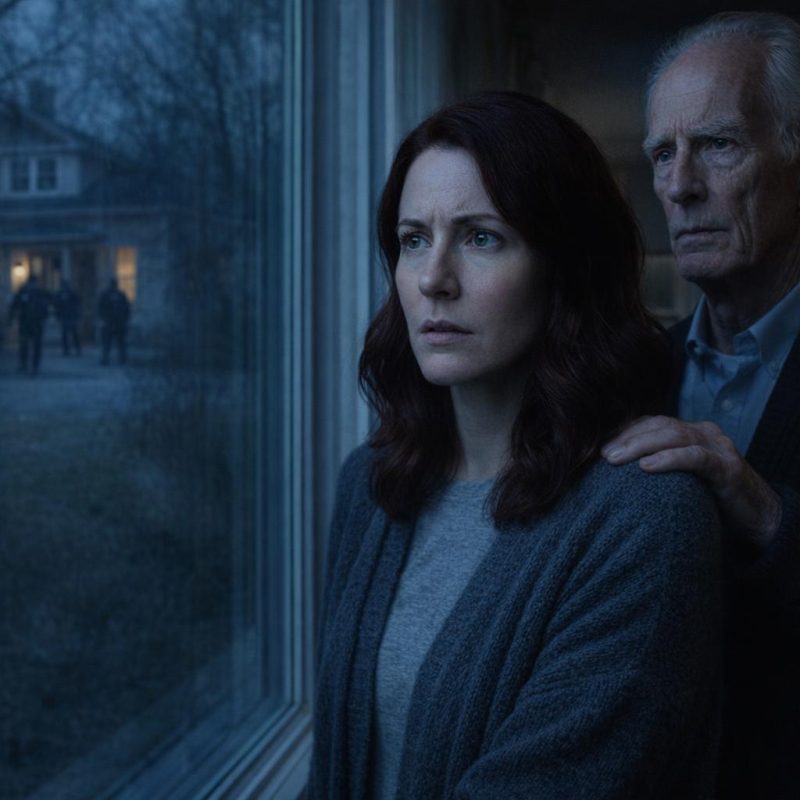 Image by RM AI
The Breach
The sound of the ram hitting Henderson's front door was loud enough that I flinched even from inside my house. Mills had her radio up and was listening to the entry team move through the rooms, calling them clear one by one. Then there was a pause — longer than the others — and a voice on the radio said the basement door was locked from the inside. Another pause. Then the sound of a second breach, muffled through the walls. Mills' expression didn't change but her grip on the radio tightened. The voices on the other end got faster. Mills said something sharp into the radio and then went still, listening. A minute passed. Then the side door of Henderson's house opened and two officers came out with Henderson between them, his wrists cuffed behind his back, his head down, and they walked him across the grass toward the waiting units.
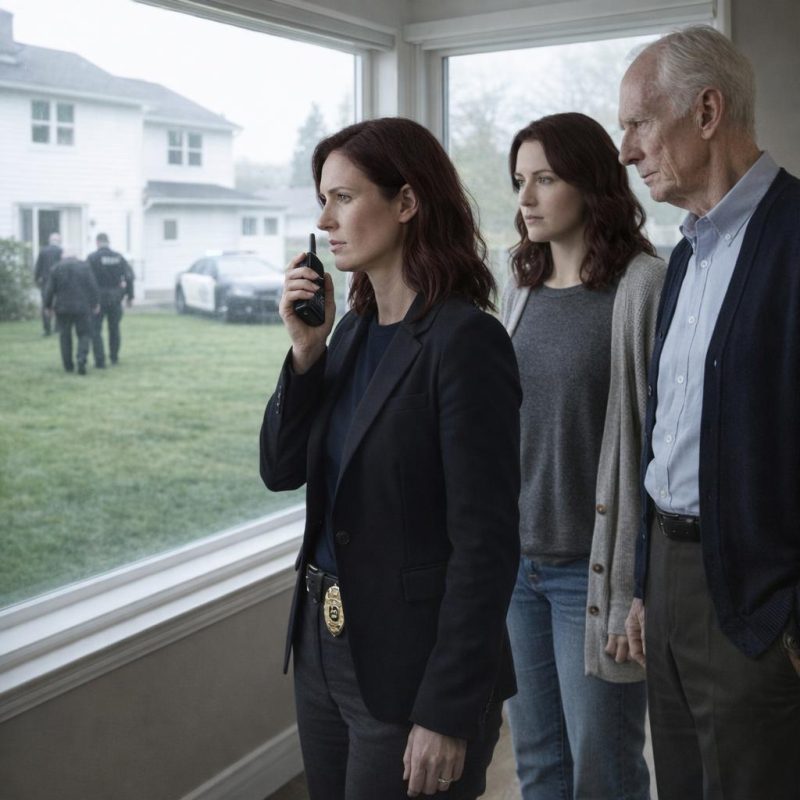 Image by RM AI
The Basement Revealed
Mills asked me, about an hour after the arrest, if I wanted to see it. I said yes before I'd finished thinking about it. She walked me across the yard and through Henderson's front door, which was still standing open, and down a set of stairs I'd never known existed behind a door that looked like a closet. The basement was cold and smelled like electronics and recycled air. It was also enormous — the entire footprint of the house, lined with shelving units and cable management and the kind of careful organization that made my stomach turn because it meant he'd been doing this long enough to develop a system. The cyber crimes team was still working, photographing and bagging equipment. Mills walked me to the far wall. There were twelve monitors mounted in a grid, most of them still active, showing live feeds from houses I didn't recognize — a kitchen with yellow curtains, a bedroom with the light on, a living room with a television playing. And then, on the third screen from the left in the top row, I saw my own living room. Max was visible on the couch, his head up, ears forward, looking toward the camera he'd been barking at for weeks. The shelves beside the monitors held hundreds of hard drives, each one labeled with an address and a date range. Mills said something to me but I didn't hear it. I was looking at the wall of twelve screens and all the lives inside them.
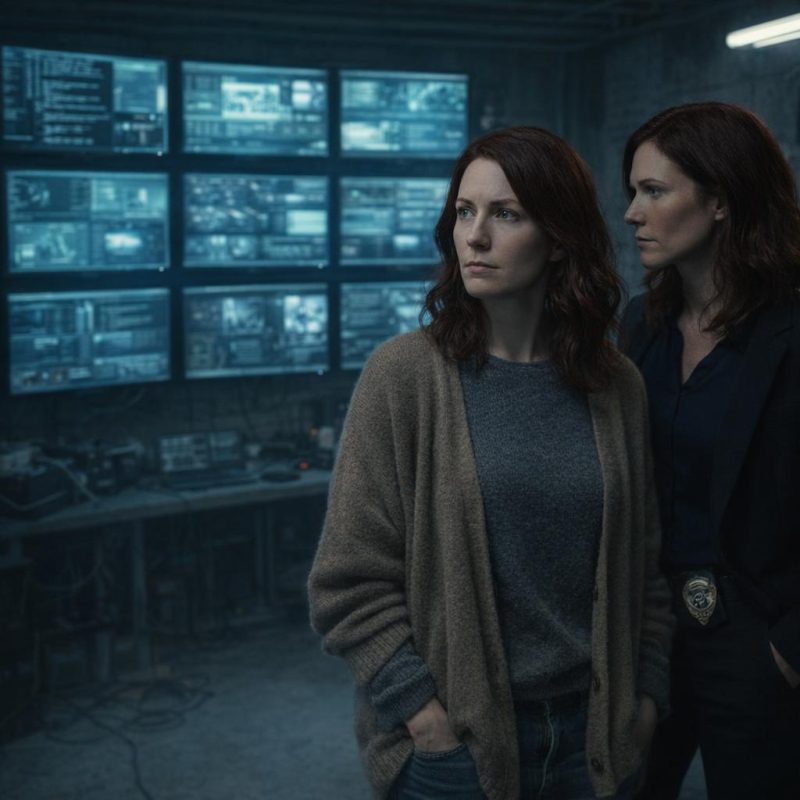 Image by RM AI
Other Victims
Mills sat across from me at a small table in one of the station's interview rooms and slid a printed sheet across the surface. Twelve names. Mine was the last one on the list. She told me eleven other women had been monitored — some for a few months, some for over a year — and that most of them had no idea until this morning. The department was beginning individual notifications, and victim advocates would be reaching out to each person within twenty-four hours. I stared at the list for a long time. Eleven other women who had gone about their lives — cooking dinner, sleeping, watching television — while Henderson watched from that basement. My statement took just over two hours. I described everything: Max's first alert at the fence, the camera behind the smoke detector, the hard drives, all of it. Mills listened without interrupting, taking notes in a small spiral pad. When I finished, she told me the charges would include stalking, illegal surveillance, and multiple counts of computer crimes. Then she told me they were also investigating my ex-spouse for selling personal information to fund gambling debts. I looked back down at the sheet. Twelve names. Twelve households. Twelve lives he had moved through without permission.
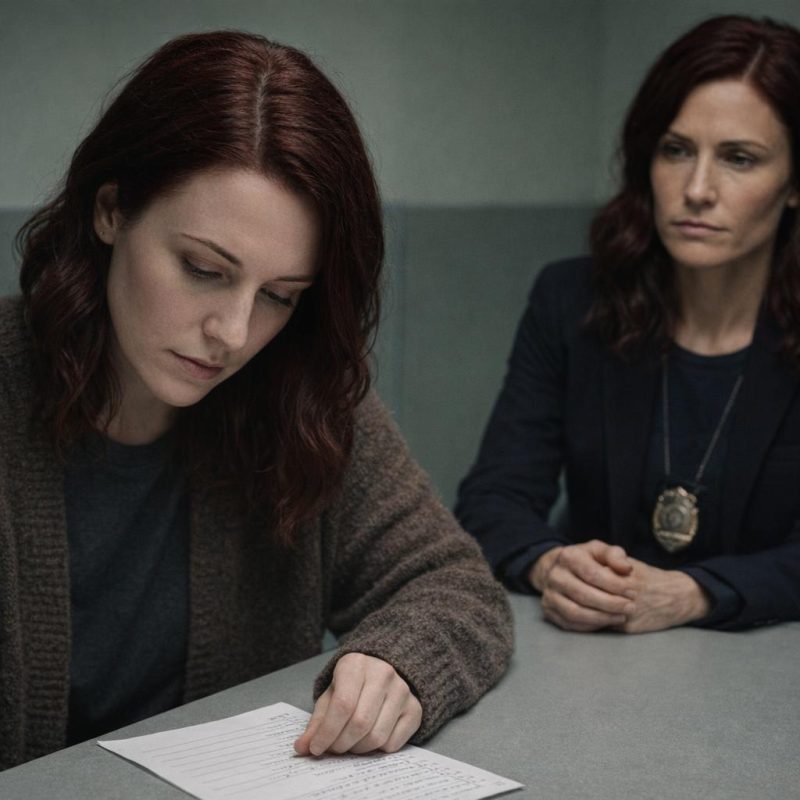 Image by RM AI
Removing the Cameras
The cyber crimes technician arrived at my house the next morning with a case of equipment and a methodical calm I found steadying. Max stayed close to my heels the whole time, watching the technician work with his ears up but his body loose — curious rather than alarmed, which already felt like a different dog than the one I'd been living with for the past several weeks. They found three cameras in total: the one behind the smoke detector in the living room, a second one embedded in the porch light housing, and a third tucked inside a power strip in my home office that I used every single day. Each one went into a labeled evidence bag. The technician walked me through how to check for radio frequency signals and showed me what to look for in terms of unusual device placement. Then he installed new deadbolts on both exterior doors and a secondary lock on the basement window. When he left, I walked through every room slowly. I opened the curtains in the living room — the ones I'd kept pulled shut for weeks because something had felt wrong and I hadn't known why. The afternoon light came in across the floor, and Max stretched out in the middle of it, his chin on his paws, finally still.
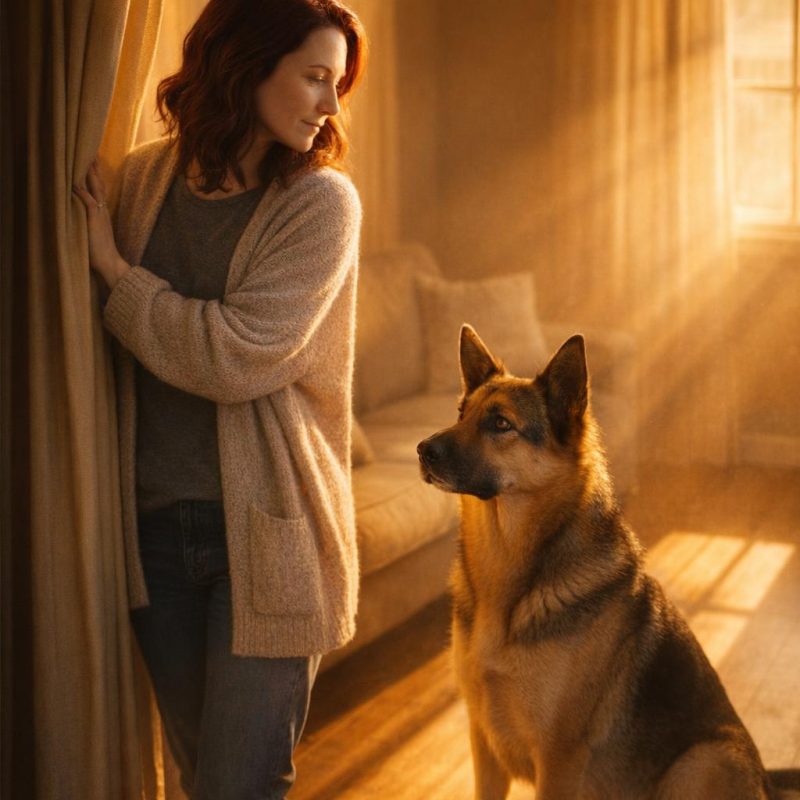 Image by RM AI
David's Consequences
Mills called on a Thursday afternoon, about a week after the arrest. I was sitting at my kitchen table with a cup of coffee going cold beside me when my phone lit up with her name. She told me my ex-spouse had been formally charged — identity theft, fraud, and unlawful sale of personal information. He had sold data on multiple people, not just me, to cover gambling debts that had apparently been accumulating for years before the divorce. The charges carried the possibility of significant prison time. Mills said he had cooperated with investigators, providing details about how Henderson had recruited sources and what kind of information he had paid for. His cooperation would factor into sentencing, but it wouldn't make the charges disappear. I sat with that for a moment. The man I had been married to had handed pieces of my life to a stranger for money. I didn't feel the urge to call him or confront him or ask him why — there wasn't a version of any answer that would have changed what he'd done. Mills said she'd keep me updated as both cases moved forward. After we hung up, I sat in the quiet kitchen for a long time, and the anger I'd been carrying felt, for the first time, like something I could set down.
 Image by RM AI
The First Quiet Night
I went to bed that night without checking the locks twice. I didn't set an alarm for 3 AM. I didn't position my phone face-up on the nightstand so I'd see the screen the moment it lit. Max circled his bed twice, the way he always does, and dropped down with a long exhale that sounded like relief. I turned off the lamp and the house was just quiet — not the tense, waiting kind of quiet I'd gotten used to, but the ordinary kind. I woke once, briefly, and the clock read 3:04. Max hadn't moved. I lay there for a moment listening to nothing, then closed my eyes and went back to sleep. When I woke again it was full morning, sunlight coming through the curtains I'd finally stopped keeping closed. Max was still on his bed, tail starting to thump against the floor when he saw me stir. I made coffee and stood at the kitchen window looking out at the yard. Henderson's house sat empty across the fence line, police tape across the front door, the windows dark. Max pressed against my leg and I reached down and scratched behind his ears. He had been trying to tell me for weeks. I just needed long enough to listen. The yard was bright and still, and for the first time in longer than I could remember, the morning felt like mine.
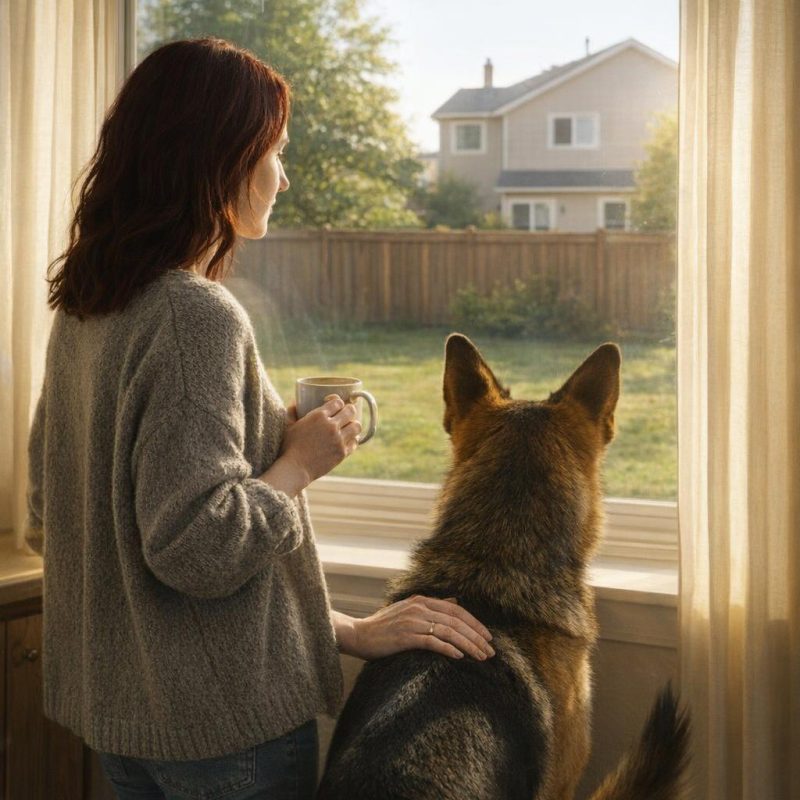 Image by RM AI
KEEP ON READING
The 20 Most Recognized Historical Figures Of All Time
The Biggest Names In History. Although the Earth has been…
By Cathy Liu Oct 4, 2024
10 of the Shortest Wars in History & 10 of…
Wars: Longest and Shortest. Throughout history, wars have varied dramatically…
By Emilie Richardson-Dupuis Oct 7, 2024
10 Fascinating Facts About Ancient Greece You Can Appreciate &…
Once Upon A Time Lived Some Ancient Weirdos.... Greece is…
By Megan Wickens Oct 7, 2024
20 Lesser-Known Facts About Christopher Columbus You Don't Learn In…
In 1492, He Sailed The Ocean Blue. Christopher Columbus is…
By Emilie Richardson-Dupuis Oct 9, 2024
20 Historical Landmarks That Have The Craziest Conspiracy Theories
Unsolved Mysteries Of Ancient Places . When there's not enough evidence…
By Megan Wickens Oct 9, 2024
The 20 Craziest Inventions & Discoveries Made During Ancient Times
Crazy Ancient Inventions . While we're busy making big advancements in…
By Cathy Liu Oct 9, 2024