

I Thought My Son Was Helping His Father – Until a Nurse's Question Changed Everything
I Thought My Son Was Helping His Father – Until a Nurse's Question Changed Everything
The Morning Everything Changed
It was a Tuesday morning, completely ordinary. Frank was making coffee like he'd done a thousand times before, and I was at the kitchen table sorting through the mail. We'd been talking about whether to finally replace the patio furniture this spring—one of those mundane conversations that fill up thirty-eight years of marriage. Then he just stopped mid-sentence. I looked up and he was standing there with this strange expression, like he'd forgotten what he was about to say. Before I could ask if he was alright, his knees buckled. I still remember the sound of the coffee mug hitting the tile floor, how it didn't break but just rolled in this slow arc toward the refrigerator. I was on my feet, calling his name, but he couldn't seem to focus on me. The next twenty minutes were a blur of emergency calls and waiting for sirens. Frank was conscious but kept asking me the same questions over and over, not remembering that I'd already answered. The paramedics were calm and efficient, asking their questions while checking his vitals. As they loaded him into the ambulance, I caught a glimpse of his face—confused, frightened—and realized I had no idea what was happening to the man I'd known for thirty-eight years.
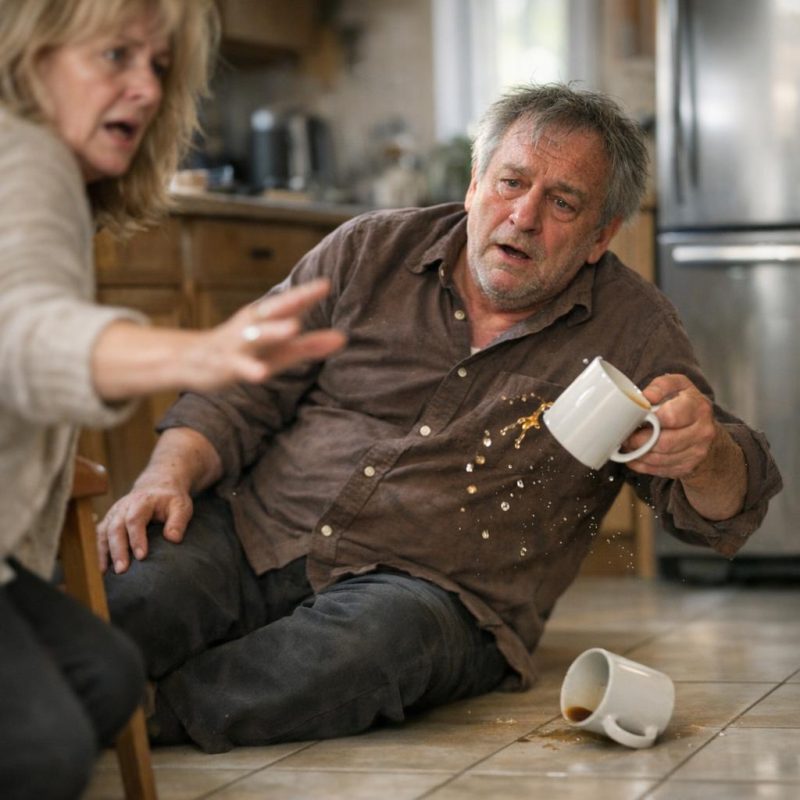 Image by RM AI
Waiting for Answers
The emergency room was one of those places where time stops making sense. I sat in a plastic chair outside the examination area for what might have been two hours or five, watching nurses move past with purpose while I had none. They'd taken Frank back immediately, and I'd answered the intake questions as best I could—no, no recent injuries, no history of seizures, yes, he takes blood pressure medication. Through the partially open curtain, I could see doctors coming and going, their faces giving away nothing. Frank was awake sometimes, sleeping others. When I was allowed to sit with him, he recognized me but seemed hazy on the details of the morning. 'Did I fall?' he kept asking. A young resident came by twice to ask the same questions I'd already answered, writing notes that told me nothing. The uncertainty was worse than any clear diagnosis would have been. Finally, the attending physician appeared, chart in hand, expression professionally neutral. She said they'd run blood work and a CT scan, that his vitals were stable but something wasn't quite adding up. The doctor closed Frank's chart and said they were admitting him for observation, using words like 'unusual presentation' that told me nothing except that they were as confused as I was.
 Image by RM AI
A Different Kind of Attention
By evening, they'd moved Frank to a regular room on the third floor. The nurse who came in to check his vitals introduced herself as Claire, and I appreciated how she actually made eye contact when she spoke, unlike some of the others who'd rushed through. She started with the standard questions, but then kept going in a way that felt different. She wanted to know about Frank's daily routine—when he woke up, what he ate for breakfast, whether he had any trouble with memory before today. I told her he'd seemed a bit more tired lately, occasionally forgetting small things, but nothing alarming. Then she asked about his medications, and I listed them off—the blood pressure pill, the cholesterol medication, the daily vitamins. She asked who filled his prescriptions, where we kept them, what time of day he took them. It struck me as unusually thorough, but I figured she was just being careful. I mentioned that Frank had always been meticulous about taking everything at the same time each morning with his coffee. Claire paused after I mentioned Frank's vitamin routine, her pen hovering over her notepad, and I couldn't tell if she was just thorough or if something in my answer had bothered her.
 Image by RM AI
Small Inconsistencies
The next morning, I was back at Frank's bedside early, having barely slept at home alone. He seemed more alert, which gave me hope, though he still couldn't quite explain what had happened. Around ten o'clock, Claire came by again, this time with follow-up questions that seemed to pick up exactly where we'd left off the night before. She wanted specifics about timing—did Frank ever miss doses, did anyone help him organize his pill containers, had we changed pharmacies recently. I told her no to all of those, that Frank was independent about his health routines. Then she asked if anyone else in the family was involved in managing his care, and I mentioned Daniel without thinking—our son had been so helpful these past few months, especially since he'd moved back to town. I explained how Daniel had been stopping by more often, sometimes helping Frank sort his weekly pill organizer when things got busy. It was such a relief to have him nearby again after years of him living abroad. When Claire asked if anyone else had been involved in organizing Frank's medications, I mentioned Daniel without thinking, and her expression shifted in a way I couldn't quite read.
 Image by RM AI
Overheard Fragments
That afternoon, Frank was sleeping and I needed to stretch my legs. I'd been sitting in that vinyl hospital chair for hours, and my back was screaming. I stepped into the hallway, thinking I'd find the vending machines, maybe call our daughter to update her. That's when I heard Claire's voice coming from the nurses' station around the corner. She was talking to another staff member, someone in scrubs I didn't recognize. I wasn't trying to eavesdrop—I was just standing there, waiting for them to finish so I could ask Claire a question about Frank's dinner restrictions. But something about her tone made me pause. She was saying something about test results, about levels that didn't match what they'd expected to see. 'It's not consistent with his prescriptions,' she said, and the other person asked what she meant. Claire lowered her voice, and I only caught fragments—'the levels are consistent with something else' and 'we need to run another panel.' Then they moved down the hallway toward the lab, their conversation fading. I stood frozen outside Frank's room, trying to make sense of Claire's words—'the levels are consistent with something else'—before they moved out of earshot.
 Image by RM AI
The Question I Had to Ask
I couldn't stop thinking about what I'd heard. That evening, when Claire came back to check Frank's vitals, I followed her out into the hallway. My hands were shaking slightly, though I tried to keep my voice steady. 'Is there something you're not telling me about Frank's condition?' I asked directly. I've never been good at dancing around things, and after two days of vague medical jargon, I needed someone to be straight with me. Claire looked at me for a long moment, and I could see her weighing what to say. She's younger than my daughter, probably hasn't been a nurse for more than a few years, but there was something careful and deliberate in how she chose her words. She asked if I had a complete list of Frank's medications, and I said yes, I keep everything written down in a notebook at home. She suggested—gently, professionally—that I might want to review that list again, compare it to what Frank's actually been taking. 'Just to make sure everything is exactly as you expect it to be,' she said. Claire hesitated, choosing her words carefully, before suggesting I review Frank's medication list again—'just to make sure everything is exactly as you expect it to be.'
 Image by RM AI
Reviewing the List
I went home that night even though I didn't want to leave Frank. The house felt too quiet, too empty. I found my medication notebook in the kitchen drawer where I always kept it—I'd been maintaining it for years, writing down every prescription, every dosage change, every doctor's appointment. I spread it out on the kitchen table under the bright overhead light and pulled Frank's current pill bottles from the cabinet. One by one, I checked them against my notes. Blood pressure medication—correct dosage, same as always. Cholesterol pill—yes, that matched. Daily multivitamin, fish oil, the baby aspirin his cardiologist recommended. Everything looked familiar, exactly as it should be. But then I kept going through my notes, checking dates, and found an entry from three months ago. Dr. Henson had added something new during Frank's annual checkup, something for occasional dizziness Frank had mentioned. I'd written it down dutifully but hadn't paid much attention—it seemed minor at the time. Everything looked familiar until I noticed a medication Dr. Henson had added a few months ago for Frank's occasional dizziness—something I'd barely paid attention to at the time.
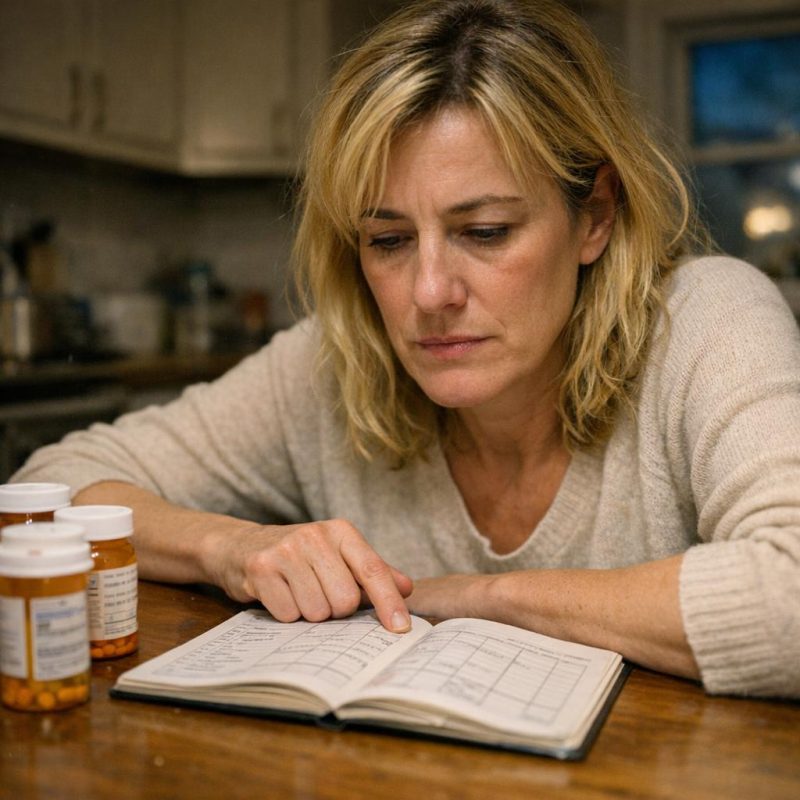 Image by RM AI
A Son's Concern
Daniel arrived at the hospital the next morning looking exhausted. He works long hours at his consulting job, and I knew he'd rearranged his entire schedule to be there. He hugged me tightly in the hallway outside Frank's room, and I felt some of my tension ease. Having family there made everything feel less overwhelming. 'Mom, I'm so sorry I couldn't get here sooner,' he said, running a hand through his hair. 'How is he? Have the doctors figured out what happened?' I filled him in on everything—the tests, the observation period, how confused Frank had been that first day. Daniel listened intently, asking thoughtful questions about Frank's symptoms and what the doctors had said. He stepped into the room and spent a few minutes talking quietly with his father, holding Frank's hand. When he came back out, his eyes were red. He'd always been close with Frank, closer than our daughter in some ways. 'I should have been checking in more,' he said. 'I should have noticed if something was wrong.' Daniel squeezed my shoulder and said he'd been worried sick, asking if there was anything he could do to help manage Dad's care going forward.
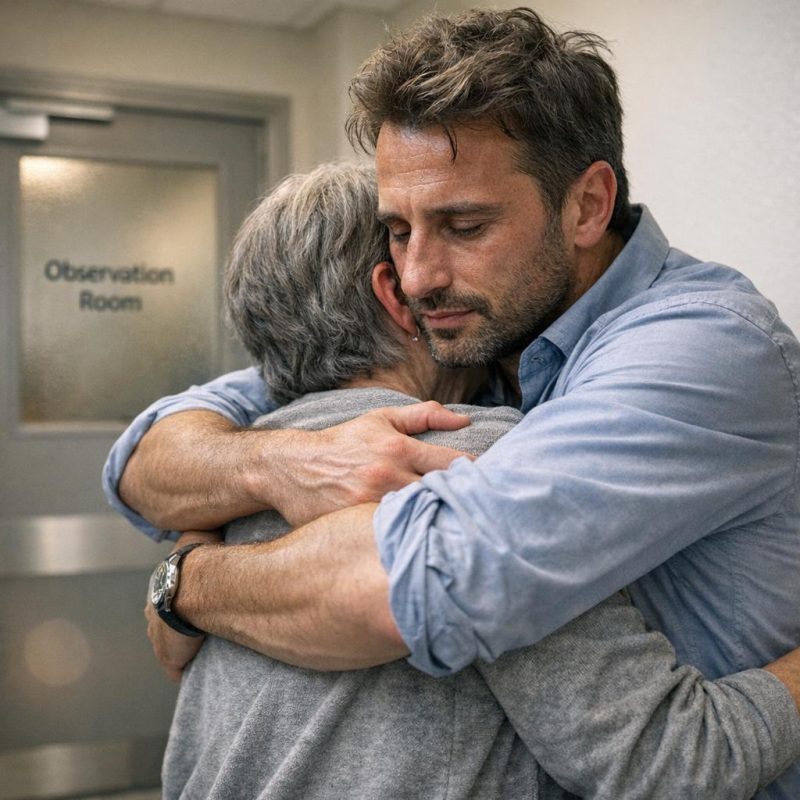 Image by RM AI
Too Quick an Answer
I caught the attending physician the next morning before his rounds, pulling him aside near the nurses' station. My voice was calm, measured—I didn't want to sound like an anxious wife grasping at straws. 'Doctor, I was wondering about one of my husband's medications. Could it interact with anything to cause these symptoms?' I asked, explaining what Claire had mentioned about the dizziness medication. He glanced up from Frank's chart, barely pausing his quick scan through the notes. 'We've reviewed his medication list thoroughly, Mrs. Patterson. Everything appears standard for someone his age with his conditions.' His tone was professional but clipped, like he'd answered this question a thousand times before. I pressed a bit more, asking if they'd specifically looked at potential interactions, and he nodded without really looking at me. 'Our protocol covers all of that. We're monitoring him closely.' Then he was moving on, already focused on the next patient, the next chart. I stood there in the hallway feeling dismissed, like I'd just wasted his time with an irrelevant concern. The conversation had lasted maybe ninety seconds. The doctor barely looked up from Frank's chart before saying the medication was unlikely to be related, but his answer felt too quick, too automatic.
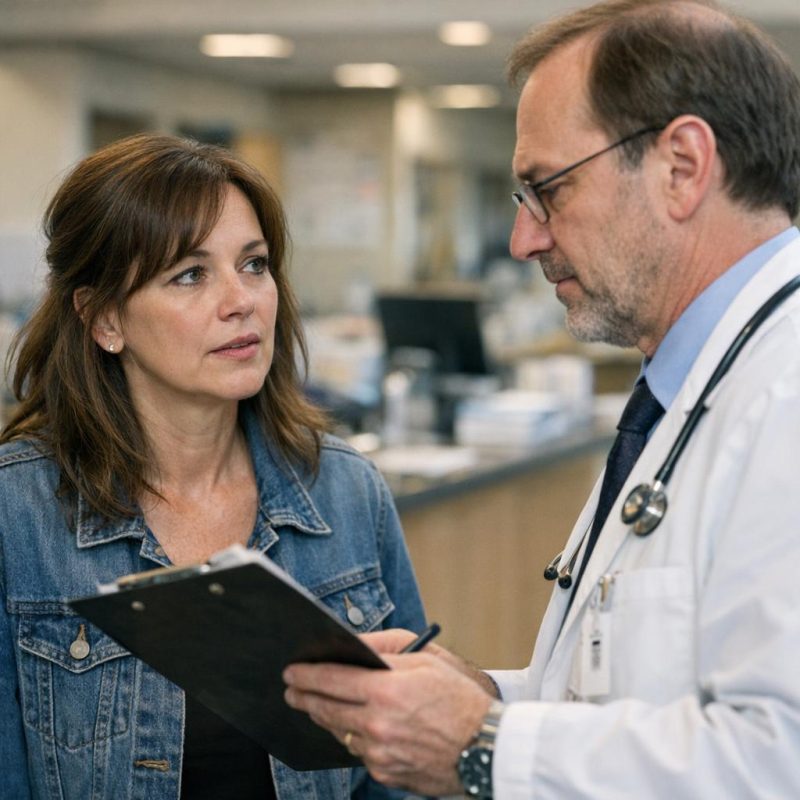 Image by RM AI
Dr. Henson's Addition
Sitting in the uncomfortable visitor's chair while Frank slept, I found myself thinking back to that appointment with Dr. Henson. It had been in early spring, maybe March or April. Frank had mentioned feeling lightheaded when he stood up too quickly, nothing dramatic, just something he'd noticed a few times. I'd gone with him to the appointment—I usually did for his checkups. Dr. Henson had asked the standard questions, checked Frank's blood pressure sitting and standing, nodded thoughtfully. 'We can try something for that,' he'd said, scribbling on his prescription pad. 'This should help with the vertigo episodes.' The whole discussion had taken maybe five minutes. Frank hadn't seemed concerned, and honestly, neither had I. It was just another pill added to the daily routine, another bottle in the bathroom cabinet. Dr. Henson was thorough, careful—we'd been seeing him for years. There was no reason to question his judgment. The prescription had seemed so minor, so routine. I remembered how routine that visit had been, Frank mentioning he felt lightheaded sometimes, and Dr. Henson writing out a prescription without much discussion.
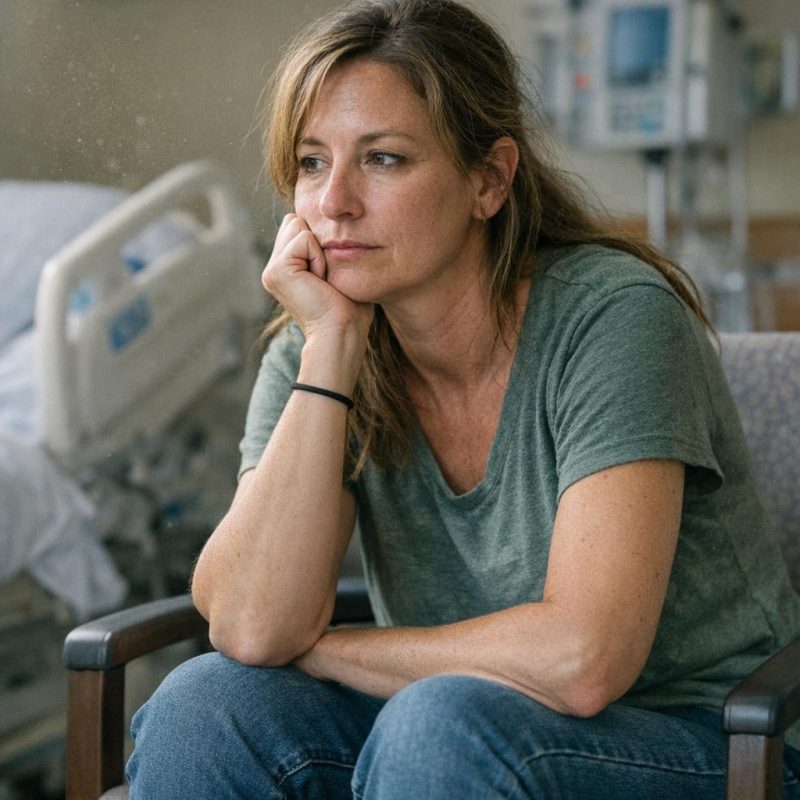 Image by RM AI
A Different Energy
Claire appeared in the doorway on her next shift with a different energy about her. She wasn't rushed or distracted like the other nurses often were. Instead, she moved deliberately, checking Frank's vitals with focused attention, then turning to me with questions that felt more purposeful than casual conversation. 'Mrs. Patterson, I've been thinking about what we discussed before,' she said quietly, glancing toward Frank to make sure he was still asleep. 'When did your son start helping with your husband's medications?' I thought about it, trying to pinpoint the exact moment. 'I'm not entirely sure. A few months ago? Frank had been getting frustrated with the pill bottles, and Daniel offered to organize them into one of those weekly containers.' Claire nodded slowly, writing something in her notes. 'And has he been doing it consistently since then? Every week?' I confirmed that yes, Daniel had been incredibly reliable about it, stopping by every Sunday to refill the organizer. 'Do you ever check the pills yourself?' she asked, and something about her tone made my stomach tighten. Claire leaned in slightly and asked when exactly Daniel had started organizing Frank's pills, and I realized I couldn't pinpoint the exact moment it had begun.
 Image by RM AI
Not Entirely Medical
Claire was quiet for a moment, seeming to choose her words carefully. She set down Frank's chart and looked at me directly, her expression serious but not unkind. 'I want to be clear that I'm not making any accusations,' she began, and my heart started beating faster even though I didn't know why. 'But in my years working in geriatric care, I've learned that not everything is what it initially appears to be.' I nodded, not understanding where she was going with this. 'What do you mean?' Claire glanced toward the door, then back at me. 'Medical symptoms can have medical causes, absolutely. But they can also have... other origins. Environmental factors. Situational factors.' She was being deliberately vague, dancing around something she didn't want to say outright. I felt a spike of frustration mixed with growing unease. 'I don't understand what you're suggesting.' She met my eyes with a look that seemed almost apologetic. 'Sometimes,' Claire said carefully, 'what looks like a medical issue isn't entirely medical,' and I stared at her, not understanding what she meant—or maybe not wanting to.
 Image by RM AI
Going Home for Supplies
The hospital social worker had suggested I go home to get some rest and pack proper supplies for what might be an extended stay. I drove on autopilot, my mind replaying Claire's cryptic words over and over. The house felt different when I walked in—too quiet, too empty without Frank's presence filling the spaces. I moved through the rooms mechanically, gathering toiletries, comfortable clothes, my phone charger. In the bedroom, I pulled an overnight bag from the closet and started folding items into it. My hands were going through the motions, but my mind was elsewhere, circling around questions I couldn't quite formulate. What had Claire been trying to tell me? What did she mean by 'not entirely medical'? I zipped the bag partway, then stopped, standing in the middle of our bedroom feeling lost. The afternoon light was streaming through the windows, illuminating dust particles in the air. Everything looked normal, ordinary, exactly as we'd left it. But something felt off, like when you know you've forgotten something important but can't remember what. As I packed a bag in our bedroom, I found myself glancing toward the bathroom cabinet where Frank's medications were kept, Claire's words echoing in my mind.
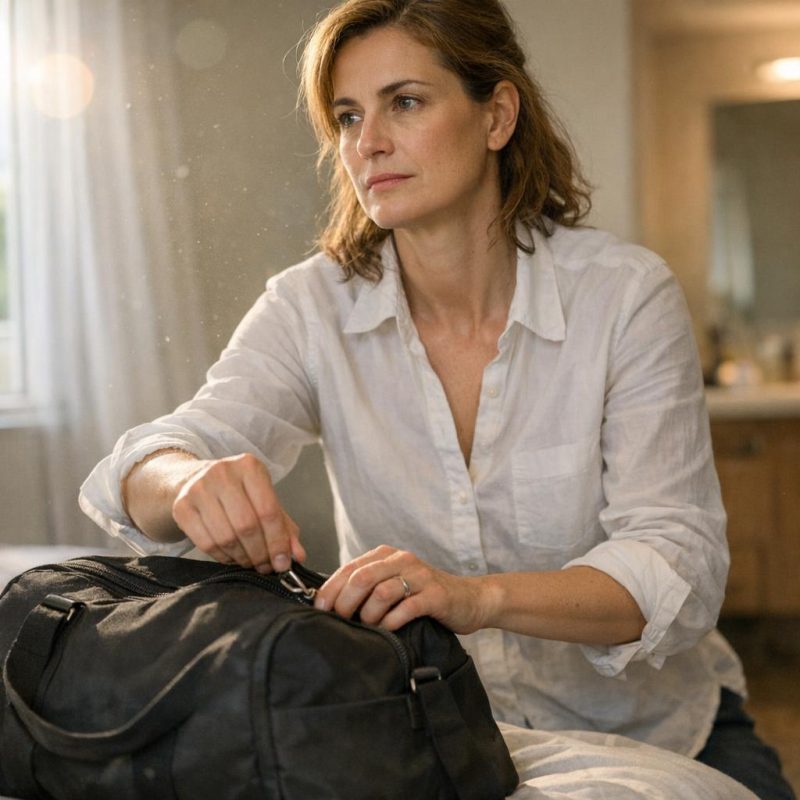 Image by RM AI
The Pill Organizer
I set down the overnight bag and walked into the bathroom, my feet moving before I'd consciously decided to investigate. The cabinet door opened with its familiar creak. Frank's medications were lined up on the middle shelf—prescription bottles in various sizes, labels facing forward in neat rows. The weekly pill organizer sat beside them, the large plastic case Daniel had bought specifically because it had clearly marked compartments for morning, noon, evening, and bedtime doses. I lifted it down carefully, as if it might break. The weight of it felt significant in my hands. My fingers traced over the raised letters marking each day: Sunday, Monday, Tuesday. Tuesday's compartments were still full—we were only at Wednesday in the hospital. I thought about how many times I'd watched Frank open these compartments, how I'd never really looked closely at what was inside. They were just pills, right? The same medications he'd been taking for months, maybe years. But now I was looking, really looking. I opened one compartment and stared at the pills inside, my hands beginning to shake as I realized they didn't quite match what I expected to see.
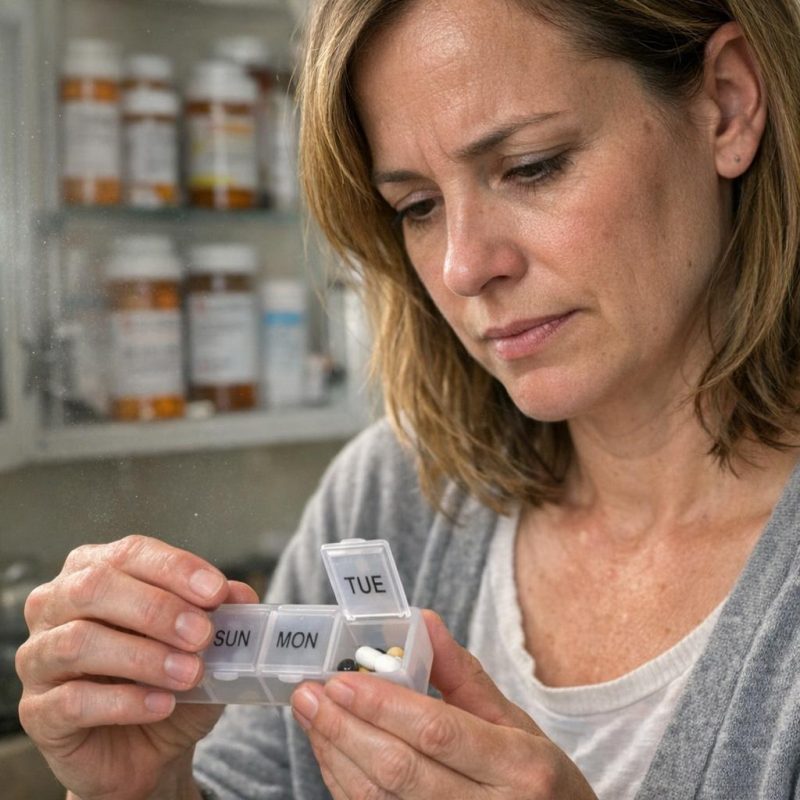 Image by RM AI
A Wife's Suspicion
I dumped the pills from Tuesday's morning compartment into my palm, then reached for the prescription bottles one by one. The blood pressure medication—small white tablet. Check. The cholesterol medication—oval-shaped, pale yellow. Check. The baby aspirin—tiny and orange. Check. But there was another pill, a larger capsule that was half blue, half white. I stared at it, then started opening prescription bottles, reading labels with growing urgency. Frank's name, Frank's name, Frank's name—every bottle was his. I compared each pill to what was in my hand, working through the process methodically even as my heart raced. The blue and white capsule didn't match anything. I went through every bottle twice, then a third time, certain I must be missing something. Maybe it was a generic version that looked different? But no, the pharmacist always told us when they switched manufacturers, and this wasn't close to any of Frank's regular medications. I grabbed my phone and searched for pill identifiers online, typing in the description with trembling fingers. My heart pounded as I held up a pill that didn't match any of Frank's prescriptions, trying to think of an innocent explanation even as my mind raced toward darker possibilities.
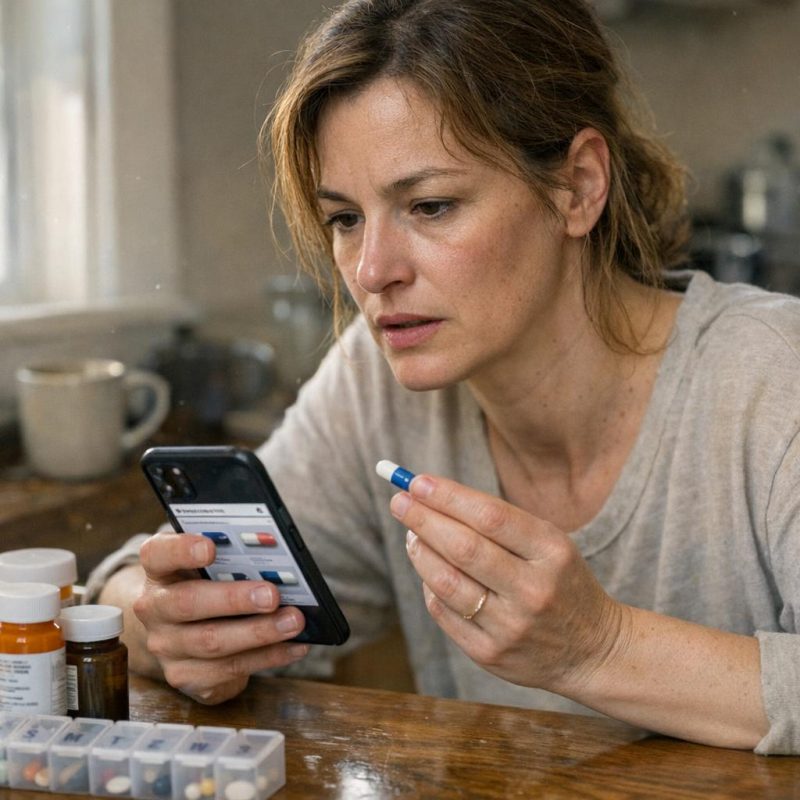 Image by RM AI
Could It Be a Mistake?
I sat down on the bathroom floor, the bottles and organizer spread around me like evidence at a crime scene. There had to be a reasonable explanation. Pharmacies made mistakes sometimes—everyone knew that. Maybe they'd accidentally filled the wrong prescription, put someone else's medication in Frank's bottle? But I'd checked every bottle, and they all contained the right pills. The mystery capsule had come from somewhere else. Could I have mixed something up myself? Had I accidentally put one of my own medications in Frank's organizer? I mentally catalogued everything I took—just a daily multivitamin and occasionally something for headaches. Nothing that looked like this. My thoughts kept circling, searching desperately for an innocent answer that would make sense of what I was seeing. Then another thought surfaced, one I'd been trying to avoid. Daniel had been managing the medications. Daniel picked them up from the pharmacy. Daniel organized them every week. I thought back to last month when Frank's prescriptions needed refilling. I'd been planning to go, but Daniel had offered, said it was no trouble since he was running errands anyway. I wanted to believe it was a simple pharmacy error, but then I remembered Daniel had picked up Frank's prescriptions last month, and a chill ran through me.
 Image by RM AI
The Call to Daniel
I waited until evening to call Daniel, trying to rehearse how I'd phrase the question. My hands were shaking as I dialed, and I had to remind myself to breathe normally, to sound casual. He answered on the third ring, his voice cheerful, asking how Dad was doing. We made small talk for a minute—me asking about his week, him mentioning some project at work—and the whole time I was gathering courage. Finally, I just said it: 'Daniel, I was organizing your father's medications today and found a pill that doesn't match any of his prescriptions. Do you know anything about that?' I kept my voice light, curious rather than accusatory. I wanted to believe there was a simple explanation, that he'd laugh and tell me exactly what it was. Maybe the pharmacy had made an error. Maybe I'd misread the bottle. The silence on the other end stretched longer than it should have. I could hear him breathing, could almost feel him thinking. 'A pill?' he finally said. 'What does it look like?' I described it—the white capsule, the markings on the side. Another pause, briefer this time. 'Huh,' he said, 'I'm not sure. Maybe the pharmacy mixed something up?' When I mentioned the specific pill that didn't belong, there was a pause on the line—just long enough to make my stomach drop.
 Image by RM AI
Simplifying the Regimen
Daniel suggested we meet in person to discuss it, and twenty minutes later he was at my door. He looked concerned, his brow furrowed in that way that made him seem genuinely worried. We sat at the kitchen table, the medication organizer between us like evidence neither of us wanted to acknowledge. He picked up the mystery capsule, turning it over in his fingers, studying it. Then he set it down and sighed. 'Look, Mom, I should have mentioned this earlier,' he said. 'Dad's medication schedule was getting really complicated, you know? All those different pills at different times. I did some research, talked to a pharmacist friend of mine, and she suggested there might be some simpler alternatives.' He explained that he'd been trying to streamline things, make it easier for both of us to manage. The words came quickly, smoothly, like he'd been preparing this conversation. He mentioned drug interactions, duplicate therapies, opportunities to consolidate. It all sounded so reasonable. He was trying to help. He was looking out for his father. But something in his delivery felt off—too practiced, too ready. I wanted to believe him. God, I wanted to believe him so badly. 'I was just trying to simplify it,' Daniel said, and the words hung in the air between us, sounding reasonable and wrong at the same time.
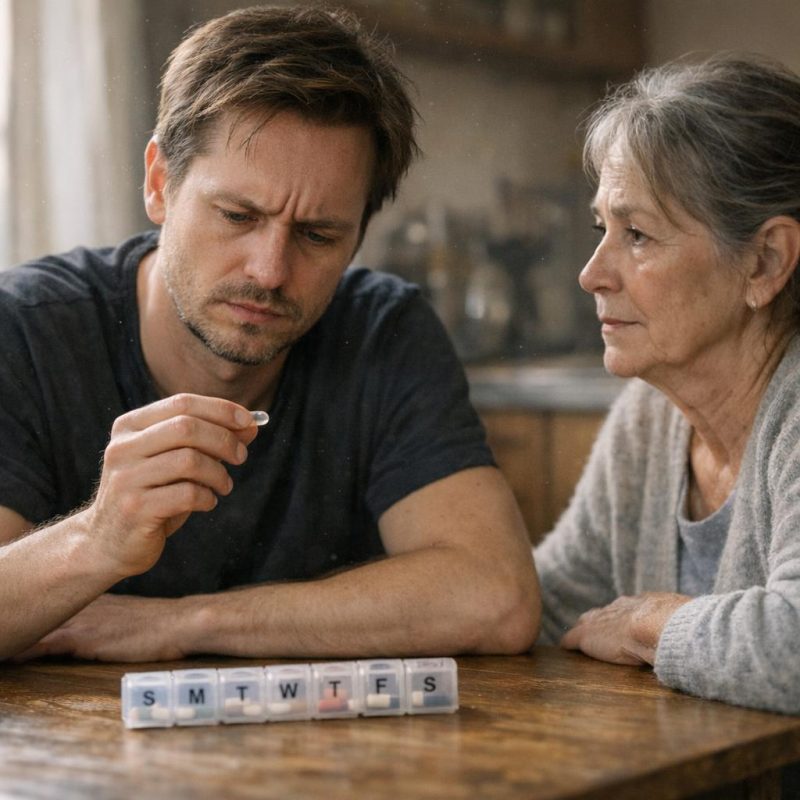 Image by RM AI
Researching the Wrong Pill
After Daniel left, I sat at my computer and typed the pill's identification numbers into Google. My fingers felt clumsy on the keyboard, and I had to retype the numbers twice before getting them right. The search results loaded, and I clicked on the first pharmaceutical website. The medication name meant nothing to me—some generic term I'd never heard before. I scrolled down to the description, to what it was prescribed for. It was used for certain heart conditions, but Frank didn't have those conditions. His heart was fine. That's what every cardiologist had told us. I kept reading, my eyes moving faster now, scanning for information. Then I found the section on side effects. Common side effects, it said. I read the list once, then again, my heart pounding harder with each word. Confusion. Weakness. Dizziness. Fatigue. Disorientation. Mental fog. Every single symptom that had been plaguing Frank for months was listed right there in clinical, matter-of-fact language. I sat back from the screen, my hand covering my mouth. This couldn't be coincidence. It couldn't be. The website listed confusion, weakness, and dizziness as common side effects—exactly what Frank had been experiencing for months.
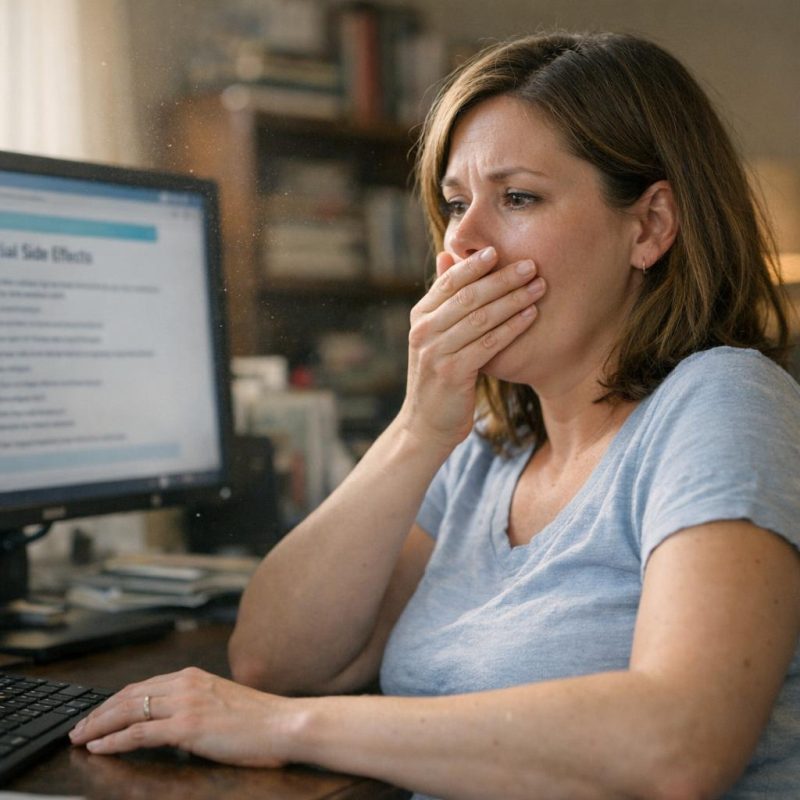 Image by RM AI
Retracing the Timeline
I pulled out my calendar, the one I'd been keeping on the kitchen counter for years, with all our appointments and important dates marked in different colored pens. I started flipping backward through the months, looking for when Frank's symptoms had really begun. There'd been small things before, sure—everyone forgets things occasionally. But the real confusion, the weakness that made him unsteady, the dizziness that sent us to the emergency room—when had that started? I found the first ER visit marked in red: March 15th. I flipped back further, looking for other markers. March 8th, I'd written 'Frank very confused today.' March 3rd, 'F couldn't remember lunch plans.' Then I looked for when Daniel had started helping with the medications. I found it in my notes from late February: 'Daniel offered to organize F's pills—such a relief!' The dates were all there in my own handwriting, impossible to deny. I got a pen and started circling entries, drawing lines between them, creating a timeline I didn't want to see. The pattern was undeniable. Frank had been fine. Then Daniel started managing the medications. Then Frank wasn't fine anymore. I sat at the kitchen table with my calendar, marking the dates, and the correlation was impossible to ignore—Frank's decline had started right after Daniel offered to help organize his medications.
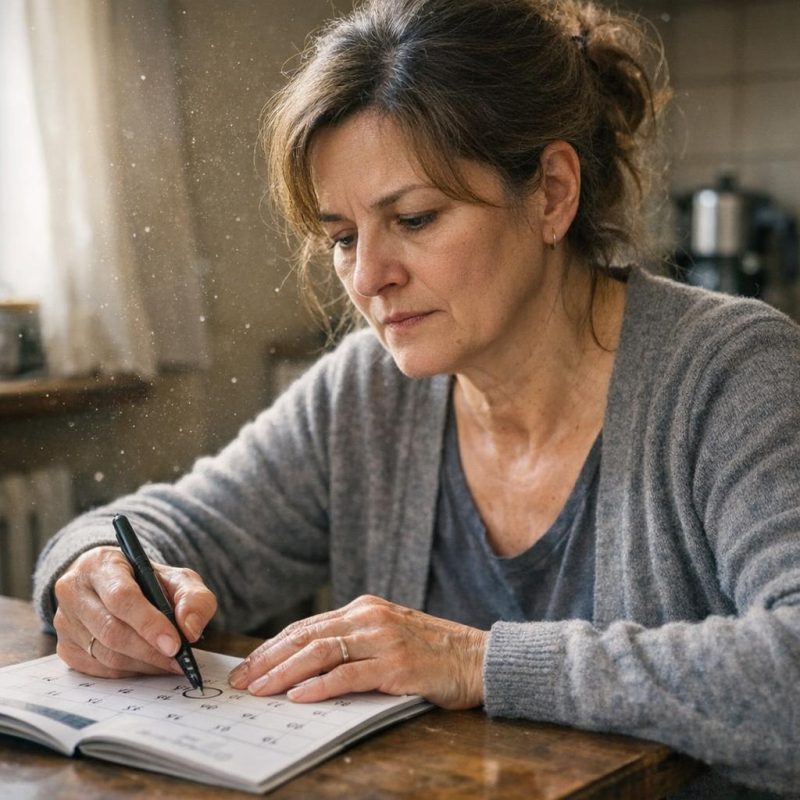 Image by RM AI
What Claire Suspected
I drove to the hospital the next morning, my printed calendar pages and medication research tucked into my purse. I found Claire near the nurses' station and asked if we could talk privately. We went to the same small consultation room where she'd first asked me those careful questions. I spread everything out on the table—the timeline, the medication information, the correlation I'd discovered. Claire listened without interrupting, her expression growing more serious with each detail I shared. When I finished, I looked at her directly and asked the question I'd been avoiding. 'What did you suspect from the beginning? What made you ask me those questions about who was managing his medications?' Claire sat back in her chair, and I could see her weighing how much to say, navigating the professional line between patient privacy and genuine concern. She picked up Frank's chart, the one that had been sitting on the table between us. 'I've been a nurse for nineteen years,' she said quietly. 'I've seen a lot of conditions, a lot of presentations. And Frank's never quite made sense medically.' She paused, choosing her words carefully. Claire looked at me for a long moment before saying, 'The lab results didn't match the diagnosis—they matched something being introduced into his system.'
 Image by RM AI
Bringing in a Specialist
Claire made a call while I was still sitting there, her voice professional but urgent. She explained the situation to someone on the other end—carefully, in medical terms I barely understood. When she hung up, she told me she'd arranged for a specialist to review Frank's case. Dr. Reeves arrived within the hour, a woman in her early fifties with sharp eyes and an air of competence that immediately made me feel like someone was finally taking this seriously. Claire handed her Frank's entire medical file, including all the lab work from his recent stays. I watched Dr. Reeves read through everything, her expression neutral at first, then increasingly puzzled. She flipped back and forth between pages, comparing results, making small notes in the margins. Finally, she looked up at both of us. 'Walk me through his home medication routine,' she said, and I explained everything—the organizer, the weekly setup, who handled what. She asked about changes, about who had access, about the timeline. Her questions were precise, clinical, but I could see the wheels turning behind them. She went back to the chart, studying specific lab values. I held my breath, waiting for her assessment. Dr. Reeves studied Frank's chart with a frown and said, 'This presentation doesn't make clinical sense unless we're missing something external.'
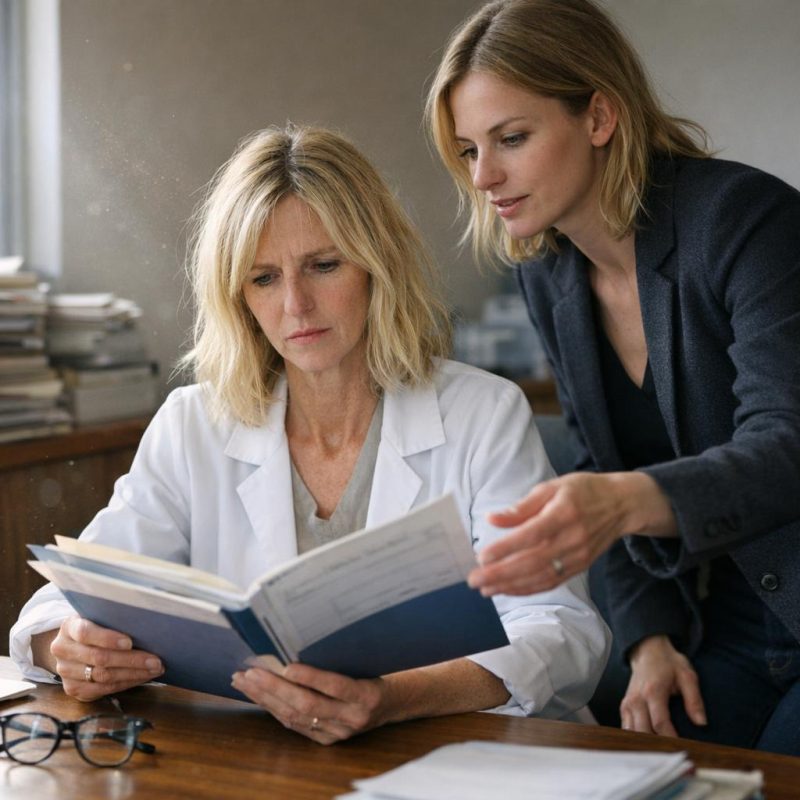 Image by RM AI
Testing the Wrong Medication
Dr. Reeves ordered a comprehensive drug screening, something more detailed than the standard tests Frank had already undergone. She wanted to check for substances that wouldn't normally show up, medications that shouldn't be in his system. 'We're going to look for everything,' she explained, 'including the medication you found in the organizer.' She was thorough, I'll give her that. She wanted baseline levels, metabolite testing, a full panel that would show not just what was present but how long it had been there and in what quantities. The phlebotomist came in with her tray of vials—so many vials, each one labeled with different colored caps for different tests. Frank was awake but groggy, and I sat beside his bed, holding his hand while the nurse prepared his arm. He didn't understand why they needed more blood, and I couldn't explain it to him. How do you tell your husband that you suspect your son might be poisoning him? The words wouldn't even form in my mind, let alone on my lips. I just squeezed his hand and told him the doctors wanted to be thorough. The nurse drew Frank's blood while I held his hand, knowing that the results would either confirm my worst fear or prove I'd been imagining things.
 Image by RM AI
Daniel's Increased Presence
Daniel started showing up at the hospital every day after that, sometimes twice a day. He'd arrive with coffee, with magazines for Frank, with updates about things happening at home. But he also started inserting himself into medical conversations in ways he hadn't before. He'd ask to speak with doctors directly, request copies of test results, offer to handle insurance paperwork. One afternoon he appeared with a leather folder tucked under his arm, all business-like and prepared. 'I've been thinking,' he said, 'that we should get all of Dad's medical information organized. Make sure there's a clear point of contact for the doctors, someone who can make decisions quickly if needed.' He pulled out papers from the folder, forms and documents he said would help coordinate care. He was using phrases like 'continuity of care' and 'medical decision-making' and 'streamlining communication.' It all sounded so helpful, so responsible. He was being the dutiful son, stepping up when things were difficult. But I noticed how he positioned himself between me and the medical staff, how he subtly suggested he should be the one receiving updates. I watched him work the room, building relationships with nurses and residents. Daniel appeared with a folder of documents he said would help 'streamline Dad's care decisions,' and I realized he was positioning himself as the primary contact.
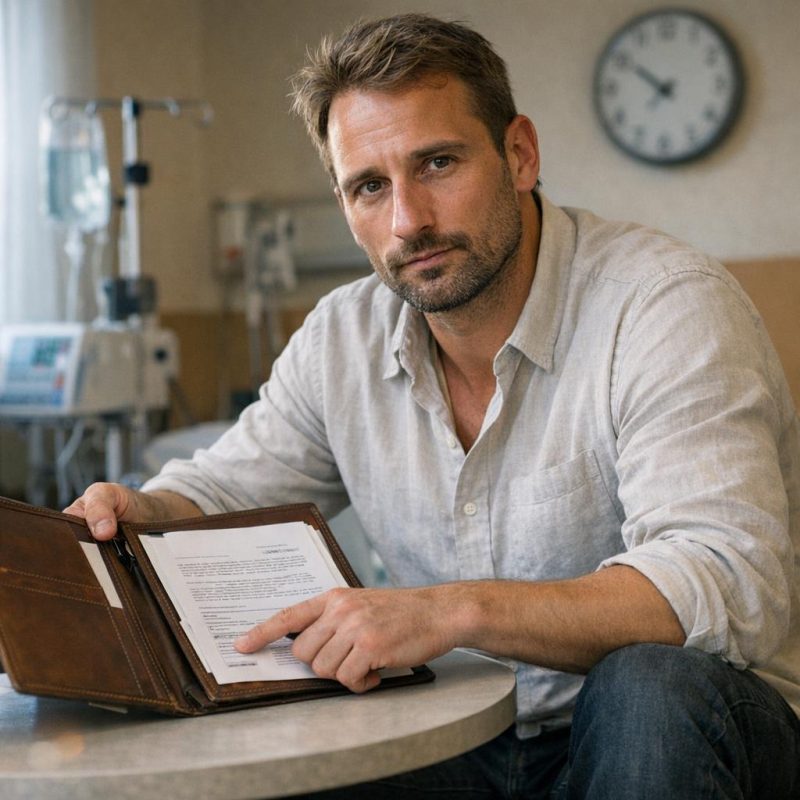 Image by RM AI
Easing Responsibilities
I started thinking back to other conversations I'd had with Daniel over the past few months, things I'd let slide at the time because they seemed reasonable. He'd mentioned more than once that Frank was getting older, that maybe it was time to think about easing some responsibilities. 'Dad's worked hard his whole life,' he'd said one evening, standing in our kitchen with that concerned expression on his face. 'Maybe he deserves to let someone else handle the finances, the business decisions. For his peace of mind.' At the time, I'd thought it was sweet that Daniel was worried about his father's stress levels. Frank had been handling our finances for decades, managing investments, keeping track of everything. But Daniel made it sound like a burden we should lift from Frank's shoulders. He'd used phrases like 'simplifying things' and 'reducing pressure' and 'letting Dad enjoy his retirement.' I'd nodded along, thinking yes, maybe that would be nice. But now, sitting in that hospital with everything I'd learned, those conversations felt different. The words hadn't changed, but their meaning had. Daniel hadn't been trying to give his father peace—he'd been trying to remove obstacles. I thought back to Daniel's words—'maybe it's time to let someone else handle the finances, for Dad's peace of mind'—and they took on a new, darker meaning.
 Image by RM AI
Emma's Call
Emma called that evening from Portland, her voice warm and worried. She'd been checking in regularly since Frank's hospitalization, but she was three thousand miles away with her own job and life. 'How's Dad doing today?' she asked, and I could hear her moving around her apartment, probably making dinner while we talked. I told her about the stable condition, the ongoing tests, kept my voice steady and factual. She asked about me too, whether I was eating enough, sleeping, taking care of myself. Emma had always been the nurturing one, even as the younger daughter. Then she asked, 'Is Daniel still coming by every day? I'm so glad he's there to help you, Mom. I wish I could be there too.' There it was—that assumption that Daniel was being helpful, that his presence was a comfort rather than a source of growing dread. I wanted to tell her everything, to share what the nurse had said, what Claire and I had discussed, what the test results might reveal. But the words stuck in my throat. I didn't have proof yet, just suspicions and patterns and that sick feeling in my stomach. Emma asked if Daniel was being helpful, and I found myself choosing my words carefully, not ready to share what I suspected with anyone yet.
 Image by RM AI
The Test Results Arrive
Dr. Reeves found me in the waiting area two days later, her expression professionally neutral but her body language tense. 'Patricia, could we speak privately?' she asked, gesturing toward a small consultation room down the hall. My heart started racing before we even got there. I followed her into the room, noting how she closed the door carefully behind us, how she didn't sit down right away but stood there organizing her thoughts. 'We received the test results back from the lab,' she began, and I gripped the armrest of the chair I'd finally sunk into. She had a folder in her hands, paperwork with numbers and medical terminology I couldn't begin to understand. But her explanation was clear enough. Frank's blood work showed traces of a medication he wasn't supposed to be taking, something that could definitely explain his symptoms—the confusion, the balance problems, the cognitive decline. Not just traces, either. Dr. Reeves closed the door behind us and said, 'The medication we tested for is present in Frank's system at consistent levels—levels that suggest regular dosing over weeks or months.'
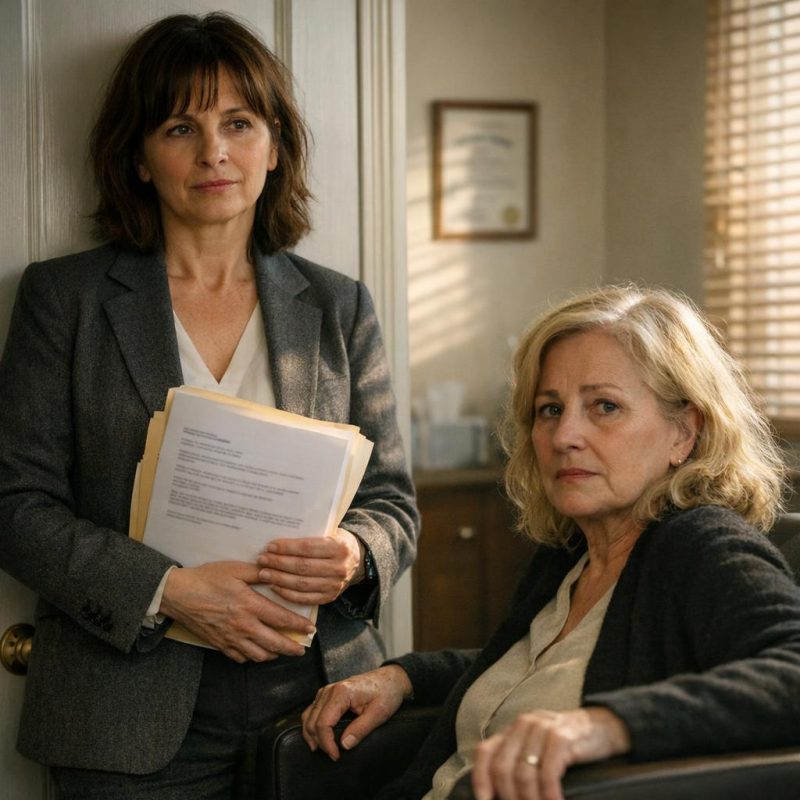 Image by RM AI
Not an Accident
I stayed in that consultation room after Dr. Reeves left, just sitting there with my hands folded in my lap, staring at the beige wall. The fluorescent lights hummed overhead, and somewhere down the hall a monitor was beeping steadily, rhythmically. Everything felt very distant and very close at the same time. Weeks or months, she'd said. Regular dosing. This hadn't been a sudden mistake, a pharmacy error, an accidental mix-up. Someone had been giving Frank the wrong medication consistently, deliberately, over a long enough period to cause the kind of deterioration we'd all witnessed. I'd spent months watching my husband decline, thinking it was age, thinking it was stress, thinking it was just one of those terrible things that happens to people. I'd felt helpless and sad and resigned. But this wasn't aging. This wasn't some cruel twist of fate. Someone had caused this. Someone had watched Frank struggle and continued whatever they were doing, day after day, week after week. My sadness was transforming into something sharper, hotter. I sat in that sterile room and let the truth settle over me—this wasn't an accident, this wasn't aging, this was something someone had done to Frank deliberately.
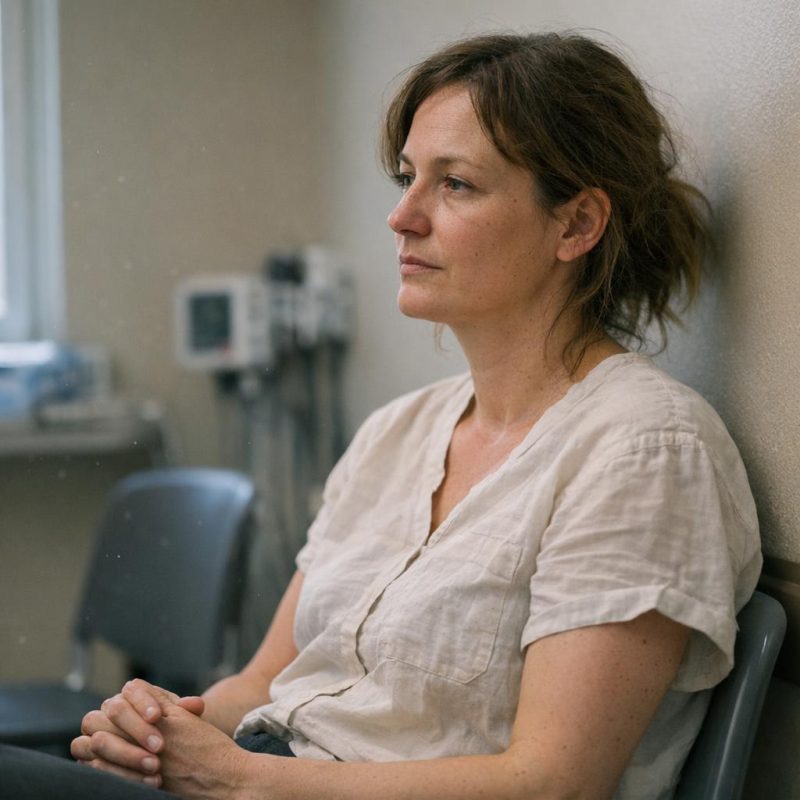 Image by RM AI
Claire's Warning
Claire met me in the hospital cafeteria later that evening, sliding into the booth across from me with two cups of terrible coffee. She'd seen Dr. Reeves's report, knew what the tests had shown. 'I've been doing this job for eighteen years,' she said quietly, wrapping her hands around the styrofoam cup. 'I've seen medication errors, I've seen family members who mean well but make mistakes. This isn't that.' I nodded, unable to speak yet. She leaned forward slightly, her voice low even though we were relatively alone. 'The medical evidence is solid, Patricia. We can prove what's in Frank's system, we can prove it shouldn't be there, we can prove it caused his symptoms. That's the easy part.' She paused, letting me absorb that. 'But understanding who did this and why—that's going to be harder. You'll need more than test results if you want to protect Frank going forward.' I knew she was right. Knowing what had happened wasn't enough. I needed to understand the full picture, the motivation, the plan behind it all. 'The medical evidence is clear,' Claire said quietly, 'but you'll need to understand why this happened if you want to protect Frank going forward.'
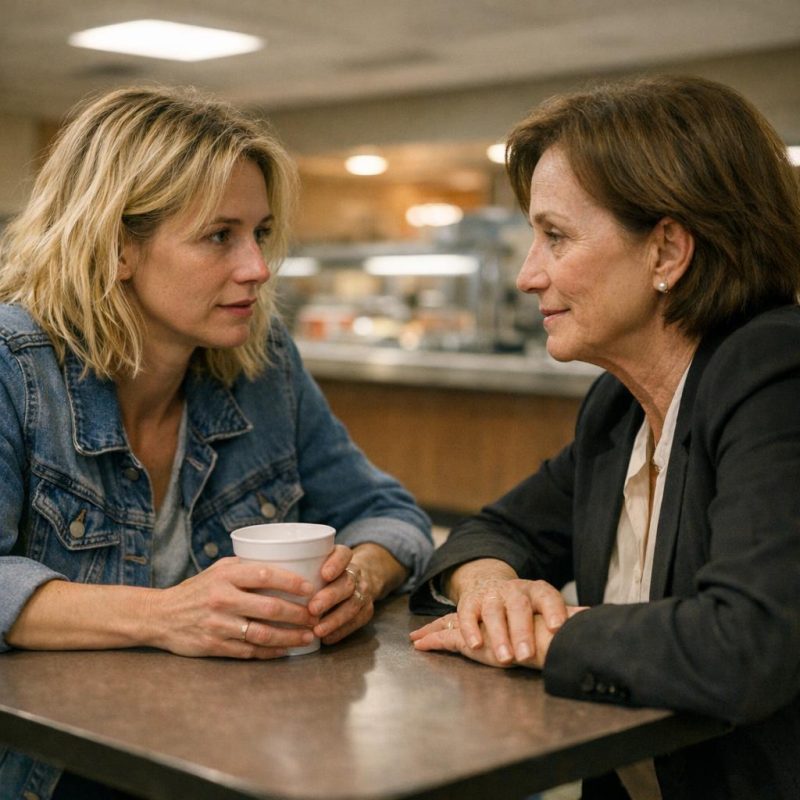 Image by RM AI
Checking Financial Records
That night at home, I sat at Frank's desk in the study we'd shared for thirty years. Our financial records were partly digital now, partly still in filing cabinets, a hybrid system that Frank had maintained meticulously. I opened his laptop—I knew his passwords, we'd never kept those things secret from each other—and started going through bank statements, investment accounts, business records. At first everything looked normal, the usual bills and deposits and transfers we'd been making for years. But then I started noticing transactions from the past few months, things I didn't remember discussing. Small transfers, mostly, moving money between accounts. Each one had a note attached: 'per Daniel's suggestion' or 'consolidating as discussed with Daniel' or 'simplifying accounts—Daniel.' They weren't huge amounts, nothing that screamed theft or fraud. But I hadn't authorized them. Frank, in his confused state, probably hadn't either, not really. I logged into the bank account Frank and I shared and saw several recent transactions I didn't recognize—transfers Daniel had helped arrange 'to simplify things.'
 Image by RM AI
Power of Attorney Documents
The leather folder was still in our living room where Daniel had left it days ago, tucked beside the couch with some magazines and a coffee cup. I'd seen it so many times I'd stopped really noticing it. But now I pulled it onto my lap and opened it carefully. Inside were the medical documents Daniel had shown me, the care coordination forms he'd said would help the hospital staff. But underneath those, tucked in a side pocket, were other papers. Legal documents, printed on that thick official-looking paper attorneys use. Power of attorney forms. Medical power of attorney. Financial power of attorney. I read through them slowly, my hands shaking slightly. They were already filled out completely, all the legal language in place, Daniel's name inserted in every relevant blank. The only thing missing was Frank's signature at the bottom, that single line that would transfer all control, all decision-making authority, all access to everything Frank had built over his lifetime. The papers were tucked in Daniel's folder, already filled out except for Frank's signature—documents that would give Daniel complete control over his father's finances and medical decisions.
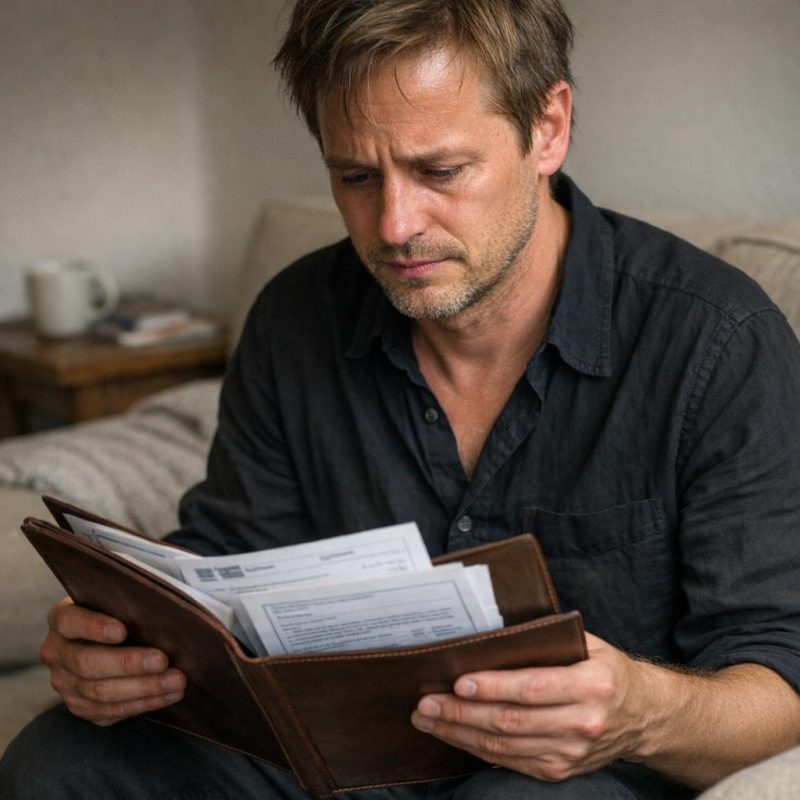 Image by RM AI
Laura's Visit
Laura showed up at the hospital the next afternoon with a cheerful smile and a container of homemade cookies for the nursing staff. She was always thoughtful that way, always bringing little gifts and remembering people's names. 'Daniel wanted to come but he had a work thing,' she explained, settling into the chair beside Frank's bed. 'He's been so stressed trying to balance everything—his job, helping you and Frank, keeping up with our own household.' She talked about how Daniel came home exhausted every night, how dedicated he was to making sure his father got the best care. I watched her carefully while she spoke, searching for any sign that she knew what I suspected, what the tests had revealed. But Laura's face showed nothing but genuine concern and that slightly overwhelmed expression of someone trying to support a spouse through a family crisis. She asked all the right questions about Frank's condition, offered to help with anything we needed, chatted about their kids and upcoming holidays. Either she was an exceptional actress or she truly had no idea what her husband had been doing. Laura chatted pleasantly about how hard Daniel had been working to help his parents, and I couldn't tell if she was complicit or completely unaware.
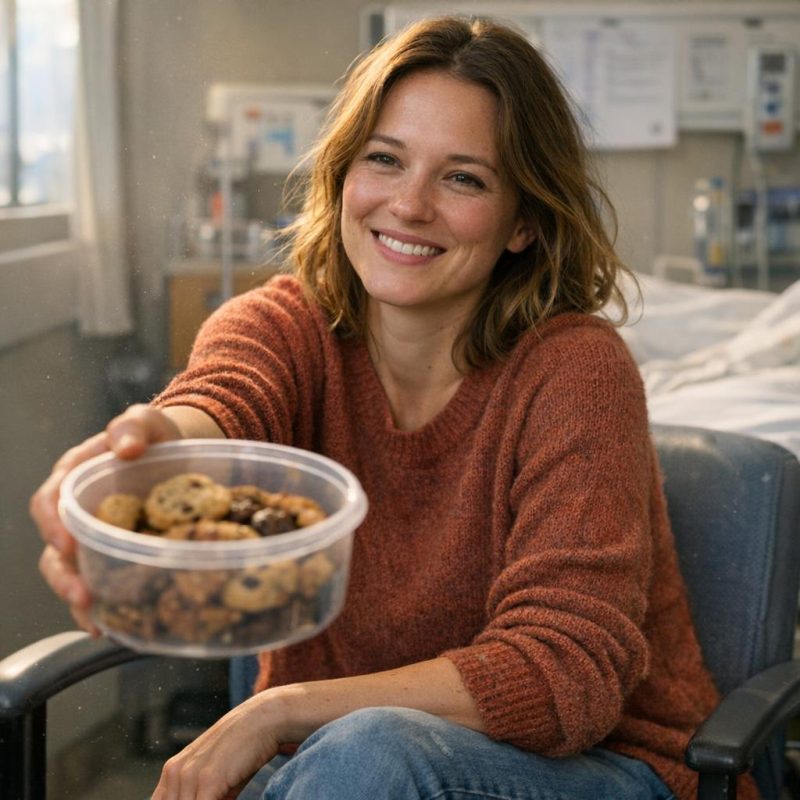 Image by RM AI
Frank's Brief Clarity
Frank had been sleeping most of the day when his eyes suddenly opened with a clarity I hadn't seen in weeks. He looked at me—really looked at me—and I felt my heart leap with hope. 'Patricia,' he said, his voice stronger than it had been in days. 'What happened? I feel like I've been in a fog.' I took his hand and told him about the medication mix-up, about how we'd caught it and fixed it. He nodded slowly, processing this information with the sharpness I remembered from before everything went wrong. 'Daniel's been helping with the pills,' he said, and I felt my stomach tighten. 'He said he was making things easier for you, organizing everything.' I kept my expression neutral and asked him what else Daniel had helped with. Frank's brow furrowed as he tried to remember. 'He brought paperwork a few times. Said it was just routine stuff, power of attorney updates or something.' The confusion flickered across his face again. 'I signed things. I think I signed things.' His grip on my hand tightened, and I could see the fear in his eyes as he realized how much he couldn't remember. Frank squeezed my hand and said, 'I don't remember telling Daniel he could change my accounts—did I say that? I don't remember.'
 Image by RM AI
Consulting a Lawyer
I made the call from the hospital cafeteria where I knew no one would overhear me. The family lawyer, Marcus Hoffman, had handled Frank's business matters for years, and I trusted him to be discreet. I told him everything—the medications, the financial changes, Frank's foggy memory, the timing of it all. Marcus listened without interrupting, which somehow made it harder to say the words out loud. When I finished, there was a long pause on the other end of the line. 'Patricia, what you're describing is serious,' he said carefully. 'If someone deliberately caused harm to obtain financial control, that's elder abuse at minimum, potentially more.' I felt relief wash over me—finally, someone was taking this seriously. But then he started asking questions. Could I prove Daniel knew the medications were wrong? Did I have evidence he intended harm rather than making an honest mistake? Were there witnesses to the financial transactions? Did Frank's doctors have documentation of the correlation? Each question felt like a door closing. I had pieces, fragments, suspicions that felt solid in my gut but looked flimsy when spoken aloud. The lawyer listened to everything and then asked the question I'd been dreading: 'Can you prove your son intended to harm his father?'
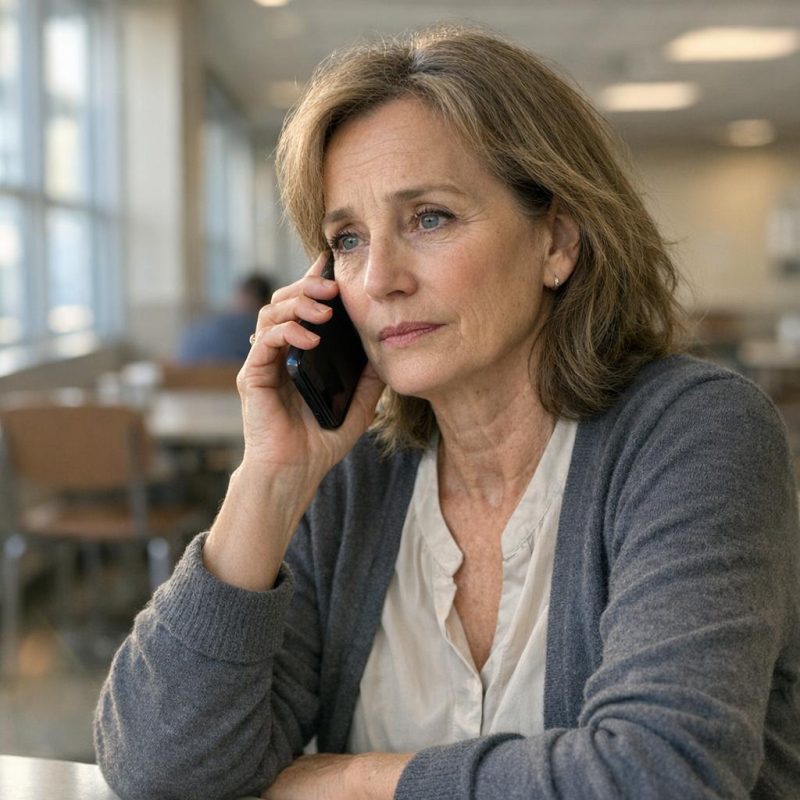 Image by RM AI
Daniel's Questions
Daniel showed up at the hospital that evening with coffee and that concerned expression he'd perfected. He asked about Frank's improvement, nodding thoughtfully as I explained the medication adjustment. Then his questions started getting more specific. 'So they figured out what was wrong?' he asked. 'What kind of tests did they run?' I kept my answers vague, saying the doctors were still evaluating things. He shifted in his chair, and I noticed the tension in his shoulders. 'Has anyone talked to you about Dad's mental state before he got sick? Like, whether he was competent when he made financial decisions?' The question felt calculated, like he was gathering intelligence. I told him the doctors were focused on his recovery right now, nothing else. Daniel nodded slowly, then asked who his attending physician was. When I mentioned Dr. Reeves had been consulting on his case, something flickered across his face. 'Dr. Reeves,' he repeated. 'I don't think I've met her. What's her specialty?' I said she was a neurologist helping coordinate his care. He pulled out his phone and made a note of her name, which struck me as odd. Daniel's eyes narrowed slightly when I mentioned Dr. Reeves, and he asked, 'What exactly has she been testing for?'
 Image by RM AI
The Pharmacy Records
I went to the pharmacy where Frank's prescriptions had been filled, the one three blocks from our house that we'd used for years. The pharmacist, Carol, remembered me immediately—we'd chatted dozens of times over the years. I explained that we were sorting out some confusion about Frank's medications and asked if she could show me the pickup history for his prescriptions. She pulled up his account on her computer, and I watched her scroll through months of transactions. 'Oh, your son has been so helpful,' she said. 'He's picked up quite a few of these for you.' I asked if she could print the records for me, saying our doctor needed them for Frank's medical file. The pages came out of the printer, and I forced myself to look at them calmly, not to react where anyone could see. There it was in black and white—dates, times, prescription numbers, and the name of who collected them. Daniel had picked up Frank's medications in March, twice in April, once in May, twice in June. I pulled out my phone and opened the notes I'd been keeping about when Frank's symptoms worsened. The pharmacy logs showed Daniel had picked up Frank's medications six times in the past four months—and the timing matched when the wrong pills appeared in the organizer.
 Image by RM AI
Emma Flies In
Emma walked into the hospital room looking worried and jet-lagged, her carry-on bag still over her shoulder. I'd finally called her the night before and told her she needed to come home, that there was more going on than I'd let on. She hugged me first, then went to Frank's bedside and took his hand. He was sleeping, looking more peaceful than he had in weeks. 'Mom, what's going on?' she asked quietly. 'Your message scared me.' Before I could answer, Daniel appeared in the doorway with Laura. He seemed surprised to see Emma, which told me he'd been keeping closer tabs on things than I'd realized. 'Emma! When did you get in?' he said, his voice warm but his body language tense. 'Nobody told me you were flying home.' Emma glanced at me, clearly picking up on something in the atmosphere. 'Mom called me last night,' she said simply. Daniel's expression shifted almost imperceptibly, and I saw him calculating what I might have told her. We all stood there in an awkward tableau around Frank's hospital bed, the machines beeping softly, the fluorescent lights humming overhead. Emma looked between me and Daniel across the hospital room and asked, 'What's going on that I don't know about?'
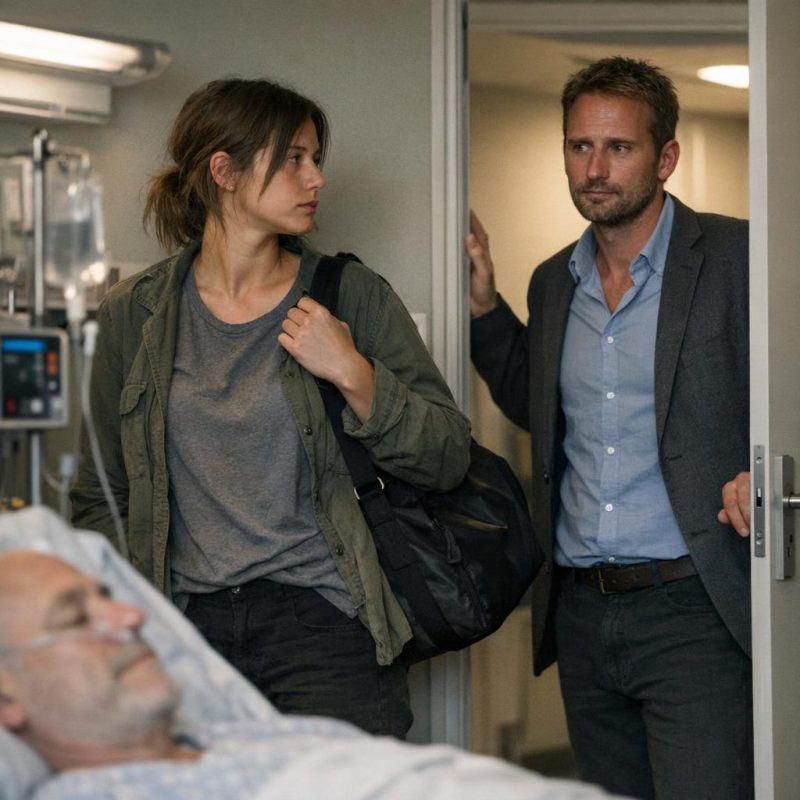 Image by RM AI
Telling Emma Everything
We sat in my car in the hospital parking garage where I knew we'd have privacy. Emma had suggested going somewhere for coffee, but I couldn't wait that long, couldn't risk running into anyone we knew. I'd brought the folder with everything I'd collected—the pharmacy records, my notes about Frank's symptoms, the timeline I'd constructed, the papers Dr. Reeves had given me about medication interactions. Emma watched me pull it all out with growing alarm. I started at the beginning, with the pill organizer and the wrong medications. I showed her the dates when Frank's confusion worsened and how they corresponded with Daniel's pharmacy pickups. I explained about the financial changes, the power of attorney, the timing of it all. My voice stayed steady until I got to the part about how systematic it seemed, how calculated. That's when I started crying, and Emma reached over and held my hand. She went through the documents herself, reading everything carefully, her expression moving from confusion to disbelief to something harder. She kept shaking her head like she could make it not be true. 'This can't be right,' she whispered. 'There has to be another explanation.' But I watched her look at the evidence again, and I saw the moment she understood. Emma stared at the documents spread across the table and whispered, 'He was making Dad sick on purpose? Our brother?'
 Image by RM AI
Confronting the Past
Emma and I sat in that parking garage for over an hour, talking through everything we knew about Daniel. 'When did he get like this?' she kept asking, and I didn't have an answer. We traced back through the years, looking for the moment things changed or the signs we'd missed. Emma brought up his divorce eight years ago, how bitter he'd been, how he'd blamed everyone else for the collapse of his marriage. 'He said Dad hadn't helped him enough financially,' she remembered. 'He was angry about that for months.' I thought about how Daniel had talked about money in recent years, always with an edge of resentment, always comparing himself to friends who'd inherited family businesses or gotten help with investments. There'd been a point in his thirties when he'd asked Frank to co-sign a business loan, and when Frank had declined, Daniel hadn't spoken to us for nearly six months. 'We said he was just stressed,' I told Emma. 'We made excuses.' She nodded, and I could see her going through her own inventory of moments she'd explained away. Emma reminded me of a time years ago when Daniel had borrowed money from Frank and never mentioned paying it back, and I realized we'd been making excuses for him for longer than I wanted to admit.
 Image by RM AI
Daniel's Explanation Attempt
Daniel agreed to meet us at a coffee shop near the hospital, just the three of us. He seemed calm when he arrived, ordering his usual black coffee and sitting down across from Emma and me with an expression of concern. 'I'm glad we're all talking,' he said. 'I know this has been stressful for everyone.' Emma and I had decided beforehand that we'd be direct, no games. I pulled out the pharmacy records and placed them on the table between us. Daniel glanced down at them and then back at me, his face unreadable. 'What are these?' he asked, though I could tell he knew exactly what they were. Emma spoke before I could. 'Why were you picking up Dad's medications?' Daniel didn't miss a beat. 'Because you asked me to help, Mom. You said managing everything was overwhelming.' He looked hurt, defensive. 'I was trying to take some of the burden off you.' I pointed to the dates, to the correlation with Frank's symptoms. 'These are the exact times when the wrong pills ended up in his organizer,' I said. Daniel shook his head slowly. 'I picked them up from the pharmacy and brought them to you. If something got mixed up, I don't know how that happened. Maybe Dad was confused and took the wrong ones.' He leaned forward, his voice earnest. 'I was trying to protect Dad from himself,' Daniel said, and the words sounded so reasonable—until I looked at the evidence laid out in front of me.
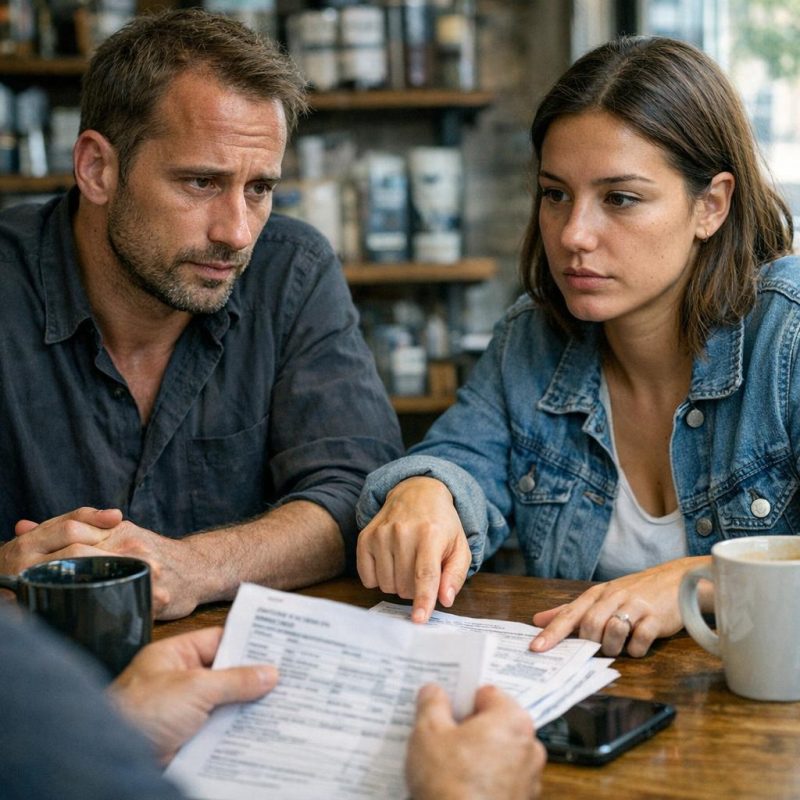 Image by RM AI
The Question of Intent
I couldn't let him just sit there with his reasonable-sounding excuses. Not anymore. 'Daniel,' I said, keeping my voice steady, 'did you know what those medications would do to your father?' Emma went still beside me. The coffee shop noise—the hiss of the espresso machine, the low chatter of other customers—seemed to fade into background static. Daniel looked down at his untouched coffee. He ran his finger around the rim of the cup, this small gesture that seemed almost childlike. Then he looked back up at me, and something in his face had changed. The defensive hurt was gone. 'Mom, I needed to understand what I was dealing with,' he said quietly. 'So yes, I looked into it. I researched the medications, what they did, what the side effects were.' My heart was pounding so hard I could feel it in my throat. 'And?' I asked. He leaned back in his chair, and there was this terrible calm in his expression. 'And I knew it would make him seem more confused,' he said, like he was discussing a science experiment rather than his own father. 'I knew exactly what would happen.' Emma grabbed my hand under the table. Daniel looked at me and said, 'I researched it—I knew it would make him seem more confused,' and in that moment, I understood that every symptom had been calculated.
 Image by RM AI
Why Frank Mattered Less
I wanted to stand up, to walk away, but I needed to hear the rest. I needed to understand how my son could sit across from me and admit this. 'Why?' I asked, and my voice cracked on that single word. Daniel sighed, like I was being difficult, like I was the one not seeing reason. 'Mom, you have to understand—Dad was already showing signs. Little things. Forgetting names, repeating himself.' He spread his hands on the table. 'It was only going to get worse. Alzheimer's, dementia, whatever it was going to be—it was coming.' I felt sick. 'So you decided to speed it up?' He flinched at my tone but recovered quickly. 'I decided to give us all a framework to work within. If we knew he was declining, we could make plans. Put protections in place. Make sure everything was handled properly before it got really bad.' The justification was so smooth, so practiced. Like he'd been rehearsing this conversation in his head for months. 'He's getting old, Mom,' Daniel said, and there was almost pity in his voice. 'I was just helping move things along so we could all have peace of mind sooner rather than later.'
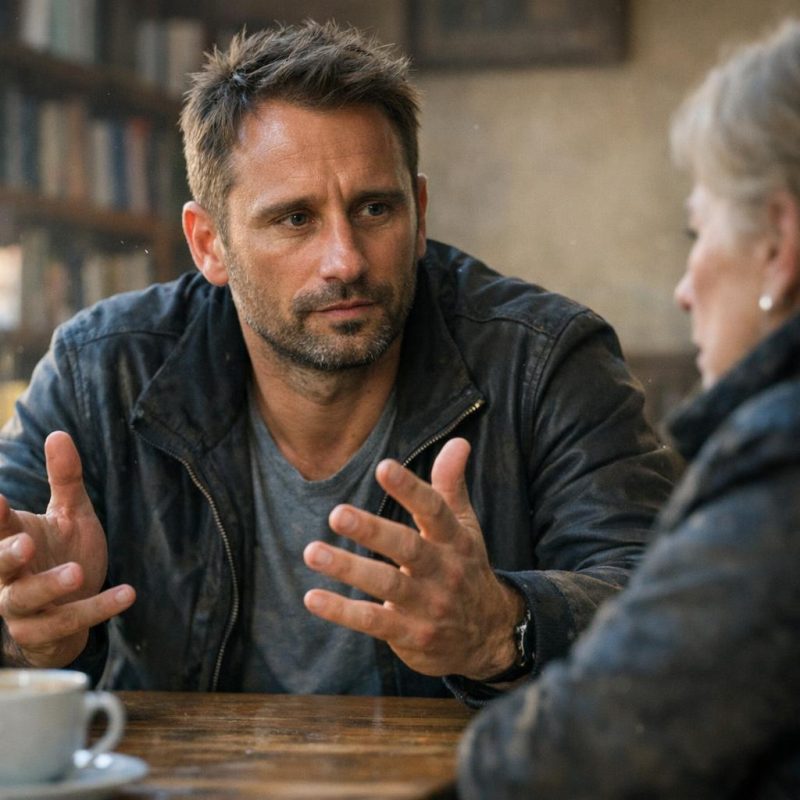 Image by RM AI
Following the Money
After that conversation, I couldn't sleep. I kept replaying Daniel's words, that casual dismissal of Frank's autonomy, his life. Emma had left that night looking shaken, promising to dig deeper into the financial records. I'd been looking at pharmacy receipts and medication records, but I hadn't followed the money itself. Not really. So I pulled out every bank statement, every financial document Frank and I had. I spread them across the dining room table and started tracing the 'simplifications' Daniel had recommended over the past months. The checking account he'd suggested we consolidate 'for easier management.' The savings transfer he'd arranged 'to get better interest rates.' The business account restructuring he'd handled 'to streamline Dad's bookkeeping.' One by one, I followed each transfer, each change. And the pattern was unmistakable. Every account that had been 'simplified' now required two signatures—mine and Daniel's. Every consolidation had moved money from accounts where Frank had sole control to ones where Daniel had access. The business account now listed Daniel as a co-signer 'in case of emergency.' Every 'helpful' reorganization had systematically reduced Frank's financial independence while increasing Daniel's control. Every 'simplified' account, every 'helpful' consolidation, led back to accounts where Daniel had signing authority and Frank had gradually less access.
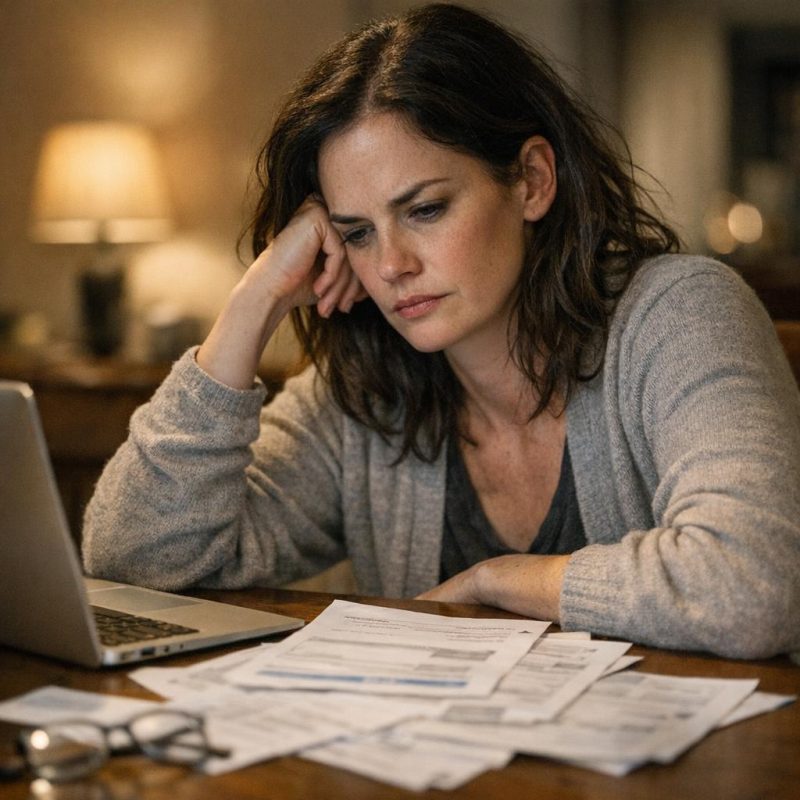 Image by RM AI
The Business Frank Built
Frank's business wasn't huge—a small consulting firm he'd built over thirty years, with three partners and a handful of clients. But it was his pride, his identity beyond being a husband and father. I'd never paid much attention to the day-to-day operations. That had always been Frank's domain. But now I started going through his email, his correspondence with the partners. And I found things that made my blood run cold. Emails from Daniel to Frank's business partners, dated over the last four months. 'I'm concerned about Dad's ability to manage the workload,' one read. 'He's been forgetting meetings and getting confused about client details.' Another: 'I think it's time we discuss transition planning. Dad's not getting any younger, and I'd hate to see the business suffer.' The partners had responded with concern, with offers to help. And Daniel had positioned himself as the solution. 'I've been learning the business,' he'd written. 'I could step in on an interim basis, just until Dad feels more capable.' The careful language. The loving concern masking pure ambition. I found emails where Daniel had contacted Frank's business partners, expressing concern about 'Dad's declining faculties' and offering to step in as interim manager.
 Image by RM AI
Laura's Complicity
Emma came over the next evening with her laptop, her face grim. 'Mom, you need to see this,' she said. She'd been going through Laura's phone records—apparently they shared a family phone plan, and Emma had access to the account details. She pulled up a series of text messages between Daniel and Laura. I read them with growing horror. 'Make sure you tell them he forgot the grocery list again,' Daniel had written to Laura three months ago. Laura's response: 'Already did. Mom looked really worried.' Another exchange: 'Doctor's appointment tomorrow. Remember, we're both concerned about his memory.' Laura: 'Got it. Consistent story.' There were dozens of them. Coordinating what they'd tell me, what they'd tell the doctors, how they'd present Frank's symptoms. Laura had known. She'd known what Daniel was doing and she'd actively helped him make it convincing. Emma's hands were shaking as she scrolled through more messages. 'She was in on it the whole time,' Emma said, and her voice was thick with tears. 'They planned this together.' Emma showed me text messages between Daniel and Laura where they discussed 'staying consistent with the story' about Frank's decline.
 Image by RM AI
How Long It Had Been Planned
I needed to know when this started. When my son had transformed from someone I thought I knew into someone capable of poisoning his own father. Emma suggested we check his computer—he'd left his old laptop at our house months ago when he'd upgraded. It felt like a violation to go through it, but I was past the point of respecting his privacy. The browser history was still there, undeleted, probably because he'd never imagined we'd look. And there it was. Search after search. 'Medications that cause confusion in elderly patients.' 'Side effects of wrong blood pressure medication.' 'Symptoms of cognitive decline.' 'How to tell if someone has dementia.' 'Early signs of Alzheimer's disease.' I checked the dates. The searches started in January, four full months before Frank's symptoms appeared. Four months before Daniel had offered to help organize Dad's medications. This wasn't a spontaneous decision. This wasn't a well-meaning mistake that spiraled out of control. This was planned. Researched. Deliberate. Daniel's browser history showed searches for 'medications that cause confusion' and 'symptoms of cognitive decline'—dated four months before he offered to help organize Dad's pills.
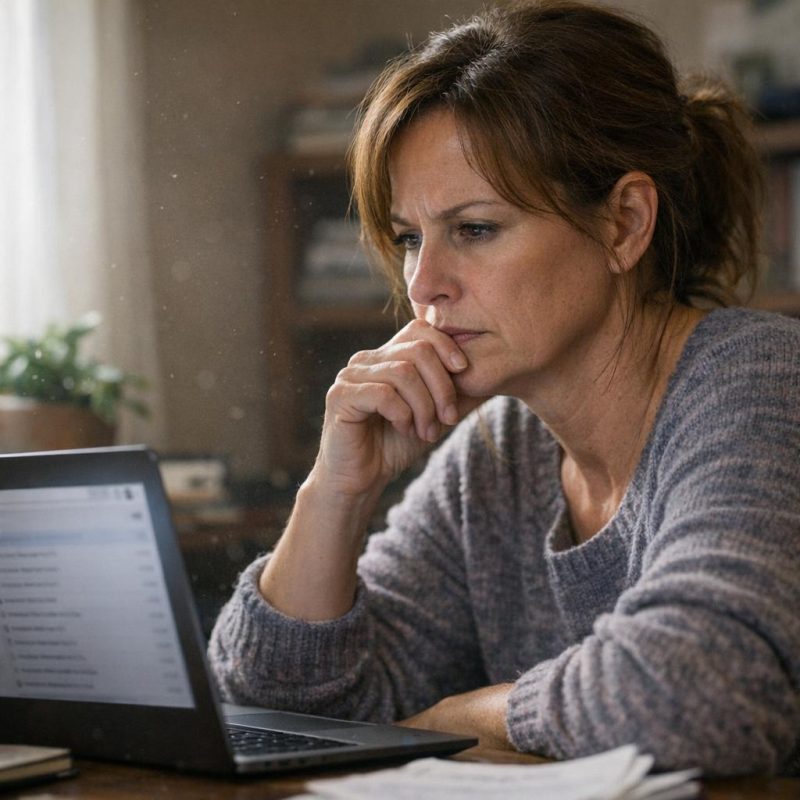 Image by RM AI
The Inheritance Daniel Expected
I was trying to understand what could possibly motivate someone to do this to their own father. Money seemed like the obvious answer, but Frank and I weren't wealthy. We were comfortable, sure, but there was no fortune waiting. Then Emma found something in Daniel's papers—a financial projection he'd created, titled 'Estate Planning Overview.' I stared at the numbers. Daniel had estimated Frank's business value at nearly half a million dollars. The actual value, according to the last assessment Frank had done, was closer to one-fifty. He'd estimated our savings and investments at over three hundred thousand. The real number was barely a third of that. Property values, retirement accounts, everything—Daniel had inflated every asset, seemingly pulling numbers out of thin air or making wild assumptions about growth and value. He'd been working from completely false assumptions. The irony was devastating. All of this—the medication swapping, the systematic destruction of his father's cognitive reputation, the financial maneuvering—had been driven by greed for money that didn't even exist. Daniel had assumed Frank's business and savings were worth nearly three times their actual value—he'd been poisoning his father based on a fantasy of wealth that didn't exist.
 Image by RM AI
The Full Pattern Revealed
Claire called and asked me to come to the hospital. She said Dr. Reeves wanted to meet with me, that they'd put together something I needed to see. I walked into that conference room feeling hollowed out, exhausted from weeks of revelation after revelation. Claire and Dr. Reeves had created a timeline on the whiteboard. Every medication pickup Daniel had made. Every symptom Frank had experienced. Every financial change, every business email, every coordinated lie. The pattern was undeniable when you saw it all laid out like that. 'Patricia,' Dr. Reeves began, her voice gentle but firm, 'Daniel systematically replaced Frank's correct medications with pills designed to produce specific symptoms—confusion, dizziness, memory problems.' Claire pointed to the timeline. 'Each substitution corresponded with a strategic goal. Financial control. Business takeover. Medical decision-making authority.' Dr. Reeves continued: 'He created symptoms that mimicked natural cognitive decline, then used those symptoms to justify taking control of every aspect of Frank's life.' I stared at the timeline, at the cold, calculated progression of it all. The premeditation. The patience. The absolute betrayal. 'This wasn't caregiving,' Dr. Reeves said quietly. 'This was a systematic campaign to manufacture dependency so he could control everything—and he nearly succeeded.'
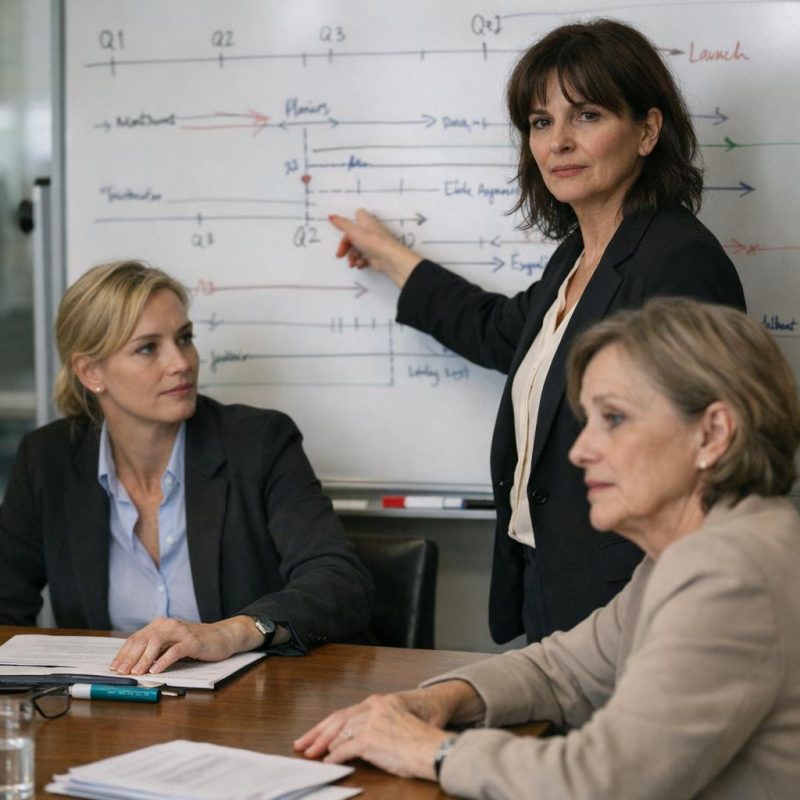 Image by RM AI
Deciding What to Do
Emma flew in the next day, and we sat in a law office downtown while our attorney laid out every option like they were items on a menu at a restaurant nobody wanted to be eating at. Criminal charges could mean jail time for Daniel—elder abuse, fraud, maybe even attempted murder if the prosecutor felt ambitious. Civil action would recover the money, probably, but it would drag on for years and cost a fortune we didn't have. Family resolution meant keeping it private, making Daniel pay restitution, cutting him off completely but sparing Frank the trauma of a public trial. Emma kept asking questions I couldn't even process. What would the burden of proof be? Would Frank have to testify? Could we guarantee Daniel would actually face consequences if we kept it in the family? Our lawyer was honest—criminal cases were hard, juries unpredictable, and Daniel could afford better representation than we could. But doing nothing wasn't an option either. I sat there thinking about what Frank would want, what would actually protect him versus what would just satisfy my anger. Emma looked exhausted, and I knew she was thinking the same thing I was—that we'd already lost so much, and every choice from here just determined what else we'd lose. The lawyer laid out our choices—criminal prosecution, civil action, or family resolution—and I realized that no matter which path we chose, our family would never be the same.
 Image by RM AI
Frank's Right to Know
Frank was awake more now, his eyes clearer than they'd been in months. The doctors said his recovery was progressing faster than they'd expected once they'd stabilized him on the correct medications. He still didn't know why he'd gotten so sick, what had actually happened to him. Claire had advised me to wait, to let him get stronger first, but I couldn't keep lying to him through omission. He deserved to know the truth about what his own son had done, even if that truth would devastate him. Emma thought I should wait longer. She worried it would set back his recovery, that the emotional toll would be too much. But I kept thinking about all those months Daniel had controlled the narrative, had kept Frank confused and dependent and isolated. If we kept the truth from him now, weren't we doing the same thing? Just with better intentions? I went to the hospital that afternoon and stood outside his room for probably ten minutes before I could make myself go in. He smiled when he saw me, that old familiar smile I hadn't seen in so long. We talked about nothing for a while—the food, the nurses, whether he'd be strong enough for physical therapy soon. I sat beside Frank's bed, watching him sleep peacefully for the first time in months, and knew I had to tell him that his own son had poisoned him—even though it would break his heart.
 Image by RM AI
The Confrontation
I told Frank everything the next morning, with Emma beside me for support. He didn't believe it at first—kept shaking his head, saying there must be some mistake, that Daniel wouldn't do that. So I showed him the evidence. The timeline. The medication substitutions. The financial transfers. The emails with Laura. Every piece of the puzzle Claire and Dr. Reeves had put together. I watched his face change as he absorbed it, watched him go from disbelief to confusion to something that looked like grief. Then he said he wanted to see Daniel, wanted to hear it from him directly. Emma tried to talk him out of it, but Frank was adamant. So we arranged it for that afternoon—Frank in his hospital bed, Emma and me on either side, and Daniel walking in looking wary and defensive before he even knew why we'd called him there. I didn't give him time to take control of the conversation. I laid out every single thing he'd done, every medication he'd switched, every symptom he'd caused, every lie he'd told. Daniel's face went pale, then red, then pale again. He started to speak, to deflect, but Frank cut him off. Frank looked at Daniel with tears in his eyes and asked, 'Why would you do this to me?' and Daniel had no answer that could justify what he'd done.
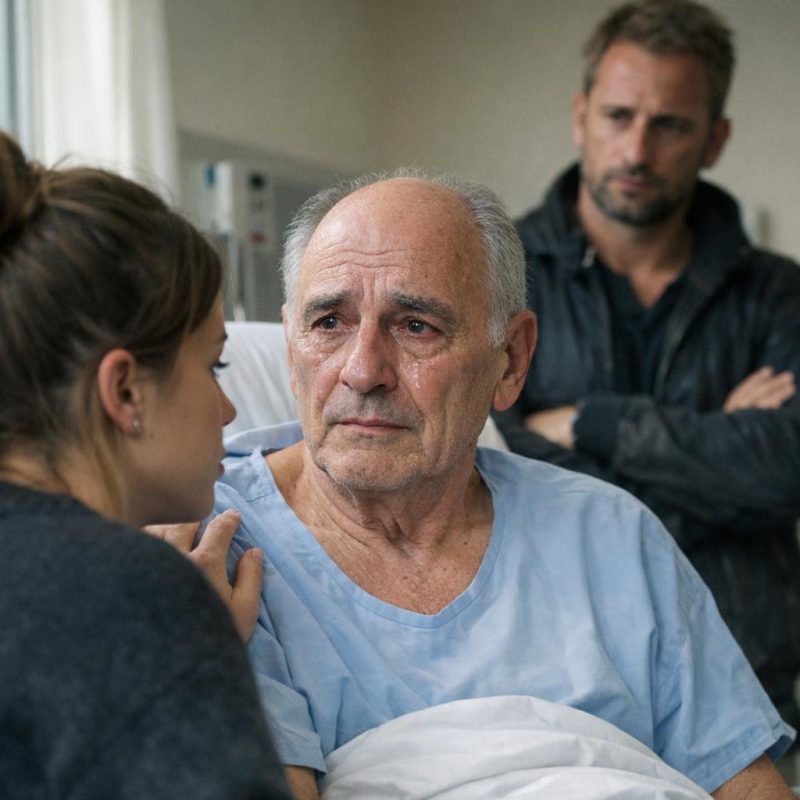 Image by RM AI
Daniel's Justifications Crumble
Daniel tried anyway. He started talking about the business, about how it was failing and how he'd had to act fast to save it. About how Frank wasn't capable of making good decisions anymore, how someone had to take charge. He said he'd been protecting the family's future, protecting all of us from Frank's decline. The words sounded rehearsed, like he'd been preparing this speech in case he ever got caught. Frank just stared at him, and I could see the disbelief in his eyes—not disbelief that Daniel had done it, but disbelief that Daniel actually thought these excuses meant anything. Emma was the one who finally exploded. She stood up and got right in Daniel's face and told him to stop insulting everyone's intelligence. 'You weren't protecting anything,' she said. 'You were stealing. You were poisoning Dad so you could take everything he built.' Daniel tried to pivot, said he'd always planned to make it right, that it was temporary, that we didn't understand the pressure he was under. But every justification just made it worse. Frank wasn't declining—Frank was being deliberately poisoned. The business wasn't failing until Daniel started embezzling. Every single premise of Daniel's defense was a lie he'd constructed to cover another lie. 'I did it for the family,' Daniel said, but Emma cut him off—'You did it for yourself, and you nearly killed Dad in the process.'
 Image by RM AI
Laura's Choice
Laura had been standing in the doorway for the last part of the confrontation, and I hadn't even noticed when she'd arrived. Daniel turned to her like she was a life raft, started to say something about how she understood, how they'd made these decisions together for the right reasons. But Laura's face was pale and closed off in a way I'd never seen before. She looked at Frank in that hospital bed, looked at the medication chart on the wall showing what had actually been prescribed versus what Daniel had been giving him. You could see her doing the math, realizing exactly what she'd been part of. 'Laura,' Daniel said, his voice almost pleading. 'Tell them. Tell them we were trying to help.' But Laura didn't say anything. She just kept staring at Frank, and I saw something crack in her expression. I don't know if it was genuine remorse or just self-preservation—the realization that she'd tied herself to someone who'd systematically poisoned his own father for money. She took a step back from Daniel, physically creating distance between them, and that small movement said more than words could have. Laura looked at Daniel and then at Frank, and I saw the moment she realized she couldn't defend what they'd done—but I didn't know if that meant she'd leave or just stop pretending.
 Image by RM AI
Reporting to Authorities
The next morning, I drove to the police station with every piece of evidence we'd compiled. Medical records showing the medication switches. Pharmacy logs proving Daniel had picked up prescriptions he never gave to Frank. Financial documents showing the unauthorized transfers and forged signatures. The timeline Claire and Dr. Reeves had created. All of it. The detective who took my statement was probably in her mid-forties, with tired eyes that suggested she'd seen plenty of terrible things people did to each other. But even she seemed shaken as she went through the documentation. She asked careful questions about Frank's condition, about Daniel's access, about how long it had gone on. I told her everything—the months of watching Frank decline, the growing suspicions, the nurse's question that started unraveling it all. She took notes methodically, her expression growing grimmer with each page she reviewed. When I finished, she sat back and looked at me directly. 'Mrs. Patterson,' she said, 'I want you to understand that cases like this can be difficult to prosecute. But what you've brought me here is extraordinarily well-documented.' She tapped the stack of evidence. The detective looked through the medical records, the pharmacy logs, the financial documents, and said, 'This is one of the clearest cases of elder abuse I've seen—we'll be filing charges.'
 Image by RM AI
Protecting Frank Going Forward
While the criminal investigation moved forward, our attorney helped me file for emergency protective orders. We needed to make sure Daniel couldn't get anywhere near Frank while he was still vulnerable and recovering. The legal paperwork was dense and exhausting—restraining orders, revocation of medical power of attorney, emergency guardianship petitions, demands for full financial accounting. Our lawyer was thorough, documenting every way Daniel had used his access to harm Frank and every reason that access needed to be immediately and permanently revoked. We went before a judge that same week. I brought the medical evidence, the detective's preliminary report, Dr. Reeves' professional assessment. The judge read through everything with a deepening frown, occasionally asking questions that made it clear she understood exactly what had happened. Daniel's lawyer tried to argue that this was a family dispute being blown out of proportion, that Daniel had been providing care in good faith. But the evidence was overwhelming. The judge didn't even take a recess to consider. She granted every protection we'd requested—restraining order, immediate revocation of all legal authority, prohibition from accessing Frank's medical or financial information. Daniel would face criminal charges, but in the meantime, he was legally barred from getting within five hundred feet of Frank or contacting him in any way. The restraining order was granted immediately, and for the first time in months, I knew Daniel couldn't get close enough to hurt Frank again.
 Image by RM AI
Frank's Recovery Begins
The change in Frank over the next few weeks was remarkable. Without the wrong medications suppressing his cognitive function and creating false symptoms, his mind began to clear like fog burning off in morning sunlight. The tremors that Daniel had attributed to Parkinson's faded. The confusion and memory problems that had been used to justify taking away his autonomy improved dramatically. His doctors were cautiously optimistic, saying that while some damage might be permanent, Frank was recovering function they'd thought was lost forever. He started recognizing inconsistencies in what he'd been told about his own condition, asking questions about gaps in his memory, piecing together how extensively he'd been manipulated. It was painful to watch him realize how much had been stolen from him—not just money and control, but months of his life spent in an artificially induced fog. But there was also something powerful about seeing him reclaim himself, seeing the sharp mind I'd always known re-emerge from the haze Daniel had created. One afternoon, he was sitting up in bed, working through a crossword puzzle that would have been impossible for him just weeks earlier. He looked up at me with clear eyes, more present than he'd been in months. Frank squeezed my hand and said, 'I feel like I'm waking up after a long nightmare,' and I realized that's exactly what had been done to him—he'd been trapped in a nightmare of Daniel's creation.
 Image by RM AI
The Cost of Betrayal
Emma came by the hospital one afternoon, and we sat together in the family lounge while Frank napped. She looked different—older somehow, like she'd aged years in the past few months. We talked about Daniel, about how we'd missed all the signs, about how someone we loved had been capable of something so calculating and cruel. 'Do you think he ever actually cared about Dad?' she asked, and I didn't have an answer that didn't break my heart. The damage Daniel had caused went so far beyond money. He'd stolen months of Frank's life, trapping him in a fog of confusion and fear. He'd made Frank doubt his own mind, convinced him he was losing himself to dementia when he was really just being systematically poisoned. He'd turned what should have been Frank's golden years—time we'd worked our whole lives to enjoy together—into a nightmare of medical crises and manufactured decline. And he'd shattered something in our family that I don't think could ever be repaired. How do you come back from knowing your own son was willing to slowly kill his father for money? How do you reconcile the boy you raised with the man who'd done this? Emma asked if I thought we'd ever be able to forgive Daniel, and I realized that wasn't even the right question—the question was whether Frank could ever feel safe again.
 Image by RM AI
A New Normal
The days after we learned the full truth were strange—quiet in a way that felt both peaceful and fragile. Frank continued to improve, his mind getting sharper with each passing day. We had to relearn how to be around each other without the constant undercurrent of medical crisis and confusion. I found myself watching him differently now, paying attention to things I'd started to take for granted. Was he really tired, or was something wrong? Was his forgetfulness normal for anyone our age, or a sign of something more serious? The hypervigilance was exhausting, but I couldn't turn it off. Frank noticed, of course. He noticed everything now that the fog had lifted. 'You're watching me,' he said one morning, not accusatory, just observant. I admitted I was scared, that I didn't trust my own judgment anymore after missing what Daniel had been doing for so long. He took my hand and said he understood, that he was scared too. We talked about going home, about what safety would look like now. We'd have to change so much—who had keys, who we allowed to visit, how we managed Frank's medical care. Frank told me he wanted to go home, to sleep in his own bed without wondering if someone was going to hurt him in the night.
 Image by RM AI
What Claire Saved
I asked Claire to meet me for coffee before Frank was discharged. We sat in a quiet corner of a café near the hospital, and I tried to find words adequate to thank someone who'd saved my husband's life. She'd noticed what everyone else—including me—had missed or dismissed. She'd paid attention when it would have been so much easier to accept the obvious explanation, to believe that Frank was just an elderly man in decline. 'You asked the question nobody else thought to ask,' I told her. 'You looked at what was actually happening instead of what we all assumed was happening.' Claire stirred her coffee, looking uncomfortable with the gratitude. She said she'd just been doing her job, that any good nurse would have noticed the inconsistencies. But that wasn't true. Plenty of medical professionals had seen Frank during those months and accepted Daniel's narrative without question. Claire had looked closer. She'd trusted her instincts even when they contradicted what a devoted son was saying. She'd cared enough to make the call that started unraveling everything. 'You saved his life,' I told Claire, and she shook her head—'I just asked questions. You're the one who had the courage to hear the answers.'
 Image by RM AI
Living with the Truth
We brought Frank home on a Tuesday morning in early autumn. The house looked the same, but everything felt different—like we were seeing it through new eyes, aware of all the ways it had been violated by someone we'd trusted. I'd changed the locks. I'd set up a medication system that only Frank and I could access. I'd made it clear to everyone in our lives that drop-in visits weren't welcome anymore, that we needed boundaries we'd never thought to establish before. Frank moved through the rooms slowly, reacquainting himself with a space that had become unfamiliar during his long hospitalization. We sat together in the living room, in the chairs where we'd sat thousands of times before, and it felt like both a homecoming and a completely new beginning. I'd learned something I could never unlearn: that the people who claim to care for you can be the ones who hurt you most, that authority and concern can be masks for control, that sometimes the loving thing—the only thing—is to question the stories that seem too convenient to be true. I held Frank's hand as we sat in our living room, and I realized that the man I'd trusted to protect our family had been slowly rewriting it—and now that I knew, I would never stop protecting Frank from people who believed they had the right to decide his future under the cover of care.
 Image by RM AI
KEEP ON READING

20 Weirdest Historical Objects in Museums
Check Out the Pickled Heart of a Saint. Museums carry…
By Rob Shapiro Oct 1, 2025
20 Scariest Missing Persons Cases in History
Eerie Disappearances. There's something uniquely unsettling about a person who…
By Christy Chan May 1, 2026
20 Greatest Ancient Athletes In History
Ancient Olympics. Long before modern stadiums and multimillion-dollar endorsements, athletes…
By Sara Springsteen May 1, 2026
10 Phenomenal Mythical Creatures & 10 That Are Just Plain…
Legends Both Majestic And Peculiar. Do you ever wonder why…
By Chase Wexler Oct 1, 2025
10 Presidents Who Never Served In The Military & 10…
Commanders And Civilians In Office. Power can rise from very…
By David Davidovic Sep 1, 2025
20 Wars That Could Have Ended Much Sooner Than They…
Wars That Lasted Far Too Long. Wars are often remembered…
By David Davidovic Sep 1, 2025