


The Notification
My name is Karen, I'm 57, and I thought I was finally free of my ex-husband's messes. That was until my phone pinged with a bank notification while I was enjoying my morning coffee. Usually, I ignore these alerts—just another reminder that my accounts exist. But something made me look twice at this one. The college fund for my daughter Jenna showed a balance of $42.42. I blinked hard, certain there was some glitch. That account should have over $60,000 in it—money that Rob and I had diligently saved since Jenna was in pigtails and missing front teeth. My hands trembled as I logged into the banking app, praying it was just a technical error. But the numbers didn't lie. $42.42. The entire fund had been drained three days earlier. My stomach dropped like I was on a roller coaster that suddenly plunged without warning. Jenna was starting college in just three months. We'd promised her she wouldn't have to worry about student loans. I called the bank immediately, my voice rising with each word as the customer service rep confirmed what I already feared—the money was gone, and it was completely legal. What I didn't know yet was that this wasn't just about missing money; it was the beginning of uncovering a con artist who had made my ex-husband her latest victim.
 Image by RM AI
The Empty Account
I called the bank with shaking hands, barely able to hold my phone. The customer service rep's voice was professionally detached as she confirmed what the app had already told me. "I'm sorry, Mrs. Wilson, but the funds were withdrawn on Monday at 2:17 PM." I felt like I was having an out-of-body experience. "There must be some mistake," I insisted, my voice rising. "That money is for my daughter's college tuition!" The woman paused, probably pulling up more details on her screen. "The withdrawal was authorized by the primary account holder, Robert Wilson." My ex-husband. The primary account holder. Those words hit me like a truck. We'd set up the account together, but in the divorce, I never thought to change the ownership structure. Why would I? We both wanted what was best for Jenna. "Is there anything that can be done?" I asked, already knowing the answer. "I'm afraid not. As a secondary contributor, you don't have withdrawal rights or the ability to dispute transactions made by the primary holder." I hung up and stared at the wall, trying to process what this meant. Sixty-two thousand dollars. Gone. Just like that. What was Rob thinking? And how was I going to tell Jenna that the future we'd promised her had just vanished into thin air?
 Image by RM AI
The Divorce Flashback
I sat on my couch, staring at my phone screen, as memories of our divorce washed over me like a cold shower. Rob and I had split nearly a decade ago after years of watching our bank account dwindle and our connection fade. We'd grown apart in that slow, painful way that doesn't have a villain—just two people who couldn't remember why they got married in the first place. But through all the tense mediation sessions and awkward exchanges of Jenna's overnight bags, we'd made one promise that felt sacred: her college fund would remain untouched. I remember sitting across from Rob at our kitchen table—the one I later sold on Craigslist—both of us signing papers that outlined our financial separation. "No matter what happens between us," he had said, looking me straight in the eyes, "Jenna's future comes first." I had believed him. We both cried that day, not for our marriage but for the family unit we couldn't preserve. Now, as I stared at that pathetic balance of $42.42, I wondered if that promise had meant anything at all. Had Rob's new wife, Kayla, convinced him that Jenna's future was less important than whatever they needed the money for? I grabbed my keys, determined to get answers. What I didn't know then was that I was about to uncover something far more calculated than a broken promise.
 Image by RM AI
The Confrontation Call
I called Rob seven times before he finally answered. When he did, his voice was barely recognizable—hollow and raspy, like he hadn't slept in days. "Karen, I..." he started, then trailed off. My patience had evaporated hours ago. "Where is Jenna's money, Rob?" I demanded, pacing my kitchen floor. "Sixty-two thousand dollars doesn't just disappear!" There was a long pause, punctuated only by what sounded like a stifled sob. "Kayla," he finally managed. "She said she was just moving it to get better returns." My blood ran cold as he explained how his perfect younger wife had convinced him to let her "streamline" their finances. How she'd promised to invest Jenna's college fund more aggressively. How she'd left him three weeks ago without warning, taking everything she could access. "I trusted her," he whispered, his voice cracking. "I never thought she'd touch Jenna's money." I gripped the counter to steady myself, rage and disbelief fighting for dominance. "You gave her access to our daughter's future?" I hissed. "Without even calling me?" What Rob said next made my knees buckle: "Karen, I think this wasn't the first time she's done this."
 Image by RM AI
The Confession
I sank into my kitchen chair as Rob's confession unfolded over the phone. His voice kept breaking, each word seeming to physically hurt him. "She had all these spreadsheets, Karen. She showed me how we could get an extra 3% return if we consolidated everything." I closed my eyes, trying to contain my fury. This woman—this Instagram-perfect yoga enthusiast who posted daily about 'manifesting abundance'—had methodically gained access to everything, including our daughter's future. "I signed the papers she put in front of me," Rob admitted, sounding utterly defeated. "She said it was just paperwork to transfer the funds to a better investment vehicle." I could picture him, always too trusting, signing without reading the fine print. The same way he'd signed our divorce papers, nodding along to whatever the mediator suggested. "When did you realize she was gone?" I asked, my voice barely above a whisper. "Three weeks ago. I came home and her closet was empty. No note. Just...gone." He paused. "And so was all the money." What he said next made my blood freeze: "Karen, I think I wasn't her first victim. I found something on her laptop before she took it—a folder with different IDs, different names."
 Image by RM AI
The Bank's Verdict
I spent the next day in a special kind of corporate purgatory—on hold with the bank, transferred between departments like a hot potato nobody wanted to handle. When I finally reached someone with actual authority, the branch manager's voice had that practiced sympathy that doesn't quite reach the eyes. "I understand your frustration, Mrs. Wilson, but legally our hands are tied." He explained in excruciating detail how the account structure worked—as if I needed a banking lesson while my daughter's future evaporated. "Since you were only listed as a secondary contributor and not a co-owner, Mr. Wilson had full legal authority to withdraw those funds." I argued until my throat was raw, pulling out every emotional appeal I could muster. "This money was for my daughter's education—her FUTURE!" The manager sighed. "I'm truly sorry, but from a legal standpoint, there's nothing we can do. The transaction was authorized by the primary account holder." When I hung up, I sat in my car in the bank parking lot and screamed until my lungs burned. How was I supposed to tell Jenna that her college fund—the one thing we promised would be there for her—had disappeared into the hands of a woman who'd planned this all along?
 Image by RM AI
The Sleepless Night
That night, I lay in bed staring at my popcorn ceiling, the same one I'd been meaning to scrape off since 2011. My mind raced through numbers like some deranged accountant. $62,000 gone. Three months until Jenna's first tuition payment. My savings: pathetic. My 401(k): laughable if I wanted to avoid the penalty. I pulled up my banking app for the fifth time that night, the blue light illuminating my exhausted face as I scrolled through accounts that couldn't possibly fill this gaping hole. At 2:17 AM—ironically the exact time Kayla had drained Jenna's account—I found myself Googling "home equity loans fast approval" and "selling plasma for money." The desperation felt suffocating. I even calculated how much I could get if I sold my car and took the bus to work for the next four years. Nothing added up. How was I supposed to tell my daughter that the future we'd promised her had been stolen by a woman who'd targeted her father like a heat-seeking missile? Around 4 AM, I finally broke down and texted Jenna's dad: "We need to talk about how we're going to fix this. Together." What I didn't expect was the immediate response that lit up my phone screen.
 Image by RM AI
The Second Wife
I remember the first time Rob introduced Kayla to us at Jenna's high school graduation. She was all white teeth and honey-blonde highlights, wearing a sundress that probably cost more than my entire outfit. "So nice to finally meet Jenna's mom!" she'd gushed, hugging me like we were long-lost sisters while I stood there awkwardly patting her back. After that, my social media became a window into their perfect life—Kayla in warrior pose on a beach at sunset, Kayla and Rob toasting with green smoothies, Kayla's inspirational quotes about "building your best life" superimposed over filtered photos. I'd roll my eyes and scroll past, thinking she was harmlessly annoying but maybe good for Rob after our divorce. He seemed happy, and that's all that mattered for Jenna's sake. Sometimes Kayla would even post about being a "bonus mom" to Jenna, which irritated me to no end, but I bit my tongue. How could I have known that behind those perfect Instagram squares and motivational mantras was a calculated predator? That every "live, laugh, love" post was just another brick in the facade she was building while planning to steal not just from Rob, but from my daughter's future? Looking back now, the red flags were waving frantically in the wind, but they were disguised as trendy prayer flags.
 Image by RM AI
The Lawyer Consultation
I sat across from Diane, my lawyer of fifteen years, watching her face grow increasingly grim as she flipped through the bank statements and account documents I'd brought. Her reading glasses slid down her nose as she examined the withdrawal slip with Rob's signature. "This is... troubling," she finally said, setting down the papers with the careful precision of someone who didn't want to show how angry they were. "Legally, you have options. We can file for fraud, possibly even criminal charges against this woman." I leaned forward, hope flickering. "So we can get Jenna's money back?" Diane's expression told me everything before her words did. "Karen, even if we win—and I believe we would—these cases take time. Sometimes months, often years." She tapped her calendar meaningfully. "Jenna's tuition is due in what, twelve weeks?" I nodded, feeling that familiar knot of panic tightening in my chest. "The courts don't move at the speed of college deadlines," she continued, her voice softening. "We should absolutely pursue this, but you need a parallel plan for Jenna's immediate future." As I drove home, Diane's parting words echoed in my head: "Karen, people like this woman don't just target one person—there might be others out there who've been through exactly what you're experiencing right now." Little did I know how prophetic those words would turn out to be.
 Image by RM AI
The Mysterious Message
I was sitting in my car outside Diane's office, still processing her sobering advice, when my phone pinged with a Facebook message notification. The name was unfamiliar—Trish Donovan—but her message made my blood run cold: 'I saw your name mentioned in a group called Financial Predator Alert. I think I know your ex's wife Kayla... except when I knew her, she went by Melissa Jenkins.' My hands trembled as I read on. 'She's done this before, Karen. Multiple times.' Trish explained that she'd been part of a support group for women who'd been financially scammed, and Kayla's face had appeared in several stories—always with different names, different cities, but the same modus operandi. I felt like I was in some bizarre crime show, except this was my actual life. 'I have screenshots, police reports, even a PDF of a complaint filed in Arizona,' Trish wrote. 'If you're willing to talk, I think I can help.' I sat there, engine still off, staring at my phone as message after message rolled in, each one revealing another piece of a puzzle I never knew existed. What Trish sent next made me realize that Kayla wasn't just an opportunistic gold-digger—she was something far more calculated and dangerous.
 Image by RM AI
The Pattern Emerges
I met Trish at a quiet corner table in Starbucks, clutching my latte like it was a life preserver. Part of me still thought this might be some elaborate scam itself, but desperation makes you do crazy things. "I've been tracking her for almost two years," Trish said, sliding her iPad across the table. What I saw made my stomach drop. Screenshots of social media profiles—all with Kayla's face but different names. Melissa Jenkins in Phoenix. Amber Collins in Denver. Each profile showed the same pattern: meet older divorced man, whirlwind romance, marriage, financial "consolidation," then—poof—gone with everything. "This complaint was filed in Arizona three years ago," Trish explained, showing me a legal document where a man described losing $78,000 to 'Melissa.' The details were eerily familiar—the investment promises, the paperwork, the sudden disappearance. I felt physically ill as I scrolled through more evidence. This wasn't just Rob making another bad choice. This was calculated. Professional. "How many...?" I couldn't finish the question. "At least five that we know of," Trish replied quietly. "She's good at covering her tracks, but she always follows the same playbook." As I stared at the faces of other victims—men who looked so much like Rob it was almost comical—I realized we weren't just dealing with a gold-digger. We were dealing with a predator who had turned financial destruction into an art form.
 Image by RM AI
The Second Confrontation
I drove to Rob's house the next day, Trish's folder of evidence tucked under my arm like a bomb I was about to detonate. When he opened the door, he looked like he'd aged a decade—unshaven, dark circles under his eyes, wearing the same Northwestern sweatshirt he'd had since college. "I need to show you something," I said, brushing past him into the kitchen we once shared. I spread out the screenshots, the complaints, the multiple identities across his kitchen table. "This is who you married, Rob." I watched the color drain from his face as he flipped through each page, his hands trembling. "Oh my God," he whispered, collapsing into a chair. "She said she wanted to have a baby with me." His voice cracked. "She talked about helping Jenna through grad school, about building a future together." He looked up at me, tears streaming down his face. "It was all a lie, wasn't it? Every single word." I nodded, feeling a strange mix of vindication and heartbreak. This man who had once been my husband, the father of my child, had been systematically dismantled by a professional con artist. "Rob," I said, placing my hand on his shoulder, "we need to talk about what happens next, because what Kayla did to you wasn't just cruel—it was criminal. And from what I've learned, we're not her first victims, and if we don't stop her, we certainly won't be her last."
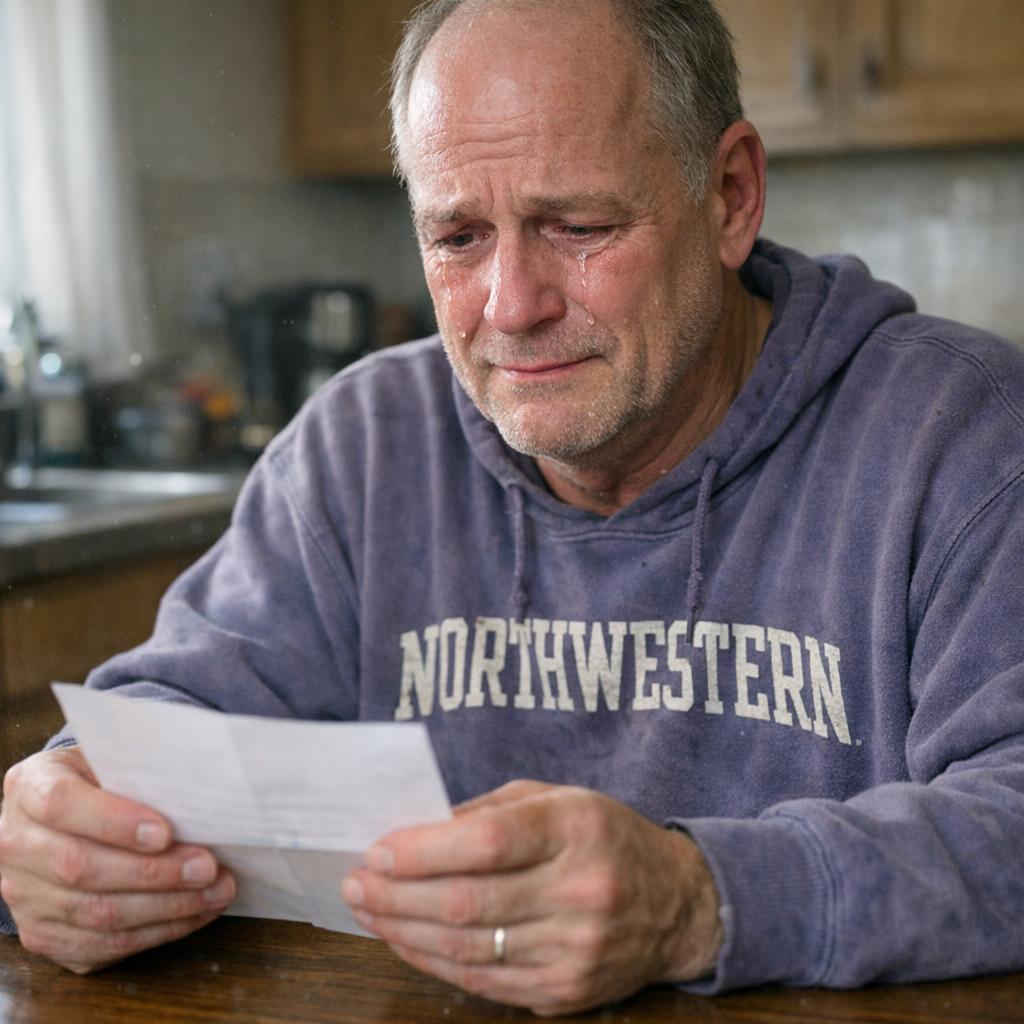 Image by RM AI
The Private Investigator
I never thought I'd be the kind of person who hires a private investigator, but desperate times call for desperate measures, right? After meeting with Trish and seeing the mountain of evidence against Kayla, I made the hardest financial decision since my divorce—I drained my emergency fund, the one I'd built up for things like surprise root canals or car repairs, not tracking down con artists. The PI's office looked nothing like the film noir scenes I'd imagined—just a practical space with filing cabinets and a desk that had seen better days. Mr. Reeves, a former police detective with salt-and-pepper hair and reading glasses that hung from a chain around his neck, listened intently as I laid out our situation. He examined Trish's documents with the calm efficiency of someone who'd seen it all before. "This is actually quite helpful," he said, tapping the folder. "She's good, but they all leave breadcrumbs." Before I left, he looked me straight in the eyes. "I'll find her, Mrs. Wilson. People like this—they think they're smarter than everyone else. That's usually their downfall." I wrote him a check that made my stomach clench, wondering if I was just throwing good money after bad. What I didn't realize then was that Mr. Reeves would find Kayla much faster than any of us expected—and what he discovered would change everything.
 Image by RM AI
The College Countdown
I sat across from Ms. Patel, the financial aid counselor at Jenna's university, clutching a folder of bank statements and legal documents like they were some kind of shield. The sympathy in her eyes was genuine, but it didn't change the facts. "I understand your situation, Mrs. Wilson, and it's truly heartbreaking," she said, her voice soft but practical. "But our emergency funds for this year have already been allocated." She slid a pamphlet across her desk—"Alternative Financing Options"—like that would somehow replace $62,000 stolen by a professional con artist. I thanked her anyway, because what else could I do? Walking across the sun-drenched campus afterward, I watched students lounging on the quad, their futures still intact, while I mentally calculated the impossible math problem in my head. Seventeen days. That's all we had until Jenna's tuition deposit was due. Seventeen days to come up with money that had taken us seventeen YEARS to save. I sat on a bench and pulled out my phone, creating a spreadsheet titled "Hail Mary Options" that included everything from selling my car to begging my parents to remortgage their retirement condo. What I didn't know then was that Mr. Reeves was about to call with news that would change everything—and that Kayla's carefully constructed house of cards was already beginning to collapse.
 Image by RM AI
The First Lead
My phone rang at 6:42 AM. I fumbled for it, heart racing when I saw Mr. Reeves' number. "Mrs. Wilson, I've got something," he said, his voice carrying that mix of professional detachment and excitement that told me he'd found a real lead. He explained that Kayla—or whatever her real name was—had operated under at least three different identities in the past five years. "It's always the same pattern," he said. "She finds divorced men in their 50s, usually with assets or college funds for their kids. She love-bombs them, pushes for marriage within months, then consolidates finances before vanishing." I sat on the edge of my bed, still in my pajamas, as he detailed how he'd cross-referenced social media accounts and found a distinctive lotus flower tattoo on her ankle that appeared in photos under different names. "I've got a promising lead in Chicago," he continued. "Someone matching her description but calling herself 'Samantha Holt' posted about 'healing after toxic relationships' just three days ago." He paused. "And Mrs. Wilson? The geotag shows she's living in a luxury high-rise downtown." I gripped the phone tighter, rage and hope colliding in my chest. "How soon can you confirm it's her?" I asked, already calculating how quickly we could get to Chicago if needed. His answer made my blood run cold: "That's the thing—she's not just hiding. She's already setting up her next target."
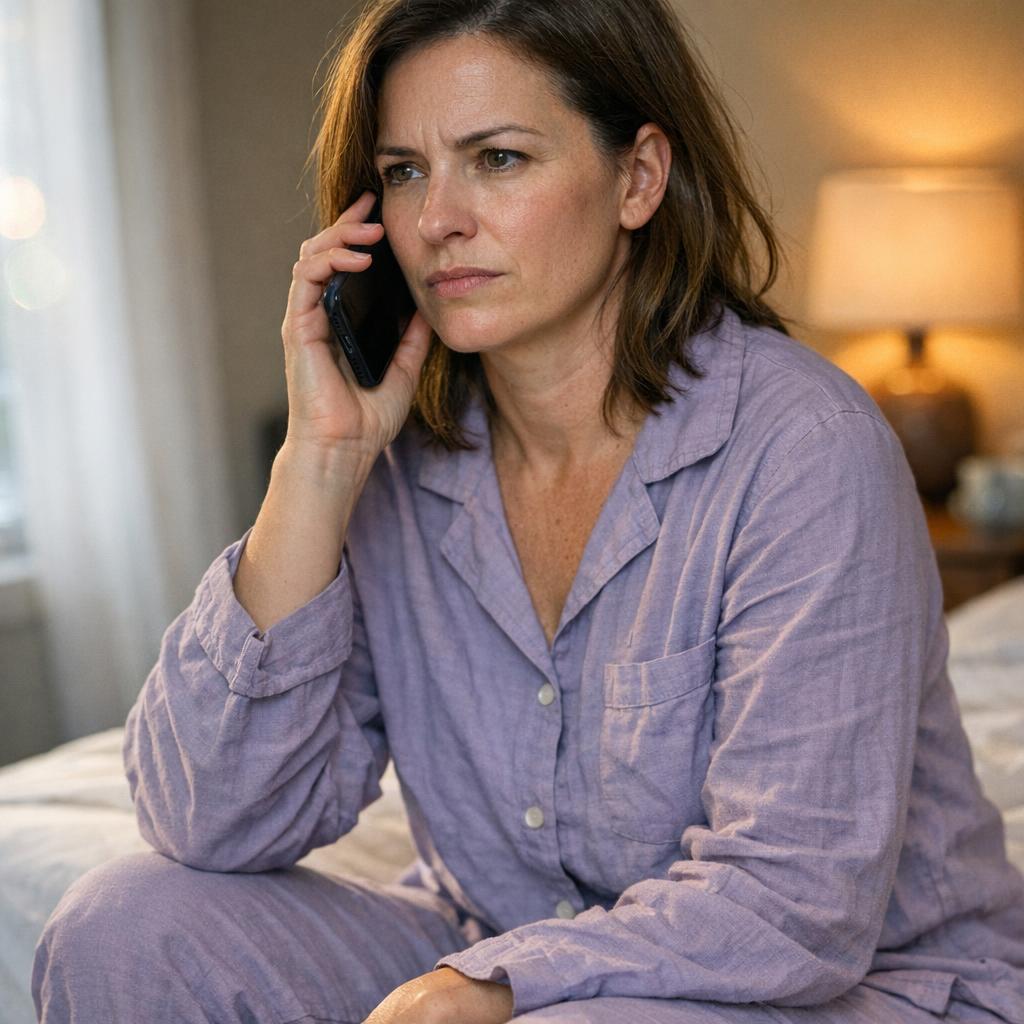 Image by RM AI
The Support Group
The next evening, Trish added me to a private Facebook group with an innocuous name: "Financial Freedom Sisters." But this was no investment club. As I scrolled through the posts, my stomach knotted tighter with each story. "I thought I'd found my soulmate at 52," wrote a woman named Deborah. "Instead, I found someone who'd been planning to take my inheritance from day one." Another post showed a smiling couple on vacation—the woman's face blurred out, the man's expression carefree. The caption read: "Three days after this photo, he emptied our joint account and disappeared." I recognized Kayla's tactics everywhere—the whirlwind romance, the strategic financial "merging," the sudden disappearance. These women weren't just victims; they were survivors who'd rebuilt their lives after being systematically dismantled by people they trusted. I stayed up until 2 AM reading their stories, tears streaming down my face as I realized how calculated Kayla's approach had been. "She's not an opportunist," I texted Trish. "She's a professional." Trish's response came immediately: "And professionals leave patterns. That's how we're going to catch her."
 Image by RM AI
The Breakthrough
Mr. Reeves called me on a Tuesday morning, and I nearly spilled my coffee when he said, "We found her, Mrs. Wilson." My hands shook as he explained that Kayla—now going by Samantha Holt—was living in a gleaming high-rise in downtown Chicago with floor-to-ceiling windows and a doorman. The PI had photos of her climbing into a leased Mercedes, shopping at high-end boutiques, and even screenshots from her new Instagram where she posted about "healing from narcissistic relationships" and "finding her authentic self." The irony would have been laughable if it weren't so infuriating. "The good news," Mr. Reeves continued, "is that we've established a clear pattern. She's used the same tactics in at least three states, always targeting men with college funds or retirement savings." He'd compiled a dossier connecting all her identities—the tattoo, the signature scam pattern, even her handwriting on various documents. For the first time in weeks, I felt something other than despair. "So we can prove it was fraud?" I asked, my voice barely above a whisper. "Mrs. Wilson," he replied, "we can prove it was her career." What he showed me next would change everything about our case—and potentially bring down Kayla's entire operation.
 Image by RM AI
The Legal Strategy
I spread everything across Diane's desk like I was laying out evidence for a murder trial—Trish's documents, Mr. Reeves' PI report, bank statements, screenshots of Kayla's multiple identities. Diane's eyes widened as she flipped through page after page. "Karen, this is the clearest case of intentional fraud I've seen in years," she said, tapping the folder with her pen. "We have a solid case here." For a moment, hope fluttered in my chest—until she continued. "But prosecuting this will take time. Months, possibly longer." My stomach dropped. "We don't have months. Jenna's tuition deposit is due in 19 days." Diane nodded grimly. "That's why we need to pursue two tracks simultaneously—legal action against Kayla and immediate financial solutions for Jenna." She outlined our options: emergency loans, payment plans, even crowdfunding. I felt my throat tighten. How had I gone from planning my daughter's college send-off to begging strangers on the internet? "The good news," Diane added, leaning forward, "is that with this much evidence, we might be able to freeze Kayla's assets before she moves them again." What she said next made me realize this wasn't just about getting Jenna's money back—it was about stopping Kayla from destroying anyone else's future.
 Image by RM AI
The Truth Revealed
I finally sat Jenna down at our kitchen table, the same one where she'd done homework since elementary school. 'Honey, there's something I need to tell you about your college fund.' Her face fell as I explained everything—Rob, Kayla, the empty account. She cried for about an hour, curled up on the couch where I held her like when she was little. But then something shifted. She wiped her eyes, grabbed her laptop, and started Googling scholarships. 'Mom, look—this community college has a transfer program,' she said, her voice still thick with tears. 'I could do two years there and then finish at State.' I watched her methodically creating spreadsheets of options, and my heart shattered in a whole new way. This practical, immediate pivot to Plan B—this wasn't what I wanted for her. I'd worked two jobs when she was small, missed school plays and parent-teacher conferences, all so she'd never have to make these kinds of sacrifices. I'd promised myself my daughter would never have to settle. Now here she was, at eighteen, already learning to downsize her dreams because of adults who had failed her. What killed me most wasn't her tears—it was how quickly she accepted that this was just how life worked sometimes.
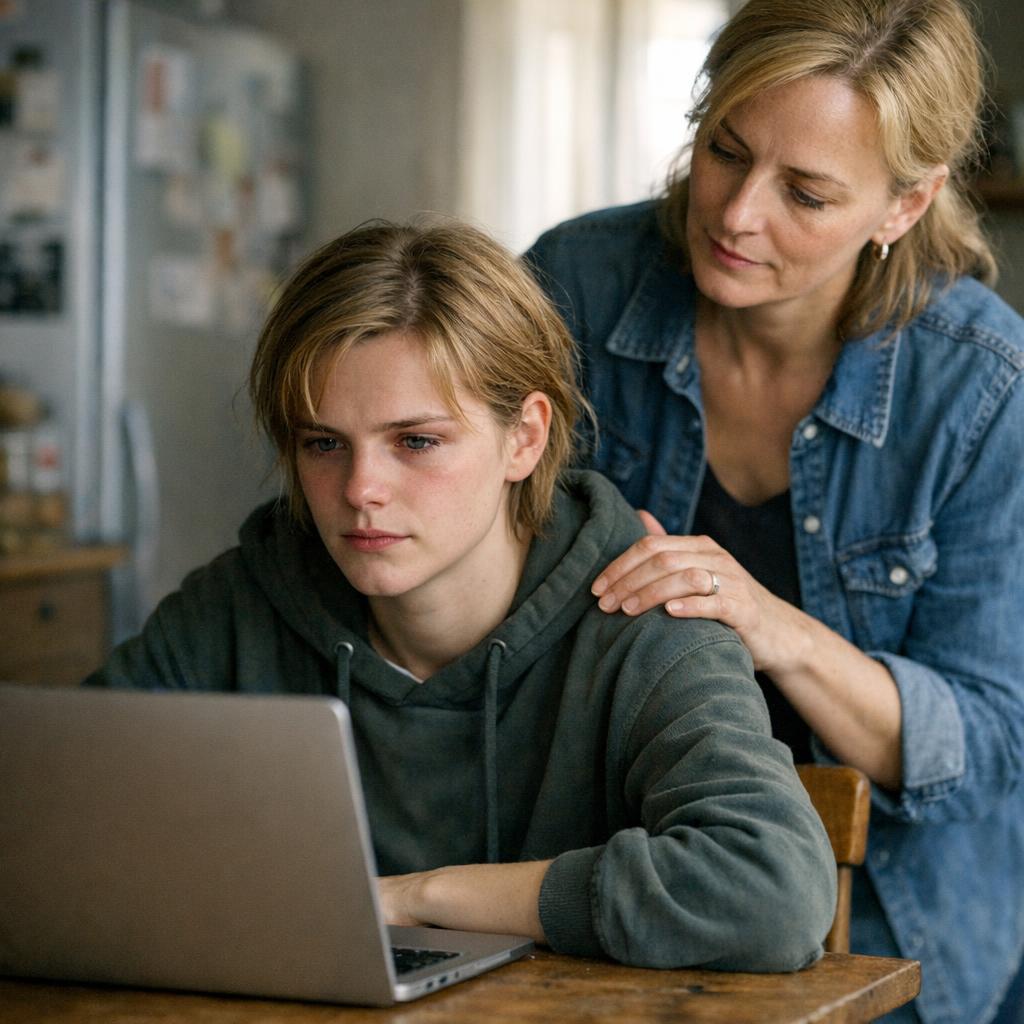 Image by RM AI
The Fundraiser
I never thought I'd be the person asking strangers for money online. The very idea made my stomach churn with embarrassment. But there I was, sitting at my kitchen table at 11 PM, staring at GoFundMe's blank template while Jenna leaned over my shoulder. "Mom, focus on the fraud angle, not like we're begging," she advised, her practical nature shining through despite everything. We crafted the post together, keeping it factual—explaining the systematic fraud, the police reports, the pattern of victims. I set our goal at just enough to cover her tuition deposit, not daring to hope for more. "Are you sure about this?" I asked before hitting publish. Jenna nodded, squeezing my shoulder. "What's the worst that could happen? Nobody donates and we're exactly where we are now." With a deep breath, I clicked the button, then closed my laptop, unable to watch. I felt exposed, like I'd just hung our family's dirty laundry on a digital clothesline for the world to see. What I didn't realize was that by morning, our modest fundraiser would become something I never expected—and that women I'd never met were about to change everything.
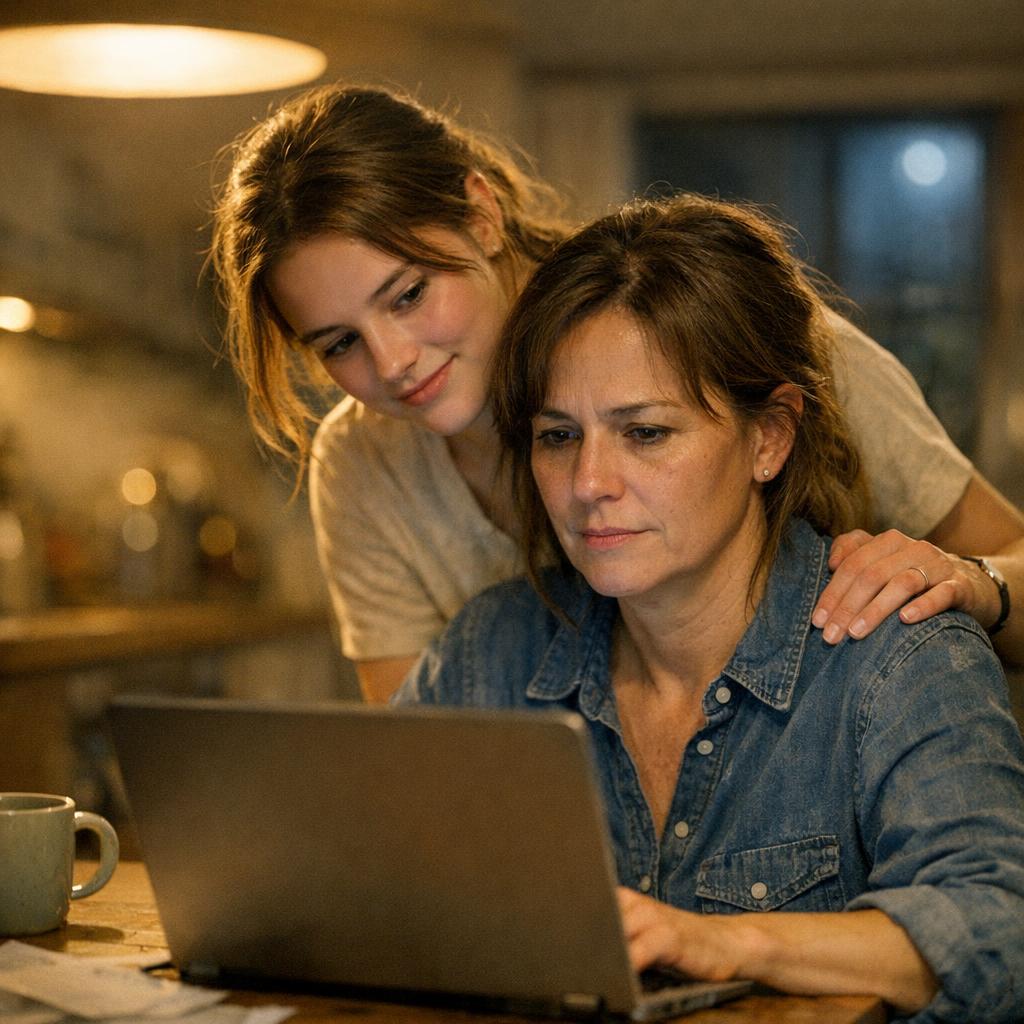 Image by RM AI
The Unexpected Solidarity
I woke up the next morning to my phone buzzing non-stop. When I finally checked it, I gasped. Our fundraiser had been shared over 200 times overnight. Trish had posted it in the 'Financial Freedom Sisters' group, and from there, it spread like wildfire. Women I'd never met were donating $5, $10, $20—whatever they could spare. 'This happened to my cousin last year,' one comment read. 'I've been exactly where you are,' wrote another. 'Taking down scammers one donation at a time,' someone else posted with a heart emoji. I sat at my kitchen table, coffee growing cold, as I scrolled through dozens of messages from strangers who understood our pain without explanation. By noon, we'd reached 40% of our goal. By dinner, we were at 75%. I called Jenna at work, my voice breaking as I told her. 'Mom, are you serious?' she whispered, and I could hear her trying not to cry in the break room of the coffee shop. That night, as the total climbed past what we needed for the deposit, I realized something profound: in trying to expose Kayla's fraud, we'd accidentally tapped into a network of women who were tired of seeing predators walk away unscathed. What started as a desperate plea for help was becoming something much bigger—a rallying cry for justice that none of us saw coming.
 Image by RM AI
The Viral Story
I never expected our story to go beyond a desperate fundraiser, but three days after posting it, I got an email from Olivia Chen at 'Women Forward,' a popular blog with millions of readers. 'Your experience highlights a growing epidemic of financial predators targeting blended families,' she wrote. 'Would you be willing to share your story?' The interview was emotional—I cried twice—but Olivia handled it with such care, focusing not just on Kayla's deception but on the systemic issues that made her scam possible. When the article went live with the headline 'The College Fund Heist: How One Mother Fought Back,' my phone nearly exploded. The notifications came so fast that my phone actually got hot in my hand. 'This happened to my mother,' one comment read. 'I lost my house to someone like this,' wrote another. Our fundraiser jumped from covering Jenna's deposit to potentially funding her entire first year. Even more valuable were the messages from attorneys offering pro bono help and financial advisors suggesting ways to secure whatever money we recovered. Rob called, his voice shaking. 'Karen, people from my office are donating. My boss just gave a thousand dollars.' I sat on my porch that night, scrolling through hundreds of comments, realizing that our private nightmare had become a public rallying cry. What I didn't know then was that someone else was reading that article too—someone who had information about Kayla that would change everything.
 Image by RM AI
The Nonprofit Connection
The morning after our story went viral, I received an email from a woman named Eleanor who had donated to our fundraiser. 'I work with the Second Chance Education Foundation,' she wrote. 'We specialize in emergency funding for students whose college plans are derailed by fraud or financial catastrophe.' At first, I was skeptical—after Kayla, I'd developed a healthy suspicion of unexpected saviors. But when I researched the organization, I found they were legitimate, with a decade-long track record of helping students in crisis situations. Eleanor and I spoke on a video call the next day, where she walked me through their streamlined application process designed specifically for time-sensitive cases like Jenna's. 'We can't replace everything that was stolen,' she explained gently, 'but combined with your fundraiser, we might be able to cover enough for Jenna to start as planned.' I filled out the application that night, my hands trembling as I attached the police reports and bank statements—documents that had become as familiar to me as family photos. Three days later, Eleanor called with news that made me sink to my kitchen floor in tears: the foundation had approved an emergency grant that, together with our fundraiser, would cover Jenna's first year completely. For the first time since seeing that $42.42 balance, I allowed myself to believe that my daughter's future hadn't been stolen after all. What I didn't realize was that this was just the beginning of a chain reaction that would bring Kayla's entire operation crashing down.
 Image by RM AI
The Goal Reached
I stared at my laptop screen, blinking back tears as the fundraiser total kept climbing. $15,000... $25,000... $38,000. Within just seven days, we'd not only reached our goal but surpassed it by thousands. I refreshed the page again, watching as another $50 donation appeared with the comment: "From one mom who's been there to another." My kitchen table—the same one where I'd first discovered the empty account—was now covered with printouts of supportive messages and donation notifications. When Jenna came home from her shift at the coffee shop, I couldn't even speak. I just turned the laptop toward her. "Mom," she whispered, her eyes widening. "Is this real?" I nodded, and she collapsed into the chair beside me, both of us breaking into sobs that were equal parts relief and disbelief. She threw her arms around me, burying her face in my shoulder like she used to do as a little girl. "We did it," I kept saying, though I knew it wasn't just us—it was hundreds of strangers who'd decided that Kayla wouldn't win this round. That night, as I emailed Ms. Patel at the university with the good news, my phone rang. It was a number I didn't recognize, with a Chicago area code. My heart stopped when I heard the voice on the other end: "Mrs. Wilson? You don't know me, but I think I'm about to become Kayla's next victim."
The Legal Filing
I never thought I'd be sitting across from Rob in a lawyer's office again, but there we were—united by betrayal instead of divided by divorce. Diane had called me that morning: 'Rob's filed his own lawsuit against Kayla. We should join forces—it strengthens both cases.' When Rob walked in, I barely recognized him. The confident man who once drove a BMW and wore designer suits now looked hollowed out, his shoulders slumped under a wrinkled button-down. 'Karen,' he nodded, his voice smaller than I remembered. As Diane laid out the legal strategy, I watched him flinch each time Kayla's name was mentioned. 'We'll file a joint motion to freeze her assets,' Diane explained, 'showing a pattern of deliberate fraud across multiple victims.' When she stepped out to make copies, an awkward silence filled the room. 'I should have listened to you,' Rob finally said, staring at his hands. 'You always said I trusted too easily.' I could have said 'I told you so'—God knows I'd earned that right—but looking at him, I just saw another person whose life Kayla had methodically dismantled. 'We're going to get her,' I said instead, surprising myself with the firmness in my voice. What I didn't tell him was that our case was about to get even stronger, because the PI had just texted me something that would change everything: 'Found victim #4. She's willing to testify.'
 Image by RM AI
The Larger Case
Diane called me on a Thursday afternoon, her voice unusually animated. 'Karen, I just got off the phone with the state prosecutor's office. They want to meet with us—both you and Rob.' My heart raced as she explained that our case against Kayla wasn't isolated. There were at least five other victims across three states—Wisconsin, Arizona, and now Illinois. 'They've been building a file on her for months,' Diane explained. 'Your viral fundraiser actually helped two other victims come forward.' The next day, we sat in a conference room with Assistant DA Morgan and two FBI agents who specialized in financial crimes. They spread out a timeline of Kayla's activities dating back seven years—marriages, name changes, bank accounts opened and emptied. 'She's not just a con artist,' Agent Reyes explained, pointing to a complex diagram of money transfers. 'She's running a sophisticated operation.' I glanced at Rob, who looked physically ill as they detailed how Kayla had targeted him specifically because of Jenna's college fund. 'The good news,' Morgan said, 'is that with this many victims and this clear a pattern, we can pursue federal charges.' As they outlined the case, I realized something both comforting and disturbing—we weren't just victims of bad luck or poor judgment. We'd been methodically selected by someone who had turned betrayal into a business model. And now, that business was about to come crashing down.
 Image by RM AI
The College Deposit
The morning of the deposit day, I woke up with butterflies in my stomach. After weeks of nightmares about empty bank accounts, I needed to see that receipt in my hand. 'Ready?' I asked Jenna as she climbed into my Honda, clutching the folder with all our documentation. We drove to campus mostly in silence, both of us too nervous to make small talk. The financial aid office was tucked in the basement of an administrative building, with fluorescent lighting that made everyone look slightly ill. 'Wilson, for the fall deposit,' I told the woman at the counter, my voice steadier than I felt. As she processed our payment—a combination of fundraiser money and the emergency grant—I held my breath. The printer whirred to life, spitting out the official receipt that confirmed Jenna's place for the fall semester. When the woman handed it to me, I stared at it so long she probably thought I was checking for errors. 'Congratulations,' she said with a smile that suggested she knew this wasn't just a routine transaction for us. Walking back to the car, Jenna suddenly stopped and threw her arms around me in the middle of the parking lot. 'We did it, Mom,' she whispered. I held her tight, feeling a weight lift that I'd been carrying for weeks. The bigger tuition bills still loomed ahead, but this crucial first step was secured. What I didn't know then was that while we were celebrating this small victory, Rob was about to uncover something about Kayla that would change everything.
 Image by RM AI
The First Court Date
I never thought I'd be grateful for courthouse metal detectors, but they gave me precious extra seconds to prepare myself before seeing Kayla in person. The preliminary hearing was set for 9 AM, and Rob and I arrived separately but ended up walking in together, an awkward reunion neither of us planned. When Kayla finally entered with her attorney, I almost didn't recognize her. Gone were the flowing blonde highlights and yoga-perfect posture from her Instagram. This Kayla had severe dark hair pulled into a tight bun, wore a navy pantsuit that screamed 'respectable citizen,' and kept her eyes fixed on the floor. 'Is that really her?' Rob whispered, his voice cracking slightly. I nodded, watching as she deliberately avoided looking in our direction. The judge—a no-nonsense woman in her sixties—set dates for discovery and subsequent hearings with an efficiency that made it clear this was just one case in her busy morning. 'This process could take months, possibly longer,' our attorney had warned us beforehand. As we stood to leave, Kayla finally looked up, her eyes meeting mine for just a second. In that brief moment, I saw something I didn't expect—not remorse or shame, but calculation. She was already planning her next move, and suddenly I understood why she'd been so successful for so long.
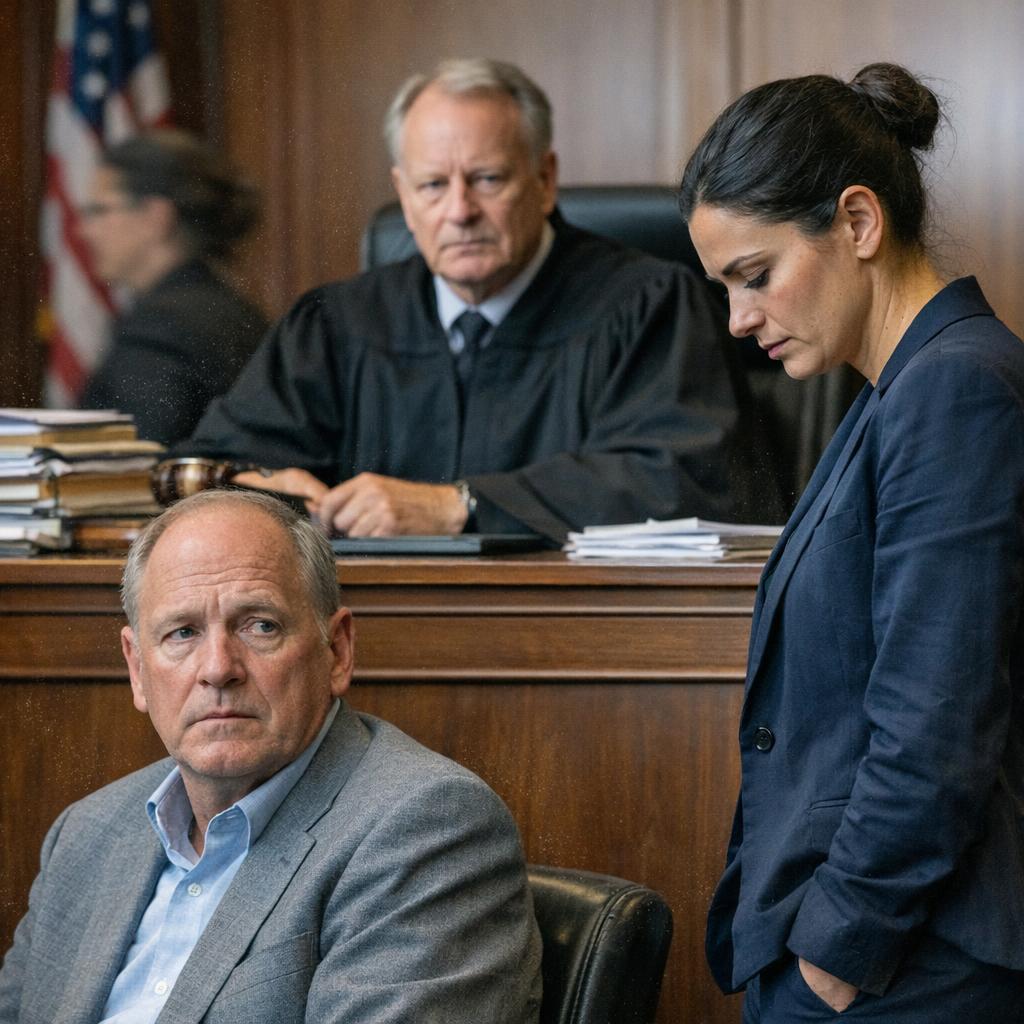 Image by RM AI
The Scholarship Hunt
Our dining room table disappeared under a mountain of scholarship applications. Every night after dinner, Jenna and I would sit there with highlighters, sticky notes, and her laptop, hunting for any opportunity that might help fill the financial gap Kayla had left behind. 'Mom, look at this one—it's for first-generation college students whose parents work in healthcare,' Jenna would say, her voice brightening with each possibility. Her high school counselor, Mrs. Ramirez, became our unexpected ally, emailing us links to obscure scholarships and staying late to review Jenna's essays. I watched my daughter write draft after draft, perfecting personal statements about 'overcoming adversity' and 'facing unexpected challenges'—phrases that felt like cruel understatements of what she'd been through. Some nights, I'd find her asleep at the table, pen still in hand, and I'd feel that familiar mixture of fierce pride and aching sadness. This wasn't how it was supposed to be. The money we'd carefully saved for years had been meant to spare her exactly this kind of stress. But watching her determination—the way she'd cross off each submitted application with a triumphant flourish—I realized she was developing a resilience that no amount of money could buy. What I didn't know then was that one of those hastily completed applications, submitted just minutes before a midnight deadline, would lead to a connection that would change everything.
The Nonprofit Approval
I was folding laundry when my phone rang with an unfamiliar number. Usually I'd let it go to voicemail—too many spam calls these days—but something made me answer. 'Mrs. Wilson? This is Dr. Amara Patel from Second Chance Education Foundation.' My heart skipped as she continued, 'I'm calling personally because your daughter's case is exactly why our organization exists.' I sank onto the couch, clutching a half-folded towel as she explained that they were approving Jenna's application for emergency funding. 'We can cover 60% of her first-year tuition,' she said, her voice warm with genuine compassion. 'Combined with your fundraiser and that small scholarship she received last week...' I finished her sentence: 'She's fully covered for freshman year.' I couldn't stop the tears. Dr. Patel waited patiently while I composed myself, then explained the disbursement process. After we hung up, I sat frozen, staring at the wall. Just three weeks ago, I'd been staring at an account balance of $42.42, convinced my daughter's future had been stolen. Now, through the kindness of strangers and this foundation, we had a fighting chance. I called Jenna immediately, my voice breaking as I shared the news. What I didn't realize was that this approval would lead to something even more unexpected—a connection that would finally bring Kayla's house of cards tumbling down.
 Image by RM AI
The Discovery Process
The discovery phase of our lawsuit against Kayla was like watching a horror movie in slow motion. Each new document revealed how meticulously she'd planned everything. Our attorney, Diane, called me on a Tuesday morning, her voice tight with controlled anger. 'Karen, you need to see these bank records.' I drove to her office immediately. What she showed me made my stomach turn—Kayla had been making small test withdrawals from Jenna's college fund for months before taking the entire amount. '$500 here, $1,200 there,' Diane pointed out, 'just testing if the transfers would trigger any notifications.' But the most chilling discovery came when the court ordered access to Kayla's email accounts. She'd researched Rob extensively before they even met, creating detailed spreadsheets of his assets, including specific notes about Jenna's college fund. Their 'chance meeting' at that yoga retreat three years ago? Completely orchestrated. She'd even taken the same instructor for weeks, studying Rob's routine. 'She chose him,' the FBI agent explained during our next meeting. 'Like a predator selecting prey.' When I called Rob to tell him, there was just silence on the line, then the sound of something breaking. I later learned he'd thrown his phone against the wall. What none of us realized yet was that Kayla's meticulous nature—the very thing that made her such an effective con artist—would ultimately be what brought her down.
 Image by RM AI
The Other Victims
I never expected to find community in catastrophe, but that's exactly what happened when I met Elaine and Gerald at our attorney's office. Elaine, a 68-year-old retired math teacher from Phoenix, clutched a folder of bank statements identical to mine. Gerald, a soft-spoken widower from Portland, kept checking his watch as if time might somehow reverse itself. 'She told me she was investing in our future,' Elaine said, her voice cracking. 'Three years of my retirement, gone.' As we compared notes in that sterile conference room, the similarities were chilling. Kayla—or Samantha, or Jessica, depending on which of us she'd targeted—had used the same playbook each time. The whirlwind romance. The gradual suggestions about 'simplifying finances.' The subtle way she'd question our friendships ('Don't you think Susan seems jealous of our happiness?'). Gerald showed us photos of the backyard wedding where he'd married her just fourteen months ago. 'My daughter tried to warn me,' he admitted, staring at the floor. 'I told her she was being paranoid.' By the time we finished sharing, we'd filled a whiteboard with Kayla's patterns and tactics. Our attorney looked at it and whispered, 'This isn't just fraud—it's a career.' What none of us realized was that our meeting had been recorded as part of the case file—a recording that would soon reach someone with the power to bring Kayla's entire operation crashing down.
 Image by RM AI
The College Move-In
Move-in day arrived with a surreal normalcy that felt both earned and stolen. I watched as Rob and I—divorced for nearly a decade—worked in silent coordination, carrying plastic storage bins up three flights of stairs to Jenna's dorm room. The irony wasn't lost on me: the last time we'd functioned this well as a team was probably before our marriage fell apart. Jenna's roommate, Alyssa, greeted us with the enthusiastic energy of someone whose college fund had never been in jeopardy. As we arranged Jenna's side of the room—hanging fairy lights, organizing her textbooks, making her bed with the comforter she'd had since high school—I felt pride swell in my chest alongside a simmering anger. This moment had almost been stolen from her. From us. When Rob struggled to assemble a small bookshelf, I knelt down to help without a word. Our eyes met briefly, and I saw in his the same complicated cocktail of emotions I was feeling: relief, guilt, determination. Later, as we prepared to leave, Jenna hugged us both at once, forcing an awkward group embrace that somehow felt right. 'We did it,' she whispered, echoing the words I'd said when our fundraiser succeeded. Walking back to our separate cars, Rob touched my arm. 'Karen,' he said quietly, 'I got a call from the prosecutor this morning. They found something in Kayla's storage unit.'
 Image by RM AI
The Plea Offer
I was elbow-deep in laundry when my phone rang. Seeing Diane's number, I quickly dried my hands. 'Karen, the prosecutor just called with news,' she said, her voice carefully neutral. 'They've offered Kayla a plea deal.' My heart skipped. After months of legal back-and-forth, the prospect of resolution seemed almost unreal. The deal would require full restitution to all victims—including Jenna's college fund—plus significant jail time. 'Her attorney indicated she might accept,' Diane continued. 'The evidence is... well, overwhelming at this point.' I sank onto the couch, torn between hope and skepticism. This woman had methodically destroyed lives across three states, always staying one step ahead of consequences. 'Do you really think she'll take it?' I asked. 'Someone who's been running this con for years doesn't suddenly develop a conscience.' Diane sighed. 'Honestly? She's cornered. What they found in that storage unit changed everything.' I thought about calling Rob but decided to wait until things were more certain. After all we'd been through, I couldn't bear giving him false hope. That night, I stared at Jenna's empty bedroom, wondering if we might actually get justice. But something kept nagging at me—if Kayla was finally willing to surrender, what was she still hiding?
 Image by RM AI
The Rejected Deal
I should have known better than to hope for an easy resolution. The prosecutor called me on a Tuesday morning, his voice heavy with disappointment. 'She rejected the plea deal, Karen.' I gripped the phone tighter, feeling that familiar knot return to my stomach. 'Her attorney filed motions to suppress evidence and dismiss charges this morning.' Of course she did. Kayla wasn't going down without a fight—not when she'd spent years perfecting her schemes. The prosecutor explained their strategy: they'd paint all of us as bitter, vengeful exes trying to punish her for moving on. 'They'll say the financial arrangements were consensual,' he warned. 'That you and Rob and all the others are just angry about failed relationships.' I nearly threw my coffee mug across the kitchen. Consensual? She had spreadsheets tracking our assets before she even met us! When I called Rob to update him, he went silent for so long I thought we'd lost connection. 'So she's calling us liars now?' he finally said, his voice cracking. 'After everything she did?' I stared at the calendar on my fridge, at the circled date of Jenna's midterms. We'd been hoping this would be resolved before she had to worry about next semester's tuition. Now we were looking at months of legal battles, with our reputations on the line. What the prosecutor didn't know yet was that I had something Kayla didn't expect—something I'd been saving for exactly this moment.
 Image by RM AI
The Media Interest
I never imagined our financial nightmare would become entertainment, but that's exactly what happened when Emily Chen from 'Scammed: The Podcast' slid into my DMs. 'Your story could help countless others recognize the warning signs,' she wrote, explaining how romance scams were skyrocketing among both retirees and young professionals. I forwarded the message to Rob and Jenna, unsure how to feel. Part of me wanted to keep our humiliation private—who wants to be known as the family that got conned? But Jenna surprised me. 'Do it, Mom,' she texted back immediately. 'If it helps even one person avoid what we went through.' Rob was hesitant until Emily mentioned that several victims had come forward after previous episodes, leading to arrests in cold cases. We agreed to a Zoom interview the following week. As I prepared, gathering bank statements and screenshots, I realized something powerful: shame is what predators like Kayla count on. They bank on victims staying silent out of embarrassment. By speaking up, we were taking back control of our narrative. What I didn't realize was that our podcast episode would reach someone who had crucial information about Kayla's past—someone who had been searching for her for much longer than we had.
 Image by RM AI
The Financial Recovery Plan
I never thought I'd be sitting across from my ex-husband at my kitchen table, surrounded by spreadsheets and budget calculators at 9 PM on a Tuesday. But there we were, Rob and I, planning Jenna's financial future like we were back in our 30s figuring out preschool payments. 'I sold the Audi,' Rob said quietly, sliding a bank statement toward me. 'Got a used Honda instead. That's another $12,000 for the fund.' I nodded, adding it to our growing spreadsheet. My contribution? Postponing retirement by five years and taking on weekend consulting work. 'Between the two of us, we can rebuild about 70% of what was lost,' I calculated, rubbing my tired eyes. 'And if Jenna keeps landing scholarships like she did this semester...' Rob finished my thought: 'She might graduate without loans.' We'd created a color-coded system—green for secured funds, yellow for probable, red for the gaps we still needed to fill. There was still too much red on that spreadsheet, but it was less than last month. As we worked, I noticed how Rob's hands shook slightly when he mentioned Kayla's name. The betrayal was still raw for him. When he left around midnight, we had a plan—not perfect, but workable. What we didn't know was that the next morning would bring news that would change our careful calculations completely.
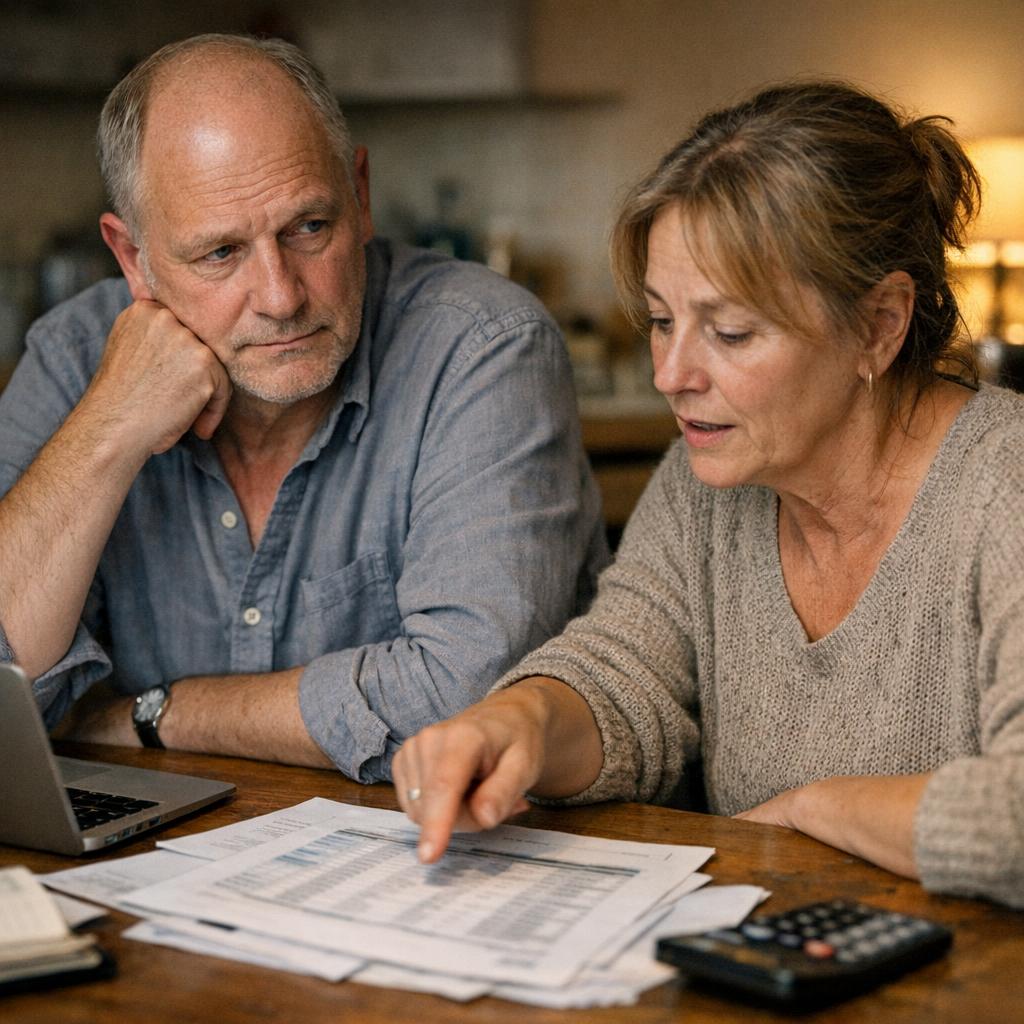 Image by RM AI
The Unexpected Asset
I was making coffee when my phone rang—our private investigator, a gruff ex-cop named Malone who charged too much but delivered results. 'Karen, you might want to sit down for this,' he said, his voice unusually animated. 'Your scammer bought property. A cabin in Colorado.' I nearly dropped my mug. Malone explained that Kayla—using her 'Jessica Winters' alias—had purchased a three-bedroom mountain retreat near Breckenridge six months ago. The timing aligned perfectly with when she'd drained Jenna's college fund. 'It's worth about $780,000 now,' he continued. 'Paid mostly in cash.' I called our attorney immediately, my hands shaking with a mixture of rage and vindication. Within hours, the prosecutor had filed emergency motions to freeze the asset. 'This changes everything,' Diane explained. 'If the court approves the freeze, she can't sell it or transfer ownership while the case proceeds.' I texted Rob with the news, adding simply: 'She bought a vacation home with our daughter's future.' His response came seconds later: 'I'm coming over. We need to talk.' That night, as Rob and I pored over the property listing photos—the gleaming hardwood floors, the panoramic mountain views that OUR money had paid for—I felt something shift inside me. This wasn't just about getting Jenna's money back anymore. It was about making sure Kayla never did this to another family again. What I didn't realize was that the mountain cabin wasn't the only asset Kayla had hidden—or that someone else was already living there.
 Image by RM AI
The Thanksgiving Break
The smell of roasting turkey filled the house as Jenna burst through the front door, dropping her duffel bag and wrapping me in a hug that felt like coming home. Over our Thanksgiving dinner—the first normal family moment we'd had in months—she couldn't stop talking about her classes, her roommate Alyssa, and the campus financial literacy group she'd joined. 'It's called Money Matters,' she explained, helping herself to more mashed potatoes. 'We teach workshops about protecting yourself from scams.' I exchanged glances with Rob across the table. Our daughter, turning our nightmare into something positive. 'My professor thinks I should develop it into an advocacy project,' she continued, her eyes bright with purpose. 'She says personal stories are what really make people pay attention.' Rob cleared his throat. 'I'm proud of you, kiddo,' he said, his voice thick. 'Using what happened to help others.' I watched my daughter—confident, resilient, unbroken—and felt a surge of fierce pride. The money Kayla stole was still gone, but Jenna had found something valuable in its place: a mission. What none of us realized was that Jenna's advocacy work would soon catch the attention of someone who had been tracking Kayla's activities for much longer than we had.
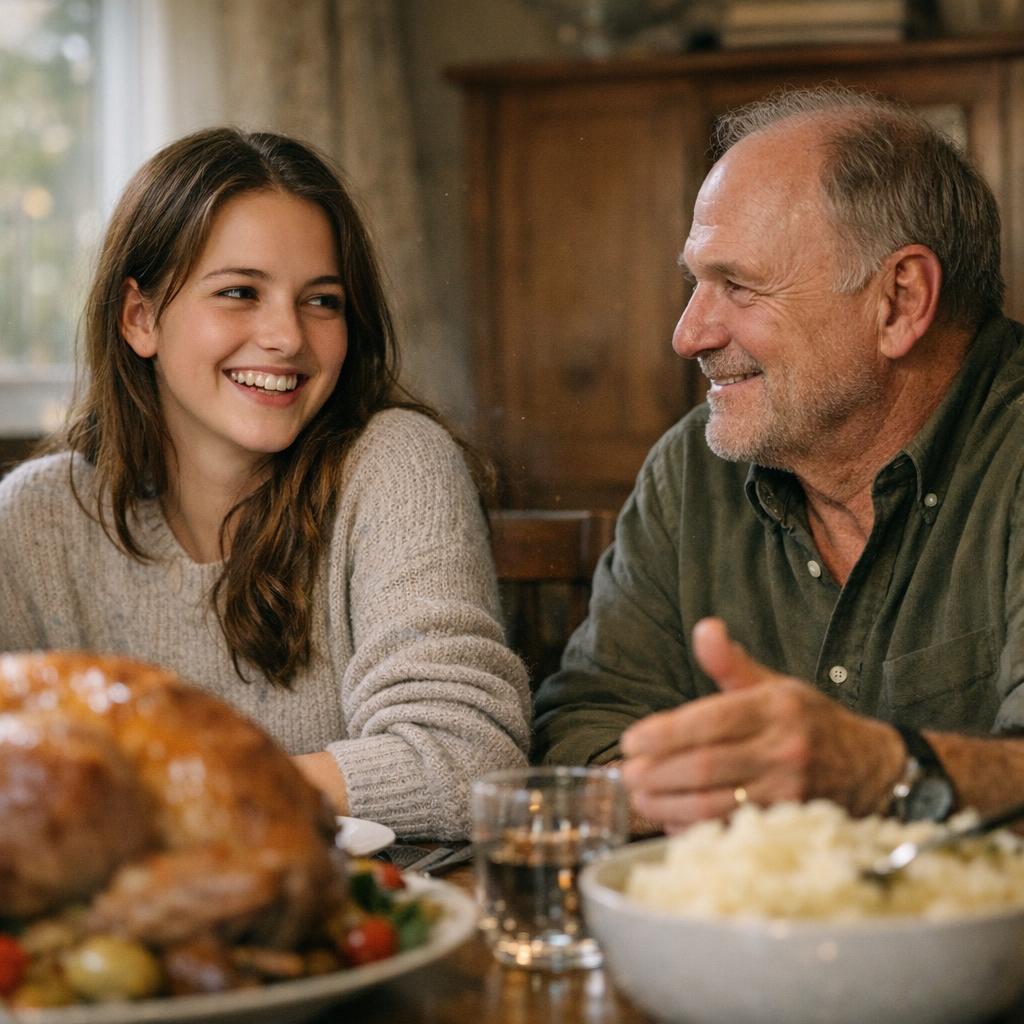 Image by RM AI
The Deposition
I never imagined I'd be sitting in a sterile conference room for six hours straight, having my entire financial history dissected by a woman in a power suit who clearly thought I was just a bitter ex-wife. 'And you maintain that you and Mr. Wilson had a verbal agreement regarding this college fund?' Kayla's attorney asked for what felt like the fifteenth time, her voice dripping with skepticism. I kept my voice steady as I repeated, 'We had both verbal and written agreements. The emails are in evidence.' She shuffled through papers, clearly looking for inconsistencies. 'Would you say you were... upset when Mr. Wilson remarried?' I nearly laughed. 'I was relieved he'd found someone. I just wish it hadn't been a con artist.' Our attorney objected immediately, but I could see the prosecutor hiding a smile. The most satisfying moment came when they displayed the bank records on a screen—showing the systematic withdrawals that perfectly aligned with my testimony. By the time I walked out, my back ached and my throat was dry, but I felt lighter somehow. The truth was finally on record, documented and undeniable. What I didn't know was that someone else had been watching the deposition livestream—someone who recognized Kayla from a completely different scam.
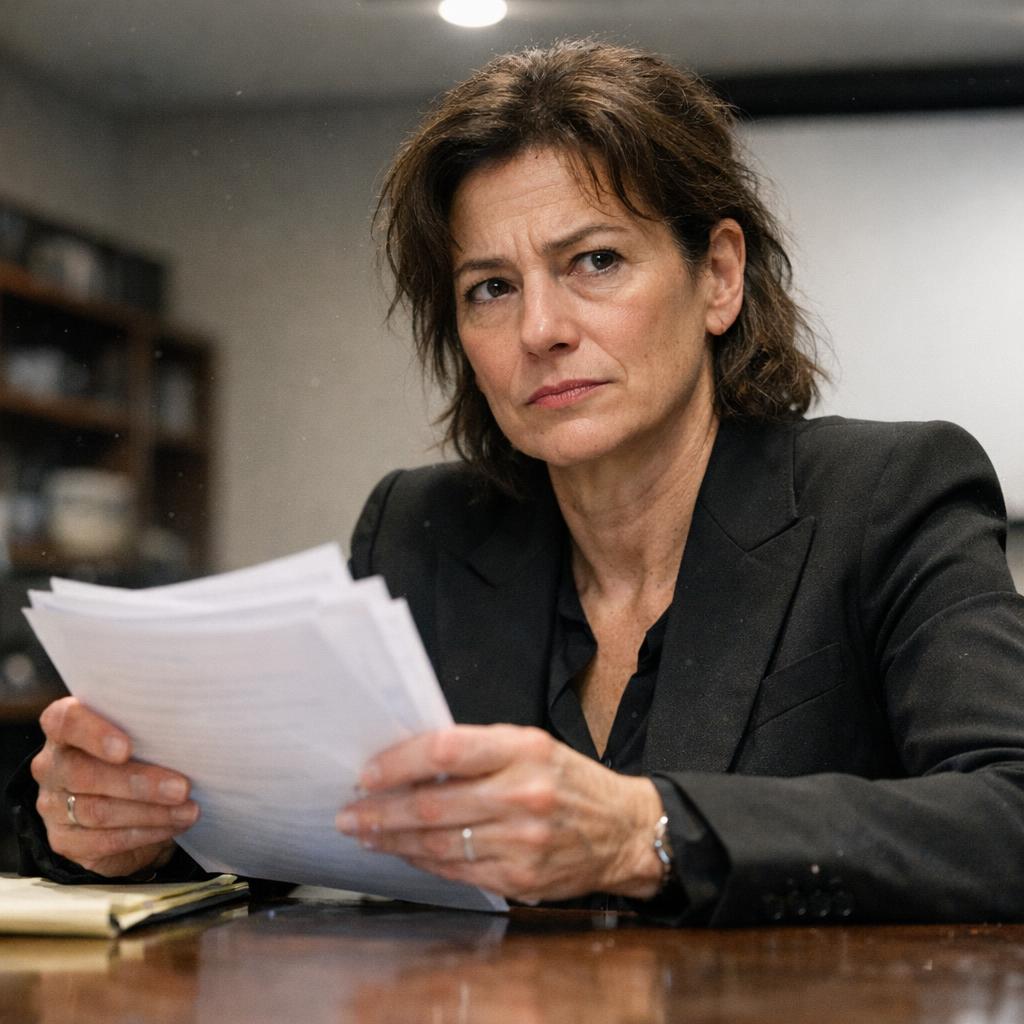 Image by RM AI
The Holiday Reflection
I hung the last ornament on our Christmas tree—a tiny graduation cap I'd bought for Jenna years ago—and stepped back to admire my work. It's strange how holidays have a way of making you measure time, of forcing you to acknowledge how much has changed. Six months ago, I was drowning in panic, watching my daughter's future evaporate because of someone else's greed. Now, as I sip hot chocolate and watch the snow fall outside my living room window, I feel something I didn't expect: gratitude. The fundraiser page still pings my phone occasionally with $5 or $10 donations, which we're now directing to a foundation for other fraud victims. Trish—once just a stranger in my inbox—has become the kind of friend who texts me memes at midnight and shows up with wine when court dates go badly. Our little support group has morphed into something bigger, something with purpose. We've helped three other families identify similar scams before they lost everything. Even Rob seems different—more careful, yes, but also more present. Yesterday, he called just to ask if I was doing okay with the holidays approaching. The legal battle drags on, with Kayla's attorneys filing delay after delay, but somehow it doesn't consume me the way it once did. What none of us realized when this nightmare began was that sometimes, when someone tries to steal your future, they accidentally give you a new one instead.
 Image by RM AI
The New Evidence
I was folding laundry when my phone rang with the prosecutor's number. My heart raced as I answered. 'Karen, we've hit the jackpot,' she said, her voice electric with excitement. 'Our tech team found Kayla's cloud storage.' I sat down, clutching a half-folded towel. Apparently, Kayla had kept meticulous records of everything—spreadsheets tracking potential victims' assets, withdrawal timelines, even notes on our personal habits and vulnerabilities. 'She literally had a column labeled "estimated total value" next to your name and Rob's,' the prosecutor explained. 'And get this—she accessed it regularly from her Chicago apartment.' I felt sick imagining Kayla calculating exactly how much she could steal from us, planning it all while she was playing happy family with Rob. The prosecutor explained that this was the smoking gun they needed—clear evidence of premeditation and intent. 'This isn't someone who made a mistake or acted impulsively,' she said. 'This was her business model.' I immediately called Rob, who went completely silent before whispering, 'She had a spreadsheet about us?' What haunted me most wasn't just the calculated nature of it all, but the discovery that our names weren't at the top of her list—we were victim family #11, which meant there were at least ten others before us who might not even know they'd been targeted by the same woman.
 Image by RM AI
The Second Plea Offer
I was making dinner when my phone lit up with Diane's name. 'Karen, you might want to sit down for this,' she said, her voice measured but hopeful. 'Kayla's attorney reached out today. They want to reopen plea negotiations.' I nearly dropped the spatula I was holding. After the discovery of her cloud storage—those cold, calculating spreadsheets where she'd tracked our assets like a hunter stalking prey—Kayla's defense was crumbling. 'The new offer is substantial,' Diane continued. 'Full restitution to all victims, a longer jail sentence, and she has to forfeit everything purchased with stolen funds—including that Colorado cabin.' I leaned against the counter, my mind racing. 'And they think she'll actually take it this time?' I asked, remembering how she'd rejected the first offer with such arrogance. 'The prosecutor is confident,' Diane replied. 'Those spreadsheets destroyed any chance she had of claiming this was just relationship fallout. She literally documented her crimes like quarterly business reports.' That night, I called Rob and Jenna on a three-way call to share the news. As we talked, I felt something I hadn't experienced in months: genuine hope. But even as we allowed ourselves to imagine closure, I couldn't shake the feeling that Kayla had one more trick up her sleeve—something none of us had anticipated, not even the prosecutor who thought she'd seen it all.
 Image by RM AI
The Acceptance
I got the call on a Tuesday afternoon while I was grocery shopping. 'She accepted the deal,' Diane said, her voice steady but triumphant. I froze in the cereal aisle, clutching my phone so tightly my knuckles turned white. After all these months of legal battles, Kayla had finally surrendered. The prosecutor explained that while we wouldn't see the money immediately—it would depend on liquidating her assets and garnishing her future earnings—the agreement legally bound her to full restitution. 'She's going to jail, Karen,' Diane continued. 'And she's required to pay back every penny she stole from Jenna's fund.' I leaned against my shopping cart, suddenly aware that other shoppers were staring at the woman having an emotional breakdown by the Cheerios. That night, I called Rob and Jenna with the news. As I watched my daughter's face light up on the video call, I allowed myself—for the first time since this nightmare began—to believe that we might actually recover what was stolen. Not just the money, but our sense of justice. What I didn't realize then was that Kayla's acceptance wasn't the end of our story—it was just the beginning of a whole new chapter none of us saw coming.
 Image by RM AI
The Sentencing Hearing
The courthouse was colder than I expected, or maybe it was just the chill of finally facing Kayla in person after all these months. I sat between Rob and Jenna, our shoulders touching as we listened to victim after victim describe how this woman had methodically dismantled their lives. When my turn came, my prepared statement suddenly felt inadequate. 'The money you stole wasn't just dollars in an account,' I said, my voice steadier than I felt. 'It was years of overtime shifts, of saying no to vacations, of putting Jenna's future ahead of our own comfort.' I described how Jenna had to work two campus jobs while maintaining her GPA, how she'd cried when she thought no one was watching. Throughout it all, Kayla sat like a statue, her eyes fixed on some invisible point above our heads. Not once did she look at me, at Rob, at any of us. The judge's voice cut through the silence when he delivered the sentence: five years plus full restitution. 'Your actions,' he told Kayla, 'represent a calculated betrayal of the most intimate kind.' As the bailiff led her away, I expected to feel triumph or at least relief. Instead, I felt something unexpected—a quiet certainty that while this chapter was closing, the story wasn't over yet. And I was right, because what happened next would shock even the prosecutor who thought she'd seen it all.
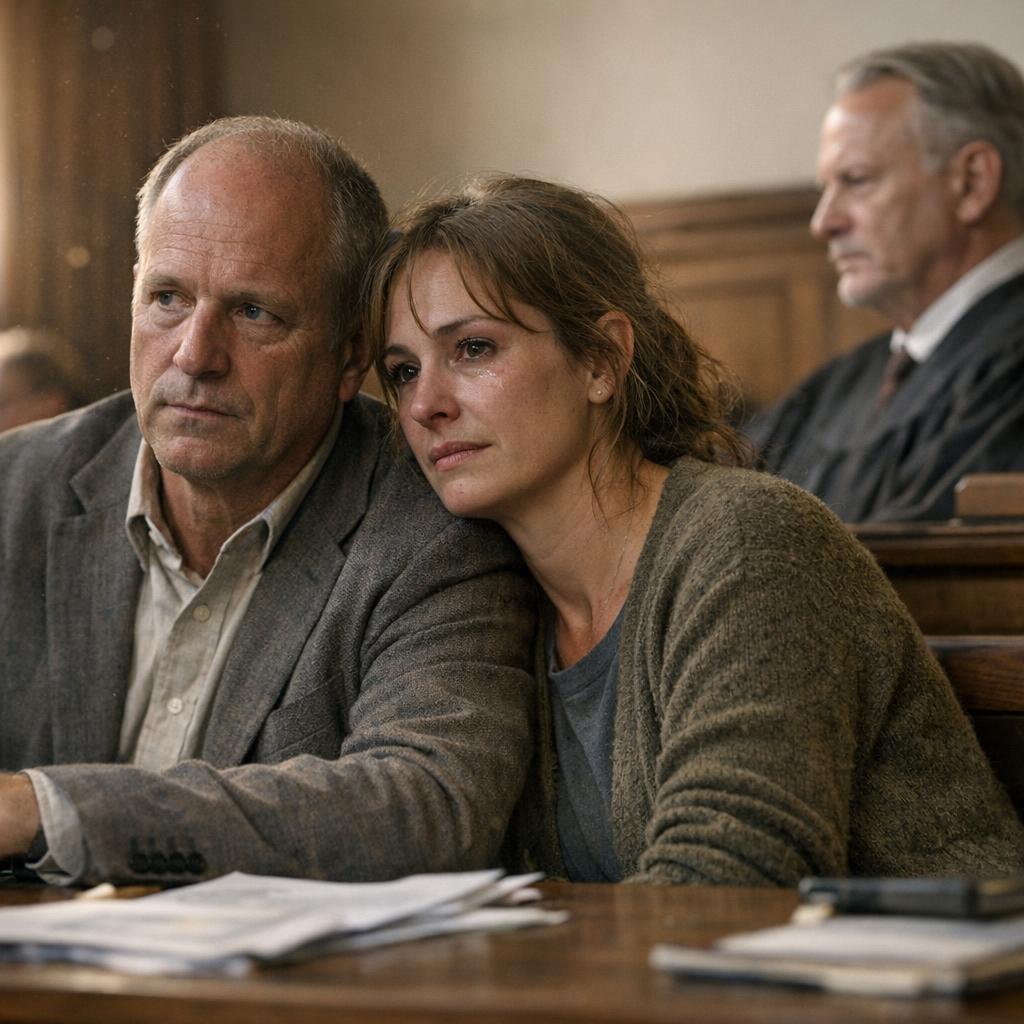 Image by RM AI
The First Restitution
I never thought I'd cry over a bank deposit, but there I was, staring at my phone screen in the middle of Target, tears streaming down my face. Three months after Kayla's sentencing, the first restitution check arrived—$47,000 from the sale of that Colorado cabin she'd bought with our daughter's future. Not the full amount, but enough to secure Jenna's sophomore year without her having to pick up that second campus job she hated. 'Is everything okay, ma'am?' a concerned employee asked as I stood frozen in the household goods aisle. I just nodded, unable to explain that this notification represented more than money—it was the first tangible proof that justice wasn't just a promise. I drove straight to the bank, clutching that check like it might evaporate. 'I want to make some changes to the account structure,' I told the manager firmly. This time, I made damn sure I was listed as a co-owner with equal control. No more 'secondary contributor' status. No more trusting that legal agreements would protect what matters. As I set up additional security measures—two-factor authentication, withdrawal limits, instant alerts—the manager smiled knowingly. 'Been through something, huh?' she asked. 'You have no idea,' I replied, signing the final document. What I didn't tell her was that according to our attorney, this was just the first payment of many—and that the next one would come with information that would turn our understanding of Kayla's scheme completely upside down.
 Image by RM AI
The Summer Internship
I never expected to feel such pride watching my daughter walk into a government building with a briefcase and a determined look on her face. 'Mom, this internship is everything,' Jenna told me over dinner last night, her eyes bright with purpose. 'My supervisor says my personal experience gives me insight that most interns don't have.' She'd spent the day at the Consumer Protection Agency, reviewing case files that felt eerily familiar—predators targeting vulnerable people, draining accounts, disappearing with life savings. 'I recognized Kayla's patterns in three different cases today,' she said, stabbing at her pasta. 'It's like reading the same playbook over and over.' When she mentioned she was thinking about changing her major to pre-law with a focus on financial crimes, I nearly choked on my wine. 'Are you sure?' I asked, remembering how she'd always wanted to be a marine biologist. She nodded without hesitation. 'I want to be the person who stops the next Kayla before she destroys another family's future.' As I watched my daughter transform our nightmare into her calling, I realized something profound: Kayla hadn't just stolen money from us—she'd inadvertently created her own worst enemy. What Jenna didn't know yet was that her internship would soon connect her with someone who had been hunting Kayla long before we even knew she existed.
 Image by RM AI
The Support Group Leadership
I never thought I'd find myself standing in front of a community center meeting room, clutching note cards with trembling hands. 'You've got this,' Trish whispered, squeezing my shoulder as twenty pairs of eyes looked expectantly at me. When she'd asked me to co-lead this financial fraud workshop, my first instinct was to refuse. What did I, Karen Wilson, age 57, know about public speaking? But as I began sharing my journey—from that gut-wrenching moment of discovering Jenna's empty college fund to navigating the legal labyrinth that followed—something shifted. My voice grew stronger with each sentence. 'Document everything,' I told them, making eye contact with a woman dabbing tears in the front row. 'The system isn't designed to protect us, so we have to protect ourselves.' I explained how to structure accounts with proper ownership, the importance of regular monitoring, and which legal terms actually matter in court. The nodding heads and furious note-taking told me these weren't just words—they were lifelines. After the session, a man about Rob's age approached me, his eyes red-rimmed. 'My wife and I lost our retirement to someone just like Kayla,' he said quietly. 'You're the first person who's made me feel like we might survive this.' As I drove home that night, I realized that while Kayla had taken our money, she'd inadvertently given me something unexpected: a voice that others needed to hear. What I didn't know then was that someone in that audience had connections that would change everything about our case.
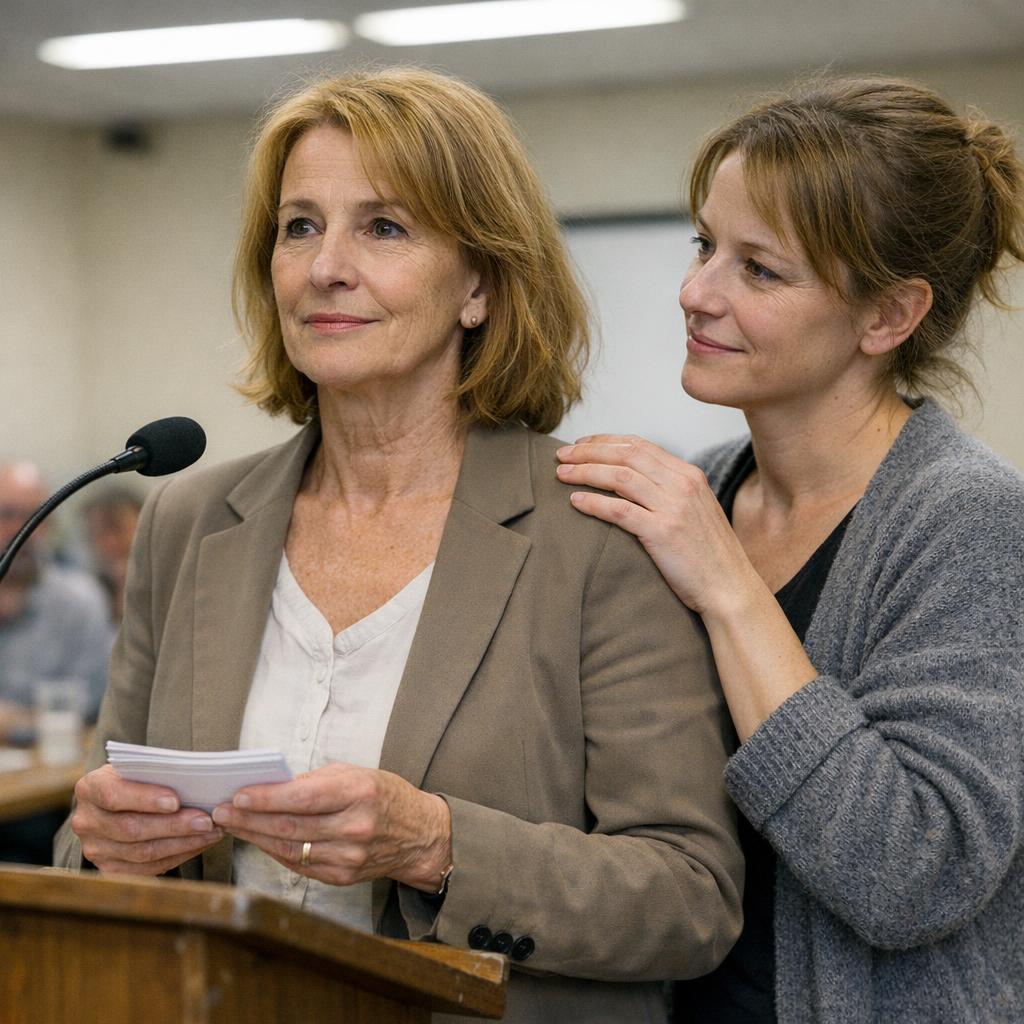 Image by RM AI
The Unexpected Letter
The envelope sat on my kitchen counter for three days before I worked up the nerve to open it. The return address—a women's correctional facility in Illinois—made my stomach clench. When I finally tore it open, Kayla's neat handwriting filled two pages with what appeared to be heartfelt remorse. 'I think about the pain I caused you and Jenna every day,' she wrote. 'I'm working with a therapist to understand why I did these terrible things.' She described prison programs she'd joined and how she was 'committed to making amends.' I read it five times, searching for sincerity between the perfectly crafted lines. But all I found were the same calculated patterns—the emotional manipulation, the strategic vulnerability, the subtle shifting of blame to her childhood trauma. I showed it to Rob during our weekly coffee meetup (yes, we do those now). 'Are you going to write back?' he asked. I shook my head. 'That's exactly what she wants—another connection, another person to manipulate.' I folded the letter and tucked it into a folder with our case documents. Some people might call it cold, but I've learned the hard way that people like Kayla view kindness as a weakness to exploit. What I didn't realize was that Kayla hadn't just written to me—she'd sent nearly identical letters to every victim in her case, and one of them was about to respond in a way none of us could have anticipated.
 Image by RM AI
The Second Year Begins
I never thought I'd feel such pure joy watching my daughter haul a mini-fridge up three flights of stairs, but here I was, beaming like I'd won the lottery. Moving Jenna into her sophomore apartment felt worlds different from last year's stress-filled freshman move-in. 'Mom, I think this is the first time I've seen you smile on campus without looking like you're about to have a panic attack,' Jenna teased as she arranged her textbooks. She wasn't wrong. Last year, I'd been mentally calculating every expense, wondering if we'd make it through the semester. Now, with Kayla's restitution payments, Jenna's summer internship earnings, and the merit scholarship she'd earned (with a GPA that still amazes me considering everything she juggled), we were actually... okay. 'I'm starting that support group next week,' she told me, pinning a flyer to her bulletin board. 'Financial Fraud Survivors - campus chapter.' My throat tightened as I read it. 'I just keep thinking about how alone I felt last year,' she continued, 'like I was the only student whose college fund had been stolen by their dad's second wife.' I hugged her then, this incredible young woman who'd transformed our nightmare into purpose. What neither of us realized was that her little campus support group would soon connect us to someone who'd been tracking Kayla's activities long before we even knew she existed.
 Image by RM AI
The Documentary Request
The email arrived on a Tuesday morning with the subject line: 'Documentary Request - Romance Scam Survivors.' I nearly deleted it, assuming it was spam, until I noticed the sender—Eliza Chen, award-winning filmmaker whose last documentary I'd actually watched on Netflix. 'We're developing a feature on sophisticated financial predators who use romantic relationships as their entry point,' she wrote. 'Your case against Kayla represents one of the most comprehensive legal victories in this space.' I sat there, coffee growing cold, as I read her detailed proposal. She wanted to interview me, Rob, and (if she was comfortable) Jenna, along with prosecutors and other victims. 'Many viewers don't realize how calculated these scams are,' Eliza explained during our follow-up call. 'They still think it only happens to desperate or naive people.' I arranged a family video chat that night. Rob was immediately on board—'Maybe it'll keep someone else from making my mistakes'—while Jenna approached it with her usual thoughtfulness. 'Will this affect the ongoing cases?' she asked. After consulting with Diane, who actually thought the publicity might help pressure remaining assets to surface, we all agreed. As I signed the consent forms, I couldn't help but wonder: would Kayla somehow find a way to watch this from prison, and if she did, would she feel remorse—or pride at seeing her handiwork documented for millions to see?
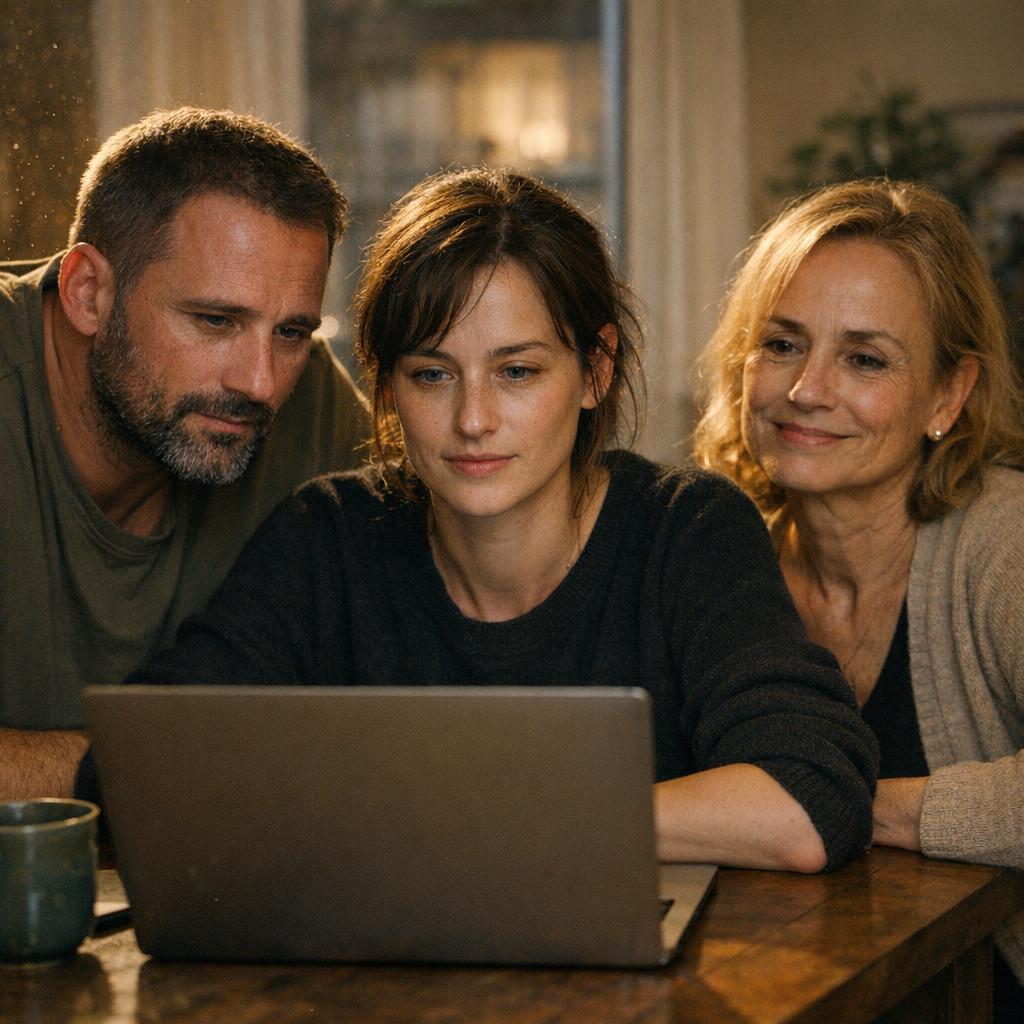 Image by RM AI
The Legislative Hearing
I never imagined I'd be sitting before state legislators, my hands trembling slightly as I adjusted the microphone. 'My name is Karen Wilson,' I began, my voice steadier than I expected. 'And I'm here because a legal loophole allowed my ex-husband to empty our daughter's college fund without my knowledge or consent.' The room fell silent as I detailed our nightmare—how despite years of equal contributions and verbal agreements, I was legally powerless because I was only a 'secondary contributor.' I explained how banking regulations hadn't caught up with the reality of blended families and divorce. 'This isn't just about Kayla's fraud,' I told them, making eye contact with each legislator. 'It's about the system that made her fraud so easy to execute.' When I finished, a gray-haired senator leaned forward. 'Mrs. Wilson, would you be willing to work with our committee on drafting new protections for college savings accounts?' I nearly cried right there. On the drive home, I called Jenna with the news, and she screamed so loudly I had to hold the phone away from my ear. 'Mom, you're literally changing the law!' What neither of us realized was that someone very important had been watching that livestreamed hearing—someone who would soon reach out with information that would blow the Kayla investigation wide open.
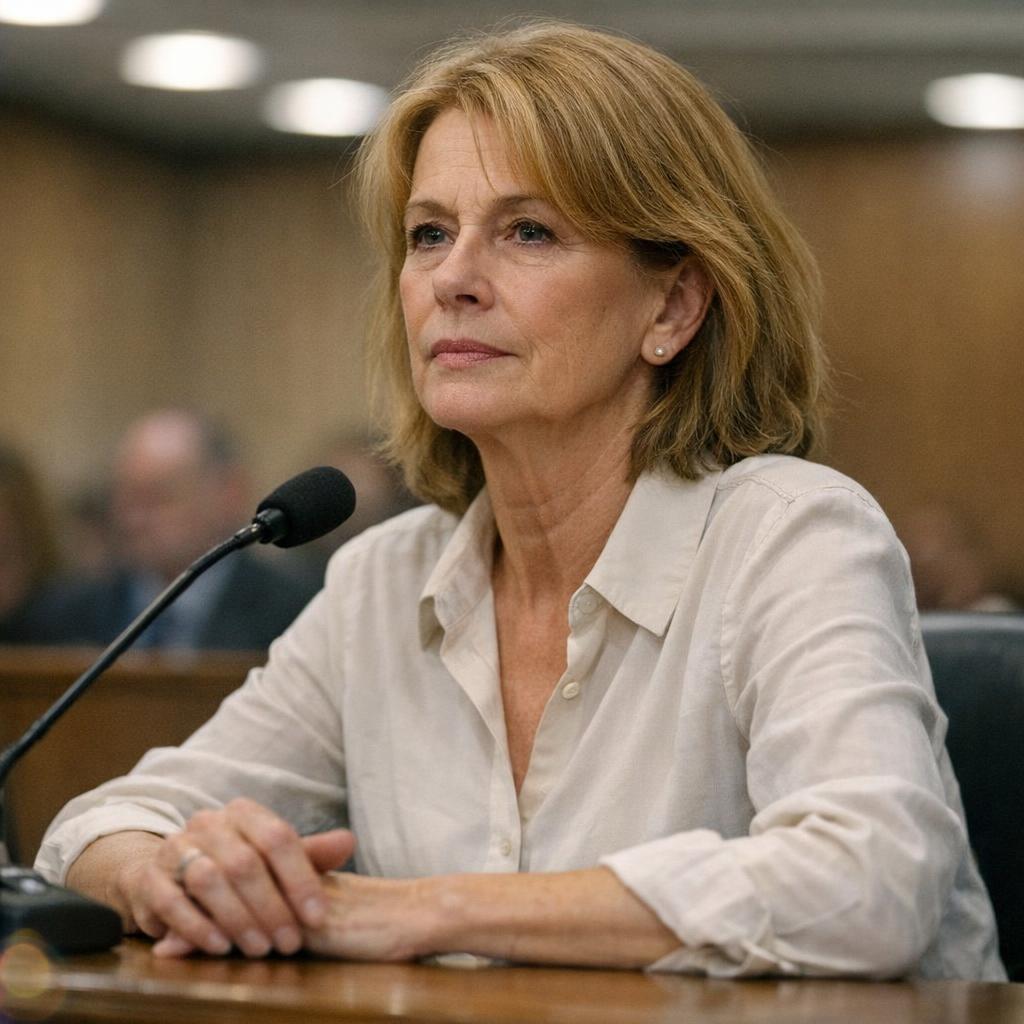 Image by RM AI
The One-Year Anniversary
I never thought I'd mark the anniversary of financial trauma with coffee and pastries, but here I was, sitting across from Rob at our favorite local café exactly one year after discovering Jenna's empty college fund. 'Can you believe it's been a year?' I asked, stirring my latte absently. Rob looked different now—less defeated, more present. The designer clothes and desperate attempts to look younger were gone, replaced by a simple button-down and the first genuine smile I'd seen from him in years. 'I keep thinking about how I almost called you that day to ask for a loan instead of telling you the truth,' he admitted. We talked about the restitution payments, how each one felt like reclaiming a piece of our dignity. Rob had started a modest financial consulting business, ironically helping divorced couples protect their assets. 'I'm the perfect cautionary tale,' he joked, but there was pride in his voice too. As we discussed Jenna's upcoming junior year and her internship with the prosecutor's office, I realized something unexpected—Rob and I were actually co-parenting better now than we had during our marriage. Trauma had stripped away our old patterns, leaving something more authentic in their place. 'Karen,' Rob said suddenly, sliding an envelope across the table, 'there's something you should see. It arrived yesterday.' The return address made my blood run cold: Women's Correctional Facility, Illinois.
 Image by RM AI
The Financial Literacy Workshop
I never thought I'd find myself standing in front of thirty strangers at the Oakridge Community College, clutching a PowerPoint clicker like it was a lifeline. 'Financial predators don't wear name tags,' I told the packed classroom, my voice steadier than my nerves. 'They look like your neighbor, your friend's new boyfriend, or your ex-husband's perfect second wife.' The crowd—a mix of divorced parents, college students, and older couples—nodded knowingly. I'd spent weeks preparing this workshop, transforming my nightmare with Kayla into actionable steps anyone could follow. 'Joint accounts need joint control,' I emphasized, clicking to a slide showing the exact bank form language to look for. 'And verbal agreements are worth exactly as much as the paper they're written on.' During the Q&A, a woman about my age stood up, voice trembling. 'My daughter's fiancé wants to consolidate their accounts before the wedding. Should I be worried?' The room fell silent as I met her eyes. 'Trust your instincts,' I said. 'And maybe suggest they talk to a financial advisor first.' As people lined up afterward to share their stories—some heartbreakingly similar to mine—I realized that Kayla hadn't just changed my family's life. She'd inadvertently created an army of vigilant, financially savvy people determined to protect each other. What I didn't know then was that someone in that very room would soon connect me to the biggest break in Kayla's case yet.
 Image by RM AI
The Parole Hearing
I never imagined I'd be checking my calendar to attend a parole hearing for the woman who nearly destroyed my daughter's future, but there I was, marking the date in red. 'Three years,' I muttered to myself. 'She's served barely three years.' The notification letter sat on my kitchen counter like a ticking bomb. Kayla—the woman who'd drained $62,000 from Jenna's college fund—was eligible for early release. I spent two sleepless nights drafting my statement to the parole board, detailing how Jenna still worked extra shifts despite her full course load, how I'd postponed retirement, how Rob had to sell his house. 'She hasn't even paid back half of what she stole,' I told Trish during our weekly call. We organized a virtual meeting with all the victims we'd connected with over the years. 'We need to present a united front,' said Eleanor from Arizona, whose retirement fund Kayla had emptied five years ago. By the time we submitted our statements—fifteen victims strong—I felt a grim satisfaction. But that feeling evaporated when my phone rang at 11 PM three days before the hearing, and a voice I didn't recognize said five words that made my blood run cold: 'Kayla knows where Jenna lives.'
 Image by RM AI
The Parole Denied
I never thought I'd feel such profound relief from a single piece of mail. The letter from the parole board arrived on a Tuesday—plain white envelope, government seal, nothing special about it except the words inside that meant everything: 'Parole Denied.' My hands actually trembled as I read the formal language explaining that Kayla's request for early release had been rejected. 'The board finds that the calculated and premeditated nature of the offender's crimes, coupled with incomplete restitution to victims, indicates rehabilitation is not yet complete.' They specifically mentioned our victim impact statements—fifteen voices strong—as 'particularly influential' in their decision. I called Jenna immediately. 'She's staying put,' I said, my voice cracking slightly. 'At least for now.' I heard Jenna exhale on the other end, a sound that contained months of anxiety. I'm not someone who takes pleasure in another person's confinement, but knowing Kayla would remain behind bars meant countless potential victims would be spared what we went through. That night, I slept better than I had in weeks, the threat of 'Kayla knows where Jenna lives' temporarily neutralized. What I didn't realize was that while we'd won this battle, Kayla had already set something in motion that no prison walls could contain.
 Image by RM AI
The Junior Year Planning
I never thought I'd feel such pride sitting in a university academic advisor's office at my age. 'Mrs. Wilson, Jenna's academic trajectory is quite remarkable,' Dr. Patel said, reviewing my daughter's transcript. 'Especially considering what she's overcome.' Jenna sat beside me, professional in a blazer she'd thrifted specifically for this meeting, nodding as Dr. Patel outlined courses that would strengthen her law school applications. 'Your internship with the Consumer Protection Agency gives you a significant advantage,' he explained. 'I'd recommend Constitutional Law and Ethics next semester, plus that Financial Crimes seminar.' Walking across campus afterward, Jenna linked her arm through mine. 'You know what's weird, Mom?' she said, squinting in the afternoon sun. 'Sometimes I actually feel grateful to Kayla.' I nearly tripped over a sidewalk crack. 'Grateful?' She shrugged. 'Before all this happened, I was just drifting through marine biology because I liked dolphins as a kid. Now I wake up every morning with actual purpose.' I squeezed her arm, throat tight with emotion. 'I'm proud of you,' was all I could manage. What I didn't say was how terrified I still was about what might happen when Kayla eventually got out—and what she might do to the young woman who was becoming her most formidable adversary.
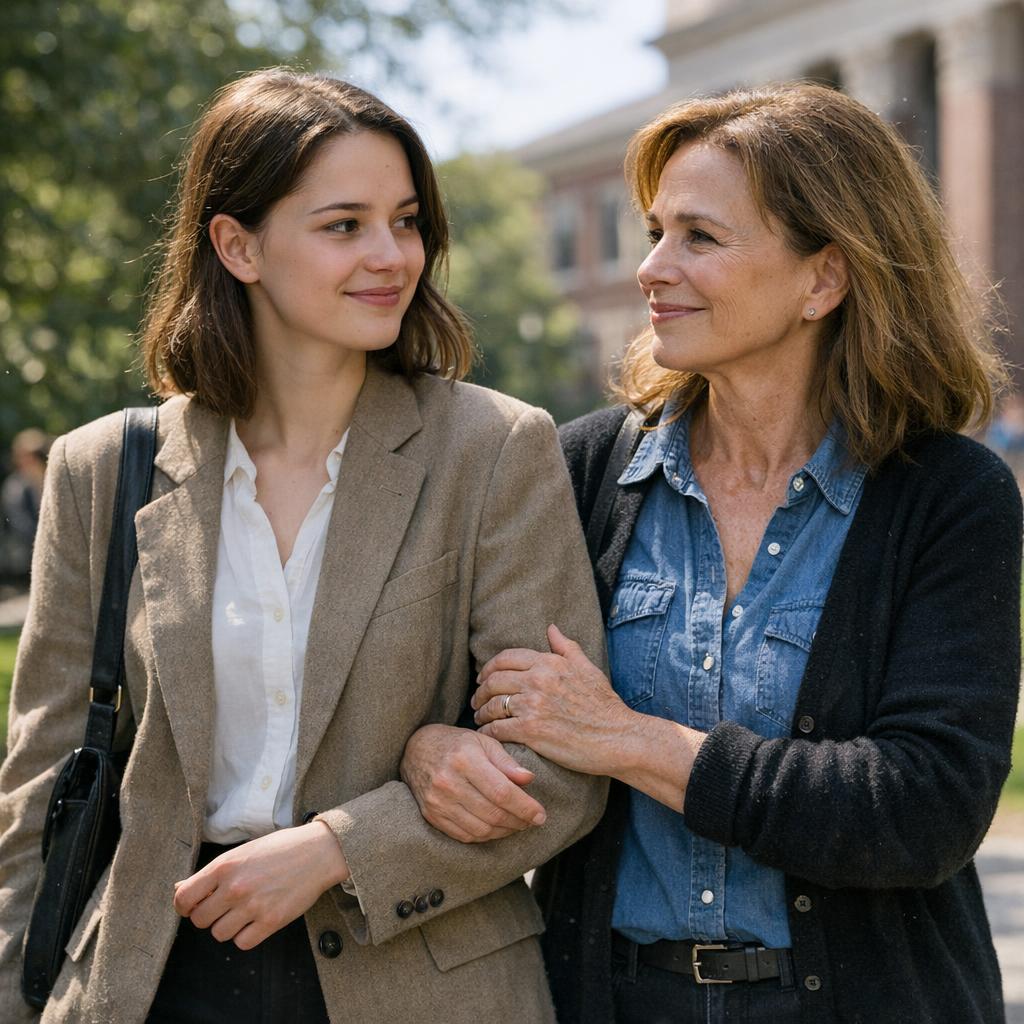 Image by RM AI
The New Legislation
I never thought I'd be standing in the state capitol, watching as Governor Mercer signed a bill nicknamed 'The Wilson-Jenna Protection Act.' Yet there I was, in a navy blue blazer I'd splurged on for the occasion, watching as my family's nightmare became a shield for others. 'This legislation ensures that no parent will ever again discover their child's education fund emptied without their knowledge or consent,' the senator announced, gesturing toward me. 'Karen Wilson's advocacy turned personal tragedy into public protection.' As flashbulbs popped, I thought about how surreal this moment was—my name attached to actual legislation. The new law required dual authorization for withdrawals from children's education accounts and implemented fraud detection protocols specifically designed for joint accounts post-divorce. After the ceremony, a young legislative aide approached me. 'My parents divorced when I was twelve,' she confided. 'Dad drained my college fund to impress his girlfriend. I worked three jobs through community college.' She squeezed my hand. 'This would have saved me.' Driving home, I called Jenna with the news. 'Mom, you're literally changing the system!' she exclaimed. What I didn't tell her was what the senator had whispered just before I left: 'We've got something bigger in the works—federal legislation. And we need your help.'
 Image by RM AI
The Documentary Premiere
I never thought I'd see my life projected on a 30-foot screen, but there I was at the Westlake Film Festival, watching myself tell the story of how Kayla destroyed our lives. 'The Price of Trust' premiered to a packed theater, with Eliza Chen's masterful direction weaving together the stories of fifteen victims—including mine, Rob's, and even footage of Jenna speaking at her campus support group. Sitting between Rob and Jenna, I felt strangely exposed yet validated as the audience gasped at the same moments that had once left me breathless with panic. 'That's exactly how she approached me too,' whispered a woman behind me during Kayla's love-bombing montage. After the credits rolled, the Q&A session transformed into something unexpected—a community forming in real time. 'How did you rebuild?' asked a trembling woman in her sixties. 'How did you trust again?' another called out. As I shared our journey from devastation to legislation, I noticed a man in the back furiously taking notes. He caught my eye and nodded respectfully before slipping out a side door. It wasn't until the next morning that I'd understand the significance of that nod, when my phone rang with a call from a number with a Washington D.C. area code.
 Image by RM AI
The Full Circle
I never thought I'd cry over a bank notification, but there I was, staring at my phone screen with tears streaming down my face. 'Final Restitution Payment Processed,' the alert read. After two years of legal battles, stress, and rebuilding, Jenna's college fund was finally—completely—restored. My hands shook as I video-called her at school. 'Mom? What's wrong?' she asked, her face concerned as it filled my screen. 'Nothing's wrong,' I managed. 'Everything's right. The final payment came through. Your fund is whole again.' I watched her expression transform—first confusion, then disbelief, then pure, unfiltered joy. She covered her mouth with her hand, eyes welling up. 'So senior year is...?' 'Covered,' I confirmed. 'Every penny.' We both sat in silence for a moment, letting it sink in. The money mattered, of course it did. But what struck me most was how different we both were from the shell-shocked mother and daughter who'd discovered that empty account two years ago. We'd learned to fight back, to build safeguards, to help others. 'You know what's funny?' Jenna said, wiping her eyes. 'I almost want to thank Kayla.' I raised an eyebrow. 'Almost,' she emphasized with a small smile. What neither of us realized was that while one chapter of our story was closing, another was about to begin with an unexpected letter postmarked from the Illinois Women's Correctional Facility.
 Image by RM AI
KEEP ON READING
From the Beatles to Queen: 20 Greatest Bands in History
Crank the Volume. Rock music didn’t just shape the sound…
By Christy Chan Jan 15, 2026
20 Cities That Have Lasted Since The Medieval Era
Frozen In Time. Cities don’t have “historic districts”; they’ve got…
By Elizabeth Graham Jan 15, 2026
20 Pieces of Proof That History Always Repeats Itself
Why the Past Has a Habit of Coming Back Around.…
By Sara Springsteen Jan 15, 2026
10 Times Top Spies Got Caught & 10 Where They…
When Espionage Goes Wrong—and When It Almost Does. Espionage is…
By Rob Shapiro Jan 15, 2026
10 Miracles That Might Have Really Happened & 10 Proven…
Supernatural Claims with a Paper Trail. A story doesn’t have…
By Cameron Dick Jan 15, 2026
Man on the Moon: 20 Most Important Space Missions in…
Lightyears Ahead. Space might still feel like an unknown void,…
By Christy Chan Jan 14, 2026