


Just Another Favor
My name is Denise, I'm 59, and I've worked in regional operations at the same company for going on seventeen years. That's long enough to know that when someone asks you for a favor 'real quick before this goes to corporate,' it usually means they've messed something up royally. So when my manager Greg handed me a messy twenty-page report and asked me to 'just smooth it out a bit,' I didn't even blink. Greg was the type who always dressed a little too well for middle management—designer ties and those fancy shoes that probably cost more than my car payment. He used big words to sound important in meetings, but I'd seen behind the curtain enough times to know he was all show, no substance. Not malicious, mind you, just overconfident and chronically underprepared. I stayed late that night, the office quiet except for the hum of the fluorescent lights and my aggressive typing. What started as 'smoothing out' quickly turned into a complete overhaul—fixing data points, checking math, clarifying graphs, and rephrasing entire sections so it actually sounded like it came from someone who understood our department. By the time I finished, it was nearly midnight, my eyes were burning, and I'd essentially rewritten the entire thing. Just another favor, I thought, as I emailed him the revised version. I had no idea that this 'small favor' would end up cracking open something much bigger than a poorly written report.
 Image by RM AI
The Empty Desk
Two days later, I walked into the office with my usual travel mug of coffee to find Greg's desk completely empty. Not just cleared-off empty, but cleaned-out-desk, name-plate-removed, family-photos-gone empty. His ergonomic chair that he'd special-ordered (and never stopped talking about) was pushed neatly under the desk as if he'd never existed. I checked my email, half expecting some company-wide announcement about his departure, but there was nothing—not even a goodbye message. Even stranger, when I searched the company directory, his name had vanished completely. "Did you hear about Greg?" whispered Tina from accounting as we crossed paths in the break room. "Everyone's saying he got some secret promotion to corporate." I nodded noncommittally, but something felt off. People who get promotions don't disappear overnight without so much as a smug email. I kept my head down that morning, trying to focus on my work rather than the empty desk I could see through my office doorway. It wasn't until I overheard two senior managers talking in the break room that the knot in my stomach tightened. One of them—I think it was Dave from Finance—said in a low voice, "They couldn't believe he put his name on something like that. Said it looked like it was thrown together in a bar." I almost choked on my tea. I knew immediately what they were talking about—the report. My report. But that didn't make any sense at all.
 Image by RM AI
Overheard in the Break Room
I stood frozen by the coffee machine, my tea halfway to my lips. Had I heard that right? I knew my version of the report was solid—I'd spent hours making sure every number aligned, every conclusion was backed by data. I'd even added those fancy visualizations that the executives always drool over. So why were they talking about Greg's report like it was garbage? I set my mug down with a soft clink and pretended to search for sweetener while straining to hear more. Dave from Finance leaned in closer to Barbara from Operations, lowering his voice even further. "Apparently, corporate pulled him into a meeting yesterday morning and he never came back. Security escorted him out." Barbara's eyebrows shot up. "That bad?" Dave nodded grimly. "Word is, the numbers didn't add up. At all." I felt my chest tighten. The numbers in my version absolutely added up—I'd triple-checked everything. Which could only mean one thing: either Greg had submitted an earlier draft, or worse, he'd changed my work after I gave it to him. But why would he sabotage his own report? As I walked back to my desk, clutching my now-cold tea, I couldn't shake the feeling that I was missing something important—something that might explain why a manager would deliberately tank his own career.
 Image by RM AI
Questioning the Report
I kept my suspicions to myself for the next few days, walking around the office like I was carrying a live grenade in my pocket. Every time someone from management glanced my way, I wondered if they knew I'd been the one who actually wrote that report. Had Greg submitted my polished version, or had he messed with it? The question gnawed at me during meetings, lunch breaks, and especially during those 3 AM anxiety sessions when sleep becomes your enemy. Then on Thursday morning, an email popped into my inbox that made my heart skip several beats. The sender was 'Sandra Wilkins, Internal Audit' and the subject line read: 'Regarding document authored under Greg Langley's name.' My mouse hovered over it for a full minute before I could bring myself to click. The message was brief but terrifying: 'Ms. Denise, I'd like to schedule a call regarding your involvement with the quarterly operations report submitted by Gregory Langley last week. Please advise your availability.' I stared at those words until they blurred. Seventeen years at this company, never so much as a warning about excessive printer use, and now this? I took a deep breath and replied with my availability, trying to sound professional while my hands shook so badly I had to retype 'availability' three times. Whatever storm was coming, I was about to be right in the middle of it.
 Image by RM AI
Sandra from Internal Audit
I sat in the small conference room, my hands fidgeting with a pen as I waited for Sandra from Internal Audit. The room was too cold—they always keep these meeting rooms freezing, probably to keep people uncomfortable during interrogations. When Sandra walked in, I braced myself for the worst, but she wasn't what I expected. No stern face or accusatory tone. Instead, she smiled warmly and offered me coffee before sitting down. "Ms. Denise, thank you for meeting with me," she said, her voice surprisingly kind. "I just have a few questions about Greg Langley's report." My stomach dropped anyway. "Am I in trouble?" I blurted out. Sandra looked genuinely surprised. "Not at all. I just need to understand who contributed to this document." When I admitted I had completely rewritten it, she nodded like she'd suspected as much. "Did you keep a copy of your version?" she asked. I nodded—seventeen years in corporate America teaches you to keep receipts. "I always save drafts of anything important," I explained. "Force of habit." Sandra's eyes lit up. "Would you be willing to send me that file?" she asked, sliding her business card across the table. I agreed, of course, but as I walked back to my desk to email her the document, I couldn't shake the feeling that I'd just handed over a piece of evidence in something much bigger than a badly written report.
 Image by RM AI
The Legal Department Calls
A week passed with no word from Sandra. I'd almost convinced myself the whole thing had blown over when another email landed in my inbox like a brick. This time, the sender was 'Jonathan Mercer, Legal Department.' My stomach dropped to somewhere around my ankles. Legal? I'd gone from rewriting a report to being contacted by corporate attorneys in the span of ten days. The message was formal and terrifyingly vague: 'In reference to the Gregory Langley matter, we request a formal written statement regarding your involvement with the quarterly operations report dated last month.' I read it three times, my hands growing clammy with each pass. When people from Legal start asking for 'formal statements,' they're not planning a surprise party in your honor. I printed the email and stared at it during my lunch break, picking at a salad I suddenly had no appetite for. What had I stumbled into? Greg wasn't just reassigned or demoted—he was gone, erased, with security escorts and cleaned-out desks. And now Legal wanted my statement? I couldn't shake the feeling that I'd unwittingly stepped into something dangerous—something that had already cost Greg his job. As I typed my careful reply to Jonathan, agreeing to provide a statement, I realized I needed to understand what was really happening before I became the next empty desk in the office.
 Image by RM AI
Confiding in HR
After a sleepless night staring at my ceiling fan, I decided I couldn't take the uncertainty anymore. I needed answers. Vivian from HR had always been straight with me—she'd been at the company even longer than I had and knew where all the bodies were buried, metaphorically speaking. I caught her alone in the copy room and closed the door. "Viv, what's really going on with Greg?" I asked, my voice barely above a whisper. She glanced at the door, then back at me, her expression shifting from professional to concerned. "Denise..." she hesitated, organizing her thoughts. "This stays between us, okay?" I nodded quickly. She sighed deeply. "What you rewrote was solid. But that's not what Greg turned in. The version he submitted was full of holes—almost like it was designed to fail." I felt my face flush hot then cold. "That makes no sense. Why would he do that?" Vivian leaned closer, her voice dropping even lower. "Unless someone wanted it to look like he was incompetent." The words hit me like a bucket of ice water. Greg was annoying and lazy, sure, but he wasn't suicidal career-wise. "Are you saying someone set him up?" I asked. Vivian's expression told me everything I needed to know. "The question is," she said, gathering her papers, "who benefits from Greg's downfall? And more importantly—were you supposed to go down with him?"
 Image by RM AI
The Altered Email Chain
That night, I couldn't sleep. Vivian's words kept echoing in my head: 'Were you supposed to go down with him?' I fired up my laptop at 2 AM and started digging through my email archives like a digital archaeologist. That's when I found it—two days before Greg handed me that report, he'd forwarded me a message chain between him and someone named Kevin in corporate strategy. I'd barely glanced at it then, but now I studied it with forensic attention. Something felt off about the flow of the conversation. There were weird gaps, and timestamps that didn't quite line up. But what made my blood run cold was seeing my own name mentioned in a way that made it sound like *I* had created the bad draft, not Greg. 'As Denise indicated in her preliminary work, these numbers reflect significant departmental inefficiencies...' I never wrote anything like that! The email had clearly been altered—doctored to create a paper trail that led back to me. My hands were shaking as I saved a copy to my personal drive. If Greg hadn't given me that report to fix, would I have been the one escorted out by security? Was I supposed to be the scapegoat all along? And if so, who was pulling the strings? Kevin from corporate strategy—a name I'd heard but couldn't put a face to—suddenly became the most important person I needed to learn about.
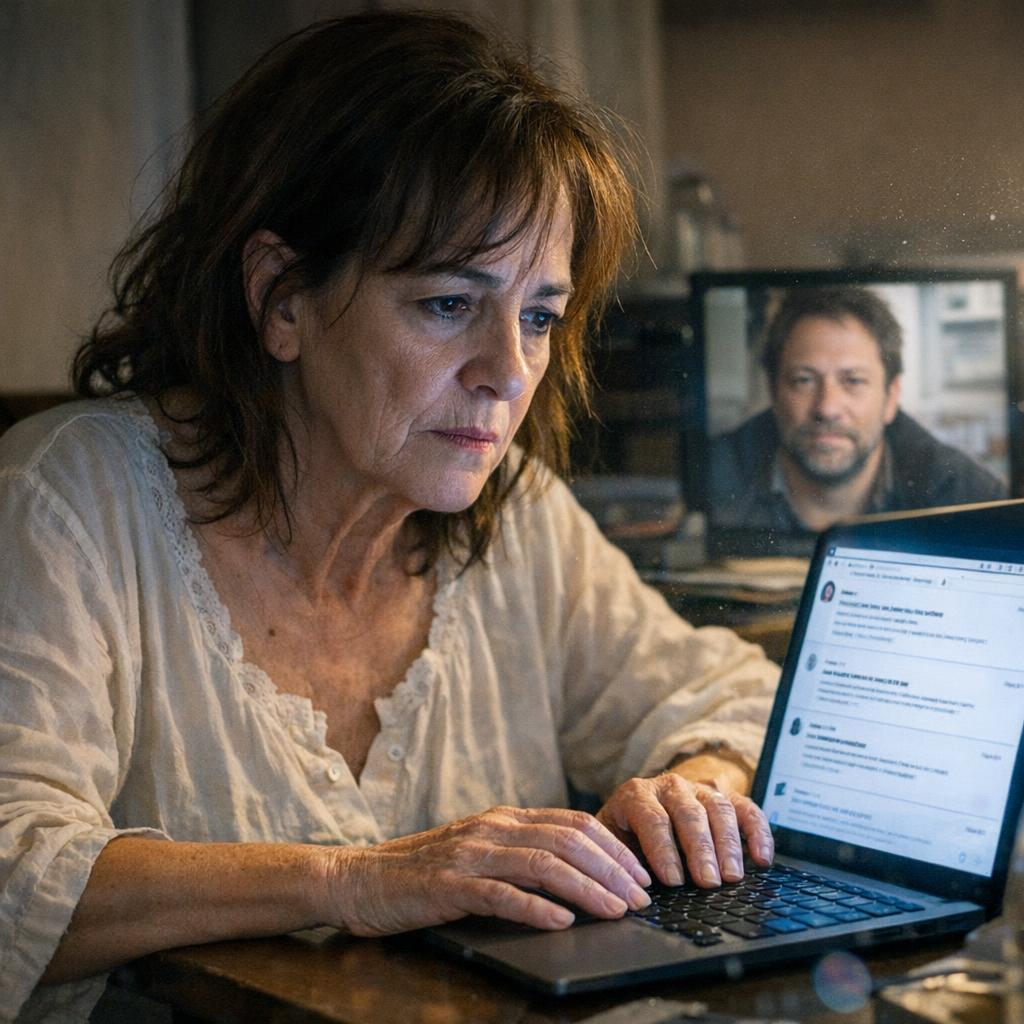 Image by RM AI
The Calendar Clue
I couldn't shake the feeling that I was missing something crucial about Greg's sudden disappearance. So I did what any paranoid almost-60-year-old would do—I went full digital detective. Digging through our shared calendar system, I noticed something odd: Greg had scheduled several recurring 'private syncs' with someone named Melissa from finance. Not regular meetings, mind you, but the kind scheduled at weird times—7:30 AM or after 5 PM—when the office was practically empty. I'd never heard Greg mention any Melissa, and he wasn't exactly the early-bird type. After wrestling with my conscience for about thirty seconds, I sent her a carefully worded email asking if she had time to 'discuss some continuity issues with Greg's projects.' She responded surprisingly quickly, suggesting we meet at the coffee shop across the street—not in the office. When we sat down, her expression was tense. 'Greg was asking questions about budget discrepancies,' she confided, stirring her latte nervously. 'He found numbers that didn't add up in the quarterly reports—significant amounts being shifted between departments.' She lowered her voice. 'He was convinced someone higher up was manipulating the books to hide a shortfall. The day after he told me he had proof, he was gone.' I felt the blood drain from my face. This wasn't just about a badly written report anymore. Greg hadn't been fired for incompetence—he'd been silenced for asking the wrong questions.
 Image by RM AI
The Finance Connection
I met Melissa at the coffee shop across from our building, away from prying eyes and corporate surveillance cameras. She was younger than I expected, maybe early thirties, with nervous hands that kept rearranging her napkin as we talked. "Greg wasn't just being paranoid," she said, lowering her voice even though the espresso machine was loud enough to mask our conversation. "He found almost $300,000 being shuffled between departmental budgets in ways that made no sense." She pulled out her tablet and showed me spreadsheets with highlighted sections. I'm no accountant, but even I could see the irregularities. "Greg thought someone was siphoning funds," she continued, "and when he started connecting it to Kevin in corporate strategy, that's when things got weird." She explained how Greg had been meticulously documenting everything, building a case to take to the CFO. "The day before he disappeared, he told me he finally had proof that couldn't be explained away." As I walked back to the office, clutching my cold coffee, I felt a chill that had nothing to do with the air conditioning. Greg hadn't been fired for incompetence—he'd been removed because he was getting too close to something dangerous. And now I was following the same breadcrumbs.
 Image by RM AI
Taking It to Sandra
I gathered all my evidence—the altered email chain, my notes from the meeting with Melissa, and the original report I'd rewritten—and requested another meeting with Sandra from Internal Audit. When her response came back within minutes, marked 'Urgent,' I knew this wasn't just office politics anymore. We met in a small conference room I'd never seen before, tucked away on the executive floor. 'I think Greg was set up,' I said, sliding my folder across the table. 'And I think I was supposed to go down with him.' Sandra's professional demeanor cracked slightly as she reviewed the documents. 'This is... significant,' she said, her voice measured but her eyes widening. 'Denise, I need to be honest with you. We're not investigating Greg for incompetence. We're investigating someone for fraud, and your report was how we spotted it.' She closed the folder carefully. 'I'd like you to come in tomorrow for a formal interview. Bring anything else you have—emails, notes, even conversations you remember.' As I left, she added something that made my stomach drop: 'And Denise? Don't discuss this with anyone. Not even Melissa.' Walking back to my desk, I couldn't help wondering—if they weren't investigating Greg, then who exactly was in their crosshairs? And more importantly, did that person know I was helping them?
 Image by RM AI
The Real Investigation
I sat across from Sandra in that sterile conference room, my hands folded tightly in my lap to hide their trembling. The revelation she delivered hit me like a freight train. 'We're not investigating Greg for writing a bad report,' she said, her voice dropping to just above a whisper. 'We're investigating someone else for fraud, and the report was how we spotted it.' I blinked, trying to process her words as she continued. 'When Greg started connecting the dots and asking questions, someone changed the file he submitted and made him the scapegoat.' The room seemed to tilt slightly as the pieces fell into place. Greg hadn't been fired for incompetence—he'd been silenced for getting too close to the truth. 'We believe the person responsible is Kevin from corporate strategy,' Sandra said, sliding a photo across the table. I recognized him immediately from company events—always hovering near executives, always seeming to know things before anyone else. 'We think he's been shifting funds between departments to cover personal expenses for years.' My mouth went dry. 'And my report?' 'Your original draft contains the correct numbers—the ones Kevin had been altering. That's why we need your help.' As I stared at Kevin's photo, I realized with a chill that I wasn't just a witness anymore—I was now part of the investigation that could bring down someone powerful enough to make people disappear.
 Image by RM AI
Kevin from Corporate Strategy
Sandra slid a folder across the table with Kevin's name on it. 'We've been tracking his activities for months,' she explained. 'Kevin's been systematically moving funds between departments—creating phantom budget items that look legitimate at first glance.' I felt my stomach knot as she continued. 'Travel expenses for conferences he never attended. Consultant fees for services never rendered. Even performance bonuses that somehow always ended up in his department.' She showed me documents revealing Kevin had a side consulting business he never disclosed—a clear violation of company policy. 'The problem was,' Sandra sighed, 'we couldn't prove it conclusively until now.' She tapped my original report draft. 'Your version contains the correct numbers—the ones Kevin had been altering. When Greg started asking questions about these discrepancies, Kevin doctored the report to make Greg look incompetent.' I sat back, stunned. 'So he framed Greg and tried to set me up as an accomplice?' Sandra nodded grimly. 'Classic misdirection. If everyone's focused on Greg's supposed incompetence, no one's looking at Kevin's fraud.' What terrified me most wasn't just the elaborate scheme—it was how easily I could have been collateral damage in someone else's cover-up.
 Image by RM AI
The Unraveling
Over the next few weeks, I watched the corporate machine grind into action from my cubicle vantage point. It was like witnessing a slow-motion car crash that everyone pretended wasn't happening. Legal teams swooped in with their pressed suits and serious expressions, disappearing into conference rooms for hours. The tension in the office was so thick you could cut it with the dull knife from our break room. Nobody said anything directly, but the whispers in the hallways told the real story. Greg was quietly cleared of wrongdoing and offered what I later learned was a generous severance package with a glowing recommendation—the kind of golden parachute that screams "please don't sue us or talk to reporters." Meanwhile, Kevin vanished just as suddenly as Greg had, but with none of the speculation or gossip. No goodbye email, no awkward cake in the break room, no collection for a farewell gift. One day his office was full, the next it was empty, like he'd been erased from the company's memory. The most telling part? How quickly management instructed IT to revoke his system access. When they move that fast, you know someone didn't just decide to "pursue other opportunities." What I couldn't figure out was why I hadn't been called into any more meetings—until Sandra's name appeared in my inbox again.
 Image by RM AI
Sandra's Offer
I was in the middle of a mindless spreadsheet update when Sandra's name popped up in my inbox again. My stomach did that familiar flip—the one that comes from being pulled into something bigger than your pay grade. This time, she requested we meet in the executive conference room, which felt like being called to the principal's office but with better coffee. When I arrived, Sandra wasn't alone. A woman I recognized from the C-suite sat beside her, nodding politely as I entered. 'Denise,' Sandra began, her tone warmer than our previous meetings, 'we owe you an apology.' I nearly choked on my coffee. In seventeen years, I'd never heard those words from anyone above middle management. 'And an opportunity, if you're interested,' she continued. They explained that the company wanted me to help redesign how internal reports were handled—to build a new review process with proper checks and balances. 'Your attention to detail and integrity saved us from a potential disaster,' the executive said. 'We need more of that baked into our systems.' I sat there, stunned. After nearly two decades of being the invisible worker bee, suddenly my experience mattered. I didn't get a fancy title or corner office, but for the first time in years, I felt something I'd almost forgotten existed in corporate America: respect. What I didn't realize then was that this opportunity would lead me places I never expected—and put me directly in someone else's crosshairs.
 Image by RM AI
A New Role
I never thought I'd say this, but I actually looked forward to Monday mornings now. Sandra's offer to help redesign our reporting processes gave me a sense of purpose I hadn't felt in years. They set me up in a small conference room that became my unofficial office, walls covered with flowcharts and process diagrams that would make any organization nerd swoon. 'We need someone who understands the trenches,' Sandra explained when introducing me to the executive team. I didn't get a fancy title or immediate raise, but for the first time in seventeen years, people actually listened when I spoke. Department heads who previously couldn't remember my name now stopped by to 'pick my brain.' The finance team invited me to their meetings. Even the CEO nodded at me in the hallway once! 'You've always had these skills, Denise,' Vivian from HR told me over lunch. 'The difference is now people can see them.' I was still the same 59-year-old operations veteran, but suddenly my experience wasn't just tolerated—it was valued. What nobody mentioned, though, was that my new visibility came with risks. Not everyone was happy about the changes I was implementing, and I couldn't shake the feeling that somewhere in our corporate hierarchy, someone was watching my every move, waiting for me to make a mistake.
 Image by RM AI
Greg's Thank You
Six months into my new role, I was sorting through my mail when I found something unexpected—an actual envelope with my name handwritten on it. Not an email, not a text, but a real card. Inside was a note from Greg. 'Denise,' it read, 'I've spent months trying to figure out how to thank you properly.' He admitted he'd been arrogant and lazy, letting others clean up his messes without appreciation. 'If you hadn't fixed that report—if you hadn't kept your copy—I'd still be the scapegoat, and I'd never know who was really behind it.' His words hit me hard. I sat at my kitchen table, coffee growing cold, thinking about how a simple act—staying late to rewrite a messy report—had unraveled a corporate fraud scheme and changed multiple careers, including my own. I'd gotten that raise finally, but more importantly, I had respect. People actually listened when I spoke in meetings now. It was strange how life worked sometimes. The small things we do—the extra hours, the favors, the tasks nobody notices—those can be the turning points that change everything. As I pinned Greg's card to my bulletin board, I couldn't help wondering: how many other small decisions in my life had altered its course without me even realizing?
 Image by RM AI
The Raise
The email arrived on a Tuesday morning—a standard corporate message with the subject line 'Compensation Adjustment.' My heart skipped as I opened it. After six months of rebuilding our reporting systems from the ground up, they'd finally recognized my value with more than just words. The raise wasn't life-changing—15% plus a modest bonus—but after seventeen years of cost-of-living adjustments that barely kept pace with inflation, it felt monumental. What meant more, though, was watching people's faces when I spoke in meetings. No more polite nodding before moving on. Now they leaned forward, took notes, asked follow-up questions. Last week, the CFO actually said, 'Denise makes an excellent point' in front of the entire executive team. At 59, I'd finally found my voice in a company that had overlooked me for nearly two decades. Sometimes I think about how close I came to being collateral damage in Kevin's scheme. One small decision—keeping that backup copy of Greg's report—had changed everything. As I sipped my morning coffee, staring at the compensation letter, I couldn't help but wonder: how many other people were out there like me? Competent, dedicated employees whose talents were buried under layers of corporate hierarchy, just waiting for the right moment to be discovered. Or worse, how many others had been silenced when they stumbled too close to uncomfortable truths?
 Image by RM AI
The Day Before It All Started
Looking back, I should have noticed something was off the day before Greg handed me that report. I was buried in quarterly projections when he walked by my desk three times without stopping—unusual for a man who typically delegated via email. When he finally approached, his tie was slightly askew, something I'd never seen in all my years working with Mr. Perfect Windsor Knot. "Everything good with the Henderson account?" he asked, his voice pitched slightly higher than normal. I nodded, barely looking up. Later, I heard his voice through his office door—not the usual smooth corporate monotone, but sharp, almost panicked: "That wasn't our agreement, Kevin." That afternoon, he canceled our department check-in—another red flag I ignored. Around 5:30, when most people were packing up, I spotted Greg and Kevin from corporate strategy in the small conference room. Greg was gesturing at something on a laptop, his face flushed, while Kevin maintained that eerie calm he was known for. When they noticed me walking past, Kevin closed the laptop with a snap. "Just wrapping up, Denise," he said with that smile that never quite reached his eyes. If only I'd paid more attention to these warning signs, maybe I could have prepared myself for the storm that was about to hit.
 Image by RM AI
The Report's Origins
Sandra called me into her office a week after our last meeting, this time with a thick folder labeled 'Departmental Efficiency Review.' 'This is what started it all,' she said, sliding it across her desk. 'The CFO requested this report to evaluate where we could streamline operations.' I flipped through the pages, recognizing fragments of what Greg had given me to 'smooth out.' Sandra explained that Kevin had deliberately maneuvered Greg into taking responsibility for the report, knowing it would be scrutinized by the executive team. 'Kevin needed someone else's name on it,' she said, 'someone who wouldn't understand all the numbers well enough to spot the inconsistencies.' I felt a chill as I realized how calculated it all was. Kevin hadn't just committed fraud—he'd engineered an entire fall guy scenario with Greg as the patsy and me as the unwitting accomplice. 'If you hadn't fixed those numbers,' Sandra said, tapping the folder, 'we might never have caught the discrepancies.' I sat back in my chair, processing the weight of what she was telling me. At 59, after seventeen years of being practically invisible in this company, I'd accidentally become the person who unraveled a sophisticated financial scheme. What bothered me most wasn't Kevin's betrayal of the company—it was how easily he'd been willing to destroy two careers to protect himself.
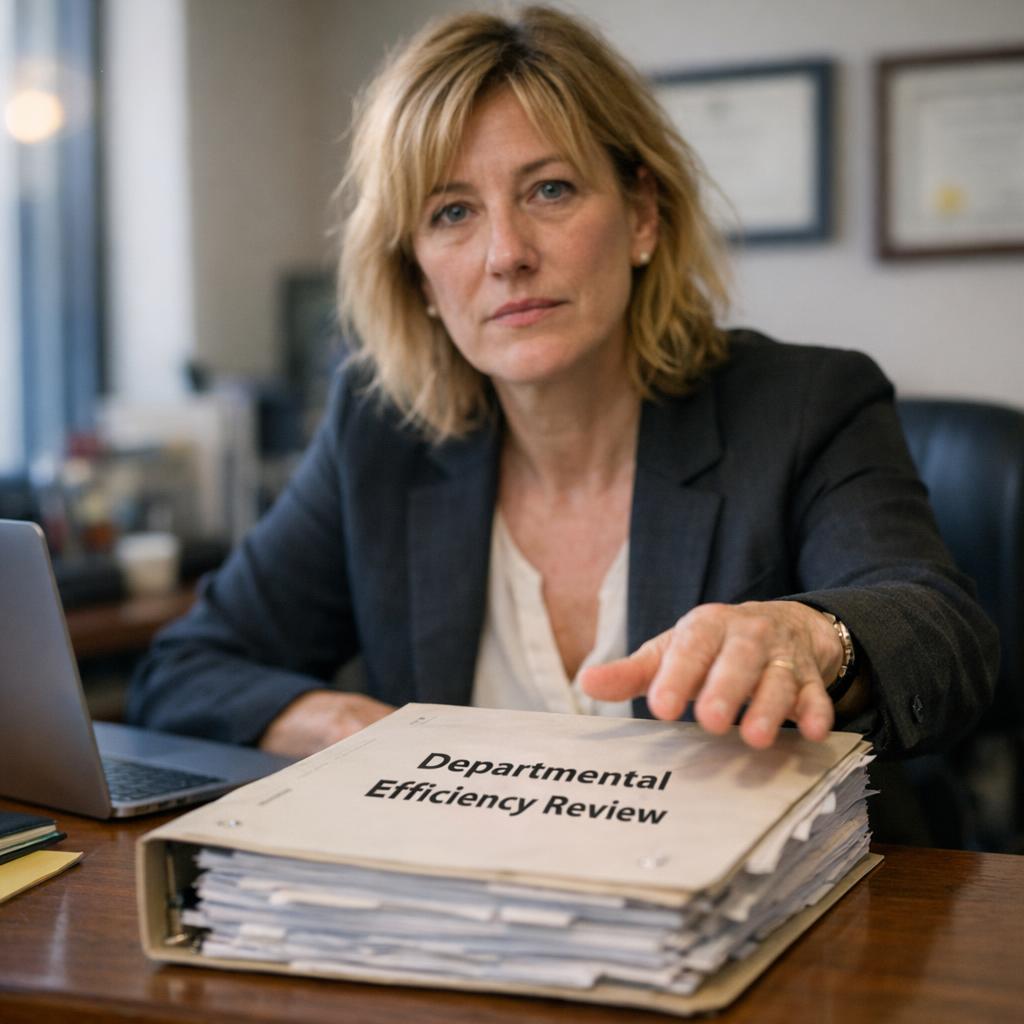 Image by RM AI
Kevin's Web
Sandra invited me to a secure conference room on Thursday, where she spread out a series of financial reports across the table. 'This is Kevin's web,' she said, pointing to a complex flowchart that looked like something from a conspiracy theorist's basement. For nearly three years, Kevin had been siphoning funds through a labyrinth of interdepartmental transfers—creating phantom budget items that looked legitimate on paper but never materialized in reality. 'He was brilliant, in a twisted way,' Sandra admitted. 'He specifically targeted managers like Greg—people with enough confidence to not double-check things but not enough attention to detail to catch the discrepancies.' I felt a chill as I studied the diagram. Each arrow represented someone's career Kevin was willing to sacrifice. 'How many others?' I asked quietly. Sandra's expression darkened. 'We've identified at least seven managers who were either set up as potential scapegoats or unknowingly approved fraudulent transfers.' Seven lives. Seven careers he was prepared to destroy without a second thought. What made me different was simple luck—I'd kept that backup copy. As I stared at the intricate web of Kevin's deception, I couldn't help but wonder: in a company of thousands, how many other Kevins were out there, spinning their webs in the shadows of corporate bureaucracy?
 Image by RM AI
The Side Consulting Gig
I was reviewing some of the documents Sandra had shared with me when I stumbled upon something that made my blood run cold. Kevin's 'side consulting job' wasn't just some harmless moonlighting—he had been selling our proprietary information to competitors. 'We found encrypted emails on his company laptop,' Sandra explained, her voice tight with controlled anger. 'He was packaging our market research, client lists, and strategic plans—information worth millions—and selling it for personal profit.' I sat there, stunned, as she showed me redacted copies of what they'd discovered. This wasn't just embezzlement; it was full-blown corporate espionage. The realization hit me like a ton of bricks: if Kevin hadn't been caught, our company could have lost its competitive edge entirely. Hundreds of jobs—including mine—might have disappeared. People's mortgages, their kids' college funds, their retirement plans—all potentially destroyed because one man in corporate strategy decided his bank account mattered more than everyone else's livelihoods. 'Does Greg know about this?' I asked, my voice barely above a whisper. Sandra nodded grimly. 'That's why his severance package came with such a strict confidentiality agreement.' As I walked back to my desk, I couldn't shake the feeling that I'd only scratched the surface of Kevin's betrayal—and that there might be others involved who were still walking the halls, smiling at me as I passed.
 Image by RM AI
Meeting with the CFO
The email from Patricia Winters, our CFO, sent my anxiety through the roof. In seventeen years, I'd never been summoned to the executive floor. Her assistant—a young man with perfect posture and an expensive watch—led me through a maze of glass-walled offices until we reached her corner suite with its sweeping city views. 'Denise,' Patricia said, rising from behind a desk that probably cost more than my car. 'Please, sit.' She wasn't what I expected—warmer, somehow, despite her reputation for ruthless efficiency. 'What you uncovered,' she said, leaning forward, 'saved this company from potential bankruptcy.' She showed me projections I wasn't supposed to see—how Kevin's fraud, if continued another six months, would have triggered mandatory layoffs. 'Three hundred jobs, minimum,' she said, her voice tight. 'Including entire departments.' I felt dizzy imagining it—colleagues with mortgages, medical bills, college tuitions, all because one man couldn't be satisfied with his six-figure salary. 'People like Kevin,' Patricia sighed, 'they never think about the human cost.' As I stood to leave, she said something that kept me awake that night: 'The board wants to know how he got away with it for so long—and who might have helped him.'
 Image by RM AI
The Aftermath in the Office
The office transformed into a rumor mill after Kevin's sudden disappearance and Greg's mysterious absence. I'd walk into the break room and conversations would hush, then restart with exaggerated whispers once I was at the coffee machine. "I heard Kevin was embezzling millions," Janice from Accounting would say, not realizing she was uncomfortably close to the truth. Others spun wild tales about workplace affairs, corporate espionage, and even witness protection programs. Mark from IT swore he'd seen Kevin being escorted out by federal agents, which I knew wasn't true. It was surreal having signed all those confidentiality agreements, knowing the actual story while everyone around me played a corporate version of the telephone game. The rumors grew more outlandish by the day. "Greg and Kevin were running an underground betting ring using company funds," was my personal favorite. I'd nod along, sipping my tea, thinking how the truth was simultaneously more mundane and more shocking than anything they could imagine. Sometimes I'd catch Sandra's eye across the cafeteria, and we'd share that knowing look—the burden of secrets creating an unexpected bond between us. What nobody realized was that the real story was still unfolding, and the next chapter would make Kevin's fraud look like a footnote in comparison.
 Image by RM AI
Building the New System
I've never been more focused in my entire career. For weeks, I practically lived in that small conference room, surrounded by flowcharts, process diagrams, and sticky notes in every color imaginable. 'This is my legacy,' I told myself as I designed a reporting system that would have caught Kevin's fraud years ago. I built in multiple checkpoints—no single person could approve major financial data without at least two others reviewing it. Every change would be tracked digitally, creating an audit trail that even the slickest corporate schemer couldn't erase. 'What about people who spot problems but are afraid to speak up?' Sandra asked during one of our review sessions. That question led to my favorite feature: anonymous reporting channels that bypassed the normal chain of command. 'If this had existed three years ago,' I told her, 'Kevin would never have gotten past month one.' The executive team actually applauded when I presented the final design—a surreal moment for someone who'd spent seventeen years being essentially invisible. As I walked back to my desk that day, I caught my reflection in the glass walls of the conference room—same gray-streaked hair, same sensible shoes, same me—but something fundamental had changed. I just didn't realize that my new system would soon face its first major test, and it would come from a direction none of us expected.
 Image by RM AI
The Legal Fallout
Marcus from Legal called me into a meeting yesterday, his usual crisp demeanor softened by what looked like three consecutive all-nighters. 'We've made a decision about Kevin,' he said, sliding a folder across the table. The company was pursuing civil charges rather than criminal ones—a substantial financial settlement that would effectively end Kevin's career without the public spectacle of a trial. 'He'll never work in this industry again,' Marcus assured me, as if that should feel like justice. I sat there, conflicted. Part of me wanted to see Kevin's face splashed across the business section, wanted everyone to know what he'd done and who he'd been willing to sacrifice. But another part understood the company's position. A public scandal would hurt innocent people—our stock would plummet, affecting everyone's retirement accounts. Jobs might be lost. 'We're not letting him off easy,' Marcus added, noting the seven-figure settlement. 'But we're protecting the company—and by extension, everyone who works here.' I nodded, thinking about how corporate justice operates in shades of gray. As I left his office, Marcus called after me: 'Denise? The board wants you to know—your new reporting system is the reason we had such a strong case.' I smiled thinly, wondering if Kevin was the only one who should be facing consequences, or if there were others who had turned a blind eye all these years.
 Image by RM AI
Coffee with Elise
I suggested meeting Elise at the little café across from the office—neutral ground where we could talk without corporate ears listening in. She arrived five minutes early, already nursing a latte when I walked in. 'I've been wanting to talk to you properly,' she said, fidgeting with her cup sleeve. 'About Greg.' Over the next hour, Elise revealed the full extent of what Greg had discovered—intricate patterns in budget allocations that seemed specifically designed to hide withdrawals. 'He showed me these spreadsheets with highlighted cells,' she explained, her voice dropping to a whisper. 'Said the numbers didn't add up, especially in the Q3 reports.' What hit me hardest was when her eyes welled up. 'I dismissed him, Denise. Told him he was being paranoid, that accounting probably just made a mistake.' She pushed her half-empty cup away. 'If I'd taken him seriously, maybe...' I reached across the table and squeezed her hand. 'We all missed it,' I said, though it didn't seem to ease her guilt. As we were leaving, Elise grabbed my arm. 'There's something else you should know,' she said, glancing around nervously. 'Greg wasn't the first person to notice the discrepancies. There was someone before him who suddenly transferred to the Singapore office last year.'
 Image by RM AI
The Anonymous Email
I was sorting through my inbox on Friday morning, deleting the usual flood of corporate announcements and meeting invites, when an email with no subject line caught my attention. The sender's address was a jumble of random characters at a free email provider—clearly a throwaway account. 'Thank you for doing the right thing with the report,' it began. 'Not everyone would have had the courage.' My coffee mug froze halfway to my lips. The message referenced specific details about Kevin's fraud scheme that weren't public knowledge—exact dollar amounts, department codes, even the name of the offshore account where some funds had been transferred. I glanced around the open office, suddenly paranoid about who might be watching me read this. Was it Greg? Sandra? Someone else entirely? I forwarded it to Sandra with a quick note: 'Should we be concerned about this?' Her response came back almost immediately: 'My office. Now.' As I walked across the floor, I couldn't shake the feeling that someone was watching me—someone who had been silently observing this whole situation unfold, perhaps for years. Someone who knew more than they were saying. And I couldn't help but wonder: if they knew all this, why hadn't they spoken up sooner?
 Image by RM AI
Implementing the New Process
The day of the system rollout arrived, and I felt like I might throw up. At 59, I'd spent most of my career blending into the background, and now here I was, standing at the front of our largest conference room with every department head staring at me. My presentation slides were projected behind me as I gripped my notes with slightly trembling hands. 'This new reporting structure creates accountability at every level,' I explained, clicking through the flowcharts I'd spent weeks perfecting. To my surprise, people were nodding—not just politely, but with genuine interest. When our CEO unexpectedly walked in halfway through, I nearly lost my place. But instead of making me more nervous, his presence somehow steadied me. 'This is exactly what we've needed,' he announced when I finished, actually applauding. 'Denise has created something that will protect this company for years to come.' As managers approached with questions afterward, I realized something profound had shifted. People who'd walked past my desk for years without a second glance were now asking for my input, my expertise. I'd gone from invisible to indispensable almost overnight. As I packed up my presentation materials, Sandra caught my eye across the room and gave me a subtle thumbs-up. What neither of us realized was that my system would face its first real test much sooner than anyone expected—and from someone we never saw coming.
 Image by RM AI
Greg's New Beginning
I was scrolling through LinkedIn one morning when a familiar face popped up in my feed. Greg—looking more relaxed than I'd ever seen him at our company—was announcing his new position as Director of Operations at Meridian Global. It was a significant step up from his role with us, complete with a corner office and a team twice the size of what he'd managed here. I found myself smiling genuinely at my screen. Three weeks later, I received another handwritten note from him, this one on expensive stationery with Meridian's logo. 'Denise,' it read, 'I wanted you to know that I've implemented a version of your reporting system at my new company. The first thing I did was create those accountability checkpoints you designed.' He went on to say that his near-downfall had been the wake-up call he needed—that he'd been coasting on charm and connections rather than substance. 'I actually understand the reports I sign now,' he wrote, with a self-deprecating humor I'd never seen from him before. I tucked the note into my desk drawer, feeling an unexpected sense of closure. Sometimes it takes nearly losing everything to realize what matters. What I didn't know then was that Greg's new position would soon connect back to our company in ways none of us could have anticipated.
 Image by RM AI
The Security Upgrade
The scope of my project expanded faster than I could have imagined. 'We need to talk about security,' Paul, our IT Director, said during our third planning meeting. He was a quiet man with salt-and-pepper hair who'd been with the company longer than I had. Over the next few weeks, Paul and I spent hours in his cluttered office, surrounded by monitors displaying code I couldn't begin to understand. 'Kevin's fraud wasn't just a financial problem,' he explained, showing me how easily our old system could be manipulated. 'It was a security nightmare.' Paul revealed something that made my stomach drop—there had been at least four other significant breaches in the past decade, all quietly handled and buried under NDAs. 'I've been fighting this battle alone for years,' he confessed one evening, rubbing his tired eyes. 'Nobody wanted to spend the money on proper security until now.' As we redesigned the entire document security protocol, I gained a new respect for Paul. He'd been the unsung guardian of our company data, constantly patching vulnerabilities while executives dismissed his concerns as 'IT being paranoid.' The irony wasn't lost on me—I'd been invisible in operations for seventeen years, and he'd been invisible in IT for twenty-two. What I didn't realize was that our collaboration was about to uncover something far more troubling than Kevin's fraud—something that would make his crimes look like petty theft in comparison.
 Image by RM AI
Lunch with Sandra
Sandra texted me on a Tuesday morning: 'Lunch today? Off-site. My treat.' In seventeen years, I'd never had lunch with anyone from corporate. We met at a small bistro ten blocks from the office—far enough that we wouldn't run into coworkers. 'I wanted to thank you properly,' she said after we ordered, her usual professional demeanor softening slightly. Over salads and iced tea, Sandra revealed something that made me nearly drop my fork. 'We'd been watching Kevin for almost seven months before your report came across my desk.' She explained how internal audit had spotted inconsistencies but couldn't prove deliberate fraud without a smoking gun. 'We needed a comparison—an original versus what was submitted.' She smiled. 'Your rewritten report was exactly that missing piece.' I sat there, processing how close the whole investigation had come to collapsing. 'If you hadn't kept that copy...' Sandra didn't finish the sentence, but she didn't need to. I thought about all the times I'd almost deleted old files to free up space on my computer. 'There's something else,' Sandra said, lowering her voice and leaning forward. 'We think Kevin wasn't working alone.' She slid a folder across the table. 'This stays between us, but I need your help identifying these transactions.'
 Image by RM AI
The Board Presentation
I stared at the calendar invite from the CEO's assistant: 'Board Presentation - Denise Harmon - New Reporting System.' My stomach dropped. In seventeen years, I'd never set foot in the boardroom, let alone presented there. 'You've got this,' Sandra assured me, reviewing my slides for the fifth time. 'They specifically requested you, not me.' The night before, I barely slept, rehearsing answers to imaginary questions until 3 AM. Walking into that mahogany-paneled room was like entering another dimension—twelve faces turned toward me, people whose names I'd only seen in company-wide emails and annual reports. 'Ms. Harmon,' the chairwoman said, 'we've heard remarkable things about your work.' I took a deep breath and began. To my surprise, they listened—really listened—asking thoughtful questions about implementation timelines and security protocols. No one checked their phone or whispered to their neighbor. When I explained how the system would have caught Kevin's fraud years earlier, several board members exchanged concerned glances. 'This is exactly what we need,' the chairwoman said when I finished. 'Why did it take a near-disaster for us to implement something so obvious?' As I gathered my materials, the CEO approached. 'Excellent work, Denise,' he said, then lowered his voice. 'Though between us, I think some people in this room are nervous about what else your system might uncover.'
 Image by RM AI
Kevin's Replacement
The email announcing Kevin's replacement arrived on a Monday morning with all the corporate fanfare you'd expect—a headshot that looked more LinkedIn than human, and a bio highlighting degrees from universities I couldn't afford to visit, let alone attend. Nadia Chen, our new Director of Corporate Strategy, scheduled individual meetings with everyone who'd been involved in uncovering the fraud. When my calendar invite arrived, I expected another perfunctory thank-you session. I couldn't have been more wrong. Nadia arrived at our meeting with a notebook already filled with questions and a copy of my reporting system documentation covered in Post-it notes. "I've spent the weekend studying this," she said, tapping my flowchart. "It's brilliant." What struck me most wasn't her intelligence—though that was obvious—but her directness. "I need to understand exactly how Kevin manipulated the system," she said, "not to repeat it, but to make sure there aren't other vulnerabilities we've missed." For two hours, we dissected the fraud piece by piece. No corporate doublespeak, no passing the buck. Just honest questions from someone determined to clean up the mess she'd inherited. "People are going to be watching this department like hawks," she admitted as we wrapped up. "I intend to give them nothing to see except absolute transparency." I left feeling cautiously optimistic—until I noticed an email from an unknown address waiting in my inbox with the subject line: "What Nadia Doesn't Know."
The Anniversary Reflection
I never thought I'd be the type to celebrate a work anniversary, but as the date approached, I found myself wanting to mark the occasion. One year since the system rollout. One year since I went from being invisible Denise to someone whose opinion actually mattered. I booked a small cabin by the lake—something I'd never done before. 'You deserve this,' Sandra had texted when I mentioned my plans. Sitting on the dock that Friday evening, watching the sunset with a glass of wine in hand, I couldn't help but laugh at how dramatically my life had changed. Seventeen years of showing up, doing my job, and going home had suddenly transformed into meetings with the board, collaborations with IT, and my name on company-wide emails. I'd even started mentoring two younger employees who wanted to learn about process design. The old Denise would never have believed it. As darkness fell over the water, I scrolled through photos on my phone—the team celebration after the system implementation, Greg's handwritten note, even a selfie with Nadia from the company picnic. I was about to put my phone away when a new email notification appeared. The subject line made my heart skip: 'What Really Happened to Kevin.' The sender's name was unfamiliar, but the message preview sent a chill down my spine: 'You only uncovered part of the truth...'
 Image by RM AI
The Industry Conference
I never imagined I'd be the one representing our company at the National Corporate Governance Conference in Chicago. Me—Denise, the background operations person who'd spent seventeen years blending into the wallpaper. Yet here I was, company-branded lanyard around my neck, navigating a sea of suits with business cards at the ready. 'You're the one who designed that new reporting system, right?' A woman from a competing firm actually sought me out during the coffee break. Before I knew it, I was surrounded by people genuinely interested in what I had to say. The real test came during the panel discussion on 'Transparency in Corporate Reporting.' When the moderator asked about implementing effective checkpoints, all eyes turned to me. My heart hammered as I explained our multi-level verification process, carefully dancing around the specifics of Kevin's fraud while emphasizing the importance of documentation trails. 'The best systems,' I heard myself saying with surprising confidence, 'are the ones that make dishonesty more work than honesty.' The audience actually applauded. Later, as I was gathering my notes, a distinguished-looking man approached me with a business card. 'I'd love to discuss your system further,' he said. 'Perhaps over dinner?' I glanced down at his card and froze—he was from Meridian Global, Greg's new company.
 Image by RM AI
The Unexpected Encounter
I was nursing a gin and tonic at the hotel bar after my panel, still riding the high of actually being listened to, when I spotted him. Kevin. My blood ran cold as I watched him work the room, all expensive suit and practiced charm, handing out business cards to a group of impressed-looking executives. He hadn't changed a bit—same slick hair, same too-wide smile that never quite reached his eyes. I slid behind a decorative pillar, heart pounding in my chest. The man who'd nearly destroyed Greg's career and tried to implicate me was now representing some tech startup I'd never heard of. I wondered if they had any idea who they'd hired. For fifteen minutes, I watched him spin his web of half-truths and industry jargon, mesmerized by the audacity. Then, mid-sentence, he glanced in my direction and our eyes locked. The recognition was instant—his smile faltered for just a split second before he recovered. But I saw it. The flash of panic. Without finishing his conversation, he made some excuse, checked his watch, and practically sprinted toward the exit. As I watched him disappear, a chilling thought occurred to me: if Kevin had landed on his feet so quickly after everything that happened, who had helped him? And what would he do now that he knew I was here?
 Image by RM AI
The Ethical Dilemma
I couldn't stop thinking about Kevin's smug face at the conference. For three days straight, I'd wake up at 3 AM with the same question circling my brain: did I have a moral obligation to warn others about him? Our company's settlement with Kevin included an NDA, but nothing about preventing him from working in the industry again. I finally broke down and scheduled a meeting with Marcus in Legal, a straight-shooter I'd come to trust during the fraud investigation. 'Legally speaking, we can't blacklist him,' Marcus explained, leaning back in his chair. 'But ethically...' He let the sentence hang there. I showed him the photos I'd discreetly taken of Kevin's new business cards. 'TechVantage Solutions,' Marcus read aloud, his eyebrows climbing toward his hairline. 'They're one of our smaller competitors.' He drummed his fingers on his desk, clearly weighing options. 'Leave this with me, Denise. I'll handle it appropriately.' As I walked back to my desk, I felt the weight lift slightly from my shoulders. I'd done what I could—passed the ethical baton to someone with the authority to run with it. What I didn't realize was that Marcus had connections at TechVantage that went far deeper than professional courtesy, and the email he was about to send would set off a chain reaction that would eventually circle back to me in the most unexpected way.
 Image by RM AI
The Mentorship Program
The email from HR arrived with the subject line 'Mentorship Program - Your Participation Requested.' I almost laughed out loud. Me? A mentor? After seventeen years of blending into the background, suddenly I was someone worth learning from. 'Given your recent contributions to the company,' the email read, 'we believe you would be an excellent mentor for our mid-level employees.' My first meeting with Zoe, a sharp-eyed analyst from finance, felt awkward at first. She arrived with a notebook already filled with questions and a determination that reminded me of myself—before years of corporate life had taught me to keep my head down. 'I've heard about what you did with the reporting system,' she said, leaning forward. 'How did you find the courage?' As I shared my story—the late nights rewriting Greg's report, the fraud discovery, the system redesign—I realized I actually had valuable insights to offer. 'Office politics isn't about avoiding conflict,' I told her. 'It's about knowing which battles matter.' By our third session, Zoe was bringing me potential inconsistencies she'd spotted in vendor contracts. 'I would have ignored these before,' she admitted. 'But now I know even small discrepancies can matter.' What neither of us realized was that one of those 'small discrepancies' would soon connect directly to Kevin's new company—and the web of deception was far more extensive than any of us had imagined.
 Image by RM AI
The First Test Case
I was in the middle of a team meeting when my phone buzzed with an alert from the new system. 'Potential discrepancy detected: Marketing Q3 event budget.' My heart raced—this was it, the first real test of everything we'd built. I excused myself and hurried back to my desk, clicking through the notification to find that someone had entered a $15,000 expense twice for the same vendor. The system had flagged it immediately, preventing it from being processed further. Within an hour, Cynthia, our Marketing Director, was standing at my desk looking both relieved and embarrassed. 'If this had gone through the old way,' she admitted, 'we wouldn't have caught it until quarterly review—if at all.' She explained how her new assistant had accidentally duplicated the entry while rushing to meet a deadline. 'Your system saved us from having to explain a $15,000 mistake to the board.' Later that day, I received an email from Sandra with just three words: 'It works. Congratulations.' I printed it out and pinned it to my cubicle wall—my first trophy in seventeen years. That night, I treated myself to takeout from the expensive Thai place and a glass of wine, feeling a satisfaction I hadn't experienced in years. What I didn't realize was that this small victory was just the warm-up for what was coming next—a discrepancy that wouldn't be so innocent or easy to resolve.
 Image by RM AI
The Promotion Offer
I was in the middle of troubleshooting a system alert when Patricia's assistant called. 'The CFO would like to see you in her office.' My stomach dropped—in seventeen years, I'd been summoned to the executive floor exactly twice. Patricia's corner office was intimidating, all glass and chrome with a view of the city skyline I'd only seen in company brochures. 'Denise,' she said, gesturing to the leather chair across from her desk, 'I'll get right to the point. We're creating a new position—Director of Operational Integrity—and we want you to fill it.' I nearly choked on the water her assistant had brought me. Patricia slid a folder across her desk with a compensation package that made my eyes widen. 'You'll have a team of five, reporting directly to me,' she continued, watching my reaction carefully. 'This isn't just about the reporting system anymore. We need someone who can see the patterns others miss.' I asked for time to consider it, which seemed to surprise her. 'Of course,' she said, 'but don't take too long. The board is eager to announce this.' Walking back to my cubicle, I felt dizzy with possibility—and terror. After seventeen years of invisibility, I was being asked to step into the spotlight. What Patricia didn't mention, and what I would only discover later, was exactly why they were in such a hurry to get me into this position.
 Image by RM AI
Doubts and Decisions
I stared at Patricia's folder on my kitchen table for the third night in a row, the numbers on the offer letter blurring as I sipped my second glass of wine. Director of Operational Integrity. Me—the woman who'd spent seventeen years trying not to be noticed. The thought of leading a team of five made my stomach twist into knots. At 2 AM, I finally called my sister in California, not caring about the time difference. 'Denise, for God's sake,' she said after I explained everything, 'you uncovered corporate fraud and built an entire reporting system. What exactly do you think you're not qualified for?' I laughed nervously. 'Being visible? Having people actually look to me for answers?' She sighed that big-sister sigh I'd known my whole life. 'The reason they want you is precisely because you've never been the person seeking attention. You care about getting things right, not getting credit.' Her words hit me like a revelation. The next morning, I marched into Patricia's office before I could change my mind. 'I'll take the position,' I said, my voice steadier than I felt. 'But I want to keep direct oversight of the reporting system.' Patricia smiled, extending her hand. 'I was hoping you'd say that. There's something else you should know about why we created this role now...'
 Image by RM AI
Building My Team
I never thought I'd be the one conducting interviews instead of sitting on the other side of the table. My first week as Director of Operational Integrity was a blur of HR paperwork and office relocations, but now came the real challenge: building my team. 'You need people who think differently than you do,' Sandra advised over coffee. 'But who share your moral compass.' I started with Zoe—my mentee from finance who'd already proven she could spot inconsistencies others missed. 'I can't believe you want me,' she said, eyes wide when I offered her the position. 'I'm only three years out of college.' 'That's exactly why I need you,' I replied. 'You haven't learned to ignore red flags yet.' For the other positions, I reviewed dozens of personnel files, looking for people who'd raised concerns in the past, even when it wasn't popular. I found Raj from IT who'd once halted a software rollout over security concerns, despite pressure from above. And Maria from Legal, who'd built a reputation for asking uncomfortable questions during contract reviews. By Friday, I had my five—a diverse group spanning departments, experience levels, and backgrounds. What united them wasn't their resumes but something in their eyes when I explained our mission: a quiet determination I recognized from my own mirror. What none of us realized was that our first major test as a team would come much sooner than expected—and from a direction none of us could have anticipated.
 Image by RM AI
The First Leadership Challenge
Two weeks into my role as Director of Operational Integrity, I faced my first real leadership challenge. My team had uncovered significant inconsistencies in how different departments interpreted financial reporting guidelines—some treating them as suggestions rather than requirements. When we presented our standardization recommendations, the pushback was immediate. "We've always done it this way," became the battle cry of middle managers across departments. Mark from Sales was particularly vocal, rolling his eyes during our presentation. "With all due respect, Denise," he said in that tone that meant no respect whatsoever, "some of us have actual revenue targets to meet instead of obsessing over formatting." I felt my face flush as others nodded in agreement. For seventeen years, I'd been the person who nodded along with them. Now I was the one they were resisting. That night, I called Sandra in a panic. "They see me as the enemy now," I confessed. "The bureaucracy police." She laughed softly. "Welcome to leadership, Denise. The question isn't whether they like your decisions today—it's whether they'll respect them tomorrow." The next morning, I gathered my team and developed a new approach: instead of mandating changes, we'd show each department how standardization would actually save them time and protect them from audit headaches. What I didn't realize was that one department's resistance wasn't about convenience at all—they had something much bigger to hide.
Greg's Return Visit
I was reviewing a system alert when I heard a familiar voice in the hallway. Looking up, I saw Greg—the same Greg whose report had started this whole journey—standing at my office door. 'Director of Operational Integrity,' he read from my nameplate, smiling. 'Quite the upgrade from regional operations.' I invited him in, surprised at how comfortable it felt to see him again. He looked different—more relaxed in his expensive suit, less like someone trying too hard to impress. Over coffee, he told me about his new position at Meridian Global. 'I'm actually grateful for what happened,' he admitted, leaning forward. 'It was a wake-up call.' What surprised me most was hearing how he'd started mentoring junior staff about ethics and transparency. 'I tell them your story—well, our story,' he said with a self-deprecating laugh. 'About how cutting corners can backfire, and how integrity matters more than looking good.' Before leaving, he placed a small gift bag on my desk. 'Thank you, Denise. Not just for clearing my name, but for showing me a better way to work.' I watched him walk away, marveling at how seventeen years of invisibility had somehow led to this moment of impact. It wasn't until hours later, after opening his gift—a beautiful fountain pen with 'Integrity Matters' engraved on it—that I noticed the business card he'd slipped into the bag with a handwritten note that made my blood run cold.
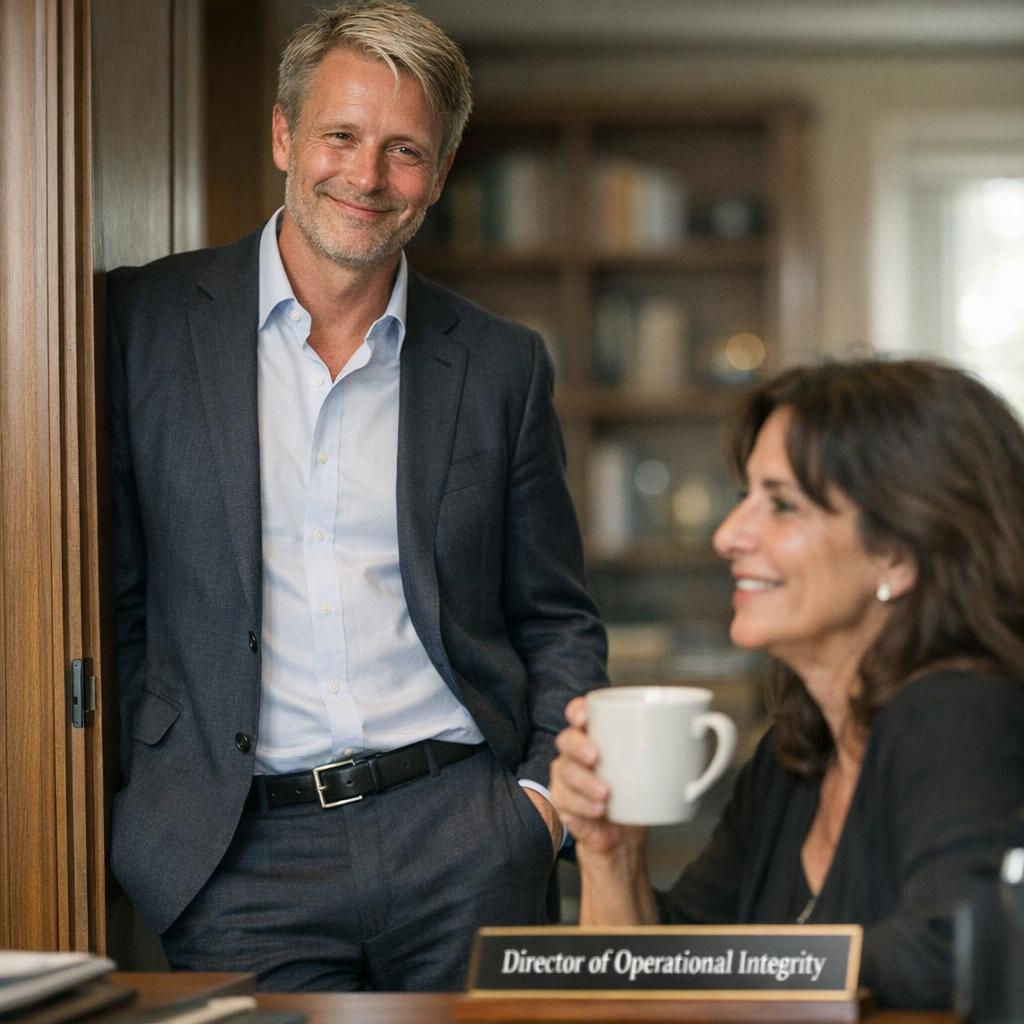 Image by RM AI
The Industry Recognition
I never thought I'd see my name engraved on an award, let alone one from the National Association of Corporate Governance. Yet there it was—a crystal obelisk with 'Innovation in Transparency' etched beneath my name. 'We're proud to recognize Denise Walker for revolutionizing internal reporting systems,' read the email invitation to the annual gala. Me—the woman who'd spent most of her career trying not to be noticed. As I practiced my acceptance speech in front of my bathroom mirror, I kept thinking about that messy report Greg had handed me seventeen months ago. How could I have known that staying late to fix someone else's work would lead to uncovering fraud, building a new system, and now this? The night of the gala, I wore a navy blue dress I'd splurged on—my sister insisted I needed to 'dress like the executive you are now.' My hands trembled slightly as I approached the podium, the spotlight momentarily blinding me. 'Seventeen years ago,' I began, my voice steadier than I expected, 'I started a job where I thought success meant being invisible.' The audience laughed, but I saw understanding in their eyes. As I described our journey toward transparency, I spotted a familiar face in the crowd—Kevin, watching me with an expression I couldn't quite read. And that's when I realized this award wasn't just recognition for what we'd accomplished—it was also painting a target on my back.
 Image by RM AI
The Whistleblower Policy
After our reporting system's success, I decided it was time to tackle something even bigger: a comprehensive whistleblower protection policy. 'We need clear channels for people to report concerns without fear of retaliation,' I explained during my presentation to the executive committee. Several faces around the table hardened immediately. 'This could open us up to frivolous complaints from disgruntled employees,' argued Richard from HR, his arms crossed defensively. I took a deep breath and did something I rarely did—I got personal. 'Two years ago, I rewrote a report that uncovered fraud in our company,' I said, carefully omitting specific names while making eye contact with Patricia, who nodded slightly. 'If we'd had proper channels then, we might have caught it months earlier.' I described how the lack of clear reporting procedures had allowed Kevin's scheme to flourish, and how Greg had been made a scapegoat because he had nowhere safe to take his concerns. By the end of my presentation, even the skeptics were asking thoughtful questions. When the board unanimously approved the policy three weeks later, I felt a sense of completion—like I'd finally closed a circle that began with that messy report on my desk seventeen years into my invisible career. What I didn't anticipate was how quickly this new policy would be put to the test, or that the first major whistleblower would be someone I knew all too well.
 Image by RM AI
The Anonymous Tip
The first anonymous tip came through our whistleblower portal on a Tuesday morning. I was reviewing budget reports when the notification popped up on my screen with a simple subject line: 'Ongoing Harassment in Sales.' My stomach tightened as I read through the detailed allegations against Mark—yes, the same eye-rolling Mark who'd challenged our standardization efforts. According to the tipster, he'd been making inappropriate comments to female team members and leveraging his position to pressure them into after-hours 'strategy sessions.' Following our newly established protocols, I assembled a small investigation team including Maria from Legal. We conducted discreet interviews, gathered evidence, and documented a pattern that made my blood boil. 'This has been happening for years,' one employee confided, eyes downcast. 'Nobody ever did anything before.' Within two weeks, we presented our findings to Patricia and HR. Mark was gone by the end of the day—no dramatic scene, just an empty desk and a company-wide email about 'organizational changes.' What made me proudest wasn't just that we'd addressed the situation, but how we'd done it—protecting both the victims and the company while sending a clear message that the old ways of sweeping things under the rug were over. That night, I received an anonymous email that simply read: 'Thank you for making us feel safe.' It was the best performance review I'd ever gotten. What I didn't realize was that this success would embolden someone else to come forward with allegations that would shake our company to its very foundation.
 Image by RM AI
The Retirement Consideration
I never thought I'd be the type to consider retirement. For nearly two decades, I was Denise-from-regional-operations, the reliable background player who fixed everyone else's messes. Now, as Director of Operational Integrity with an actual corner office, I found myself staring at my retirement account statement with a sense of disbelief. The numbers had changed dramatically since my promotion. 'You could actually do it in a few years if you wanted,' my financial advisor said during our quarterly review. 'You've got options now.' Options. The word felt foreign in my mouth. Last weekend, I caught myself browsing travel websites—something I'd never done before. Italy. New Zealand. Places I'd always filed away in that nebulous 'someday' category. My sister called while I was looking at Mediterranean cruises. 'You deserve this,' she said when I confessed my retirement daydreams. 'After everything you've built, imagine what you could do with actual free time.' That night, I made a list of things I'd do if work didn't consume my days—painting classes, volunteering, visiting my nieces more than just holidays. It was terrifying and exhilarating all at once. For someone who'd spent 59 years defining herself by her job title, who would I become without one? I was still contemplating this question when an unexpected email arrived from Patricia that would force me to reconsider everything about my future at the company.
 Image by RM AI
The Succession Plan
Patricia's email about succession planning got me thinking—if I was seriously considering retirement, I needed someone to carry the torch. Zoe was the obvious choice. At just 27, she had the perfect combination of technical skill and moral backbone that our department needed. I started inviting her to executive meetings, watching with quiet pride as she held her own against VPs three times her age. 'You're grooming me for something, aren't you?' she asked one day after I assigned her to lead our quarterly audit presentation. I smiled, remembering how I'd once been terrified of that kind of visibility. 'Let's just say I'm investing in the future,' I replied. Over the next few months, I gradually shifted more responsibilities her way—difficult conversations with department heads, complex compliance issues, even representing our team at the regional conference. She thrived with each new challenge, often finding solutions I hadn't considered. 'You know what's weird?' I told Sandra over lunch. 'I always thought my legacy would be the reporting system. But watching Zoe grow—that feels like the real achievement.' What I didn't tell Sandra was how Zoe had started asking questions about certain board members' expense reports—the same board members who'd been unusually interested in my retirement timeline.
The Corporate Merger Rumors
The first whispers about the merger came from Accounting—they always know first. By lunchtime, the entire building was buzzing with speculation. 'Denise, is it true we're being acquired?' Raj asked during our team meeting, voicing what everyone was thinking. I wished I had answers. That night, I barely slept, imagining all our hard work—the reporting system, the whistleblower policy—being dismantled by corporate raiders who cared more about quarterly profits than integrity. When CEO Richard called me into his office the next morning, I braced myself for bad news. Instead, he surprised me. 'The transparency infrastructure you've built is actually one of our strongest selling points in the negotiations,' he explained, leaning forward in his chair. 'They're impressed by our governance model.' I felt a momentary relief, but the uncertainty still hung heavy. Walking back to my department, I passed huddles of anxious employees whispering in corners. Some had already updated their LinkedIn profiles. Others were taking longer lunches to make private calls. The tension was palpable—like the air before a thunderstorm. I gathered my team that afternoon, determined to be honest without feeding the panic. 'I don't know what's coming,' I told them, 'but I do know that what we've built here matters.' What I didn't tell them was what Richard had whispered as I left his office: that the acquiring company had specifically asked about me.
 Image by RM AI
The Due Diligence Team
The merger rumors were confirmed on a Monday morning when a team of six people in crisp suits arrived at our office. 'The due diligence team,' Patricia explained, introducing me to their leader, Henrik, a tall man with salt-and-pepper hair and surprisingly kind eyes. 'They've specifically requested to work with you on compliance systems.' For the next two weeks, I walked Henrik and his team through every aspect of what we'd built—the reporting protocols, the whistleblower system, the audit trails. I expected the typical corporate dismantling, but Henrik surprised me. 'This is remarkable,' he said one afternoon, studying our fraud detection algorithms. 'Most companies we acquire have systems held together with digital duct tape.' He actually laughed when I showed him how we'd automated red flag detection. 'We've been trying to build something like this for years.' By the third week, Henrik was taking notes on implementing our systems company-wide after the merger. 'Your team should lead the integration,' he told me during our final meeting. 'This level of transparency should be the standard, not the exception.' I felt a weight lifting—all our hard work wouldn't be scrapped after all. What I didn't realize then was that Henrik's enthusiasm about our systems wasn't just professional admiration; he had personal reasons for valuing transparency that would soon connect our pasts in ways I never could have imagined.
 Image by RM AI
The Merger Announcement
The merger announcement came on a Wednesday morning, landing in our inboxes with all the subtlety of a fire alarm. 'Town hall meeting at 11:00 AM—MANDATORY ATTENDANCE' read the subject line from CEO Richard. You could feel the anxiety rippling through the building—people frantically updating resumes, whispering about severance packages, wondering which departments would be deemed 'redundant.' I sat in the back row of the packed conference room, mentally preparing for the worst. But then something unexpected happened. When Meridian Global's CEO took the stage, he specifically mentioned our compliance systems as a 'cornerstone asset' in the acquisition decision. 'The transparency infrastructure built by Denise Walker's team represents the gold standard in corporate governance,' he said, gesturing toward me. I felt my face flush as hundreds of heads turned in my direction. After the meeting, colleagues I barely knew stopped by my office. 'Your systems might have saved my department,' admitted Terrence from Marketing. 'They're keeping us because of the compliance framework.' That night, I sat in my car long after everyone had left, feeling a strange mixture of pride and unease. The systems I'd built had become a corporate lifeline for many—but I couldn't shake the feeling that this merger would test our integrity in ways I hadn't yet imagined. Especially after I noticed Henrik lingering outside the CEO's office with a troubled expression I recognized all too well.
 Image by RM AI
The Integration Team
The email from Patricia arrived at 7:30 AM: 'Congratulations, Denise. You've been appointed to the Integration Team.' I nearly spilled my tea. Integration teams were where careers either soared or crashed spectacularly during mergers. My first meeting with the combined team was eye-opening. Meridian's compliance processes were sleek but had blind spots our clunkier system caught effortlessly. 'Your fraud detection algorithms are remarkable,' admitted Javier, their compliance director, 'but our user interface actually makes people want to use the system.' He wasn't wrong. For three weeks, we worked fourteen-hour days mapping processes, identifying gaps, and building something neither company had before—a truly comprehensive compliance framework. 'It's like we each built half of a perfect system,' I told Henrik during a late-night session. He nodded, sliding another coffee my way. 'That's why this merger makes sense.' What surprised me most wasn't the technical challenges but how energized I felt. At 59, when many of my peers were counting down to retirement, I found myself sketching system architectures on napkins at dinner and waking up with solutions I'd dreamed about. 'You seem different,' Zoe commented one morning. 'Happier.' She was right. After seventeen years of fixing other people's messes, I was finally building something from the ground up. What I didn't realize was that our new integrated system would soon flag something in the merger documentation that both companies had missed—something that made Henrik go pale when I showed him the report.
 Image by RM AI
The Retirement Reconsideration
I've always been the type to plan everything meticulously—retirement included. But something shifted during those late nights with the integration team. One evening, I found myself canceling my scheduled call with my financial advisor three times because I was too engrossed in solving a compliance framework issue. When we finally connected the next day, I surprised myself. 'I'm thinking of pushing back my timeline,' I told her, watching her eyebrows raise on my laptop screen. 'Maybe another three years to see this merger through, then transition to consulting part-time.' She smiled knowingly. 'Denise, in all our years working together, this is the first time I've heard genuine excitement in your voice about work.' She wasn't wrong. At 59, when most of my friends were counting down their final workdays, I was experiencing something entirely new—the thrill of building something meaningful from scratch rather than just fixing others' mistakes. That night, I revised my retirement spreadsheet, mapping out a new path that felt surprisingly right. The Mediterranean cruise could wait; I had a legacy to cement. What I didn't anticipate was how quickly this decision would be tested when Henrik called me into his office the next morning, his face grave as he closed the door behind me.
 Image by RM AI
The Full Circle Moment
Henrik's office felt different that morning—the blinds half-drawn, casting striped shadows across his usually immaculate desk. 'I need to show you something,' he said, sliding a folder toward me. Inside was a report from Meridian Global dated seven years ago—detailing a fraud case with eerie similarities to what Kevin had done at our company. 'We fired the guy, paid the fines, and moved on,' Henrik explained, his voice tight. 'But we never fixed the system that allowed it to happen.' As he walked me through their response—purely punitive, no structural changes—I realized why he'd been so impressed with our approach. 'You didn't just catch the bad actor,' he said, 'you rebuilt the entire foundation.' Sitting there, I had the strangest feeling—like everything had come full circle. That messy report Greg had handed me seventeen months ago had led to this moment, this merger, this chance to prevent the same mistakes across a much larger organization. 'Sometimes,' I told Henrik, 'the worst messes lead to the most important changes.' He nodded, understanding immediately. 'That's why I fought so hard to keep your team intact during the merger.' What he said next, though, made me realize this circle was about to widen in ways I never could have anticipated.
 Image by RM AI
The Industry Panel
I never imagined myself as a conference speaker. When the invitation came to join the 'Corporate Governance in the Digital Age' panel, my first instinct was to decline. The other panelists had PhDs from prestigious universities and had written books on theoretical frameworks. Meanwhile, I had seventeen years at the same company and a story about rewriting a report that uncovered fraud. 'You'll bring the practical perspective,' Henrik insisted when I showed him the invitation. Sitting under the bright lights of the convention center, I felt distinctly out of place in my department store blazer next to experts in designer suits. The moderator introduced us one by one, each introduction more impressive than the last. When my turn came, I simply shared our story—how a messy report led to uncovering fraud, how we built systems that valued transparency over hierarchy, and how those systems ultimately saved jobs during our merger. 'Theory is valuable,' I concluded, 'but fraud doesn't follow textbook examples.' The room fell silent before erupting in applause. During the Q&A, most questions came my way. 'This is what we need more of,' one CEO told me afterward. 'People who've actually been in the trenches.' As I was gathering my notes, a woman approached me with a business card. 'I'm from the SEC,' she said quietly. 'We need to talk about what you found in those merger documents.'
 Image by RM AI
The Book Proposal
The email from Penguin Random House arrived three days after the industry panel, with a subject line that made me do a double-take: 'Book Proposal - Your Corporate Whistleblower Journey.' I stared at my screen, certain it was spam. Me? An author? I'd spent my career fixing other people's words, not publishing my own. When I called the number, a cheerful editor named Elaine explained they wanted a book about corporate ethics from someone who'd actually been in the trenches. 'Your panel speech resonated with people,' she said. 'You speak about complex issues in a way that doesn't require an MBA to understand.' I laughed nervously, explaining I was just a 59-year-old operations director who stumbled into fraud detection. 'Exactly,' she replied. 'That's what makes it authentic.' After consulting with Legal (who insisted on anonymizing certain details) and getting Henrik's enthusiastic approval, I found myself signing a contract. 'Think of it as part of your legacy,' my sister said when I called her, panicking. 'All those systems you built will outlast your career—but this book might outlast both.' That night, I opened a blank document and typed the first words of my manuscript, never imagining that the writing process would uncover yet another layer to the fraud that I thought we'd fully exposed.
 Image by RM AI
The Unexpected News
I was deep into chapter three of my book outline when my phone buzzed with a news alert. I nearly dropped my coffee mug when I saw the headline: 'Former Corporate Strategist Arrested for Multi-Million Dollar Fraud Scheme.' There was Kevin's face, looking considerably less smug in his mugshot than he had at our company. The article detailed how he'd implemented almost the exact same scheme at his new employer—shifting funds between departments, falsifying reports, even the private consulting 'side job.' I felt a strange mix of vindication and sadness. Three months ago, I'd spotted him at an industry conference in Denver and immediately reported it to our legal team. They'd quietly reached out to his new employer with concerns, but apparently not before significant damage was done. 'You called it,' Sandra texted me after the news broke. 'Pattern predators rarely change their spots.' I added a new section to my book outline that evening—a chapter on recognizing repeat offenders and the importance of industry-wide transparency. As I typed, I couldn't help wondering how many other Kevins were out there, moving from company to company, leaving financial wreckage in their wake. What troubled me most wasn't just that Kevin had struck again, but that despite all our systems and safeguards, someone else had fallen for the same tricks we had.
 Image by RM AI
The Small Favors
I never expected balloons at 60, but there they were—red and silver ones bobbing against the ceiling of our conference room as my team shouted 'Surprise!' I stood there, momentarily speechless, taking in the faces of people who'd become more than colleagues. Zoe was beaming, clearly the mastermind behind it all. 'Speech!' someone called out, and I found myself at the front of the room, looking at the systems we'd built, the people we'd mentored, the changes we'd made. 'You know,' I said, feeling unexpectedly emotional, 'all of this—our fraud detection system, the merger integration, even my book—it all started with what seemed like a small favor. Just staying late one night to rewrite a messy report.' I glanced at Sandra, who nodded knowingly. 'Sometimes the smallest actions carry the weight of careers, or crack them wide open. What matters is having the courage to do the right thing, even when it's just a small favor no one might notice.' Later, as I cut into a cake decorated with a miniature compliance manual (Zoe's sense of humor), Henrik pulled me aside. 'That report you mentioned in your speech,' he said quietly. 'There's something about it I need to tell you—something I've known since before the merger.'
KEEP ON READING
10 Greatest Quarterbacks Of All Time & 10 That Overrated
Do You Disagree?. Few topics in sports generate as much…
By Farva Ivkovic Dec 2, 2025
The story of Ching Shih, the Woman Who Became the…
Unknown author on WikimediaFew figures in history are as feared…
By Emilie Richardson-Dupuis Dec 29, 2025
20 Shakespearean Words, Translated For A Modern Audience
What’s In A Word?. Shakespeare was a wordsmith of the…
By Breanna Schnurr Dec 17, 2025
20 Inspiring Stories From Native American History
Incredible Stories Of Resilience And Endurance. Many of us didn't…
By Ashley Bast Dec 17, 2025
You Think You Have Problems? These Royal Families Were Cursed
Boasson and Eggler St. Petersburg Nevsky 24. on WikimediaHeavy is…
By Ashley Bast Dec 5, 2025
MH370: The Plane That Can't Be Found
Anna Zvereva from Tallinn, Estonia on WikimediaEleven years after Malaysia…
By Christy Chan Dec 10, 2025