I Thought My Daughter Was Making Normal Marriage Sacrifices Until I Overheard Her Fiancé's Phone Call and Discovered What'd He'd Tricked Her Into Signing
I Thought My Daughter Was Making Normal Marriage Sacrifices Until I Overheard Her Fiancé's Phone Call and Discovered What'd He'd Tricked Her Into Signing
When My Daughter Said Marriage Was About Sacrifices
When Natalie called to tell me she was engaged, I cried. Happy tears, the kind you don't bother wiping because they just keep coming. She'd met Adrian about two years before the call — an entertainment attorney with a client list that read like a Grammy program. Musicians, actors, producers, a few names she couldn't share because of confidentiality agreements, which I thought was impressive at the time. He was established, successful, clearly devoted to her. What wasn't there to love? Robert and I took them out to dinner to celebrate, and Adrian ordered a bottle of wine I'd never heard of that cost more than my first car payment. He was charming and attentive and said all the right things about how much Natalie meant to him. I remember feeling genuinely relieved — the way you do when your daughter picks someone who seems solid. But at some point during that dinner, Natalie said something that I kept turning over later, the way you turn a stone in your hand without quite knowing why. She said marriage was about making sacrifices, and she said it so easily, like it was something she'd already made peace with. I smiled and nodded and raised my glass. It wasn't until the drive home that the word settled into the quiet between us.
 Image by RM AI
The Man Who Wore Suits to Barbecues
I want to be fair to Adrian, because I think that matters. He wasn't rude. He wasn't cold. He was, by every visible measure, exactly the kind of man you'd want your daughter to bring home. He remembered that Robert takes his coffee black and that I prefer sparkling water over still. He held doors. He asked follow-up questions. He wore a beautifully tailored suit to our Fourth of July cookout, which I noticed but told myself was just his way — some people are formal, and there's nothing wrong with that. What I couldn't quite name was the way he explained things. Not just legal things, but ordinary things — the best route to the grocery store, the right way to store wine, the history of a neighborhood we drove through once. He had this courtroom cadence even in casual conversation, measured and precise, like every sentence had been considered before it left his mouth. It wasn't unpleasant, exactly. It just made me feel like I was always slightly on the receiving end of a presentation. Then one evening we were all sitting on the back porch and Natalie started telling the story of how they met — she'd gotten the venue wrong, said it was a rooftop when it was actually a gallery opening — and Adrian cut in, gently but firmly, and corrected her in front of all of us.
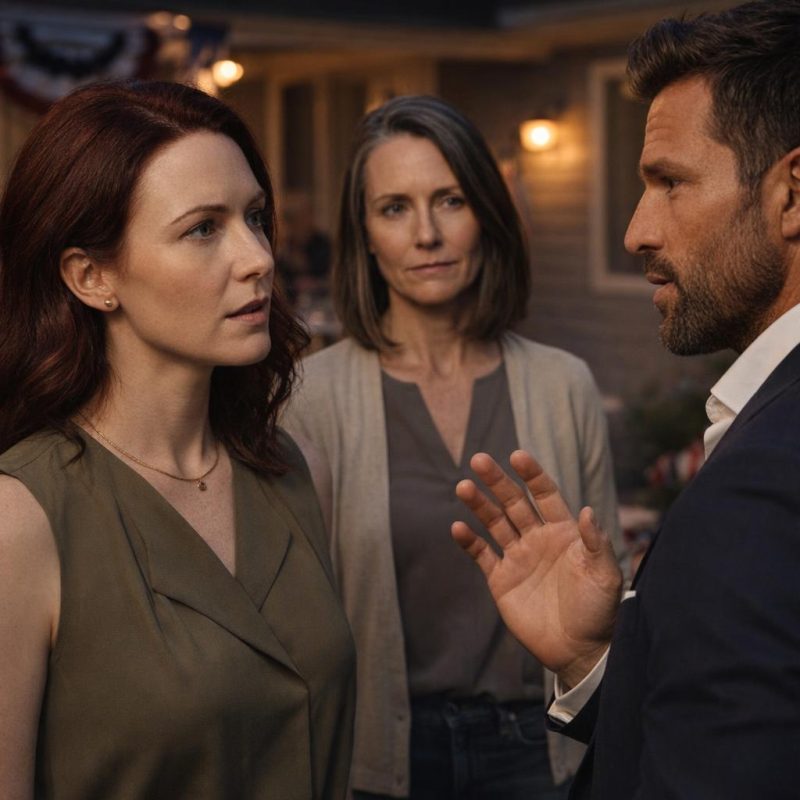 Image by RM AI
The Woman My Daughter Used to Be
The Natalie I raised was not someone who waited to be corrected. She was the kid who organized her own birthday parties at fourteen, who called vendors herself, who once renegotiated a catering contract because she thought the original terms were unfair — and she was right. By her late twenties she was producing large-scale corporate events, flying to cities I had to look up on a map, calling me from airport lounges in Denver and Nashville and once from a layover in Dublin just to chat for twenty minutes before her gate opened. She was proud of her independence in a way that felt earned, not performed. She paid her own rent, her own car note, her own everything. I never worried about Natalie the way some mothers worry. She had a compass. After she met Adrian, the calls from airport lounges stopped first. Then the work trips. Then the stories about difficult clients she'd managed or last-minute crises she'd solved. I told myself it made sense — she was in a serious relationship, her priorities were shifting, that's what happens. But there was a version of my daughter who used to call me from airport lounges in cities I'd never visited, full of news and noise and her own momentum, and I missed her in a way I didn't yet have words for.
 Image by RM AI
The Job She Gave Up
The job conversation happened about eight months into their relationship. Natalie called on a Tuesday afternoon, which was unusual — she was always in back-to-back meetings on Tuesdays. She told me she was thinking about leaving event production. Adrian's schedule was intense, she said. He had client dinners several nights a week, travel that came up with almost no notice, and it was hard to coordinate two demanding careers. She said it like she was reading from a list of reasonable points, which I suppose they were. Adrian had also apparently pointed out that his income was more than enough for both of them, so the financial pressure wasn't there. I asked her if this was what she wanted, and she said she wanted them to work. I didn't push back the way I maybe should have. I told Robert that night and he said the same thing I was thinking — that it felt fast, that Natalie had worked hard to build what she had. But we also didn't want to be the parents who couldn't trust their daughter to make her own choices. So I stayed quiet. A few weeks later she sent me a photo of her desk cleared out, her plants in a box by the door. She was smiling in the picture, but it was the kind of smile that doesn't quite reach the eyes, and I thought about the resignation letter Natalie never wanted to write.
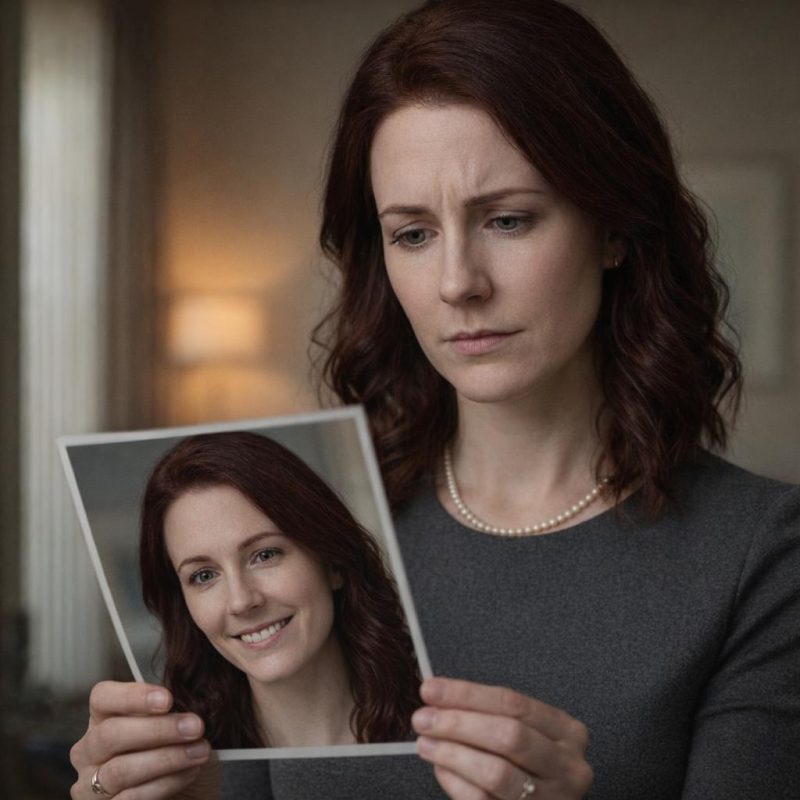 Image by RM AI
Work That Didn't Count as Work
What I didn't understand at first was that Natalie hadn't stopped working — she'd just stopped being paid for it. Within a few months of leaving her job, she was organizing Adrian's client dinners, coordinating his travel, managing the logistics for his firm's industry events. She knew which clients needed to be seated away from each other and which ones required a particular kind of attention before a big deal closed. She handled the details that made Adrian look effortless in rooms full of people who expected effortless. I saw it up close at a dinner party they hosted — Natalie moving between the kitchen and the living room, adjusting, anticipating, smoothing things over, while Adrian worked the room with that practiced ease of his. Afterward I asked her if she was enjoying it, and she said she liked being useful. That word — useful — sat with me for a while. She had a master's degree and a decade of professional experience and she was describing herself as useful. None of what she was doing showed up anywhere on paper. No title, no contract, no paycheck. Just Natalie, making everything run. I was visiting one afternoon when I picked up a folder from the kitchen counter to move it out of the way, and inside was the guest list for Adrian's firm's annual party — twelve pages, every name and dietary note and seating preference written out entirely in Natalie's handwriting.
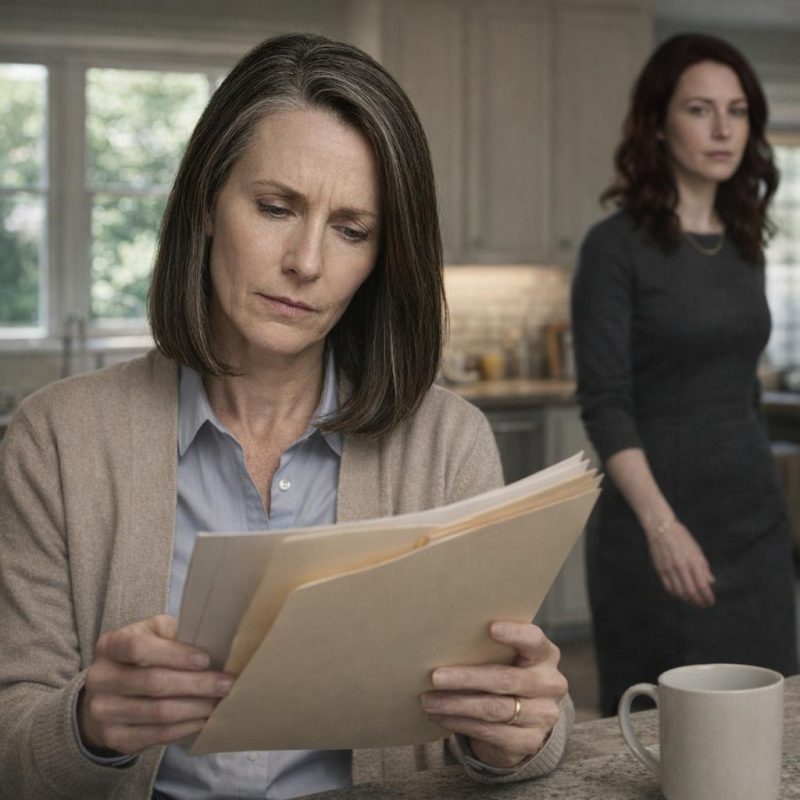 Image by RM AI
The Conversation She Kept Shutting Down
I didn't bring it up once. I brought it up four times, maybe five, spread across different visits and phone calls over the better part of a year. I tried to be careful about how I framed it — not accusatory, not dramatic, just a mother asking reasonable questions. Did she miss having her own income? Had she thought about consulting, maybe, something that would keep her skills current? Was there any kind of formal arrangement with Adrian's firm that recognized what she was contributing? Every time, Natalie had an answer ready. They were building a life together. Adrian's work was their work. She wasn't an employee, she was a partner. The answers were warm and confident and they closed every door I tried to open. What I noticed — and I told myself I was probably reading too much into it — was that her explanations started to sound less like her own thoughts and more like something she'd rehearsed. Not in a dramatic way. Just in the way that certain phrases kept coming back, the same words in the same order, the same calm certainty. I mentioned it to Robert once and he said maybe she just believed it. Maybe she did. But the last time I raised it, sitting at my kitchen table over coffee, Natalie looked at me with that patient expression she'd developed and said, word for word, that a real partnership means investing in each other's success — and I had heard Adrian say that exact sentence at dinner three weeks before.
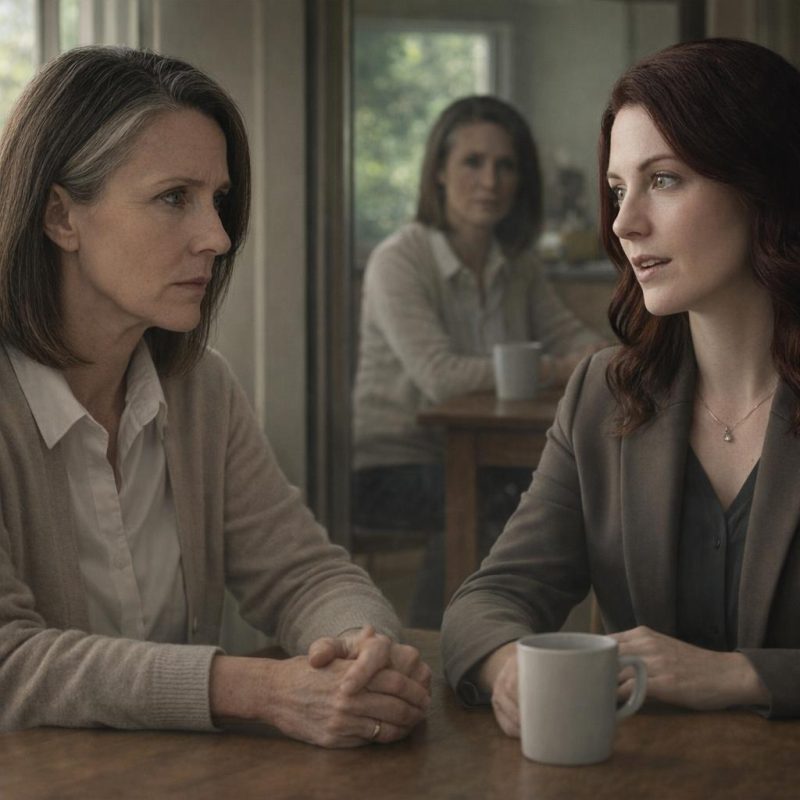 Image by RM AI
Building a Life Together
After that kitchen table conversation I started paying closer attention, the way you do when something small keeps nagging at you and you can't quite explain why. I went back through my memory of the last several months — the phone calls, the visits, the dinners — and I kept landing on the same thing. Building a life together. That was the phrase. It showed up every time I asked about the job, every time I mentioned her career, every time I gently circled back to the question of what she was getting out of the arrangement beyond a nice apartment and a busy social calendar. Building a life together. It was a good phrase. It sounded mature and intentional and hard to argue with, which I think is why I kept accepting it. I wanted to believe Natalie knew what she was doing. She was thirty-two years old and she was not someone who made careless decisions — or at least, she hadn't been. So I told myself the phrase was just how she thought about things now, that couples develop their own language, that I was looking for problems that weren't there. But I counted once, sitting with my coffee after a call, and she had used some version of that phrase in every single conversation we'd had about Adrian for the past four months, and something about that number wouldn't leave me alone.
 Image by RM AI
The Weekend Before the Wedding
They arrived on a Friday afternoon, two weeks before the wedding. Adrian's car — a dark gray sedan that always looked freshly detailed — pulled into the driveway right on time, which was itself very Adrian. Robert went out to help with the bags and I stood at the kitchen window and watched. Natalie got out first, and for a moment, before she saw me waving, her face was just her face — tired, I thought, in a way that a good night's sleep wouldn't fix. Then she looked up and smiled and it was the Natalie I knew, warm and present, and I told myself I'd imagined the rest. Adrian shook Robert's hand and said something that made Robert laugh, and I noted, not for the first time, that he was very good at that. We had dinner that first night, easy conversation, good wine, and I kept waiting for something I couldn't name. Later, after the dishes were done and Robert had gone to read, I passed the guest room and the door was open a few inches. Adrian was unpacking his garment bag with the focused efficiency of someone who had done it in a hundred hotel rooms. Natalie stood near the window, not helping, not talking, just watching him with an expression I couldn't quite read — careful, attentive, like she was waiting to see what he needed next.
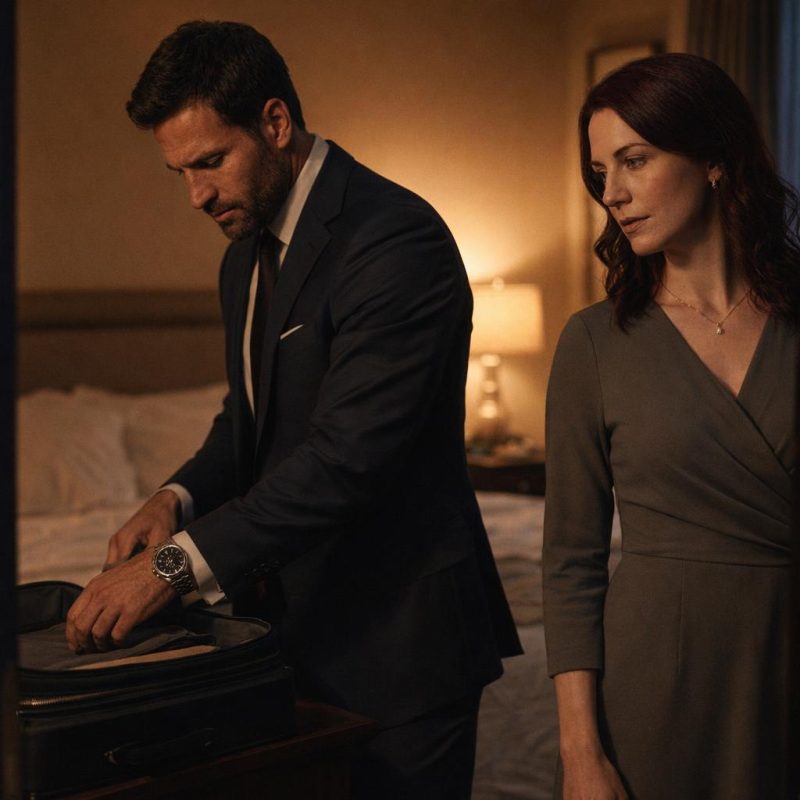 Image by RM AI
Coffee on the Back Porch
The next morning I woke up early and made coffee the way I always do when I need to think — strong, in the big ceramic pot, enough for two. Natalie came downstairs before Robert or Adrian stirred, still in her pajamas, hair loose, and for a few minutes she looked exactly like she had at seventeen. We took our mugs out to the back porch and sat in the two old chairs that have been there so long the wood has gone silver. It was quiet except for the birds and the sound of a neighbor's sprinkler somewhere down the block. We talked about small things at first — her friend Jess's new apartment, a show she'd been watching, whether the hydrangeas needed cutting back. And then, in the way that sometimes happens when the morning is still soft and no one else is awake, she said something that stopped me. She said the past year had nearly destroyed them. Not the relationship. Them — her and me. She said it quietly, almost like she was confessing something she'd been carrying for a while, and I didn't say anything right away because I wasn't sure I'd heard her correctly. I set my mug down on the armrest and looked at her, and she was staring out at the yard, and the weight in those two words — nearly destroyed — settled over the porch like something I couldn't brush away.
 Image by RM AI
Fights About Money and Trust
I asked her what she meant, and she said it the way people do when they've rehearsed it a little — carefully, like she was choosing which parts to hand over. She said they'd fought constantly. About money, about her job, about whether he trusted her to make decisions on her own. She said there were months where she felt like she was defending herself every single day, and that it had spilled over into everything, including us. I remembered that stretch — the calls that got shorter, the texts that went unanswered for days, the one visit she'd cancelled at the last minute with an excuse that didn't quite hold together. I'd told myself she was busy. I'd told myself it was the natural pull of a serious relationship. I hadn't let myself think too hard about the alternative. I asked her how they got through it, and she said they talked it out, that Adrian had come around, that things were different now. But the way she said it was careful in a way that didn't quite match the words — like she was summarizing a longer story and leaving out the chapters that mattered. I let a beat of silence sit between us, and then I asked her what finally changed.
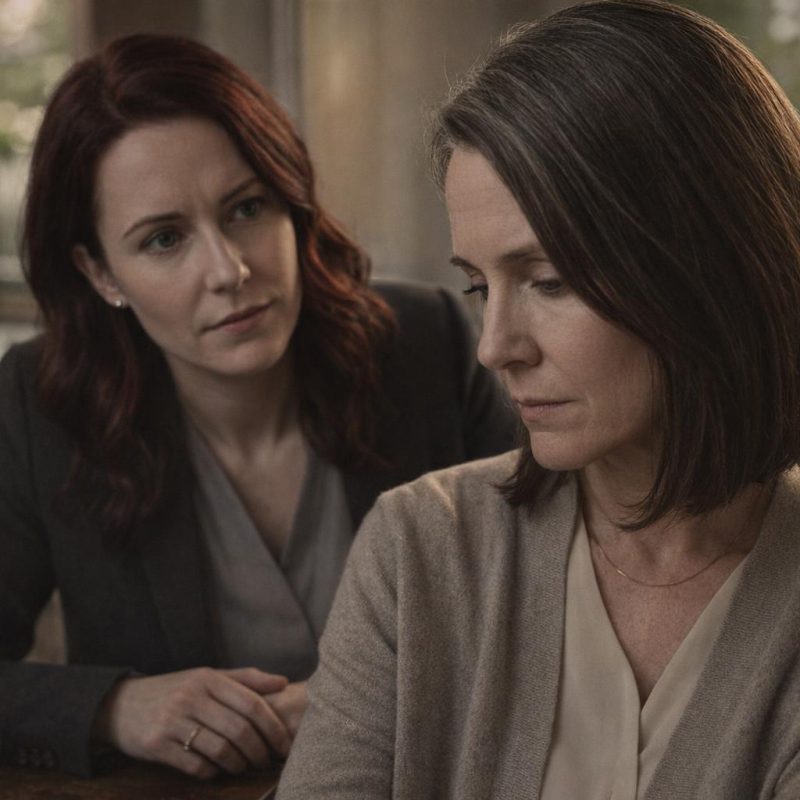 Image by RM AI
The Sacrifice She Wouldn't Name
She didn't answer right away. She turned her mug in her hands a couple of times, the way she does when she's buying herself a moment, and then she said something about compromises, about both of them learning to meet in the middle. I asked her what that looked like for her specifically — what she'd given up, or changed, to get them to a better place. She shrugged and said nothing she couldn't live without. I told her that wasn't really an answer, and I kept my voice easy when I said it, the way you do when you're trying not to spook someone. She smiled a little, the kind of smile that doesn't reach the eyes, and said something about how every relationship requires adjustments and that she was happy, and wasn't that what mattered. I said of course it was. But I pressed, gently — I asked if she'd had to give up anything at work, or with her finances, or with the plans she'd had before they got serious. She set her mug down on the porch railing and said she should probably go check on breakfast. And when she turned away from me, she didn't quite meet my eyes first — just shifted her gaze somewhere past my shoulder and moved toward the door.
 Image by RM AI
What She Wouldn't Say
I stayed on the porch after she went inside. The sprinkler down the block had stopped and it was very quiet. I turned the conversation over in my mind the way you do when something doesn't sit right but you can't point to exactly what it is. The word she'd used — sacrifices — had come up only once, and she'd walked it back almost immediately, replaced it with adjustments, compromises, things every couple does. But it had been there. And the way she'd moved away from my question, the way her eyes had gone somewhere else before she stood up — that stayed with me too. I wasn't sure what I was worried about. I didn't have anything concrete, just the feeling that the conversation had a shape to it, and the shape had a gap in the middle where an answer should have been. I thought about the months she'd gone quiet on us, the cancelled visit, the shorter calls. I thought about the way she'd stood in the guest room the night before, watching Adrian unpack, not talking, just waiting. I told myself I'd pay attention this weekend. Not in a suspicious way — just the way a mother pays attention when something feels slightly off and she can't yet say why. The silence where her answer should have been sat with me long after my coffee went cold.
 Image by RM AI
The Night I Came Downstairs for Water
We had a full day — lunch on the patio, a walk through the neighborhood, dinner that ran long with a second bottle of wine. By ten o'clock everyone was tired and we all drifted upstairs more or less together. I read for a while and then turned off the light, and I must have been almost asleep when I woke up thirsty in that particular way that means you're not going back to sleep without water. I didn't turn on the hall light. I knew the house well enough to navigate it in the dark, and I didn't want to wake Robert. I came down the stairs slowly, one hand on the banister, and I was almost to the kitchen when I noticed the light. It was coming from under the door of Robert's study — just a thin line of it along the floor, the kind you only see when the rest of the house is completely dark. I stopped. The study door was pulled almost shut but not latched, and through the gap I could hear a voice, low and even, the particular cadence of someone talking on the phone rather than to a person in the room. It was Adrian's voice, coming from around the corner, audible but indistinct — and I stood there in the hallway, not moving, not breathing, just listening.
 Image by RM AI
She Signed
I told myself I should keep walking. Get the water, go back upstairs, leave it alone. But my feet didn't move. The voice was low enough that I couldn't catch every word, just the rhythm of it — confident, unhurried, the tone he used in professional settings. I leaned slightly toward the gap in the door, not enough to be seen, just enough to hear. He was talking about something being finalized, something going through without complications. I stood in the dark hallway with my hand still resting on the wall and I didn't move. I didn't reach for the kitchen. I didn't make a sound. I couldn't tell yet what any of it referred to, couldn't place it in any context that made sense, but something in the pit of my stomach had already decided it mattered before my brain had caught up. And then the words came through clearly, the way certain sounds cut through ambient noise when your brain decides they matter: "She signed. It's a done deal."
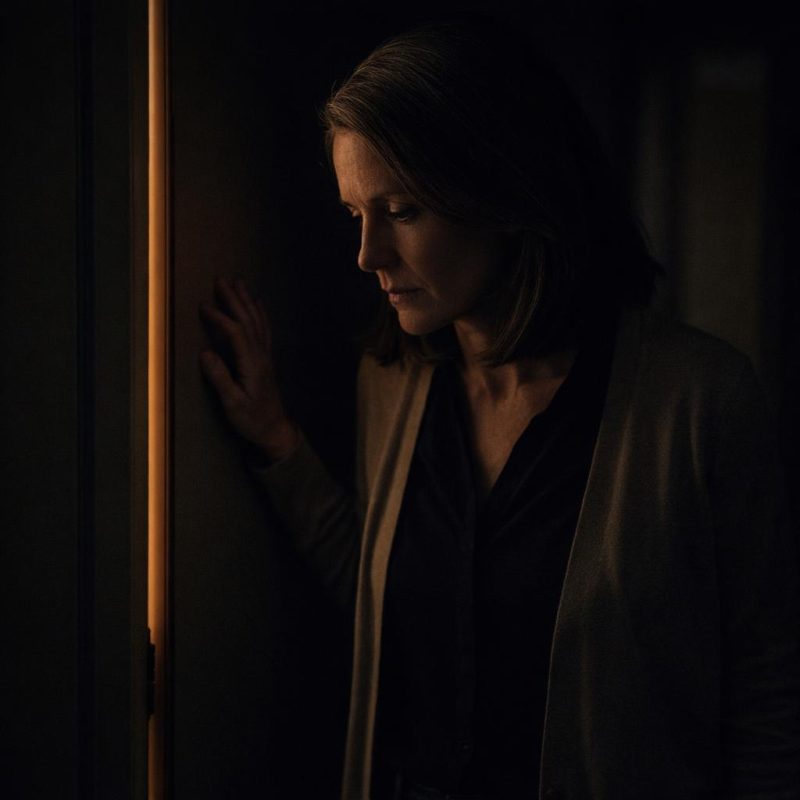 Image by RM AI
She Doesn't Understand the Valuation
I should have walked away then. I know that. But I didn't. I stayed exactly where I was, back against the wall, and I kept listening. He was quiet for a moment — the other person talking, I assumed — and then he said something about timing, about things moving forward on schedule. And then another stretch of quiet, and then his voice again, a little lower this time, like he'd shifted position or turned away from the door. I caught pieces of it — something about numbers, something about the other party not pushing back. And then, clearly enough that I heard every word, he said it: she doesn't understand the valuation, she thinks it's just the prenup. I didn't move. I'm not sure I breathed. I didn't know what valuation meant in this context — I knew the word, obviously, but not what it was attached to, not what document or asset or arrangement he was talking about. The word prenup landed alongside it, and something cold moved through me — their prenup, the one I'd assumed was standard, the kind of thing every attorney insisted on before a marriage. He lowered his voice after that, and I couldn't make out the rest, just the murmur of it continuing, smooth and unhurried, like a man with nothing to worry about.
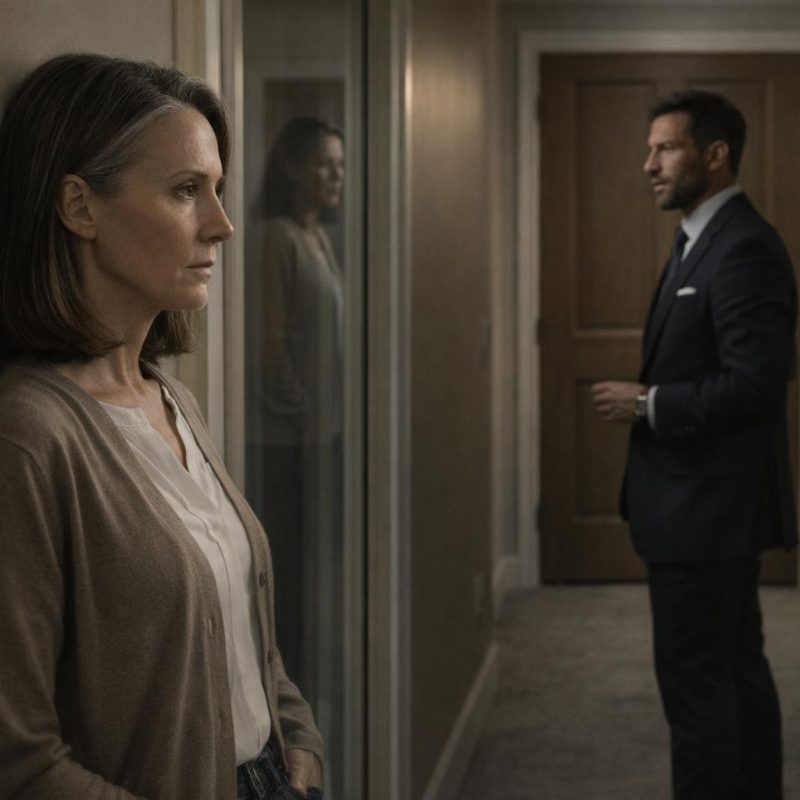 Image by RM AI
Confidential Client Business
I heard the call end — the particular silence that follows when someone stops talking to a phone. I made myself move then, stepping into the kitchen quietly, filling a glass at the sink. I was standing there when I heard the study door open and his footsteps in the hall. He came around the corner and stopped when he saw me, and for just a fraction of a second something crossed his face — not alarm exactly, more like a quick recalibration — and then the smile came, easy and practiced. He said he couldn't sleep, that he'd had a client matter to deal with. I said I'd heard him talking and asked who he'd been discussing. He didn't miss a beat. He said it was confidential client business, that he couldn't get into it, that he hoped he hadn't woken anyone. He said it pleasantly, the way you'd apologize for leaving a light on, and he poured himself a glass of water and said goodnight and went upstairs. I stood at the kitchen sink and listened to his footsteps on the stairs, and then the house was quiet again. I set my glass down. The ease of it — the way the explanation had arrived so quickly, so completely without friction — sat in my chest like something I didn't have a name for yet.
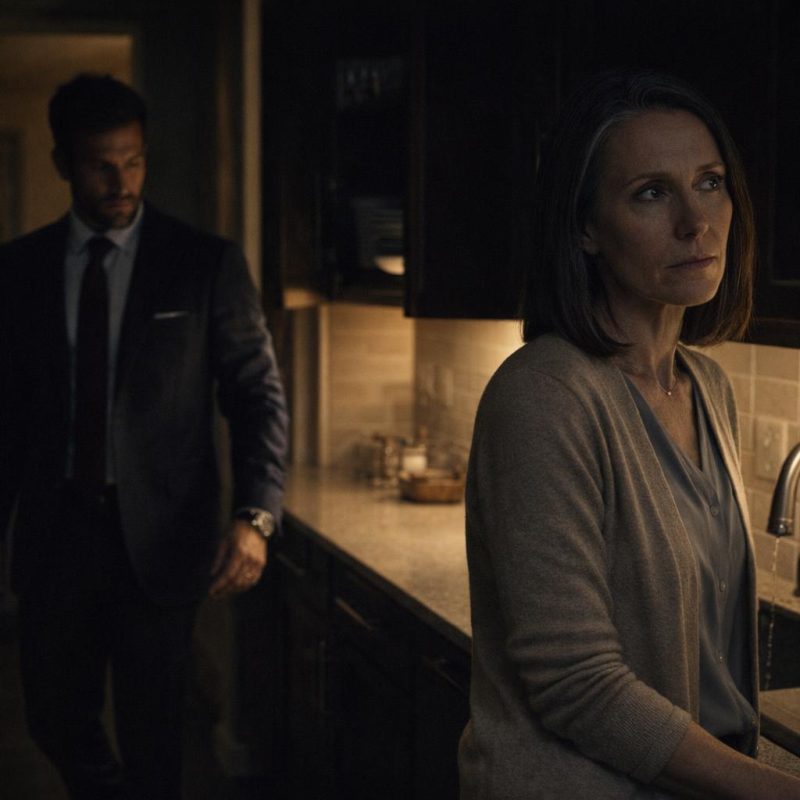 Image by RM AI
Waking Natalie
I didn't go back to bed. I stood at the kitchen sink until I heard Adrian's footsteps reach the top of the stairs, heard the bedroom door close, and then I counted to sixty before I moved. Natalie was in the guest room at the end of the hall — the one with the blue curtains she'd picked out herself when she was sixteen. I knocked so softly I wasn't sure she'd hear it, and then I turned the handle and stepped inside. She was asleep on her side, her hair loose across the pillow, and for a moment I just stood there in the dark feeling like I was doing something wrong. I touched her shoulder. She came awake quickly, the way she always had since she was small, and she looked up at me with that immediate alertness and asked what was wrong. I told her nothing was wrong, that I just needed to ask her something, that it couldn't wait until morning. I sat on the edge of the bed and kept my voice low. I asked her if she and Adrian had signed a prenuptial agreement. The word hung in the air between us, and I watched her face change — something moving behind her eyes, a quick tightening around her mouth — and then she looked away from me.
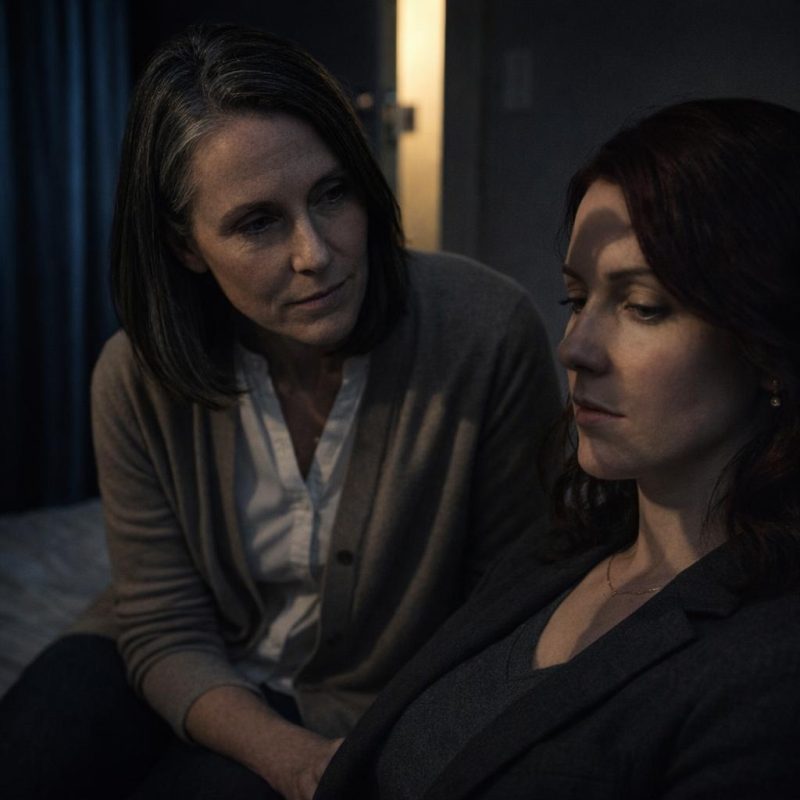 Image by RM AI
Everything He Owned Before Marriage
She didn't deny it. She sat up against the headboard and pulled the blanket up around her, and after a moment she said yes, they had signed one. She said it the way you'd admit to something you'd already made peace with. I asked her to tell me what it covered, and she took a breath and started talking, and that was when something in my chest went very still. She said it protected everything Adrian owned before the marriage — his practice, his client relationships, any assets tied to his professional work. She said if they ever divorced, she would leave with whatever was in her name. She said it was standard, that it was just protecting what he'd built before they met, that any attorney in his position would do the same thing. The words came out in a particular order, smooth and complete, like something she'd gone over before. I didn't interrupt. I let her finish. And when she was done, she looked at me with an expression that was almost reassuring, like she was the one comforting me, and I thought about how long it must have taken to get an explanation that complicated to sit that easily in her mouth.
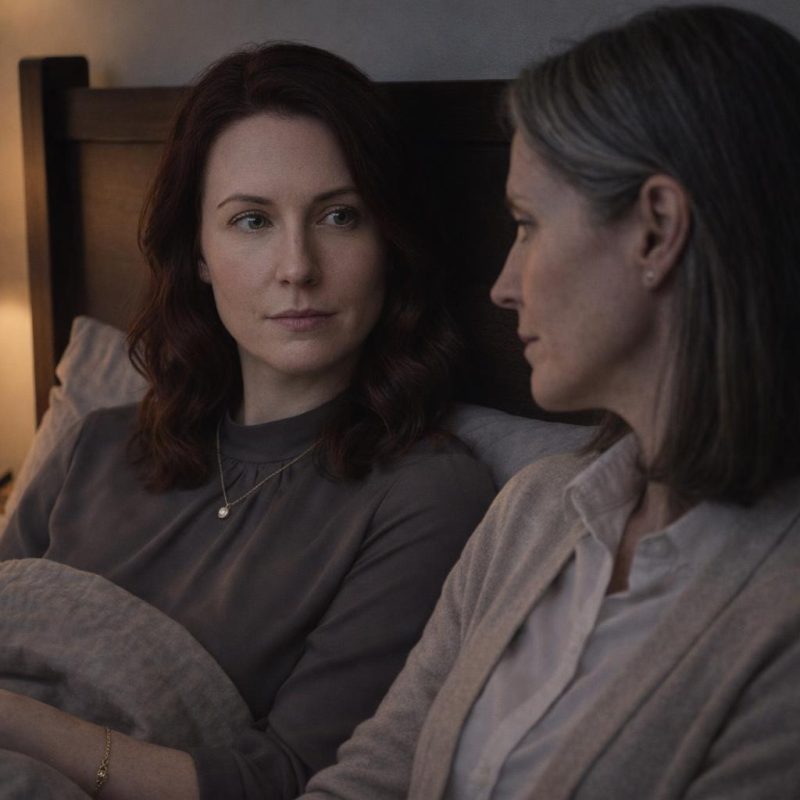 Image by RM AI
What's in Your Name
I waited a moment before I said anything. I didn't want to push too hard, too fast. I asked her, as gently as I could manage, what was actually in her name. She looked at me like she hadn't quite understood the question. I said it again — what property, what accounts, what assets were hers specifically. She opened her mouth and then closed it. She said the house was in Adrian's name because he'd bought it before they got together. She said both cars were his, that it had just made sense at the time for the financing to go through him. She started to mention a joint account and then stopped herself, because she remembered it was a joint account in his name with her as a secondary holder. I watched her working through it in real time, her eyes moving slightly like she was running a list in her head and coming up short. She mentioned a retirement account, then said it was small, that she hadn't been contributing to it since she left her job. The room was quiet. She didn't finish the sentence she'd started. She sat there with the blanket pulled up to her chest, and the silence that settled between us carried more weight than anything either of us had said.
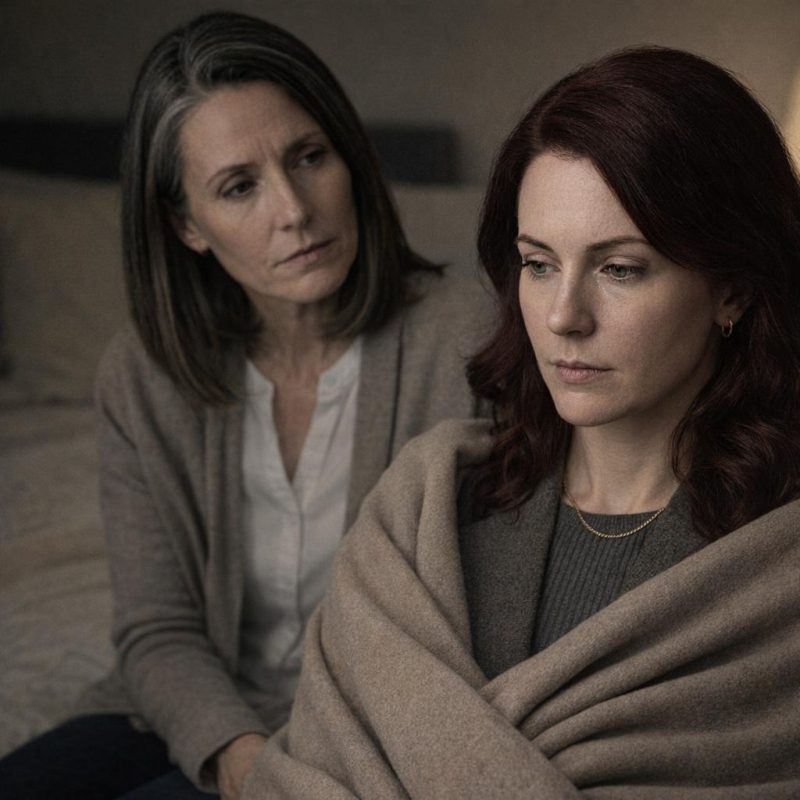 Image by RM AI
Why She Signed
I kept my voice even. I asked her why she'd signed it — not accusingly, just the question itself, plain and open. She was quiet for a moment, and then she said she hadn't really had a choice. I asked her what she meant by that. She looked down at the blanket and said that when Adrian first brought up the prenup, she'd pushed back. She said she'd told him it felt like he was already planning for things to go wrong. And he'd told her that someone in his position had too much to lose, that it wasn't personal, it was just practical. She said she'd still hesitated, and that was when he told her that if she wasn't willing to sign, he thought they should postpone the wedding. She said it quietly, like she was still trying to decide how to feel about it. She said she'd been so afraid of losing him, especially after the rough patch they'd had the year before, that she couldn't let herself think too carefully about what she was agreeing to. She mentioned that another attorney had reviewed the agreement before she signed — that she hadn't just taken Adrian's word for it. I asked who the attorney was. She said it was a friend of Adrian's from law school.
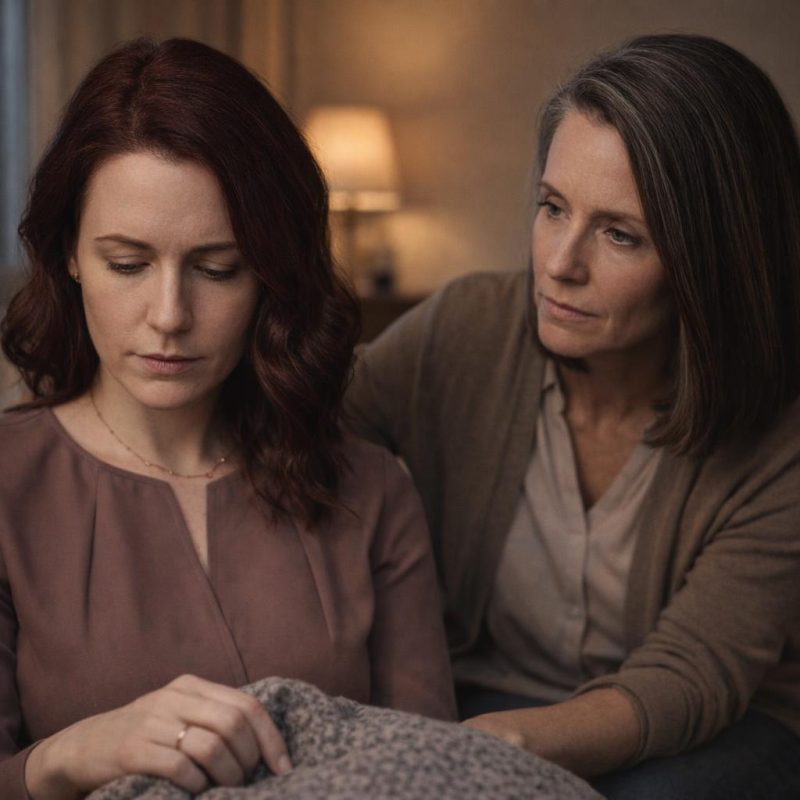 Image by RM AI
The Lawyer Who Owed Adrian Favors
I kept my expression neutral and asked her to tell me a little more about that attorney. She said his name like it was a reassurance — like the name itself was supposed to settle something. She said he'd been practicing for years, that he was well-regarded, that he'd gone over the document with her and told her it was reasonable. I asked if she knew how he and Adrian knew each other. She said they'd been close since law school, that they still referred clients back and forth. I asked what kind of clients. She said the attorney handled entertainment work mostly, and that he sent some of those clients to Adrian when they needed representation in other areas. She said it like it was a footnote, a small detail that didn't change anything. I nodded and didn't say what I was thinking. I didn't have the words for it yet, or maybe I just didn't want to say them out loud in that room, in the dark, to my daughter who had trusted a process overseen by someone with his own ties to Adrian. She pulled the blanket tighter and said she'd felt a little uncomfortable at the time but that she'd told herself she was being paranoid. That word — paranoid — sat in the air between us long after she said it.
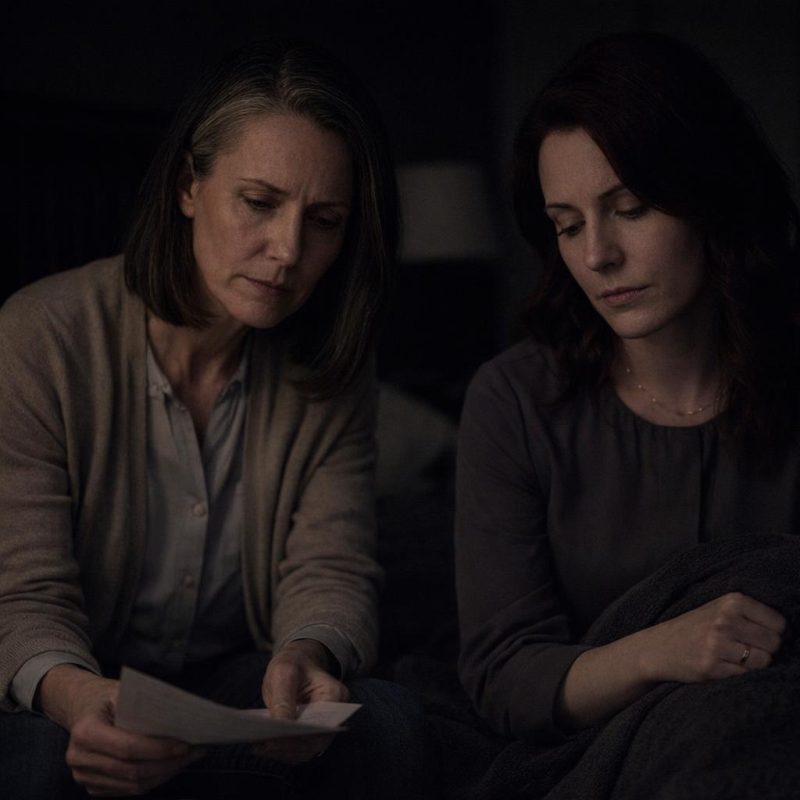 Image by RM AI
The Phone Call I Couldn't Forget
I told her there was something else. I said I needed her to hear it and I needed her to let me finish before she said anything. She nodded, watching me. I told her I'd been awake earlier, that I'd heard Adrian on the phone in the study. I told her I hadn't meant to listen, that I'd only caught part of it, but that I'd heard enough to make me come down this hall and knock on her door. I told her the words as close to exactly as I could remember them. I said I'd heard him say she signed, it's a done deal. I said I'd heard the word valuation. And then I said the part that had kept me standing at that kitchen sink — that I'd heard him say she thinks it's just the prenup. I said it slowly, the way I'd been turning it over in my own head for the last hour. Natalie didn't move. She was looking at me, and then she wasn't quite looking at anything. The color left her face in a way I hadn't seen before — not a flush, not a flinch, just a slow draining, like something underneath had gone very quiet.
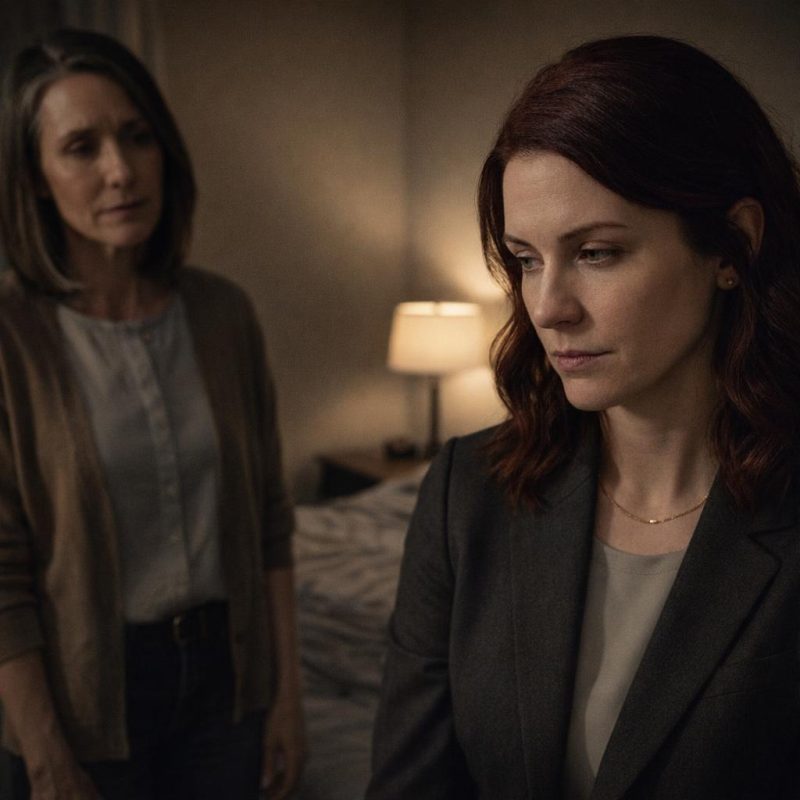 Image by RM AI
Their Thing
She didn't speak for a long moment. Then she said she needed to tell me something. Her voice had changed — it was smaller, more careful, like she was picking her way across ground she wasn't sure would hold. She said that about three years ago, before she left her job, she and Adrian had started something together. She said it had begun as a conversation, an idea she'd had about a gap she kept seeing in her event production work — clients with money and profile who needed connections to brands and venues but didn't have anyone managing those relationships properly. She said she'd brought it to Adrian because his client list was exactly the kind of roster that needed that service. She said she'd built the contact lists herself, pulling from years of relationships she'd made in the industry. She organized the first few events, handled the early outreach, put the structure together. She said Adrian had handled the legal and business side of things, and that it had grown from there, and that she'd stepped back from it gradually as the wedding planning took over and she got busier. She said all of this in a careful, measured way, like she was describing something that had happened to someone else. And then she said the name of the company — Northline Media Partnerships — and I felt something shift in the room that I couldn't have explained.
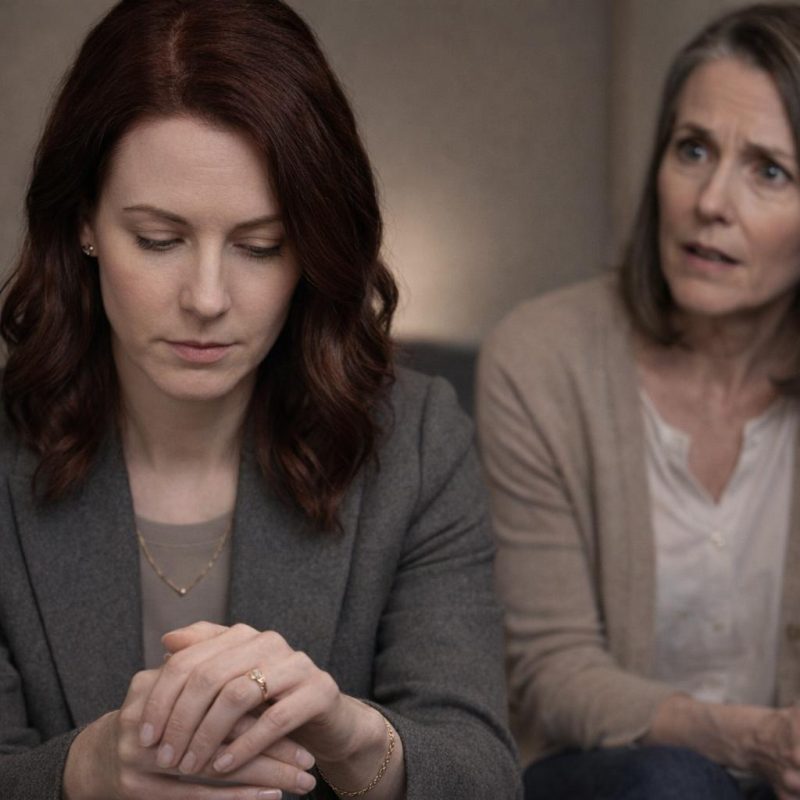 Image by RM AI
Building Northline
I asked her to slow down and walk me through it from the beginning. I asked what exactly she had done, specifically, in those early months. She thought about it and then she started talking, and I listened without interrupting. She said she'd written the original concept document — the pitch, the model, the whole framework for how the business would work. She said she'd gone through her contacts from ten years in event production and built the first client-facing list by hand, reaching out personally to people she'd worked with, vouching for the idea with her own reputation. She said she'd organized the first three events herself, managed the vendor relationships, handled the follow-up. She said she'd introduced Adrian to people he'd never have had access to otherwise — bookers, brand managers, venue directors who trusted her specifically. She said the company had grown into something real after that, a private company with actual contracts and revenue, and that she'd gradually handed things off as her role shifted. She said Adrian had always called it their thing, in the early days. She said she hadn't been paid for any of it — they'd talked about formalizing her role later, once things were more established, but later had never quite arrived. She described years of work that had built something she no longer had any formal connection to.
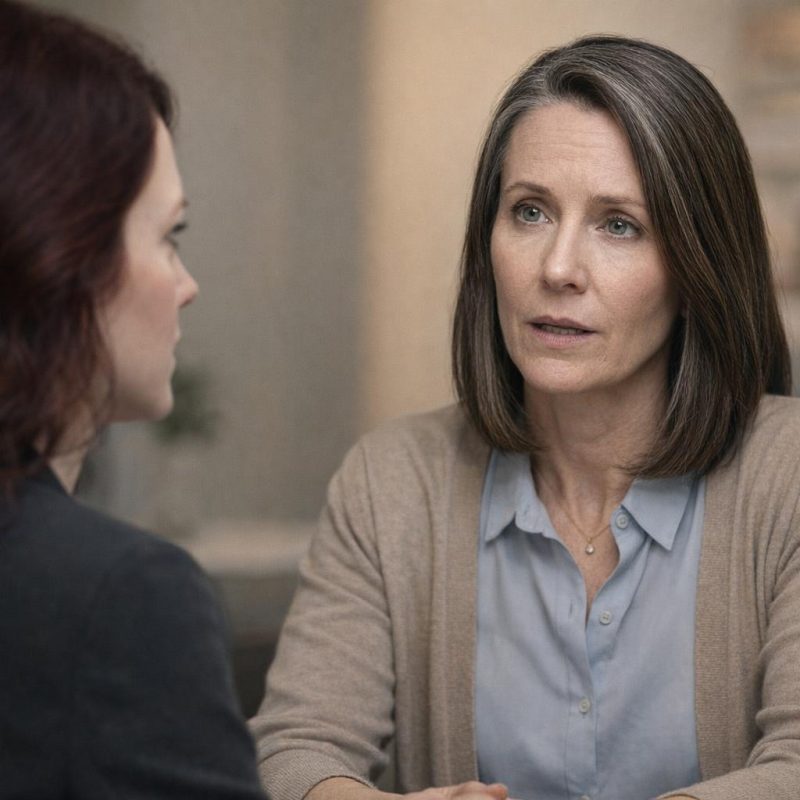 Image by RM AI
Our Thing
When she finished, I sat with everything she'd just told me and tried to stay calm. I asked her the question I'd been building toward the whole time — whether she had any documentation of her ownership stake. A contract, an email, anything in writing that confirmed what Adrian had been calling her. She looked at me for a moment and then looked away. She said he'd always called it their thing. Not his thing, not the company — their thing. She said he'd introduced her to people as his partner, said it in rooms full of people who mattered, said it like it was just a fact everyone already knew. She said she'd believed him. She said she'd never pushed for paperwork because it had felt unnecessary, almost insulting to ask for, like she was saying she didn't trust him. I kept my voice even. I asked if there was anything signed, anything official that named her as a co-owner or equity holder. She shook her head. She said Adrian had handled all the paperwork from the beginning — the filings, the contracts, the operating agreements. She said she'd never seen most of it. She said she'd assumed his words were enough. That one sentence landed somewhere in my chest and stayed there.
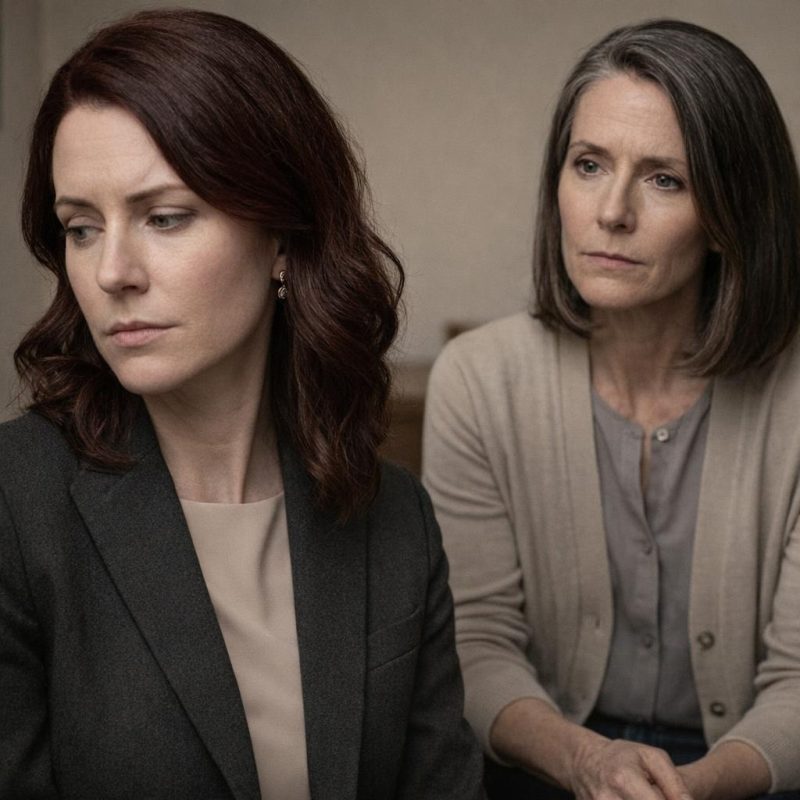 Image by RM AI
The Talks That Went Nowhere
I asked her to keep going, to tell me everything she could remember about the business in the last year or so. She talked for a while about how things had shifted — her role had gotten quieter, more behind the scenes, and she'd told herself that was just what happened as a company matured. Then she mentioned, almost as an aside, that a media company had reached out about buying Northline. She said it like it was old news, something that had already been resolved. I asked her to stop and back up. I asked when that had happened. She said a few months ago, maybe four or five. I asked what Adrian had told her about it. She said he'd told her the talks went nowhere, that the offer wasn't serious, that the company wasn't at a point where selling made sense. She repeated his words almost exactly, the way you repeat something you've heard enough times that it stops feeling like information and starts feeling like fact. She said she hadn't asked for details because he'd seemed so certain it was a dead end. I kept my expression neutral, but something had shifted in me. A media company had been interested in buying Northline.
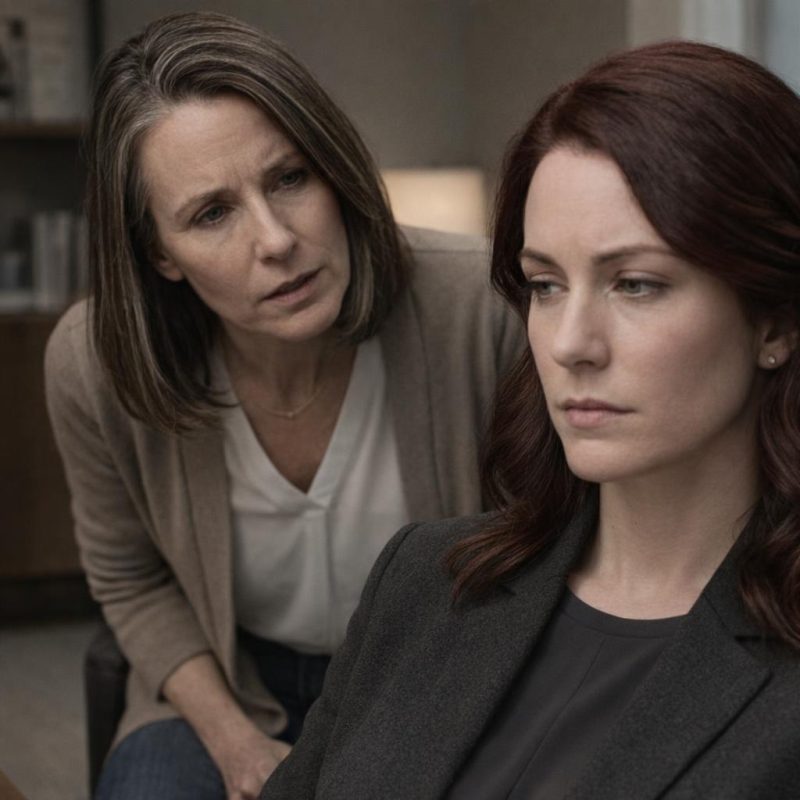 Image by RM AI
What I Suddenly Understood
After Natalie went to make tea, I sat alone with everything she'd told me and let it settle. I kept coming back to the phone call — the one I'd overheard weeks ago, the one that had started all of this. I'd been turning it over ever since, trying to fit the pieces into something that made sense. He'd used the word valuation. I remembered it clearly because it had struck me as oddly specific, oddly careful. At the time I hadn't known what he was referring to. Now I thought I might. Northline. A media company had expressed interest. Adrian had told Natalie the talks went nowhere. But he'd been on the phone using that word — valuation — and something about the tone of it had stayed with me, the way certain words do when they land in the wrong context. I didn't have proof of anything. I couldn't say with certainty what that call had been about or who he'd been talking to. But the timing sat wrong. The prenup, the clause about Northline, the phone call, the buyer — all of it was circling the same point. Natalie came back in with two mugs and set one in front of me, and I wrapped both hands around it and said nothing, because the feeling in my stomach had gone very still and very cold.
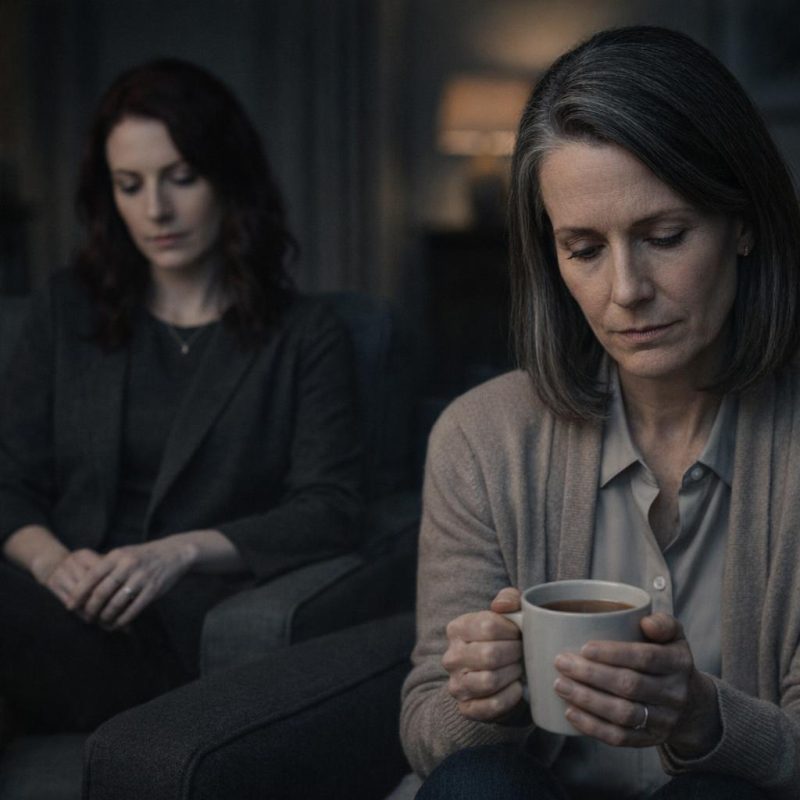 Image by RM AI
Buried in Dense Language
I asked Natalie if she still had a copy of the prenup. She did — she'd kept it in a folder in the bedroom, the same folder she'd put it in after she signed it. She brought it out and set it on the kitchen table between us, and we started going through it together. The language was dense, the kind of dense that takes effort to read even when you're trying, full of defined terms and cross-references and subclauses that looped back on each other. We went page by page. About two-thirds of the way through, I found a section titled Separate Property Designations and ran my finger down the list until I hit a subsection labeled Northline Media Partnerships. I read it twice before I said anything. Then I read it out loud to Natalie, slowly. The clause stated that she permanently and irrevocably acknowledged Northline Media Partnerships, including its intellectual property, client relationships, contracts, and any proceeds from a future sale or transfer, as Adrian's sole separate property. It stated that she waived all claims arising from any contributions she had made to the company, whether financial, operational, or otherwise. Natalie sat very still while I read it. When I finished, she reached over and took the page from me and read it again herself. The paragraph was eleven lines long. Eleven lines to erase years of her work.
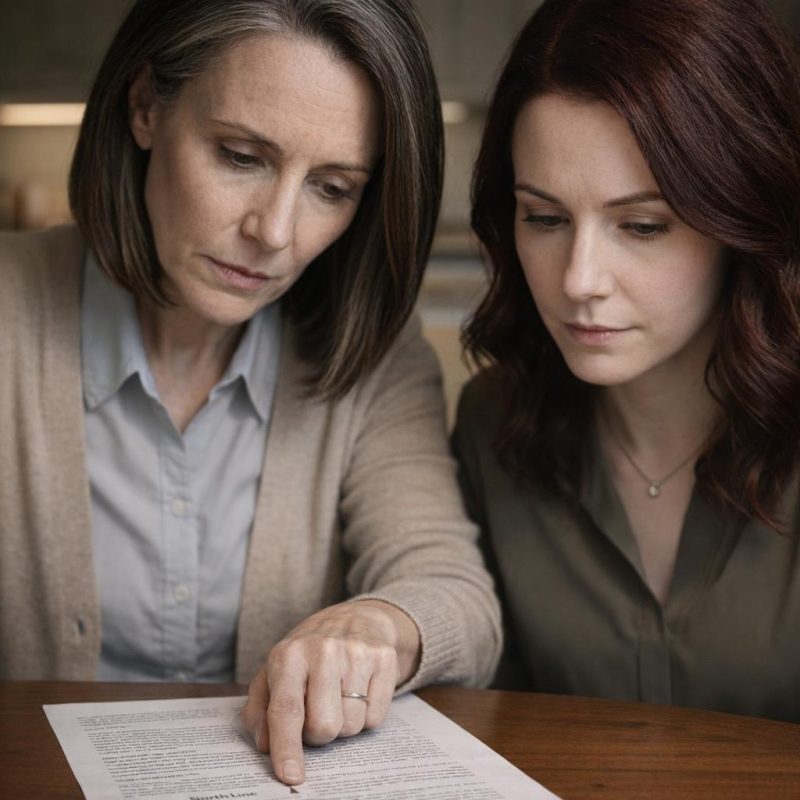 Image by RM AI
The Morning After
I barely slept. I lay in the dark next to Robert and went over everything in my head until the room started to lighten, and then I got up before anyone else. I was standing at the kitchen counter with coffee when Adrian came downstairs. He was dressed, hair in place, moving through the kitchen like it was any other morning. He asked if there was more coffee. He made a small joke about the weather. He smiled at me — that easy, practiced smile — and poured himself a cup like the world was exactly as he'd left it the night before. I wanted to say something. I had the words right there, sitting in my throat, and it took everything I had to leave them there. Natalie came down a few minutes later and caught my eye across the room. She gave me the smallest shake of her head. She'd asked me the night before to wait, to give her time to think before anything was said out loud, and I'd agreed because she was the one whose life this was. Robert came in and I handed him his coffee and we all stood in that kitchen together, making ordinary conversation, and I watched Adrian pour himself a second cup and smile like nothing in the world had changed.
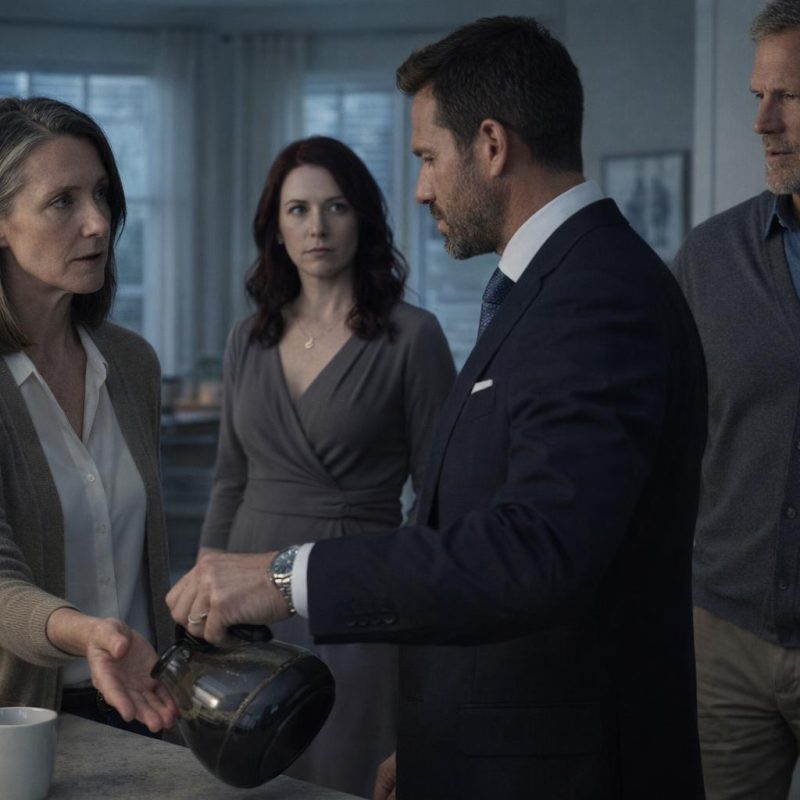 Image by RM AI
The Independent Attorney
Adrian left mid-morning — a meeting, he said, something about a client. The moment his car pulled out of the driveway, Natalie looked at me and I looked at her and we both knew it was time. I'd already called my oldest friend, Carol, the night before while Robert was in the shower. Carol had gone through her own divorce years ago and had used an attorney she still spoke highly of — someone she described as thorough and completely outside the world Adrian moved in. I gave Natalie his name and number. She sat down at the kitchen table with her phone and the prenup folder in front of her and made the call. I stood near the window and listened. She explained the situation clearly, more clearly than I'd expected, her voice steady even when it shouldn't have been. The attorney — his name was David — said he could look at the document that day if she could send it over. She photographed every page and sent them while she was still on the phone. When she hung up, she set the phone down on the table and let out a long breath. It was the first time in two days that something had moved in the right direction, and the relief of it — of having someone outside Adrian's world looking at this — settled over the room like the air had finally shifted.
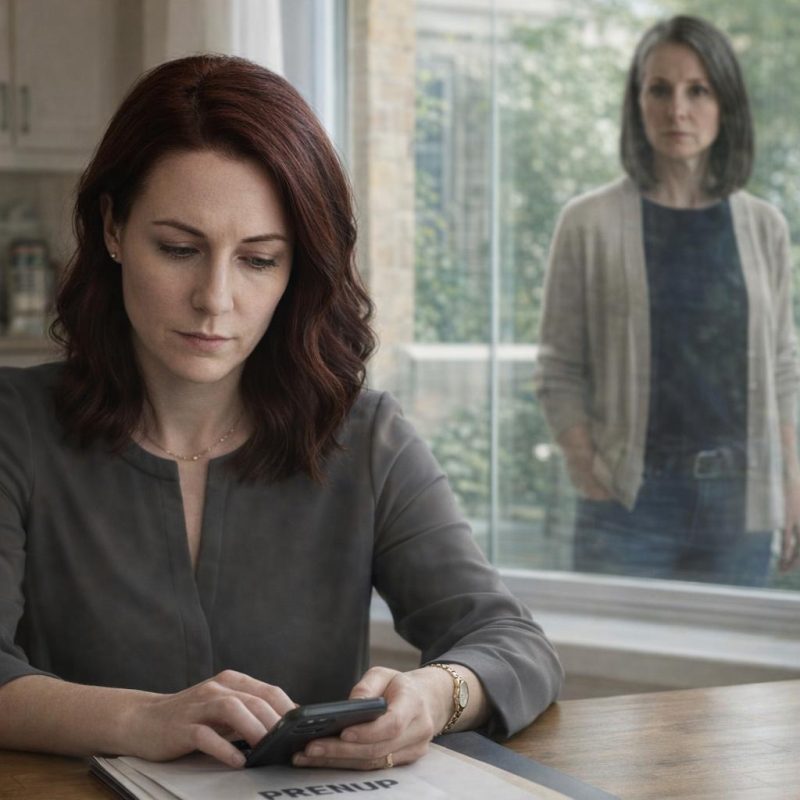 Image by RM AI
What the Attorney Saw
David called back that afternoon. Natalie put him on speaker so I could hear, and we both sat at the kitchen table with the prenup open in front of us. He said he'd read through the document carefully. He said there were several things he wanted to discuss, but he wanted to start with the section on Northline Media Partnerships. His voice had changed — not dramatically, but enough. It had gone from the measured, professional tone of the first call to something quieter and more deliberate. He asked Natalie to describe, in as much detail as she could, what her actual role in the company had been. Not what her title was, not what she'd been told her role was — what she had actually done. Natalie walked him through it the same way she'd walked me through it the night before. The concept document. The client list. The first three events. The vendor relationships. The introductions to people Adrian wouldn't have reached otherwise. David listened without interrupting. When she finished, he asked whether she had any documentation — emails, messages, anything in writing that showed her involvement. She said she thought so, that she'd have to look. He said to look carefully and to send him whatever she found. He said it mattered. The way he said those two words — quiet, unhurried, with a weight behind them — sat with me long after the call ended.
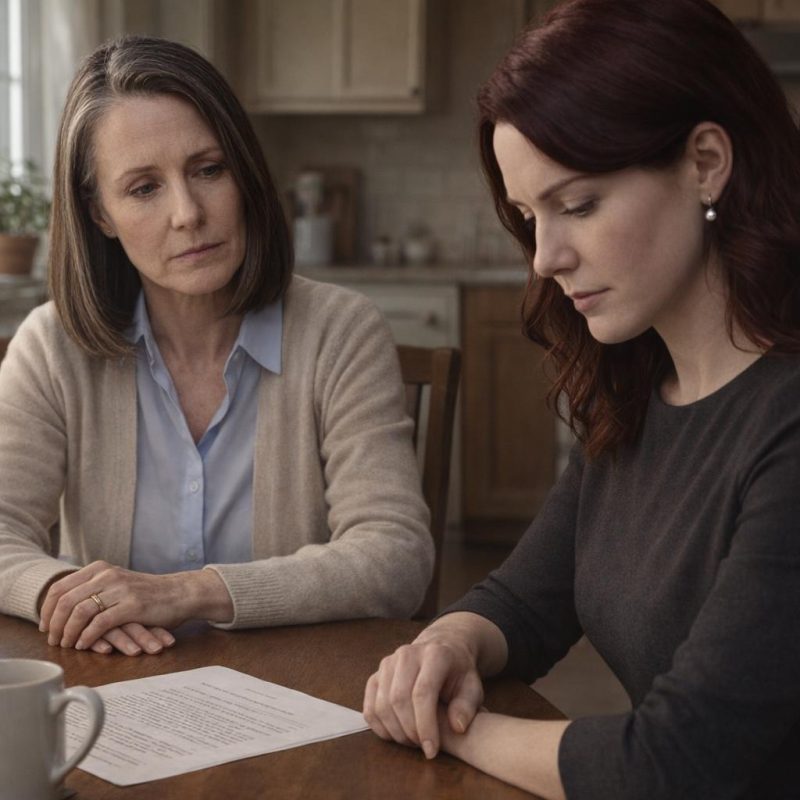 Image by RM AI
Years of Emails
Natalie spent the rest of the afternoon going through her email. She sat at the kitchen table with her laptop and I sat across from her, and we didn't talk much — she just scrolled and read and occasionally turned the screen toward me. There were years of messages in there. Adrian asking her to put together proposals for potential clients. Adrian asking her to reach out to a venue director she knew personally. Emails where she'd negotiated rates, drafted partnership packages, recruited sponsors. Messages where she'd done the work of building something real, and his name was at the top of the thread asking her to do it. She kept going, further back, into the early months when Northline was still just an idea with a name. The emails from that period were different in tone — more excited, more open, the kind of messages people write when they think they're building something together. She stopped scrolling. She turned the laptop toward me slowly. It was an email from Adrian, dated about three weeks after they'd started working on the concept together. The subject line was blank. In the body, he'd written a single paragraph about the direction of the company, and in the middle of that paragraph, he had called her his co-founder.
 Image by RM AI
None of This Exists Without You
David leaned forward when Natalie turned the laptop toward him. He read the email twice — I could tell because his eyes tracked back to the top after the first pass. Then he sat back and was quiet for a moment, and I held my breath without meaning to. The email was short. Adrian had written it in the early days, when Northline was still being built from scratch, and somewhere in the middle of it he'd said it plainly: 'None of this exists without you.' Not as a compliment. As a statement of fact. David asked Natalie if she had more like this — emails where Adrian acknowledged her role in building the company, not just working for it. She said she thought so. He told us that records like these could matter enormously, that they might speak to something that existed before any prenup was ever drafted. He was careful with his words — he didn't make promises, and I appreciated that — but he said these records might point to an ownership interest that predated the prenup entirely. He asked her to pull everything she could find. Natalie nodded slowly, and I watched her face shift from something fragile into something steadier. Then she turned the laptop back toward herself and typed the words 'co-founder' into the search bar.
 Image by RM AI
The Cloud Folder She'd Forgotten
We stayed at the kitchen table for another hour after David left. Natalie kept scrolling through old emails, and I kept refilling our water glasses just to have something to do with my hands. Then she stopped. She looked up at me with an expression I hadn't seen in a while — sharp, focused, like something had just clicked into place. She said she'd had a cloud folder. Back when Northline was first getting off the ground, she'd used a personal storage account to keep drafts and working documents before everything migrated to the company system. She hadn't thought about it in years. She wasn't even sure she remembered the login. I told her to try. She pulled up the browser and typed in the address slowly, pausing twice to think. The account accepted her old password on the second attempt. The folder loaded. It was full — dozens of files, all dated from three years ago, labeled in the shorthand she used back when she was building things fast and didn't have time to be tidy. She started opening them one by one, and I sat very still across from her, watching her hands tremble slightly as she clicked through the files.
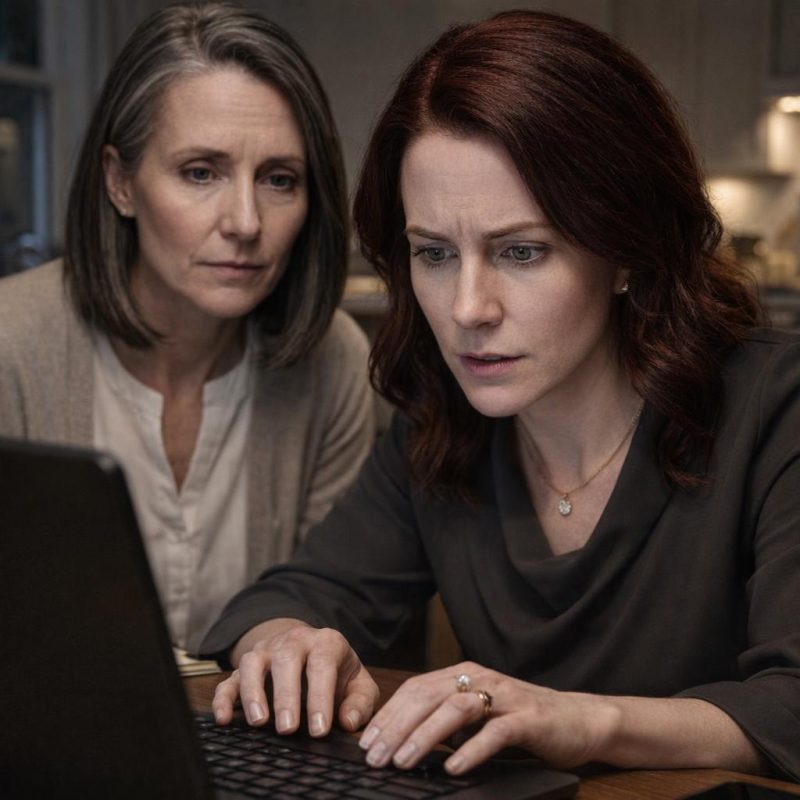 Image by RM AI
Founding Partners
She opened maybe a dozen files before she found it. Most of them were drafts — pitch decks, budget projections, early vendor lists — the kind of documents that pile up when you're building something from nothing. I recognized the energy in them even just glancing at the screen. Someone had worked hard on those files. Natalie had worked hard on those files. Then she clicked on one labeled 'NMP Business Plan v4 FINAL' and went quiet. She scrolled slowly, not saying anything, and I didn't ask. I just waited. When she reached the last page, she stopped scrolling. She read something to herself first, lips moving slightly, and then she read it aloud. The section was labeled 'Founding Partners.' Beneath it were two names. Adrian's. And hers. Her voice was steady when she read them, steadier than I expected, but when she finished she set her hands flat on the table and didn't move. I didn't say anything either. The document was three years old and it had both their names on it, and we both understood what that meant without having to say it out loud. The kitchen was very quiet, and the word 'partners' just sat there between us.
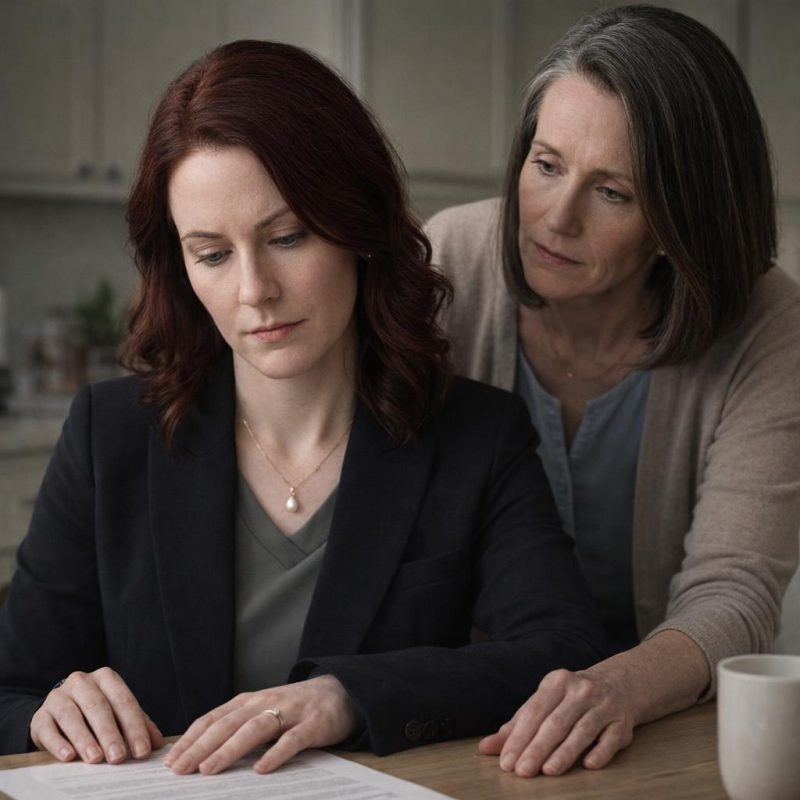 Image by RM AI
The Draft Operating Agreement
She kept going through the folder after that, more methodical now, opening each file and scanning it before moving to the next. I watched her work. About twenty minutes in, she stopped on an email — an old one, sent to her personal account — and clicked on an attachment. It took a moment to load. When it did, she read the title at the top of the document and her face went very still. It was a draft operating agreement for Northline Media Partnerships. She scrolled through it slowly, and then she pointed at a line near the middle of the page. Thirty percent. Her name. Her ownership stake, written into the document in plain language. She hadn't signed it. I asked her why, and she was quiet for a moment before she answered. She said Adrian had told her not to worry about it — that he was cleaning up the paperwork, that the language needed a few adjustments, that he'd bring her the final version when it was ready. She'd trusted him. She'd waited. The final version never came. She closed the laptop partway and sat back, and I could see her working through the timeline in her head. Thirty percent of something she'd helped build, written down once and then quietly made to disappear.
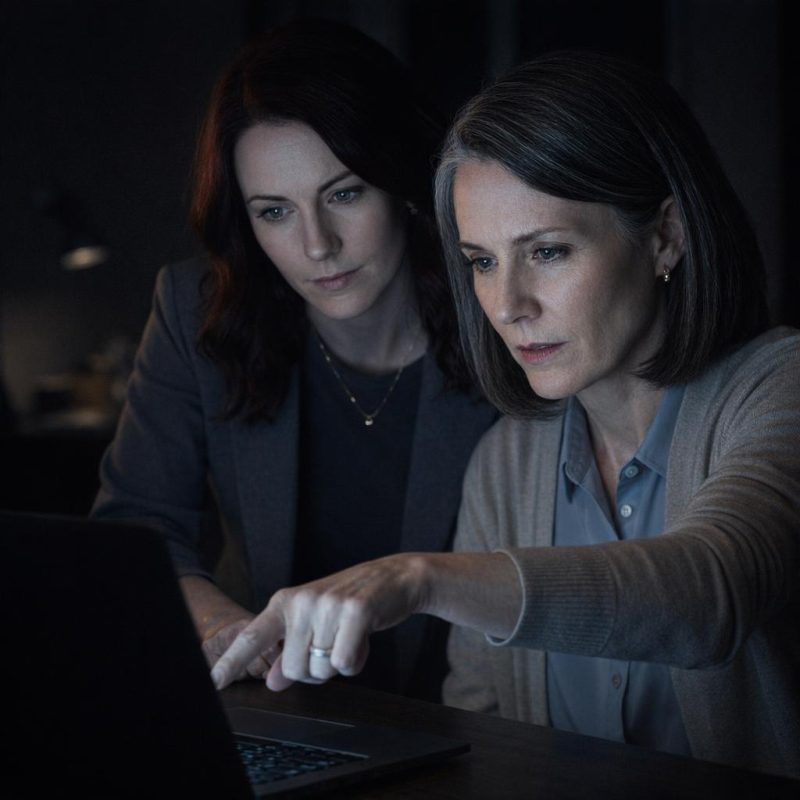 Image by RM AI
The Attorney Begins Digging
David called two days later. Natalie put him on speaker and we sat together at the kitchen table, the phone between us. He said he'd been looking into Northline's current status — public filings, registered agent records, anything he could access without tipping anyone off. His voice was measured, the way it always was, but I could hear something underneath it. He said the picture was different from what Natalie had been told. She'd said Adrian mentioned some buyer interest, early conversations, nothing serious. David said that wasn't what the records suggested. He paused, and I reached over and put my hand over Natalie's without thinking about it. He said Northline wasn't in early talks. He said the company wasn't just fielding interest from a potential buyer. He said he needed to keep digging into the specifics, that there were details he hadn't fully mapped yet, but that based on what he'd found so far, the sale wasn't a possibility somewhere down the road. Natalie asked him what he meant. He said it plainly: Northline Media Partnerships was in the final stages of being sold.
 Image by RM AI
Twelve Million Dollars
He called back the next morning. Natalie was still in her pajamas, sitting at the counter with a cup of coffee she hadn't touched, and I was standing near the window when her phone rang. She answered it and put it on speaker again without me asking. David said he had more. He'd found the sale documentation — not the full agreement, but enough to understand the scope of it. He told us the number. Nearly twelve million dollars. Natalie set her coffee cup down very carefully, like she was afraid of what might happen if she moved too fast. I didn't say anything. David explained the timeline as best he could piece it together — the sale had been moving forward for months, the final stages were already underway, and the prenup signing had come before the closing date. He said he wasn't drawing conclusions yet, that he needed more, but that the timing was something he intended to look at closely. Natalie didn't ask any follow-up questions. She just sat there after he hung up, both hands wrapped around a cup that had gone cold, and I stood across from her and thought about the document she'd signed in that attorney's office — the one that had felt rushed, the one with the language she hadn't fully understood. Twelve million dollars, and she hadn't known it existed.
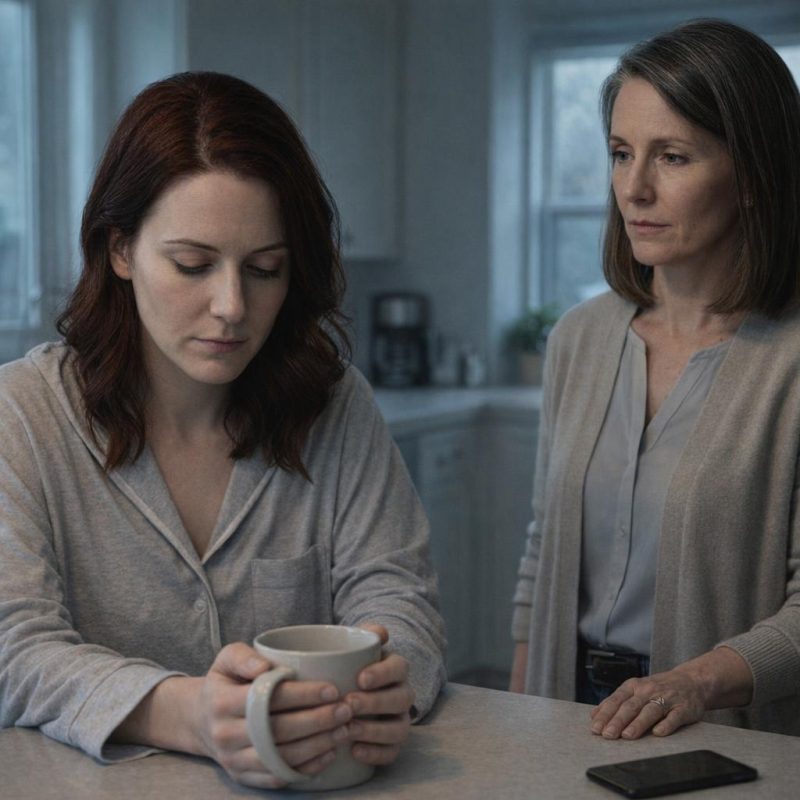 Image by RM AI
What She Could Have Handled
We didn't talk for a while after that. I made toast neither of us ate. Eventually Natalie started talking, not loudly, not dramatically — just steadily, the way she used to talk when she was working something out. She said she wasn't naive. She knew people signed prenups. She knew couples protected assets they'd built before a relationship, and she said she could have accepted that. She could have sat across from an attorney and signed something fair and walked out feeling okay about it. That wasn't what this was. She said what she couldn't get past was the looking her in the eye part. The years of emails asking her to do the work. The draft agreement with her name on it that was never finalized. The conversations where he'd talked about Northline like it was theirs. She said she'd given that company years of her time and her contacts and her ideas, and she hadn't taken a salary for most of it because they were building something together, or so she'd believed. She stopped talking for a moment and looked out the window. Then she said there was a difference between protecting what you had and taking what someone else built. She didn't say his name. She didn't need to. That difference just settled into the room and stayed there.
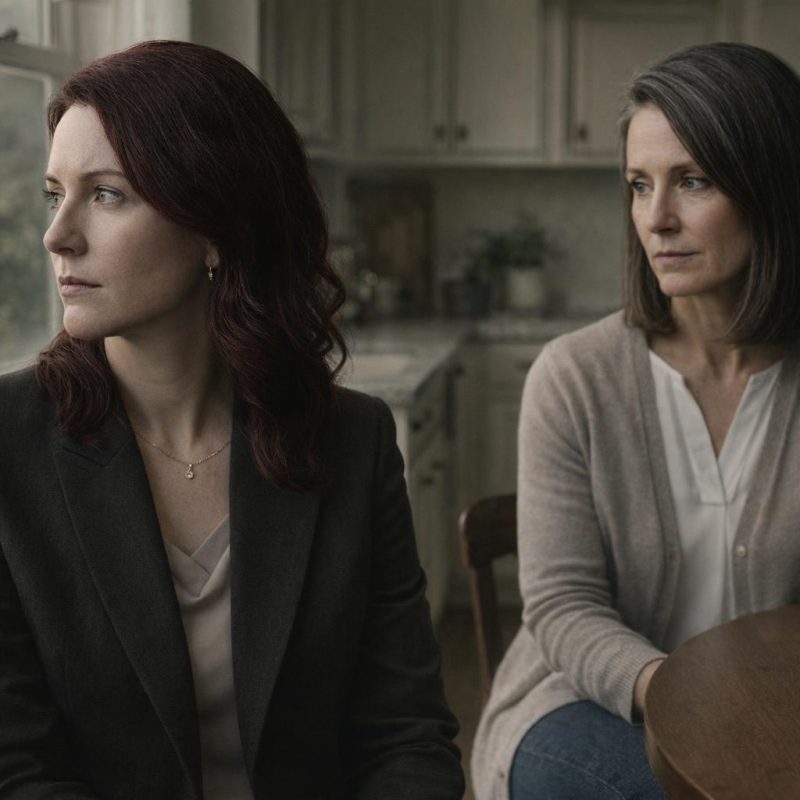 Image by RM AI
Preserving Everything
David called again that afternoon with instructions. He was direct about it — he said before anything else happened, before any conversation or confrontation, Natalie needed to preserve everything she could legally access. Every email that mentioned Northline. Every message where she'd been asked to do work for the company. Calendar entries, meeting notes, proposals she'd drafted, vendor contacts she'd sourced. Anything that showed her hand in building it. He said if Adrian became aware that she was looking into this, there was a real possibility that access to shared accounts or company records could disappear. He said it without alarm, just as a fact she needed to understand. Natalie listened without interrupting. When he finished, she opened her laptop and pulled up her email. She opened the cloud folder. She started downloading files, one folder at a time, methodical and quiet, the way she'd been all morning. I sat beside her and didn't offer to help because she didn't need help — she knew exactly what she was looking for. By the time an hour had passed, she had a folder on her desktop labeled simply with the date, and inside it were years of evidence showing, document by document, what she had built.
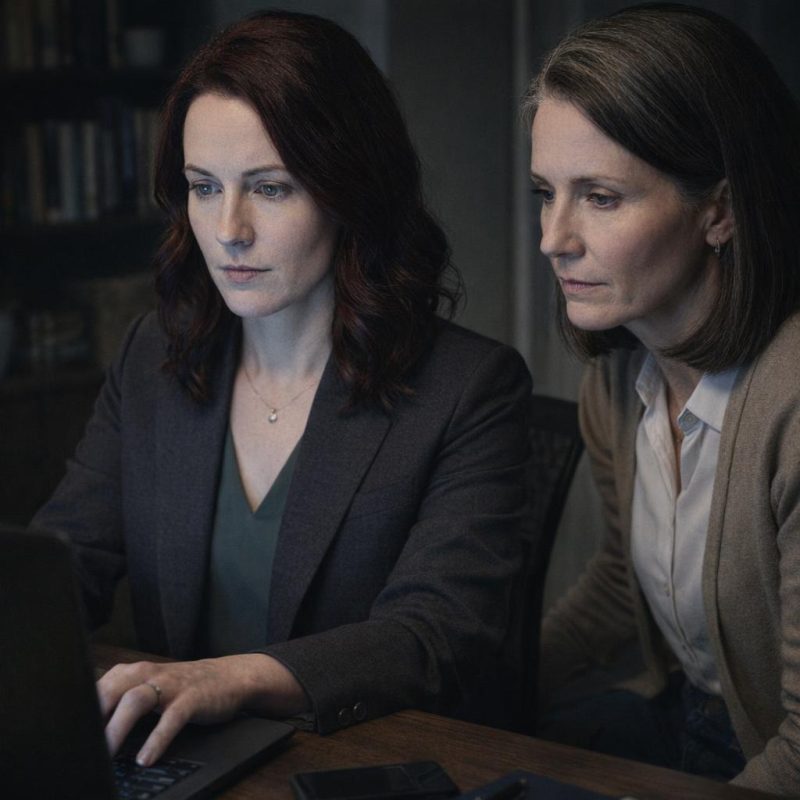 Image by RM AI
The Clients Who Came Through Her
The two days after David's call were quiet in a way that felt purposeful. Natalie didn't pace or cry or spiral — she worked. She sat at the kitchen table with her laptop and a legal pad and she went back through years of her own life, methodically, the way you'd inventory a house you were about to leave. I made coffee and stayed close without hovering. What I watched her do was remember. She'd pull up an email, go still for a moment, then write something down. At one point she looked up and said, almost to herself, that the Hargrove Group had come through her — that she'd met their events director at a conference three years before she and Adrian ever crossed paths professionally. Then there was a hospitality brand she'd worked with twice in her event production days. She'd introduced them to Adrian at a dinner she'd organized. She wrote that down too. By the end of the second day, the legal pad had six names on it, each one with a note beside it explaining how the connection had started and who had made the introduction. She tore the page off carefully and set it beside the folder on her desktop. I looked at her face and thought about how much she had poured into something without ever once stopping to measure what she was giving.
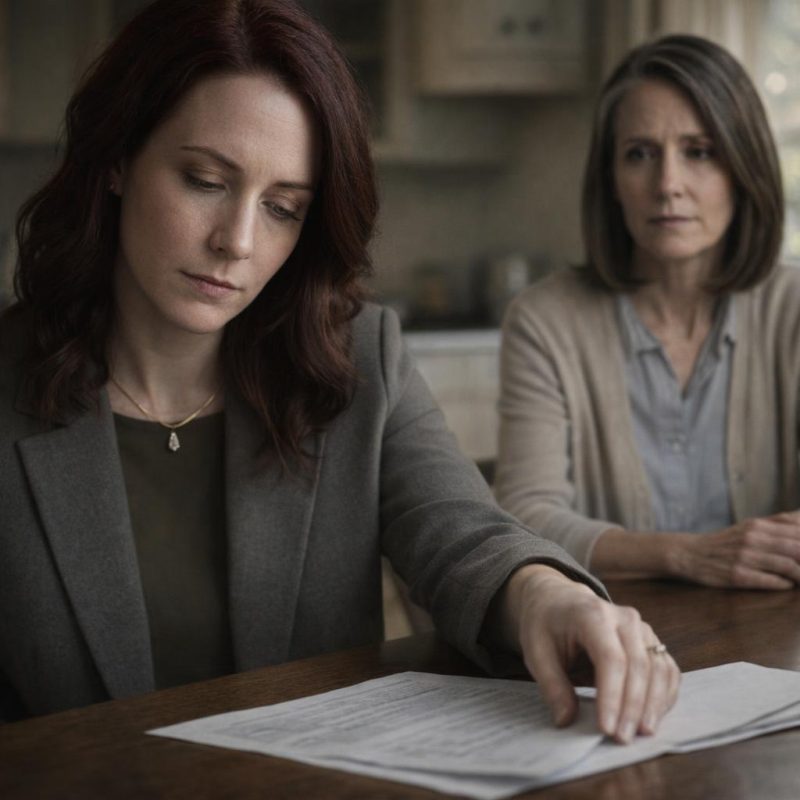 Image by RM AI
The Performer Who Only Trusted Her
It was late on the second evening when Natalie went quiet in a different way — not the focused quiet of someone working, but the stilled quiet of someone who'd just remembered something that mattered. She said there was one relationship in particular she needed to find documentation for. A performer, someone whose name carried real weight in the industry, had come to Northline specifically because of her. She'd been brought in to salvage a promotional event that had gone badly wrong — wrong venue, wrong setup, wrong energy — and she'd fixed it in about four hours. She remembered the performer's team being skeptical of her at first and then, by the end of the night, genuinely grateful. After that, the performer had refused to work with anyone else at Northline. Adrian had stood in front of industry people and talked about that relationship like he'd built it from scratch. Natalie started going through a box she'd brought from the closet — old cards, printed emails, things she'd kept without knowing why. I watched her hands move through the papers carefully, not rushing. She pulled out a small envelope, opened it, and went very still. She turned it toward me so I could read it — a handwritten thank-you note, addressed to Natalie by name, from the performer herself.
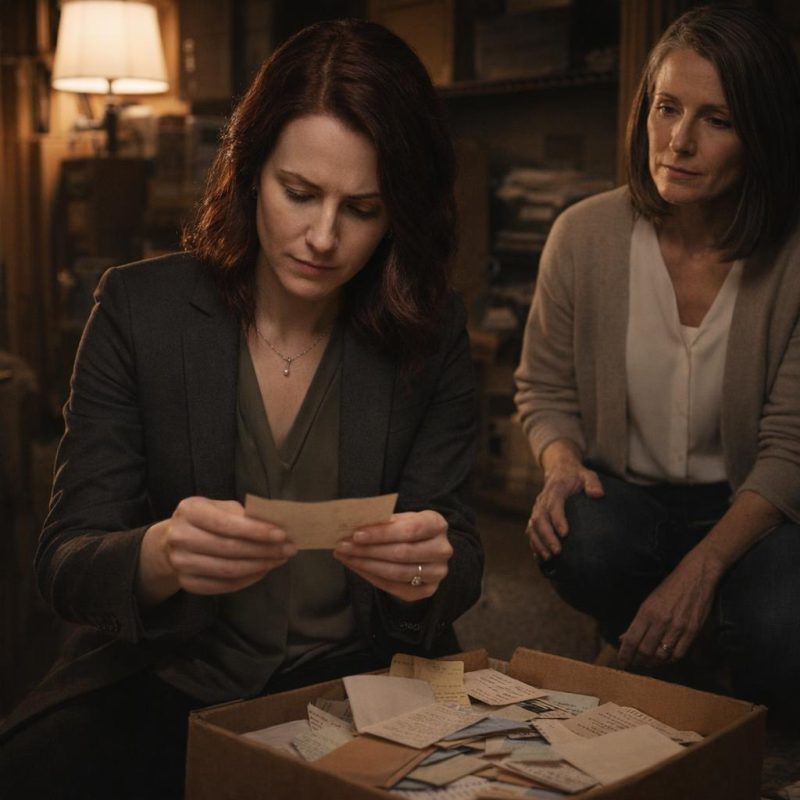 Image by RM AI
Public Credit for Private Work
The thank-you note went into the folder, and then Natalie opened a browser and started searching. Industry publications, press releases, trade announcements — she knew where to look because she'd spent years in that world. What came up made her jaw tighten. There was an interview Adrian had given to a music industry outlet about two years ago where he talked at length about cultivating relationships with major talent. He named the performer. He described the process of earning their trust as though it had been his own patient work over time. Natalie pulled up the email chain from that same period — her emails, her follow-ups, her problem-solving at two in the morning when the performer's team had a last-minute demand. She set the two windows side by side on the screen. Then she kept going. A deal with a regional venue consortium — Adrian had announced it at an industry event as a personal coup. Natalie found the original introduction email she'd sent, connecting Adrian to the consortium's director, a woman she'd known for years. There was a sponsorship agreement, a licensing arrangement, a partnership with a hospitality group. Each one had a public-facing story with Adrian at the center. Each one had a private paper trail that started with Natalie. She printed everything and laid it across the table in chronological order, and the pages stretched from one end to the other.
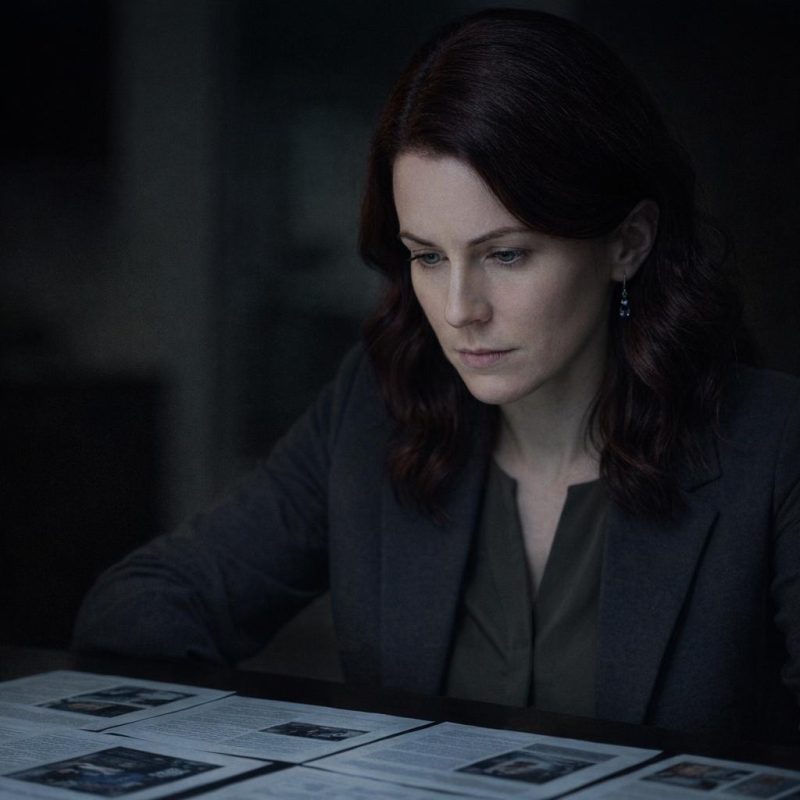 Image by RM AI
The Attorney's Strategy
David reviewed everything the following morning. He spread the printed pages across his desk the same way Natalie had spread them across the kitchen table, and he went through them without rushing. When he finished, he sat back and said they had something real. He explained that the original business plan and the draft operating agreement were the strongest pieces — they established that Natalie had been involved from the beginning in a capacity that went beyond a supportive partner. The client documentation reinforced it. The emails showing her doing the actual work while Adrian took the public credit reinforced it further. He said that if Adrian was moving toward a sale of any kind, the existence of a disputed ownership claim was something a buyer's legal team would take seriously. He said the word 'dispute' carefully, like he wanted us to understand exactly what it meant and what it didn't. He wasn't promising anything. He was explaining leverage. Natalie asked what that meant practically, and David looked at her steadily and said that if it came to it, they could put the buyer on notice that the ownership of Northline was not as clean as Adrian had represented — and that had the potential to stop the sale entirely.
 Image by RM AI
The Prenup Wasn't Protecting His Assets
We drove home mostly in silence. Natalie stared out the passenger window and I let her think. It wasn't until we were sitting at my kitchen table with the folder open between us that she said it out loud — not as a question, just as a statement, flat and certain. She said the prenup was never about protecting what he already had. I looked at her. She said he didn't have anything worth protecting when they got engaged. Northline was still small then. What he had was a company that was about to become worth something, and a fiancée who had helped build it and didn't know what that meant legally. The prenup hadn't been drawn up to shield his assets from a divorce. It had been drawn up to make sure that when he sold the company, she had no claim to any of it. The urgency about signing it. The threat to postpone the wedding. The year of tension every time she asked questions about the business. The comment about sacrifices. Every piece of it rearranged itself in front of me into something I could see clearly now. He had known about the sale. He had known what her contribution was worth. He had needed her signature before the deal closed, and he had gotten it. Natalie sat with her hands flat on the table, looking at the folder, and said quietly that it had all made a terrible kind of sense.
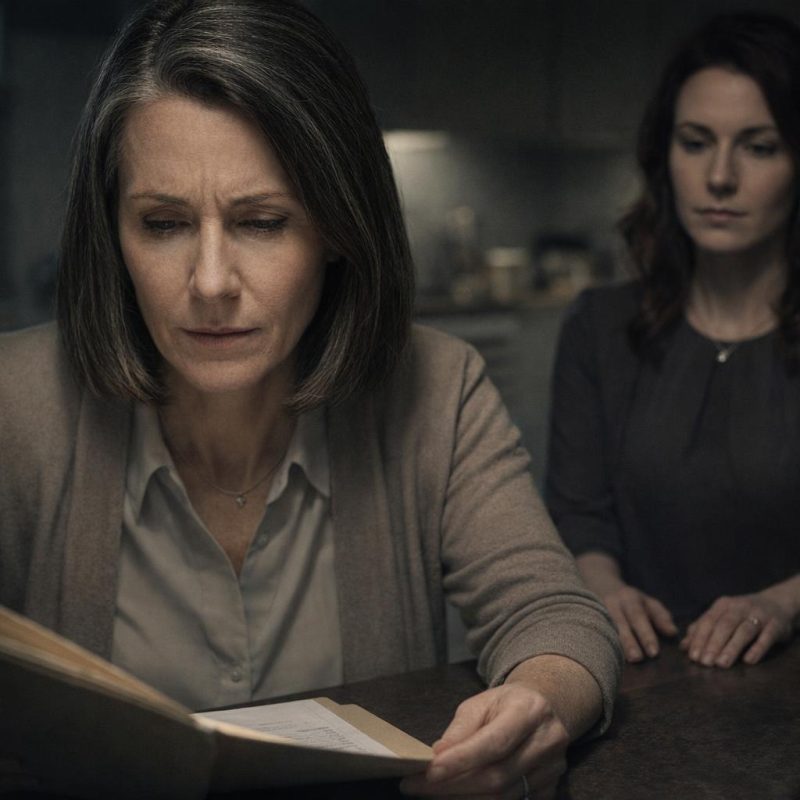 Image by RM AI
What He Taught Her to Confuse
She didn't cry. I think I expected her to, but she didn't. What she did instead was talk, slowly and carefully, like she was working something out as she went. She said the part that embarrassed her most wasn't signing the prenup. She said she could almost forgive herself for that because she hadn't known what she was signing away. What was harder to sit with was understanding how she'd gotten to the point of not knowing. She said Adrian had been patient about it. That he'd made leaving her career feel like a choice she was making freely, like it was about love and partnership and building something together. That every time she'd felt uncertain about depending on him financially, he'd reframed it as trust. She said he'd taught her, over years, to read her own discomfort as a failure of commitment rather than a signal worth listening to. She said she'd confused the two for so long that she'd stopped being able to tell them apart. I didn't say anything. There wasn't anything useful I could add to what she was describing. She already understood it. She sat with her hands wrapped around her mug and looked at the middle distance, and what settled over the room was the particular weight of recognizing an education you never agreed to receive.
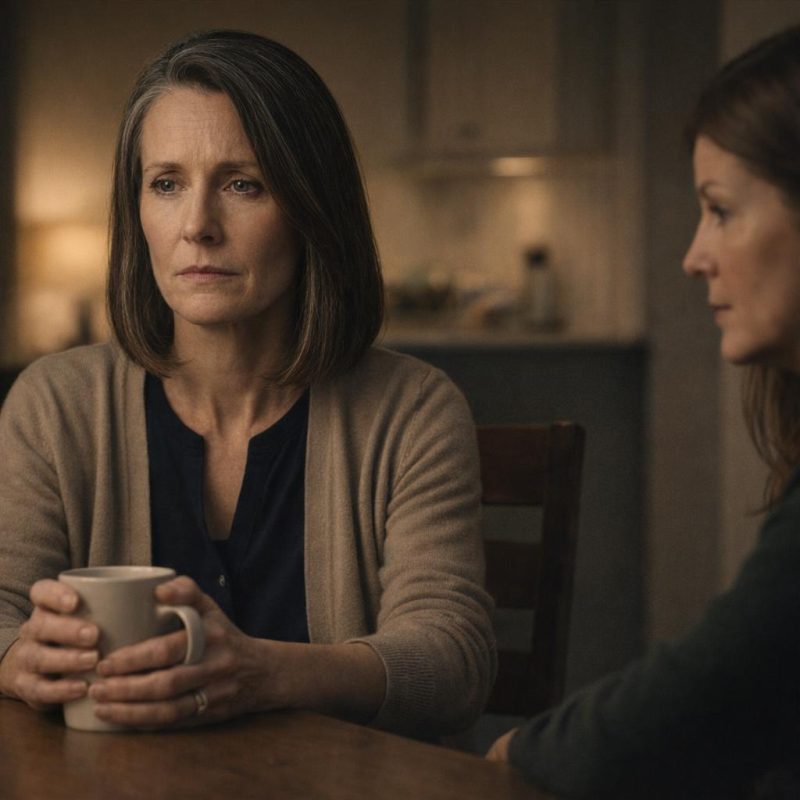 Image by RM AI
Twelve Million Minus Her Share
At some point I got up and found a notepad and a pen, and I sat back down and wrote the number twelve million at the top of the page. Natalie watched me. I wrote thirty percent beside it and then did the arithmetic slowly, out loud, so we were both following it. Three point six million dollars. That was what the draft operating agreement would have entitled her to if it had been honored. That was what her client relationships, her late nights, her event salvages, her introductions, her years of work had been worth in the context of that sale. Natalie looked at the number for a long time without speaking. She said she'd known the company had grown but she hadn't known it had grown that much, because he'd never told her. He'd kept the financials away from her the same way he'd kept everything else — gradually, without making it feel like a closed door, just a door she hadn't thought to open. Three point six million dollars. I left the notepad on the table between us and didn't say anything else, because there wasn't anything to say that the number didn't already say more plainly.
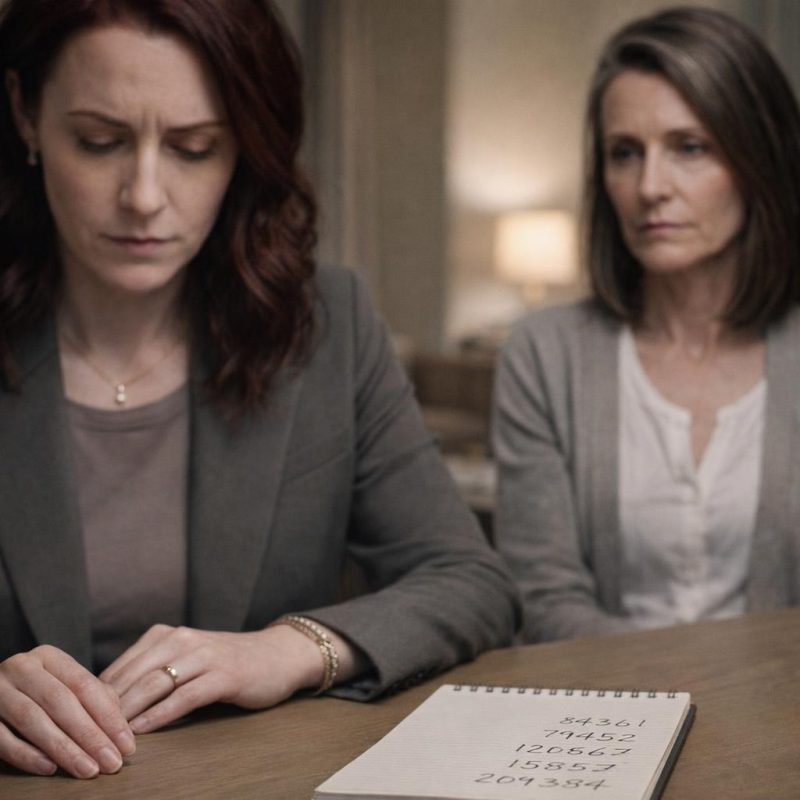 Image by RM AI
Sunday Afternoon
Sunday afternoon arrived the way ordinary Sundays do — slowly, with too much light and not enough noise. Adrian had come over that morning looking relaxed, the way he always looked when he thought everything was going according to plan. He'd had coffee with Robert in the kitchen and talked about a case he was working on, something about a contract dispute, and Robert had listened and nodded and given nothing away. I had stayed near the hallway and done the same. Around two o'clock, Adrian's phone buzzed and he glanced at it and said he was sorry but something had come up with a client — urgent, couldn't wait, he'd make it up to Natalie later in the week. He said it easily, the way people say things they've said before. Natalie said of course, no problem, and her voice was steady in a way that I knew cost her something. I watched her from across the room. She had her hands loose at her sides and her face arranged into something that looked like mild disappointment and nothing more. Adrian kissed her cheek and went to the bedroom to get his bag, and through the open door I could see him moving efficiently, folding his jacket over his arm, checking his phone again, entirely unbothered — a man with somewhere to be and no idea what was waiting for him when he came back.
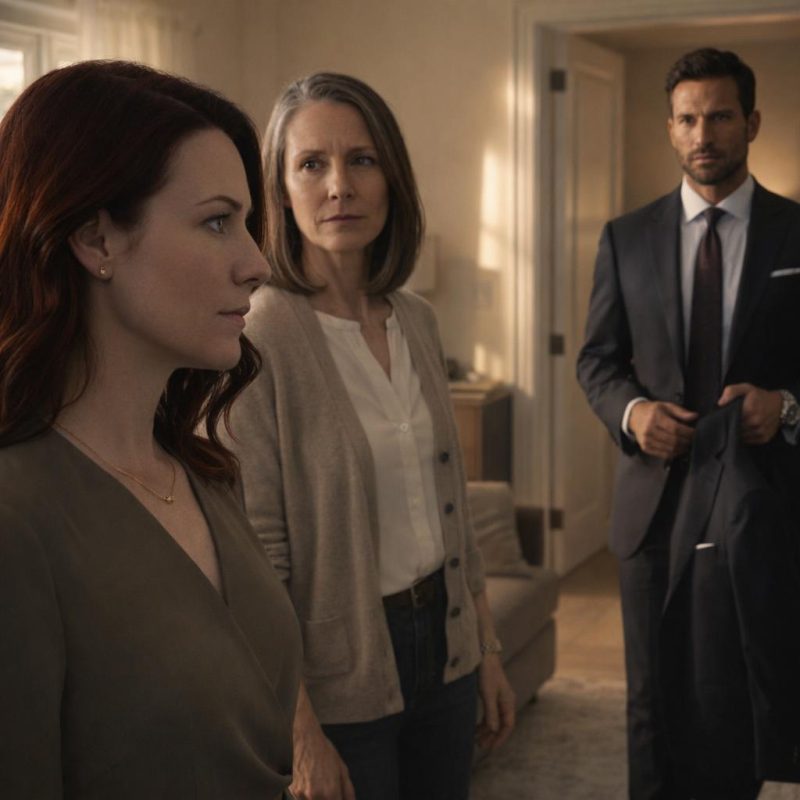 Image by RM AI
The Moment Before
Adrian was still in the kitchen, jacket folded over his arm, checking his phone one last time before heading out. He hadn't noticed anything different yet. That was the thing about him — he was so accustomed to being the one who controlled the room that he'd stopped reading it. Natalie stood at the counter with her back half-turned to him, and I watched her from the hallway. She had the documents in a folder on the counter beside her, edges aligned, nothing out of place. Her phone was face-up next to it, the call already connected, the screen showing a timer ticking upward. She wasn't fidgeting. She wasn't rehearsing anything under her breath. She just stood there, one hand resting lightly on the counter, and breathed. I had seen my daughter nervous before — before job interviews, before difficult conversations, before moments that mattered. This wasn't that. This was something quieter and more settled, the kind of stillness that doesn't come from having nothing to lose but from having already decided exactly what you're willing to do. Robert caught my eye from across the room and said nothing. I said nothing either. We just waited. And Natalie stood there in that kitchen, completely still, like someone who had already made peace with whatever came next.
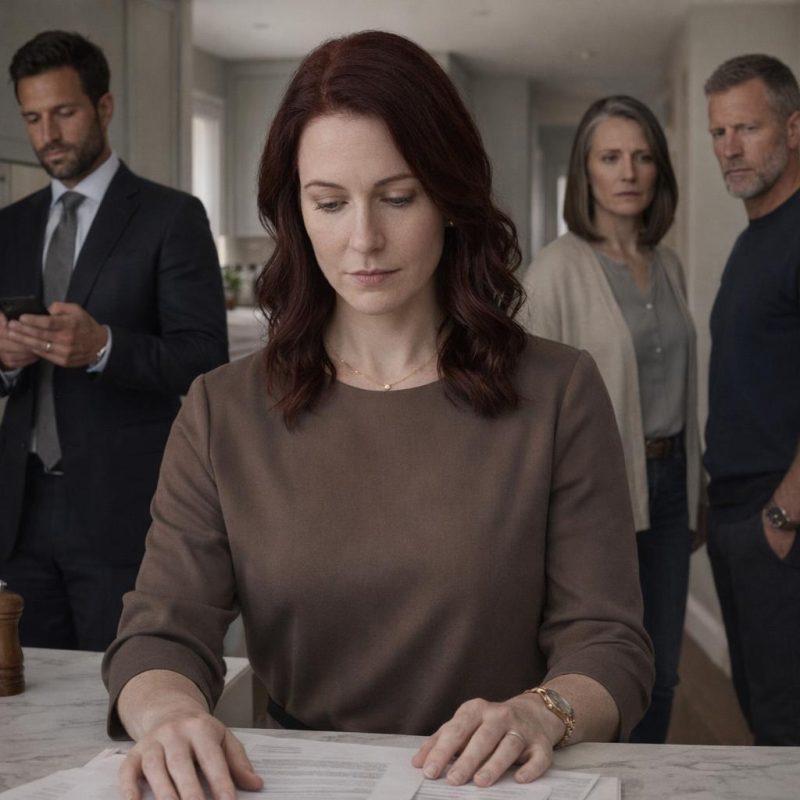 Image by RM AI
Is It About Selling Northline
Adrian picked up his bag and said he'd call her later, and his voice had that easy, practiced warmth he used when he was wrapping things up. He was already halfway to the door. Then Natalie said it. She didn't raise her voice. She didn't move from where she was standing. She just said, calmly and clearly, "Is your urgent client matter anything to do with selling Northline Media Partnerships?" The room went completely quiet. Adrian stopped walking. Not a slow stop, not a gradual deceleration — he just stopped, mid-stride, like the words had physically caught him. I watched his shoulders shift. I watched the easy confidence drain out of his posture the way color drains out of a face. He turned around slowly, and the expression he was wearing wasn't the polished, composed look he'd walked in with. It was something else entirely — something calculating and suddenly very alert. He looked at Natalie. Then he looked at me. Then back at Natalie. His bag was still in his hand, suspended halfway between leaving and staying, and he stood there in the doorway with his jaw tight and his eyes moving fast, trying to work out what she knew and how she knew it. He didn't say a word. He just stood there, frozen, bag in hand, one foot still pointed toward the door.
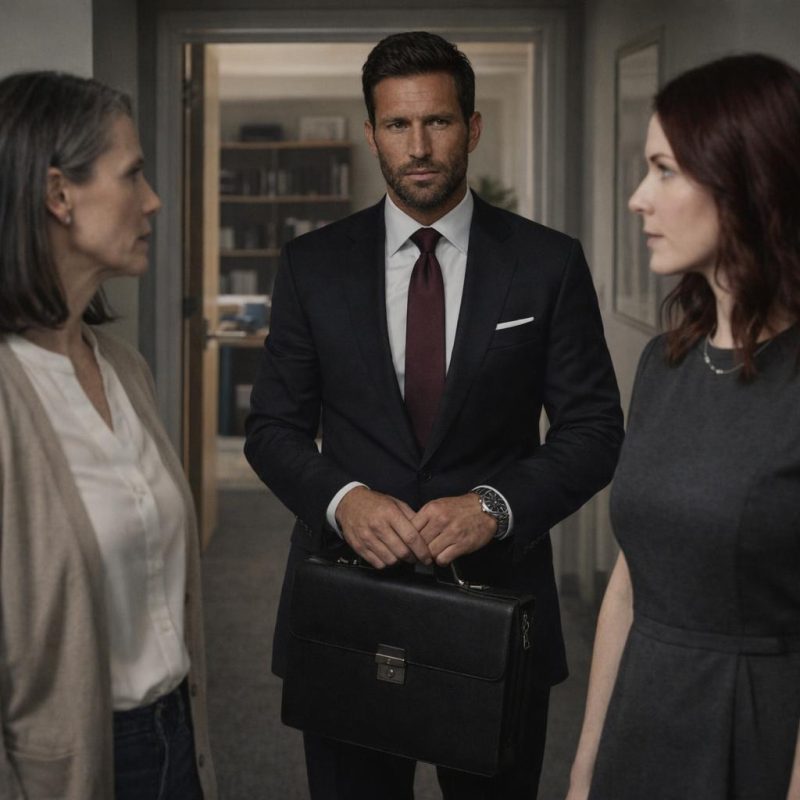 Image by RM AI
Where Did You Hear That
He found his voice after a moment, but it wasn't the voice he usually used. It was tighter, clipped at the edges, and he aimed it at Natalie like a question that was really a demand. "Where did you hear that?" Natalie didn't answer right away. She just looked at him, steady and unhurried, and that silence seemed to unsettle him more than any answer would have. He tried again, louder this time, with a layer of authority he was clearly reaching for. "Natalie. Who told you about the sale?" He glanced at me then, and I could see him running the calculation — how much did we know, how long had we known it, who had talked. He looked at Robert. He looked back at Natalie. He set his bag down, which I took as a sign that some part of him understood he wasn't leaving yet. He straightened his jacket and tried to reset, tried to find the version of himself that controlled rooms and managed conversations, but it wasn't coming. The polish was still there on the surface, but underneath it something had gone loose and frantic. He asked the question a third time, quieter now, almost careful, and that was the version that gave him away completely — because careful wasn't confident, and Adrian without confidence was a man I had never seen before.
 Image by RM AI
The Evidence on the Table
Natalie didn't answer his question. Instead she walked to the kitchen table, unhurried, and set the folder down. She opened it without ceremony and placed the first document flat on the surface — the prenup, the one she'd signed without understanding what she was giving away. Then, beside it, she laid down the original business plan, the one with both their names on the founding page. Next came the printed emails, a small stack of them, the ones where Adrian's own colleagues had addressed her as co-founder. And finally the draft operating agreement, the page that showed her thirty percent stake in plain black type. She arranged them in a row and then stepped back and said nothing. She didn't need to. Adrian moved toward the table slowly, the way you move toward something you're not sure you want to see. He looked at the prenup first, then his eyes traveled across the row of documents, and I watched his face go through several things in quick succession — recognition, calculation, something that might have been the beginning of fear. He didn't pick anything up. He didn't speak. He just stood there with his hands at his sides, staring at the evidence laid out in front of him, and the kitchen held a silence so complete I could hear the refrigerator hum.
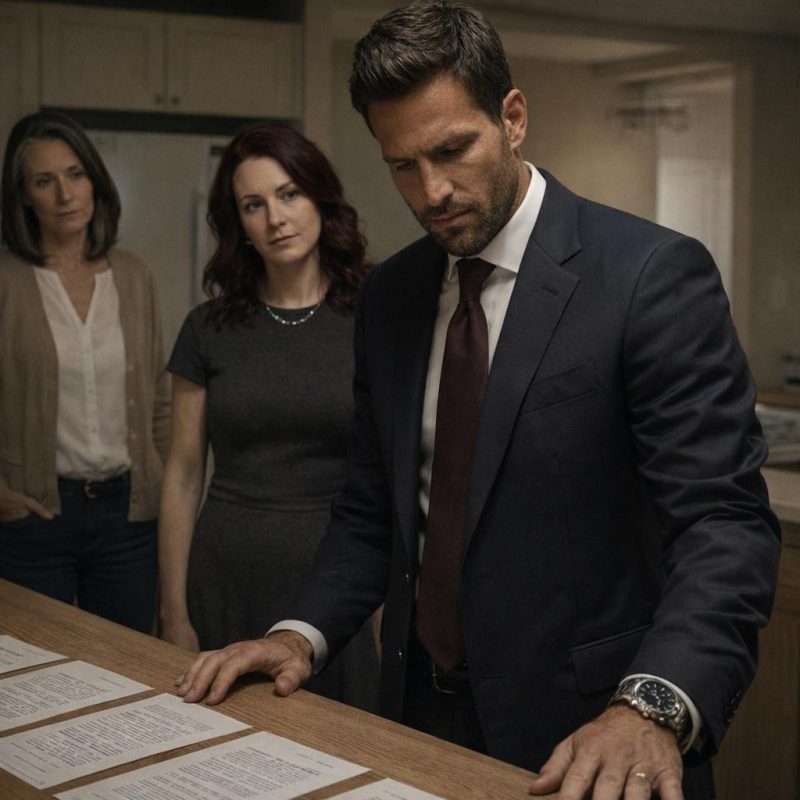 Image by RM AI
The Attorney on Speakerphone
Natalie reached over and tapped the screen on her phone, and the speakerphone crackled to life. "Mr. Calloway," David said, his voice even and unhurried, "my name is David Mercer. I'm the attorney representing Natalie in this matter." Adrian's head came up fast. He hadn't known anyone was on the line. David continued without pausing. He stated that Natalie disputed Adrian's claim to exclusive ownership of Northline Media Partnerships, and that the business plan, the draft operating agreement, and the documented correspondence all supported her position as co-founder with a thirty percent stake. He cited each document by name, calmly, the way someone does when they've read everything twice and aren't guessing at any of it. Then he said that if the matter wasn't resolved through negotiation, his office would have no choice but to notify the prospective buyer of the ownership conflict prior to closing. He said it the way you'd say the weather — factual, without drama, without apology. Adrian's face had gone very still. He was gripping the back of a kitchen chair, knuckles pale against the wood, and I could see the exact moment the full weight of it landed on him — the sale, the buyer, the timeline, all of it suddenly balanced on a knife's edge because David had just told him the deal could fall apart before it closed.
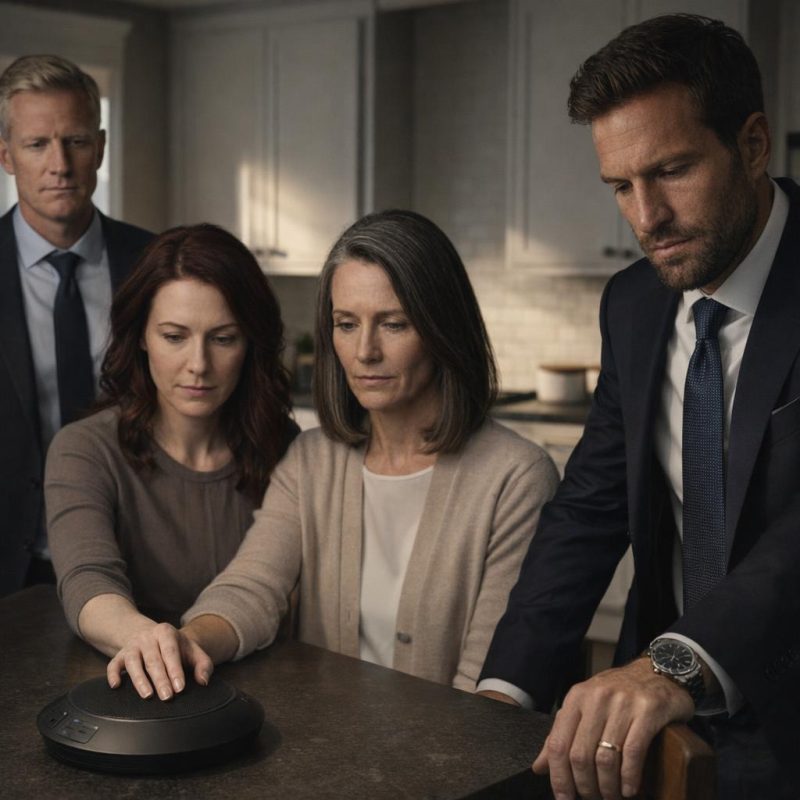 Image by RM AI
Adrian's First Defense
Adrian let go of the chair and straightened up, and I could see him reaching for the version of himself that argued cases for a living. He said Natalie was never an owner — not legally, not formally, not in any way that counted. He said the business plan was a draft, the emails were informal, the operating agreement was never executed. He said he had always intended to take care of her after the sale, that she would have been provided for, that he would have made sure of it. His voice was measured and reasonable, the voice of a man who believed that if he said something with enough authority it became true. Robert stood very still near the window. I didn't move either. We just let him talk. And then Natalie asked the question. She asked it quietly, without any particular heat, the way you ask something when you already know the answer and just need to hear what the other person does with it. She said, "If you always intended to take care of me, why did you need me to waive every claim before you told me there was anything to claim?" The room went quiet again. Adrian opened his mouth. Then he closed it. He looked at the documents on the table, then at Natalie, and his mouth stayed closed because there was no answer that didn't make everything worse.
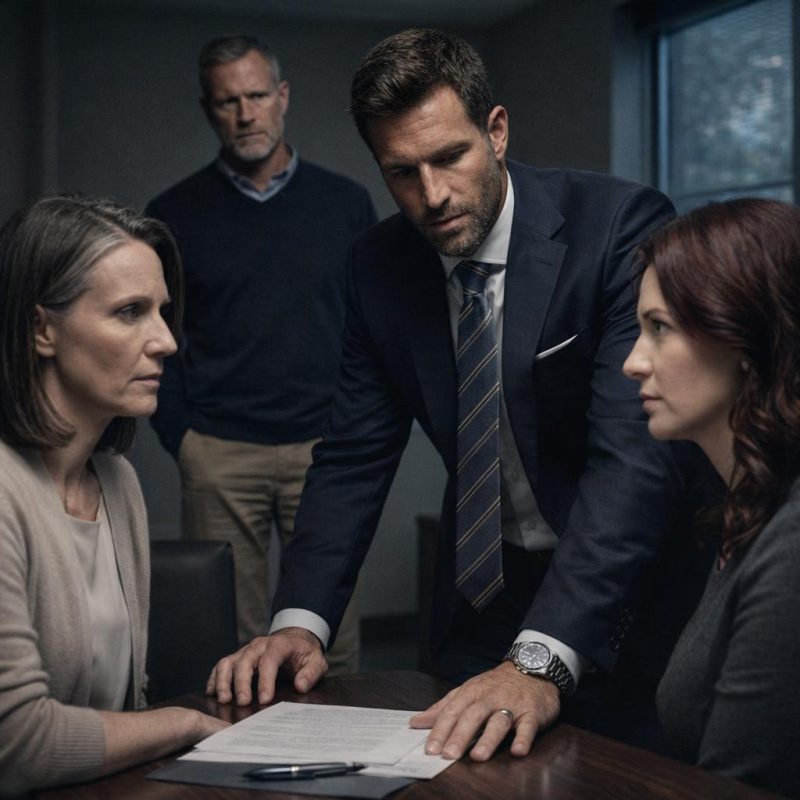 Image by RM AI
You Signed It
He stood there for a moment longer, and then something shifted in him — not toward honesty, but toward pressure. His voice dropped and went flat, and he said that Natalie had signed the prenup, that it was a legal document, that she'd had the opportunity to have it reviewed, and that she couldn't simply undo it because she'd changed her mind. He said it like it was the end of the conversation. Like it was a door closing. Natalie looked at him for a long moment without speaking. Then she said, very calmly, that she wasn't trying to undo anything in this room. She said she could make sure that everyone who needed to know understood exactly what he had asked her to sign and exactly why he had needed her to sign it before the sale — the buyer, his professional contacts, anyone with an interest in how he conducted his business. She said it without raising her voice, without any visible anger, just as a plain statement of what was available to her. I watched Adrian's face as she said it. I watched him run the calculation one more time and come up empty. The threat he'd used to close the conversation had just become the thing that opened it back up, and he was standing in our kitchen with nowhere left to go.
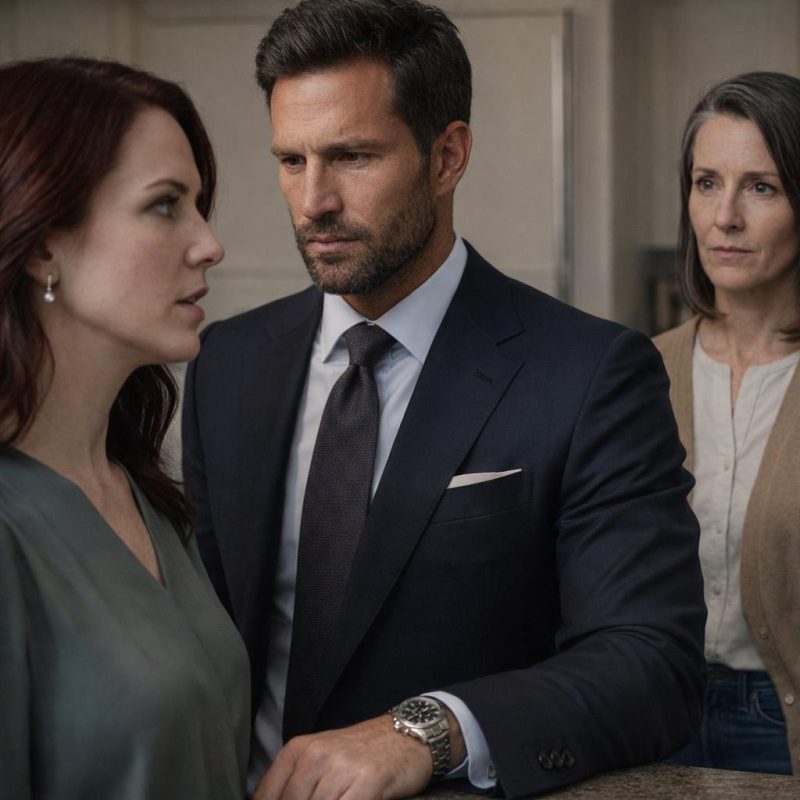 Image by RM AI
The Wedding Is Canceled
Adrian left without another word. He picked up his bag, and the door closed behind him, and that was it — no dramatic exit, no final argument, just a man walking out of a house he'd miscalculated. Natalie stood in the kitchen for a moment after he was gone, and then she picked up her phone and started making calls. She called her aunt first, then her college roommate, then the venue coordinator, then the florist. She didn't cry. She didn't stumble over the words. She said, each time, that the wedding was canceled, that she was sorry for the inconvenience, that she would follow up in writing about deposits. Robert sat at the kitchen table and didn't say anything, which was exactly right. I stayed close but didn't hover. I just watched my daughter move through those calls one by one, her voice steady and clear, and I thought about the woman she'd been before all of this — confident, certain of herself — and I thought she was finding her way back to that woman, one phone call at a time. The last call was the caterer, and when Natalie hung up she set the phone down on the counter and let out a long, slow breath, and she said, quietly, almost to herself, "It's over." And the way she said it didn't sound like loss. It sounded like relief.
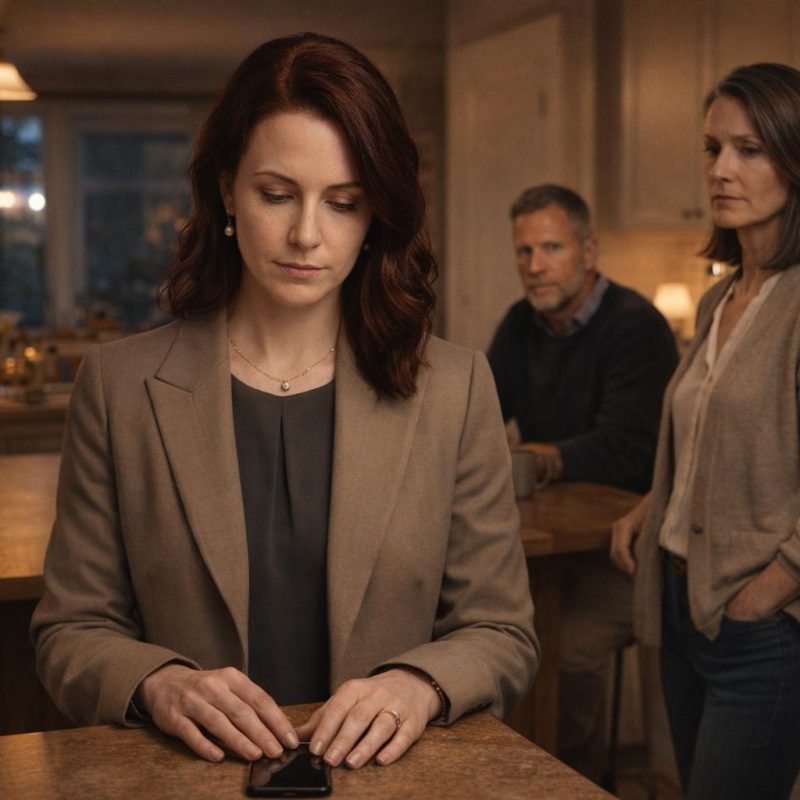 Image by RM AI
The Threat That Collapsed
David had warned us that Adrian would come out swinging, and he did. Within forty-eight hours of Natalie walking out, we got word through David that Adrian intended to enforce every provision of the prenup — all of it, the intellectual property clauses, the asset waivers, everything. He said he'd see Natalie in court. I remember sitting at my kitchen table reading David's email summary and feeling my jaw tighten, because I knew that was exactly what Adrian expected us to do — fold. But David had already moved. Before Adrian's threat even landed, David had notified the buyer of the ownership dispute over Natalie's contributions to Northline. The sale paused immediately. Buyers don't close on a company with an active legal cloud hanging over it, David explained, and Adrian knew that better than anyone. Every week of litigation was a week the deal sat in limbo, and a deal in limbo was a reputation problem for an attorney who'd built his entire brand on being the man who gets things done. David said it plainly: Adrian couldn't afford this fight, not with that sale on the line. He'd miscalculated how much Natalie actually had to offer — and how much she had to lose by staying quiet. Four days after the threat, David's phone rang. It was Adrian's lawyer, asking if we were open to discussing a settlement.
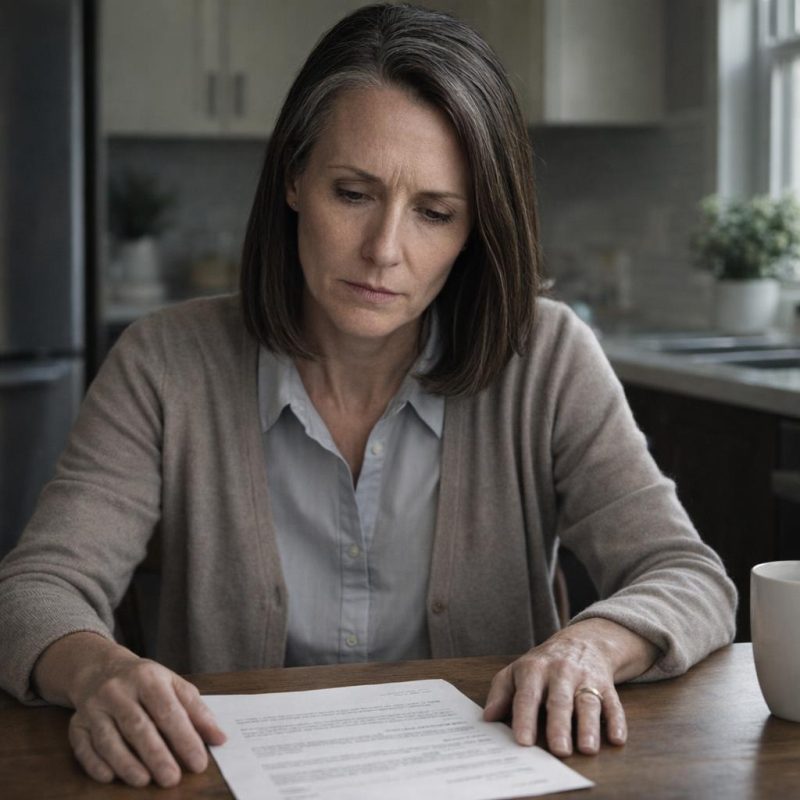 Image by RM AI
The Settlement
Mediation took several weeks. I wasn't in the room for most of it — that was Natalie's space, Natalie's fight — but David kept us informed, and I watched my daughter come home from each session a little steadier than she'd left. The evidence she'd preserved was the backbone of everything: the emails, the project files, the client correspondence that had her name on it going back years. Adrian's team tried to minimize her role, tried to frame her contributions as administrative support rather than foundational work, but the documentation didn't cooperate with that story. David told us afterward that the moment they laid out the timeline of Natalie's involvement in Northline's growth, the other side went quiet in a way that meant they were doing math. Adrian could not risk the sale collapsing entirely. He needed this to go away cleanly, and cleanly meant compensating the woman he'd spent two years trying to cut out. The settlement was confidential, so I won't put a number here, but I will say this: it was enough. Enough to matter. Enough to change the shape of what came next for Natalie. She called me the evening it was finalized, and her voice was different — not relieved exactly, more like settled. She said, "It's done, Mom." I sat with the phone pressed to my ear long after we hung up, and the check sitting on her kitchen counter represented years of work that had almost been erased.
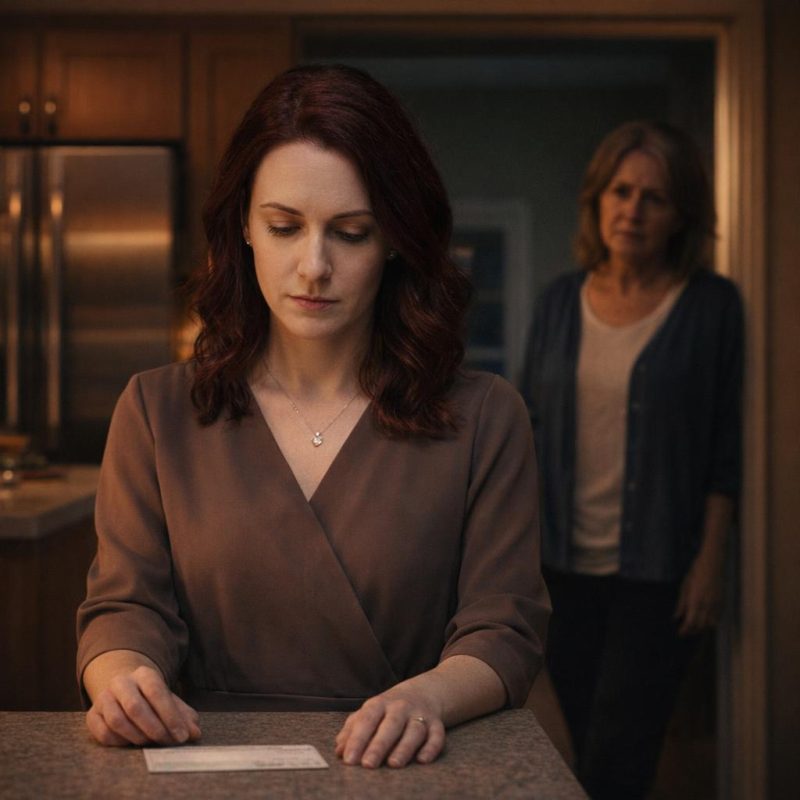 Image by RM AI
What the Money Bought
Natalie bought a house. Not a rental, not a temporary situation — a house, hers outright, no mortgage, no one's name on the deed but her own. It was a modest place, a little older, with a yard that needed work and a kitchen she immediately started planning how to update, and I thought it was the most beautiful thing I'd ever seen her do. She rebuilt her retirement savings next, quietly and methodically, the way she used to approach everything before Adrian made her doubt her own judgment. Then she called some of the colleagues she'd lost touch with during those two years — the ones who'd drifted away when her world had narrowed down to his orbit — and she started rebuilding those relationships too. By spring she had registered her own event-consulting business. Her name on the paperwork, her decisions, her clients. I went to her office the day she got her first signed contract and she showed it to me across her desk with this look on her face that I hadn't seen in years — not pride exactly, something quieter than that, something more like recognition. Like she was remembering who she was. Robert and I drove home that evening without saying much, and I kept thinking about how close it had all come to going the other way. The independence she'd bought back with that settlement wasn't just financial. It was herself.
 Image by RM AI
Sacrifice Versus Surrender
I've thought a lot about the word that started all of this. Sacrifices. I overheard Adrian use it on that phone call, and at the time I told myself I was probably reading too much into it — that marriages ask hard things of people, that compromise is real, that maybe I was just a mother who couldn't let her daughter make her own choices. I almost talked myself out of every instinct I had. What I've come to understand, watching Natalie rebuild her life, is that there's a difference between sacrificing for a marriage and surrendering yourself to keep one. Sacrifice is mutual. It costs both people something, and both people know what's being given. What Adrian asked of Natalie wasn't sacrifice — it was erasure, dressed up in the language of partnership. He completed the Northline sale months later, though not with the clean windfall he'd counted on. I don't spend much time thinking about him. What I think about instead is how close Natalie came to walking down that aisle believing she'd signed away money that had always been his — when the most valuable thing buried in that prenup was something she had built with her own hands. She almost gave it away without knowing she owned it. That's the thing about surrender disguised as love: it doesn't ask you to hand over what you have. It convinces you it was never yours to begin with.
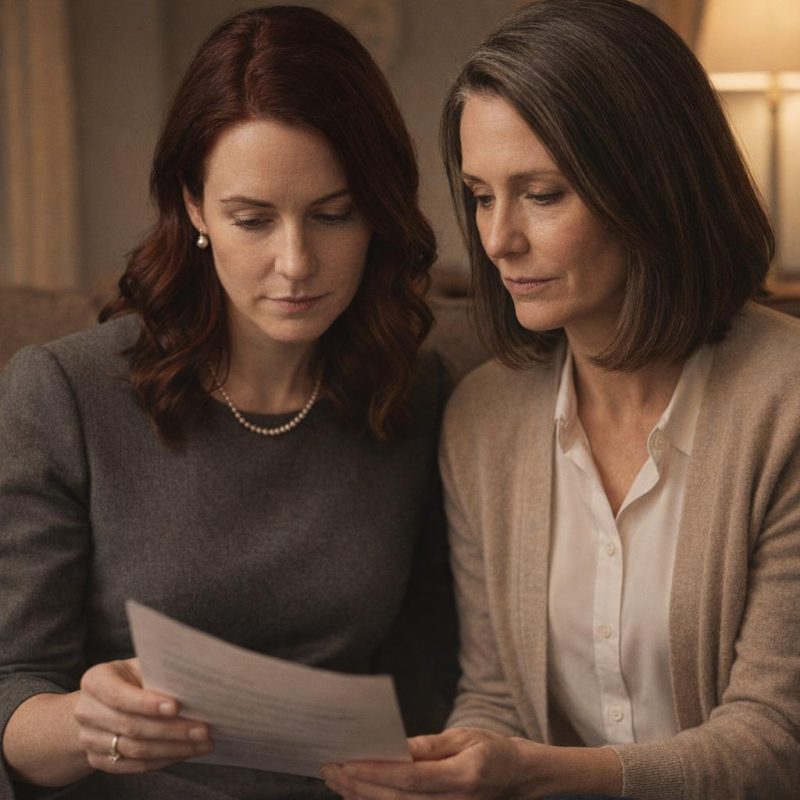 Image by RM AI
KEEP ON READING