Keep Your Enemies Close
Royal marriages have rarely been simple matters of affection. For rulers surrounded by territorial disputes, succession crises, and generations of hostility, there were always strategies involved, and marrying someone from the opposing side could do so much more than keep your enemies closer. As you flip through this list, you'll see that the results varied widely, ranging from surprisingly successful partnerships to unions that were anything but.
 Alessandro Varotari (Padovanino) (1588-1648) on Wikimedia
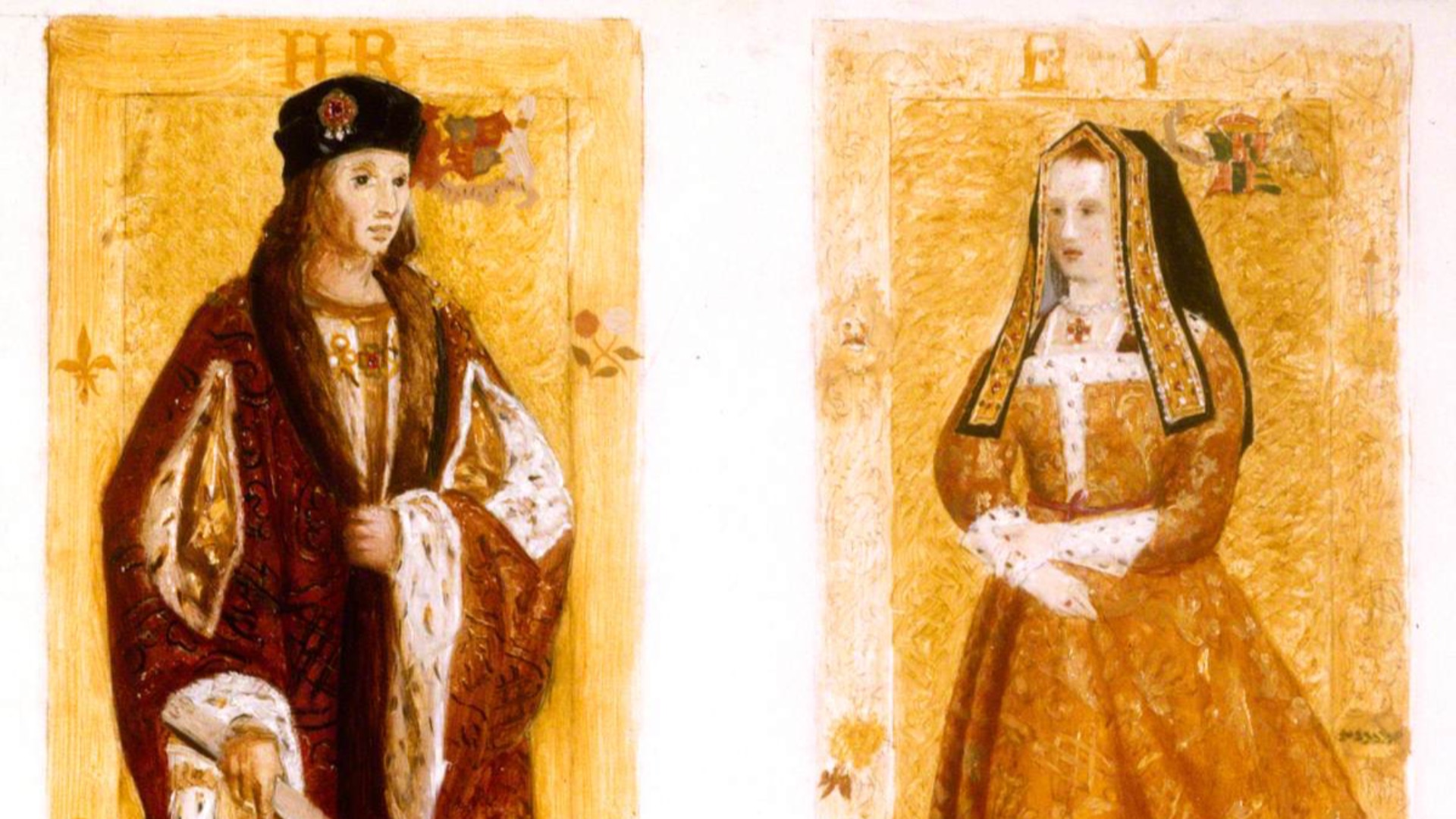
1. Henry VII and Elizabeth of York
Henry Tudor reached the English throne in 1485 after defeating Richard III, putting a Lancastrian-backed claimant in control after decades of fighting between Lancaster and York. He married Elizabeth of York, daughter of the Yorkist king Edward IV, on January 18, 1486. Their children consequently carried the claims of both competing houses, helping the new Tudor dynasty present itself as the answer to the Wars of the Roses. Historical accounts also suggest that what began as a politically valuable match developed into a close marriage.
2. Charles VIII and Anne of Brittany
Anne wasn't simply a convenient noblewoman when Charles VIII pursued her; she was the reigning Duchess of Brittany and was trying to keep her territory independent of France. French forces invaded Brittany, Rennes was surrounded, and Anne ultimately married Charles in December 1491 under considerable political pressure. Their union helped France strengthen its hold over the duchy, although Anne continued to identify strongly with Breton interests.
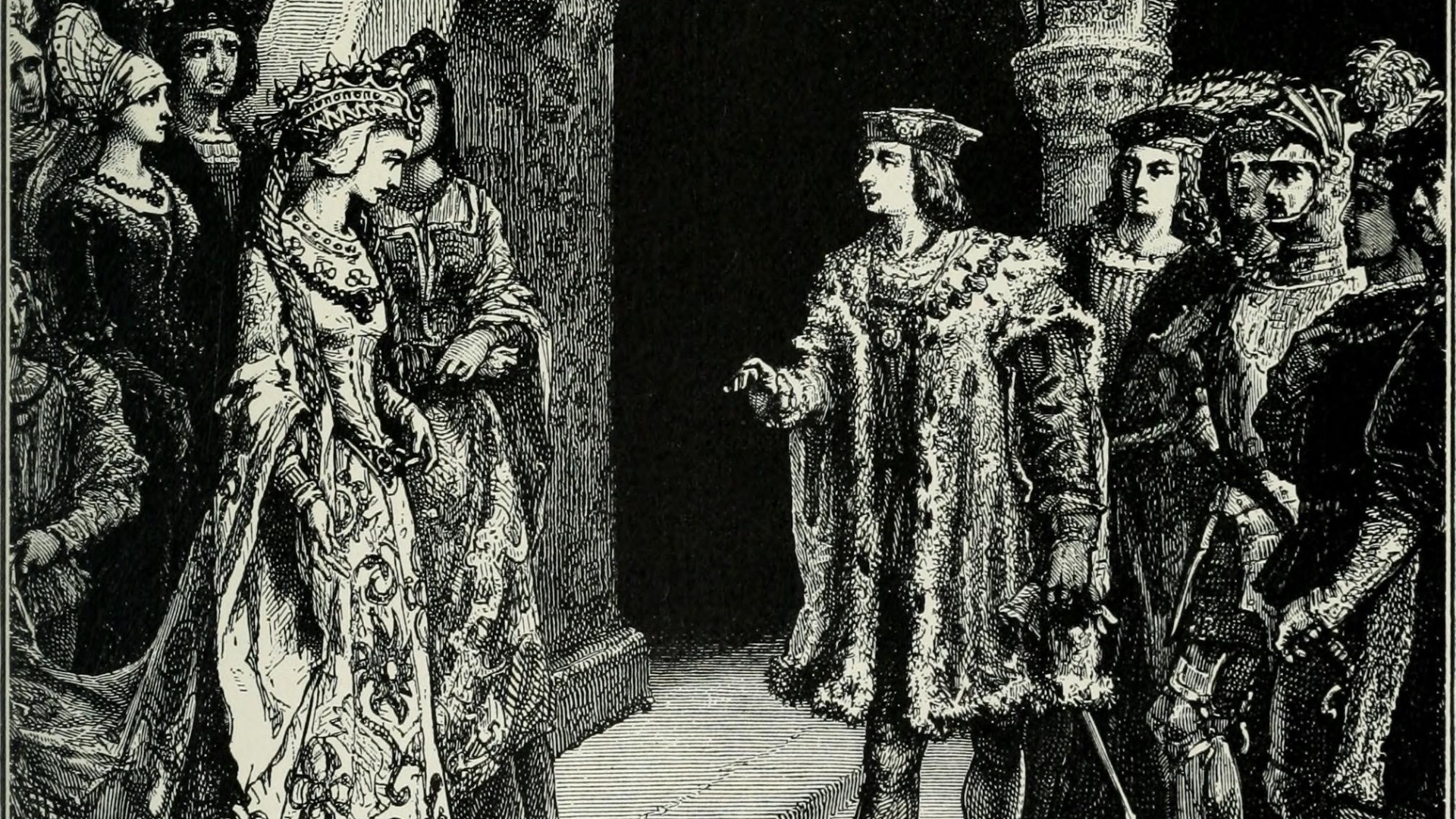 Internet Archive Book Images on Wikimedia
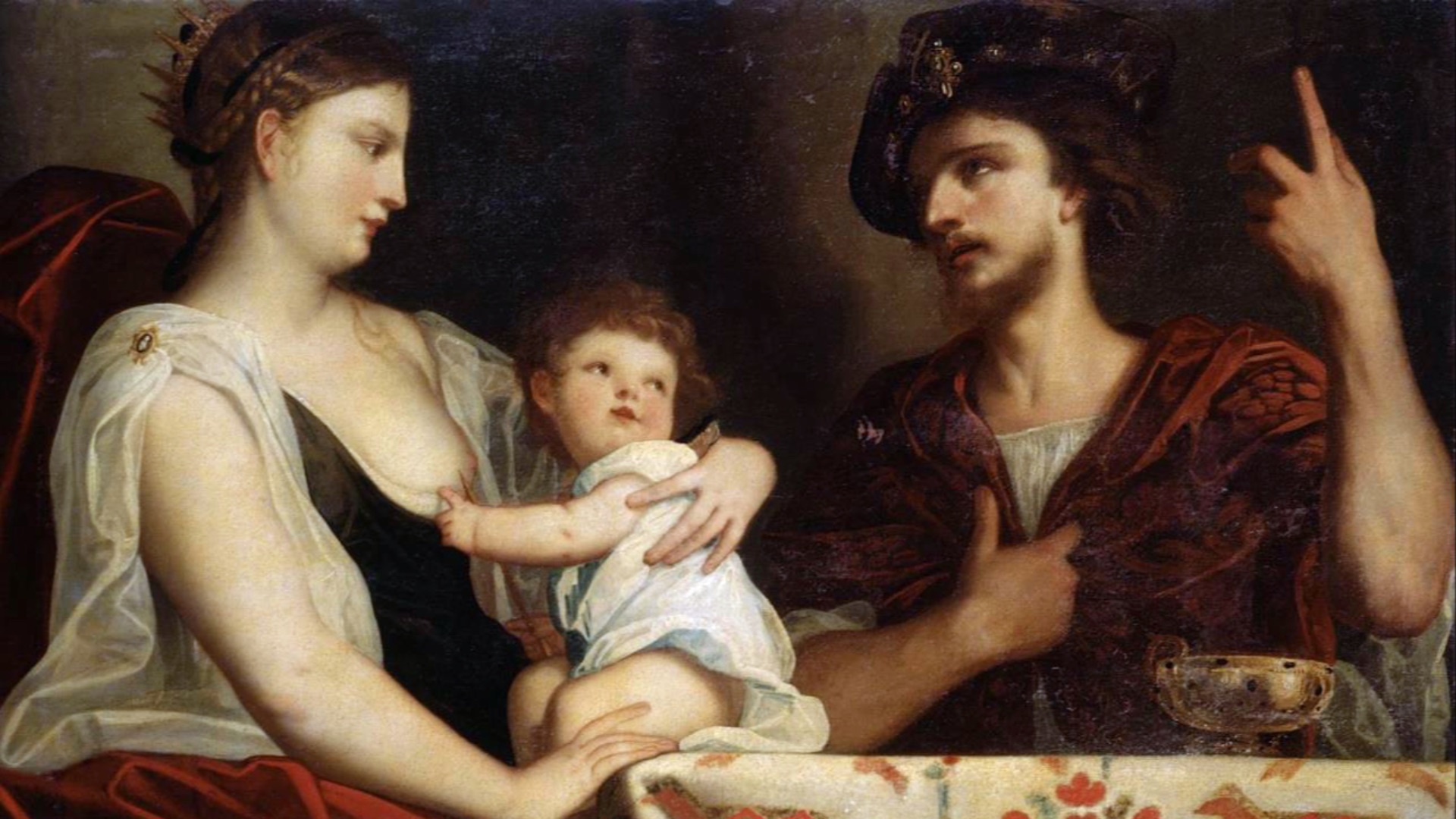
3. Alexander the Great and Roxana
Alexander encountered Roxana while fighting stubborn resistance in Bactria and Sogdia during his eastern campaigns. Her father, Oxyartes, had been associated with forces opposing the Macedonian conquest before eventually submitting to Alexander. Ancient tradition says Alexander was immediately captivated by Roxana, but marrying a woman from the conquered region also offered obvious political advantages. Their wedding around 327 B.C. therefore combined personal attraction, at least according to later accounts, with Alexander's efforts to secure his new territories.
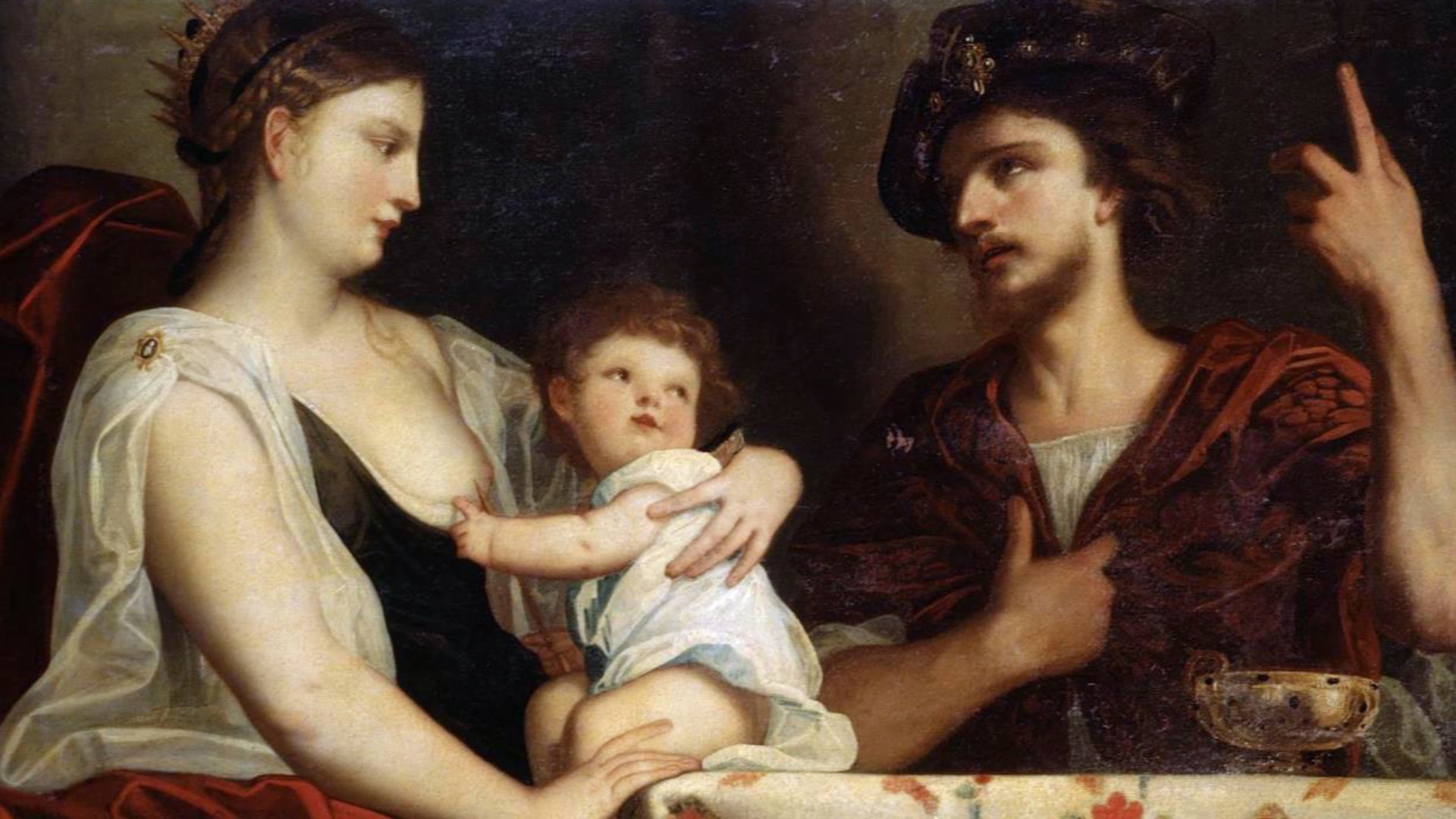 Alessandro Varotari (Padovanino) (1588-1648) on Wikimedia
4. Ferdinand II of León and Urraca of Portugal
Ferdinand II of León married Urraca of Portugal in 1165, linking two neighboring royal houses that had frequently competed over territory and influence. Urraca was the daughter of Afonso I, Portugal’s first king, whose realm had an uneasy and often hostile relationship with León. The marriage offered a way to strengthen ties between the two courts, even though political tensions between their kingdoms didn’t disappear. Their union was later annulled on grounds of consanguinity.
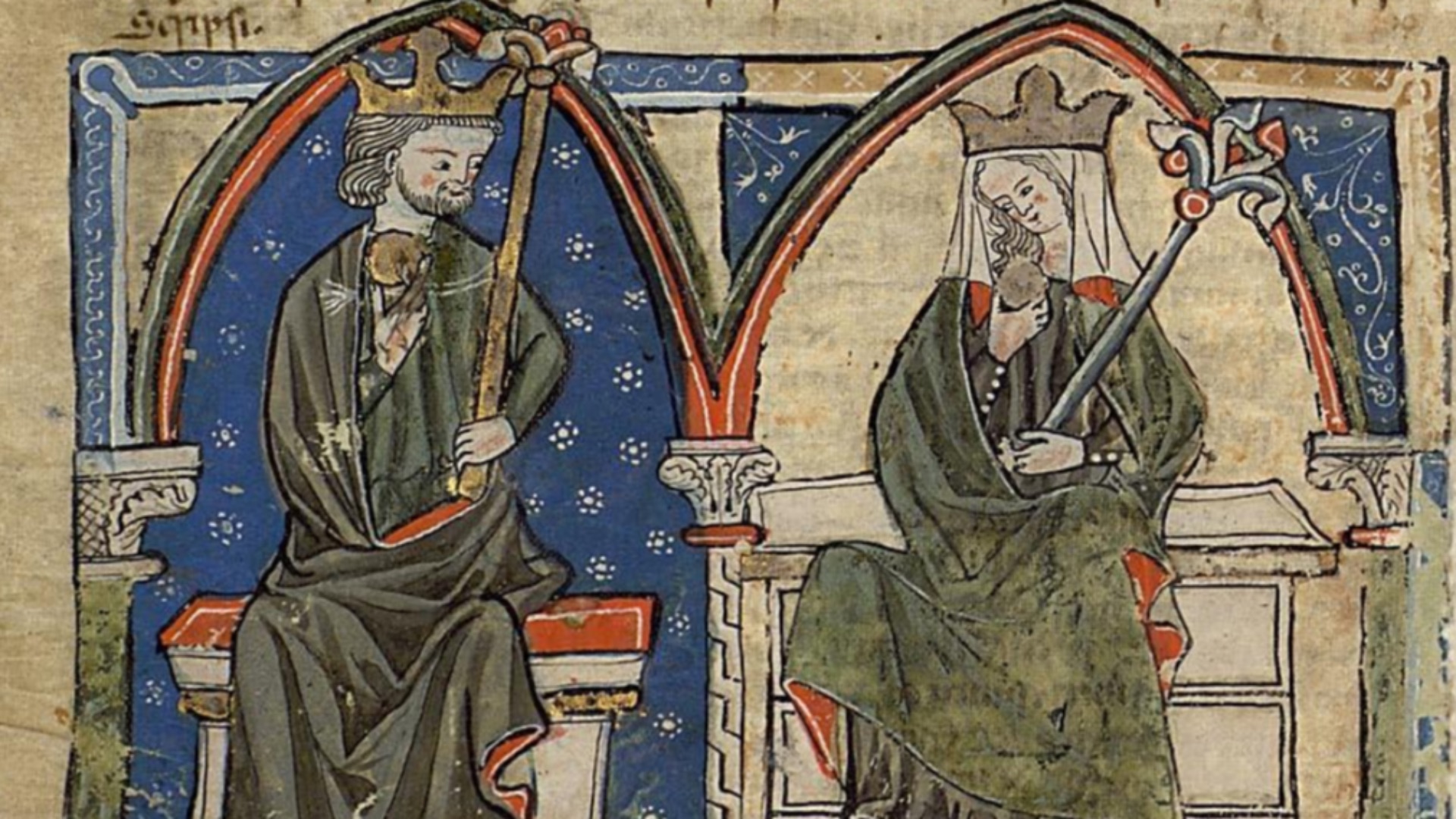 AnonymousUnknown author on Wikimedia
5. Henry V and Catherine of Valois
Henry V spent years waging war against France before marrying Catherine, daughter of the French king Charles VI, in 1420. The wedding formed part of the Treaty of Troyes, which recognized Henry and his heirs as successors to the French crown and sidelined Catherine's brother, the future Charles VII. Catherine was therefore a princess of the kingdom Henry had been invading and attempting to bring under his authority. Their marriage produced the future Henry VI, although Henry V died only two years after the wedding.
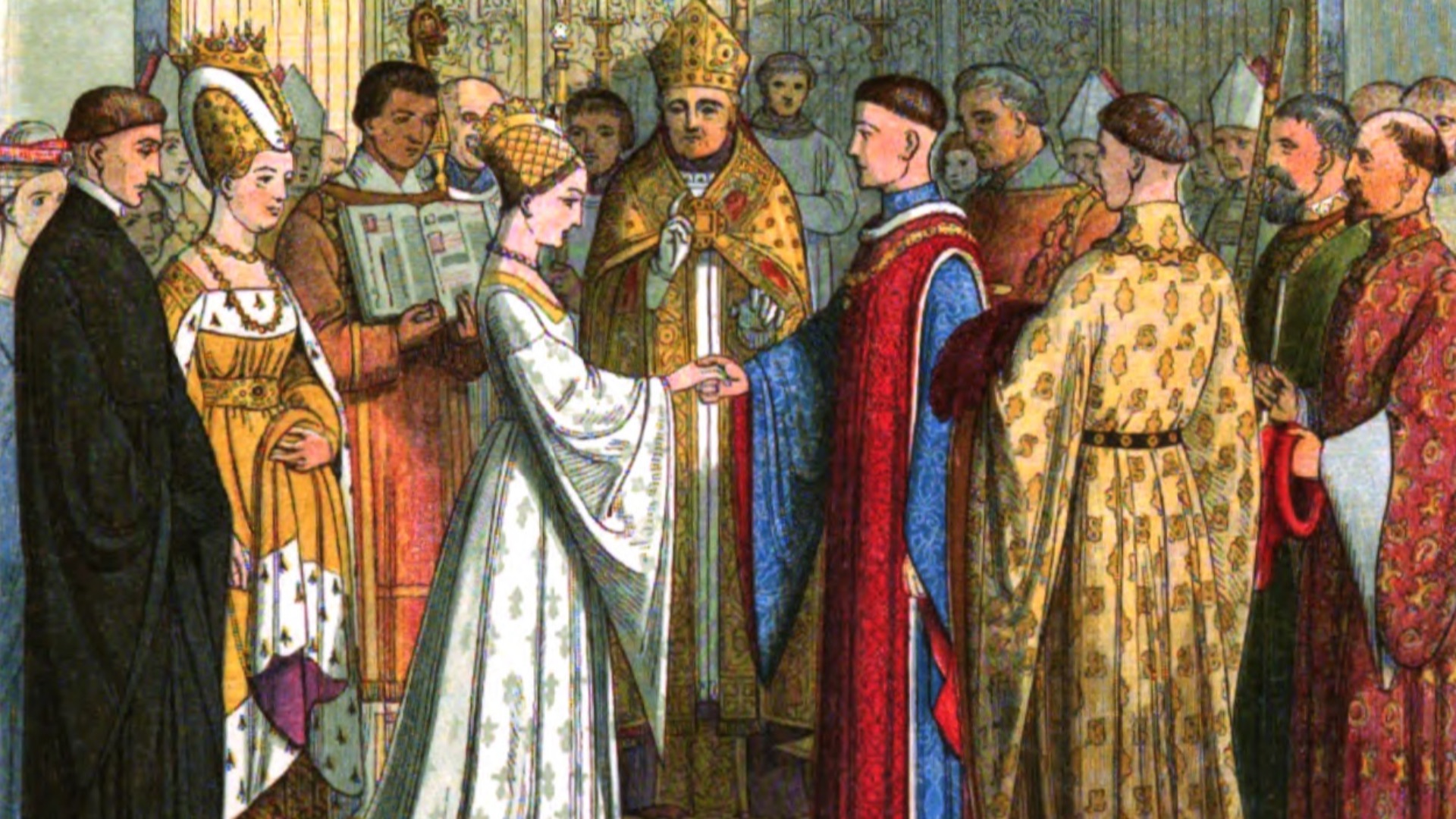 James William Edmund Doyle / Edmund Evans on Wikimedia
6. James IV of Scotland and Margaret Tudor
England and Scotland had a long record of border warfare when James IV agreed to marry Henry VII's daughter Margaret Tudor. The match accompanied the 1502 Treaty of Perpetual Peace, which was intended to end repeated hostilities between the neighboring kingdoms. James and Margaret married in Edinburgh the following year, linking the Scottish Stuarts directly to England's ruling Tudor family. The peace didn't last, but the marriage had enormous long-term consequences because their descendants eventually inherited the English throne.
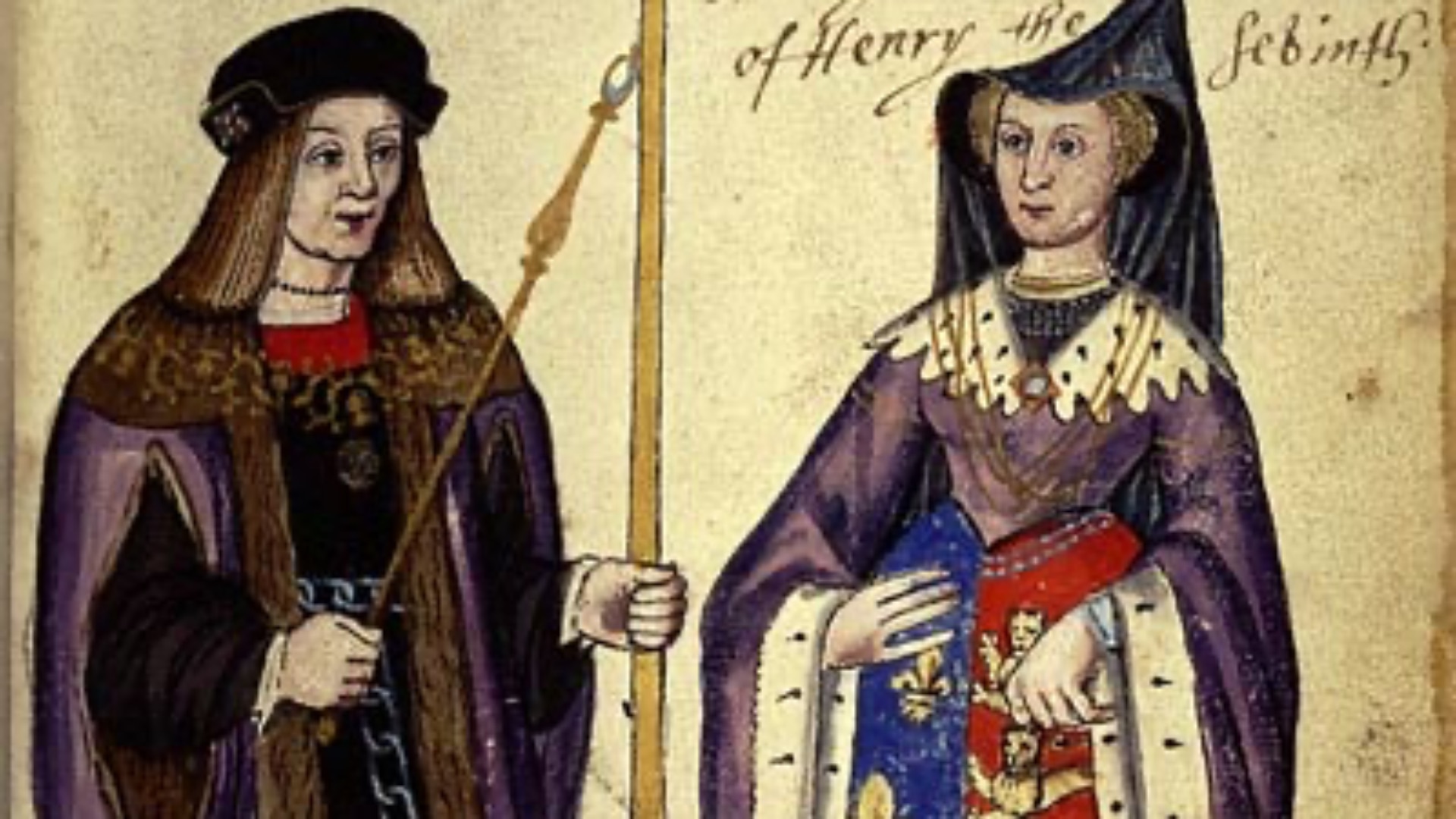
7. Edward II and Isabella of France
The English and French crowns had spent generations arguing over territory and royal rights when Prince Edward was promised to Isabella, daughter of Philip IV of France. Their marriage in 1308 followed diplomatic efforts aimed at easing Anglo-French tensions, making Isabella a particularly valuable bridge between competing monarchies. Unfortunately, the union became catastrophically dysfunctional as Edward's reign deteriorated. Isabella eventually joined forces with Roger Mortimer, invaded England, and helped bring about her husband's deposition.
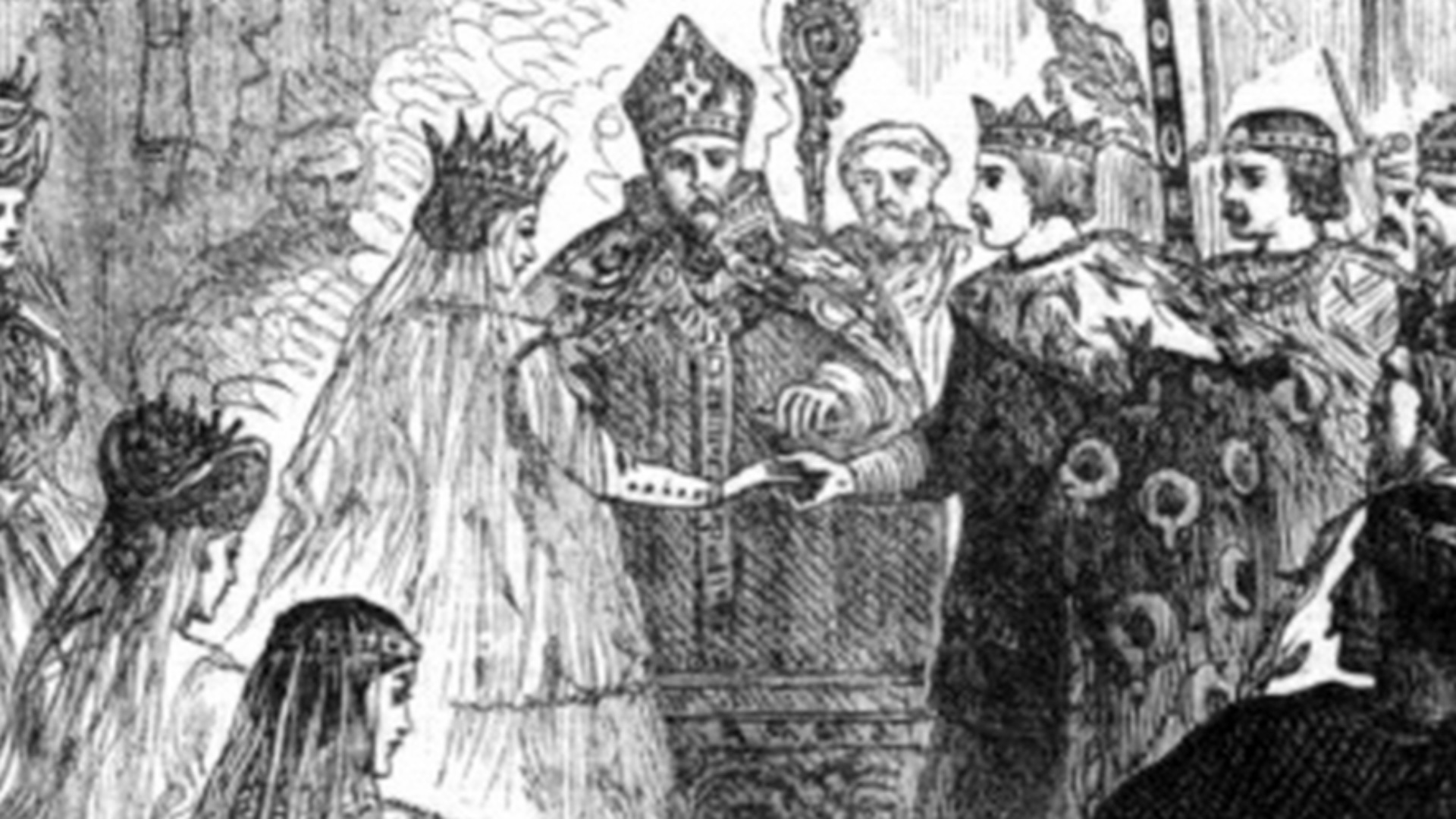
8. Richard II and Isabella of Valois
Richard II married six-year-old Isabella of Valois in November 1396 during a temporary easing of the Hundred Years’ War. She was the daughter of Charles VI of France, making her a princess of England’s principal dynastic rival. Their marriage accompanied a 28-year truce between the two kingdoms and was intended to reinforce the agreement symbolically. Because Isabella was still a child, the marriage was never consummated.
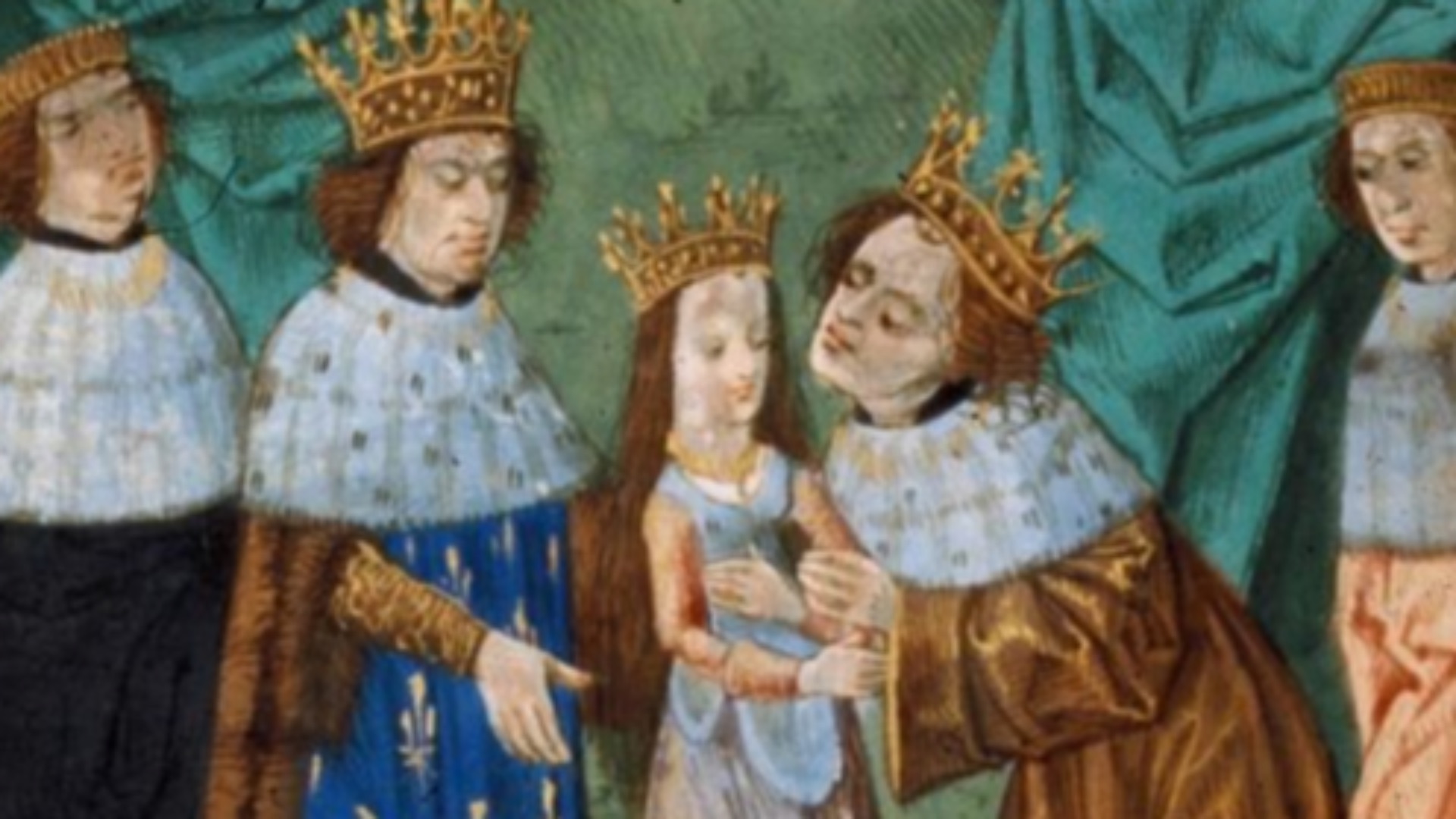
9. Bayezid I and Olivera Despina
Olivera Lazarević was the daughter of Serbian ruler Prince Lazar, whose forces confronted the Ottomans at the Battle of Kosovo in 1389. After Lazar’s death and Serbia’s growing dependence on Ottoman power, Olivera was married to Sultan Bayezid I around 1390. Her brother Stefan Lazarević subsequently ruled Serbia as an Ottoman vassal and provided troops for Bayezid’s campaigns. The marriage helped formalize a new political relationship between two ruling families that had recently been on opposing sides of a major battle.
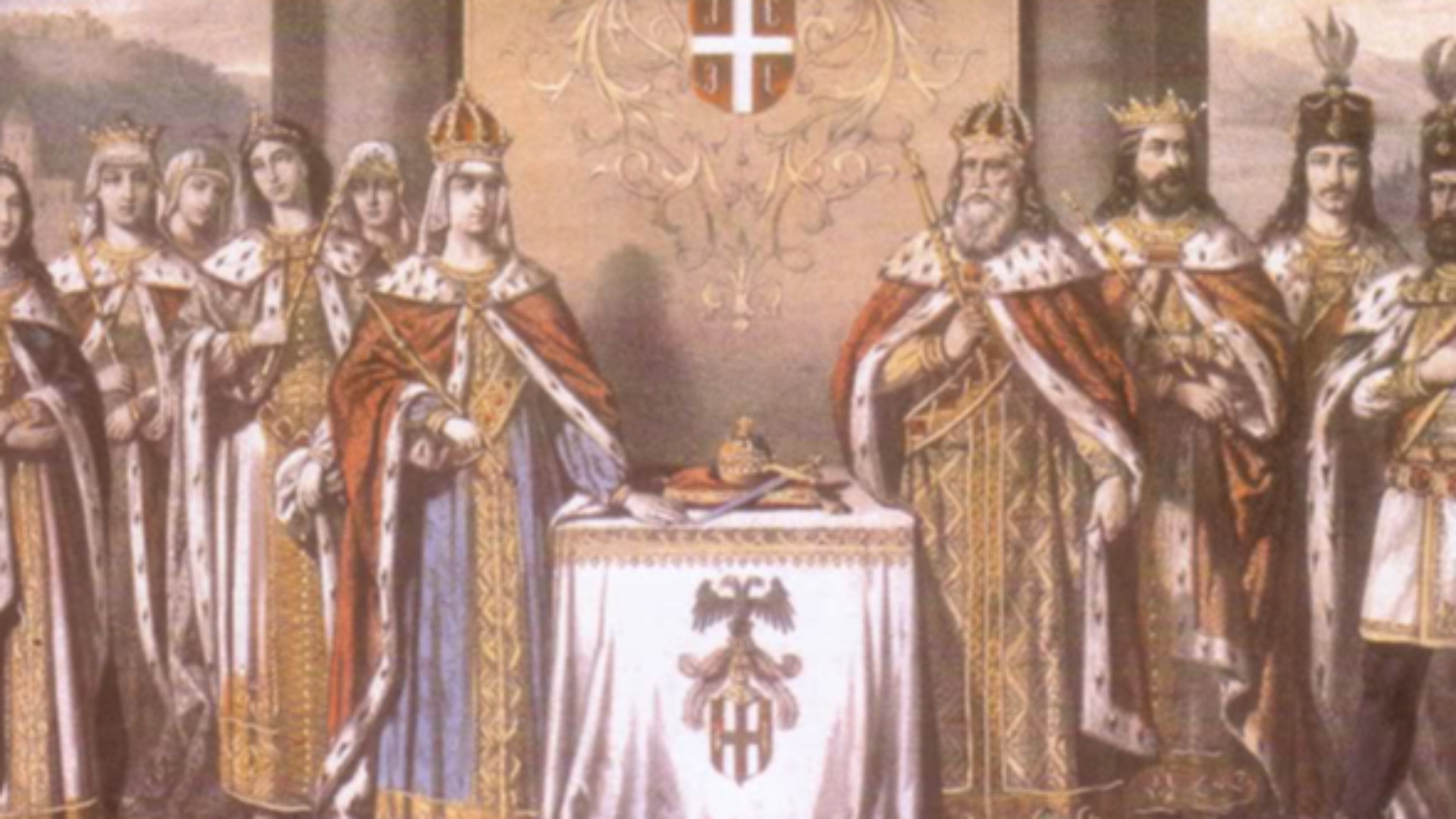
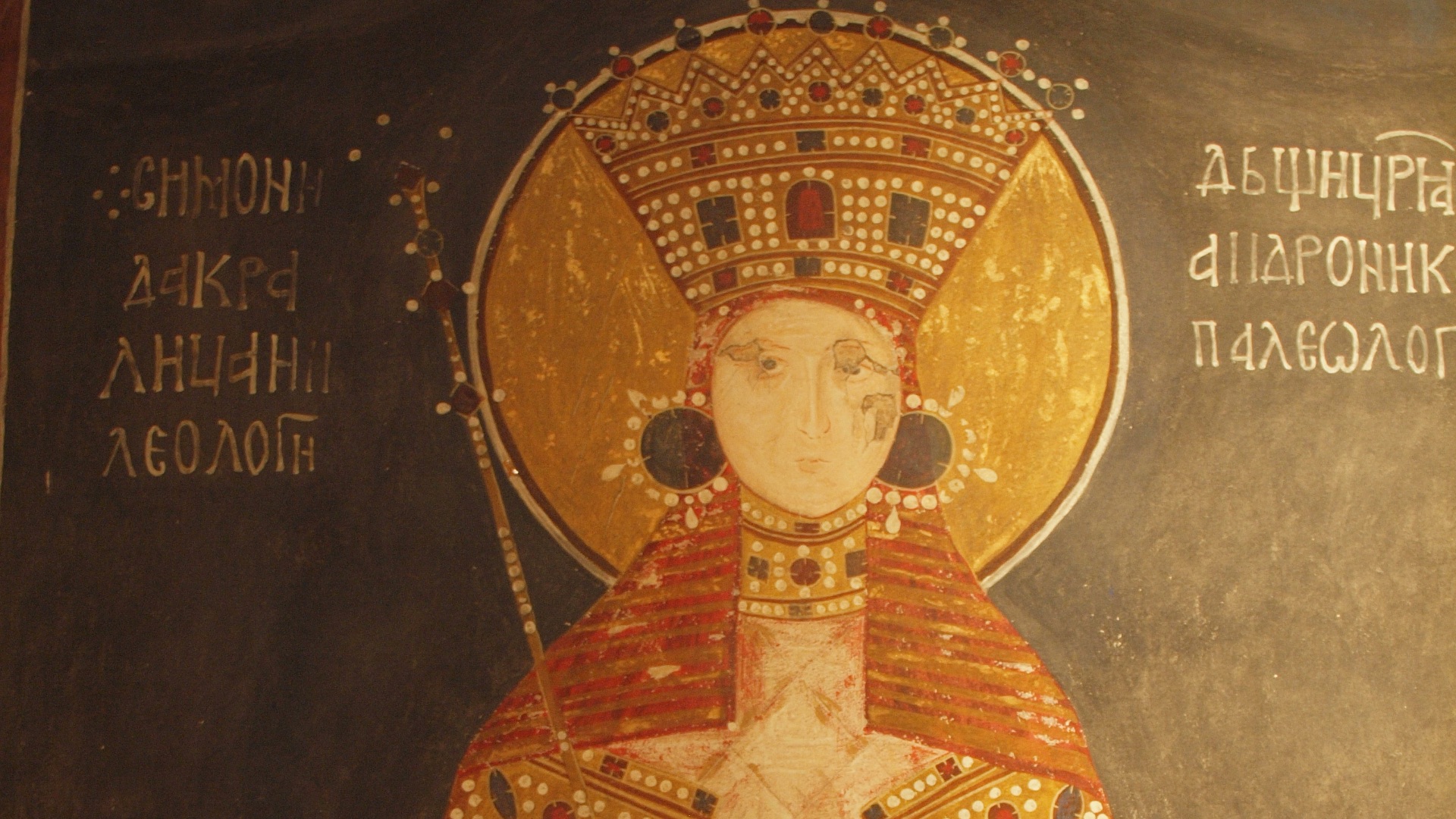
10. Stefan Uroš II Milutin and Simonida Palaiologina
Serbian king Stefan Milutin had repeatedly fought the Byzantine Empire and seized substantial Byzantine territory during his expansion southward. A peace settlement in 1299 was reinforced when he married Simonida, daughter of Byzantine emperor Andronikos II Palaiologos. She was extraordinarily young by modern standards, making the arrangement particularly uncomfortable to examine today. For the two governments involved, however, the wedding represented a way to formalize peace after years of military conflict.
11. Akbar and Mariam-uz-Zamani
Mughal emperor Akbar's expansion brought him into a complicated relationship with the Rajput states of northern India, which could be enemies, allies, or both at different moments. In 1562 he married a daughter of Raja Bharmal of Amber, later widely known by the title Mariam-uz-Zamani, after Bharmal accepted Akbar's supremacy. Unlike many conquering rulers, Akbar allowed his Rajput wife and her family to retain their religious and cultural traditions while her relatives rose to important imperial positions. The marriage became one of the most significant examples of his broader policy of incorporating Rajput elites into the Mughal system.
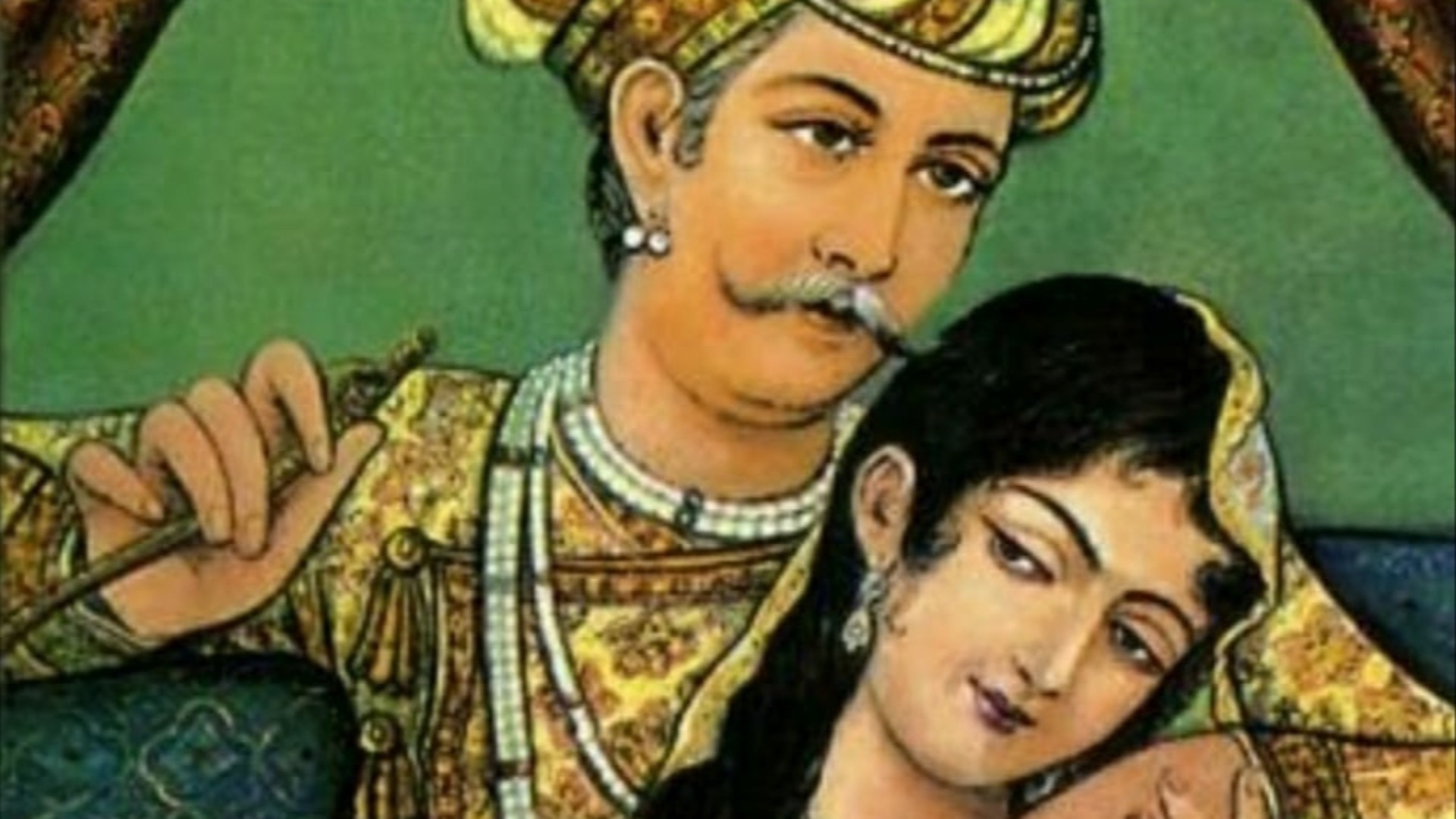 An unknown artist of the 16th century. on Wikimedia
12. Ptolemy V and Cleopatra I
Ptolemy V of Egypt married Cleopatra I, daughter of Seleucid king Antiochus III, after years of warfare between their two dynasties. Antiochus had defeated Ptolemaic forces during the Fifth Syrian War and gained control of territories that Egypt and the Seleucids had long contested. Cleopatra married Ptolemy around 195 B.C., helping formalize a period of improved relations between the recently hostile kingdoms. She later became an influential Egyptian queen and served as regent for their young son, Ptolemy VI, after her husband’s death.
 No machine-readable author provided. Bradipus assumed (based on copyright claims). on Wikimedia
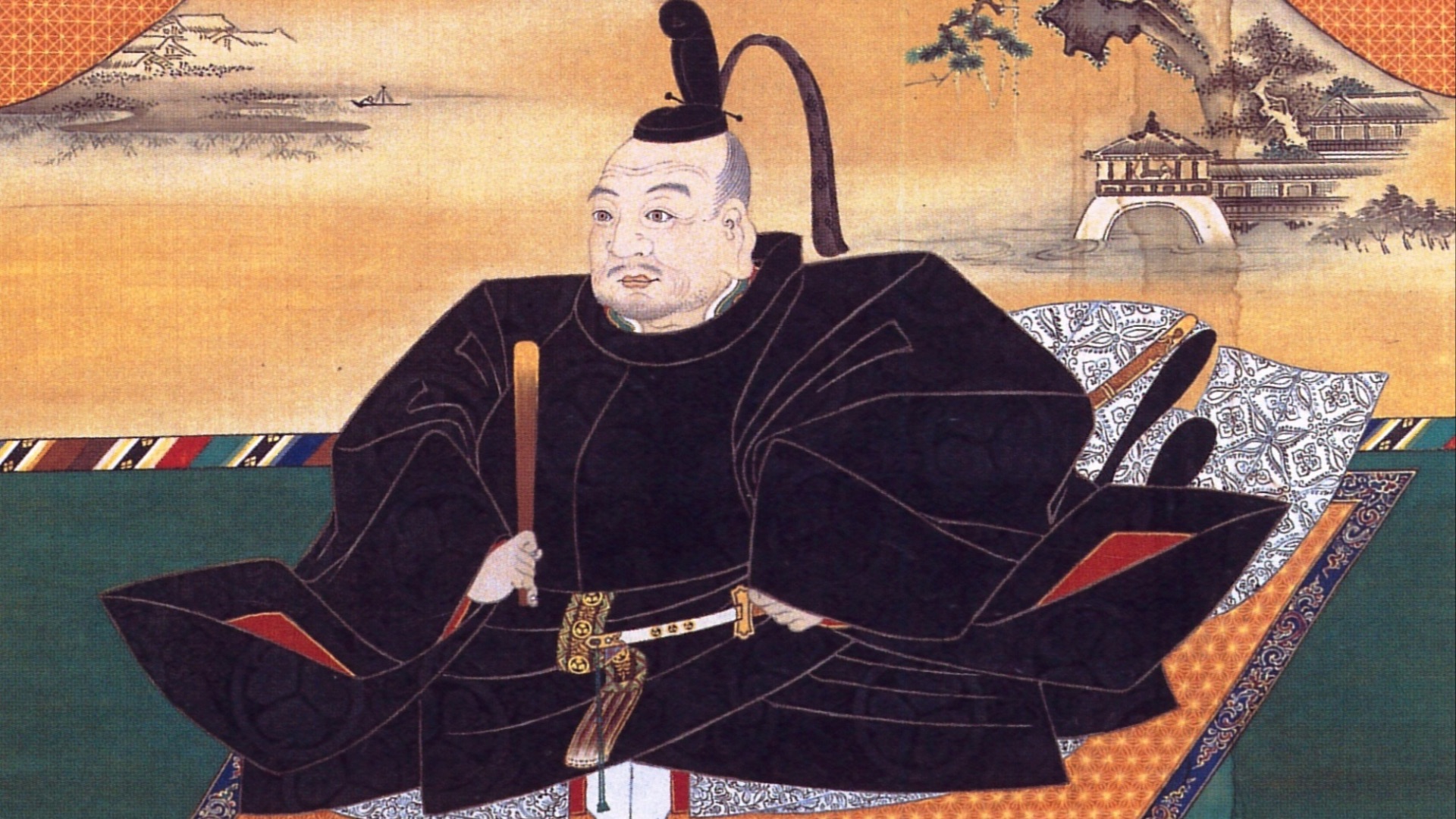
13. Tokugawa Ieyasu and Asahi no Kata
Before Japan was unified under Tokugawa rule, Ieyasu was one of the powerful regional lords whose ambitions brought him into competition with Toyotomi Hideyoshi. Hideyoshi wanted Ieyasu firmly on his side, so in 1586 he arranged for his own sister, Asahi no Kata, to marry the recently widowed Tokugawa leader. The union was overwhelmingly political and was meant to strengthen the uneasy relationship between two of Japan's most formidable power brokers. Ieyasu eventually outlived Hideyoshi and established the Tokugawa shogunate in 1603.
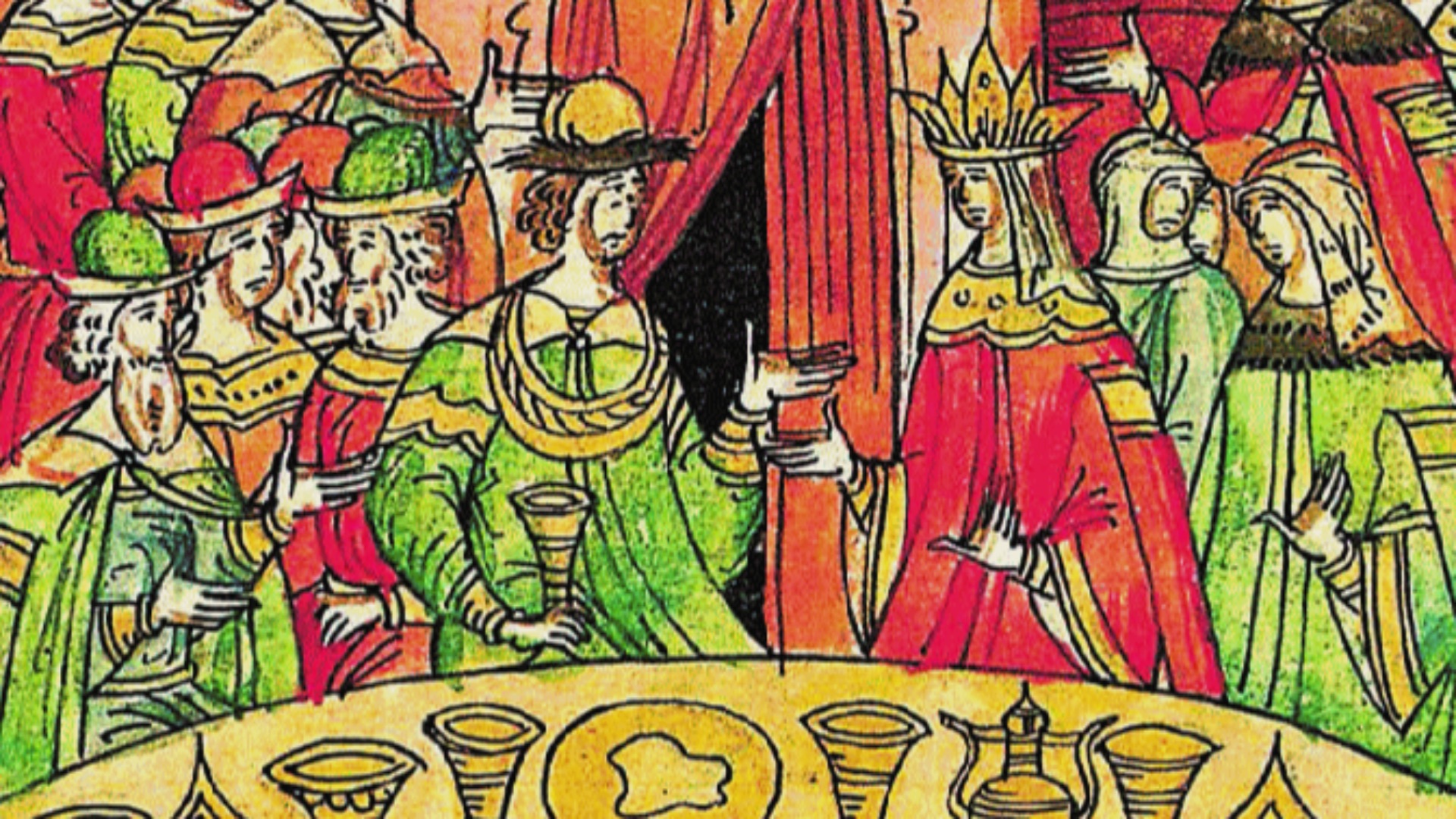
14. Ivan III of Moscow and Maria of Tver
Moscow and Tver were two of the major Russian principalities competing for influence long before Moscow became the uncontested regional power. Ivan III married Maria, daughter of Prince Boris of Tver, in 1452, temporarily binding the rival houses together through family ties. Their son, Ivan the Young, consequently possessed dynastic connections to both principalities. Marriage didn't permanently eliminate their competition, since Ivan III eventually annexed Tver in 1485.
15. Otto II and Theophanu
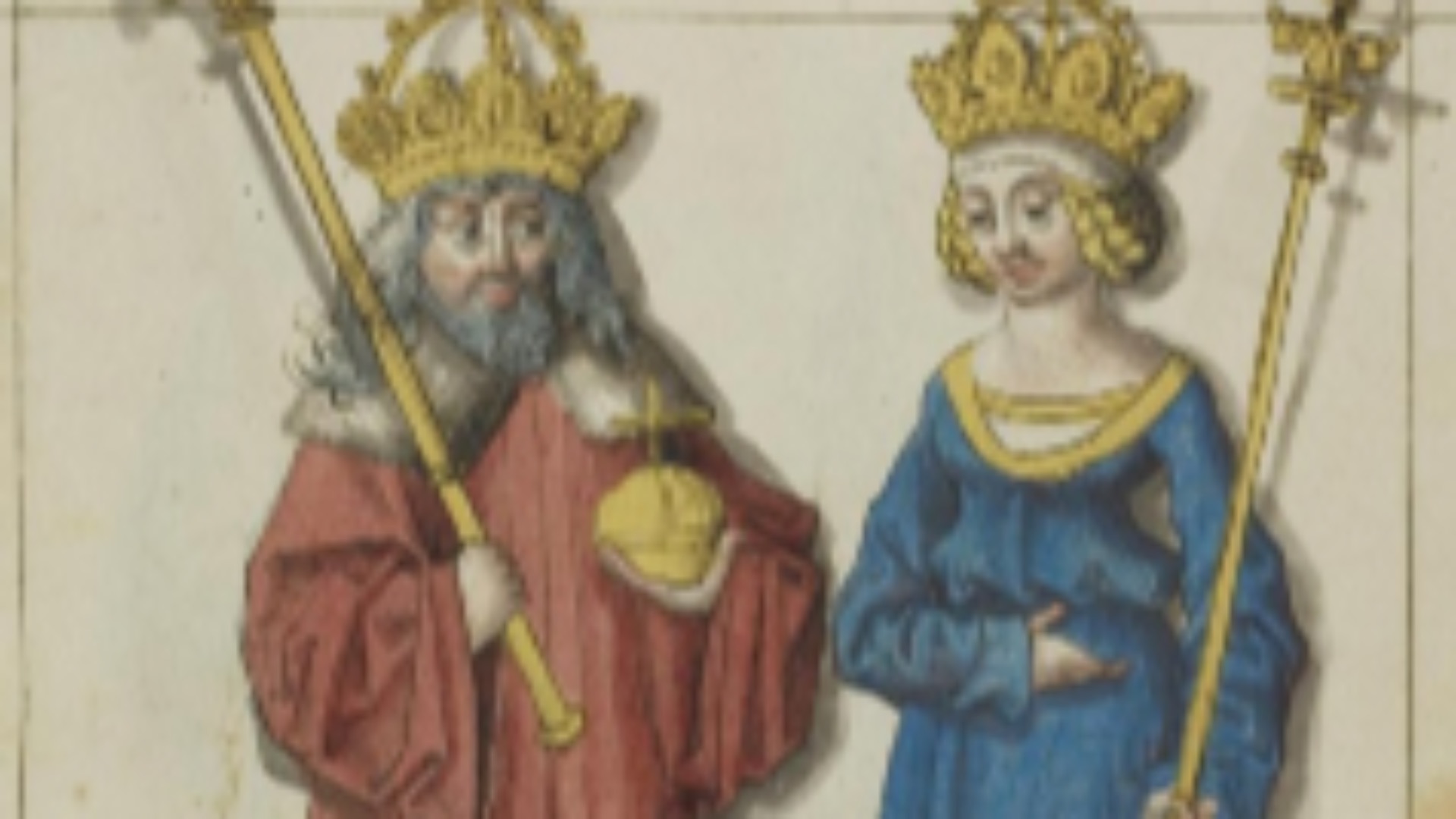
The Holy Roman and Byzantine empires both claimed Roman imperial prestige and competed for influence, particularly in Italy. Otto II's marriage to the Byzantine princess Theophanu in 972 helped ease some of that rivalry and gave the German court an unusually direct connection to Constantinople. Theophanu proved to be far more than a ceremonial bride, taking an active political role and later governing for their young son Otto III. A match born from imperial diplomacy ultimately placed a Byzantine-born woman near the center of western European government.
16. Orhan and Theodora Kantakouzene
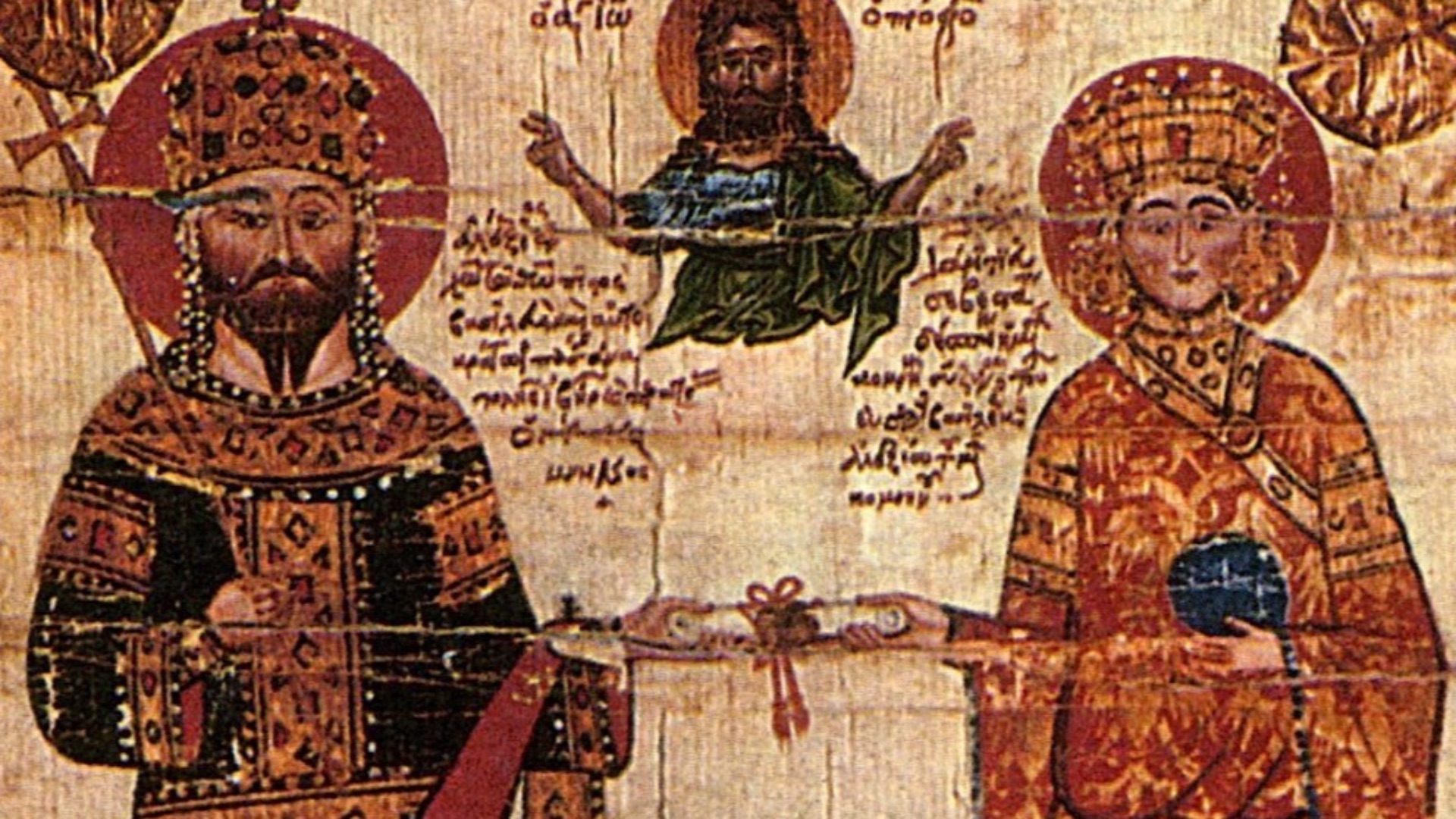
Byzantium and the rising Ottoman state had plenty of reasons to regard one another with suspicion during the 14th century. Byzantine emperor John VI Kantakouzenos nevertheless allied himself with Ottoman ruler Orhan and gave his daughter Theodora to him in marriage around 1346. Orhan supplied troops to assist his Byzantine father-in-law during the empire's civil conflicts, turning a potentially dangerous neighboring power into a temporary partner. The alliance wouldn't prevent the Ottomans from continuing their expansion into Byzantine territory in later years.
17. Alauddin Khalji and Kamala Devi
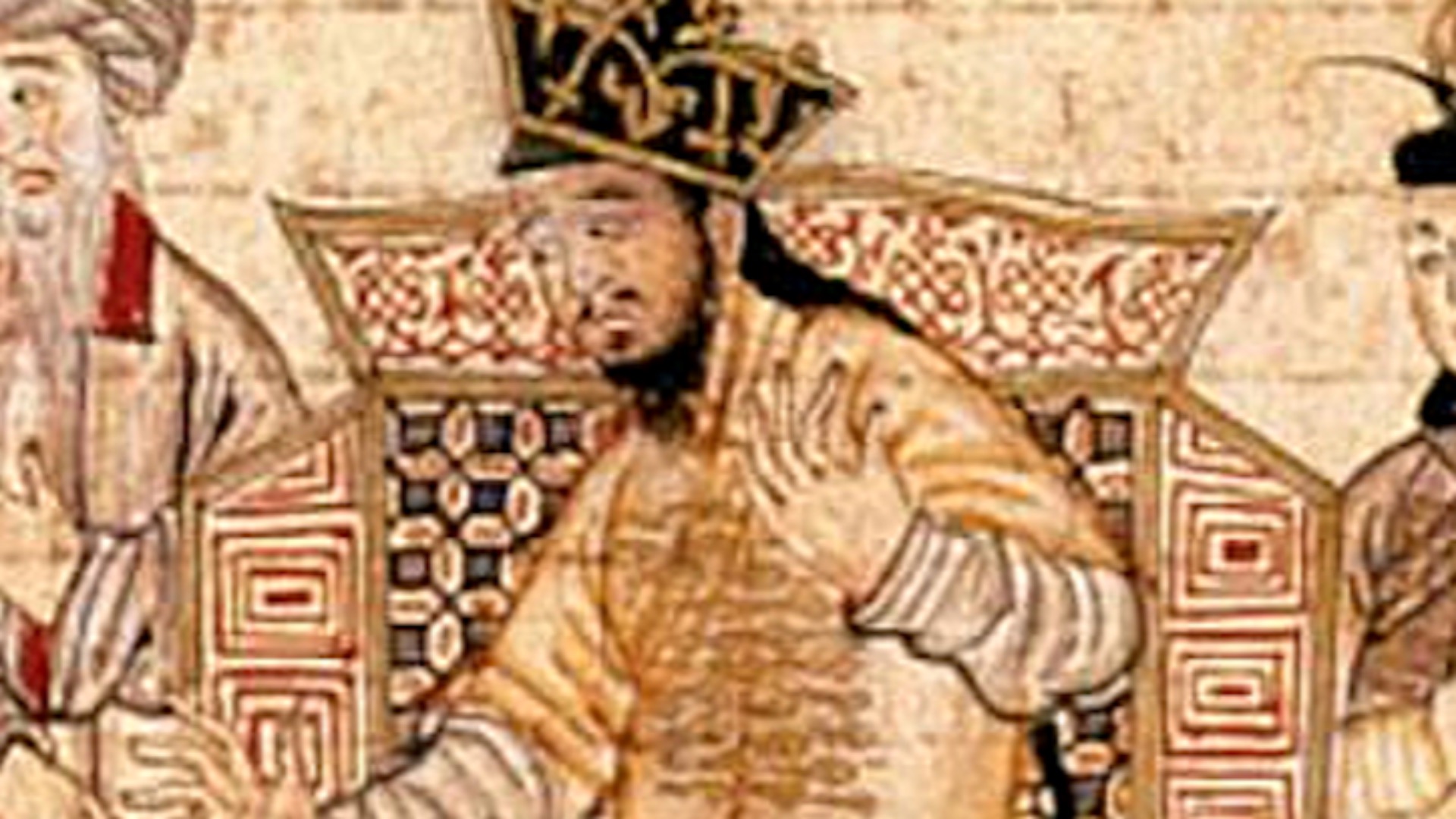
When Sultan Alauddin Khalji's forces invaded Gujarat near the end of the 13th century, they defeated the kingdom ruled by Karna of the Vaghela dynasty. Karna's wife, Queen Kamala Devi, was captured and taken to Delhi, where later accounts say she became one of Alauddin's wives. This is not a story of reconciliation between equal rivals; it arose from conquest, captivity, and a stark imbalance of power. It nevertheless illustrates how victorious rulers could absorb women of defeated royal houses into their courts.
 14th century author on Wikimedia
18. Vladimir the Great and Rogneda of Polotsk
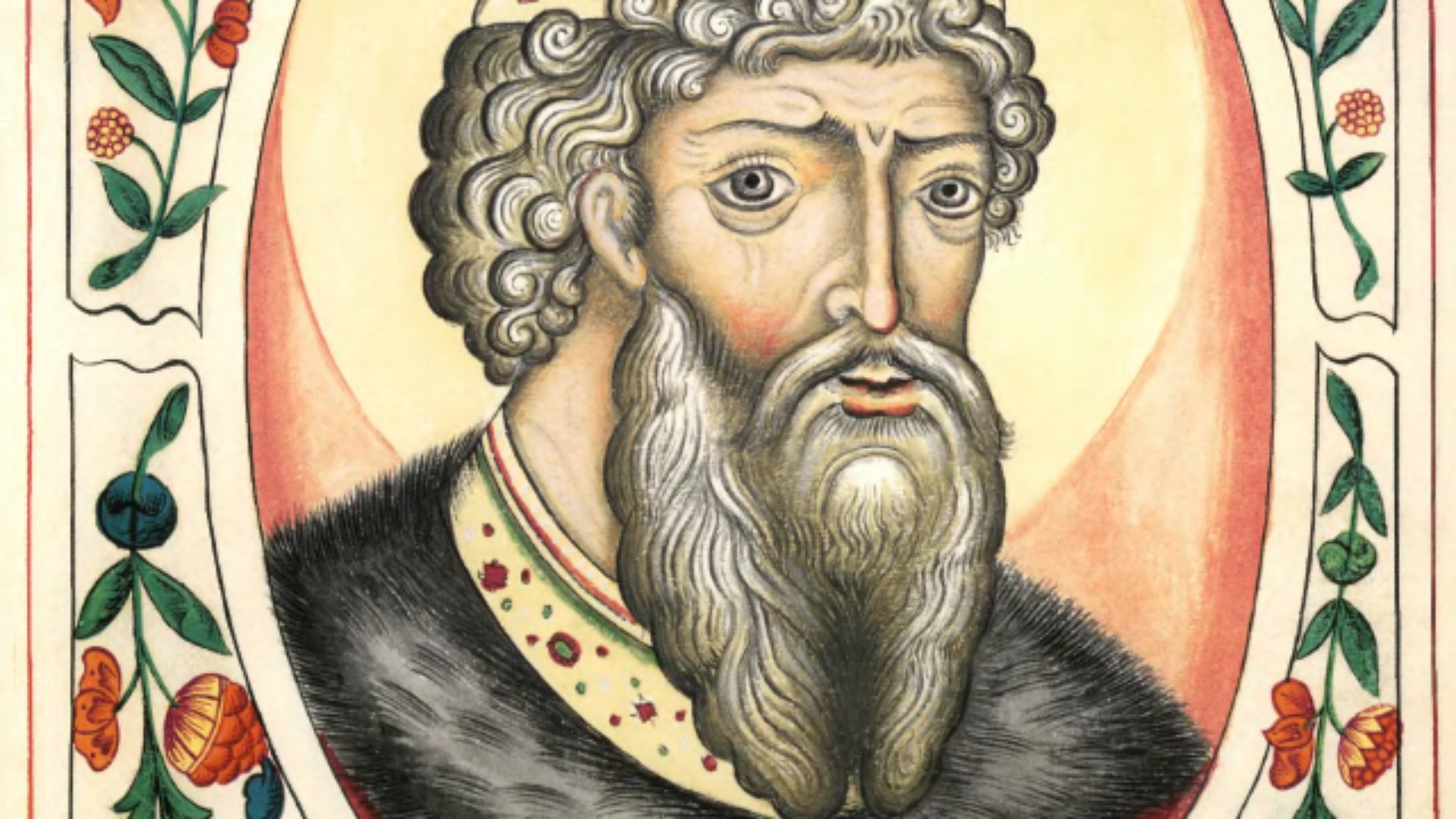
Rogneda of Polotsk initially rejected Vladimir of Novgorod and was associated with a competing political marriage to his brother Yaropolk. Vladimir then attacked Polotsk, defeated her family, and took Rogneda as his wife under circumstances medieval accounts portray as coercive. He later defeated Yaropolk and became ruler of Kyiv, making the marriage part of a much larger struggle for control in the region. It's one of the clearest reminders that historical marriages between rival houses could involve violence rather than reconciliation freely chosen by both partners.
 Anonymous illumination on Wikimedia
19. Ferdinand I of Castile and Sancha of León
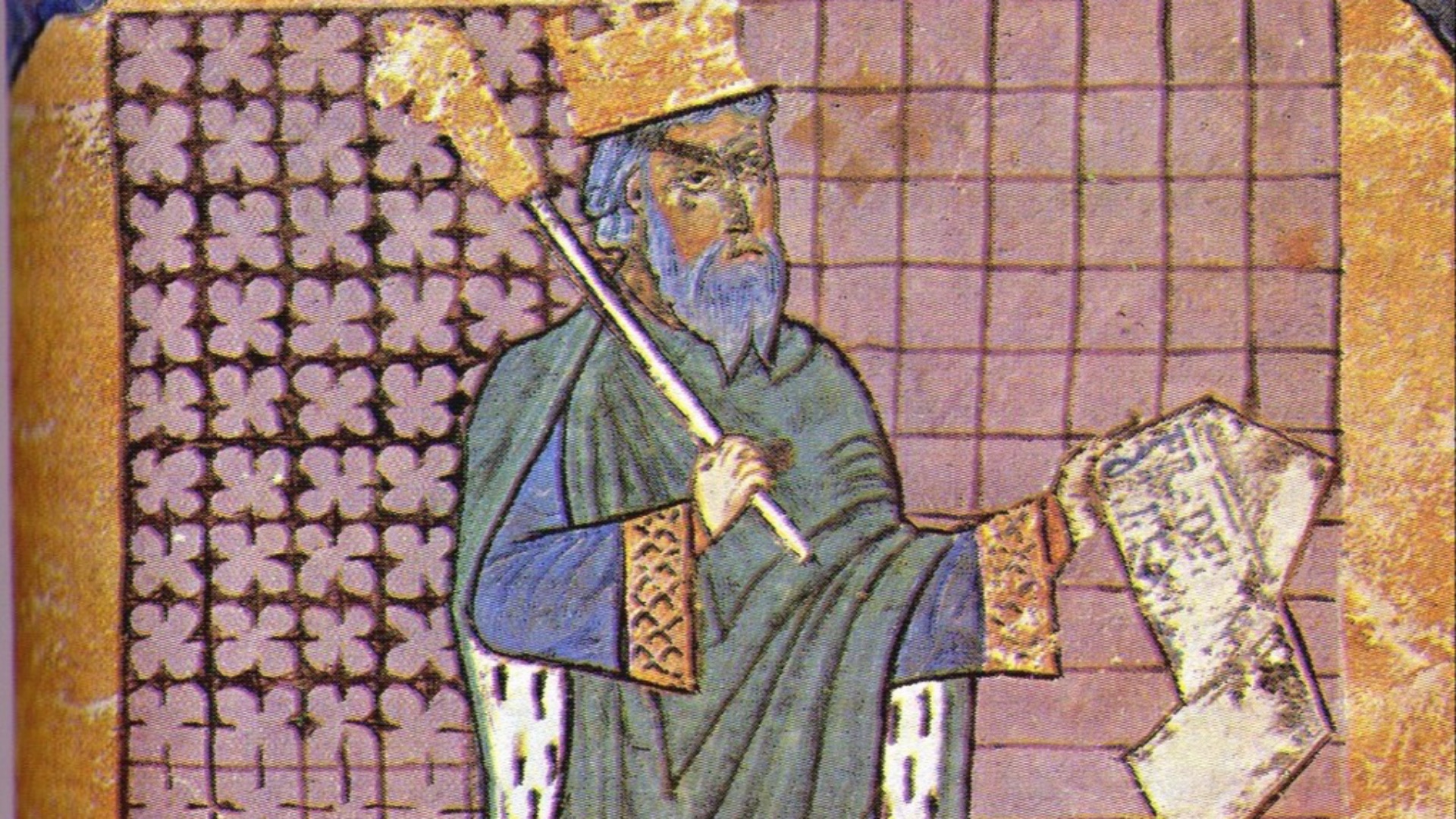
Sancha belonged to the Leonese royal family, while Ferdinand emerged from the neighboring Castilian political sphere. Their marriage connected two territories whose competing claims and border disputes would continue to shape medieval Iberia. When Sancha's brother Bermudo III of León later fought Ferdinand and was killed at the Battle of Tamarón in 1037, Ferdinand and Sancha became rulers of León together. Their marriage consequently helped unite claims that had previously belonged to competing branches of regional power.
20. Cnut and Emma of Normandy
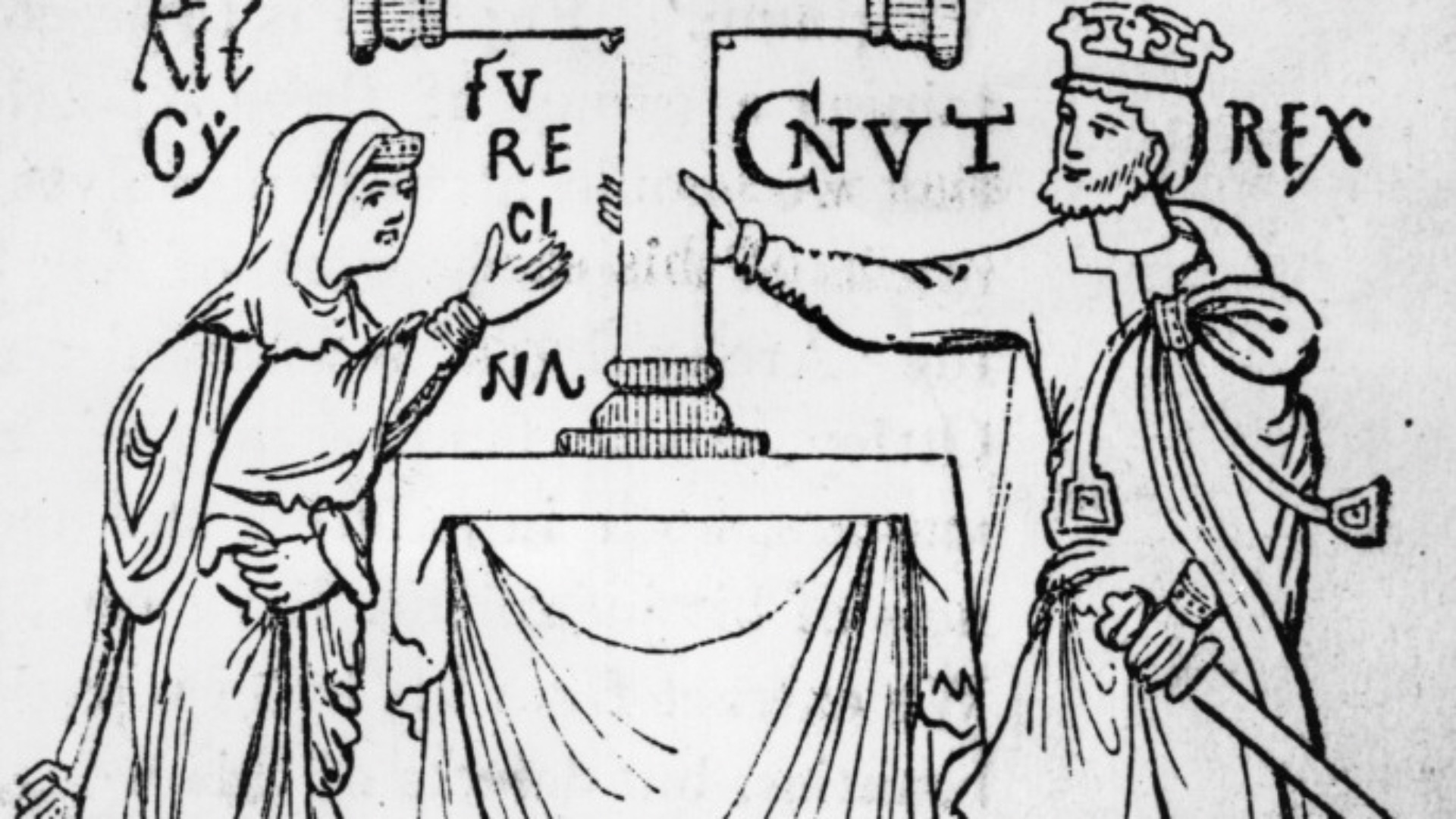
Cnut conquered England in 1016 after a Danish campaign against the Anglo-Saxon monarchy headed by Emma of Normandy's husband, King Æthelred II. After Æthelred's death and Cnut's victory, Emma married the new Danish king in 1017, despite having been queen of the dynasty he had just displaced. The marriage strengthened Cnut's legitimacy in England while allowing Emma to retain her extraordinary position at the center of royal politics. She ultimately served as queen to rulers from two opposing royal houses, giving her an unusually prominent role on both sides of a dynastic transition.
KEEP ON READING