From the 1860s to the 1910s, the public developed a huge appetite for sensational discoveries. This was the era when newspapers expanded rapidly, museums grew in prestige, and archaeology still carried an air of adventure that made almost anything sound possible. If someone claimed to have found a lost race, a strange fossil, or proof of an ancient civilization, people were often ready to be impressed before they were ready to be skeptical.
That's why this period can fairly be called a golden age of fake discoveries. Real breakthroughs were happening often enough to make the unbelievable sound plausible. In an era when news traveled more slowly and verification was much harder, a bold claim could enjoy a long, comfortable life before anyone managed to disprove it. If a discovery came wrapped in scientific language, public excitement, and a good story, it had a real chance of being accepted, at least for a while.
Science Was Advancing, but Proof Was Still Catching Up
The late nineteenth century was full of genuine discoveries, and that helped create the perfect setting for false ones. Archaeology in Europe was moving away from older antiquarian habits and toward more scientific methods, but that transition was still in progress rather than fully settled. This means people were learning how to study the past more carefully, yet the rules were not always consistent enough to stop every fraud or exaggeration at the door.
That gap made sensational claims easier to sell than they would be today. A strange object, fossil, or relic did not need airtight proof to attract attention if it arrived with an impressive explanation and a confident backer. Once experts, collectors, or local promoters attached themselves to the story, a discovery could look respectable long before it was truly tested.
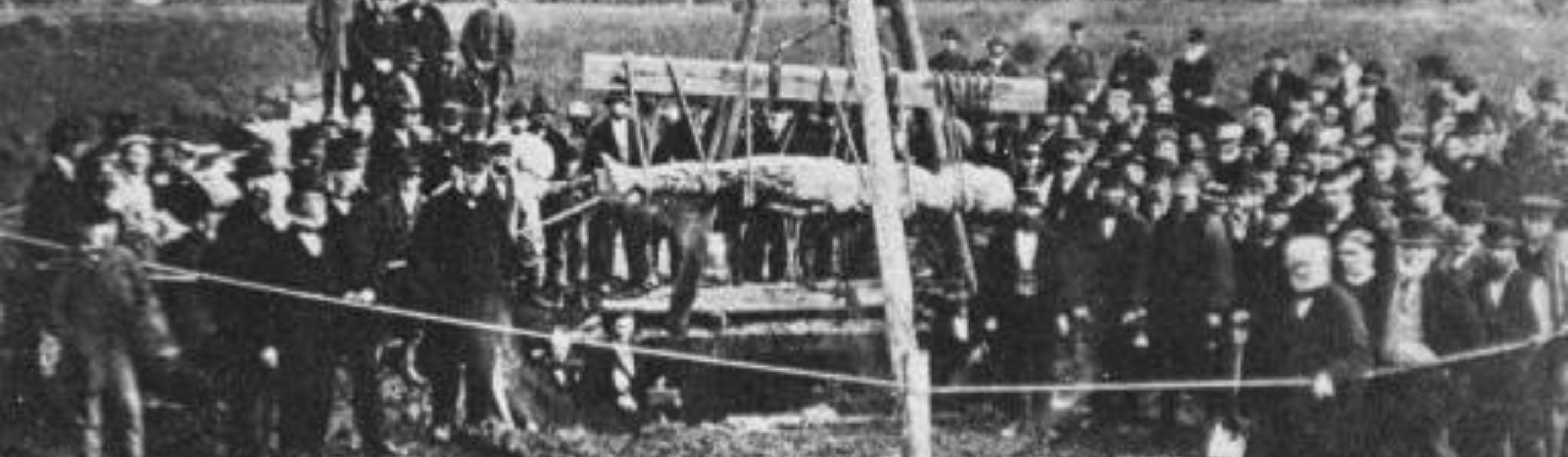
The Cardiff Giant is one of the clearest examples from this period. Britannica describes it as a famous hoax in which a gypsum figure was carved in 1868, buried on a farm near Cardiff, New York, and then “discovered” in 1869 as a supposed petrified prehistoric man. It was eventually exposed as fraudulent, but not before it drew enormous public curiosity and became one of the best-known discovery hoaxes of the age.
Cases like that worked because they landed at a moment when audiences were ready to believe that astonishing things still lay hidden in the ground. The era didn't lack intelligent observers, but it did lack fast, standardized systems for checking every claim.
Newspapers & Public Spectacle Made Hoaxes Hard to Resist
The rise of mass-circulation newspapers gave fake discoveries a powerful ally. The Library of Congress notes that the New York Journal became a leading example of yellow journalism, a style built around bold headlines, dramatic illustrations, and fierce competition for readers. In that environment, a story about some newly unearthed marvel sold much better than a cautious essay about incomplete evidence. A later headline revealing it as a hoax only added to the pile of gold.
That mattered because publicity could do a lot of the work before science ever entered the room. Once a claim was repeated in print, passed through conversation, and discussed in lectures or exhibitions, it began to feel familiar, and familiarity often looks a lot like credibility. A thrilling discovery didn't need to be proven immediately if it was already entertaining enough to capture the public imagination.
By the early twentieth century, that hunger for sensation helped give authority to another notorious case, Piltdown Man. In 1912, amateur archaeologist and fossil collector Charles Dawson told Arthur Smith Woodward of the British Museum about skull fragments from Piltdown in Sussex, and the remains were introduced as a tantalizing ancient human ancestor. The claim fit so neatly into public and scientific hopes that it became one of the most famous hoaxes in the history of paleoanthropology.
People Were Ready to Believe Discoveries That Confirmed What They Hoped
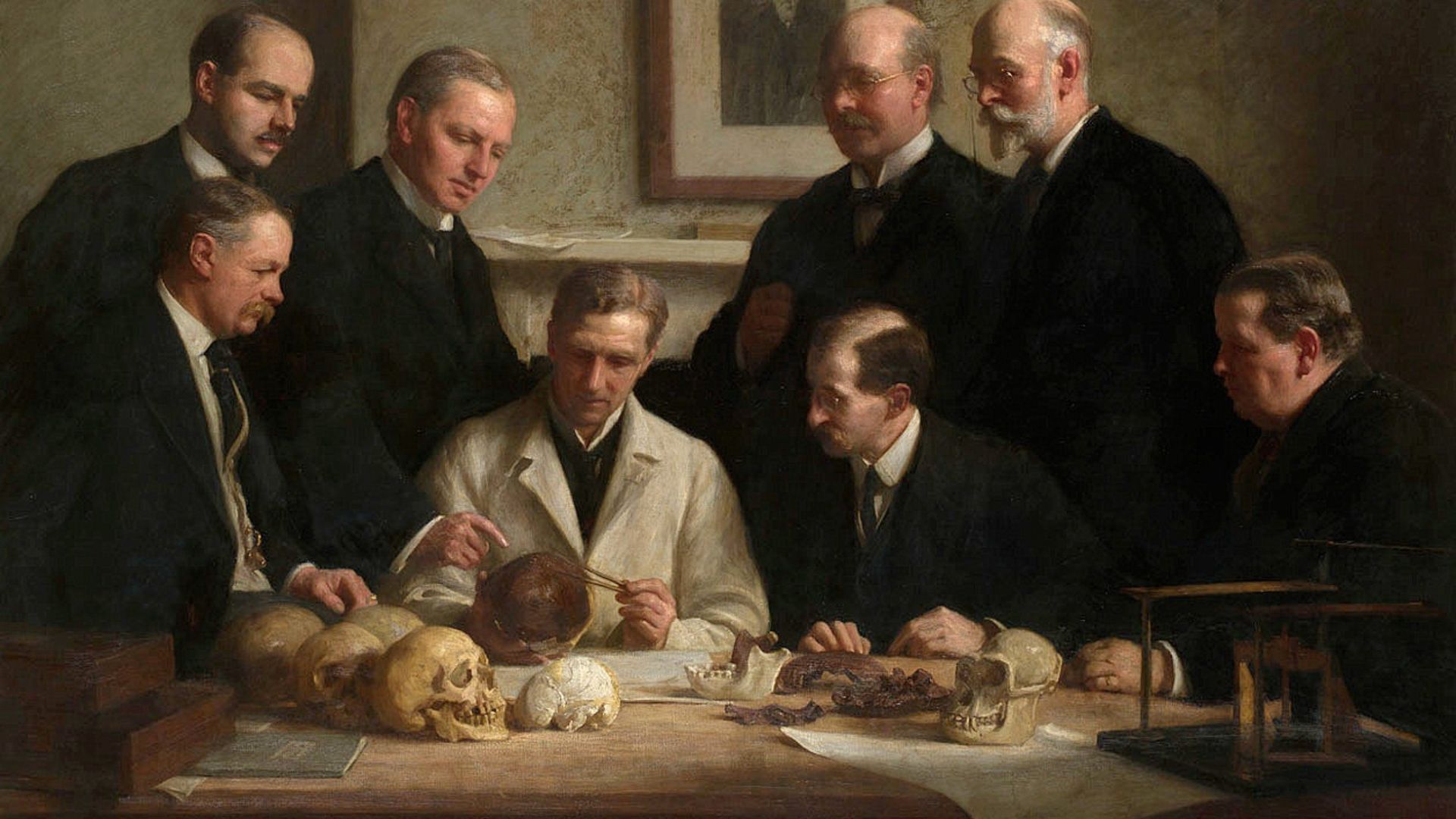
Fake discoveries rarely succeed on cleverness alone. They usually work because they tell people something they are already prepared to believe, and the late nineteenth and early twentieth centuries were especially vulnerable to that pattern. Audiences wanted proof of ancient civilizations, vanished peoples, and dramatic stages of human development, so a discovery that seemed to support those ideas often received a warm welcome.
The Cardiff Giant benefited from exactly that kind of atmosphere: the hoax grew partly out of debates surrounding biblical literalism and the evolutionary ideas circulating after Darwin. A supposed petrified giant was not just a curiosity; it seemed to touch arguments people were already emotionally invested in, which made skepticism harder to sustain.
Piltdown Man worked for similar reasons, although in a different scientific register. The fossil was presented in 1912 as England’s most ancient human ancestor, and that idea had obvious appeal in a period fascinated by human origins and national prestige. The hoax didn't merely offer bones; it offered a flattering story about place, ancestry, and scientific importance.
By the 1910s, science had become stronger and more specialized, but the period had already shown how easily wonder could outrun proof. The golden age of fake discoveries was not just an era of tricksters fooling the public. It was a moment when scientific transition, newspaper sensationalism, and human eagerness all met in exactly the wrong proportions, making the unbelievable seem just believable enough.
KEEP ON READING