

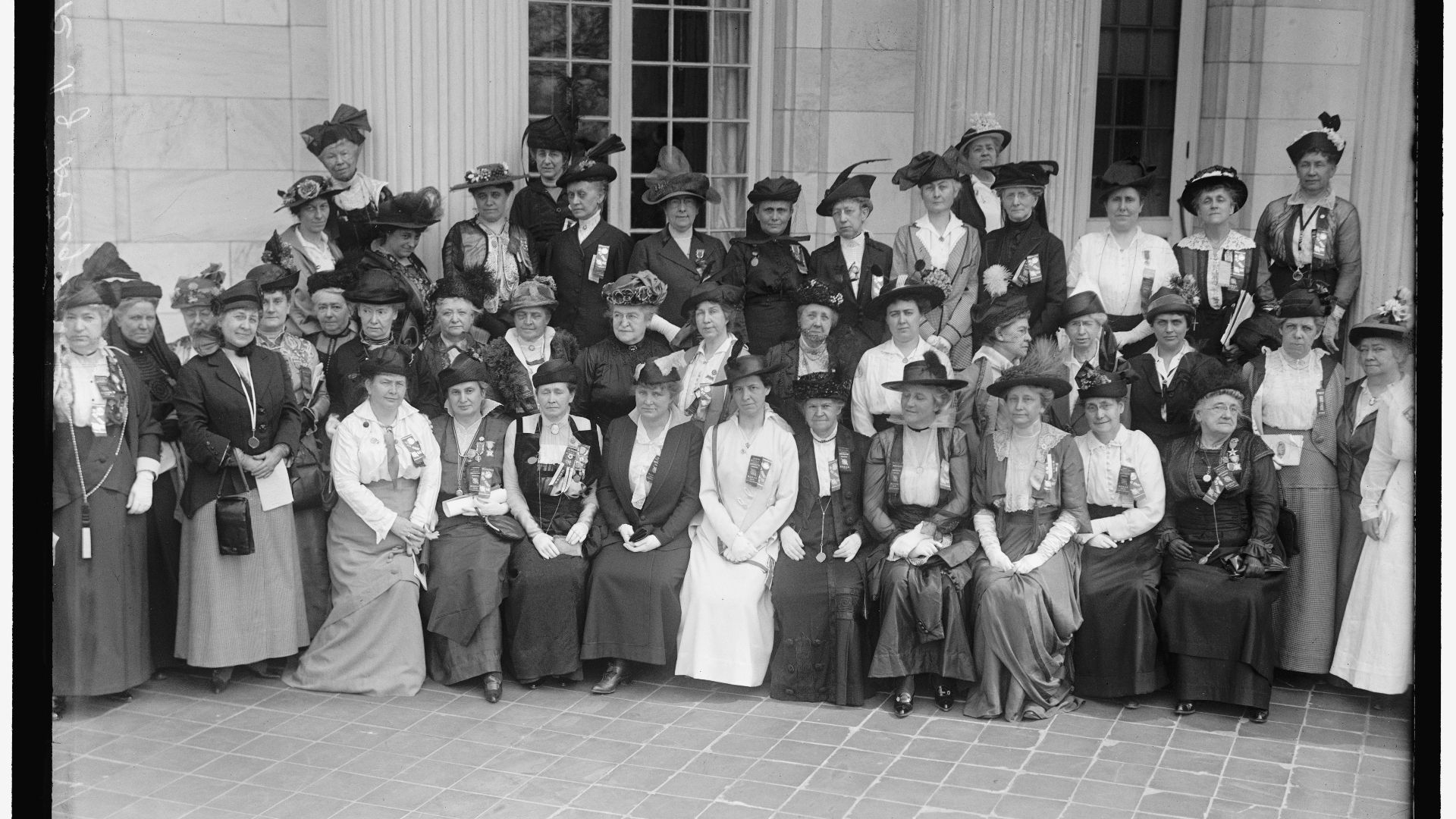
 Harris & Ewing, photographer on Wikimedia
When people think about the American Revolution, the focus often falls on political leaders, generals, and battlefield victories. Names like George Washington, Thomas Jefferson, and John Adams tend to dominate the narrative. However, this perspective leaves out a significant part of the story that played out beyond formal politics and military command. Women were deeply involved in the Revolutionary effort, even though their contributions were often less visible at the time.
Across the thirteen colonies, women supported the war in ways that were essential to its success. They managed households, maintained farms and businesses, and ensured that communities continued functioning while men were away fighting. Many also took on roles that directly influenced the outcome of the conflict. Although they rarely received official recognition, their efforts were critical to sustaining the Revolutionary cause.
Women as Supporters of the War Effort
Women played a central role in maintaining daily life during the Revolution, which allowed the war effort to continue. With many men serving in the Continental Army or local militias, women became responsible for running farms, shops, and family finances. This shift required them to take on duties that had traditionally been handled by men. Their ability to manage these responsibilities ensured that local economies remained stable during a time of uncertainty.
In addition to household management, women contributed to the war through organized boycotts of British goods. The non-importation agreements, which were designed to pressure Britain economically, depended heavily on women’s participation. Women produced homemade goods such as clothing and textiles, reducing reliance on imported items. This form of economic resistance played a key role in weakening British influence in the colonies.
Some women also supported the army directly by providing food, clothing, and medical assistance. Camp followers, often wives or relatives of soldiers, traveled with military units and helped with essential tasks. They cooked meals, washed clothes, and nursed the wounded, which improved conditions for soldiers. Their presence, though often overlooked, contributed to the army’s ability to function effectively.
Women in Direct and Unconventional Roles
While many women supported the war from home or camp, others took on more direct and unconventional roles. Some acted as spies, gathering and passing along critical information to Patriot forces. For example, Agent 355 was part of the Culper Spy Ring and provided intelligence that aided American efforts against the British. These activities required discretion, courage, and a willingness to take significant personal risks.
A small number of women even participated in combat, sometimes by disguising themselves as men. Deborah Sampson is one of the most well-known examples, having enlisted in the Continental Army under a false identity. She served for over a year and was involved in military engagements before her identity was discovered. Her experience highlights the determination of women who wanted to contribute more directly to the fight.
Women also played a role in spreading political ideas and maintaining morale. Through letters, conversations, and informal networks, they influenced public opinion and supported the Patriot cause. Figures like Mercy Otis Warren used writing to advocate for independence and critique British policies. Their intellectual contributions helped shape the ideological foundation of the Revolution.
Women and the Legacy of the Revolution
 Boston Public Library on Unsplash
The contributions of women during the Revolution had lasting effects on American society. Their expanded responsibilities challenged traditional views about gender roles and demonstrated their capabilities in public and economic life. Although these changes did not immediately lead to equal rights, they sparked ongoing discussions about women’s place in society. This period marked an important step toward future movements for equality.
The concept of “Republican Motherhood” emerged after the Revolution, emphasizing the role of women in raising informed and virtuous citizens. Women were seen as essential to the success of the new republic because they shaped the next generation. This idea encouraged greater access to education for women, particularly in subjects related to civic responsibility. While still limited, it represented a shift in how women’s contributions were valued.
Despite these developments, many of the women who supported the Revolution did not receive recognition during their lifetimes. Their stories were often left out of early historical accounts, which focused primarily on male leaders and military achievements. In recent years, historians have worked to recover and highlight these contributions. This growing awareness helps create a more complete understanding of the American Revolution and the people who shaped it.
The role of women in the American Revolution was both significant and multifaceted, even if it was not always formally acknowledged. Their efforts supported the war on multiple levels, from sustaining daily life to participating in intelligence and political discourse. By examining these contributions more closely, it becomes clear that the success of the Revolution depended on far more than battlefield victories alone. Recognizing their impact provides a fuller and more accurate picture of this pivotal moment in history.
KEEP ON READING
The Overlooked Role Of Women In The American Revolution
Harris & Ewing, photographer on WikimediaWhen people think about the…
By Rob Shapiro Mar 24, 2026
20 Historical Figures Who Ruined Their Reputation Overnight
When One Bad Move Changed Everything. History is full of…
By Emilie Richardson-Dupuis Mar 24, 2026
Oleg Gordievsky: The Spy Who Outsmarted Two Superpowers
cottonbro studio on PexelsOleg Gordievsky was a colonel of the…
By Cameron Dick Mar 24, 2026
20 of History's Most Famous Love Triangles
When Romance Gets Complicated Fast. We like to think of…
By Emilie Richardson-Dupuis Mar 23, 2026
20 Most Famous Horses In History
Better than Most Men. Horses have been loyal sidekicks for…
By Sara Springsteen Mar 23, 2026
20 Movie Costumes Based On Real Historical Fashion
History In Every Hem. Movie costumes don't get remembered just…
By Elizabeth Graham Mar 23, 2026