

 commons.wikimedia.org on Google

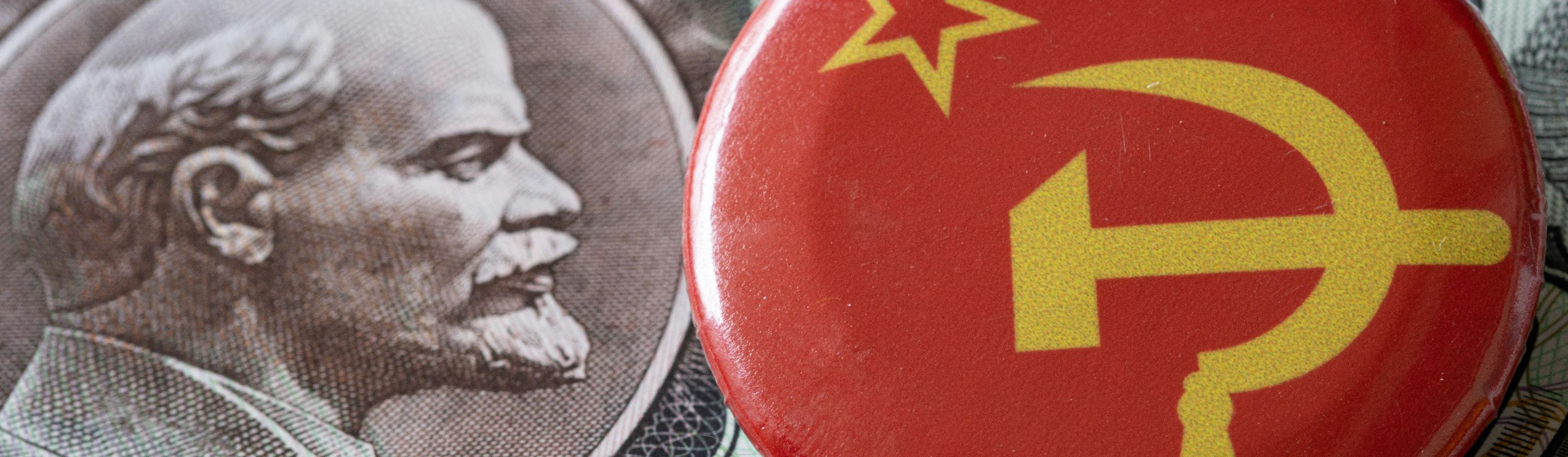
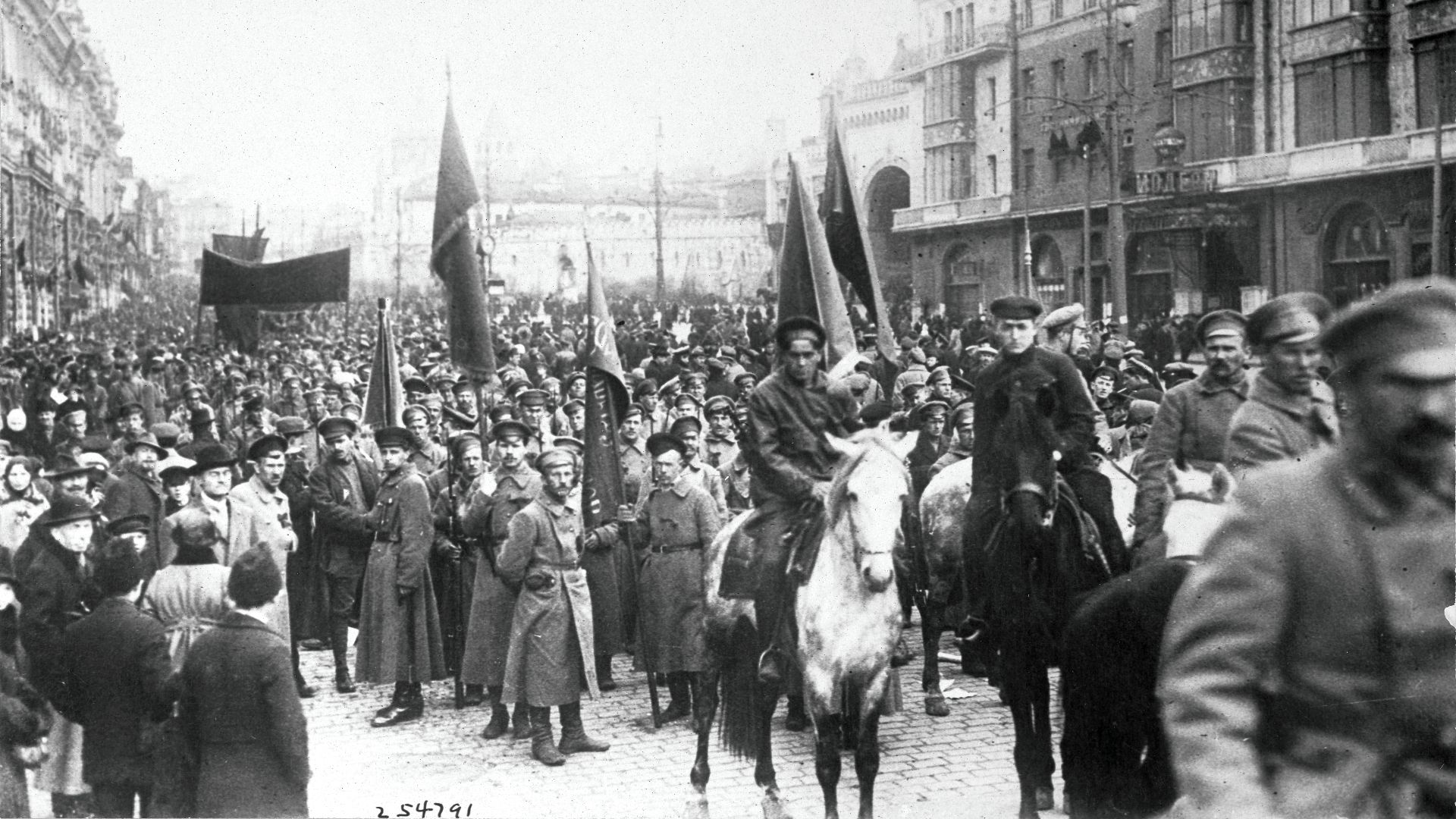
Most people picture a revolution as something loud and total: barricades, cannon fire, a city on the edge of collapse. The October Revolution of 1917 was not that. When the Bolsheviks seized power in Petrograd on the night of November 6 and 7, they did so with almost no bloodshed, no pitched battle, and no conventional military force to speak of. Lenin and his allies launched what amounted to a nearly bloodless coup against the provisional government. The Winter Palace, seat of that government, fell not to a storming army but to a handful of revolutionary soldiers and sailors who walked in largely unopposed.
That quiet efficiency was not an accident. It was the result of months of political groundwork so thorough that by the time the Bolsheviks made their move, the government they were displacing had almost no one left willing to defend it. Understanding how they pulled that off tells you more about how power actually works than almost any other event of the 20th century.
A Party That Grew Faster Than Anyone Expected
The Bolsheviks were not a mass movement in the traditional sense, at least not at first. Party membership had risen from 24,000 members in February 1917 to 200,000 members by September 1917. That is extraordinary growth in just seven months, and it happened because Lenin's organization had an answer to every specific grievance that ordinary Russians were living with. Soldiers were exhausted and dying in a war that made no sense to them. Workers were hungry. Peasants wanted land. The Bolshevik platform of peace, land, and bread was not sophisticated political theory. It was a direct response to the three worst problems in the country at that exact moment.
What made the growth durable was how the Bolsheviks used it. Rather than accumulating members for their own sake, they systematically placed loyal organizers inside the soviets, the local councils of workers and soldiers that had become the real centers of daily authority across Russia. In late September and October, the Bolsheviks began to win majorities in the soviets, and Leon Trotsky, a recent convert to Bolshevism, became chairman of the Petrograd Soviet and immediately turned it into a vehicle for the seizure of power. They were not building toward a coup so much as they were making themselves indispensable to the structures that already existed.
The provisional government under Alexander Kerensky watched all of this happen and failed to stop it, partly through political weakness and partly through a series of catastrophic miscalculations. In June 1917, Kerensky ordered a new military offensive against the Austro-German armies, convinced that a battlefield victory would restore public confidence in his government. The offensive was completely routed by July 7. The soldiers who returned from that disaster were even more receptive to Bolshevik messaging than those who had stayed behind. Every failure by the provisional government was effectively a recruitment drive for Lenin.
The Art of Winning Without Fighting
The October coup was a classic coup d'état carried out by a small group of conspirators. The decision to move was made at a clandestine meeting of the Bolshevik Central Committee on October 10. The committee voted 10 to 2 for a resolution saying that an armed uprising was inevitable and that the time for it was fully ripe. Even then, there was internal debate about timing. Lenin wanted to act immediately. Trotsky preferred to wait until the Congress of Soviets convened, so that a representative body could ratify the transfer of power and give the whole operation a veneer of democratic legitimacy. They compromised. The coup would happen, and the Congress would rubber-stamp it afterward.
What made the actual takeover so swift was that the Bolsheviks had already neutralized the one force that could have stopped them: the Petrograd military garrison. The Bolsheviks created a revolutionary military committee within the Petrograd Soviet that included armed workers, sailors, and soldiers, and that assured the support or neutrality of the capital's garrison. Kerensky couldn't call on his own officers, either, having alienated the military leadership months earlier during the Kornilov affair. When Kerensky tried to rally the armed forces to save his government, he found no response among officers furious at his treatment of Kornilov. He fled Petrograd in a car borrowed from the American embassy.
The result was a transfer of power so orderly that it barely registered as a crisis while it was happening. The initial stage of the October Revolution, which involved the assault on Petrograd, occurred largely without any casualties. One of the most consequential political upheavals in modern history unfolded, in its first hours, more like an administrative handover than a revolution.
What the Provisional Government Got Wrong
The deeper story here is about the fragility of governments that mistake formal authority for actual power. The provisional government had all the right credentials and almost no real leverage. The march to power was facilitated by the ambivalence of the Mensheviks and Socialist Revolutionaries who, though opposed to the October coup, feared a right-wing counterrevolution more than Bolshevism and discouraged physical resistance to it. Their opponents wouldn't fight them, and their nominal allies wouldn't defend them.
The Bolsheviks, by contrast, understood that power in a moment of collapse flows toward whoever is most organized and most willing to act. The Second Congress of Soviets consisted of 670 elected delegates. Three hundred were Bolsheviks and nearly a hundred were Left Socialist-Revolutionaries who also supported the overthrow of the Kerensky government. When the fall of the Winter Palace was announced, that Congress adopted a decree transferring power to the soviets, giving the coup a legislative stamp of approval within hours of its completion. The process was almost circular: the Bolsheviks seized power, then convened a body they already controlled to confirm that they had done so legally.
The irony is that when Russians actually voted in a free election, the Bolsheviks did not dominate it. The Bolsheviks won only 175 seats in the 715-seat Constituent Assembly, coming in second behind the Socialist Revolutionary party, which won 370 seats. Lenin dissolved the assembly after its first and only day in session. The lesson he drew from 1917 was not that popular legitimacy was essential. It was that organizational discipline, institutional penetration, and decisive timing could substitute for it entirely.
KEEP ON READING

The 10 Youngest Monarchs In History & The 10 Oldest
Age Is Just A Number. Imagine being crowned king or…
By Chase Wexler Mar 11, 2025
You Think You Have Problems? These Royal Families Were Cursed
Boasson and Eggler St. Petersburg Nevsky 24. on WikimediaHeavy is…
By Ashley Bast Dec 5, 2025
You Can Thank This Greek-Canadian For Creating Pineapple On Pizza…
Love it or hate it, pineapple on pizza sparks debate…
By David Davidovic Dec 1, 2025
Yes, Female Gladiators Existed, And Here's Everything You Need To…
History of Women in Combat. Most people picture gladiators as…
By David Davidovic Jan 17, 2026
Yes, Australians Once Lost A Battle Against Flightless Birds
David Clode on UnsplashIn 1932, the Australian military went to…
By David Davidovic Nov 24, 2025
The Y2K Bug: Why Did Everyone Think Year 2000 Was…
Alan W on UnsplashOn December 31, 1999, people all over…
By Christy Chan Dec 22, 2025