Most people, if asked to name a volcanic eruption that changed history, reach for Krakatoa or Pompeii. The eruption of Laki in Iceland in 1783 belongs on that list, and by some measures it belongs at the top of it. It didn't produce the most dramatic explosion, and it didn't generate the tallest ash column. What it produced was something slower, stranger, and in many ways more devastating: a poisonous haze that spread across an entire continent and quietly began dismantling the conditions that kept millions of people alive.
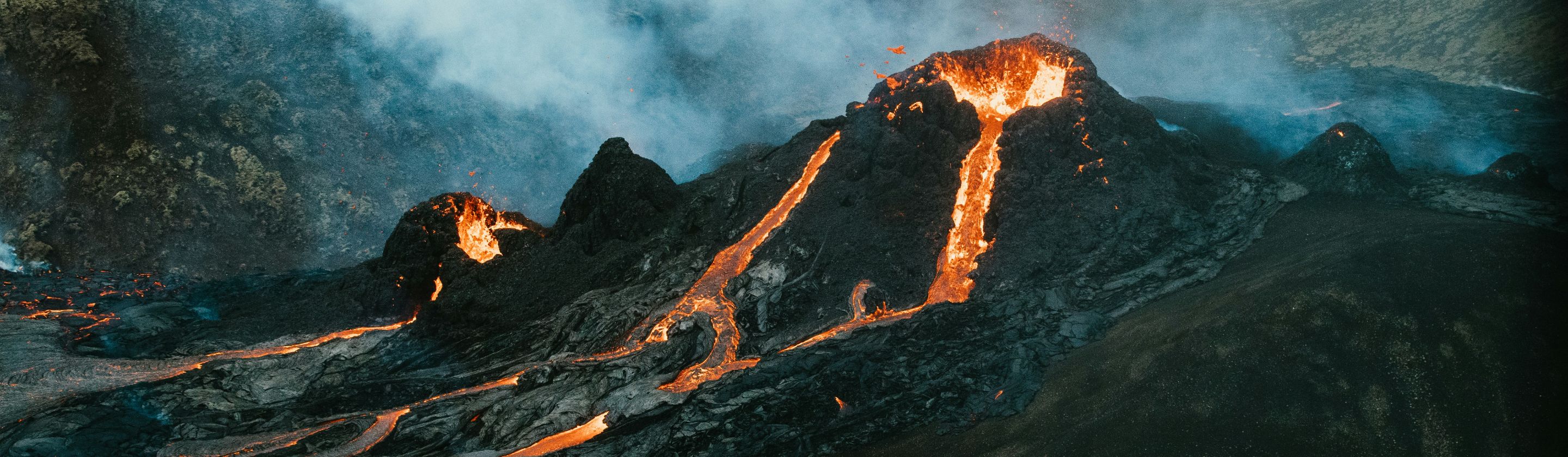
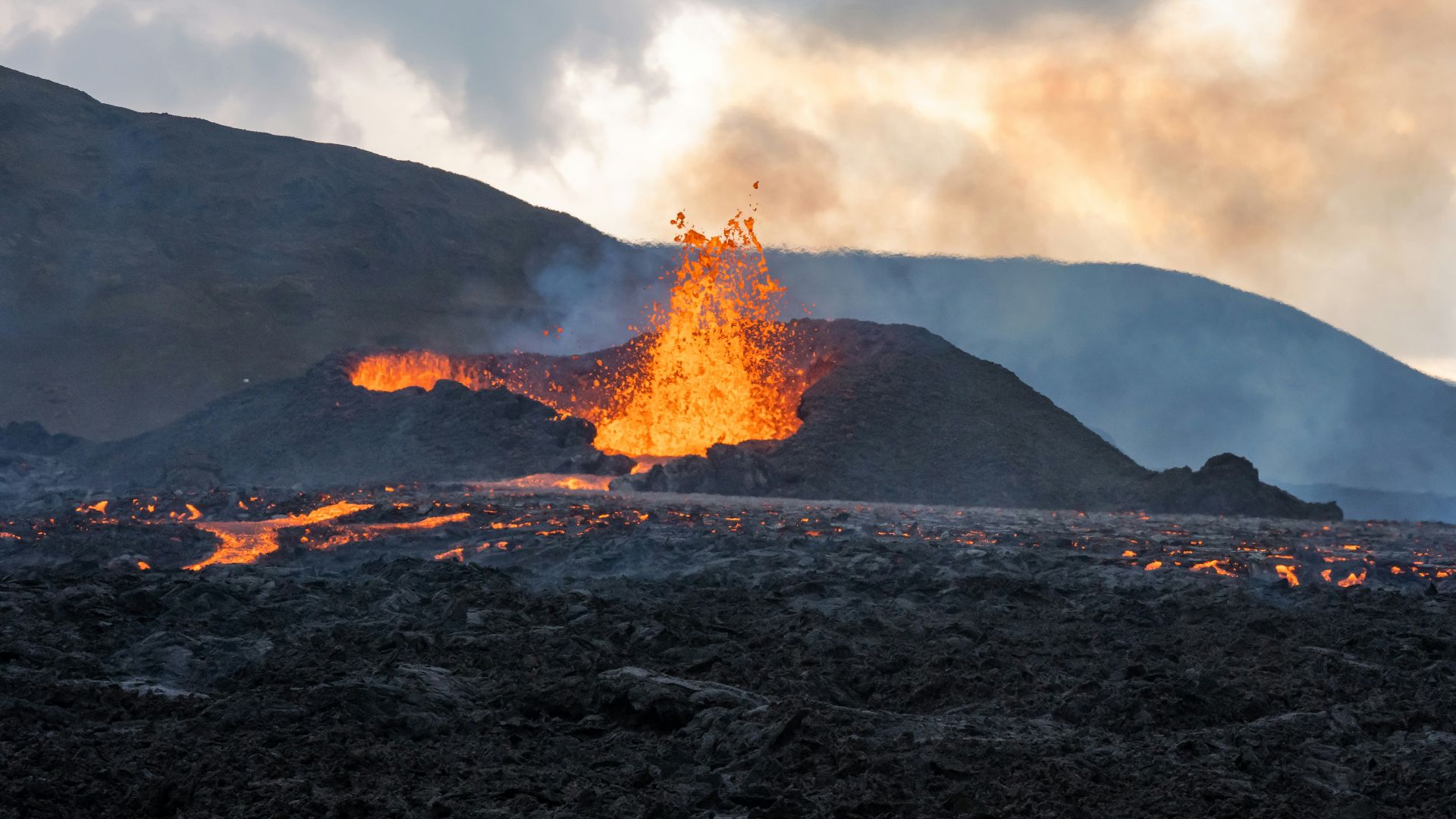
The Laki fissure, technically a volcanic system called Lakagígar, opened on June 8, 1783, and stayed open for eight months. What followed was one of the most consequential environmental disasters in recorded European history, a slow-motion catastrophe that touched Iceland, Britain, France, and beyond, and that historians and climate scientists are still piecing together today. The connections between that eruption and the social upheavals that followed are documented, measurable, and deeply underappreciated.
The Haze That Crossed a Continent
Laki wasn't a single explosive event. It was a sustained lava eruption along a 27-kilometer fissure that released an estimated 120 million tons of sulfur dioxide into the atmosphere over the course of the eruption, according to research published by Thorvaldur Thordarson and Stephen Self in the Journal of Geophysical Research. To put that in context, the entire industrial output of Europe today produces roughly 10 million tons of sulfur dioxide annually. Laki released twelve times that amount in less than a year, and it did so with no one watching and no infrastructure to respond.
The sulfur dioxide combined with atmospheric moisture to form sulfuric acid aerosols, which dispersed across Europe as a dense, acrid fog. By July 1783, reports of a strange dry haze were coming in from France, the Netherlands, Scandinavia, and Britain. Benjamin Franklin, serving as American ambassador in Paris at the time, observed the phenomenon and wrote about it in his 1784 paper presented to the Manchester Literary and Philosophical Society, describing a "dry fog" that dimmed the sun and refused to disperse in rain. He speculated, correctly, that a volcanic event was the likely cause.
The health consequences in Britain were significant and well-documented. A 2003 study by John Grattan and colleagues, published in the journal Geological Society Special Publications, estimated that the Laki haze may have contributed to approximately 23,000 excess deaths in Britain during the summer and autumn of 1783, particularly among people with respiratory conditions. Parish death records from southern England showed sharp mortality spikes in the months directly following the eruption, clustering in the exact window when the sulfur haze was at its densest over the British Isles.
What It Did to Iceland and the Food Supply
Iceland bore the most direct and catastrophic impact. The fluorine gas released during the eruption, roughly 7 million tons of it according to Thordarson and Self's estimates, settled onto pastureland and contaminated the grass that livestock depended on. What followed was a phenomenon Icelanders called the Móðuharðindin, or the Haze Famine. Roughly 80% of Iceland's sheep population died, along with approximately 50% of its cattle and horses. With the livestock gone, the food system collapsed. An estimated 9,000 to 10,000 people died in Iceland in the famine that followed, representing close to 25% of the entire population at the time.
The disruption didn't stay contained to Iceland. The sulfur aerosols reflected enough solar radiation to measurably cool the Northern Hemisphere. The winter of 1783 to 1784 was one of the most severe on record in Europe and North America. The Mississippi River froze as far south as New Orleans. In Europe, the combination of a failed summer harvest from acid deposition and a brutal winter created food shortages across multiple countries simultaneously.
France was hit particularly hard. Grain harvests had already been under pressure before the eruption, and the Laki winter pushed rural populations further toward the edge. Historian John D. Post, in his work on subsistence crises and political upheaval in 18th-century Europe, linked the climate disruptions of the 1780s to rising food prices and social instability, contributing threads in the conditions that culminated in the French Revolution of 1789. The causal chain is complex and debated, but the environmental context is not. You can find Post's analysis in his 1977 book The Last Great Subsistence Crisis in the Western World.
Why This Eruption Matters Now
Laki sits at a useful intersection of geology, history, and climate science, and the reason researchers keep returning to it is that it functions as a kind of natural stress test for complex societies. The eruption didn't collapse Europe through a single catastrophic blow. It worked gradually, through compounding failures in food, health, and economic systems that were already running close to their limits.
Modern volcanologists treat Laki as a high-priority scenario for future risk modeling. A 2010 assessment by the UK Natural Hazard Partnership identified an Icelandic fissure eruption as one of the highest-impact, credible volcanic risks to European infrastructure, with aviation, agriculture, and public health all flagged as vulnerable. We have more tools now than the people of 1783 had. We also have considerably more infrastructure that a sustained toxic aerosol event could disrupt, which makes the Laki case less a historical curiosity and more a working template for how slowly a disaster can unfold before anyone has decided to call it one.
KEEP ON READING