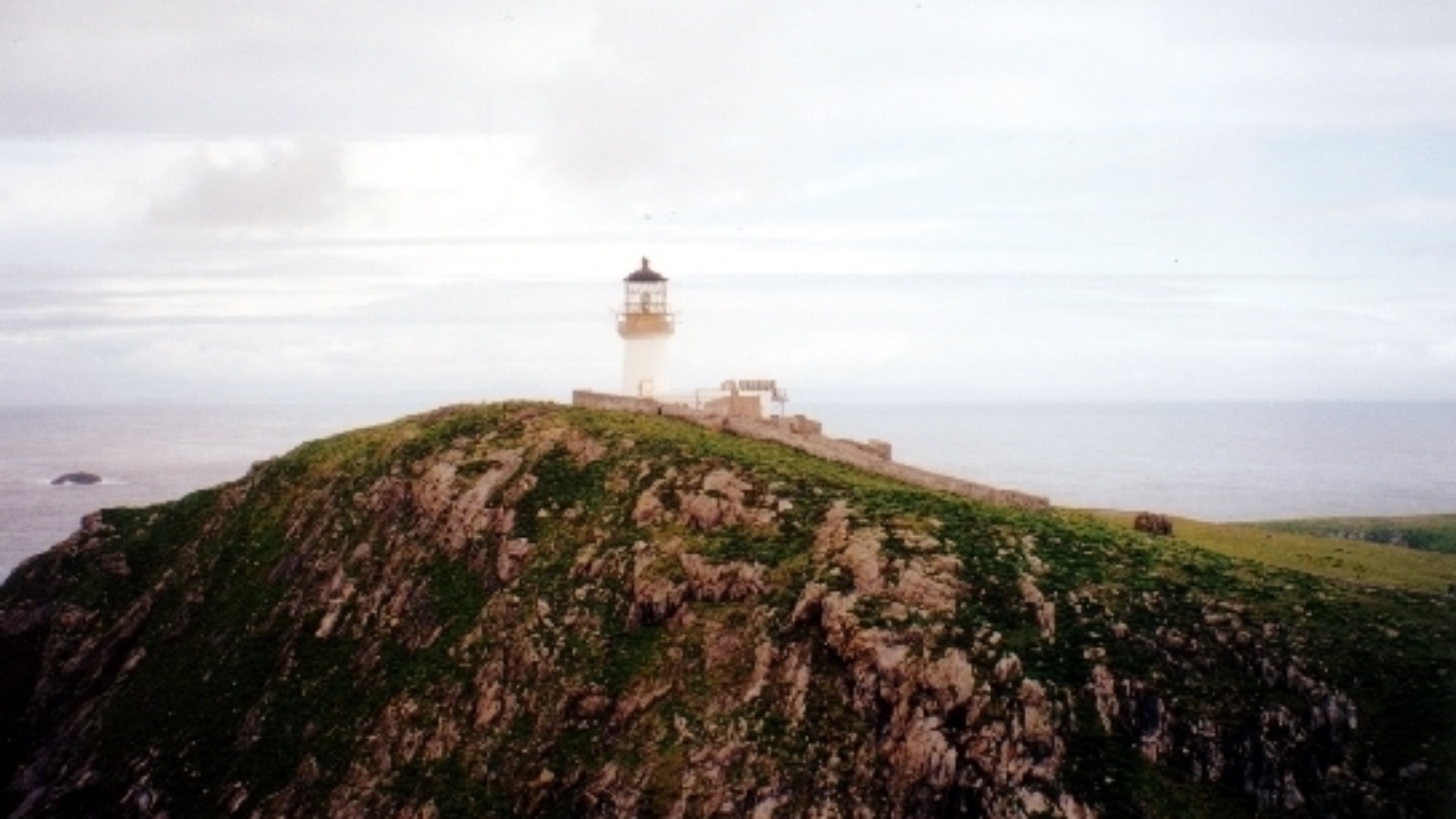
On December 26, 1900, a relief ship called the Hesperus approached the tiny island of Eilean Mor in Scotland's Outer Hebrides. The vessel was carrying supplies and a replacement keeper for the Flannan Isles Lighthouse, and its captain expected the usual welcome: a wave from the rocks, a signal that someone had spotted the ship coming in. Instead, he found silence. No one stood on the landing platform, no flag flew, and no answer came when he sounded the ship's horn and fired a flare into the gray sky.
No one would've known it then, at that moment, but that silence would mark the start of one of Britain's most enduring unsolved mysteries. Three experienced lighthouse keepers, James Ducat, Thomas Marshall, and Donald MacArthur, had vanished without a trace, leaving behind an empty tower and a string of clues that still don't add up more than a century later. You'll find no shortage of theories about what happened to them, ranging from rogue waves to more far-fetched explanations, but the honest answer is that nobody knows for certain. And maybe no one ever will.
The Discovery on the Rock
The first sign that something had gone wrong had actually come from a passing steamer called the Archtor, which noted that on December 15, 1900, the Flannan Isles light wasn't lit. That report reached the Northern Lighthouse Board once the ship docked in Leith, though rough weather delayed any response for over a week. It wasn't until Boxing Day that the Hesperus, commanded by Captain Jim Harvey, finally approached the island to check on the keepers.
As the Hesperus neared the landing platform, Harvey noticed right away that something was off. Having only been met by silence when he sounded the ship's whistle and fired a flare, hoping to draw attention from shore, it prompted him to send relief keeper Joseph Moore ashore alone to investigate, since the landing conditions made it difficult for more than one man to go at once.
Moore had to climb roughly 160 steps up the cliff face before reaching the lighthouse itself, passing the ruins of a centuries-old chapel along the way. He found the door unlocked, and once inside, it became clear that something had happened to the three men stationed there. Moore returned to the boat to report what he'd seen, and Harvey then organized a search of the rest of the island, which turned up no trace of James Ducat, Thomas Marshall, or Donald McArthur.
The Clues Left Behind
What Moore found inside the lighthouse has fueled speculation for generations. The kitchen table still held the remains of an unfinished meal, one chair had been knocked over, and the clock on the wall had stopped running. A set of oilskins remained hanging in the hallway, which struck investigators as odd given how severe the recent storms had been.
The lighthouse's logbook offered another puzzle, though not the one many popular retellings suggest. Entries stopped after December 13, with only brief weather notes recorded through the morning of December 15; on that last log, it simply read: "Storm ended, sea calm. God is over all." The strange events that transpired during those dark, lonely nights, whatever had happened, would then inspire Wilfrid Wilson Gibson's 1912 poem, "Flannan Isle."
Investigators at the time also noted that a rope box near the west landing had been damaged, and equipment usually stored above the high-water line had been swept away. This detail matters because it points toward the western side of the island, where the terrain is more exposed to Atlantic swells. The Northern Lighthouse Board's official report ultimately concluded that the men had likely been washed into the sea while securing equipment during or after a storm, though it stopped short of calling this a certainty.
Theories That Refuse to Die
The rogue wave theory remains the most widely accepted explanation among researchers who've studied the case closely. Under this scenario, one or more of the keepers went out to check on storm damage near the western landing, and a sudden wave swept them off the rocks before they could get clear. Given how the island's terrain funnels wave energy toward that particular spot, this theory doesn't require any unusual circumstances beyond bad timing and dangerous weather.
Not everyone finds that answer satisfying, and alternative theories have ranged from foul play among the keepers to supernatural forces tied to the island's history. Some later keepers stationed at Eilean Mor claimed to hear voices calling out the names of the three missing men, which only added to the island's reputation as a haunted place. Wilder ideas over the years have floated everything from sea serpents to secret smuggling operations, though none of these hold up particularly well against the physical evidence Moore and Harvey documented.
More grounded skeptics point out that experienced keepers like Ducat, who'd worked in the profession for over two decades, wouldn't have taken unnecessary risks without good reason. This has led some researchers to argue that all three men may have gone out together specifically because they believed a wave had already damaged the equipment, only to be caught by a second, larger swell. That theory doesn't explain everything, but it does account for why all three keepers vanished rather than just one.
What We're Left With
More than 120 years later, the disappearance of Eilean Mor lighthouse keepers remains unresolved, and it's likely to stay that way. The physical clues at the western landing point toward a tragic accident involving a powerful wave, and that explanation still holds up better than any of its rivals. Still, the missing bodies, the odd details Moore and Muirhead documented, and the isolation of Eilean Mor itself have kept the case firmly lodged in the public imagination. Whatever truly happened on that cliffside in December 1900, the Flannan Isles mystery continues to remind you just how unforgiving, and how full of unanswered questions, life at a remote tower could be.
KEEP ON READING