
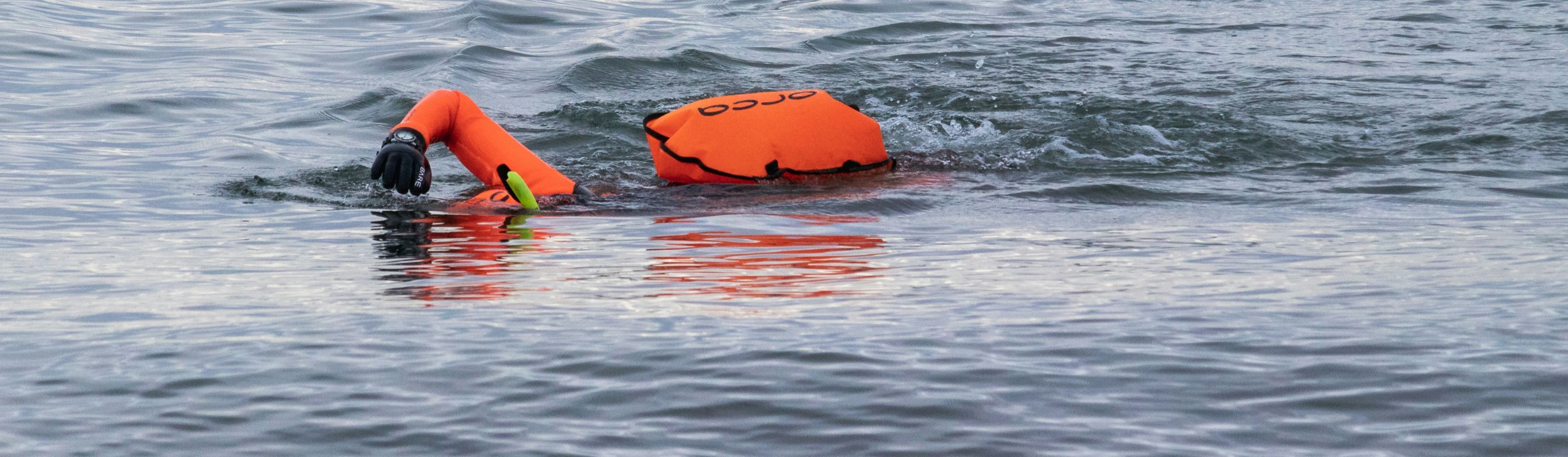
Jump into water as cold as the North Sea, and your body reacts before you can control it. The first response is a sudden gasp that can draw in two to three litres of air, according to researchers at the University of Portsmouth. If a wave hits your face at that moment, you could inhale seawater instead. That's why cold-water shock can be deadly within seconds, long before hypothermia becomes a concern.
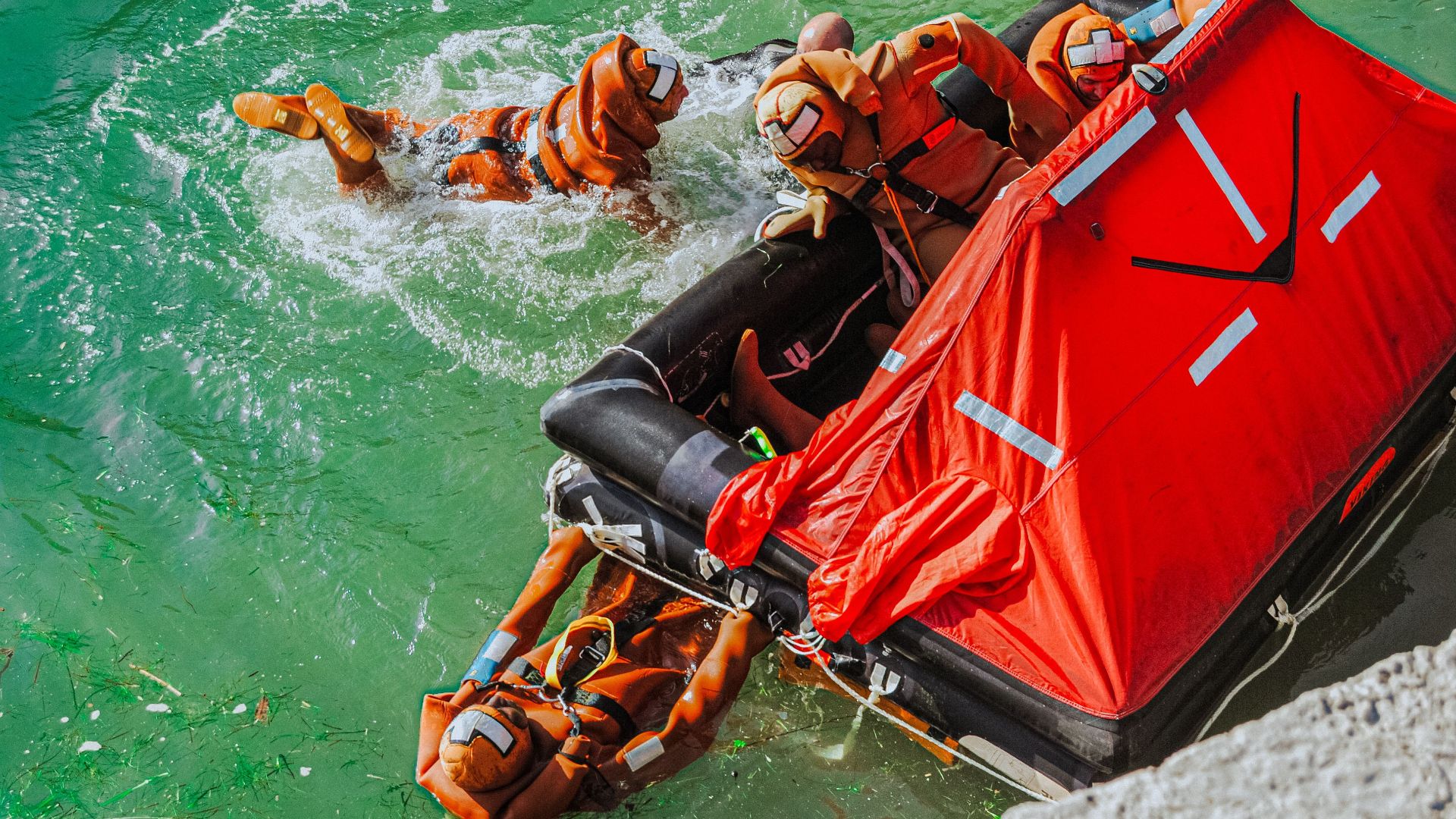
Offshore survival suits were developed over decades to keep people alive in freezing seas. Manufacturers made them warmer and better at keeping water out, but people were still dying within minutes of going overboard. The problem was that insulation could only do so much. Surviving the initial shock of hitting cold water was just as important as staying warm afterward.
What Actually Kills You
Cold shock is the early danger, and it peaks at water temperatures of 10 to 15 degrees Celsius. UK and Irish waters average around 12. That puts the North Sea almost precisely in the band where the response is strongest.
The response itself passes quickly. Skin reaches water temperature within a minute or two, the gasping and the racing heart subside inside 60 to 90 seconds, and by five minutes the whole thing has largely faded. Survive those first ninety seconds and your odds change completely.
Hypothermia arrives later, over an hour or more, and a suit is excellent at delaying it. Drowning arrives inside the opening ninety seconds, before the suit has a chance to do anything useful. Two different engineering briefs, and for decades the slower one got most of the attention.
Forty Years Of Suits
Before survival suits became available, offshore workers had little more than overalls and a lifejacket to protect them. Norwegian company Hansen Protection began making survival suits in the mid-1970s, initially using neoprene to reduce the shock of cold water. Those early suits offered limited protection during longer periods at sea. The company began developing dry suits in 1976, originally for fishermen, that could keep someone warm for around two hours.
It took a major disaster to make survival suits mandatory. Helicopter crashes off Norway killed 34 people between 1973 and 1978, yet workers still weren't required to wear them. When the Alexander L. Kielland platform capsized in 1980, only eight of the 212 people aboard managed to put on a suit. Four of those eight survived. Norway made survival suits compulsory on mobile offshore installations that year, and the official inquiry that followed reinforced their importance as rescue equipment. One man wearing a suit had survived roughly two and a half hours in the water.
Even two decades later, survival suits had serious problems. Reviews around 2000 found that they didn't seal well and offered little protection against sea spray hitting the face. Workers also complained that the suits were unbearably hot inside helicopter cabins. A redesign in 2007 introduced tiny capsules of paraffin wax that absorbed excess body heat and released it again in cold water. In laboratory tests, the improved suits kept skin temperatures above 15°C for six hours in water just 2°C.
The Problem The Suit Could Not Solve
Somebody had spotted the real difficulty early. A Norwegian study in 1979 raised the worry that a suit's buoyancy could hinder escape from an overturned, sinking helicopter. That is the specific way North Sea crews tend to die. Buoyancy that saves you on the surface pins you to the ceiling of a cabin that is upside down and filling.
The limits of survival suits became clear in August 2013, when a Super Puma helicopter crashed into the sea near Sumburgh. Three of the four people who died drowned, despite every passenger wearing a survival suit. Water flooded the cabin so quickly that some had no chance to take a breath, while others struggled to find their emergency breathing mouthpieces in the dark. The crew wore coveralls instead of suits, as regulations allowed, because of concerns about heat-related fatigue on an earlier flight. Only four of the twelve emergency exit windows were opened, and a rescue helicopter arrived 23 minutes after the crash.
The regulatory answer stopped treating the suit as the whole solution. Twelve passengers and two crew got out of that aircraft alive, mostly through the windows that opened. The Civil Aviation Authority's review, published as CAP 1145 in February 2014, required passengers and crew on offshore flights to wear a Category A emergency breathing system, with an exemption for helicopters fitted with side-floating flotation. It also restricted occupancy to seats next to push-out windows unless those conditions were met. Warmth had turned out to be the easier half of the brief.
KEEP ON READING