

You’re familiar with Stonehenge, yes? The circular pile of rocks located in Wiltshire, England? They showed up sometime during the Neolithic or Bronze Age period, around 4 to 5 thousand years ago?
Of course you do, who wouldn’t at this point?
But, did you know that there are other Stonehenge-like structures in other parts of Europe? No? Well, let us shed some light on this subject, dear reader.
This story is about Sweden’s lesser-known “Ale’s Stones.”
Ales Stenar
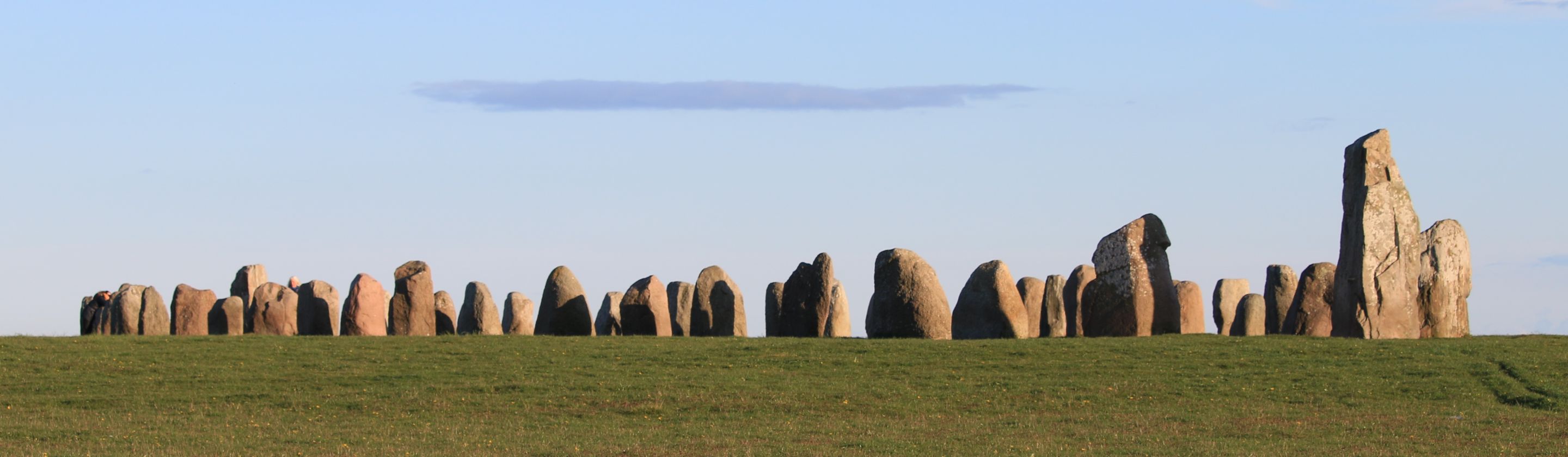
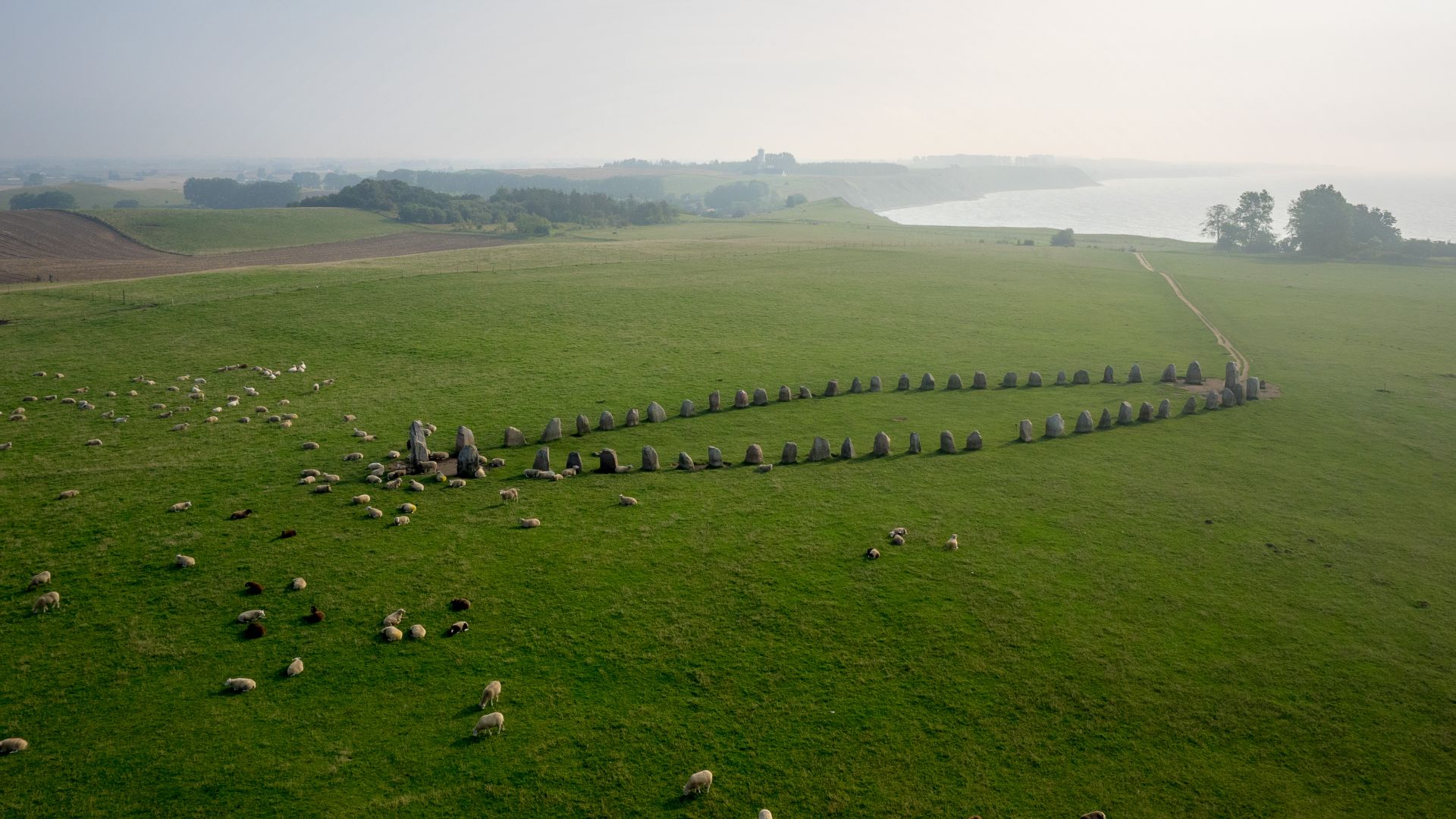
The Ale’s Stones monument dates back to the iron age, closer to 3 thousand years ago, marking the end of the Bronze Age. The monument, which takes shape of a longship, consists of 59 boulders. At its peak, the monument reaches 67 meters long and 19 meters wide (220 ft by 62 ft).
Historians are still unsure about what the Ale’s Stones were intended for. Some believe the structure to be a burial monument, or as a ceremonial space.
Investigation of the stones started in 1989. During this time, archaeologists found dust, charcoal, and other samples that are carbon dated around 600 C.E. This has also led scholars to believe that the creation of this monument occurred sometime in the 500s C.E., also known as the late iron age.
The stones are located in Skåne, a county that sits east of Copenhagen. They’re located almost at the very south eastern part of the island, making for a gorgeous backdrop if and when you choose to visit.
The Mystery
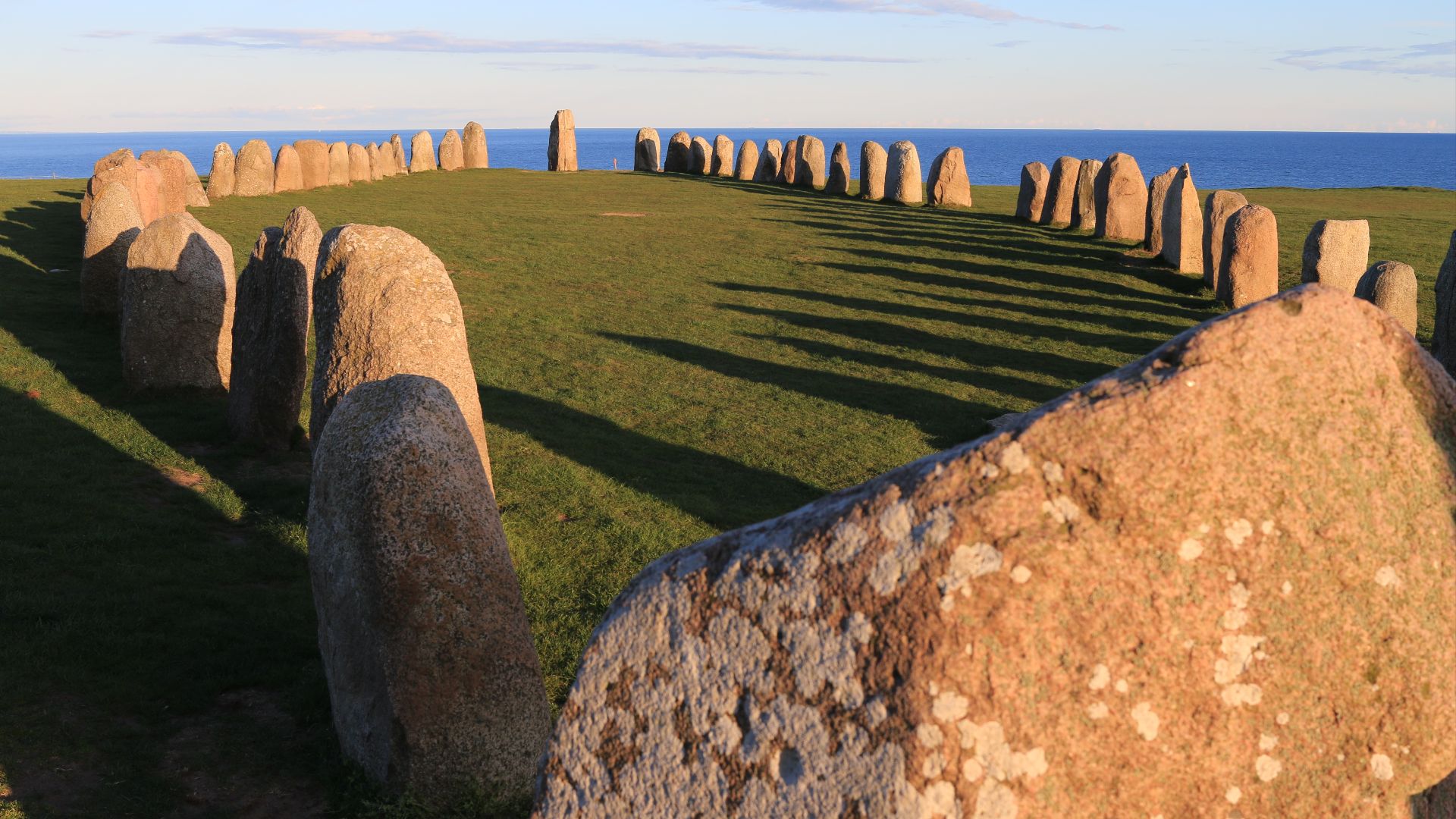
Like Stonehenge, there is a lot of curiosity around how these massive stones (around 1,800 kg each), found their way up to a hilltop. Like we mentioned before, there are a couple of theories that tend to bounce around.
The first one to discuss is its relation to astronomy. If looked upon during the summer and winter solstices, you’ll discover that each end of the monument aligns with the rising or setting sun. Sure, it’s a little odd to make it look like a boat, but if it was vikings that built this place, we can’t blame them for building what they know.
Speaking of vikings, it’s also possible that this area was potentially as a gathering place for ceremonies, trade deals, or for conflict resolution. Here, the ship design comes into place, with certain scholars suggesting that the particular layout symbolized a metaphorical journey.
The final, and possibly strongest, belief is that this monument is indeed a burial site. Remains were found within the grounds, so is very possible that this was built to honor fallen sailors or warriors. This idea is only furthered with the name of the site, “Ale’s Stones.” The word “ale” translates to “sanctuary” in ancient Nordic, which could also be taken as a sign that this is a final resting place.
All this to say, there are more cool rocks to look at besides Stonehenge, we promise. If you ever find yourself visiting the Scandinavian era of the world, be sure to check out this incredible beauty for yourself.
KEEP ON READING

20 Greek Gods We Don't Often Talk About
Step Aside, Zeus. Greek mythology isn’t only about Zeus and…
By Elizabeth Graham Jan 16, 2026
10 Historic Courtship Practices That Should Be Brought Back &…
Old-School Dating Was a Mix of Charming & Unhinged. Historic…
By Emilie Richardson-Dupuis Jan 20, 2026
Pooches Of The Past: Extinct Dog Breeds
Unknown authorUnknown author on WikimediaDogs have been showing up in…
By Elizabeth Graham Jan 27, 2026
The 20 Craziest Silent Films Ever Made
When Silence Let the Madness Speak. Silent cinema didn’t just…
By Chase Wexler Jan 5, 2026
Legendary Tales: 20 Most Fascinating Mythical Creatures from Folklore
Mythological Beasts. Stories about mythical creatures endure for a simple…
By Christy Chan Jan 16, 2026
The three most expensive historical artifacts ever sold at auction
Attributed to Leonardo da Vinci on WikimediaAuctions are where history…
By Emilie Richardson-Dupuis Jan 9, 2026