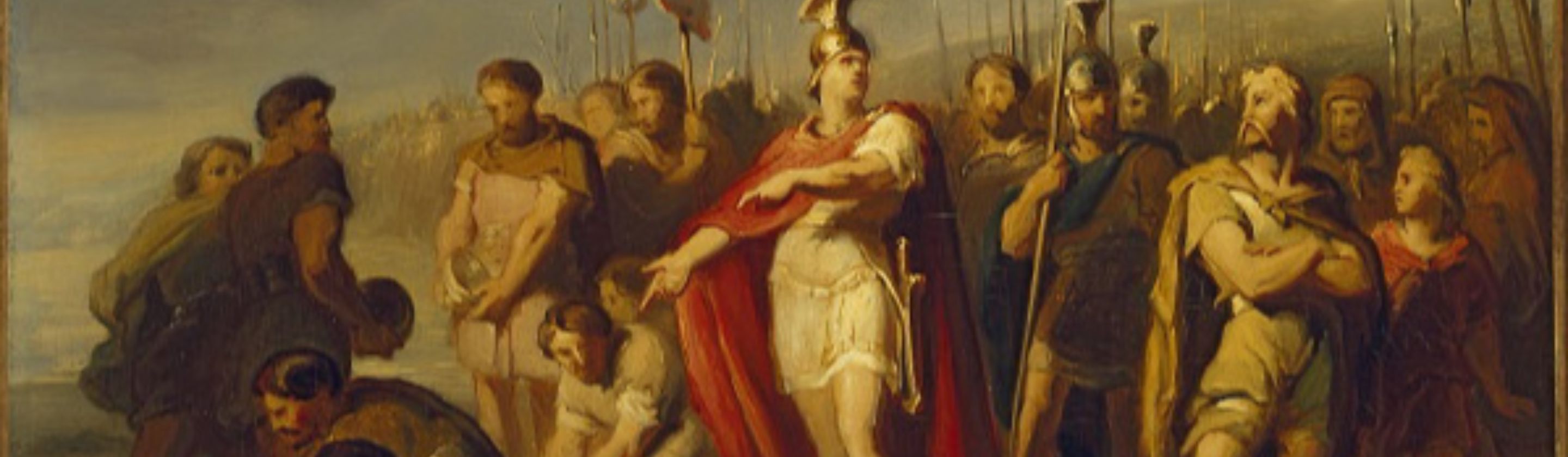
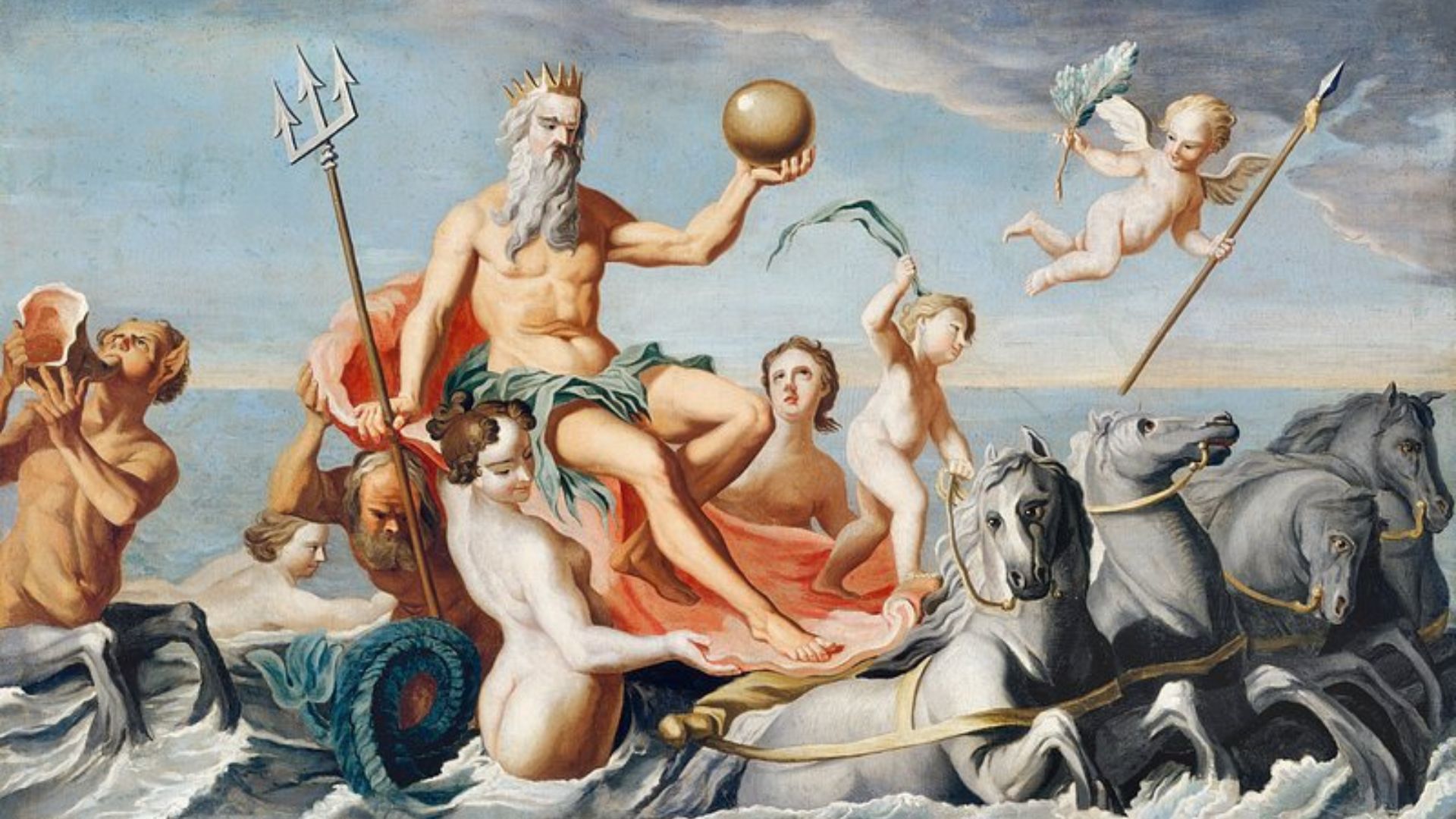
There's a moment in ancient history that reads like a fever dream. The Roman Emperor Caligula, sometime around 40 CE, marched his legions to the shores of the English Channel, arranged them in full battle formation facing the ocean, and ordered them to attack the waves with their spears. Then he had them collect seashells as "spoils of war" against Neptune, god of the sea, and hauled them back to Rome as trophies. Ancient sources including Suetonius and Cassius Dio recorded the episode with the kind of bewildered specificity that suggests they couldn't quite believe it either.
The easy read is madness. Caligula has been history's go-to example of power-induced insanity for two millennia, and the seashell episode gets trotted out as proof that Rome occasionally handed its entire empire to someone who had completely lost the thread of reality. The less easy, and more interesting, read is that the story is considerably more complicated than a lunatic emperor throwing a tantrum at the tide. What actually happened on that beach, and what it tells us about Roman power, is worth sitting with seriously.
The Sources Are Unreliable, and That's Part of the Story
Almost everything we know about Caligula comes from writers who had strong reasons to paint him as a monster. Suetonius wrote his biography roughly eighty years after Caligula's death, working from earlier sources, rumors, and the official memory of an emperor whose successors needed him to look like a cautionary tale. Cassius Dio wrote even later, in the third century CE. The Senate, which Caligula had openly humiliated and antagonized throughout his reign, was the class that produced most Roman historical writing. Expecting a neutral account of Caligula from senatorial sources is like expecting a flattering portrait of someone who made your entire professional class kneel.
The historian Anthony Barrett, in his scholarly biography Caligula: The Corruption of Power, argues that the historical record shows clear signs of embellishment and distortion, and that separating political slander from documented fact is genuinely difficult. Several stories that appear across multiple ancient sources, which might seem like corroboration, likely derive from the same original hostile account rather than independent verification. Roman historiography had a tradition of using outrageous anecdotes as shorthand for tyranny, and Caligula's reign became a canvas onto which later writers projected their preferred image of what a bad emperor looked like.
This matters for the seashell story specifically. Both Suetonius and Cassius Dio report it, but their versions differ in details, and neither was present. A third-century historian named Dio Cassius frames the episode as straightforwardly deranged. Suetonius is slightly more ambiguous. Some modern historians, including those working on the military history of the period, have suggested the episode may have been a deliberate piece of theater designed to humiliate troops who had refused a British invasion order, with the shell-collecting being a ritualized punishment or mockery rather than genuine Neptune-warfare. That interpretation is speculative, but no more speculative than the madness reading.
What Caligula Actually Did With Power Was Methodical
The portrait of Caligula as a random chaos agent doesn't survive contact with his actual political record, at least in the early part of his reign. When he came to power in 37 CE after the paranoid, grim final years of Tiberius, he was genuinely popular. He freed political prisoners, abolished the treason trials that Tiberius had used to terrorize the Senate, published the imperial budget for public review, and made generous donations to the Praetorian Guard and to Roman citizens. The ancient sources, even the hostile ones, generally acknowledge a honeymoon period of reasonable governance.
His consolidation of power also showed strategic coherence. Caligula systematically removed potential rivals, centralized authority away from the Senate, and cultivated relationships with client kings across the empire, particularly in the eastern provinces where Hellenistic models of divine kingship were culturally familiar. His insistence on being treated with divine honors, which scandalized Roman senators deeply attached to Republican traditions, was arguably a calculated political move to elevate imperial authority above the aristocratic class that had historically checked it. Whether that calculation was wise is a separate question from whether it was calculated.
The attempted British invasion itself, the military adventure that ended on the beach with the seashells, had strategic logic behind it. Britain was an unfinished piece of business left over from Julius Caesar's expeditions, and a successful conquest would have been an enormous propaganda victory. The campaign collapsed, probably due to some combination of logistical problems and troop mutiny, but the ambition wasn't irrational. Claudius would successfully invade Britain just a few years later, in 43 CE, using largely the same military apparatus Caligula had assembled.
The Madness Narrative Serves Everyone Except the Truth
Rome needed Caligula to be insane because the alternative was more troubling. If Caligula was simply a ruthless autocrat who understood power clearly and pursued it aggressively, then his reign was a logical extension of what the imperial system made possible, not an aberration. The Senate preferred the madness explanation because it preserved the idea that the system itself was sound, and that one defective individual had temporarily corrupted it. His successor Claudius, who came to power immediately after Caligula's assassination in 41 CE, had every political incentive to emphasize his predecessor's dysfunction without going so far as official condemnation, which would have raised awkward questions about imperial legitimacy.
The clinical speculation has continued into the modern era. Various writers and historians have retrospectively diagnosed Caligula with encephalitis, hyperthyroidism, temporal lobe epilepsy, and several personality disorders. A severe illness he suffered about seven months into his reign is documented even by sources favorable to him, and some historians believe it marked a genuine shift in his behavior. Mary Beard, the Cambridge classicist, has written skeptically about this whole enterprise, arguing that we simply don't have reliable enough information about what Caligula actually did, let alone what was happening in his mind, to support confident clinical conclusions.
What we're left with is an emperor who became a symbol before he became a historical subject. The seashell story lodged itself in cultural memory not because it was definitively true, but because it was perfectly shaped for the purpose it served. A ruler attacking the ocean is a story about the grotesque endpoint of unchecked power, about what happens when no one can tell the man in charge that he has lost the plot. That's a story every era finds useful, which is precisely why we should be careful about how readily we reach for it.