

My Sister Told Everyone She Was Mom's Sole Caregiver — Then I Found Mom's Hidden Log
The Front Pew
The music is soft — something instrumental, something chosen to be unobtrusive — and it fills the chapel the way water fills a glass, quietly and completely. Morgan sits in the front pew, and she has been sitting here long enough that her hands have gone still in her lap. The casket is polished dark wood, and there are white flowers arranged along the top of it, and she cannot make herself believe her mother is inside. She keeps looking at the grain of the wood instead. The minister is speaking, and his words reach her in pieces — beloved, faithful, at peace — and each one lands somewhere outside of her, like rain on glass. Sarah is beside her. Morgan is aware of her the way you are aware of a lamp in a room — present, peripheral, casting a certain kind of light. She nods at people as they file past. She accepts their hands and their murmured words with a composure Morgan cannot locate in herself. Morgan watches the candles near the altar instead, the small steady flames, and breathes. The chapel fills and fills, and the weight of all that quiet grief presses down until the room feels like something held underwater.
 Image by RM AI
Receiving Line
The receiving line moves the way these things always do — slowly, with a rhythm that is almost merciful. Someone takes Morgan's hand and says her mother's name, Catherine, and Morgan nods and says thank you and means it, even though the words feel borrowed. An older man she half-recognizes from her mother's church squeezes her shoulder and tells her Catherine was a remarkable woman, and Morgan agrees, because she was, because that is the truest thing anyone has said all day. Sarah is a few feet away, and she is extraordinary at this — touching an arm here, leaning in close there, her voice low and warm in a way that draws people toward her. Relatives Morgan hasn't seen in years are gravitating to Sarah's side, and she receives them all with the same composed grace. Aunt Linda finds Morgan near the end of the line. She pulls her into a hug that smells like familiar perfume, and she says something soft about Catherine — about how much she loved them both — and Morgan holds on a beat longer than she means to. When Linda pulls back, she glances toward Sarah and says, almost to herself, that Sarah must be absolutely exhausted from all the back and forth these past months.
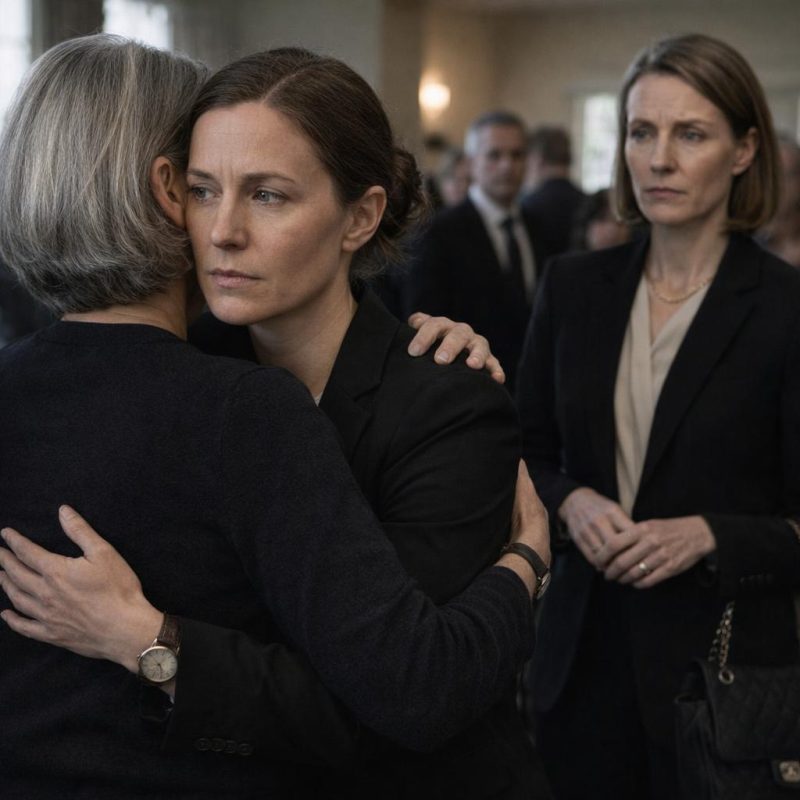 Image by RM AI
The Gathering
Morgan follows the line of cars back to the house on autopilot, her hands on the wheel and her mind somewhere else entirely. The driveway fills up fast, and people carry casserole dishes and foil-covered pans through the front door like an old familiar ritual, because it is. Inside, the living room is already loud with the particular noise of grief being managed — conversations overlapping, someone laughing too quickly at something, the clink of glasses being set on the coffee table. Sarah moves through the kitchen with ease, directing people where to put the food, pointing out where the extra chairs are stored, thanking everyone for coming in a voice that carries just enough warmth to feel genuine. Morgan stands near the doorway between the hall and the living room and watches it all happen. The couch where her mother used to sit with her crossword puzzle is occupied by two cousins she barely knows. The lamp on the side table is the same lamp. The smell of the house is the same smell. Everything is exactly where it has always been, and none of it feels like hers anymore, and the rooms fill and fill with voices that have nothing to do with the quiet she is carrying.
 Image by RM AI
The Toast
Someone taps a glass, and the room settles. Sarah is standing near the fireplace, a glass of red wine held loosely in one hand, and she waits for the quiet the way someone waits for a stage. When she speaks, her voice is measured and warm, and the room leans in. She talks about the long nights — the calls that came at odd hours, the decisions that had to be made quickly and alone, the particular exhaustion of watching someone you love grow smaller by degrees. She says she would do it all again without hesitation. Her voice catches on the last part, just slightly, and someone near the back of the room makes a soft sound of sympathy. Morgan is standing against the far wall with her glass of wine untouched, very still. She doesn't know what she expected from today, but she hadn't expected this — the specific shape of it, the way Sarah's words settle over the room like something official. Relatives nod. Someone reaches out and touches Sarah's arm. The room holds its breath in the particular way rooms do when they have decided, collectively, that something sacred is being said.
 Image by RM AI
Praise and Silence
The conversation around Sarah doesn't break up — it deepens. An older cousin Morgan recognizes from childhood wraps both arms around her and says she doesn't know how Sarah managed it, that she is the strongest person in this family. Someone else — a woman from her mother's neighborhood, Morgan thinks — says it must have been so hard to put her own life on hold like that, and Sarah accepts this with a small, tired smile that looks exactly like humility. Linda is standing nearby, nodding along, her expression thoughtful in a way Morgan can't quite read. Morgan stays where she is, near the bookshelf on the opposite side of the room, and listens. She hears the word devoted. She hears the phrase always there. She hears someone say that Catherine was lucky to have her. Morgan holds her wine glass and does not move and waits for her name to come up, the way you wait for a train you are certain is coming. Story after story, voice after voice, and the train does not come. Not once, in any of it, does anyone say her name.
 Image by RM AI
The Weekend Visits
Morgan slips into the kitchen on the pretense of getting water, and the noise from the living room drops to a manageable murmur behind her. She fills a glass at the sink and doesn't drink it. She leans against the counter and closes her eyes, and what comes back is not a single memory but a sequence — the particular quality of Friday evening light on the highway, the way the hospital parking structure smelled of concrete and recycled air, the specific chair in the third-floor waiting room where she sat so many times she knew which leg wobbled. She remembers the calls from the nursing staff, the medication schedules she kept in a spreadsheet on her phone, the conversations with the oncologist that she typed up and emailed to herself so she wouldn't forget the details. She remembers driving home Sunday nights with her hands tight on the wheel, already calculating when she could come back. Nobody in the living room mentioned any of that. She opens her eyes. Across the kitchen, still hanging on the refrigerator where it has always hung, is the medical appointment calendar — and the dates marked on it are in her handwriting.
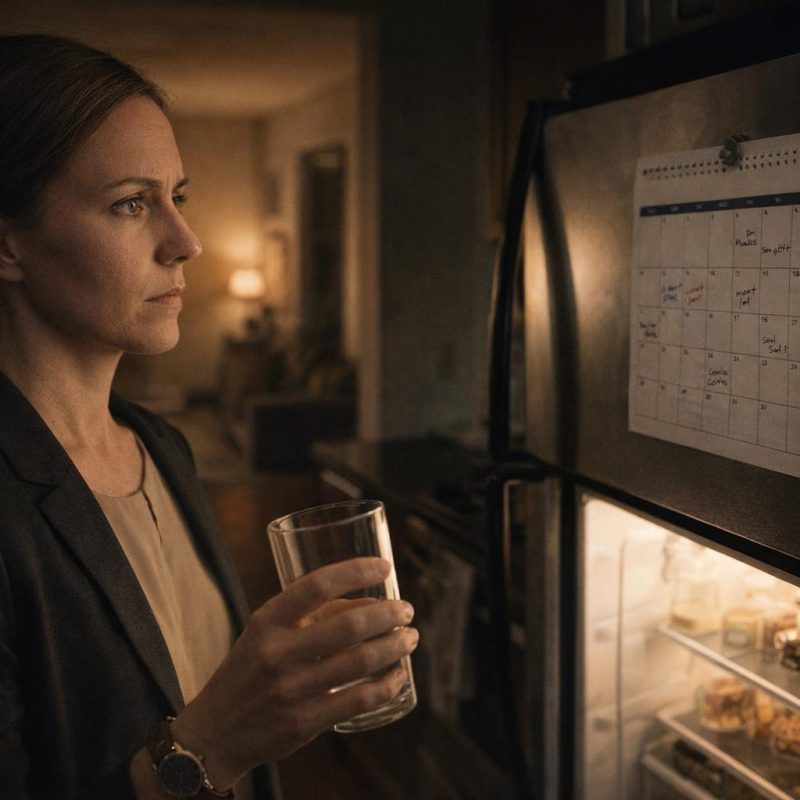 Image by RM AI
Estate Matters
Morgan carries her water glass back into the living room and stops near the edge of the hallway. Sarah is seated on the arm of the couch, turned toward two older relatives Morgan recognizes as cousins on her mother's side, and she is speaking in the easy, confident tone she uses when she already knows how a conversation is going to end. Morgan catches the tail end of something about the house — that their mother had been very clear about her wishes, that there was nothing left uncertain. One of the cousins asks about the estate, and Sarah says most of the paperwork is already in order, that it had all been handled carefully. She says it the way people say things they have gone over many times before. Linda is sitting in the armchair nearby, her hands folded in her lap, watching Sarah with an expression Morgan can't name. Morgan stays where she is, half in the hallway, and says nothing. She is not sure what she would say. Then Sarah mentions, almost as an aside, that their mother had signed several documents in her final weeks.
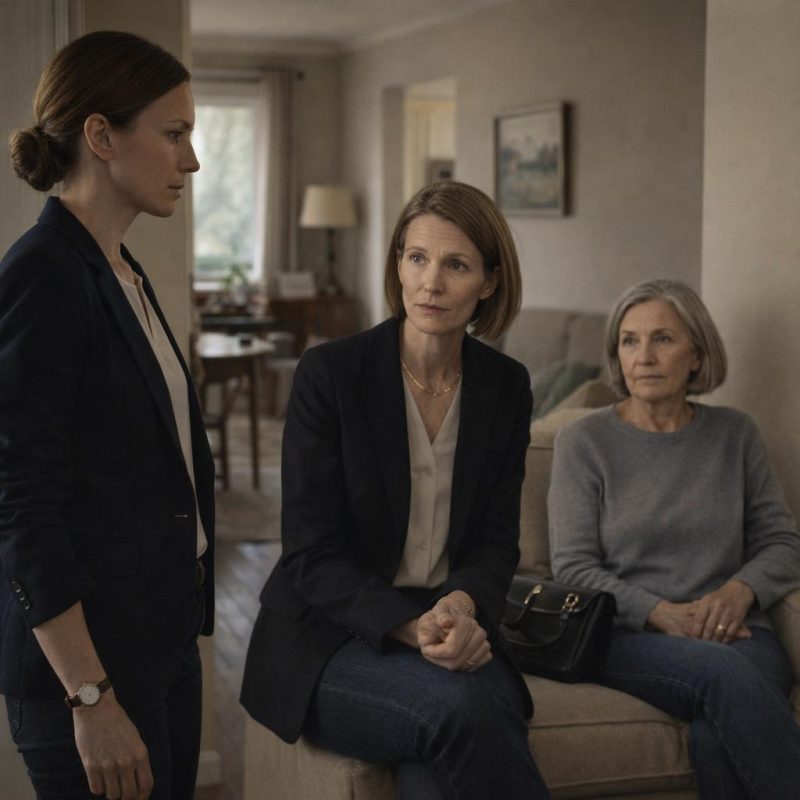 Image by RM AI
Retreat
Morgan finds the staircase without deciding to. One moment she is standing at the edge of the living room, and the next she is climbing, one hand on the banister, the voices below receding with each step. She stops at the top of the hall and pushes open the door to her mother's bedroom. The curtains are drawn, the way her mother always kept them in the afternoon, and the light inside is dim and amber-toned. The bed is made — the same blue coverlet, pulled smooth and tucked at the corners the way she insisted on. Her reading glasses are folded on the nightstand beside a library book with a bookmark still in it. Her cardigan is draped over the back of the chair by the window, as though she stepped out for a moment and will be back. Morgan closes the door behind her and leans against it, and the latch clicks softly into place. Downstairs, the voices continue — someone laughs, a dish clinks, the gathering goes on without her. Up here, none of that reaches her. The room holds its quiet the way it always did, unchanged and unhurried, and she stands in it and lets it be enough.
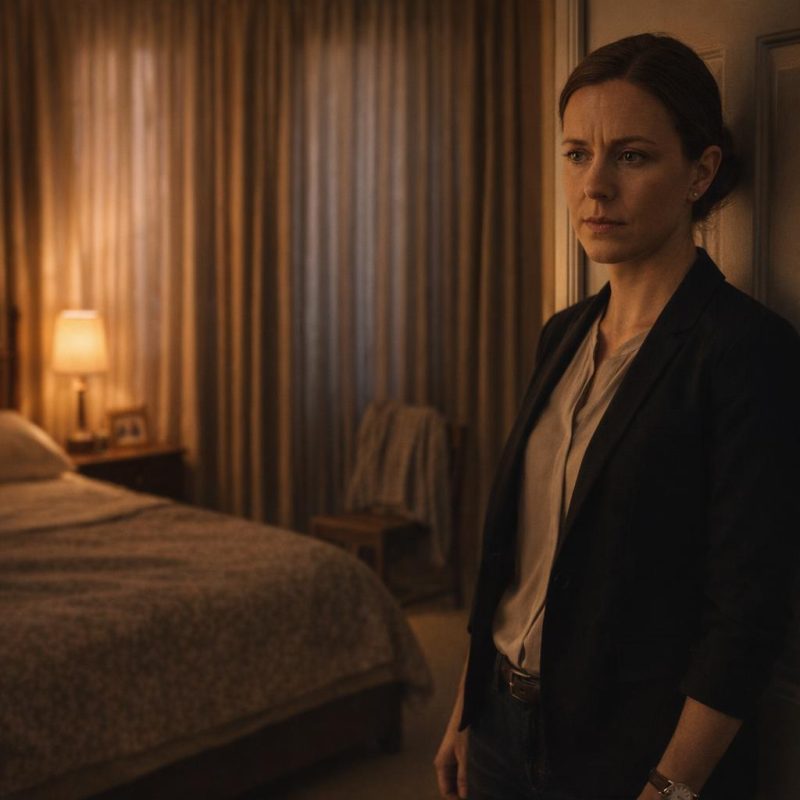 Image by RM AI
The Last Months
Morgan sits on the edge of the bed and the coverlet gives slightly under her weight, the same way it always did. She doesn't mean to start remembering. It just happens. The hospice nurse's number — she still has it memorized, because the nurse called so often that the digits wore a groove into her brain. Two in the morning, three, sometimes four. Morgan would answer on the first ring, already sitting up, already reaching for the notepad on her nightstand. She remembers one night in February when the rain was coming down so hard she could barely see the highway, and she drove it anyway because the nurse said her mother's breathing had changed and she needed to be there. She remembers her mother's hand — how thin it had gotten, how the bones felt close to the surface — gripping hers during the bad nights like her mother was trying to hold on to something solid. Morgan kept spreadsheets. Medication schedules, dosage windows, appointment times, the names of every specialist and what each one had said. She made decisions from her office, from airport lounges, from the parking garage at work with her phone pressed hard against her ear. She did all of it. And she did most of it alone.
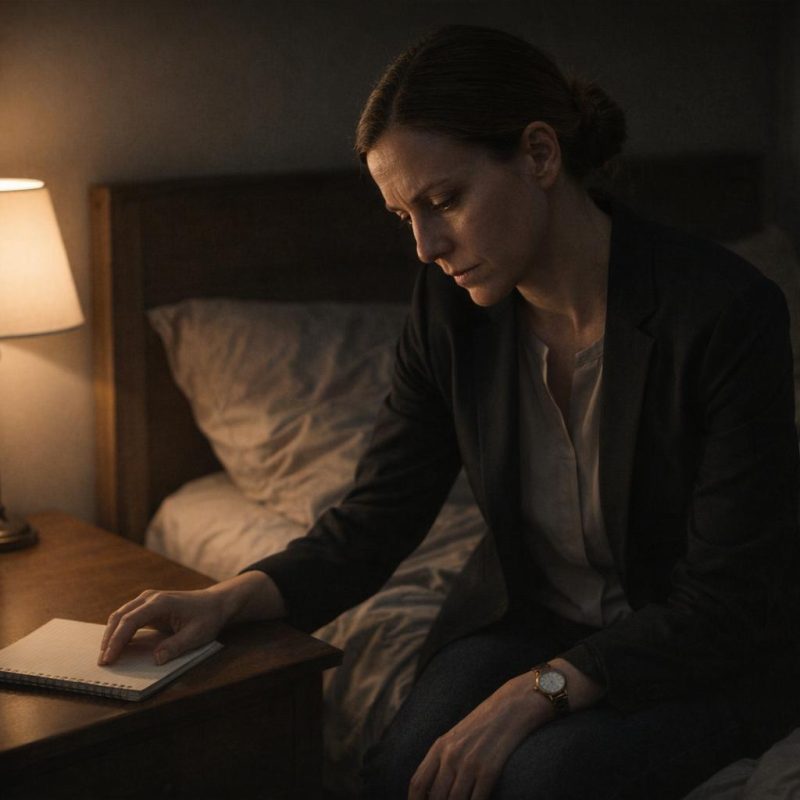 Image by RM AI
Self-Doubt
But then the doubt comes in, the way it always does, quiet and corrosive. Morgan sits with it for a moment and lets it do its work. Maybe she's misremembering. Grief does that — it reshapes things, smooths over the parts that don't fit the story you need to tell yourself. Maybe Sarah was there more than Morgan is giving her credit for. Maybe Sarah handled things Morgan never saw, conversations she wasn't part of, hours she wasn't present for. The weekend visits — were they really enough? Three hours each way, one overnight, back on the road by Sunday afternoon. Morgan told herself it was consistent. She told herself it mattered. But consistent isn't the same as constant, and she was never constant. She had a job, an apartment, a life three hours away. Sarah lived closer. She had more flexibility, or at least Morgan always assumed she did. Morgan tries to pin down specific dates, specific moments, and some of them blur at the edges in a way that unsettles her. The harder she reaches for the details, the less certain she feels. Maybe she's been carrying a version of those months that flatters her more than it should. The gap between what she remembers and what Sarah described downstairs sits in her chest, unresolved.
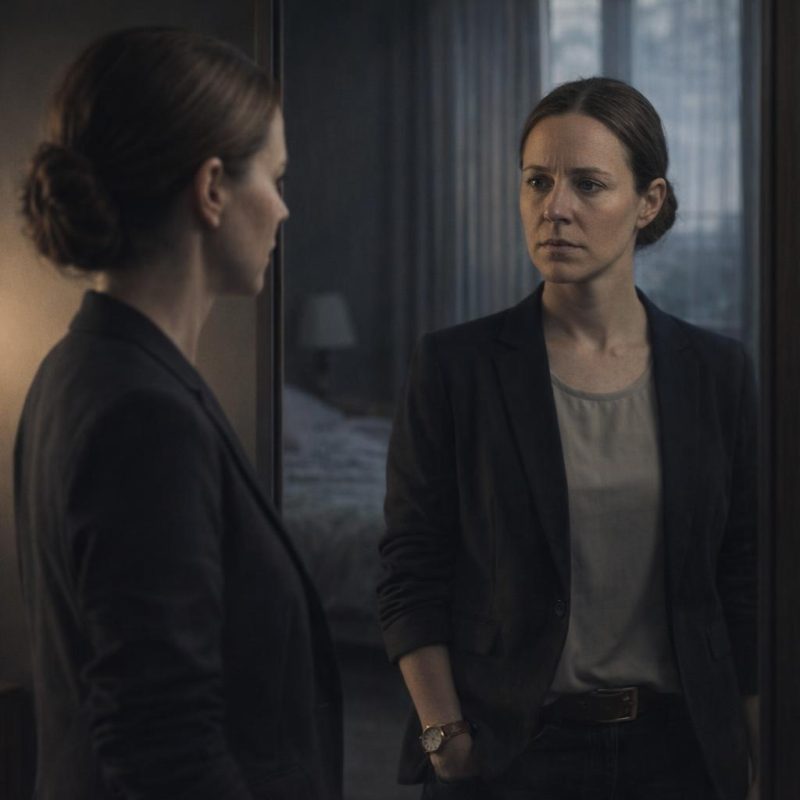 Image by RM AI
The Appointment Schedule
Morgan pulls her phone out of her pocket almost without thinking, the way you reach for something familiar when the ground feels unsteady. She opens the calendar app and starts scrolling back — six months, seven, further. The entries come up in clusters, dense and color-coded the way she always kept them. Oncology consult, Tuesday the fourteenth. Hospice intake assessment, the following Thursday. Medication review with the palliative care team, the week after that. Each entry has notes attached — what the doctor said, what questions she asked, what decisions got made and by whom. She remembers calling in to those appointments from her car, from a conference room she'd borrowed at work, from a gate at the airport with her laptop open and her boarding pass in her hand. The frequency of it surprises her even now, seeing it laid out like this. There are weeks where she has four and five entries, back to back, each one with its own thread of follow-up. She had forgotten how relentless the pace of it was — not because it wasn't real, but because you don't keep score when you're in the middle of it. You just keep going. Looking at it now, the calendar holds the shape of those months more honestly than her memory does, and she sits with the quiet steadiness of what it shows.
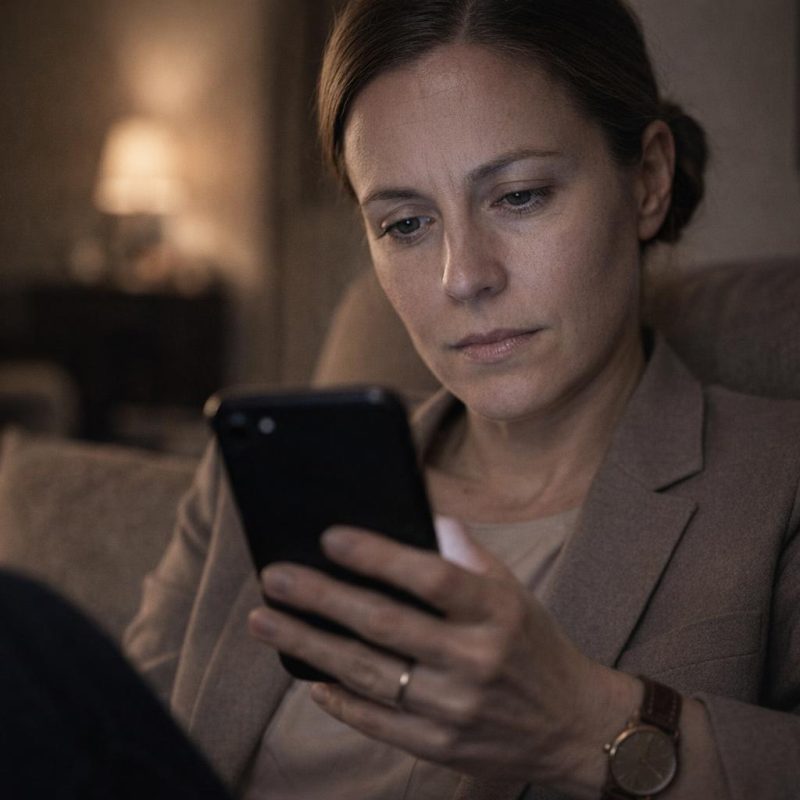 Image by RM AI
Friday Nights
Morgan closes the calendar app and closes her eyes, and the Friday afternoons come back to her in a rush — the particular quality of that end-of-week exhaustion, the overnight bag she kept half-packed by the door so she could leave the office by three and still beat the worst of the traffic. There was a rest stop about ninety minutes out where she always pulled over for coffee, the same gas station every time, the same bad cup in a paper sleeve that she drank anyway because it kept her awake for the last stretch. She knew the route so well she stopped needing the GPS. She knew which lane to take at the merge, which exit had the longer ramp, where the speed cameras were. She knew the parking structure at the hospital — third level, east side, near the elevator, because it was the fastest way to her mother's floor. She starts counting backward through the weekends, and the memories come up one by one, distinct and specific: the weekend her mother's pain medication was adjusted, the weekend the social worker came, the weekend they sat together and watched an old film her mother loved and didn't talk about anything hard at all. Morgan counts them carefully, moving back through the months. Seventeen consecutive weekends.
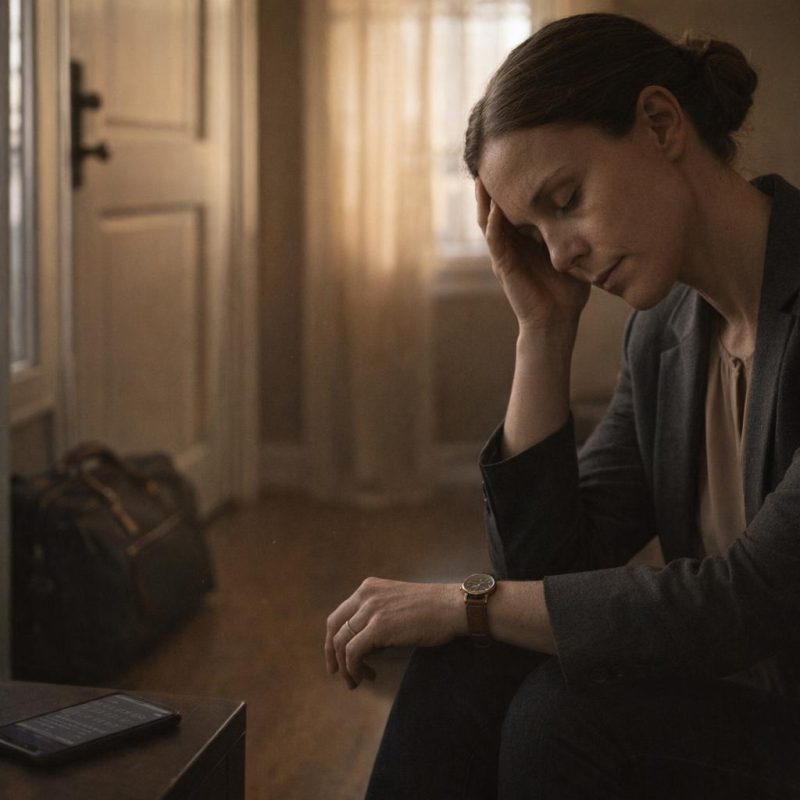 Image by RM AI
Sarah's Absences
Seventeen weekends, and Morgan tries now to place Sarah inside them. She goes through the memories one at a time, the way you'd go through a stack of photographs, looking for a face. The night her mother's fever spiked and the nurse called at midnight — Morgan remembers the drive, the fluorescent lights of the hospital corridor, the chair she pulled up beside the bed and didn't leave until morning. She remembers calling Sarah from the waiting room while the doctor was in with her mother. Voicemail. She remembers the night the hospice team needed an immediate authorization for a medication change and she had to make the call herself because no one else was reachable. She remembers sitting alone in that room at two in the morning more times than she can count, the building quiet around her, the only sound the soft rhythm of the monitors. She goes through every overnight crisis she can bring to mind, every emergency call, every moment when the situation tipped and someone had to be there in person to hold it steady. She tries to find Sarah in any of those moments. She keeps coming up empty — though she tells herself there must be gaps in what she's remembering, things she simply wasn't there to see. Still, the shape of Sarah's absence in those nights settles over her, quiet and unresolved.
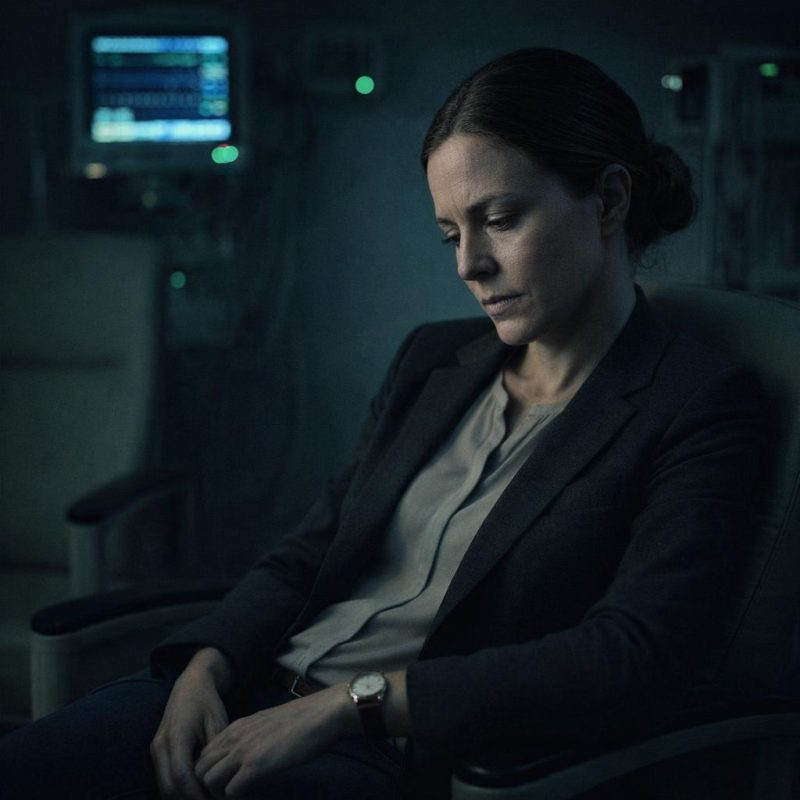 Image by RM AI
Medication Calls
Morgan opens her messages next, almost on instinct, and searches the hospice nurse's name. The thread loads slowly, and then it's just there — months of it, scrolling up and up, more than she'd held in her head. The earliest messages are practical and clipped: pain scale numbers, appetite notes, sleep observations. Further in, they get longer. The nurse would ask specific questions — had her mother seemed more confused in the evenings, was she eating at all, had the new dosage helped with the nighttime restlessness — and Morgan would answer from whatever she had: what she'd seen on the weekend, what her mother had told her over the phone, what she'd noticed in her mother's voice when she called on Tuesday. There are messages where Morgan is clearly in the middle of something else, the replies short and typed fast. There are others where she wrote paragraphs, working through a decision about pain management with the nurse the way you'd work through a problem with a colleague. She made calls about dosage timing. She flagged side effects. She asked questions the nurse said most families never thought to ask. The thread runs all the way to the final week. Morgan sits on the edge of the bed with the phone in both hands, the weight of all those months held in a single scrolling thread.
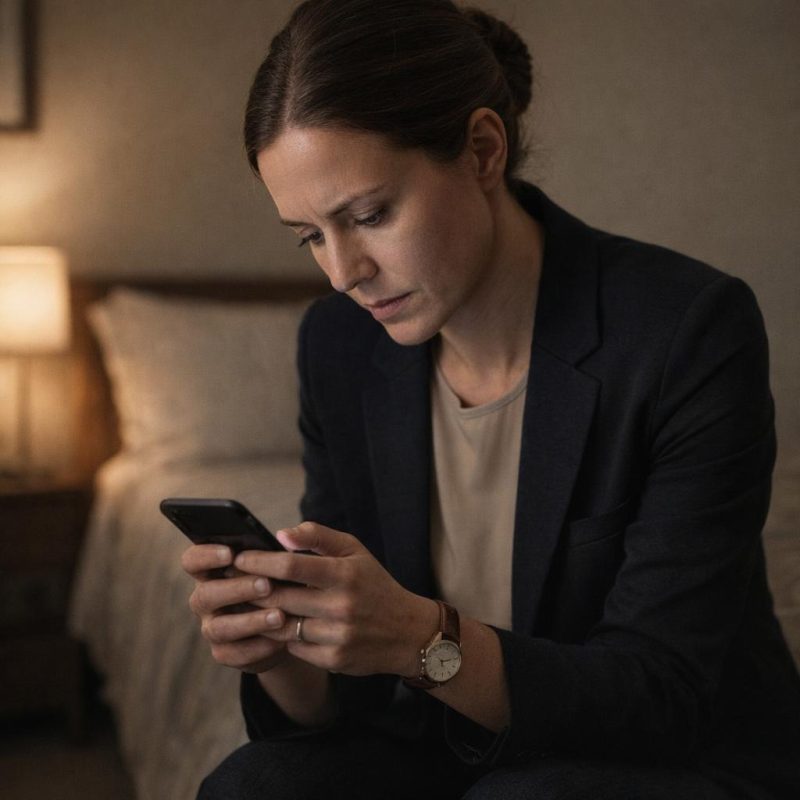 Image by RM AI
The Mismatch
Morgan sets the phone down on the coverlet and thinks about what Sarah said downstairs. The long nights. The constant presence. Being there through all of it. She had stood in the doorway of the living room and listened to Sarah say those things in a voice full of quiet grief, and the room had believed her — Morgan could see it in their faces. She picks the phone back up and looks at the calendar again, then the message thread, then the calendar. The two things — what Sarah described and what Morgan is looking at — don't sit together in a way she can make sense of. She turns it over, trying to find the angle where they fit. Maybe they're each remembering different stretches of time. Maybe there were weeks Morgan wasn't tracking, gaps where Sarah stepped in and she simply didn't know. She wants that explanation to hold. She keeps testing it and it keeps feeling thin, like a seam that won't quite close no matter how she presses it. She's not ready to say what she thinks it means. She's not sure she's ready to look at it directly. Then Sarah's laugh rises up through the floorboards, warm and unhurried, carrying easily over the murmur of the gathering below.
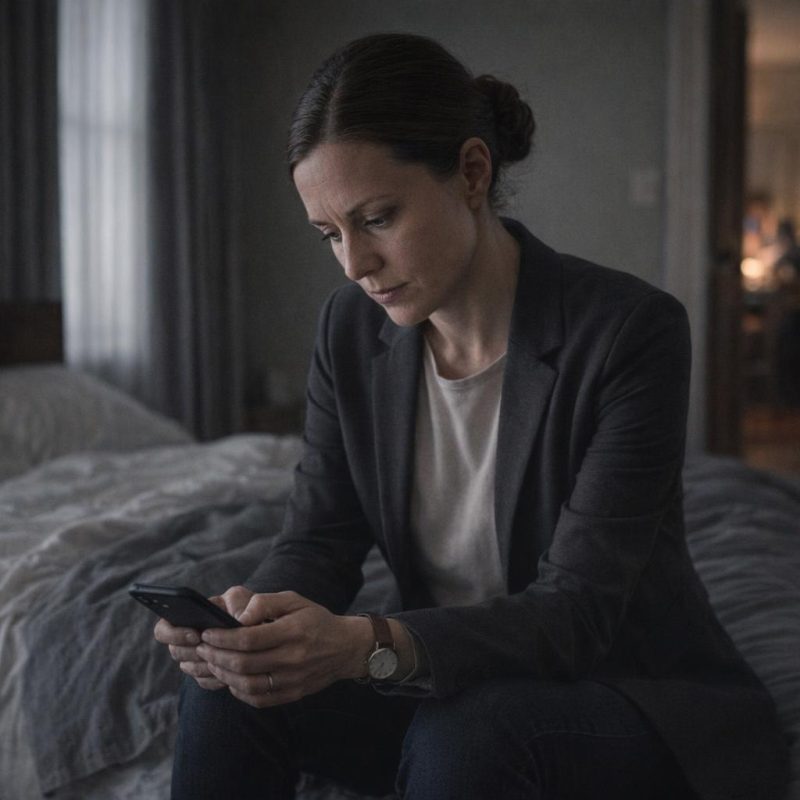 Image by RM AI
The Old Calendar
Morgan stands up from the bed and crosses to the small desk by the window. It was always her mother's thinking spot — the place she sat to write letters, pay bills, keep track of the things that mattered to her. The surface is clear except for a ceramic mug holding pens and a small framed photo Morgan doesn't look at yet. She opens the top drawer. There's a rubber band, a few loose stamps, a folded piece of paper she doesn't unfold. And beneath all of it, a day planner — the kind her mother bought every January at the same stationery shop, spiral-bound with a plain cover. Morgan lifts it out carefully, the way you handle something that might mean more than it looks like. She sets it on the desk and opens it to the first page. Her mother's handwriting is everywhere — small and neat and unmistakably hers, filling the squares with appointment times, medication notes, names, brief observations in the margins, every page dense with her mother's handwriting.
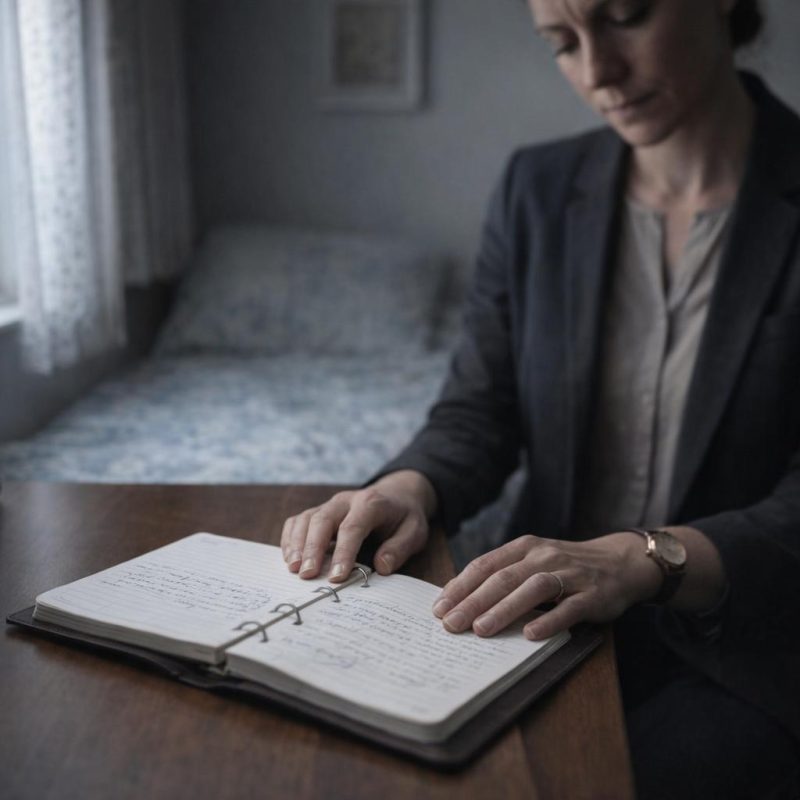 Image by RM AI
Checking the Record
The day planner is open in front of her and she starts photographing pages — methodically, one square at a time, the way she used to document medication schedules when the hospice nurse asked for records. Her phone fills up fast. She goes back to January, then February, then March, capturing every page where her mother's handwriting clusters thick around a date. Then she opens her email on her phone and searches for anything hospital-related — appointment confirmations, discharge summaries, the parking validation receipts the hospital system used to send automatically. Most of them are addressed to her. She scrolls without thinking much about what that means yet. She's just gathering. Then one email stops her — a parking receipt from a Saturday in April, timestamped 11:47 a.m., validated at the main hospital entrance. She goes back to the day planner and finds that same Saturday. There's an entry in her mother's handwriting, brief and neat, but it doesn't say who came. Just a time and a room number. She stares at the receipt on her phone screen, then back at the calendar square, and something small and uncomfortable settles in her chest — not a conclusion, just a question she can't quite put down. Then she notices a second receipt in the same email thread, from a different Saturday, and the timestamp on that one is from a weekend Sarah told her she spent at the house.
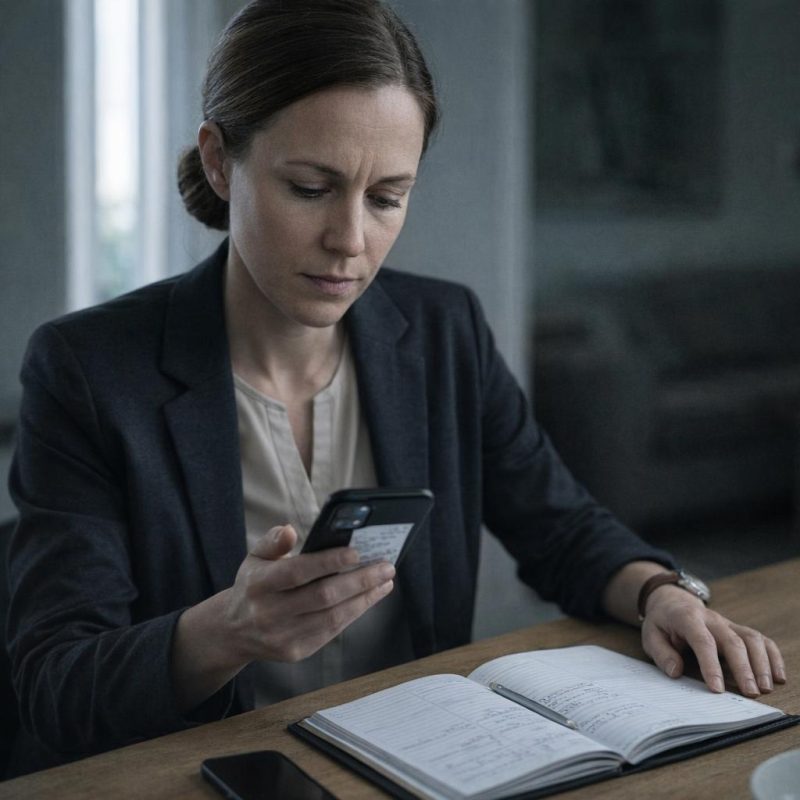 Image by RM AI
The Billing Statements
The filing cabinet is in the corner of the room, a two-drawer unit her mother kept locked until she gave Morgan the key two years ago. She kneels in front of it and pulls open the bottom drawer — the one labeled in her mother's handwriting with a strip of masking tape: Medical. The folder inside is thick, maybe two inches of paper, and she sets it on the floor beside her and starts going through it. Billing statements from the hospital. Billing statements from the hospice. Each one has a contact line near the top, and each one lists her name. Her cell number. Her work number. The insurance correspondence is the same — addressed to her, her name printed in the header like a title she never asked for but apparently held the whole time. Near the back of the folder she finds the authorization forms — the ones she signed for the pain management protocol, for the hospice enrollment, for the do-not-resuscitate order that took her three days to stop shaking about. Her signature, over and over, on the lines that said Primary Decision-Maker. She sits back on her heels and holds the folder in her lap. She hadn't thought of it as a record before. She'd thought of it as just — what she did. But here it all is, printed and filed and dated, the official account of who was actually responsible.
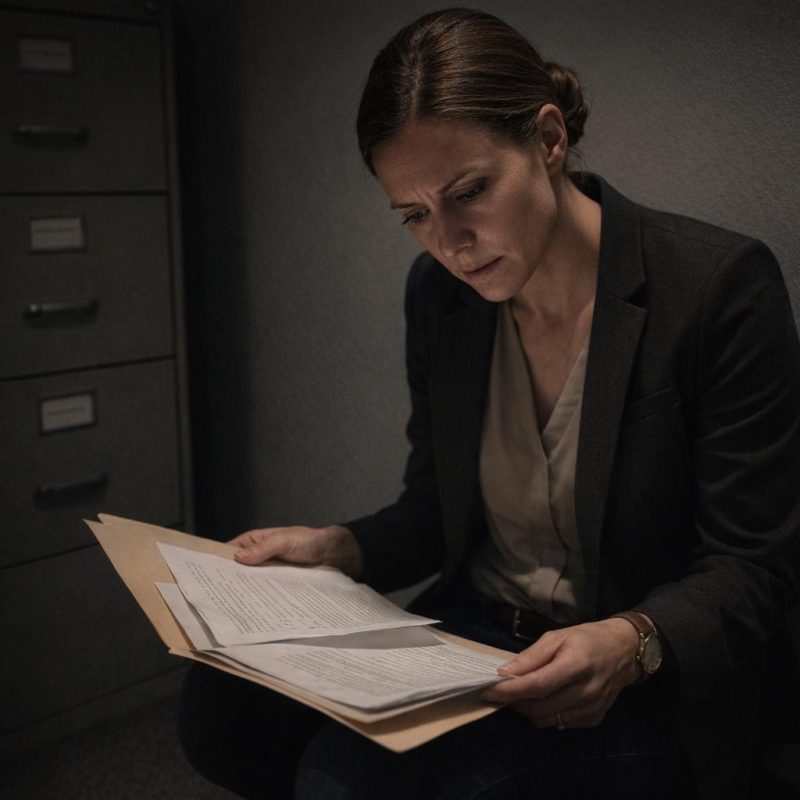 Image by RM AI
The Primary Contact
She finds the hospice enrollment packet near the back of the same drawer, tucked inside a manila envelope with the agency's logo on the front. She pulls out the intake form and smooths it flat against the floor. The top section asks for a primary contact — the person the care team should reach first, the one authorized to make decisions if the patient cannot. Her name is there, printed in her own handwriting, with both her cell and her work number listed underneath. Below that, a secondary contact line. Sarah's name, her local number, no additional notes. She keeps reading. The medical history section is filled out in her handwriting too — her mother's diagnoses, her medication list, her allergies, the name of her cardiologist. She remembers sitting at her kitchen table filling this out over the phone with the intake coordinator, her laptop open to her mother's medical portal so she could get the dosages right. The form is dated four months before her mother died. She sets it down carefully on top of the billing folder. She's not sure what she expected to feel looking at all of this — maybe nothing, maybe just the dull ache of paperwork. But sitting here on the floor of her mother's room, surrounded by the documented shape of everything she carried, the weight of it settles over her like something she's been holding up for a long time finally allowed to rest.
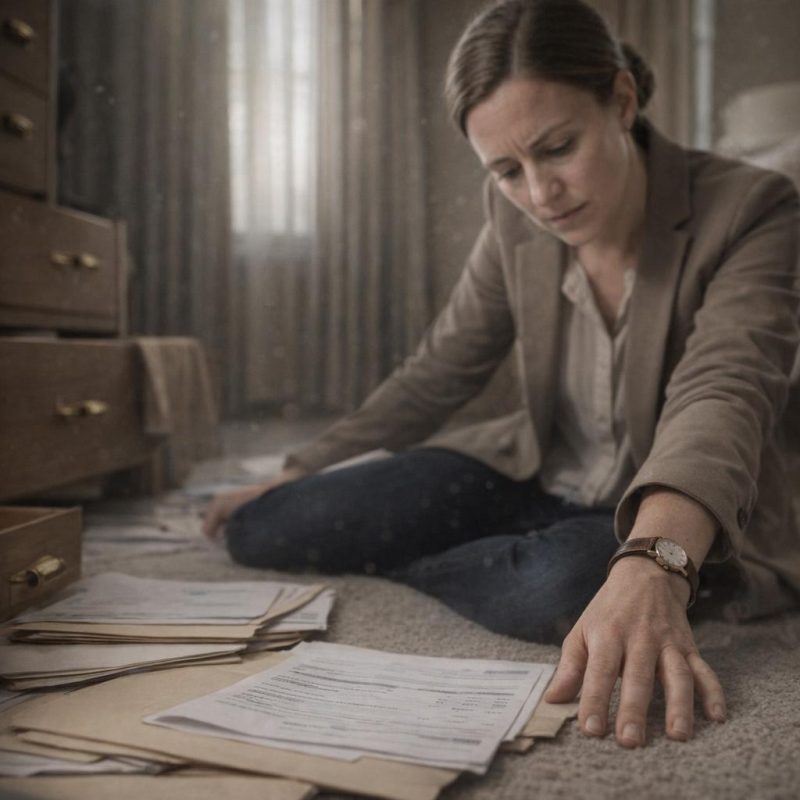 Image by RM AI
The Question
She's sliding the hospice packet back into the manila envelope when she hears it — footsteps on the stairs, unhurried but distinct, the particular creak of the fourth step she's known her whole life. Her hands move before she thinks about it. She closes the manila envelope, sets it back in the folder, eases the folder into the drawer, and pushes the drawer shut with the heel of her hand. She stands up and takes two steps toward the window, putting distance between herself and the cabinet. Her heart is going faster than it should be. She picks up a small framed photo from the windowsill — the first thing her hand finds — and holds it like that's what she came in here for. The door opens slowly. Sarah steps into the room, and her expression shifts when she sees Morgan standing there — something moving across her face before it smooths back into the composed look she's been wearing all day.
 Image by RM AI
The Return
She tells Sarah she was looking for something to keep — a photo, maybe, or one of their mother's scarves. Sarah looks at her for a moment, then nods, her expression settling into something that reads as understanding. She says of course, take whatever feels right, and she turns and goes back downstairs without asking anything else. Morgan stays in the room another minute, not moving, listening to her footsteps fade. Then she gathers her bag and goes down after her, says something about being exhausted, and lets herself out the front door. She drives home with the photos on her phone and the folder contents in her memory and nothing resolved. Three days pass. She spends them going through her email archive, cross-referencing dates, not letting herself land on any conclusion she can't support yet. On the third morning she loads the car with flattened boxes and a bag of cleaning supplies and drives back to the house. Sarah is in the kitchen when she arrives. Morgan tells her she wants to start sorting through their mother's things — clothes, books, the small items that need decisions made about them. Sarah says that's a good idea, that she's been meaning to do the same, and she leaves Morgan to it. Morgan carries the first box upstairs and sets it inside the bedroom door. The room is exactly as she left it, quiet and still, waiting.
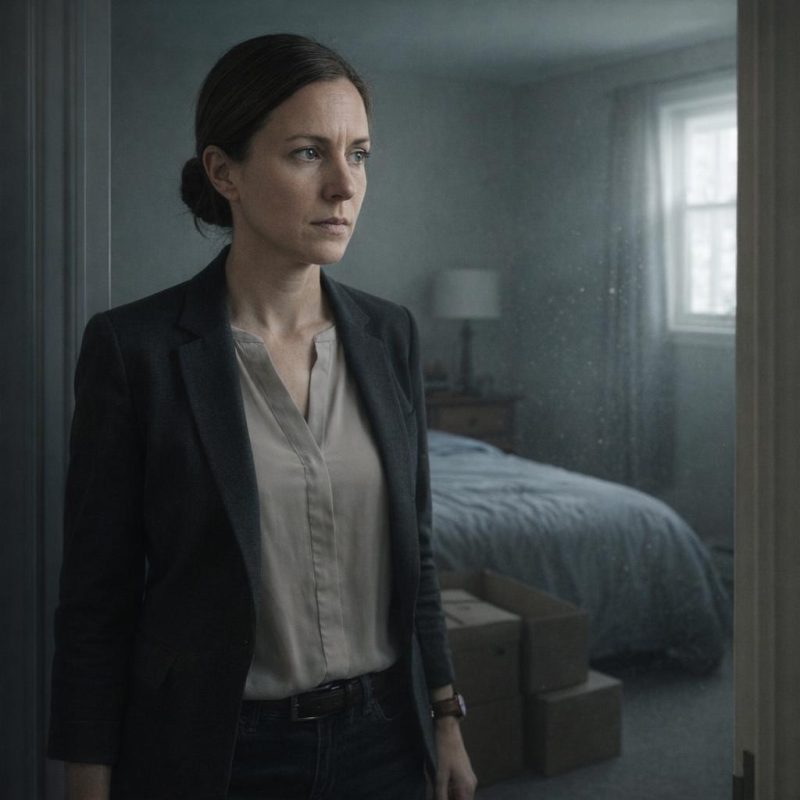 Image by RM AI
Sorting Through
She starts with the closet. There are more clothes than she expected — her mother kept things a long time, and the hangers are packed close together, blouses and cardigans and the good wool coat she wore every winter for at least fifteen years. She takes them out one at a time. Some go straight into the donation box without much thought. Others she holds for a moment before deciding. There's a blue cardigan with small pearl buttons that her mother wore to every family dinner for as long as Morgan can remember, and she folds that one and sets it in the keep pile without letting herself think too hard about it. The dresser drawers take longer. Scarves folded into neat squares, a jewelry tray with earrings her mother stopped wearing when her hands got too unsteady to manage the clasps, a small envelope of photographs tucked under a stack of handkerchiefs. She goes through everything slowly, methodically, the way her mother would have wanted. The physical work helps — there's a rhythm to it, open a drawer, assess, decide, fold, move on — and for stretches of time she's just doing the task in front of her, not thinking about receipts or filing cabinets or the questions she hasn't answered yet. The room smells like her still, faintly, and Morgan lets that be what it is.
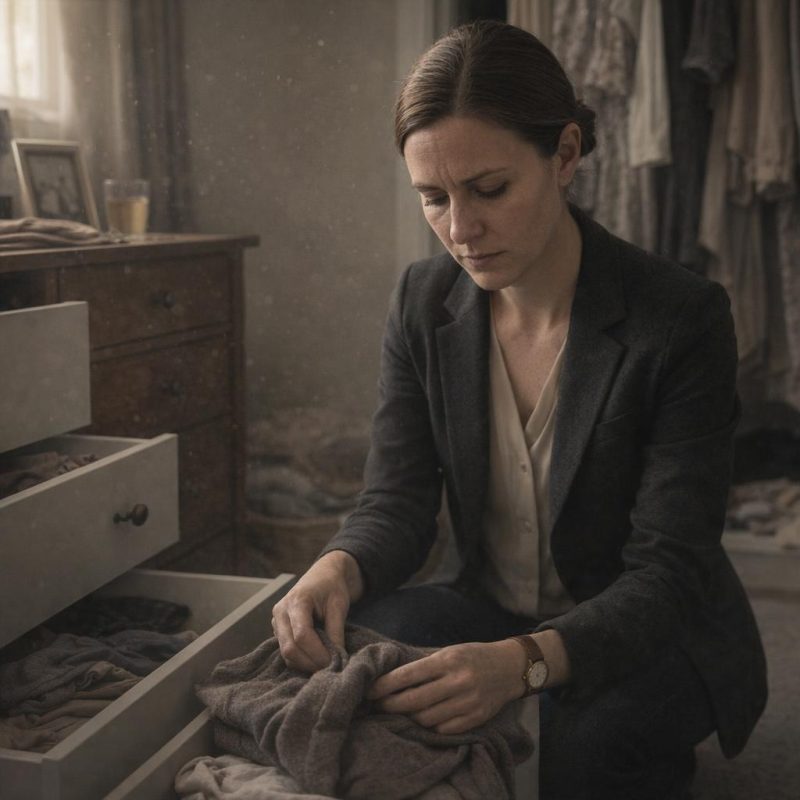 Image by RM AI
The Filing System
When the closet and dresser are done she moves to the desk. She opens the top drawer first — the one she looked in before — and this time goes through it more carefully, setting aside the rubber band and the stamps and the folded note she still doesn't read. The second drawer holds what she can only describe as a filing system in miniature: folders, each one labeled in her mother's precise handwriting, organized by category and then by year. Medical Records, going back four years. Financial Statements, the same. Correspondence, sorted by sender. Insurance, with a thick stack of neatly clipped papers inside. She pulls each folder out and sets it on the desk, not opening them yet, just taking stock of what's here. Her mother kept everything. Of course she did — she always kept everything, always knew where things were, always had the document you needed in the exact folder you'd expect to find it. Morgan is almost smiling at that when her hand stops on a folder near the back of the drawer. The label reads Legal Documents — 2024, written in the same careful hand as all the others, and something about seeing it there makes her go very still.
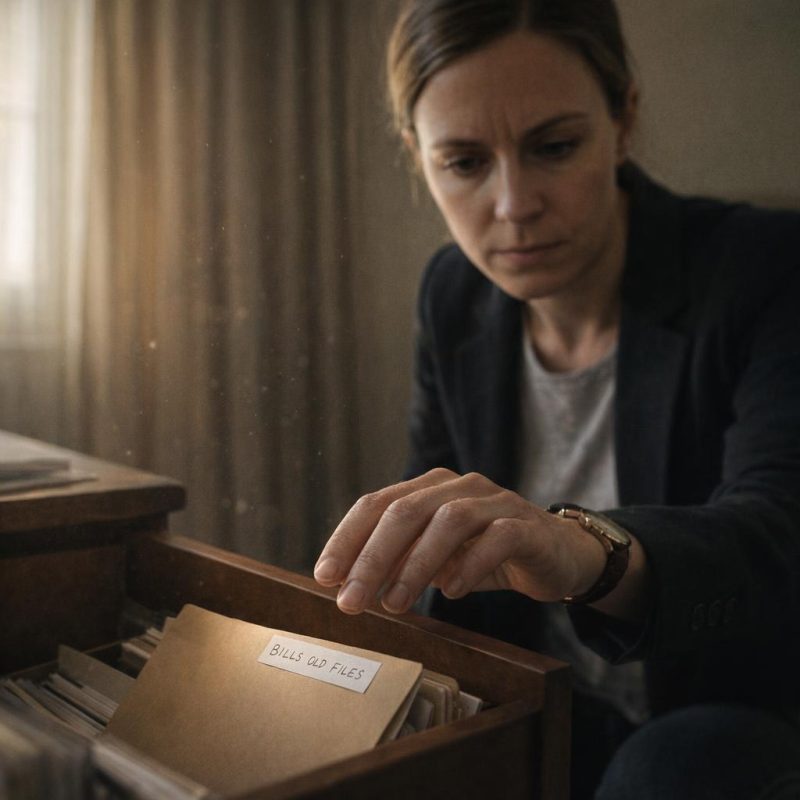 Image by RM AI
The Deed Transfer
She sets the folder on the desk and opens it. The deed transfer is right on top — a formal document, several pages, the kind with notary stamps and signature blocks and language she has to read twice to follow. The title line reads Transfer of Property: Catherine Hayes to Sarah Hayes-Chen. She turns to the signature page. The date printed beside her mother's signature is April 18th. She reads it again to make sure she has it right. April 18th. She stands there with the page in her hand, trying to place that date, running back through the spring in her memory the way you search a drawer you know something is in. And then it comes to her — not all at once, but in pieces. April was when the pain management team called her. April was when there was the conversation about increasing her mother's medication, about the new dosage schedule, about how the next few weeks were going to look. She pulls up her phone and scrolls to the call log from that period. The call from the hospice nurse is dated April 14th. The increased dosage began April 16th. The signature on the deed transfer is dated April 18th.
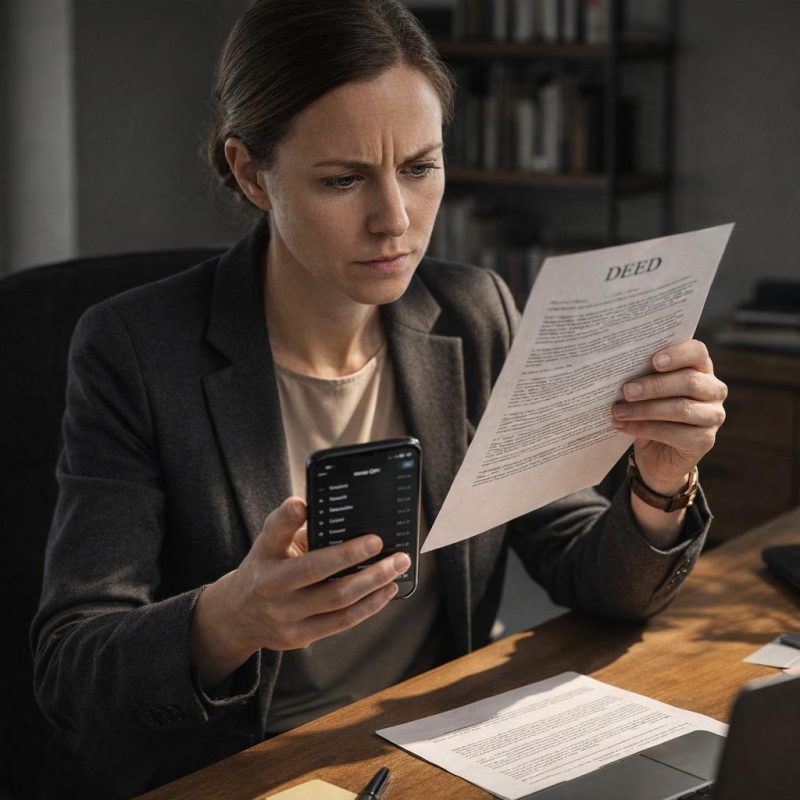 Image by RM AI
The Medication Log
She sets the deed transfer down and picks up her phone. The text thread with the hospice nurse is still there, buried under months of other messages, and she scrolls back to April without quite knowing what she expects to find. The messages cluster around the 17th and 18th — a whole back-and-forth she had half-forgotten. The nurse had explained the new dosage schedule in careful, patient language. Stronger pain management, she had written. More consistent comfort. And then, a few lines down, the part that makes her slow her scrolling: the new medication could cause drowsiness and periods of confusion, especially in the first few days of adjustment. She remembers asking about the best times to visit, wanting to catch her mother when she was most herself. The nurse had been kind about it. Morning hours, she had suggested. Before the afternoon dose. She stands there in the quiet of the bedroom, phone in hand, the deed transfer still sitting on the desk beside her. April 17th. April 18th. Then her eyes find it again, lower in the thread — the nurse's exact words: patients on the adjusted dosage may have difficulty following complex information.
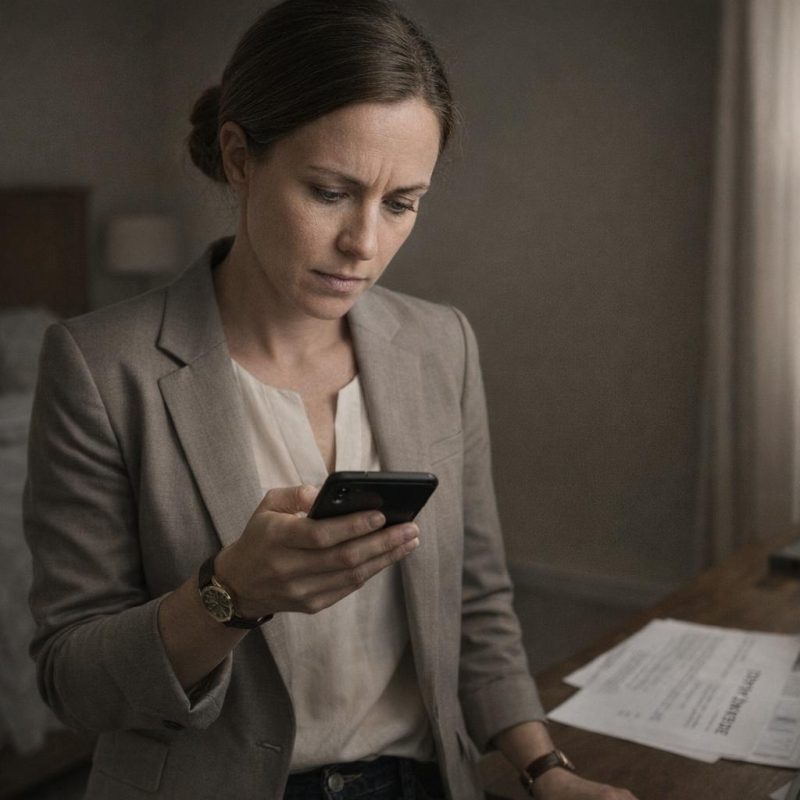 Image by RM AI
The Question of Timing
She sits down in the desk chair and looks at the deed transfer again. The signature is her mother's — she knows that handwriting, the slight leftward lean, the careful loop on the C. It looks like her mother signed it. But she keeps coming back to the date, and to those messages on her phone, and she cannot make the two things sit comfortably next to each other. Maybe there is a perfectly reasonable explanation. Maybe her mother had wanted things settled quickly, had asked Sarah to bring the paperwork, had been clear-headed that particular morning before the afternoon dose. People have good hours even in hard weeks. She knows that. She had seen it herself — her mother sharp and funny one afternoon, then foggy and distant the next. It was possible. She wants it to be possible. She sets the phone face-down on the desk and folds her hands in her lap and tries to think about it plainly, without the feeling that is already sitting in her chest like something she swallowed wrong. She cannot find the innocent explanation she is looking for, but she cannot rule it out either, and that uncertainty settles over her like a second layer of quiet.
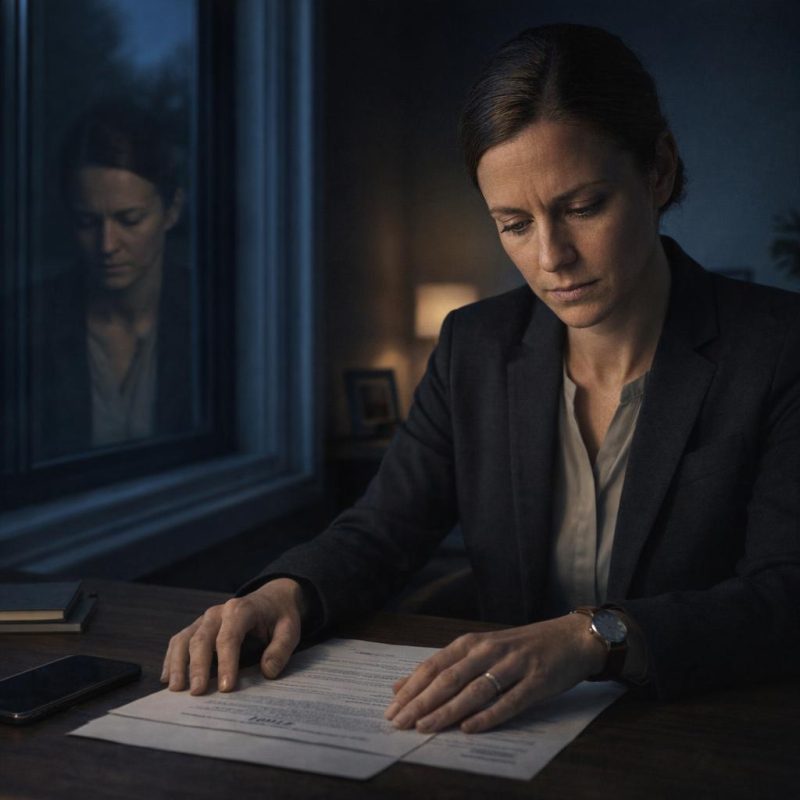 Image by RM AI
Pressing Forward
She gives herself a minute, then she gets up and opens the next drawer. There is work to do and she is not going to finish it by sitting in the chair turning the same questions over. The drawer holds old tax returns, neatly paper-clipped by year, and a folder of bank statements going back further than she expected. She makes a keep pile on the left side of the desk and a discard pile on the right and she works through them steadily, one folder at a time. Underneath the financial papers there is a smaller folder, soft with age, and inside it are birthday cards — her mother's handwriting on the envelopes, other people's handwriting inside. A card from Linda. One from a cousin she barely remembers. One in her own childhood printing that makes her stop for just a moment before she sets it carefully in the keep pile. She works through the rest of the drawer without stopping. The sorting has a rhythm to it, a simple forward motion that does not ask her to feel anything in particular, and she is grateful for that. The desk grows clearer, paper by paper, and the room holds the particular stillness of work being done.
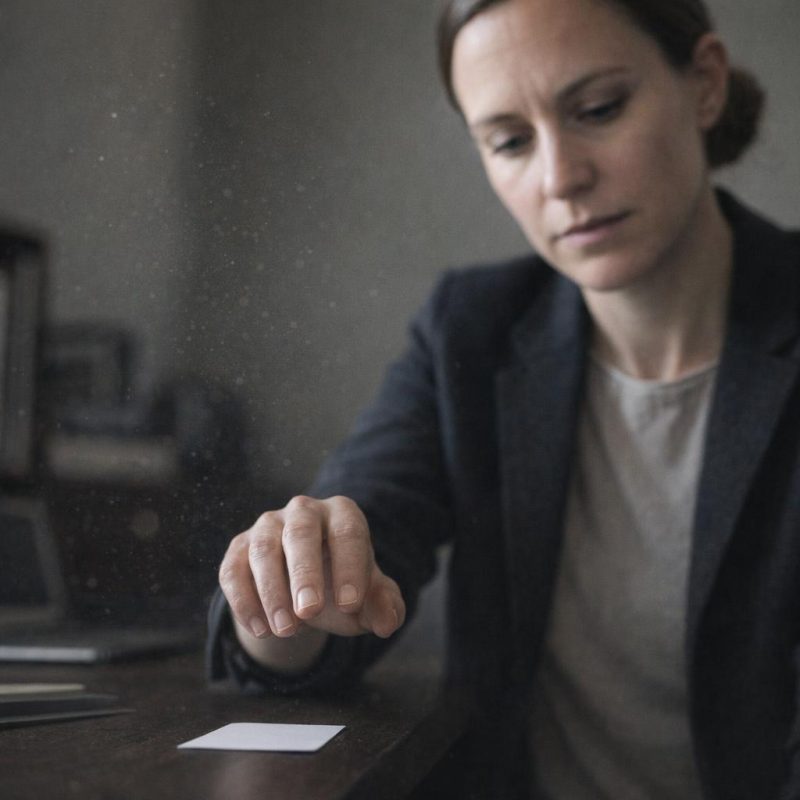 Image by RM AI
Linda's Visit
She is halfway through the closet when she hears the knock. Linda is standing on the front step with a covered container and the particular expression of someone who has been thinking about stopping by for a while and finally did it. She comes in and sets the food on the kitchen counter and asks how the sorting is going, and they talk about that for a few minutes — the desk, the closet, what to do with the furniture. Then Linda mentions, almost as an aside, that she had tried to come by a few times in the spring. She had called ahead, she says. Sarah had told her their mother was resting, or that it wasn't a good week, or that she herself was going to be out of town. Linda says it without any particular edge, just matter-of-factly, the way you report something that puzzled you at the time and still does a little — she couldn't quite explain why it had stuck with her. She asks which months, keeping her voice easy. Linda thinks about it. March, she says. And then again in April. She had tried twice in April and both times Sarah had said she was traveling. Linda shakes her head slightly, as if she still isn't sure what to make of it.
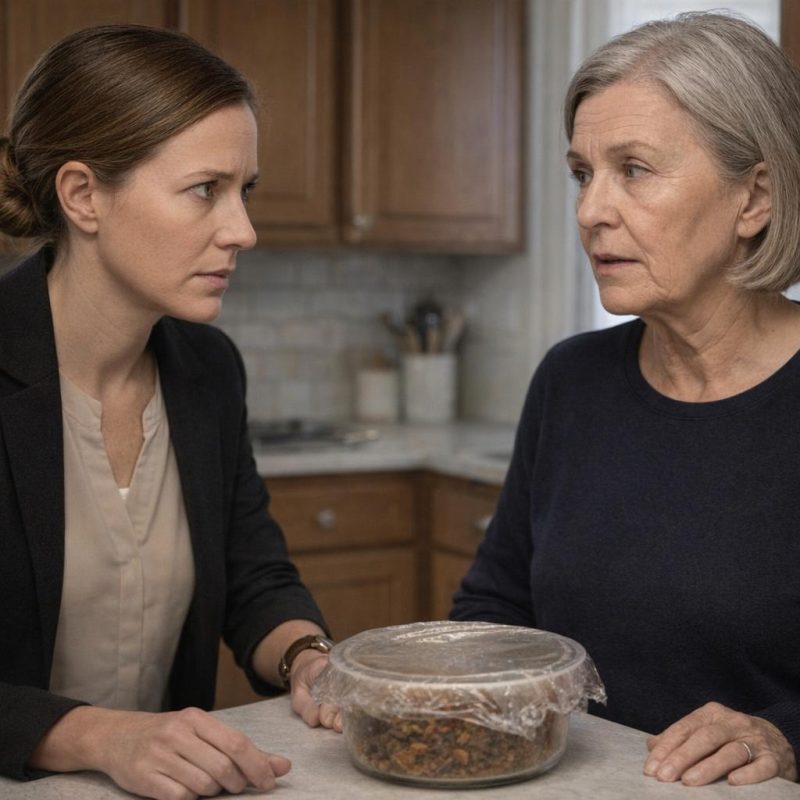 Image by RM AI
The Travel Pattern
After Linda leaves, she stands in the kitchen for a while with the container of food still on the counter. March. April. She turns those months over slowly. March was when things got harder — she remembers that clearly, the call from the care team about the new symptoms, the night she drove two hours because the on-call nurse had sounded uncertain on the phone. She had handled the emergency room paperwork alone, sitting in a plastic chair at eleven at night filling out forms she had memorized by then. She tries to remember if Sarah had mentioned a trip that month. There had been something — a conference, maybe, or a work thing. She had not thought much of it at the time. People have jobs. People have obligations. She is not trying to build a case out of nothing. But she keeps coming back to those months, and to Linda trying twice in April and being told Sarah was traveling, and to the deed transfer dated April 18th, and she cannot find the thread that ties all of it into something that makes sense. She does not have enough to say anything. She just has the shape of something she cannot quite name yet, sitting at the edge of what she knows.
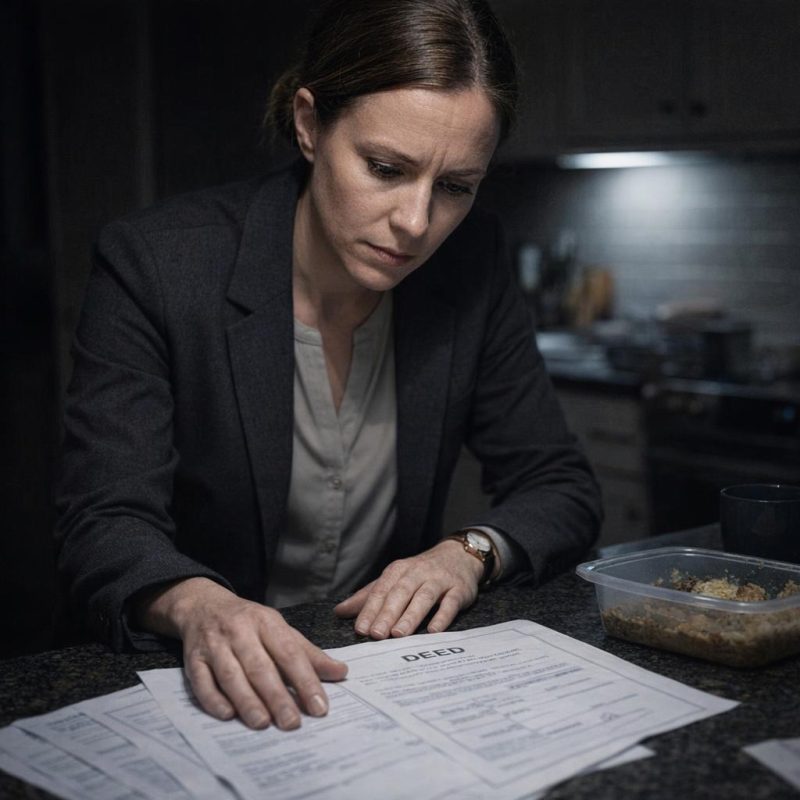 Image by RM AI
The Search Decision
She goes back to the bedroom and stands in the doorway looking at it differently. The desk is mostly cleared. The closet is half done. But she finds herself looking at the room itself now — the nightstand, the dresser, the bed — with the feeling that she has only been working on the surface of things. Her mother was organized. Careful. The log in the folder had not surprised her, not really, because that was the kind of thing her mother might do. And it made her wonder whether her mother had kept other records somewhere — tucked away, out of sight. She pulls the nightstand away from the wall and checks behind it. Nothing. She opens both drawers and takes everything out, then checks the back panel and the underside. She gets down on her knees and looks under the bed — just dust and the wooden slats of the frame in the dim light. She stands and moves to the dresser, pulls each drawer out fully, checks the backs and the bottoms. She is not sure what she is looking for. She just knows she has not finished looking. She works her way around the room methodically, checking the less obvious places, the ones you would only think of if you wanted something to stay found.
 Image by RM AI
The Mattress
She comes back to the bed. It is the one large piece she has not checked properly. She grips the edge of the mattress near the headboard and lifts one corner, angling it up to see underneath. The box spring sits clean on the wooden slats — no envelope tucked along the edge, nothing taped to the underside of the mattress. She moves to the foot of the bed and lifts that corner too, higher this time, holding it up long enough to look at the full length of the box spring surface. Still nothing. She lowers the mattress back into place and smooths the fitted sheet out of habit, the way her mother always did, corners tucked tight. She stands back and looks at the bed. It is just a bed. She has been in this room for the better part of two days and she is tired in the particular way that comes from looking hard at things and not finding what you did not know you were looking for. The room is quiet around her. The afternoon light has shifted, coming in lower through the curtains now, and the dust she stirred up has settled back down, and the empty space beneath the bed holds nothing but the ordinary dark.
 Image by RM AI
Removing the Mattress
She calls Sarah from the hallway. She keeps it simple — she wants to do a thorough clean before deciding what to do with the furniture, and the mattress needs to come off the frame. Can Sarah come by and help her lift it? Sarah arrives twenty minutes later, still in her coat, phone in hand. They position themselves on either side of the bed and lift together, and the mattress comes up heavier than she expected, the two of them walking it sideways toward the wall and leaning it there. Sarah says something about donating it and she agrees, or says something that sounds like agreement. Then Sarah's phone rings and she steps into the hallway to take the call, her voice dropping to the low, careful register she uses for work. She turns back to the bed frame. The wooden slats run the length of it, pale and bare in the afternoon light. The box spring sits to one side where they set it down. The room looks different with the bed stripped back like this — smaller, more honest somehow, the way rooms do when you take away the thing that defined them. She stands at the foot of the bare frame and looks at the slats, one by one, in the quiet.
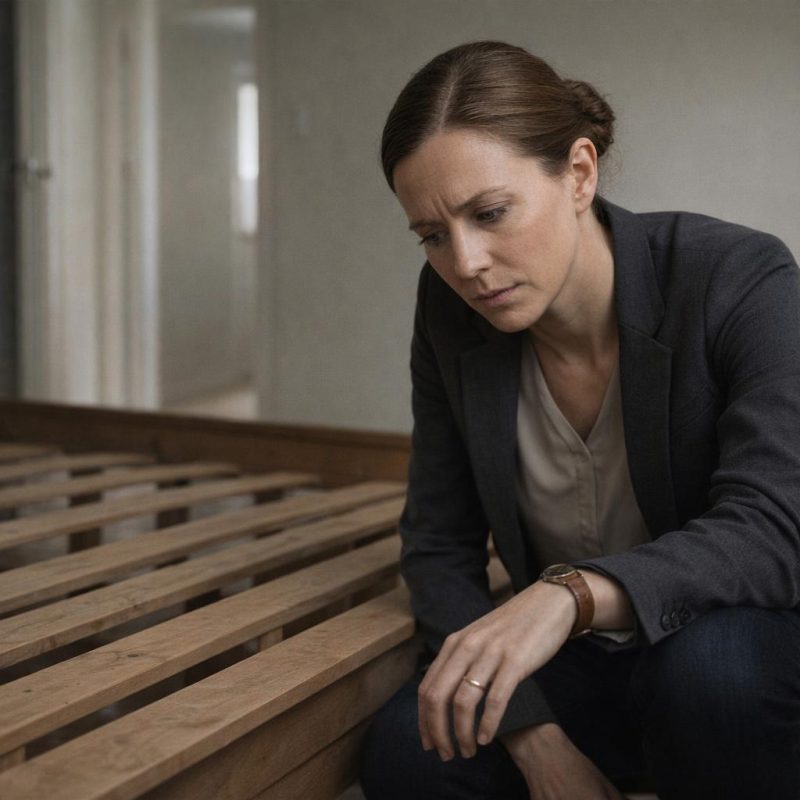 Image by RM AI
The Hidden Notebook
Sarah's voice carries from the hallway, still on her call, something about a closing date and a counter-offer. Morgan turns back to the bare bed frame and crouches down beside it, running her hand along the wooden slats, not entirely sure what she is looking for. The afternoon light comes in low and flat through the curtains, and the room is very quiet except for Sarah's muffled voice and the occasional creak of the house settling. She works her way from the foot of the frame toward the headboard, checking each slat out of habit more than anything else. Then she stops. Between two slats near the headboard, something dark is wedged — not a shadow, not a fold of fabric, but something with edges and corners. She reaches in carefully, fingers closing around it, and eases out a spiral-bound notebook, the cover plain and slightly worn at the corners, the spiral a little bent on one end.
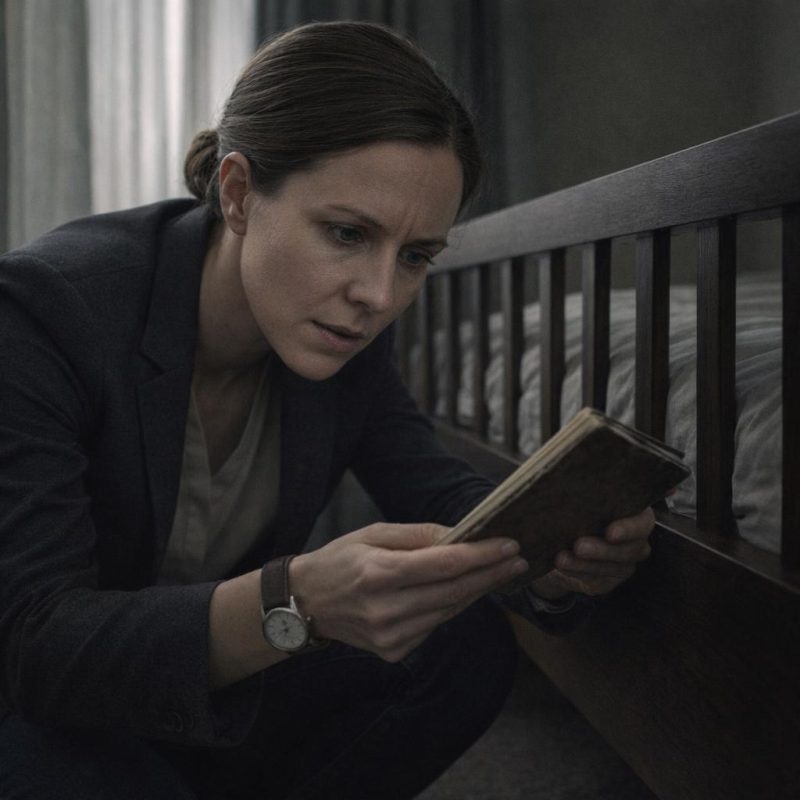 Image by RM AI
The First Page
I sit down on the floor with my back against the bed frame, the notebook in my lap. The cover gives nothing away — no label, no title, nothing written on the front. I open it to the first page and go still. My mother's handwriting fills the top of the page in her careful, deliberate print, the kind she used when she wanted something to be legible. The letters are smaller than her usual script, a little shakier near the end of each line, but unmistakably hers. I can hear Sarah wrapping up her call in the hallway, her voice dropping to a close. I don't move. I stay on the floor with the notebook open across my knees, taking in what I'm looking at. The page is ruled into columns, each one headed in the same neat print. Four headers run across the top of the page: Date, Time, Visitor, Notes.
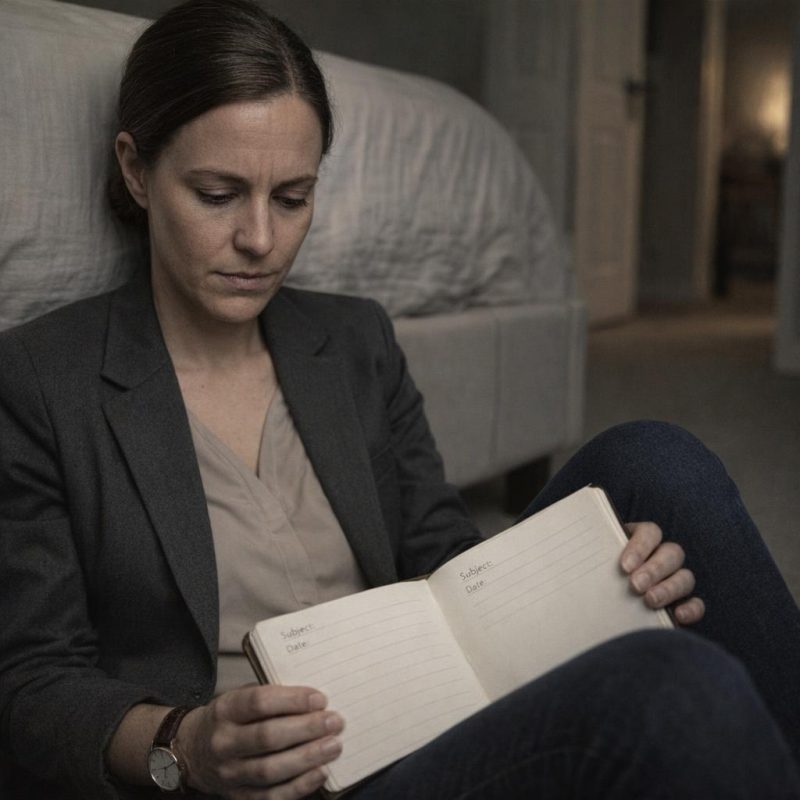 Image by RM AI
The Entries Begin
I hear Sarah say goodbye and pocket her phone, hear her footsteps pause at the doorway, but I don't look up. I tell her I'm fine, just going through some things, and after a moment her footsteps move back toward the kitchen. I stay on the floor and start reading from the first entry. The date at the top of the first row is six months before my mother died. The time reads 6:00 p.m. Under Visitor, in the same careful print: Morgan. The Notes column says arrived for the weekend, helped with medications, stayed overnight. I turn the page. The next entry is a hospice nurse, a name I recognize, a Tuesday morning visit. Then another entry two days later: Morgan again, a Thursday evening, stayed through the weekend, present for the doctor's call Friday afternoon. I keep reading. Entry after entry, week after week, the same name appearing in the Visitor column with the same quiet regularity. My name. Written in my mother's hand, in a notebook she hid under the slats of her bed, in a column she built and maintained and kept.
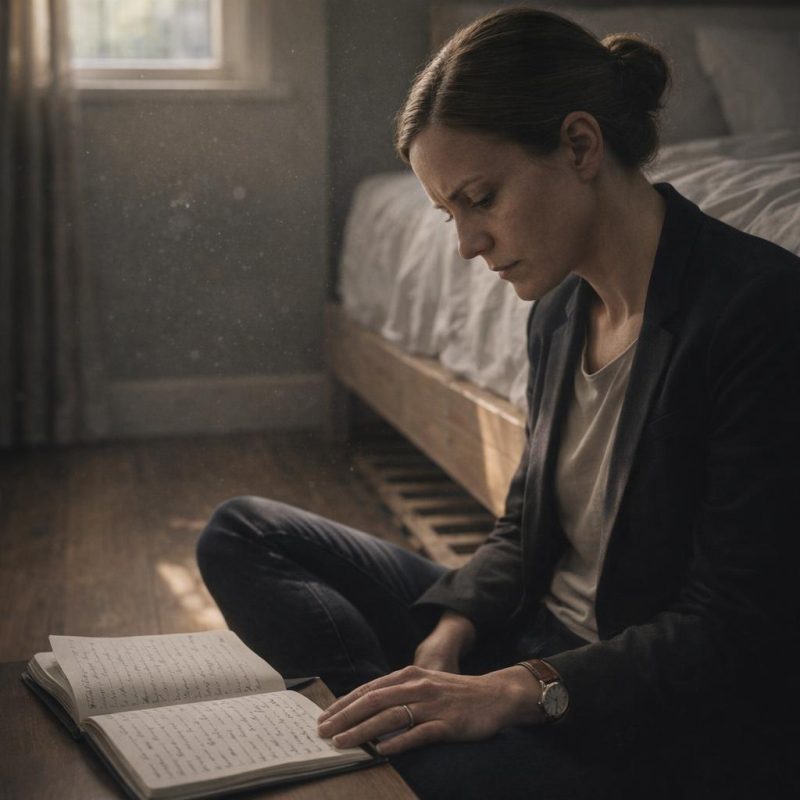 Image by RM AI
The Pattern of Presence
I lose track of how long I sit there on the floor. The light through the curtains shifts from afternoon pale to something warmer and lower, and I keep turning pages. Every Friday evening, my name. Every Saturday, my name. Sunday afternoons, the entry noting the time I left and sometimes a small detail in the Notes column — Morgan stayed for medication review, Morgan here for hospice consultation, Morgan overnight, fever watch. There are entries I remember exactly: the Saturday in February when the pharmacist called about a dosage conflict and I spent two hours on the phone sorting it out. My mother had written it down. Morgan — pharmacy issue resolved, stayed late. There are entries I'd half-forgotten: a Thursday I'd driven up after work because something in her voice on the phone hadn't sounded right. She'd written that down too. The handwriting gets a little shakier as the months go on, the letters slightly less even, but the columns stay neat and the entries keep coming. Every visit, every overnight, every phone call she thought was worth noting. All of it, written down in her careful hand, in a notebook no one was supposed to find until someone looked.
 Image by RM AI
Sarah's Name
I go back to the beginning. I turn to the first page and start scanning the Visitor column slowly this time, not for my own name but for another one. The first week passes under my finger — hospice nurse, Morgan, hospice nurse, Morgan, a doctor's visit on a Wednesday. Second week: Morgan, pharmacy delivery noted, Morgan again. Third week: the same pattern, my name and the medical staff, no one else. I reach the fourth week and slow down, checking each line carefully. Then, near the bottom of the page, I find it. The entry is brief: Sarah — stopped by, 2:00 p.m., left 3:00 p.m. One hour. I stare at it for a moment, then keep going, scanning forward through the following pages. The entries continue — my name, the nurses, the doctors — and I keep looking for Sarah's name to come back. I flip through another week. Then another. The gaps between her appearances stretch out longer than I'd expected, longer than felt right, and each time I find her name again the visit is short, an hour or two at most, sandwiched between long stretches of pages where her name simply does not appear.
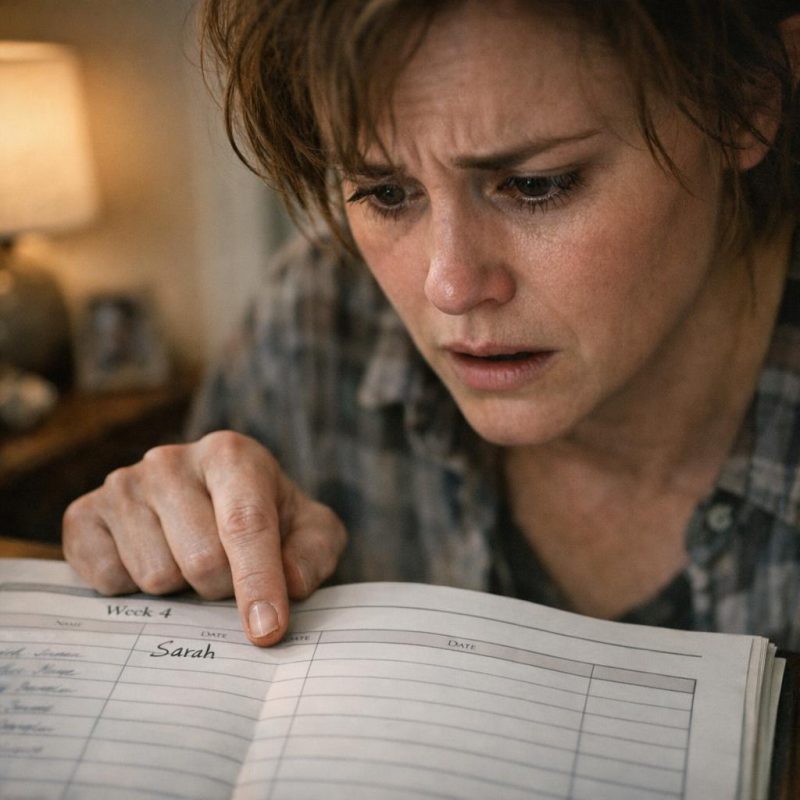 Image by RM AI
The Gaps
I focus on March. I remember March — it was a hard month, the medication adjustments, the two nights I slept on the couch because I didn't want to leave. I find the first of March in the notebook and work through it line by line. My name appears on the first Friday, the following Monday when I'd called in late to work, the Wednesday after that when the hospice coordinator came and I'd driven up to be there. I count my entries for the month: eleven. Then I go back and count Sarah's. The first entry is the third week of March, a Saturday afternoon, one hour and forty minutes according to the time stamps. The second is the last day of the month, a Sunday, just under two hours. Two visits in thirty-one days. I check April next, running my finger down the Visitor column the same way. My name fills the column in its usual rhythm. Sarah's name appears twice in the first three weeks, both visits under ninety minutes. The notebook sits open across my knees, the columns neat and factual and entirely without comment. My mother had not written anything in the Notes column to explain the gaps. She had simply recorded what was there.
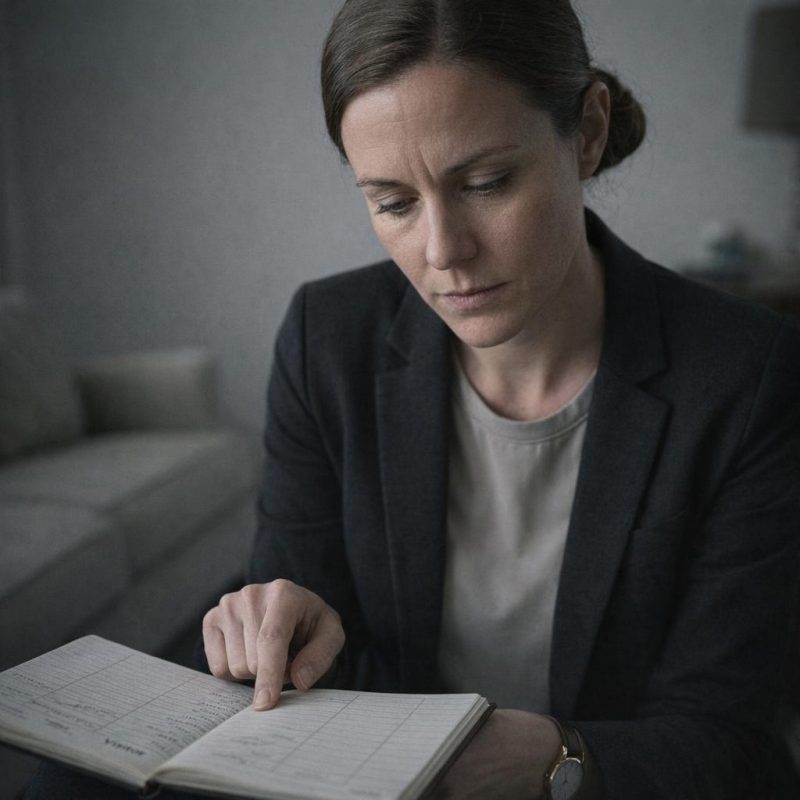 Image by RM AI
The Crisis Nights
I know the nights I'm looking for. There are two of them that I've carried with me since they happened, the kind of nights that don't fully leave you. I find the first one near the middle of March — the night her fever spiked and I'd gotten the call just after ten. The entry reads: Morgan — arrived 11:00 p.m., fever 103.4, stayed through morning, fever broke 4:00 a.m. That's all. No other name in the Visitor column for that date or the one that followed. I sit with that for a moment, then turn to April and find the second night, the one that ended in the emergency room. The entry is longer than most: Morgan — drove to ER, arrived 1:15 a.m., stayed overnight, discharged following afternoon. Again, only my name. I check the surrounding entries out of habit, the days before and after each crisis, looking for any other name that might have come and gone. The hospice nurse appears the morning after the fever broke. A doctor's name shows up the day after the ER visit. Sarah's name is not there. Those nights exist in the notebook exactly the way I remember them — just the two of us, my mother and me, and the long hours between dark and morning.
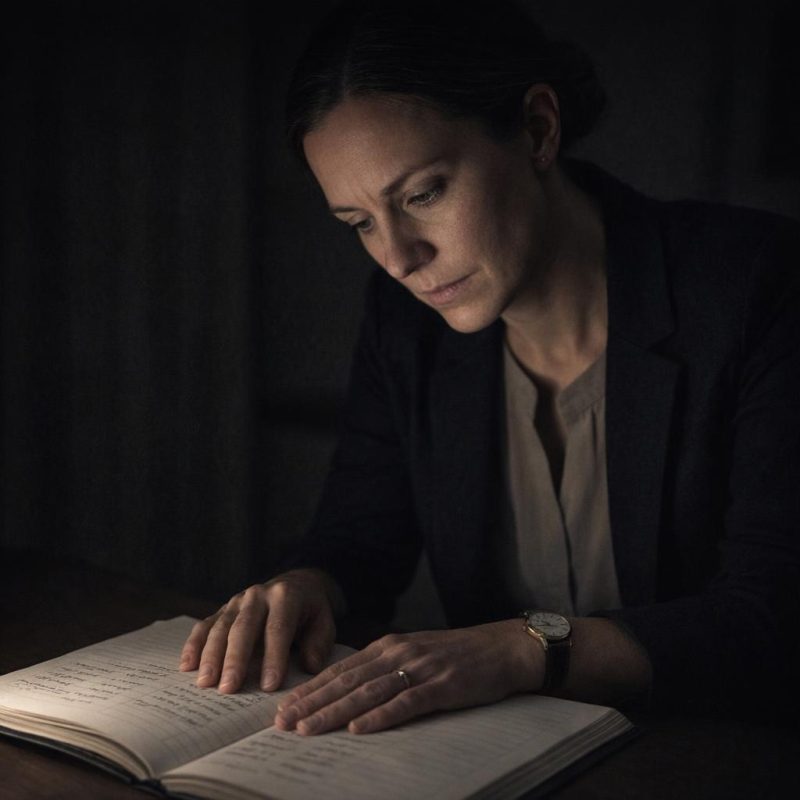 Image by RM AI
The Legal Visit
I know the date I'm looking for now. I flip forward through April, past the ER entry, past the follow-up visits, until I find it: April 18th. My hands are not quite steady. The entry is in my mother's handwriting, the letters more uneven than earlier in the notebook, the pen pressing lighter against the page. Under Visitor: Sarah. Under Time: 2:15 p.m. to 3:40 p.m. And then the Notes column, two lines, written in the careful deliberate print she used when she wanted to be precise. The first line reads: Sarah brought papers to sign — very tired from new medication. The second line, just below it, in the same careful hand: Hard to focus — signed where she showed me.
 Image by RM AI
The Medication Notes
I keep reading. Past April 18th, back through March, forward again into May. The notebook has margin notes I hadn't noticed before — small annotations in a different ink, added later, like my mother was returning to entries and adding context she hadn't thought to include the first time. On March 12th, next to a visit from Sarah, she'd written in the margin: pain medication increased this week — very foggy by afternoon. On March 29th: new dosage making mornings difficult — hard to think clearly until after lunch. I start cross-referencing. The dates when Sarah brought documents to sign — nearly all of them fall in that window, the afternoon hours, the days when my mother had noted feeling confused or slow. One entry stops me cold. It's from April 3rd, written in that careful deliberate print: Asked Sarah to come back tomorrow when clearer — she said it couldn't wait. My mother had known. She'd been aware enough to ask for more time, aware enough to write it down, aware enough to document that the answer was no. I sit with the notebook open across my knees, the afternoon light shifting across the page, and I think about how much effort it took her to keep this record — shaky hands, foggy afternoons, and still she wrote it all down.
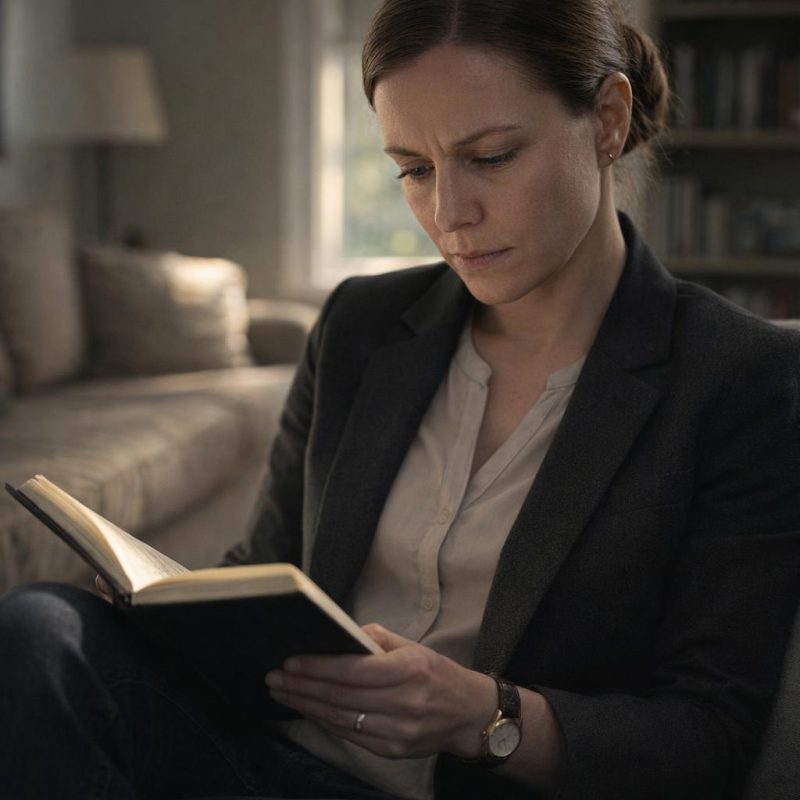 Image by RM AI
The Travel Entries
I flip back to the beginning of the notebook and start reading differently this time — not for medical details, but for the gaps. The days between Sarah's visits stretch out in the entries, sometimes a week, sometimes longer, and my mother had noted the reasons given. Sarah called — conference in Phoenix this week. That one is from late February, written in the same careful hand, the city name spelled out fully like she wanted to be precise. A few pages later, from early March: Sarah says work trip to Denver — back next week. Then another, mid-March: Sarah traveling again, didn't say where. I write each one down on the notepad beside me — the dates, the cities, the phrasing my mother used. Phoenix. Denver. The unnamed trip. My mother hadn't editorialized. She'd just recorded what she was told, the same way she recorded medication times and visitor durations, with the same neutral precision she applied to everything else. These were checkable facts, I understood that much. Dates and cities, written in my mother's handwriting, in a notebook she'd kept hidden in a drawer she knew I would eventually open. I set the notepad down beside the notebook and looked at the two pages side by side — her careful entries, and the list of places I'd just copied out.
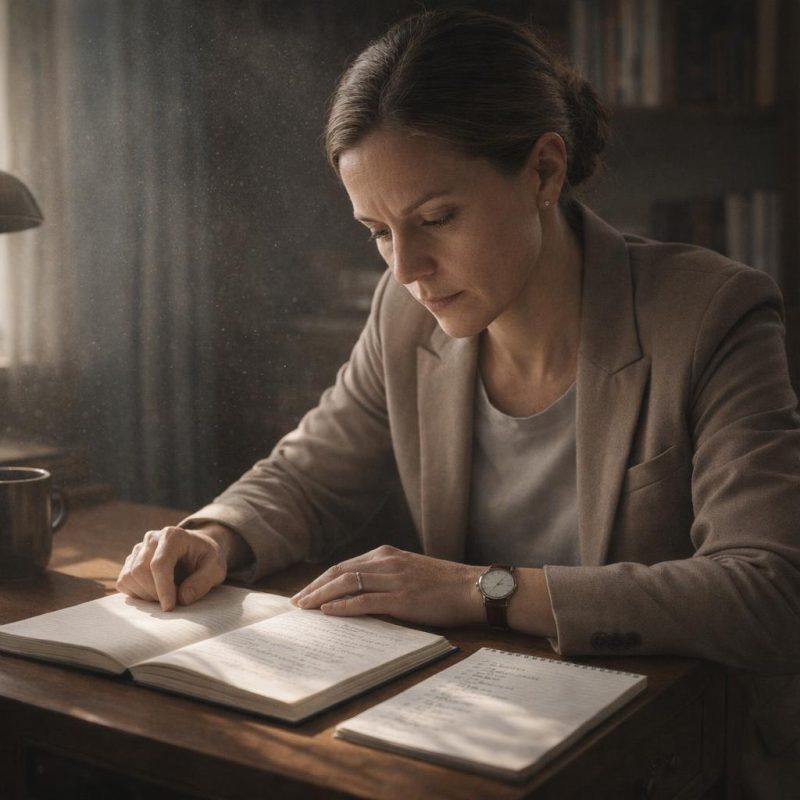 Image by RM AI
The Digital Trail
I set the notebook down and reach for my laptop. My hands are steadier now than they were an hour ago — something about having a task, a specific thing to look for, settles the noise in my chest into something quieter and more focused. I open the browser and go to Facebook. I haven't been on Sarah's profile in months; we're connected but I rarely look. Her account comes up immediately — profile photo recent, cover photo a scenic shot I don't recognize. The account is public, or public enough. Posts going back years, photos, check-ins, the kind of curated feed that tells a particular story about a particular life. I start scrolling back. Past the condolence posts from after the funeral, past the vague updates from spring, back into March and April. The posts are frequent — more frequent than I expected. Photos with friends, restaurant check-ins, event tags. Each one has a date stamp. Each one has a location. I pull the notepad with my mother's entries closer to the keyboard and keep scrolling, the two records running parallel in front of me, and then I find Sarah's Facebook profile loaded with location-tagged posts going all the way back through the months I'm looking for.
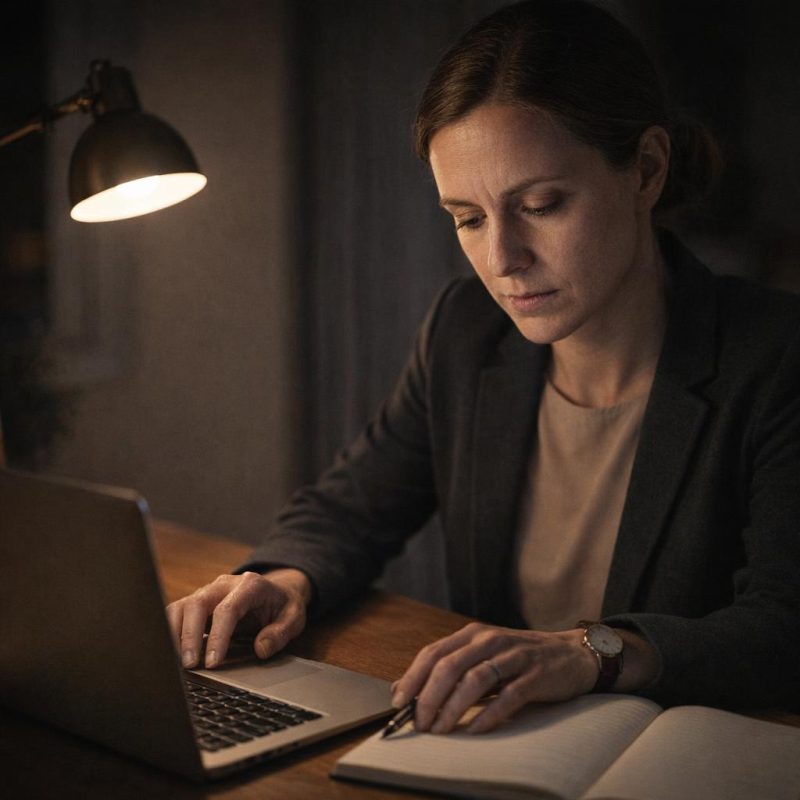 Image by RM AI
The Phoenix Post
I slow down when I reach March. The posts come in clusters — a few days quiet, then a burst of activity, photos and tags and check-ins. I'm moving carefully now, matching dates on the screen against the dates on my notepad. Then I stop. March 23rd. Sarah is standing outside a restaurant, smiling, a margarita glass raised toward the camera. The location tag reads Phoenix, Arizona. The timestamp is 8:47 p.m. I stare at it for a moment, then reach for the notebook. I already know what I'm going to find, but I need to see it written in my mother's hand. I flip to March 23rd. The entry is short, the handwriting more uneven than usual, the pen pressed hard into the page like she was fighting to keep the letters legible: Emergency — Morgan drove me to ER at midnight — fever 103. I look back at the laptop screen. Sarah's smile, the restaurant lights behind her, the margarita glass catching the flash. Then the notebook entry again, my mother's shaking handwriting, the word Emergency at the top of the line. The timestamp on Sarah's post reads 8:47 p.m. — four hours before I was in an emergency room with our mother.
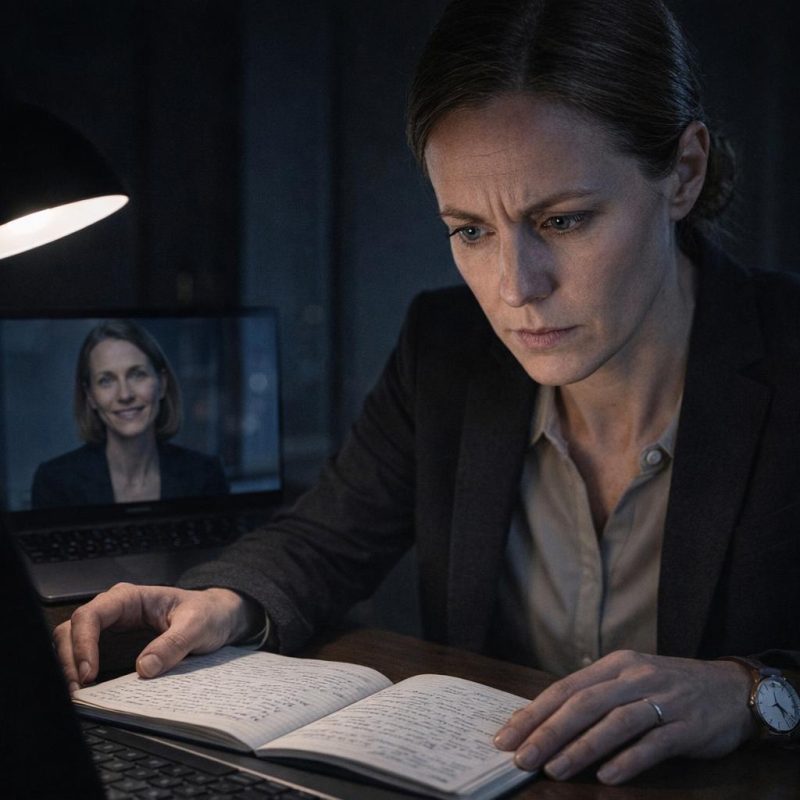 Image by RM AI
The Full Picture
I don't stop after March 23rd. I go back to the beginning and do it properly — every entry in the notebook, every post on Sarah's feed, matched against each other date by date. I open a spreadsheet and start entering data. Notebook entry. Social media post. Location. Date. It takes over an hour. When I'm done, I sit back and look at what I've built. Sarah in Denver on April 7th — the notebook shows a medication crisis that week, a call to the on-call nurse, a dosage adjustment I handled by phone from two states away. A post tagged San Diego, April 21st — the notebook shows a palliative care consultation I attended alone, the one where we first talked about timelines. A resort spa photo from a week I remember as one of the hardest, when the hospice coordinator came for the first time and I sat in my mother's kitchen taking notes because my hands needed something to do. Every major crisis. Every significant appointment. Every document signing timed to a high-medication afternoon. Sarah wasn't managing any of it. She was somewhere else, and my mother had written it all down, and now I have a spreadsheet that proves it, row by row, date by date — Sarah's public story on one side, and the documented truth on the other.
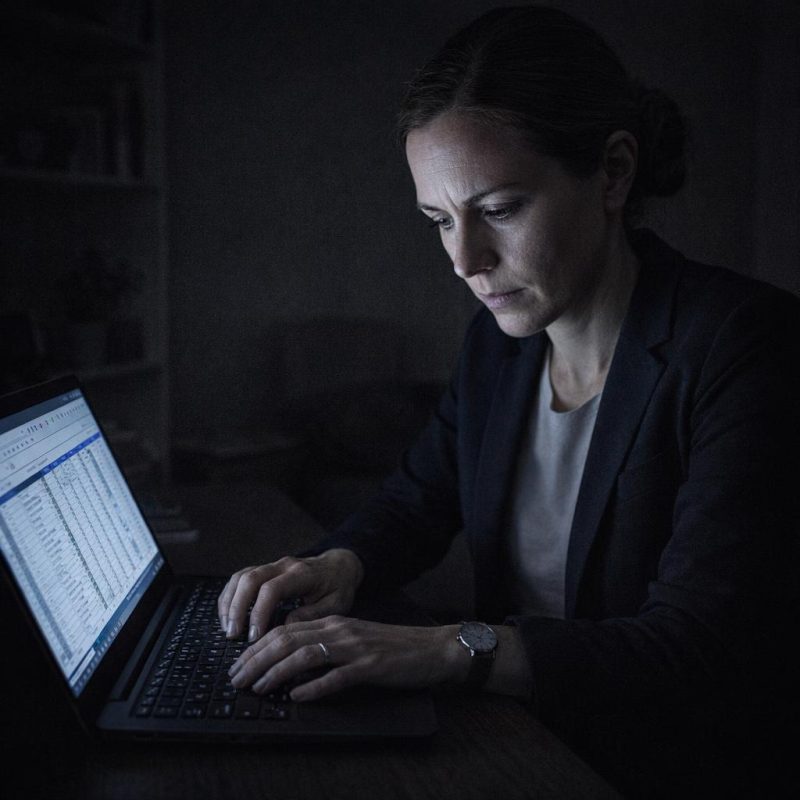 Image by RM AI
Building the Timeline
I open a new document and title it simply: Timeline. I start at six months before my mother's death and work forward, building each entry the same way — date, what the notebook shows, what Sarah's social media confirms, what my own calendar records. I pull up my phone and go through my calendar app, the one I used to track every appointment, every pharmacy pickup, every call with the hospice coordinator. The entries are all still there. October 14th: oncology follow-up, drove Mom. November 3rd: prescription pickup, two-hour round trip. December 9th: palliative care intake, attended alone. I copy each one into the document, then add the corresponding notebook entry beside it, then the social media post if one exists. The document grows steadily. Two pages. Three. Each row is a date, a fact, a source. Nothing editorialized, nothing interpreted — just the record, laid out in columns so clean and plain that anyone reading it would see exactly what I see. I add a final column header at the top: Sarah's Public Claim. I leave those cells empty for now, because I know exactly what goes in them, and I want to fill them in carefully, with her exact words, sourced and attributed. The side-by-side comparison is already taking shape on the screen in front of me.
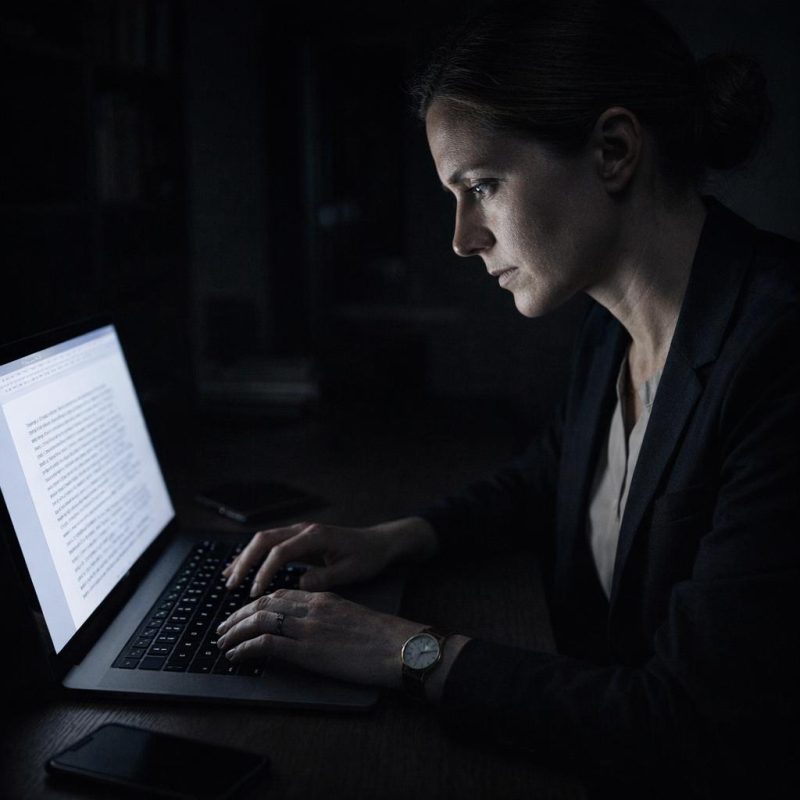 Image by RM AI
The Screenshots
I go back to Sarah's Facebook profile and start at the beginning of the relevant months, working forward this time instead of backward. For each post that matches a date in the notebook, I take a screenshot. I'm deliberate about it — I make sure the full post is visible, the timestamp readable, the location tag clear. Phoenix, March 23rd. Denver, April 7th. San Diego, April 21st. Each screenshot gets saved to a new folder on my desktop that I label Evidence, and each filename gets the date written out in full so there's no ambiguity: 2024-03-23-Phoenix, 2024-04-07-Denver, 2024-04-21-SanDiego. The folder fills steadily. Twelve screenshots. Fifteen. I cross-reference each one against the timeline document before I close the tab, making sure the entry is complete — notebook source, social media source, filename. When I reach the end of April, I stop and open the folder and look at the thumbnails lined up in rows. Sarah's face in restaurant lighting, in airport terminals, in hotel lobbies, in outdoor settings with blue skies behind her. Each image dated. Each image tagged. Each image sitting in a folder next to my mother's handwritten record of what was happening at home while those photos were taken.
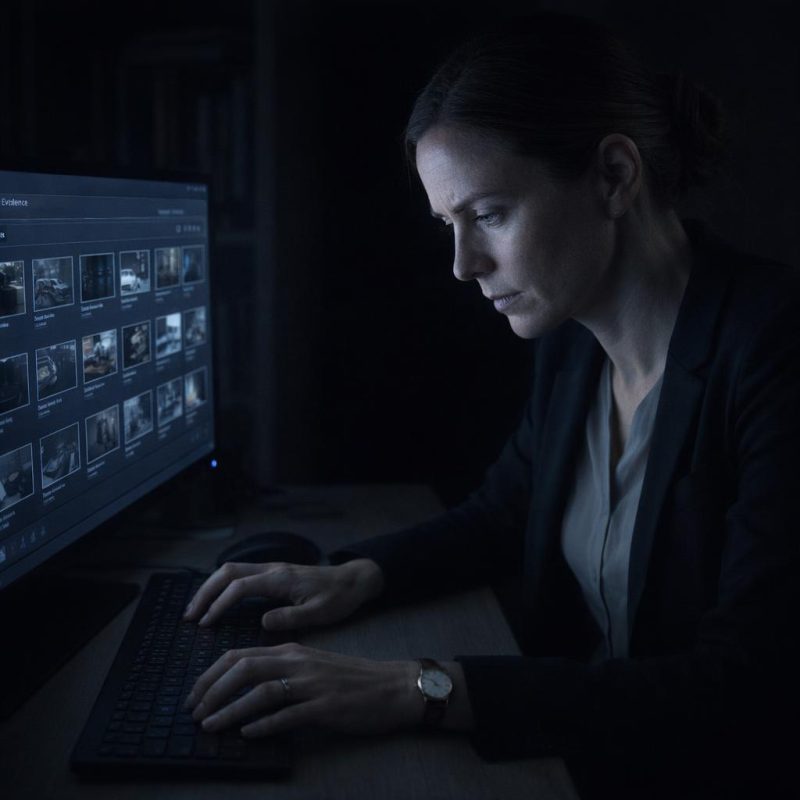 Image by RM AI
The Resort Photo
I keep scrolling through April, slower now, checking each post against my notes. Then I stop. The photo is from April 15th. Sarah is wearing a white spa bathrobe, her hair loose, a glass of something sparkling on the table beside her. The background is unmistakable — stone walls, mountain views, the kind of landscaping that costs money to maintain. The location tag reads Sedona Wellness Retreat. I sit very still for a moment. April 15th. I know that date. I go back through my notes from the gathering after the funeral, the things people said, the things Sarah said. She had mentioned April 15th specifically — one of the hardest nights, she'd told people, the night she stayed at the hospital until dawn, holding Mom's hand through a bad turn. I had heard her say it. I had watched people reach for her arm, squeeze her shoulder, tell her she was so strong. I open the Evidence folder and take the screenshot carefully, making sure the date, the location tag, and Sarah's face are all visible in the frame. I save it: 2024-04-15-Sedona. Then I close the laptop and sit in the quiet of my mother's room, the notebook in my lap and the folder full of screenshots on the screen I can no longer look at.
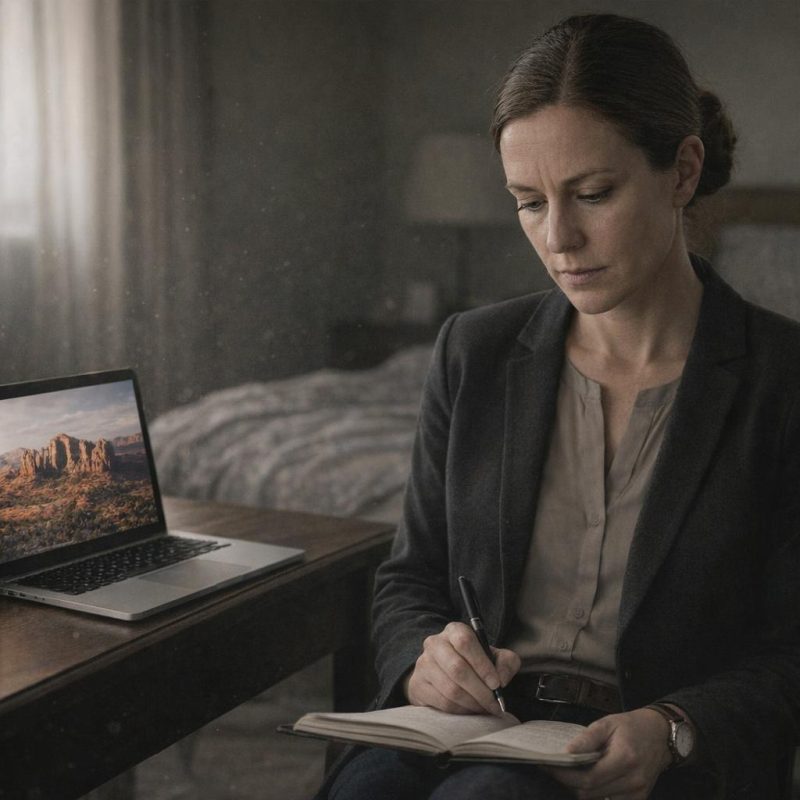 Image by RM AI
The Presentation Plan
I sit with the notebook in my lap for a long time after I close the laptop. The evidence is real. The dates are documented. The screenshots are saved. What I do with all of it now — that's the part I have to get right. I think about the gathering after the funeral, the way people circled Sarah, the way her story had already settled into everyone's understanding like something permanent. If I come in swinging, I look like the grieving sister who couldn't let go. I need to be methodical. I need to let the facts do the work. Linda is the right place to start. She's Mom's sister, she's been around long enough to know the shape of things, and at the gathering she'd gone quiet in a way I noticed — not agreeing, just not arguing. That matters. I open a new document and start building the timeline in clean columns: date, what Sarah claimed, what the notebook records, what the social media post shows. It takes me two hours to get it right. Then I open my email, type Linda's name in the address line, and start writing the first sentence.
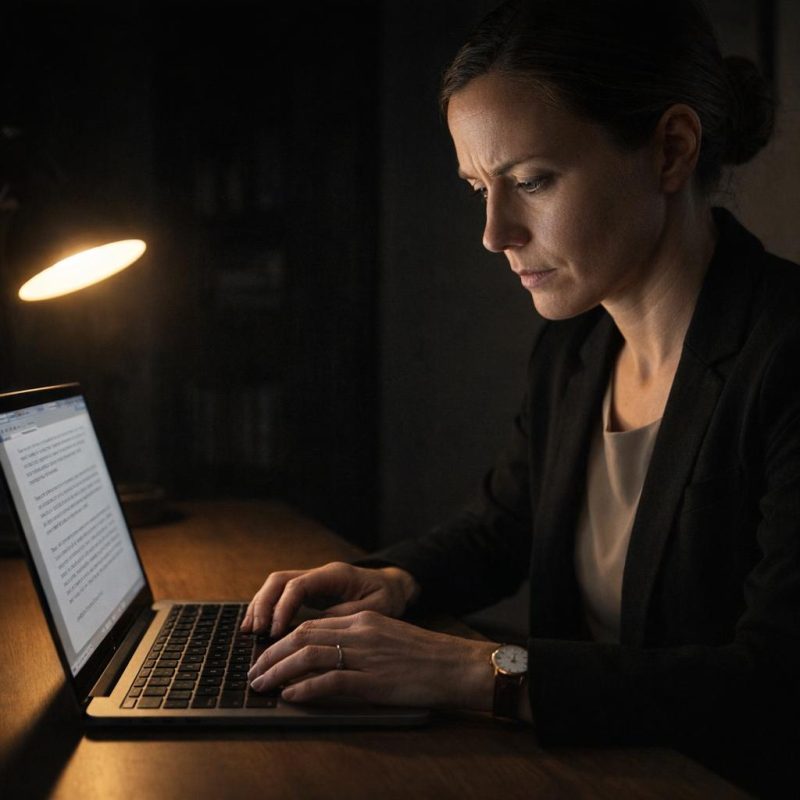 Image by RM AI
The Documentation Packet
I don't send the email yet. I want Linda to hold something in her hands, not just read a screen. I photograph every page of the notebook first, making sure the handwriting is legible, the dates clear, the entries in sequence. Then I open the timeline document and print it in color — the social media screenshots need to be visible, the location tags readable, the dates impossible to miss. The printer runs for a long time. I make three packets: one for Linda, one for myself, one spare. Each one gets the timeline first, then the screenshots in chronological order, then the photographed notebook pages. I paper-clip each stack and slide them into manila envelopes. Then I go back to the Evidence folder and print the deed transfer documents and the medication log entries from April, the ones that show my handwriting, my calls, my follow-ups. I add those to each packet. I set the envelopes side by side on the desk next to the notebook. The stack sits there under the lamp — dated, sourced, cross-referenced, and complete.
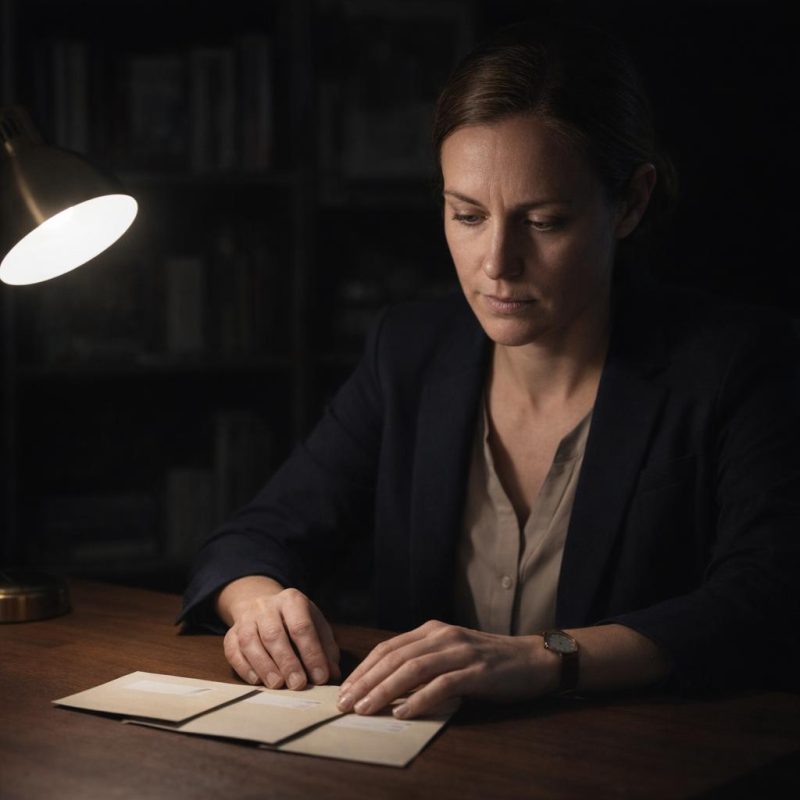 Image by RM AI
The Call
I wait until mid-morning to call Linda. I want to sound steady, not urgent. She picks up on the second ring, and her voice is warm but careful, the way it's been since the funeral. I tell her I've been going through some of Mom's things and I've come across some documents related to the estate that I think the family needs to review together. I keep my tone even, professional, like I'm scheduling a work meeting. Linda is quiet for a moment, then she says she's glad I called, that she's had some questions of her own she hasn't known what to do with. I don't ask what questions. I just ask if she'd be willing to help gather a few people — Sarah, and maybe two of the cousins who were close to Mom. Linda says yes without hesitating. We go back and forth on timing and land on three days from now, at the house, late afternoon when everyone can make it. I thank her and keep it brief. After I hang up, I sit in the kitchen with my coffee going cold, and the three days ahead feel both very long and exactly right.
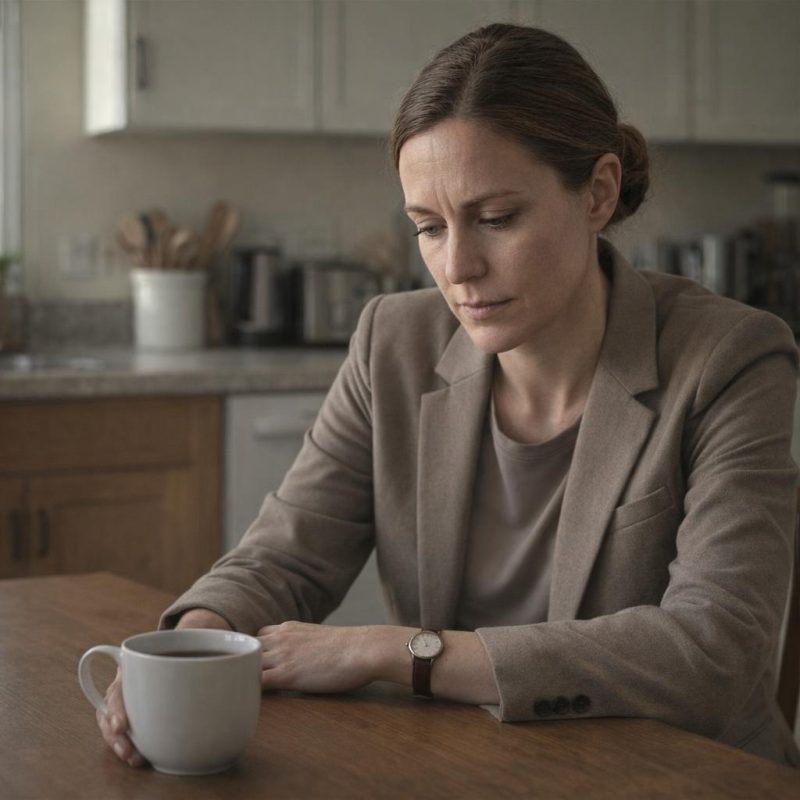 Image by RM AI
The Arrival
I arrive two hours early. The house is quiet in the way it's been quiet since Mom died — not peaceful, just empty. I unlock the front door and stand in the entryway for a moment before I move. I carry the envelopes and the notebook to the dining room and set everything on the sideboard while I arrange the chairs. Six seats around the table, evenly spaced. I place a packet face-down at each seat, no names on them, nothing visible from the outside. Then I set the notebook in the center of the table. It looks small there, worn at the corners, the cover soft from handling. I go to the kitchen and start the coffee. While it brews I walk back to the dining room doorway and look at the table from a distance — the neat stacks, the centered notebook, the chairs waiting. I'm not nervous, exactly. I've been nervous for months, carrying this alone, not knowing what to do with what I knew. What I feel now is something quieter than that. The room holds everything Mom recorded, and it's ready.
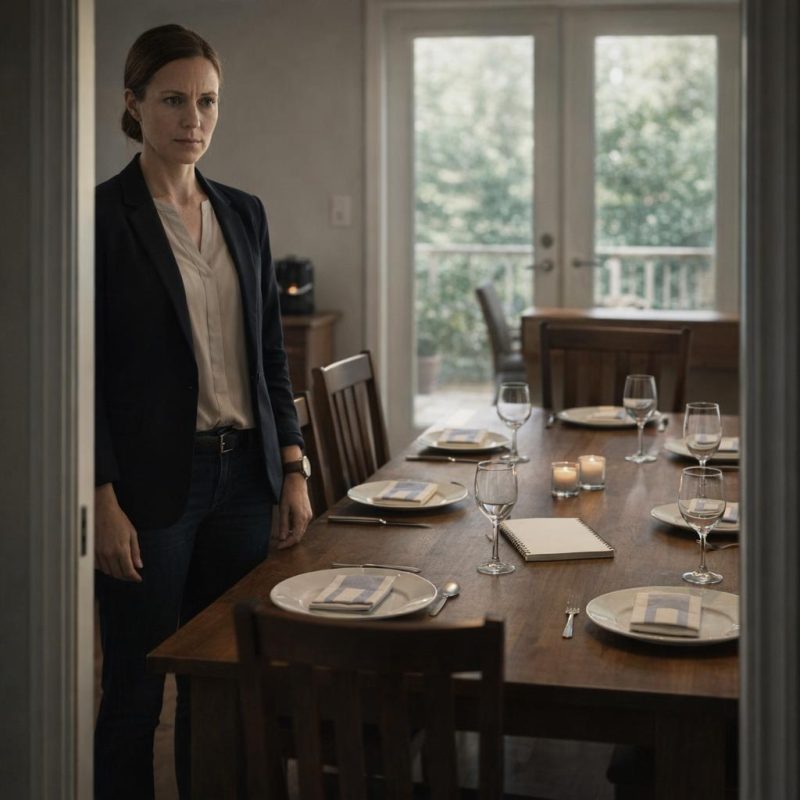 Image by RM AI
Sarah Arrives
Sarah arrives twenty minutes before anyone else. I hear her car in the driveway and I'm already standing in the kitchen when she comes through the front door. She's dressed well — dark blazer, hair done, a coffee cup from somewhere expensive in her hand. She smiles when she sees me, the wide easy smile she uses when she's comfortable, and she says it's good to see me, asks how I'm holding up. I tell her I'm okay. She sets her purse on the counter and glances toward the dining room, and I watch her take in the table — the chairs, the face-down packets, the notebook in the center. She looks back at me and asks what all this is. I tell her we're going to go over some documents related to the estate, that I wanted everyone together. She nods slowly, like she's deciding whether to be curious or unconcerned, and then she picks unconcerned. She takes her coffee into the dining room and sits down at the nearest chair, crossing her legs, settling in like she's waiting for a committee meeting that has nothing to do with her. The room is very still around her.
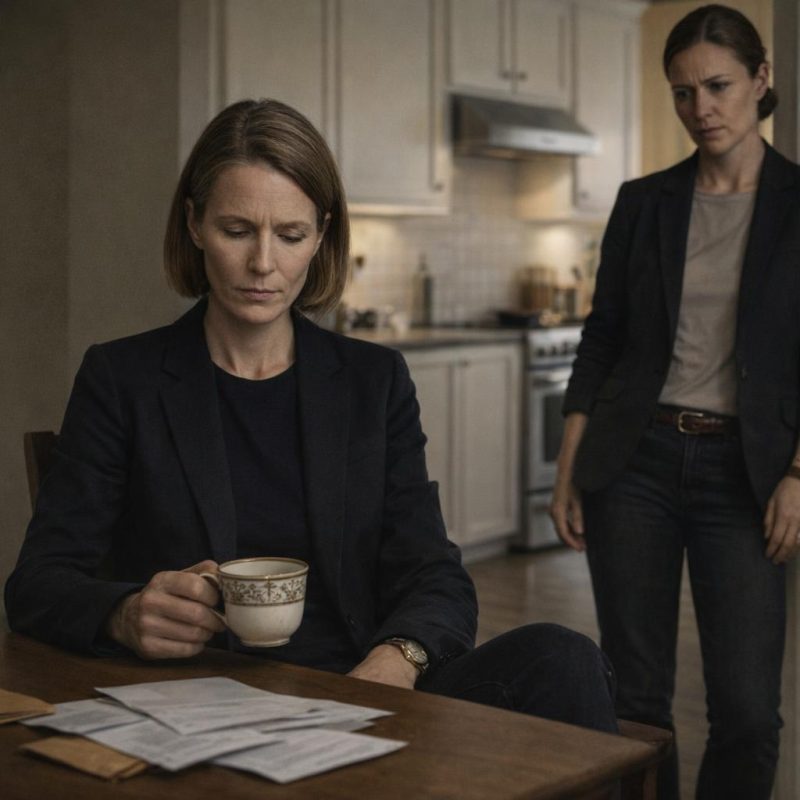 Image by RM AI
The Family Gathers
Linda arrives with our cousins Diane and Paul about ten minutes later. There are hugs in the entryway, the low murmur of people who haven't seen each other since the funeral, careful and a little formal. Sarah stands and greets everyone warmly, asks about Diane's drive, says something about the traffic on the highway that makes Paul laugh. I pour coffee and let it happen. When everyone has a cup and has found a seat, I wait. Sarah is still talking — something about the weather turning, about how strange the season has been. I let that run out too. When the room goes quiet and everyone is looking at me, I pick up the notebook from the center of the table. It's lighter than it looks. I carry it around to where Sarah is sitting, and I set it down in front of her.
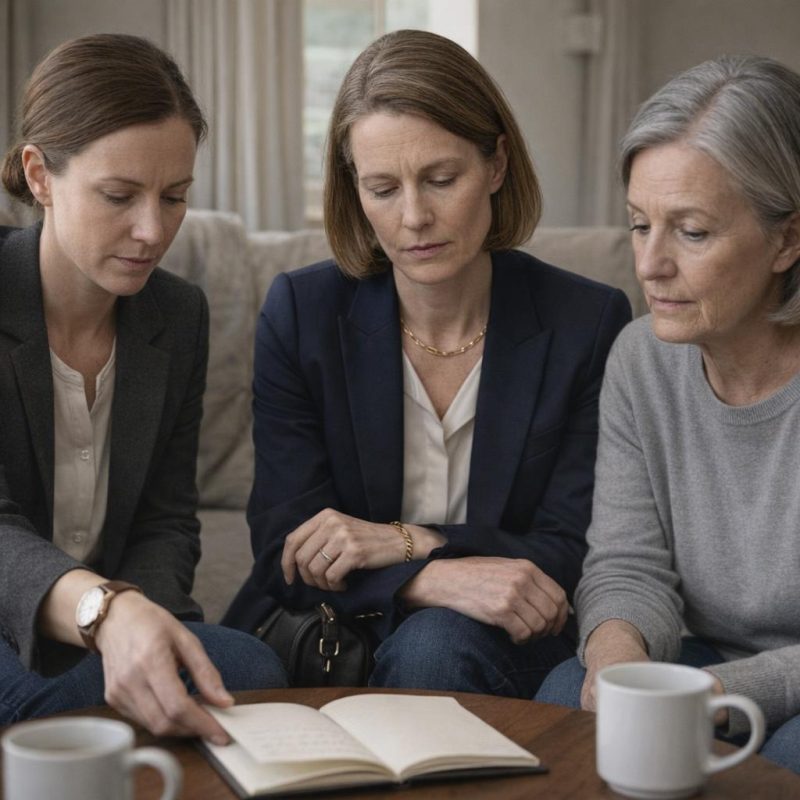 Image by RM AI
The Evidence Unfolds
I ask everyone to open the packets in front of them. There's the sound of paper, envelopes being turned over, the soft shuffle of pages. Linda picks up the timeline first and I watch her eyes move across it, left to right, date by date. Sarah has opened the notebook. She's flipping through it slowly at first, then faster, and the easy expression she came in with is gone. Her jaw is set. She turns a page and stops. I tell them the notebook was hidden under Mom's mattress. I tell them I found it the week after the funeral. Nobody says anything for a moment. Then Diane holds up one of the screenshots — the Phoenix photo, timestamped, location-tagged — and looks across the table at Sarah. Linda sets the timeline down flat on the table in front of her. She looks at it for a long moment, then she looks up at me, and her expression is the clearest thing in the room.
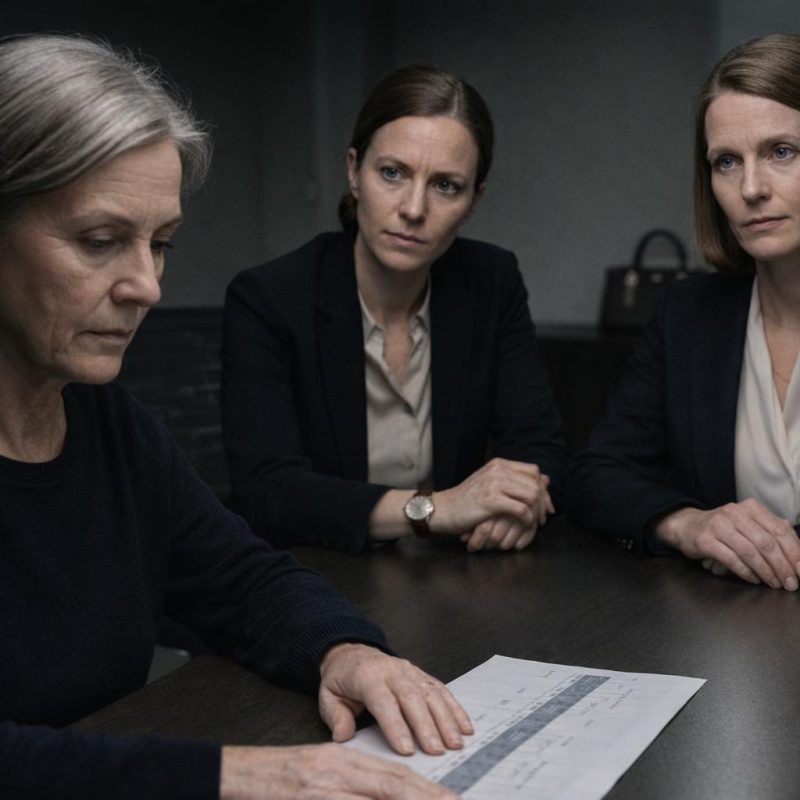 Image by RM AI
The Collapse
Sarah says the notebook must be incomplete. She says Mom got confused sometimes near the end, that the dates might be off, that she was there more than the records show. Her voice is steady but her hands aren't — she's pressing them flat against the table. Linda doesn't respond to any of it. She reaches into her packet and pulls out the Sedona screenshot. She holds it up so the table can see it, and then she reads the date and time stamp aloud: April 15th, 9:23 PM. Sarah says she went to the spa after leaving the hospital, that it was a short drive, that she needed the break. I slide the notebook entry for that night across the table toward the center — my handwriting, the time I arrived, the nurse's name, the hours I stayed. Linda looks at it. Then she looks at Sarah. Sarah opens her mouth and closes it. The table is quiet. Sarah doesn't speak again.
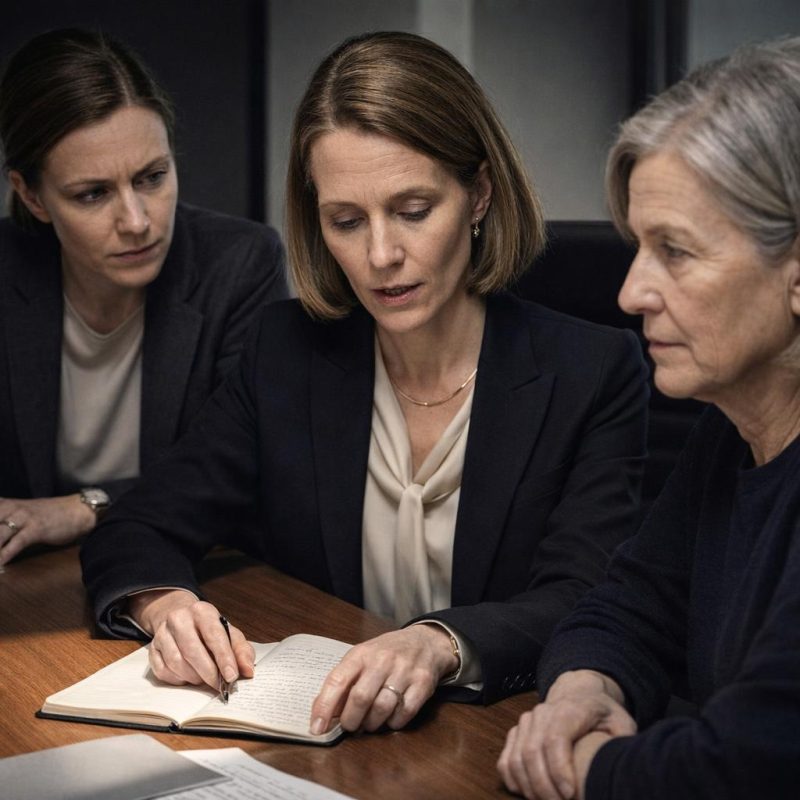 Image by RM AI
Linda's Confirmation
Linda sets the screenshot down and folds her hands on the table. She says she tried to visit Mom three times in the last four months — once in February, once in March, once in early April. Each time she called ahead, Sarah told her Mom was too tired for visitors, or that Sarah herself was traveling and couldn't coordinate access. Linda says she accepted it. She says she trusted that Sarah was managing things. Then she names the dates: February 19th, March 7th, March 28th. I open the notebook to each entry without being asked. The dates are there. My handwriting. The nurse's name. The hours. One of the cousins — sitting two seats down from Sarah — leans forward and asks, quietly but clearly, whether Sarah was actually at the hospital on any of those nights. Sarah's hands are still pressed flat against the table. She doesn't look up. She doesn't answer. The cousin asks again. The room holds the silence. Linda looks at the notebook, then at the cousin, then at Sarah, and says nothing more — because nothing more needs to be said. Every date in that log lines up exactly with every absence Sarah described.
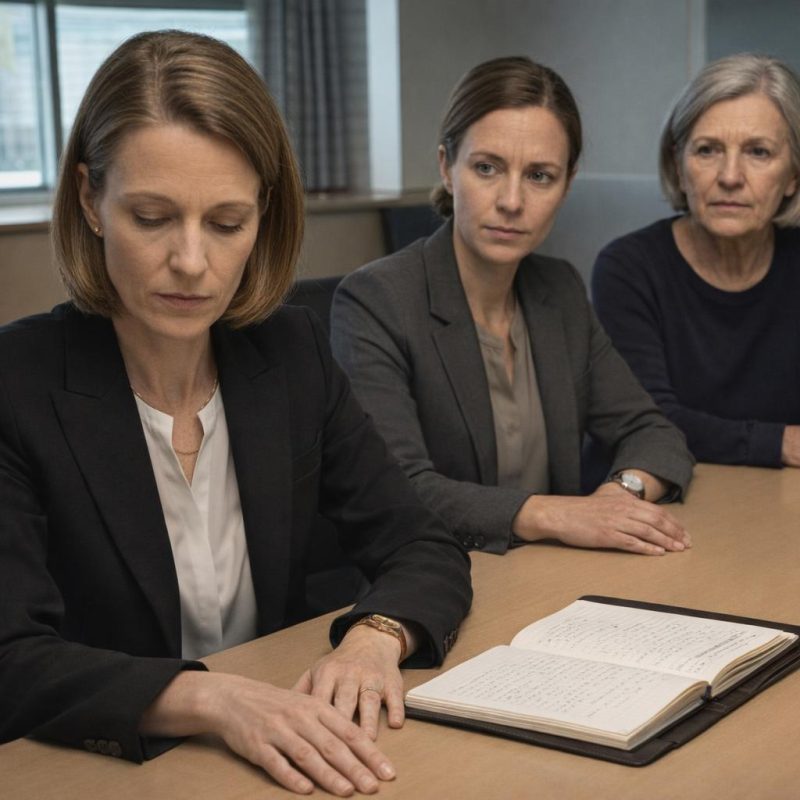 Image by RM AI
The Acknowledgment
Nobody moves for a long moment after that. The room feels like it's holding its breath. Then Linda turns to me — not to the table, not to the room, just to me — and she says she's sorry. She says she should have asked more questions. She says she let herself believe the easier story because it was easier, and that wasn't fair to me, and it wasn't fair to Mom. Her voice catches on that last word. One of the cousins says my name softly and nods, and I can see she means it. I keep my hands flat on the table. I don't trust myself to speak yet, so I just nod back. The tears are there — I can feel them sitting right behind my eyes — but I don't let them fall. Not here. Not in front of Sarah, who hasn't moved, who is still staring at the surface of the table like she's waiting for it to open up and take her somewhere else. I don't feel triumphant. I don't feel vindicated in any way that feels good. I just feel the weight of all those months finally acknowledged, and the grief underneath it, quiet and enormous.
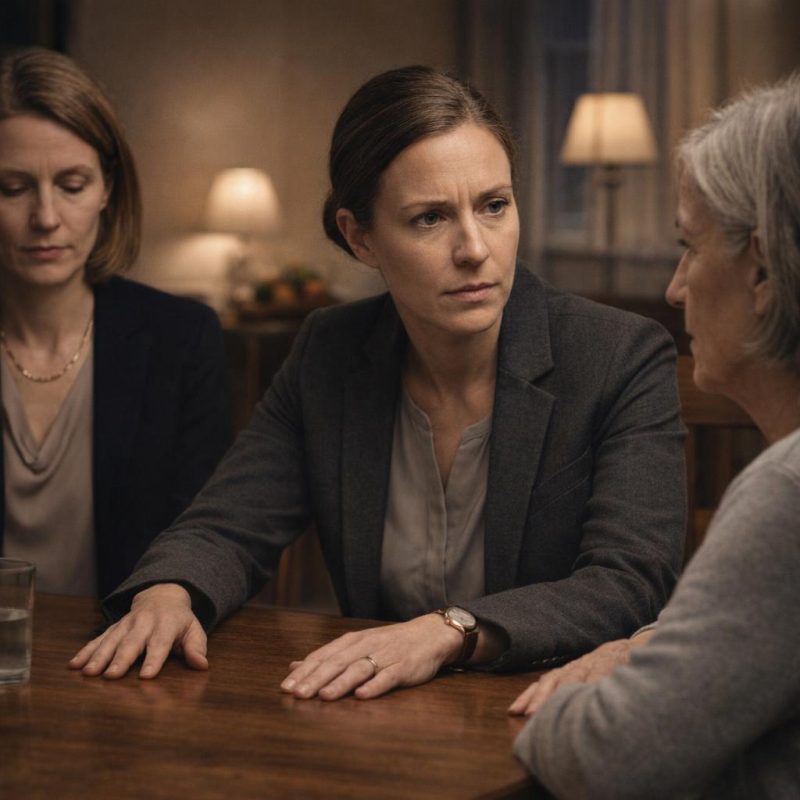 Image by RM AI
Estate Review
Linda straightens in her chair and says there's one more thing that needs to be addressed. She says the deed transfer has to be reviewed by an attorney before anything else moves forward. She points out that Mom was on a high dose of pain medication when she signed — that the timing, the circumstances, and the pressure involved all need to be examined by someone qualified to examine them. She says this isn't about punishment. She says it's about making sure Mom's actual wishes are honored. The cousins agree, one after another, without hesitation. Someone mentions a probate attorney they trust. I say the only thing I want is for the truth to be on record — that's all I came here for. Linda nods like she already knew that. Sarah pushes back her chair. She picks up her bag. She walks to the door and opens it and steps through without turning around, without a word to anyone at the table. The door clicks shut behind her. Linda looks at me across the table, and I look back at her, and neither of us says anything. The path forward is clear now, and it belongs to us.
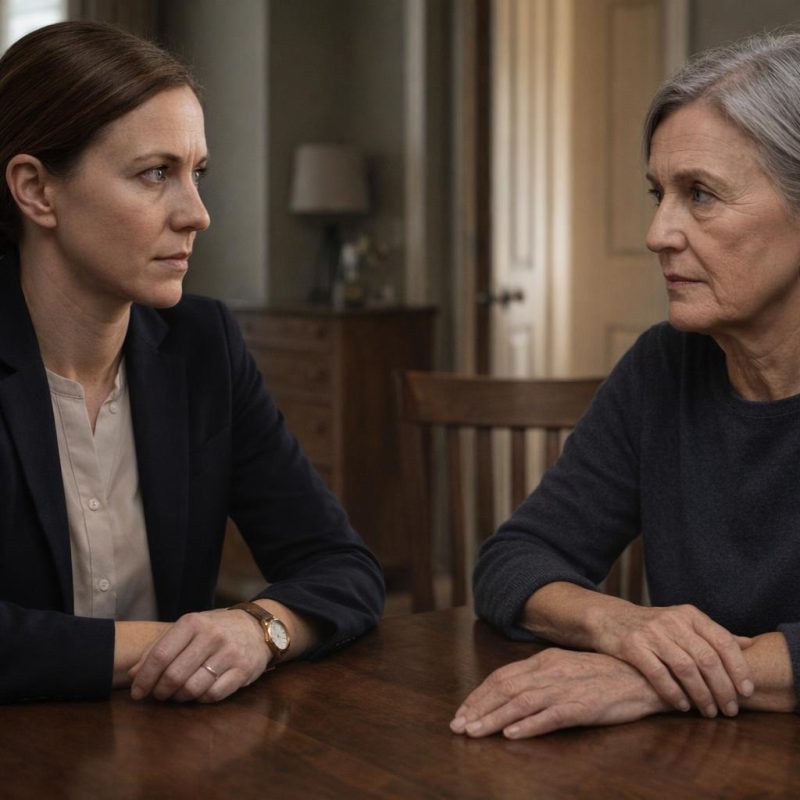 Image by RM AI
The Notebook
After everyone leaves I go back to Mom's room. I sit on the edge of the bed the way I used to when I'd stay late and she'd already fallen asleep — just sitting, just being near her. The notebook is in my hands. I've read most of it by now, but I turn to the last entry anyway. The handwriting is shakier than the earlier pages, the letters wider and less even, but it's still hers. Still careful. The date is two days before she died. She wrote: Morgan came today — held my hand — told her I love her — she needs to know the truth. I read it twice. Then I just sit with it. She knew. She knew what was happening around her, and she knew I might not be believed, and she built this record one entry at a time so that I would have something to stand on. Every date, every nurse's name, every hour logged in that shaky handwriting — it was all for me. I press the notebook against my chest and close my eyes. Her love is documented in every line.
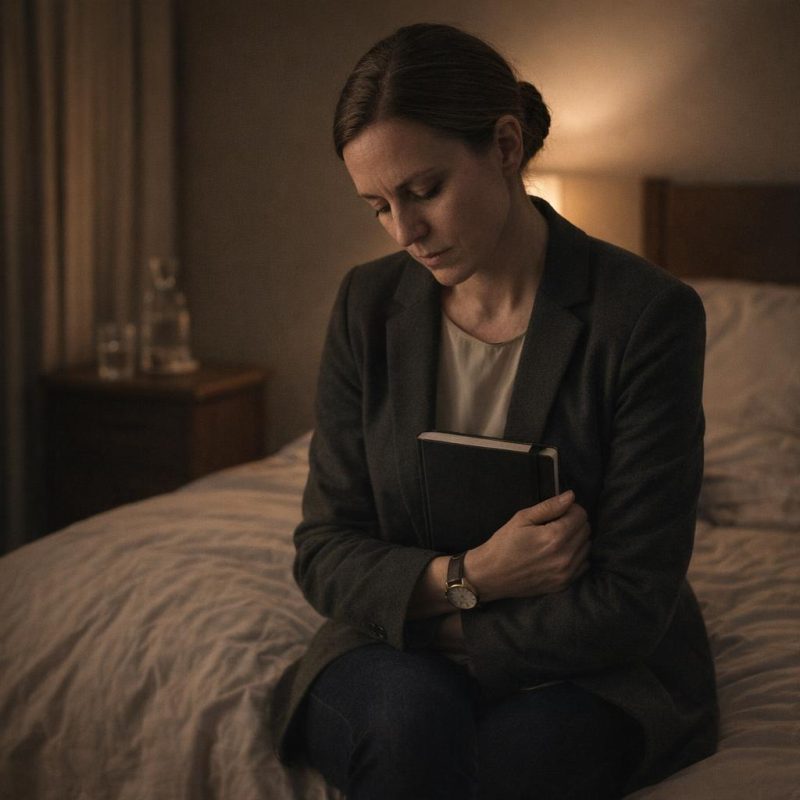 Image by RM AI
KEEP ON READING

20 Burning Rivalries From The Golden Age Of Hollywood
Tinseltown's Most Famous Feuds. The Golden Age of Hollywood gave…
By Sara Springsteen Jun 10, 2026
10 Tiny Decisions That Changed History & 10 Tiny Mistakes…
The Small Moments That Moved the World. History gets taught…
By Cameron Dick Jun 10, 2026
First Timers: 20 Historical Women Who Broke All Kinds Of…
Rolling Out The Red Carpet. Since what seems like the…
By Elizabeth Graham Jun 10, 2026
20 Mistresses Kings Gave More Power To Than Their Wives
Power Didn’t Always Wear a Crown. History loves to pretend…
By Emilie Richardson-Dupuis Jun 10, 2026
20 assassination attempts that changed the world
History has been shaped not only by great leaders and…
By Noone Jun 10, 2026
10 Royals Who Never Married & 10 Who Married More…
Royal history is full of dramatic love stories, political marriages,…
By Noone Jun 10, 2026