

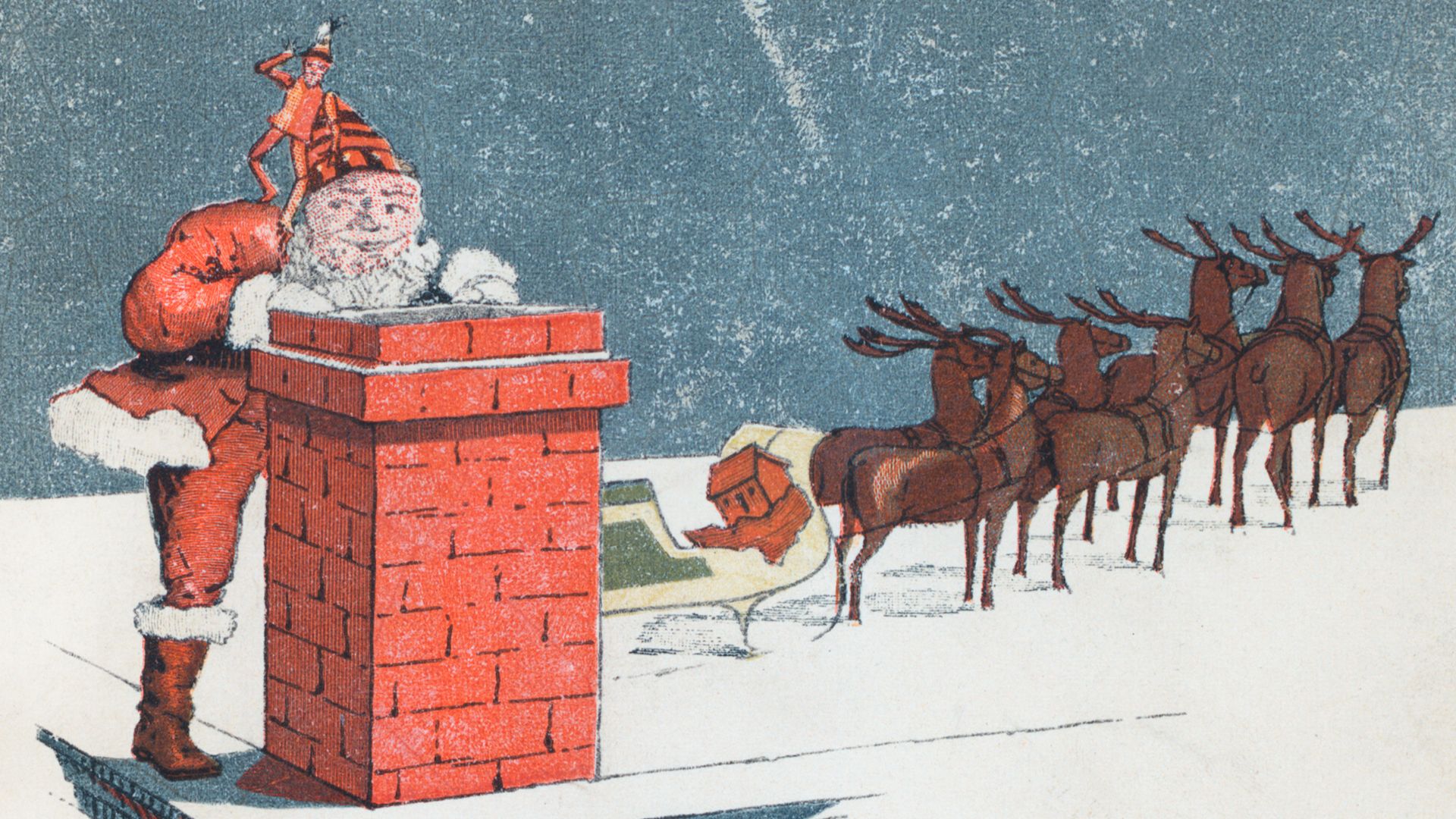
Christmas is such a staple in North America that it’s hard to believe it was ever something fought against. Today, the big winter holiday is a part of the world’s calendar as time to step back, be with family, and relax before the start of the new year. Even if you don’t celebrate Christmas, the holiday season is an annual reset for everybody. Of course, it wasn’t always this way. In parts of the 17th-century English-speaking world, celebrating Christmas could make someone look disobedient, disorderly, or even criminal.
The story wasn’t as simple as one humorless ruler canceling everyone’s holiday plans. The bans grew out of long-standing arguments over worship, old customs, public behavior, and who had the power to decide what “proper” religion looked like. In England, Scotland, and Massachusetts, Christmas became tangled up with law, church discipline, and the everyday habits people weren’t ready to give up.
Why Reformers Turned Against Christmas
 Lotus Head from Johannesburg, Gauteng, South Africa on Wikimedia
By the early modern period, Christmas was much more than a quiet religious day. In England and Scotland, the season could include church services, feasting, dancing, drinking, games, and local customs that had built up over generations. For many folks, those rituals brought some warmth and sociability into the coldest part of the year.
Strict Protestant reformers often looked at the same customs and saw a problem. Many Puritans and Presbyterians argued that Christmas had no clear biblical command and carried too much Catholic influence. Historic England explains that the familiar claim that Oliver Cromwell personally “banned Christmas” isn’t exactly accurate, since Puritan objections and anti-Christmas legislation were already underway before his Protectorate.
Their concerns weren’t only about theology. Christmas had also become linked, in reformers’ eyes, with drinking, gambling, and public disorder. In a century already strained by civil war, church reform, and political suspicion, the holiday looked like more than a harmless excuse to eat well and make noise.
When Christmas Lost Its Place
In England and Wales, Parliament’s campaign against Christmas gained force in the 1640s. Reformers wanted worship stripped back to what they believed scripture required, which meant cutting away traditional feast days. The Cromwell Association explains that the wider parliamentary and “godly” movement, rather than Cromwell alone, drove the clampdown on Christmas and other holy days.
The big hit came in June 1647, when Parliament passed an ordinance abolishing the observance of the Nativity of Christ, Easter, Whitsun, and other festivals. British History Online preserves the ordinance, which removed those days from official festival observance in England and Wales. It also replaced the old holiday pattern with recreation on the second Tuesday of each month for scholars, apprentices, and servants.
Scotland followed its own path, shaped by the Scottish Reformation and Presbyterian suspicion of church festivals. National Records of Scotland says the Church of Scotland abolished holy days other than the Sabbath in 1575, including Yule, and that Parliament abolished the Yule vacation in 1640 and again in 1690. The same source notes that kirk session records show people being disciplined for Yule activities, including dancing, singing carols, and keeping the season.
Keeping The Season Alive

Of course, these few restrictions didn’t make Christmas just disappear. Laws could pressure shops to open, close down public observance, and punish people for keeping old customs, yet household habits were harder to stamp out. The Institute of Historical Research notes that churchwardens’ accounts from the Interregnum show some parishes still buying bread and wine for Christmas communion.
Resistance sometimes moved out of private homes and into the street. Attempts to treat December 25 as an ordinary workday helped spark unrest in several English towns, including Canterbury. Across the Atlantic, Massachusetts Bay Colony took one of the most direct legal approaches. In 1659, the colony passed a law against observing Christmas or similar festivals by avoiding work, feasting, or celebrating in another way. According to Mass.gov, there was a five-shilling penalty if you were caught participating in celebrations.
That Massachusetts law was repealed in 1681, but unrest was prominent for years following the change. Public celebration remained culturally suspect for many years, especially in communities shaped by Puritan ideas about worship and discipline. In that world, working on December 25 could look less bleak than proper, sober, and religiously serious.
That is what makes this history so strange from a modern angle. Christmas later became one of the most visible holidays in the English-speaking world, packed with decorations, music, church services, family rituals, public events, and shopping. For a time, though, some of those same impulses could make a person look defiant.
KEEP ON READING

From Heroes To Zeroes 20 Historical Figures Whose Heroism Was…
History is full of legends, but not every hero lived…
By Noone Feb 25, 2026
The Clueless Crush: How I Accidentally Invited a Hacker Into…
Fluorescent Lights and First Impressions. My name is Tessa, I'm…
By Ali Hassan Nov 4, 2025
This Infamous Ancient Greek Burned Down An Ancient Wonder Just…
History remembers kings and conquerors, but sometimes, it also remembers…
By David Davidovic Nov 12, 2025
Einstein's Violin Just Sold At An Auction—And It Earned More…
A Visionary's Violin. Wanda von Debschitz-Kunowski on WikimediaWhen you hear…
By Ashley Bast Nov 3, 2025
The Mysterious "Sea People" Who Collapsed Civilization
3,200 years ago, Bronze Age civilization in the Mediterranean suddenly…
By Robbie Woods Mar 18, 2025
When People Could Commit The Crime of Celebrating Christmas
Rawpixel on WikimediaChristmas is such a staple in North America…
By Elizabeth Graham Jun 9, 2026