

My Husband Left Me for His Assistant — But He Forgot About the Fine Print That Cost Him Everything
My Husband Left Me for His Assistant — But He Forgot About the Fine Print That Cost Him Everything
The Twenty-Second Anniversary
Twenty-two years is a long time to build anything. We started the company in the spare bedroom of our first house, Richard and I, with a folding table, a secondhand laptop, and a business plan I had drafted on graph paper because I liked the grid lines. That was the kind of person I was then. That is still the kind of person I am. By the time we sat down to dinner that October evening, the company had forty-three employees, three regional offices, and a balance sheet I could recite from memory the way other people recite song lyrics. Richard ordered the Bordeaux — a good one, the kind we only opened when the numbers justified it. He raised his glass and said something I wrote down later, not because it alarmed me, but because it was the kind of thing worth keeping. He said that the structures we had built together were load-bearing. That you don't pull them apart without understanding what they're holding up. I touched my glass to his and agreed completely. Some things you build brick by brick over two decades, and you stop questioning whether they'll hold. You just assume they will. That assumption sat with me long after the wine was gone and the table was cleared, solid and unexamined as a foundation wall.
 Image by RM AI
Seven-Fifteen
My alarm went off at six-thirty, same as always. I was at my desk by seven-fifteen with a travel mug of black coffee and the Q3 reports already open on my second monitor. The rest of the office wouldn't arrive for another forty-five minutes, and I preferred it that way. There is a particular quality to a quiet office in the early morning — the hum of the HVAC, the blue light of the screens, the absence of anyone else's urgency. I worked through the balance sheet methodically, the way I always did, column by column, category by category. Payroll, overhead, vendor invoices, client entertainment. The numbers were largely consistent with Q2, which was what I expected. We had a strong quarter. I was already composing the summary language in my head when I reached the client entertainment line. The figure was up from Q2 — not dramatically, not the kind of variance that triggers an automatic flag, but enough that it registered. I made a note in the margin of my printed copy, the way I always did with items requiring reconciliation. A small red asterisk next to a number that didn't quite match the pattern of the previous quarter.
 Image by RM AI
Client Emergency
We had a standing Friday dinner reservation — the Italian place on Clement Street that Richard had been going to since before we met. It was one of those routines that had calcified into something resembling tradition, which in our household meant it appeared on the shared calendar in blue and nobody questioned it. His call came at four-fifty-three on a Friday afternoon. I remember the time because I was in the middle of reconciling a vendor invoice and I noted it the way I note everything — as a data point. He said there was a client emergency, that one of the regional accounts had escalated and required an evening meeting, that he was sorry about dinner. His tone was apologetic in the efficient way Richard was apologetic about business conflicts: brief, genuine-sounding, already moving on. I told him it was fine. It was fine. We had been doing this for twenty-two years, and client emergencies were a known variable in the equation. I filed it under quarterly pressure, the same category I used for late nights and missed lunches and the general friction of running a company with forty-three people depending on it. I heated up leftovers and opened my laptop and worked through the financial projections until nearly ten. The house was very quiet after his call, the kind of quiet that has its own texture when you've been used to someone else's presence filling it.
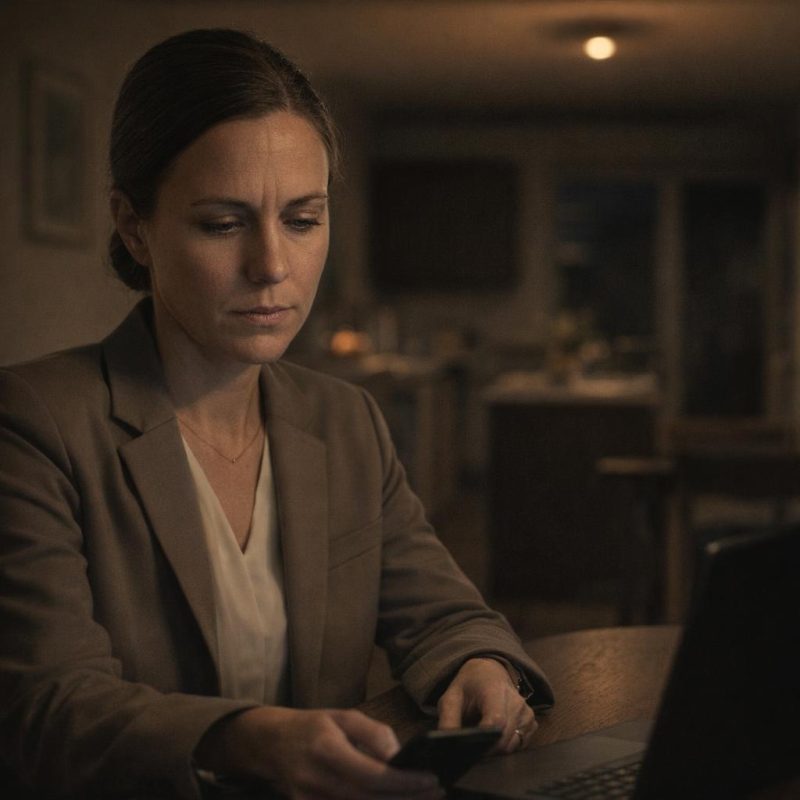 Image by RM AI
Face-Down
Richard set his phone face-down on the table before we sat down to eat, which was not unusual in itself. We had both made gestures toward phone-free dinners over the years, with varying degrees of success. What I noticed — and I noticed it the way I notice a rounding discrepancy, without alarm, just as a fact requiring a mental note — was the frequency of the notifications. They came in clusters. Three in the first ten minutes, then a pause, then two more. Each time, Richard's eyes moved toward the phone without his hand following. I asked, at one point, whether he needed to take a call. He said it could wait. His voice was even, his posture relaxed, and he redirected the conversation to a client presentation he was preparing for the following week. I let it go. We had been married long enough that I understood the difference between someone who needed space and someone who needed to be asked twice. I assumed the former and gave him the latter. By the time we finished eating, the notifications had stopped. Richard picked up the phone once, briefly, then set it back down in the same position. He sat with his hands folded on the table, looking at the dark screen, and there was a stillness in him that I couldn't quite categorize but didn't think to question.
 Image by RM AI
Division of Labor
The operational review was something I ran every quarter without exception. It was not glamorous work. It involved cross-referencing vendor agreements against our master contract log, confirming that approval signatures were current, and verifying that nothing had slipped through the administrative gaps that tend to open up in growing companies. Richard handled the client-facing side — proposals, service agreements, relationship management. I handled the vendor side. That was the division of labor we had established in year three, when the company got large enough that one person couldn't hold all of it. It had worked cleanly for nearly two decades. I was three-quarters of the way through the contract log when I found it: a vendor services agreement, mid-tier value, standard terms, executed six weeks prior. Richard's signature was on the signature line. The CFO countersignature line — my line — was blank. The contract itself was unremarkable. The vendor was one we had used before. The terms were within normal parameters. There was no obvious reason for concern, only the procedural gap of a contract that had moved through the system without my review. I added it to the clarification list I kept in a separate tab, flagged it with the same red asterisk I used for the Q3 entertainment line, and moved on to the next document.
 Image by RM AI
The Second Cancellation
The text came in on a Saturday morning while I was making coffee. Richard said he needed to spend the day on a regional account review — one of the western offices had flagged some client retention numbers that required his attention before Monday. He was sorry about our plans. He would make it up to me. I read the message twice, not because I doubted the explanation, but because I was trying to place it in context. Three weeks earlier, he had cancelled a Friday dinner for a client emergency. Now this. Two cancellations in three weeks was not, by itself, a significant data point. Business ran in cycles, and the fourth quarter always brought pressure from accounts that had been quiet all summer. I knew this. I had built the financial models that proved it. I texted back that it was fine and poured my coffee and sat at the kitchen table with the weekend edition of the paper, the way I did when Richard was traveling. But somewhere in the back of my mind, in the part that tracks variances and flags anomalies, I had already opened a new column. Two cancellations. Three weeks. The numbers were small, but they were there, and I had never been the kind of person who ignored a pattern just because it was inconvenient to acknowledge.
 Image by RM AI
Drifting Attention
I had printed the Q3 projection summary specifically to go over it with Richard at breakfast. It was the kind of document that benefited from a second set of eyes — not because I doubted my own numbers, but because Richard's read on the client side could affect the revenue assumptions I was building into Q4. I set it on the table next to his coffee cup before he came downstairs. He sat down, glanced at the first page, and said the numbers looked solid. I started walking him through the revenue targets for the western region, the ones that depended on the account retention figures he had been reviewing all weekend. He nodded at the right intervals. He said the right things. But his attention kept moving — to his phone, to the window, back to his phone. I asked him a specific question about the Hargrove account and he gave me an answer that was technically correct but three months out of date. I made a note of it and kept going. Then a notification came in and he picked up the phone, which he hadn't done at dinner in weeks, and something on the screen made him laugh — a short, quiet sound, the kind that escapes before a person decides whether to let it.
 Image by RM AI
Face-Down Protocol
It took me four weeks to confirm that it was a pattern and not a coincidence. I am precise about that kind of thing. I do not call something a trend on the basis of two data points. But by the end of the month I had enough observations to constitute a sample. Kitchen counter: face-down. His desk in the home office: face-down. The nightstand on his side of the bed: face-down. The coffee table when we watched television in the evenings: face-down. This was new. For the better part of twenty-two years, Richard had left his phone wherever he set it — face-up, face-down, sideways, balanced on the arm of the couch. He was not a careful person with his phone. He lost it in couch cushions. He left it in the car. He once left it in the refrigerator, which he blamed on multitasking. The consistency of the face-down placement was, by any reasonable measure, a departure from his established baseline. I filed it alongside the cancelled dinners, the unsigned contract, the Q3 entertainment variance, and the laugh at the breakfast table. I did not draw conclusions. I simply kept the file open, the way I always did when the numbers were telling me something I hadn't yet been able to name.
 Image by RM AI
The Tuesday Introduction
The Tuesday morning executive meeting ran forty-seven minutes, which was three minutes over the standard block I had allocated on the calendar. The overage was attributable to a single agenda item: the introduction of Vanessa Keene as the new Director of Client Services. Richard handled the introduction himself, which was not unusual — he introduced all senior hires. What was slightly unusual was the length of it. He covered her undergraduate degree, her MBA, her previous firm, her regional account development record, and a specific client retention figure she had achieved in her prior role. I had the hire packet in front of me. The retention figure was accurate. The credentials were accurate. Everything he said was verifiable and correct. I noted that the introduction ran approximately four minutes longer than the one he had given our previous Director of Client Services eighteen months ago. Vanessa herself was composed throughout — good posture, measured eye contact, a presentation style that was confident without being aggressive. She spoke about client retention metrics with the kind of fluency that suggested she had lived inside those numbers for a while. When the introduction concluded, I wrote two words in the margin of my notepad. Not an accusation. Just an observation. The words were: too polished.
 Image by RM AI
Shoulders Drop
Vanessa's portion of the meeting ran another twelve minutes after the introduction. She walked through a regional account development strategy using a slide deck that was clean, well-sourced, and appropriately concise. I had no professional objections to the content. My attention, however, had shifted. I was watching Richard. This was not something I typically did during presentations — I watched the presenter, I reviewed the materials, I noted action items. But something in my peripheral vision had snagged, and once I registered it, I could not un-register it. Richard was leaning forward slightly in his chair. His elbows were on the table. His expression was open in a way I associated with conversations he found genuinely engaging, not with executive meetings he was chairing out of obligation. And then there was the posture. For as long as I had known him — and I had known him for twenty-six years, worked alongside him for twenty-two of those — Richard carried tension in his shoulders. It was a baseline physical fact about him, as consistent as his preference for window seats and his inability to parallel park. But as Vanessa moved through her third slide, I watched his shoulders drop.
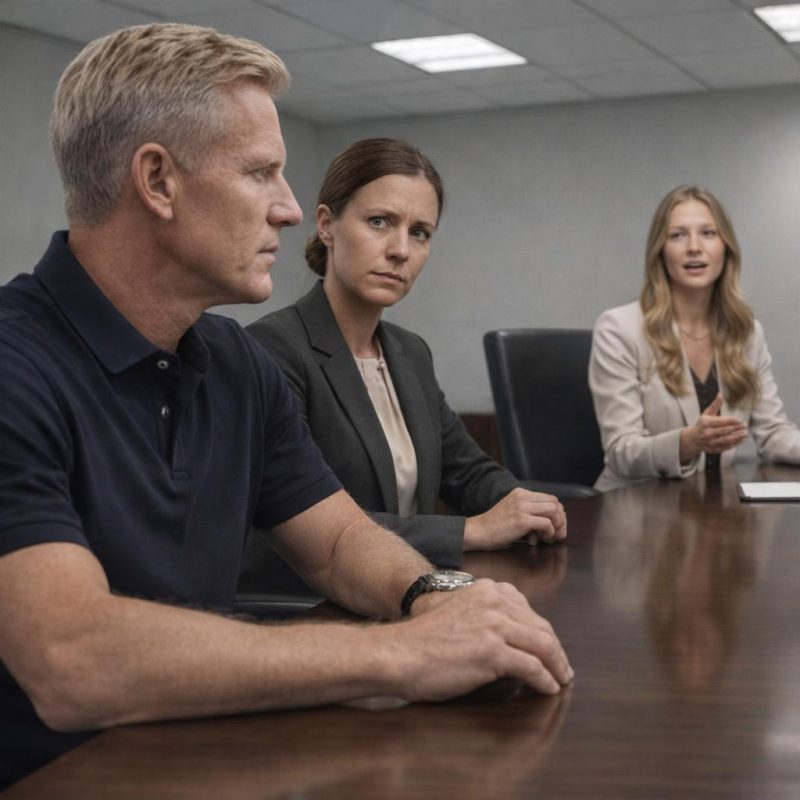 Image by RM AI
Extended Praise
The meeting closed with Richard's summary remarks, which was standard procedure. What was not standard was the duration. He spent approximately six minutes on Vanessa's qualifications and the rationale for the hire — her regional track record, her client-facing methodology, the specific gap in our service structure that her background was positioned to address. He cited two metrics from her prior firm by name. He referenced a client segment she had grown by thirty-one percent over eighteen months. The other executives around the table nodded at appropriate intervals. Nobody appeared to find the remarks excessive. I sat with my notepad and wrote down the two metrics he cited, then checked them against the hire packet. They were both there, on page three. He had not invented them. He had simply chosen to repeat them, in a room full of people who had already received the packet, with a specificity that went beyond what the moment required. Vanessa thanked the team briefly and left the conference room with her materials tucked under one arm. The other executives filtered out behind her. I stayed in my seat, reviewing my notes, and thought about the difference between knowing someone's credentials and choosing to recite them from memory.
 Image by RM AI
The First Week
I spent Vanessa's first week watching the operational baseline establish itself, which is what I always did with new senior hires. I tracked meeting attendance, response times on shared documents, the quality of her first status report to my office on the administrative budget items that fell under my oversight. All of it was unremarkable in the best possible sense — she was thorough, prompt, and did not require hand-holding. Her interactions with Richard in the meetings I attended were professional and appropriately brief. He did not single her out for comment. She did not seek his attention beyond what the agenda required. On Thursday she stopped by my office to clarify a line item in the onboarding expense form, which was exactly the kind of thing a new Director of Client Services should do. I answered her question. She thanked me and left. By Friday afternoon, I had no new entries in the mental file I had opened the previous Tuesday. The numbers were not telling me anything. The room was not telling me anything. I closed my notepad at the end of the week and noted, with something that felt cautiously close to relief, that there was nothing to note.
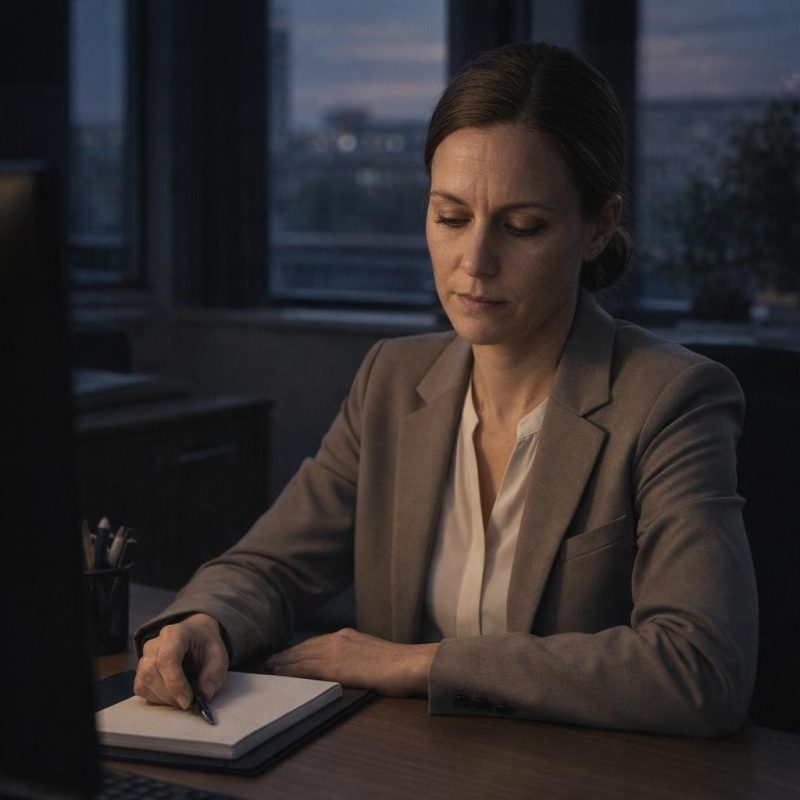 Image by RM AI
The Q3 Reconciliation
The Q3 reconciliation was a process I had run every quarter for nineteen years, and it had the comfortable predictability of a well-maintained ledger. I pulled the expense reports in the order I always did — payroll, overhead, vendor contracts, then client entertainment last, because client entertainment was the category most likely to require follow-up and I preferred to end on the items that needed attention rather than bury them in the middle. The Q2 client entertainment total was on the screen first. I noted it, moved to Q3, and stopped. The Q3 figure was not a rounding error. It was not a seasonal adjustment. It was not the kind of variance that resolves itself when you look at the underlying line items. The Q3 client entertainment expenses were exactly double the Q2 figure, and the increase was concentrated almost entirely in the past six weeks of the quarter. I cross-referenced against the prior year's Q3 for comparison. The current figure was sixty-eight percent above that benchmark as well. I sat back in my chair and looked at the number on the screen for a long moment, because in nineteen years of quarterly reconciliations, I had learned that a number that size does not appear without a reason.
 Image by RM AI
Three Sentences
I sent the documentation request to Richard at 9:14 on a Tuesday morning. The email was four paragraphs: a summary of the variance I had identified, the specific line items requiring backup receipts, a request for client names associated with each entertainment expense, and a deadline of five business days for the documentation. It was the same format I used for any expense audit request. I had sent versions of it dozens of times over the years, to department heads, to regional managers, to Richard himself on two prior occasions. The response arrived at 11:07. Two hours and fifty-three minutes, which was faster than I expected. I opened it. Three sentences. The first acknowledged that he had received my request. The second mentioned that some of the client relationships involved confidentiality considerations that complicated immediate disclosure. The third said he would follow up with additional detail soon. There were no attachments. There were no client names. There was no receipt documentation of any kind. I read the email twice, then printed it and added it to the reconciliation file. In nineteen years, Richard had never responded to a documentation request in three sentences.
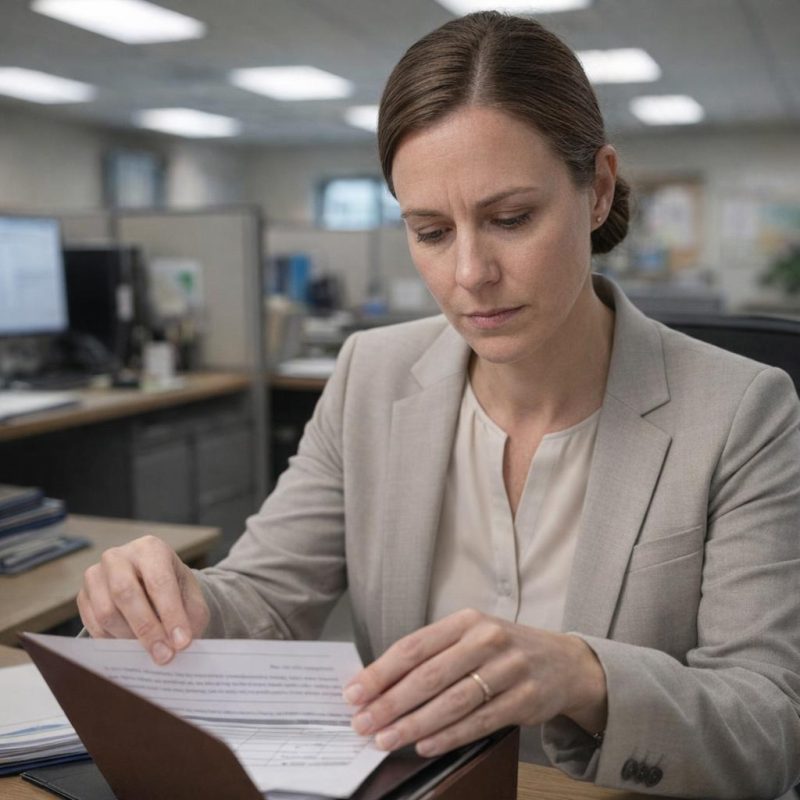 Image by RM AI
Documentation Gaps
I pulled the individual expense entries the following morning and went through them one by one, which is the only methodical way to do it. Most of the Q3 client entertainment line items had adequate documentation — restaurant names, dates, at least a general client category notation. I flagged those as pending and moved on. But as I worked through the second half of the report, a different pattern emerged. Five entries, spread across four weeks of the quarter, had no supporting receipts attached. No restaurant name. No client notation. No approval signature beyond Richard's own. The combined total of those five entries was twelve thousand four hundred dollars. Each one was coded identically: client entertainment, executive level. Twelve thousand dollars is not a rounding error. It is not an oversight. It is the kind of gap that triggers a formal audit request under our own financial controls policy, which I had written myself in 2019 and which Richard had signed. I documented each entry in a separate line of my audit file, noted the policy reference, and scheduled a meeting with Richard for the following morning. Then I looked at the five entries again, side by side, and saw that every single one of them lacked even a single line of supporting documentation.
 Image by RM AI
Calendar Mismatch
The meeting with Richard was scheduled for 9:00 the next morning, which gave me the evening to prepare. I pulled his shared work calendar — the one we had both maintained access to since we restructured the executive team in 2017 — and began cross-referencing the five expense dates against his scheduled client meetings. It was a straightforward audit step. Dates in column A, calendar entries in column B, discrepancies in column C. The first two expense entries aligned with scheduled client dinners. I noted them as potentially documentable pending receipt submission and moved on. The third entry did not align with anything. I checked the date twice. No client meeting. No dinner reservation notation. No external appointment of any kind on that evening. I moved to the fourth entry. Same result. I moved to the fifth. The calendar for that evening showed a single notation: personal. Three dinner expenses, totaling just over seven thousand dollars, coded as client entertainment, falling on evenings when Richard's own calendar showed no scheduled client contact whatsoever.
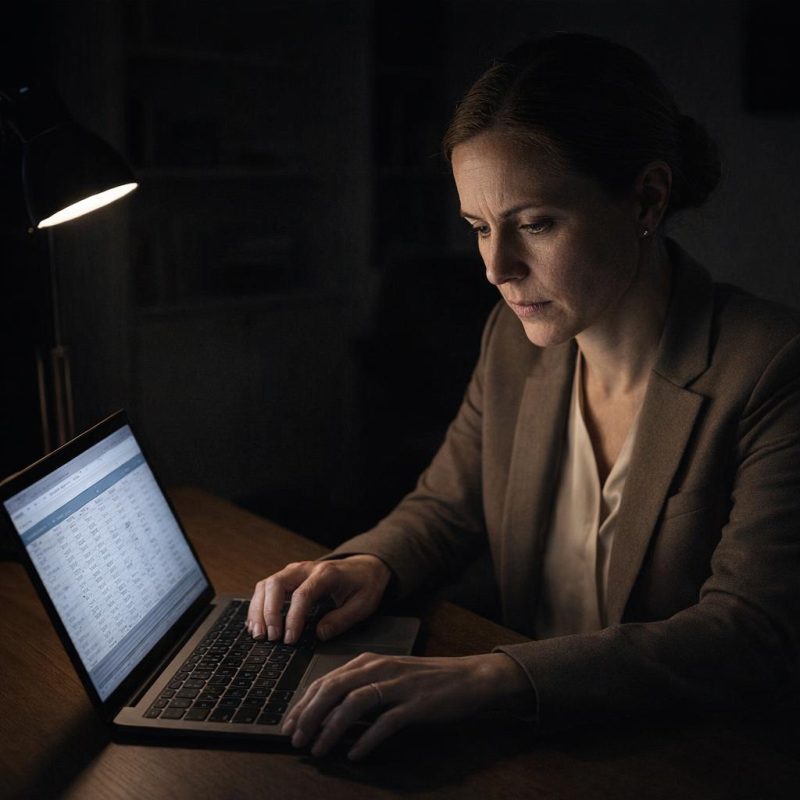 Image by RM AI
The Second Request
I sent the second request at 8:47 the following morning, before Richard had settled into his office. I kept the language precise: three specific dates, three specific expense line items, a direct ask for client names and corresponding receipts. No editorializing. No implication. Just a documentation request formatted the way I would send any documentation request, because that was the only way I knew how to do this without my hands shaking. Richard's reply came forty-seven minutes later. He thanked me for my diligence — his word, diligence — and suggested the outstanding expense items be folded into the year-end audit process, which he noted was only eleven weeks away. The tone was collegial. Measured. Completely non-responsive to anything I had actually asked. I replied within the hour. I explained that Q3 reconciliation had a board-mandated close date and could not be deferred to year-end without triggering a material variance flag. I attached the relevant board resolution as a reference. I kept the email to four sentences. I sent it at 10:22 a.m. By end of business, Richard had not replied.
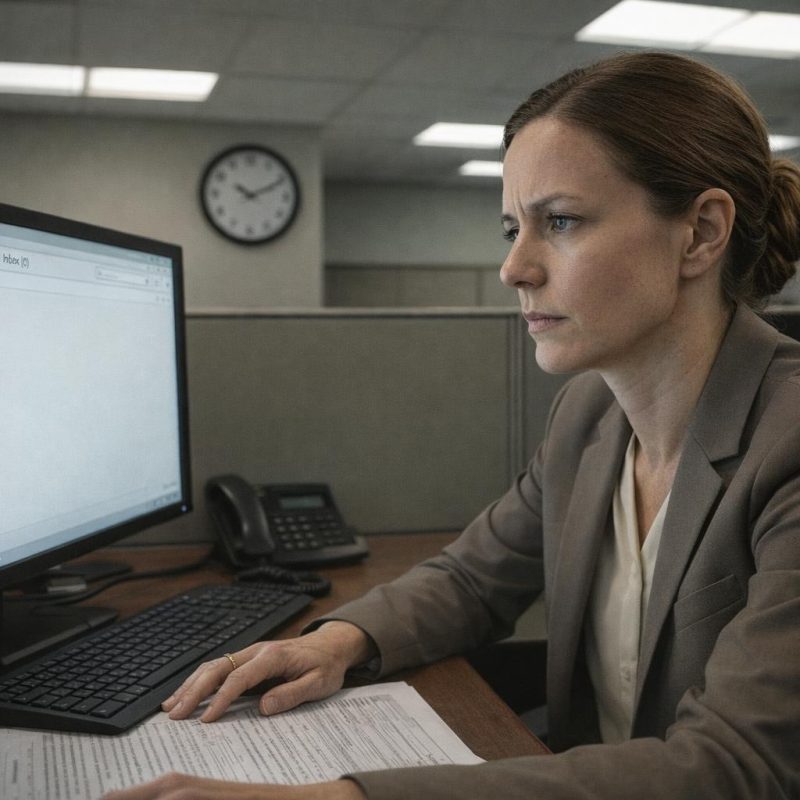 Image by RM AI
The Client Lunch
The following Tuesday I was at my desk working through a vendor contract when I heard the elevator chime at twelve-thirty. I looked up out of habit. Richard and Vanessa crossed the lobby together, moving toward the front entrance at the same pace, Richard holding the door. There was nothing overtly unusual about it. They were both client-facing executives. Lunch meetings happened. What made me set down my pen was the absence of any prior discussion — no mention at the morning check-in, no calendar notation, no assistant coordination that I had seen. I pulled up the shared calendar on my second monitor. The twelve-thirty slot was blank for both of them. I checked Richard's personal work calendar, which I still had view access to. Also blank. I sat with that for a moment, then went back to the vendor contract. There were any number of explanations for an unscheduled lunch. Spontaneous client calls happened. Last-minute meetings happened. I noted the time — 12:31 — and returned to the contract language in front of me, though the words took longer to settle than they should have.
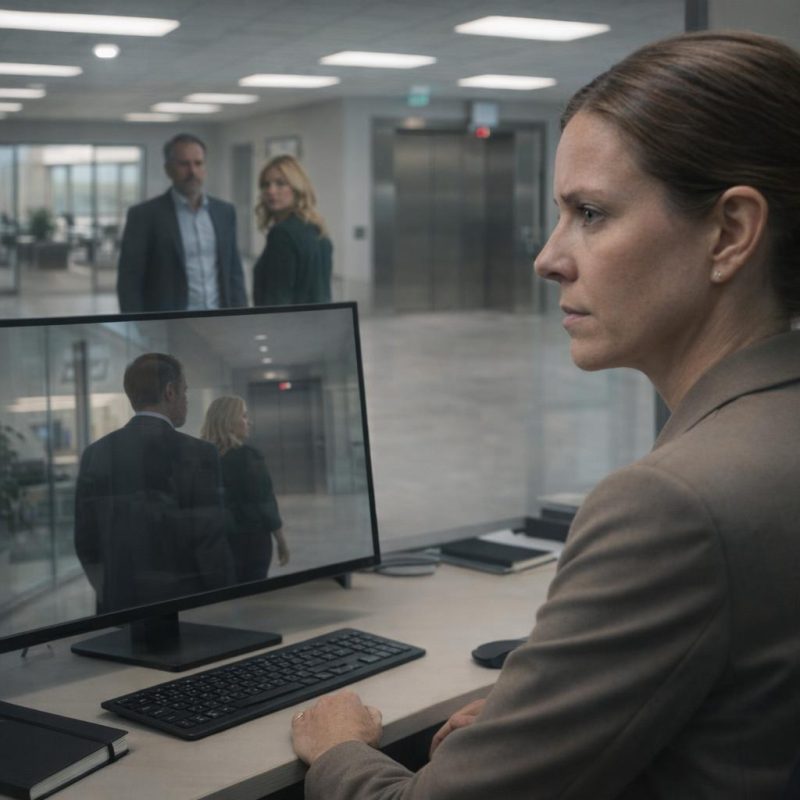 Image by RM AI
Three Hours
I tracked the time without meaning to. By two o'clock I had checked the clock four times. By three I had stopped pretending I wasn't watching the elevator. Richard and Vanessa came back through the lobby at three forty-five. Three hours and fifteen minutes. I noted it the way I noted any data point — time out, time in, duration. Neither of them stopped at my office. I heard Richard's door close down the hall, and a few minutes later I heard Vanessa's heels on the tile heading toward her own. I opened the shared client inbox and ran a search for any follow-up correspondence sent after noon — meeting summaries, next-step confirmations, the kind of documentation that typically followed a client lunch within the hour. Nothing came back. I widened the search to include Richard's sent folder, which I still had access to through the shared executive account. Still nothing. I added the entry to the running log I had started keeping in a password-protected spreadsheet: date, duration, calendar status, follow-up documentation status. Four columns. The last two read the same way every time.
 Image by RM AI
Physical Weight
Saturday arrived the way difficult weekends do — quietly, with too much light and not enough noise. Richard was up before me, which was unusual. I came downstairs to find the coffee already made and Richard standing at the kitchen window with his mug, looking at nothing in particular. We moved through the morning in separate orbits. He read something on his tablet. I worked through a contract amendment I had brought home from the office. We exchanged the kind of sentences that keep a household running — coffee's fresh, there's yogurt in the back of the fridge, did you call the plumber about the guest bath. Functional sentences. The kind that require no real answer. By eleven the silence had taken on a texture I could almost measure. I set down my pen and suggested a walk by the river. It came out more carefully than I intended, like a proposal I had rehearsed without meaning to. We used to walk that path every Saturday before the company got large enough to consume our weekends. Richard looked up from his tablet, and he said sure.
 Image by RM AI
The River Walk Proposal
I want to be precise about what I mean when I say Richard agreed to the walk, because the word agreed does a lot of work that the actual moment did not. He said sure. One syllable, no follow-up, eyes already moving back to his tablet before the word had fully landed. I had proposed the river walk because it used to mean something — Saturday mornings before the company had quarterly earnings and a board and a Director of Client Services who apparently required three-hour lunches. We had walked that path in every season. We had made decisions there, the kind that required open air and distance from the office. I had suggested it hoping something might shift, though I could not have said what, or whether that was even possible anymore. What it opened was a one-word response and a return to whatever he was reading. I told myself that was fine. That people had off mornings. That a walk was still a walk regardless of the enthusiasm behind it. I set my pen down and went to find my jacket. The word sure sat in the kitchen behind me, flat and finished.
 Image by RM AI
Deck Vigil
The walk did not happen that morning. Richard took his second cup of coffee out to the deck at nine-fifteen, and by nine-twenty he had his phone pressed to his ear. I watched from the kitchen window while I rinsed the breakfast dishes. His back was to the house, shoulders relaxed, one hand in his pocket. He was not pacing, which I noted because Richard paced when calls were difficult. This call did not appear to be difficult. He stood at the deck railing with the easy posture of someone talking to a person they were comfortable with, weight shifted to one hip, head tilted slightly. I finished the dishes. I dried my hands. I made a second cup of coffee for myself and sat at the kitchen table with the contract amendment I had not finished the night before. At ten-forty I looked up and Richard was still on the deck, still on the phone, still facing the yard. The amendment sat in front of me, marked up to page four. The call had been going for over an hour, and his back had not turned toward the house once.
 Image by RM AI
Face-Down Return
Richard came inside at eleven-ten. I heard the deck door slide open and then the particular sound of his shoes on the kitchen tile — unhurried, no change in pace from the deck to the counter. I was still at the table with the contract amendment. I did not look up immediately, which was its own kind of decision. I heard him set his mug down, heard the coffee maker engage, heard the small sounds of a man refilling his cup with no particular urgency. I looked up then. He was standing at the counter with his back to me, phone in hand. He set it down on the counter face-down, the way you set something down when you are done with it and do not intend to discuss it. I waited. Not obviously — I turned a page of the amendment, made a notation in the margin. I waited for the natural opening that follows a long phone call, the offhand mention of who it was or what it concerned. Richard picked up his coffee, turned toward the hallway, and walked past the kitchen doorway without speaking.
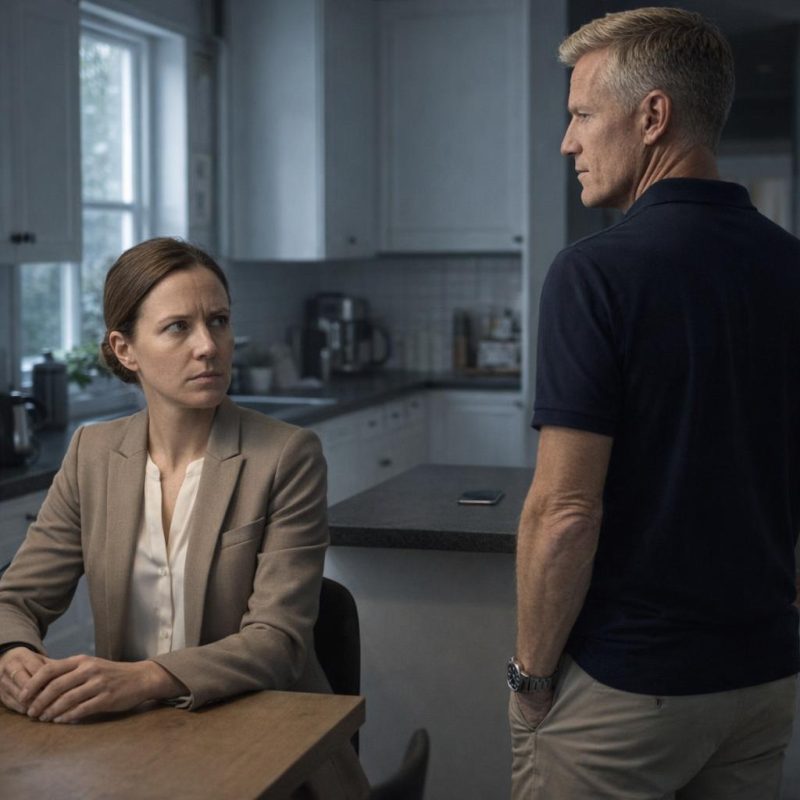 Image by RM AI
The International Suitcase
Monday passed without incident, which I had learned to treat as its own category of data point. Richard came home at six-fifteen, later than usual but not remarkably so. I heard the front door, heard his keys on the entry table, and then heard something I did not expect: footsteps going directly down the hall toward the bedroom without stopping in the kitchen. No greeting. No briefcase set down in his office. I gave it a moment, then followed. The bedroom door was open. The closet door was open. I stood in the doorway and watched Richard move along the hanging rod, pulling shirts from hangers with the focused efficiency of someone who had already decided what they needed. He had not looked up when I appeared in the doorway. On the bed, open and unzipped, was the large black rolling case — the one we kept on the high shelf specifically for international travel, the one with the TSA-approved locks and the expandable gusset we had bought before the Singapore conference three years ago.
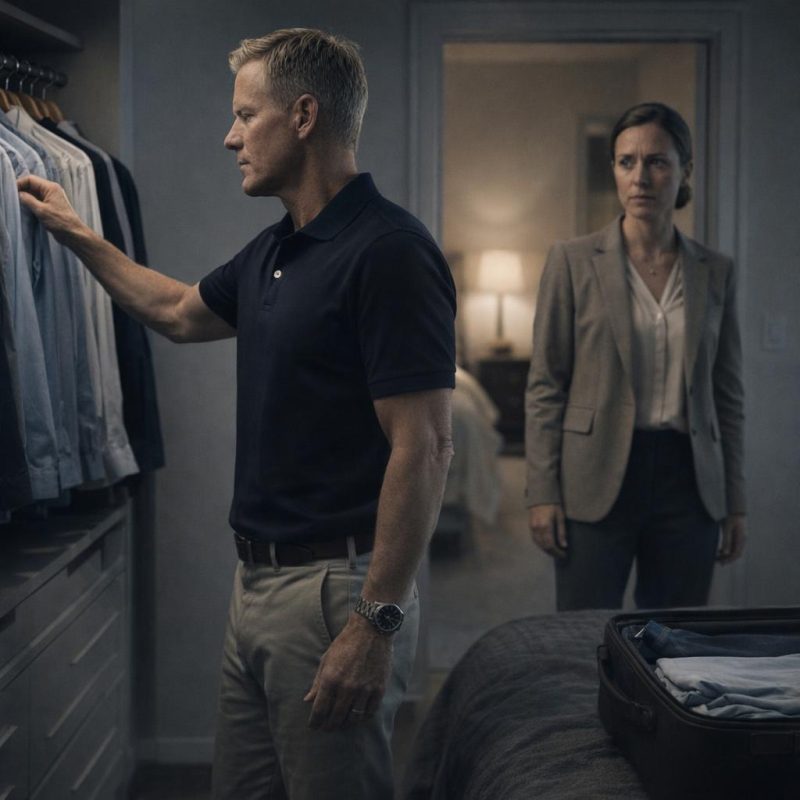 Image by RM AI
The Space Speech
He stopped pulling shirts from the rod and turned to face me. I had not asked him to stop. He just did, the way people do when they have rehearsed a moment and the moment has finally arrived. He said he needed space. He said he had lost himself — in the company, in the routines, in the structure of a life that had stopped feeling like his own. The language was careful and even, the kind of language that arrives pre-assembled. He talked about the marriage becoming a framework rather than a partnership, about needing to find out who he was outside of the roles he had been performing. I noticed he did not say where he was going. I noticed he did not name a single concrete thing he intended to find. He spoke about himself the way a consultant speaks about a struggling division — with clinical distance and a recommendation already written. I stood in the doorway and let him finish. The shirts on the bed did not move. The suitcase did not move. And then he said it again, quieter this time, like a conclusion: that he had lost himself.
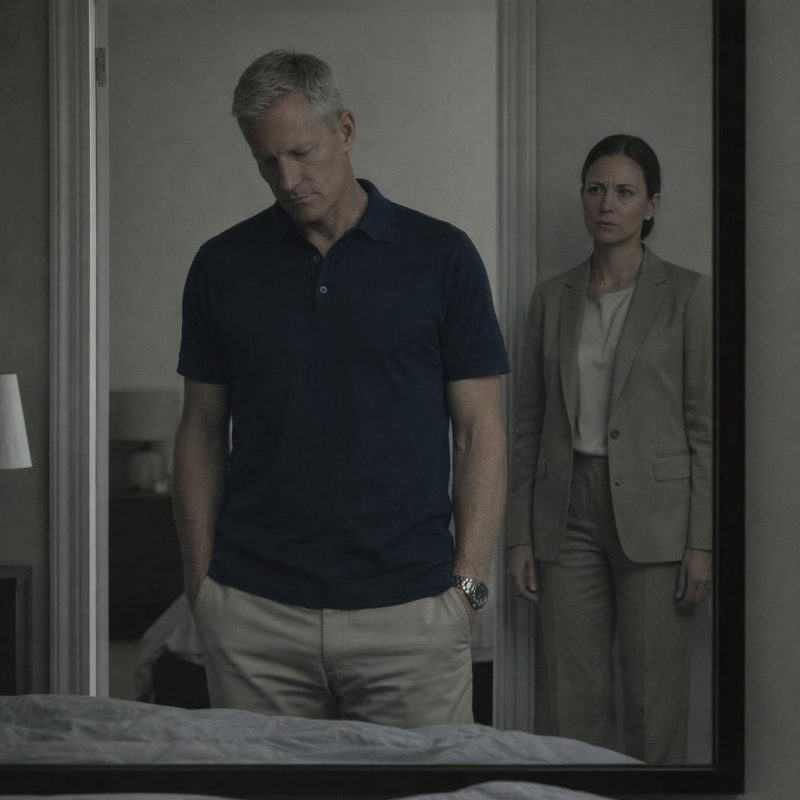 Image by RM AI
Edge of the Bed
I sat down on the edge of the bed. Not because my legs gave out. Not because I needed to. I sat because it was the nearest flat surface and because standing in the doorway any longer felt like a choice I had not made consciously. Richard looked at me once, then went back to folding. A dress shirt, then a second. He smoothed the collar of each one with the flat of his hand before placing it in the suitcase, which struck me as an odd level of care for a man who had just told me he was leaving. He glanced at me again. I did not fill the silence. He folded another shirt. He glanced again, and this time his hands slowed slightly before resuming. I understood, in a detached and almost administrative way, that he was waiting for something — tears, maybe, or a question, or my voice rising to a register that would give the moment its proper shape. I did not give him any of those things. The room held the quiet between us, and I sat with my hands in my lap, watching the suitcase fill.
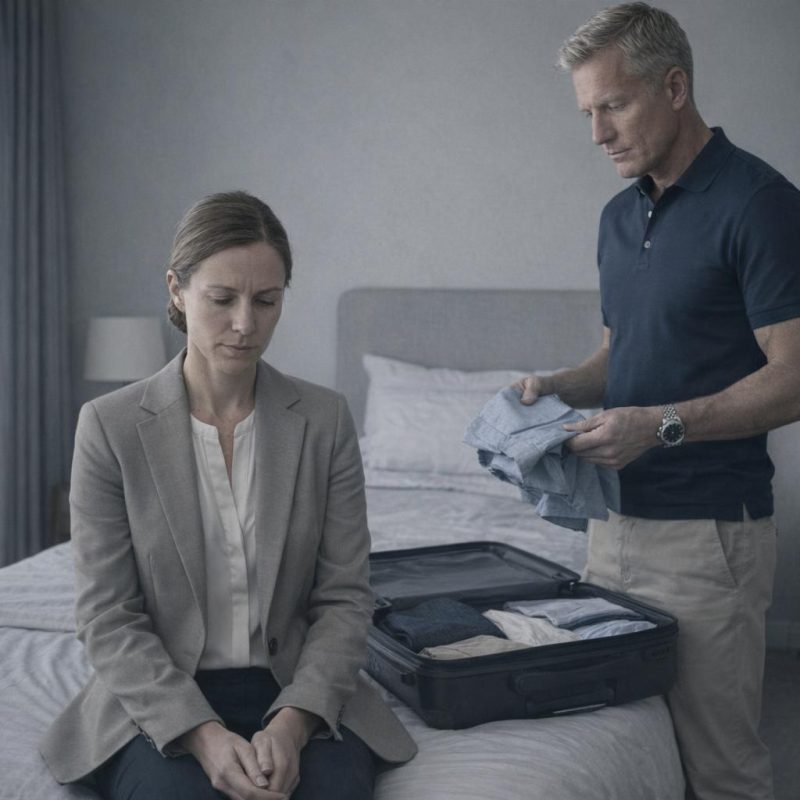 Image by RM AI
No Scene
He zipped the suitcase. The sound was efficient and final, a small mechanical conclusion to a conversation I had not participated in. He set it upright on the floor and stood behind it with both hands on the handle, and I understood that he was waiting. I had seen this posture before — not from Richard specifically, but from people in difficult meetings who have said their piece and are now waiting for the room to react so they can calibrate their next move. I did not react. My expression stayed where I had put it. He waited another few seconds, long enough that the silence became its own kind of statement, and then he picked up the suitcase and walked out of the bedroom. I heard his footsteps in the hall. I heard the front door open and close. I remained on the edge of the bed in the same position I had taken when I sat down, hands in my lap, back straight, the room exactly as it had been except for the empty hangers swaying faintly on the rod where his shirts used to be.
 Image by RM AI
The Last Boxes
Tuesday morning I woke at five-fifty, the same as always. I heard him before I saw him — the sound of the garage door, then cardboard scraping against the hallway floor. He had brought boxes. I showered, dressed, and made coffee while he moved through the house with the focused efficiency of someone working against a self-imposed deadline. Books came off the shelves in the study. Files came out of the cabinet he kept locked, which I noted without comment. I poured my coffee and reviewed my calendar for the day while he carried the first load to his car. He did not speak to me and I did not speak to him. By seven-thirty the study was noticeably lighter. By seven-forty he was on his last box — the one with the framed photos from his credenza, the ones that had always faced his chair rather than the door. I picked up my bag, checked my phone, and walked to the front door. He was still at his car. I did not wait. I pulled the door shut behind me, and a moment later, from the driveway, I heard it — the front door closing for the last time with his key still in the lock.
 Image by RM AI
Strange Quiet
I drove to the office on autopilot, which is to say I drove the way I always drive — attentively, with both hands on the wheel and NPR on low. The difference was that when I arrived and sat down at my desk, I noticed my thoughts were unusually organized. Not numb. Organized. There was no static, no competing noise, no part of my mind running a parallel track of grief while I tried to work. I had expected the opposite. Twenty-two years of shared mornings, shared routines, shared square footage — I had assumed the absence of all that would feel like a subtraction problem with a very large number. Instead it felt like a spreadsheet that had finally been sorted correctly. The rows were still the same. The data had not changed. But something about the view was cleaner. I sat at my desk with my coffee going cold beside me and ran through the morning's agenda without losing my place once. The house would be quiet when I got home. I already knew that. And sitting there in the early light of my office, the knowing of it settled into something I could simply hold.
 Image by RM AI
Wednesday Morning Portal
Wednesday morning I logged into the shared banking portal at seven-twelve, the same as every Wednesday. It was a habit I had maintained for years — a fifteen-minute review of automatic payments, pending transactions, and account balances before the day's meetings began. The October statement had populated overnight. I scrolled through the familiar line items: utilities, insurance, the quarterly tax escrow, the parking structure account. Then a new entry, dated the first of the month, sitting between two recurring items I had seen a hundred times. Fifteen thousand dollars. The payee field read a property management company I did not recognize. The memo line carried a unit number and a street address in the financial district. I knew the building. Everyone in the financial district knew the building — forty-two floors of floor-to-ceiling glass and a lobby that had been featured in an architectural magazine two years ago. I sat with the transaction on my screen and did not move. The lease payment was fifteen thousand dollars a month, and the start date in the memo field was three weeks ago.
 Image by RM AI
Tenant File Request
I pulled up the property management company's website and found their corporate portal in under two minutes. We had used the same platform for three of our own commercial properties, which meant I already had a master login with administrative credentials attached to the company account. I navigated to the tenant documentation request form, entered the unit number from the banking transaction, and submitted the request under the company's standard letterhead authorization. The confirmation email arrived in four minutes. Estimated delivery: two hours, pending file retrieval. I noted the time — seven thirty-one — and opened my first meeting agenda. I answered two emails. I reviewed a vendor contract that had been sitting in my queue since Friday. I did not refresh my inbox. I did not check the clock more than twice. The request was submitted, the process was in motion, and there was nothing to do now but let the system run. I had learned a long time ago that the most useful thing you can do while waiting for documentation is to keep working, because the documents arrive whether you watch for them or not.
 Image by RM AI
The Co-Signer Line
The email arrived at nine forty-seven. One attachment: a PDF labeled with the unit number and a file date from that morning. I opened it, navigated past the cover sheet and the property description, and went directly to the signature page. Primary tenant: Richard's full legal name, signed and dated three weeks prior. I moved my eyes one line down. The co-signer field was not blank. It was not my name. Printed in clean block letters, with a signature beneath it and a date matching Richard's, was the name Vanessa Keene. I set my coffee cup down on the desk with more care than the moment required, the way you handle something when your hands need an instruction to follow. The lease was a legal document. The co-signer line was a factual record. I sat with both of those things in the quiet of my office, the PDF still open on my screen, Vanessa's name exactly where it was.
 Image by RM AI
More Than the Warehouse
I didn't close the PDF. I opened a second window instead and pulled up the company's historical expense records — the kind of file I could navigate in my sleep after twenty-two years of quarterly closes. The first warehouse lease was easy to find: twelve thousand dollars per month, signed the year we incorporated, back when Richard and I were splitting the overnight shifts and eating sandwiches at a folding table because we couldn't afford actual office furniture. I remembered the smell of that building — industrial solvent and old carpet — and the way we'd celebrated the first month we turned a profit by ordering pizza instead of sandwiches. I typed the penthouse figure into the cell next to it. Fifteen thousand dollars per month. I ran the subtraction automatically, the way you do when numbers are your native language. Three thousand dollars. The penthouse Richard was sharing with Vanessa cost three thousand dollars more per month than the warehouse where we had built everything he was now walking away from.
 Image by RM AI
Yellow Legal Pad
I opened the center drawer of my desk and took out a yellow legal pad. It was the same brand I'd used since business school — narrow ruled, fifty sheets, the kind that holds ink without bleeding. I set it on the desk, uncapped a pen, and drew a single vertical line down the middle of the first page. Left column: Observable Facts. Right column: Required Documentation. It was the same framework I used when I found a discrepancy in a quarterly audit — identify what you can confirm, identify what you still need to confirm, work the gap between them. I wrote the lease date in the left column. The co-signer name. The expense line items I'd flagged over the past several weeks. The calendar entries that didn't match the travel receipts. Each item went in cleanly, one line at a time, no editorializing. By the time I reached the bottom of the first page, the two columns were taking shape — facts on the left, open questions on the right, the distance between them measurable and finite.
 Image by RM AI
Sarah Arrives
Sarah arrived at seven-fifteen, which meant she'd left her apartment the moment she got my text and driven straight over without stopping. I heard her key in the lock, heard the particular way she pushed the door open — fast, then careful, the way you enter a room when you're bracing for what's inside. I was at the kitchen table with the legal pad, the lease PDF printed and paper-clipped to the top of a folder, and a cup of tea that had gone cold twenty minutes earlier. She stopped in the doorway. She had her coat still on, her bag still over her shoulder, and she was looking at the table the way you look at something that doesn't match the picture you had in your head. I'd expected her to find me crying, probably. Most people would have been. I gestured toward the chair across from me. She crossed the room slowly, set her bag on the floor, and sat down. She looked at the legal pad, then at me, and her expression shifted into something I didn't quite have a label for — somewhere between relief and a new kind of worry.
 Image by RM AI
Board Presentation
I walked her through it the same way I would walk a board through a variance report. Timeline first, because sequence matters more than emotion when you're trying to establish what actually happened. I started with the first expense anomaly — the date, the amount, the category it had been filed under, and why that category didn't hold up against the supporting receipts. Then the calendar gaps. Then the lease. I showed her the co-signer line on the printed PDF and let her read it herself without narrating it for her. She didn't interrupt, which told me she understood that I needed to get through it in order. When I finished, I set the pen down parallel to the legal pad and folded my hands on the table. Sarah had been watching me the whole time with the careful attention of someone trying to determine whether the structure in front of them is load-bearing. The kitchen was quiet. Outside, a car passed. The legal pad sat between us, two columns of ink, everything I knew on one side and everything I still needed on the other, and the room held that weight without comment.
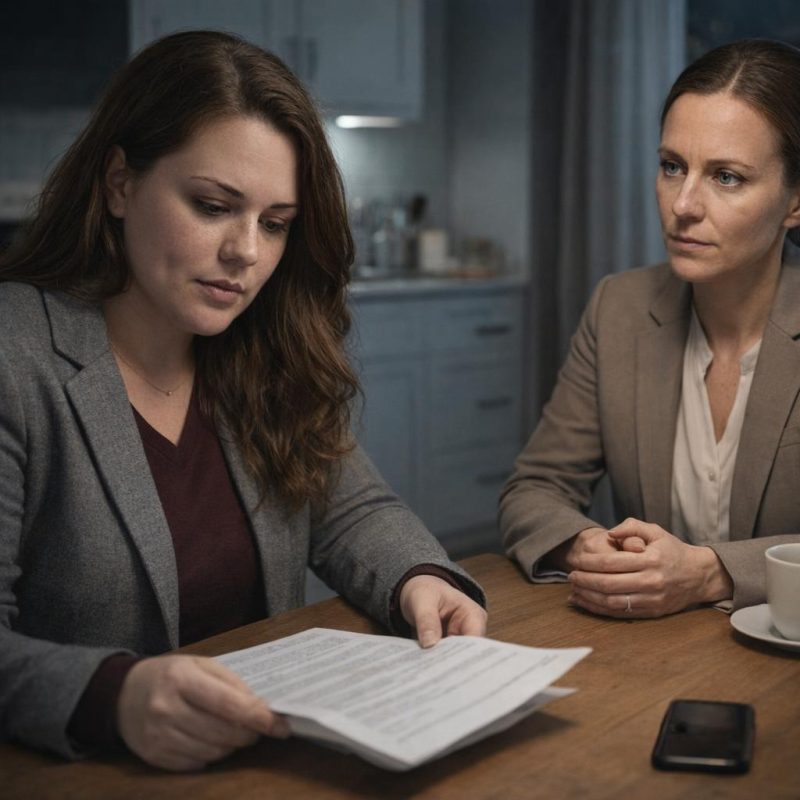 Image by RM AI
Thomas Calls
Sarah's phone buzzed first. She glanced at it, then at me, and said, 'I may have texted Thomas.' My phone rang forty seconds later. I answered it. Thomas's voice came through at a volume that suggested he was not sitting down. He wanted to know why I hadn't called him the moment I found out, why Sarah knew before he did, and whether I understood that this was not something he was going to just sit with from three hours away. I told him I understood. He said he was packing. I said his name once, the way you say a name when you need someone to stop moving and listen. He kept talking — about Richard, about what Richard deserved, about the drive being only three hours and he could be there by midnight. Sarah reached across the table and put her hand over mine. I kept my voice level. I told Thomas that showing up tonight would not help anything and that I needed him to hear me clearly on that point. There was a pause. Then he said, 'I'm coming home tonight, Mom. I'm already looking at the route.'
 Image by RM AI
Stay at School
I told him no. Not as a suggestion — as a fact, the way you state a budget ceiling to a department head who has already spent past it. I said his exams were in eleven days and that his grades were not collateral damage I was willing to accept. I said that confronting his father in the driveway at midnight would feel satisfying for approximately four minutes and would accomplish nothing that my attorney couldn't accomplish more effectively on a Tuesday morning. Thomas said that wasn't the point. I told him I knew it wasn't the point, and that I was asking him to trust me anyway. Sarah took the phone then. I heard her talking to him in the low, steady register she uses when she's talking someone back from a ledge — not arguing, just holding the line. After a few minutes she handed the phone back. Thomas said he'd stay. He said it the way people say things they mean but resent meaning. I told him I loved him and that I had it handled. When the call ended, Sarah set the phone on the table between us, and the house settled back into its quiet.
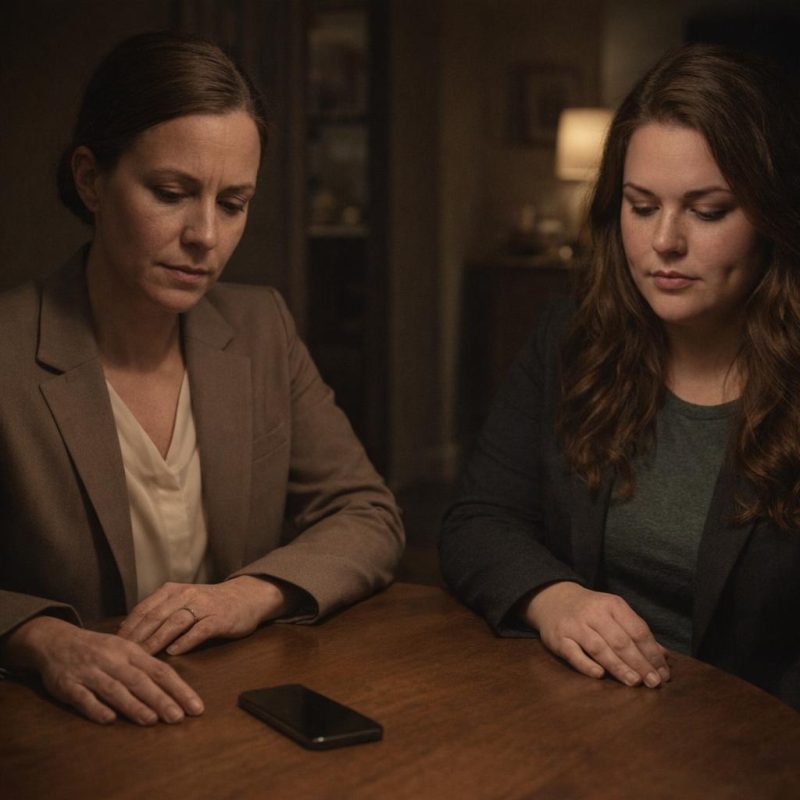 Image by RM AI
Corporate Charter
After Sarah left, I went to my home office. The filing cabinet was a four-drawer unit I'd bought the year we incorporated — steel, labeled, organized by document type and then by year, the way a system should be organized if you ever actually need to find something under pressure. The corporate charter was in the third drawer, in a hanging folder marked with the company name and the year we'd filed it. I carried it to my desk and set it down. Forty-three pages, bound with a binder clip, the paper slightly yellowed at the edges in the way that paper yellows when it's been filed correctly and left alone for fifteen years. Richard and I had signed it at a conference table with our attorney present, and I remembered thinking at the time that it was the most serious document I had ever put my name on — more serious than the mortgage, more serious than anything. I opened to the first page and began reading from the top, the way you read a document when you don't yet know which part of it matters.
 Image by RM AI
Morning Scan
I was at my desk by six-fifteen Thursday morning with the charter open and a fresh cup of coffee going cold beside it. The first twenty pages covered standard shareholder rights — transfer restrictions, voting thresholds, the anti-dilution language we'd negotiated specifically because we'd watched two other companies in our sector get hollowed out by outside investors. I knew those pages. I had helped draft them. Pages twenty-one through thirty detailed voting procedures for board decisions, amendment protocols, the quorum requirements for extraordinary resolutions. I read them anyway, line by line, the way you re-read a contract when you suspect the answer is somewhere in the language you've already seen. Page thirty-one began a new section. I turned to it the same way I'd turned every other page — methodically, without expectation. The heading at the top of the page read: Morality and Stability Provisions.
 Image by RM AI
David Chen
I found David's direct office number in the contacts folder I kept on a separate encrypted drive — the one Richard had never asked about and I had never mentioned. David picked up on the second ring, which surprised me. I had expected his assistant. I told him I needed an urgent review of our corporate charter, specifically the provisions beginning on page thirty-one, and that I would prefer to meet in person rather than discuss the details over the phone. He asked if there was a compliance issue. I said there was a document interpretation question that required his expertise before I could make an informed decision. That was accurate. It was also everything I was prepared to say. He offered Friday at two o'clock. I said that worked. He asked if I wanted to send the documents ahead of time. I said I would bring them in person along with some supplementary financial records. He said fine. I said thank you. We hung up. I sat for a moment with the phone still in my hand, noting, with something close to professional satisfaction, how steady my voice had stayed through the entire conversation.
 Image by RM AI
Company-Linked Accounts
I pulled the transaction reports from all four company credit cards before seven Thursday morning. Richard's card number ended in 4471 — I had memorized it the same way I had memorized every account number that touched our books. I filtered the export to his card only and set the date range to ninety days. The spreadsheet populated in columns: date, merchant, amount, expense category. Restaurant charges appeared first — high-end ones, the kind we used for client entertainment, coded accordingly. Then hotel bookings. Then retail. A jeweler on Michigan Avenue appeared twice in six weeks, both transactions coded to client gifts. There was no client on record for either date. I cross-referenced against our CRM. Nothing. I kept working through the rows without stopping, the way you audit a ledger when you already sense the variance but need the documentation to confirm it. By the time I reached the bottom of the ninety-day window, I had flagged thirty-one transactions totaling just over fourteen thousand dollars. I exported the flagged set to a separate tab, labeled it Supplementary Records, and saved two copies. The numbers sat in their columns, clean and orderly, indifferent to what they described.
 Image by RM AI
Timeline Alignment
I used graph paper from the supply drawer — the kind with the fine blue grid I kept for cash flow projections. I drew a horizontal line across the middle and marked it in weekly increments going back four months. Vanessa's hire date went in first, marked in blue ink at the left anchor point. One week later, the expense pattern on Richard's card shifted — the first restaurant charge that didn't match any client record appeared on a Tuesday. I marked that in red. Then I pulled the penthouse lease date from the document I had photographed on Richard's desk. It fell two weeks after the hire date. I marked it in black. I set the pen down and looked at the three marks on the line. Fourteen days. Hire date, first anomalous expense, lease signing — all of them inside a single two-week window, clustered together the way correlated variables cluster when they share a common cause. I had built enough financial models to know what correlation looked like on a timeline. I also knew correlation wasn't causation. But the three marks sat there on the graph paper, less than an inch apart, and I could not find a version of the data that made them unrelated.
 Image by RM AI
Friday Confirmation
David called at six forty-seven Thursday evening. I was still at my desk. He said he had completed his review of the charter provisions I had flagged and that he wanted to confirm our two o'clock meeting for Friday. His voice was measured in the way that attorneys' voices get measured when they are being careful — not cold, not warm, just precise. He asked me to bring the supplementary financial records I had mentioned. I said I had them ready. He said he would appreciate it if I could also bring any documentation related to the specific transactions, not just the summary export. I said I could do that. Then he said he thought we should plan for two hours rather than one. I told him that was fine. He said good, he would have his assistant hold the full block. I wrote it in my calendar after we hung up — Friday, 2:00 PM, David Chen, two hours blocked — and I sat looking at the notation for a moment. Attorneys who find nothing in a document review do not ask you to block two hours. They send an email. The careful neutrality in David's voice when he had confirmed the meeting told me he had found something worth the extra hour.
 Image by RM AI
The Morality Clause
David's office had the particular quiet of rooms where serious things get decided. He had the charter open on the conference table when I arrived, a yellow tab marking page thirty-two. He didn't open with pleasantries. He read the clause aloud, slowly, the way you read language you want someone to hear without interpretation first. The provision prohibited any officer or majority shareholder from entering a romantic or personal relationship with a direct report, and specifically identified the use of company-linked accounts or resources in furtherance of such a relationship as an aggravating condition triggering enhanced penalties. I listened. Then David set the charter down and placed my expense spreadsheet beside it. He walked through each element: Vanessa's employment status as Director of Client Services, her direct reporting line to Richard as CEO, the fourteen thousand dollars in company-account charges, the penthouse lease co-signed within two weeks of her hire date. He said the clause was self-executing. He said Richard's actions met every documented criterion. He said the lease signing was the trigger event. Then he looked at me over his wire-rimmed glasses and said the divestment was not pending board approval — it was automatic, and it was already in effect.
 Image by RM AI
Self-Executing
I asked David to walk me through the mechanics one more time. He did, without impatience. A self-executing clause, he explained, requires no vote, no board resolution, no court order. The trigger event — in this case, the penthouse lease co-signed by a direct subordinate using company-linked funds — activated the provision the moment Richard's signature hit the page. Under the charter's succession language, majority shares transferred automatically to the next eligible party, which the document defined as the co-founding shareholder in good standing. That was me. I had become majority shareholder two weeks ago on a Tuesday afternoon, and I had not known it. David said every board decision Richard had made since the lease signing was potentially invalid — contracts executed, vendor agreements renewed, any resolution requiring majority-shareholder authority. He recommended immediate formal notification before Richard took any further action in his capacity as majority owner, a capacity he no longer legally held. I asked what Richard's likely response would be. David said that was a question for a litigator, but that the language was unambiguous. I looked at the charter open on the table between us and thought about every meeting Richard had chaired in the past two weeks, every document he had signed, every decision he had made as though nothing had changed — and none of it had been his to make.
 Image by RM AI
The Fine Print
David slid the charter across the table and I read the clause myself, word by word, the way I read every contract before I sign it. The language was clean. No ambiguity, no interpretive gray area, no room for a creative reading. It prohibited romantic or personal relationships between officers and direct reports. It identified company resources as an aggravating factor. It specified automatic divestment as the remedy. Richard had insisted we include it fifteen years ago, after a competitor's CEO had been compromised by exactly this kind of entanglement — a relationship with a subordinate that gave her leverage, that muddied the governance structure, that nearly handed the company to outside interests during the resulting litigation. Richard had called it their insurance policy. He had said it was the kind of language that protected serious companies from human error. He had been right. I remembered the afternoon we signed the amended charter — a conference room not unlike this one, two people who believed they were building something that would outlast any single mistake either of them might make. We had written the clause to protect the company from the outside. It had never occurred to either of us that we might one day need it to protect the company from each other.
 Image by RM AI
Notification Process
David opened a fresh legal pad and began outlining the notification requirements in the methodical way I had always appreciated about him — sequential, no editorializing, just procedure. A formal divestment letter had to be delivered to Richard personally, not by email, not through counsel. The board had to be informed within seventy-two hours of notification. The share transfer had to be recorded with the corporate registry, which David said he would handle directly. He would have all documentation prepared by Monday morning. He asked how I wanted to handle delivery. I said I needed to think about it. He recommended office delivery with a witness present, which he said was standard for notifications of this nature. I said that was fine. He made a note. I watched him write in the careful, even hand of someone who had spent decades reducing complicated situations to their procedural components, and I thought about the stack of documents taking shape on his legal pad — the letter, the registry filing, the board notice, each one a formal record of something that could not be undone. The weight of what David was preparing settled into the room around us, quiet and absolute.
 Image by RM AI
Maintaining Routine
I arrived at seven-fifteen, same as always. Same coffee from the same place on the corner, same briefcase, same parking spot. The building looked exactly the way it had looked every Monday morning for the past eleven years, which was the point. David's notification package was sitting in my locked bottom drawer, fully executed, witnessed, and ready. I had checked it twice before leaving the house. Richard's car was already in the lot when I pulled in — the silver Mercedes, backed into the space the way he always parked it, like he was perpetually ready for a fast exit. I took the elevator to the fourth floor, set my coffee on my desk, and opened my calendar. Quarterly variance reports. A call with our insurance broker at nine. A vendor review at two. I worked through my inbox with the same methodical pace I brought to every Monday, and I did not think about the drawer. I was halfway through the insurance call when I heard footsteps in the hallway. I stepped to my doorway to pull a file from the cabinet outside, and Richard came around the corner moving fast, already looking past me toward the conference room. He nodded once without breaking stride.
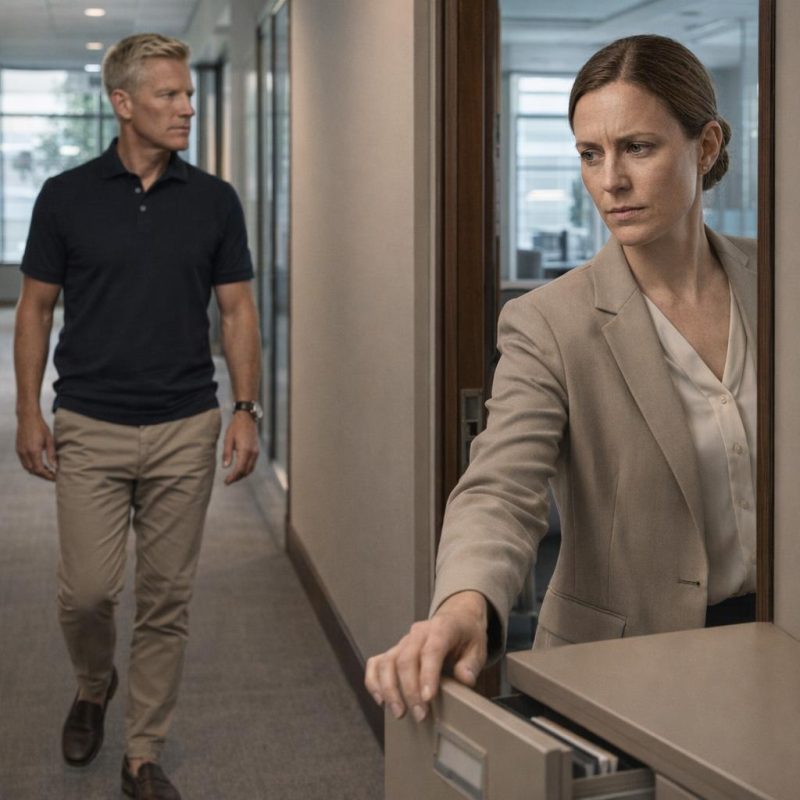 Image by RM AI
Unaware
The conference room had glass panels on two sides, which had always been Richard's preference — he liked being visible when he was performing well. I could see him from my office doorway without appearing to watch. He was at the head of the table in the charcoal suit he reserved for investor meetings, the one with the subtle chalk stripe that photographed well. Vanessa sat to his left with a legal pad, pen moving steadily. The potential investor across from them was nodding. Richard had a way of filling a room that I had once found genuinely impressive — the forward lean, the measured pause before a key number, the practiced certainty in his voice when he talked about where the company was going. He was doing all of it now. I watched him gesture toward the projection screen, watched him reference Q3 targets with the easy authority of someone who had built the thing from the ground up and intended to run it for another decade. He made a commitment about the new service division. He made another one about international expansion timelines. His voice carried through the glass, confident and unhurried, the voice of a man who believed he still had every right to make those promises.
 Image by RM AI
Delivery
David arrived at eleven o'clock with two associates I hadn't met before — both young, both carrying identical leather portfolios, both with the careful neutral expressions of people trained to be invisible in difficult rooms. I met them in the lobby and walked them up. I had requested the main conference room for eleven, which my assistant had booked without question. Richard was already inside when we arrived, reviewing something on his laptop, and he looked up with the mild irritation of someone interrupted mid-thought. He registered David, registered the associates, registered me standing behind them, and his expression shifted into the polished cordiality he used for attorneys. David introduced himself, stated the purpose of the meeting in three sentences, and placed the notification letter on the table in front of Richard. He read the key provisions aloud in the same measured tone he used for everything. Richard picked up the document. He read the first page. He read it again. The color left his face in a way that was almost clinical to observe — not a flush, not a flinch, just a slow, even withdrawal, like a tide going out. The door opened and Vanessa stepped in, stopped when she saw the room, and did not move. Nobody spoke. The silence that settled over the conference table had a particular quality to it — not uncomfortable, not charged, just complete.
 Image by RM AI
Realization Hits
Richard set the document down with the careful deliberateness of someone managing their hands. He asked David to explain the morality clause. David explained it. Richard asked him to explain the trigger conditions. David explained those too, methodically, without editorializing. Richard said the lease had been for personal use, as though that distinction might matter. David said that made it worse, not better, because personal use of company accounts to fund a co-signed lease with a direct subordinate satisfied every element of the clause simultaneously. Richard asked if there was any mechanism to reverse the divestment. David said the provision was irrevocable upon trigger. Richard asked if the board had to ratify it. David said the clause was self-executing and required no board action. Richard sat with that for a moment. He picked up the document again and read the relevant section a third time, his lips moving slightly. I watched him work through it the way I had watched him work through difficult contracts before — looking for the exit, the carve-out, the language that bent. There wasn't any. Vanessa had not moved from her position near the door. She was watching Richard with an expression I couldn't fully read, somewhere between alarm and the particular stillness of someone calculating what this meant for them personally. Richard reached for his phone and began dialing before he had fully set the document back down.
 Image by RM AI
Mitchell Arrives
Mitchell Bradshaw arrived forty-seven minutes later, which was faster than I expected and probably meant he had been nearby. He came in the way he always came in — briefcase swinging, loud greeting, the aggressive good humor of a man who charged four hundred dollars an hour and wanted you to feel the value immediately. He shook Richard's hand, ignored David, and asked to see the corporate charter. David slid a copy across the table with the relevant section already highlighted in yellow. Mitchell read it standing up, which I suspected was a power posture he had developed over years of conference room negotiations. He read it twice. He asked about board approval requirements. David explained the self-executing provision. Mitchell said the clause was punitive and almost certainly unenforceable. David opened his portfolio and produced a printed summary of three appellate decisions upholding materially identical provisions in closely held corporations. Mitchell read the first one. He set it down and picked up the charter again. He asked about the signature date on the original filing. David gave it to him without checking his notes. Mitchell asked about the witness requirements for the notification. David pointed to the two associates, who had been sitting quietly against the wall the entire time. Mitchell put the charter down, leaned back, and said he needed time to research applicable precedents. His voice, when he said it, had lost about thirty percent of its earlier certainty.
 Image by RM AI
Walking Through the Clause
Mitchell was mid-sentence about procedural irregularities when I picked up the charter and opened it to page thirty-two. I didn't raise my voice. I didn't need to. I read the clause aloud the way I read financial statements — evenly, without inflection, letting the numbers carry the weight. Then I walked through it element by element. A subordinate employee: Vanessa held the title of Director of Client Services and reported directly to the CEO, which was Richard, which was documented in the org chart filed with the corporate registry. A co-signed financial obligation: the penthouse lease carried both their signatures, which was documented in the lease agreement David had obtained from the building management company. Company funds used in connection with the relationship: the expense reports showed seventeen transactions over four months, all coded to client entertainment, all corresponding to dates and locations that matched the lease address. I set the timeline on the table — a single page, dates in the left column, corresponding actions in the right. Richard was watching me the way people watch something they cannot stop. Mitchell started to interrupt twice and stopped both times. I closed the charter and folded my hands on the table. The trigger date, I told Richard, was the day he signed the lease.
 Image by RM AI
Litigation Threat
Mitchell came back swinging, which I had expected. He led with breach of fiduciary duty — the argument that the clause had been inserted without adequate disclosure to Richard as a signing officer. David placed the original charter on the table, opened to the signature page, and pointed to Richard's initials beside the morality clause summary on the acknowledgment addendum. Mitchell pivoted to enforceability, arguing the provision was punitive and disproportionate. David cited the first appellate case, then the second, then the third. Mitchell demanded an emergency board meeting on the grounds that a transfer of this magnitude required board ratification. David explained, again, that the provision was self-executing and that the board's role was confirmatory, not authorizing. Mitchell threatened to file for an emergency injunction to halt the share transfer pending litigation. David said any injunction application would fail on its face given the executed documentation, and that the legal fees Richard would incur in the attempt would be substantial and unrecoverable. Mitchell shuffled his papers. He picked up the charter. He put it down. He asked David a question about the notification timeline, and David answered it in one sentence. Mitchell had no follow-up. Richard had not spoken in eleven minutes. He sat at the end of the table watching his attorney work through every available argument and find the same wall at the end of each one. Mitchell set his pen down flat on the table.
 Image by RM AI
Board Meeting
The board convened at three o'clock in the same conference room, which nobody had suggested changing and nobody had objected to. All seven members were present — four in person, three on the video panel David's associate had set up along the far wall. David presented the legal notification, the charter provisions, the executed divestment documentation, and the timeline summary I had prepared. The board reviewed the materials for twelve minutes without speaking, which in my experience meant they had already read everything David had sent over that morning. The chair asked Richard if he wished to address the board. Richard said no. The chair asked if there were any procedural objections from counsel. Mitchell, who was seated against the wall rather than at the table, said he was preserving all rights pending further review, which was attorney language for having nothing left to say. The board voted. Seven to zero. The chair nodded to the board secretary, a precise woman named Helen who had held the position for nine years and who I had always liked for her complete absence of drama. Helen opened her binder, found the prepared resolution, and read aloud that the share transfer was confirmed and that Richard Calloway was hereby removed from his position as Chief Executive Officer, effective immediately.
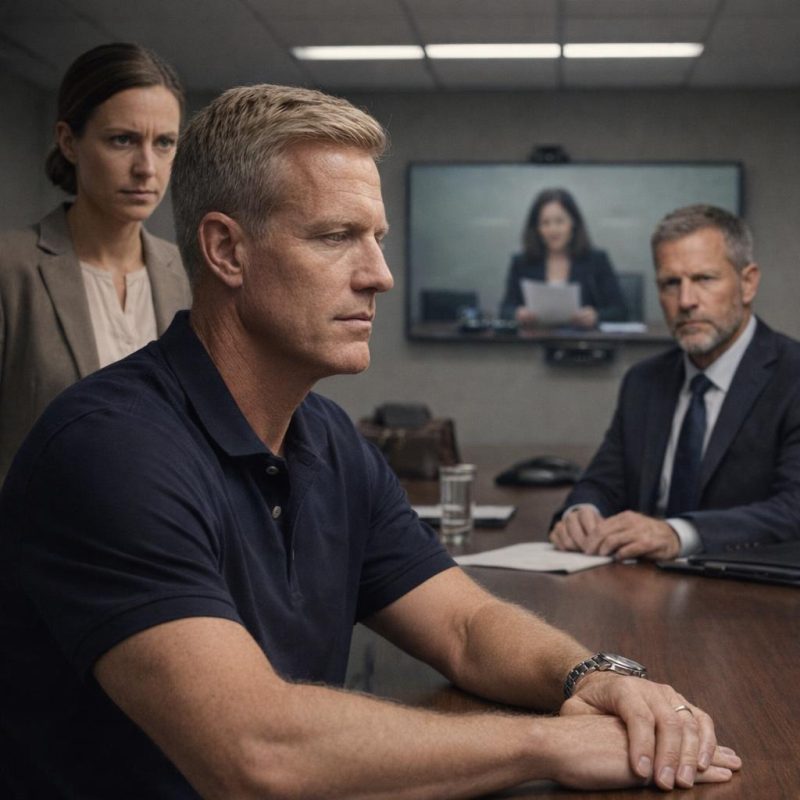 Image by RM AI
The Exit
Richard pushed back from the table. Not dramatically — no chair scraping, no papers swept aside. He simply stood, the way a man stands when a meeting has concluded and there is nothing left to discuss. He didn't look at me. He didn't look at David or the board members still gathering their materials. He straightened his jacket, which was a habit I had watched him perform ten thousand times over twenty-two years, and he walked toward the door. Vanessa rose from her seat along the wall and followed him without a word. I heard her heels on the floor behind him, quick and precise, catching up to him in the hallway. There was a brief murmur — her voice, then his, too low to carry back into the room. David closed his briefcase with a soft click. The board members on the video panel began signing off, their windows going dark one by one. Helen capped her pen and closed her binder. I stayed in my chair and let the room empty around me at its own pace. The hallway outside had gone quiet. Then there was only the distant mechanical sound of the elevator doors sliding shut.
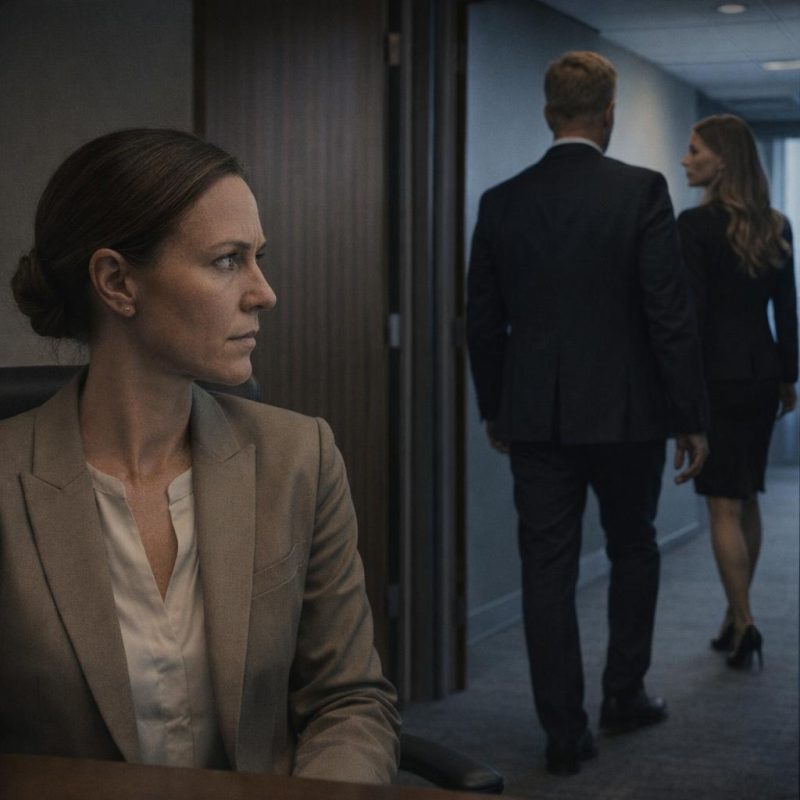 Image by RM AI
Restructuring
I met with each department head individually on Tuesday, starting at eight in the morning and finishing just before six. I kept the meetings to thirty minutes each, which was enough time to assess what they needed and tell them what was changing. The answer to the second question was less than they feared. Operations continued without interruption. Richard's client portfolio was redistributed across the senior account team by Wednesday afternoon, and I posted the Director of Client Services position internally and externally the same day. By Thursday I had a shortlist. By Friday I had made an offer. David finalized the remaining legal documentation on Friday afternoon and sent me the executed copies before five o'clock, which I appreciated because David understood that loose ends compound interest. I implemented new approval protocols for expenditures above a threshold that, in retrospect, should have existed years earlier. The board chair sent a brief email on Friday expressing confidence in the transition. I sent a brief email back thanking him and attaching the updated organizational chart. One week. The company had not missed a single client deliverable, had not lost a single account, and the numbers at the end of the week looked exactly the way numbers look when the underlying structure was sound all along.
 Image by RM AI
Sarah and Thomas Visit
My daughter Sarah and my son Thomas arrived Saturday morning with coffee from the place two blocks over and the slightly cautious energy of people who weren't sure what they were walking into. They found me at the kitchen table with the Q4 preliminary reports spread across one half and a legal pad on the other. Thomas set down the coffee, looked at the papers, and asked how I was managing everything. I told him I had a system. He laughed, which was the right response. Sarah sat across from me and didn't say much at first — she just watched, the way she had always watched, taking inventory before she spoke. I walked them through the restructuring over lunch, not because they needed the details but because saying it out loud confirmed that the details were solid. Thomas admitted somewhere around the second cup of coffee that he had been more worried about me than he had let on. I told him I understood, and I meant it. We had dinner at the kitchen table that evening, the three of us, with the reports pushed to one side and the conversation easy in a way it hadn't been in longer than I wanted to calculate. When I looked up from clearing the plates, Sarah was still at the table, watching me with an expression I didn't have a spreadsheet category for, but I recognized it anyway.
 Image by RM AI
Seven-Fifteen
I was at my desk at seven-fifteen Monday morning, which was the same time I had arrived every Monday for the better part of two decades. The coffee was in the same position — left of the keyboard, lid on until the first review was done. The Q4 reports were open on the left monitor, the board meeting agenda on the right. The office was quiet the way it only is before seven-thirty, when the building starts filling in around you and the day acquires its own momentum. I had made notes over the weekend on three items I wanted to address before the quarter closed. I pulled up the balance sheet first, as I always did, because the balance sheet does not editorialize. Every line was documented. Every figure reconciled. The approval protocols I had implemented the previous week had already caught two expenditure requests that would have moved through without comment six months ago. I made a note on those as well. My name appeared in the shareholder column the way it had always appeared, except that now the percentage beside it reflected the full picture rather than half of one. The numbers on the screen were clean, complete, and entirely mine.
 Image by RM AI
KEEP ON READING

20 Queens Who Deserved Better Husbands
Crowns Didn't Guarantee Kindness. History loves to romanticize royal marriages,…
By Cameron Dick Jul 2, 2026
Was the Mad Gasser of Mattoon a Collective Hallucination?
Unknown author on WikimediaIn September of 1944, residents of the…
By Christy Chan Jun 30, 2026
The Missing Roman Legion: How 5,000 Elite Soldiers Vanished Without…
Maria Dolores Vazquez on UnsplashImagine commanding a battle-tested force of…
By Sara Springsteen Jun 30, 2026
The Tribe That Proved Humans Can Survive Almost Anything
Miscellaneous Items in High Demand, PPOC, Library of Congress on…
By Emilie Richardson-Dupuis Jun 30, 2026
The Woman Who Convinced Doctors She Gave Birth To Rabbits
Fæ on WikimediaSome stories sound made up the moment you…
By Cameron Dick Jun 30, 2026
20 Best Musical Eras In History
What Era Has The Best Music. Music has always been…
By Sara Springsteen Jun 30, 2026