

I Built a Company With My Husband for 22 Years — Then I Found Out His 'Director of Client Services' Was Actually the Director of Destroying Everything I'd Created
I Built a Company With My Husband for 22 Years — Then I Found Out His 'Director of Client Services' Was Actually the Director of Destroying Everything I'd Created
Twenty-Two Years at the Same Table
Twenty-two years is a long time to sit across the same table from someone. We'd bought that dining table at an estate sale in 2002 — solid walnut, a little scarred on one corner where the previous owners had clearly dragged something heavy across it. I always liked that about it. It had history before us, and we'd added our own. That night, Richard opened a Bordeaux we'd been saving for no particular reason, and I made lamb chops the way I always do, with rosemary and a little too much garlic. We talked about the company the way we always did — not as work, exactly, but as something we'd grown together, the way you talk about a kid who's turned out well. Forty-three employees now. We'd started on a folding table in the spare bedroom with one regional client and a shared laptop. Richard raised his glass and said something about building things that last, about how rare it was to actually do it, to look around and see something real still standing. I touched my glass to his and looked at the table, at the scar on the corner, at the wine catching the light. His words settled into the room the way good things do — quietly, without needing anything more from either of us.
 Image by RM AI
The Rhythm of Seven-Fifteen
My alarm went off at five-forty-five, same as always. I was at my desk by seven-fifteen with coffee and the Q3 preliminary reports pulled up before the building had fully filled around me. There's a particular kind of quiet in an office before eight o'clock that I've always found useful — no interruptions, no questions, just the numbers and whatever they're trying to tell you. James arrived right at eight, same as always, and we spent the next forty minutes working through the board presentation deck, debating slide order and whether the regional growth figures needed more context. Around nine, my phone buzzed with a text from Richard saying his client breakfast had run long and he'd be in by ten-thirty. I noted it and went back to the vendor payment queue. The rest of the morning moved the way good workdays do — steadily, with purpose. I approved the outstanding receipts, flagged two vendor invoices for follow-up, and had lunch at my desk. By mid-afternoon I was working through a cash flow timing question James had raised when I realized I needed a file from the shared drive. I took the long way back from the printer, past the executive corridor. Richard's office door was pulled nearly shut, and through it came a voice — low, unhurried, nothing like the clipped efficiency of his usual client calls.
 Image by RM AI
Board Presentation Tightening
The board presentation had been sitting at about eighty percent for two weeks, and that last twenty percent is always where the real work lives. James and I spent most of Tuesday morning in the small conference room with the door closed, going back and forth on whether to open with the regional expansion figures or lead with the revenue projections. I argued for revenue first — it anchors the room before you ask them to think about growth. James thought the expansion story was more compelling as an opener. We went around on it for a while, the way you do when both positions have merit, and eventually landed somewhere in the middle. I adjusted the Q3 forecast models after lunch, tightening the assumptions on the western territory numbers, and James came back with updated cash flow timing that required me to rework two slides. It wasn't glamorous work. It was the kind of careful, methodical revision that either gets done right or shows up as a credibility problem in the boardroom. By four o'clock we had a version I was genuinely satisfied with. The executive summary was clean, the projections were defensible, and the supporting data was organized well enough that any question from the table could be answered in under thirty seconds. Three weeks before the presentation date. I closed the file and let myself sit with that for a moment — the particular quiet satisfaction of having the numbers locked down and ready.
 Image by RM AI
Western Region Budget Review
The western expansion had looked manageable on paper when we first mapped it out six months ago. Opening the actual budget files that Wednesday morning reminded me why projections and reality have a complicated relationship. The cost structure was more layered than the initial estimates had suggested — regional office lease terms that varied significantly by market, vendor quotes that James brought in showing a fifteen percent gap from what we'd modeled, and a buildout timeline that compressed our cash position in Q1 more than I'd anticipated. I spent most of the morning cross-referencing the lease terms against our capital reserve schedule, making notes in the margin of the spreadsheet the way I always do when something needs a second look. James stopped by around eleven with the updated vendor figures and we went through them line by line. None of it was alarming, exactly. It was the kind of complexity that comes with doing something real — expanding into new territory, taking on new risk, building something bigger than what you had before. Richard had mentioned the pressure of the western push a few times over the past month, and sitting with these files, I understood it in the concrete way that numbers make things concrete. I documented the variances for the next executive meeting and closed the folder, the weight of the expansion budget settling into exactly the shape I'd expected it to take.
 Image by RM AI
Friday Client Calls
Fridays have their own rhythm at the office, a little looser than the rest of the week but still purposeful. I worked through payroll approvals in the morning — forty-three employees, benefits deductions, the quarterly bonus accruals — and had everything signed off before noon. Richard was on client calls for most of the afternoon, which was normal. His side of the business ran on relationships, on the kind of sustained attention that kept long-term clients from looking elsewhere, and Fridays were often when he caught up on the ones who'd been harder to reach during the week. James stopped by around two to confirm the schedule for the following week — audit prep on Monday, the vendor review on Wednesday. We talked for maybe ten minutes and then he was gone and I was back to the financial reconciliation, closing out the week's numbers the way I always did. I was thinking about where we'd go for dinner — the Italian place on Clement Street, probably, the one we'd been going to for years — when my phone buzzed on the desk at four-thirty. Richard's name on the screen. I picked it up expecting a question about reservations. His text said a client situation had come up and he needed to cancel dinner.
 Image by RM AI
Estate Sale Browsing
Saturday mornings used to belong to estate sales, back when we were furnishing the house on a budget and the hunt was half the point. We'd gotten away from it over the years, so when Richard suggested it that weekend I said yes without hesitating. We drove out to a sale in Marin, the kind held in a big craftsman house where everything is tagged and the family stands in the kitchen looking slightly stunned. Richard found a set of copper cookware he admired but didn't buy. I found vintage glassware — eight pieces, barely a chip between them — and he held one up to the light and said they were well made, worth keeping. It felt easy in the way that familiar things feel easy. We stopped for lunch at a café we used to go to before the company got big enough to eat our weekends, and I ordered the same thing I always ordered there, which made me feel like no time had passed at all. The food came and we talked about the glassware and whether the copper pots had been overpriced. Richard's phone was face-up on the table beside his water glass. It buzzed once while we were waiting for the check, then twice more while he was eating. Each time, he glanced at the screen, jaw tight, then set his eyes back on his plate without a word.
 Image by RM AI
Partnership Balance
The monthly financial statements came in clean that week, which is the best thing you can say about financial statements — that they don't surprise you. I went through them Tuesday morning with the kind of focused attention that looks like calm from the outside and is, on the inside, just pattern recognition running at full speed. James and I met after lunch to start mapping the audit preparation timeline, which is never anyone's favorite conversation but is necessary, and we had a working plan roughed out by three. Richard had back-to-back client meetings most of the day, which I tracked loosely the way you track a partner's schedule when you share a business — not monitoring, just aware. The office felt balanced, everyone doing the work they were supposed to be doing. I was heading back from the kitchen with a refilled coffee mug when I passed the open stretch of hallway outside Richard's office. His door was cracked a few inches. He was on a call, and I caught maybe four or five seconds of it before I was past — not enough to make out words, just tone. It wasn't his client voice. His client voice is measured, professionally warm, calibrated for reassurance. What I heard through that door was something softer than that, and less careful, like a register he used somewhere I hadn't been.
 Image by RM AI
Contract Renewal Pressure
The Hartwell contract had been with us for eleven years, and the renewal terms this cycle were the most complicated we'd seen. Their procurement team had come back with a restructured pricing model that required me to rebuild our cost analysis from the ground up, and Richard was managing three different contacts on their side who weren't entirely aligned with each other. We met in the conference room at two o'clock, James bringing the supporting documentation, Richard with his notes from the morning's calls. The conversation was the kind that moves in circles before it moves forward — testing assumptions, finding the gaps, backing up and trying a different angle. By five we had a framework. By seven we had something close to a proposal. James left around six-thirty and it was just the two of us at the long table, Richard on his laptop coordinating with their procurement lead, me refining the margin analysis on mine. He ordered Thai food from the place two blocks over and we ate at the conference table with the proposal drafts spread between us, talking through the final numbers between bites. It wasn't comfortable, exactly — the work was too demanding for comfortable — but it was familiar. The particular exhaustion of sitting beside someone at the end of a long push, both of you still in it, still working, still carrying the same weight.
 Image by RM AI
Employee Milestones
The monthly all-staff meeting ran long, which was fine — it meant people were talking. I stood at the front of the conference room with forty-three faces looking back at me, and I thought about the folding table in our spare bedroom where Richard and I had started all of this, the two of us splitting a single phone line and arguing over whether we could afford a second monitor. James walked the team through the Q3 preliminary numbers and the room actually responded — a few people leaned forward, someone started taking notes who usually didn't. Richard spoke about the western expansion opportunities with the kind of easy confidence that had always made him good in front of a room, and I watched people nod along. Then I got to the anniversaries. Fourteen years for our operations manager. Seven for two of our dispatchers. I had written small notes for each of them, specific things — not generic praise but actual observations about their work. The applause was genuine. Afterward, people lingered over the coffee and pastries we'd set out, talking in small clusters, and I stood near the window and let myself take it in — forty-three people whose livelihoods were woven into something Richard and I had built from nothing, and the weight of that felt, in that moment, entirely like something worth carrying.
 Image by RM AI
Load-Bearing Structure
Thursday dinner was salmon and roasted vegetables, nothing elaborate, the kind of meal we made when neither of us wanted to think too hard about cooking. We talked about the board presentation coming up at the end of the month, and Richard said the western expansion timeline was firming up faster than he'd expected — two new regional contacts who were moving things along. I told him the Q3 numbers were cleaner than I'd projected, that we had more margin cushion than the preliminary figures suggested. He seemed pleased. We talked about taking a week somewhere after the quarter closed — somewhere warm, somewhere without laptops if we could manage it. It had been two years since we'd taken a real vacation, and I said so, and he agreed in the easy way he had when something sounded right to him. The dishes were cleared, the wine was almost gone, and we were still at the table the way we sometimes stayed long after the food was finished, not because there was more to say but because the evening hadn't quite ended yet. He reached across the table and put his hand over mine, and I turned my palm up without thinking, the way you do after twenty-two years, and his hand settled there, warm and familiar and solid.
 Image by RM AI
First Cancellation
Friday mornings at the office had their own rhythm — the week's loose ends, the emails that needed actual thought instead of quick replies, the particular quiet of a team already mentally halfway into the weekend. I got through most of my list by early afternoon and started thinking about dinner. We had a standing Friday tradition, nothing formal, just the two of us at home with something better than a weeknight meal and no laptops open. Richard's text came in at three-twelve. A client situation had come up — one of the western expansion contacts needed a call, it was going to run late, he was sorry. I typed back that it was fine, that I understood, because I did. Busy stretches happened. I stopped at the grocery store on the way home and bought pasta ingredients, a good bottle of olive oil, a bunch of basil that smelled like summer. I made the pasta at the kitchen island, ate it there with a glass of wine and the financial journal I'd been meaning to get through all week. It was a perfectly reasonable evening. Richard came home after ten, said a quiet hello from the doorway, and went straight to the bedroom. I finished the article I was reading, rinsed my bowl, and told myself this was temporary — the kind of thing that happened during a push, and then it passed.
 Image by RM AI
Second Friday Alone
The week moved the way weeks do when you're deep in a project — heads down, calendars full, the days compressing into task lists and status updates. By Friday afternoon I was aware of a low-level attention I was paying to my phone that I hadn't quite noticed before. I checked it at two, at three, at four. At four-fifteen Richard's text came through: another client situation, the same western expansion contact, he'd explain when he got home. I read it standing at my desk and typed back the same thing I'd typed the week before. I drove home, changed out of my work clothes, and went to the kitchen. I had already decided on pasta before I opened the refrigerator. I set one place at the table — plate, fork, glass — and it was only when I stepped back that I registered I had done it before he'd even texted. I stood there for a moment looking at the single setting, the chair across from it empty, and tried to decide what to make of that. Probably nothing. Two weeks of the same pattern didn't mean the pattern was permanent. I poured the wine and started the water boiling and told myself that was a reasonable conclusion.
 Image by RM AI
Three in a Row
The third Friday arrived the way the others had — a normal morning, a productive afternoon, and then Richard's text at four-thirty. Different wording this time, same message. I didn't text back right away. I sat with my phone on my desk for a minute, looking at the words, before I typed that it was fine and drove home. I made pasta again, the same simple version I'd been making for three weeks, and sat at the kitchen island with the financial journal open in front of me. I'd read the same issue twice now. I wasn't sure I'd retained much of it either time. I told myself what I'd been telling myself — that we had been through busy stretches before, that the expansion was a real and demanding thing, that Richard had always carried his weight through difficult quarters and this was no different. The rationalizations were all accurate. They were also starting to feel like something I was reciting rather than something I believed. Richard came home after eleven. I heard the door, heard him move through the kitchen, heard the bedroom door close. I had already been in bed for an hour. The house had a particular quality of quiet when I was in it alone — not the comfortable quiet of two people in separate rooms, but something with more space in it than I knew what to do with.
 Image by RM AI
Phone Face-Up
We had dinner at home on Thursday, which should have felt like a return to something normal. Richard was there, physically present, jacket off, sitting across from me at the table we'd eaten at for fifteen years. His phone was face-up beside his plate. I noticed it the way you notice something that's slightly out of place — not alarming, just there. I told him about the audit preparation, where we were in the documentation process, which vendors had been slow to respond. He nodded at the right intervals. His eyes went to the phone twice while I was talking. I asked about his day and he gave me the shape of an answer — a few names, a reference to a call that had gone long — without much inside it. I asked about the weekend and whether he wanted to do anything, and he said maybe, that he'd have to see how things looked. The meal was over in forty minutes, which was fast for us. He cleared his plate, said he had some emails to get through, and moved to his office. I sat at the table a little longer with my wine, turning the glass slowly. I had been talking, and he had been present, and somehow the distance between those two things had felt wider than the table between us.
 Image by RM AI
Western Expansion Pressure
I pulled up the western expansion budget files on Monday morning and told myself I was doing routine due diligence. The expansion was real, the pressure was real, and if Richard was distracted it made sense that this was why. I cross-referenced his calendar against the project timeline and the numbers tracked well enough. James stopped by my office around eleven and mentioned, almost in passing, that Richard had been in several client strategy sessions over the past few weeks — meetings James had assumed I was looped into separately. I said I had been, which wasn't quite true, and waited until James left to open the meeting notes folder. The sessions were logged there, dates and attendees and summary notes. Richard's name appeared on six of them. Mine did not appear on any. They were marked as client strategy discussions, which was a category that typically included financial planning components — components that were, by any reasonable reading of our structure, my domain. I sat looking at the list of names and dates, trying to find the explanation that made the most sense. Maybe the invitations had gone to a wrong address. Maybe these were preliminary conversations that hadn't yet reached the stage where finance needed to be in the room. I kept the file open and went back to the beginning to read it again from the top.
 Image by RM AI
Weekend Getaway Booking
I found the hotel during my lunch break — the same one we'd stayed at the second year of our marriage, a small coastal property that had been renovated since but kept the same name. We had eaten breakfast on the balcony both mornings and talked about what the company might look like in ten years. I booked a room for two months out, a Friday and Saturday night, and wrote Richard a short note in the confirmation email — something about needing a reset, about how we hadn't taken real time together in too long. I kept it light. I sent it at twelve-forty-seven and went back to work. By two I was checking my email more than I needed to. By four I had mostly stopped expecting a quick response. The reply came at three-fifty-eight: a single thumbs-up emoji, no words.
 Image by RM AI
Stopped Expecting More
The thumbs-up emoji had been two months ago, and I still hadn't booked a follow-up trip. I wasn't sure when I'd stopped expecting a response to things like that — a real one, I mean, with words in it. Dinner that Tuesday was salmon and roasted vegetables, and I made enough for two without thinking about it. Richard sat at the far end of the table with his phone face-up beside his plate, and I didn't ask about his day. I used to ask. I used to wait for the pause that meant he was actually considering the answer. Somewhere between then and now I'd stopped waiting. We ate without talking, and it wasn't uncomfortable exactly — it was just quiet in the way that had become the default setting. I carried my plate to the sink, then his, then the serving dish. I ran the water. I didn't ask if he wanted coffee. I didn't ask if he wanted to sit for a while. I cleared the dishes and set them in the rack without asking, and it wasn't until I was drying my hands on the dish towel that I understood I had already accepted the silence.
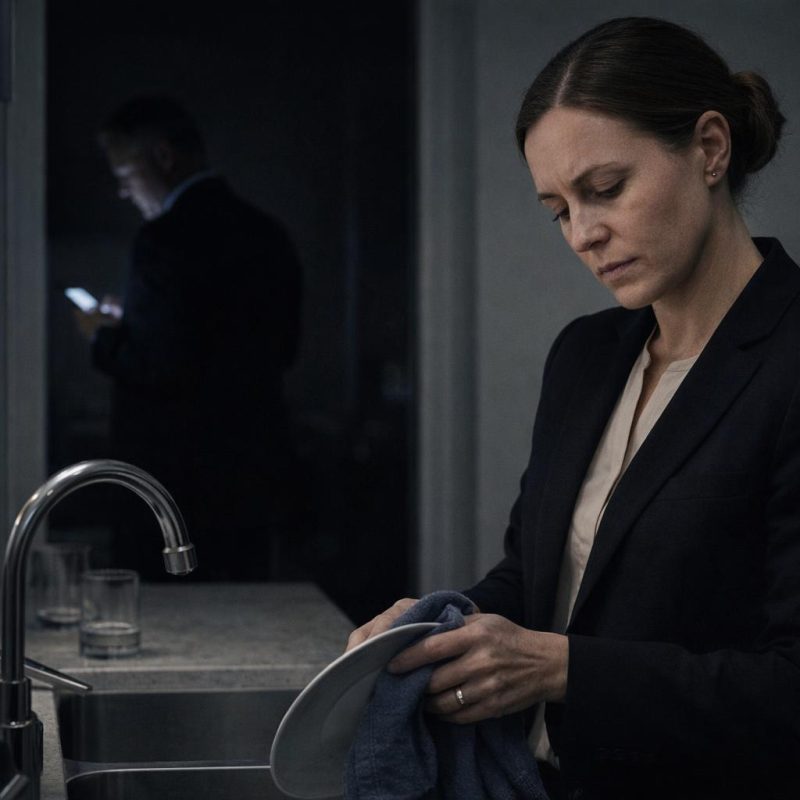 Image by RM AI
Buried in Q3 Work
The Q3 board presentation was six weeks out, and I had made it my reason to stay at the office until the building got quiet. James left at six, same as always — a brief knock on my open door, a 'see you tomorrow' — and I told him to have a good night and meant it. Then I pulled the budget reconciliation back up and started from the top. There were errors to find if I looked hard enough, small formatting inconsistencies in the variance columns, a label that didn't match the prior-year tab. I found them and fixed them and found more. By seven-thirty I had gone through the deck twice and the supporting schedules once. I knew the numbers were clean. I kept going anyway. At eight-fifteen I finally saved the file, closed my laptop, and sat for a moment in the stillness of the empty office — the hum of the HVAC, the faint glow of the parking lot lights through the window blinds. I had a forty-minute drive home and I took the longer route without deciding to. The numbers had been straightforward and exact, and for a few hours that had been enough.
 Image by RM AI
Director of Client Services
The monthly executive meeting started at nine on the dot, and Richard opened with a personnel announcement before we'd even gotten through the standing agenda items. He said he'd brought on a new director of client services, someone with deep industry relationships and a track record in logistics account management. Then Vanessa walked in. She was polished in the way that reads as effortless — contemporary blazer, measured smile, the kind of composed entry that suggested she'd done this particular walk into a particular room many times before. She gave a brief overview of her background, named a few clients she'd managed at her previous firm, and handled the follow-up questions without hesitation. James asked about her familiarity with our current account structure and she answered with enough specificity to satisfy him. Richard praised her network twice. I reached for my water glass and watched the meeting move forward the way meetings do. At some point Richard said something to her across the table — I didn't catch the words — and his shoulders dropped about an inch, and the careful, boardroom set of his expression opened into something I hadn't seen on his face in a long time.
 Image by RM AI
Vague and Useless
The client entertainment line was the one holding up the reconciliation, and I needed the itemized breakdown before I could close the Q3 variance analysis. I drafted the email to Richard mid-morning — specific, professional, three clear bullet points listing exactly what I needed and referencing the board presentation deadline. I sent it at ten forty-two. His reply came back at two-seventeen: three sentences. He said the charges covered relationship development activity, that he'd pull the receipts together, and that he'd get them to me before the end of the week. I read it twice. The end of the week came. No receipts arrived in my inbox, no folder appeared in the shared drive, no follow-up note. I checked on Monday morning out of habit and then again Tuesday afternoon. On Wednesday I opened the working document I'd been maintaining for the board presentation and found the line item still sitting there, unresolved, with a note beside it that said 'documentation pending.' I added a second flag next to it.
 Image by RM AI
Polished Presentation
The follow-up meeting was supposed to be a working session — client service integration, transition timelines, handoff protocols. Vanessa came in with a printed assessment and walked us through it section by section. She knew the names of our top-tier accounts. She knew the renewal cycles. When James asked about the Hartwell partnership specifically — a relationship we'd been managing carefully for three years — she gave him a timeline with milestone dates that matched our internal tracking almost exactly. I wrote down what she said and kept my expression neutral. Richard nodded through most of it, the approving kind of nod that means someone is confirming what they already believe rather than taking in new information. I told myself she'd done her homework, that a good hire would have done exactly that. But there was a particular quality to her answers — not wrong, not off — just fitted, the way something fits when it's been measured rather than estimated. I couldn't point to a specific moment and say that's the thing that doesn't add up. It was more like the whole picture sat slightly outside the frame, and I couldn't quite explain why.
 Image by RM AI
Doubled Expenses
The year-over-year comparison was the last tab I built before the board presentation draft went to layout, and I ran it three times because the client entertainment figure kept coming back the same way. It had doubled. Not crept up, not increased by a meaningful but explainable margin — doubled, against a prior three-year baseline that had been almost flat. I pulled the supporting documentation folder and found it thin: two receipts covering maybe thirty percent of the total, a handful of calendar entries with no attached invoices, and the same pending note I'd flagged two weeks earlier. James confirmed when I asked him that the receipts had been requested and not yet provided. I added the discrepancy to my working notes with the date and the specific dollar variance, the way I would document any unresolved line item before a board review. Then I sat with the spreadsheet open in front of me, the number in the cell unchanged, and tried to think of a pattern in our expense history that would make it make sense. I couldn't find one.
 Image by RM AI
Itemized Breakdown Request
I drafted the second email on a Thursday morning, before the rest of the floor had fully settled in. I kept the language the same way I'd keep any professional follow-up — neutral, specific, deadline-referenced. I noted that the board presentation was now three weeks out, that the client entertainment variance remained undocumented, and that I needed the itemized receipts by end of week to close the reconciliation. I read it over once, changed nothing, and sent it at eight fifty-one. Richard's reply came back in under ten minutes. He said he hadn't forgotten, that he'd pull everything together soon, and that I shouldn't worry about the timeline. I read the word 'soon' and wrote nothing back. Three days passed. I checked the shared drive on Monday morning and found no new folder, no uploaded receipts, no forwarded invoices. I opened my working document, located the flag I'd added two weeks earlier, and typed the date of his reply and the word 'unresolved' beside it. Then I sat there looking at the entry, and the reply came back to me again — under ten minutes, and still nothing to show for it.
 Image by RM AI
Saturday Suggestion
Saturday morning came in gray and mild, the kind of weather that's good for walking, and I suggested the river path over coffee. Richard was at the kitchen table with his laptop open, the same position he'd been in when I came downstairs. I said we hadn't walked that route in a while, that it might be good to get out. He said sure. He didn't look up from the screen when he said it. I waited a beat, then asked if he wanted to leave after he finished what he was working on. He said he needed to get through a few emails first. I took my coffee to the living room and found my book and told myself that was fine, that an hour was nothing. An hour passed. I could hear the soft tap of keys from the kitchen. I refilled my cup and stood in the doorway for a moment, and he was still at the table, still looking at the screen, the laptop positioned between us like it had always been there. I asked if he was getting close. He said 'yeah, almost' without lifting his eyes, his voice flat and even, carrying nothing.
 Image by RM AI
Buzzing Through Breakfast
I made eggs and toast Saturday morning because it was what I always made on weekends, and routine felt like the right thing to hold onto. Richard sat across from me at the table, his phone face-up next to his plate. I asked about his week, whether the Henderson account had resolved. He said mostly. I asked if he wanted more coffee. He said sure. The phone buzzed and his eyes dropped to the screen for a second — just a second — before he looked back at his plate. I talked about the week ahead, a vendor call I needed to prep for, a report James had flagged. Richard nodded in the right places. The eggs went cold on my plate while I was still talking. The phone buzzed again, and this time his jaw shifted, just slightly, the way it does when he's processing something he doesn't want to show. He didn't pick it up. He didn't explain it. He just reached for his coffee and took a slow sip, and I kept talking about nothing in particular, watching his expression change each time the screen lit up.
 Image by RM AI
Twenty Minutes on the Deck
I was in the living room with my book Saturday afternoon when I heard the back door open and close. I didn't think much of it at first — Richard sometimes went out for air. But a few minutes later I got up to refill my water glass, and through the kitchen window I could see him on the deck, phone pressed to his ear, his back turned toward the house. I checked the time out of habit and went back to my chair. I read the same paragraph three times without taking in a word. When I got up again — maybe fifteen minutes later — he was still there, still talking, his free hand resting on the deck railing, shoulders angled away. I stood at the sink longer than I needed to, glass already full. He wasn't pacing. He wasn't gesturing. He was just standing very still, the way people stand when they're listening carefully to something they don't want to miss. He came inside eventually, walked past me without a word, and set his phone face-down on the counter. I thought about the twenty minutes he'd spent out there, his back to the house, and the particular stillness of his shoulders the whole time.
 Image by RM AI
Face-Down on the Counter
I watched him set the phone down and waited. That's the honest version — I waited. I told myself I was giving him space to say something, but really I just didn't know what question to ask that I was ready to hear the answer to. He opened the refrigerator, took out a water bottle, and stood there for a moment looking at nothing in particular on the middle shelf before he closed it again. I looked back at my book. The words didn't arrange themselves into anything meaningful. He walked past the kitchen doorway toward the bedroom, and I heard the soft click of the door behind him. Not a slam. Just a close. We used to sit in the same room for hours without talking and it felt like the most natural thing in the world — two people comfortable enough not to fill every silence. This didn't feel like that. The quiet that settled over the house after he walked away had a different texture to it, something I couldn't name exactly, only that it sat between us in a way that the old silences never had.
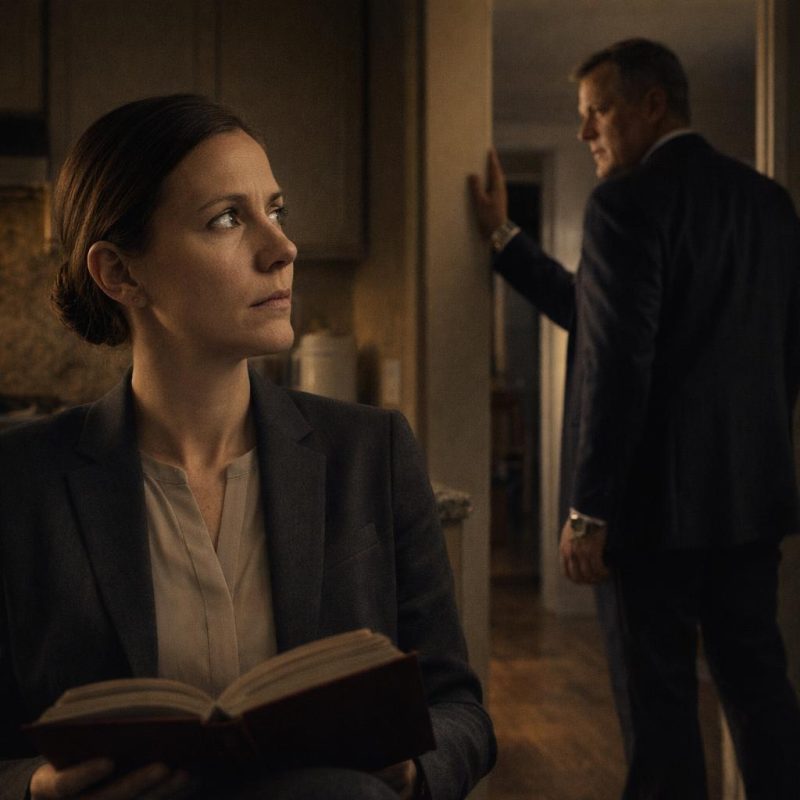 Image by RM AI
Suitcase on the Bed
I got home at seven-thirty Monday evening and heard movement in the bedroom before I'd even set down my bag. The large suitcase — the one we used for international trips — was open on the bed, and Richard was pulling shirts from the closet rack in careful, deliberate handfuls. I sat down on the edge of the bed. I didn't ask what he was doing because it was obvious what he was doing. He kept moving between the closet and the suitcase, folding things with more precision than he usually bothered with. He stopped at the foot of the bed, looked at me, and said he needed space. He said he'd been doing a lot of thinking. He said he felt like he'd lost himself somewhere along the way, that he needed to figure out who he was outside of the company, outside of everything. The words came out smooth and unhurried, each one landing in the right place, in a tone that didn't sound like a man in pain.
 Image by RM AI
Yellow Legal Pad
Sarah arrived Wednesday evening to find me at the kitchen table with the bank statements spread out and a yellow legal pad covered in my handwriting. She stood in the doorway for a moment before she sat down across from me. I told her what had happened the way I would have walked a department head through a quarterly discrepancy — here is the timeline, here are the observable data points, here is what I cannot yet account for. Richard left Monday. He said he needed space. There was a lease payment in the shared account I hadn't authorized. I showed her the legal pad. She asked how I was doing and I told her I was fine, that I was working through it. She offered to stay and I said there was no need, that I had what I needed in front of me. Thomas called while she was still there, and I gave him the same summary — factual, sequential, no editorializing. When I hung up, Sarah was looking at me with an expression I didn't have the bandwidth to examine. I capped my pen and straightened the stack of statements. It wasn't until later, sitting alone at that table, that I noticed how strange it felt to describe twenty-two years of marriage in the same measured tone I used for budget variances.
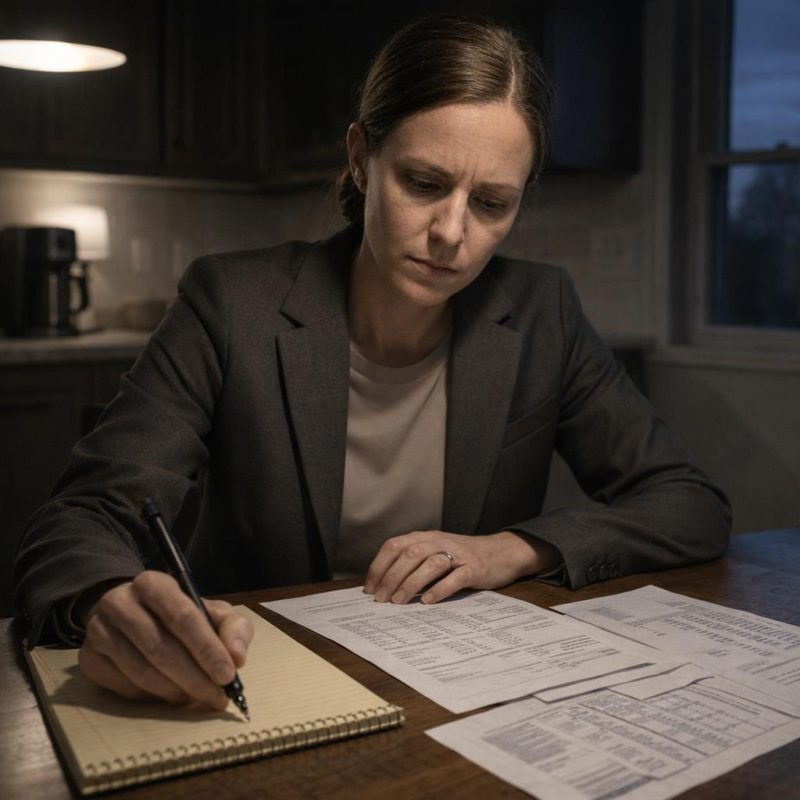 Image by RM AI
Luxury High-Rise
Wednesday morning I opened the shared banking portal the same way I opened it every month — methodically, starting with the most recent transactions and working backward. I wasn't looking for anything specific. That's what I told myself. The lease payment appeared eleven entries down, dated two weeks prior. The payee was a property management company I didn't recognize. I copied the name into a search window. The results came back quickly: a management firm handling premium residential units in the financial district, the kind of building with a concierge and floor-to-ceiling windows and monthly rates that don't appear in any listing without a scheduled showing. I went back to the transaction. I looked at the amount. I looked at it again. It wasn't ambiguous — the figure was consistent with a long-term lease on a unit in that tier, not a short-term rental, not a hotel, not anything that fit the story about needing space to think. I took a screenshot and opened a new document. I labeled it with the date and started a transaction log. The number sat at the top of the page: $6,400.
 Image by RM AI
Co-Signer Line
The property management company's portal accepted the login credentials from the bank transaction confirmation without any friction — account email, auto-generated password, and I was in. The dashboard showed one active lease. I opened it. The document was standard — term dates, monthly amount, unit number on the fourteenth floor. I scrolled through the boilerplate language about maintenance responsibilities and guest policies and pet restrictions. Page three was the signature section. There were two signature lines. Richard's was on the left, dated six weeks ago. I looked at the name on the right-hand line for a long time. Vanessa. Her full name, her signature, and below it, her title from our company — the title I had approved, in the department I had restructured to accommodate her hire. I didn't close the laptop. I didn't move from the chair. I saved a copy of the document to my secure folder and sat there in the quiet of my home office, the lease open on the screen in front of me, her name in plain black text on a line that told me everything the past several weeks had refused to say out loud.
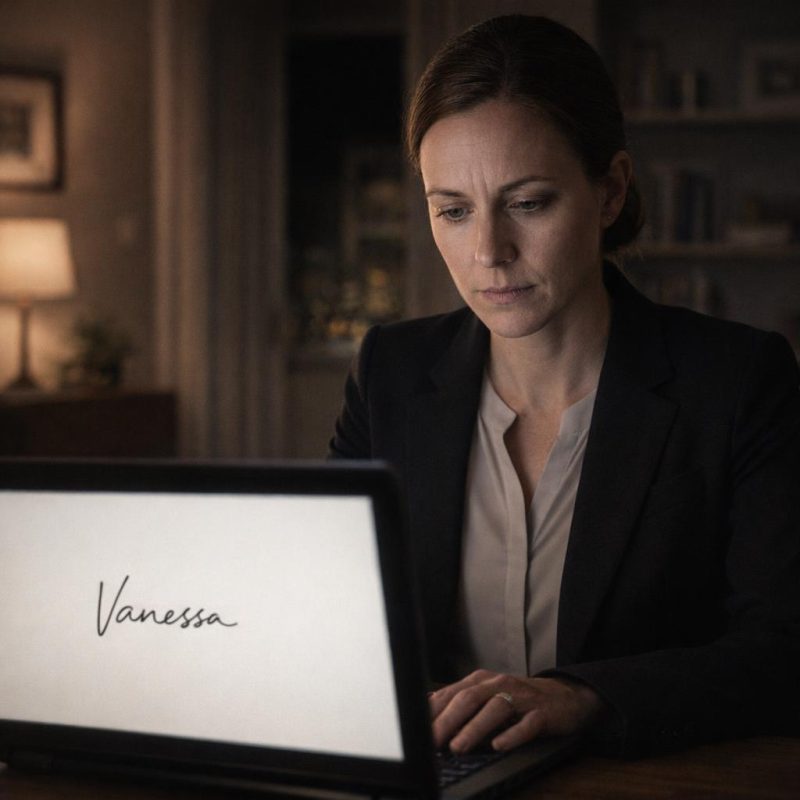 Image by RM AI
Partnership Agreements
Thursday morning I drove to the office before anyone else arrived. I unlocked my file cabinet and pulled out the partnership agreement binder — the full version, with all amendments, the one I kept in hard copy precisely because some documents need to exist somewhere that isn't a shared server. I knew where the morality clause was without having to search for it. I had helped draft the language eight years ago, sitting across from Martin and our attorneys in a conference room that smelled like fresh paint, arguing over the precise wording for two hours. I turned to that section now and read it slowly. The clause covered conduct materially detrimental to the company's reputation or its fiduciary standing with investors and partners. It included provisions for equity review and potential forfeiture triggered by a formal finding. I photographed each relevant page with my phone and then sat for a while with the binder open in my lap, reading the language again — not because I had forgotten it, but because I needed to feel the weight of what I had written, the careful, precise words about reputation and responsibility that I had put into this agreement when I still believed they would never need to apply to anyone I knew.
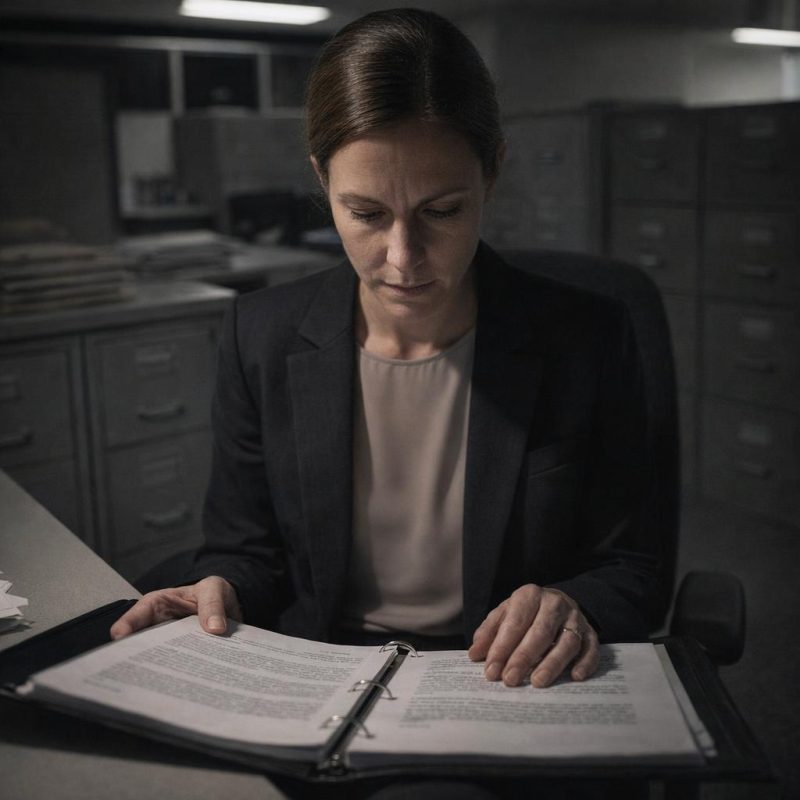 Image by RM AI
Expense Timeline Cross-Reference
James came in around nine and set a coffee on the corner of my desk without being asked — he'd been doing that for years, and I'd stopped noticing until I needed to notice things again. I thanked him and pulled up the expense tracking spreadsheet while he settled into the chair across from me to go over the monthly close. I wasn't looking for anything specific yet. I just wanted to see the shape of the numbers. I filtered the client entertainment category and sorted by date, then marked Vanessa's official start date with a yellow highlight — the date HR had on file, the date her badge was issued, the date she appeared in the org chart. Then I scrolled back. The charges didn't start there. They started earlier, a cluster of high-end restaurant names I recognized from the kind of client dinners we'd always handled carefully, the ones that required sign-off. I asked James to pull the onboarding records and confirm her first day. He checked and read the date back to me without looking up. I looked at my screen. The first significant spike in client entertainment charges was dated eight weeks before that.
 Image by RM AI
Excluded Meetings
I went looking for the client strategy files the way I always did — through the shared drive, the folder structure I'd helped organize when we moved everything to the cloud four years ago. I knew where things were supposed to live. That's why the folder stopped me. It was nested inside the client relations directory under a name I didn't recognize, a string of initials that didn't match any project code I'd approved. I opened it. Inside were meeting notes going back six months — sessions labeled client relationship planning, each one with a full attendee list, a prepared agenda, and detailed action items. I went through every document. My name didn't appear on a single attendee list. Richard's name appeared on all of them. The meetings covered our three largest accounts by revenue — the clients we'd spent years building, the ones whose contracts represented the majority of our annual billings. I printed the attendee lists and set them on the desk. Then I asked James, quietly, whether he'd ever been included in any client relationship planning sessions in the past six months. He looked at me steadily and said no. I looked back at the printed pages — the names of our most important clients, discussed in meetings I had never been told existed.
 Image by RM AI
Systematic Repositioning
I built a map on paper — old habit from the early days when we didn't have software for everything. I wrote the three client names across the top and started filling in dates beneath each one: entertainment charges, the meeting notes from the folder, every touchpoint I could document. The same three accounts appeared again and again, the contact frequency climbing steadily over a four-month window. I cross-referenced the expense line items against the excluded meeting notes and the pattern held tighter than I wanted it to. Something about the shape of it unsettled me — it wasn't scattered across our client base, but concentrated on the accounts that mattered most, and I couldn't explain why that would be. I went back through the invoices attached to the entertainment budget and started flagging anything I hadn't personally approved. Most of them I recognized. Then I found one I didn't. A consulting invoice, four figures, coded under client entertainment, from a firm whose name meant nothing to me. I searched the company name. The website was sparse — a logo, a contact form, no listed principals, no client history, no address beyond a registered agent in Delaware. I set the invoice on top of the stack and looked at it for a long moment.
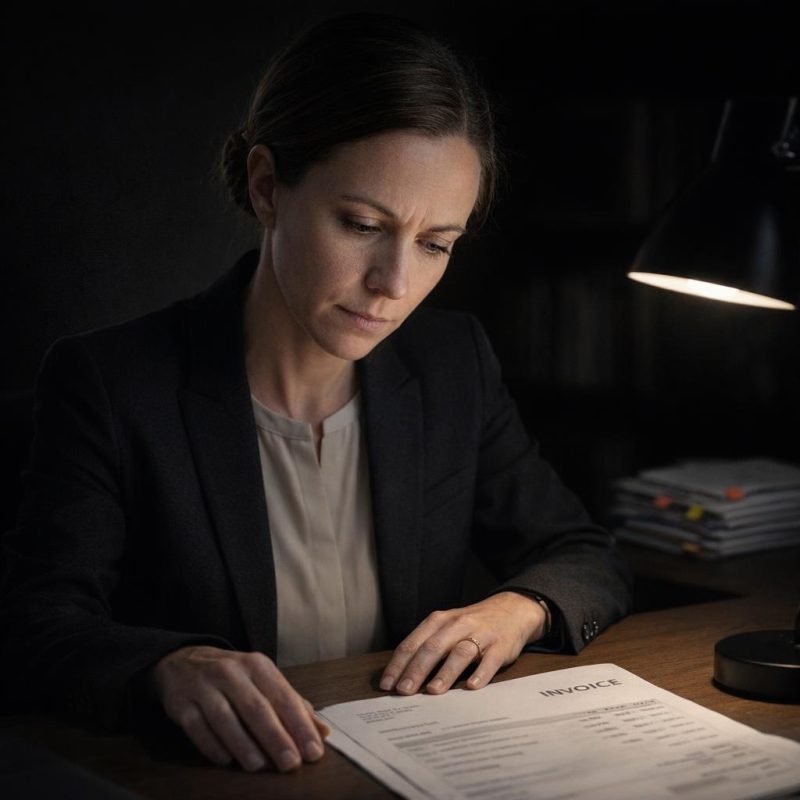 Image by RM AI
Bypassed Vetting
I pulled the HR files after lunch, starting with the most recent director-level hires so the search wouldn't look targeted if anyone checked the access log. I worked through three folders before I opened Vanessa's. The standard reference check form — the two-page document I'd written myself eight years ago, the one that required three professional contacts and a direct supervisor verification — wasn't there. I checked twice, thinking I might have missed a subfolder. I hadn't. There was no background verification report either, none of the third-party screening documentation we required for anyone with financial system access. What was there was an offer letter, clean and professional, with Richard's signature on the approval line. My approval line was blank. I pulled up the hiring policy document I'd drafted when we hit fifty employees, the one Richard and I had both signed. Director-level positions required dual approval — both co-founders, no exceptions, language I'd insisted on after we'd made one bad hire in the early years and spent six months untangling it. I sat with the open folder in front of me and the policy document beside it, the blank signature line where my name should have been, and the quiet weight of a process I had built being used without me.
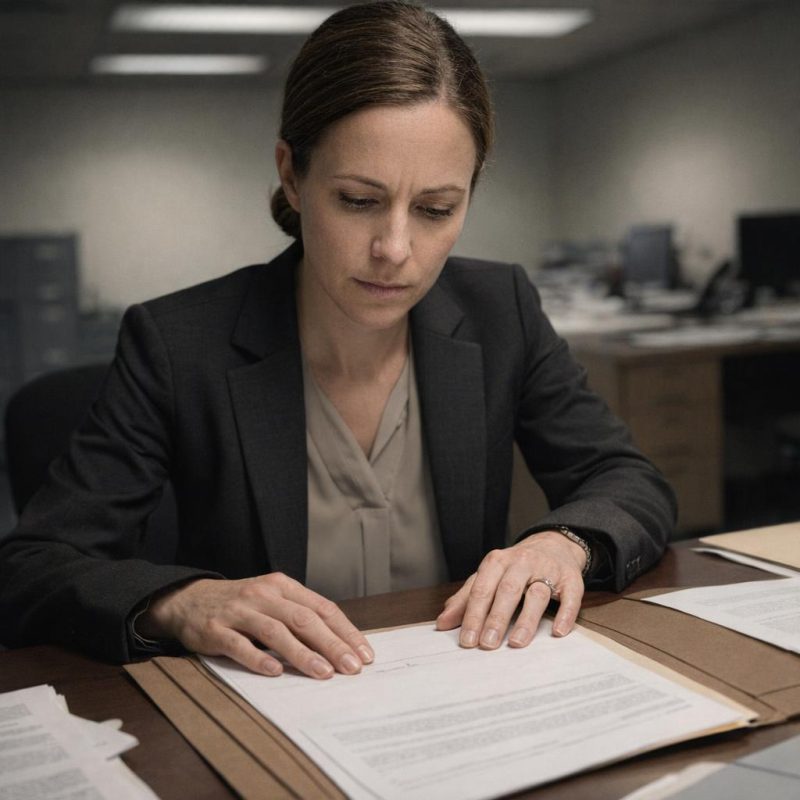 Image by RM AI
Two Months Before
I went home that evening and found my personal calendar from the spring — the paper one I kept on my desk at home, the one I used for things that weren't work. I'd started keeping it after a therapist suggested years ago that I was too good at compartmentalizing. I flipped back to early April and started reading. The first cancelled Friday dinner was the seventh. I'd written it in pencil, the way I always marked things that changed — Richard, late client call, reschedule. I checked that date against the expense records I'd brought home in my bag. The first cluster of high-end restaurant charges fell in the same week. I kept going. I found a journal entry from mid-April where I'd written that Richard seemed somewhere else lately, distracted in a way I couldn't name, present in the room but not quite in the conversation. I'd told myself it was the quarter-end pressure. I'd told myself a lot of things. Vanessa's official start date was two months after that first cancelled dinner, two months after the first expense spike, two months after I'd written the word distracted in my own handwriting and then turned the page. I sat at the kitchen table with the calendar open and the timeline laid out in front of me, and the distance I'd felt in that season had started long before I had a name to put to it.
 Image by RM AI
James Notices
It was nearly six on Friday when I heard the knock. I'd lost track of time somewhere between the consulting invoice and the third client contract, and the floor had gone quiet around me without my noticing. James was in the doorway, jacket on, bag over one shoulder. He asked if everything was okay. I looked up from the spreadsheets and told him I was fine, just finishing something up. He nodded, but he didn't move. He said he'd noticed I'd been in early most mornings this week, and staying late, and that the light in my office had been on when he arrived and still on when he left. He said it without pressure, just as a fact he'd observed, the way James always delivered things he thought I needed to hear. I told him I appreciated it. He said he understood, and that whatever I was working through, he was there if I needed anything — research, verification, a second set of eyes on numbers. He said it simply, the way you say something you mean without needing to make a speech about it. Then he said he'd see me Monday and turned to go. I watched him reach the elevator and felt, for the first time in days, that I wasn't entirely alone in this building.
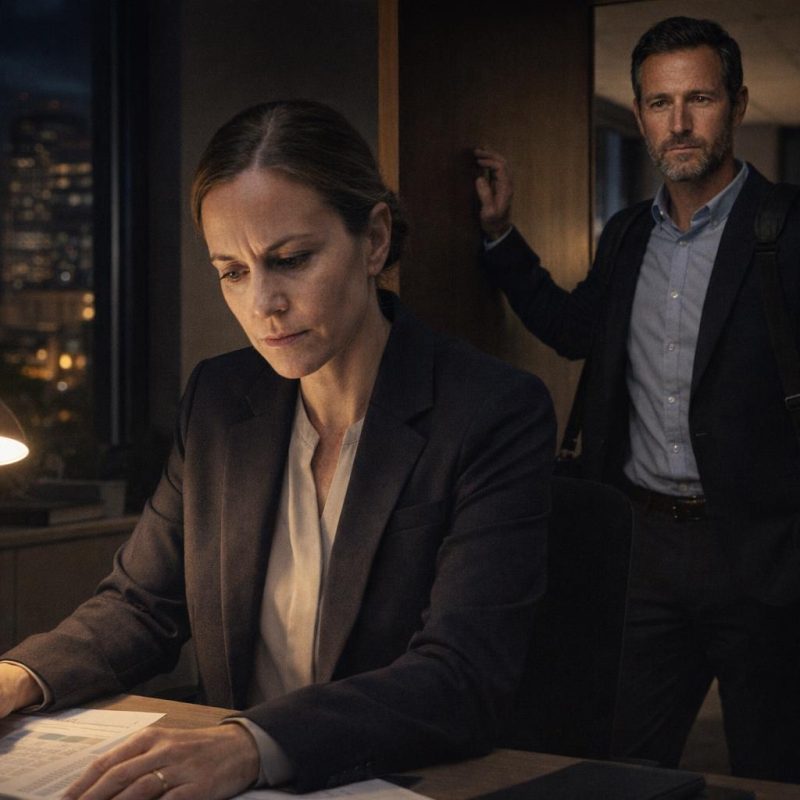 Image by RM AI
Client Contract Vulnerabilities
Saturday morning I spread the three major client contracts across the kitchen table and read them the way I should have read them every year — not for the terms I remembered negotiating, but for the gaps. Each contract had a sixty-day termination provision, standard language we'd accepted because the clients had asked for flexibility and we'd been confident enough in the relationships not to push back. I'd been proud of that confidence at the time. Now I read the same clauses differently. The agreements protected our billing rates and our deliverables, but they didn't lock the relationships. There were no exclusivity provisions, no penalties for transitioning to a competitor, nothing that would slow a client down if they decided to take their business somewhere else. The trust that held these accounts together wasn't written into any of these pages. It lived in phone calls and dinners and years of showing up — the kind of equity that doesn't appear on a balance sheet and can't be enforced by a contract. I stacked the three folders and set them aside. Twenty-two years of work, and the most valuable thing we'd built wasn't protected by a single clause in any of these documents.
 Image by RM AI
Meeting with Martin
Sunday evening I drafted the email to Martin. I kept it to four sentences — a meeting request, Monday morning if he was available, a partnership matter I wanted to discuss in person, nothing that would alarm him before I could show him what I had. He replied in forty minutes, which told me something about how he monitored his inbox even on weekends. Monday at nine, his office. I confirmed and closed my laptop. Then I sat at the desk and assembled the folder: the expense timeline with the pre-hire spike highlighted, the consulting invoice from the firm with no traceable principals, the meeting notes from the folder I hadn't been invited to, the HR file with the blank approval line, the morality clause pages I'd photographed from the partnership binder. I read through the morality clause one more time, the language about conduct materially detrimental to the company's fiduciary standing, the words I had helped write when I still believed they were theoretical. I straightened the stack, closed the folder, and set it on the corner of the desk. Martin's name sat in my calendar for nine o'clock Monday morning, and the folder held everything I had found so far.
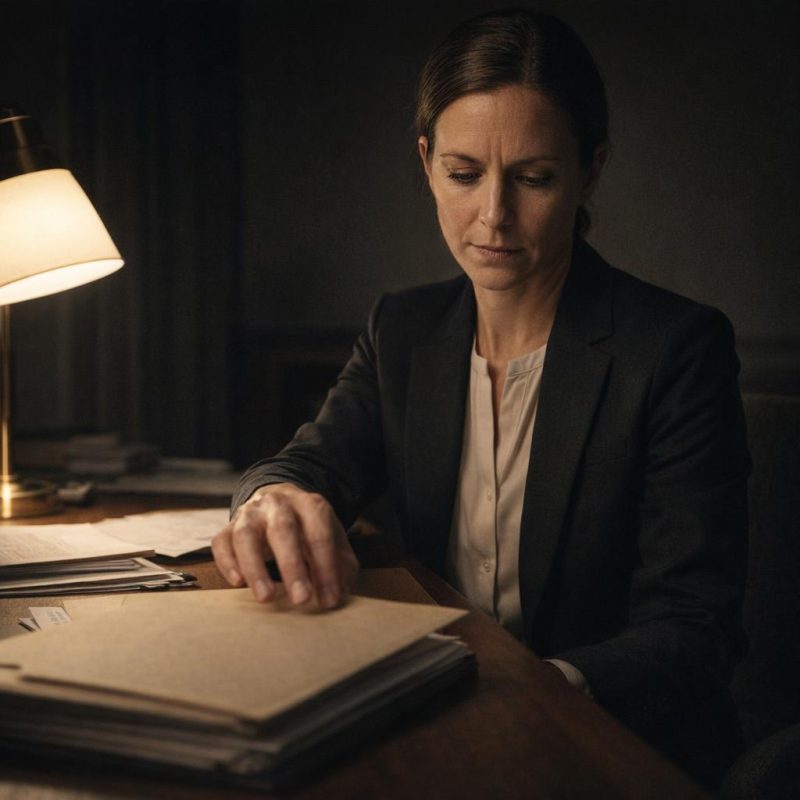 Image by RM AI
Company Email Access
I waited until after midnight to open the admin portal. My CFO credentials gave me access to the full company email system — it was a function I'd set up myself, years ago, for compliance audits. I told myself that's what this was. I typed Richard's name into the search field and pulled his sent folder for the past six months. The volume wasn't unusual. The names were. Vanessa appeared in the results before her official hire date — weeks before, in threads with subject lines like Client Relationship Strategy and Q3 Account Development. I opened several. The language was professional enough on the surface, but something about the register felt off, too familiar for someone who hadn't yet signed an employment contract. I cross-referenced the dates against the HR file I'd already pulled. The timestamps didn't align with anything in her onboarding record. I found three separate threads referencing the clients I'd been excluded from — the same accounts, the same meetings I'd been quietly edged out of over the past several months. I saved copies to my secure folder and closed the portal. The emails didn't prove anything I could name yet. But sitting there in the dark, I felt the weight of what they suggested pressing down on me like something I couldn't quite put into words.
 Image by RM AI
Draft Restructuring Documents
The shared drive search took longer. I worked through the folder structure methodically, the way I would approach any audit — top level first, then subdirectories, flagging anything with restricted permissions. Most of it was routine. Then I found a folder labeled Partnership Review, sitting inside a subdirectory I'd never been given access to. My admin override opened it without resistance. Inside were draft documents — not final versions, not anything that had passed through the legal review process I managed. Draft partnership restructuring agreements, formatted with our company header, referencing equity reallocation across the ownership structure. I scrolled slowly. My ownership percentage appeared in a table on the third page, listed under a column marked Proposed Revised Allocation. The number was lower. Significantly lower. The drafts were dated three months ago. I sat with that for a moment — three months ago, I had been sitting in board meetings, signing off on quarterly reports, running the financial operations of a company I believed I half-owned. I photographed every page and added them to my secure folder. Then I closed the drive and sat back in my chair. My name was in those documents, my equity, my twenty-two years — described in language I had never seen, in a folder I was never meant to open.
 Image by RM AI
Consulting Firm Trace
The consulting firm had bothered me since I first found the invoice. No traceable principals, a registered address that turned out to be a mail forwarding service, a stated purpose vague enough to mean almost anything. I pulled the state business registration database and entered the firm's name. The record came back immediately — registered eighteen months ago, which put it well before Vanessa's hire date. I scrolled to the principal officers section. There were two names listed. The first I didn't recognize. The second stopped me cold. Vanessa's full legal name, listed as a founding principal, with a registration date that predated her employment application by more than a year. I sat very still for a moment. The firm had been billing us for services since shortly after she joined. I cross-referenced the registration date against the expense timeline I'd already built — the pre-hire spike, the invoices with no corresponding deliverables, the approval signatures that bypassed my office entirely. I added the registration record to my file and printed a hard copy. I didn't know yet what it all connected to. But her name was right there in the public record, attached to a company that had been taking money from ours.
 Image by RM AI
Strategic Location
I'd been looking at the apartment address as a personal detail — the kind of thing that stings but doesn't tell you anything useful. That Sunday afternoon I opened a map application and entered it anyway, more out of habit than expectation. I dropped a pin on the location. Then I added our three largest client offices, one by one, pulling the addresses from the account files. The first landed six blocks away. The second, four. The third was less than three blocks in the opposite direction. I zoomed out and looked at the full picture. The apartment sat almost exactly at the center of a triangle formed by all three locations. I measured the walking distances using the route tool — eight minutes to the first, six to the second, nine to the third. I sat back and looked at the screen. I didn't know what to make of it. Maybe it was coincidence. The financial district was dense; a lot of things were close to a lot of other things. But I printed the map anyway, drew circles around each client address, and added it to the folder. On the page, the apartment address sat at the center of three circled locations, each one a relationship that had been quietly shifting away from me for months.
 Image by RM AI
The Takeover Blueprint
I went back into the email archive that evening with the map still sitting on my desk. I searched for threads involving all three client names together and filtered by date range — the past eight months. Most results were routine. Then one thread loaded and I stopped scrolling. The subject line read: Partnership Transition Strategy. I opened it. There were fourteen messages in the chain, between Richard and Vanessa, spanning six months. I read the first one. Then the second. By the fourth I had stopped breathing normally. It was all there — laid out in plain language, in our company's email system, on a server I paid to maintain. Vanessa's role was to build direct relationships with the three major clients, positioning herself as the indispensable contact so the relationships would follow her, not the company. Richard's role was to create documented distance from me — performance concerns, strategic disagreements, anything that would justify a forced restructuring. The apartment wasn't chosen for privacy. The timeline wasn't improvised. Every excluded meeting, every rerouted invoice, every draft document I wasn't supposed to find — it assembled itself in front of me into something I could no longer explain away. I scrolled back to the top of the thread and read the subject line again: Partnership Transition Strategy.
 Image by RM AI
Equity Theft
I kept reading. The thread branched into attachments — draft memos, a projected timeline, a document titled Exit Framework that I opened with steady hands. It outlined a sequence: first, establish performance documentation showing I was resistant to growth initiatives. Second, escalate to a formal partnership review. Third, trigger a forced buyout using the reduced valuation they'd already modeled in the restructuring drafts I'd found on the shared drive. Vanessa would step into the CFO role. Richard would retain operational control. The company I had built alongside him for twenty-two years would continue — just without me in it, and without my equity intact. I read through the projected buyout figures. They had discounted my stake by nearly forty percent using metrics I recognized because I had designed them, turned back on me like a tool someone had quietly borrowed and resharpened. I scrolled further. Near the bottom of the Exit Framework document, there was a section I had to read twice to fully process. It outlined a contingency — a mechanism for accelerating my removal if the performance documentation didn't move fast enough. They had identified the morality clause in our partnership agreement and drafted a strategy for manufacturing cause to invoke it against me.
 Image by RM AI
Client Positioning Evidence
I pulled Vanessa's email history with each of the three major clients and read through it from the beginning. The pattern was the same across all three accounts, consistent enough that it felt less like coincidence and more like a template being applied. First contact came early — within weeks of her hire, framed as a warm introduction from Richard. Then regular touchpoints, always personal in tone, always just slightly outside the formal account management structure I ran. She gathered information in those exchanges — contract renewal windows, the names of decision-makers' assistants, preferences for communication style. I watched her build familiarity the way you'd watch someone learn a combination lock, one number at a time. By month four, her name was appearing in client replies before mine. By month six, two of the three accounts had stopped copying me on routine correspondence altogether. I cross-referenced the dates against the meetings I'd been excluded from. They aligned exactly. I saved the full email histories and closed the window. I had spent twenty-two years building those relationships — learning what each client needed, showing up when things went wrong, earning the kind of trust that doesn't transfer easily. Reading those emails, I understood what it looked like to watch someone dismantle that, one carefully worded message at a time.
 Image by RM AI
Comprehensive Case Assembly
I worked through Saturday and into Sunday. I cleared the dining room table and built the case file the way I would approach a forensic audit — chronologically first, then cross-referenced by category. The timeline went back eighteen months, anchored by the consulting firm's registration date. Behind it came the email evidence: the pre-hire correspondence, the Partnership Transition Strategy thread, the Exit Framework document, Vanessa's client positioning history. Then the financial records — the expense spike, the invoices, the approval signatures that had bypassed my office. The lease. The restructuring drafts. The map with the three circled addresses. I wrote a summary brief, twelve pages, structured the way I'd structure a report for an outside auditor: findings, supporting documentation, cross-references, timeline. Every claim had at least two sources. Every source was documented with a screenshot, a printout, or a file export with metadata intact. By Sunday evening the folder was four inches thick. I had spent twenty-two years learning how financial fraud gets hidden — in approval chains, in folder permissions, in the gap between what's documented and what's discussed. Sitting at that table with the completed file in front of me, I understood exactly how to use that knowledge to take it apart.
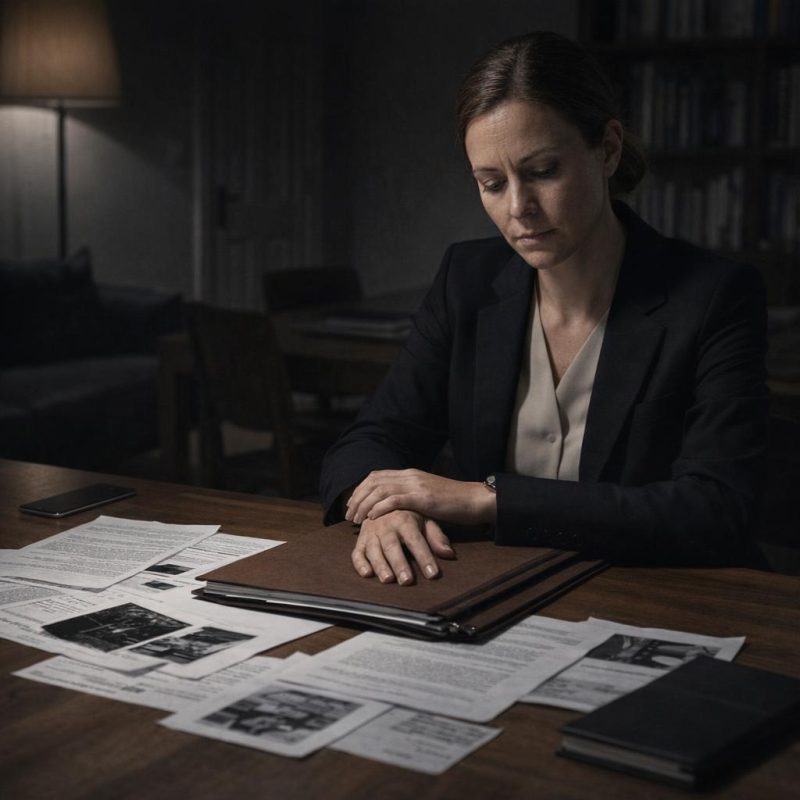 Image by RM AI
Martin's Office
I arrived at Martin's office at nine Monday morning with the four-inch folder under my arm and a twelve-page summary brief on top. His assistant showed me in without a word. Martin was already at his desk, jacket on, reading glasses in hand — the posture of a man who had been told to expect something serious. I set the folder on the conference table and walked him through it the same way I would walk an outside auditor through a forensic finding: timeline first, then the email evidence, then the financial records. I showed him the Partnership Transition Strategy thread. I showed him the Exit Framework document. I showed him the consulting firm registration date against the first invoice approval, and the approval signatures that had bypassed my office entirely. I showed him the apartment lease and the three circled addresses on the map. Martin didn't interrupt. He turned pages slowly, reading each one, and I watched his expression move through confusion and then something harder and colder than confusion. When I finished, he set his glasses down on the table and looked at me for a long moment. Then he said the morality clause had been written for exactly this situation.
 Image by RM AI
Morality Clause Confirmation
Martin pulled the partnership agreement from his credenza — the original, not a copy — and opened it to the section I had read a dozen times over the weekend. He read the clause aloud, slowly, the way lawyers read language they want to make sure lands correctly. Conduct materially detrimental to the interests of the partnership. Acts of fraud, conspiracy, or deliberate misappropriation directed against any partner or the partnership itself. He set the document flat on the table and tapped the paragraph with two fingers. The affair alone might have been arguable, he said. Embarrassing, damaging to company culture, but arguable. What I had documented was not arguable. A coordinated plan to restructure the partnership, redirect client relationships, and transfer equity through a consulting vehicle — that was conspiracy to defraud. The penalty provision was on the next page. Upon finding of breach, the offending partner's equity interest shall be forfeited in full and redistributed to the remaining partners in proportion to their existing holdings. No buyout. No negotiated exit. Forfeiture. Martin closed the agreement and looked at me across the table. He said he would initiate formal breach proceedings by end of day. I looked at the page he had closed on — Section 14, Paragraph 3 — and the words that would take everything from Richard.
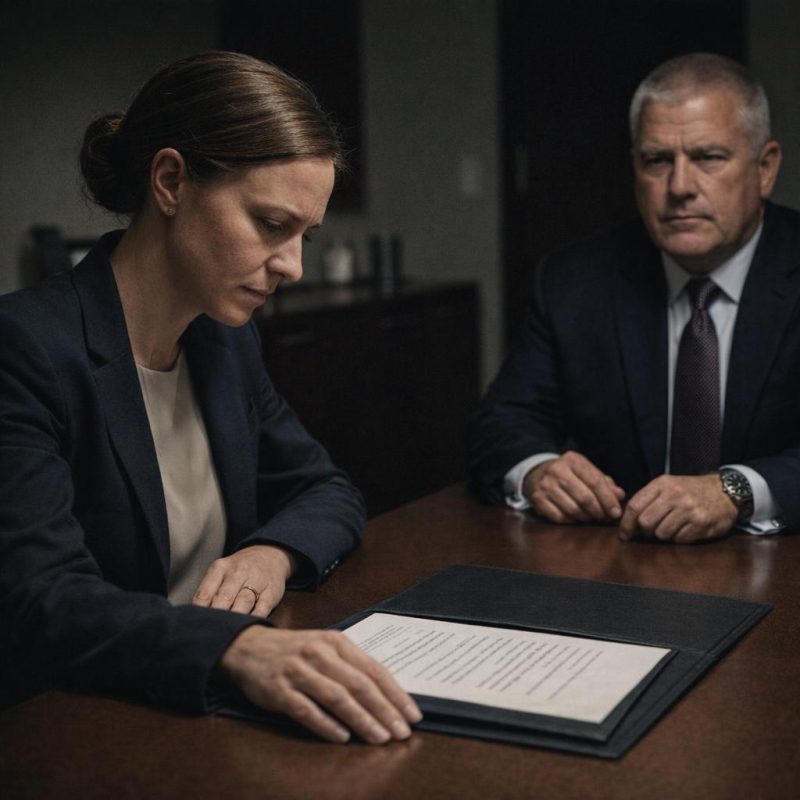 Image by RM AI
Breach Proceedings Initiated
Martin drafted the formal breach notification himself, which I hadn't expected. He didn't hand it to an associate or call his legal team in — he sat at his desk and typed it, reading each clause back to me as he went. The notification cited the morality clause by section and paragraph. It attached the full evidence package as exhibits. It named Richard by his legal name, his partnership title, and his percentage of equity. When Martin finished, he printed two copies, signed both, and slid one across the desk to me. I signed where the tab indicated. My signature looked the same as it always did — the same controlled loops I'd used on twenty-two years of partnership documents. Martin said Richard would receive formal notice within twenty-four hours and that the partnership agreement required an emergency board meeting within seventy-two hours of notification. He was scheduling it for Thursday morning. I picked up my copy of the notification and aligned the edges against the folder. The legal machinery was in motion now — the same structure Richard and I had built together, clause by clause, in the early years when we were still certain we were building something that would last. I sat with that for a moment before I stood to leave.
 Image by RM AI
Emergency Board Meeting
The board convened at nine Thursday morning in the main conference room. I was there at eight-forty, seated, the evidence folder in front of me, my coffee untouched. James arrived a few minutes later and took the seat to my left without a word. Martin came in at eight-fifty-five and positioned himself at the head of the table. The other board members filed in quietly, reading the room. Richard walked in at nine-oh-two. He was dressed the way he always dressed for board meetings — the charcoal suit, the blue tie, the practiced ease of a man who had run these rooms for two decades. He stopped when he saw the configuration. Martin at the head. James beside me. The full board seated and waiting. No agenda packets at his usual chair. He sat down slowly, and I watched him scan the table, the faces, the folder in front of me. Martin opened the meeting by stating its purpose: formal review of a breach of partnership agreement notification served the previous day. Richard's expression moved from confusion to something I recognized as the beginning of understanding. Martin distributed the evidence package. Richard opened his copy and began to read. The color left his face one page at a time, and when he finally looked up and found my eyes across the table, I held his gaze and gave him nothing.
 Image by RM AI
Evidence Presentation
I stood and walked the board through the evidence the same way I had walked Martin through it on Monday — methodically, without editorializing. I started with the timeline. Six months ago, the consulting firm registration. Five months ago, the first invoice. Four months ago, the Partnership Transition Strategy email thread, which I read from verbatim at two points where the language was unambiguous. I showed the Exit Framework document and explained what each section was designed to accomplish. I presented the financial records: the expense approvals, the invoice amounts, the signatures that had bypassed my authorization. I explained Vanessa's role in the client relationship positioning — the meetings, the introductions, the groundwork laid with our three largest accounts. I showed the apartment lease and the map with the circled addresses. I spoke for thirty-one minutes. I did not look at Richard while I spoke, and I did not look at Vanessa. I kept my eyes on the board members and on the documents. When I finished, I set my notes down, aligned them against the folder edge, and returned to my seat. The room was completely silent. Not the silence of people waiting for the next speaker — the silence of people who had just understood something they could not un-understand.
 Image by RM AI
Immediate Termination
Martin called for the first vote before Richard had a chance to speak. Immediate termination of Vanessa's employment, effective today, for cause. The vote went around the table in under a minute. Five to zero. Martin nodded to the two men standing near the door — building security, whom I had not seen come in — and one of them stepped forward and asked Vanessa to come with him. She stood. Her posture was still composed, but her face had gone somewhere I couldn't read. She was given fifteen minutes to collect personal items from her office. James was assigned to accompany her and secure Richard's office simultaneously. Martin then announced that Richard's partnership shares were frozen effective immediately, pending final forfeiture proceedings, and that his access to company systems had been suspended as of eight that morning. Richard sat very still. He didn't argue. He didn't look at Vanessa as she was escorted out. He looked at the table in front of him, jaw set, hands flat on the surface. I watched from my seat as Vanessa walked through the conference room door with the security escort behind her, a banker's box of her belongings held in both arms.
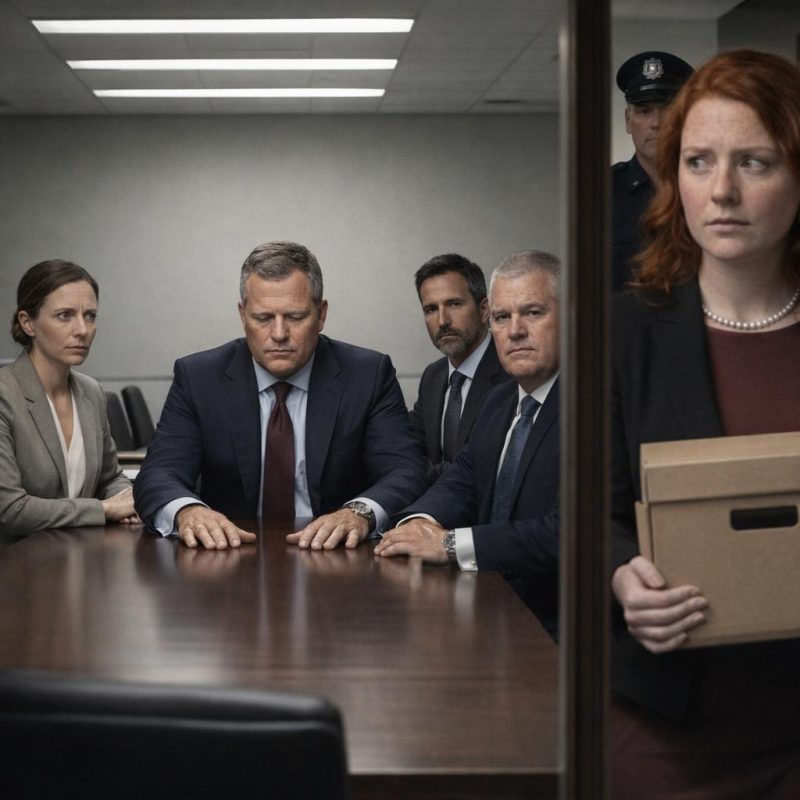 Image by RM AI
Richard's Appeal
Richard caught me in the hallway outside the conference room and asked if we could speak privately. I said yes. We went to my office and he closed the door behind him. He stood near the window — the same window he had stood at a hundred times over twenty-two years — and he started talking. He said things had gotten out of hand. He said he had made mistakes. He said he understood how it looked, but that there were things I didn't know, context I hadn't seen, and if I would just give him an hour he could explain how it had started. I let him finish. Then I told him I didn't have anything to say to him. He asked what I wanted from him. I told him there was nothing to negotiate — the evidence was documented, the board had voted, and the proceedings were already in motion. He looked at me the way someone looks when they have run every calculation and come up empty. His mouth opened slightly, then closed. The practiced ease he had carried into that conference room two hours ago was completely gone, and what was left on his face was something I had never seen there before in twenty-two years.
 Image by RM AI
Equity Forfeiture Vote
The board reconvened Friday morning for the final equity forfeiture vote. Richard was present because the partnership agreement required it — he had the right to hear the vote taken. He sat at the far end of the table with his attorney beside him. His attorney had submitted a two-page objection the night before. Martin had reviewed it and set it aside. Martin opened by reading the morality clause one final time, then summarized the documented evidence of breach in four sentences. He asked if any board member required additional time to review the materials. No one did. He called the vote. Each member stated their position in turn, and each one said the same word. The redistribution terms were read into the record: Richard's equity, forfeited in full, allocated to remaining partners in proportion to existing holdings. My ownership stake would increase to fifty-three percent — majority control of the company Richard and I had built from a two-person operation in a shared office space twenty-two years ago. Richard sat without moving through all of it. His attorney made a note on a legal pad. Martin looked up from the tally sheet and read the final count aloud — five to zero, in favor of forfeiture.
 Image by RM AI
Final Confrontation
He appeared in my office doorway around four in the afternoon, the building already half-emptied of the staff who'd watched him escorted out of the board meeting. He still had his jacket on. He still looked like Richard. "Are you satisfied now?" he asked. I set down my pen. "I'm not satisfied," I said. "I'm just done." He stepped inside without being invited and said he never meant for it to go this far. I told him he had hired a woman to redirect our clients, had moved company assets into accounts I couldn't see, and had structured a plan to strip me of equity I had earned across twenty-two years. He said, "It wasn't personal. It was business." I looked at him for a long moment. "It was our business," I said. "We built it on a folding table in a shared office with one client and a handshake agreement. There is no version of this that wasn't personal." He didn't answer. He looked at the framed company registration on my wall — the one with both our signatures — and something moved across his face that I hadn't seen from him in a very long time. His jaw went slack, his eyes dropped, and the practiced composure he'd carried through five hours of board proceedings simply left him.
 Image by RM AI
Company Restructured
The month after the board vote was the busiest of my professional life, and I moved through it with the kind of focus that only comes when there's nothing left to protect except the work itself. I met with each of our seven major clients personally — in their offices, not mine. I told them there had been a leadership transition, that the company's operational structure was being strengthened, and that their accounts would see no disruption. Every one of them confirmed their commitment. James handled the internal numbers while I handled the relationships, and when I promoted him to VP of Finance at the end of week three, he accepted with the same quiet steadiness he'd brought to every crisis I'd handed him over the years. I restructured the executive team, implemented dual-approval protocols for all senior hires, and had the partnership agreements rewritten by outside counsel. By the end of the month, the company was stable. The org chart made sense again. The financials were clean. I sat at my desk on a Friday evening after everyone had gone, the building quiet around me, and understood for the first time what it meant to carry something this size entirely alone — not the weight of the work, which I had always carried, but the weight of there being no one across the table when the day was over.
 Image by RM AI
Divorce Finalized
The divorce was finalized on a Tuesday morning in a conference room that smelled like recycled air and old carpet. My attorney slid the signature pages across the table one at a time. The settlement was straightforward — Richard received nothing from the business, the house was listed and the proceeds split down the middle, and twenty-two years of shared financial life was reduced to a stack of executed documents in a manila folder. I signed each page where the tab indicated. My hand was steady. I had expected to feel something sharp when it was over, but what came instead was quieter than that — a kind of low, settled ache that I recognized as grief, though not for what I'd had. Sarah and Thomas were waiting outside the building. We went to a small restaurant nearby, the kind with cloth napkins and no televisions, and we sat together for two hours. Thomas ordered wine. Sarah held my hand across the table for a moment without saying anything. I thought about the anniversary dinner — the toast Richard had made to permanence, the way the word had felt solid when he said it. I thought about how much I had believed it. The signed folder sat in my bag, and the restaurant settled into its quiet evening rhythm around me.
 Image by RM AI
New Office, New Structure
The renovation was finished in early spring, and we moved into the new space on a Wednesday. My office was on the northeast corner of the fourth floor — larger than the old one, with a window that ran nearly the full width of the exterior wall. James stopped by mid-morning with the Q1 projections printed and bound, the way he always did, and we went through them at the small table I'd set up near the window. The numbers were strong. Not recovered-strong, but genuinely strong — client retention at ninety-four percent, two new contracts signed in February, operating margin back above target. He left the bound copy on the table and said he'd have the Q2 forecast ready by Thursday. After he was gone, I stood at the window for a while. I thought about the folding table we'd started on, the shared office, the single client who'd taken a chance on two people with a business plan and no track record. I thought about everything that had been built since then, and everything that had come apart, and the fact that the company was still here — restructured, restaffed, and profitable — because I had not let go of it. The city spread out below the glass, different from the view I'd had for fifteen years, and entirely mine.
 Image by RM AI
KEEP ON READING
10 Greatest Quarterbacks Of All Time & 10 That Are…
Do You Disagree?. Few topics in sports generate as much…
By Farva Ivkovic Dec 2, 2025
The story of Ching Shih, the Woman Who Became the…
Unknown author on WikimediaFew figures in history are as feared…
By Emilie Richardson-Dupuis Dec 29, 2025
20 Shakespearean Words, Translated For A Modern Audience
What’s In A Word?. Shakespeare was a wordsmith of the…
By Breanna Schnurr Dec 17, 2025
20 Inspiring Stories From Native American History
Incredible Stories Of Resilience And Endurance. Many of us didn't…
By Ashley Bast Dec 17, 2025
You Think You Have Problems? These Royal Families Were Cursed
Boasson and Eggler St. Petersburg Nevsky 24. on WikimediaHeavy is…
By Ashley Bast Dec 5, 2025
MH370: The Plane That Can't Be Found
Anna Zvereva from Tallinn, Estonia on WikimediaEleven years after Malaysia…
By Christy Chan Dec 10, 2025