

My Father-in-Law Called Me a Gold Digger at His Retirement Party—So I Showed Everyone His Real Legacy
My Father-in-Law Called Me a Gold Digger at His Retirement Party—So I Showed Everyone His Real Legacy
The Back Row
The Ashford estate had a way of making you feel the distance between yourself and everyone else before you even sat down. I'd been making this drive for fifteen years — the long gravel approach, the iron gate, the house that looked less like a home and more like a statement — and I still felt it every time. Arthur was already holding court by the time we arrived, silver-haired and immaculate at the head of the mahogany table, his voice filling the room the way expensive furniture fills a room: deliberately, with no space left over. Margaret greeted me with her practiced smile, the one that said *you're here* without quite saying *you're welcome*. I was seated at the far end, as always, close enough to be present and far enough to be decorative. Arthur told a story about a development deal he'd closed in the nineties, and the table leaned toward him like a tide. At some point he said something about men who married well versus men who married down, and he smiled when he said it, the way people smile when they want you to know the joke is about you but can't prove it. David found my hand under the table and squeezed it once. He didn't say anything. He never did. I smiled at the centerpiece and let the evening wash over me, carrying the weight of fifteen years pressing against my ribs.
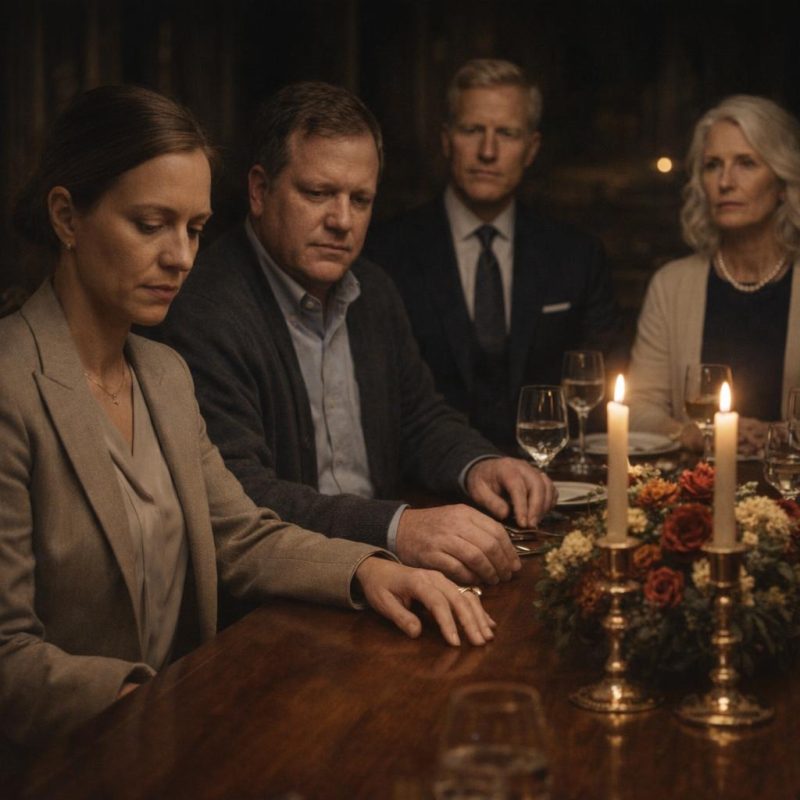 Image by RM AI
The Charity Luncheon
Margaret's annual charity luncheon at the Hargrove Country Club was the kind of event where the flower arrangements cost more than my first car. I'd assumed I would help — I always assumed I would help — so I arrived early with a folder of notes I'd put together on the silent auction layout. Margaret met me near the entrance in a cream blazer, perfectly composed, and told me the committees had been finalized weeks ago. All of them. I asked which one I'd been assigned to and she tilted her head with a sympathetic expression that didn't reach her eyes. 'Oh, we didn't want to burden you, dear. You're always so busy with your projects.' I found a copy of the event program on a side table. Every daughter-in-law in the family was listed under *Family Sponsors*. My name wasn't there. I stood near the floral display while Margaret's friends moved past me in clusters, glancing with the particular curiosity of people who know something you don't. David called later and said his mother had probably just forgotten, and I heard myself say it was fine, that it didn't matter. I was still holding the program when I said it. Then I found the seating chart near the hostess stand — and my name had been moved to the overflow room.
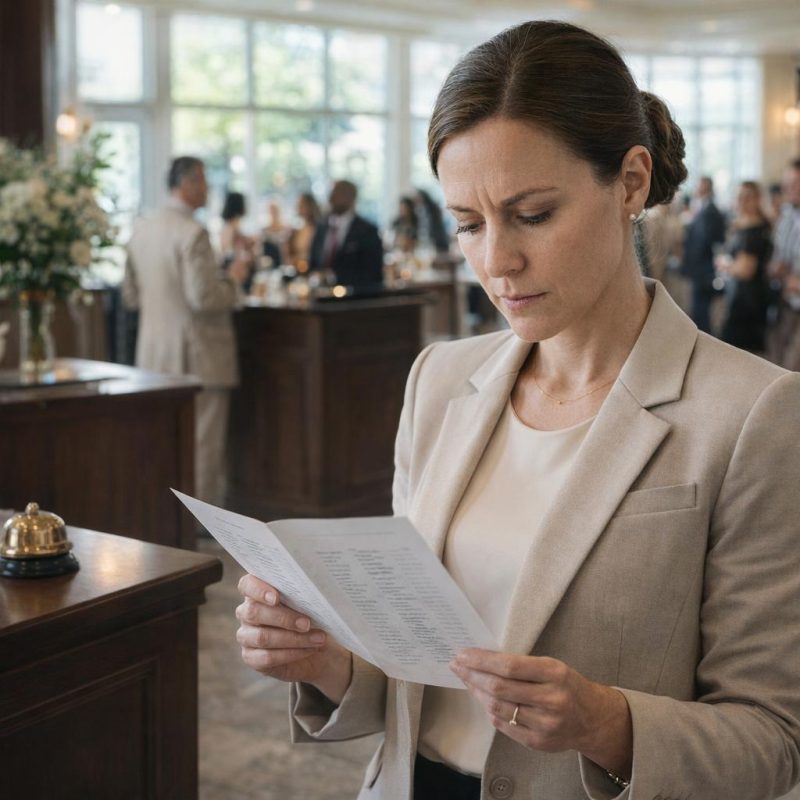 Image by RM AI
The Apology Ritual
We picked up Thai food on the way home because neither of us wanted to cook, and we ate it on the couch with the containers balanced on the coffee table the way we always did when the day had been too much. David apologized before he'd even taken off his jacket. He said his mother hadn't meant anything by the seating arrangement, that she was just disorganized, that next year would be different. I told him I knew, and I meant it, or I tried to. He said he'd spoken to her about it and she didn't see it the way I did, and I nodded and handed him the spring rolls. The apartment felt very small after the country club, in the way it always did — not because there was anything wrong with it, but because the contrast had a way of following us home. David looked at me over his takeout container with those kind, apologetic eyes and said things would be easier once his father retired, that the pressure would come off, that his parents would relax. I'd heard some version of that sentence for most of our marriage. I held his hand across the cushion and told him I understood. The words came out smooth and practiced, the way they always did — both of us reading from the familiar script we'd been following for fifteen years.
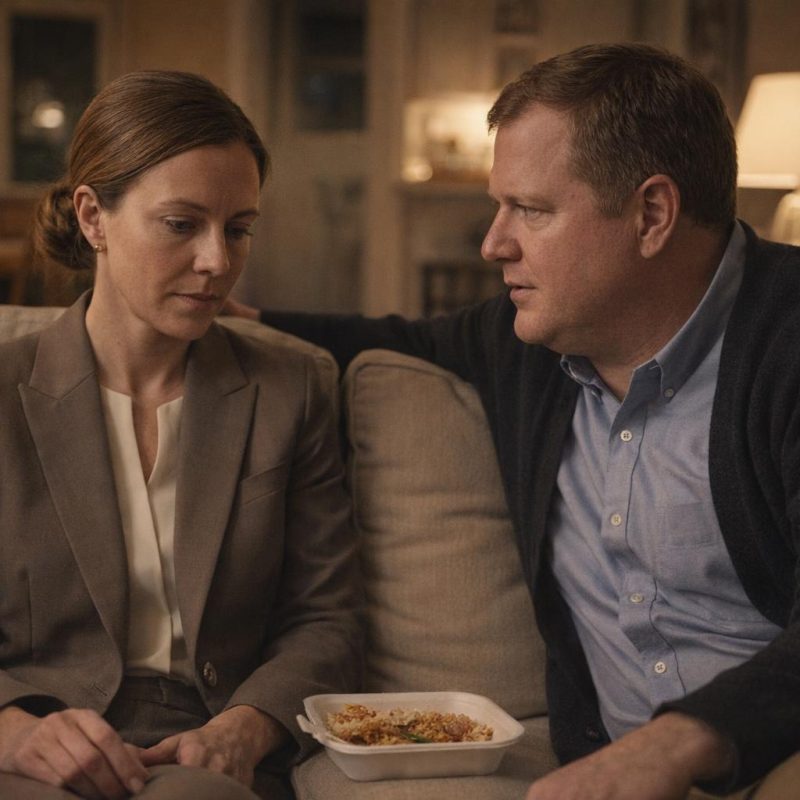 Image by RM AI
The Minimized Achievement
The award was a regional recognition for sustainable design — a community housing project I'd spent two years on, the kind of work that actually changes how people live. When the notification came I sat at my desk and let myself feel proud for a full five minutes before I told anyone. David insisted we celebrate with his parents, and I brought the crystal award to the restaurant because he asked me to, because he wanted them to see it. Arthur picked it up when I set it on the table, turned it over once in his hands the way you'd examine something at a garage sale, and said, 'They give these out to everyone these days, don't they? Participation trophies for the profession.' He set it down and smiled at the table. Margaret said something about the charity gala and the conversation moved on. Arthur spent the rest of the dinner talking about a commercial development he'd brokered in the eighties, the kind of deal that had real stakes, real money. David's hand found mine under the table. I watched Arthur gesture with his wine glass and hold the room, and I reached into my bag and slid the award back inside without anyone noticing. I sat with it in my lap for the rest of the meal, the weight of the crystal in my hands, suddenly meaningless.
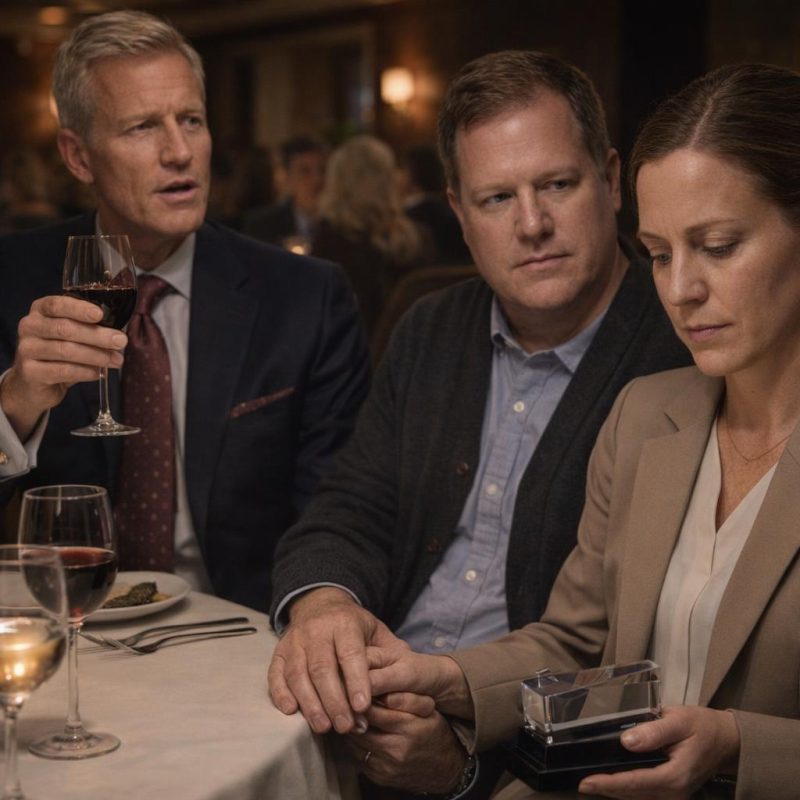 Image by RM AI
The Pattern Emerges
Arthur's sixty-seventh birthday party filled the estate with relatives I recognized and some I didn't, and I spent the first hour making myself useful — refilling platters, directing caterers — because standing still at these events always felt like an invitation for someone to notice I didn't belong. Arthur made a joke early in the evening about my 'quaint little profession' to a group of uncles who laughed on cue. Later he told the story about David's college girlfriend, the one from the right kind of family, the one who got away, and he told it loudly enough that I was meant to hear it. When a cousin I hadn't met asked about my work, Arthur stepped in before I could answer and said I did 'small projects, residential mostly,' in the tone people use to describe a hobby. I noticed he watched me after each comment — a quick, assessing glance, checking the landing. David pulled me into the hallway near the library and said his father was just old-fashioned, that it wasn't personal, that I shouldn't let it get to me. I nodded and went back to the party. I was standing near the fireplace with a glass of wine when I heard Arthur's voice carry across the room, telling a cousin who hadn't heard it before the story he called the 'charity case' — and I understood, with a cold and settling clarity, that the story was about me.
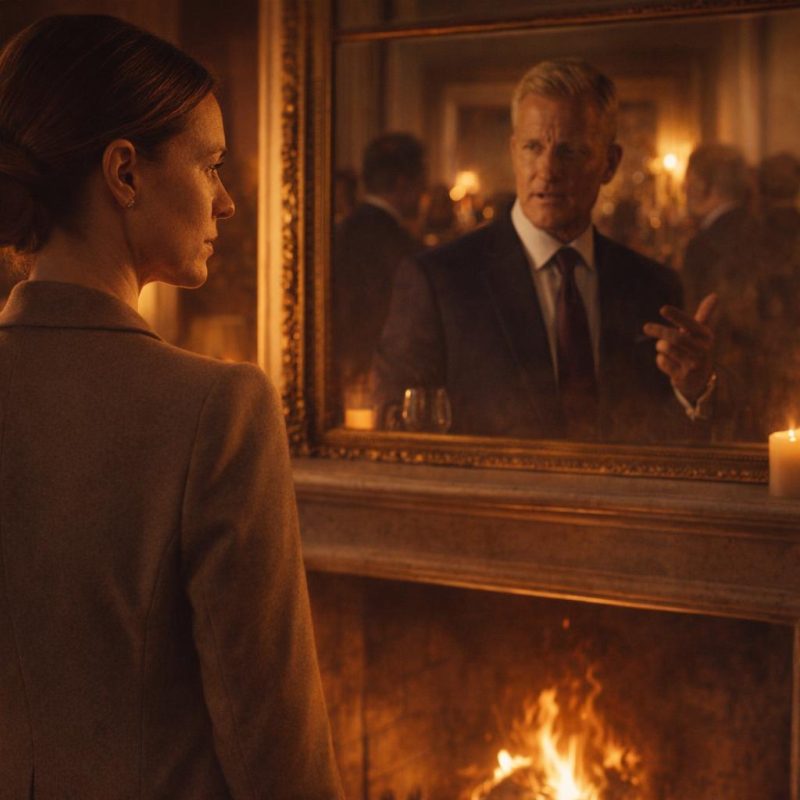 Image by RM AI
Fifteen Years of Margins
David was working late again, and I sat in our apartment with a glass of wine I wasn't drinking and let the catalog run. It had been building for years without my permission — a mental ledger I'd never meant to keep. The wedding, where my family had been seated in the back two rows as though they were late arrivals to someone else's event. The Christmas when my gift to Arthur sat under the tree until everyone had gone home, still wrapped, 'accidentally' overlooked. The family photographs where I was consistently at the edge of the frame, or absent entirely from the ones that made it onto the walls. The business dinners where Arthur introduced every person at the table by name and profession and simply moved past me. The anniversary party where he toasted 'the family' and looked at every face except mine. Each incident, taken alone, was small enough to dismiss. I had dismissed them, one by one, for fifteen years. But sitting there in the quiet, I couldn't dismiss the sum of them. David came home around ten and found me on the couch. He asked if I was okay. I said I was fine. He kissed my forehead and went to pour himself a drink, and I watched him move through our kitchen — this man I loved, who had been present for every single one of those moments, and had never once said a word.
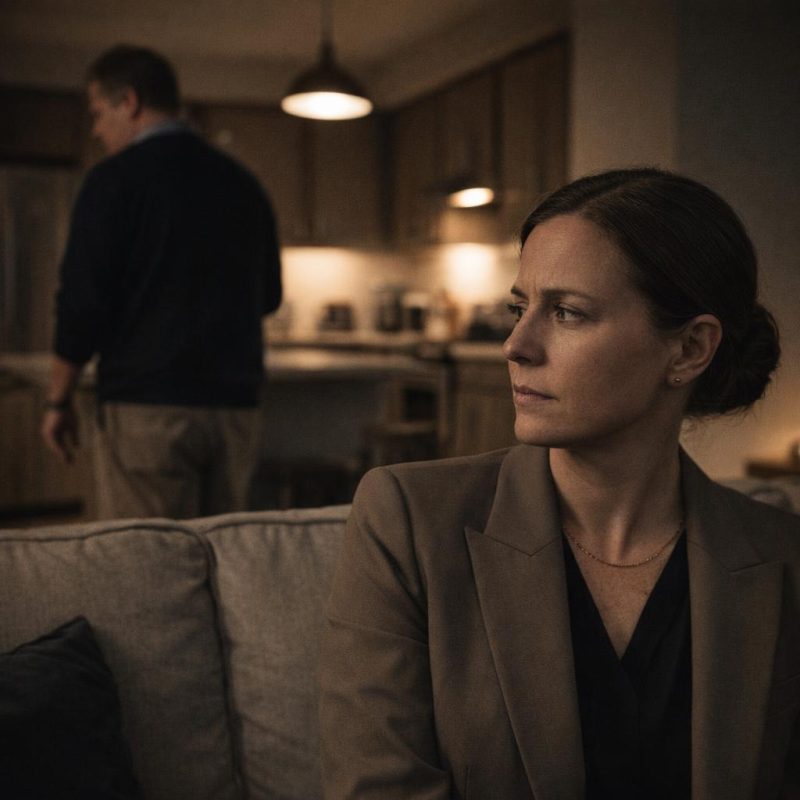 Image by RM AI
The Cemetery Visit
I always went alone. That was the arrangement I'd made with myself years ago — the cemetery was mine, the grief was mine, and I didn't want to manage anyone else's discomfort while I was standing at my father's grave. I brought white carnations because he'd always said roses were for people who wanted to be seen, and I stood there on a gray October morning and talked to him the way I always did, quietly and without embarrassment. I told him about the sustainable design award, described the project in enough detail that I thought he would have understood exactly what made it good. I told him David was well. I didn't mention the Ashfords. I never did, at the cemetery. I told him I was still building things meant to last, the way he'd taught me, and I meant it as a kind of promise. The grief was fifteen years old and it still had edges. I was thinking about his hands — calloused, precise, always moving — when I heard footsteps on the gravel path behind me. I turned, and David was standing at the far end of the path near the parking lot, hands in his coat pockets, watching me from a distance, unsure whether to come closer.
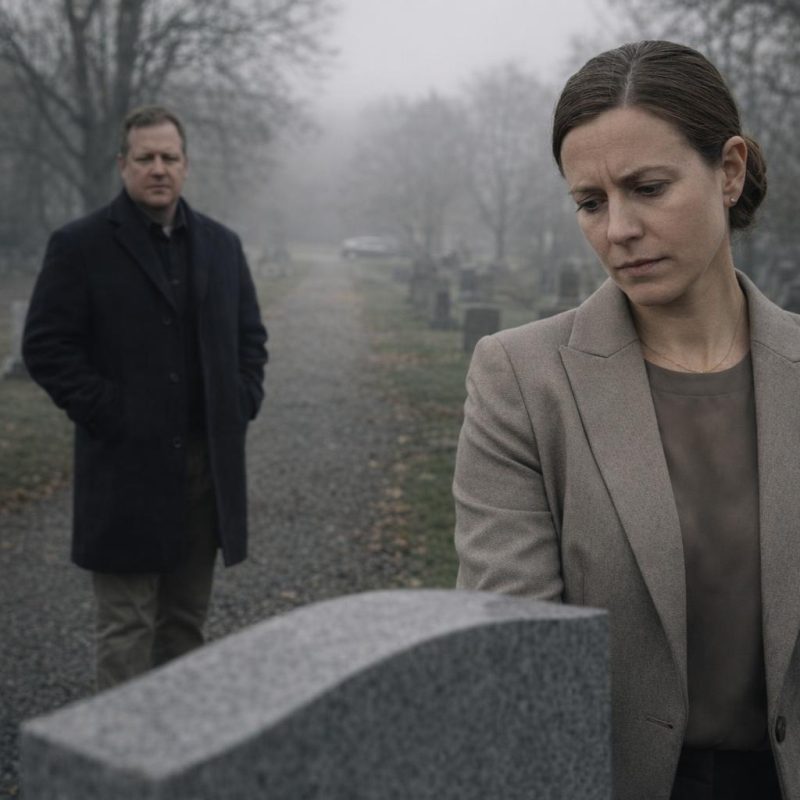 Image by RM AI
The Builder's Daughter
My father used to take me to job sites on Saturday mornings when I was small enough that the hard hat swallowed my head. He'd walk me through the framing of a building and explain what each beam was doing, what it was holding, what would happen if you cut corners on the foundation. He ran a small company — twenty, sometimes thirty workers — and every one of them knew his name and used it without hesitation, which I understood later was not a small thing. He taught me to read blueprints before I could read a map, and when I told him I wanted to study architecture he looked at me like I'd said something that confirmed a long-held theory. His hands were always calloused. His face was always honest. When the company started struggling during my junior year of college, he kept the details from me — contract disputes, legal costs, things he said were being sorted out. They weren't sorted out. By the time I graduated, the bankruptcy was filed and the legal fees had taken everything. He died of a heart attack seven days later. I was twenty-seven, newly credentialed, and the person who had believed in me most completely was gone. I still carried the image of his face from the afternoon he told me the company was finished — the way he seemed to age ten years in a single afternoon.
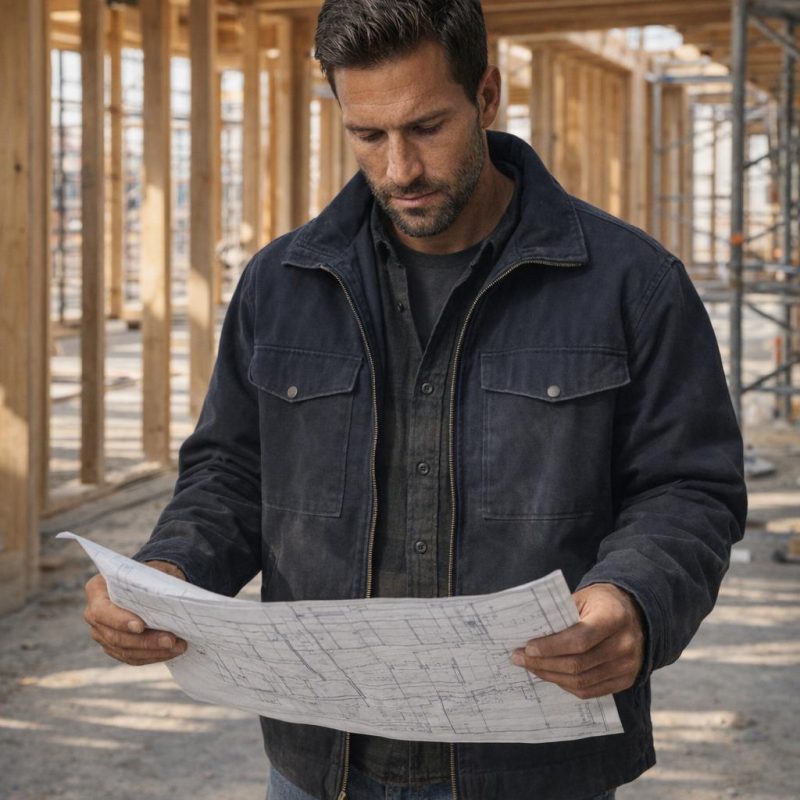 Image by RM AI
The Compartments
Work had always been the place where I made sense. I'd spent the better part of that autumn pouring everything I had into a pitch for a downtown mixed-use development — retail on the ground floor, residential above, a rooftop terrace that would catch the afternoon light in a way that made the whole building feel like it was breathing. When the senior partners approved it, one of them said my attention to structural detail was the best he'd seen from anyone at my level. I held onto that for days. At home, things with the Ashfords continued the way they always had — polite at a distance, cold up close. David and I had developed a kind of careful choreography around the subject of his family, moving through the same rooms without quite touching the same topics. Then one evening he sat down across from me at the kitchen table with that particular look he gets when he's working up to something. He said his father had a health scare — nothing serious, the doctor wanted him to reduce stress and get his affairs in order. Margaret had called to ask if I might help organize some of the paperwork, given my organizational skills. David said it quietly, like he was offering me something fragile. He seemed relieved when I said yes.
 Image by RM AI
The Reluctant Steward
The estate was exactly what I'd expected — immaculate, expensive, and arranged to remind you of your place the moment you stepped through the door. Arthur met us in his study, and I noticed immediately that he looked older. The commanding posture was still there, but something behind it had softened, or maybe just tired. Margaret stood near the window in that practiced way of hers, composed and decorative. Arthur explained what he needed: financial records, property documents, digital files — decades of accumulated paperwork that needed to be organized and made accessible. Margaret mentioned they'd considered hiring someone, but Arthur wanted family handling it. He said the words 'attention to detail' when he looked at me, and the tone wasn't quite warm, but it wasn't dismissive either. It was the closest thing to acknowledgment I'd received from him in fifteen years of marriage. He handed me a folder of passwords and access codes without ceremony, like he was delegating to a competent employee. David squeezed my hand in the car on the way home and said it meant a lot to his father. I wasn't sure I believed that entirely, but I wanted to. That evening I sat at my desk with the folder open in front of me, and for the first time in a long time, I felt the quiet satisfaction of being needed — even if only for my skills.
 Image by RM AI
The Digital Archive
I spread everything across my home office floor on a Saturday morning and immediately understood why Arthur had wanted help. There were decades of documents — property deeds, financial statements, contracts, correspondence — stacked in no discernible order, some of it still in the original envelopes. I called Marcus, a colleague from my firm who handled digital systems for large-scale projects, and he arrived that afternoon with a hard drive and a calm, methodical energy that I found genuinely steadying. We sorted through the categories together: business records, personal correspondence, legal documents, financial statements. Marcus suggested encrypted folders with a tiered access structure, and I agreed — Arthur had been clear that he wanted everything preserved and retrievable. Marcus worked efficiently, labeling and uploading while I cross-referenced physical files against the digital inventory. At one point he paused and looked up over his glasses. He asked, in the careful tone of someone covering professional bases, whether I was sure I wanted to back up the personal files as well — the correspondence, the private financial records, all of it. I told him Arthur had requested everything organized and secured, no exceptions. Marcus nodded and went back to work. It was a routine question, the kind any careful technician would ask. I didn't think about it again for the rest of the evening.
 Image by RM AI
The Server Setup
Marcus came back the following Tuesday to finalize the installation. He'd sourced a private server with military-grade encryption — the kind of setup, he mentioned with mild amusement, that was considerably more sophisticated than most personal estates required. I told him Arthur wanted the best, and I intended to deliver it. He set up automatic backups running twice daily, version control so nothing could be overwritten without a record, and a secondary redundancy layer through an encrypted cloud service. He created a master administrative account for me with full access privileges, then walked me through the upload and retrieval protocols until I could navigate the system without prompting. The interface was clean and logical — the kind of architecture I appreciated in any well-designed system. He showed me how to pull files from my phone, my tablet, any browser with the right credentials. Everything Arthur had given me was now catalogued, searchable, and preserved in triplicate. Marcus closed his laptop and said the whole thing was solid — his word was 'bulletproof.' I stood at my desk looking at the organized folder structure on the screen, every document in its place, and felt something close to professional pride. Then Marcus turned the monitor toward me and walked me through the remote access feature, showing me exactly how I could view every file from anywhere in the world.
 Image by RM AI
The Offshore Accounts
I worked late on a Wednesday, the house quiet around me, sorting through the last of the financial statements. Most of it had been straightforward — property holdings, investment portfolios, the kind of paperwork that comes with forty years of accumulated wealth. But near the bottom of one folder I found statements from banks I didn't recognize, with names that didn't appear anywhere in Arthur's official estate documents. The account numbers were formatted differently, and the addresses listed were in the Cayman Islands. The balances were substantial — not shocking for someone of Arthur's means, but significant. I cross-referenced them against the estate inventory I'd been building. Nothing matched. I made careful notes and added the documents to the digital archive, flagging them in a separate folder so I could ask Arthur about including them in the formal estate plan. I told myself this was probably standard practice for people at his level of wealth — tax structuring, offshore holdings, the kind of financial architecture that required specialists I'd never needed. I'd read enough about high-net-worth estate planning to know that complexity wasn't the same as wrongdoing. Still, I sat for a while after I'd filed everything away, the desk lamp throwing a small circle of light across the room, sitting with the strange disconnect between the life I could see and the money I couldn't account for.
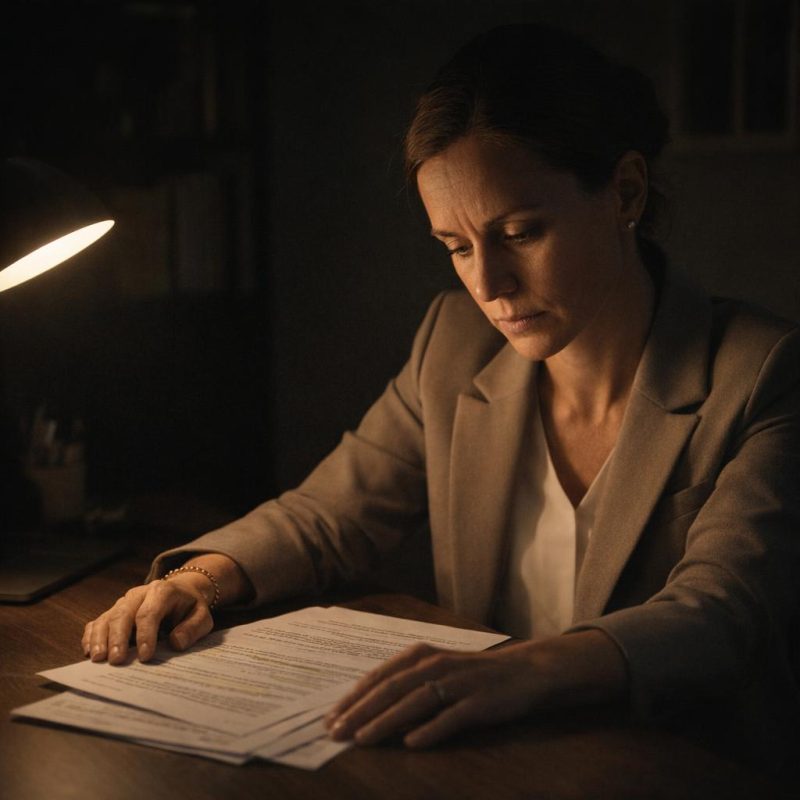 Image by RM AI
The Rationalization
Over the next few evenings I kept returning to the financial documents, not because I was looking for anything specific, but because the numbers kept not quite adding up in ways I couldn't easily dismiss. Large sums moved between accounts at irregular intervals, with descriptions that were vague enough to mean almost anything. I mentioned the offshore accounts to David over dinner — casually, the way you'd raise a minor administrative question. He said his father had always been smart with money and had accountants and lawyers who handled everything properly. I asked, carefully, whether the accounts were structured legally. David set down his fork and looked at me with a patience that had a faint edge to it. He said wealthy people organized their finances differently, that I shouldn't read complexity as a problem, and that his father's advisors had been managing these things for decades. I felt the familiar sting of it — the implication that I was out of my depth, that my middle-class instincts were showing. He softened after a moment, apologized for his tone, said he was stressed about his father's health. I told him I understood. I went back to organizing and stopped asking questions. But the feeling didn't entirely leave — the uncomfortable sense that I was choosing not to look too closely at something I'd already seen.
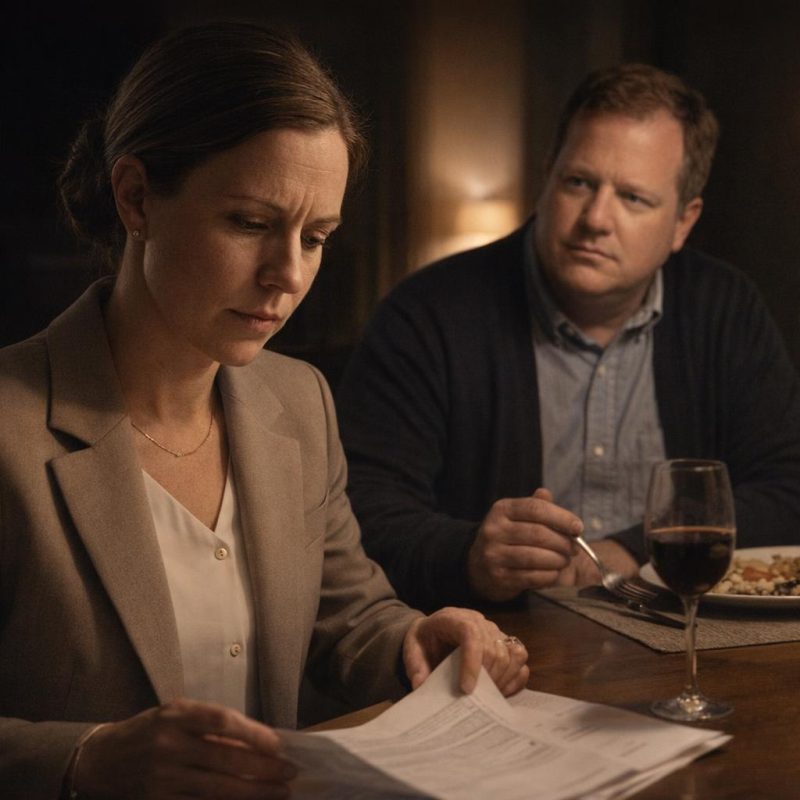 Image by RM AI
The Defensive Son
I tried once more, a few nights later, to have the conversation properly. I'd printed out two of the transfer records and laid them on the kitchen table — specific dates, specific amounts, no matching business purpose in any of the files I'd catalogued. I wasn't accusing anyone of anything. I was trying to do a thorough job. David looked at the papers for a moment, then looked at me, and I could see the defensiveness settle into his expression before he'd said a word. He asked if I was suggesting his father had done something wrong. I said I was suggesting the records didn't match, and that someone should probably know about it before the estate documents were finalized. He said his father had a team of professionals for exactly this reason, and that my job was to organize the files, not audit them. The word 'audit' landed with a particular weight. I folded the papers and put them away. David reached across the table and covered my hand with his, and said he knew I was trying to help, and that it meant a lot. Then he said, in a quieter voice, that his father had always been careful about who he trusted with the details.
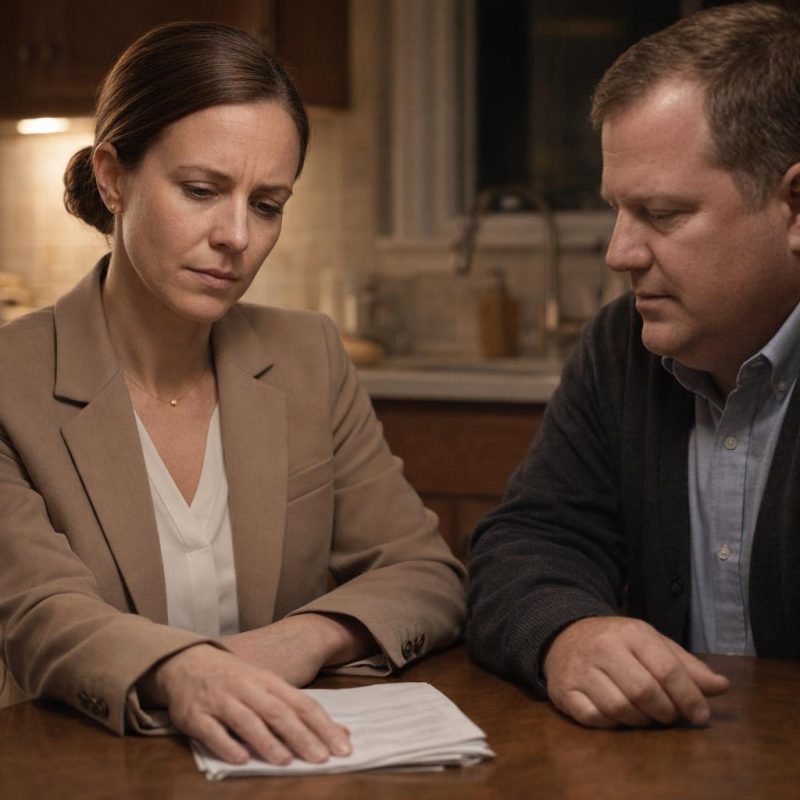 Image by RM AI
The Recovery
Arthur's recovery was complete by early spring, and you could see it the moment he walked into the dining room at the estate — the posture restored, the voice carrying its old authority, the careful weariness of the previous months entirely gone. He announced his retirement over dinner, forty years at the firm, and Margaret was already glowing with the logistics of it: the city's most prestigious hotel ballroom, a guest list that read like a civic directory, a multimedia presentation of his career and legacy. The room filled with the particular warmth that gathers around powerful men when they choose to be celebrated. David looked genuinely relieved, the tension he'd been carrying about his father's health visibly releasing from his shoulders. I sat with my hands folded in my lap and understood, without anyone saying it directly, that my usefulness had ended. Arthur thanked me briefly for my help with the files — a single sentence, gracious and final, the way you thank a contractor once the work is done. I had served my purpose. I smiled and said it had been my pleasure. Across the table, as the conversation moved on to party details and guest lists, Arthur's eyes met mine for just a moment — steady, unreadable, holding something I couldn't name.
 Image by RM AI
The Menial Tasks
Margaret called on a Tuesday morning, her voice carrying the particular warmth she reserved for tasks she considered beneath her direct attention. She needed someone to handle vendor coordination for the retirement party — caterers, florists, the audiovisual team — and she thought I'd be perfect for it. I said of course, because what else do you say. The work itself wasn't difficult. I'd managed far more complex logistics on actual construction projects, but I made the calls and confirmed the timelines and sent the emails without complaint. David mentioned once that he appreciated how much I was helping, and I smiled and let it go. Then Margaret sent over the preliminary seating chart. I opened the attachment at my desk and scanned the head table first — Arthur, Margaret, David, the senior partners, the family names I'd been hearing for fifteen years. I scrolled down through the numbered tables, past the business associates and the distant cousins and the civic figures whose names appeared in the newspaper. I found mine near the bottom of the document. Table 24, the notation read, positioned near the kitchen access.
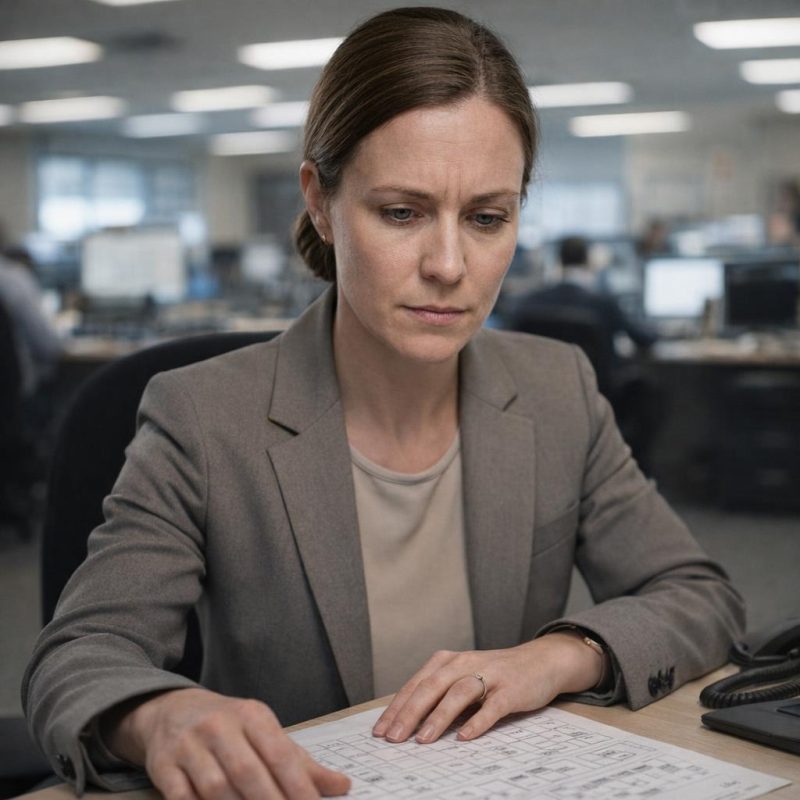 Image by RM AI
The Gift Expectations
I brought it up with David that evening, quietly, the way I'd learned to raise anything that touched his father. He looked at the chart, pressed his lips together, and said he'd talk to his mother. He did talk to her. Margaret called me the next day and explained, with practiced patience, that the seating reflected traditional family hierarchy and the placement of guests according to their relationship to the guest of honor. She said it so smoothly I almost believed it was policy rather than verdict. I thanked her and hung up. The retirement dinner at the estate a week later was the kind of evening that required a particular kind of endurance. Arthur held court at the head of the table, describing the gifts already arriving from business associates — a custom watch from a senator, a sculpture commissioned by a CEO. He turned to me at some point, almost as an afterthought, and said that a nice card would probably be sufficient from me, that he didn't want me to feel any pressure. Margaret laughed softly. David studied his wine glass. I sat with my hands folded and said nothing. But something had shifted in the back of my mind — a quiet awareness of the files sitting on my server, the accounts, the numbers I'd spent months organizing. I hadn't done anything with that knowledge. I hadn't even fully looked at it yet. I just knew it was there.
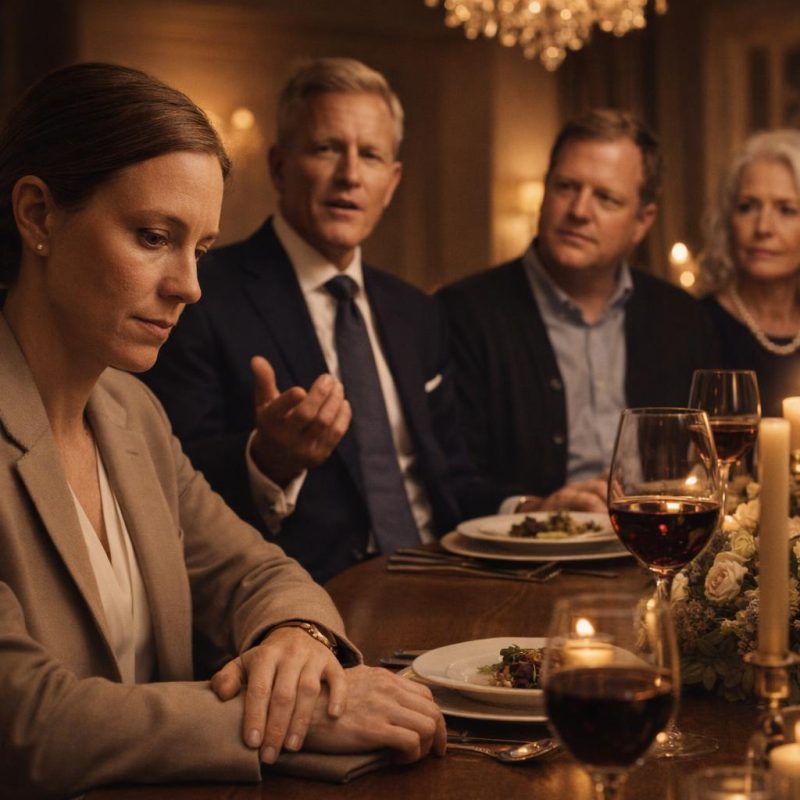 Image by RM AI
The Pattern of Cruelty
The vendor meeting at the estate was scheduled for a Thursday afternoon, and I arrived early enough to watch Arthur hold court before the professionals even had a chance to open their portfolios. The catering manager was a woman in her fifties with a calm, competent manner and a binder full of menus she'd clearly spent time preparing. Arthur interrupted her within two minutes. He told her the proposed appetizer selections were uninspired and that he expected his guests to eat food they couldn't find at a corporate luncheon. She nodded and made notes without flinching, and I recognized that nod — the practiced absorption of criticism from someone whose approval you need. The florist fared no better. Arthur called her centerpiece suggestions pedestrian, then made a remark to Margaret about the difficulty of explaining elegance to people who hadn't grown up around it. The event coordinator stopped presenting options entirely and began simply asking what Arthur preferred. Margaret sat beside him, composed and quiet, the way someone sits when they've long since stopped expecting anything different. I watched the catering manager's face between Arthur's sentences — the small reset she performed each time, the professional smile she rebuilt from nothing. I'd worn that same expression at this same table. It wasn't personal, I understood then. It was just the way he moved through the world, and we were all furniture in it.
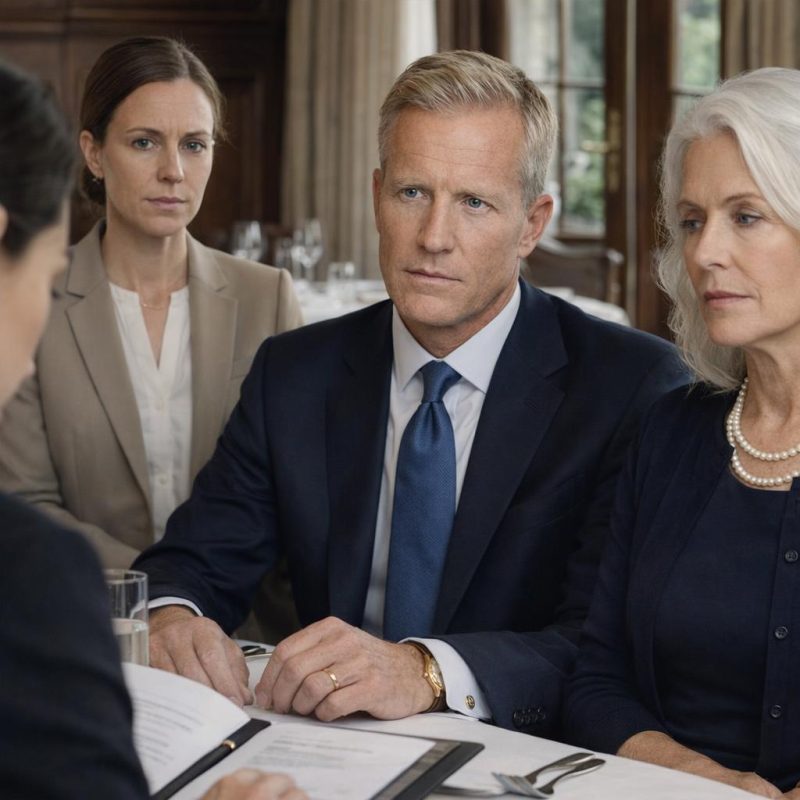 Image by RM AI
The Holiday Gathering
The holiday gathering at the estate was the kind of event that required you to be decorative and useful simultaneously, which I had become reasonably good at over fifteen years. I helped Margaret with the hosting, refilled things that needed refilling, made conversation with people whose names I could never quite retain. Arthur was in the library with his inner circle most of the evening, which was a relief. At some point he surfaced long enough to tell a story about David's college years to a group near the fireplace — something about a girlfriend from Yale, the kind of woman who understood what the family represented. He said it pleasantly, the way you say something that isn't quite an insult but lands like one. I excused myself and went to find more champagne flutes. I was coming back through the hallway when I heard Arthur's voice from around the corner, lower now, the register he used with people he considered equals. I stopped without meaning to. He was telling someone — a business associate, from the laugh that followed — that David had married for love instead of strategy, and that they were all paying the price for it.
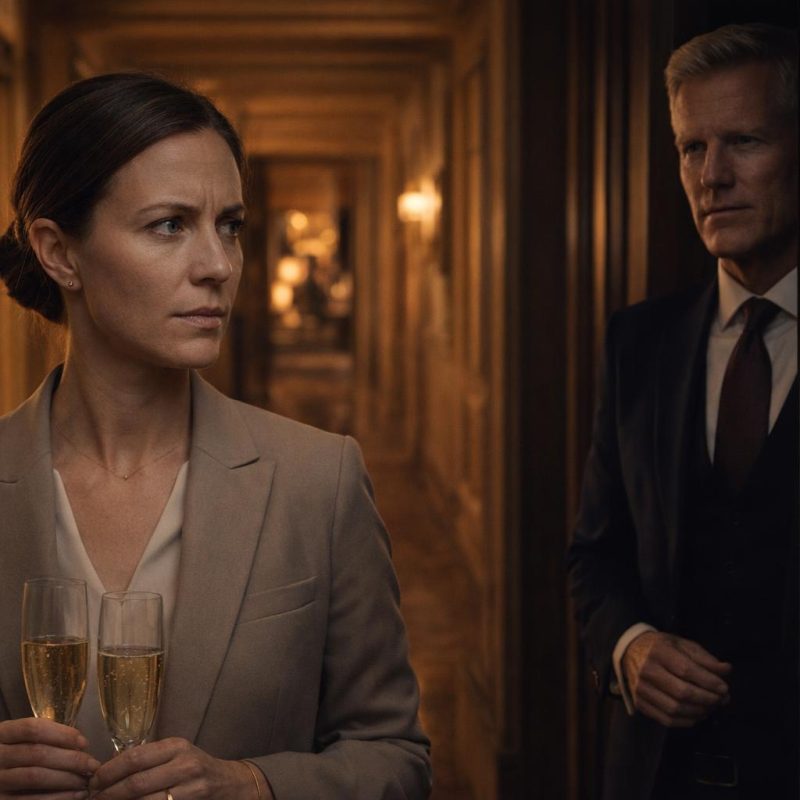 Image by RM AI
The Paris Transfers
It was past eleven when I found them — the transfers, I mean. I'd been working through Arthur's personal financial records for an hour, the kind of late-night organizing that happens when you can't sleep and the files are just sitting there. The wire transfers appeared in a separate ledger, monthly, consistent as a utility bill. The recipient name was Rebecca Fontaine, an address in Paris I didn't recognize. I sat back and looked at the screen for a moment. Fifteen thousand dollars a month, give or take, going back more than a decade without a single gap. I searched the estate files for any business connection — a consultant, a property manager, a European office — and found nothing that matched. The transfers came from Arthur's personal account, not the company. I told myself there were explanations I wasn't aware of, that wealthy men had financial arrangements I didn't understand, that it wasn't my place to draw conclusions from numbers alone. I saved the records to the server the way I'd saved everything else and closed the ledger. But I sat there for a while after the screen went dark, with the particular stillness that comes from knowing something you can't unknow and not yet being sure what it means.
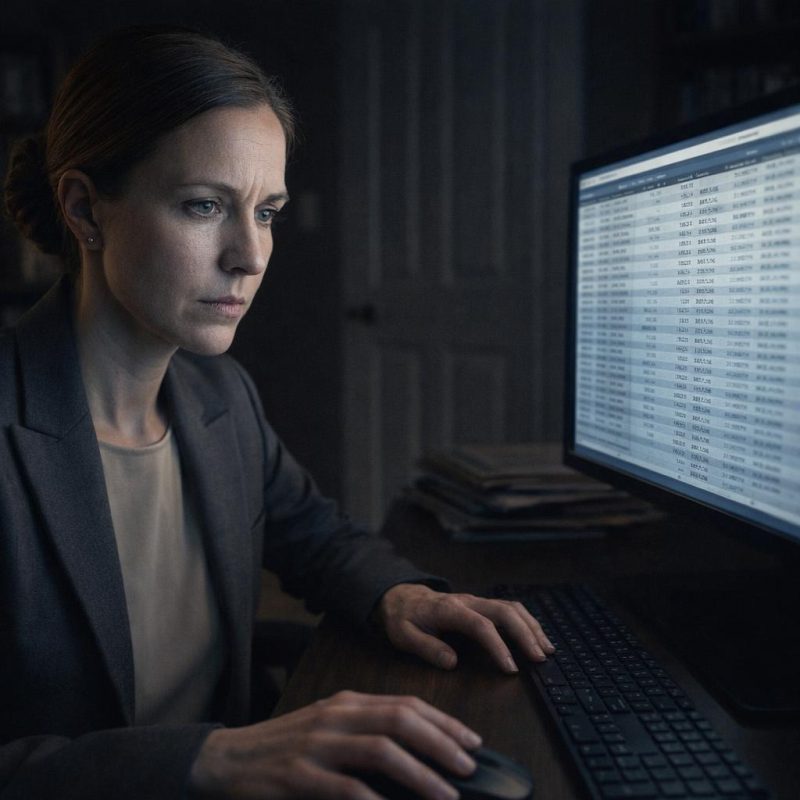 Image by RM AI
The Email Trail
The folder was labeled RF, tucked inside a personal archive subfolder I almost skipped entirely. I almost did skip it. I opened it because I was being thorough, because that was the job, and because I told myself it was probably correspondence with a vendor or a legal contact. There were hundreds of emails. I opened one from three years ago and then one from last spring and then one from the month before Arthur's health scare, and by the third one I understood what I was reading. The tone was unmistakable — not business, not formal, not anything that required a professional explanation. Arthur wrote about Paris the way people write about a second life. He mentioned missing her. He used her name the way you use a name when it belongs to someone specific in your chest. Rebecca's replies were warm and unhurried, full of references to shared meals and a particular view from an apartment window, a place in the 6th arrondissement that Arthur apparently maintained for her. Margaret appeared once, in a single sentence, dismissed in a subordinate clause and never mentioned again. I closed the folder and sat with my hands flat on the desk. I hadn't been looking for this. I hadn't wanted it. But there it was, and I couldn't give it back — the sick, hollow feeling of having read words that were never meant for anyone but the two of them.
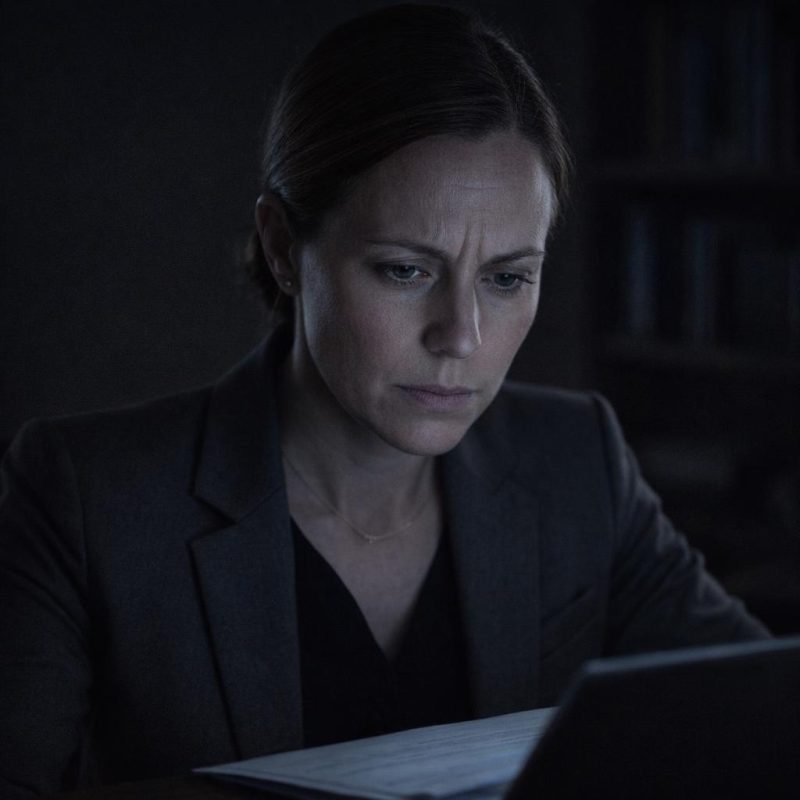 Image by RM AI
The Moral Dilemma
I spent most of the next day turning it over. I thought about what it would mean to tell Margaret — the conversation I'd have to start, the words I'd have to find, the look on her face when she understood what I was saying. I thought about whether she already knew, whether forty years of marriage to Arthur Ashford required a certain willful distance from certain questions. I thought about David, and how he would receive the news that I had been reading his father's private correspondence and had found something that would fracture everything. I wasn't hired to police Arthur's personal life. I was hired to organize files, and I had organized them, and what I'd found in the process wasn't mine to distribute. That's what I told myself. It felt true enough to hold. I decided to say nothing, to keep the folder where it was, to let whatever Margaret knew or didn't know remain exactly as she'd arranged it. I had made my peace with that by early evening. Then the phone rang. It was Margaret, calling to thank me — genuinely, warmly — for everything I'd done during Arthur's recovery, for being so reliable, for being such a steady presence for the family.
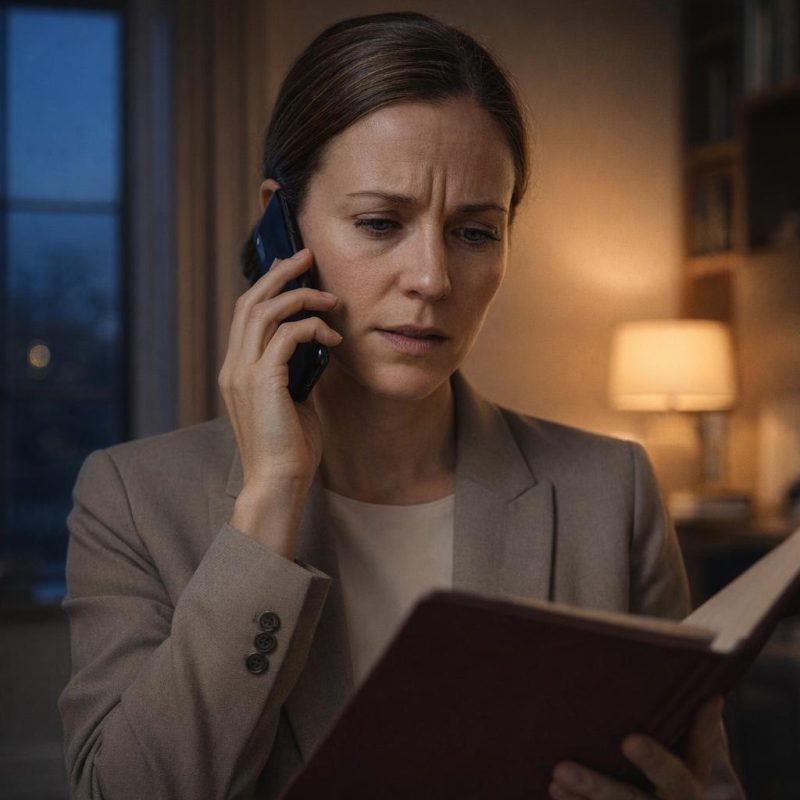 Image by RM AI
The Pension Fund
I went back to the corporate files two days later, not because I was looking for anything specific but because there were still folders I hadn't fully catalogued. The pension fund documents were in a quarterly report binder I'd set aside weeks earlier. I opened the first one out of habit and started cross-referencing the account numbers the way I'd been doing with everything else. The numbers matched accounts I'd already seen — the offshore structures, the Cayman routing I'd noted and filed without fully examining. I pulled up the transfers side by side and looked at the labels: administrative fees, management costs, fiduciary service charges. I looked up standard pension fund management rates on my phone, the way you check something when you already suspect the answer. The amounts weren't close. I kept pulling reports, going back quarter by quarter, and the pattern held every time — money moving out of the employee retirement fund and into accounts that had no institutional name attached to them, only routing numbers I now recognized. My hands had gone very still on the keyboard. I opened the summary spreadsheet at the back of the binder. Four million dollars, transferred in the last year alone.
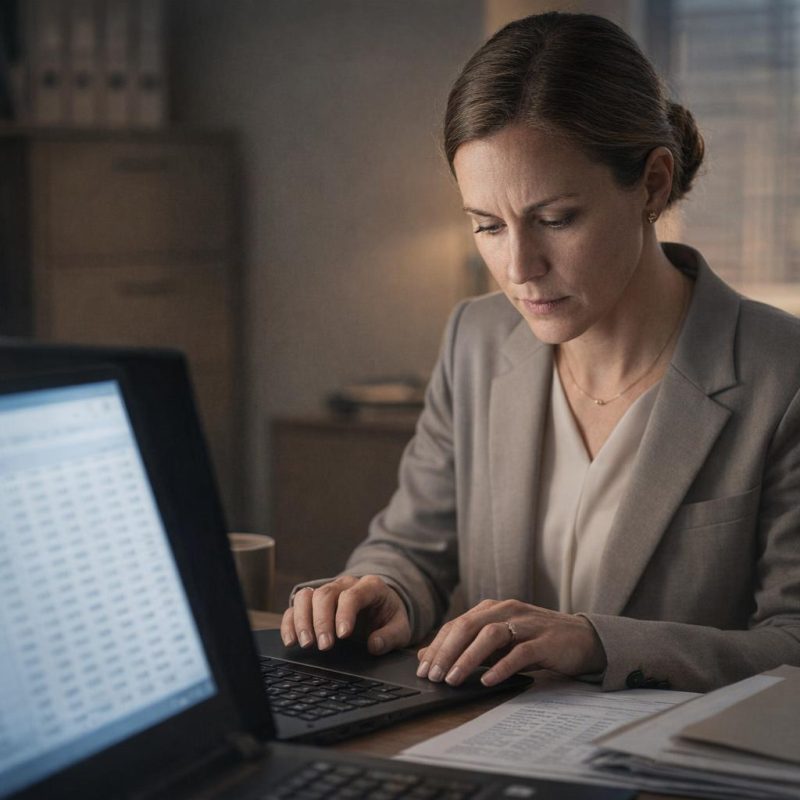 Image by RM AI
The Legal Precipice
I called Marcus on a Tuesday afternoon and told him I had a hypothetical question. He was used to those from me — I'd been asking hypotheticals for months, ever since I started working through the estate files. I said: suppose someone found evidence that a pension fund had been systematically drained over several years. What would that mean, legally? There was a pause on his end. He said that pension fund embezzlement was a federal crime. Not a civil matter, not a regulatory fine — federal. He walked me through it carefully: prison time, asset forfeiture, potential dissolution of the company involved. I asked what would happen to the employees whose money had been taken. He said if the fund was depleted, they could lose their retirement savings entirely. People who'd worked thirty years. People who'd built something with their hands and trusted the numbers on a statement. I told him I was just being thorough, trying to understand what I was looking at in the estate organization. He said that made sense and asked if everything seemed in order. I said yes. After I hung up, I sat with the open binder in front of me, four million dollars in transfers staring back from the page, and felt the weight of what I was holding settle into my hands like something I couldn't put down.
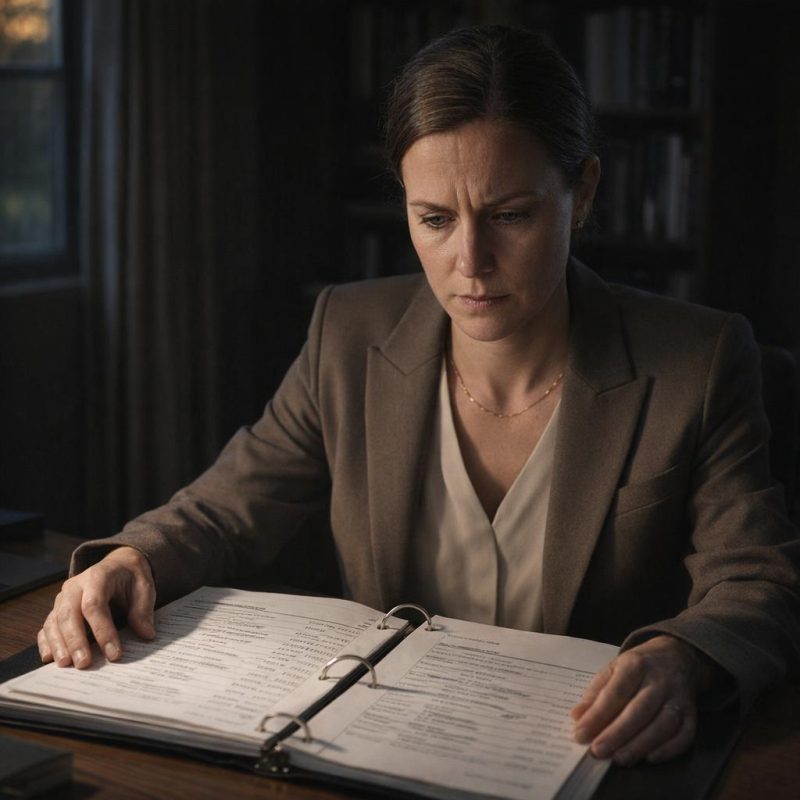 Image by RM AI
The Leverage
I sat at the kitchen table after David fell asleep and opened everything again — the offshore account records, the transfers out of the pension fund, the photographs Marcus had helped me pull from the server, the receipts I'd cross-referenced against Arthur's calendar. It was all there, backed up in three places, documented the way I'd been trained to document things: clean, timestamped, irrefutable. I thought about the retirement party. Arthur had been talking about it for months — the venue, the guest list, the presentation his assistant was building, the speech he'd give about his legacy. His moment. The word sat in my chest like a stone. I thought about fifteen years of dinners where I smiled at the right times. Fifteen years of being introduced as David's wife with a pause before my name, like he had to remind himself what it was. Every comment about where I came from. Every joke that wasn't quite a joke. I had spent so long making myself smaller in rooms he owned that I'd almost forgotten I knew how to take up space. I closed the laptop and sat in the dark, and for the first time I let myself feel how much I wanted him to know what it felt like — the dangerous thought that I could make him feel what I'd felt.
 Image by RM AI
The Ethical Debate
I spent the better part of that evening going back and forth with myself in a way that felt almost theatrical, like I was arguing both sides of a case I already knew the verdict on. The employees were real. Their retirement savings were real. Whatever I felt about Arthur personally, those people hadn't done anything to me, and if I went to the authorities quietly, anonymously, the right thing would happen through the right channels. That was one side. The other side kept returning to my father — to the way he looked in the last year before everything collapsed, the way he stopped sleeping, the way he apologized to me for things that weren't his fault. I thought about whether he would have wanted me to be careful and measured and correct. I thought about whether careful and measured had ever done either of us any good. I considered an anonymous tip. I considered doing nothing. I considered other possibilities I hadn't yet let myself name, paths that felt dangerous to even think about too directly. I hadn't decided anything. I kept telling myself that. Then I heard David's key turn in the lock, and I closed the laptop in one motion, my heart loud in my ears.
 Image by RM AI
The Hypothetical
I told Marcus I needed his brain for something technical and suggested coffee. He showed up with his laptop already open, which was very Marcus. I said it was a hypothetical — a movie-plot kind of thing, I said, and he smiled like he'd heard that before. I asked: if someone wanted to swap out a presentation file on a remote server during a live event, how would that work? He didn't hesitate. He pulled up a diagram and walked me through the general concept — how files on a networked server could in theory be replaced remotely if you had the right credentials, the kind of timing window that would matter, the way a swap might appear seamless to anyone watching the screen. I asked if it would be traceable. He said not if the credentials were already authorized and the timing was clean. He said it sounded like a heist film. I laughed and said exactly, just thinking through scenarios. He walked me through the concept again, patient the way he always was, not asking why I needed to know. I thanked him and paid for the coffee and walked back to my car in the cold. I sat in the driver's seat for a moment without starting the engine, turning the idea over in my mind, and felt the quiet satisfaction of knowing it could be done.
 Image by RM AI
The Test
We had dinner at home on a Wednesday — pasta, a bottle of wine David had picked out, the kind of ordinary evening that used to feel like enough. I'd been quiet for days and he'd noticed, though he hadn't pushed. I waited until we were clearing the plates and then I said, carefully, that I'd come across some unusual financial records while I was organizing. He asked what kind of unusual. I said large transfers, accounts I didn't recognize, amounts that seemed out of proportion to what I'd expect. He asked if I'd talked to his father about it. I said no. I said the transfers might not be entirely proper. Something shifted in his face — not anger exactly, more like a door closing. He said his father had been in business for forty years and knew what he was doing. I asked, as gently as I could, whether he thought his father was capable of making a serious mistake. He looked at me the way he sometimes did, like I'd said something that required patience to forgive. He said his father had built everything from nothing. I backed down. I said I was probably misreading the documents, that I wasn't used to how things worked at that level. He softened and agreed, and we finished the wine, and I smiled, and the distance between us felt like something with no bottom to it.
 Image by RM AI
The Vicious Comment
The dinner was at a private room in a restaurant Arthur liked — dark wood paneling, heavy silverware, the kind of place where the menu had no prices. His business partners were there, men who laughed at the right volume and complimented Margaret's earrings. Arthur was in excellent spirits, talking about the retirement party, the presentation his team had prepared, the legacy he intended to leave. I sat where I always sat, slightly outside the natural radius of the conversation, and kept my expression pleasant. He was describing the gift presentation when he turned to me — not to include me, just to use me — and said he hoped I wouldn't embarrass the family this time. He said it lightly, with a smile, the way you say something you've said so many times it no longer requires emphasis. He said I probably didn't understand what real success looked like, coming from where I came from. The table offered the polite laughter that comment had always received. David's hand found mine under the table and pressed once, which was the most he ever did. I looked at Arthur — at his silver hair and his tailored jacket and his absolute certainty that I would absorb this the way I always had — and felt something go very still and very cold in the center of my chest.
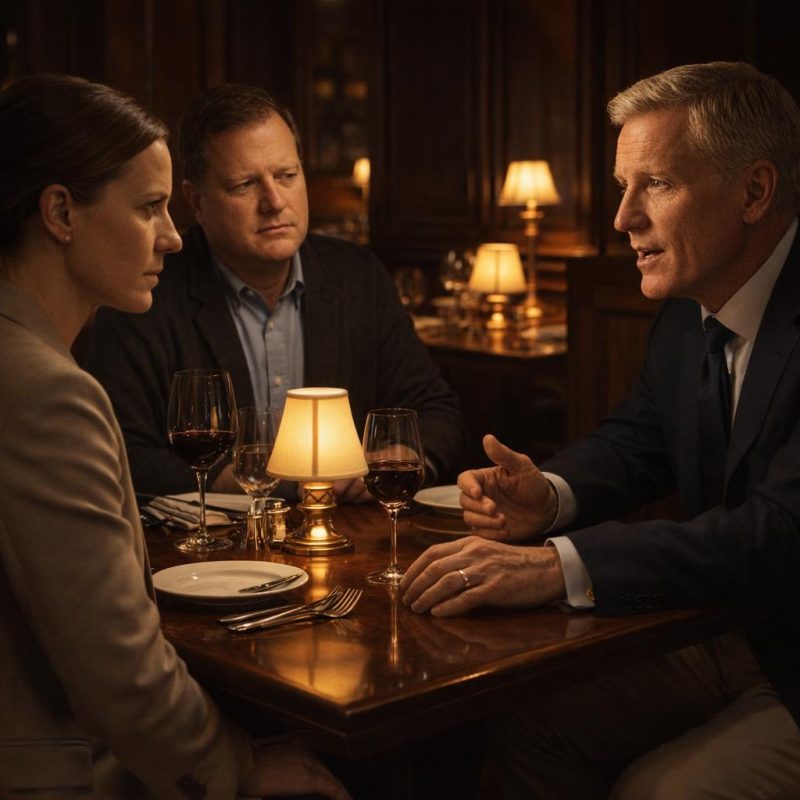 Image by RM AI
The Familiar Name
The archived files from fifteen years ago were denser than the recent ones — physical contracts that had been scanned, legal correspondence, vendor agreements going back to when Arthur's company was still building its first commercial properties. I was working through them by date, flagging anything that needed a second look, when a company name appeared in a subcontractor agreement: Bennett & Sons Construction. I stopped. The name sat there on the screen and I looked at it the way you look at a word that suddenly seems spelled wrong — familiar and slightly off at the same time. I kept working. The name appeared again in a second contract, then a third, all from the same eighteen-month window. Bennett was my maiden name, but it wasn't an unusual name. There were probably dozens of small construction firms with that name. I told myself that. I filed the documents and moved to the next folder. But the name stayed with me the way certain things do — not loudly, just present, like a sound you can't identify that keeps pulling your attention back to the same corner of the room. By the time I closed the laptop that evening, I hadn't been able to shake the uneasy feeling that I'd seen that name somewhere before, in a different context entirely.
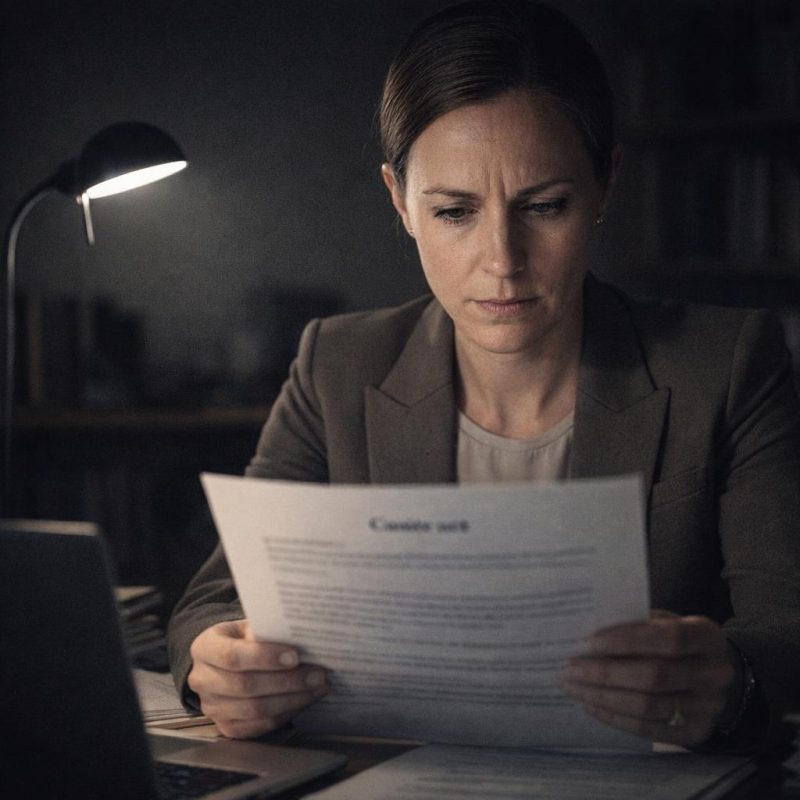 Image by RM AI
The Buried Memory
I woke up at four in the morning with the name still in my head. My father's company had been called Bennett & Sons Construction. I knew that. I had known it my whole life — it was on the letterhead of every invoice he ever showed me, on the side of his truck, on the baseball cap he wore on job sites. I had just never let myself think about his business papers after he died. It was too painful and there was nothing useful in the grief of it, so I had packed everything into boxes and put the boxes in storage and left them there for fifteen years. I drove to the storage unit that Saturday morning. The boxes were in the back, stacked the way I'd left them, dusty and undisturbed. I opened the first one and found his files exactly as he'd organized them — contracts sorted by client, legal notices in a separate folder, the bankruptcy filings at the back in a manila envelope I recognized from the last time I'd seen it, the day I helped him pack his office. I lifted out the top folder. The letterhead was printed in the same dark blue it had always been, the same font, the same address on Carver Street. My hands were shaking before I'd read a single word. Bennett & Sons Construction was printed across the top of every page.
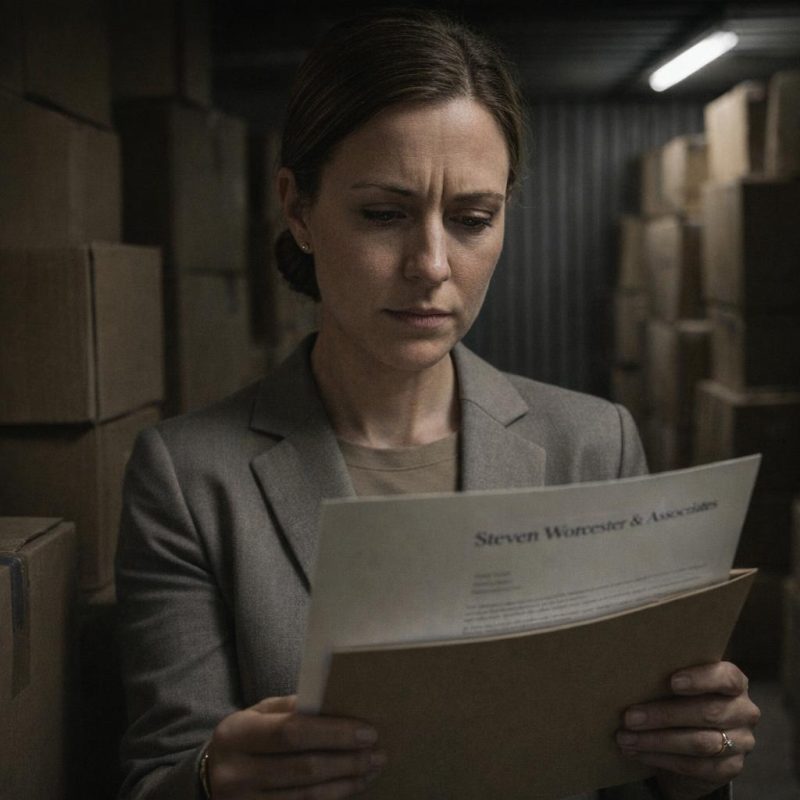 Image by RM AI
The Timeline
I spread my father's documents across the desk in a grid, the way he used to organize his bids — left to right, oldest to newest. Then I opened Arthur's files on my laptop, the ones I'd been cataloguing for weeks, and pulled up the same time period. My father's company filed for bankruptcy in March, fifteen years ago. I knew that date the way I knew my own birthday. What I hadn't known — what I'd had no reason to know — was that the winter before that filing, Bennett & Sons Construction appeared repeatedly in Arthur's client correspondence. Contract violation claims. Legal disputes. My father's company named as the defendant, the clients on the other side represented by Arthur's firm. I told myself it meant nothing. Arthur's firm was large, one of the biggest in the city. They represented hundreds of clients. Of course there would be overlap. Of course the same names would appear. I told myself that for a long time, sitting there in the quiet of my office, the documents arranged in two neat rows. My father died of a heart attack one week after the bankruptcy filing. I kept looking at the dates, moving my eyes from one column to the other, and the sick feeling in my stomach refused to go away.
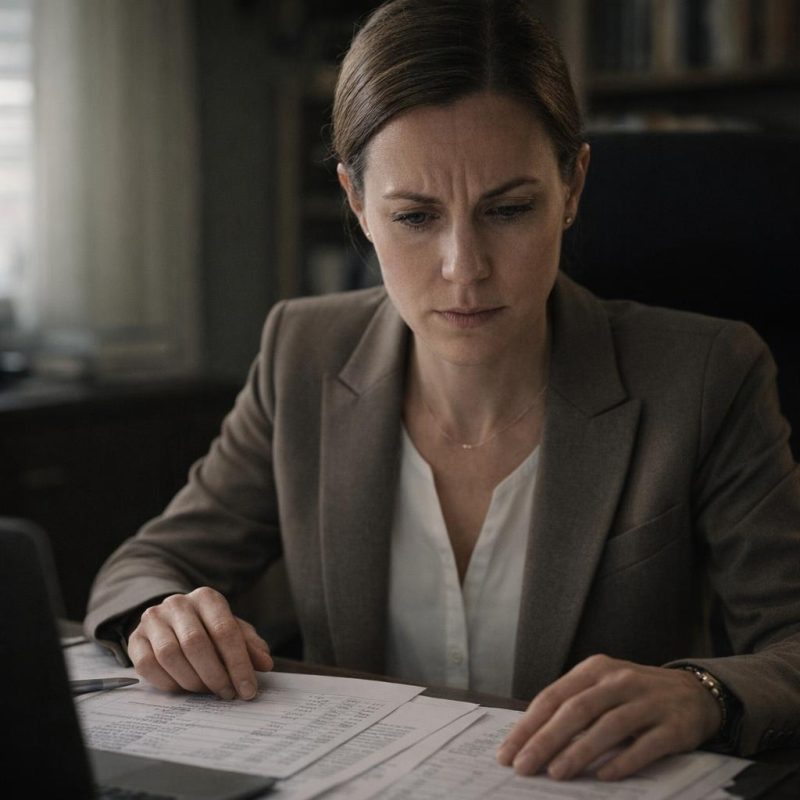 Image by RM AI
The Dread
I went to work on Monday and sat at my desk and stared at a project brief I'd read four times without absorbing a single word. My assistant asked if I was feeling all right. I told her I hadn't slept well. That was true enough. I kept thinking about the dates — the winter filings, the March bankruptcy, the week between the paperwork and the funeral. I told myself I was doing what I always did when I was stressed: finding patterns in noise, building architecture out of coincidence. Arthur's firm was enormous. Overlap happened. I was not the kind of person who connected dots that weren't there. Except I couldn't stop thinking about the first time I met Arthur. The way his eyes had moved over me — not with the ordinary condescension I'd grown used to, but something more specific. Something that felt, in memory, almost like recognition. I'd told myself it was class prejudice. I'd told myself that for fifteen years. I left work at two, told my assistant it was a migraine. I sat in my car in the parking garage for forty minutes, engine off, hands in my lap, unable to make myself drive home to the house where Arthur's files were waiting on my desk. The question I was most afraid to ask sat with me in the dark of that car, and I couldn't put it down.
 Image by RM AI
The Legal Documents
I made myself go back to the files that evening. I told myself I was looking for something that would disprove the pattern, some document that would explain the overlap as routine business. Instead I found a folder I hadn't opened yet. The label read 'Bennett & Sons — Contract Disputes.' My stomach dropped before I'd clicked it open. Inside were legal memos from Arthur's firm to its clients — formal, precise documents outlining strategy for pursuing contract violations against my father's company. The language was clinical in the way that legal language always is, but underneath the formality it was something else entirely. 'Aggressive enforcement.' 'Maximum financial pressure.' 'Pursue all violations simultaneously.' My father's company was described in one memo as 'vulnerable to sustained legal action,' the phrase sitting there on the page like a diagnosis. I read about recommended timelines, coordinated filings, the importance of refusing early settlement offers. I kept scrolling, looking for something that would soften it, some context that would make it ordinary. The memos were signed by various partners, junior associates, a rotating cast of legal professionals. And then, near the back of the folder, I found a strategy brief dated two months before my father's bankruptcy filing — and on the signature line at the bottom, in the same precise hand I'd seen on Christmas cards for fifteen years, was Arthur Ashford's name.
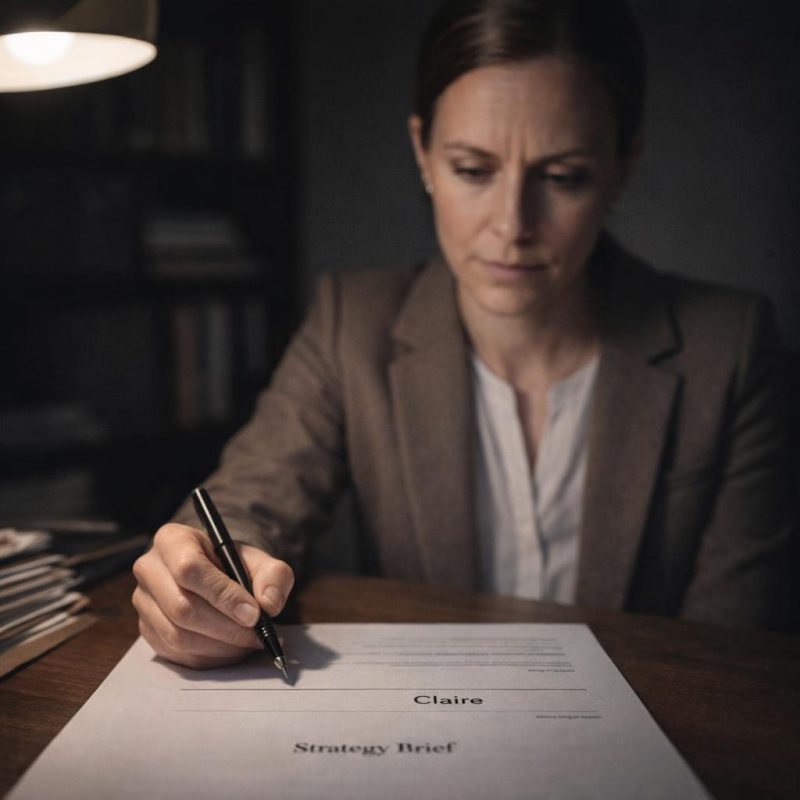 Image by RM AI
The Contract Violations
I printed the violation claims and laid them out in order. My father's company had been accused of missing a delivery deadline by four days. Using a grade of lumber that was within specification but not the grade originally quoted. A subcontractor arriving two hours late on a Tuesday in November. Individually, each one read like the ordinary friction of construction work — the kind of thing that got resolved with a phone call and an apology. I'd watched my father handle disputes like these my whole childhood. You talked to the client, you made it right, you moved on. But these hadn't been resolved with phone calls. They'd been filed simultaneously, by different clients, within a twelve-day window. I counted the filing dates three times because I didn't trust my own arithmetic. Seven separate claims, four different clients, twelve days. My father's company had three employees and one part-time bookkeeper. The legal response costs alone — just the cost of responding, not fighting, not winning — would have been enough to drain his operating account. I found a note in the file from Arthur's firm advising all four clients to decline any settlement offers from Bennett & Sons. The violations were filed within eleven days of each other, each one landing before my father could respond to the last.
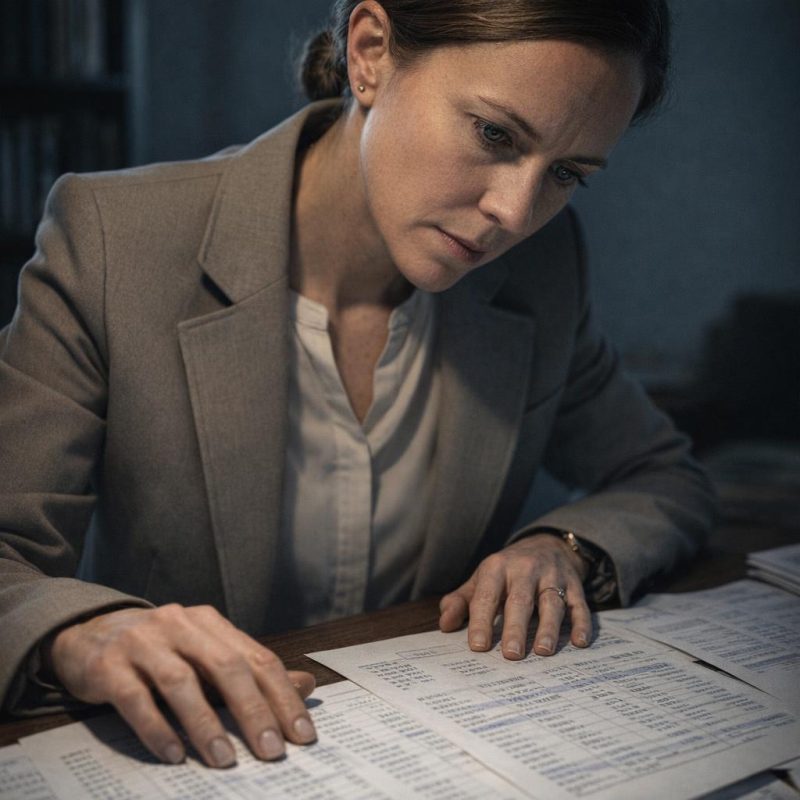 Image by RM AI
The Personal Targeting
I searched for anything that would tell me why. Some prior dispute between Arthur and my father, some business deal gone wrong, some history that would explain why a senior partner at a major firm had personally overseen the destruction of a small construction company. I went through every file I had, every document I'd photographed, every memo I'd saved. There was nothing. No prior litigation. No shared clients. No record of any contact between Arthur Ashford and Thomas Bennett before the winter the violations began. What I found instead were internal memos from Arthur to his legal team — not the formal client-facing documents, but the working notes, the kind of correspondence that was never meant to be seen outside the firm. Arthur had been directing the Bennett & Sons case personally. That was unusual. A case like my father's — a small contractor, minor violations, no significant damages — would normally have been handled by a junior associate without a second glance from anyone at Arthur's level. I found four separate memos in Arthur's handwriting, each one more specific than the last about how the case should be managed. And then, clipped to the back of a legal brief dated the October before my father's bankruptcy, I found a single index card in Arthur's handwriting: 'Make sure Bennett understands this is personal.'
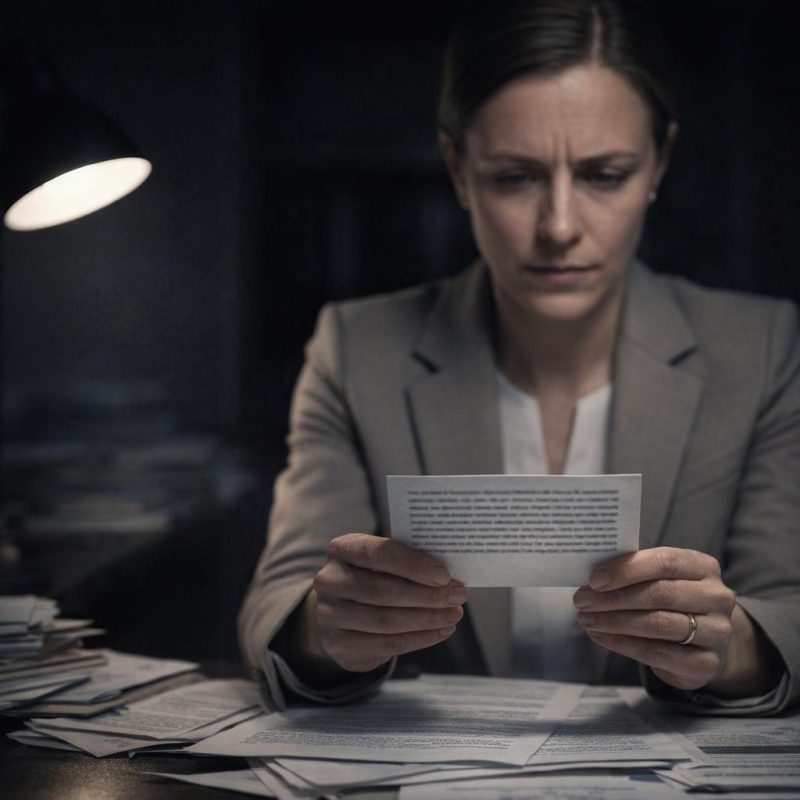 Image by RM AI
The Reconstruction
I organized everything chronologically and made myself read it from the beginning. The documents showed a sequence I couldn't dismiss: vulnerable contracts in early autumn — the ones with the loosest language, the most room for technical dispute — followed by four separate clients filing documentation of every minor deviation, however small, however within normal tolerance. By November, the documentation was in place. In December, the filings began. My father spent January and February trying to respond, trying to negotiate, trying to understand what he had done wrong. Every client declined to settle. The legal fees accumulated on both sides, but Arthur's clients weren't paying out of pocket — the costs were folded into ongoing retainer agreements. My father was paying his lawyer by the hour, out of his operating account, while the work dried up because no new client would hire a contractor in active litigation. His company had been profitable the year before. I found his tax returns in the storage box — a modest profit, nothing remarkable, but solvent. By March he was filing for bankruptcy. I sat with the full sequence laid out in front of me, every document in its place, and the picture it made was one I couldn't look away from and couldn't yet bring myself to name.
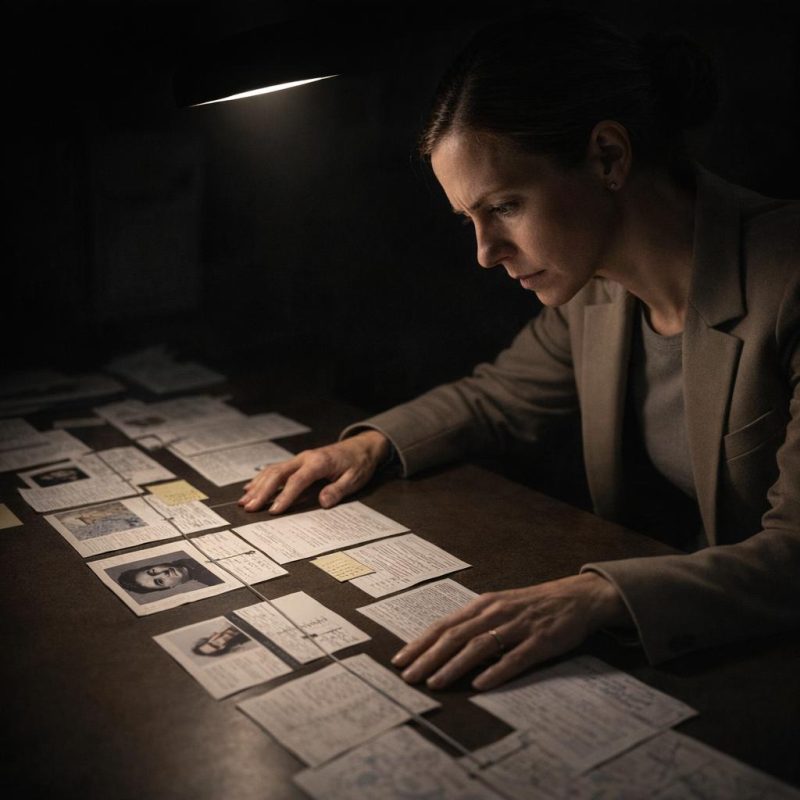 Image by RM AI
The Heart Attack
I found my father's medical records in the last box, the one I'd always left sealed. The death certificate was on top, the way it always is in those files, as if the ending needs to be acknowledged before anything else. Acute myocardial infarction. The date was the 14th of March. The bankruptcy filing was dated the 7th. Seven days. I sat with that for a long time before I kept reading. Underneath the medical records was an envelope I didn't recognize — cream-colored, my name written on the front in my father's handwriting, never mailed, never sent. He must have put it in his desk and run out of time. I opened it carefully. He wrote about the legal battles, the confusion, the feeling of being attacked from every direction without understanding why. He mentioned Arthur Ashford by name. He said they had met at industry events over the years, that he had always thought of Arthur as a colleague, someone who moved in different circles but who had always been cordial. He wrote: 'I don't know what I did to make him hate me.' He died the next morning thinking he had failed, thinking the fault was his, never knowing the shape of what had been done to him. I sat at my desk with his letter in my hands, and the grief of it settled into me like something that had always been there, waiting.
 Image by RM AI
The Impossible Question
I sat with all of it spread across the desk — the memos, the violation claims, the timeline, my father's letter — and let myself think the thought I'd been circling for days. Arthur had destroyed my father's company. My father had died seven days later. Those two facts sat together in the documents in front of me, and I couldn't unknow them. But there was another question underneath those facts, one that had been pressing at the edges of everything since I'd first found my father's name in Arthur's files. I thought about the first dinner I'd had at the Ashford house, fifteen years ago. David had introduced me by my full name. He would have mentioned my background — he always did, proud of me in the way that gentle men are proud, wanting his family to know who I was. My maiden name was Bennett. My father's company had been called Bennett & Sons. Arthur had spent an entire winter ensuring that name meant nothing, that it ended in bankruptcy and grief. I thought about the cold assessment in Arthur's eyes the first time he looked at me across that dinner table. I had read it as class prejudice for fifteen years. Now I needed to know if it had been something else entirely — and the only question that mattered, the one that would reframe every year of my marriage, was whether Arthur had known exactly who I was the moment David brought me home.
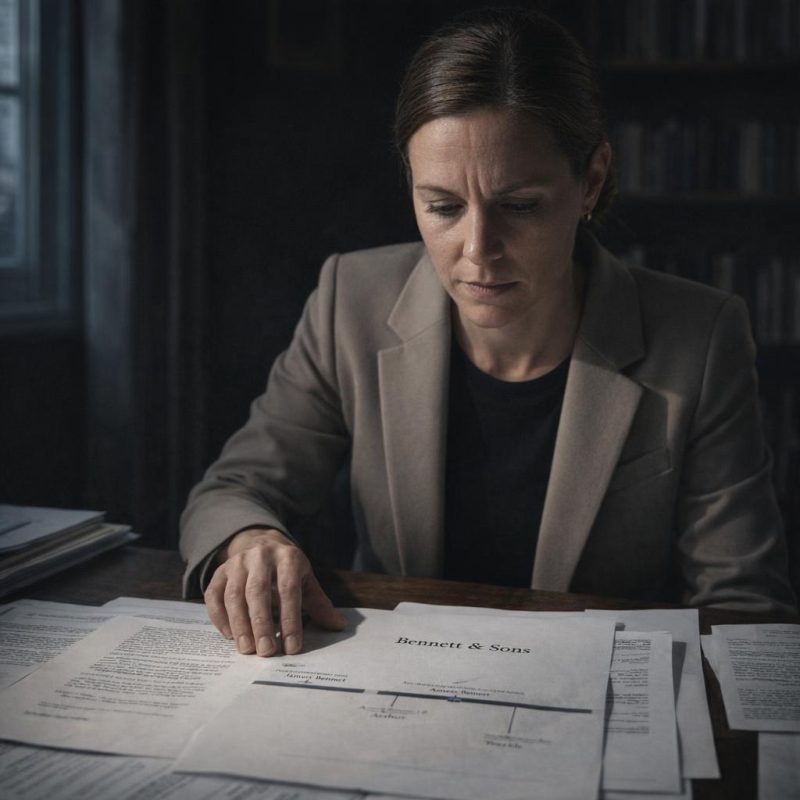 Image by RM AI
The Authentication
I called Marcus on a Tuesday morning, keeping my voice even, the way you do when you need something important and can't afford to sound like you need it. I told him I had some documents I needed authenticated — digital signatures, letterheads, metadata — and that I needed to know if they'd been altered or forged. He didn't ask why. That was one of the things I valued most about Marcus as a work colleague: he understood that sometimes the question itself was the answer you were trying to avoid. I scanned everything and sent it through a secure transfer. He called me back within two hours. The signatures were genuine. The letterheads matched archived originals. The metadata on every file showed original creation dates with no subsequent modification. I asked him, carefully, whether the dates could have been manipulated without leaving a trace. He said no — not with these file types, not without markers he would have caught. He verified Arthur's signature against three other authenticated documents and confirmed the match. Then he asked why I needed this for estate purposes, and I told him it was complicated, and thanked him before he could press further. I sat at my desk after the call ended, the documents spread in front of me, and there was nothing left to question. Every page was exactly what it appeared to be.
 Image by RM AI
The Medical Timeline
My father had kept everything. That was the thing about him — he was meticulous in the way that men who build things with their hands tend to be, careful with paper the way he was careful with measurements. I found his medical records in a manila folder tucked behind his tax returns, and I almost missed them entirely. The doctor's notes were dated two weeks before the bankruptcy filing. My father had been experiencing chest pains for months. Elevated blood pressure. The doctor had written, in the careful language of someone trying not to alarm a patient while also being very clear: *reduce occupational stress immediately. Cardiac risk is significant.* I sat with that sentence for a long time. Then I looked at the timeline I'd built from Arthur's files. The coordinated legal assault — the simultaneous claims, the injunctions, the supplier pressure — had landed four days after that appointment. My father hadn't been able to reduce anything. He'd been fighting on every front at once, his heart already strained, the walls closing in from directions he couldn't have anticipated. The doctor's final note, written after my father's death, said the stress of the preceding weeks had likely been the precipitating factor. I set the folder down on the desk and didn't move for a long time, the afternoon light shifting slowly across the wall.
 Image by RM AI
The Suicide Note
I almost missed it. I'd been through my father's papers so many times that I'd stopped seeing them as individual documents and started seeing them as a single mass of grief. But this envelope was different — smaller, tucked inside a copy of his company's original incorporation papers, as if he'd wanted it found eventually but not immediately. My name was on the front in his handwriting. I recognized it the way you recognize a voice in a crowd: instantly, physically, before your mind catches up. The letter inside was dated the day before his heart attack. He wrote about the bankruptcy, about the shame of it, about not understanding what he'd done to deserve the sustained assault on everything he'd built. He mentioned Arthur Ashford by name — said he didn't understand the hatred, that he'd tried to find what he'd done wrong and couldn't. He wrote about me. About worrying what I would think of him. About the weight of having nothing left to leave me. He wrote that he had considered whether it would be easier for everyone if he simply wasn't here anymore. He wrote that he was sorry. The letter had never been sent, never been finished — the heart attack had come first, and in some terrible way that fact had always felt like mercy. I read it through twice, hands completely still, and then I reached the final line: *I'm sorry I couldn't protect you from what I've done.*
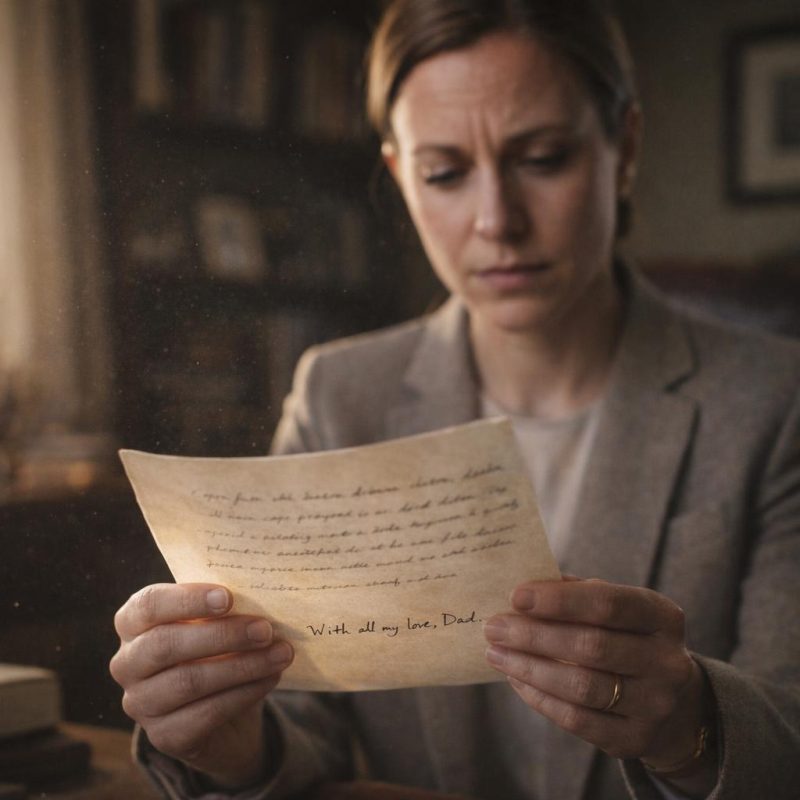 Image by RM AI
The Identity Question
I went back to Arthur's digital files with a single search term: Bennett. My maiden name. The name my father had built his company around, the name I'd carried until I married David and let it quietly recede. The search returned results — but only the old ones. The files from the legal campaign, the violation claims, the correspondence with suppliers. Everything from that winter when Arthur had systematically dismantled my father's livelihood. Nothing after. I searched for Claire Bennett. I searched for Thomas Bennett's daughter. I searched variations, combinations, anything that might suggest Arthur had connected me to my father after I came into his family's life. The results were the same each time: nothing. No correspondence. No notes. No flagged connection. I sat back and tried to think clearly about what that absence meant. It didn't prove ignorance — I understood that. People who kept secrets didn't always keep them digitally. Arthur was old enough to have learned discretion before the age of searchable files. He had a private office. He had paper records I hadn't touched. I thought about the mahogany desk I'd seen in that office a dozen times over fifteen years of Sunday dinners and holiday visits, always closed, always somehow conveying that it was not for me. I needed to look there. The digital files had told me everything they could.
 Image by RM AI
The Private Office
I drove to the Ashford estate on a Wednesday afternoon when I knew Margaret was at her standing lunch and Arthur was at his club. I used my key — the one they'd given me years ago for emergencies, which I'd always understood to mean their emergencies, not mine. Arthur's private office was at the back of the house, past the formal sitting room, behind a door that was always kept closed. I'd been inside maybe four times in fifteen years. I started with the filing cabinets along the wall: property deeds, investment records, correspondence with his accountant. Nothing personal. I checked the bookshelves, ran my hand along the spines, looked for anything that didn't belong. Then I turned to the desk. The top drawers held the expected things — stationery, a letter opener, reading glasses in a case. The bottom left drawer was locked. I almost moved on. Instead I checked under the center drawer, running my fingers along the wood, and found a small key taped flat against the underside. The locked drawer held photographs, a bundle of letters tied with a rubber band, and a leather journal, dark brown, the spine cracked from use. I lifted the journal out and held it. It was thick with years of entries, the handwriting on the cover page unmistakably Arthur's. My hands had started shaking before I'd even opened it.
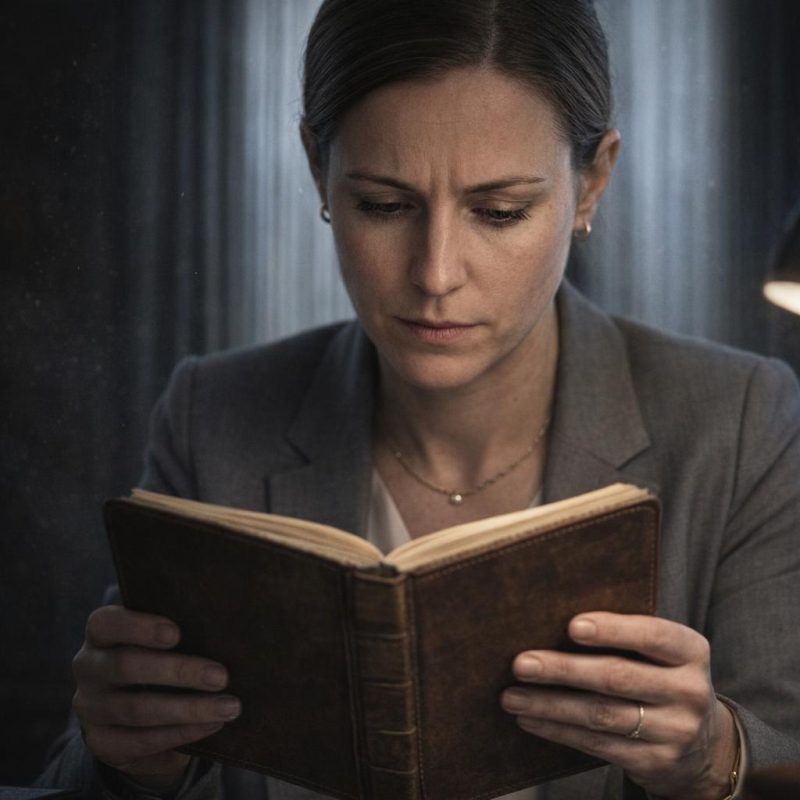 Image by RM AI
The Search
I sat in Arthur's chair — which felt like a transgression and also felt exactly right — and opened the journal to the middle. The entries were dated, dense, written in Arthur's precise hand with the confidence of a man who had never doubted his own observations were worth recording. I flipped backward, looking for the years that mattered. I found entries about David's college graduation, his first job, a girlfriend Arthur had dismissed in three cutting sentences. I found entries about business dealings, about social events, about people I recognized from fifteen years of family dinners. I kept turning pages. My hands were unsteady enough that I had to slow down, press each page flat before I could read it. I found an entry about David bringing someone new to a family dinner — the handwriting careful, the tone assessing. I read it twice, then kept going. I was looking for my name. My father's name. Any indication that Arthur had seen the connection I was now certain existed. The entries continued. I turned toward the year David and I had married, the pages thickening under my thumb as I got closer. I stopped at the entry dated the week of our wedding and set the journal flat on the desk. The office was completely silent around me, the afternoon light coming through the curtains in long pale strips, and I held my breath and began to read.
 Image by RM AI
The Sadist's Journal
The entry was dated the week of our wedding. Arthur's handwriting was steady, unhurried, the penmanship of a man writing at leisure about something that pleased him. He noted David's marriage to Claire Bennett — my full maiden name, underlined once. He wrote that he had recognized it immediately. That Thomas Bennett's daughter had walked into his son's life and apparently had no idea who he was or what he had done to her family. He described the moment he understood the connection as one of the more satisfying coincidences of his life. He wrote that he had briefly considered telling me the truth — and then decided against it, because proximity would be more interesting than disclosure. He described watching me try to earn his respect at family dinners as something he found privately amusing. He wrote about the retirement party years, the holidays, the Sunday lunches — each one annotated with some small observation about my efforts and his enjoyment of them. He called it a private arrangement that required nothing from him but patience. The final lines of the entry were written in the same measured, unhurried hand as everything else, as if he were noting a favorable weather forecast: *Bennett's daughter married my son and has no idea I'm the one who killed her father — the irony is exquisite.* I read it three times. Then I closed the journal, set it on the desk, and sat very still in Arthur's chair while the room held its shape around me and everything I had believed about my marriage rearranged itself into something I didn't yet have a name for.
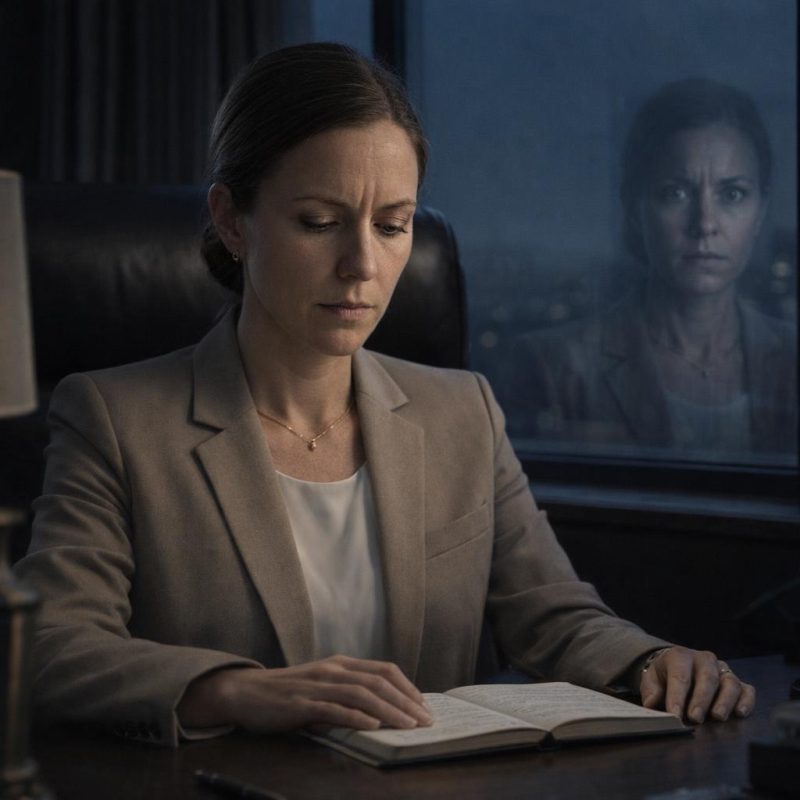 Image by RM AI
The Confrontation with David
David was in the kitchen when I got home, his phone face-down on the counter, the particular stillness of someone who has been waiting and doesn't want to say so. I set the journal and the folder of documents on the table between us and told him to sit down. I told him everything. My father's company. The legal campaign. The timeline. The medical records. The letter my father had written and never sent. I watched David's face as I talked — the careful, kind face I had loved for fifteen years — and I could see the moment each piece landed. He picked up the journal himself and found the entry. He read it standing up, one hand braced on the table, and the color left his face in a way I had never seen before. He said he hadn't known. He said it the way people say things that are simply true, without defense or elaboration. I believed him. I had been prepared not to, had steeled myself for the possibility that his gentleness had been its own kind of performance, but his horror was too unguarded, too physical to be anything but real. He apologized until I asked him to stop. He said they should go to the police, expose everything, and I told him I had a different plan — the retirement party, the presentation, the files. He went quiet for a long time. Then he asked what he could do to help. I told him I needed him to do nothing, to simply let it happen. He nodded, and I sat with the strange, aching loneliness of being the only one who had to carry this the rest of the way.
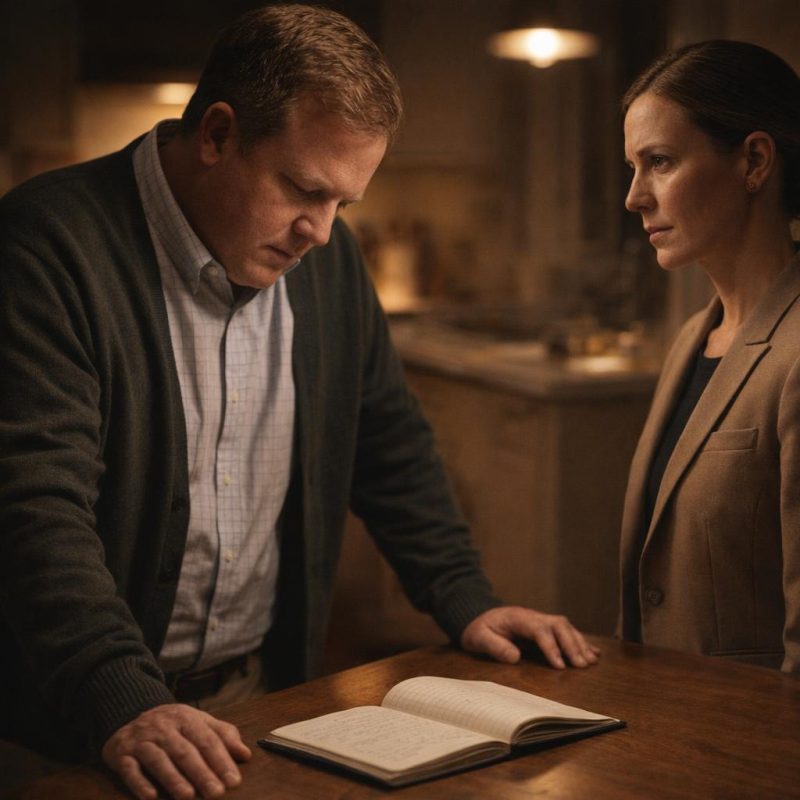 Image by RM AI
The Final Preparation
I called Marcus on a Tuesday evening and kept my voice even, the way I had learned to keep everything even when the stakes were highest. I told him I needed help with a presentation project — technical setup, remote file management, nothing he hadn't done before. He asked if it was for Arthur's retirement party, and I said yes, that I wanted to surprise Arthur with a special tribute. Marcus is careful and precise, and I could hear him thinking through the logistics before he agreed. We met at my office the following afternoon, the door closed, the blinds drawn. I walked him through the file structure without explaining the full context, and he built the swap mechanism without asking questions I didn't want to answer. He set up the remote trigger on my phone — one tap, and the presentation server would replace Arthur's legacy slideshow with mine. The file included everything: scanned bank statements from the Cayman accounts, emails to Rebecca in Paris, pension fund transfer records, the legal memos with Arthur's signature, my father's letters, the medical records, the death certificate. Marcus tested the connection twice, confirmed the timing, and handed my phone back. The progress bar climbed steadily across the screen, and when it reached the end, Marcus closed his laptop and said it was ready.
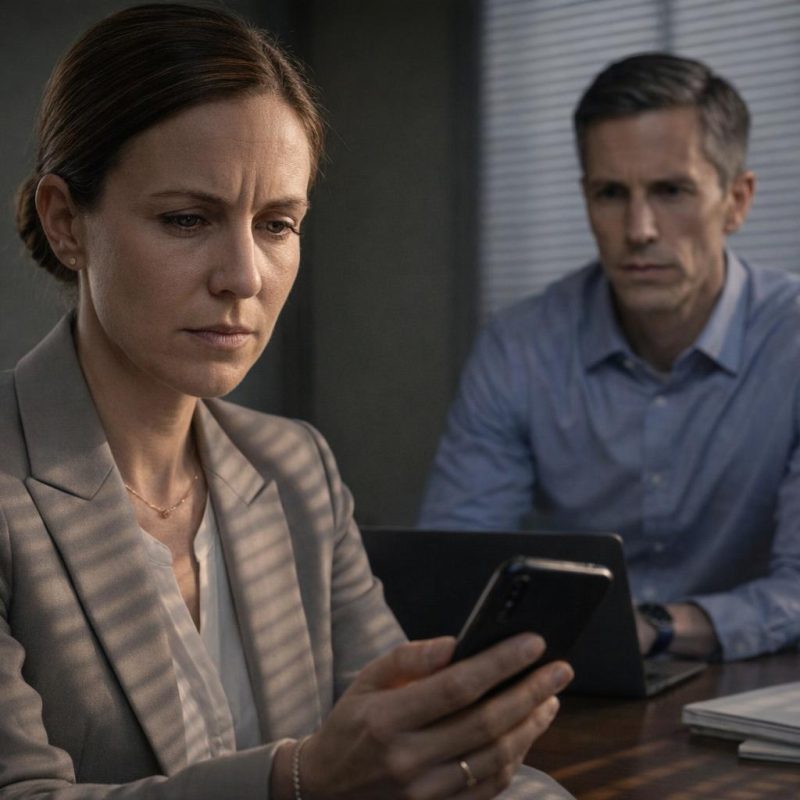 Image by RM AI
The Weapon
I sat alone in my office the night before the party with the presentation open on my screen, and I went through it the way a surgeon checks instruments before an operation — methodically, without sentiment, making sure nothing was missing and nothing was soft. The first slides were the offshore accounts: balances, transfer dates, Arthur's name on every line. Then the emails to Rebecca, fifteen years of them, intimate and specific, the Paris apartment address appearing in three separate threads. The pension fund transfers came next — four million dollars, moved in increments small enough to avoid automatic flags, employee retirement accounts quietly hollowed out. Then the legal campaign against my father's company: the memos bearing Arthur's signature, the coordinated contract violations, the manufactured compliance failures filed within the same two-week window. My father's letters followed, his handwriting growing more desperate across the pages. The medical records. The doctor's notes about stress-induced cardiac risk. The death certificate. The final slide was a photograph of my father — Thomas Bennett, calloused hands, honest face, standing in front of a job site he was proud of. The caption read: *One week after Arthur Ashford destroyed his company.* I closed the laptop and sat in the quiet.
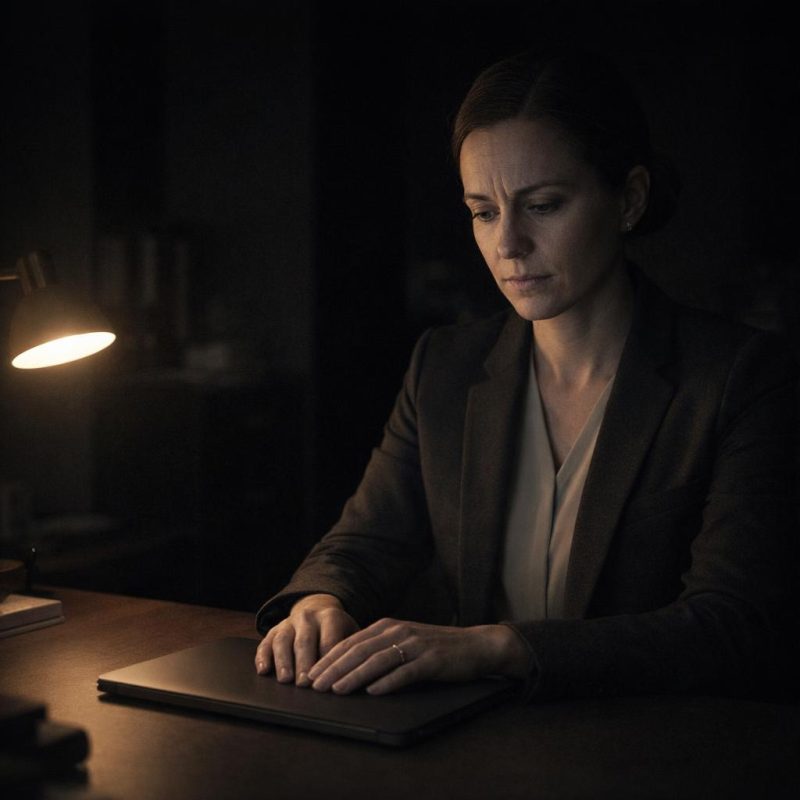 Image by RM AI
The Ballroom
The hotel ballroom was everything Arthur had always wanted people to see when they looked at him — crystal chandeliers, round tables dressed in white linen, senators and CEOs moving through the room like they owned the air inside it. David and I arrived together, and I watched him scan the crowd with the particular anxiety of a man who has spent his whole life trying to read his father's mood from across a room. Arthur stood near the entrance, silver-haired and commanding, accepting congratulations with the ease of someone who had never once doubted he deserved them. Margaret moved through the guests with practiced grace, her smile calibrated to the precise warmth the occasion required. A woman near the door directed us to Table 24, close enough to the kitchen entrance that I could hear the clatter of service carts. David squeezed my hand and asked, quietly, if I was sure. I told him I had never been more certain of anything in my life. I set my phone on the table in front of me and smoothed my napkin across my lap. The screens at the front of the room glowed softly, waiting. Arthur took the stage to a wave of applause, and I sat with the strange calm of someone who already knows exactly how the evening ends.
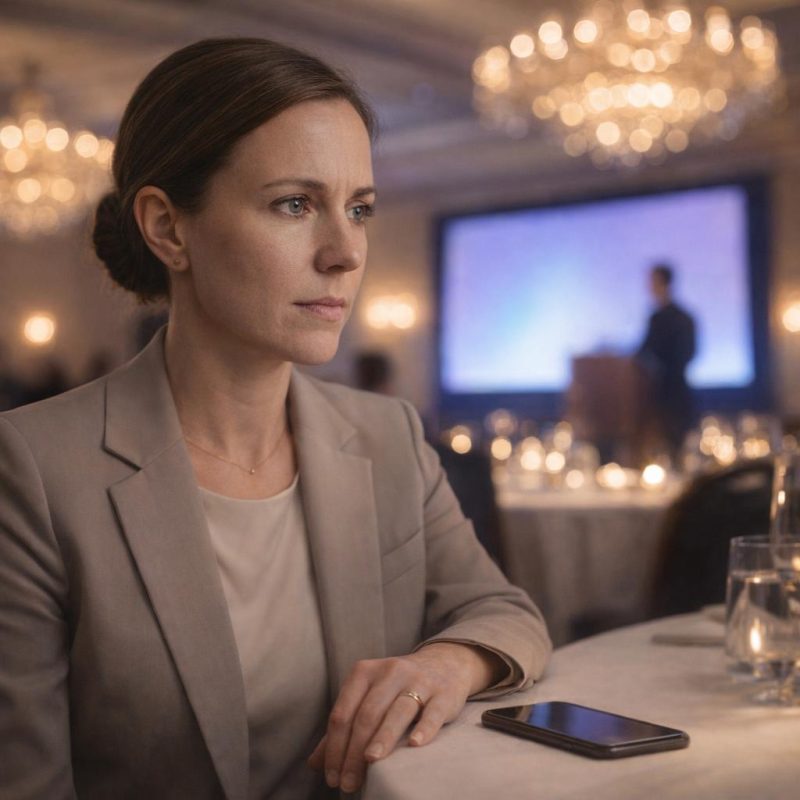 Image by RM AI
The Gold Digger
Arthur's retirement speech was exactly what I had expected — forty years of achievement compressed into a performance of false modesty, each anecdote chosen to remind the room of his reach and his power. He talked about the buildings he had built, the deals he had closed, the city he had shaped. The audience gave him everything he wanted: laughter at the right moments, murmurs of appreciation, the sustained attention of people who understood which names still mattered. Then he turned to family. He talked about David with the particular tenderness of a man who considers his son a minor disappointment he has graciously overlooked. He said David had always been soft-hearted, that it was his one weakness. His eyes found me at Table 24, and the smile that crossed his face was slow and deliberate. He said David had always had a weakness for charity cases. The laughter that followed was polite at first, then fuller, two hundred people sharing a joke at my expense. He used the words *gold digger* with the ease of a man who had said them before and suffered no consequences. David sat frozen beside me, his hand tight around his water glass, unable to speak. I took a slow sip of water. I reached for my phone. The humiliation settled over the room like something he had planned to give me, and I let it land.
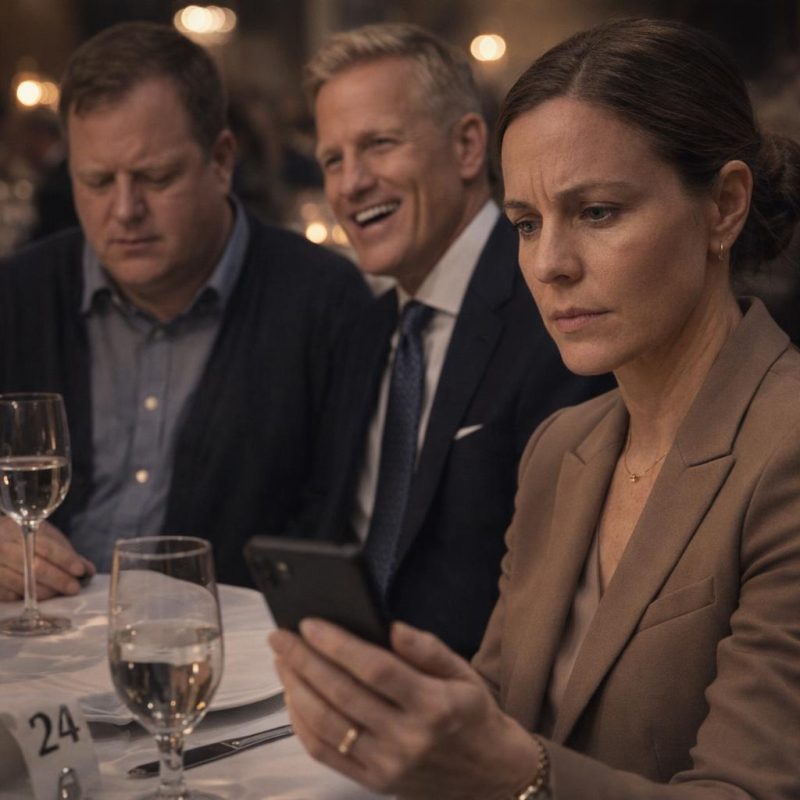 Image by RM AI
The Swap
Arthur was still smiling when he gestured toward the screens behind him, ready for his legacy presentation to begin. I opened the app on my phone beneath the table, my thumb steady. I tapped the swap. The screens flickered — just once, a brief stutter that made a few people near the front glance up. Arthur didn't notice. He was still facing the audience, still riding the warmth of his own applause. Then the first image appeared behind him: a bank statement from a Cayman Islands account, the balance in seven figures, Arthur Ashford's name printed cleanly at the top. He was mid-sentence when the murmuring started. He paused, tilted his head slightly, the way a man does when a sound doesn't match the room he thinks he's in. The next slide loaded — emails, a Paris address, a woman's name repeated across fifteen years of correspondence. The murmuring sharpened into silence. Arthur turned. He stood at the podium with the screens blazing behind him, and the silence that fell over two hundred people in that ballroom was the kind that has weight to it, the kind you can feel pressing against your sternum. I set my phone face-down on the table and folded my hands. The room had understood before he did, and that silence was the only sound left.
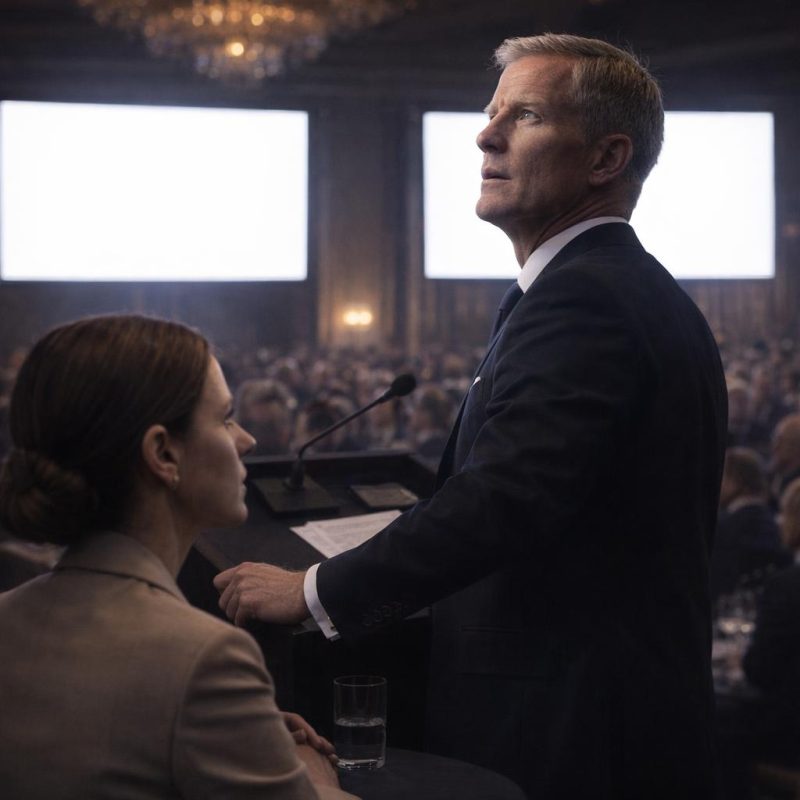 Image by RM AI
The Unraveling
The pension fund slides came next, and the room absorbed them the way a crowd absorbs a car accident — unable to look away, unable to fully process what they were seeing. Four million dollars. Employee names in the transfer logs. Retirement accounts reduced to fractions of what they had been. Arthur gripped the podium and tried to speak, but whatever words he reached for didn't come. Someone near the front stood up. A man I recognized as a city councilman leaned toward the woman beside him and said something I couldn't hear. The affair documentation followed — emails spanning fifteen years, wire transfers to a Paris apartment, receipts for gifts, a name that appeared in every thread. I watched Margaret from across the room. She was seated at the head table, her posture still perfect, her expression doing the work of a woman who has spent decades maintaining composure in public. Then I saw her go still in a different way — the stillness of recognition, not performance. Rebecca's name was on the screen in a font large enough for the entire ballroom to read. Arthur fumbled with his phone, jabbing at the screen, trying to find a way to stop what was happening. He couldn't. Margaret stood up slowly, her face a mask of cold fury.
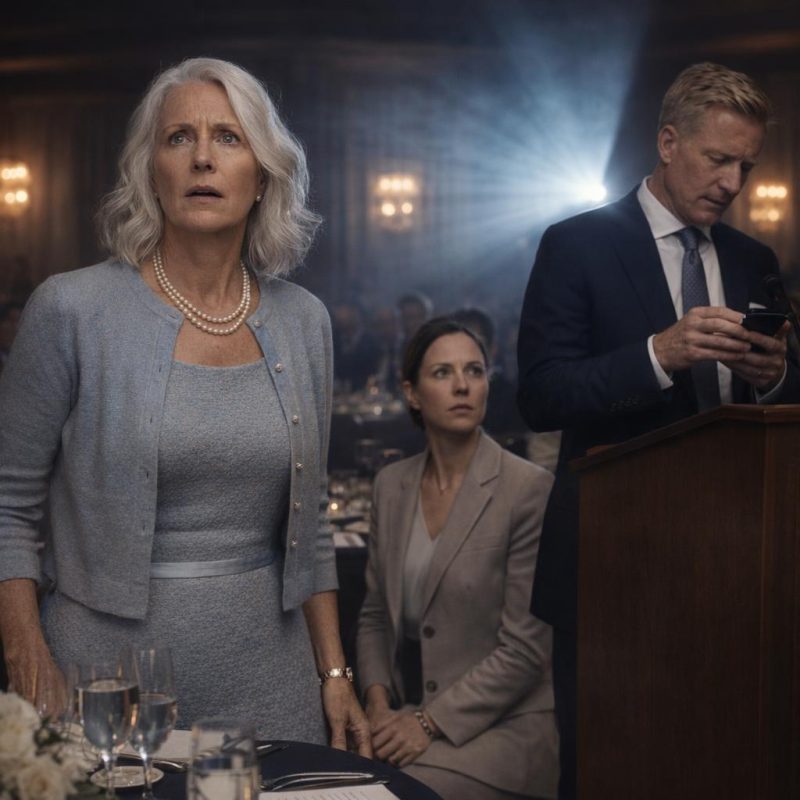 Image by RM AI
The Final Slide
The presentation shifted, and the room shifted with it. The glossy financial documents gave way to something older — legal memos on firm letterhead, the paper quality different, the dates going back decades. Arthur's signature appeared on three separate pages, each one authorizing a different phase of the same coordinated action. The target named across every document was Bennett and Sons Construction. I watched the people nearest the screens lean forward to read. The manufactured violations appeared slide by slide, the timeline compressed into something even a room full of distracted guests could follow. Then my father's letters. Then the medical records. Then the death certificate, the date printed in plain black type. The final slide was his photograph — my father standing in front of a job site, calloused hands, honest face, the caption beneath him reading exactly what I had written. The room understood. I could hear it in the quality of the silence, the way it changed register when the caption appeared. Arthur turned from the screen and his eyes moved across the ballroom until they found me at Table 24. I was sitting straight, my hands folded on the table, my phone beside them. His face went through several things in quick succession. Then it stopped. His eyes held mine, and his jaw went tight and flat.
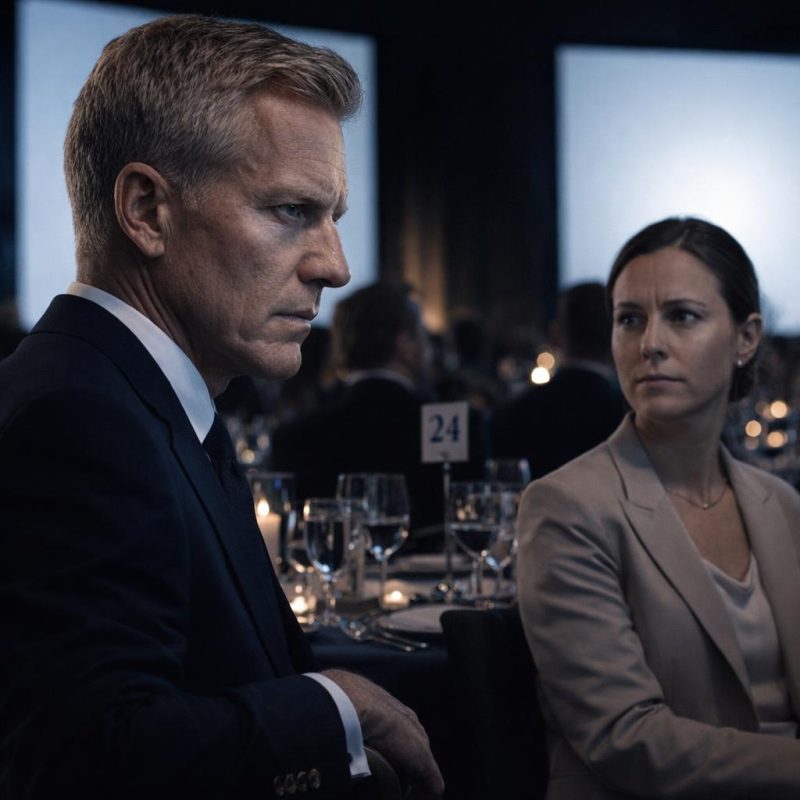 Image by RM AI
The Exit
I pushed my chair back and stood up. I tucked it in carefully behind me, the way you do when you want to leave a room exactly as you found it. David stood with me and took my hand without a word. We walked toward the exit at the same pace I had walked into the room — unhurried, deliberate, past the white linen tables and the crystal glasses and the two hundred people who were no longer looking at the screens. Arthur's voice rose behind us, trying to address the crowd, trying to find the register that had always worked for him. It didn't find it. A man near the front called out a question about the pension fund, his voice carrying the particular edge of someone who has money in the answer. Arthur's lawyer appeared from somewhere near the side door, moving fast. Behind us, I heard Margaret's voice — not the practiced social warmth, but something stripped of all of it, cold and precise, directed at her husband of forty years in front of everyone he had ever wanted to impress. David pushed open the ballroom doors and we stepped through them together. The night air came in cool against my face. Behind me, the first shouts broke through the doors before they swung shut.
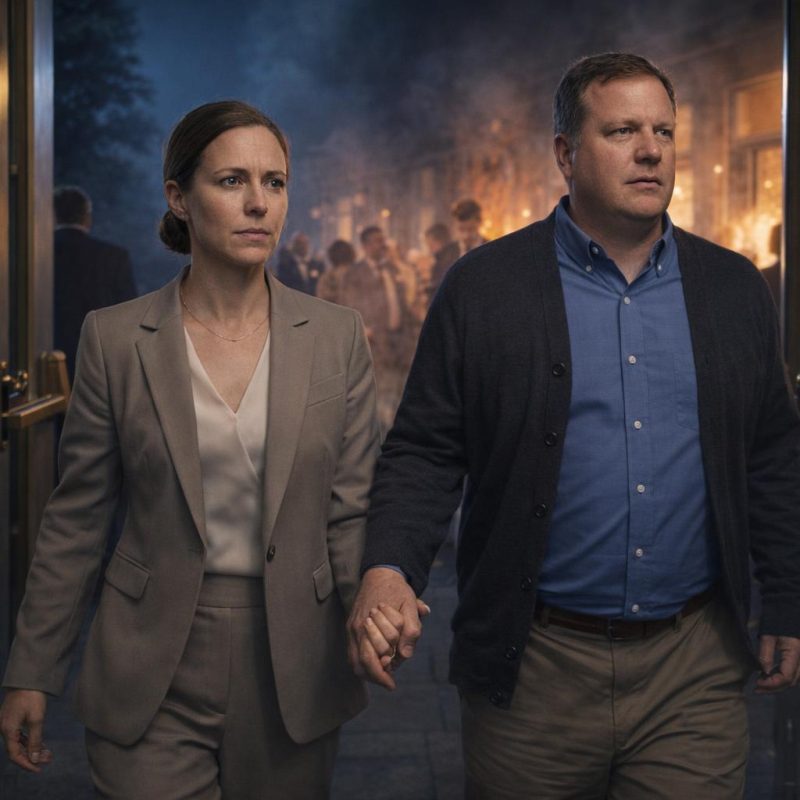 Image by RM AI
The Aftermath Begins
The parking lot was quieter than it had any right to be. I stood on the asphalt and listened to the ballroom doors open and close behind us, each swing releasing another burst of raised voices before the night swallowed them again. People moved past us in clusters — some on their phones already, some just walking fast with their heads down, the particular gait of people who want to be somewhere else before their name gets attached to something. David stood beside me, his shoulder against mine, not saying anything for a long moment. Then he asked if I was okay. I told him I had never been better, and I meant every word of it. I told him the investigations would start by morning, that the pension fund story alone would bring federal attention, that everything Arthur had buried was going to surface now whether he wanted it to or not. David said his father deserved everything that was coming. He said it quietly, without drama, and I believed him. I thought about my father then — about Thomas Bennett and his calloused hands and the company that had been taken from him — and I wished, with everything I had, that he could have seen this night. Blue and red lights appeared at the far end of the hotel drive. David looked down at his phone: his mother's name, then his father's, then numbers he didn't recognize. He looked at me once, then turned it off.
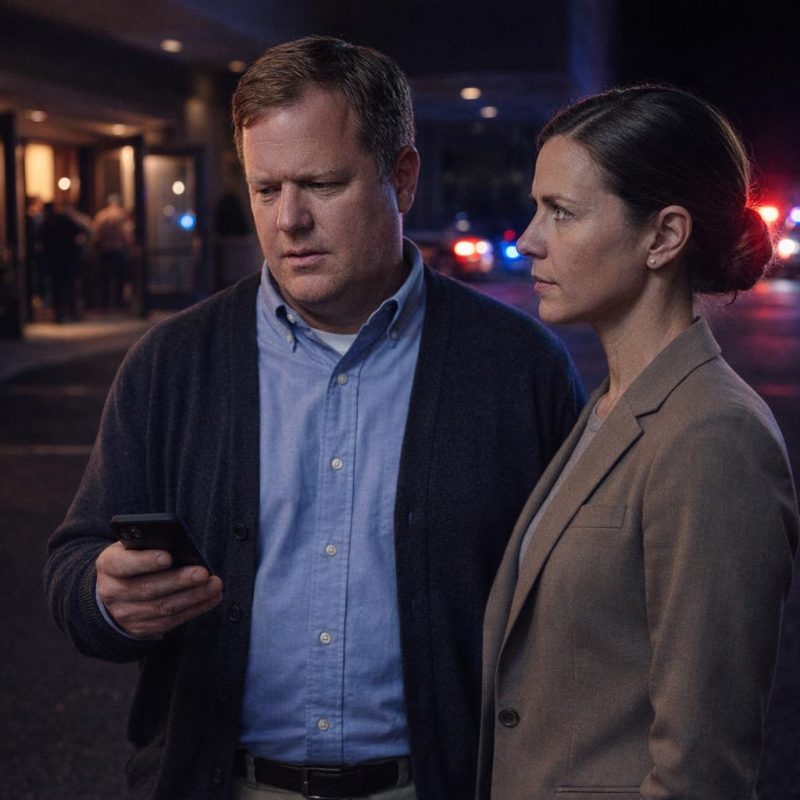 Image by RM AI
The Investigation
We watched it from the couch the next morning, coffee going cold on the table between us. The story was everywhere before eight a.m. — the embezzlement, the pension fund, the affair, the shell accounts, all of it laid out in the flat declarative language of financial journalism that somehow made it worse than any accusation I could have written myself. Arthur's firm released a statement before noon: internal investigation, suspended pending review, cooperating fully with authorities. Federal authorities confirmed they were examining the pension fund transfers. Then the employees started appearing on camera. Men and women in their sixties, some of them in the same kind of work clothes my father used to wear, talking about what they had lost and what it had cost them. I watched their faces and felt something settle in my chest that had been restless for fifteen years. Rebecca, reached by reporters in Paris, said she hadn't known where the money came from. Margaret's lawyer released a statement: she was filing for divorce and had retained independent counsel. Arthur's business partners issued their own distancing statements with the practiced speed of people who had kept that language ready. David held my hand through all of it, not speaking, just present. I thought about my father — about what it had cost him to be right and ignored — and felt, for the first time, that the record had been corrected. The weight of it all had finally found the right place to land.
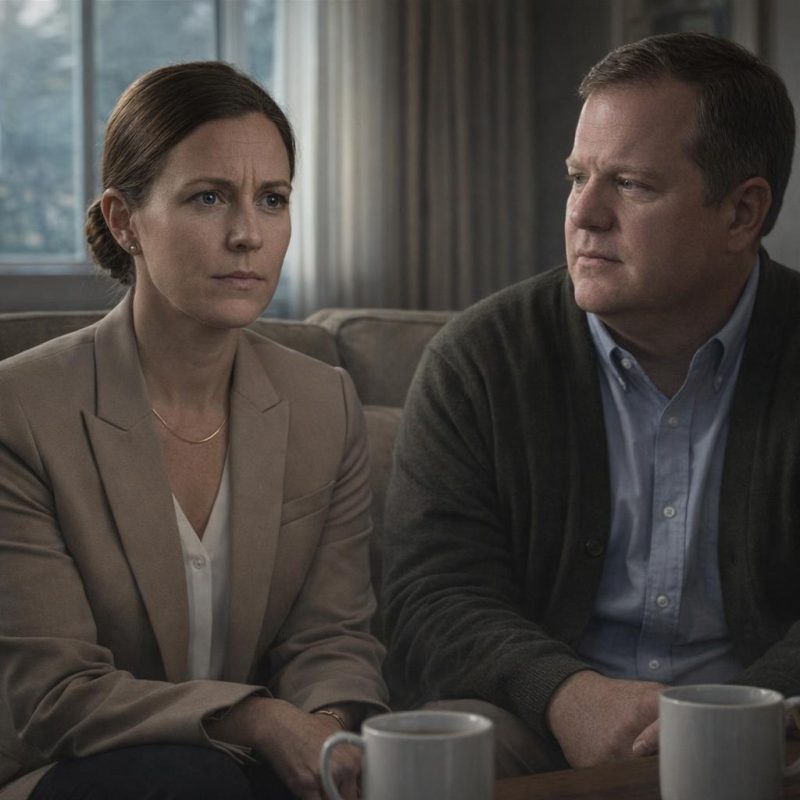 Image by RM AI
The Divorce
Margaret called three days after the story broke. Her voice on the phone was stripped of the practiced warmth she had always deployed like a tool — what was left was something quieter and more honest, and I found I could listen to it. We met at a small café two neighborhoods away from anywhere either of us was known. She was already seated when I arrived, no jewelry, no performance, just a woman in her sixties who looked like she had finally put something down that had been very heavy. She apologized. Not the careful, qualified kind — the real kind, the kind that names what it's apologizing for. She said she had treated me with cold courtesy for fifteen years because I hadn't arrived the way she expected, and she understood now what that had cost. She said Thomas Bennett had deserved better than what Arthur had done to him, and she said his name clearly, without flinching. I felt something unexpected move through me — not triumph, but something closer to compassion, the kind you feel for someone who has just seen clearly for the first time. She told me she was selling the estate and starting over. David sat beside me through most of it, his hand finding mine under the table at the right moments. On the drive home, I thought about what the word family actually meant when you stripped the performance away from it. The answer, I realized, was sitting right next to me.
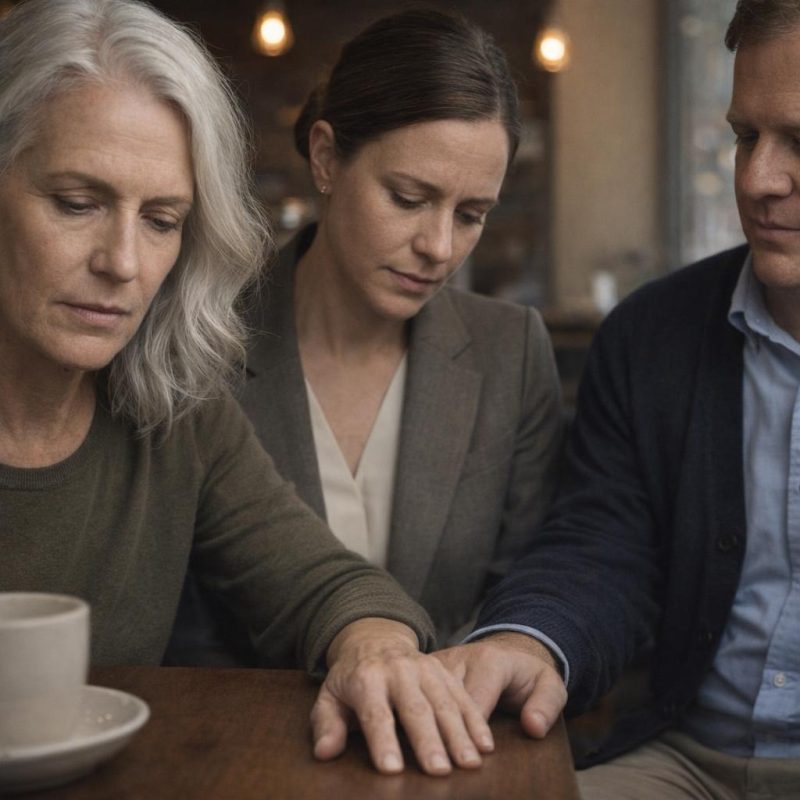 Image by RM AI
The Cemetery
We drove out on a Tuesday morning, when the cemetery would be quiet. I brought white dahlias because they were what he had always grown along the back fence of the house I grew up in. David parked and walked with me to the grave, then stepped back a few feet and let me have the space without leaving it entirely. I crouched down and set the flowers against the headstone and started talking the way you talk to someone you have missed for a very long time. I told him everything — what Arthur had done to his company, what I had spent fifteen years piecing together, what had happened in that ballroom. I told him Arthur was facing criminal charges, that the asset seizures were already underway, that the men and women whose retirement funds had been stolen were being compensated. I told him his name had been cleared in print, in public, in the kind of language that doesn't disappear. I told him I was sorry it had taken this long. I told him I finally understood the full shape of what had been done to him, and that it had not been his fault, not any of it. David was quiet behind me, steady and present the way he had learned to be. I stood up and brushed the grass from my knees. I placed my hand on my father's headstone and felt the weight of fifteen years lift.
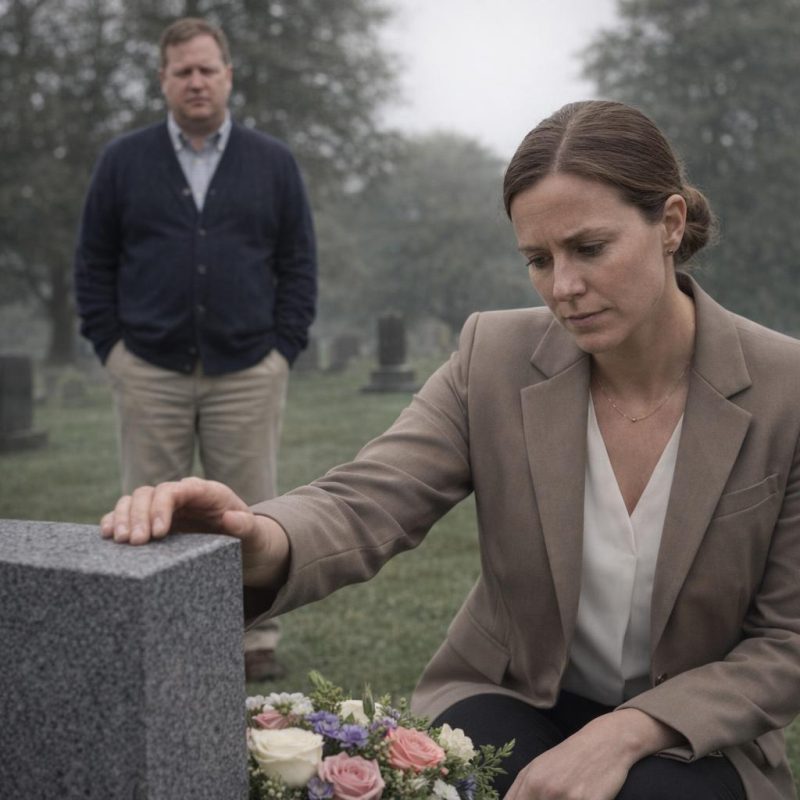 Image by RM AI
KEEP ON READING
20 Burning Rivalries From The Golden Age Of Hollywood
Tinseltown's Most Famous Feuds. The Golden Age of Hollywood gave…
By Sara Springsteen Jun 10, 2026
10 Tiny Decisions That Changed History & 10 Tiny Mistakes…
The Small Moments That Moved the World. History gets taught…
By Cameron Dick Jun 10, 2026
First Timers: 20 Historical Women Who Broke All Kinds Of…
Rolling Out The Red Carpet. Since what seems like the…
By Elizabeth Graham Jun 10, 2026
20 Mistresses Kings Gave More Power To Than Their Wives
Power Didn’t Always Wear a Crown. History loves to pretend…
By Emilie Richardson-Dupuis Jun 10, 2026
20 assassination attempts that changed the world
History has been shaped not only by great leaders and…
By Noone Jun 10, 2026
10 Royals Who Never Married & 10 Who Married More…
Royal history is full of dramatic love stories, political marriages,…
By Noone Jun 10, 2026