


My Doctor Dismissed My Symptoms as Grief—Then I Found My Dead Sister's Forged Medical Records
My Doctor Dismissed My Symptoms as Grief—Then I Found My Dead Sister's Forged Medical Records
The Call That Changed Everything
The call came at 6:47 a.m. on a Tuesday. I remember because I was staring at my phone, trying to will myself out of bed for work, when it started vibrating in my hand. Unknown number. I almost didn't answer. Thank God I did, because it was the hospital calling to tell me my little sister was dead. Emily. Twenty-six years old. Gone. Just like that. The nurse's voice was professional, detached—the kind of tone you develop after delivering this news too many times. 'Sudden cardiac event,' she said. 'She was brought in last night but didn't make it.' I kept asking questions that didn't matter. What time? Who found her? Was she alone? The nurse answered patiently, but nothing made sense. Emily was healthy. She ran marathons. She posted a photo of her smoothie bowl on Instagram literally yesterday. I drove to the hospital in my pajamas, hands shaking so badly I almost rear-ended someone at a red light. When I got there, a doctor I'd never met took me aside, his expression practiced and sympathetic. The doctor's words echoed in my mind: 'There was nothing we could have done—it was too sudden.'
 Image by RM AI
The Funeral and the First Symptom
The funeral was exactly what Emily would have hated—too formal, too somber, filled with distant relatives who hadn't called her in years. I stood beside her casket in a black dress I'd borrowed from my mother, feeling like I was watching the whole thing from underwater. People kept hugging me, saying things like 'she's in a better place' and 'at least she didn't suffer.' I wanted to scream at them. Instead, I just nodded and tried to breathe. That's when it hit me—this sharp, stabbing pain in my chest that made my vision blur. The cemetery tilted sideways. I reached for something to steady myself and found only air. My heart was racing, pounding so hard I thought everyone could hear it. Was I having a heart attack? Was I dying too? The panic made it worse. I couldn't catch my breath. Couldn't focus. Someone was calling my name from very far away. I collapsed against the gravestone, and Dr. Aris appeared at my side, his hand steady on my shoulder.
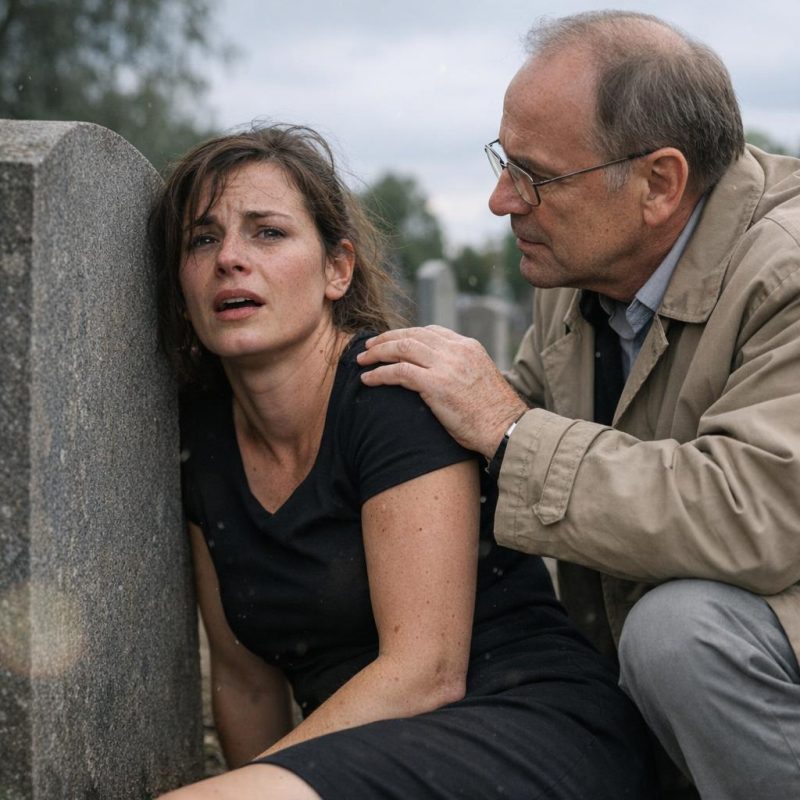 Image by RM AI
Coffee with Sarah
Three days later, I met Sarah at our usual coffee shop downtown. She'd been texting me constantly since the funeral, and I finally agreed to see her because staying home alone was making everything worse. Sarah's an investigative journalist for the local paper—one of those people who's always chasing leads and asking uncomfortable questions—but with me, she was just my best friend. She ordered for both of us, some complicated oat milk latte she knew I liked, and didn't say anything when I started crying into my napkin. 'I keep thinking I should have known something was wrong,' I told her. 'Emily texted me two days before. I didn't even respond right away.' Sarah shook her head firmly. 'You can't do that to yourself. You had no way of knowing.' I told her about the chest pains at the funeral, how terrified I'd been. She listened without interrupting, that journalist instinct telling her when to stay quiet. When I finished, she reached across the table and took my hand. Sarah squeezed my hand and said, 'Promise me you'll see a doctor if you're not feeling better.'
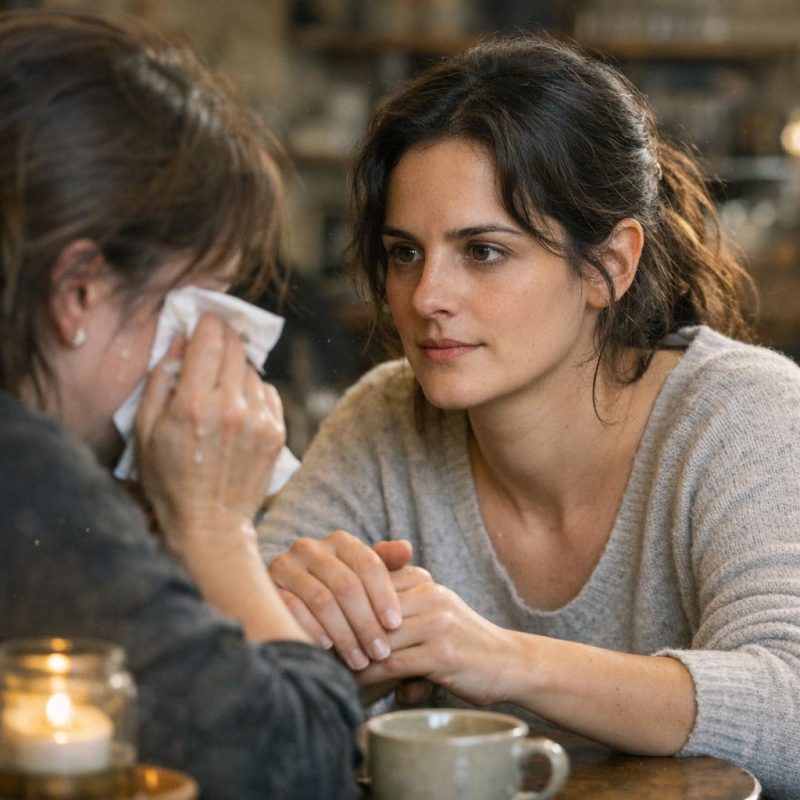 Image by RM AI
Mother's Denial
I should have visited my mother sooner, but honestly, I was avoiding it. When I finally drove to her house that Saturday, I found her in the living room, surrounded by photo albums she'd pulled from the closet. Pictures of Emily as a toddler, as a teenager, at her college graduation. Mom looked up when I walked in, and for a second, I saw this flash of hope in her eyes—like maybe she'd forgotten, and I was about to tell her Emily was fine. Then reality crashed back. 'Hi, sweetheart,' she said, her voice flat. I sat beside her and tried to talk about the funeral, about arrangements we still needed to handle, about Emily. Mom kept changing the subject. Asking about my job. Commenting on the weather. When I pushed, when I said we needed to discuss what happened, she stood up abruptly and walked to the kitchen. I followed her, frustration building in my chest. 'Mom, we have to talk about this.' She was gripping the counter, her knuckles white. My mother turned away and whispered, 'I don't want to talk about what we can't change.'
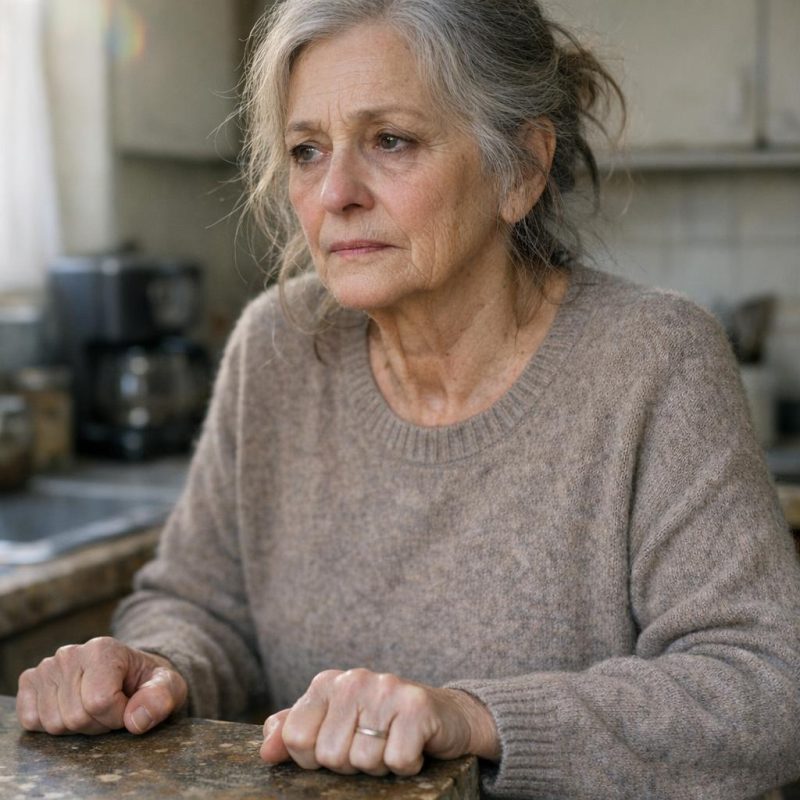 Image by RM AI
The First Appointment
Dr. Aris had been our family physician for years—the kind of doctor who still made house calls when I was a kid, who knew everyone's medical history by heart. When I called his office, his receptionist got me in the same day. I sat in the familiar waiting room, staring at the outdated magazines, trying to organize my symptoms into something coherent. Exhaustion. Chest pains. This weird pressure behind my eyes. Dr. Aris welcomed me into his office with genuine sympathy. 'Claire, I'm so sorry about Emily. How are you holding up?' I broke down trying to explain what was happening to me. The physical symptoms. The fear that I was falling apart. He listened carefully, asked a few questions about my sleep and appetite, then did a quick examination. Blood pressure normal. Heart rate slightly elevated but nothing alarming. 'I think your body is processing an enormous trauma,' he explained gently. 'What you're experiencing is a very common stress response to grief.' He wrote me a prescription for anti-anxiety medication. Dr. Aris patted my hand and said, 'It's just stress from losing Emily—your body is processing grief.'
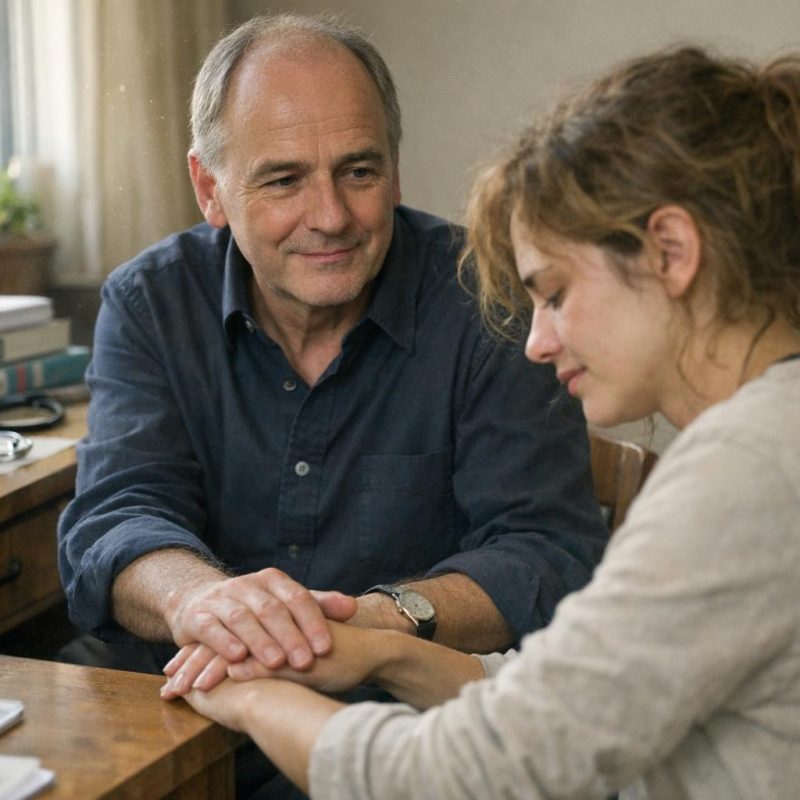 Image by RM AI
Sleepless Nights
The medication didn't help. If anything, things got worse. I'd wake up at 2 a.m. drenched in sweat, my sheets soaked through, convinced something was crawling under my skin. My heart would start racing for no reason—just suddenly pounding like I'd sprinted up five flights of stairs. Sometimes it happened while I was sitting on the couch watching TV. Sometimes while I was trying to eat dinner. I started keeping a log, thinking maybe there was a pattern I was missing. Tuesday, 11:34 p.m.—heart palpitations, lasted seven minutes. Wednesday, 3:17 a.m.—night sweats, chest tightness. The worst part was the insomnia. I'd lie there for hours, exhausted but unable to sleep, my mind racing through every interaction I'd had with Emily in the last year. Searching for clues I'd missed. Warning signs. By the end of the week, I looked like hell—dark circles, weight loss, hands shaking from exhaustion. I stared at the ceiling at 3 a.m., my heart racing so fast I thought it might explode.
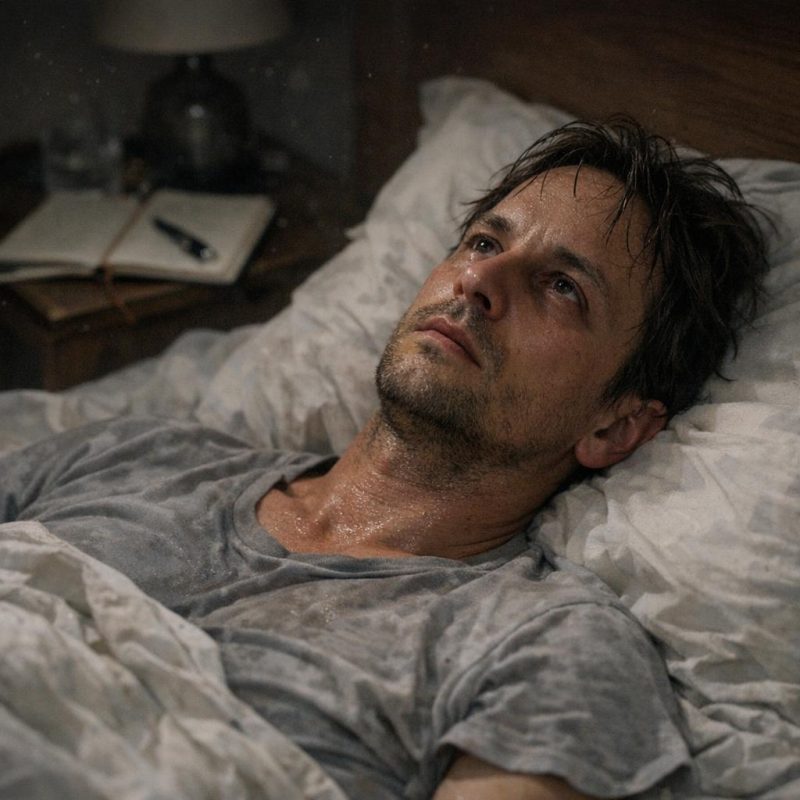 Image by RM AI
The Second Appointment
I went back to Dr. Aris's office after two weeks of this nightmare. His receptionist looked concerned when she saw me. I must have looked as bad as I felt. This time, I didn't cry. I came prepared with my log, with specific symptoms and times, determined to make him understand this wasn't just stress. 'Please,' I said, laying the notebook on his desk. 'I need tests. Blood work. An EKG. Something. This isn't normal.' Dr. Aris studied my log carefully, his expression thoughtful. He asked more questions—was I sleeping at all, was I eating, had I started therapy yet. When I admitted I hadn't, he nodded like that explained everything. 'Claire, I understand you're suffering. But what you're describing—the palpitations, the sweating, the insomnia—these are classic anxiety symptoms. Your mind is manifesting physical responses to trauma.' He suggested a therapist he knew, someone who specialized in grief counseling. Wrote the number on his prescription pad. He smiled reassuringly and said, 'Sometimes the mind manifests physical symptoms—it's more common than you think.'
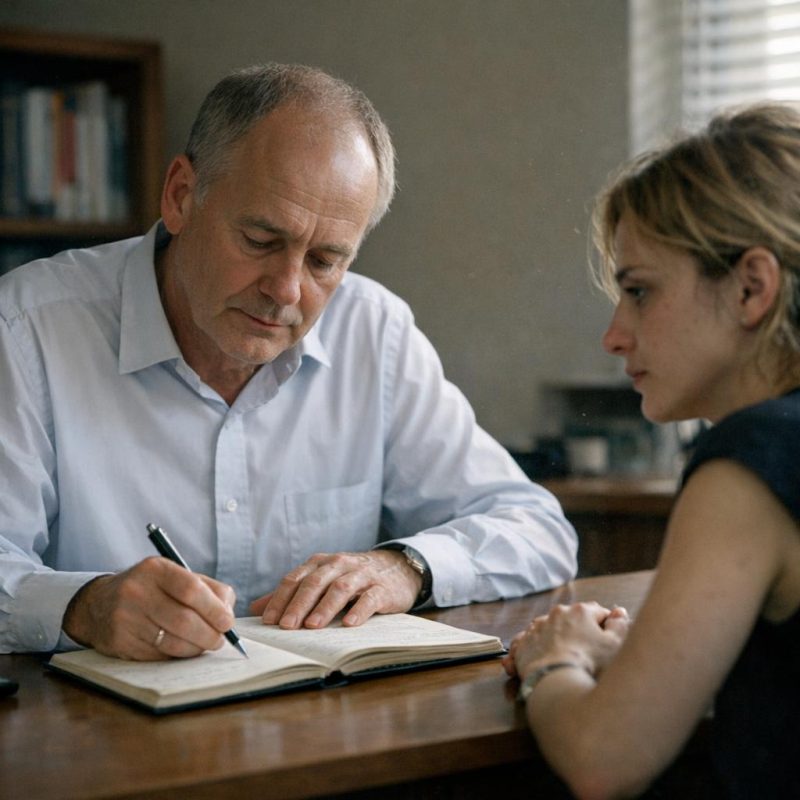 Image by RM AI
Unable to Work
By week three, I couldn't function anymore. Simple tasks—answering emails, sitting through meetings, focusing on anything for more than ten minutes—became impossible. I'd be in the middle of a presentation and suddenly my vision would blur, my heart would start racing, and I'd have to excuse myself. My coworkers were understanding at first. Then concerned. Then quietly uncomfortable. My manager, Jennifer, called me into her office on a Thursday. She was kind about it, but I knew what was coming before she said it. 'Claire, you need to take care of yourself. We can't have you here like this.' I wanted to argue. To say I just needed more time, that I'd get better. But we both knew that wasn't true. I went home and called HR, officially requesting a leave of absence. Medical leave for 'stress-related illness,' they'd mark it down as. No income. No structure. Nothing but endless days alone with my symptoms and my thoughts. My manager's sympathetic voice on the phone felt like a death sentence: 'Take all the time you need.'
 Image by RM AI
Sarah's Concern
Sarah showed up at my apartment on a Tuesday morning without warning. I'd texted her a few times but kept the messages vague—'still not feeling great' kind of thing. When I opened the door, her face went white. I mean actually white, like someone had drained the blood from her cheeks. She stared at me for a long moment before stepping inside. 'Jesus, Claire,' she said softly. I tried to smile, to make light of it, but I knew what she was seeing. The jeans that used to fit perfectly now hung off my hips. My collarbones jutted out like I was some kind of anatomy diagram. I'd stopped looking in mirrors because I couldn't stand the hollow-eyed stranger looking back. Sarah walked me to the couch and sat down beside me, still staring. Her hand reached for mine and I felt how cold my fingers were compared to hers. 'When did you last eat a real meal?' she asked. I couldn't remember. Maybe three days ago? Everything tasted like cardboard anyway. She sat there holding my hand, and I watched her try to compose herself, try to be strong for me. Then her composure cracked. Sarah's eyes filled with tears as she said, 'Claire, you look like you're dying.'
 Image by RM AI
The Vitamin Injections Begin
At my next appointment, Dr. Aris reviewed my latest blood work with a concerned frown. He talked about nutrient deficiency, about how extreme stress and grief can literally deplete the body's reserves. 'Your B12 levels are critically low,' he said, tapping the paper. 'That explains the fatigue, the brain fog.' I nodded, relieved that there was finally something concrete, something treatable. He suggested weekly vitamin B12 injections—direct into the bloodstream, more effective than pills. It made sense. I was barely eating, barely functioning. Of course my body was depleted. 'How quickly will they work?' I asked. He smiled reassuringly. 'Most patients feel improvement within days. We'll monitor you closely.' I rolled up my sleeve right there in his office. The preparation was methodical—he swabbed my upper arm with alcohol, prepared the syringe with careful precision. I watched him draw the clear liquid into the needle, feeling hopeful for the first time in weeks. This was medicine. This was science. This was help. As the needle went into my arm, he said, 'These will help restore what grief has taken from you.'
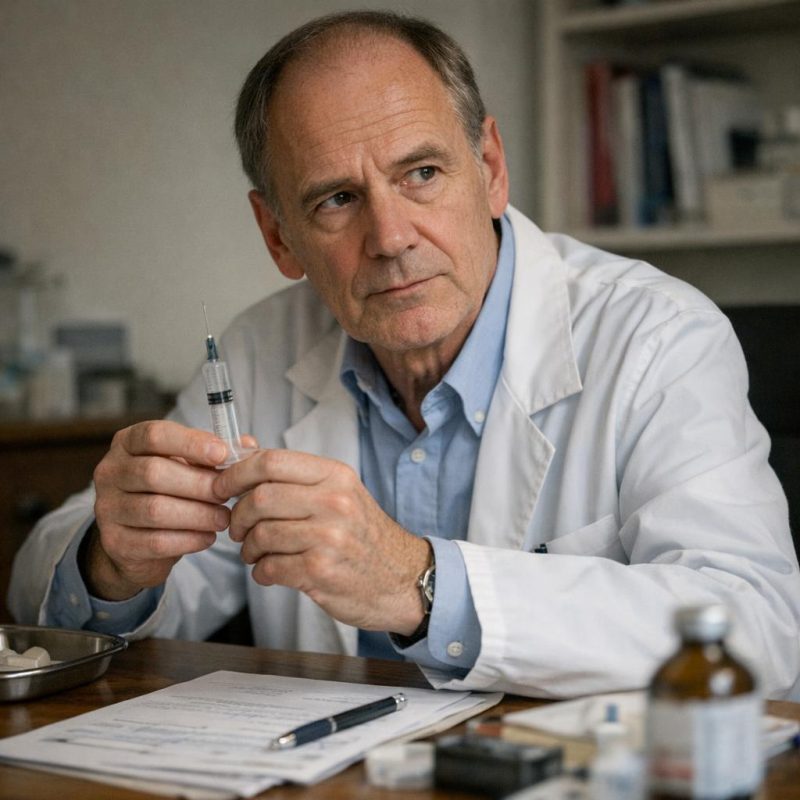 Image by RM AI
Temporary Relief
I woke up Thursday morning and realized something had changed. My head felt clearer. Not normal, not like before Emily died, but clearer than it had been in over a month. I made it through breakfast without nausea. I answered three emails. I even showered and got dressed in real clothes instead of the same pajamas I'd been wearing for days. By Friday, I managed to go grocery shopping—actually walked through the store, selected items, made decisions. Small victories, but they felt monumental. Sarah called to check on me and I could hear the relief in her voice when I told her about the improvement. 'See? You just needed the right treatment,' she said. I wanted to believe that. I wanted to believe this nightmare was finally ending, that my body was healing, that I'd soon be able to return to work and to life. The vitamin injections were working. Dr. Aris had known what I needed when no one else did. I felt guilty for ever doubting him, for those moments in his office when I'd wondered if he was taking me seriously. I thought maybe Dr. Aris had been right all along—maybe I just needed time and proper care.
 Image by RM AI
The Crash
The crash came exactly seven days after the injection. I woke up Wednesday morning and knew immediately something was wrong. My heart was hammering before I even opened my eyes, that familiar racing panic that meant my body was betraying me again. When I tried to sit up, the room tilted violently. Everything looked wrong—edges blurred, lights too bright, shadows deeper than they should be. I made it to the kitchen and tried to drink water but my hands were shaking so badly I spilled half of it. The nausea came in waves, worse than before. My vision kept swimming in and out of focus, like someone was adjusting a camera lens behind my eyes. By noon I couldn't stand without holding onto furniture. The racing heart gave way to palpitations, irregular thumps that made me press my hand to my chest in fear. Had the improvement been a lie? A cruel trick my body played before pulling the rug out again? I stumbled into the bathroom and vomited until there was nothing left but bile and fear.
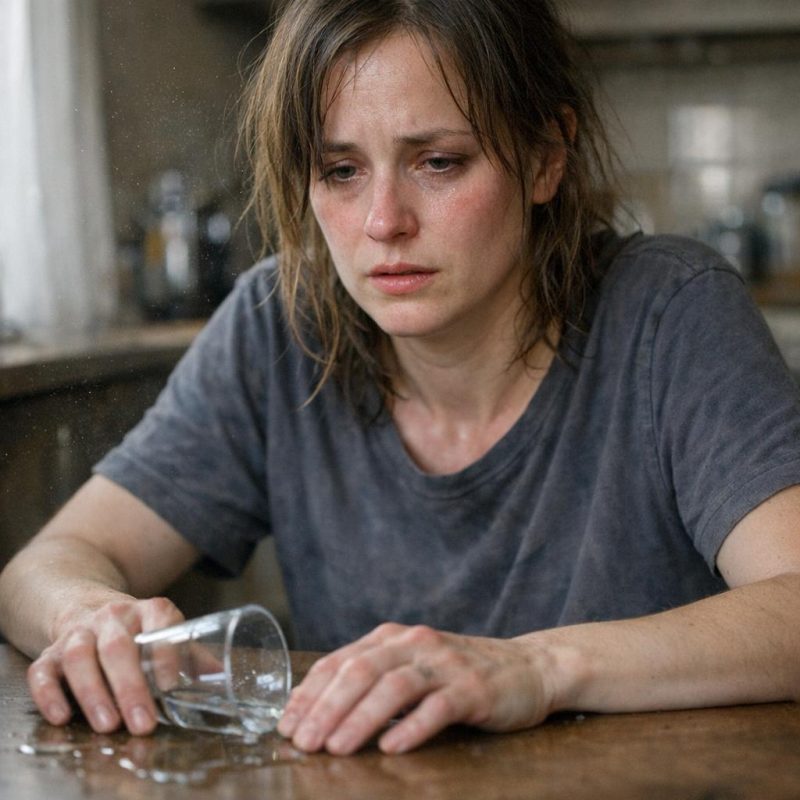 Image by RM AI
Third Appointment
I called Dr. Aris's office and got an emergency appointment that same afternoon. I must have looked terrible because the receptionist rushed me straight back. When Dr. Aris came in, I started crying before he even asked what was wrong. I told him everything—the brief improvement, the hope, and then this horrific crash that felt even worse than before. The blurred vision. The violent nausea. The heart irregularities that terrified me in the middle of the night. He listened carefully, making notes, his expression concerned but not alarmed. 'Sometimes the body doesn't respond to standard dosing,' he explained. 'Especially in cases of severe depletion.' He reviewed my chart, that same methodical attention he always showed. 'The initial improvement suggests the B12 is working, but your body metabolizes it quickly. We're playing catch-up.' It made sense in that horrible, logical way that medical explanations do. My body was so depleted it was burning through the vitamins too fast. He made a note in my chart and said, 'Let's try twice-weekly injections—sometimes the body needs more.'
 Image by RM AI
Memories of Emily
I needed something of Emily's that day. I don't know why—maybe just to feel close to her again, to remember she'd been real and alive and mine. I went to the box of her things I'd been avoiding since the funeral. Photos. A scarf she'd worn constantly. Books with her notes in the margins. At the bottom, I found her journal—dark blue with a worn leather cover. I'd forgotten she kept one. My hands trembled as I opened it, reading her familiar handwriting. Most entries were mundane. Complaints about work. Plans with friends. Notes about books she was reading. Then, about three months before she died, the entries changed. She mentioned feeling tired. Dizzy. Concerned about her heart. She'd started seeing doctors at St. Jude's—the same hospital where Dr. Aris worked. My breath caught. Had she seen him too? The entries grew shorter, more worried. References to tests, treatments, hope that something would help. The last entry, dated three days before her death, read: 'Dr. A says this new treatment could change everything.'
 Image by RM AI
A Disturbing Coincidence
I read that entry five times, my mind refusing to process what I was seeing. Dr. A. It could be anyone. Dr. Anderson. Dr. Abrams. St. Jude's had dozens of doctors. But I knew. Somehow I knew. I grabbed my phone and pulled up the hospital website, searching the staff directory. There he was—Dr. Marcus Aris, listed under Internal Medicine. The same department Emily had been seeing doctors in before her death. My mouth went dry. This was a coincidence. It had to be. St. Jude's was a large hospital, and Emily and I both lived in the same city. We'd probably used the same grocery stores too, the same dry cleaner. Overlap meant nothing. But my hands were shaking as I flipped back through Emily's journal, finding other mentions. Two weeks before she died: 'Dr. A increased the dosage.' Ten days before: 'Another injection today. He says we're close to a breakthrough.' The same fatigue. The same heart problems. The same hope. I sat frozen, staring at Emily's journal entry that mentioned his name twice in the final week.
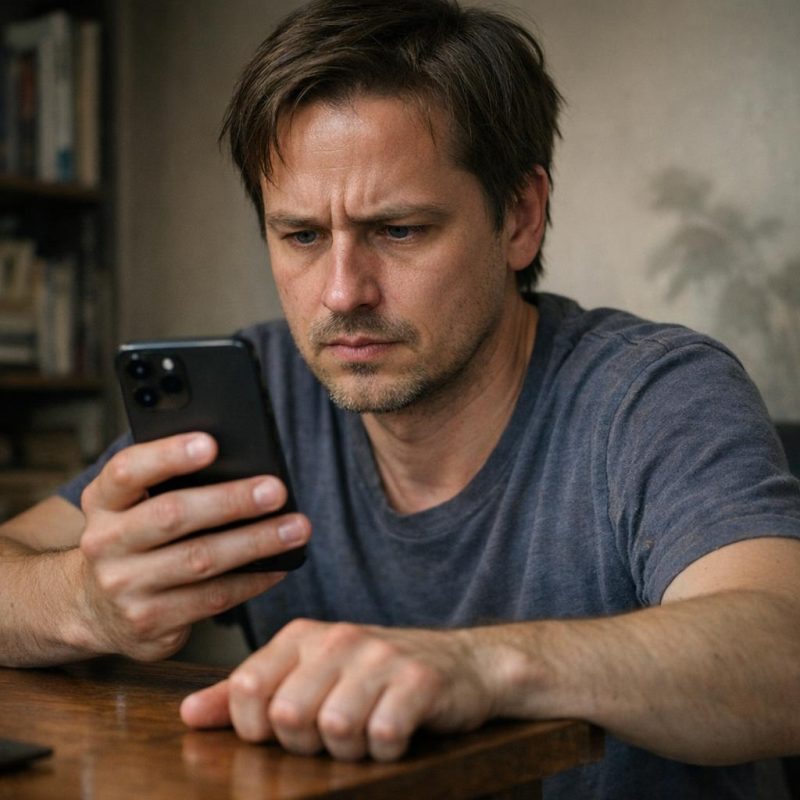 Image by RM AI
Sarah's Suggestion
I called Sarah immediately. My voice was shaking so badly she made me repeat myself twice. When I finally got the words out—about the journal, about Dr. Aris, about Emily's symptoms that sounded so much like mine—Sarah went quiet. Not her usual silence. A thinking silence. 'Claire, listen to me,' she said finally. 'This might not mean anything. Lots of people see the same doctors, especially at a big hospital.' I knew she was right. I knew I was probably connecting dots that weren't there, seeing patterns because I was desperate and scared. But Sarah's journalist brain had kicked into gear. I could hear it in her voice. 'Did the hospital ever give you Emily's full medical records?' she asked. I frowned. They'd given me paperwork after she died—cause of death, some discharge summaries. But complete records? I didn't think so. 'You have a legal right to them,' Sarah continued. 'As next of kin.' My heart started racing again, but for a different reason this time. Sarah leaned forward and said, 'What if there's something in those records that the hospital didn't tell you?'
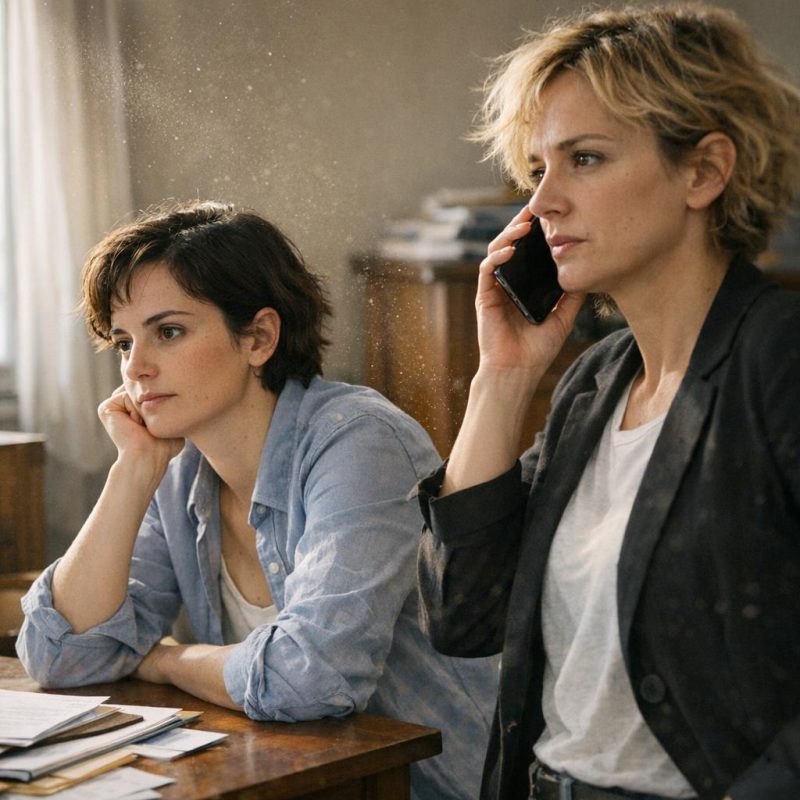 Image by RM AI
The Request
I showed up at St. Jude's Medical Center the next morning with a formal written request. The records department was tucked in the basement, behind a door labeled 'Medical Information Services.' The woman at the desk barely looked up when I explained what I needed. She slid a form across the counter without making eye contact. I filled it out right there, my pen pressing hard enough to leave indentations on the pages underneath. Emily Harper. Date of birth. Date of death. Relationship to patient: sister. Next of kin. The woman took the form, glanced at it, then typed something into her computer with two fingers. 'There's a processing fee,' she said flatly. I pulled out my credit card. She ran it through without a word, then handed me a receipt with a case number printed at the top. 'How long?' I asked. She finally looked at me then, her expression completely neutral. 'Could be anywhere from four to six weeks, depending on the volume of the file.' I felt my stomach drop. Six weeks felt like forever. The hospital administrator's voice was cold: 'It may take four to six weeks to process.'
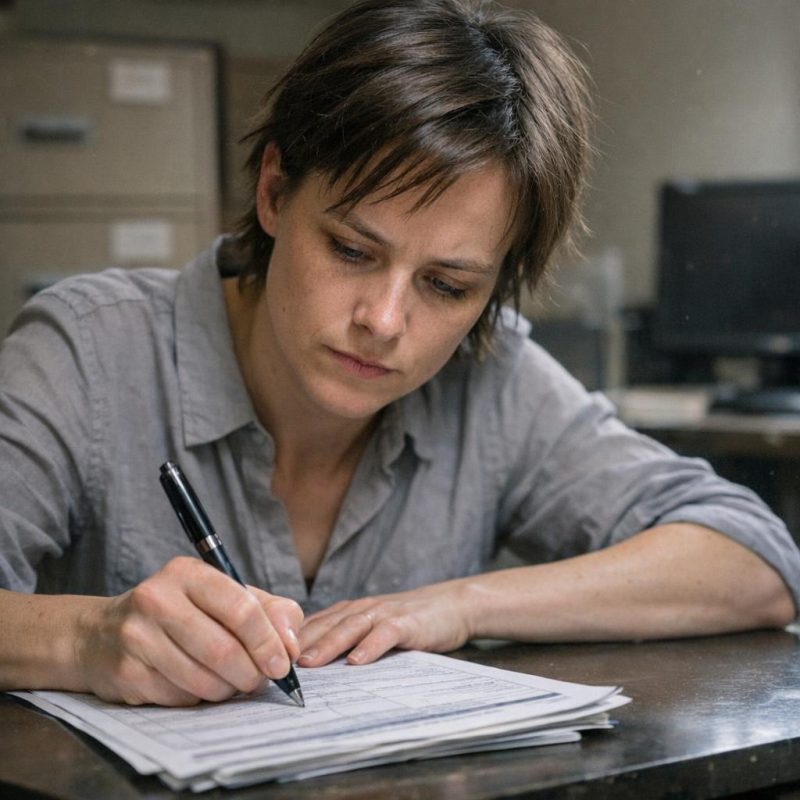 Image by RM AI
Fourth Injection
Two days later, I was back in Dr. Aris's office for my fourth injection. The routine was familiar now—the small exam room, the antiseptic smell, the cabinet where he kept the vials and syringes. But something felt different this time. Dr. Aris seemed distracted, checking his watch twice while asking about my symptoms. His usual calm demeanor had a jittery edge to it. 'Still experiencing the fatigue?' he asked, preparing the injection faster than usual. I nodded, watching him work. His movements were efficient but hurried, like he wanted to be somewhere else. The needle went in, the familiar cold pressure spreading up my arm. I tried to read his face, looking for something—guilt, concern, anything—but he kept his eyes on the syringe. 'You're doing well,' he said, but his voice lacked its usual warmth. He disposed of the needle and made a quick note in my chart. I noticed his pen skip across the paper, his writing messier than before. As he capped the syringe, I thought I saw his hand tremble, but he smiled and said everything was fine.
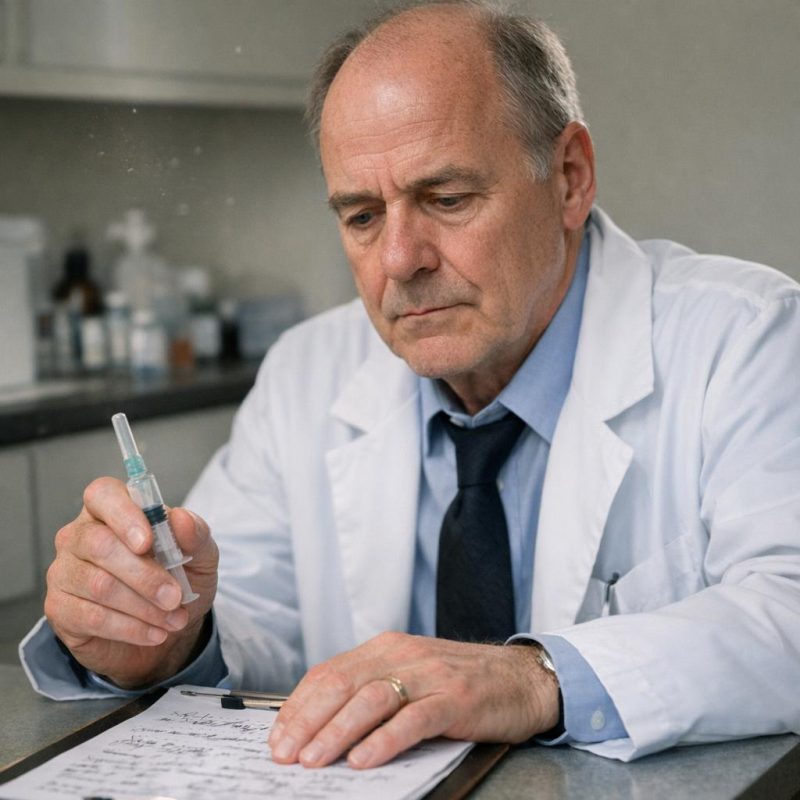 Image by RM AI
The Waiting Game
Three weeks crawled by like months. I marked each day on the calendar hanging in my kitchen, counting down to when those records might arrive. My symptoms got worse. The tremors in my hands became constant, making it hard to type at work or hold a coffee cup without spilling. I lost seven more pounds. My boss started asking questions I couldn't answer. Sarah checked in daily, but there was nothing new to report—just waiting, just getting sicker. I Googled 'how long for medical records' at least a dozen times, hoping the answer would magically change. The nights were the worst. I'd lie awake, my heart doing that irregular flutter thing, wondering if I was imagining connections that weren't there. Maybe Dr. Aris was just a doctor Emily happened to see. Maybe my symptoms were exactly what he said—stress, grief, nothing sinister. But then I'd remember that journal entry, and the doubt would creep back in. On day twenty-one, I pulled out the calendar to mark another X. I marked another day off the calendar, my hands shaking too badly to hold the pen steady.
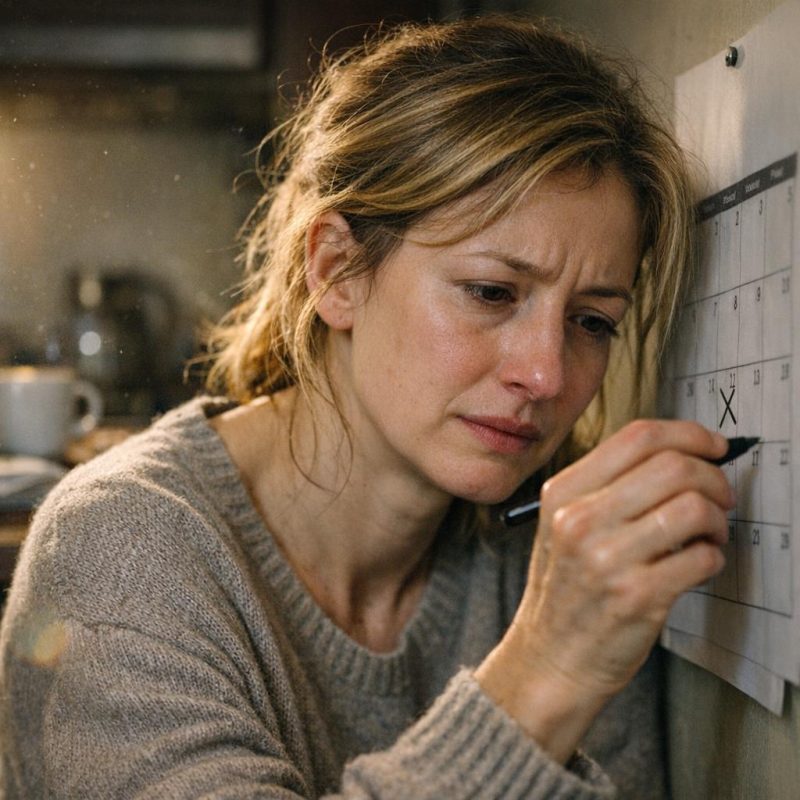 Image by RM AI
Online Research
I couldn't just sit around waiting anymore. Late one night, I started searching online for my specific combination of symptoms: unexplained weight loss, tremors, heart palpitations, extreme fatigue. The results were overwhelming—thousands of posts on medical forums, Reddit threads, Facebook groups. Most were people with garden-variety anxiety or thyroid problems. But then I started filtering differently, adding search terms like 'doctor dismissed symptoms' and 'experimental treatment.' That's when things got interesting. I found a health forum from 2019 with a thread titled 'When Your Doctor Won't Listen.' Dozens of people sharing stories that sounded eerily familiar. One user described symptoms almost identical to mine. Another mentioned a doctor who kept insisting vitamin injections would help. The posts were vague, fragmentary—most users didn't give details about their doctors or hospitals. But the pattern was there, just beneath the surface. I scrolled deeper into the thread, my pulse quickening. One post from a deleted user read: 'My doctor said it was stress, but something felt wrong—then I found out about the trial.'
 Image by RM AI
Confronting Mother Again
I drove to my mother's house the next afternoon, determined to ask her directly about Emily's treatment. She answered the door in her gardening clothes, dirt under her fingernails. I could see the tension in her face the moment I mentioned Emily's name. 'Did she ever talk about experimental treatments?' I asked, following her into the kitchen. 'Any trials she might have been part of?' My mother set down her tea with more force than necessary. 'Claire, we've been over this. Emily had anemia. They tried supplements. That's all.' But I pressed. 'Did she mention Dr. Aris specifically? Did she say anything about injections or—' That's when my mother's expression hardened. She turned to face me fully, her voice sharp in a way I rarely heard. 'What are you doing?' she demanded. 'Why are you obsessing over this?' I tried to explain about the medical records, about wanting to understand, but she cut me off. Her eyes were wet with angry tears. My mother snapped, 'Why are you digging into this? Emily is gone—let her rest in peace!'
 Image by RM AI
The Envelope Arrives
Five weeks and two days after I filed the request, a thick manila envelope appeared in my mailbox. My name and address were printed on a white label, and in the corner was the St. Jude's Medical Center logo. I stood there on the sidewalk, staring at it, suddenly terrified to go inside and open it. My neighbor walked past with her dog and gave me a strange look. I realized I'd been standing frozen for probably two full minutes. I carried the envelope upstairs like it might explode. It was heavy—hundreds of pages, from the weight of it. I set it on my kitchen table and just looked at it for a while. This was Emily's entire medical history, probably. Every appointment, every test, every note a doctor had ever made about her. Somewhere in those pages might be the answer to why she died. Or maybe there'd be nothing—just confirmation that she had anemia and it killed her, and I was losing my mind for no reason. I made coffee. I sat down. My hands trembled as I tore open the seal, terrified of what I might find inside.
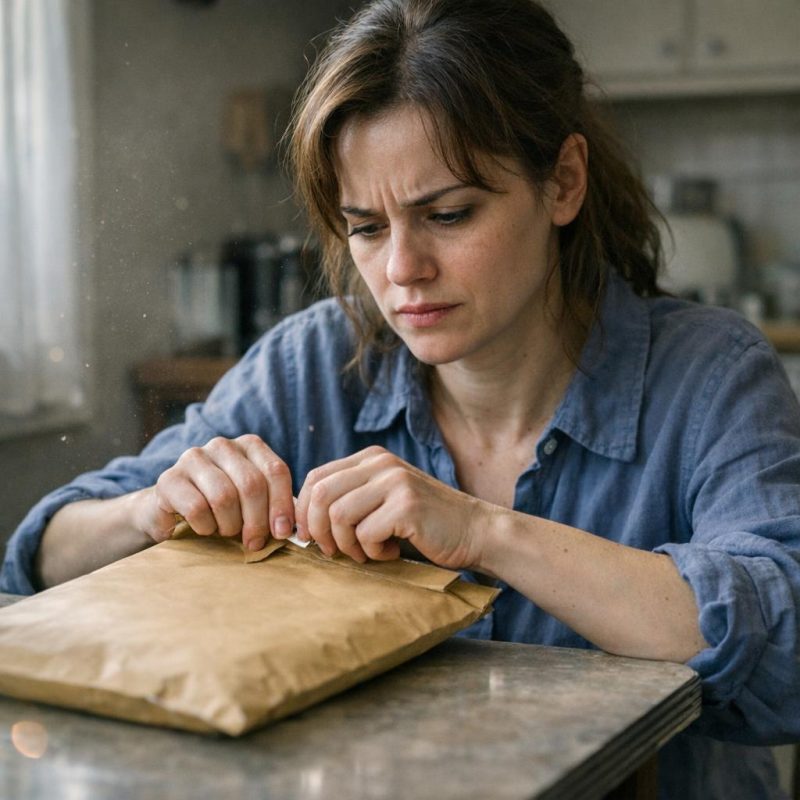 Image by RM AI
Reading Through the Night
I started reading at eight p.m. The records were chronological, starting from Emily's childhood immunizations. I skipped ahead to the last two years, when her symptoms had started. The pages were dense with medical terminology I had to Google constantly. 'Microcytic anemia.' 'Ferritin levels.' 'Hemoglobin 8.2 g/dL.' There were notes from Dr. Aris's appointments, his handwriting surprisingly neat. He'd seen her nine times in the six months before she died. Each note mentioned fatigue, weakness, recommended iron supplements. It all looked routine, exactly what he'd told my mother. But I kept reading. Around midnight, I found lab reports showing Emily's iron levels actually improving in her final months, which didn't make sense if she'd died from anemia. At two a.m., I was cross-referencing dates with entries in Emily's journal. At three, I made more coffee, my eyes burning. The kitchen was silent except for the rustling of papers and my increasingly frantic breathing. At four a.m., I reached the consent forms section, and my breath caught in my throat.
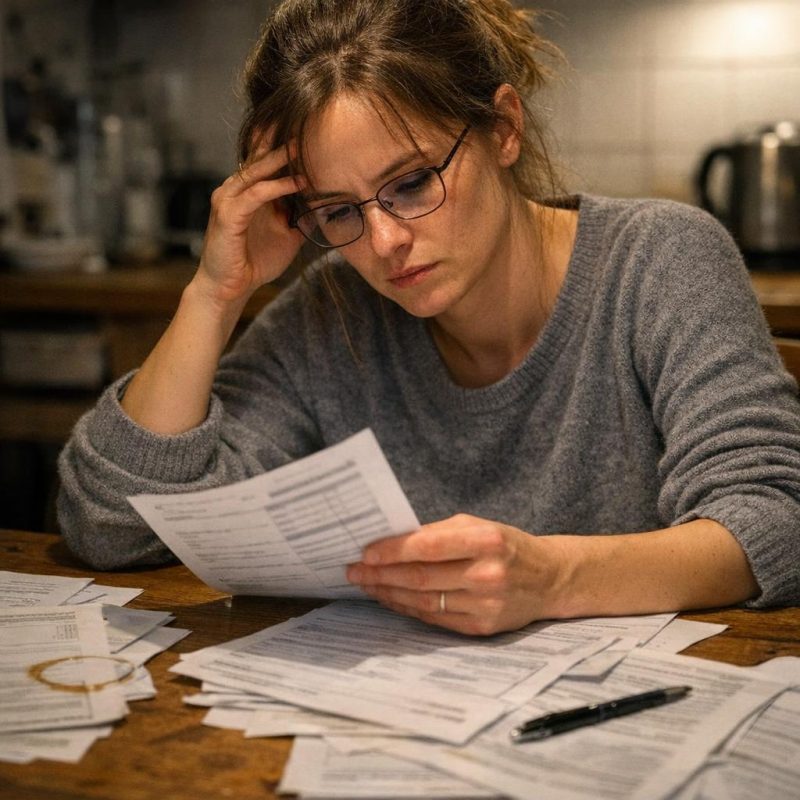 Image by RM AI
The Signature
The form was dated three days before Emily died. 'Informed Consent for Participation in Clinical Research Study,' the header read. The study name was abbreviated: 'CAR-44 Trial Protocol.' I'd never heard Emily mention anything about a clinical trial. I read through the dense paragraphs about experimental cardiac medication, potential side effects, voluntary participation. At the bottom was a signature line. Emily Harper's name was printed beneath it. And above the line was a signature. I grabbed Emily's journal from where I'd left it on the counter and flipped to a page where she'd signed her name—a birthday card she'd tucked inside. I held them side by side under the kitchen light. My sister had beautiful handwriting, with these elegant, looping letters. She always made the 'E' in Emily with a distinctive flourish. The signature on the consent form was completely different. The letters were cramped, almost jagged. The spacing was wrong. And that 'y' at the end... The handwriting was nothing like Emily's elegant loops—it was jagged, with a distinctive flourish on the 'y.'
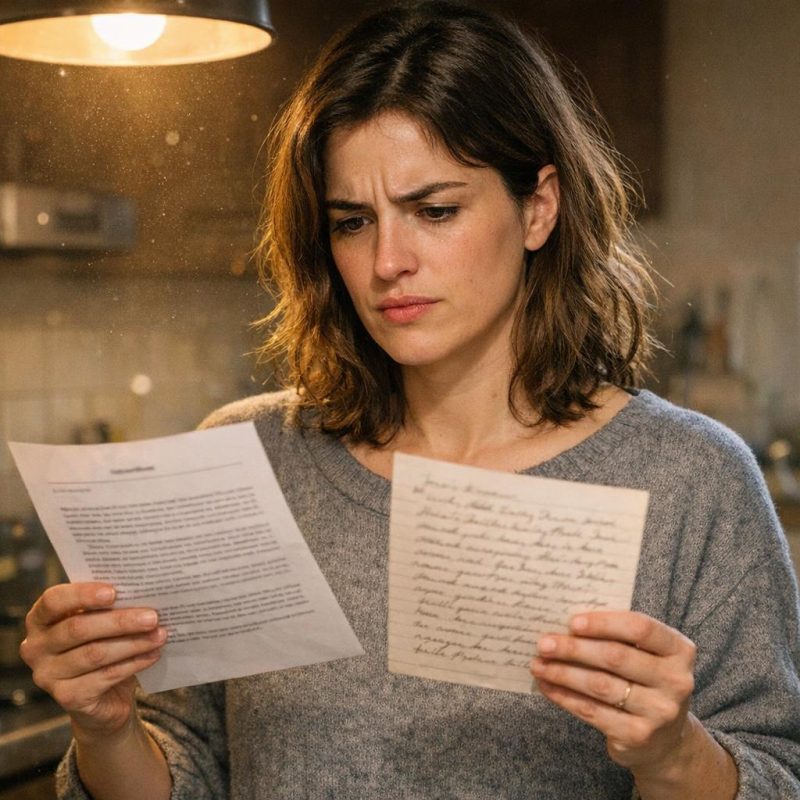 Image by RM AI
The Flourish
I tore through every drawer in my apartment like a woman possessed. The forged consent form was still on my kitchen counter, mocking me with that jagged signature. I needed to find something—anything—with Dr. Aris's actual handwriting. My hands were shaking as I dumped out files, receipts, appointment cards. Then I remembered those stupid brochures he'd given me during our first session. 'Managing Stress Through Mindfulness,' or something equally condescending. I'd shoved them in my desk drawer without reading them. I found them buried under old bills, their glossy covers slightly bent. Three brochures, all from his practice. And there, on the back of one, was a handwritten note he'd added: 'Excellent resource for you, Emily.' He'd crossed out 'Emily' and written 'Claire' above it. My stomach dropped. The handwriting. Those cramped, jagged letters. That distinctive flourish on the 'y' in 'you.' I held the brochure next to Emily's forged consent form under the light. They were identical. The same person had written both. My blood ran cold when I saw his signature on the brochure—the same jagged 'E' with that exact flourish.
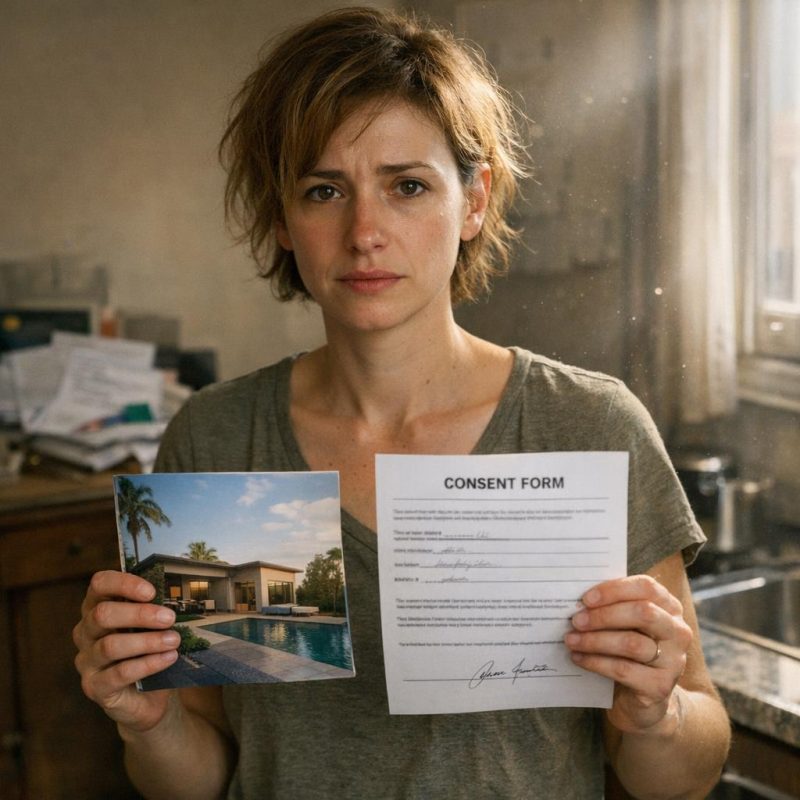 Image by RM AI
Second Opinion
I drove two hours to the next city to see Dr. Patel. I'd found him online—good reviews, no connection to Dr. Aris's practice network. His office was in a modest building, nothing like Dr. Aris's sleek setup. I told the receptionist I was new to the area and needed a general checkup. When Dr. Patel came in, he had kind eyes and didn't rush through the appointment like he was checking boxes. I explained my symptoms carefully—the fatigue, the heart palpitations, the dizziness. I didn't mention Dr. Aris. I didn't mention Emily. I just said I'd been feeling off for months and my previous doctor kept telling me it was stress. Dr. Patel listened, actually listened, taking notes by hand. He checked my heart rate, my blood pressure. Then he sat back and looked at me thoughtfully. 'I'd like to run some bloodwork,' he said. 'Standard panels, but also...' He paused, and something in his expression shifted. Dr. Patel frowned at my chart and said, 'I'd like to run a full toxicology panel—something here doesn't add up.'
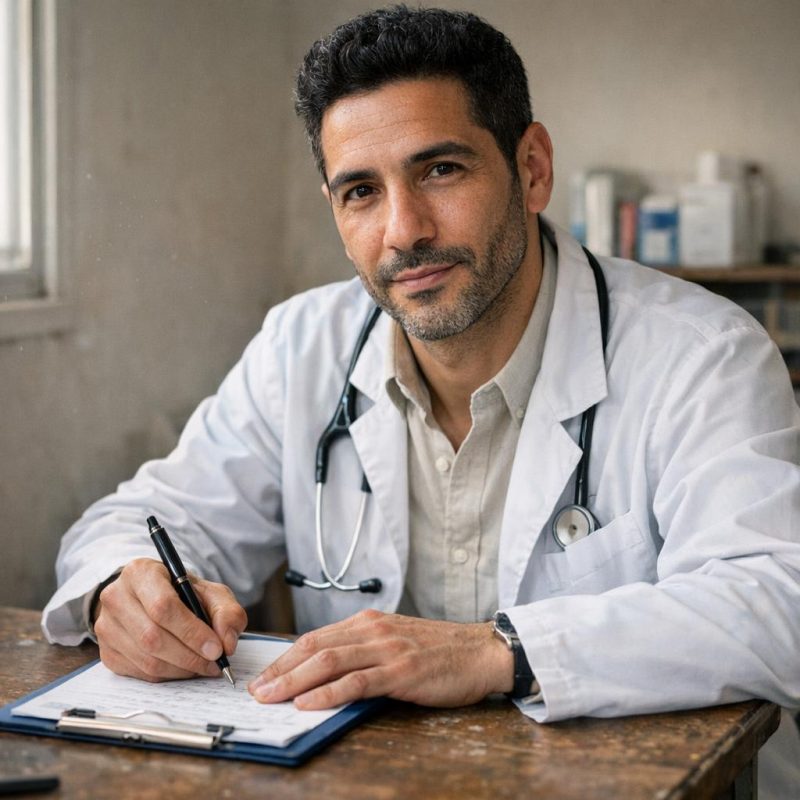 Image by RM AI
The Wait for Results
The hardest part was going back to Dr. Aris's office like nothing had changed. I had an injection scheduled for Thursday—my usual appointment. Dr. Patel said the toxicology results would take at least a week. I couldn't cancel with Dr. Aris. If I suddenly stopped coming, if I showed any sign that I suspected something, I didn't know what he'd do. So I sat in that familiar waiting room, staring at the abstract art on the walls, trying to keep my breathing steady. When he called me back, his smile was warm and professional as always. 'How are we feeling today, Claire?' I mumbled something about being tired. He nodded sympathetically and prepared the syringe—that same routine I'd trusted for months. The clear liquid caught the light as he tapped out air bubbles. My heart was hammering so hard I thought he'd hear it. Every instinct screamed at me to run, but I rolled up my sleeve and extended my arm. I sat in his office chair, watching him prepare the syringe, wondering if this was the one that would kill me.
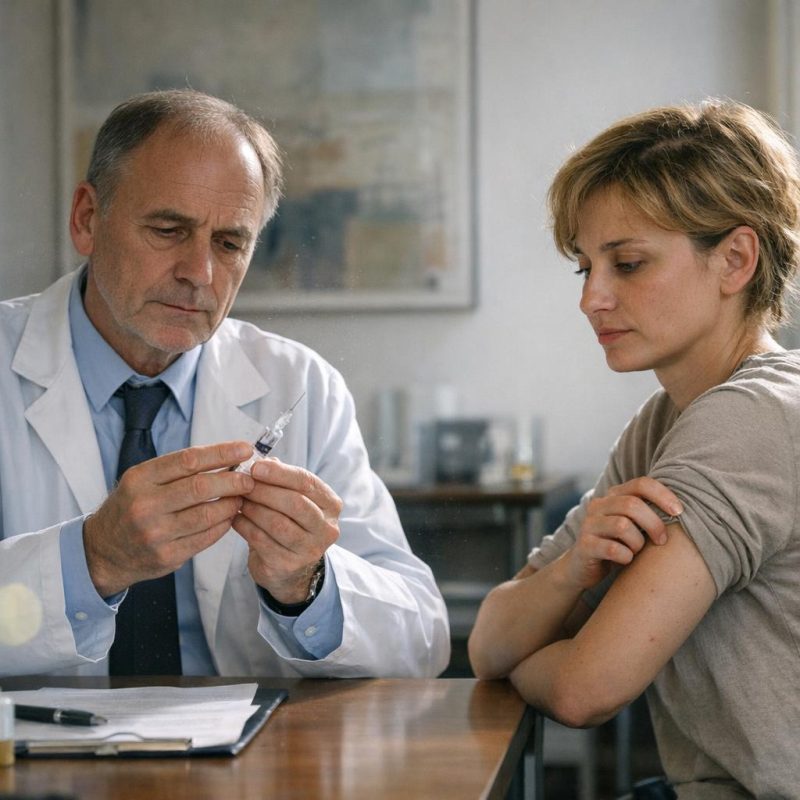 Image by RM AI
Sharing with Sarah
I went straight to Sarah's apartment after the injection. My arm still ached where the needle had gone in. I'd brought everything—the forged consent form, Emily's journal, the brochures with Dr. Aris's handwriting. Sarah opened her door in sweatpants and a coffee-stained t-shirt, took one look at my face, and pulled me inside. I spread everything out on her coffee table, my hands trembling as I pointed out the matching signatures. She grabbed a magnifying glass from her desk—of course she had a magnifying glass—and studied both documents for what felt like forever. The silence was suffocating. Then she set down the magnifying glass and looked at me with an expression I'd never seen before. It wasn't doubt. It was horror. 'Claire,' she said quietly, 'this is the same person. This is definitely the same handwriting.' I felt this rush of relief mixed with absolute terror. I wasn't crazy. I wasn't imagining things. But that meant everything I feared was real. Sarah's face went pale as she whispered, 'Claire, we need to call the police right now.'
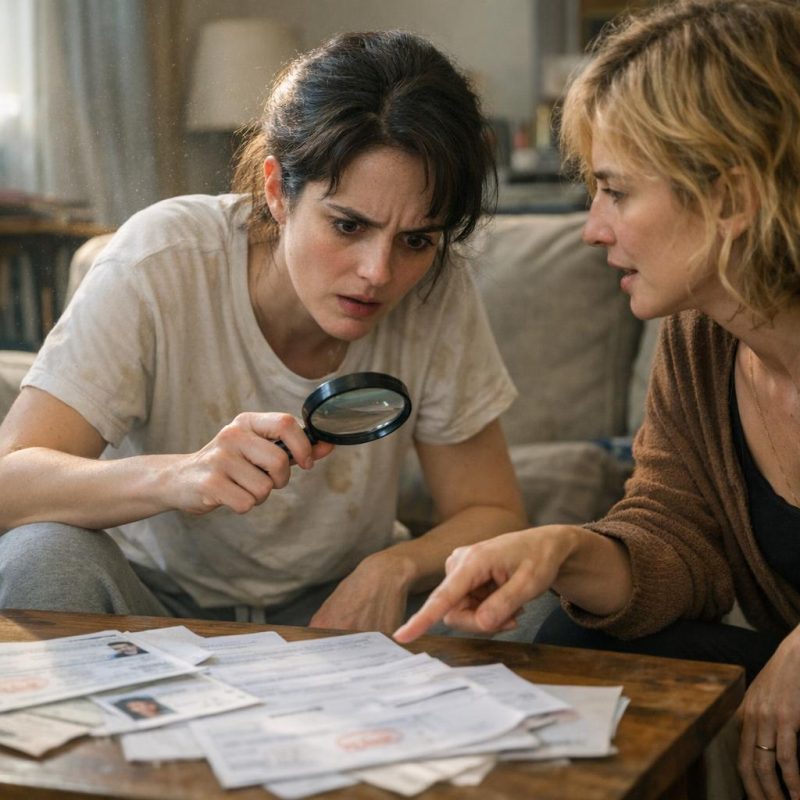 Image by RM AI
The Problem of Proof
But Sarah spent the next hour calling contacts—a lawyer friend, a forensic expert she'd interviewed for an article. Each conversation left her looking more frustrated. The lawyer was blunt: handwriting analysis wasn't as definitive as people thought, especially against a respected physician with no criminal record. We'd need more. The forensic expert said even if we proved the signature was forged, Dr. Aris could claim administrative error, that someone on his staff had signed it. We sat on her couch surrounded by documents, and I felt that brief moment of hope crumbling. 'His reputation,' Sarah said bitterly. 'That's what we're up against. He's Dr. Aris, the grief specialist. Who's going to believe he's forging consent forms and—' She stopped herself. We both knew what came next in that sentence. Killing his patients. The words hung in the air, unspoken. Sarah opened her laptop and started typing, then stopped. She closed it with a decisive snap. Sarah closed her laptop and said, 'We need more than suspicions—we need him to confess.'
 Image by RM AI
Dr. Patel's Call
Dr. Patel called on Tuesday afternoon. I was at home, had taken the day off work because I couldn't focus on anything. My phone rang and his name appeared on the screen. My mouth went dry. I answered on the second ring. 'Claire, it's Dr. Patel. I have your results.' His voice was different—careful, concerned. My hand gripped the phone so hard my knuckles went white. He started with the standard stuff first—iron levels fine, thyroid normal, kidney function good. Then he paused. 'But the toxicology panel showed something concerning. You have elevated levels of an experimental cardiac medication in your bloodstream. It's called CAR-44. It's not approved for general use—it's only available through clinical trials.' I couldn't breathe. CAR-44. The same abbreviation from Emily's forged consent form. 'I need to ask you something important,' Dr. Patel continued, and I could hear him choosing his words carefully. Dr. Patel's voice was urgent: 'This drug shouldn't be in your system unless you're enrolled in a clinical trial—are you?'
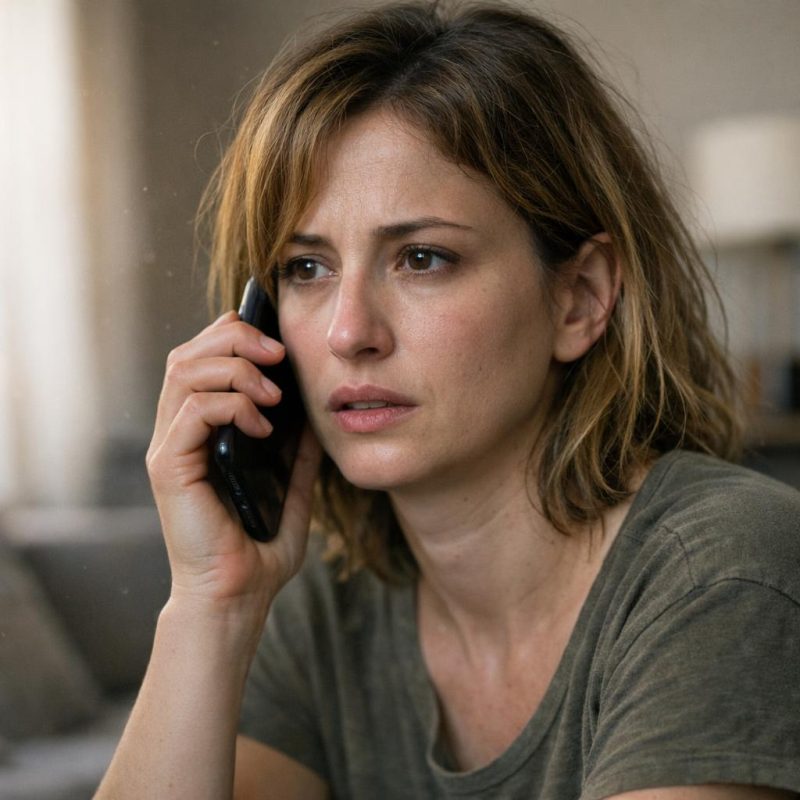 Image by RM AI
The Recording Device
Sarah met me at a coffee shop an hour later with a small package in her purse. We sat in the back corner, away from other customers. She slid the package across the table—a tiny recording device, no bigger than a thumb drive. 'Journalist tools,' she said. 'It's voice-activated and holds six hours. The audio quality is good enough for evidence.' We spent the rest of the afternoon at her place, planning. She made me practice over and over—how to bring up the injections casually, how to ask about clinical trials without sounding accusatory. 'You need him to think you're still his trusting patient,' Sarah coached. 'Confused, maybe worried, but not suspicious.' We role-played different scenarios. Each time I stumbled over my words, she'd make me start again. 'You can do this,' she kept saying, though I could see the fear in her eyes too. By the time we finished, my hands had stopped shaking. I had my questions memorized. I knew how to position the device. Sarah pressed the device into my palm and said, 'Stay calm, ask questions, and let him talk—liars always do.'
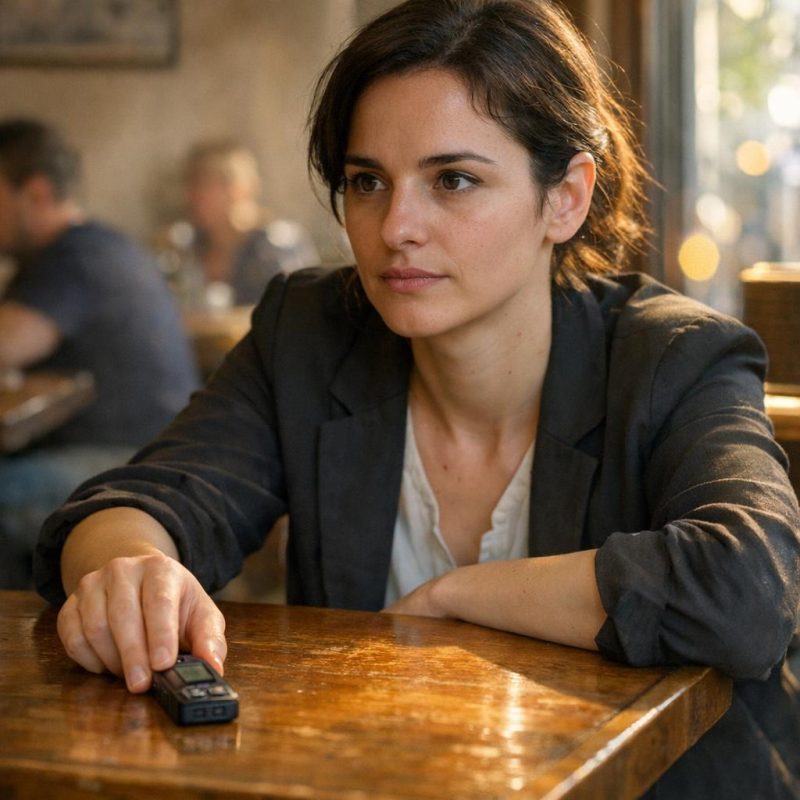 Image by RM AI
The Night Before
I didn't sleep that night. I lay in bed staring at the ceiling, the recording device on my nightstand like a tiny bomb. My appointment was at two o'clock the next day. I kept rehearsing the questions in my head, trying different tones, different approaches. What if he noticed the device? What if I panicked and gave myself away? What if he realized what I knew and—I couldn't let myself finish that thought. Around three in the morning, I got up and made tea I didn't drink. I sat at my kitchen table with Emily's journal, reading her entries about Dr. Aris. How much she trusted him. How safe she felt in his care. Had she suspected, even for a moment, what he was doing? Or had she trusted him right up until the end? When the sun finally came up, I showered and dressed carefully. I chose clothes I'd worn to previous appointments—nothing different, nothing that would signal a change. In the bathroom mirror, my face looked hollow and strange. I stared at my reflection and whispered, 'Tomorrow, I'll know the truth—or I'll be his next victim.'
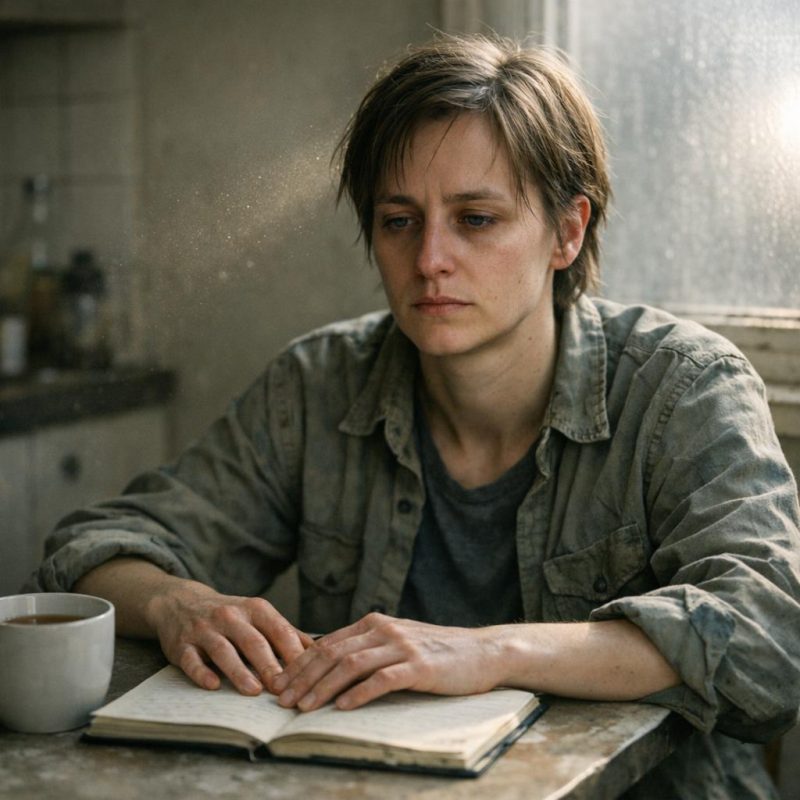 Image by RM AI
Entering the Lion's Den
The waiting room looked exactly the same as always. Same beige walls, same magazines fanned across the coffee table, same receptionist who smiled at me like nothing had changed. But everything had changed. The recording device in my purse felt like it weighed fifty pounds. I'd tested it three times that morning to make sure it was working, and now I kept my hand pressed against my bag, terrified I'd accidentally hit the button and turn it off. My heart was hammering so hard I was sure everyone in the room could hear it. When the nurse called my name, my legs felt shaky as I stood. I walked down that familiar hallway to Dr. Aris's office, past the framed diplomas and the potted plants, and every step felt like walking toward the edge of a cliff. The door was already open. He was sitting behind his desk, looking through some papers, and when he saw me, his face lit up with that warm, grandfatherly smile I'd trusted for months. Dr. Aris smiled warmly as I sat down, and I forced myself to smile back, my hand trembling on my purse.
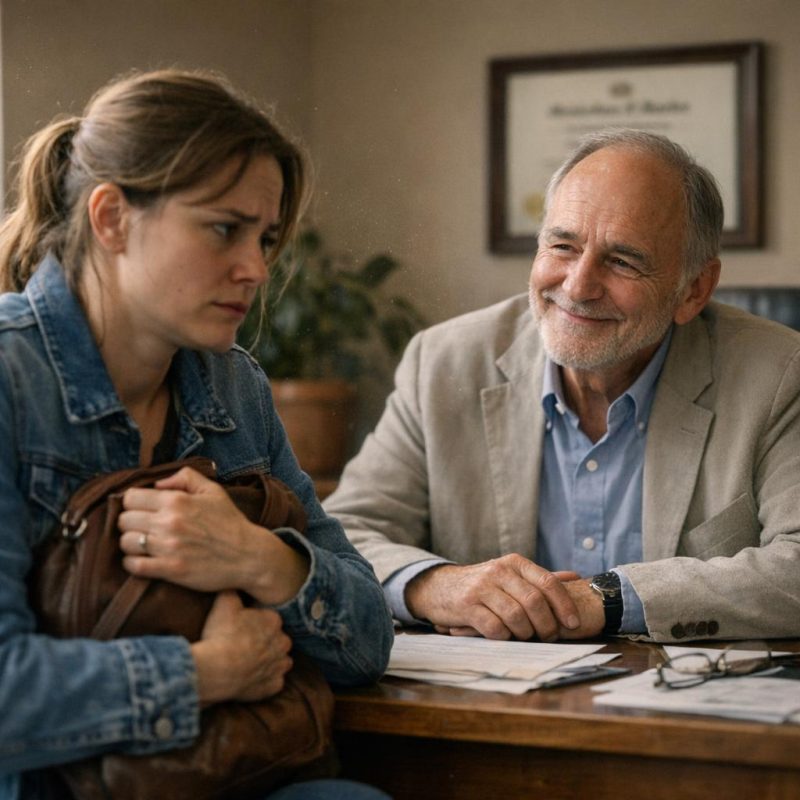 Image by RM AI
The Casual Questions
I'd rehearsed this part so many times I could have done it in my sleep. Keep it casual. Keep it innocent. Don't let him see what you know. 'I've been thinking a lot about Emily lately,' I said, trying to keep my voice steady. 'About her final months here. Can you tell me more about her treatment toward the end?' He leaned back in his chair, completely relaxed, like we were just having a normal conversation. 'Of course,' he said. 'Emily was struggling, as you know. We explored several options together.' I nodded, gripping my purse strap. 'What kind of options?' He launched into this detailed explanation about treatment protocols and experimental approaches, using medical terms that sounded authoritative and kind. The whole time, he seemed perfectly calm, perfectly professional. Not like someone with something to hide. Maybe I'd gotten it wrong. Maybe— No. I couldn't let myself doubt now. 'Was there a clinical trial involved?' I asked. His smile didn't waver as he said, 'Emily was very brave to try the new protocol—she wanted to help others.'
 Image by RM AI
Showing the Evidence
This was it. The moment I either got the truth or painted a target on myself. My hands were shaking as I reached into my purse and pulled out the folded copy of Emily's consent form. The one with the forged signature. 'I found this in Emily's medical records,' I said, my voice barely above a whisper. 'This consent form for the trial you mentioned.' I slid it across his desk. 'I was wondering if you could help me understand something about it.' He glanced down at the paper, still wearing that pleasant expression, but I was watching him carefully now. Watching for any reaction. 'What specifically are you confused about?' he asked, but his tone had shifted slightly. Less warm. More cautious. I pointed to Emily's signature at the bottom. 'Does this look like my sister's handwriting to you? Because I've seen her actual signature hundreds of times, and this doesn't look right to me.' The silence that followed lasted maybe three seconds, but it felt like an hour. For just a moment, something flickered behind his eyes—then he cleared his throat and reached for the paper.
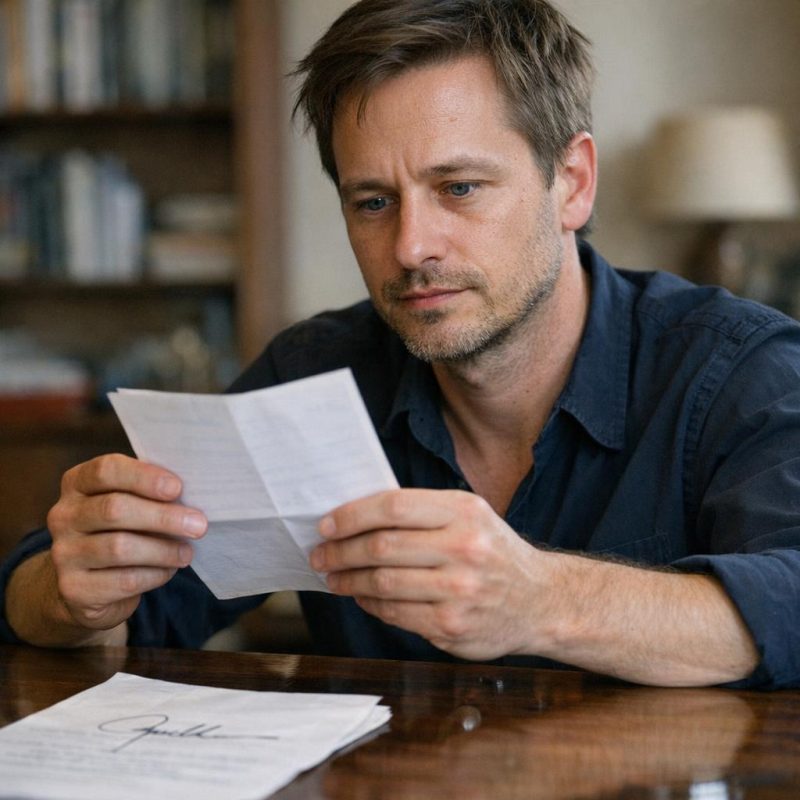 Image by RM AI
The Pause
He held Emily's consent form between his fingers, studying it like he'd never seen it before. The silence stretched out, and I could hear my own breathing, could feel my pulse in my throat. He was thinking. Calculating. Deciding how to handle this. I kept my expression neutral, even though inside I was screaming. The recording device was still running. I needed him to talk. Finally, he set the paper down on his desk, smoothing it carefully with his palm. When he looked up at me, the warmth was completely gone from his eyes. 'Claire,' he said slowly, 'I need to understand what you're implying here.' I swallowed hard. 'I'm not implying anything. I'm asking a question. About this signature.' He leaned forward slightly, and the change in his demeanor was chilling. This wasn't the kind doctor anymore. This was someone else entirely. Someone I'd never seen before, but who had probably been there all along. He folded his hands and said, 'Claire, where exactly are you going with this?'
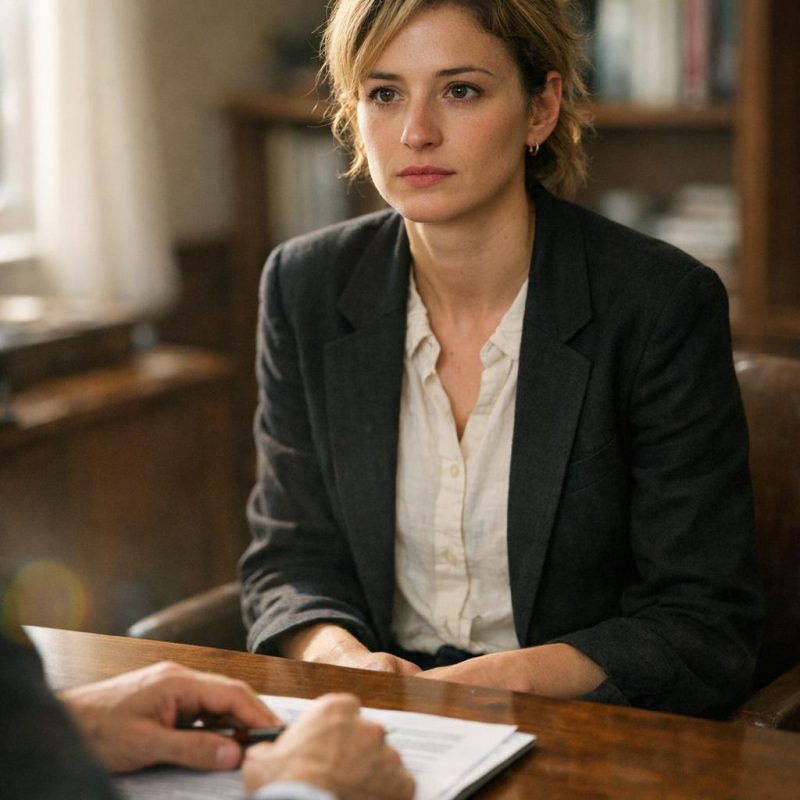 Image by RM AI
The Direct Question
I'd come this far. There was no backing down now. My voice came out steadier than I expected, considering how terrified I was. 'Did you sign Emily's consent form yourself? Without her knowledge?' The question hung in the air between us like a live wire. I watched his face, searching for any sign of guilt or panic, but what I saw was worse than either of those things. He didn't deny it. He didn't look shocked or offended. He just sat there, studying me with this cold, clinical expression, like I was a specimen under a microscope. Like he was trying to figure out how much I knew and what to do about it. The silence went on for so long I almost repeated the question, but something told me to wait. To let him fill the silence. When he finally moved, it was just to lean back in his chair, never breaking eye contact. His expression hardened, and he leaned back in his chair, studying me like a problem to be solved.
 Image by RM AI
The Pivot
He didn't answer my question. Instead, he started talking about something else entirely, but in a way that made my blood run cold. 'You know, Claire, there's something most people don't understand about medical progress,' he began, his tone almost philosophical. 'Every major breakthrough in history has required sacrifice. Risks that seemed impossible to justify at the time, but saved countless lives in the end.' I stared at him, trying to process what I was hearing. Was he seriously about to justify what he'd done? 'Penicillin, chemotherapy, organ transplants—none of these would exist if we'd let individual concerns outweigh the greater good.' He leaned forward, his eyes locked on mine. 'The regulatory process is necessary, I understand that, but it's also slow. Painfully slow. And while we wait for approvals and complete paperwork, people die. People who could have been saved.' My mouth had gone completely dry. This wasn't a denial. This was an explanation. A defense. He said, 'Sometimes, Claire, individuals have to contribute to the greater good, whether they understand it or not.'
 Image by RM AI
The Vitamin Admission
My heart was pounding so hard I thought I might pass out, but I had to know. I had to hear him say it. 'The vitamin injections,' I said, my voice shaking now. 'What's actually in them?' I watched his face carefully, and for a long moment, he said nothing. Just looked at me with this expression that was part pity, part something else I couldn't identify. Then his lips curved into this slight smile, and I knew. I knew before he even opened his mouth. 'You're an intelligent woman, Claire,' he said quietly. 'I think you've already figured that out.' My hands were gripping the arms of my chair so hard my knuckles had turned white. 'Tell me,' I whispered. He tilted his head slightly, like he was deciding whether to be honest or not. Then he seemed to make up his mind. He smiled slightly and said, 'The same compound that would have saved Emily—if we'd had more time to perfect it.'
 Image by RM AI
The Justification
I felt like I was going to be sick. He'd been experimenting on me. On both of us. For months. 'You understand what this means, don't you?' Dr. Aris continued, his voice taking on this lecturing quality, like he was explaining something to a student. 'Emily's participation in the trial—and yours—will eventually save thousands of lives. Tens of thousands. The compound shows remarkable promise for treating severe depression and anxiety disorders. We're on the verge of a breakthrough.' He was talking about Emily like she was data. Like her death was just an unfortunate setback in his research. 'And the side effects I've been having?' I asked, my voice barely audible. 'Headaches, nausea, exhaustion?' He waved a hand dismissively. 'Minor. Temporary. They'll resolve as we adjust the dosage. You're tolerating it better than Emily did, actually.' I wanted to scream. I wanted to run. But I forced myself to stay in that chair, to keep my face neutral, because the recording device was still running and I needed everything. His voice took on a lecturing tone: 'Your grief has made you emotional, but science requires pragmatism.'
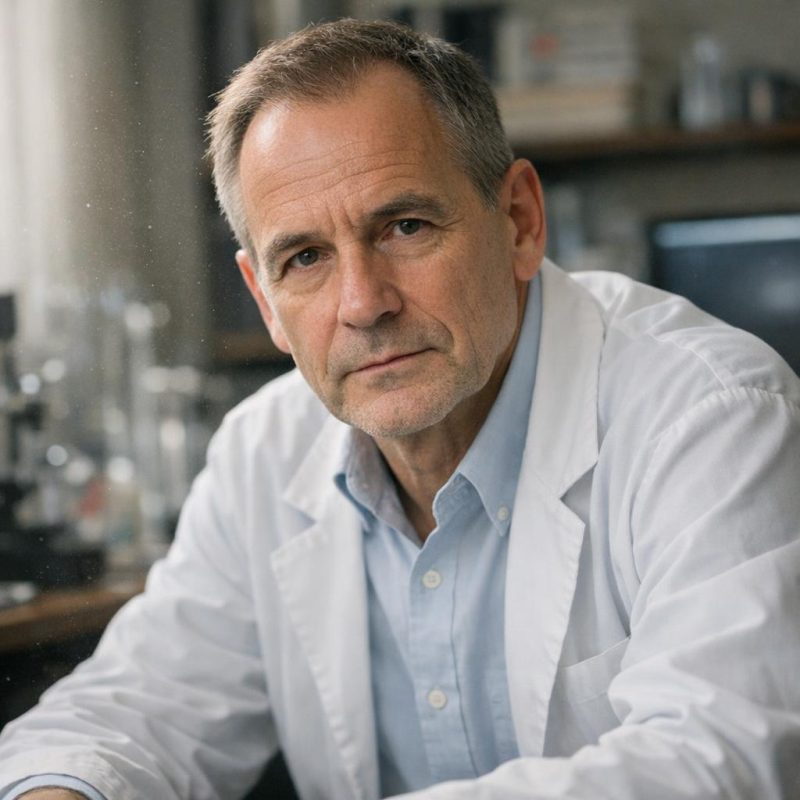 Image by RM AI
The Threat
Dr. Aris leaned back in his chair, and the smug confidence on his face made my stomach turn. 'You're planning to report me, aren't you?' he said calmly. 'With what evidence, Claire? Your word against mine? You're a grieving woman experiencing clear psychological distress—everyone can see that.' He gestured at his filing cabinets like they were a fortress. 'I've documented every symptom of your deteriorating mental state for months. The paranoia. The emotional instability. The delusional thinking.' My throat went dry. Behind him, through the small window in the door, I could see Nurse Karen at her station, her back rigid. She was listening. 'I'm a respected physician with thirty years of experience,' Dr. Aris continued. 'Awards. Publications. A spotless record.' He tilted his head, his expression almost pitying. 'Meanwhile, you're a woman who can barely function, who's been accusing me of absurd conspiracies since your sister's tragic suicide.' The recording device felt like it was burning in my pocket. Keep talking, I thought desperately. Give me everything. He leaned forward and said softly, 'Who do you think they'll believe, Claire—you or me?'
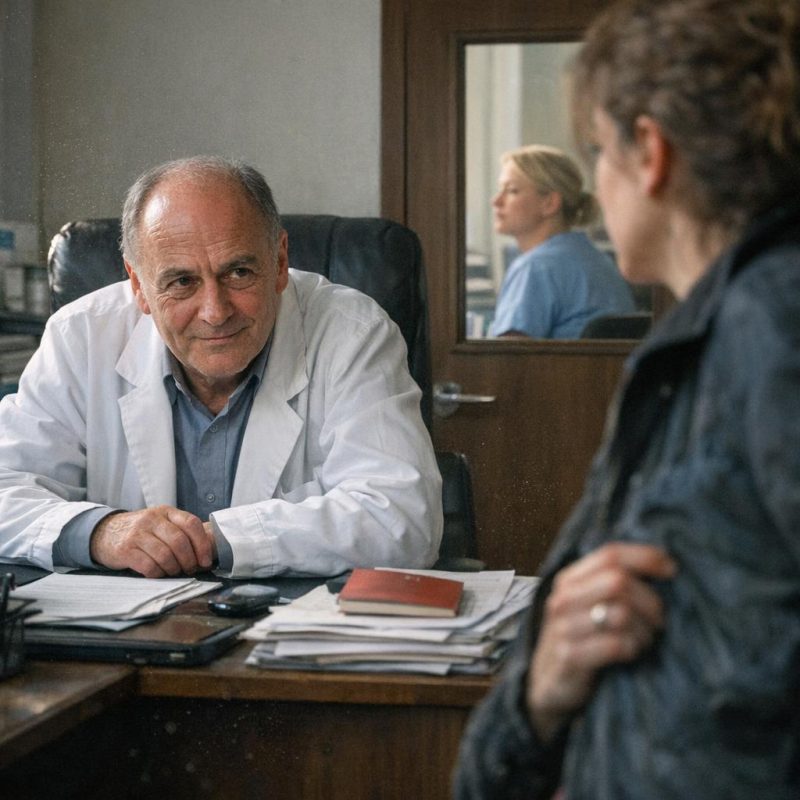 Image by RM AI
Walking Out
I stood up slowly, forcing my legs to work. Every instinct screamed at me to run, but I made myself move deliberately, carefully. 'Thank you for your time, Dr. Aris,' I said, my voice somehow steady. 'I'll see you next week for my follow-up.' He blinked, clearly surprised. He'd expected tears, maybe. Hysteria. But I just picked up my purse, gave him a polite nod, and walked to the door. My hand didn't shake when I turned the handle. In the hallway, Nurse Karen glanced up from her computer, and our eyes met for just a second. She knew. I could see it in her face—she knew exactly what was happening. I walked through the clinic lobby, past the reception desk, out the front doors. The afternoon sun hit my face and I kept walking, one foot in front of the other, until I reached the parking lot. The recording device was still running in my pocket, capturing my footsteps, my breathing. I turned it off with trembling fingers. As I stepped into the parking lot, I saw Sarah sitting in her car across the street, phone to her ear.
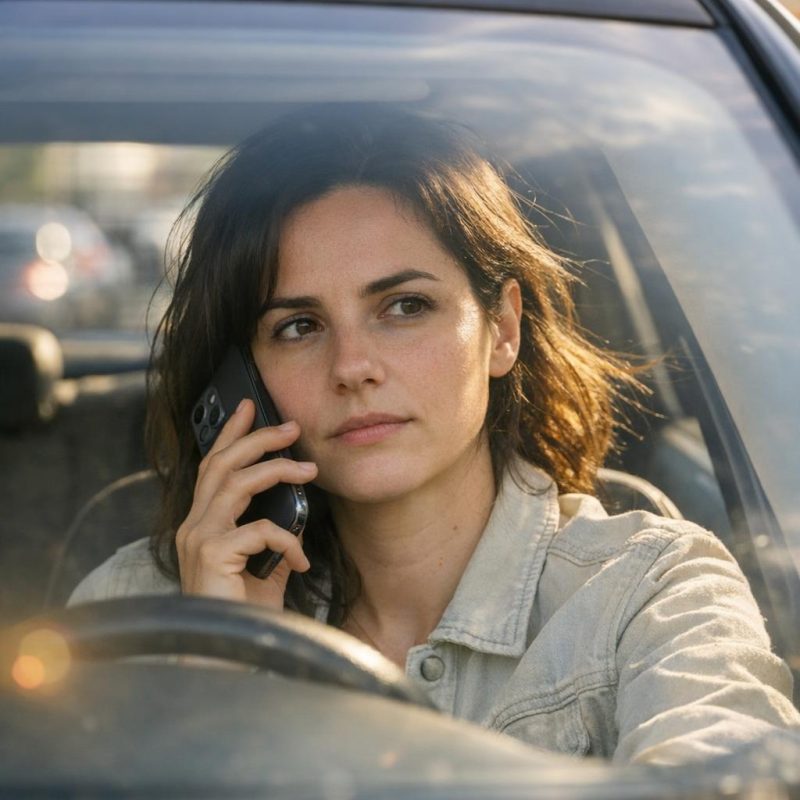 Image by RM AI
Sarah's Investigation
I practically ran to Sarah's car and climbed into the passenger seat. She ended her call immediately and turned to me, eyes wide. 'Did you get it?' she asked. I pulled out the recording device, and she grabbed my hand, squeezing it hard. 'Everything,' I whispered. 'He admitted the trial, the drugs, everything—and then he threatened me.' Sarah's face went pale. 'Jesus, Claire.' I was shaking now, the adrenaline finally catching up with me. 'What were you doing?' I asked. 'Who were you on the phone with?' She glanced at the clinic, then back at me. 'I wasn't just sitting here,' she said. 'While you were in there, I was tracking down someone who's been trying to reach me anonymously for the past week. Someone who saw my articles about patient advocacy and wanted to talk about Dr. Aris.' My heart started pounding. 'Who?' Sarah pulled out her phone and showed me a text conversation—messages from a burner number, vague at first, then increasingly specific. 'A nurse who works at that clinic,' Sarah said. Sarah's eyes were bright with triumph: 'Karen worked Emily's case—and she's willing to talk.'
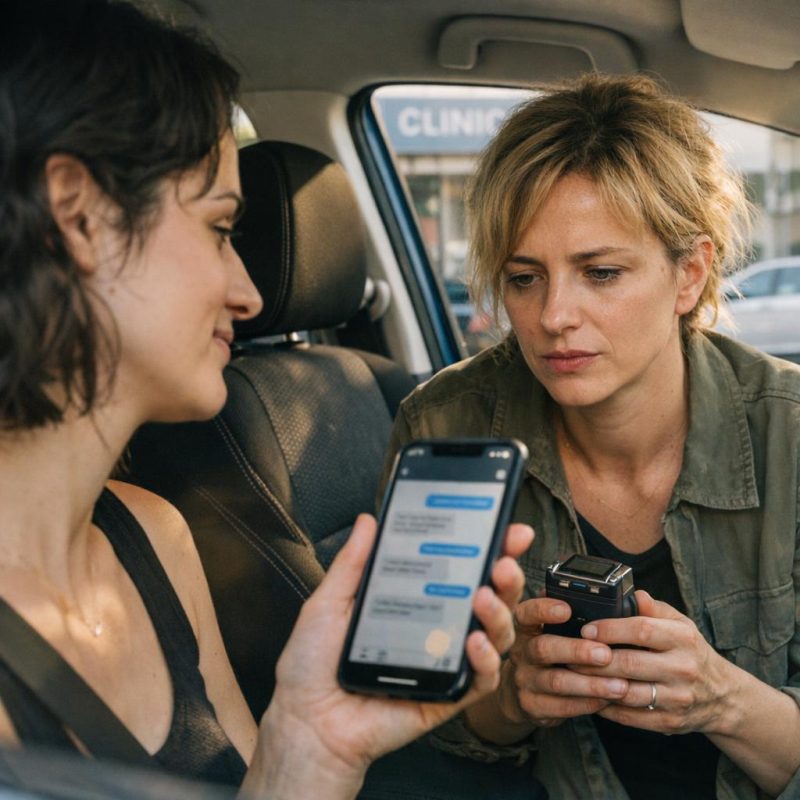 Image by RM AI
The Nurse's Story
We met Karen at a diner forty minutes outside town, the kind of place where nobody asks questions. She was already sitting in a back booth when we arrived, coffee untouched in front of her, and she looked like she hadn't slept in days. I slid into the booth across from her and Sarah sat beside me. 'Thank you for meeting us,' Sarah said gently. Karen's eyes were red-rimmed. 'I almost didn't come,' she admitted. 'But when I saw you today, Claire, going in for another appointment...' She trailed off, shaking her head. 'I couldn't stay quiet anymore.' She told us everything. How Dr. Aris had started pressuring staff two years ago to adjust records for certain patients. How he'd insisted it was 'for their own good,' that the modifications were minor, clinically justified. How the staff who questioned him were reassigned or let go. 'He was careful,' Karen said. 'Always had a reason. Always made it sound reasonable.' Her voice cracked. 'Your sister Emily—I was assigned to her case. I saw the consent forms. I knew something was wrong.' Karen's hands shook as she said, 'I should have spoken up when Emily died—I'm so sorry.'
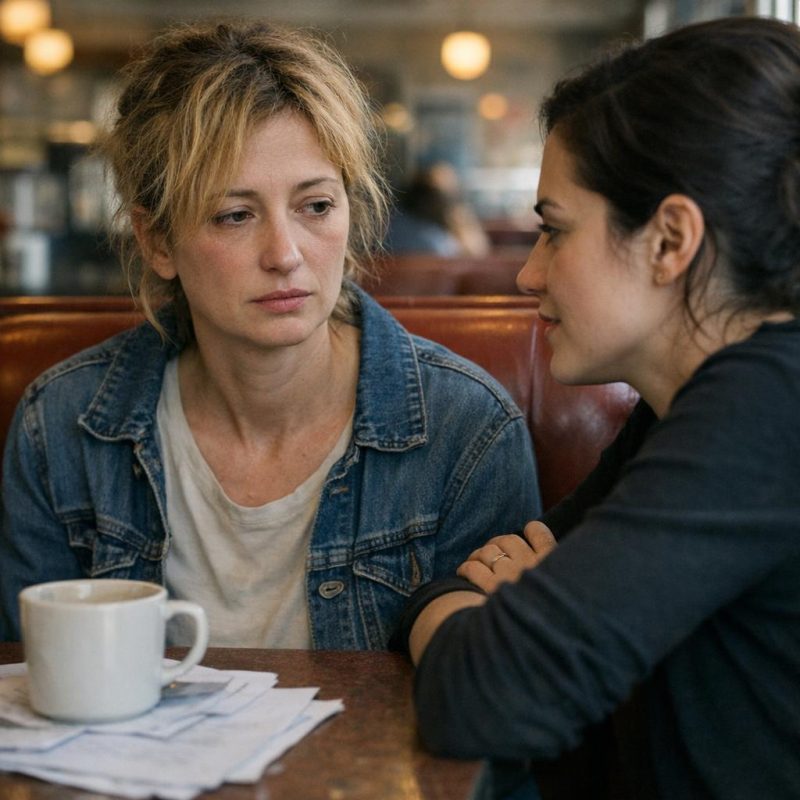 Image by RM AI
The Pharmaceutical Connection
Karen wiped her eyes and continued, her voice steadier now. 'About six months ago, I accidentally saw a payment notification on Dr. Aris's computer when I was updating a patient file. It was from a company I'd never heard of—CardioPharma Solutions.' Sarah immediately pulled out her laptop. 'Go on,' she urged. 'The amount was substantial,' Karen said. 'Fifty thousand dollars, marked as a quarterly installment. I started paying attention after that. There were regular payments, always the same amount, always from CardioPharma.' My mouth went dry. 'He was being paid to conduct the trials?' Karen nodded. 'CardioPharma is a startup trying to fast-track FDA approval for experimental compounds. They needed human trial data, but they couldn't get approval through legitimate channels—too risky, too expensive, too slow.' Sarah was already typing furiously. 'He was using his patients as guinea pigs and getting paid for it,' I said, the horror of it sinking in. 'That's exactly what he was doing,' Karen confirmed. Sarah pulled up a corporate filing on her laptop: 'CardioPharma Solutions—and look at the board member list.'
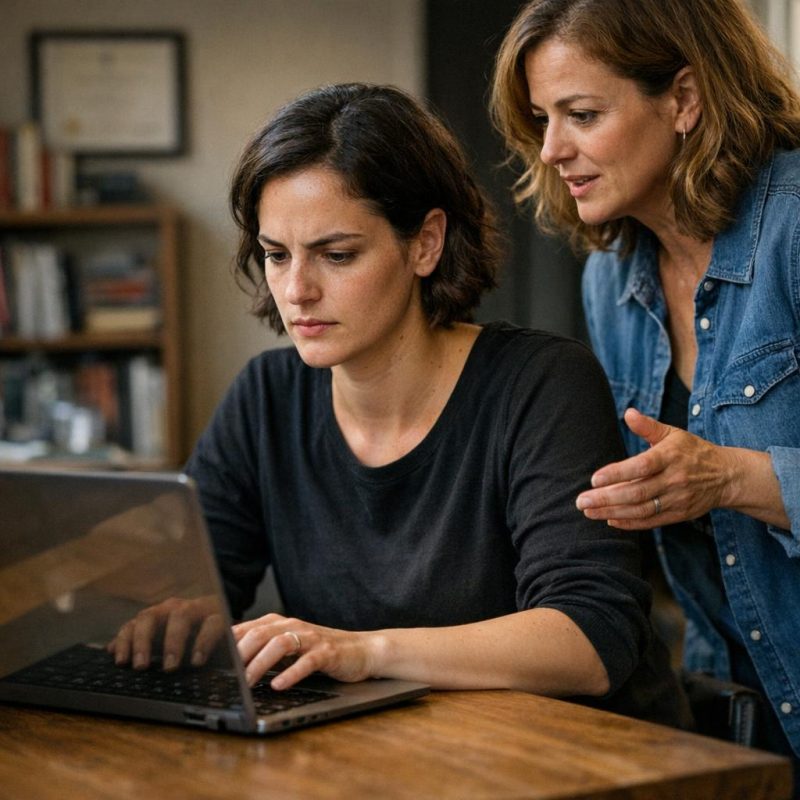 Image by RM AI
The Hospital Board
Sarah's finger pointed to a name on the screen: Dr. Marcus Aris, listed as a Medical Advisor. The connections were right there in black and white. 'He's on their board,' I breathed. 'Not just receiving payments—he's part of the company.' Sarah was already composing an email, her journalist training kicking in. 'We have your testimony, Karen. We have Claire's recording. We have corporate filings showing financial ties. This is enough.' She looked at both of us. 'I'm contacting the hospital board of directors right now, and I'm cc'ing the state medical board and my editor.' My hands were shaking. This was really happening. We were really doing this. Karen gave Sarah every contact she had—names of other staff members who'd witnessed irregularities, patient file numbers, dates of suspicious amendments. Sarah attached my recording, Karen's written statement, and the corporate documents to her email. She read it aloud to us before sending, making sure every detail was accurate. Then she hit send. We sat there in silence, the weight of what we'd just set in motion pressing down on us. The board chair's assistant called back within an hour: 'The board will meet in emergency session tomorrow morning.'
 Image by RM AI
The Longest Night
I didn't sleep that night. Couldn't. Sarah had offered to stay with me, but I'd sent her home to prepare for the board meeting. I needed to be alone with my thoughts, to process everything that had happened. I sat in Emily's room—I still thought of it as Emily's room, even though she'd been gone for three months—surrounded by her things. Her books. Her favorite sweater still draped over the chair. I thought about every appointment with Dr. Aris. Every injection. Every dismissal of my symptoms. Every time he'd told me my grief was making me irrational. It had all been calculated. Every single interaction had been designed to keep me compliant, to keep me coming back, to keep me enrolled in his illegal trial. He'd done the same thing to Emily. Convinced her she needed help, that he was the only one who could provide it, that her depression would spiral without his intervention. And when she'd started experiencing side effects—effects severe enough that she knew something was terribly wrong—he'd documented her concerns as paranoia. As mental instability. He'd created a paper trail that made her look unreliable. At dawn, I realized the full scope: Emily hadn't just died—she'd been murdered for profit.
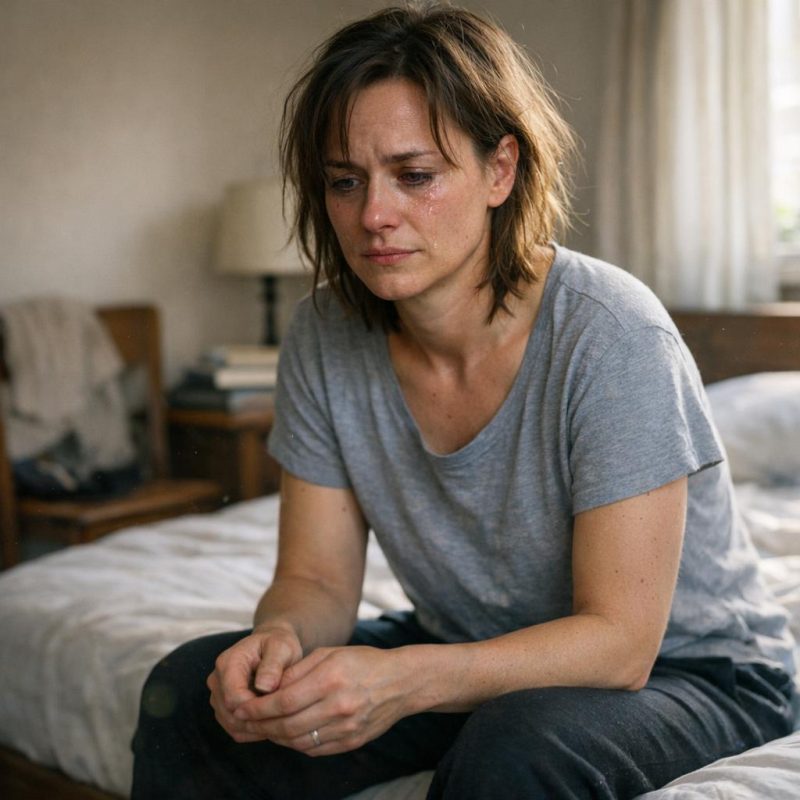 Image by RM AI
The Full Picture
The pieces assembled themselves in my mind with horrible clarity. Dr. Aris had deliberately targeted Emily after her breakup, when she was vulnerable and seeking help. He'd forged her consent for the drug trial—or pressured her into signing something she didn't fully understand. He'd enrolled her in an experimental treatment that CardioPharma couldn't test through legitimate channels. When she started having severe reactions, he'd documented them as psychiatric symptoms rather than drug side effects. He'd isolated her from people who might have questioned his treatment. And when she died, he'd ensured the death was classified as suicide, not a drug reaction. Then he'd done the exact same thing to me. He'd dismissed my grief as a mental health crisis. He'd insisted I needed treatment. He'd started injecting me with the same experimental compound. He'd been documenting my 'deteriorating mental state' to preemptively discredit me if I ever figured out what was happening. The pharmaceutical company had been paying him quarterly installments to conduct human trials without oversight, without proper consent, without safety protocols. Everything clicked into place: the dismissals, the injections, the justifications—it was all a calculated scheme to exploit us as test subjects.
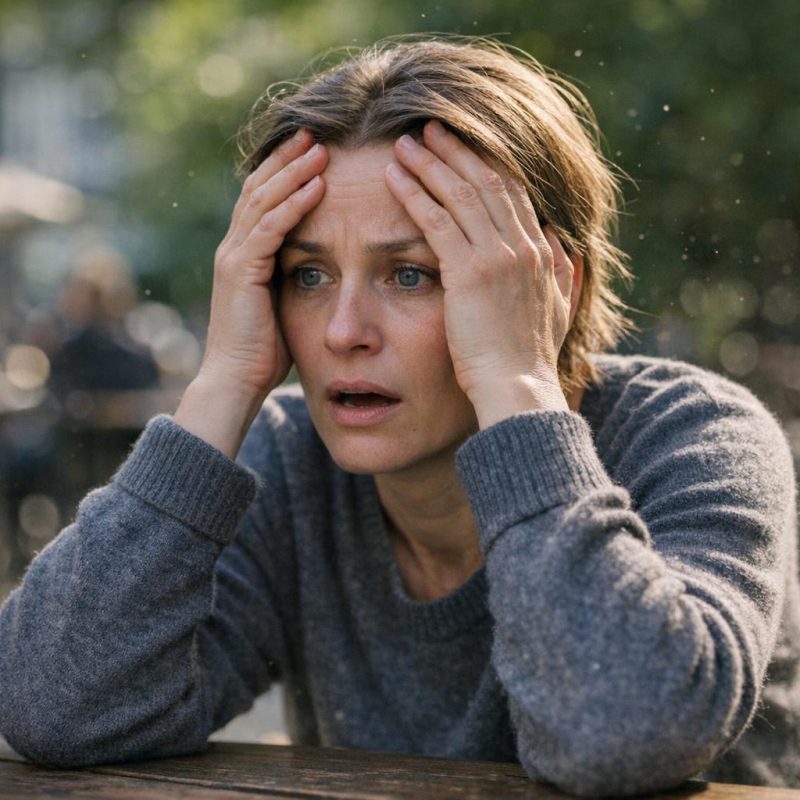 Image by RM AI
The Board Meeting
The hospital board conference room felt like a courtroom, which I suppose it was in a way. Sarah sat beside me, her laptop open with backup copies of everything. I'd rehearsed what I'd say a dozen times that morning, but my hands still shook as I laid out the forged consent forms, the pharmaceutical payments, Emily's fabricated psychiatric evaluations. The board members listened with increasingly grim expressions as I played the recording of Dr. Aris discussing 'patient compliance' and 'maintaining documentation for liability protection.' I showed them the quarterly deposits. The injections I'd received without proper consent. The pattern between Emily's symptoms and mine. My voice cracked when I explained how my sister had begged for help and been dismissed as mentally unstable while she was actually dying from an experimental drug. One board member covered her mouth. Another pushed back from the table like he wanted distance from what he was hearing. The chair—an older man with silver hair—sat perfectly still, his face draining of all color as I finished. He looked at the evidence spread before him, then at me, then back at the forged signatures. The silence lasted maybe ten seconds but felt eternal. The board chair's face drained of color as he said, 'We're contacting law enforcement immediately.'
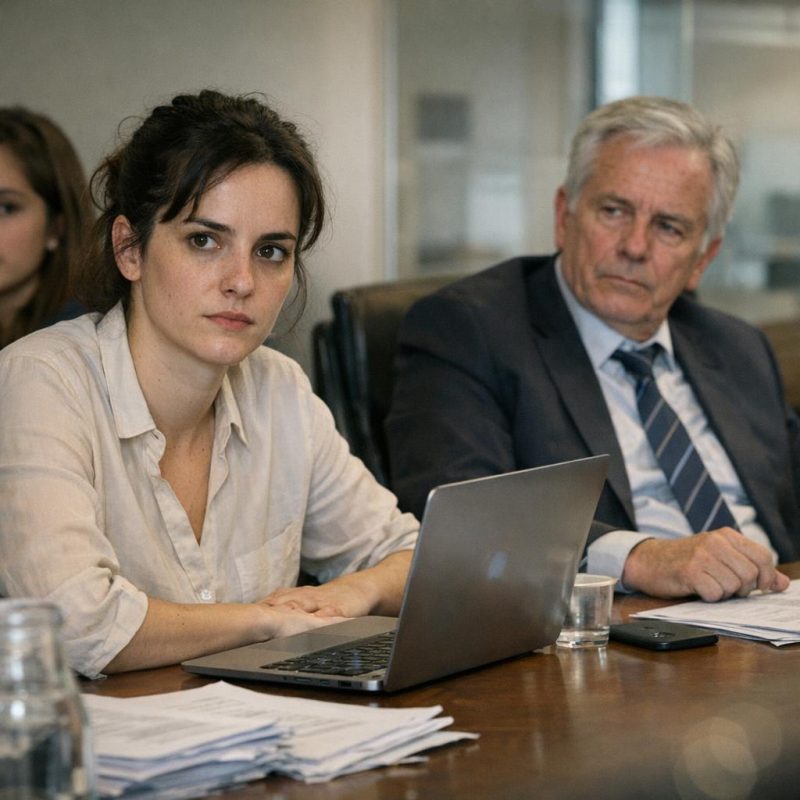 Image by RM AI
Dr. Aris's Response
Word spread through the hospital faster than I could have imagined. Within an hour, security had been alerted to watch for Dr. Aris. I was still in the administrative building when the call came through that he'd been spotted heading toward the parking garage with boxes from his office. Sarah grabbed my arm. 'They're stopping him now,' she said, listening to something on her phone—she'd somehow gotten connected to a contact in hospital security. We rushed to the window overlooking the garage entrance. I couldn't see him from that angle, but security's radios crackled with urgent updates. Dr. Aris had attempted to leave through the employee exit. He'd been intercepted at his car. He was demanding they let him pass, claiming a family emergency. They weren't buying it. The board had explicitly instructed security to detain him pending police arrival. My hands pressed against the cold glass, my breath fogging it. Sarah pulled up the security camera feed on her laptop—she'd convinced someone to give her access. The footage was grainy but clear enough. Security footage showed him throwing files into his car trunk, his face twisted with panic.
 Image by RM AI
The Police Arrive
The police arrived within twenty minutes—two patrol cars followed by an unmarked sedan. I watched from the administrative building's third-floor window as Detective Morris stepped out, badge already in hand. Sarah stood beside me, her hand gripping mine. We couldn't hear what was being said, but the body language told the story. Dr. Aris gesticulating, arguing, pointing back at the hospital like he was the victim here. Detective Morris remained calm, professional, unmoved by whatever justifications were being offered. Another officer was photographing the files visible in the trunk. A third was taking statements from security. The whole thing felt surreal, like watching a movie about someone else's life. Then Detective Morris said something, and an officer stepped forward with handcuffs. Dr. Aris's shoulders slumped. For a moment he looked older, smaller, almost pathetic. Then defiant again. The officer turned him around, cuffed his wrists behind his back. They started walking him toward the patrol car. My breath caught. I hadn't realized I was crying until Sarah handed me a tissue. As they led him away in handcuffs, he looked up at the window where I stood, and our eyes met for a final time.
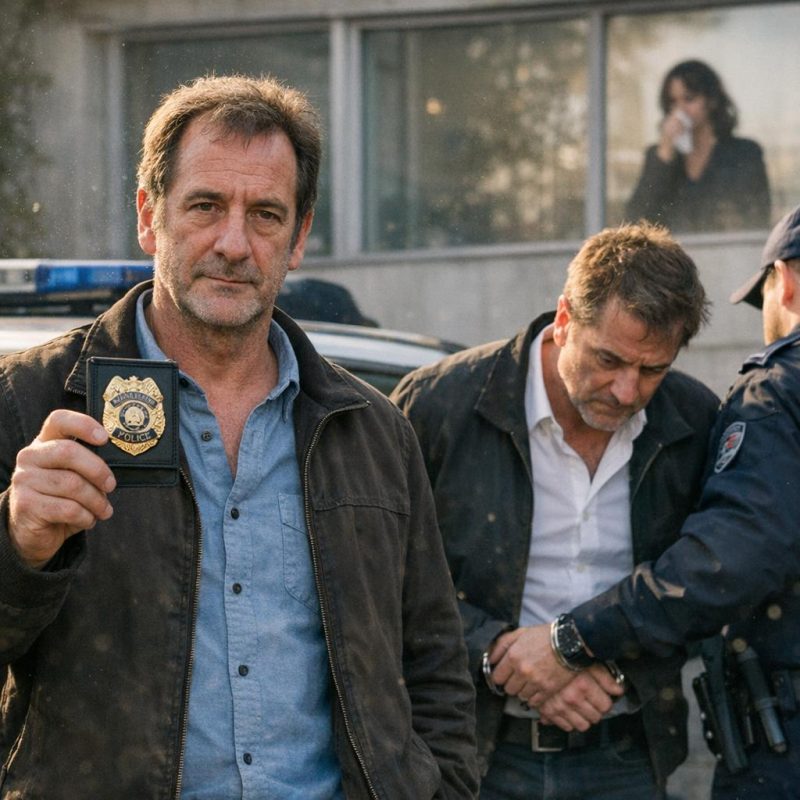 Image by RM AI
The Investigation Widens
Detective Morris conducted formal interviews with all of us over the next two days. Sarah went first, explaining how she'd obtained the financial records and traced the pharmaceutical payments. Nurse Karen came forward officially, no longer afraid of retaliation, describing what she'd witnessed and the records she'd secretly copied. When it was my turn, I walked Detective Morris through everything—from Emily's initial symptoms to my own injections, from the forged consent forms to the moment I'd realized what was really happening. He listened without interrupting, taking meticulous notes. His questions were sharp but not unkind. He wanted to understand the timeline, the documentation, the evidence chain. He asked about other patients I might have seen in Dr. Aris's office, other names I might have heard mentioned. I told him about the woman in the waiting room months ago, the one who'd looked so exhausted and defeated. He wrote that down. The pharmaceutical company was already being investigated, he said. Federal agencies were involved now—this crossed state lines, involved interstate commerce, potential mail and wire fraud. The scope kept expanding. Detective Morris closed his notebook and said, 'This is bigger than we thought—there may be other victims.'
 Image by RM AI
The Search Warrant
The search warrants were executed on a Tuesday morning. Police searched both Dr. Aris's office at the hospital and his home in the suburbs. I wasn't there—Detective Morris had told me to stay away, let them do their work. But Sarah kept me updated throughout the day. They'd found filing cabinets in his home office, she texted. Dozens of patient files that shouldn't have been there. Records he'd taken home, hidden away. By afternoon, the news got worse. Detective Morris called me directly, his voice grave. They'd identified at least twelve other patients who'd been enrolled in the trial without proper consent or oversight. Some had died. Others had suffered severe complications that had been documented as psychiatric episodes or pre-existing conditions. The families had never known. The pattern was identical to Emily's case—vulnerable patients, falsified records, experimental injections, deaths classified as natural causes or suicide. I sat down hard, the phone pressed to my ear, unable to speak. My sister hadn't been the first. I hadn't been the last. This had been going on for years. Detective Morris called me with the news: 'Claire, Emily wasn't his first—and you weren't going to be his last.'
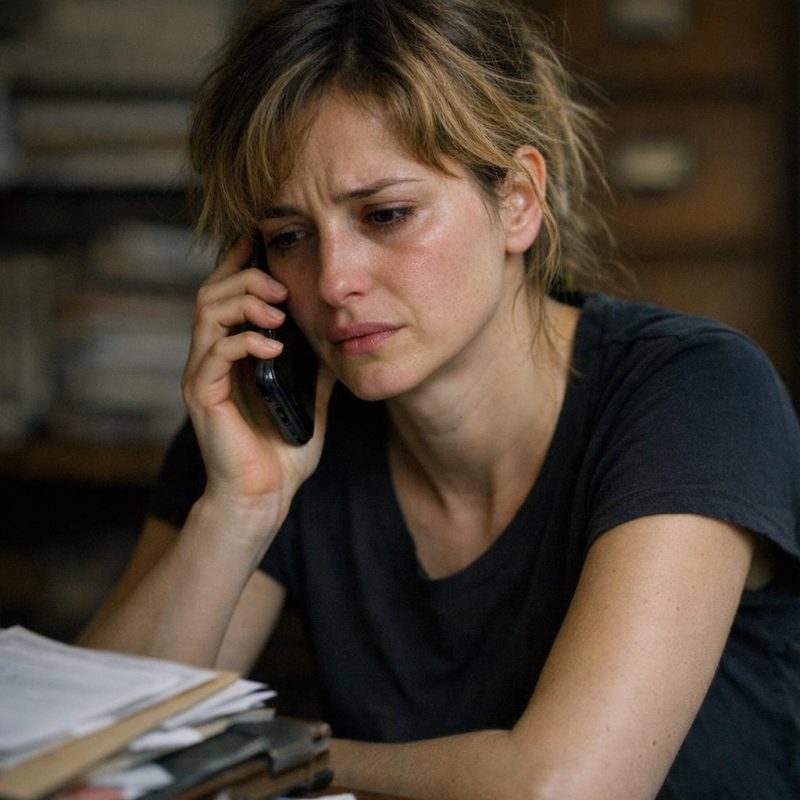 Image by RM AI
Media Coverage
Sarah worked around the clock on her investigative piece, fact-checking every detail with Detective Morris's approval. She interviewed Nurse Karen on the record. She obtained copies of public documents—arrest records, search warrant inventories, corporate filings showing the payments from CardioPharma to Dr. Aris. She spoke with families of other victims who were willing to go public. The article went live on a Friday morning, published by a major national outlet that had been following the story. Within hours it was everywhere—shared thousands of times on social media, picked up by news networks, trending on Twitter. My phone wouldn't stop buzzing. Sarah had written it carefully, respectfully, centering the victims rather than sensationalizing the crime. She'd included Emily's photo—the one from her college graduation, where she looked so happy and full of life. She'd quoted me talking about how my sister had asked for help and been betrayed by someone she'd trusted. The pharmaceutical company's stock price plummeted. Calls for investigations echoed from lawmakers. Victims' families started coming forward. The pressure became overwhelming for everyone involved in the scheme. The headline read: 'Respected Doctor Allegedly Murdered Sister, Poisoned Survivor in Illegal Drug Trial Scheme.'
 Image by RM AI
The Pharmaceutical Company Fallout
The arrests came in waves. First, CardioPharma's CEO was taken into custody at his Connecticut estate—charged with conspiracy, fraud, and manslaughter. Then three board members who'd authorized the payments and knew about the unethical trials. Federal prosecutors held a press conference announcing a multi-agency investigation into corporate malfeasance and medical fraud. The charges kept expanding: wire fraud, racketing, conspiracy to obstruct justice. The company's offices were raided, computers seized, emails subpoenaed. Whistleblowers from inside CardioPharma started coming forward with more evidence. The whole operation had been deliberate, calculated, designed to bypass regulatory oversight and rush an unproven drug to market. They'd known the risks. They'd paid Dr. Aris and potentially other doctors to conduct trials on unsuspecting patients. They'd buried the adverse events. I watched it all unfold on the news, Sarah beside me on my couch. We'd opened a bottle of wine—the first time I'd been able to drink since this whole nightmare started without feeling nauseous. The news showed executives being led from their offices in handcuffs, and I finally felt like justice was real.
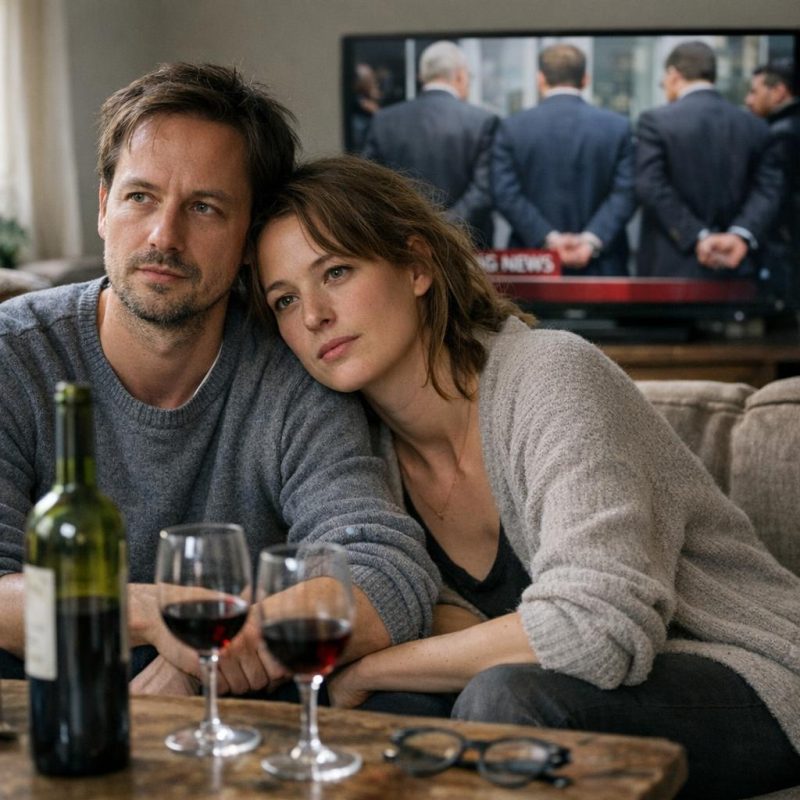 Image by RM AI
The Preliminary Hearing
The preliminary hearing was held in a packed courtroom. I'd been prepped by the prosecutor, told what to expect, reminded to stick to facts. But nothing really prepared me for sitting fifteen feet from Dr. Aris, seeing him in an orange jumpsuit instead of his white coat. He looked diminished somehow. Older. His attorney whispered to him constantly, but Dr. Aris mostly stared straight ahead. When I took the stand, my voice was steadier than I'd expected. I testified about Emily's symptoms, about my own treatment, about discovering the forged consent forms and the pharmaceutical payments. I explained how he'd dismissed legitimate medical concerns as psychiatric problems. The prosecutor asked me to identify him, and I pointed without hesitation. Dr. Aris didn't meet my eyes. His attorney tried to suggest I was confused, grieving, misinterpreting. The prosecutor shut that down with the forensic evidence, the financial records, the other victims. The judge listened to everything, reviewed the evidence, denied bail. Flight risk, he said. Danger to the community. As I stepped down from the witness stand, I saw other victims in the gallery—faces I recognized from obituaries.
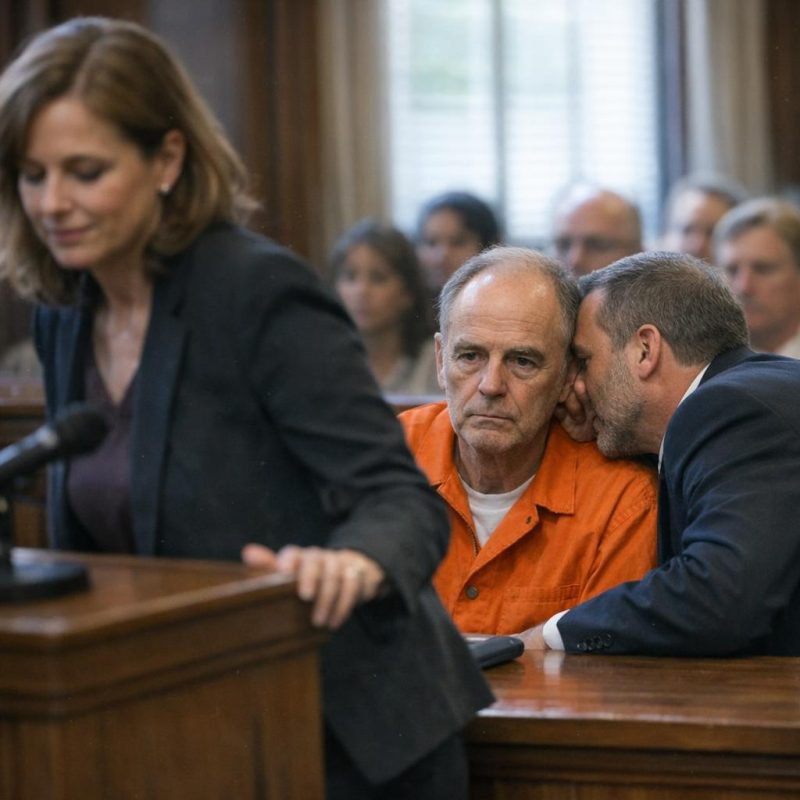 Image by RM AI
The Medical Board's Decision
The medical board hearing was formal, bureaucratic—rows of official-looking people in suits, reading from thick folders of evidence. I sat in the public gallery with families of other victims, watching as they systematically dismantled Dr. Aris's career. The violations were read aloud: experimental drug administration without proper consent, falsification of medical records, financial conflicts of interest, gross negligence resulting in patient deaths. It took forty minutes to get through the full list. The vote was unanimous. License permanently revoked, with a recommendation for criminal prosecution. Then something unexpected happened. The board chair, a gray-haired woman who'd looked stern throughout the proceedings, set down her papers and looked directly at the gallery. Her voice softened. 'To the families present today, I want to say what should have been said long ago. We failed Emily Brennan. We failed Claire Brennan. We failed every patient who came to us with concerns about Dr. Aris and was turned away because we prioritized professional courtesy over patient safety. Our oversight systems failed catastrophically, and people died because of it.' She paused, and I saw genuine remorse in her face. The board chair looked directly at me and said, 'We failed Emily, and we failed you—we will do better.'
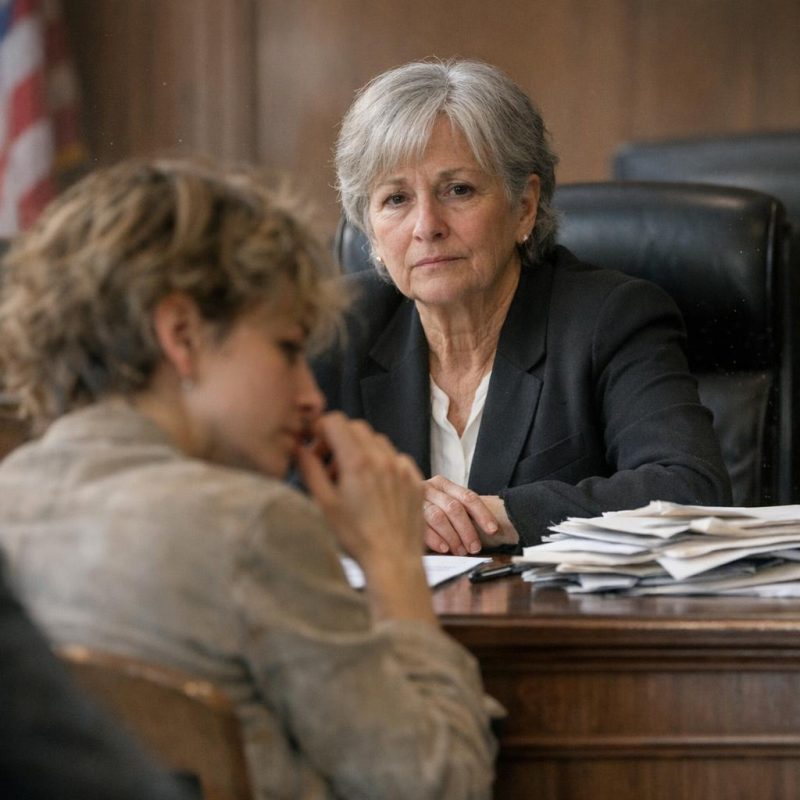 Image by RM AI
Beginning Treatment
Dr. Patel designed a careful detox protocol to clear the experimental drug from my system. Blood tests every three days to monitor levels. Supplements to support liver and kidney function. Medications to manage the withdrawal symptoms he warned me to expect. The first week was rough—headaches, nausea, this weird electrical feeling in my limbs. But Dr. Patel had prepared me for all of it, explained exactly what was happening and why. That made such a difference, you know? Having a doctor who actually talked to me like I deserved to understand my own body. By week three, I started feeling things I'd forgotten were normal. Real energy, not the jittery artificial kind. Sleep that actually refreshed me. Thoughts that didn't spiral into paranoia. My hands stopped shaking. The constant low-grade nausea finally lifted. At my four-week follow-up, Dr. Patel showed me the lab results—the drug was almost completely cleared from my bloodstream. 'Your liver function is improving,' he said, reviewing the numbers with me. 'Kidney markers are back in normal range. Your body is remarkably resilient.' He looked up from the chart and smiled. Dr. Patel monitored my progress and said, 'You're healing, Claire—your body just needed a chance.'
 Image by RM AI
Remembering Emily
I drove to the cemetery on a Tuesday morning, when I knew it would be quiet. Emily's grave was in the newer section, under a maple tree that had leafed out since her funeral. The headstone was simple—her name, dates, 'Beloved Sister and Friend.' I'd brought yellow roses, her favorite. For a long time I just stood there, not really knowing what to say. How do you tell your dead sister that you've spent months unraveling the circumstances of her death? That the doctor who killed her is going to prison? Eventually I knelt down and arranged the flowers in the built-in vase. 'It's over,' I said quietly. 'The trial's starting next month, but it's basically over. Dr. Aris is going away for a long time. And the medical board finally admitted they screwed up, that they should have investigated him years ago. Your death exposed this whole system of corruption and negligence.' A breeze moved through the maple leaves above me. 'Other families are coming forward now. People who lost parents, siblings, partners to his experiments. They're going to testify too. Your story is going to be part of what changes things.' I traced her name on the headstone. I placed flowers on her headstone and whispered, 'You didn't die in vain—I made sure of that.'
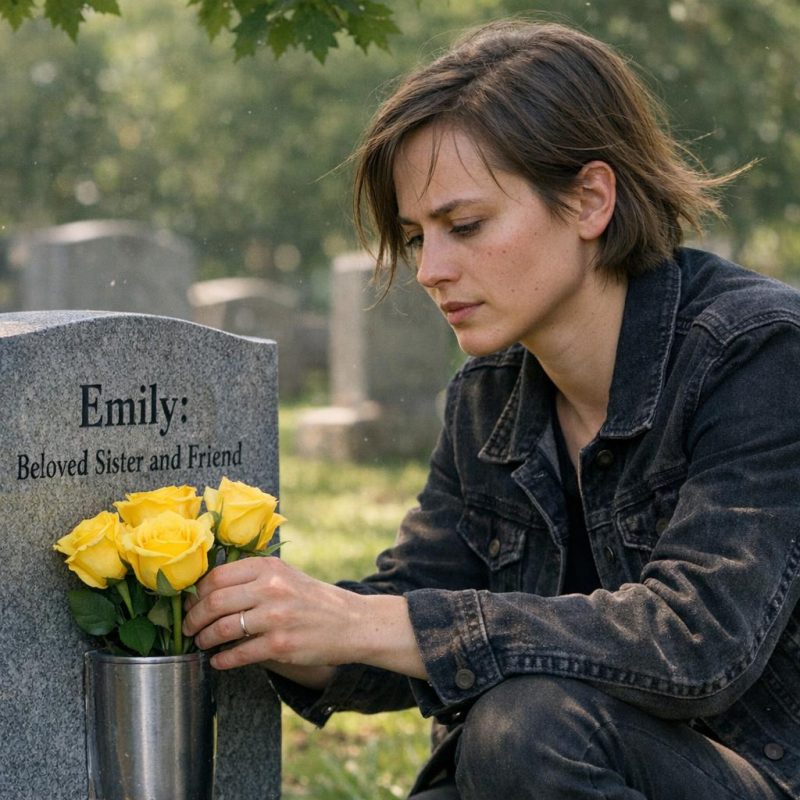 Image by RM AI
Becoming an Advocate
Sarah told me about the patient advocacy group about two months after the trial started. They met weekly at a community center, survivors of medical malpractice and negligence who helped each other navigate the legal and emotional aftermath. I started going, just to listen at first. But then I found myself sharing my story—how Dr. Aris had dismissed Emily's symptoms, how he'd gaslit me about my own health, how the system had protected him until it was too late. Other people nodded along. They'd experienced similar things. Doctors who wouldn't listen. Symptoms dismissed as anxiety or stress. The terrible realization that something was seriously wrong and no one would help. Now I co-lead the Tuesday evening sessions. We teach people how to document their symptoms, how to demand second opinions, how to recognize when a doctor is gaslighting them instead of treating them. We help families file complaints with medical boards. We connect people with ethical physicians like Dr. Patel. It doesn't bring Emily back. Nothing will. But I've learned something important through all of this—something I wish I'd understood before my sister died. The medical system is supposed to work for patients, not the other way around. I learned the hard way that you have to be your own advocate—and now I help others find their voice, too.
 Image by RM AI
KEEP ON READING
The 20 Most Recognized Historical Figures Of All Time
The Biggest Names In History. Although the Earth has been…
By Cathy Liu Oct 4, 2024
10 of the Shortest Wars in History & 10 of…
Wars: Longest and Shortest. Throughout history, wars have varied dramatically…
By Emilie Richardson-Dupuis Oct 7, 2024
10 Fascinating Facts About Ancient Greece You Can Appreciate &…
Once Upon A Time Lived Some Ancient Weirdos.... Greece is…
By Megan Wickens Oct 7, 2024
20 Lesser-Known Facts About Christopher Columbus You Don't Learn In…
In 1492, He Sailed The Ocean Blue. Christopher Columbus is…
By Emilie Richardson-Dupuis Oct 9, 2024
20 Historical Landmarks That Have The Craziest Conspiracy Theories
Unsolved Mysteries Of Ancient Places . When there's not enough evidence…
By Megan Wickens Oct 9, 2024
The 20 Craziest Inventions & Discoveries Made During Ancient Times
Crazy Ancient Inventions . While we're busy making big advancements in…
By Cathy Liu Oct 9, 2024