


The Office Mom
I've been at this company for twenty-three years, and honestly, I'm not sure anyone would notice if I disappeared tomorrow. That sounds darker than I mean it. What I'm saying is, I've never been the flashy one. I'm the person who remembers birthdays, who knows how everyone takes their coffee, who explains the expense system to confused interns every September. My colleagues called me 'the office mom' behind my back—I heard it once through a conference room door and pretended I hadn't. It didn't bother me, not really. I was proud of being helpful, of making the workplace a little softer around the edges. I'd mentored maybe a dozen people over the years, always quietly, always in the margins of my actual job in client services. Some of them sent Christmas cards. Most didn't. I never minded. There was something deeply satisfying about watching younger colleagues grow, even if they eventually outpaced me on the org chart. I told myself that was enough. I told myself contribution mattered more than recognition. Then a bright young woman named Elise walked through the door, and everything changed.
 Image by RM AI
The Invisible Years
Twenty-three years is a long time to watch other people get promoted. I don't say that with bitterness—okay, maybe a little bitterness—but mostly it's just a fact. I'd been passed over seven times for senior positions. Seven. Each time, my director Anne would pull me aside and explain why it wasn't quite my moment: the timing was off, the client portfolio needed stability, my skills were 'too valuable' in my current role. That last one always felt like a polite way of saying I was useful where I was, so why move me? But I kept my head down. I stayed late. I mentored the people who eventually got the jobs I wanted. This year felt different, though. Anne called me into her office in January and actually closed the door. She told me about a major project—a complete overhaul of our client retention strategy—and said if I could lead it successfully, the promotion was mine. No more maybes. No more 'next time.' I worked on that project like my life depended on it, because in a way, it did. But this year, my director said something different: 'Laura, I think it's finally your time.'
 Image by RM AI
Enter Elise
Elise arrived in late March, right as the trees outside our office building were starting to bud. She was twenty-eight, impeccably dressed in a way that made my department store blazers feel suddenly frumpy, and she had this energy about her—like she was genuinely thrilled to be there. Her first day, she introduced herself to everyone on the floor, shaking hands and making eye contact like she'd read a book on how to make good impressions. When she got to my desk, she smiled and said she'd heard I was the person to know. I laughed it off, but I felt a little glow of pride. She was assigned to a cubicle near mine, and within a week, I noticed her watching how I handled difficult client calls, how I navigated the databases, how I organized my project files. There was something almost childlike in her eagerness, and it triggered something maternal in me. I have a daughter about her age, and maybe that's why I felt protective. When Elise asked if I'd mentor her, I didn't hesitate to say yes.
 Image by RM AI
The Eager Apprentice
Elise became my shadow. Every morning, she'd arrive with two coffees—one for each of us—and ask what I was working on that day. She took notes constantly, filling up a leather-bound notebook with neat handwriting. She asked thoughtful questions, the kind that showed she was actually listening: 'Why did you phrase the email that way?' or 'How do you decide which clients need a check-in call?' I found myself explaining things I'd done on autopilot for years, and in explaining them, I felt competent in a way I hadn't in a long time. She never made me feel old or out of touch. If anything, she made me feel like I had valuable knowledge worth preserving. We'd have lunch together a few times a week, and she'd tell me about her career ambitions, her fears about being taken seriously as a young woman in a male-dominated industry. I related to all of it. I saw myself in her, or maybe the self I'd been two decades ago. I remember thinking: this is exactly the kind of young woman the industry needs.
 Image by RM AI
Sharing Everything
I gave Elise access to everything. Not officially, of course—I couldn't grant her system permissions—but I walked her through my client files, showed her the templates I'd developed, explained the intricate histories of our most challenging accounts. When she asked about my promotion project, I didn't hold back. I showed her my research, my strategy documents, the presentation outline I was building. She was fascinated by the retention metrics I'd uncovered, the patterns in client departure that no one else had noticed. We'd stay late together, ordering takeout and spreading papers across the conference room table. She'd ask, 'Can I see how you structured that analysis?' and I'd pull it up on my laptop, talking her through my methodology. It felt good to be needed, to be seen as an expert. One evening, after a particularly long session where I'd basically given her a masterclass in client psychology, Elise hugged me. It was spontaneous and brief, but her eyes were genuinely misty. Elise hugged me after one particularly long session and said, 'I couldn't do this without you.'
 Image by RM AI
A Woman Lifting Women
I've always believed in lifting other women up. That's not just a saying for me—it's a genuine principle I've tried to live by. The corporate world can be brutal for women, especially in our industry where the executive floor is still mostly gray-haired men in expensive suits. I'd watched too many talented women get overlooked, talked over, underestimated. If I could make it easier for someone like Elise, wasn't that worth something? Wasn't that maybe even more important than my own advancement? I started thinking about legacy, about what I'd leave behind when I eventually retired. It probably wouldn't be a VP title or a corner office. But if I could help shape the next generation of women leaders, if I could pass on everything I'd learned through decades of quiet observation and hard work, maybe that was the real contribution. My promotion project was important, sure, but watching Elise grow felt important too. Maybe the promotion wasn't the point—maybe this was what I was meant to do.
 Image by RM AI
The Big Meeting Looms
The presentation was scheduled for a Monday in early June. I'd be presenting my retention strategy to Anne, our VP Richard—who rarely attended department meetings—and several other senior leaders. This was it. This was everything I'd been working toward. The week before, I barely slept. I rehearsed my talking points in the car, in the shower, while cooking dinner. I refined my slides obsessively, adjusting fonts and color schemes like they mattered. Elise noticed my nervousness. She stopped by my desk on Friday afternoon and offered to help me practice over the weekend. 'We could run through it together,' she said. 'I could give you feedback, play devil's advocate with the tough questions.' It was a kind offer. A generous offer. For a moment, I almost accepted—having a friendly audience would calm my nerves. But something made me hesitate. Maybe I wanted to prove I could do this on my own. Maybe after all the sharing and collaboration, I needed this one thing to be just mine. Elise offered to help me rehearse, and I almost said yes—but something made me want to do this alone.
 Image by RM AI
Monday Morning
Monday morning arrived with that particular kind of clarity that comes with high-stakes moments. I wore my best suit—the navy one I'd bought specifically for important meetings—and arrived thirty minutes early. The conference room was already set up, the projector humming, my carefully prepared presentation loaded and ready. Anne arrived first, then Greg from operations, then two directors I recognized but rarely worked with. Finally, VP Richard walked in, and the room's energy shifted. He had that executive presence, that way of commanding attention just by existing in a space. Everyone took their seats. I stood at the head of the table, my folder in front of me, my heart hammering but my mind clear. This was my moment. Twenty-three years of work had led to this. I took a breath, ready to begin my introduction, ready to show them what I'd discovered, what I'd built, what I could do. I was about to start when Elise cleared her throat and stood up.
 Image by RM AI
Stolen Words
I didn't understand what was happening at first. Elise stood up, smiled at the room, and opened her laptop. Then she started talking. And I mean, she started presenting MY work. Word for word. She clicked through slides that looked exactly like mine—same color scheme, same font, same layout. She talked about the timeline I'd discovered, used the exact phrasing I'd spent hours perfecting. She referenced the data patterns I'd uncovered, the connections I'd made. My mouth went dry. I tried to speak, tried to interrupt, but nothing came out. It was like my body had shut down. Greg was nodding along. The other directors were taking notes. Anne was leaning forward, engaged. Elise kept going, smooth and confident, like she'd created every bit of it herself. She even told the little anecdote I'd planned to use about discovering the initial anomaly. Twenty minutes. That's how long she talked. Twenty minutes of my work, my analysis, my career opportunity—stolen right in front of me while I sat there unable to move. When she finished, VP Richard leaned back and smiled. 'Brilliant work, Elise. Truly brilliant.'
 Image by RM AI
Paralyzed
The meeting ended in a blur of handshakes and congratulations. All directed at Elise. VP Richard stood up first, actually shook her hand. Greg clapped her on the shoulder. The other directors gathered around her, asking follow-up questions, praising her insight. I sat in my chair, still frozen, watching it happen. Nobody looked at me. Not once. It was like I'd become invisible, like I'd never been in the room at all. People started filing out. Elise laughed at something Greg said. Someone mentioned taking her to lunch. I finally managed to stand up, my legs shaky, my presentation folder still clutched in my hands. Useless now. Completely useless. The room emptied quickly, everyone eager to get back to their day, back to their work. Nobody asked me why I hadn't presented. Nobody seemed to remember that I was supposed to be leading this meeting. Director Anne was the last to leave. She squeezed my shoulder on the way out and whispered, 'Next time, Laura.'
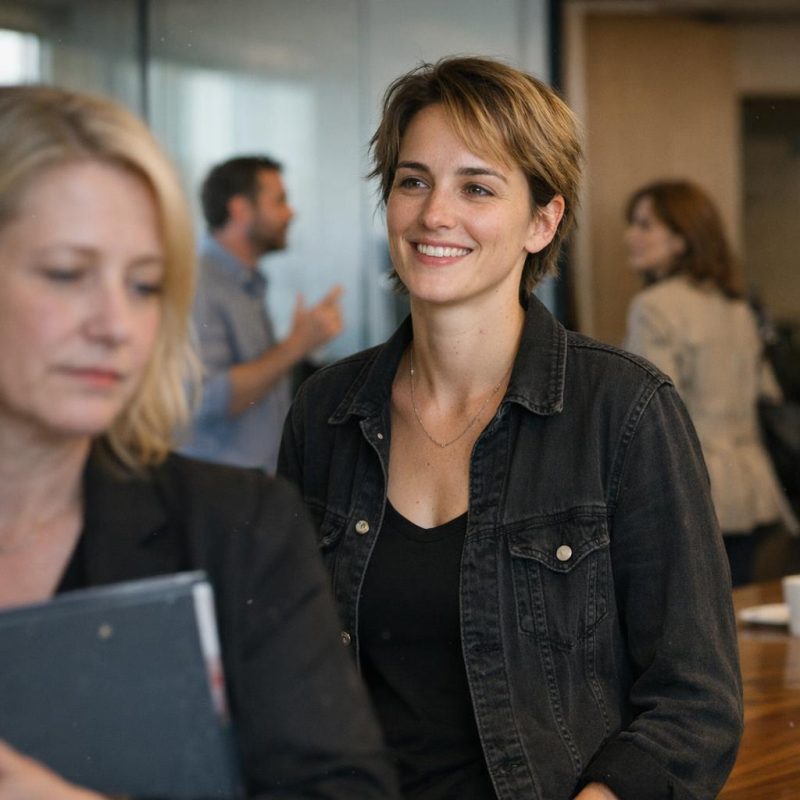 Image by RM AI
The Confrontation
I caught up with Elise in the hallway, my voice shaking so badly I barely recognized it. 'What the hell did you just do?' She turned around, calm as anything, like we were discussing the weather. 'Why did you steal my project?' I demanded. People were walking past us, and I didn't care anymore. Let them hear. Let everyone know what she'd done. But Elise just smiled, that same pleasant smile she'd given me a hundred times over coffee. 'Laura, let's not make a scene,' she said quietly. 'A scene? You just presented my entire analysis as your own!' My hands were trembling. She glanced around, then stepped closer, lowering her voice. 'I think you're confused. That was my research. Maybe you're misremembering.' The gaslighting was so blatant, so shameless, that I actually laughed. A bitter, broken sound. 'I know what I created, Elise.' She tilted her head, studying me with something that looked almost like pity. Then she smiled again and said, 'Let's face it, Laura. You won't be needing it anyway.'
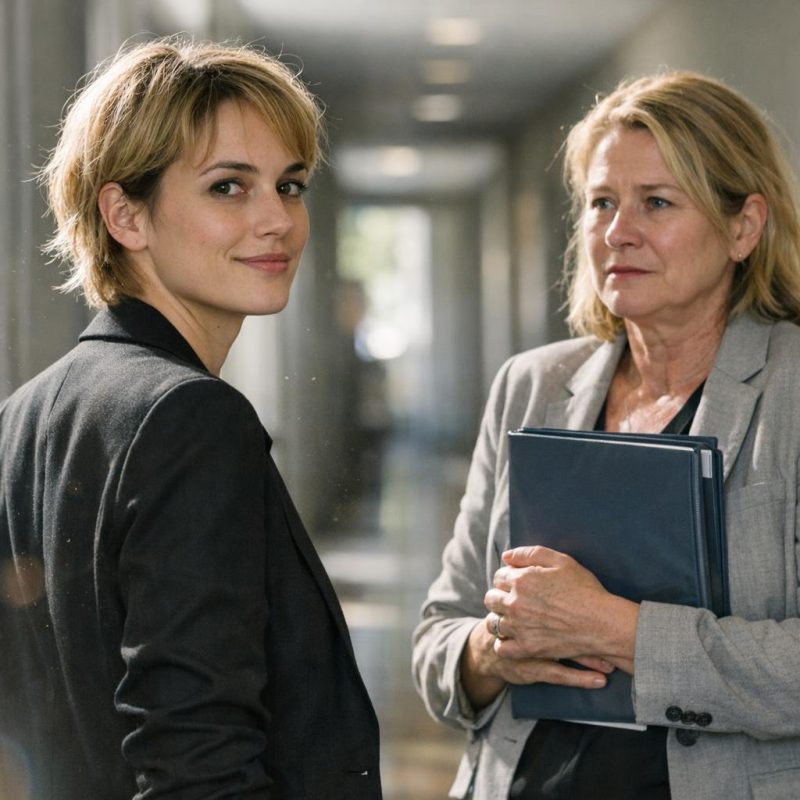 Image by RM AI
The Ominous Email
I made it back to my desk somehow, my mind racing, trying to process what Elise had just said. You won't be needing it anyway. What did that mean? An hour later, the email came through. Subject line: 'Department Restructuring Discussion—Action Required.' It was from HR, cc'ing Greg and Director Anne. They wanted to schedule a meeting to review my position as part of 'organizational changes being implemented over the next quarter.' The language was corporate-neutral, the kind of carefully worded message that could mean anything. But I'd been in this company long enough. I'd seen these emails before. I'd watched colleagues get them, watched them clean out their desks three weeks later. My hands went cold. I read it again, searching for some other interpretation, some innocent explanation. There wasn't one. Elise's words echoed in my head. You won't be needing it anyway. She'd known. Somehow, she'd known this was coming. Or worse—she'd caused it. I stared at the email, at the polite corporate language that translated to one simple message: your job is not safe. I'd seen those emails before—they were never, ever good.
 Image by RM AI
Leaving Early
I couldn't focus after that. Couldn't think. Every time I tried to work, I'd see Elise standing at the front of that conference room, presenting my analysis like it belonged to her. I'd hear VP Richard's praise. Brilliant work, Elise. By three o'clock, I gave up. Told Greg I wasn't feeling well, which was technically true. I felt sick to my stomach. I packed up my things and walked out, past Elise's desk where she sat typing away, perfectly composed, like nothing had happened. The drive home was a blur. I kept replaying the morning, trying to figure out where I'd gone wrong, what I could have done differently. Should I have interrupted? Should I have stood up and called her out in front of everyone? But I knew how that would have looked—bitter, jealous, unprofessional. By the time I pulled into my driveway, I was fighting back tears. Twenty-three years. Twenty-three years of dedication, of working late, of mentoring people like Elise. And this was how it ended. My phone rang just as I turned off the engine. Jennifer's name lit up the screen. My daughter Jennifer called just as I pulled into the driveway—somehow, she always knew.
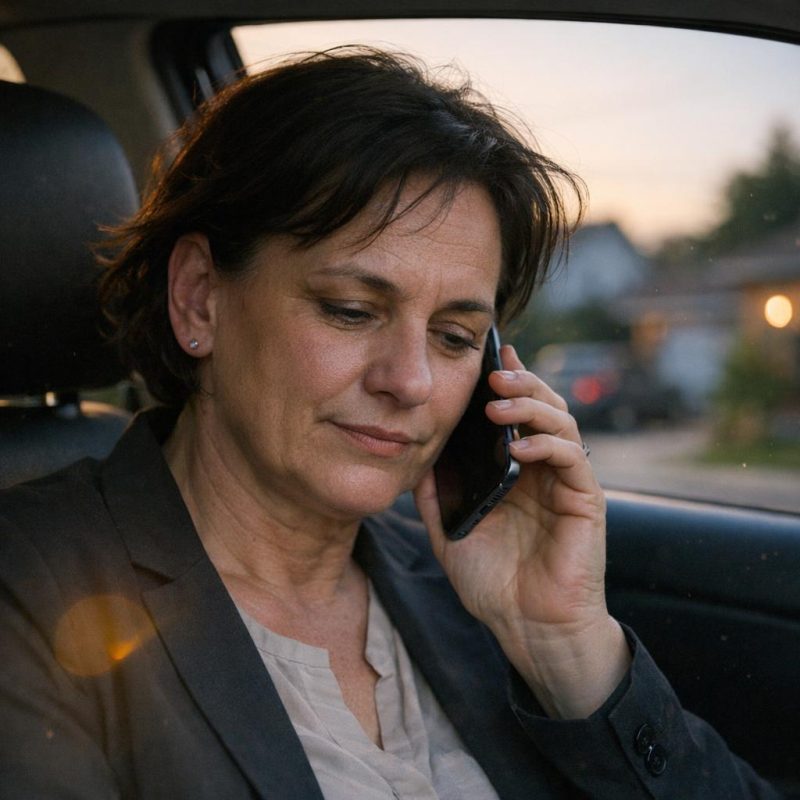 Image by RM AI
My Daughter the Paralegal
I answered, and Jennifer immediately knew something was wrong. That's the thing about your kids—even when they're grown, they can still hear it in your voice. I told her everything. The presentation, Elise's betrayal, the HR email. It all came pouring out while I sat in my car, watching the neighbor's cat cross my lawn. Jennifer listened without interrupting, which is how I knew she was in lawyer mode. She works as a paralegal at a downtown firm, and she'd inherited her father's sharp mind for details. When I finally finished, she was quiet for a moment. Then she said, 'Mom, you need to start documenting everything. Right now. Every email, every conversation, every meeting. Screenshot it, print it, save it.' I felt a small flicker of something—not quite hope, but direction. 'You think I should fight this?' I asked. 'I think something's off,' she said carefully. 'People don't steal work unless they're confident they'll get away with it. Which means either she's incredibly stupid or she knows something you don't.' That sentence hung in the air. 'Something's off, Mom. People don't steal work unless they think they'll get away with it.'
 Image by RM AI
The Strategy Lunch
The next morning, I learned about the lunch. Carla from accounting mentioned it casually, not realizing she was twisting the knife. 'Did you hear? VP Richard invited Elise to the strategy planning lunch next week. Pretty impressive for someone so new.' I must have looked confused because Carla continued, 'You know, that private quarterly thing where they bring in the rising stars to discuss company direction.' Oh, I knew. Of course I knew. That lunch was legendary in our office. It was where careers were made, where executives identified their successors, where the real decisions happened behind closed doors. Invitations were rare and significant. I'd been working there for twenty-three years. Twenty-three years of strong performance reviews, successful projects, consistent results. I'd never been invited. Not once. And Elise had been at the company for six weeks. Six weeks, and she was already being groomed for leadership while I got restructuring emails from HR. The injustice of it burned in my chest. Carla was still talking, saying something about how exciting it must be to watch our mentee succeed. I'd been at the company for twenty-three years and had never received that invitation.
 Image by RM AI
Confronting Greg
I cornered Greg in his office that afternoon, closing the door behind me. 'We need to talk about what happened in that meeting,' I said. He wouldn't look at me. Just shuffled papers on his desk, checked his computer screen, did everything except make eye contact. 'Greg, Elise presented my entire project. My research, my analysis, my recommendations. You know that.' He sighed, like I was being difficult. 'Laura, I think you need to consider that maybe this is about fresh perspectives. New voices bringing new energy to old problems.' Old problems. The way he said it made my skin crawl. 'I'm not an old problem,' I said quietly. 'I'm a senior analyst who had work stolen by someone I was mentoring.' Finally, he looked at me, and something in his expression made me feel small. Pitied. 'Look, the presentation was impressive. Very impressive. And right now, the company is looking for people who can bring that kind of innovative thinking. Maybe this is an opportunity for you to step back, let the next generation lead.' The next generation. He meant younger. He meant Elise. The humiliation was almost worse than the theft itself.
 Image by RM AI
Invisible Again
The shift happened so gradually I almost didn't notice at first. Marcus from finance, who used to stop by my desk every Tuesday to get my take on the quarterly reports, started walking past without even making eye contact. Sarah from marketing, who'd always asked me to review her budget proposals before submitting them, went straight to Elise instead. I'd hear them laughing in the break room, chatting like old friends. When I walked in, the conversation would pause, just for a second, before resuming at a slightly different volume. During team meetings, people directed their questions to Elise, even when I was the one with the actual expertise. Greg would nod along, encouraging it. 'Great question for Elise,' he'd say, when someone asked about something I'd literally written the protocols for years ago. I started eating lunch at my desk because the cafeteria felt like navigating a minefield of people who'd suddenly forgotten I existed. My phone stopped ringing. My email got quieter. The institutional knowledge I'd spent decades building was being rerouted around me, like I was an obstacle instead of a resource. It was like watching myself disappear in real time.
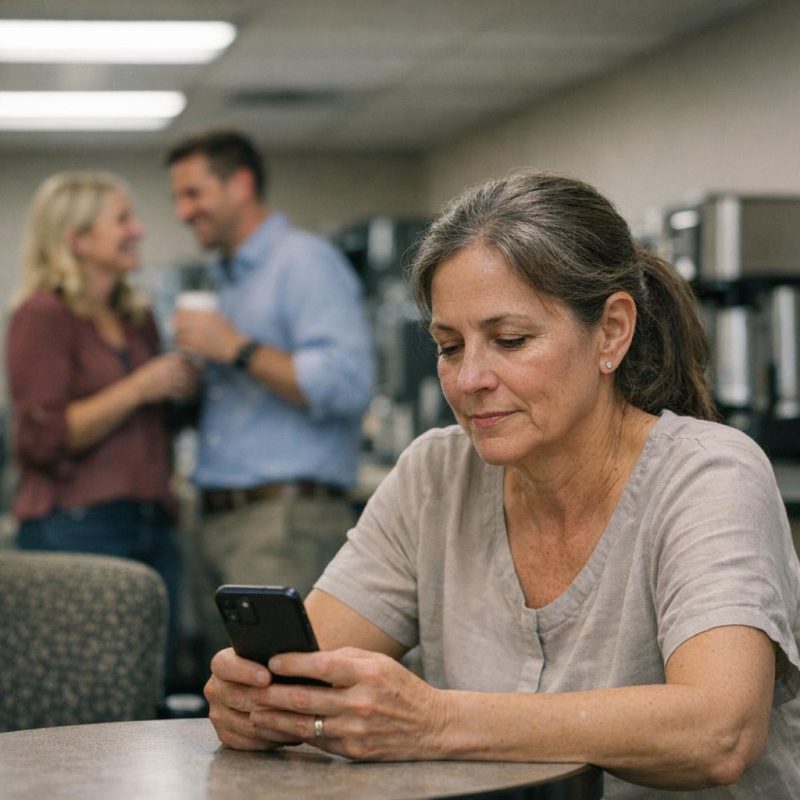 Image by RM AI
Documentation Begins
Jennifer's advice kept echoing in my head. Document everything. So I started keeping a log in a password-protected file on my personal laptop at home. Not the work computer—I wasn't that naive anymore. Every evening after dinner, I'd open it up and write down what had happened that day. Dates, times, names of people present. Who said what in meetings. Which projects I'd worked on versus which projects Elise claimed credit for. Email timestamps showing when I'd sent research to her versus when she'd presented it as her own. The interactions that felt off, the conversations that stopped when I walked into a room. Writing it all down made it feel more real somehow, like I wasn't imagining the whole thing. But it also made me feel kind of crazy, you know? Like some paranoid conspiracy theorist hoarding evidence of things that might just be coincidence. My husband walked past the dining room one night and saw me typing furiously, brow furrowed. 'You okay?' he asked. I closed the laptop quickly, feeling caught. 'Yeah, just work stuff.' But here's the thing: I felt paranoid doing it—until I realized I should have started weeks ago.
 Image by RM AI
The Polished Performance
We had a team meeting that Thursday to discuss the upcoming client presentation, and I watched Elise work the room like she'd been doing it her whole life. She arrived exactly two minutes late, just enough to make an entrance without seeming rude. Her outfit was perfectly calibrated—professional but approachable, with this silk scarf that probably cost more than my car payment. She had a way of tilting her head when someone spoke, like what they were saying was the most fascinating thing she'd ever heard. Greg ate it up. Everyone did. She'd laugh at just the right moments, ask questions that made people feel smart for answering them, and somehow manage to reference the work I'd done while making it sound like a collaborative team effort she'd guided. 'Building on the foundation Laura helped establish,' she said at one point, smiling at me. The emphasis on 'helped' was so subtle I might have imagined it. When she presented her ideas, they were polished to a shine, delivered with the kind of confidence that made you forget to ask where they'd come from. I kept trying to catch something genuine, some crack in the performance, but there was nothing. It felt rehearsed—but maybe I was just bitter.
 Image by RM AI
Old Friends
Tom from IT passed me in the hallway near the elevators on Friday afternoon. We'd worked together for almost twelve years—he'd helped me through every computer crisis, every system upgrade, every time I'd accidentally deleted something important. Good guy, quiet, kept his head down and did his job well. When he saw me, something flickered across his face. Not quite pity, but close. Something like recognition, maybe. Or sympathy. He slowed down as we approached each other, opened his mouth like he wanted to say something. I paused, hopeful for any kind of normal human interaction after weeks of feeling like a ghost. 'Hey, Tom. How's it going?' He glanced around the hallway, checking who might be listening. His jaw tightened. For a second, I thought he was actually going to tell me something, share whatever was clearly on his mind. But then he just shook his head, gave me this apologetic little grimace, and kept walking. 'Take care of yourself, Laura,' he called back over his shoulder. The words felt weighted, like a warning I couldn't quite decode. He started to say something, then shook his head and walked away.
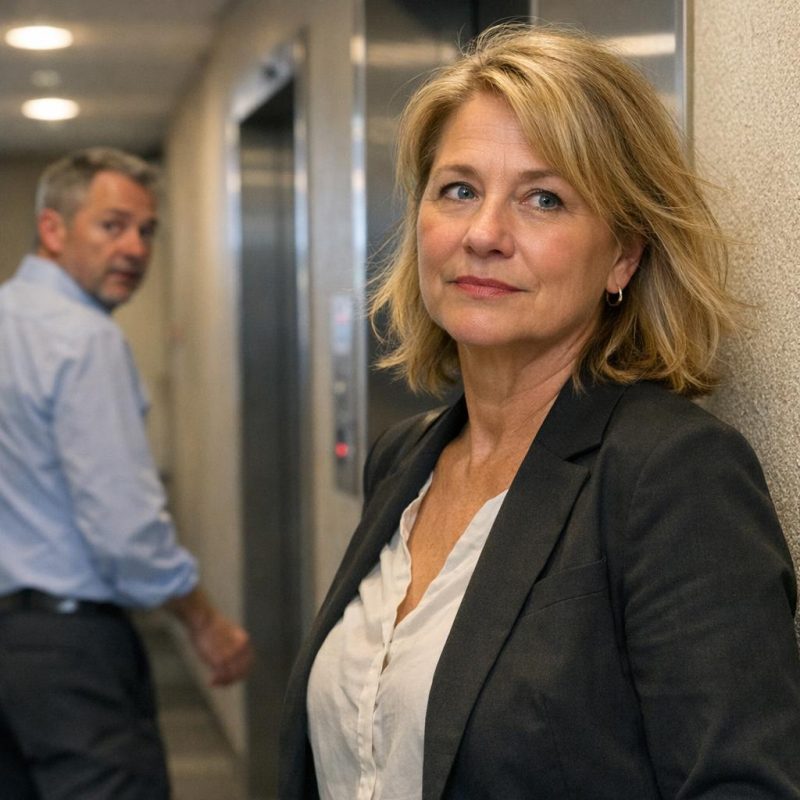 Image by RM AI
The Holiday Party Flashback
That weekend, my mind kept drifting back to last year's holiday party. You know how memories resurface at the weirdest times? I was folding laundry on Saturday afternoon when this whole scene came rushing back with sudden, uncomfortable clarity. Greg had been holding court near the bar, three drinks in, tie loosened, talking louder than usual. I'd been standing nearby with a few other senior staff, half-listening while nibbling on those sad grocery store cheese cubes they always serve. He'd been going on about the company's 'evolution,' about how businesses needed to 'refresh their talent pool to stay competitive.' Then he'd said it, almost joking but not quite: 'We've got to start phasing out the older generation, make room for fresh blood.' Everyone had laughed, including me. It seemed like typical corporate bluster, the kind of thing managers say when they're trying to sound strategic and forward-thinking. But now, standing in my bedroom with a half-folded towel in my hands, that comment hit different. The way he'd looked around the group when he said it. The pointed nature of 'older generation' in a room full of people over forty-five. At the time I'd laughed it off—now I wasn't so sure.
 Image by RM AI
Sleepless Nights
Sleep became impossible. I'd lie there next to my husband, listening to him breathe steadily, while my brain ran through everything on an endless loop. What had I missed? Where had I gone wrong? I'd replay conversations, searching for the moment when things shifted, when I'd somehow handed Elise the knife she was using to cut me out. Had I been too trusting? Too generous with my knowledge? Should I have seen this coming? Three in the morning became my new normal, staring at the ceiling in the dark, cataloging every interaction, every decision, every fucking moment I'd chosen kindness over caution. I'd shared my contacts with her. Introduced her to clients. Walked her through processes I'd spent years developing. What kind of idiot does that? My husband would sometimes wake up and find me sitting at the kitchen table with cold tea, just staring into space. 'You need to let this go,' he'd say gently. But I couldn't. It had become an obsession, this need to understand how I'd gotten here. To pinpoint the exact moment I'd lost control of my own career. The worst part was the question I couldn't stop asking: had I done this to myself?
 Image by RM AI
The Parking Lot Encounter
I stayed late on Tuesday to finish a report that no one would probably read, and the parking lot was nearly empty when I finally headed to my car. The overhead lights cast these harsh shadows across the pavement, and that's when I saw them—Elise and Greg standing between their cars in the far corner. Their heads were close together, body language intimate in a way that made me stop walking. Not romantic intimate, exactly, but conspiratorial. Like they were sharing secrets. Greg was doing most of the talking, gesturing with his hands, while Elise nodded along, arms crossed. I couldn't hear what they were saying, but the intensity of it was obvious even from fifty feet away. Greg handed her something—looked like a folder or maybe papers. She tucked it under her arm quickly. I stood there frozen, my keys digging into my palm, watching this scene that felt wrong in ways I couldn't quite articulate. Then Greg glanced up and spotted me. His whole body language changed instantly. He took a step back from Elise, his expression shifting from focused to casual so fast it felt theatrical. Elise turned to see what he was looking at, and her smile was all warmth and surprise. When they noticed me, they pulled apart quickly—too quickly.
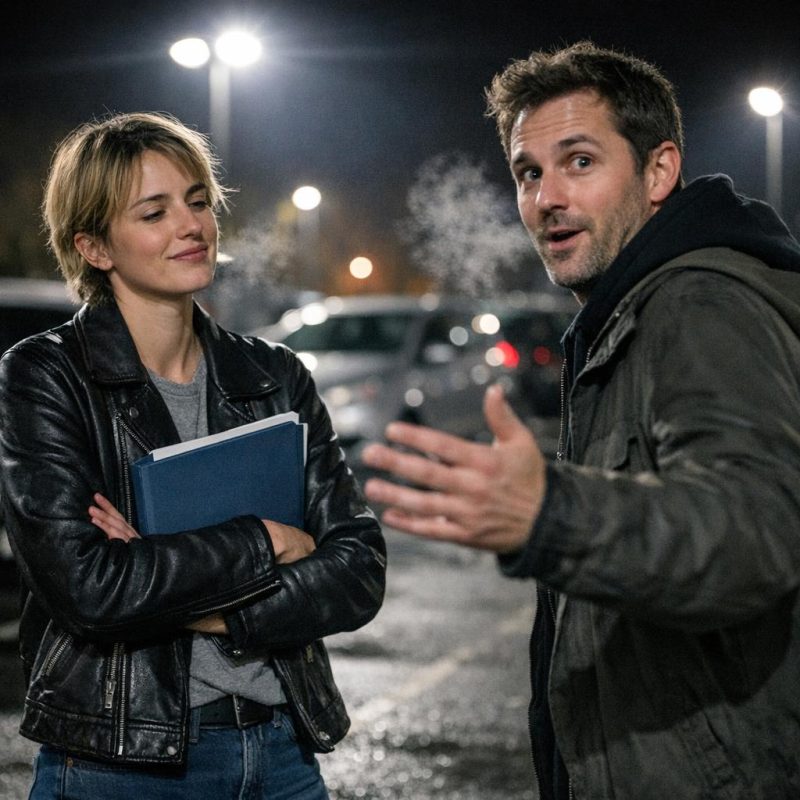 Image by RM AI
A Meeting Without Me
On Wednesday morning, I checked the shared calendar and saw a meeting I didn't recognize: 'Henderson Account Strategy Session.' Henderson was one of our biggest clients, and I'd been point person on their account for six years. I'd never missed a strategy meeting about them. Ever. I refreshed the calendar three times, thinking maybe it was a mistake, maybe I'd been left off the invite accidentally. But no—the attendee list was right there. Greg, Elise, Marcus from finance, two people from marketing. Everyone except me. My hands shook as I walked to Greg's office. He was typing an email and barely looked up when I knocked. 'The Henderson meeting,' I said, fighting to keep my voice steady. 'Was I supposed to be included in that?' He leaned back in his chair, perfectly relaxed, like we were discussing something trivial. 'Oh, that. Yeah, we decided to go a different direction this time. Fresh perspectives, you know?' I stood there waiting for more, for an actual explanation, but he just smiled blandly. 'Don't worry, you're still valuable to the team. We just wanted to give Elise more exposure.' When I asked Greg about it, he said, 'We wanted to give Elise more exposure.'
 Image by RM AI
The Question I Couldn't Ask
I tried to push the thought away as soon as it entered my mind, but it kept creeping back. Was there something personal between Greg and Elise? Some kind of relationship that explained why he'd gone so far out of his way to help her? I felt disgusting even considering it—like I was being petty, jealous, playing into some tired stereotype about how women advance in the workplace. But the way he defended her, the way he looked at her in meetings, the way he'd given her access to things I'd earned over years... something felt off. I'd worked with Greg for eight years. I'd never seen him mentor anyone the way he was mentoring her. He'd never advocated for me the way he advocated for her. And yeah, maybe that just meant he saw special potential in her. Maybe I was reading into nothing. Maybe I was becoming paranoid and bitter, exactly the kind of person I'd always promised myself I'd never be. I sat at my desk that afternoon feeling smaller and smaller, ashamed of where my mind had gone. I hated myself for the thought—but I couldn't shake it.
 Image by RM AI
Tom Stops Me in the Hall
On Thursday afternoon, Tom from IT caught me by the elevators. He looked nervous, glancing over his shoulder like he was afraid someone might overhear. 'Laura,' he said quietly, 'can I talk to you for a second?' We stepped into the break room, which was mercifully empty. Tom was maybe thirty, soft-spoken, the kind of guy who fixed your computer issues without making you feel stupid for not knowing how CTRL+ALT+DEL worked. 'I probably shouldn't tell you this,' he said, hands fidgeting with his badge lanyard. 'And if anyone asks, I didn't. But you should check your email account settings. Like, right now. Go into your delegations and permissions.' I stared at him. 'What? Why?' He shook his head, already backing toward the door. 'Just... trust me. Look at who has access to your account. I can't say more than that, but it's not right, and I thought you should know.' 'This probably isn't my place,' he said, 'but I think you should know.'
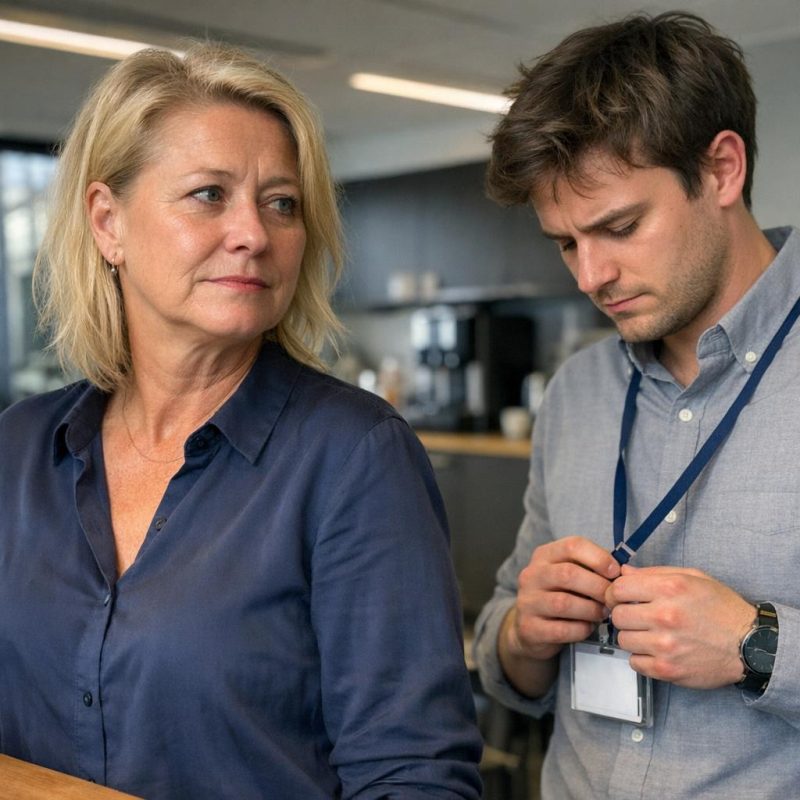 Image by RM AI
Inbox Delegation
I went straight back to my desk and opened my email settings with shaking hands. It took me a minute to find the delegation tab—I'd never had any reason to look at it before. And there it was. Elise Harmon had full delegate access to my entire inbox. Not just reading rights. Full access. She could read every email I'd ever sent or received, every draft I'd saved, every file I'd attached. She could see client communications, strategy documents, performance reviews—everything. The delegation had been active for three months. Three months. I felt like I was going to be sick. How many times had I drafted responses to clients, only to have Elise send a similar email first? How many times had she 'coincidentally' known exactly what I was working on? How had she always seemed one step ahead? This wasn't just theft. This was espionage. This was surveillance. My stomach dropped—she could read everything. Every draft. Every file.
 Image by RM AI
IT Traces the Request
I called Tom immediately. He came to my desk within five minutes, probably sensing the urgency in my voice. 'Can you trace who set this up?' I asked, showing him the delegation screen. He didn't look surprised, which told me he'd already known what I'd find. He pulled up some kind of admin interface I didn't understand, typed a few commands, and then pointed at the screen. 'The request came from this account,' he said quietly. It was Greg's account. Greg's email. Greg's authorization. I stared at the timestamp—it had been submitted the same week Elise started working with me directly. The same week I'd invited her to shadow me on client calls. The same week I'd given her access to my project files because I wanted to help her learn. Greg had personally approved giving her complete access to my digital workspace. He'd handed her the keys to everything I'd built. I felt sick—why would he help her? Why target me?
 Image by RM AI
Ready to March to HR
I spent Friday morning printing everything. Every document that proved the delegation. Every email timestamp that showed Elise sending out work identical to what I'd drafted hours earlier. Every calendar entry that showed me being excluded from meetings I should have led. I organized it all into a folder, my hands steadier than they'd been in days because I finally had proof. I finally had something concrete, something undeniable. This wasn't paranoia. This wasn't me being insecure or territorial. This was documentation of systematic undermining, and I was going to take it straight to HR. Carla needed to see this. Someone in leadership needed to see what was happening. I checked my reflection in the bathroom mirror, straightened my blazer, rehearsed what I'd say. Keep it factual. Keep it professional. Stick to the evidence. I grabbed my folder and headed toward the HR department, my heart pounding but my resolve solid. I was halfway to Carla's office when someone placed a notebook on my desk.
 Image by RM AI
The Notebook
I turned around, confused, and saw one of the marketing assistants walking away. 'Wait,' I called after her. 'What's this?' 'Oh, you left it in the conference room,' she said over her shoulder. 'Figured you'd want it back.' Except I hadn't left anything in the conference room. I looked down at the notebook—black, spiral-bound, generic. It looked vaguely like one I kept in my desk drawer, but when I opened it, the handwriting wasn't mine. It was Elise's. Neat, precise, methodical. The assistant must have seen it on the table and assumed it was mine. An honest mistake. I should have called her back, should have said 'actually, this isn't mine,' should have just left it at reception for Elise to collect. That would have been the right thing to do. The professional thing. But my hands were already flipping through the pages, my curiosity overpowering my better judgment. Just a quick look, I told myself. Just to see if there was anything about me in here. I wasn't going to snoop—until a page fell open, and I saw the list.
 Image by RM AI
The List of Names
It was a list of names. Maybe twenty of them, written in neat columns with cryptic notes beside each one. I recognized most of them—executives, senior managers, directors from various departments. People with power. People who made decisions. Next to Michael Brennan from sales: 'Expense reports—flagged.' Next to Diana Pruitt from operations: 'Affair—confirmed.' Next to Robert Chen from legal: 'Gambling—active.' I felt cold all over, my hands gripping the notebook tighter as I scanned down the page. These weren't just observations. These were vulnerabilities. These were secrets. Next to several names were phrases like 'has dirt on him' and 'leverage' and 'useful if needed.' Some entries had check marks. Some had dates. Some had dollar signs. This wasn't a casual journal or work notes. This was a catalog. A systematic record of people's weaknesses, their mistakes, their private lives. I couldn't breathe. Next to several names were phrases like 'has dirt on him' and 'leverage.'
 Image by RM AI
Agreement
I flipped forward, my heart hammering against my ribs. Two pages later, I found Greg's name. Next to it, in Elise's precise handwriting: 'Agreement. He gets the position. I get the credit. Timeline: 6 months.' Below that, more notes. 'Needs VP role. Board vote Dec. Must prove value—Henderson win essential. Remove obstacles.' I read it three times, four times, trying to make it mean something else, trying to find an interpretation that didn't make my entire world feel like it was collapsing. But there was no other way to read it. They'd made a deal. Greg wasn't just turning a blind eye to what Elise was doing. He wasn't just passively enabling her. He was actively collaborating. He'd given her access to my emails, excluded me from meetings, undermined my credibility—all in exchange for whatever she'd promised to help him achieve. They'd been working together from the start. From the very first day. My hands shook—they'd been working together from the start.
 Image by RM AI
Printouts and Screenshots
I kept flipping through the notebook, my stomach twisting with every page. After the entries about Greg and me, there were printouts—actual printed emails, text messages, screenshots from internal Slack channels. Some were folded in half, others paper-clipped to handwritten notes. I recognized an email chain about the Peterson account. A text conversation between two junior designers complaining about workload. Photos from the summer company picnic, candid shots of people drinking, laughing, standing too close to each other. There was a screenshot of someone's LinkedIn profile with annotations in the margins. Notes about family situations—'M's husband travels for work, home alone Thursdays' and 'K stressed about college tuition, daughter's private school.' I felt sick. This wasn't just about me and Greg. Elise had been systematically collecting information on everyone in the office. Every conversation, every vulnerable moment, every complaint made in confidence. She'd been building a database of leverage points, documenting weaknesses, cataloging secrets. The precision of it was what terrified me most—the methodical, deliberate collection. This wasn't opportunistic. This was strategic. She'd been collecting information on everyone—but why?
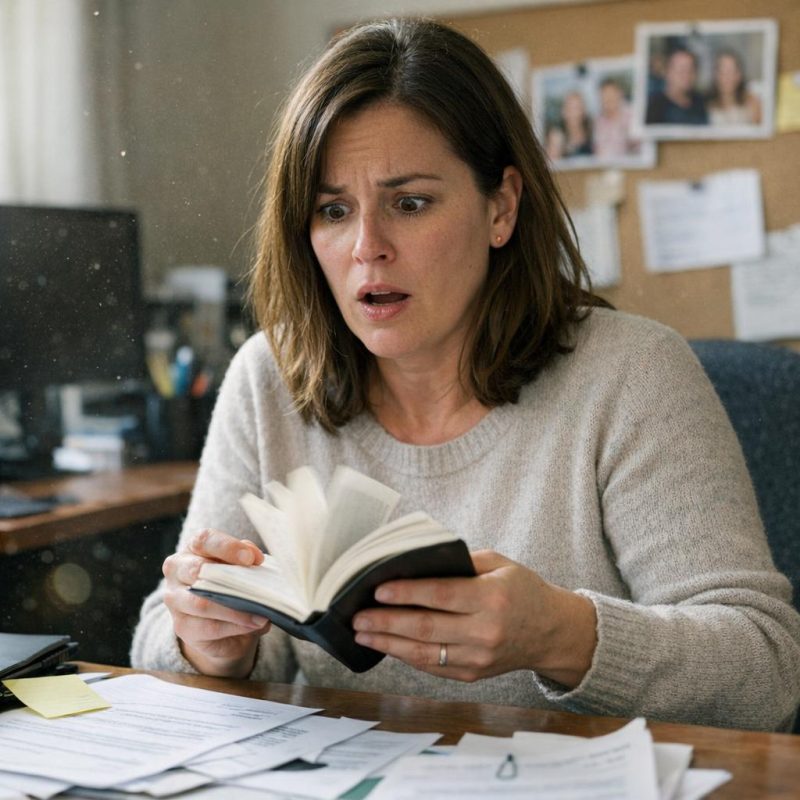 Image by RM AI
No Leverage Points
My hands were shaking so badly I could barely turn the pages. Then I found it. Near the back of the notebook, a page with names listed in two columns. My name was third from the top: 'Laura: respected, steady, no leverage points.' I stared at those words, trying to process them. No leverage points. She'd been looking for something to use against me and hadn't found anything. For a brief, ridiculous moment, I felt almost vindicated—I'd lived my life with integrity, kept my nose clean, never given anyone ammunition. Then I saw the second notation. Below my entry, in different handwriting—darker ink, heavier pressure, like someone had pressed down hard with the pen—was a single word: 'Remove.' My vision tunneled. The room felt suddenly airless. Remove. What did that mean? Remove from the project? Remove from the company? My brain went to dark places I didn't want it to go. I thought about the stories you hear on the news, about workplace violence, about people who feel threatened and lash out. Was I in actual physical danger? He'd been telling me to remove the obstacle—and I was the obstacle they couldn't leverage.
 Image by RM AI
Calling Jennifer
I called Jennifer with the notebook still open in front of me, my hands shaking so hard I could barely hold the phone. 'Mom? What's wrong?' She could hear it in my voice immediately. I told her everything—the notebook, the lists, the word 'Remove' under my name. I was talking too fast, my words tumbling over each other, and I realized I sounded panicked because I was panicked. 'Okay, slow down,' Jennifer said, and I could hear her shifting into lawyer mode, that calm, authoritative tone she uses with clients. 'Where are you right now? Are you safe?' I told her I was at Elise's apartment, that Marcus was asleep, that I needed to leave but I didn't know what to do with the notebook. 'Take photos of everything,' she said immediately. 'Every page. Then put it back exactly where you found it. Don't let them know you've seen it.' She paused, and I heard her typing in the background. 'I'm calling my boss right now. This is way beyond HR territory, Mom. We're talking about potential criminal activity.' Her voice softened slightly. 'Don't touch anything else. I'm bringing my boss tomorrow morning.'
 Image by RM AI
Photographing Everything
I pulled out my phone and started photographing every page of that notebook like my life depended on it—because maybe it did. My hands were still shaking, which made it hard to keep the camera steady, but I forced myself to slow down, to make sure each image was clear and readable. Every name. Every note. Every printed email and text message. I photographed the page with Greg's deal, the printouts of my performance reviews, the annotations about other employees. The flash felt too bright in the dim apartment, and I kept glancing toward Marcus's bedroom, terrified he'd wake up and find me. Each click of the camera shutter sounded impossibly loud. I was on the last page—the one with the column of names and that word 'Remove' under mine—when my screen went dark. My heart stopped. I frantically pressed the power button, but nothing happened. The battery icon flashed once and disappeared. I'd been so focused on documenting everything that I hadn't noticed the low battery warning. I stood there in the dark, trying to remember if I'd gotten that last crucial page. My phone battery died on the last page—I'd gotten enough, but barely.
 Image by RM AI
The Lawyer Arrives
Jennifer showed up at my apartment the next morning with her boss, David Chen, a senior employment attorney with twenty years of experience. He was in his fifties, wearing a pressed suit even on a Saturday, and he had the kind of serious, focused demeanor that immediately made me feel both protected and terrified. We sat at my kitchen table while he scrolled through the photos on my phone, his expression growing grimmer with each swipe. Jennifer sat beside me, her hand on my arm. David didn't say anything for what felt like forever. He just kept scrolling, occasionally zooming in on particular pages, his jaw tightening. Finally, he set the phone down and looked at me directly. 'Mrs. Morrison, I need you to understand something. What you've documented here—this isn't just workplace politics or unethical behavior.' He tapped the phone screen. 'This is systematic, premeditated targeting. The coordination with your supervisor, the collection of private information, the explicit notation about removing you from your position.' He paused, choosing his words carefully. 'This isn't just unethical,' he said. 'It could be criminal.'
 Image by RM AI
Building the Case
David pulled out a yellow legal pad and started making lists. He wanted everything documented—every email I could retrieve, every meeting I'd been excluded from, every conversation with Greg or Elise that felt off. Timestamps, witnesses, exact words if I could remember them. Jennifer took notes on her laptop while David asked questions, his pen moving steadily across the page. 'We need to establish a clear pattern,' he explained. 'Not just that this happened, but that it was systematic and targeted.' He asked about my performance reviews, my salary history, any documentation I had about the Henderson account. Then he looked up from his notepad, his expression thoughtful. 'I want you to think back over the past year,' he said carefully. 'Were there comments about your age? About retirement? About younger employees being more dynamic or tech-savvy?' I started to nod, remembering little moments, offhand remarks I'd brushed off at the time. He made a note. 'And Greg—your supervisor. In your interactions with him, particularly in the past six months...' He paused, and I could see him weighing his words. 'Was there ever a moment when your boss made you uncomfortable in other ways?'
 Image by RM AI
The Holiday Party Memory
That question hit me like cold water. I sat there at my kitchen table, Jennifer and David watching me, and suddenly I was back at last year's holiday party. Greg had been drinking—not drunk, but loose, jovial, his arm around my shoulders as he steered me toward the bar. 'You know, Laura, you've had a great run,' he'd said, signaling the bartender for another round. 'Twenty-three years, that's impressive. Most people would be thinking about retirement by now, enjoying the good life.' I'd laughed it off, made some joke about being too stubborn to quit. But he'd pressed, his hand still on my shoulder, his breath smelling like whiskey. 'I'm serious. You've got nothing to prove. You could spend time with your family, travel. Why keep grinding it out?' At the time, I'd thought he was just being friendly, maybe a little too honest after a few drinks. Now, sitting in my kitchen with a lawyer taking notes, I saw it differently. He hadn't been making small talk. He'd been testing the waters, planting seeds. He'd been telling me all along—I just hadn't wanted to hear it.
 Image by RM AI
Filing the Report
Three days later, I walked into the HR conference room with David at my side and a manila folder thick with documented evidence. Carla was there, along with someone from the legal department I'd never met—a woman in her forties with silver-framed glasses who introduced herself as Michelle Torrens, Associate General Counsel. David laid out the complaint methodically: the notebook, the coordination between Greg and Elise, the systematic exclusion from meetings, the manipulation of my work, the explicit targeting. He used words like 'age discrimination,' 'constructive dismissal,' and 'conspiracy to defraud.' Michelle took notes, her expression professionally neutral. When David slid the folder across the table with printed copies of my phone photos, Carla opened it slowly. I watched her face as she flipped through the pages—the emails, the handwritten notes, the page with my name and that word 'Remove.' The color drained from her cheeks. She looked at me, then back at the photos, then at Michelle. Then she closed the folder carefully, like it might explode if she moved too quickly. 'We'll need to conduct a thorough investigation,' she said, her voice tight. Carla's face went pale when she saw the photos—then she closed the folder and said they'd need to investigate.
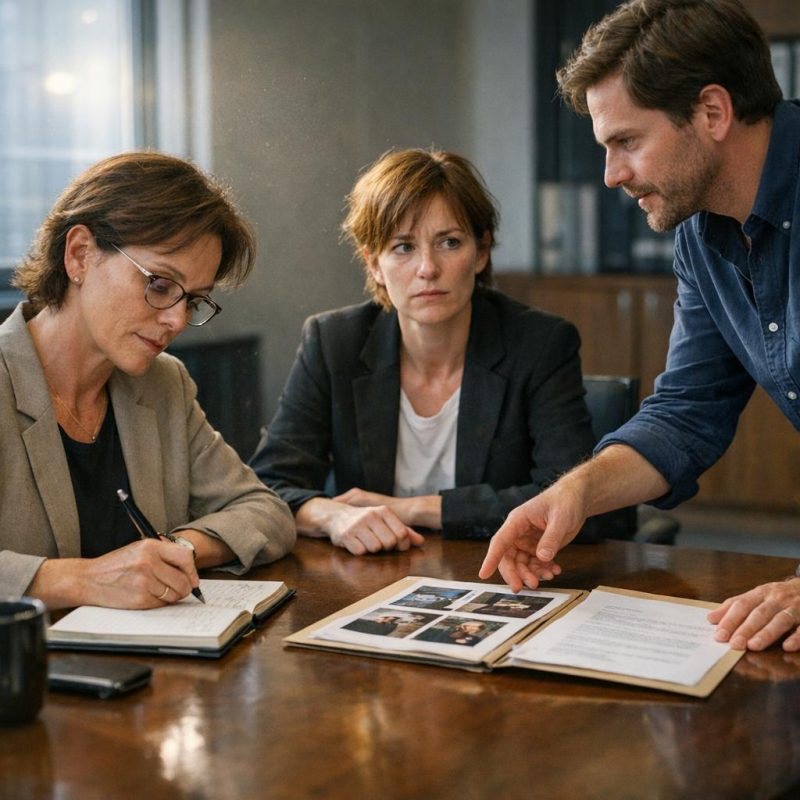 Image by RM AI
The Downplay
The first HR meeting after we submitted the complaint felt like hitting a wall. Carla sat across from me, Michelle beside her, and they both had that practiced look—the one that says 'we take this seriously' while their words say the opposite. 'We understand you're upset, Laura,' Carla said carefully. 'But we need to consider that this might be a misunderstanding. The notes could have meant anything. Greg's management style can be... direct, but that doesn't necessarily indicate discrimination.' I felt my jaw tighten. David had warned me about this—the institutional reflex to protect itself, to minimize, to make the problem smaller than it was. 'A misunderstanding,' I repeated flatly. 'My name with the word remove next to it. That's a misunderstanding?' Michelle cleared her throat. 'Without additional corroborating evidence, it's difficult to—' That's when David's phone buzzed. He glanced at it, then at me, and something shifted in his expression. 'Tom from IT just sent the access logs,' he said quietly. He turned his phone so I could see the email preview: 'You need to see this. Unauthorized access, multiple violations.' Carla's professional mask cracked just slightly. Then IT provided the access logs—and everything changed.
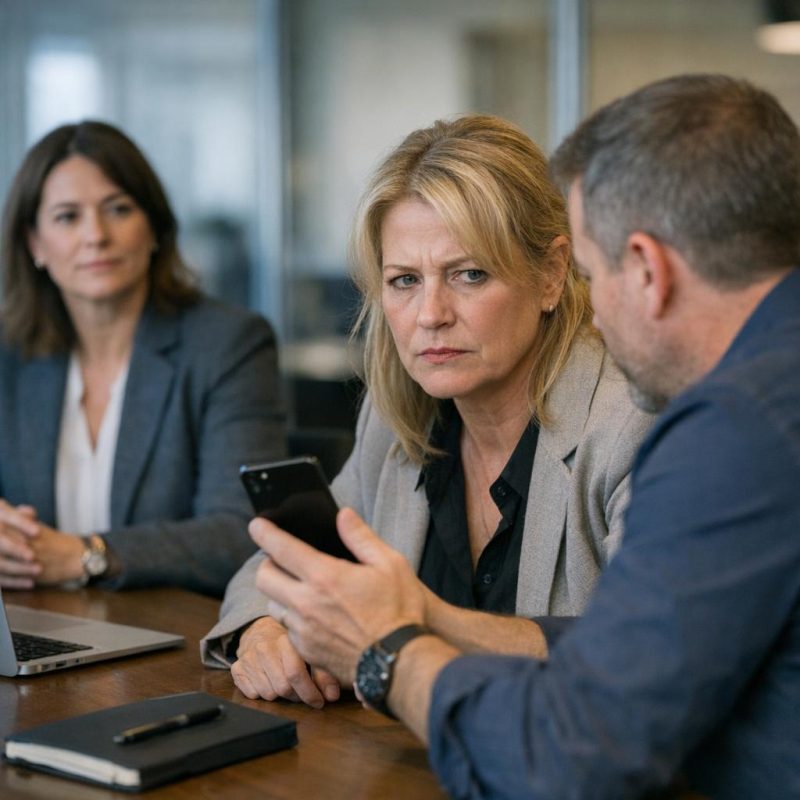 Image by RM AI
IT's Findings
Tom met with us the next day, a laptop under his arm and an expression that told me he'd found something big. He'd been with the company for fifteen years, one of those IT guys who actually cared about doing things right, and he looked genuinely disturbed. 'I ran a full audit like Michelle requested,' he said, opening his laptop. 'Greg accessed Laura's files sixty-three times over the past four months. Design files, project documents, client correspondence—things he had no business opening.' He turned the screen toward us. 'He also granted Elise administrative permissions to Laura's shared folders. That's a major violation of our data security policy.' I stared at the rows of timestamps, dates, file names. There it was, line after line: unauthorized access. Tom kept scrolling. 'He tried to cover his tracks by accessing them late at night, but our system logs everything. And here—' he pointed to another section, 'he gave Elise permissions she shouldn't have had. She could read, modify, even delete Laura's work.' Michelle was typing rapidly on her laptop. Carla had gone pale again. The logs didn't lie—and suddenly, HR had no choice but to act.
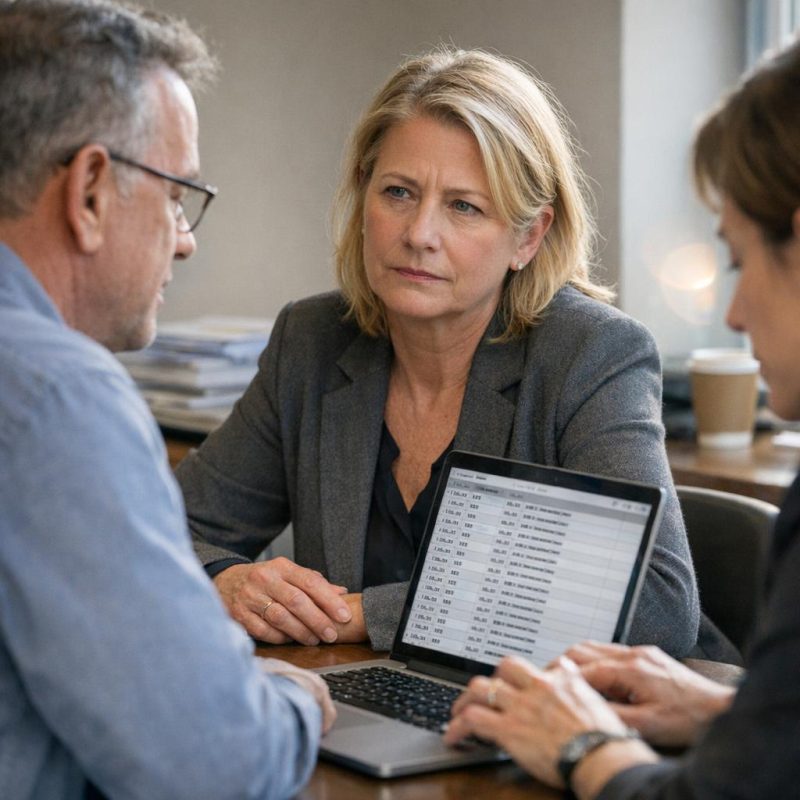 Image by RM AI
The Investigation Begins
They interviewed me four times over the next two weeks. Different people, different conference rooms, same questions asked from slightly different angles. I walked them through everything: the coffee shop meetings, the stolen pitch, the weird intensity of Elise's attention, the systematic way I'd been excluded and undermined. It was exhausting, reliving it all, but I forced myself to stay calm and factual. David sat beside me for every session, making sure I didn't get cornered or confused. By the third interview, I was running on coffee and spite, my voice hoarse from talking. Then, during the fourth session, Michelle said something that made me sit up straighter. 'We've been interviewing other employees as part of the investigation,' she said carefully. 'And we've discovered some... patterns.' She glanced at her notes. 'Three other people have filed formal complaints about Elise. Two about work appropriation, one about boundary violations and manipulation.' I felt something shift in my chest—not quite relief, but something close to it. Validation, maybe. Solidarity. I wasn't the only one—three other people had also filed complaints about Elise.
 Image by RM AI
The Quiet Storm
You know how it is in an office when something's happening but nobody's saying what. The air gets strange. Conversations stop when you walk by. People make too much eye contact or avoid it entirely. That's what the next week felt like. I'd come in, make my coffee, sit at my desk, and feel the weight of everyone's curiosity pressing down on me. Nobody asked directly what was going on, but the whispers followed me everywhere. 'Did you hear about the investigation?' 'Something about HR and legal.' 'I heard Greg's in trouble.' I kept my head down and did my work, but I felt like I was walking through fog, unable to see what was coming next. Then, on a Tuesday morning, I noticed Elise's desk was empty. Not just empty like she was in a meeting—empty like nobody was coming back. Her little succulent was gone. Her motivational mug. The framed photo of her and her sister. I walked past Greg's office and found it dark, the blinds drawn. Someone from marketing was passing by, and I caught her eye. She leaned in slightly. 'Administrative leave,' she whispered. Elise and Greg were suddenly absent—'administrative leave,' someone whispered.
 Image by RM AI
Unauthorized Promotions
Michelle called me in for an update two days later. She looked tired, like she'd been working overtime trying to untangle something complicated. 'The investigation has expanded,' she said without preamble. 'Our audit revealed that Greg approved several promotions and salary increases over the past eighteen months without proper authorization or documentation.' She slid a printed spreadsheet across the table. I scanned the names—some I recognized, some I didn't. 'He bypassed the standard review process,' Michelle continued. 'Didn't get approval from his own supervisor or from compensation. He just... pushed them through.' I frowned. 'Why would he risk that?' 'That's what we're trying to understand,' she said. But even as she said it, I was looking at the names again. Jordan from accounting—the guy Elise always had lunch with. Priya from operations—someone I'd seen in those weird intense conversations with her. Marcus from sales. Every single one was someone Elise had gotten close to. Every single one went to people Elise had befriended—or had leverage over.
 Image by RM AI
Deleted Emails
Tom came through again. IT had done a deep dive into Greg's email account, and they'd recovered messages he'd tried to delete—apparently thinking that emptying your trash actually makes things disappear forever. Michelle walked me through some of the findings in another meeting, her voice flat and professional, but I could see the anger behind her eyes. There were emails between Greg and Elise going back almost two years. Strategy discussions. Complaints about other employees. Plans for 'managing people out' who were 'obstacles.' My hands shook as I read the printed copies. Then Michelle flipped to a message dated from August, three months before the conference. Greg to Elise: 'Make sure Laura doesn't present. We need her gone before year-end. I can only hold the VP slot open so long.' I read it twice. Three times. The words didn't change. VP slot. Gone before year-end. This wasn't just about undermining me or stealing my work. In one message, he'd written: 'Make sure Laura doesn't present. We need her gone before year-end.'
 Image by RM AI
Other Teams Speak Up
Once the investigation became common knowledge, something interesting happened. People started coming forward. An email would land in Michelle's inbox, then another, then three more. Employees from marketing, from product development, from operations—people I barely knew—reaching out to report their own experiences with Elise. A designer said she'd 'helped' Elise with a campaign concept, only to see Elise present it as her own work two weeks later. A project manager described how Elise had befriended her, learned about a mistake she'd made, and then used that information to position herself as the 'solution' person to leadership. Someone from finance talked about how Elise had collected 'advice' from multiple people, synthesized it into a proposal, and took sole credit. The stories kept coming, each one a variation on the same theme: charm, extraction, exploitation. I read the summaries Michelle shared with me, and I felt this strange mix of validation and rage. She'd done this to so many people. She hadn't just targeted me—I was simply the one who finally fought back.
 Image by RM AI
The Full Picture
It all came together in my head one night when I couldn't sleep, lying in bed at 2 AM, staring at the ceiling. I'd been thinking about all the pieces—the promotions Greg had pushed through, the people Elise had befriended, the leverage she'd collected, the way she'd positioned herself as indispensable. And suddenly I saw it clearly, like one of those optical illusions that snaps into focus once you know what you're looking at. This wasn't just opportunism. This wasn't a young professional being a little too ambitious or cutting corners. Elise had been running a systematic campaign. She'd identified key people—those with influence, access, or vulnerability—and cultivated relationships with them. She'd collected their secrets, their mistakes, their insecurities. And then she'd used that information, not always overtly, but strategically, to position herself as essential while making sure anyone who might expose her—people like me—got pushed out. Greg wasn't a villain. He was a mark. She'd promised him something—a promotion, a partnership, a future—and he'd helped her in exchange. This wasn't opportunism—it was a calculated operation to infiltrate and exploit.
 Image by RM AI
The Notebook Explained
Jennifer sat with me while the lawyer walked us through what he'd found in the notebook. I'd expected him to say it was just notes, nothing unusual—but his face was serious as he turned the pages. 'This is textbook social engineering,' he said, pointing to the coded entries. 'She documented vulnerabilities, personal information, who had access to what. This section here—' he tapped a page with dates and initials '—looks like she was tracking conversations, probably recording leverage points.' My stomach turned. He explained that people like Elise often targeted workplaces because they offered concentrated pools of ambitious people with something to lose. They'd find someone's weakness—a mistake they'd made, a secret they kept, an insecurity they harbored—and they'd position themselves as either the solution or the threat. 'The promotion lobbying, the relationship with Greg, even befriending you initially,' he said, 'these are all consistent with a calculated operation, not just career ambition.' Jennifer's hand found mine. The lawyer closed the notebook carefully. 'People like this don't stop,' he said. 'They just move to the next target.'
 Image by RM AI
The VP's Apology
VP Richard called me into his office three days later. I'd only met him a handful of times over the years—he was the kind of executive who operated several levels above my world. He looked older than I remembered, tired around the eyes. He gestured for me to sit and then did something I never expected: he apologized. Not a corporate apology, either—a real one. 'Laura, I need you to know that we failed you,' he said quietly. 'The complaints you raised, the concerns you brought forward—we should have taken them seriously from the start. We didn't, and that's on us.' I sat there, not sure what to say. Part of me had fantasized about this moment for months, imagined how vindicated I'd feel. But now that it was happening, I mostly felt numb. He talked about the investigation, about how they'd uncovered a pattern of manipulation that went beyond anything they'd initially suspected. He thanked me for my integrity, for not backing down. 'We should have listened to you from the beginning,' he said—but I wasn't sure that was enough.
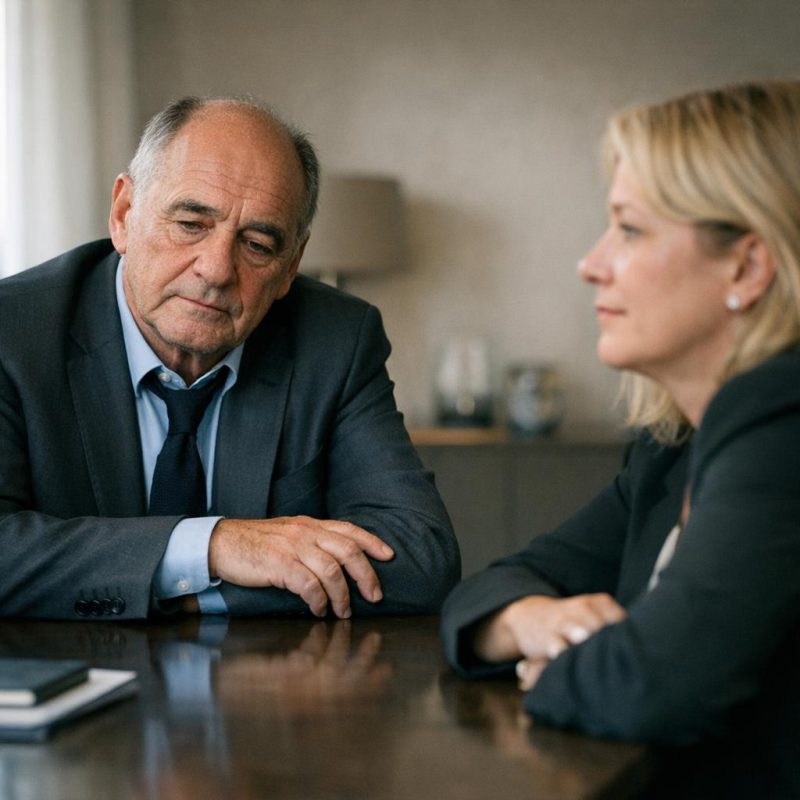 Image by RM AI
Termination
The email from HR came the next morning: formal terminations, effective immediately. Both Elise and Greg were gone—not reassigned, not put on leave, but actually fired for cause. The email was carefully worded, of course, all that corporate language about 'violations of company policy' and 'behavior inconsistent with our values.' I read it twice, then a third time. For months I'd imagined what this moment would feel like, convinced I'd be elated, triumphant even. But sitting there at my kitchen table with my coffee going cold, I just felt... empty. Not sad, exactly. Just drained. The fight was over, and I'd won, but winning hadn't given me back the year I'd lost or the confidence they'd chipped away or the version of myself who used to love her job. Jennifer called to congratulate me, and I tried to sound happy about it. Tom sent a text with a thumbs-up emoji. Everyone kept acting like this was the happy ending. I thought I'd feel triumph—instead, I just felt tired.
 Image by RM AI
The Promotion Offer
Carla from HR scheduled a meeting for the following week. She came in with a folder and a smile that seemed genuine, for once. 'Laura, we'd like to offer you the Senior Project Manager position,' she said, sliding the paperwork across the desk. 'The promotion you were working toward. It comes with a substantial raise, expanded responsibilities, and a seat in the strategic planning meetings.' I looked down at the papers—the job title I'd wanted for three years, right there in black and white. The salary was more than I'd expected. The benefits package was generous. This was supposed to be the moment everything went back to normal, better than normal. Carla was still talking, explaining the timeline, the team I'd be managing, but her voice seemed to come from somewhere far away. I picked up the pen she'd set beside the folder, and my hand just... stopped. I stared at the signature line, at my name printed there, waiting. I stared at the paperwork and realized—I didn't want it anymore.
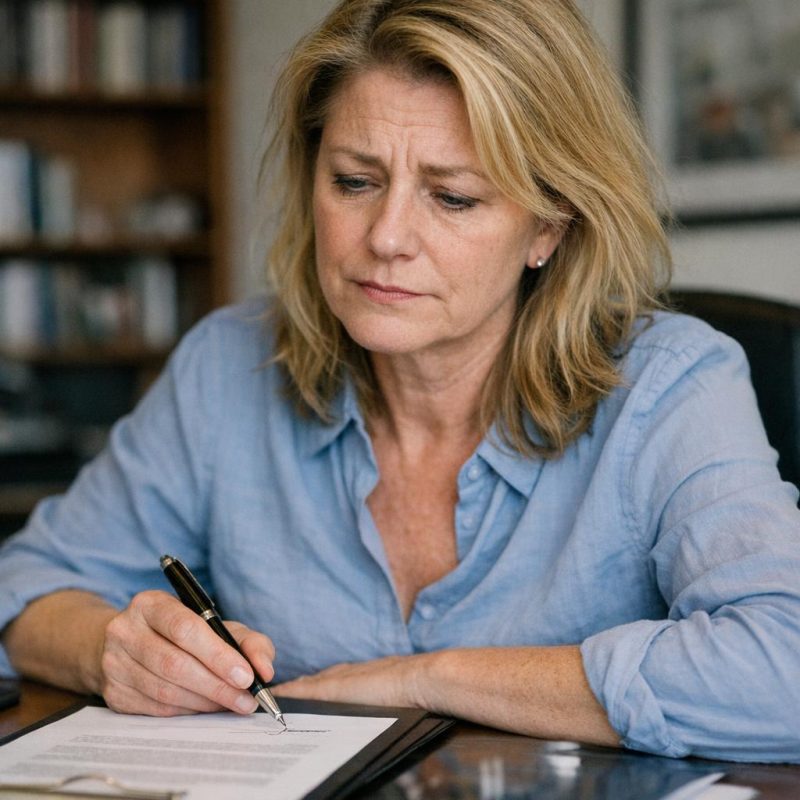 Image by RM AI
Not in That Place
I told Jennifer that night over dinner. She'd brought over Thai takeout to celebrate the promotion offer, but I'd barely touched my pad thai. 'I can't stay there, Jen,' I said finally. 'I know they apologized, I know they're trying to make it right, but I can't go back to that building every day and pretend like this didn't happen.' She set down her fork. 'They let this go on for a year. They promoted the people who were hurting me and ignored everything I said until they couldn't anymore. How am I supposed to trust them?' Jennifer nodded slowly, not arguing, just listening. 'And honestly? Even if none of that had happened, I think I've outgrown that version of my career. I spent so long trying to climb their ladder that I never asked if it was the ladder I actually wanted to climb.' The words came out in a rush, like I'd been holding them back for months. 'Then what do you want, Mom?' Jennifer asked—and I realized I finally knew.
 Image by RM AI
The Severance Package
The severance negotiation took two weeks. I came in with Jennifer's friend, the employment attorney, and we sat across from Carla and the company's legal counsel. They wanted me to sign a standard separation agreement—decent package, but nothing special. My attorney smiled politely and slid our counteroffer across the table. 'Given Ms. Anderson's tenure, her exemplary record, and the—' he paused delicately '—institutional failures that occurred during her recent experience, we believe a more substantial package is appropriate.' I watched Carla's face carefully. She knew exactly what he meant: they didn't want me talking about what had happened, didn't want me filing complaints or going to the press. I didn't particularly want to do those things either—I just wanted a fair exit. We settled on eighteen months of salary, extended health benefits, early retirement credit, and a glowing reference letter. They called it compensation 'for her years of loyalty and dedication.' I called it the foundation for whatever came next. They wanted to make the problem go away—I wanted to build something new.
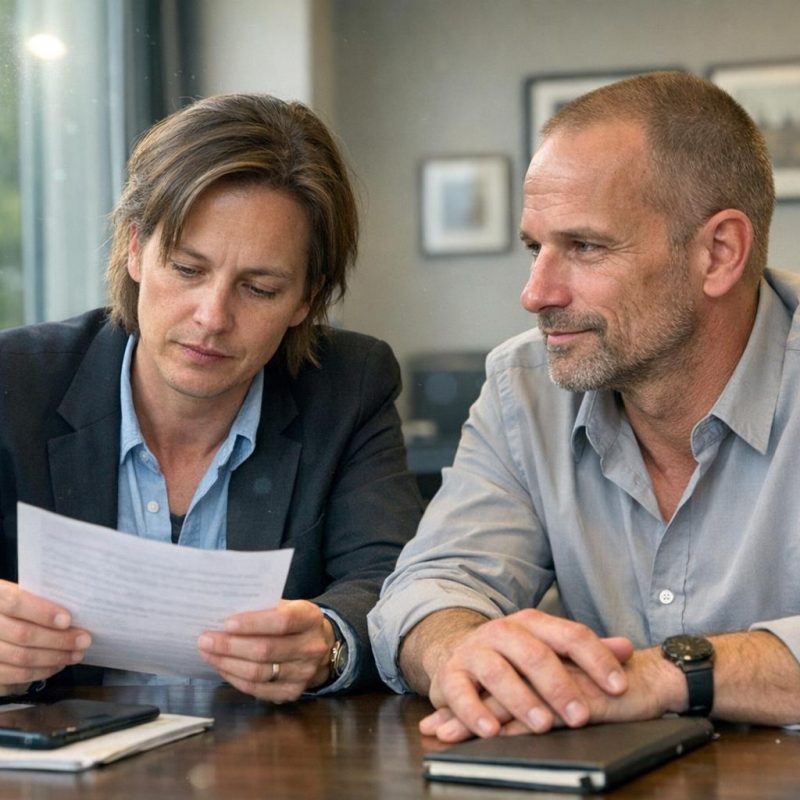 Image by RM AI
Walking Out
My last day was a Friday in late October. I'd packed most of my desk throughout the week, taking things home bit by bit—the photos, the awards I'd stopped being proud of, the coffee mug Jennifer had given me years ago. Tom stopped by mid-morning, leaning against the doorframe like he always did. 'You're really doing this,' he said. 'I really am.' We talked for a few minutes about nothing important, both of us avoiding the real conversation. Finally he said, 'For what it's worth, you're making the right call. This place—it's not what it was.' A few other people came by with similar sentiments, awkward goodbyes from colleagues who didn't quite know what to say. Around three o'clock, I took one last look around the office I'd occupied for nearly eight years. The empty walls, the clean desk, the boxed-up files. I picked up my bag, turned off the light, and pulled the door closed behind me. I walked down the hallway, through the lobby, out into the parking lot for the last time. I expected to cry—instead, I felt lighter than I had in years.
 Image by RM AI
Starting Over
Jennifer came over the next Monday with her laptop and a notebook full of ideas. 'Okay,' she said, settling onto my couch with the determination I recognized from when she was younger and had decided to master something new. 'Let's figure this out.' We spent the afternoon mapping out what a consulting business might look like—services for mid-career women navigating workplace politics, dealing with difficult colleagues, negotiating promotions. Everything I'd learned the hard way. Jennifer was better at the business side than I'd expected, talking about LLC structures and client acquisition and online presence like she'd been planning this for months. Maybe she had been. 'You could do workshops,' she said, typing notes. 'Maybe write a guide. You've got the expertise, Mom—you just need the platform.' I felt something shift inside my chest, something that had been clenched tight for over a year finally loosening. This wasn't about getting revenge or proving something to my old company. For the first time, I wasn't building someone else's dream—I was building mine.
 Image by RM AI
The First Client
Her name was Patricia, and she reached out through my barely-finished website three weeks after Jennifer and I launched it. She was 49, working in marketing at a financial services company, and when we met for coffee, I saw myself from two years ago sitting across the table. 'There's this younger woman on my team,' she said, stirring her latte without drinking it. 'She's brilliant, really talented, and I've been mentoring her for almost a year. But lately...' She trailed off, and I nodded because I knew exactly what came next. The subtle undermining. The taking credit. The way everyone suddenly seemed to think the protégé was the real visionary. Patricia had come to me because HR had just restructured her department, and somehow her mentee was now her equal in title. 'I feel crazy,' she whispered. 'Like I'm being paranoid or jealous or something.' I reached across the table and took her hand. 'You're not crazy,' I said. 'And I can help you navigate this.' She looked at me with such hope and said, 'I didn't think anyone would understand.'
 Image by RM AI
Building Something Real
By the end of that first year, I had seventeen regular clients. Patricia referred two colleagues. One of them referred three more. Word spread through networks I didn't even know existed—women who'd been pushed aside, talked over, squeezed out of roles they'd built. I wasn't teaching them to be aggressive or to play political games. I was teaching them to document everything, to recognize the patterns, to trust their instincts when something felt wrong. I showed them how to advocate for themselves without apologizing for taking up space. Some clients just needed a few sessions to get through a rough patch. Others worked with me for months, rebuilding their confidence from the ground up. I created workshops. I started writing articles that got picked up by professional development sites. Jennifer helped me build an online course. The money wasn't corporate-salary money, but it was enough, and it was mine. More importantly, the work felt real in a way nothing had in years. I was helping women find their voices—and in the process, I'd finally found mine.
 Image by RM AI
Looking Back
Sometimes late at night, when I'm working on a new workshop or preparing for a client session, I think about what Elise said that last day in the office. 'You won't be needing it anyway.' She'd meant my career, my reputation, my future at the company. She'd meant to make me feel small and disposable, to prove that I was obsolete. And you know what? She was right. I didn't need any of it. Not the corporate title or the politics or the endless performance of pretending everything was fine when it wasn't. I didn't need to keep shrinking myself to fit into a space that was never designed for women like me in the first place. What Elise didn't understand—what she still probably doesn't understand—is that by pushing me out, she accidentally gave me the greatest gift. She forced me to stop clinging to something that was slowly suffocating me. She made me build something better. She meant to erase me, but instead, she freed me.
 Image by RM AI
No Longer Shrinking
I'm not going to tell you I'm grateful for what happened, because that would be bullshit. What Elise did was calculated and cruel, and it cost me professionally, financially, and emotionally in ways I'm still processing. But I am grateful for what I built in the aftermath. For Jennifer's fierce loyalty and clear-eyed support. For Michael's steady presence. For every client who trusts me with their story and lets me help them navigate waters I've already crossed. For finally understanding that kindness doesn't require martyrdom, and that setting boundaries isn't selfish—it's survival. I spent so much of my career making myself smaller, quieter, more accommodating. Stepping aside so others could shine. Offering help to people who took everything and gave nothing back. I told myself I was being generous, being a team player, being a good mentor. But really, I was just afraid of being too much. I'm not afraid anymore. And for the first time in my life, I was taking up exactly the space I deserved.
 Image by RM AI
KEEP ON READING

Remembering Pope Stephen VI, The Guy Who Made A Cadaver…
A Godly Man With A Grudge. Jean-Paul Laurens on WikimediaYou…
By Ashley Bast Oct 31, 2025
From School Plays To Starting A Cult: 20 Of The…
The Books That Made Us. Many people will tell you…
By Farva Ivkovic Jan 31, 2025
20 Facts About Jane Grey, The Forgotten Queen Of England
A Quick, Messy, and Tragic Reign. Lady Jane Grey never…
By Maria Cruz Jan 31, 2025
20 Most Significant Cars In American History
Driving Into the Past. The car has defined America as…
By Farva Ivkovic Dec 31, 2025
10 Times The Lakers Made History & 10 Moments That…
Let’s Talk About the Lakers. Few teams have brought highs…
By Farva Ivkovic Dec 31, 2025
10 Historical Royals Known For Their Intelligence & 10 For…
The Weirdest Kings. Intelligent royals brought us innovative and progressive…
By Farva Ivkovic Dec 31, 2025