

When Lin-Manuel Miranda's Hamilton opened on Broadway in August 2015, nobody could have predicted the full scale of what was about to happen. The musical had already taken in $30 million in ticket sales before its official opening night, a staggering figure that hinted at the phenomenon brewing beneath the surface. The show went on to win 11 Tony Awards in 2016, including Best Musical, and became only the fourth Broadway production in history to surpass $1 billion in overall gross. What made this hip-hop retelling of America's first Treasury Secretary so explosively popular that it changed the landscape of musical theater forever?
The success of Hamilton wasn't accidental or mysterious. Miranda described the musical as about "America then, as told by America now," a concept that resonated deeply with audiences hungry for stories that reflected contemporary America's diversity and complexity. The show blended innovative musical styles, revolutionary casting choices, breathtaking stagecraft, and impeccable cultural timing into something Broadway had never quite seen before. From its sold-out performances to its influence on later musicals, Hamilton didn't just succeed on its own terms but fundamentally altered what people expected from musical theater.
Hip-Hop Meets Broadway: A Musical Revolution
The core innovation that made Hamilton stand apart was its seamless fusion of hip-hop, R&B, rap, and traditional Broadway musical styles to tell Revolutionary War history. The music draws heavily from hip hop, as well as R&B, pop, soul, and traditional-style show tunes, creating a score that felt simultaneously contemporary and theatrical.
The sophistication of Miranda's approach went beyond simply adding rap to a historical story. The lyrics packed dense historical detail into rapid-fire verses, with references that history buffs could appreciate while newcomers absorbed the emotional journey. Miranda's wordplay honored Stephen Sondheim's tradition of intricate lyricism while speaking in a completely contemporary musical language.
Characters' rap styles evolved throughout the show to reflect their development, with the Marquis de Lafayette's rhyme schemes becoming more complex as his English improved. This attention to detail created multiple entry points for different audiences: hip-hop fans could appreciate the craft of the rhymes, theater enthusiasts could marvel at the storytelling innovation, and history lovers could catch the subtle references woven throughout.
Reimagined American History
Perhaps no aspect of Hamilton generated more conversation than its casting approach. The musical casts non-white actors as the Founding Fathers of the United States and other historical figures, with only King George III traditionally played by a white actor. When audiences saw actors of color portraying Washington, Jefferson, and Hamilton, they witnessed a visual argument about who gets to tell America's story and whose America the Founders were building.
The impact of this casting choice rippled through Broadway and beyond. At the 2016 Tony Awards, all four musical performance categories were won by Black actors for the first time in Broadway history: Leslie Odom Jr. for Best Actor, Daveed Diggs for Best Featured Actor, and Renee Elise Goldsberry for Best Featured Actress, all from Hamilton. Cynthia Erivo won Best Actress for her work in The Color Purple.
This historic sweep validated Hamilton's approach and demonstrated that Broadway was capable of recognizing excellence in diverse casting. The show's success opened doors for more inclusive productions across the industry, proving that audiences would enthusiastically embrace musicals that reflected modern America's demographics rather than historical whitewashing.
Staging Innovation and Cultural Perfect Timing
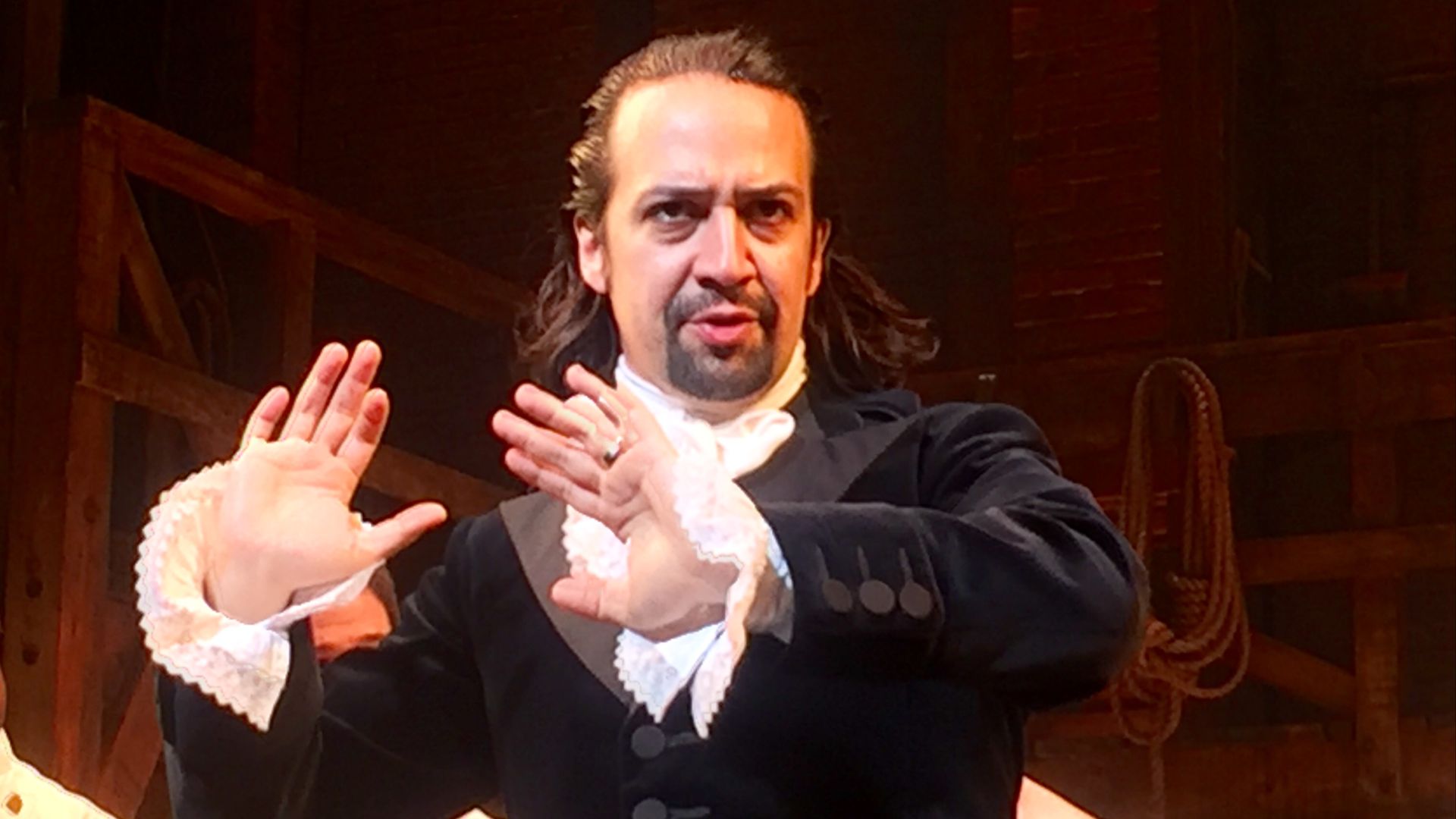
Director Thomas Kail and choreographer Andy Blankenbuehler created a visual and kinetic language that matched the music's energy. Kail won the Tony for directing Hamilton, recognition for his work creating a production that used a spinning stage and minimal scenery to keep the focus squarely on the performers and their story.
The choreography incorporated period gestures and contemporary movement, with sequences like "Helpless" and "Satisfied" using the turntable stage to literally rewind time, showing the same events from different perspectives and adding emotional complexity without elaborate set changes.
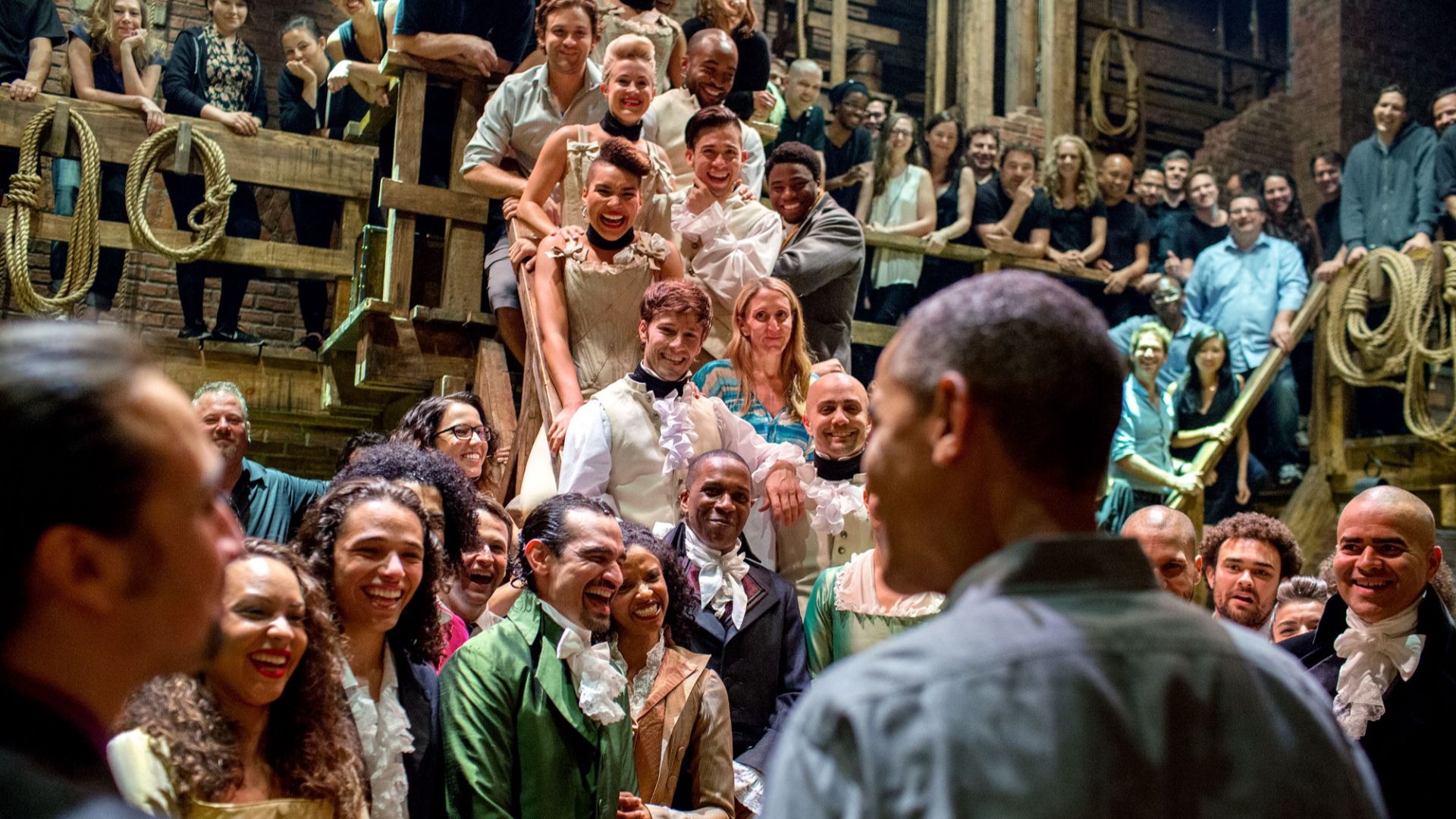
The show's arrival coincided with a perfect cultural moment. Following Miranda's success with In the Heights and his well-publicized work process, Hamilton had built anticipation before it even opened. Performances at the White House for President Obama and the First Lady generated national media coverage and positioned the show as culturally significant beyond typical Broadway fare. The performance by the Hamilton cast at the 2016 Tony Awards was introduced by President Barack Obama and Michelle Obama, an unprecedented honor that underscored the show's cultural importance. The Obama-era optimism and conversations about America's founding principles created an audience primed for Hamilton's message about ambition, legacy, and who gets to be part of the American story.
The show thrived by welding the Founding Fathers' ambition and struggles to contemporary sound and faces, creating something that felt simultaneously historical and urgent. Hamilton accomplished its billion-dollar milestone faster than any other Broadway show, demonstrating not just critical acclaim but sustained audience enthusiasm. More than a decade after its debut, Hamilton remains essential viewing for theater fans, a cultural phenomenon that proved Broadway could be revolutionary, inclusive, and wildly profitable all at once. The show didn't just tell Alexander Hamilton's story; it rewrote the rules about whose stories matter and how those stories should be told.
KEEP ON READING
The story of Ching Shih, the Woman Who Became the…
Unknown author on WikimediaFew figures in history are as feared…
By Emilie Richardson-Dupuis Dec 29, 2025
Einstein's Violin Just Sold At An Auction—And It Earned More…
A Visionary's Violin. Wanda von Debschitz-Kunowski on WikimediaWhen you hear…
By Ashley Bast Nov 3, 2025
This Infamous Ancient Greek Burned Down An Ancient Wonder Just…
History remembers kings and conquerors, but sometimes, it also remembers…
By David Davidovic Nov 12, 2025
The Mysterious "Sea People" Who Collapsed Civilization
3,200 years ago, Bronze Age civilization in the Mediterranean suddenly…
By Robbie Woods Mar 18, 2025
20 Greatest Ancient Athletes In History
Ancient Olympics. Long before modern stadiums and multimillion-dollar endorsements, athletes…
By Sara Springsteen May 1, 2026
20 Soldiers Who Defied Expectations
Changing the Rules of the Battlefield. You’ve probably heard plenty…
By Annie Byrd Feb 10, 2026