

My Brother-In-Law Mocked My Beat-Up Car All Weekend—Then I Walked Into His Office As His New Boss
My Brother-In-Law Mocked My Beat-Up Car All Weekend—Then I Walked Into His Office As His New Boss
The Gravel Driveway
I heard the gravel before I saw the house — that particular crunch under bald tires that sounds different when you're pulling up to someone else's money. The rain had been coming down hard since the highway, and my 2008 sedan was doing its best impression of a boat, wipers slapping at full speed and still barely keeping up. I turned off the main road and the estate came into view through the streaks on the windshield — stone facade, manicured hedges bent sideways in the wind, a row of cars in the drive that probably cost more collectively than my apartment building. I slowed to a stop and sat there for a second with the engine idling, that familiar rattle underneath reminding me it was still technically running. Julian was already at the front doors. He wasn't holding an umbrella for me. He was checking his watch. I watched him through the glass — arms crossed, cashmere sweater, posture that said he'd been waiting longer than he had. I grabbed my bag from the back seat, took a breath, and told myself the same thing I always told myself before these visits. Just get through the weekend. The rain drummed steadily on the roof, and the weight of the next two days settled in around me like the cold.
 Image by RM AI
Oil Leaks and Resealed Driveways
I pushed the car door open and stepped out into the rain, and before I'd even straightened up, Julian's voice cut across the driveway. "Careful with that thing," he called out, nodding toward the sedan. "If it's leaking oil, I don't want it sitting on the stone. We just had the whole driveway resealed last month." I looked down at the gravel, then back up at him. He wasn't moving toward me. No offer to help with the bag, no gesture toward the door. Just the warning about his driveway. I told him I'd park it further up on the grass if he wanted. He waved that off like it was a reasonable suggestion he was generously declining. "It's fine where it is," he said, "just — be mindful." He adjusted the cuff of his sweater and glanced at the car the way you'd look at a stray that had wandered onto your property. I pulled my bag over my shoulder and started toward the door, rain soaking through my jacket. I gave him a small smile because it was easier than the alternative. He fell into step beside me, and without breaking stride, mentioned that the reseal job alone had run more than what he figured I made in a year.
 Image by RM AI
Marble Floors and Original Art
The foyer hit me the way it always did — like walking into a museum that someone also happened to sleep in. Marble floors, pale and veined, stretched out in every direction under lighting that had clearly been designed by someone paid a lot of money to make it look effortless. There were oil paintings on the walls, large ones, the kind with small brass plaques underneath that I never got close enough to read. A thermostat panel near the entrance had more zones listed on it than my apartment had rooms. I was still dripping on the marble when Sarah appeared from the hallway, and the whole atmosphere shifted. She crossed the floor fast and pulled me into a hug before I could say anything, squeezing once like she meant it. "You made it," she said, and she sounded genuinely relieved, which told me something about how the day had already been going for her. I hugged her back and said something about the rain. Julian had already moved past us toward the interior of the house, hands in his pockets, apparently satisfied that the tour of his driveway concerns had concluded. Sarah kept her hand on my arm for a moment after she let go, and I noticed the small apologetic look she gave me — quick, practiced, the kind you develop over years of smoothing things over. The marble was cold under my wet shoes, and her warmth was the only thing in the room that felt like it belonged to a person.
 Image by RM AI
The Climate-Controlled Wine Cellar
I was still wearing my wet jacket when Julian appeared in the hallway and said, "Come on, I want to show you the cellar before you get settled." It wasn't a question. Sarah gave me a look that was equal parts sympathy and resignation, and I followed him down a set of stairs that were better lit than most restaurants I'd been to. The wine cellar was temperature-controlled to the degree — Julian mentioned the exact number twice — and lined floor to ceiling with bottles organized by region, vintage, and what I gathered was some personal classification system he'd developed himself. He walked me through it the way a docent walks you through a gallery, pausing at certain bottles to explain provenance, auction history, the particular soil conditions of a specific French valley. I nodded. I said "hm" at the appropriate intervals. My jacket was still soaked through and I could feel the cold air from the climate system working against the damp fabric, which was its own special kind of miserable. Julian pulled out a bottle to show me the label, tilting it toward the light, and explained what it had cost with the same casual tone people use to mention the weather. I kept nodding. The cellar was impressive, genuinely — I just would have appreciated it more if I'd been dry, and if I'd been asked.
 Image by RM AI
The Guest Room
The guest room was at the end of the upstairs hall, and the second I closed the door behind me I felt my shoulders drop about three inches. It was a well-appointed room — good linens, a reading chair in the corner, a window that looked out over the back garden — but it had the particular energy of a space that existed to impress visitors rather than comfort them. I set my bag on the luggage rack and unzipped it. A change of clothes, a toiletry kit, a paperback I probably wouldn't open. I peeled off my damp jacket and draped it over the chair, then sat on the edge of the bed for a moment and just breathed. No Julian. No commentary about property values or investment-grade Bordeaux. Just the sound of rain against the window and the quiet hum of a house that cost more to heat than most people earned. I rolled my neck, looked around the room, and noticed the decor had the same curated quality as the rest of the house — everything chosen to signal something. The nightstand had a small lamp, a coaster, and a framed photo I hadn't noticed at first. I leaned over to look at it. Julian, in a suit, shaking hands with someone at a podium, a corporate award plaque visible in the foreground, his smile wide and certain.
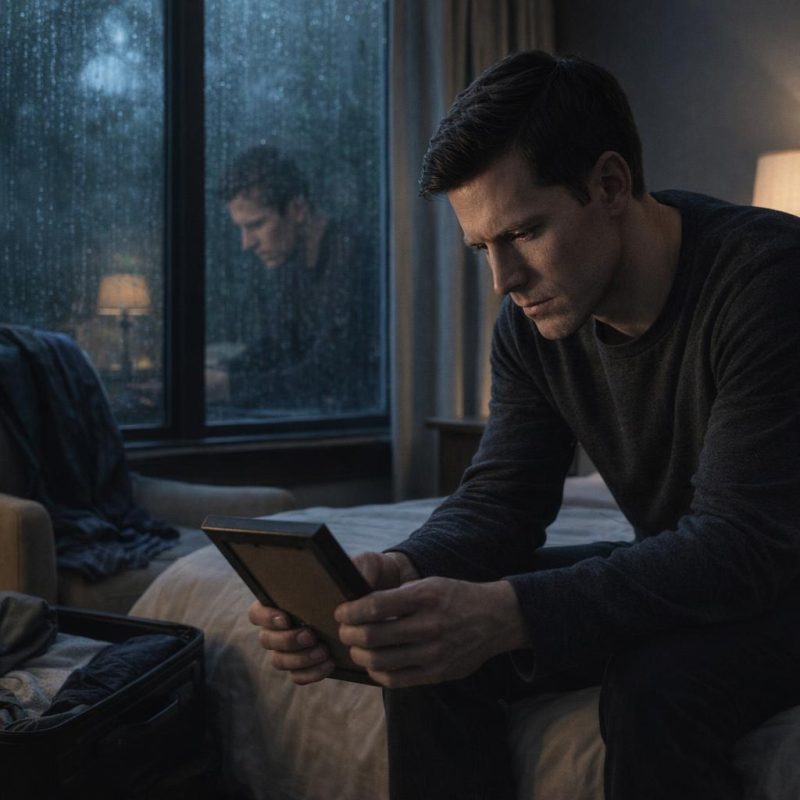 Image by RM AI
First Dinner
Dinner was served in a dining room that could have seated twelve comfortably and currently seated three with a lot of empty space between us. The table was set with the kind of precision that suggested either a professional had done it or Julian had stood over someone while they did. Cloth napkins folded into shapes, multiple forks, candles that were lit but not quite tall enough to see over. Sarah had made an effort with the conversation from the moment we sat down — asking about my drive, mentioning a restaurant she'd read about, steering things toward neutral ground with the practiced ease of someone who'd been doing it for years. I appreciated it. I cut into my food and let her carry it for a while. The room had a low, formal hum to it, the kind of quiet that isn't actually quiet because it's full of things nobody's saying. Julian had been largely silent through the first course, which I'd learned over the years meant he was building toward something rather than winding down. He refilled his own wine glass without offering to refill anyone else's, adjusted his cuffs, and settled back into his chair at the head of the table with the slow, deliberate satisfaction of a man who considered the seating arrangement a personal achievement.
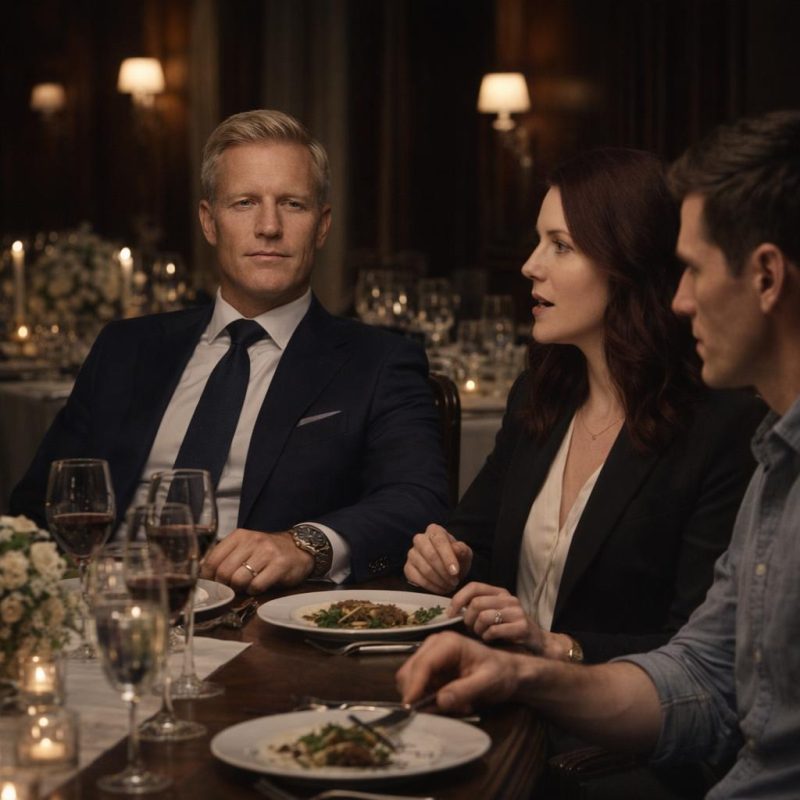 Image by RM AI
Corporate Monologue
It started somewhere between the salad and the main course. Julian set down his fork, which I'd come to recognize as his signal that a monologue was incoming, and turned toward me with the particular expression of someone about to explain something complicated to someone they've already decided won't fully grasp it. "You know," he said, "what's happening in the corporate world right now is really about high-level restructuring. Not just layoffs — actual structural realignment." I nodded and cut my steak. He continued. He talked about synergies and vertical integration and the difference between operational efficiency and strategic consolidation, pausing occasionally to check whether I was following, which I indicated I was with small nods and the occasional "right." Sarah tried twice to redirect — once toward a home renovation she'd been reading about, once toward a mutual friend's recent move — and both times Julian acknowledged her with a brief smile before returning to his subject. He was genuinely engaged with the material, I'll give him that. He leaned forward when he got to the parts he found most interesting, and he used his hands. I kept eating. He circled back to the same phrase with the confidence of someone who believed repetition was the same as emphasis, and by the time the main course was half-finished, I'd heard the words "high-level corporate restructuring" for the third time.
 Image by RM AI
The Mysterious New Ownership
The subject shifted somewhere around the second glass of wine, and Julian leaned back in his chair with the air of someone about to share information they considered privileged. Sterling and Associates, he said, had been acquired. Recently. Quietly. He said the new ownership was shrouded in mystery — he actually used that phrase, shrouded in mystery, with a small appreciative nod to his own word choice — and that nobody in the building seemed to know who was behind it or what they intended to do with the place. He had theories, naturally. He walked us through them: a private equity group, maybe, or a holding company with a diversified portfolio, possibly someone from overseas looking to establish a domestic footprint. He spoke about it with the confident speculation of a man who considered himself well-positioned to weather any transition, whatever form it took. Sarah asked a polite question about whether it affected his day-to-day, and he said not yet, but that he was watching it closely. I kept my face neutral and reached for my water glass. I took a slow sip and set it back down. Julian continued theorizing across the candlelight, building his case for who the mysterious new owners might be, and I sat with the particular quiet of someone who already knew the answer to a question nobody had thought to ask them.
 Image by RM AI
The Shortlist
Then Julian set down his fork and straightened slightly, the way he did when he was about to say something he considered important. He mentioned, almost casually, that he'd been placed on a shortlist. Executive Vice President. He let the title sit in the air for a moment before continuing. He walked us through his qualifications the way someone reads from a prepared statement — twelve years at the firm, three major client portfolios he'd personally grown, a restructuring initiative two years back that he said had saved the company somewhere in the range of four million dollars. He mentioned his relationships with senior partners by first name. He talked about his visibility, his reputation, his read on where the industry was heading. Sarah said that was wonderful and reached over to touch his arm. Julian accepted this with a small nod, as though it were the appropriate response. I kept eating. He wasn't wrong about his track record, technically — some of it I'd read in the briefing documents myself. But there was something almost hypnotic about the certainty in his voice, the way he described his own inevitability, like the outcome had already been decided and he was simply narrating it for our benefit.
 Image by RM AI
Aggressive Restructuring
Julian moved from his qualifications to his vision, and the shift was seamless. If he got the EVP role — when he got it, he corrected himself — he had a clear plan. He used the phrase aggressive restructuring twice in the same breath, and then he started laying it out. Redundant departments consolidated. Underperforming teams dissolved. A headcount reduction he estimated at somewhere between fifteen and twenty percent, which he described as long overdue. He said the firm had been carrying dead weight for years and that new ownership, whoever they turned out to be, would almost certainly want to see that kind of decisive action. He used the word decisive like it was a compliment he was paying himself. I set my fork down quietly. The number he'd thrown out — fifteen to twenty percent — I'd spent most of the previous Tuesday in a call with Victoria going through those exact same projections, arguing against them, pushing for a retention-first approach that protected the people who'd actually built the firm's client relationships. Julian was describing, with genuine enthusiasm, the outcome I had worked to prevent.
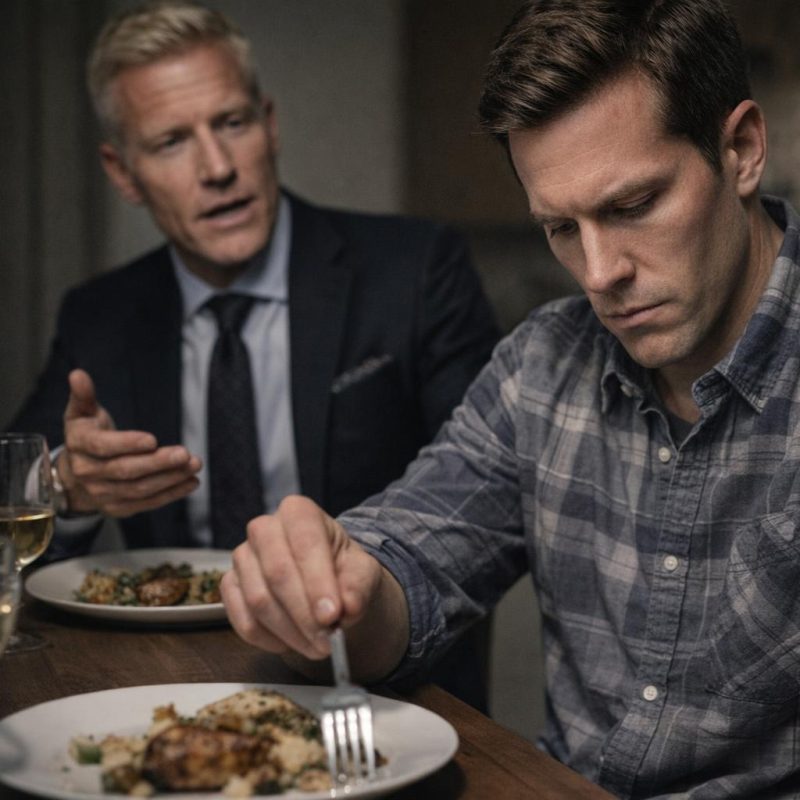 Image by RM AI
Small Words
He kept going, and somewhere in the third or fourth minute I noticed the register had shifted. Julian had started slowing down slightly when he addressed me directly, the way a teacher might pace themselves for a student who's struggling to keep up. He explained what a cost center was. He explained the difference between revenue-generating and support functions, pausing after each phrase as if checking whether I'd followed. At one point he said, and I'm simplifying here, before describing something that wasn't particularly complicated to begin with. Sarah was looking at her plate. I kept my expression even and nodded at the appropriate intervals, which seemed to be all the encouragement he needed. He explained organizational leverage. He explained what a span of control meant in a management context. He said the word synergies without any apparent irony. I had sat through board presentations on three continents. I had read acquisition memos dense enough to require a second read even when you knew what you were looking for. But I nodded again, and Julian continued, and the condescension settled over the table like something that had been there all along and had simply stopped pretending otherwise.
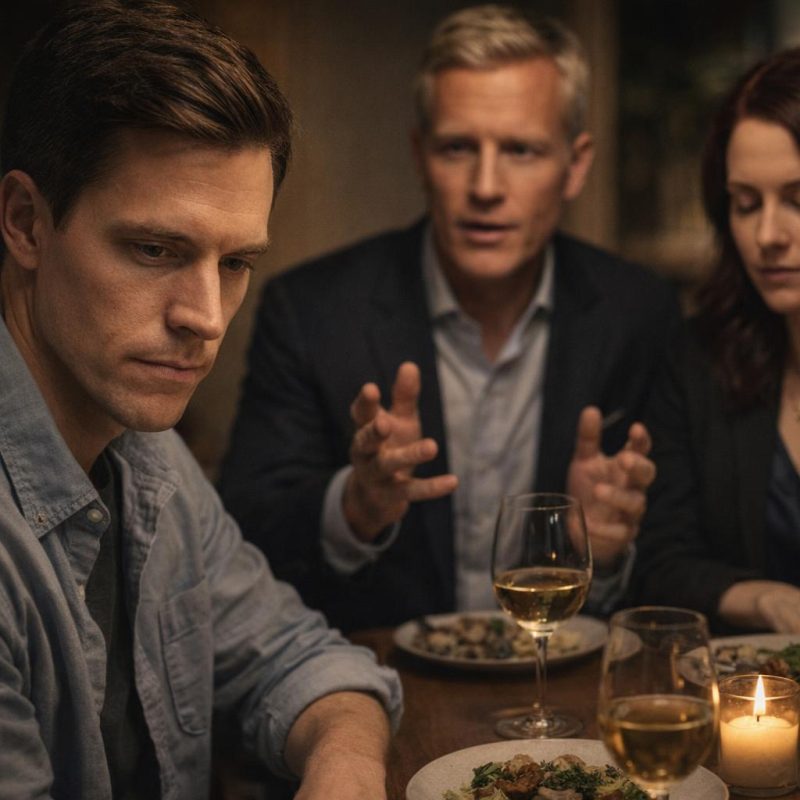 Image by RM AI
Sarah's Redirection
Sarah made her move somewhere between the entrée and the cleared plates. She asked Julian whether he'd heard anything from his college roommate, the one who'd moved to Portland — a question that had nothing to do with organizational charts or headcount ratios, and I suspected that was entirely the point. Julian answered in two sentences and pivoted back. She tried again with something about her cousin's new house, and he acknowledged it with a sound that wasn't quite a word before circling to a point he'd apparently left unfinished about middle-management redundancy. I watched her try a third time — she mentioned that I'd had a busy few weeks, asked if I wanted to talk about anything, looked at me with the particular expression of someone throwing a life preserver. I appreciated it. I told her things had been fine, kept it brief. Julian said that was the thing about people in less demanding roles, that the stress ceiling was lower, and he meant it as a compliment, or at least he delivered it that way. Sarah's mouth pressed into a thin line. She reached for her wine. Julian was already back to Sterling, talking about the fourth quarter, and the dinner table belonged to him again.
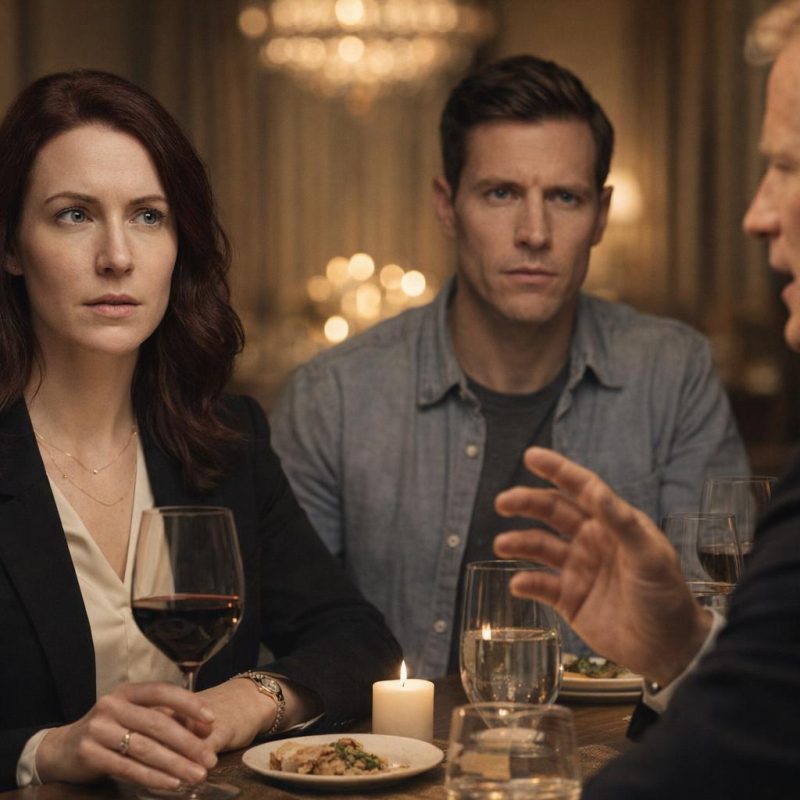 Image by RM AI
Casual Cruelty
The layoffs came up again, more specifically this time. Julian mentioned the operations team by name — said that division alone accounted for eleven positions he considered non-essential. He said it the way you'd say you were clearing out a storage unit. Eleven positions. I thought about the staffing files I'd reviewed — the operations coordinator who'd been with the firm for nine years, the two analysts who'd transferred from the Chicago office specifically for this role, the team lead who'd written a process improvement memo that had actually impressed me when I read it. Julian said the cuts would probably happen in waves, which he described as cleaner from a morale standpoint, and then he said something about Q1 targets. Sarah said she thought she had something for dessert and stood up to check. Julian didn't seem to notice she'd left the table. He kept talking, running the numbers out loud, and I sat there with my hands in my lap and my face arranged into something neutral, listening to him reduce eleven people's livelihoods to a line item, his voice carrying the easy confidence of someone who had never once had to be the number.
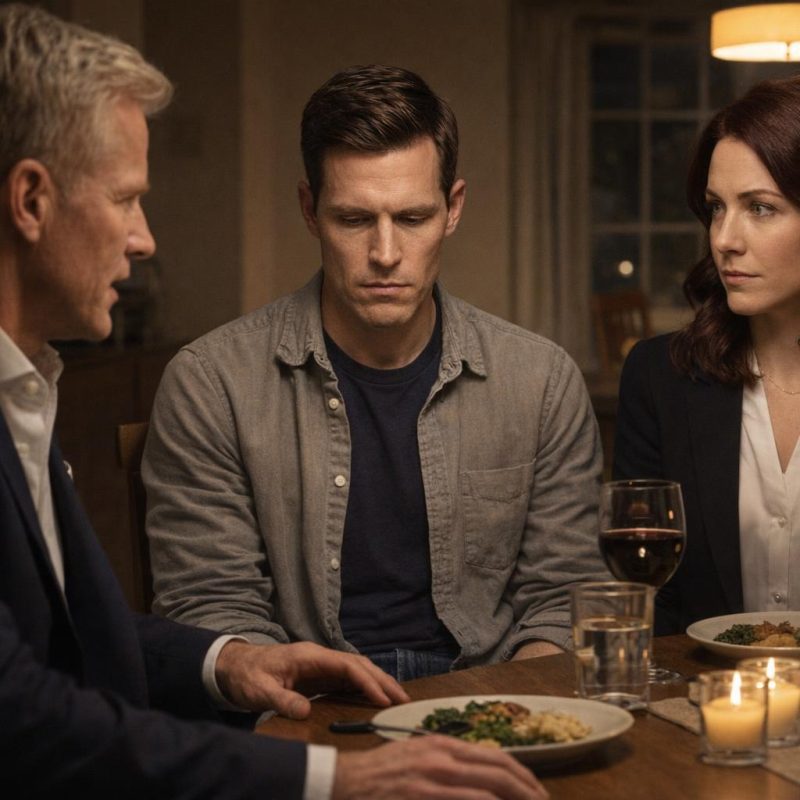 Image by RM AI
Dinner's End
Sarah came back with a small plate of cookies and the quiet hope that sugar might accomplish what conversation hadn't. Julian took one, kept talking. He circled back to me as the plates were being cleared, the way he sometimes did at the end of an evening, as if he'd saved a particular thought for last. He said I seemed like a smart enough guy, and that if I ever wanted to make a real move career-wise, he could probably point me toward some resources. Entry-level certification programs, he said. Things that could help me get a foothold. He said it with complete sincerity, which somehow made it worse. I thanked him. Sarah said it had been a really nice evening and began stacking plates with the focused energy of someone who needed something to do with their hands. Julian pushed back from the table and stretched, satisfied, the way a man looks when he believes the night went well. I said goodnight and meant it in the most literal sense — I needed the night to begin so the evening could be over. The house went quiet as I headed down the hall, and the silence felt like something I'd been waiting for since I sat down.
 Image by RM AI
The Guest Room Retreat
The guest room door clicked shut behind me and I stood there for a second just letting the quiet settle. I sat on the edge of the bed and didn't move for a while. The evening ran back through my head in pieces — the EVP announcement, the headcount projections, the part where Julian had explained what a cost center was to a man who owned one. There was something almost impressive about it, in the way that a very specific kind of obliviousness can be impressive. I'd spent the better part of the week in back-to-back calls, making decisions that would affect hundreds of people, and I'd sat across from Julian for three hours nodding along while he explained organizational leverage. The gap between those two versions of the evening was wide enough that I couldn't quite hold both of them in my head at the same time. I reached over and pulled my phone off the nightstand where I'd left it charging. The screen lit up. Three missed calls, all from Victoria, all within the last two hours.
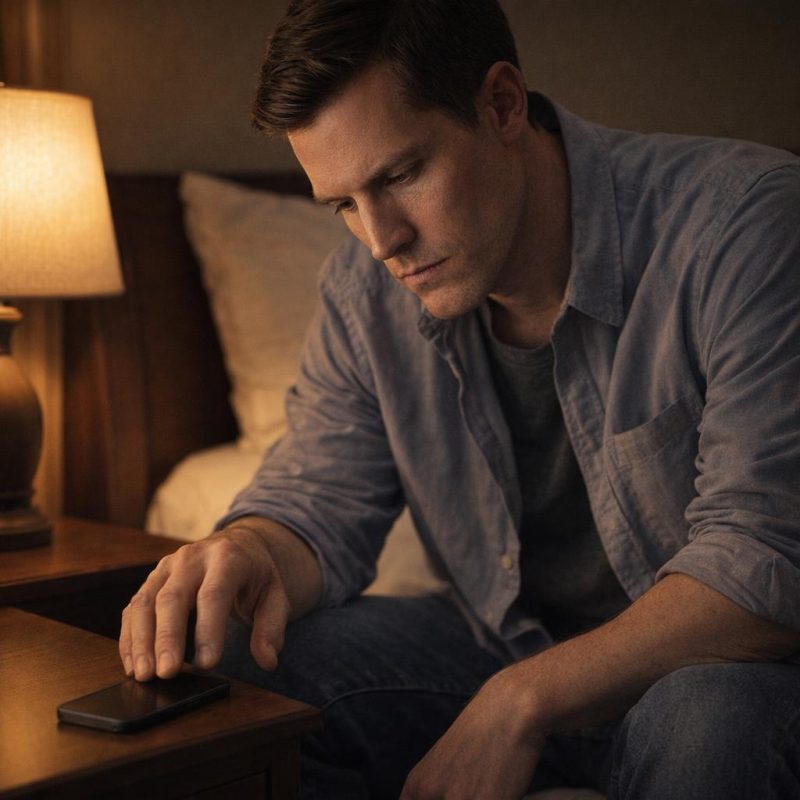 Image by RM AI
Saturday Morning
I came downstairs Saturday morning still carrying the weight of whatever Victoria had needed at eleven o'clock on a Friday night, and Julian was already at the kitchen table with his coffee and his opinions. Sarah was at the stove. The smell of eggs and toast was doing its best. Julian said good morning and then, without any real pause, said he'd been thinking more about the restructuring timeline and wanted to get my read on something. I poured myself a coffee and sat down. He talked about phased implementation. He talked about stakeholder optics. Sarah set a plate in front of me and gave me a look that I think was meant to be apologetic. I ate. Julian said the thing most people didn't understand about large-scale organizational change was the importance of controlling the narrative early, and I nodded and drank my coffee and thought about Victoria's three missed calls and what they probably meant. Sarah asked if anyone wanted more toast. Julian said he'd actually put together some notes and reached across the table for his tablet, pulling up a set of organizational charts and turning the screen toward me.
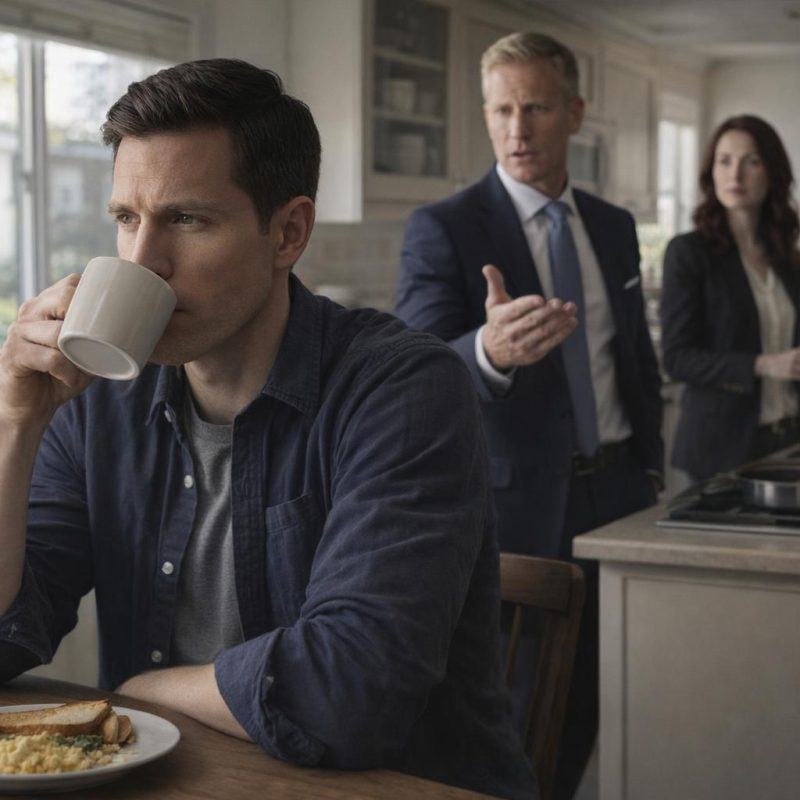 Image by RM AI
The Home Office
After breakfast, Julian said there was something he wanted to show me and led me down the hall toward the back of the house. The home office was exactly what I'd expected — dark wood, built-in shelving, the kind of room that announces itself before you've fully stepped inside. He walked me through it like a docent. There was a framed MBA from a school he mentioned twice. There were plaques from industry associations I half-recognized. A glass-topped desk with a leather chair that probably cost more than my monthly rent. He pointed out a deal tombstone from some 2019 transaction, the kind banks give out as souvenirs, and explained what it represented in case I didn't know. I nodded. I asked a question or two because it seemed like the right thing to do. The shelves were arranged with the careful casualness of someone who'd thought about them. On the corner of the desk, angled just enough to catch the light from the window, sat a polished silver nameplate that read Senior Vice President.
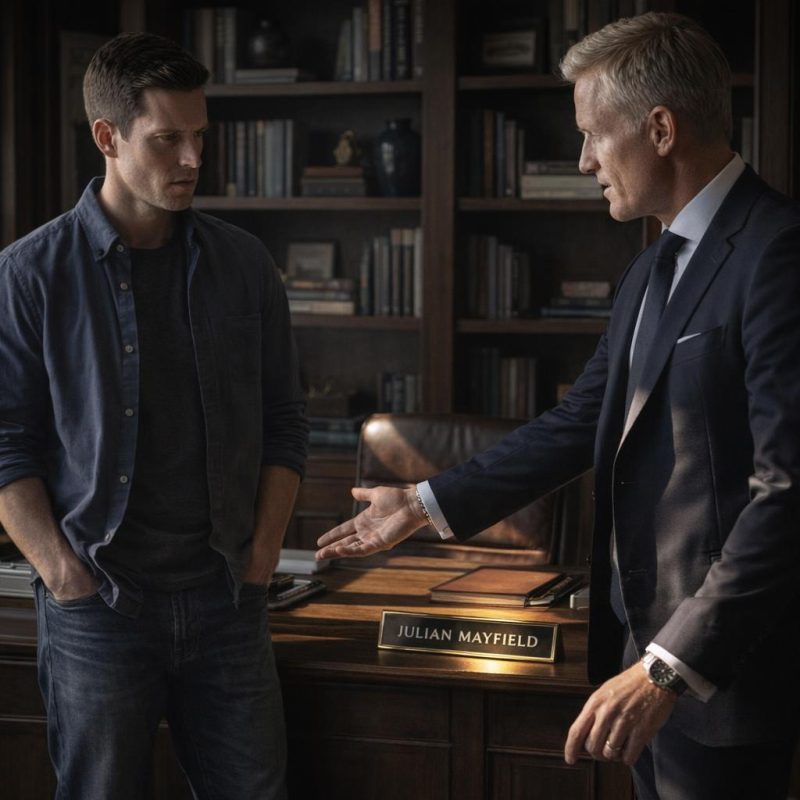 Image by RM AI
Career Advice
We ended up back in the living room, and Julian settled into the armchair across from me with the energy of someone who'd been waiting for the right moment. He said he hoped I didn't take this the wrong way, but he'd been thinking about my situation and felt like he owed me some honesty. I told him I appreciated that. He said the thing about ambition was that you either had it or you didn't, and the people who didn't usually convinced themselves they were fine with less. He said he'd seen it a hundred times — smart guys who just never pushed themselves, never built a brand, never made the right moves early enough. He offered to make some calls, said he knew people at a few mid-size firms who were always looking for reliable people, nothing glamorous but solid. I said that was generous of him. He said he just didn't want to see me still driving that same car in five years. I thanked him again and looked out the window at the yard, and the weight of everything he'd assumed about my life settled somewhere quiet in my chest.
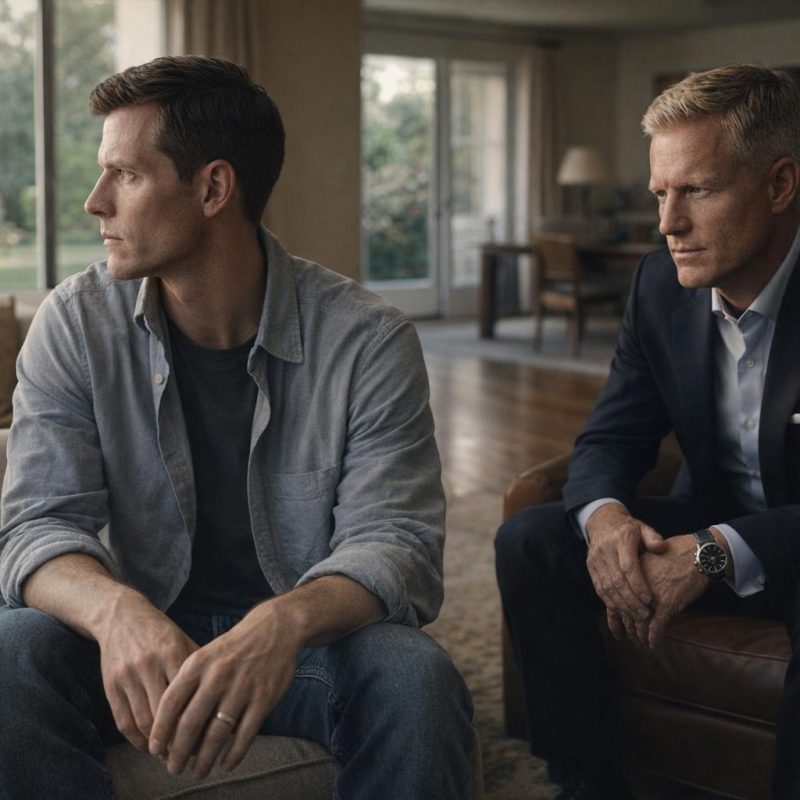 Image by RM AI
Lifestyle Critique
It didn't stop at the career advice. By Saturday afternoon, Julian had worked his way through most of the catalog. The car came up again — he said he wasn't trying to be harsh, but first impressions were everything in professional circles, and pulling up to a client meeting in something that looked like it had survived a flood sent a message. He said my jacket looked like something from a clearance rack, and he meant that constructively. He asked, genuinely curious, whether I had a financial advisor, because there were instruments available even at modest income levels that could start building real equity over time. He compared our situations the way someone compares a finished renovation to a fixer-upper — not unkindly, just matter-of-factly, as if the gap between us was simply a feature of the landscape. I kept my hands loose in my lap. I didn't argue any of it. I just let it accumulate, comment by comment, the way sediment settles — and by the time he moved on to something else, the full weight of the weekend had quietly stacked itself somewhere behind my sternum.
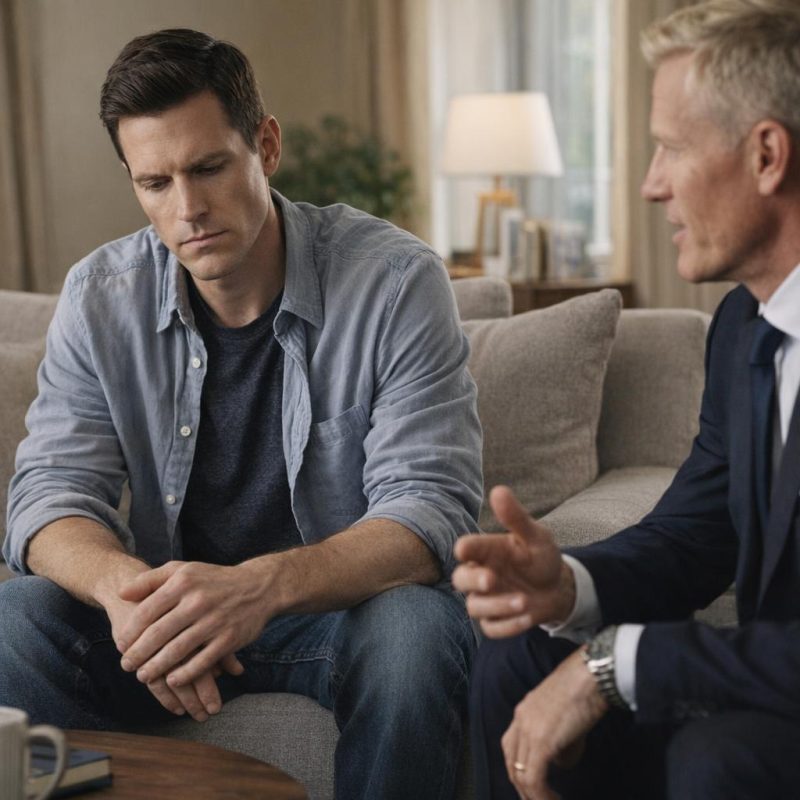 Image by RM AI
Sarah's Apology
I found a few minutes alone in the kitchen, refilling my water glass and staring at nothing in particular, when Sarah came in and pulled the door halfway closed behind her. She didn't say anything right away. She just stood there for a second, and I could see her working up to it. Then she said she was sorry — not for anything specific, just sorry, the way you apologize for weather. She said she knew how Julian could get, and she knew this weekend hadn't been easy, and she wanted me to know she saw it even when she didn't say anything. I told her it was fine. She shook her head a little and said it wasn't, not really, and that she'd been thinking about it more than I probably knew. She looked tired in a way that had nothing to do with the hour. I felt something shift in me — not anger at Julian exactly, more like a protectiveness toward her that I hadn't expected to feel so sharply. She looked at the counter and said she just wished Julian could see people the way she did.
 Image by RM AI
The Corporate Network
Saturday afternoon stretched long. Julian had moved us to the back patio, and somewhere between the second round of drinks and the sun dropping behind the tree line, he'd started in on his network. He named a CFO at a logistics company, a managing director he'd gone to school with, a deputy commissioner he'd met at a conference three years ago. He described these relationships with the precision of someone reading from a ledger — who owed him a call, who'd reached out recently, who'd said his name in a room that mattered. Sarah sat across from us with a book open in her lap, turning pages at intervals that suggested she wasn't really reading. Julian said the thing people underestimated was that relationships were currency, and the people who understood that early were the ones who ended up insulated when things got uncertain. He said it with the confidence of someone who'd never had reason to question the ground beneath him. I watched a bird land on the fence post at the edge of the yard and stay there, perfectly still, and said nothing at all.
 Image by RM AI
Dinner Dominance
Dinner Saturday night followed the same architecture as Friday's. Julian opened a bottle he'd been saving and explained its provenance while Sarah set the table. He talked through the first course about a restructuring initiative at work, and through the main course about a competitor firm's missteps, and by dessert he'd circled back to the importance of positioning yourself correctly before a market shift. Sarah passed the bread and refilled glasses and offered small affirmations at the right intervals — a nod here, a soft agreement there — with the practiced ease of someone who'd learned the rhythm of these evenings a long time ago. I ate and listened and contributed just enough to avoid the appearance of silence. At some point I noticed that neither of them had asked me a single question about my week, my work, or anything else. Not out of malice, I thought — it just hadn't occurred to either of them that there was anything to ask. The candles burned down a little, the plates were cleared, and the conversation settled back into its familiar shape like water finding its level.
 Image by RM AI
Networking Advice
After dinner, Julian poured himself a scotch and told me to sit down because he wanted to talk to me about something important. He said networking was a skill, like any other, and most people made the mistake of thinking it came naturally when really it was a discipline. He said he'd spent years building his approach — the follow-up cadence, the value-add touchpoints, the way you positioned yourself as a resource before you ever needed anything in return. He drew an actual diagram on a notepad. I watched him shade in boxes and draw arrows between them. He said the mistake guys like me made was waiting too long to start, and by the time you needed the connections they weren't there. He said he'd been lucky to have mentors who showed him the ropes early, and he felt like it was his responsibility to pass that along. He capped his pen and looked at me with the satisfied expression of someone who'd just done a good deed, and said he could start by introducing me to some entry-level contacts who might be a good fit for where I was in my career.
 Image by RM AI
The Acquisition Update
I excused myself around nine-thirty, said I was tired from the drive, and closed the guest room door behind me. I sat on the edge of the bed for a moment just listening to the muffled sound of Julian's voice still carrying from downstairs. Then I opened my laptop and pulled up the encrypted channel Victoria used for sensitive communications. She'd sent three messages since dinner. The first was a logistics note about Monday's venue. The second was a revised attendee list with a flag on two names. The third was the final transition schedule, formatted and confirmed — the kind of document that doesn't get sent until everything is locked. I read through it twice. The executive review roster was attached as a separate file, and I scrolled through it slowly, the names arranged by department and seniority level. I closed the laptop and set it on the nightstand. The transition timeline sat in my head, clean and specific: Monday morning, nine AM.
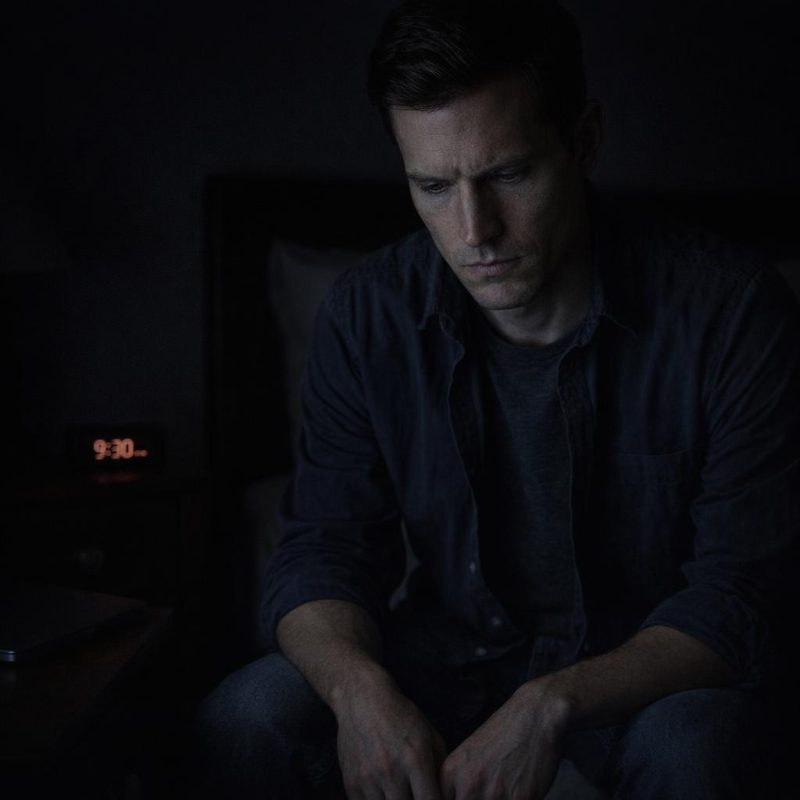 Image by RM AI
Career Counseling
I ran into Julian in the upstairs hallway Sunday morning, both of us heading toward the kitchen at the same time. He had that look he gets — the one that means he's been thinking about something and decided to do you a favor. He stopped me with a hand on my arm, which I hadn't invited, and said he'd been meaning to talk to me. About my situation. I told him I was just going to grab some coffee, but he followed me anyway, leaning against the counter while I poured. He said he knew a guy — a career coach, someone who worked with mid-level professionals who'd gotten a little stuck. He said it with genuine warmth, which almost made it worse. He talked about goal-setting frameworks and personal branding and how it was never too late to course-correct. I nodded at the right intervals. I said something like, that's really thoughtful, and I meant it to sound neutral, and I think it did. He said the first few sessions were expensive but he'd be happy to cover them. A gift, he called it. Then he reached into the pocket of his pressed weekend shirt and pulled out a business card.
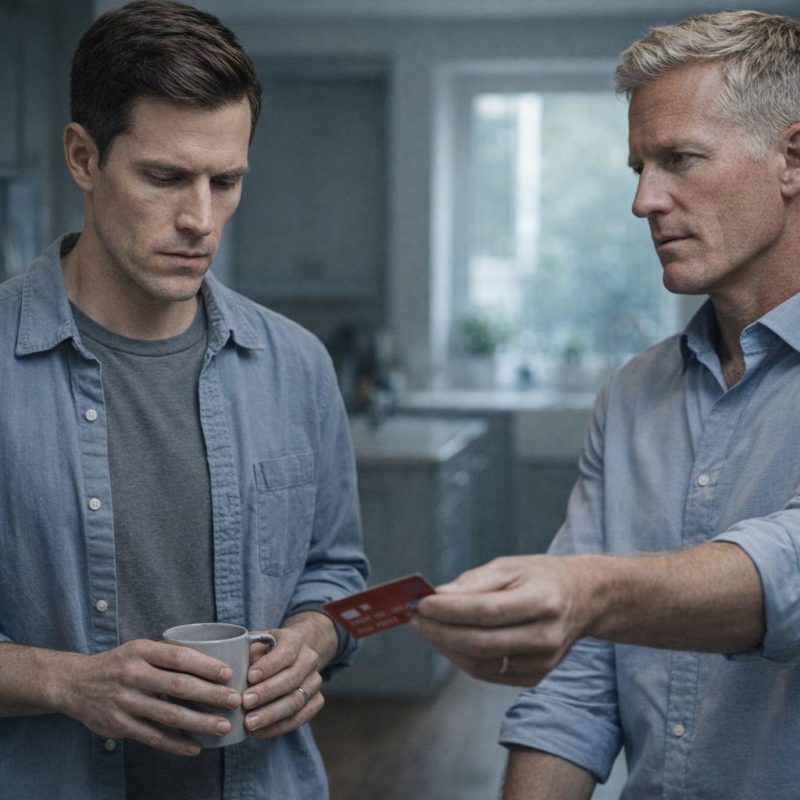 Image by RM AI
Sunday Morning Routine
Julian had a whole Sunday morning system. I noticed it the way you notice a ritual someone's been doing so long they don't see it anymore. He was at the kitchen table by seven-thirty with the financial section folded back to a specific page, a particular mug — the heavy ceramic one, not the travel tumbler — and his tablet propped at an angle that let him switch between the paper and the screen without moving his head. Sarah brought coffee refills without being asked and cleared the orange juice glass when it was empty. He didn't acknowledge either thing. He read out a headline once, something about interest rates, and then answered his own implied question before either of us could respond. He had opinions about three different companies and delivered them like verdicts. I drank my coffee and watched him settle into it — the posture loosening slightly, the jaw unclenching, the small satisfied exhale when a market number confirmed something he'd already believed. Whatever else the weekend had been, this part was genuinely his. The ritual fit him the way the tailored jacket did, and he wore it with the same ease.
 Image by RM AI
Dismissive Colleagues
Sunday afternoon Julian got onto the subject of his colleagues at Sterling, and once he started I couldn't find a natural place to redirect him. He went through them the way someone goes through a closet — this one's useful, this one's taking up space, this one should have been gone two years ago. There was a guy in risk assessment he described as a liability in human form. A woman in client services who, according to Julian, had coasted on one good quarter for the better part of a decade. He named a department head and shook his head slowly, like the memory of the man's existence was personally exhausting. I asked a few neutral questions, mostly to keep from saying anything I'd regret. He answered each one with the confidence of someone who had never once considered that he might be wrong about a person. What stayed with me wasn't the specific names or the specific complaints. It was the tone — the same flat, unbothered voice he used to discuss the weather or the traffic. These were people's jobs. Their mortgages, their kids' school schedules, their whole sense of what the week looked like. He talked about all of it like he was sorting mail.
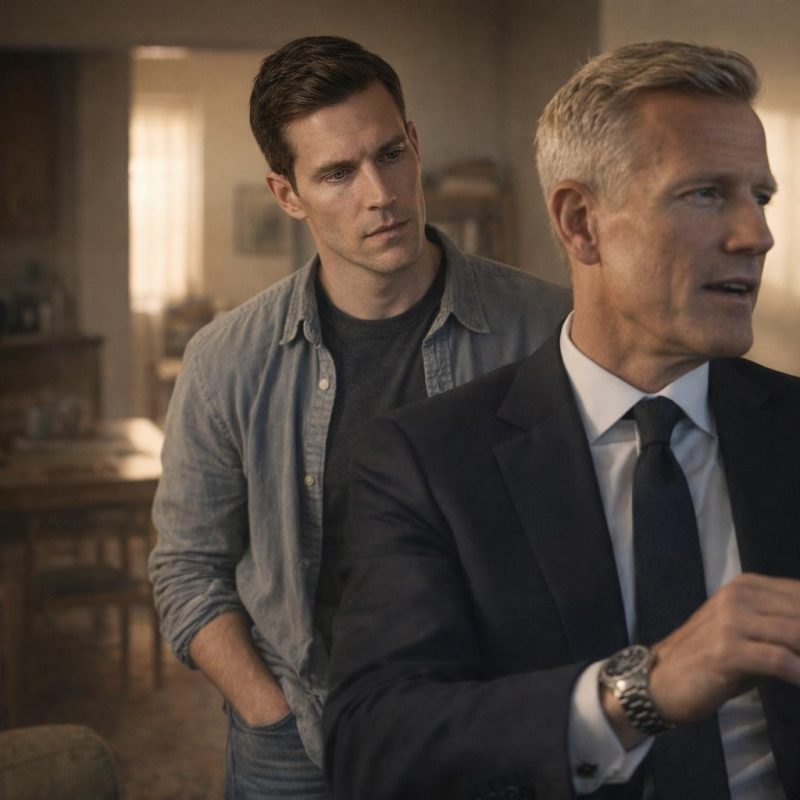 Image by RM AI
The Laptop Question
I'd left my laptop open on the guest room desk, and Julian walked past the door twice before he finally stopped and asked about it. He wanted to know what I was always working on. I said consulting work, which was true enough. He tilted his head the way he does when he's deciding whether to take something seriously. He asked what kind of consulting, and I said financial analysis, project oversight, that kind of thing. He nodded slowly, which meant he wasn't buying it but was too polite to say so directly. He asked if I worked from coffee shops a lot, and I said sometimes, and he made a small sound that wasn't quite a laugh. He said he'd noticed I was always on the thing, even on weekends, and that in his experience the people who were always busy weren't always actually productive. I said that was probably true. He looked at the screen for a moment — I'd closed the tabs before he came in, so there was nothing to see — and then he said, half to himself, that he hoped I wasn't just burning time on social media and calling it work.
 Image by RM AI
Observing Entitlement
The grocery delivery arrived Sunday afternoon, and I watched Julian manage the whole interaction from the kitchen doorway. The driver was maybe twenty-two, carrying two heavy bags up the front steps, and Julian pointed to the counter without looking up from his phone. No thank you, no eye contact, just the finger. The housekeeper — a quiet woman who'd been there both days — came in to put things away, and Julian talked over her twice while she was moving around him, not rudely exactly, just without any awareness that she was a person in the room. Sarah caught my eye once and looked away quickly. I'd seen versions of this all weekend, small moments I'd been filing without meaning to. The way his voice shifted register depending on who he was addressing. The way he moved through spaces like they'd been arranged for him specifically. I didn't think it was cruelty exactly, not the deliberate kind. It was something closer to a habit so old it had stopped feeling like a choice. That was the part I kept coming back to — not the sharpness, but the ease of it.
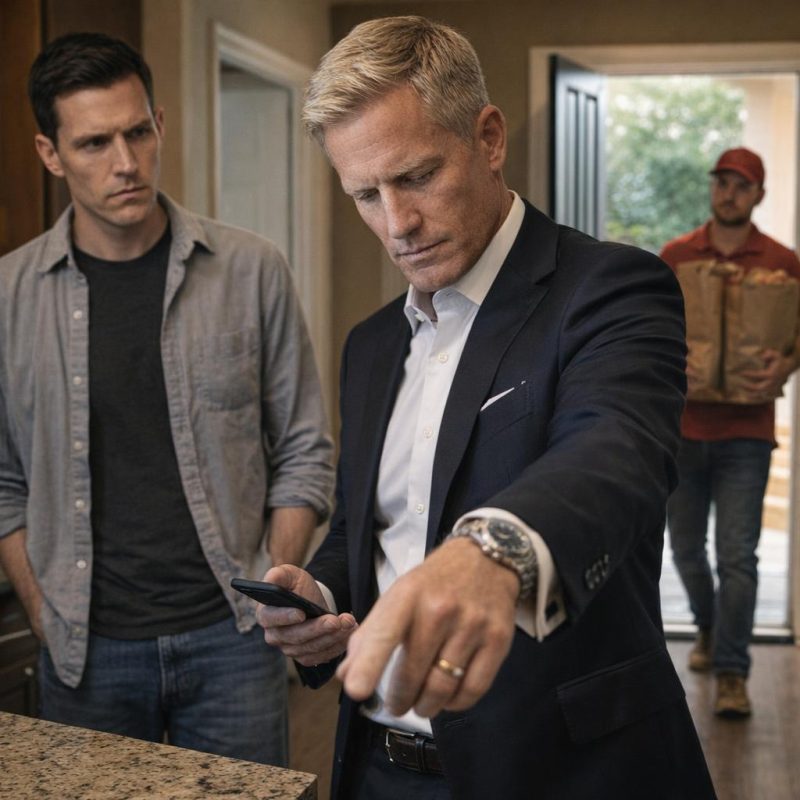 Image by RM AI
Family Time
Sarah suggested after lunch that we do something together — just the three of us, no phones, no work talk. She said it lightly, the way you float an idea you're not sure will land, and I said I was in before she finished the sentence. We ended up in the living room with a board game she'd pulled from a cabinet, something with cards and a timer, and for about twenty minutes it actually worked. Sarah laughed at something Julian did wrong on purpose, and Julian smiled in a way that reached his eyes, and I thought, okay, here it is, the version of this family that exists sometimes. Then Julian's phone buzzed and he glanced at it, just a glance, but then glanced again, and by the third time he'd picked it up and was typing. Sarah kept the game going, asking questions, filling the silence, doing the work of two people pretending everything was fine. I played my turns and watched her keep at it — the careful cheerfulness, the deliberate lightness — and felt something that wasn't quite sadness but lived in the same neighborhood. The afternoon held together on the outside. The seams just showed a little more than she wanted them to.
 Image by RM AI
The Firing List
We were out on the back patio Sunday evening when Julian brought up the promotion again. He'd been circling it all weekend, and this time he let himself land on it. He said once things were official he was going to make some changes. Structural changes, he called them. He listed a few names — people in middle management, a couple of senior analysts — and gave a brief reason for each one, the way you'd read off a grocery list. I kept my face neutral and my coffee mug in both hands. Some of the names I didn't recognize. A few I did. Then he mentioned the head of the community lending division, a woman who'd spent three years building a program that actually worked, who'd pushed back on two rounds of cuts and held the line both times. I'd heard her name come up in conversations about the division — the kind of name that surfaces when something is going right. Julian said she was too idealistic for the direction the company was heading, and that she'd been a problem for a while. He said her name like it was a minor inconvenience.
 Image by RM AI
Extended Family Finances
Julian brought up my cousin Danny sometime after dinner, and I don't think he even noticed the shift in the room when he did. He started with something almost neutral — asking if Danny was still at the same job — and then moved quickly into the kind of commentary that doesn't leave much room for response. He said Danny had never made smart choices with money, that the neighborhood he lived in was a reflection of that, that some people just didn't have the discipline to build anything real. Sarah said Danny worked hard, which was true, and Julian nodded in the patient way that means he's already dismissed what you said. He talked about Danny's car, some older model he'd seen at a family gathering, and said it was the kind of thing that told you everything you needed to know about a person's priorities. Sarah looked at the table. I kept my expression even. Julian shook his head once, slowly, and said it was a shame — that Danny had never figured out what actually mattered.
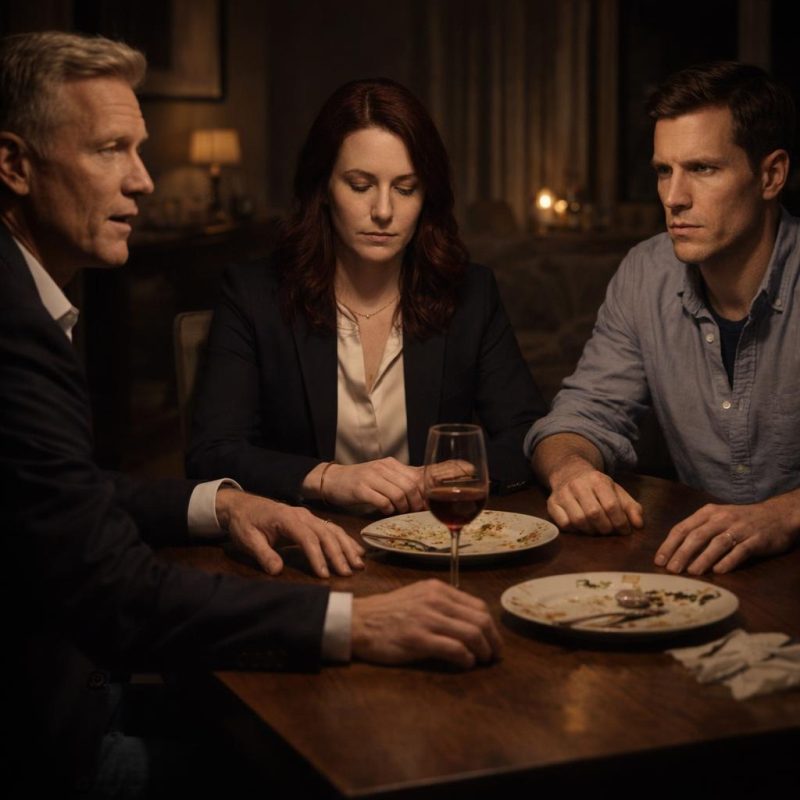 Image by RM AI
Sarah's Confession
Sarah found me in the garden sometime after the Danny conversation wound down. I'd stepped outside for air more than anything else — just needed a few minutes where nobody was performing. She came through the side door quietly, glancing back toward the house before she sat down next to me on the low stone bench. She said she was sorry about the weekend. Not in the way people say it when they mean nothing by it — she said it slowly, like she'd been holding it for a while. I told her she didn't have to apologize for anything. She shook her head and said that wasn't really true. She told me Julian hadn't always been like this, that something had shifted in the last few years, that the money and the title had changed the way he saw people. She said she'd tried talking to him about it and he'd listened the way he always listened — nodding, patient, already somewhere else. She looked at her hands. She said she loved him but she didn't always like who he was becoming, and that the two things were getting harder to hold at the same time. I didn't say anything for a moment. I just sat with her in the dark. Then she said she didn't know how to fix what was broken between them.
 Image by RM AI
Sunday Dinner Preparation
Sunday dinner was a production. Sarah had been in the kitchen most of the afternoon, coordinating with the caterer she'd brought in, arranging things on the long dining table with the kind of careful attention that told me she was trying to make the evening go smoothly through sheer force of presentation. I helped where I could — carried a few things, stayed out of the way when I couldn't. Julian moved through the house in his element, lifting a fork to check its placement, adjusting a candle an inch to the left, offering observations about the wine selection that nobody had asked for. He told Sarah the centerpiece was too tall and blocked sightlines. She moved it without comment. He said the lighting was better than last time, which I gathered was meant as a compliment. The dining room looked genuinely beautiful — long white candles, good crystal, the kind of table that made you feel like you were supposed to sit up straighter. I stood in the doorway for a moment before we sat down, watching the candles burn, and the weight of the evening settled over me like something I couldn't quite name.
 Image by RM AI
The Announcement
We sat down to dinner and Julian poured the wine himself, which I'd noticed he only did when he wanted to control the pace of something. He made a small show of it — holding the bottle at the label, commenting on the vintage, waiting until everyone's glass was full before he set it down. Sarah passed the bread without looking up. The first course came and Julian talked about a deal he'd closed that week, something about a commercial property in the financial district, and I nodded in the right places and kept my expression neutral. Then, somewhere between the soup and the main course, he set down his fork and looked at me with the particular expression he used when he was about to do something he'd already decided was generous. He said he'd been thinking about me this weekend. He said family was important to him — that he took that seriously — and that he wanted to do something concrete to show it. Sarah's hand went still on the table. He said he had something for me, something he'd prepared, and he wanted to give it to me properly. He stood up, pushed back his chair, and walked toward the sideboard against the far wall.
 Image by RM AI
The Formal Dinner
The dinner had a ceremonial quality I hadn't experienced in someone's home before — not a holiday, not a celebration, just a Sunday meal that had been elevated into something that required performance from everyone at the table. The courses came in sequence: a composed salad, a soup with a name Julian pronounced carefully, a main of lamb that he described to us as though we were at a restaurant and he was the sommelier. He talked through most of it. He talked about the neighborhood, about property values, about a renovation he was planning for the east wing of the house — there was an east wing, apparently — and about a colleague who had recently embarrassed himself at a charity event by wearing the wrong thing. Sarah kept her composure the way she always did in these settings, asking small questions, redirecting when the conversation sharpened, keeping her voice even. I ate and listened and said enough to avoid drawing attention. The candles had burned down a little by the time the main plates were cleared. The room was warm and quiet between Julian's sentences, and the formality of the evening had settled over the table like a cloth that nobody had asked for but nobody was going to move.
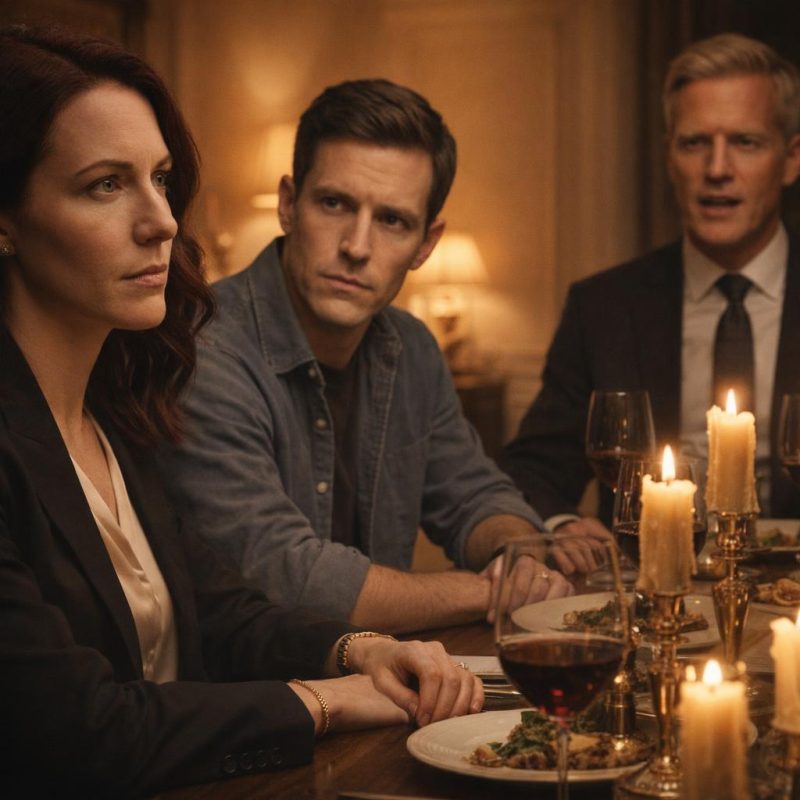 Image by RM AI
The Monologue Peak
Julian set down his wine glass and shifted in his chair the way he did when he was about to say something he considered important. He talked about leadership. He said real leadership wasn't taught in schools — that it was a quality some people had and others spent their whole lives pretending to have. He said the difference between people who built things and people who watched others build things came down to one word: discipline. He talked about his own trajectory, the early years, the sacrifices, the choices he'd made that other people hadn't been willing to make. He said most people were comfortable, and comfort was the enemy of everything worth having. Sarah looked at her plate. I kept my fork moving. He said the hardest thing about success was watching people you cared about settle — watching them accept less than they were capable of, not because they couldn't do better, but because they'd stopped believing they deserved to. He looked at me when he said that last part. Not long — just a beat — but long enough. I didn't respond. I just let the silence sit there after his words ran out, and the irony of everything he'd just said hung in the air between us, quiet and unacknowledged.
 Image by RM AI
The Cream Envelope
Julian came back from the sideboard holding a cream-colored envelope, thick and sealed, and he carried it the way people carry things they want you to notice. He stood at the head of the table for a moment before he sat back down, and then he set it on the polished wood and slid it across toward me with two fingers, slowly, like he was making a point about the gesture itself. He said it was five thousand dollars. He said it in a measured voice, watching my face. He said he wanted me to have it — that it was from him and Sarah, that family took care of family, and that there was no shame in accepting help when it was offered in the right spirit. Sarah had gone very still. She wasn't looking at the envelope or at Julian. She was looking at a fixed point somewhere past my shoulder. Julian folded his hands on the table and waited. I didn't reach for it. I didn't say anything yet. I just looked at it — thick and cream-colored and sitting there on the polished wood in front of me.
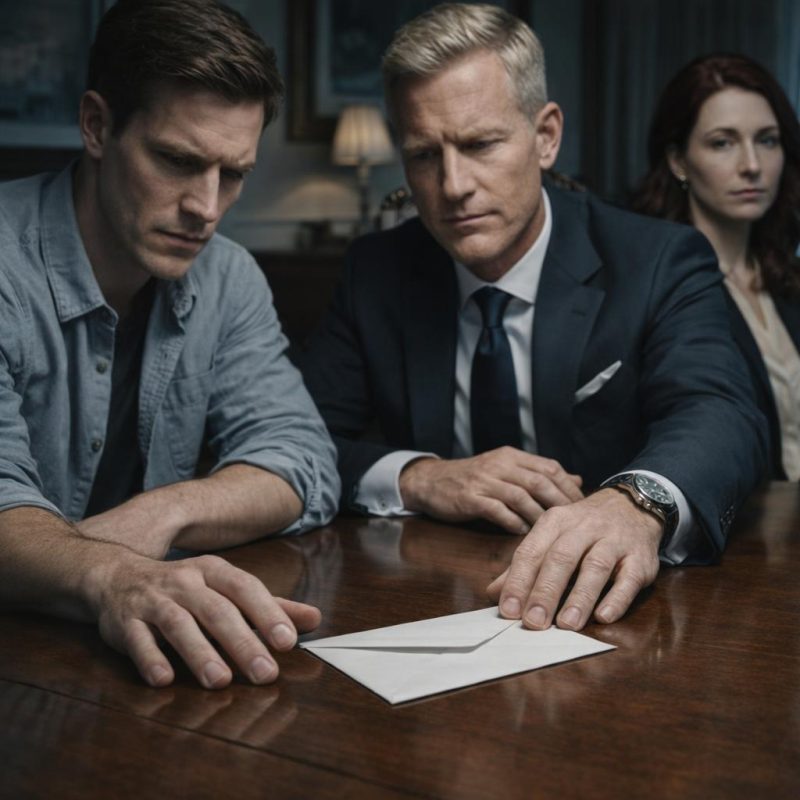 Image by RM AI
The Charity Speech
Julian explained what the money was for. He said it clearly, like he was walking me through a plan he'd already thought out on my behalf. A decent suit, he said — something that fit properly, something that would serve me in professional settings. And the car, he said, shaking his head slightly, as though the car had been a topic of private concern for some time. He said I could use part of it as a down payment on something reliable, something that didn't reflect poorly on the people around me. He said he wasn't trying to embarrass me — he wanted me to understand that. He said he just didn't want people looking at me and drawing the wrong conclusions about the family. He said it the way people say things when they've convinced themselves the cruelty is actually kindness. Sarah hadn't moved. Her hands were in her lap and her eyes were on the tablecloth. Julian leaned back in his chair and waited, the way someone waits when they expect gratitude and have already decided they deserve it. I looked at the envelope. Then I looked at him. The weight of everything he'd just said sat in the room around us, thick and undisturbed.
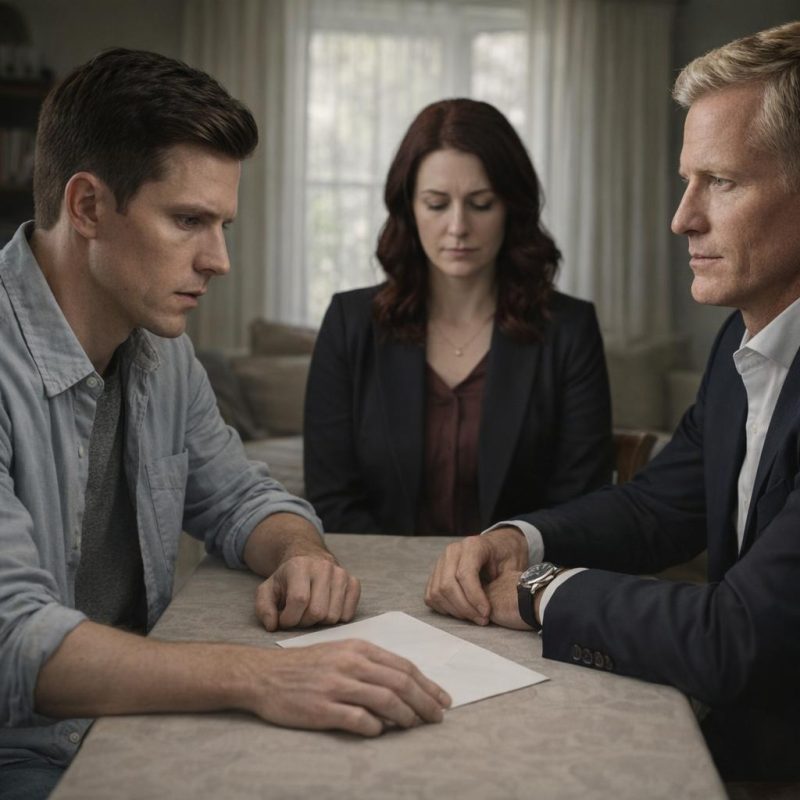 Image by RM AI
Pride and Poverty
I thanked him. I said I appreciated the thought, and I meant the first part of that sentence more than the second. Then I told him I couldn't accept it. Julian's expression didn't change right away — there was a half-second where he seemed to be deciding how to receive what I'd said — and then he let out a short breath through his nose and shook his head. He said pride was a poor man's luxury. He said it plainly, without heat, like it was something he'd observed to be true and was simply reporting. He said people in my position couldn't afford to let ego get in the way of practical help, and that refusing a hand up wasn't dignity, it was stubbornness dressed up as principle. Sarah said my name once, quietly, and then stopped. Julian pushed the envelope back toward me and said to take it, that we didn't need to make a thing of it. I picked it up. Not because I'd changed my mind — I hadn't — but because arguing further wasn't going to move anything, and the dinner had already gone on long enough. I slid it into my jacket pocket. Julian nodded once, satisfied, and reached for his wine. The table went quiet, and the tension that had been building all weekend settled into something unresolved and heavy, with no clean place to land.
 Image by RM AI
Choosing Restraint
I thanked him. I said I appreciated the thought, and I meant the first part of that sentence more than the second. Then I told him I couldn't accept it. Julian's expression didn't change right away — there was a half-second where he seemed to be deciding how to receive what I'd said — and then he let out a short breath through his nose and shook his head. He said pride was a poor man's luxury. He said it plainly, without heat, like it was something he'd observed to be true and was simply reporting. He said people in my position couldn't afford to let ego get in the way of practical help, and that refusing a hand up wasn't dignity, it was stubbornness dressed up as principle. Sarah said my name once, quietly, and then stopped. Julian pushed the envelope back toward me and said to take it, that we didn't need to make a thing of it. I picked it up. Not because I'd changed my mind — I hadn't — but because arguing further wasn't going to move anything, and the dinner had already gone on long enough. I slid it into my jacket pocket. Julian nodded once, satisfied, and reached for his wine.
 Image by RM AI
Sunday Night
I closed the guest room door behind me and stood there for a moment in the quiet. The house had settled into its nighttime sounds — the low hum of the HVAC, Julian's television murmuring two rooms over. I sat on the edge of the bed and opened my laptop. Victoria had sent the final transition documents through the encrypted channel at six that evening, and I'd been waiting until I had privacy to go through them properly. The executive review agenda was locked in. Julian's performance evaluation was third on the list, scheduled for ten-fifteen, which gave me enough time to get through the board introductions first. I read through the agenda twice, then closed the laptop and set it on the nightstand. The envelope from dinner was still in my jacket pocket. I didn't take it out. I just sat there in the low light, thinking about the morning — the drive in, the security gate, the elevator up to the forty-second floor. None of it felt dramatic in my head. It just felt like the next thing that needed to happen. I turned off the lamp and lay back, and the house settled quietly around me.
 Image by RM AI
The Final Line
I was heading upstairs when I heard Julian's voice from the living room. I wasn't trying to listen — I'd just paused at the bottom of the stairs to check my phone — but the house carried sound the way old construction does, and his voice was never particularly quiet. He was talking to Sarah. I couldn't see either of them from where I stood, but I could hear him clearly enough. He said some people were too stubborn to be saved. He said it with a kind of tired certainty, like he was wrapping up a longer thought, like he'd been making this point for a while and had finally arrived at the summary. He said the problem with people like that was they'd rather go down holding their principles than admit they needed a lifeline. There was a pause. Sarah didn't say anything. I stood there at the bottom of the stairs, phone in hand, and listened to the silence where her response should have been. Then I heard Julian say something about Monday, something about how some people just weren't built for certain rooms. I put my phone in my pocket and went upstairs.
 Image by RM AI
The Long Evening
The rest of the evening passed the way those things do — everyone in the same room, everyone performing a version of fine. Sarah made tea. Julian sat in the armchair nearest the window and scrolled through something on his phone with the focused expression of a man who needed everyone to know he was busy. I sat on the couch and said the appropriate things at the appropriate intervals. Around nine-thirty, Julian stretched and mentioned that he had an early start. He said the board meeting was at nine sharp and that first impressions with new ownership mattered more than people realized. He said he'd been preparing for weeks and that he felt good about where things stood. Sarah told him he'd be great. He accepted this without much acknowledgment, the way people do when they already agree. He mentioned that the new ownership group was apparently serious about evaluating the existing leadership structure, and that he intended to make his value clear from the first handshake. Then he glanced at his watch, said he needed to be out the door by seven-fifteen, and stood up. I said goodnight. He nodded and walked toward the hallway, already somewhere else in his head.
 Image by RM AI
Monday Morning
Julian was up before six. I heard him in the bathroom down the hall — the shower, then the hair dryer, then what I can only describe as twenty minutes of very deliberate silence that I assumed was tie-related. When I came downstairs he was standing at the kitchen counter in a charcoal suit, adjusting his cufflinks and looking like a man who had rehearsed this morning. He talked about first impressions again. He said the new ownership group had a reputation for moving fast, and that the people who came in prepared were the ones who survived transitions like this. He looked at me over his coffee cup and said I should probably move my car before I left, so it wasn't blocking the exit when he pulled out. I told him I'd see him there. He laughed — a short, dismissive sound — and picked up his keys, straightened his jacket one more time, and walked out the front door. I stood in the kitchen and finished my coffee. Then I picked up my own keys, drove to Sterling and Associates, walked through the lobby, and took the private elevator to the forty-second floor — because I was the Chairman, and it was time to go to work.
 Image by RM AI
The Drive
The sedan started on the second try, which felt about right for a Monday. I pulled out of the neighborhood at my own pace, no particular hurry. The city was doing its morning thing — commuter traffic thickening on the main roads, coffee cups visible through every other windshield. I drove with the window cracked and the radio off. I'd been in enough high-stakes rooms to know that the worst thing you could do beforehand was fill your head with noise. The weekend kept surfacing in small pieces — the dinner table, the envelope, Julian's voice carrying down the hallway. I let each one pass without holding onto it. There'd be time to think about all of it later, from a different vantage point. The city gave way to the financial district, and the buildings got taller and more deliberate-looking, the kind of architecture that was designed to make you feel the weight of what happened inside. I turned onto Meridian and followed it south. The Sterling & Associates building came into view first as a reflection in the glass tower across the street, and then as itself — forty-two floors of steel and tinted windows. I signaled, slowed, and pulled up to the security gate.
 Image by RM AI
The Black Titanium Card
The guard stepped out of the booth with the practiced efficiency of someone who'd redirected a hundred wrong-turn drivers. He was already pointing toward the visitor lot when I lowered my window. I handed him the card before he could finish the sentence. It was matte black titanium, no logo on the front, just the embedded chip and a single line of text on the back. He took it the way you take something you expect to hand right back. Then he looked at it. The pointing hand came down. He looked at the card again, then at me, then back at the card. His expression didn't collapse into anything dramatic — it was more like a quiet recalibration, the kind that happens when the information in front of you doesn't match the category you'd already filed it in. He said, "Chairman's level, sir," and hit the button for the executive garage without another word. The gate arm lifted. He gave me a small nod as I pulled through — not the nod you give a visitor, a different one entirely. I drove into the garage and the gate closed behind me, and the weight of that small, wordless exchange settled somewhere in my chest and stayed there.
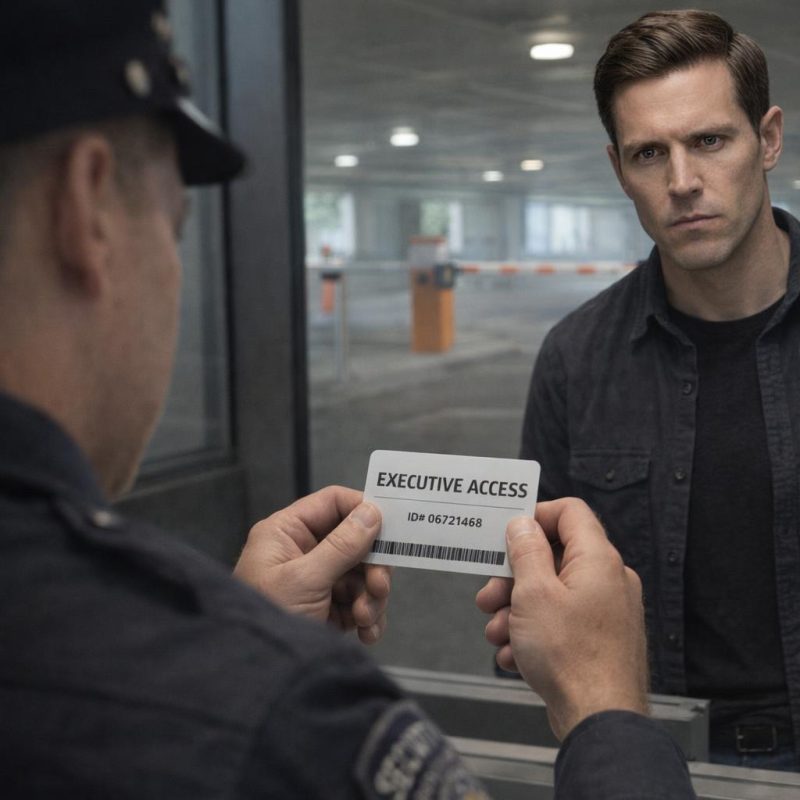 Image by RM AI
The Chairman's Space
The executive garage was cooler than the street, and quieter in the way that underground spaces always are — sound absorbed by concrete and distance. I followed the painted lane markings past the visitor bays, past the standard reserved spots, and into the VP section. Julian's silver coupe was there, backed in perfectly, positioned like it had been placed rather than parked. I drove past it without slowing. The Chairman's space was at the far end, closest to the private elevator bank, marked with a simple painted sign: RESERVED — CHAIRMAN. I pulled in and cut the engine. The sedan gave its usual shudder and went quiet. I sat there for a moment with my hands still on the wheel, looking at the concrete pillar in front of me. Behind me, somewhere in the same garage, was Julian's car — polished, expensive, backed in at the precise angle of a man who cared about such things. In front of me was a painted sign with a single word that had nothing to do with the car parked beneath it. The engine ticked once as it cooled, and then the garage was silent.
 Image by RM AI
The Private Elevator
I got out of the car slowly, the way you do when you want the moment to mean something. The garage was still quiet, still cool, still smelling of concrete and motor oil. I smoothed the front of my jacket — charcoal wool, bespoke, the kind of thing that gets made once and lasts a decade — and straightened my cuffs. Behind me, Julian's silver coupe sat backed in at its careful angle. I didn't look at it. I picked up my leather portfolio from the passenger seat, closed the door, and walked toward the private elevator bank at the far end of the garage. The access panel was matte black, no signage, no floor directory. Just a card reader and a single call button. I held my credentials against the reader. The panel blinked green. The doors opened immediately, like they'd been waiting. Inside, the elevator was all brushed steel and silence — no music, no mirrors, just a single row of floor buttons and the faint hum of the mechanism. I stepped in, turned to face the doors as they closed, and pressed the button for the top floor.
 Image by RM AI
The Boardroom
The elevator opened directly onto a corridor I'd only seen in floor plans until now — wide, carpeted, lined with framed acquisitions history going back forty years. At the far end, the boardroom was visible through a full wall of glass. I stopped just short of the entrance and looked. The room was full. Senior executives in dark suits arranged themselves around a long mahogany table, some standing, some leaning against the credenza along the back wall, all of them carrying the particular energy of people who'd been told to show up but hadn't been told why. Julian was near the center of the table, standing tall, jacket buttoned, one hand resting on the back of a chair. He was talking to the man beside him — leaning in slightly, something low and amused passing between them, the kind of exchange that happens when two people are performing confidence for each other. I watched for a moment without moving. Victoria appeared at my shoulder from the side corridor, her legal team fanned out behind her, folders in hand, faces composed. She gave me a single nod. Julian leaned closer to the other executive, and the two of them glanced toward the glass — then away, still smiling, still unaware.
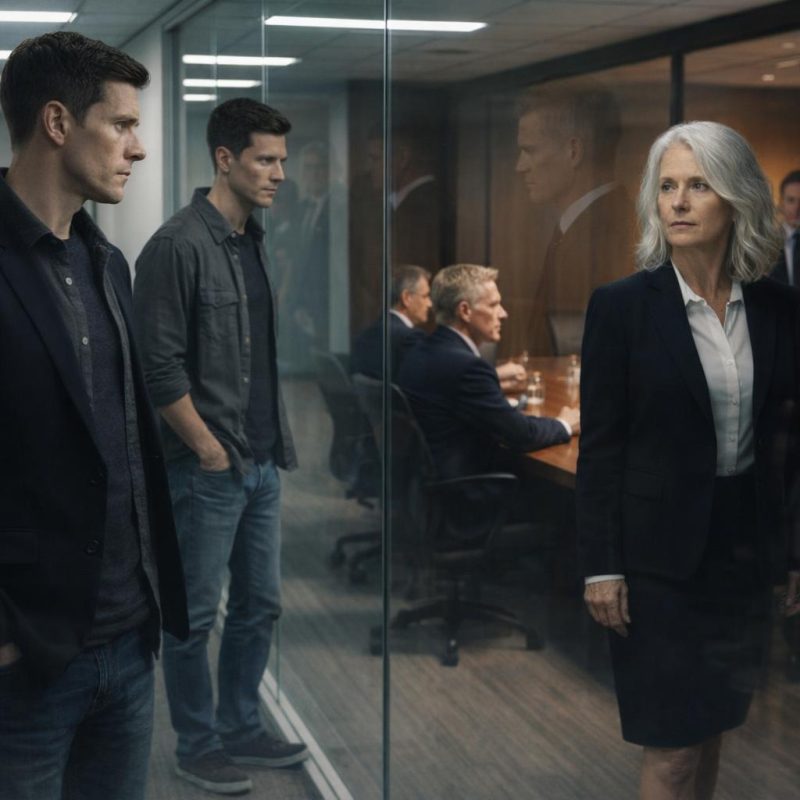 Image by RM AI
The Entrance
I pushed the boardroom door open and walked in. Victoria and the legal team followed two steps behind, and the sound of the door was enough — conversation stopped mid-sentence, the way sound stops when a room suddenly understands that something has changed. I didn't pause at the threshold. I walked directly down the length of the table toward the head, my footsteps quiet on the carpet, the room completely still around me. Executives who'd been leaning against the credenza straightened up. A few chairs shifted. Someone set down a coffee cup with a small, careful click. I kept my eyes forward, on the nameplate at the head of the table, on the leather chair behind it. Julian was somewhere in my peripheral vision — I registered his presence the way you register furniture, without turning, without acknowledging. I set my portfolio on the table, pulled out the chair, and sat down. Victoria took her position to my right. The two associates arranged themselves along the wall. Nobody in the room said a word. The silence that had followed me in from the corridor settled over the table like something with actual weight.
 Image by RM AI
The Recognition
I opened my portfolio and took a moment with it — not because I needed to read anything, but because the pause belonged to me and I intended to use it. I uncapped my pen, set it parallel to the page, and then looked up. The room was watching. I let my gaze move around the table at a measured pace, the way you do when you want people to understand that you're not in a hurry. I passed over faces I didn't know yet, faces that were carefully neutral, faces that were working hard to look calm. And then I reached Julian. He was still standing at his spot near the center of the table, one hand resting on the back of his chair, the other frozen halfway to his tie. His face had gone the particular color of someone who has just understood something they cannot un-understand. His mouth was slightly open. His eyes were fixed on mine with an expression I'd never seen on him before — not arrogance, not amusement, not the comfortable condescension of a man who thinks he knows exactly where he stands. He didn't move. He didn't speak. The hand on his tie stayed exactly where it was, suspended, as the rest of the room quietly watched him not breathe.
 Image by RM AI
The Introduction
I cleared my throat once, quietly, and the room's attention shifted back to me with the kind of speed that told me everything I needed to know about the dynamic in this building. 'Thank you all for being here,' I said. 'I'll keep this brief.' I introduced myself — full name, new title, effective date of the acquisition. I watched a few people reach for their phones and then think better of it. I told them the transition would be thorough and that every senior role would be subject to a values alignment review over the coming weeks. I used the word integrity twice, not by accident. I used the word humility once, and I let it sit in the air for a moment before I moved on. I told them I wasn't interested in titles or tenure as measures of value — I was interested in how people treated the people around them, above and below. I said it plainly, without editorializing, the way you say something when you don't need the room to agree with you out loud. When I finished, I set my pen down. Nobody spoke. The words had landed somewhere in the middle of the table and the executives around it sat with them, each one doing their own private accounting.
 Image by RM AI
The Envelope
I let the silence hold for another beat, and then I reached into the inside pocket of my jacket. My fingers found the envelope immediately — I'd put it there that morning with exactly this moment in mind. I drew it out slowly and set it on the table in front of me. Cream-colored, slightly worn at one corner from the weekend, my name written across the front in Julian's handwriting. A few executives near the head of the table glanced at it. I heard a small shift of movement from Julian's direction but I didn't look up yet. I held the envelope between two fingers for a moment, the way you hold something when you want the room to register that it exists, that it has a history, that it means something specific to at least one person in this room. Then I looked up, found Julian's face — still white, still frozen — and I slid the envelope across the mahogany table. It traveled the length of the gap between us in silence and came to rest directly in front of him.
 Image by RM AI
The Return
Julian stared at the envelope. He didn't pick it up. He didn't look away from it either, like some part of him was hoping it would turn out to be something else if he looked long enough. The room was absolutely still. I leaned back slightly in my chair and kept my voice even. 'I think you dropped that,' I said. 'Sunday dinner, at your place. You left it on the table for me.' A few executives exchanged glances. Julian's jaw moved but nothing came out. I watched him try to locate a response somewhere and come up empty. 'It's a generous amount,' I said. 'You should hold onto it.' I paused just long enough for the next part to land cleanly. 'You'll probably want it for a new suit. Interview season can get expensive.' The room didn't laugh. It was too quiet for that, too charged. But I caught two people near the far end of the table look down at the surface in front of them with the careful expression of people who were choosing not to react. Julian's mouth closed. His eyes stayed on the envelope. He said nothing.
 Image by RM AI
The Nameplate
I let the moment breathe for exactly as long as it needed to, and then I tapped the nameplate at the head of the table with two fingers — a small gesture, almost casual, the kind of thing you do when you want to direct someone's attention without making a production of it. Julian's eyes moved from the envelope to the nameplate. I watched the letters register. CHAIRMAN. His posture, which had been rigid since I walked in, seemed to lose something structural. His knees shifted. His hand came off the back of his chair and found the edge of the table instead, fingers wrapping around the mahogany like he needed it to stay upright. The executives nearest to him looked away with the practiced discretion of people who understood that what they were witnessing was not meant to be witnessed. I opened the agenda folder in front of me, smoothed the first page flat, and looked around the table. 'Let's get started,' I said. Julian's knuckles were white against the edge of the table, and his hand didn't move.
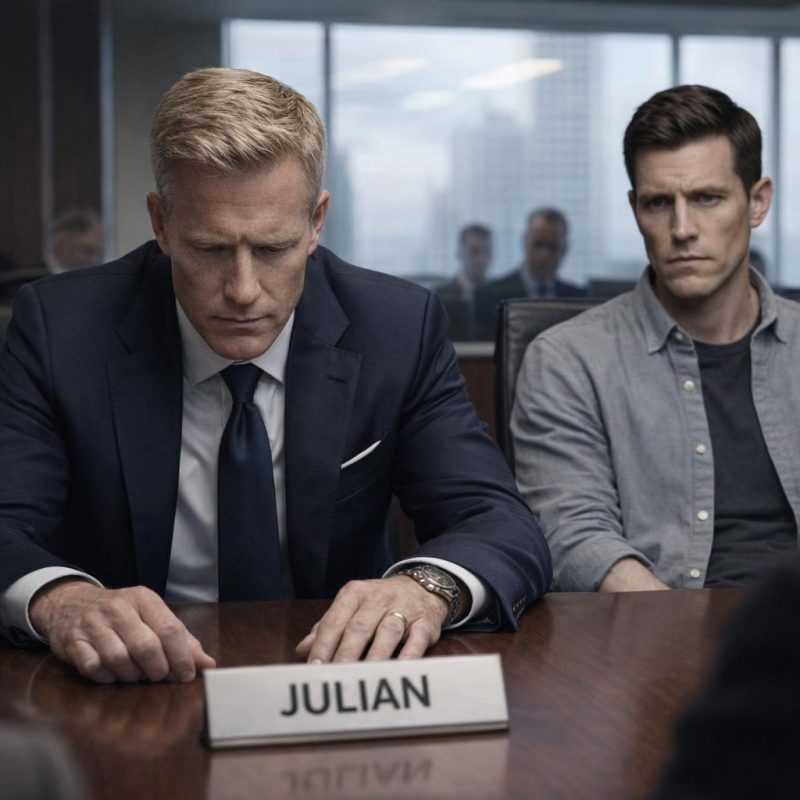 Image by RM AI
The Meeting Begins
I didn't rush. That was the thing about moments like this — rushing them was the only way to ruin them. I pulled the agenda folder open and nodded once to Victoria, who moved along the table with the quiet efficiency of someone who had done this a hundred times, setting evaluation packets in front of each executive with the kind of precision that made the whole room feel like it had shifted into a different gear. The other executives found their seats without being asked. Nobody wanted to be the last one standing. Julian was still at the far end of the table, one hand on the back of a chair that wasn't his, and he hadn't said a word since I walked in. I didn't look at him directly. I didn't need to. I introduced the review framework in plain language — no jargon, no theater — and explained that we'd be working through each leadership file in order of seniority. Professional. Methodical. The kind of meeting that leaves no room for improvisation. Then I reached for the first file in the stack, opened the cover, and smoothed the top page flat with my palm.
 Image by RM AI
New Culture
I told them the firm was going in a different direction. Not a complicated direction — just a more honest one. I said the word 'integrity' once and didn't repeat it, because if you have to keep saying it, people stop believing you mean it. What I did repeat was this: the people who kept this company running day to day were not going to be used as a budget line. The layoff plan Julian had been building for the past quarter was done. Cancelled. Effective immediately. I watched a few of the executives exchange glances — not the nervous kind, the relieved kind, the kind that happens when a room full of people realize they don't have to pretend anymore. Victoria noted the cancellation in the record without looking up. I outlined what the new leadership criteria would look like: accountability, transparency, and the basic understanding that how you treat people when nothing is on the line says more about you than any quarterly number. Julian was still against the wall. He hadn't moved in twenty minutes. Nobody was looking at him. The room had already reorganized itself around his absence, and the quiet that settled over the table felt, for the first time all day, like something that could last.
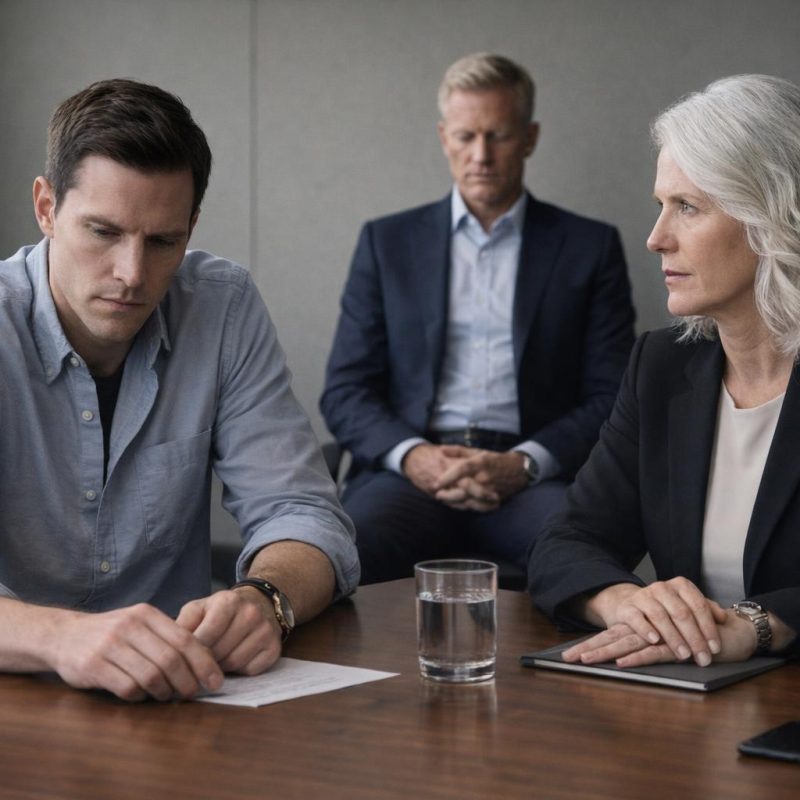 Image by RM AI
Professional Closure
Victoria handled it the way she handled everything — cleanly, without drama, with a folder already prepared and tabbed at the right pages. She set it in front of Julian at the far end of the table and explained the terms in a voice that was even and unhurried. Full severance. Benefits continuation. A non-disparagement clause worded generously in both directions. I didn't add anything. There was nothing to add. Julian looked at the folder for a long moment, and then he sat down for the first time since I'd walked into the room, and he signed where Victoria indicated. He didn't look at me. I didn't require him to. When Marcus appeared at the door to escort him out, Julian straightened his jacket — that same careful, automatic gesture I'd watched him make all weekend whenever he needed to feel like himself again — and he walked out without a word. The door closed behind him. Victoria collected the signed documents, clipped them together, and slid them into her case. The remaining executives turned back to the agenda. The meeting continued, and the room felt neither heavier nor lighter for what had just happened — just quieter, and more like itself.
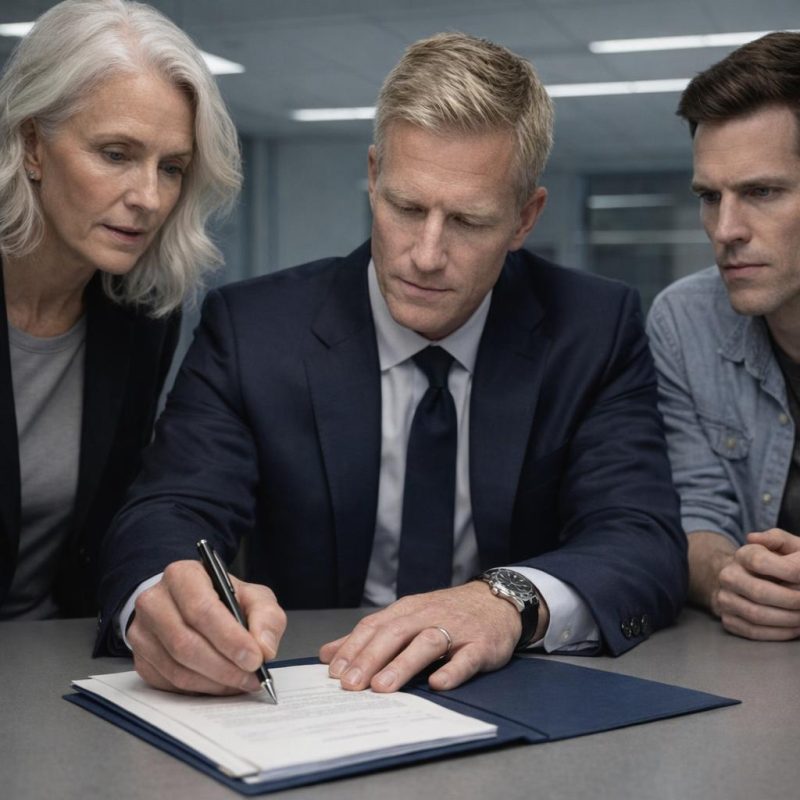 Image by RM AI
The Same Car
The last meeting wrapped a little after six. I thanked the executives, shook a few hands, and took the elevator down to the parking structure alone. The building had that particular end-of-day stillness — the kind where you can hear your own footsteps and the hum of the ventilation and not much else. My car was where I'd left it, tucked between a black SUV and a silver sedan that probably cost more than my first two years of rent combined. I unlocked it with the key fob that still sometimes took two presses, tossed my jacket onto the passenger seat, and got in. The seat adjusted the way it always did — slightly too far back, because the memory setting had stopped working sometime around 2019. I pulled out of the space, nodded to Marcus at the gate, and turned onto the street. I thought about the weekend. The driveway comments. The dinner table. The look on Julian's face when he read the nameplate. I thought about how none of it had changed what I drove home in. The engine rattled at the first red light, the same as it always had, the same as it would tomorrow.
 Image by RM AI
KEEP ON READING

From GPS to the Wristwatch: 20 Military Innovations You Probably…
Battlefield Problems to Everyday Solutions. It's easy to take for…
By Christy Chan May 25, 2026
20 Mysterious Fossils That Paleontologists Still Can't Explain
Ancient Life Had a Weird Imagination. Fossils usually help scientists…
By Emilie Richardson-Dupuis May 25, 2026
20 Laws Created Because One Person Did Something Terrible
History Keeps Receipts. Long before laws had polished names and…
By Cameron Dick May 25, 2026
20 Dynasties That Proved Family Wealth Can Outlast Empires
Money Remembers. Empires like to pretend they are permanent. They…
By Cameron Dick May 25, 2026
20 Archaeological Finds That Sound Fake But Are Completely Real
The Past Refuses to Be Boring. Archaeology has a way…
By Annie Byrd May 25, 2026
20 Peace Treaties That Unraveled Instantly
When Peace Agreements Failed Almost As Soon As They Began.…
By Rob Shapiro May 25, 2026