

I Drove My Beaten-Up Sedan to My Arrogant Brother-in-Law's Mansion Dinner—By Dessert, He Was Begging Me Not to Fire Him
I Drove My Beaten-Up Sedan to My Arrogant Brother-in-Law's Mansion Dinner—By Dessert, He Was Begging Me Not to Fire Him
The Gravel Driveway
The gravel crunched under my tires in a way that felt almost apologetic. I'd driven this route a dozen times over the years, but pulling up to Clara's estate never got easier — not because of the house itself, but because of what waited inside it. My sedan, a ten-year-old Civic with a dent above the rear wheel well and a side mirror held on with electrical tape, rolled to a stop behind a row of German SUVs that probably cost more collectively than my first three apartments. A Range Rover. Two Mercedes. An Audi Q8 in matte black. I sat there for a moment with the engine ticking as it cooled, looking at the line of them. Security cameras tracked the driveway from two corners of the property — high-end units, the kind with night vision and remote monitoring. I noticed them the way I noticed most things: quietly, without reacting. I'd kept my professional life and my family life in separate compartments for years, and tonight wasn't going to change that. I stepped out into the autumn air, which smelled of wet leaves and wood smoke, and straightened my jacket. The evening hadn't started yet, but I could already feel the shape of it settling over my shoulders.
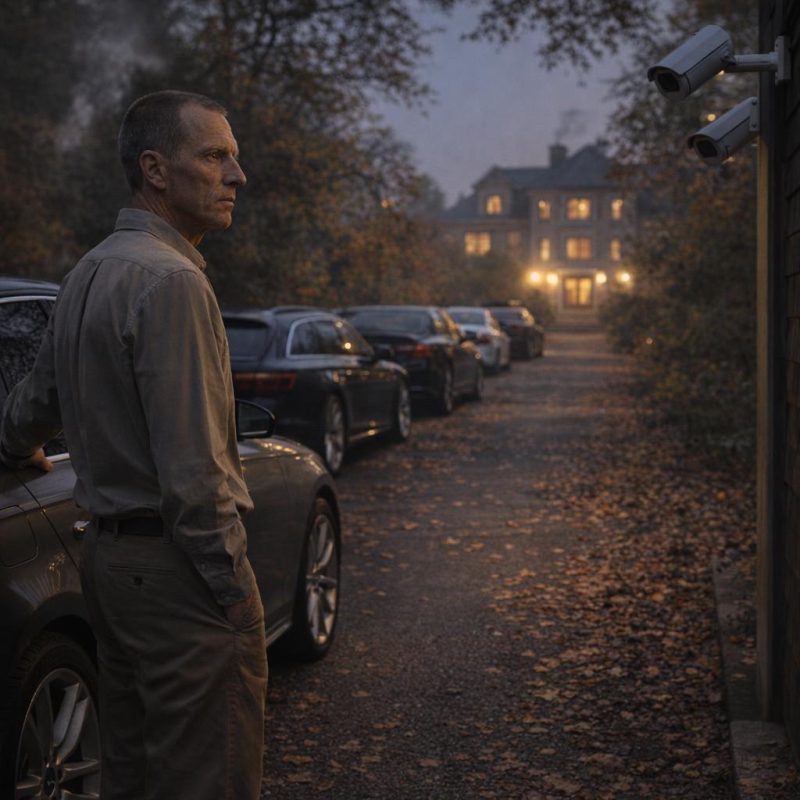 Image by RM AI
Clara's Warm Welcome
Clara opened the door before I'd even reached the top step, which told me she'd been watching for my headlights. That was her — always watching, always ready to smooth things over before they had a chance to go sideways. She pulled me into a hug that was tighter than the occasion probably called for, and she smelled of something expensive and floral, the kind of perfume that comes in a bottle that looks like a sculpture. For a moment, standing in the doorway with my sister's arms around me, the evening felt manageable. She took my jacket — the worn canvas one I'd had for six years — and hung it in a closet that was roughly the size of my home office, next to what appeared to be a full-length mink coat. She asked about my drive, whether I'd eaten, whether I wanted water before dinner. Small questions, but she meant every one of them. Then I heard it. Heavy, measured footsteps from the far end of the hallway — the kind of footsteps that expect to be heard.
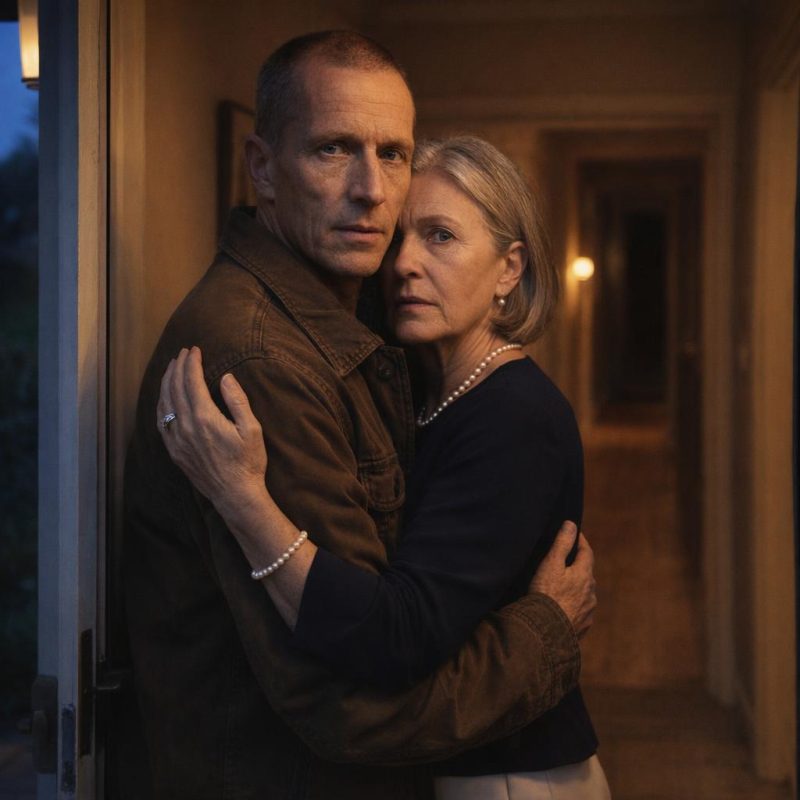 Image by RM AI
The Limp Handshake
Arthur came down the hallway the way he always did, like he was arriving at something rather than just walking through his own house. He was in a charcoal suit that fit him the way suits fit men who pay other people to make sure they fit. His gold watch caught the light as he adjusted his cuff — not a subtle adjustment, the kind you make when you want the watch noticed. He extended his hand when he reached me, and I took it. The handshake lasted maybe a second and a half. His grip was loose, his fingers barely closing around mine, and he was already looking past my shoulder toward the driveway before our palms had separated. "That your car out there?" he said, not quite looking at me. I told him it was. He made a sound that wasn't quite a laugh. "It's killing the curb appeal, Marcus. Looks like something the tow truck forgot." Clara's hand found my arm and gave it a brief, firm squeeze. Arthur had already turned and was moving toward the dining room, his footsteps deliberate on the marble floor. I followed, and the absence of his eye contact sat in the air between us like something he'd left there on purpose.
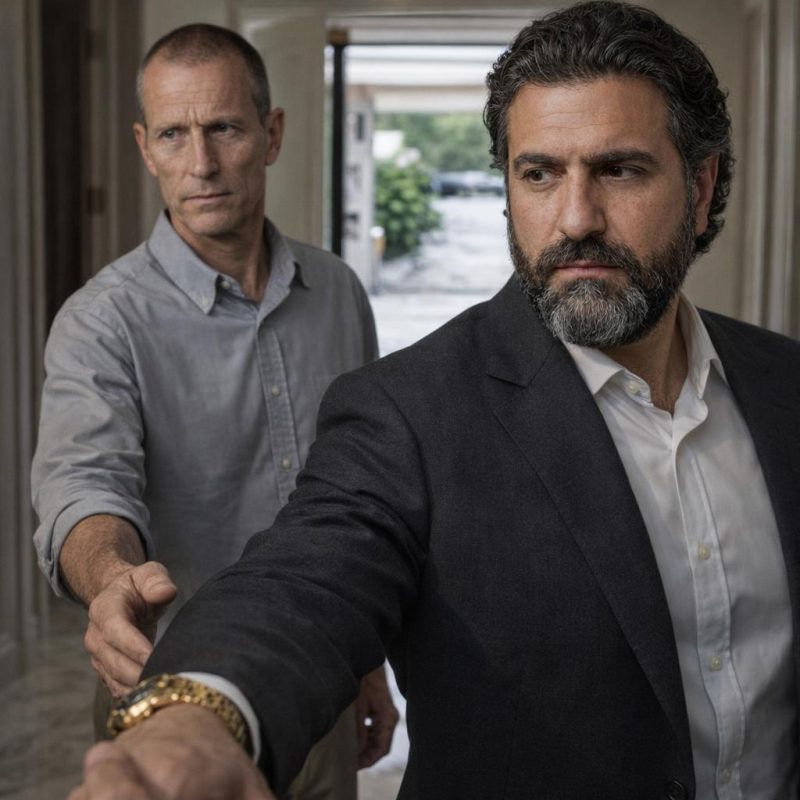 Image by RM AI
The Art Collection
The corridor leading to the dining room was long and lit with the kind of recessed lighting that costs more to install than most people spend on furniture. The walls on both sides were hung with framed pieces — paintings, a few prints, one large abstract canvas in blues and grays that I recognized as the work of an artist whose pieces had been selling at auction for significant sums. I looked at them as we walked. They were fine, technically. Competent choices, all of them. But there was something about the spacing, the way each piece was positioned at exactly the same height with exactly the same gap between frames, that made the whole corridor feel less like a home and more like a hotel lobby. Arthur moved ahead of us with his hands clasped behind his back, pausing briefly near the abstract canvas to let us catch up, his posture carrying the particular ease of a man who expects to be admired in his own space. Clara walked beside me, quiet. I kept my pace steady and my expression neutral. Every piece on those walls had a price tag somewhere in its history, and that, more than anything else, seemed to be the point.
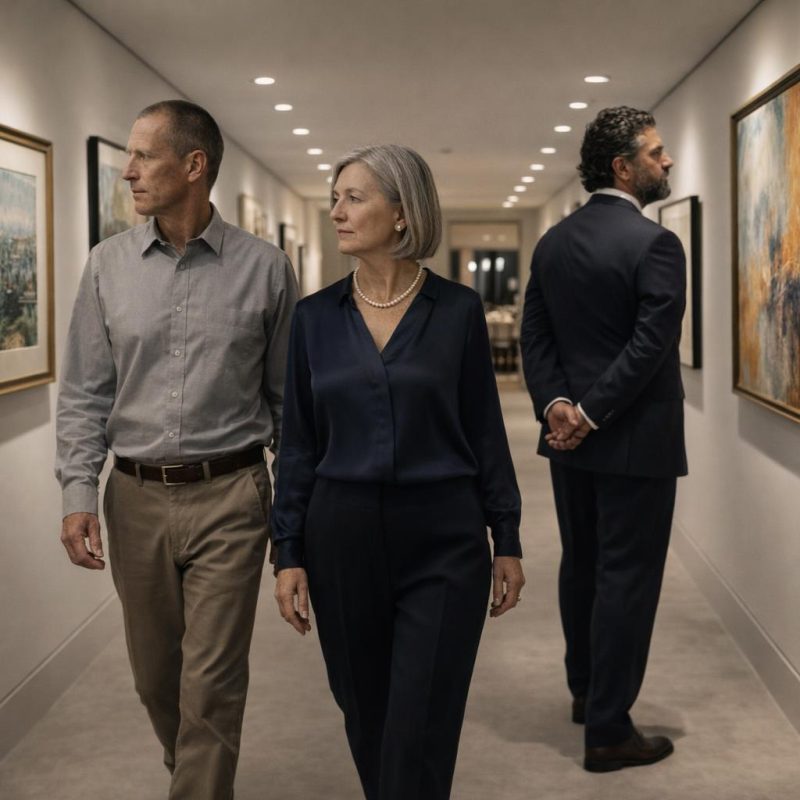 Image by RM AI
The Five-Figure Inventory
The living room was white — white leather sofas, white walls, a white marble fireplace that looked like it had never been used. Arthur moved through it the way a docent moves through a gallery, gesturing toward each piece with the practiced ease of someone who had given this tour before. The rug, he told us, was hand-knotted in Turkey, twelve thousand dollars, took eighteen months to make. The end tables were carved from a single piece of reclaimed teak, eight thousand for the pair, commissioned from an artisan in Bali. He mentioned his executive bonus twice in the span of four minutes, both times in the context of what it had allowed him to acquire. He talked about his leadership at the firm — how his division had outperformed projections for the third consecutive quarter, how the company would be in a difficult position without his particular skill set. Clara sat on the edge of the sofa with her hands folded in her lap, her expression carefully pleasant. I stood near the fireplace and listened. Then Arthur turned to me with something that looked almost like sympathy and said that if I ever put in the kind of hours he did, I might be able to afford a decent car.
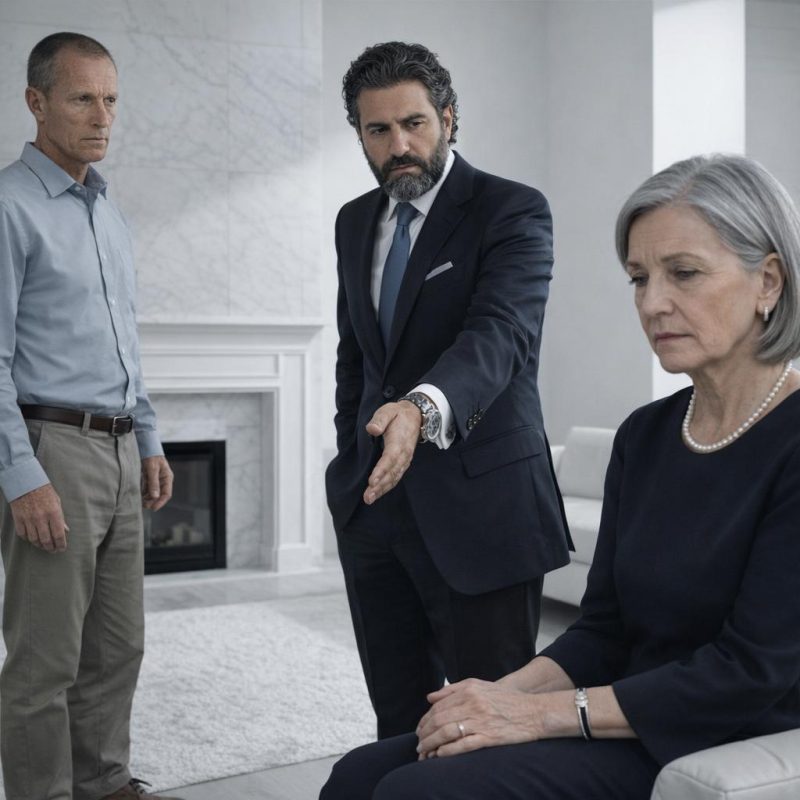 Image by RM AI
The Wine Ritual
The dining room table was mahogany, long enough to seat twelve, and currently set for three at one end in a way that still managed to feel formal. A crystal chandelier hung overhead, throwing sharp, cold light across the white linen and the polished silverware. Arthur went directly to the wine cabinet — a climate-controlled unit built into the wall, glass-fronted, backlit — and selected a bottle with the careful attention of a man who wanted the selection to be observed. He held it up briefly, announced the vintage and the château, and set it on the table with a soft, deliberate click. The cork came out cleanly. He lifted the bottle and breathed in the bouquet with his eyes half-closed, then poured two generous glasses — one for himself, one for Clara — and set the bottle down. He swirled his glass once, took a slow sip, and nodded to himself. Clara murmured something appreciative. I stood at the far end of the table and said nothing. Arthur set his glass down, turned, and walked toward the refrigerator without a word or a glance in my direction.
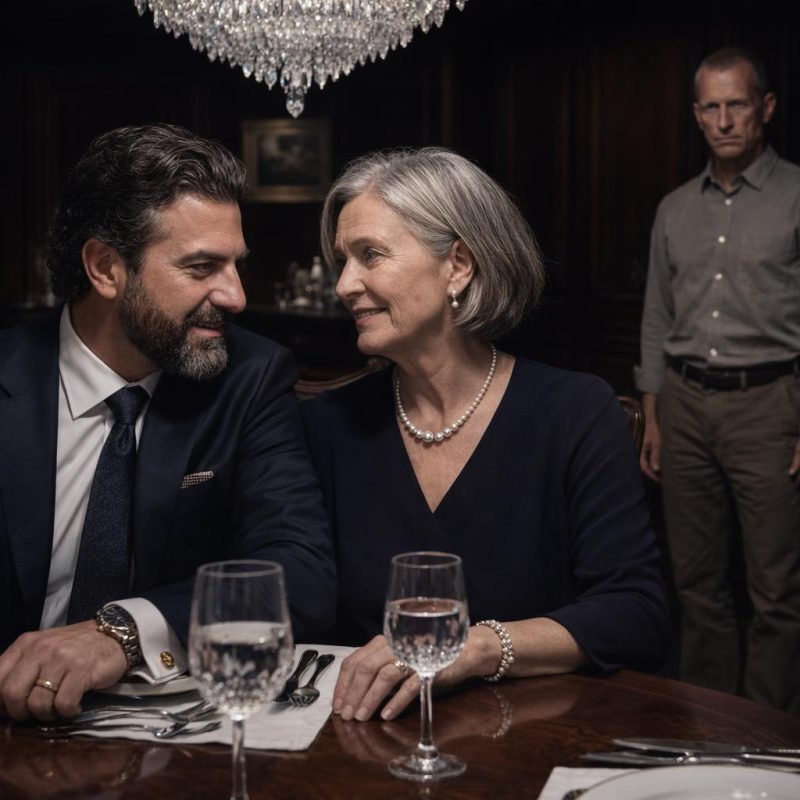 Image by RM AI
The Cheap Beer
The refrigerator was one of those stainless steel commercial units, wide enough to stock a small restaurant. Arthur opened it with one hand, scanned the interior for a moment, and pulled out a single bottle of beer — the kind that comes in a six-pack at a gas station, the label a brand I associated with college football and plastic cups. He crossed the room and held it out to me without making eye contact, without a word, the way you might hand something to a valet. I took it. He didn't offer an opener. He turned back toward the table, picked up his Bordeaux, and said something to Clara about the seating arrangement. I looked down at the bottle in my hand. The glass was cold and already sweating, condensation gathering against my palm. I turned it once, slowly, reading the label I already knew. There was no anger in me, not exactly. Something quieter than that. I carried the unopened bottle to the white leather sofa and sat down, and I let Arthur keep talking.
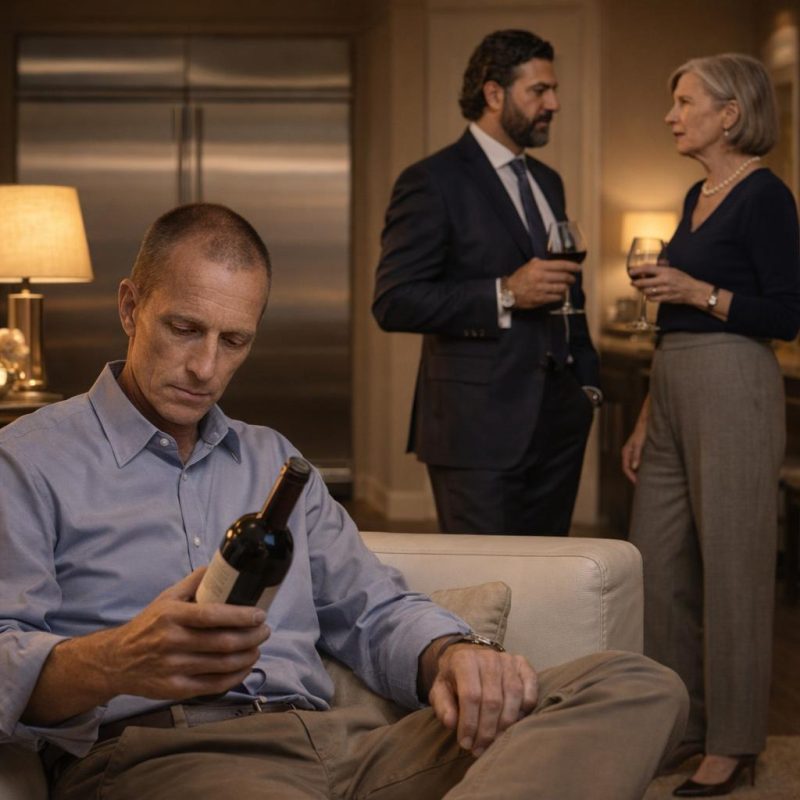 Image by RM AI
The Possession Parade
Arthur didn't sit. He paced, which seemed to be his natural state in this room — moving from the fireplace to the window and back, gesturing at things as he passed them. The Turkish rug came up again, and the Balinese end tables, and then a new addition to the inventory: a pair of oil paintings he'd acquired at a private sale in Geneva, which he described in terms of their provenance and their price before he described them in terms of what they actually looked like. His executive bonus made a third appearance. His division's performance metrics followed shortly after. Clara sat across from me with her wine glass held in both hands, her eyes tracking Arthur's movement around the room with an expression I'd come to recognize over the years — not quite discomfort, not quite resignation, something that lived in the narrow space between the two. I kept the unopened beer bottle resting against my knee, the glass still cold, the condensation still working its way down toward my fingers. I didn't need to fill the silence. I didn't need to match his energy or correct his assumptions or announce a single thing about myself. The evening had its own momentum now, and I was content to let it carry us forward.
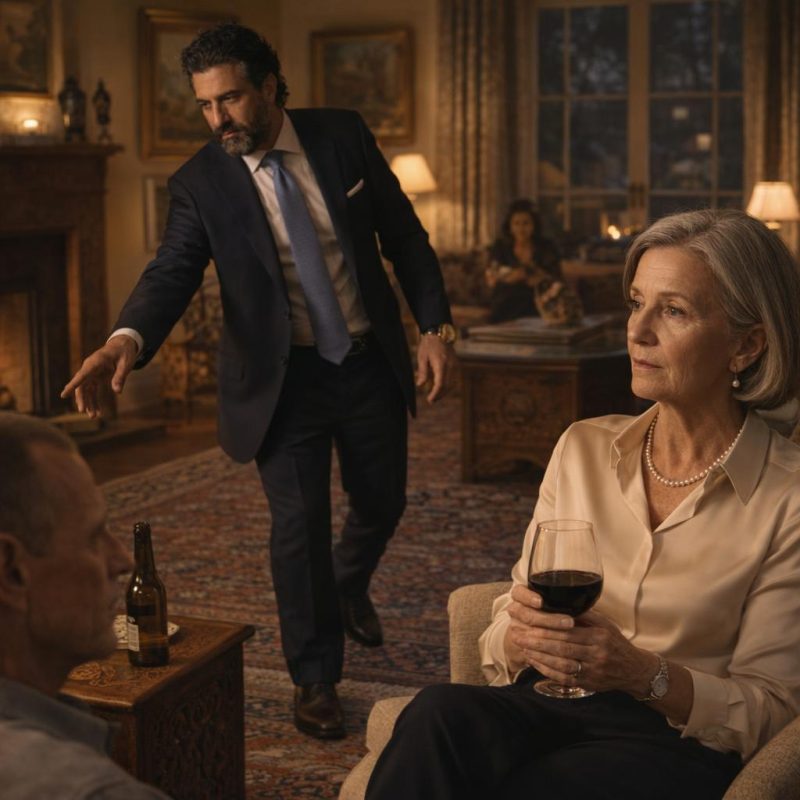 Image by RM AI
The Poverty Diagnosis
Arthur stopped pacing long enough to look at me — really look at me — and I watched something shift in his expression. It was the look a man gives a stray dog that's wandered onto his lawn. Pity, mostly, with a thin layer of contempt underneath. He said something about how life rewarded effort, how the people who ended up comfortable were the ones who had been willing to put in the work. He didn't say my name. He didn't have to. The implication sat in the room like a third guest. He gestured at his own suit jacket as he said it, at the watch, at the room itself — all of it evidence, in his mind, of a life correctly lived. I kept my expression neutral and my hands still. I'd had years of practice at this particular kind of stillness. What I noticed, though, wasn't Arthur. It was Clara. She had gone very quiet beside me, her wine glass lowered to the table, her fingers wrapped around the stem with more pressure than the moment required. She wasn't looking at her husband. She was looking at the middle distance, somewhere between the oil paintings and the fireplace, and the expression on her face was the one I remembered from when we were children — the one she wore when she couldn't fix something and knew it.
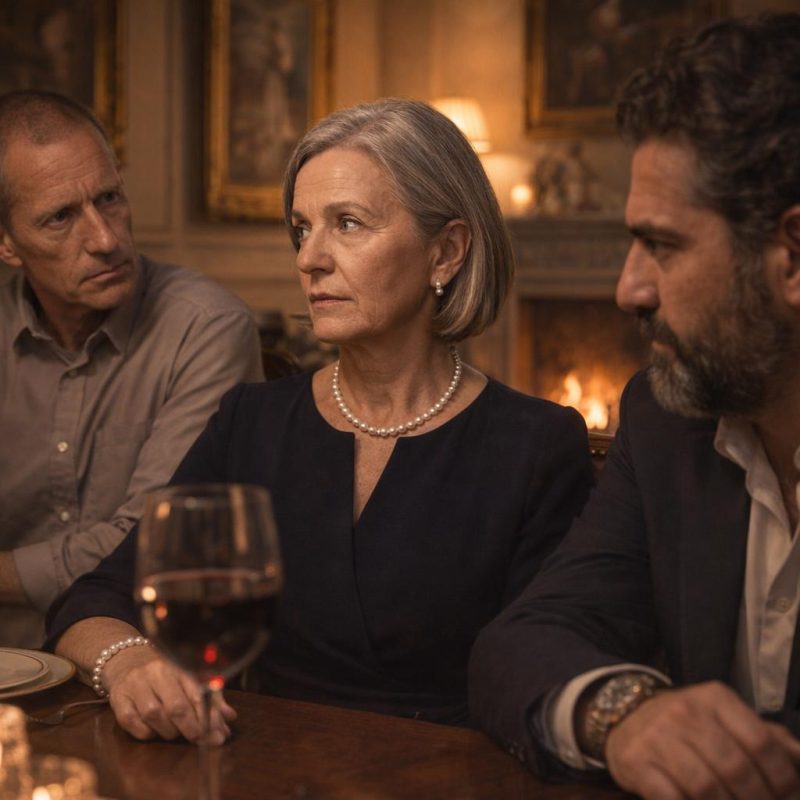 Image by RM AI
The Separate Worlds
I took a slow sip of the beer I'd finally opened and let Arthur's words settle into the background noise where they belonged. There was a version of this evening I'd imagined for years — not this specific dinner, but the general shape of it. The moment when the two halves of my life would stop running parallel and finally intersect. I had kept them separate on purpose. My work was my work: early mornings, long flights, decisions made in conference rooms that Arthur would never be invited into. My family was my family: Sunday calls with Clara, birthday cards, the occasional dinner where I sat in a chair exactly like this one and listened to exactly this kind of monologue. I had never seen a reason to connect the two. The people I worked with didn't know much about my sister. Clara didn't know much about what I did beyond a vague sense that it involved finance and travel. That separation had felt clean for a long time. Practical. Tonight, though, something about the air in the room felt different — not charged exactly, but close. Arthur was still talking. Clara was still quiet. I set the beer bottle down carefully on the coaster and waited. Then the kitchen timer chimed from somewhere down the hall.
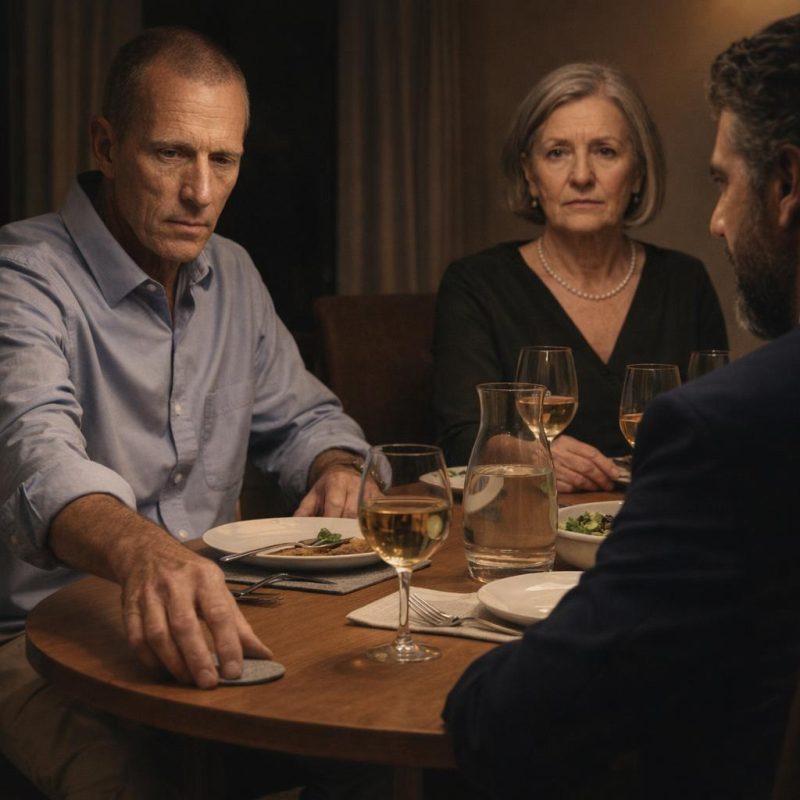 Image by RM AI
The Dinner Bell
Clara was on her feet before the second chime finished. There was something almost reflexive about it — the way she set her glass down and smoothed the front of her dress in a single motion, already moving toward the kitchen before she'd fully stood. I recognized the pattern. It was the same one she'd used at every family gathering I could remember: redirect, serve, keep things moving. Arthur didn't stand. He adjusted his cufflinks and made a comment about the wine pairing he'd selected for the main course, a Burgundy he'd had shipped from a producer whose name he pronounced with careful emphasis. I carried my beer bottle toward the dining room and took in the table as I passed through the doorway. The chandelier was on full, casting hard light across the mahogany surface. The silver cutlery had been laid with precision — salad fork, dinner fork, knife, spoon, each piece parallel and equidistant. Clara came through from the kitchen carrying two plates, the smell of roasted garlic and thyme arriving ahead of her. Arthur moved to the head of the table with the unhurried ease of a man who had never once considered sitting anywhere else.
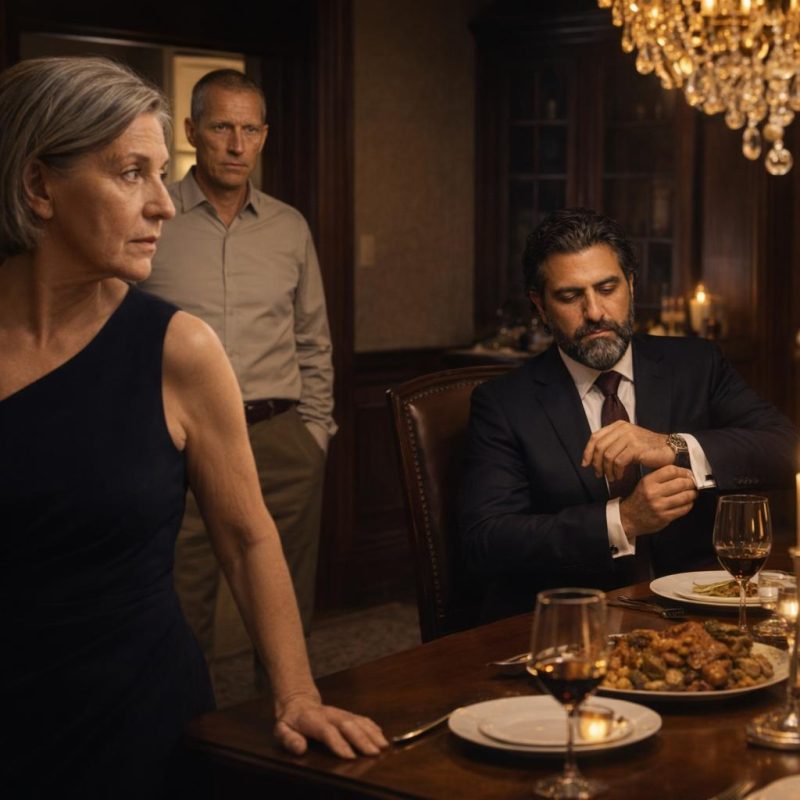 Image by RM AI
The King's Throne
Arthur settled into the chair at the head of the table the way a man settles into a throne — not sitting so much as installing himself. He reached for the Burgundy without looking at it, poured a measure into his glass, and held it briefly to the light before drinking. Clara set the plates down with quiet efficiency, returning to the kitchen for the third before taking her own seat. The chandelier threw sharp angles across the mahogany, catching the silver cutlery and the crystal stems and the edges of the serving dishes Clara had arranged with obvious care. The food was good — I could tell that much from the smell alone, roasted lamb with herbs, something with root vegetables alongside it. Arthur acknowledged none of it. He was already talking again, his free hand moving in slow arcs above the table as he transitioned from the Burgundy's provenance to some broader point about discernment and taste and the kind of education that couldn't be bought in a classroom. I cut into the lamb and listened and said nothing. The chandelier hummed faintly above us. Clara kept her eyes on her plate. I sat with the weight of the table around me — the silver, the crystal, the careful performance of it — and waited for whatever came next.
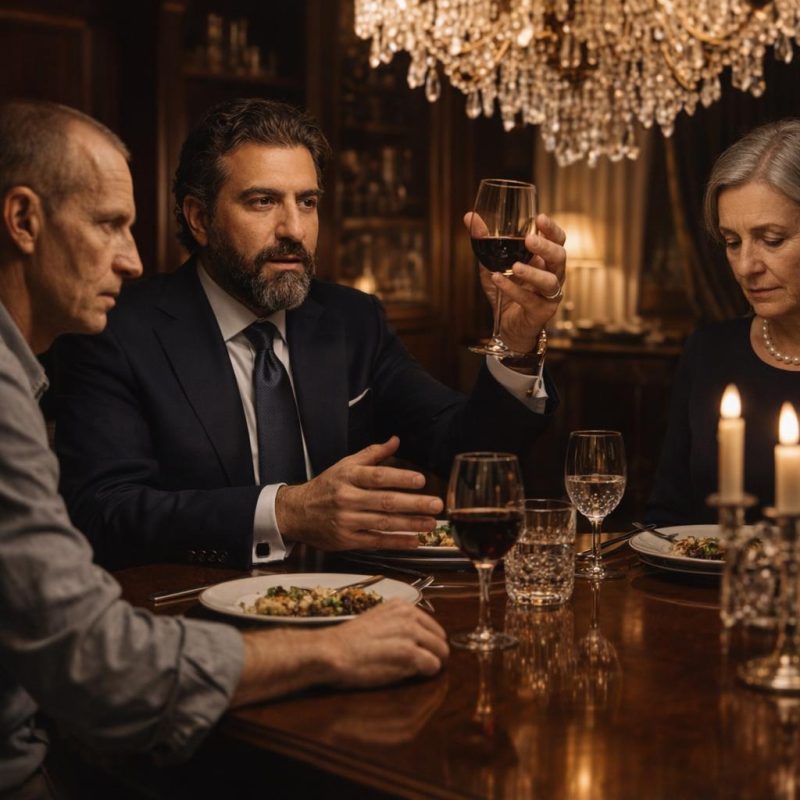 Image by RM AI
The Power Moves
By the time the main course was half finished, Arthur had moved on to work. He did it the way he did everything — with volume and momentum, as though the sheer force of his delivery could substitute for an audience that was genuinely interested. He talked about his firm, about the decisions being made at the executive level, about the restructuring conversations he claimed to be driving. He used phrases like 'strategic repositioning' and 'stakeholder alignment' with the confidence of a man who had learned them recently and was still enjoying the sound of them. He described a presentation he'd given to senior leadership, the reception it had received, the way certain people in the room had looked at him afterward. I ate steadily and kept my expression where it needed to be. Some of what he said I recognized — not the details, which were vague enough to be almost anything, but the general shape of the firm he was describing. The culture. The internal language. The particular way certain people talked about their own importance in organizations like that one. Clara refilled Arthur's glass without being asked and then sat back down and resumed the careful business of not reacting. I took a slow breath and let the irony of the moment rest somewhere quiet inside me, unspoken and entirely my own.
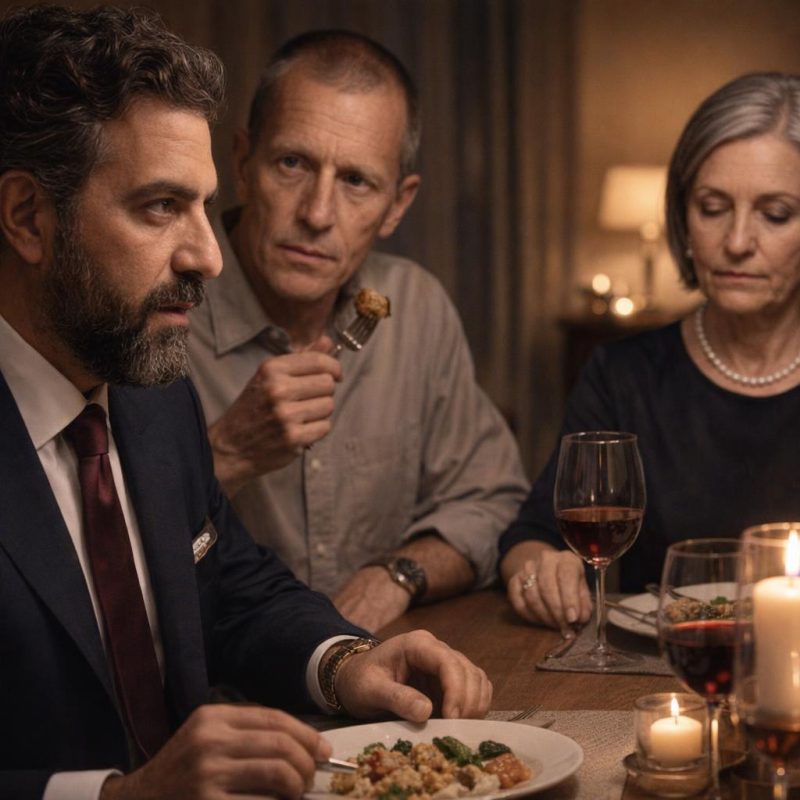 Image by RM AI
The Dinner Performance
The plates were cleared and replaced with something Clara had prepared for a second course — a gratin, golden at the edges, still steaming — and Arthur didn't pause. He moved from the restructuring narrative into something about a competitor firm, then into a story about a colleague who had underestimated him at a client dinner two years ago and had since been reassigned. He told it with relish, leaning back in his chair, one hand resting on the table beside his wine glass, the other conducting the air in front of him. Clara offered bread. Arthur took a piece without looking at her. I watched him the way I sometimes watched presentations from people who didn't know I was in the room — not for the content, which was thin, but for the structure underneath it. There was a shape to what he was doing, a kind of escalation, each story slightly larger than the last, each claim slightly bolder. I couldn't have said where it was heading. But something about the rhythm of it — the way he kept glancing at me between sentences, checking whether I was still following — made me feel like the evening hadn't arrived at its actual point yet. The gratin cooled slowly on my plate while Arthur kept building toward something I couldn't yet name.
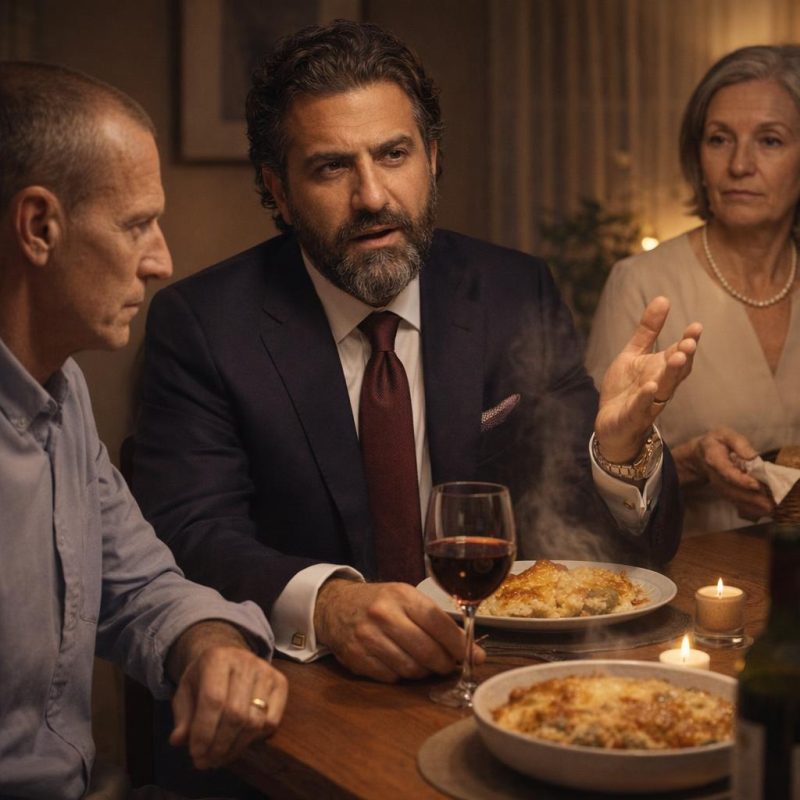 Image by RM AI
The Crescendo
Arthur's voice had been climbing steadily for the better part of an hour, and somewhere between the second glass of Burgundy and a story about a board-level conversation he claimed to have influenced, it reached a register I hadn't heard from him before — not louder exactly, but tighter, more deliberate, like a man who had been circling something and had finally decided to approach it directly. He talked about his indispensability to the firm in terms that left no room for qualification. He used the word 'irreplaceable' twice. He described the kind of leverage a man in his position accumulated over time, the relationships, the institutional knowledge, the things that couldn't simply be handed to someone else. Clara had stopped eating. She was watching her husband with an expression I couldn't quite read from where I sat — something between attention and apprehension. I set my fork down and picked up my water glass and waited. Arthur straightened in his chair, smoothed the front of his jacket with one hand, and then reached into his suit pocket with a slow, theatrical flourish.
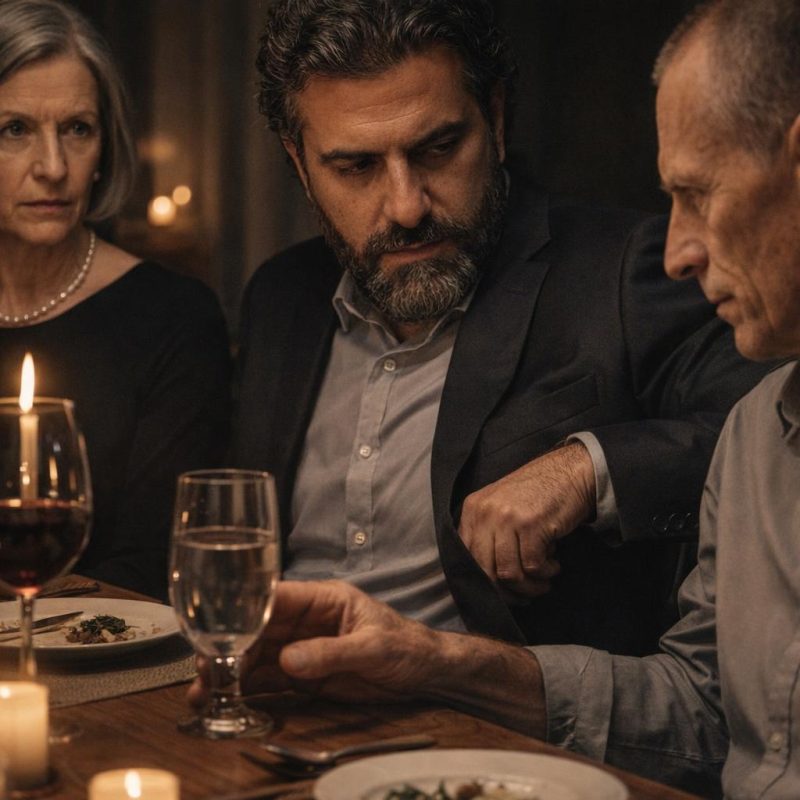 Image by RM AI
The White Envelope
The envelope was thick — the kind of thick that comes from multiple folded pages rather than a single sheet — and white, the good heavy stock that people use when they want an object to carry weight before it's even opened. Arthur drew it out with the unhurried ease of a man who had rehearsed the moment, or at least imagined it enough times that the motion had acquired a kind of practiced smoothness. He held it for a beat, his thumb running along the sealed edge, and then he set it on the table and slid it across the polished mahogany toward me. It traveled the length of the table in a slow, straight line. Clara had gone very still. Arthur leaned back in his chair and crossed one leg over the other, his wine glass returning to his hand, his expression settling into something self-satisfied and patient, the look of a man waiting for a reaction he was confident he'd already earned. I didn't reach for the envelope. I didn't move at all. I looked at it where it had come to rest on the polished wood in front of me, my name written across the front in Arthur's handwriting.
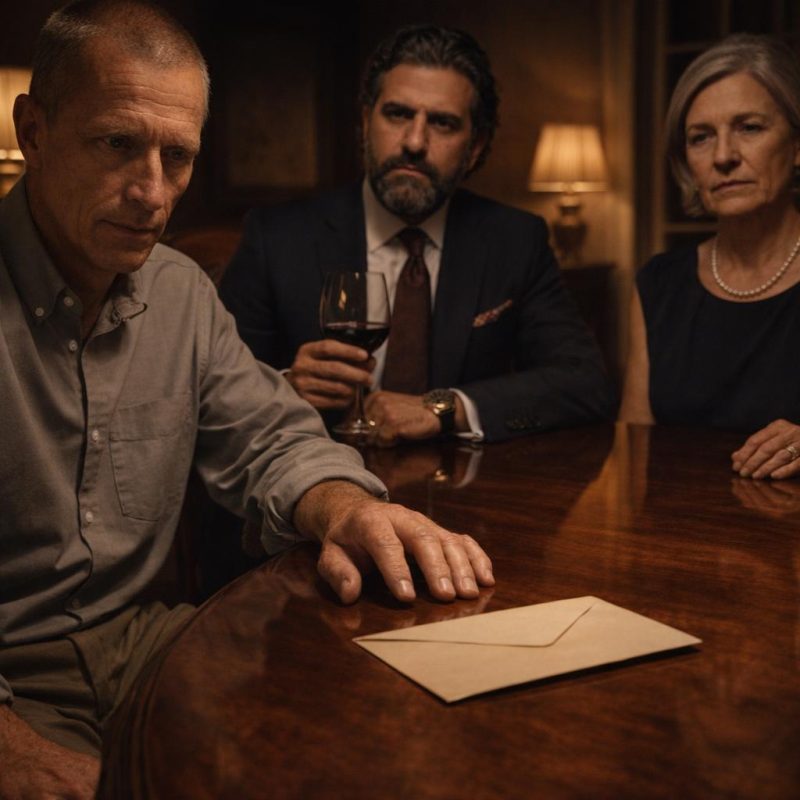 Image by RM AI
The Charity Announcement
Arthur didn't lower his voice when he said it. That was the part that stayed with me — the volume, the easy projection of it, like a man addressing a room rather than a dinner table. He said he couldn't stand to see family living in shabby conditions. He said the word shabby the way some people say it with a kind of fond pity, drawing it out just slightly, letting it settle. He gestured at the envelope with an open hand and explained, still at that same carrying volume, that it was a little something to help me get by. Clara's face had gone from pink to a deep, fixed red, the kind that doesn't come from wine. She was looking at the tablecloth. Arthur reached for his glass, took a slow sip, and set it back down with the unhurried ease of a man who had just done something generous and knew it. He said I should put some of it toward a vehicle. Something that wouldn't embarrass the family when I pulled up to the house.
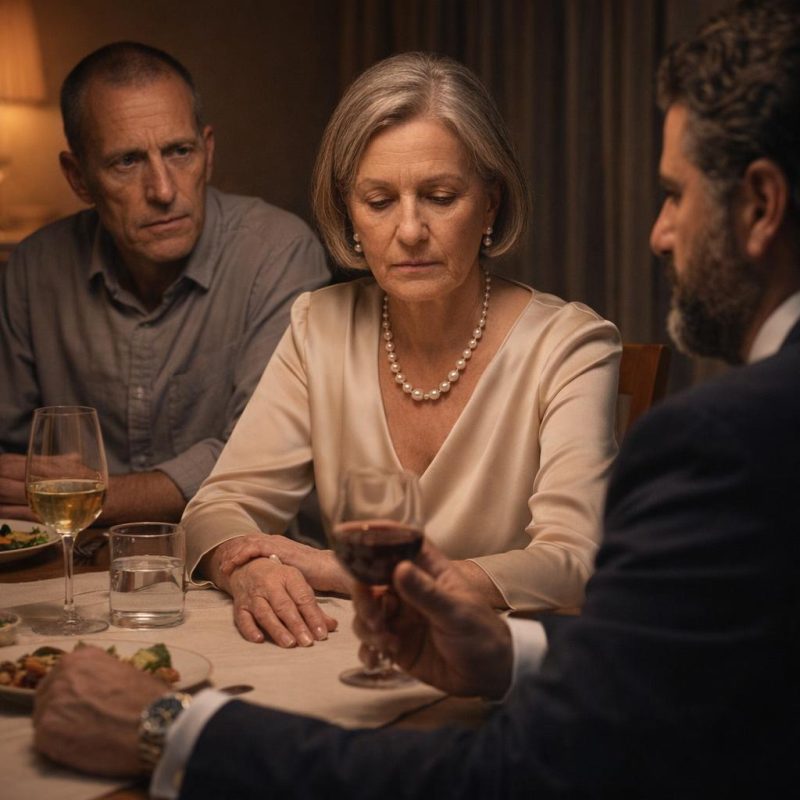 Image by RM AI
The Long Silence
I didn't pick up the envelope. I didn't move toward it at all. It sat there on the polished mahogany between us, my name in Arthur's handwriting facing up, and I looked at it the way you look at something you're deciding what to do with. Arthur watched me for a moment, and then something shifted in his expression — a small, satisfied settling, like a man who had just confirmed a suspicion. He chuckled. It was a quiet sound, almost private, and he leaned back in his chair and crossed one leg over the other and took another sip of his wine. He had read my stillness as shame. I could see it in the way his shoulders dropped, the way the tension went out of his jaw. Clara hadn't moved. Her hands were flat on the table on either side of her plate, and her face was still that deep fixed red, and she was looking at nothing in particular. The room had gone very quiet. The kind of quiet that has weight to it, that presses against the walls.
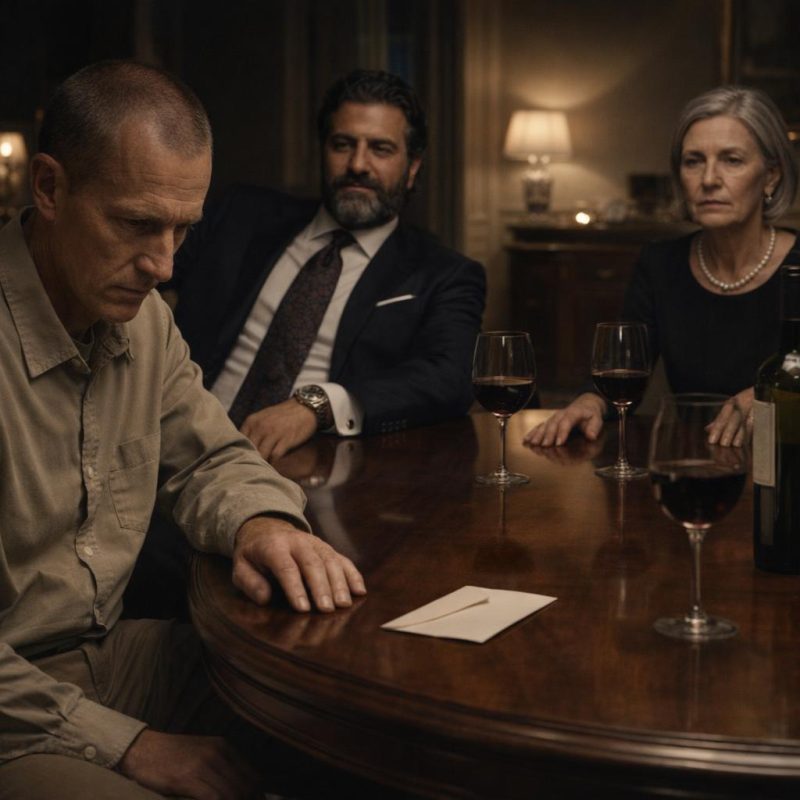 Image by RM AI
The Prestigious Position
Arthur set his glass down and kept going. He had the momentum of a man who had found his subject and wasn't ready to leave it. He talked about his position at the firm — the seniority of it, the reach of it, the kind of access it gave him to decisions that shaped entire industries. He used the word prestigious twice, once about the firm itself and once about his role within it. He said I was lucky, in a way, to have a connection like that in the family. Someone who understood how the real world worked, who could open doors that most people never even found. He said it without looking at me directly, his gaze moving between his wine glass and some middle distance above the table, the way people do when they're performing for an audience they've already decided is impressed. Clara said nothing. She hadn't said anything in several minutes. I glanced at her once — just once — and the look on her face was the kind that comes from knowing something terrible is about to happen and being unable to stop it.
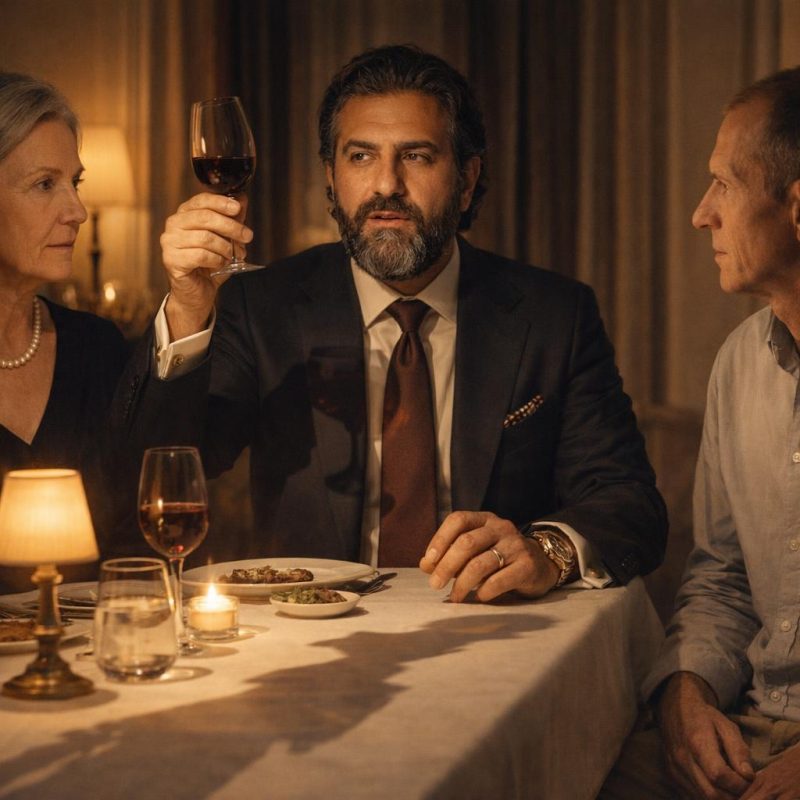 Image by RM AI
The Envelope Opens
I reached out and took the envelope. Slowly, the way you move when you want every motion to be visible. I slid my thumb under the flap and tore it open in one clean pull, not looking down at what was inside, keeping my eyes on Arthur's face the whole time. He watched me with that same settled satisfaction, his wine glass resting in his hand, his chin lifted slightly. He expected me to look at the money. I didn't. I held the open envelope on the table in front of me and kept my eyes on him, and I watched the satisfaction in his expression begin to develop a small, uncertain edge — not alarm yet, just the first faint suggestion that the scene wasn't going exactly as he'd imagined it. Clara's fork had gone still against her plate. The room had reached the kind of silence where even the ambient sounds of the house seemed to have stepped back. I held Arthur's gaze for another moment. Then I reached into my back pocket.
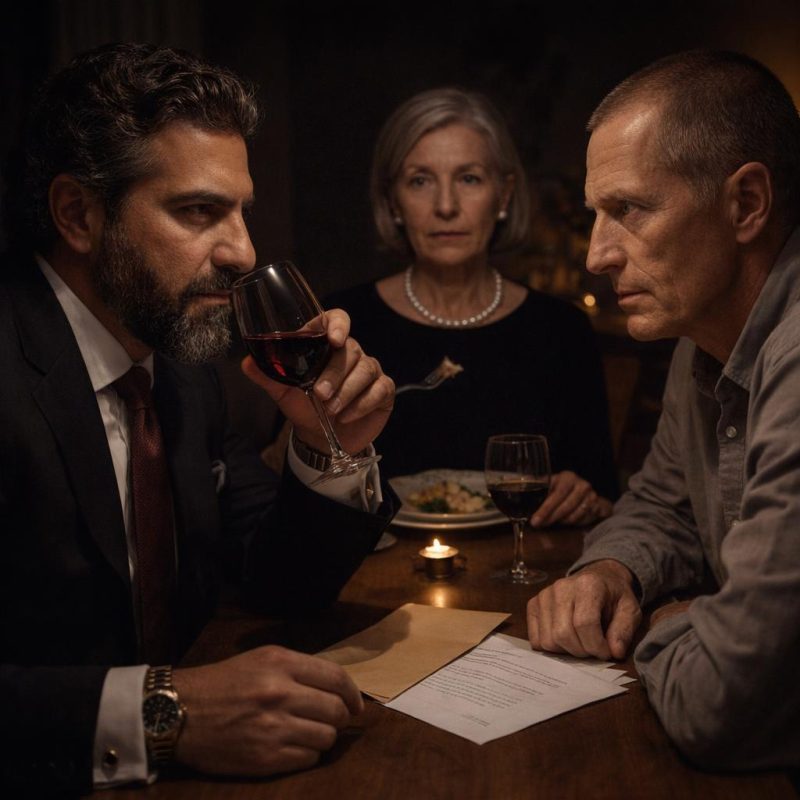 Image by RM AI
The Wallet
I pulled my wallet out slowly. It was a plain thing — dark leather, worn at the corners, the kind that gets soft with years of use rather than care. Nothing about it announced itself. I set it on the table beside the open envelope and left my hand resting on top of it. Arthur's expression had shifted. The satisfaction was still there, but something had moved in underneath it — a confusion he hadn't expected to feel, a small wrongness he couldn't yet name. He looked at the wallet, then at the envelope, then back at me. He didn't understand why I wasn't looking at the cash. He didn't understand what the wallet was for. Clara hadn't moved. Her hands were still flat on the table, her face still carrying that fixed, helpless color. I kept my expression neutral and let the silence do what silence does when no one fills it. The wallet sat on the mahogany between us, worn and quiet and entirely unremarkable, holding whatever it held.
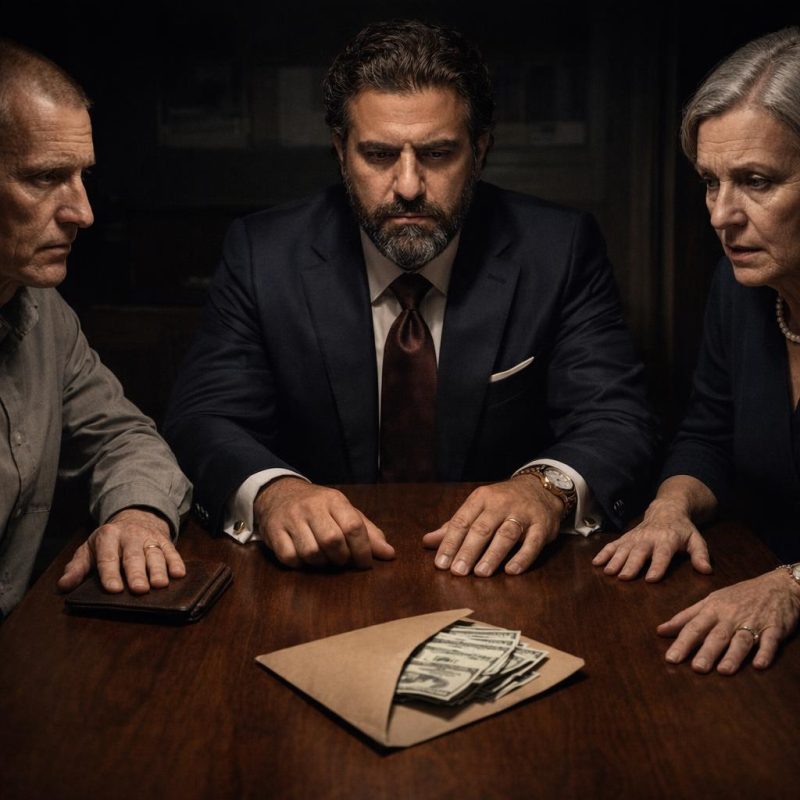 Image by RM AI
The Quarterly Report
Arthur filled the silence himself, the way he always did. He circled back to the firm — to the quarterly earnings report, specifically, the one that had just come out. He quoted figures from it with the ease of a man reciting scripture, projecting confidence into each number, each projection. He described the revenue growth, the margin improvements, the forward guidance. He said the firm was performing at a level most people in the industry could only watch from a distance. He said he had played no small part in that. I listened. I knew every figure he cited. I had seen them before they were printed, before they were formatted, before they were distributed to anyone. I had read that document in draft form, in revision, in final. I had sat with the people who built those numbers and asked the questions that shaped how they were presented. Arthur described them now like discoveries he had made, like terrain he had personally mapped. I kept my face still and let him talk, and the gap between what he thought he was explaining and what I already carried sat quietly between us.
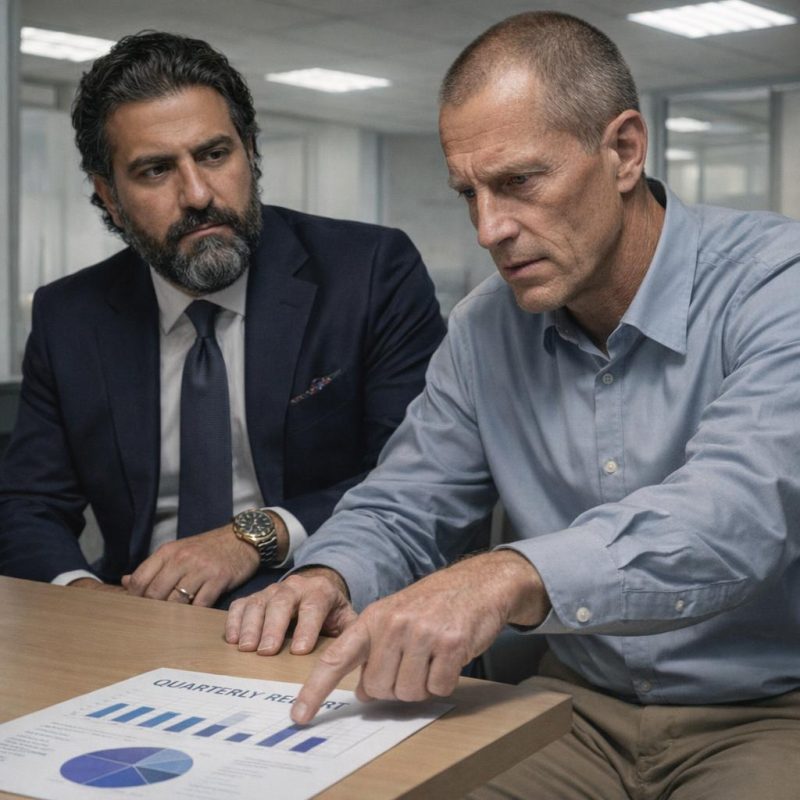 Image by RM AI
The Board of Directors
He moved on to the board. He did it the way he did everything that evening — with the ease of a man who had never once considered that the room might know more than he did. He described the board of directors with a kind of reverent familiarity, the way people talk about powerful figures they've glimpsed from a respectable distance. He said he had visibility into board-level thinking. He said the right people knew his name. He described the board's priorities, their appetite for growth, the way they thought about long-term value. He spoke about them as a fixed and distant authority, something above and apart from the ordinary workings of the firm. My wallet was still in my hand. I turned it once, slowly, between my fingers. The moment I had been patient for all evening had developed a specific shape now, a specific weight. I could feel it the way you feel a decision after you've already made it. Arthur paused to take a sip of wine, and in that pause he described, with genuine reverence, the board's priorities as though they were handed down from some unreachable altitude.
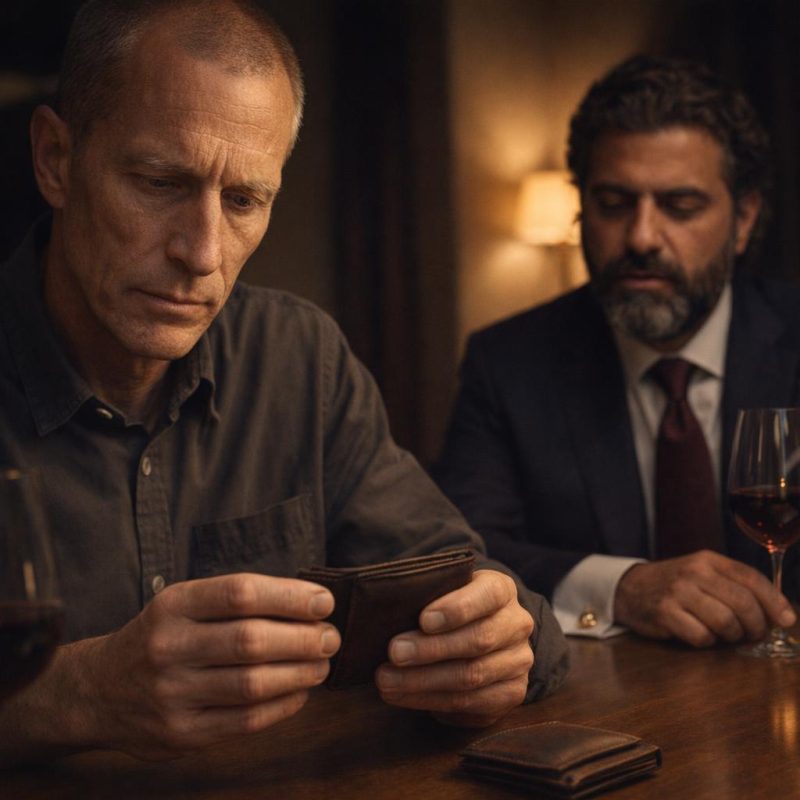 Image by RM AI
The Signature
Every report Arthur had quoted that evening carried a signature at the bottom of it. Not buried in a list of contributors, not tucked into a footnote — at the bottom, on the signature line, in the space reserved for the person whose authority the document carried. He had quoted figures, projections, strategic language, board communications — all of it — with the confidence of a man who had absorbed those documents as gospel without once looking at who had put their name to any of them. He had been citing those reports all evening, treating them as evidence of the firm's excellence, and he had done it with complete ease. I opened my wallet and slid out a single card. Arthur's eyes dropped to it. It occurred to me, sitting there, that he had never looked at the signature line on any of those documents — not once, in all the time he had been quoting them.
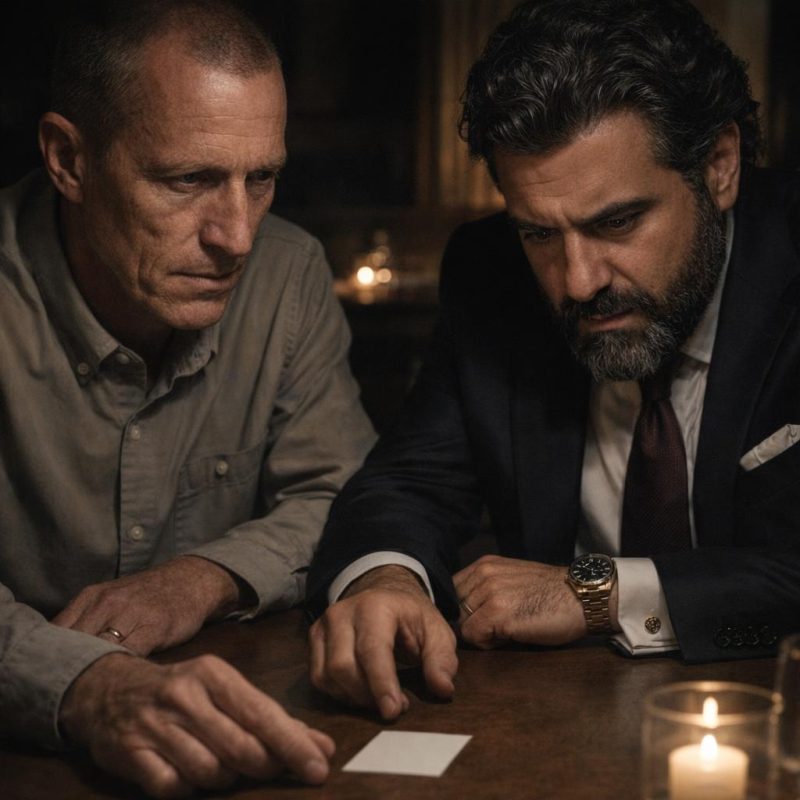 Image by RM AI
The Three Levels
I sat with that thought for a moment — the hierarchy of it. Arthur held an executive title, the kind that came with a corner office and a car allowance and the right to speak at quarterly reviews. It was a real position. I wasn't dismissing it. But there were levels between where Arthur sat and where the actual decisions got made — the kind of decisions that could restructure a division, approve a merger, or end a tenure with a single vote. Arthur had spent the evening quoting documents that moved through that structure, citing figures and conclusions with the ease of a man who had absorbed them completely. He had no way of knowing what he didn't know. Why would he? The signature line on a report isn't something most executives think to check. They receive the document, they absorb the numbers, they cite the conclusions. I had watched him do exactly that all evening, with complete confidence, and I had let him. I reached into my wallet again. My fingers found what I was looking for — not a bill, not a receipt. Something else entirely.
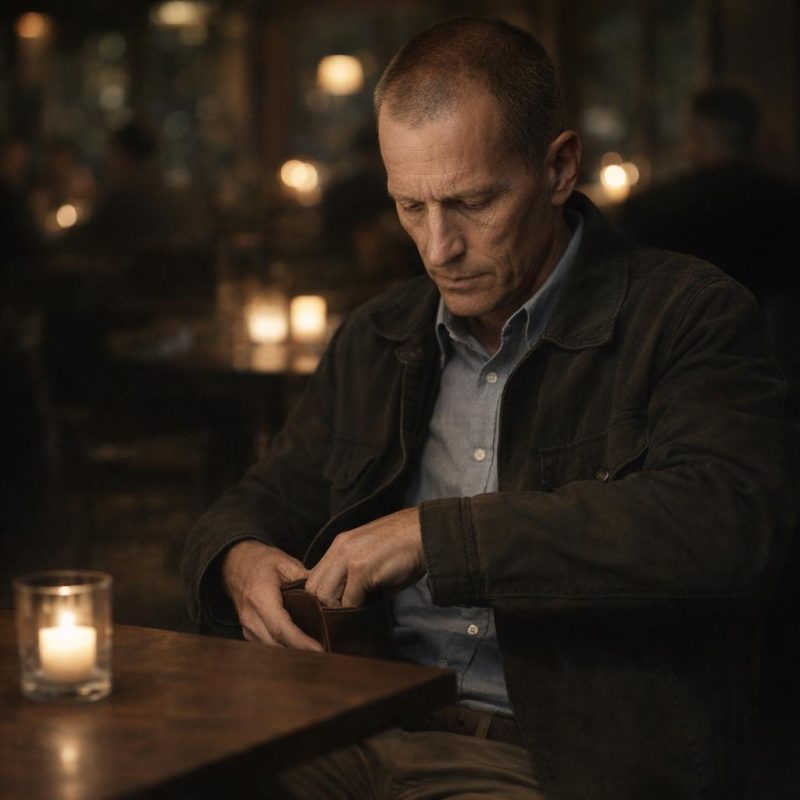 Image by RM AI
The Crescendo Peak
Arthur's voice had been building all evening, but it reached something different in that moment — a kind of ceiling-filling resonance that seemed to press against the walls of the dining room. He was talking about the firm's recent performance, and somewhere in the middle of it he had shifted from describing the company to describing himself. The distinction had dissolved so gradually I almost missed it. He said the word 'indispensable' without any apparent self-consciousness, the way a person says it when they genuinely believe it. He said the firm's trajectory over the past two years reflected decisions made at his level, by people who understood the business from the inside. His hands moved in wide arcs over the table, nearly grazing the wine glasses. Clara had gone very still beside him, her eyes fixed somewhere between her plate and the centerpiece, the way she went still when she wanted to be somewhere else entirely. I watched him reach the top of it — the absolute peak of the evening's performance — and I felt something settle in my chest, quiet and certain, the way a decision feels when it has already been made.
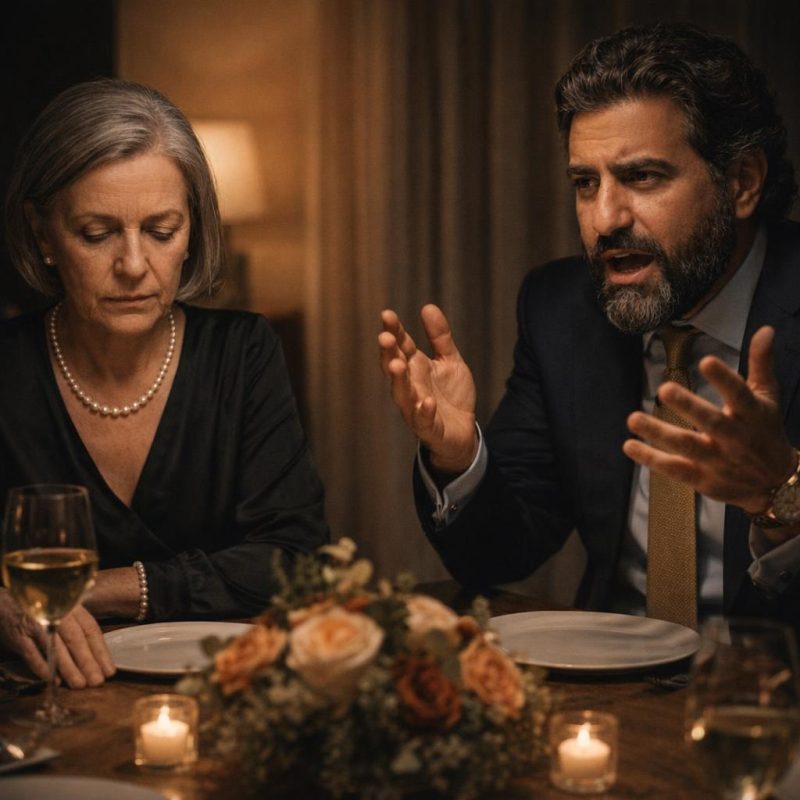 Image by RM AI
The Complete Silence
Then Arthur stopped. Not because he had finished — he hadn't — but because something in the room had shifted, and even he felt it. His hand was still raised mid-gesture, fingers spread, suspended above the table as though the air had thickened around it. Clara had stopped breathing, or it seemed that way. I couldn't hear the usual ambient sounds of the house — not the low hum of the kitchen appliances, not the faint tick of the clock in the hallway, not the settling of the building itself. The chandelier above us threw its light down in the same steady way it had all evening, but in the silence it seemed sharper, more deliberate, catching the edges of the crystal and the silverware with a precision that hadn't been visible before. No one spoke. No one moved. Arthur's eyes had come to rest on me, and there was something in them I hadn't seen all evening — not arrogance, not performance, but something quieter and less certain. Clara's hands were folded in her lap. The three of us sat inside that silence together, and the house held it with us.
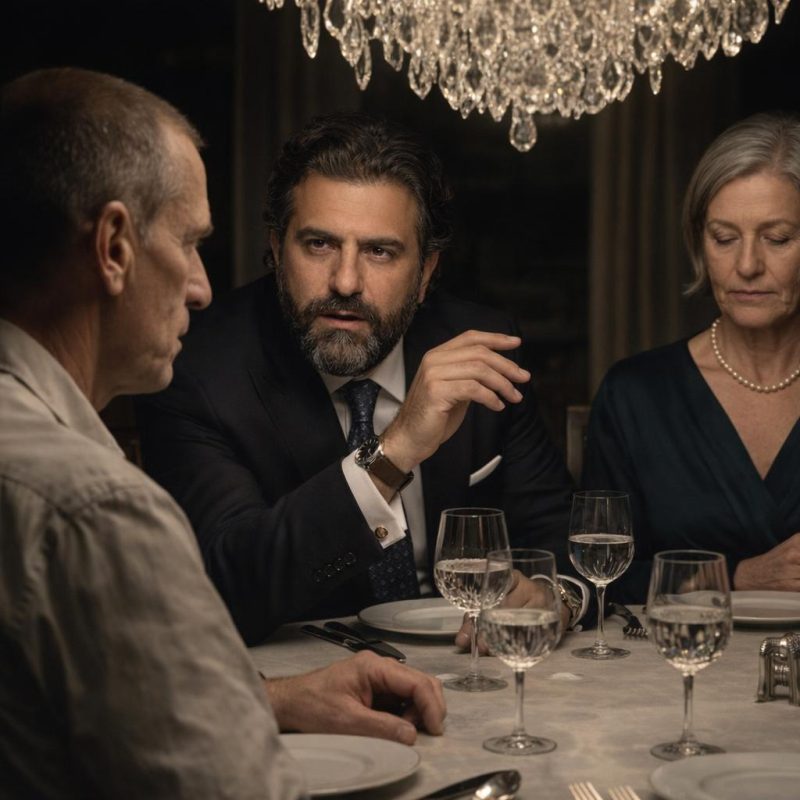 Image by RM AI
The Fork Stops
Clara's fork had been making a small, rhythmic sound against the edge of her plate — not eating, just moving, the way hands find something to do when the rest of the body is tense. Then it stopped. The absence of that sound was more noticeable than the sound itself had been, and the silence that followed felt different because of it — more complete, more deliberate, as though the room had been waiting for that last small noise to go quiet before it could fully settle. Arthur was watching me with an expression I couldn't quite read. Not hostile, not amused — something in between, with a layer of confusion underneath it that he was working to keep off his face. Clara's eyes had come up from the table. She was looking at me the way she used to look at me when we were children and I was about to do something she wasn't sure about — not afraid, exactly, but paying very close attention. I reached into my wallet one more time. My fingers moved past the folded bills without stopping, found the edge of something flat and rigid, and I drew it out slowly.
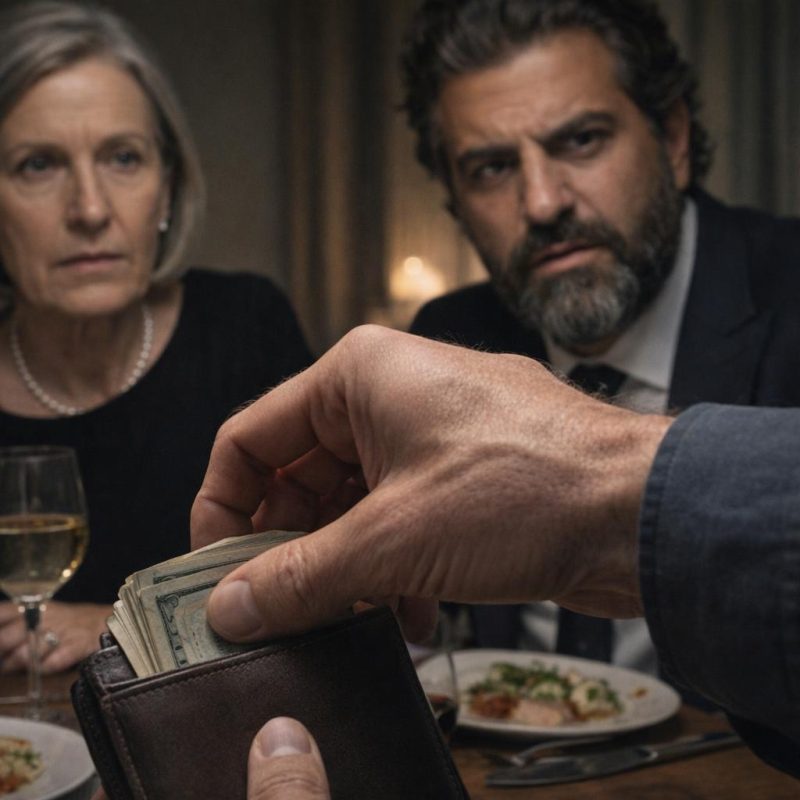 Image by RM AI
The Envelope Ignored
There was an envelope tucked behind the card section — thin, the kind used for gift enclosures, the sort of thing that ends up in a wallet and stays there. I worked the flap open with my thumb, not quickly, not with any particular urgency. Arthur's eyes dropped to my hands for a moment, and I could see something shift in his expression — a slight softening around his mouth, the way his shoulders adjusted. Whatever he thought was happening, it wasn't what was happening. I didn't look at what was inside the envelope. I didn't need to. The cash in there was incidental — it had been in my wallet for days, left over from something unremarkable, and it had no bearing on anything I was about to do. What mattered was what I was still holding in my other hand, and what was still in the card section behind it. Arthur hadn't looked at that yet. He was still watching the envelope, still somewhere in the comfortable story he had been telling himself all evening. I let him stay there a moment longer. The money meant nothing. It had never meant anything.
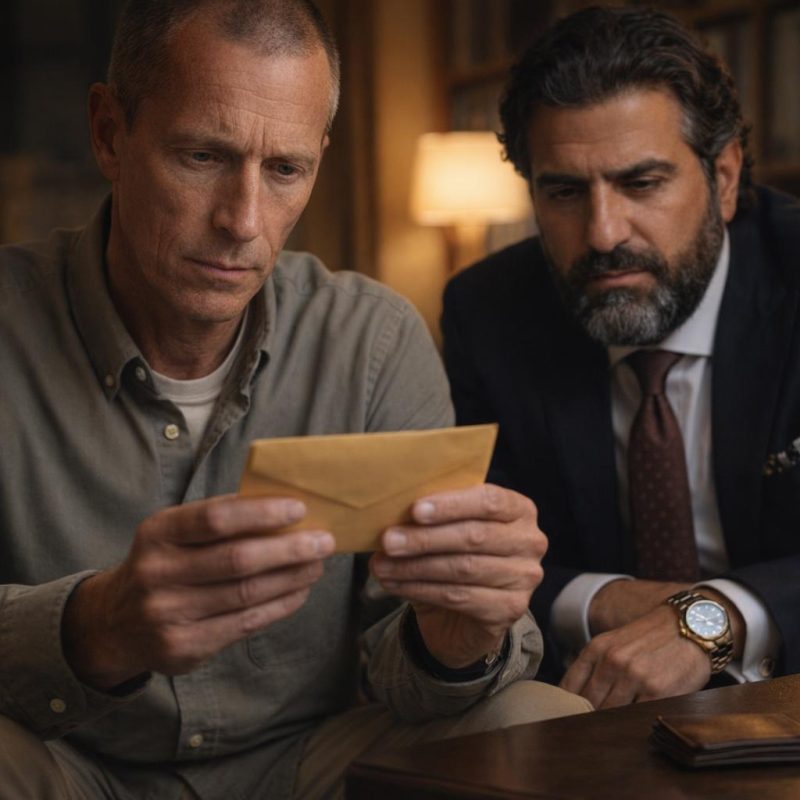 Image by RM AI
The Eye Contact
I kept my eyes on Arthur's face. Not aggressively — I wasn't trying to unsettle him, or not only that. I was watching the way information moves across a person before they've processed it, the small muscular adjustments that happen in the seconds before understanding arrives. My hands moved without my needing to look at them. I had handled these cards enough times that the motions were automatic — the slight pressure of a thumbnail against a laminated edge, the resistance of something that had been sitting in the same slot for a long time. Arthur's expression had shifted again. The softness around his mouth was gone. In its place was something more careful, more attentive, the look of a man who has just noticed that a conversation has changed direction without his permission. Clara was watching both of us now, her hands still folded in her lap, her posture very straight. I didn't look away from Arthur. Whatever was about to happen would happen in his face first, and I wanted to see all of it — every stage of it, in sequence, without missing anything. My hands kept moving. My eyes did not.
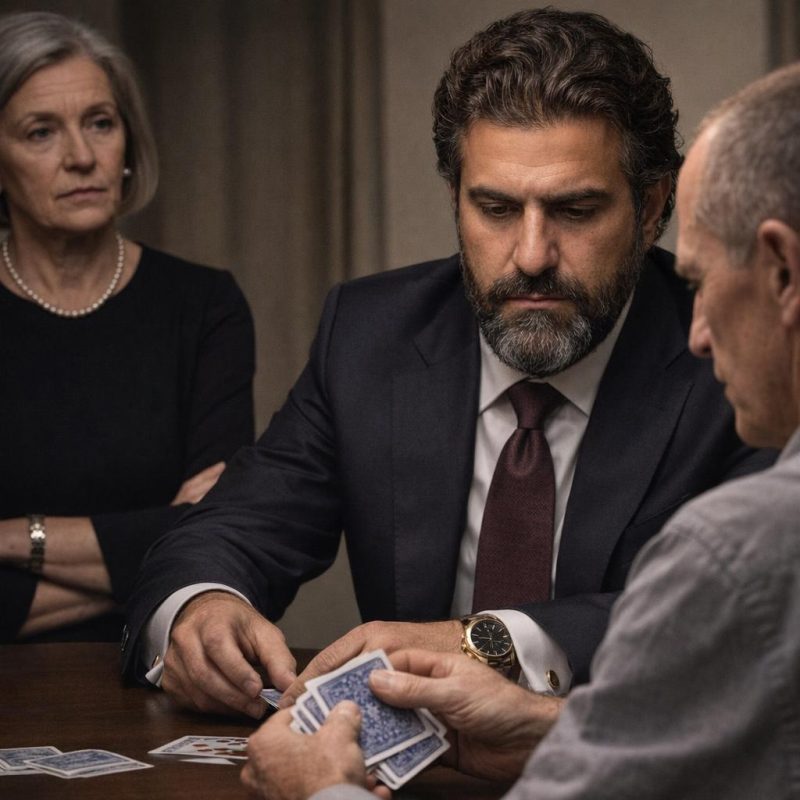 Image by RM AI
The Security ID
The first card came out cleanly. It was laminated, standard corporate issue, the kind worn on a lanyard in buildings with security checkpoints and badge readers at every interior door. The chandelier caught it as it cleared my wallet — a brief flash along the upper edge, the kind of glare that draws the eye before the mind has decided to look. Arthur's gaze moved to it immediately. I held it at table level, angled slightly toward him, not making a production of it but not hiding it either. His eyes moved across the surface of the card — the photograph, the text, the logo in the upper corner — and I watched his face go through something I could only describe as a stutter. Not recognition, not yet. Something earlier than that. The look of a person who has seen a shape they know in a context that doesn't fit, and whose brain is running the comparison without having reached a conclusion. Clara leaned forward almost imperceptibly, just a degree or two, the way a person does when they're trying to read something from across a table. I set the card down on the white linen, face up, directly in front of Arthur.
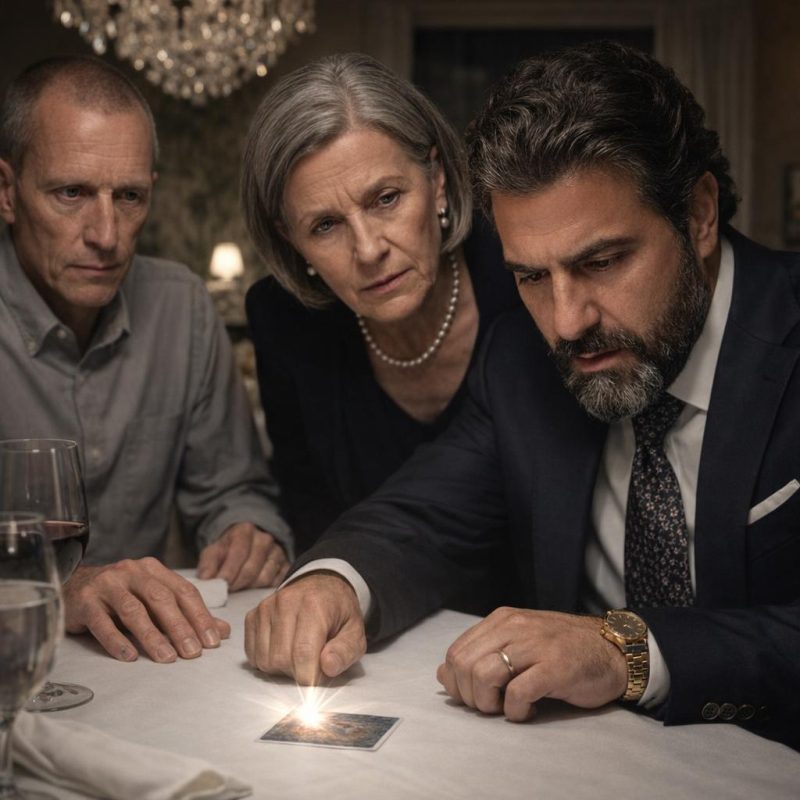 Image by RM AI
The Business Card
I reached back into the wallet and found the second card by feel — heavier stock than the security ID, the surface slightly textured, the embossing raised enough to catch under a fingernail. I set it down on the linen beside the first card, parallel, with perhaps two inches between them. The business card was gold-embossed on cream stock, the kind of card that gets produced in small quantities for people at a specific level, the kind that doesn't get handed out casually. The logo sat in the upper left corner — the same mark Arthur had referenced three times over dinner, the same one printed on the cover of every report he had quoted that evening, the same one on the letterhead of the documents whose signature lines he had never read. Arthur's eyes moved from the security ID to the business card. His chin dropped a fraction. He leaned forward over the table, and the gold embossing caught the chandelier light, and the logo sat there between us, sharp and unmistakable.
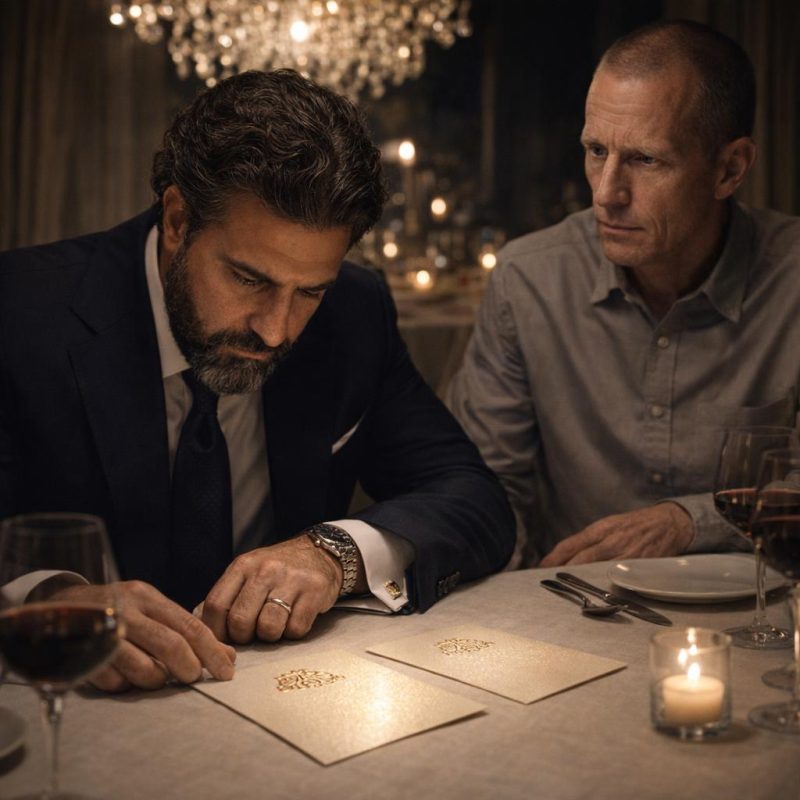 Image by RM AI
The Logo Recognition
Arthur's eyes had stopped moving. That was the first thing I noticed — the way they locked onto the logo in the upper left corner of the card and simply stayed there. He had referenced that mark over dinner, each time with the particular reverence people reserve for things they believe are beyond their reach. And now it was sitting on my cream-stock business card, two inches from his bread plate, catching the chandelier light in a way that made the gold embossing look almost warm. Clara had gone very still across the table. She wasn't looking at the card. She was watching her husband's face, the way you watch someone standing too close to the edge of something. Arthur's chin came up slightly, then dropped again. His right hand moved toward the card and stopped just short of touching it. Then he leaned forward, his eyes narrowing, and began to read the text below the logo.
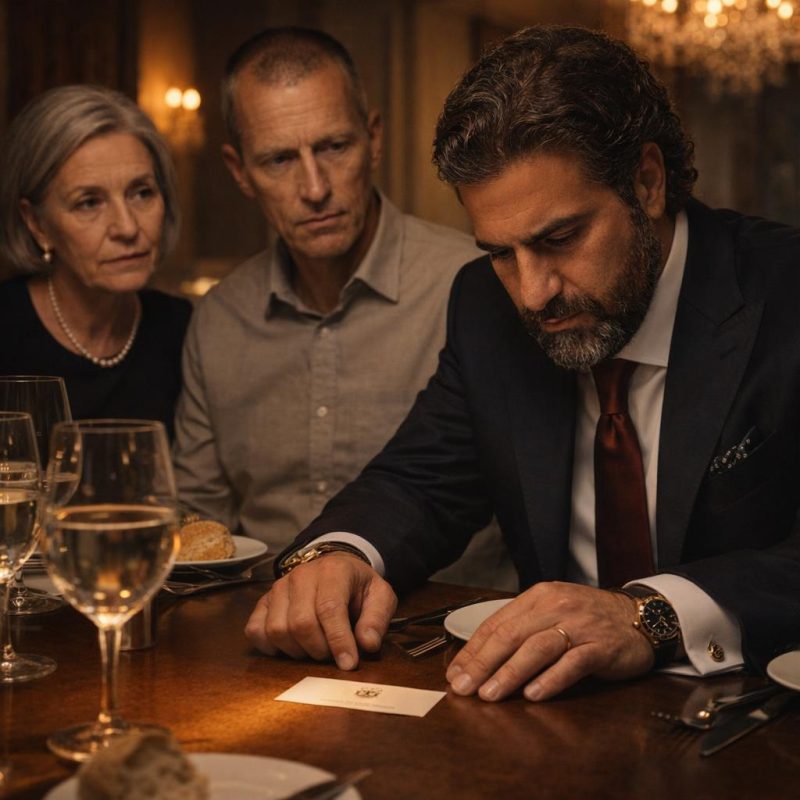 Image by RM AI
The Slow Slide
I picked up the card with two fingers and set it in motion across the table. The mahogany was polished enough that it barely needed any help — the card traveled smoothly, without wobbling, without catching on anything. Arthur's eyes followed it the entire way. Clara's hand had come up to her mouth, not quite touching her lips, hovering there the way hands do when a person isn't sure yet whether they need it. The card crossed the midpoint of the table, passed the centerpiece, and continued toward Arthur's side. His white envelope was still sitting where he had placed it earlier in the evening. The card reached the envelope and stopped. It sat there on top of the white paper, gold embossing against plain stock. Arthur looked at the two items together. I didn't say anything. There was nothing to say that the table hadn't already said. The card rested where it had landed, and the room held that stillness.
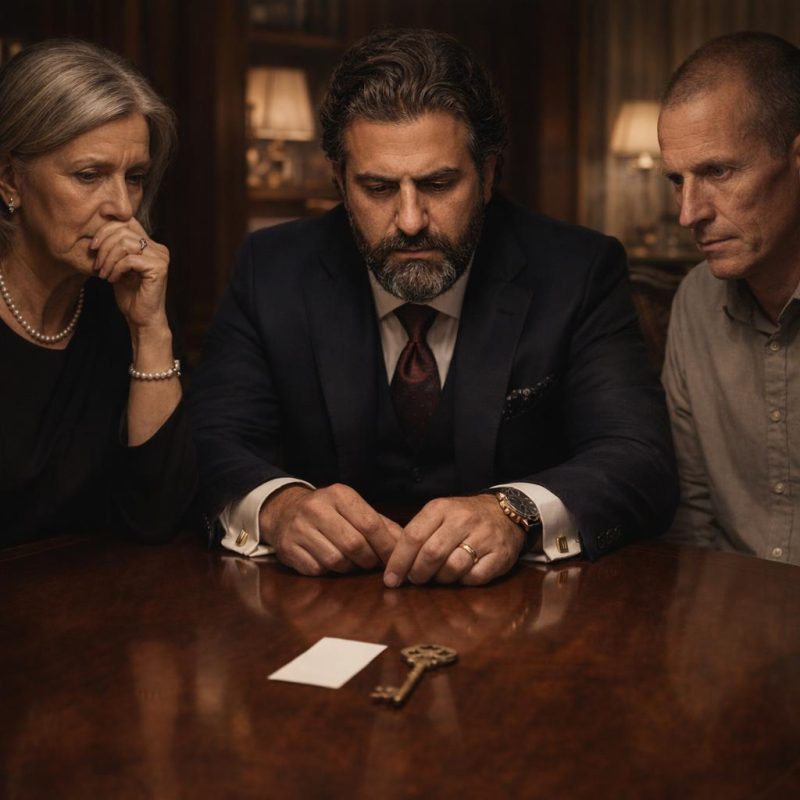 Image by RM AI
The Text Reads
Arthur leaned closer. Not the casual lean of someone reaching for a glass — this was deliberate, his upper body angling forward over the table, his eyes narrowing the way they do when the text is smaller than expected or the meaning isn't landing the way it should. I watched his gaze move left to right across the first line. He read slowly. That surprised me slightly — Arthur had always struck me as someone who processed information quickly, who formed conclusions before the sentence finished. But he was taking his time with this. His lips didn't move, but there was a faint tension around them, a tightening at the corners. He reached the second line. His eyes slowed further. Clara hadn't moved. She was watching her husband with an expression I couldn't fully read — something between dread and a kind of exhausted recognition, as though some part of her had been waiting for this particular moment for longer than tonight. Arthur's eyes reached the third line of text, and the color in his face began, very slowly, to change.
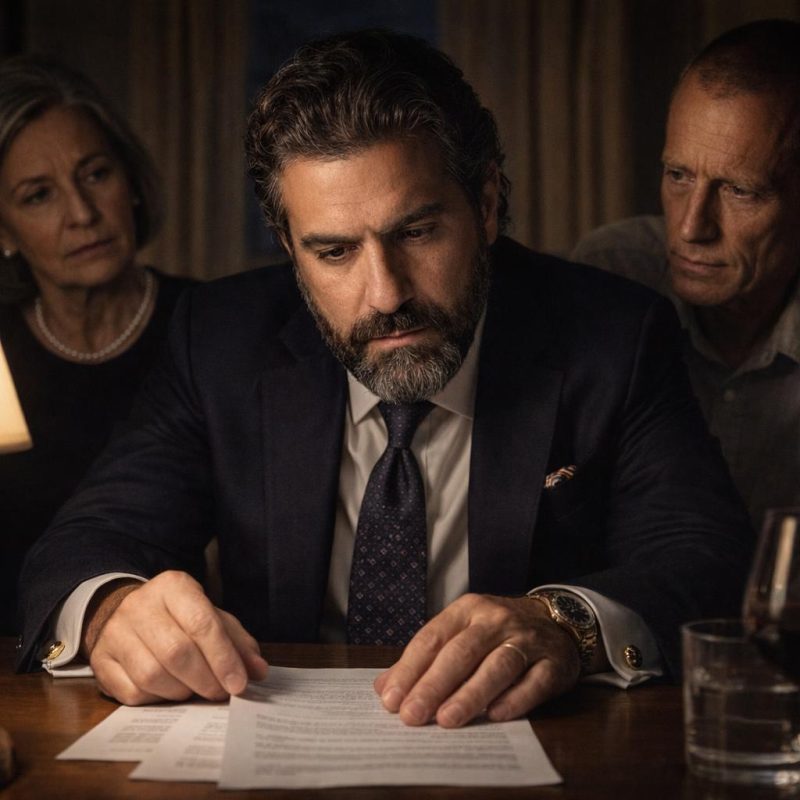 Image by RM AI
The Chairman Title
He read it twice. I could tell because his eyes tracked left to right, paused, then moved back to the beginning of the line and crossed it again. Chairman and Majority Shareholder. Four words. He had spent the entire evening quoting the company's growth figures, its market position, its strategic direction — all of it delivered with the confidence of someone who believed he understood the institution better than most. And now those four words were sitting on a card between his hands, attached to the name of the man he had spent the evening condescending to over a dinner that had been arranged to establish a particular order of things. Arthur looked up from the card. His eyes found mine across the table. His mouth had opened slightly — not enough to speak, just enough to suggest that whatever he had been about to say had stopped somewhere between the thought and the air. Clara made a sound, barely audible, somewhere between a breath and a word that never formed. The blood had left Arthur's face entirely.
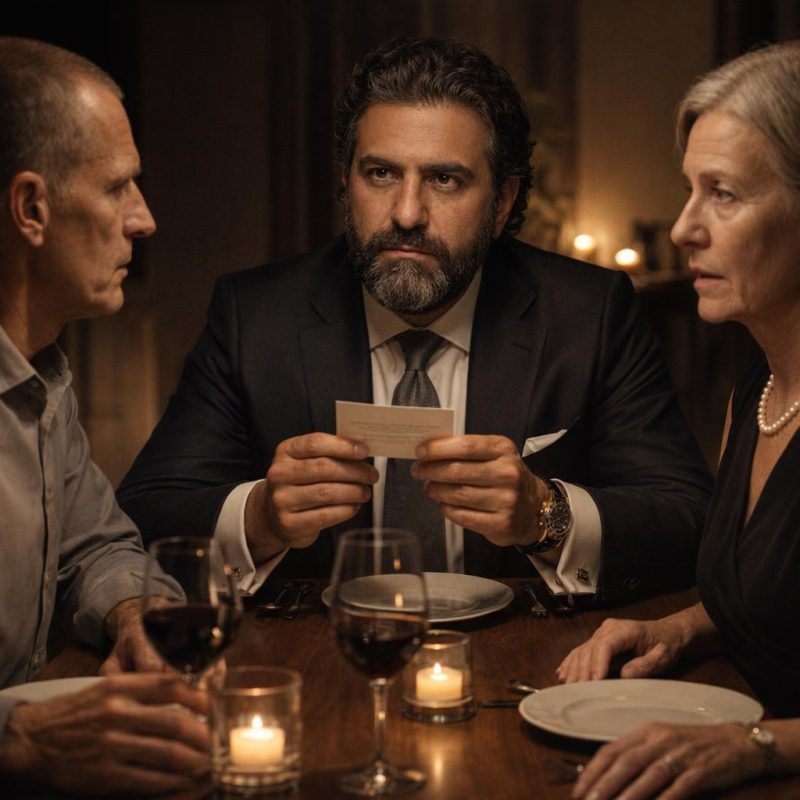 Image by RM AI
The Company Logo
Arthur looked back down at the card. His eyes went to the logo first — not the text this time, just the mark in the upper left corner, the one he had treated all evening like a symbol of everything he aspired toward. He had name-dropped the company over the appetizers. He had quoted its figures during the main course. He had brought it up more than once in the kind of observations people make when they are trying to establish where they stand relative to someone else. I stayed still and let him look. There was no need to say anything. The card was doing the work. His hands were resting flat on the table now, and I could see the faint tremor in his right fingers — not dramatic, just the kind of small physical response that the body produces when the mind is processing something it wasn't prepared for. He looked from the card to my face, then back to the card. The evening he had constructed, piece by careful piece, sat around him in silence.
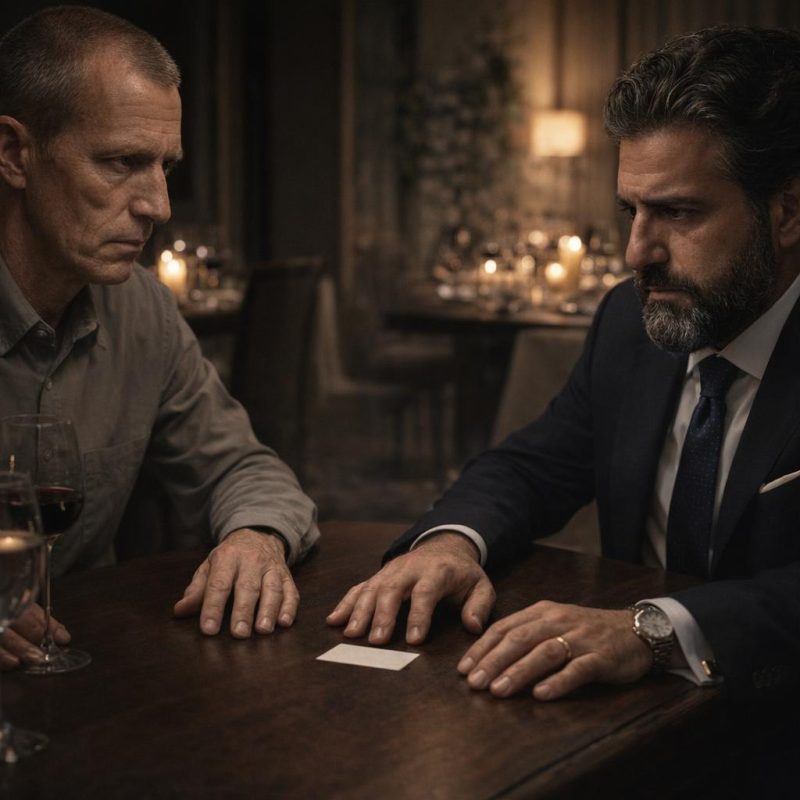 Image by RM AI
The Card and Envelope
The two items on the table told the whole story without any help from me. Arthur's white envelope — the one he had placed with such ceremony, the one meant to signal his generosity and standing — sat underneath my business card like a footnote. The gold embossing caught the light from the chandelier above us, the company logo facing upward, the title line visible to anyone at the table who cared to read it. Arthur stared at them. He hadn't touched either one. His hands were still flat on the mahogany, fingers slightly spread, the posture of a man who has stopped trusting his own movements. Clara sat across from him with her hands folded in her lap, her eyes moving between her husband and the table. The dinner he had orchestrated — the wine selections, the architectural tour, the carefully deployed statistics, the envelope itself — had been arranged to establish a particular order of things. The card sat on top of the envelope, gold on white, and the order it established was the only one that remained.
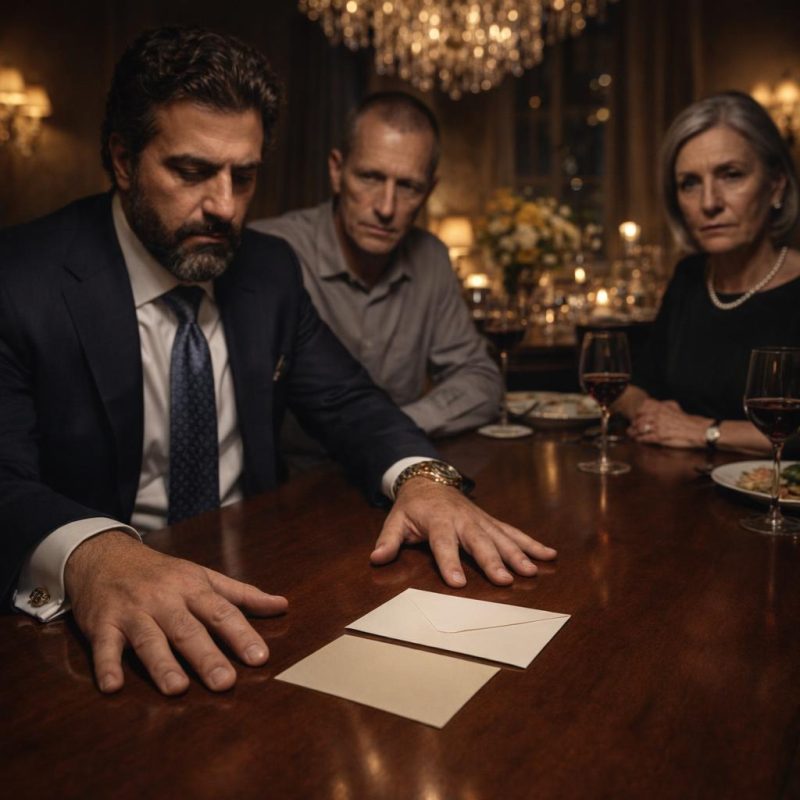 Image by RM AI
The Smile Fades
The smile was gone. Not faded gradually the way smiles do when a conversation shifts — it had simply stopped, the way a light stops when the switch is thrown. For most of the evening that smile had been Arthur's primary instrument, deployed with the ease of someone who had used it so long it had become automatic. The confident tilt of his chin was gone too. His shoulders, which had been set back and squared since the moment I arrived, had dropped a fraction — not enough that a stranger would notice, but enough that I did. He looked at the card. He looked at me. He looked at the card again. The man who had greeted me at the door with a remark about my car, who had guided me through his house like a docent presenting evidence of his own success, who had quoted figures and positioned himself as a man of consequence all evening — that version of Arthur had gone somewhere I didn't think he could retrieve it from quickly. Clara watched her husband from across the table, and the room held nothing but the quiet that comes after something irreversible.
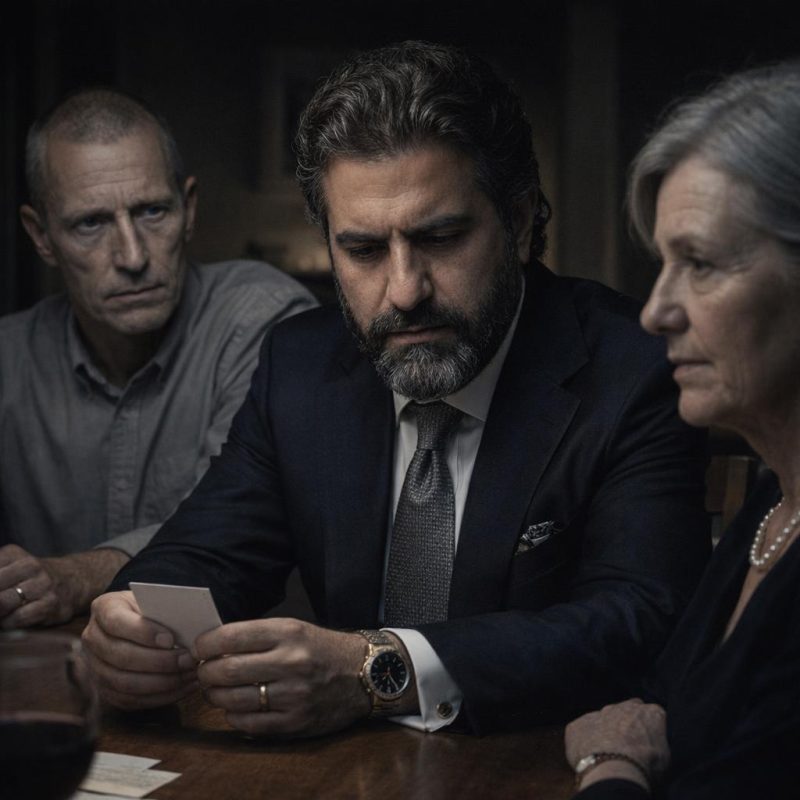 Image by RM AI
The Silence Returns
Arthur's mouth opened. Nothing came out. It closed again. Then it opened once more, and again there was nothing — no words, no sound, just the faint movement of a man trying to locate language that had apparently left the building. I had seen people struggle for words before, but this was different. This wasn't the pause of someone choosing carefully. This was the silence of someone whose entire framework for the evening had just been disassembled in front of them and who had not yet found the first piece of a new one. Clara was looking at both of us now, her hands still folded in her lap, her expression carrying the particular stillness of someone who has understood something for longer than the room has. I didn't move. I didn't fill the silence. There was no reason to. Arthur sat at the head of his own table, in his own dining room, surrounded by the evidence of everything he had spent the evening performing, and the silence settled over all of it like a weight that had nowhere else to go.
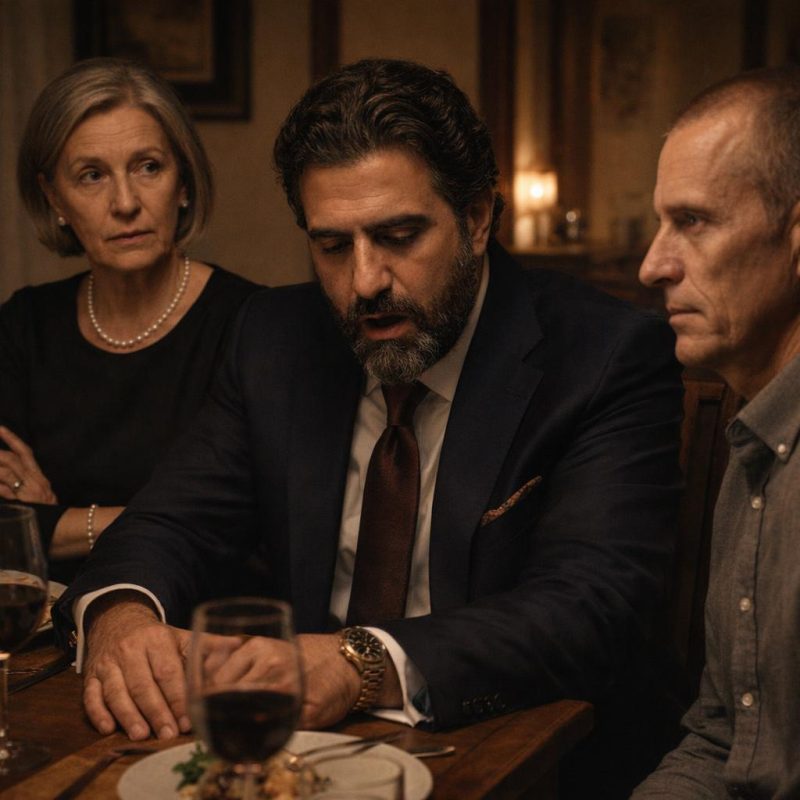 Image by RM AI
The Squint
Arthur leaned forward. It was a small movement, almost involuntary, the way a person leans toward something they can't quite make sense of — not because they're interested, but because their eyes are refusing to cooperate with what they're seeing. His reading glasses were on the table beside his wine glass, and he didn't reach for them. He squinted instead, the way people do when they're hoping the problem is distance rather than content. I watched his eyes move across the card from left to right, slowly, the way you read something when you're not sure you're reading it correctly. My name first. Then the company name beneath it, which I knew he would recognize immediately because he saw it on his paycheck every two weeks. Then the title line. His eyes stopped there. I could see the exact moment they stopped — the slight stillness that came over his face, the way the squint deepened rather than relaxed. He wasn't having trouble reading it anymore. He was having trouble with what it said. Clara was watching her husband's face the way you watch a weather system move in from the coast, and Arthur's expression had begun to shift into something I hadn't seen on him all evening.
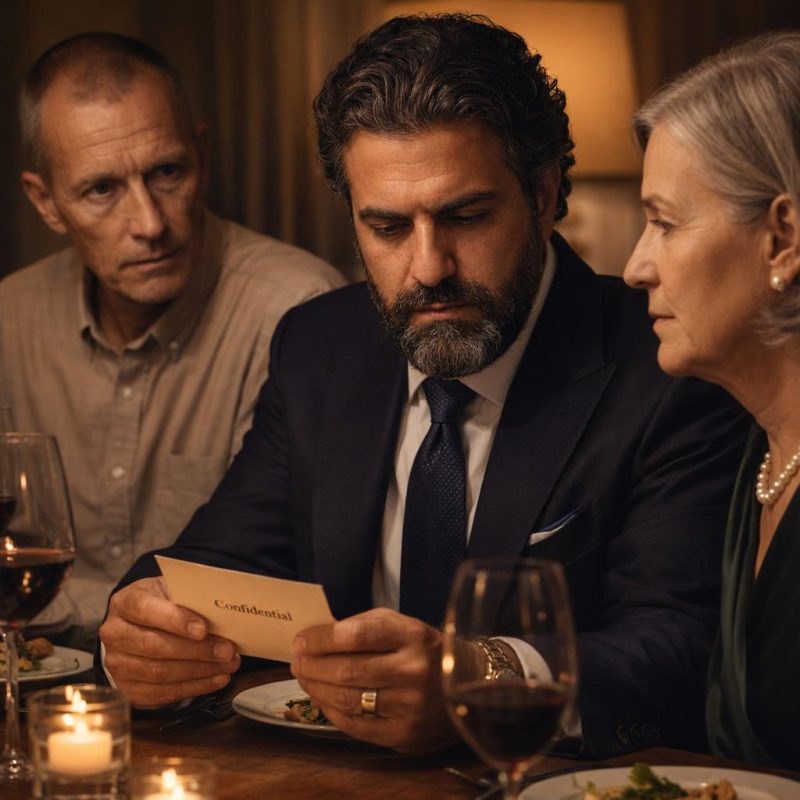 Image by RM AI
The Blood Drains
The color left his face in stages. First the flush of the evening's wine and self-satisfaction drained from his cheeks, then the ordinary warmth of a man sitting in his own dining room, and then something deeper — the baseline confidence that had been sitting under everything else all night. What remained was a kind of waxy pallor that I had only seen on people receiving genuinely bad news. His mouth fell open. Not the theatrical open-mouthed pause he had deployed earlier in the evening when performing surprise for the table — this was different, involuntary, the jaw simply losing its instruction. His hands, which had been resting on the tablecloth with the practiced ease of a man accustomed to presiding, began to tremble. Not dramatically. Just enough to be visible. He looked from the card to me, then back to the card, as though one of us might have changed in the interval. Clara's hand moved to her throat, her fingers resting there lightly, and she said nothing. Arthur's face had gone the color of the white envelope still sitting on the table beside him, and his eyes, fixed on the card, held the particular expression of a man watching the floor disappear beneath his feet.
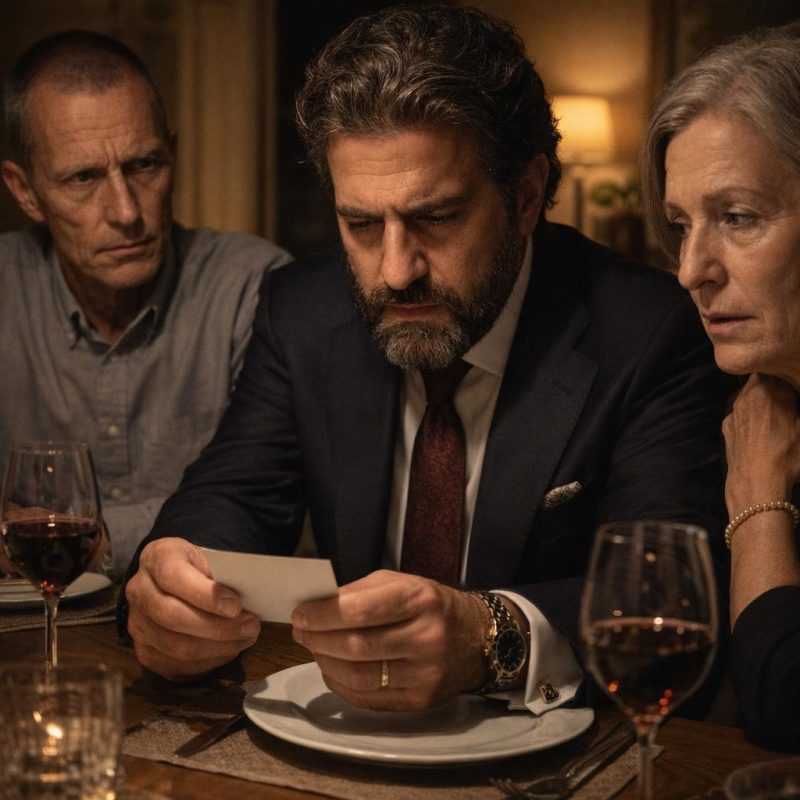 Image by RM AI
The Wordless Mouth
He tried to speak. I could see the effort — the throat working, the jaw moving, the small preparatory intake of breath that precedes words. Nothing came out. He closed his mouth, reset, and tried again. Still nothing. It was not a dramatic silence, not the kind that fills a room with tension and electricity. It was quieter than that, and somehow worse — the silence of a mechanism that had simply stopped functioning. Arthur, who had spent the entire evening producing language with the ease and volume of a man who had never once doubted his right to be heard, could not locate a single word. His eyes moved from the card to my face, then back to the card, then to Clara, then back to me. Clara had not moved. I had not moved. The chandelier above us continued its indifferent illumination of the table, the crystal, the half-empty wine glasses, the white envelope, the gold-embossed card. Arthur's throat worked again, visibly, the muscles moving beneath the skin of his neck, and his mouth opened for the third time — and still the words refused to come.
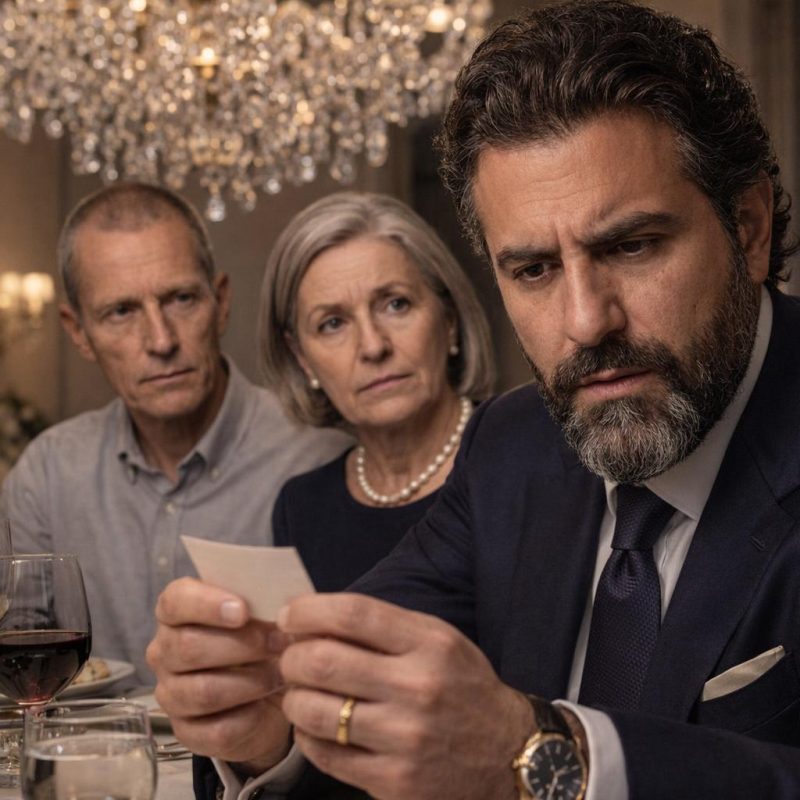 Image by RM AI
The Card on the Envelope
I let the silence hold a moment longer, then I set the card down. I placed it deliberately on top of the white envelope — his charity envelope, the one he had produced with such ceremony earlier in the evening, the one that had been meant to establish the distance between his generosity and my limitations. The gold embossing caught the light from the chandelier directly, the way it was designed to, and the contrast between the two items on the table was not subtle. His envelope was thick, cream-white, institutional — the kind of thing that announces itself. My card was smaller, precise, the kind of thing that doesn't need to announce anything. Arthur stared at the two items together on the tablecloth. He couldn't seem to look away from them. Clara was watching both of us now, her hands folded in her lap, her expression carrying a stillness that suggested she had begun to understand the shape of what was happening even if she didn't yet have all the details. I straightened in my chair, and the gold card sat on the white envelope between us, and I prepared to say what I had come here knowing I might eventually have to say.
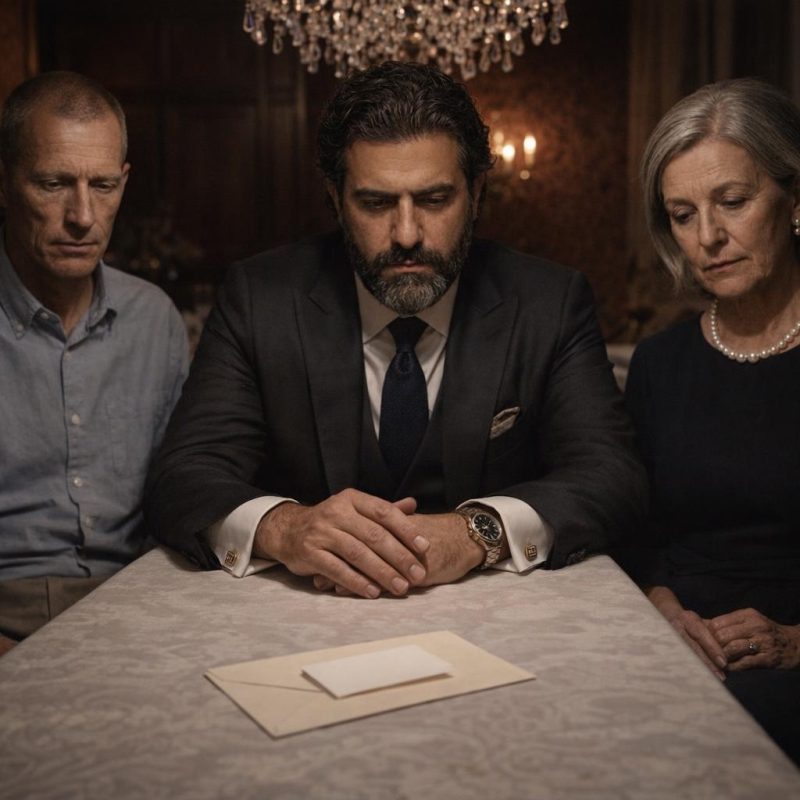 Image by RM AI
The Truth Revealed
I kept my voice level. I told him that his firm — the one whose name appeared on his business cards, whose logo was on the building where he parked his car every morning — was a subsidiary of a holding group. I told him that the holding group had a board of directors. I told him that I chaired that board, and had done for eleven years, and that I held a majority of the shares. I watched him absorb this. Then I told him the part that mattered most for this particular evening: that his position sat three levels below the board he had never met, which meant that every remark he had made tonight about my car, my clothes, my career, and my apparent lack of ambition had been directed at the person who had the authority to end his employment before the week was out. Clara made a small sound. Arthur did not make any sound at all. I told him I had not come tonight intending to say any of this. I told him I had come for dinner with my younger sister. I let that sit for a moment, and then I watched Arthur's face as the full architecture of the evening — every performance, every condescension, every carefully staged display — came apart completely.
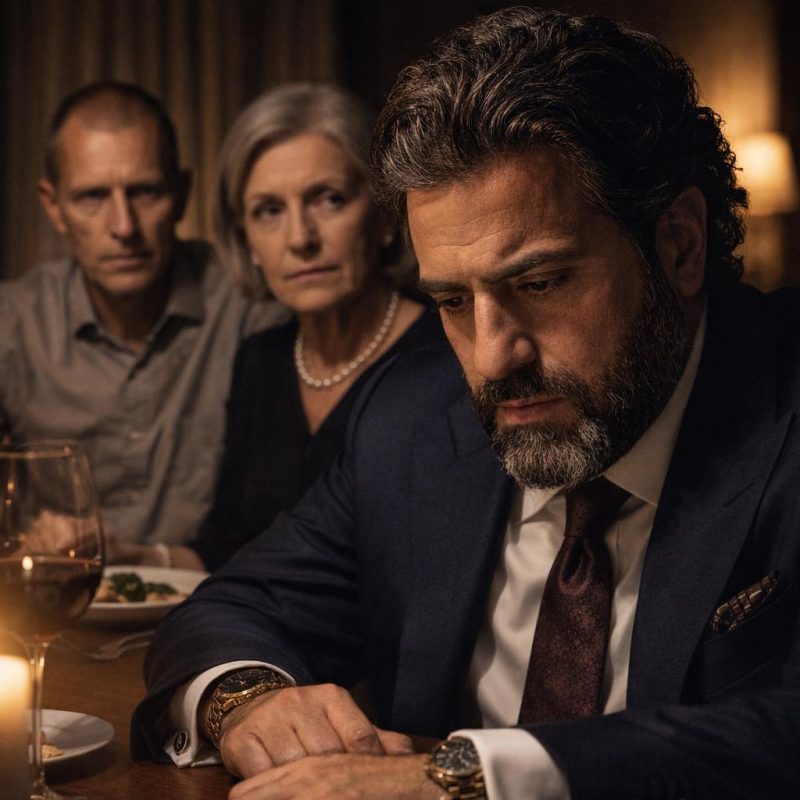 Image by RM AI
The Unprofessional Arrogance
I gave him a moment. It seemed fair. Then I continued, because there were things that needed to be said in a professional register rather than a personal one, and I had learned over the years that the professional register was often more effective precisely because it removed the emotional temperature from the room. I told him that over the past several months I had been receiving reports from the executive team about conduct within the senior management tier. I used the word unprofessional. I used the word arrogance. I did not look away from him as I said these words, and I did not soften them, because they were the words that had appeared in the reports and they were accurate. Arthur sat very still. Clara sat very still. The word arrogance remained in the air above the table the way certain words do — not fading, not dispersing, just hanging there with the particular weight of a description that has found its subject. I had not come to this dinner to deliver a performance review. But the evening had arranged itself in a way that made the conversation not only appropriate but necessary, and the dining room, with its chandelier and its crystal and its careful staging, had become the quietest boardroom I had ever sat in.
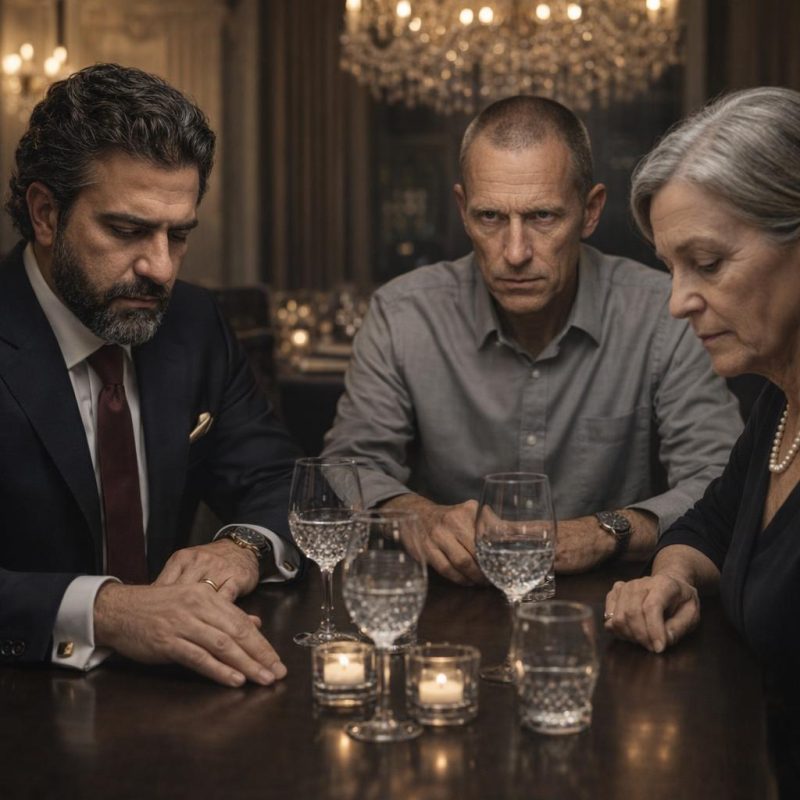 Image by RM AI
The Restructuring
I told him that the board had been discussing the possibility of restructuring the executive tier. I used the word possibility, because that was accurate — nothing had been decided, and I was not a man who overstated his intentions. But I also did not understate them, and Arthur had spent enough years in corporate environments to understand the distance between possibility and certainty when the word came from the right direction. His face, which had been pale since chapter forty-two, had taken on a different quality now — not the shock of comprehension but the particular stillness of a man calculating. Clara had her hands folded on the table in front of her, and she was looking at neither of us, her eyes somewhere in the middle distance, processing. I continued in the same measured tone I used in board meetings, because that was what this had become. I said that decisions of that kind were made on the basis of performance, conduct, and the degree to which an individual's behavior reflected the values the organization was trying to project. I did not say his name. I did not need to. The threat was not a threat in the way Arthur had always deployed threats — loudly, theatrically, for an audience. It simply sat in the room, solid and quiet, the way real authority tends to.
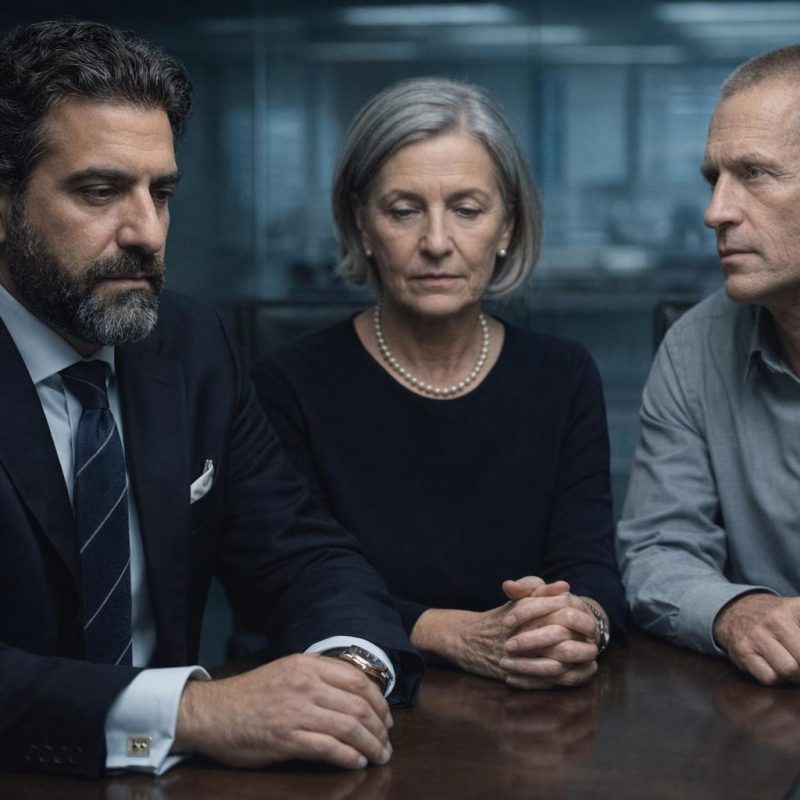 Image by RM AI
The Inflated Egos
I told him that inflated egos had become a particular concern at the management level. I said it the way I would say it in any professional context — evenly, without emphasis, as a statement of observed fact rather than personal accusation. I kept my eyes on his face as I said it. His face was doing something complicated. The pallor was still there, but beneath it something else was moving — a kind of desperate recalculation, the expression of a man who has been playing a game for hours and has only just been shown the actual rules. Every remark he had made about my sedan in the driveway, every pointed question about my career trajectory, every theatrical display of the house and the wine and the charity envelope — all of it was reorganizing itself in his expression into something that looked very much like the worst evening of his professional life. I did not look away. I did not fill the silence with reassurance or softening. I simply held his gaze and let the words settle where they had landed. And then Arthur made a sound — small, involuntary, somewhere between a breath and a word — that was nothing like anything he had produced all evening.
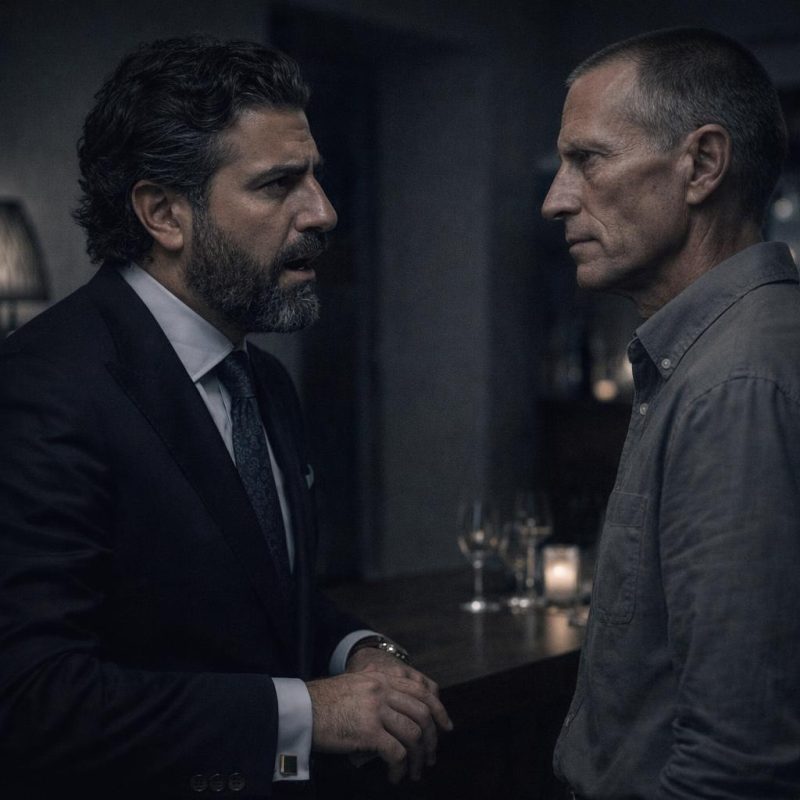 Image by RM AI
The Crumbling
He didn't speak. That was the thing I noticed most — not the pallor, not the way his hands had gone still on the tablecloth, but the absolute absence of sound from a man who had not stopped performing since I'd pulled into his driveway. Arthur's mouth opened once, then closed. Opened again. Nothing came out. The gold watch caught the chandelier light the same way it had all evening, but the wrist beneath it had stopped moving. Every theatrical gesture, every practiced pause for effect, every carefully deployed reference to square footage and wine vintages — all of it had simply stopped, the way a clock stops when the mechanism finally gives out. He was still sitting in the same chair, still wearing the same tailored jacket, but the person who had inhabited those things all evening was gone. What remained was something much smaller. His eyes had dropped to the table. Not to his plate, not to his glass — just to the white tablecloth, as though the weave of the fabric had become suddenly and urgently important. I had watched men absorb difficult news in boardrooms before. I knew what the face looked like when the performance finally ran out of room. The chair where Arthur had presided over his own dinner party now held something that looked very much like a frightened employee.
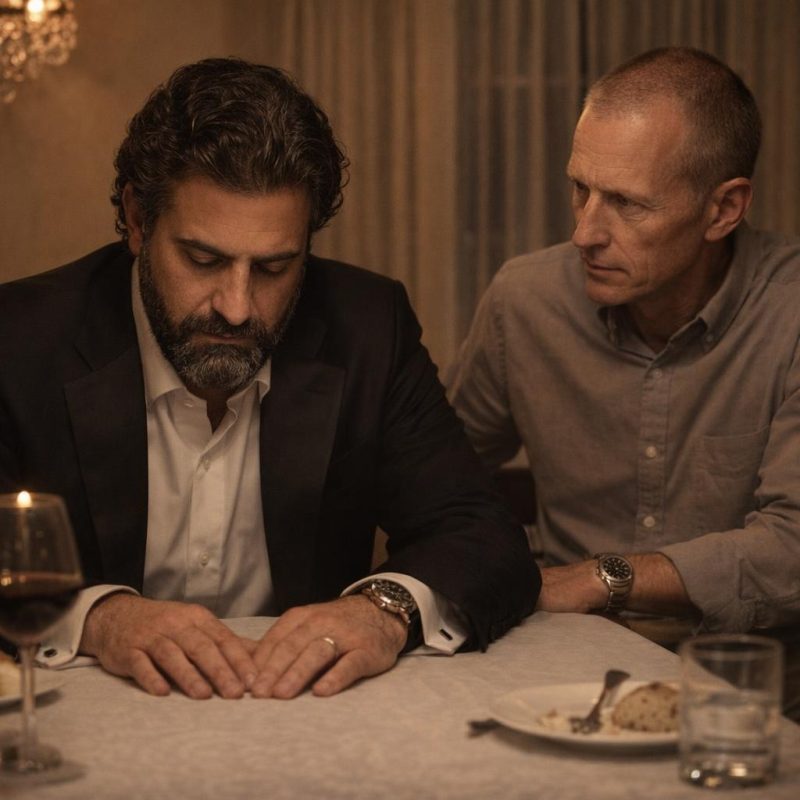 Image by RM AI
The Suffocating Silence
Nobody moved. That was the strange part — not that Arthur had gone silent, but that the silence had spread outward and taken the whole room with it. Clara's hand had come up to cover her mouth at some point, and it was still there. The chandelier above the table was doing what chandeliers do, throwing its careful light across the crystal and the silver and the half-finished plates, but the light felt different now — harder, more clinical, the way fluorescent light feels in a room where something has just gone wrong. Arthur's eyes were fixed on the tablecloth. He hadn't looked at me since the words had landed. I could hear the house settling around us, the faint tick of something in the walls, the distant sound of a car passing on the street outside. I had said what I came to say. I had not raised my voice. I had not reached for drama or spectacle — I had simply stated facts in the order they needed to be stated, and the facts had done the rest. I let the silence run. There was no reason to fill it. Arthur needed to sit inside it for a moment, needed to feel the full dimensions of where the evening had arrived. I set my hands flat on the table, drew a slow breath, and prepared to say the last thing I had come here to say.
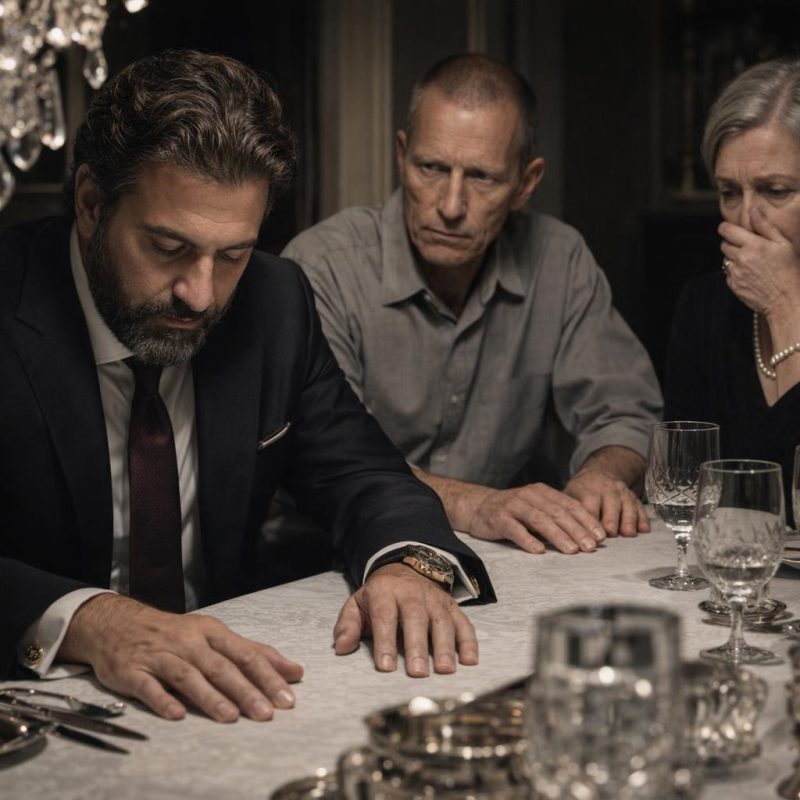 Image by RM AI
The Monday Morning
I told him that since he had expressed such concern this evening about the family's image — about what things looked like, about the right cars and the right addresses and the right bottles of wine — he might want to direct some of that energy toward Monday morning. I said it the same way I had said everything else: evenly, without heat, as a statement of practical information rather than personal satisfaction. I told him that updating his resume would be a reasonable use of his weekend. Arthur's head came up slowly. He looked at me the way a man looks when he is trying to determine whether he has heard correctly, whether there is some other interpretation available, some angle he has missed. There wasn't. I held his gaze and let him find that out for himself. Clara made a small sound beside me — not a word, just a breath, the kind that escapes when something you have been bracing for finally arrives. I did not look away from Arthur. His mouth worked once, silently, and then he seemed to understand that there was nothing left to say that would change the shape of what had just happened. The evening had been building toward this since the moment I'd parked my sedan in his driveway. The words had been spoken. They sat in the room now, solid and permanent, the way only true things do.
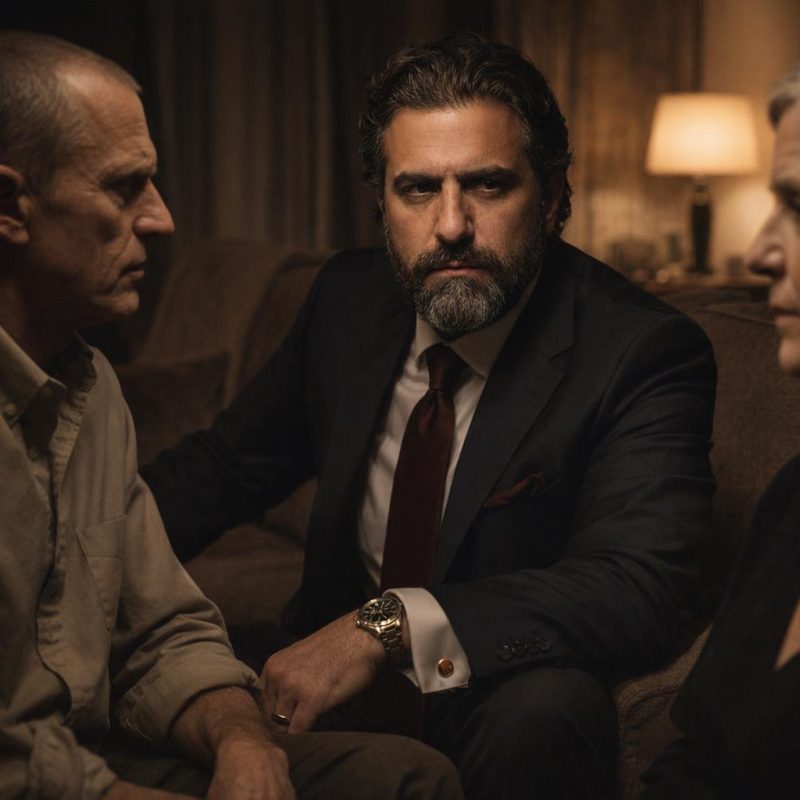 Image by RM AI
The Repeated Glances
I had set my business card on the table earlier in the evening — the one with the company letterhead, the title, the direct line. Arthur picked it up now with fingers that weren't entirely steady. He looked at it. Then he looked at me. Then he looked back at the card. I watched him do this three times, four times, his eyes moving between the small rectangle of card stock and my face as though one of the two might eventually offer him a different answer. The title on the card was not ambiguous. The company name was not ambiguous. There was no version of the information printed there that left room for the interpretation he had been operating under all evening. I could see him searching for it anyway — that small, desperate hope that there had been some mistake, some misunderstanding, some clerical error that had put the wrong name beneath the wrong title. Each time his eyes returned to the card, the hope was a little smaller. Each time they came back to my face, there was a little less of the man who had greeted me at the door with a remark about my car. I did not offer him reassurance. I did not soften the edges of what the card said. I simply waited, and watched the last of it go out of his eyes.
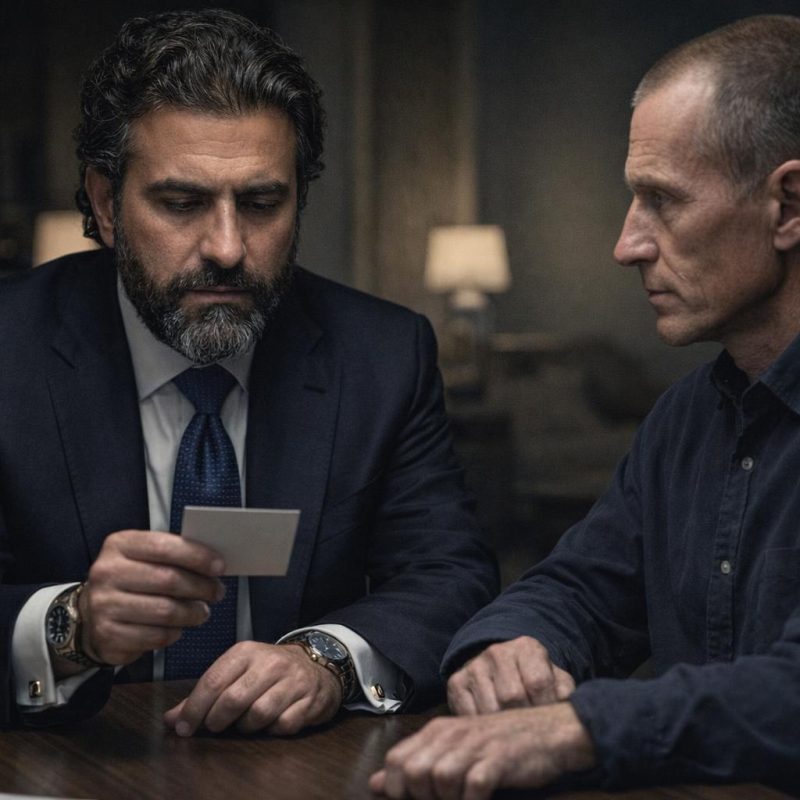 Image by RM AI
Clara's Understanding
Clara had been quiet through most of it — the careful, practiced quiet of someone who has learned to make herself small in her own dining room. But I could see something shifting in her face now. The shock was still there, but it was moving, reorganizing itself into something else. She was looking at Arthur the way you look at a familiar room after someone has turned on a light you didn't know was missing — the same furniture, the same walls, but the proportions suddenly different. I watched her process it: the remarks about my car, the questions about my career, the theatrical tour of the house, the charity envelope placed just so beside my plate. She was reading the evening backward now, and the reading was changing what she saw. She looked at her husband for a long moment, and whatever she found there seemed to settle something in her. Then she turned to me, and her expression was no longer complicated — it was simply tired, and clear, and full of something that looked very much like relief. I had not come here to damage her marriage. I had come because there are things a person can only absorb when they are shown directly, without softening. I pushed my chair back slightly and began to gather myself to leave. Then I felt Clara's hand reach across the table toward mine.
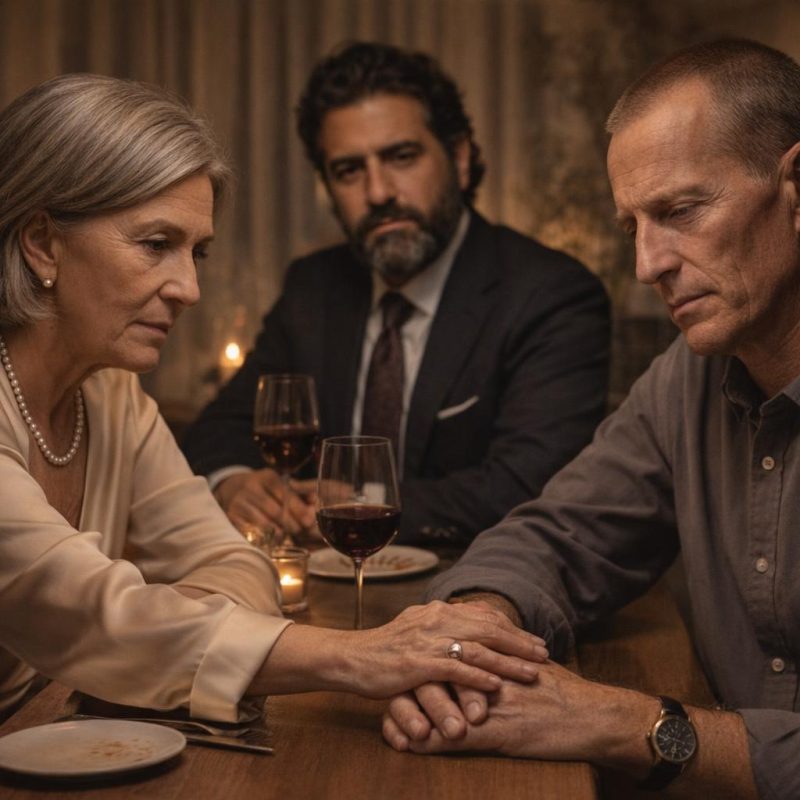 Image by RM AI
Standing Up
I let her hand rest on mine for a moment. Then I stood up. The movement was unhurried — no scraping of the chair, no abrupt push away from the table, just a clean, quiet rise, the kind that doesn't announce itself. I straightened my jacket. I was aware of Arthur still in his chair, still not moving, his eyes somewhere in the middle distance between the tablecloth and whatever was left of the evening. I did not look at him. There was nothing left in that direction that required my attention. Clara was watching me with an expression I recognized from when we were children — that particular look she had when she understood something completely but didn't yet have words for it. I gave her a small nod. The dining room felt different standing up than it had sitting down. The chandelier was still doing its work overhead, the crystal still catching the light, the silver still arranged with the precision Arthur had presumably overseen. None of it had changed. But the room's relationship to me had shifted entirely, and I think we all felt it. I was no longer a guest at Arthur's table. I was simply a man who had finished what he came to do, standing in a room that no longer had any particular claim on him. I straightened to my full height, and the chair I had occupied all evening stood empty behind me.
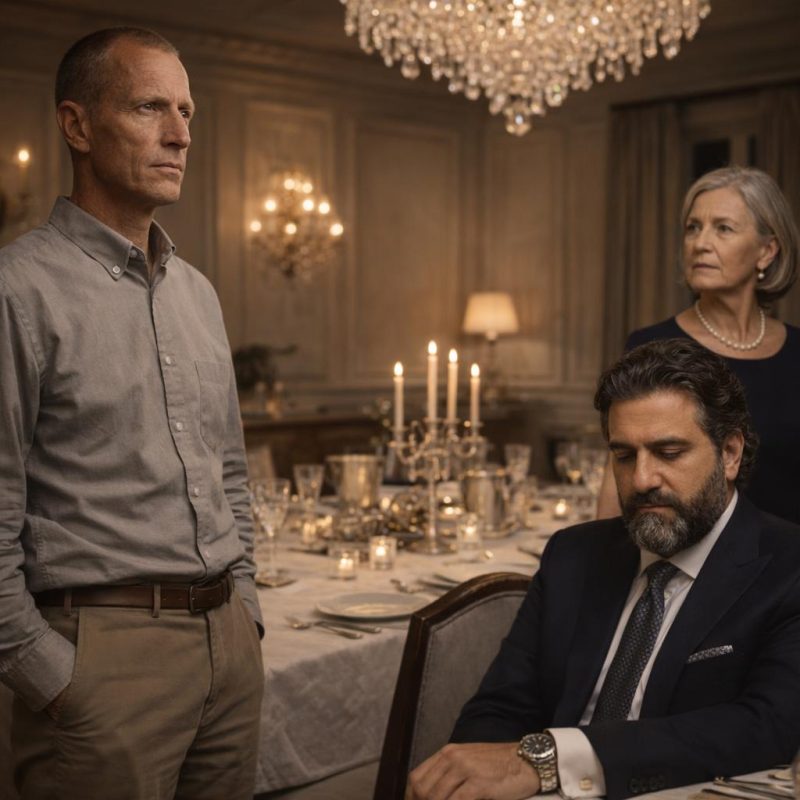 Image by RM AI
Left Behind
The beer bottle was still where Arthur had placed it — beside my plate, unopened, the label facing outward with the careful positioning of a man who thought the brand would communicate something. The charity envelope sat next to it, still sealed, still bearing whatever figure Arthur had decided would impress me. I looked at both of them for a moment. Then I left them there. I didn't touch the envelope. I didn't touch the bottle. I didn't offer an explanation for leaving them, because none was needed — the gesture said everything the evening had already said, only more quietly. Arthur hadn't moved. He was still in his chair, still looking at the tablecloth, still holding my business card in one hand with the particular grip of a man who doesn't know what to do with something he can't put down. Clara had risen from her seat. I could feel her behind me as I moved away from the table, her presence warm and uncertain in equal measure. The dining room gave way to the hallway, the hallway to the foyer, the foyer to the front door with its polished hardware and its sidelights framing the dark outside. I reached for the handle. I turned toward the door without looking back.
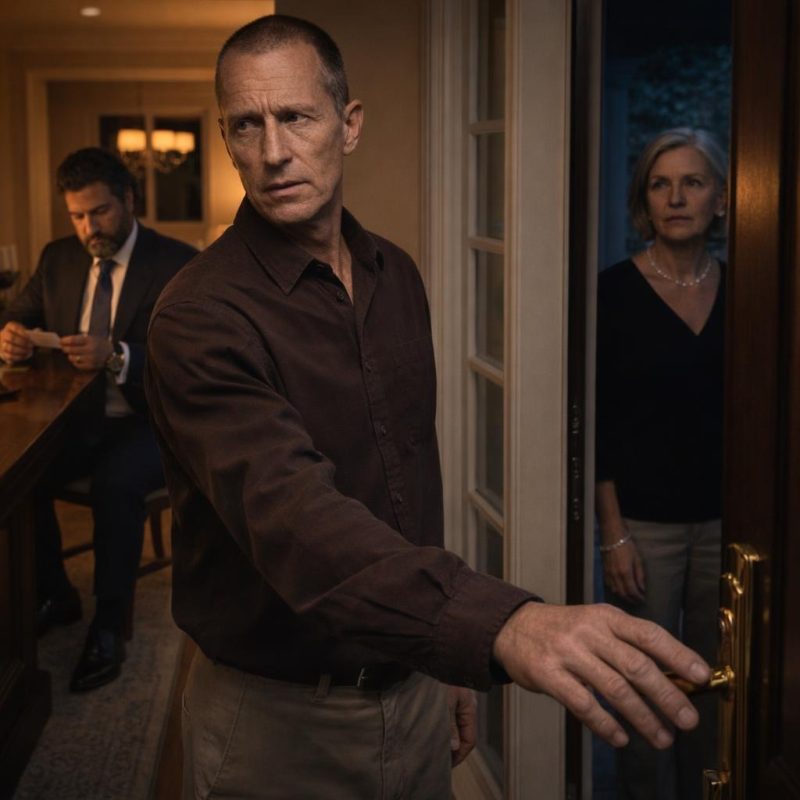 Image by RM AI
The Kiss
Clara had followed me into the foyer. I heard her before I turned — the soft sound of her footsteps on the marble, quick and a little unsteady, the way she used to sound running down the hallway of our parents' house when she was trying to catch me before I left. I turned. She was standing close, her eyes bright with something that hadn't quite decided whether it was going to be tears or relief or both. She didn't say anything. Neither did I, for a moment. There wasn't much that needed saying. I had not come here tonight to hurt her. I had not come to dismantle her life or make her choose sides or leave her standing in the wreckage of an evening she had spent weeks preparing. I had come because she was my younger sister, and because the people who love us sometimes need to see the full picture before they can decide what to do with it. I stepped toward her and kissed her on the cheek — gently, the way you do when the gesture is meant to carry more than words can. She exhaled against my shoulder, a long, slow breath, and I felt her hand close briefly around my arm. Whatever came next for her was hers to decide. But she knew, standing there in the foyer of that enormous house, that she was not alone in it.
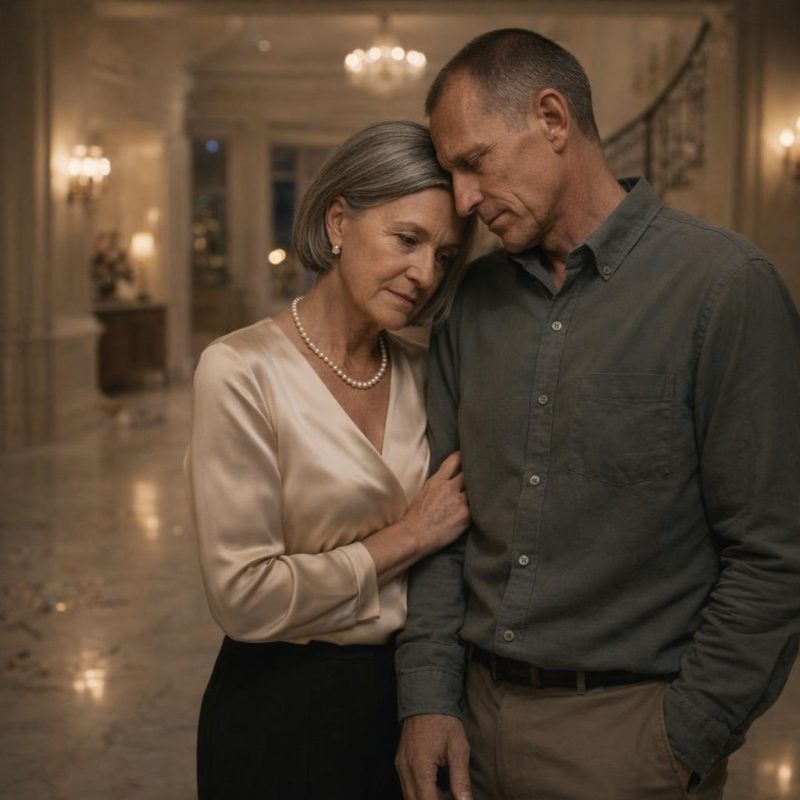 Image by RM AI
The Walk Out
I pushed back from the table without a word and stood. The chair scraped against the floor — the only sound in the room. Arthur was still in his seat, his jaw tight, his eyes tracking me with something I hadn't seen on his face all evening: uncertainty. Clara stood near the doorway, her hands clasped in front of her, not moving. I didn't look at either of them for long. I picked up my jacket from the back of the chair, settled it over my arm, and walked toward the corridor. The hallway stretched ahead of me — the same one I'd walked down when I arrived, past the same oversized canvases and the same carefully placed lighting that made everything look like a stage set. I kept my pace even. Not hurried. Not slow. Just steady, the way you walk when you've already decided everything that needed deciding. A Basquiat print passed on my left. A console table with a vase of white orchids on my right. I didn't look back at the dining room. I reached the front door, turned the handle, and pulled it open. Behind me, the house was completely silent — and the only sound was the quiet, measured fall of my own footsteps on the marble.
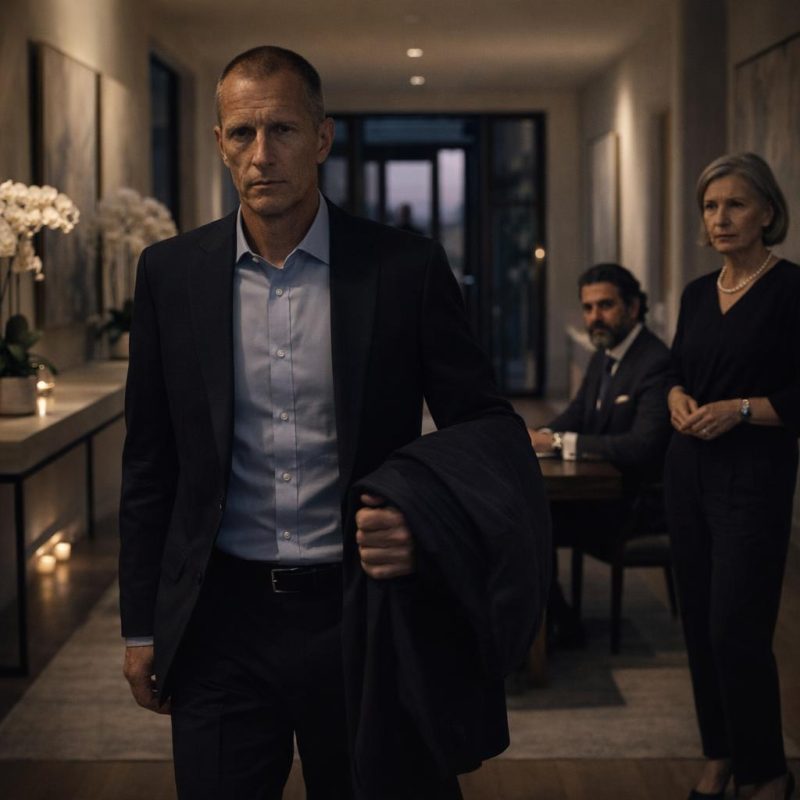 Image by RM AI
The Autumn Air
The cold hit me the moment I stepped outside — clean and sharp, the kind of autumn air that doesn't negotiate. After the warmth of that house, the heat of that dining room, the accumulated weight of the entire evening, it felt like surfacing. I stood on the front step for a moment and just let it settle over me. The sky above the driveway was dark and clear, a few stars visible between the clouds, and the gravel gleamed faintly under the exterior lights. I could smell cut grass and something faintly woodsy from the trees at the edge of the property — the kind of smell that belongs to the real world, not to curated interiors and performance. I took a slow breath in through my nose and let it out. My shoulders dropped. I hadn't noticed how much I'd been holding until I wasn't holding it anymore. The evening was over. Whatever happened next inside that house was between Arthur and Clara, and it was theirs to work through. I had said what needed saying. I had done what I came to do. Out here, with the cold air moving quietly around me, none of the rest of it felt very heavy at all.
 Image by RM AI
The Old Sedan
My car was where I'd left it — parked at the far end of the driveway, sitting between a black Range Rover and what looked like a new Porsche Cayenne. Under the exterior lights, the sedan looked exactly as it always did: a little road-worn, the paint faded at the edges, a small dent above the rear wheel arch that I'd never bothered to fix. I walked toward it across the gravel, my shoes crunching with each step, and I felt nothing that resembled embarrassment. I'd driven that car for eleven years. It started every morning. It got me where I needed to go. I'd never once bought something to impress a driveway. I ran my hand along the roof as I reached the driver's side — a habit, not a gesture — and unlocked the door. The interior smelled like old upholstery and the coffee I'd had that morning. I sat down, pulled the door shut, and set my jacket on the passenger seat. Through the windshield, Arthur's house rose up against the dark sky, every window lit, enormous and immaculate. I looked at it for a moment. Then I looked at my hands on the steering wheel, and the quiet satisfaction of that felt like more than enough.
 Image by RM AI
Worth More Than Luxury
I sat there for a little while before I started the engine. The house in front of me wasn't going anywhere, and neither was the memory of what had happened inside it. I thought about Arthur's face — the exact moment the colour had drained out of it, when the name on the organisational chart had finally connected to the man sitting across his dinner table. That expression had been worth more than anything parked in his driveway. I'd spent years watching him perform — the watch, the wine, the casual mentions of square footage and school fees and business-class upgrades — and I had never once corrected him. Not because I couldn't. Because it hadn't been the right moment. Tonight had been the right moment. I wasn't angry about any of it, not anymore. The anger had burned off somewhere between the foyer and the front door, and what was left felt clean and settled. I had not come to humiliate him. I had come because my younger sister deserved to know the truth about the man she was married to, and because some things need to be said out loud before they can be dealt with. I turned the key. The engine caught on the first try, steady and reliable, the same as it always was. I pulled out of the driveway and didn't look back.
 Image by RM AI
KEEP ON READING

The 10 Youngest Monarchs In History & The 10 Oldest
Age Is Just A Number. Imagine being crowned king or…
By Chase Wexler Mar 11, 2025
You Think You Have Problems? These Royal Families Were Cursed
Boasson and Eggler St. Petersburg Nevsky 24. on WikimediaHeavy is…
By Ashley Bast Dec 5, 2025
You Can Thank This Greek-Canadian For Creating Pineapple On Pizza…
Love it or hate it, pineapple on pizza sparks debate…
By David Davidovic Dec 1, 2025
Yes, Female Gladiators Existed, And Here's Everything You Need To…
History of Women in Combat. Most people picture gladiators as…
By David Davidovic Jan 17, 2026
Yes, Australians Once Lost A Battle Against Flightless Birds
David Clode on UnsplashIn 1932, the Australian military went to…
By David Davidovic Nov 24, 2025
The Y2K Bug: Why Did Everyone Think Year 2000 Was…
Alan W on UnsplashOn December 31, 1999, people all over…
By Christy Chan Dec 22, 2025