

I Showed Up To My Sister's Mansion In A Beaten-Up Car And Her Husband Tried To Give Me Charity Money—Little Did He Know I Was Actually His Boss
I Showed Up To My Sister's Mansion In A Beaten-Up Car And Her Husband Tried To Give Me Charity Money—Little Did He Know I Was Actually His Boss
Gravel and Glass
The driveway alone was longer than the street I grew up on. I pulled my old sedan through the iron gate and parked it at the end of a row that included a black Mercedes, a silver Porsche, and something Italian I didn't recognize. The gravel crunched under my worn boots when I stepped out. Clara came through the front door before I reached the steps, and she wrapped both arms around me the way she always had — tight, like she was checking I was still in one piece. I held on for a second longer than I meant to. Then Arthur appeared in the doorway behind her. Tailored charcoal suit, not a crease out of place. He extended his hand and I shook it. His grip was loose, fingers barely closing, the kind of handshake that tells you exactly where you stand. His eyes moved down to my boots, then back up to my hair, and something shifted in his expression — not quite a smile, not quite a frown. He stepped aside to let me in without saying my name. The foyer ceiling was two stories high. A chandelier hung in the center of it, catching light from every direction. I stood there for a moment, taking it in. The weight of Arthur's look stayed with me, quiet and settled, like something that had already decided what it thought.
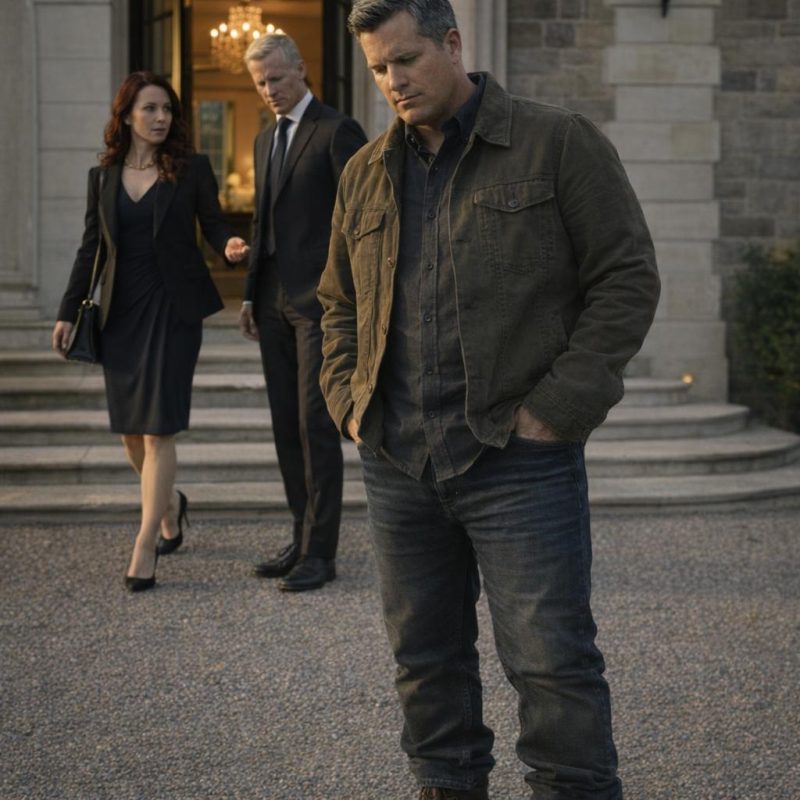 Image by RM AI
Wine and Beer
The dining room had a chandelier bigger than the one in the foyer. I counted twelve chairs around the table and wondered who they were all for. Arthur moved to the sideboard like he owned the room — which, I supposed, he did — and lifted a bottle of wine with both hands, the way you handle something expensive. He poured two glasses, one for himself and one for Clara, and set the bottle down without looking in my direction. Clara caught it. I saw her jaw tighten. She glanced at me with something apologetic in her eyes, but she didn't say anything. Arthur disappeared into the kitchen and came back with a can of beer. Generic label, the kind that comes in a thirty-pack. He set it on the table in front of me without a word. No glass. No opener. Clara looked down at her wine. I looked at the can. The condensation was already forming on the aluminum, a slow bead of water working its way toward the tablecloth. I didn't reach for it. Arthur settled into his chair at the head of the table, swirled his wine once, and took a slow sip. Then he slid the unopened can the last few inches across the table toward me with two fingers, like he was moving a chess piece.
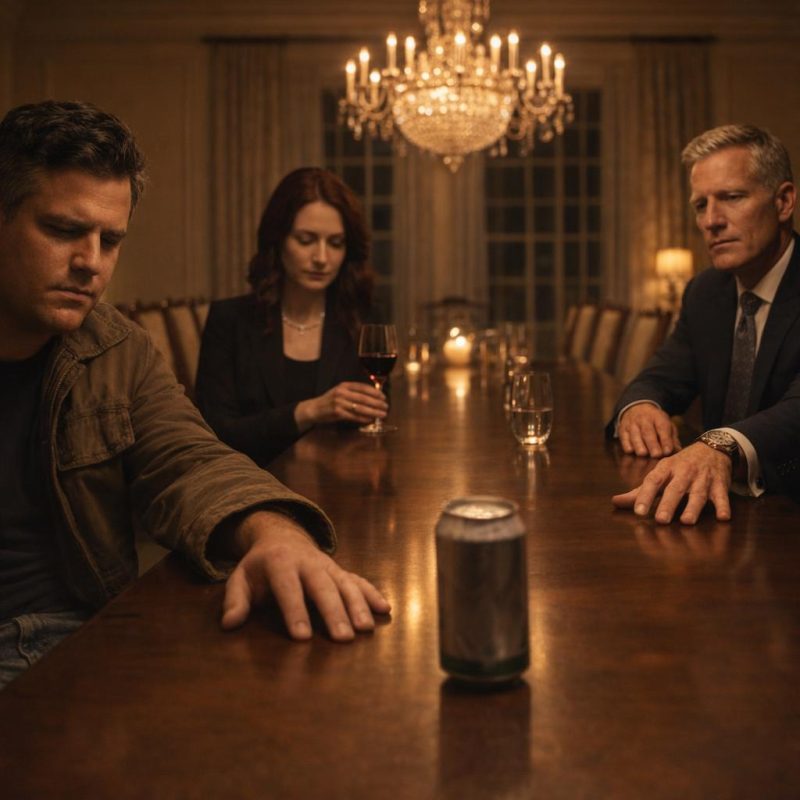 Image by RM AI
The Price of Everything
The beer sat unopened in front of me through most of it. Arthur started with the rug. Persian, he said. Hand-knotted. He named a figure that would have covered six months of rent in the apartment we grew up in. Then the painting above the fireplace — a name I didn't catch, a number I did. Then the bonus that paid for the renovation, the title that came with the bonus, the word kingmaker used without any apparent irony. Clara sat with her wine glass held in both hands, not drinking, her shoulders pulled slightly inward. She laughed at the right moments, but the laugh never quite reached her eyes. I kept my hands in my lap and watched the condensation bead down the side of the can. Arthur gestured at the ceiling, the crown molding, the custom millwork. He described his position at the firm the way a man describes a trophy — something acquired, something displayed. I nodded when it seemed expected. I didn't ask questions. The dinner timer went off in the kitchen, a sharp double beep that cut through the room. Arthur paused mid-sentence. Clara stood up quickly, grateful for the interruption. The silence that followed — just those two or three seconds before anyone moved — sat in the room like something with weight.
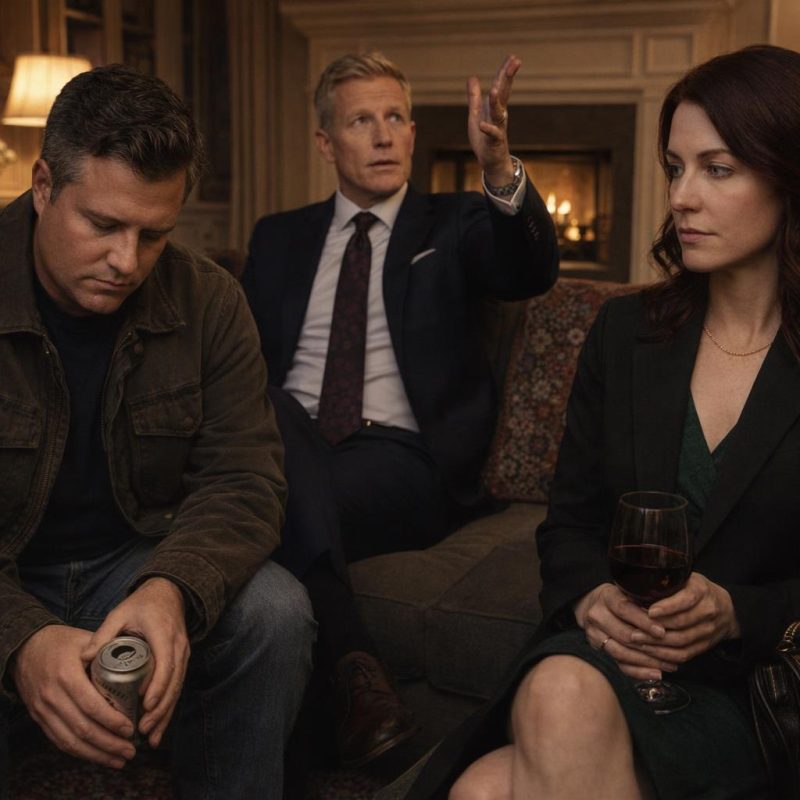 Image by RM AI
Charity
The food was good. Garlic and butter, something roasted. I ate and let Arthur talk. Then, between the main course and whatever came next, he reached into the inside pocket of his jacket and produced a thick envelope. He set it on the table. He slid it across to me with one finger, the same way he'd moved the beer can. He said a man in my position shouldn't have to struggle. He said it the way you say something you've rehearsed, smooth and generous-sounding. He called it a little help. Clara went very still beside him. I looked at the envelope for a moment. Then I reached into my back pocket and took out my wallet. I didn't open it wide. I just worked a card free from the front slot and set it on the table face-up. Gold embossed logo in the corner. I slid it across to Arthur the same way he'd slid the envelope to me. He picked it up. I watched his face. The color left it the way water drains from a glass — not all at once, but steadily, until there wasn't much left. Clara looked between the two of us. Arthur set the card down carefully, like it had become fragile. The envelope sat untouched between us on the white tablecloth.
 Image by RM AI
The Apology Call
Four days passed. I was at my kitchen table with coffee going cold when my phone buzzed. Clara. I picked up on the second ring. She started talking before I could say much — apologizing, the words coming out in a rush, the way she used to talk when she was nervous as a kid. She said Arthur hadn't meant it the way it came across. She said he was under a lot of pressure. She said he could be thoughtless sometimes but his heart was in the right place. I told her it was fine. She said it wasn't fine, that she knew it wasn't fine, and her voice had that particular strain in it that meant she'd been thinking about this for days. I told her again that I wasn't upset with her. There was a pause. She asked if we could get coffee, just the two of us, sometime that week. I said yes. She said she'd text me a place. Another pause, longer this time. Then she said Arthur really hadn't meant it — and her voice cracked on the last word, just slightly, just enough that I heard it before she pulled it back together.
 Image by RM AI
Coffee Without Arthur
She was already there when I arrived, seated at a corner table with both hands wrapped around a mug. She looked tired. Not the kind of tired that a good night's sleep fixes — the kind that settles in around the eyes and stays. I ordered a black coffee at the counter and sat down across from her. She apologized again before I'd even taken my jacket off. I told her to stop. She smiled, but it was the careful kind. We talked about small things for a while — the neighborhood, a book she'd been reading, whether our mother's old recipe for lentil soup was written down anywhere. It was easier without Arthur in the room. The conversation had room to breathe. At some point she started turning her wedding ring around her finger, not looking at it, just rotating it slowly while she talked. I noticed it but didn't say anything. When she reached for her mug, the ring caught the light and I saw it clearly — a pale indent on her finger where the ring had been sitting, the skin underneath slightly compressed, like something worn and removed and worn again many times over.
 Image by RM AI
Work Stress
She refilled her coffee and kept talking. Arthur had been coming home late most nights, she said. Distracted at dinner, short-tempered on weekends. She said there was a promotion he'd been working toward for a long time, something significant, and the closer it got the more wound up he became. She said it would mean a lot to him — to both of them, she added, though the addition felt like an afterthought. I asked what kind of work he did, exactly. She gave me the same vague answer she always gave — something with investments, something with corporate accounts, she never fully understood the details. I didn't push. I asked if he was close to getting it. She said she thought so, that he'd been talking about it for months, that his whole mood seemed tied to how the week at the office had gone. She looked out the window for a moment, then back at me. She said she just wanted things to settle down. Then, almost as an aside, she mentioned the name of the firm — the way you mention something you assume the other person already knows — and said that was where all the pressure was coming from.
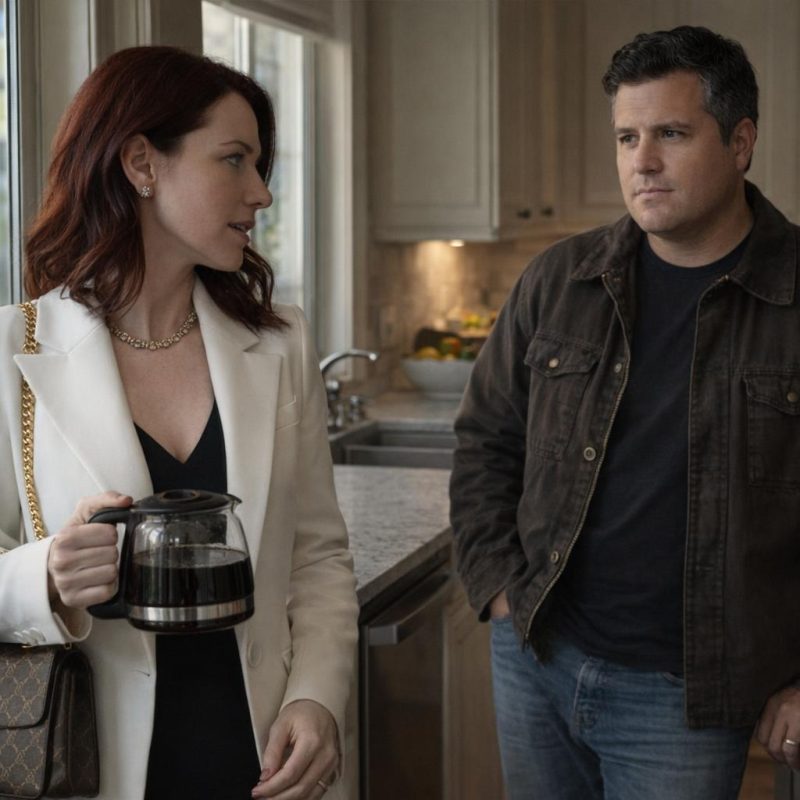 Image by RM AI
Humble Beginnings
I drove home with the radio off. The coffee shop was twenty minutes from my apartment, and I spent most of it not thinking about Arthur. I thought about the table we grew up with — a secondhand thing with one leg shimmed up with a folded piece of cardboard, the surface worn smooth in the middle from years of use. Clara used to do her homework there every night, textbooks spread out, pencil moving. Our mother would come home from her second job after ten and find Clara still at it, still working. We shared a bedroom until Clara was fifteen. Two beds, one window, a curtain rod that kept falling down. Clara used to talk about getting out. Not bitterly — hopefully, the way kids talk about things they actually believe are coming. She had a picture torn from a magazine taped to the wall above her bed for years. A house with a long driveway and big windows. I thought about the first time she called me after she and Arthur moved into the mansion. Her voice had been bright and a little breathless, like she'd been running. She'd said, Marcus, you have to see it. I remembered that voice — young and lit up and certain that the picture on the wall had finally come true.
 Image by RM AI
The Invitation
She called on a Tuesday, about a week after the coffee shop. I was at my desk when the phone rang and I saw her name on the screen. Clara's voice came through warm and a little careful, the way it gets when she's hoping for something. She said there was another gathering at the house that weekend. Some of Arthur's colleagues, a few neighbors. She said it would be low-key. I held the phone and looked at the wall for a moment. I thought about Arthur's hand extended with that folded bill. I thought about Clara's face at the coffee shop — that strained look she'd been carrying, the one she tried to smooth over when she noticed me noticing. I almost said I had plans. The word was right there. But I heard something underneath her voice, something that sounded less like an invitation and more like a request. I said I'd come. She said, good, that's good, and I could hear the relief in it. After we hung up, I sat with the phone on the desk in front of me, the apartment quiet around me.
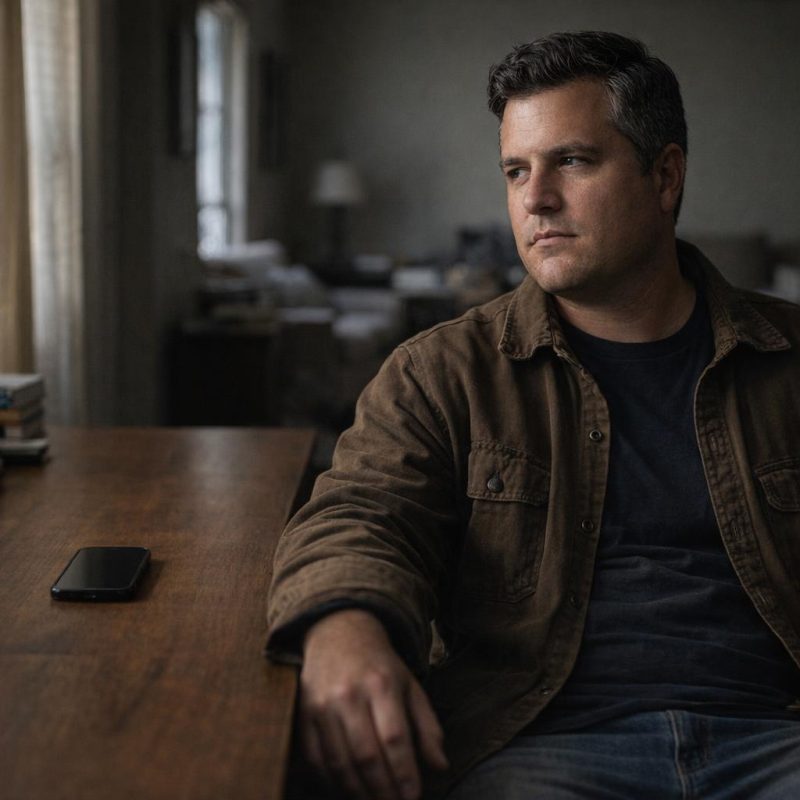 Image by RM AI
Second Visit
I pulled up to the mansion on Saturday afternoon and parked the sedan at the curb the way I had before. Arthur opened the door before I reached the steps. He had on a blazer over a collared shirt, no tie, the kind of casual that takes effort. His smile was the practiced one. He said, Marcus, glad you made it, and stepped back to let me in. The foyer looked different. There was a large painting on the wall opposite the staircase that hadn't been there before — dark oils, heavy frame, the kind of thing that announces itself. Arthur moved toward it almost immediately, like he'd been waiting for someone to walk through the door. He said he'd picked it up at an auction two weeks ago. He said the bidding had gotten competitive. Clara appeared from the hallway and said something about dinner being almost ready, her voice light and redirecting. Arthur talked over her. He said most people wouldn't spend what he'd spent on a single piece, but that was the difference between investing in quality and just buying things. He turned back to the painting and gestured toward it with an open hand.
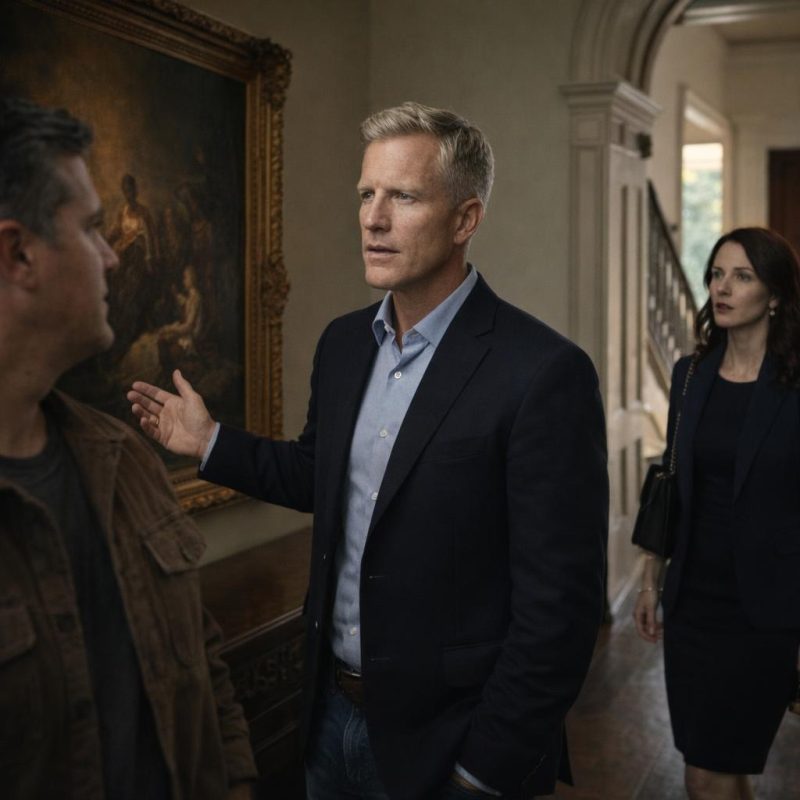 Image by RM AI
Executive Victories
We moved into the living room and Arthur kept talking. He settled into the armchair at the head of the arrangement — the one that faced the rest of the seating — and started in on work. He described a meeting with the executive committee, something about a restructuring proposal he'd helped shape. He said the room had gone quiet when he spoke. He said that happened a lot lately. Clara sat across from me on the sofa with her hands folded in her lap, her eyes moving between Arthur and the middle distance. She smiled when he looked at her. When he looked away, the smile went somewhere else. Arthur moved from the restructuring to a quarterly review, then to a colleague who'd tried to take credit for something and been corrected, then to a client dinner where he'd apparently turned a difficult situation around single-handedly. Each story ended with Arthur at the center of it, the room tilting toward him. I kept my glass in my hand and my face still. Clara shifted once, started to say something about a trip she'd been reading about, and Arthur nodded without pausing. His voice filled the room the way smoke fills a room — gradually, and then completely.
 Image by RM AI
The Firm's Name
Arthur refilled his glass and kept going. He mentioned the firm's name again — he'd said it once earlier in passing, but this time he said it the way people say things they want you to remember. He described a policy change that had gone through recently, something about restructuring how client accounts were tiered. He said he'd been in the room when the decision came down and that his input had been part of what moved it forward. Clara was looking at her phone, screen tilted slightly away from Arthur. I set my glass down on the side table. The policy he was describing — the tiering structure, the language he used around client segmentation — something about it sat differently than the rest of his stories. I'd heard those words recently. Not from Arthur. From a document. I kept my face where it was and let him keep talking, but I was listening differently now, turning the details over quietly while he spoke. He said the change had come from the top and that not everyone had been happy about it, but that was how it went when you were operating at a certain level. Clara put her phone face-down on the cushion beside her. Arthur didn't notice. I did.
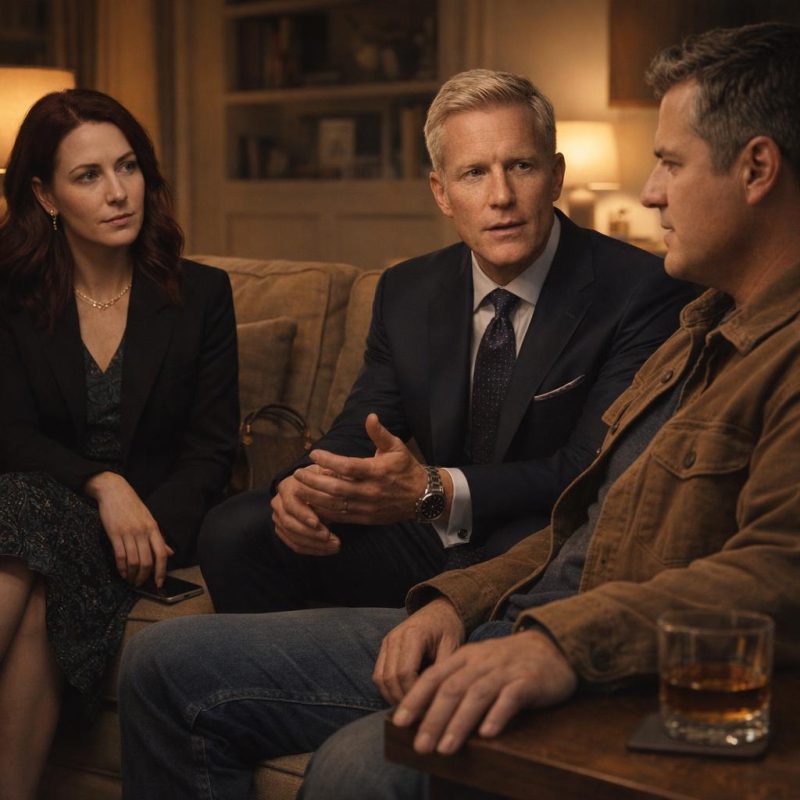 Image by RM AI
Taking Note
I waited until Arthur paused to take a drink, then I asked him which department he was in. Casual, the way you ask someone about the weather. Arthur straightened slightly in his chair. He said he was in client strategy, senior director level, overseeing a team of twelve. He named the department — said it twice, actually, once to answer and once to make sure it landed. He mentioned a few colleagues by first name, described the floor layout, said his office had a corner view. Clara looked over at me with something that might have been surprise, or relief, or both. She'd probably been hoping for years that I'd show some interest. I nodded and asked what kind of decisions came through at his level. Arthur set his glass down and leaned forward a little. He talked about budget approvals, personnel reviews, client escalations. He described the chain of command above him in vague terms — senior leadership, the executive tier, people he didn't interact with directly but whose decisions filtered down. He said the firm was well-run, that whoever was at the top clearly understood how to build something. He said it with the confidence of someone who had never questioned whether the top knew he existed. I sat with that.
 Image by RM AI
The Connection
Arthur mentioned the building about twenty minutes later. He was describing a client meeting, something about the view from the conference room on the fourteenth floor, and he said the address the way people say addresses — offhand, like it meant nothing. It meant something to me. I knew that building. I knew the fourteenth floor. I knew the conference room he was describing because I had approved the renovation on it three years ago. I kept my face still. Arthur was still talking, moving from the conference room to the client, from the client to the outcome, the outcome to himself. Clara glanced at me. I don't know what she saw, but something made her look. I gave her a small nod, the kind that says nothing is wrong, and she turned back to Arthur. He didn't look over. He was describing a handshake at the end of the meeting, how the client had said he was the best they'd worked with. I sat in the chair across from him and let the understanding settle over me, quiet and cold, like stepping into a room where the air has been off for a while.
 Image by RM AI
Silence
Arthur moved on to another story. I let him. I thought about saying something — not everything, just enough. Something like, that's interesting, I know that building. I ran the sentence in my head a few times. Each time it led somewhere I wasn't ready to go. Clara was watching me in the way she does when she thinks something is happening that she doesn't have the full picture of. She'd always been good at that. Arthur described a performance review he'd conducted, how he'd had to deliver difficult feedback to someone on his team, how the person had taken it well because Arthur had handled it with what he called executive maturity. I watched Clara's expression move through something I couldn't name. I thought about the table with the shimmed leg. I thought about the picture she'd had taped above her bed. I thought about what it would do to her if I said what I knew, right now, in this room, with Arthur still talking. I decided to stay quiet. I was still sitting with that decision, turning it over, when Clara's hand came down gently on my arm and she asked if I was okay.
 Image by RM AI
Subtle Questions
I told her I was fine, just tired from the drive. Arthur accepted that without looking over. After a moment I asked him how long he'd been at the firm. He said eleven years, said it like a number that should impress someone. I asked what the culture was like, whether it was the kind of place that promoted from within. Arthur leaned back and said that depended on whether you had the right instincts, and that he'd always had them. Clara smiled from the sofa, the kind of smile that comes from watching two people finally talk. I asked about the firm's direction lately, whether things had shifted at the top. Arthur said there'd been some changes, that the ownership structure wasn't something most people at his level had visibility into, but that the decisions coming down had been solid. He said whoever was running things understood the business. He said it with the ease of someone who had never considered that the person running things might be sitting across from him. I asked what the most recent change had been. Arthur set his glass down, sat forward, and described a restructuring decision that had come through the previous month — one I had signed off on myself.
 Image by RM AI
The Executive Team
Arthur kept going. He described the executive team like he was reading from an org chart he'd memorized — who reported to whom, who had the ear of senior leadership, who was on the way up. He named the CFO, the head of operations, the regional directors. The names landed with a familiar weight. I kept my glass near my mouth and let him talk. Clara had picked up a magazine from the side table and was half-reading it, half-listening. Arthur said the firm had been doing some pruning lately, that dead weight didn't last long when the numbers were being watched closely. He said it with the satisfaction of someone who considered himself essential. He named a senior analyst in the Chicago office — said the man had been let go last quarter, said it was overdue, said the guy had never understood the business. I set my glass down slowly. That termination had crossed my desk in September. I had signed the memo myself.
 Image by RM AI
My Policies
Arthur shifted to the policies. He said the firm had gotten a lot of things right in the last couple of years, that whoever was steering things had made smart calls. He brought up the flexible work arrangement first — said it had changed the culture, that people actually showed up differently because of it. Something tightened in my chest. He moved on to the performance review system, said it was the most transparent he'd ever worked under, that it took the politics out of the process. I looked at the far wall and kept my expression neutral. Clara looked up from her glass and said the firm sounded well-run. Arthur nodded like he was personally responsible. I nodded too. I didn't say anything. I just sat there while Arthur praised the work, in the house I had helped pay for, and let the silence hold all of it.
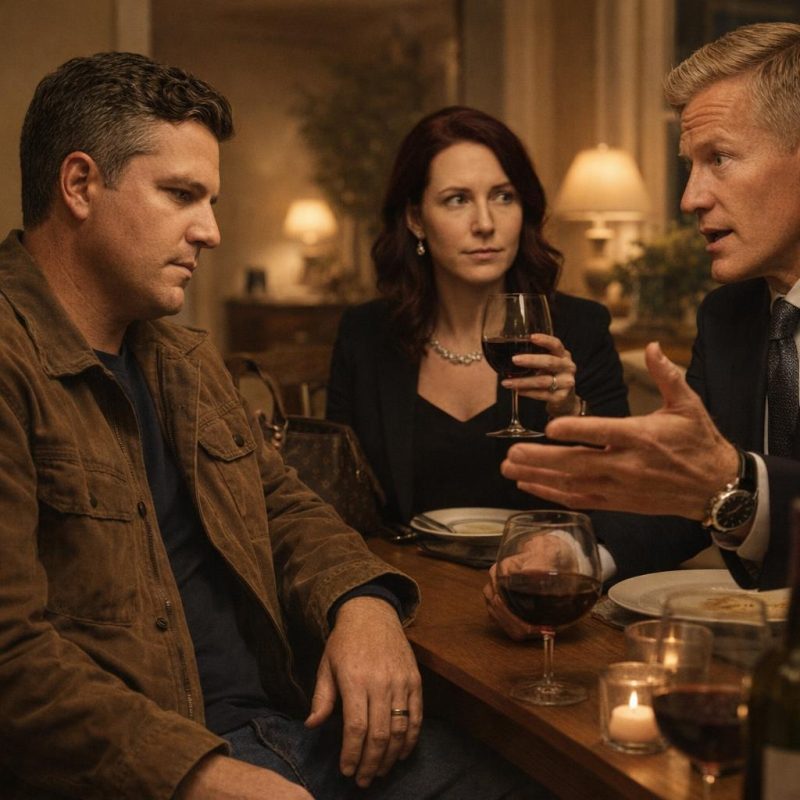 Image by RM AI
The Phantom Owner
Then Arthur's tone shifted. He leaned back and said the one thing that bothered him about the firm was the ownership structure. Said it was strange, that nobody knew who was actually running things at the top. He said a company that size should have a face, someone accountable, someone the employees could point to. Clara set her glass down and told him he was being too harsh. Arthur waved that off. He said transparency mattered, that hiding behind a holding company was a choice, and not a good one. He said the owner clearly didn't want to be bothered with the day-to-day, that they were probably collecting returns from a distance and calling it leadership. Clara said that wasn't necessarily true, that some people valued privacy. Arthur said privacy was one thing, but this was something else. He used the word coward. Said anyone who built something and then refused to put their name on it was a coward. I looked at the far wall and kept my face still.
 Image by RM AI
Settling In
The weeks settled into a pattern. I drove out to the mansion every Sunday, parked the same beaten car at the end of the same long driveway, and sat through the same kind of evening. Arthur talked about work. Clara managed the conversation. I listened and asked the occasional question. The food was good. The wine was expensive. I got comfortable enough that I stopped noticing the art on the walls. Clara seemed easier with it too — less watchful, less like she was waiting for something to go wrong. Arthur's behavior had become predictable enough that I could map it. He'd pour the first glass, talk about the market, circle back to the firm. That Sunday he was in a good mood. He poured a Burgundy he'd been saving and said he had his performance review coming up in six weeks. He said he wasn't worried. He said his numbers were strong and his visibility with leadership had never been better. He swirled the glass and smiled at the ceiling, and I sat with that information quietly.
 Image by RM AI
Clara's Contentment
That evening felt different from the others. Arthur was quieter than usual — some work call had tired him out, Clara said — and so the night moved slower, easier. Clara made dinner herself instead of having it catered, and the kitchen smelled like the food our mother used to make on Sundays. She showed me photos on her phone from a weekend trip she and Arthur had taken upstate — leaves turning, a small inn, a dog they'd borrowed from a friend for the walk. She laughed telling me about the dog getting into Arthur's luggage. It was a real laugh, the kind that reaches the eyes. Arthur smiled from the other end of the table, and for a moment he looked like a different person. I watched Clara move through the kitchen after dinner, refilling glasses, straightening things that didn't need straightening, humming something low under her breath. She touched the edge of the counter the way people touch things they've decided to keep. The warmth in her face when she looked around that room was something I hadn't seen in a long time.
 Image by RM AI
The Routine
Another Sunday. Arthur talked about a client pitch that had gone well. Clara passed the bread and asked follow-up questions in the right places. I asked about the firm's Q4 projections, framed it as casual curiosity. Arthur answered without hesitation, gave me numbers, talked about the quarter the way someone does when they feel comfortable in the conversation. Clara cleared the plates and the conversation moved on. It always moved on. I drove home the same way I always did, windows down, the city coming back into focus after the long stretch of quiet suburbs. I thought about how many Sundays had passed since that first visit. Six, maybe seven. Each one had added another layer to something I was carrying without a name for it. I hadn't lied to anyone directly. I hadn't claimed to be something I wasn't. But I hadn't told the truth either, and the difference between those two things was getting harder to feel.
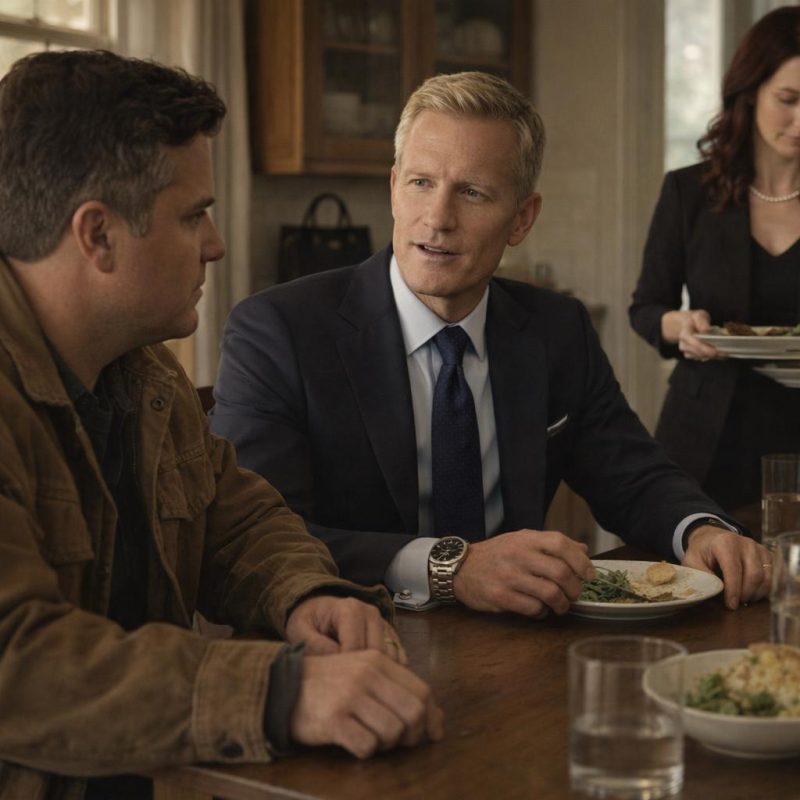 Image by RM AI
The Deflection
Clara and I met for coffee on a Wednesday, just the two of us, at a place near her gym. She asked how I was doing, really doing, and I said fine, which was true enough. Then she asked what I was working on these days. I said consulting, that I worked with businesses on operational stuff, nothing too exciting. She asked what kind of businesses. I said various. She asked if I had clients locally or if I traveled. I said both, depending on the month. She wrapped her hands around her mug and looked at me the way she used to when we were kids and she thought I was keeping something from her. I asked how Arthur's review prep was going. She let me change the subject, but she did it slowly, like she was filing something away. We talked about her book club, about a renovation she was considering for the back garden, about our cousin's new baby. It was a good hour. Easy. When I mentioned the consulting work again, offhand, trying to make it sound like nothing, I saw something move across her face.
 Image by RM AI
Caught Between
She didn't say anything right away. She turned her mug in her hands and looked out the window at the street. Then she said Arthur had been talking about some of the people at the firm, that there was a good group of them, that she'd met a few at a dinner last spring and liked them. She said they were the kind of people I'd probably get along with. Smart, she said. Driven. She said Arthur could introduce me, that it might be useful for the consulting work, that networking was how things happened. I looked at my coffee. She said it again, differently — that she wished I could come to one of the firm's social events, that it would be nice to have me there, that she thought I'd fit in better than I expected. I said maybe. She smiled and said she'd mention it to Arthur. I nodded and kept my face even. Then she said she wished I could meet Arthur's colleagues properly, that she had a feeling we'd have more in common than I thought.
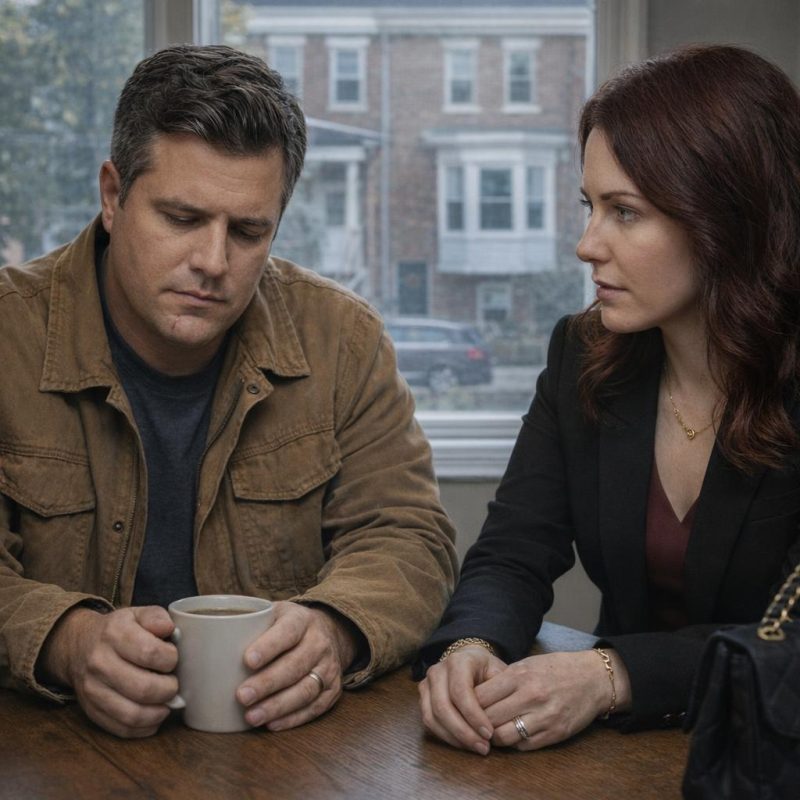 Image by RM AI
Holiday Dinner
The holiday dinner was Clara's idea, but the mansion was Arthur's stage. He'd had the place decorated — garlands on the banister, candles on every surface, a tree in the foyer that probably cost more than my car. I sat at the long dining table and kept my hands in my lap. Arthur talked through most of the meal. His year-end bonus. The firm's record quarter. A client he'd landed that nobody else could have. He said it the way people say things when they want you to ask follow-up questions. I didn't ask. He mentioned my car twice — once when I arrived, once during the soup course, something about winter tires and whether I'd had it looked at. I said it ran fine. He smiled like that was the saddest thing he'd heard all year. Clara caught my eye across the table and gave Arthur a look he didn't see. The wine was good. I know because I had one glass and paid attention to it. I watched Arthur reach for the bottle and fill his own glass, then set it down — mine still sitting empty where he'd left it.
 Image by RM AI
The Job Offer
Arthur waited until Clara brought out dessert to bring it up. He set his glass down and leaned back in his chair the way men do when they're about to say something they've already decided sounds generous. He said he'd been thinking about my situation. He said the firm had some openings, that he had relationships with the right people, that a word from him carried weight in certain rooms. Clara looked up from the cake she was slicing. Her face went soft and hopeful in a way that made me careful. Arthur said I'd have to start at the bottom, that there was no way around that, that everyone did. He said entry-level like it was a kindness he was extending. He said the pay wasn't much to start but that it was a foot in the door, and that some people would kill for a foot in the door. I thanked him. I kept my voice even and my face neutral. He looked satisfied — the way someone looks when they've done a good deed and want credit for it. Clara smiled at both of us. Arthur reached for his wine. The word entry-level sat in the air between us long after he'd moved on to something else.
 Image by RM AI
Persistence
He brought it up again before I'd finished my coffee. He said he'd been serious, that the offer stood, that I shouldn't let something like pride get in the way of a real opportunity. I said I appreciated it but I was managing fine. He tilted his head like I'd said something puzzling. He said everyone thinks they're managing until they're not. Clara put her hand on the table between us and said something about the weather, about whether the roads would be bad on my drive home. Arthur ignored her. He said stubbornness was a young man's luxury and that I wasn't as young as I used to be. I said I'd think about it. He said I'd said that last time. Clara tried again — she asked Arthur about a trip they'd been planning, something about a resort in January. Arthur said they'd talk about it later and looked back at me. He said the window wouldn't stay open forever, that positions like that filled fast. I nodded. I kept my hands flat on the table and my breathing steady. The room felt smaller than it had at the start of the evening, the weight of his insistence pressing in from every side.
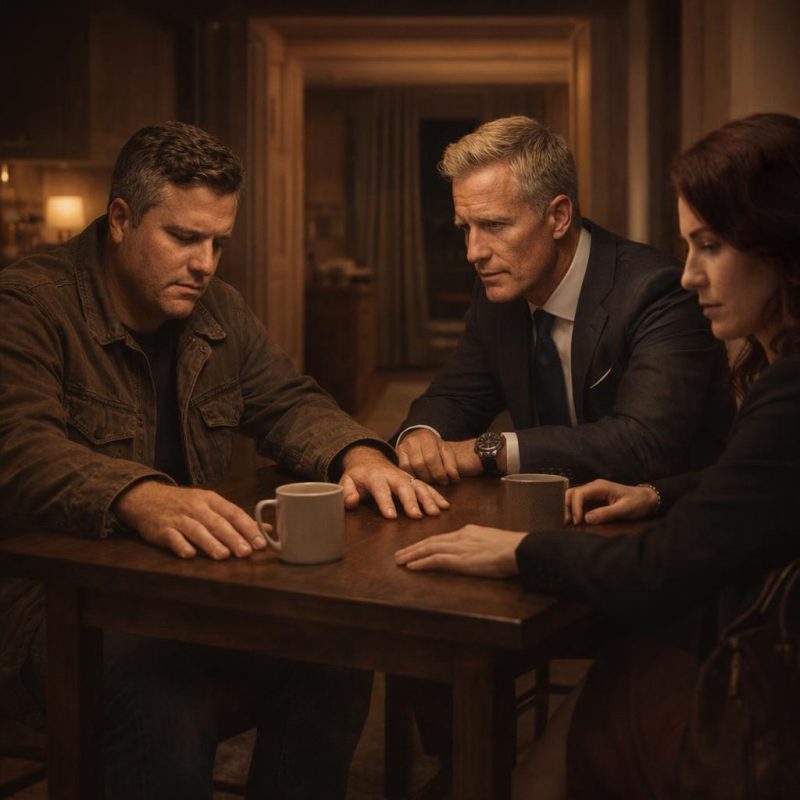 Image by RM AI
Defense
Clara walked me out to the car. The cold hit us both when she opened the front door, and she crossed her arms against it. She said she was sorry about Arthur, that he could be a lot sometimes, that she knew that. I said it was fine. She said underneath all of it he felt a kind of responsibility toward family, that it came out wrong but the intention was real. I looked at the driveway. My car sat under the porch light looking exactly like what it was. She said she hoped I'd at least think about the offer, not for Arthur's sake but for mine, that she worried about me sometimes. I told her not to. She pulled her cardigan tighter and looked at me the way she used to when we were kids and she thought I was making a mistake. I said I was doing all right. She nodded slowly, like she was deciding whether to believe it. Then she said it — that Arthur just wanted to help.
 Image by RM AI
Buried Frustration
I told her I wasn't offended. I said it plainly, without hesitation, because I needed her to hear it and move on. I said Arthur meant well and that I appreciated having family who looked out for me. She let out a breath I hadn't realized she'd been holding. Her shoulders dropped. She asked if I was sure, and I said I was sure. Then I asked about her — whether she was happy, whether things were good. She said yes, that things were good, that she was content. She said it the way people say it when they mean it and also when they need to mean it, and I didn't push. She hugged me at the car door, held on a beat longer than usual. She said thank you for being so understanding. I said of course. I got in and pulled out of the driveway and watched the mansion lights shrink in the mirror. By the time I reached the main road the feeling had settled in — the particular hollowness that comes from saying everything is fine when you've been carrying something you can't put down.
 Image by RM AI
The In-Laws
Arthur's parents arrived on a Sunday. His father was a broad man with a firm handshake and opinions he didn't wait to be asked for. His mother wore a coat that probably had a name I wouldn't recognize and looked at my jacket the way people look at things they find disappointing. Arthur introduced me as Clara's brother and let the sentence end there. His father asked what I did. I said consulting, kept it vague. He nodded slowly, the way people nod when they're deciding whether to take something seriously. His mother said something to Clara about the driveway, about how many cars were parked there, and glanced at mine. Arthur's father said he knew some people in finance, that if I was ever looking for something more stable he could make a call. Clara smiled tightly and suggested we move inside. Arthur stood with his hands in his pockets looking pleased, like the whole thing was going exactly as it should. His father settled into the good chair by the fireplace, accepted a drink from Arthur, and looked across the room at me. Then he asked again, more directly this time — what exactly was it that I did for a living.
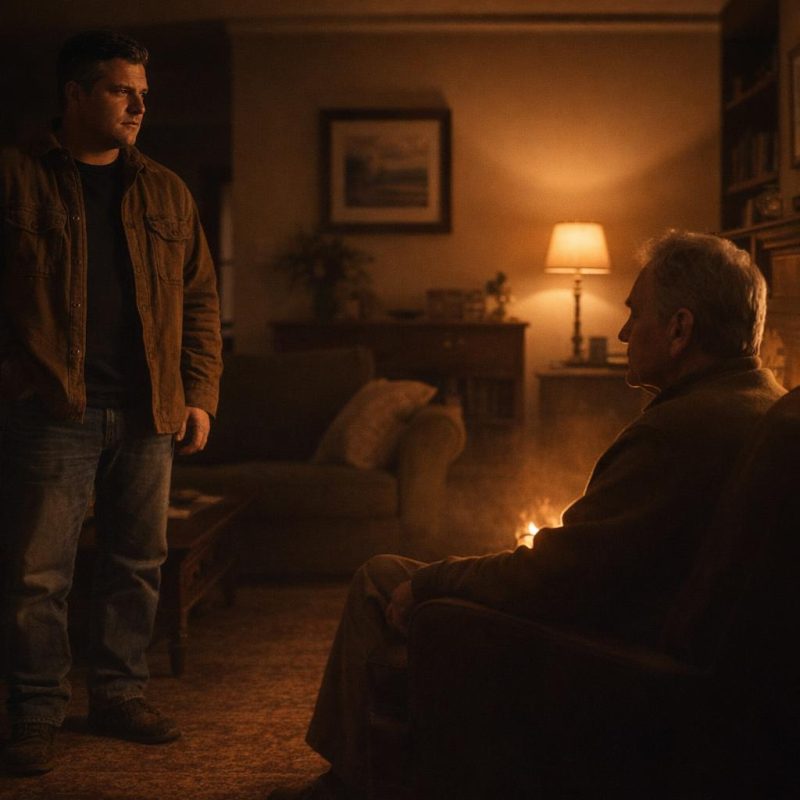 Image by RM AI
Promotion Talk
Arthur brought up the promotion over drinks, the way he brought up most things — like he was doing the room a favor by sharing. He said there was a senior position opening at the firm, that the timing was right, that he was being considered. He said it with the kind of ease that meant he'd already decided it was settled. Clara put her hand on his arm and said that was wonderful. I asked what the role covered. He described it — oversight of a regional portfolio, a team underneath him, a seat at certain meetings. He talked about his track record, the relationships he'd built, the clients he'd brought in. He said the decision would come down from the top, that it always did at his level, but that he felt good about where things stood. Clara asked about the timeline. He said a few months, that these things moved slowly, that the owner liked to be deliberate about senior appointments. I asked a few more questions, neutral ones, the kind that sounded like polite interest. He answered all of them without noticing anything in my face. He talked about what the promotion would mean — the title, the compensation, what it would open up next. His voice came through pulled tight and certain, no waver in it at all.
 Image by RM AI
The Decision
He kept talking and I kept listening. He said the owner didn't get involved in day-to-day operations but that senior promotions were different, that those went all the way to the top for sign-off. Clara asked if he'd met the owner. Arthur said no, that almost nobody had, that the man kept a low profile. He said it like it was a curiosity, a minor detail about someone far removed from his life. He listed his qualifications again — the accounts, the tenure, the numbers. He said he couldn't imagine who else they'd be looking at. Clara said she was proud of him. I turned my glass in my hands and said nothing. I recognized the position he was describing. I recognized the timeline. Every senior promotion at the firm crossed my desk before it was finalized, and this one would be no different. Arthur sat across from me talking about his future like it was already written. The weight of that settled somewhere behind my ribs and stayed there.
 Image by RM AI
Assumed Victory
Arthur didn't wait for the promotion to be official. He was already spending it. He pushed his chair back from the dinner table and started talking about the party — not whether to have one, just where. He said the country club on Meridian had a private dining room that held sixty, maybe seventy if they moved the bar setup. He said he wanted it done right. Clara asked about timing and he said two weeks out, maybe three, give people enough notice to clear their calendars. He listed names — colleagues, neighbors, a couple of people from his golf league. He talked about the menu like he'd already tasted it. He said the firm's senior partners would expect something with a certain standard, that it reflected on him. Clara nodded along, her smile warm and careful at the same time. I watched her. She was caught up in it, or doing a good job of looking like she was. Arthur glanced at me once and said I should come, that it would be good for me to see how these things were done. I said I'd check my schedule. He turned back to Clara and told her to call the country club in the morning and get it booked.
 Image by RM AI
The Review
I got back to the city Sunday night and was at my desk by seven Monday morning. I pulled Arthur's personnel file before my assistant arrived. It was thick — eleven years of quarterly reviews, project logs, supervisor sign-offs, self-evaluations. I started at the beginning and worked forward. The early years were unremarkable. Adequate scores, no flags, the kind of file that doesn't draw attention in either direction. The middle years were better on paper. Promotions came at regular intervals. His self-evaluations were detailed and confident, full of numbers and outcomes. I cross-referenced some of those numbers against the project records. A few of them matched. Some of them were in the right range. A couple didn't line up the way I'd have expected. I made notes. I kept my pace steady. I wasn't looking for anything specific — I was just reading what was there. The supervisor comments were mostly positive, though a few were careful in the way that sometimes means something and sometimes doesn't. I set those pages aside. By mid-morning I had worked through about two-thirds of the file. I set my pen down and looked at what was left. The folder sat on my desk with Arthur's name on the tab.
 Image by RM AI
Credit Thief
I picked up where I'd left off. The back third of the file covered the last four years — the period Arthur had described at dinner as his most productive. He'd claimed the Hargrove account restructure as a signature achievement. I remembered that project. It had come in on time and under budget, and whoever ran it had done solid work. I pulled the project documentation from the archive system. The lead name on the file was a woman named Diane Okafor. Her signature was on the milestone reports, the client correspondence, the final delivery summary. Arthur's name appeared twice — once on an early planning meeting attendance sheet, once on a distribution list for the final report. I went back to his personnel file. The Hargrove restructure was listed under his individual achievements, described in his own words as a project he led. I sat with that for a moment. Then I pulled Diane Okafor's file. The Hargrove restructure was listed there too, under her contributions, with documentation attached. I went back through Arthur's achievements section more carefully. I found two other projects that looked similar. I pulled the source files for both. The same project appeared under Arthur's name in his file and under a different employee's name in theirs.
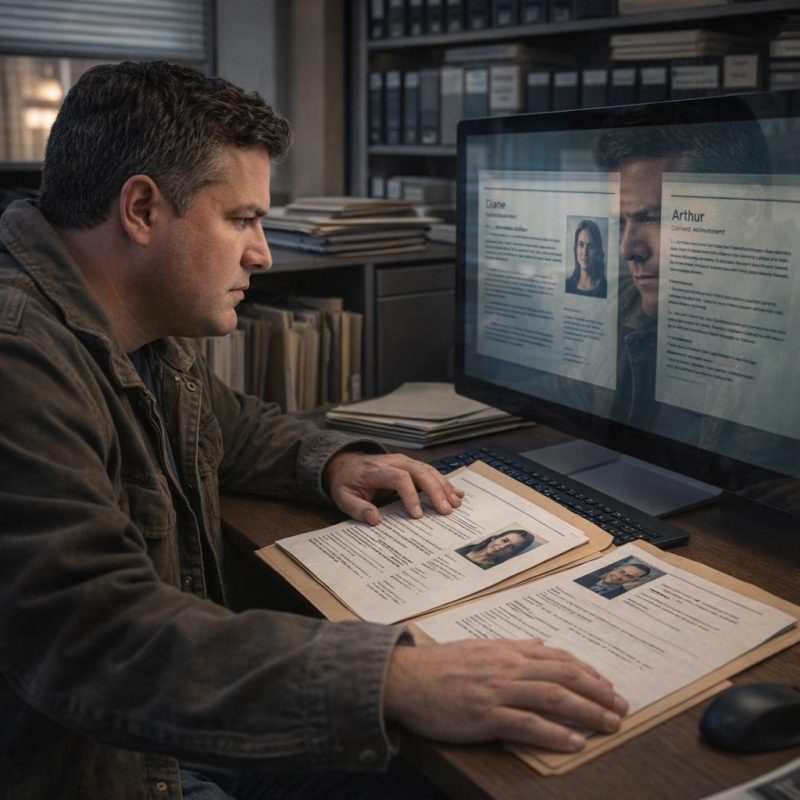 Image by RM AI
The Pattern
I set the project files aside and kept going. Near the back of Arthur's folder there was a tabbed section I hadn't reached yet. HR correspondence. I opened it. The first document was a formal complaint filed three years ago by a junior analyst. The language was measured and specific — a pattern of public criticism in team meetings, work reassigned without explanation, requests for feedback ignored. There was a response from Arthur attached, two paragraphs dismissing the concerns as a misunderstanding of professional standards. The complaint had been closed without further action. I turned the page. There was another one, filed about eighteen months later by a different employee. Similar language. Similar outcome. I found a third, then a fourth. The names were different each time. The descriptions weren't identical, but they rhymed. Raised voices in hallways. Credit for work going elsewhere. People being made to feel small in front of their peers. Arthur's responses followed the same shape each time — calm, dismissive, slightly condescending in tone. Each complaint had been closed. I stacked the pages in order and set them flat on the desk in front of me. Four complaints across three years, each one documented, each one resolved in Arthur's favor, each one sitting in a file that had never made it to my desk until now.
 Image by RM AI
The Choice
I didn't close the file. I just stopped reading. I sat back and looked at the ceiling for a while. Clara's face came to mind — the way she'd looked at dinner, nodding along while Arthur talked about the country club, the guest list, the menu. She wasn't naive. She knew who she'd married. But knowing something and having it laid out in black and white in front of you are different things, and I wasn't sure she'd ever seen the black and white. The people in those complaints were real. They'd come to work every day and dealt with something that wore them down enough to put it in writing, and nothing had happened. That was on the firm as much as it was on Arthur, and the firm was mine. I thought about the promotion. I thought about what it would mean to approve it — what message that sent down through every floor of that building. I thought about what it would mean to deny it, and what Clara would hear when Arthur came home that night. There was no version of this that didn't cost something. I sat there with the file open on my desk and the weight of it settled across both sides of the scale at once, and neither side moved.
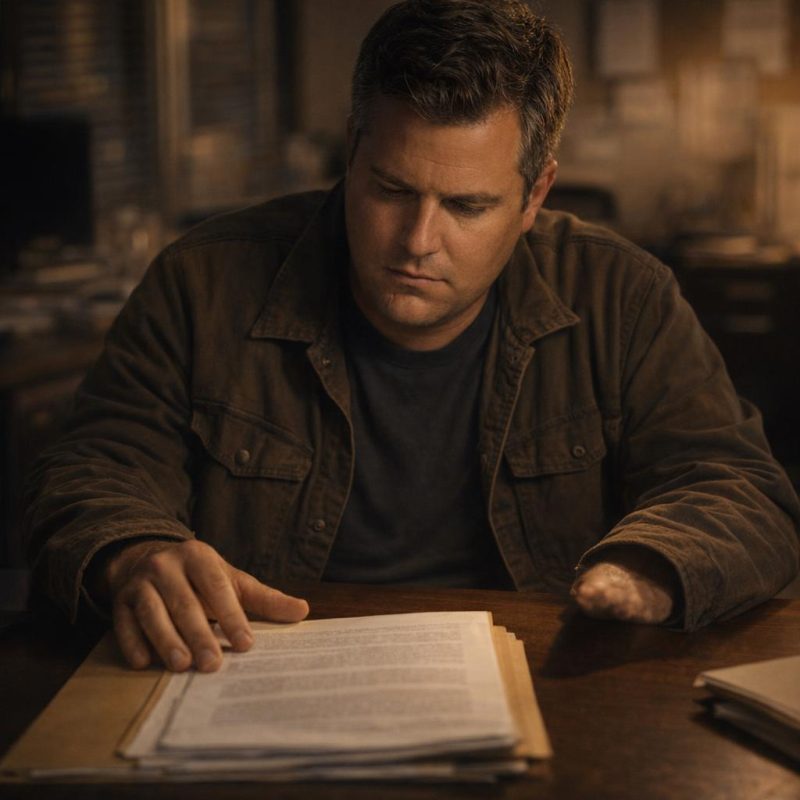 Image by RM AI
The Boast
Clara had us over again the following Saturday. Arthur was in a good mood — expansive, the way he got when he felt things were going his way. After dinner he poured himself a second scotch and started talking about work. He said the atmosphere on his floor had improved considerably since the fall. He said sometimes you had to make hard decisions about personnel to protect the team's culture. Clara refilled her water glass and didn't say anything. Arthur said there had been a guy — he used the word guy — who'd been creating friction for a while. Someone who thought he deserved more than he'd earned, who made meetings difficult, who had a habit of going around the chain of command. Arthur said he'd made things uncomfortable enough on the floor that the man eventually decided to move on. He smiled when he said it. He called it pruning. Clara set her glass down and looked at the table. Arthur said the team had been more focused since the departure, that sometimes one person's exit clarified things for everyone else. He swirled his scotch. He said the man had submitted his resignation on a Tuesday and was gone by Friday, and that it was the cleanest outcome he could have hoped for.
 Image by RM AI
The Victim
Arthur kept talking but I'd stopped following the words. The man he was describing — the Tuesday resignation, gone by Friday — I knew who it was. There was only one departure from that floor in the last year that fit the shape of that story. His name was Gerald Foss. He'd been with the firm for fifteen years. I'd seen his file during a separate review six months ago — consistent high marks, two commendations, the kind of employee who showed up early and left late and never made noise about either. His resignation letter had been three sentences. Vague. The kind of letter someone writes when they're too tired to explain and too professional to say what actually happened. I'd flagged it at the time as unusual and then let it move through the system because there was no complaint attached, no exit interview on record. Something about Arthur's story made the pieces sit differently now. Arthur was still talking, something about team dynamics, something about leadership requiring difficult choices. Clara changed the subject. She asked about dessert, whether anyone wanted coffee. Arthur let her redirect him. I sat with my hands flat on the table and thought about Gerald Foss's face the last time I'd seen him in the building — tired around the eyes, quieter than I remembered him being.
 Image by RM AI
Larger Charity
Arthur waited until Clara was in the kitchen before he brought it up. He said he'd been thinking about our last conversation, that he hoped I hadn't taken his earlier offer the wrong way. He said he understood things were tight for some people and that there was no shame in it. He reached into his jacket and pulled out an envelope and set it on the table between us. It was thicker than the last one. He slid it toward me with two fingers, the way you'd push something across a counter. He said he'd bumped the amount up, that he wanted to make sure it actually helped. He said something about my car, something about the neighborhood I was living in, something about how a man my age shouldn't have to struggle the way I apparently was. Clara came back in from the kitchen and stopped when she saw the envelope on the table. She said Arthur's name once, quietly, the way you say someone's name when you want them to stop. Arthur said he was just trying to help. Clara looked at me and then at the floor. I didn't touch the envelope. I didn't move it. I sat there and looked at it — the thickness of it, the clean white edge of it sitting between us on Clara's good tablecloth.
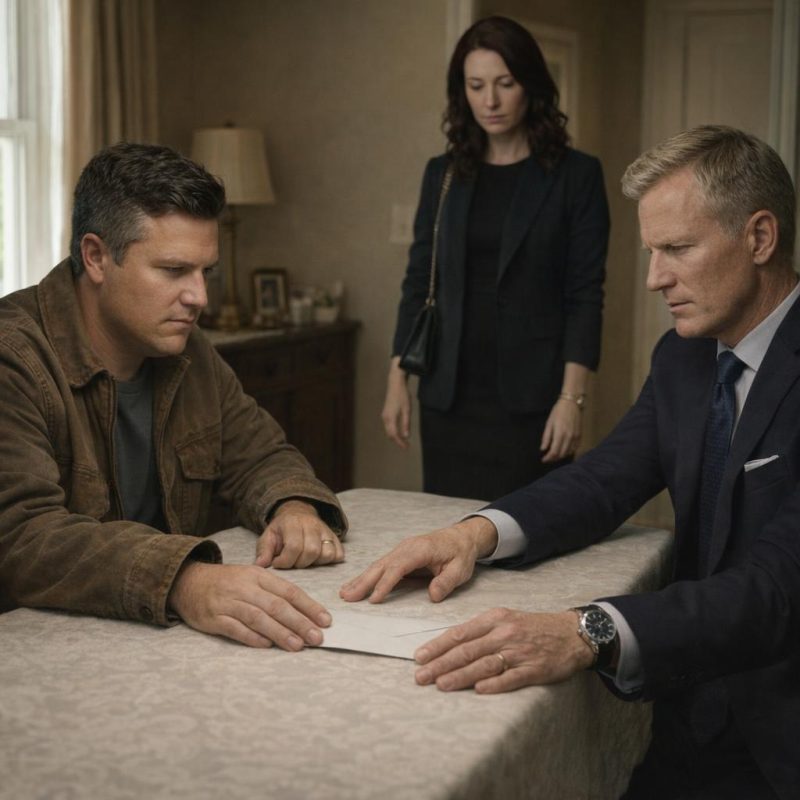 Image by RM AI
The Promotion Party
Clara set the invitation on the table in front of me like she was showing me something she'd made herself. Cream cardstock, embossed lettering, the country club's crest in gold at the top. She said she'd booked the main ballroom, that it held two hundred people, that she'd already put a deposit down. Arthur stood near the window with his hands in his pockets, nodding along like he was approving a business proposal. He said he was inviting the full executive team, the senior partners, a few people from the board. He said the owner probably wouldn't bother showing up — never did for these things — but that was fine, the people who mattered would be there. Clara asked if I'd help with the seating chart, said she wanted family involved. I told her I'd be there. Arthur said something about his acceptance speech, how he wanted to strike the right tone, humble but confident. Clara smiled at him and then at me, and I could see how much she wanted this to go well. I looked back down at the invitation. The date was the fourteenth, three weeks out, and below it ran the names Arthur had already confirmed — every senior partner, every executive, the full board.
 Image by RM AI
Preparation
I sat at my desk for a long time after everyone had gone home. The building was quiet. The cleaning crew had come and gone. I pulled Arthur's personnel file and read through it again — the performance reviews, the complaints that had been flagged and then quietly buried, the names of the people on his team who'd transferred out inside of eighteen months. I thought about Clara's face when she set that invitation on the table. The way she'd smoothed the edge of it with her thumb. I thought about what it would cost her. I thought about what it was already costing the people who worked under Arthur every day and had no idea who to tell. I'd stayed quiet because I'd told myself it wasn't time, that I needed more, that there was a right moment somewhere ahead of me. I wasn't sure I believed that anymore. I closed the file. I sat there in the dark office for another few minutes, not moving. Then I reached across the desk and picked up the card sitting next to the lamp — the firm's logo printed clean and small in the upper left corner.
 Image by RM AI
Arrival
I parked at the far end of the lot, away from the valets. My sedan sat between a Mercedes and a Range Rover like something that had wandered in from the wrong address. I sat in the car for a minute before I got out. The country club was lit up from the inside, warm light coming through tall windows, the sound of a string quartet drifting out when someone opened the front door. Clara found me in the entry hall before I'd made it ten feet. She hugged me and said she was glad I came, that I looked nice, that Arthur was already working the room. I could see him across the space, glass in hand, laughing at something a man in a gray suit had said. He hadn't noticed me yet. I took a drink from a passing tray and moved toward the edge of the room. That's when I saw them — three faces I recognized from the Monday morning briefings, standing together near the bar, ties loosened, talking among themselves.
 Image by RM AI
The Toast
Arthur tapped his glass and the room settled. He thanked Clara first, briefly, then moved on to himself. He talked about vision. He talked about the initiatives he'd championed, the restructuring he'd pushed through, the culture he'd built from the ground up. He said the firm had been drifting before he arrived and that he'd given it direction. He mentioned the owner once, a half-smile on his face when he said it, something about absentee leadership and how real work gets done by the people in the room. A few people laughed. Clara was beaming from the front row, her hands folded in her lap, watching him the way you watch someone you've decided to believe in. I stood at the back near the wall, my glass untouched on the ledge beside me. Arthur's voice carried well in that room — confident, unhurried, filling every corner of it with a version of events I'd watched get built one meeting at a time from the other side of the wall.
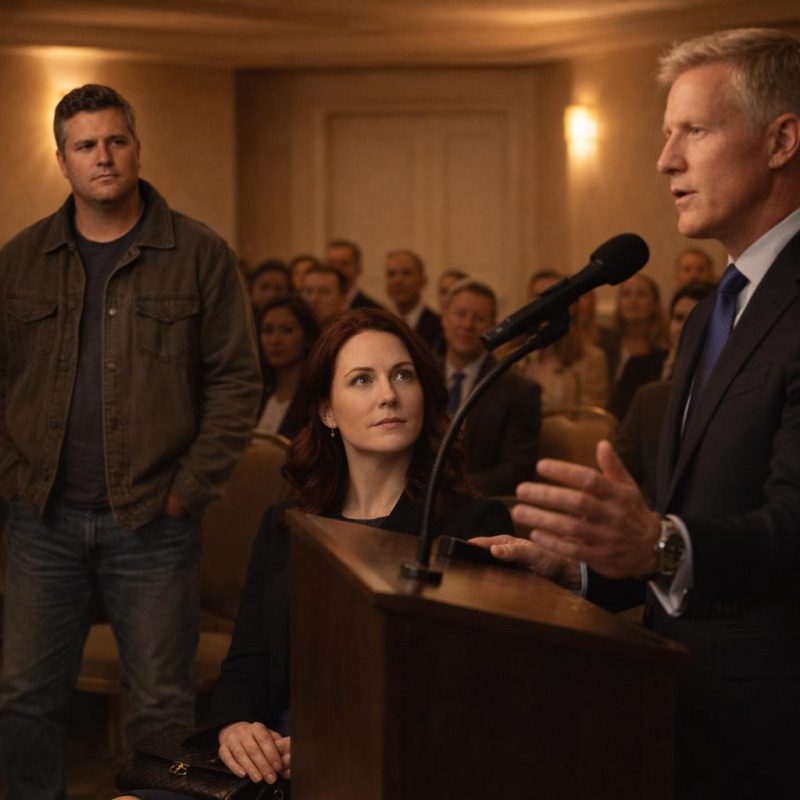 Image by RM AI
The Reveal
Arthur finished and raised his glass. The room applauded. I set my drink down and walked forward through the crowd. People stepped aside without looking at me — just another guest moving toward the front. I stopped about ten feet from Arthur. He saw me and his expression shifted, just slightly, the way it does when something doesn't fit the picture. I said his name once, clearly, and told him I appreciated the kind words about absentee leadership. I said I'd been meaning to introduce myself properly for a while now. His face went the color of the tablecloths. Clara made a sound I couldn't identify. The executives near the bar had gone completely still. I reached into my jacket pocket, pulled out the card, and held it up so the room could read it — the firm's logo, my name beneath it, and the title that had apparently been a running joke in his toast: Owner.
 Image by RM AI
Silence
Nobody moved. The string quartet had stopped between songs and hadn't started the next one. Arthur stood at the front of the room with his glass still raised, arm frozen at an angle that no longer made sense. Clara's hand came up slowly and covered her mouth. I could see her eyes moving between me and Arthur and back again, working through something she didn't have the pieces for yet. The executives near the bar had turned fully toward me now. One of them — a woman who ran our compliance division — gave a single slow nod, like something had just been confirmed for her. Arthur looked at the crowd, then at me, then at the card still in my hand. His mouth opened and closed once. The applause that had filled the room thirty seconds ago had left no echo. I stood where I was and didn't move, and the weight of every eye in the room settled over me like something I'd been carrying toward this moment for a long time.
 Image by RM AI
Denial
Arthur found his voice before anyone else did. He said it first quietly, almost to himself, and then louder when the quiet didn't help him. He said I was lying. He said this was some kind of stunt, that I'd shown up to his party to embarrass him in front of his colleagues, that whatever I thought I was doing it wasn't funny. He looked at the crowd and spread his hands and said someone needed to explain what was happening. Clara said his name the same way she had at the kitchen table — once, low, like a warning — but he didn't stop. He said I'd always had a problem with him, that this was about jealousy, that a man who drove the car I drove and lived where I lived didn't own anything. His voice had climbed by then, tight and unsteady at the edges. He pointed at me and told the room, told Clara, told anyone who would listen, that I was a liar.
 Image by RM AI
Evidence
I waited until he finished. Then I started talking, quietly, the way you talk when you don't need the room to lean in because it already has. I gave them the acquisition date of the building we were standing in — not the country club, the firm's building on Halcott Street, the one Arthur had told Clara he'd helped select. I named the three executives who'd been in the room when we restructured the benefits package eighteen months ago. I described the closed-door meeting where the remote work policy had been drafted, the one Arthur had presented to his team as his own initiative, the one he'd called a turning point in the firm's culture. I said it quietly and I said it without looking away from him. Arthur's face had gone past white into something else — a stillness that didn't look like calm. Clara had lowered her hand from her mouth. She was watching Arthur now, not me. I kept going. I described the policy Arthur had praised in front of his team last month, the one he'd taken credit for in the same breath, and I watched the expression on his face when he understood that I had been in that room too.
 Image by RM AI
Confirmation
I didn't have to say anything else. The room did it for me. Jennifer Chen stepped away from the cluster of executives near the far wall — I'd known her for three years, hired her myself out of a firm in Boston — and she walked toward me with the kind of deliberate calm that comes from someone who has no doubt about what they're doing. She looked at Arthur once, briefly, the way you look at something you've already assessed and set aside. Then she turned to me. She said my name. Not my title. My name. Two of the other executives nodded before she finished the sentence. A man named Garrett, who'd been in the room when I signed the Halcott Street papers, said he'd met me at headquarters the previous spring. Another confirmed the restructuring decision I'd made in November. Arthur didn't speak. There was nothing left to say that wouldn't make it worse. I looked at Clara. She wasn't looking at Arthur anymore. She was looking at me with an expression I didn't have a word for — not anger, not relief, something older than both. The validation I'd expected to feel didn't come. What came instead was quieter, and heavier, and it settled in my chest like something that had been waiting a long time to land.
 Image by RM AI
Clara's Confrontation
The executives had the sense to give us space. They drifted toward the edges of the room, conversations starting up in low voices, and then it was just the three of us in the middle of it. Clara turned to me first. Arthur was still standing there, pale and rigid, but she wasn't looking at him. She was looking at me. She said, "How long?" Her voice was steady but thin, the way glass sounds right before it breaks. I told her I'd known about the firm for a while. She shook her head. "That's not what I'm asking. How long have you known what he was doing there?" I started to answer and she cut me off. "I trusted you," she said. "You're my older brother. You came to my house and you sat at my table and you let me think—" She stopped. She pressed her lips together. Arthur made a sound, something between a cough and an attempt to speak, and she held up one hand without looking at him. He went quiet. She looked back at me and her eyes were wet. "Why didn't you just tell me?" she asked, and the tears in her eyes didn't fall, they just stayed there, making everything worse.
 Image by RM AI
The Explanation
I told her the truth. All of it, in order. I told her I'd learned about the firm eight months ago — not from a tip, not from a report, but from a routine audit that landed on my desk with Arthur's name in it. I told her I hadn't said anything because I wanted to be sure, and then because I wanted to be certain, and then because I kept finding more and I didn't know how to hand her something that size without the full picture. I told her about Tom Reyes, who'd worked under Arthur for two years and resigned after Arthur presented Tom's entire market analysis as his own in front of the board. I told her about the two HR complaints that had been quietly redirected. I told her about the junior analyst who'd asked to be transferred to a different division and hadn't been told why her request was approved so fast. Arthur tried to interrupt twice. The second time, Clara said, "Don't," and the word came out flat and final and he stopped. She kept her eyes on me the whole time I was talking. She didn't cry. She just listened, and the longer I talked, the more the color left her face, and by the time I finished, she looked like someone standing in a room they no longer recognized.
 Image by RM AI
Documentation
I'd brought the file because I'd known this moment was coming, even if I hadn't known exactly when. It was in the inside pocket of my jacket — printed, tabbed, organized the way my assistant had organized it when I'd asked her to pull everything together three weeks ago. I took it out. Clara watched my hands. I set it on the table between us and I didn't say anything. She looked at it for a moment before she picked it up. Her hands were steady when she opened the cover, less steady by the second page. The HR complaints were first — two formal filings, both from the same quarter, both citing the same pattern of behavior. Behind those were the credit theft incidents, each one documented with timestamps, original drafts, and the presentation files Arthur had submitted under his own name. Behind those was Tom's resignation letter, which was three paragraphs long and said everything without naming names, the way those letters always do. Arthur said the complaints were exaggerated. He said it in the voice of someone who has rehearsed the line but isn't sure it still works. Clara didn't look up from the page. Her hands were trembling by the time she reached the section on Tom. I reached into my jacket and handed her the file with Arthur's name printed across the tab.
 Image by RM AI
The Marriage Cracks
She read to the end. I watched her turn the last page and then sit with it, not moving, the way you sit when you've finished something and you're not ready to put it down yet. Then she closed the file. She set it on the table with both hands, carefully, like it was something fragile. She looked at Arthur. "The Meridian pitch," she said. "You told me you worked on that for six weeks. You said it was the best thing you'd ever done." Arthur opened his mouth. "I did work on it," he said. "I led the team that—" "Tom Reyes led that team," she said. "It says so in the original brief. His name is on the draft dated three weeks before yours." Arthur shifted his weight. He said the situation was more complicated than a document could capture. He said context mattered. He said she was reading it without understanding how these things worked in practice. Clara listened to all of it. She didn't interrupt. When he finished, she was quiet for a moment. Then she said, "You told me he quit because he couldn't handle the pressure." Arthur said that was also true. Clara looked at him the way you look at a stranger — not with anger, not yet, but with the particular stillness of someone seeing a face clearly for the first time.
 Image by RM AI
The Decision
I let the silence hold for another moment. Then I turned to face the room. The executives had stopped pretending to have other conversations. They were watching, all of them, and I didn't mind that. Some things need witnesses. I said that the promotion Arthur had been expecting would not be moving forward. I said it without preamble, without softening it. A few of the executives exchanged glances but nobody spoke. I said that effective immediately, Arthur's role would be restructured — a step down in title, a step down in authority, with a formal probationary period attached. I outlined the terms: quarterly reviews, a compliance officer assigned to his division, all direct reports given an open channel to HR that bypassed his desk entirely. I said the terms were non-negotiable and that the documentation supporting the decision was already on file with legal. Arthur's face moved through several colors. He'd started white and he was somewhere past red now, a kind of mottled, pressurized flush that made the tendons in his neck stand out. Clara stood very still beside me. I didn't look at her. I kept my eyes on the room. Then I turned to Arthur and told him he was being demoted, effective immediately.
 Image by RM AI
Arthur's Rage
He came apart fast. The composure he'd been holding onto — the practiced stillness, the tailored-suit version of himself — it went all at once, like a seam giving way. He said I was vindictive. He said I had manufactured a grudge and dressed it up as policy. He said he would have his lawyers dismantle every document I'd cited, that I had no legal standing to do this in a social setting, that I had humiliated him in front of his colleagues and his wife and he would not let it stand. His voice kept climbing. He said the word defamation twice. He pointed at me once, then seemed to think better of it and dropped his hand. He turned to Clara and said her name, said she knew him, said she knew what kind of man he was, said she couldn't let this happen. Clara looked at the middle distance somewhere past his shoulder. She didn't answer him. He turned back to me. The room was absolutely still. I didn't move. I didn't raise my voice. I didn't change my expression. I just stood there and let him finish, the way you wait out weather. When he finally stopped, his chest was heaving and his voice had gone raw, and the threat to sue hung in the air between us, stripped of everything that might have made it land.
 Image by RM AI
The List
I waited until I was sure he was done. Then I opened the folder again. I didn't raise my voice. I read from the top. I named Tom Reyes and the date of his resignation and the presentation he'd built that Arthur had filed under his own name. I named the two employees who'd submitted HR complaints in the same quarter and described what each complaint documented. I named the junior analyst and the transfer request and the timeline. I named the benefits restructuring Arthur had claimed as his initiative in three separate team meetings, and I cited the date of the closed-door session where the actual decision had been made, and the names of the people in that room, none of whom were Arthur. I named the Meridian pitch. I named the original brief. I read the dates in order. Arthur said nothing. He had nothing left to say that the documents hadn't already answered. Clara stood beside me and listened to all of it without moving. The executives didn't move either. When I closed the folder and set it down, the room stayed quiet — not the quiet of people waiting for what comes next, but the quiet of people who have just heard something they can't unhear.
 Image by RM AI
The Choice Offered
I waited until the room settled. Then I looked at Arthur directly. Not at the executives, not at Clara — at him. I told him there were two options and only two. The first was resignation, effective immediately, with a standard severance package and a neutral reference letter that said nothing beyond dates of employment. The second was a twelve-month probationary period with conditions attached. Full transparency on all project attribution going forward. Mandatory ethics training, completed within sixty days. A performance review at six months with benchmarks he would be required to meet. Any HR complaint filed during the probationary period would trigger immediate termination with no severance. I told him the decision was his to make, but he had until Monday morning to make it. I told him that if Monday came and went without an answer, I would treat the silence as a resignation. Arthur stood very still. He didn't look at the executives. He didn't look at Clara. He looked at me, and for the first time since I'd walked into that house, there was nothing practiced in his expression. Clara stood at the edge of the room and heard every word of it.
 Image by RM AI
Separation
Three weeks after the party, I drove to the address Clara had texted me. It was a third-floor walkup in a quiet part of the city, the kind of building with a buzzer panel and a narrow staircase and no doorman. She answered the door in a sweater and bare feet. The apartment was small. A couch, a coffee table, two boxes she hadn't unpacked yet pushed against the far wall. A single plant on the windowsill that looked like she'd just bought it. She made tea and we sat on the couch and she didn't say much for a while, and I didn't push. She told me she'd needed to be somewhere that was just hers. She said it quietly, like she was still getting used to the idea. I told her I understood. She thanked me then — not for the party, not for the documents, but for telling the truth when she was standing right there to hear it. I didn't say anything back. I just sat with her in that small room while the afternoon light came through the window and settled across the floor.
 Image by RM AI
Honest Conversation
She asked me how I'd built it. Not accusingly — just honestly, the way you ask someone a question you've been holding for a long time. I told her the whole thing. The early years working construction to fund the first investment. The two failed partnerships before I found the right structure. The decade of keeping my name off the public-facing materials because I didn't want the attention, and then because it had become habit, and then because it was useful. I told her I was sorry I hadn't told her sooner. She was quiet for a moment. Then she said she wasn't sure it would have changed anything, because she'd wanted what Arthur was offering — the house, the life, the version of success she could point to. She said she'd told herself the things she noticed didn't add up to anything. I asked her what kinds of things. She looked at her hands and was quiet for a moment. Then she looked up at me and said she'd known something was wrong but hadn't wanted to see it.
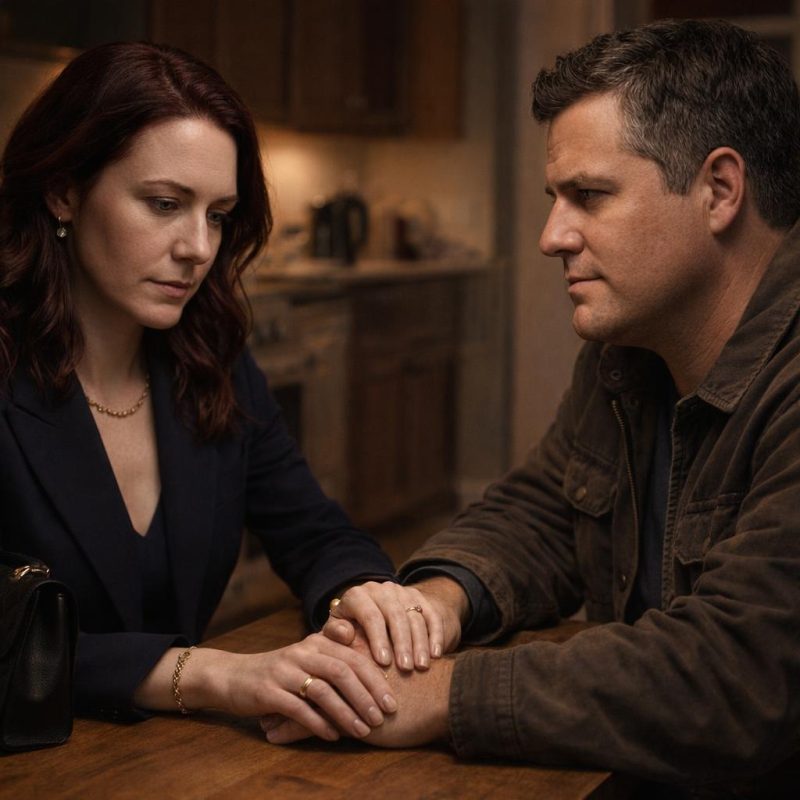 Image by RM AI
Reform
Arthur chose probation. I got the email Monday morning, seven minutes before the deadline. In the weeks that followed, the reports that came back from his team were careful but consistent — he was showing up differently. Quieter. Crediting people by name in meetings. Not much, but enough to notice. Clara kept her apartment. She and Arthur were in counseling, she told me, and she was taking it one session at a time. She invited us both to dinner on a Thursday in early November — her place, the small one with the unpacked boxes, which were mostly unpacked by then. Arthur arrived on time. He was wearing a plain jacket, no tie. He shook my hand at the door with both feet planted and his eyes level, and when he said my name there was no performance in it, no angle I could detect. It wasn't warmth exactly. It was something more careful than that — the handshake of a man who understood, for the first time, exactly where he stood.
 Image by RM AI
KEEP ON READING

From GPS to the Wristwatch: 20 Military Innovations You Probably…
Battlefield Problems to Everyday Solutions. It's easy to take for…
By Christy Chan May 25, 2026
20 Mysterious Fossils That Paleontologists Still Can't Explain
Ancient Life Had a Weird Imagination. Fossils usually help scientists…
By Emilie Richardson-Dupuis May 25, 2026
20 Laws Created Because One Person Did Something Terrible
History Keeps Receipts. Long before laws had polished names and…
By Cameron Dick May 25, 2026
20 Dynasties That Proved Family Wealth Can Outlast Empires
Money Remembers. Empires like to pretend they are permanent. They…
By Cameron Dick May 25, 2026
20 Archaeological Finds That Sound Fake But Are Completely Real
The Past Refuses to Be Boring. Archaeology has a way…
By Annie Byrd May 25, 2026
20 Peace Treaties That Unraveled Instantly
When Peace Agreements Failed Almost As Soon As They Began.…
By Rob Shapiro May 25, 2026