

I Let a Stranger Drink My 'Champagne' on a Flight—She Had No Idea What She Just Swallowed
I Let a Stranger Drink My 'Champagne' on a Flight—She Had No Idea What She Just Swallowed
The Recovery Room
The first thing I noticed was the ceiling — white, flat, humming with fluorescent light. Then the smell hit me: antiseptic and something metallic underneath it, the kind of cold that lives in hospitals and doesn't leave your lungs for days. I tried to move my hand and it felt like lifting a sandbag. Dr. Chen was there almost immediately, her reading glasses hanging on their chain, her voice steady and measured in a way that told me she'd done this a thousand times. She said the surgery had gone well. She said that word — well — and I held onto it like it was the only solid thing in the room. But then she kept talking, and the words started to stack up in ways I wasn't ready for. Recovery would take time. More time than I'd planned for. There would be monitoring, follow-up appointments, possible complications with equilibrium that they'd need to watch closely. I remember nodding like I understood, but the anesthesia was still thick in my blood and everything felt slightly underwater. She squeezed my hand once before she left, and I stared back up at that flat white ceiling, the full weight of what she'd said settling over me like a second blanket I hadn't asked for.
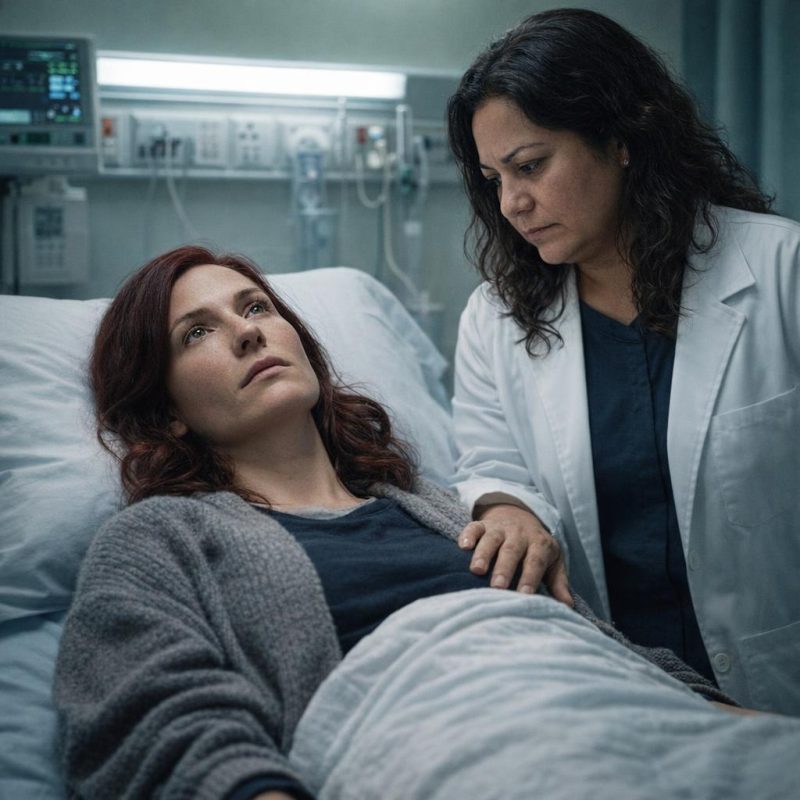 Image by RM AI
The First Warning
Day two, and I was convinced the worst was behind me. I was wrong. I woke up around six in the morning with the room tilting sideways — not spinning exactly, more like the floor had quietly decided to become a suggestion. The nausea came next, rolling up from somewhere deep and insistent, and I lay completely still with my eyes fixed on the wall because moving even an inch made everything worse. Dr. Chen came in during rounds and watched me track her finger with my eyes, asked me to rate the dizziness on a scale I didn't have the vocabulary for. She said the equilibrium disruption was within normal parameters, and I appreciated that she said it without making it sound small. She adjusted my pain medication and told me they'd keep monitoring. I asked her when it would stop. She gave me the kind of careful answer that means she doesn't know yet. By afternoon I was determined to prove something — to myself, mostly. I asked the nurse to unhook the IV stand so I could try standing on my own. I got both feet on the floor, pushed up, felt the room lurch violently to the left, and went straight back down onto the mattress before anyone could catch me.
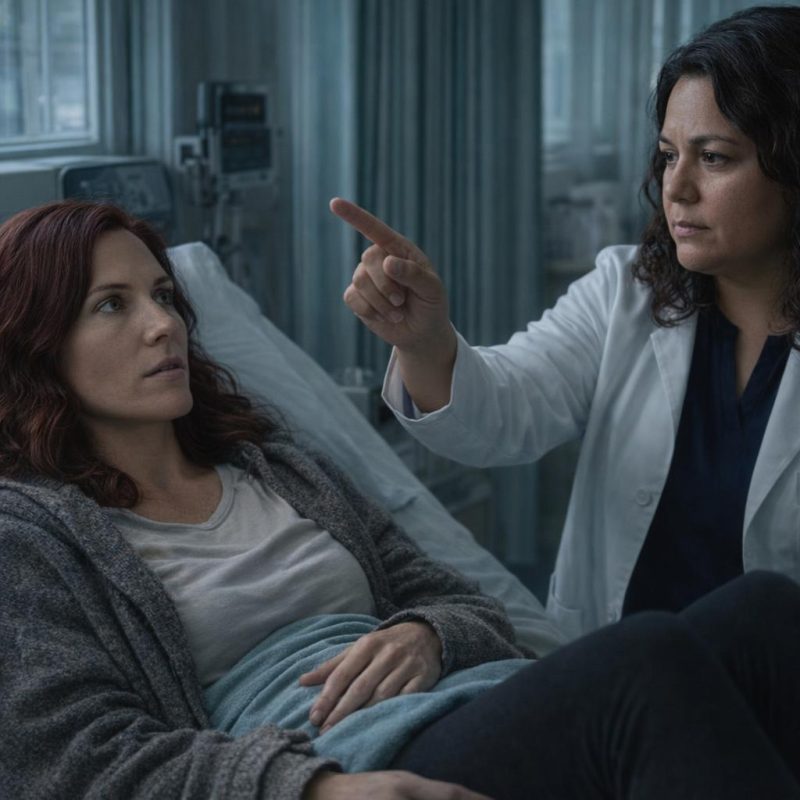 Image by RM AI
Dependent
Mom showed up at the hospital the morning of discharge with a tote bag full of things I hadn't asked for and absolutely needed — ginger chews, a grippy pair of socks, a small pillow she'd wedged between my back and the car seat for the whole drive home. She didn't make a big deal out of any of it. That was somehow harder to take than if she had. The guest bedroom had been rearranged while I was in the hospital: nightstand cleared, lamp moved closer, a plastic chair positioned outside the bathroom door. I stood in the doorway looking at it and felt something I couldn't quite name — gratitude and something heavier underneath it. The first shower took forty minutes. Mom stood just outside the curtain the whole time, not saying anything, just there, ready. I kept one hand on the wall and moved slowly and tried not to think about the fact that six weeks ago I could run a 5K. She helped me dry off, helped me into clean clothes, and I sat on the edge of the bed afterward feeling wrung out in a way that had nothing to do with the hot water. I didn't say thank you. I couldn't get the words out without everything else coming with them. I just sat there, and she sat beside me, and neither of us said anything about how long this might go on.
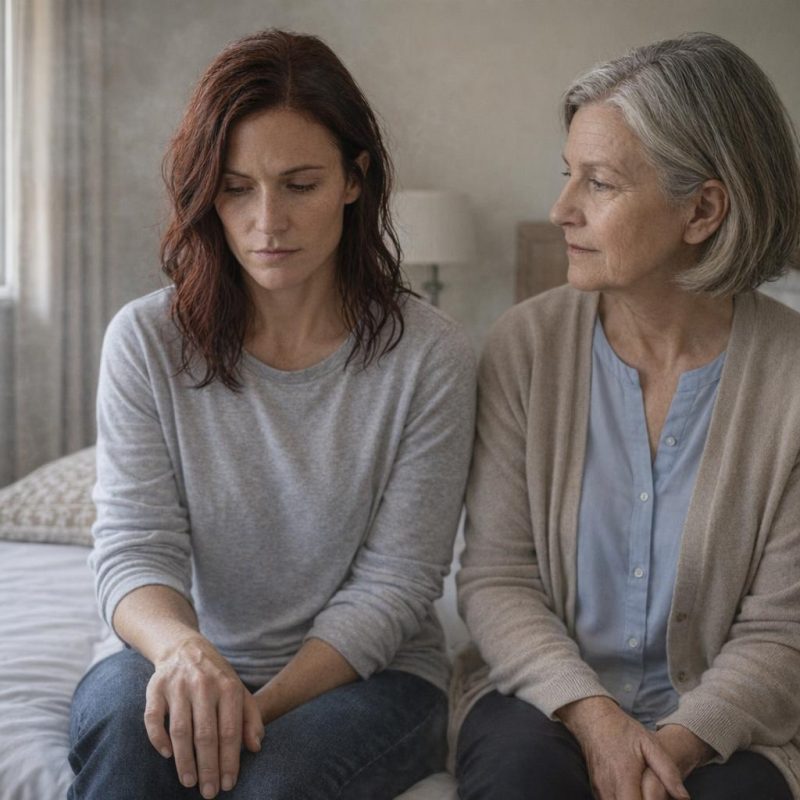 Image by RM AI
The Protocol
The follow-up appointment was two weeks post-surgery, and Dr. Chen used the word 'chronic' in a sentence about my digestive system and I had to ask her to repeat it. She explained it carefully — the surgery had triggered a pattern of spasms in my lower GI tract, not dangerous on their own but debilitating if left unmanaged. She'd consulted with a compounding pharmacy and had a protocol ready. The medication came as a fine powder in individual foil packets, and the instructions were specific: mix one packet into four to six ounces of carbonated water, not still, not juice, carbonated — something about the effervescence aiding absorption. Take it thirty minutes before any meal that might be a trigger, which in the early weeks meant most meals. She handed me a printed sheet with the timing chart and went through it twice. Mom was taking notes on her phone. I was trying to keep up but mostly I was staring at the box of foil packets on the exam table, thinking about how this was my life now — scheduled, measured, dependent on a powder I'd never heard of two months ago. That evening I mixed the first dose at the kitchen counter, watched the powder dissolve into the bubbles, and drank it slowly. It tasted faintly bitter beneath the carbonation, the kind of taste that lingers at the back of your throat long after you've swallowed.
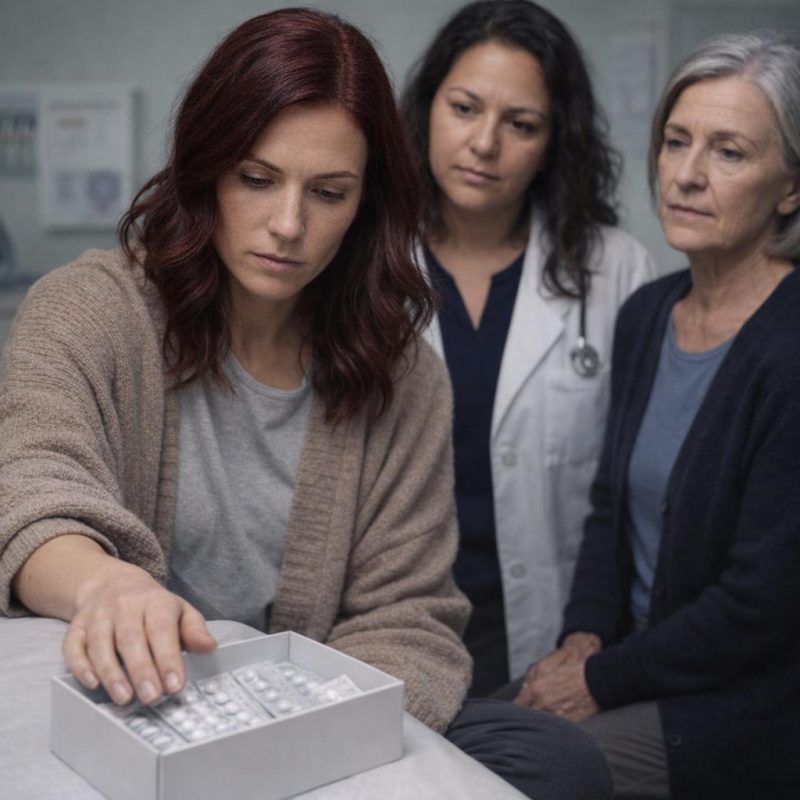 Image by RM AI
The First Good Week
I kept a journal the way Dr. Chen suggested — nothing elaborate, just a small notebook where I logged the time of each dose, what I ate, and whether the spasms came. The first three days on the new protocol were rough. Day four was slightly less rough. By day five I noticed I was eating without bracing for what came after, which sounds like a small thing and was actually enormous. Mom started commenting on my color, said I looked less gray, which told me I'd been looking pretty gray for a while. I made it through a full bowl of soup on day six without incident and sat with that fact for a minute before writing it down. The journal was filling up with small victories that would have seemed absurd to me a year ago — ate crackers, no spasm; walked to the kitchen twice; slept four hours without waking. I tracked everything because tracking felt like control, and control felt like the only thing I had. By the end of the week I sat down at the kitchen table after dinner, Mom washing dishes behind me, and I went through the day in my head — the dose at seven, the meal at noon, the walk to the window and back — and somewhere in that accounting I noticed something I hadn't felt in weeks: I had made it through an entire day without pain.
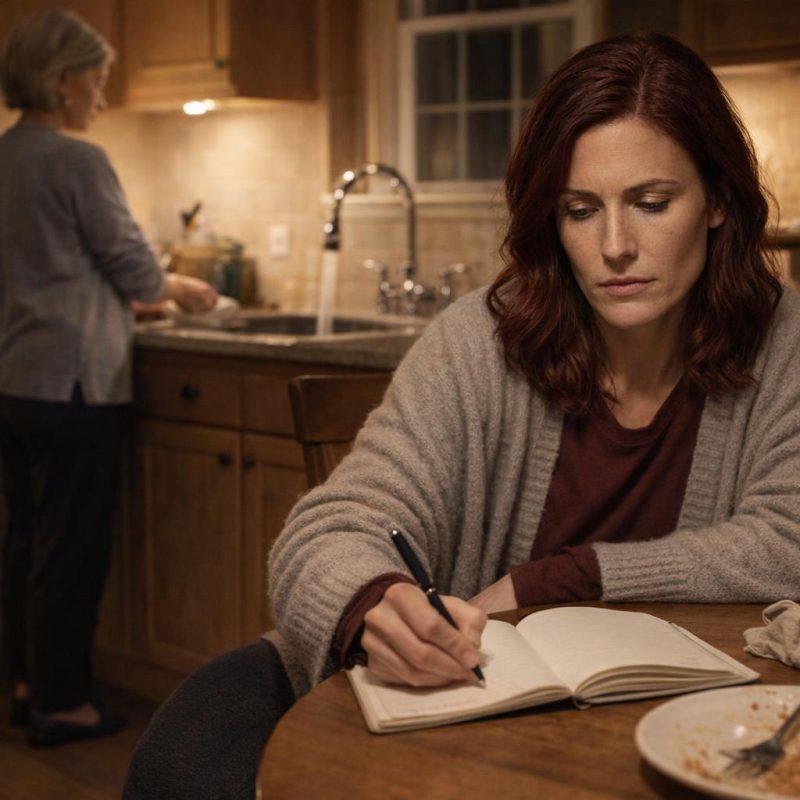 Image by RM AI
Physical Therapy
The physical therapy clinic smelled like rubber mats and recycled air, and the therapist — a compact, no-nonsense woman who introduced herself and got straight to work — had me standing on a foam pad within the first ten minutes of my initial assessment. My job was to stay upright with my eyes closed. I lasted about four seconds before my arms shot out for balance. She made a note without comment, which I appreciated more than false encouragement would have been. We worked through a series of exercises: weight shifts, single-leg stands with a wall nearby, slow head turns that made the room swim. I failed most of them by any reasonable standard and passed a few by the narrowest margin. By the end of the session my legs were shaking and I was sweating through my shirt from the effort of doing things that used to be automatic. She walked me through the home exercise sheet and told me consistency was everything — ten minutes twice a day, no skipping. Then she flipped open my chart to add her session notes, and I caught a line she'd written near the top of the intake form, something she must have flagged from my surgical records: *Air travel — requires medical clearance prior to any flight*.
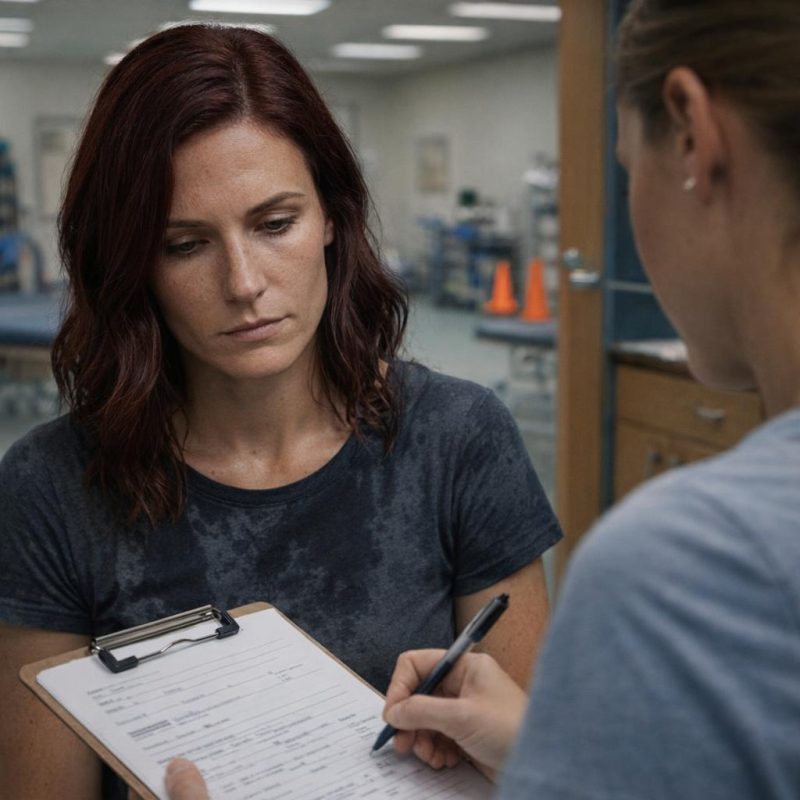 Image by RM AI
Outside
It was Mom's idea to try the walk, and also my idea, depending on which version of the conversation you believe. I'd been watching the street from the window for three days, tracking the neighbor's dog and the mail carrier and the way the light changed in the afternoon, and eventually watching wasn't enough. Mom insisted on coming, which I argued against for about thirty seconds before accepting that she was right. Outside felt enormous in a way I hadn't anticipated — the light was sharper than I remembered, the air had texture, and the sound of a car passing two blocks away made me flinch. I kept my hand near the fence along the first stretch of sidewalk, not quite touching it, just close. Mom walked slightly behind me and to the left, which I pretended not to notice. We made it half a block before I started to feel the familiar pull of fatigue in my legs, the slight lag between what my brain told my feet to do and what actually happened. I told myself we'd go to the corner and turn back. I was almost there when my toe caught the edge of a raised crack in the pavement, my balance went sideways in that horrible slow-motion way, and Mom's hand closed around my arm before I'd even registered I was falling.
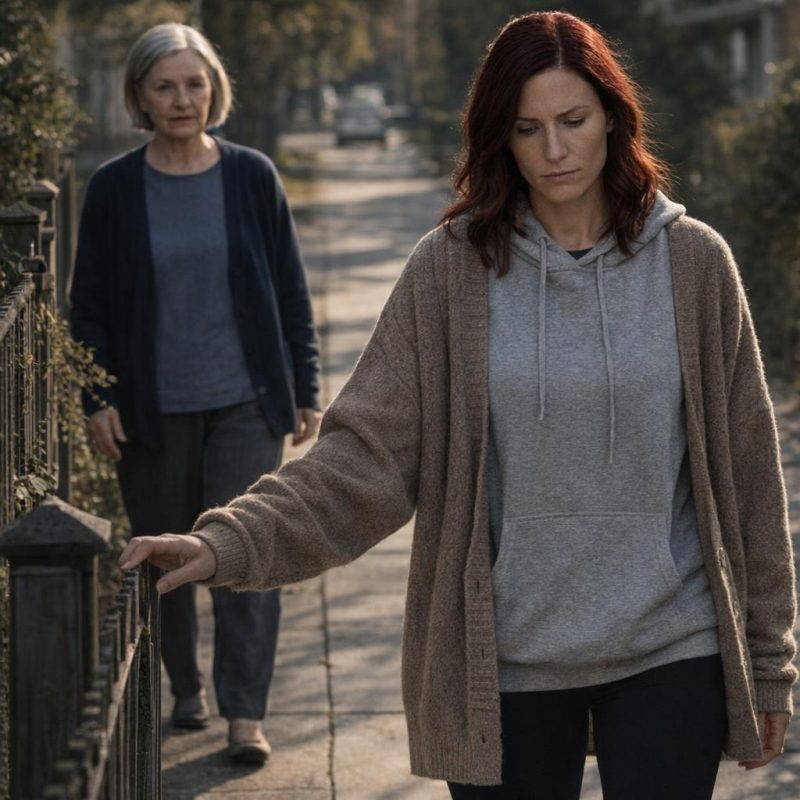 Image by RM AI
The Question
I brought it up almost as an aside at my monthly follow-up — mentioned that I missed my apartment, my neighborhood, my friends who'd stopped knowing what to say in texts. Dr. Chen listened the way she always did, fully, without filling the silence. Then she asked practical questions: who was at home, what my support system looked like, whether I had someone who could be with me in the early weeks back. I answered honestly, which meant admitting I'd been thinking about flying home and hadn't said it out loud yet because it felt presumptuous, like planning a vacation while still in a cast. She didn't dismiss it. She pulled up my chart, looked at the physical therapy notes, asked about the equilibrium scores from my last session. She said the balance deficits were improving on a reasonable trajectory. She mentioned that some post-surgical patients in similar recovery windows had managed air travel with the right accommodations — a medical letter, early boarding, an aisle seat, the medication protocol timed carefully around the flight. She said she'd look into the airline's medical accommodation policies before my next appointment. I drove home with Mom and sat in the passenger seat watching the familiar streets go by, and somewhere in the quiet of that car, the thought of home stopped feeling like a fantasy — because Dr. Chen had said, carefully and without promises, that flying might be possible with the right preparation.
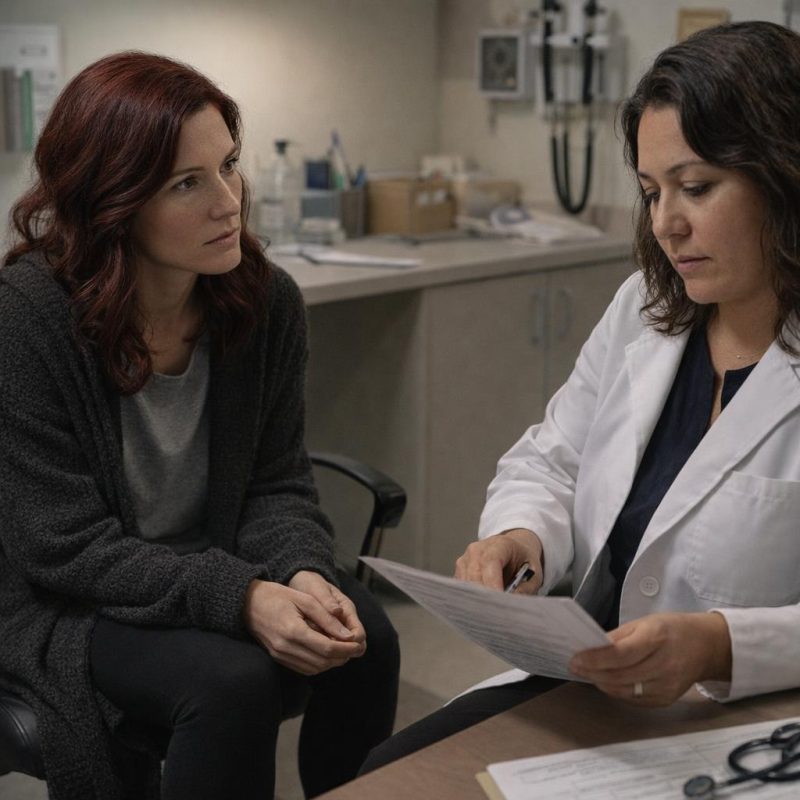 Image by RM AI
Research
The night after my appointment with Dr. Chen, I opened my laptop and didn't close it for four hours. I started with the airline's official accessibility page, then followed every link until I'd read the FAA guidelines, the DOT's Air Carrier Access Act summaries, and three different patient advocacy forums where people had documented their own medical travel experiences in exhausting detail. I made notes in a spiral notebook — the kind with the grid paper I'd used in grad school — and then I opened a spreadsheet because the notebook wasn't organized enough. I compared five major carriers: their medical documentation requirements, their bulkhead seating policies, their procedures for carrying liquid medications past security. I wrote down direct phone numbers for each airline's medical services desk. I noted which carriers required physician letters on official letterhead versus which accepted printed portal documents. Mom came in around ten o'clock, saw the glow of the laptop and the notebook open beside it, and stood in the doorway for a moment without saying anything. Then she said, quietly, that she hadn't seen me look like that in months. I didn't ask what she meant. I already knew — it was the look of someone with a plan. The notebook sat on the table beside me, every page dense with requirements, seat diagrams, and phone numbers I intended to use.
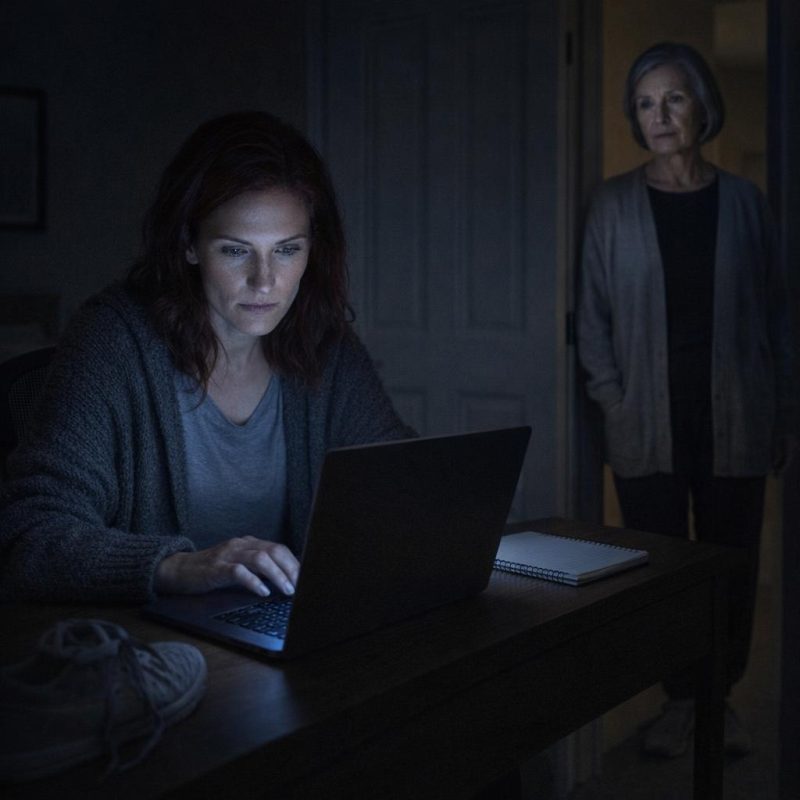 Image by RM AI
Clearance
The three-month follow-up felt different from the others. Dr. Chen moved through the evaluation with her usual precision — equilibrium tests, circulation checks, a review of my physical therapy progress reports — but there was something more deliberate about the pace, like she was building toward a decision rather than just tracking numbers. I sat on the exam table and answered every question carefully, because I knew what I was hoping she'd say and I didn't want to oversell it. She reviewed my symptom log, asked about the dizziness episodes, noted that the frequency had dropped significantly over the past six weeks. She asked whether I'd been managing the medication timing consistently. I had. I showed her the log on my phone. She looked at it for a long moment, then set it down and said that my recovery trajectory was better than she'd projected at the two-month mark. She talked through the in-flight protocol in detail — timing the dose relative to boarding, staying hydrated, the importance of the aisle seat for circulation. She said she wanted me to have her emergency line saved, not just the office number. Then she pulled a form from the folder on her desk, signed it in two places, and slid it across the table. I picked it up with both hands — the official airline medical clearance form, her signature still slightly wet at the bottom.
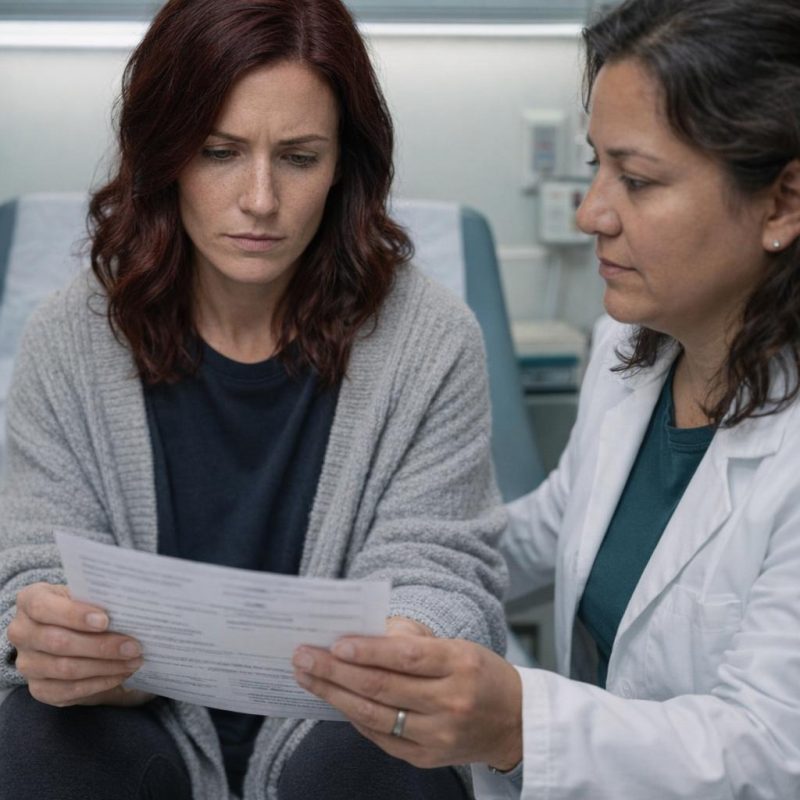 Image by RM AI
Booking
I'd done enough research to know exactly what I needed before I ever opened the booking page. Aircraft type first — I cross-referenced the flight number with a seat-mapping site to confirm the cabin layout. The bulkhead row on that particular plane put seat 1A against the forward wall with extra legroom and less than fifteen feet to the lavatory. That mattered. The cost of the first-class ticket made me wince, but I'd already decided: this wasn't an upgrade, it was a medical requirement, and I was going to treat it that way. Mom sat beside me while I worked through the booking form, and she didn't say much, just watched the screen and handed me my credit card when I got to the payment page. She asked once, gently, whether I was sure I didn't want her to come with me. I told her I needed to do this leg on my own — that getting home under my own power was part of it. She nodded like she understood, even if her expression said something else. I clicked confirm. The page loaded. The confirmation email arrived within two minutes, and I opened it immediately and scrolled straight to the seat assignment: 1A, confirmed. I read it twice, then set the phone face-up on the table and left it there.
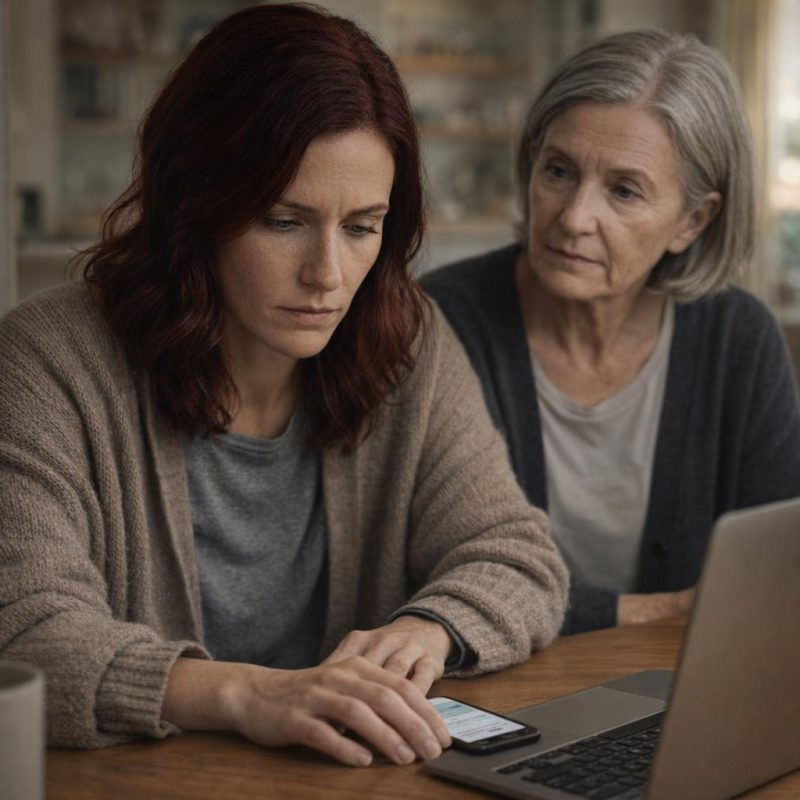 Image by RM AI
The Calls
I made the first call to the airline's medical services line the morning after I booked, before I'd even finished my coffee. The representative was professional and thorough, and I took notes on everything she said — her name, the time of the call, the reference number she gave me. I emailed Dr. Chen's signed clearance form to the medical services address that same afternoon and called back two days later to confirm receipt. That second call took forty minutes because the representative needed to pull up my reservation, verify the documentation, and manually note the medication storage requirements in the system. I asked specifically about the foil packets — whether they'd flag at security, whether the cabin crew would be informed. She walked me through the TSA medical exemption process and said she'd add a notation for the flight crew. I called a third time the following week, because I needed to hear someone say out loud that every accommodation was visible in my reservation. The representative read the notes back to me one by one: bulkhead seat confirmed, medical documentation on file, crew notification flagged, direct medical services contact number added to my booking. Then the confirmation email landed in my inbox while I was still on the phone — every accommodation listed, my name at the top, seat 1A in bold.
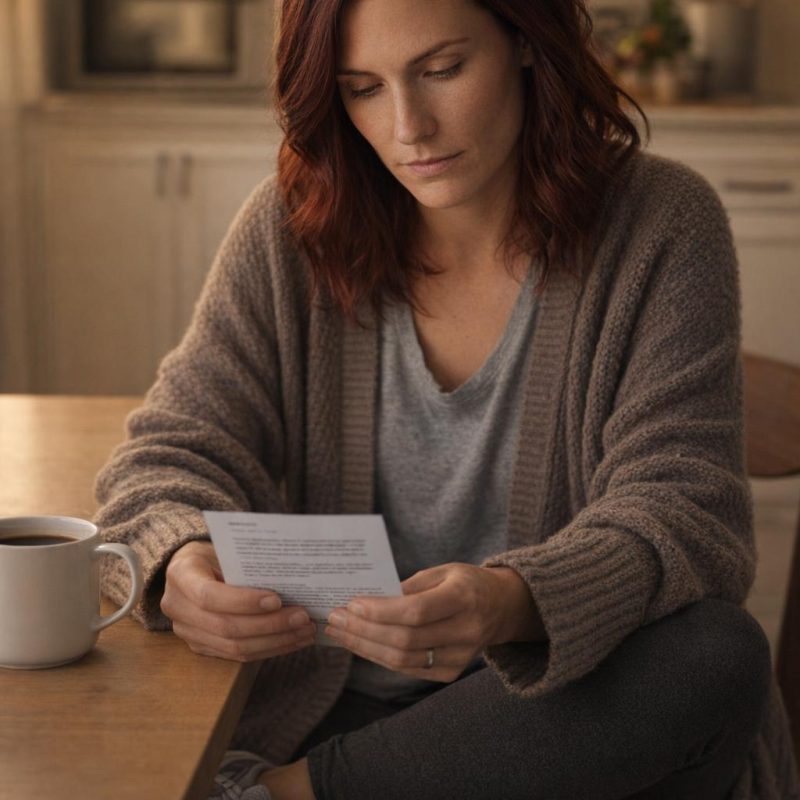 Image by RM AI
Packing
I started the packing checklist a full week before the flight, which Mom said was excessive and I said was necessary, and we were both right. I bought TSA-approved clear bags in three sizes and laid everything out on the bed: the foil medication packets, the backup supply in a separate pouch, the printed copies of Dr. Chen's clearance letter, the prescription documentation, the airline confirmation with the accommodation notes, and a handwritten card with Dr. Chen's emergency line and the after-hours number for the practice. Mom helped me fold the clothes — soft fabrics, nothing with a waistband that would press against my midsection during a long sit. She kept her worry quiet, mostly, except for once when she held up the backup medication pouch and asked how many extras I'd packed. I told her. She put it down without comment, which was its own kind of answer. I organized the carry-on so that everything I might need mid-flight was in the outer pocket, accessible without unzipping the main compartment. I went through the checklist three times that evening, then once more before bed. The medication packets were lined up in the clear bag in the order I'd use them — primary dose, then the backup, then the emergency reserve — each one sealed, labeled in my own handwriting, catching the light from the bedside lamp.
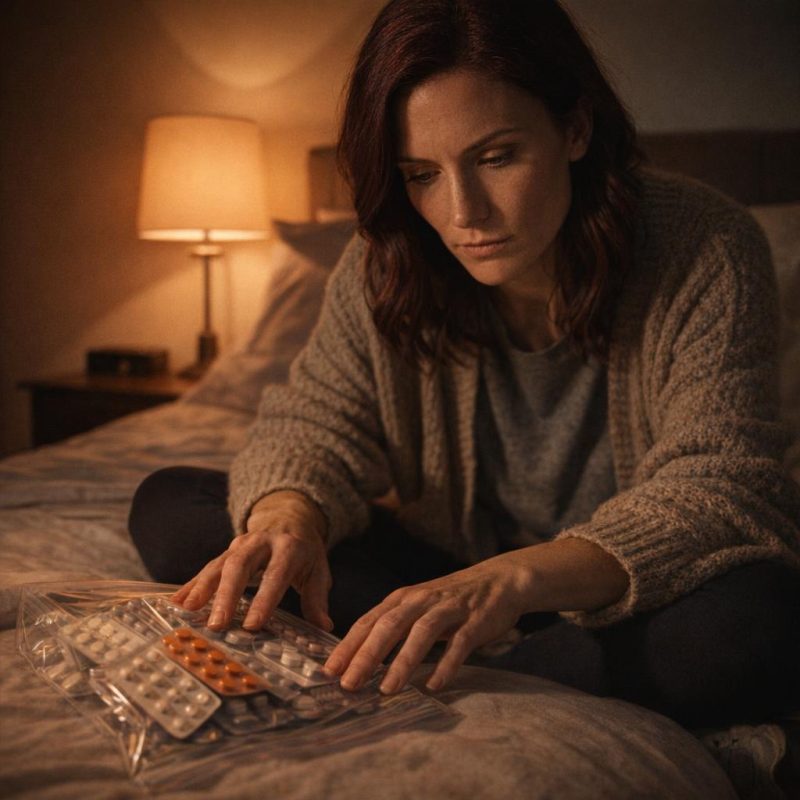 Image by RM AI
Practice
I set up the practice station at the kitchen table: a bottle of sparkling water, a foil packet, a small stirring spoon, and Mom's phone with the stopwatch app open. The first run was a disaster. My hands weren't cooperating the way I needed them to — the foil packet was harder to tear cleanly than I'd expected, and I fumbled the spoon, and by the time I'd dissolved the medication and gotten it to my mouth, Mom's stopwatch read five minutes and forty seconds. I sat back and looked at the ceiling for a moment. Then I tried again. The second run was better. The third was better still. Mom sat across from me and called out the time at each step without editorializing, which was exactly what I needed. I practiced the foil tear until I could do it one-handed. I practiced the stir until the motion was automatic. I practiced drinking it quickly despite the taste, which was something between flat mineral water and a vitamin tablet left too long in a glass. By the end of the first session I was under three minutes. By the third day I was consistently under two. The night before the flight, I ran through it one final time — packet, pour, stir, drink — and Mom stopped the clock and showed me the screen without saying a word. One minute forty-eight seconds. I sat with that number for a moment, and it felt like enough.
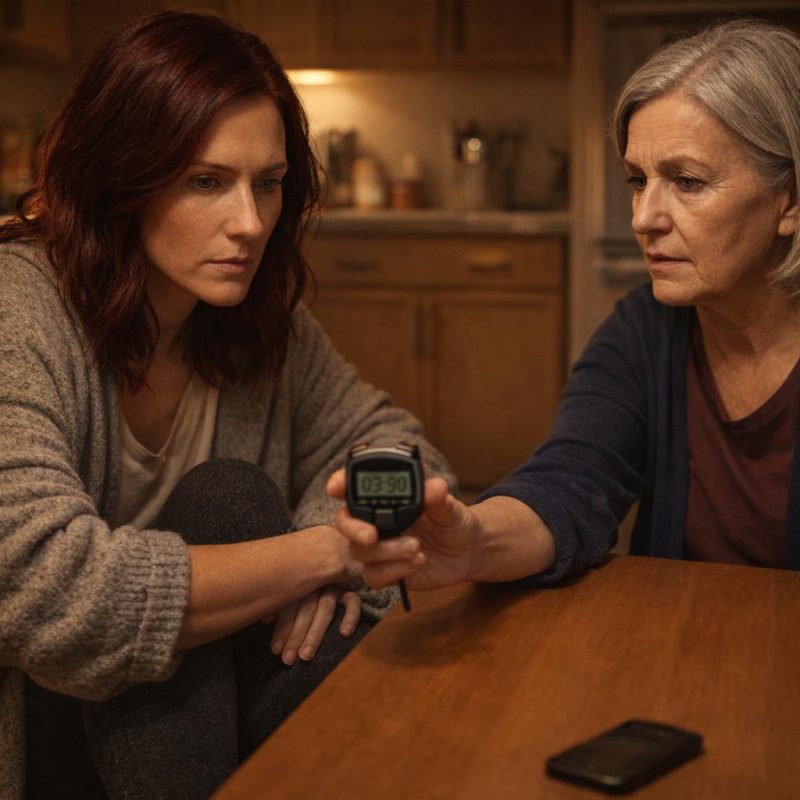 Image by RM AI
The Night Before
I went to bed at nine-thirty, which was optimistic. By ten I was staring at the ceiling running through the boarding sequence in my head. By eleven I was mentally rehearsing what I'd say if the gate agent had no record of my accommodations. By midnight I was in the kitchen with the lights low, unzipping the carry-on to check that the medication bag was still in the outer pocket, which it was, exactly where I'd put it three hours earlier. Mom appeared in the doorway in her robe, unsurprised, and put the kettle on without asking. We sat at the kitchen table with chamomile tea and she let me talk through the what-ifs — what if there was a delay, what if the crew rotation changed and the notations didn't transfer, what if my equilibrium spiked mid-flight. She didn't dismiss any of it. She just said, each time, that I'd prepared for it, and that preparation was the only thing I could control. I went back to bed around one and lay there in the dark, not quite sleeping, running the timeline forward and backward until the numbers blurred. I woke at three with my heart going faster than it should have, reached for my phone, and pulled up the airline app. The flight status loaded: on time, departing 1:15 PM.
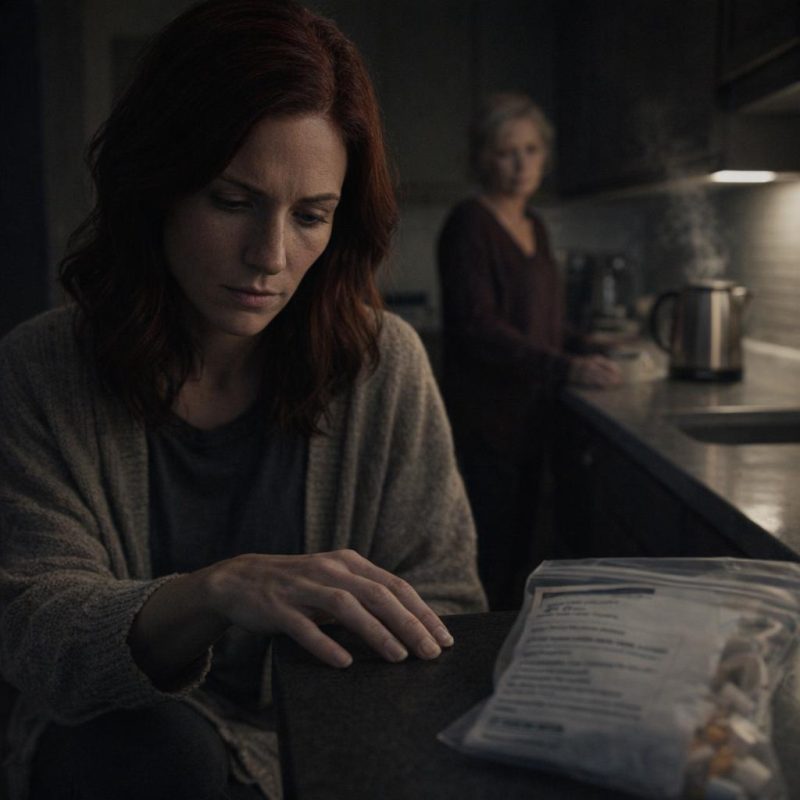 Image by RM AI
Morning Protocol
The alarm went off at six and I was already awake. I'd been awake since five-forty, lying still and running the morning schedule in my head: breakfast at six-thirty, medication at seven, shower by seven-forty-five, dressed and downstairs by eight-thirty. Mom had the kitchen ready when I came down — plain toast, a small bowl of the approved fruit, no coffee because Dr. Chen had been clear about caffeine and circulation. I ate slowly and deliberately, the way I'd practiced, because rushing breakfast had made me dizzy twice during recovery and I wasn't going to let that happen today. The seven o'clock medication dose went down on schedule. I noted the time in my log. The shower was careful — warm water, no steam, sitting on the bench Mom had installed in the early weeks of recovery. I dressed in the clothes we'd selected together: soft layers, loose at the waist, compression socks already on. Mom loaded the car while I did the final walk-through: carry-on by the door, documentation folder on top, medication bag in the outer pocket, phone charged to a hundred percent. I stood in the entryway for a moment and looked at the checklist one last time. Then I picked up the bag, stepped outside, and got into the car. Mom backed out of the driveway at 9:47 AM.
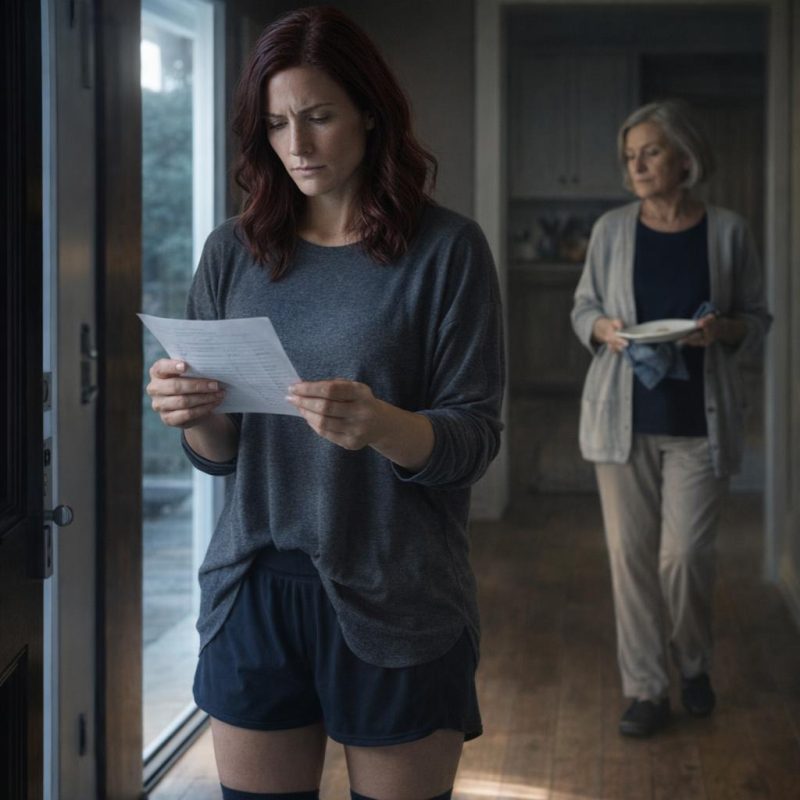 Image by RM AI
Airport
We pulled into the departures lane at 10:15 on the dot, which felt like a small miracle given how many times I'd mentally rehearsed the drive going wrong. Mom had the trunk open before I even had my seatbelt off. The check-in agent at the counter was thorough but kind — she reviewed my medical documentation folder page by page, asked two clarifying questions about the medication declaration, and flagged my boarding pass for pre-boarding assistance without me having to push for it. I'd been braced for a fight and there wasn't one. The wheelchair arrived within five minutes. Mom walked beside me through the terminal, her hand resting on the back of the chair every few feet like she couldn't quite stop herself. At the security checkpoint she had to stop. She hugged me for a long time without saying much, which was more than enough. I told her I'd text when I landed. She nodded and pressed her lips together and stepped back. The wheelchair assistant — a quiet, efficient man who moved like he'd done this ten thousand times — guided me through the priority lane and down toward the gate. We arrived with two hours and twelve minutes to spare. I found a seat near the window, angled away from the foot traffic, and let myself breathe. Through the glass, the aircraft sat at the jetway, white and enormous and waiting.
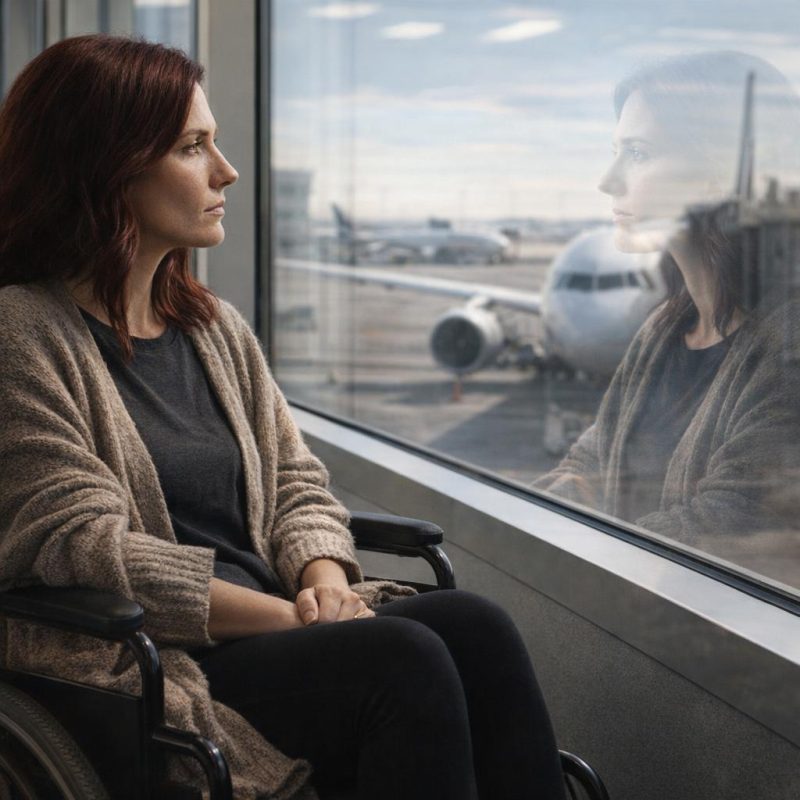 Image by RM AI
Security
I'd read every TSA guideline about traveling with powdered medication at least a dozen times, and I'd still been dreading this part. The officer at the screening lane was professional — no eye-rolling, no skepticism in his voice when I handed over the clear bag with the foil packets and the printed prescription documentation. He asked me to step aside while he examined the contents, and I did, keeping my hands loose at my sides the way I'd practiced so I wouldn't look nervous even though I absolutely was. He had questions about the powder — what it was for, whether it was prescription, whether I had a doctor's letter. I had all of it. The letter from Dr. Chen was on top, printed on clinic letterhead, signed and dated. He read it carefully, then called a supervisor over. My stomach dropped for about thirty seconds. The supervisor reviewed the same documents, asked me one follow-up question about the dosage schedule, and then nodded and handed everything back. They repacked the bag with more care than I expected. I zipped it closed, tucked it back into the outer pocket of my carry-on, and moved through to the other side. Everything was intact. Every packet accounted for. I stood there for a moment with my hand on the bag, and the tension I'd been carrying since the driveway finally loosened its grip.
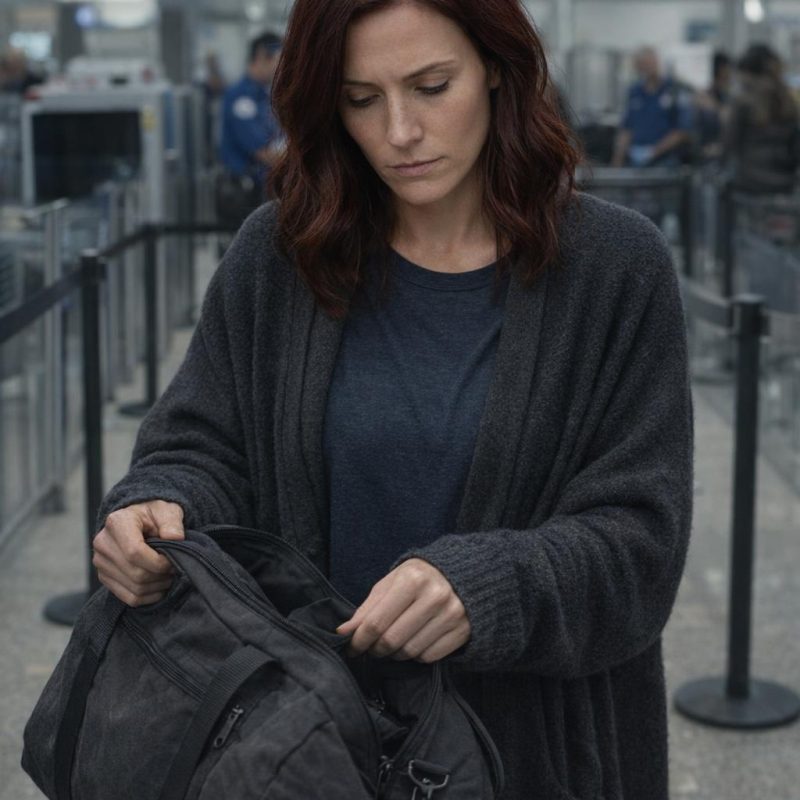 Image by RM AI
Waiting
The gate area was quieter than I'd expected for a full flight. I found a seat at the end of a row with a clear sightline to the boarding door and enough space that no one would brush past me getting to their own chair. I went through the medication protocol one more time — not because I'd forgotten it, but because going through it felt like touching something solid. Foil packet, sparkling water, stir until dissolved, let it settle two minutes, drink within the window. I knew it by heart. I watched the gate fill up gradually: a family with two small kids who immediately commandeered the charging station, a man in a suit who paced the same twelve feet of carpet for twenty minutes, a group of older women in matching travel vests who seemed to be having the best day of anyone in the terminal. First-class passengers drifted in closer to boarding time — quieter, more deliberate, the kind of people who'd done this enough times that airports didn't impress them anymore. I used the restroom with forty minutes to spare so I wouldn't need to immediately after boarding. When I came back, the gate agent was doing a mic check. I positioned myself near the pre-boarding lane and ran through the sequence one more time in my head. Seat 1A. Tray table down. Sparkling water. The plan was solid. I felt, for the first time all morning, something close to calm.
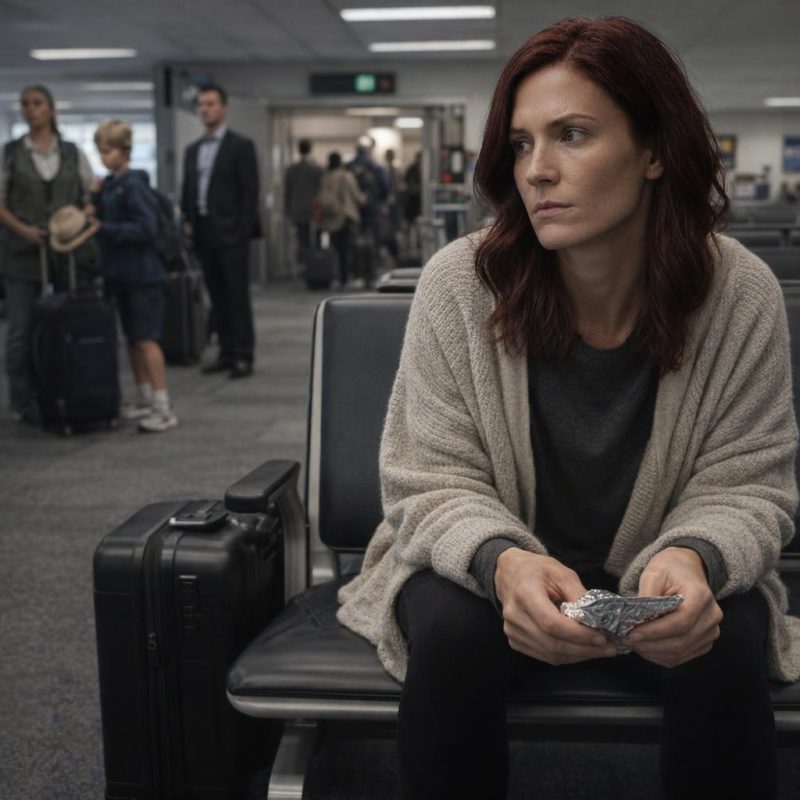 Image by RM AI
Pre-Boarding
When the gate agent called for passengers needing additional time or assistance, I was already standing. I handed over my boarding pass and the medical documentation together, the way I'd practiced, and she smiled and waved me through without hesitation. The jet bridge stretched out ahead of me, that particular tunnel-light that exists nowhere else in the world, and I walked it slowly, one hand trailing the wall. The wheelchair assistant had offered to push me all the way to the door but I'd said no — I wanted to walk this part. I'd been working toward this trip for four months. I wanted to feel my own feet on the floor. Halfway down the bridge I stopped and took a breath. My heart was going faster than I'd have liked, but it wasn't the bad kind of fast. It was the kind that comes when something you've been afraid of is finally, actually happening. The flight attendant at the aircraft door greeted me with a nod and checked my boarding pass, and I stepped through the threshold and into the cabin — and the first-class section opened up in front of me, wider and quieter and more still than I'd imagined it, all pale upholstery and soft overhead light.
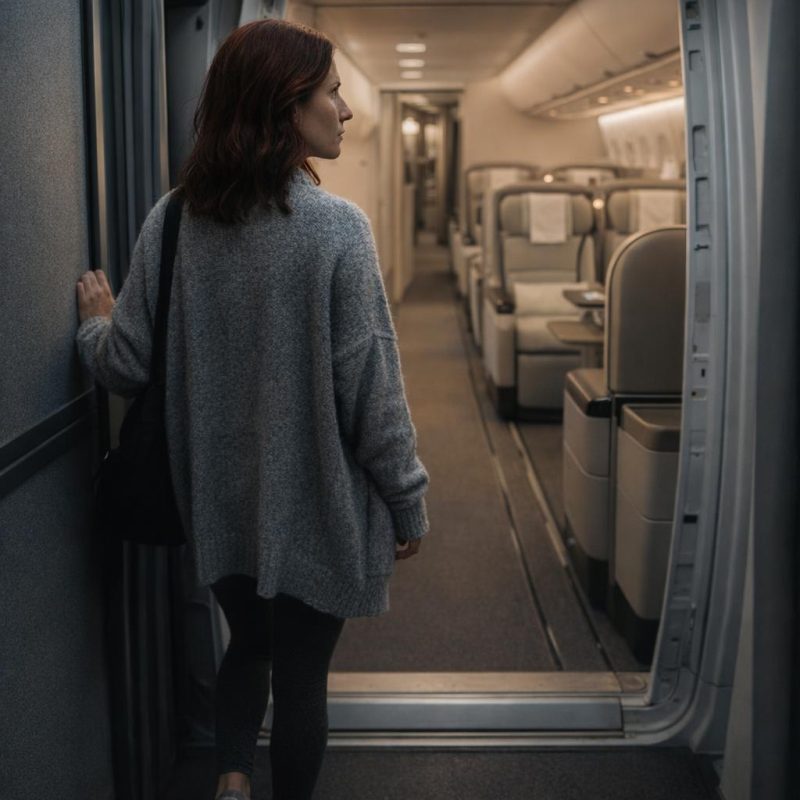 Image by RM AI
Meeting Marco
Seat 1A was exactly where it was supposed to be, window side, front row, and I stood in front of it for a second longer than necessary just to confirm it was real. I was still getting my bag into the overhead bin when a flight attendant appeared at my elbow — tall, composed, the kind of calm that reads as genuine rather than performed. His name tag said Marco. He asked if I needed help with the bin, and when I said I was fine, he didn't hover. He just waited. I appreciated that more than I could have explained. Once I was settled, I pulled out the medical declaration form and handed it to him. He read it without rushing, asked one clarifying question about the medication timing, and then looked up and said he'd personally make sure I had everything I needed before pushback. I told him about the sparkling water — that the medication had to be mixed in carbonated water specifically, that still water wouldn't work, that I needed it before the seatbelt sign came on. He didn't look confused or skeptical. He just nodded and said he'd bring it now. I watched him move back toward the galley with the easy efficiency of someone who'd handled a hundred unusual requests and treated every one of them like it mattered. The anxiety that had been sitting in my chest since the driveway that morning went quiet, just a little, in the warmth of that small, unhesitating kindness.
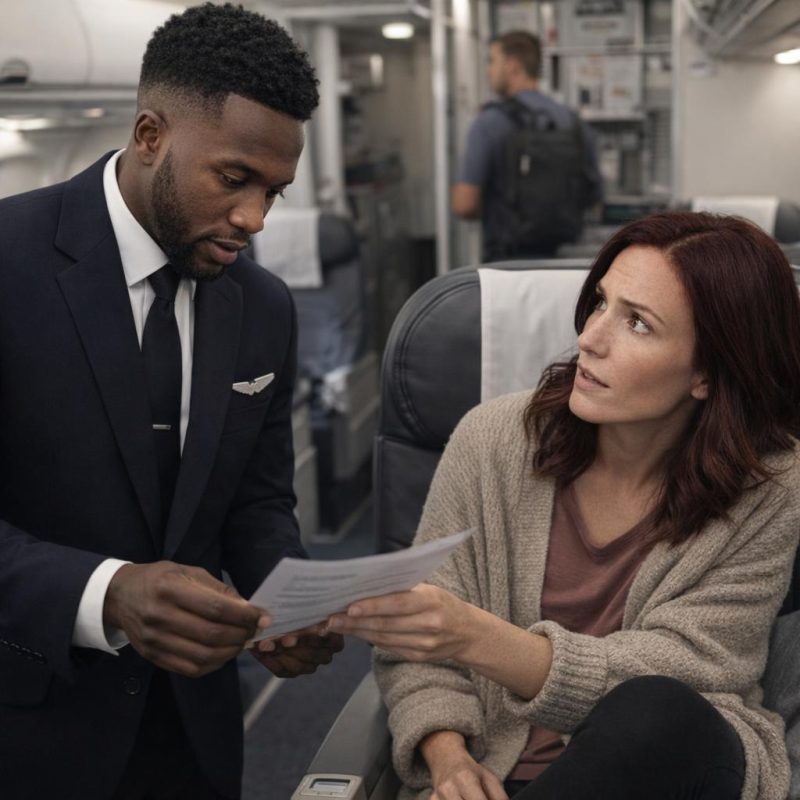 Image by RM AI
Preparation
Marco came back with the sparkling water in a proper glass — not a plastic cup, a real glass — and set it on my tray table without being asked to lower it first. I noticed that. I retrieved the foil packet from the outer pocket of my medical bag, the one I'd packed last so it would be first out, and I tore it open along the scored edge the way Dr. Chen had shown me. The powder was pale, almost white, with a faint chemical smell that I'd gotten used to over months of practice doses. I tipped it into the glass slowly and watched it hit the carbonation. It fizzed immediately, more than I expected, the bubbles rushing up through the powder and pulling it down into the liquid. I stirred it with the small spoon Marco had thought to include on the napkin. The mixture turned as it dissolved — pale at first, then a deeper gold as the last of the powder worked in. The smell shifted too, less sharp, almost sweet. Marco was still nearby, not watching exactly, but present. He caught my eye and gave a small nod, the kind that means I see you and this is fine. I checked my watch: 11:47. Thirteen minutes to pushback. I set the glass down on the tray table and let it settle, the way the protocol said to, and it sat there fizzing softly in the cabin light, catching the gold of it, looking for all the world like a glass of champagne.
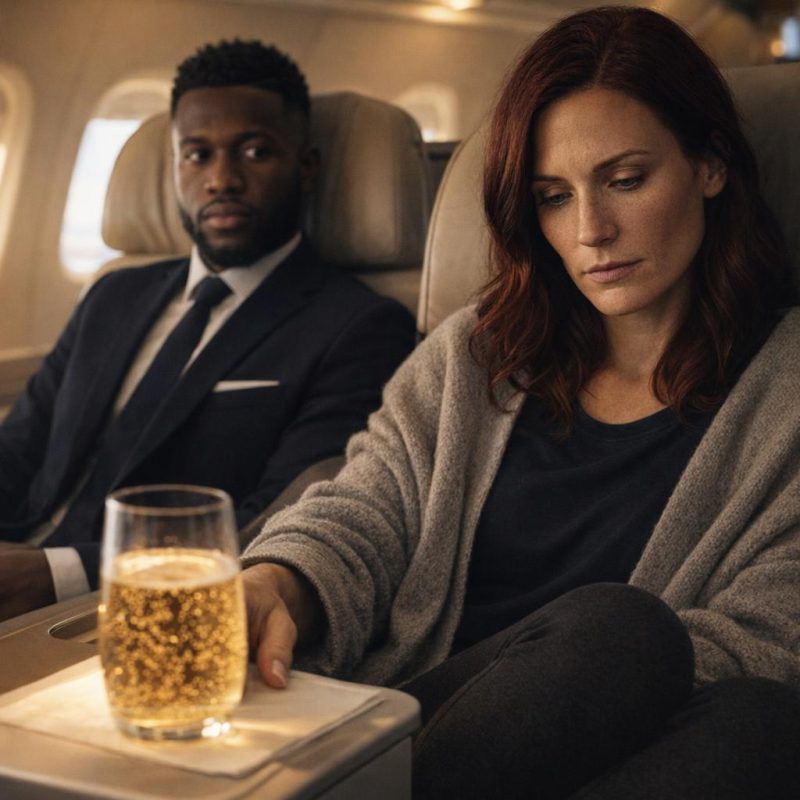 Image by RM AI
Three Minutes
I'd been so focused on the medication timing that I almost missed the other thing my body was telling me. The restroom at the gate felt like a lifetime ago. I checked my watch — 11:49, eleven minutes to pushback — and did the math. Once the seatbelt sign came on I'd be locked in place, and the last thing I needed was to be uncomfortable for the first hour of a flight I'd spent four months preparing for. The front lavatory was ten steps away. Literally ten steps. I stood up carefully, left the glass on the tray table where it was settling, and walked forward. Inside, I ran the water cold over my wrists the way I did when my nerves spiked, looked at myself in the mirror, and said out loud, quietly, that I was going home. It helped. I dried my hands, straightened up, and pushed the door open. The cabin looked the same as I'd left it — soft light, low noise, the particular hush of a plane not yet moving. I walked back toward row one. And then I stopped. There was a woman in seat 1A. She was wearing a blazer the color of a flamingo, her designer bag already wedged under the seat in front, my personal bag moved to the floor beside her feet — and she was holding my glass.
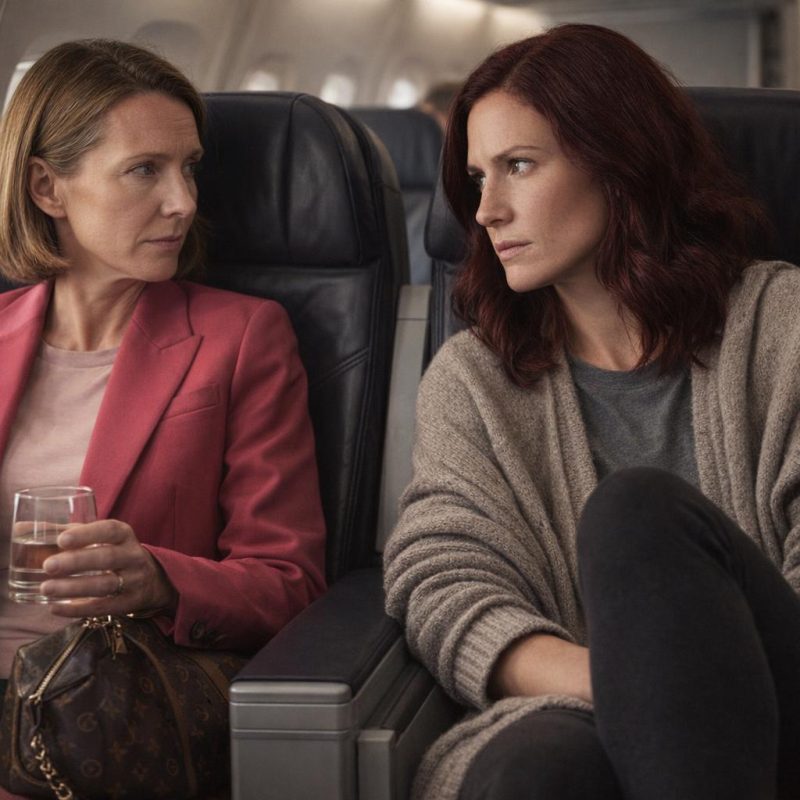 Image by RM AI
The First Sip
I stood in the aisle and couldn't move. My brain kept trying to catch up with what my eyes were seeing and kept falling short. The woman — bold makeup, jewel-toned scarf, the posture of someone who had never once questioned whether a seat was hers — swirled the glass with a slow, easy rotation of her wrist, the way you do when you're settling in. She wasn't reading the label on anything. She wasn't looking around for the person who'd left it. She was just sitting there in my seat, in my space, with my medication in her hand, like she'd ordered it. I took one step forward and opened my mouth. I was going to say something — excuse me, that's mine, something — but the words didn't come fast enough. She lifted the glass. She tilted it back. She took a long, unhurried sip, the kind you take when you think you're drinking something good, and I watched her throat move as she swallowed.
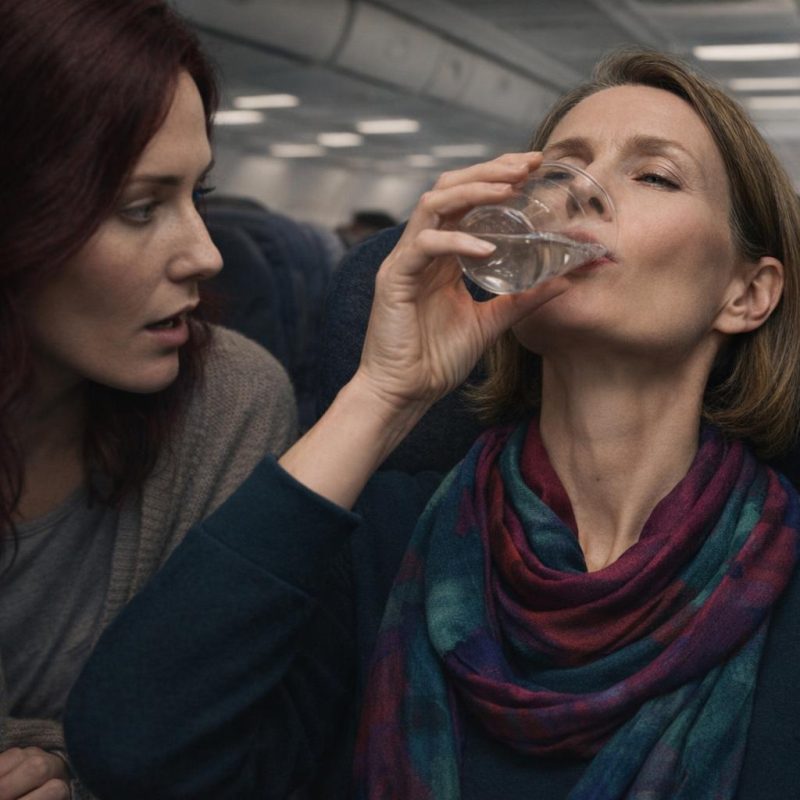 Image by RM AI
Confrontation
I took a breath and walked toward her, boarding pass in hand, telling myself to stay calm. My voice came out steadier than I expected. I said excuse me, I think there's been a mix-up — this is my seat, 1A, and I held the pass out so she could see the assignment printed right there in black and white. She didn't look up. She just swirled the glass again, slow and unbothered, like I was a flight attendant asking if she wanted a pillow. I stood there with my arm extended, pass still in the air, feeling the heat start to creep up the back of my neck. Finally she turned her head. She looked me up and down the way people do when they've already decided you don't matter, a slow scan from my shoes to my face, and whatever she saw clearly didn't impress her. She said she'd spoken to the gate agent about a seat reconfiguration and that this section had been reassigned. She said it like she was reading from a script she'd memorized. Then she turned back to the window and told me to move along and find another seat.
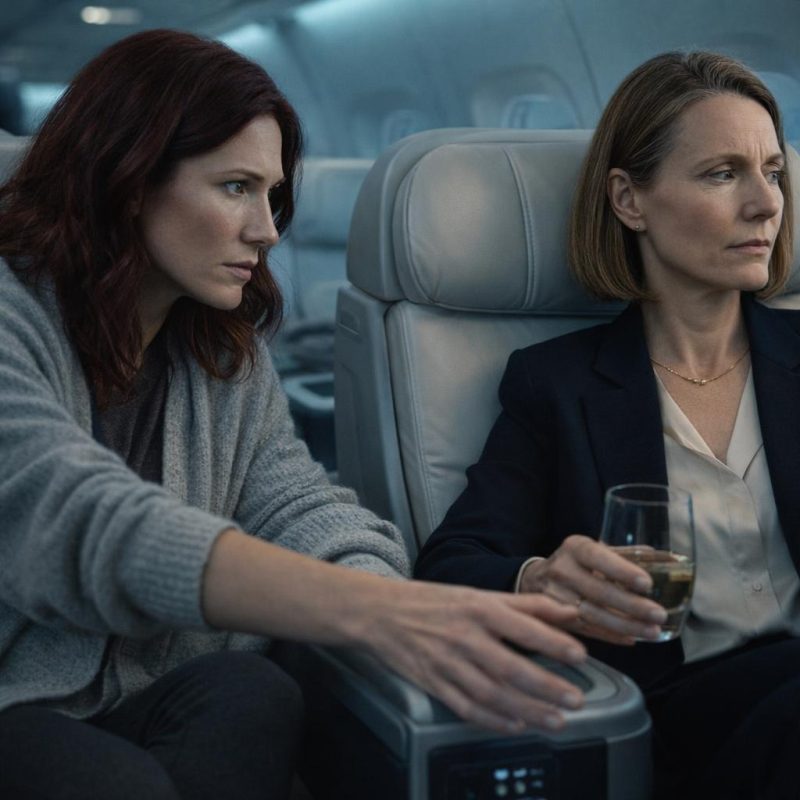 Image by RM AI
The Tax
I didn't move. I told her she didn't understand — the seat assignment wasn't just a preference, it was a medical accommodation, and the drink she'd just had wasn't champagne. I got about that far before she cut me off. She turned back toward me with this slow, deliberate smirk, the kind that's designed to make you feel small, and she lifted the glass. She said the drink was a tax. Her exact word — tax. For the inconvenience of being bothered. Then she tilted the glass back and finished every last drop, a long, theatrical swallow, and set the empty glass down on the tray table with a sharp little clack that felt like a period at the end of a sentence I hadn't been allowed to finish. She crossed her arms, straightened in the seat, and stared straight ahead. She added, almost as an afterthought, that it was a bit dry — cheap stuff, she imagined. And that was it. I ceased to exist in her attention. I was standing two feet away and she had already moved on, already filed me somewhere beneath her notice, and the sting of that sat in my chest like something I couldn't swallow back down.
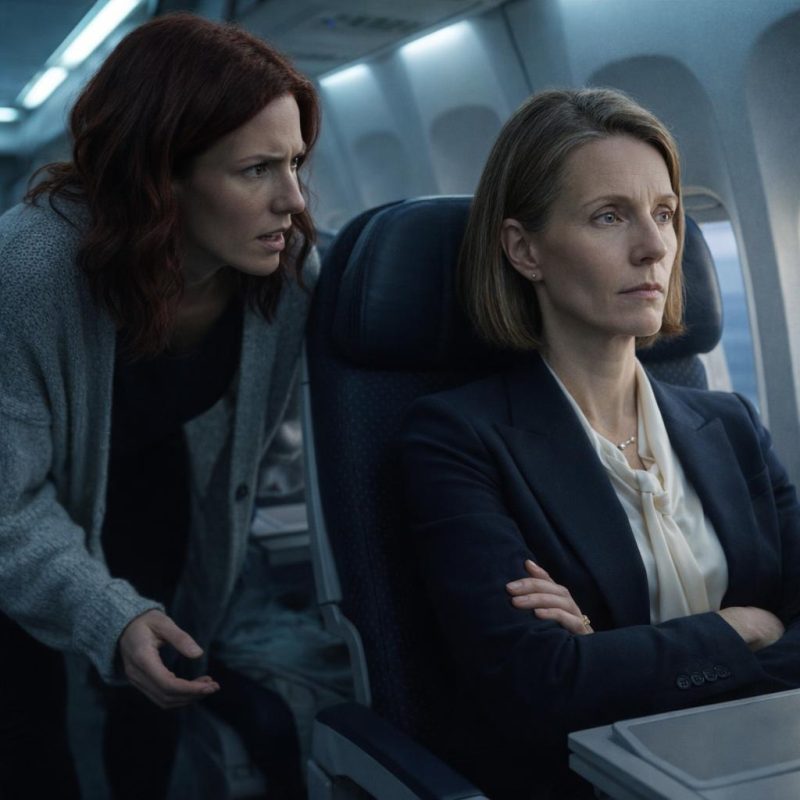 Image by RM AI
The Declaration
I don't know how long I stood there before I heard Marco's voice behind me, low and careful, asking if everything was all right. I turned and he was already reading the room — his eyes moved from me to Vivian to the empty glass on the tray table, and something shifted in his expression. I didn't say anything. I reached into my bag and pulled out the medical declaration form I'd been required to carry since the procedure, the one Dr. Chen had made me promise to keep on my person for exactly this kind of situation. I held it out to Marco without a word and pointed to the section near the bottom, the one labeled Contingency and Ingredients. He took it and read. I watched his eyes move across the page and slow down. He looked up at Vivian. She had shifted in the seat and was holding very still in the way people do when they're trying to decide if they feel strange or if they're imagining it. There was a bead of sweat forming on her upper lip. Marco looked back at me, just for a second, and there was something in his eyes — not quite satisfaction, not quite anything I could name cleanly, but a dark and quiet kind of understanding that passed between us without either of us having to say a single word.
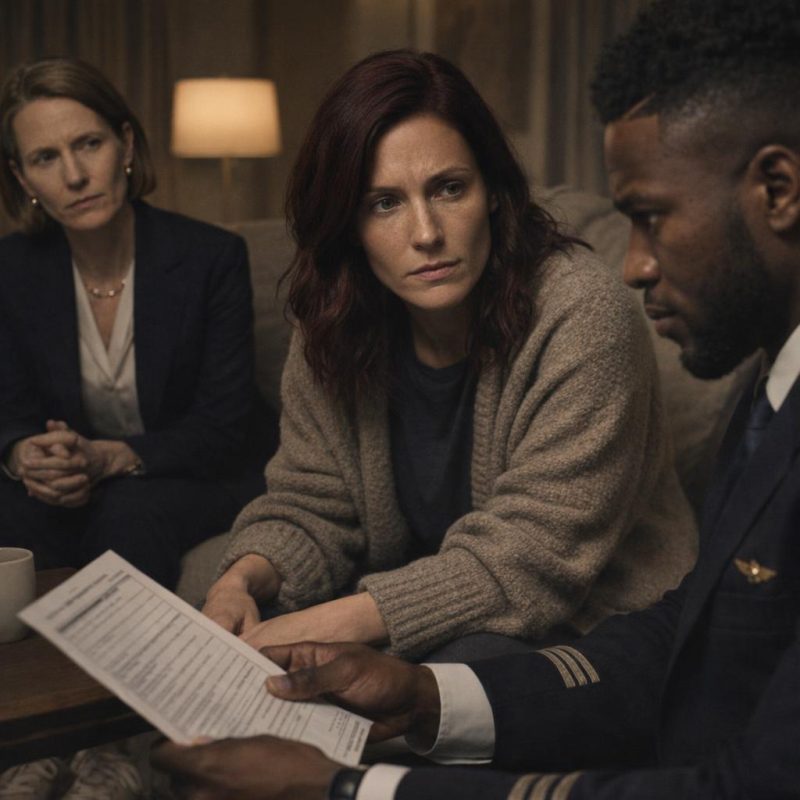 Image by RM AI
The Reveal
Marco folded the declaration form carefully and handed it back to me, then turned to Vivian with the kind of professional composure that must take years to develop. He said he'd need to see her boarding pass, please. His voice was even, almost gentle. Vivian blinked at him like the request didn't compute. She started to reach for her bag, then stopped, and I could see her trying to recalibrate. Marco waited. When she finally produced the pass, he glanced at it briefly and set it on the tray table beside the empty glass. Then he told her, still in that same measured tone, that the beverage she'd consumed from the tray was not a complimentary service item. He said it was a prescription medical compound belonging to the passenger assigned to seat 1A. Vivian stared at him. She said that was impossible, that it was just champagne someone had left sitting there, and she looked at me like I'd set a trap. Marco didn't flinch. He said he understood this was alarming news and that they would need to address it before departure. Vivian's hand moved to her stomach. The color in her face had shifted somewhere between pale and a shade of green that clashed badly with her pink blazer, and she stammered that it was just champagne — it was just champagne — it had to be.
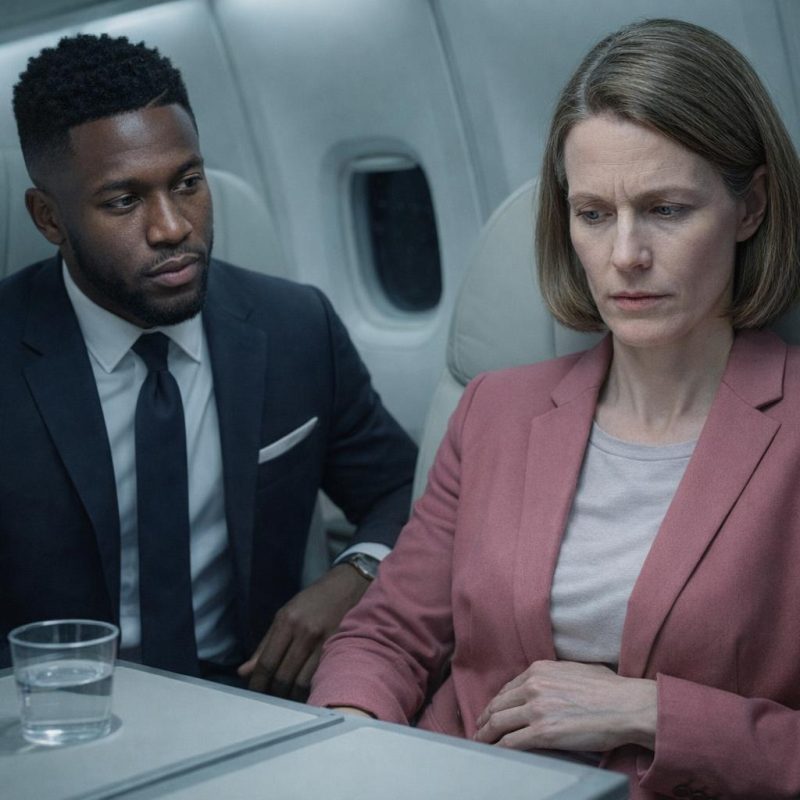 Image by RM AI
The Captain
Marco kept his voice low and steady, the way you talk to someone who's starting to panic, which Vivian very clearly was. He explained that given the circumstances — the seat assignment discrepancy and the consumption of a restricted medical compound — he was required to contact the captain before departure. He said it wasn't optional. He said she would need to be evaluated by medical personnel and that a statement would be needed for the authorities. Vivian said she didn't need a doctor, she was fine, she was perfectly fine, and she gripped the armrest and tried to stand up to prove it. She made it about halfway before her legs seemed to disagree with her. She grabbed the headrest of the seat in front of her and steadied herself, and the entitlement that had been radiating off her since I first walked down that aisle was just — gone. Her face had gone slack and frightened in a way that was hard to look at directly. I felt the satisfaction I'd expected, but underneath it something heavier, something I hadn't anticipated, a low dread that settled in alongside the relief. I hadn't wanted this, exactly. I'd just wanted my seat back. I stood in the aisle and let the scene unfold around me, and the quiet that followed felt like something I hadn't earned but couldn't give back.
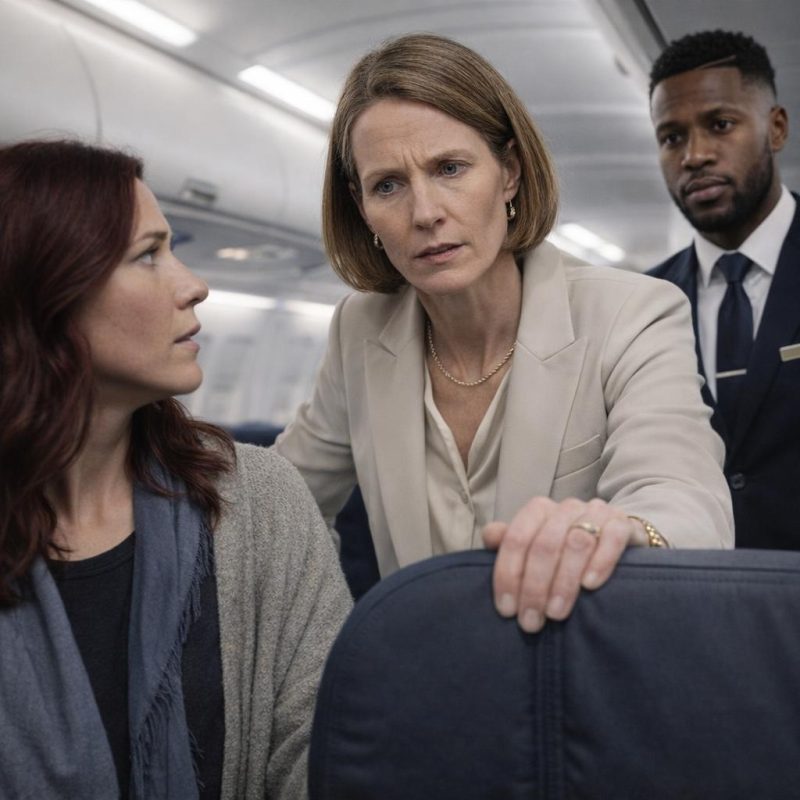 Image by RM AI
Removal
Two members of the ground crew came aboard maybe ten minutes later, moving efficiently through the cabin with the practiced calm of people who'd handled worse. Vivian needed both of them to get her upright. She leaned heavily on the arm of the taller one, her designer bag dragging from her elbow, her steps slow and uncertain. Just before they reached the door she turned and looked back at me. Her eyes were wide and wet and asking for something I didn't have to give. I didn't say anything. I just stepped past her and settled into seat 1A, and the leather was cool against the back of my legs and the armrests were exactly where they were supposed to be. Marco appeared at my side a minute later with a fresh glass of water and a new sealed packet of my medication. He cleared the empty glass Vivian had left, set it on his cart without ceremony, and leaned down to tell me quietly that I'd handled myself well. The cabin door sealed with a long pressurized hiss, and the plane began to move, and somewhere out on the tarmac Vivian's pink blazer was someone else's problem now, and the weight of the last hour lifted off my chest like something physical finally letting go.
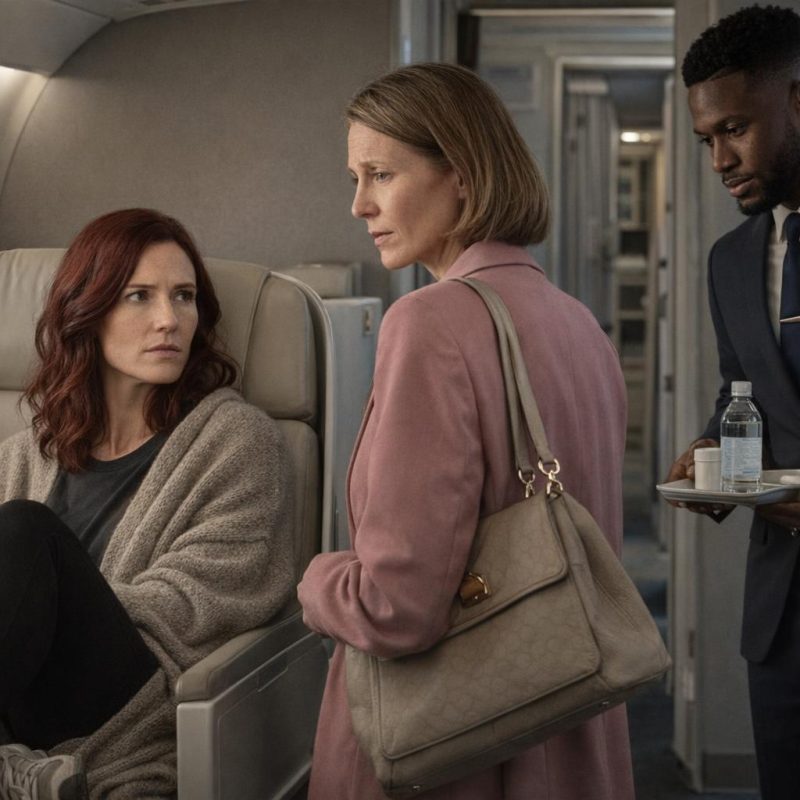 Image by RM AI
Departure
I mixed the fresh packet into the sparkling water the way Dr. Chen had shown me, slow stir, no shaking, and drank it down about thirty minutes before we lifted off. The plane pushed back on schedule. Takeoff was smooth, the kind where you barely feel the wheels leave the ground, and I sat with my hands loose in my lap and let myself breathe. Marco came by during the climb and checked my water glass without making a production of it, just a quiet refill and a look that asked if I was okay, and I nodded and meant it. The medication was doing what it was supposed to do — I could feel the familiar steadiness settling in, the absence of the low-grade nausea that had been my baseline for months. He came back again an hour in with a small snack, something light, and we didn't talk much but it felt easy. At some point I turned toward the window. We were above the cloud layer, and the light up there was this clean, flat white that seemed to go on forever in every direction, and I pressed my fingers lightly against the cold of the glass and let myself feel, for the first time in longer than I could remember, something close to peace.
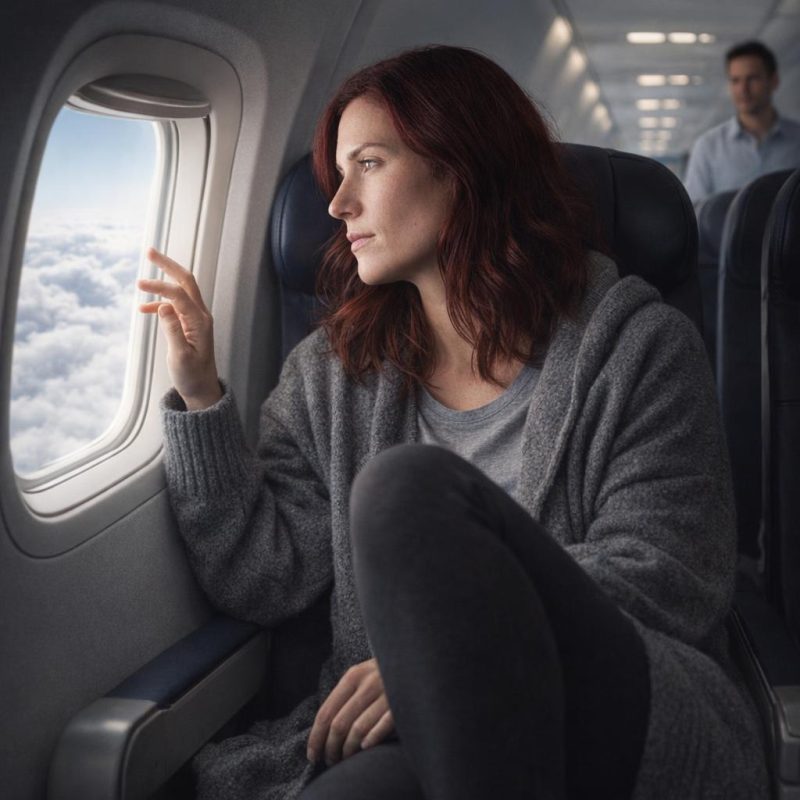 Image by RM AI
Landing
Descent was smooth and the landing was the kind you barely notice, a gentle settle onto the runway that drew a few relieved exhales from the rows behind me. My medication had held steady the entire flight, no dips, no spikes, exactly what Dr. Chen had been hoping for when she'd signed off on this trip. Marco helped me get my bag from the overhead bin and straightened up with a warm smile, the real kind, and told me I'd handled everything perfectly back there. I thanked him and meant every word of it. I walked off the jetbridge and into the terminal and the noise of the airport came up around me — rolling luggage, gate announcements, the smell of coffee from a cart near the windows — and it all felt ordinary in the best possible way. I made my way to baggage claim, found a spot near the carousel, and stood there with my carry-on at my feet thinking that it was over. The seat, the glass, Vivian's green face, the ground crew, all of it — it was behind me now, filed away into the category of things that had been awful and were finished. I rolled my bag toward the exit doors and told myself this particular chapter of my life was closed.
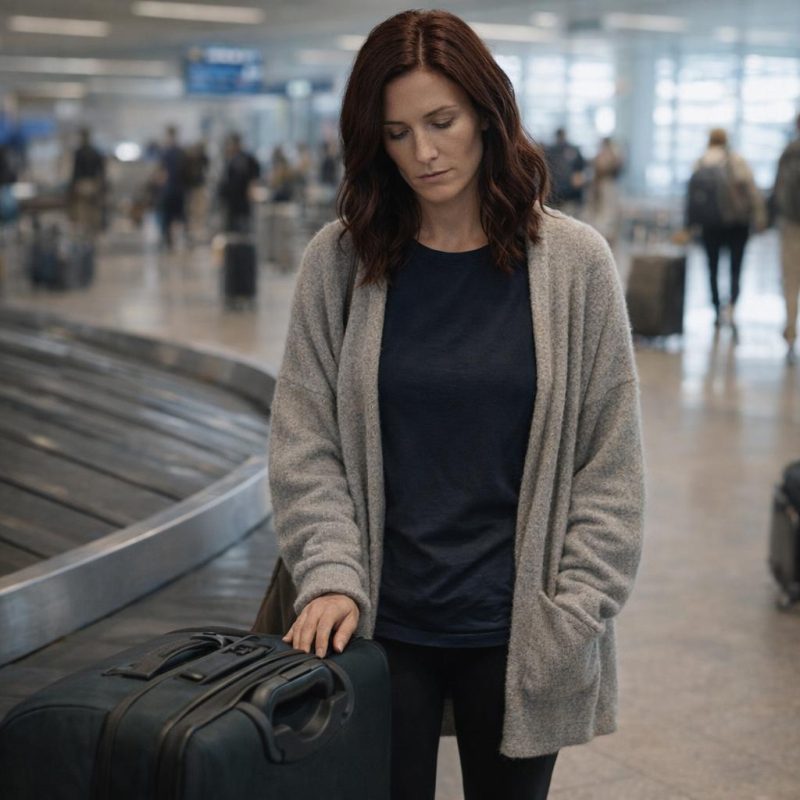 Image by RM AI
Viral
Three days after landing I was sitting at my kitchen table with a cup of coffee going cold beside me, feeling almost normal for the first time since the surgery, when my phone buzzed with a text from my college roommate. Just a link and a single question mark. I almost didn't open it. I figured it was some meme or a news story she thought I'd find funny. I tapped the link and it took me to a video platform, and for a second I didn't understand what I was looking at — shaky phone footage, the narrow aisle of an airplane, a woman in a jewel-toned blouse gesturing at a flight attendant. Then I heard my own voice. Thin and strained, coming out of the phone speaker, saying something about the medication. The view count in the corner read four point two million. I scrolled down and the comments were moving too fast to read, hundreds of them stacking on top of each other, strangers arguing about me, about what I'd done, about whether I was a hero or a monster. An email notification dropped down from the top of my screen — a woman named Rebecca Torres, identifying herself as an investigative journalist, requesting an interview. I looked back at the video thumbnail and there was my face, frozen mid-sentence, staring back at me from four million strangers' screens.
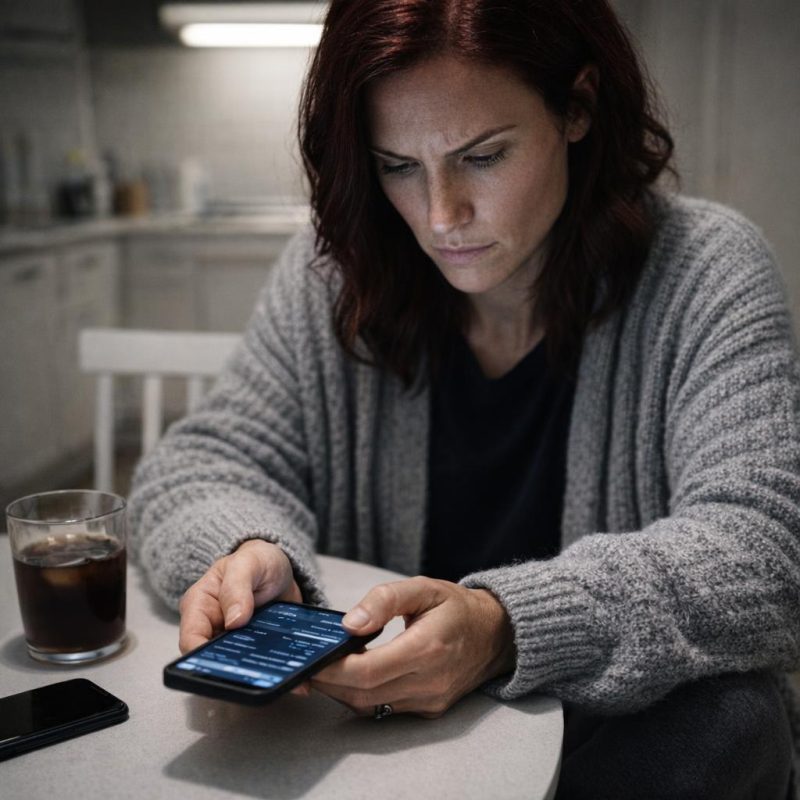 Image by RM AI
The Journalist
I almost didn't respond to Rebecca's email, but something about the way she'd written it — careful, specific, not breathless the way the entertainment blogs had been — made me write back. She called the next morning. Her voice was measured and unhurried, and she introduced herself as someone who covered medical and pharmaceutical stories, not viral moments. That distinction felt important, though I wasn't sure why yet. She asked me to walk her through the surgery and the recovery protocol, and I did, keeping it factual, watching my words the way Dr. Chen had taught me to watch my vitals. Then her questions shifted. She wanted to know the name of the medication, the dosage, the pharmaceutical company that manufactured it. She asked whether I'd been given detailed information about interactions with other substances. She asked if I'd experienced anything unexpected during my recovery — anything that hadn't matched what I'd been told to expect. I answered carefully, honestly, and I noticed that she wasn't writing down the dramatic parts. She wasn't asking about Vivian's face or the flight attendant or the video. She was writing when I talked about the medication. She asked if she could follow up with more questions once she'd done some additional research. I said yes, and after we hung up I sat there with the feeling that she was pulling on a thread I hadn't known was there.
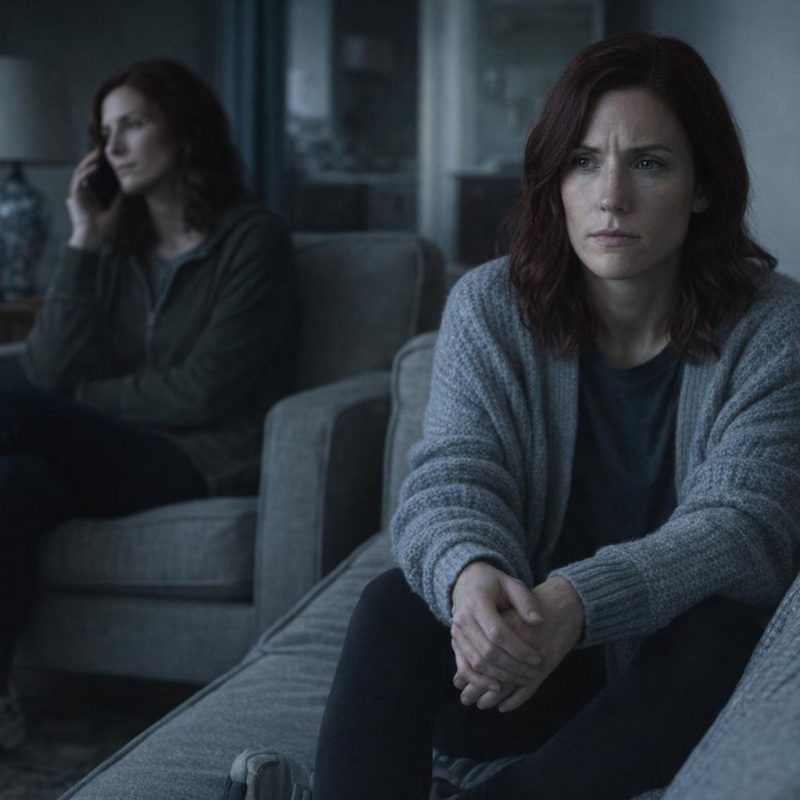 Image by RM AI
The Detective
Detective Hayes called two days later on a Tuesday afternoon, identified himself clearly, and explained he was conducting an official inquiry into the flight incident. His voice had that particular flatness of someone who asks questions for a living — not unfriendly, just careful. I told him I was willing to cooperate and he thanked me like he'd expected nothing less. He walked me through the events in sequence, and I answered everything: the seat assignment, the medication protocol, the way Vivian had dismissed me when I tried to explain what was in the cup. I told him I had tried to warn her. He asked me to be specific about that, so I was. He asked about the medication's composition and I gave him what I knew — the name, the prescribing physician, the general purpose. He asked whether I had documentation of the prescription and I said yes. He asked about Vivian's condition when the ground crew removed her from the plane, and I described what I'd seen — the pallor, the unsteadiness, the way she'd needed help walking. I thought that was where the questions were heading toward a close. Then Hayes paused, and his tone didn't change at all, and he asked me if I had any information about Vivian's current medical condition.
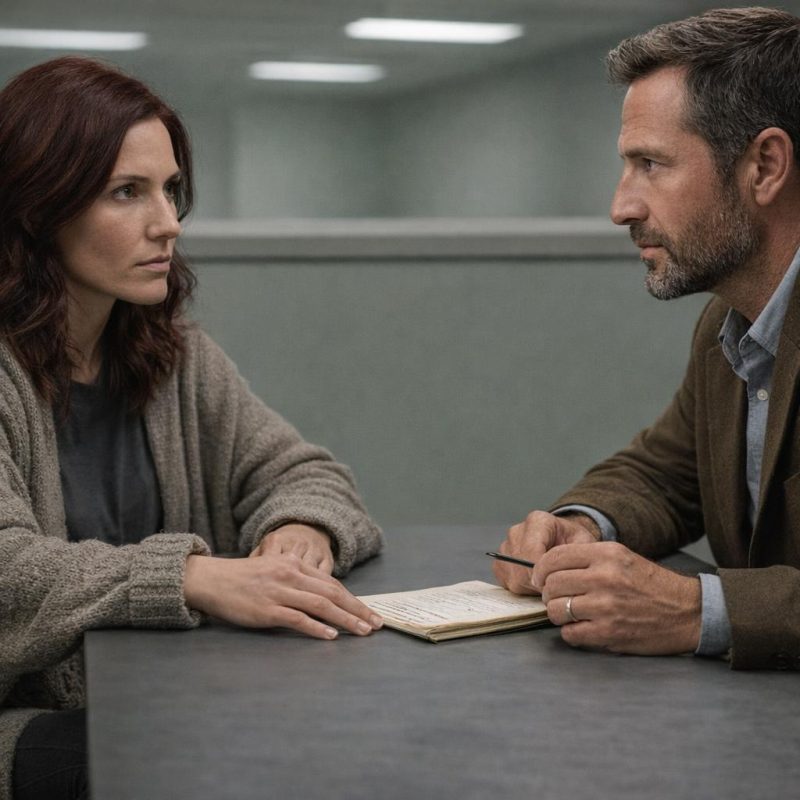 Image by RM AI
Three Days
I told Hayes I didn't know anything about Vivian's condition after the flight, and he was quiet for a moment in a way that felt deliberate. Then he told me, in the same even tone he'd used for everything else, that Vivian had been hospitalized for three days following the incident. Three days. I asked him to repeat it and he did. I sat down on the edge of my couch without meaning to. I asked if that was typical for this kind of reaction and he said he wasn't a medical expert, but that the attending physicians had described her symptoms as severe. I asked what severe meant and he said he couldn't share specifics from the medical report at this stage. I gave him Dr. Chen's contact information and agreed to send over my prescription documentation, and we ended the call politely, professionally, like none of it was alarming. But after I set the phone down I kept turning the number over in my head. Three days. Dr. Chen had told me the medication was carefully calibrated, that the dosing was precise, that the protocol existed specifically to prevent complications. She had never once suggested that an accidental ingestion could put someone in a hospital for three days. I didn't know what that meant yet. I just sat there with the quiet, unsettling feeling that maybe I hadn't been told everything I needed to know.
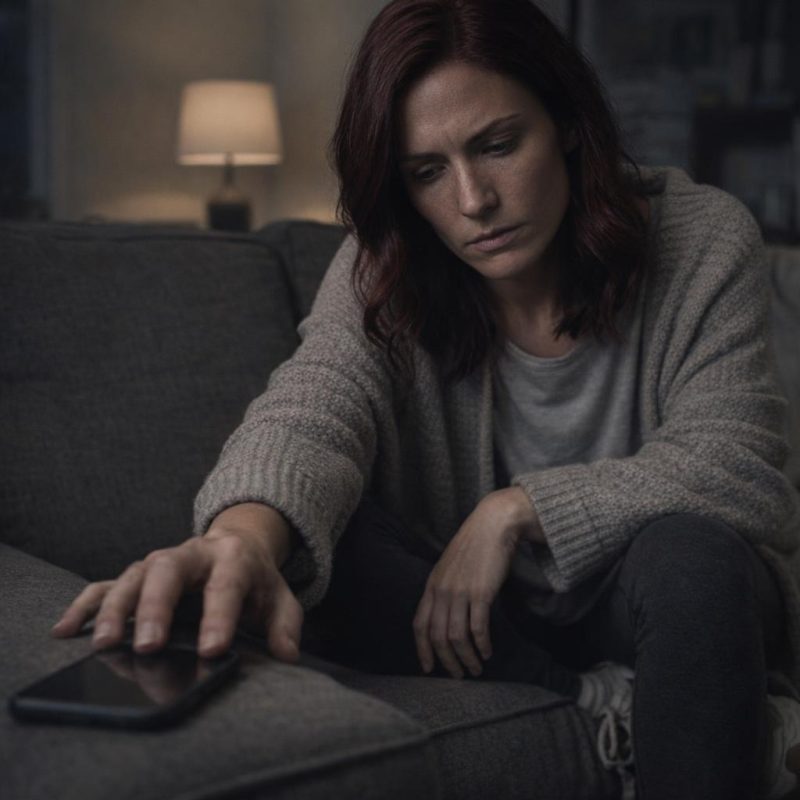 Image by RM AI
The Letter
The certified letter arrived on a Thursday, and I knew what it was before I opened it — the return address listed a law firm I didn't recognize, and my name was typed on the envelope with the kind of precision that means someone is being paid by the hour. I opened it at the kitchen counter and read it standing up. Garrett Mitchell, attorney, writing on behalf of his client Vivian Hartwell. The language was formal and dense and I had to read the first paragraph twice to absorb it. He was demanding compensation for medical expenses, pain and suffering, and what the letter called ongoing impacts to quality of life. There was a figure at the bottom that made my vision go briefly strange. The letter referenced, in one clipped phrase near the middle, the possibility of permanent damage, without elaborating on what that meant or which part of Vivian's body it referred to. I read the whole thing three times. Each time I got to that phrase — permanent damage — I stopped. I didn't know what had happened to Vivian in that hospital. I didn't know what three days of treatment had looked like or what the doctors had found. I set the letter on the counter and didn't pick it up again, and the weight of it just sat there in the room with me, solid and unmoving, long after I'd walked away.
 Image by RM AI
The Company
Dr. Whitmore called on a Friday morning and introduced himself as a patient liaison with the pharmaceutical company that manufactured my medication. His voice was warm in a practiced way, smooth at the edges, and he said he'd been following the situation with great concern. He asked how I was doing personally before he asked anything else, and at the time that felt considerate. I told him about the legal letter and he made a sympathetic sound and said the company wanted to support me however they could. He asked me to walk him through the incident, so I did — the seat, the cup, Vivian drinking the medication, the hospitalization. He listened without interrupting. Then he asked whether I'd spoken to any journalists or media outlets about the medication specifically. I mentioned Rebecca's call and he paused, just briefly, before saying that he'd strongly recommend I direct any media inquiries through the company's communications team going forward. He said it was for my protection. He offered to send documentation that might help with the legal situation. He asked a few more questions about my recovery, whether I'd noticed anything unusual, whether I'd had any concerns about the medication's effects. They were the right questions. His tone was the right tone. But somewhere in the middle of it I had the odd feeling that he was less interested in my answers than in what I might say to someone else.
 Image by RM AI
Evasions
I called Dr. Whitmore back the following Monday with a list of questions I'd written out the night before. I asked him what a typical reaction looked like in a healthy person who accidentally ingested the medication. He said individual responses varied significantly and that it was difficult to generalize. I asked specifically whether a three-day hospitalization fell within the range of known reactions. He said he couldn't comment on specific cases due to privacy considerations. I asked whether permanent damage was listed anywhere in the medication's safety profile. He said all medications carried potential risks and that the prescribing documentation covered the relevant information. I asked him to send me the full clinical trial data and the complete adverse event reports. He said he would send me the appropriate materials. Every answer landed just slightly beside the question I'd actually asked. I noticed it the first time, and by the fourth or fifth exchange I'd stopped expecting anything different. When I pressed him on the adverse event reports specifically — asked him directly whether there had been cases similar to Vivian's — he said he needed to consult with his team and ended the call within thirty seconds. I put the phone down and sat with the list of questions in front of me, most of them still unanswered, and the feeling that had been building quietly all week settled into something heavier and harder to dismiss.
 Image by RM AI
Documentation Request
That evening I sat at my kitchen table and drafted a formal written request for the medication's complete safety documentation — clinical trial data, adverse event reports, post-market surveillance records, everything I could name. I looked up pharmaceutical disclosure requirements and patient rights language and worked it into the letter carefully, wanting it to be something that couldn't be easily deflected. I sent it certified mail to the company's registered address and emailed a copy directly to Dr. Whitmore. Then I pulled out the medication insert that had come with my original prescription and read it again, slowly this time. It was two pages. For a medication I'd been taking through a post-surgical recovery protocol, two pages felt thin. The side effects listed were mild — nausea, dizziness, mild fatigue. Nothing that suggested three days in a hospital. Nothing that suggested permanent damage of any kind. I created a folder on my laptop and started organizing everything: the prescription records, the insert, the notes from my calls with Dr. Whitmore, the legal letter, the email from Rebecca. I didn't know yet what any of it added up to. But I knew that Dr. Whitmore's careful non-answers and the thin insert and the three days Vivian had spent in a hospital were all sitting in the same folder now, and I wasn't going to stop until I understood why.
 Image by RM AI
Redacted Pages
The package arrived on a Tuesday, thick enough that I had to sign for it. I set it on the kitchen table and stood there for a moment before opening it — I'd been waiting two weeks for this, and some part of me wanted to hold onto the anticipation a little longer. The cover letter cited proprietary information protections and trade secret exemptions in language so polished it felt like it had been written by a committee of lawyers. I started with the clinical trial safety data, which was where I'd expected the most detail. The first few pages looked complete enough — study design, participant demographics, dosing schedules. Then I hit page eleven and the black bars started. Not a line here and there. Entire paragraphs. Whole sections under the adverse event reporting headers were blacked out so thoroughly I couldn't even read the subheadings. I flipped to the post-market surveillance records and found the same thing — dense redactions clustered specifically around long-term side effect categories. The cover letter said the redactions were standard. I photographed every single page anyway, hands moving carefully, making sure the black bars were legible in each frame. When I laid the pages out across the table and looked at them together, the pattern was impossible to ignore: entire sections of the clinical trial safety data, blacked out, one after another, swallowing whatever had been documented about what this medication could do.
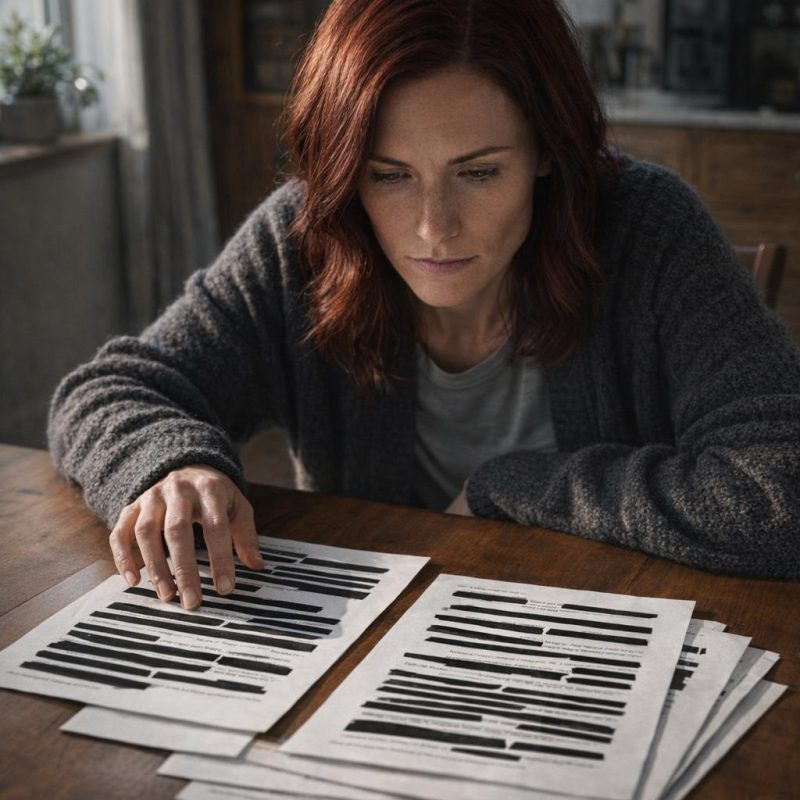 Image by RM AI
The Support Group
Rebecca called while I was still staring at the redacted pages. She'd been following a thread she wouldn't fully explain yet, but she had something she wanted me to see. She texted me a link to a private patient forum — one of those invite-only groups that lives behind a request-access wall. I submitted a request and got approved within the hour, which told me the moderators were actively watching for new members. I started reading from the top. The posts went back almost two years. People describing reactions that lasted days, not hours. Hospitalizations. One woman wrote about spending five days in the ICU and her gastroenterologist telling her he'd never seen that kind of inflammatory response from a single dose. Another post described tremors that hadn't resolved after six weeks. I kept scrolling. The symptoms people listed — the GI distress, the liver panel abnormalities, the fatigue that didn't lift — none of it appeared in the two-page insert that had come with my prescription. Rebecca called back while I was mid-thread. "Have you seen anything that sounds familiar?" she asked. I didn't answer right away. I was reading a post from someone whose reaction had started within forty minutes of their first dose — the timeline, the severity, the specific organ involvement — and it matched what I knew about Vivian's three days in the hospital almost point for point.
 Image by RM AI
My Own Symptoms
After I got off the phone with Rebecca I went to my bedroom closet and pulled out the spiral notebook I'd been keeping since the surgery — dates, symptoms, medication times, anything that felt worth tracking. My surgeon had suggested it. I'd been diligent about it in the early weeks and then less so, but the entries were still there. I sat on the edge of the bed and started going through it against the support group posts I'd screenshotted on my phone. The fatigue entries were everywhere. I'd written "tired again, probably overdid it" so many times the phrase had stopped meaning anything to me. But the dates lined up with my dosing schedule in a way I hadn't noticed before. The hand tremors — I'd logged those three times and each time written "nerves, stress" in the margin. There was a cluster of entries in week six where I'd noted my heart feeling like it was skipping, and I'd never mentioned those to Dr. Chen because I'd assumed they were anxiety. I sat there turning pages and the picture kept sharpening in a way I didn't want it to. I'd spent months explaining my own body away, filing every symptom under surgical recovery or stress or just getting older. But the tremors in my hands that I was feeling right now, the ones I'd been feeling since week three — I hadn't had those before I started the medication.
 Image by RM AI
The Medical Report
Detective Hayes called on a Thursday morning and asked if I was somewhere I could talk. He'd received Vivian's medical records as part of the incident documentation and thought I should know what they contained. I said yes before I'd fully thought it through. He read from the report in that careful, measured way of his — no editorializing, just the facts in order. Severe gastrointestinal distress beginning within the hour. Acute liver stress requiring intervention by the second day. The attending physician's note said the reaction was, and Hayes read this part slowly, "disproportionate to a single ingested dose in an otherwise healthy adult." Kidney function had shown temporary impairment. The discharge summary mentioned the possibility of permanent digestive system damage requiring ongoing monitoring. I wrote down the words "permanent" and "disproportionate" on the notepad in front of me and stared at them while Hayes finished. He asked if I had questions. I said I didn't, which wasn't true, but I couldn't form them yet. After we hung up I sat at the kitchen table with the notepad and the two words I'd written. Vivian had been awful to me. She had taken my seat, grabbed my medication, swallowed it without a second thought. None of that had changed. But she had spent three days in a hospital with her liver under stress and the possibility of damage she would carry for the rest of her life, and the weight of that sat in my chest in a way I hadn't expected and couldn't put down.
 Image by RM AI
The Truth
Rebecca's message came through at eleven-fifteen at night: "I need you to open your email right now." The files were encrypted and she'd sent the password separately. I sat at my kitchen table in the dark and opened them. They were internal emails — dozens of them, spanning almost three years. I read slowly at first, then faster, then I had to stop and go back because I wasn't sure I was reading what I thought I was reading. An internal safety report from the clinical trial phase documented liver toxicity findings in a statistically significant subset of participants. A follow-up email from a senior director discussed the findings and whether they met the threshold for mandatory FDA disclosure. Company lawyers had weighed in. The language was careful and corporate and absolutely clear about what they were recommending. There were emails about the medication insert — specifically about what language to include and what language to leave out. There were emails about the adverse event reports that had come in post-approval, and how they were being categorized. I kept reading. I thought about the redacted pages sitting in my folder. I thought about the support group posts. I thought about Vivian in a hospital bed with her liver under stress, and I thought about my own trembling hands and the heart palpitations I'd never mentioned to Dr. Chen. And then I found the email — a senior executive, three years ago, one line: "The liver toxicity data must not reach FDA review."
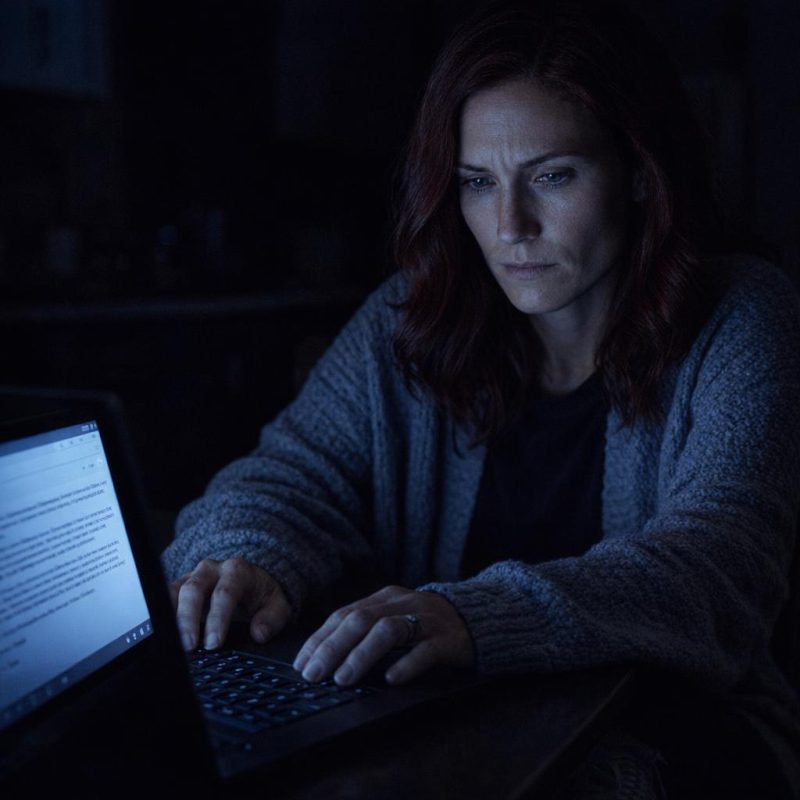 Image by RM AI
Reframing
I read the documents three more times before I closed the laptop. Then I sat in the dark for a while and didn't move. I pulled up the support group posts on my phone and read them again with the internal emails fresh in my mind, and the overlap was exact — the symptoms people had been describing for two years were the same ones the company had flagged internally and chosen not to disclose. I opened my symptom journal to the tremor entries. Week three, week five, week seven. The palpitations I'd written off as anxiety. The fatigue I'd called recovery. I'd been taking this medication for months. I'd been taking it carefully, on schedule, the way Dr. Chen had instructed, the way the insert said to, and the whole time there had been a safety report sitting in a corporate server somewhere documenting exactly what it could do to a liver. I thought about the flight. I thought about the satisfaction I'd felt — and I'm not proud of this — when I heard Vivian had ended up in the hospital. I'd framed it in my head as a kind of justice, her suffering as the consequence of her own entitlement. But she hadn't been punished by karma. She'd been harmed by the same thing that had been quietly harming me. We were both patients. We were both in the dark. The word "victor" dissolved somewhere in my chest, and what replaced it didn't have a name yet.
 Image by RM AI
Dr. Chen's Confession
I called Dr. Chen's office first thing in the morning and told the receptionist it was urgent. They fit me in at noon. I printed the emails — all of them — and put them in a folder and drove to the appointment with my hands steadier than I expected. Dr. Chen came in with her usual calm and I put the folder on the exam table between us before she could say anything. I told her I needed her to read the first three documents. She picked them up and I watched her face as she went through them. The warmth didn't leave exactly, but something behind it shifted. She set the pages down and took her glasses off and rubbed the bridge of her nose. "Where did you get these?" she asked. I told her they were leaked internal documents and that I had reason to believe they were authentic. She picked them up again and read more slowly this time. When she finished she was quiet for a moment. She said she had prescribed the medication based on the clinical data she'd been provided, that the insert I'd been given reflected the approved labeling, that nothing in her training materials or the pharmaceutical rep's briefings had mentioned liver toxicity as a significant risk. She ordered a full liver and kidney panel before I left the office. Then she looked at me directly and said the pharmaceutical company had never disclosed the liver toxicity risks to prescribing physicians.
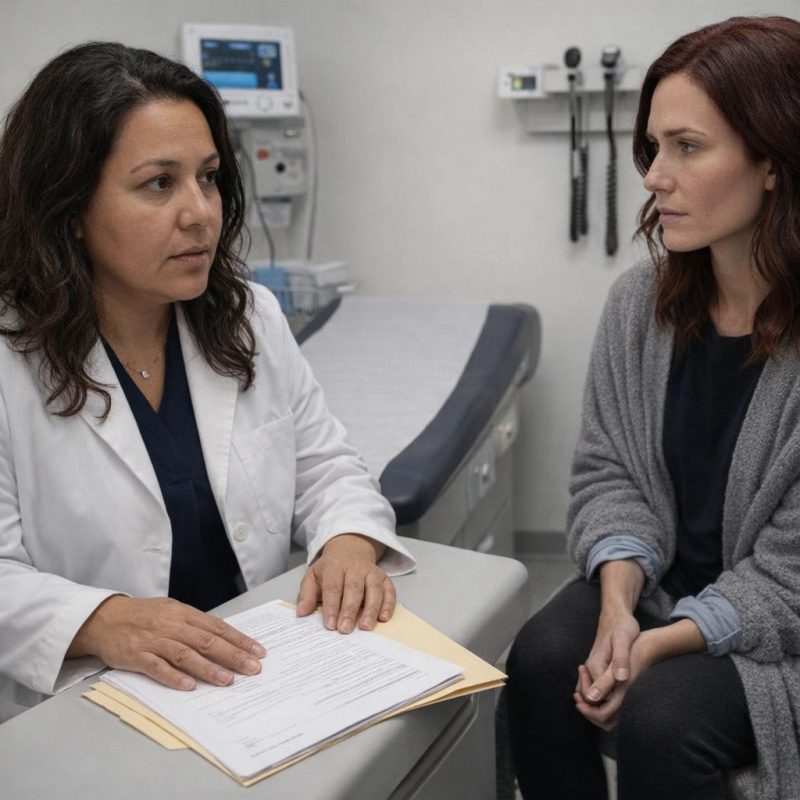 Image by RM AI
The Decision
Rebecca called while I was still in the parking lot outside Dr. Chen's office. She'd been building the story for weeks — she had the leaked emails, she had the support group members, she had a former pharmaceutical sales rep willing to go on record about what they had and hadn't been told to disclose. She needed one more thing. She asked if I would participate publicly — my name, my records, my account of the flight and everything that came after. I sat in the car with the engine off and thought about it. I thought about the redacted pages and the entire sections blacked out in the clinical trial safety data. I thought about my symptom journal and the tremors I'd been explaining away for months. I thought about Vivian, which surprised me — not with anger this time, but with something closer to recognition. She hadn't known what she was taking. Neither had I. Neither had Dr. Chen. I thought about the support group posts, two years of people describing damage that a three-line insert had never warned them about. I thought about the email. The liver toxicity data must not reach FDA review. I told Rebecca yes. She asked me to start pulling together every piece of documentation I had — prescriptions, symptom journal, the redacted package, the Dr. Chen appointment notes. I said I already had most of it in a folder. I ended the call, opened my notes app, and typed the words: "go public."
 Image by RM AI
Building the Case
I spent the better part of four days at my kitchen table with every piece of paper I'd ever been handed by a doctor, a pharmacist, or a hospital billing department spread out in front of me. I requested my full records from Dr. Chen's office — they sent over two hundred pages, and I read every one. I organized my symptom journal chronologically, starting from the first prescription and working forward through every tremor, every foggy morning, every appointment where I'd described something wrong and been told it was probably stress. I reached out to the support group members I'd been talking to for months, and I asked if any of them would be willing to share their documentation with Rebecca. Eleven people said yes within forty-eight hours. Rebecca interviewed me for almost three hours one afternoon, going through the timeline question by question, and I handed over the leaked pharmaceutical documents along with everything else. She connected me with two other investigative sources who had been tracking the company independently. By the end of the week, the file sitting on my table had grown from a single folder into a stack nearly four inches thick — prescriptions, lab results, symptom logs, internal emails, and the stories of people I'd never met in person but felt closer to than almost anyone. I sat with my hand resting on top of that stack for a long time, and it felt like something solid finally existed where there had only been damage.
 Image by RM AI
The Offer
Dr. Whitmore called on a Tuesday morning and asked if we could meet in person. He said the company wanted to have a conversation. I said fine, and we agreed on a coffee shop near my apartment — neutral ground, my choice. He arrived in the same kind of carefully pressed suit I remembered, the practiced smile already in place before he'd even sat down. He slid a folder across the table without preamble. Full coverage of all past and future medical expenses related to my condition. A lump sum on top of that — a number I won't repeat here, but it was enough to pay off my debt, cover years of treatment, and let me stop worrying about money in a way I hadn't been able to since before my surgery. He said the company considered it a fair and generous resolution. He said litigation was long, expensive, and hard on everyone involved. I asked what happened to the other patients. He said the company was prepared to make similar offers on a case-by-case basis. I asked about the NDA. He confirmed it — standard language, he said, nothing unusual. I told him I needed time to think. He gave me one week. After he left I sat there with the folder open in front of me, and the number on that page was the most tempting thing I'd looked at in a long time.
 Image by RM AI
Rejection
I spent most of that week not sleeping. I ran the numbers every night — what the settlement would cover, how long it would last, what it would feel like to not have a medical bill go to collections for once. I talked to Rebecca twice. She didn't push me either way, but she reminded me that the investigation was solid with or without me, and that my account was the one that had a face attached to it, a name, a story people could follow from the beginning. I thought about the eleven people who had sent me their records. I thought about the support group posts I'd read at two in the morning for months — people describing damage that had no name yet because the company had made sure it didn't. I thought about Vivian, which I hadn't expected. She'd taken my medication without knowing what it was, and she still didn't know the full story of what she'd swallowed. I called Dr. Whitmore on the last day of the week. He answered on the second ring. I told him I was declining the offer. He tried twice to redirect me, his voice measured and careful, and I let him finish both times before I said it again: I was declining. I told him I'd be participating in the public investigation. He said I should think carefully about what I was choosing. I said I already had. After I hung up, I sat in the quiet of my apartment, and the relief that moved through me had nothing to do with money.
 Image by RM AI
The Smear
The first article appeared four days after I declined the settlement. It wasn't about the medication. It was about me. An unnamed source described me as someone with a documented history of anxiety who had misinterpreted a routine post-surgical recovery as something more serious. A company-affiliated expert was quoted saying that patients sometimes catastrophize normal side effects, especially those with pre-existing mental health histories. By the end of that week there were three more pieces, each one a little sharper. Social media picked it up fast — I watched my name get attached to words like attention-seeking and litigious and unstable. Someone dug up a photo from a bad day two years ago and cropped it to make me look worse. I got messages I won't describe in detail. Rebecca called and told me this was textbook — she'd seen the same playbook used against other whistleblowers, and it meant they were scared. I believed her. That didn't make it easier to open my phone in the morning. A few people I'd known for years went quiet on me, and one sent a message asking if I was sure I hadn't gotten in over my head. I didn't answer. I kept the folder on my kitchen table and I didn't move it. The investigation was still moving. Rebecca's evidence was still solid. But sitting alone in my apartment while strangers picked apart my credibility, the silence around me felt like something I had to learn to carry.
 Image by RM AI
Allies
Rebecca organized the press conference for a Thursday morning at a hotel conference room downtown. Twelve patients. I'd spoken to most of them online but I'd never been in the same room with any of them, and walking in that morning and seeing them all standing there — different ages, different cities, different stories that had somehow landed in the same place mine had — stopped me for a second in the doorway. We had about an hour before the media arrived, and we just talked. A woman — I'll call her a retired teacher from Ohio — showed me a binder she'd kept for three years, every symptom logged in her own handwriting, because she'd known something was wrong and hadn't been able to get anyone to listen. A man in his fifties described the hospitalization that had cost him his job. Another woman said she'd been told by two different doctors that her symptoms were psychosomatic. The room was quiet in a way that felt full rather than empty. Then the cameras arrived, and the reporters filed in, and the twelve of us moved to the front of the room together — and I watched us take our places under the lights, twelve people standing in a line, each one a story the company had tried to make disappear.
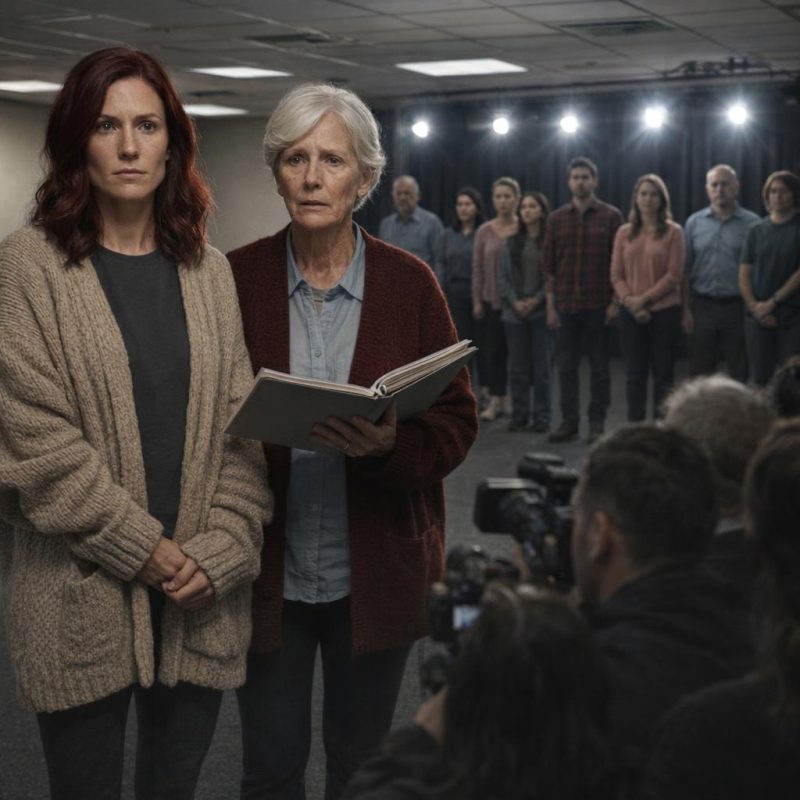 Image by RM AI
Face to Face
The meeting was at the company's headquarters — glass and steel, the kind of building designed to make you feel small before you've said a word. Rebecca and I had agreed beforehand that she would record with permission, and the CEO granted it without hesitation, which told me something. He was polished in the way that Dr. Whitmore was polished, but older, more practiced, with the particular stillness of someone who had sat across from difficult conversations many times before. He opened by saying the company took patient safety seriously and always had. I let him finish. Then I put the leaked internal emails on the table — the ones with the liver toxicity data and the language about keeping it from FDA review — and I asked him directly why that information had been withheld from prescribing physicians. He talked about regulatory timelines. He talked about the complexity of clinical trial data interpretation. He talked about the competitive pressures of bringing a medication to market. Rebecca's recorder sat between us the whole time. I asked him again, more specifically: when the company's own scientists flagged the severity of the hepatic risk, what was the deciding factor in not updating the safety disclosure. He paused. Then he said the company had to weigh the benefit to the broader patient population against the risk profile of a smaller subset. Rebecca's pen stopped moving.
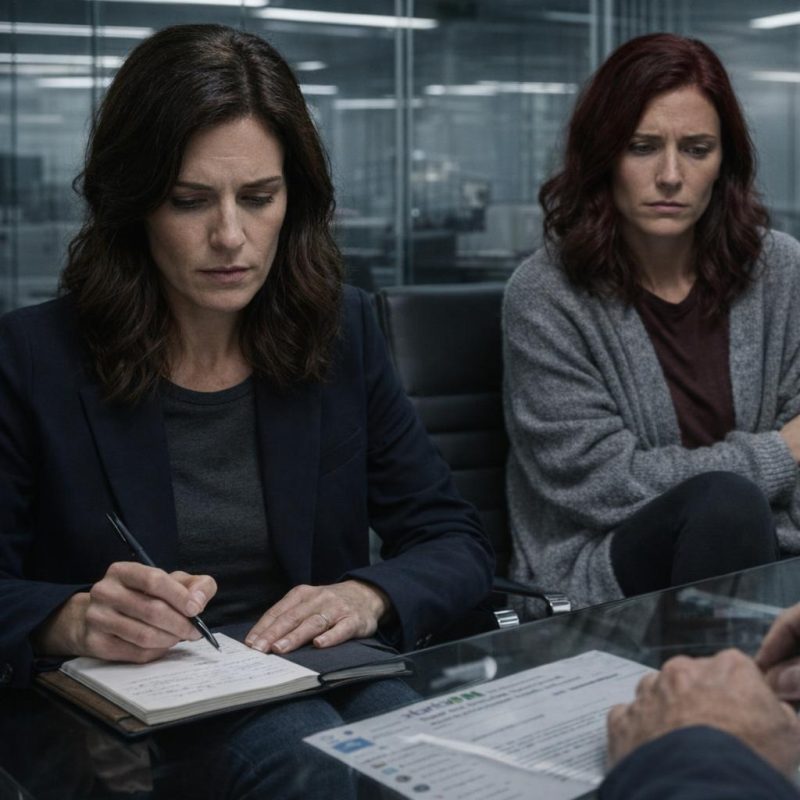 Image by RM AI
Testimony
I'd testified in smaller settings before — depositions, a workers' comp hearing years ago — but nothing like this. The regulatory board chamber had the particular acoustics of a room built for official record, every word landing with a weight that felt permanent. Dr. Chen was there, seated two rows behind me, and seeing her steadied something in my chest. I was sworn in just after nine in the morning. I started at the beginning: the surgery, the recovery protocol, the first prescription, the first symptom I'd logged and been told to monitor but not worry about. I walked the board through my symptom journal page by page, and I submitted my full medical records and the pharmaceutical documents into the official record. I described the flight — the medication in my bag, Vivian taking my seat, the sequence of events that had pulled all of this into the open. Board members asked questions for nearly two hours. Dr. Chen testified after me, describing in precise clinical language what she had and hadn't been told when she made her prescribing decisions, and watching her speak — steady, careful, certain — made me feel less alone in a way I hadn't expected. When they called me back for a final statement, I stood up and said that every patient who takes a medication trusts that the people who made it told the truth about what it does, and that trust had been broken deliberately, and the people in this room had the power to make sure it couldn't happen again that way.
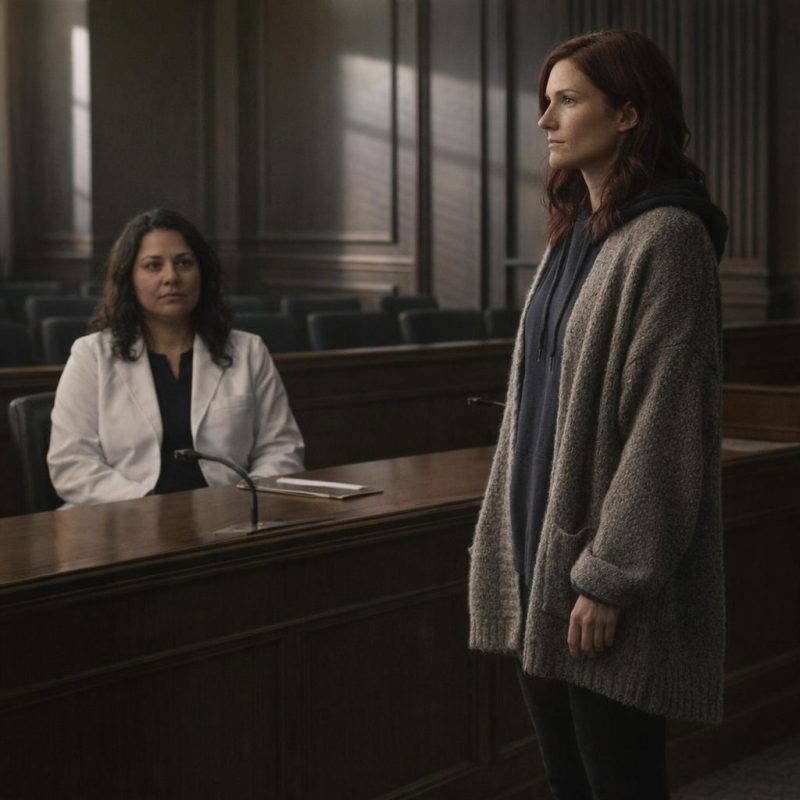 Image by RM AI
The Leak
Rebecca called me at six-thirty in the morning, which meant it was already happening. A whistleblower inside the company had sent her thousands of internal documents overnight — not the handful of leaked emails I'd been working with, but the full archive: internal memos, safety committee minutes, executive correspondence going back seven years. She published the investigation that afternoon. I read it at my kitchen table with coffee going cold beside me. The documents showed that the company's own scientists had flagged the hepatic risk in year two of clinical trials. There were memos discussing how to characterize the data in ways that would satisfy the FDA's minimum disclosure threshold without triggering a full safety review. There were emails between executives that used the phrase acceptable loss in reference to projected adverse event rates. By evening, every major outlet had picked it up. The company's stock dropped before the market closed. My phone ran out of storage from the notifications. Rebecca sent me a message that just said: it's done. I set my phone face-down on the table and sat in the quiet of my kitchen, and outside the window the city was going about its ordinary evening, and somewhere in a boardroom someone was having a very different kind of night, and the truth that had lived in a folder on my table for months was finally just the news.
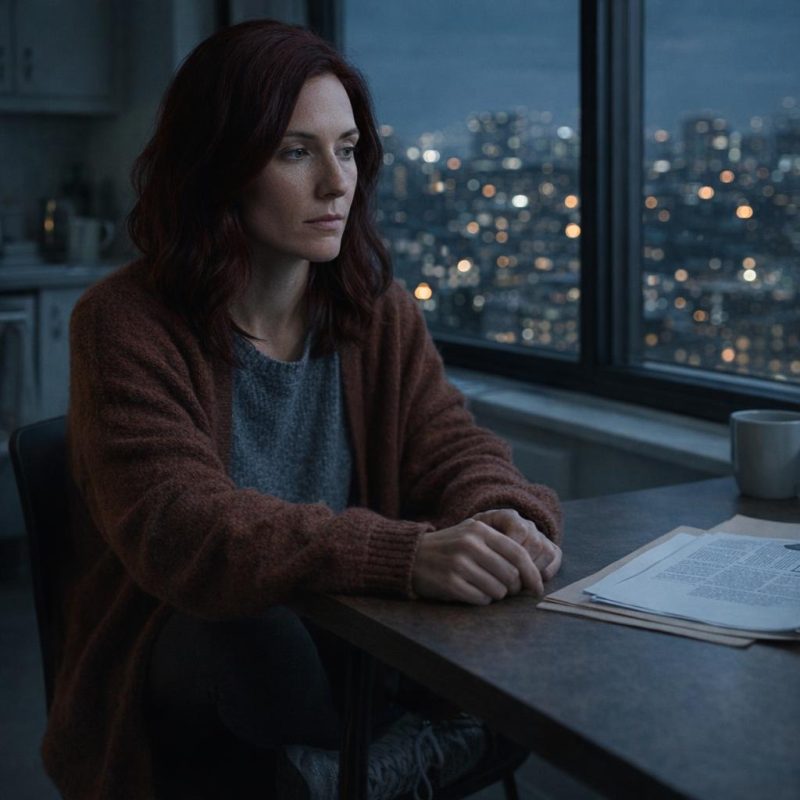 Image by RM AI
Recall
The regulatory board held its emergency session on a Tuesday morning, and Rebecca texted me a live link before I'd even made coffee. I sat cross-legged on my couch with my laptop balanced on my knees and watched the feed buffer and load. The board chair read the announcement in a flat, procedural voice, the kind that makes catastrophic things sound like weather reports. Immediate recall. All prescriptions suspended pending a full safety review. The case referred to federal prosecutors for criminal investigation. Several executives placed on administrative leave pending further inquiry. I had to read the closed captions twice because my brain kept sliding off the words. Rebecca called while I was still staring at the screen. "They're crediting the investigation," she said. "Your name is in the official statement." I didn't know what to do with that. Dr. Chen sent a message twenty minutes later saying she'd already begun pulling together alternative treatment options and wanted to schedule a call. I sat there with the laptop still open, the board chair's voice still going in the background, and somewhere in the middle of all that procedural language was the plain fact that no one else would be prescribed that medication — not today, not ever again.
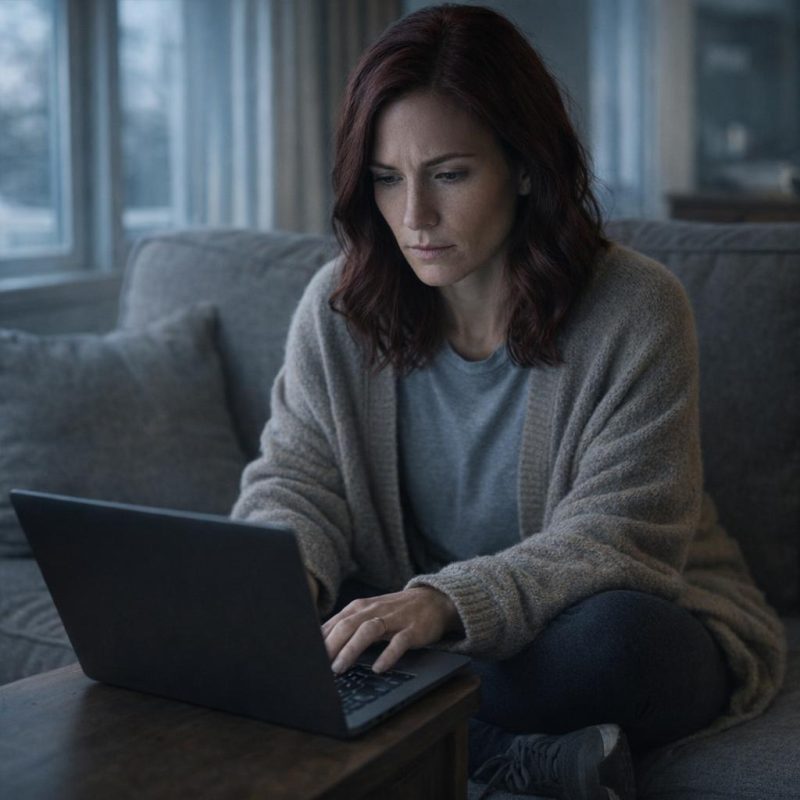 Image by RM AI
Treatment
The first round of bloodwork came back worse than I'd let myself expect. Dr. Chen walked me through the numbers at my kitchen table — she'd started doing house calls after everything went public, which I think was her way of making sure I actually showed up for appointments. Moderate hepatic stress. Measurable impact on digestive enzyme production. She used careful language, the kind that means the news isn't good but isn't the worst either. We started a new regimen: liver support supplements, a medication to help with the enzyme deficit, weekly monitoring for the first two months. Some mornings I woke up feeling almost normal. Other mornings I couldn't get off the couch until noon. Dr. Chen told me the liver is remarkably resilient, and I held onto that word — resilient — on the bad days. There was one appointment where she said, quietly, that some of the effects might be permanent, and I sat with that for a long time after she left. I'd known it was possible. Knowing and hearing it said out loud are different things. But I was still here. I was still fighting my own body back toward something workable, and the damage I carried was also the proof of what I'd survived, and I had learned, slowly, to hold both of those things at once.
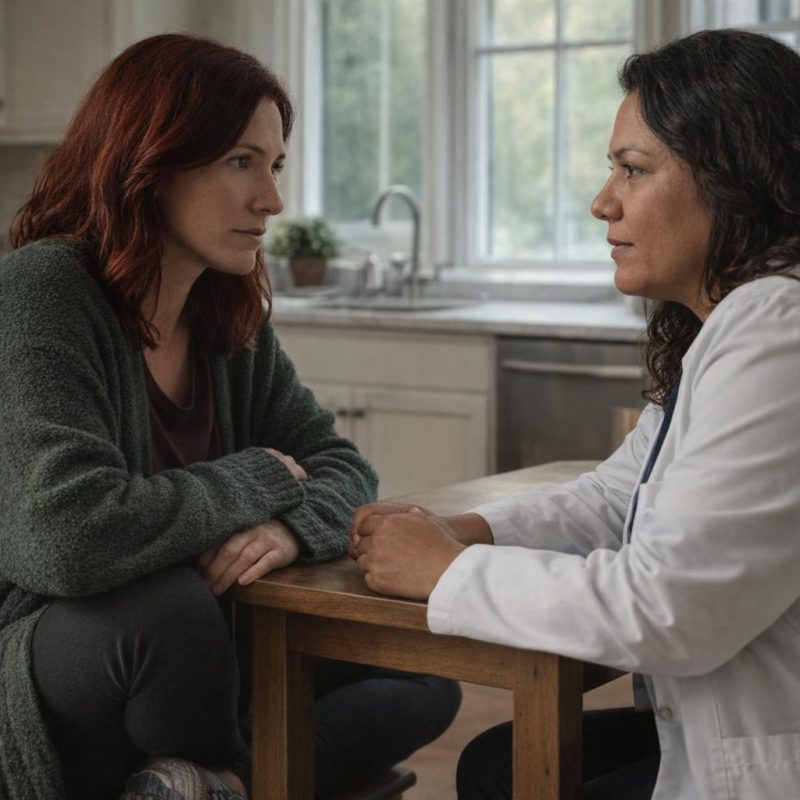 Image by RM AI
Unexpected Peace
Vivian's email arrived on a Wednesday afternoon with the subject line: I don't know if you'll read this. I almost didn't. I sat with it open for two days before I replied. We met at a coffee shop halfway between our neighborhoods — neutral ground, her suggestion, which I appreciated more than I expected to. She looked different from the woman I remembered on that plane. Smaller, somehow. The bold colors were still there but the performance behind them had gone quiet. She apologized before she'd even taken her coat off. Not a polished apology — a halting one, the kind that keeps stopping and starting because the person giving it isn't sure they deserve to be heard. She told me about her own symptoms: the fatigue, the bloodwork, the specialist she'd seen three times before anyone connected it to the medication. I told her about my liver numbers. She closed her eyes when I said the word permanent. "I took your seat," she said. "I took your medication. And you still — " She didn't finish. I told her I'd felt something ugly when I first heard she'd gotten sick, and that I wasn't proud of it. She nodded like she'd expected that, and didn't flinch. By the time we left, we'd been sitting there for two hours, and the tension that had walked in with us had settled into something quieter — not forgiveness exactly, but recognition, the kind that only comes from two people who have been through the same fire from opposite sides.
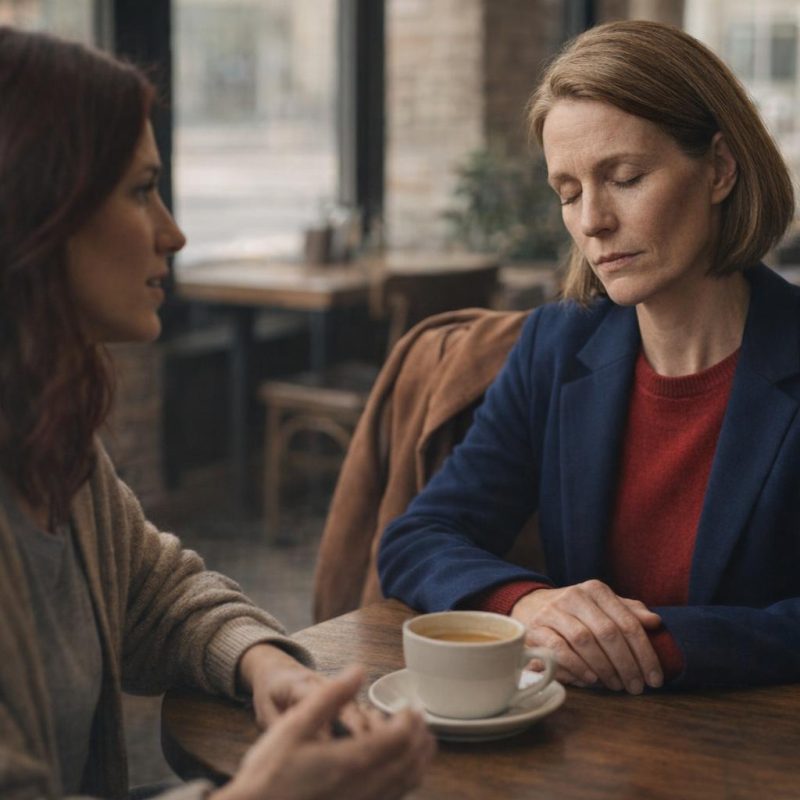 Image by RM AI
The Launch
The support group met for the first time in a rented community room with folding chairs and bad fluorescent lighting, which felt right somehow — nothing polished, nothing corporate, just people. Vivian had done most of the organizing. Rebecca was there with her notebook, though she'd promised to keep it closed for the night. Dr. Chen spoke for about ten minutes about what physicians needed to watch for, her voice steady and precise, and I watched people in the audience nodding with the particular relief of finally being believed. When it was my turn I stood up and told the whole story — the flight, the seat, the medication I'd been carrying in a labeled case, the months of symptoms I'd been told were anxiety, the documents, the recall. I'd told pieces of it a hundred times by then, but telling it in that room, to people who leaned forward because they already knew the shape of it from the inside, felt different. A woman in the third row started crying quietly when I described the first bloodwork results. A man near the back said "same" under his breath when I mentioned being dismissed by the first doctor. Afterward, people came up and introduced themselves — their names, their medications, their years. I shook hands and listened and felt the specific weight of a room full of people who had needed this to exist. I looked around at all of them, and understood, in a way I hadn't before, that the worst thing that had ever happened to me had become the reason this room was full.
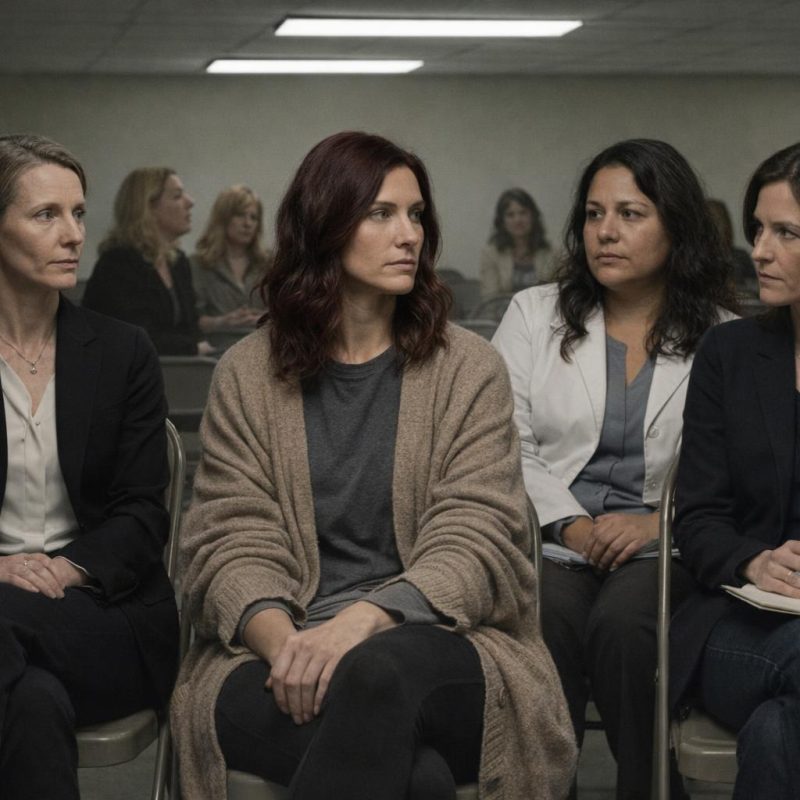 Image by RM AI
KEEP ON READING

The story of Ching Shih, the Woman Who Became the…
Unknown author on WikimediaFew figures in history are as feared…
By Emilie Richardson-Dupuis Dec 29, 2025
Einstein's Violin Just Sold At An Auction—And It Earned More…
A Visionary's Violin. Wanda von Debschitz-Kunowski on WikimediaWhen you hear…
By Ashley Bast Nov 3, 2025
This Infamous Ancient Greek Burned Down An Ancient Wonder Just…
History remembers kings and conquerors, but sometimes, it also remembers…
By David Davidovic Nov 12, 2025
The Mysterious "Sea People" Who Collapsed Civilization
3,200 years ago, Bronze Age civilization in the Mediterranean suddenly…
By Robbie Woods Mar 18, 2025
20 Greatest Ancient Athletes In History
Ancient Olympics. Long before modern stadiums and multimillion-dollar endorsements, athletes…
By Sara Springsteen May 1, 2026
20 Soldiers Who Defied Expectations
Changing the Rules of the Battlefield. You’ve probably heard plenty…
By Annie Byrd Feb 10, 2026