

I Left My Jacket on My Airplane Seat to Save It — When I Returned, a Woman Had Taken Over and What She Said Next Left the Entire Cabin Speechless
I Left My Jacket on My Airplane Seat to Save It — When I Returned, a Woman Had Taken Over and What She Said Next Left the Entire Cabin Speechless
The Weight of Crowds
I've flown enough times to know that airports bring out something primal in people — a kind of low-grade panic that makes them forget every social skill they ever learned. This particular Tuesday afternoon was no exception. The terminal was packed, the kind of packed where you stop walking and just shuffle, where someone's rolling bag clips your ankle every thirty seconds and nobody apologizes. The humidity didn't help. It had followed us all in from the curb, that thick late-summer air that clings to your clothes and sits heavy in your chest no matter how aggressively the overhead vents try to fight it. I had a conference in three days, a presentation I still needed to finalize, and exactly zero patience left for the man ahead of me who had stopped dead in the middle of the walkway to argue with his phone's GPS — inside a building, at a gate, with signs everywhere. I clutched my boarding pass and kept moving, weaving around strollers and rolling bags and a group of teenagers who had apparently decided the corridor was a great place to stand in a perfect horizontal line. By the time I reached my gate, my shoulders were tight and my jaw ached from clenching it. I found a seat near the window and let the humid air and the press of bodies settle into my lungs.
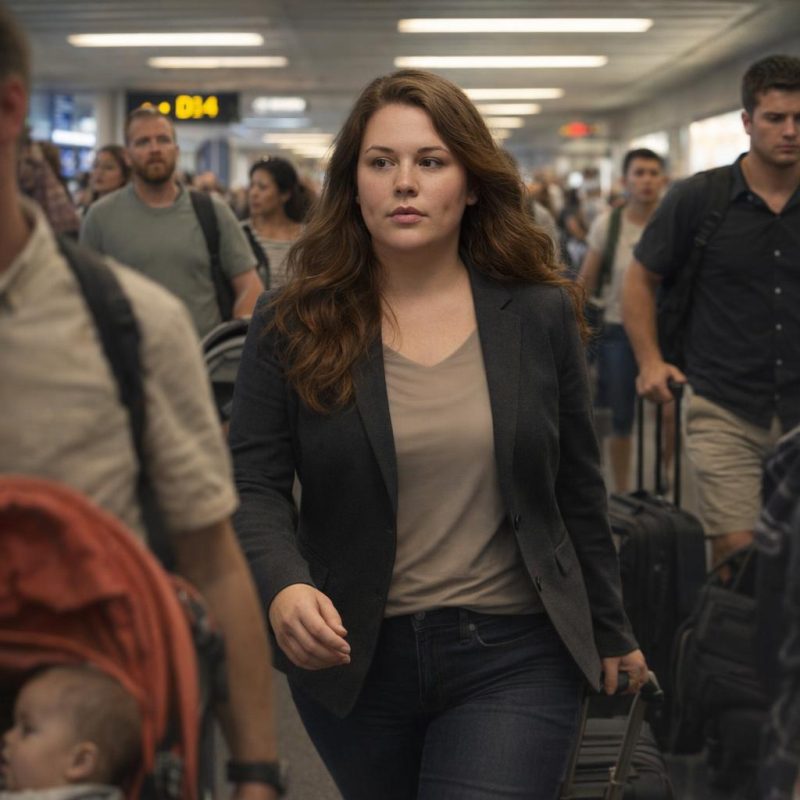 Image by RM AI
The Gauntlet
Boarding was called in zones, which in theory is an orderly system and in practice is a polite fiction. The moment the gate agent's voice came over the speaker, every person in the waiting area stood up simultaneously regardless of their zone number, and the orderly queue dissolved into a slow-moving wall of carry-ons and elbows. I found my place in line and kept my eyes on the jetway ahead. Once inside the aircraft, the aisle narrowed to something that felt barely wider than my shoulders, and about four rows in I ran directly into a bottleneck. A family of five — two adults, three kids, and what appeared to be enough luggage for a month-long expedition — had claimed the aisle entirely. The father was trying to force an oversized duffel into an overhead bin that was clearly not going to accept it. The mother was managing a stroller collapse with one hand and a toddler with the other. I stood behind them and breathed through my nose. Someone behind me bumped my backpack hard enough to push me forward a step. I didn't turn around. I just kept watching the row numbers tick upward — seven, eight, nine — and told myself that every step forward was progress. Ten. Eleven. The family finally surrendered the duffel to a flight attendant and shuffled sideways, and through the gap I could finally see row twelve just ahead.
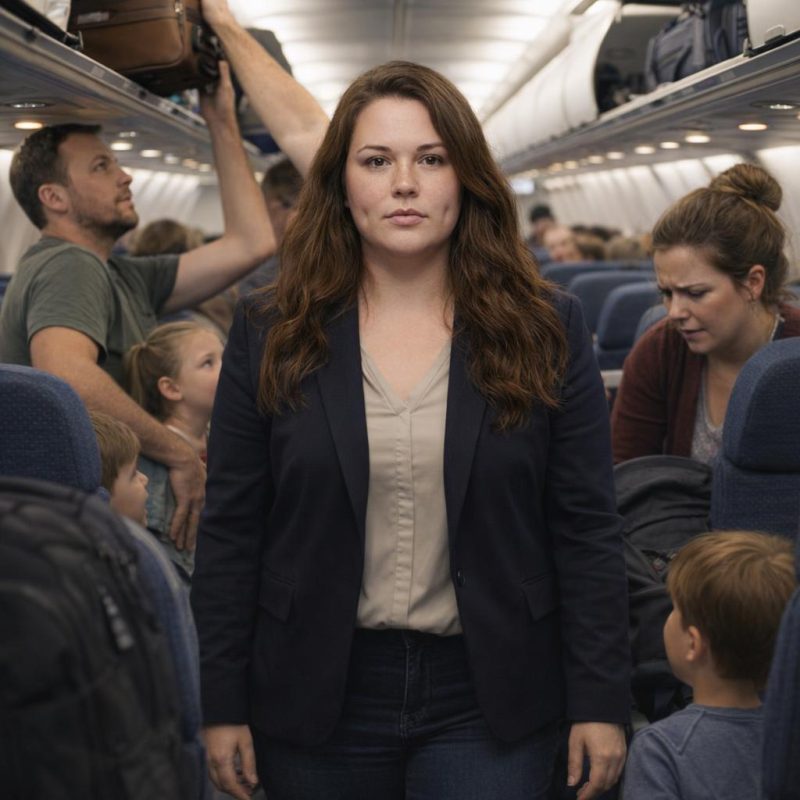 Image by RM AI
A Small Victory
Row twelve was everything I needed it to be — quiet, unclaimed, and mine. The overhead bin above it was barely a quarter full, which felt like a small miracle after the chaos behind me. I hoisted my backpack up with both hands, settled it in lengthwise, and pressed the compartment shut with a satisfying click that I felt more than heard. Then I slid into seat 12A, the window seat I had specifically selected when I booked the ticket six weeks ago, and let out a breath I hadn't realized I'd been holding since the terminal. Outside the oval window, the tarmac shimmered in the afternoon heat, ground crew moving in slow deliberate arcs below. I pulled out my phone out of habit, saw the stack of unread work emails, and made a conscious decision to ignore every single one of them until we landed. I tilted the screen face-down on my knee. The cabin noise around me — rolling bags, murmured conversations, the occasional sharp laugh — softened into something almost ambient. I leaned my head back against the headrest and closed my eyes for just a moment. The seat cushion was worn thin in the way of all airline seats, shaped faintly by a thousand previous passengers, and it pressed back against me with a kind of familiar, impersonal comfort.
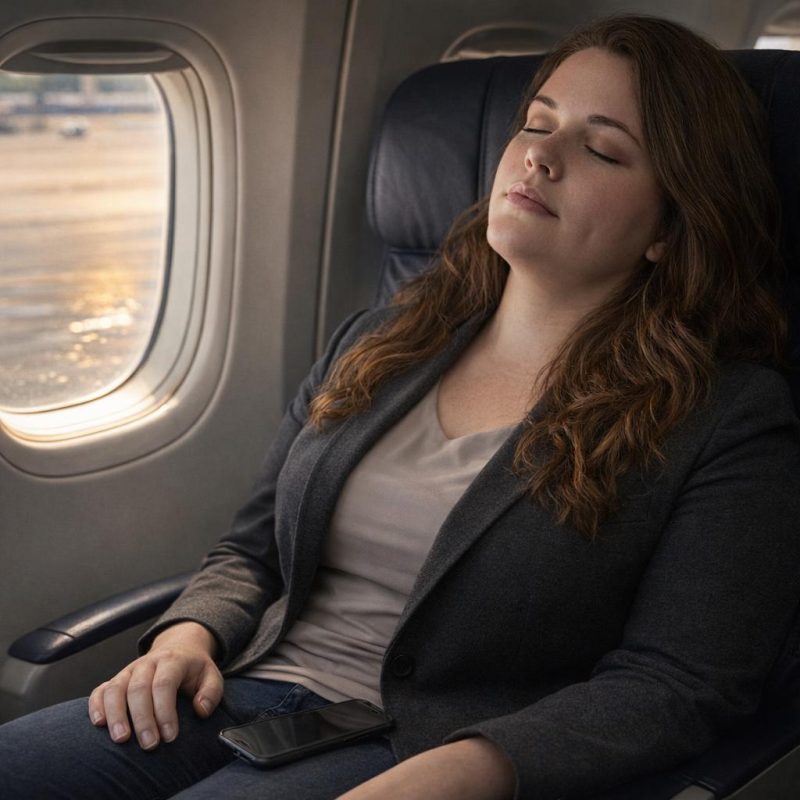 Image by RM AI
The Marker
I'd been settled for maybe ten minutes when the practical part of my brain sent up a quiet but insistent flag. The seatbelt sign wasn't on yet, but it would be soon — they always lit it earlier than you expected, and once it was on, you were committed to your seat until cruising altitude. I did a quick internal calculation and decided I needed to use the restroom now, before that window closed. I stood up, and that's when I thought about the seat. Anyone who's traveled knows the unspoken rules: a jacket on a seat means the seat is taken. It's not complicated. It's not ambiguous. It's the same logic as a towel on a sun lounger, a coat on a barstool. I unzipped my carry-on from the overhead bin just enough to pull out my dark winter jacket — the heavy one I'd packed for the conference city's forecast — and I folded it carefully, the way you fold something you want people to notice has been placed with intention. I laid it across the seat cushion, smoothed it flat, and stepped back to look at it for a second. It was obvious. It was clear. No reasonable person could look at that and think the seat was empty. I slipped back into the aisle and headed toward the front of the plane, leaving the jacket folded neatly across the seat cushion as I turned away.
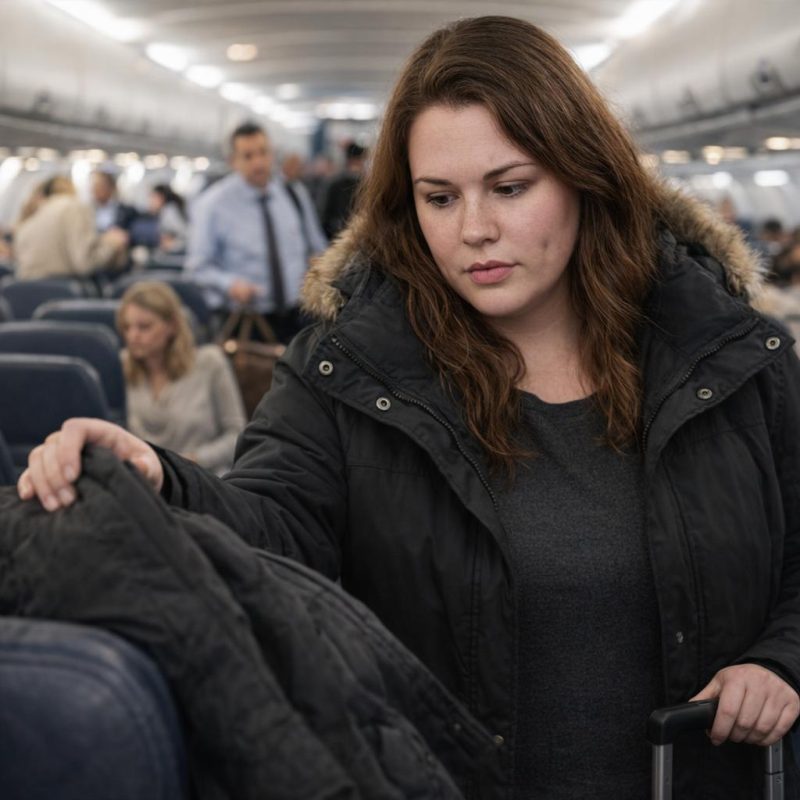 Image by RM AI
Against the Tide
Walking against the flow of boarding passengers is its own particular kind of obstacle course. Everyone coming down the aisle was focused forward, eyes on row numbers, arms out to balance overstuffed bags, and I was the only person moving in the wrong direction. I got an elbow in the ribs somewhere around row seven. A rolling carry-on caught my heel near row four. I kept my shoulders angled and my pace steady and made it to the front lavatory just as the previous occupant stepped out. I ducked inside, locked the door, and stood in the cramped space for a moment just breathing. The soap dispenser produced something thin and floral-scented that barely lathered. The paper towels were the rough industrial kind that leave your hands feeling scraped rather than dry. I checked my reflection out of habit — hair still in place, expression still composed — and unlocked the door. Outside, the boarding flow had thinned a little. I could hear the gate agent's final announcements echoing faintly from the jetway. The doors would be closing soon. I turned and started making my way back down the aisle toward row twelve, moving with more purpose now, ready to be back in my seat with my jacket and my window and the next several hours of enforced stillness ahead of me.
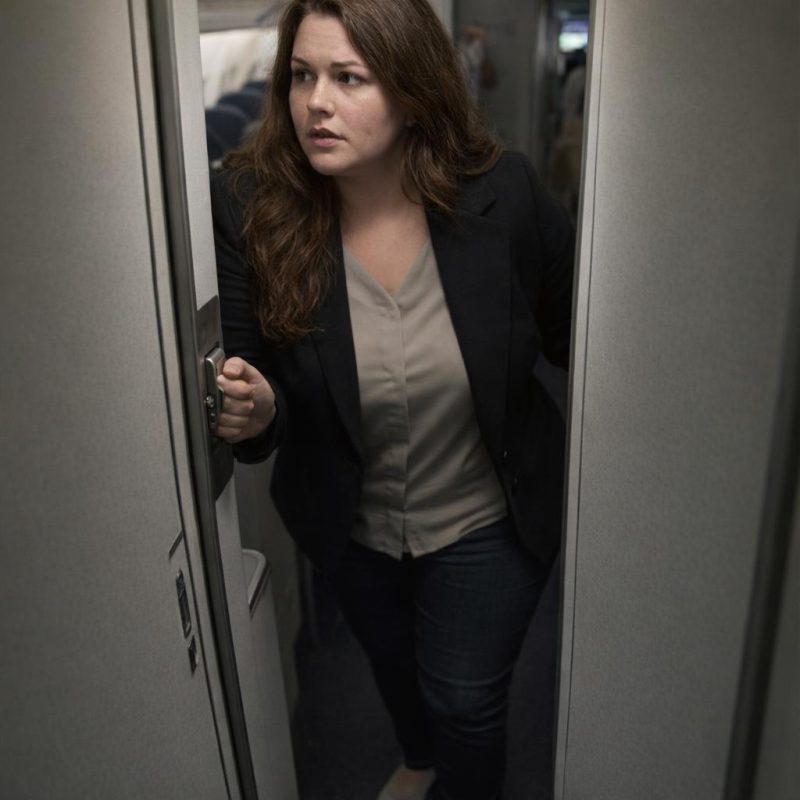 Image by RM AI
The Theft
I was maybe five rows away when I started looking ahead for my jacket — that familiar dark shape across the seat cushion that would mean everything was exactly as I'd left it. I didn't see it. I slowed my pace slightly, checking the row numbers on the overhead panels to make sure I hadn't miscounted. Eleven. Twelve. I was in the right place. But the dark shape I was looking for wasn't on the seat. Instead, there was a woman there. Blonde, early fifties, well put-together in the way that suggested she'd spent some effort on it — a neat blazer, hair that held its shape. She had lowered the tray table and spread a glossy magazine across it, and she was sitting with the particular ease of someone who had been in that seat for an hour already. I looked down at the middle seat footwell. My jacket was there, crumpled into a ball on the floor, like something that had been moved out of the way without a second thought. I blinked. I actually blinked, the way you do when your brain is trying to reconcile what it expected with what it's seeing. I checked the row number panel one more time — twelve, definitely twelve, definitely A — and looked back at the window seat. She had turned slightly toward the glass, one shoulder resting against the wall of the cabin, the blonde woman leaning against the window as though she'd been there all along.
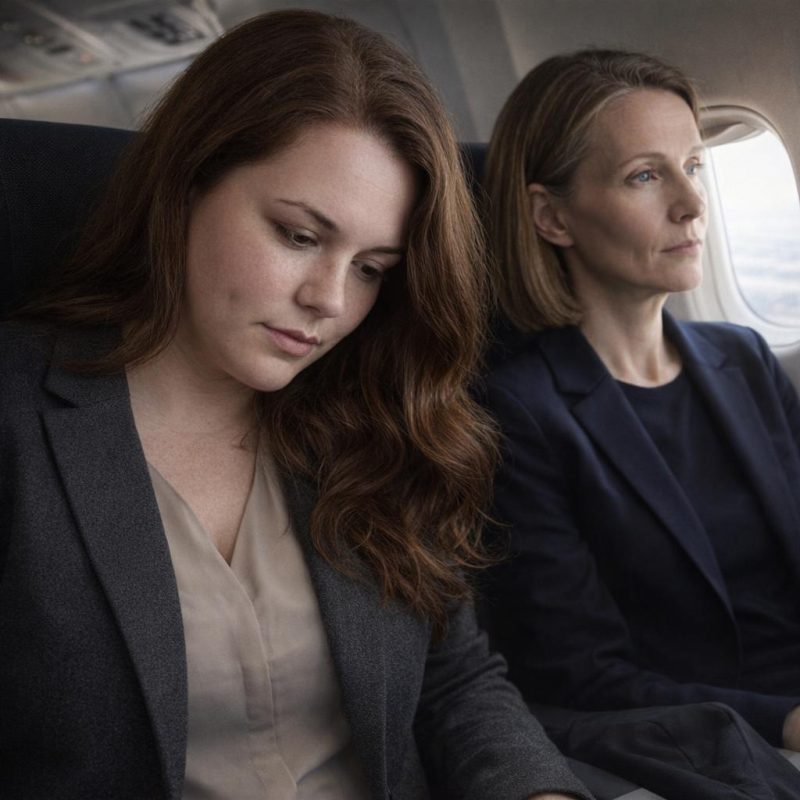 Image by RM AI
The First Ask
I stood in the aisle for a moment longer than I probably should have, just processing. Then I cleared my throat — not aggressively, just the universal signal for excuse me, I need your attention. She didn't look up. I tried again, a little more deliberately this time, and said, as evenly as I could manage, that I thought there might be some confusion, that the seat she was in was actually mine, 12A, and I had the boarding pass to confirm it. I kept my voice measured. I was polite. I was the kind of polite that takes actual effort when you're already tired and someone has kicked your jacket onto the floor. She looked up then. I'll give her that much — she did eventually look up. But what she gave me was a slow, heavy-lidded eye roll, the kind that takes real commitment, followed by a sigh that seemed to come from somewhere deep and put-upon, as though I were the one creating an inconvenience. A couple of passengers in the rows nearby had gone quiet. I could feel the attention shifting toward us the way it does when something uncomfortable starts happening in a small space. I waited for her to say something — an explanation, a mistake acknowledged, anything. She turned back to her magazine without a word.
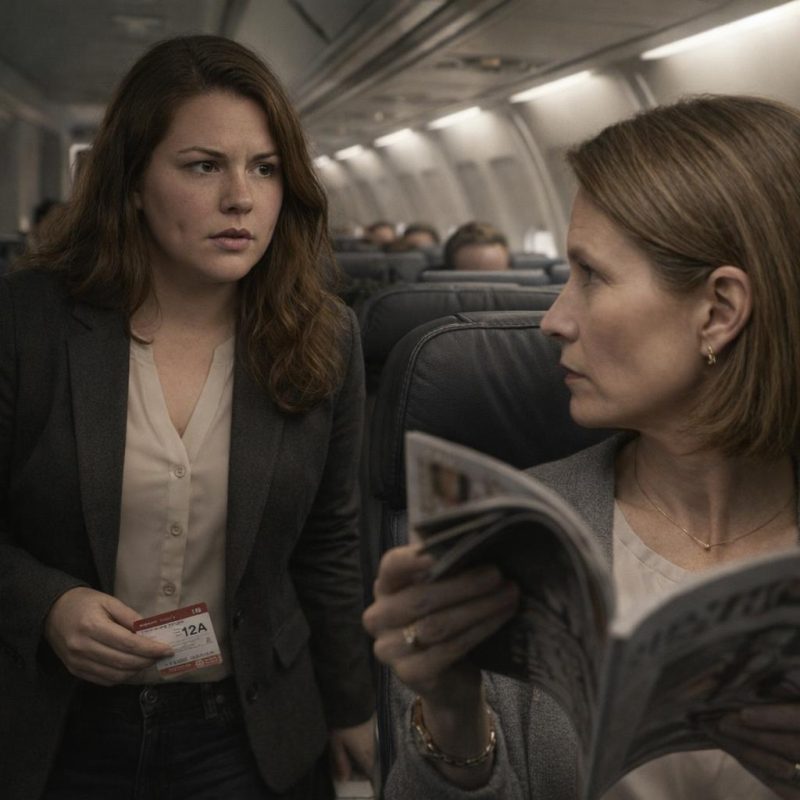 Image by RM AI
The Boarding Pass
I felt the heat rise in my face before I'd even decided to speak again. I wasn't going to just stand there. I raised my voice enough to be clearly heard over the ambient cabin noise — not shouting, but not the careful murmur I'd used the first time either — and said that I needed her to look at something. I reached into my jacket pocket, then remembered my jacket was on the floor, and pulled my phone from my jeans instead. I opened the airline app, navigated to my boarding pass, and held the screen out toward her. The seat assignment was right there at the top: Flight 2247, Seat 12A, my name printed cleanly beneath it. I pointed to it. I held it close enough that there was no possible way she could claim she couldn't read it. She glanced at the screen — a single, brief, dismissive glance — and then rolled her eyes again with what felt like even more conviction than the first time. She shifted in the seat, resettling herself, pulling the magazine a little closer, making herself more comfortable rather than less. The passengers in 11B and 13C had both gone very still. I stood in the aisle, phone still extended, the boarding pass with seat 12A glowing on the screen.
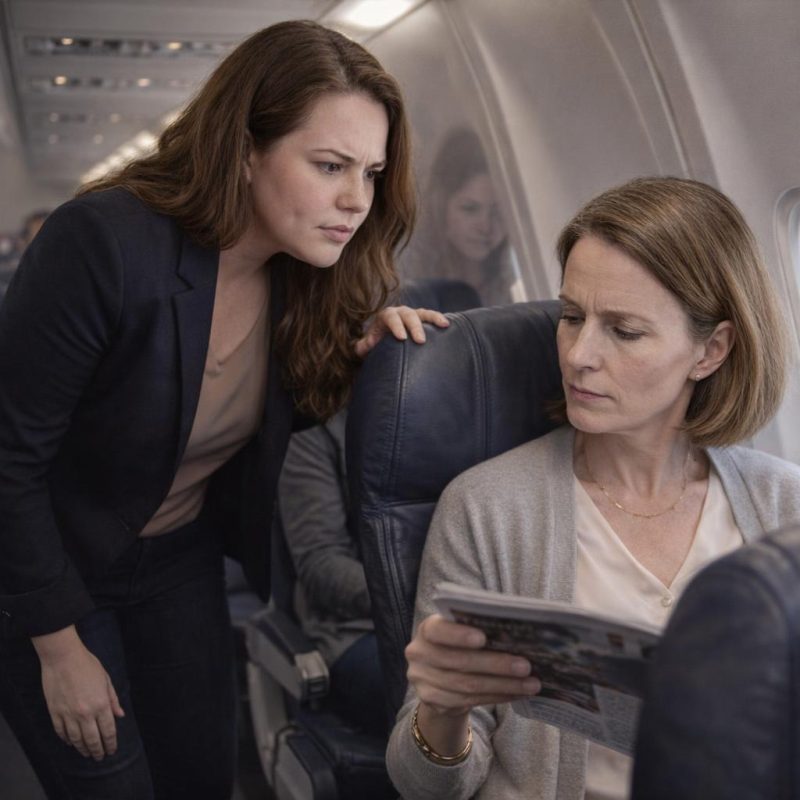 Image by RM AI
The Appeal to Authority
I looked away from Linda long enough to scan the cabin for a uniform. Ashley was maybe twenty feet up the aisle, checking overhead bins with the practiced efficiency of someone who'd done it ten thousand times. I raised my hand — not frantically, just clearly — and she caught it on the second try. Professional. Measured. This was exactly what I needed: someone with actual authority to look at two boarding passes and make a call. I kept my voice calm when she reached me. I explained that I had left my jacket on seat 12A before deplaning briefly, that I had returned to find this woman occupying my assigned seat, and that she had declined to move despite seeing my boarding pass. I held my phone out again, seat assignment visible, and pointed to Linda without drama. Ashley listened. She didn't interrupt, which I took as a good sign. She glanced at my boarding pass, then at Linda, then back at me, her expression giving away nothing at all. I felt the first real flicker of hope I'd had since this whole thing started. Then I watched Ashley turn and make her way toward me, her face still holding that same carefully neutral expression.
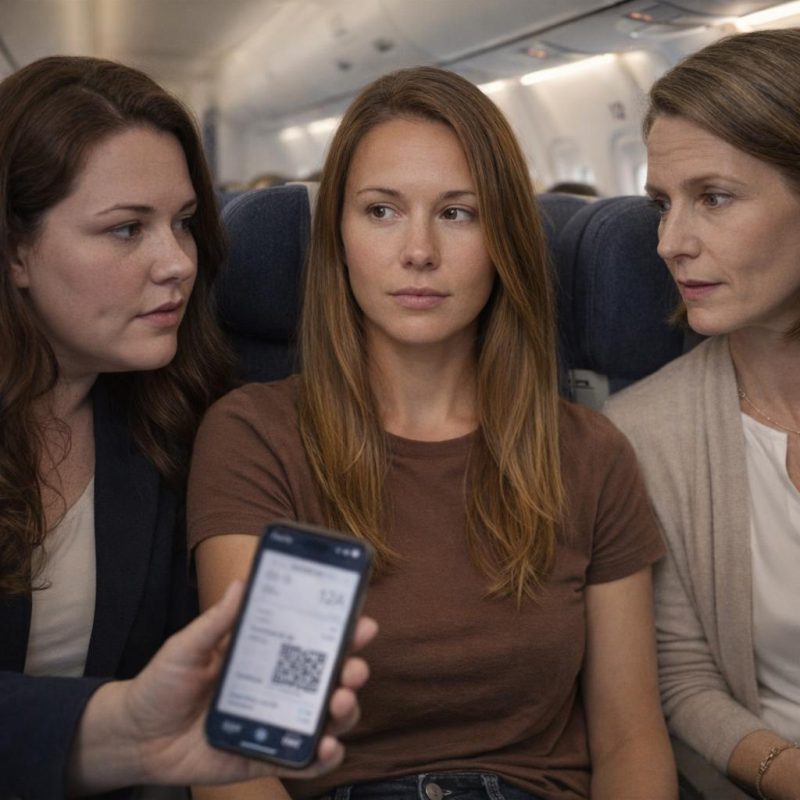 Image by RM AI
Flexibility
Ashley's suggestion landed like a door closing in my face. She said the flight was nearly full, that departure time was a priority, and that if there was an available seat toward the back, the most practical solution would be for me to take it. She said the word 'flexible' with the particular exhaustion of someone who had used it as a weapon before. I stood there for a moment, genuinely unable to process what I was hearing. I had checked in on time. I had a confirmed window seat I had specifically selected and paid extra for. I had marked it. I had done everything right. And somehow I was the one being asked to walk to the back of the plane like a problem that needed to be relocated. Linda said nothing. She didn't need to. Ashley was already glancing past me toward the next task on her mental list, the conversation apparently concluded from her end. I looked down at my boarding pass still glowing on my phone screen — 12A, my name, my flight — and then back up at the two of them. The unfairness of it settled somewhere behind my sternum, quiet and heavy, like something I was going to be carrying for a while.
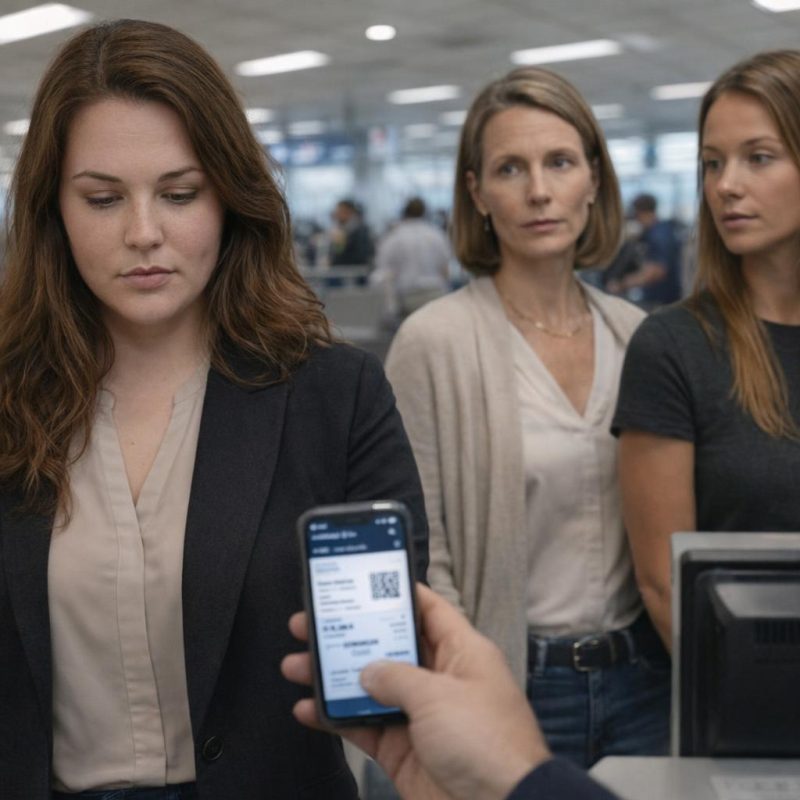 Image by RM AI
The Smirk
I took a breath and made a decision. I told Ashley, as evenly as I could manage, that I would not be taking a seat in the back. I said it without raising my voice, but I also said it without any softness around the edges. I had paid for seat 12A. The airline had assigned me seat 12A. I was standing in the aisle next to seat 12A with documentation on my phone proving it was mine, and I expected the airline to honor that. Ashley's expression shifted into something more uncomfortable, the practiced neutrality cracking slightly at the edges. She started to say something about policy and operational decisions, but I kept my eyes on her and didn't move. The passengers in the rows around us had stopped pretending not to listen. I could feel the weight of their attention like a physical thing. And then, in my peripheral vision, I caught it — Linda, still settled into my seat, watching the exchange between me and Ashley with something new on her face. Not boredom. Not irritation. The tension in her jaw had eased, and the corners of her mouth had shifted into something that looked almost like quiet satisfaction.
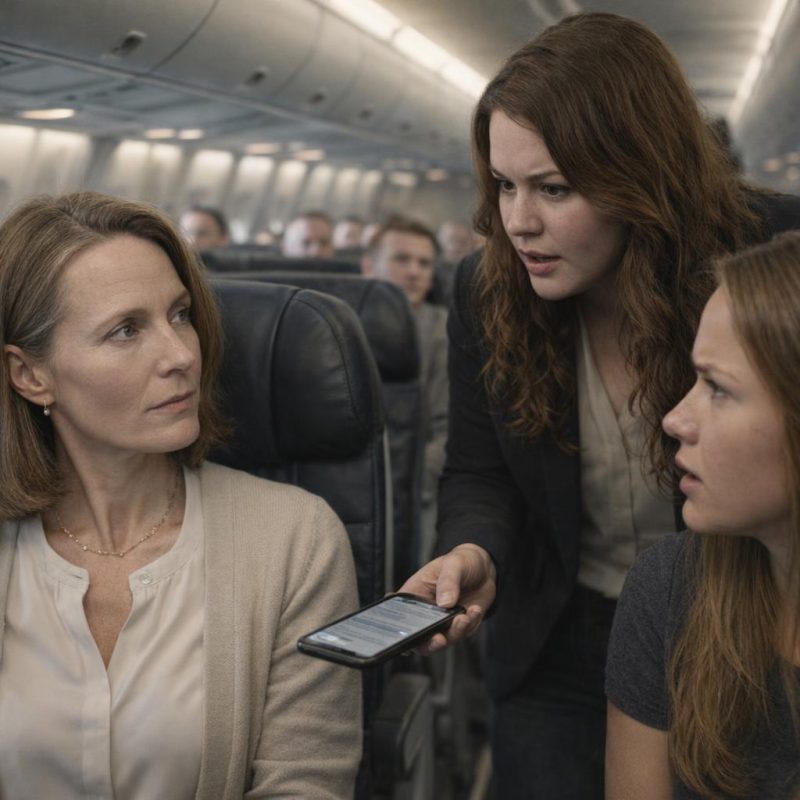 Image by RM AI
An Ally Emerges
Ashley opened her mouth to respond, and I braced for another round of departure-time diplomacy. The aisle felt narrower than it had five minutes ago, the overhead air vents doing nothing useful, the whole cabin pressing in. I was aware of how I must have looked — standing there with my backpack, my phone, my jacket still crumpled on the floor, holding my ground in a way that probably read as difficult to anyone who hadn't been watching from the beginning. I was starting to feel the particular loneliness of being right in a room full of people who just wanted the situation to go away. And then, from across the aisle, a voice cut through all of it — calm, unhurried, carrying the kind of weight that comes from someone who isn't asking permission to speak.
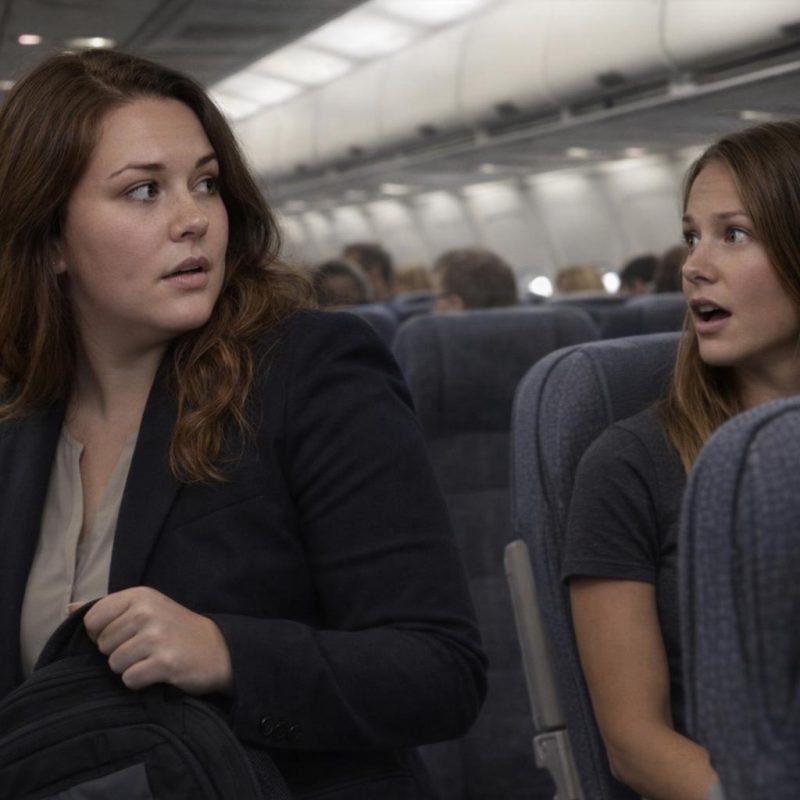 Image by RM AI
Entitled Brat
Marcus had barely finished his second sentence — something measured about assigned seating being a contractual matter, not a courtesy — when Linda finally spoke. Her voice came out sharp and high, the kind of tone that cuts through ambient noise without effort. She said I was making a scene over a chair. She said the word 'entitled' like she'd been saving it, and then she said 'brat' right after it, the two words landing together with enough force that the conversation two rows back went silent mid-sentence. My face went hot immediately, the kind of heat that has nothing to do with temperature. I heard Marcus exhale sharply beside me. Ashley looked like she wanted to be anywhere else on earth. I kept my eyes on Linda and tried to hold onto the version of myself that was calm and documented and correct, but the words were already doing what words like that do — getting under the skin, making you feel small in a public place in front of strangers who are all watching to see what you do next. The cabin had gone very quiet. The words sat in the air between us, and nobody moved to take them back.
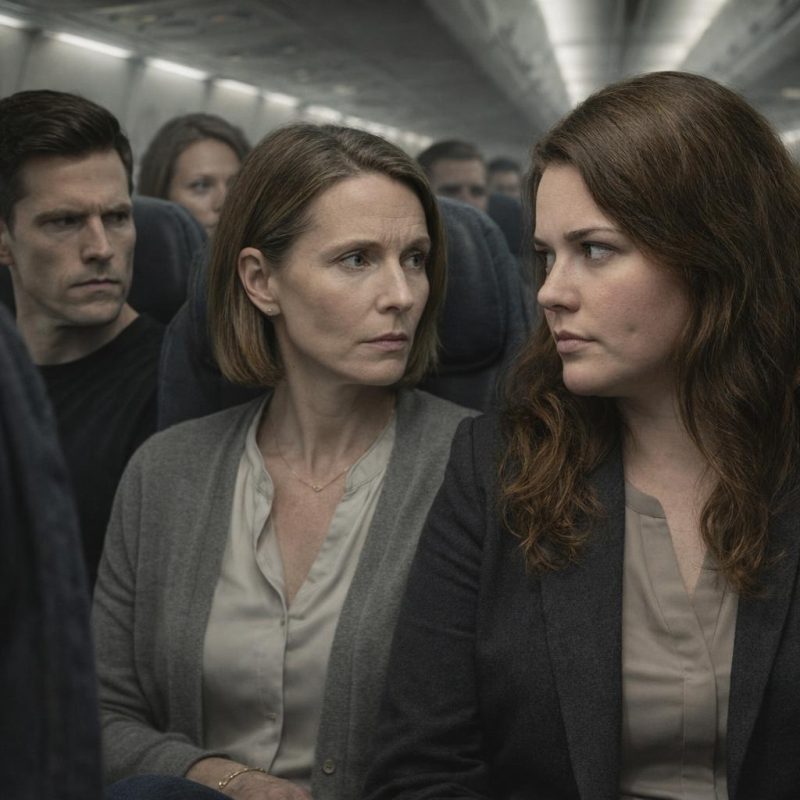 Image by RM AI
The Chorus
The quiet lasted maybe three seconds before it broke open entirely. A man two rows back said, loudly enough for half the cabin to hear, that the woman should just show her boarding pass if she had one. Someone closer to the front groaned and said they just wanted to get to Denver. Marcus said something firm about the airline having an obligation to enforce its own seating assignments. Ashley raised both hands in a gesture that was meant to be calming and mostly wasn't. And then Jennifer, one row ahead of me, shifted her toddler to her other hip and turned around with the particular exhaustion of a parent who has already used up her patience reserves before noon. She asked, quietly but clearly, if everyone could please lower their voices because her daughter was getting frightened. That landed differently than the other voices — softer, more specific, harder to argue with. Marcus nodded and pulled back slightly. I felt a wave of something close to shame, not because I was wrong, but because the circle of people affected by this had grown well past me and Linda and now included a tired mother and a small child with wide eyes. The cabin had become its own small ecosystem of competing needs, and every voice in it had an opinion.
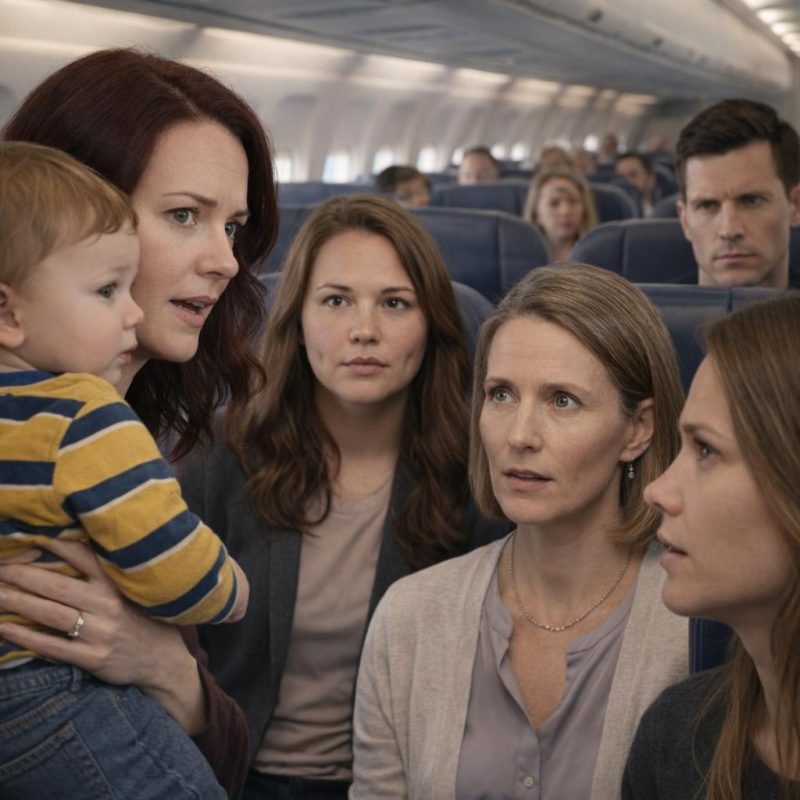 Image by RM AI
The Captain's Voice
The intercom clicked on with that particular static-edged tone that makes every passenger look up automatically, and then the captain's voice filled the cabin — steady, unhurried, the voice of someone accustomed to delivering information that people don't want to hear. He said there would be a brief delay in departure. He said the crew was working to resolve a seating dispute and that he appreciated everyone's patience. That was all. Fourteen words, maybe fifteen, delivered in the same tone you'd use to announce a slight headwind over Kansas. But the effect was immediate. Passengers who had been watching the aisle drama with detached curiosity now had confirmation that this was the reason their phones were still in airplane mode for nothing, that their connections were ticking, that their Tuesday was being held hostage. The groaning was audible. I heard someone behind me say 'are you serious' to no one in particular. Jennifer's toddler started crying again. Marcus uncrossed and recrossed his arms. Linda turned to look out the window as though none of this had anything to do with her. And I stood in the aisle, my face burning, understanding with absolute clarity that the captain had just announced my conflict to every single person on the aircraft.
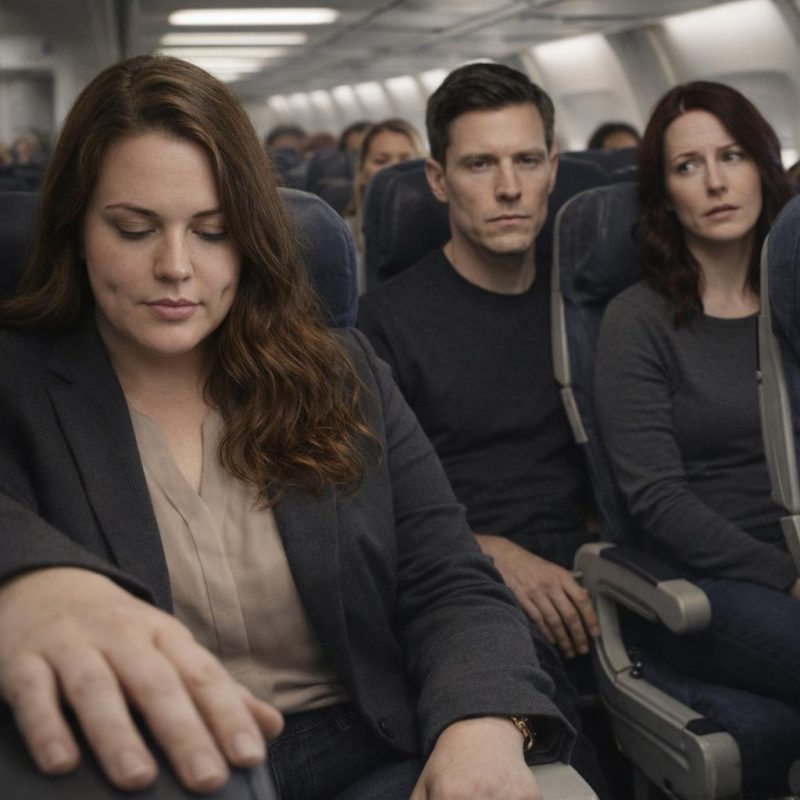 Image by RM AI
The Senior Attendant
Ashley had the look of someone who had been waiting for reinforcements and was deeply relieved they had finally arrived. She stepped back almost immediately, creating space in the aisle, and I turned to see a woman moving toward us from the front of the cabin with the kind of unhurried authority that doesn't need to announce itself. Patricia had silver-streaked hair pulled back cleanly, senior rank insignia on her uniform, and the expression of someone who had managed worse than this before breakfast. The cabin noise dropped a register as she approached. She asked me to explain the situation, and I did — concisely, boarding pass out, jacket still on the floor as evidence. She nodded once, the way people nod when they're already processing the next step rather than still absorbing the current one. Then she turned to face Linda directly, her posture square, her voice even and carrying just enough to be heard by the rows around us. She asked Linda for her boarding pass.
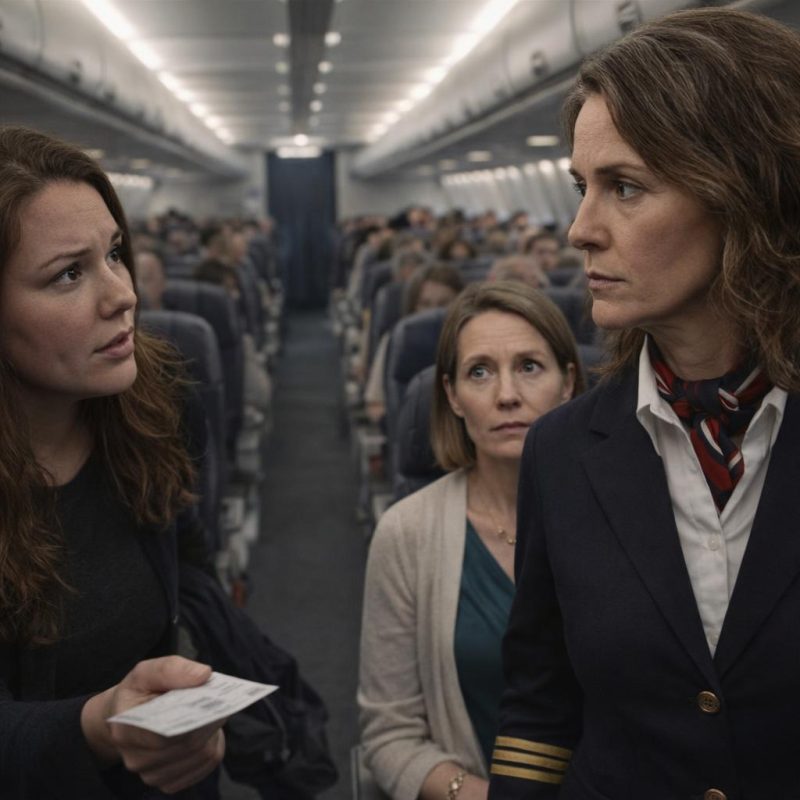 Image by RM AI
Eighteen C
Linda's hands moved slowly into her purse, the way someone moves when they're buying time. She shifted things around in there longer than she needed to — I could hear the soft clatter of keys, the rustle of what sounded like receipts — before she finally produced a folded boarding pass and held it out. Patricia took it without a word, unfolded it, and looked at it for a moment that felt longer than it probably was. Her expression didn't change exactly, but something in it sharpened. She turned the pass slightly, as if confirming what she was reading against the overhead bin numbers around us. Marcus leaned in just enough to see, and I watched his chin dip in a slow nod. I felt something loosen in my chest — the tight, coiled frustration of the last twenty minutes releasing all at once. Patricia held the boarding pass out so the print faced me, and there it was: the seat assignment in plain black ink, 18C, nowhere near row twelve.
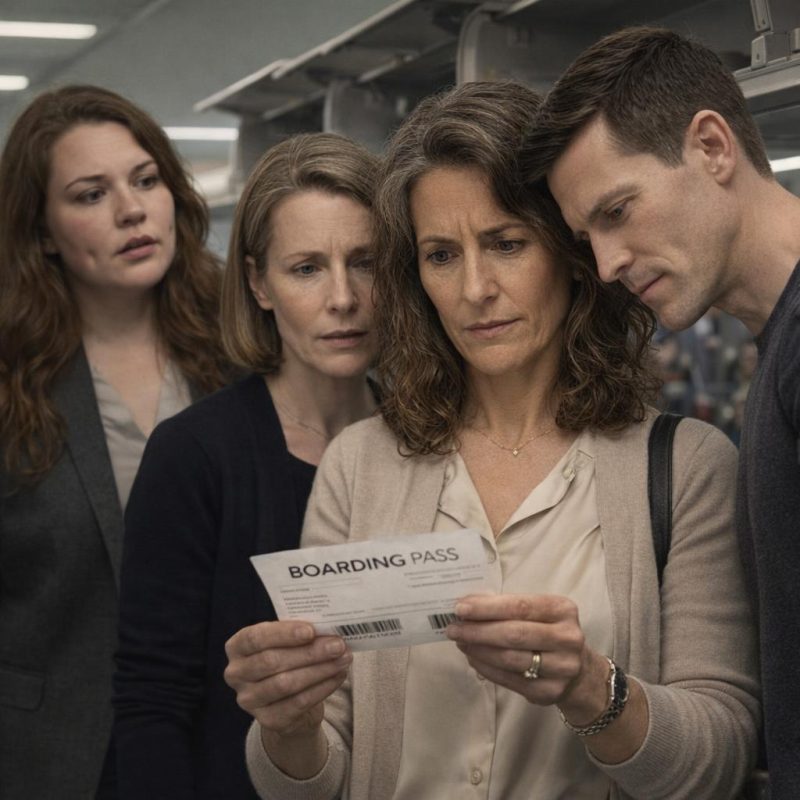 Image by RM AI
The Request to Move
Patricia handed the boarding pass back to Linda with a deliberate, unhurried motion, the kind that signals a conversation is ending rather than continuing. Then she straightened up to her full height and spoke in a tone I can only describe as professionally final — not unkind, but absolutely without give. She said Linda needed to gather her belongings and move to seat 18C immediately. She said it clearly enough that the passengers in the surrounding rows could hear every word without straining. She added that the aircraft could not push back from the gate until all passengers were seated correctly, and that this was not a request. I exhaled slowly. After everything — the initial shock of finding my seat taken, the back-and-forth, the boarding pass comparisons, the flight attendant escalation — it felt like we had finally arrived at the obvious, inevitable conclusion. The evidence was right there. The authority was right there. All that was left was for Linda to stand up, collect her magazine, and walk to the back of the plane. Patricia stood in the aisle with her hands clasped in front of her, waiting, and the firmness in her voice seemed to settle over the entire row like something solid.
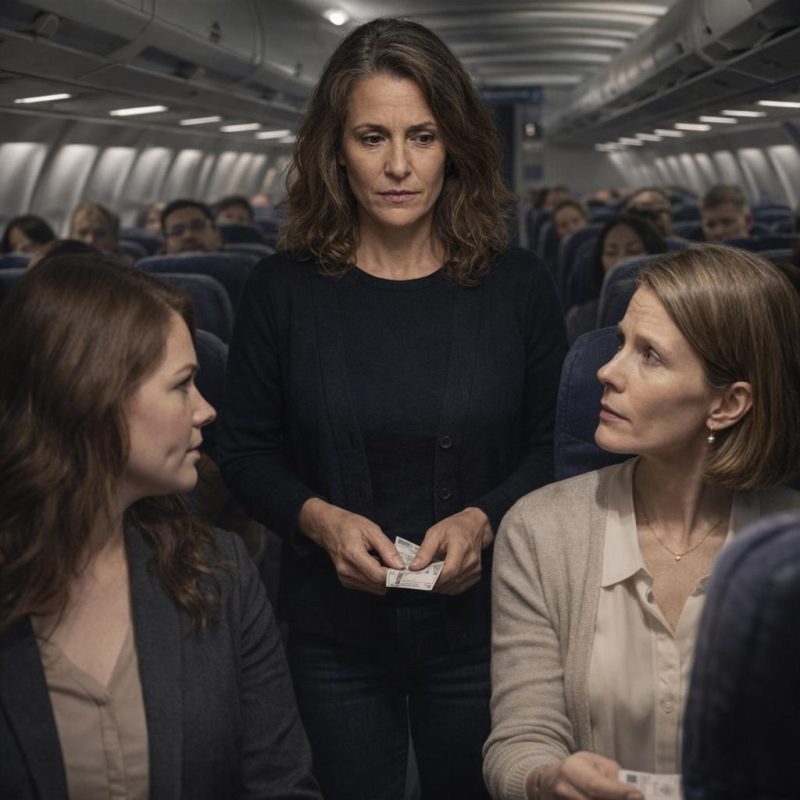 Image by RM AI
The Refusal
Linda didn't move. I kept waiting for the moment she would — the small shift of weight, the reach for her bag, the resigned push up from the seat — but it didn't come. Her hands stayed exactly where they were, fingers curled around the armrests. Patricia repeated the instruction, her voice a degree firmer this time, and I saw a few passengers in nearby rows exchange glances. Linda shook her head. It was a small motion, barely perceptible, but it was unmistakably a no. That's when I noticed her eyes. They had gone glassy in a way that didn't look like anger. It looked like someone fighting to hold something back. She wasn't glaring at Patricia or at me. She wasn't doing the indignant, affronted performance I'd half-expected from someone who'd been caught out so clearly. She just sat there, jaw tight, breathing in a way that seemed effortful. Marcus looked at me, then back at Linda, his expression shifting from confident to uncertain. I didn't understand it. The boarding pass had been right there. Patricia's authority had been unambiguous. There was no reasonable argument left to make, and yet Linda's hands stayed locked around the armrests, knuckles pale against the plastic.
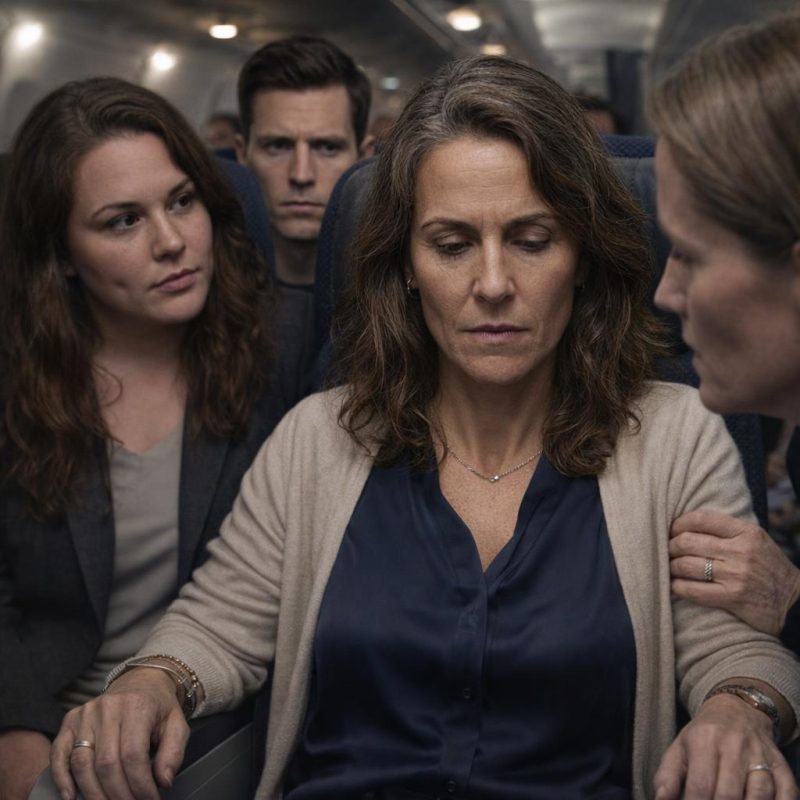 Image by RM AI
Something Deeper
Patricia asked her directly — calmly, but with the kind of precision that doesn't leave room for evasion. She asked Linda what made this specific seat necessary. The cabin had gone quiet enough that I could hear the low hum of the air recycling system overhead. Linda's chin dropped slightly. When she spoke, her voice cracked on the first word, and she had to stop and start again. She said she needed this seat. Just that. She needed this seat. Patricia waited, clearly expecting more, but Linda shook her head and pressed her lips together. Jennifer, a few rows up, had gone still with her toddler half-asleep against her shoulder, watching. Marcus stood with his arms crossed, his frustration visible in the set of his jaw. I studied Linda's face, trying to find the logic in it. This wasn't the behavior of someone who'd made an honest mistake and was too proud to admit it. The emotion in her voice was too raw for that, too unsteady. It didn't match a preference for a window seat or extra legroom. Something about it felt genuinely urgent in a way I couldn't account for. Patricia asked again what made this seat necessary, and Linda's voice came out cracked and flat: "I can't explain it. I just need to be here."
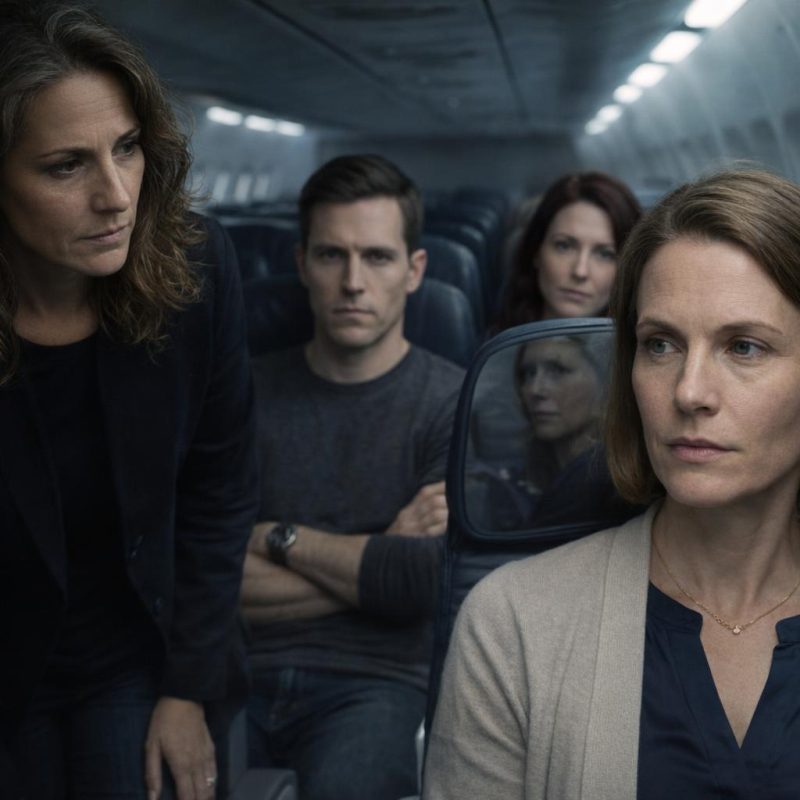 Image by RM AI
The Captain's Intervention
The intercom clicked on without warning, and the captain's voice filled the cabin — not the smooth, reassuring tone of a routine announcement, but something more deliberate. He said he was aware of the situation in the main cabin. He said if the dispute was not resolved in the next few minutes, he would leave the cockpit himself to address it, and that he was prepared to have both passengers removed from the flight before departure. The word both landed somewhere in my stomach. I hadn't done anything wrong. My boarding pass was correct, my seat was correct, and I was standing in the aisle holding my jacket while a woman who had no claim to my seat refused to vacate it — and somehow I was being folded into the same sentence as her. Around me, I could feel the collective impatience of the cabin pressing in. Jennifer's toddler had started fussing again, a thin, tired sound that seemed to speak for everyone. Marcus shook his head slowly, something between disbelief and exhaustion in the gesture. Patricia's expression had shifted — she looked less like someone managing a routine dispute and more like someone who had run out of standard procedures. Linda still hadn't moved. Whatever was keeping her in that seat, it was apparently worth the threat of being escorted off the plane, and I couldn't begin to understand what that could possibly be. The weight of three hundred people waiting settled over the cabin and didn't lift.
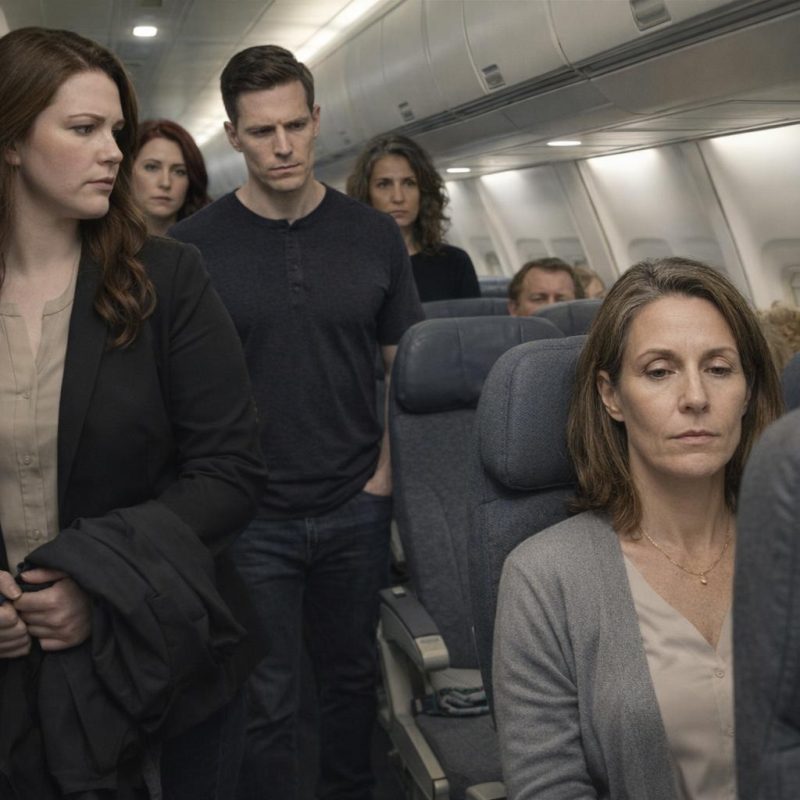 Image by RM AI
The Claim
Patricia tried one more time. She kept her voice even, almost gentle now, and asked Linda to please explain — said that if there was a reason, a real reason, she wanted to hear it. Linda's face crumpled. The tears that had been threatening finally came, running down her cheeks in a way she didn't try to hide or wipe away. Her hands were still on the armrests. She wasn't performing distress for sympathy — or if she was, she was doing it in the least strategic way possible, because it wasn't making anyone more sympathetic. It was making everyone more confused. Marcus had taken a small step back, visibly uncomfortable. Jennifer had turned her toddler's face gently away, as if shielding him from something she couldn't name. I stood there watching a woman cry in my seat over a seat dispute that had already been settled by evidence and authority, and I had no framework for it. It wasn't entitlement anymore. Entitlement doesn't look like this — doesn't shake like this, doesn't leak down someone's face like this. Linda drew a breath that caught in the middle, and when she spoke, her voice was barely above a whisper: she couldn't explain it, she said, and she wasn't leaving.
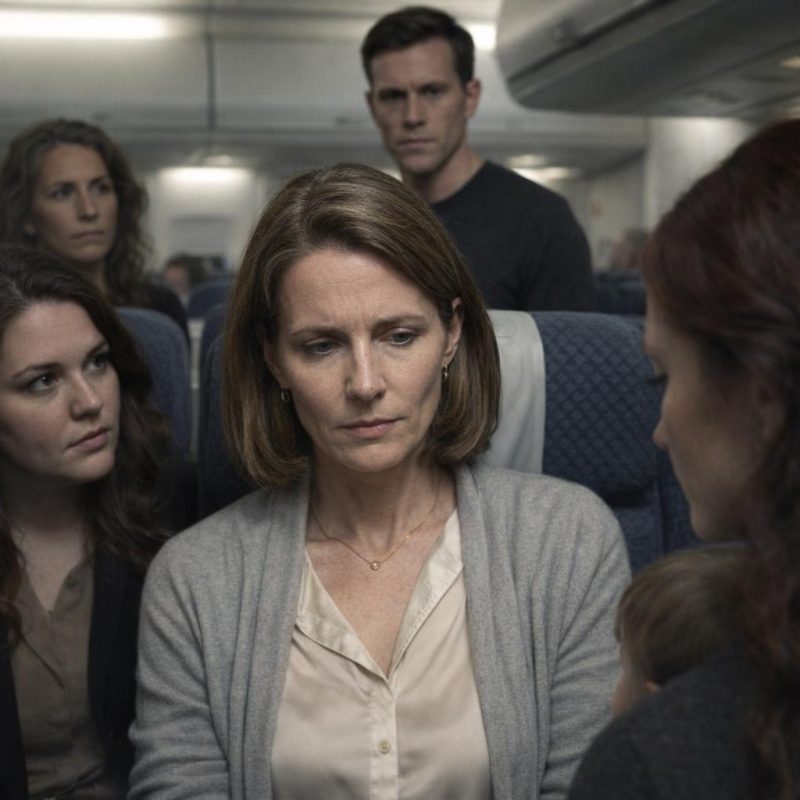 Image by RM AI
The Observation
I don't know exactly when my anger started mixing with something else, but somewhere in the last few minutes it had. I found myself watching Linda less like someone cataloguing an injustice and more like someone trying to solve a problem they didn't have the pieces for. Her hands were shaking. Not the tight, controlled tremor of someone furious — something looser than that, something that looked more like fear or exhaustion. The magazine on her lap was still open to the same page it had been on when I first approached the row. She hadn't turned a single page. And her eyes — I kept noticing where her eyes went. Not to the window. Not to Patricia. Not to the middle distance the way people stare when they're digging in out of stubbornness. They kept coming back to my face. Every few seconds, a quick dart in my direction, then away again, like she was checking something and then catching herself doing it. Patricia had noticed the shaking too — I saw her glance down at Linda's hands once, briefly, before returning to her neutral expression. I didn't know what to do with any of it. The situation hadn't changed: her boarding pass said 18C, my boarding pass said 12A, and she was still in my seat. But the tremor in her fingers and the direction of her gaze sat with me in a way I couldn't shake loose.
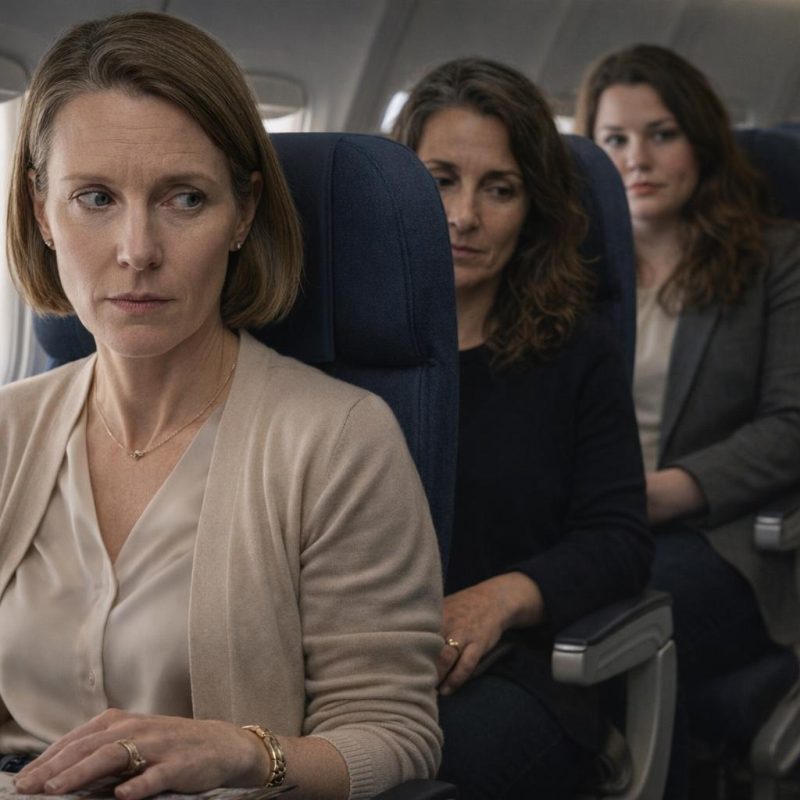 Image by RM AI
The Watcher
During a pause in the back-and-forth — one of those brief, airless moments when everyone seemed to be waiting for someone else to speak first — my eyes drifted down the cabin. I'm not sure what made me look. Maybe the accumulated strangeness of the last half hour had put me on edge in a way that made me scan my surroundings without meaning to. A few rows back, maybe six or seven, there was a man I hadn't noticed before. He was dressed in the kind of unremarkable business casual that doesn't register on first pass — dark slacks, a plain collared shirt, a jacket folded on the seat beside him. He wasn't on his phone. He wasn't leaning over to whisper to a neighbor or craning his neck the way most of the surrounding passengers were. He was just watching. Still and upright in his seat, his attention fixed on our row with a focus that felt different from ordinary curiosity. The passengers around him had the restless, irritated energy of people whose departure had been delayed. He didn't share it. His expression was unreadable from where I stood, and he made no move toward us. I couldn't tell if he was airline staff out of uniform or just someone with an unusual capacity for stillness. But the quality of his attention — calm, sustained, unhurried — sat in the back of my mind and didn't move.
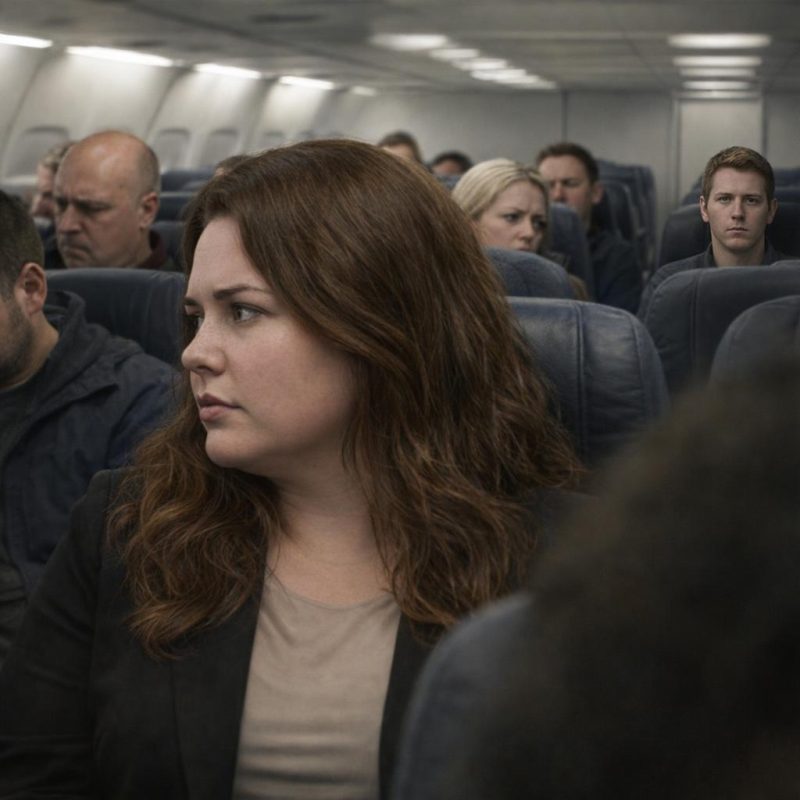 Image by RM AI
The Digital Audience
It was Ashley who made me notice it first — a faint blue-white glow in my peripheral vision, the kind that only comes from a phone screen held at recording angle. I glanced over without turning my head fully, and there it was: a passenger two seats back, phone raised, camera clearly pointed at our row. I told myself it was probably nothing. Then I looked again, more deliberately this time, letting my eyes sweep the cabin in both directions. My stomach dropped. There were phones everywhere. A woman across the aisle had hers propped against the seat pocket. A man three rows back held his at chest height, barely pretending. Jennifer had shifted her toddler to her hip and turned slightly away from the nearest lens, which told me she'd clocked it before I had. Marcus had gone still in a way that felt like recognition — his jaw tight, eyes moving across the cabin. Patricia saw it too; I caught the small, helpless press of her lips. Some of those screens had the telltale glow of a live feed. Others were just recording, steady and patient. I felt heat crawl up the back of my neck. Whatever this was, it had stopped being a private disagreement somewhere between the first exchange and now. At least five phones were pointed directly at me and Linda.
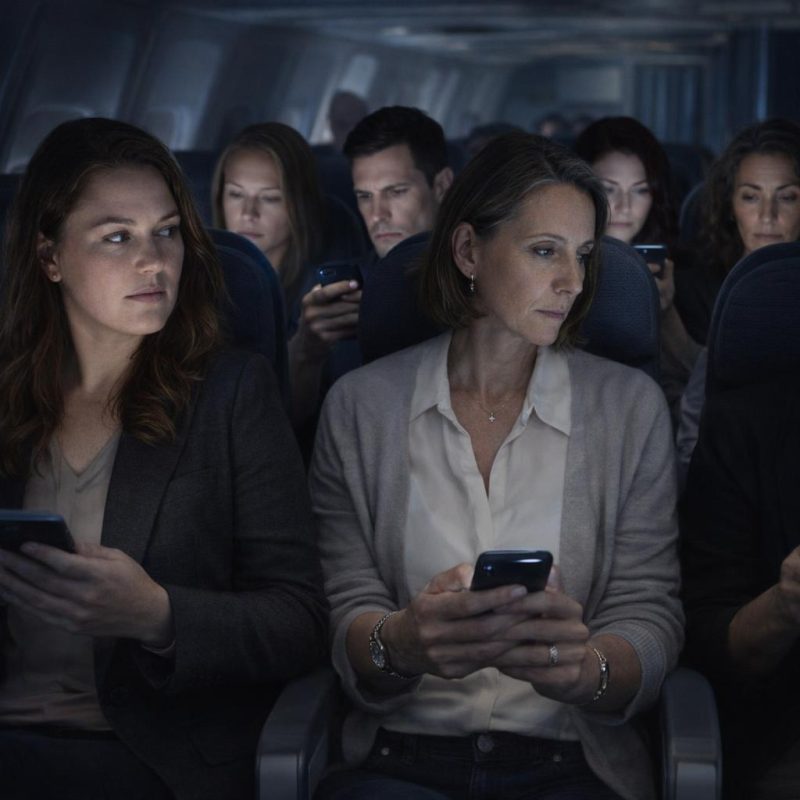 Image by RM AI
The Ultimatum
He came from the front of the cabin, moving with the kind of unhurried authority that parts crowds without asking. The badge on his chest read Supervisor, and he carried a tablet tucked under one arm like a clipboard. He stopped at our row and looked at both of us — not at Linda, not at me, but at both of us with exactly equal weight, which somehow made it worse. He said the flight had already been delayed and that the airline's patience had a limit. He gave us two minutes to resolve the dispute between ourselves. If we couldn't, he said, both of us would be removed from the aircraft and rebooked on a later service. His voice was level and clipped, the kind of tone that doesn't invite a response. Patricia stepped back half a pace to give him room. Ashley went very still. I felt something cold move through my chest — not guilt, because I hadn't done anything wrong, but the particular panic of watching a fair outcome become genuinely uncertain. I had a meeting tomorrow morning. I had a checked bag in the hold. I had done everything right. None of that seemed to matter to the two-minute clock he'd just started. The weight of that deadline settled over the row like a dropped curtain.
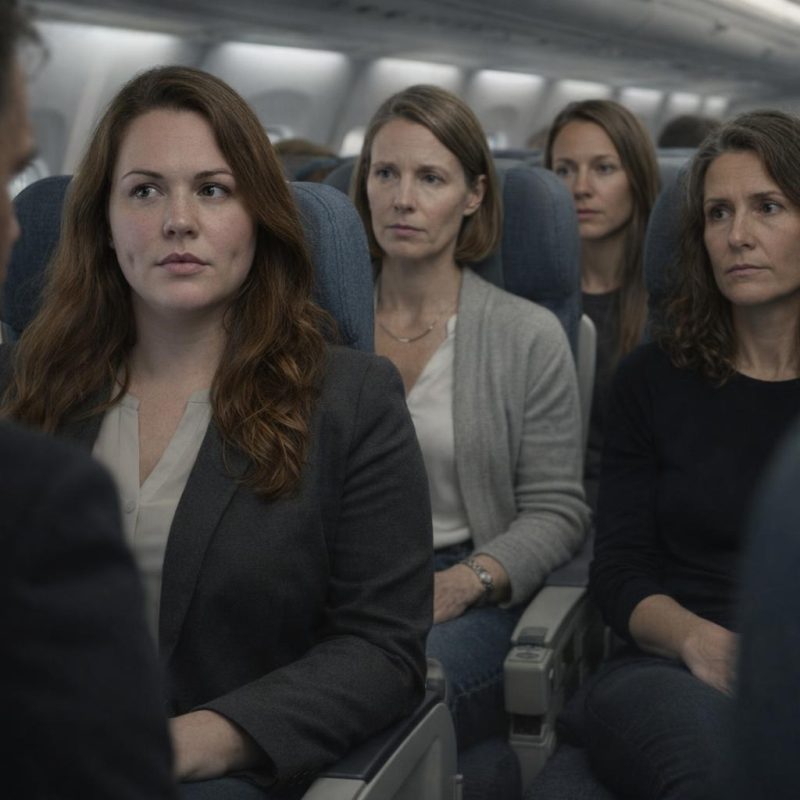 Image by RM AI
The Calculation
My mind started running the numbers before I'd even consciously decided to. Another seat — there had to be one somewhere in the back, a middle seat nobody wanted, something. I could take it, sit down, let this go, land on time. The meeting would happen. My bag would arrive. Life would continue. I turned the option over and looked at it from every angle, the way you do when you're trying to talk yourself into something you already know you won't do. Because the injustice of it sat in my throat like something I couldn't swallow. I had put my jacket on that seat. I had followed every unwritten rule of air travel that every single person in this cabin understood. Giving up the seat didn't just mean losing the seat — it meant that worked. It meant the right move, next time, was to take what you wanted and hold on. I looked at the supervisor, who had glanced at his watch with the practiced patience of someone who'd done this before. Then I looked at Linda. The supervisor had just told her she could be pulled off this flight. Removed. Rebooked. Delayed by hours. And her face showed nothing — no flicker of alarm, no recalculation, no sign that the threat had landed at all.
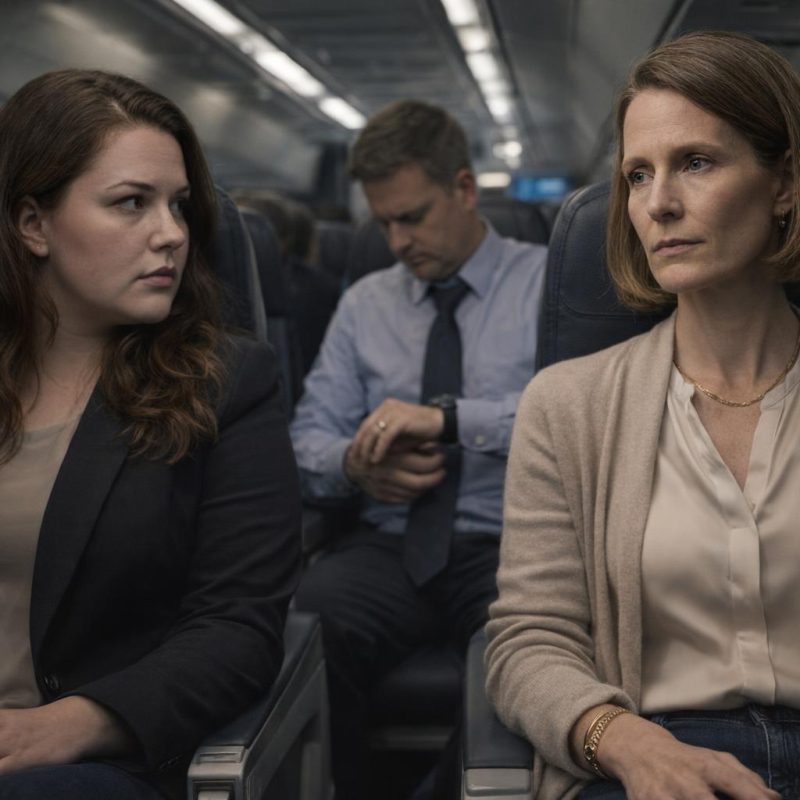 Image by RM AI
The Defense
Marcus stood up. Not halfway — all the way, out of his seat, turning to face the supervisor with his shoulders squared. He said, clearly enough for the surrounding rows to hear, that I had a valid boarding pass for that seat, that I had left a personal item on it before deplaning, and that I had done nothing that violated any policy he was aware of. His voice was steady and unhurried. Before the supervisor could respond, a man two rows back said he'd watched the whole thing and agreed — the airline needed to enforce its own rules. A woman across the aisle said it plainly: I was being treated as though I'd done something wrong when I hadn't. Jennifer shifted her child to her other hip and nodded, not saying anything but making her position clear. I felt something loosen in my chest — gratitude, mostly, though it came wrapped in a fresh layer of embarrassment at being the center of all of it. The supervisor's expression shifted slightly, not softening exactly, but recalibrating. Patricia and Ashley exchanged a look I couldn't fully read. Linda said nothing. She sat with her hands in her lap and her eyes forward, and the voices kept coming, one after another, until the whole forward section of the cabin had tilted unmistakably in one direction.
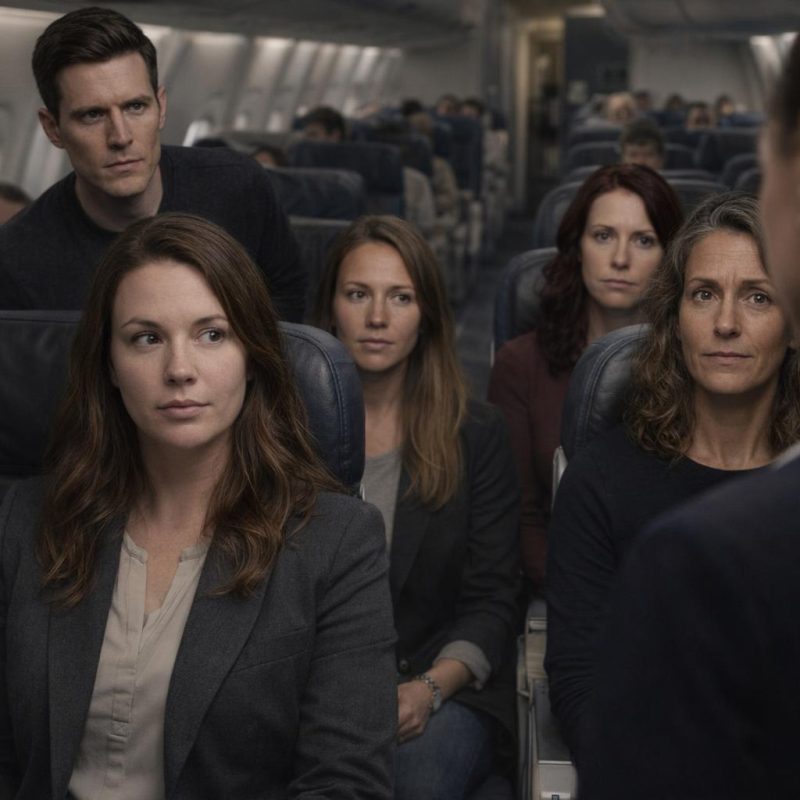 Image by RM AI
The Crack
The supervisor repeated the ultimatum — same words, same flat delivery, no room added and none removed. I watched Linda's face as he said it. The set of her jaw had been consistent for the last twenty minutes: tight, forward, the expression of someone who has decided on a position and intends to hold it. But something shifted as the words landed this time. The defiance didn't harden — it dissolved. What came through underneath it was different, and it stopped me. Her breathing changed first, shallow and quick, and she pressed one hand flat against her chest in a way that looked involuntary. Her eyes moved — not to the supervisor, not to Marcus, not to the passengers who'd just spoken up against her. They moved to the window, then to the seat back in front of her, then to the middle distance, the darting scan of someone trying to find a way out of a room with no exits. She still didn't stand. She didn't reach for her bag or shift her weight or do any of the small preparatory things a person does when they're about to give ground. My anger had been a reliable, solid thing for the past half hour, and I'd been leaning on it without noticing. But watching her face, I felt it go uncertain — because what I was looking at didn't read like stubbornness anymore.
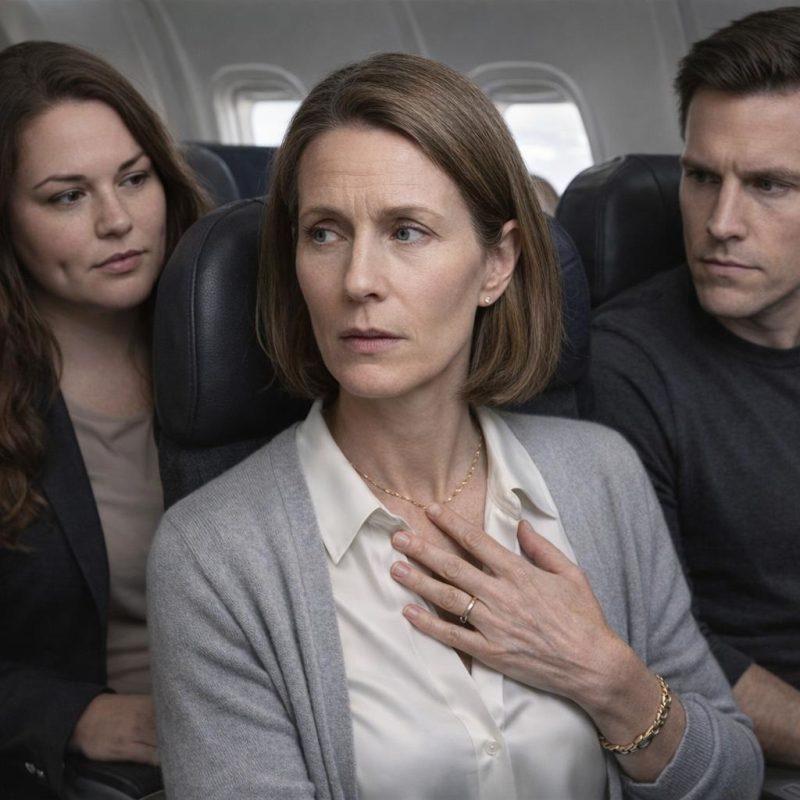 Image by RM AI
The Stare
I caught her doing it again. Her eyes had been on me — not on the window, not on the supervisor, not on the passengers still murmuring around us — on me, specifically on my face, in the careful way of someone who doesn't want to be caught looking. When my gaze met hers directly, she dropped it immediately, back to the magazine in her lap, the same practiced redirect she'd used at least three times before. I started counting back through the confrontation in my head. The first time I'd noticed it, I'd written it off as the ordinary hostility of someone in an argument. The second time, I'd thought maybe she was trying to read my expression for signs I was about to back down. But this was different. She wasn't watching me the way you watch an opponent. She was studying me — my features, the line of my face — with an attention that felt specific in a way I couldn't name. I tried to think if we'd met before. A conference, a flight, a waiting room somewhere. Nothing surfaced. I didn't know this woman. I was certain of that. But the way her eyes kept returning to me, quiet and searching, carried a weight I couldn't account for, and it sat with me long after she'd looked away.
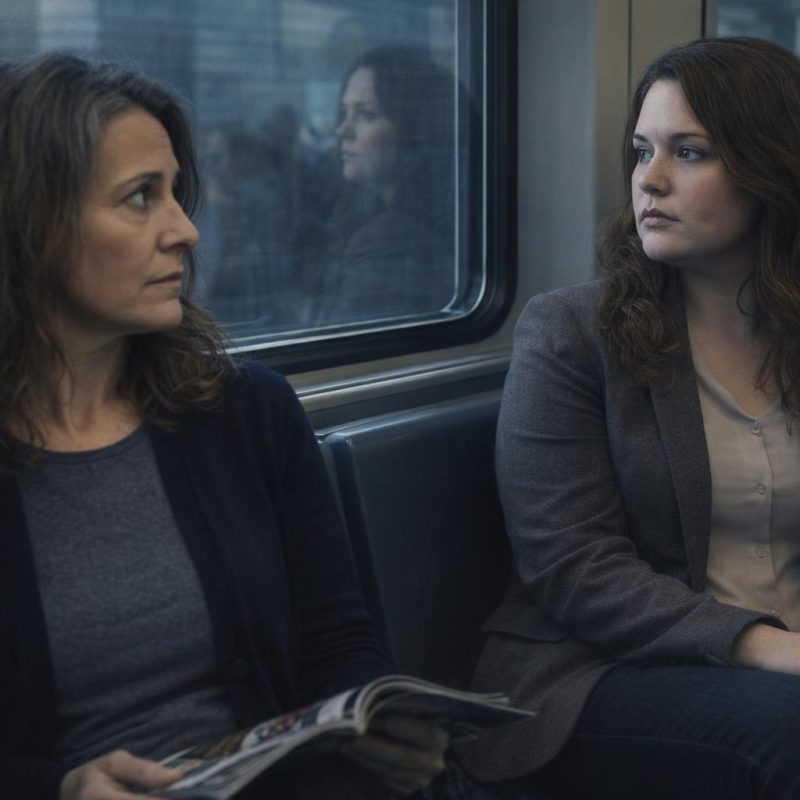 Image by RM AI
The Unopened Magazine
My eyes dropped to the magazine in her lap during one of the silences, and something snagged. I recognized the page. Not because I'd read it — because I'd glanced at it when I first came back to the row and found her in my seat. It was a full-bleed cosmetics advertisement, a woman in a white dress against a pale background. That same page was open now. I looked at the clock on my phone. More than twenty minutes had passed since this started. The magazine hadn't moved. Her hands rested on it without any of the small, unconscious adjustments — the thumb holding a place, the fingers curled toward a turn — that come with actual reading. I thought back to when she'd first picked it up, right after I'd asked her to move. The way she'd lifted it and angled it slightly, like a thing you hold rather than a thing you read. I added it to the list I'd been building without meaning to: the staring, the breathing, the hand pressed to her chest, the refusal to move despite the threat of removal. None of it fit together into anything I could explain. The magazine lay open and untouched across her knees, the same glossy page it had been from the beginning.
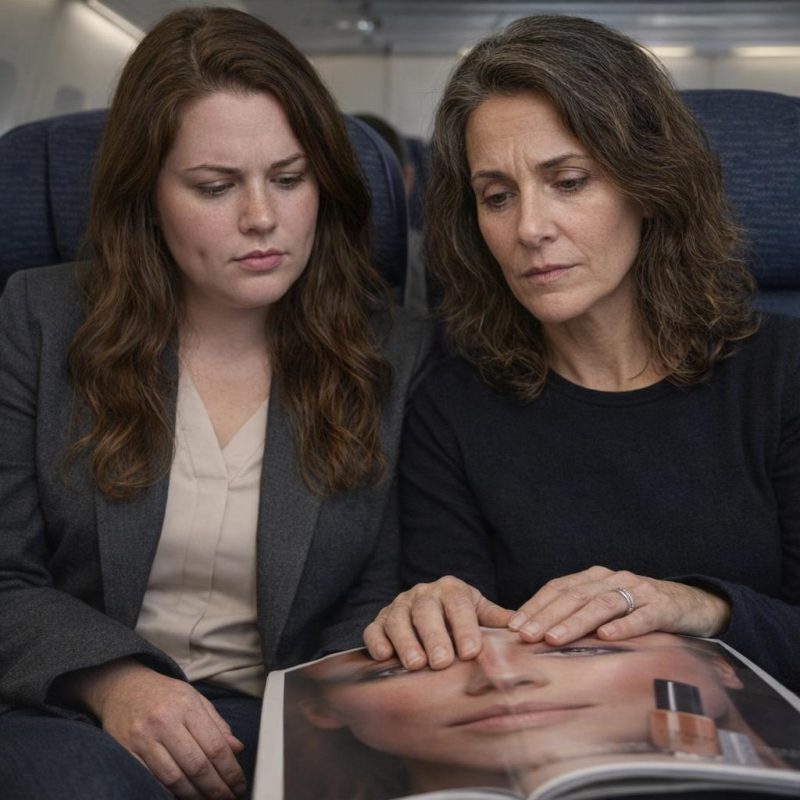 Image by RM AI
The Final Warning
Patricia made one more attempt. She'd been patient through all of it — the filming, the supervisor, the chorus of passengers — and she laid out the offer carefully, like someone who still believed in the possibility of a clean resolution. There was a window seat available in row fifteen, she said. Also over the wing. Similar sightline, similar position in the cabin. She could have it confirmed and reassigned in under two minutes, well within the supervisor's deadline. It was a reasonable offer. I could see that. Even through everything, I could see that Patricia had found the closest possible equivalent and was presenting it in good faith. I watched Linda's face as Patricia spoke. She listened — or appeared to listen — and when Patricia finished, Linda shook her head. Not after a pause. Not after any visible consideration of the offer. Immediately, the way you shake your head at something you've already decided before the question is finished. Patricia's expression shifted into something I hadn't seen from her yet: genuine bafflement. I felt it too, but sharper. A different window seat, same position, same view — and the answer was no before the sentence was cold.
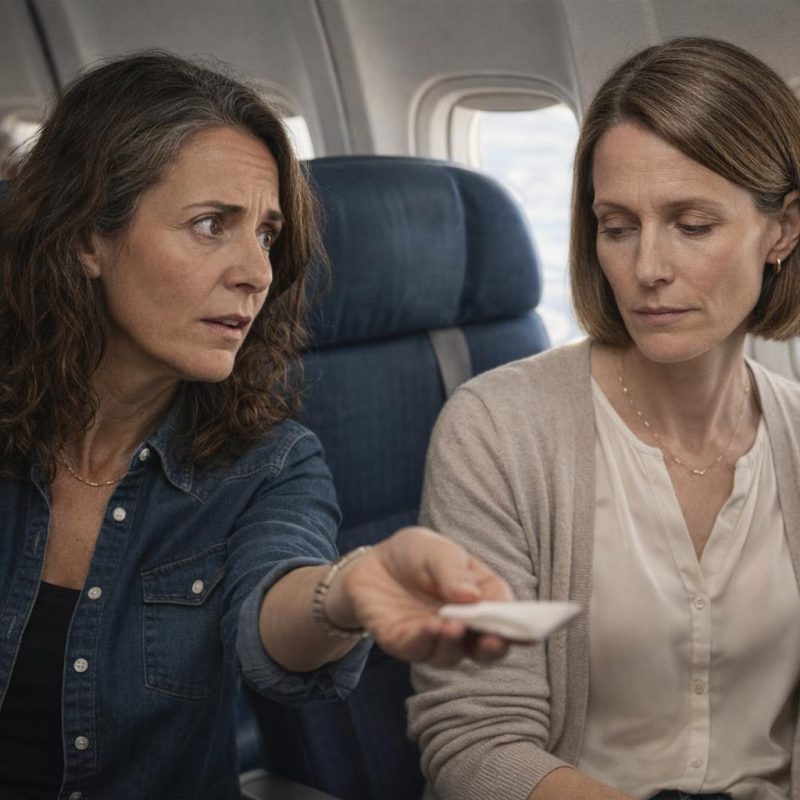 Image by RM AI
The Teddy Bear
While Patricia and Linda were locked in their standoff, my eyes drifted upward to the overhead bin. Linda's carry-on was still up there, wedged in at an angle, and something hanging from the handle caught my attention. A luggage tag — but not the standard plastic kind you print at home or buy at an airport shop. This one was shaped like a small teddy bear, the soft kind, the stuffed fabric kind, and it had clearly been there for a very long time. The edges were frayed. The color had faded from what might have once been yellow into something closer to cream. I leaned slightly to get a better angle. There was writing on it, handwritten in ink that had gone pale with age, and a small printed logo I couldn't quite make out from where I was sitting. It looked institutional. Medical, almost. The kind of tag you'd see on a hospital bassinet, not a rolling carry-on in an airplane cabin. Ashley, seated a row back, seemed to notice me looking, but said nothing. I turned back to the argument still unfolding in front of me. But I kept thinking about that tag — how worn it was, how deliberately kept, and the faint trace of a date printed near the bottom that I couldn't quite read from this angle.
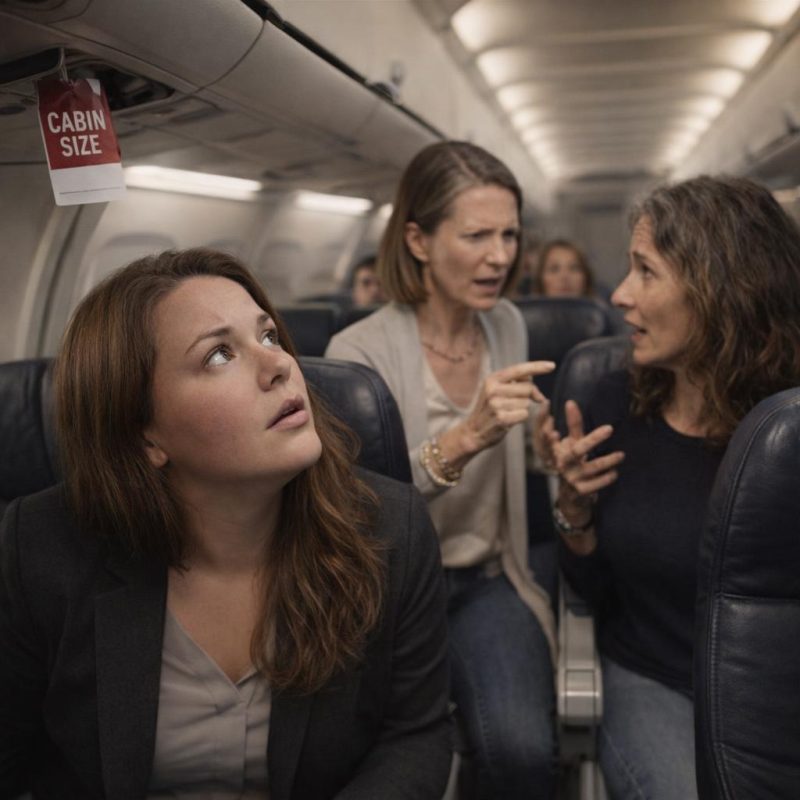 Image by RM AI
The Whisper
Patricia had stepped back slightly, giving the moment some air, and the cabin had gone unusually quiet. No announcements, no engine fluctuation, just the low hum of recycled air and the sound of people trying not to breathe too loudly. That's when I heard it. Linda wasn't speaking to me or to Patricia. She was barely speaking at all. Her voice dropped to something just above a murmur, her chin angled down, her eyes fixed on the tray table in front of her. I was close enough — maybe two feet away — to catch fragments. The words weren't directed at anyone. They sounded like something she was saying to herself, the way people do when they're trying to hold something together. I caught the phrase clearly enough: *had to*. And something before it that I couldn't fully assemble. The tone wasn't impulsive. It wasn't the voice of someone who'd snapped and done something reckless. It carried a different weight — the kind that comes from a decision made well before the moment it plays out. Patricia, standing slightly farther back, didn't react. She either hadn't heard or hadn't caught the same fragment I had. I didn't say anything either. I just stood there, turning those two words over in my mind, and the quiet of the cabin settled around them like something I couldn't shake loose.
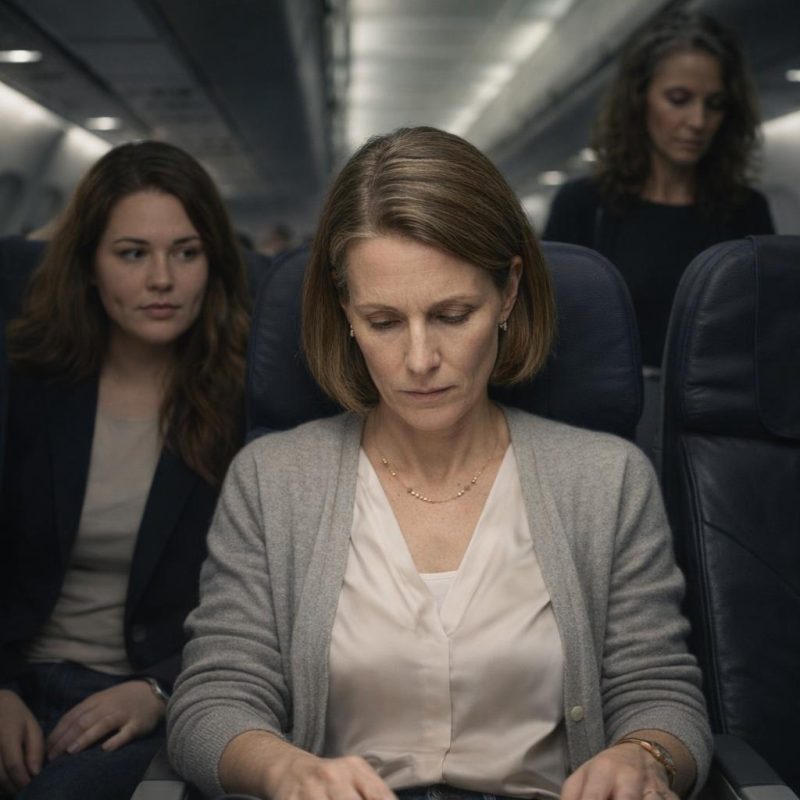 Image by RM AI
The Direct Question
I'd been holding the question back for a while, letting Patricia work through the official channels, watching the whole thing play out with some hope that it would resolve itself cleanly. It hadn't. And now, standing there with Linda's whispered words still turning in my head and that worn luggage tag still visible in my peripheral vision, I felt something shift. I took a breath. I kept my voice level — not aggressive, not pleading, just direct. I asked her why this seat. I said it plainly: there was another window seat available, same side of the plane, same position over the wing, and she'd turned it down without a second's hesitation. I pointed that out. I asked what made 12A different from 15A. I asked what was here that wasn't there. Around us, I could feel the cabin lean in. Marcus, who had drifted back toward the aisle, went still. Patricia watched Linda's face carefully. Linda's mouth opened. Then it closed. Her eyes filled — not the sharp, defensive tears from earlier, but something slower and heavier. She didn't answer. She just looked at me, and the question hung between us in the recycled air of the cabin, unanswered and impossible to take back.
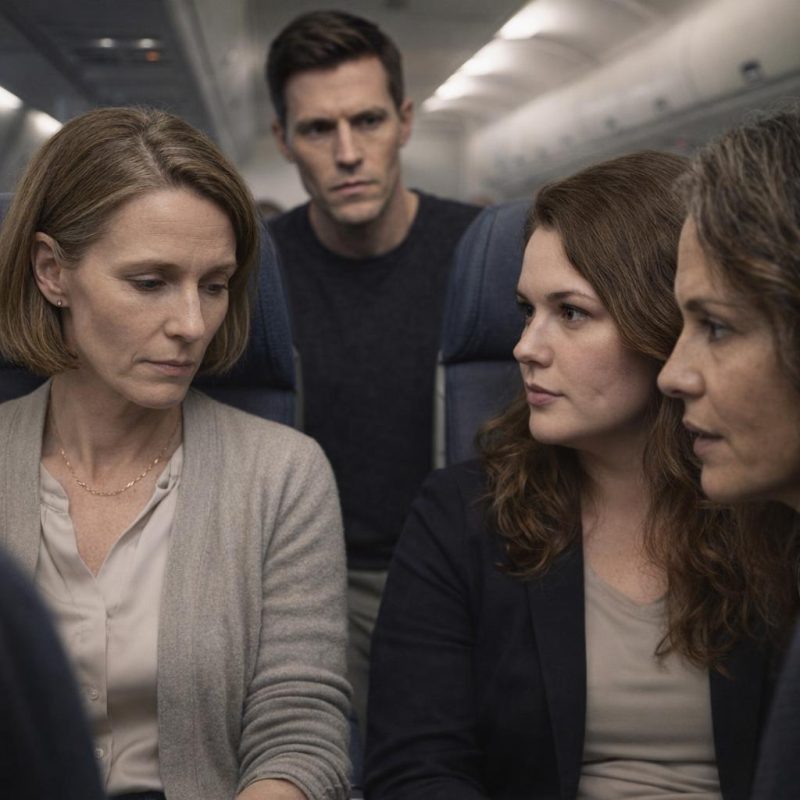 Image by RM AI
It's Complicated
The silence stretched long enough that I thought she might not answer at all. Then Linda shook her head — slowly this time, not the sharp dismissal from before — and when she spoke, her voice had lost whatever composure she'd been holding onto. She said it was complicated. That was the whole answer. *It's complicated.* Her voice broke on the second word, cracking in a way that didn't sound performed. The tears that had been building spilled over, and she pressed her lips together like she was trying to stop more words from coming out. I felt my frustration flare and then, almost immediately, soften at the edges. I didn't want to feel sympathy. The situation didn't call for it — she was still in my seat, she'd still refused every reasonable alternative, she'd still given us nothing to work with. But watching her sit there, visibly falling apart over something she wouldn't or couldn't name, made it hard to stay purely angry. Patricia looked at Marcus. Marcus looked at the floor. Nobody in the surrounding rows said anything. Whatever they'd been expecting from this confrontation, it wasn't this — a woman in her early fifties, well put-together, weeping quietly over two words she couldn't seem to get past, her hands gripping the armrests while tears ran down her face.
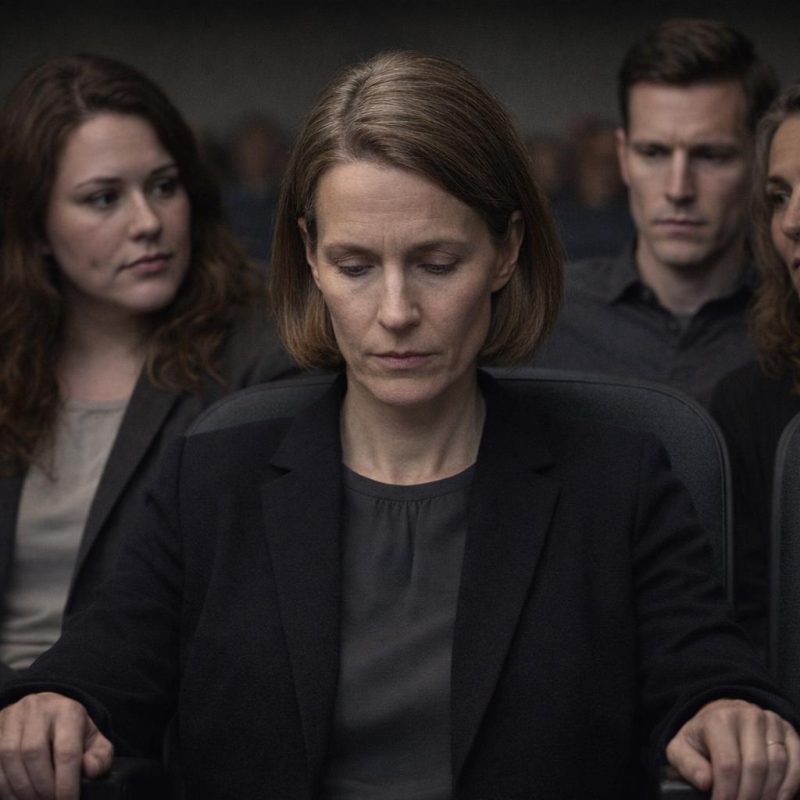 Image by RM AI
The Name
I stepped back half a pace and let the moment breathe. And that's when it hit me. Not loudly. More like a door swinging open in a quiet room. I started replaying the conversation from the beginning — not the argument about the seat, but the earlier exchanges, the first few minutes when things were still just tense and not yet fully escalated. And somewhere in there, Linda had said my name. I was almost certain of it. Not *miss* or *ma'am* or *excuse me*. My name. I hadn't introduced myself. I never do on flights. My boarding pass had been face-down on the tray table for most of the confrontation, and even when it wasn't, the seat assignment display on the screen above showed a row number, not a full name. There was no name tag on my bag. I hadn't handed anything to a crew member within earshot of her. I stood there running through every possible explanation, trying to find the one that made sense, and I kept coming up empty. Patricia was watching me now, probably reading something in my expression that I couldn't control. I looked at Linda — really looked at her — and the question that had been forming in the back of my mind for the last several minutes finally pushed its way to the front: how did this woman know my name?
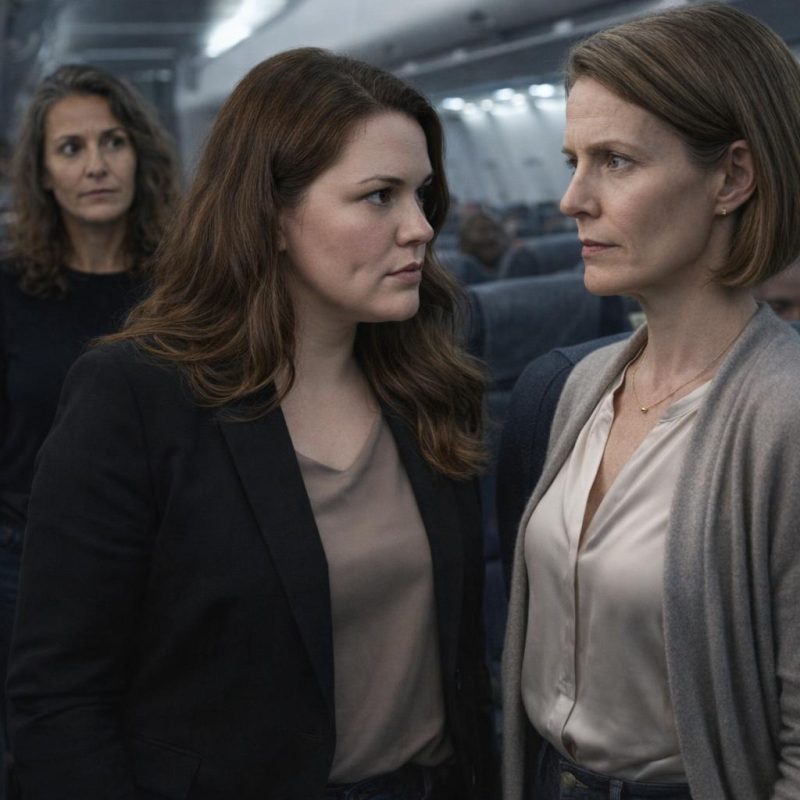 Image by RM AI
The Luggage Tag
I looked up at the overhead bin again. I don't know exactly what I was looking for — confirmation, maybe, or something to anchor the unsteady feeling that had taken hold of me since I'd replayed that moment with my name. The teddy bear tag was still there, swaying faintly with the cabin's air circulation. This time I had a slightly better angle. Linda had shifted in the seat, and the bin above her was open a few inches from an earlier adjustment, which meant the tag had swung outward just enough. I could see the writing more clearly now. There was a city name printed on the tag in that faded institutional font — the kind hospitals used on printed forms before everything went digital. I read it twice to make sure I was seeing it right. It was the city where I was born. I knew that city from my adoption paperwork, from the single page I'd been given when I turned eighteen — the one with the hospital name and the date and the city printed at the top in the same kind of plain administrative type. The tag was from there. I stood very still, the noise of the cabin going distant around me, holding that small fact in my chest like something fragile I wasn't sure how to put down.
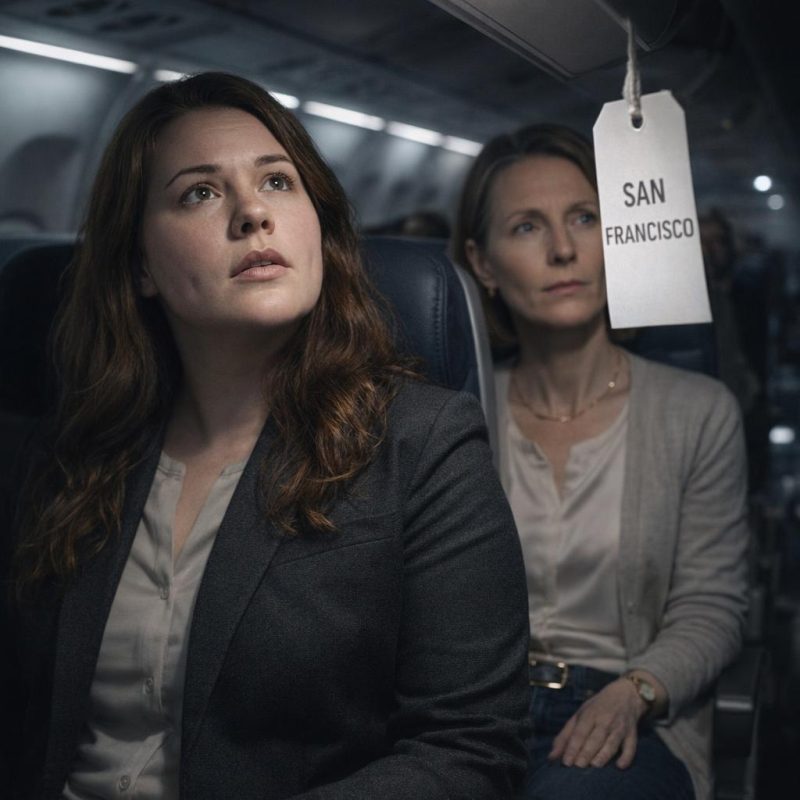 Image by RM AI
The Confrontation
My voice came out quieter than I expected. I'd thought I would sound controlled, measured — the way I'd been trying to sound through this whole thing. Instead it came out shaky, like the words were having trouble finding their footing. I pointed up at the overhead bin. I asked Linda about the city on the tag. I said the name out loud, and I watched her face go pale in a way that had nothing to do with the recycled cabin air. Then I asked the other question — the one that had been sitting in my chest since I'd replayed the conversation. I asked how she knew my name. I said I hadn't introduced myself. I said my boarding pass had been face-down. I listed it out, one thing at a time, my voice still unsteady but getting steadier as I went. Patricia's expression shifted — she looked confused in a new way, like the situation had just changed shape on her. Marcus leaned forward slightly. Jennifer, a few rows back, had gone very still, her toddler quiet against her shoulder. The other passengers who'd been watching this whole thing weren't watching the seat dispute anymore. They were watching Linda. And Linda's hands had gone white on the armrests, and the silence between my last question and whatever came next felt like the whole cabin had stopped breathing.
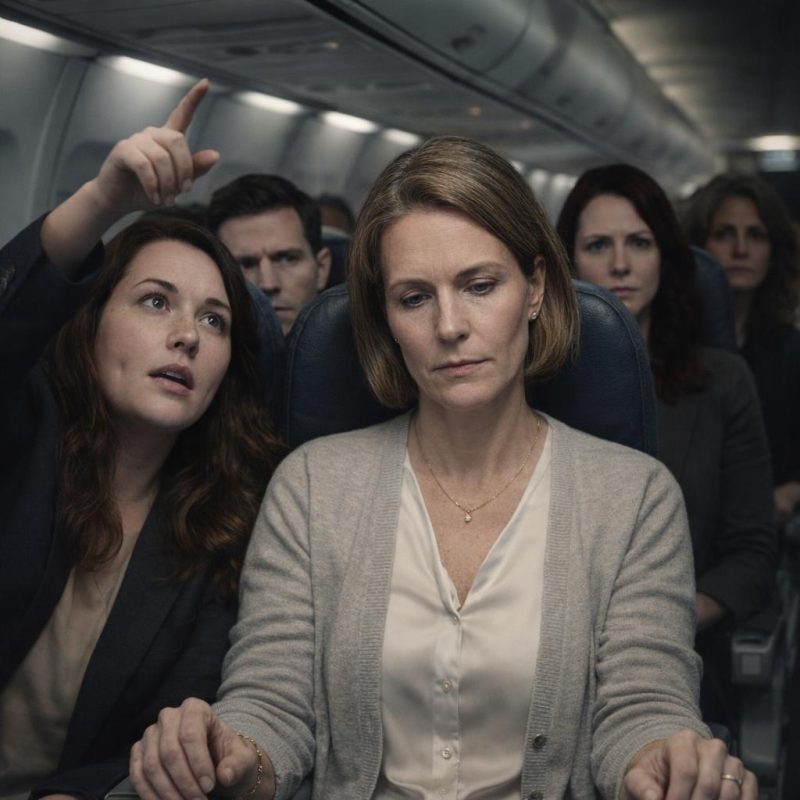 Image by RM AI
The Breaking Point
I watched Linda's face as the questions landed. There's no other way to describe what happened next except to say that something in her gave way. Not gradually — all at once, the way a held breath releases. Her chin dropped. Her shoulders folded inward. And then she was crying in a way that was completely different from the controlled tears of before — this was the kind of crying that takes over a person's whole body, the kind you can't perform and can't stop once it starts. She covered her face with both hands. Her shoulders shook. Patricia moved toward her instinctively, one hand hovering near Linda's arm without quite touching it. Marcus sat back, jaw tight, clearly out of his depth with this particular kind of scene. Jennifer pulled her toddler closer. Ashley, who had apparently returned from the galley at some point, stood at the edge of the row with her mouth slightly open. The cabin had gone completely silent — not the polite quiet of people pretending not to listen, but the real kind, where everyone has stopped pretending. I stood there, frozen, my heart hammering, watching Linda's whole composure come apart under the weight of questions I still didn't have answers to — and then she lifted her face from her hands, and looked straight at me.
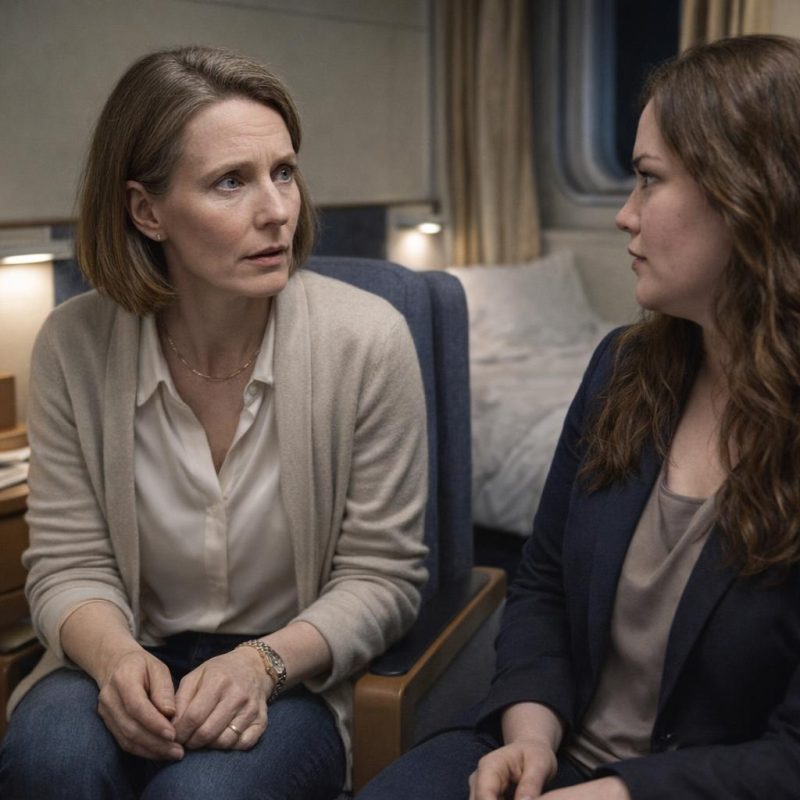 Image by RM AI
The Final Deadline
The supervisor's voice cut through everything — not loud, but final. He said it plainly: if this wasn't resolved in the next sixty seconds, he was removing both of us from the flight. Not just Linda. Both of us. I felt the bottom drop out of my stomach. I had a connection. I had a meeting tomorrow morning that I could not miss. I had done everything right — I had followed every rule, kept every receipt, held my ground — and now I was about to lose the flight anyway. Linda's face showed the same panic, a mirror of mine, which somehow made it worse. Patricia stepped back like she was clearing space for something inevitable. Ashley pressed herself against the opposite row, eyes wide. The supervisor's hand moved to the radio on his belt, fingers wrapping around it with the practiced ease of someone who had done this before and would do it again without losing a minute of sleep. Linda looked at me — not with defiance anymore, not with the brittle composure she'd been holding onto for the last hour. She looked at me like someone standing at the edge of something they couldn't come back from. His expression didn't waver, and his hand stayed exactly where it was.
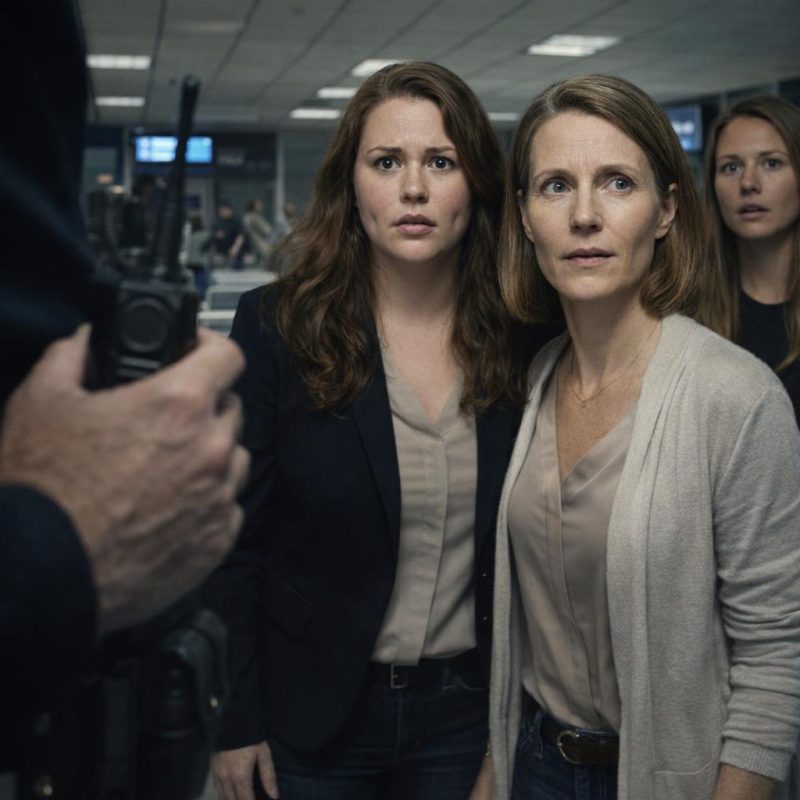 Image by RM AI
The Falling Photo
Linda shifted in her seat — a small, involuntary movement, the kind your body makes when panic overrides everything else — and something slipped from the inside pocket of her jacket. I heard it before I saw it: a soft flutter, almost nothing, the sound a piece of paper makes when it gives up fighting gravity. It landed face-up on the carpet between our feet. A photograph. Old, from the look of it — the edges worn soft, the colors faded to that particular warmth that only comes from years of handling. Patricia saw it the same moment I did. Linda's face went white. Not pale — white, the color of someone watching something irreplaceable fall toward the floor. She reached for it, but I was already crouching down, my hand closer, my eyes already pulling toward the image before I'd made any conscious decision to look. The supervisor paused, his hand still on the radio but no longer moving. The cabin held its breath. I didn't pick it up yet. I just looked at it, lying there between us on the thin gray carpet, face-up, waiting.
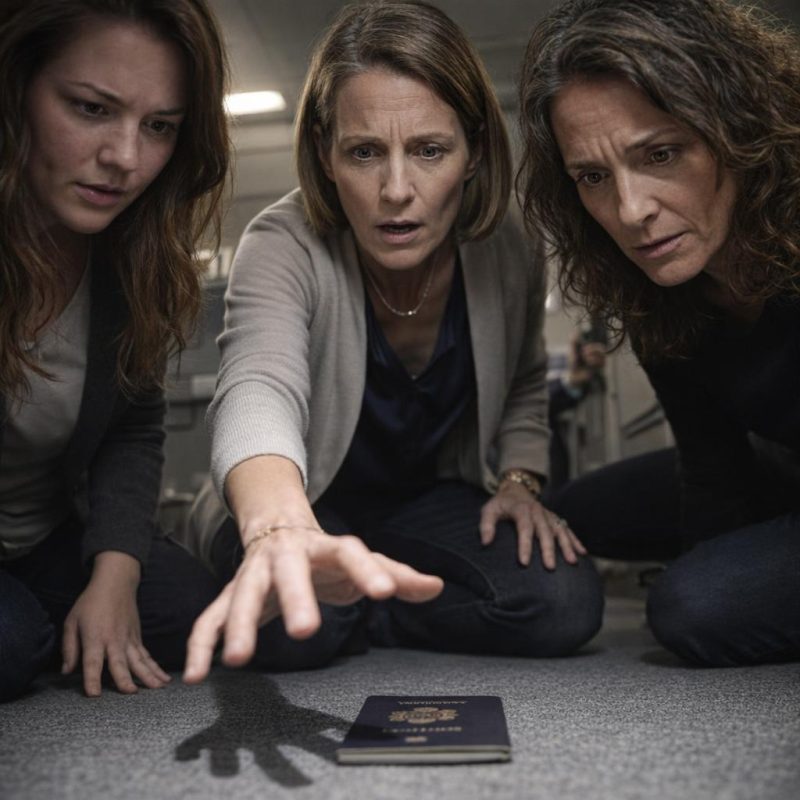 Image by RM AI
The Birthmark
I picked it up. My fingers were steadier than I expected, given that my heart was doing something irregular in my chest. The photograph showed a newborn — hospital blanket, the standard-issue kind, pale yellow — held against someone's chest, the adult's face cropped out of the frame. The baby's left shoulder was visible where the blanket had slipped. I looked at it. I looked at it again. There was a birthmark there, small and curved, shaped like a crescent moon. I have a birthmark on my left shoulder. I have had it since birth. I know exactly what it looks like because I spent a significant portion of my childhood being self-conscious about it at the public pool — crescent-shaped, about the size of a thumbnail, sitting just below the shoulder blade. I had never met another person who had one in the same place. I had never even seen a photo of one. My breath stopped somewhere in my throat. I looked up at Linda. She was staring at me with an expression I couldn't name — terror and something else, something raw and enormous, pressed together behind her eyes. The photograph in my hand showed my birthmark on a baby I had never seen before.
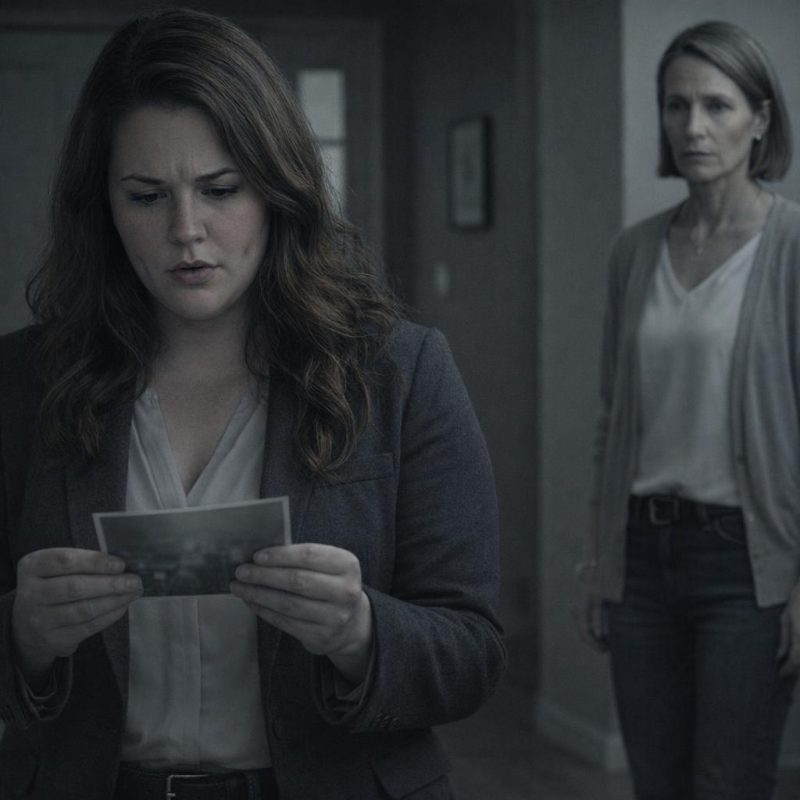 Image by RM AI
The Date
My hands had started shaking — not dramatically, just a fine, persistent tremor that I couldn't stop. I turned the photograph over. The back was plain white, slightly yellowed, and in the center, written in faded blue ink in careful, old-fashioned handwriting, was a date. Eight digits. Month, day, year. I knew that date. I had seen it on a single sheet of paper that I kept in a manila folder in the back of my filing cabinet at home — the folder I didn't open often, but never threw away. It was the date on my adoption records. The date listed as my birth date. The handwriting was careful, unhurried, the kind of writing someone does when they want to get something exactly right. Marcus had stood up at some point; I was dimly aware of him leaning slightly forward to see what I was holding. Patricia's expression had shifted into something I couldn't read from the corner of my eye. Linda's face was streaming with tears, silent ones, the kind that fall without any effort at all. I looked down at the date again, then back up at Linda. The numbers on the back of that photograph read the same date I had carried in that manila folder my entire adult life.
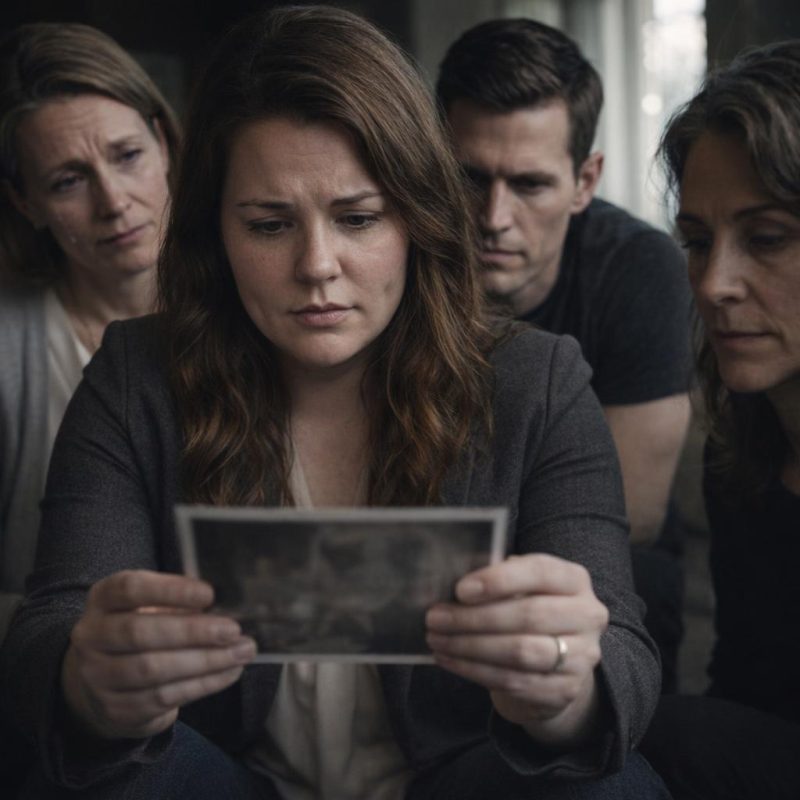 Image by RM AI
The Truth
Linda took a breath that shook all the way through her. Then she said it. She said she was my biological mother. She said she had given me up for adoption twenty-eight years ago. She said it clearly, through the tears, in a voice that didn't try to soften it or dress it up — just the plain words, one after another, falling into the silence of the cabin like something dropped from a great height. I felt the floor tilt. Not metaphorically — my actual sense of balance went sideways, and I put one hand on the seat back beside me without thinking. Patricia's hand went to her mouth. Marcus sat back down heavily, like his legs had made the decision for him. Jennifer, three rows up, had tears running down her face. Ashley stood frozen in the aisle, not even pretending to do anything else. The supervisor's radio hand dropped to his side. Every person within earshot had gone completely still, the way people go still when they understand they are witnessing something that has nothing to do with a seat dispute anymore. I stood there holding the photograph, the date facing up in my palm, and I heard the words again in my head — because my brain had not yet decided what to do with them.
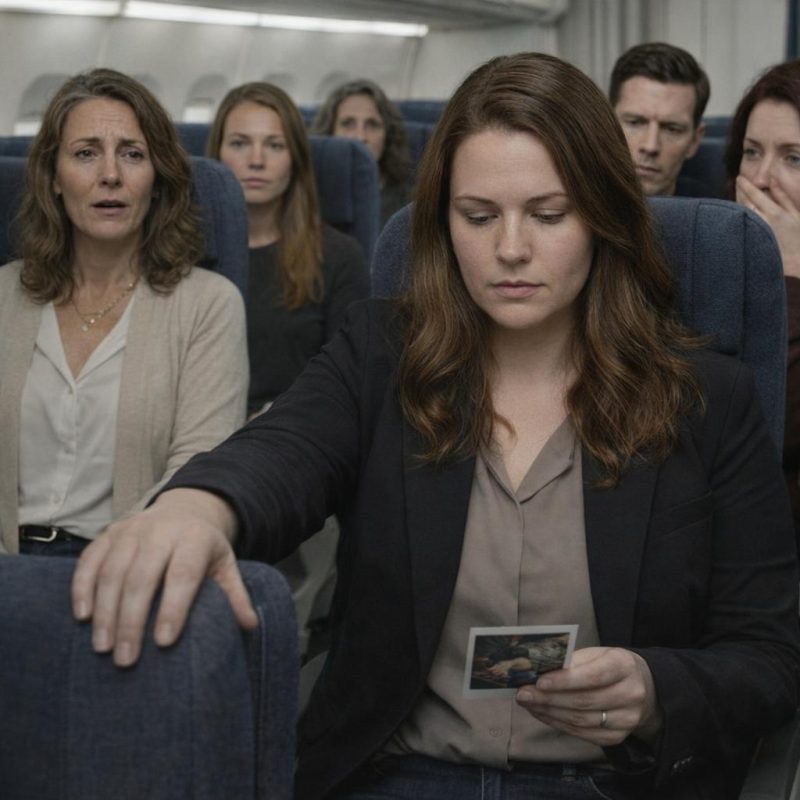 Image by RM AI
The Silence
I couldn't speak. I opened my mouth once and nothing came out, so I closed it again. The photograph was still in my hand. Linda was watching me with that expression — desperate, terrified, hoping for something I didn't know how to give her yet. The cabin was completely silent. Not the polite, performative quiet from earlier — this was different. This was the silence of people who had stopped pretending they weren't listening and were now simply present, witnesses to something none of us had boarded this plane expecting. Patricia hadn't moved. Marcus was watching me with something careful in his face. Jennifer had her toddler pressed against her shoulder, one hand stroking the child's hair automatically, her own eyes wet. Ashley stood in the aisle with her arms at her sides, and I could see her trying to figure out whether there was anything a person could do in this moment, and coming up empty. The supervisor had his radio in his hand but wasn't raising it. I was aware of all of it — every face, every held breath, every pair of eyes — and I felt the full weight of three hundred people watching me stand in the aisle of a plane, holding a photograph, trying to locate a single coherent thought.
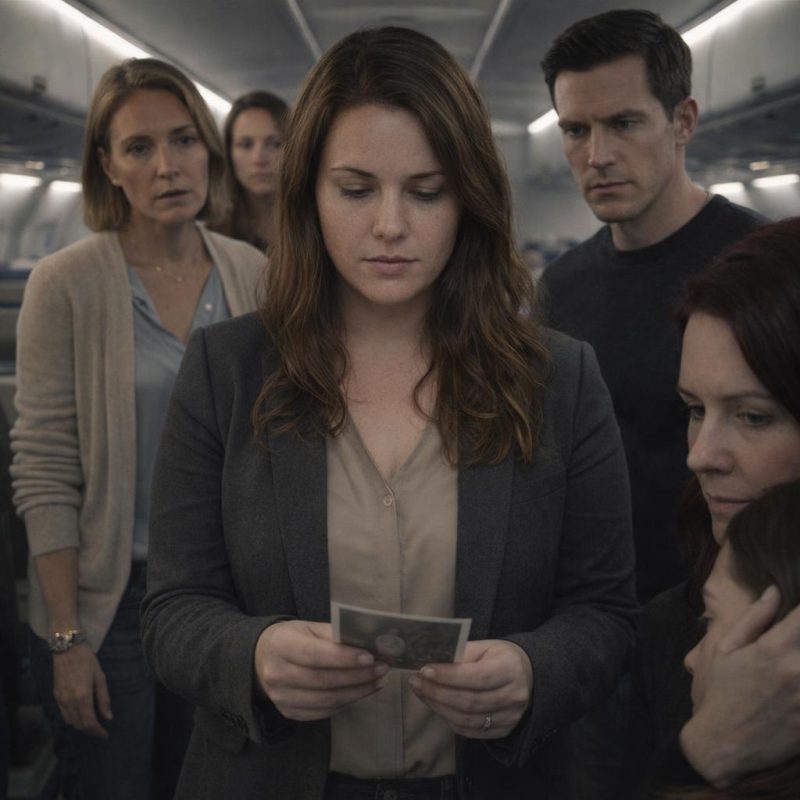 Image by RM AI
The Recognition
My mind went backward. It moved through the last hour the way you rewind something you watched wrong the first time, looking for the frame where you missed it. Linda refusing to move — I had read it as entitlement, the particular stubbornness of someone who believed the rules didn't apply to her. But she hadn't been protecting a seat. She had been terrified of losing the only proximity she had managed to engineer in what I was beginning to understand was a very long time. The eye roll I'd catalogued as dismissiveness — that wasn't dismissiveness. That was someone trying to hold themselves together in public and failing. The magazine she'd been gripping — a prop, something to look at when looking at me became too much. The way she'd kept glancing at my face during the whole confrontation, which I'd taken for defiance — she hadn't been staring me down. She'd been searching. Every strange, infuriating, inexplicable thing she had done in the last hour rearranged itself into a different shape entirely, and the anger I'd been carrying since I walked back down that aisle and found her in my seat quietly dissolved, leaving something much harder to name in its place. Linda sat with her hands folded in her lap, watching my face, and didn't say a word.
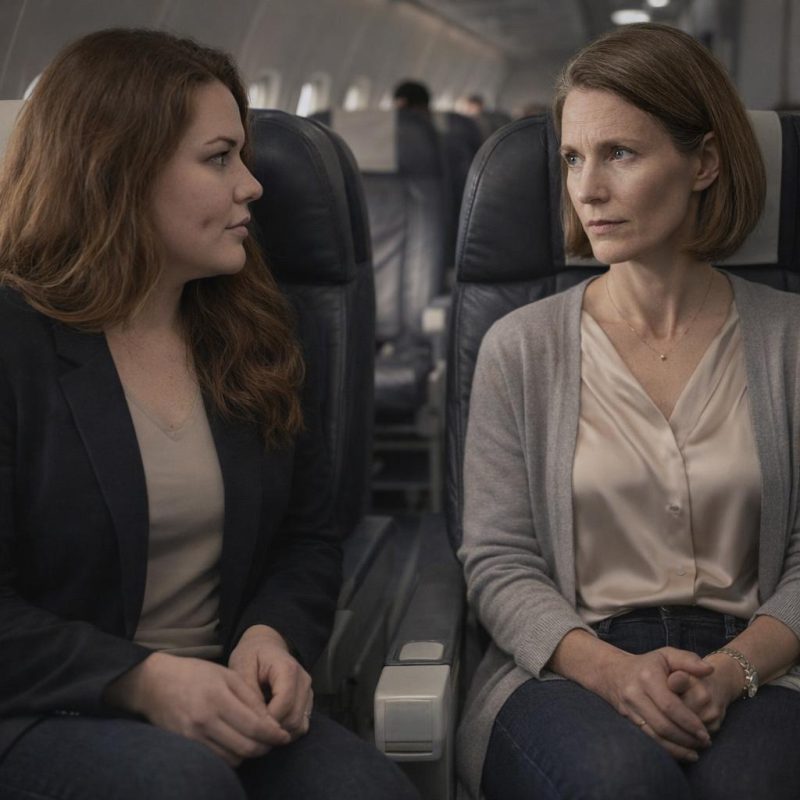 Image by RM AI
The Airport
Linda's voice, when she finally spoke again, was barely above a whisper. She said she had seen me in the terminal. She said she had been following adoption reunion groups online for years — forums, Facebook groups, any thread that might carry a lead. She had found photos of me through a mutual connection on social media, someone who had tagged me in a post, and she had spent months looking at those photos, convincing herself, talking herself out of it, convincing herself again. She said when she saw my face at the gate, she knew. She changed her seat assignment at the gate counter — moved herself from somewhere near the back to 12A, the seat next to mine. She said she was terrified I would board, sit down, and be gone before she could make herself say anything. She said she couldn't let the chance pass. She said it all in fragments, sentences that broke apart and had to be reassembled, her hands twisting together in her lap. I stood there and listened to all of it — the years of searching, the dead ends, the photographs on a screen, the moment at the gate — and the sheer weight of that much time, that much wanting, settled over me like something I didn't yet have the words to carry.
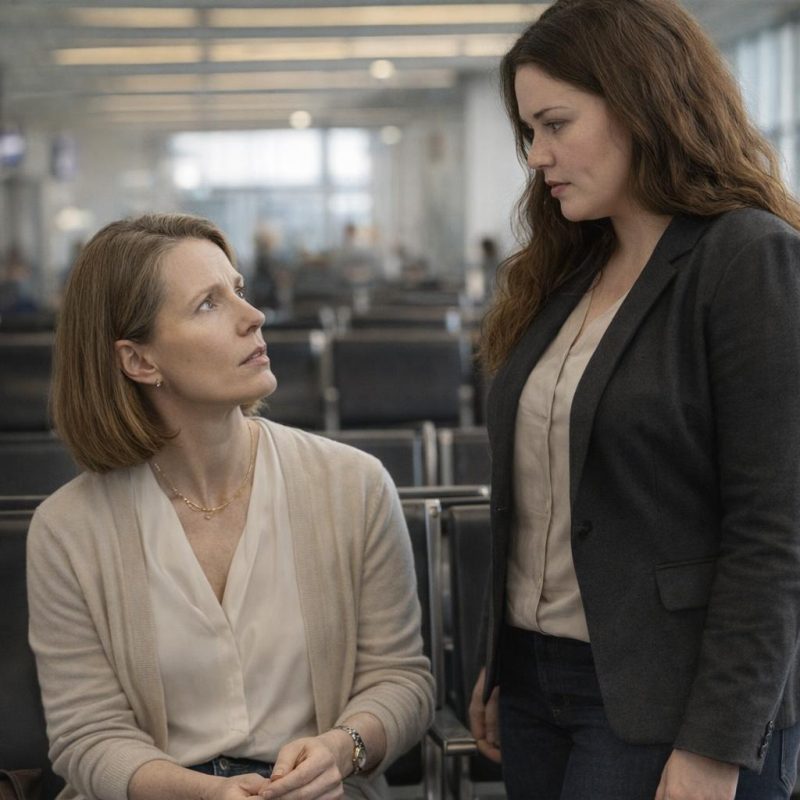 Image by RM AI
The Question
I don't know exactly when my voice came back. One moment I was standing there absorbing everything she had said — the forums, the photographs, the seat change at the gate — and the next moment something shifted inside me, some pressure that had been building since she first said my name cracked open. Jennifer had moved a few rows back, giving us space, though I could still feel her presence. Patricia stood near the aisle, quiet, not interfering. Marcus had gone still. The other passengers weren't even pretending not to listen anymore. And Linda sat there with her hands twisted together, waiting, her face raw and open in a way that made her look both older and younger than she had an hour ago. I thought about every birthday I had wondered. Every medical form I had left blank. Every time someone asked about my family history and I had to say I didn't know. All of it compressed into a single point behind my sternum. My voice, when it finally came out, didn't sound like mine — it was quieter than I expected, and rougher, and it cracked somewhere in the middle of the sentence. I heard myself ask her why she gave me away.
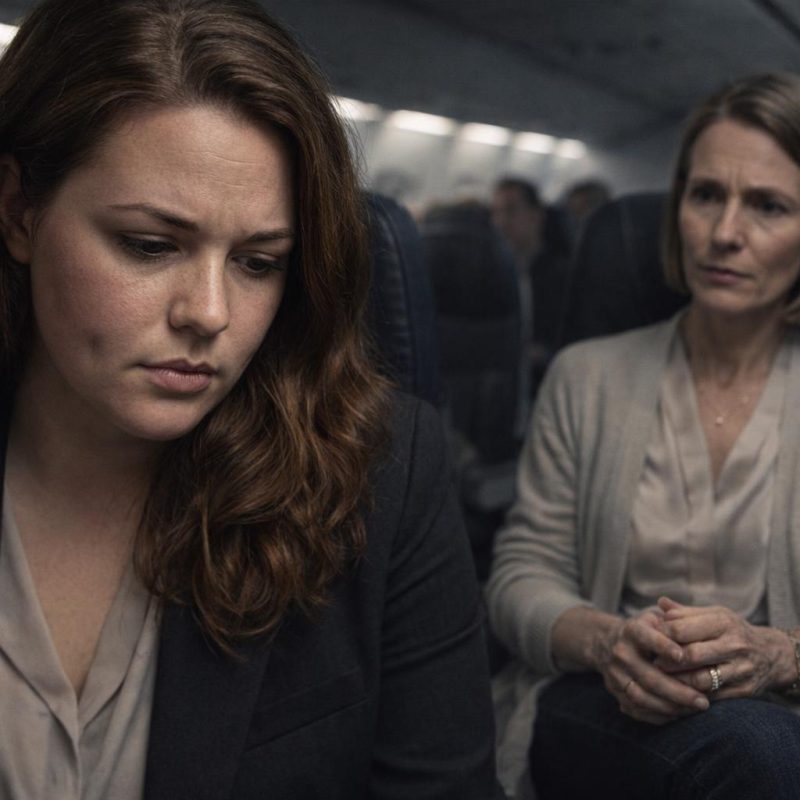 Image by RM AI
Sixteen and Alone
Linda didn't look away. That was the first thing I noticed — she held my eyes even as her own filled up again, even as her jaw tightened against whatever was trying to come out. She said she was sixteen. She said her parents had told her to leave and not come back when she told them she was pregnant. She had been staying in a shelter, she said, the kind with curfews and shared bathrooms and a waiting list for the phone. She had no job, no money, no one. She said she wanted to keep me — she said that part clearly, without hedging — but she couldn't feed herself, let alone a baby. The adoption agency had told her I would go to a good family, people who were ready, people who could give me things she couldn't name because she had never had them herself. She said she held me for one hour after I was born. One hour. She described the weight of it — the specific, particular weight of a newborn — and her voice broke completely on that detail. Jennifer was crying somewhere behind me. I was crying too, though I hadn't noticed when I started. Linda said she signed the papers and walked out of that hospital alone, and I stood there looking at the sixteen-year-old girl she had been, making the only choice she could see.
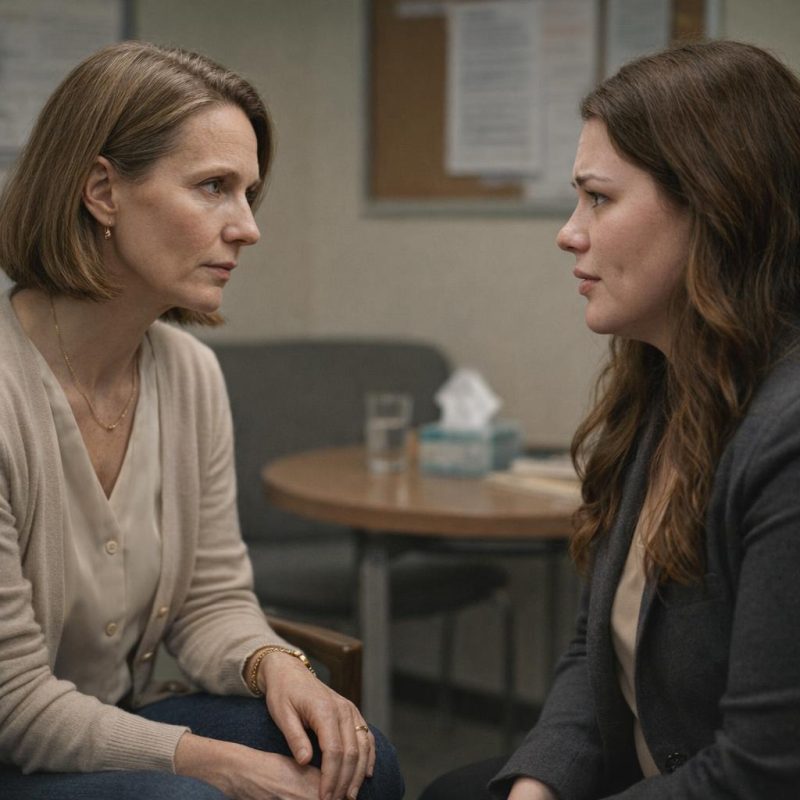 Image by RM AI
The Accusation
Understanding something and being at peace with it are not the same thing. I understood. I understood every word she had said, the shelter, the parents who turned her away, the hour she held me. I understood all of it and it didn't stop the anger from coming up anyway, hot and sudden, like something that had been waiting a long time for permission. I told her she should have fought harder. I said it plainly, not shouting, which somehow made it worse. I said other people in impossible situations find a way. I said she made a choice and I was the one who lived with it — every blank form, every question I couldn't answer, every time I looked in a mirror and didn't know whose eyes I was looking at. My voice was cutting and I knew it and I didn't pull it back. Linda didn't flinch. She didn't argue or explain or reach for my hand. She just nodded, slowly, and said I was right to be angry. She said she had told herself the same things for twenty-eight years. Patricia looked pained. Marcus had gone very still. The words I had said hung in the air between us, sharp-edged and honest, and Linda sat with all of them without asking me to take a single one back.
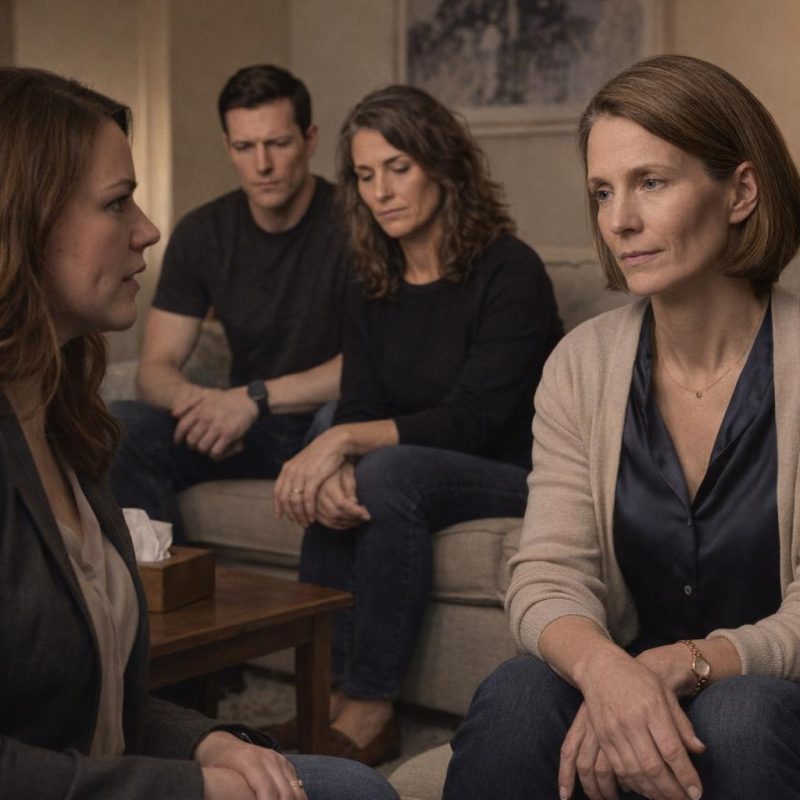 Image by RM AI
The Searching
After the anger came something quieter and harder to name. Linda was crying in a way that had moved past composure entirely — not the careful, controlled tears from earlier but something that shook her shoulders and made her press both hands over her mouth. She told me about the registries. Every adoption reunion registry she could find, she had joined. She had filed paperwork, sent letters, hired a searcher once when she had saved enough money. She said she thought about me every single day — not as a habit or a ritual but as a fact, the way you think about breathing. She wondered if I was happy. She wondered if I was healthy. She wondered, she said, if I hated her, and she had decided that if I did, she deserved it. She pulled a small plastic bag from her purse with shaking hands. Inside it was a hospital bracelet, the kind they put on newborns, so small it looked like it belonged to a doll, and a single photograph — a woman in a hospital bed holding a bundle, her face exhausted and young and unmistakably the face of the woman sitting across from me. Jennifer was crying openly now, not trying to hide it. Marcus wiped the corner of his eye with one knuckle. I sat with the weight of twenty-eight years of searching pressing down on my chest, and I didn't move.
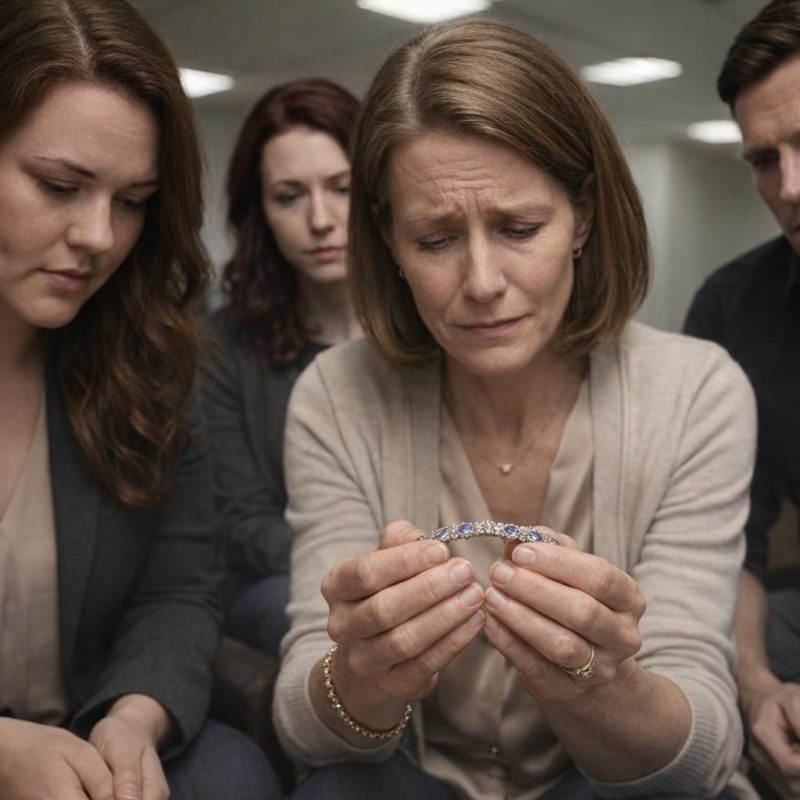 Image by RM AI
The Choice
I stood there for a long moment and thought about walking away. I could do it. I could take my jacket, find another seat, put my headphones in, and spend the rest of this flight staring at the clouds. Nobody would stop me. Linda had said she wouldn't pressure me — she had said that early on and she had meant it, I could tell, because she was sitting perfectly still now, not reaching, not asking, just waiting with her hands open in her lap. Patricia watched my face without expression. Marcus seemed to have stopped breathing. I thought about my adoptive parents — the people who had shown up for every school play, every fever, every bad day — and I felt no disloyalty to them in standing here. I thought about the questions I had carried my whole life, the ones I had learned to set down because there was nowhere to put them. I thought about that hospital bracelet, small enough to fit around two fingers. I didn't make a dramatic decision. There was no single moment where everything resolved. I just found that I wasn't moving toward another seat. I was still standing here. And the weight of that — of staying, of not walking away — settled into my chest and stayed there, quiet and unresolved and entirely mine.
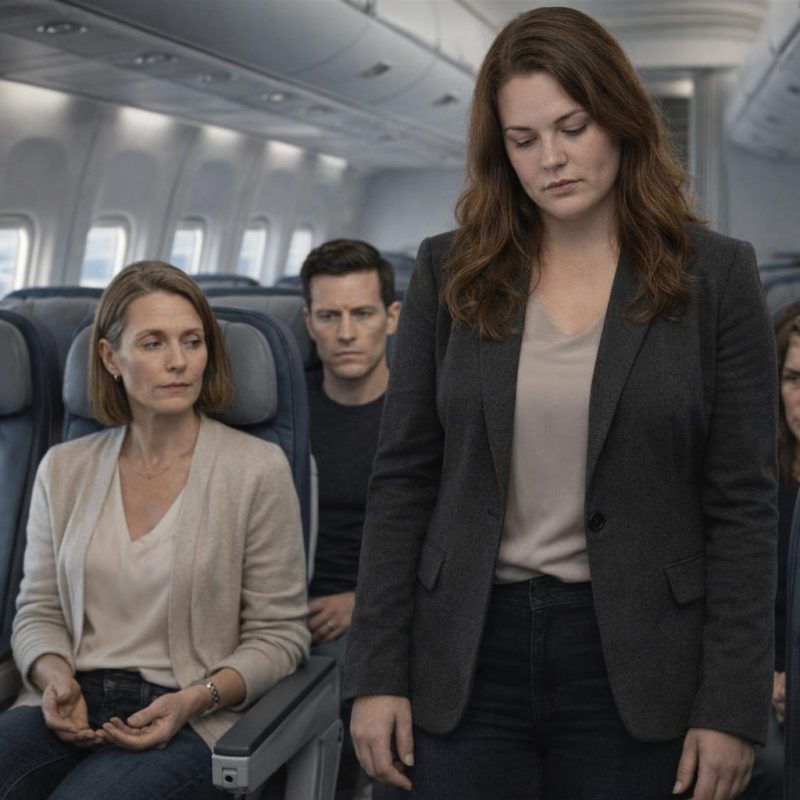 Image by RM AI
The Witness
I don't know when I started looking around the cabin, but at some point I did. Maybe I needed to remember that other people existed, that there was a world outside the two feet of space between me and Linda. What I saw stopped me. Jennifer had her toddler pressed against her chest, one hand smoothing the child's hair, and her face was wet and open in a way that had nothing to do with judgment. Marcus stood near the galley curtain with his arms loosely crossed, and when my eyes found his, he gave me a single slow nod — not performative, just present. Patricia had tears on her cheeks that she hadn't bothered to wipe away. Ashley, a few rows back, had her hand pressed flat against her sternum, watching us with an expression I recognized as the one people wear when something true is happening in front of them. Other passengers had stopped pretending to read or sleep. Nobody was smirking. Nobody looked impatient or annoyed. The irritation that had filled this cabin an hour ago — the sighs, the craned necks, the quiet disapproval — had become something else entirely. Every face I could see had shifted from judgment into something that looked, unmistakably, like compassion.
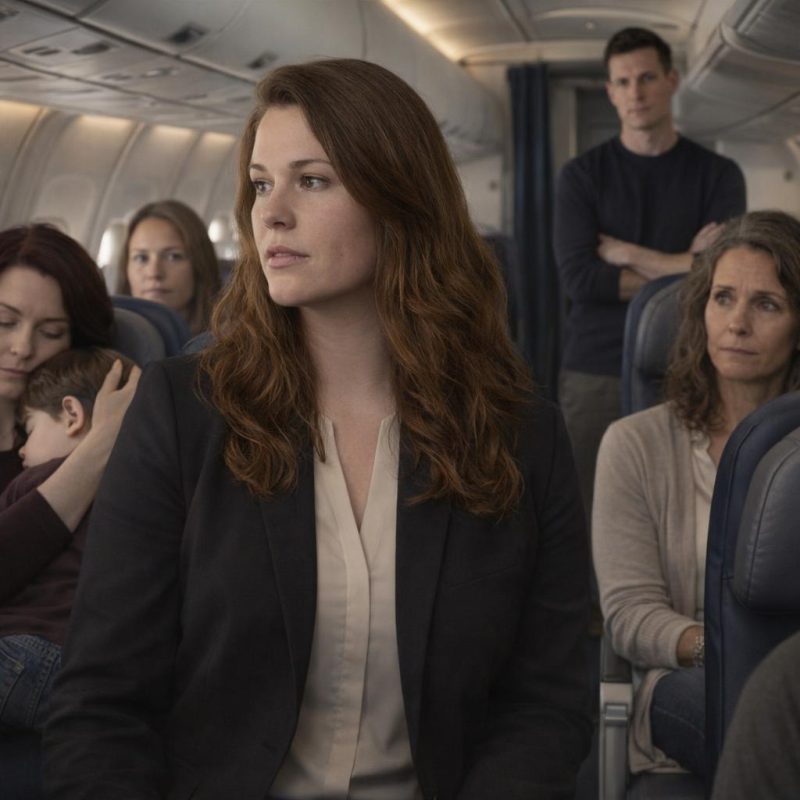 Image by RM AI
The Questions
I took a breath and asked about my birth father. The question surprised me a little even as I said it — I hadn't planned it, it just came out, practical and direct, the way I handle things when I don't know what else to do. Linda's expression shifted, something careful moving through it. She said his name was Michael. She said he was seventeen, that he had been scared, that he left when she told him she was pregnant and she never heard from him again. She said she was sorry she didn't have more than that. I told her it was okay, and I meant it, mostly. Then I asked about medical history, and something in Linda's posture changed — she sat up slightly, like this was a question she had been preparing for, a question she had hoped someone would ask. She told me about her own parents' health, the things that ran in her family, information I had been writing 'unknown' on forms my entire adult life. Every answer landed in a blank space I hadn't known how to fill. Linda's voice steadied as she spoke, grateful, I thought, for something concrete to give me. Then she paused, looked at me carefully, and said there was something else she wanted to show me, if I was willing.
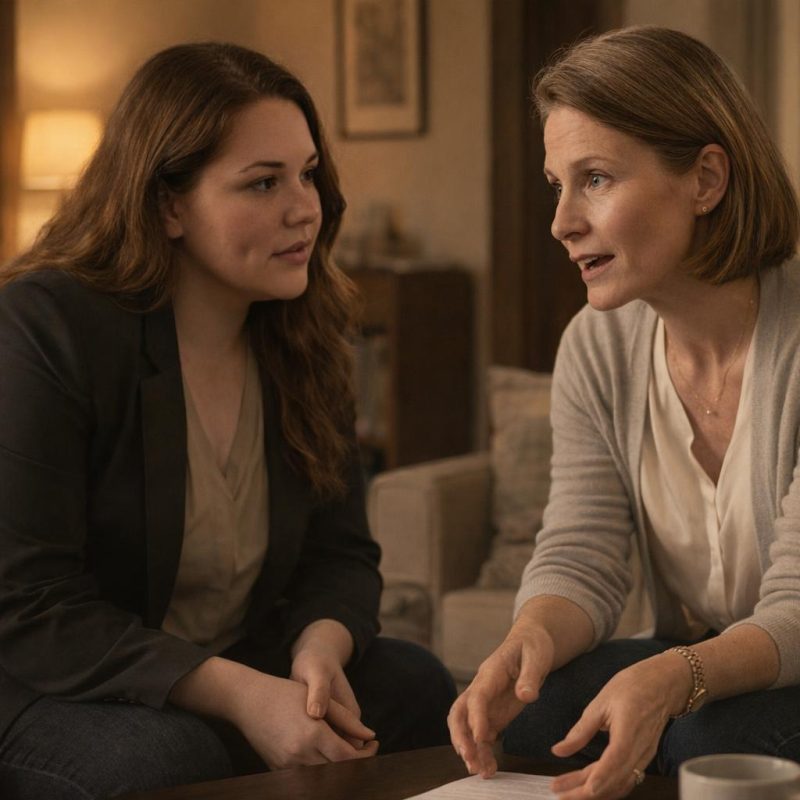 Image by RM AI
The Photos
Her hands were shaking when she unlocked her phone. She held it out to me without explanation, just turned the screen toward me, and I looked down at a photo album. The first image was a school picture — a little girl in a blue cardigan, gap-toothed smile, hair in two uneven pigtails. It took me a full three seconds to understand I was looking at myself. I scrolled slowly. There I was at what looked like a middle school track meet. There I was at my high school graduation, cap slightly crooked, squinting into the sun. There were photos from my college years — a birthday dinner I remembered, a group shot outside a building I recognized. Linda had found them through social media, through mutual connections, through years of patient searching. She had watched me grow up from a distance, assembling a life she hadn't been part of from whatever fragments the internet offered. Marcus leaned in slightly from the aisle, and I heard a quiet sound from him — not words, just breath. I kept scrolling, and with each image the strangeness of it deepened — my own life, documented by someone I had never met, laid out in a phone I had never touched, and I couldn't look away.
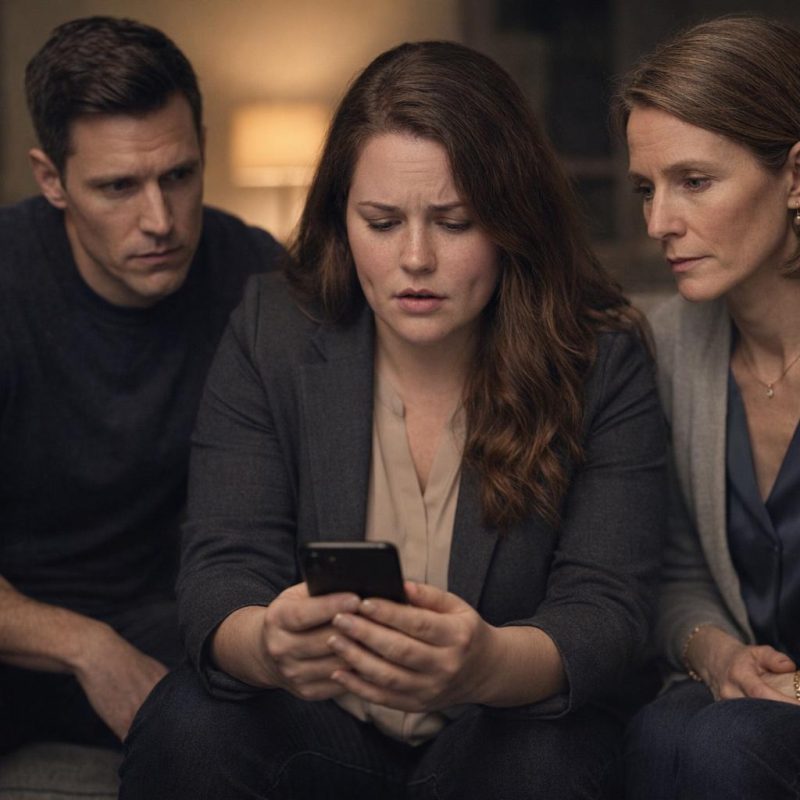 Image by RM AI
The Chance
I took a breath — a real one, slow and deliberate — and looked at Linda's face. She was watching me the way you watch something fragile, like she was afraid any sudden movement might end it. And maybe she was right to be afraid. I wasn't ready to forgive everything. I wasn't even sure I knew what everything was yet. But I also couldn't look at that phone full of photos — my gap-toothed school picture, my crooked graduation cap — and pretend none of it mattered. 'I'm not promising anything,' I said, and my voice came out steadier than I expected. 'But I'm willing to talk more. After the flight.' Linda's eyes went bright and wet immediately. She nodded before I'd even finished the sentence. 'Whatever you want,' she said. 'Whatever pace you need. I'll take whatever you're willing to give.' Patricia exhaled from somewhere behind me. Marcus gave me a small nod from the aisle. Jennifer, two rows back, mouthed something I was pretty sure was 'good for you.' I felt scared in a way I couldn't quite name. But underneath the fear was something else — something quieter and more stubborn. I heard myself say, 'Okay. After we land, then.'
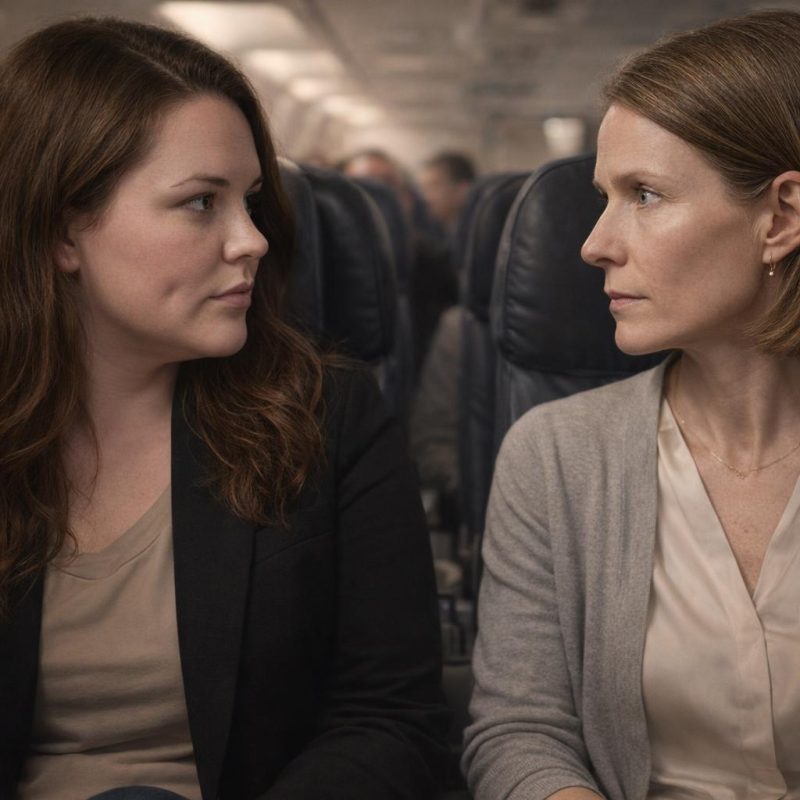 Image by RM AI
Together
Patricia didn't waste any time. She leaned across the aisle and spoke quietly to the passenger in 12B — a man in a gray hoodie who had been watching the whole situation with wide eyes — and whatever she said to him worked, because he gathered his bag without complaint and moved toward the back. Linda picked up her carry-on and slid into the middle seat beside me, and for a moment we both just sat there, not quite looking at each other, not quite looking away. It was the strangest thing — sitting next to someone who was essentially a stranger and also, in some way I hadn't fully processed yet, not a stranger at all. Marcus moved through the cabin doing final checks, and Ashley helped a few passengers with overhead bins, and the whole plane seemed to exhale at once as the supervisor's voice came over the intercom confirming we were finally cleared for departure. Linda folded her hands in her lap. I straightened my jacket across my knees. The engine hum deepened beneath us, and the gate began to slide past the window, and somewhere above our heads the seatbelt sign blinked on with a soft, steady chime.
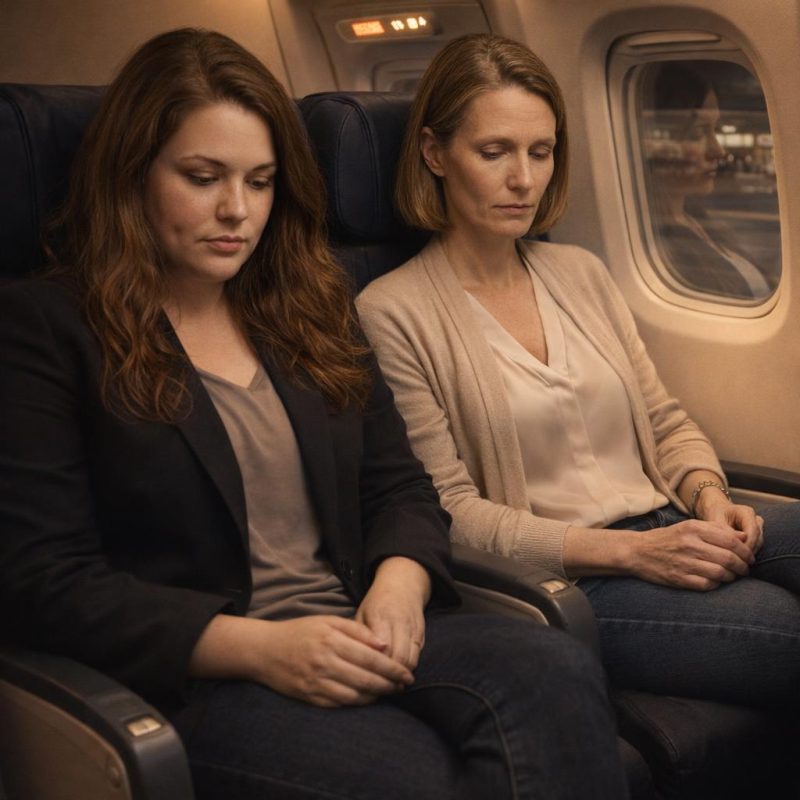 Image by RM AI
The Flight
Somewhere over the middle of the country, Linda asked about my parents — my adoptive parents — and I found myself actually wanting to answer. I told her about my dad's terrible puns and my mom's obsession with reorganizing the pantry every January. Linda laughed at that, a real laugh, surprised out of her, and it was a strange sound to hear from someone I'd met three hours ago. She told me about her job at a small accounting firm, her apartment with the leaky kitchen faucet she kept meaning to fix, the cat named Gerald who knocked things off shelves with what she described as 'deliberate malice.' I told her about my work, about the travel that came with it, about the way airports had started to feel more familiar than my own living room. We figured out we both had strong opinions about the same band from the nineties. We both, it turned out, hated cilantro with a passion that felt almost personal. Marcus smiled at us from across the aisle at some point, and Jennifer caught my eye and gave me a small, warm nod. The hours went somewhere I couldn't account for, and when the plane tilted gently forward and the captain announced our initial descent, we both went quiet for a moment, and I realized we hadn't stopped talking since we left the gate.
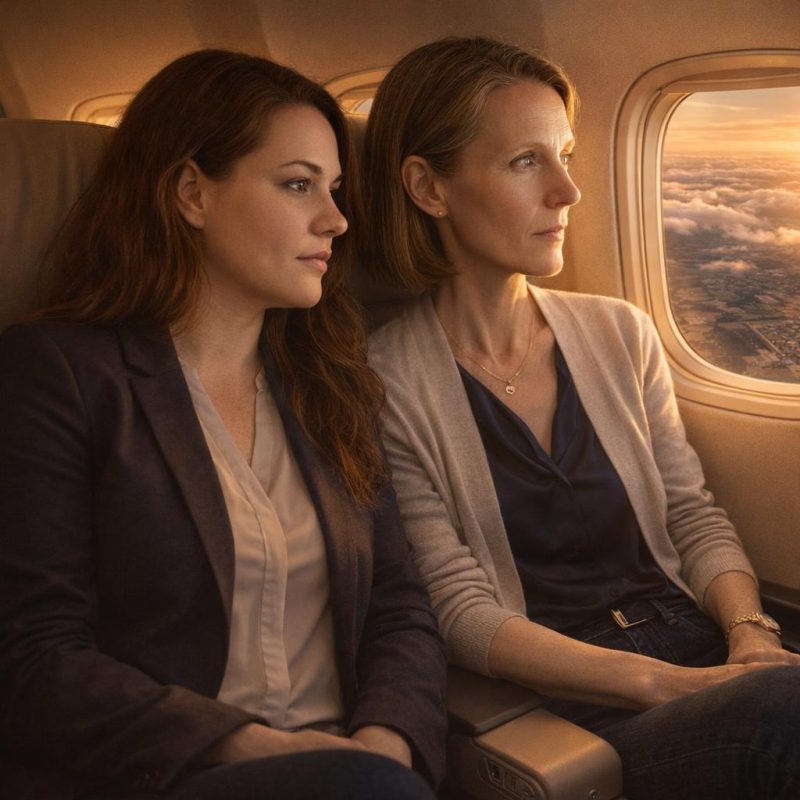 Image by RM AI
The Landing
The wheels touched down with that familiar thud and the cabin filled with the usual rustling — seatbelts clicking, overhead bins opening, everyone suddenly in a hurry to be somewhere. Linda and I stayed still for a moment longer than everyone else. She pulled out her phone first. I pulled out mine. We exchanged numbers the way you do when you mean it — double-checking the digits, sending a test text, watching the little notification pop up to confirm it went through. 'Coffee?' she said. 'Next week, maybe?' I said yes before I'd fully decided to. We agreed on Thursday. Then she looked at me with this careful, hopeful expression and asked if she could hug me. I said okay. It was brief — one arm, a half-second, more of a question than a statement — but it was real. Patricia stopped by on her way out and squeezed Linda's shoulder. Marcus shook both our hands. Jennifer told us our story had given her hope, which made me feel something I didn't have a word for yet. Ashley smiled as we filed into the jetway. Linda and I walked off the plane side by side and parted at the gate, and I stood there watching the crowd close around her until she was gone. I looked down at my jacket, still in my hands, and almost laughed. My phone buzzed — Linda's test text, still sitting there unread: *Thursday. I'll be there.*
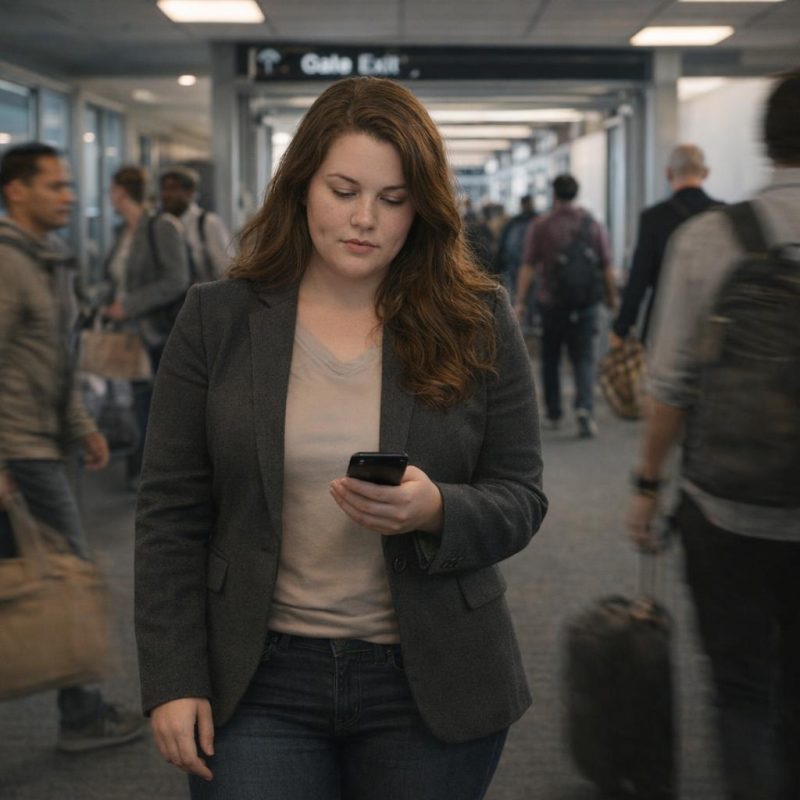 Image by RM AI
KEEP ON READING
From Heroes To Zeroes 20 Historical Figures Whose Heroism Was…
History is full of legends, but not every hero lived…
By Noone Feb 25, 2026
The Clueless Crush: How I Accidentally Invited a Hacker Into…
Fluorescent Lights and First Impressions. My name is Tessa, I'm…
By Ali Hassan Nov 4, 2025
This Infamous Ancient Greek Burned Down An Ancient Wonder Just…
History remembers kings and conquerors, but sometimes, it also remembers…
By David Davidovic Nov 12, 2025
Einstein's Violin Just Sold At An Auction—And It Earned More…
A Visionary's Violin. Wanda von Debschitz-Kunowski on WikimediaWhen you hear…
By Ashley Bast Nov 3, 2025
The Mysterious "Sea People" Who Collapsed Civilization
3,200 years ago, Bronze Age civilization in the Mediterranean suddenly…
By Robbie Woods Mar 18, 2025
20 Strangest Beauty Trends Throughout History
Beauty Has Always Had Strange Rules. History is full of…
By Christy Chan Jun 12, 2026