

I Gave My Gambling-Addicted Brother a Job at My Gallery—Now He's Stolen $3 Million from the Russian Mob
I Gave My Gambling-Addicted Brother a Job at My Gallery—Now He's Stolen $3 Million from the Russian Mob
The Empty Vault
I arrived at The Gilded Frame at seven-fifteen on a Tuesday morning, the same way I had arrived every Tuesday morning for eleven years — coffee in hand, keys already out, the particular silence of the building settling around me like a familiar coat. The humidifiers were wrong first. They should have been cycling, that low mechanical breath that kept the climate-controlled rooms at precisely fifty-five percent humidity. Instead, nothing. Just silence where there should have been sound. I noticed the office door next — standing open, papers fanned across the floor in a way that looked almost casual, almost like someone had simply been careless. The velvet tapestry along the north wall had been pulled down, exposing the biometric panel behind it. The vault door was open. The digital interface blinked red in slow, patient intervals, like a pulse. I stood in the doorway for a long time before I stepped inside. The shelves were bare. Every bracket, every padded surface, every carefully catalogued space — empty. I crouched down and looked at the floor, and that's when I saw it: a gold class ring, sitting in the center of the vault like it had been placed there on purpose. I picked it up and turned it over in my palm. I didn't need to read the inscription. I already knew whose it was. I sat down on the cold concrete floor and held it, and the weight of what my younger brother had done settled into me slowly, the way cold does — not all at once, but bone by bone.
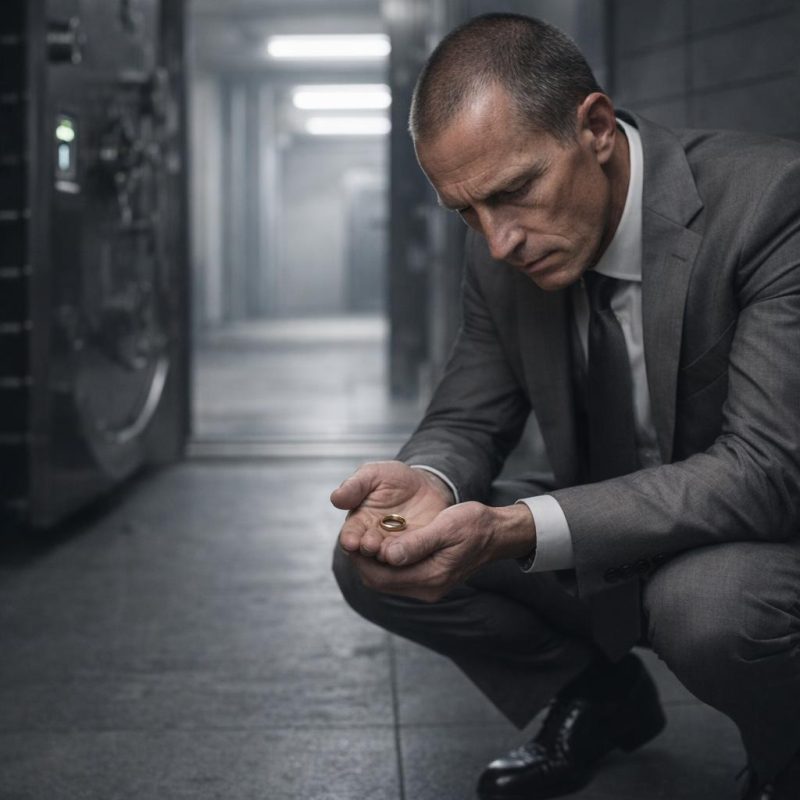 Image by RM AI
The Security Footage
I pulled up the security terminal in the back office and sat down in front of it with the kind of deliberate calm that only kicks in when the alternative is falling apart. The footage loaded without issue — the system had been recording all night, which meant whoever did this either didn't know about the cameras or didn't care. The timestamp read three hours before my arrival. I watched Julian first. He was laughing. Actually laughing, moving through the private viewing room with the easy confidence of someone who belonged there, which of course he did — I had given him that access myself. Then my father appeared on screen, his heavy frame unmistakable even in the grainy footage, helping Julian guide a climate-controlled crate toward the service entrance. And then my mother, silver hair pinned back, directing the whole operation with small precise gestures, pointing toward the van that sat idling in the alley. They loaded four crates in under twenty minutes. The van pulled away without hurrying. I sat there watching the empty alley on the screen for a moment longer than I needed to. Then I picked up my phone and called Julian. Disconnected. I called my father. Disconnected. I called my mother, and the line returned the same flat silence — no ring, no voicemail, nothing.
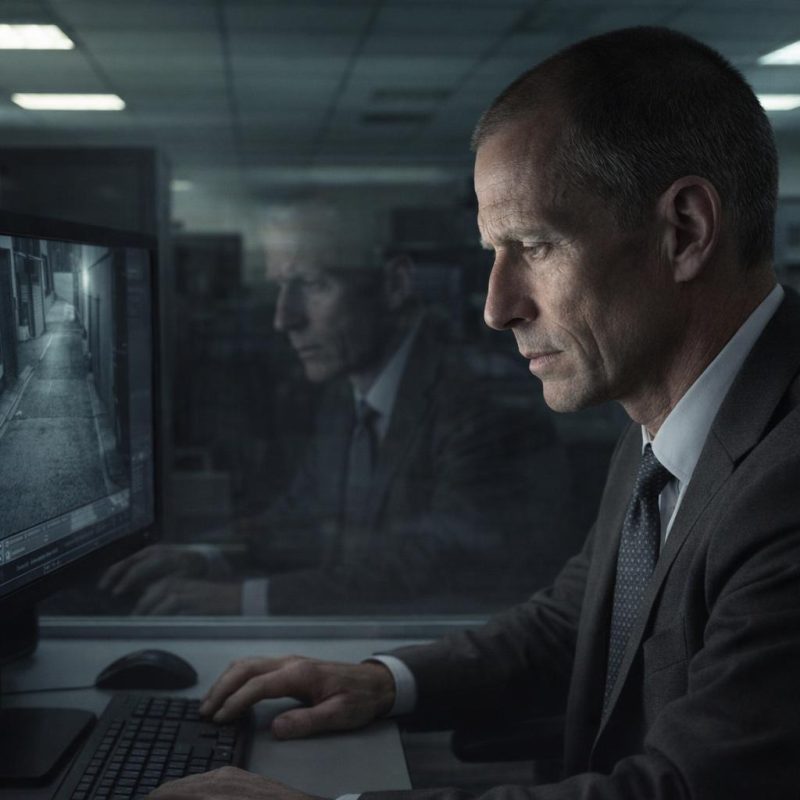 Image by RM AI
The Wrong Inventory
Sophie arrived at eight-thirty, which was exactly when she always arrived, and she found me at the terminal with the inventory logs open on the screen. She stopped in the doorway, reading the room the way she always did — seven years of working together had made her very good at reading rooms. 'You're here early,' she said, which was her way of asking what was wrong. I told her there had been a break-in during the night. She didn't panic. She asked if she should call the police, her voice steady and professional, and I told her I needed to make some calls first. She accepted that without pushing, which I appreciated. After she stepped out to start the morning protocols, I turned back to the screen. The digital inventory logs were precise and unambiguous. The missing items were a collection of seventeenth-century Russian icons — eight panels, each catalogued with provenance documentation going back three centuries. I had known the moment I saw the empty brackets, somewhere in the back of my mind, but seeing it confirmed in the log made it different. These were not my pieces. They had never been my pieces. They belonged to a client whose name I had been careful never to write down carelessly, and whose patience I had never once tested. The icons were the Voznesensky Portfolio. I sat with that knowledge for a long moment, feeling its full dimensions settle around me.
 Image by RM AI
The Panicked Call
My phone buzzed with an unknown number just before ten, and something made me answer it instead of letting it go to voicemail. Julian's voice came through immediately — not the easy, laughing voice from the security footage but something stripped down to its raw edges, shaking in a way I hadn't heard since we were children. There was wind noise behind him, engine sounds, the particular acoustic blur of a moving vehicle. He said there was a black SUV. He said it had been behind them since the interstate, matching every lane change, every exit feint, never dropping back. He said the men inside had pointed something at their vehicle — he couldn't tell what, but the way he described it, the way his voice broke on the word 'pointed,' told me enough. He kept asking me what was happening. He kept saying he didn't understand. He begged me to explain it to him, his voice climbing higher with each unanswered question, and I sat in my office chair and listened without speaking. There was nothing I could offer him that would have helped, and I told myself that was the reason for my silence. The panic in his voice filled the gallery around me, bouncing off the bare walls of the private viewing room, and I held the phone and let it.
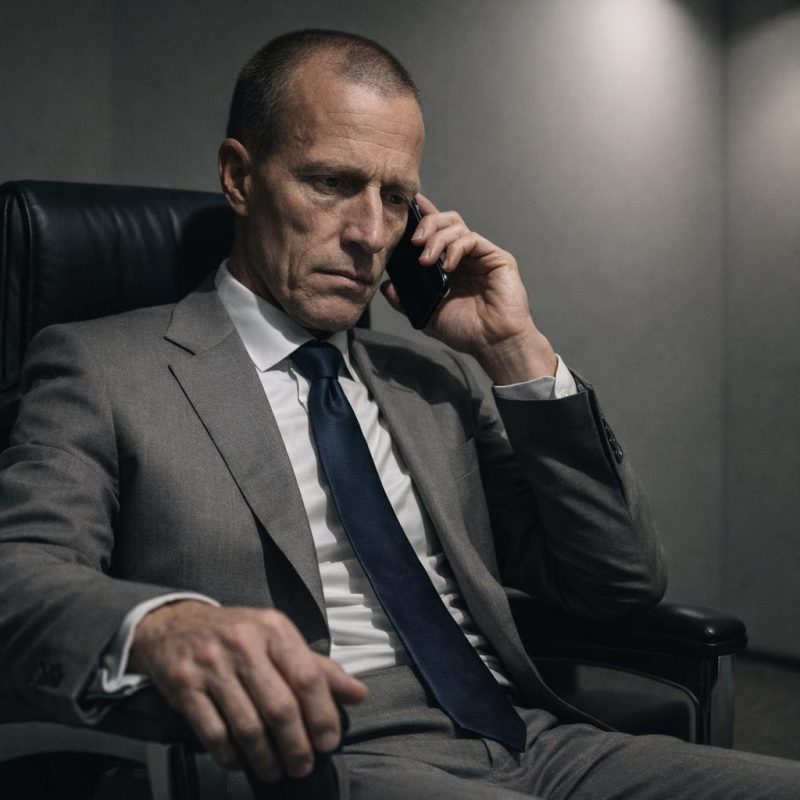 Image by RM AI
The GPS Revelation
Julian called again about an hour later, and this time the road noise was gone — he had stopped somewhere. His voice was lower, more controlled, which somehow made it worse. He said he had found something in the frames. He had been trying to figure out why the SUV kept finding them no matter which route they took, and he had started pulling at the backing on one of the crates, and there it was: a tracker, embedded in the frame itself, small and professional-looking, with no obvious way to remove it without the right tools. He said he found three more after that. His voice had gone quiet and tight, each word arriving separately, like he was working to keep them in order. He said he didn't know what to do. And then, while I was still on the line, I heard it — a second phone ringing in the background, Julian's personal cell. He answered it on speaker without thinking. The voice that came through had a heavy accent, Eastern European, unhurried. The man described Emma's school. He described her uniform — the color, the plaid pattern. He said her classroom number. He said the color of her backpack. And then Julian screamed.
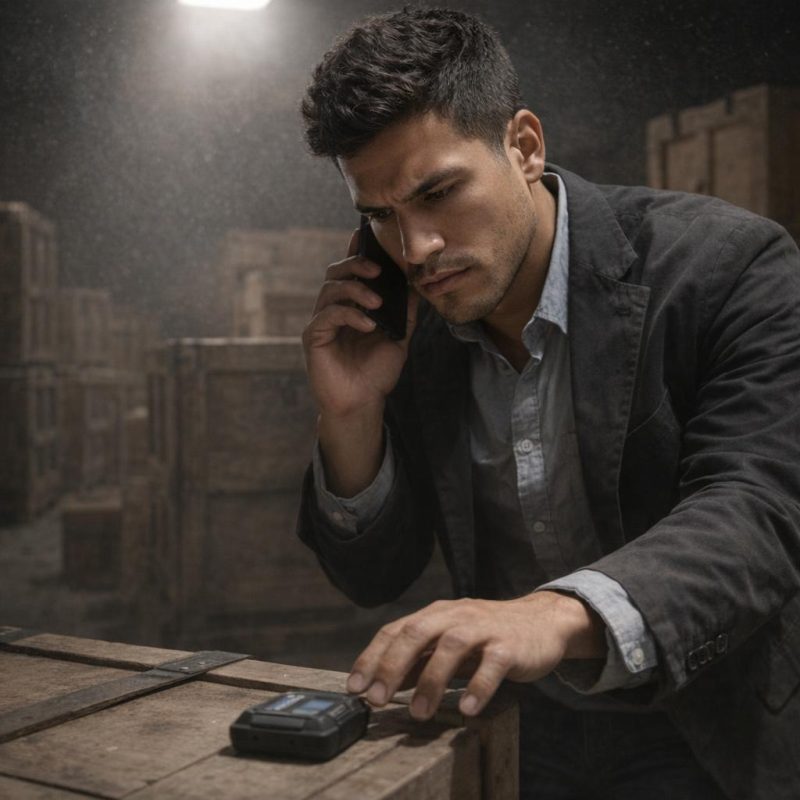 Image by RM AI
The Scheduled Viewing
Viktor arrived at two o'clock precisely, which was the scheduled time, and I was standing in the main gallery when he came through the door. He was compact and unhurried, dark suit, cropped blonde hair, the kind of man whose stillness you notice before anything else. I greeted him by name and offered him the standard pleasantries — the gallery's current exhibition, the quality of the afternoon light through the north-facing windows. He accepted these with a small nod and said nothing unnecessary. We walked together through the main room and into the private viewing corridor, and I opened the door to the viewing area and then crossed to the vault. I entered the code. The door swung open. I stepped back and let him look. Viktor surveyed the empty space without any visible change in expression. He looked at the bare shelves, the empty brackets, the blinking red interface. He looked for perhaps fifteen seconds. Then he turned to me and said, in a voice pulled flat and even, that he was here for the Voznesensky Portfolio. I told him there had been a theft during the night. I told him I had discovered it that morning. I told him I was cooperating fully with the investigation. Viktor's eyes moved to my face and stayed there, patient and still, waiting for something more.
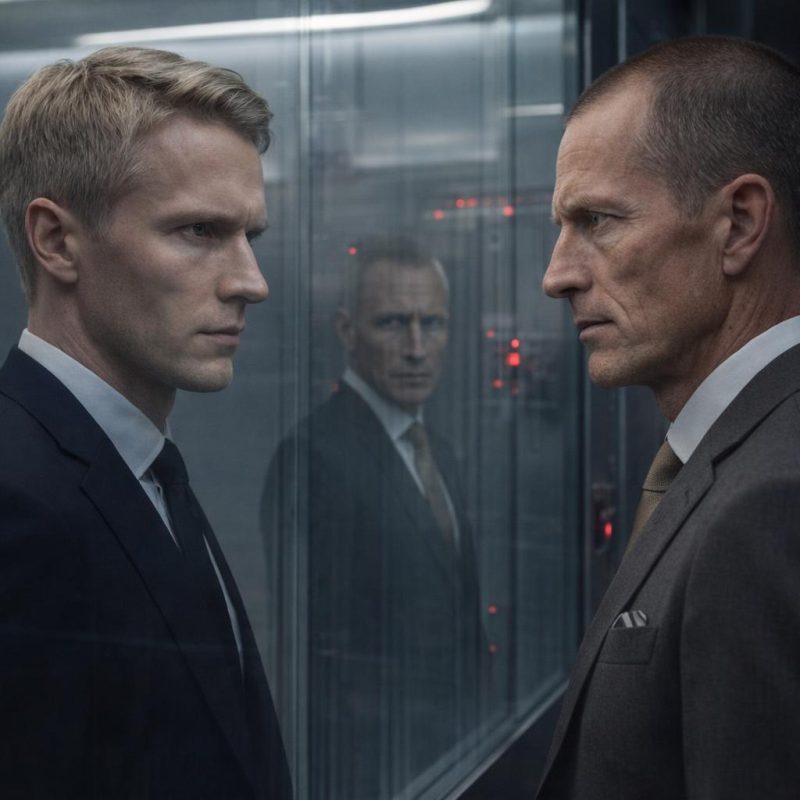 Image by RM AI
The Professional Explanation
Viktor came back from a brief phone call and asked to see the security footage, and I showed him without hesitation. I pulled up the recording from the terminal and let him watch the full sequence — Julian moving through the viewing room, my father guiding the crates, my mother directing the loading at the service entrance. Viktor photographed the screen with his phone, methodically, frame by frame. He asked about the biometric security system, and I explained that I had issued Julian temporary access codes approximately six weeks prior, when I brought him on to assist with inventory cataloguing. Viktor wrote something in a small notebook. He asked whether Julian had been alone in the building during that period. I said there had been supervised sessions and some unsupervised ones. He asked for Julian's current location. I told him I didn't know — that Julian had called me that morning in a state of distress but had not disclosed where he was. Viktor asked for Julian's phone number, his vehicle make and model, and the license plate if I had it. I provided everything I had. I described my younger brother the way I might describe a contractor who had failed to deliver — factually, without visible emotion, with the careful precision of someone who understood that precision was what the situation required. Viktor closed his notebook. The professional distance I had maintained throughout felt, in the silence that followed, like something with its own particular weight.
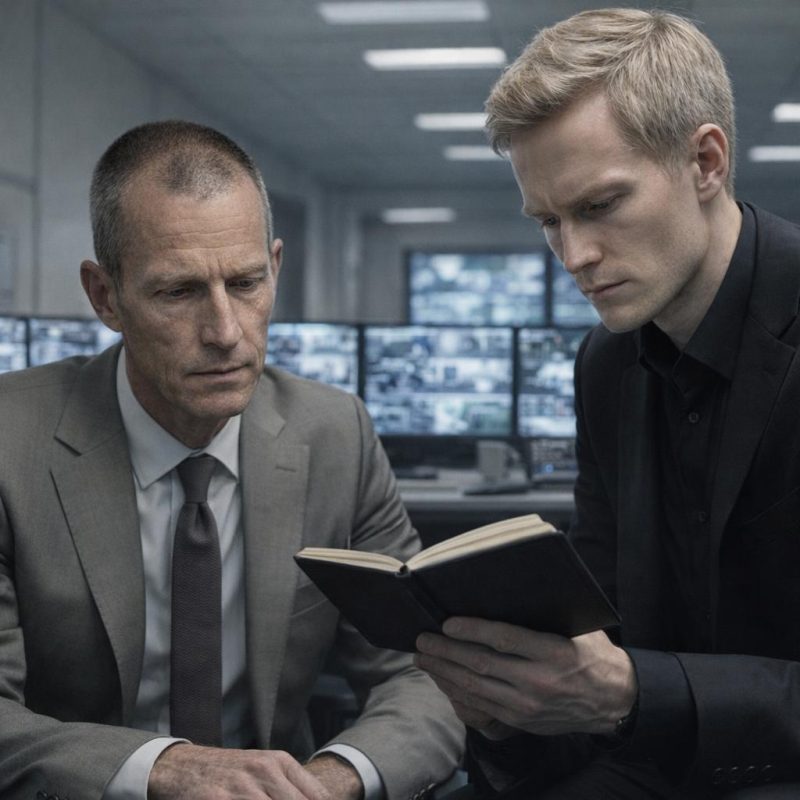 Image by RM AI
The Closing Net
Viktor was still somewhere in the building — I could hear him on his phone in the corridor — when my cell rang. Julian's number, or what was left of it. I answered and his voice came through in a whisper, which was worse than the screaming had been. He said he was at a rest stop off the highway. He said my parents were inside the restrooms, unaware. He said the black SUV had pulled in behind them, and the men were getting out. He described them in short, broken phrases — dark jackets, something carried underneath, the way they moved across the parking lot without hurrying. He asked me what was in the crates. He asked me why this was happening. He said it in the way people say things when they already suspect the answer won't help them. I stood alone in the gallery and held the phone and said nothing. He asked me again — what was in the crates, Adrian, what did we take — and his voice cracked on my name. Then the line went dead, mid-sentence, between one word and the next, and the silence that replaced it was absolute.
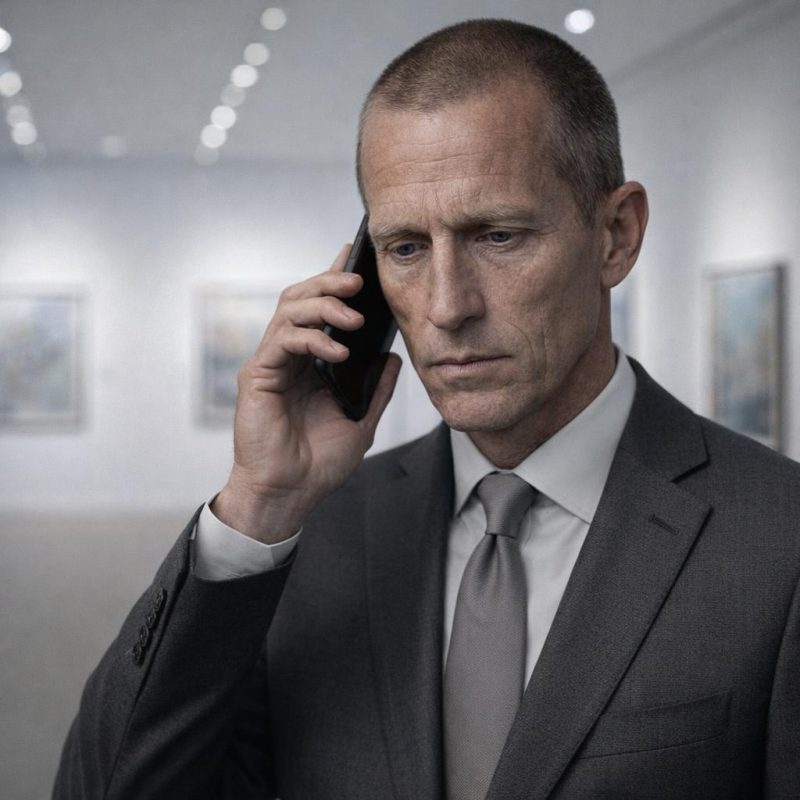 Image by RM AI
The Refusal to Act
I stood there with the phone still in my hand, the screen dark, Julian's last syllable still hanging somewhere in the air between me and the wall. Sophie appeared in the doorway — she had a way of materializing at precisely the wrong moments — and her eyes went straight to the phone. She asked if that had been Julian calling. I said yes, and left it at that. She waited, the way she always waited, with that particular French patience that made silence feel like a question. Then she suggested, carefully, that perhaps it was time to call the police about the theft. I told her I wanted to assess the situation first. She looked at me the way people look at someone who has just said something technically coherent but fundamentally wrong. I told her to continue with the afternoon appointments, that I would handle this. She held my gaze for a moment longer than was comfortable, then nodded and withdrew. I went into my office and closed the door. I set the phone face-up on the desk. I did not dial. I told myself that acting without information was worse than waiting. I told myself that Julian had made his choices. I sat down, folded my hands, and decided to let the next few hours tell me what they would.
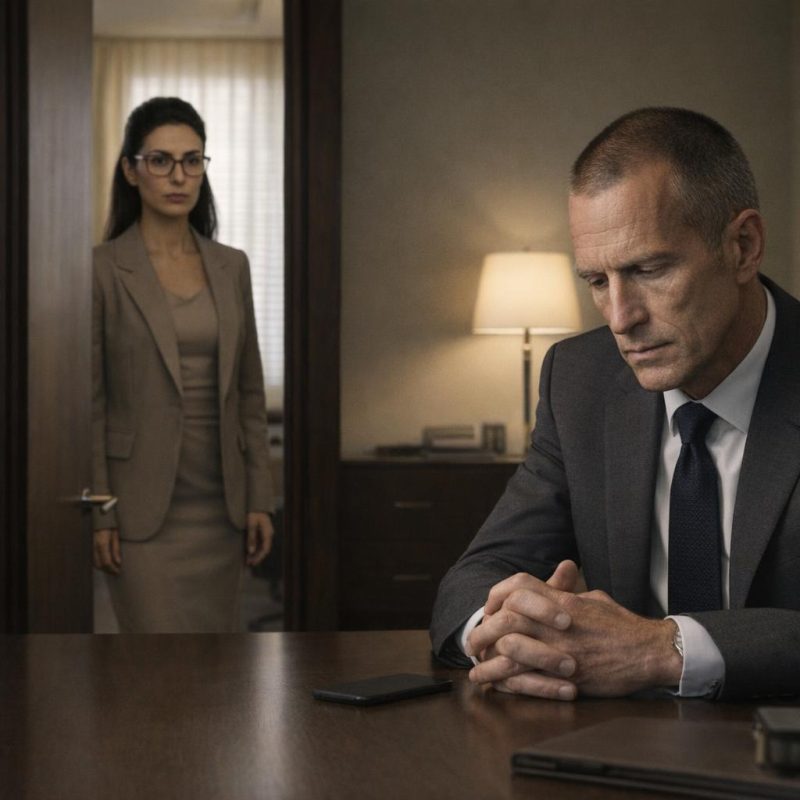 Image by RM AI
The Collector's Expectations
The call came through on the gallery's main line, which surprised me — I had expected Viktor to relay messages, not a direct contact. The number was international, the prefix unfamiliar, and when I answered, the voice on the other end was soft and unhurried, with the kind of cultured accent that belongs to men who have never needed to raise their voices to be taken seriously. Dmitri said he hoped he wasn't interrupting anything important. He said it the way people say things when they know perfectly well they are the most important thing happening in your day. He expressed disappointment about the situation — not anger, just disappointment, which was considerably worse. He said Viktor had briefed him thoroughly. He said he had always trusted my reputation for discretion and professionalism, and that he continued to do so. Then he mentioned, almost as an aside, that three days seemed a reasonable timeframe for a matter of this nature to be resolved. He asked when I expected to locate my brother. I said I was working on it. He said he was confident I would find a way. He said goodbye with the same unhurried courtesy he had opened with, and the line went quiet. I sat with the receiver still in my hand, the weight of those three days pressing down on me like something physical.
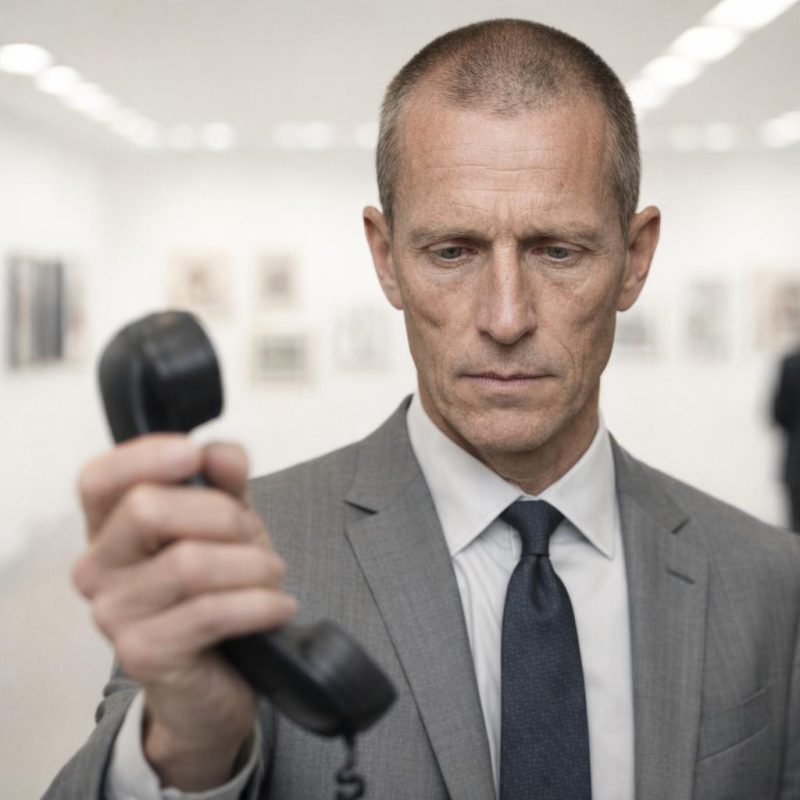 Image by RM AI
The Desperate Wife
Sophie came to my office door first, her expression apologetic and strained, and said there was someone — she started to say more but Rebecca was already past her, moving through the gallery with the kind of desperate momentum that doesn't stop for locked doors or professional courtesy. She found me behind my desk and grabbed my arm with both hands, which was not something anyone did in this office. Her face was the color of old paper. She said Julian had called her from a gas station payphone, that he was terrified, that men were following them and he didn't know what to do. She said the word men the way you say it when you mean something worse. I told her I was doing what I could. She asked what that meant, exactly. I said the situation was complicated. She looked at me then — really looked at me — and said that Emma was with him. She said my niece was in the car, that a seven-year-old girl was somewhere on a highway with people hunting her father, and she needed me to tell her I was going to fix it. She asked why I hadn't called the police. I said I was weighing the options. Sophie stood in the doorway behind her, very still. Rebecca's eyes didn't leave my face, and the desperation in them was something I found I couldn't quite look away from, no matter how much I wanted to.
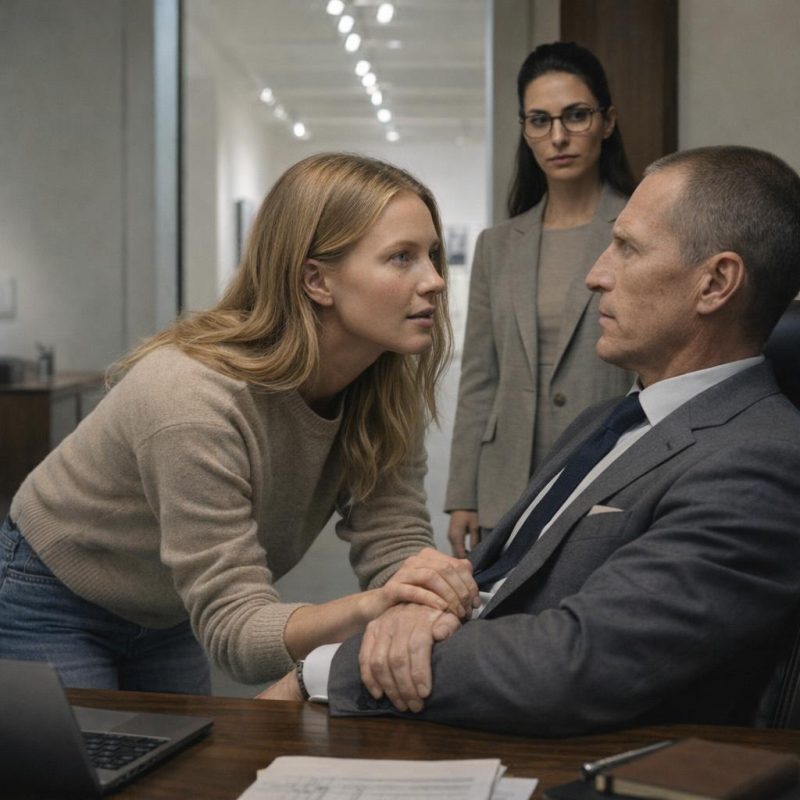 Image by RM AI
The Job Offer
Two weeks earlier, Julian had called and asked if we could meet. Not at the house, not at my parents' place — at a coffee shop near the gallery, neutral ground, which told me he wanted something and knew better than to ask for it on my territory. He was already there when I arrived, sitting with both hands wrapped around a cup he hadn't touched. He looked tired in the specific way that gambling debt produces — not sleepless exactly, but hollowed out, like something had been quietly consuming him from the inside for months. He said he had debts again. He said it without the usual performance of minimizing, which meant they were bad. He asked if there was any work available, anything at all, even temporary. I looked at him across the table and thought about the gallery's upcoming security rotation, the night shifts that were always difficult to staff reliably. I told him I could offer him a week of night security work. His relief was immediate and unguarded — the kind of relief that bypasses whatever dignity a person has left and just arrives on their face without permission. I walked him through the protocols that same afternoon: the alarm codes, the patrol schedule, the vault procedures. He thanked me four times before we reached the door. He said it would save him. I remember thinking, standing there watching him go, that I genuinely hoped it would — and then I remember the exact moment he turned back and said yes.
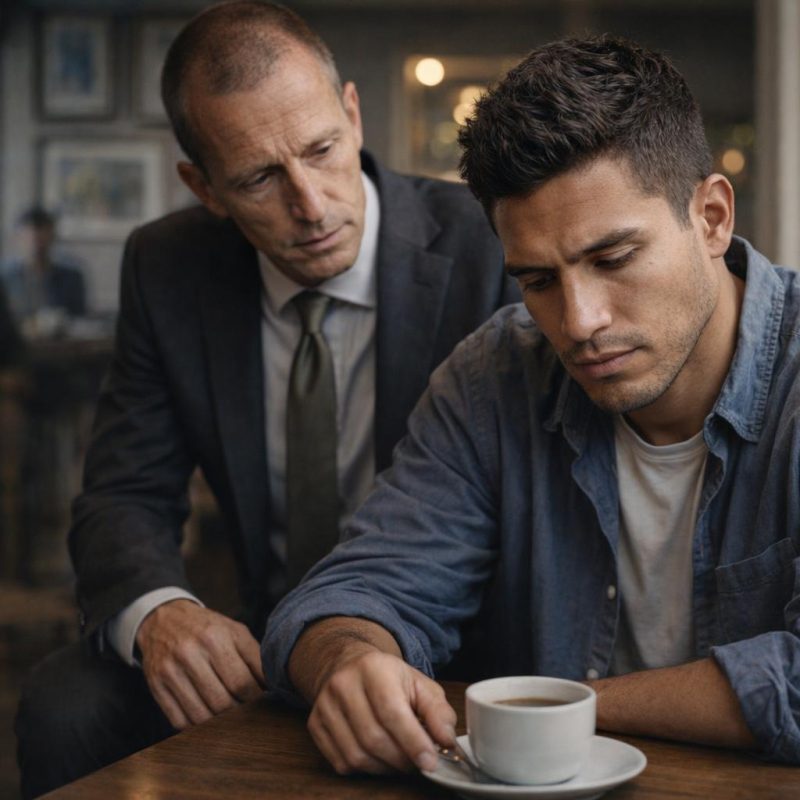 Image by RM AI
The Pressure Mounts
Viktor arrived without calling ahead, which I was beginning to understand was simply how he operated. It was late afternoon, the gallery empty of clients, Sophie gone on an errand I had manufactured specifically to keep her clear of the building. He came into my office and sat down without being invited, which also appeared to be simply how he operated. He asked about Julian's associates — friends, gambling contacts, anyone Julian might turn to when he needed to disappear. I gave him the names I knew, which were few and not particularly useful. He asked about properties. I mentioned that my parents kept a cabin upstate, gave him the county, said I didn't have the precise address memorized but could find it. He wrote everything down in a small notebook with the focused efficiency of someone who had done this kind of accounting many times before. He asked if Julian had contacted me since the rest stop. I said no. He looked at me for a moment with those cataloging eyes of his, the kind that seem to be filing information rather than simply receiving it, and then he asked his questions again, slightly rephrased, as if checking whether the answers would change. They didn't. When he finally stood to leave, I sat back in my chair and listened to his footsteps cross the gallery floor, measuring each word I had given him against each word I had kept back, and found the balance between them harder to hold than I had expected.
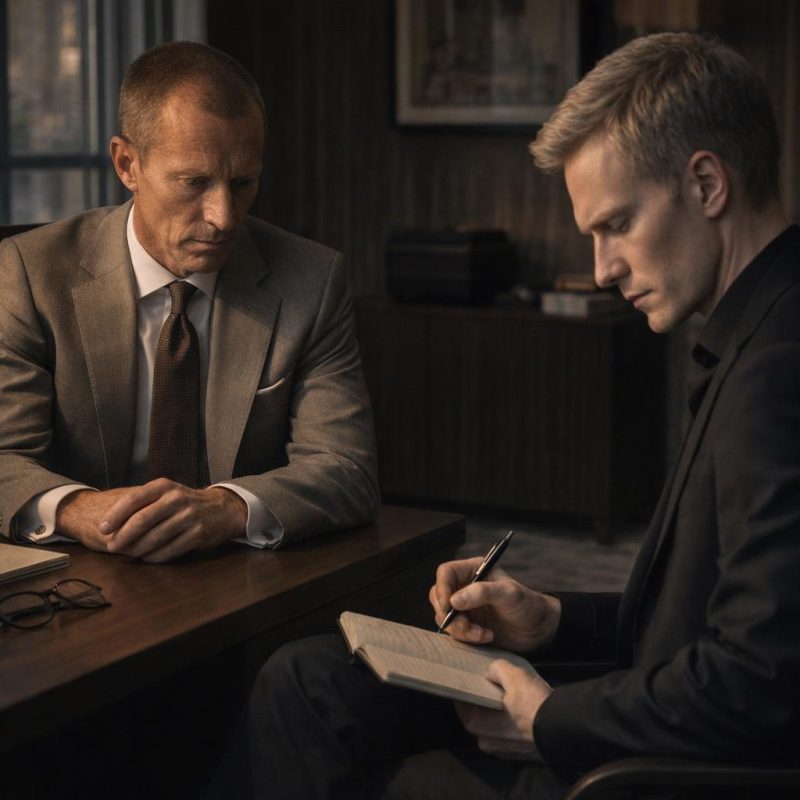 Image by RM AI
The Vanishing Act
I called Julian's number at nine in the morning and got voicemail. I called again at ten-fifteen and got voicemail. By noon I had stopped counting the attempts. The phone wasn't ringing through and then going to voicemail — it was going straight there, which meant it was either off or dead, and neither possibility was particularly reassuring. I tried Rebecca's number twice and got nothing. Sophie noticed. She had a talent for noticing things I would have preferred she didn't, and by mid-afternoon she had stopped pretending not to watch me check my phone. She asked if I'd heard from my brother. I told her Julian had gone quiet. She absorbed that without comment, which was its own kind of comment. I pulled up the security footage timestamps again, not because they would tell me anything new but because looking at them gave my hands something to do. The afternoon light moved across the gallery floor in long slow rectangles, the way it always did at this hour, indifferent to everything. The Klee on the east wall. The Basquiat study near the entrance. All of it exactly where it should be, exactly as it had always been. I sat at my desk as the gallery settled into early evening quiet, and what struck me most was how completely the silence had replaced the sound of Julian's panic — as though that frantic, whispered phone call had never happened at all.
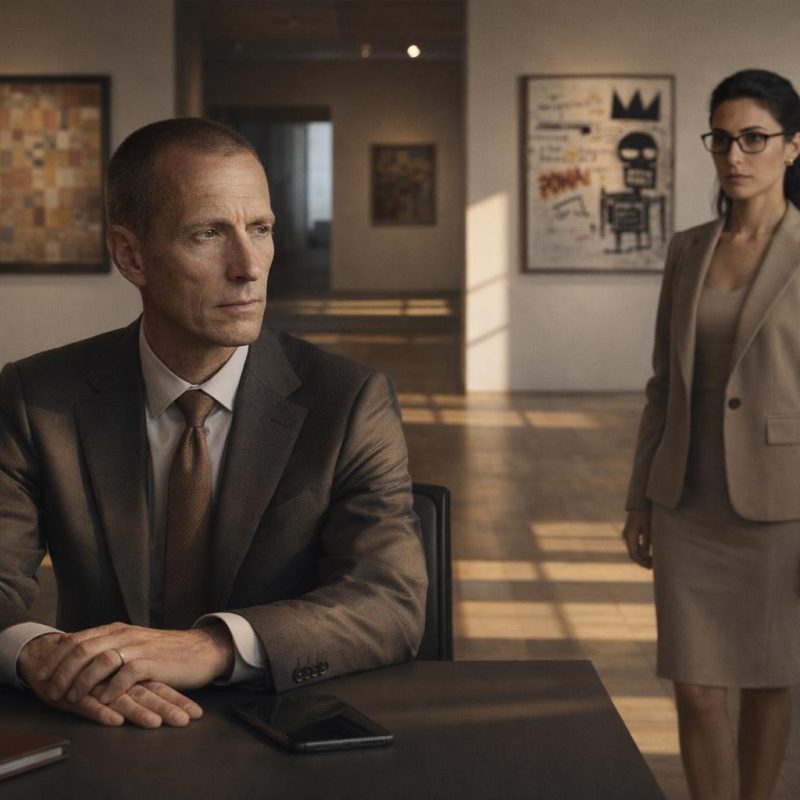 Image by RM AI
The Assistant's Questions
Sophie closed the office door behind her, which she almost never did, and I understood before she spoke that this was going to be a different kind of conversation. She asked why I hadn't filed a police report. I said the situation was complicated, which was the same thing I had told Rebecca, and it sounded no better the second time. She said Julian's life might be in danger — she said it plainly, without drama, which made it harder to deflect. I told her that panic wouldn't help anyone, that I needed to think clearly. She said she had watched me think clearly for seven years and that this didn't look like thinking clearly, it looked like something else. I asked her what she meant. She said I had been calm since the moment the theft was discovered — not the calm of someone managing a crisis, but a different kind of calm, and she couldn't quite name it but she had noticed it. I told her I was handling things in the way I judged best. She said Rebecca had come in looking like she hadn't slept in two days, that a child was apparently somewhere in the middle of this, and that she needed to ask me directly: was there something I wasn't telling her. I said there wasn't. She held my gaze for a long moment, and I watched the doubt settle into her expression like sediment finding the bottom of still water.
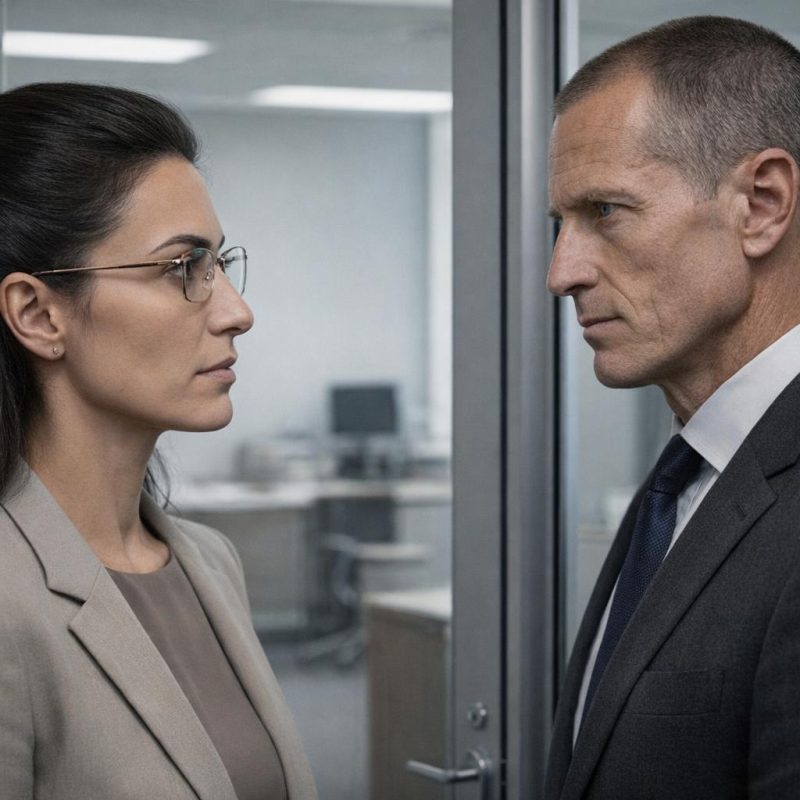 Image by RM AI
The Detective Arrives
Detective Chen arrived at four-thirty with a badge and the particular economy of movement that belongs to people who have learned not to waste energy on rooms that aren't going anywhere. She said a report had been filed regarding a theft from the premises — she didn't say by whom — and that she had some questions. I offered her a chair. She took out a notepad and asked to see the security footage, which I arranged. She watched the relevant timestamps with the focused attention of someone who watches things professionally, then turned back to me and asked about the timeline of Julian's employment. I explained the week-long arrangement, the night security rotation. She asked why I had given my brother vault access. I said the vault was part of the standard security patrol, that the protocols required familiarity with all secured areas. She wrote something down. She asked about the value of the stolen items. I described them as client property held in escrow, gave her a figure that was accurate without being complete. She asked why I hadn't pressed charges or contacted police myself. I said I had hoped to resolve the matter privately, to locate Julian and recover the items before escalating. She nodded slowly, the way people nod when they are not agreeing with you but want you to keep talking. Then she asked me to walk her through the vault access procedure one more time — and her pen stopped moving over the notepad.
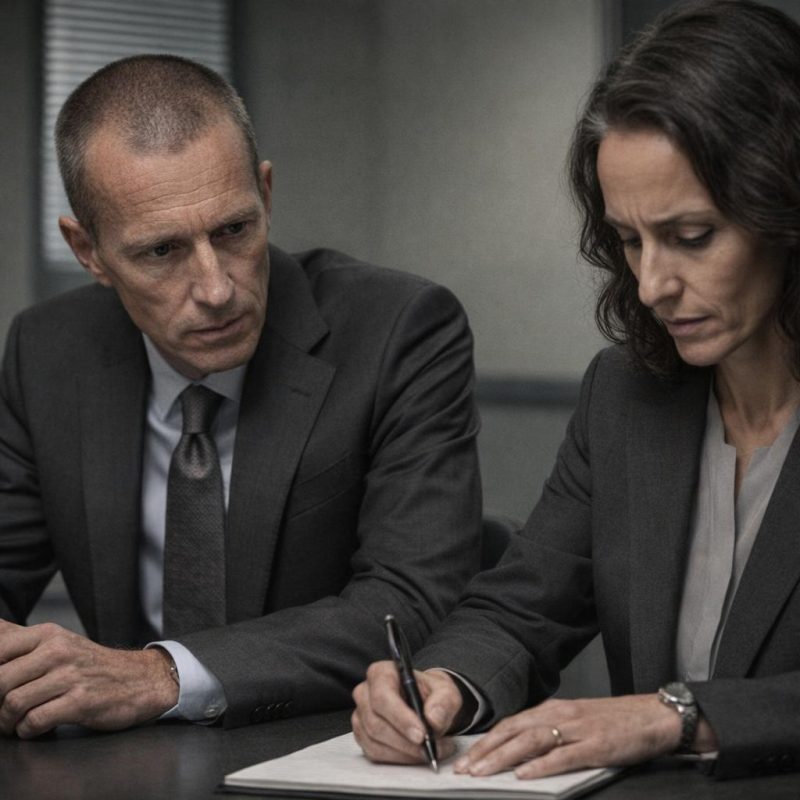 Image by RM AI
The Father's Blame
The call came through on a number I didn't recognize — no area code I could place, the kind of number that doesn't want to be traced. I answered anyway. Robert's voice came through before I could say a word, shaking in a way I hadn't heard since the night Julian totaled his first car and our father had to come collect him from the police station. He said I had done this. That I had always resented Julian's success, that I had handed him a job specifically to humiliate him, to expose him to people who would hurt him. I let him talk. There was a particular satisfaction in listening to my father defend Julian's theft of three million dollars from a Russian client as though it were somehow my moral failing. I asked, quietly, where they were staying. He refused. He said Patricia was barely sleeping, that she was terrified, and that it was my fault. I told him the people looking for Julian were not the kind who accepted apologies or payment plans. He told me I could make this go away if I wanted to — that I was choosing not to. Then his voice cracked, raw and unsteady, and he said I had finally destroyed this family.
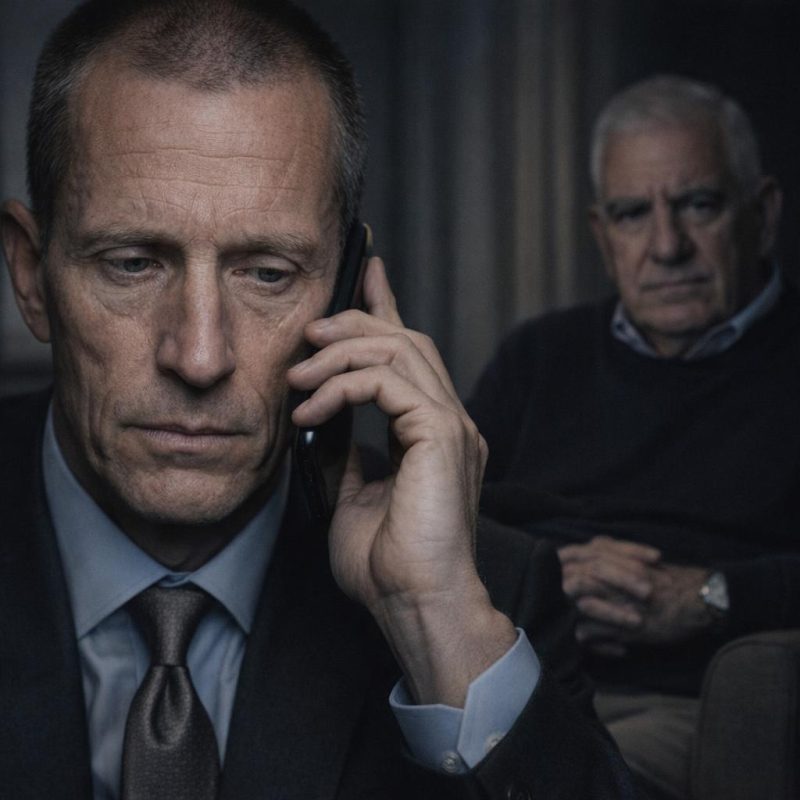 Image by RM AI
The Sophisticated Tracking
Julian called from a different number again — his third in two days, each one disposable, each one more frantic than the last. His voice had gone hoarse, scraped thin by fear and too many hours without sleep. He said he had taken apart one of the tracking devices from the frames. I listened without speaking. He described the circuitry inside — compact, layered, nothing like the commercial GPS units you could order online. He said the battery life alone suggested something designed for extended field deployment. He asked, with a kind of hollow bewilderment, how art frames would contain military-grade tracking equipment. I told him I didn't know anything about the trackers. He didn't believe me — I could hear it in the silence that followed — but he also didn't have anyone else to call. He said the devices had been transmitting continuously since he left the gallery. Every stop. Every motel. Every parking lot where he'd sat trying to think. Something shifted in me as Julian described what he'd found inside that frame — a quiet unease I couldn't quite name, a sense that the edges of this situation extended further than I had let myself consider.
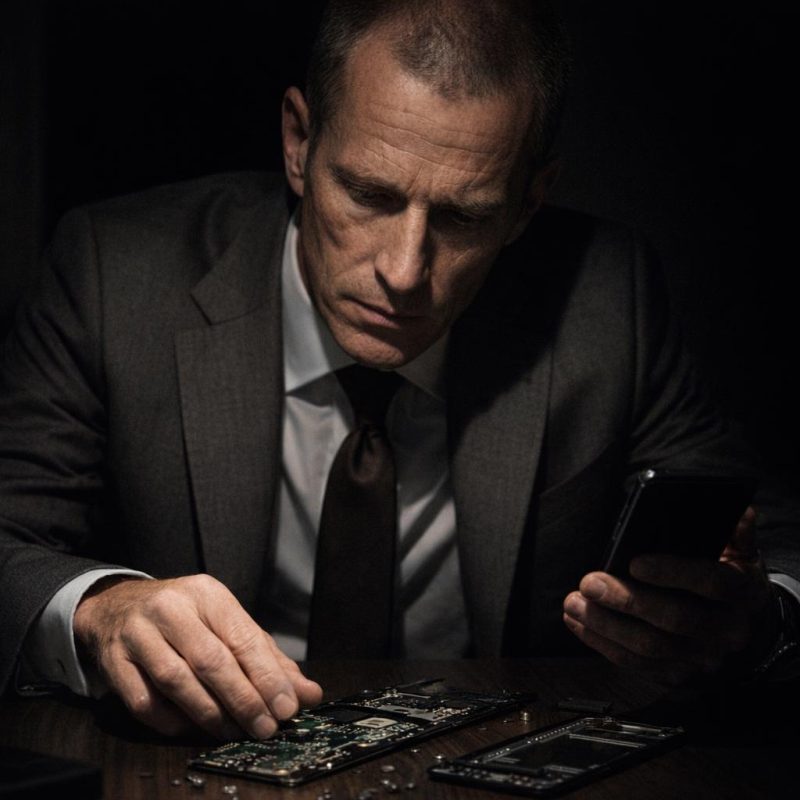 Image by RM AI
The Timeline Inconsistencies
Sophie knocked on my office door just after two in the afternoon, a printed log in her hand and an expression she was working hard to keep neutral. She said she had been pulling records for Detective Chen and had found something she wanted to ask me about directly. She set the printout on my desk. The vault access log showed my credentials used at eleven-forty PM, twelve-fifty AM, and again at one-fifteen AM across the three nights before the theft. She asked what I had been doing in the vault at those hours. I told her I had been conducting inventory checks, preparing for the Volkov viewing. She looked at the page, then back at me. She said, carefully, that in seven years she had never known me to run inventory at midnight. I told her the viewing had specific authentication requirements and I had wanted to verify the condition reports personally. She nodded. She gathered the printout back into her folder with the precise, unhurried movements of someone who has decided not to push further — not because she was satisfied, but because she understood the conversation had reached its limit. She thanked me and left. The weight of everything she hadn't said settled into the room after her.
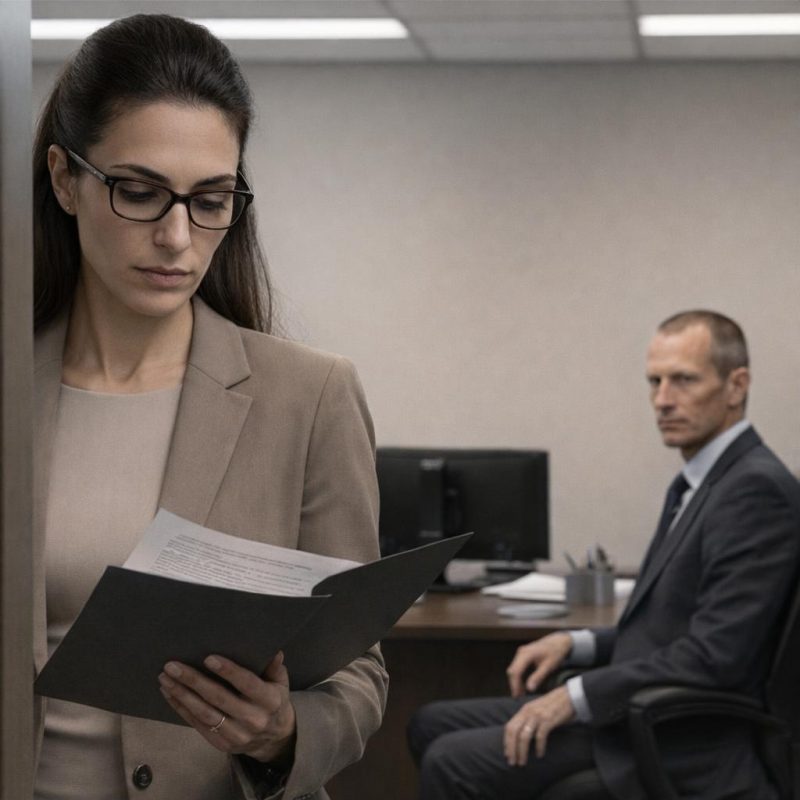 Image by RM AI
The Photographed Child
Julian's messages came through in a cluster — seven images, no text at first, just the photographs arriving one after another like a slow, methodical demonstration. The first showed Emma in her school uniform outside the main entrance, backpack on, talking to another child. The second was taken through a chain-link fence at the edge of the playground during what looked like morning recess. The third caught her climbing into Rebecca's car in the pickup lane, Rebecca's hand on her shoulder, neither of them looking toward the camera. Each image was timestamped. Each one was geotagged with coordinates I could have mapped to the minute. Julian's text came through after the last photo — barely coherent, words running together, punctuation abandoned entirely. He said they had been watching her all day. He said he didn't know what to do. I sat at my desk and looked at Emma's face in the playground photograph — her dark curls, the stuffed rabbit tucked under one arm even at school, the complete and devastating absence of any awareness that she was being watched. I had not let myself think it would reach her. Then a final image loaded: Emma leaving the school gate, timestamped five minutes ago.
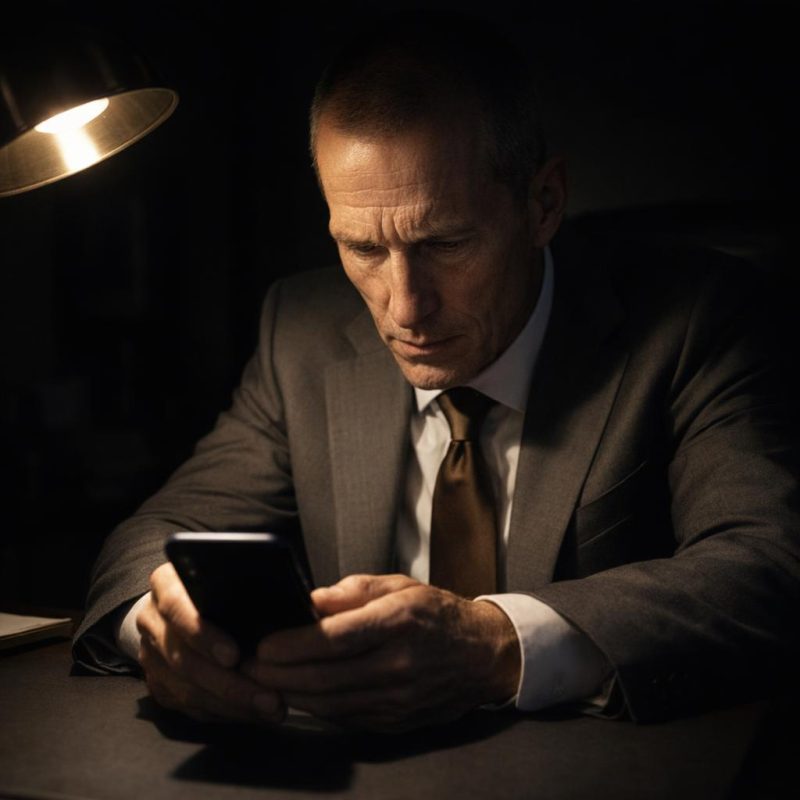 Image by RM AI
The Rewatched Footage
I pulled up the older footage after midnight, when the gallery was empty and the only sound was the climate system cycling through its quiet rotations. The recording was from two weeks prior — the afternoon I had met with Julian in the main hall to walk him through the position. I watched myself on the monitor. My posture was composed, unhurried. I watched myself gesture toward the corridor that led to the vault, watched Julian follow the direction of my hand with the eager attention of someone being trusted for the first time in years. I watched myself write something on a slip of paper and hand it across. The override codes. On screen, my face was calm. Measured. The expression of a man conducting routine business. I watched Julian fold the paper and put it in his jacket pocket, and I watched myself nod, as though the transaction were entirely ordinary. I sat back in my chair. I watched the footage through twice more, looking for something I could not name. What I kept returning to was the stillness in my own posture as I watched Julian accept the job.
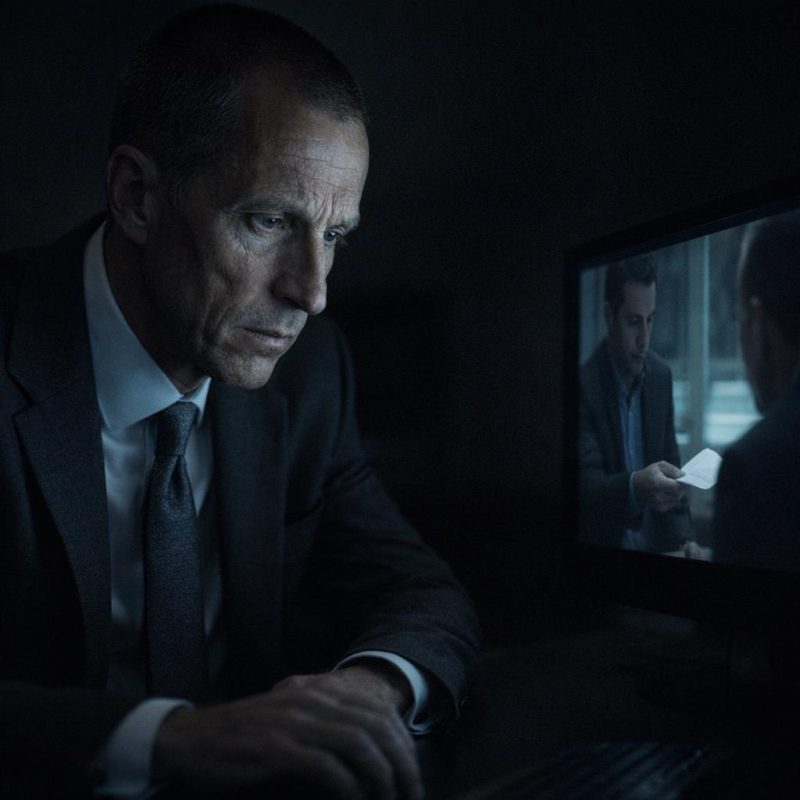 Image by RM AI
The Changed Codes
The administrative log was a secondary system, separate from the access records Sophie had pulled, and I only found it because I was looking for something else entirely. The override codes had been changed four days before the theft. The authorization timestamp read eleven-oh-three PM. The credentials were mine. I sat with that for a long moment. The new codes were simpler than the previous sequence — shorter, a different structure entirely. I checked my email for that date, looking for any note I might have sent myself, any thread that would explain the decision. Nothing. I checked my calendar. The day showed a two o'clock client call and a dinner reservation I had cancelled. Nothing that would have prompted a late-night administrative change to the vault security system. I tried to reconstruct the evening — where I had been, what I had been thinking about, what had moved me to sit down at the system terminal and change the codes. The memory wasn't there. Not suppressed, not vague — simply absent, the way a detail goes missing when it didn't register as significant at the time. I sat staring at the timestamp, and the gap where the reason should have been said nothing back to me.
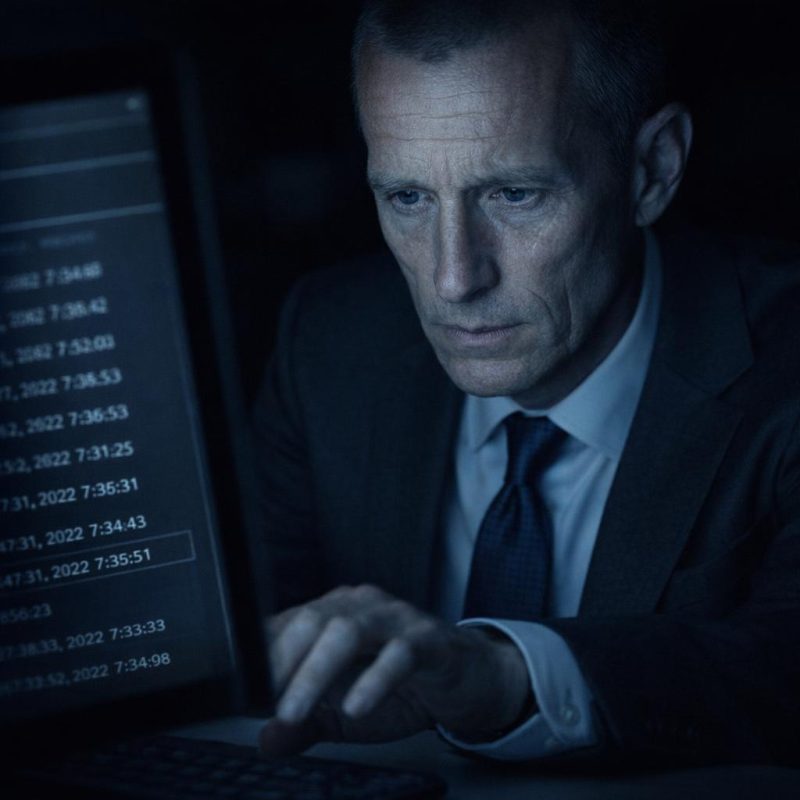 Image by RM AI
The Parents' Confrontation
The drive upstate took just under two hours. I knew the cabin — our family had used it for thirty years, the same gravel drive, the same weathered dock over the same unremarkable lake. Both cars were in the driveway. I knocked once. Robert answered looking like a man who had aged a decade in a week, and Patricia appeared behind him in the doorway with her pearls on, because some habits survive even genuine terror. I asked where Julian was. Robert said that was none of my concern and that I had done enough. I let him finish. Then I told them both, in the plainest language I could manage, that the items Julian had taken did not belong to me — that they were client property, held in trust, belonging to a man who had resources and patience in roughly equal and alarming measure. Patricia's face changed. She said they had thought — she stopped, started again — she had assumed the pieces were mine, that Julian was only taking what the family was owed, what I had never been willing to share. Robert said I had always kept everything for myself. I told them the client's name. Patricia's hand reached for the doorframe, trembling, as she said they had thought it was my money.
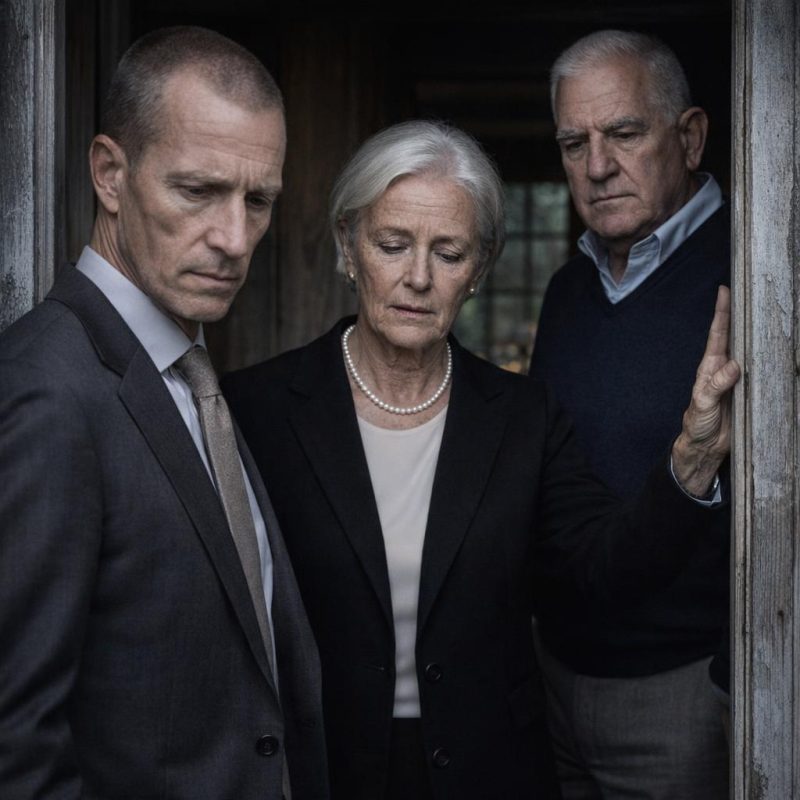 Image by RM AI
The Deadline Approaches
Dmitri called at seven in the evening, while I was still on the road back from the cabin. The connection was clear and unhurried, the way his calls always were — he had never needed volume or urgency to make a point. He asked for an update. I told him Julian was still in motion, that I was narrowing the variables. He said two days was not much time, and he said it the way someone states a fact about weather — not a warning exactly, more an observation about conditions that exist independent of anyone's preferences. He said his patience had limits, even for valued partners, and that he hoped I understood the distinction between effort and result. I told him I was doing everything available to me. He asked, after a brief pause, whether I had considered all available options — and the question sat in the air between us without elaboration, because it didn't need any. I said I had. He said he was glad to hear it. The call ended without ceremony, no raised voice, no explicit statement of what came next. The silence that followed on the line was the quietest thing I had heard all week.
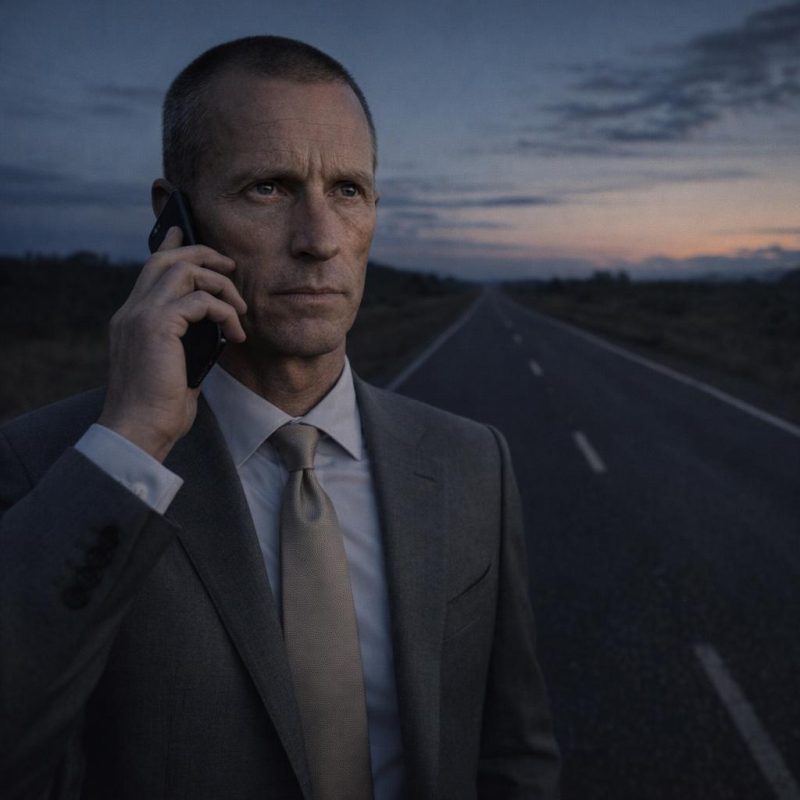 Image by RM AI
The Brother's Desperation
He called from a number I didn't recognize — a burner, probably, or someone else's phone. His voice came through hoarse and unsteady, like he hadn't slept in days, which he probably hadn't. He said he was parked across from Emma's school. He said he had binoculars. He said he'd been there since morning, just watching the yard, making sure no one was watching her back. I didn't say anything. I let him talk. He described the recess period — the way she ran across the blacktop, the stuffed rabbit tucked under her arm even outside, the way she laughed at something a classmate said. He said he couldn't go near her. He said they were watching, that he knew they were watching, and that if he went near her he'd be leading them straight to her. His voice broke somewhere in the middle of that sentence and didn't fully recover. He asked me what to do. He said he would give back everything, do anything, that he'd never wanted any of this. I had no answer that would actually help him. I had answers, but none of them were the kind that saved anyone. And then his voice broke entirely as he described her face — the way she looked when she laughed, unguarded and completely unaware of what was circling around her.
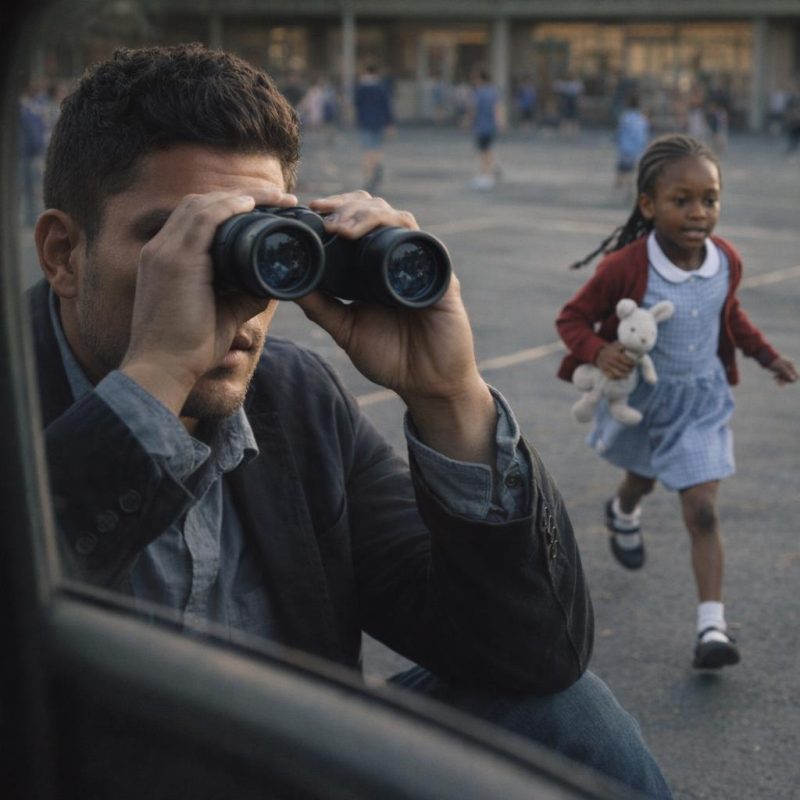 Image by RM AI
The Mounting Evidence
Sophie came in just before noon with a printed document, two pages, single-spaced, and set it on my desk without a word. She had formatted it as a timeline — dates running down the left margin, events in a clean column beside them. I looked at it the way you look at something you already half-expect and still aren't ready for. The first entries were routine: the Voznesensky consignment arriving, the standard intake procedures. Then it shifted. My vault access logs, pulled from the security system, appeared six times in a ten-day window. The date I changed the secondary access codes was there, flagged with a small asterisk. Below that, the date I offered Julian the position. Below that, the date I moved the Voznesensky pieces from the secure vault to the accessible one. Sophie had noted each entry in her precise, unhurried handwriting, and she had drawn no conclusions in the margins — no arrows, no annotations beyond the facts themselves. She stood across the desk from me, hands folded, expression professionally neutral in the way that takes real effort to maintain. She asked, quietly, whether I saw anything unusual in the sequence. I looked at the timeline spread across my desk — each entry in its column, each date in its place, the whole thing laid out with the patience of someone who had been paying very close attention.
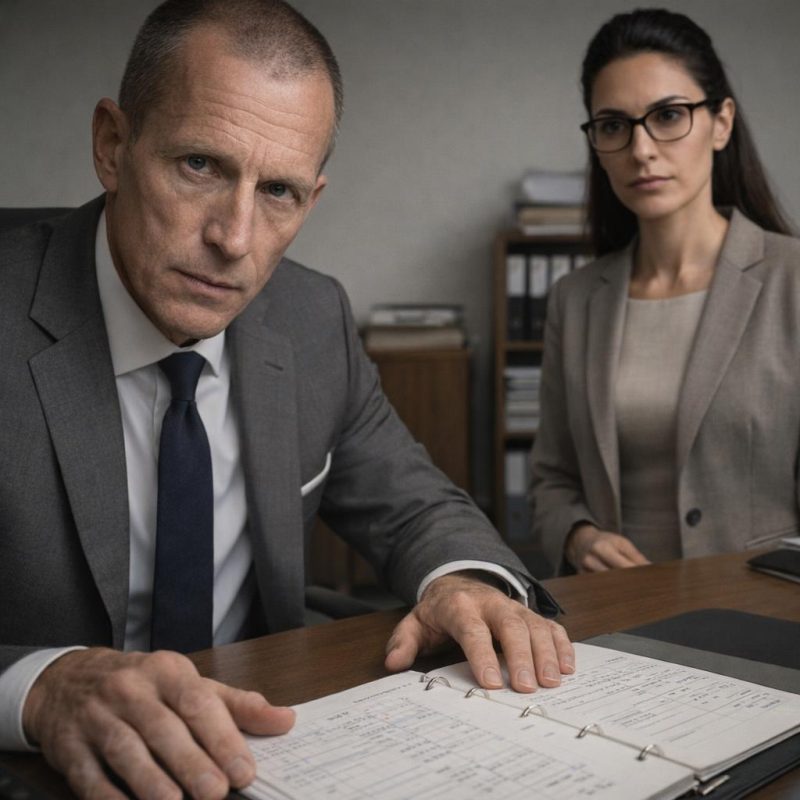 Image by RM AI
The Direct Question
Viktor didn't call ahead. He simply appeared at the gallery's front entrance at half past two, in a dark suit that fit him the way a uniform fits someone who has never stopped being a soldier. Sophie showed him back without argument — there was something about Viktor that made argument feel beside the point. He asked to speak privately. I closed the office door and gestured to the chair across from my desk, and he sat in it with the particular stillness of someone who has learned that stillness is its own kind of pressure. He said he wanted to ask me something directly, and I told him to go ahead. He asked whether I had given Julian access to the vault on purpose. Not as an accusation — the phrasing was careful, almost clinical, framed as a possibility he was simply exploring. I said I had been trying to help my younger brother find stable employment, that the access was a function of the role, that I had no reason to anticipate what Julian would do with it. Viktor nodded slowly. He mentioned the timing — the code changes, the relocation of the Voznesensky pieces, the job offer — and said the sequence was, in his word, convenient. He asked if I had any reason to want Julian in a difficult position. I said the theft was a betrayal, that I was the one left managing the consequences. Viktor said nothing for a moment. His eyes stayed on mine, waiting.
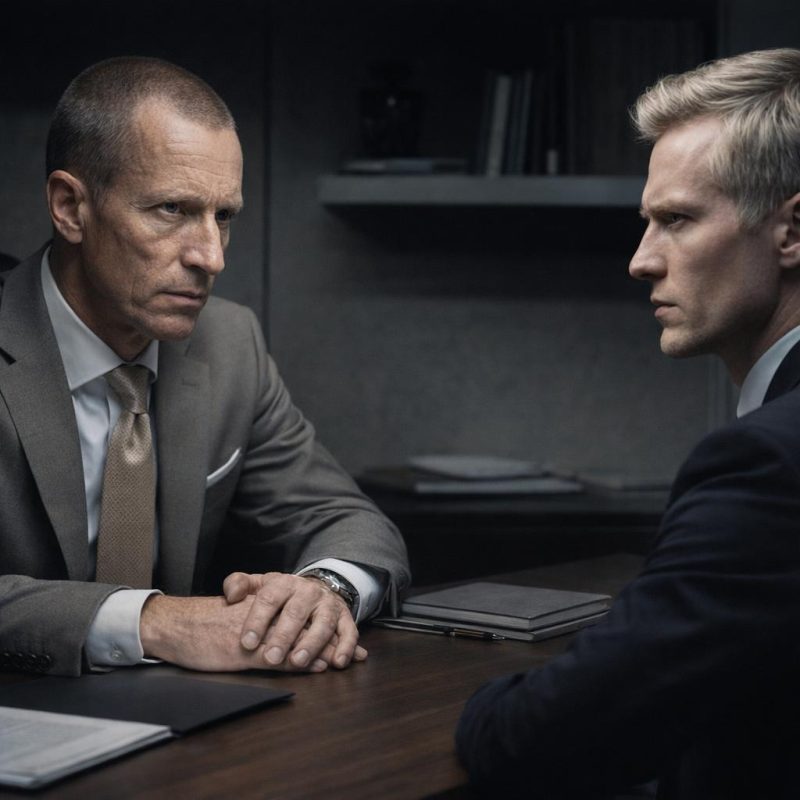 Image by RM AI
The Collector's Suspicion
Dmitri called the following morning, and his voice carried the same unhurried quality it always did — cultured, measured, the kind of calm that has nothing to do with ease. He said Viktor had shared some observations. He said he found the timing of events remarkable, and he used that word with the precision of someone who chooses words the way a surgeon chooses instruments. He noted that it was unusual for a brother to have such thorough access — the right vault, the right codes, the right window of opportunity. I told him I had been trying to help family, that Julian's situation had seemed manageable at the time, that I had misjudged the risk. Dmitri said that family could be complicated. He said it without irony, or at least without visible irony, which with Dmitri amounted to the same thing. He mentioned that trust was the foundation of everything they did together, that his confidence in a partner was not something he extended lightly or withdrew without consideration. He said he hoped my reputation would remain the asset it had always been. He said he was sure I understood the importance of resolution. The call ended with the same quiet ceremony as all his calls — no raised voice, no explicit statement of consequence. I sat with the phone in my hand after the line went dead, and the weight of everything he hadn't said pressed down like something physical.
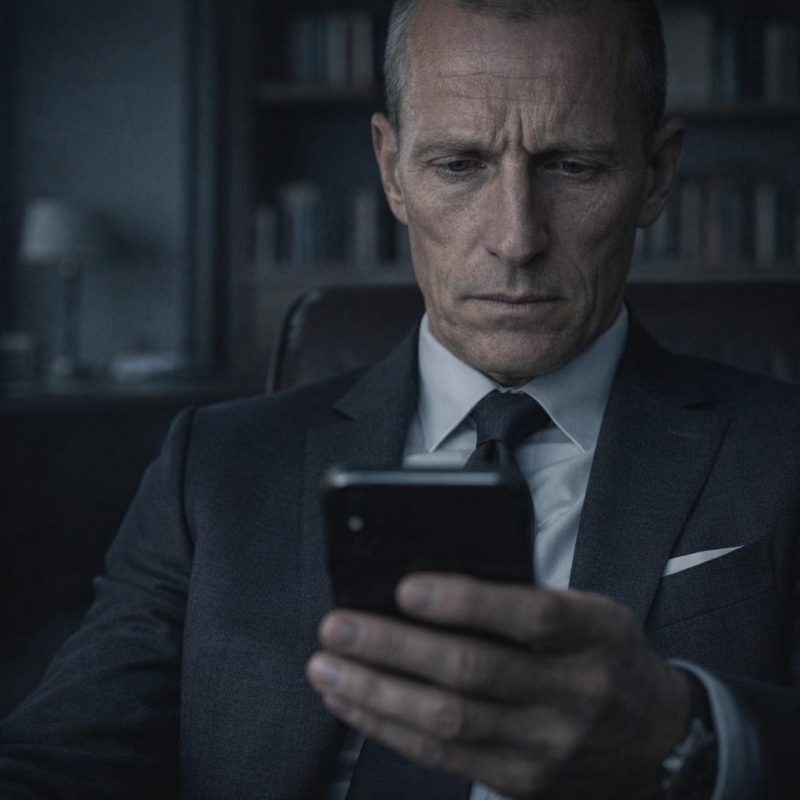 Image by RM AI
The Wife's Accusation
She came in at half past three, when the gallery still had clients moving through the main room. Sophie stepped forward to intercept her at the entrance, and Rebecca walked past her the way someone walks past furniture — not unkindly, just with somewhere else entirely to be. She found me near the east wall and she didn't lower her voice. She said I had never wanted to help Julian, that the job offer had never been about helping him, that I had put him exactly where I wanted him and then stepped back and watched. I told her Julian had made his own choices, that I had offered him an opportunity and he had stolen from a client. She said Emma might die because of this. She said it the way people say things they have been holding for days — not as a rhetorical point but as a fact she needed someone else to carry for a moment. I said I was doing everything I could to locate Julian and find a resolution. She said that wasn't what she'd asked. Her voice cracked on the last word. Sophie appeared at her elbow, quiet and steady, and guided her toward the entrance while Rebecca was still talking, still turning back toward me, her words trailing through the gallery long after she was gone.
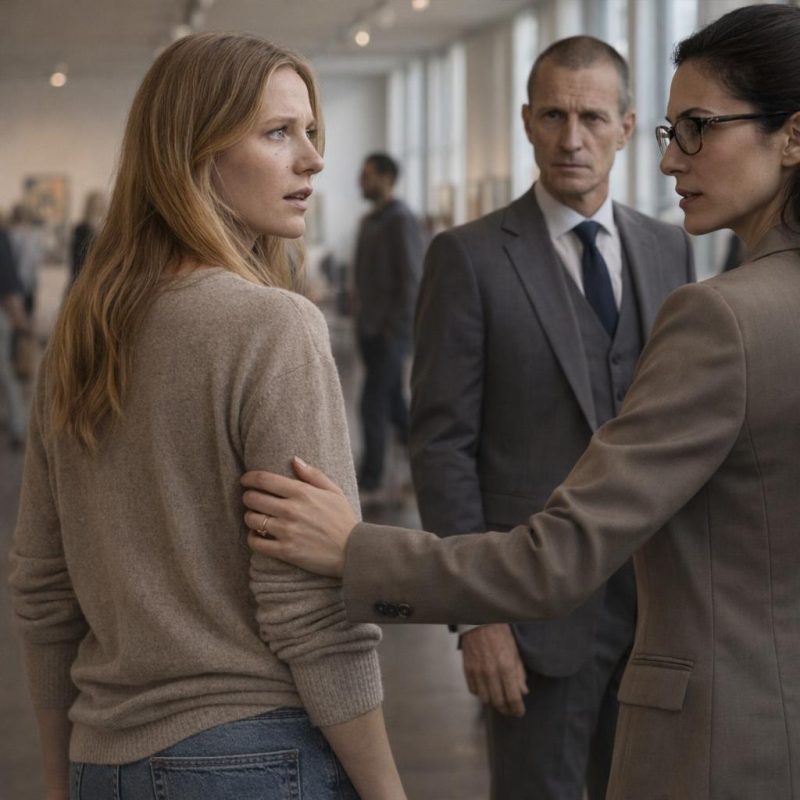 Image by RM AI
The Cracking Facade
I closed the office door and sat down. The gallery sounds — footsteps on the hardwood, the soft chime of the entrance sensor — filtered through as if from a considerable distance. I had a file open on the desk that I didn't look at. I thought about Emma. Not abstractly, not as a variable in the situation, but specifically — the photograph Julian had sent weeks ago, her in her school uniform with the stuffed rabbit pressed against her chest, that particular expression children have when they're trying to look serious for a camera and can't quite manage it. I thought about her at family gatherings when she was still a toddler, the way she used to fall asleep in the corner of the sofa at Christmas, entirely unbothered by the noise around her. I had built a careful architecture around my decisions — reasons that held their shape when I examined them, justifications that felt solid. Sitting there, I turned them over and found something I hadn't budgeted for. Not regret exactly. Something less formed than that, something that moved through the careful structure I'd maintained and found the gaps I hadn't known were there. The professional distance I had kept between myself and the consequences of this situation had served me well for weeks. Sitting in the quiet of my office, I felt it begin, very slightly, to give.
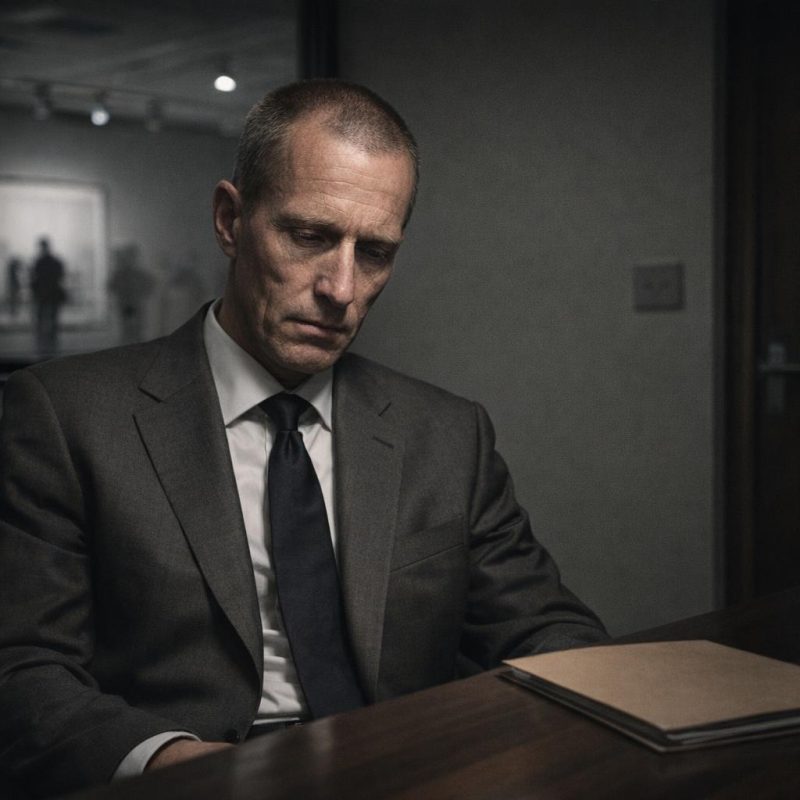 Image by RM AI
The Golden Child
I was twelve the summer my father bought Julian a bicycle. It was a combined party — my twelfth, Julian's eighth — which in practice meant Julian's party with a footnote. The garden was full of relatives and neighbors, and Julian moved through them the way he always did, easy and magnetic, collecting attention without appearing to try. My father stood near the bicycle for most of the afternoon with his hand on Julian's shoulder, laughing at things Julian said, pointing out Julian's charm to whoever was nearby as though it were an achievement he'd had some hand in. My mother fussed over which flavor of cake Julian preferred, whether the icing was right, whether he was having enough fun. I received a book — a good book, I remember that, something about architecture — and a handshake from my father, firm and brief, accompanied by the observation that I was very responsible for my age. Several guests said the same thing. Responsible. Mature. So grown-up already. The words that adults use when they have decided a child doesn't need anything. I stood at the edge of the garden with my book and watched Julian ride the bicycle in unsteady circles on the path, laughing, my father jogging alongside with both hands ready to catch him. I could still feel the precise weight of that afternoon — my father's hand on Julian's shoulder, steady and warm, a gesture that had never once been directed at me.
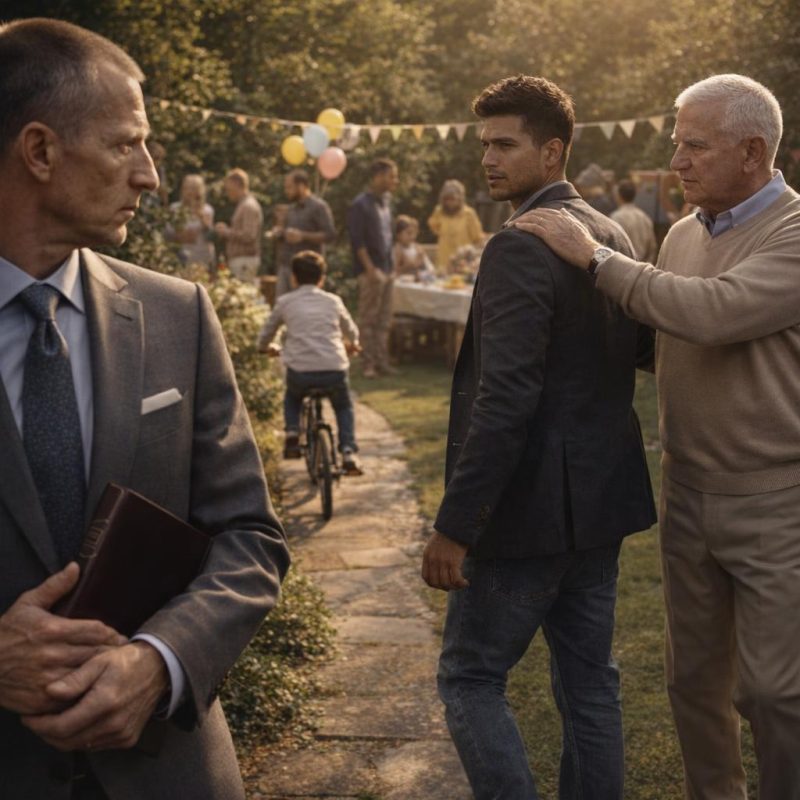 Image by RM AI
The Override Codes
Detective Chen arrived without an appointment, which had become her preferred method. She sat across from my desk and set a clear evidence bag on the surface between us — inside it, a photograph, printed on standard paper, showing a handwritten note. I recognized the handwriting before I recognized the content. The note listed the vault override codes in sequence, each one written in my hand, precise and unhurried, the way I write everything. Chen asked why I would write down codes that were meant to be committed to memory and never recorded. I said I had written them for Julian to study — that he was new to the security protocols, that I had intended him to memorize them and then destroy the note. She said that rather defeated the purpose of keeping override codes secure. I said it had been a judgment call, that I had trusted him. She asked whether I had wanted Julian to have permanent access to those codes — not as an accusation, the same careful framing Viktor had used, which I noticed. I said I had wanted him to learn the system properly. Chen looked at me for a moment without writing anything down. Then she slid the evidence bag across the desk toward me.
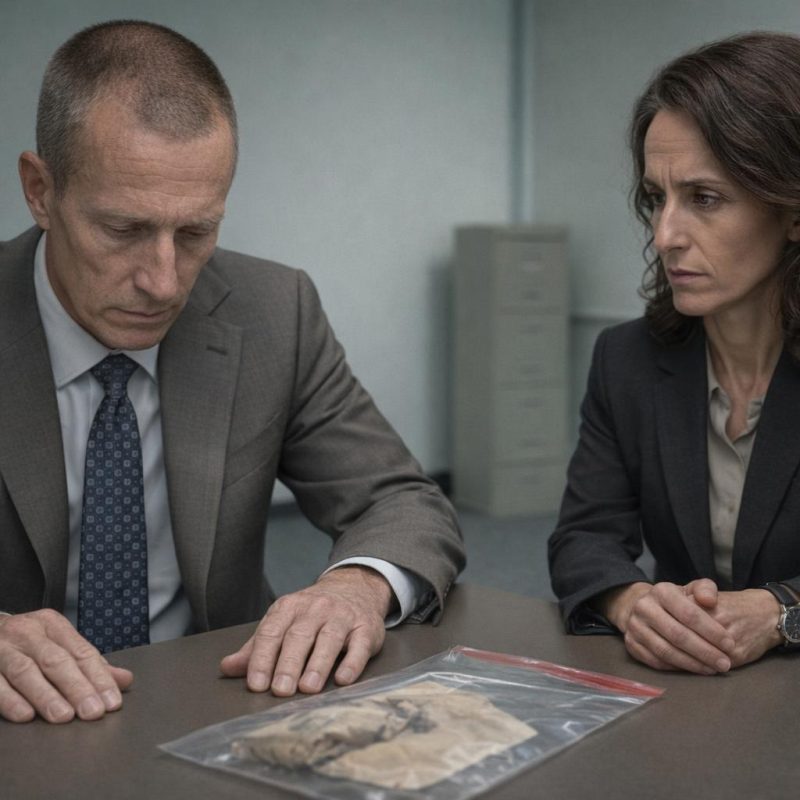 Image by RM AI
The Rejected Deal
Julian called from a number I didn't recognize — a burner, probably, or someone else's phone. His voice was lower than usual, stripped of the easy charm he'd always used to get what he wanted from people. He said he wanted to end it. He said he had the items, all of them, and he was willing to return everything if someone could arrange safe passage. He wanted me to call Dmitri. He wanted me to explain that it had been a mistake, that he was sorry, that he would disappear and never surface again. I let him finish. Then I told him it wasn't that simple. He asked why not — why couldn't I just make one call, just try. I told him that Dmitri didn't negotiate. Not over this. Not over three million dollars and a breach of trust that had happened inside my gallery, under my name. Julian's voice shifted then, something cracking at the edges of it. He asked why I wouldn't even try to help him. I didn't have an answer that would have meant anything to him. I said I was sorry. He didn't respond. The line stayed open for a few seconds after that, and the silence on his end settled over me like something I would carry for a long time.
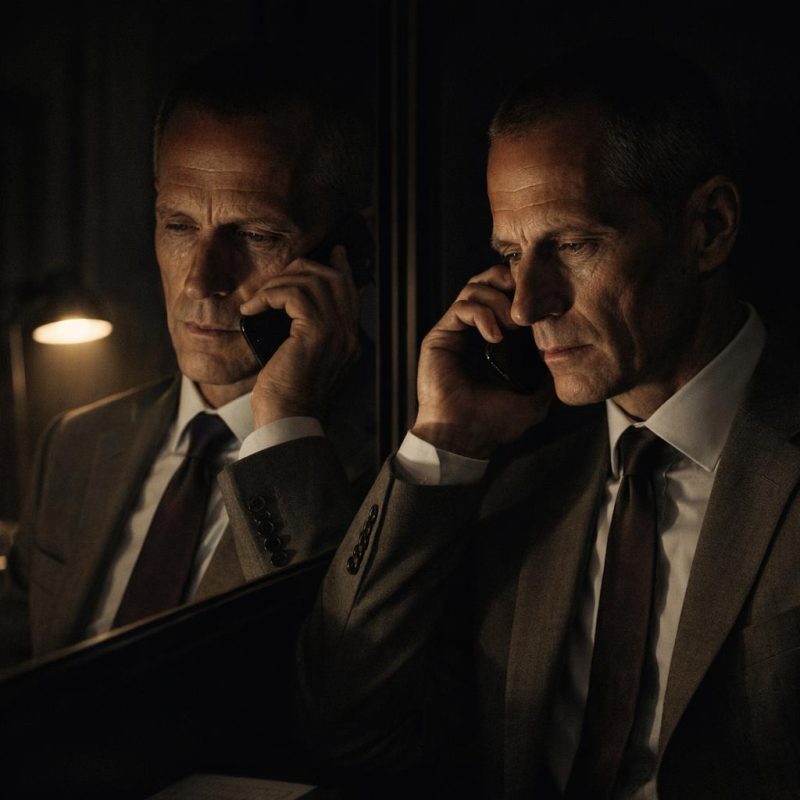 Image by RM AI
The Final Hours
Dmitri called at seven in the evening, which felt deliberate — late enough to suggest finality, early enough that I couldn't pretend I'd missed it. His voice was the same as always: measured, unhurried, cultured in a way that made everything he said sound like a considered position rather than a threat. He said he had been patient out of respect for my reputation, that my name had bought a degree of latitude he would not have extended to anyone else. He said midnight tomorrow was the absolute deadline. After that point, he would handle the matter through other means. He didn't elaborate on what those means were. He didn't need to. He asked if I understood the situation clearly. I said I did. He said he was glad, and that he hoped the matter would resolve itself before it became something neither of us wanted. Then he said goodbye — courteous, final, the way someone closes a door they don't intend to open again. I set the phone down on my desk. The clock beside it read just past seven. I did the arithmetic without meaning to. Twenty-four hours and change. The second hand moved, and I watched it, and the number kept getting smaller.
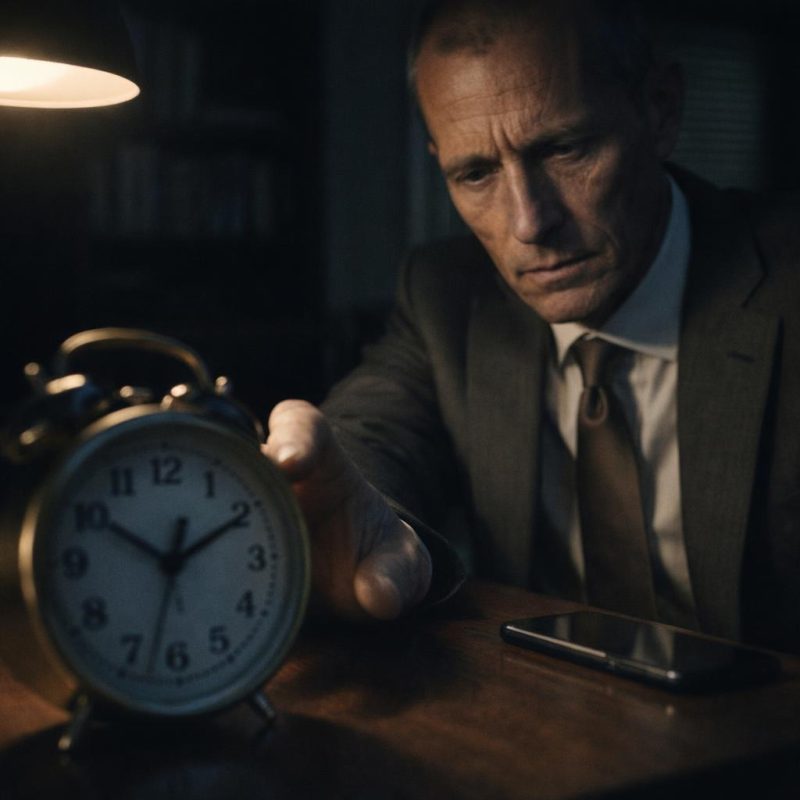 Image by RM AI
The Family History
Patricia called from the cabin just after nine, and I could hear that she'd been crying before she dialed. She didn't open with pleasantries. She said she needed to tell me something she should have said years ago. She said they had always favored Julian — she and my father both — and she knew it, and she had known it even while it was happening. She said Julian had always seemed to need them more. He was sensitive, she said, easily hurt, and I had always been so capable, so self-sufficient, that they had assumed I didn't require the same attention. She said they had taken me for granted. She used those exact words. She said they had thought I wouldn't mind sharing what I'd built, that I was strong enough to absorb it. I had waited most of my life to hear someone in that family say those things out loud. I had imagined it would feel like something being set right. Instead it felt like being handed a receipt for a debt that had already ruined everything. She asked me to save Julian. She said she was begging me. I didn't say yes. I didn't say no. I held the phone and listened to her voice break on the other end of the line.
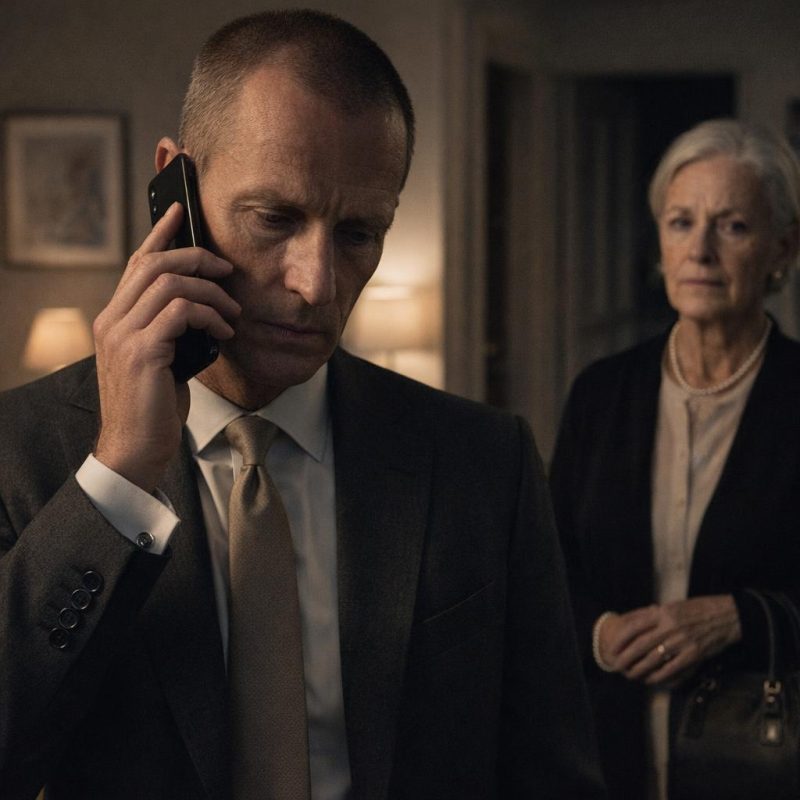 Image by RM AI
The Research Trail
Sophie came into my office mid-morning with a folder tucked under her arm and a look on her face I had learned to read over seven years — composed on the surface, something careful moving underneath. She said she had been cleaning up the shared system, archiving old files, and she had found something she didn't know what to do with. She set the folder on my desk. Inside was a printed browser history, twelve pages, timestamped. The searches ran back six weeks — two weeks before I had offered Julian the security position. There were searches for his known creditors by name. Searches for debt collection enforcement practices. Searches for how gambling debts were typically pursued when the debtor had no liquid assets. Searches for the specific figures Julian owed and to whom. Sophie asked why I had been researching Julian's financial situation so extensively before bringing him on. I said I had wanted to understand what I was dealing with — that I had been trying to get a clearer picture of his situation. She nodded slowly, the way someone nods when they are deciding how much of an answer to accept. She didn't say she believed me. She looked down at the printed pages on my desk, then back at me, and the folder sat between us like something neither of us wanted to touch.
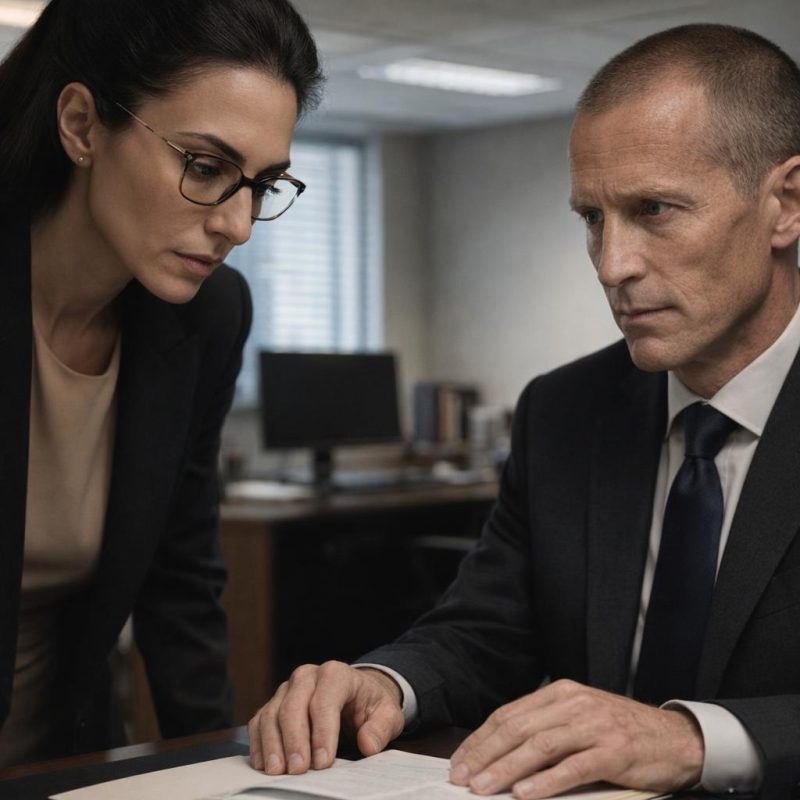 Image by RM AI
The Moved Items
Detective Chen spread the security logs across my desk with the methodical patience of someone who had already decided what they showed and was now giving me the opportunity to explain. Sophie stood near the window, arms crossed, saying nothing. Chen pointed to a transfer record dated three days before the theft — the Voznesensky items, moved from the primary vault to the secondary one, the accessible one, the one Julian had clearance to enter without a secondary authorization. She asked why I had moved them. I said I had been preparing them for the private viewing — that I had wanted them staged and ready for the client walkthrough. Chen asked when the viewing had been scheduled. I gave her the date. She wrote it down without looking up. Then Sophie said, quietly, that the viewing room had its own secure storage, that we had used it for every private client showing in the past four years, that there had never been a reason to use the secondary vault for staging purposes. The room went still. Chen looked at Sophie, then back at me. I said it had been a workflow decision, that I had wanted the items consolidated. Even as I said it, I could hear how it landed. Chen slid the transfer record across the desk until it was directly in front of me — my authorization code printed at the bottom, clean and unambiguous.
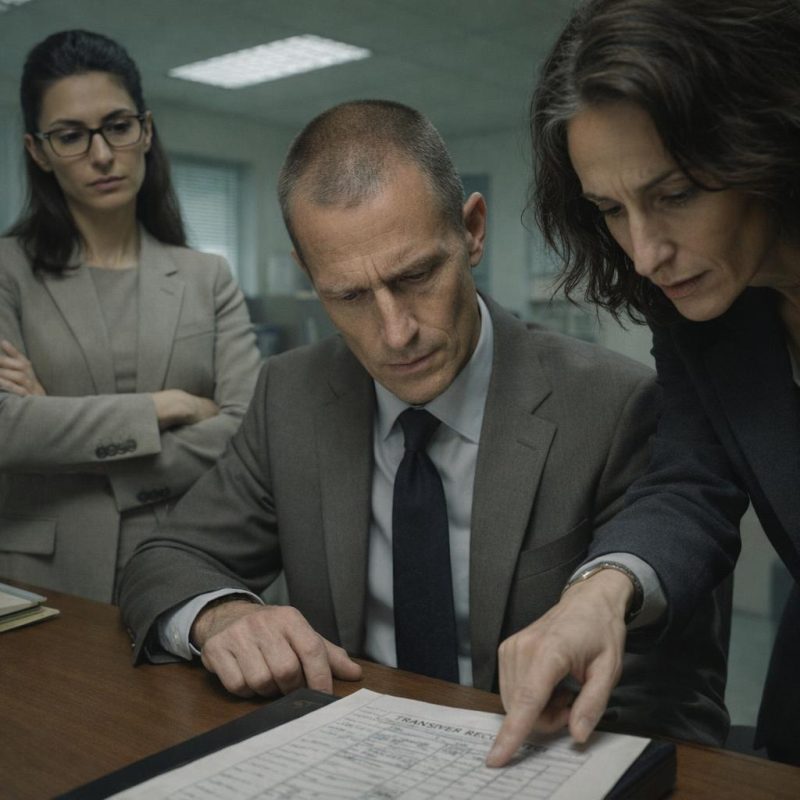 Image by RM AI
The Converging Questions
Viktor arrived at eight in the morning before the gallery opened, which meant he had been waiting outside. He asked about the vault transfer again — the same questions Chen had asked, framed differently, with the particular patience of someone who already had the answer and was measuring the distance between my version and the truth. He left without saying what he intended to do with what I'd told him. Chen came at two in the afternoon with a printed timeline — my movements, the security log entries, the transfer authorization, Julian's access records — laid out in sequence on a single sheet of paper. She said the timeline raised questions she needed me to help her answer. I answered them. I had been answering the same questions for days, and each answer felt thinner than the last. Sophie stayed after closing. She sat across from me with the browser history printout and the vault transfer record side by side, and she asked me, very quietly, whether there was something she should know. I told her there wasn't. She looked at me for a long moment, then gathered the papers and left without another word. I sat in my office after she was gone. Three separate conversations, three separate pieces of the same picture, and I had held the line through all of them. I wasn't sure how much longer the line would hold.
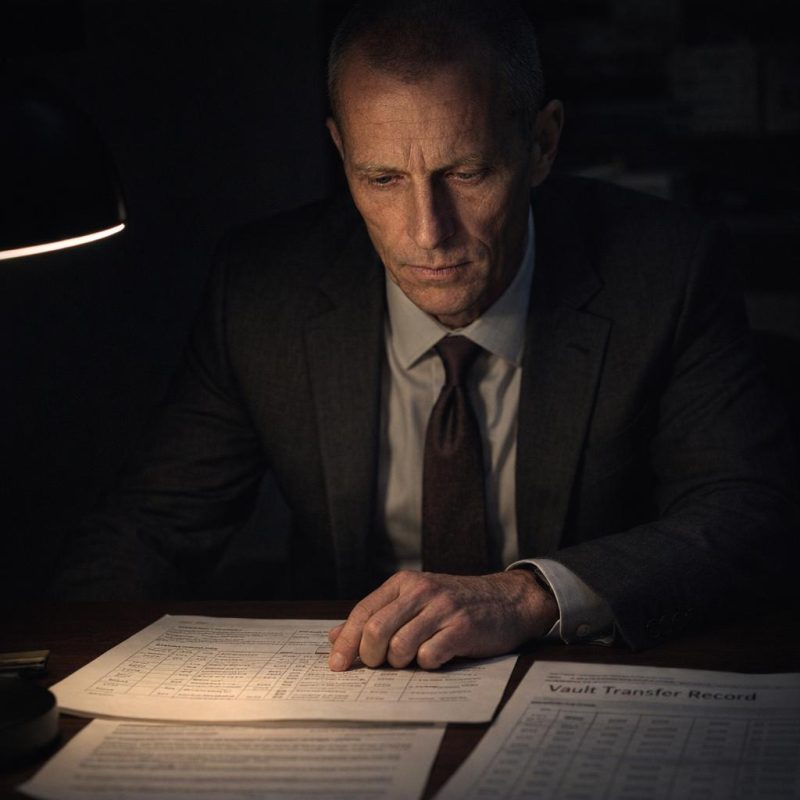 Image by RM AI
The Surveillance Evidence
Viktor came back the following morning with a laptop. He set it on my desk without preamble and turned the screen toward me. The footage was from a camera mounted on the building across the street — exterior, wide angle, timestamped to the night of the theft. The image quality was good enough. I could see the gallery's side entrance, the loading area, the van Julian had borrowed from somewhere. I could see Julian and my father moving the crates. And I could see myself. I was standing in the window of my office on the second floor, visible from the street, watching. I didn't move. I didn't reach for a phone. I didn't open the window or call down. I simply stood there while the van was loaded, while the crates disappeared inside it, while Julian climbed into the passenger seat and my father pulled away from the curb. Viktor asked why I had done nothing. I said I hadn't known what I was seeing at first — that by the time anything registered, the van was already moving. Viktor didn't respond to that. He reached over and closed the laptop. I sat with the image of my own face in that window, still and watching, and it looked exactly like what it was.
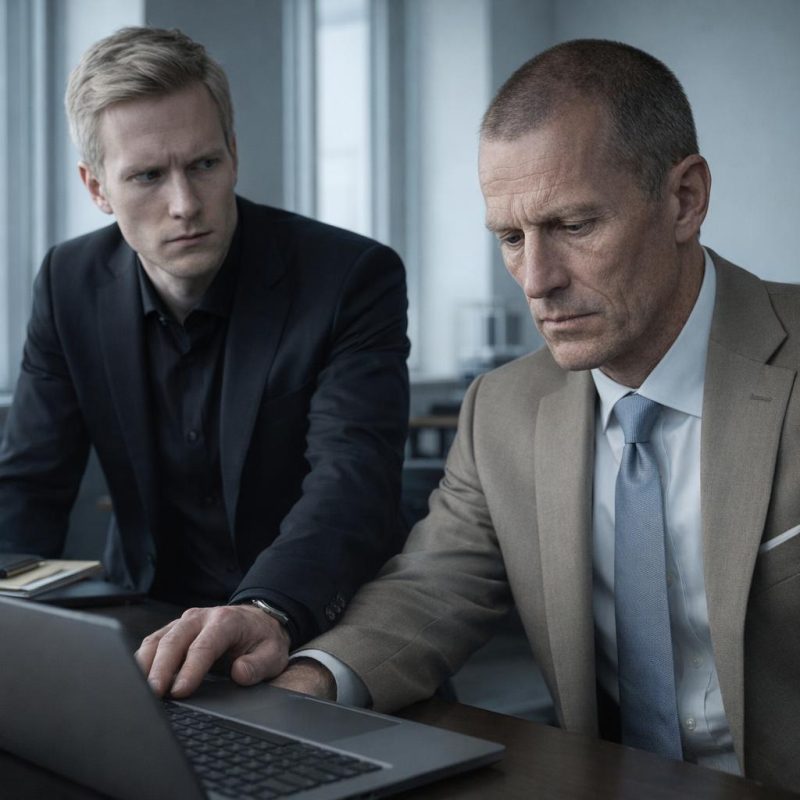 Image by RM AI
The Demand for Truth
Dmitri arrived at the gallery at eleven in the morning, unannounced, Viktor a half-step behind him. I had not seen Dmitri in person since before any of this had started, and the sight of him in my gallery — moving through the space with the unhurried ease of someone who had already assessed every exit — was different from a phone call in ways I hadn't anticipated. He asked to speak privately. We went to my office. He sat across from my desk in the chair where Chen had sat, where Sophie had sat, where I had watched a succession of people lay pieces of evidence in front of me over the past week. Viktor stood near the door. Dmitri looked around the office with what appeared to be genuine appreciation — the Kline on the wall, the Giacometti on the shelf — before settling his attention on me with the same unhurried calm. He said he had reviewed everything. He said the pattern was clear to him now, that he had spent considerable time with the evidence and had arrived at a position he felt confident in. He said he had no interest in being lied to further, that honesty at this point was the only path that led anywhere useful for either of us. He folded his hands on the desk, and his voice came out quiet and even: "Tell me everything, Adrian."
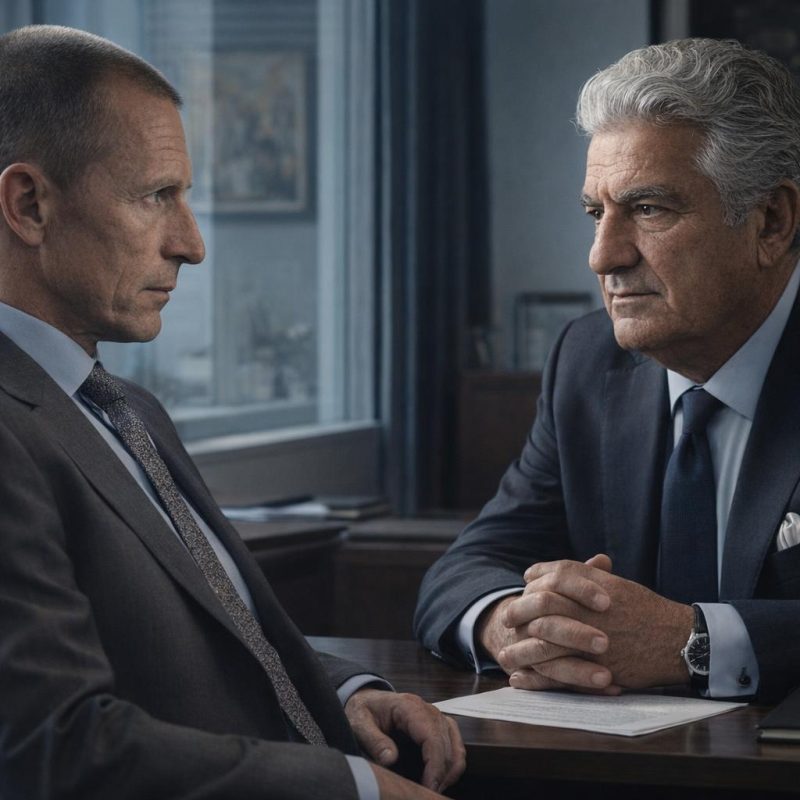 Image by RM AI
The Brother's Understanding
The call came from a number I didn't recognize, but I knew his voice before he'd finished the first sentence. Julian wasn't panicked this time. That was the first thing I noticed — the panic was gone, replaced by something quieter and far more unsettling. He spoke slowly, methodically, the way someone speaks when the words have been turned over many times before being said aloud. He said he'd been thinking. He said he'd gone back through everything — the job offer that came out of nowhere, the timing of it, the way I'd walked him through the vault personally, the codes I'd written down for him like I was doing him a favor. He said the security changes happened four days before he arrived. He said the Voznesensky pieces were moved to the accessible storage the week I hired him. He listed each thing in sequence, his voice flat and even, and I sat there holding the phone without saying a word. He asked me directly if I had set him up. I didn't answer. The silence stretched between us, and then his voice broke — just slightly, just once — and in that crack I heard the moment he stopped wondering and started knowing. Neither of us spoke after that, and the hollow space where his certainty had landed sat between us like something that couldn't be taken back.
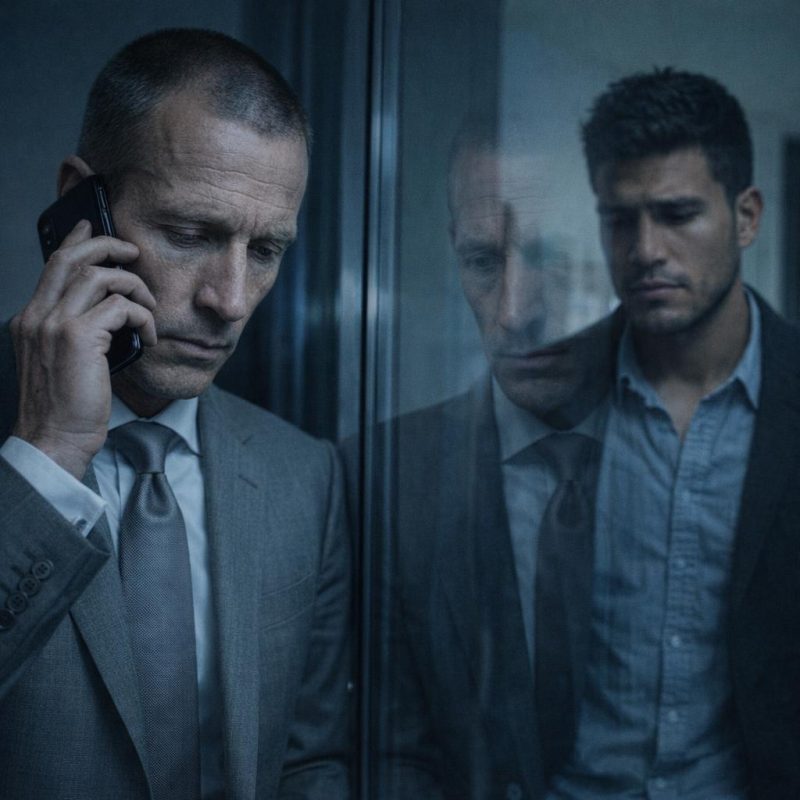 Image by RM AI
The Accumulated Proof
I locked the gallery at nine and didn't leave. I sat at my desk and pulled up everything — every log, every file, every timestamp I had touched over the past two months. The browser history was still there: Julian's creditors, the debt amounts, the names of the men who'd been calling his house. The security system logs showed the code changes dated four days before his first shift. The vault transfer records showed the Voznesensky pieces moved to the lower storage on a Tuesday afternoon, my access card, my authorization. The handwritten override codes were in my own script, photographed now by Chen's team but still visible in the scanned copies on my screen. I pulled up the surveillance archive and found the footage from the loading dock — me, standing at the far monitor, watching Julian wheel the crates out. I hadn't moved. I hadn't called anyone. I had stood there and watched. I went through it all twice, in order, the way a prosecutor would. The job offer. The research. The code changes. The vault transfer. The written codes. The footage. Each item sat in its place in the sequence, and the sequence didn't leave room for interpretation. I sat back in my chair and looked at what I had assembled, and it looked exactly like what it was.
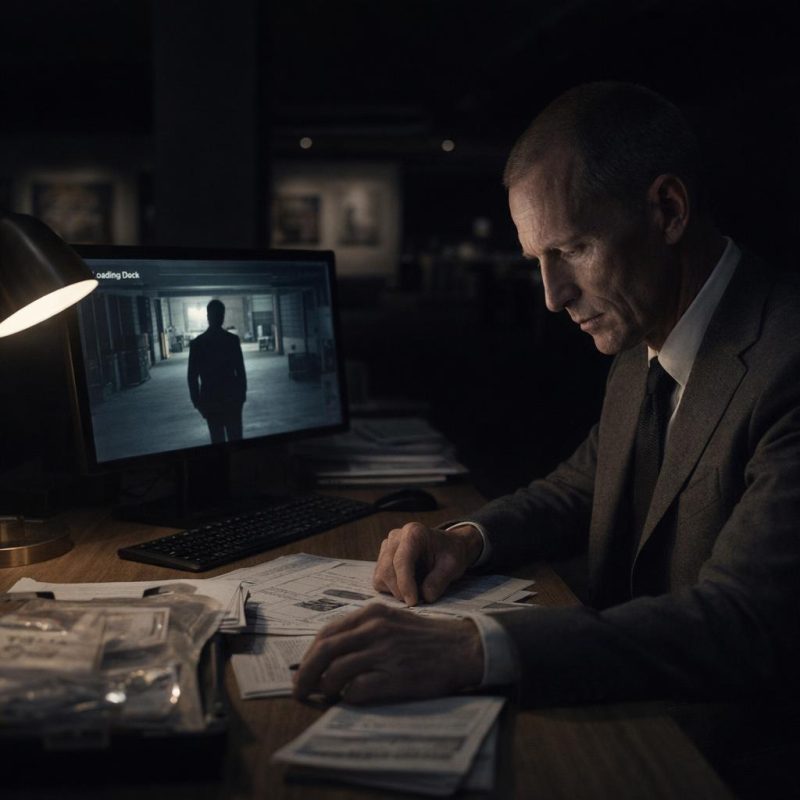 Image by RM AI
The Decision to Confess
I sat in the dark for a long time after I closed the laptop. The gallery was quiet in the way it only gets after midnight — the kind of quiet that has weight to it, that presses in from the walls. I thought about Emma. I kept coming back to her face in the photographs Rebecca had sent, that small serious expression she wore when she was trying to understand something too large for her. She was seven years old and her father was somewhere I couldn't locate, and men who did not make distinctions between adults and children were looking for him. I had put that in motion. I had chosen the Voznesensky collection. I had known what the consequences would look like. I thought about my reputation, my gallery, the thirty years of careful work that had built this place into something real. I thought about what a confession would cost me — the business, the relationships, possibly my freedom. I weighed all of it, and I kept arriving at the same place. The lying had a ceiling. I could feel it above me, close enough to touch. I picked up my phone and found Dmitri's number and sat there staring at it, and then I took one slow breath and pressed call.
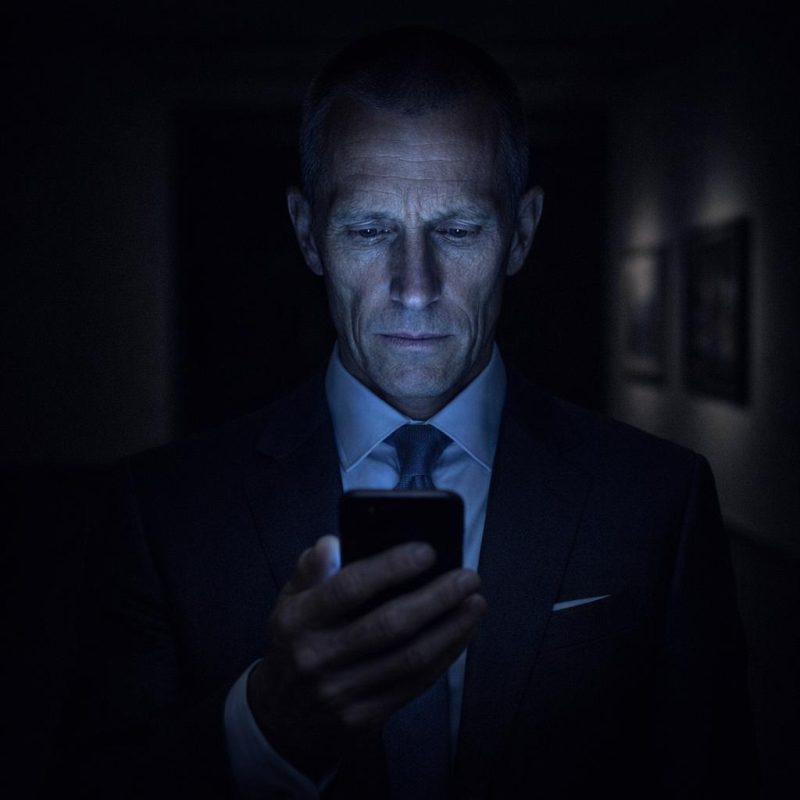 Image by RM AI
The Morning After
I arrived at eight-fifteen, earlier than I'd told anyone I would be. It didn't matter. The lights inside were already on. I could see them through the front glass before I reached the door — four figures arranged in the main gallery space with the particular stillness of people who have been waiting long enough to stop pretending they aren't. I used my key. The lock turned and the door swung open and the smell of the gallery hit me first — linen, climate-controlled air, the faint mineral trace of old canvas — and then I was inside and they were all looking at me. Dmitri stood near the Kline, hands clasped behind his back. Viktor was positioned two steps to his right. Detective Chen stood by the reception desk with a folder under her arm and her eyes already on me before I'd cleared the threshold. Sophie was near the window, and she looked at me the way you look at someone when you've spent the night revising your understanding of them. Dmitri spoke first. He said good morning in the tone of someone for whom pleasantries are a form of precision. He said they had been comparing notes. He said they had all arrived at the same conclusion and that he thought it would be useful for me to sit down. All four faces turned toward me as I stepped through the door.
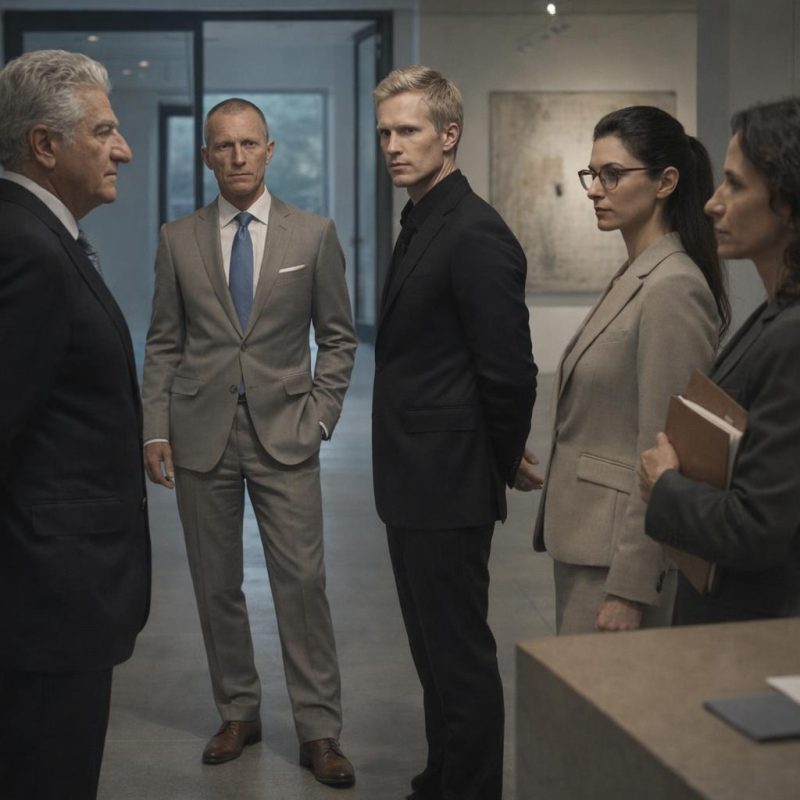 Image by RM AI
The Confession
I sat down. I put my hands flat on the table and I looked at each of them in turn — Dmitri, Viktor, Chen, Sophie — and I said I had something to tell them that none of them were going to want to hear. Then I told them. I said I had researched Julian's debts deliberately, six weeks before I offered him the job. I said I had chosen the moment carefully, when the pressure on him was at its worst and his options were nearly gone. I said I had changed the security codes to simpler ones four days before he started, and I had moved the Voznesensky pieces to the accessible vault myself, and I had written the override codes in my own handwriting and left them where he would find them. I said I had stood at the loading dock monitor and watched him take the crates and I had not called anyone. I said I had known exactly what Dmitri's response to a theft of that magnitude would be. I said I had known all of it, from the beginning, and I had let it happen because I had wanted it to happen. Sophie made a sound I won't forget. Chen's pen stopped moving. Dmitri's expression didn't change at all. I kept my voice level and my hands flat on the table, and I said: this was not negligence — I planned every step of it.
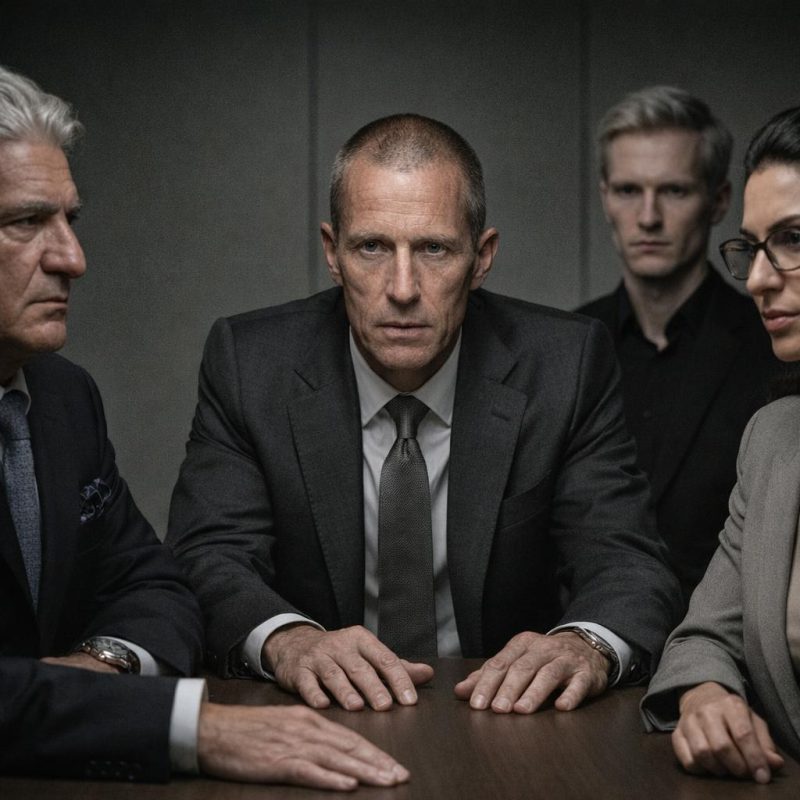 Image by RM AI
The Full Scope
Chen asked me to go back to the beginning, and I did. I told them I had started two months ago, pulling Julian's financial records through channels I won't specify here. I identified which creditors were the most aggressive, which debts were closest to the edge, which pressure points would make a man stop thinking clearly. I timed the job offer to land at his lowest moment — three days after his largest creditor had made contact with Rebecca directly. I chose the Voznesensky collection because it was portable, because it was valuable enough to matter, and because I knew Dmitri's history with theft. I explained the vault transfer — I had moved the pieces on a Tuesday, logged it as routine repositioning, and left the access window open for the duration of Julian's first two weeks. I described writing the override codes, leaving them in the supply room in a place a careful person would find. I told them I had watched the loading dock footage in real time and had not touched the phone. Sophie had her hand over her mouth. Chen was writing without looking up. Viktor said something to Dmitri in Russian, low and brief. Dmitri didn't respond to Viktor. He kept his eyes on me, and as I finished laying out the last piece of the timeline, I watched the expressions in the room shift — not with surprise, exactly, but with the particular stillness of people recalibrating the scale of what they were looking at.
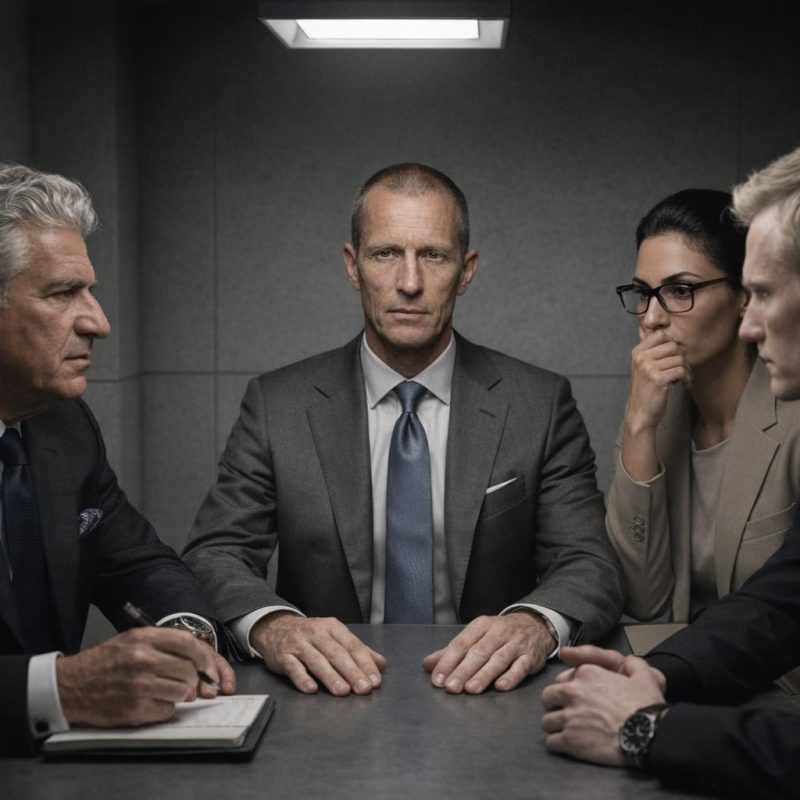 Image by RM AI
The Motivation
Sophie asked me how I could do this to my own family, and I found I didn't have a clean answer, so I gave her the true one instead. I told them what it was like to grow up in a house where one child was the story and the other was the furniture. I told them about the school prizes my parents forgot to attend, the business I built without a single phone call of congratulation from my father, the way my mother still introduced Julian at family dinners as her sensitive one, her creative one, as though sensitivity were a virtue that required no effort and I had simply chosen not to have it. I told them about the morning Julian called me asking for money to cover a debt he'd run up at a casino in Macau, and how my father had called me an hour later — not to apologize, not to ask how I was — but to tell me I should help my brother because family takes care of family. I said I had spent thirty years building something real while Julian spent thirty years being forgiven for burning things down, and the last time he came to me it wasn't with gratitude or remorse — it was with his hand out and my father's voice behind him. I wasn't justifying it. I knew what I had done. But I needed them to understand that the weight of thirty years of invisibility is not a small thing to carry, and I had carried it alone, and one day I simply set it down.
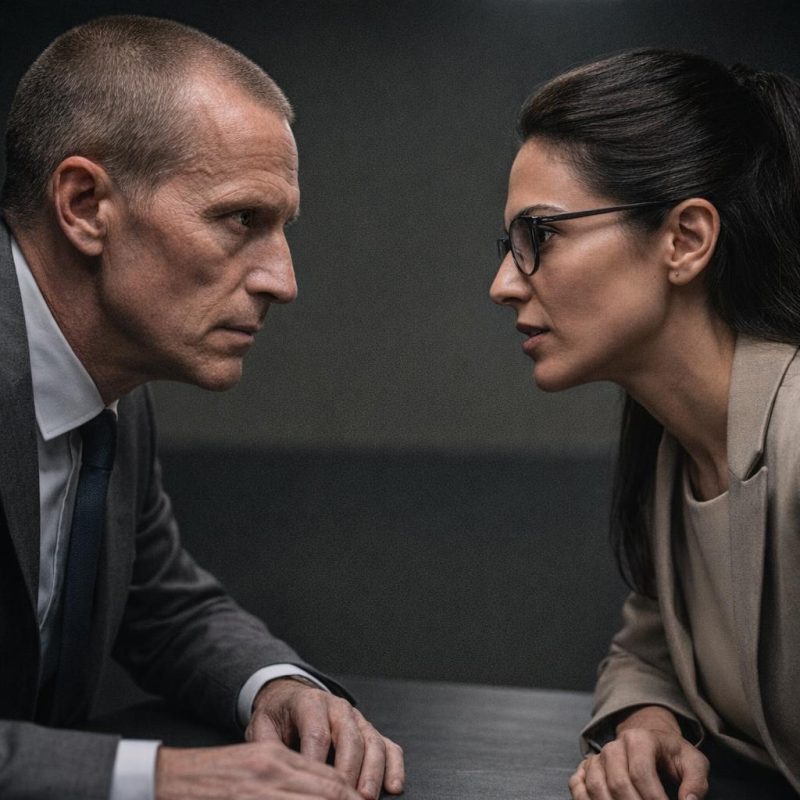 Image by RM AI
The Immediate Reactions
Sophie stood up first. She pushed her chair back and took two steps away from the table, and she said she had trusted me with seven years of her professional life and that she felt physically ill. She didn't look at me when she said it. She looked at the wall. Chen set her pen down and told me in a measured voice that I had just confessed to conspiracy, to criminal facilitation, and to conduct that had placed a minor child in danger, and she began reading me my rights in the same tone she might use to read a weather report. Viktor leaned toward Dmitri and said something in Russian — four words, maybe five. Dmitri answered him without looking away from me, his voice barely above a murmur, his expression unchanged from the moment I had started speaking. Sophie turned back and asked again, her voice cracking this time, how I could have used a child — Emma, she said, she's seven years old — as a variable in something I had calculated in advance. I had no answer that would have satisfied anyone in that room, and I didn't try to offer one. Dmitri had not moved, had not raised his voice, had not shifted his posture by a single degree. The room went quiet after that, each of them sitting with what I had told them, and the silence that followed had a texture to it — dense and particular — like the moment after a verdict, before anyone stands.
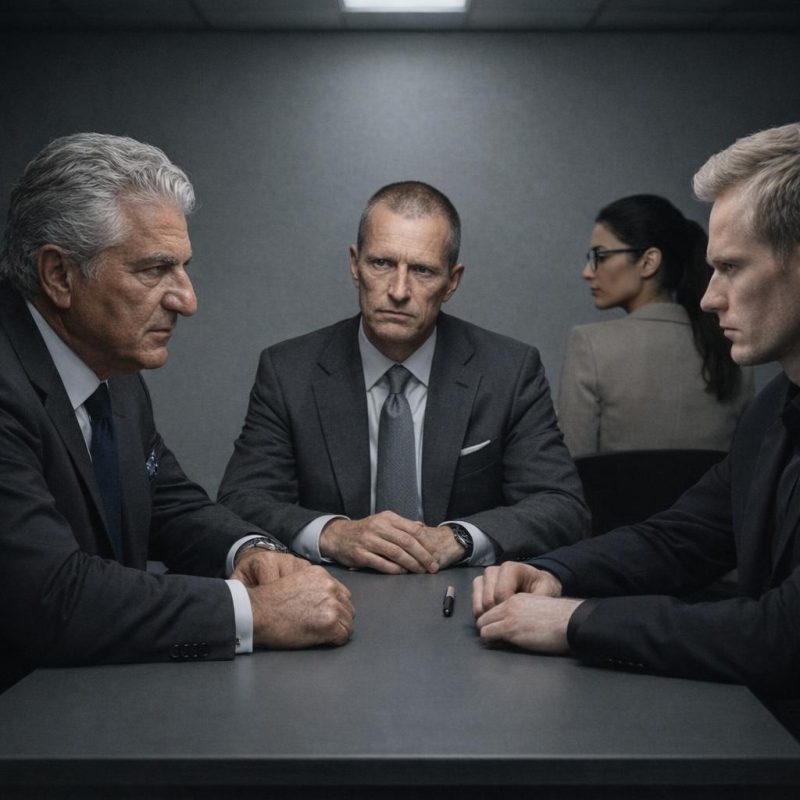 Image by RM AI
The Collector's Response
Chen and Sophie left without looking back at me. I heard the door close, and then it was just the three of us — Dmitri, Viktor, and me — in a room that felt considerably smaller than it had before. Dmitri waited a full thirty seconds before he spoke, which I had come to understand was his way of letting silence do the preliminary work. He said, in that measured, almost academic tone of his, that my confession had clarified several things. He said that using another person as an instrument of theft did not transfer culpability — it multiplied it. He explained, with the patience of someone who had made this argument before, that Julian had taken his property, but that I had engineered the conditions that made the taking possible, which made me, in his view, the primary architect of the loss. Viktor stood behind him and to the left, hands clasped, watching me with the particular stillness of someone cataloging exits. Dmitri said the deadline remained unchanged. He said the consequences for failure remained unchanged. Then he folded his hands on the table and said, in the same tone he might use to confirm a wire transfer, that I now carried Julian's debt alongside my own.
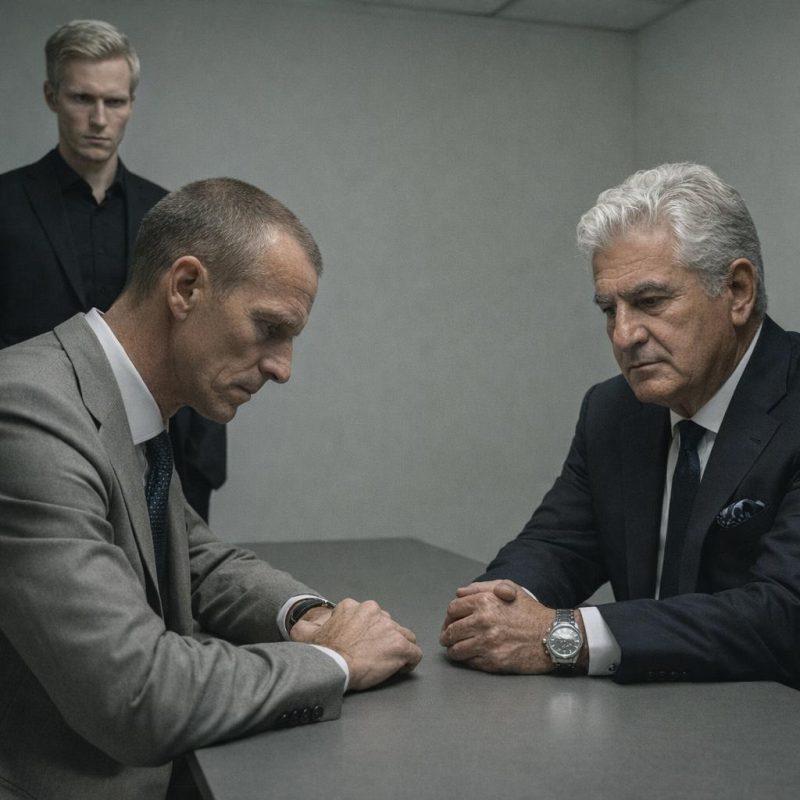 Image by RM AI
The New Stakes
Viktor drove. He didn't explain where we were going and I didn't ask, because the answer was obvious — wherever Julian might be found, and wherever that was, Viktor would be standing three feet behind me the entire time. He told me, without inflection, that Dmitri was being generous. He used that word specifically. Generous. I sat with it in the passenger seat and tried to locate the generosity in being given forty-eight hours to find a man who had every reason to disappear and no reason whatsoever to help me. Viktor said I could use my phone to call Julian, and he said it the way you'd say someone could use a butter knife to perform surgery — technically true, practically absurd. I asked for the phone anyway. Viktor handed it back without comment and watched me in the rearview mirror as I scrolled to Julian's name. I had expected voicemail. I had prepared something for voicemail — something measured, something that didn't sound like what it was. The phone rang twice. Then Julian picked up, and his voice came through flat and cold and entirely unsurprised, and he said he'd been waiting for me to call.
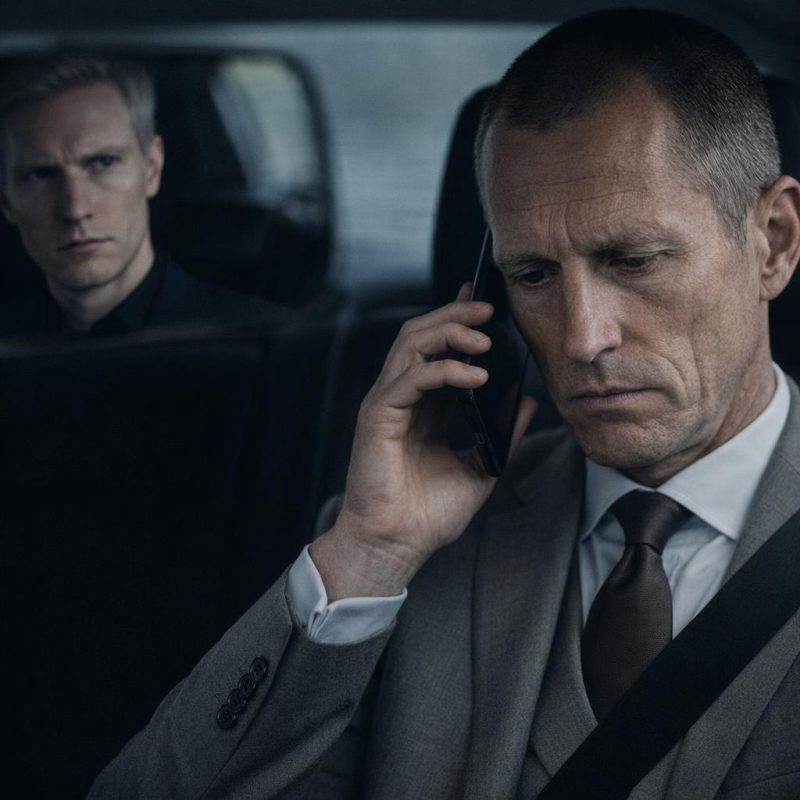 Image by RM AI
The Brother's Rage
The warehouse was in an industrial stretch near the port, the kind of place that smells of rust and standing water and decisions made badly. Julian was already there when Viktor and I arrived, standing in the middle of the empty floor under a single overhead light, and he looked like a man who had not slept in several days and had stopped caring about that fact. He didn't say anything when I walked toward him. He didn't ask a question or make an accusation or give me any of the preamble I had been rehearsing responses to in the car. He just walked up to me and hit me — one clean, full-force punch that caught me across the jaw and sent me sideways into a support column. I didn't raise my hands. I had decided in the car that I wouldn't, and I held to that. Viktor watched from the doorway and didn't move. Julian was screaming then, about Emma waking up crying every night, about Rebecca shaking so badly she couldn't hold a coffee cup, about what it felt like to watch your seven-year-old daughter ask if the bad men were coming back. He hit me again, and I let him, because there was nothing I could have said that would have been worth more than that. The blood from my lip was warm and copper-bright against my tongue.
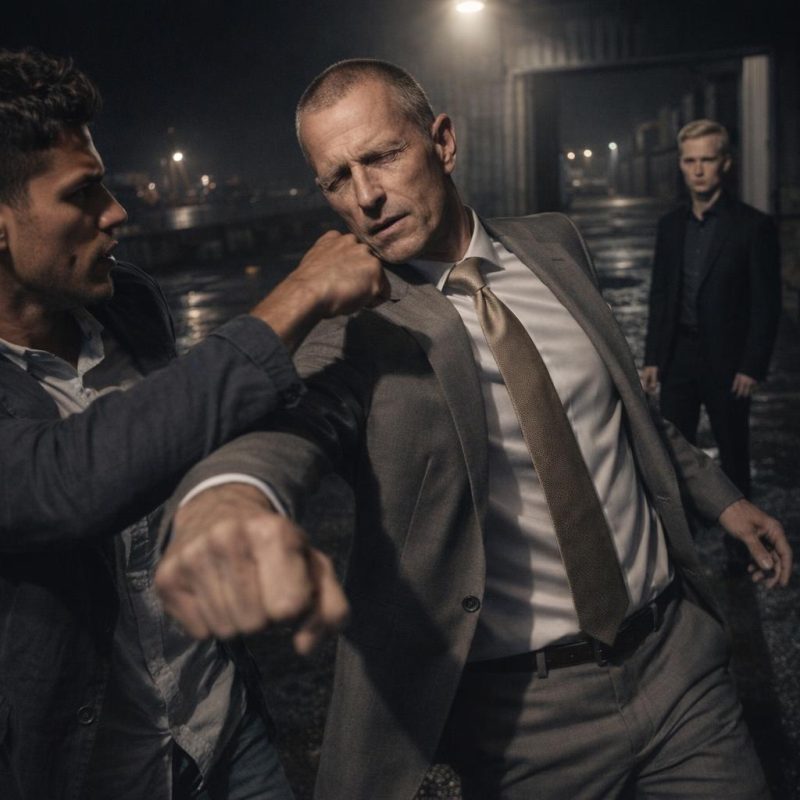 Image by RM AI
The Collector's Judgment
The side door opened and Dmitri walked in with two men I hadn't seen before, and the warehouse changed register immediately — the way a room does when the person who actually controls the situation finally enters it. Julian turned, still breathing hard, his knuckles split. Dmitri looked at both of us with the expression of someone reviewing a report he had already read. He said, without particular drama, that his items had been recovered. He said Viktor had been tracking the GPS embedded in the secondary casing since the night of the transfer, and that recovery had been completed approximately four hours ago. He said he had allowed this meeting to proceed because he wanted to observe how the two of us would handle the situation when left to our own methods. Then he laid out his terms. I would surrender a percentage of the gallery's annual revenue for the next five years — he named the figure without blinking. Julian would perform specific courier and authentication services for Dmitri's acquisitions, under supervision, for a period he would determine. Neither of us would speak to law enforcement beyond what had already been said. Dmitri looked at Julian, then at me, and said that this was the resolution he had chosen, and that it was not a negotiation. The terms settled over both of us in the cold warehouse air like something that had always been inevitable.
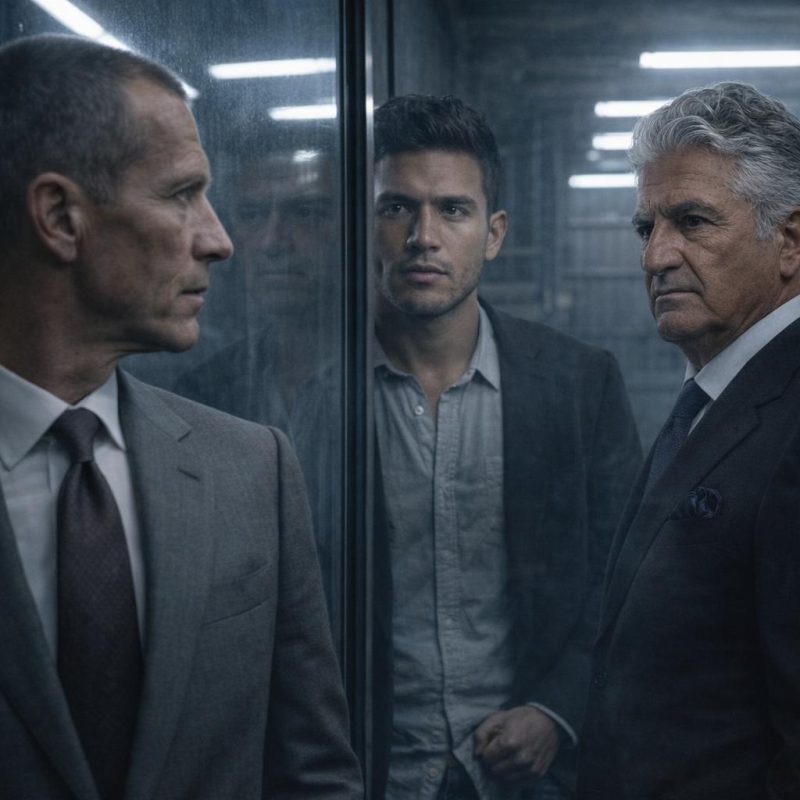 Image by RM AI
The Price of Revenge
Dmitri and Viktor left, and the two men with them, and then it was just Julian and me in the warehouse with the overhead light buzzing faintly above us. We sat on the concrete floor because there was nowhere else to sit, and neither of us spoke for a long time. Julian told me about Emma's nightmares in a flat, exhausted voice — the specific ones, the ones where men in dark coats came through her bedroom window. He said Rebecca had stopped sleeping in their bed because she couldn't stop listening for sounds at the front door. He said he didn't know if his marriage would survive the year. I told him I hadn't thought about Emma when I built the plan. I said it plainly, because he deserved the plain version. He looked at me and said he knew that, and that it was the part he couldn't get past. He said our parents had aged ten years in two months, that our mother cried every morning and our father had stopped leaving the house. I told him about the years of watching him be chosen, over and over, for every grace our family had to offer. He listened. He didn't argue. He said, quietly, that he understood it, and that it still wasn't worth what it had cost everyone who hadn't chosen any of it. The buzzing light held us both in its pale circle, and neither of us had anything left to add.
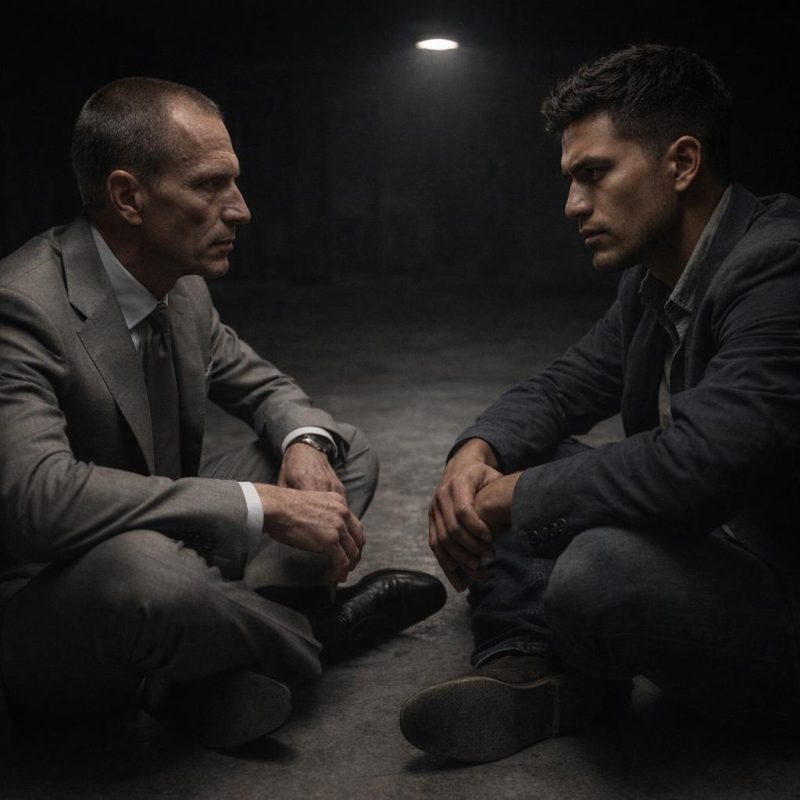 Image by RM AI
The Detective's Return
Chen came to my apartment at seven in the morning, which told me she had been waiting for the right moment rather than the first available one. She had two uniformed officers with her and a warrant she held out with the practiced neutrality of someone who has done this enough times to have removed the theater from it. The charges were specific: conspiracy to commit theft, criminal facilitation, fraud in the first degree, and conduct endangering the welfare of a minor. She read them in order. I didn't argue or ask questions or make the kind of statement that would have required her to stop me. I had spent the night sitting in my kitchen understanding that this was the part that came next, and I had arrived at a place that was not quite acceptance but was at least recognition. Chen read me my rights for the second time in as many days, and I noticed she did it without any particular satisfaction, which I found I respected. She mentioned, as she turned me toward the door, that Sophie had provided a supplementary statement the previous evening. I nodded. I had expected that too. The officers walked me through the lobby of my building, past two neighbors watching from their doorways, and out into the gray morning air. The handcuffs closed around my wrists.
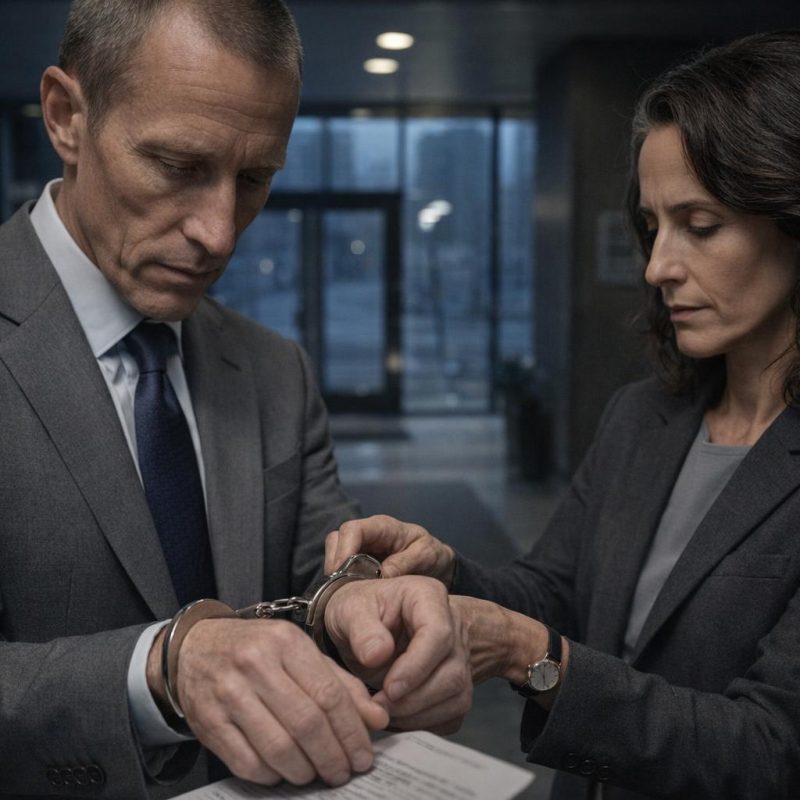 Image by RM AI
The Family Reckoning
They came in the afternoon, which gave me time to sit with the particular quality of holding-cell silence before I had to face them. A guard brought me to the visitation window and I saw them through the glass — my father first, because he was taller, and then my mother beside him, and I understood immediately that something had gone out of both of them that I was not sure would come back. My father looked like a man who had been carrying something very heavy for a long time and had finally set it down, not because he'd found relief but because he no longer had the strength. My mother's face was haggard in a way that her careful grooming couldn't address. She was crying before I picked up the phone. My father asked me, in a voice I didn't recognize, why I had done this to my own family. I told him about the years of being the workhorse son, the one who built things while Julian was celebrated for existing. My mother said, through the glass, that they had failed me — she used those words exactly, and I could see what it cost her to say them. My father said the admission didn't excuse what I had done to Julian's family, to Emma, to all of them. He was right, and I didn't argue. My mother pressed her palm flat against the glass between us, and I looked at her hand there, and didn't move my own.
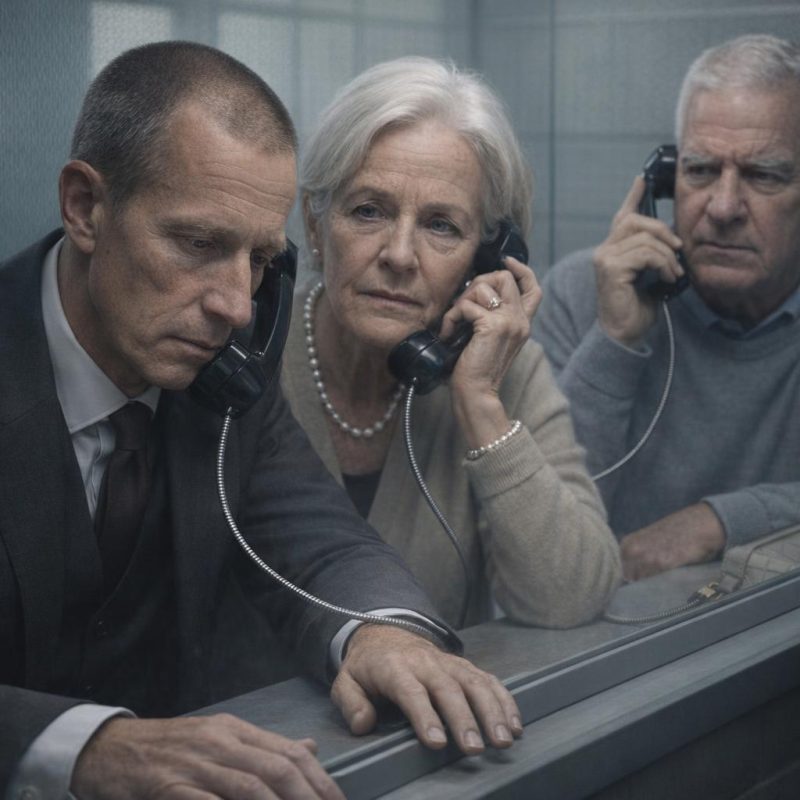 Image by RM AI
The Impossible Choice
My lawyer had the manner of someone who had stopped being surprised by human behavior approximately fifteen years ago. She came to the holding room with a legal pad and a coffee she didn't offer to share, and she laid out the situation with the efficiency of someone billing by the hour. The prosecutor was offering a cooperation agreement. I would provide testimony against Dmitri's organization — names, transactions, the full architecture of what I knew — and in exchange, the conspiracy and facilitation charges would be reduced, the fraud count potentially dismissed. She said the word 'potentially' with the precision of someone who wanted me to understand exactly how much weight it carried. Then she explained the other side of the agreement: witness protection, relocation, a new identity, the complete erasure of the life I had spent thirty years constructing. She said Dmitri's reach was documented and long, and that the protection offer was not optional if I cooperated — it was mandatory, because the alternative was a body rather than a witness. The other option, she said, setting her pen down, was fifteen to twenty years, with the possibility of parole at ten if I was cooperative and fortunate and the judge was having a good decade. She slid both documents across the table and told me to take the night. Two pages lay in front of me — one pointing toward erasure, one toward a cell — and between them sat the decision that would determine whether I survived this at all.
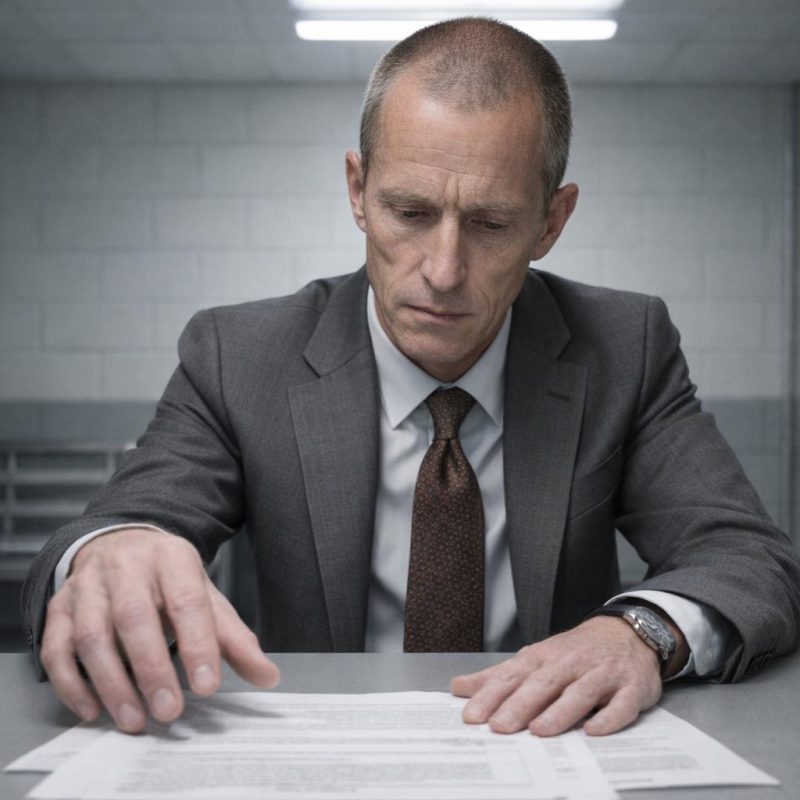 Image by RM AI
The Final Accounting
I told her before she finished her coffee. She set the cup down carefully, the way people do when they want a moment to compose a professional response to something they consider professionally inadvisable. I was refusing the deal. I would not testify. I would not cooperate, would not name names, would not dismantle what remained of my own architecture in exchange for a new identity in a city I'd never chosen. She asked me twice if I understood the sentencing range. I told her I did. She asked if there was anything — family, health, financial — that might constitute grounds for mitigation. I thought about Julian, about Emma in her school uniform clutching that stuffed rabbit, about my father's bearing and my mother's pearls and the family home that had always felt more like a stage set than a place anyone actually lived. I thought about the gallery, the fifteen years of careful construction, the reputation I had spent a decade making impenetrable. Then I picked up the pen. The refusal document was two pages. I signed both. My lawyer gathered her legal pad without comment, and I sat in the holding room alone, with the particular stillness of a man who has finally stopped negotiating with himself.
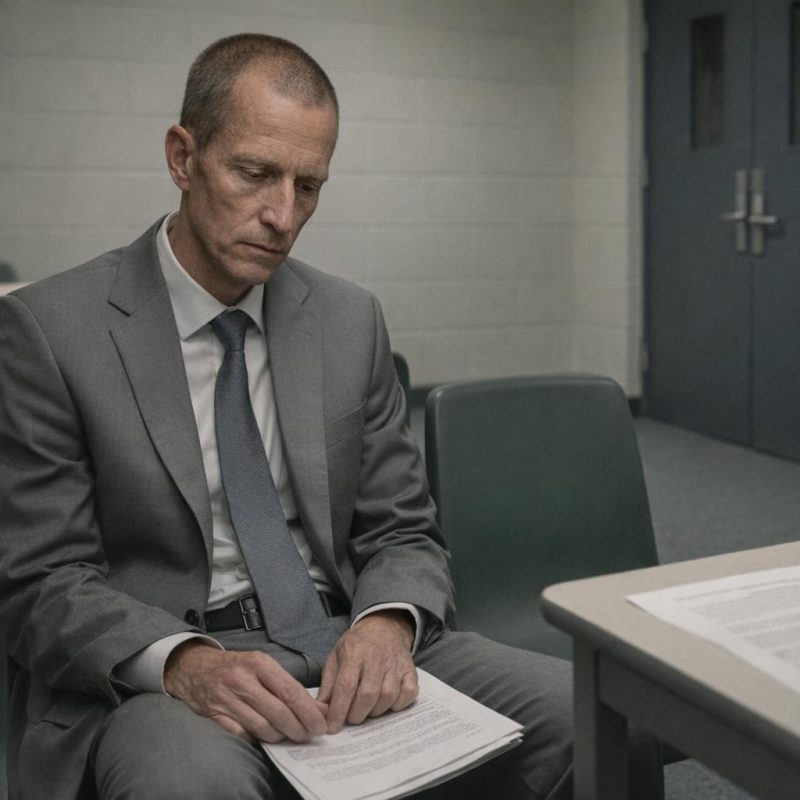 Image by RM AI
The Aftermath
The cell was smaller than my walk-in wardrobe had been, which struck me as the kind of detail a person notices when they have nothing but time to notice things. Six months in, I had developed a routine with the mechanical precision of someone who understands that structure is the only remaining form of control. I read in the mornings. I walked the yard in the afternoons. I slept badly and woke early and did not complain about either. The Gilded Frame had sold at auction — I read about it in a newspaper someone left in the common room, a brief item on the arts page, the kind of coverage that treats institutional failure as a curiosity rather than a catastrophe. Sophie had taken a position at a gallery in Paris, which seemed right. My parents had sold the family home; the listing had appeared in the same newspaper, three pages later, as though the universe had arranged the edition for my particular instruction. Julian and Rebecca had moved with Emma to another state — I knew only the state, not the city. No one visited. I had not expected anyone to. The letters I wrote in the first weeks went unanswered, and eventually I stopped writing them, and the silence of the cell settled around me like something that had always been waiting.
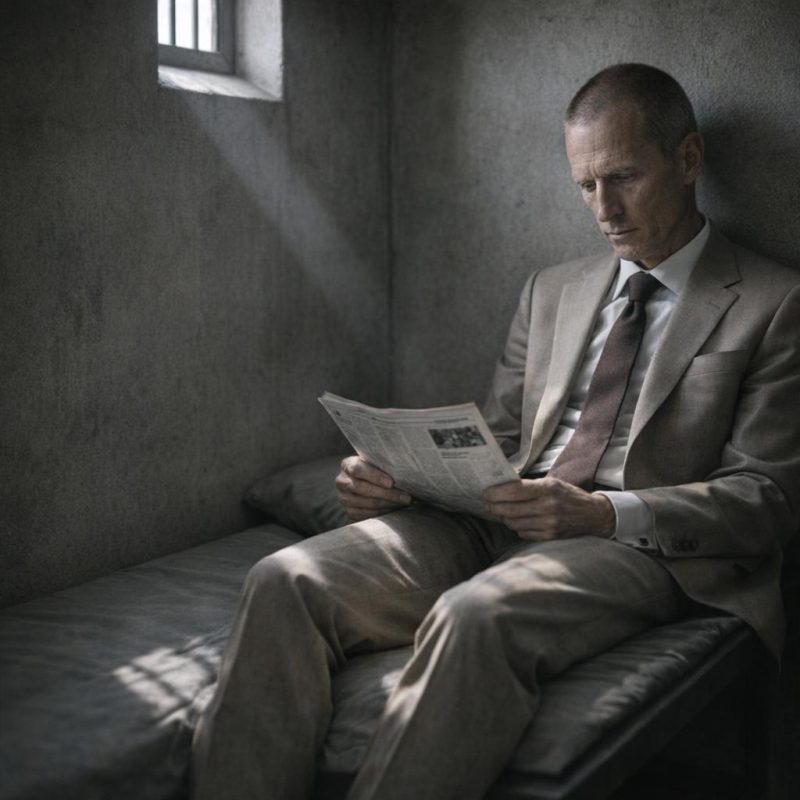 Image by RM AI
The Letters
The letter arrived on a Tuesday, postmarked from a city I didn't recognize, no return address, my name written in Julian's handwriting — that loose, slightly tilted script I had known since he was old enough to hold a pen. I read it standing at the small table in my cell, and then I sat down and read it again. He wrote that Emma had nightmares. That she woke up asking whether men were outside the door, whether they were being followed, whether her father was coming back. She was in therapy, he wrote, and slowly improving, which was the most painful phrase in the letter because of the word slowly. Rebecca had filed for divorce. He did not editorialize about that. He said he would never forgive me — not for what I had done to him, but for what I had done to Emma, who had not chosen any of this and who was seven years old and already afraid of the dark in ways she hadn't been before. He asked me not to contact any of them again. The letter ended there, no signature, just the white space at the bottom of the page where a name might have been. I folded it along its original creases and set it on the table, and the quiet that followed held everything Julian had not said and everything I had no right to answer.
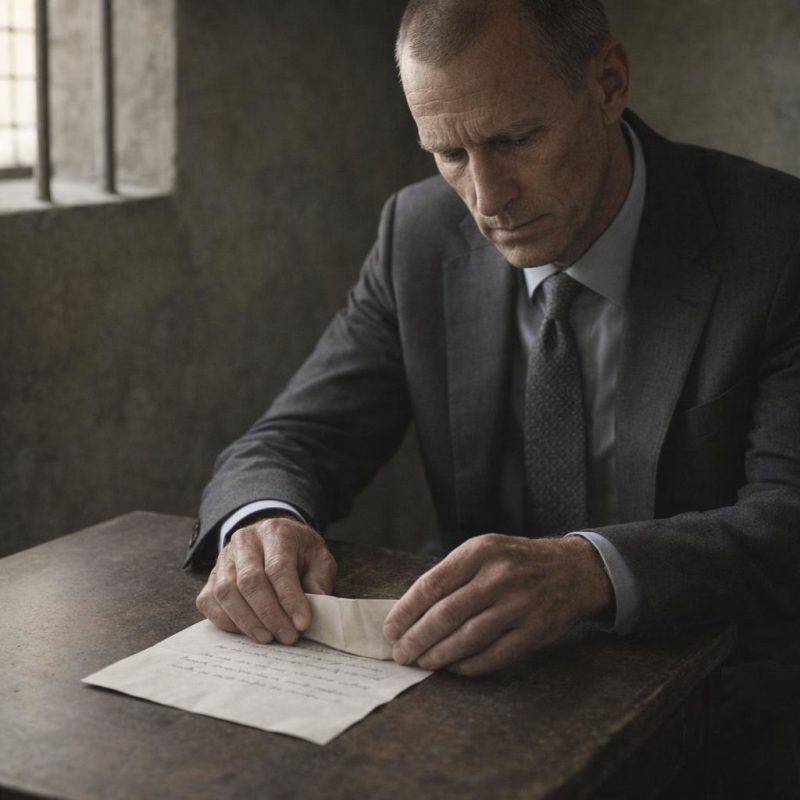 Image by RM AI
The Gilded Frame
I used to know the smell of the gallery by heart — linseed oil and floor wax and the faint mineral coolness of climate-controlled air, the particular hush of a room where expensive things are kept safe. I built that from nothing. Fifteen years of careful negotiation, of reputation assembled one transaction at a time, of discretion so practiced it became indistinguishable from character. I told myself it was about excellence. For a long time, I believed that. What I understand now, in the specific clarity that comes from having nothing left to protect, is that I built the gallery the way a man builds a fortress — not to house beautiful things, but to prove that he could not be touched. Julian had been touched by everything our childhood offered: the approval, the latitude, the particular warmth our father reserved for the son he had already decided was worth it. I had been given the other inheritance — the one that teaches you to be impenetrable, and then punishes you for it. The revenge I constructed was meticulous. It was also, I can see now, a self-portrait. I had spent fifteen years learning to frame things perfectly, to present surfaces that concealed their own architecture, and in the end I had framed myself as carefully as any artwork I ever hung on those walls.
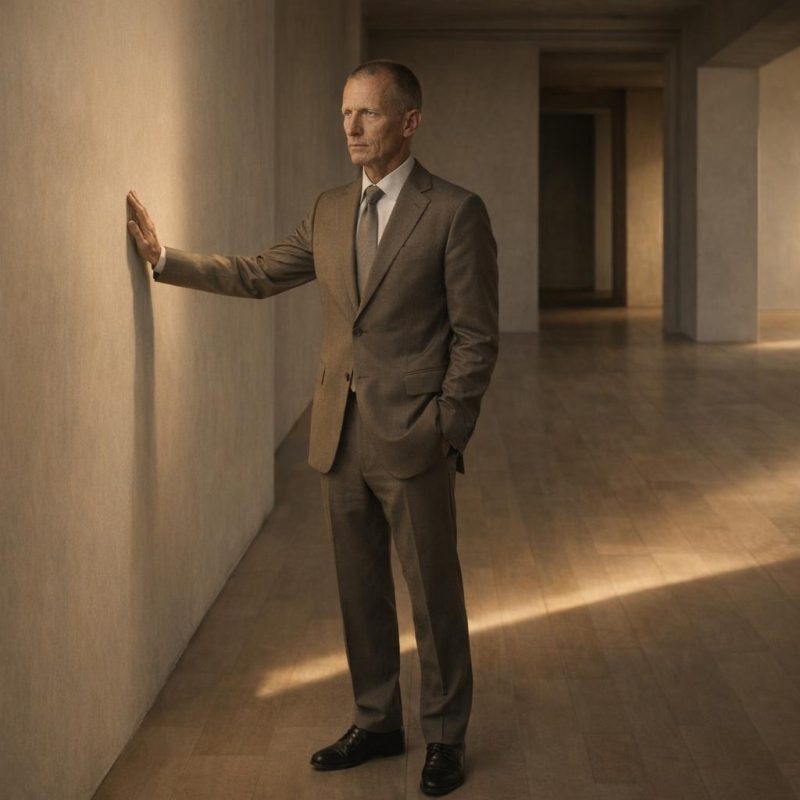 Image by RM AI
KEEP ON READING
20 Burning Rivalries From The Golden Age Of Hollywood
Tinseltown's Most Famous Feuds. The Golden Age of Hollywood gave…
By Sara Springsteen Jun 10, 2026
10 Tiny Decisions That Changed History & 10 Tiny Mistakes…
The Small Moments That Moved the World. History gets taught…
By Cameron Dick Jun 10, 2026
First Timers: 20 Historical Women Who Broke All Kinds Of…
Rolling Out The Red Carpet. Since what seems like the…
By Elizabeth Graham Jun 10, 2026
20 Mistresses Kings Gave More Power To Than Their Wives
Power Didn’t Always Wear a Crown. History loves to pretend…
By Emilie Richardson-Dupuis Jun 10, 2026
20 assassination attempts that changed the world
History has been shaped not only by great leaders and…
By Noone Jun 10, 2026
10 Royals Who Never Married & 10 Who Married More…
Royal history is full of dramatic love stories, political marriages,…
By Noone Jun 10, 2026