

I Found Secret Symbols on My Daughter's Graduation Invitations—When I Decoded Them, I Canceled Everything
I Found Secret Symbols on My Daughter's Graduation Invitations—When I Decoded Them, I Canceled Everything
The Box Arrives
The box arrived on a Tuesday morning, and I remember thinking the timing felt almost cinematic — the kitchen was flooded with that particular kind of late-spring light that makes everything look like a memory you haven't made yet. I'd been standing at the counter with my coffee, watching the delivery driver come up the front walk, and when I signed for it I already knew what it was. Chloe's graduation invitations. I'd been waiting for them for two weeks. I set the box on the kitchen table and just stood there for a moment, hands flat on the cardboard, feeling the solid weight of it. Four years of tuition payments, late-night phone calls, one semester that nearly broke both of us — and here it was, reduced to a box small enough to carry with one arm. I didn't open it right away. I made myself finish my coffee first, the way you draw out something good because you know the anticipation is part of it. When I finally pulled back the tape and lifted the flap, the smell hit me first — that sharp, clean scent of fresh ink and heavy cardstock that always takes me back to every important piece of paper I've ever held. I stood there breathing it in, the box open in front of me, the morning light warm on my hands.
 Image by RM AI
Admiring the Details
I lifted the first invitation out carefully, the way you handle something that cost more than it probably should have. Chloe had spent three weekends on this — I remembered sitting with her at the kitchen table while she scrolled through font samples and paper weights, holding swatches up to the light and asking me which cream looked warmer. At the time I'd teased her about it, told her nobody was going to notice the difference between ivory and ecru. Standing there holding the finished card, I was glad she hadn't listened to me. The calligraphy was beautiful. Real hand-lettering, not a printed imitation — you could feel the slight pressure variations in each stroke when you ran your fingertip across the ink. The cardstock had a satisfying density to it, the kind that makes an envelope feel like a small gift before you've even opened it. I turned it over, checking the back, admiring the clean layout. Chloe had kept it simple: her name, the date, the venue, a small decorative border along the edges. Nothing fussy. Just elegant. I was about to set it back in the box when the light shifted — the sun moved past something outside, a cloud or a branch — and the angle changed across the surface of the card, and something in the lower corner caught my eye.
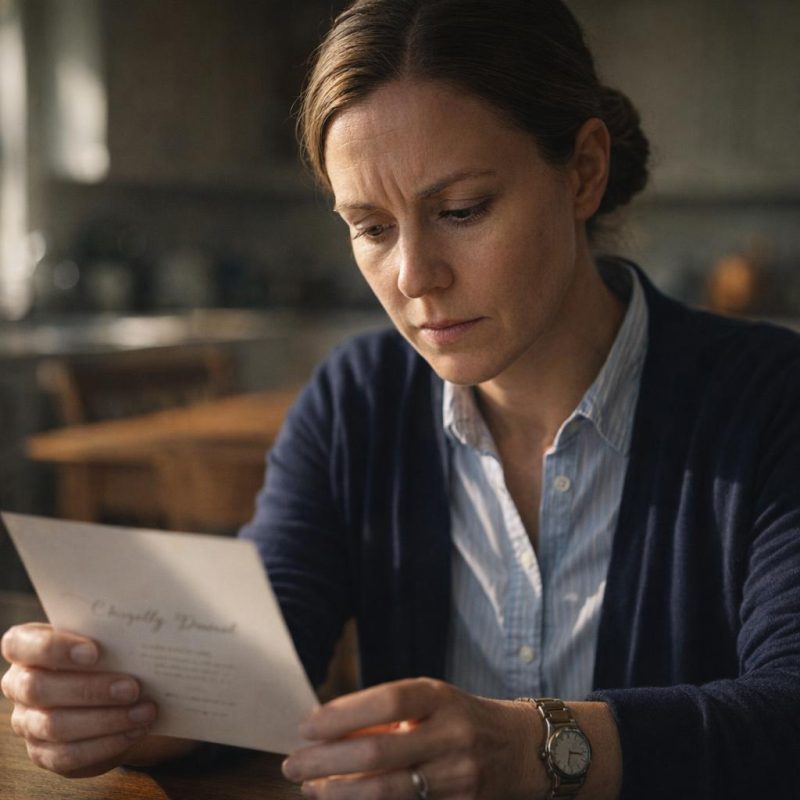 Image by RM AI
Something in the Light
I tilted the card toward the window, trying to get the light back at that same angle. It took me a second, but there they were — three tiny marks pressed into the lower right corner of the cardstock, barely visible unless the light hit them just right. They weren't printed. They were embossed, the paper itself pushed up from behind into small raised shapes. I ran my thumb over them slowly. Two interlocking triangles and a dot, or something close to that — the detail was so fine I couldn't be entirely sure. My first thought was that it was a printer's mark, some kind of quality stamp or manufacturer's code pressed into the stock. That happened sometimes with high-end paper. I checked the back of the card. Nothing there. I pulled a second invitation from the box and held it up to the light the same way. The marks were there too, in exactly the same position. Same size, same placement, same three shapes. I set both cards on the table side by side and looked at them. The kitchen was quiet. Outside, a car passed. I told myself it was nothing — a production quirk, a batch identifier, something completely ordinary that I was turning into a thing because I'd spent too many years in a job that trained me to look for things that didn't belong. But I left my coffee sitting untouched, and the cold feeling that had settled into my chest didn't move.
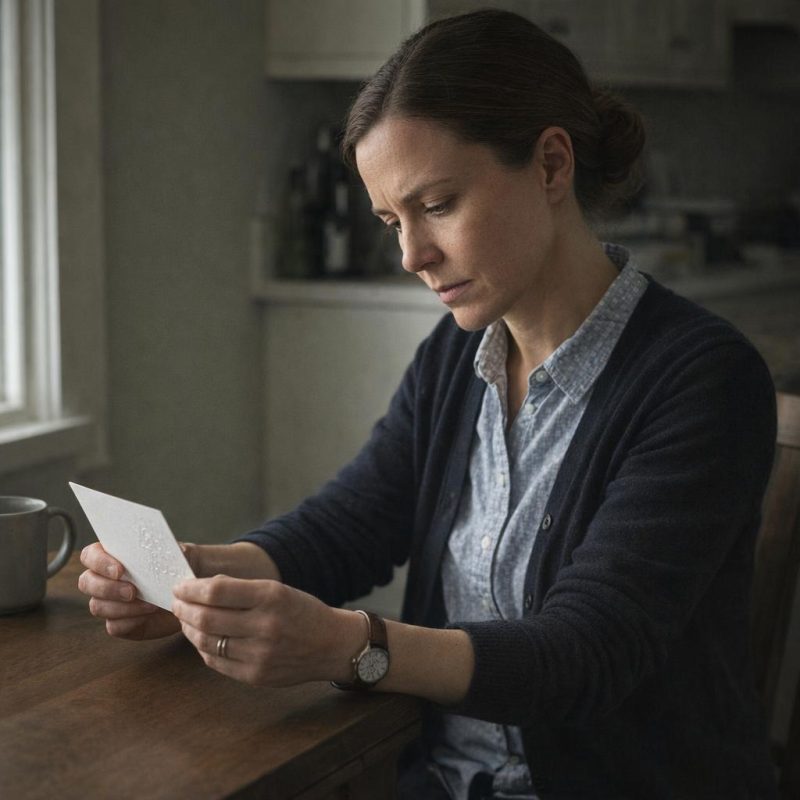 Image by RM AI
A Familiar Pattern
I sat down at the kitchen table with both invitations in front of me and stared at those marks for a long time. The shape of them — two triangles overlapping at an angle with a single dot offset to the right — kept pulling at something in the back of my mind. Not a vague feeling, but a specific one, the kind that comes when you've actually seen something before and your brain is trying to file-match it. I'd spent twenty-two years in archival security, which meant I'd handled a lot of documents with a lot of markings — authentication stamps, classification codes, provenance seals, watermarks that weren't meant to be found. I knew the difference between a decorative element and something functional. These felt functional. I turned one card over and held it at different angles, trying to coax the memory loose. I thought about the last few years of case files I'd reviewed before I retired. I thought about the training materials I'd gone through early in my career. I thought about a conference I'd attended maybe fifteen years ago, something about document fraud and covert marking systems. The shape kept almost connecting to something and then sliding away. I pressed my fingertip against the embossing one more time, feeling the tiny ridges. Whatever it was, it was sitting just at the edge of where I could reach it, close enough to feel but not close enough to name.
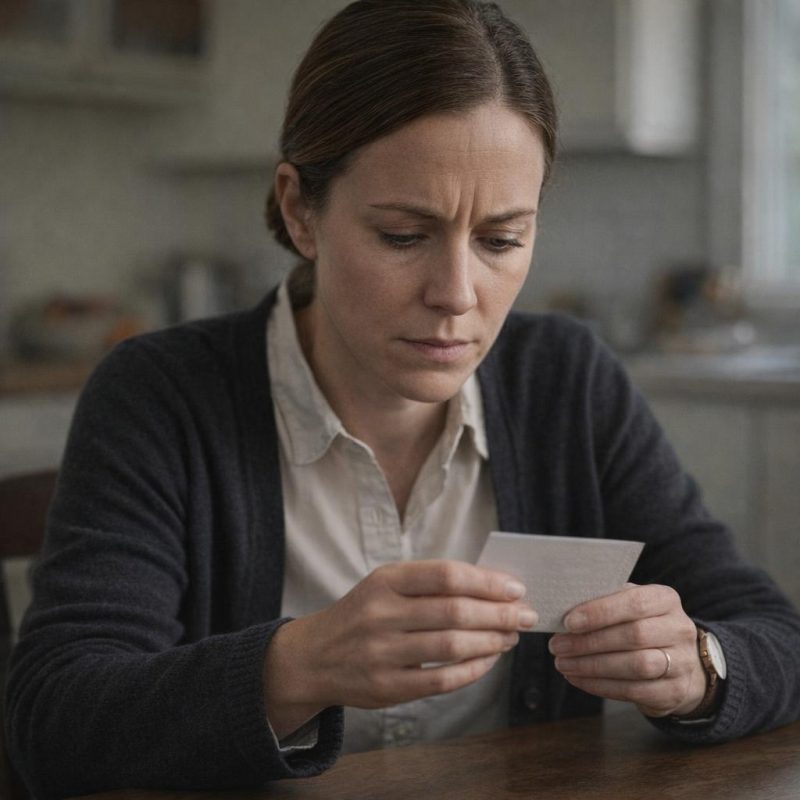 Image by RM AI
Chloe Comes Downstairs
I heard Chloe on the stairs around noon — that particular rhythm of her step that I'd memorized without meaning to, the way you memorize anything you've listened to for twenty-two years. I slid both invitations back into the box and closed the flap before she reached the bottom landing. I wasn't sure why I did it. Some instinct. She came into the kitchen with her hair still damp from the shower, wearing an oversized sweatshirt and humming something I didn't recognize, and she looked so completely normal that I felt a small wave of relief I couldn't entirely explain. She went straight for the coffee maker, poured herself a mug, and then turned and saw the box on the table. Her face lit up. 'They came,' she said, and there was real happiness in her voice — the uncomplicated kind, the kind that's hard to fake. She set her mug down and crossed the kitchen toward the table, and I watched her and smiled and said yes, they came this morning, they look beautiful. I kept my voice easy. I kept my hands still. I kept my eyes on her face, watching for I didn't know what, while she reached into the box and lifted out one of the invitations.
 Image by RM AI
The Tremor
She held the card the way you'd expect — turned it over to read the front, tilted it slightly to catch the light on the calligraphy. She was smiling. She said something about how the font looked even better in person than it had on the screen, and I agreed, and we talked for a moment about whether the venue address was centered correctly. She sounded relaxed. She looked relaxed. I was watching her hands. I'd spent enough years in security work to know that the body tells the truth even when the voice doesn't, and I'd learned to watch hands specifically — the small adjustments, the micro-tensions, the things people do without knowing they're doing them. Her left hand was resting on the table, loose and easy. Her right hand held the card. And then, just for a fraction of a second, as her fingers moved toward the lower right corner of the cardstock, I saw it. A tremor. Barely there — the kind of thing you'd miss if you blinked, or if you weren't already watching. Her fingertip grazed the bottom corner of the card and her hand pulled back just slightly, a movement so small it might have been nothing. She kept talking. She didn't look up. But I had seen it, and I didn't look away from her right hand for the rest of the conversation.
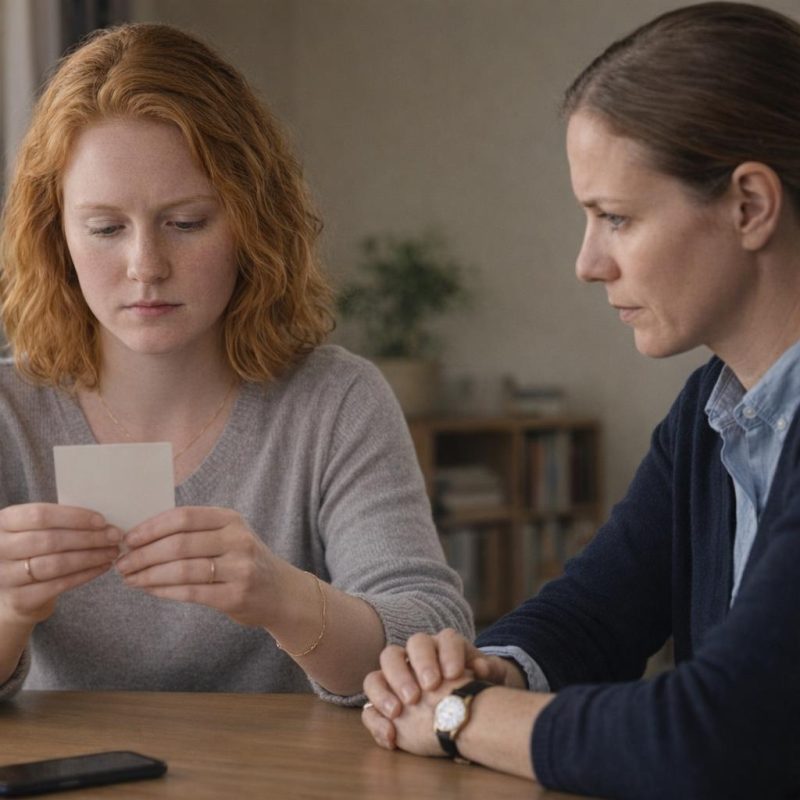 Image by RM AI
Talking Catering
We sat at the table for the better part of an hour after that, going through the party details the way we'd done a dozen times before — caterer options, whether to do a buffet or plated service, how early the florist needed to arrive. I was present enough to answer questions and offer opinions. I said the salmon option sounded better than the chicken. I agreed that the florist should come two hours before guests. I asked whether we'd confirmed the rental chairs. The whole time, part of my mind was somewhere else entirely, turning those three embossed marks over and over, trying to shake loose whatever memory they were attached to. Chloe had her notebook open and was working through her list with the focused energy she always brought to logistics, and I watched her and felt the familiar pull of pride alongside something I couldn't name yet. She read off names as she went — her college friends, a few of my colleagues she'd always liked, my parents, a couple of neighbors. I was nodding along, half-listening, when she turned a page and kept going without pausing, and a name came out of her mouth that I had never heard before in my life.
 Image by RM AI
The Guest List
She slid the guest list across the table to me a few minutes later, and I picked it up and read through it properly. My parents were near the top — I felt the usual warmth seeing their names there, knowing how much the graduation meant to them. Below that, familiar faces: neighbors, a few of my work friends, Chloe's college roommate and her family. I read through those names easily, placing each one. Then I kept going. Toward the bottom of the list, the names started to change. People I didn't recognize. I read them once, then again, trying to connect any of them to something Chloe had mentioned over the past four years — a professor, a classmate's parent, a friend from a club or a job. Nothing. I looked up and asked her about a couple of them, keeping my voice neutral, and she said they were people she'd met recently, that they were important to her, that she really wanted them there. Her answers were smooth and quick. I nodded and looked back down at the list. I counted the names I couldn't place. There were seven of them.
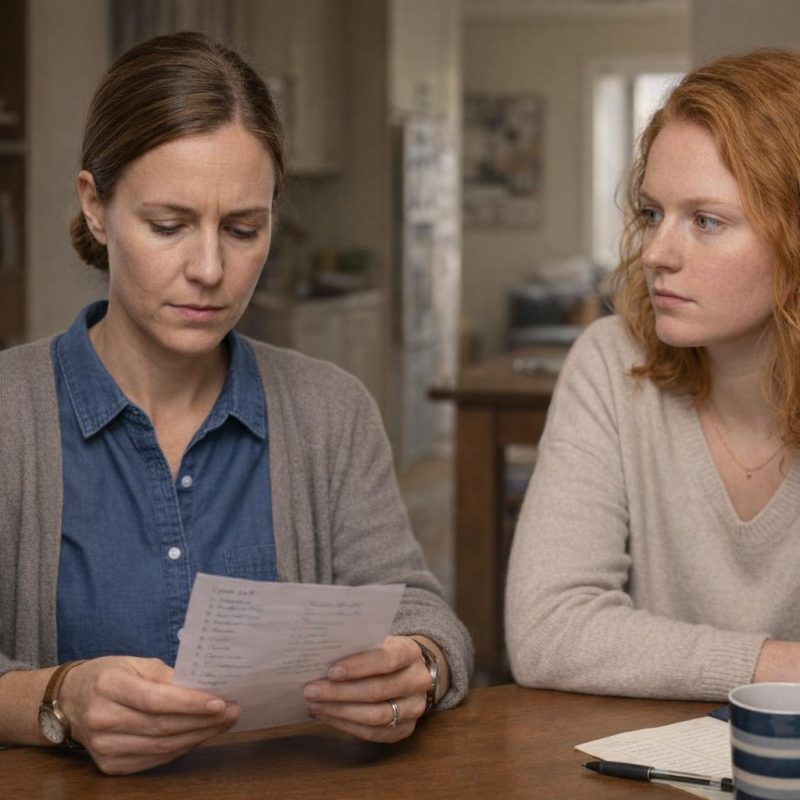 Image by RM AI
Ghost Marks
After Chloe left the room I sat at the kitchen table with the invitation in front of me and didn't move for a long time. The marks were small — easy to miss if you weren't looking for them, easy to dismiss if you didn't know what looking meant. But I had spent eleven years in archival security, and looking was the whole job. We authenticated documents, traced provenance, flagged forgeries. Ghost marks were part of the vocabulary — tiny intentional impressions left in paper or ink that weren't meant to be seen by the casual eye. They could be ownership stamps, chain-of-custody markers, sometimes warnings embedded in the document itself for people who knew the code. You learned to distinguish the accidental from the deliberate. A smudge from a press. A fiber catch. Those had randomness to them, irregular edges, no repetition. What I was looking at on this invitation had none of that randomness. The marks repeated. They were placed. I hadn't thought about ghost marks in years — hadn't needed to. But sitting there in my kitchen with my daughter's graduation invitation under the light, the old training didn't feel distant at all. It felt like it had simply been waiting, patient and quiet, for exactly this moment.
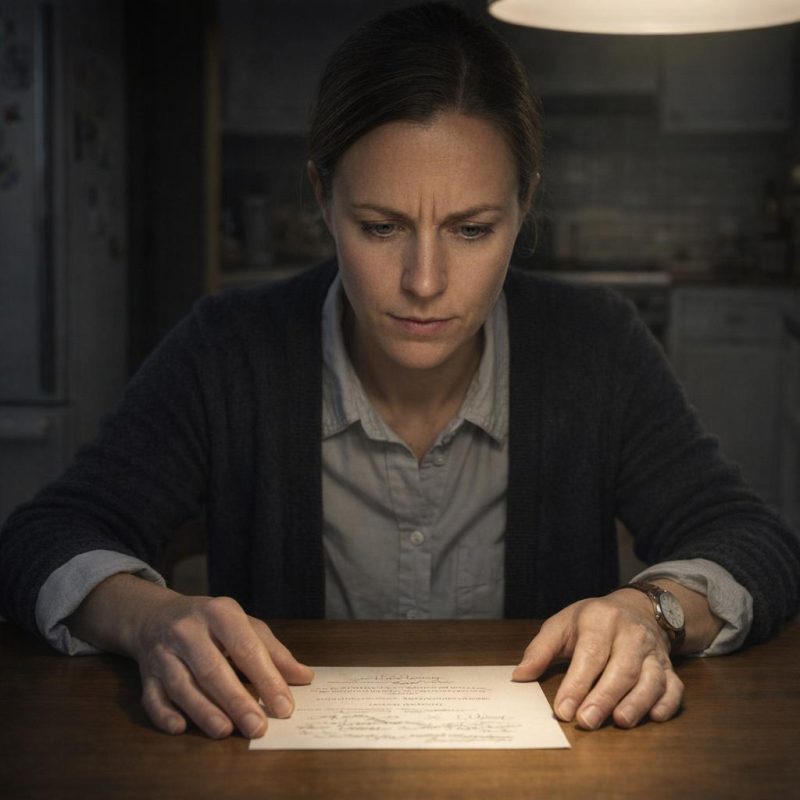 Image by RM AI
The Summer She Disappeared
I set the invitation down and my mind went somewhere I hadn't let it go in a long time. The summer Chloe was nineteen. She'd been home from her first year of college, restless in the way she sometimes got, and then one morning she was just gone. No note that made sense, a text that said she needed some time, and then three weeks of near-silence. When she came back she looked different — not physically, not in any way I could point to — but her eyes had that flat, careful quality, like she was monitoring herself from the inside. She told me she'd been at a wellness retreat. She said it helped. She said she felt better. I asked her where exactly, and she named a place I couldn't find online afterward, and when I brought it up again she changed the subject so smoothly I almost didn't notice she'd done it. I told myself she was twenty, that young people needed space, that I was projecting. I told myself a lot of things that summer. I never fully believed any of them, but I filed them away because she seemed okay, and okay felt like enough. Sitting in my kitchen now, I wasn't sure it had been enough at all. The hollow feeling from that summer came back like it had never really left.
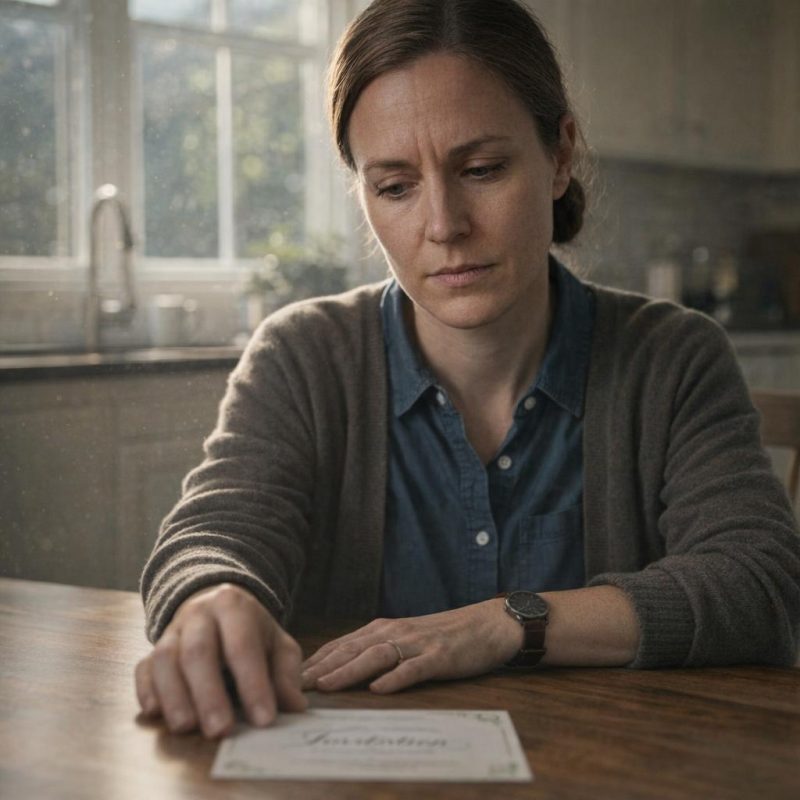 Image by RM AI
The Notebook
There was something else from that summer I hadn't let myself think about in years. About a week after Chloe came back from wherever she'd actually been, I went into her room to drop off laundry and saw a notebook open on her desk. I almost didn't look — I'd always tried to respect her privacy — but the pages caught my eye because they were dense with drawings. Not words. Just shapes. Interlocking triangles, clusters of dots, lines that crossed and doubled back. Page after page of them, the same patterns repeating with small variations, the way someone's handwriting repeats even when the letters change. I remember thinking she must have been anxious, that it was the kind of repetitive mark-making people do when their hands need something to do while their mind is somewhere else. I closed the notebook and put the laundry on her chair and didn't mention it. I told myself it was nothing. I had believed that for four years. Now I was sitting at the kitchen table with her graduation invitation, looking at marks that carried the same geometry — the same interlocking angles, the same deliberate dot placement — and the weight of what I had walked away from that afternoon settled over me like something I couldn't put down.
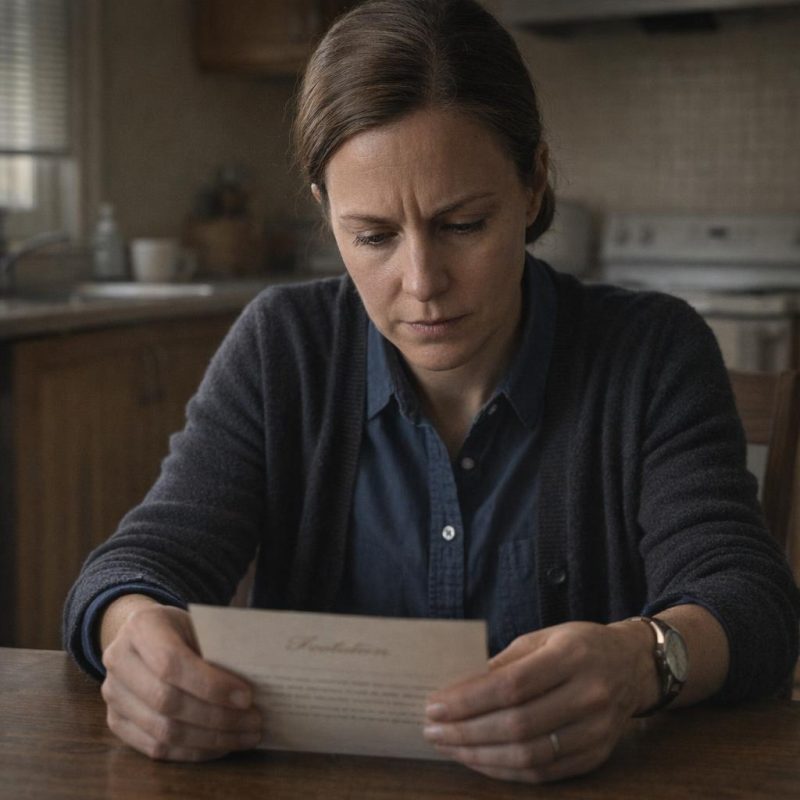 Image by RM AI
Waiting for the Library
The next morning Chloe came downstairs with her laptop bag over one shoulder and a stack of textbooks under her arm. She said she was heading to the library, that she had a paper to finish before the end of the week. I was at the counter making coffee and I smiled and asked if she wanted me to save her dinner. She said yes, probably around seven, and kissed me on the cheek the way she always did, and I watched her pull the front door shut behind her. I stood at the window and watched her get into her car. I watched her back out of the driveway. I watched the car reach the end of the street and turn, and then it was gone. I counted to thirty anyway, just to be sure. Then I set down my coffee cup, walked to the dining room table where I'd left the invitation under a folder the night before, and pulled it out. I had the notebook I'd been using for grocery lists. I had a magnifying glass from the junk drawer. I had the particular stillness that used to come over me at the start of an authentication job, the kind that meant I was done waiting and ready to work. I pulled out my chair and sat down.
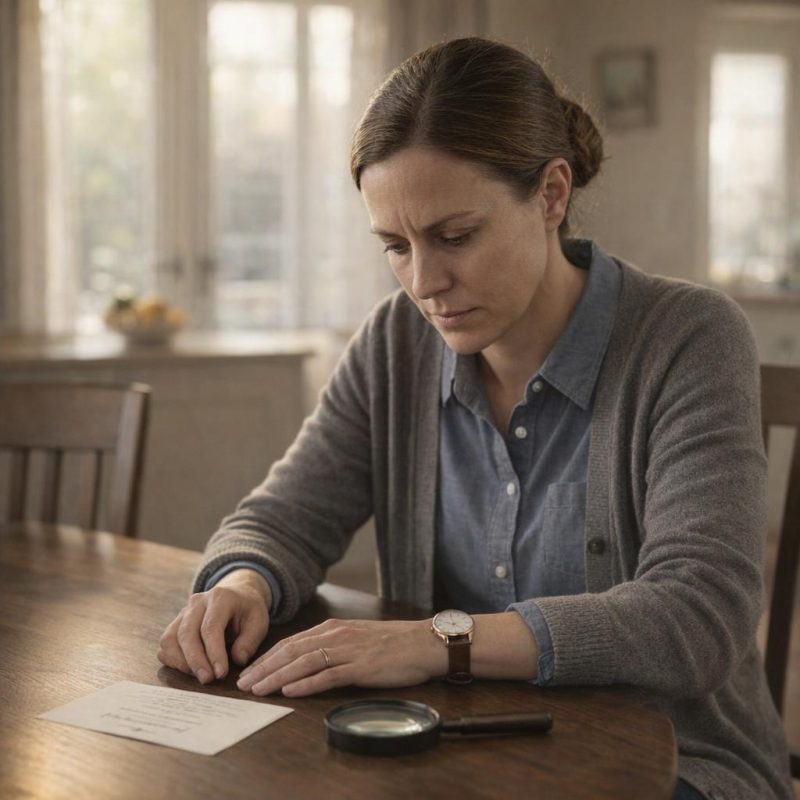 Image by RM AI
Digital Footprints
My first instinct was to go upstairs and look through Chloe's room. I stood at the bottom of the stairs for a moment actually considering it — the desk drawers, the closet shelf, the space under the bed where she used to hide birthday presents she'd bought for me. But I stopped myself. Searching her room felt like a line I wasn't ready to cross, and more than that, it felt like the wrong tool. Physical searching was slow and incomplete and it left traces. If there was something to find, I might miss it, or move it, or tip her off before I understood what I was even looking at. What I knew how to do — what I had been trained to do — was follow the digital thread. In archival security we used physical evidence as a starting point, but the real work happened in databases, in cross-referenced records, in pattern matching across documented sources. I had the symbols. I had my old instincts. I sat down at my desk, opened my laptop, and pulled up a browser I hadn't used in years. Searching her room would have felt like a mother panicking. This felt like something steadier — like choosing the method most likely to give me something real.
 Image by RM AI
The Deep Web
There were forums I used to access regularly during my years in archival security — not the kind of places you find through a standard search engine. Specialist communities where document authenticators, provenance researchers, and a certain category of security professional traded information about marks, symbols, and authentication systems that never made it into mainstream databases. I hadn't logged in since I left the field. I wasn't even sure my credentials would still work. I pulled up the access portal from memory, which surprised me a little — some things apparently don't fade — and typed in my old username and the password I'd used for the last two years of my contract. The system paused for long enough that I thought it would reject me. Then it didn't. The interface was different from what I remembered, updated at some point in the years I'd been away, but the structure was the same: nested threads, archived image posts, a search function that could process visual inputs alongside text. The forums had always had a particular quality to them — dense and quiet at the same time, like a library that only certain people knew existed. Watching the main page load, thread titles appearing one by one in the dim light of my desk lamp, that quality came back to me unchanged.
 Image by RM AI
Search Parameters
I had sketched the three symbols from the invitation onto a clean sheet of paper before I sat down — carefully, taking my time, making sure the proportions were right. The angles mattered. The dot placement mattered. In authentication work, a symbol off by a few degrees could be a different symbol entirely, and I wasn't going to submit a sloppy rendering and get back useless results. I checked my sketch against the invitation twice, adjusted one of the triangle angles slightly, and checked it again. Then I opened the forum's image recognition tool — it was still there, updated but functional — and uploaded a photograph I'd taken of my sketch under good light. The tool asked me to confirm the image parameters and select a search scope. I chose the full archive, which went back further than I wanted to think about. My hands were steadier than I expected them to be. The rest of me was not. I had spent the last hour telling myself I was probably going to find nothing, that these were decorative marks, that I was a worried mother with a professional habit of seeing patterns. I didn't fully believe that anymore. I moved the cursor to the search button and clicked.
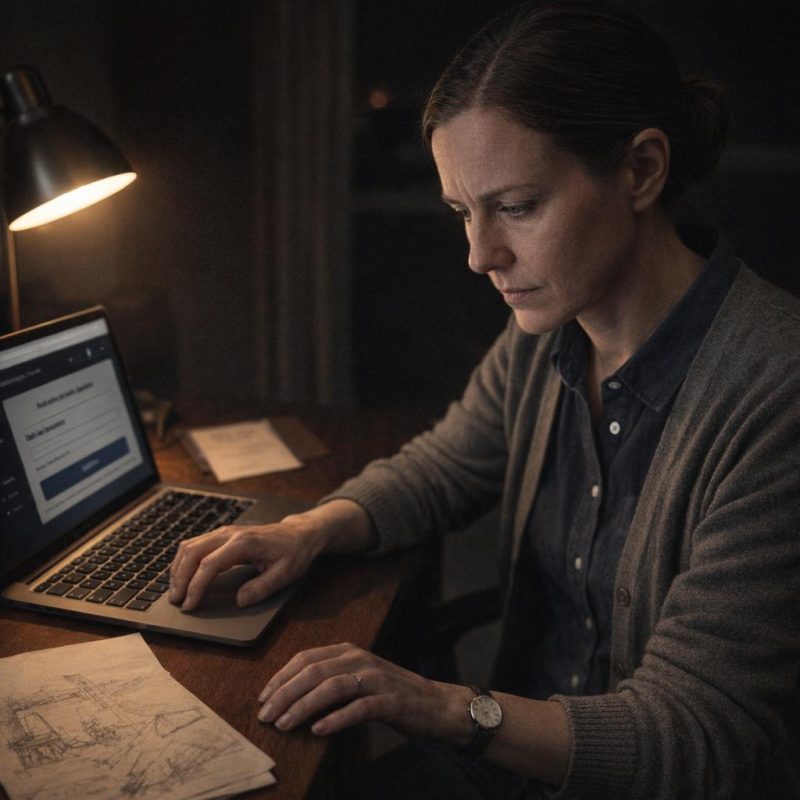 Image by RM AI
Immediate Results
I had expected to wait. I had expected the kind of slow crawl I remembered from the old days, the progress bar that moved in increments while the system worked through its archive. Instead the results loaded almost immediately, and there were so many of them. Dozens of threads. Archived image posts going back years. Cross-references to other symbol sets, other documented instances, other forums I hadn't even accessed. I sat back in my chair without meaning to. In eleven years of authentication work I had run searches that came back empty, searches that returned two or three relevant hits, searches that took days to process. A search that returned this volume this fast meant the symbols were not obscure. It meant they were documented. It meant other people had looked for them before, enough people and enough times that the archive had built up a substantial record. I scrolled slowly through the first page of results, not reading yet, just taking in the scope of it. The thread titles alone were enough to make my stomach drop. I kept scrolling. The results just kept coming.
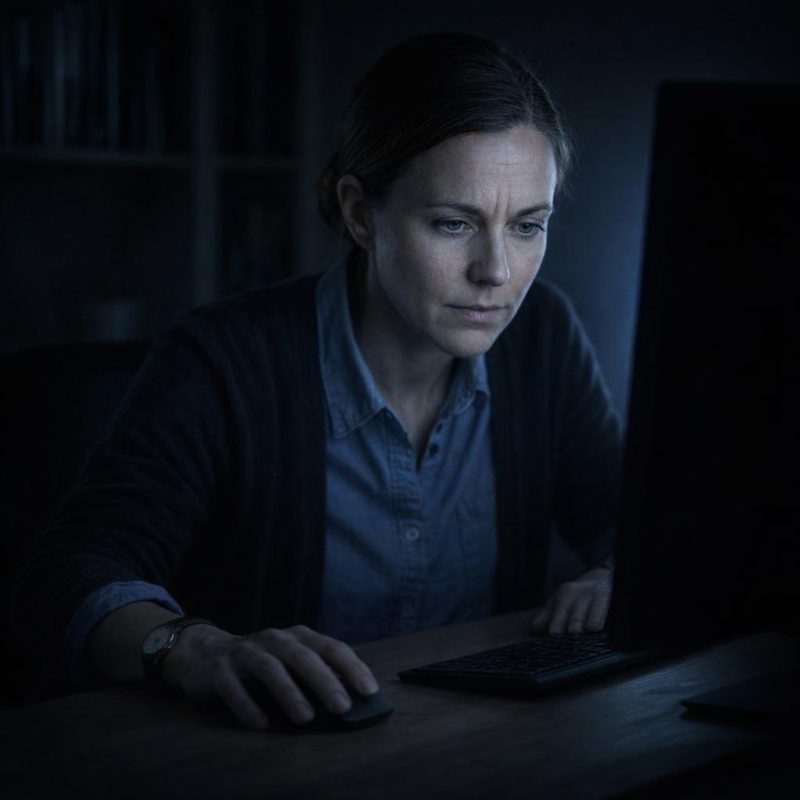 Image by RM AI
Location Markers
I clicked on the first thread and started reading. The post was dense, written by someone who clearly knew what they were talking about — academic in tone but with an edge underneath it, like whoever wrote it had seen these things up close. The subject was location markers. Not GPS coordinates, not anything digital. Physical symbols embedded in printed materials, objects, even clothing, that communicated specific information to people who knew the encoding system. Meeting points. Event times. Confirmation that a target had received the communication. I read slowly, making sure I understood each piece before moving to the next. The symbols weren't random. They were layered — some indicated geography, some indicated timing, some indicated the status of a particular arrangement. The post included documented examples, photographs of actual materials that had been recovered and analyzed. The visual logic of it was unsettling in a way I couldn't quite name — something about the structure felt familiar from my years in archival work, but I couldn't be sure I was reading it right. My breathing had gone shallow without my noticing. I kept reading. The thread had dozens of replies, each one adding more context, more documented cases, more specifics about how the system operated in practice. Then I saw it, halfway down the page, in a reply that had been flagged as particularly relevant: the phrase collegiate debt.
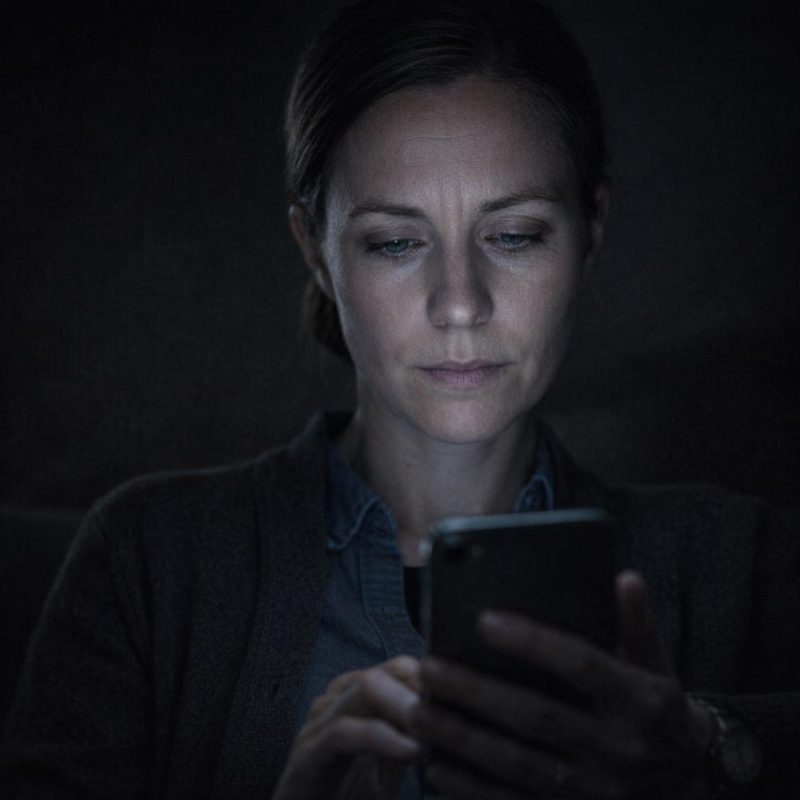 Image by RM AI
Underground Networks
I didn't stop at that thread. I couldn't. I opened the next one, and the one after that, and somewhere around the fourth or fifth post I stopped counting and just kept reading. The picture that assembled itself across those threads was methodical and ugly. An underground gambling network — not the kind with a physical location you could raid, but distributed, layered, operating through proxies and cutouts. The posts described how it worked: recruiters on college campuses, games that started small and social, losses that accumulated faster than anyone expected. Then the debt. Not a lump sum you could pay off, but a structured obligation with terms that shifted, interest that compounded, pressure that arrived in increments so the person on the receiving end never quite saw the full weight of it until they were already under it. And then the families. The posts were careful about this part, almost clinical. The network didn't threaten families directly. It didn't have to. It used the student's own fear — their shame, their desperation to keep the situation contained — to turn the people who loved them into unwitting leverage. I sat back from the screen. The room was quiet. Outside, a car passed on the street and the sound faded, and I sat there with the sick understanding of it settling somewhere deep in my chest.
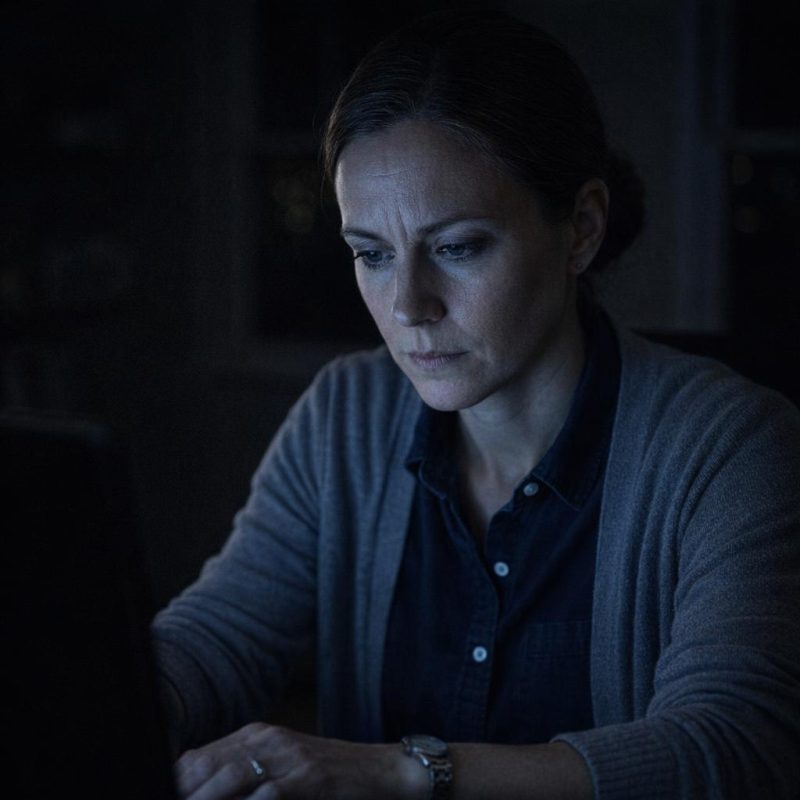 Image by RM AI
High-Value Targets
One post was longer than the others, more structured, written like a report rather than a forum reply. It described how collectors identified what the author called high-value targets — not just students with debt, but students whose family networks represented significant financial resources. The methodology was laid out in steps. First, social mapping: building a picture of the student's family connections, identifying relatives with assets, professional standing, property. Second, vulnerability assessment: looking for pressure points, health histories, financial instability, anything that increased the student's desperation and compliance. Third, event identification: locating public gatherings where the family would be assembled in one place, in a relaxed setting, with their guard down. The post was specific about why public events mattered. People at celebrations weren't thinking about risk. They were thinking about the person they were celebrating. They answered questions freely. They talked about their lives, their work, their homes. They introduced themselves to strangers without suspicion because the social context made strangers feel safe. The collector's job at that stage wasn't collection — it was cataloguing. Building the fuller picture of what the family represented as a financial network. I read that section twice. The methodology wasn't chaotic. It was patient and systematic, and the patience of it was what stayed with me long after I'd moved on to the next thread.
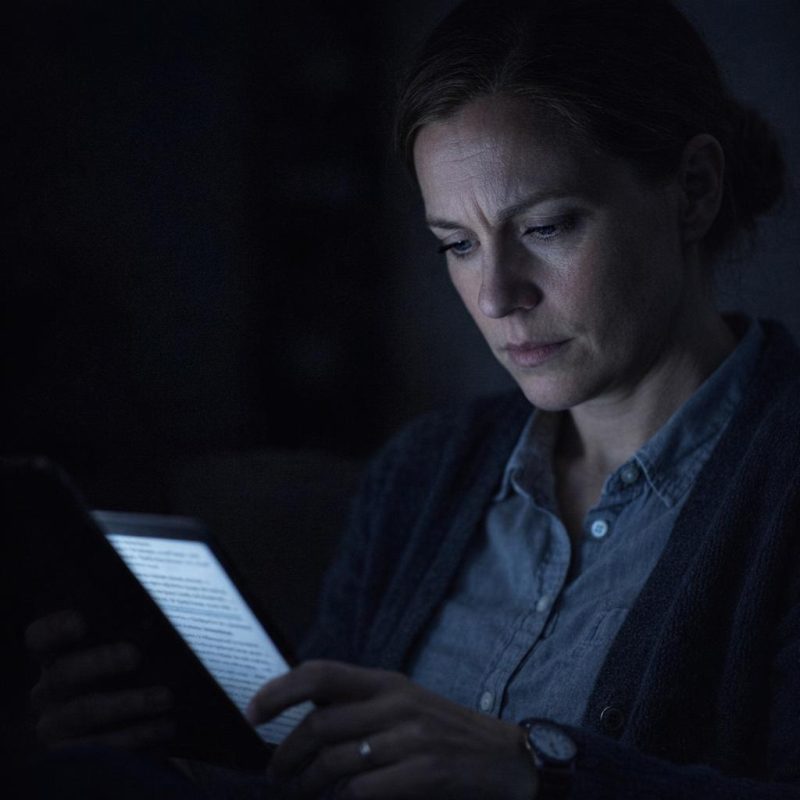 Image by RM AI
Graduation Parties
I had been scrolling for what felt like a long time when I found the thread. It was buried several pages into the results, flagged with a high relevance score I hadn't noticed at first. The title was plain, almost administrative. I almost passed it. I didn't. The post described graduation events specifically — not parties in general, not family gatherings as a broad category, but graduation celebrations as a distinct and preferred operational context. The reasoning was laid out with the same clinical patience I'd been reading all night. Graduation brought together the widest possible cross-section of a student's family network. Grandparents, parents, aunts and uncles, family friends with long histories and established finances. Everyone was proud. Everyone was generous. Everyone was focused entirely on the graduate and not on the strangers moving through the room. The post described the emotional atmosphere as a kind of operational advantage — joy as a form of distraction, celebration as cover. I felt my hands go still on the keyboard. I read the paragraph again from the beginning. The post wasn't theoretical. It cited documented cases, referenced specific patterns the author had tracked across multiple events. I kept my breathing as even as I could and made myself keep reading. Then my eyes landed on the words graduation party.
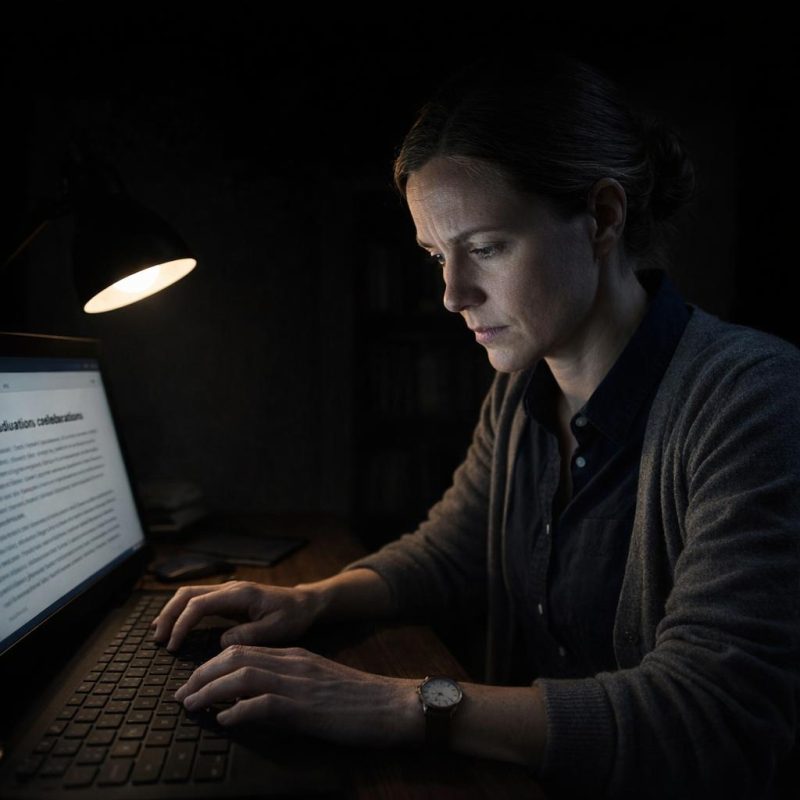 Image by RM AI
The Vulnerability Window
The thread used a term I hadn't seen in the earlier posts: vulnerability window. It referred to the specific period during a celebratory event when the emotional atmosphere was at its peak — the first hour or two, when arrivals were still happening, when people were greeting each other and taking photographs and catching up across years of distance. That window, the post explained, was when families were least likely to scrutinize unfamiliar faces. Someone they didn't recognize could be a colleague of the graduate's, a friend from a study group, a neighbor's adult child. The social logic of the event provided cover that no amount of careful planning could manufacture artificially. The posts that followed built on this. They described how the window was mapped in advance — who would be present, where they would likely gather, which family members represented the highest-value contacts. The operation didn't rely on improvisation. It relied on preparation so thorough that by the time the event began, every variable had already been accounted for. I sat with that for a moment. The approach wasn't reckless or opportunistic. It was the opposite of that — careful, tested, refined across enough iterations that the people running it had worked out exactly how much preparation it took to make the whole thing look effortless and ordinary.
 Image by RM AI
Targeting the Vulnerable
The next cluster of posts shifted focus. These weren't about events or methodology — they were about the targets themselves, specifically about what made certain individuals more valuable and more compliant over time. Young professionals with health histories came up repeatedly. The reasoning was laid out without sentiment: medical debt was different from other kinds of debt. It arrived without warning, it accumulated in ways that were hard to predict or control, and it carried a particular kind of shame — the feeling that you had somehow failed to manage something that wasn't your fault. That combination, the posts explained, made people with health histories easier to hold. They were already carrying a weight they hadn't chosen. Adding financial pressure to that weight didn't break them immediately — it just made them quieter, more isolated, more willing to comply with arrangements they would otherwise have refused. I stopped reading for a moment. I didn't move away from the screen. I just sat there with my hands in my lap, not looking at anything in particular. Chloe had been sick twice in the years since she started college — once seriously enough that I had flown out to be with her for two weeks. I had thought of those months as something we got through together, not as anything that could be turned against her. Something about the way the post described it made my chest tighten in a way I couldn't quite push aside.
 Image by RM AI
Family as Collateral
The posts about family as collateral were the hardest to read. Not because they were graphic — they weren't. They were almost gentle in their language, which made them worse. The mechanism didn't require threats. It didn't require anyone to say anything frightening out loud. It worked through the target's own love for the people around them. The student knew what was happening. The family didn't. And that gap — the space between what the student knew and what the family was protected from knowing — was the actual instrument of control. As long as the student believed that disclosure would devastate the people they loved, they would do almost anything to prevent it. The posts described this as a self-sustaining system. The shame reinforced the silence. The silence reinforced the isolation. The isolation made the student more dependent on the network's terms because there was nowhere else to turn. I had to stop twice while reading that section. Each time I stopped, I looked at the wall for a moment and then made myself go back. I was still telling myself this was research, that I was building context, that I didn't have anything specific yet — just a pattern that felt too close. Then I scrolled to the next reply, and there was a post describing how collectors used graduation party guest lists.
 Image by RM AI
The Guest List Strategy
I read the post carefully, twice. It described the guest list as a functional document — not just a social record but a map. The recommended composition, as the post laid it out, was specific: a core of wealthy family members whose assets were already partially known, mixed with a smaller number of unfamiliar guests whose role was assessment. The strangers weren't random. They were placed. Their job at the event was to move through the room, make conversation, and build out the financial picture of the family network in real time. The post even described ratios — how many known contacts to how many assessors, how to distribute them across the event so the mixing looked natural. It described how targets were sometimes given guidance about who to invite, framed as suggestions about making the celebration feel complete. I sat back from the screen. My hands weren't steady. I thought about Chloe's guest list, the printed copy she had shown me two weeks ago, the names I hadn't recognized. I thought about how she had marked certain names differently from the others. I pulled up the photograph I had taken of the list on my phone. There they were: the small careful stars Chloe had drawn next to the unfamiliar names.
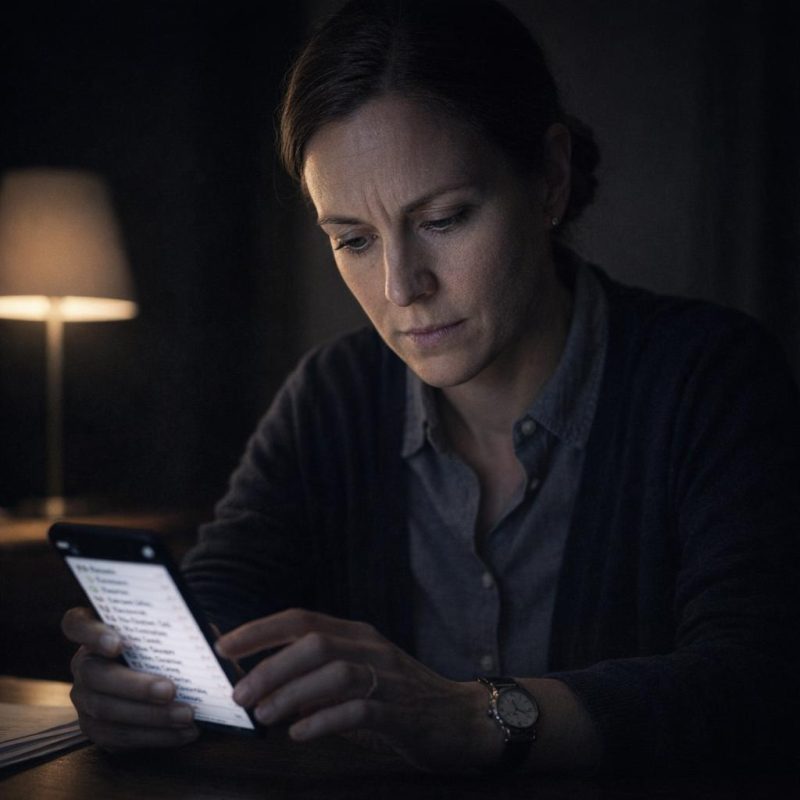 Image by RM AI
Cross-Referencing Names
I pulled up the photograph of Chloe's guest list on my phone and opened a fresh browser tab. The starred names were the ones I wanted — the ones I didn't recognize, the ones that had no face attached to them in my memory. I started with the first one: a man named Gregory Holt. I typed his name into the public records search I used at work, the kind that pulls property filings, business registrations, court records. Nothing alarming came back at first — no criminal record, no judgments. So I moved to social media. His Facebook was sparse, mostly privacy-locked. His LinkedIn was more open. He listed himself as a consultant, which told me almost nothing on its own. I cross-checked his name against the state business registry. Two LLCs came back, both registered within the last four years, both with addresses I didn't recognize. I wrote them down. Then I ran the first address through a basic property search. The result loaded slowly, the way those databases always do when they're pulling from multiple county records. When it finally resolved, it showed a commercial suite in a downtown office complex — a building I had never heard of, registered to a property management company with no web presence I could find.
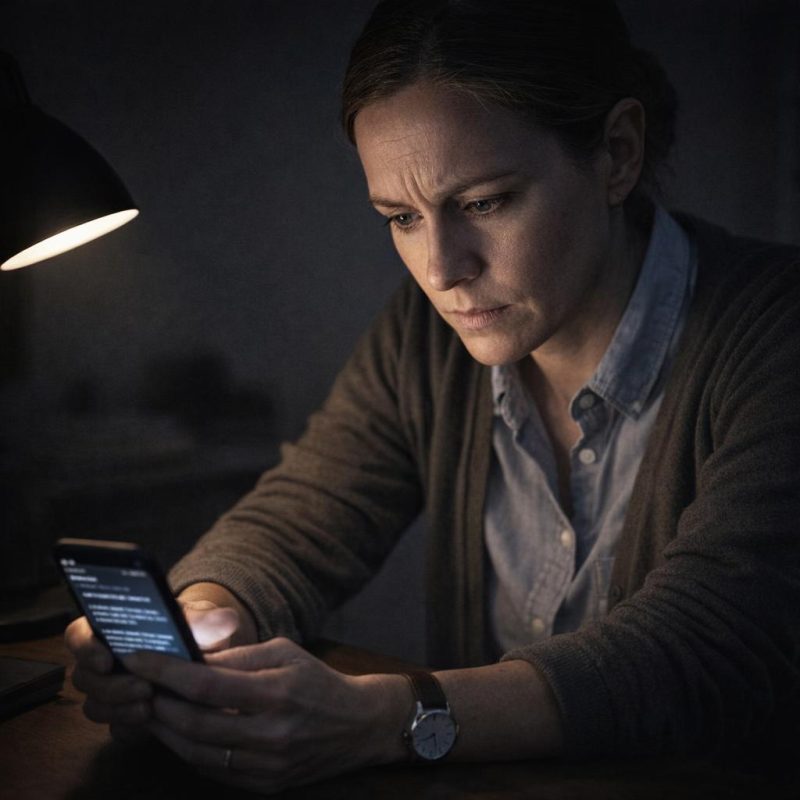 Image by RM AI
Building the Map
I opened a new document and started building it out properly — the way I would have at work if I were compiling a security review. One row per name. Columns for online presence, business registrations, known associates, and a notes field where I flagged anything that matched what I'd been reading in the forums. It was slow work. Some of the names had almost no digital footprint, which was its own kind of flag. The forums had mentioned that assessors sometimes kept their public profiles deliberately thin — not absent, just unremarkable. A few of the names had LinkedIn profiles that looked polished but shallow: job titles that sounded real, endorsements from accounts that didn't seem active, employment histories that were hard to verify. I kept cross-referencing. One name connected to a consulting firm that shared a registered agent with one of Gregory Holt's LLCs. I noted it without drawing a conclusion. Another name appeared in a local business directory alongside a financial services company I'd seen mentioned once in a forum thread. I added it to the notes column and kept going. The document was four pages by the time I stopped to stretch. I scrolled back through it slowly, and the shape of what I was looking at sat there on the screen, not yet complete, but no longer random.
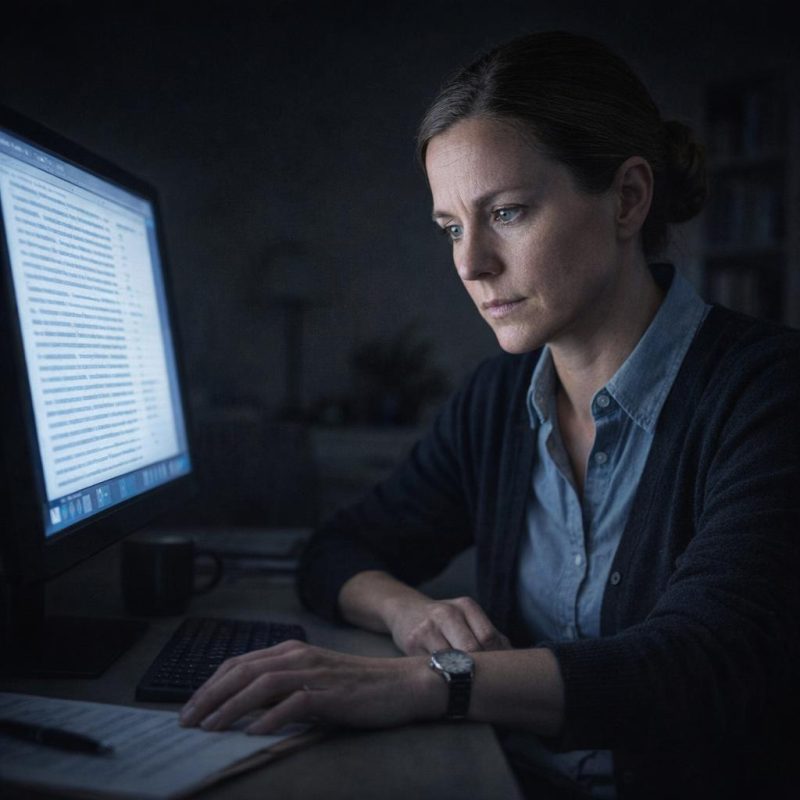 Image by RM AI
The Second Name
The second starred name was a man listed on the invitation as Daniel Reyes. His LinkedIn profile loaded cleanly — professional headshot, a tidy employment history, the kind of profile that looks like someone maintains it carefully. His current role was listed as independent consultant, specializing in financial recovery services. I stopped on that phrase. The forums had flagged it specifically — not as proof of anything, but as language that seemed to appear repeatedly in profiles that turned up in discussions about debt collection operations. It was common enough in legitimate finance work that it wouldn't raise a flag on its own. But I'd seen it twice now in two days of reading, and both times it had appeared in the same context. I added it to Daniel Reyes's row in my document and kept going. His listed clients were vague — industry sectors, no company names. His education checked out against public records. Nothing provably wrong. I moved to the third name, then the fourth. I was working faster now, the search pattern becoming automatic: name, LinkedIn, business registry, cross-reference. By the time I reached the fifth starred name, I had pulled up three more profiles that listed financial recovery services or near-identical variations of the phrase in their professional descriptions.
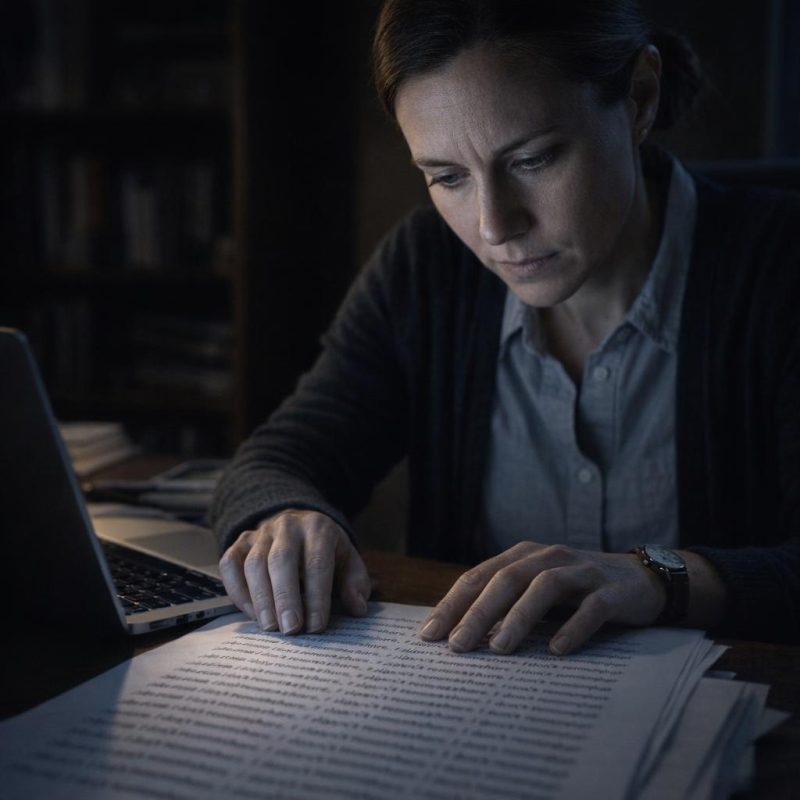 Image by RM AI
Shared Addresses
I had been keeping the business addresses in a separate column, and somewhere around midnight I decided to map them. I copied each address into a shared spreadsheet and ran them against each other — just looking for overlap, the way you do when you're trying to find out if a set of records is actually one record wearing different names. Most of the addresses were distinct. But when I got to the fourth comparison, the result stopped me. Four of the unfamiliar guests — Gregory Holt, Daniel Reyes, and two others — all listed business addresses that resolved to the same downtown office complex. Not the same floor, not the same suite. The same building. I checked it twice, then a third time, pulling each address individually and confirming the street number and zip code. They matched. The building housed a mix of small consulting firms and registered agents, the kind of address that shows up in business filings when a company wants a professional-looking location without committing to actual office space. Four people, invited to my daughter's graduation party, all working out of the same building — people Chloe had marked with small careful stars. I sat with that for a long time, the cursor blinking in the empty search field, the building's address sitting in four separate rows of my spreadsheet.
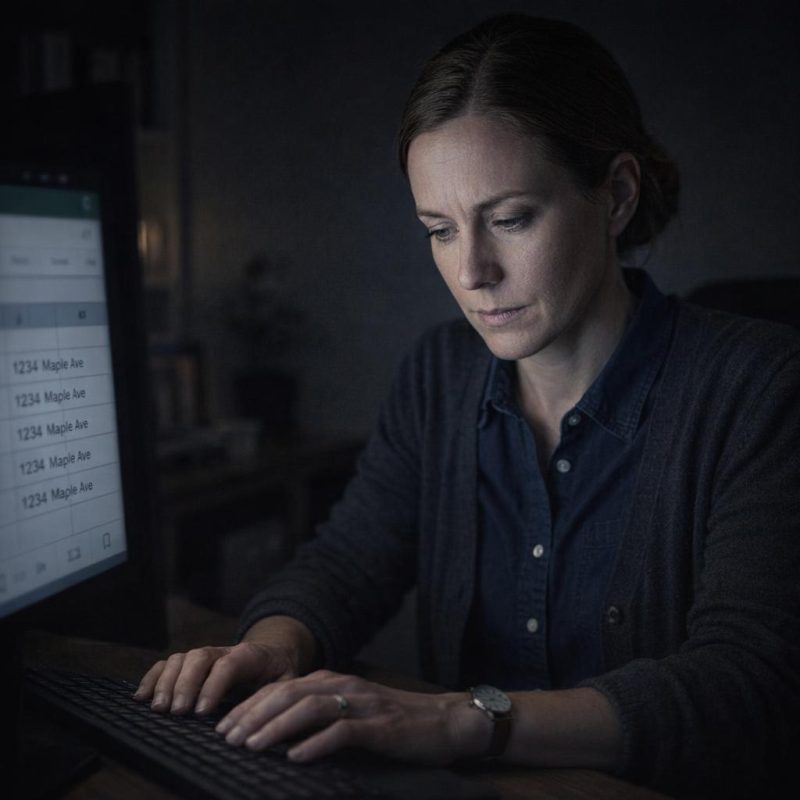 Image by RM AI
Diane Foster's Network
I had been circling Diane Foster's name for two days. She was listed on the invitation as a special guest, which was a category that didn't exist on any graduation invitation I had ever seen before. I started with her LinkedIn, which was polished in the way that takes effort — a long employment history, a professional headshot, endorsements from well-connected-looking accounts. She listed herself as a business development consultant with a specialty in financial services networking. I ran her name through the state business registry. Three LLCs came back, all registered within the past six years, all with the same registered agent. I wrote down the company names and searched them separately. Two of them had no web presence at all — just the registration filing and a mailing address. The third had a bare-bones website, one page, no staff listed, a contact form that went nowhere when I tested it. I went back to the forums and searched each company name individually. Two of them appeared in threads I hadn't read yet — threads about debt collection fronts, about companies with minimal footprints and addresses that matched nothing verifiable. I didn't have proof of anything. But Diane Foster's carefully assembled professional image and those three quiet company names sat in my document side by side, and the distance between them felt very thin.
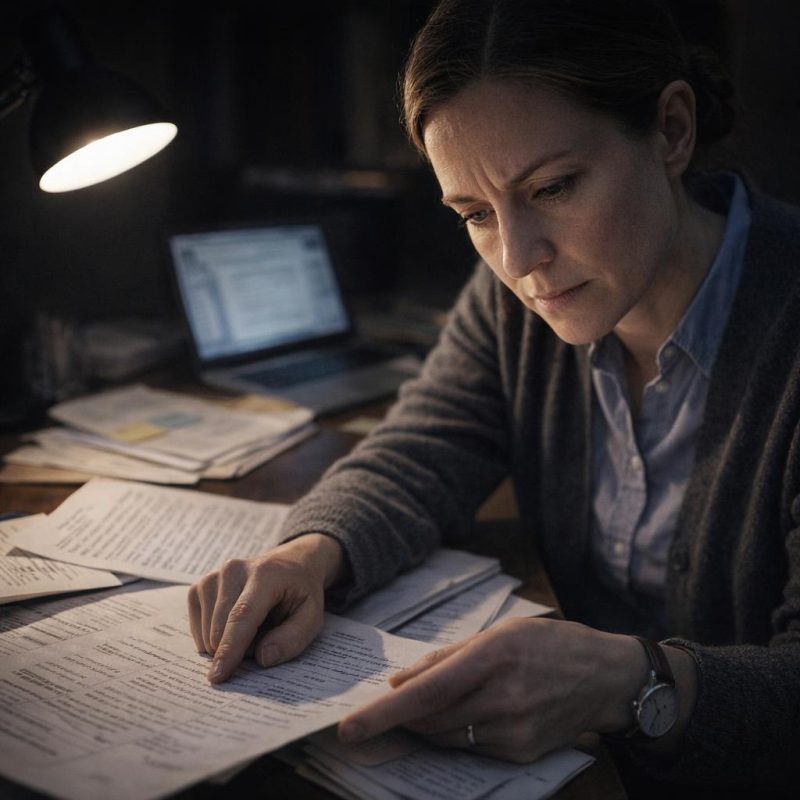 Image by RM AI
The Network Expands
I started pulling the threads between all five names — not just their individual profiles but the places where they touched each other. I checked board memberships first, running each name through the business registry's officer search. Gregory Holt and one of the other starred guests, a woman named Patricia Vance, appeared together as registered officers on a company I hadn't seen before — a financial consulting LLC registered three years ago in a neighboring state. I added it to the document. Then I checked social media connections. Daniel Reyes followed Diane Foster on LinkedIn. Patricia Vance had endorsed two of the other starred guests. The endorsements were recent, all within the same six-month window. I ran the social media handles against each other and found a pattern of activity — the same posts liked within hours of each other, the same industry articles shared across multiple accounts in the same week. Individually, none of it was conclusive. People in the same professional field follow each other. Colleagues endorse colleagues. But I kept pulling, and the more I pulled, the tighter the web became. I ran all five names together in a single search, something I hadn't tried yet, and the result loaded on my screen showing all five of the unfamiliar guests appearing under the same parent company name — a name I had never seen mentioned anywhere in Chloe's paperwork.
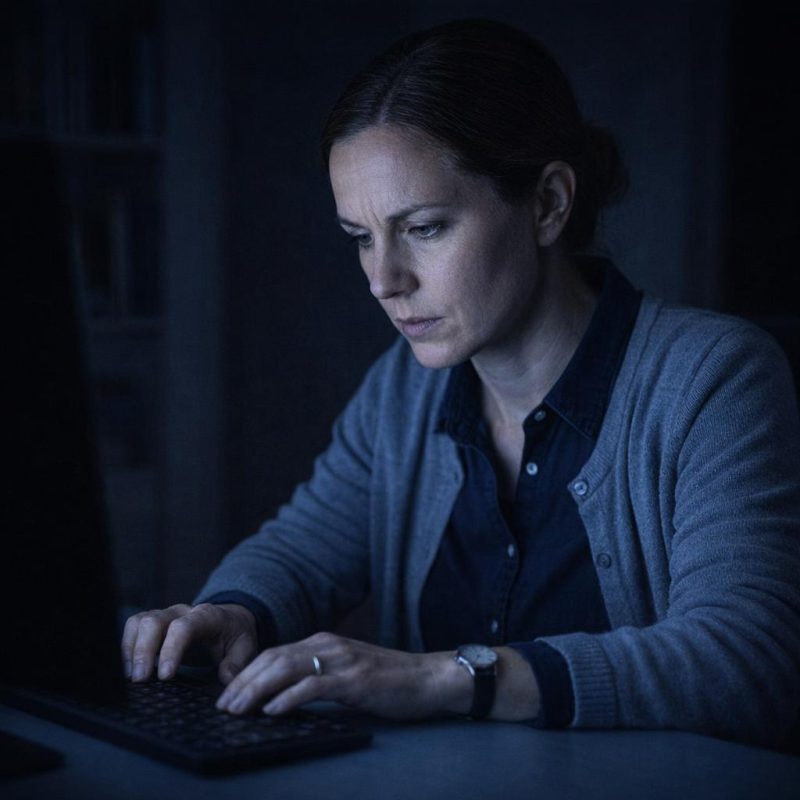 Image by RM AI
The Organization Takes Shape
I switched to a diagramming tool I used sometimes for security work — the kind that lets you build node maps, draw connections, assign categories. I started entering the names. Diane Foster went in first, at the center, because her connections were the most numerous. Then the four others fanned out from her: Gregory Holt, Daniel Reyes, Patricia Vance, and the fifth name, a man listed simply as T. Calloway on the invitation. I drew lines for every confirmed connection — shared business registrations, overlapping board memberships, the LinkedIn endorsements, the parent company. Then I added the shell companies, the registered agents, the building address. By the time I finished, the diagram had more than thirty nodes. It wasn't chaotic. That was the part that stayed with me as I looked at it. The connections weren't scattered or accidental-looking. They ran in clear lines, with Diane Foster at the hub and the others positioned around her in a structure that had distinct layers — some nodes closer to the center, some further out, each one connected to at least two others. I had built enough of these diagrams in my career to know what an ad hoc network looked like versus something that had been assembled with care. I sat back and looked at the screen, the diagram quiet and precise in the low light of the room.
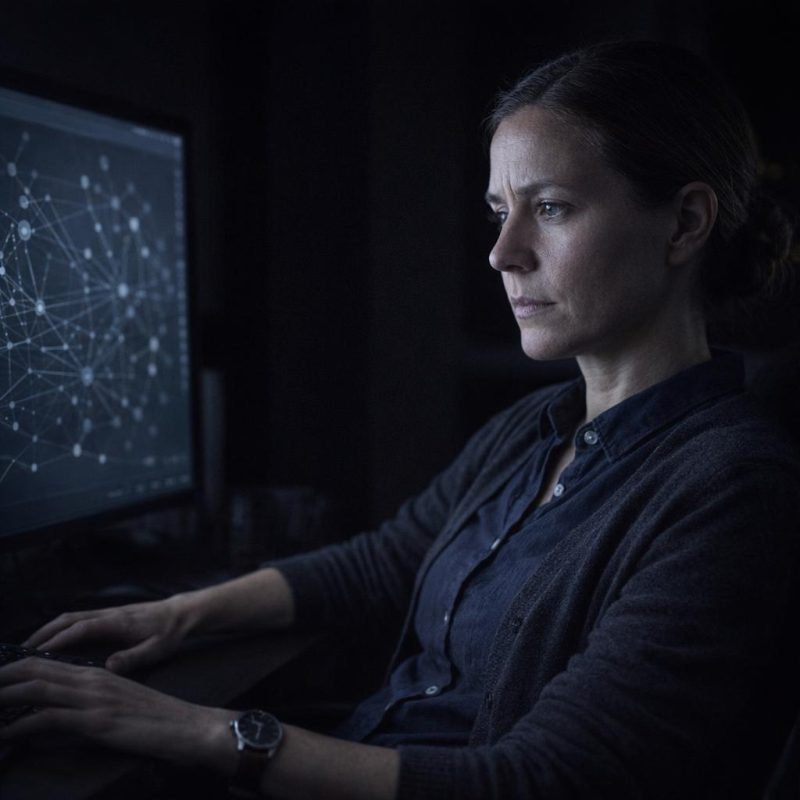 Image by RM AI
The Shadow Organization
I took the three shell company names from Diane Foster's profile and the parent company name from the combined search and put them all into a single query — something I should have done earlier but had been building toward. The results came back across multiple tabs. Most of it was registry filings, the dry administrative paper trail I'd been working through for days. But one result was different. It was a thread on a legal advice forum, two years old, started by someone asking about a company name I recognized from my diagram. The replies were long. Other users had chimed in with their own experiences, their own company names, their own stories. I read through the whole thread. Then I followed the links embedded in it to two more threads on different forums. The picture that assembled itself across those pages described an operation that had been running for years, touching universities in at least seven states, with students who had accumulated gambling debts through campus-adjacent networks appearing again and again in the accounts. The forum users wrote about it in careful, frightened detail — names changed, specifics blurred, but the shape of it consistent across thread after thread. I sat back from the screen. The room was very quiet. The scope of what I was reading was so much larger than I had let myself imagine.
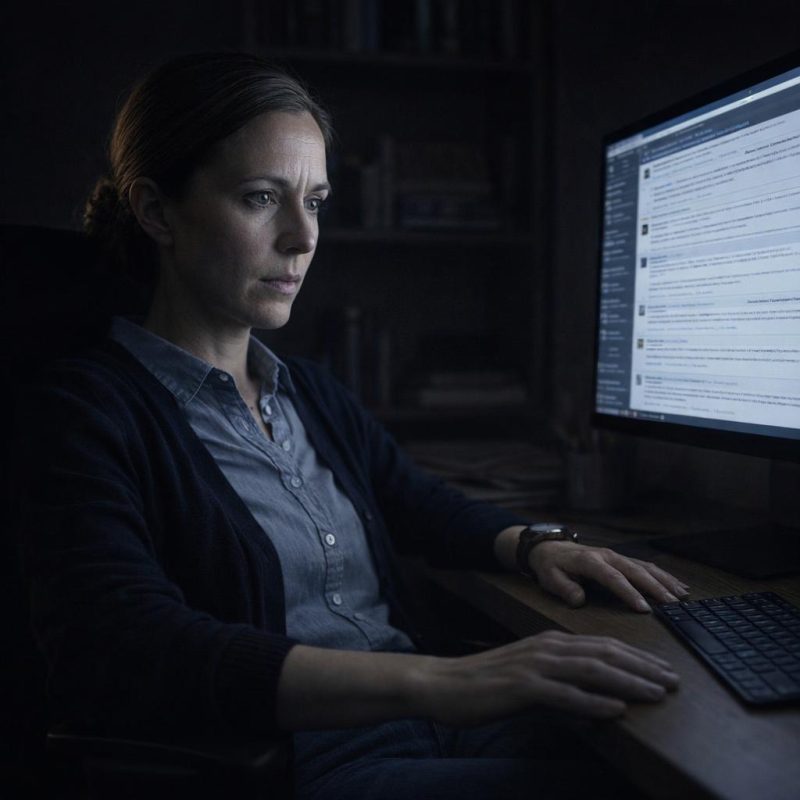 Image by RM AI
Methods and Operations
I kept reading. The forum threads had shifted from naming companies to describing how the whole system actually worked, and I made myself slow down and take it in carefully, the way I would have approached any document analysis at work. The entry point was always small — a loan of a few hundred dollars, sometimes less, offered through a campus-adjacent contact during a moment of financial stress. The interest structure was buried in the contract language, compounding in ways that weren't immediately visible. A missed payment triggered a penalty. The penalty carried its own interest. Within six months, a four-hundred-dollar loan could become four thousand. Within a year, it could be ten times that. One forum user had posted a breakdown with actual numbers, and I copied them into my notes with my hand moving steadily even though my chest felt like something was sitting on it. The system wasn't built to be repaid, according to the people writing about it — it seemed to create a permanent obligation instead. I had to stop and breathe for a moment before I could keep going. Then I scrolled further and found a case study — a young woman, early twenties, health sciences background, debt originating in her sophomore year — and the timeline matched Chloe's college years almost exactly.
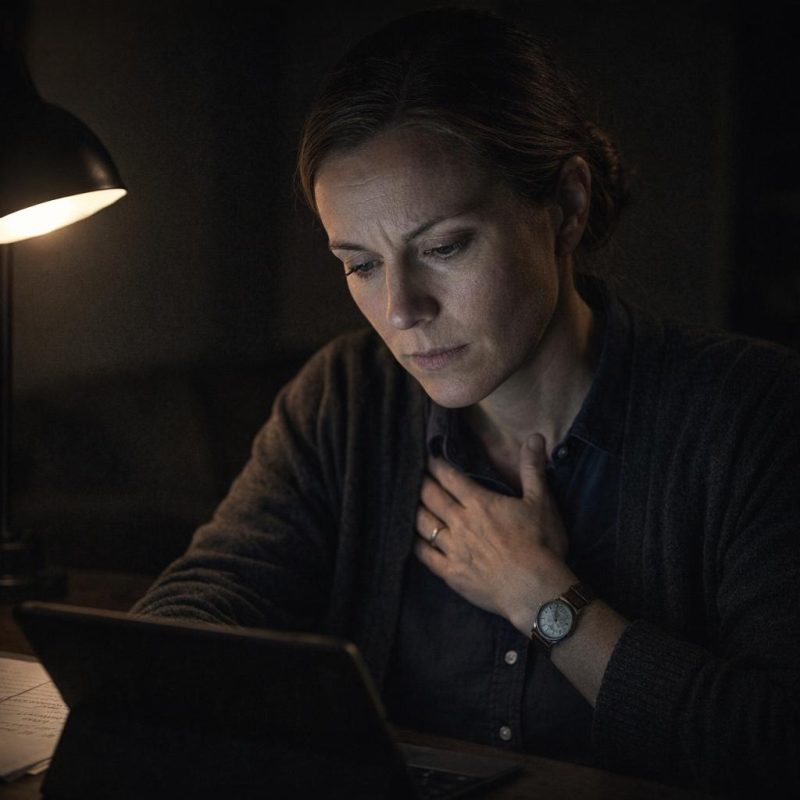 Image by RM AI
The Entrapment Pattern
I read the case study twice. The young woman in it had been approached during a medical crisis — not her own, but a family member's. The account described how the initial contact had come through someone she already trusted, a peer, someone who seemed to be helping. The loan had covered an immediate gap, something urgent that couldn't wait for financial aid processing or a family wire transfer. It had felt like a lifeline. I sat with that word for a moment. Lifeline. Chloe had gone through something like that in her junior year — a health scare that had kept her off campus for nearly six weeks, a stretch of time she'd been vague about ever since, deflecting my questions with reassurances that everything was fine now. I had let it go because she'd seemed okay when she came back. The case study described how the victim hadn't told her family about the loan because she'd been embarrassed, because she thought she could handle it, because the contact had specifically suggested keeping it quiet to avoid worry. I set my pen down. The details in the document — the timing, the vulnerability, the trusted intermediary, the secrecy — ran parallel to everything I knew about that six-week gap in Chloe's junior year, and I couldn't shake the feeling that the resemblance was more than coincidence.
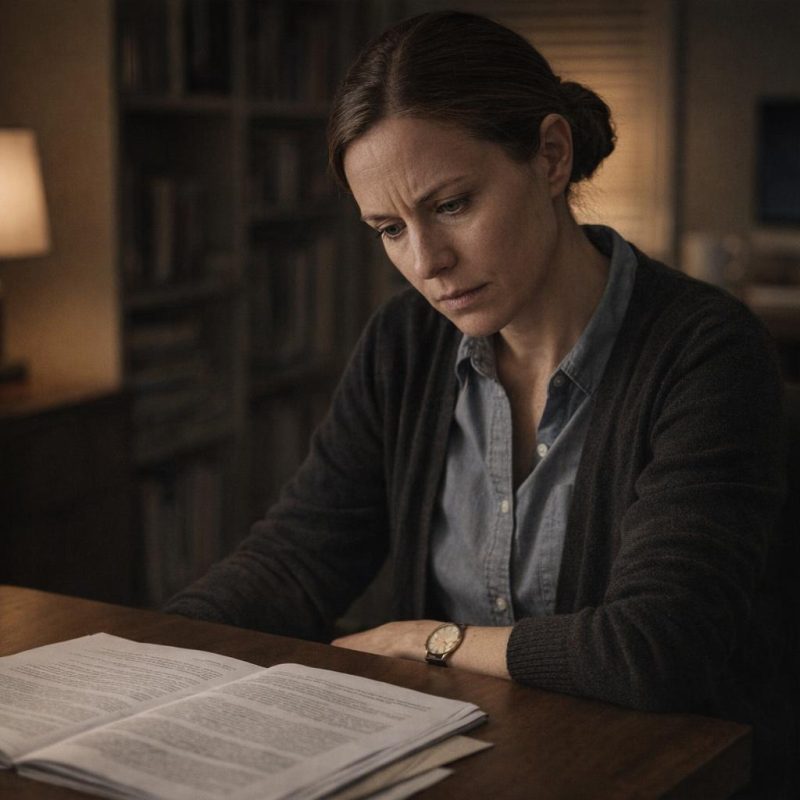 Image by RM AI
Previous Victims
I followed a link at the bottom of the case study to a separate thread, this one specifically about families. Not the victims themselves — the parents, the siblings, the people who had found out after the fact. The accounts were harder to read. One family had liquidated a retirement account. Another had sold a house. A father wrote about co-signing what he thought was a consolidation loan, not understanding until months later what he had actually agreed to. Several of the posts described graduation events — parties, dinners, ceremonies — where the atmosphere had shifted in ways the families hadn't understood at the time, where people had shown up who didn't quite fit, where money had changed hands in ways that left everyone confused afterward. I had to stop scrolling twice just to keep my breathing even. These weren't cautionary abstractions. These were people describing the specific mechanics of how their families had come apart. I wrote down every detail that felt relevant and kept moving through the thread. Near the bottom, someone had posted a follow-up dated about two months ago, describing a graduation party that had taken place in the spring — and the account of what happened at that event made my hand go still on the mouse.
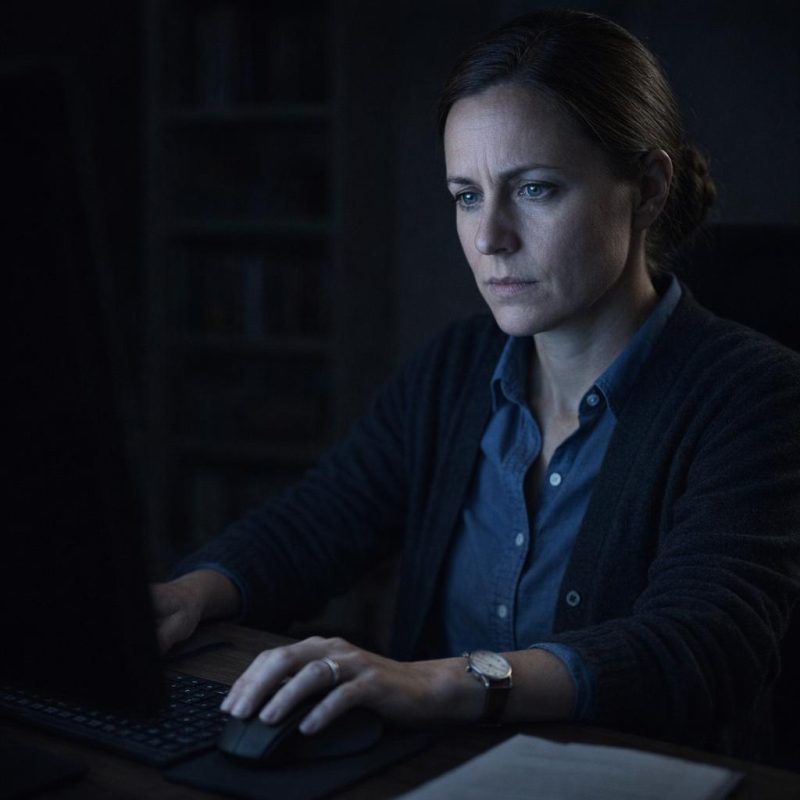 Image by RM AI
The Aftermath
The follow-up post was detailed in the way that only comes from someone who has had months to reconstruct exactly what went wrong. The party had been a normal family celebration on the surface — catered, well-attended, the kind of event that gets photographed and posted and remembered fondly. Except that by the end of the evening, the family had signed documents they hadn't fully read, in the middle of a gathering where the social momentum had made it hard to pause and ask questions. The debt that surfaced in the weeks afterward was staggering. The parents had believed they were helping their son. They had written checks. They had made calls. They had done everything loving parents do when a child is in trouble, and every one of those actions had fed into an outcome that left them worse off than when they started. I read through the other aftermath accounts more slowly after that. Marriages that hadn't survived the financial strain. A mother who had stopped speaking to her daughter, not out of anger but out of grief so heavy it had closed off the relationship entirely. I sat with all of it for a long time after I finished reading, the screen dimming around the edges of my vision, the weight of what these families had lost settling into the room around me.
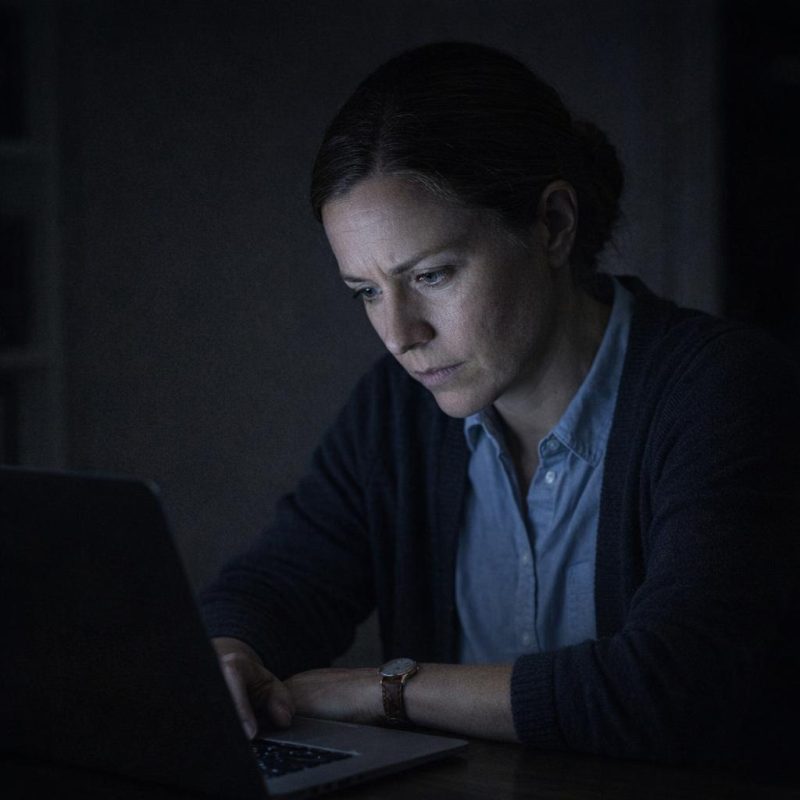 Image by RM AI
The Timeline
I finally pulled up the calendar. I had been avoiding it in some small way, keeping the research abstract enough that the timeline hadn't fully landed. But I needed to see the number. I opened the app and found the date Chloe had given me for the party — the date printed on the invitations, the date I had been building toward in all of this research — and I counted forward from today. Six days. The party was six days away. I sat back and looked at the number for a long moment. Six days wasn't a comfortable margin. It wasn't enough time to be careful and methodical and thorough in the way I preferred to work. It was barely enough time to act at all, depending on what acting was going to require. I thought about the families in those forum threads, the ones who had described the moment they understood what was happening — almost all of them had described it as too late, as a realization that arrived after the point where it could have changed anything. I was not going to be one of those accounts. I didn't know yet exactly what I was going to do, but the six days sat in front of me like a hard wall, and the distance between now and then felt both very short and very heavy.
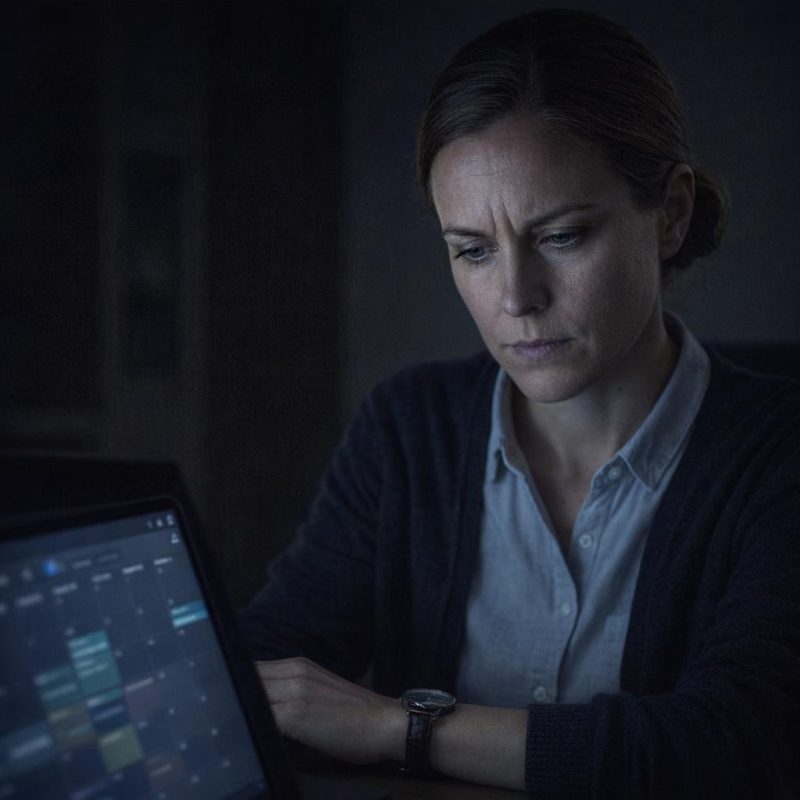 Image by RM AI
Understanding the Symbols
I went back to the original forum thread, the first one I had found, and looked for the section I had skimmed past earlier — the part specifically about the symbols. There were several posts dedicated to them, written by people who had clearly done their own research or had access to someone who had. The three marks weren't decorative. According to the most detailed post, each one carried a specific function within the system. The first indicated the event type and scale. The second encoded the location in a format recognizable to anyone trained to read it. The third was a confirmation signal — it indicated that the event had been approved and that attendance by collectors was expected. Together, the three marks appeared to function as a kind of beacon, making the event's details readable to anyone within the network who knew what to look for. The post included a diagram. I looked at it for a long time, then pulled up the photograph I had taken of Chloe's invitation. I held my phone next to the screen and compared them mark by mark. The symbols on Chloe's invitation matched the diagram in every detail — and the third mark, the confirmation signal, was present and complete.
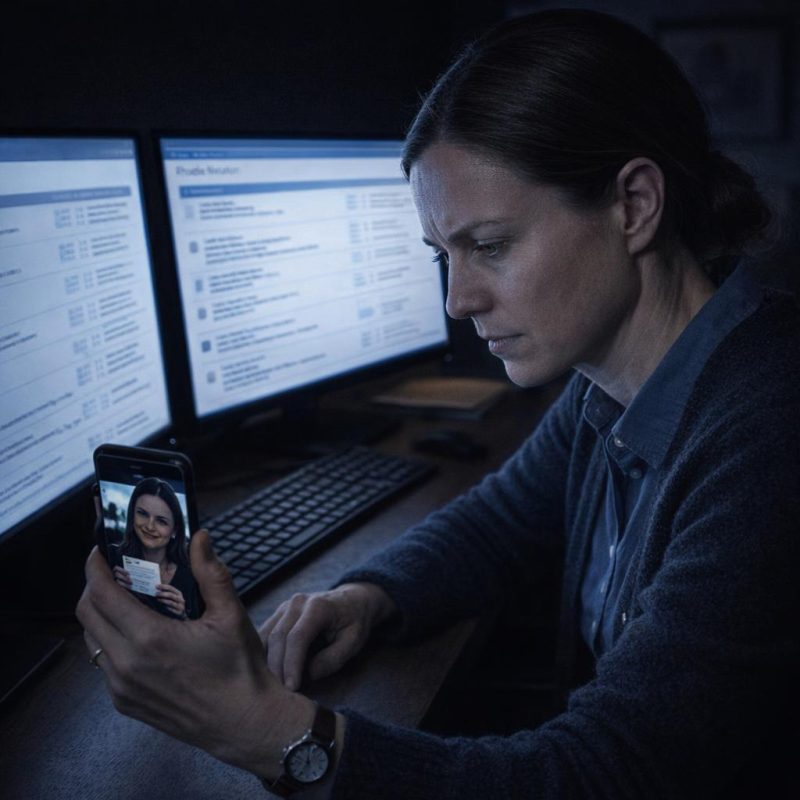 Image by RM AI
The Signal
I set my phone down and sat with what I had just put together. The invitations weren't just paper. They were a transmission. The moment Chloe mailed them — or handed them out, or let them leave her possession in any form — she would be sending something through a network I was only beginning to understand, something that named a specific date, a specific address, and indicated that the event was ready. Everyone on that guest list would be gathered in one place at one time. People who loved Chloe. People who would open their wallets without hesitation if someone told them she needed help. I had been thinking about it as something that could go wrong at the event, some confrontation or pressure that might happen during the evening. But the forum accounts and the symbol breakdown pointed to something more structural than that — the event itself, the gathering of specific people at a known location and time, seemed to be what the symbols were pointing toward. I didn't have the full picture yet. There was still too much I couldn't confirm about Chloe's specific situation. But the shape of what I was looking at had become very clear, and it sat in the room with me like something with weight and edges.
 Image by RM AI
My Parents on the List
I picked up the guest list. I had looked at it before as a logistical document — who was coming, how many people, what the catering numbers needed to be. I looked at it differently now. My mother's name was near the top, her address written in Chloe's careful handwriting. My father's name just below hers. I thought about my mother's face when Chloe called her on her birthday, the way she lit up, the way she would do absolutely anything for that girl without a second thought. My father was the same — steady and generous in the particular way of someone who had worked hard his whole life and wanted his family to have what he hadn't. Further down the list were names I recognized from decades of shared history: my closest friend from college, my supervisor at work, two couples who had been at my wedding and at Chloe's christening and at every significant moment in between. Every single one of them had resources. Every single one of them loved Chloe without reservation. Every single one of them would have walked into that party and done whatever was asked of them if someone had told them it was for her. The list sat in my hands, and the full weight of who was on it — and what that meant — settled over me like something I couldn't put down.
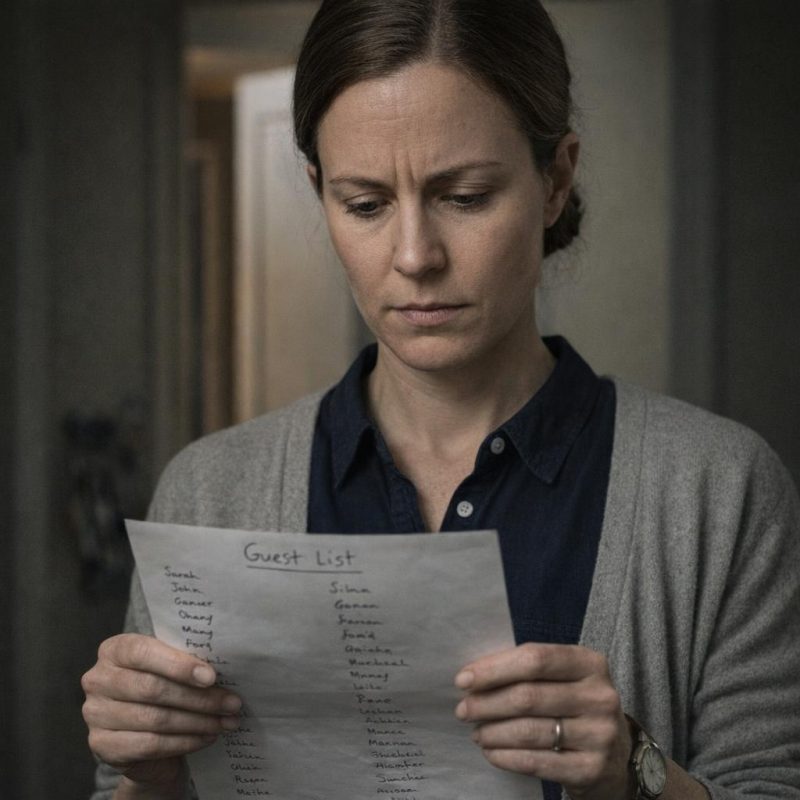 Image by RM AI
The Medical Bills
I pulled Chloe's old medical files out of the cabinet where I'd kept them — not because I was organized, but because I couldn't throw anything away that had her name on it. The stack was thicker than I remembered. She'd had her first serious episode at sixteen, then a worse one at nineteen that had kept her out of school for almost a full semester. I remembered that year in pieces: the specialist appointments, the medication adjustments, the bills that arrived in waves after the insurance had done what it could and left the rest to us. Except we hadn't covered all of it. I had covered what I could, and Chloe had insisted on handling the rest herself once she turned twenty, said she didn't want to keep being a burden. I had let her, because she'd seemed so determined to stand on her own. I sat there now with the dates in front of me — the worst of the health crisis, the gap in the bills, the point where the unpaid balances had stopped appearing in the mail. I spread the papers out and looked at the timeline, and something cold moved through me when I saw how closely it lined up with the pattern I'd been tracing all evening.
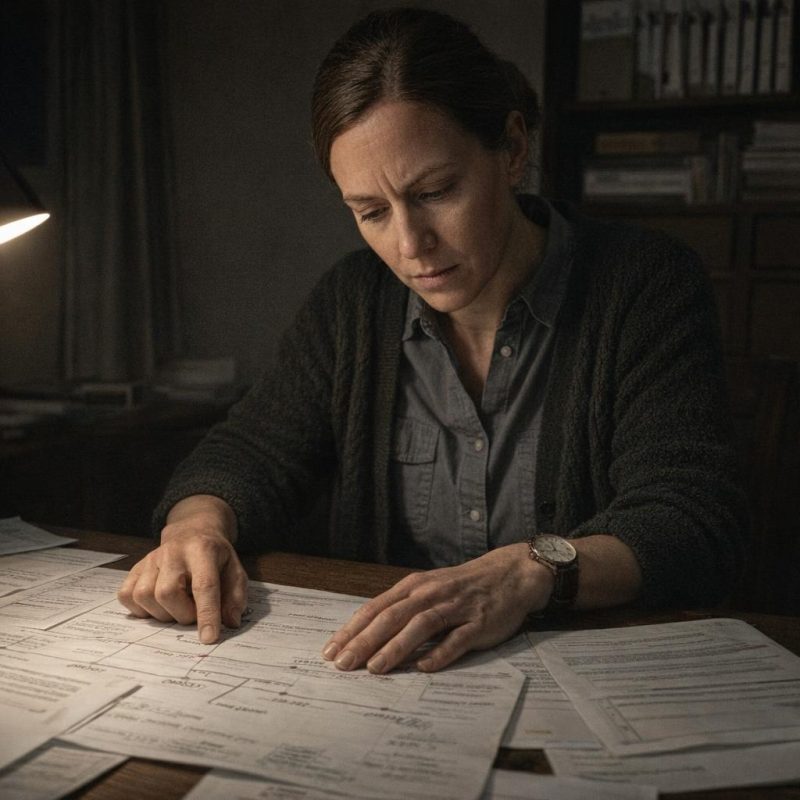 Image by RM AI
Understanding the Trap
I sat back and tried to think about it the way I would think about any system I was trying to understand at work — not as a mother, just as someone mapping a mechanism. The way it seemed to work was almost elegant in how cruel it was. You found someone already carrying weight they were ashamed of. You offered them a way out that felt manageable at first. And then, once they were in, you didn't need threats right away — you just needed them to love someone. Because the moment they loved someone, they had something to lose. Chloe loved me. She loved her grandparents. She loved the people on that guest list the way you love people who have shown up for you your whole life. And if someone had made her feel that her silence was the only thing standing between those people and harm, she wouldn't have told a soul. Not me, not anyone. The shame would have worked alongside the fear — each one feeding the other, keeping her locked in place. I thought about my daughter sitting alone with all of that, and something in my chest pulled so tight it was hard to breathe.
 Image by RM AI
The Threat Model
I opened a new search window and started looking for accounts of people who had tried to get out of arrangements like this — debt situations tied to gambling rings, collection schemes that used social events. I told myself I was just gathering information. What I found made me stop scrolling more than once. There were forum posts, a few buried news articles, one legal advocacy blog that had documented a series of cases in careful, clinical language that somehow made it worse. The pattern that came up again and again was escalation. It didn't start with anything dramatic. It started with a phone call. Then another. Then someone showing up at a workplace. Then messages sent to family members. One account described a woman who had tried to report the organization to local authorities — within two weeks, her elderly mother had received a visit at her home from two men who said nothing threatening, just stood there long enough to make the point. I kept reading. I found a family that had gone further than that — had hired a lawyer, had started building a case — and I read what had happened to them.
 Image by RM AI
The Weight of Knowing
I closed the laptop. I didn't close it because I'd finished — I closed it because I'd read enough to know that reading more wasn't going to change what I had to do. The room was quiet in the way rooms get late at night when everyone else is asleep and the house has settled into itself. I sat with my hands flat on the desk and let everything I'd learned over the past several hours just sit there with me. Chloe at nineteen, sick and scared and trying not to be a burden. The guest list full of people who loved her. The invitations already printed and waiting. The accounts of what happened to families who pushed back without being careful. I wasn't panicking. I noticed that about myself — I wasn't panicking, I was sorting. My background had trained me to stay functional when the information was bad, to keep the pieces organized even when the picture they made was frightening. The picture was frightening. But I had pieces I could work with, and I had time, and I was not going to let my daughter carry this alone for one more day than necessary. The quiet settled around me, and I sat in it.
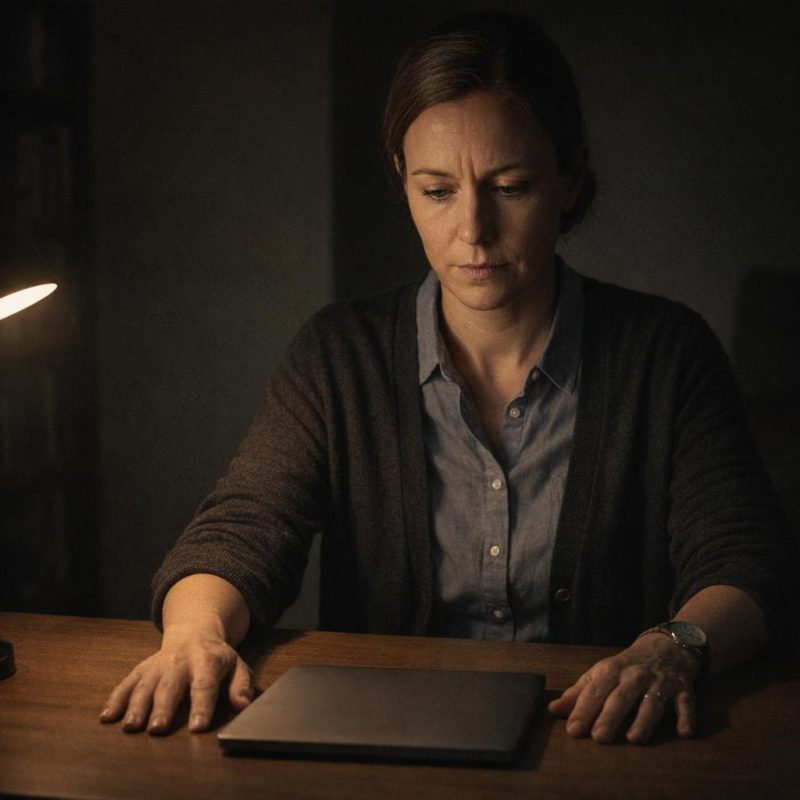 Image by RM AI
The Decision
I picked up my phone and pulled up the venue's number from the confirmation email Chloe had forwarded me three weeks ago, back when this had all still looked like a celebration. I sat there with the number on the screen and didn't dial it yet. Once I made this call, there was no version of events where Chloe didn't find out what I knew. She would come home and the party would be gone and she would understand immediately that I had been in her things, in her plans, in the secret she had been carrying alone for what might have been years. I thought about whether that was the right thing to do to her. I thought about it for about thirty seconds. Then I thought about my mother's name at the top of that guest list, and my father's name just below it, and the two couples who had been at Chloe's christening, and every person who would have walked through those doors without a moment's hesitation because they loved her. There was no version of this where I put the phone down. I held it in both hands, the screen still lit, the number still waiting.
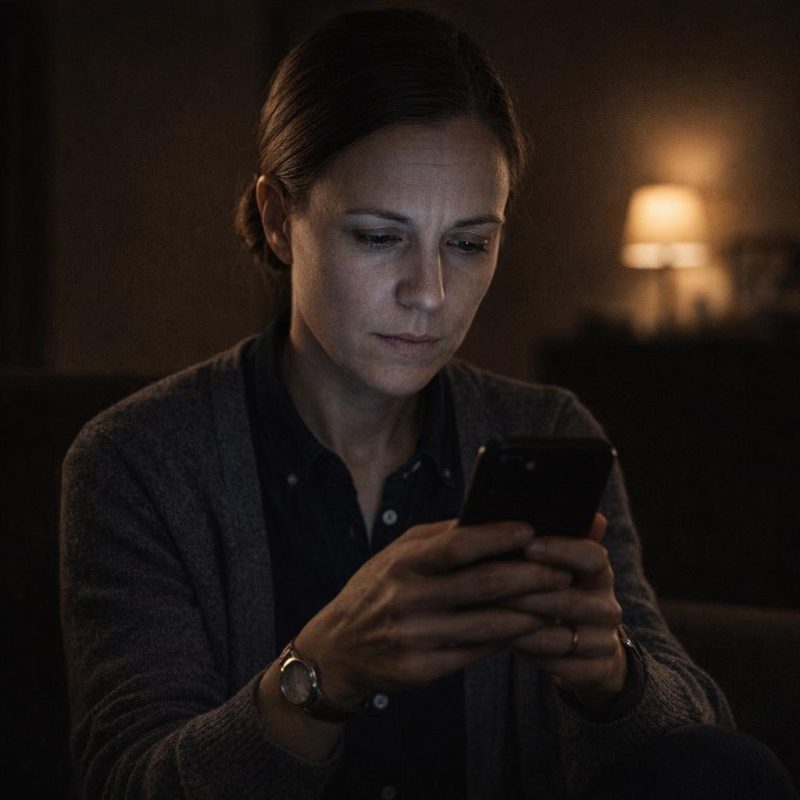 Image by RM AI
Canceling the Trap
I dialed. The venue coordinator picked up on the third ring, professional and pleasant, and I didn't let her get through her greeting before I told her I needed to report a credible security threat connected to the Chloe's graduation party booking. I heard her tone shift. I told her that the invitations for the event contained hidden symbols — embedded markers I had identified through my work in archival security — and that those symbols were connected to a criminal organization using the party as a collection event to target my family members. I told her I had documentation. I told her the event needed to be canceled immediately and that her venue's security team needed to be made aware of the threat in case anyone connected to the organization attempted to make contact. There was a pause. I waited. She asked me to hold, and I heard muffled voices, and then she came back and her voice was different — careful, deliberate — and she said they were canceling the booking effective immediately and that their head of security would be notified within the hour.
 Image by RM AI
Destroying the Evidence
I hung up and found the printing company's number in the same email chain. The man who answered sounded young, a little distracted, and I didn't waste time. I told him I was the account holder for the graduation party invitation order and that I needed every remaining card in their inventory destroyed — shredded, not recycled, not held. I told him the invitations contained symbols linked to criminal activity and that distributing them in any form could constitute facilitation of a criminal scheme. I used that language deliberately. I heard him put me on hold. When he came back, his voice had lost the distracted quality entirely. He confirmed they had a remaining stock of forty-three cards that had not yet been mailed and said they would process them for secure destruction immediately. I asked him to confirm when it was done. He said he would call me back. I stayed on the line anyway, and after a moment I heard it — the low mechanical grind of the shredder starting up on the other end of the call.
 Image by RM AI
Waiting for Chloe
I set the phone down and went to get the invitation box from my office. I carried it to the kitchen table and set it in the center. Then I went back for my printed research — the timeline I'd built, the forum accounts, the notes I'd made in the margins of the medical file copies. I laid everything out in the order I'd discovered it, the way I would have organized evidence at work: clear, sequential, impossible to misread. The invitation sat on top, face up, the symbols visible. My notes were beside it. The medical timeline was at the far end. I pulled out a chair but didn't sit in it. I stood at the edge of the table and looked at what I'd assembled, and I thought about Chloe walking through the front door, dropping her bag, looking up. She would see it before she saw me. She would know, in the first second, that it was over — the secret, the silence, all of it. I didn't move the chair back in. I left everything exactly as it was, the kitchen light steady over the table, the evidence laid out and waiting.
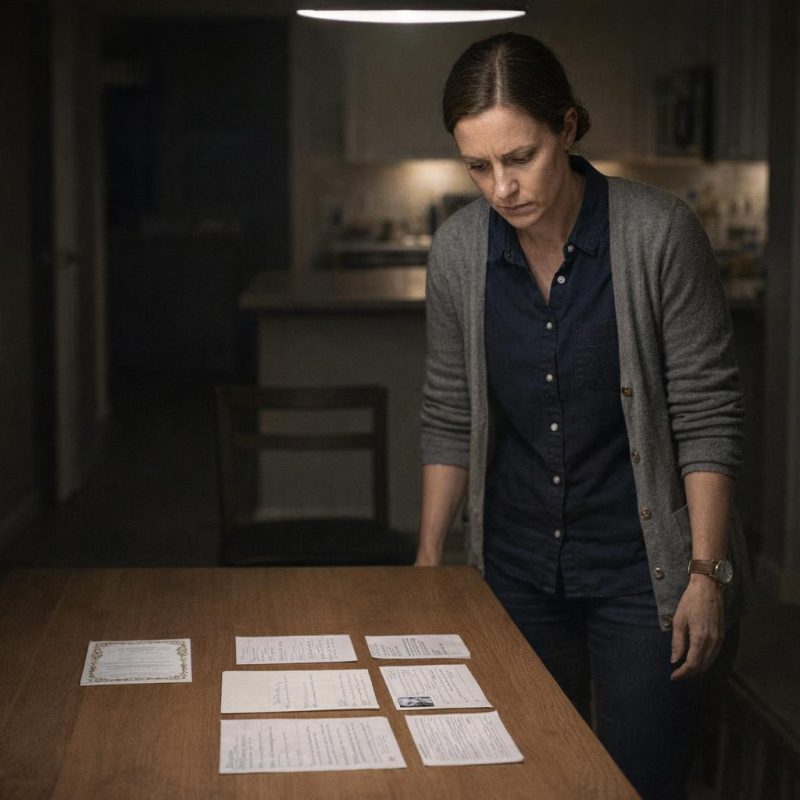 Image by RM AI
The Empty Table
I heard her car before I saw it — the familiar rattle of the exhaust as she turned into the driveway. I stepped back from the kitchen window just enough to watch without being seen. She came up the front walk with her bag slung over one shoulder, head tilted slightly, and I could tell from the way she moved that she had no idea. She was humming something. I couldn't hear it through the glass, but I could see it in the loose set of her shoulders, the unhurried pace of her steps. She looked like someone coming home from an ordinary day. I moved to the hallway and waited. The front door opened. She dropped her keys in the bowl by the door the way she always did, called out a quick hey, and came around the corner into the kitchen. I watched her eyes go to the table first — the way they always did when she walked in. The table was bare. The boxes were gone. The printed notes were gone. Everything I had laid out so carefully the night before had been cleared away. She stopped in the doorway, and her gaze moved slowly across the empty surface.
 Image by RM AI
The Symbols Revealed
She started to say something — something light, something about dinner — and I reached behind me to the counter where I'd set the single invitation I'd kept out. I turned it over so the back faced her and held it up in the evening light coming through the window. The three embossed symbols caught the light exactly the way they had the first time I'd noticed them, raised and deliberate against the cream paper. I didn't say anything. I just held it there and watched her face. She saw it. I know the exact moment she saw it because everything changed at once — the half-formed sentence died in her throat, her hand dropped from where it had been reaching toward the counter, and the color left her face so completely and so fast that I took a step toward her on instinct. She didn't move. She stood in the kitchen doorway with her eyes fixed on those three small marks, and her face went the color of the paper itself.
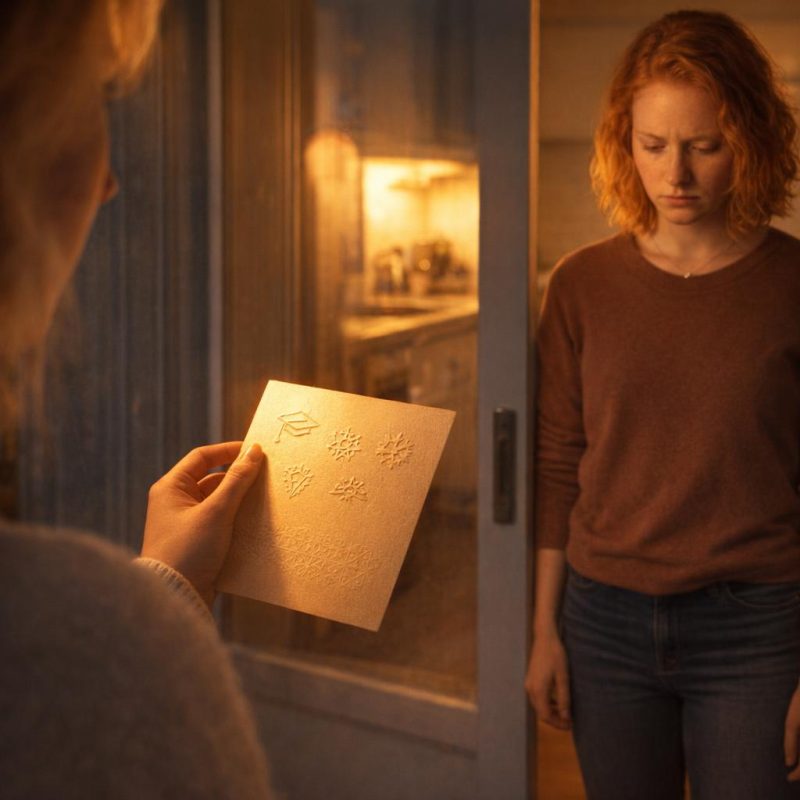 Image by RM AI
The Question
I set the invitation down on the counter, face up, and pulled out the chair across from where she was standing. I sat down slowly and folded my hands on the table. I kept my voice as level as I could manage. I asked her how much she owed. I asked her who the symbols were meant to signal. I told her I already knew more than she thought I did, and that I wasn't asking so I could be angry — I was asking because I needed to understand the full shape of it before I could figure out how to help her. She didn't answer right away. She moved to the chair at the end of the table and lowered herself into it like someone who had been carrying something very heavy for a very long time and had finally been given permission to put it down. She looked at the invitation. She looked at her hands. Outside, a car passed on the street and the sound faded, and then there was nothing but the hum of the refrigerator and the space between us, wide and waiting.
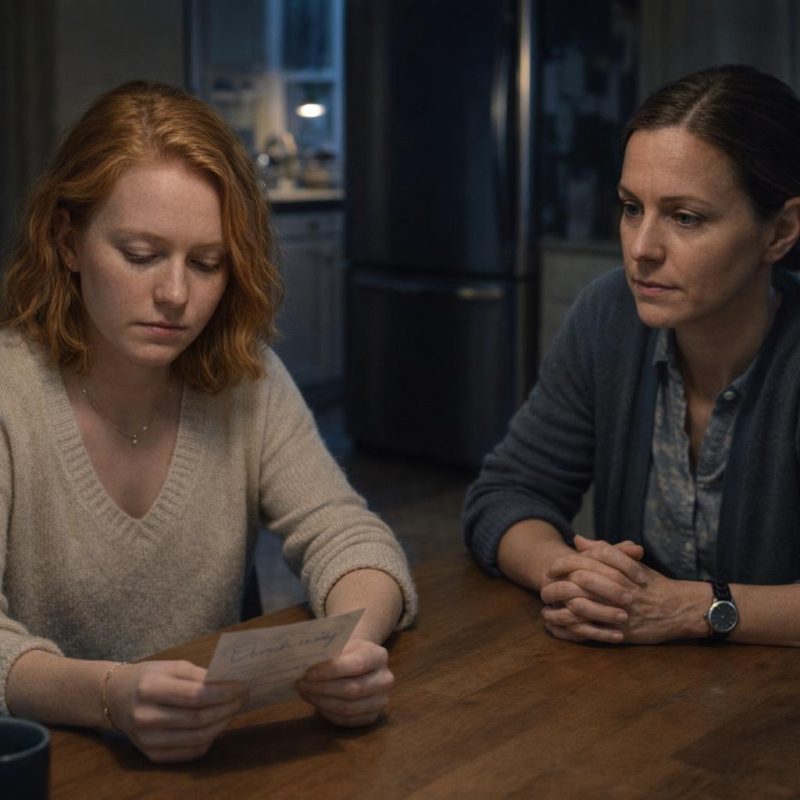 Image by RM AI
The Confession
She started talking and she didn't stop for a long time. It came out in pieces at first — halting, circling back, correcting itself — and then all at once, like something that had been held under pressure for too long. Three years ago she'd had a procedure her insurance wouldn't cover. The bills had stacked up faster than she could manage on her salary, and someone she'd met through a friend had offered her a short-term loan, no paperwork, easy terms. She'd taken it. The terms changed within sixty days. The interest compounded in ways she hadn't understood, and when she'd tried to pay it down, the balance kept growing. Then came the first threat — a message that told her exactly where she worked, what time she left, what she drove. After that she'd paid whatever they asked, whenever they asked, and it still wasn't enough. The graduation party had been their idea, framed as a way to settle the remaining balance in one event. The symbols on the invitations were a signal to their people — a marker that told anyone who knew the code that the guests at this party were targets for secondary collection. She looked up at me when she finished, her eyes red, and said she hadn't known how to tell me. Then she said she still owed them forty-three thousand dollars.
 Image by RM AI
Calling for Help
I didn't let myself sit with that number for long. I stood up, went to the counter where my phone was charging, and scrolled to Elena's contact. I'd worked alongside Elena Rodriguez on a corporate fraud case about eight years back — she'd been sharp, fast, and completely unintimidated by organizations that expected people to be afraid of them. She picked up on the third ring. I told her I had a situation involving my daughter, a predatory lending operation, documented threats, and a collection scheme that had been running for three years. I gave her the short version, clean and factual, the way I'd learned to brief people who needed to move quickly. Elena didn't ask unnecessary questions. She asked two: whether Chloe was physically safe right now, and whether I had documentation. I said yes to both. There was a brief pause, and then she said she'd be at my house within the hour.
 Image by RM AI
Security Consultation
I hung up and looked at Chloe, who was still sitting at the table with her hands wrapped around a glass of water I'd set in front of her. She looked hollowed out but steadier than she had twenty minutes ago. I told her I had one more call to make. Detective Walsh had retired from the force about five years back and now ran a small private security firm — I'd crossed paths with him twice during my time in archival security, once on a case involving document theft and once on something I was still not allowed to discuss. He was methodical, he was calm, and he did not rattle easily. He picked up on the first ring. I explained the situation in the same clipped terms I'd used with Elena — the organization, the debt, the collection scheme, the symbols on the invitations. I told him I needed a threat assessment and a protection strategy for my daughter, starting tonight. He said he could be there. Then he asked me the name of the organization Chloe had borrowed from, and when I told him, the line went completely silent.
 Image by RM AI
Building the Case
Elena arrived forty-seven minutes after I'd called her, a leather briefcase in one hand and a compact recording kit in the other. She set both on the kitchen table without ceremony, introduced herself to Chloe in a tone that was warm but efficient, and sat down across from her. I made coffee and stayed close but out of the way — Elena had a method, and I knew better than to interrupt it. She started at the beginning: the original loan, the name of the person who'd brokered it, the date, the amount. She recorded everything on a small digital device and took parallel notes in a legal pad with the focused speed of someone who had done this many times before. Chloe answered every question. Her voice was unsteady at first, but it evened out as the hour went on, the way voices do when the telling of a thing starts to feel less like exposure and more like evidence. By the time Elena reached the threats, Chloe was speaking clearly and in sequence, and the legal pad was nearly half full. I stood at the counter and watched the pages fill, and something that had felt shapeless and enormous all week was slowly becoming a record.
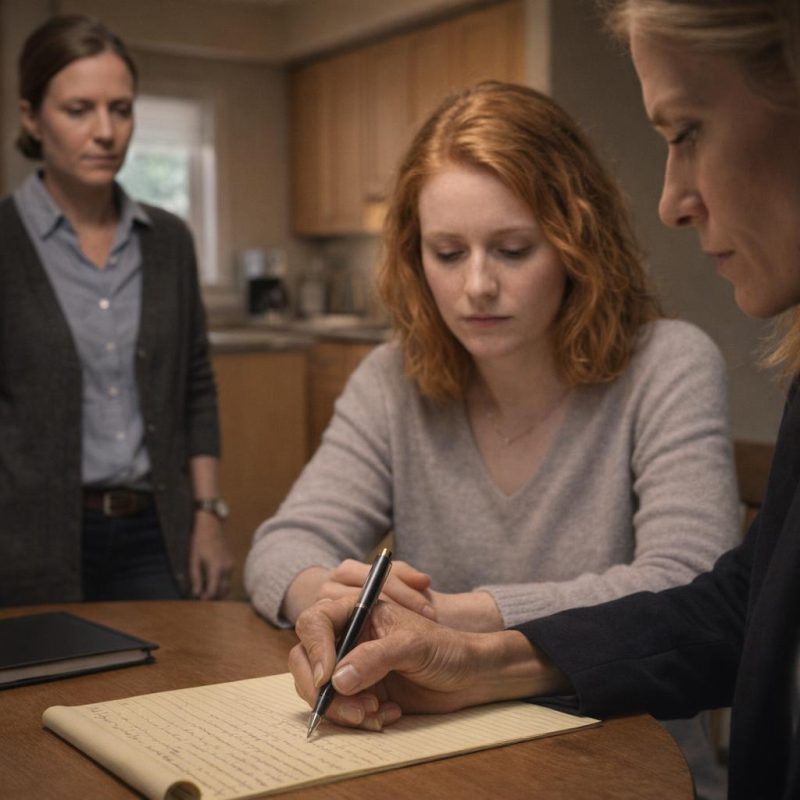 Image by RM AI
The Protection Plan
Walsh arrived just after nine. He came in quietly, nodded to Elena, and spent the first fifteen minutes moving through the house without saying much — checking the locks on the back door, testing the window latches in the hallway, standing at the front window for a moment to look at the street. He noted two things he wanted changed before morning and wrote them down on a small notepad he kept in his jacket pocket. Then he came and sat at the table with the rest of us. He'd printed a one-page protocol on his phone and walked us through it point by point: where Chloe should and shouldn't be until the legal process was underway, how to handle any contact from the organization, what to document and how. He and Elena talked through the coordination between the security side and the legal side with the ease of people who had worked adjacent to each other before. Chloe sat between them and listened, and I watched her posture change — the rigid set of her shoulders softening, just slightly, as the shape of a real plan settled around her.
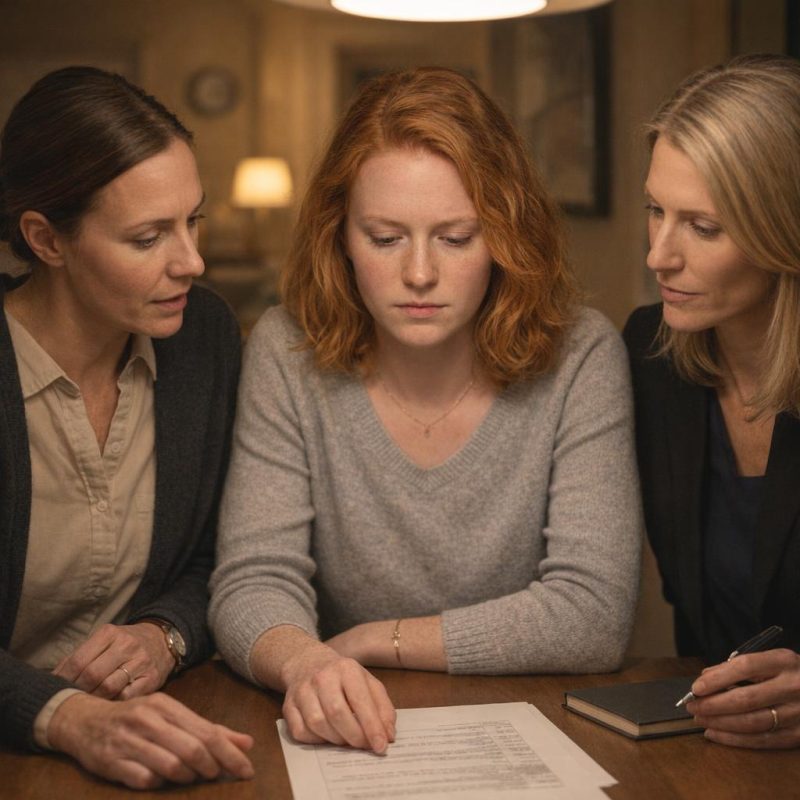 Image by RM AI
Confronting the Organization
Elena made the call at ten-fifteen in the morning, right there at the kitchen table with all of us watching. She'd already pulled up the front company's registered number, had her notes laid out, and had the call on speaker before any of us had time to feel nervous about it. When someone picked up, she identified herself by name and bar number, stated clearly that she represented Chloe Harper, and informed them that any further direct contact with her client would constitute harassment under federal law. Her voice was even and unhurried, like she'd made this exact call a hundred times before. There was a pause on the other end — long enough that I counted it. Then a man's voice came back, smooth and careful, asking for a callback number. Elena gave the firm's number only. She said all future communication would go through counsel exclusively, confirmed the call was being recorded, and ended it in under four minutes. Chloe had both hands flat on the table the whole time, not moving. Walsh was already writing something in his notepad. I kept my eyes on the phone even after Elena set it down. Then it buzzed once — a text from an unlisted number, four words: "We'll be in touch."
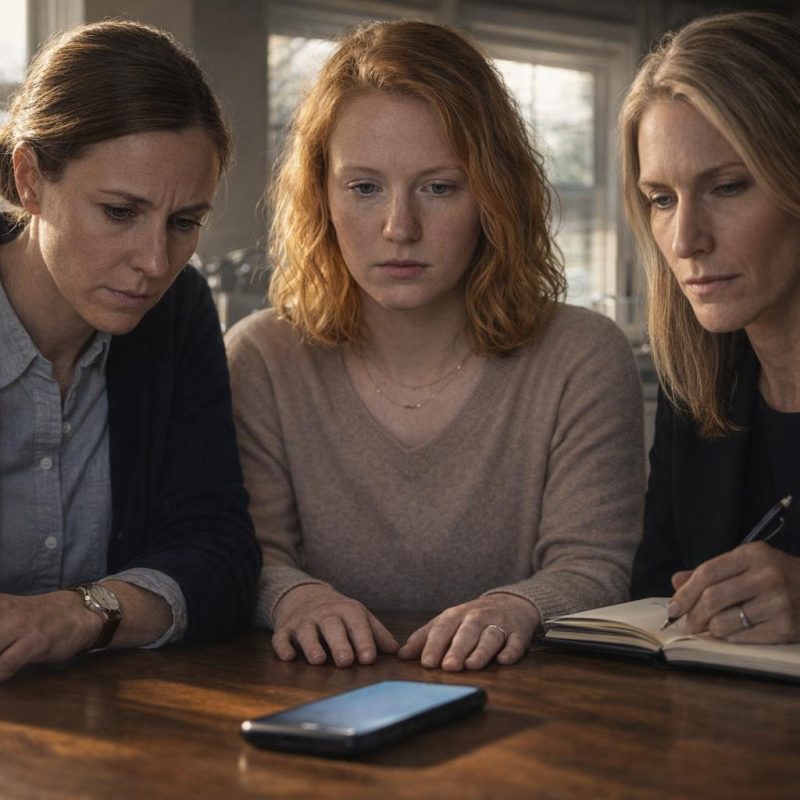 Image by RM AI
The First Night
Walsh's team did a perimeter check at eleven that night, and I heard their footsteps on the porch while Chloe and I sat on the living room couch with the lights low. We weren't talking much. There wasn't a lot that needed saying. At some point she'd pulled a blanket over her legs and leaned her head back against the cushions, and I sat close enough that our shoulders were touching. The house felt different than it had in weeks — quieter in a way that wasn't tense, just still. I thought about all the nights I'd spent at my kitchen table going over those invitations, turning them under the lamp, trying to understand what I was seeing. I thought about how long she'd been carrying this alone. Outside, one of Walsh's team walked the side yard, a flashlight beam sweeping briefly across the window. Chloe watched it pass and didn't flinch. That was the thing I kept coming back to — she didn't flinch. For the first time in longer than I could measure, the weight she'd been holding had somewhere else to rest.
 Image by RM AI
Beginning to Heal
The weeks after that moved differently than I expected. Elena was in regular contact with federal investigators, and there were calls and documents and things I wasn't always privy to, but she kept me informed at every step that mattered. Chloe started seeing a therapist twice a week — a woman who specialized in coercion and financial trauma, which I hadn't even known was a specific field until Elena recommended her. I drove Chloe to the first three appointments and waited in the parking lot each time, not because she asked me to, but because I needed to be close. Slowly, things started to shift. She started sleeping through the night. She started eating real meals again. She called me one evening just to talk, not about any of it, just to tell me about a podcast she'd been listening to. I noticed all of it. I catalogued it the way I catalogue everything — carefully, quietly, with the part of me that had spent weeks looking for danger now learning, slowly, to look for something else instead. Then one afternoon I picked her up from her appointment and she came through the door and smiled at me — not the careful, controlled expression I'd grown used to, but something that reached all the way up.
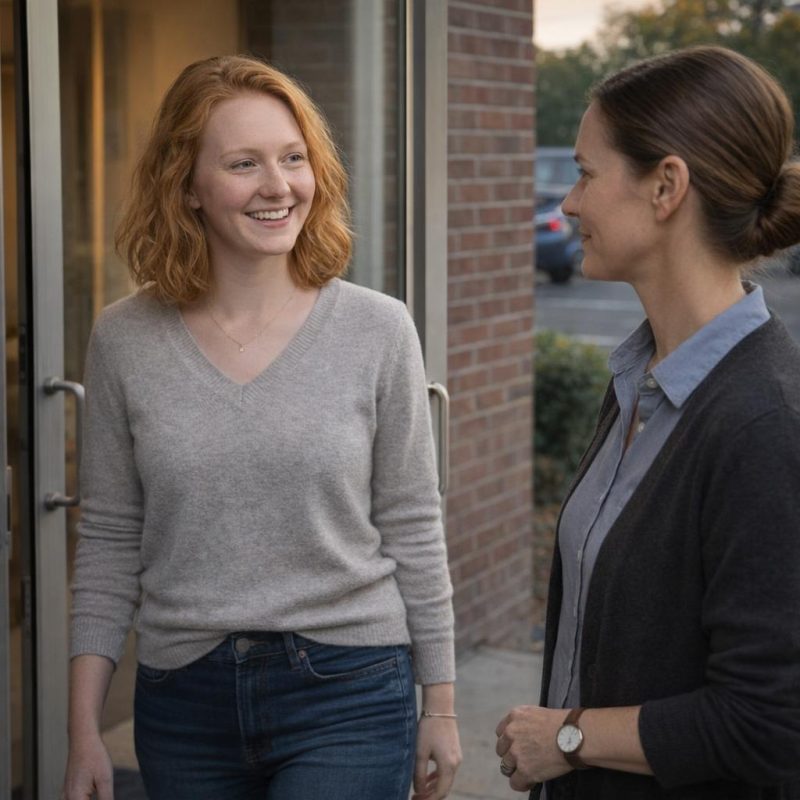 Image by RM AI
The Symbols Destroyed
The day that would have been the party fell on a Saturday. I'd known it was coming for weeks, had watched it approach on the calendar the way you watch a storm that's already been downgraded — still worth noting, no longer dangerous. Chloe came over in the morning. We didn't make a plan around it; she just showed up with coffee and we stood in the kitchen for a while without saying much. At some point I went to the drawer where I'd kept the last invitation — the one I'd held onto as documentation, the one with all three symbols still visible in the lower corner. I set it on the counter between us. Chloe looked at it for a moment, then looked at me. I didn't need to explain. I fed it into the shredder I keep beside the filing cabinet, and we both listened to the sound it made. When it was done, the tray held nothing but thin pale strips. Chloe reached over and put her hand over mine, and we stood there in the quiet kitchen on the day that was supposed to be something else entirely. The last symbol was gone.
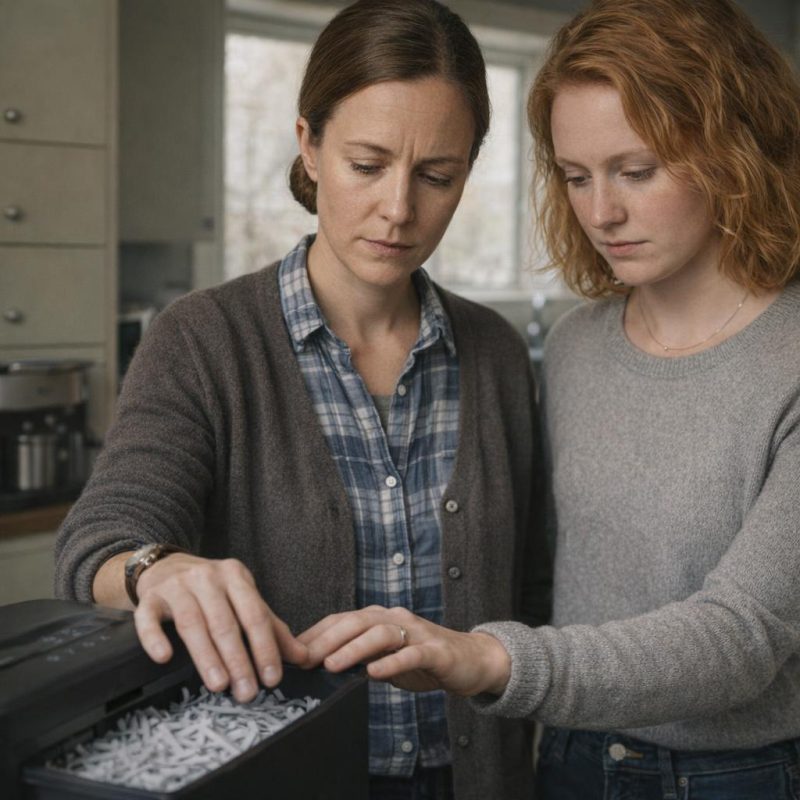 Image by RM AI
KEEP ON READING
The Brutal Realities Of Gladiator Life Beyond the Arena
David Cruz asenjo on PexelsWhen most people think of gladiators,…
By Rob Shapiro Mar 31, 2026
The Volcano Winter That Nearly Toppled Europe
Collin Ross on UnsplashMost people, if asked to name a…
By Cameron Dick Mar 31, 2026
From School Plays To Starting A Cult: 20 Of The…
The Books That Made Us. Many people will tell you…
By Farva Ivkovic Jan 31, 2025
20 Facts About Jane Grey, The Forgotten Queen Of England
A Quick, Messy, and Tragic Reign. Lady Jane Grey never…
By Maria Cruz Jan 31, 2025
20 Priceless Historical Art Pieces Rescued By The Monuments Men
Protecting Human History. While the soldiers on the front lines…
By Sara Springsteen Mar 31, 2026
Almost Every Ancient Statue Has a Missing Nose, And It's…
Gary Todd from Xinzheng, China on WikimediaWalk through the classical…
By Elizabeth Graham Mar 31, 2026