

I Bought a $5,000 Classic Car at Auction—Then Strangers Started Treating Me Like Royalty and I Realized I'd Made a Terrible Mistake
I Bought a $5,000 Classic Car at Auction—Then Strangers Started Treating Me Like Royalty and I Realized I'd Made a Terrible Mistake
The Silver Key
I almost didn't go. The estate auction was listed in a two-line classified ad, the kind that gets buried under furniture sales and storage unit liquidations, and I only caught it because I was killing time on my phone at two in the morning. But something about '1964 Lincoln Continental, no reserve' made me set my alarm for five and load the trailer anyway. When I got there, the auctioneer was moving fast — too fast, like he had somewhere else to be and this whole thing was an inconvenience. There were maybe a dozen people milling around, most of them there for the furniture and the silver. Nobody else had a trailer. When the Continental came up, I raised my paddle twice and it was over. Five thousand dollars. The previous owner, someone told me afterward, had been a reclusive billionaire who'd died a few months back. I didn't think much of that at the time. I was too busy running my hand along the door frame, breathing in the smell of expensive tobacco and aged leather that hit me the moment I pulled the handle. Then I checked the sun visor out of habit, the way you do with any used car, and a small folded note dropped into my palm. Four words in careful handwriting: 'He is coming home.' I figured it was some old memo, something the estate cleaners had missed. I tucked it in my shirt pocket and stood there in the thin morning light, the silver key warm in my hand, those four words turning quietly in the back of my mind.
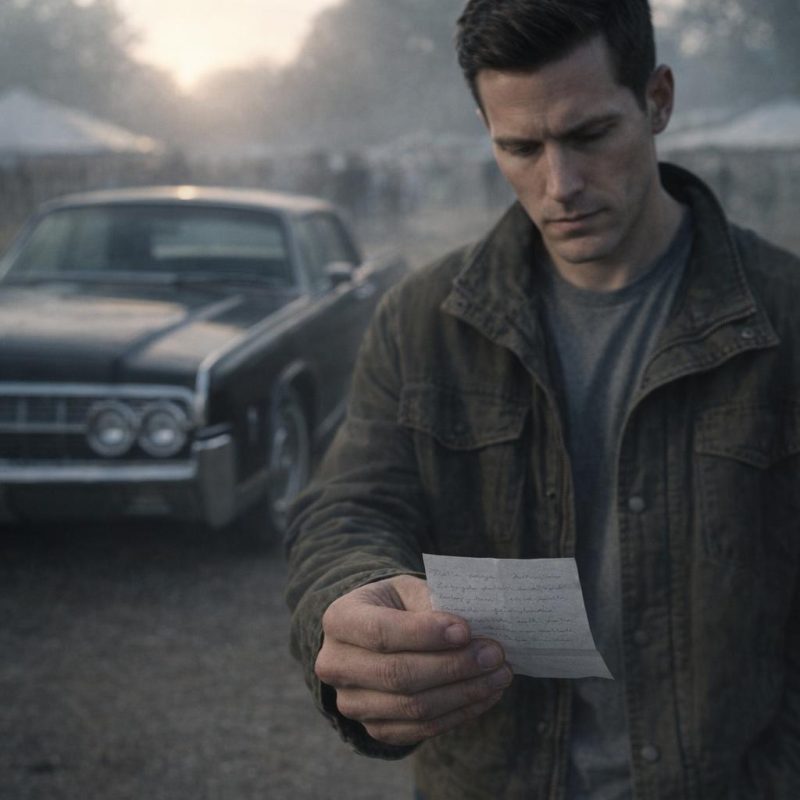 Image by RM AI
Midnight Blue and Leather
I spent the better part of that afternoon just walking around the thing. I know that sounds ridiculous, but I couldn't help it. The midnight-blue paint had no oxidation, no swirl marks, nothing — it looked like it had been kept in a climate-controlled room for sixty years, which, knowing what I'd heard about the previous owner, maybe it had. I ran my thumb along the chrome trim on the rear quarter panel and it was cold and perfect, not a pit of rust anywhere. When I finally let myself sit in the driver's seat, the leather gave just enough under my weight and the thin steering wheel felt like something from a different era entirely, purposeful and precise. I went through the dashboard instruments one by one — fuel gauge, oil pressure, temperature, all original, all functional. The back seat had fold-down armrests and enough legroom to stretch out completely. I kept thinking about what I'd paid and feeling vaguely guilty, like I'd gotten away with something. I was crouched under the dash checking the wiring when I noticed it — a small brass plate bolted to the underside of the dashboard, easy to miss if you weren't looking. The engraving was clean and deliberate: a serial number I didn't recognize, and below it, two initials. V.A.
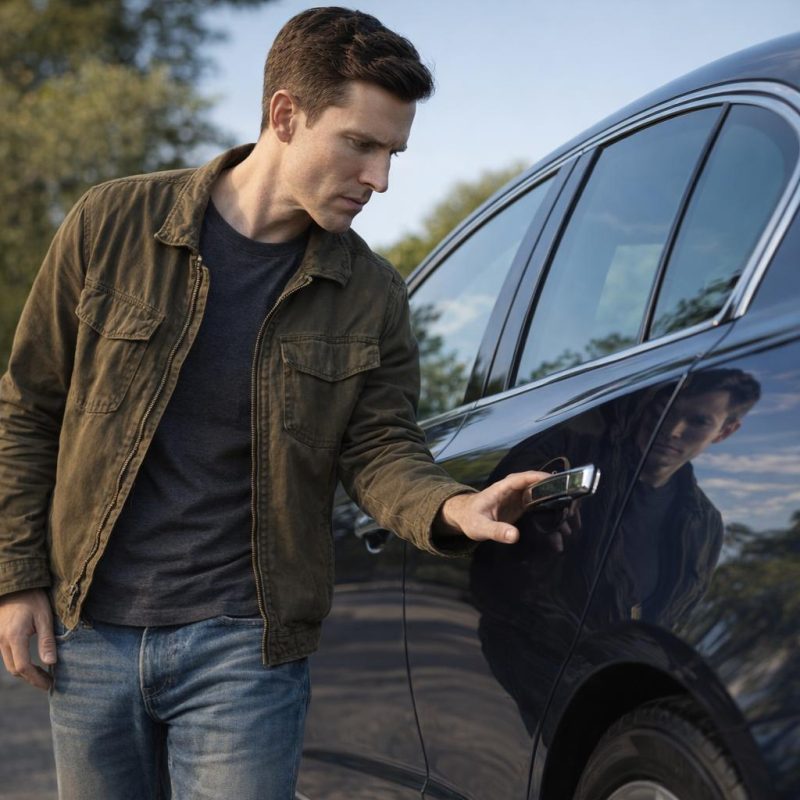 Image by RM AI
The Engine Roars
I'd been putting off the moment, half-afraid the engine would tell me the truth about what five thousand dollars actually bought. I checked the fluids first — oil was clean, coolant was full, battery terminals were tight with no corrosion. Whoever had maintained this car had done it right. I climbed in, took a breath, and turned the key. The starter caught immediately, no grinding, no hesitation, and then the engine came up from somewhere deep and settled into a sound I can only describe as authority. Not loud, not aggressive — just absolutely certain of itself. I sat there with both hands on the wheel and felt the vibration move up through the column and into my palms. I gave it a little gas, just enough to hear the response, and it answered clean and smooth without a stumble or a miss. I checked the gauges: oil pressure steady, temperature climbing to normal, everything exactly where it should be. I let it idle for a few minutes, listening for anything that didn't belong — a tick, a rattle, a hesitation. There was nothing. Just that deep, even thrum filling the garage. I leaned back in the seat and let out a long breath. The rumble settled into my chest like something that had always been there, and I kept both hands on the wheel and didn't move.
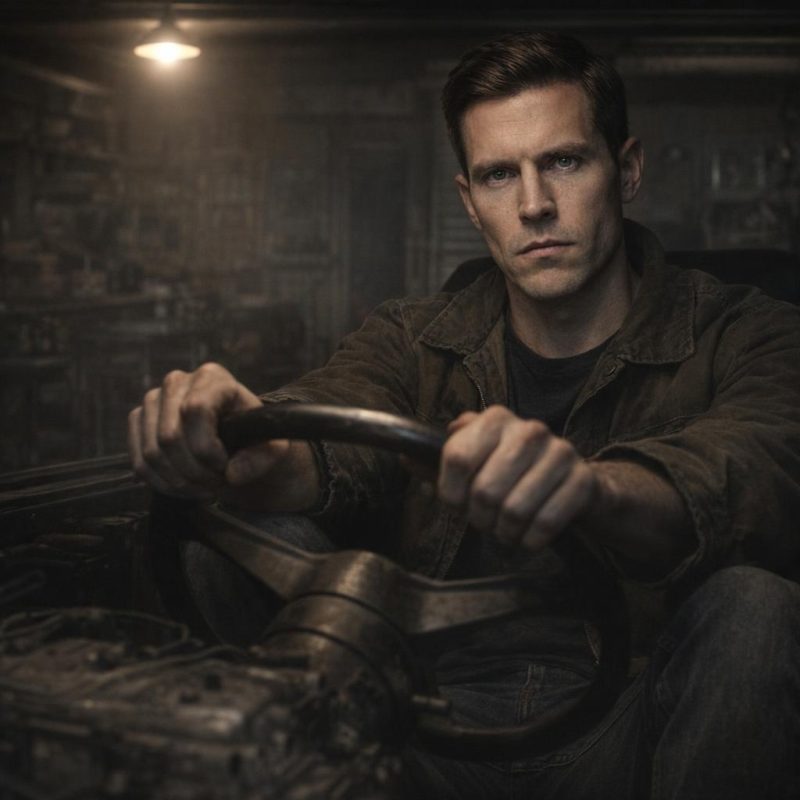 Image by RM AI
Harbor District
I'd found the detailing shop online — top-rated, harbor district, the kind of place that had a website with no prices listed, which should have been my first warning. I told myself I just wanted a quote. The drive over was the first real time I'd had the Continental on open road, and I'll admit it changed something in me. The car moved through traffic like it owned the lane. People looked. Not the quick glance you get from a loud exhaust, but the slow turn, the double-take, the guy on the sidewalk who actually stopped walking. I kept both hands on the wheel and tried to look like I belonged there. The harbor came into view about a mile out — luxury yachts lined up along the marina like a parking lot for people who'd never worried about a parking lot. The detailing shop sat just off the waterfront, all glass facade and brushed steel signage, the kind of place that didn't need a sandwich board because the clientele already knew where it was. I pulled into the lot and immediately felt the gap between me and everything around me. A red Ferrari sat two spaces over. A Lamborghini the color of a wasp was parked near the entrance. I was in my faded jeans and thrift-store jacket, and the quiet hum of money surrounded me from every direction.
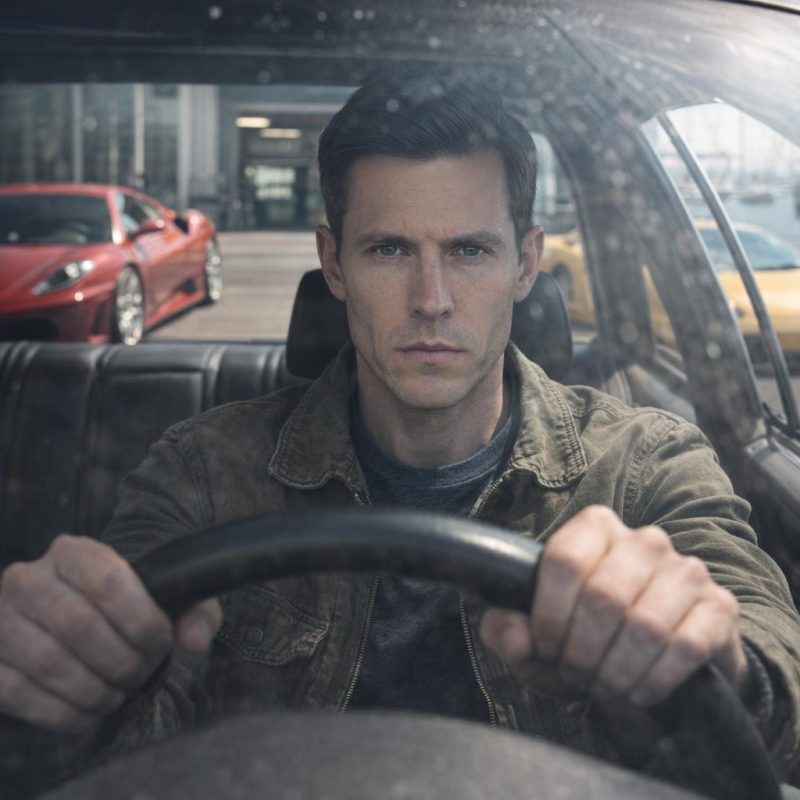 Image by RM AI
The Sprint
I cut the engine and sat there for a second, working up the nerve to go in and ask about pricing without sounding like I didn't belong. I hadn't even reached for the door handle when I saw them — two attendants in matching uniforms, both of them moving at a dead sprint across the lot toward me. Not a brisk walk, not a jog. A full sprint. They blew past a man who was climbing out of a brand-new Porsche without so much as a glance in his direction. The Porsche guy watched them go with an expression I recognized — the look of someone who expected to be the most important person in the room and just found out he wasn't. Attendant One reached my door first. He was young, early twenties, with the kind of posture you only get from training, and he had the door open before I'd even shifted my weight toward it. He stood there with his head bowed, the crown of his scalp visible, holding the door like I was someone who expected that. Attendant Two had positioned himself near the front of the car, standing at attention, hands clasped behind his back. I stepped out in my scuffed boots onto the pristine lot and felt like a complete fraud. I looked down at my jacket, then back at Attendant One, who was still holding the door open with both hands.
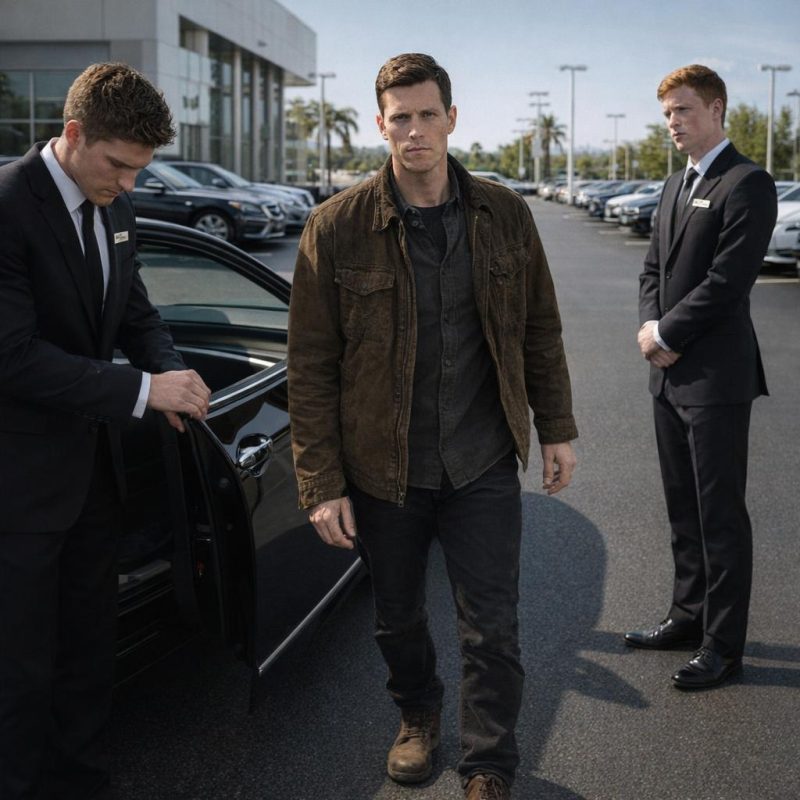 Image by RM AI
The Private Lounge
I tried to say something about just wanting a quote, but before I got three words out, Attendant One had already turned toward the entrance with a small gesture that somehow made it clear I was supposed to follow. Inside, the shop was cooler than outside and smelled like leather conditioner and money. The floors were polished concrete, the furniture in the waiting area was actual leather, not the vinyl kind, and there was a low arrangement of white flowers on a side table that probably cost more than my electric bill. I tried again — 'I just need a ballpark on a detail job' — and an attendant appeared from somewhere with a crystal glass of sparkling water and pressed it into my hand mid-sentence. I was guided into a private lounge off the main floor, a room I was fairly certain most customers never saw. They called me 'sir' with every other breath. Then Derek appeared. Middle-aged, dark hair slicked back, expensive suit, smile that arrived a half-second before the rest of his face. He shook my hand with both of his and told me to relax, that they were going to 'prepare the assessment' and I shouldn't worry about a thing. I asked about payment. Derek's smile didn't waver. He waved the question away like it was a small misunderstanding, and told me it was all taken care of — and that he wouldn't hear another word about it.
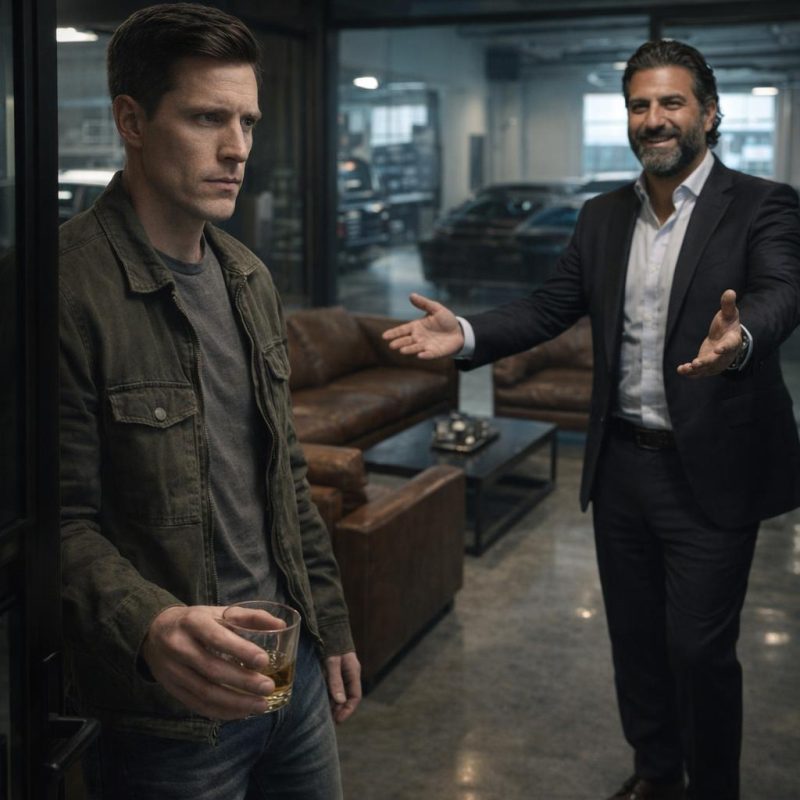 Image by RM AI
Crystal and Chrome
I sat in that lounge for a while, sipping sparkling water from a glass that probably cost more than my kitchen set, trying to figure out what exactly was happening to me. Through the floor-to-ceiling window that faced the lot, I could see the Continental sitting in the bay they'd pulled it into. A mechanic in a clean uniform — not a shop uniform, something nicer — crouched beside the front wheel and studied the hub cap like he was reading something important. Another one stood at the rear quarter panel, arms crossed, just looking. They weren't working on it. They were looking at it the way you look at something in a museum. Derek came back in carrying a leather folder, which he set on the table without opening. He asked if I needed anything else, anything at all, in a tone that suggested the answer could be almost anything and he'd find a way to make it happen. I said I was fine. He nodded and stayed near the door, attentive without being intrusive, which somehow made me more uncomfortable than if he'd just hovered. Outside, a third mechanic had joined the other two. He stepped up to the hood and laid his fingertips against the paint, slowly, like he was checking for a pulse.
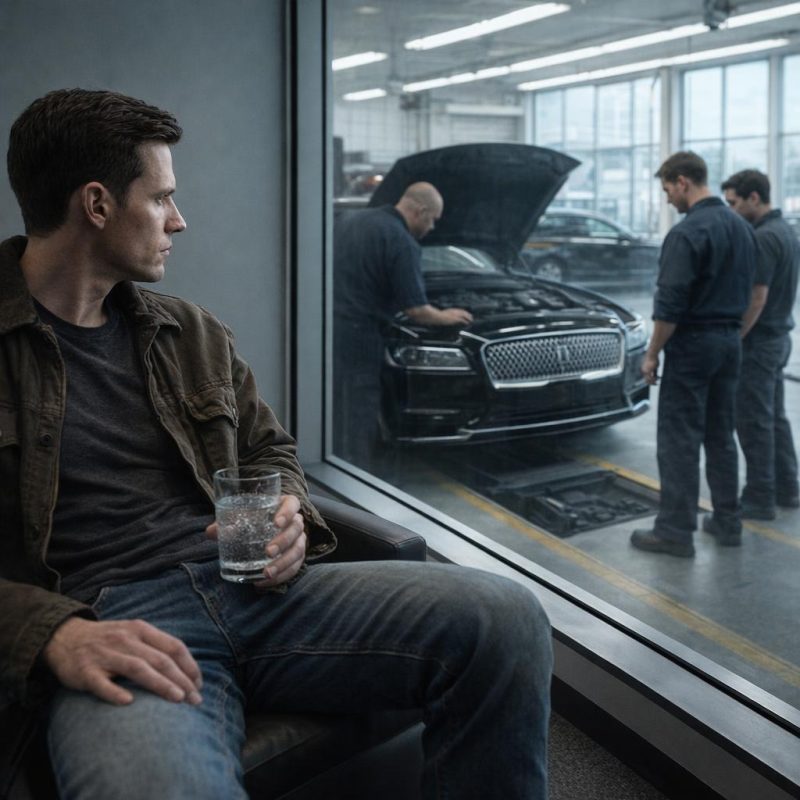 Image by RM AI
Standing Agreement
Eventually I asked Derek straight out what the detailing was going to cost me. He smiled the way people smile when they think a question is charming but slightly naive. 'There's no charge,' he said. I told him I appreciated that but I'd rather pay for the work. He shook his head, still smiling, and said the services were covered under a standing agreement. I asked what agreement. He said the details were handled at a higher level and left it at that, like that was a complete sentence. I pushed a little — asked who had set it up, when, what it covered — and Derek just tilted his head and offered to have the car ready by end of day, full detail, interior and exterior, complimentary. I said fine, because what else was I going to say. He thanked me like I'd done him a favor and excused himself. I sat back in the leather chair with the crystal glass in my hand and looked out at the lot where the mechanics were still gathered around the Continental. Free service from a shop that charged what this one charged didn't happen by accident. But I had no idea what the agreement was, who had made it, or what it meant that I was apparently covered by it. The phrase 'standing agreement' sat in my head with no explanation attached to it.
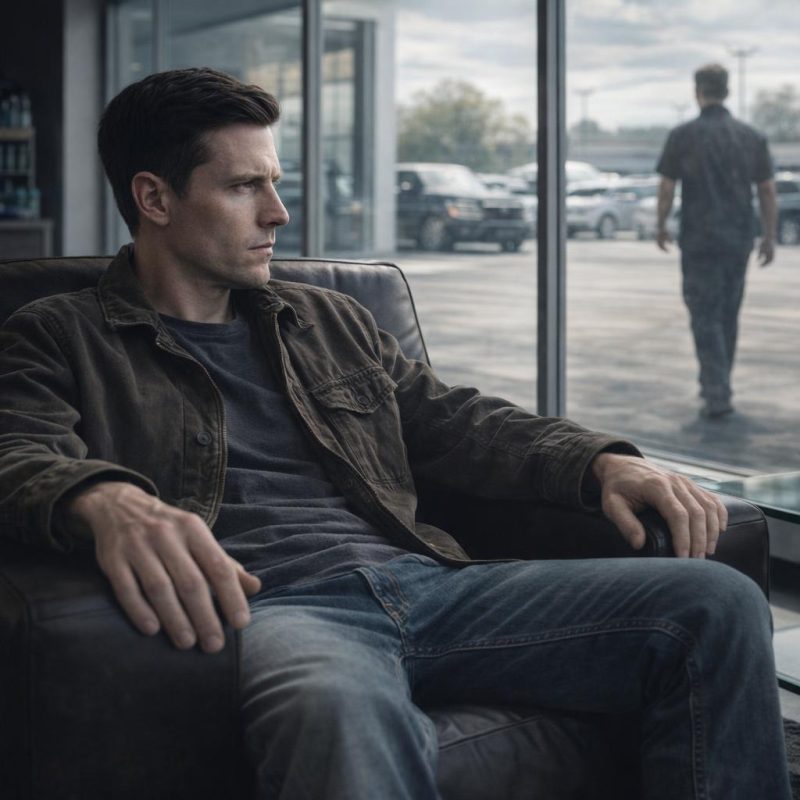 Image by RM AI
Reverence and Metal
Derek led me back out to the shop floor after a while, and I told myself I was just going to watch them work. That lasted about thirty seconds before I stopped pretending I wasn't unsettled. Every mechanic in the place had drifted toward the Continental like it was putting out heat. Not in a crowding way — more like a slow, reverent drift, the kind you see at a museum when something genuinely old and important is behind the glass. One of them had his phone out and was photographing the car from every angle, crouching low to get the chrome trim, stepping back to frame the whole body. Another had the hood up and was just standing there, staring at the engine like it had said something to him. Nobody was using tools. One guy actually pulled a soft cloth from his pocket to wipe a fingerprint off the fender before he'd even touched anything else. They were whispering to each other, glancing back toward the lounge window where I was standing. Derek stood beside me with that same satisfied expression he'd been wearing since I walked in. I didn't say anything. Neither did he. The whole shop had gone quiet — every lift empty, every other car ignored — and the only thing anyone was looking at was mine.
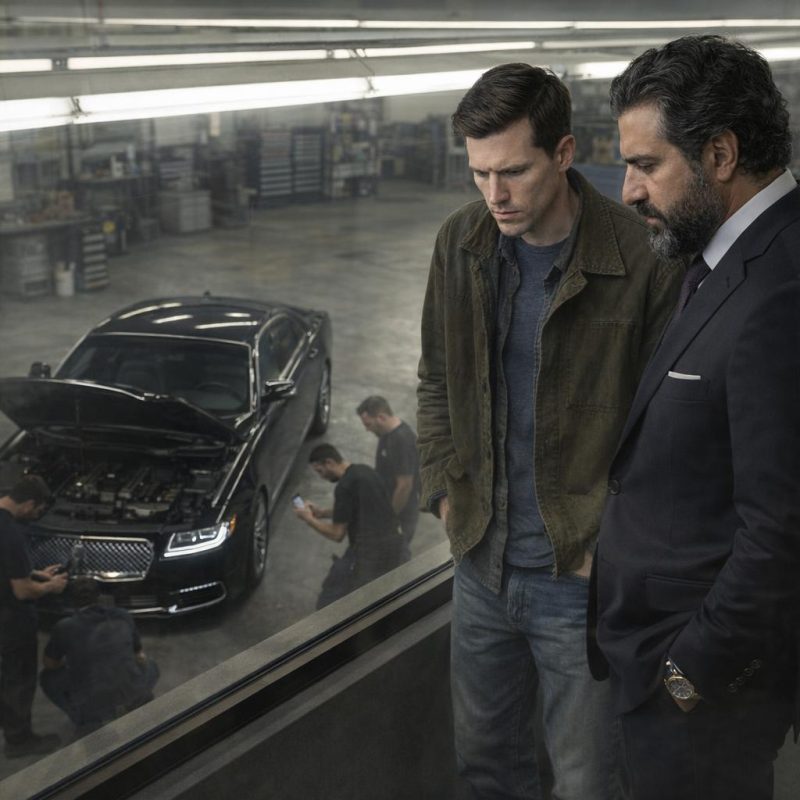 Image by RM AI
The Restroom
I excused myself to find the restroom and Derek pointed me down a narrow hallway behind the main office. The hallway was tight and dim, the kind of afterthought space that gets built when a shop expands without a real plan — cheap wood paneling on both sides, a single fluorescent tube buzzing overhead. I was halfway down it when I heard Derek's voice coming through the wall to my left. Not the smooth, accommodating voice he'd been using with me. This one was clipped and low, the kind of voice people use when they think no one can hear them. I slowed down without meaning to. The paneling was thin enough that I could hear the shape of his words even if I couldn't catch all of them — the rhythm of someone giving instructions, not making conversation. My heart started moving faster than I wanted it to. I pressed closer to the wall, telling myself I was just pausing, just catching my breath. Through the thin partition, Derek's voice came through sharp and hushed, hissing into a phone receiver like he was trying to keep the words inside the room.
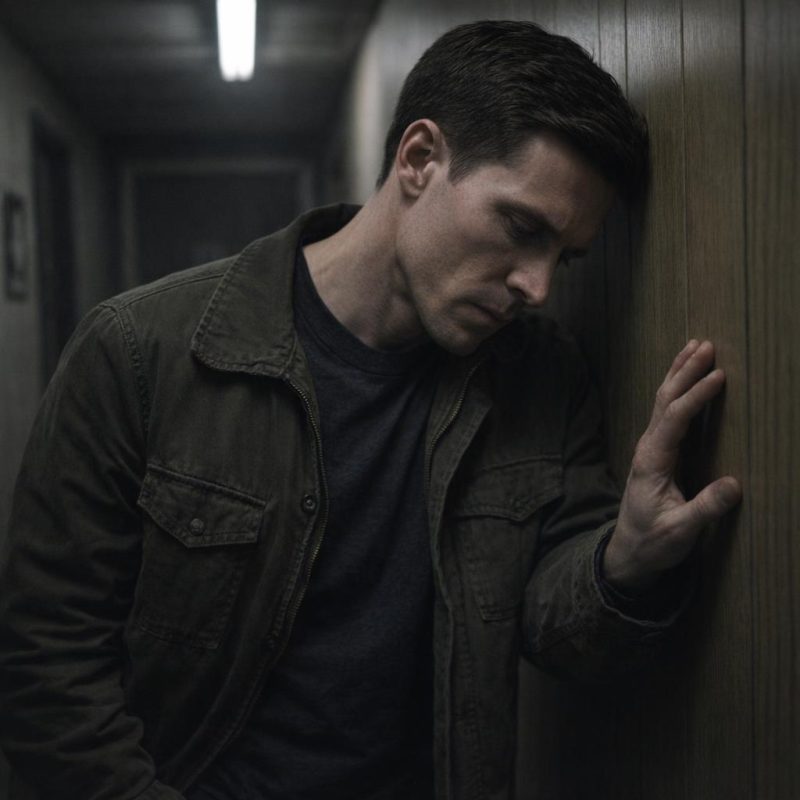 Image by RM AI
Thin Walls
I stood there with my back against the paneling and made myself breathe slowly. Derek's voice was tight and fast on the other side of the wall. I caught enough. He called me a bottom-feeder — said it flat, like a category, not an insult. Said I was in thrift-store clothes and wouldn't spook if they kept me comfortable in the lounge. He told whoever was on the other end that a security team needed to get there immediately. He said to get the keys back and secure the car. Then he said something that turned my legs cold: make sure this nobody never sees the light of day again. I pressed my hand against the wall to keep steady. There was more — something about the trunk, about getting to whatever was under the floorboards before anyone else did. I didn't know what that meant. I didn't know what any of it meant, not exactly. But the words kept landing wrong, each one worse than the last. The free service, the crystal glass, the leather chair — none of it felt like what it had looked like an hour ago. Something had shifted, and I couldn't put it back. The call ended. The hallway went completely silent, and I stood there with the crystal glass still in my hand, not breathing.
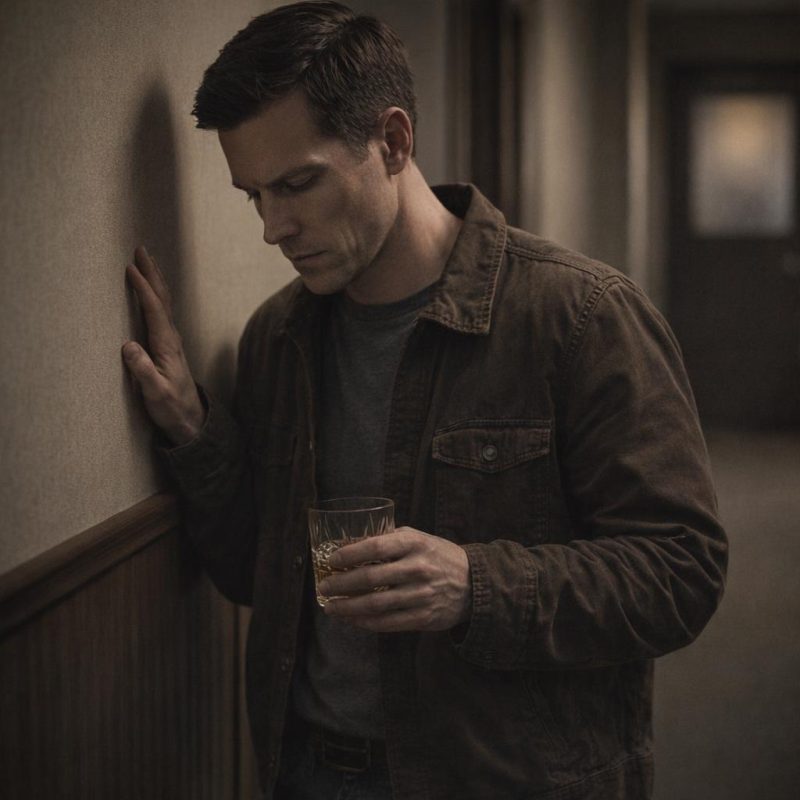 Image by RM AI
Dark Suits
I moved back down the hallway the way I'd come, keeping close to the wall, the glass still in my hand because putting it down somewhere felt like leaving evidence. At the end of the corridor I could see the lounge through the gap where the hallway opened up, and I stopped. Three men had come through the front door. Dark suits, all of them — not the kind people wear to funerals, the kind that cost enough to mean something. They moved together without bumping into each other, spreading out just slightly as they cleared the entrance, the way people do when they've practiced it. The one in front was tall and broad-shouldered, built like someone who'd spent years making sure rooms noticed him when he walked in. His eyes were already moving across the lounge before he'd fully stopped walking, sweeping the chairs, the counter, the shop floor visible through the glass partition. The other two fanned out behind him, doing the same. I pulled back into the shadow of the hallway, heart slamming. They hadn't looked my way yet. The tall one said something to Derek, who had appeared from the office doorway, and then all three of them turned and began scanning the lounge with their eyes.
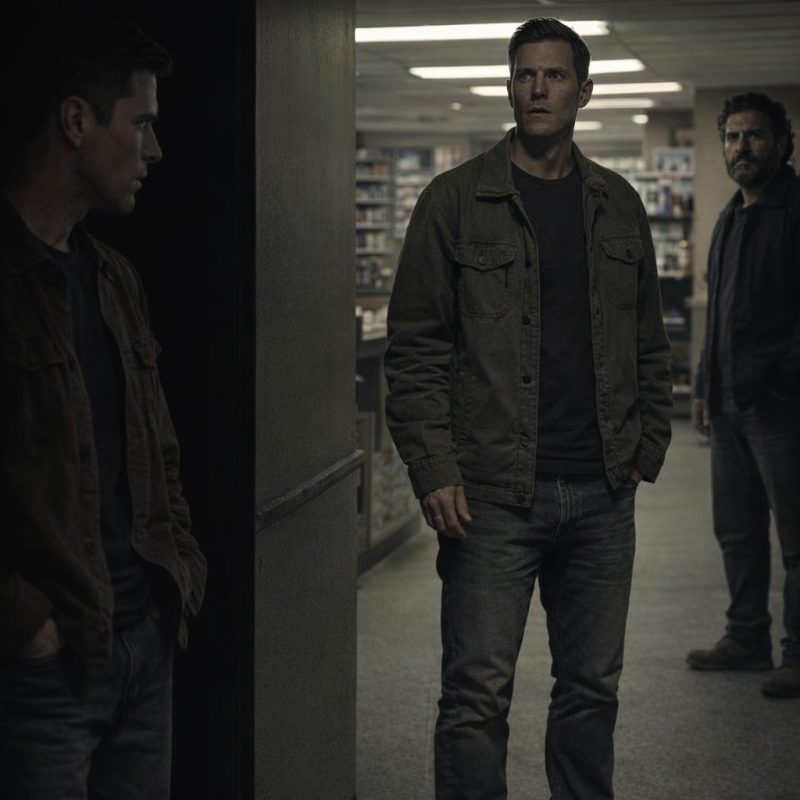 Image by RM AI
The Slip
I didn't think. I just moved. There was a side door at the far end of the hallway — a push-bar exit, the kind that's supposed to alarm but half the time doesn't. I went for it, keeping low, watching the men through the narrow window in the lounge door as I went. They were talking to Derek, their backs mostly toward me, and I had maybe thirty seconds before someone turned around. I hit the push bar and the door swung open without a sound. Outside, the afternoon light hit me hard after the dim hallway. The parking lot was around the side of the building. I crossed it in a crouch, staying close to the parked cars, keeping the building between me and the front windows. The Continental was where I'd left it, sitting apart from the other vehicles like it always did. I got the door open, slid in, and pulled it shut as quietly as I could manage. My hands were shaking when I put the key in. The engine turned over on the first try — that deep, unhurried rumble — and I pulled out of the lot without looking back. At the street, I finally glanced at the shop entrance. The door was still closed.
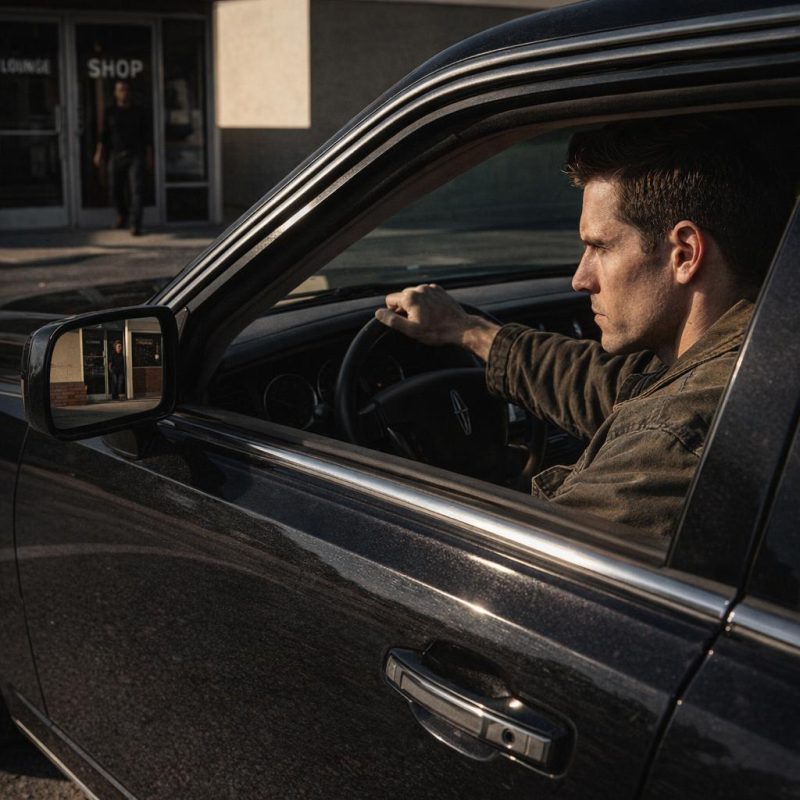 Image by RM AI
City Streets
I drove away from the harbor district without any plan beyond putting distance between me and that shop. I took side streets, avoided the main roads, made turns I didn't need to make just to see if anyone followed. Every few seconds my eyes went to the rearview mirror. Nothing back there but ordinary traffic and the city going about its afternoon. My hands were locked on the wheel so tight my knuckles ached. I kept hearing Derek's voice through that thin paneling — the trunk, the floorboards, get to it before anyone else does. I didn't know what was under there. I'd owned the car for less than a day and apparently something inside it was worth sending three men in dark suits to collect. I needed somewhere to put it. Somewhere off the street, somewhere no one would think to look. I ran through options in my head: a friend's garage, a parking structure, an abandoned lot. None of it felt safe enough. Then I thought about the storage facility I'd passed a few times on the east side of town — one of those anonymous rows of rolling metal doors where nobody asks questions if you pay cash. That felt right. I pointed the Continental east and kept checking the mirror, and the road behind me stayed empty.
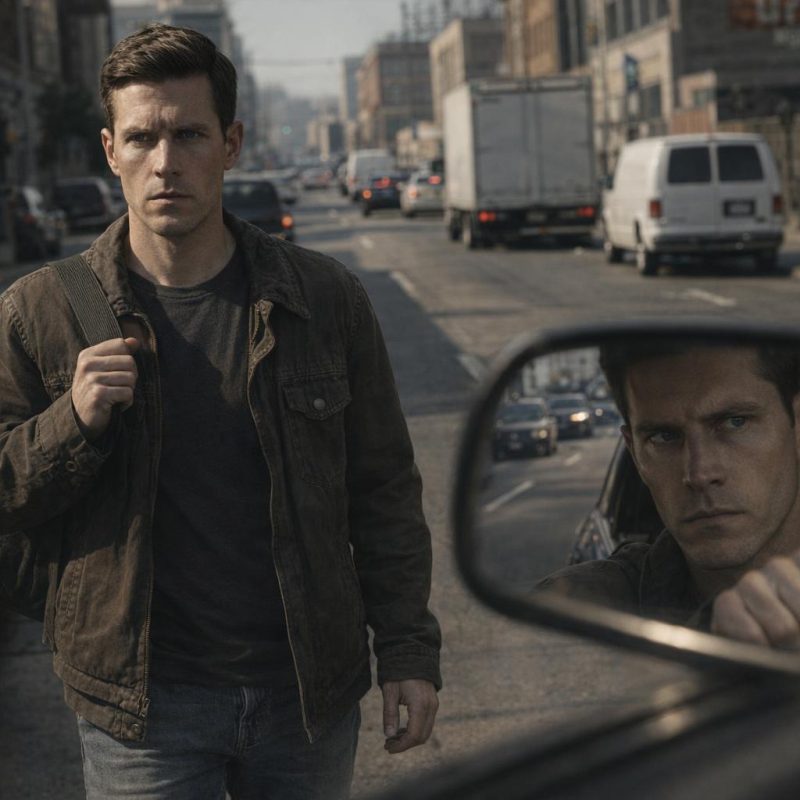 Image by RM AI
The Storage Unit
The storage facility was exactly what I needed it to be — fluorescent-lit office, bored clerk behind a scratched counter, a laminated rate sheet taped to the wall. I gave a name that wasn't mine and paid cash for a month on the largest unit they had. The clerk wrote it down without looking up. I drove the Continental around to the assigned unit, got out, and hauled the rolling door up. The space inside smelled like concrete and old cardboard. I pulled the car in, cut the engine, and sat there in the dark for a minute with my hands still on the wheel. When I got out, I walked around to the back of the car and stood in front of the trunk. I thought about Derek's voice — floorboards, under the floorboards — and I put my hand on the trunk lid. Then I took it off. Not yet. Whatever was in there had already gotten me into enough trouble for one afternoon, and I needed to think before I made it worse. I needed to know what I was dealing with before I went looking for it. I walked to the rolling door and pulled it down, and the lock clicked into place in the silence.
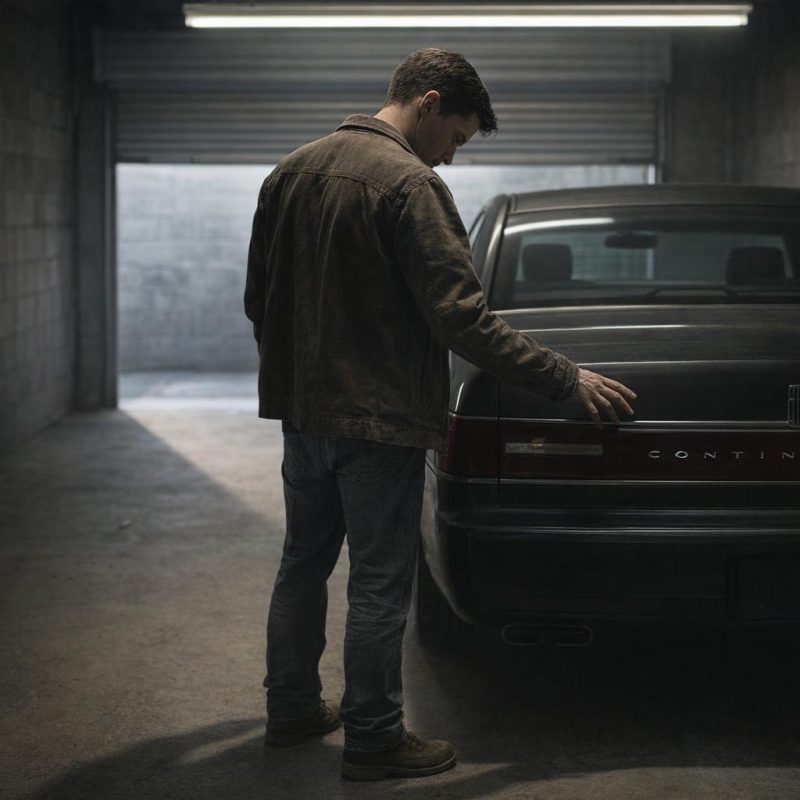 Image by RM AI
Victor Ashford
Back at my apartment I opened my laptop and typed 'Victor Ashford' into the search bar. The results came back fast and there were a lot of them. Dozens of articles, most of them from the past few months — obituaries, financial news, estate coverage. I clicked through slowly. Victor Ashford had been a billionaire. Real estate, private equity, finance — holdings spread across multiple continents, the kind of portfolio that takes generations to build or one very specific kind of ruthlessness. He'd died recently, and the coverage of his estate was the kind that gets written when the numbers are large enough to make journalists careful with their adjectives. I found photographs: a silver-haired man in tailored suits at charity galas, ribbon-cuttings, industry dinners. He looked like someone who had never once worried about a parking ticket. I read through three or four articles trying to understand what connected a man like this to a five-thousand-dollar auction car. The math didn't work. You don't let a vehicle from a three-billion-dollar estate slip through to a public auction by accident. I stared at the screen, at the figure the financial press had settled on for his net worth, and I couldn't make it add up.
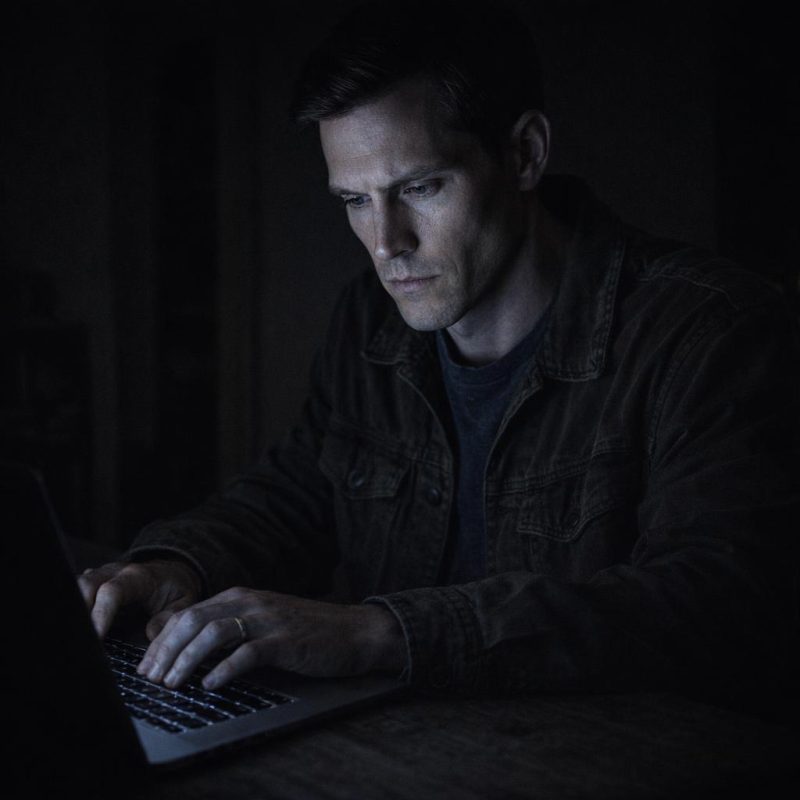 Image by RM AI
Suspicious Circumstances
I kept reading. The financial coverage was thorough — asset breakdowns, estate valuations, speculation about which holding companies would survive the transition. But when I searched specifically for Victor Ashford's obituary, the tone shifted. The New York Times had one, three paragraphs, respectful and careful. It called him a 'prominent businessman and philanthropist' and listed his charitable foundations and board memberships. Standard stuff. What it didn't list was a cause of death. I noticed that and scrolled back up to make sure I hadn't missed it. I hadn't. I tried the Wall Street Journal. Same thing — a longer piece, more financial detail, but nothing about how he actually died. I searched for police reports, coroner statements, anything official. Nothing came up. What I did find was a timeline that felt off to me: Victor Ashford died, and within weeks his estate was already moving through liquidation. The auction where I'd bought the Continental had happened fast — faster than these things usually go, from what I could tell. Every obituary I found carried the same four words and nothing more: 'died unexpectedly at his estate.'
 Image by RM AI
The Inspection
I drove back to the storage unit after dark with a flashlight and a work light I'd borrowed from my trunk kit. The Continental sat exactly where I'd left it, chrome catching the yellow glow when I rolled up the door. I popped the trunk and stood there for a moment, just looking. Derek had mentioned a compartment. He'd said it like he expected me to already know about it. I started with the spare tire well — lifted the mat, pulled the spare, checked underneath. Nothing. I pressed along the trunk lining on both sides, pushing at the fabric, listening for any give or hollow sound. The lining was tight and old and didn't tell me anything. I checked the wheel wells, ran my fingers along every seam I could reach, tapped the floor with my knuckles in a rough grid pattern. It all sounded the same. Solid. After about forty minutes I sat back on my heels and let out a long breath. I was missing something obvious, or I was looking in the wrong way entirely. I needed to be more methodical — pull the carpeting, work section by section instead of guessing. But for now, whatever was in there was staying hidden. The car's secrets were still its own, and I hadn't earned them yet.
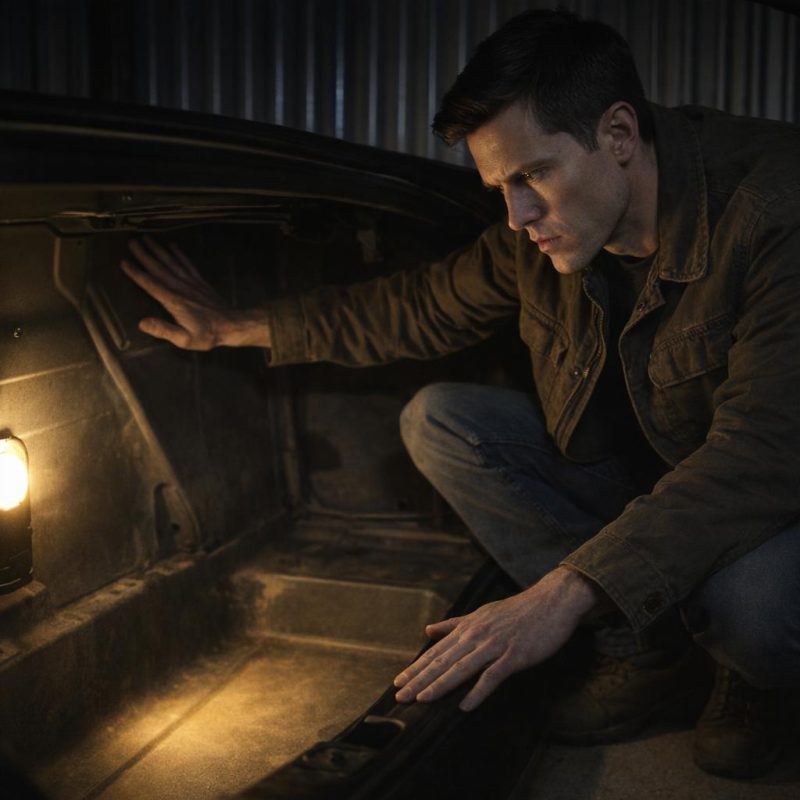 Image by RM AI
The False Floor
I came back the next evening with better tools — a trim removal kit, a utility knife, and a proper mechanic's light I'd picked up at the hardware store. I started by pulling the trunk carpeting completely, working the edges loose with the plastic pry tools until the whole mat came free in one piece. The bare metal underneath looked original, painted the same factory gray you'd expect in a car this age. I started tapping. Methodical this time, left to right, front to back, knuckles against the floor in a slow grid. Most of it rang the same dull solid note. Then, near the rear of the trunk — maybe eight inches from the back wall — I heard it. A different sound. Not hollow exactly, but lighter. Thinner. I tapped around it, mapping the edges by ear, and the patch was roughly the size of a large book. I got the flashlight down close and looked. There was a seam. Barely visible, painted over, but once I knew where to look I could trace the whole rectangle with my fingernail. I worked the tip of a flathead screwdriver into the seam and applied slow pressure. The panel shifted. It lifted maybe a quarter inch, then stopped, like something was holding it from below. I set the screwdriver down and just knelt there, listening to the sound that tap had made still echoing somewhere in the back of my head.
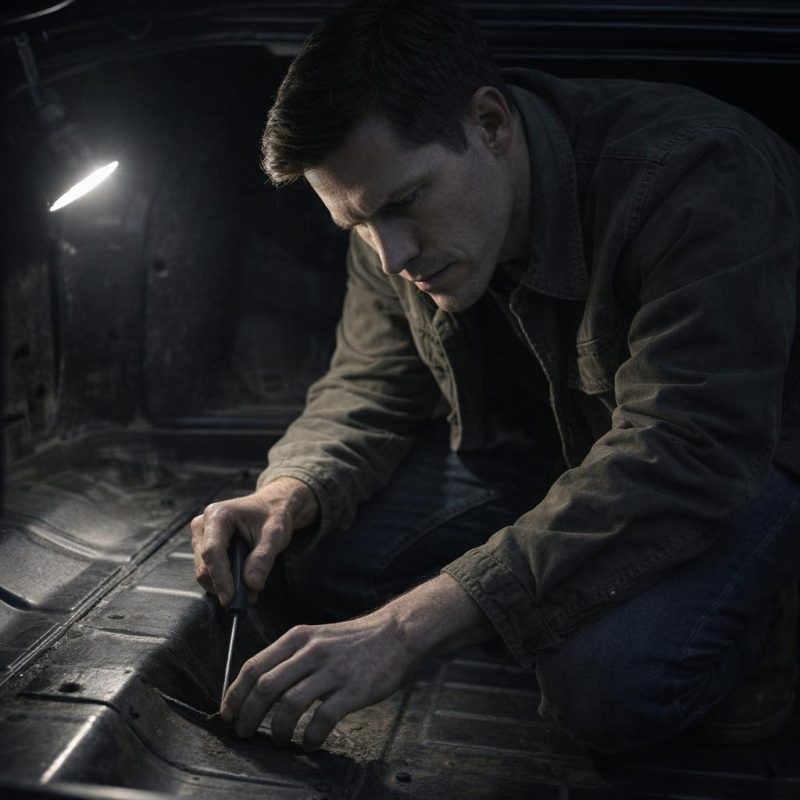 Image by RM AI
What Lies Beneath
I worked the false floor free with two screwdrivers and a lot of patience. It came up in one piece — a sheet of metal maybe a quarter inch thick, fitted so precisely into the trunk floor that I still couldn't believe I'd found the seam. Underneath was a compartment about four inches deep, running the full width of the rear trunk. I'd half-expected cash. Maybe something worse. What I found instead was paper. Folders, envelopes, documents bundled with rubber bands that had gone brittle with age. I lifted everything out and spread it across the storage unit floor under the work light. Property deeds. Financial statements. Appraisal documents with numbers that made me read them twice. There were photographs tucked between the folders — I set those aside for the moment. None of it made sense as something you'd hide in a car. This wasn't contraband. This was a filing cabinet's worth of paperwork, organized and labeled, sitting in a secret compartment in a vehicle that had sold at public auction for five thousand dollars. At the bottom of the stack sat a thick envelope with an embossed gold seal pressed into the flap — the name of a law firm I didn't recognize stamped in raised letters across the front.
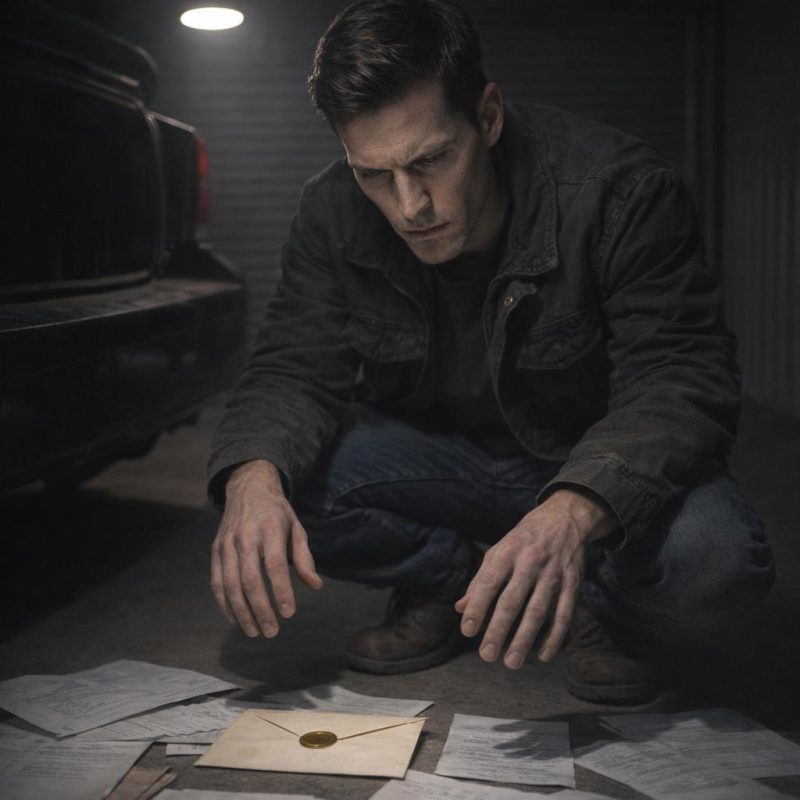 Image by RM AI
Property and Portfolios
I counted the property deeds twice because the first count didn't seem right. Seventeen. Seventeen separate properties, each with its own deed, appraisal, and in some cases a separate folder of supporting documents. Commercial buildings in Los Angeles and Las Vegas. Residential estates in Scottsdale and Palm Springs. Undeveloped land parcels in the Nevada desert and the California high desert. I'm not a real estate guy — I fix cars for a living — but the appraisal figures were printed right there on the pages and I could read numbers. The smallest valuation I found was just over eight hundred thousand. The largest was a commercial property in downtown Los Angeles appraised at eleven million. I added up what I could on my phone's calculator, stopping when I hit fifty million and realizing I still had folders I hadn't opened. There were also financial statements — investment accounts, brokerage summaries, account numbers with balances that had more digits than I'd ever seen on a personal document. Everything was organized. Labeled tabs, consistent formatting, like someone had prepared this carefully. But there was no cover letter, no explanation, no note saying what any of it was for or who it was meant for. I sat on the concrete floor of the storage unit with papers spread in every direction around me, the work light buzzing overhead, and I held the stack in both hands and just felt the weight of it.
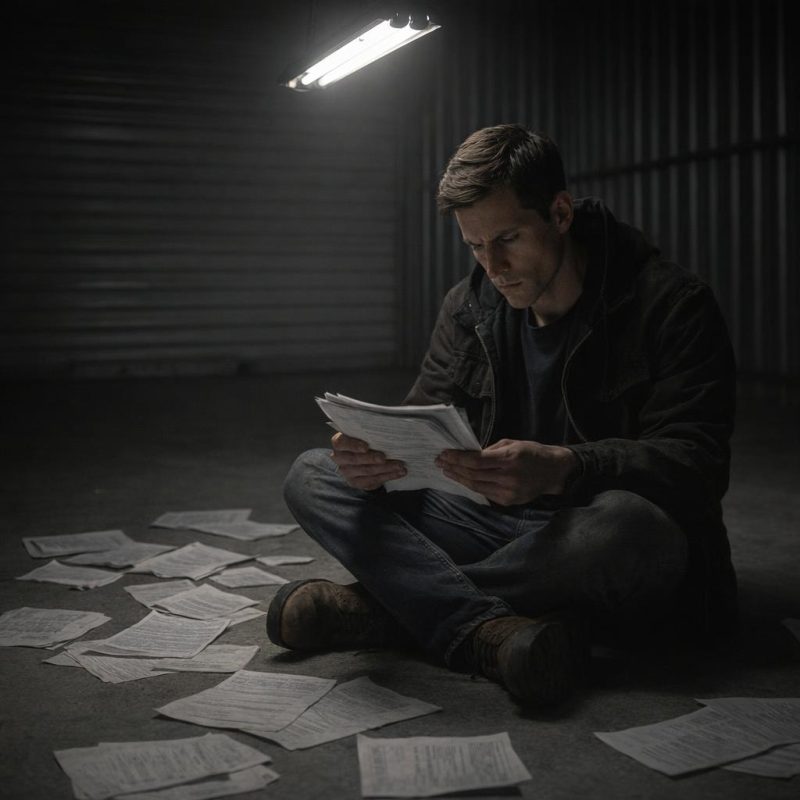 Image by RM AI
The Boy in the Photographs
The manila envelope had been tucked between two of the property folders, no label on the outside. I almost set it aside with the sealed law firm envelope, but the flap wasn't sealed — just folded over — so I opened it. Photographs. A stack of maybe fifteen or twenty, printed on photo paper that had gone slightly waxy with age. The first one showed an infant in a hospital blanket, eyes closed, face scrunched the way newborns look in every hospital photo ever taken. I flipped to the next. A toddler, maybe eighteen months, sitting on a hardwood floor with a wooden block in his hand. Then the boy at what looked like two or three, standing in a yard somewhere, squinting into the sun. The photographs ran in rough chronological order, the boy getting older in each one, up to maybe four or five years old. He had dark hair, straight and fine. A serious expression in almost every picture, even the ones where he seemed to be mid-laugh — something in the eyes that stayed still. I turned a few of the photos over. Dates written in pencil on the back, spanning about five years. No names. No locations. I went back to the one of the toddler on the floor and held it under the work light. There was something about the shape of his face — the jaw, the brow — that sat in the back of my mind like a word I couldn't quite place.
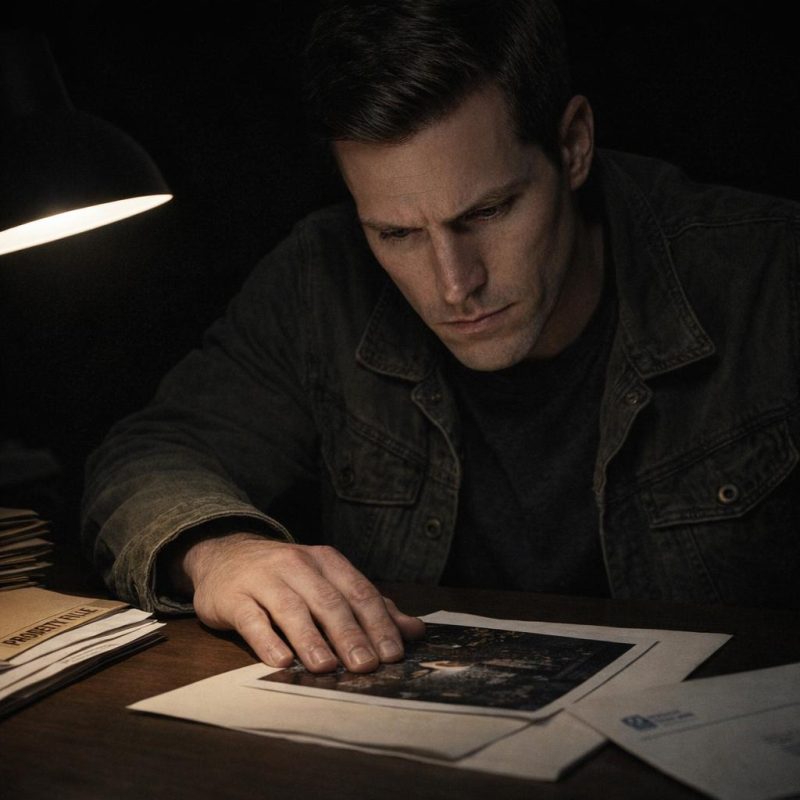 Image by RM AI
Facial Features
I drove home and dug out the shoebox my adoptive mother Christine had given me years ago — the one with my baby pictures in it. I hadn't opened it in a long time. I brought it back to the storage unit and sat down on the floor with both sets of photographs spread out in front of me under the work light. I put the unknown boy's infant photo next to mine. Same dark hair, same scrunched newborn expression — but that didn't mean anything, I told myself. Newborns all look like that. I moved to the toddler pictures. The boy from the compartment at maybe eighteen months, me at roughly the same age based on the date Christine had written on the back. I held them side by side. The hair was the same. The shape of the eyes. I told myself lots of kids have dark hair and similar features at that age — it's not exactly a rare combination. I kept finding reasons to dismiss it. I kept looking anyway. The jaw. The brow line. The way the ears sat against the head. The similarities kept stacking up, and I was running out of ways to explain them away. Then I held my own childhood photo next to the unknown boy's picture.
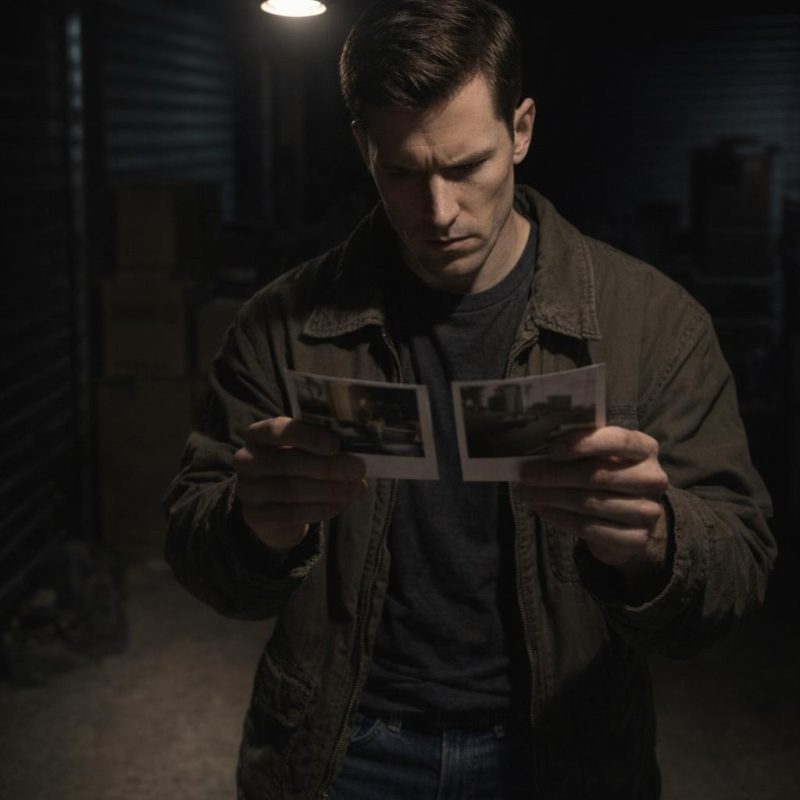 Image by RM AI
Anonymous Warning
I was still sitting on the storage unit floor with the photographs in my lap when my phone buzzed. Unknown number — no area code I recognized, just eleven digits that didn't resolve into anything when I stared at them. I opened the message. It was short. I read it twice, then a third time, like the words might rearrange themselves into something less direct. They didn't. I tried to reply — typed out 'who is this' and hit send — and got an immediate delivery failure. The number was dead or routed through something that didn't accept replies. I searched the number online and got nothing. No carrier lookup, no reverse directory result, just a blank. I sat there and thought about what it meant that someone had sent this to my personal cell phone. Not a call. Not a letter. A text, to a number I hadn't given to anyone connected to the car or the auction. I looked around the storage unit — at the Continental, at the documents spread across the floor, at the photographs still in my hand. The unit was locked when I arrived. I hadn't told anyone I was coming back tonight. I didn't know how someone knew where I was or what I'd found, and that not-knowing sat in my chest like something cold. The message read: You have something that doesn't belong to you.
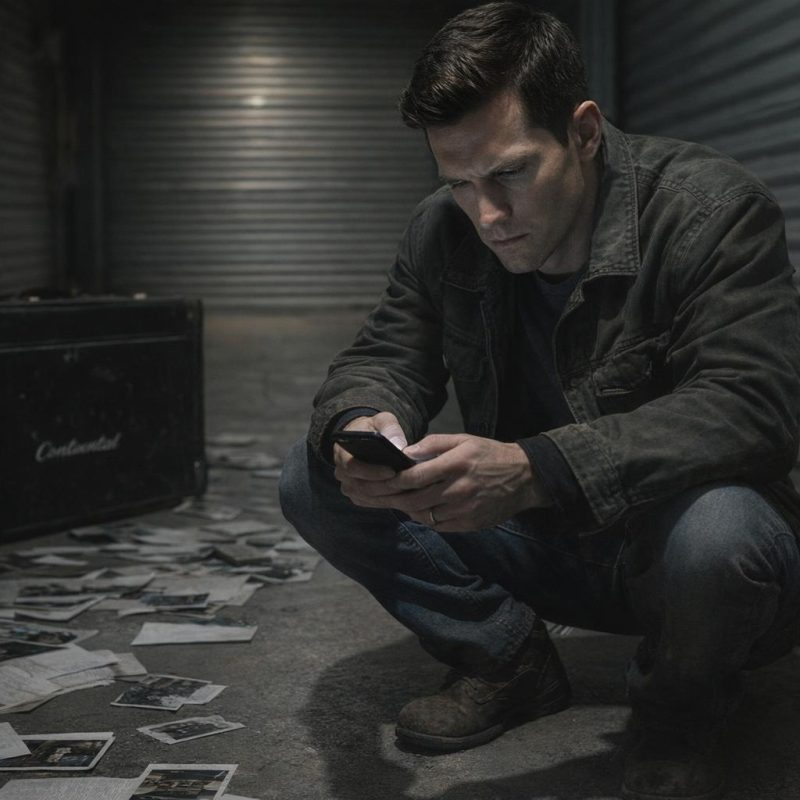 Image by RM AI
The GPS Device
I couldn't stop thinking about that text. Someone knew where I was, knew what I had, and knew my personal cell number. I went back to the storage unit the next morning and started at the front of the Continental, running my hands along every surface I could reach. I checked the wheel wells first — nothing. I moved along the driver's side, crouching low, dragging my fingers under the rocker panels. Still nothing. When I got to the rear bumper I almost missed it. It was small, maybe the size of a matchbook, matte black against the dark metal, held in place by a magnet so strong I had to pry it loose with my thumbnail. I turned it over in my palm. A small circuit board, a SIM slot, and a blinking green LED that pulsed every few seconds like a slow heartbeat. I'd seen enough of these online to know exactly what I was holding. That's how they found me at the detailing shop. That's how the messages arrived before I'd told anyone anything. I hadn't been paranoid — I'd been watched, the whole time, from the moment I drove that car off the auction lot. The device's LED blinked steadily in my palm.
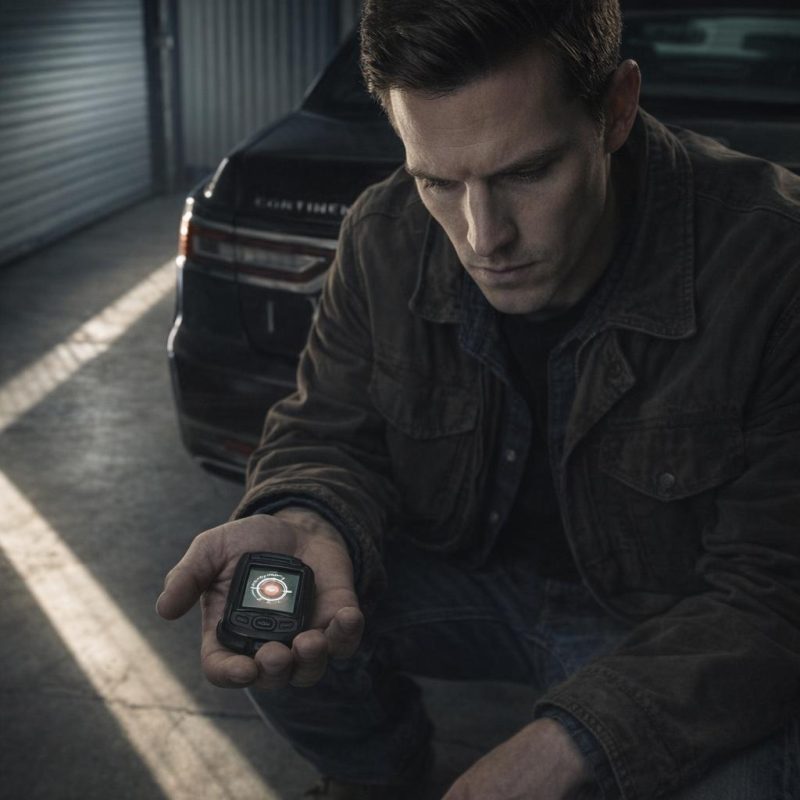 Image by RM AI
Relocation
I didn't sleep that night. I spent two hours on my phone researching storage facilities outside the city, looking for something rural, something cash-friendly, something far enough away that a blinking dot on someone's screen would take real effort to reach. I found a place forty miles out — a family-run operation off a county road, the kind with a hand-painted sign and a lockbox for after-hours rentals. Before I moved the car, I drove downtown and dropped the tracker in a dumpster behind a shopping center on the east side. Let whoever was watching think the Continental was parked behind a discount mattress store. Then I went back, loaded the documents into a duffel bag, and drove the Continental out of the city on back roads, no highway, no toll cameras. I paid cash at the new facility under a name I made up on the spot and got a unit at the far end of the lot, away from the road. I locked the car inside, padlocked the door, and stood in the gravel for a moment listening to the quiet. Crickets. Wind through a field somewhere nearby. Nothing else. The drive back felt long and empty, the highway behind me dark and still.
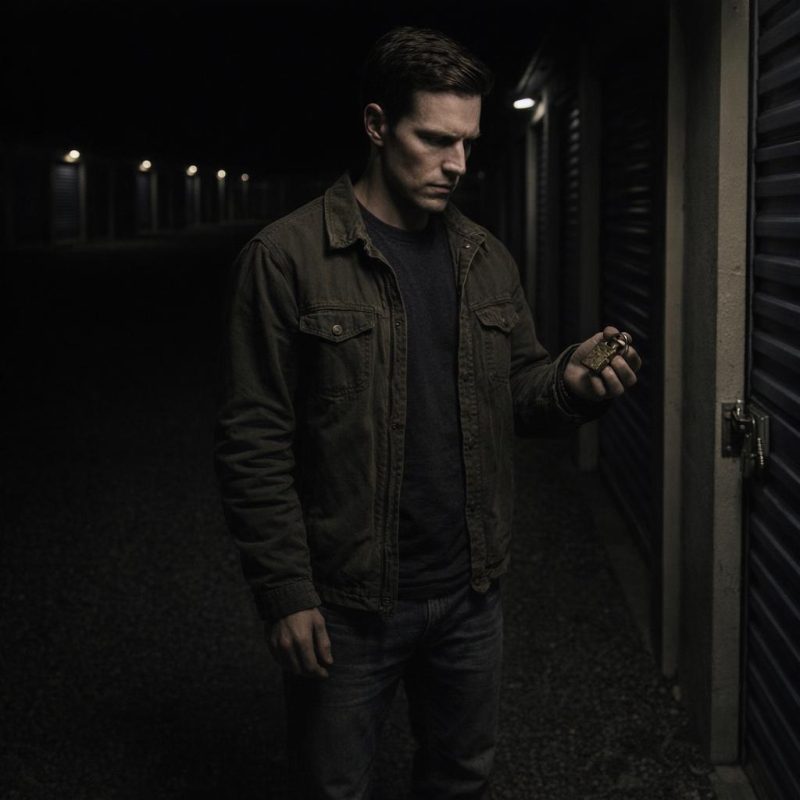 Image by RM AI
Finding Ray
Back at my apartment, I spread everything I knew across my kitchen table and started searching. Victor Ashford had a public footprint — obituaries, civic award announcements, a few archived society page photos — but nothing that named staff or employees directly. I dug deeper, pulling up old news articles about his estate and his various business interests. One article mentioned a private garage on the property, described as housing a collection of vintage automobiles. That gave me something to work with. I found a classic car restoration forum, the kind with threads going back fifteen years, and started reading. Most of it was technical — carburetor specs, chrome sourcing, upholstery suppliers. Then I hit a thread about 1960s Lincoln Continentals and started working through the posts one by one. I searched RTorres67 and cross-referenced the name Ray Torres with the forum's location data. He ran a small independent garage in a working-class neighborhood about twenty minutes from where I was sitting. I kept reading back through his post history, and near the bottom of the thread I found it: a post where RTorres67 stated plainly that he had personally serviced the 1964 Continental.
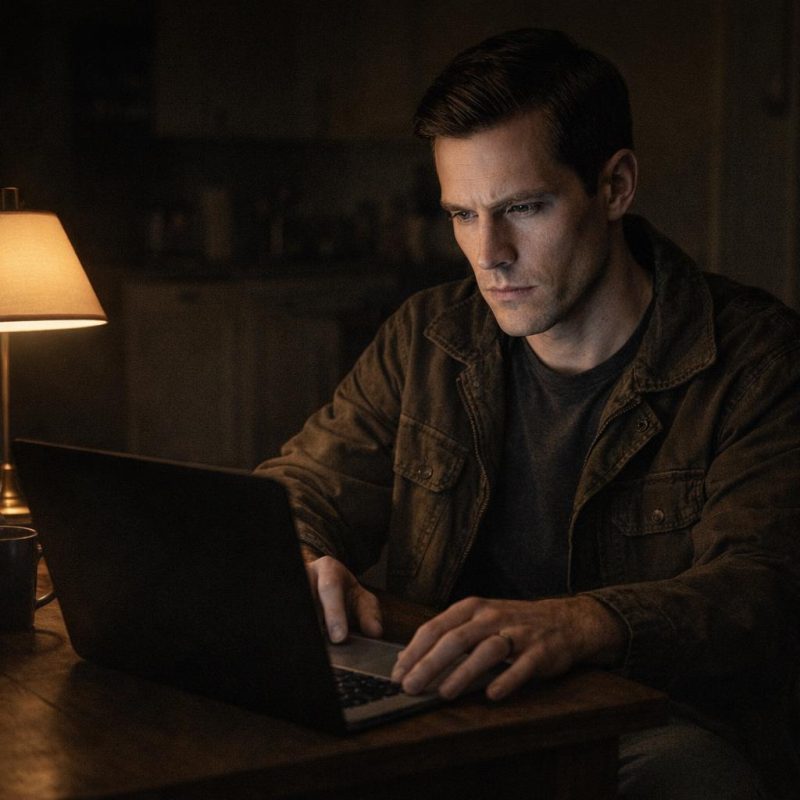 Image by RM AI
The Independent Garage
I drove out there the next afternoon and parked across the street without getting out of the car. The garage was exactly what I expected — a two-bay operation with a hand-lettered sign above the roll-up doors, a stack of used tires against the outside wall, and a faded Pennzoil banner that had probably been there since the nineties. A stocky man in gray coveralls was working under a lifted sedan in the near bay, moving with the unhurried efficiency of someone who'd done this ten thousand times. I assumed it was Ray. He looked to be around forty, weathered face, grease on his forearms, the kind of build that comes from actual physical work rather than a gym. I sat there for twenty minutes watching him. He didn't look up. No one else came or went. The neighborhood was quiet — a laundromat two doors down, a corner store with a hand-written hours sign, a few parked cars. Nothing about the place felt connected to anything dangerous. But I'd thought the same thing about the detailing shop, and I'd been wrong about that. I wanted to go in. I also wanted to drive away and pretend I'd never found the forum post. I sat with both of those feelings for a long time, the engine off, the street going quiet around me.
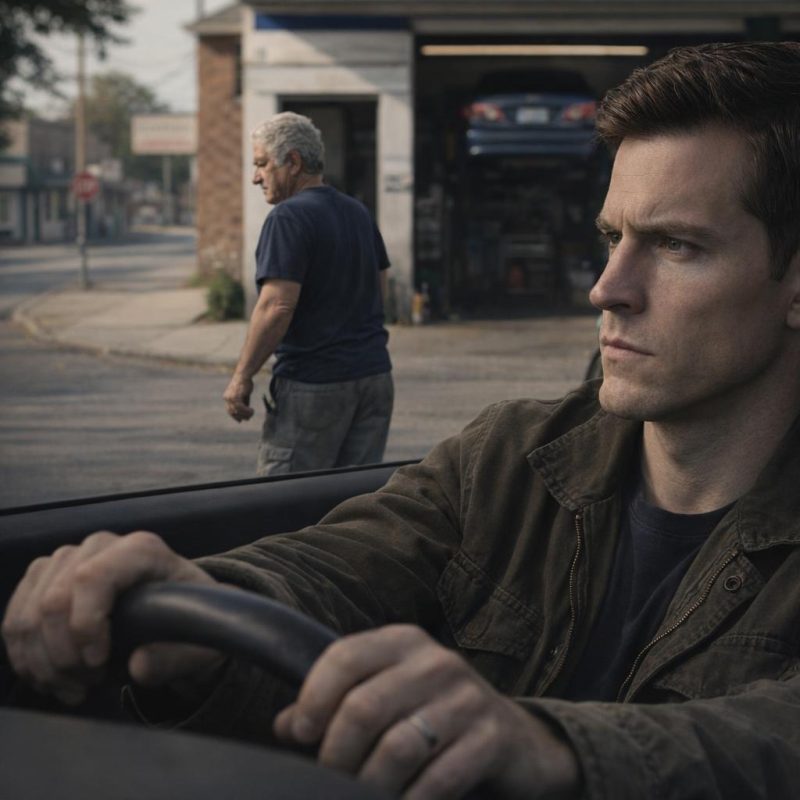 Image by RM AI
First Contact
I went back the next morning, earlier, when the street was still mostly empty. I crossed over and walked into the near bay without calling ahead. Ray looked up from a brake job, wiped his hands on a shop rag, and gave me the polite, neutral look mechanics give strangers who wander in off the street. I told him I wasn't there about a repair. I said I'd recently bought a 1964 Lincoln Continental at an estate auction — Victor Ashford's estate. The shop rag stopped moving in his hands. I watched the color leave his face the way water drains out of a sink, steady and complete. He set the rag down on the workbench without looking at it. He asked me when the auction was. I told him. He asked if I still had the car. I said yes. He glanced past me toward the open bay door, a quick scan of the street that he tried to make look casual and didn't quite manage. He said we shouldn't talk here. He said there was a diner three blocks up and that I should walk there separately and he'd follow in ten minutes. I nodded and left without asking why. The look on his face had already answered that.
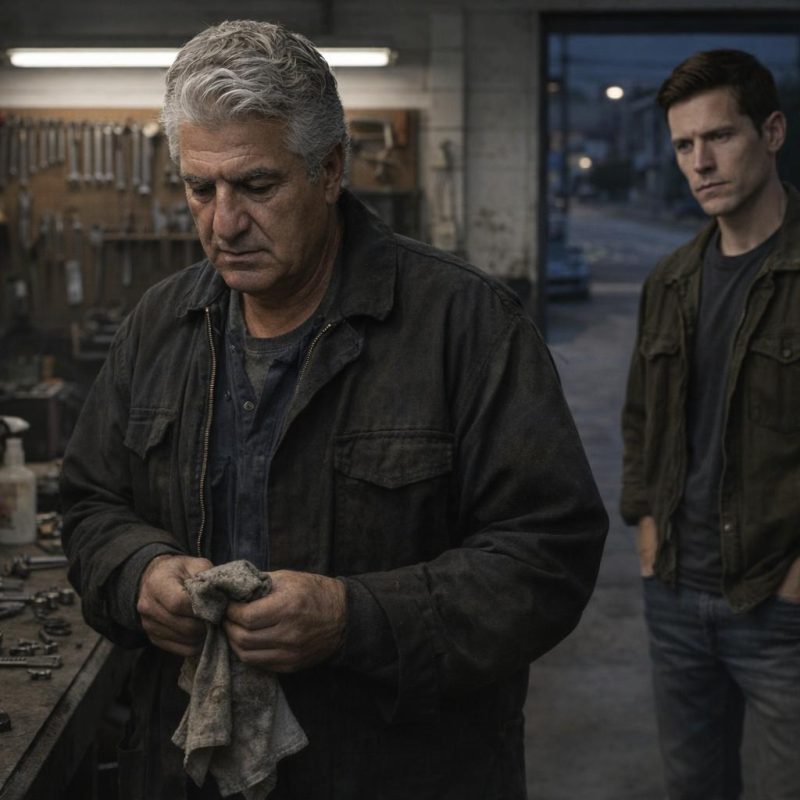 Image by RM AI
The Organization
Ray showed up at the diner eight minutes later. He slid into the booth across from me, ordered coffee without looking at the menu, and leaned forward with his elbows on the table and his voice low enough that I had to concentrate to hear him over the lunch counter noise. He said he'd worked for Victor Ashford for fifteen years as a mechanic — not just maintaining the car collection, but keeping vehicles running for the whole operation. I asked what operation. He looked at me for a moment like he was deciding something, then said Victor's legitimate businesses were a surface. Underneath, the organization ran shipping operations up and down the coast, controlled significant portions of commercial real estate in three states, and had interests in financial services that Ray said he never fully understood but knew were substantial. He said the organization had people inside city government, inside law enforcement, and in positions Ray described only as 'useful places.' He'd left five years ago, he said, and had spent every day since trying to stay invisible. He said the people still running the organization didn't distinguish between threats and inconveniences — they handled both the same way. Then he wrapped both hands around his coffee mug and said, from what he'd seen, the reach extended to ports, real estate, and financial institutions across half the eastern seaboard.
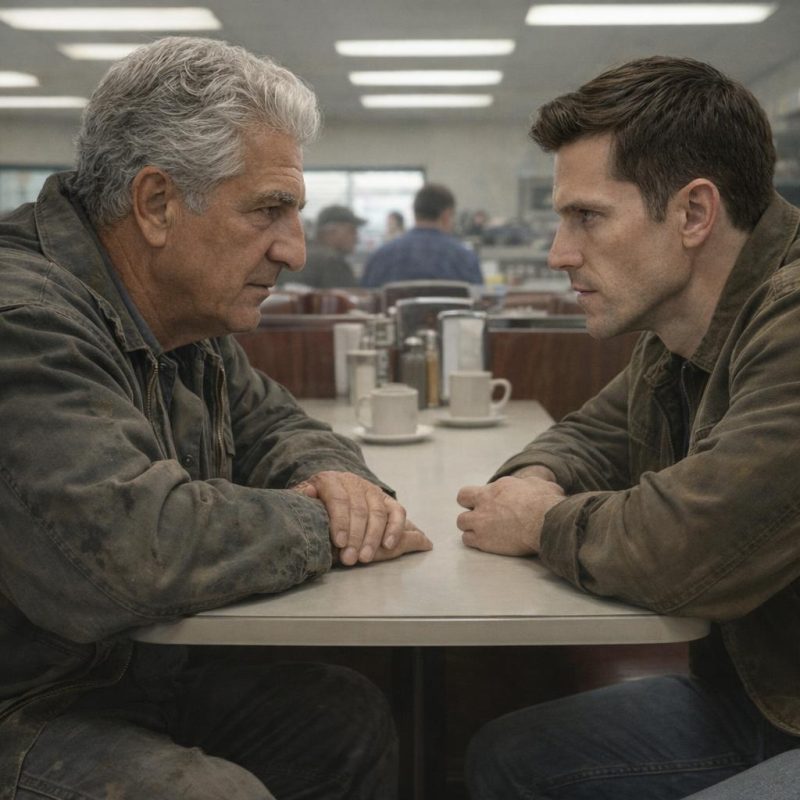 Image by RM AI
Legitimate Fronts
Ray kept talking and I kept listening, and the coffee in front of me went cold. He said the legitimate businesses weren't just cover — they were functional parts of the network. The detailing shop I'd taken the Continental to was one of several high-end service businesses the organization had used as monitoring points. Others included a yacht club, two luxury car dealerships, and at least one private storage facility. Ray said staff at those locations were trained to flag certain vehicles and certain names. I thought about the way the attendants at the detailing shop had treated me, the phone calls, the security team that materialized so fast. Ray said he didn't know which of those businesses were still connected and which had gone independent after Victor died — the organization had always been compartmentalized, each piece knowing only what it needed to know. That was the part that stayed with me. There was no list I could check. No map I could consult. Any errand I ran, any service I used, any business I walked into could be another node in a network I couldn't see the edges of. I sat with that thought and felt the city I'd lived in my whole life become something I didn't entirely recognize.
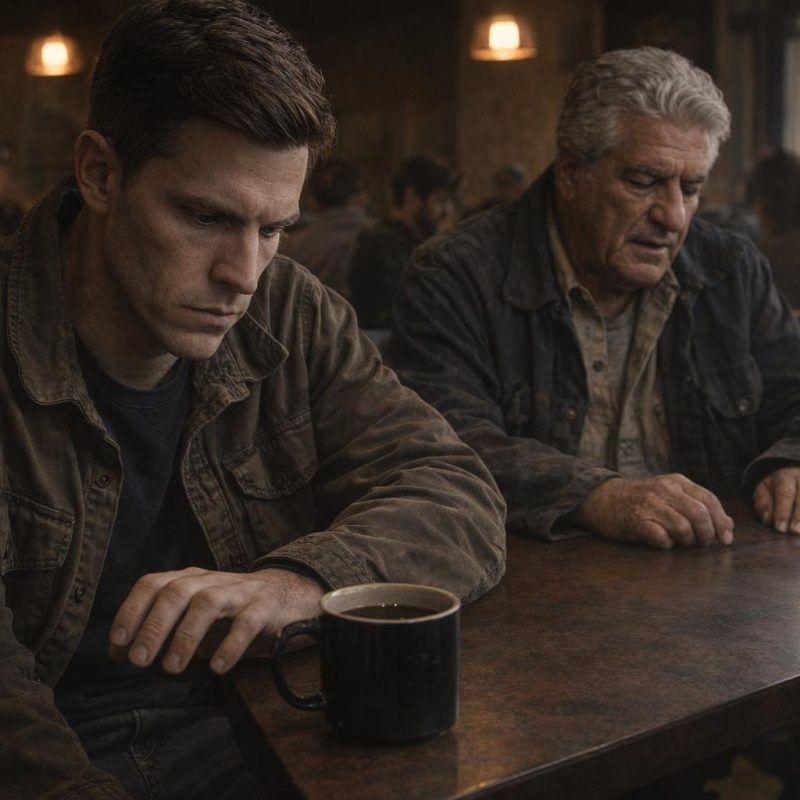 Image by RM AI
Victor's Dual Life
Ray ordered a second coffee and started talking about Victor himself, and his voice shifted — quieter, more careful, like he was handling something he hadn't touched in a while. He said Victor was the most intelligent person he'd ever been close to, and that he meant that without any admiration attached. Victor had maintained a public life that was genuinely impressive — charitable foundations, nonprofit board seats, his name on a wing of a children's hospital across town. Ray had attended one of Victor's fundraising galas once, years ago, and said the man worked a room the way a surgeon works — precise, unhurried, leaving everyone feeling like the most important person there. The private side, Ray said, was something else entirely. Threats were handled quickly. People who became problems stopped being problems. Ray said Victor seemed to plan things years ahead, and that from everything Ray had witnessed, the man had a particular obsession with legacy — with what he'd leave behind and how it would be remembered. His death had been sudden, unexpected, and Ray said the organization had been unstable ever since, different factions pulling in different directions. I sat there thinking about the children's hospital wing and the GPS tracker I'd pried off the bumper of a dead man's car, and the distance between those two things felt impossible to measure.
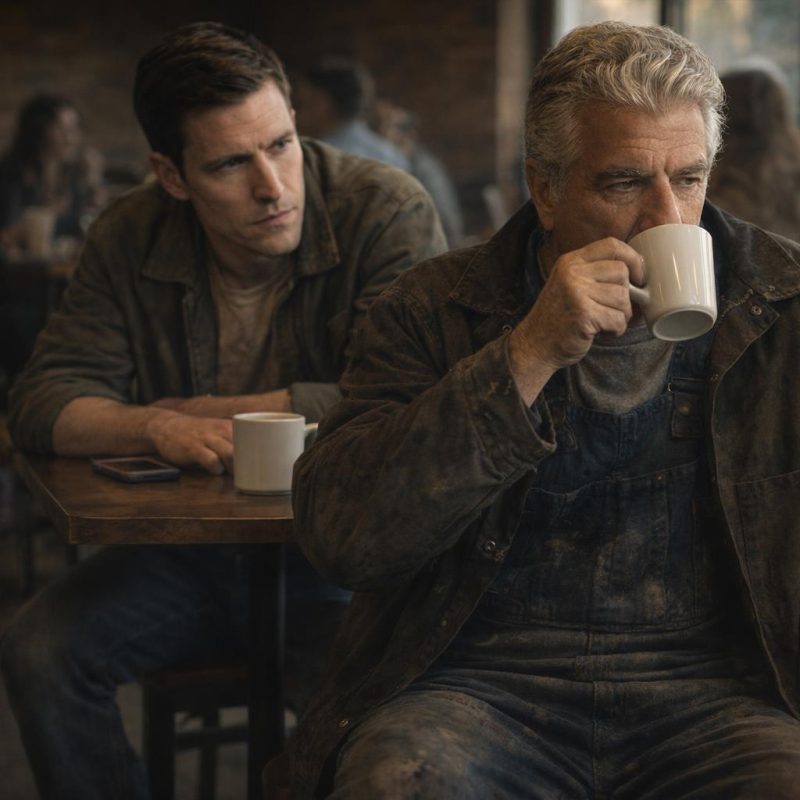 Image by RM AI
The Trust Documents
I pulled the trust documents out of my backpack and slid them across the table toward Ray. He set down his coffee and picked them up carefully, the way you handle something you're not sure is going to bite you. He went quiet for a long moment, eyes moving down the pages. Then he said the name out loud — Whitmore and Associates — and something shifted in his expression. He said that was the firm Victor used for his legitimate estate work, the above-board stuff, the kind of paperwork that could survive a court audit. He said seeing that letterhead meant whoever put this together wanted it to hold up legally. I asked him what the trust was actually for, and he said it looked like a structured inheritance vehicle — assets held in trust for a named beneficiary, to be transferred under specific conditions. I asked who the beneficiary was. Ray turned to the last page and ran his finger down to the designated line. He said the name wasn't there — just initials. Two letters. I leaned over and looked where he was pointing. The line read: Beneficiary — J.M.
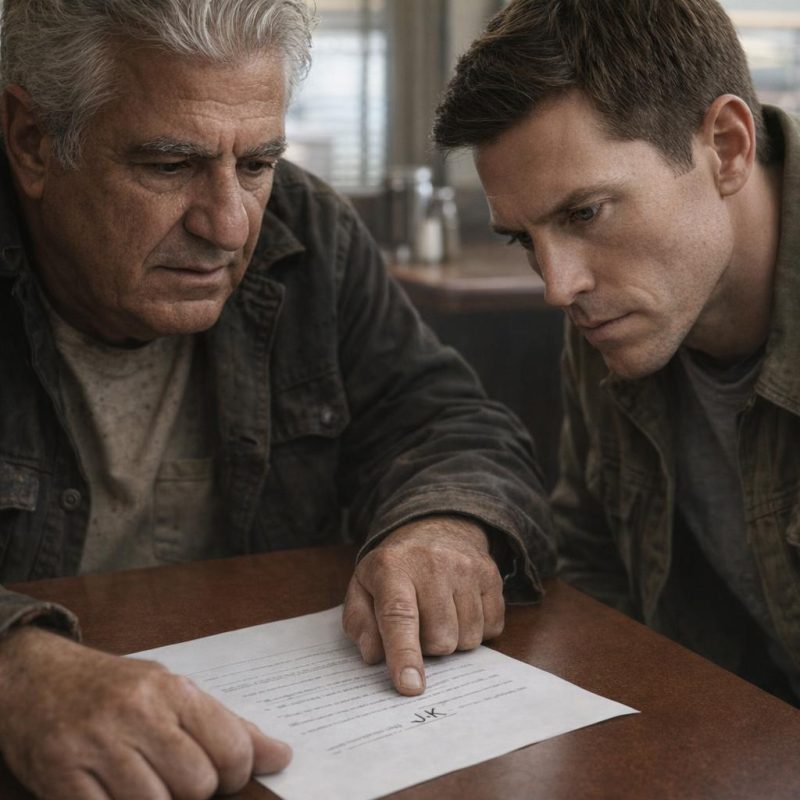 Image by RM AI
The Hospital Envelope
Ray said the initials alone were unusual, even by Victor's standards. He'd seen Victor use shell companies and numbered accounts, but a trust document with no full beneficiary name was something else. He said it suggested the identity was being protected at a legal level, not just hidden informally. I kept turning that over while I went back through the remaining papers in my backpack. Near the bottom I found an envelope I hadn't opened yet — thick, cream-colored, with a hospital logo printed in the corner. Mercy General. The label on the front read Vital Records — Confidential in faded red ink. I slit it open and pulled out a single folded document. It was a birth certificate, the old kind with the raised seal still visible at the bottom. The date at the top showed a birth thirty-two years ago. The mother's name was printed clearly in the designated field: Jennifer Morrison. I looked at the father's line. Someone had gone over it with a black marker, thick and deliberate, pressed hard enough that the paper had slightly buckled under the ink. Ray leaned over and looked. He said he didn't recognize either name. The father's name was blacked out completely.
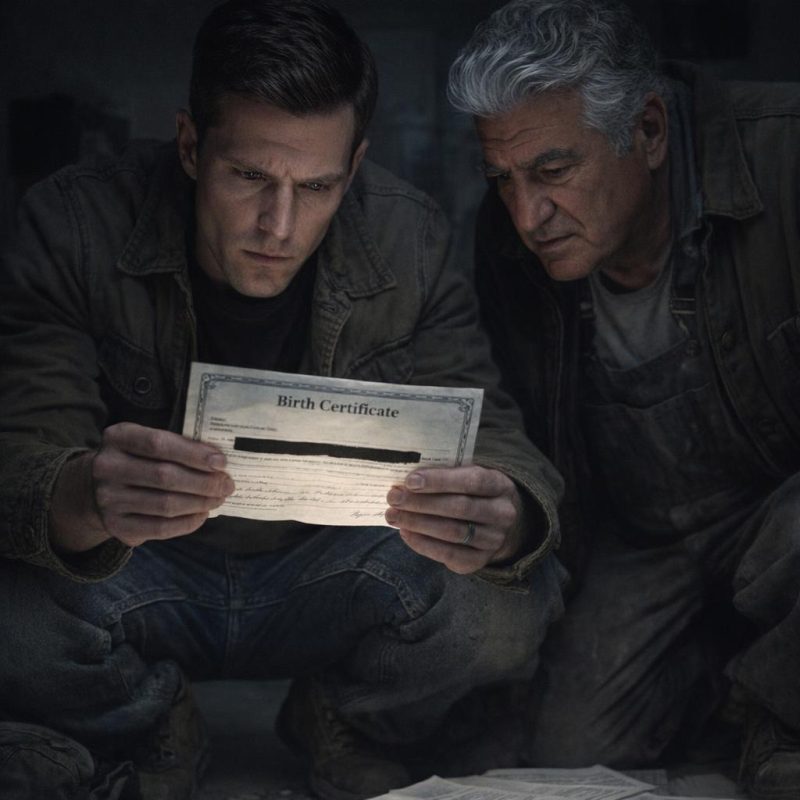 Image by RM AI
Sealed Records
I sat there staring at the certificate for longer than I should have. Ray was saying something about how redacted documents weren't unusual in sealed proceedings, but his voice had gone distant. I was looking at the mother's name. Jennifer Morrison. My adoptive mother's maiden name was Morrison. I'd known that my whole life — it was on her old documents, her high school yearbook that sat on the shelf in the living room. And I'd been told, once, years ago when I was maybe ten and asking too many questions, that my birth mother's name was Jennifer. My mother had said it quietly, like she was giving me something small and hoping I wouldn't ask for more. I'd filed it away and mostly forgotten it. Now it was sitting on a birth certificate in front of me, attached to a document pulled from the trunk of a dead man's car. I told myself it was a common enough name. Morrison wasn't rare. Jennifer wasn't rare. I told myself I was pattern-matching because I was scared and tired and looking for connections that probably weren't there. Ray asked if I recognized the names. I said no. But the hospital printed at the top of the certificate was Mercy General — the same hospital listed on my own birth records.
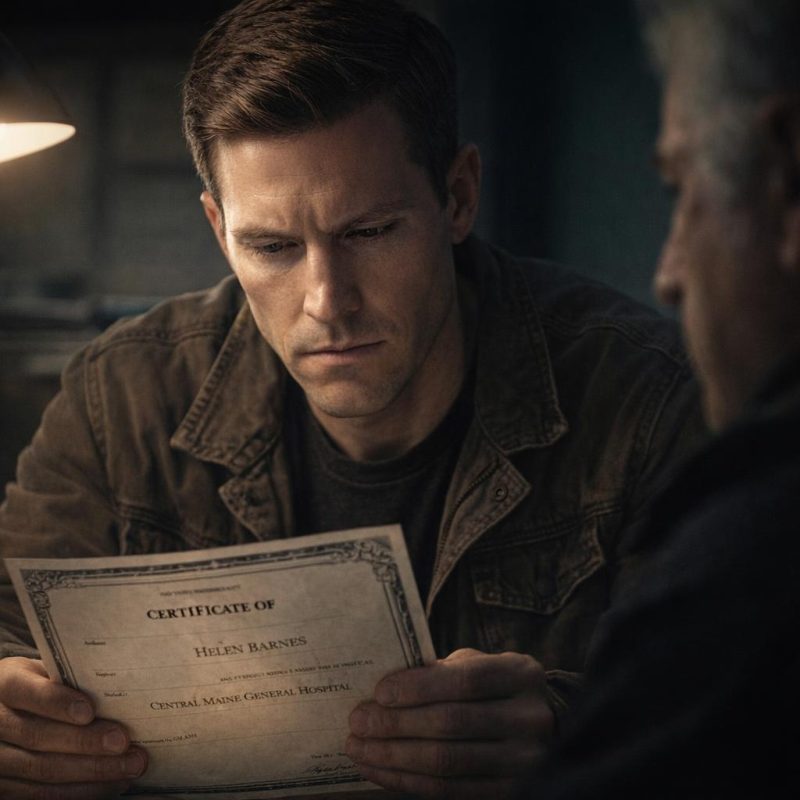 Image by RM AI
Adoption Gaps
I drove home on autopilot, hands on the wheel, not really seeing the road. I kept going back to the same memory — I was maybe eight years old, sitting at the kitchen table, asking my mother where I came from. Not in the birds-and-bees way. In the other way. She'd smiled and said I came from her, which was technically true and also completely avoided the question. When I pushed, she said it was a private adoption, arranged through an agency, and that the birth mother had wanted a fresh start. I asked which agency. She said she didn't remember the name. I asked where it was located. She said somewhere downtown, she thought. I asked if there were papers. She said the records were sealed and that was just how private adoptions worked. I remember thinking even then that the answers were too smooth, too practiced, like she'd rehearsed them. But she was my mother and I loved her and I didn't want to make her uncomfortable, so I let it go. I let it go every time after that too. There were no adoption papers in the box where she kept important documents — I'd looked once as a teenager and told myself they must be stored somewhere else. I sat with all of that now, the gaps I'd never thought to measure before.
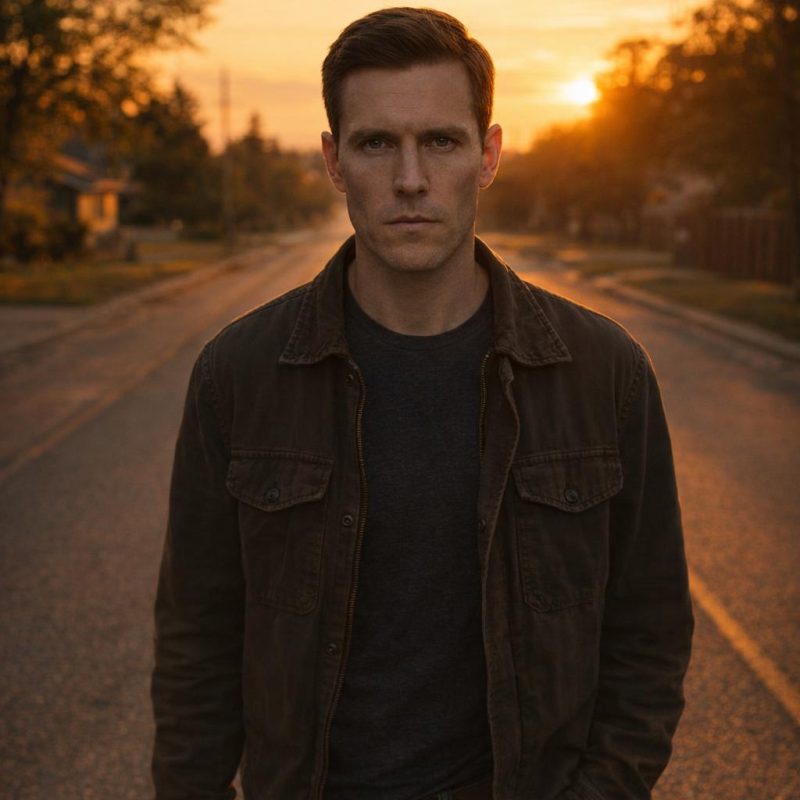 Image by RM AI
Sealed Files
The next morning I called the county records office before I'd even finished my coffee. The clerk who answered sounded bored until I gave her my name and date of birth and asked about my adoption file. I heard her typing, a long pause, more typing. Then her tone changed — not unfriendly, just careful. She said the file existed in the system but was flagged as sealed by court order. I asked what that meant practically. She said it meant no public access, no copies, no disclosure of contents without a judge's authorization. I asked how old the seal was. She checked and said it had been placed thirty-two years ago, shortly after the adoption was finalized. I asked if that was normal. She paused again and said permanent seals on adoption files weren't common — most sealed records had provisions for adult adoptees to petition for access, but mine didn't appear to have that. She said whoever filed the order had requested indefinite closure with no standard review period. I thanked her and hung up. I sat at my kitchen table and pulled up the scanned image of the court order she'd emailed over while we were talking, and I read the language at the bottom of the page ordering the records sealed indefinitely with no provision for future access.
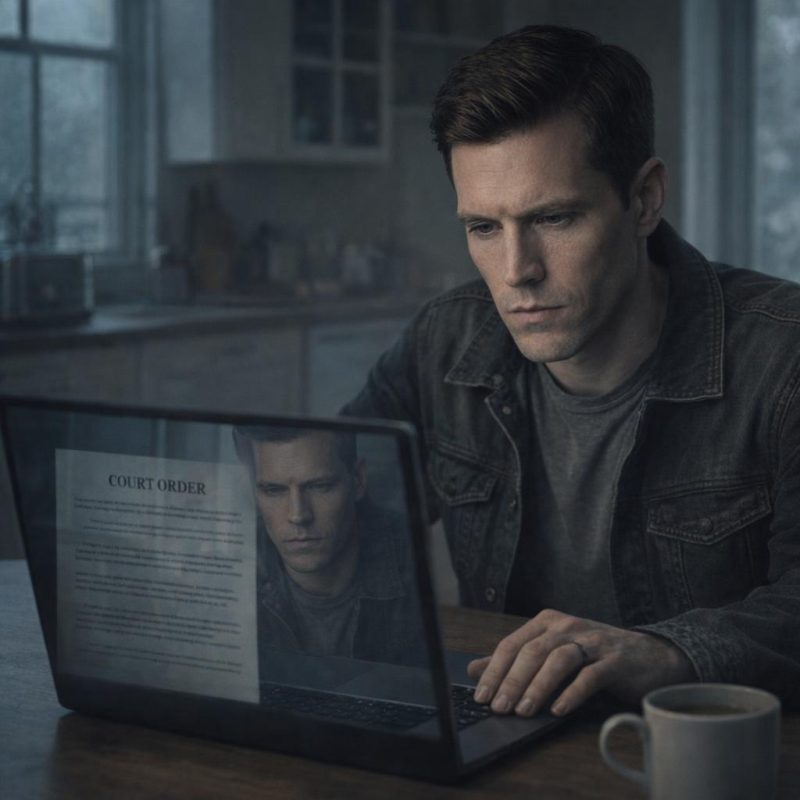 Image by RM AI
Financial Connections
My mother kept her old financial records in cardboard boxes in her attic, the kind of organized chaos that made sense only to her. I'd helped her move them up there years ago and never thought about them again. She was visiting my aunt for the week, so I let myself in with my spare key and climbed up there with a flashlight. It took me about an hour to find the right boxes — the ones from when I was a kid, labeled by year in her careful handwriting. I started pulling out bank statements. At first everything looked ordinary — her salary from the school district, utility payments, grocery runs. Then I found it. Starting from a statement dated six months after my birth, there were monthly deposits of two thousand dollars each, listed as wire transfers from an account with no name attached, just a routing number I didn't recognize. I checked the next month. Same amount, same source. I kept going. Every single month, without interruption, for eighteen years. I did the math on the back of an envelope. The total came out to just over four hundred thousand dollars. I sat on the attic floor surrounded by paper, the flashlight balanced on a box beside me, thinking about the payments that stopped the month I turned eighteen.
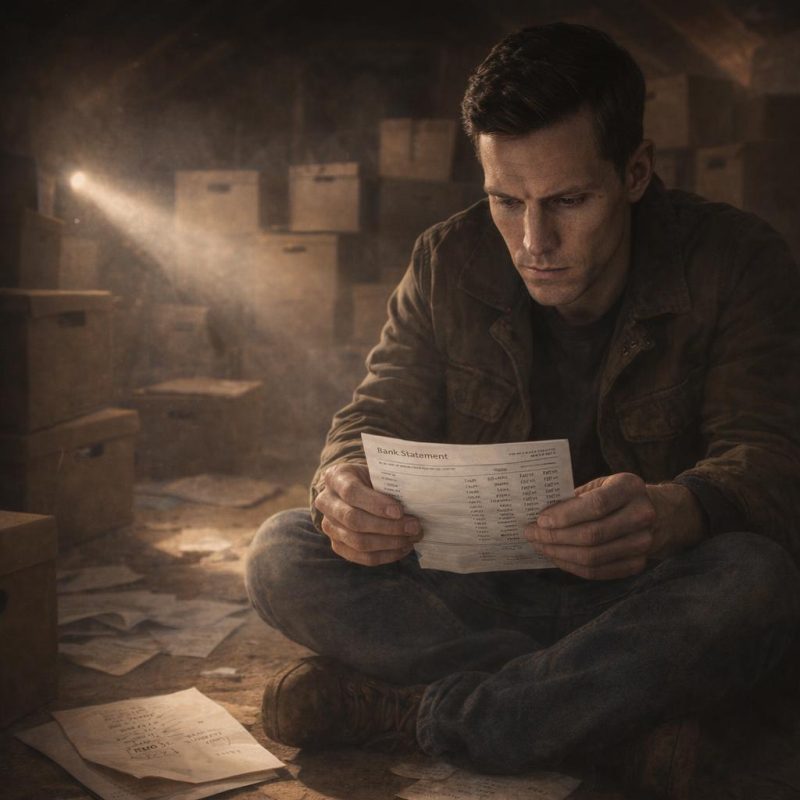 Image by RM AI
Confronting Christine
I drove to her house the day she got back, the bank statements folded in my jacket pocket. She opened the door smiling and I could see she was about to ask if I wanted coffee, and then she looked at my face and the smile faded. I came inside and sat down at the kitchen table — the same table where she'd given me those smooth, practiced answers when I was eight years old — and I put the statements in front of her. I didn't say anything at first. I just watched her look at them. The color left her face slowly, the way it does when someone recognizes something they hoped they'd never have to see again. She sat down heavily in the chair across from me. I asked her what the money was. She was quiet for a long moment. Then she said it was for my care. For my education. She said a lawyer had contacted her when I was born, before the adoption was even finalized, and offered her a financial arrangement in exchange for taking me in and not asking questions about where I came from. She said she'd been told the birth mother wanted complete anonymity and that the arrangement was standard for private adoptions of this kind. She said she didn't know who was sending the money. I looked at her face when I asked if that was true, and I held onto what I saw there.
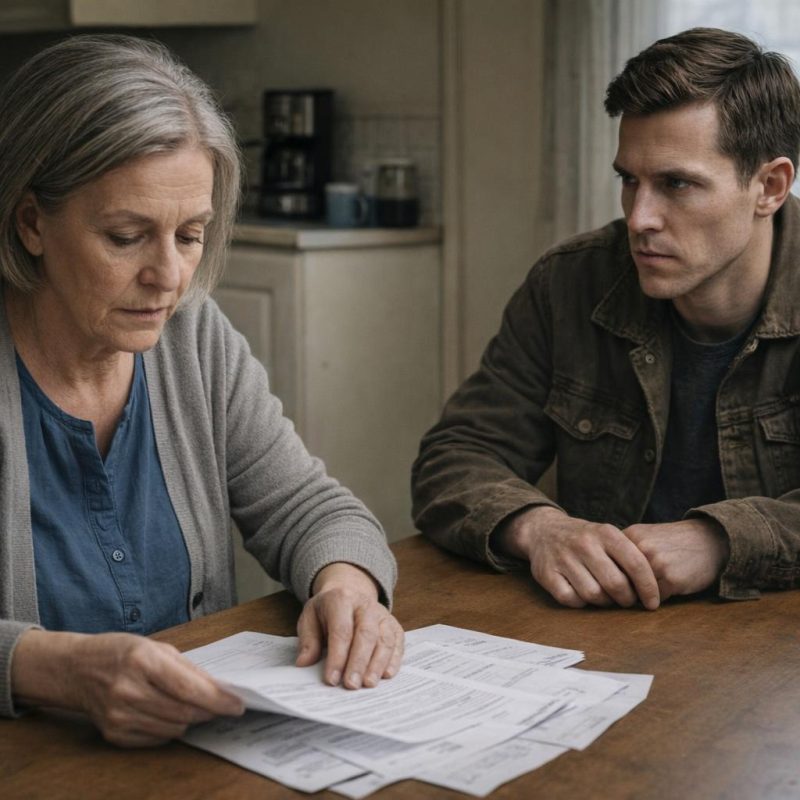 Image by RM AI
Partial Confessions
She kept talking, and I let her. She said the lawyer had handled everything — the paperwork, the payments, the instructions. She said his name was Whitmore. She said he'd been professional and formal and had made it very clear that the arrangement came with conditions. She was never to contact the birth family. She was never to investigate the father's identity. She was never to discuss the origins of the adoption with anyone, including me. She said Whitmore had told her that if she violated any part of the agreement, the payments would stop and there could be legal consequences. She said she'd been twenty-six years old and scared and she hadn't wanted to lose me, and after the first year the money had started to feel less important than I did. She reached across the table and I let her take my hand. I believed her when she said she loved me. I believed her when she said she'd been afraid. What I couldn't get past was the name she'd said so quietly, like it was just a detail — Whitmore. I sat there holding her hand and the name kept turning over in my head, pulling at something I couldn't quite place, until it landed: Whitmore and Associates, printed on the letterhead of Victor's trust documents.
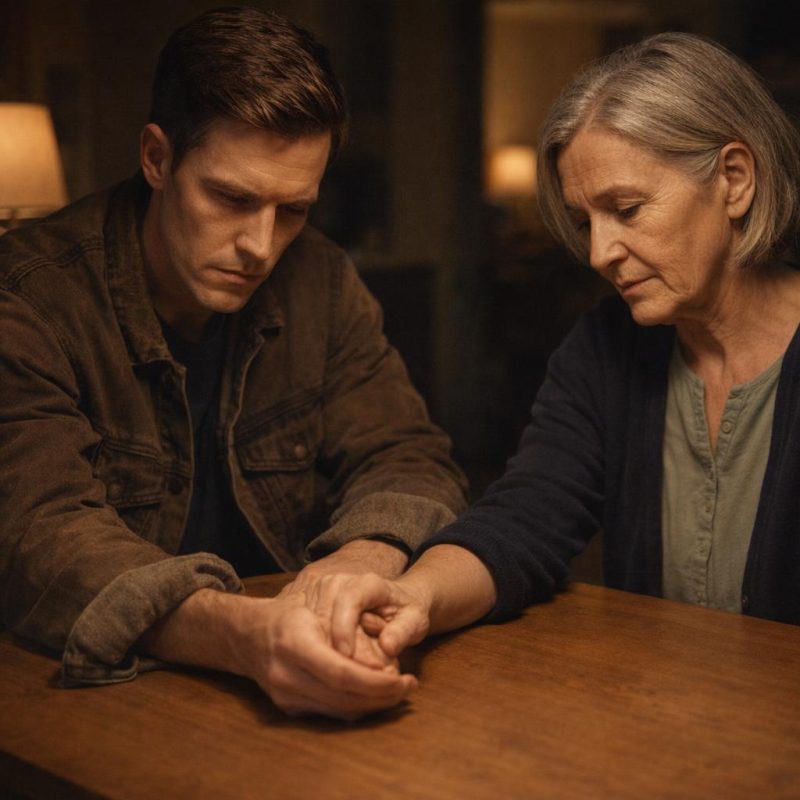 Image by RM AI
The Closing Net
Ray's phone buzzed while we were still sitting in the truck outside my apartment, and I watched his face change as he listened. He didn't say much — just a few short words, a couple of nods, and then he hung up and sat there for a second before turning to me. He said it was a former contact, someone still loosely connected to the organization, and that Elena's people had been making calls all morning asking about rural storage facilities outside the city. Not just asking — checking. Ray said his contact used the word systematic, and that word sat in my chest like a stone. I thought about the unit, the Continental, the documents still tucked inside that hidden compartment, and I felt the floor drop out from under me. Ray told me Elena had been Victor's former lieutenant and that she didn't send people to ask questions twice. We were back on the road in under two minutes. I kept my eyes on the side mirror the whole drive out, watching for headlights that stayed too close, and Ray kept both hands on the wheel and didn't say another word. By the time we pulled off the highway, I couldn't shake the feeling that whatever window we'd had was already most of the way shut.
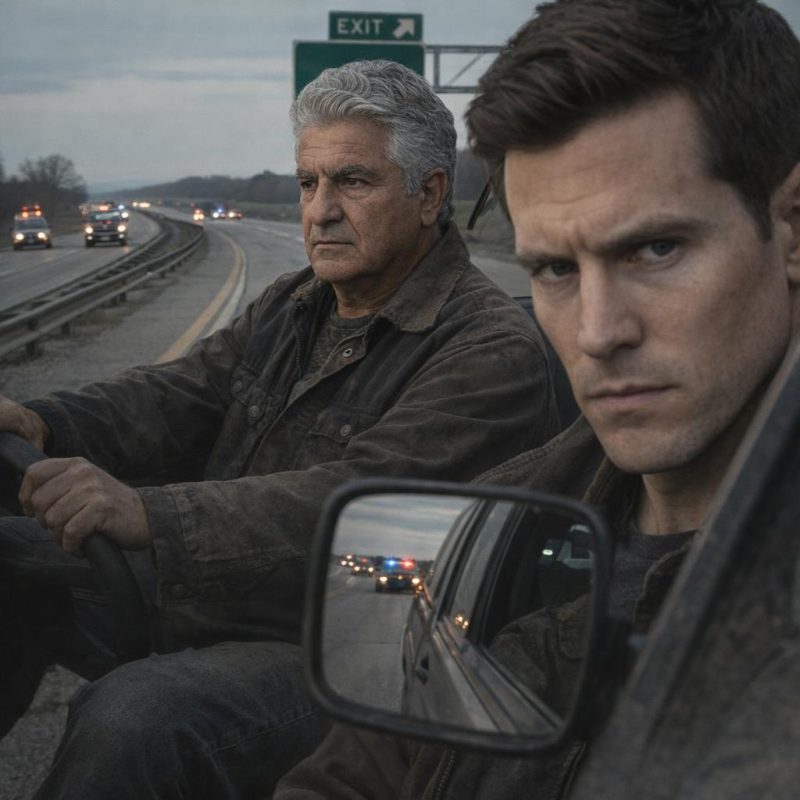 Image by RM AI
The Urgent Envelope
The storage unit looked exactly the way I'd left it — padlock untouched, the roll door still slightly dented at the bottom corner where I'd caught it wrong the first time. I got it open fast and Ray pulled the door down behind us before I even had the trunk unlatched. The Continental sat there in the dark like it always did, patient and enormous, and I went straight for the hidden compartment. I'd already pulled the main documents weeks ago, but Ray had said to check everything, so I ran my hands along the back panel until the latch gave. There was one envelope I hadn't noticed before, pushed flat against the rear wall of the compartment, almost flush with the lining. I pulled it out and held it under the overhead light. The word URGENT was written across the front in heavy block letters, and beneath it, in the same hand, a set of initials: V.A. The back was sealed with red wax, pressed with a small stamp I didn't recognize. Ray leaned in and went very still. He said that seal was Victor's personal mark — that he'd only ever used it on documents that couldn't wait. I slid the envelope into my jacket, and we left without touching anything else. I stood there for one last second before Ray killed the light, the red wax catching the storage unit's single overhead bulb.
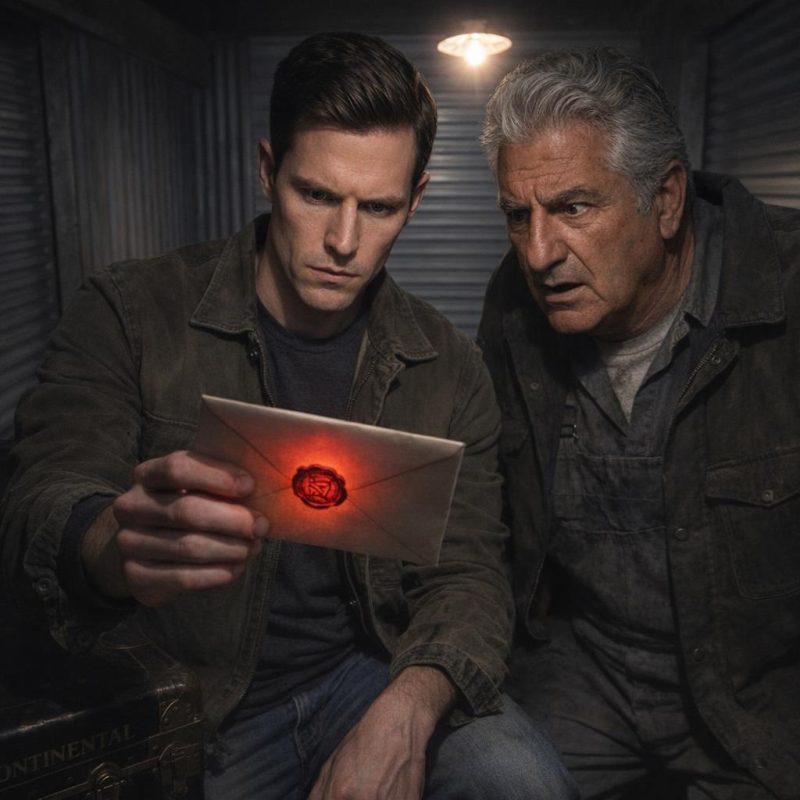 Image by RM AI
DNA Confirmation
We drove twenty minutes out to a gas station lot Ray knew, the kind with bad lighting and no cameras, and I sat in the passenger seat with the envelope in both hands for longer than I should have. Ray didn't rush me. I finally worked my thumb under the wax seal and eased it open, trying not to tear whatever was inside. There were three pages, folded together, printed on what looked like official laboratory letterhead — a certified genetics lab out of the city, the kind of place that handles legal proceedings. The test was dated six months before Victor's death. I read the subject lines twice before the words stopped moving. Father: Victor Ashford. Child: Jake Morrison. I looked up at Ray and he was already reading over my shoulder, and neither of us said anything for a long moment. The methodology section, the chain-of-custody notes, the certification stamps — all of it was there, all of it looked real, all of it pointed to the same conclusion. Ray sat back slowly and let out a breath through his nose. My hands had stopped shaking by then, which felt wrong somehow, like my body had gone past the point where shaking made sense. I looked back down at the page. The paternity probability printed at the bottom read 99.9%.
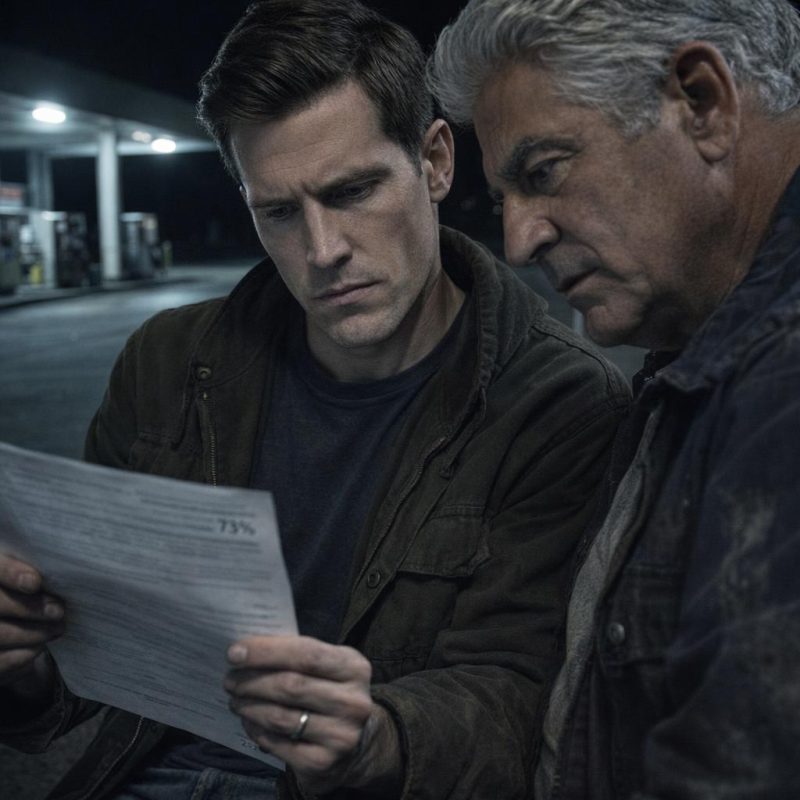 Image by RM AI
All Along
Ray let me sit with it for a while before he started talking. He said Victor had been known inside the organization for planning things years out — not months, years. He said the man didn't do anything without a reason and didn't leave loose ends. I kept staring at the test results and thinking about the photographs I'd found in the compartment earlier, the ones of a kid I hadn't recognized. A kid in a backyard I didn't know. A kid who looked, now that I was really looking, like someone I'd seen in a mirror. I thought about Christine's voice when she'd said the lawyer's name — Whitmore — and how the payments had never stopped, not once, for thirty years. I thought about the auction, the way the car had been listed with almost no information, priced just low enough that someone like me would notice it and no one serious would bother. Ray said the note in the glove box — he is coming home — wasn't about the car. I already knew that before he finished the sentence. The auction wasn't a liquidation. The payments to Christine weren't charity. The photographs, the payments, the auction — all of it had been arranged.
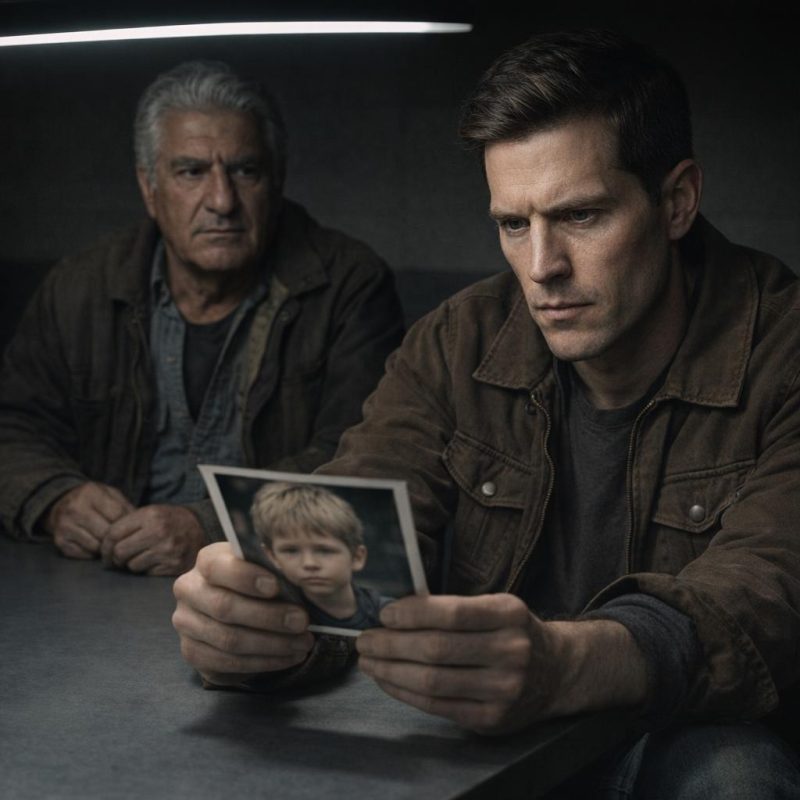 Image by RM AI
The Heir
Ray spread the remaining documents across the dashboard and I went through them one by one, slower now, because I understood what I was looking at. There was a trust instrument, a transfer of assets, a letter from Whitmore and Associates addressed to the executor of Victor Ashford's estate. And then, near the bottom of the stack, a single page on heavy cream paper — a will, handwritten and notarized, dated four years before Victor died. The beneficiary line read J.M., with a footnote that referenced the DNA certification by case number. Ray said the organization had been fracturing since Victor's death, that Elena and Derek had both been positioning themselves to absorb the empire, and that the one thing standing in their way was a legal heir with documented proof of paternity. He said the detailing shop staff hadn't been treating the car like a rare vehicle — they'd been treating it like a delivery that had finally arrived. He said Victor's lawyers had seeded the auction specifically, priced the car for a buyer with limited means and the right last name, and that the GPS tracker wasn't placed by Elena's people first — it was placed by Victor's people, to make sure the car reached me. I sat there with the will in my hands, the beneficiary line staring back at me. Then I found the final document, tucked inside the will's back fold — a single transfer page naming me, by full legal name, as sole beneficiary of Victor Ashford's entire estate.
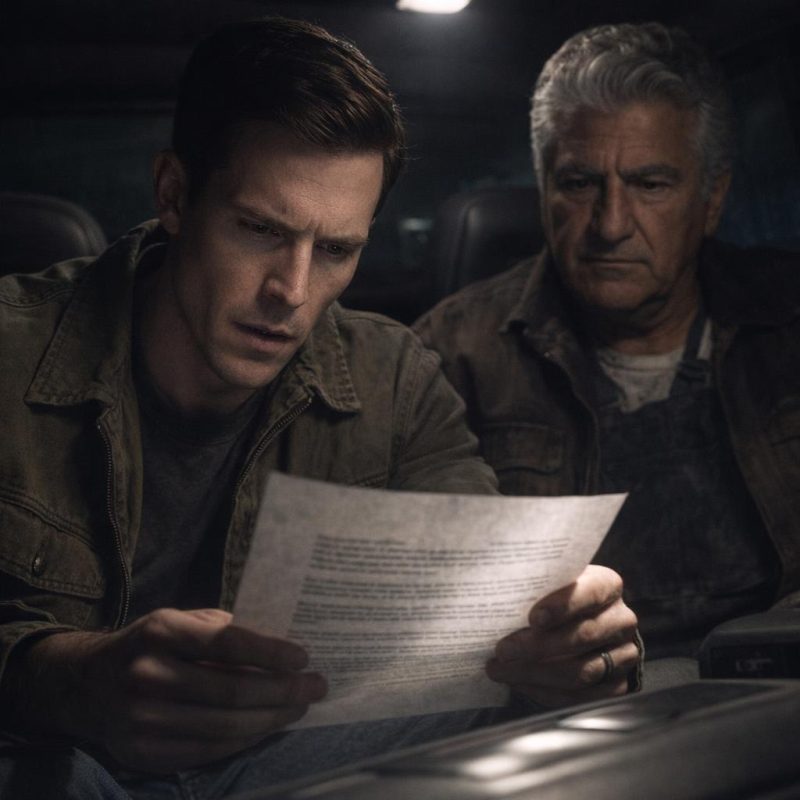 Image by RM AI
Reframing the Past
I sat back and let it run through my head from the beginning. The detailing shop — the way Attendant One had gone rigid the moment he saw the car, the way Attendant Two had nearly tripped over himself getting the door. I'd thought it was about the Continental. It wasn't. Ray said the organization had a standing description of the vehicle, that anyone connected to Victor's world would have recognized it on sight, and that the moment I pulled up in it I'd announced myself without knowing it. The reverence wasn't for the car. It was for whoever was driving it. I thought about the way Derek had appeared, how smooth he'd been, how quickly he'd shifted from friendly to threatening the moment I didn't play along. Ray said Derek's first call after seeing me wasn't to report a theft — it was to report that someone had shown up with the car and didn't know what they were carrying. I thought about the GPS tracker, the anonymous texts, the men outside my building. None of it had been about recovering property. All of it had been about making sure I disappeared before I understood what I had. I turned that over for a long time, going back through every moment since the auction, and then it hit me — that first phone call had gone out before Derek even finished talking to me, which meant they hadn't needed time to figure out who I was.
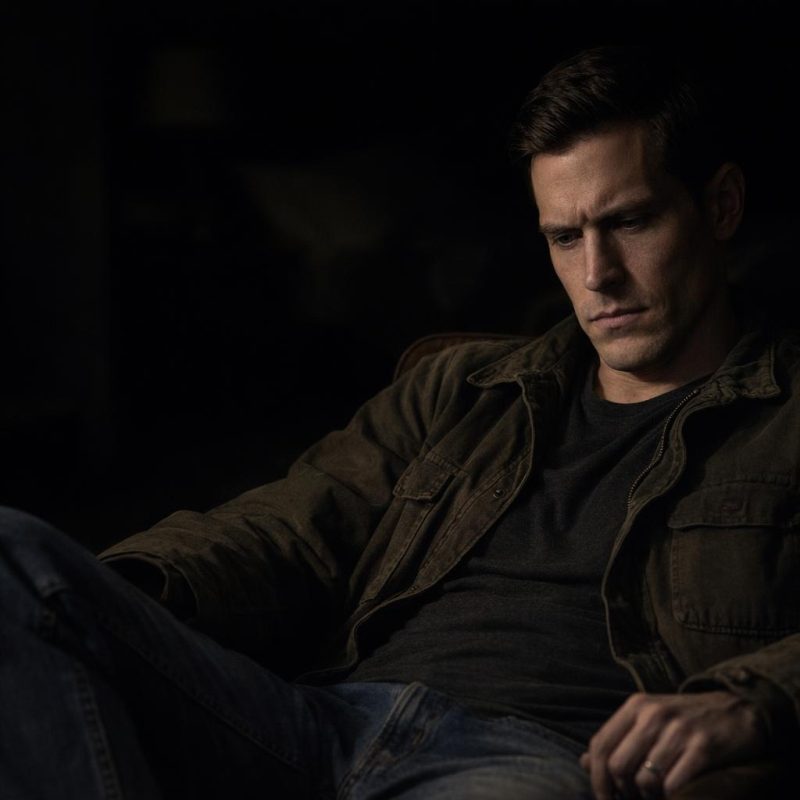 Image by RM AI
The Inheritance Trap
Ray said Victor had known exactly what he was doing. He said a man like Victor didn't hand someone an empire without understanding the cost — that the documents weren't just a gift, they were a mechanism. By putting everything in my name and seeding the proof inside a car only I would buy, Victor had made sure the organization couldn't quietly absorb his assets after his death. The moment I touched those documents, I became the legal obstacle they couldn't ignore. Ray said Victor had told him once, years before, that the only way to stop what he'd built from continuing was to give someone the tools to dismantle it from the inside — someone with clean hands and a legal claim. I asked Ray why he hadn't warned me sooner. He looked at his hands and said he hadn't known about me until recently, that Victor had kept that part sealed even from people he trusted. I believed him. I also understood, sitting there in that gas station lot with a dead man's will in my lap, that I couldn't walk away. The organization knew my name, my face, and what I was holding. Disappearing wasn't an option Victor had left me. I sat with that for a long time — the weight of the choice that wasn't really a choice, and the impossible position my biological father had built for me before I ever knew he existed.
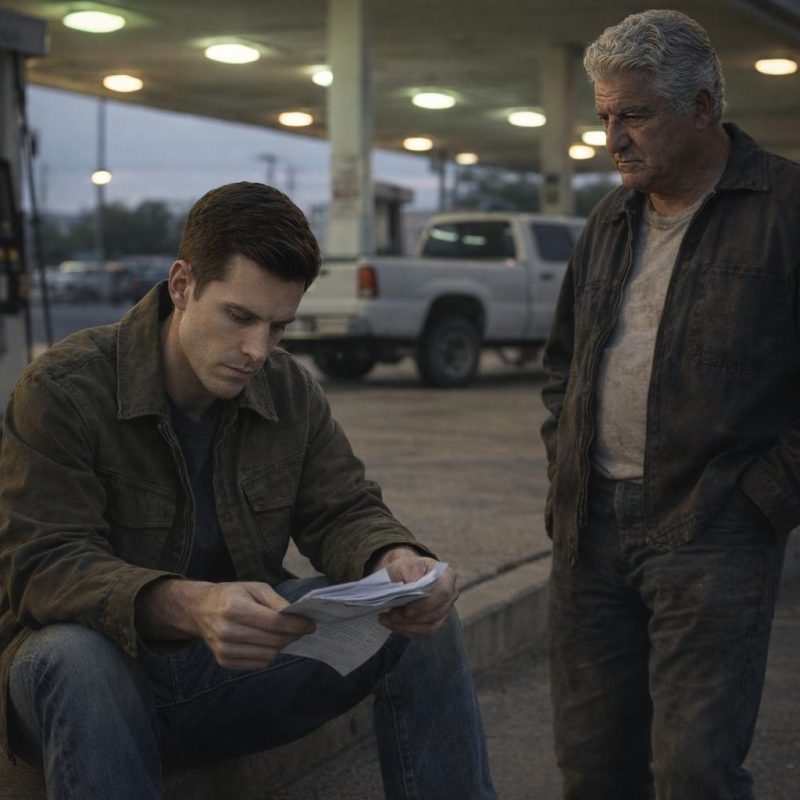 Image by RM AI
Elena's Ultimatum
My phone rang at 11:47 that night from a number I didn't recognize. I almost didn't answer. The voice on the other end was calm and precise — a woman, unhurried, like she was reading from something she'd already decided. She said her name was Elena. She said she knew who I was, that she'd known since the auction, and that she wanted me to understand she wasn't calling to threaten me — she was calling to offer me a way out. Five million dollars, she said, wired to any account I chose, in exchange for the documents and my permanent disappearance from anything connected to Victor Ashford's name. She said the organization couldn't allow a legal claim to stand, that the courts would freeze everything and destroy what Victor had spent decades building, and that I had twenty-four hours to accept. Then she said, very quietly, that if I didn't accept, the people she'd already sent wouldn't be told to stop. I didn't say a word. I ended the call and set the phone face-down on the seat beside me. Ray looked at me from the driver's side and I shook my head. Outside, the gas station lot was empty and still, the fluorescent lights humming faintly overhead. I sat in the quiet that followed, and it pressed in from every direction.
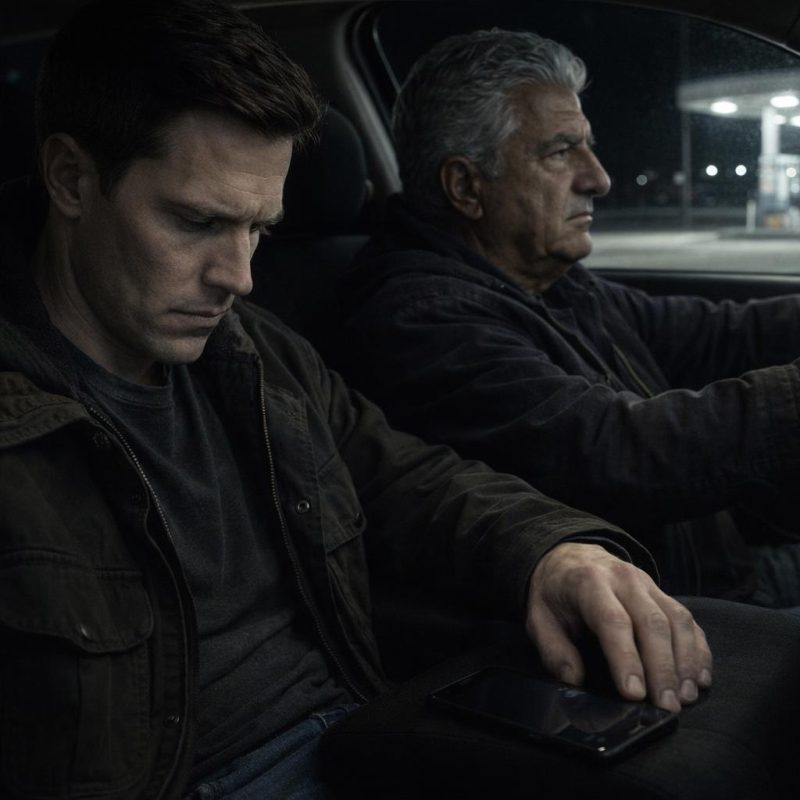 Image by RM AI
The Impossible Choice
I sat in that gas station lot for a long time after the call ended, turning it over in my head. Five million dollars. Ray kept his eyes on the windshield and let me think, which I appreciated more than I could say. After a while I asked him straight — what happens if I take the money? He didn't sugarcoat it. He said the organization would wire the funds, watch me disappear, and then spend the next decade deciding whether I was a loose end worth cleaning up. He said people like Elena don't buy silence, they rent it, and the lease always expires. I asked what happens if I fight. He said I'd be declaring war on people who'd been winning wars since before I was born. He said Victor had given me a weapon, but a weapon doesn't mean you walk away clean. I thought about Victor then — a man I'd never met, who'd spent years building something terrible and then spent his last days trying to hand me the key to it. He hadn't done all that so I could cash out and disappear into some apartment in another country. Running meant his plan died with him. The organization won. Everything he'd done, everything he'd risked, meant nothing. I looked at Ray and told him I'd made my decision.
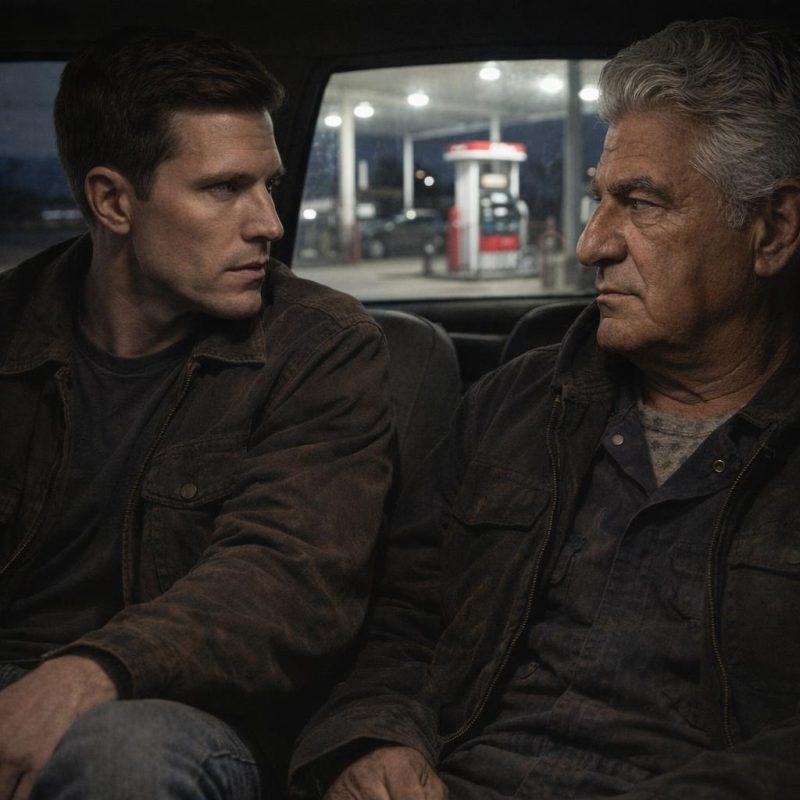 Image by RM AI
Claiming the Birthright
Ray didn't look surprised. He just nodded slowly, like he'd already known which way I'd land. I told him I was going to claim the inheritance — all of it — and use Victor's evidence to back the claim up. He asked me if I understood what that meant, and I said I did. It meant Elena and everyone connected to her would come at me with everything they had. He said yes, and then he said he'd be right there when they did. I hadn't expected that. I'd half-expected him to wish me luck and drive away. Instead he started talking logistics — said I needed a lawyer before I did anything else, someone who specialized in estate law and wasn't afraid of complicated clients. He mentioned Whitmore and Associates, said they'd handled sensitive cases before and that Victor had trusted them. I wrote the name down on my phone. Ray said we needed to move fast, that Elena's twenty-four-hour window was already burning down and she'd interpret silence as weakness. I looked at the documents sitting in the bag at my feet — the financial records, the transaction logs, the names and dates and account numbers that Victor had spent years assembling. They weren't just evidence. The documents were his weapon, and I was going to use them.
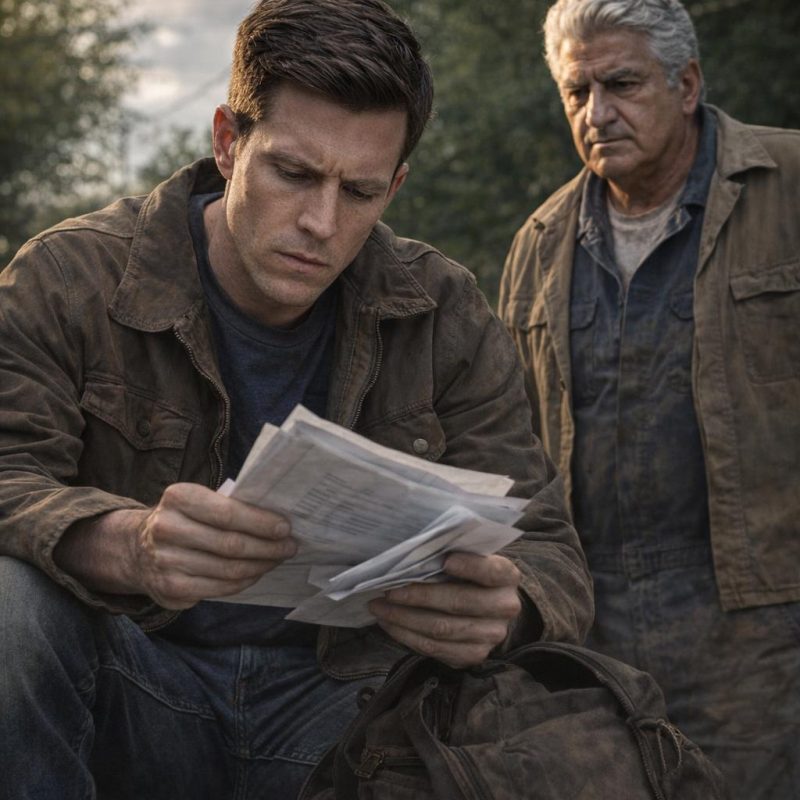 Image by RM AI
The Meeting
I called Elena the next morning from a burner Ray had picked up at a convenience store. She answered on the second ring, which told me she'd been waiting. I told her I wasn't taking her money. I told her I wanted a meeting — in person, her and whoever she needed to bring — and that if anything happened to me before that meeting, or during it, or after it, the full contents of Victor's documents would be in the hands of three separate federal agencies before the day was out. There was a pause. Then she said, very evenly, where and when. I named a restaurant downtown — busy lunch crowd, security cameras on every corner, the kind of place where nobody does anything stupid. She agreed without arguing, which made me more nervous than if she'd pushed back. Ray and I spent the rest of the morning making copies of the most damaging documents and getting them to Whitmore's office with written instructions. The lawyer's assistant didn't blink, which I took as a good sign. By noon we were parked outside the restaurant, engine off, watching people move in and out through the glass doors. Ray checked his phone. I checked mine. Neither of us said much. The afternoon light came through the windshield and lay flat across the dashboard, and the quiet between us felt like the last quiet we were going to get for a while.
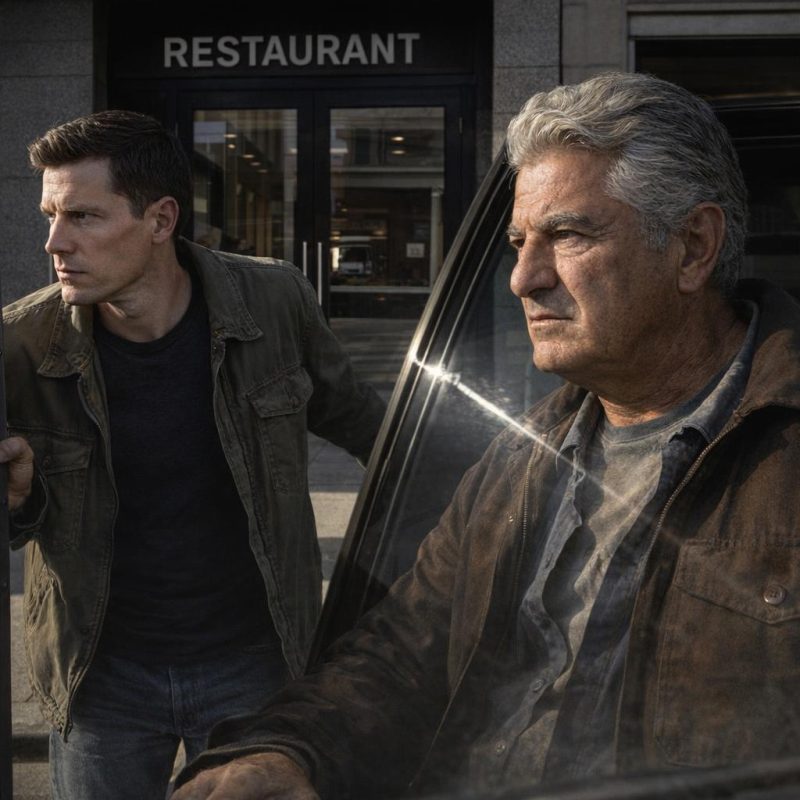 Image by RM AI
Leverage
Elena was already seated when we walked in — corner table, back to the wall, sight lines to both exits. I noticed that immediately. Marcus was standing a few feet behind her chair, arms loose at his sides, watching me the way a dog watches a door handle. Ray and I sat down across from her and I put the folder on the table between us without saying anything. She looked at it, then at me, and then she opened it. I watched her work through the first few pages. Her expression didn't change much — a slight tightening around the eyes, a stillness in her jaw — but she turned each page carefully, which told me she was reading every word. I explained what she was looking at. Financial records showing money moved through shell companies over a twelve-year period. Transaction logs connecting the organization to three separate government officials. Account numbers, wire confirmations, dates. I told her the full package was with my lawyer and with two other parties I wasn't going to name, and that all of them had instructions to release everything if I missed a check-in. I told her what I wanted: the organization's formal acceptance of my legal claim as Victor's heir, in writing, with no further interference. Elena set the last page down and folded her hands on top of it. She didn't speak. The stillness in her face settled like something that had been there a long time, waiting.
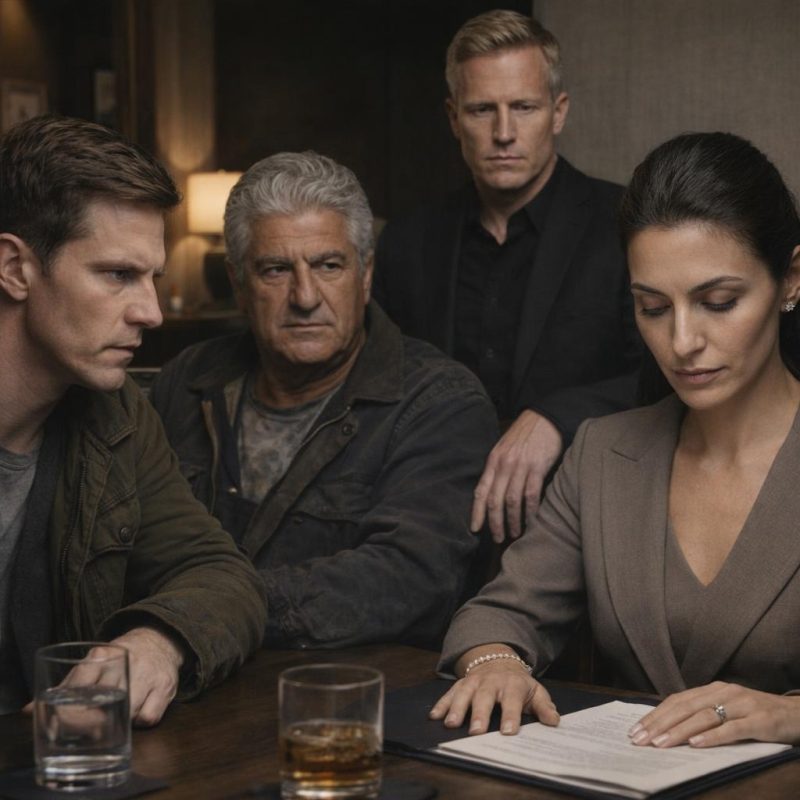 Image by RM AI
The Empire's Crimes
She asked me, very quietly, if I understood what I was holding. I told her I did. I walked her through it — the bribery payments to two city officials, the extortion records going back eight years, the laundering operation that ran through four different real estate holding companies. Then I told her the part that seemed to land hardest: Victor had included documentation of her personal involvement. Specific transactions. Specific dates. Her name, not a pseudonym, attached to three separate wire authorizations. Marcus shifted his weight behind her, just slightly, and I caught it. Ray caught it too. Elena's eyes moved to the documents and stayed there. I told her Victor hadn't assembled all of this by accident. He'd been building it for years — a complete record of everything the organization had ever done, detailed enough to put people away for a long time. She asked me, still in that same quiet voice, why Victor would do that. Why he'd document his own empire so thoroughly. I told her what I believed: that he'd built something he came to regret, and that he wanted to give his son a choice about what to do with it. She looked at me for a long moment. The folder sat open between us on the white tablecloth, and the weight of everything Victor had spent years assembling seemed to press down over the table like something physical.
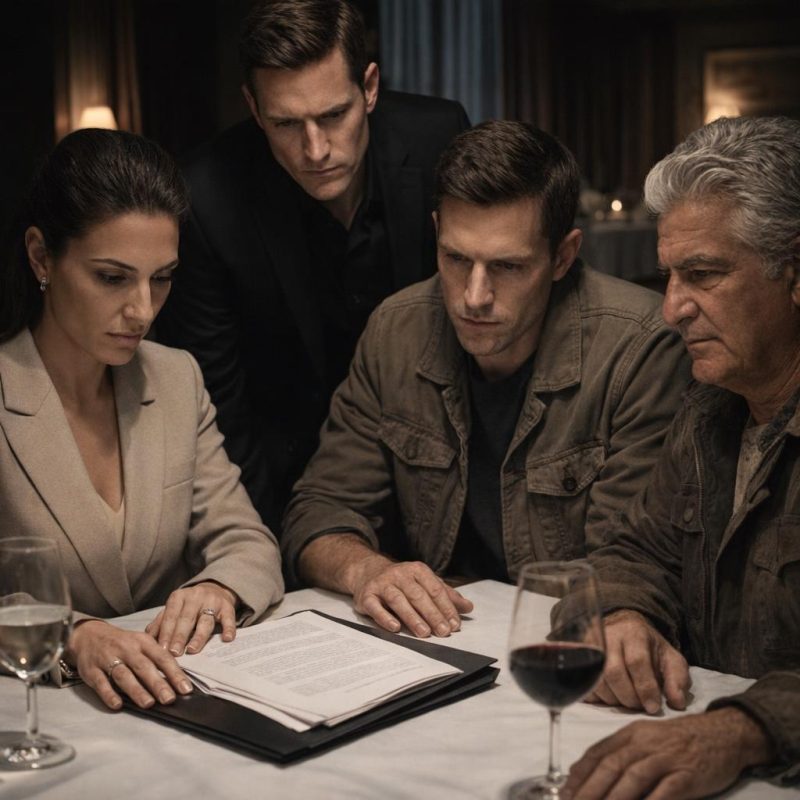 Image by RM AI
Standoff
Elena leaned back in her chair and told me the organization would never accept my claim. She said it the way someone says a fact about weather — no heat in it, no negotiation. I told her that was her choice to make, but that the consequences were already in motion and she couldn't stop them by refusing to deal with me. She said I was bluffing about the lawyer. Ray spoke up then, calm and flat, and said the documents had been delivered to Whitmore's office at nine that morning, that copies were with two additional parties he wasn't going to identify, and that all three had the same instructions. Elena looked at Ray for a moment with something that wasn't quite surprise. Then she looked back at me and said the organization had survived worse than a mechanic and a lost heir with a folder of old paperwork. I told her Victor hadn't thought so. The table went quiet. Around us the restaurant kept moving — a server refilling water glasses two tables over, a couple near the window laughing at something on a phone — and none of it touched what was happening at our table. Marcus had been still for most of the conversation, but I noticed his weight shift and I watched his hand move toward the inside of his jacket.
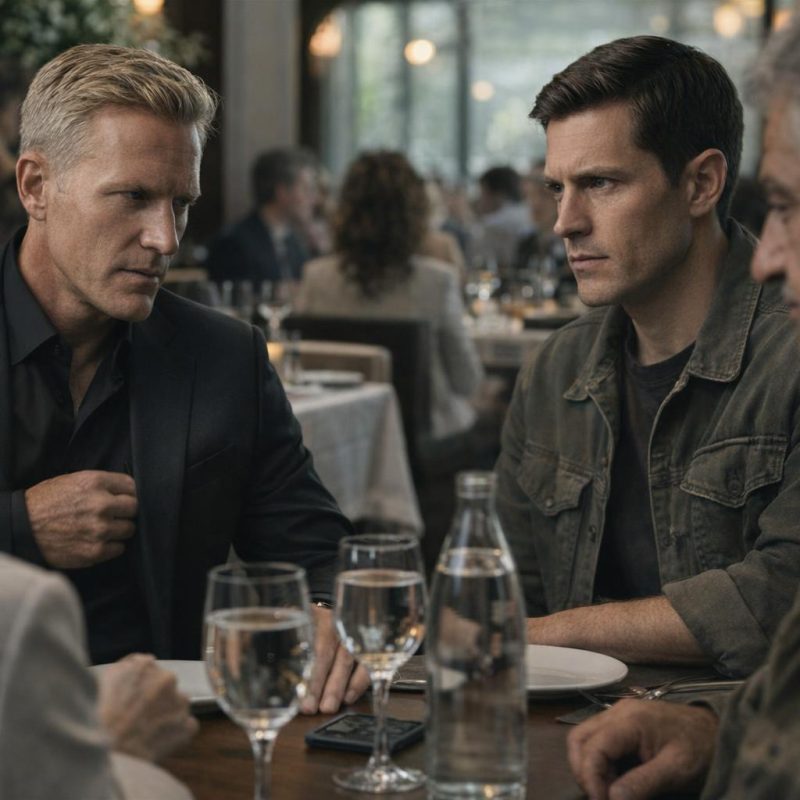 Image by RM AI
Ray's Backup
Ray said, without raising his voice, that Marcus should think carefully about the next thirty seconds. Elena looked at Ray. Ray looked at Elena and told her that federal agents were outside the restaurant — had been since before we walked in. He said he'd contacted the FBI four days ago and provided them with a preliminary set of documents, enough to open an investigation, and that they'd agreed to be present at this meeting as a condition of his cooperation. Elena's expression shifted for the first time. It wasn't panic — it was something colder, a recalculation happening behind her eyes. She told Ray he'd betrayed the organization. Ray said he'd made a choice he should have made a long time ago. Marcus's hand had stopped moving. He stood very still, eyes going between Ray and the front of the restaurant. I didn't turn around. I kept my eyes on Elena and waited. Then I heard it — the sound of the front door, more than one set of footsteps, a voice identifying federal law enforcement and asking the room to remain calm. Two agents in dark jackets moved through the lunch crowd toward our table, badges out, and asked Elena if she'd be willing to step outside and answer some questions. Marcus removed his hand from his jacket slowly, fingers spread, and set it flat on the back of Elena's chair.
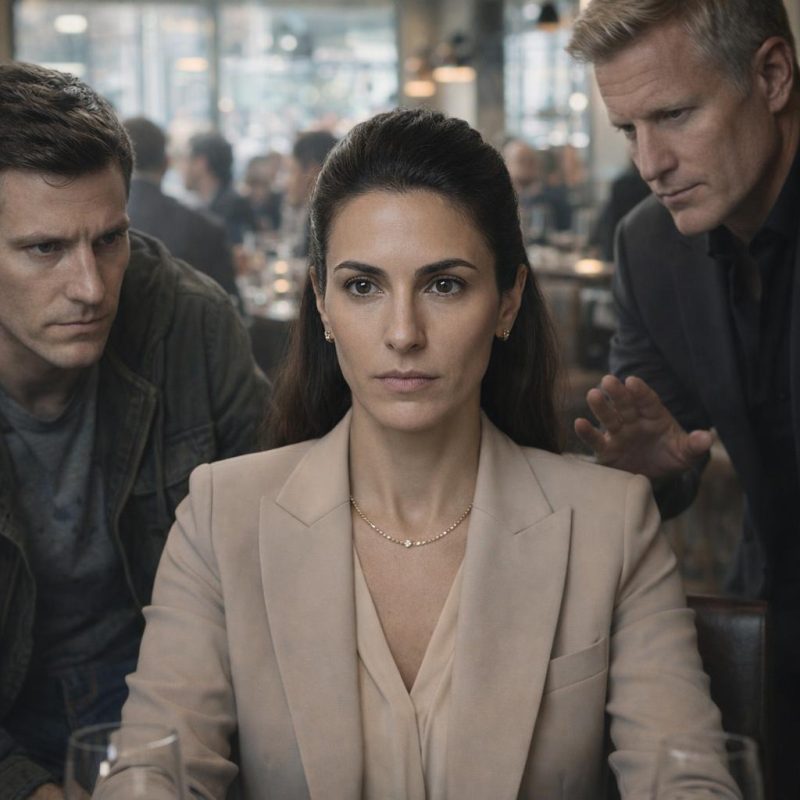 Image by RM AI
Victor's Endgame
Ray drove me home after the agents took Elena's statement and told us both not to leave the city. Neither of us talked much on the way. Back at my apartment I sat at the kitchen table with the document bag in front of me and went through everything again, slower this time, looking for anything I'd missed. Near the bottom of the stack, behind a set of financial ledgers, I found an envelope I hadn't seen before. It was sealed. My name was written on the front in handwriting I didn't recognize — careful, slightly formal, the kind of handwriting that belonged to someone who'd learned it a long time ago and never changed. I opened it. The letter inside was two pages, handwritten on plain paper, dated eleven days before Victor died. He wrote that he'd built the organization over thirty years and that there had been a long stretch of time when he'd believed the ends justified everything. He wrote that he'd been wrong. He wrote that he couldn't dismantle it himself — too many people, too many moving parts, too much of his own history tangled up in it — but that he believed his son could, if his son had the right tools and the right reason. He said he was sorry for every year of silence. He said he hoped I could forgive him. Then I reached the last line, and my hands went still on the page — he hadn't wanted me to inherit the empire. He'd wanted me to end it.
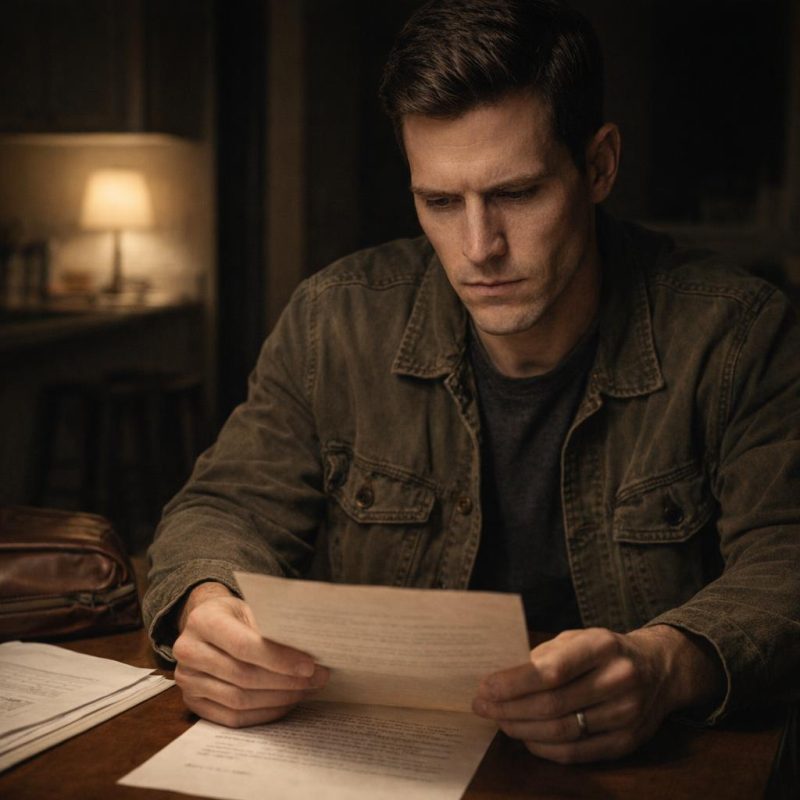 Image by RM AI
The Final Choice
I read Victor's letter three more times before I called Ray back in from the hallway. He stood in the doorway while I laid it out — all of it, the letter, the ledgers, the evidence packets, everything Victor had spent what sounded like the last year of his life assembling. Ray didn't say much. He just nodded slowly, like a man who'd been waiting a long time for a weight to finally land somewhere. I told him I'd made up my mind. I wasn't going to try to run the organization, wasn't going to sell it off piece by piece, wasn't going to pretend I could just walk away and let it keep grinding. Victor had handed me a wrecking ball and called it an inheritance. The federal prosecutors met us the next morning in a conference room that smelled like burnt coffee and carpet cleaner. I brought everything. They walked me through what cooperation would mean — testimony, documentation, full disclosure of the organizational structure. I asked about the legitimate side of the estate, the properties and investments that had nothing to do with the criminal operations. They said those were mine to claim. I told them about the criminal proceeds — I didn't want them. We talked for two hours. Then I picked up the pen they slid across the table and signed the cooperation agreement.
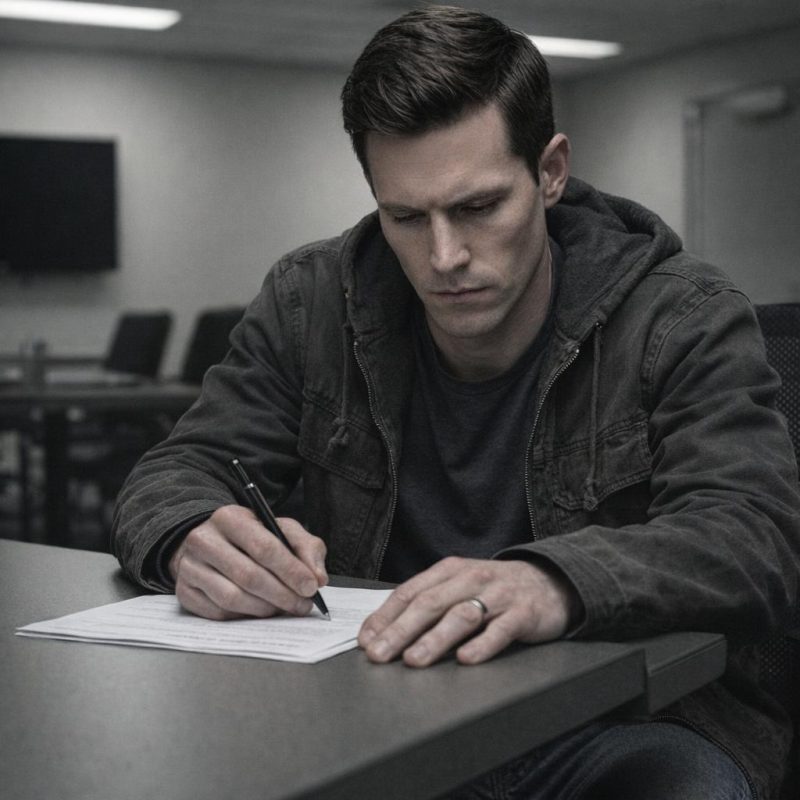 Image by RM AI
Exposure
The arrests started on a Tuesday. I know because I was sitting in Ray's garage drinking bad coffee when his phone lit up with a news alert — federal agents executing search warrants across multiple properties tied to a shell company I recognized from Victor's ledgers. Ray set his mug down and we both just stared at the screen. Elena was taken into custody at her office building, walked out through the lobby in front of her own staff, hands behind her back. The footage ran on the evening news. Marcus and three others from the security operation were picked up the same day at different locations. I testified before the federal grand jury the following week, two and a half hours in a room with no windows, walking prosecutors through the organizational chart I'd pieced together from Victor's documents. The evidence held. Every conspiracy charge they'd outlined in that first meeting had documentation behind it. Ray got his immunity agreement signed the same afternoon. Over the next few weeks I watched the news the way you watch a controlled demolition — knowing it's coming, knowing it's necessary, still feeling something complicated in your chest when the structure finally comes down. Victor had built that organization over thirty years. It took the government about six weeks to dismantle it. I sat with that for a long time, and the complicated feeling in my chest slowly settled into something quieter.
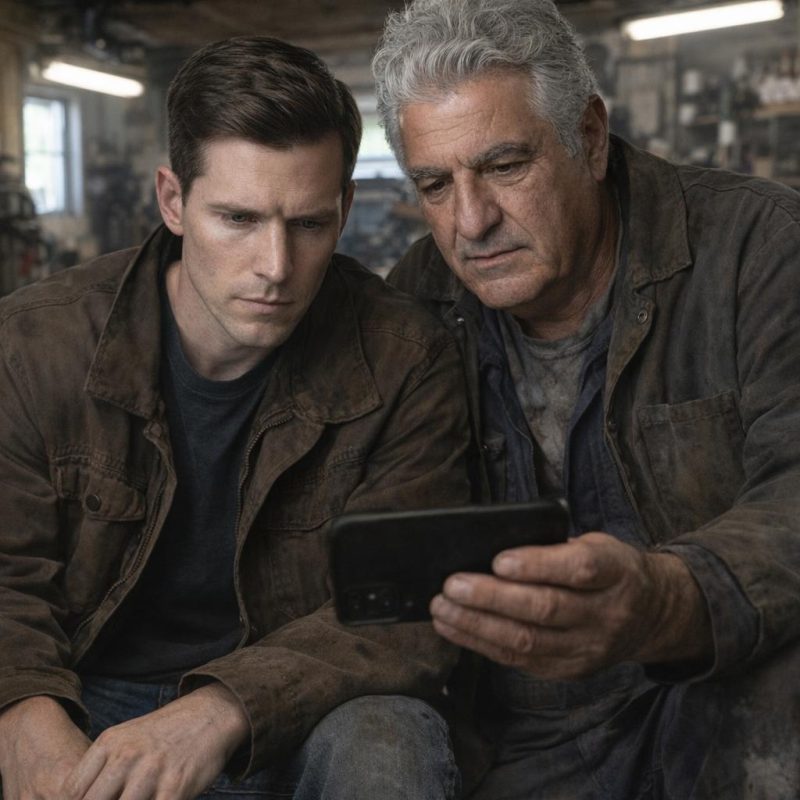 Image by RM AI
Inheritance and Redemption
The estate settlement took three weeks. Whitmore and Associates had a conference room that smelled like old wood and expensive paper, and I sat across from two attorneys who kept calling me Mr. Mercer in a way that still didn't feel like my name. The legitimate assets came to just under twelve million — properties, investments, a few business holdings that had operated cleanly for years. I'd already decided what I was doing with most of it before I walked in. Eight million went into a foundation I'd spent two weeks setting up with a nonprofit attorney Ray found through a contact. Victims of organized crime, legal aid, witness relocation support. The attorneys looked at me like I was leaving money on a bus, but they processed the paperwork without comment. I kept four million and the Continental. Christine drove up the weekend after everything was finalized. I made coffee and we sat at my kitchen table and I told her everything — Victor, the letter, the car, all of it. She cried twice and held my hand once and didn't say much until I finished. Then she told me she was proud of me. I didn't know how much I'd needed to hear that until the words were already in the room. I sat there after she said it, the coffee going cold between us, feeling something I hadn't felt in months — like I'd made a choice that was actually mine, and it had been the right one.
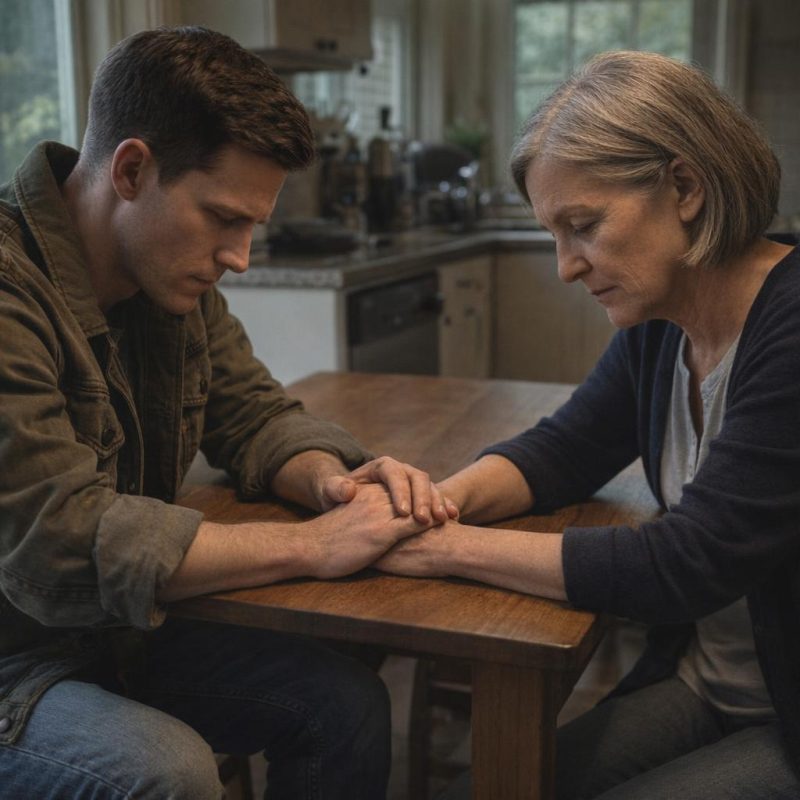 Image by RM AI
Coming Home
I picked the Continental up from storage on a Friday morning, no particular reason, just because the weather was clear and I was done waiting for the right moment. The car started on the second try, which felt about right. I pulled out onto the street and drove north without a plan. For the first three miles I kept checking the mirrors out of habit — scanning for black SUVs, for anyone holding position two cars back. Then I caught myself doing it and stopped. There was nothing back there. There hadn't been anything back there for weeks. I drove up the coast highway with the windows down, the engine doing that low, unhurried rumble that had probably turned heads in 1965 and still did now. I thought about Victor assembling this whole thing — the car, the documents, the letter — knowing he'd never see how it landed. I thought about the note tucked in the visor, the one that had started all of this, the one I'd read a hundred times and understood a little differently each time. I pulled off at a turnout above the water, cut the engine, and sat there listening to the waves and the tick of the cooling metal. I reached up and pulled the note from the visor and read it one last time. He had been right.
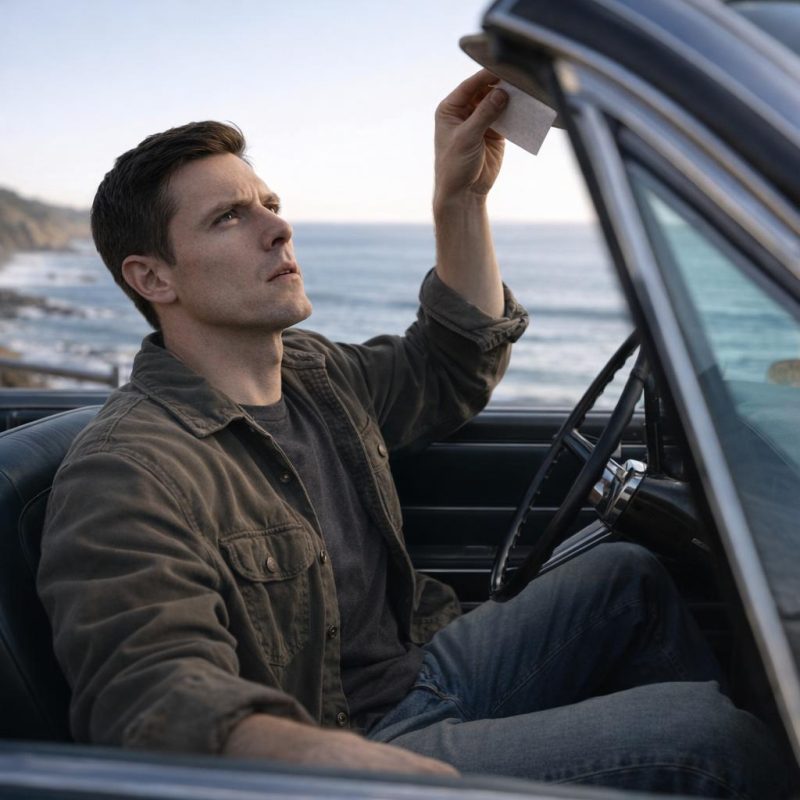 Image by RM AI
KEEP ON READING

The Origins Of 3 Common Sayings You Still Use Today
Etienne Boulanger on UnsplashMany of the phrases you use every…
By Rob Shapiro Apr 28, 2026
Was Caligula The Most Ruthless Roman Emperor?
Artur Matosyan on UnsplashRoman Emperor Caligula is one of ancient…
By Rob Shapiro Dec 18, 2025
1 Weird Fact About Every President
Washington, Lincoln, FDR. Most people know something about the lives…
By Robbie Woods Dec 3, 2024
10 Accidental Discoveries That Changed Maps & 10 That Changed…
Mistakes That Mattered. A lot of major discoveries did not…
By Cameron Dick Apr 15, 2026
10 Actors Who Perfectly Played a Historical Figure & 10…
Which Performance is Your Favorite?. Playing the role of a…
By Rob Shapiro Sep 15, 2025
10 Actors Who Perfectly Played a Historical Figure & 10…
Portraying a real person from history is one of the…
By Noone Dec 17, 2025