

I Found My Life Savings Gone, Replaced by a Note from My Own Mother—Then I Realized the Money Never Belonged to Me
I Found My Life Savings Gone, Replaced by a Note from My Own Mother—Then I Realized the Money Never Belonged to Me
The Empty Safe
Tuesday evenings had a rhythm to them. Lock up the store, drive the same twelve blocks home, heat up whatever was left in the fridge, and sleep without much on my mind. I'd been doing it for twenty-three years and I never once thought that routine was something worth protecting until the night it broke. I pulled into the driveway around six-thirty, and the house looked exactly the way it always did — porch light on, curtains drawn, nothing out of place. I didn't even take my coat off. Something pulled me straight down the hall to the master bedroom, some low hum of unease I couldn't name. I told myself I was being paranoid. I kicked the Persian rug aside, crouched down, and worked the combination on the floor safe the way I had a thousand times before. The door swung open. I stared into it for a long moment, not quite believing what I was seeing. The stacks of banded bills were gone. Every last one. The only thing left was a single folded piece of paper sitting at the bottom, white against the bare metal. I didn't pick it up right away. I just knelt there on the hardwood floor, one hand still resting on the safe door, feeling the full weight of that empty space.
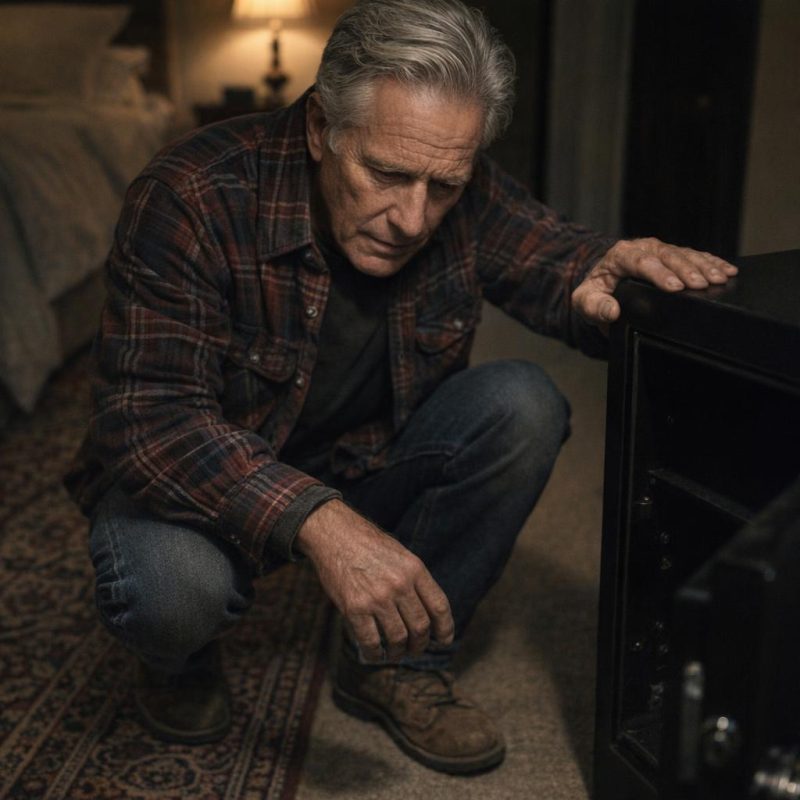 Image by RM AI
Barbara's Handwriting
My hands were steadier than they had any right to be when I picked up that note. The paper was cream-colored, folded in thirds, the kind my mother kept in the writing desk she'd had since before I was born. I didn't need to see the signature to know whose handwriting it was — that looping, deliberate cursive had signed every birthday card and every guilt-laden letter she'd ever sent me. I read it twice. Then a third time. Barbara wrote that she was tired of waiting. Tired of watching me sit on money she felt she was owed, tired of what she called her diminished circumstances, tired of being made to feel like a guest in her own family's prosperity. She said she deserved a glittering retirement, her exact words, and that I should enjoy being flat broke for a change. There was no apology. Not even a pretense of one. Just that sharp, entitled voice of hers translated perfectly onto paper, every sentence landing like a slap. I set the note down on the bedroom floor and pressed the heels of my hands against my eyes. My own mother. My own blood. Then I picked the note back up and read the last line again — she and my sister Susan were already halfway across the Atlantic.
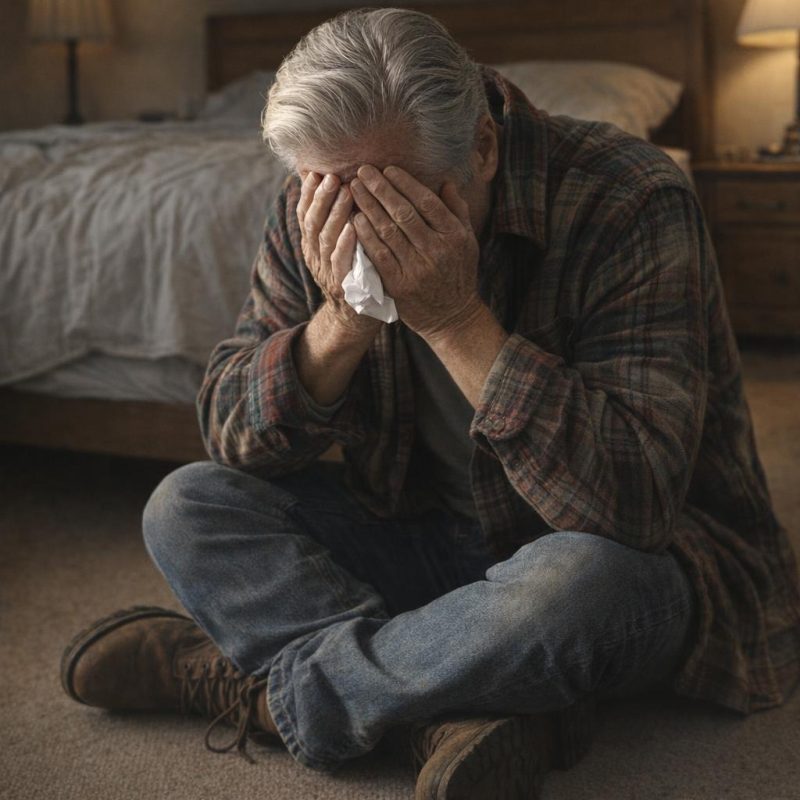 Image by RM AI
Dead Lines
I was on my feet and dialing before I'd even made a conscious decision to move. Barbara's number first. I'd called it so many times over the years — holidays, emergencies, the occasional Sunday out of obligation — that my thumb found it without looking. It didn't ring. Not once. It went straight to a generic voicemail message, the kind that doesn't even use your name, just a flat automated voice telling you to leave a message after the tone. I didn't leave one. I hung up and stood there in the bedroom doorway for a second, then dialed Susan. Same result. Straight to voicemail, no ring, no hesitation, like the line had been waiting for me to call just so it could cut me off cleanly. I tried Barbara again. Then Susan again. Four calls total, and not a single ring between them. They hadn't just turned their phones off — you can feel the difference between a phone that's off and a phone that's been discarded or switched to a new number. This felt permanent. Deliberate. I sat down on the edge of the bed, still in my coat, the phone warm in my hand, and listened to the silence on the other end of both calls settle into something I couldn't shake loose.
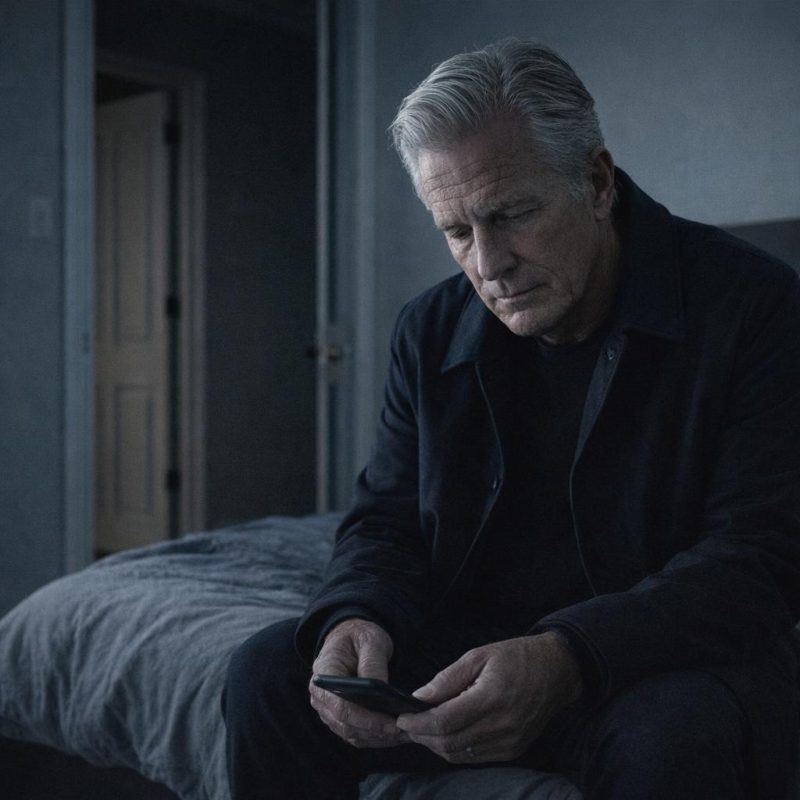 Image by RM AI
The Security Footage
I went to the home office and pulled up the security system on the desktop. My hands were shaking badly enough that I mistyped the password twice before I got in. I scrubbed back through the morning footage, watching the empty driveway in fast-forward, the quiet street, the undisturbed front walk. Then at 9:14 AM, a beige sedan pulled up to the curb. I recognized it immediately. Barbara's car. I watched her climb out of the passenger side while Susan came around from the driver's seat, both of them moving with a kind of brisk, purposeful energy that made my stomach drop. They went straight to the side door. Barbara reached into her coat pocket and produced a key — the spare I kept hidden under the loose brick by the garden bed, a spot I'd never told either of them about. They were inside for eighteen minutes. I sat there watching the timestamp tick forward, knowing what was coming and unable to look away. When they came back out, each of them was carrying a heavy duffel bag, the kind that strains at the handles when it's packed full. They loaded the bags into the trunk without rushing, without looking over their shoulders. And their faces — that was the part that stayed with me. No guilt, no hesitation, just bright, open excitement, like two women heading off on the trip of a lifetime.
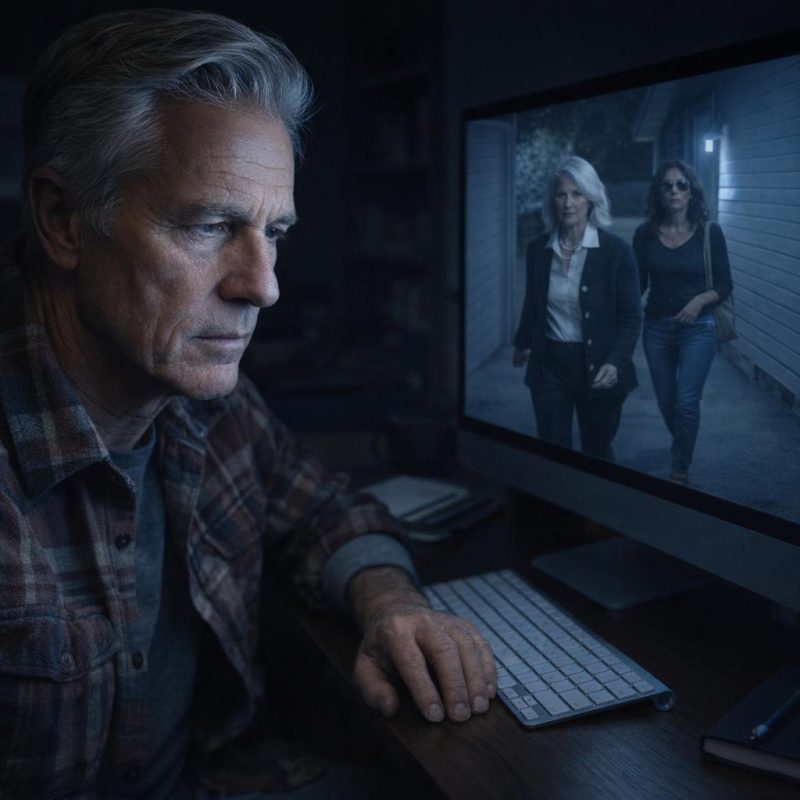 Image by RM AI
The Syndicate's Money
I sat in the dark office for a long time after the footage ended, the screen still glowing with that frozen frame of Barbara's sedan pulling away from the curb. And then, slowly, the full shape of what had actually happened started to come together in my head, and it was so much worse than a family betrayal. The $860,000 in that safe wasn't my retirement fund. It wasn't my money at all, not really. For the past three years I'd been acting as a quiet intermediary for a group of private investors — men who moved serious capital through land development deals and who had no interest in banks, paper trails, or anything that could be traced. They used me because I had a clean name in this town, a legitimate business, and the kind of face that didn't raise questions. The money in that safe was an escrow payment, meant to close a deal the following morning. I'd been trusted with it because I'd never given them a reason not to trust me. These were not men who accepted explanations. They were not men who called lawyers or filed complaints. They operated in a world where a missing $860,000 had exactly one kind of consequence, and sitting there in that dim room, I understood with cold, absolute clarity that without that money recovered, I was a dead man.
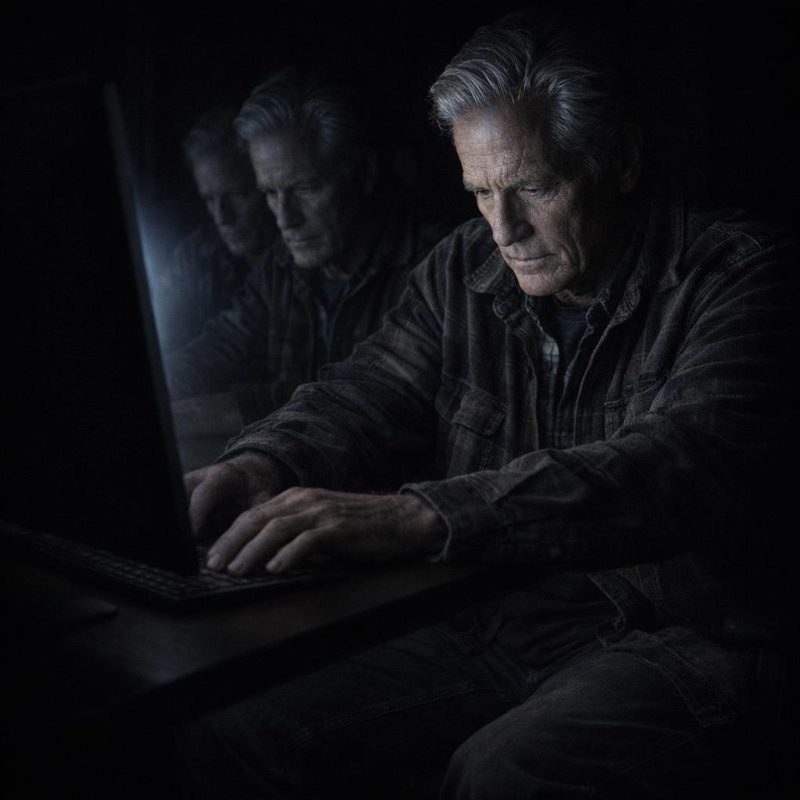 Image by RM AI
The Call from London
I didn't move from that chair for close to two hours. The house was completely silent except for the refrigerator cycling on and off down the hall, and I sat there running through options that all dead-ended the same way. Then my phone lit up on the desk — an international number, country code I had to look at twice. I picked up before the second ring. It was Barbara. I could barely understand her at first, she was crying so hard, the kind of crying that comes from somewhere past fear. She was at Heathrow, she said, a layover, and she'd opened one of the duffel bags to move some cash into her carry-on. Her voice kept breaking as she described what she'd found tucked between the stacks of bills — a ledger, small and black, filled with names and figures she said she recognized from the news, from things she'd heard over the years. Men you didn't cross. Men whose names you didn't say out loud in the wrong company. She read me two of them and I felt the blood leave my face. But it was the other thing she found that made her voice go completely to pieces — a GPS tracker, she said, sewn into the lining of the bag itself.
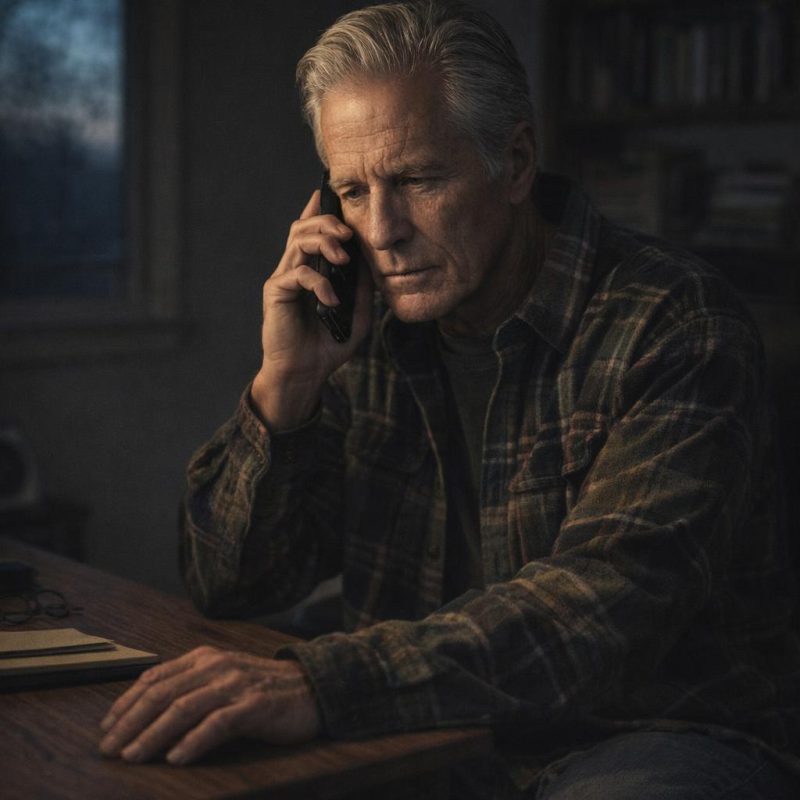 Image by RM AI
The Hunter Becomes Prey
She kept saying it was a mistake, that I needed to call someone and explain it was all a mistake, her voice climbing higher with every sentence until it cracked into something raw and unrecognizable. The woman who had written that note — cool, entitled, certain she deserved every penny — was completely gone. What was left sounded like someone who had just understood, for the first time in her life, that there were consequences she couldn't charm or manipulate her way out of. She described the GPS tracker again, said it looked professional, not something you'd buy at a hardware store, and I didn't tell her she was right about that. She asked about Susan, whether Susan was in danger too, her voice shaking on her daughter's name in a way that cut through my anger for just a second. I told her to stay in a public area and keep moving. I didn't know what else to say. There was nothing I could promise her. Then she went quiet mid-sentence, and when she spoke again it was barely above a whisper — she said there were men in dark clothing near the gate, two of them, and they hadn't moved in a while, and she thought they were watching her.
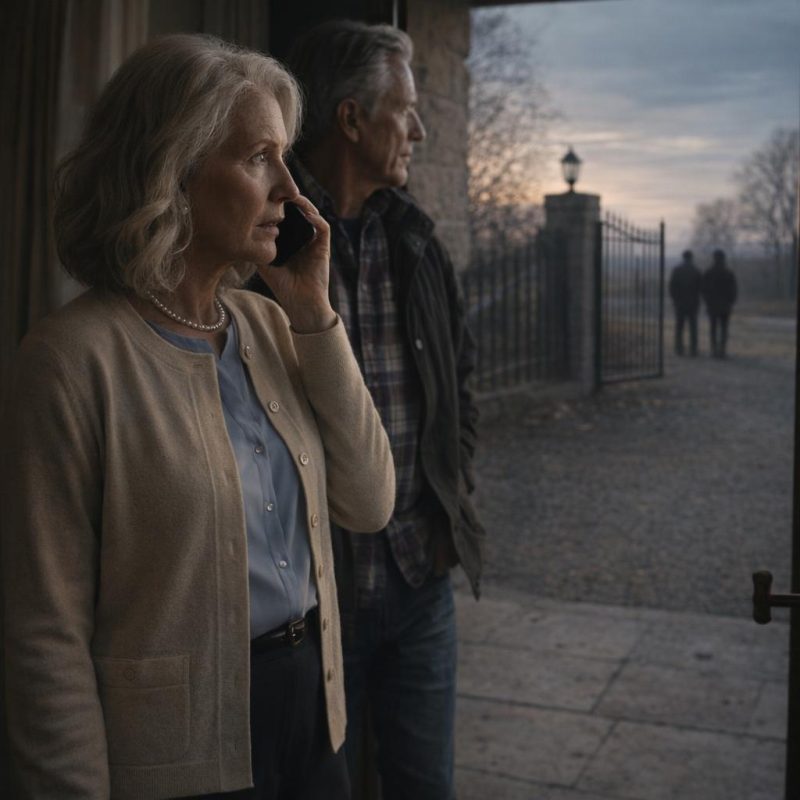 Image by RM AI
Vincent Arrives
I was still holding the phone when the headlights swept across the living room curtains. Less than an hour after Barbara's call. I set the phone down on the coffee table and went to the window. A black sedan sat in my driveway, engine off, no movement for a moment. Then the driver's door opened and a man stepped out. Early sixties, silver hair slicked back, an expensive dark suit that had no business being in my neighborhood on a Tuesday night. He walked to my front door without hurrying, without looking around, like a man who had never once in his life needed to check whether he was being watched. I opened the door before he could knock. He looked at me with grey eyes that didn't change expression and said his name was Vincent, that he understood there had been a development with some funds he had an interest in, and that he'd appreciate a few minutes of my time. I stepped back and let him in because I didn't see another option. We sat in the living room, him in the armchair across from me, his posture easy, one hand resting on his knee. He spoke quietly, almost gently, about the missing funds, about the deal that was supposed to close in the morning. And the whole time he talked, those grey eyes of his didn't move, didn't warm, didn't change — just sat there, still as standing water.
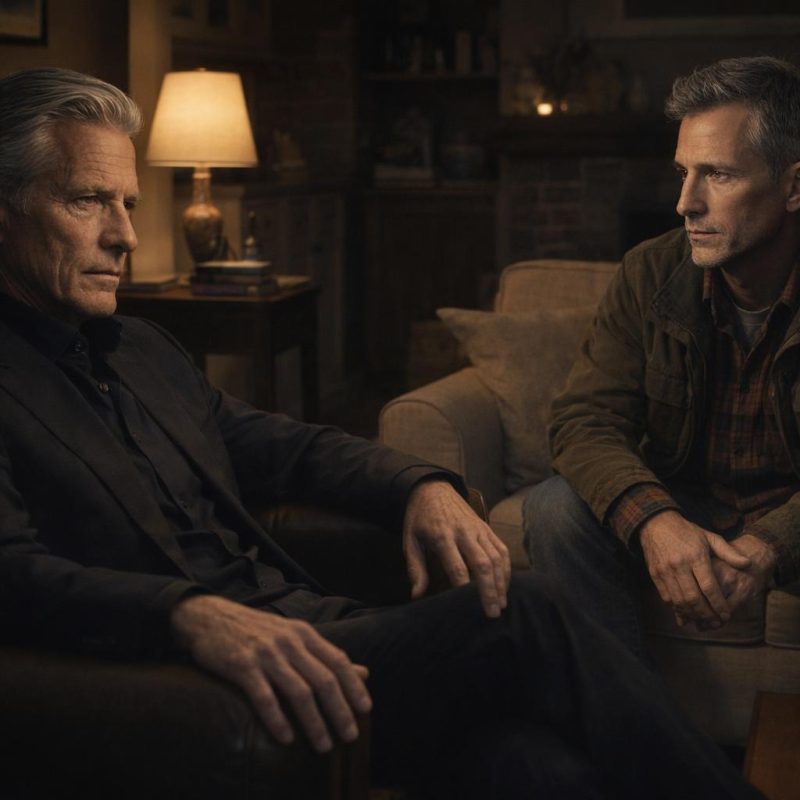 Image by RM AI
The Ultimatum
Vincent didn't raise his voice once. That was the part that stayed with me. He just laid it out, quiet and even, like he was reading from a ledger. The money was meant to close a deal in seventy-two hours. His investors did not tolerate delays. He said I had exactly three days to recover the full amount — eight hundred and sixty thousand dollars — and return it intact. When I asked what happened if I couldn't, he tilted his head slightly and said the consequences would be proportional to the failure. He didn't elaborate. I didn't ask him to. He stood, smoothed the front of his jacket, and said there was one more thing. He walked to my front door and opened it himself. A man stepped in from the dark outside — mid-thirties, built like someone who'd spent years making himself hard to move, dark tactical clothing, eyes already sweeping the room before he'd fully crossed the threshold. Vincent said his name was Marcus and that he would be accompanying me until the matter was resolved. Assisting me, was the word Vincent used. I didn't believe that word for a second. Marcus stepped fully into the room and turned to face me, and the tattoos crawling up his neck caught the light.
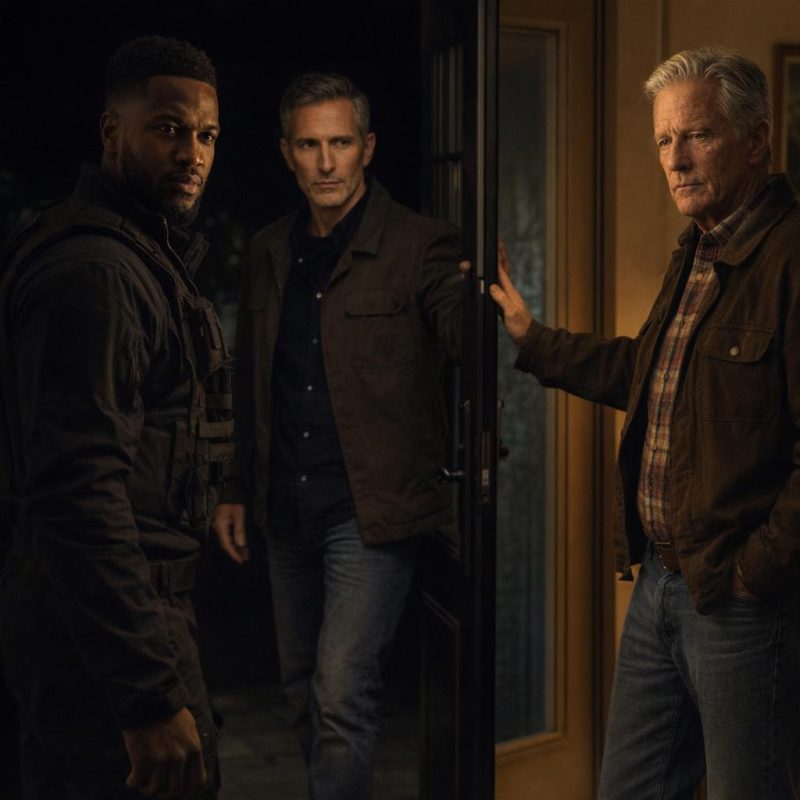 Image by RM AI
Seventy-Two Hours
I locked the front door and stood in the foyer for a long time after the black sedan pulled away. The house felt different. Smaller. I went to the kitchen and sat at the table and tried to think straight. Eight hundred and sixty thousand dollars. Seventy-two hours. My own mother and sister somewhere in Europe with every cent of it. I ran the numbers the way I always do when something goes wrong — methodically, looking for the angle I'd missed. There wasn't one. I had no savings of my own to speak of, not after years of keeping the store afloat. I couldn't liquidate the business fast enough even if Thomas agreed, which he wouldn't, not without knowing why. The police were out. The moment I walked into a station and started explaining syndicate money and a seventy-two-hour deadline, I was either arrested or I was dead before the week was out. Barbara and Susan had no idea what they'd walked into. Or maybe they did and just didn't care what it meant for me. I couldn't decide which was worse. I got up and turned off the kitchen light and stood in the dark. The clock on the wall kept ticking, indifferent to all of it.
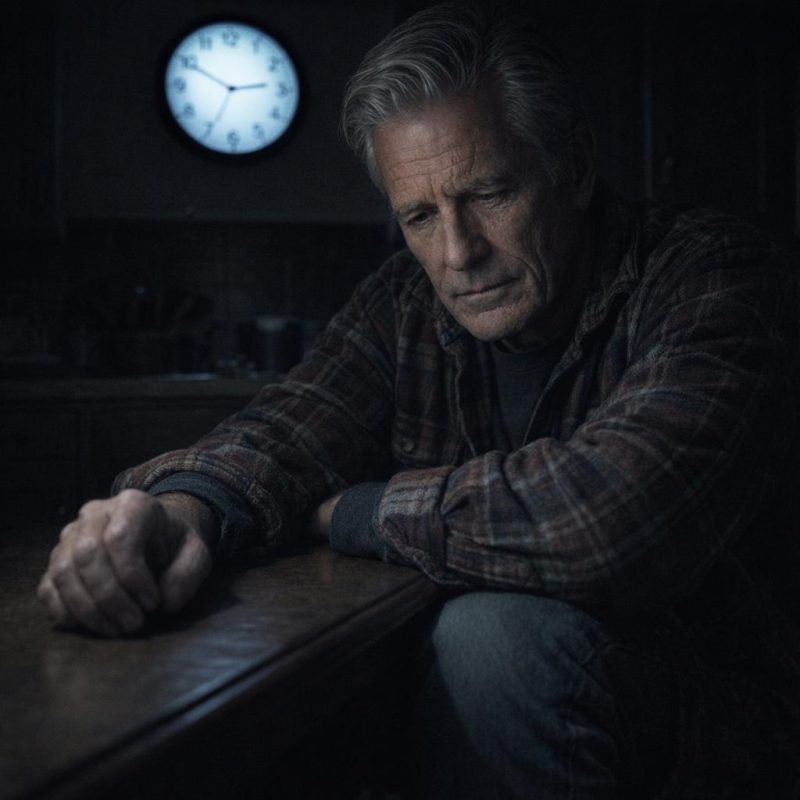 Image by RM AI
Confiding in Thomas
I was at the hardware store before seven the next morning. Thomas's truck was already in the lot, which didn't surprise me. He'd been opening early since his wife passed — said the quiet of the store helped him think. I found him in the back, restocking a shelf of pipe fittings, reading glasses pushed up on his forehead. He took one look at me and set the box down. I asked if we could use the office. He didn't ask why, just nodded and led the way. I sat across from his desk and told him what I could. That Barbara and Susan had come to my house. That they'd taken a large sum of money I'd been holding for a business deal — savings, I called it, keeping it vague. That they were gone, out of the country, and I needed to get it back fast. Thomas was quiet for a moment. Then he asked if I'd called the police. I said I couldn't, that it was complicated, that the people involved in the deal weren't the kind who wanted law enforcement anywhere near their business. He didn't push me on that. He just took his glasses off and set them on the desk and looked at me with an expression I hadn't seen on his face in years — the kind that meant he understood something was very wrong, even if he didn't have all the pieces.
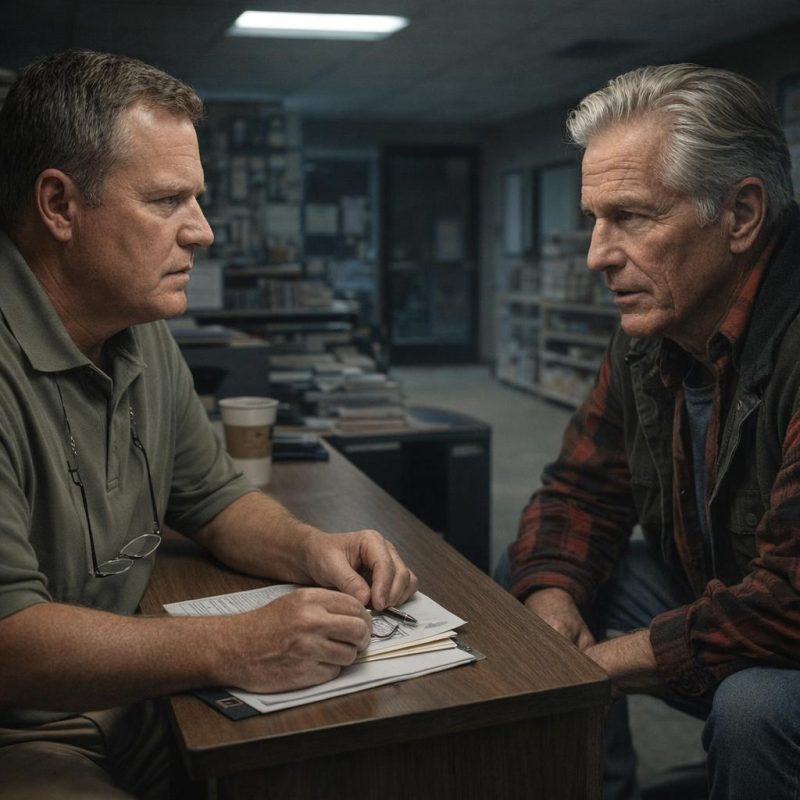 Image by RM AI
Tracking Barbara
When I got back to my street that afternoon, Marcus was already there, parked at the curb in the black sedan like he'd never left. He got out when he saw me coming and said Vincent had authorized some resources to help move things along. I didn't argue. We went inside and he set a laptop on my kitchen table and opened it without asking permission. The screen showed a GPS tracking interface — a map with a single pulsing dot. He told me the tracker was sewn into the lining of the duffel bag. I stared at the dot. It was sitting in central London, barely moving. Marcus pulled up a second window, some kind of database I didn't recognize, and cross-referenced the coordinates against hotel records in the area. His fingers moved fast and he didn't explain what he was doing as he did it. He just worked. After a few minutes he leaned back and pointed at the screen. A hotel near Paddington Station. Mid-range, three stars, the kind of place you'd pick if you wanted to be unremarkable. He said the reservation was under Barbara Morrison. I looked at the timestamp on the check-in record — Barbara had walked through that hotel's front door three hours ago.
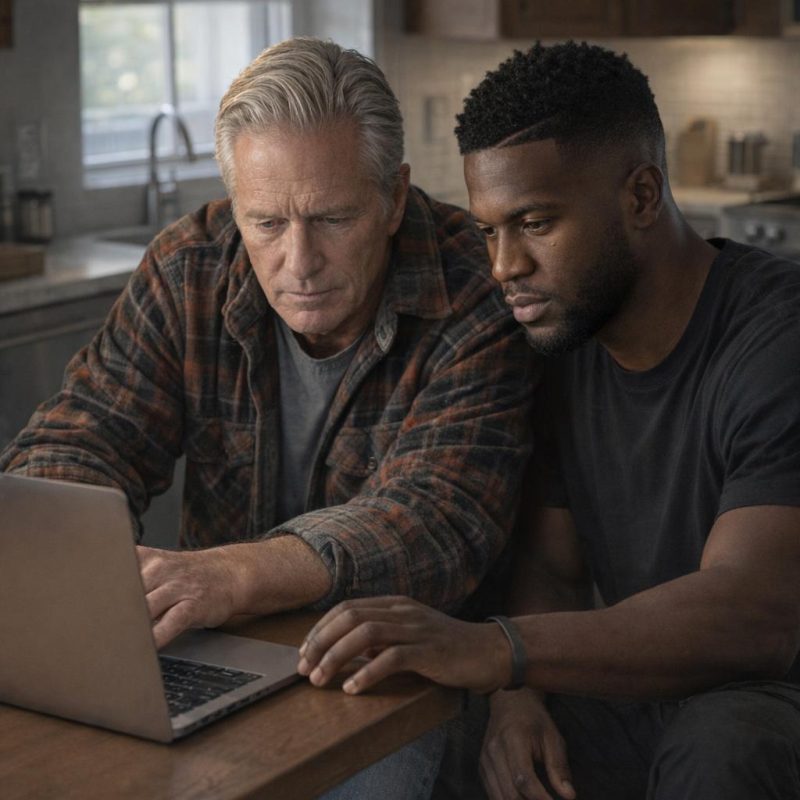 Image by RM AI
Emergency Flight
I packed a bag in under ten minutes. Passport, two changes of clothes, the cash I had in the house — about four hundred dollars, which felt almost laughable given the circumstances. Marcus drove us to the airport without being asked, like the plan had already been decided before I'd agreed to it. I booked two seats on the next available flight to Heathrow, departing in just under four hours. The tickets cost more than I wanted to think about. We cleared security without incident, Marcus staying a half-step behind me the whole way through, close enough that I was always aware of him. I tried to use the wait time to think through how I'd approach Barbara when we landed — what I'd say, how I'd get the money back without it turning into something worse. Nothing I came up with felt solid. We boarded and Marcus took the seat directly beside me, not across the aisle, not a row back. The plane pushed back from the gate and I watched the city lights shrink below us as we climbed. I did the math in my head. Roughly eight hours of flight time, plus customs, plus the taxi to Paddington. We'd have somewhere around fifty hours left on the clock when we touched down. The cabin pressure settled and leveled out, and the hum of the engines filled the dark around me.
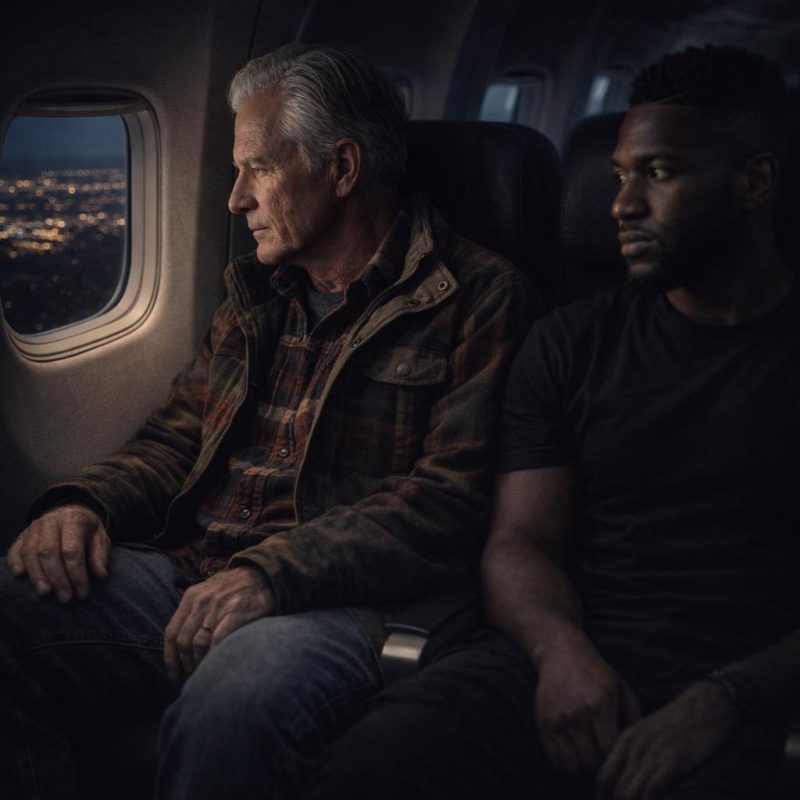 Image by RM AI
Veiled Threats
Somewhere over the middle of the Atlantic the cabin lights went down and most of the passengers around us went quiet. I closed my eyes and tried to rest. My mind wouldn't cooperate. After a while Marcus ordered a whiskey from the flight attendant and shifted in his seat to face me at an angle. He asked how long Barbara and I had been close. I said we hadn't been, not really, not for a long time. He nodded like that made sense to him. Then he said something about how family betrayal was different from any other kind — that it got under your skin in a way that a stranger's betrayal never could. I said something noncommittal and looked at the seat-back in front of me. He kept going. Said that people who took from the wrong people usually didn't understand the full weight of what they'd set in motion. That some debts, he said, couldn't be settled with money alone. The words landed flat and even, without any particular weight in his voice. I asked him what he meant by that. He picked up his drink, took a slow sip, and turned to look out the window. His jaw went tight. He didn't answer. The words sat in the recycled air between us, and I couldn't find a way to make them mean anything harmless.
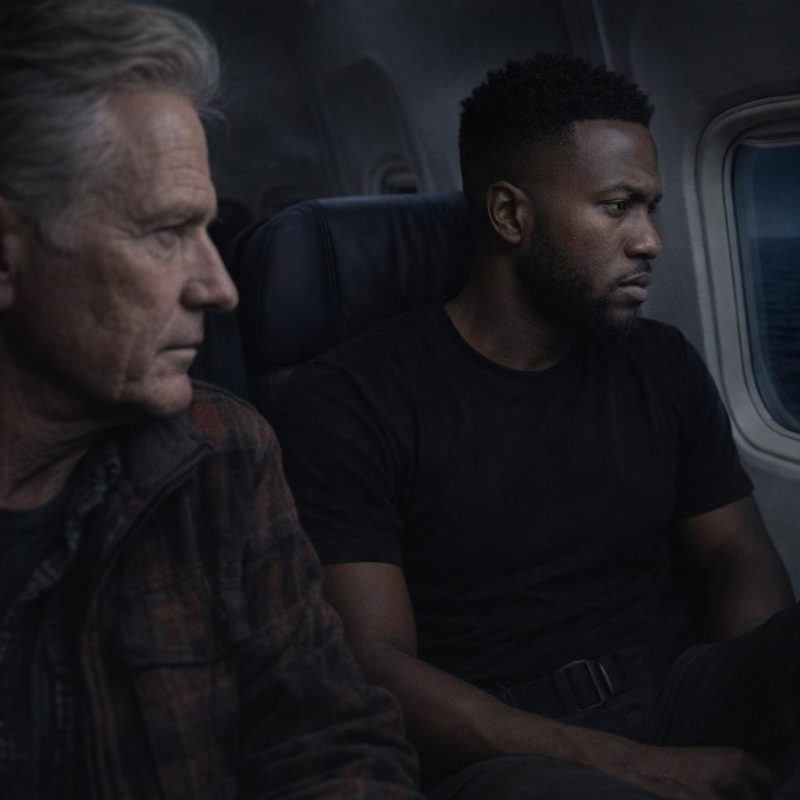 Image by RM AI
Gone to Paris
We landed at Heathrow just after six in the morning, grey light coming through the terminal windows, the kind of tired that sits behind your eyes. Customs took forty minutes. Marcus stayed close the whole way through, saying nothing. We grabbed a taxi outside arrivals and I gave the driver the Paddington address. The hotel was exactly what the screen had shown — modest, clean, anonymous. I went to the front desk while Marcus hung back near the entrance. I asked for Barbara Morrison's room. The clerk, a young woman with a tired smile, checked her screen and then looked up at me. She said Ms. Morrison had checked out. I asked when. She checked again. Two hours ago. I stood there for a second, doing the math on the timeline. Marcus appeared at my shoulder. He asked the clerk, quietly, whether the guest had mentioned where she was going. The clerk hesitated, then said the guest had requested a taxi to St Pancras Station. Marcus and I looked at each other. St Pancras was the Eurostar terminal. Paris. Barbara had been in this hotel when we were still somewhere over the ocean, and she'd left anyway. Marcus stepped away and pulled out his phone to call Vincent, and I stood at that front desk trying to figure out how she'd known to run.
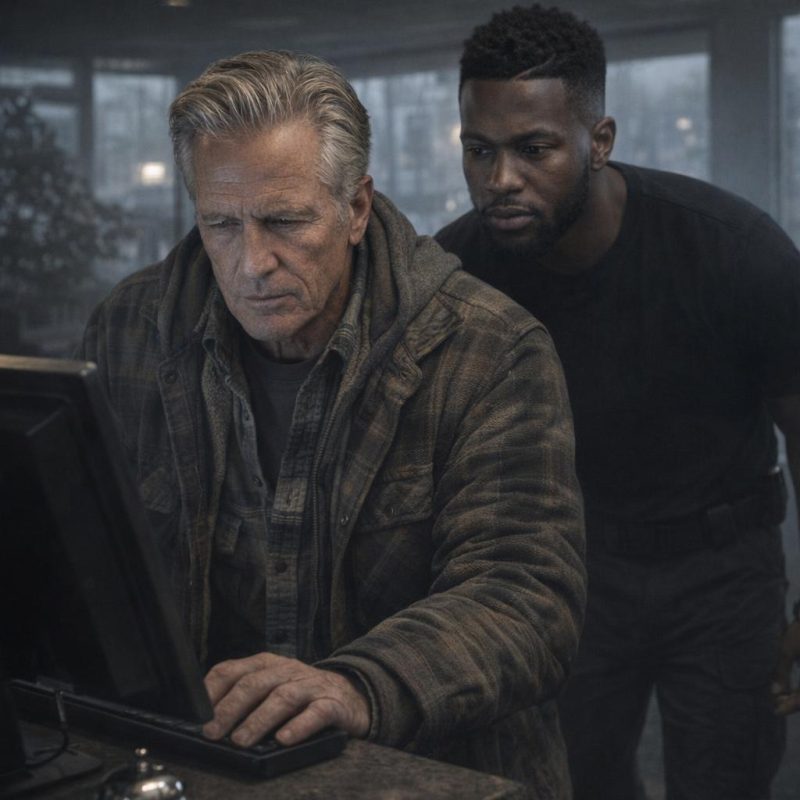 Image by RM AI
Detective Mills
We were heading back through the terminal toward the exit when a woman stepped into our path. Early forties, dark hair pulled back, professional pantsuit, a badge already in her hand before she finished saying my name. She introduced herself as Detective Sarah Mills, said she was attached to an international financial crimes task force. She asked if she could have a few minutes. Marcus stopped beside me, hands loose at his sides, face unreadable. Mills didn't look at him. She looked at me. She said my name had come up in connection with flagged cash movements across international accounts and she wanted to understand my travel. I told her I was dealing with a family emergency. She asked about Barbara Morrison — whether I knew her, what my relationship was. I said Barbara was my mother and that I was trying to locate her. Mills nodded slowly, like she was filing that away rather than accepting it. She asked a few more questions, each one precise, each one landing just close enough to the truth to make me careful. I kept my answers short. After a moment she reached into her jacket pocket and held out a business card. She said to contact her if anything came back to me that I thought might be relevant. I took the card. She held my gaze for a beat longer than necessary, then let us go.
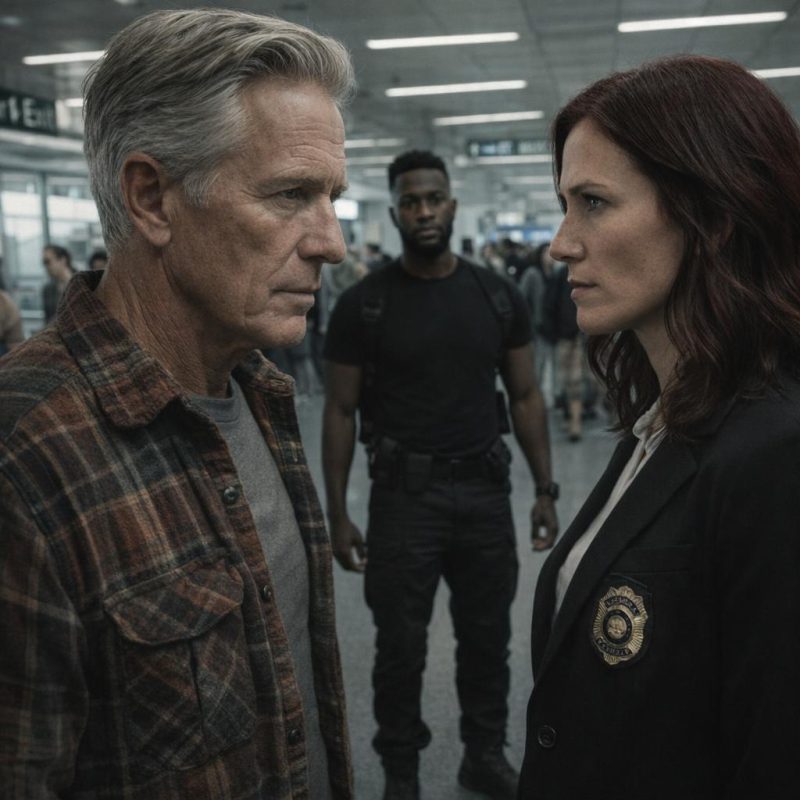 Image by RM AI
False Story
I kept replaying the conversation with Detective Mills the whole walk through the terminal. Every question she'd asked, every careful pause before she moved to the next one. She wasn't fishing. She knew something, or enough of something to make my name worth pulling. I thought about Thomas, about the hardware store, about the life I'd built over thirty years with my hands. Then I thought about what Marcus had told me the syndicate did to people who became problems. I made my choice somewhere between the departure board and the taxi rank. When Marcus asked me what I'd told her, I said I kept it vague — family emergency, nothing useful. He nodded once, like that was the only acceptable answer. I didn't tell him about the business card still sitting in my jacket pocket. We took a cab to St Pancras and I bought two tickets at the counter, cash, next available Eurostar. Ninety minutes to departure. I sat on a bench in the waiting area and stared at the floor and tried not to think about what lying to a federal detective meant for whatever came after this. When the platform gate opened I walked through it, Marcus beside me, and we boarded the train to Paris.
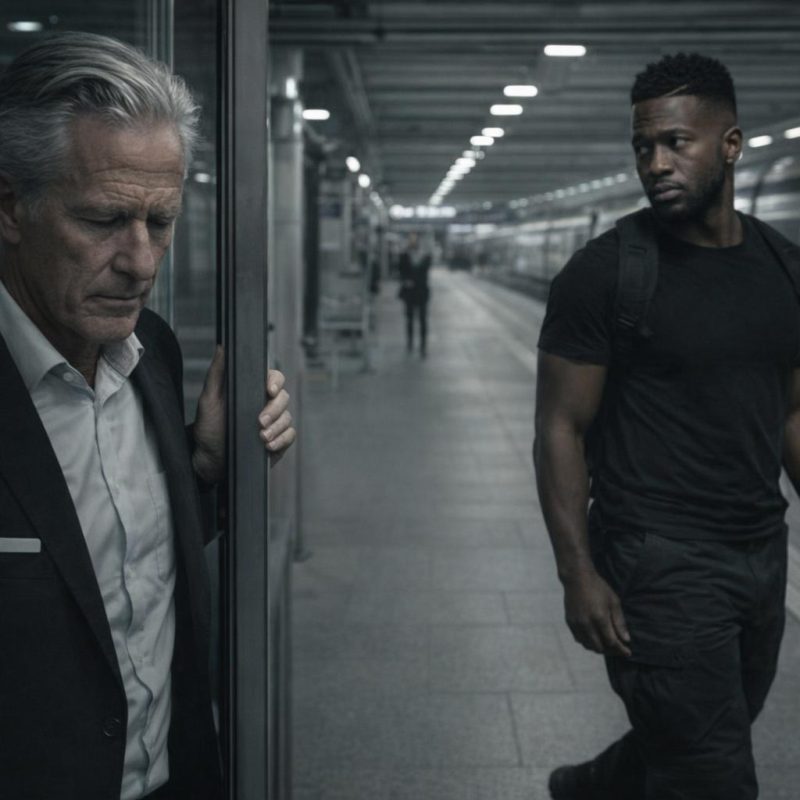 Image by RM AI
The GPS Signal
Gare du Nord hit me like a wall — noise, diesel, a hundred languages at once. Marcus had the GPS tracker out before we cleared the platform. The signal was holding steady near the Marais, a narrow street I'd never heard of. We grabbed a taxi and I watched the city scroll past the windows, all iron balconies and grey stone, and tried to remember the last time I'd slept properly. The hotel was small, tucked between a boulangerie and a pharmacy, the kind of place that doesn't show up on travel sites. I went to the front desk while Marcus waited near the door. The woman behind the counter confirmed it — Barbara Morrison, checked in the previous evening, checked out early that morning. Hours ahead of us. I asked if she'd left any forwarding information. The woman shook her head and said she seemed to be in a hurry. I walked back to Marcus and told him. He checked the tracker again. The signal had gone cold at this address, which meant the device had been left behind or the battery had died. We had less than forty hours on the deadline and the trail had just gone from warm to ice. I stood on that narrow Paris street and felt the window closing around me.
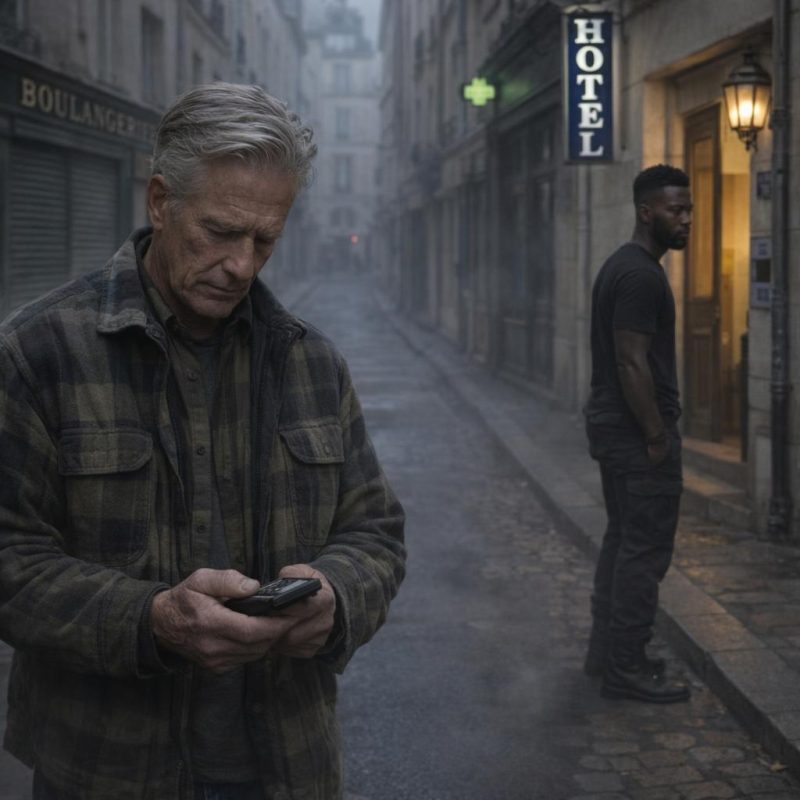 Image by RM AI
Terrified American Women
Marcus went back to the desk and his tone shifted — not loud, but precise in a way that made the attendant straighten up. He asked her to describe the two women. She did. One older, one younger, both American. They'd come down with their luggage before seven in the morning, barely pausing at the desk to settle the bill. The older one — auburn hair, well-dressed — kept turning to look at the lobby entrance, the attendant said, like she expected someone to walk through it. The younger one had been crying, asking in broken French whether the hotel had a back exit. They'd taken a taxi. The older woman had leaned through the driver's window and asked him to take them somewhere quiet, outside the city. The attendant remembered because the older woman's hands were shaking so badly she'd had trouble with the zip on her handbag. I stood there and took that in. My mother — the woman who had walked out of my house with three hundred thousand dollars like she was owed it, who had never once in my memory shown fear of anything — had been standing in this lobby with shaking hands. Whatever she'd thought this was when she started it, something had changed in her now. Marcus's phone buzzed. He looked at the screen and said the GPS had picked up a new signal, moving south.
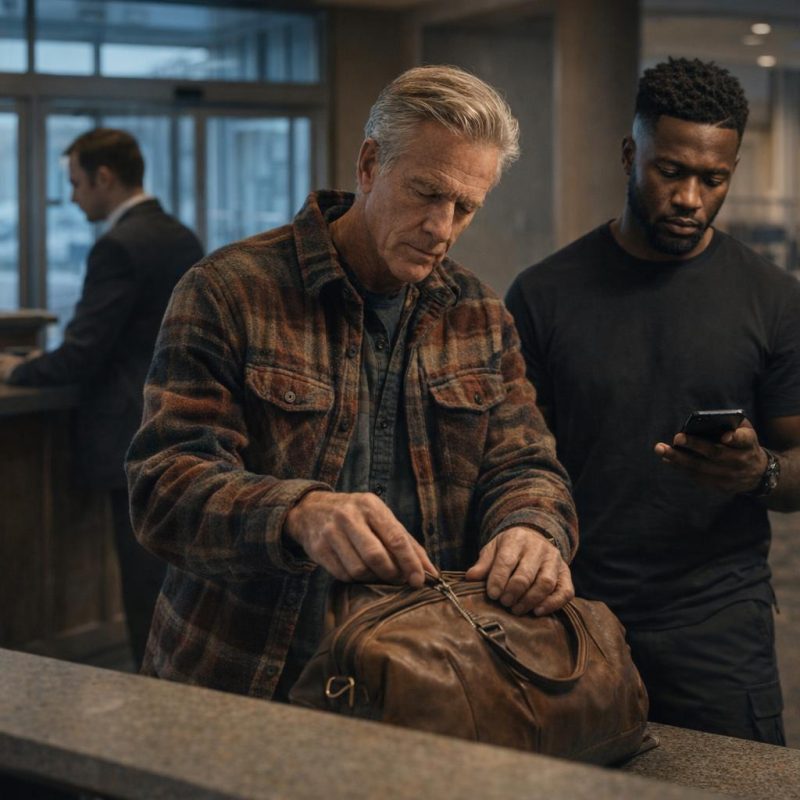 Image by RM AI
The Train to Nice
Marcus made a call while I stood outside the hotel on the pavement. His French was functional and fast. When he hung up he told me Barbara had bought two train tickets at Gare de Lyon that morning — destination Nice. I asked why Nice. He said people running scared don't think in straight lines, they think in distance. The coast felt far from Paris, far from wherever the danger was coming from. It made a terrible kind of sense. We took the Metro to Gare de Lyon and I bought tickets on the next TGV south while Marcus reported the location to Vincent. I watched him on the phone across the concourse, his back to me, one hand pressed flat against the wall. When he came back his expression hadn't changed but something in his posture had. He said Vincent had been notified and was adjusting resources accordingly. I asked what that meant. Marcus said it meant we wouldn't be working alone when we reached Nice. I had thirty-six hours left and the syndicate was mobilizing around a coastal city where my mother and my sibling were hiding in what they probably thought was safety. Then Marcus's phone lit up with a message and he read it and told me Vincent had already dispatched additional men to Nice ahead of our arrival.
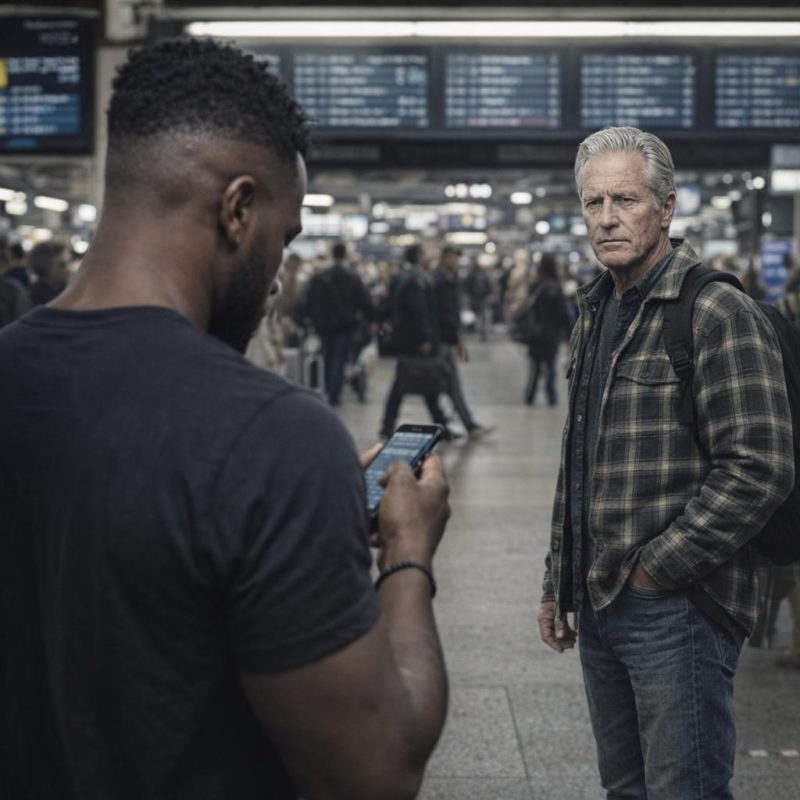 Image by RM AI
Vincent's Cold Distance
The TGV cleared the outskirts of Lyon and the landscape opened up — dry hills, terracotta rooftops, the light going gold and flat. I'd barely noticed. An hour into the journey my phone rang. Vincent. I answered expecting the usual pressure, the clipped reminders about what failure meant. Instead his voice came through even and almost procedural, like he was running through a checklist. He asked our current position and estimated arrival time in Nice. I told him. He gave me a meeting point near the old port and said someone would be there to coordinate. I asked about the recovery timeline and he said to follow the GPS and report in when we had eyes on the target. That was it. No mention of Barbara's state of mind. No question about whether the money was intact or accessible. None of the barely-contained fury that had been in every previous conversation. I said his name once to check if the line was still live. He said he'd be in touch and ended the call. I sat with the phone in my lap and looked out at the countryside moving past. The call had lasted maybe three minutes. Something about the flatness of it sat wrong with me — not the words, which were reasonable enough, but the temperature of them. The urgency I'd come to expect simply wasn't there.
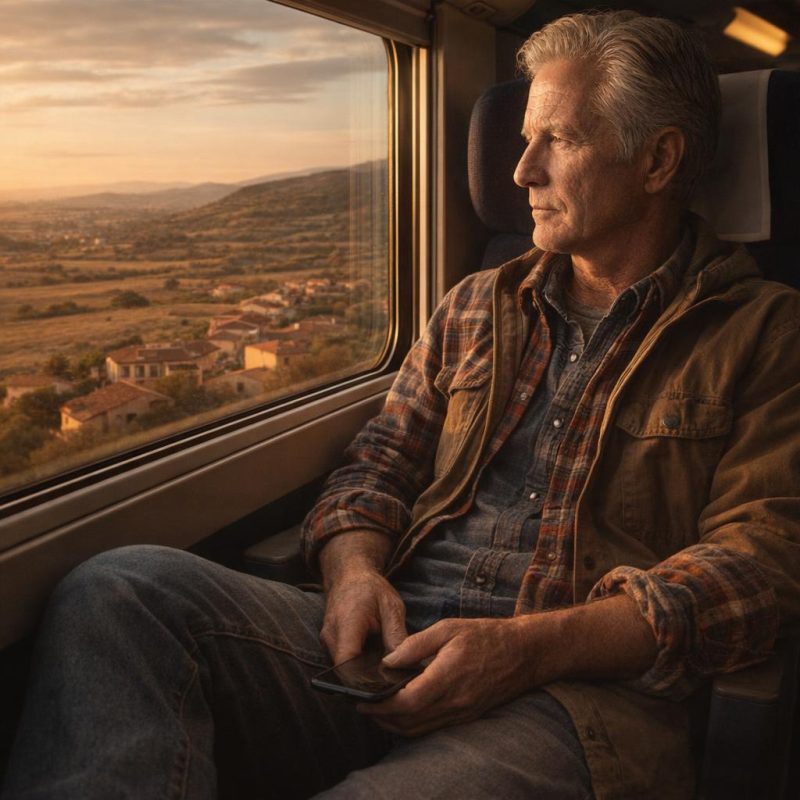 Image by RM AI
Marcus Watching
I tried to use the remaining hours on the train to think through how I'd approach Barbara when we found her. What I'd say. Whether she'd come willingly or whether it would turn into something worse. Marcus sat across the aisle, phone in hand, and I assumed he was monitoring the GPS. But every time I shifted in my seat or reached for my water bottle, I caught his eyes coming up from the screen. Not a glance — a look. Measured. Steady in a way that made the back of my neck prickle. I asked him if we should talk through the approach for when we reached Nice. He gave me a few words about waiting for Dmitri's coordination before making any moves. I asked if he'd handled recoveries like this before, chasing people across countries. He said he'd handled various situations for Vincent. That was all. He went back to his phone. But his eyes came up again thirty seconds later, and this time I didn't look away fast enough and we held each other's gaze for a moment before he dropped back to the screen. I turned to the window and watched the Mediterranean appear on the horizon, blue and indifferent, and felt the weight of his attention like a hand resting on my shoulder.
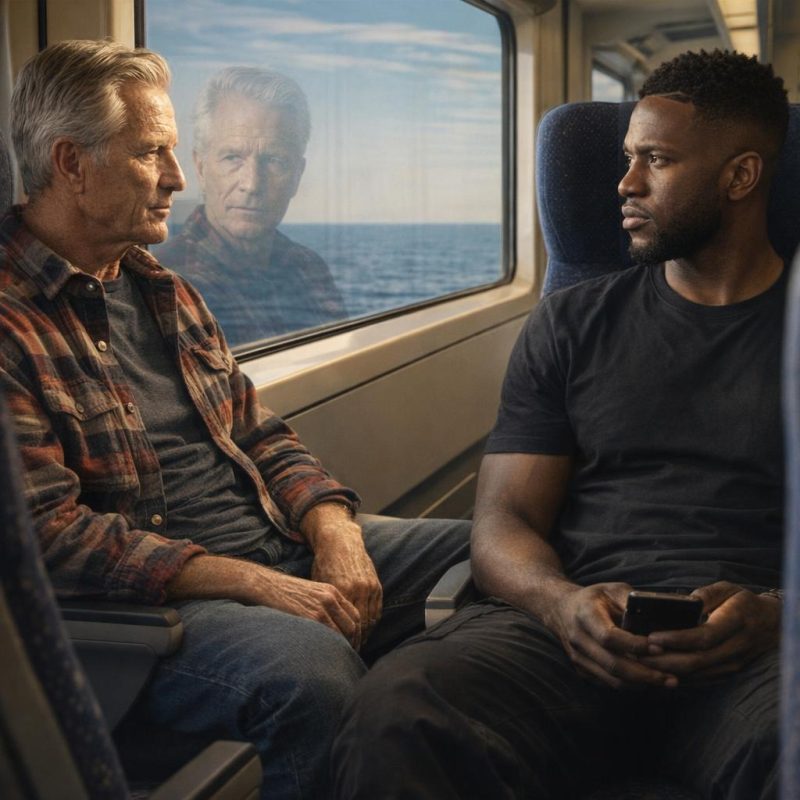 Image by RM AI
Dmitri Arrives
Nice-Ville station in the late afternoon had a different quality to it than Paris — slower, warmer, the light coming in amber through the high windows. We stepped onto the platform and a man was already moving toward us. Lean, wire-frame glasses, a crisp button-down despite the heat. Marcus gave a single nod and said his name: Dmitri Volkov. Dmitri shook my hand — brief, precise, two seconds and done. He said Vincent had sent him to coordinate the final stage of the recovery. His accent was slight but there, Eastern European, each word placed with the kind of care that suggested English was a tool he'd sharpened deliberately. He had a tablet under his arm and he pulled it out as we walked toward the exit. He asked how close the GPS signal was putting us to Barbara's current location. I said within a few kilometers, probably hours away from a direct approach. He nodded and made a note. Then he stopped walking, looked at me directly over the rim of his glasses, and asked how confident I was in my own timeline estimate. Not whether the money was recoverable. Not whether Barbara would cooperate. Not what condition the funds were in after crossing three countries. His first question was about my confidence in my own judgment of the clock.
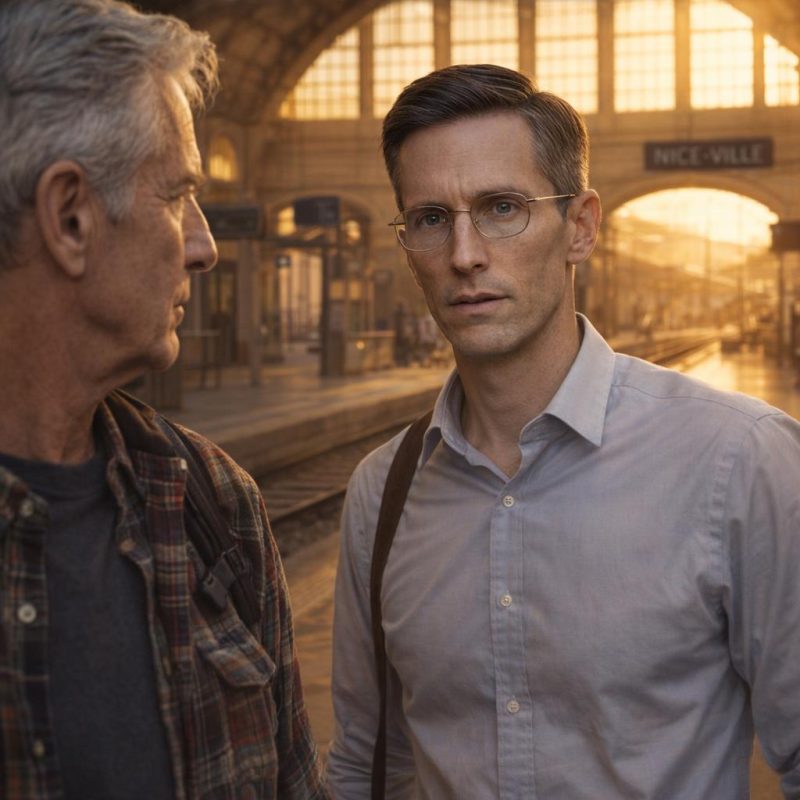 Image by RM AI
Interrogation Disguised as Coordination
The taxi Dmitri had arranged was already waiting outside the station. He took the front seat without discussion, leaving me and Marcus in the back. The hotel was ten minutes away and Dmitri used every one of them. He asked how long I'd been working with Vincent. I said three years, give or take. He asked whether I'd ever been introduced to any of the other investors in the arrangement. I said no — I dealt with Vincent directly, that was the structure. He made a note. He asked about my security protocols, how I'd stored the funds, who had physical access to the location. I answered each one. Then he asked who else knew about my arrangement with Vincent. I told him Thomas had partial knowledge, nothing specific. He asked if I'd kept any written records — correspondence, transaction logs, anything on paper or digital. I said I'd been told from the start to keep nothing. He nodded at that, the same neutral expression he'd worn since the platform. By the time we reached the hotel I'd answered maybe fifteen questions and he hadn't told me a single thing about the recovery plan. I stepped out of the taxi and it landed on me — every question had been about what I knew, who I'd told, and what evidence existed of my involvement. Not one question had been about finding Barbara.
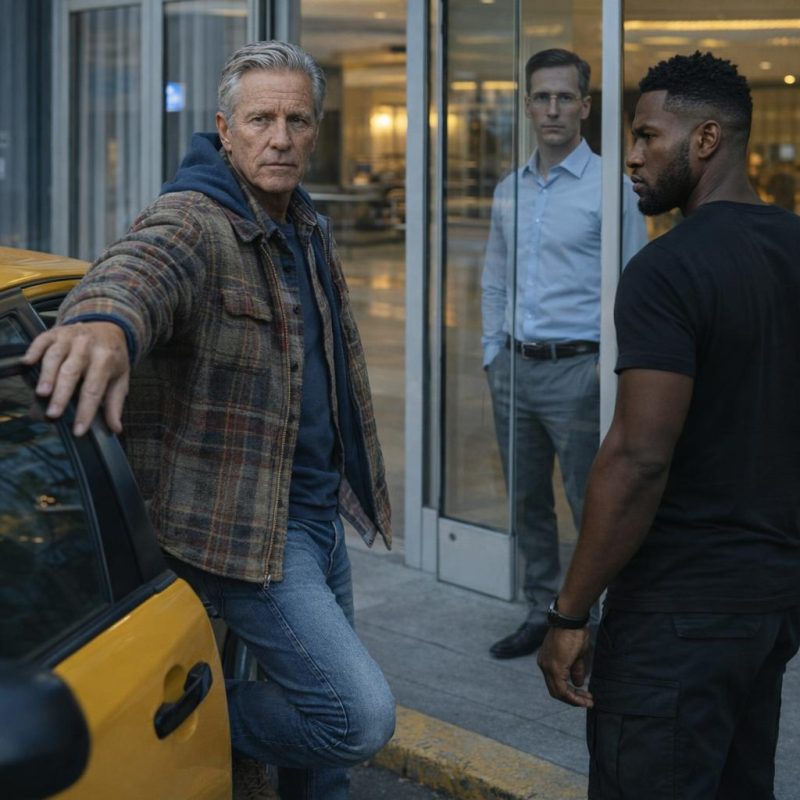 Image by RM AI
The Nice Hideout
Dmitri drove us up into the hills above Nice without saying much, following the GPS coordinates on his tablet. The road narrowed as we climbed, and through the windshield I could see the Mediterranean spread out below us, blue and indifferent. The rental was a small stone house with terracotta shutters, nothing fancy — a place people came to disappear for a week or two. I told Marcus and Dmitri to wait by the car and walked to the door alone. My knuckles barely touched the wood before I heard movement inside, quick and panicked. I said my name loud enough to carry through the door. A long silence. Then the latch turned. Barbara stood in the doorway, her dyed auburn hair unwashed, her face stripped of every bit of the performance she usually wore. She looked twenty years older than the last time I'd seen her. Behind her, Susan hovered in the dim hallway, eyes swollen, arms wrapped around herself like she was holding her own ribs together. I could see duffel bags on the floor behind them. I could see they'd been living in fear for days. Then Barbara made a sound I hadn't heard from her since I was a child, and she collapsed into my arms, sobbing.
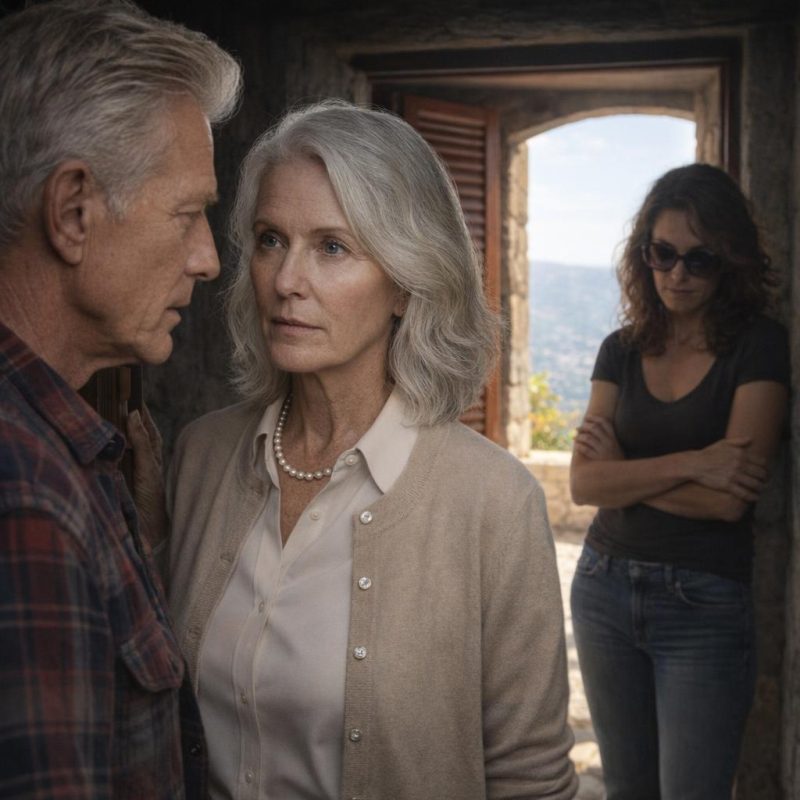 Image by RM AI
Confronting the Betrayers
I held her for maybe ten seconds. Then I stepped back and closed the door behind me. The three of us stood in that small living room with the duffel bags on the floor and the smell of stale coffee in the air, and I asked them how they did it. Not how they found the account — how they looked me in the eye at Christmas and sat across from me at Thomas's retirement dinner and never said a word. Barbara started with the old grievances, the ones I'd heard my whole life. She said she watched me build something while she scraped by, that it never felt fair. I told her I'd started with nothing, same as her, and I'd worked thirty years for what I had. Susan said Barbara convinced her it was family money, that I was hoarding what should have been shared. I told them what they'd taken wasn't mine to share — that it belonged to people who didn't forgive debts and didn't send lawyers. Barbara's face went slack when that landed. She said she thought it was my retirement savings. She said she never imagined men like the ones outside would be involved. She kept saying she only wanted a better life, and the words sounded true and hollow at the same time — the kind of thing a person believes right up until the moment it destroys everyone around them.
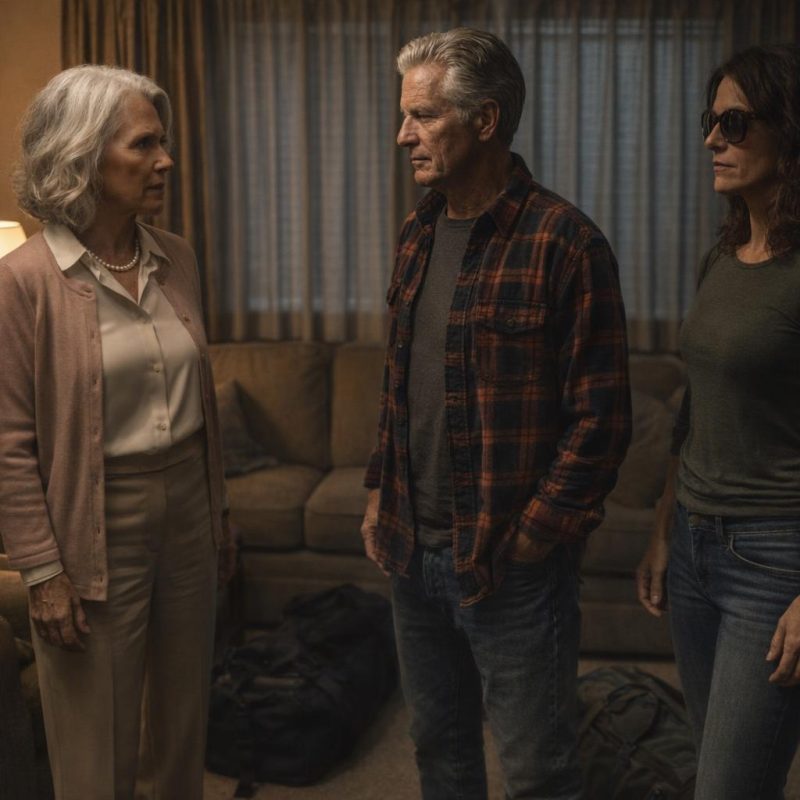 Image by RM AI
Begging for Protection
Susan went quiet after that, sitting on the edge of the couch with her hands in her lap. Barbara was the one who moved first. She crossed the room and took both my hands in hers, and I let her, even though every part of me wanted to pull away. She asked me to save them. Not fix things, not make it right — save them. She said she'd give back every dollar, sign whatever needed signing, do whatever I asked, if I could just keep those men outside from hurting them. I told her going to the police wasn't an option, that it would make everything worse before it made anything better. She asked if Vincent would let them live once the money was returned. I told her I didn't know. That was the honest answer and it scared her more than any lie would have. Susan started crying again, quietly, saying she'd only wanted out of the life we'd grown up in, that she hadn't understood what she was walking into. I believed her on that part. I believed both of them, actually, which made it harder, not easier. I told them I'd do what I could. I didn't promise more than that. Barbara nodded and pressed my hands tighter, and the desperation in her grip was something I hadn't felt from her since I was small enough to need her.
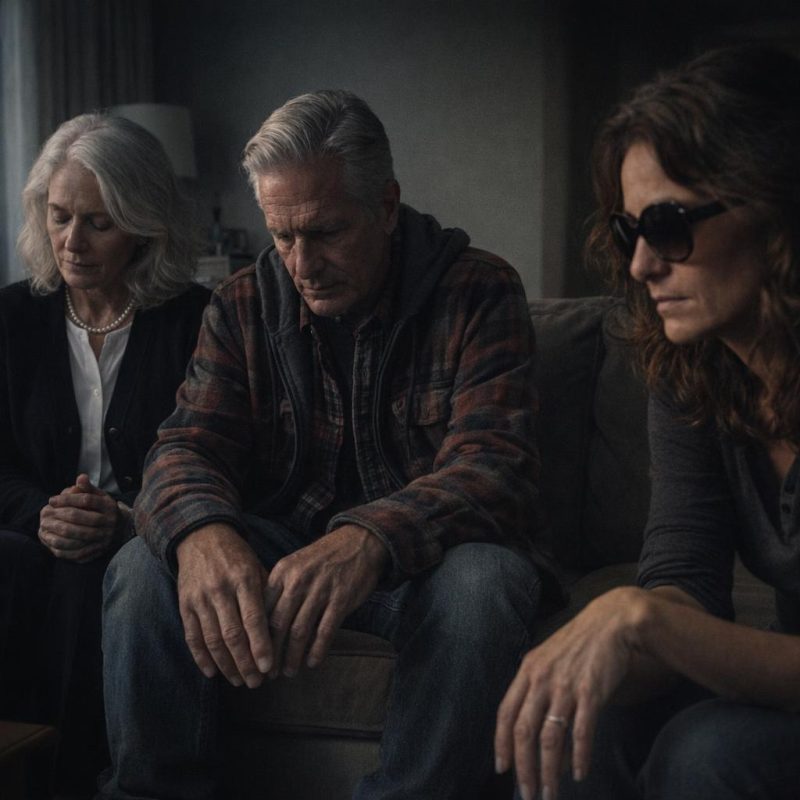 Image by RM AI
The Storage Locker
I asked where the rest of the money was. Susan looked at Barbara, and Barbara gave her a small nod, the kind that meant stop stalling. Susan said they'd rented a storage locker near the airport the day after they arrived in Nice. She said they moved most of the cash there because she was afraid to keep it all in one place — that if someone found the rental, she wanted there to be something left to bargain with. The duffel bags in the corner held about fifty thousand dollars. The rest, the bulk of it, was sitting in a climate-controlled unit at a facility called Nice Garde-Meuble, about four kilometers from the terminal. I asked her why she'd split it up that way, and she said she'd seen enough crime shows to know that putting everything in one location was how people got caught. Under different circumstances I might have almost laughed. Barbara sat very still while Susan explained, like she was bracing for me to explode. I didn't. I just stood there doing the math, thinking about Marcus and Dmitri outside, thinking about what Vincent would say when I reported back. Susan reached into her purse, her hand shaking slightly, and pulled out a small brass key and held it out to me.
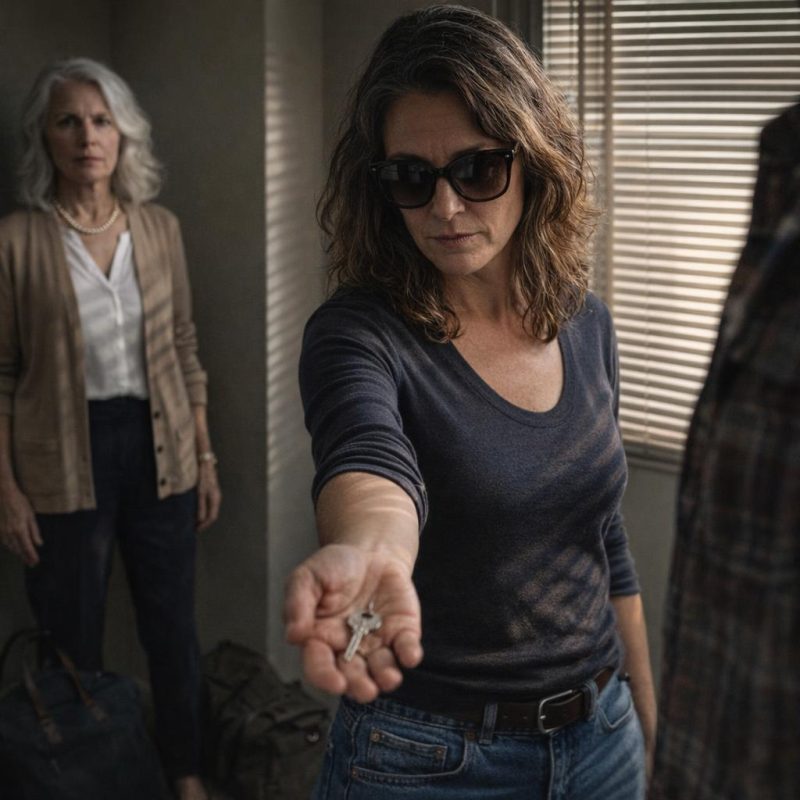 Image by RM AI
Marcus's Rehearsed Reaction
I stepped outside and told Marcus and Dmitri we'd found the money. Marcus just said, 'Show us,' and the three of us went back inside. Barbara and Susan pressed themselves against the far wall while Dmitri crouched over the duffel bags. He unzipped the first one and worked through the stacks methodically, counting in a low murmur, occasionally setting a bundle aside to recount. He confirmed approximately fifty thousand dollars. I told them the rest was in a storage locker near the airport and gave Marcus the name of the facility. He asked for the locker number and access code. I told him Susan had those details. He turned to her and she gave them to him in a voice barely above a whisper. The whole exchange took maybe four minutes. What stayed with me afterward wasn't anything that was said — it was the way Marcus received the information about the split location. No frustration, no surprise, no visible recalibration. He just nodded and asked the follow-up question, the way you do when an answer lands exactly where you thought it might. Dmitri made a note on his tablet and zipped the bag closed. I stood there trying to decide if I was reading too much into it, but the expression on Marcus's face — or the absence of one — sat with me in a way I couldn't quite shake.
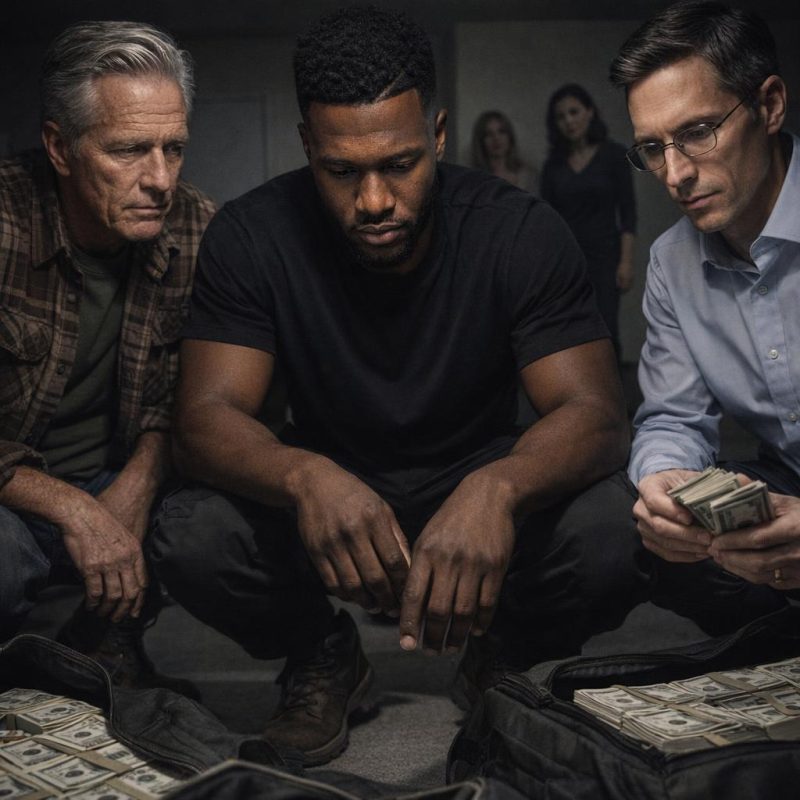 Image by RM AI
Dmitri's Cryptic Comment
Dmitri finished his count and set the second bag aside. He confirmed the amount matched what Susan had described — roughly fifty thousand between the two bags. Then he asked how long it would take to get to the storage facility and back. I said twenty minutes, maybe thirty with traffic near the airport. He checked his watch, made a note on his tablet, and said we were still within the acceptable schedule. I asked him what schedule he meant. He looked up from the tablet with that same flat expression he'd worn since the train platform and said Vincent had a timeline for the full transaction, that the recovery needed to be completed within a specific window. I asked what happened if we missed the window. He said delays created complications no one wanted. That was all he gave me. Marcus glanced at Dmitri when I asked the follow-up question, just a quick look, the kind that passes between two people who've already had a conversation you weren't part of. Dmitri picked up the duffel bag and moved toward the door, signaling we were done talking. Barbara and Susan watched from the couch, not saying anything. I followed Dmitri out, turning the word over in my head — not the timeline, not the window, but the way he'd said schedule, flat and clipped, like it had weight I hadn't been given the measure of.
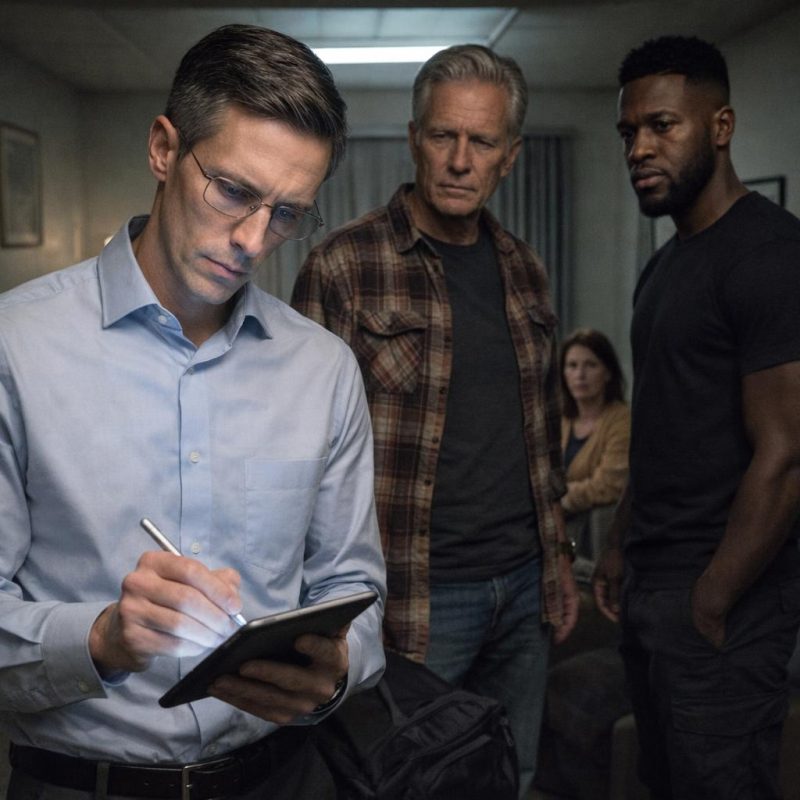 Image by RM AI
Vincent's Immediate Return Order
The storage facility was exactly where Susan said it would be, a low concrete building off a service road four kilometers from the terminal. Susan had given me the locker number and access code before we left the rental, and I passed both to Dmitri in the car. He and Marcus went in while I waited near the entrance. They were back in under ten minutes, carrying two heavy canvas bags. Dmitri confirmed the full amount was present. He called Vincent from the parking lot, speaking in short sentences, his back half-turned to me. Then he held the phone out and said Vincent wanted to speak with me. Vincent's voice was the same as always — quiet, unhurried, the kind of quiet that doesn't need volume to carry weight. He said the recovery was complete and that everyone needed to return to the United States immediately. I asked if we could take a day, that it had been a long chase and Barbara and Susan were shaken. He said no. He said I should book the next available flight and be on it. I asked if there was a reason for the urgency now that the money was secured. He said the matter needed to be closed properly, at home, and that he'd explain the rest when I arrived. There was no room in his tone for a second question, so I didn't ask one.
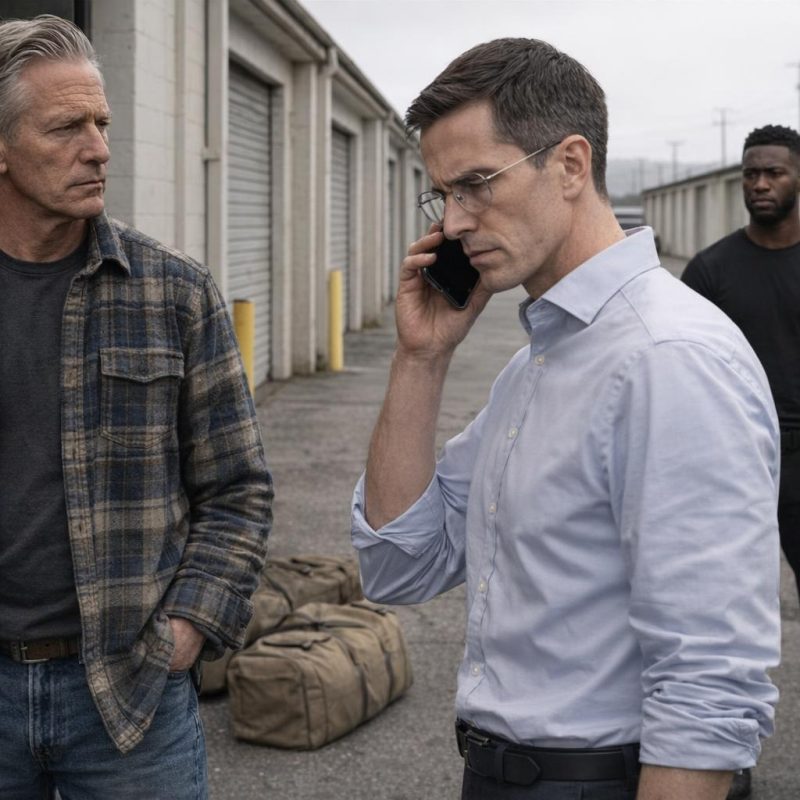 Image by RM AI
Separate Flights
We drove back to the Nice airport with all the recovered money loaded in the trunk. While Dmitri stood at a ticketing kiosk booking flights, I pulled Barbara and Susan aside near a row of plastic seats by the departures board. I told them to take a different flight back — not the same airline, not the same routing, and not anywhere near me or the two men I'd come with. Barbara asked if that would keep them safe. I told her I didn't know, but I wanted distance between them and Marcus and Dmitri for as long as possible. I gave Susan enough cash for two economy tickets and told them both to go straight home, keep their phones on, and not talk to anyone about what had happened in Nice. Susan asked if I was going to be okay. I said I'd handle it. Barbara hugged me, both arms tight around my back, and said she was sorry — not the performed sorry she'd given me at the rental, but something quieter and more used up. I told her to go. I watched them walk toward the ticket counter, Barbara's hand on Susan's arm, their luggage rolling behind them. The departures board cycled above their heads. I stood there with the key to the empty storage locker still in my jacket pocket, and something in my chest went very still.
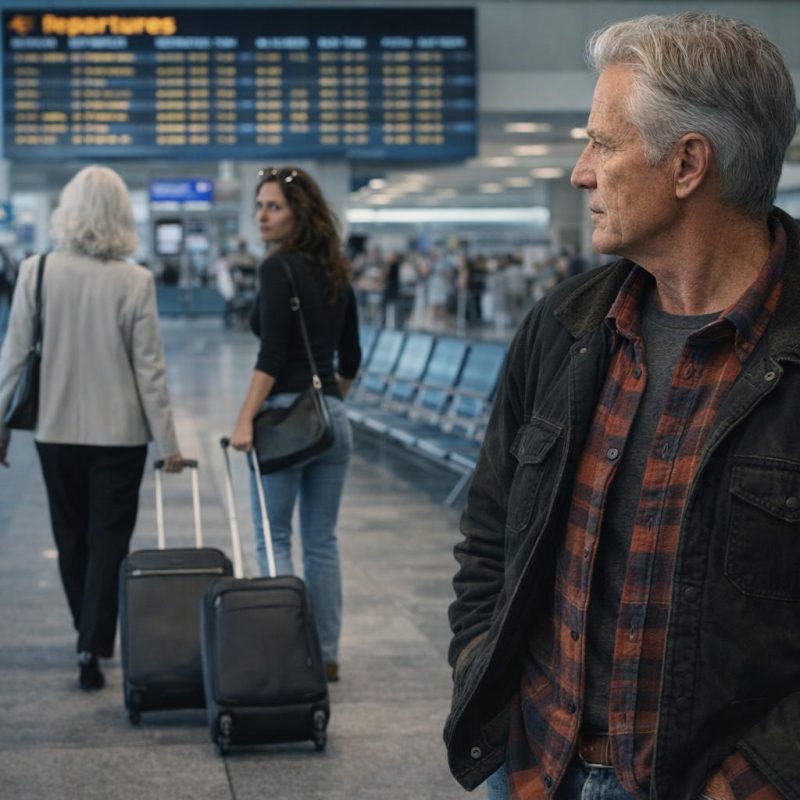 Image by RM AI
Marcus Remains Close
The flight back was eleven hours and Marcus spent every one of them in the seat directly beside me. Not across the aisle. Right there, shoulder to shoulder, close enough that I could hear him breathe. Dmitri sat two rows ahead with the carry-on bags stowed at his feet, occasionally glancing back at me over the headrest like he was checking inventory. I tried to sleep somewhere over the Atlantic. I closed my eyes, shifted toward the window, and within thirty seconds I felt Marcus go still beside me in that particular way — the way a person goes still when they stop pretending to be relaxed. I opened my eyes. His were already open, watching the middle distance. I asked him, somewhere over Newfoundland, whether he thought the handoff would go smoothly. He said Vincent would handle everything. That was it. No elaboration, no reassurance, nothing to hold onto. The cabin lights dimmed and the other passengers settled into movies and sleep and I sat there in the dark with my hands in my lap, exhausted in a way that had nothing to do with the time zones. When the wheels finally touched down and the cabin lurched with the drag of the runway, Marcus's hand came down on my shoulder — firm, deliberate, not a gesture of comfort.
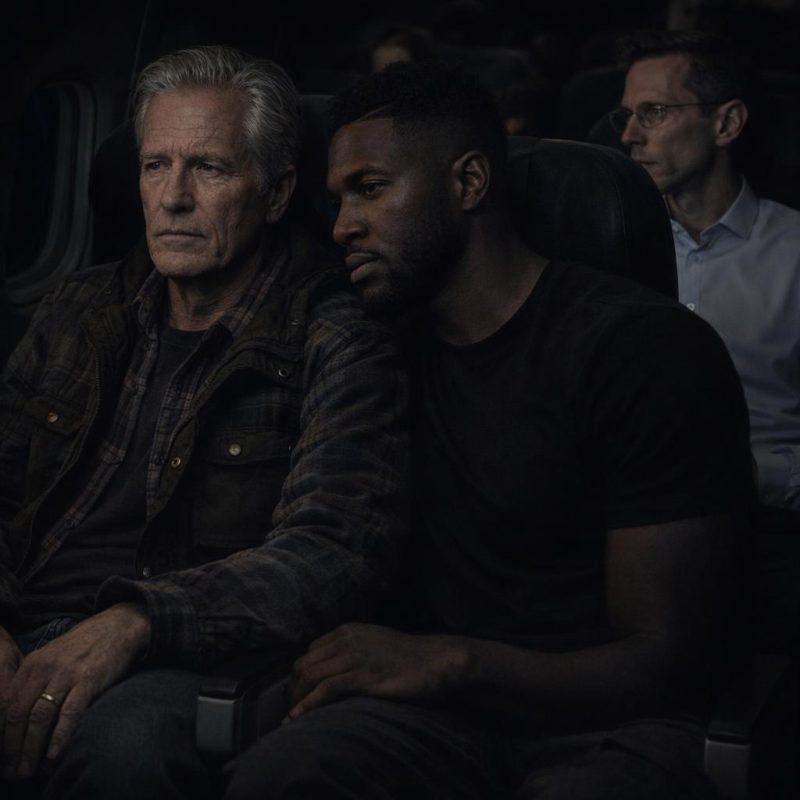 Image by RM AI
The Final Handoff Scheduled
We cleared customs without incident, which surprised me more than it probably should have. Dmitri's phone buzzed before we even reached the exit doors. He answered, listened for about ten seconds, then held it out to me without a word. I took it. Vincent's voice came through quiet and even, like he was reading from a list. He said the final handoff would take place tomorrow morning at eight. I asked where. He said he would send the location by seven. I asked if this concluded our arrangement. He said it concluded the current transaction. Not our arrangement. The current transaction. I turned that phrasing over in my head while Marcus drove me home in the black sedan, the city sliding past the windows in the dark. It felt oddly specific in a way I couldn't quite name — like language chosen carefully rather than spoken casually. I had less than twelve hours. I told myself that was enough time to get ready, to be sharp, to get through one more meeting and come out the other side. I set my bag down inside my front door and stood in the hallway for a moment. The house was quiet. I kept hearing his voice — the flatness of it, the precision — and it sat in the room with me long after the call was over.
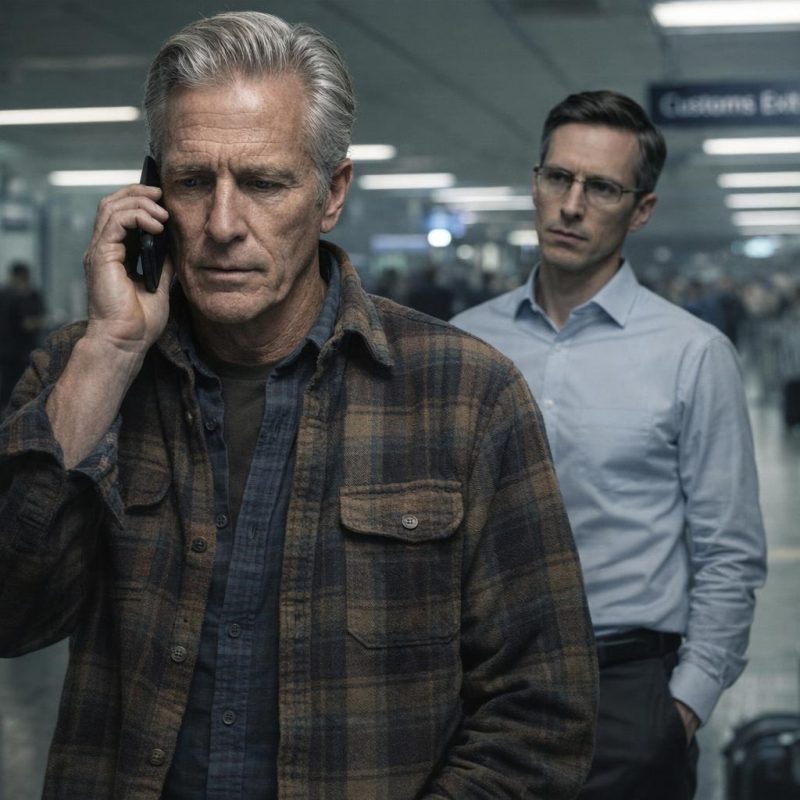 Image by RM AI
Thomas's Warning
I drove to the hardware store just after eight that evening. Thomas was running the register down to zero and stacking the day's receipts when I came through the back. He looked up and something in his face shifted — relief, maybe, or something close to it. I told him the money had been recovered and the final handoff was set for tomorrow morning. He didn't look relieved. He set the receipts down and took his reading glasses off and held them in both hands. He said he'd been asking around about Vincent Carr while I was gone. I asked what he'd found. He said it wasn't so much what he found as what people wouldn't say — the way certain conversations went quiet when the name came up. He'd talked to a man who used to do contract work in that world, someone Thomas trusted, and the man had been careful with his words but clear enough. Thomas said he'd heard that the people who worked closely with Vincent on the big transactions had a way of not being around afterward. He said he didn't have proof, just a pattern that bothered him. He told me to be careful at the meeting tomorrow, to watch every exit, to not let them put me somewhere I couldn't walk out of. I said I would. Then he looked at me over the top of his glasses and said the people who worked for Vincent didn't tend to stay around long after the work was done.
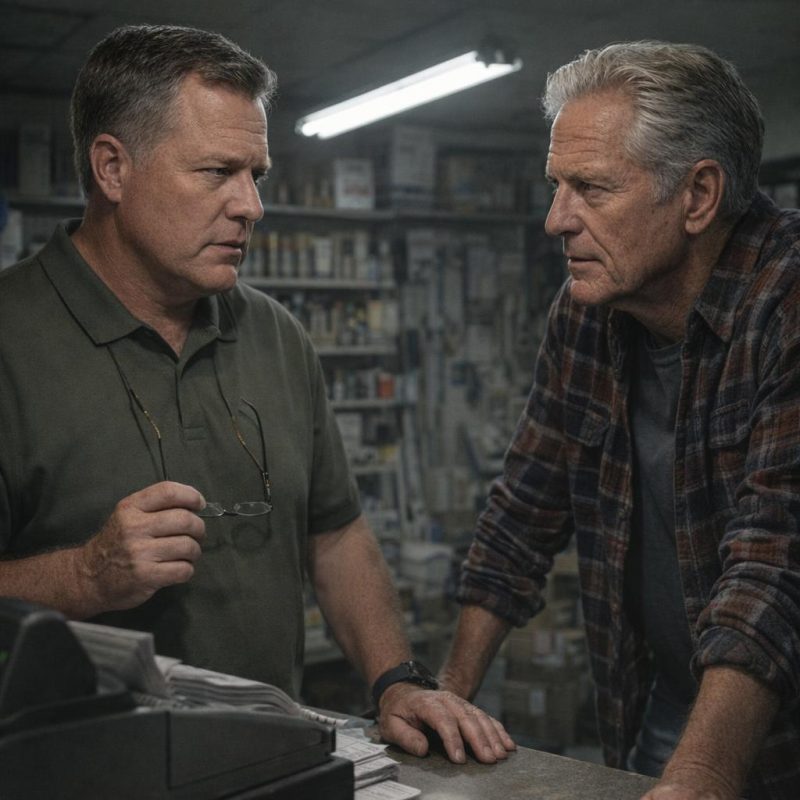 Image by RM AI
Sleepless Night
I got home just after nine and told myself I'd sleep for a few hours. I lay down on top of the covers with my boots still on and stared at the ceiling. The house made its usual sounds — the furnace cycling, a branch scraping the side window, the refrigerator humming in the kitchen — and every one of them landed wrong. I kept running Thomas's words back through my head. The people who worked for Vincent didn't tend to stay around long. I thought about Marcus on the plane, that hand on my shoulder when we landed. I thought about the way Vincent had said current transaction instead of arrangement, like he was drawing a boundary around something with very specific edges. I got up around midnight and checked the locks on the front and back doors. Checked the windows. Went back to the living room and sat in the chair by the window without turning on a light. The street outside was empty. By three in the morning I'd stopped trying to sleep. I sat there in the dark with the meeting five hours away, and the pieces kept circling without quite connecting — like I was standing in front of something I couldn't yet see the shape of. The darkness outside the window held steady, and the first grey edge of dawn was still a long way off.
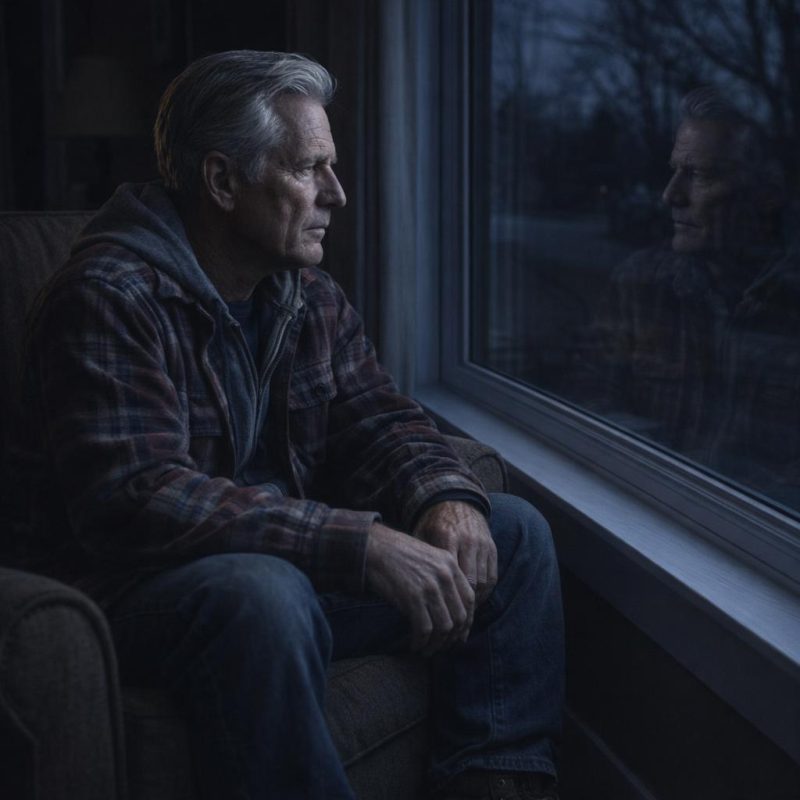 Image by RM AI
Vincent's History
Around four I gave up on sitting still and opened my laptop on the kitchen table. I typed Vincent Carr into the search bar and hit enter. Most of what came up was surface-level business coverage — land development deals, a charity gala from three years back, a quote in a regional finance article. I dug deeper. I found an obituary for a man named Richard Kowalski, described as a financial consultant, died in a single-car accident on a rural highway two years ago. The accident was ruled inconclusive. I found a missing persons notice for a man named David Chen, last seen leaving a warehouse meeting in the fall of the same year. His family had filed the report. No resolution listed. I kept searching, pulling at threads. A man named Michael Torres, described in a brief news item as the victim of a street robbery — died the day after what the article vaguely called the completion of a business arrangement. I sat back and looked at what I had on the screen. Three men. Different circumstances, different cities, different years. But the timing in each case sat in the same narrow window — days after a significant transaction closed. I couldn't prove any connection. I had no names linking them to Vincent, no documents, nothing that would hold up anywhere. But the pattern was there on the screen in front of me, and I couldn't look away from it.
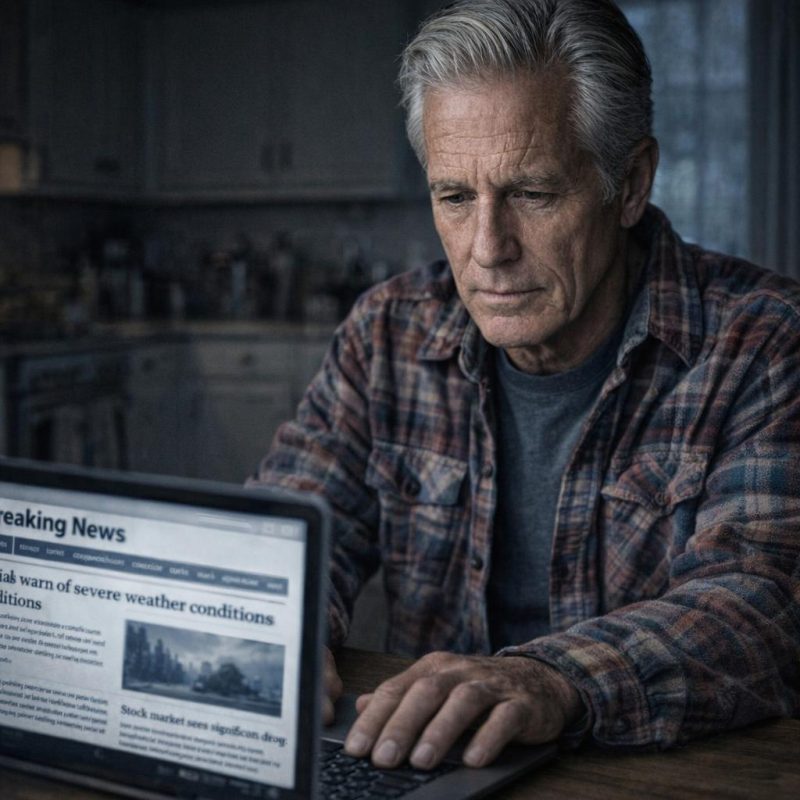 Image by RM AI
The Disappeared
I read everything I could find on each of the three men. Kowalski's accident had drawn a brief follow-up piece — a local reporter had noted that the road conditions that night didn't explain the crash, and that Kowalski had no history of reckless driving. The story went nowhere after that. David Chen's disappearance had gotten more coverage because his wife had pushed for it, given interviews, kept the case in front of local news for almost a year. The warehouse where he was last seen had been leased under a shell company that dissolved within weeks of his disappearance. Michael Torres's robbery had happened in a neighborhood where street crime was rare, and the detective assigned to the case had publicly called it unusual. No arrests. No suspects named. I pulled up a timeline on a notepad and wrote the dates down. Kowalski: deal closed, dead four days later. Torres: transaction completed, dead the following morning. Chen: final meeting, gone within forty-eight hours. I stared at those numbers. The window was consistent. The method varied but the timing didn't. My meeting was in less than three hours. I searched for any follow-up on Chen's case and found one last article from eight months after his disappearance — his wife still looking, still hoping, the detective quoted as saying the investigation remained open. The final line of the article noted that David Chen's body had never been found.
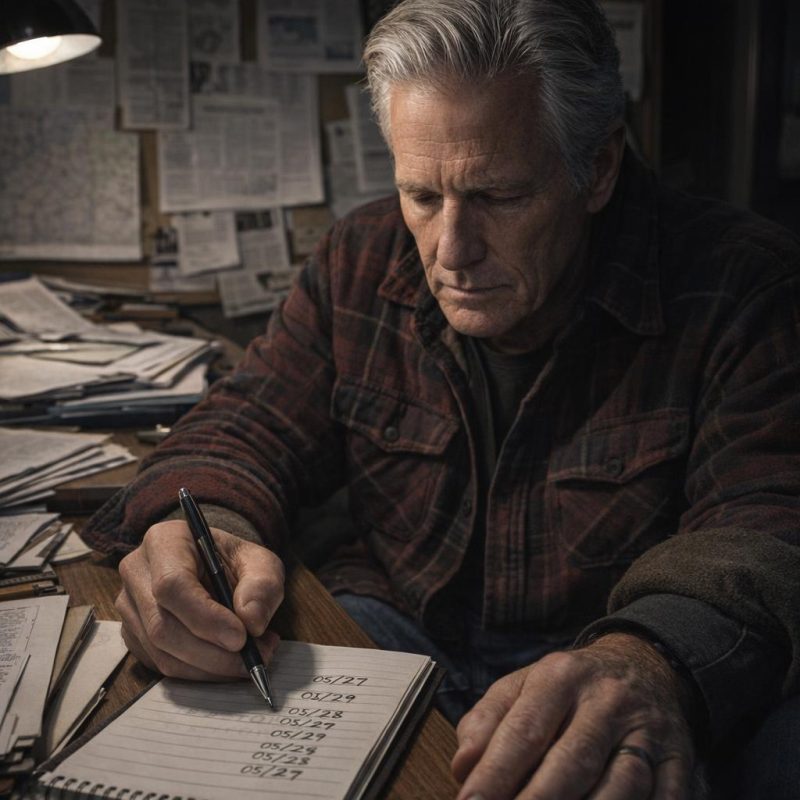 Image by RM AI
Thomas's Rumors Confirmed
I called Thomas at five in the morning. He picked up on the second ring, which told me he hadn't been sleeping either. I read him the names and the dates I'd found. He was quiet for a moment, then said he'd been hoping I wouldn't find that. I asked him what he meant. He said the man he'd spoken to — the one who used to work in that world — had told him more than he'd let on at the store. He hadn't wanted to say it outright without being sure. He said his source had told him that people who handled the big transactions for operations like Vincent's had a way of disappearing once the money was clean. He said the word his source had used was loose ends — not as a certainty about Vincent specifically, but as the way things tended to go in that world. Thomas said he didn't know how or where, but what he'd heard troubled him badly enough that he hadn't slept. I asked him straight out if he thought I was going to be killed at that meeting this morning. He said he didn't know the specifics. Then he said I shouldn't go. He said I should take whatever I had and disappear — leave the state, leave the country if I could manage it, and not look back. I told him running would only delay things. Vincent had resources and I had a hardware store and a savings account that had already been emptied once. Thomas said then I needed to find another option, fast. The line went quiet after that, and neither of us filled it.
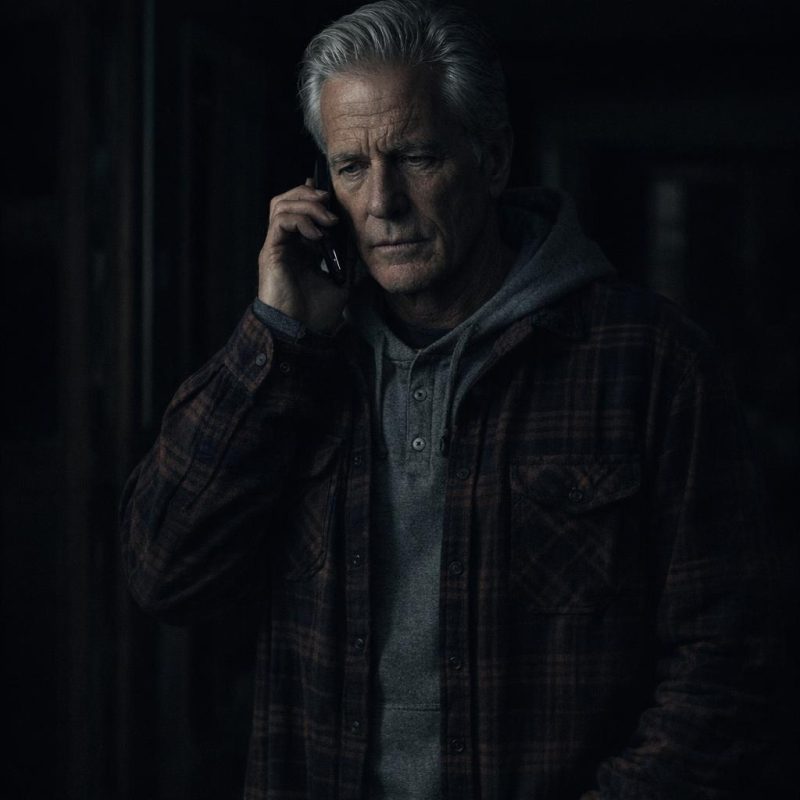 Image by RM AI
The Anonymous Tip
I went through my jacket pockets and found Detective Mills's card near the bottom, bent at one corner from the airport in London. I sat at the kitchen table and looked at it for a minute. Then I dialed. It rang four times and she picked up, her voice alert in a way that said she'd been awake for a while. I told her I wasn't going to give my name but that I had information about a man named Vincent Carr. She asked who was calling. I said I was someone who had worked with Vincent and was currently in a situation I needed help getting out of. I told her about the three names I'd found — Kowalski, Chen, Torres — and the timeline pattern connecting each of them to transactions in Vincent's orbit. She didn't interrupt. When I finished she asked me to repeat the dates, and I did. She asked how I'd come across the information. I said I'd found it in public records and news archives. She said she'd look into it. Then she asked where I was and whether I was safe. I told her I had a meeting with Vincent in less than two hours. There was a short pause on her end. She told me not to go to that meeting and to come to her office instead, and then she asked me again for my location.
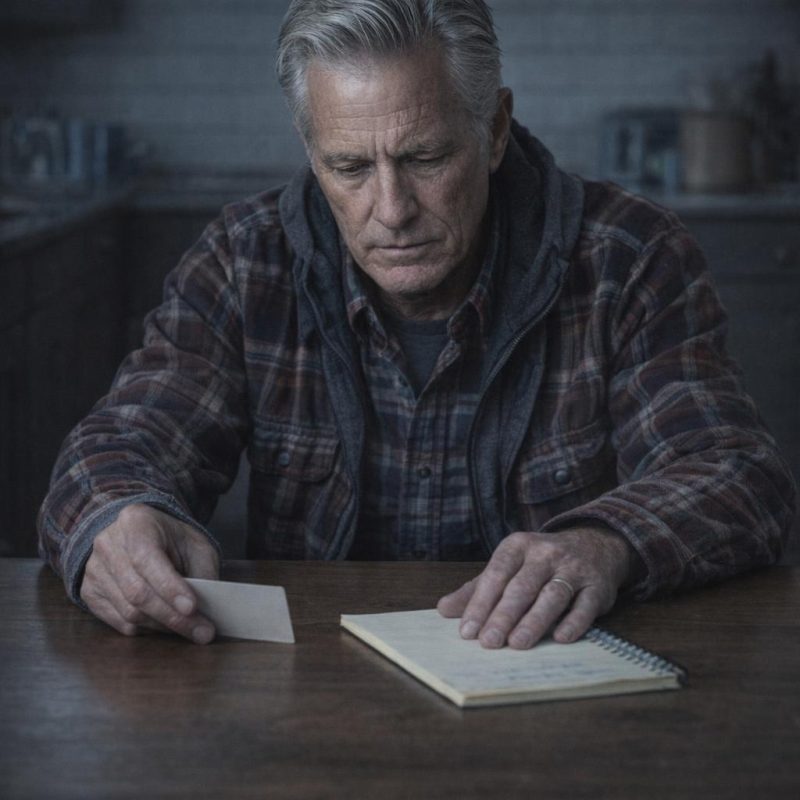 Image by RM AI
The Isolated Location
The text came in at seven in the morning. Just an address and nothing else — a street number on Kellner Road out in the industrial district, the kind of area where the buildings have no windows and the nearest neighbor is a quarter mile of chain-link fence. I knew that stretch. I'd driven past it on jobs years ago. Nothing out there but concrete and rust. I sat at the kitchen table with my phone in my hand and thought about Detective Mills telling me not to go. I thought about running. I turned it over for maybe ten minutes before I accepted that running wasn't a real option — not with Marcus out there, not with whatever Dmitri had already tracked. I put on my jacket, grabbed my keys, and drove out in the grey morning light. The streets were empty that early, the storefronts shuttered, no one moving. I got there fifteen minutes ahead of time and pulled into the gravel lot. No other vehicles. The warehouse sat back from the fence line — concrete block, no windows, a single metal door facing the lot. I cut the engine and sat there with my hands on the wheel, watching the entrance, the gravel pale and still in the flat morning light.
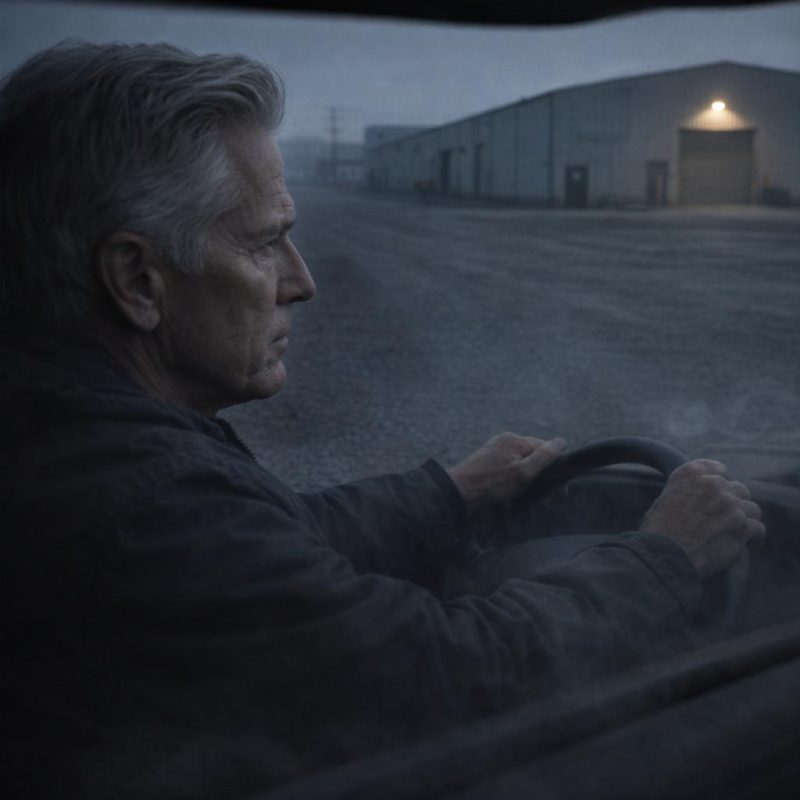 Image by RM AI
Marcus and Dmitri Waiting
I got out of the truck and walked to the metal door. It wasn't locked. It swung open with a groan that echoed up into the rafters, and the smell hit me first — cold concrete and old machine oil. The space inside was vast, maybe a hundred feet deep, with high ceilings and fluorescent tubes that flickered and buzzed without fully committing to light. There were pallets stacked against one wall, some broken, and debris scattered across the floor. Marcus was at the far end near a rear door, arms crossed, feet planted. Dmitri stood off to the left near a side door, a tablet in his hands, already working. Neither of them said anything when I walked in. I said good morning. Nothing. I asked where Vincent was. Dmitri said he would arrive shortly, not looking up from the screen. I stood near the center of the floor and tried to look like a man who wasn't counting exits. The rear door behind Marcus. The side door behind Dmitri. The entrance behind me, which I'd already walked through. Three doors. Two of them occupied. I let my eyes move slowly around the room, taking in the pallets, the debris, the flickering light, and the two men standing exactly where they were standing.
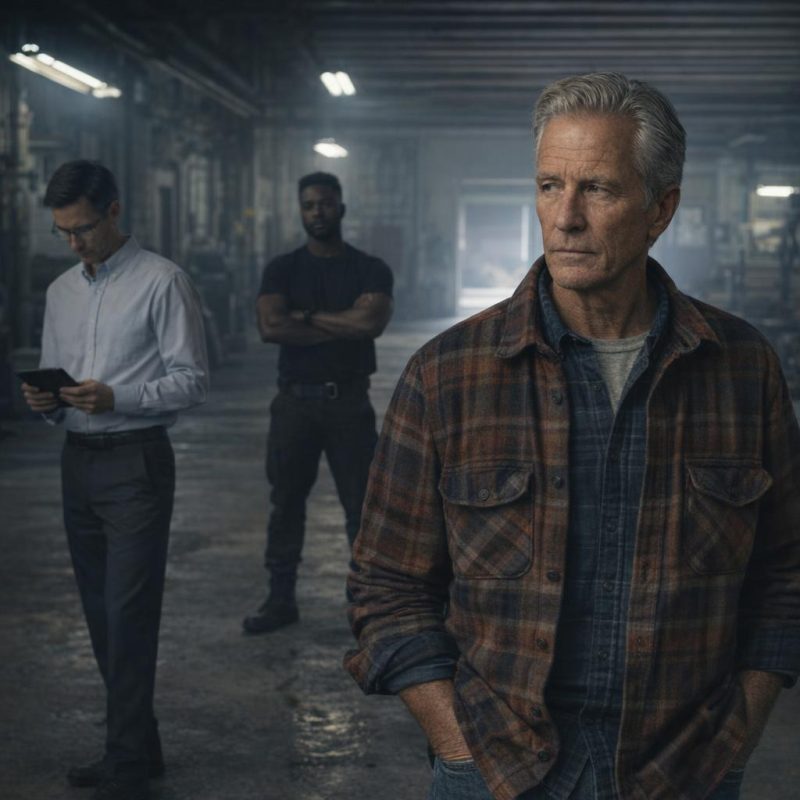 Image by RM AI
The Money Count
Dmitri set the duffel bags on a stack of pallets he'd arranged into a makeshift table and started pulling out the cash in banded stacks. He worked the way a machine works — no wasted motion, no hesitation, each bundle placed in a neat row before he moved to the next. I tried to make conversation. I asked how long this would take. Dmitri said what he needed to say and went back to counting. I asked Marcus if Vincent was usually this late. Marcus looked at me the way a wall looks at you. I stopped asking. The counting went on for close to twenty minutes. I stood with my hands in my jacket pockets and watched Dmitri work through the stacks, checking bills, making notes on his tablet. Marcus hadn't moved. Not once. His eyes hadn't left me since I walked in. I'd been in rooms with focused people before, but this was different — there was no distraction in him, no idle shifting of weight, no glancing at his phone. Just that steady, patient attention fixed on me like I was the only thing in the room worth watching. Dmitri confirmed the full amount was present, made a final note, and set the tablet on the table. Then his phone buzzed, and he glanced at the screen.
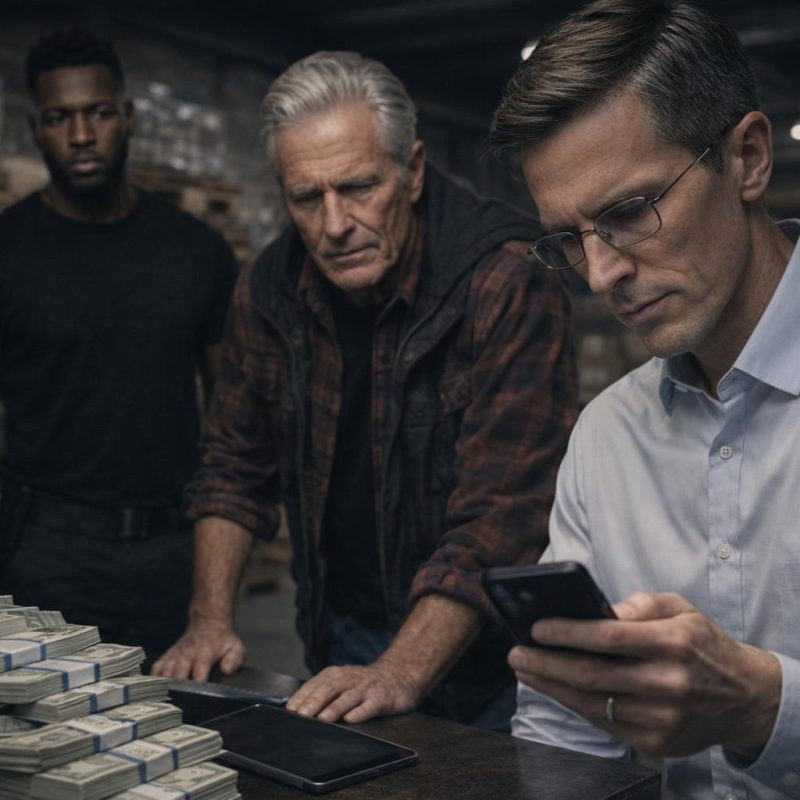 Image by RM AI
The Scheduled Hit
Dmitri read whatever was on his phone and set it face-down on the pallet table without changing expression. Then he picked up his tablet and started organizing the stacked bills back into the bags. He was maybe four feet from me. I wasn't trying to read his screen — I just happened to be standing at the right angle when the tablet lit up with a notification banner across the top. The contact was listed as V. I looked at it for maybe two seconds before Dmitri tilted the screen away. I kept my face still. My stomach had dropped somewhere around my knees. Marcus shifted his weight near the back door and his right hand moved toward the front of his jacket. Dmitri and Marcus exchanged a look across the room — brief, nothing you'd notice if you weren't already watching for it. I was watching for it. I ran the words back through my head, the ones I'd caught in that two-second window, and the timestamp beside them showing the message had arrived right as Dmitri finished his count. The tablet screen read: Proceed after confirmation.
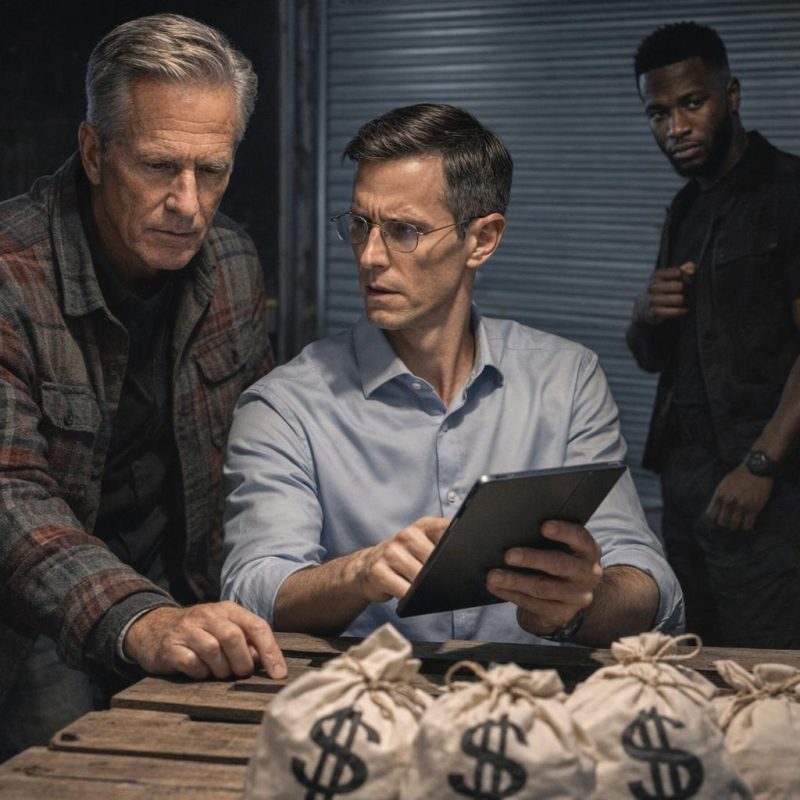 Image by RM AI
Vincent's Signal
The warehouse door opened and Vincent walked in. No hurry. Expensive dark suit, silver hair, the same unhurried calm he always carried, like the world ran on his schedule and always had. He crossed to the pallet table and looked over the stacked money without touching it. He nodded once to Dmitri. Then he turned to me. He said he appreciated my efforts. He said I'd handled a difficult situation with professionalism. His voice was even and quiet, the kind of quiet that fills a room. I said thank you. I didn't know what else to say. He looked at me for a moment longer than felt natural, then he turned slightly and made a small gesture with his right hand — two fingers, barely a movement, directed toward Marcus. Marcus straightened and took a step away from the back wall, moving toward me.
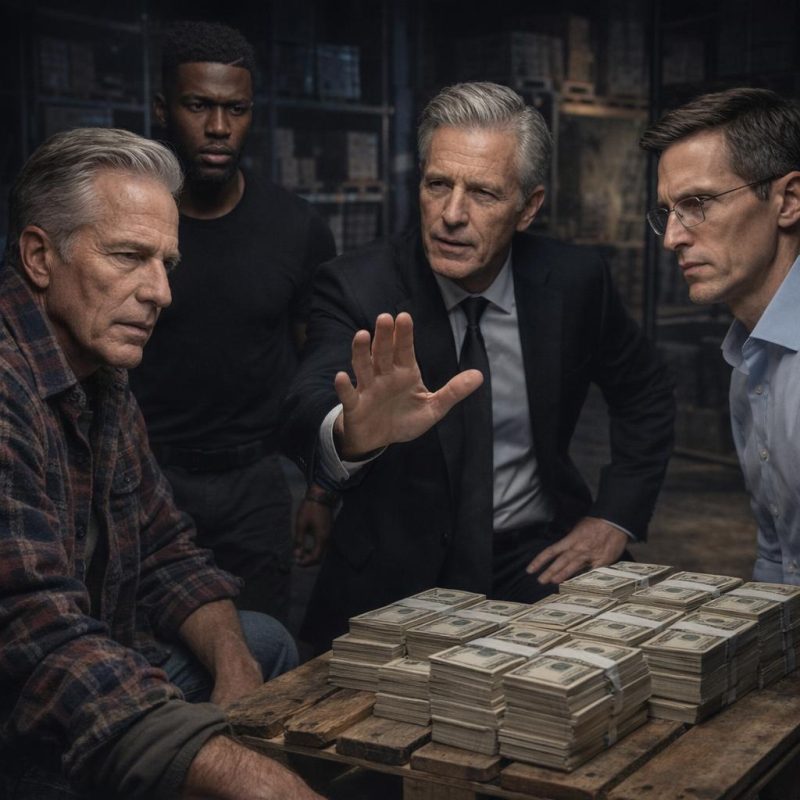 Image by RM AI
The Accidental Salvation
I took a step back. My mind was moving fast, faster than it had moved in years. Thomas had told me once — people who get close to Vincent don't stay around long. I'd thought he meant they moved on, found other work. I hadn't understood what he meant. But standing there watching Marcus close the distance, I understood it now. The three names I'd found — Kowalski, Chen, Torres — each one had been an intermediary. Each one had held Vincent's money at some point. Each one was gone. The seventy-two-hour deadline had never been about recovering the money before it disappeared. It had been about getting the money back before I had time to think too hard and disappear myself. Dmitri's questions about who else knew the arrangement — he hadn't been doing due diligence. He'd been taking inventory of loose ends. Marcus hadn't been watching me to make sure I did the job. He was the job's last step. And the GPS tracker in the bag — that was never about trusting me. That was how Vincent recovered his money regardless of what happened to me after. I'd been meant to hand over the bags and be done with, right there in that first meeting. Barbara stealing the money hadn't ruined Vincent's plan. It had accidentally kept me breathing. If she hadn't taken it, I would have handed it over weeks ago and never walked out.
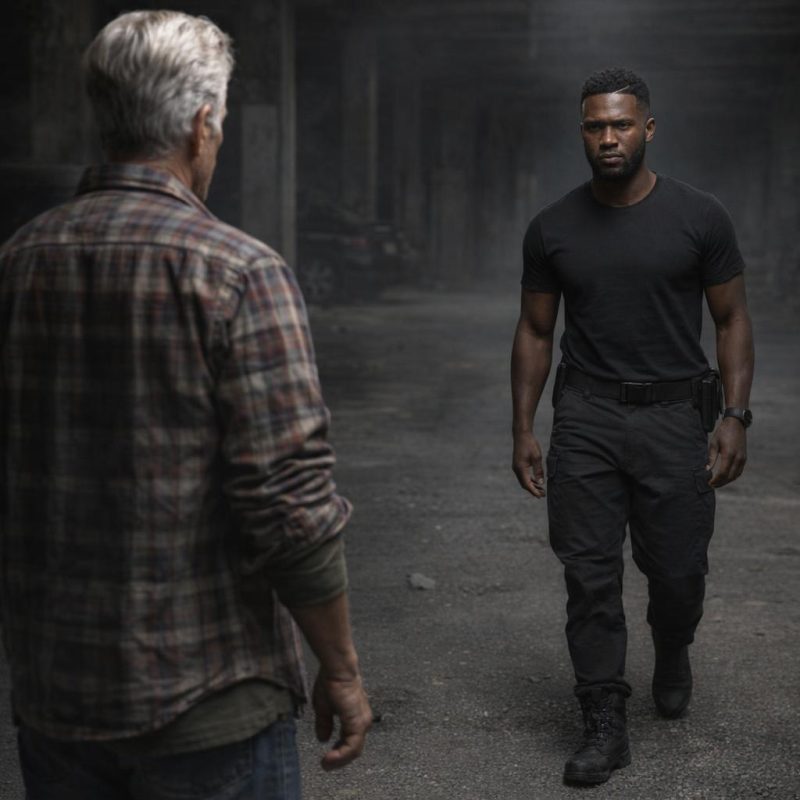 Image by RM AI
Turning the Tables
I held up both hands, palms out, and spoke before Marcus could get any closer. I told Vincent the count was wrong. Vincent stopped. His eyes moved to me with the kind of attention that makes your skin feel thin. I said Barbara had told me she'd skimmed from the bags before she hid them — kept a reserve as insurance because she didn't trust that returning the full amount would be enough to protect her. I said she'd hidden it separately and wouldn't tell me where over the phone. Vincent raised one hand and Marcus stopped moving. Vincent asked how much. I said fifty thousand. He asked where it was. I said Barbara would only give me the location in person — she was scared, she was paranoid, she'd made me promise to come to her directly. Vincent looked at me for a long time without speaking. Dmitri was already checking his tablet, running the numbers. He said the current count matched the original figure. I said Barbara was careful — she would have made sure it matched on paper. Vincent's eyes hadn't left my face. The lie was out there now, sitting in the cold air of the warehouse between all four of us, and I had no idea whether it would hold.
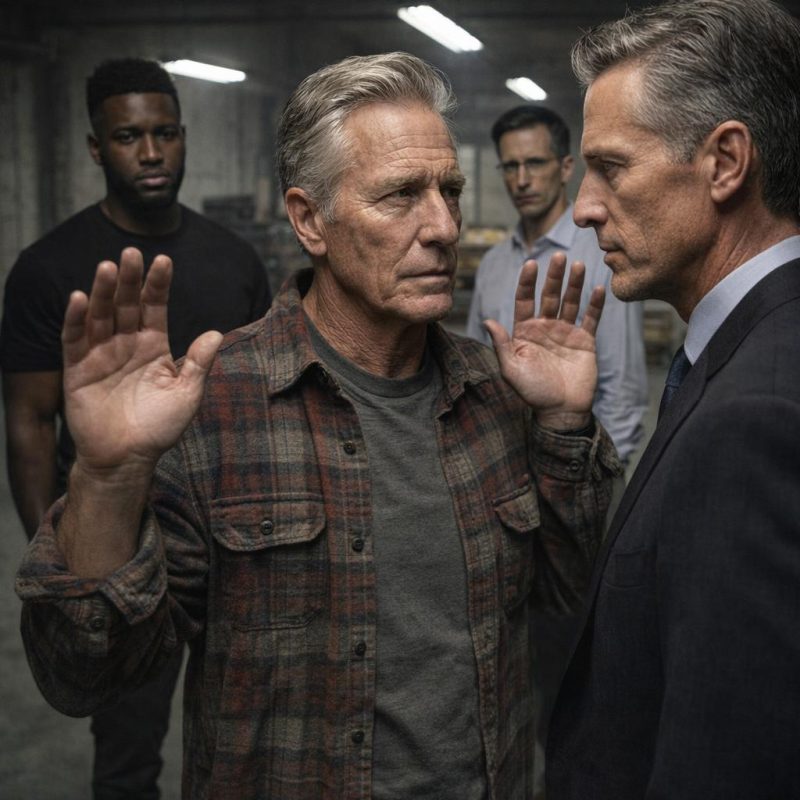 Image by RM AI
Vincent's Reluctant Agreement
Vincent studied me the way you study a document you're not sure is authentic. He asked how I planned to get the location out of Barbara. I said I'd call her, arrange a meeting, and bring Marcus along so Vincent had eyes on the whole thing. I watched something move behind his expression — suspicion pulling against something else. He said I had four hours. He said if I came back without the reserve, or if I ran, the consequences would reach further than me. He didn't elaborate. He didn't need to. He told Marcus to stay with me at all times. Marcus nodded. Dmitri would remain with Vincent and the recovered money. Vincent looked at me one more time, then turned back to the table. Marcus gestured toward the door. I walked out of the warehouse into the flat grey morning with Marcus two steps behind me, four hours on a clock I'd invented, and no plan beyond the next few minutes. The gravel crunched under my boots and the warehouse door swung shut behind us, and the only thing I'd actually bought myself was time I didn't yet know how to spend.
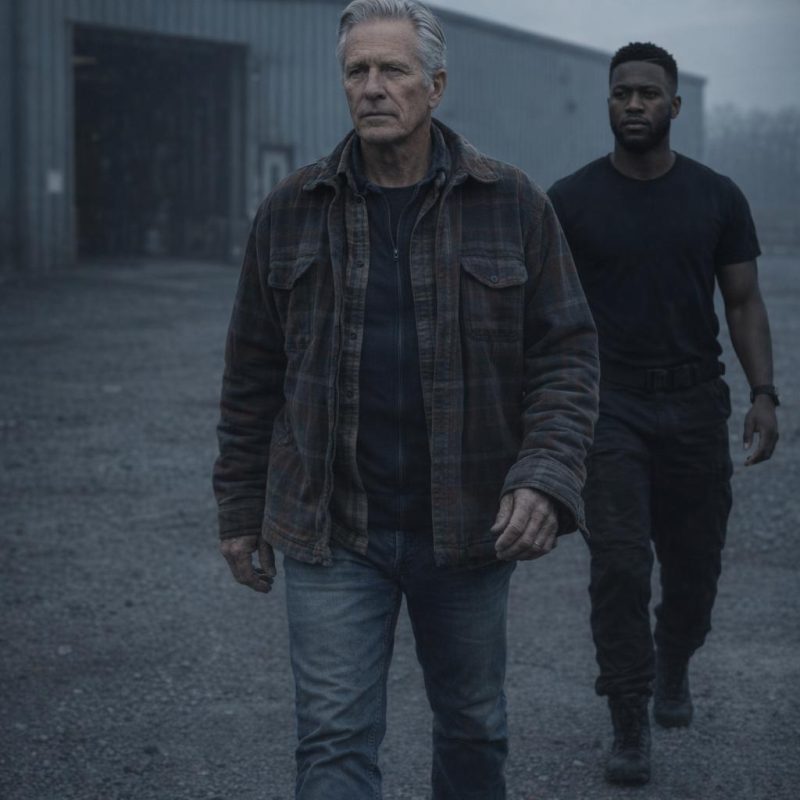 Image by RM AI
The Real Story
Marcus stopped at a gas station about ten minutes from the warehouse. I told him I needed the restroom — coffee from earlier, I said, keeping my voice flat. He gave me a look that said he didn't fully buy it, but he pulled in and followed me to the door, then posted himself outside it. I locked the bolt, turned on the faucet to cover my voice, and called Detective Mills. She picked up on the second ring. I didn't waste time. I told her everything — Vincent's name, the syndicate, the warehouse address, the recovered money sitting on that table, Dmitri, Marcus standing ten feet from me right now, and the fact that Vincent had made it clear I wasn't walking away from this. I told her about the intermediaries who'd disappeared before me. My voice was shaking but the words came out clean. She asked if I had a few hours before Vincent expected me back. I said yes. She said she'd been building toward something like this for months and that my call had just changed everything. She told me to lead Marcus to an address she was about to text me. Then she said she was mobilizing a tactical team immediately.
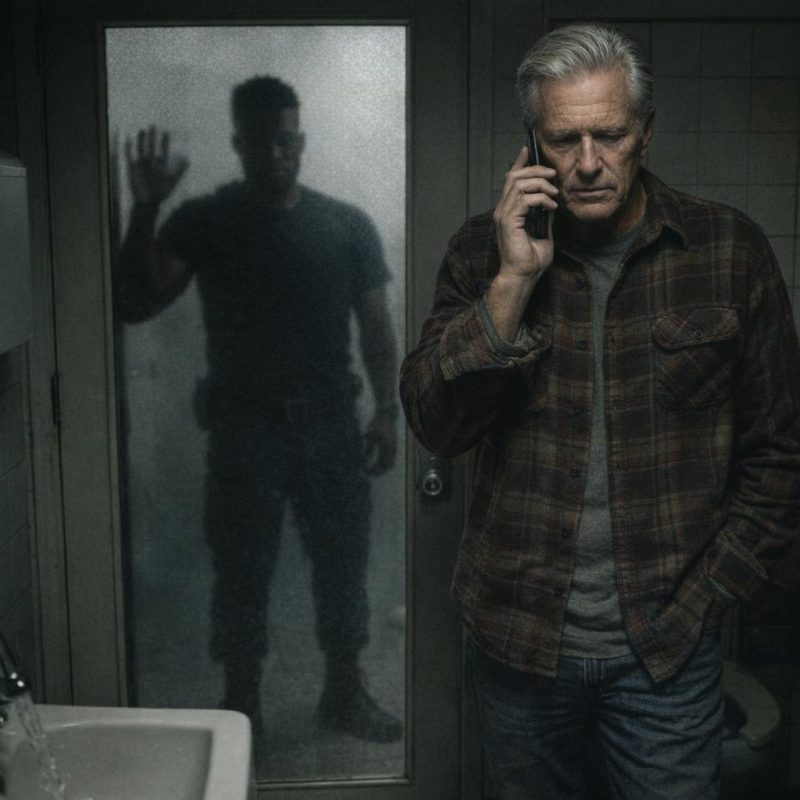 Image by RM AI
Leading the Trap
I came out of that bathroom with my heart hammering and my face as neutral as I could make it. Marcus was leaning against the wall, arms crossed, watching me the way a dog watches a door. I told him I knew where to look — that Barbara had mentioned a storage facility on the east side during our call, somewhere near the old industrial corridor. He asked how I was so sure. I said she'd been specific about it, that she'd let something slip and I'd caught it. He didn't look convinced, but he walked back to the car. I got in and directed him across town, watching the streets thin out as we moved away from the commercial strips and into the kind of neighborhood where buildings sit empty for years without anyone asking why. My phone buzzed in my pocket. I palmed it low against my thigh and read the single line from Mills — team in position, proceed. Marcus glanced over. I told him I was trying to reach Barbara again. He grunted and kept driving. We turned off the main road and the industrial complex came into view — chain-link fencing, cracked lots, old loading docks. Marcus parked and told me to lead the way. The address Detective Mills had sent me put us exactly here.
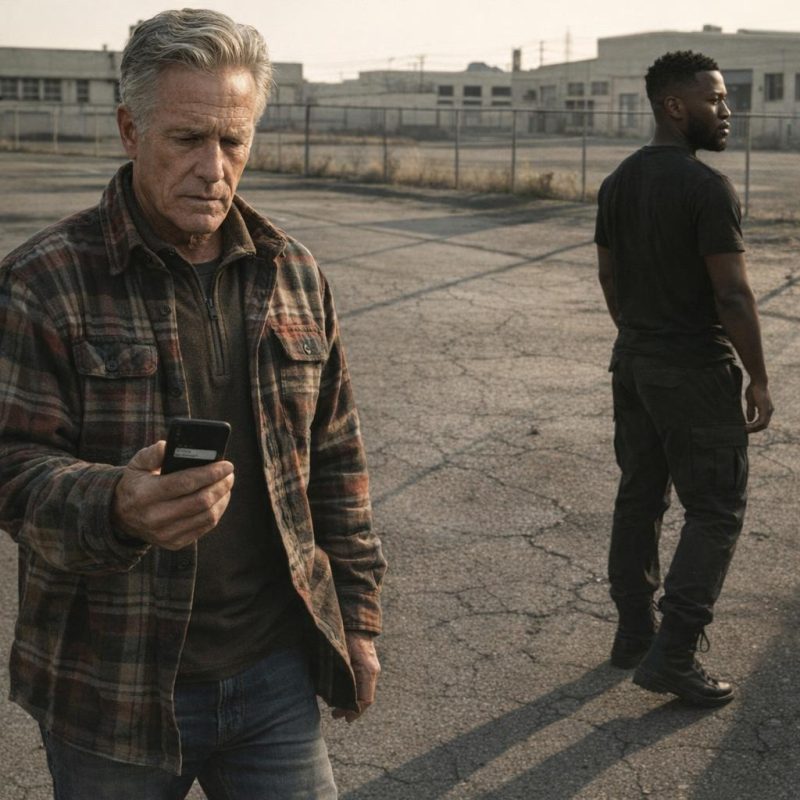 Image by RM AI
The Ambush
We walked between two long abandoned buildings, gravel and broken glass under our feet, the whole place dead quiet. Then the floodlights hit us — four, five, six of them blazing on from every angle at once, turning the dark into something close to noon. Mills's voice came over a loudspeaker, sharp and clear, ordering us to freeze and get on the ground. Marcus didn't freeze. His hand went to his jacket and I dropped — just threw myself flat onto the gravel without thinking, face down, arms out. I heard him fire twice before I'd even stopped sliding. Tactical officers came out of the shadows from three directions, shouting commands over each other, and Marcus took cover behind a concrete barrier to my left, still shooting. I crawled on my elbows toward a dumpster along the far wall, keeping my head down, the sound of gunfire cracking off the metal walls around me. Mills's voice cut through again — Jack, stay down, stay down. I pressed myself against the base of the dumpster and didn't move. The shooting went on for what felt like a long time. Then it didn't. The shouted commands faded into radio static and the industrial site went quiet around me, the floodlights still burning white and cold above the smoke.
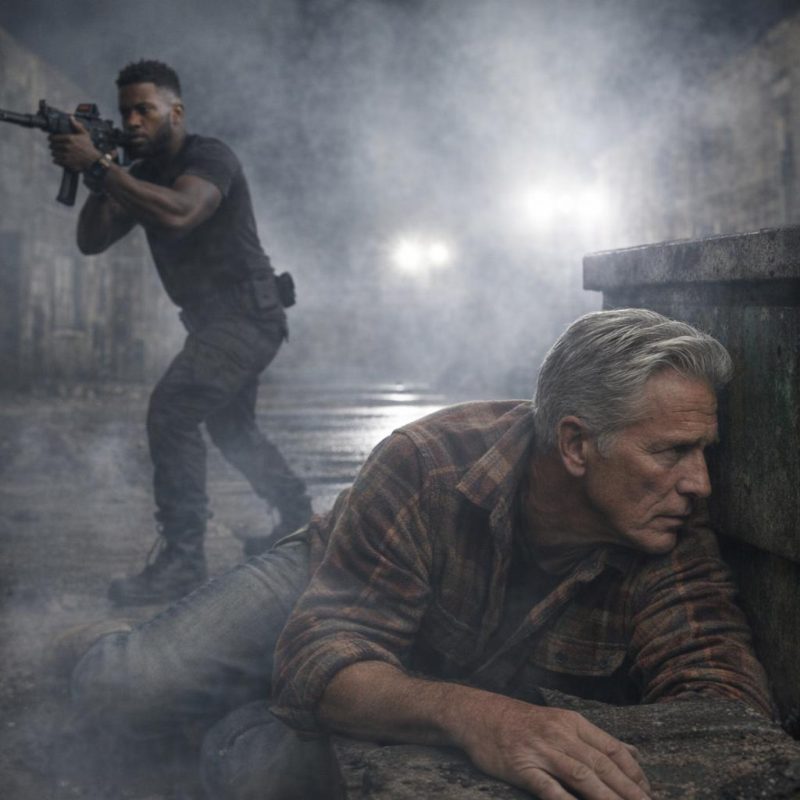 Image by RM AI
Marcus's Last Stand
I heard him before I saw him — boots on gravel, fast and deliberate, coming straight at my position. Marcus came around the side of the dumpster with his weapon up and I rolled hard to my left as two shots punched into the metal where I'd been. He was shouting that I'd betrayed Vincent, that I was a dead man, his voice raw and furious. I got my back against the far side of the dumpster and stayed low, no weapon, nothing to do but keep moving and hope the officers got there first. They did. I heard the commands converge on him from two directions, then three shots in quick succession, and then silence. When I came around the corner, Marcus was on the ground, two officers already on top of him securing his weapon. He was alive — breathing hard, bleeding from his shoulder and his side, but alive. Mills appeared from my left and put a hand on my arm and said it was over. I let her steer me away from the dumpster. My legs were shaking badly enough that I had to stop and put my hands on my knees. I'd been running on adrenaline since that bathroom at the gas station, and now it was gone. The weight of the last seventy-two hours settled onto me all at once, and I just stood there in the floodlights and breathed.
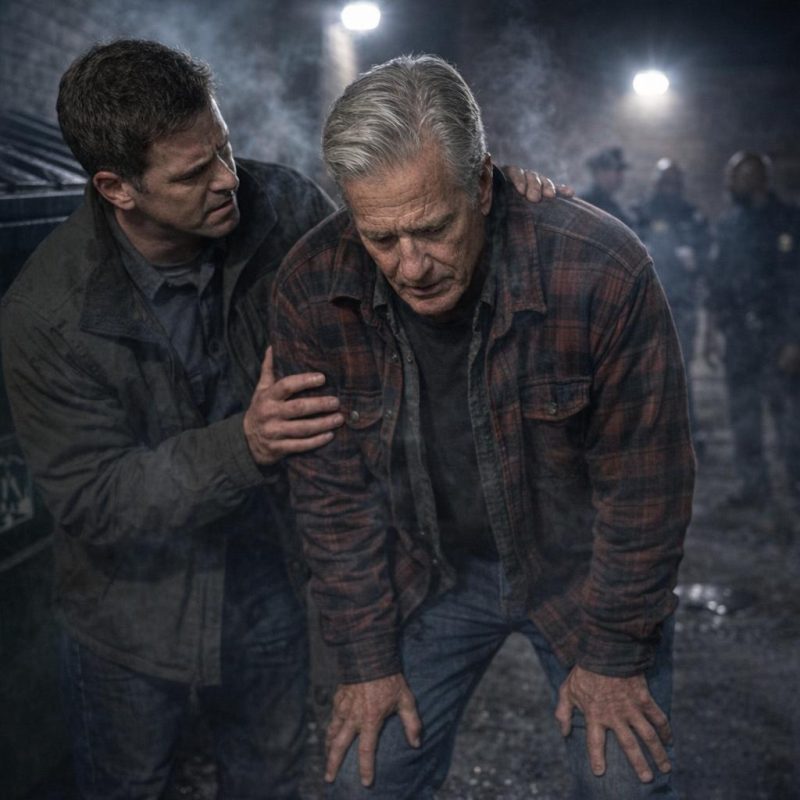 Image by RM AI
Dmitri Captured
Mills's radio crackled while I was still catching my breath. She stepped a few feet away, listened, said copy twice, and came back with something different in her expression — not relief exactly, but close to it. She told me her team had hit the warehouse at the same time we'd walked into the industrial site. Dmitri had been arrested without resistance. The full amount of recovered money was in police custody, along with Dmitri's tablet, which Mills said contained what sounded like years of financial records — transaction logs, account numbers, names. She said the ledger Barbara had found in the duffel bag was there too, bagged and tagged. I asked if Vincent had been at the warehouse. She shook her head. He'd left before the raid. I felt the ground shift a little under that news, but Mills kept talking — she said Dmitri was already cooperating, that he'd started providing information before they'd even finished processing him. She said between the tablet, the ledger, and Dmitri's cooperation, they had enough to build a case against the entire organization. I stood there in the cold air of that industrial lot, the floodlights still burning overhead, and let that settle. The money that had nearly gotten me killed was sitting in an evidence locker somewhere across town, and for the first time in days it felt like it might actually stay there.
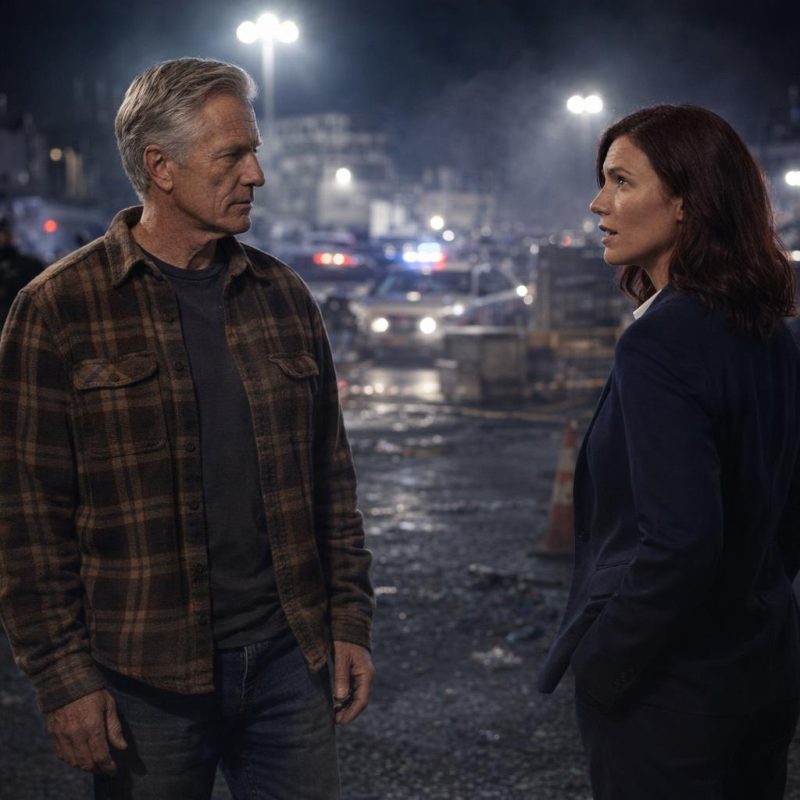 Image by RM AI
Vincent Cornered
We were still at the industrial site when Mills's radio went again. She listened for about thirty seconds, then looked at me with an expression I hadn't seen on her face before — something quiet and final. She said Vincent had been located at a private airfield on the north edge of the city. He'd been trying to board a chartered plane. Federal agents had intercepted him on the tarmac before takeoff. She pulled out her phone and turned the screen toward me. The footage was grainy and shot from a distance, but it was clear enough — Vincent in a dark overcoat, silver hair, hands cuffed behind him, being walked toward an unmarked car by two agents in tactical vests. His face was expressionless. No argument, no struggle, just that same cold composure he'd had in the warehouse, except now there were handcuffs on his wrists and nowhere left to go. Mills said he'd face charges for multiple murders and racketeering, that the federal case alone would likely mean the rest of his life behind bars. I watched the footage loop once more on her screen. Three years I'd carried that man's money without knowing what it was, and now he was being loaded into the back of a government vehicle. Mills said I'd need to testify.
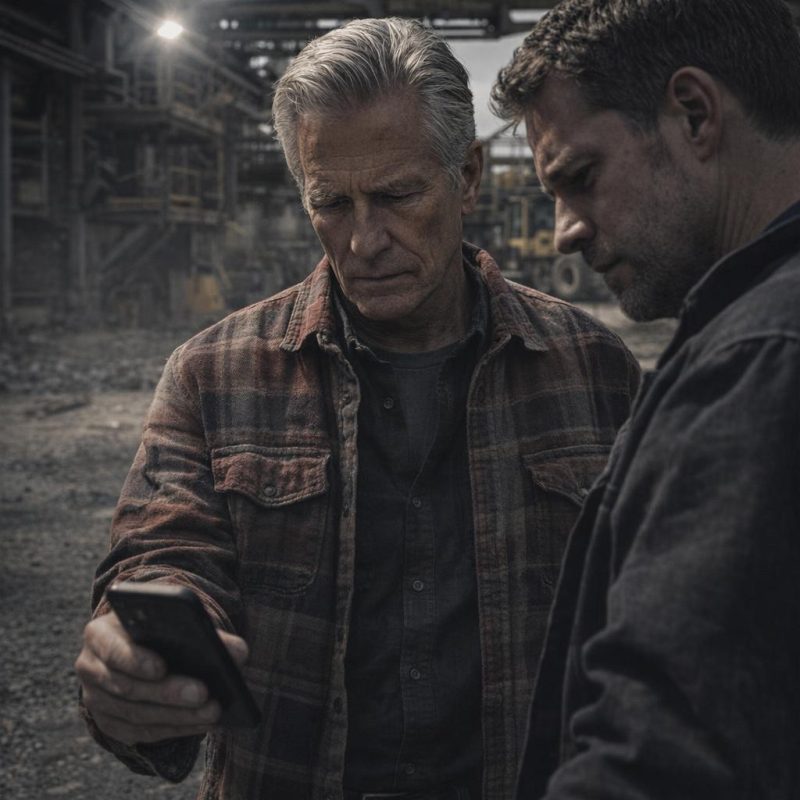 Image by RM AI
Jack's Testimony
They took me to a federal building downtown — a conference room with fluorescent lights and a table that had seen better decades. Mills sat across from me with two federal prosecutors, a recorder running between us. I talked for almost four hours. I started at the beginning — how the arrangement with Vincent had come about three years ago, how it had been presented to me, the escrow structure, the cash transfers, the complete absence of paperwork on my end. I described finding the safe empty and Barbara's note. I walked them through the seventy-two-hour deadline, the pattern of disappeared intermediaries I'd found online, the GPS tracker in the duffel bag, the ledger. I described the warehouse meeting in detail — Vincent, Dmitri, the recovered money on the table, what Vincent had said about consequences. I told them about Marcus and what his job had been. The prosecutors asked questions I hadn't expected and some I had. They asked about specific dates, specific amounts, specific names. I gave them everything I had. By the time I finished, my throat was dry and my hands felt heavy in my lap. Mills thanked me and said my cooperation had been exemplary. One of the prosecutors leaned forward and said my testimony was crucial to the case. I pushed back from the table and the recorder clicked off.
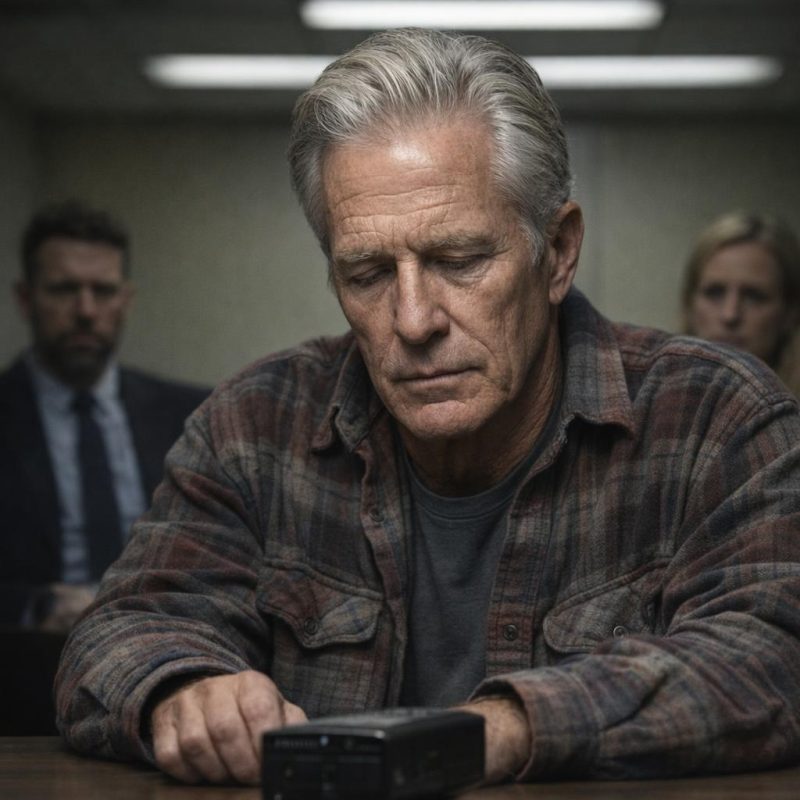 Image by RM AI
The Syndicate Dismantled
Two days later Mills came to find me at Thomas's place, where I'd been sleeping on a cot in the back room since the industrial site. She sat down at the workbench and laid out what had happened since my testimony. Dmitri had given up names, addresses, and operational details across three states. Twelve additional syndicate members had been arrested. Federal agents had seized over fifteen million dollars in assets — accounts, properties, vehicles. Mills said the organization had been effectively dismantled, that the arrests had happened fast enough that nobody had time to run. She said Vincent would likely face life in prison once the federal charges were fully filed. Then she asked me, quietly, whether I felt safe going back to my normal life. I told her I didn't know what normal looked like anymore. I meant it. The hardware store was still there. Thomas was still there. But the version of me who'd walked into that store every morning without a second thought felt like someone I'd read about. Mills nodded like she'd heard that before. She reached into her jacket pocket and set a plain white card on the workbench in front of me — a name, a number, and the words Witness Protection Program printed in small clean type.
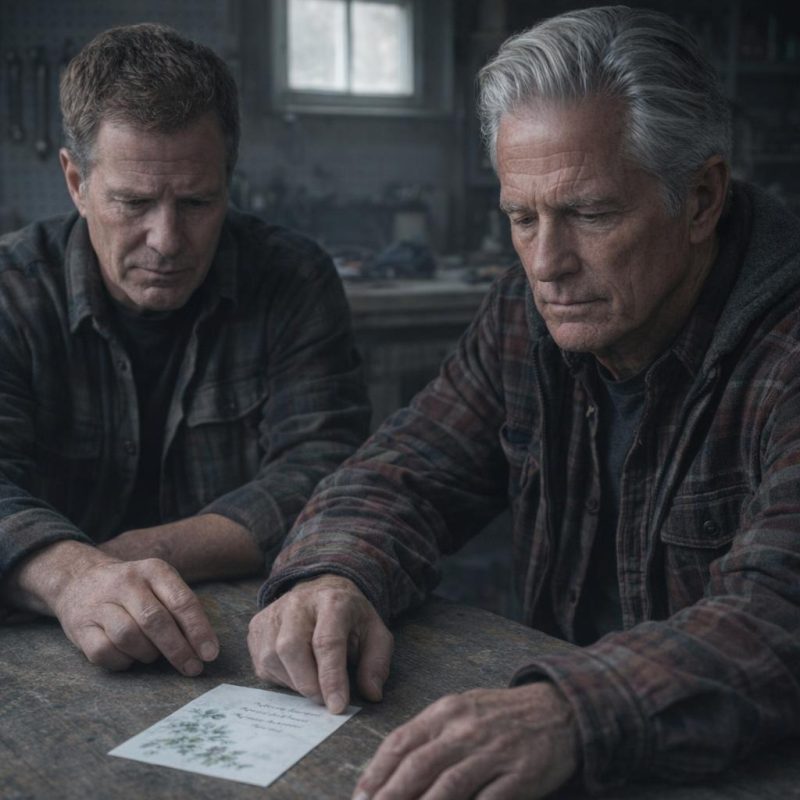 Image by RM AI
Cooperation and Consequences
Mills came by Thomas's place one last time the morning before the preliminary trial hearings began. She sat across from me at the same workbench and went through it methodically — all known syndicate members in custody, Vincent awaiting federal charges that would almost certainly mean life, Dmitri's cooperation locking the case shut from the inside. She said my testimony would be the cornerstone of the prosecution. I asked her straight out whether anyone was still looking for me. She said the organization was broken and leaderless, that there was nobody left with both the motive and the means to come after me. Then I asked about the recovered money — the fifteen million, the seized accounts. She told me it would be held as evidence and eventually forfeited to the government. Every dollar. I sat with that for a moment. I'd gone into this with nothing and I was coming out with nothing, except my life. Mills reminded me that witness protection was still on the table. I told her I was staying. My town, my store, my name. She nodded and said to stay vigilant anyway. I told her I would. She stood, shook my hand once, and walked out. The white card she'd left on the workbench two days ago was still sitting there, face-down where I'd left it.
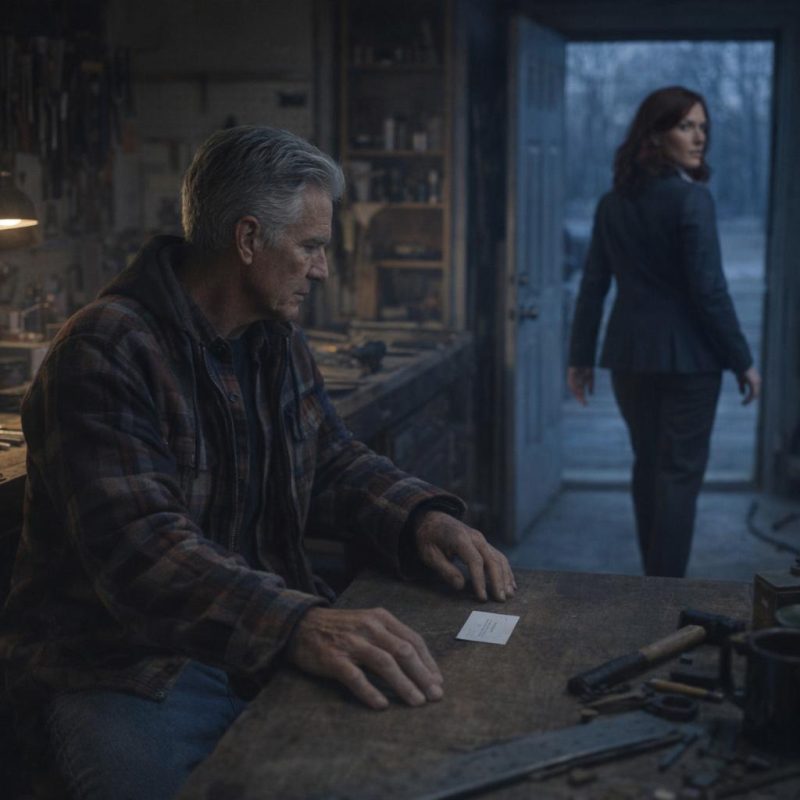 Image by RM AI
Family Arrested
Mills called me on a Tuesday morning to tell me they'd been picked up at the airport. Barbara and Susan had flown back from Europe and walked straight into a detention team waiting at the gate. Grand theft and conspiracy charges, both of them. She asked if I wanted to press charges independently. I told her the evidence spoke for itself. Mills arranged for me to see them before they were transferred. I didn't want to go, but I went anyway. The holding room smelled like industrial cleaner and old coffee. Barbara was sitting with her hands folded on the table, the affected grace completely gone. She looked old in a way I hadn't noticed before. Susan was crying before I even sat down, apologizing in fragments that didn't quite connect into sentences. I let her finish. Then I told them both something I hadn't planned to say — that their theft had accidentally saved my life. That if the money had still been in that safe when Vincent's people came looking, I'd have been the one who disappeared. Barbara stared at me. I watched the understanding move across her face slowly, like something heavy settling. I didn't tell them I forgave them. I couldn't. But I told them I understood the irony, and I meant it. The theft that was supposed to ruin me was the only reason I was standing there at all.
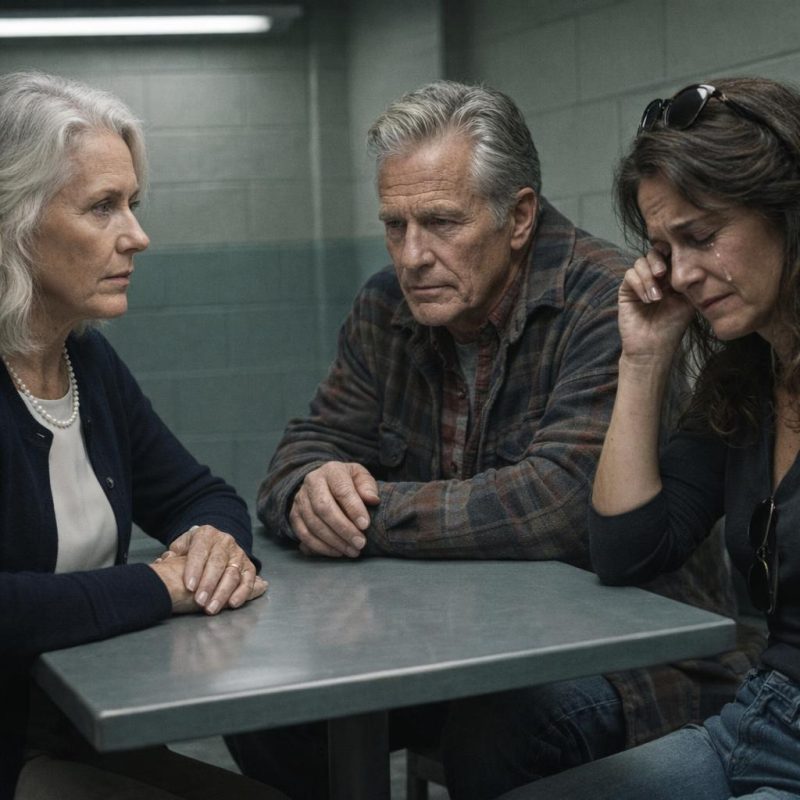 Image by RM AI
Bittersweet Justice
The sentencing hearing was on a grey Thursday in November. I sat in the gallery and watched the prosecutor lay out the evidence — the safe, the note, the wire transfers, the timeline. When they called me to testify I walked up and said what I knew. I described finding the safe empty. I described the note in Barbara's handwriting. I confirmed the amount and what it had cost me. I didn't mention Vincent. I didn't mention the syndicate. That wasn't what this hearing was about, and the prosecutor hadn't asked. Barbara and Susan had both entered guilty pleas to avoid a longer trial. The judge sentenced Barbara to five years. Susan received three, reduced for her cooperation with investigators. I watched from the gallery as the bailiff moved toward them. Barbara turned and looked back at me before they led her out. Just once. Her face was composed in that careful way she'd always managed in public, but her eyes were different — smaller somehow, like something behind them had gone quiet. I didn't look away. I didn't nod. I just let her look. When the door closed behind them, I sat in the empty gallery for a long time, and the silence in that courtroom settled around me like dust.
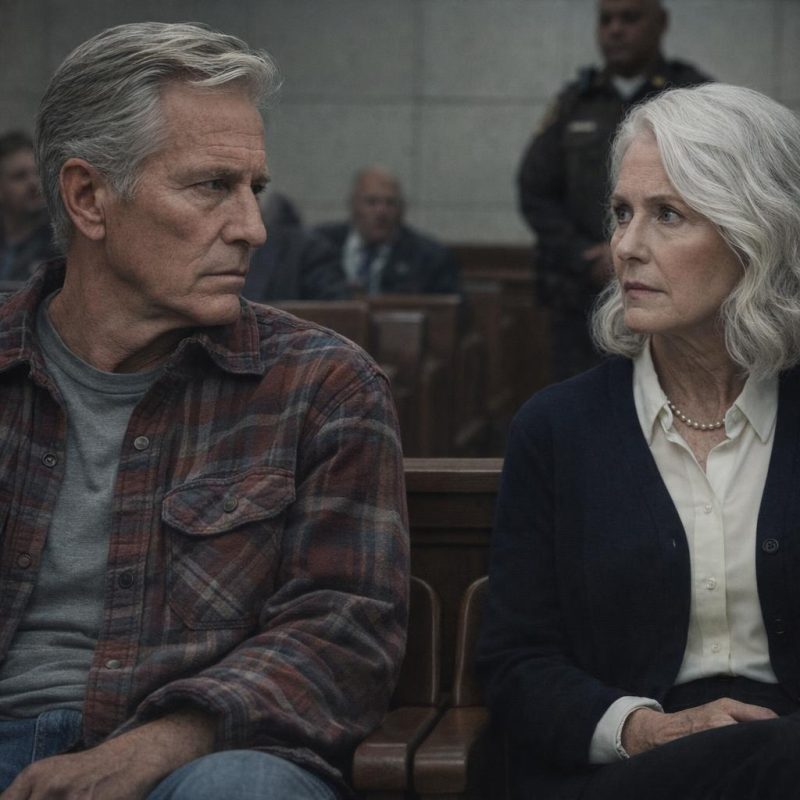 Image by RM AI
Simple Life Restored
Three months after the trial I unlocked the hardware store for the first time since everything had started. Thomas had kept it running — restocked the shelves, handled the accounts, turned the sign to open every morning like nothing had happened. I found him in the back doing inventory and I shook his hand and held it longer than I normally would. He asked if I was really okay. I told him I was alive, and that was enough. He seemed to understand that was the most honest answer I had. The first week back was slow. A few regulars came in, nodded, didn't ask questions. I stocked shelves and helped people find what they needed and locked up at night. The rhythm came back faster than I expected. I was living alone in the house now. The floor safe was still there, set into the concrete under the kitchen rug. I'd thought about filling it with cement, but I hadn't. I just left it empty and open. Some nights I'd walk past it and not even look down. The money was gone, the family was gone, and the version of my life I'd built over thirty years had been stripped down to the studs. But I was here. I knew how to work. I knew how to open a store in the morning and close it at night. The door to the hardware store swung open on a Tuesday and the bell above it rang, and I looked up from the counter and said good morning.
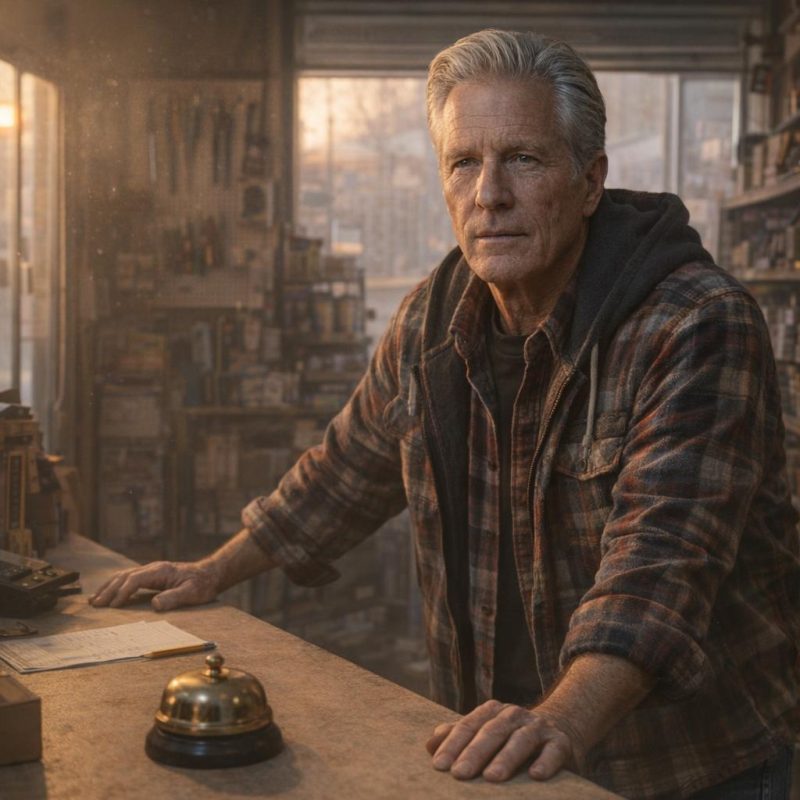 Image by RM AI
KEEP ON READING
The story of Ching Shih, the Woman Who Became the…
Unknown author on WikimediaFew figures in history are as feared…
By Emilie Richardson-Dupuis Dec 29, 2025
Einstein's Violin Just Sold At An Auction—And It Earned More…
A Visionary's Violin. Wanda von Debschitz-Kunowski on WikimediaWhen you hear…
By Ashley Bast Nov 3, 2025
This Infamous Ancient Greek Burned Down An Ancient Wonder Just…
History remembers kings and conquerors, but sometimes, it also remembers…
By David Davidovic Nov 12, 2025
The Mysterious "Sea People" Who Collapsed Civilization
3,200 years ago, Bronze Age civilization in the Mediterranean suddenly…
By Robbie Woods Mar 18, 2025
20 Greatest Ancient Athletes In History
Ancient Olympics. Long before modern stadiums and multimillion-dollar endorsements, athletes…
By Sara Springsteen May 1, 2026
20 Soldiers Who Defied Expectations
Changing the Rules of the Battlefield. You’ve probably heard plenty…
By Annie Byrd Feb 10, 2026