

I Found a Storage Key in My Husband's Pocket. What I Discovered Inside Made Me Lock Him Out of His Own Escape Plan
I Found a Storage Key in My Husband's Pocket. What I Discovered Inside Made Me Lock Him Out of His Own Escape Plan
The Key That Didn't Fit
I wasn't snooping—I want to be clear about that. I was being helpful, actually, reaching into Mark's charcoal suit jacket for the dry-cleaning receipt before I dropped it off on my way to meet a client about her Zen garden redesign. My fingers brushed past his wallet, a few business cards, and then closed around something cold and metallic that definitely wasn't paper. The key was industrial-looking, heavier than a house key, with a rubber grip and a small laminated tag dangling from a metal ring. I turned it over in my palm, squinting at the faded logo embossed on the side: Safe-Keep Storage. The tag had a number written in permanent marker—402. I stood there in our walk-in closet, surrounded by Mark's perfectly organized shirts and my own chaotic corner of scarves and gardening clogs, trying to figure out why my husband would need a storage unit. We had a four-bedroom house in the suburbs with a basement, an attic, and a two-car garage that was only half-full. I'd been the one pushing him to use the extra space better, to stop being so minimalist about everything. The laminated tag read 'Safe-Keep Storage, Unit 402,' and I had no idea why my husband would need to hide anything from our four-bedroom house.
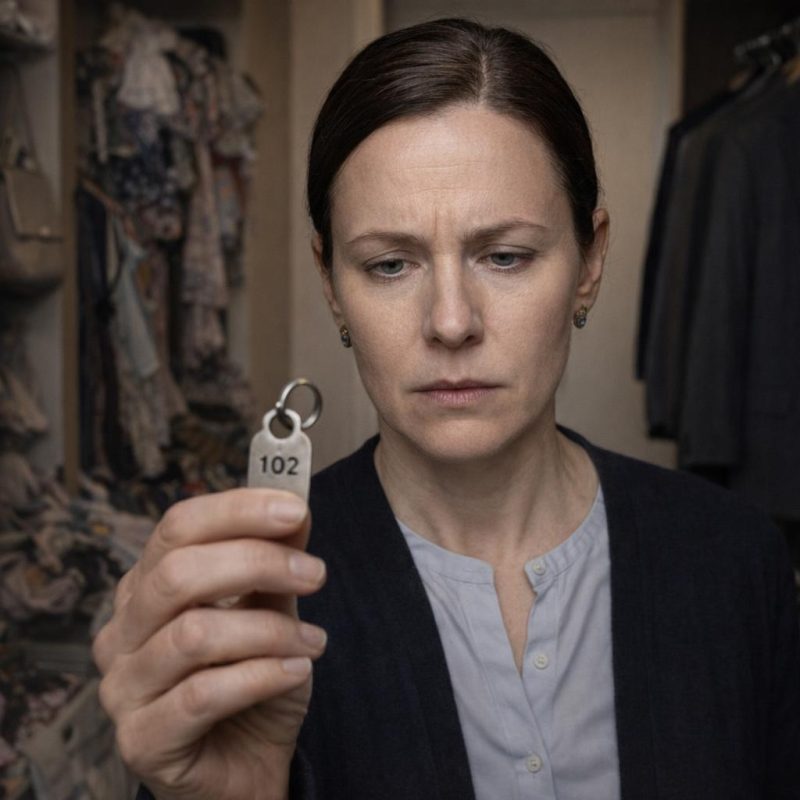 Image by RM AI
Access Granted
I canceled my eleven o'clock meeting with Mrs. Patterson, texting her some excuse about a family emergency that felt more true than I wanted to admit. The drive to Safe-Keep Storage took twenty minutes through light rain that matched my mood—uncertain, persistent, vaguely threatening. I gripped the steering wheel tighter than necessary, rehearsing what I'd say at the front desk. When I walked into the small office that smelled like coffee and industrial carpet cleaner, a young woman in a company polo looked up from her computer with a practiced smile. I held up the key like a permission slip and told her I'd forgotten the gate code—could she help me out? She glanced at my driver's license when I slid it across the counter, noted that my last name matched the one on the account, and wrote down four digits on a sticky note without any suspicion crossing her face. I thanked her, my voice steadier than my hands, and drove through the gate to the back corner of the facility where the numbers climbed into the four hundreds. Unit 402 was tucked away from the main drive, and I stood in front of the metal door for a full minute before I could make myself turn the key. When the metal door screeched open, I stepped into a concrete room filled with boxes labeled in Mark's precise handwriting—and every single one contained pieces of my life.
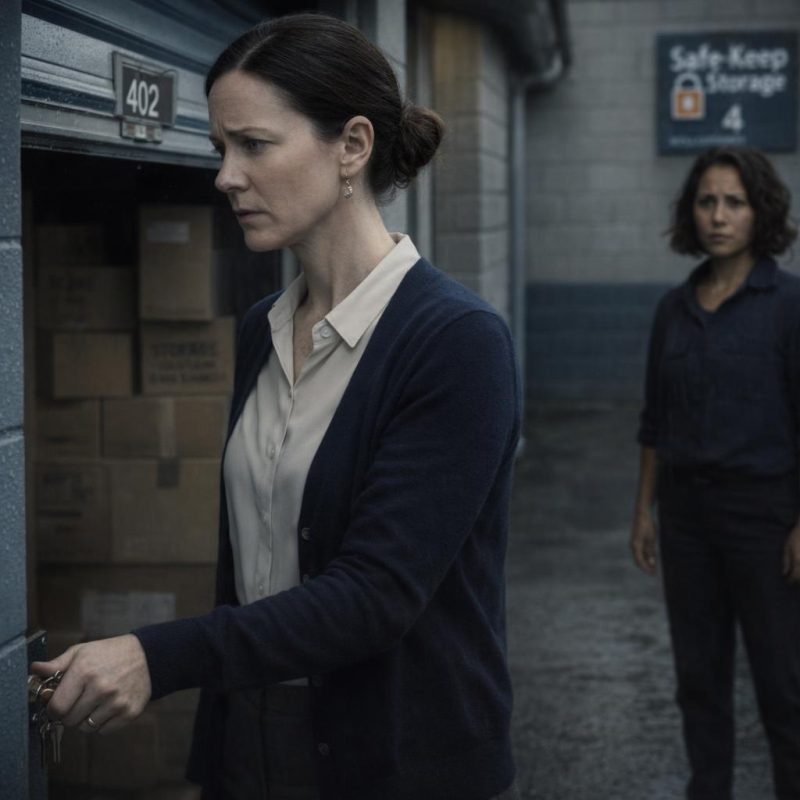 Image by RM AI
Inventory of Erasure
I recognized my winter coat first—the camel-colored one I'd been looking for since October, the one I'd accused the dry cleaner of losing. It was folded neatly in a clear plastic bin next to my collection of rare gardening books, the ones I'd inherited from my grandmother with her notes still penciled in the margins. I pulled out my college photo albums, my specialized drafting tools from my landscape architecture degree, the porcelain tea set that had belonged to my mother. Everything was carefully packed and labeled: 'Bedroom - Linens,' 'Office - Personal Files,' 'Kitchen - Claire's Cookware.' I sat down hard on one of the boxes, my legs suddenly unreliable, and tried to understand what I was seeing. These weren't random items Mark had decluttered. These were my things—my meaningful, personal, irreplaceable things—being systematically erased from our home. My hands started trembling and I couldn't catch my breath properly, that tight feeling in my chest like I'd forgotten how lungs worked. I spent three hours sitting there among the boxes, opening them one by one, cataloging my own disappearance. Tucked in a plastic bin beneath my college photo albums, I found a lease agreement for a luxury downtown apartment—signed only by Mark, with a move-in date three weeks away.
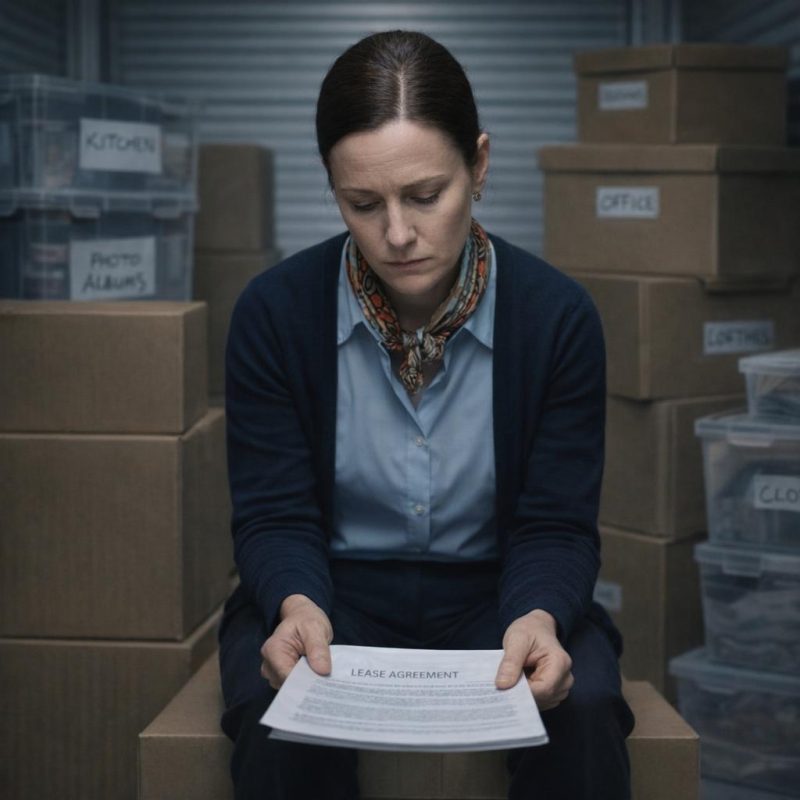 Image by RM AI
Changing the Locks
I photographed everything. Every box label, every item I could see without completely unpacking, every angle of that apartment lease with Mark's signature sprawled across the bottom like a confession. My hands had stopped shaking by then—something cold and precise had taken over, the same focus I used when designing complicated landscape projects with multiple moving parts. I drove straight to the hardware store and bought the most expensive padlock they sold, the kind with a reinforced shackle that the package promised was bolt-cutter resistant. Back at the storage unit, I replaced Mark's lock with mine and threw his original key into the drainage ditch behind the facility, watching it disappear into the dark water with a satisfaction that scared me a little. Then I sat in my car in the parking lot and googled divorce attorneys on my phone, my thumb hovering over names and star ratings like I was choosing a restaurant instead of dismantling my marriage. Jennifer Hastings had a five-star rating and a profile photo that radiated competent, seen-it-all wisdom. She answered on the second ring and agreed to see me that afternoon. When I got home with my new lock and photographed evidence, I realized I needed more than anger—I needed Jennifer Hastings, the divorce attorney whose card I'd once dismissed as unnecessary.
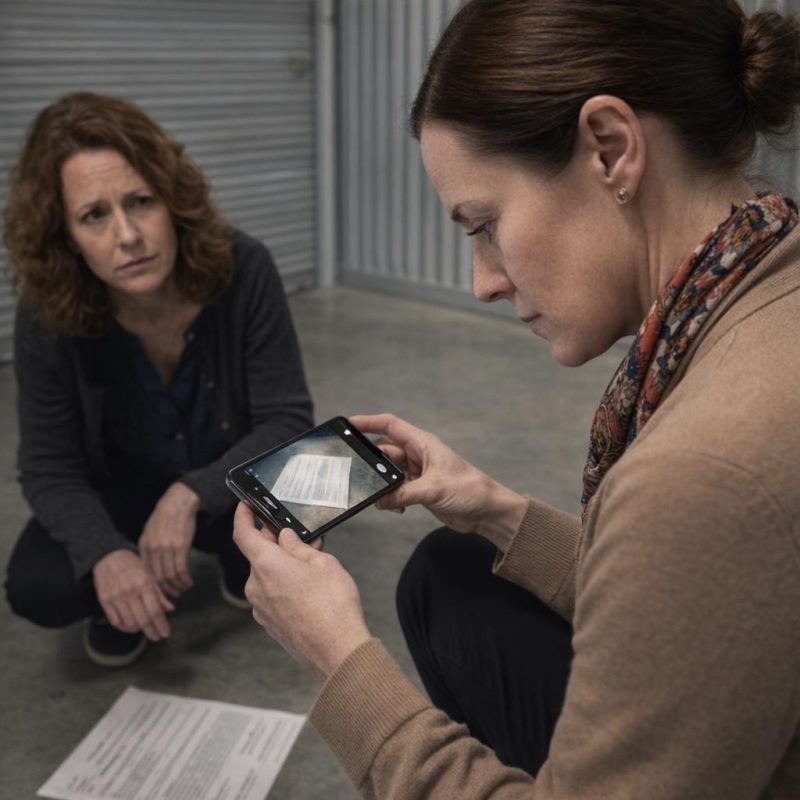 Image by RM AI
The Polished Performance
I made coffee at five-thirty and waited, sitting at our kitchen island with my phone face-down beside me and my new padlock key in my pocket. Mark walked through the door at exactly six PM like he always did, his briefcase in one hand and his jacket slung over his arm, asking me how my day was in that pleasant, distracted tone he used when he was already thinking about checking his email. I told him I'd spent the afternoon at Safe-Keep Storage, Unit 402. The color drained from his face so fast I thought he might actually pass out. His briefcase hit the hardwood floor with a sound that echoed through our open-concept first floor, and he just stood there staring at me like I'd announced I could fly. He started stammering something about downsizing, about wanting to surprise me with renovations, about how I wasn't supposed to find out this way. I pulled the new padlock key from my pocket and set it on the counter between us, and his eyes went wide when he understood what I'd done. From upstairs, Sophie called down asking if everything was okay, her eleven-year-old voice cutting through the tension like a reminder of what was actually at stake. His briefcase hit the hardwood floor with a sound like a gavel, and in the sudden silence, I heard Sophie's footsteps pause at the top of the stairs.
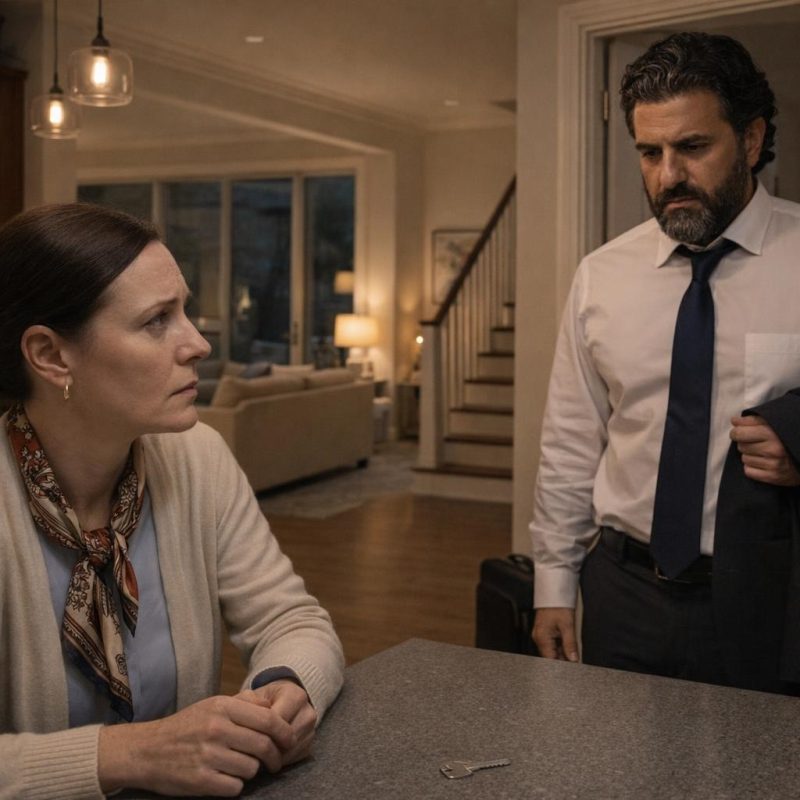 Image by RM AI
Sister as Witness
I waited until Mark retreated to his office—he'd mumbled something about work emails and disappeared like he always did when things got uncomfortable—before I slipped out to the back patio and called Lisa. My sister answered on the first ring, and I could hear her yoga class music in the background before she turned it down. I told her everything: the key, the storage unit, the boxes of my life packed away like I was already gone, the apartment lease with Mark's signature and a move-in date three weeks out. Lisa's reaction was immediate and loud—she called him words I won't repeat here, asked if I was safe, demanded to know if I'd called a lawyer yet. Hearing myself say the words 'storage unit full of my things' out loud made it real in a way that sitting among the boxes hadn't. My voice cracked when I described finding my mother's tea set, and Lisa went quiet for a moment before asking the question I'd been avoiding all day. Lisa asked the question I'd been avoiding: 'Is there someone else?'—and I realized I didn't know my own husband well enough to answer.
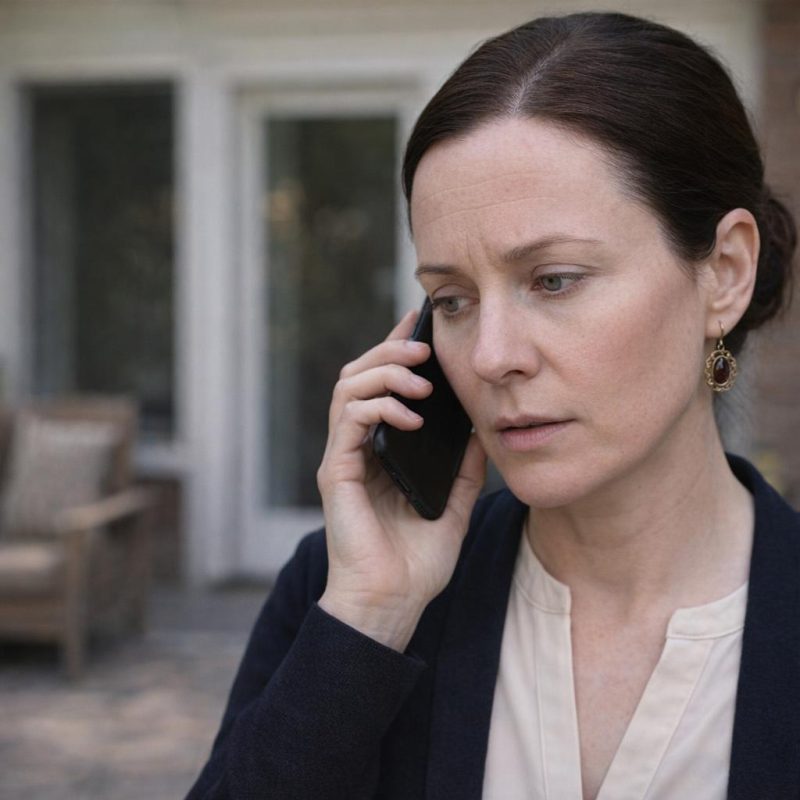 Image by RM AI
Renovation Lies
Mark tried again over breakfast the next morning, after Sophie left for school. He'd made his specialty—French press coffee and perfectly soft-scrambled eggs—like this was a normal Tuesday and not the morning after I'd discovered he was planning to leave me. He sat across from me at our kitchen table and explained, in his calm consultant voice, that the storage unit was meant to be a surprise. He'd been planning renovations, he said, major ones, and he wanted to protect my things during construction. He'd rented the apartment as a temporary place for us to stay, he said, somewhere downtown and convenient while contractors tore up our house. I let him talk, watching his face, noting every pause and every place his eyes shifted away from mine. When he finished his explanation, I pulled out my phone and showed him the photo of the lease agreement—the one with only his signature, the one that listed him as the sole occupant, the one with a twelve-month term that had nothing to do with temporary construction housing. His mouth opened and closed like he was trying out different lies before settling on silence. I pulled out my phone and showed him a photo of his signed lease agreement, and watched twelve years of practiced charm crumble into stammering silence.
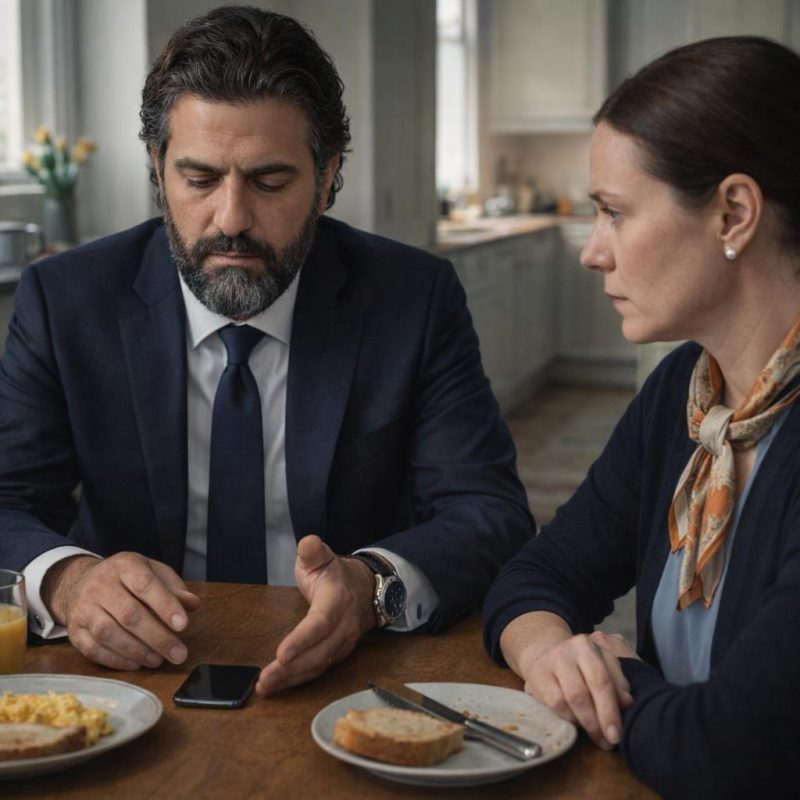 Image by RM AI
Book Club Sympathy
I almost didn't go to book club that Thursday—I'd barely slept in two days and the thought of making small talk about literary themes felt impossible. But Lisa had texted me that morning insisting I needed to maintain some normalcy, so I showed up at the coffee shop with my unread copy of the month's selection and a smile I didn't feel. Rachel Chen noticed immediately that something was wrong. She has this way of reading people, of seeing past the surface, and after the meeting ended she touched my arm and suggested we stay for another coffee. I found myself telling her more than I'd planned—about finding something that made me question my marriage, about feeling like I didn't know my own husband anymore. I kept the details vague, but Rachel nodded like she understood exactly what I meant. She told me she and David had gone through a rough patch years ago, that she knew how it felt when the person you trusted most suddenly seemed like a stranger. Her sympathy felt genuine and uncomplicated, and I was so grateful to have someone who didn't know Mark well enough to make excuses for him. She squeezed my hand and said she'd been through something similar with David, and I felt grateful to have someone who'd survived this kind of betrayal—someone who really understood.
 Image by RM AI
Follow the Money
I spread twelve months of bank statements across the dining room table like evidence at a crime scene, and that's exactly what it felt like—documenting the systematic dismantling of my life. I'd pulled everything from Mark's home office while he was at work: statements, receipts, credit card bills I'd never bothered to examine because I'd trusted him completely. What a joke that trust seemed now. I logged into our joint accounts and started printing, watching page after page roll out of the printer with transactions I'd never questioned. The cash withdrawals jumped out first—$500 here, $800 there, starting about eight months ago. I circled them in red pen, my hand shaking slightly. Then I found the furniture store charges at places I'd never heard of, restaurants in neighborhoods Mark claimed were too sketchy to visit. I photographed everything with my phone, building a digital trail to match the paper one. But it was the recurring payment that made my stomach drop—'Westside Property Management,' appearing like clockwork for the past six months. I pulled up rental listings for that area on my laptop, and the amount matched perfectly: luxury one-bedroom apartments in the trendy downtown district Mark always said was overpriced. He'd been paying for his escape route while kissing me goodnight, and the deposit had cleared two weeks before he started working late.
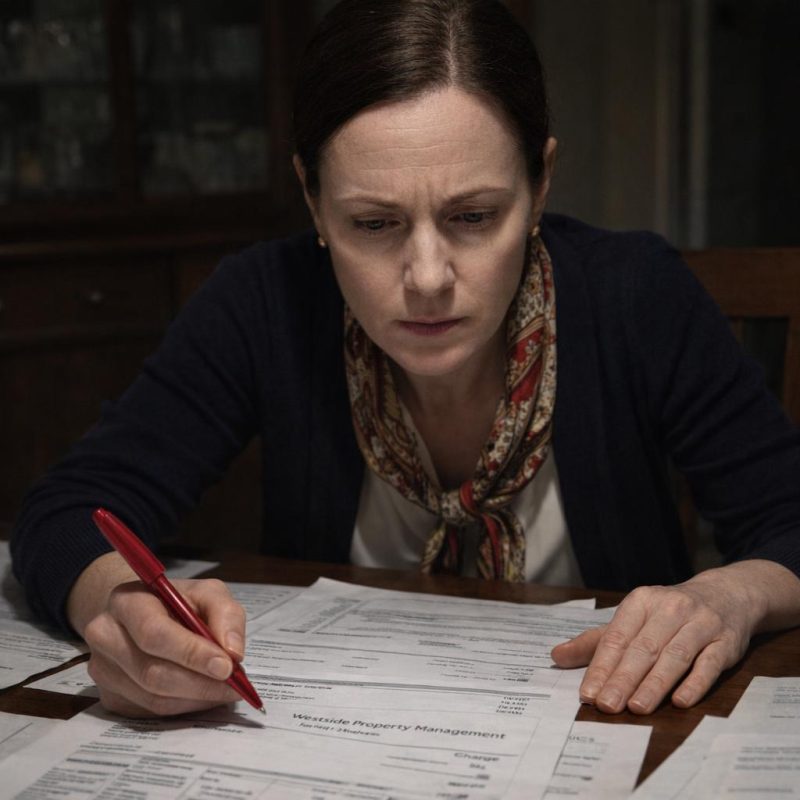 Image by RM AI
Professional Composure
I sat across from the Hendersons in my office, nodding as they described their vision for a meditation garden, and I had no idea if I was actually absorbing anything they said. My mind kept circling back to those bank statements, to the apartment I'd never seen, to six months of careful financial planning I'd been too trusting to notice. Mrs. Henderson was talking about creating a space for reflection and partnership—she kept using that word, partnership—and I had to dig my nails into my palm to keep my expression neutral. I forced myself to focus, sketching preliminary designs on autopilot while my professional training carried me through. They wanted river rocks and a water feature, something about the sound being calming. Sure. Calming. My phone buzzed on the desk between us, and I glanced down to see Mark's name. I ignored it, maintaining eye contact with my clients, but I could see the preview: 'Can we talk like adults tonight?' The consultation wrapped up with handshakes and promises to send revised plans by Friday. The moment they left, I looked at Mark's message again and felt something cold settle in my chest. He still thought charm would work, that he could smooth-talk his way back into control of the narrative, and that assumption told me everything about how little he actually knew me.
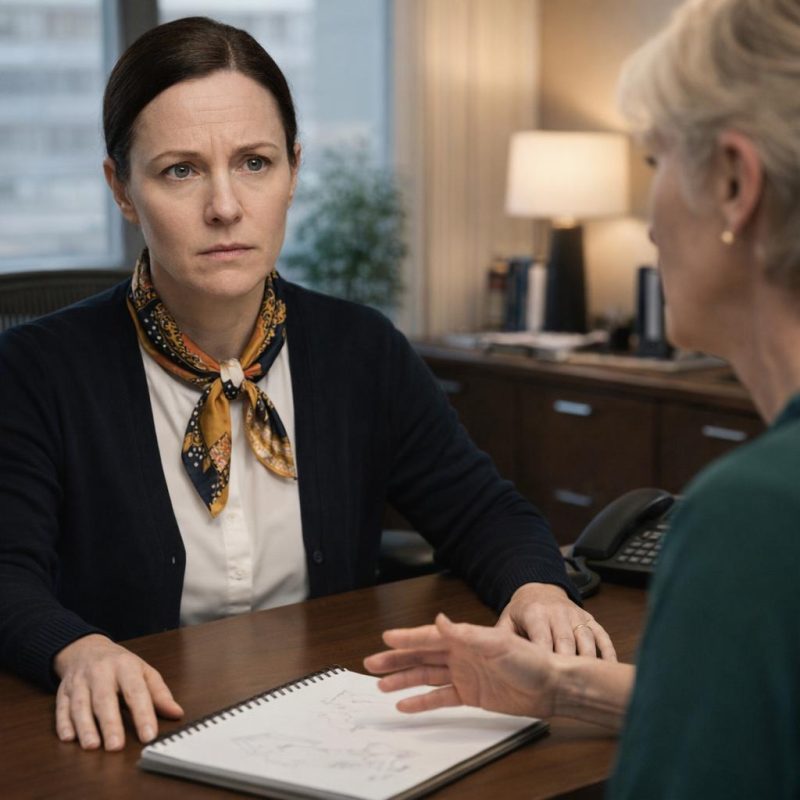 Image by RM AI
The Apartment on Paper
I returned to Unit 402 alone on a Wednesday afternoon, my new padlock key feeling heavy in my pocket. The fluorescent lights flickered on as I stepped inside, and this time I wasn't in shock—I was methodical. I pulled out the lease agreement and sat on one of the boxes, reading every line with the attention I should have given our joint accounts months ago. The signature date made my breath catch: six months prior, but with a delayed move-in clause for next week. Mark had secured this apartment while we were planning Sophie's birthday party, while he was telling me he loved me every morning. I found a furniture delivery confirmation tucked behind the lease—scheduled for five days from now. The address was in that trendy downtown district he'd always dismissed as too expensive, too pretentious for his taste. Apparently his taste had changed. I photographed everything, then noticed boxes labeled with dates like some kind of evacuation timeline: 'Week 1,' 'Week 2,' 'Final.' A calendar in one box showed the move broken into careful stages, each phase marked and planned. This wasn't a man having a crisis or making an impulsive decision. This was premeditation, and I'd been sleeping next to him the entire time he plotted it.
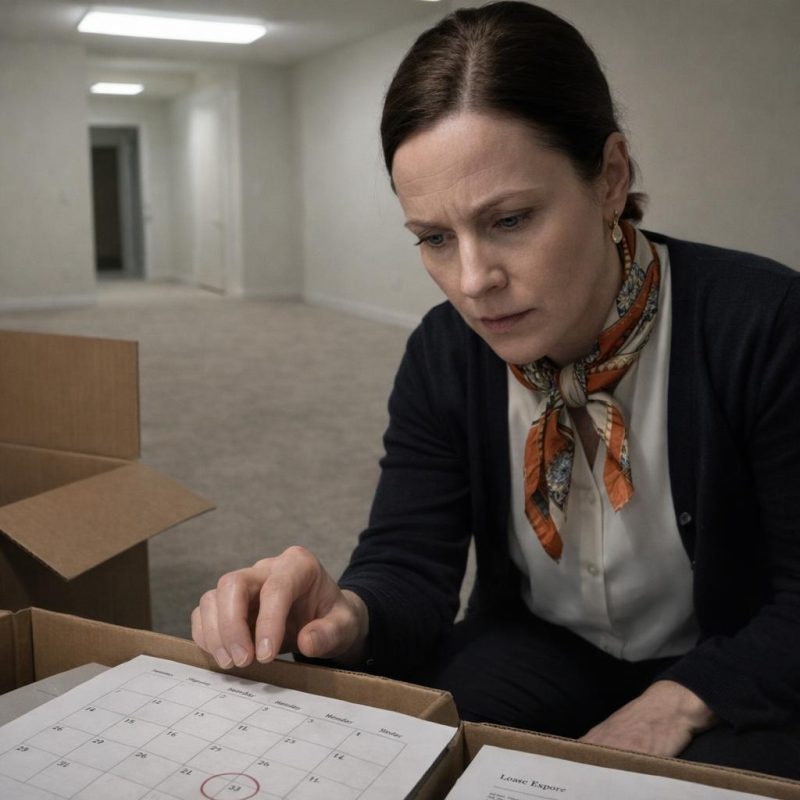 Image by RM AI
Daddy's Sadness
Sophie asked me at bedtime why Daddy seemed so sad lately, and I felt my heart crack a little as I smoothed her dark curls back from her forehead. We were in her room with the fairy lights casting soft shadows on the walls, and she was looking at me with those thoughtful eyes that saw too much for eleven years old. I told her that sometimes adults have complicated problems to work through, which felt both true and completely inadequate. She nodded slowly, then said she'd heard Daddy crying in his office last night, and I had to work hard to keep my expression neutral. Mark's carefully maintained facade was cracking in ways even our daughter could see, and my protective anger flared hot in my chest. Sophie asked if we were getting divorced—a girl at school's parents just split up—and I promised her I'd always be honest in ways she could understand. I told her Mommy and Daddy needed to figure some things out first, which was the most truth I could offer without burdening her with adult betrayals. She made me promise I'd be okay, and I held her until her breathing evened out into sleep. Lying there in the glow of her fairy lights, I realized Mark's pain didn't move me anymore—only hers did.
 Image by RM AI
Freezing Assets
Jennifer Hastings looked up from the evidence I'd spread across her desk and said we needed to freeze the joint accounts immediately. I watched her take notes on a legal pad, her silver hair catching the afternoon light through her office windows, and felt grateful for her no-nonsense competence. She reviewed everything with the practiced eye of someone who'd seen this exact scenario play out dozens of times: the bank statements, the lease agreement, the photographs from the storage unit. She explained that I had every legal right to protect marital assets, and we discussed custody arrangements with Sophie's wellbeing as the absolute priority. Jennifer asked detailed questions about Mark's behavior, his work schedule, his recent stress levels. Then she paused, tapping her pen against the legal pad. She said that Mark's level of planning was unusual—most separations were messier, more emotional, less calculated. Men who plan exits this carefully, she told me, usually have something bigger to hide than just wanting to leave. Maybe financial trouble at work, maybe hidden assets, maybe debts I didn't know about. Had I checked for accounts in his name only? I admitted I'd only scratched the surface, and Jennifer made a note. She'd prepare initial separation paperwork, but she advised gathering more information first, because something about this whole situation didn't add up.
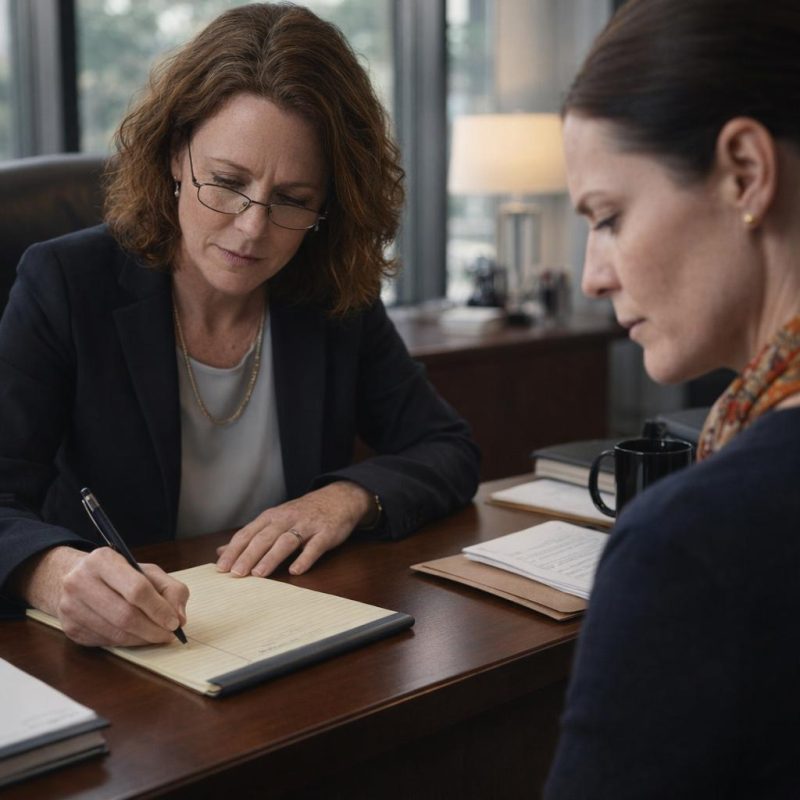 Image by RM AI
Forced Family Dinner
Mark cooked Sophie's favorite carbonara on Thursday night, and I recognized the manipulation immediately but played along for our daughter's sake. He'd set the table with actual cloth napkins, poured wine for us and sparkling cider for Sophie, and was performing the role of attentive father and husband like he was auditioning for a part. Sophie chatted about her art project, filling the awkward silences with eleven-year-old enthusiasm, and I watched Mark ask her questions and smile at her answers while revulsion churned in my stomach. He was so good at this—the performance, the charm, the illusion of normalcy. We made it through dinner with Sophie visibly relieved by the attempt at family togetherness, and she excused herself early to finish homework. The moment her bedroom door clicked shut, Mark's polished demeanor cracked like cheap paint. He asked what it would take for me to give him back the storage unit key, and I almost laughed at the transactional phrasing. I told him I wanted honest answers, knowing he was incapable of providing them. He tried to negotiate, talking about being reasonable and thinking of Sophie, and I realized with cold clarity that he was more worried about accessing his carefully packed belongings than about the pain he'd caused me.
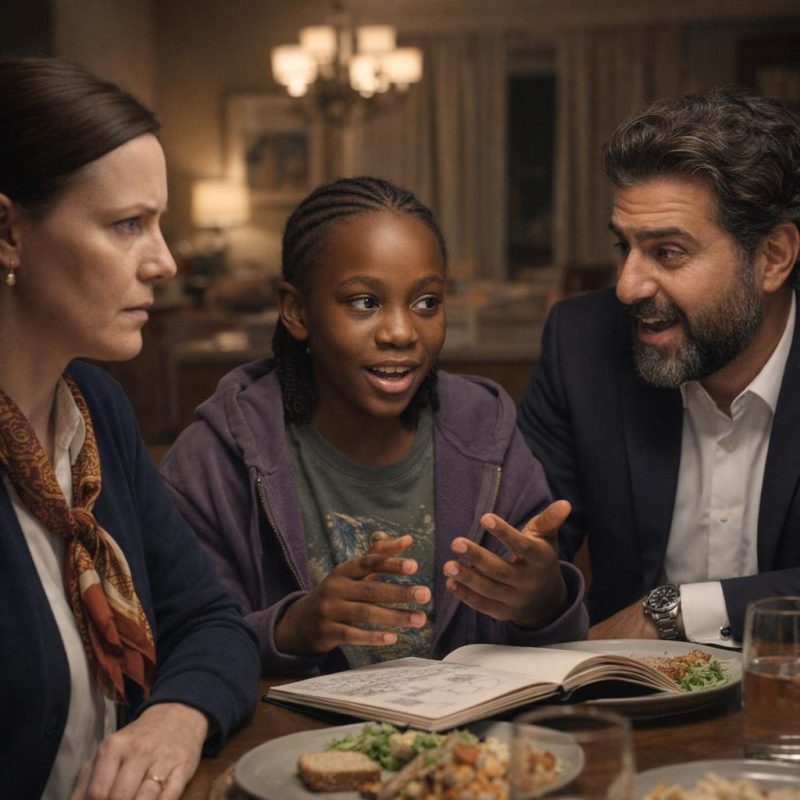 Image by RM AI
Secretive Calls
I started counting how many conversations Mark didn't want me to hear, and by Friday evening I'd tallied seven phone calls that sent him stepping onto the back patio or into his office with the door closed. He claimed they were work calls about the firm's upcoming audit, but the frequency felt wrong—three or four calls every evening, sometimes more. I began tracking the pattern, noting when his phone rang and how quickly he moved to take the call somewhere private. One evening we were in the living room, the tension between us thick enough to choke on, when his phone buzzed. He glanced at the screen and immediately headed for the back door, and I watched through the window as he paced in the darkness of our yard. His posture changed out there—less rigid, more animated, like whoever was on the other end of that call could make him relax in ways I no longer could. When he turned and his face caught the glow of the phone screen, he was smiling. Actually smiling, this genuine expression I hadn't seen directed at me in months. I felt physically ill watching him smile while our marriage crumbled around us, while Sophie asked me at bedtime if we were getting divorced. I wondered who could possibly make him smile like that when his carefully planned life was falling apart.
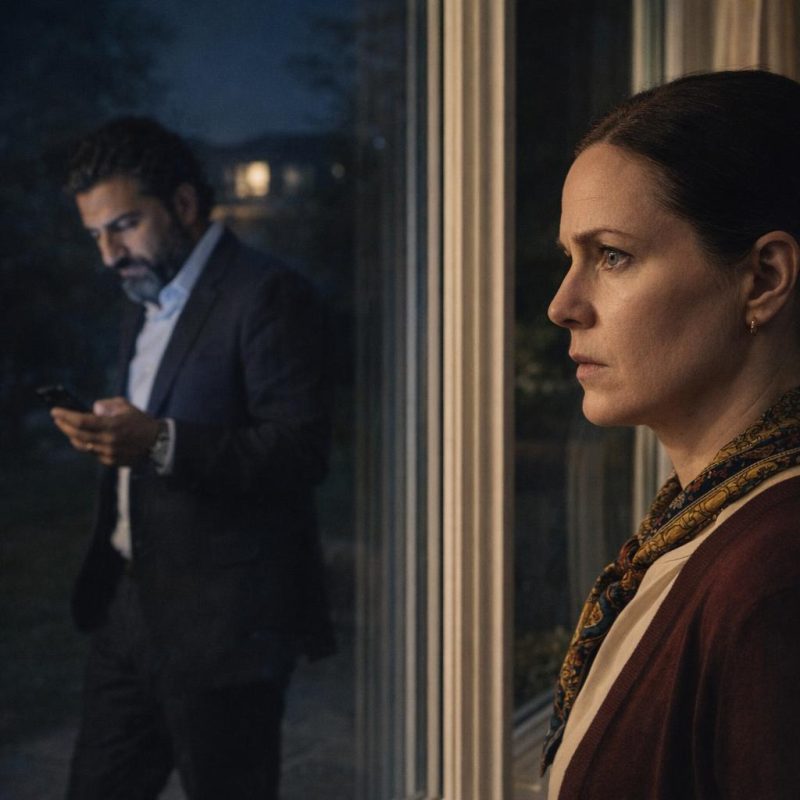 Image by RM AI
Rachel's Wisdom
Rachel met me for coffee at a quiet place across town on Saturday morning, and I felt grateful to have someone who understood what I was going through. She asked how I was holding up with such genuine concern in her eyes, and I found myself sharing more details than I'd planned—the apartment, the financial planning, Mark's secretive phone calls. Rachel listened carefully, then told me about a separation scare she and David had gone through years ago. She'd discovered secret credit cards and hidden spending, and initially thought affair, but it turned out David had gambling debts he was too ashamed to admit. The way she described it felt so familiar—the secrecy, the lies, the careful compartmentalization. She suggested that maybe Mark's behavior indicated addiction or some kind of financial crisis rather than another woman. Had I checked for hidden debts or other financial problems beyond the apartment? I admitted I'd been so focused on the storage unit and lease that I hadn't looked broader. Rachel said men often hid financial trouble out of shame, and maybe Mark was in over his head with something he couldn't face. She even offered to have David ask around at the firm, see if anyone had noticed Mark acting strange. I felt foolish for not considering that possibility—that Mark might have a gambling problem or addiction that would explain everything.
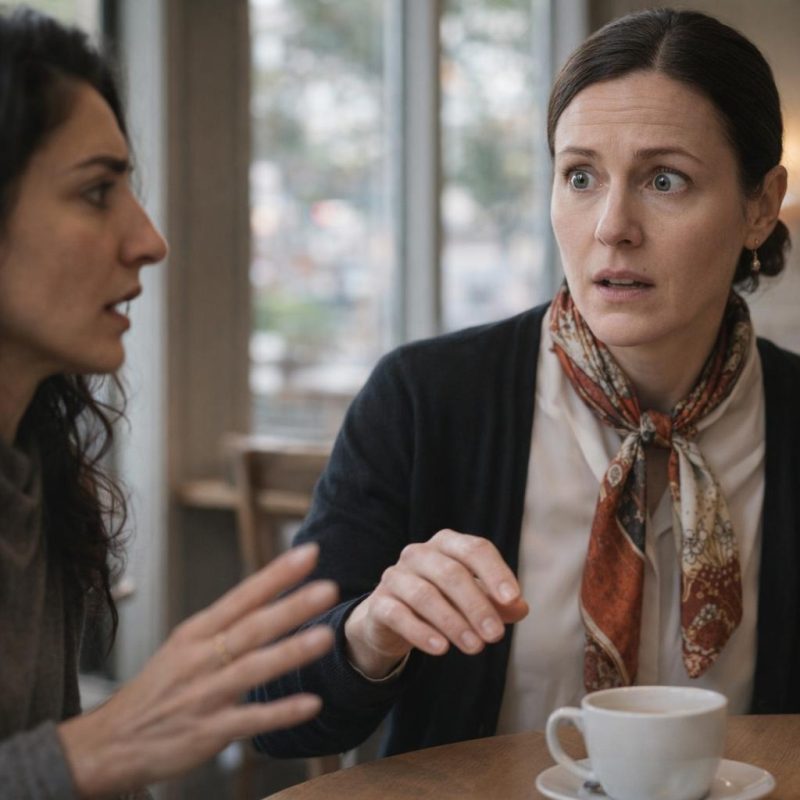 Image by RM AI
Pattern Recognition
I spent Sunday afternoon walking through our house with a spiral notebook, documenting every empty space where something used to be. The living room bookshelf had gaps I'd stopped noticing—three shelves that once held my father's first-edition collection, gone. In our bedroom, I opened the jewelry box on my dresser and stared at the velvet compartments, remembering when my grandmother's pearl necklace lived there, when her garnet ring sat in that corner. I couldn't pinpoint exactly when they'd disappeared, just that months had passed since I'd seen them. I pulled up the storage unit photos on my phone and zoomed in, confirming—there was the jewelry box, there were Dad's books, carefully packed and labeled. I kept walking, kept writing. The guest room closet where my college yearbooks used to be. The hall cabinet that once held my mother's china. I created a timeline based on when I last remembered seeing each item, and a pattern emerged that made my stomach turn. The oldest missing items were the most precious—heirlooms, irreplaceable things tied to people I'd lost. More recent disappearances were practical items, everyday objects I might not notice right away. I sat on the floor with my notebook and wondered if this pattern meant something, if Mark had deliberately targeted what would hurt most, or if I was seeing cruelty where there was only his warped logic about what I'd miss least.
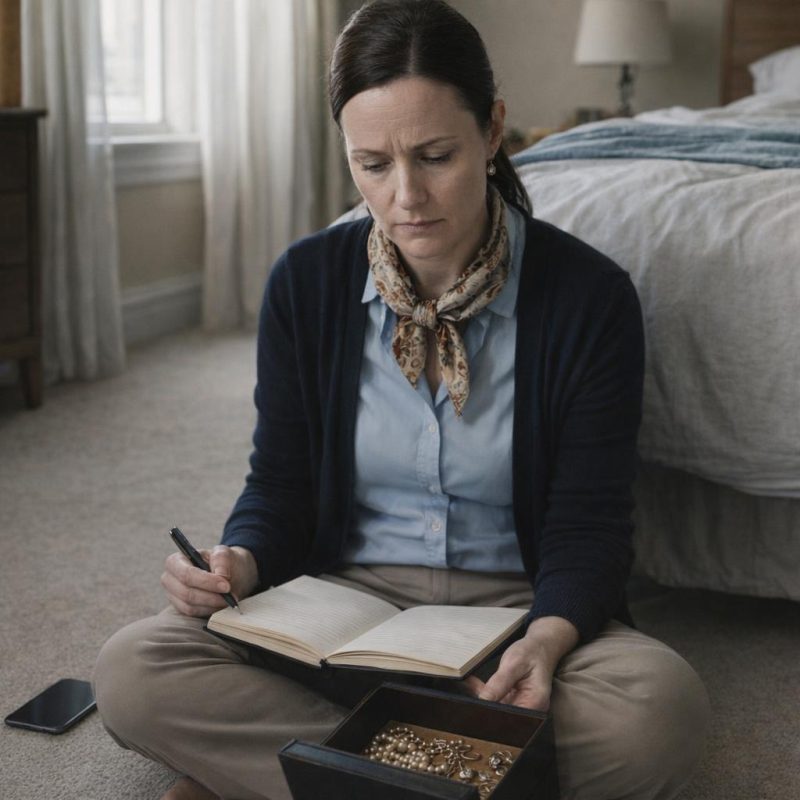 Image by RM AI
Meeting the Partner
Mark insisted I attend the firm's annual charity gala on Friday night, something about maintaining appearances and supporting the team. I went, wearing a dress I'd forgotten I owned, and let him guide me through the crowd of polished professionals and their spouses. That's when I met David Chen for the first time—Mark's business partner, the man he spent more waking hours with than me. David was smooth and charming in that practiced way successful people have, complimenting my landscape work and asking intelligent questions about native plant species. We made small talk about the firm's growth and the evening's fundraising goals. Then David mentioned casually that Mark had been distracted lately, probably the apartment stress, and he hoped everything worked out with the downtown situation. My wine glass froze halfway to my lips. I'd never told anyone at the firm about the apartment—I'd barely processed it myself. Mark's face went carefully blank beside me. David seemed to catch his slip, smoothly pivoting to ask about Sophie's school year, but the damage was done. I excused myself to the restroom and stood there gripping the marble counter, realizing Mark had confided in his business partner about the downtown apartment when I wasn't supposed to know it existed.
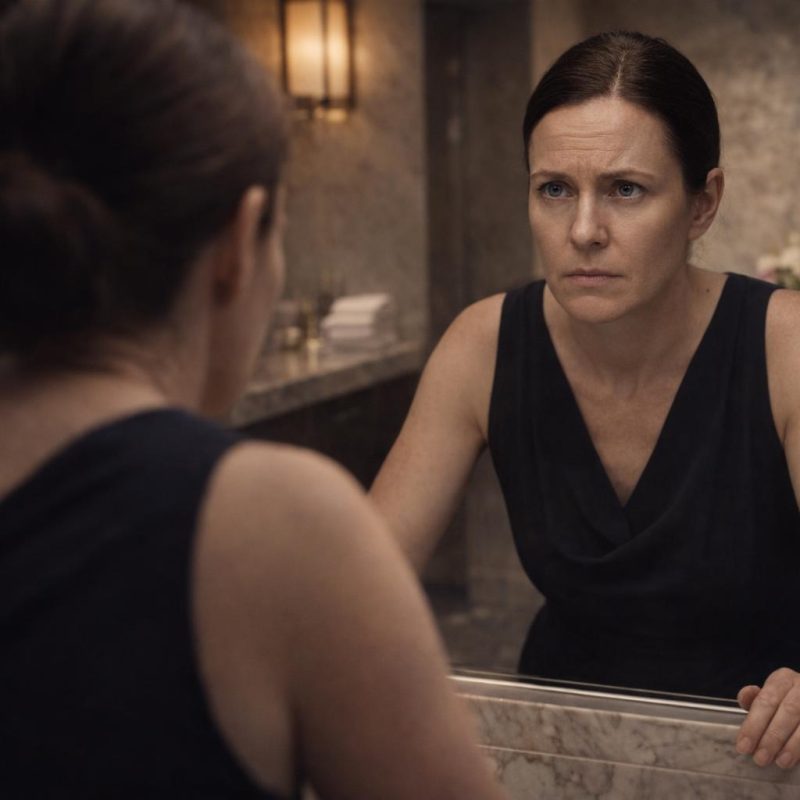 Image by RM AI
Negotiating Nothing
Mark cornered me in the kitchen Tuesday night after Sophie went to bed, his voice low and controlled. He wanted to negotiate for the storage unit key, said we could work this out like adults if I'd just be reasonable. He offered to explain everything, to sit down and talk through his thinking, if I'd give him access to his things. I leaned against the counter and listened with a detachment that felt like watching someone else's marriage dissolve. He suggested we could fix this, that we could rebuild trust if I'd just meet him halfway. I asked why he needed the apartment if we were working things out. He stumbled over his answer, something about having already signed the lease, about not wanting to lose the deposit. The lies were getting sloppier. I mentioned, almost casually, that I'd found his passport among the stored items. His face went pale. He couldn't leave the country without it, couldn't execute whatever exit plan he'd been building. I told him he could have everything back when he was ready to negotiate fairly, when he stopped treating me like an obstacle to manage. Mark stood there realizing I'd catalogued every single item in that unit, that I held complete control over his carefully constructed escape route.
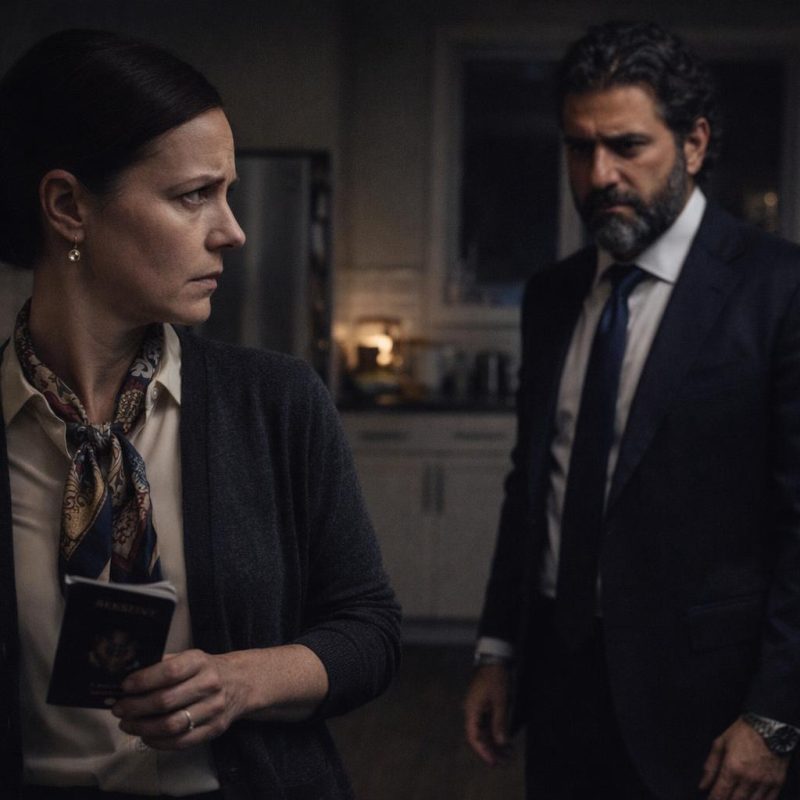 Image by RM AI
Separation Paperwork
Jennifer laid out the separation paperwork across her conference table on Wednesday afternoon, explaining what my life would look like divided into legal terms and custody schedules. She walked me through the difference between legal separation and divorce, the implications of each choice. We discussed custody arrangements—what would be best for Sophie, how to minimize disruption to her routine. Jennifer outlined asset division, how the house would be handled, what I could expect from Mark's income and retirement accounts. I reviewed the timeline of Mark's apartment lease against the legal process, seeing how he'd planned to leave before any formal proceedings could begin. Jennifer advised filing immediately to protect my rights and assets, to prevent Mark from hiding anything else. She asked if I wanted to inform Mark of the filing or surprise him with service. I thought about his careful planning, his methodical erasure of my presence. Jennifer asked if I was certain I wanted to proceed with divorce rather than separation, and I looked at the calendar showing Mark's intended move-out date two weeks away. He'd already made that choice for me. I signed the initial documents, authorizing Jennifer to begin the formal process, feeling focused and determined rather than sad.
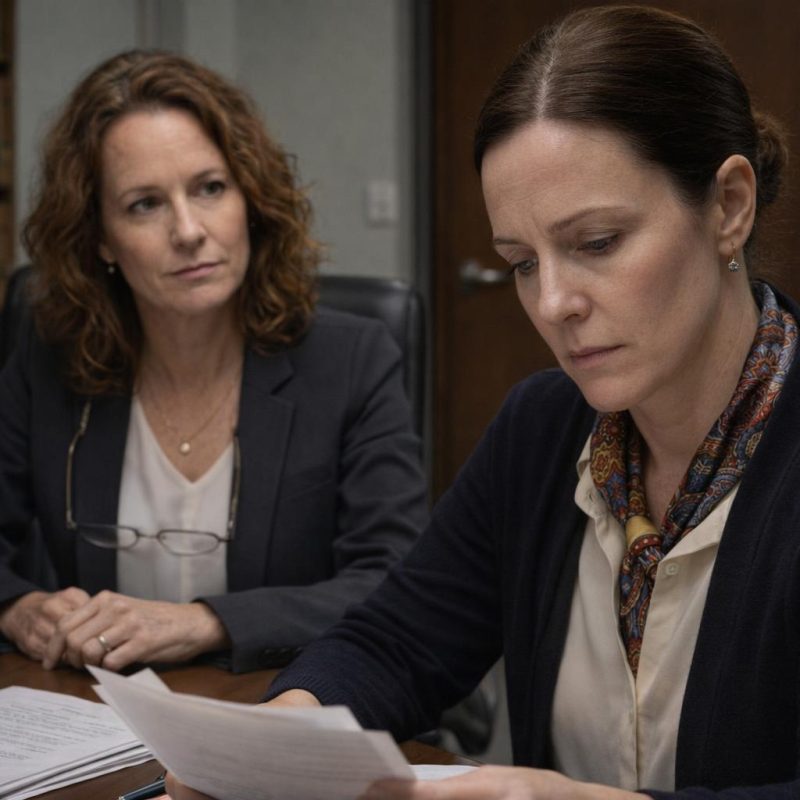 Image by RM AI
Teacher Conference
I picked up Sophie from school on Thursday like always, but Ms. Patterson asked to speak with me privately before we left. She led me to her classroom and showed me recent drawings Sophie had created during art time. Houses with noticeably empty rooms. Sparse bedrooms with a small figure standing alone. One drawing showed our house with gaps where furniture should be, windows like hollow eyes. Ms. Patterson said Sophie's artwork had shifted over the past few weeks—her typically cheerful drawings had gotten darker, more isolated. She asked gently if there were changes at home Sophie might be reacting to. I tried to explain vaguely that our family was going through some adjustments, that Mark and I were working through some issues. Ms. Patterson offered school counseling resources if needed, her voice kind but concerned. I thanked her and promised to talk with Sophie about expressing her feelings. Driving home, I gripped the steering wheel and felt the guilt wash over me. I'd been so focused on documenting Mark's betrayal, on building my case and protecting my interests, that I'd missed how deeply Sophie was processing the tension crackling through our house. I couldn't shield her from sensing that our family was unraveling, no matter how carefully I tried to maintain normal routines.
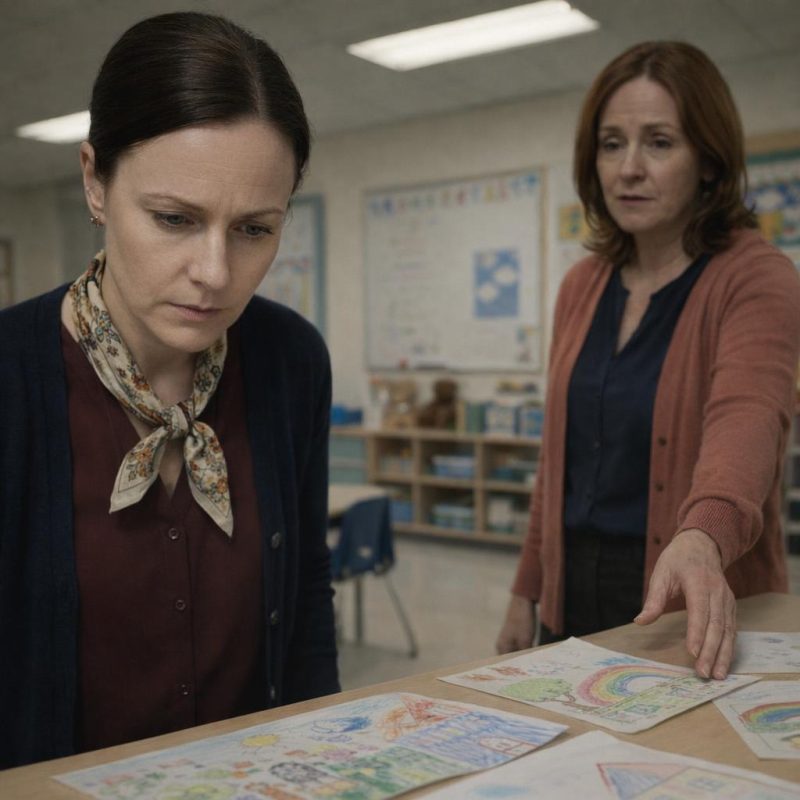 Image by RM AI
Financial Crimes Division
Detective James Morrison called my cell phone on Friday morning while I was deadheading roses in the front garden. He identified himself as working with the financial crimes division and asked if I had time to discuss some irregularities in my husband's financial dealings at the firm. My heart started racing as I set down my pruning shears. He said he was looking into some issues at Mark's company and wanted to have an informal conversation. I asked if I needed a lawyer. Morrison said I wasn't under investigation, but he needed to know what I knew about Mark's recent financial activities. I mentioned the storage unit and apartment lease I'd discovered, keeping my voice steady. Then he asked specifically about offshore accounts and property acquisitions in the past six months. I admitted I didn't know anything about offshore accounts—this was the first I'd heard of them. Morrison requested I keep our conversation confidential from Mark for now, said it was important for the investigation. We scheduled a formal interview for the following week. I hung up and stood there in my garden, dirt under my fingernails, realizing Mark's deceptions ran so much deeper than I'd imagined.
 Image by RM AI
Fraud Allegations
I met Detective Morrison at a quiet diner on Tuesday morning, sliding into a booth while he ordered coffee for both of us. He showed me documents indicating that Mark's firm was under investigation for defrauding clients, for misappropriating funds through fraudulent investment schemes. The allegations centered on Mark and David Chen, his business partner. Morrison asked if Mark had seemed financially stressed six months ago, if there'd been any changes in his behavior. Six months ago. The timeline hit me like cold water—that's when my belongings started disappearing from the house. I told Morrison about the storage unit, about the systematic removal of my things, about finding Mark's passport. He noted this suggested Mark was preparing for a quick departure, building an exit strategy. Morrison asked if I knew where Mark might flee if charges were filed. I mentioned I'd found and secured his passport, that he couldn't access it without going through me. Morrison seemed relieved, said that document was crucial. He asked me to notify him immediately if Mark attempted to retrieve the passport or showed signs of leaving town. I left the diner understanding that Mark's exit plan wasn't just about abandoning our marriage—he was running from something much bigger.
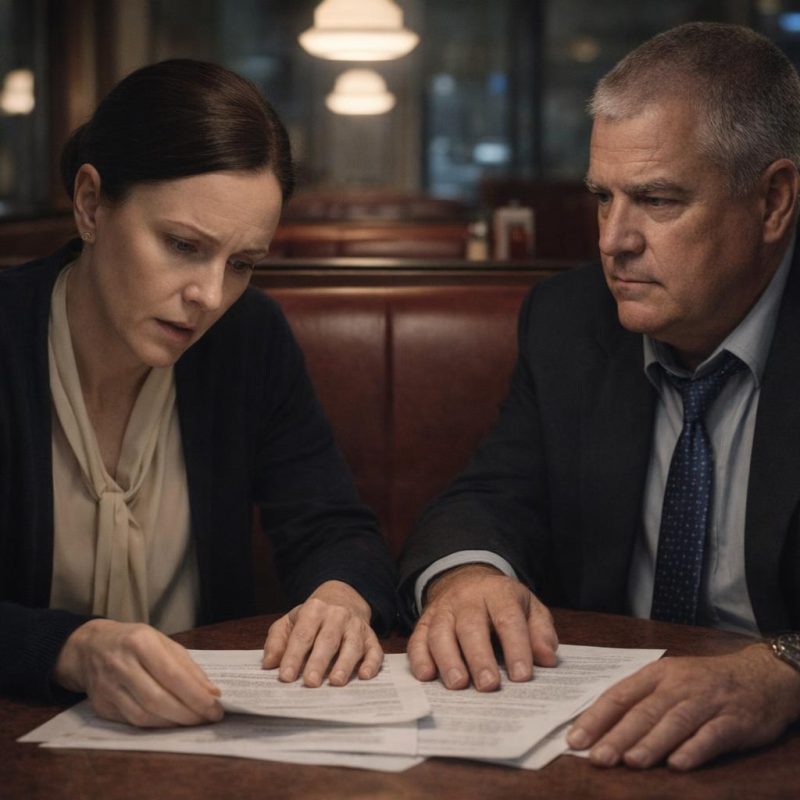 Image by RM AI
Financial Confession
Mark found me in the garden on Wednesday evening, his face haggard and his suit rumpled in a way I'd never seen before. He asked if I'd been contacted by law enforcement. I admitted Detective Morrison had interviewed me about the firm. Mark tried to explain that the investigation was a misunderstanding, that a disgruntled former client was making false allegations. He insisted he'd followed all legal procedures in his financial dealings, that everything was documented and above board. I asked why he hadn't mentioned the investigation earlier, why I had to learn about it from a detective. He said he didn't want to worry me during our marital issues, that he was trying to protect me from additional stress. I pointed out he was planning to leave me in the middle of this crisis, to disappear to a downtown apartment while his professional life imploded. Mark claimed the apartment was unrelated to the firm problems, just unfortunate timing. I watched him spin his explanations, his voice taking on that smooth quality he used with difficult clients. He pleaded for me to believe he wasn't a criminal, just overwhelmed by circumstances beyond his control. I wondered if he actually believed his own lies or if this was just another performance.
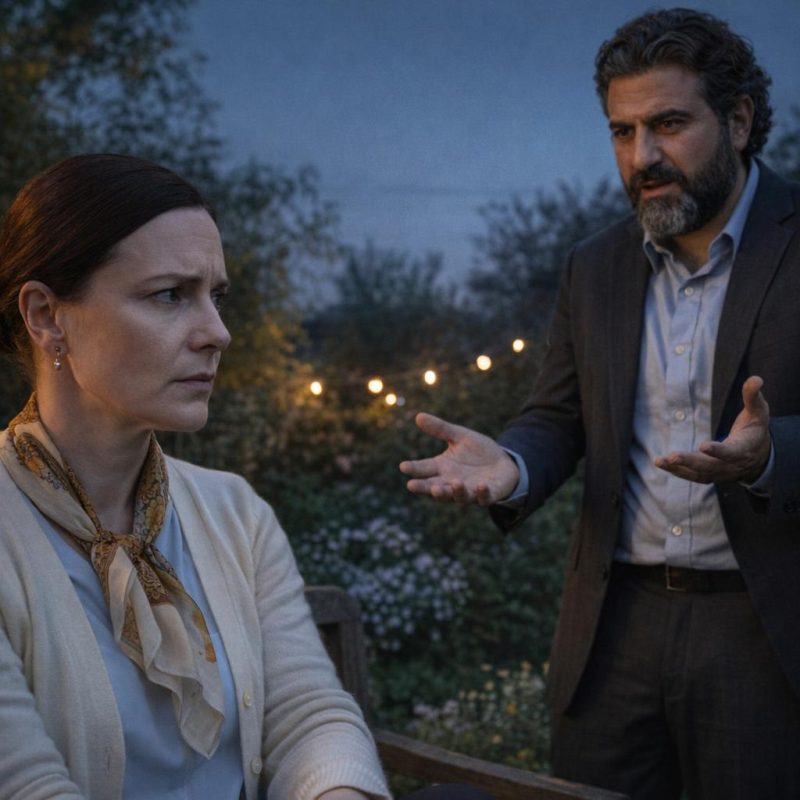 Image by RM AI
Partnership Documents
I drove back to Unit 402 on Thursday morning with a different purpose this time. Before, I'd been looking for evidence of an affair, searching for proof of another woman. Now I needed to understand what Mark had actually been hiding in those boxes. I worked methodically through the files I'd only skimmed before, pulling out folders marked with business labels. Partnership agreements between Mark and David. Client portfolio summaries. Investment strategy documents that meant nothing to me. Then I found a folder labeled 'Client Portfolios' tucked behind the others, and inside were transaction records that made my stomach drop. Money moving between accounts in patterns that looked nothing like the straightforward investment management Mark had always described. Transfers labeled 'offshore restructuring' in Mark's handwriting. Amounts that seemed too large, too frequent, flowing in directions I couldn't follow. I didn't understand the mechanics of what I was looking at, but I understood enough to know this wasn't normal. I photographed every page with shaking hands, David's signature appearing again and again alongside Mark's. Whatever they'd been doing, they'd been doing it together. Buried in a folder marked 'Client Portfolios,' I found transaction records showing systematic fund transfers that looked nothing like legitimate investment management.
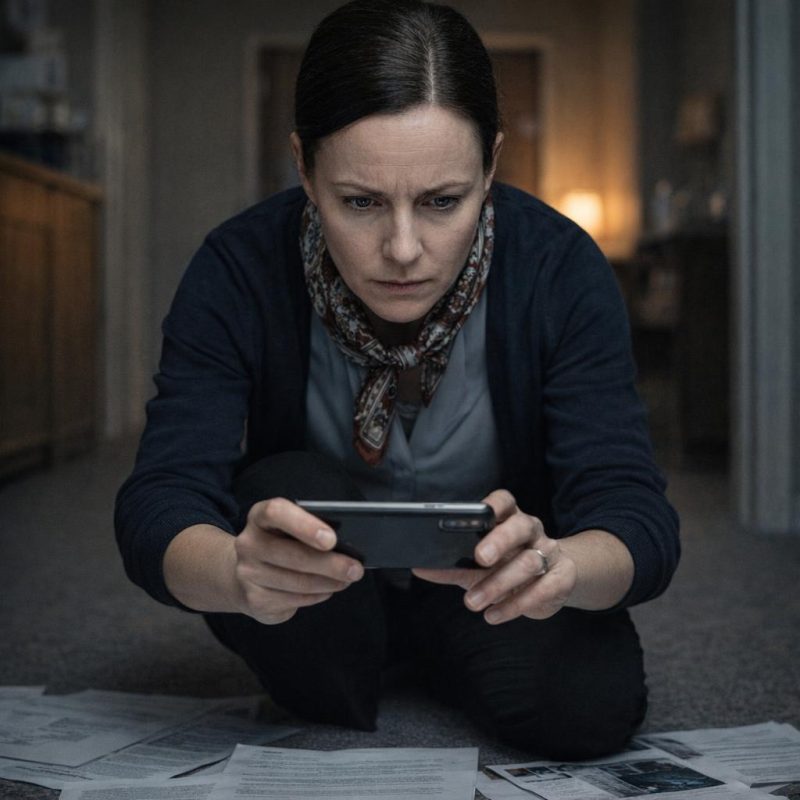 Image by RM AI
Guest Bedroom Border
I confronted him that evening with printouts of the documents I'd found. Mark's face went white, then red. He accused me of snooping, of violating his privacy, of not understanding his business. I told him I understood fraud when I saw it. The argument exploded into something uglier than anything we'd had before, accusations flying back and forth across the kitchen. He claimed I was jumping to conclusions, that I didn't have the financial expertise to interpret what I'd found. I demanded honesty and got only deflection, only excuses, only that smooth voice he used when he was lying. Finally he said we needed space. He announced he was moving to the guest bedroom like it was his decision, his choice to make. I watched him carry armfuls of clothes down the hallway, toiletries from our bathroom vanishing into the guest room. The door closed with a sound that felt final. I walked into our bedroom and stared at the half-empty closet, the gaps where his suits had hung. I sat on the bed we'd shared for thirteen years and felt the marriage officially end. I stood in the doorway of our emptied bedroom and felt the weight of what this separation meant—whether by design or drift, he was already gone.
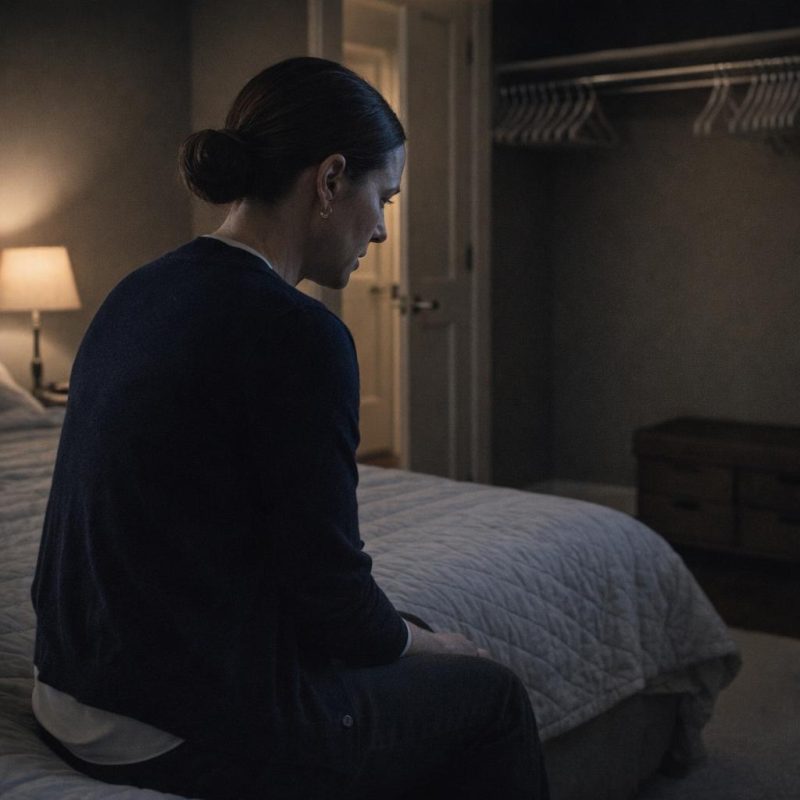 Image by RM AI
Gambling Theory
Rachel met me for lunch at a downtown cafe on Friday, and I found myself confiding everything. The fraud investigation, Mark's mounting stress, the strange financial documents I'd found. She listened with that focused attention that made me feel heard, asking questions that seemed genuinely concerned. Then she suggested something I hadn't considered. What if Mark's secrecy wasn't about an affair at all? What if he had a gambling problem? She told me about a friend whose husband had hidden a sports betting addiction for years, the same patterns of evasiveness and secret accounts. I admitted I hadn't found any evidence of another woman despite all my searching. Rachel said financial addiction could be just as destructive as infidelity, sometimes worse. The money disappearing, the lies, the separate life he'd been building. She offered to help me look for signs, suggested I check his browser history and credit card statements for casino sites or betting apps. It made a terrible kind of sense. I'd been so focused on finding lipstick on his collar that I'd missed the possibility of something equally devastating. She mentioned knowing someone who'd lost everything to sports betting, and I wondered if I'd been looking for an affair when the truth was something equally destructive.
 Image by RM AI
Divorce Question
Sophie found me in the kitchen on Saturday afternoon, her homework spread across the table. She looked up with those thoughtful eyes and asked if she could ask a serious question. My heart clenched before she even spoke. She asked directly if I was divorcing her father. I sat down across from her and took a moment to find the right words. I told her that her dad and I were having very serious problems, the kind that grown-ups sometimes can't fix. She asked if it was her fault, like her friend Emma had thought when her parents split. I grabbed her hands and told her firmly that this had nothing to do with her, that this was between the adults. She admitted she'd noticed her dad sleeping in the guest room, that she wasn't stupid. Then she said something that broke my heart. She told me she wouldn't hate me if I did get divorced. I pulled her into my arms as she started crying, holding my daughter while she grieved for the family we used to be. I promised her that both her parents would always love her no matter what happened between us. She told me she wouldn't hate me if I did, and I held my daughter while she cried for the family we used to be.
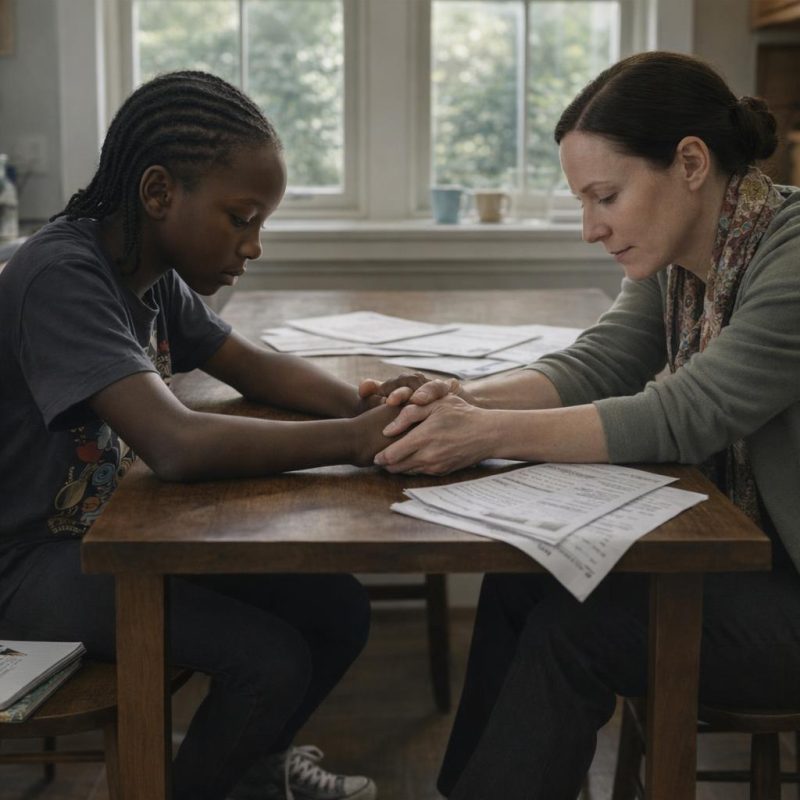 Image by RM AI
Old Phone Messages
I searched Mark's home office on Monday while he was at work, looking through drawers I'd never had reason to open before. In the back of his desk drawer, I found his old phone, the one he'd replaced last year. It was still charged, still functional. I scrolled through old text messages, most of them routine work communications or family logistics. Then I found a thread with a contact saved only as 'R.' The messages were from several months ago, supportive and sympathetic about Mark's stress. Whoever 'R' was, they seemed to know details about his situation, offering comfort in a tone that felt intimate without being explicitly romantic. One message stood out: 'thanks for understanding when no one else does.' I tried to piece together who 'R' might be from Mark's contacts. A colleague? A therapist? A friend I didn't know about? The vague nature of the messages frustrated me because I couldn't prove anything, couldn't identify the person on the other end. I photographed the entire thread for my records, adding it to my growing archive of Mark's secrets. The messages were vague but intimate, ending with 'thanks for understanding when no one else does,' and I had a sick feeling about who might be on the other end.
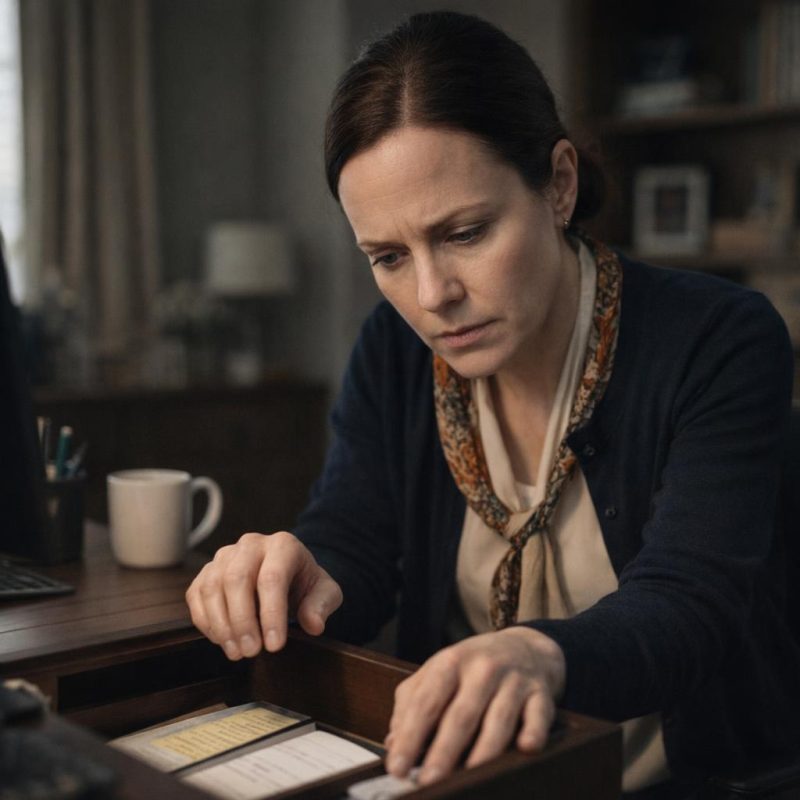 Image by RM AI
Documentation Protocol
I spent Tuesday evening organizing everything I'd collected, spreading it all across the dining room table like evidence at a crime scene. I created digital folders on my laptop, organizing photos by date and category. Storage Unit. Financial Records. Text Messages. Property Documents. I built a timeline showing when each piece was discovered, how the pattern had emerged. Jennifer called while I was labeling files, checking on my documentation progress. She emphasized the need for meticulous records given the fraud investigation. Then she said something that made the scope of this hit me. My evidence could be relevant to both divorce proceedings and criminal cases. We discussed potential subpoenas, my cooperation with Detective Morrison, the possibility that I'd be called to testify. She told me to back up everything to cloud storage immediately, to keep copies in multiple locations. I worked late into the night, creating a comprehensive archive of Mark's deception. The documentation made everything feel more real, more permanent. Jennifer called to say we needed everything documented for court, and I realized I was preparing not just for divorce but for potential criminal proceedings.
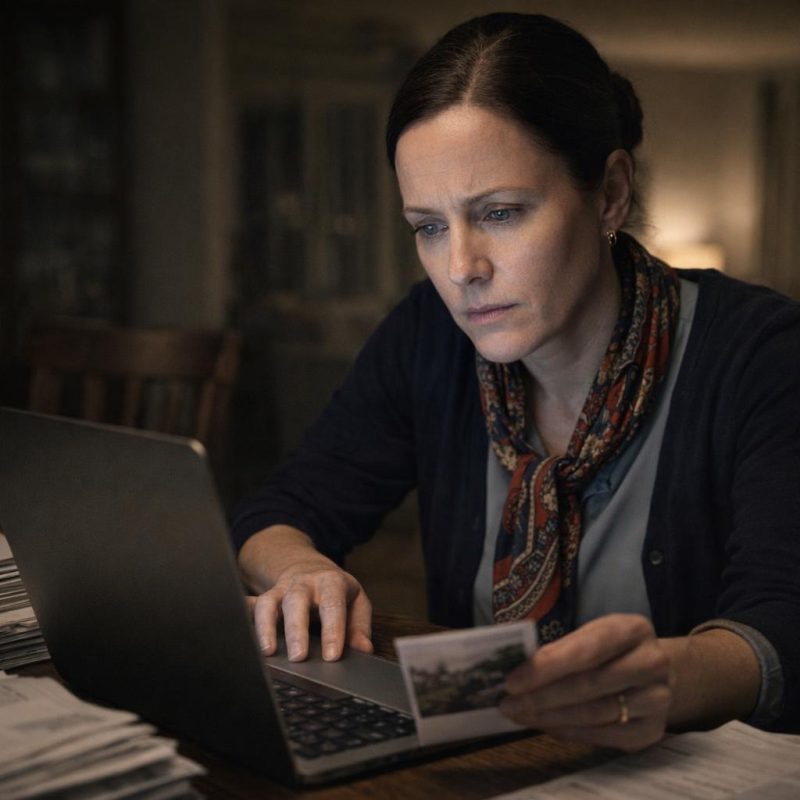 Image by RM AI
Mark's Desperation
I watched Mark unravel over the next few days with a mixture of pity and something darker. His polished facade crumbled a little more each morning. He wasn't sleeping, wasn't maintaining his usual grooming standards. His attorney called constantly, conversations that left him pacing and agitated. He wandered the house late at night like a ghost haunting his own life. On Wednesday evening, he approached me with desperation written across his face. He asked if I'd found any documents in the storage unit that could help his case. I asked what kind of documents he was hoping I'd found. He suggested I could tell investigators I'd discovered proof of proper client authorizations, documentation showing everything was legitimate. I stared at him as understanding dawned. He was asking me to fabricate evidence, to lie to law enforcement to save him. I refused flatly, told him I wouldn't commit perjury for him. He broke down then, begged me to understand he was facing prison. I told him I had my own problems and couldn't solve his. He begged me to tell Detective Morrison that I'd found evidence proving his innocence in the storage unit, and I realized he thought I could save him with a lie.
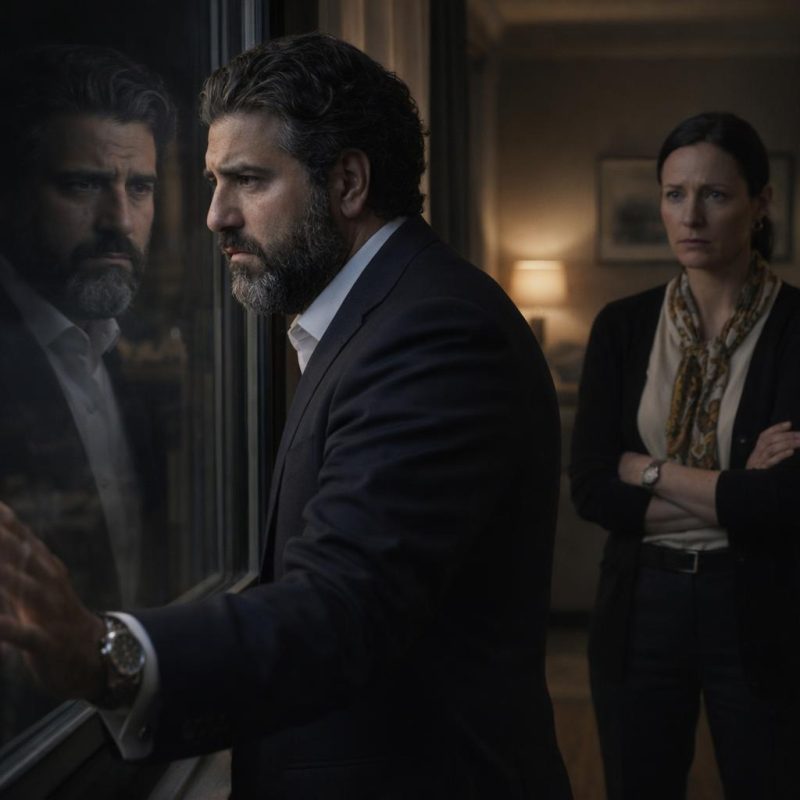 Image by RM AI
Lock Change
Lisa showed up Thursday morning with a professional locksmith in tow, her face set with determination. She'd scheduled this while Mark would be at the office, she explained, so we could reclaim the house without confrontation. I watched as the locksmith changed the front door, back door, and garage locks, removing each old mechanism and installing new ones. Lisa stayed beside me the entire time, providing moral support and fierce sisterly protection. We discussed what would happen when Mark tried to enter with his old key, and I decided I'd be home when he discovered the change. The locksmith handed me the new keys, and I held them feeling their weight, their significance. Lisa suggested I keep a spare set at her house, just in case. I thanked her for being my fiercest ally through this nightmare, for showing up when I needed her most. We shared coffee after the locksmith left, sitting in my kitchen that now felt truly mine again. I could control who entered this space, who had access to my home and my daughter. Lisa handed me the new key and said now the only person who could erase me from this house was me, and I felt a surge of power I hadn't experienced in months.
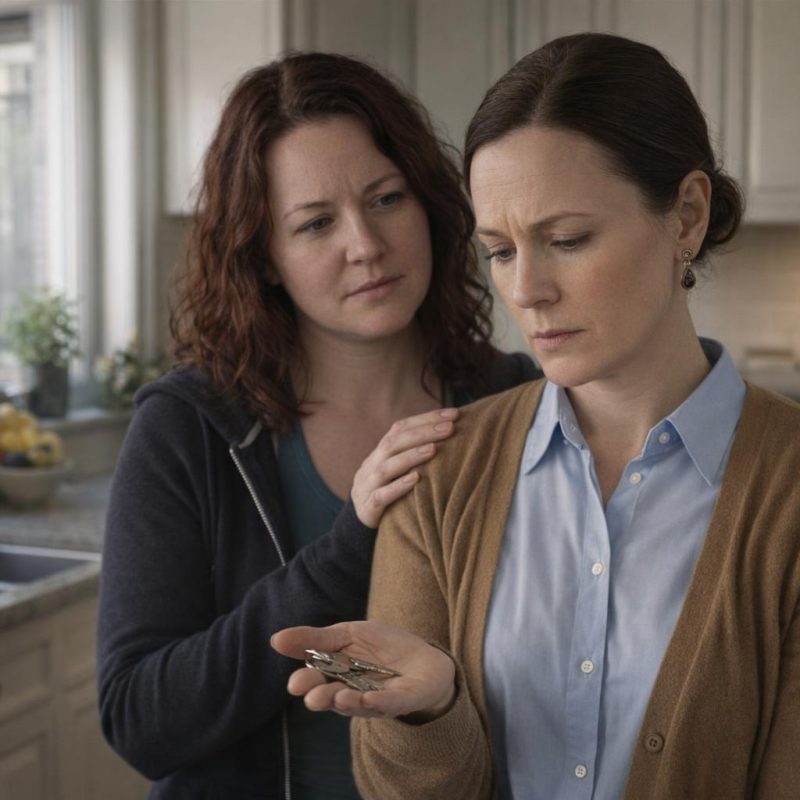 Image by RM AI
Formal Interview
Detective Morrison's office at the police station felt smaller than I expected, with fluorescent lights that made everything look washed out and official. He sat across from me with a recording device between us, another officer standing witness by the door. I'd brought everything—photographs of the storage unit contents, copies of the offshore restructuring notes, partnership documents between Mark and David. Morrison asked me to walk through the timeline from the moment I found the key, and I did, my voice steady as I described each discovery. He leaned forward when I showed him the business files, particularly interested in the notes about moving assets overseas. "What do you know about your husband's business relationship with David Chen?" he asked, and I admitted I knew almost nothing, that Mark had kept that world separate from our marriage. Morrison asked about Mark's recent behavior, and I told him about the desperation, the request for me to lie to investigators, the way he'd tried to make me complicit in whatever he'd done. Then came the question that made the room feel even smaller: "If criminal charges are filed, would you be willing to testify?" I said yes without hesitation, watching Morrison nod and make a note, understanding I'd just crossed a point of no return in cooperating against the man I'd once promised to stand beside forever.
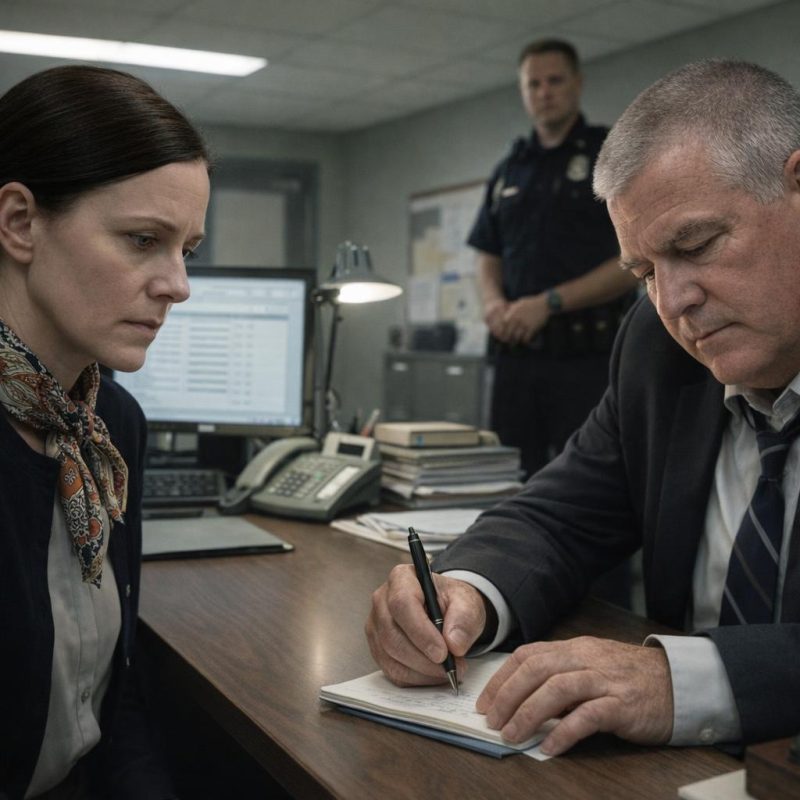 Image by RM AI
Love Letters
I found the wooden box tucked behind a stack of old tax returns in the storage unit, its surface worn smooth from years of handling. Inside were letters in Mark's handwriting from when we first started dating, before marriage and mortgages and all the ways we'd learned to disappoint each other. I sat on the concrete floor and read his declarations of love from twelve years ago, his promises about building a life together and growing old as partners. He'd written about inside jokes I'd completely forgotten, intimate moments that felt like they'd happened to different people. The tears surprised me—I hadn't cried in weeks, too angry for grief, but reading these letters brought a softer, sadder kind of pain. The last one was dated three months before our wedding, full of certainty about our future together, about the family we'd build and the adventures we'd share. I tried to pinpoint when exactly Mark had changed from that earnest young man into someone who could plan an escape without me, when he'd stopped meaning the words he'd written in careful script on cream-colored paper. I carefully returned the letters to their box, closing the lid on a version of us that maybe never really existed, or maybe died so gradually I hadn't noticed until it was already gone.
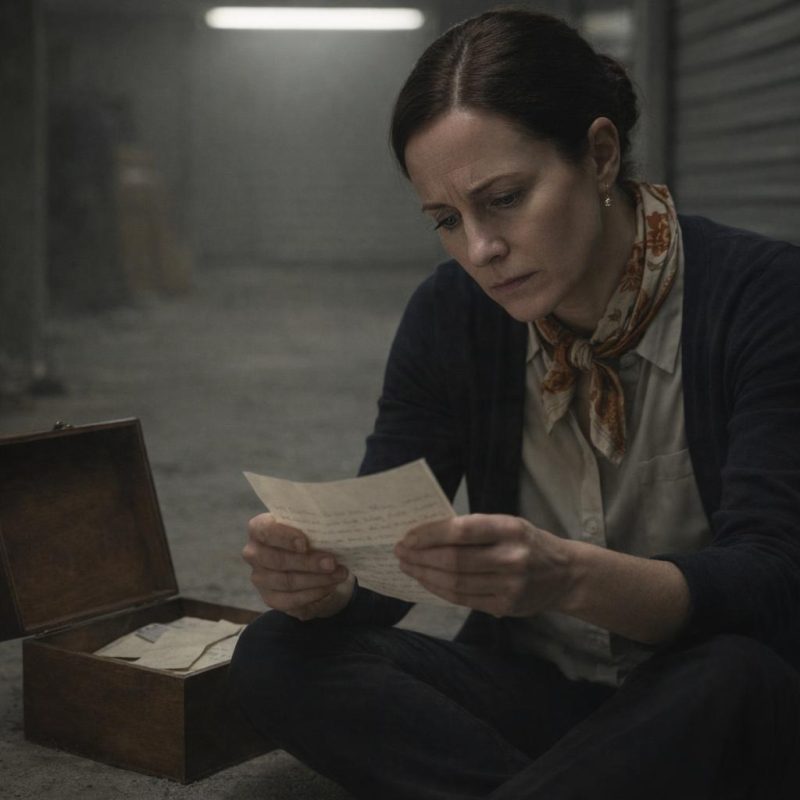 Image by RM AI
Offshore Confession
Mark asked to speak with me privately in his office, closing the door with a seriousness that made the air feel heavy. His demeanor was defeated in a way I hadn't seen before, shoulders slumped like he'd finally run out of energy for pretense. He admitted he'd moved money into offshore accounts several months ago, claiming it was to protect family assets from the firm investigation. I asked how much and where, but he stayed evasive about specifics, only admitting it was substantial. "I was trying to ensure you and Sophie would be provided for," he said, like hiding money was some kind of noble sacrifice. I pointed out that what he'd done was illegal, that moving assets offshore wasn't protective—it was selfish and criminal. He insisted he was thinking of our future when he made the decision, his voice taking on that pleading quality I'd learned to recognize as manipulation. "You destroyed any future we might have had the moment you started lying," I told him, my voice steady and cold. I said the offshore accounts proved he'd been planning to flee all along, that this was never about protecting Sophie and me. Mark didn't deny it, and the admission hung between us like smoke, choking and impossible to clear.
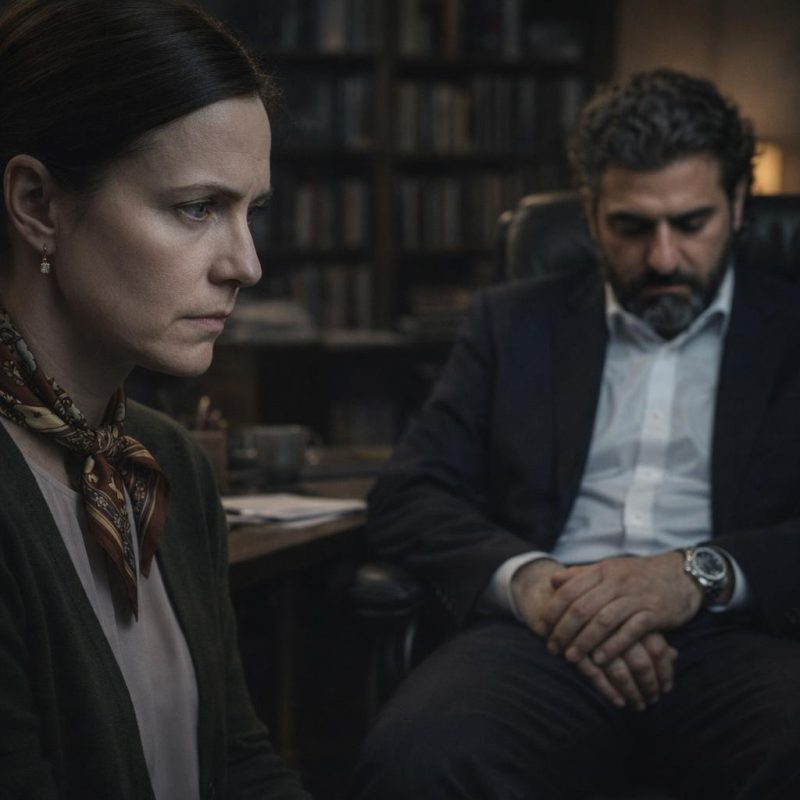 Image by RM AI
Restaurant Sightings
Rachel and I met for our regular coffee, settling into our usual corner table at the café we'd been coming to for years. She asked how things were progressing with the separation, and I mentioned Mark's confession about the offshore accounts. Her shock seemed appropriate, her sympathy warm and genuine as she reached across to squeeze my hand. Then she mentioned, almost casually, that she'd seen Mark at a nice restaurant downtown last week. I was surprised—Mark had been claiming he was cutting expenses during the crisis, acting like every dollar mattered. Rachel described it as an upscale Italian place near the business district, the kind of spot with white tablecloths and wine lists thicker than novels. She said Mark was alone at a table for two, looking at his phone, and I wondered why my husband was dining at expensive restaurants while pleading poverty. Rachel suggested maybe he was meeting with his attorney or business associates, which made sense but didn't quite settle the question in my mind. I thanked her for letting me know, filing away the information alongside everything else that didn't quite add up. The conversation moved on to book club selections and neighborhood gossip, but I kept thinking about Mark alone at that table, wondering what he was really doing and who he might have been waiting for.
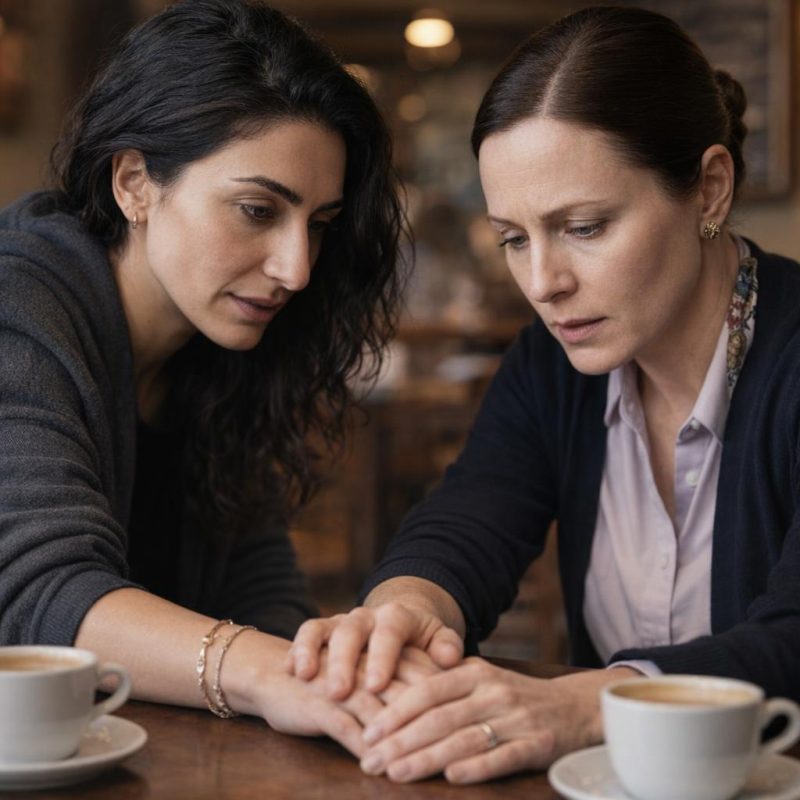 Image by RM AI
Too Many Details
We were discussing the legal proceedings when Rachel asked if Mark's new attorney was better than the previous one, and I stopped mid-sentence. I'd never told Rachel that Mark had changed lawyers. The detail was specific, recent—it had only happened last week. "How did you know Mark changed attorneys?" I asked, trying to keep my voice casual. Rachel didn't miss a beat, saying David must have mentioned it, her expression unfazed and friendly. I tried to remember if I'd ever discussed Mark's legal team with her, mentally reviewing our recent conversations. I'd been careful not to share certain details, protective of information that felt too private or strategic. Rachel asked if I wanted recommendations for upgrading my own attorney, and I deflected, steering us toward safer topics. The conversation continued normally, but I felt unsettled in a way I couldn't quite articulate. Something about the quick answer, the easy explanation, made my stomach tighten. I made a mental note to pay closer attention to what Rachel knew and how she knew it, though I couldn't say exactly why it mattered. Maybe I was being paranoid, seeing shadows where there was only friendship, but the unease persisted long after we'd said goodbye.
 Image by RM AI
Conversational Patterns
I lay awake that night replaying conversations with Rachel, mentally reviewing our coffee meetups and book club chats from the past several months. A pattern emerged that I hadn't noticed before—Rachel always asked detailed questions about Mark. Even months ago, before I'd found the storage key, she'd been probing about our marriage in ways that seemed like friendly concern at the time. I remembered her asking about Mark's work stress, his schedule, his mood, always circling back to him no matter what topic we'd started with. Rachel was the one who first suggested Mark might be having an affair, then later redirected toward gambling when no affair evidence appeared. She'd always seemed eager to meet, eager to discuss Mark's behavior and our relationship troubles. The pattern of conversation topics felt less random now, more focused than I'd initially thought. I couldn't shake the bad feeling settling in my chest, though I had no concrete proof of anything wrong. Maybe I was paranoid from all the stress and betrayal, seeing conspiracy where there was only friendship. But the unease persisted, and I decided to be more careful about what I shared with Rachel, at least until I could figure out why her questions suddenly felt less like concern and more like something I couldn't quite name.
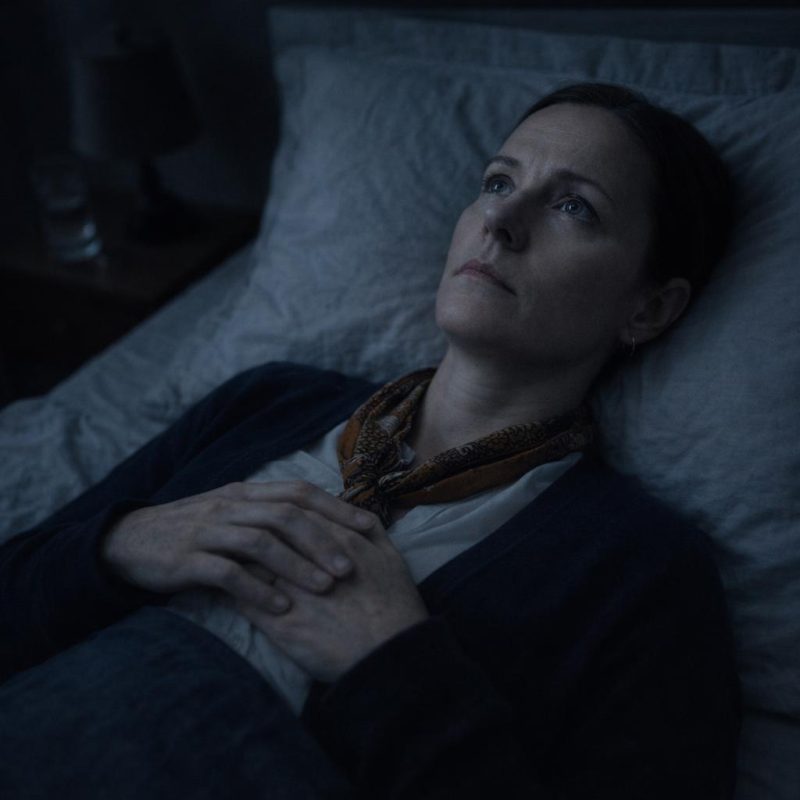 Image by RM AI
The Test
I met Rachel for lunch with a specific purpose, my heart pounding as I prepared to test whether my suspicions had any foundation. I'd rehearsed the false story in my head, making sure the details were specific enough to track. Casually, I mentioned I'd found another phone Mark had hidden, watching Rachel's face as she immediately leaned forward with interest. She asked what was on it, and I described fictional suspicious photos—Mark at hotels on specific dates, images that suggested meetings I couldn't explain. I added details: the Riverside Inn on March 15th, the Downtown Marriott on March 22nd, photos showing him in lobbies and hallways. Rachel asked probing questions and I provided consistent answers to my fabricated story, feeling sick about lying to a friend but needing to know the truth. She suggested I confront Mark immediately with this evidence, offering to be there for support when I had that conversation. Her concern seemed perfect, her hug warm and genuine as we said goodbye. I left the restaurant feeling like I might throw up, guilt and suspicion warring in my chest. If Rachel was really my friend, I'd just lied to her for no reason. But if she wasn't, I'd just set a trap that would prove exactly who I could trust and who had been playing me all along.
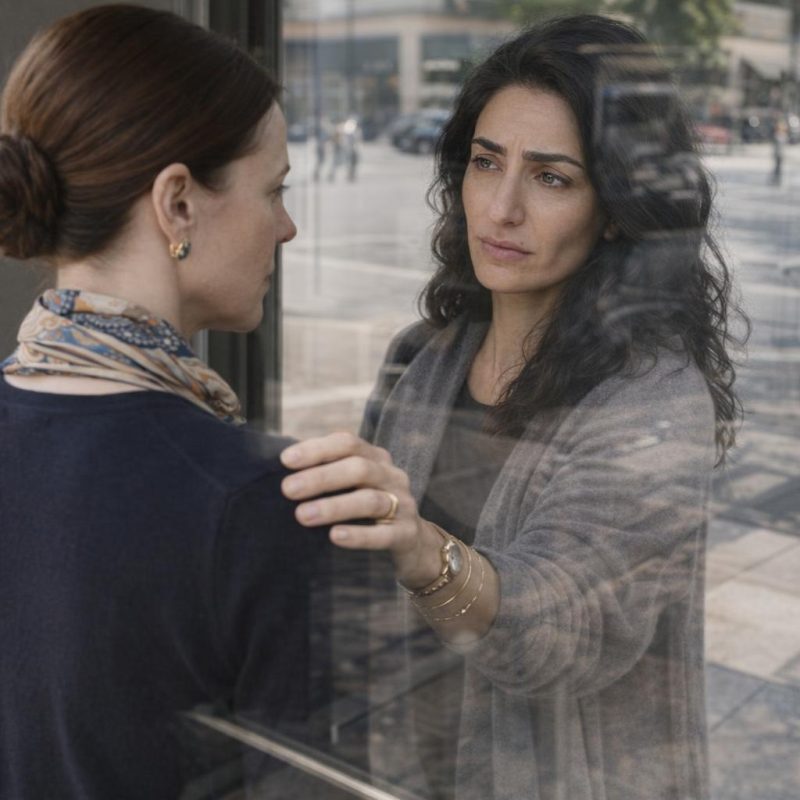 Image by RM AI
Echo Chamber
Mark found me in the kitchen two days later, his anger evident before he even spoke. He demanded to know about the phone and photos I'd supposedly found, and I played innocent, asking what he was talking about. Then he described it—the hidden phone with hotel photos, the Riverside Inn on March 15th, the Downtown Marriott on March 22nd, every specific false detail I'd invented for Rachel. My stomach dropped as I realized the information had traveled exactly as I'd feared. "How do you know about these photos?" I asked calmly, though my blood felt like ice. Mark stumbled, his face shifting as he understood he'd made a critical error. He tried to claim he was guessing, that someone else had mentioned it, his explanations tumbling over each other. I asked who else could possibly know about photos that didn't exist, and watched his face drain of color. He demanded to know why I was playing games and setting traps, his voice rising with panic and anger. "The photos were a test," I told him, my voice steady despite my racing heart. "And you just failed it." I walked away leaving Mark to process what he'd just confirmed—that he had a source, that someone was feeding him information about my conversations, and that I now knew exactly who had been betraying me all along.
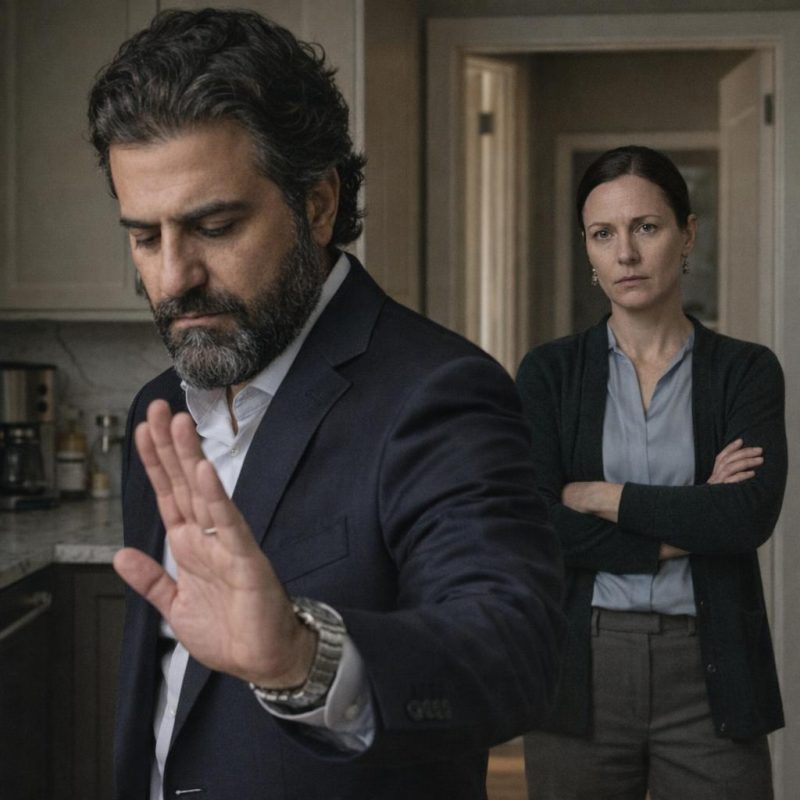 Image by RM AI
Paper Trail
I was going through Mark's coat pockets two days after the confrontation—not looking for anything specific, just that methodical searching that had become my new normal—when my fingers found a crumpled receipt wedged deep in the lining. I smoothed it out on the kitchen counter. Maison Belle, an upscale boutique in the arts district. The purchase was for two hundred and forty-seven dollars, dated three weeks ago. I stared at the name, something nagging at the back of my mind. Then I remembered: Rachel had mentioned owning a small share in a boutique with that exact name. She'd brought it up casually at book club, talking about supporting local businesses and female entrepreneurs. I pulled out my phone and checked my calendar, scrolling back to that date. My stomach tightened. Rachel had told me she was out of town that weekend—a spa retreat with college friends in Napa. I'd texted her about rescheduling coffee and she'd sent back photos of vineyards and a massage table. I photographed the receipt and added it to my growing evidence folder, trying to rationalize. Maybe Mark was buying me a gift. Maybe Rachel had mentioned the store to him in passing. But the timing felt too specific, the connection too neat. The receipt was dated the same day Rachel claimed to be at a spa retreat with friends, and I couldn't stop wondering why my husband would be shopping at her store.
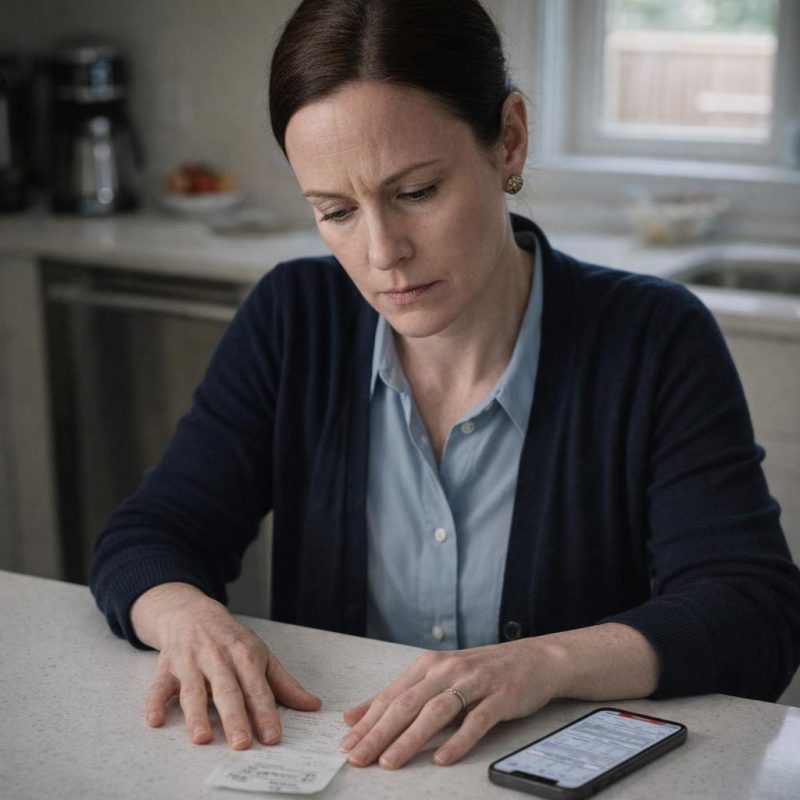 Image by RM AI
Gold and Diamond
I drove back to Unit 402 the next morning, that receipt burning a hole in my documentation file. I needed to know if there were more connections I'd missed, more threads linking Rachel to this secret life Mark had been building. I moved boxes methodically, checking corners and spaces I'd overlooked before, my hands steady even as my mind raced. That's when I saw it—a glint of gold near the back wall, half-hidden beneath a cardboard flap. I crouched down and picked it up. A small earring, delicate gold with a tiny diamond catching the fluorescent light. My breath stopped. I knew this earring. Rachel had worn the matching pair to book club just three weeks ago—I'd complimented them, and she'd laughed and said they were her signature pieces, a gift from David on their anniversary. I felt physically sick, my hand trembling as I held the tiny piece of jewelry. I tried to imagine innocent explanations. Maybe it fell off somewhere else and Mark picked it up. Maybe someone else owned an identical pair. But Rachel had never mentioned visiting a storage facility, had never had any reason to be in this unit. I photographed the earring where I'd found it, then carefully bagged it as evidence. I sat in my car afterward, unable to turn the key, my mind spinning with implications I still didn't want to accept. I turned the earring over in my palm, trying to imagine any innocent reason why Rachel Chen's jewelry would be in my husband's secret storage unit.
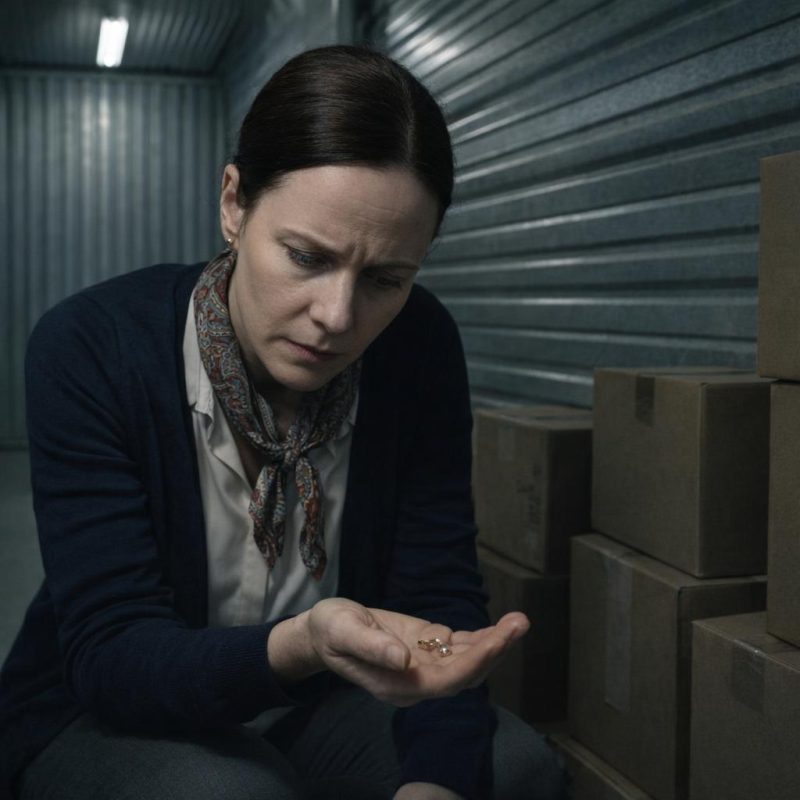 Image by RM AI
Hotel Records
I remembered Rachel recommending a private investigator months ago, back when another book club member was dealing with a cheating spouse. The irony wasn't lost on me as I dialed his number. I hired him that afternoon, requesting a full investigation into Mark's activities over the past six months. The investigator delivered his report a week later, and I spread the documents across my dining room table with shaking hands. Hotel records from the Harbor View Hotel showed Mark had registered six times over four months. Each time, within an hour of his check-in, Rachel Chen had registered as well. Different rooms on paper, but the security footage told a different story. The investigator had included timestamped photographs—Mark entering room 412, Rachel following forty minutes later. Mark leaving at dawn, Rachel departing an hour after. The dates corresponded perfectly with evenings Mark claimed to be working late, with nights Rachel told me she was busy with David or out of town. I studied the photographs, seeing the careful choreography of their deception. They'd maintained the illusion of separation, of coincidence, while I'd been home believing every lie. I paid the investigator in cash and thanked him for his thoroughness. The photographs showed them entering the same room an hour apart, maintaining the illusion of separation, and I finally had proof that my confidante and my husband had been lying together while I cried on her shoulder.
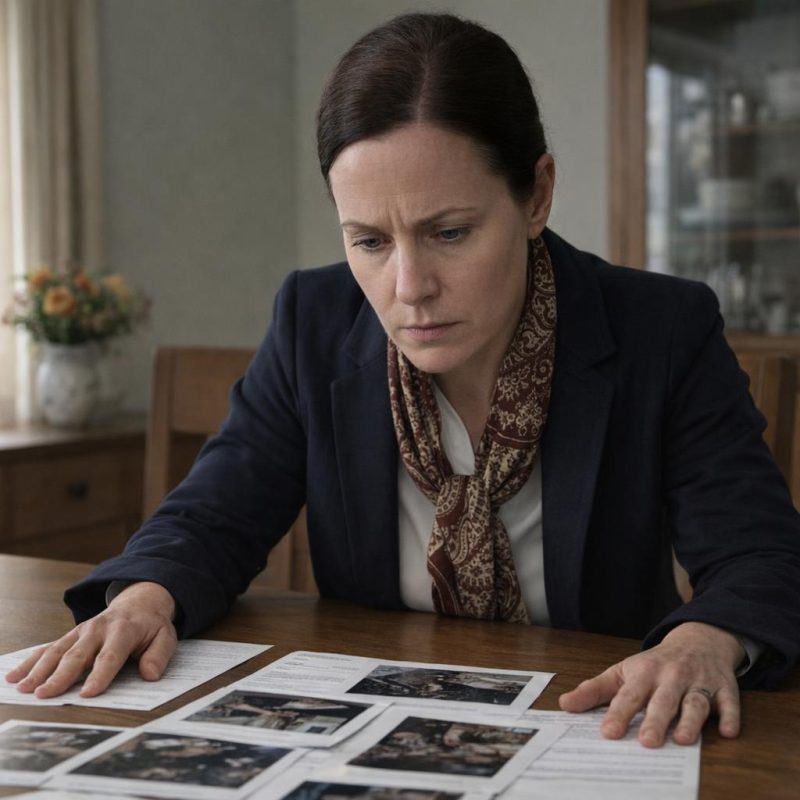 Image by RM AI
Breaking Point
I waited until Sophie was at a sleepover before I confronted him. I spread the hotel records across the kitchen table in neat rows—photographs, timestamps, registration records, all of it. Mark walked in and froze when he saw the evidence laid out like an accusation he couldn't dodge. His face went through a series of expressions: shock, recognition, defeat. "Tell me about Rachel Chen," I said, my voice calmer than I felt. He tried to speak, stopped, tried again. Then he broke. The affair had been going on for eight months, he admitted. It started during his work stress, he claimed—it meant nothing, it was a mistake, all the predictable phrases cheaters use when they're caught. I asked pointed questions. How often? Where? When? He admitted to the hotel meetings, to other encounters I hadn't even discovered yet. "Who started it?" I asked. "Who approached whom first?" Mark's eyes dropped to the table. He couldn't meet my gaze. He mumbled something about it just happening, about mutual attraction, but I could see the lie in his posture. "Tell me the truth," I said, "or I'm taking all of this to Detective Morrison and letting him sort out what else you've been hiding." He said it started as comfort during stress at work, but when I asked who approached whom first, he couldn't meet my eyes, and I knew the answer would change everything I thought I understood.
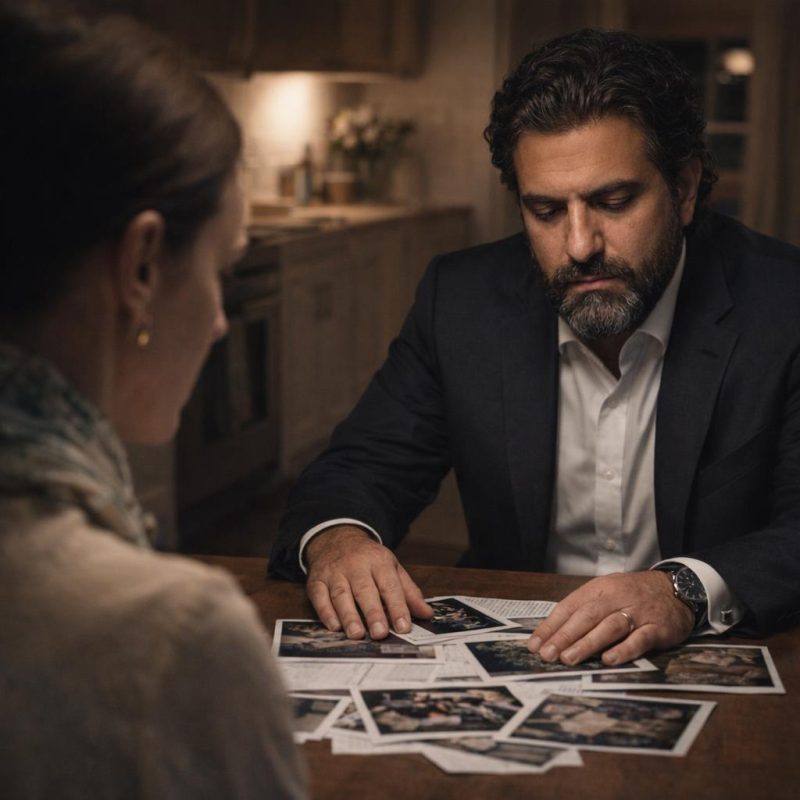 Image by RM AI
The Architect
"Rachel approached me," Mark finally said, his voice barely above a whisper. "Two years ago. At David's firm party." The words hit me like a physical blow. Two years. Not eight months—two years. He kept talking, the confession pouring out like he'd been waiting to unburden himself. Rachel had cultivated their connection slowly, deliberately. She'd suggested the affair, the secret apartment, the storage unit strategy. She'd planned everything—how he should remove items gradually so I wouldn't notice, how to stage his exit cleanly without drama. "She joined your book club to get close to you," Mark said, and I felt my reality fracturing. "She wanted information about our marriage, about you. She fed me updates about what you were thinking, what you suspected." The storage unit was Rachel's idea. The apartment was Rachel's choice—she'd picked it, furnished it, decorated it for their future together. Every sympathetic conversation I'd had with Rachel, every coffee date where I'd cried about my marriage falling apart, had been reconnaissance. She'd comforted me about the very pain she was causing, gathering intelligence while positioning herself to take my place. "She wanted my life," Mark said, his voice breaking. She wanted my life, he said—the house, the husband, the suburban existence she'd convinced herself she deserved—and she'd spent two years positioning herself to take it.
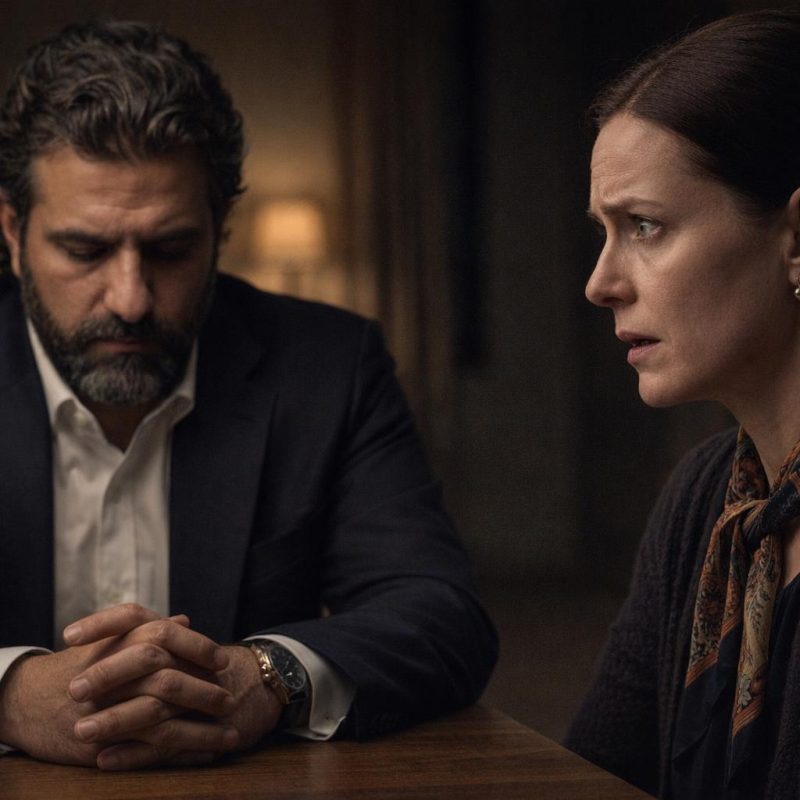 Image by RM AI
The Full Picture
I made Mark tell me everything from the beginning. He described how Rachel had first approached him at David's firm party, how she'd positioned herself as understanding and sympathetic to his stress. She'd escalated the relationship gradually—friendship to emotional affair to physical affair—each step carefully planned. "She researched you before joining the book club," Mark admitted. "She learned your vulnerabilities and used them to build trust." Rachel had reported back to Mark about my suspicions and emotional state. When I found the key, she'd immediately adjusted their strategy, steering me toward gambling theories to deflect from the truth. Mark had practiced his lies with her, rehearsed his cover stories. The apartment was decorated to Rachel's taste, not his—she'd been building a replacement life with my husband while pretending to be my friend. Every sympathetic ear, every concerned text, every piece of advice had been manipulation. "I wanted to end it," Mark claimed, though I didn't believe him. "Several times. But Rachel convinced me to continue, said we just needed to be patient." I listened for two hours, watching my understanding of the past two years completely restructure itself. The cruelest part was learning Rachel had comforted me about the very pain she was causing, feeding on my vulnerability while planning to replace me entirely.
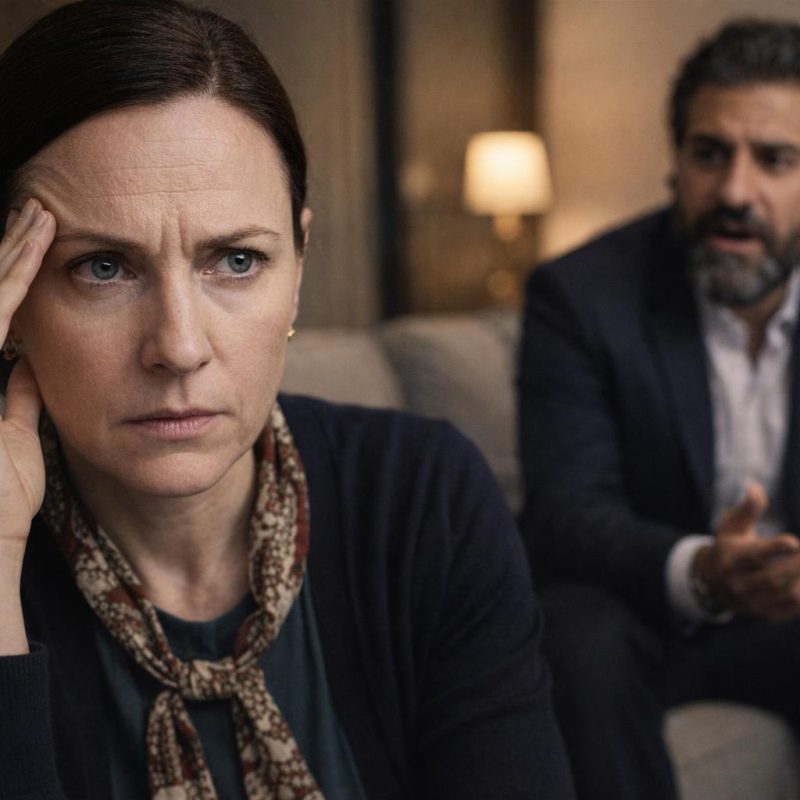 Image by RM AI
Masks Off
I texted Rachel the next morning: "Coffee? Our usual place? Need to talk." She arrived looking concerned, her expression perfectly calibrated to sympathetic friend mode. I let her settle in, order her latte, ask how I was doing. Then I said, "Mark told me everything about you two." Her face flickered—surprise, then calculation, then a careful blankness. "What exactly did Mark claim to tell you?" she asked, her voice still warm but with an edge I'd never heard before. I listed it calmly: the two-year affair, the storage unit plan, the infiltration of my life through book club, the intelligence gathering disguised as friendship. Rachel's friendly mask dissolved slowly, like ice melting. She didn't apologize. She didn't show remorse. Instead, her demeanor shifted to something cold and confident, almost amused. "Mark was already unhappy before I came along," she said. "I simply showed him what he was missing." She suggested I should thank her for revealing Mark's true character, for showing me who I'd really married. I struggled to maintain my composure as she gathered her purse and stood. "You never deserved the life you had anyway," she said. She leaned back and smiled—a smile I'd never seen before, sharp and triumphant—and said I should be thanking her for showing me who my husband really was.
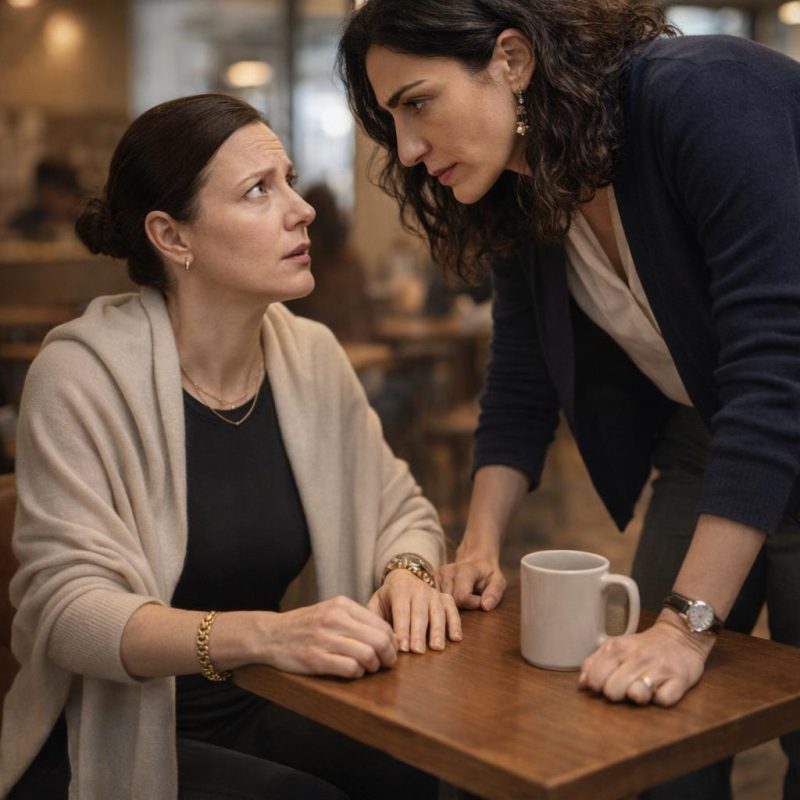 Image by RM AI
Threat Assessment
Rachel followed me outside, dropping the pretense entirely. "If you tell David about this," she said, her voice low and threatening, "I will make sure you lose everything in the divorce." I stopped walking and turned to face her. She stepped closer, her expression hard. "I have connections you can't imagine, Claire. Friends in legal circles who owe me favors. I know things about you—your business reputation, your professional relationships. I could make you look unstable in custody proceedings." My phone was recording from my coat pocket, capturing every word. I let my face show fear, let my shoulders slump slightly. "What am I supposed to do?" I asked, my voice small. Rachel's expression softened into something almost pitying. "Accept a quiet divorce. Move on. Things will go smoothly if you cooperate. Mark and I can help you transition—make sure you're taken care of financially." I nodded slowly, appearing defeated, broken. "I need time to think," I said. "Of course," Rachel said, her confidence restored. She touched my arm in a gesture that might have looked comforting to anyone watching. Then she walked away, believing she'd maintained control of the situation. She said she had connections I couldn't imagine and information about me I'd never want public, and I let her believe her threats had landed while my phone recorded every word.
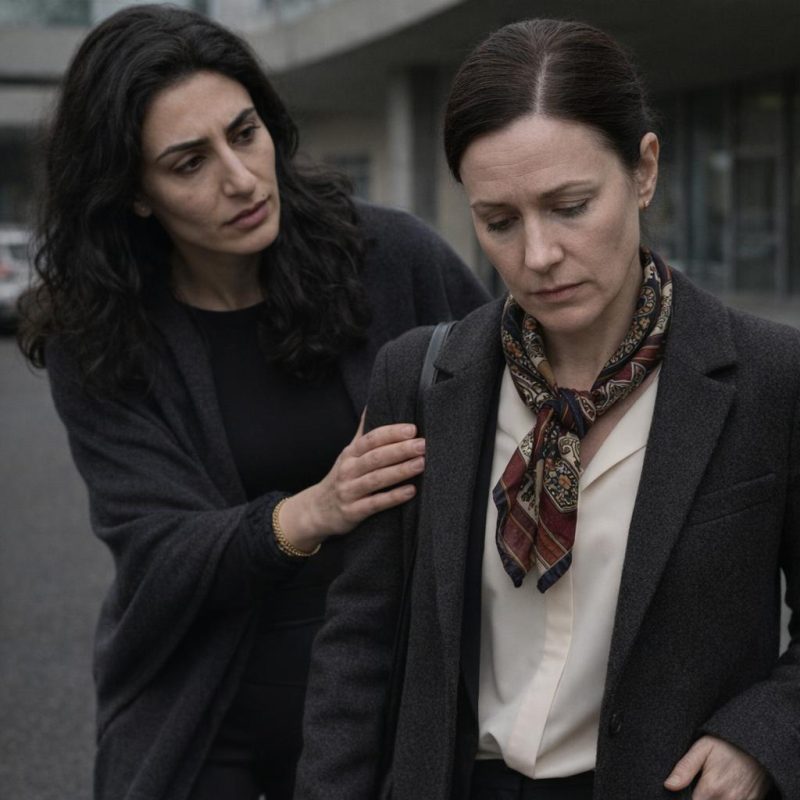 Image by RM AI
Digital Insurance
I drove straight home, hands shaking on the wheel, Rachel's threats still echoing in my ears. The moment I got inside, I pulled out my phone and played back the recording—every word crystal clear, every threat documented. I uploaded it to Google Drive first, then Dropbox, then iCloud. Three different services, three different backups. Then I sat down at my laptop and composed an email to Jennifer, attaching the audio file and typing out a detailed summary of everything Rachel had said. The connections she claimed to have. The threats about custody proceedings. The promise to make me look unstable. I saved a copy to a thumb drive and texted Lisa to ask if I could stop by—I needed her to keep a physical backup somewhere Mark couldn't access. For the first time since finding that storage key, I felt like I was holding a real weapon instead of just collecting evidence. Rachel thought she'd cornered me with her threats, but she'd actually handed me exactly what I needed. Jennifer called back within an hour and said this recording changed everything—Rachel had just handed us grounds for a harassment case on top of alienation of affection.
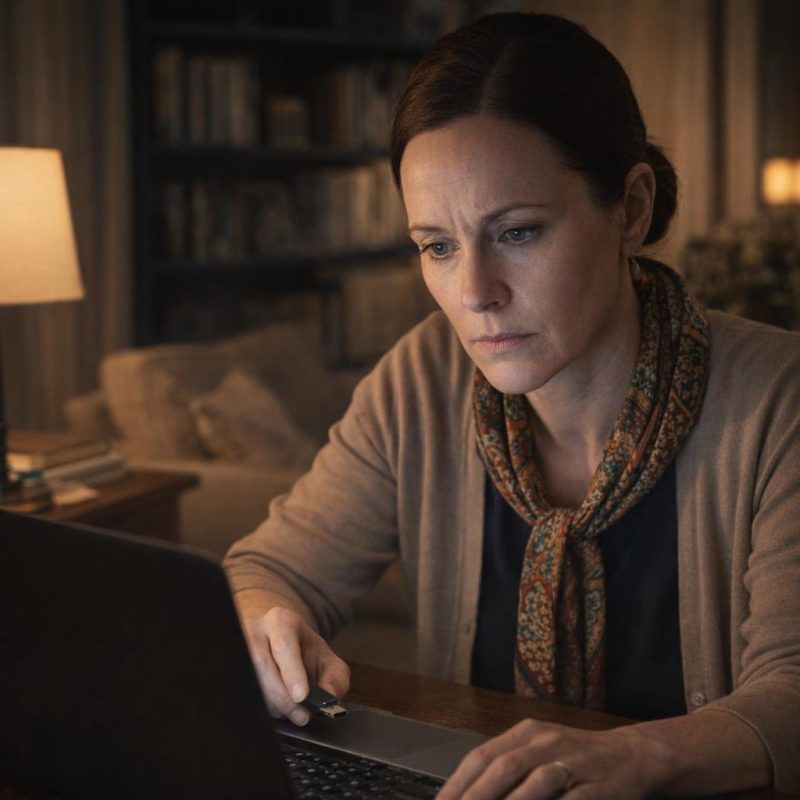 Image by RM AI
Building the Case
Jennifer's conference table was covered with documents when I arrived the next morning—recordings, photographs, bank statements, hotel receipts. She walked me through the entire legal strategy like a general planning a campaign. We could pursue Rachel for alienation of affection, using the recorded threats as evidence of her intentional interference in my marriage. The fraud conspiracy charges would show how she'd helped Mark hide assets, making her liable for damages. The harassment and witness intimidation were documented in her own words. Jennifer explained that Rachel's involvement connected directly to Mark's offshore accounts—she'd helped him choose banks, structure transfers, avoid detection. We had grounds to go after Rachel's assets as well as Mark's. Jennifer had already drafted emergency motions for asset protection and subpoenas for hotel records. Then she said something that made my stomach flip. As part of our filing, David Chen would need to be notified as an interested party—his wife was named in our legal action. I realized exposing the affair was about to become a legal requirement rather than a personal choice.
 Image by RM AI
Telling David
David's corner office had floor-to-ceiling windows overlooking the city, all corporate polish and controlled power. He greeted me with professional courtesy, clearly expecting some business discussion about a charity event or neighborhood matter. I sat across from his massive desk and slid the envelope across to him without preamble. Hotel records first. Then the photographs—Rachel entering rooms with Mark, timestamps documented, multiple dates. I watched his composed corporate mask shatter in real time. The color drained from his face. His jaw tightened. He picked up each photo with careful, deliberate movements, like handling evidence at a crime scene. When he finally spoke, his voice was rough. "How long have you known?" I explained the timeline—the storage key, the investigation, discovering Rachel's involvement. He listened without interrupting, his expression hardening with each detail. He'd suspected Mark was hiding something during their business dealings, he said, but never imagined Rachel was involved. Never suspected his own wife. He was silent for a full minute, then picked up his desk phone and told his secretary to clear his calendar for the week—he had a marriage to dismantle.
 Image by RM AI
Dominoes
David filed for divorce the very next day, and he didn't file quietly. His attorneys included claims of adultery with every piece of documented evidence Jennifer and I had gathered. But David did something else too—he contacted Detective Morrison directly and provided evidence that Rachel had helped Mark hide assets. She'd known about the offshore accounts. She'd helped him choose banks and structure transfers to avoid detection. Morrison called me three days later with an update that made my chest feel lighter than it had in months. Rachel had been brought in for questioning about conspiracy to commit fraud. The investigation had expanded to include her as a potential co-conspirator. David had also frozen Rachel's access to their joint accounts, cutting off the financial security she'd taken for granted. I thought about her threats in that parking lot, her confidence that she had connections and power I couldn't match. Morrison thanked me for my cooperation throughout the investigation, noting that my evidence had been crucial in building the expanded case. For the first time in months, I felt something that resembled justice.
 Image by RM AI
Asset War
The mediation sessions were brutal—hours of lawyers arguing over every asset, every piece of furniture, every shared memory reduced to a line item. Jennifer presented our documentation of Mark's hidden accounts and fraud systematically, building an irrefutable case. Mark's attorneys tried to argue for equitable division despite his misconduct, but I wasn't backing down. I demanded full ownership of the house as Sophie's primary residence. I demanded return of every item from that storage unit. Mark resisted, claiming some pieces were intended as gifts, which made me want to laugh. Jennifer threatened to subpoena Rachel as a witness about the entire scheme, and I watched Mark's face go pale. His attorneys requested a private conference. The negotiation stretched for four hours—I sat in that conference room drinking terrible coffee and refusing to budge on what mattered. When Jennifer finally emerged, she had the agreement in hand. Mark would sign over the house entirely. He'd relinquish all claims to the storage unit contents. In exchange, I'd waive claims to the offshore accounts he'd already hidden. Jennifer emerged from a four-hour mediation session and said Mark had agreed to sign over the house entirely rather than face testimony about his fraud in open court.
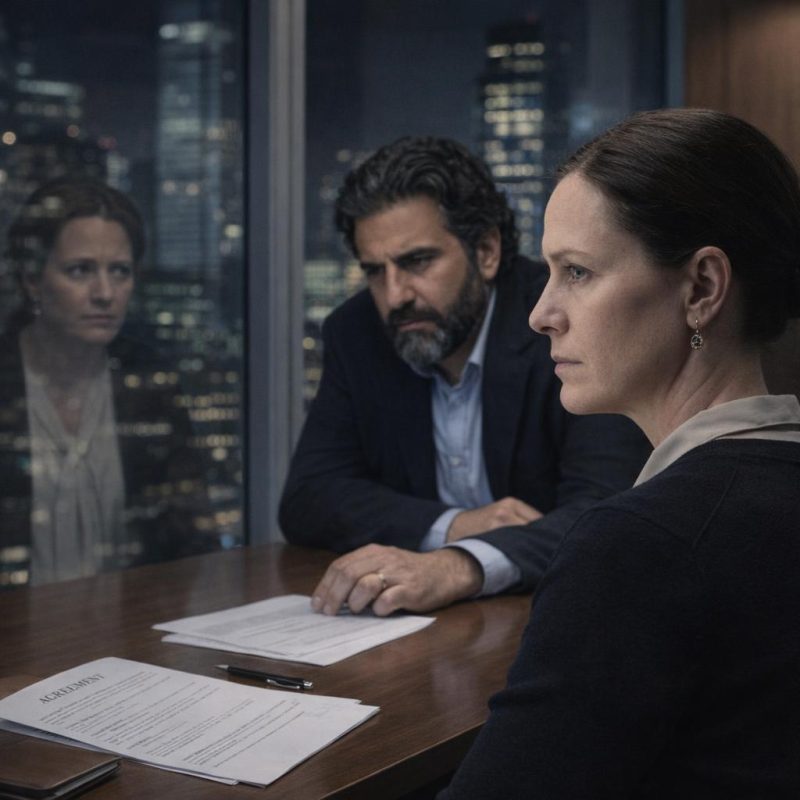 Image by RM AI
Telling Sophie
I picked Sophie up from school and took her to her favorite ice cream shop, the one with the homemade waffle cones that always made her smile. We sat in our usual corner booth, and I told her as much truth as an eleven-year-old could process. Daddy and I were getting divorced. Daddy had made choices that hurt our family. Both parents still loved her completely. Our family would look different now, but she'd still have both of us. Sophie listened quietly, her ice cream melting in the cup, her dark eyes watching my face the way she always did when she was processing something difficult. She asked if Daddy did something bad. I said yes, Daddy hadn't been honest about important things. She nodded slowly, like she'd suspected as much. Then she asked the question that broke my heart. "Is the lady from book club the reason Daddy's leaving? Miss Rachel?" I stared at my daughter, this perceptive, watchful child who'd apparently seen everything I'd tried to hide from her. She asked if the lady from book club was the reason Daddy was leaving, and I realized my perceptive daughter had seen more than I ever wanted her to see.
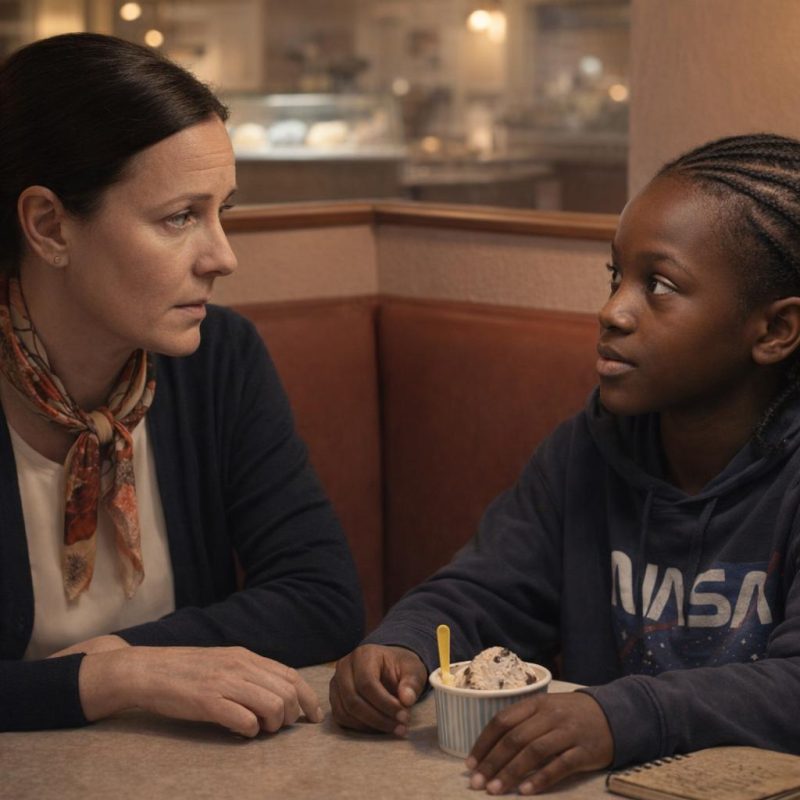 Image by RM AI
Apology and Aftermath
Mark came to collect his remaining belongings on a Tuesday afternoon while Sophie was at Lisa's house. I watched him move through rooms that used to be ours, packing books and clothes and the few personal items the mediation agreement allowed him. He stopped in the kitchen, the same kitchen where we'd had a thousand ordinary mornings, and he started crying. Real tears, not the performative emotion I'd seen during our marriage. He apologized for everything—the storage unit, the lies, the affair with Rachel. He admitted he'd been weak, that he'd let Rachel direct his actions, that she'd manipulated him just like she'd manipulated me. He begged me to understand he never wanted to hurt me or Sophie. I listened to his entire confession without interrupting. When he finished, I acknowledged that yes, Rachel was manipulative and calculating. But I told him he'd made choices every single step of the way. He could have confessed at any point and chose not to. I understood his weakness, I said, but understanding didn't create an obligation to forgive. He begged me to understand that Rachel had manipulated him too, and I told him that understanding his weakness didn't make me obligated to forgive it.
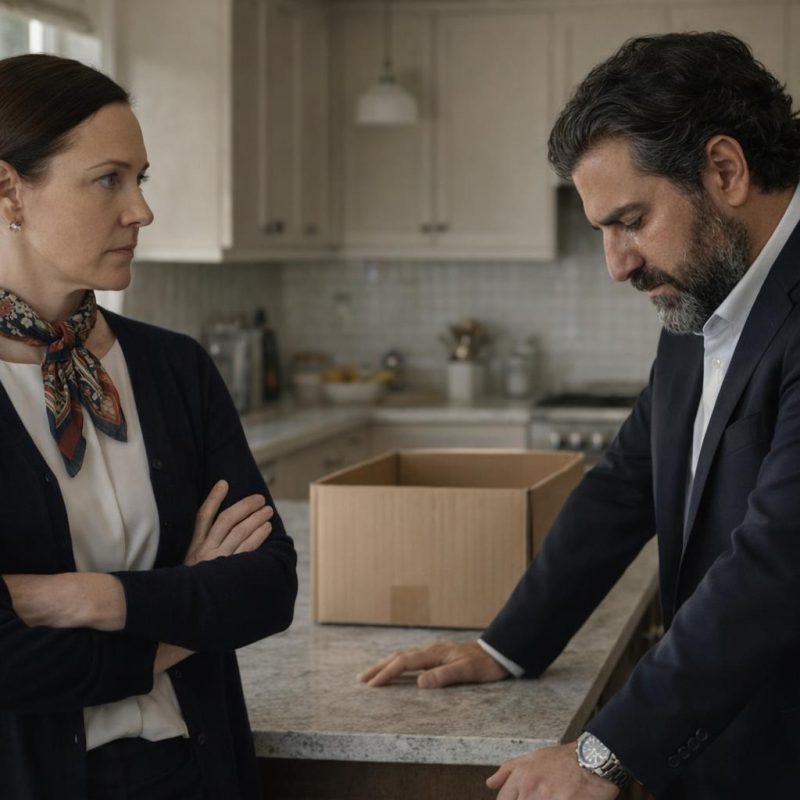 Image by RM AI
Social Collapse
I didn't have to do anything to Rachel after that—her life imploded on its own, and I watched from a careful distance as everything she'd built came crashing down. Word spread through our community fast. The book club disbanded entirely. She was asked to resign from her charity board positions, those prestigious roles she'd cultivated so carefully. Her social media accounts went private, then disappeared completely. Lisa kept me updated on the neighborhood gossip—how the women who'd once competed for Rachel's attention now whispered about her betrayal, how David's divorce filing had become public record with all its ugly details. Mutual friends sent me apologetic messages, shocked that Rachel could be capable of such calculated cruelty. I felt satisfaction watching her experience consequences, though I also recognized the ugliness of enjoying someone's downfall. But when Lisa sent me a screenshot of the neighborhood Facebook group where Rachel had been removed and blocked, I allowed myself to feel vindicated. Lisa sent me a screenshot of the neighborhood Facebook group where Rachel had been removed and blocked, and I felt the satisfaction of seeing her suffer the isolation she'd planned for me.
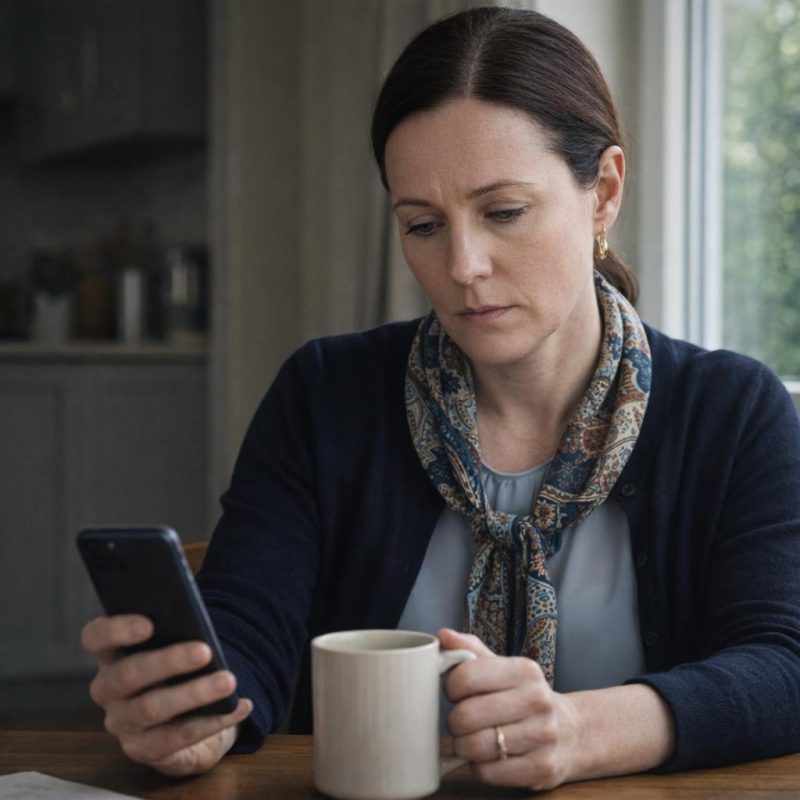 Image by RM AI
Final Answer
Mark called on a Tuesday evening, three weeks after our last conversation about logistics. I saw his name on my phone screen and almost didn't answer, but something made me pick up. His voice sounded tired, stripped of that practiced confidence he usually wore like armor. He asked if we could meet to talk about reconciliation. I told him we could talk on the phone, right then. He launched into his pitch—complete transparency, couples therapy with whoever I chose, cutting all contact with Rachel permanently. He talked about our history, the good years before everything fell apart, how Sophie needed her family intact. I listened without interrupting, letting him say everything he'd prepared. When he finished, the silence stretched between us. I acknowledged that yes, we'd had good years. Yes, there had been real love once. But those good parts didn't erase what he'd done, didn't change the fact that he'd only stopped lying because I'd caught him. I told him I was choosing divorce not because I hated him, but because I deserved a partner who wouldn't need to be caught to be honest. He accepted it with a grief that sounded genuine, and we said goodbye. I hung up the phone and looked around the house that was finally, completely mine, and felt something I hadn't experienced in years: peace.
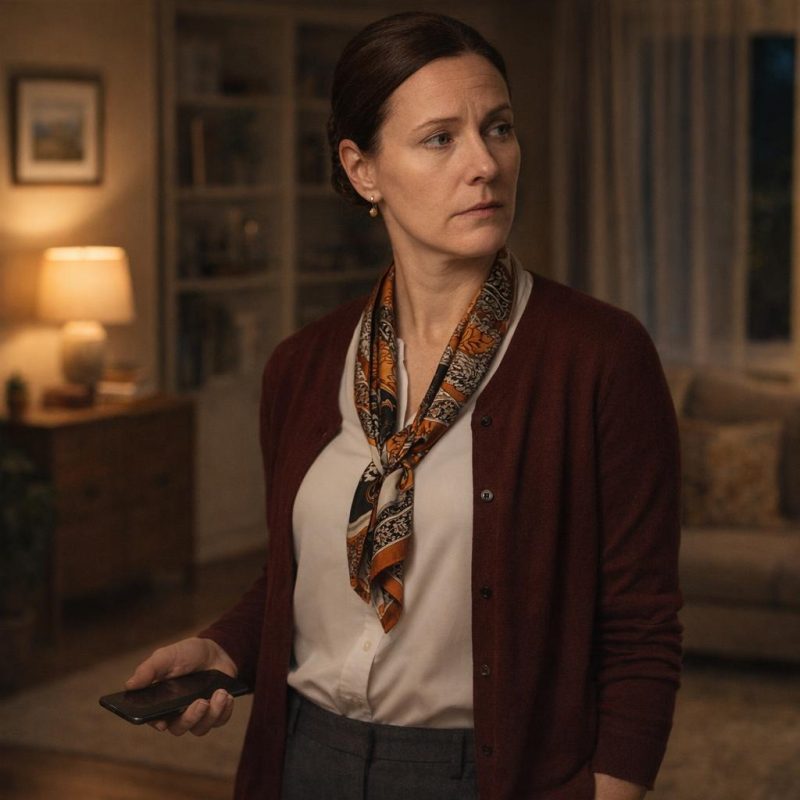 Image by RM AI
Bringing It Home
I rented a moving truck that Saturday morning, the kind with a hydraulic lift that made me feel capable and slightly ridiculous at the same time. Lisa showed up at eight with coffee and work gloves, ready to help me reclaim what was mine. Sophie insisted on coming too, saying she wanted to help bring our stuff home. We drove to Safe-Keep Storage together, windows down in the spring air, and I opened the unit with the padlock key I'd installed all those months ago. The space looked smaller than I remembered, less ominous now that I was taking everything back. We loaded boxes systematically—my rare gardening books, my drafting tools, my grandmother's china wrapped carefully in newspaper. Sophie carried lighter boxes and asked about the items inside, and I found myself telling stories about my grandmother's brooch, my father's first-edition books, the things that connected me to who I was before Mark. Lisa commented that the house already felt more alive as we unloaded, and she was right. By evening, the unit was empty and I'd closed the account. At home, I placed my grandmother's brooch back in its velvet box on my dresser, and when I finally cried—not from grief, but from the overwhelming relief of being whole again.
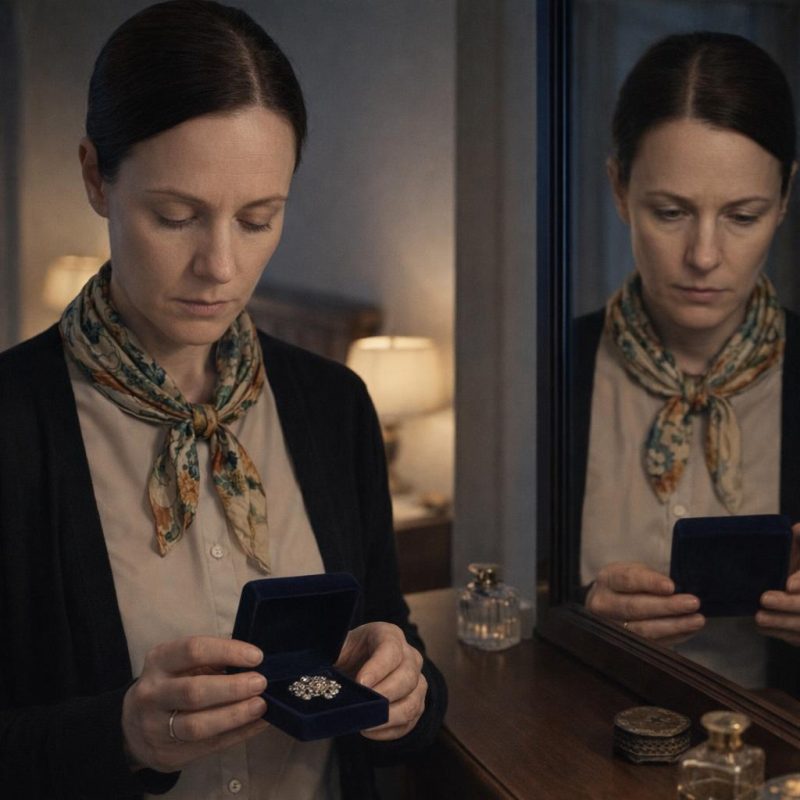 Image by RM AI
New Rhythms
Six months after the divorce was finalized, Sophie and I had fallen into rhythms that felt like ours alone. Sunday mornings meant pancakes—sometimes chocolate chip, sometimes blueberry, always made together with flour on our noses and music playing. Thursday nights were for movies, the two of us sprawled on the couch with popcorn and Sophie's running commentary on plot holes. She spent alternate weekends with Mark at his apartment, and I'd learned to enjoy the quiet without feeling abandoned. Her artwork had shifted back to bright colors, cheerful subjects that covered our refrigerator. My landscape architecture business was thriving in ways I hadn't expected—new clients, bigger projects, work that challenged and excited me. Lisa had become a fixture in our lives, dropping by for dinner or garden planning sessions. Sophie and I had planted vegetables and flowers in the backyard, getting dirt under our fingernails and planning next season's layout. One Thursday evening, curled up after a movie, Sophie asked me directly if I was happy. I considered the question seriously, turning it over in my mind. Sophie asked if I was happy, and I realized I could answer honestly that I was—not despite everything that happened, but because I'd survived it.
 Image by RM AI
Keys to Keep
Spring arrived with an explosion of color in the garden Sophie and I had planted together, flowers blooming in patterns we'd sketched out on winter evenings. I stood on the back porch one Saturday morning, coffee in hand, watching her sit cross-legged in the grass with her sketchbook. She was drawing the tulips and daffodils, her pencil moving with the confidence of someone who knew exactly what she wanted to create. I thought about that rainy Tuesday when I'd found the cold silver key in Mark's coat pocket, how that woman had been trusting and uncertain, waiting for someone else to define her worth. The woman I was now knew her own strength, trusted her own judgment, built things that lasted. Rachel existed somewhere in the world, but I felt nothing when I thought of her—not anger, not satisfaction, just indifference. Mark was Sophie's father, nothing more. A client had asked me earlier that week how I'd become so confident in my design vision, and the question had stayed with me. I'd learned to trust what I built, I realized. Sophie called out, asking me to look at her drawing—our house surrounded by flowers and sunshine, exactly as it was. When a new client asked how I'd become so confident in my design vision, I smiled and said I'd learned to trust what I built—starting with myself.
 Image by RM AI
KEEP ON READING

The story of Ching Shih, the Woman Who Became the…
Unknown author on WikimediaFew figures in history are as feared…
By Emilie Richardson-Dupuis Dec 29, 2025
Einstein's Violin Just Sold At An Auction—And It Earned More…
A Visionary's Violin. Wanda von Debschitz-Kunowski on WikimediaWhen you hear…
By Ashley Bast Nov 3, 2025
This Infamous Ancient Greek Burned Down An Ancient Wonder Just…
History remembers kings and conquerors, but sometimes, it also remembers…
By David Davidovic Nov 12, 2025
The Mysterious "Sea People" Who Collapsed Civilization
3,200 years ago, Bronze Age civilization in the Mediterranean suddenly…
By Robbie Woods Mar 18, 2025
20 Greatest Ancient Athletes In History
Ancient Olympics. Long before modern stadiums and multimillion-dollar endorsements, athletes…
By Sara Springsteen May 1, 2026
20 Soldiers Who Defied Expectations
Changing the Rules of the Battlefield. You’ve probably heard plenty…
By Annie Byrd Feb 10, 2026