

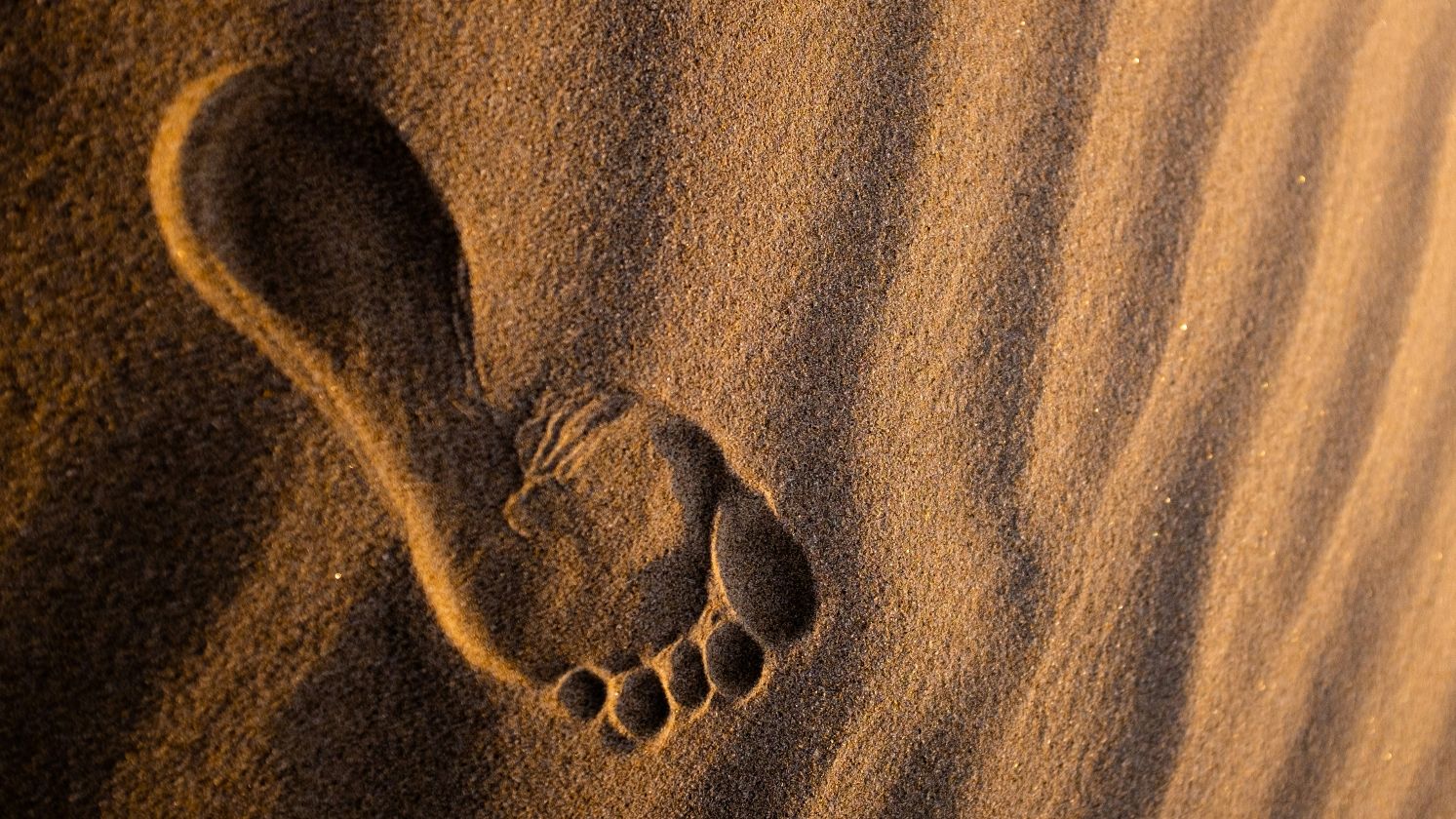
Bones are powerful evidence, but they usually meet us at the end of the story. They can show age, injury, ancestry, and sometimes the care people gave a body after death. Footprints catch something else entirely. They show a living body in motion, mid-step, mid-journey, mid-problem.
That’s why prehistoric trackways can feel so intimate. They don’t give us names, family trees, or tidy little scenes ready for a museum placard. They do preserve direction, spacing, gait, and the ground underfoot, which is a lot for old mud to manage. The Smithsonian’s Human Origins Program describes footprints as trace fossils, meaning they record biological activity rather than body parts.
Footprints Capture Motion, Not Just Remains
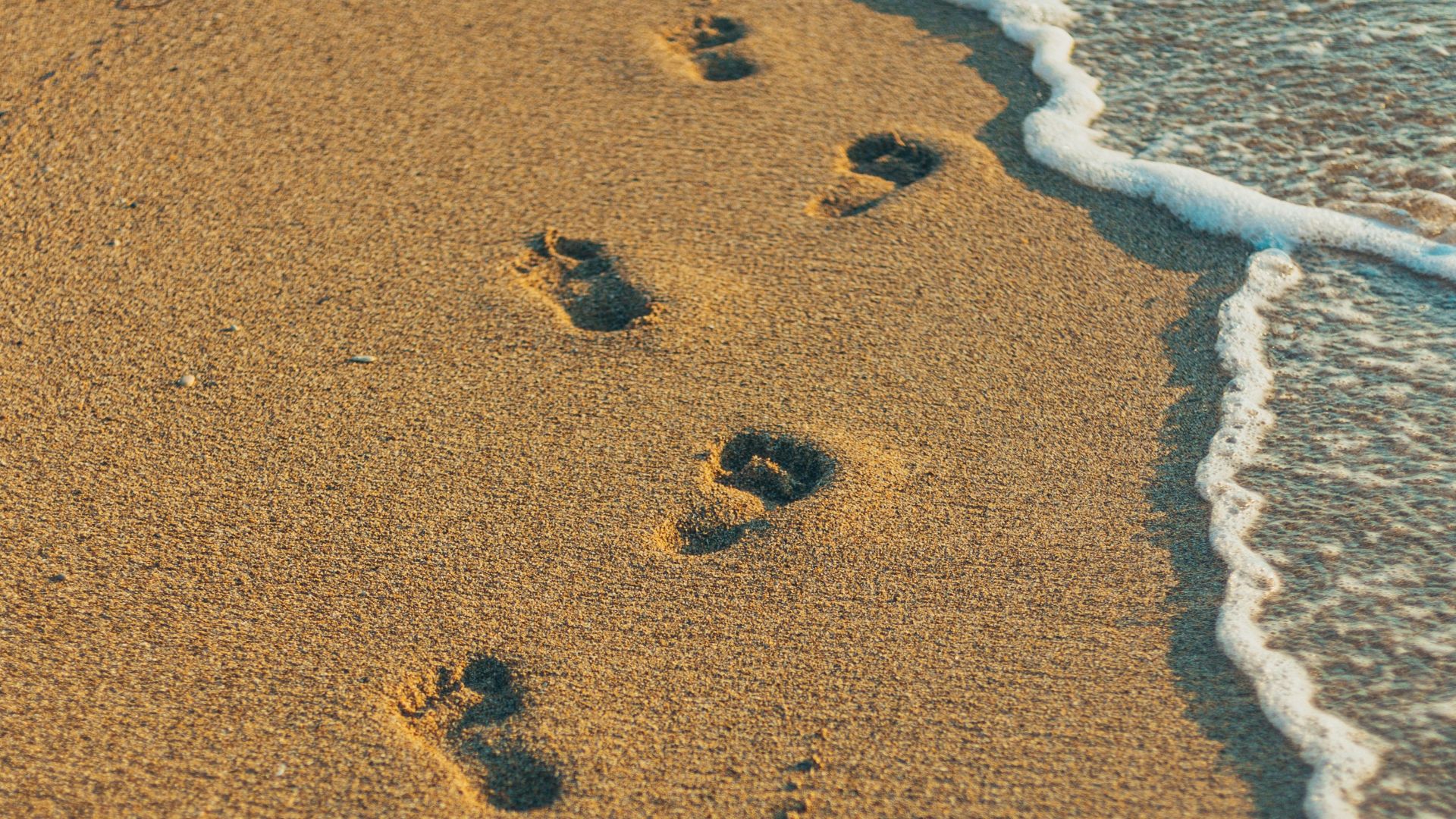
The great thing about a footprint is also the plainest thing about it: someone or something had to move to make it. A bone can tell us what a body was like, while a footprint can help show how that body crossed a specific place. That makes trackways especially useful for studying behavior. A line of prints can preserve pace, direction, and whether several individuals moved across the same surface.
At Ileret, Kenya, researchers studied 1.5-million-year-old footprint assemblages attributed to Homo erectus. The Scientific Reports paper describes 97 hominin tracks made by at least 20 individuals, with print-size analyses pointing to cooperative, multi-male groups.
The same site shows why footprints can add something bones often can’t. The paper explains that social behavior in fossil hominins is hard to reconstruct from skeletons alone. Bones rarely preserve how people moved together, who stayed near whom, or how a group used a landscape in the moment.
Group Life
Some of the clearest trackways include prints of different sizes. That can point to adults and younger individuals moving through the same area, though exact ages and relationships are not always certain. In Britain, the Happisburgh footprints show just how much information can be contained in a few temporary marks in mud. The Natural History Museum says the prints were left by a small group of adults and children walking along estuary mudflats roughly 900,000 years ago.
Those prints were exposed by coastal erosion in 2013, then quickly photographed before the tide destroyed them. From the images, researchers created three-dimensional models and estimated that the people who made the prints ranged from about 90 to 170 centimeters tall. The museum dates the sediment to between 850,000 and 950,000 years ago.
The Happisburgh prints don’t prove a tidy prehistoric household out for a stroll. They do show adults and children crossing the same surface at the same time. That alone matters because it gives us a glimpse of movement shared across ages. For early human life, that’s a small window, but a real one.
Mammoth trackways offer a similar kind of clue in a nonhuman setting. At Fossil Lake in Oregon, a University of Oregon-led team identified 117 impressions dated to about 43,000 years ago. The tracks are thought to represent adult, juvenile, and infant Columbian mammoths in volcanic soil. In other words, the evidence points to mammoths of different sizes moving through the same ancient landscape.
One set of adult mammoth prints was unusually close together, with deeper impressions on the right than on the left. Researcher Greg Retallack said that the pattern looked as if an adult mammoth had been limping. Smaller footprints appeared to approach and move away from that adult’s path.
Retallack compared the pattern with behavior seen around wounded adults in modern, matriarchal herds of African elephants. So it’s fair to say the Oregon tracks may reflect attention, repeated checking, or close movement around an injured animal.
A Single Journey
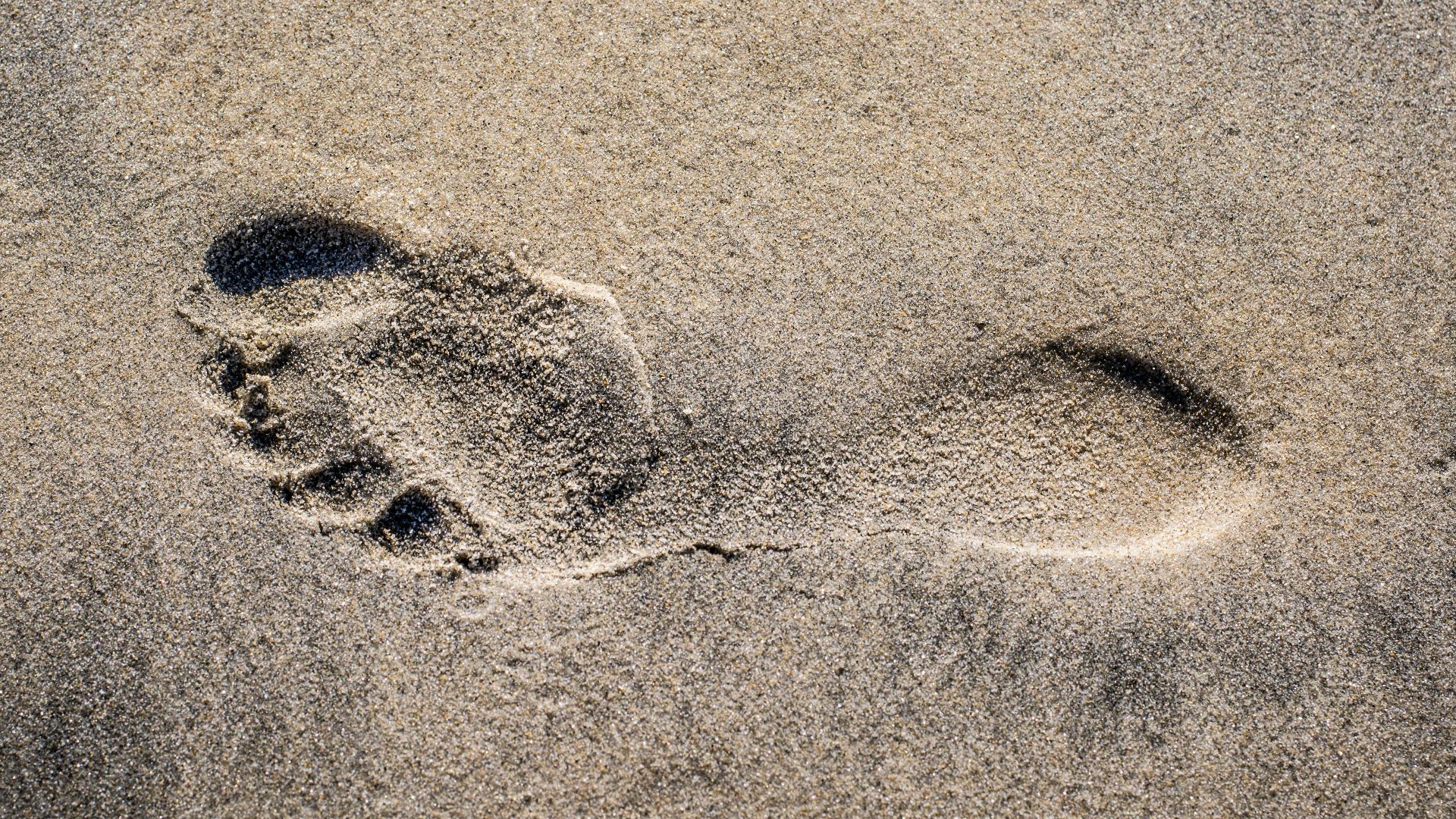
The most vivid caregiving evidence here comes from White Sands National Park in New Mexico. Cornell reported on human tracks more than 11,000 years old that preserve a journey of more than 1.5 kilometers. The trackway shows an adult carrying a toddler for nearly a mile, then returning along the same path without the child.
The details make the journey feel more real. Cornell’s report says the adult’s tracks were joined at points by the toddler’s footprints. But the return trip adds another layer. The same route was followed a few hours later, this time without the child. Cornell notes that the prints were unusually straight and made in a hurry across tough terrain. The dried lakebed also preserves tracks from animals such as mammoths, giant sloths, sabre-toothed cats, and dire wolves.
That is the kind of evidence bones rarely give us. The prints don’t tell us what the adult was thinking, where the child was left, or who may have been waiting at the end of the walk. They do show movement shaped by carrying, strain, and urgency. Footprints change the emotional scale of prehistory because they make behavior visible without having to explain everything. They show groups moving together, younger individuals near larger ones, and journeys shaped by effort and protection. Bones remain essential for studying anatomy, health, ancestry, and death. Footprints add other missing elements: walking, carrying, pausing, and returning.
That’s why prehistoric trackways land so strongly. They don’t replace skeletons, tools, DNA, or burial evidence, and they shouldn’t be pushed beyond what the evidence can support. What they offer is a moment, pressed into a surface and preserved by luck. Bones show what remained after life ended; footprints solidify a small piece of when someone, or something, was alive.
KEEP ON READING

The story of Ching Shih, the Woman Who Became the…
Unknown author on WikimediaFew figures in history are as feared…
By Emilie Richardson-Dupuis Dec 29, 2025
Einstein's Violin Just Sold At An Auction—And It Earned More…
A Visionary's Violin. Wanda von Debschitz-Kunowski on WikimediaWhen you hear…
By Ashley Bast Nov 3, 2025
This Infamous Ancient Greek Burned Down An Ancient Wonder Just…
History remembers kings and conquerors, but sometimes, it also remembers…
By David Davidovic Nov 12, 2025
The Mysterious "Sea People" Who Collapsed Civilization
3,200 years ago, Bronze Age civilization in the Mediterranean suddenly…
By Robbie Woods Mar 18, 2025
20 Greatest Ancient Athletes In History
Ancient Olympics. Long before modern stadiums and multimillion-dollar endorsements, athletes…
By Sara Springsteen May 1, 2026
20 Soldiers Who Defied Expectations
Changing the Rules of the Battlefield. You’ve probably heard plenty…
By Annie Byrd Feb 10, 2026