

My Husband Tried to Take Everything in the Divorce—His Greed Became My Greatest Weapon
My Husband Tried to Take Everything in the Divorce—His Greed Became My Greatest Weapon
The Manila Folder
The manila folder hit our kitchen table with a thud that seemed to echo through ten years of marriage. I looked up from my coffee—the same mug I'd used every morning in this house—and met Mark's eyes. They were blank. Corporate. Like he was about to present quarterly earnings to the board instead of ending our life together. He didn't say anything at first, just slid the folder across the worn oak surface we'd picked out together at that estate sale in Vermont. My hands were shaking when I reached for it. The weight felt wrong, too heavy for what I thought divorce papers should be. I opened to the first page and saw the heading: 'Petition for Dissolution of Marriage.' The words were so clinical, so formal, like our decade together could be reduced to legal terminology. Mark sat perfectly still across from me, his expensive suit crisp even at seven in the morning. This kitchen had been ours—coffee and conversation, Leo's breakfast mess, Sunday pancakes. Now it felt like I was sitting in a stranger's house. Inside, the first page didn't show a settlement—it showed a blueprint for my erasure.
 Image by RM AI
The Itemized Destruction
Mark started talking, and I realized he'd prepared for this like a business presentation. He went through the list methodically: the house first—our three-bedroom colonial that we'd spent three summers renovating, stripping wallpaper and refinishing floors together. His. The vacation cabin in the Berkshires where Leo took his first steps. His. Both cars, including the SUV I used every single day to drive Leo to school, to soccer practice, to playdates. His. Then came the financial assets. The joint savings account we'd built over a decade. The investment portfolio. The retirement funds. All his, he explained, because he'd earned the high salary. His logic was simple, delivered without emotion: he made the money, therefore it belonged to him. I sat there trying to process what he was actually saying. Ten years of managing our home, raising our son, supporting his career moves—apparently that counted for nothing. I forced myself to keep reading through the 'Division of Assets' section. My name appeared exactly once: next to 'personal clothing and effects.' When I reached the bottom of the list, I found my name in only one place: the empty column.
 Image by RM AI
The Disposable Son
Then Mark got to the custody section, and somehow his voice got even more detached. He leaned back in his chair—that posture he uses in conference rooms—and explained that he was offering me full physical custody of Leo. Offering. Like it was a gift. He said his career was on an upward trajectory, that he was being considered for VP, that he needed to focus. He actually used the word 'drudgery' to describe daily parenting. School pickups, bedtime routines, doctor's appointments—all the things I'd been doing for six years while he climbed the corporate ladder. He didn't have bandwidth for it, he said. So I could have Leo. One hundred percent custody. He'd take him every other weekend if his schedule allowed. I stared at the custody language in the papers, and it was dense, specific, almost aggressive in how thoroughly it was spelled out. My throat tightened as the reality hit me: Mark was willing to discard his own six-year-old son to avoid the inconvenience of responsibility. Leo was asleep upstairs right now, clutching his stuffed elephant, completely unaware his father was erasing him. He was abandoning Leo as easily as he was abandoning me, and somehow that hurt more than losing everything else.
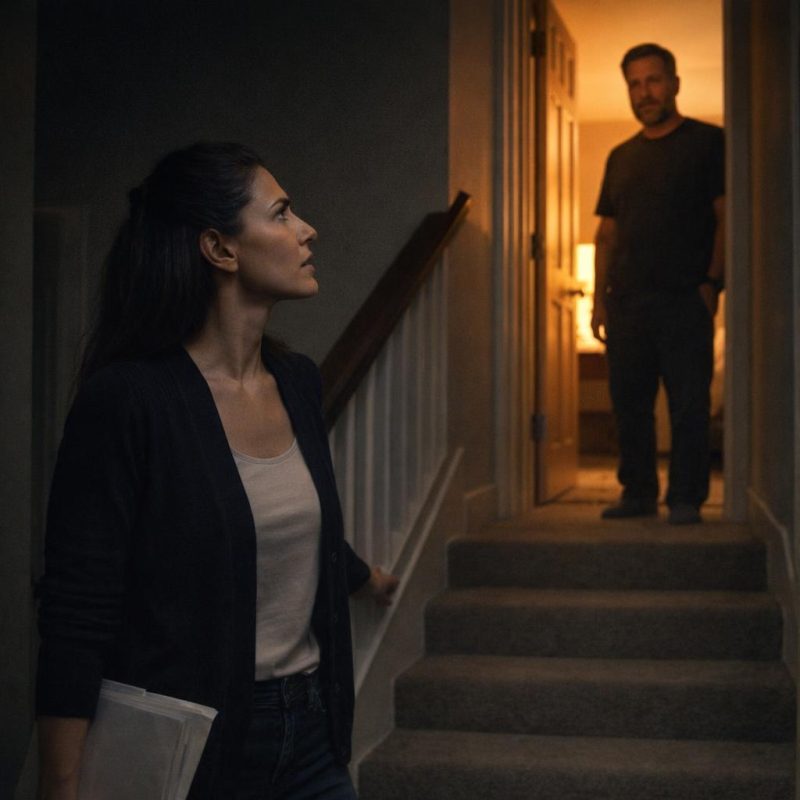 Image by RM AI
The Empty Column
Mark left twenty minutes later, taking his car keys and his briefcase like he was heading to the office. I heard the door close, heard his BMW start in the driveway, and then there was just silence. I sat alone with the papers spread across the table, forcing myself to read every section again. Maybe I'd missed something. Maybe there was a line item I'd overlooked that would make this less catastrophic. But no. No savings, no house, no cars, no income stream. The picture was complete and devastating. I had Leo and maybe a month of emergency credit before the cards maxed out. I started doing the math in my head: rent for even a modest two-bedroom apartment, food, utilities, Leo's school expenses, health insurance. I hadn't worked in a decade. My resume had a gap the size of a canyon, and my professional connections had evaporated years ago. Ten years of raising our son, managing our home, supporting Mark's career—it all counted for exactly nothing in his accounting. The weight of single motherhood with zero resources settled over me like a physical thing. The man who vowed to love me had just engineered my complete destruction, and I had no idea how to fight back.
 Image by RM AI
The Breaking Point
I waited until Leo was asleep, until the house was completely dark, until I couldn't hold it together anymore. Then I called Sarah. It was midnight. She answered on the second ring, her voice thick with sleep, and I just broke down. I couldn't even get words out at first, just sobbing into the phone like a teenager. Sarah—my best friend for fifteen years—stayed quiet and let me cry. When I could finally breathe again, I started reading sections of the papers out loud. The house. The cars. The money. The custody terms that treated Leo like an inconvenience Mark was generously letting me handle. I heard Sarah's breathing change on the other end of the line. Her initial shock was shifting into something else. Fury. When I finished, there was a long silence. Then Sarah's voice came back cold and hard in a way I'd never heard before. She said Mark had declared war. That's the exact word she used: war. I told her I didn't know how to fight someone with Mark's resources, his lawyers, his money. My voice cracked saying it out loud. Sarah's voice went cold when she finally understood the papers, and she said the word I'd been avoiding: war.
 Image by RM AI
The Sleepless Math
I couldn't sleep after hanging up with Sarah, so I did what I always do when I'm panicking: I made lists. I pulled out bank statements, bills, every financial document I could find. I spread them across the kitchen table and started calculating. Emergency fund: maybe six weeks if I was careful. Job prospects with a ten-year resume gap: bleak. Entry-level positions in my old field would barely cover rent on a modest apartment, and that's if I could even get hired. I wrote down Leo's expenses: school tuition, soccer league, health insurance, food, clothes he'd outgrow in six months. Every necessity had a price tag I couldn't meet. I thought about calling my parents, but they were on a fixed income. My sister had three kids of her own. I researched legal aid services for divorce cases and found waitlists stretching months into the future. By the time dawn light started filtering through the kitchen windows, I had pages of calculations spread in front of me. Different scenarios, different possibilities, different desperate attempts to make the math work. Every single path led to the same conclusion. Every path I calculated led to the same conclusion: without a miracle, we'd be homeless within six months.
 Image by RM AI
The Bulldog
Sarah had given me Thomas Henderson's name with absolute certainty in her voice. He was a bulldog, she said. He'd represented her cousin in a brutal divorce three years ago and won. I called his office first thing in the morning, my voice still raw from crying, and somehow got an appointment that same afternoon. His office was in an old building downtown, the kind with creaky floors and tall windows. It smelled like old law books and righteous anger—or maybe that was just wishful thinking on my part. Mr. Henderson was in his early sixties, reading glasses perpetually perched on his nose, weathered features that suggested decades of courtroom battles. His office was crammed with case files and legal volumes. I sat across from his desk and handed him Mark's papers with trembling hands. I watched him start to read with professional detachment, his expression neutral. Then something shifted. His jaw tightened. His face started to flush. By the second page, his knuckles were white where he gripped the document. He opened Mark's papers, and his face went red before he'd finished the first page.
 Image by RM AI
Declaration of War
Mr. Henderson slammed his pen down on the desk so hard I jumped. He looked at me over his reading glasses and said this was the most predatory divorce filing he'd seen in thirty years of family law. Thirty years. He started outlining his strategy immediately, his voice passionate and angry on my behalf. We'd file counter-suits. Freeze the joint bank accounts before Mark could drain them. Fight for the house—I'd contributed sweat equity in those renovations, and that counted. He wanted to subpoena Mark's employment records, his financial statements, everything. We'd demand equitable distribution of all marital assets. He'd file motions for temporary spousal support so Leo and I wouldn't be destitute during the proceedings. Henderson talked about documenting my contributions as primary caregiver and homemaker, challenging Mark's valuation of assets, building a case that would make Mark regret ever trying this. His passion was evident, almost contagious. But then he mentioned the timeline. This kind of fight could take years. Multiple court dates, depositions, motions, appeals. I felt hope and dread warring in my chest. He was ready to drag Mark through every court in the state, but I wasn't sure I could survive a war that long.
 Image by RM AI
The Standard Playbook
Mr. Henderson pulled out a legal pad and started drawing diagrams that looked like pie charts. He explained equitable distribution like he was teaching a class, and I realized how little I actually understood about divorce law. In our state, marital assets get divided based on fairness, not necessarily fifty-fifty, but close. Everything acquired during the marriage counts—the house, the cars, the retirement accounts, all of it. My contributions as primary caregiver had actual legal value. Courts recognized that managing a household and raising a child allowed Mark to advance his career without worrying about anything at home. Henderson showed me case law where homemakers received significant portions of marital estates. He explained how judges calculated non-monetary contributions, how my decade of unpaid labor translated into equity. The house I'd renovated? I had a claim to at least half its value. The savings Mark accumulated while I stretched every dollar? Marital property. His 401k that grew while I handled everything else? I was entitled to a portion. Mark's offer wasn't just insulting—it was legally absurd, almost laughable if it wasn't so cruel. Henderson said I had strong grounds for spousal support too, possibly for years. But then he leaned back and his expression shifted. Knowing I deserved half of everything didn't change the fact that Mark had the power to drag this out until I had nothing left to fight with.
 Image by RM AI
Reading Between the Lines
We went through Mark's filing page by page, and Henderson kept making notes in the margins with increasing irritation. He'd pause at certain sections and explain why they were legally questionable or outright baseless. The asset valuation listed our house at $340,000 when comparable properties in our neighborhood were selling for over $450,000. Mark's attorneys had tried to classify his pre-marriage savings account as separate property even though he'd deposited marital income into it for years. Henderson pointed out contradictions—one section claimed I'd contributed minimally to the household while another acknowledged I'd been the primary caregiver. The custody language was unusually specific, laying out a schedule that gave Mark primary physical custody with me getting every other weekend. It read more like a final order than an opening negotiation. Several clauses had no legal standing in our state but were phrased in intimidating legal language that made them sound official. Henderson tapped his pen against one particularly aggressive section about me waiving all future claims. He looked at me over his reading glasses and said something that made my blood run cold. The document was so aggressively one-sided that Henderson wondered if they'd expected me to just sign it without reading.
 Image by RM AI
Building the Archive
I started in the home office, pulling out file boxes I hadn't opened in years. Three days of sorting through a decade of paperwork, and I barely left the house except to pick up Leo from school. I found receipts for the kitchen renovation where I'd managed every contractor, saved us thousands by coordinating the timeline myself. There were folders of Leo's school records—every parent-teacher conference had my signature, every field trip permission slip, every emergency contact form. I pulled out photo albums that documented me painting rooms, installing light fixtures, organizing the garage sale that funded our vacation fund. Bank statements showed how I'd stretched Mark's salary, how my careful budgeting meant we never carried credit card debt. I found Leo's medical records going back to his birth—my signature on every form, my handwriting noting every appointment. There were thank-you notes from family members for events I'd organized, birthday parties I'd planned, holiday gatherings I'd hosted. I created folders for each category: home management, childcare, financial management, social coordination. The pile grew taller each day. By the end, I had a timeline of ten years that showed exactly what I'd built while Mark was at the office—and what he was trying to steal.
 Image by RM AI
The Closed Door
Henderson called me two days after filing our counter-suit. Mark's attorney had responded already, which apparently was unusually fast. Victoria Chen had sent a single-paragraph email that Henderson read to me over the phone, and I could hear the frustration in his voice. No mediation. No settlement discussions. No negotiation of any kind. See you in court. That was it. Henderson explained that Mark was choosing the nuclear option, the most expensive and time-consuming path possible. He'd apparently instructed his legal team to fight every single point, contest every claim, drag out every procedure. Most divorces settled because litigation was so costly, but Mark wasn't interested in reasonable. He was weaponizing his income, using his corporate salary and legal resources as a bludgeon. Henderson assured me we'd fight, that we had a strong case, but I could hear something in his voice that scared me. He was concerned about the timeline, about the costs, about Mark's willingness to burn money just to win. I thanked Henderson and hung up, then sat at the kitchen table staring at nothing. Mark was willing to spend whatever it took to win, and I had to face the fact that this would be a war of attrition I couldn't afford.
 Image by RM AI
The Invisible Ledger
I opened a spreadsheet and started researching market rates for every role I'd filled. Childcare for a six-year-old, full-time, averaged $15,000 per year in our area. Six years of that alone was $90,000. But I hadn't just provided childcare—I'd been a household manager, personal assistant, social coordinator, and financial planner. I found salary data for each role. A household manager earned $50,000 annually. Add meal planning, grocery shopping, and cooking—that was personal chef territory, another $35,000. The renovation projects I'd managed would have cost thousands in project management fees. I'd coordinated contractors, obtained permits, made design decisions that increased our home's value. I calculated the opportunity cost of abandoning my career, the raises and promotions I'd never received, the retirement contributions I'd never made. My role as primary parent had allowed Mark to work sixty-hour weeks, to travel for business, to focus entirely on climbing the corporate ladder without worrying about anything at home. I added it all up, then checked my math twice because the number seemed impossible. Over ten years, my contributions were worth more than half a million dollars. I had been worth millions to our household, and Mark had valued my contribution at zero.
 Image by RM AI
The First Strike
Henderson had me come to his office to sign the final counter-suit. The document was thick, maybe forty pages, with all my documentation attached as exhibits. He walked me through each section—our demand for equitable division of all marital assets, the request for significant spousal support, the challenge to every point in Mark's original filing. We were asking for temporary orders to maintain the status quo, to freeze accounts, to ensure Mark couldn't hide or dissipate assets. Henderson had included my valuation of contributions, the spreadsheet I'd created, the timeline of my decade as primary caregiver. He'd cited case law, precedents, legal standards that supported our position. I picked up the pen and felt like I was standing at the edge of something I couldn't come back from. This wasn't just paperwork—this was me declaring war on the man I'd spent ten years building a life with. I signed my name on the last page and Henderson immediately scanned everything, filing it electronically with the court. He said Mark's attorney would be served within the hour. I walked to my car feeling both proud and terrified. The battle was officially joined, and there was no way back to the quiet life I'd known.
 Image by RM AI
Victoria Chen
The response came three days later, and Henderson asked me to come to his office to review it together. Forty pages. Mark's attorney had filed a comprehensive motion to dismiss our counter-suit, and the name on the letterhead made Henderson whistle low. Victoria Chen, senior partner at Morrison & Associates, one of the most prestigious family law firms downtown. I'd never heard of her, but Henderson clearly had. He started reading sections aloud, and I watched his expression shift from confident to grudgingly impressed. Victoria had dismantled our arguments point by point with surgical precision. She challenged my valuation methodologies, cited case law from our state where courts had rejected similar homemaker contribution claims. She argued that non-monetary contributions weren't directly compensable under state statute, that my calculations were legally irrelevant. The document was immaculately researched, every argument supported by precedent, every counterpoint anticipated and addressed. Henderson kept shaking his head, making notes, occasionally muttering about how she'd found cases even he hadn't considered. I felt my confidence from three days ago evaporating. Victoria Chen wasn't just good—she was the kind of lawyer who could make black look white, and she was entirely on Mark's side.
 Image by RM AI
The Cost of Justice
Henderson closed Victoria's motion and pulled out a yellow legal pad. He started writing numbers, and I felt my stomach tighten before he even explained. Responding to Victoria's motion would require expert witnesses—economists to validate my contribution calculations, vocational experts to assess my career opportunities. Each expert cost thousands. Then there were depositions, discovery requests, court appearances. Henderson estimated we were looking at $75,000 to $150,000 in legal fees if this went to full trial. Maybe more if Victoria kept filing motions. The timeline stretched out before me like a prison sentence—eighteen months minimum, possibly three years before final resolution. He could offer payment plans, work with me on billing, but he couldn't work for free. I did the math in my head. My emergency fund had maybe $8,000. I could borrow from my parents, but they were retired and living on fixed income. Mark, meanwhile, had his corporate salary, his savings, his ability to outlast me financially. Henderson was still talking, explaining strategies and options, but I'd stopped listening. Fighting for what I deserved would cost $150,000 in legal fees and take three years—and I didn't have either.
 Image by RM AI
The Custody Files
I couldn't sleep that night. The numbers Henderson had laid out kept cycling through my head—$150,000 in legal fees, three years of fighting, Mark's ability to outlast me financially. Around midnight, I gave up on rest and opened my laptop at the kitchen table. I started searching family law databases, reading custody precedents, not really sure what I was looking for. Just something. Anything that might give me leverage I didn't have to pay $150,000 to use. Most of the cases were exactly what you'd expect—parents fighting over their children, bitter custody battles, disputes about visitation schedules. But I kept reading anyway, clicking through case after case. The phrase 'primary physical custodian' appeared over and over. I noticed that voluntary custody agreements were treated differently than contested ones in the court's eyes. Cases about custodial rights and parental responsibilities filled my screen until my eyes burned. It was exhausting, and I had no idea what I was even hoping to find. But something kept me reading, kept me clicking to the next case, the next precedent. Most of the cases I found were about parents fighting for their children, but Mark was the opposite—and that made me wonder if the law had something different to say.
 Image by RM AI
The Weak Points
Henderson called me two days later with something that almost sounded like good news. He'd been going through Mark's filing with a fine-tooth comb, and he'd found mistakes. Actual mistakes. The vacation cabin's appraisal was three years old and probably undervalued by at least forty thousand. Mark's team had incorrectly categorized certain joint accounts as his separate property without proper documentation. There were procedural errors in how some of the disclosures had been filed—nothing that would get the case thrown out, but enough to challenge in depositions. "Victoria's team isn't infallible," Henderson said, and I could hear the satisfaction in his voice. "They got sloppy in places. We can exploit that." He walked me through each weakness, explaining how we could use them to push back on Mark's valuations, force better discovery, maybe even get some of his claims dismissed. The custody section had some unusual phrasing too, he mentioned, but he was focused on the asset issues. For the first time since this nightmare started, I felt something other than desperation. Mark's expensive attorneys had made mistakes. Mark's attorneys had been so focused on taking everything that they'd left gaps in their own armor.
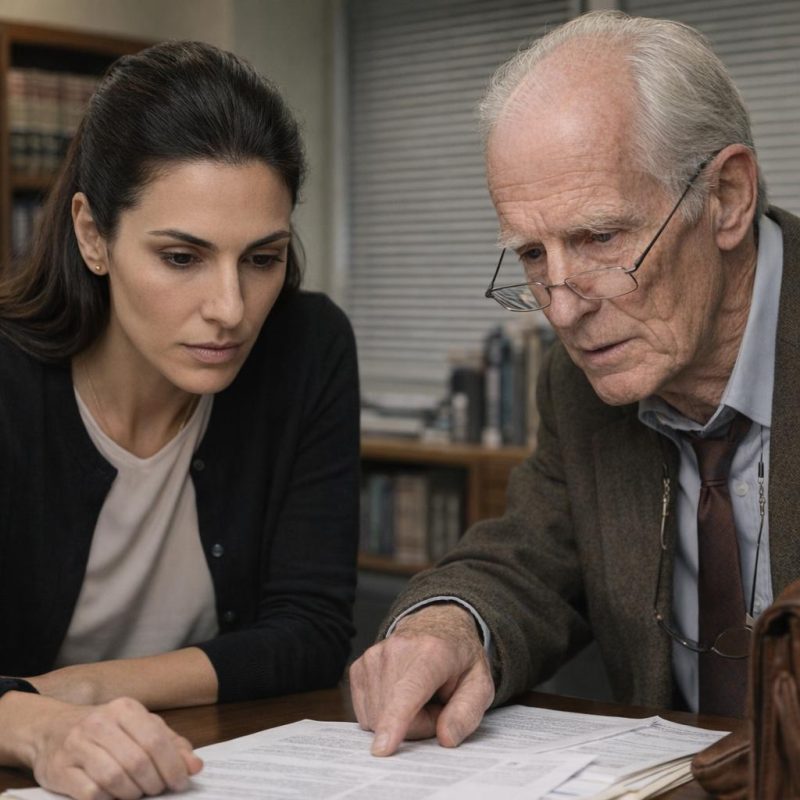 Image by RM AI
The Third Reading
I found myself pulling out Mark's papers again that evening after Leo went to bed. I'd read them so many times I practically had sections memorized, but I kept coming back to the custody part. The language felt off somehow. Mark had written that I would have 'primary physical custodian' status, with 'sole responsibility for daily care and decision-making.' The phrases were repeated multiple times, emphasized in ways that seemed excessive for an uncontested arrangement. There were detailed paragraphs about my authority over Leo's daily routine, his healthcare, his education, his household environment. It was far more thorough than it needed to be. Mark wasn't fighting me for custody—he'd made that crystal clear. So why had his lawyers spent so much time and space spelling out exactly how much custodial authority I would have? I read it a third time, then a fourth, highlighting phrases that seemed unnecessarily emphatic. 'Complete authority over the child's daily welfare and household management.' 'Sole discretion regarding all matters of care and upbringing.' Something about it nagged at me, but I couldn't put my finger on what. The words were precise and emphatic, almost aggressive in how thoroughly they separated Mark from any parental obligation, and I couldn't understand why his lawyers had been so excessive.
 Image by RM AI
The Caregiver Rights Clause
I grabbed a yellow highlighter the next night and went through the custody section again, this time marking every phrase that felt important. 'Primary Caregiver's Rights' was its own heading, followed by half a page of legal definitions. Custodial authority. Household management decisions. Maintaining the child's lifestyle and welfare. I flipped back to Mark's preamble, where he'd defined everything as 'marital property' over and over—the house, the savings, the investments, all of it classified the same way to establish his ownership. Then I noticed something odd. The custody definitions referenced 'maintaining the child's lifestyle and welfare' in language that seemed to overlap with asset management. Phrases about the household and daily care appeared alongside references to marital property in the context of child support. Why would Mark's lawyers connect those concepts in the custody section? I stared at the highlighted phrases, my mind turning over the strange specificity. The way these sections were written, the way they referenced each other, felt unusual. I couldn't articulate why yet, but something about how the custody language and asset definitions intersected kept pulling at my attention. The legal definitions attached to that phrase filled half a page, and as I read them a fourth time, a strange thought began to form.
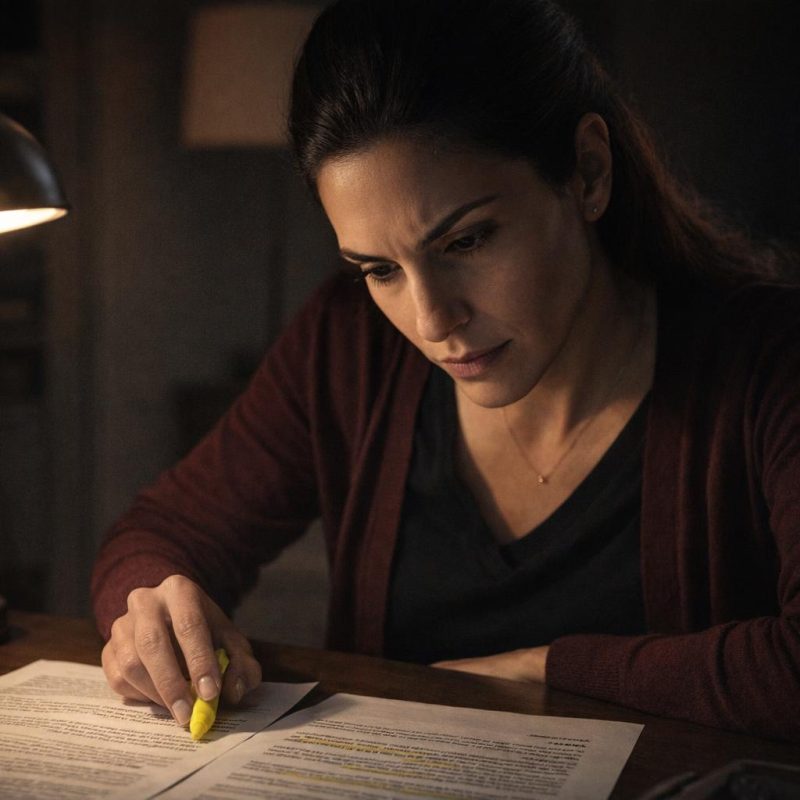 Image by RM AI
Midnight Legal Research
Sleep became impossible. I was back at my laptop at two in the morning, searching legal databases for custody law precedents. I didn't even know what I was looking for anymore—just following a thread I couldn't quite see. I typed in searches about custodial authority, primary caregiver rights, the scope of decision-making power. Case after case discussed how primary custodians had broad authority over household management and financial decisions related to their children's welfare. One ruling talked about custodial parents making decisions about marital property when it affected the child's living situation. Another referenced managing assets for the child's benefit as part of custodial responsibility. I took notes in a spiral notebook, writing down phrases and case numbers, not sure how any of it connected to my situation but feeling like it mattered somehow. The concept kept appearing—custodial authority wasn't just about parenting decisions. It could extend to household finances, asset management, anything that touched the child's daily life and welfare. My coffee had gone cold. The kitchen window showed the first hint of dawn. Leo would be up in a few hours. The cases kept mentioning custodial authority in terms that seemed broader than just parenting decisions, and I wondered what else that authority might cover.
 Image by RM AI
The Asset Connection
I found it at three-seventeen in the morning. A 2015 family court case from Oregon where a mother with one hundred percent physical custody had gained management authority over certain marital assets. The court had ruled that because the assets were designated for maintaining the child's lifestyle, and because she had sole custodial responsibility, she had the legal right to manage those funds. I read the decision three times, my heart beating faster with each pass. The case had hinged on how the divorce agreement defined marital property and how that definition intersected with custodial authority. The father had tried to maintain control over the house and savings, but because they were classified as marital assets tied to the child's welfare, and because the mother had complete custodial authority, the court gave her management rights. I highlighted key phrases, my hands shaking slightly. This wasn't exactly my situation, but the pattern was there. The way assets were legally defined in the agreement mattered. The scope of custodial authority mattered. How those two things connected mattered. I saved the case file and started searching for similar precedents. If custody could create asset management authority in that case, I needed to understand exactly how the court had made that connection.
 Image by RM AI
Hypothetical Questions
I called Henderson's office the next morning and asked if he had time for a quick consultation. When he picked up, I kept my voice casual, academic. "I've been reading about custody law," I said, "and I have some questions about custodial rights. Just trying to understand the scope better." He was happy to explain. I asked about the authority given to primary physical custodians—what decisions they could make, how far that authority extended. Henderson walked me through the basics: day-to-day care, medical decisions, educational choices, household management. I asked hypothetical questions, carefully worded to sound general. What happens when custody agreements reference marital property? How do courts interpret custodial authority in relation to household assets? Could custody language override other sections of a divorce agreement if there was overlap? Henderson answered each question thoroughly, explaining precedents and legal principles. He talked about how custodial parents sometimes gained authority over assets tied to the child's welfare, how courts balanced property rights with parental responsibility. His tone was professional, informative, like he was teaching a law school seminar. He had no idea I was building a framework, testing a theory I hadn't fully formed yet. Henderson answered each question professionally, not realizing I was building a framework for something he hadn't considered yet.
 Image by RM AI
His Own Words
I spread Mark's divorce papers across my dining table that night, laying them out like puzzle pieces. The asset division section on the left. The custody section on the right. I read them side by side, looking for the connection I'd started to see. Mark's preamble defined everything as marital assets—he'd been thorough about that, establishing his ownership over the house, the savings, the investments. All marital property, all his. But the custody section granted me one hundred percent physical custody with detailed caregiver rights. Complete authority over Leo's daily welfare and household management. Sole discretion regarding all matters of care and upbringing. And then I saw it. Mark's lawyers had used the phrase 'marital assets' in both sections. The custody language referenced maintaining Leo's lifestyle and household using those same marital assets. If I could argue that my custodial authority extended to managing the marital assets necessary for Leo's welfare—the house where he lived, the savings that maintained his lifestyle—then Mark's own definitions might work against him. He'd classified everything as marital property to claim ownership. But that same classification, paired with my custodial rights, could mean something entirely different. Mark had defined the house and savings as marital assets for his benefit, but that same language could mean something very different when paired with my custodial rights.
 Image by RM AI
Drafting the Language
I opened a blank document on my laptop and stared at the cursor blinking against white space. One sentence. That's all I needed—one perfectly crafted sentence that would connect my custodial authority to the marital assets Mark had so carefully defined as his own. I typed: "Primary caregiver shall maintain discretionary access to marital assets necessary for dependent's welfare." Too obvious. Delete. "Custodial parent retains management authority over household resources." Too vague. Delete. I pulled up Mark's papers again, searching for his exact phrasing. Marital assets. He'd used that term everywhere, establishing ownership while simultaneously categorizing everything under one umbrella. I tried again: "Primary physical custody includes reasonable access to marital property for dependent care purposes." Better, but still too long, too complicated. The clause had to read like a minor clarification, something his lawyers would skim past without a second thought. I spent three hours writing and deleting variations, each one either too transparent or too weak to hold up legally. My coffee went cold. My neck cramped. I had a dozen draft versions saved in separate documents, but none of them felt right yet. The words had to be short enough to seem minor but precise enough to be legally binding, and I wasn't sure I could find the exact phrasing that did both.
 Image by RM AI
The Cost of Gambling
Henderson's proposed litigation timeline sat on my desk next to my bank statements. Three to five years of court battles. Depositions, discovery, motions, appeals. His estimated costs ran to six figures—money I didn't have and couldn't borrow. I looked at my emergency fund balance: $8,347. Enough for maybe two months of legal fees before I'd be representing myself against Victoria Chen's entire firm. The traditional path gave me a chance at some assets, sure. Maybe I'd walk away with thirty percent of the house equity, a portion of the savings. But I'd spend every dollar I had—and then some—just to get there. I'd be buried in debt before I ever saw a courtroom. My custody strategy required something different. It meant accepting Mark's asset division completely, volunteering to give up the fight for everything. If the clause didn't work, if the court didn't interpret it the way I hoped, I'd have nothing. Not thirty percent. Not even ten percent. Nothing. I stared at both documents until my vision blurred. This was an all-or-nothing gamble, and if I was wrong, Leo and I would be starting over with less than zero. The weight of that decision kept me awake until dawn, calculating and recalculating odds I had no way to measure.
 Image by RM AI
Alternative Approaches
I called Henderson's office and asked for an in-person meeting. When I sat across from him the next afternoon, I tried to keep my voice steady. "Are there any strategies that avoid prolonged asset litigation?" He looked at me over his reading glasses like I'd suggested we surrender. "Emma, giving up the asset fight would be unprecedented. And inadvisable. Mark's team would see it as capitulation." "I'm not talking about capitulation," I said. "I'm asking about alternative approaches. Ways to leverage other aspects of the divorce." Henderson set down his pen. "What other aspects?" "Custody arrangements. Can they affect other terms?" His confusion was visible now. "Custody is separate from asset division. They're distinct legal categories." "But they reference each other, don't they? The custody section talks about maintaining Leo's lifestyle, his household. That requires resources." "Yes, but—" "Have you ever seen cases where custody agreements created unexpected outcomes? Where the provisions did more than just establish visitation schedules?" Henderson leaned back in his chair, studying me. "I've seen unusual custody provisions, yes. But I don't understand where you're going with this." I wasn't ready to show him everything yet. I needed to know if he'd be open to unconventional thinking first.
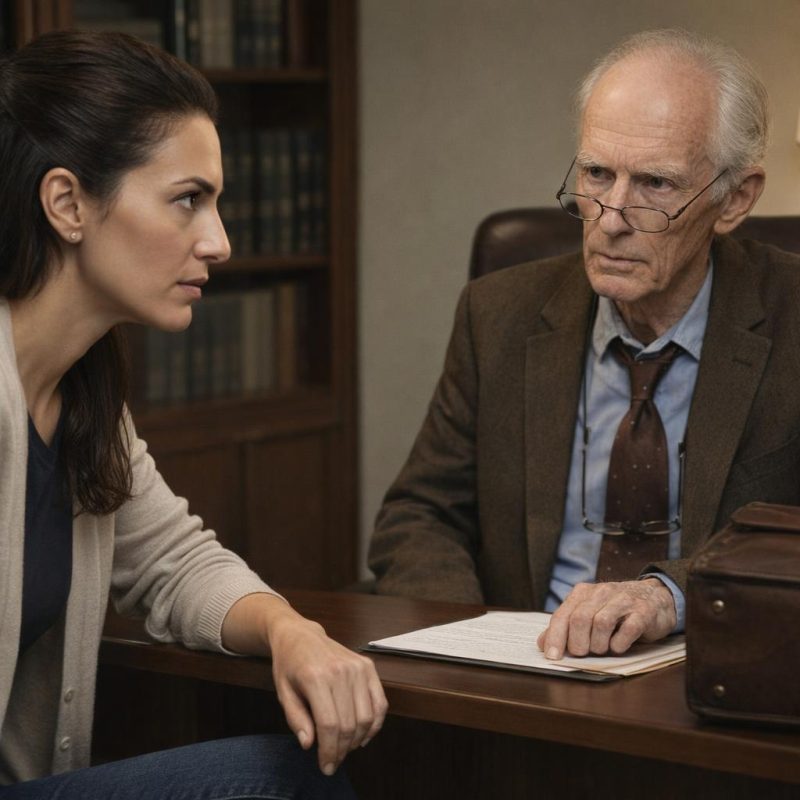 Image by RM AI
Twelve Words
It was past midnight when I finally found it. Twelve words that balanced legal precision with apparent simplicity. I'd been working for hours, testing phrases against Mark's asset definitions, checking them against the custody language, making sure every term aligned perfectly. The clause had to reference marital assets—Mark's own phrase—and link them to my custodial authority without sounding like a power grab. It had to seem reasonable, even generous. A minor clarification about caregiver responsibilities that his lawyers would approve without thinking twice. I typed the final version and read it back three times. The wording created a legal bridge between two sections of the divorce agreement, using Mark's own definitions as the foundation. It appeared to be nothing more than a practical detail about how I'd manage Leo's daily needs. But if a court interpreted it the way I hoped—if the connection held—those twelve words could change everything. I saved the document and closed my laptop. The clause read so innocuously that I worried Mark's lawyers might approve it without a second thought, which was exactly what I needed.
 Image by RM AI
Rehearsing the Pitch
I practiced my presentation in front of the bathroom mirror like I was preparing for a job interview that would determine the rest of my life. "Mr. Henderson, I found something in Mark's papers. A legal vulnerability." Too dramatic. Start over. "I've been researching custody provisions and asset management." Too academic. I printed out the 2015 case and highlighted the relevant passages. I organized Mark's divorce papers with sticky notes marking every reference to marital assets, every mention of custodial authority. I needed Henderson to see the connection immediately, to understand the logic before his lawyer brain started listing objections. I anticipated his questions: But courts don't interpret custody that way. Mark's team will challenge it. You're reading too much into the language. I prepared counterarguments for each one, citing precedents, showing how the definitions overlapped. But what if he thought I was desperate? Delusional? Grasping at legal straws because I couldn't accept reality? I barely slept that night, running through the presentation over and over. Tomorrow morning I'd show him what I'd found, lay out the entire strategy, and if he didn't believe in it—if he refused to support this approach—I'd have to decide whether to proceed alone.
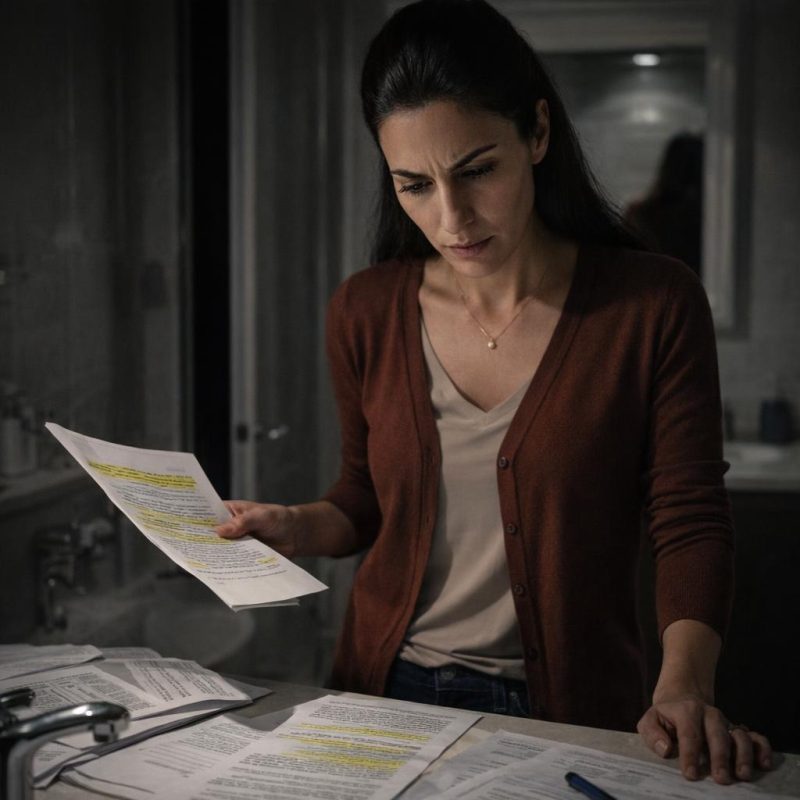 Image by RM AI
Revealing the Strategy
Henderson's office smelled like old books and coffee. I spread my materials across his desk: the highlighted precedents, Mark's papers with my annotations, the timeline showing how his own language created the vulnerability. "The 2015 case established that primary caregivers can have management authority over household assets," I started. "Mark's asset preamble defines everything as marital assets—the house, savings, investments. But look at the custody section. It grants me complete authority as primary caregiver over Leo's daily welfare and household management." Henderson picked up Mark's papers, scanning the sections I'd marked. "I'm following you so far." "Mark used the phrase 'marital assets' in both sections. The custody language says I have discretion over matters of care and upbringing. If I can argue that managing marital assets is necessary for Leo's welfare—" "You're saying custodial authority could extend to asset management." His voice had shifted from skeptical to thoughtful. I showed him my twelve-word clause, explained how it would bridge the two sections. Henderson read it twice, then looked up at me with something like comprehension dawning across his weathered features. He leaned back in his chair and said the clause was either brilliant or insane, and he needed time to figure out which.
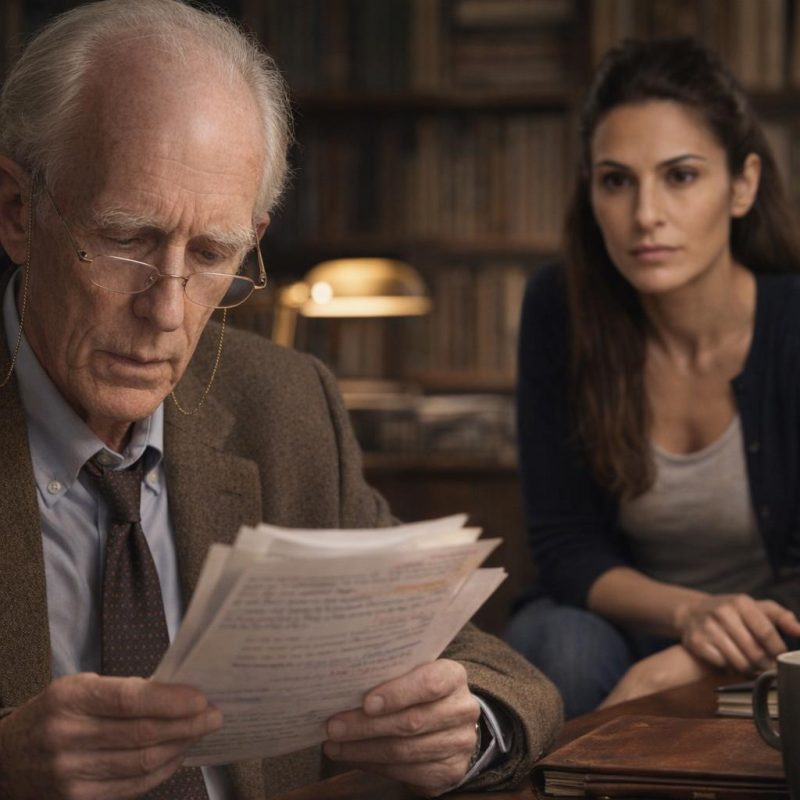 Image by RM AI
Legal Analysis
Henderson put on his reading glasses and went through Mark's papers line by line. I sat across from him, watching his eyes move across each page, my hands clenched in my lap. He started with the asset preamble, noting every reference to marital property with a pencil. Then the custody section, comparing the language about primary caregiver authority. He was silent except for the sound of turning pages, the occasional scratch of his pencil marking passages. I didn't interrupt. This was the test—whether my theory held up under professional scrutiny or fell apart under examination. Henderson pulled out the precedent cases I'd found and cross-referenced them with Mark's terms. He wrote notes in the margins, drew arrows connecting related clauses. Twenty minutes passed. Then forty. He examined how courts in our state had interpreted similar custody provisions, tested potential counter-arguments Mark's team might raise. I watched his expression shift from concentration to something else—recognition, maybe. After an hour, he set down the papers and removed his glasses. "The logic is sound," he said carefully. "Mark's own language creates the connection. If a court agreed to interpret custodial authority this broadly—" He paused. "If the court agreed."
 Image by RM AI
Risk Assessment
Henderson opened a fresh legal pad and started writing. "Let's talk about everything that could go wrong." The list grew longer than I wanted it to be. Mark could challenge the clause after signing. Courts might interpret the language more narrowly than we hoped. Victoria's team might catch the implication before approving the revisions. I'd be giving up all traditional asset claims, volunteering to walk away from everything, and if this failed I'd have nothing to fall back on. "But," Henderson said, tapping his pen against the pad, "the clause relies on Mark's own definitions. That strengthens it legally. And honestly?" He looked at me over his glasses. "Mark's lawyers will likely assume you're defeated. They'll skim the revisions looking for tricks in the asset division, not the custody section. Overconfidence makes people careless." He wrote two numbers on the pad. "Thirty percent chance a court upholds this if challenged. Maybe less, maybe more—it's untested legal ground." Then he circled the second number. "But ninety percent chance Mark's lawyers approve it without seeing the trap. They'll think you're just clarifying caregiver expenses." I stared at those numbers, calculating what they meant for Leo and me.
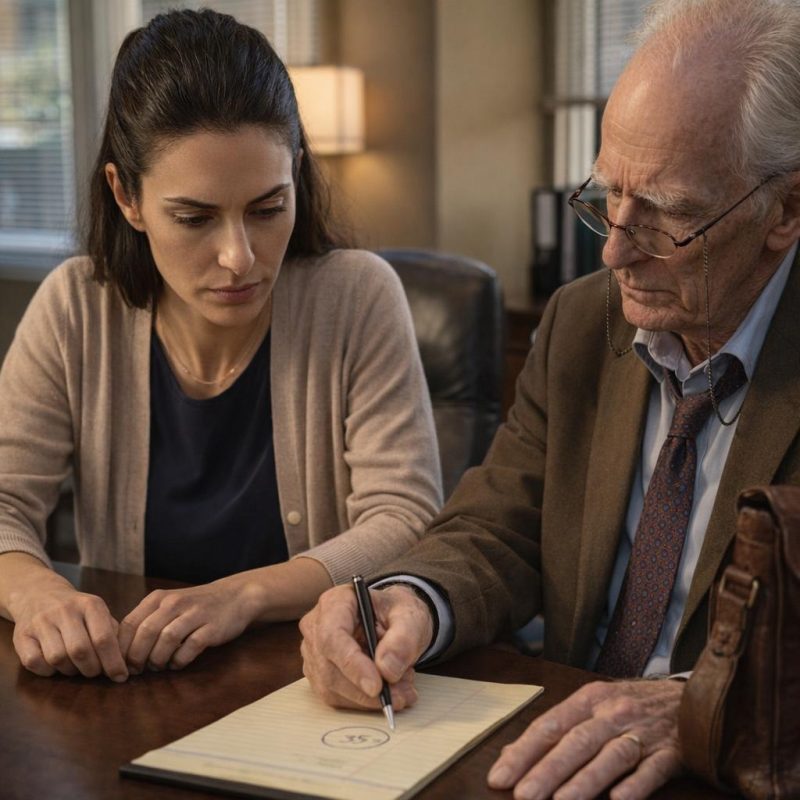 Image by RM AI
The Ally
Mr. Henderson closed the case files and told me he'd spent thirty years in family law and never seen anyone try what I was proposing. He leaned back in his chair, studying me over those reading glasses that never seemed to leave his nose. "I've seen desperate clients," he said. "I've seen creative clients. But this?" He tapped the legal pad where we'd outlined the strategy. "This is either brilliant or career-ending for both of us." My stomach dropped. I'd thought having him understand the logic would be enough, but understanding wasn't the same as agreeing. "Your research is thorough," he continued. "The logic is compelling. And honestly—" He caught himself, using my name in that way lawyers do when they're about to deliver hard truth. "Continuing traditional litigation will bankrupt you. Mark's got deeper pockets and he knows it. He'll drag this out until you can't afford to fight anymore." I nodded, not trusting my voice. Henderson pulled off his glasses and rubbed his eyes, and in that moment he looked every one of his sixty-some years. Then he smiled and said that if I was willing to take the risk, he'd help me make sure every word of that clause was legally bulletproof.
 Image by RM AI
The Final Decision
I sat in Mr. Henderson's office with two documents in front of me: one continuing the fight, one surrendering everything but custody—and I had to choose. The first document was our counter-suit, months of work, every asset claim we'd built. The second was acceptance of Mark's terms, complete capitulation on paper. Henderson didn't push me either way. He just sat there, hands folded, giving me space to decide. I thought about Leo. Not about what was fair or what I deserved, but about what he needed. A mother who spent the next three years in court, hemorrhaging money on legal fees, bitter and broke even if she won? Or a mother who walked away from the assets but stayed financially stable enough to actually parent? The traditional path led to ruin regardless of the outcome. I'd be destroyed by legal costs or destroyed by losing—those were my only options if I kept fighting Mark's way. I picked up the pen and pointed to the second document. "This one," I said. "We withdraw everything." Henderson nodded and began drafting the paperwork. Henderson would withdraw our counter-suit in the morning, and Mark would think he'd won before the real battle even began.
 Image by RM AI
The Withdrawal
Mr. Henderson filed the withdrawal of our counter-suit, and within hours Mark's attorney called demanding to know what game we were playing. I sat across from Henderson's desk while he took the call on speaker, my heart hammering so hard I was sure Victoria Chen could hear it through the phone. "This is highly irregular," Victoria said, her voice sharp and clipped. "Your client fights for six months and then withdraws everything overnight? What's the angle here, Bill?" Henderson's voice stayed calm, almost bored. "No angle. My client wants to move forward. She's looked at her financial reality and decided years of litigation isn't worth it." "She's broke, you mean." Victoria's tone carried satisfaction and suspicion in equal measure. "She's practical," Henderson corrected. "Your client gets everything he asked for. I'd think you'd be pleased." There was a long pause. I could picture Victoria in her sleek office, immaculate suit, perfect posture, trying to find the trap. "We'll review any revised proposals carefully," she finally said. "I'm sure you will," Henderson replied. Victoria Chen's voice was sharp with suspicion, but Henderson calmly explained that I simply wanted to move forward—and I could hear her skepticism through the phone.
 Image by RM AI
Accepting His Terms
I signed the document accepting every single one of Mark's original demands, and Mr. Henderson sent it to Victoria with a cover letter that made me sound beaten. My hand shook slightly as I wrote my name at the bottom of each page. The house—Mark's. The cars—Mark's. The savings accounts, the investment portfolio, everything we'd built together—all Mark's. I kept reading through it, this document that made me a ghost in my own marriage, erased from twelve years of shared life. Henderson had drafted a cover letter that was a masterpiece of defeated language. "Ms. Hartwell wishes to conclude these proceedings as expeditiously as possible," it read. "Given her limited financial resources and desire to minimize further conflict, she accepts the petitioner's proposed division of assets in full." It sounded like I'd given up. Like I was too exhausted and too broke to keep fighting. Which, to be fair, wasn't entirely a performance—I was exhausted and nearly broke. I just wasn't giving up. Henderson printed the final version and slid it across his desk. "You're sure?" he asked one last time. I nodded and signed. The revised papers looked like complete capitulation, except for one small addition in the custody section that would take careful reading to notice.
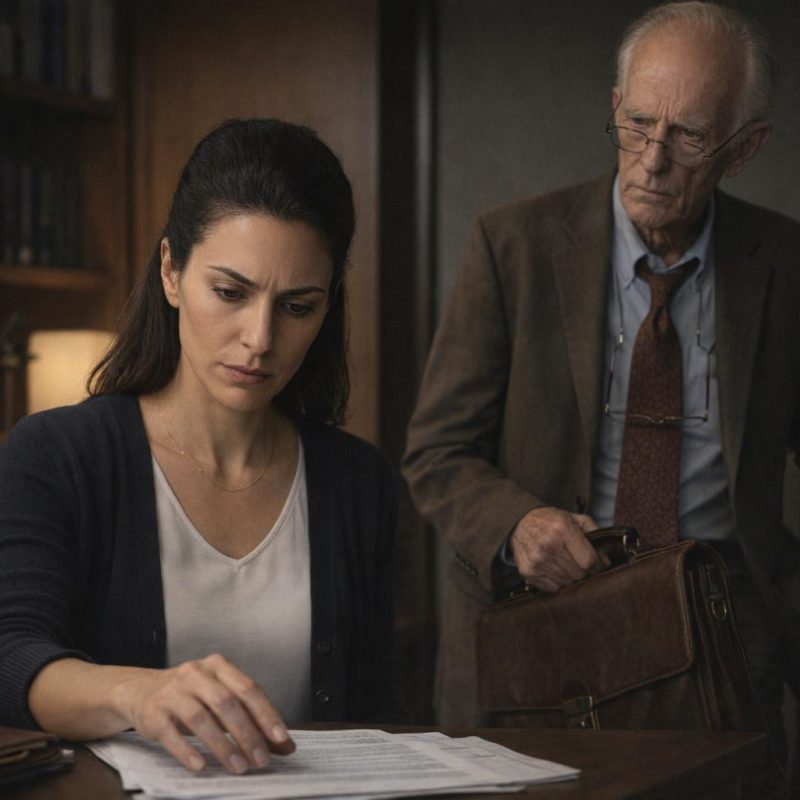 Image by RM AI
The Insertion
Mr. Henderson placed my twelve-word clause into the custody section with surgical precision, making it read like a minor clarification that any reasonable person would approve. He'd positioned it in the Primary Caregiver Rights section, nestled between provisions about medical decisions and school enrollment. The language mirrored phrasing already present in Mark's original filing—that was the genius of it. It looked like I was just clarifying how the custodial parent would maintain household stability, ensuring Leo's primary residence remained adequately resourced. Henderson read it aloud: "Marital assets shall remain accessible to the primary custodian as necessary to maintain the minor child's established standard of living." Twelve words. They sounded so reasonable, so focused on Leo's wellbeing. Any family court judge would nod along—of course the child's home should be maintained, of course the primary caregiver needs resources. The clause didn't scream "loophole." It whispered "common sense." Henderson had matched the grammar, the legal terminology, even the font size to everything around it. In context, surrounded by other custody provisions, it disappeared. Just another line of boilerplate caregiver language. I read it three times, seeing how innocent it appeared. The words were so carefully chosen that they looked like boilerplate caregiver language, not the key that would unlock everything Mark thought he'd secured.
 Image by RM AI
Sending the Papers
Mr. Henderson hit send on the email to Victoria's office, and I watched the revised divorce agreement disappear into cyberspace carrying my entire future with it. The email was brief and professional. "Please find attached the revised marital settlement agreement incorporating your client's proposed asset division. Ms. Hartwell has accepted all terms and is prepared to execute immediately upon approval." Henderson's cursor hovered over the send button for just a moment—giving me one last chance to back out—then clicked. The whoosh sound of the email sending felt absurdly loud in the quiet office. "Now we wait," Henderson said, closing his laptop. I stared at the screen where the sent confirmation glowed. Everything I'd planned, everything I'd researched, every desperate hope I had was now in Victoria Chen's hands. She'd forward it to Mark. They'd review it together, probably over drinks, celebrating his total victory. Would they read the custody section carefully? Would some paralegal catch the implication of those twelve words? Henderson must have seen my face because he reached across the desk and tapped the folder. "We made it invisible," he reminded me. "That's all we can do." The papers were in Mark's lawyers' hands now, and all I could do was wait to see if they'd notice what I'd done.
 Image by RM AI
The Waiting
Three days passed without a word from Victoria's office, and every hour of silence felt like it might end with the call that said they'd caught my addition. I checked my email obsessively. Every notification made my stomach lurch. Every unknown number calling my phone sent panic through my chest. Day one, nothing. I told myself that was normal—lawyers don't respond immediately. Day two, still nothing. I started imagining Victoria in her office, the revised agreement spread across her desk, a highlighter in her hand marking my twelve-word clause. By day three I couldn't eat. I'd wake up at 3 AM convinced they were building a fraud case, that I'd be sanctioned, that I'd lose Leo entirely for what I'd tried. What had I been thinking? That Mark's high-powered legal team would just skim a custody agreement? That Victoria Chen, who probably billed eight hundred dollars an hour, would miss something this important? I'd been an idiot. A desperate, foolish idiot. On day four, I was sitting at my kitchen table, staring at my phone, absolutely certain that the silence meant they'd discovered everything. By the fourth day, I was convinced they were building a case against me, but then Henderson's phone rang.
 Image by RM AI
Forty-Eight Hours
Mr. Henderson forwarded me Victoria's email with a signed approval of the revised papers, and I read it three times before I believed it was real. The email had arrived exactly forty-eight hours after we'd sent the revised agreement. Forty-eight hours. Two business days. The message was brief, almost dismissive: "Revised MSA reviewed and approved. Terms acceptable. Client agrees to proceed with execution. Please coordinate signing schedule." That was it. No questions. No requests for clarification. No mention of the custody section at all. Henderson called me immediately. "They approved it," he said, and I could hear the disbelief in his voice too. "Already?" My hands were shaking as I read Victoria's email again. "Forty-eight hours. They barely looked at it." I scrolled down to the attached PDF—the agreement with Victoria's electronic signature and Mark's, both dated that morning. They'd signed it. Actually signed it. The custody section with my twelve-word clause was right there on page seven, and they'd just... approved it. Bundled it in with everything else like it was nothing. Henderson had been right—they'd seen my surrender on assets and assumed the rest was standard language. Mark's legal team had approved my clause within forty-eight hours, and their brief response made it clear they'd barely glanced at the custody section at all.
 Image by RM AI
The Final Appointment
Henderson met me at the courthouse steps an hour before the scheduled signing, and I could see the concern in his eyes as he looked at my face. "You ready for this?" he asked, and I nodded even though my stomach was churning. We'd rehearsed this moment for days—the defeated posture, the trembling hands, the careful avoidance of eye contact. I had to look like a woman who'd lost everything, who'd been crushed by the weight of Mark's legal machine and Victoria's cold efficiency. Henderson walked me through the timeline one more time: signing today, filing tomorrow, then a three-week waiting period before the terms became fully enforceable. "Don't say anything that could raise questions," he reminded me quietly as we climbed the courthouse steps. "Let me handle any conversation. You just sign and look like you want to disappear." I practiced the expression in the reflection of the glass doors—shoulders slumped, eyes downcast, the picture of resignation. Inside, Henderson showed me the conference room where it would all happen. The table was already set with document folders, pens arranged in a neat row. My hands were actually shaking as I stared at those folders, and I realized part of my performance wouldn't be acting at all. The date was set, the papers were prepared, and all that remained was watching Mark put his name on the document he thought would destroy me.
 Image by RM AI
The Victor's Smirk
I walked into the conference room with Henderson, and Mark was already there with Victoria, leaning back in his chair like he owned the building. He looked relaxed in a way I hadn't seen in months, his expensive suit perfectly pressed, that familiar smirk playing at the corners of his mouth. "Glad we can finally put this behind us," he said, not quite looking at me. Victoria presented the documents with clinical efficiency, sliding the folders across the table with manicured fingers. Mark picked up his pen and started signing each page without reading a single word. I watched his signature appear again and again, that bold scrawl I'd seen on birthday cards and mortgage papers and Leo's birth certificate. His smirk grew with each page he turned. When it was my turn, I signed with hands that trembled—and that part wasn't entirely an act, because the weight of what was happening felt surreal. Mark stood after the final signature, stretching like a man who'd just closed a successful business deal. He picked up the house keys from the table where I'd left them, tested the weight of them in his palm, and walked toward the door without a backward glance. He walked out of the courthouse with my house keys in his pocket and my future in his blind spot.
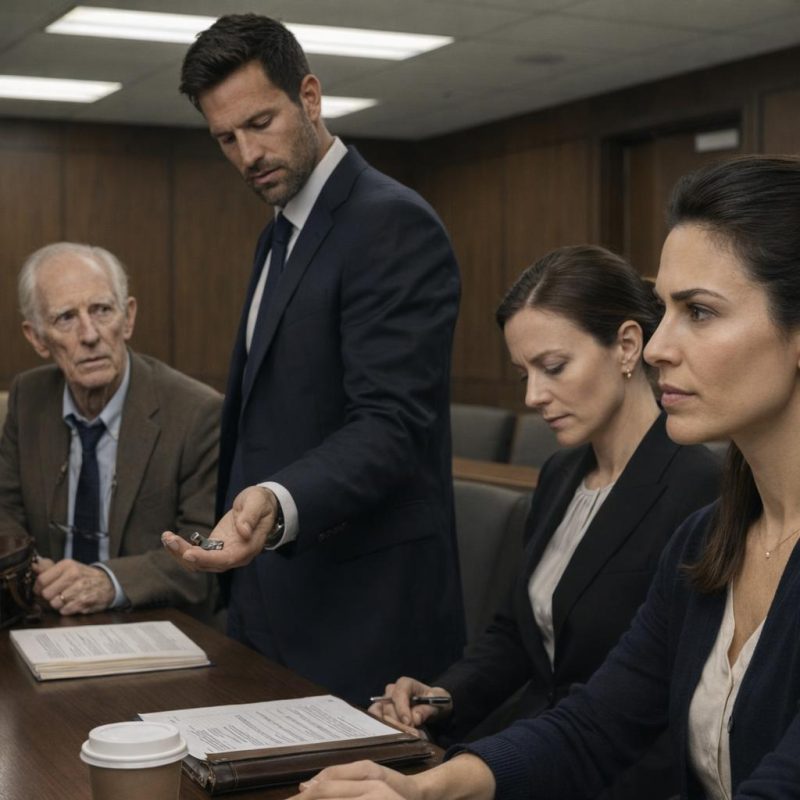 Image by RM AI
The Three-Week Wait
Sarah's guest room became our temporary home, and I tried to make it feel normal for Leo even though nothing about this situation was normal. The divorce papers were officially filed the day after the signing, and Henderson called to explain the three-week waiting period before the terms became fully enforceable. Three weeks. Twenty-one days. I started counting them immediately, marking each one off on the calendar Sarah had hung in the kitchen. Leo asked when we were going home, and I gave him a vague answer about needing to find a new place, watching his small face try to process what that meant. Sarah tried to distract me with movies and takeout, but she caught me checking the calendar constantly, my fingers tracing the days until the waiting period would end. Then Henderson called with news that made my stomach drop: Mark had already changed the locks on the house. He'd wasted no time claiming his victory, making it official and permanent. I stared at my phone after that call, doing the math in my head. Seventeen days left. Then fourteen. Then ten. Each day felt longer than the entire ten years of my marriage, every hour stretching into an eternity as I waited for the moment when everything would change. Every day that passed was one day closer to the certified letter that would reach Mark's mailbox and change everything.
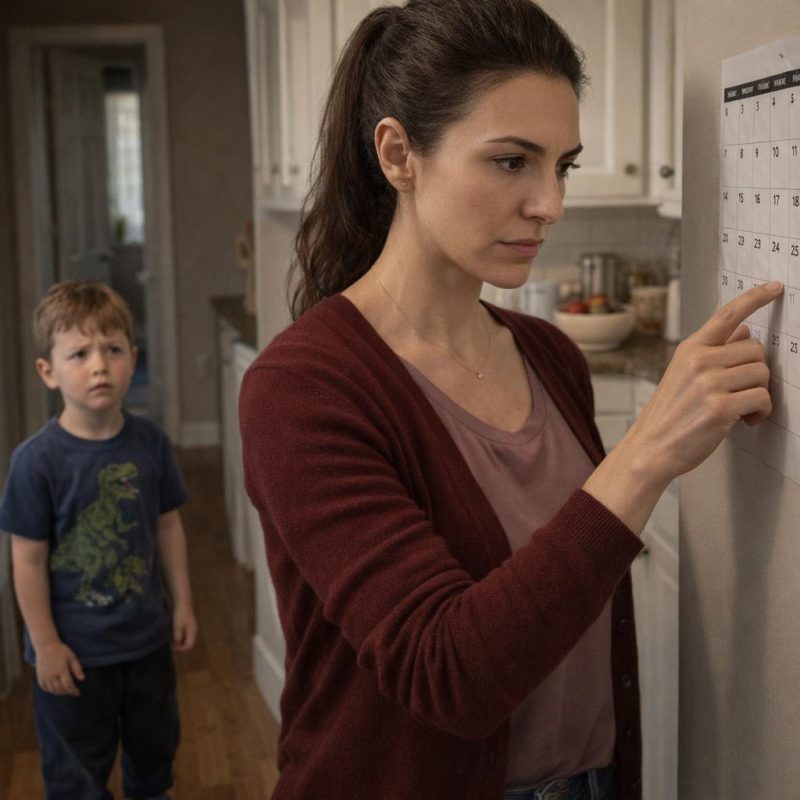 Image by RM AI
Preparing the Letter
Henderson's office felt different during those final days of the waiting period—charged with an energy that made my hands shake as we prepared the documentation. He drafted a formal letter explaining my custodial rights over marital assets, and I read each sentence three times to make sure the language was airtight. We compiled the legal precedents I'd found during those late nights of research, the cases that linked custodial authority to asset management in ways Mark's lawyers had never considered. Henderson showed me the paragraph that would inform Mark of the asset management transfer, and I felt something shift in my chest as I read it. We prepared certified mail documentation for proof of delivery—there could be no question that Mark had received and read this letter. Henderson calculated the exact date when the waiting period ended, circling it on his desk calendar with a red pen. "What do you think he'll do?" I asked, and Henderson outlined the likely scenarios: rage, threats, legal challenges that would go nowhere. The letter was printed on official letterhead, signed by both of us, and sealed in the certified mail envelope. We scheduled the delivery for the morning the waiting period concluded, and I watched Henderson place the envelope in his outgoing mail tray. The certified letter was sealed and ready, and in three days Mark would learn that his victory was an illusion.
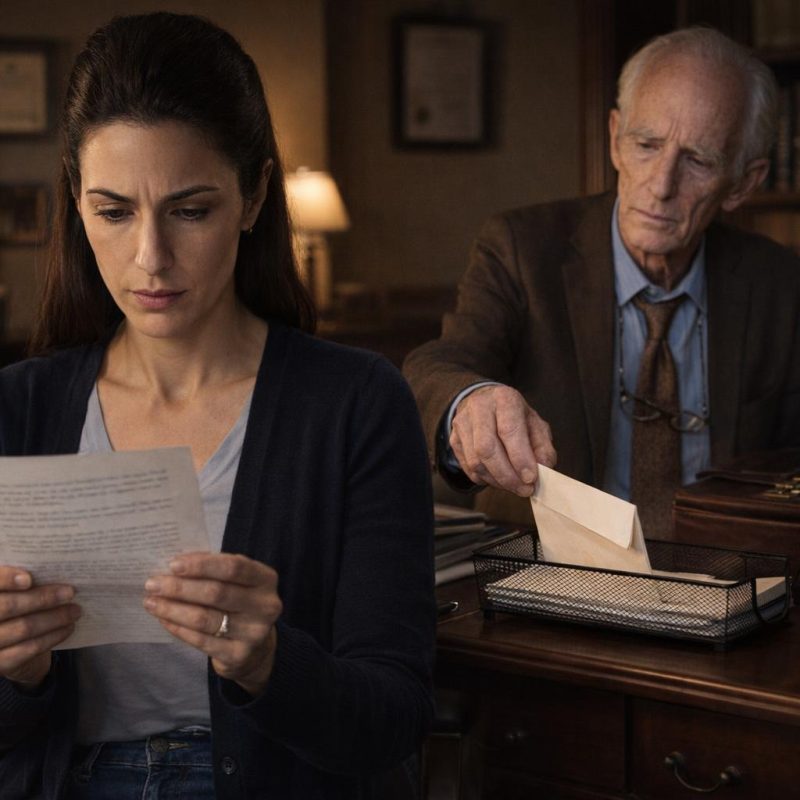 Image by RM AI
The Certified Letter
Henderson called me at nine-thirty in the morning to confirm the certified letter had been delivered to Mark's address, and I sat on Sarah's couch staring at my phone, waiting for what I knew would come. The letter explained everything in language even Mark couldn't misinterpret: the clause I'd added—'All marital assets must remain liquid and accessible to the primary physical custodian'—created custodial management authority over everything he thought he'd kept. Because Mark had defined the house, cars, and savings as marital assets in his own filing, they now fell under my control as the primary physical custodian. His 100% custody grant to me, the one he'd insisted on to distance himself from Leo completely, had activated my authority over all assets designated for the maintenance and lifestyle of the child. Henderson's letter cited every precedent I'd found during those desperate research sessions, the cases that linked custodial rights to asset management in ways Mark's expensive lawyers had never considered. Mark's own aggressive language, the phrases he'd used to ensure he had zero responsibility for his son, had become the legal mechanism of his downfall. I thought about him reading those words, understanding for the first time what he'd actually signed. The man who thought he had erased me from his life discovered that in his rush to abandon his son, he had signed over control of everything he owned.
 Image by RM AI
The Screaming Call
My phone rang at two-fifteen that afternoon, and Mark's name appeared on the screen like I knew it would. I answered and immediately held the phone away from my ear as his voice exploded through the speaker—obscenities I'd never heard him use, accusations of fraud and deception and manipulation that came so fast I couldn't have responded even if I'd wanted to. I sat there on Sarah's couch, listening to him exhaust himself, feeling a calm settle over me that I didn't know I possessed. He threatened lawyers, threatened courts, threatened to destroy me in ways he couldn't even articulate through his fury. I waited for him to pause to breathe, counting the seconds of silence before I spoke. "Mark," I said quietly, "you should read the document again." His breathing was ragged on the other end of the line. "Every definition in that agreement came from your own filing. The marital assets, the custody language, the phrase 'primary physical custodian'—all of it was yours." I explained that I'd simply added a clause connecting his own words, and his rage gave way to something that sounded like panic as he realized the trap was entirely his own making. When he finally paused to breathe, I told him to read the document again, because his own lawyers had drafted the language I used against him.
 Image by RM AI
The Explanation
"Let me walk you through this," I said, and my voice was steadier than I'd expected. I explained how his preamble had defined all property as marital assets—his choice, his language. How his custody section had used aggressive phrasing to ensure he had zero parental responsibility, how the term 'primary physical custodian' appeared repeatedly in his own filing because he wanted it absolutely clear he was done with fatherhood. "My twelve words simply stated that marital assets must remain accessible to that custodian," I continued. "Courts interpret this as the custodial parent having management authority over assets designated for child welfare." I could hear him breathing on the other end, processing what I was saying. "Because you wanted nothing to do with Leo, because you made sure the agreement reflected your complete abandonment of him, you created the legal basis for my total control." Mark's silence stretched between us. "Your lawyers were so focused on your victory, on making sure you got the house and the cars and the savings, they never considered that the custody language could backfire." I paused, letting that sink in. "Your own greed, Mark. Your desperate desire to erase Leo from your life. That's what did this." By the time I finished explaining, his silence on the other end of the line was more satisfying than any screaming.
 Image by RM AI
The Threats
Mark's voice changed then, shifting from shock to something harder and more dangerous. He threatened to take me to court, to have the agreement voided, to destroy me with legal fees I couldn't possibly afford. "I'll bankrupt you," he said, and I could hear him pacing, could picture him in that expensive apartment he'd probably already rented. "I'll have this declared fraud. You manipulated the process, you deceived my lawyers—" "You signed willingly," I interrupted, my voice calm. "In front of witnesses. With Victoria Chen sitting right there. You had expensive lawyers who reviewed and approved every word." I let that settle before continuing. "And Mark? Think about how this will look to a judge. A father who signed away his child to avoid any responsibility, who made absolutely sure the agreement reflected that he wanted nothing to do with his son. And now he's angry about the consequences." His threats became less coherent, fragmenting into half-finished sentences as he realized the position he was actually in. "Consult with Victoria," I suggested. "Ask her about your actual options. Ask her what a judge will think of a man who abandoned his child and then complained when it cost him." I told him to try, because every judge would see a father who signed away his child to avoid responsibility and then complained when it cost him.
 Image by RM AI
The Motion to Void
Victoria Chen filed her emergency motion within a week, and when Henderson forwarded me the document, I felt my stomach drop. She was good—really good. The motion alleged fraud, misrepresentation, deliberate concealment of material terms. She argued that I had hidden the clause's true purpose in dense legal language, that I had manipulated the process to deceive Mark and his legal team. Reading her arguments, I could see how a judge might view my actions through that lens. She painted me as calculating and deceptive, Mark as a victim of my manipulation. Henderson called me into his office the next morning, his reading glasses perched on his nose as he reviewed the filing for what must have been the tenth time. "She's constructed a serious argument," he admitted, and I appreciated that he didn't sugarcoat it. "We're going to need to prove Mark signed knowingly and willingly, with full legal representation." We spent the afternoon gathering documentation—every email, every communication with Victoria's office, every piece of evidence showing the signing process. Henderson looked up at me as he closed the file we'd started building. "Victoria is good," he said again, tapping the motion with one weathered finger. "But Mark's own words in the original filing will be our best defense."
 Image by RM AI
Building the Defense
Henderson subpoenaed records of all communications between our offices, and what we found was damning—for Mark. The timeline showed Victoria's firm had approved the revised agreement within forty-eight hours, barely enough time for a thorough review of a document that complex. I provided the original papers, the ones with Mark's own aggressive definitions that had created the vulnerability in the first place. Henderson documented everything: the competence of Victoria's firm, the plain legal English I'd used in my clause, the proper channels through which the revised agreement had been sent. There was no deception, no hidden language, no manipulation. Just a clause written clearly in the custody section where it belonged. We gathered evidence of Mark's eagerness to finalize everything, his impatience to move forward with his new life. Henderson built the argument methodically, each piece of evidence supporting the next. Mark had been so desperate to formalize his abandonment of Leo that he'd rushed through the signing without reading carefully. The file we compiled showed a man who was so eager to abandon his son that he signed without reading, and that was exactly what we needed the judge to see.
 Image by RM AI
Emergency Hearing
The court scheduled the emergency hearing for two weeks out, and I barely slept the night before. I kept reviewing every possible question, every angle Victoria might use to dismantle our defense. Henderson and I arrived at the courthouse early, my stomach churning with anxiety despite all our preparation. Mark was already there with Victoria, both of them looking confident in a way that made my hands shake. Victoria's sleek designer suit was immaculate, her posture projecting corporate distance and certainty. Mark's smirk had returned, that entitled expression I'd seen so many times during our marriage. When Judge Morrison entered, the courtroom fell silent. He had graying hair and a commanding presence that filled the space, his weathered features showing decades of experience. He reviewed the case summary briefly, then looked up at both parties over his reading glasses. His expression was unreadable, giving nothing away about his initial impressions. "I've reviewed the motion and the response," he said, his voice carrying judicial authority. "This is a serious matter, and I intend to hear full arguments from both sides today." Judge Morrison looked at both parties over his reading glasses and announced he would hear arguments immediately.
 Image by RM AI
Opening Arguments
Victoria opened by arguing that I had deliberately hidden fraudulent language in the custody section, designed to deceive Mark and his legal team. She claimed no reasonable person would have agreed to such terms if they'd understood the implications, that the clause was deliberately obscured within standard custody language. Her argument was polished and persuasive, and I felt my anxiety spike. Then Henderson rose, and I watched him transform into the courtroom fighter he'd been for decades. He presented the timeline of the agreement's revision and approval, showing that Victoria's own office had signed off within forty-eight hours. He argued the clause was written in standard legal language with no obfuscation, included in the custody section where it logically belonged. Henderson presented evidence that Mark had been represented by one of the state's top divorce attorneys—Victoria herself. He emphasized that Mark had signed eagerly, wanting to finalize his separation from parental duties, wanting to be free of the 'drudgery' of fatherhood. Judge Morrison listened intently, his pen moving across his notepad throughout both arguments. When Henderson sat down, I could see Judge Morrison writing notes, but his expression gave nothing away.
 Image by RM AI
Cross-Examination
Victoria called me to the stand as a hostile witness, and for over an hour, she tried to prove I had deliberately deceived Mark. She asked whether I understood the clause's implications when I added it. I admitted I did—lying would only hurt our case. She pressed on whether I had deliberately concealed the clause's purpose from Mark's legal team. I explained that I had sent the revised papers through proper legal channels, that the clause was included in the custody section in plain language. "Did you inform Mr. Thornton's attorneys about the specific implications of this clause?" she asked, her tone sharp. "I sent revised papers through the proper legal channels," I repeated. "The clause was in the custody section, written in standard legal terminology." Henderson objected several times when Victoria's questions became argumentative. Some objections were sustained, others overruled. Judge Morrison watched me carefully throughout, and I forced myself to stay calm, to answer honestly. Victoria's final question was the most direct: "Mrs. Thornton, did you intend for your husband to miss the clause's significance?" When she asked if I had intended for Mark to miss the clause's significance, I told her the truth: I intended for him to read it, and he chose not to.
 Image by RM AI
The Mother's Testimony
Henderson redirected, giving me the chance to tell my full story. I described the moment Mark had presented the divorce papers, how he'd called parenting 'drudgery' he didn't have the 'bandwidth' for. My voice cracked slightly as I quoted his exact words, and I didn't try to hide it. I explained how Mark had wanted one hundred percent custody given to me so he could be 'child-free,' how his lawyers had drafted aggressive custody language designed to insulate him from any parental duty. "I found the definitions they'd created," I testified, "and I realized they'd built a system that could protect me and Leo if I was careful enough to use it." I explained that I had used Mark's own definitions, his own legal framework, to protect myself and my son. Everything I did was within the legal system his lawyers had created. I never lied—I simply read the papers more carefully than Mark did. "Every choice I made was to protect Leo from a father who didn't want him," I said, looking directly at Judge Morrison. When I described finding the custody clause that Mark's lawyers had written to ensure he would never be 'bothered' with his child, Judge Morrison's pen stopped moving.
 Image by RM AI
Mark Takes the Stand
Victoria put Mark on the stand to establish he'd been deceived, but it didn't go the way she'd planned. Mark testified that he'd trusted his lawyers to review the documents, that he'd been busy with work during the divorce process. Henderson's cross-examination was surgical. He asked about Mark's original demands, and Mark defended taking all the assets because he'd earned the money. Henderson asked about the custody arrangement, and Mark dismissed parenting as incompatible with his career trajectory. "You used the word 'drudgery' to describe raising your son, didn't you?" Henderson asked. Mark's jaw tightened. "I may have said something like that." Henderson read Mark's own language about avoiding the burden of childcare, and Mark became defensive, his corporate polish cracking to reveal the arrogance beneath. His tone grew dismissive when discussing Leo, and I could see Judge Morrison taking notes. Then Henderson asked the critical question: "Mr. Thornton, did you read the custody section of the final agreement before signing?" Mark hesitated, and in that pause, the courtroom seemed to hold its breath. When Henderson asked if Mark had read the custody section before signing, Mark's hesitation told the courtroom everything it needed to know.
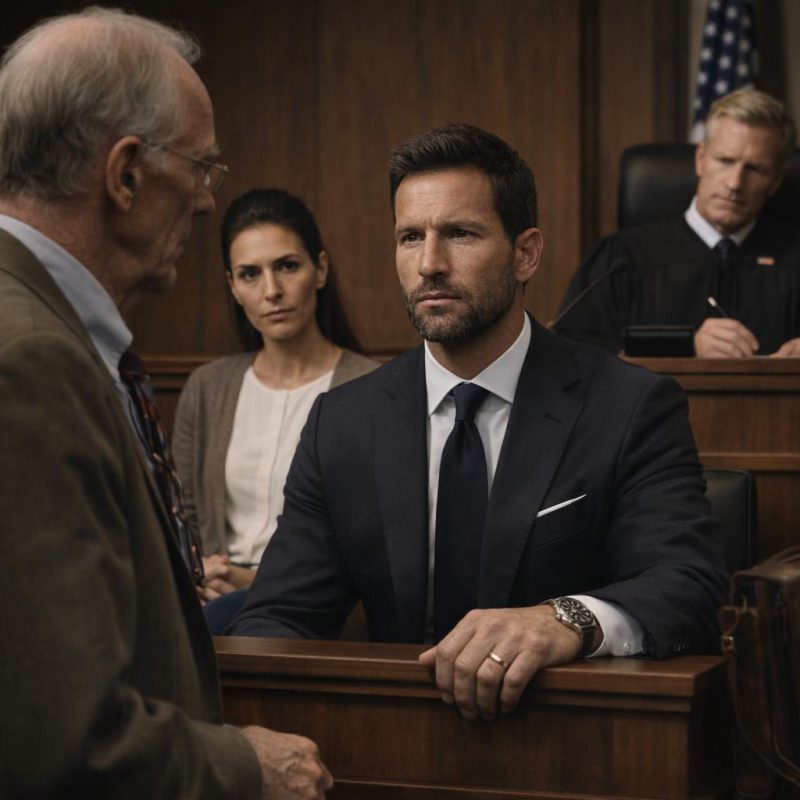 Image by RM AI
Judicial Review
Judge Morrison requested copies of both the original filing and the revised agreement. He read through Mark's asset definitions in the preamble section, his expression neutral. Then he examined the custody language Mark's lawyers had drafted, the aggressive terms designed to free Mark from any parental obligation. He studied my twelve-word addition in the context of the surrounding text, and I watched his eyes move across the page. The courtroom was absolutely silent. Morrison read for what felt like an eternity, and I could barely breathe. Both legal teams sat in tense silence, Victoria's perfect posture rigid, Henderson's weathered hands folded on the table. I watched the judge's face for any indication of his thinking, any hint of which way he was leaning, but he gave nothing away. Mark shifted in his seat beside Victoria, and for the first time since the hearing began, I saw uncertainty in his expression. The confident smirk was gone. Judge Morrison set down the papers carefully, removed his reading glasses, and looked at both parties. When he finally looked up, his expression was unreadable, and he announced he would deliver his ruling.
 Image by RM AI
The Verdict
Judge Morrison put his reading glasses back on and looked directly at Mark. "This court has reviewed both the original filing and the revised agreement," he said, his voice carrying that measured authority that comes from decades on the bench. "Mr. Thornton, you were represented by counsel throughout these proceedings. Your legal team had this document for forty-eight hours before you signed it. The clause in question is written in clear, unambiguous legal language. It was not hidden in fine print or buried in technical jargon." Victoria started to stand, but Morrison held up one hand. "Your own testimony, Mr. Thornton, made it abundantly clear that you chose not to read the agreement carefully because you believed the outcome was already decided in your favor." My heart was pounding so hard I could barely hear him. "Ignorance by choice does not constitute fraud by the opposing party. The motion to void the clause is denied. The divorce agreement stands as signed, with all provisions enforceable." Mark's face went completely white. Henderson's hand found mine under the table and squeezed. The man who had tried to erase me had just discovered that his own words, his own lawyers, and his own greed had sealed his defeat.
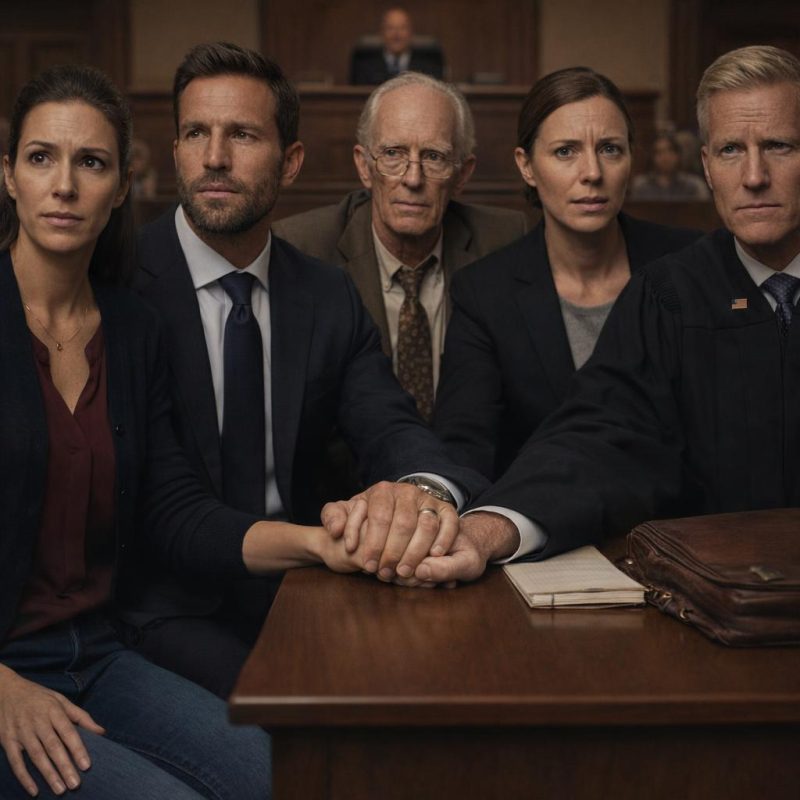 Image by RM AI
Taking Control
I walked down the courthouse steps with Henderson, and the October air had never felt so clean. "First things first," Henderson said, already pulling out his phone. "We file the court order establishing your custodial management authority, then we contact the bank." We went straight to his office, and within two hours, I was sitting across from a bank manager with legal documentation that made me the sole manager of every account Mark thought he'd secured for himself. The joint accounts, the investment portfolio, the equity line on the house—all of it transferred to my control as Leo's primary custodian. Henderson walked me through the reporting requirements, the proper financial controls, the documentation I'd need to maintain. "You're not just taking control," he explained. "You're becoming the steward of your son's future." I signed the paperwork to list the house for sale that afternoon. Then I drove to Sarah's to pick up Leo, and when he ran into my arms, I held him tight and whispered the words I'd been waiting months to say: "We're going to be okay, baby. We're really going to be okay." The accounts that Mark thought were his now had my name as the sole manager, and every dollar would go toward building Leo's future.
 Image by RM AI
Leo's Trust
Henderson recommended a financial advisor who specialized in custodial trusts, and three days later, I sat in her office with folders full of documentation spread across the conference table. "The goal," she explained, "is to secure Leo's education and future needs while maintaining proper legal compliance." We established a trust fund that would grow with him, protected from any future claims or complications. The house sale proceeds would be allocated between immediate living expenses and long-term security. I set up a budget that would maintain Leo's lifestyle without excess—good school district, stable home, activities he enjoyed, but nothing extravagant. Henderson reviewed every document to ensure I was meeting my legal obligations as custodial manager. That evening, I sat with Leo on the couch and explained in the simplest terms I could find: "Daddy made some choices, and now Mommy is in charge of making sure you have everything you need. We're going to have a really good life, okay?" He nodded against my shoulder, trusting me completely. I'd also set aside a substantial amount for Leo to access when he turned twenty-five—old enough to make his own decisions about his father's money. Mark had tried to discard his son as easily as he discarded me, but Leo would never have to wonder if he was worth fighting for.
 Image by RM AI
A New Beginning
The apartment wasn't huge, but it had two bedrooms, big windows, and it was in a school district that actually gave a damn about its students. I stood in the doorway watching Leo arrange his action figures on the shelves in his new room, his face lit up with the kind of excitement I hadn't seen in months. Sarah was in the kitchen helping me unpack boxes, and I could hear her humming while she organized the cabinets. "This is perfect," she called out. "Seriously, this place has such good energy." I thought about Mark alone in that big house he'd fought so hard to keep, surrounded by expensive furniture and crushing silence. Leo came running out to ask if he could put his glow-in-the-dark stars on the ceiling, and I said yes without hesitation. Later, as Sarah left and Leo brushed his teeth, he asked in that small voice if Daddy would ever visit. I knelt down and told him the truth: "Daddy made choices that mean he won't be part of our lives, but that's about Daddy, not about you. You are loved and wanted and worth everything." I looked around our new home that night and felt genuine peace for the first time since I'd found that credit card statement. The man who thought he was erasing me had written me a blank check for our future, and I intended to spend every penny building a life he could never touch.
 Image by RM AI
KEEP ON READING

20 Historical Figures Who Died Too Young
Lives Tragically Cut Short. History often remembers long reigns, mature…
By Christy Chan May 15, 2026
20 Historical Figures Who Died Right Before Everything Changed
Those Who Left Just Before the Final Act. Some people…
By Emilie Richardson-Dupuis May 15, 2026
20 Historical Figures Who Were Hot In Their Time But…
What Do You Think?. Beauty is famously in the eye…
By Sara Springsteen May 15, 2026
20 Greatest Underdogs In History
The World Did Not See That Coming. Everyone loves a story…
By Sara Springsteen May 15, 2026
20 Historical Figures Who Went From Villain To Antihero
History Gets Messy. History loves a clean villain. It gives…
By Cameron Dick May 15, 2026
10 Animals Humans Ate Into Extinction & 10 We Nearly…
The Menu Has Teeth. Extinction can sound distant, like something…
By Cameron Dick May 15, 2026